Tag Archives: main dish

Braised Chicken with Endive

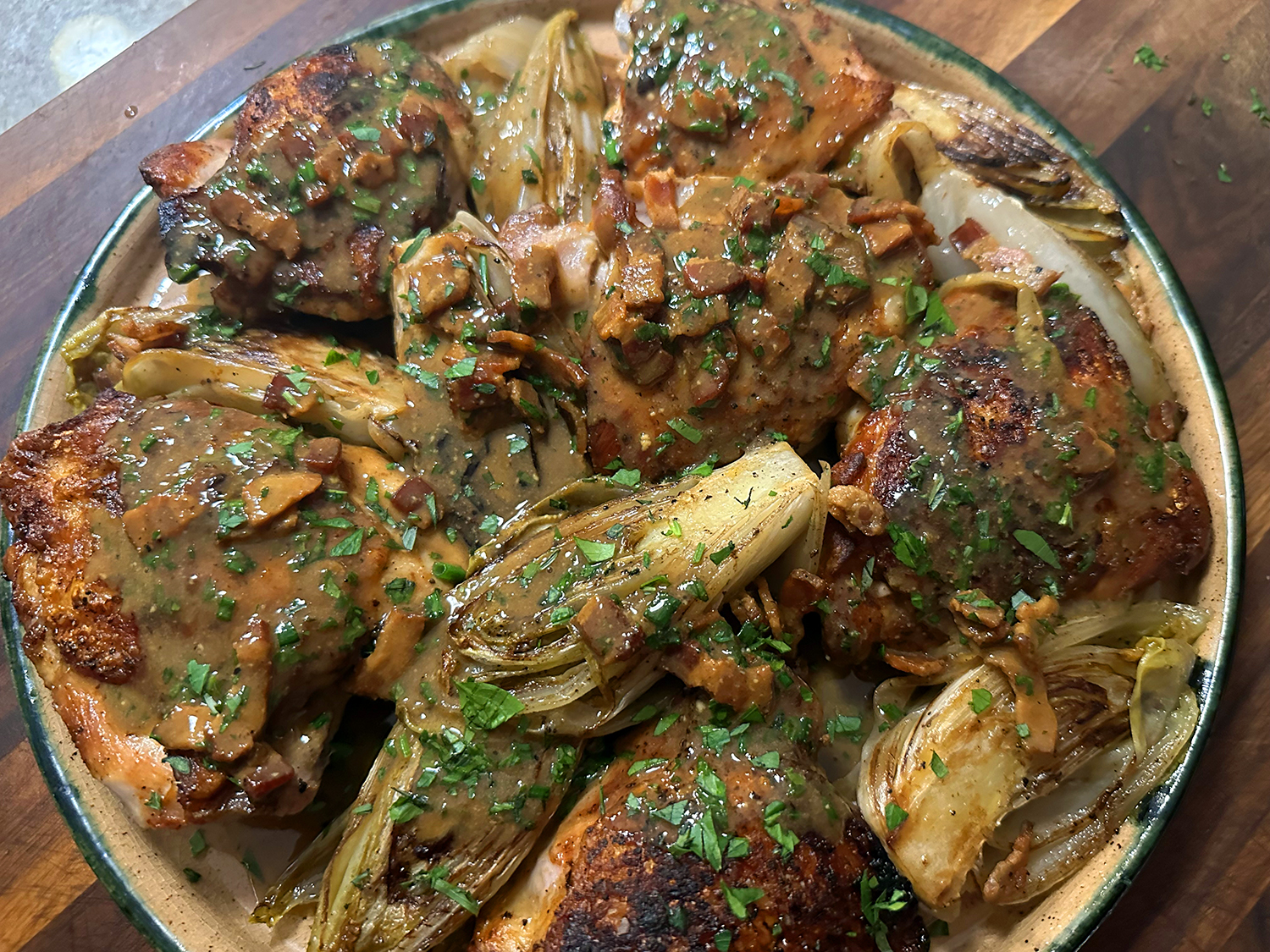
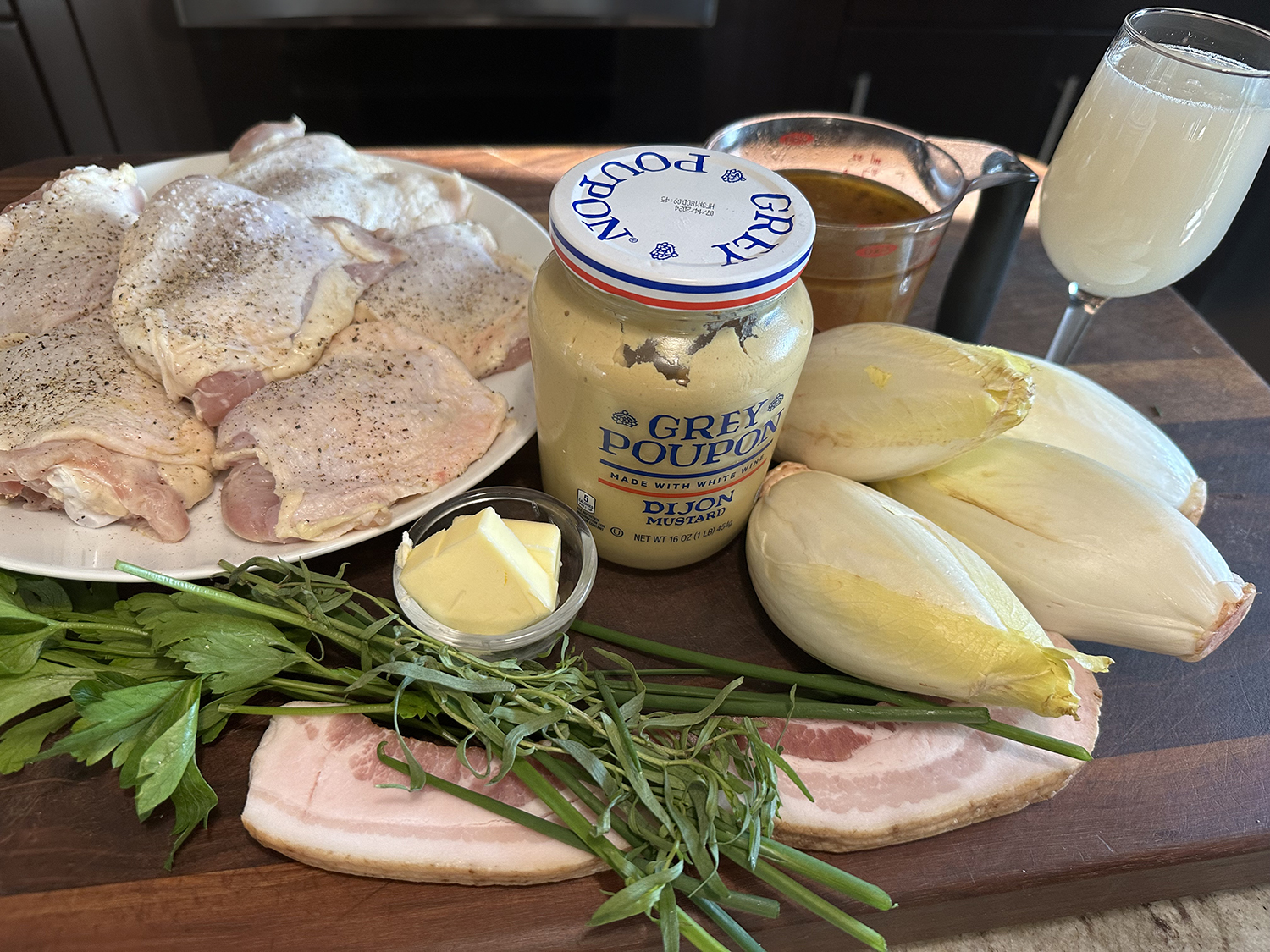
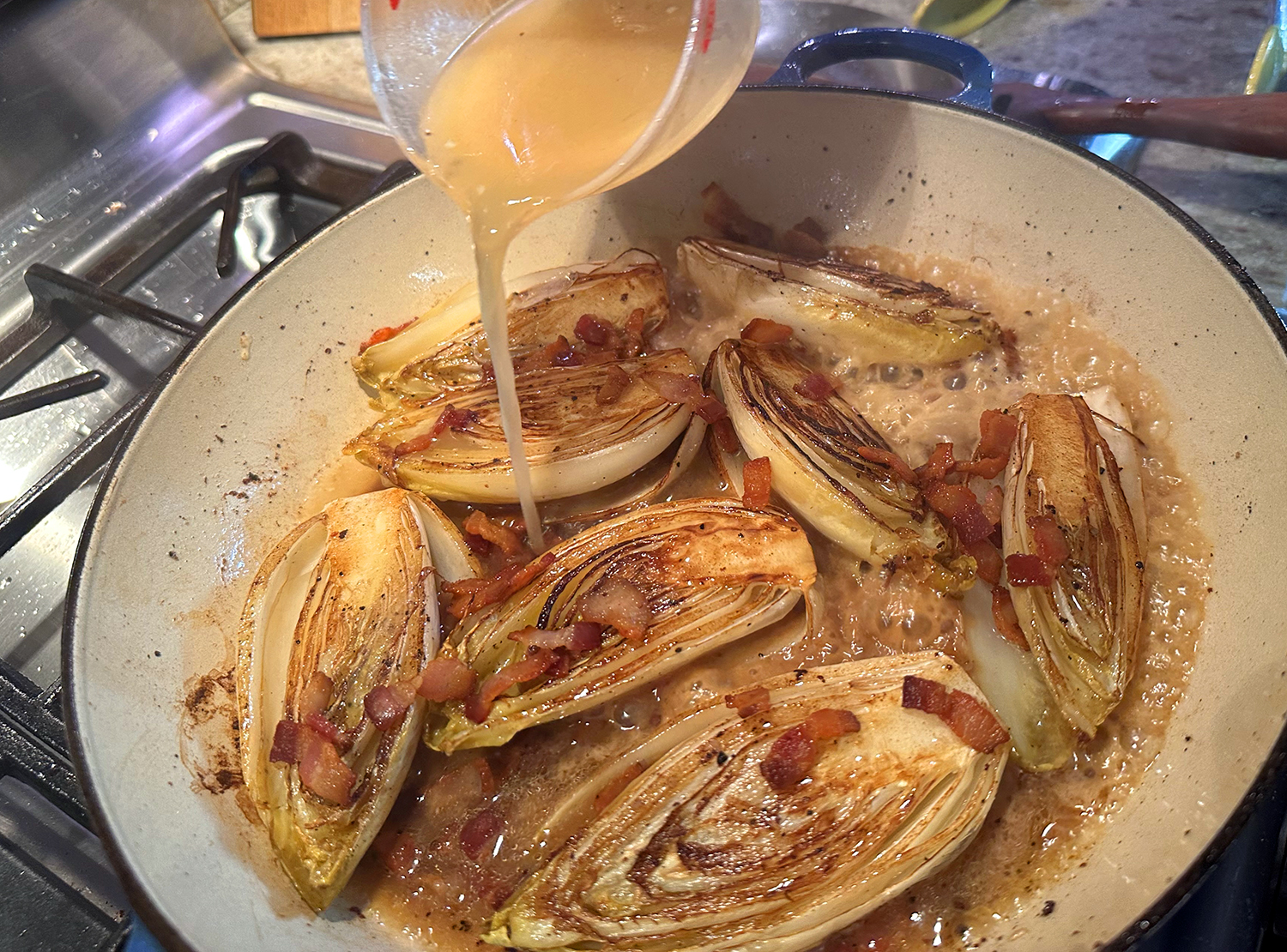
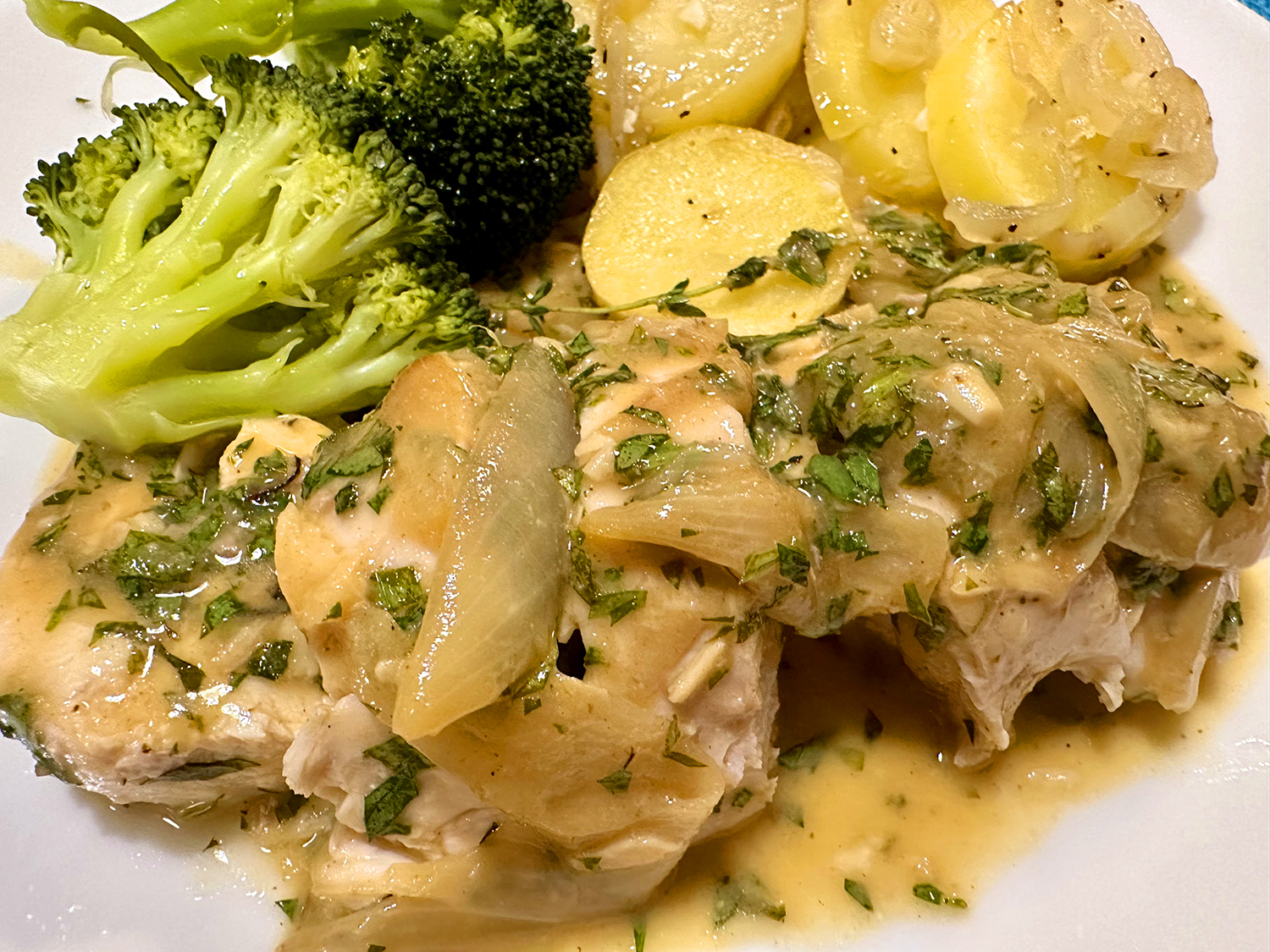
This Braised Chicken with Endive is a reinterpretation of coq au vin. This Food & Wine recipe features white wine-marinated chicken thighs and caramelized endive in a gorgeous pan sauce. So yes, we fell in love with yet another braised chicken dish. The flavors are just amazing, and amped up by using homemade chicken stock which bursts with depth of flavor.

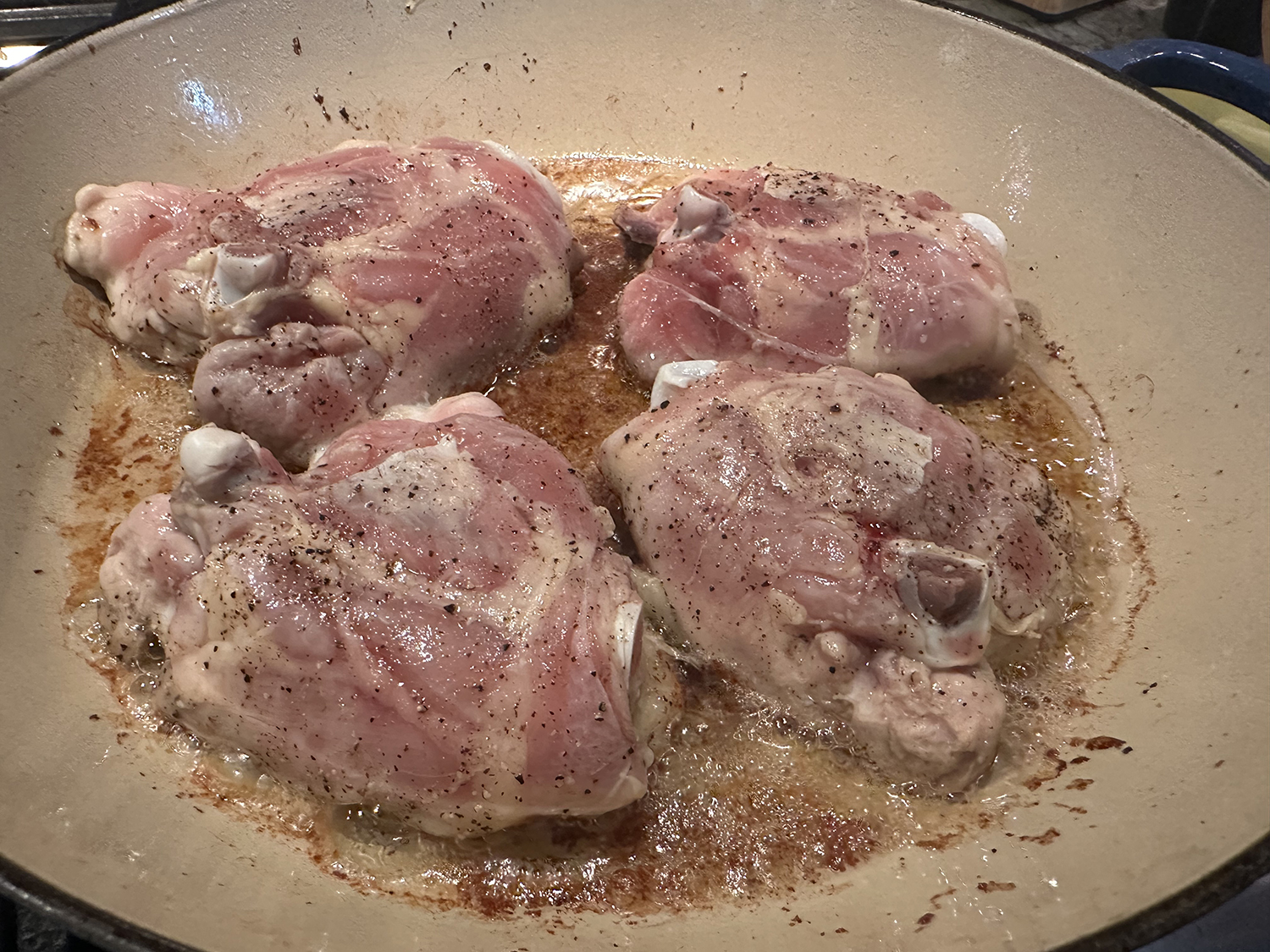
You may have to brown the chicken in two batches (we did), so as not to crowd them in the pan which would steam the thighs causing flaccid skin. Not the result you are looking for.

If you’ve never had braised endive, you are in for a treat! Mske sure to get Belgian endive, which is shaped like a torpedo and grows to about six inches in length. It has tender white leaves with either yellow or red-colored leaf edges. The leaves offer a soft texture and delicate crunch with a pleasantly bitter flavor.

And our potato side dish also used homemade chicken stock and were the creamiest little spuds ever!

Braised Chicken with Endive

  • Servings: 4
  • Difficulty: easy
  • Print

Ingredients

  • 2 1/2 lbs. bone-in, skin-on chicken thighs, fat trimmed
  • 2 tsp. kosher salt, divided, plus more to taste
  • 1 cup dry white wine
  • 1/2 tsp. black ppper
  • 3 thick-cut bacon slices, cut crosswise into 1/4 inch pieces
  • 4 Belgian endive heads, trimmed and halved lengthwise
  • 1/2 cup chicken stock
  • 2 Tbsp. unsalted butter, chilled and cut into pieces
  • 1 tsp. Dijon mustard
  • 2 Tbsp. finely chopped mixed tender herbs (such as chives, parsley and tarragon)
  • Crusty bread for serving

Directions

  1. Sprinkle chicken evenly with 1 1/2 teaspoons of salt; place in large bowl. Add wine, and turn chicken to coat. Cover with plastic wrap, and marinate in refrigerator at least 8 hours or up to 24 hours.
  2. Preheat oven to 400°F. Remove chicken from bowl; reserve 1/2 cup of the wine liquid. Pat chicken dry with paper towels, and sprinkle evenly with pepper and remaining 1/2 teaspoon of salt; set aside.
  3. Cook bacon in a large nonreactive skillet over medium, stirring often until crisp and fat has rendered, about 8 minutes. Using a slotted spoon, transfer bacon to a small bowl; set aside. Reserve rendered fat in skillet. Place chicken thighs skin side down in skillet. Cook over medium-high, undisturbed until skin is deeply browned, about 8-10 minutes. Transfer chicken skin side up to a large plate, set aside. Reserve 2 tablespoons drippings in skillet, discard the remaining drippings.
  4. Return skillet to heat over medium-high. Add endive halves, cut sides down. Cook, undisturbed until browned, about 3 minutes. Flip endive cut sides up, and add stock, cooked bacon, and reserved 1/2 cup of white wine. Nestle chicken skin side up, in skillet. Bring to a boil over high.
  5. Transfer skillet to preheated oven. Roast until endive is tender and a meat thermometer inserted in thickest portion of chicken registers at least 170°F, about 15 minutes. Transfer chicken and endive to a large platter, reserving sauce in skillet.
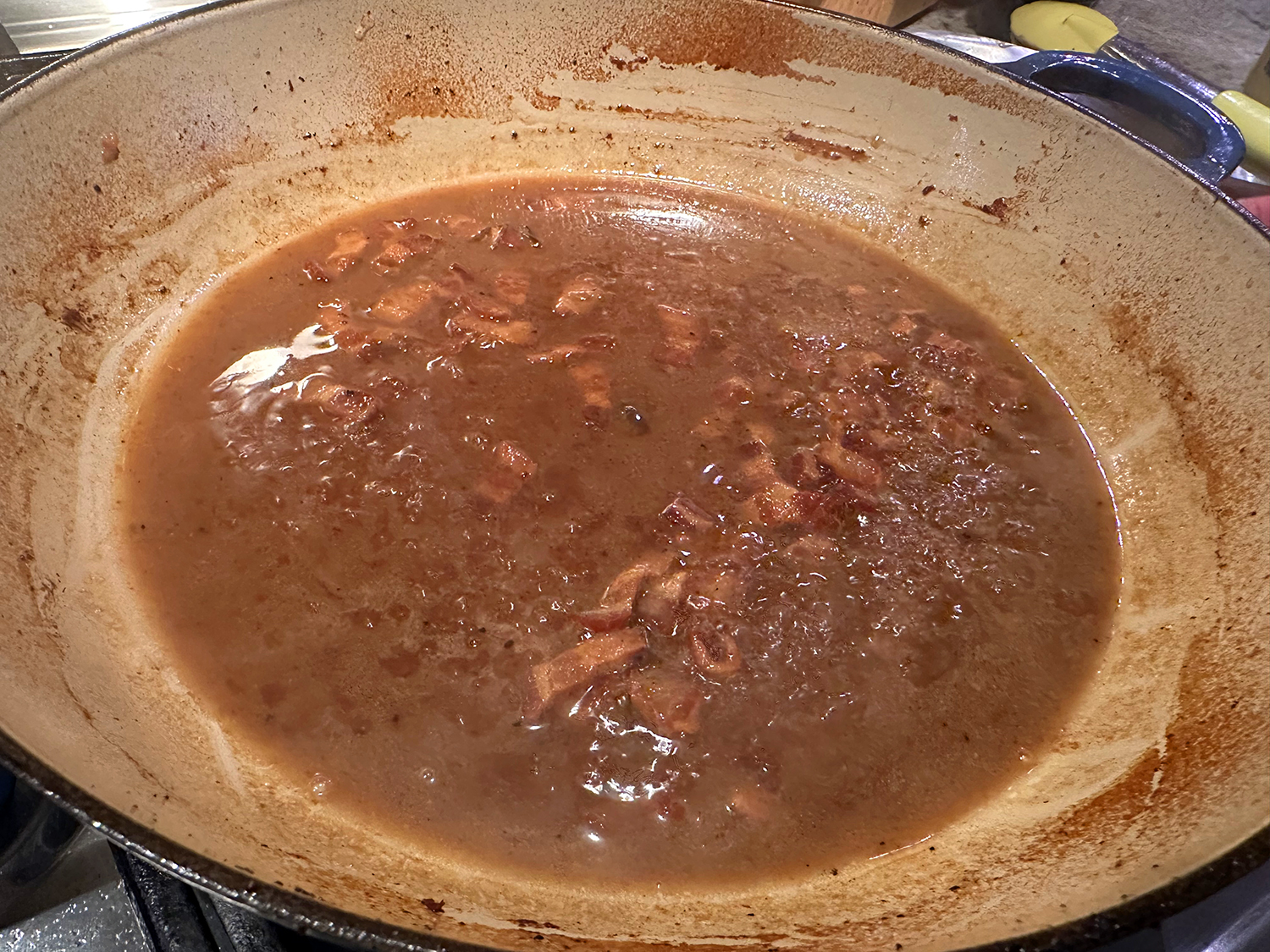
  6. Bring sauce in skillet to a simmer over medium-high. Simmer, undisturbed, until slightly reduced, about 4 minutes.
  7. Remove from heat, and stir in butter, mustard and herbs. Spoon sauce over chicken, and sprinkle with slat to taste. Serve with crusty bread if desired.

http://www.lynnandruss.com

Recipe by Liz Mervosh for Food and Wine

Chicken En Cocotte

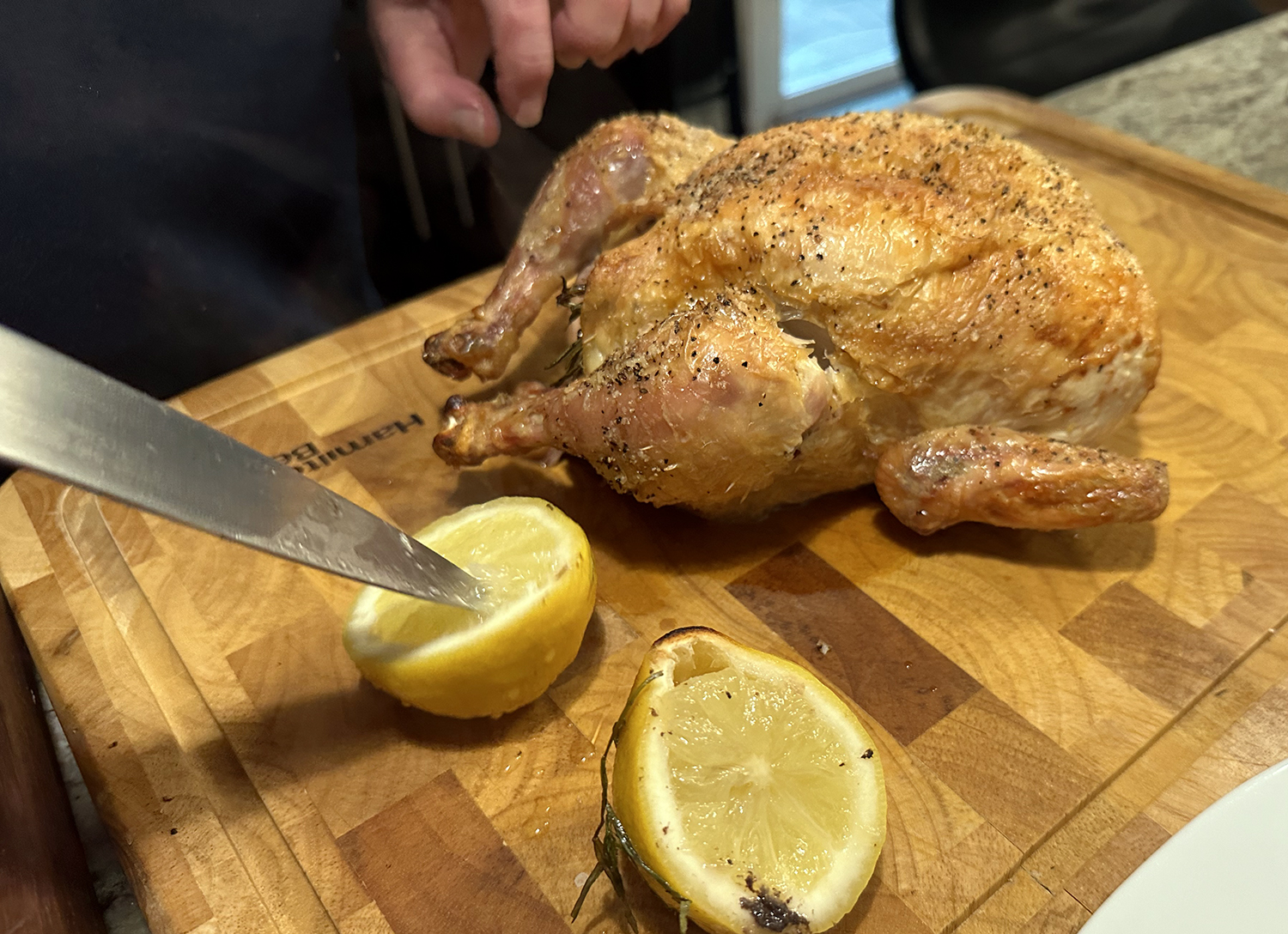
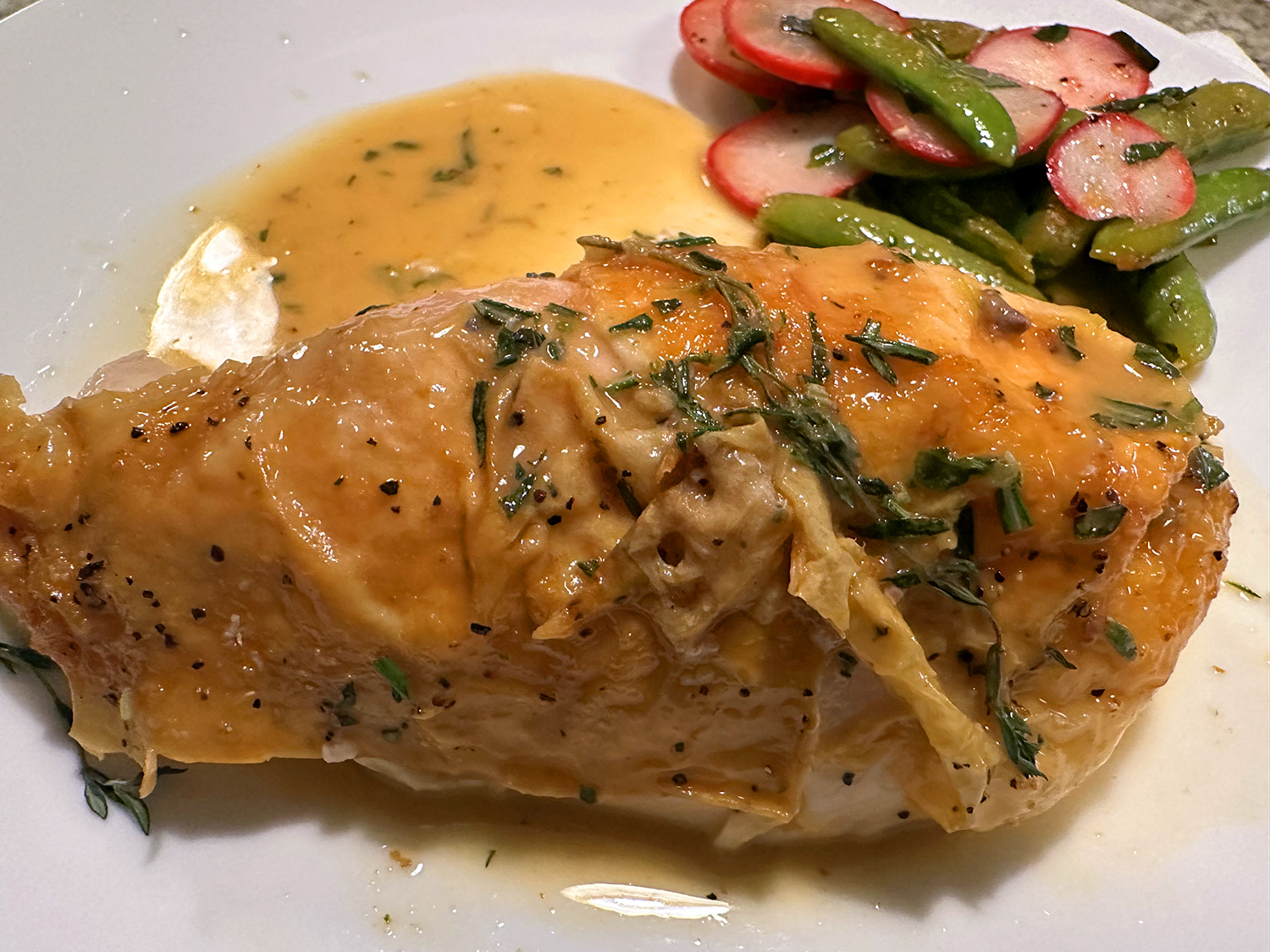
With very little prep involved in this Chicken En Cocotte—or in a pot—and most of the cooking being hands-off, you should get this tasty recipe on your short list. You will not get crispy skin from this method, in fact it gets discarded, but you will end up with super-moist poultry meat. We oooohed and aaaahhhed all the way through dinner.

Cooking the chicken breast side down allows the delicate white meat to gently poach in the wine while the legs bake up above, a technique that helps equalize the cooking of the white meat (done at 160°F) and dark meat (done between 175°F to 180°F). Allowing the chicken to rest breast side up after prevents the white meat from overcooking.

The sauce was just amazing, we even spooned it over our side dish of Spanish Potatoes in Olive Oil, a perfect companion to the chicken because they both share several ingredients: white wine, garlic, onion and thyme.

NOTE: Don’t use a Dutch oven smaller than 7 quarts or a chicken larger than 4½ pounds. If the bird fits too snugly, there won’t be enough space for heat to circulate, hindering even cooking.

Chicken En Cocotte

  • Servings: 4
  • Difficulty: easy
  • Print

Ingredients

  • 5 Tbsp. salted butter, divided
  • 1 large yellow onion, cut into 8 wedges
  • 8 medium garlic cloves, peeled and halved
  • 1 1/2 cups dry white wine
  • 10 thyme sprigs
  • 1 4- to 4½-lb. whole chicken, wings tucked and legs tied
  • Kosher salt and ground black pepper
  • 3 Tbsp. lemon juice
  • 2 Tbsp. dijon mustard
  • 1/2 cup finely chopped fresh tarragon leaves

Directions

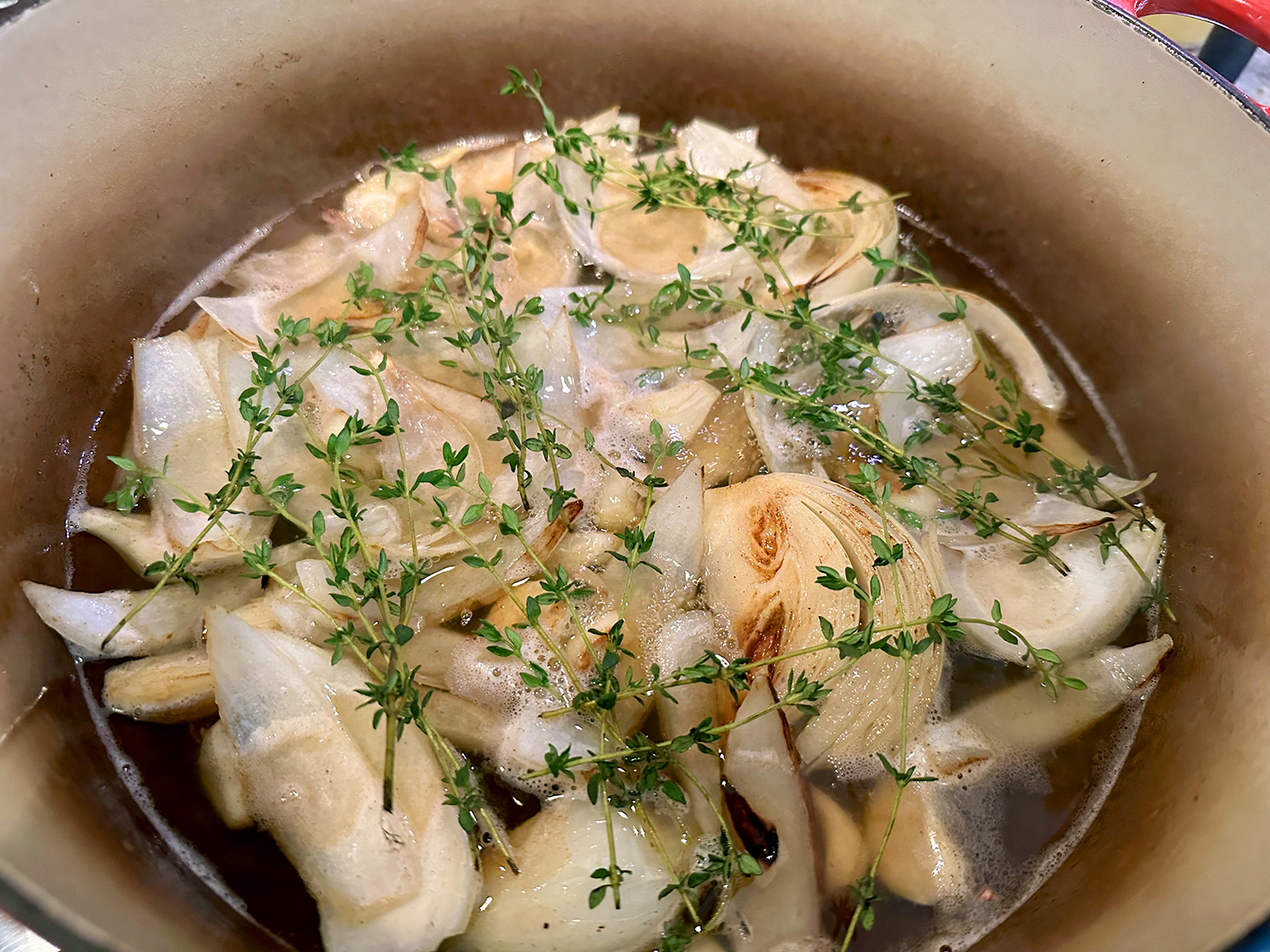
  1. Heat the oven to 400°F with a rack in the lower-middle position. In a large Dutch oven over medium, melt 1 tablespoon of the butter. When the foaming subsides, add the onion and garlic and cook until lightly browned, about 5 minutes. Pour in the wine and bring to a simmer. Lay the thyme sprigs on the onion mixture.
  2. Using paper towels, pat the chicken dry then season with salt and pepper. Set the chicken breast side down over the thyme and onions. Cover and bake until the thickest part of the breast reaches 160°F and the thighs reach 175°F to 180°F, 55 to 65 minutes. Using tongs inserted into the cavity of the chicken, carefully transfer it to a large baking dish, turning it breast side up. Let rest for at least 15 minutes.
  3. Meanwhile, remove and discard the thyme sprigs. Tilt the pot to pool the liquid to one side and use a wide spoon to skim and discard the fat. Bring to a simmer over medium and cook until thickened and reduced to about 1 cup (with solids), about 5 minutes. Off heat, whisk in the remaining 4 tablespoons butter, the lemon juice and mustard. Taste and season with salt and pepper.
  4. Remove the legs from the chicken by cutting through the hip joints. Remove and discard the skin from the legs, then separate the thighs from the drumsticks. Remove the breast meat from the bone, remove and discard the skin, then cut each crosswise into thin slices. Arrange the chicken on a platter. Transfer the sauce to a bowl, stir in the tarragon and serve with the chicken.

http://www.lynnandruss.com

Recipe from Milk Street

Slow-Roasted Boneless Leg of Lamb

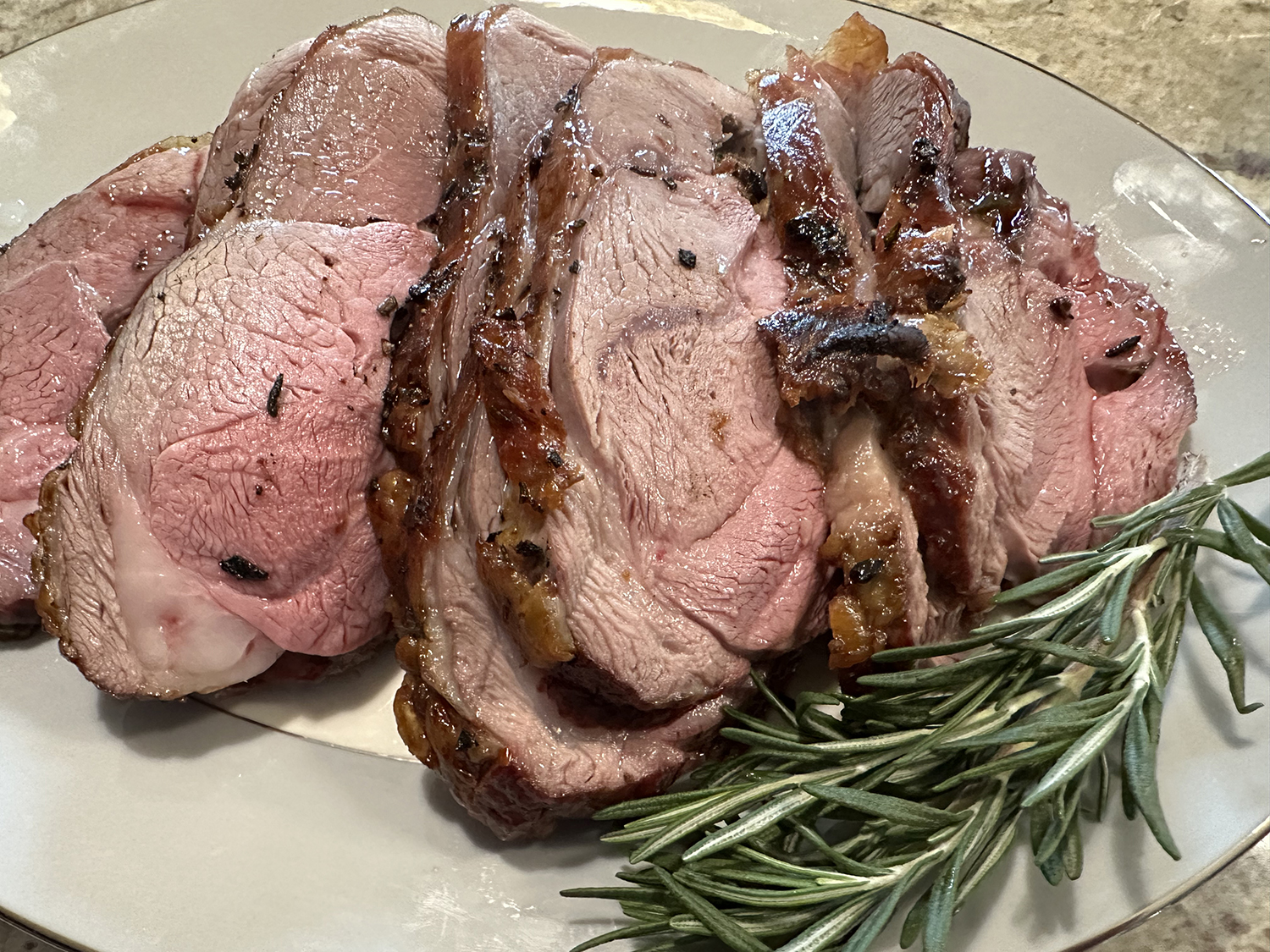
For you seasoned lamb lovers and recent converts, this slow-roasted method delivers mild, flavorful meat with a tender texture and a perfectly rosy medium-rare hue all the way from edge to center, surrounded in a crisp layer of browned, crackly fat. Got your attention now?

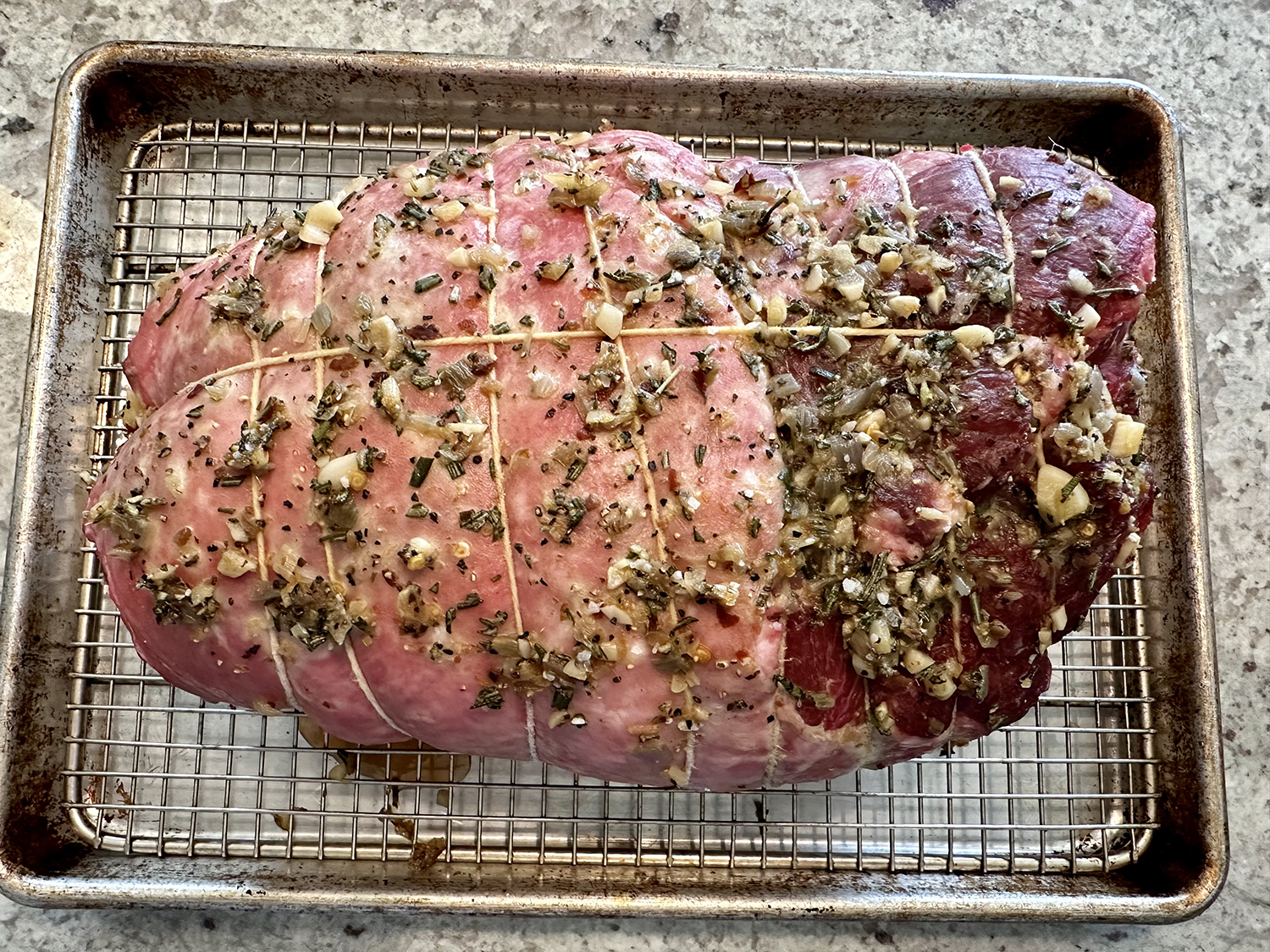
Here, we are going with the classic combination of garlic, rosemary, lemon zest, and some shallots, which bring their milder allium sweetness to the mix. These aromatics are cooked down in olive oil, with a pinch of red pepper flakes for heat, and a few minced anchovy fillets (another classic lamb pairing). And don’t worry, those fillets won’t taste fishy in the final roast.

When applying a rub to the meat, it’s important to really work the salt deep into as many cracks and crevices as possible. Ideally, you want to let the mixture sit on the lamb for at least a day.

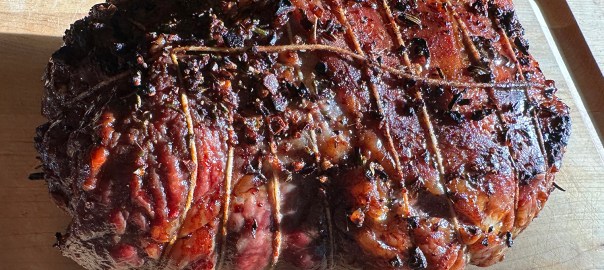
There’s a difference between edible and fantastic. That difference usually comes down to how crisp the fat is. After the lamb has rested for half an hour or so (which gives ample time for temperature differentials inside to even out), pop it back into a 500°F oven for about 15 minutes to fully crisp. The lamb fat crackles and those bits of garlic and shallot brown, lending a rich sweetness to the salty crust.

Your meat should be gloriously juicy, crispy on the outside, and because of its low, slow cooking, perfectly evenly cooked and extra-tender. Mmmm good!

Slow-Roasted Boneless Leg of Lamb

  • Servings: 8-10
  • Difficulty: easy
  • Print

Ingredients

  • 2 Tbsp. extra-virgin olive oil
  • 3 medium cloves garlic minced (about 1 Tbsp.)
  • 1 medium shallot, minced (about 1/2 cup)
  • 6 anchovy filets, minced (about 1 1/2 Tbsp.)
  • 2 Tbsp. finely chopped fresh rosemary leaves
  • 1 Tbsp. finely grated lemon zest (from 1 lemon)
  • 1/2 tsp. red pepper flakes
  • 2 Tbsp. Diamond Crystal kosher salt; for table salt, use half as much by volume or the same weight
  • Freshly ground black pepper
  • One 6- to 8-lbs. boneless leg of lamb, butterflied to even 1-inch thickness and trimmed of excess fat

Directions

  1. Adjust oven rack to lower-third position and preheat oven to 275°F. In a small saucepan set over medium heat, heat olive oil until shimmering, about 3 minutes. Add garlic, shallot, anchovies, rosemary, lemon zest, and red pepper flakes. Cook, stirring occasionally, until shallots and garlic are softened, 3 to 5 minutes. Transfer to a small heatproof  bowl. Stir in salt and pepper.
  2. Rub half of the mixture inside butterflied lamb leg. Roll leg and, using butcher’s twine, tie securely at 1-inch intervals. Rub remaining mixture over exterior of lamb. Cook immediately or let rest uncovered in the refrigerator for up to 12 hours for best flavor and texture.
  3. When ready to cook, place lamb, fat side up, on a wire rack set in a foil-lined rimmed baking sheet. Transfer to oven and roast until an instant-read thermometer inserted into thickest section of lamb registers 125°F to 130°F for medium-rare, or 130°F to 135°F for medium, 2 1/2  to 3 hours. Remove from oven and let rest, uncovered, for 40 minutes.
  4. While lamb is resting, increase oven temperature to 500°F. Return lamb to oven and roast until exterior is deep brown and crisp, about 15 minutes. Remove from oven and let rest 5 minutes. Remove twine with kitchen shears, transfer lamb to cutting board, slice into 1/4 inch slices, and serve.

http://www.lynnandruss.com

Recipe by J. Kenji López-Alt for Serious Eats

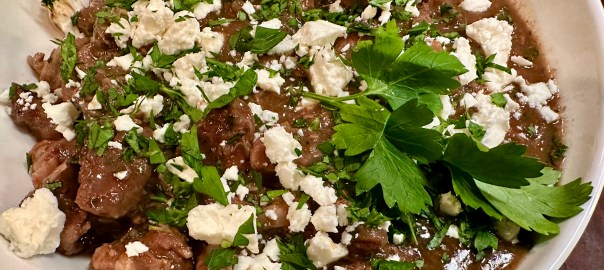
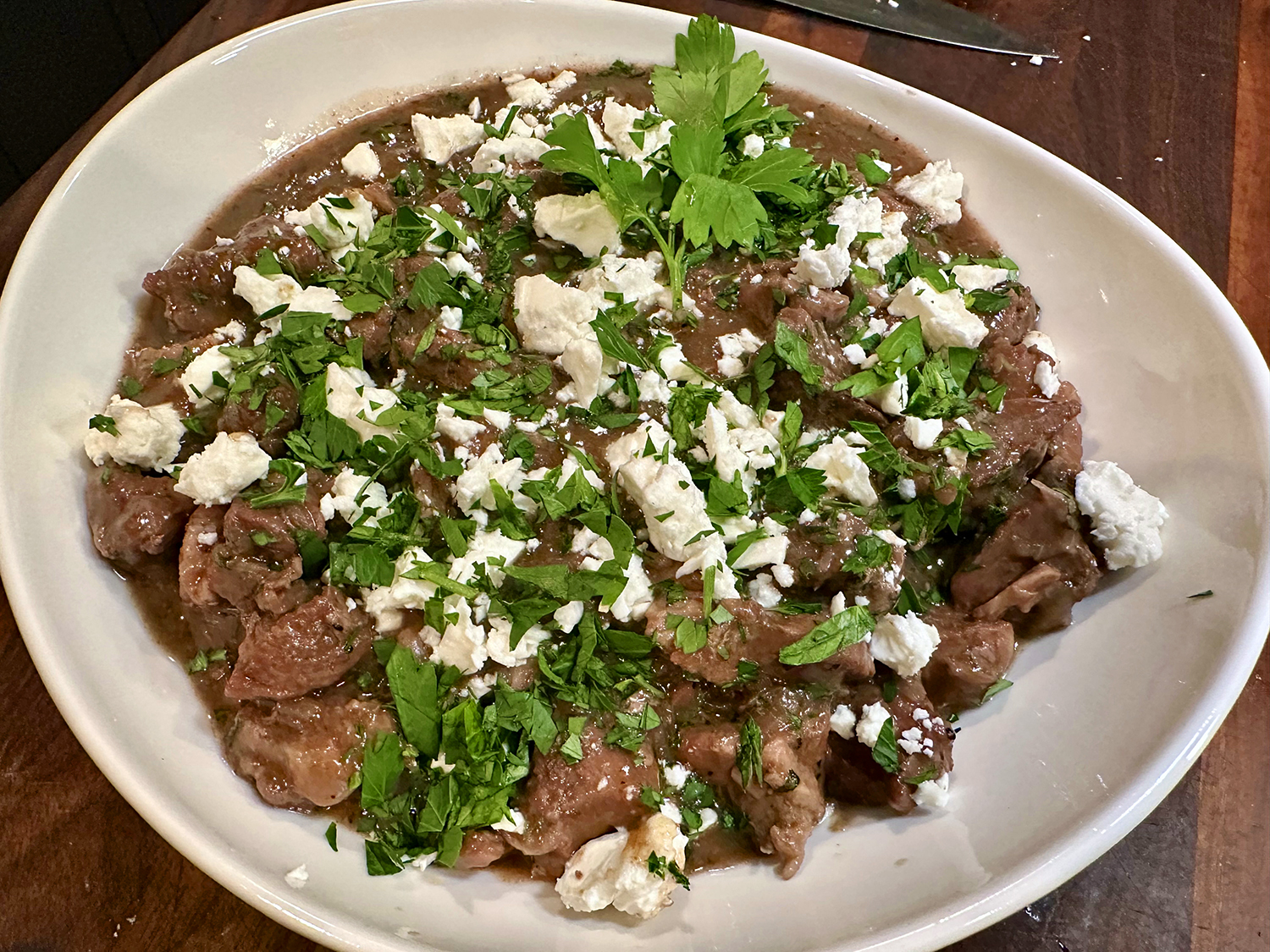
Coriander Braised Pork with Oregano and Feta

Utterly delicious; wonderfully tender and rich, and easy to make as well. This simple, rustic braise is based on the pork stew called afelia from the Mediterranean island-country of Cyprus. The red wine, reduced to concentrate its flavor, lends depth, but the citrusy notes of ground coriander and a spoonful of lemon juice added at the end, balance the richness of the pork.

The oregano and parsley aren’t needed until it’s time to finish the sauce, so you can prep the herbs while the pork cooks. Serve the stew with crusty bread, simply prepared potatoes or a hearty grain such as bulgur, steamed rice or egg noodles would work nicely as well.

Don’t use coriander that has gone stale. This dish relies on the spice for its unique flavor, so it’s important to use coriander that is fresh and fragrant.

Coriander Braised Pork with Oregano and Feta

  • Servings: 6
  • Difficulty: easy
  • Print

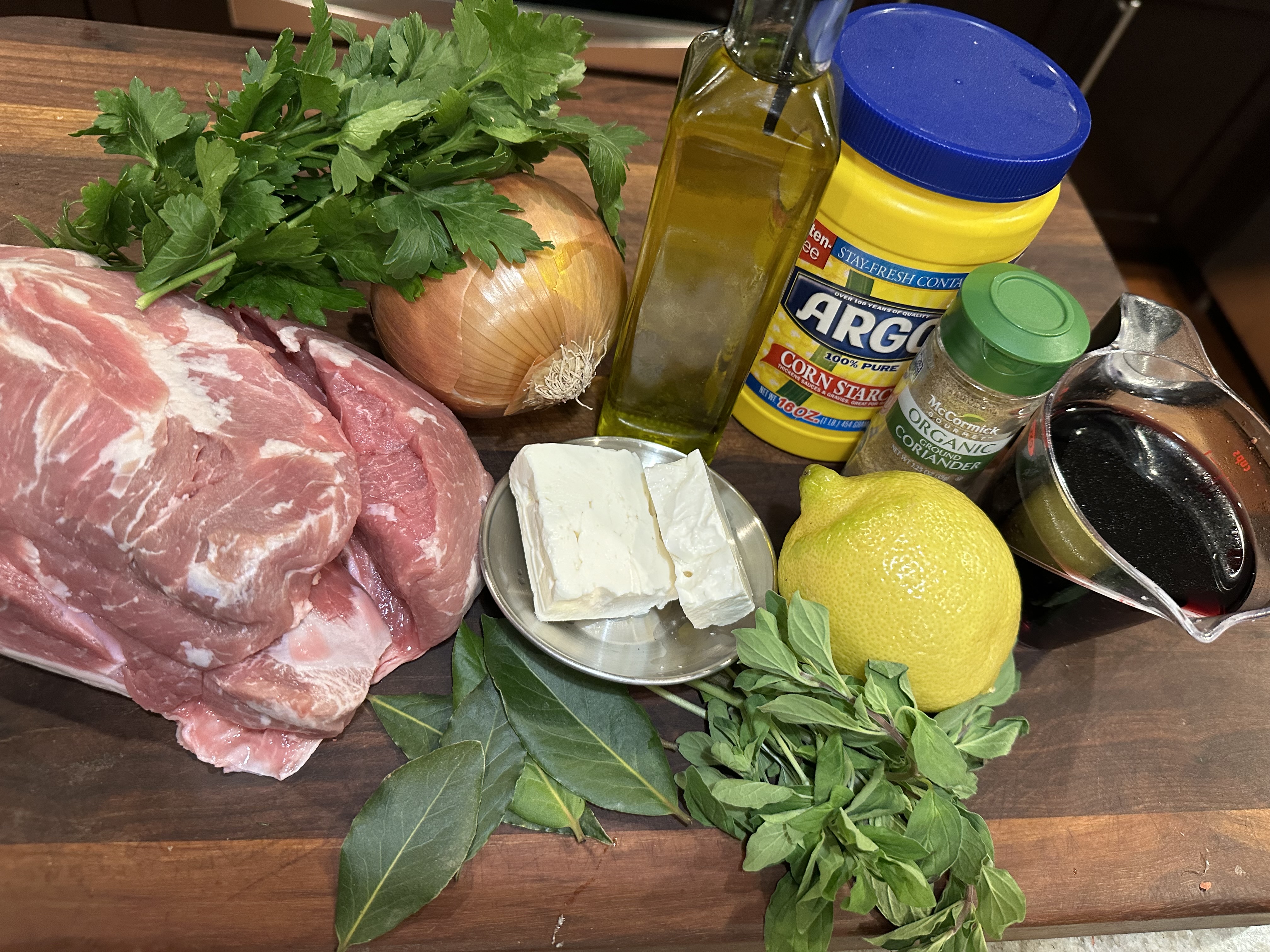
Ingredients

  • 3 Tbsp. extra-virgin olive oil, plus more to serve
  • 1 medium yellow onion, halved and thinly sliced
  • 3 Tbsp. ground coriander
  • 1 cup dry red wine
  • 3 lbs. boneless pork shoulder, trimmed and cut into 1-inch chunks
  • Kosher salt and ground black pepper
  • 6 bay leaves
  • 1 Tbsp. cornstarch
  • 3 Tbsp. minced fresh oregano
  • 1 Tbsp. lemon juice
  • 2 oz. feta cheese, crumbled (½ cup)
  • ¼ cup finely chopped fresh flat-leaf parsley

Directions

  1. On a 6-quart Instant Pot, select More/High Sauté. Add the oil and heat until shimmering. Add the onion and cook, stirring occasionally, until beginning to brown, about 7 minutes. Add the coriander and cook, stirring, until fragrant, about 1 minute.
  2. Add the wine and cook, stirring occasionally, until most of the moisture has evaporated, 2 to 3 minutes. Add the pork, 1 teaspoon salt, ½ teaspoon pepper and the bay; stir, then distribute in an even layer.
  3. Press Cancel, lock the lid in place and move the pressure valve to Sealing. Select Pressure Cook or Manual; make sure the pressure level is set to High. Set the cooking time for 25 minutes. When pressure cooking is complete, allow the pressure to reduce naturally for 15 minutes, then release the remaining steam by moving the pressure valve to Venting. Press Cancel, then carefully open the pot.
  4. Using a slotted spoon, transfer the pork to a medium bowl. Using a large spoon, skim off and discard the fat from the surface of the cooking liquid. Remove and discard the bay leaves. Select More/High Sauté and bring to a boil. Cook, stirring occasionally, until the liquid is reduced to about 1 cup, about 10 minutes.
  5. In a small bowl, stir together the cornstarch and 2 tablespoons water, then stir into the pot. Cook, stirring constantly, until thickened, about 1 minute. Press Cancel to turn off the pot. Stir in the pork, oregano and lemon juice. Taste and season with salt and pepper. Transfer to a serving dish, sprinkle with feta and parsley, then drizzle with additional oil.

http://www.lynnandruss.com

Recipe from Milk Street’s cookbook “Fast and Slow”

Pork Tenderloins with Sun-Dried Tomatoes and Green Olives

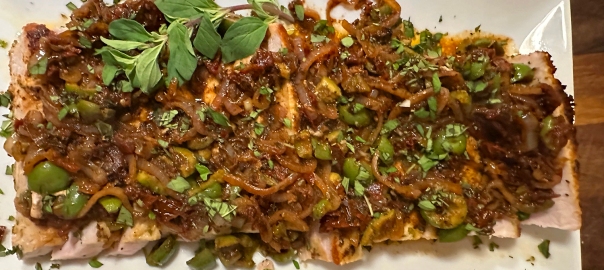
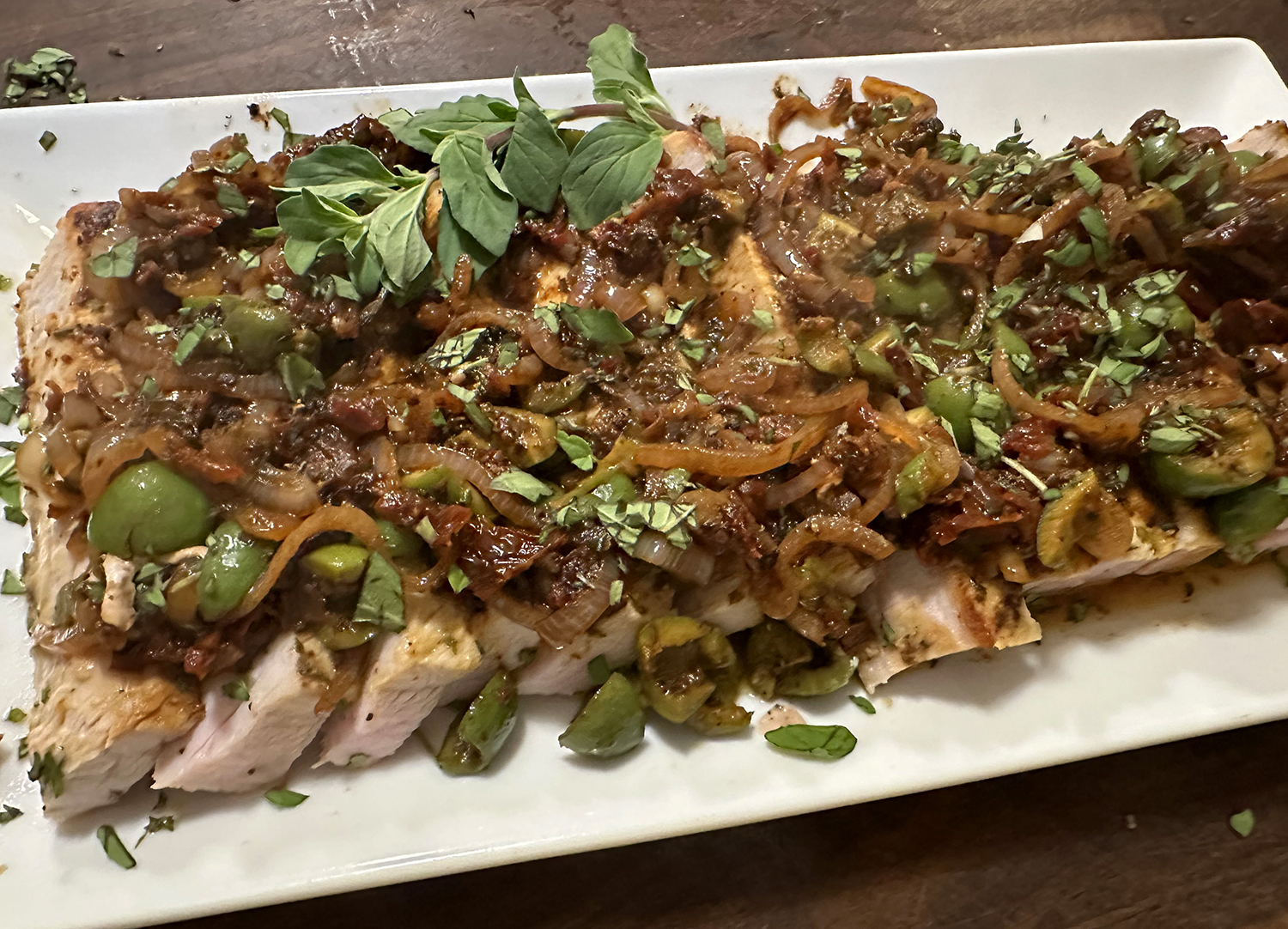
Oodles of flavor in this simple and quick weeknight recipe. Inspired by a recipe in “How to Roast a Lamb” by chef Michael Psilakis, two umami-packed ingredients are used for this dish: sun-dried tomatoes and olives. But instead of applying the ingredients to lamb, they are used as a big Mediterranean flavor boost for lean, mild pork tenderloin.

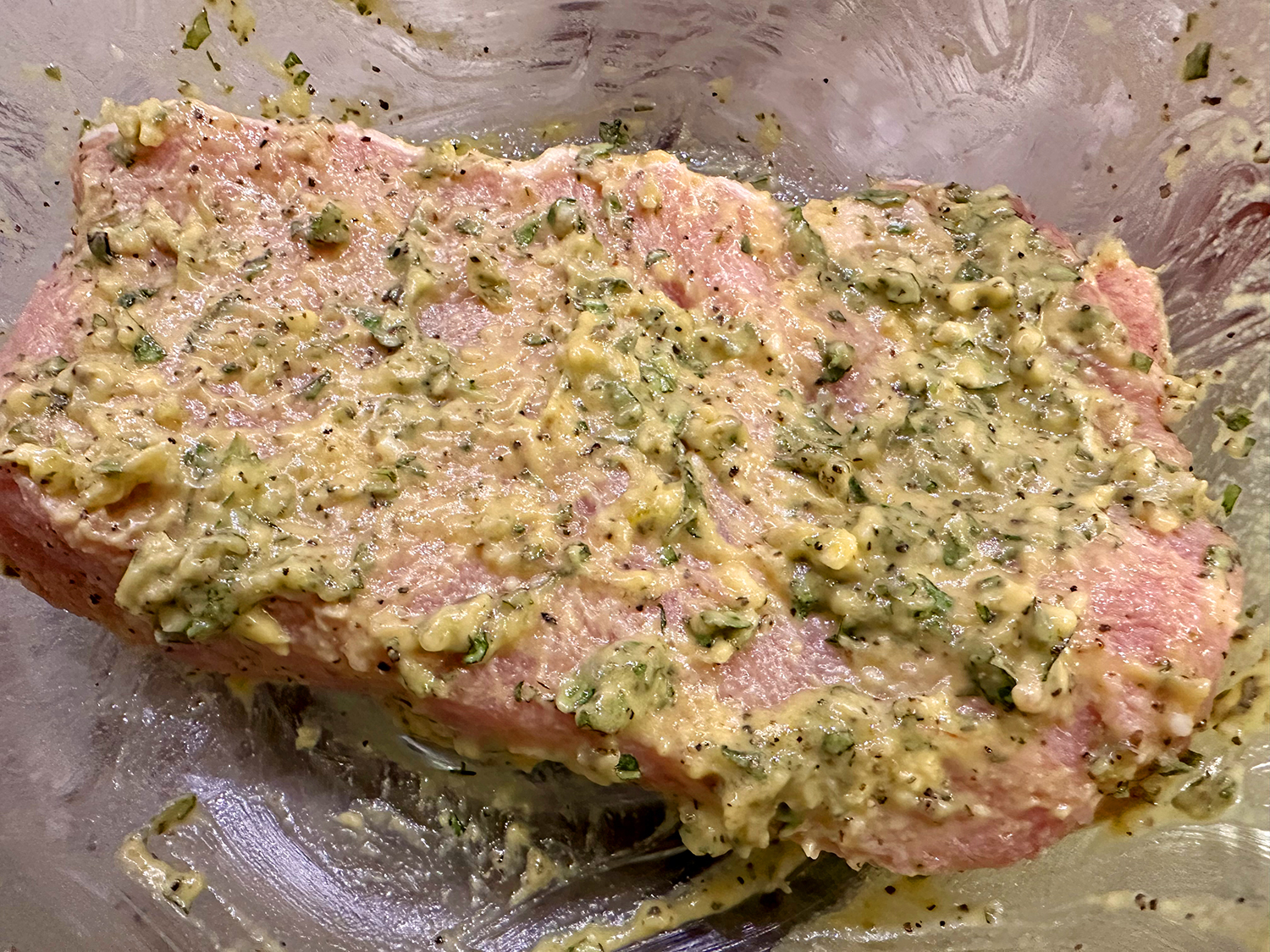
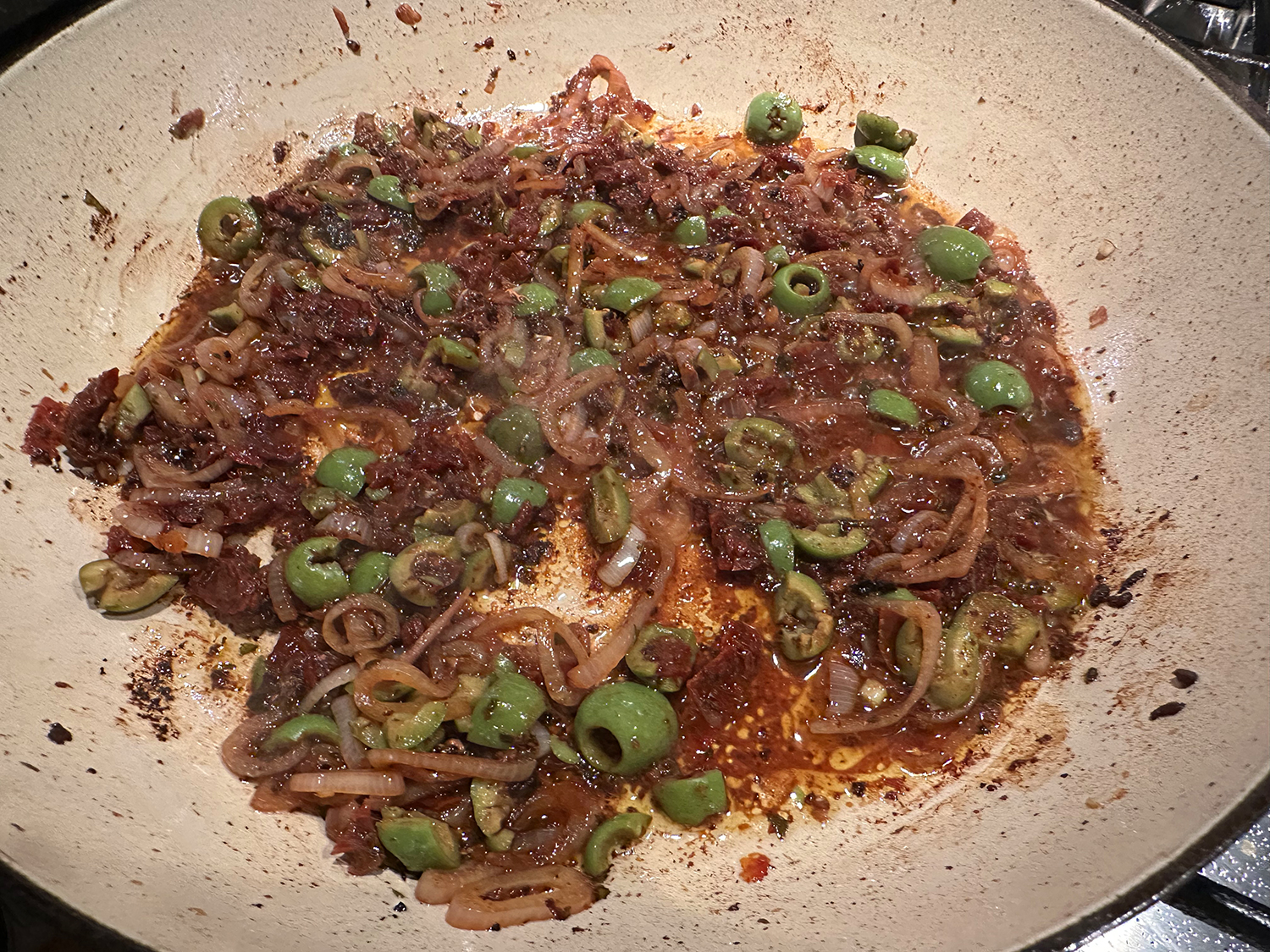
They are combined to make a relish-like pan sauce to finish pork tenderloins seasoned with Dijon, garlic and oregano. A quick sear followed by pan-roasting ensures the meat gets caramelization on the exterior, but also cooks speedily. Serving suggestions: a simple salad, carrot medallions, crusty bread, or rice or orzo pilaf. BTW, you will need an oven-safe 12-inch skillet for this recipe.

Don’t sear the pork until deeply browned. Instead, aim for light, spotty charring, which takes about 4 minutes. Also, don’t worry if the drippings in the skillet become very dark and even smoke lightly during roasting. Deglazing the pan to make the sauce will loosen the drippings.

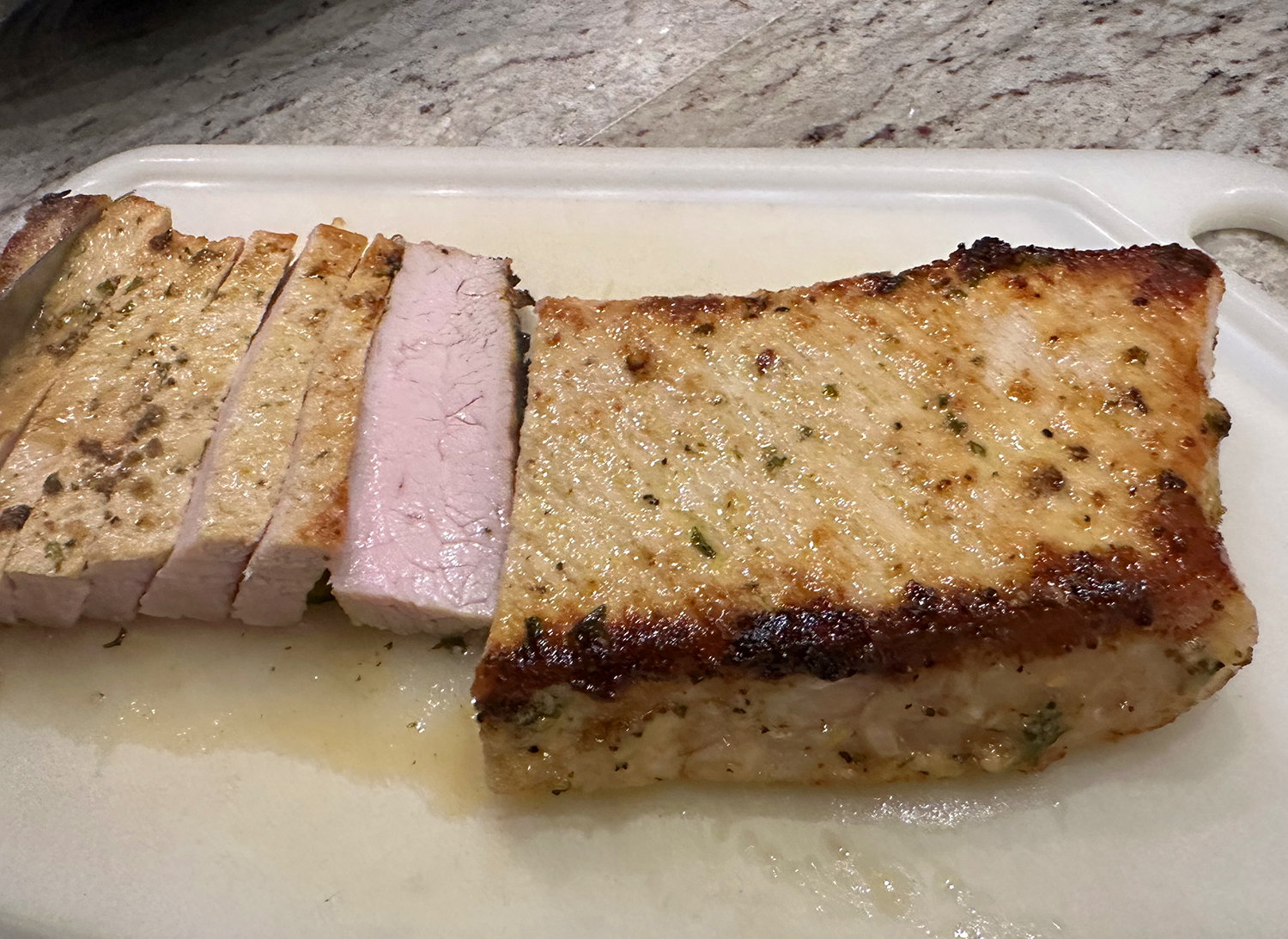
Confession. It was our intention to cut the amount of meat in half (keeping the other ingredients the same). While at the grocery store, we both had a senior moment because we picked up a pork loin filet, and not a pork tenderloin, which usually come two to a package. In all honesty, the cooking times worked just as well with the filet. All-in-all, we loved the dish which we paired with cooked carrot medallions and a side salad.

Pork Tenderloins with Sun-Dried Tomatoes and Green Olives

  • Servings: 6
  • Difficulty: easy
  • Print

Ingredients

  • 4 Tbsp. grapeseed or other neutral oil, divided
  • 2 tsp. minced fresh oregano, plus 1 tablespoon chopped fresh oregano
  • 3 medium garlic cloves, finely grated
  • 2 Tbsp. dijon mustard
  • Kosher salt and ground black pepper
  • 2 1¼-lb. pork tenderloins, trimmed of silver skin, halved crosswise
  • 1 medium shallot, halved and thinly sliced
  • ½ cup drained oil-packed sun-dried tomatoes, finely chopped
  • ¼ cup pitted green olives, roughly chopped
  • 2 tsp. red wine vinegar
Directions

  1. Heat the oven to 450°F with a rack in the middle position. In a large bowl, stir together 2 tablespoons of oil, the minced oregano, garlic, mustard, ¾ teaspoon salt and ½ teaspoon pepper. Add the pork, turn to coat and rub the seasonings into the meat.
  2. In an oven-safe 12-inch skillet over medium-high, heat the remaining 2 tablespoons oil until shimmering. Add the pork and cook, turning occasionally, until lightly browned on all sides, about 4 minutes.Transfer the skillet to the oven and roast until the center of the thickest piece reaches 135°F or is just slightly pink when cut into, 9 to 12 minutes. Remove from the oven; the handle will be hot. Using tongs, transfer the pork to a platter and let rest while you make the sauce.
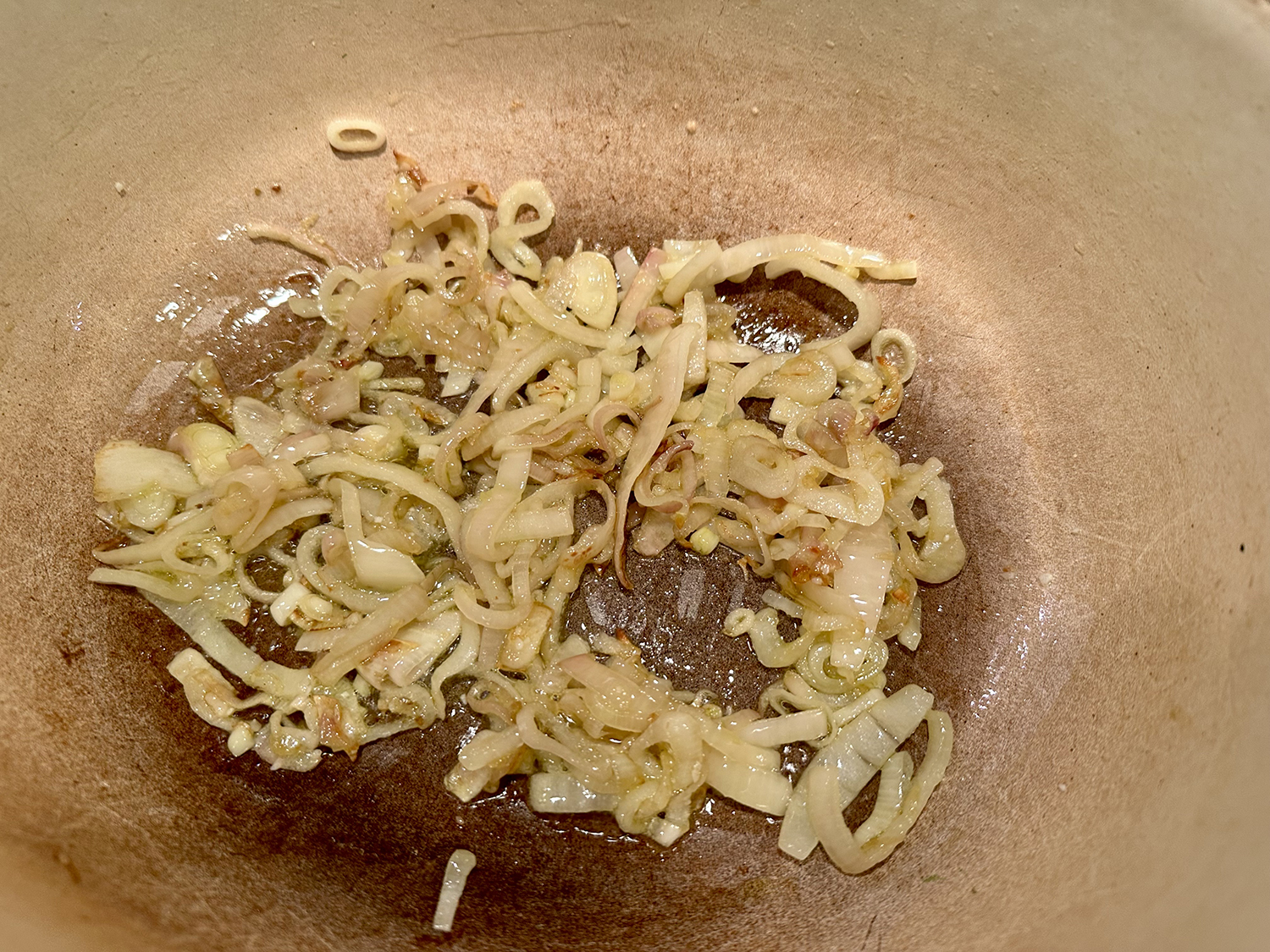
  3. Set the skillet over medium and add the shallot. Cook, stirring constantly, until the shallot is lightly browned, about 1 minute.Add the sun-dried tomatoes, olives, vinegar and ¼ cup water, then cook, scraping up any browned bits, until the tomatoes are plumped and the mixture has the consistency of a loose relish, about 3 minutes. Remove the pan from the heat. Thinly slice the pork and return to the platter. Spoon the sauce over it and sprinkle with the chopped oregano.

http://www.lynnandruss.com

Recipe by Courtney Hill for Milk Street

Greek-Style Spinach Rice with Shrimp and Dill

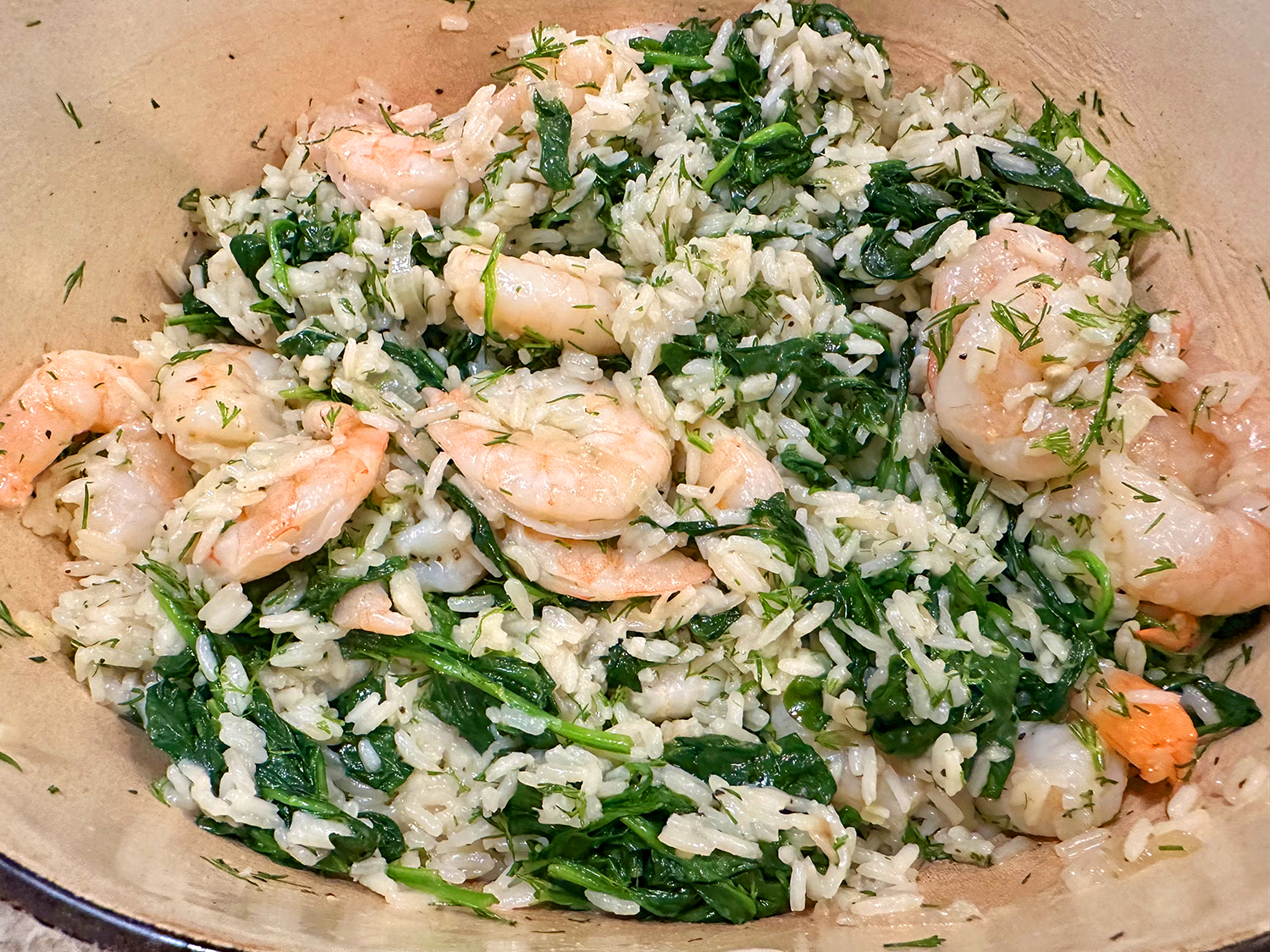
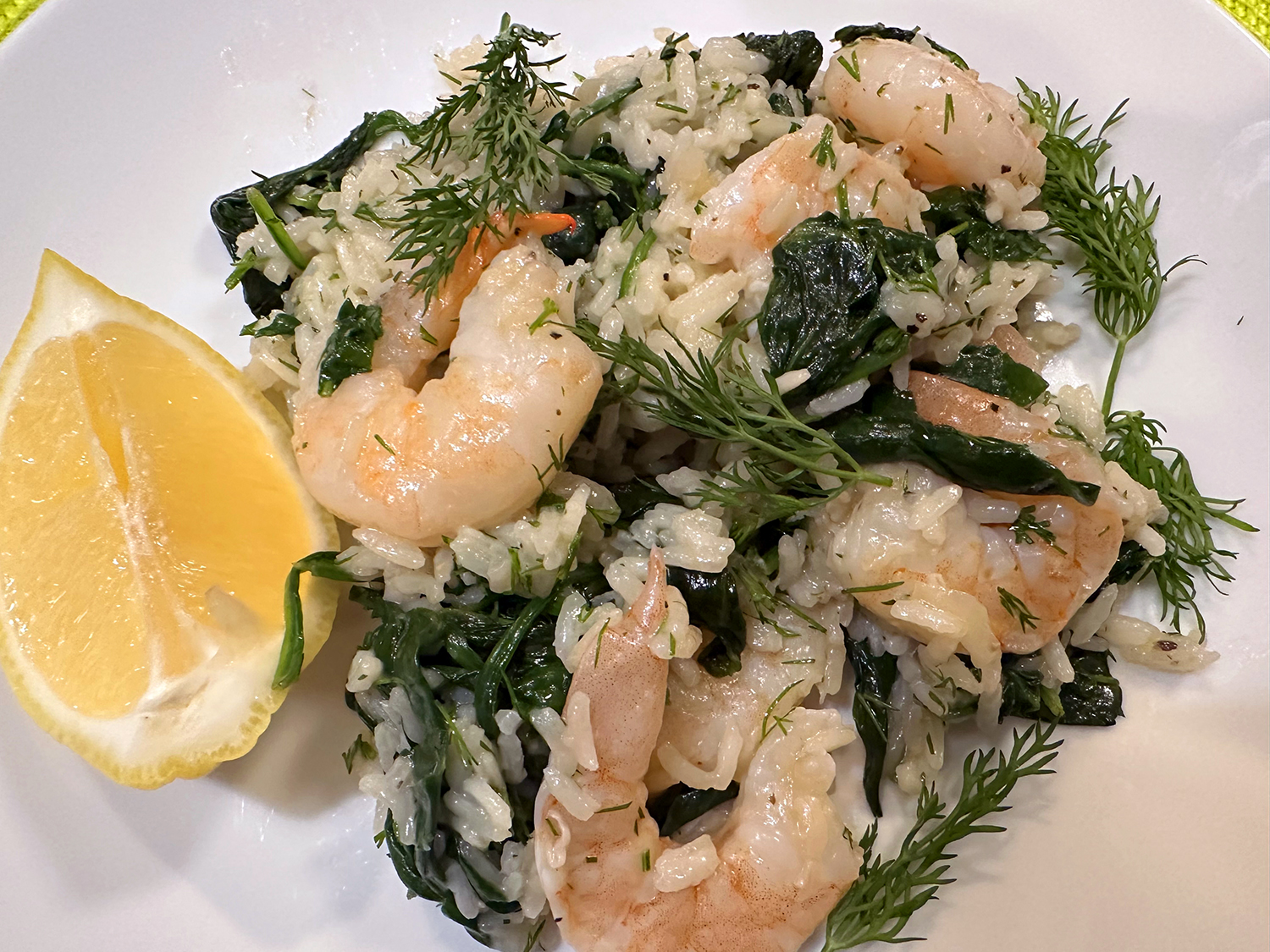
Loved this shrimp and rice recipe from Milk Street, where we found it in a recent issue of their magazine under Tuesday Night Dinners. We try to have a seafood/fish dinner at least once a week, and this was not only easy, but delicious!

Spanakorizo, or spinach rice (literally translated), is a homestyle Greek dish. The addition of shrimp creates a complete one-pot meal. With dill and lemon as accents, the flavors are fresh and bright, but a little butter used to wilt the spinach and olive oil drizzled on as a final flourish add a satisfying richness. To simplify prep, look for shrimp that are sold already peeled and deveined.

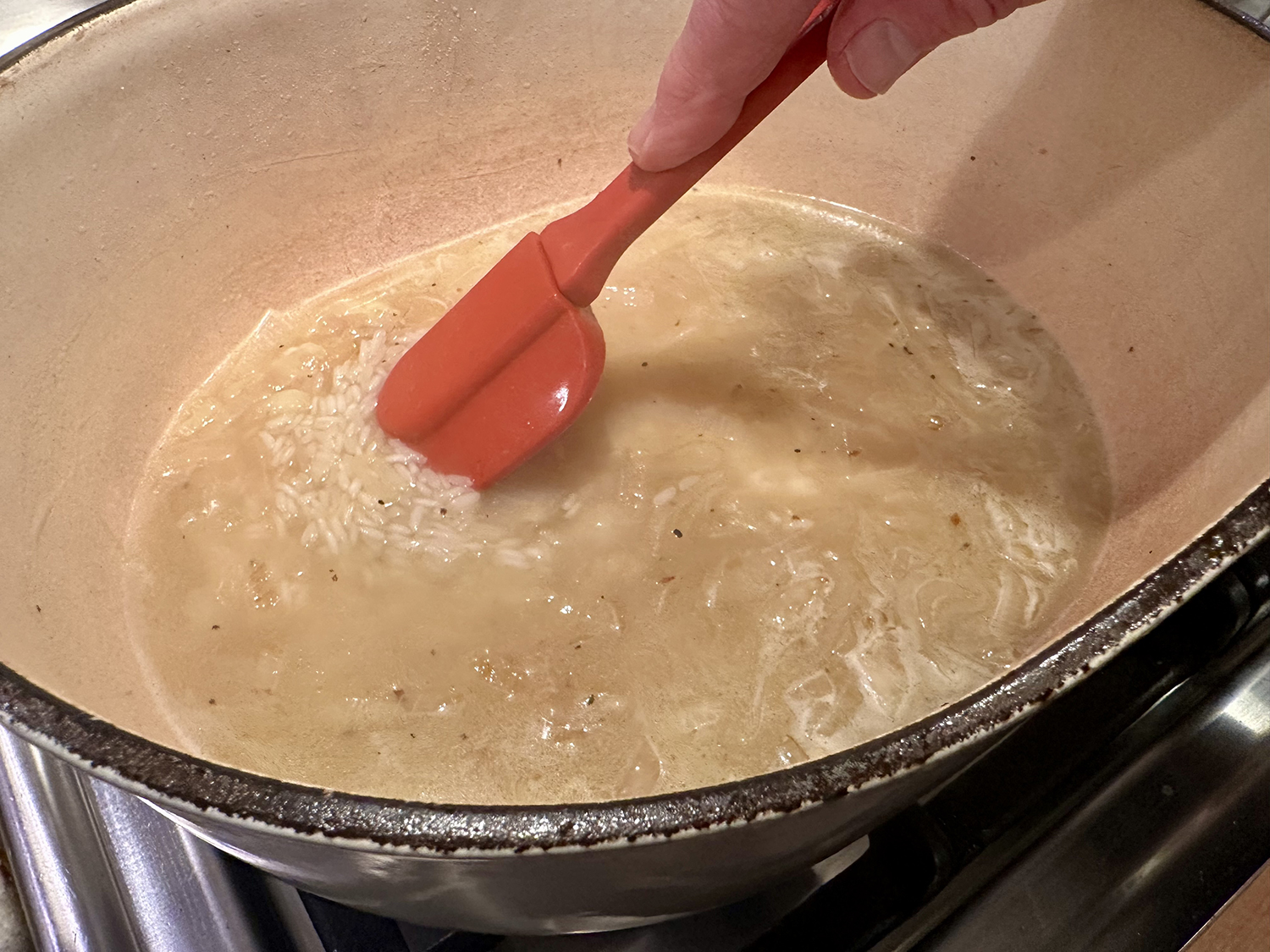
Don’t use a wide pot, such as a Dutch oven, to make this recipe. We found that a large surface area can result in unevenly cooked grains. The narrower diameter of a saucepan is the better choice. Don’t peek at the shrimp after adding them to the rice, except while stirring them into the rice after the first 10 minutes. Keeping the lid on traps heat in the pan so the shrimp cook through.

Greek-Style Spinach Rice with Shrimp and Dill

  • Servings: 4
  • Difficulty: easy
  • Print

Ingredients

  • 2 Tbsp. salted butter
  • 2 5-oz. containers baby spinach
  • 2 Tbsp. extra-virgin olive oil, plus more to serve
  • 2 medium shallots, halved and thinly sliced
  • Kosher salt and ground black pepper
  • 1½ cups long-grain white rice, rinsed and drained
  • 1 lb. extra-large (21/25 per pound) shrimp, peeled (tails removed), deveined and patted dry
  • 1 cup lightly packed fresh dill, roughly chopped
  • 1 tsp. grated lemon zest, plus 3 Tbsp. lemon juice

Directions

  1. In a large saucepan over medium-high, heat the butter until bubbling. Add the spinach and cook, stirring, until wilted but still bright green, about 1 minute. Transfer to a bowl, including any liquid released by the spinach; set aside.
  2. Set the same pan over medium-high. Add the oil, shallots and ¼ teaspoon salt, then cook, stirring often, until the shallots are translucent, about 2 minutes. Add the rice, 2½ cups water, and ¼ teaspoon each salt and pepper. Stir to combine, then bring to a boil. Cover, reduce to low and cook until the liquid has been absorbed, 15 to 18 minutes. Meanwhile, season the shrimp with salt and pepper.
  3. When the rice is done, remove the pan from the heat. Quickly and evenly scatter the shrimp over the surface, re-cover and let stand for 10 minutes. Using a fork, fluff the rice and fold in the shrimp. Re-cover and let stand until the shrimp are opaque throughout, another 5 to 7 minutes.
  4. Add the spinach with its liquid, the dill and the lemon zest and juice, then fold until well combined. Taste and season with salt and pepper. Serve drizzled with additional oil.

http://www.lynnandruss.com

Recipe by Rebecca Richmond for Milk Street

Black Pepper Beef

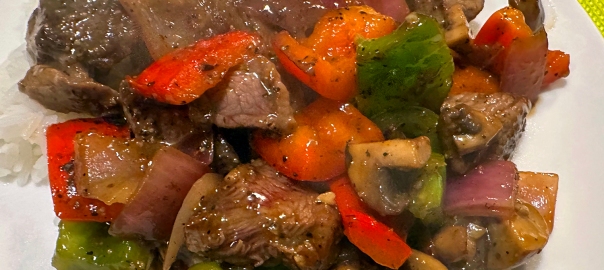
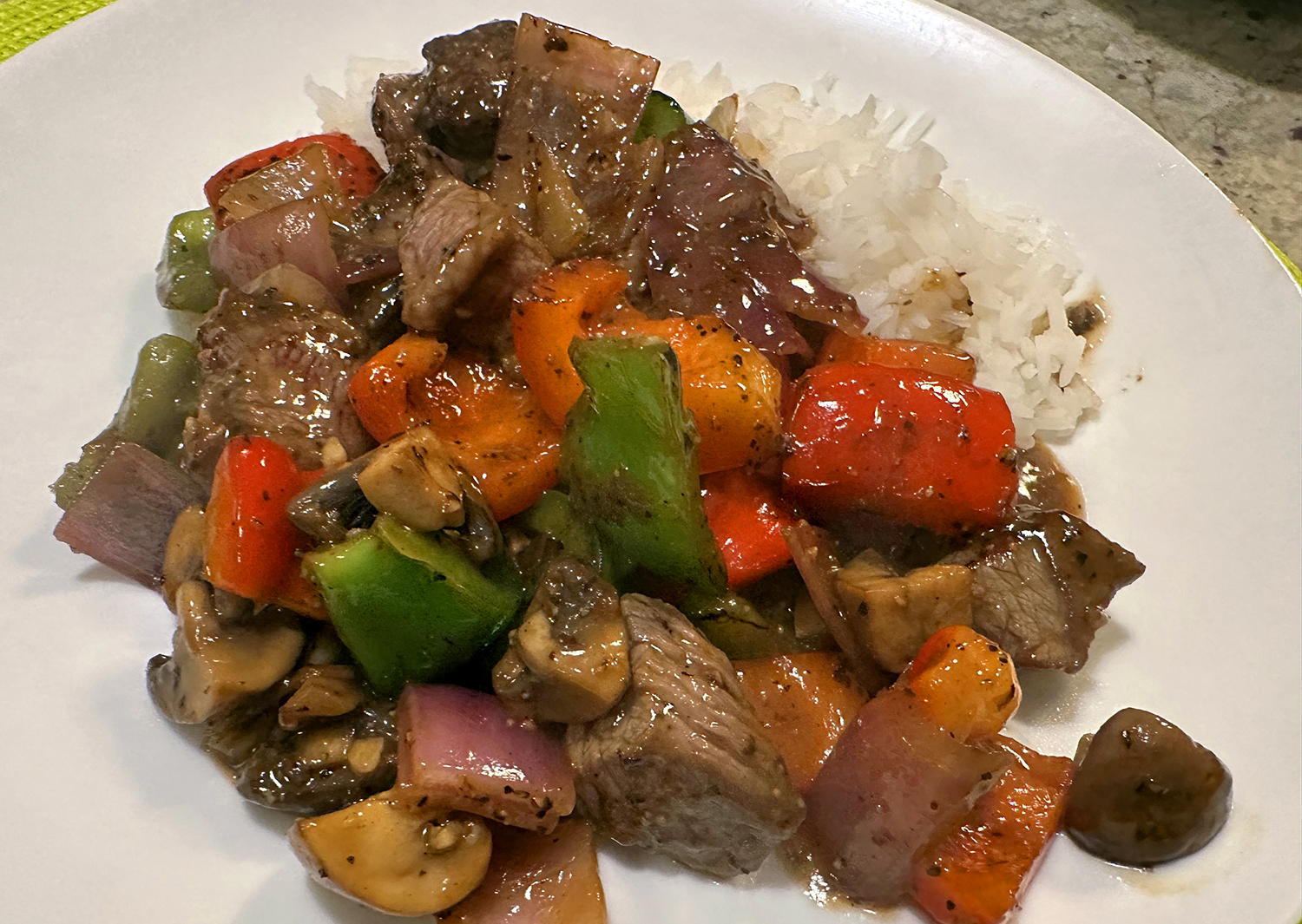
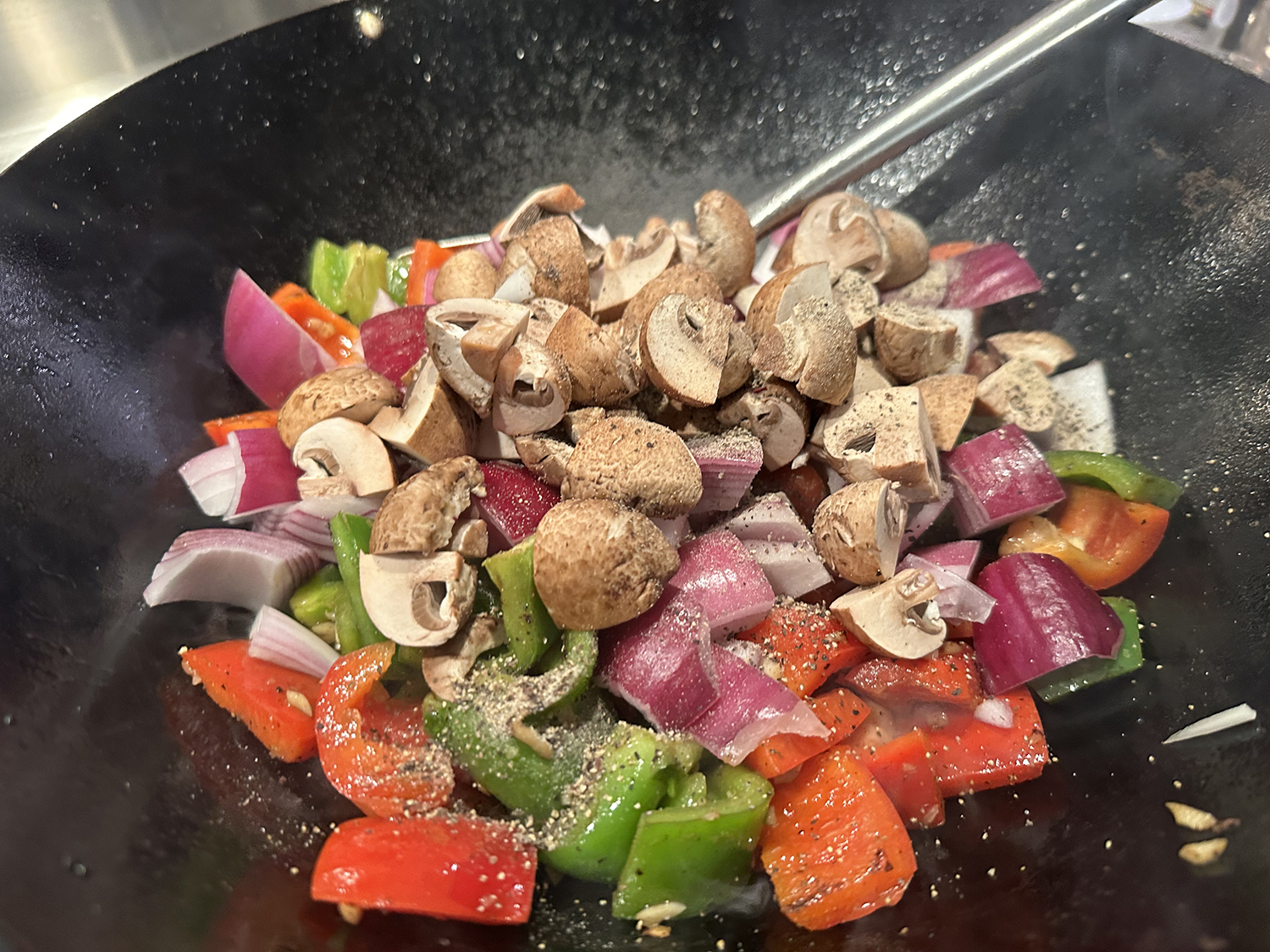
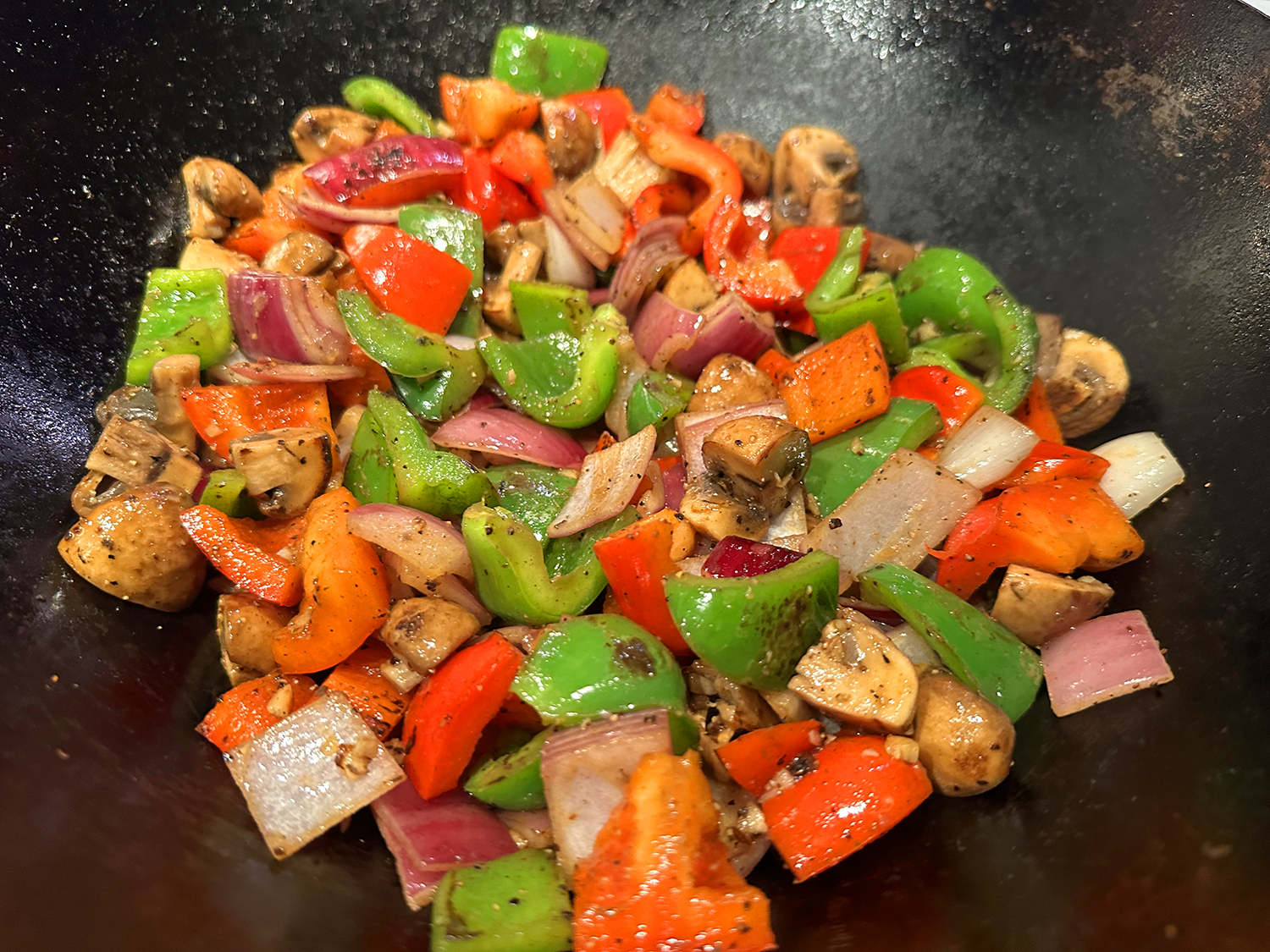
Hands-down better than your local Chinese take-out, this Chinese pepper steak recipe is a quick and easy stir-fry loaded with tender beef, peppers and onions in a luscious brown sauce. It hails from “The Woks of Life” by the Leung family.

Most of the time required for this recipe is in the preparation, but it’s not actually difficult to pull off. So long as you have everything prepared and within reach, things will go smoothly at the wok. The active cooking time in your wok or pan is less than 15 minutes before it’s ready to be served with steamed white rice.

Avoid any “pre-cut beef for stir-fry” that your grocery store sells. It usually looks like long rectangular beef sticks, cut from lean beef. These are too thick and chunky, and generally turn out tough. So what IS the best cut of beef for stir-fry?

The original recipe called for beef tenderloin. At nearly $35 per pound, we decided to go for something more reasonably priced and chose sirloin. Another option is flank steak, but we don’t advise using chuck roast which was listed as a substitute.

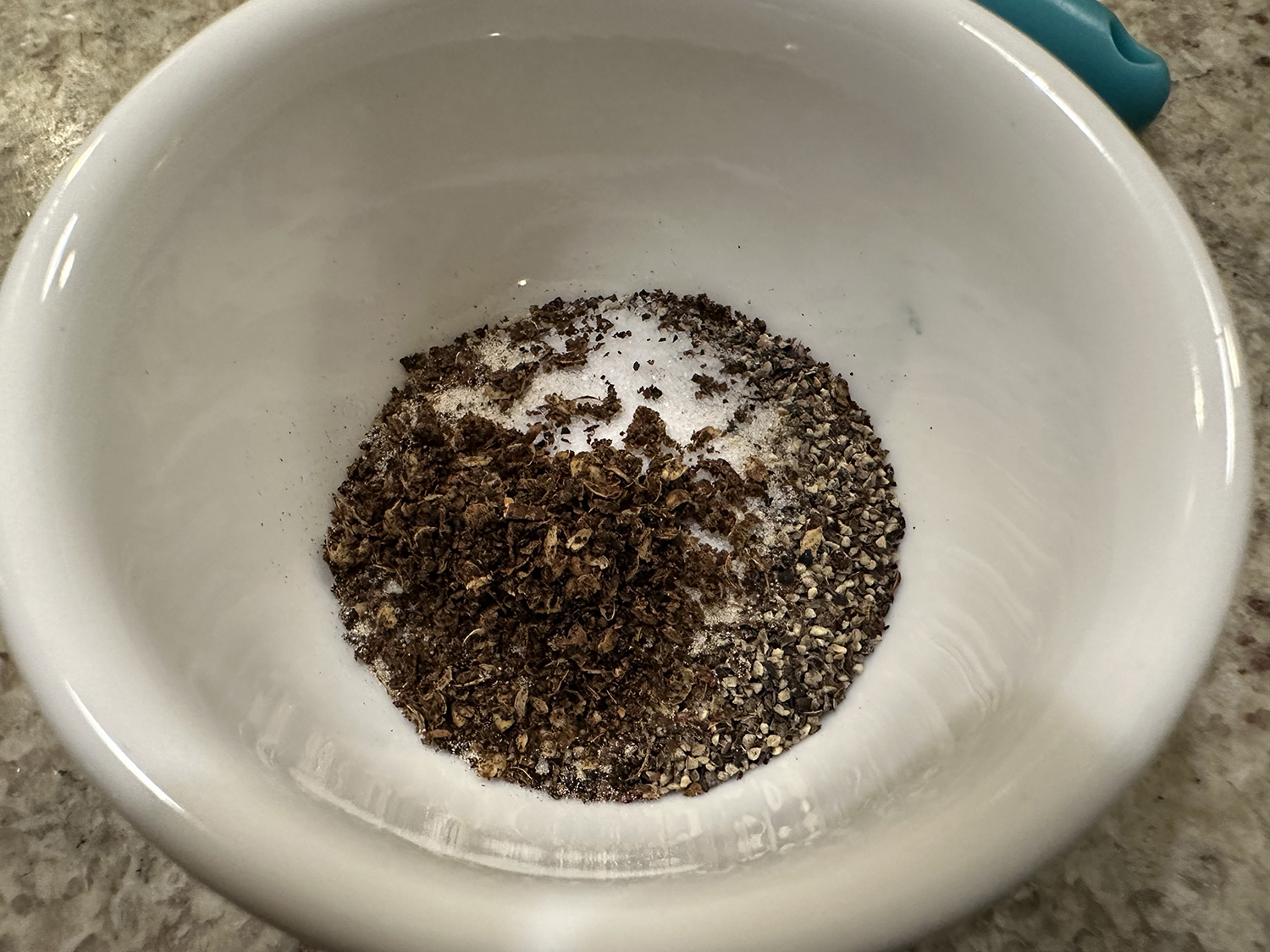
With several different pepper spices, we opted to use the lower amount, 1 1/2 tablespoons of ground black pepper. Using a full 2 tablespoons will likely be too much. While black pepper is a constant companion for salt in American kitchens, you don’t see it very often in Chinese cooking (it’s almost always white pepper.)

Black Pepper Beef

  • Servings: 4
  • Difficulty: easy
  • Print

Ingredients

  • For Velveting the Beef:
  • 1 lb. flank steak, (or sirloin steak)
  • 2 Tbsp. water
  • 1 tsp. cornstarch
  • 1 Tbsp. neutral oil
  • 1/4 tsp. table salt
  • For the Sauce:
  • 1/2 cup beef stock or water, warmed
  • 1 Tbsp. oyster sauce
  • 1 Tbsp. light soy sauce
  • 1 tsp. ketchup
  • 1/2 tsp. sugar
  • 1/4 tsp. sesame oil
  • For the Pepper Seasoning:
  • 1 1/2 to 2 Tbsp. coarsely ground black pepper
  • 1/2 tsp. white pepper
  • 1/2 tsp. ground Sichuan peppercorns
  • For the Rest of the Dish:
  • 1 green bell pepper, cut into 1″pieces
  • 1 red bell pepper, cut into 1″pieces
  • 1 medium red onion, cut into 1″pieces
  • 4 oz. cremini or button mushrooms, quartered
  • 2 Tbsp. neutral oil
  • 1/2 tsp. ginger
  • 2 cloves garlic (chopped)
  • 2 Tbsp. Shaoxing wine
  • 2 tsp. cornstarch
  • 1 Tbsp. water

Directions

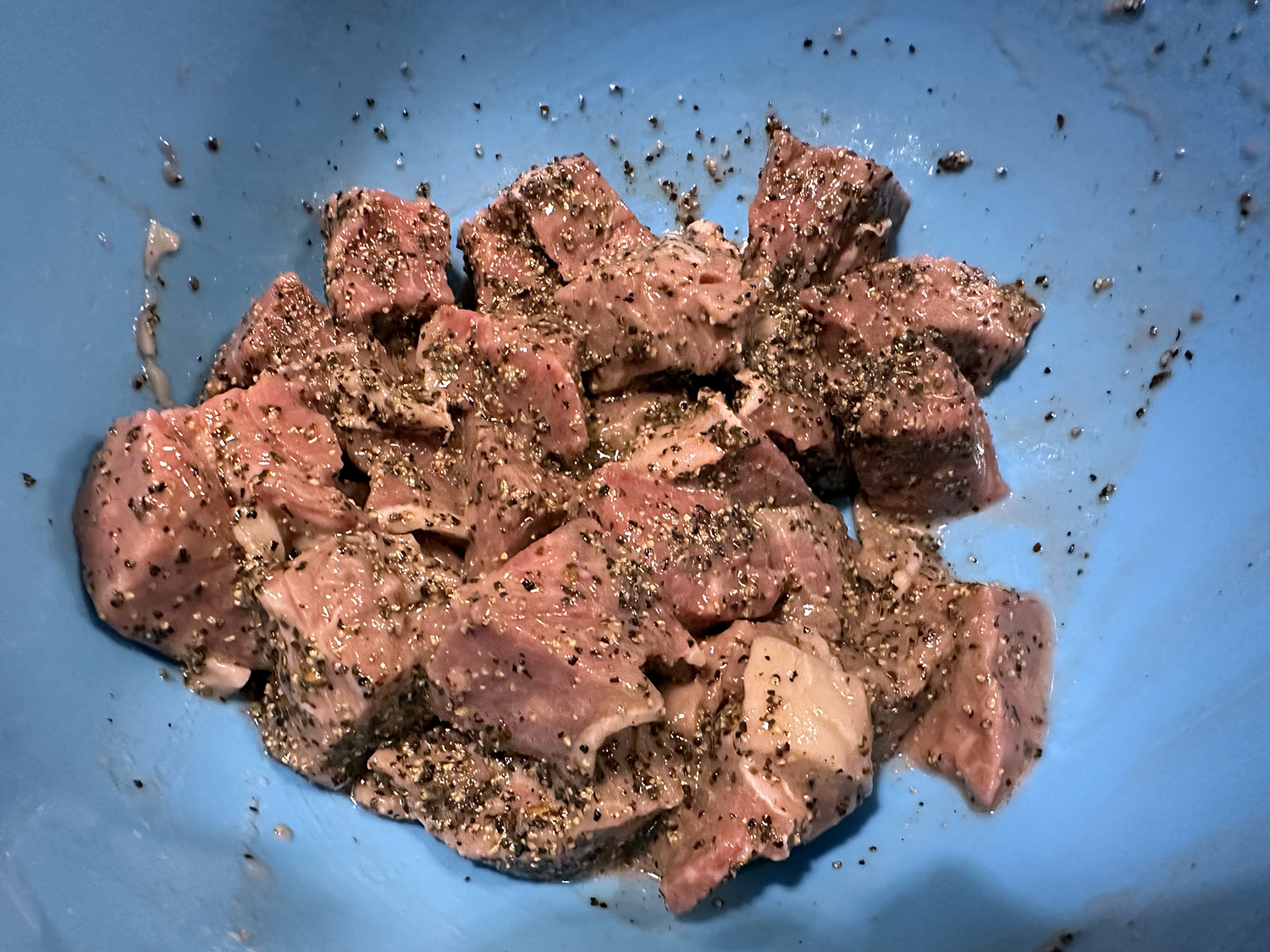
  1. Slice the beef into 1 1/4-inch cubes. Then velvet the beef: in a medium bowl, mix the beef with 2 Tbsp. water, 1 tsp. cornstarch, 1 Tbsp. neutral oil, and 1/4 tsp. table salt. Toss to coat, then set aside for at least 30 minutes.
  2. Make the sauce by mixing together the beef stock, cornstarch, oyster sauce, Shaoxing wine, soy sauce, ketchup, sugar, and sesame oil. Set aside.
  3. Make the pepper seasoning in a small bowl by combining black pepper, white pepper, ground Sichuan peppercorns, and salt. Season the beef cubes with 2/3 of the pepper mix, pressing the spices into the beef. Reserve the rest for later.
  4. Cut the bell peppers and onion into 1-inch pieces. You can also cut them into thin strips if you like. Just make sure that the pepper and onion pieces are all about the same size, so they cook evenly.
  5. Heat the wok over high heat until smoking. Add 1 tablespoon of oil to coat the wok. Sear the beef on both sides, about 30 seconds per side. Give everything a final stir, transfer it to a plate, and set aside. The beef should be about 80% cooked.
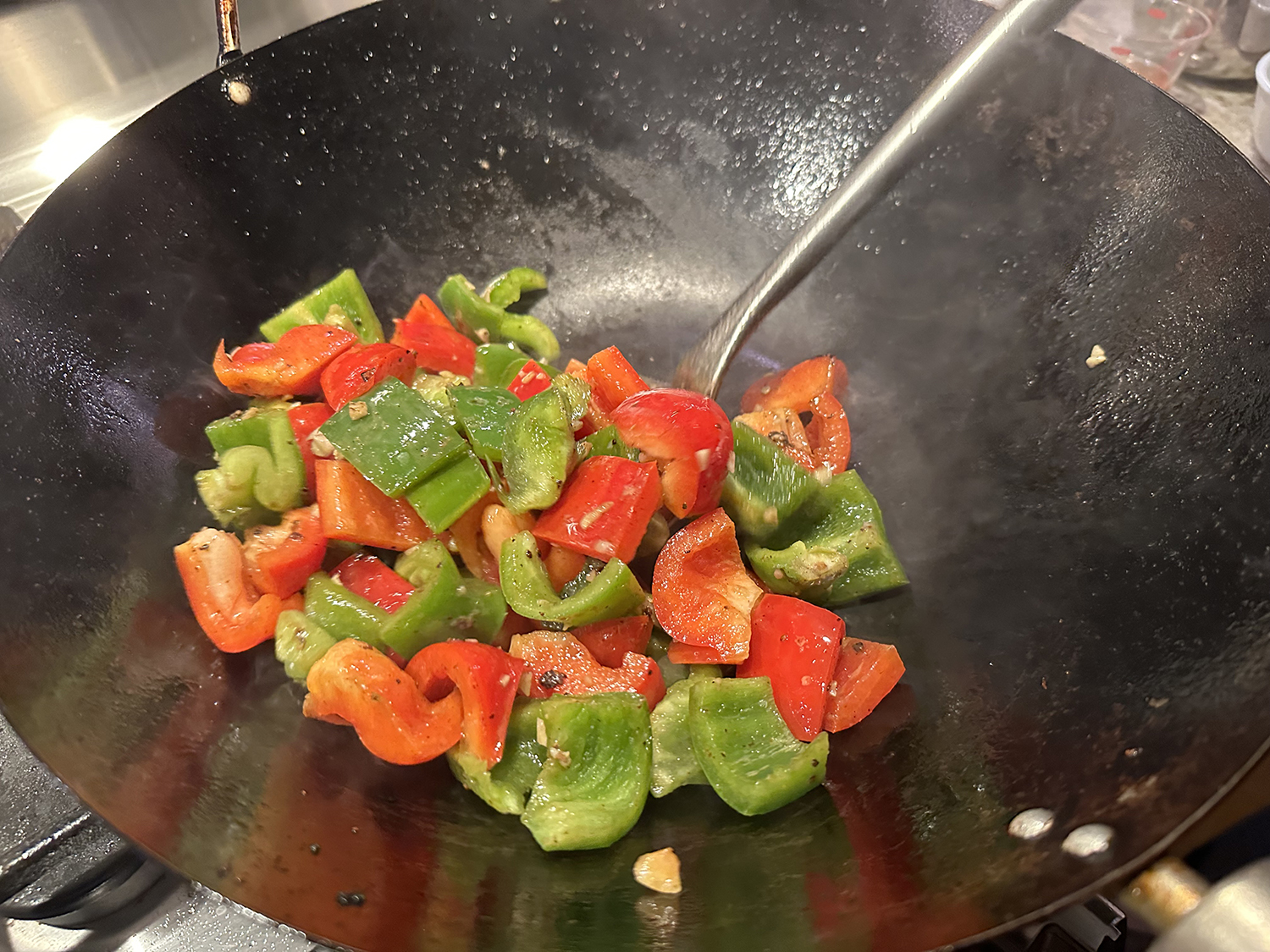
  6. Reduce the heat to medium-high. Add the remaining tablespoon of oil. Toss in the ginger, and caramelize for about 10 seconds. Then add the garlic, bell peppers, and onions. Stir-fry for 1 minute. Pour the Shaoxing wine around the perimeter of the wok, then stir-fry for 1 minute.
  7. Add the sauce mixture, and stir it around to deglaze, loosening any browned bits in the wok. Combine 2 tsp. cornstarch and 1 Tbsp. water in a small bowl to make a slurry. Drizzle half the slurry into the wok, stirring constantly until it is thick enough to coat a spoon.
  8. Add the beef along with any juices. Gently toss with the sauce and vegetables until combined.
  9. At this point, if the sauce is not thick enough, add the remaining cornstarch slurry and stir-fry for another 10 to 15 seconds to thicken. Once the sauce is simmering and thickened to your liking, transfer it to a serving plate, and serve it with steamed rice!

http://www.lynnandruss.com

Recipe from The Woks of Life by Bill Leung

Pork Pot Roast with Apricots, Cardamom and Ginger

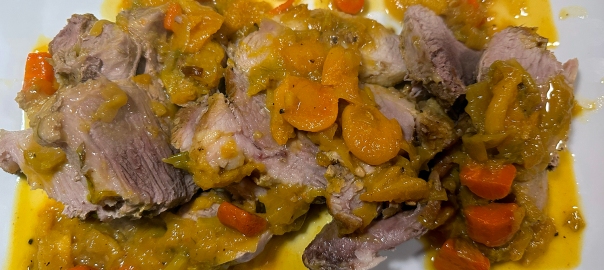
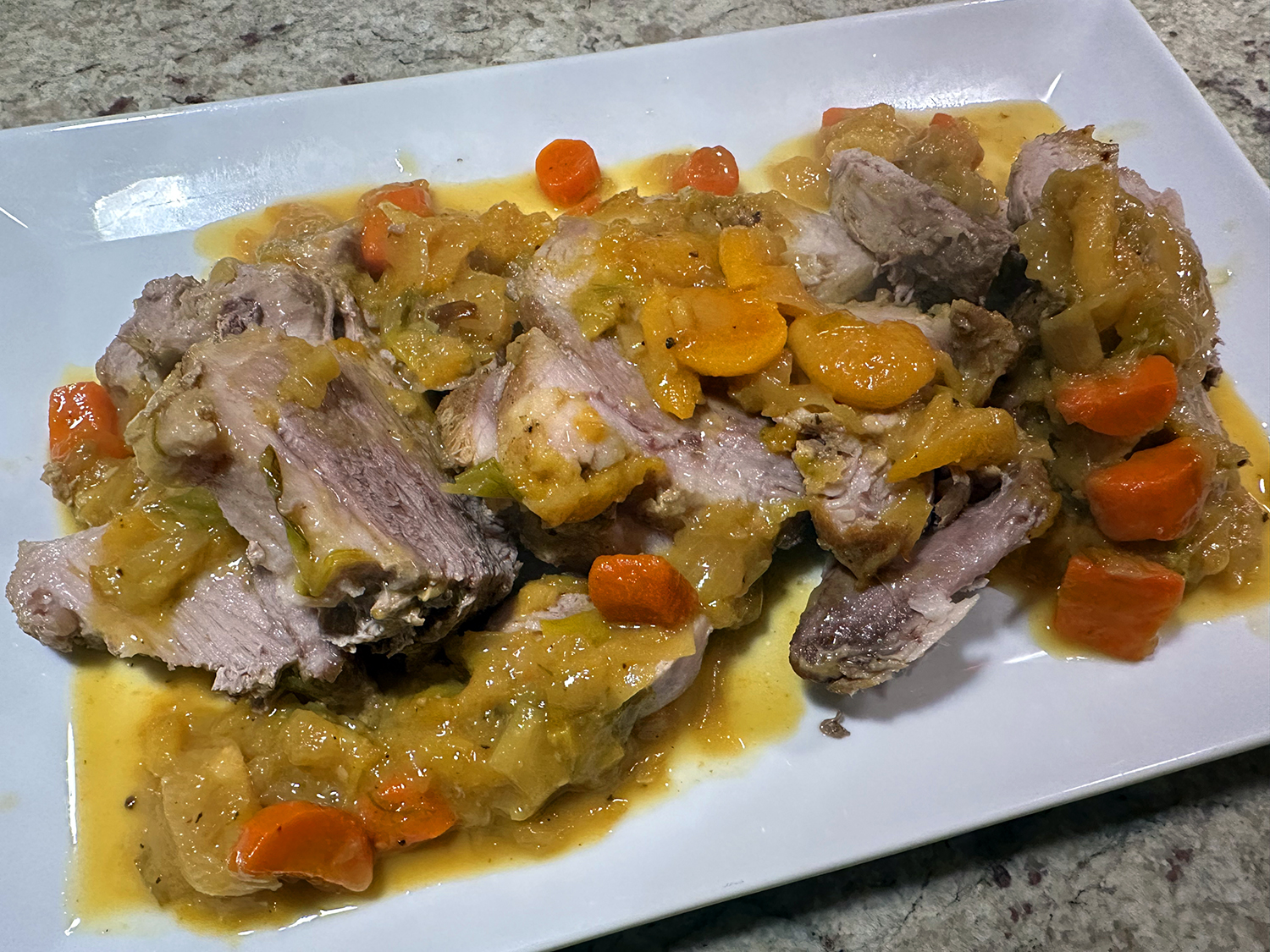
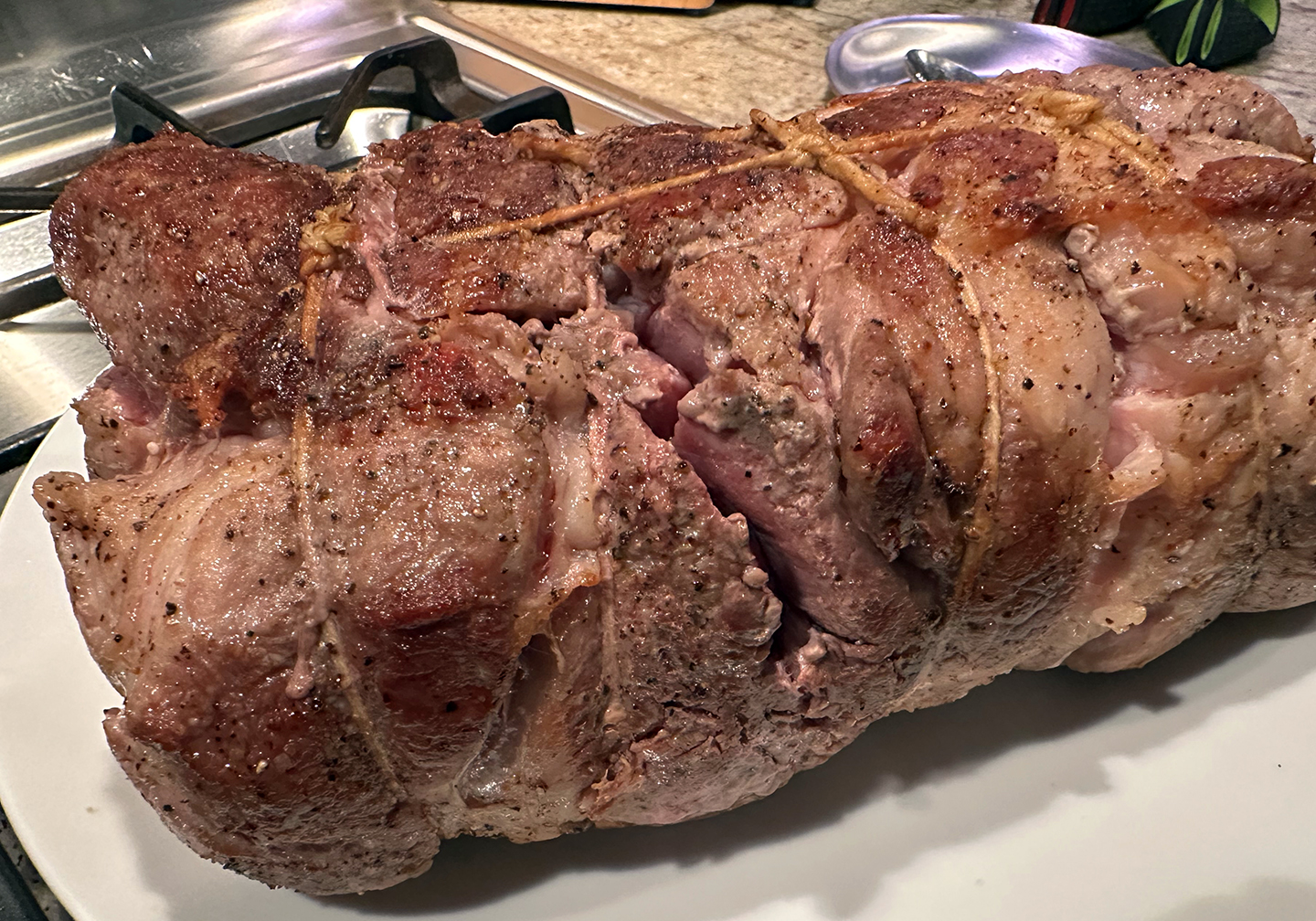
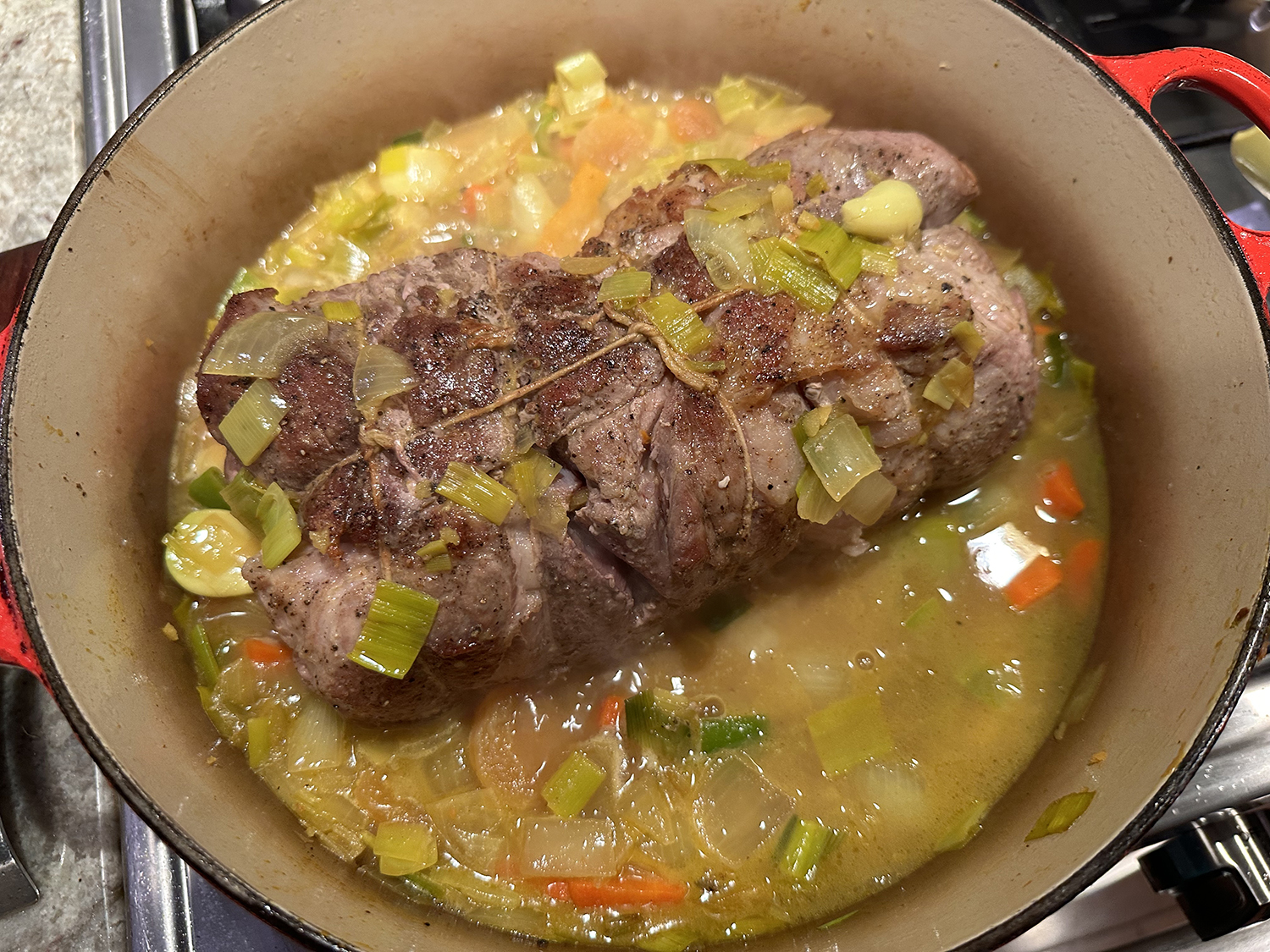
In a word, ASTOUNDING! Also, elegant, classic and simple. It’s a one-pot meal that’s perfect for Sunday night. Yes it takes a while to make, but most of it will be the time spent in the oven. Pork and fruit are the perfect pairing, as we’ve seen time and again with recipes like holiday ham with pineapple rings, or applesauce spooned over pork chops. It’s that pleasure of sweet-tart-savory combinations.

In this version, chef-author Molly Stevens uses dried apricots because their pale orange flesh collapses into the sauce, which comes out every bit as pretty as it is tasty. The cardamom lends the whole dish its exotic perfume, while being backed up by a gang of other compatible flavors—ginger, turmeric, cayenne, garlic and orange.

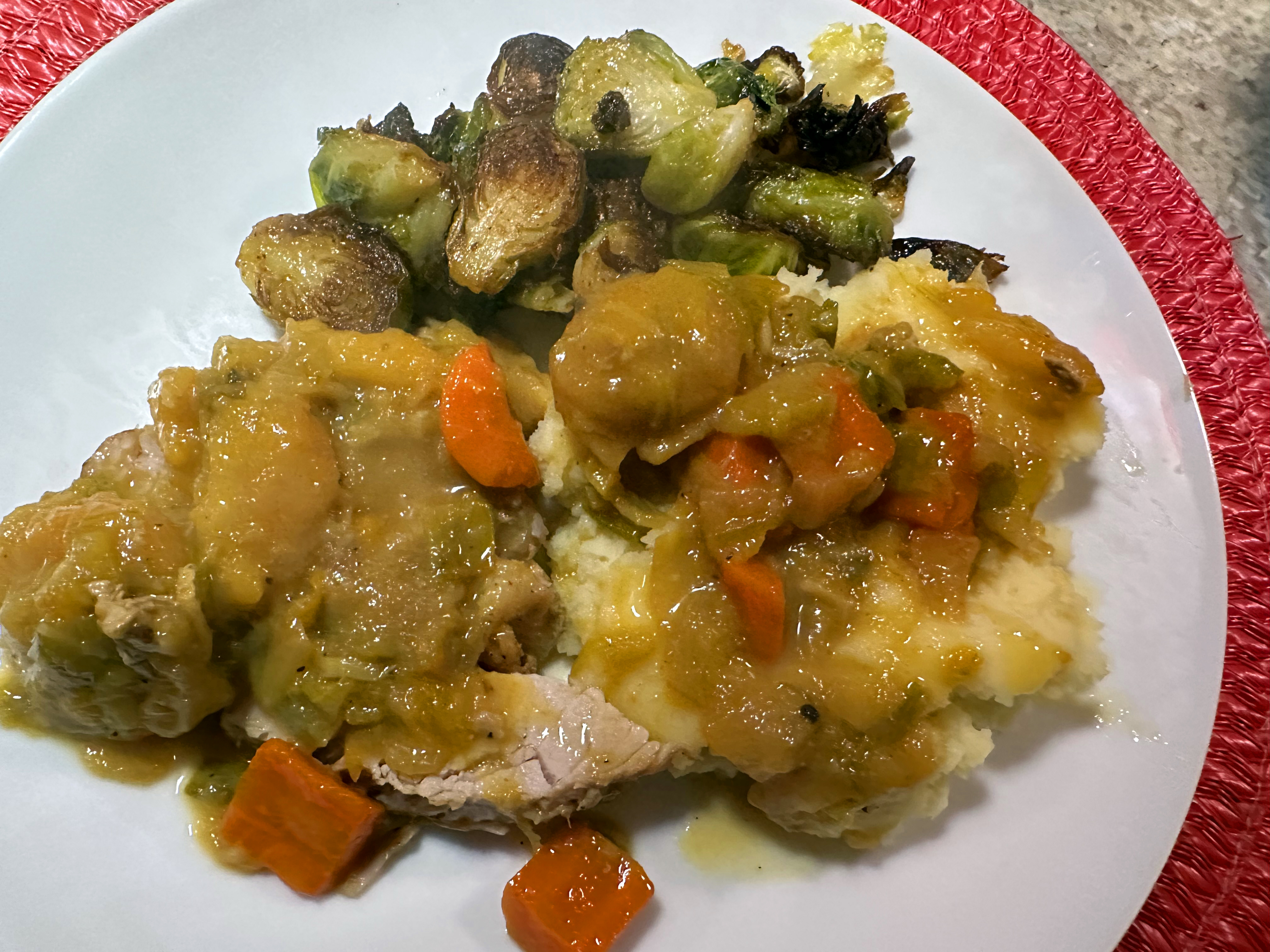
This company-worthy dinner can be served over couscous, wild rice, or as in our case, garlicky mashed potatoes which became the perfect vehicle to hold that lovely sauce! If you care to pair the meal with wine, off-dry Riesling or Pinot Gris make good companions.

Pork Pot Roast with Apricots, Cardamom and Ginger

  • Servings: 6-8
  • Difficulty: easy
  • Print

Ingredients

  • One 4 1/2 to 5-lb. boneless pork shoulder roast, preferably Boston butt
  • Coarse salt and freshly ground black pepper
  • 2 Tbsp. extra-virgin olive oil
  • 1 medium leek, white and pale green part only, coarsely chopped (about 1 cup)
  • 2 carrots, coarsely chopped
  • 1 medium yellow onion (about 6 oz.), coarsely chopped
  • 6 cardamom pods, husks split and discarded, seeds lightly crushed
  • 1/2 tsp. ground turmeric
  • 1/4 tsp. cayenne
  • 1 Tbsp. minced or grated fresh ginger
  • 2 large garlic cloves, peeled and bruised
  • 3 strips orange zest, removed with a vegetable peeler (each about 3 inches by 3/4 inch)
  • 1 bay leaf
  • 1/2 cup dry white wine
  • 2 cups chicken stock
  • 1 cup dried apricots (about 6 1/2 oz.)

Directions

  1. Heat the oven to 325 degrees
  2. Trim any especially thick bits of fat from the pork, but do be sure to leave some. Roll and tie the pork (or have your butcher do it for you).
  3. Pat the pork dry with paper towels. Season all over with salt and pepper. Pour the oil into a Dutch oven that will hold the pork snugly (4 to 5 quart works well), and heat over medium heat. Sear the pork on all sides, until deeply browned but not at all burnt, 15 to 20 minutes total. Transfer the pork to a plate.
  4. Discard all but 1 tablespoon of the fat, and return the pot to medium heat. Add the leek, carrots, and onions, stir in the crushed cardamom, turmeric, and cayenne, and cook, stirring once or twice, until the vegetables begin to soften but do not take on much color, about 5 minutes. Add the ginger, garlic, orange zest, and bay leaf and cook until the spices are quite fragrant, another 2 minutes.
  5. Add the wine and let it boil for 4 minutes, scraping the sides and bottom of the pot. Pour in the stock and bring to a boil. Add the apricots and boil for another 2 minutes.
  6. Place the pork on top of the vegetables and fruit. Add any accumulated juices from the plate. bring the liquid to a simmer and spoon some over the pork. Cover the meat with sheet of parchment paper, pressing down so that it almost touches the meat and the edges extend over the sides of the pot about an inch. Cover and slide the pot onto a shelf in the lower third of the oven to braise. Check that the liquid is simmering gently, every 30 minutes and give the pork a turn. If the liquid is simmering too aggressively, lower the oven heat 10 or 15 degrees. Continue to braise gently until the pork is fork-tender, about 2 hours in all.
  7. Remove the pork from the pot and set it on a carving board or platter to catch the juices. Cover loosely with foil, and let rest for 10 minutes.
  8. Return the pot to the top of the stove and skim off as much surface fat as you can with a wide spoon. If the sauce is very thin reduce it by boiling over medium-high heat for about 5 minutes. It should be the consistency of a thick vinaigrette. Taste for salt and pepper. Pour any juices that have accumulated under the pork into the sauce, and stir.
  9. Remove the strings from the pork, and carve into 1/2-inch-thick slices. Serve with sauce and apricots.

http://www.lynnandruss.com

Recipe from Molly Stevens book “All About Braising”

Roast Duck with Orange and Ginger

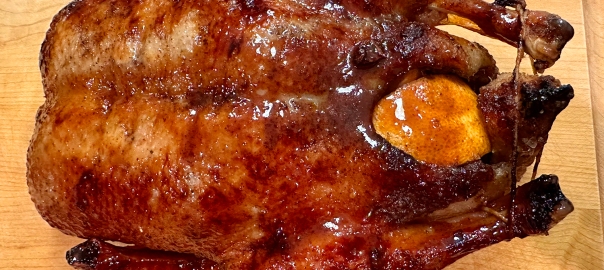
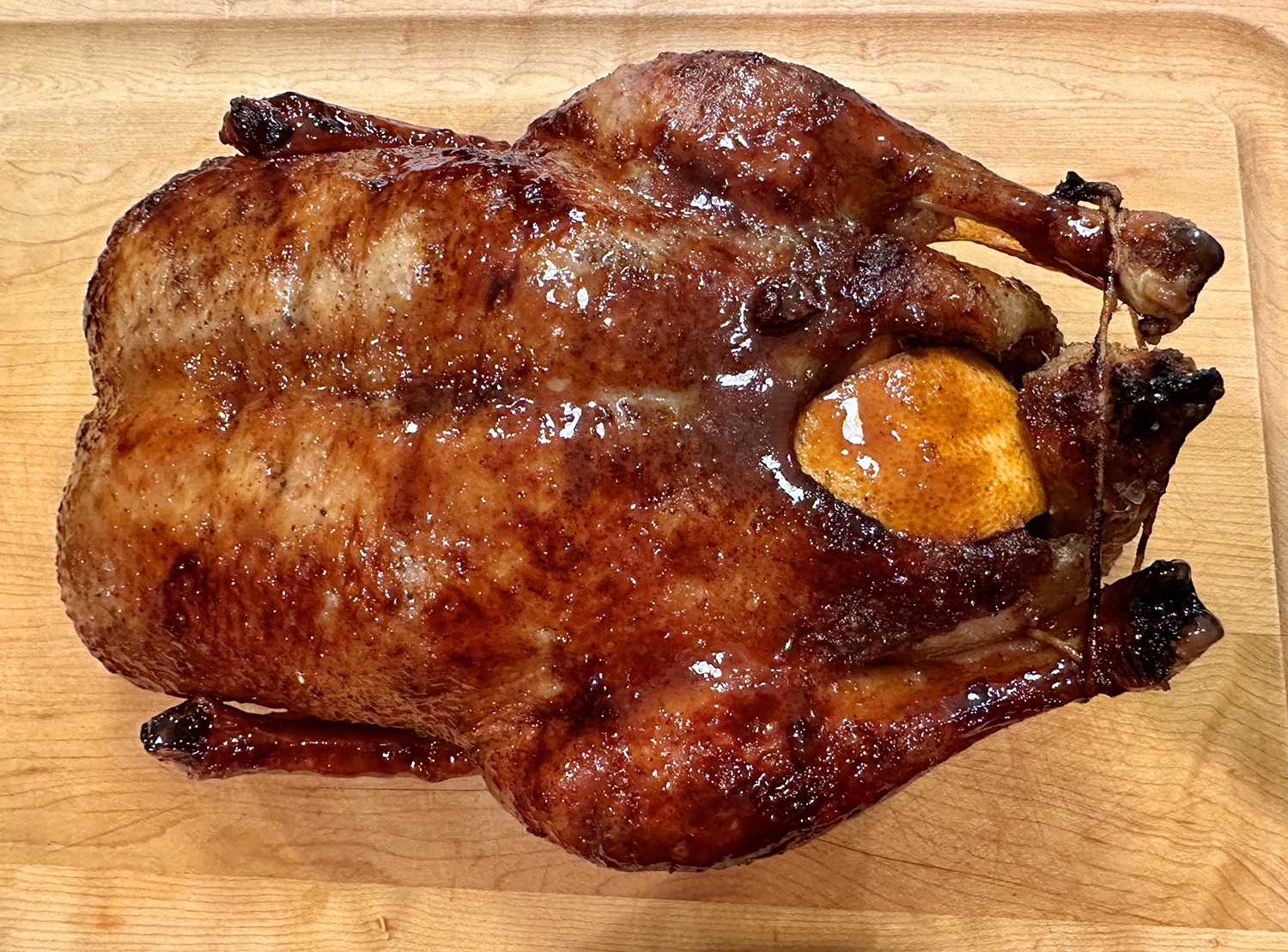
For a festive occasion, a burnished whole duck makes quite an impression — fancier than chicken and more elegant than turkey. When I was growing up, Mom roasted duck a few times a year, a favorite for most of the family.

I remember as a young teen going out to eat at a Chinese restaurant for the first time because it was my sister’s birthday and that was her venue of choice. Picky as I was, I was not a happy camper as I walked in, but was a convert when I walked out because I had ordered Wor Shu Opp (pressed almond duck).

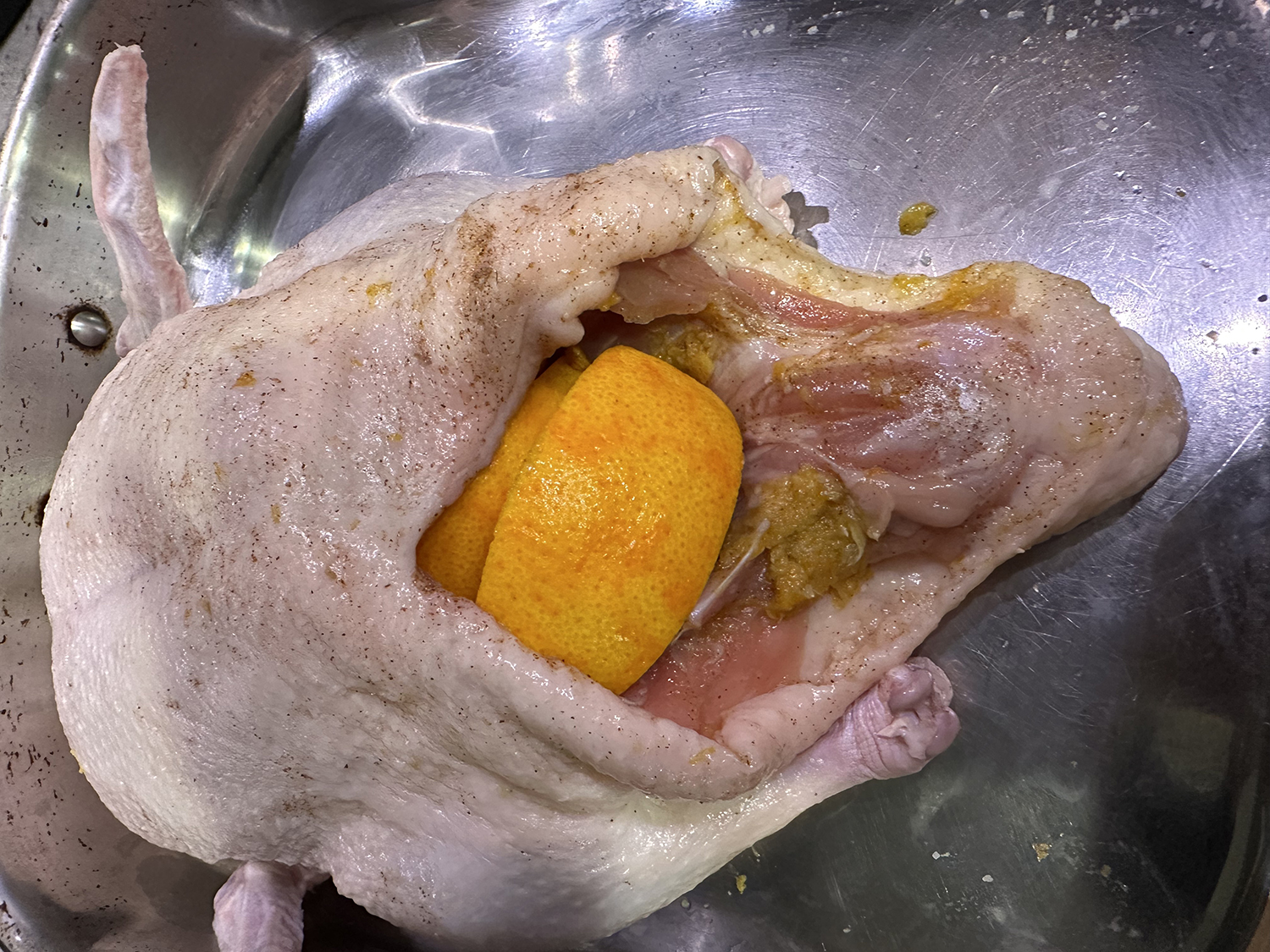
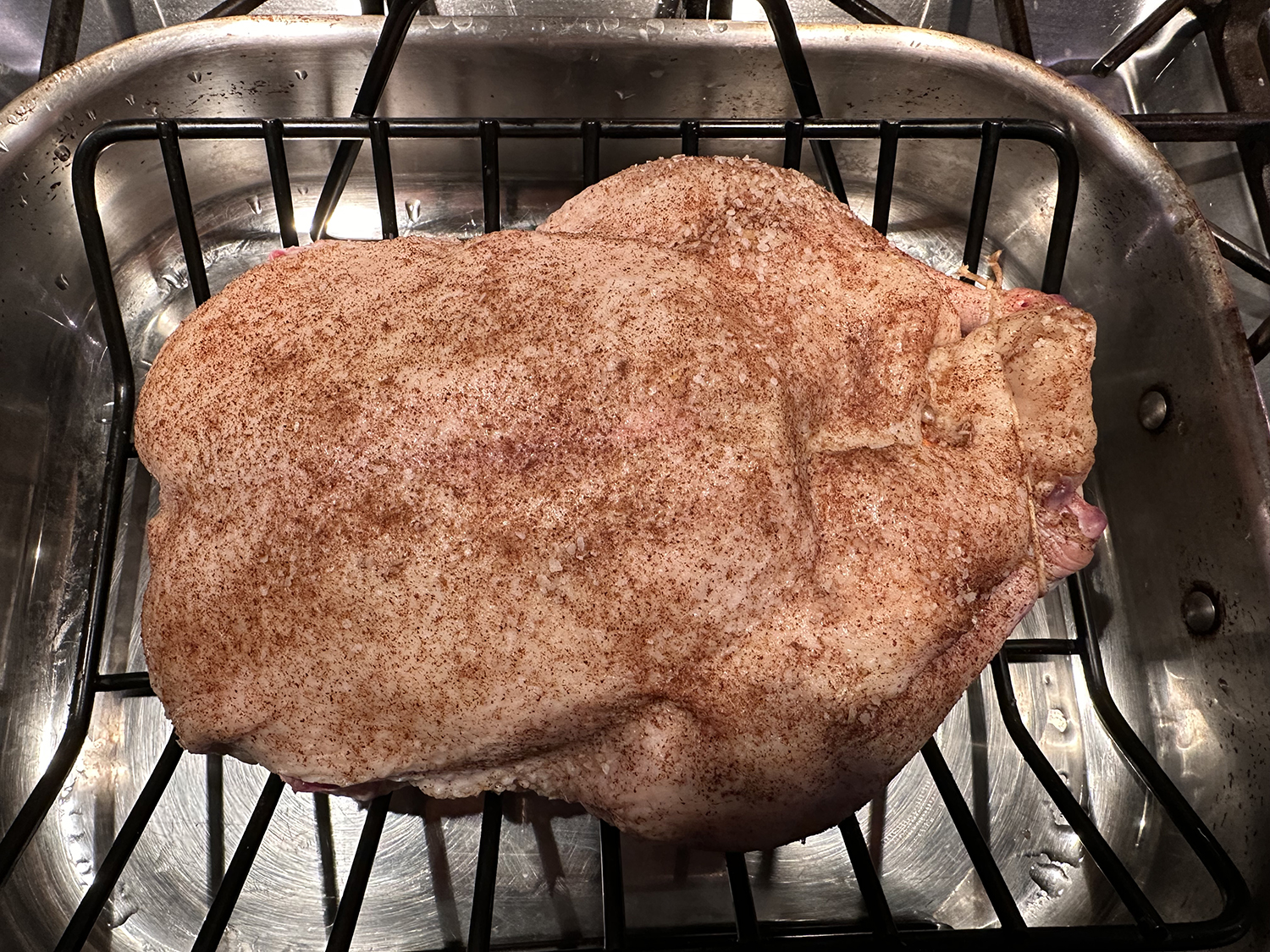
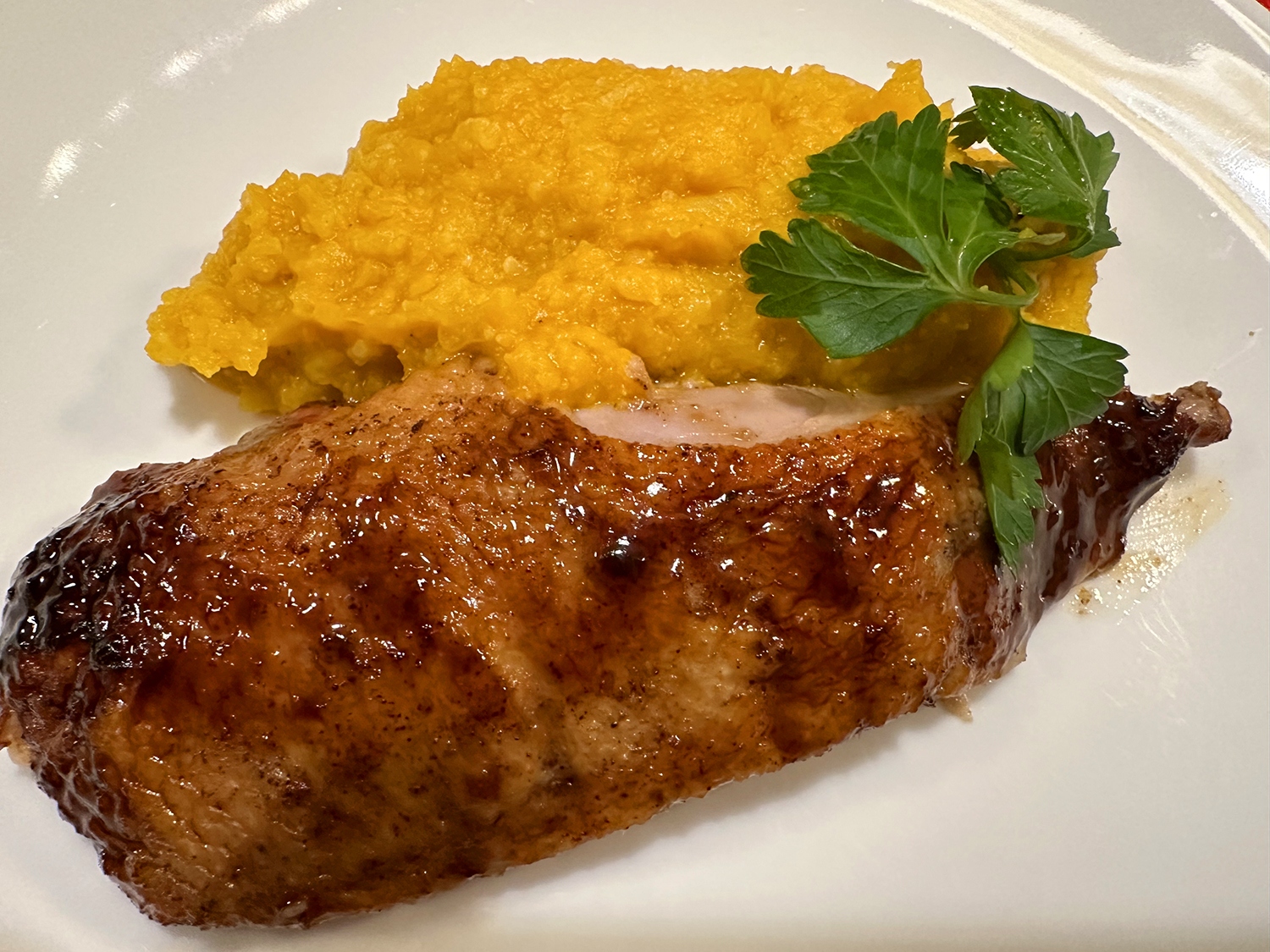
Roasting the duck is not so difficult to do. Seasoning the duck ahead and leaving it in the fridge overnight helps to deepen the flavor and keeps work to a minimum the following day. This one is seasoned with orange zest, along with fair amount of ginger and five-spice powder, which gives it a marvelous perfume. We paired ours with a Kobocha-Cauliflower Mash.

The ingredient list is minimal, and the hands-on prep doesn’t take long—most of the time the duck is either in the refrigerator or the oven. Because the bird gets glazed often, the skin will be a gorgeous burnished tawny color, but the skin won’t be extra crispy.

Keep in mind when serving more than 4 people, you will need two ducks. Of course there is no need to wait until a special occasion…

Roast Duck with Orange and Ginger

  • Servings: 4
  • Difficulty: easy
  • Print

Ingredients

For the Duck:

  • 1 Pekin (Long Island) duck, 5- to 6-lb.
  • 3 Tbsp. kosher salt
  • 1 Tbsp. five-spice powder
  • 1 large orange, zested and cut into 6 wedges
  • 1 Tbsp. grated ginger
  • 1 Tbsp. grated garlic

For the Glaze:

  • 2 cups orange juice
  • 1 Tbsp. honey
  • 2 Tbsp. Demerara sugar
  • 2 Tbsp. soy sauce
  • 1 piece ginger, (2-inch) thickly sliced
  • 3 star anise

Directions

  1. Rinse duck and pat dry. Remove neck and giblets and save for another purpose. Remove excess fat from cavity and tail area and trim off a bit of flappy neck skin. Prick duck skin all over with tip of sharp paring knife, making sure not to penetrate meat.
  2. Mix together salt and 5-spice powder. Season interior of duck with 1 tablespoon salt mixture; use remainder to generously season exterior (you may have a little left over).
  3. Combine orange zest with grated ginger and garlic, then smear mixture inside cavity. Place orange wedges in cavity. Tie legs together. Secure neck flap with wooden skewer or toothpicks. Place duck on rack in roasting pan breast-side-up and refrigerate overnight, uncovered.
  4. Heat oven to 350 degrees. Meanwhile, bring duck to room temperature and make the glaze: Bring orange juice, honey, sugar and soy sauce to a simmer. Add sliced ginger and star anise, then reduce mixture until you have a medium-thick syrup, about 10 minutes. Remove from heat and set aside.
  5. Roast duck for 2 hours, carefully pouring off fat and turning duck over every 30 minutes. Paint with glaze and roast for another 30 minutes (2 1/2 hours in all). Tent with foil if the glaze begins to get too dark. Duck is done when the temperature at the thickest part of the leg reads 165 degrees.
  6. Paint the duck once more, keep it warm and let rest for 20 minutes. Use poultry shears to cut into quarters (remove backbone first) or carve in the traditional way, removing legs from carcass and slicing breast.

http://www.lynnandruss.com

Recipe by Dave Tanis for NYTimes Cooking

Mustardy Cider-Braised Pork Chops

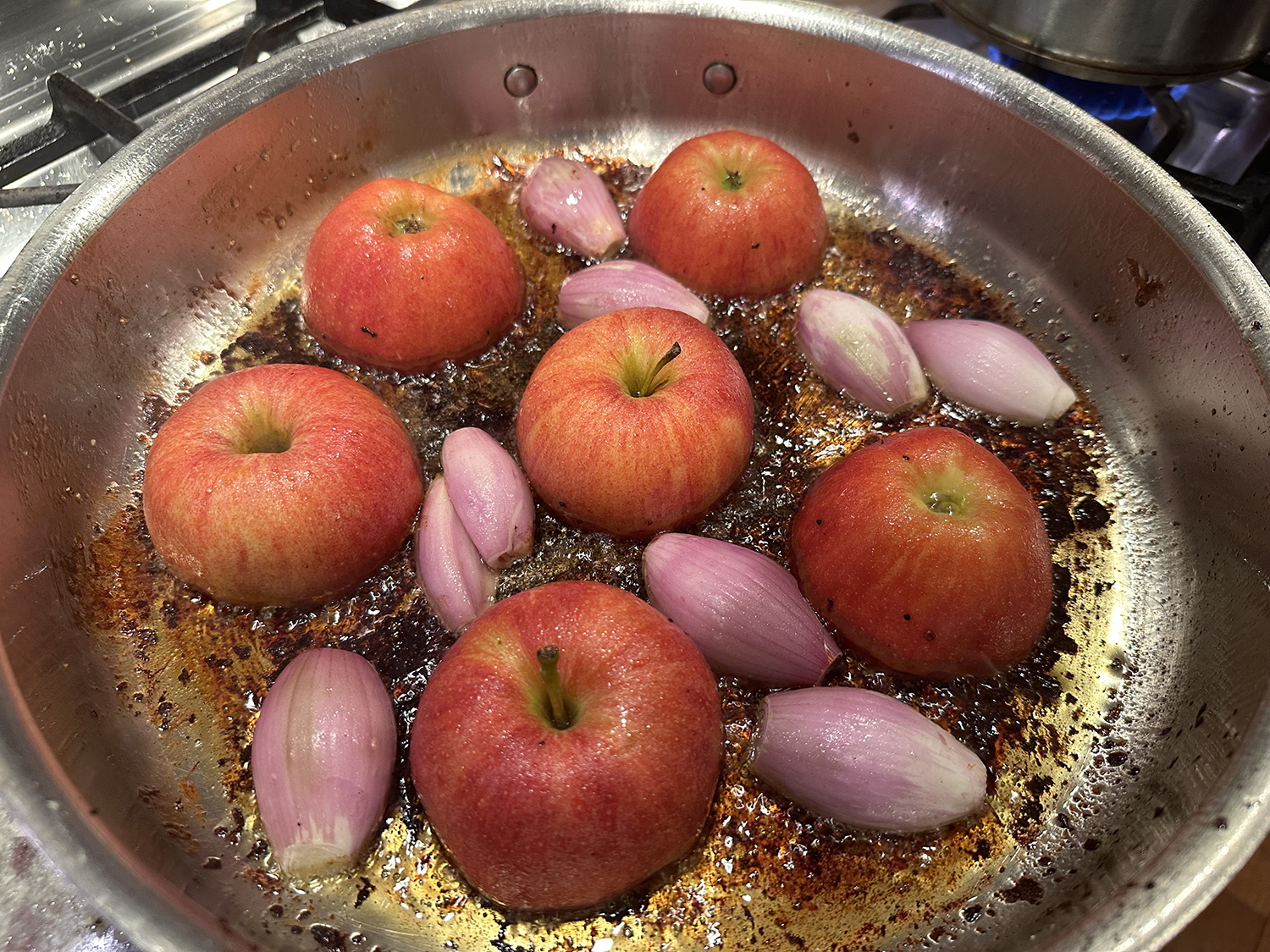
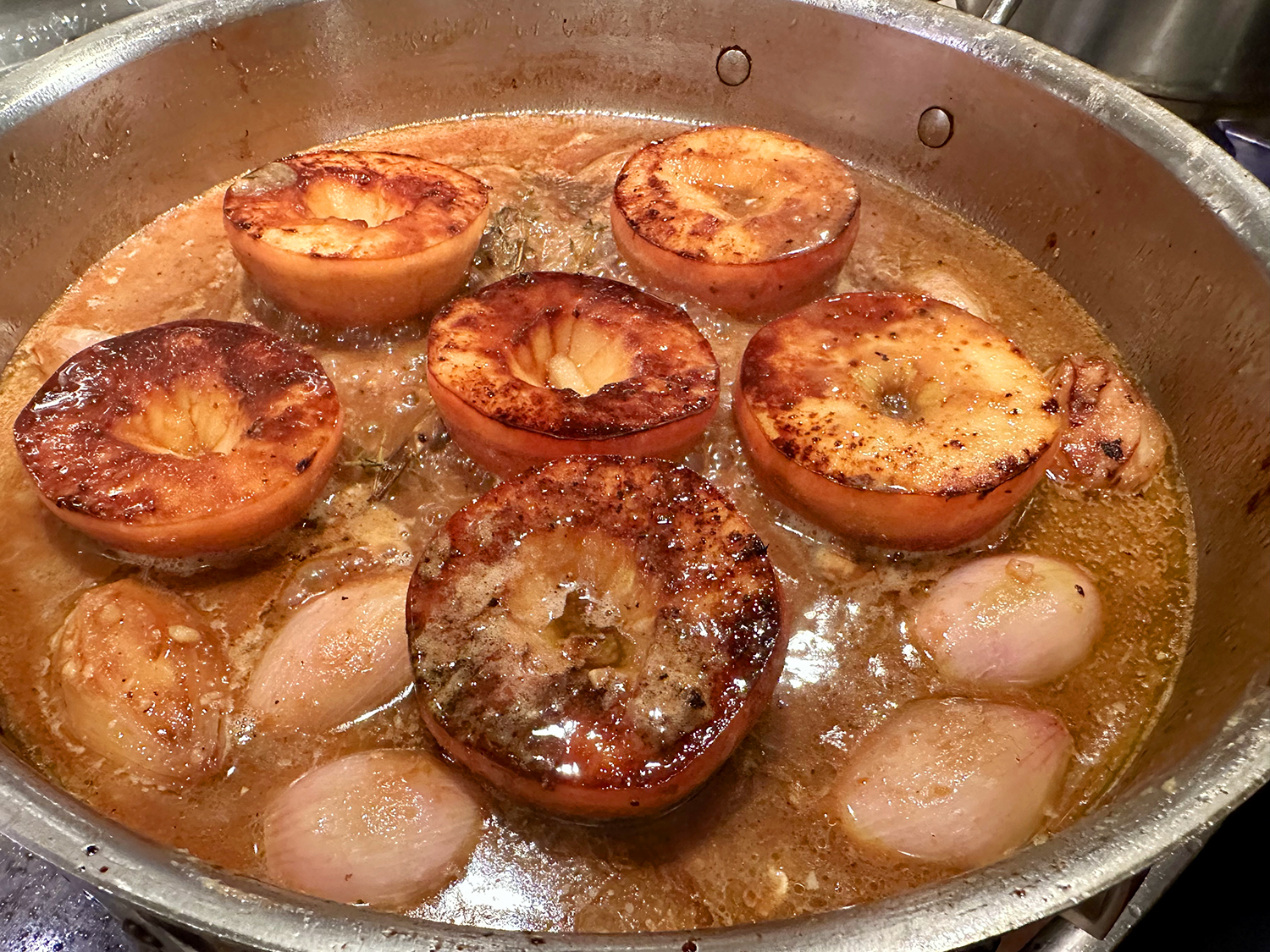
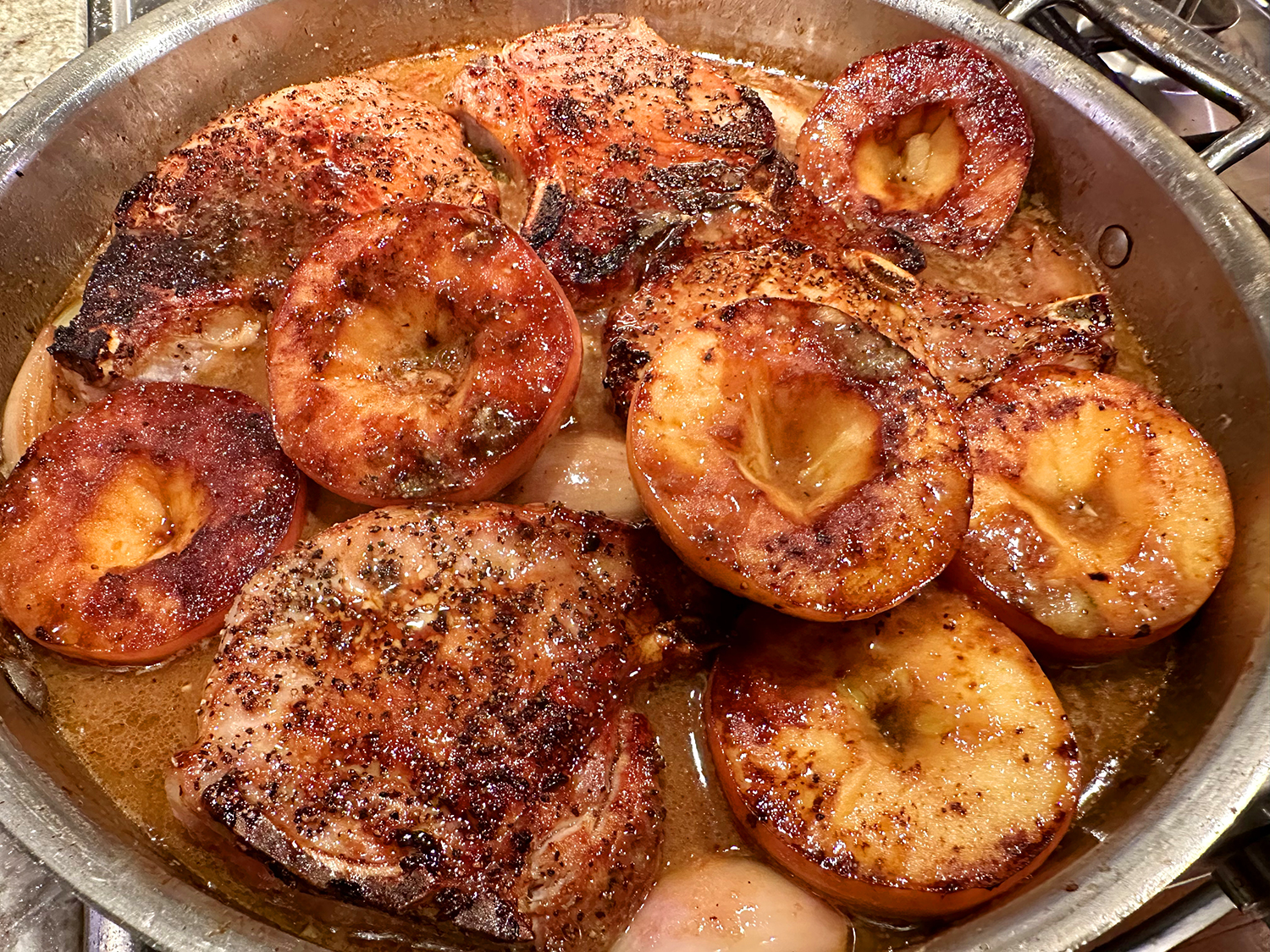
Braising doesn’t always mean long cooking times. For tender cuts like pork chops, the secret to a great braise lies in the method, not in hours on the stove. First, a hard sear on the meat, as well as halved shallots and apples, creates a beautiful fond (the wonderfully delicious caramelized little bits left in the bottom of the pan after cooking).

Deglazing the pan with a tart-savory combination of hard cider, vinegar, and stock loosens up that layer of browned goodness and reduces down to gravy in about 20 minutes. To finish, the chops simmer in the sauce until they’re cooked through. Voilà: cooked-all-day depth in just an hours time.

Our changes? If it serves 4, then why only use 3 shallots? We added a fourth one, so each serving received two halves (and next time we may be inclined to add even more). Our intuition took over when thinking about the amount of time the apples actually cooked. The original directions have you put the browned halves back into the pan when the chops get added back. If you want firm apples, then by all means, wait until then to add them to the pan. If like us, you prefer softer bites, then arrange them cut side up when placing the thyme bundle into the sauce.

Otherwise, pretty much everything was spot on. Make sure to use a very large pan to hold all of the ingredients. And that sauce—it was sooo good, you may be tempted to drink any leftovers… Serve with egg noodles, polenta or mashed potatoes.

Mustardy Cider-Braised Pork Chops

  • Servings: 8
  • Difficulty: easy
  • Print

Ingredients

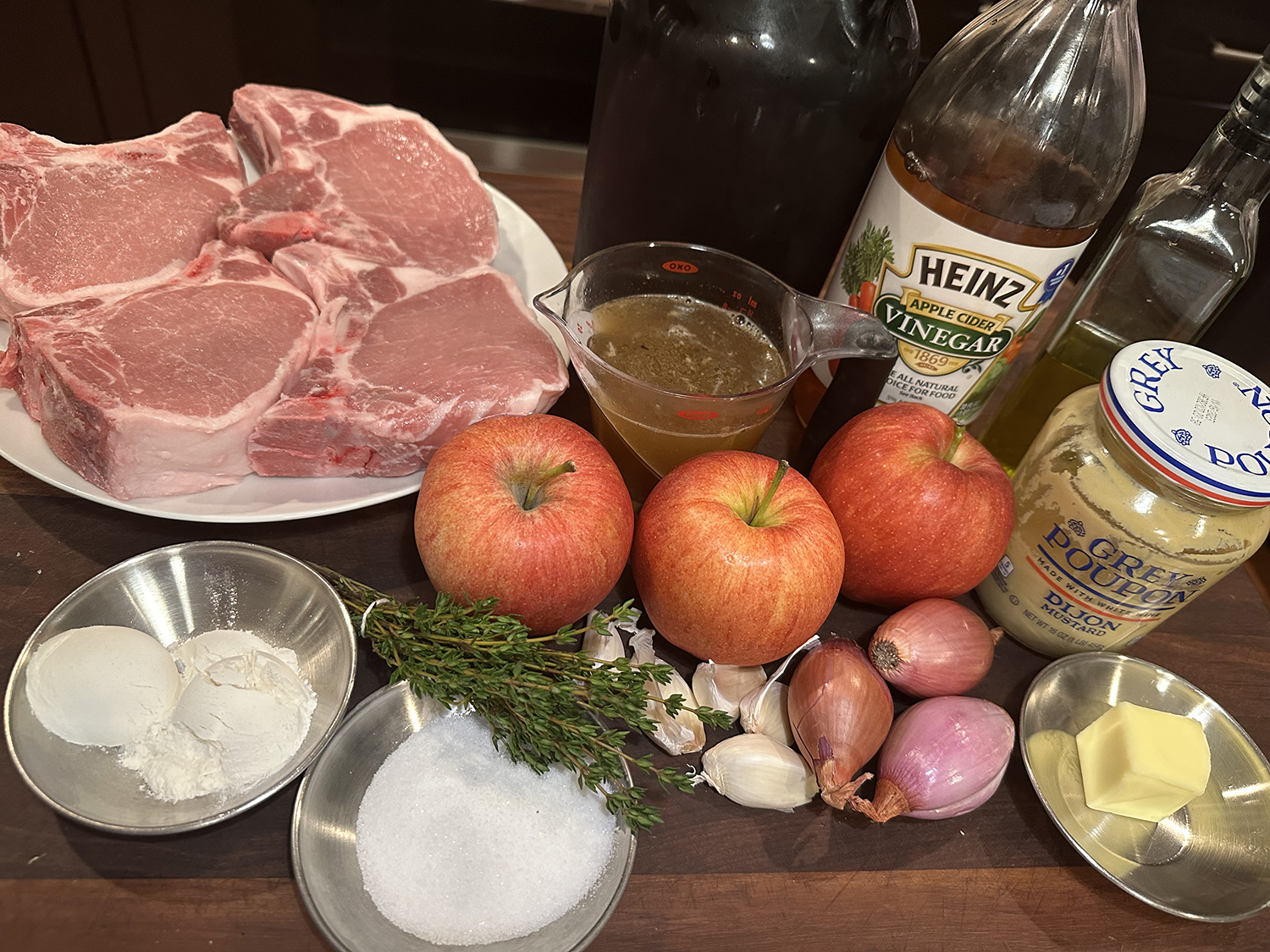
  • 4 1½”-thick bone-in rib pork chops (about 2 lb. total)
  • 3 Tbsp. sugar
  • 1 Tbsp. Diamond Crystal or 1¾ tsp. Morton kosher salt, plus more
  • 1 Tbsp. freshly ground pepper, plus more
  • 2 Tbsp. vegetable oil
  • 3 medium Granny Smith or Gala apples, halved through equators, remove core and seeds
  • 4-8 medium shallots, peeled, halved lengthwise through root ends
  • 4 garlic cloves, finely grated
  • ¼ cup Dijon mustard
  • 3 Tbsp. all-purpose flour
  • 2 Tbsp. unsalted butter
  • 2 cups sweet hard apple cider (such as Angry Orchard)
  • 1 cup chicken broth
  • 1 Tbsp. apple cider vinegar
  • 10–12 sprigs thyme, tied together with kitchen twine
  • Finely chopped chives (for serving)

Directions

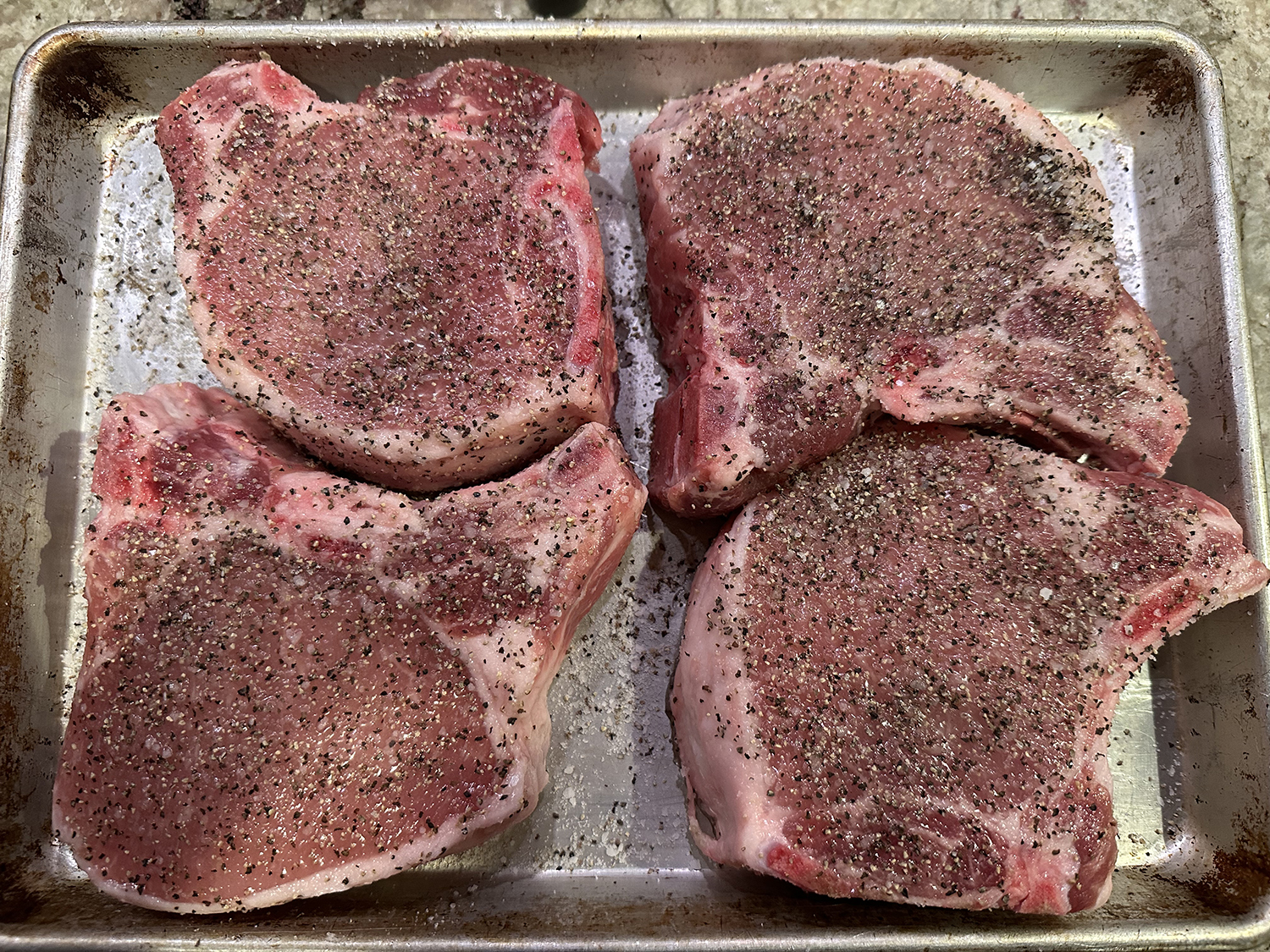
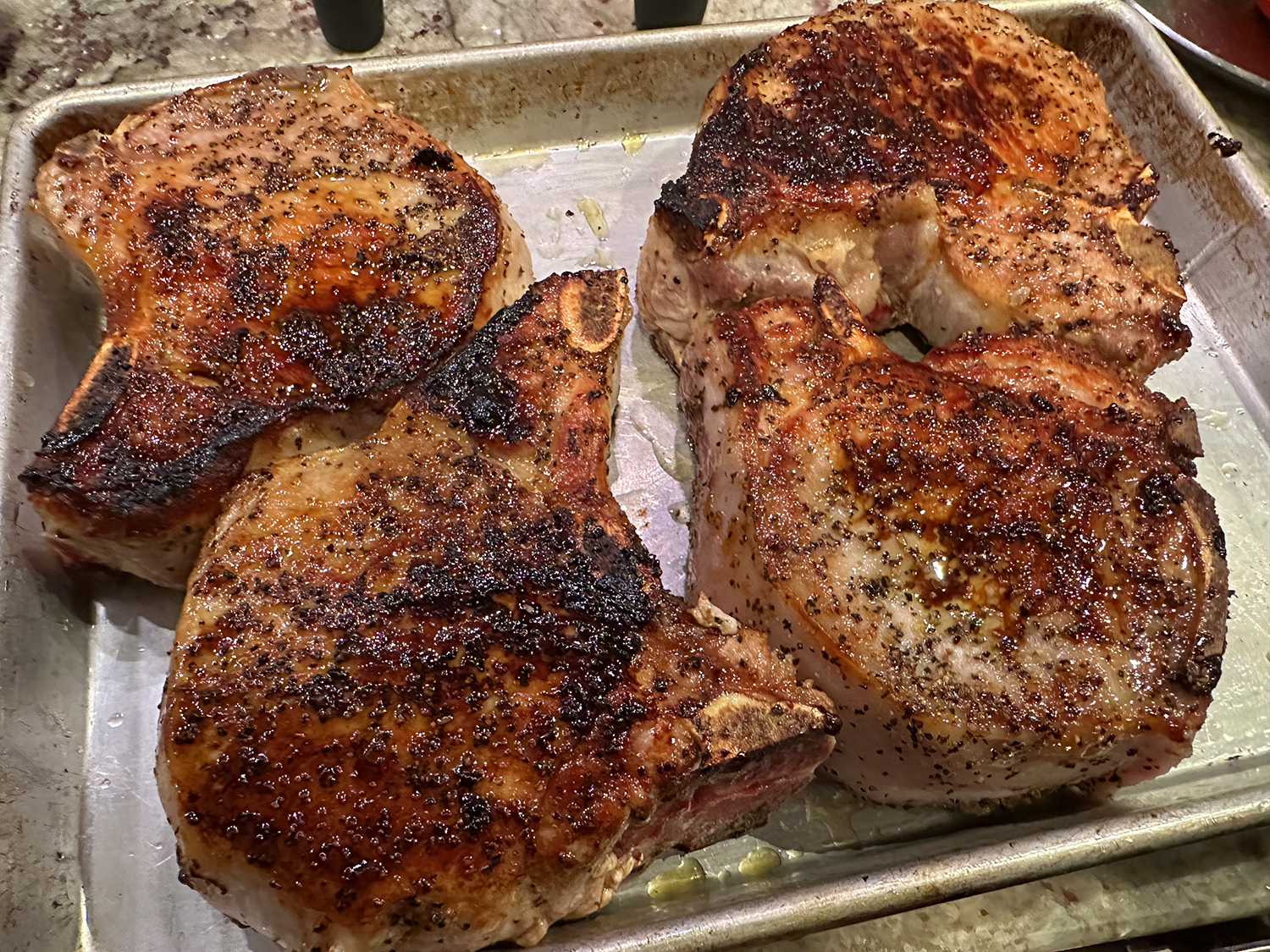
  1. Pat four 1½”-thick bone-in rib pork chops (about 2 pounds total) dry with paper towels. Sprinkle all over with 3 Tbsp. sugar, 1 Tbsp. Diamond Crystal or 1¾ tsp. Morton kosher salt, and 1 tablespoon freshly ground pepper. Heat 2 tablespoon vegetable oil in a large cast-iron skillet over high. Working in batches if needed, cook pork chops, turning halfway through, until deeply browned, about 5 minutes total. Transfer to a large plate.
  2. Working in batches if needed, cook 3 medium Granny Smith or Gala apples, halved through equators, and 3 medium shallots, peeled, halved lengthwise through root ends, cut sides down, in same skillet, gently pressing down on them with a spatula to create contact with pan, until golden brown on cut sides, about 2 minutes (it’s okay if shallots fall apart). Transfer apples to plate with chops.
  3. Reduce heat to medium, add 4 garlic cloves, finely grated, to pan, and cook, stirring constantly, just until fragrant, about 30 seconds. Add ¼ cup Dijon mustard, 3 tablespoon all-purpose flour, and 2 tablespoon unsalted butter; stir to coat shallots. Pour in 2 cups sweet hard apple cider, 1 cup low-sodium chicken broth, and 1 tablespoon apple cider vinegar, scraping up browned bits and flour stuck to bottom of pan and incorporating into liquid.
  4. Add thyme bundle and apple halves arranging them cut sides up, and bring mixture to a simmer. Partially cover (use a baking sheet if you don’t have a lid) and simmer until sauce is thick enough to coat a spoon, about 20 minutes. Taste and season with salt and pepper.
  5. Place pork chops in sauce, and partially cover. Simmer until an instant-read thermometer inserted into the thickest part of a pork chop registers 145°, 7–10 minutes. Remove from heat; sprinkle with finely chopped chives and season with more pepper to serve.

http://www.lynnandruss.com

Recipe by Inés Anguiano for Bon Appétit Magazine

Chicken Stew

In this hearty chicken stew recipe, chicken thighs and fresh vegetables simmer in a rich tomato broth until the meat is fall-apart tender and the broth is jammy and flavorful. Italian-style seasonings like paprika, oregano, and coriander bring a delicious warming, aromatic quality. Made in just one pot, this easy recipe comes together in under an hour and freezes exceptionally well.

Sautéing the chicken and vegetables until golden, then gently simmering them with aromatic spices is a quick and easy way to build big flavor in under an hour. The original recipe did not cut up the chicken thighs, but rather left them whole. We decided cutting the poultry into about one-inch pieces made more sense.

In addition, we added a bay leaf and two red finger peppers (such as Thai or Fresno, seeded and chopped). This added minimal heat but contributed to the depth of flavor.

In this hearty chicken stew recipe, chicken thighs and fresh vegetables simmer in a rich tomato broth until the meat is fall-apart tender and the broth is jammy and flavorful. Italian-style seasonings bring a delicious warming, aromatic quality. Made in just one pot, this easy recipe comes together in about an hour and freezes exceptionally well.

Chicken Stew

  • Servings: 4
  • Difficulty: easy
  • Print

Ingredients

  • 1 ½ lbs. boneless skinless chicken thighs
  • Kosher salt
  • Black pepper
  • 2 Tbsp. extra virgin olive oil
  • 1 yellow onion, chopped
  • 3 garlic cloves, minced
  • 2 carrots, peeled and chopped
  • 1 red bell pepper, chopped
  • 1 zucchini, chopped
  • 1 potato, chopped
  • 2 red finger peppers such as Thai or Fresno, seeded and chopped
  • 1 tsp. paprika
  • 1 tsp. coriander
  • 1 tsp. dried oregano
  • 1 bay leaf
  • 1 28 oz. can whole tomatoes
  • 2 cups chicken broth, peferrably homemade
  • 2 sprigs fresh thyme
  • 1 Tbsp. white wine vinegar
  • 1 cup chopped parsley leaves

Directions

  1. Pat the chicken dry and cut into about one-inch pieces. Season on one side with a good pinch of salt and pepper.
  2. In a Dutch oven or large pot over medium-high heat, heat the olive oil until shimmering. Add the chicken, starting with the seasoned side down. Sprinkle the top with salt and pepper, then cook until browned on the bottom, about 4 minutes. Flip and cook until golden on the second side, about 3 minutes more. Remove the chicken and set aside on a plate for now.
  3. With the heat still on medium-high, add the onion, garlic, carrot, bell pepper, finger peppers, zucchini and potato. Season with the paprika, coriander, oregano, a pinch of salt and pepper and the bay leaf. Cook, stirring occasionally, until the veggies have softened and lightly charred, about 7 to 8 minutes.
  4. Use a wooden spoon to break up the tomatoes, pushing down until they burst into chunks.
  5. Raise the heat to bring to a boil, then add the chicken back to the pot. Cook on high heat, stirring occasionally, for 5 minutes. Lower the heat to medium-low and cover the Dutch oven part-way. Let simmer until the stew has thickened and the chicken is nicely tender, 20 to 30 minutes.
  6. Turn the heat off and remove the thyme sprigs. Stir in the vinegar and fresh parsley and serve.

http://www.lynnandruss.com

Adapted the recipe from Suzy Karadsheh

Pasta with Chard and Italian Sausage

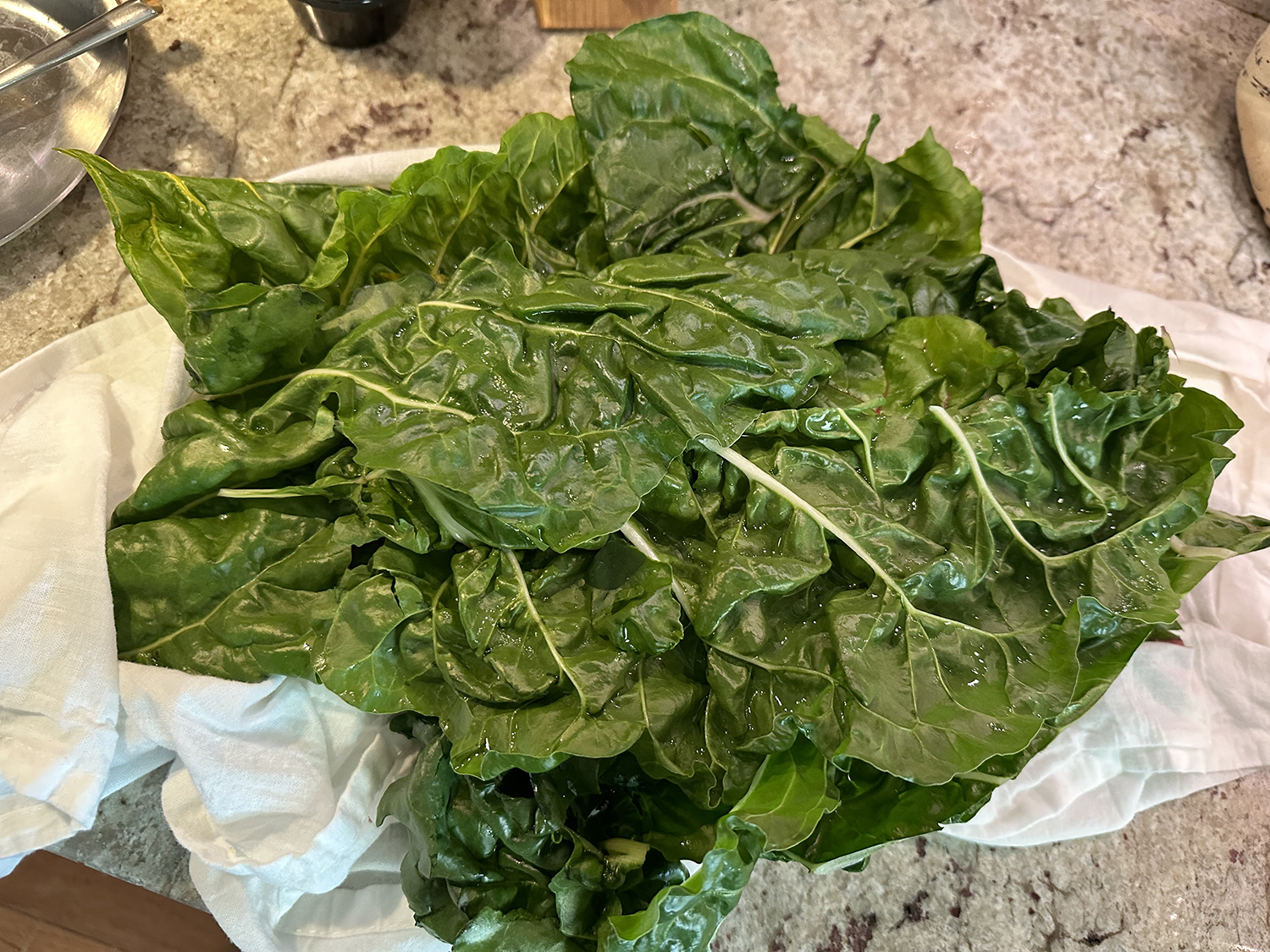
According to a New York Times article, Chard or Swiss Chard, is a vegetable with which many people are barely acquainted. There are those who might be able to recognize it in the market but who have rarely cooked or eaten it. For many shoppers, it’s just another of those mysterious bunches of green. It may look like too much when you start, but just like spinach, it shrinks down considerably.

Although chard is sold yearlong, it is particularly sturdy and in good condition during cooler weather. Hot weather wilts it and it does not look as fresh. But that should not be a problem for a few months yet. It is excellent simply chopped or shredded and braised, and when prepared in this manner the flavor is less bitter than escarole and the color more attractive than cabbage or spinach.

Often folks remove the stems and discard them. Not us, we chop up the stalks and make them part of the recipe, as in this case. If you have leftovers—which were fabulous BTW—drizzle some EVOO over the pasta before you zap it in the microwave. Hard to believe, but it might be even better as leftovers!

You can customize this recipe somewhat by increasing the sausage to one pound; use only eight ounces of pasta; add canned white beans; and/or switch out chopped walnuts for the pine nuts (which tend to be quite expensive).

Pasta with Chard and Italian Sausage

  • Servings: 4
  • Difficulty: easy
  • Print

Ingredients

  • 1 bunch Swiss chard, about 1 pound, washed, stem ends trimmed
  • 2 Tbsp. olive oil divided
  • 1/2 lb. fresh pork sausage (about 3 links) casings removed
  • 1 medium yellow onion diced
  • 1/2 tsp. salt or more to taste
  • 3 garlic cloves minced
  • 1/2 tsp. Aleppo chile flakes or more to taste
  • 1 cup chicken broth, preferably homemade
  • 12 oz. short dried pasta, such as penne, rigatoni, or gemelli
  • Zest of 1/2 large lemon
  • Freshly ground black pepper
  • 1 Tbsp. butter
  • 1 1/2 oz. grated Parmesan cheese, about 1/2 cup
  • 1/4 cup pine nuts

Directions

  1. Prepare the chard by trimming the stem ends and discarding them. Then trim the leaves from the large center stems. Set the stems aside and pile up the leaves. Slice the stems into 1/2-inch pieces. Pile 4-5 leaves on top of each other, roll tightly, then slice into 1 inch ribbons. Repeat with the remaining leaves. Cut the strips of leaves again sideways so that they are roughly 1- by 3-inch rectangles.
  2. Put a large pot of water on to boil over high heat. This will be for the pasta.
  3. Heat 1 tablespoon of olive oil in a separate large deep, skillet or Dutch oven over medium-high heat. Add the sausage in chunks and flatten each piece with the back of a wooden spatula or spoon. Flip the sausage pieces occasionally until they are golden brown, then remove them to a plate lined with paper towels. Drain the fat from the pan. Once the sausage has cooled a bit, break it up into smaller pieces with the wooden spatula or spoon you’ve been cooking with.
  4. Return the Dutch oven to the stove. Lower the heat to medium and add 1 tablespoon of olive oil to the pan. Put in the chopped onions and sprinkle them with 1/4 teaspoon of salt. Cook for about 5 minutes, stirring frequently, then add the chard stems. Cook another 5 minutes, stirring frequently and scraping up any browned bits from the bottom of the pan.
  5. Add garlic to the onion/chard stem mixture and cook for about 1 minute. Then add the chard leaves, the chile flakes, and about 1/4 teaspoon salt. Cook, using tongs to lift the chard leaves near the bottom of the pan to the top over and over so that they all cook evenly. After about 1 minute, add the broth to the pan. Lower the heat to simmer and cook about 8 minutes. Add the sausage to the pot.
  6. In the meantime, cook the pasta according to the package directions until it is almost al dente. (It will cook further with the chard mixture later on.) Scoop up about 1 cup of pasta water and put it aside before draining the pasta. Drain the pasta in a colander and add it to the chard mixture.
  7. Stir the pasta into the warm chard and sausage mixture. Add 1/4 cup of pasta water along with the lemon zest and toss the pasta mixture over low heat for 2-3 minutes. Add more pasta water in 1/4 cup increments to keep the pasta loose, but not soupy. Stir in 1 tablespoon of butter and allow it to melt and coat the pasta mixture. Add half of the Parmesan cheese and the pine nuts to the mixture, stir again, and dish out into servings bowls.
  8. Offer more Parmesan for each person to add as they like.

http://www.lynnandruss.com

Recipe by Davis Tanis for The NYTimes Cooking

Saucy Pollo Guisado

Loaded with tomatoes and green olives, pollo guisado (Spanish for chicken stew) is a hearty, fall-off the bone braised chicken dish popular throughout Latin America and the Caribbean, and particularly in Puerto Rico.

Almost every version starts with sofrito, a fragrant mixture of bell peppers, onions, garlic, and cilantro, finely chopped or blended into a paste. This recipe makes extra sofrito, so you can freeze it to jump-start future soups, stews, and more.

The other powerhouse in this pollo guisado recipe is adobo seasoning, any store-bought or hand-made-mix will work. For the chicken, use skin-on, bone-in chicken thighs, but you could also use drumsticks. Avoid boneless chicken and white meat (skinless chicken breasts just can’t compare to the depth and richness of dark meat).

Often served with white rice or tostones (fried green plantains), pollo guisado tastes even better the next day. Garnish bowls with fresh cilantro and lime wedges.

Saucy Pollo Guisado

  • Servings: 4-6
  • Difficulty: easy
  • Print

Ingredients

SOFRITO

  • 1 medium green bell pepper, ribs and seeds removed, coarsely chopped
  • 1 medium red bell pepper, ribs and seeds removed, coarsely chopped
  • ½ small bunch cilantro, leaves with tender stems picked
  • 6 garlic cloves
  • 2 Tbsp. extra-virgin olive oil
  • 1 Tbsp. Diamond Crystal or 1¾ tsp. Morton kosher salt

STEW AND ASSEMBLY

  • 4 tsp. ground cumin
  • 1 Tbsp. powdered adobo seasoning
  • 1 tsp. ground turmeric
  • 1 tsp. paprika
  • 8 skin-on, bone-in chicken thighs (about 3 lb.)
  • 1 Tbsp. extra-virgin olive oil
  • 1 medium onion, finely chopped
  • 4 garlic cloves, finely chopped
  • 1 Tbsp. tomato paste
  • 1 8-oz. can tomato sauce
  • 2½ cups low-sodium chicken broth
  • 1 cup pitted manzanilla olives
  • Kosher salt
  • Steamed rice, cilantro leaves with tender stems, and lime wedges (for serving)

Directions

SOFRITO

  1. Pulse 1 medium green bell pepper, ribs and seeds removed, coarsely chopped, 1 medium red bell pepper, ribs and seeds removed, coarsely chopped, ½ small bunch cilantro, leaves with tender stems picked, 6 garlic cloves, 2 Tbsp. extra-virgin olive oil, and 1 Tbsp. Diamond Crystal or 1¾ tsp. Morton kosher salt in a food processor until a coarse purée forms. (Makes about 2¼ cups.)
    Do ahead: Sofrito can be made 3 days ahead. Transfer to an airtight container; cover and chill, or freeze up to 1 month.

STEW AND ASSEMBLY

  1. Whisk 4 tsp. ground cumin, 1 Tbsp. powdered adobo seasoning, 1 tsp. ground turmeric, and 1 tsp. paprika in a small bowl. Sprinkle half of spice mixture all over 8 skin-on, bone-in chicken thighs (about 3 lb.).
  2. Heat 1 Tbsp. extra-virgin olive oil in a large Dutch oven or other heavy pot over medium. Working in batches, arrange chicken, skin side down, in pot and cook, undisturbed, until skin is golden brown, 8–10 minutes. Turn over and cook until other side is browned, about 5 minutes. Transfer chicken to a plate.
  3. Add 1 medium onion, finely chopped, and 4 garlic cloves, finely chopped, to pot and cook, stirring often, until onion is softened and translucent, about 5 minutes. Add 1 Tbsp. tomato paste and cook, stirring, 1 minute. Stir in ½ cup sofrito and remaining spice mixture and cook, stirring, until fragrant and mixture is slightly darkened, about 3 minutes. Pour in one 8-oz. can tomato sauce and 2½ cups low-sodium chicken broth; stir to combine, scraping up any browned bits stuck to bottom of pot.
  4. Return chicken pieces to pot, arranging skin side up, and bring stew to a simmer. Cover with a lid and cook, adjusting heat as needed to maintain a simmer, until chicken is cooked through, 25–30 minutes.
  5. Uncover pot and stir in 1 cup pitted manzanilla olives. Simmer, stirring occasionally, until stew is slightly reduced, about 5 minutes. Remove from heat. Taste stew and season with kosher salt if needed.
  6. To serve, divide steamed rice among bowls and ladle stew over; top with cilantro leaves with tender stems. Serve with lime wedges.
    Do ahead: Stew (without cilantro) can be made 3 days ahead. Let cool; cover and chill. Add cilantro just before serving.

http://www.lynnandruss.com

Recipe by Jacqueline Woodson for Bon Appétit

Buttermilk-Brined Roast Chicken

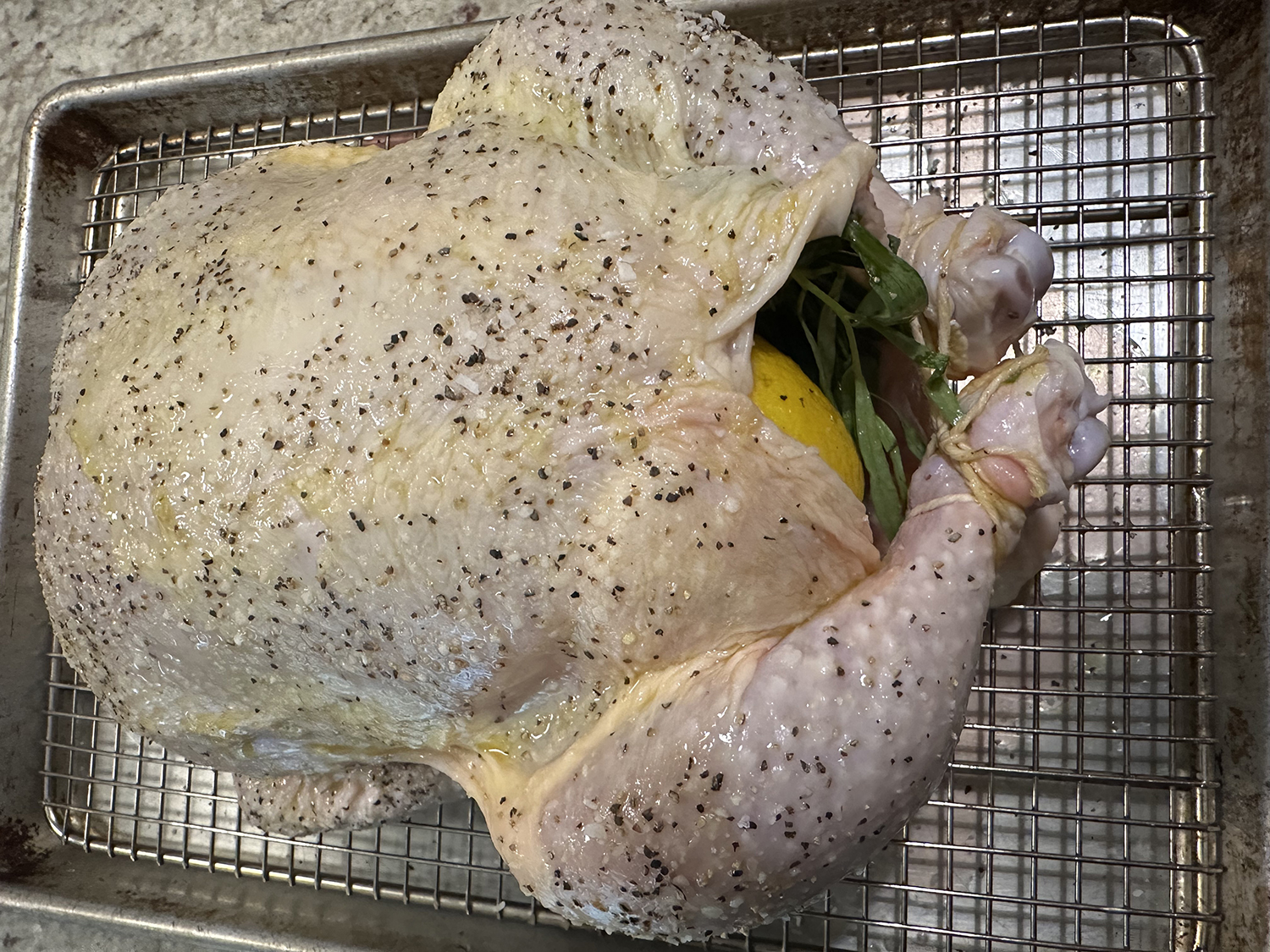
The BEST roast chicken you’ve ever had, using only 3 ingredients? Well, here it is folks. The Hubs commented at least 3 times that this is his latest, greatest roast chicken. And we’ve made many a roasted chicken in our time. Not in the original recipe, at the last minute we decided to stuff the cavity with a half lemon, cut in two pieces, and several sprigs of thyme.

This recipe, adapted from Samin Nosrat’s “Salt Fat Acid Heat,” is inspired by the Southern grandma method of marinating chicken overnight in buttermilk before frying it. You’re roasting here, but the buttermilk and salt still work like a brine, tenderizing the meat on multiple levels to yield an unbelievably juicy chicken.

The pan drippings were bursting with flavor and would make a fantastic gravy, which we fully intend on doing next time. As a side dish, we paired our chicken with Cheesy Hasselback Potato Gratin.

As an added bonus, the sugars in the buttermilk will caramelize, contributing to an exquisitely browned skin. Be sure to leave 24 hours for marinating the chicken. While the beauty of roast chicken is that you can serve it anytime, anywhere, try serving it alongside panzanella, which plays the role of starch, salad and sauce.

Buttermilk-Brined Roast Chicken

  • Servings: 4
  • Difficulty: easy
  • Print

Ingredients

  • 1 chicken, 3½ to 4 lbs.
  • Kosher salt or fine sea salt
  • 2 cups buttermilk
  • Several sprigs of fresh thyme, optional
  • Half of a lemon, cut into two pieces, optional

Directions

  1. The day before you want to cook the chicken, remove the wingtips by cutting through the first wing joint with poultry shears or a sharp knife. Reserve for stock. Season chicken generously with salt and let it sit for 30 minutes.
  2. Stir 2 tablespoons kosher salt or 4 teaspoons fine sea salt into the buttermilk to dissolve. Place the chicken in a gallon-size resealable plastic bag and pour in the buttermilk. (If the chicken won’t fit in a gallon-size bag, double up 2 plastic produce bags to prevent leaks and tie the bag with twine.)
  3. Seal the bag, squish the buttermilk all around the chicken, place on a rimmed plate, and refrigerate for 12 to 24 hours. If you’re so inclined, you can turn the bag periodically so every part of the chicken gets marinated, but that’s not essential.
  4. Pull the chicken from the fridge an hour before you plan to cook it. Heat the oven to 425 degrees with a rack set in the center position.
  5. Remove the chicken from the plastic bag and scrape off as much buttermilk as you can without being obsessive. Stuff the cavity with lemon and thyme, if desired. Tightly tie together the legs with a piece of butcher’s twine. Place the chicken in a 10-inch cast-iron skillet or a shallow roasting pan.
  6. Slide the pan all the way to the back of the oven on the center rack. Rotate the pan so that the legs are pointing toward the rear left corner and the breast is pointing toward the center of the oven. (The back corners tend to be the hottest spots in the oven, so this orientation protects the breast from overcooking before the legs are done.) Pretty quickly you should hear the chicken sizzling.
  7. After about 20 minutes, when the chicken starts to brown, reduce the heat to 400 degrees and continue roasting for 10 minutes.
  8. Move the pan so the legs are facing the rear right corner of the oven. Continue cooking for another 30 minutes or so, until the chicken is brown all over and the juices run clear when you insert a knife down to the bone between the leg and the thigh. If the skin is getting too brown before it is cooked through, use a foil tent. Remove it to a platter and let it rest for 10 minutes before carving and serving.

http://www.lynnandruss.com

Recipe by Samin Rosrat for NYTimes Cooking

Braised Chicken and Tomatoes with Garlic and Dried Fruits

This braised chicken dish was off-the-charts DELICIOUS! I must admit, the dried prunes and apricots gave us pause, but after their brandy bath, and combined with the sliced shallots, it all melded together with the other ingredients into this pool of yummy jamminess.

Pollo a la catalana, or chicken simmered with wine and dried fruits, is a classic cool weather dish in the Catalonia region of Spain. A contrast of savory flavors and sweet accents characterizes the elegant braise, but there are no hard and fast rules to preparing it. But before you go tweaking it, I suggest you try the recipe as written below.

Barcelona home cook Cali Caparrós Sanchez shared her version with Milk Street, which is studded with apricots and prunes and spiked with a good measure of brandy. Picada (not to be confused with the Italian piccata)—is a blended or pounded pesto-like mix of olive oil, herbs, nuts, garlic and a starchy element such as bread or crackers to act as a binder—is customarily stirred into the dish at the finish. We used a large mortar and pestle to make the picada.

Milk Street adapted her recipe in this version. A mix of olive oil, grated garlic, chopped parsley and chopped smoked almonds (roasted or Marcona almonds are good, too) to spoon onto the braise just before serving.

The sauce wasn’t as thick as we would have liked it when the chicken pieces were ready, so we removed the thighs to a platter, covered with tinfoil, and continued reducing the sauce until it was the consistency we wanted. A portion of the picada was stirred into the sauce, the chicken uncovered, the sauce placed around the thighs, and the picada spooned on. It made a gorgeous presentation!

The smoked almonds may be unconventional, but their smokiness adds depth similar to pimentón. This simpler approach allows the flavors of the braise to be clearer and brighter. Serve with crusty bread and a simple salad; or as we did, with polenta.

NOTE: Don’t cover the pot when simmering the chicken. Allowing evaporation concentrates the braising liquid for richer flavor and consistency in the finished sauce. That said, don’t simmer too vigorously or the liquid may over-reduce and the dish will be left with too little sauce. Adjust the heat as needed to keep the liquid bubbling steadily but not approaching a boil.

Braised chicken and Tomatoes with Garlic and Dried Fruits

  • Servings: 4
  • Difficulty: easy
  • Print

Ingredients

  • 3/4 cup brandy
  • 3/4 cup pitted prunes, quartered
  • 1/3 cup dried apricots, quartered
  • 3 lbs. bone-in, skin-on chicken leg quarters, thighs or drumsticks, trimmed
  • Kosher salt and ground black pepper
  • 1 Tbsp. plus ¼ cup extra-virgin olive oil, divided
  • 1 head garlic, outer papery skins removed, top third cut off and discarded, plus 1 medium garlic clove, finely grated
  • 3 bay leaves
  • 2 medium shallots, halved and thinly sliced
  • 1 cup dry white wine
  • 1 14½-oz. can diced tomatoes
  • 1 cup lightly packed fresh flat-leaf parsley, finely chopped
  • 3 Tbsp. smoked almonds (see headnote), finely chopped

Directions

  1. In a small bowl, combine the brandy, prunes and apricots; set aside. Season the chicken on all sides with salt and pepper. In a large Dutch oven, combine 1 tablespoon of the oil and the garlic head, cut side down. Cook over medium-high until the cut side of the garlic is golden brown, about 3 minutes. Using tongs, transfer the garlic to a small plate or bowl.
  2. Place the chicken skin side down in the pot and cook without disturbing until well browned on the bottom, 5 to 8 minutes. Flip the chicken and cook until the second sides are lightly browned, 3 to 5 minutes. Remove the pot from the heat and transfer the chicken to a large plate, keeping the pieces skin side up.
  3. Return the garlic head, cut side down, to the pot and set the pot over medium. Add the bay and shallots; cook, stirring but leaving the garlic cut side down, until the shallots are lightly browned, 30 to 60 seconds. Add the wine and ¼ teaspoon each salt and pepper; bring to a simmer, scraping up any browned bits. Cook until reduced by about two-thirds, 5 to 7 minutes.
  4. Stir in the tomatoes with juices, dried fruit-brandy mixture and 1¼ cups water, then bring to a simmer. Nestle the chicken skin-side up in the pot and pour in any accumulated juices; the pieces should not be fully submerged. Simmer, uncovered, until a skewer inserted into the largest piece meets no resistance, 30 to 35 minutes. Meanwhile, in a small bowl, stir together the remaining ¼ cup oil, the parsley, almonds and grated garlic; set aside.
  5. Transfer the chicken to a platter. Remove and discard the bay. Using tongs, remove the garlic head and squeeze the cloves into the pot; discard the skins. Stir the garlic into the sauce, then taste and season with salt and pepper. Spoon the sauce over and around the chicken and garnish with the parsley-almond mixture.

http://www.lynnandruss.com

Adaptation from Courtney Hill for Milk Street