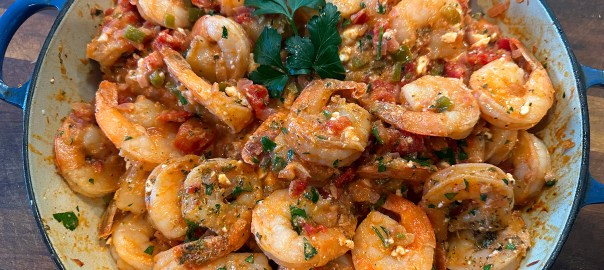
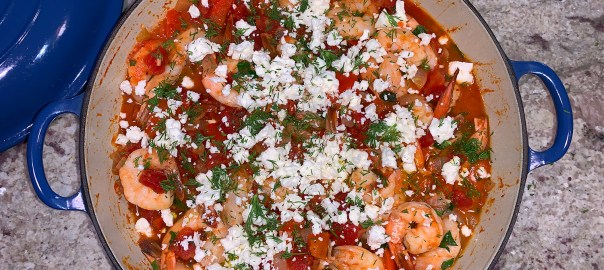
Attending a Greek dinner party, we were tasked with supplying an appetizer to go with the theme. After a bit of a search, we decided on the Shrimp in a Skillet with Feta and Tomatoes from our “My Greek Table” cookbook by Diane Kochilas.
This Greek recipe is a taverna classic and beloved all over Greece, AND in Greek restaurants all over the world, too. It’s also very easy to prepare at home and can be served as a meze or as a main course. It’s delicious over rice or pasta, too.
There were a total of 10 guests at the party so we decided to double the recipe which required cooking the shrimp in two batches. Lucky for us, there were some leftovers which we served atop a bed of orzo for dinner a couple of days later.
1 ½ lbs. large shrimp cleaned, with heads and tails intact
6 Tbsp. ouzo
Juice of 1/2 lemon, strained
4 Tbsp. extra virgin olive oil
1 large red onion finely chopped
1 large garlic clove minced
1 green chile pepper (such as Anaheim), seeded and finely chopped
2 cups chopped or grated fresh tomatoes, or diced canned tomatoes
Salt and freshly ground black pepper
1 tsp. finely grated lemon zest
2/3 cup Greek feta cheese, crumbled
2 tsp. dried oregano
2 Tbsp. finely chopped flat-leaf parsley
Directions
Place the shrimp, 3 tablespoons of the ouzo and the lemon juice in a bowl. Cover, and refrigerate for at least 15 minutes or up to 2 hours.
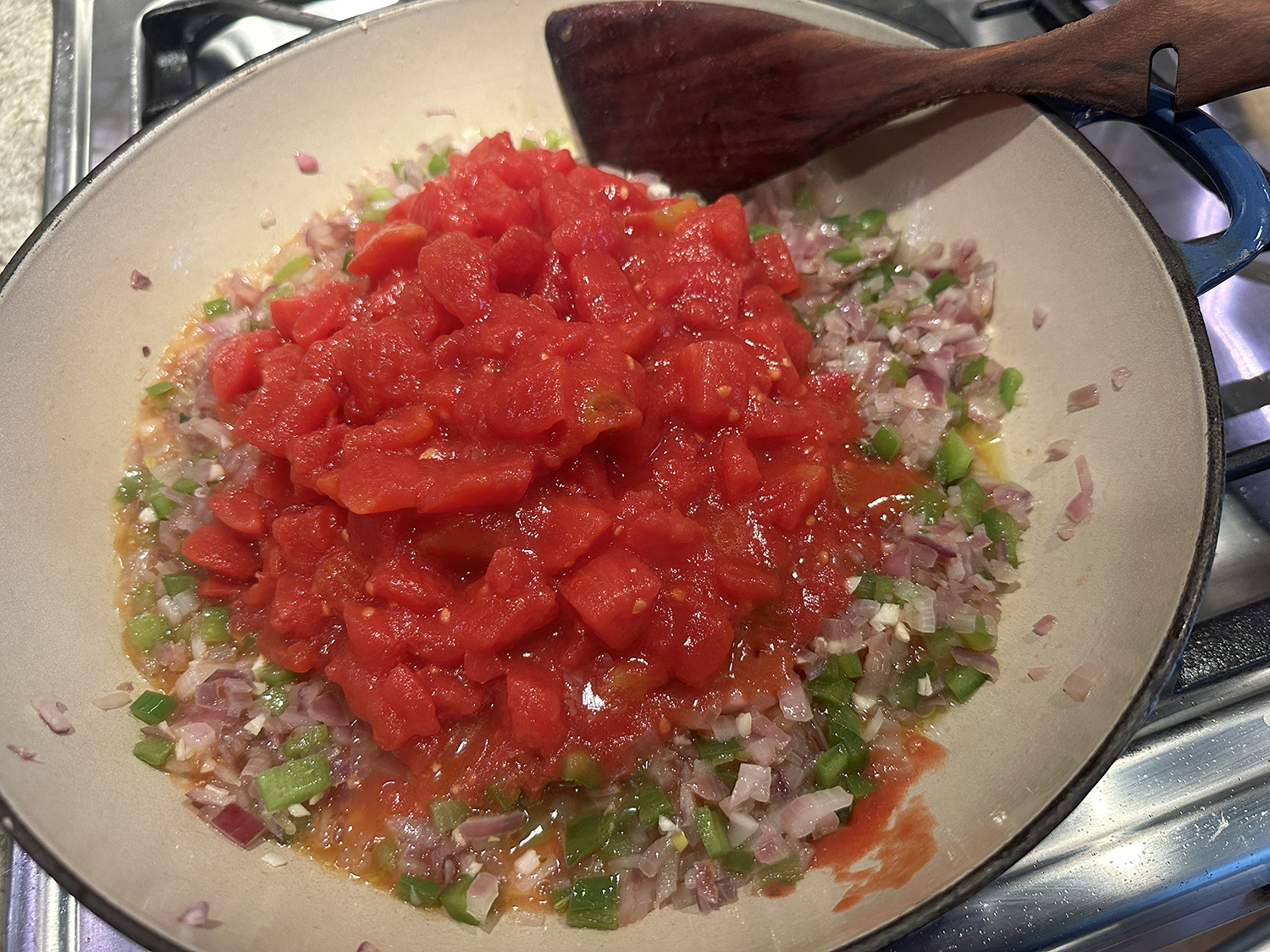
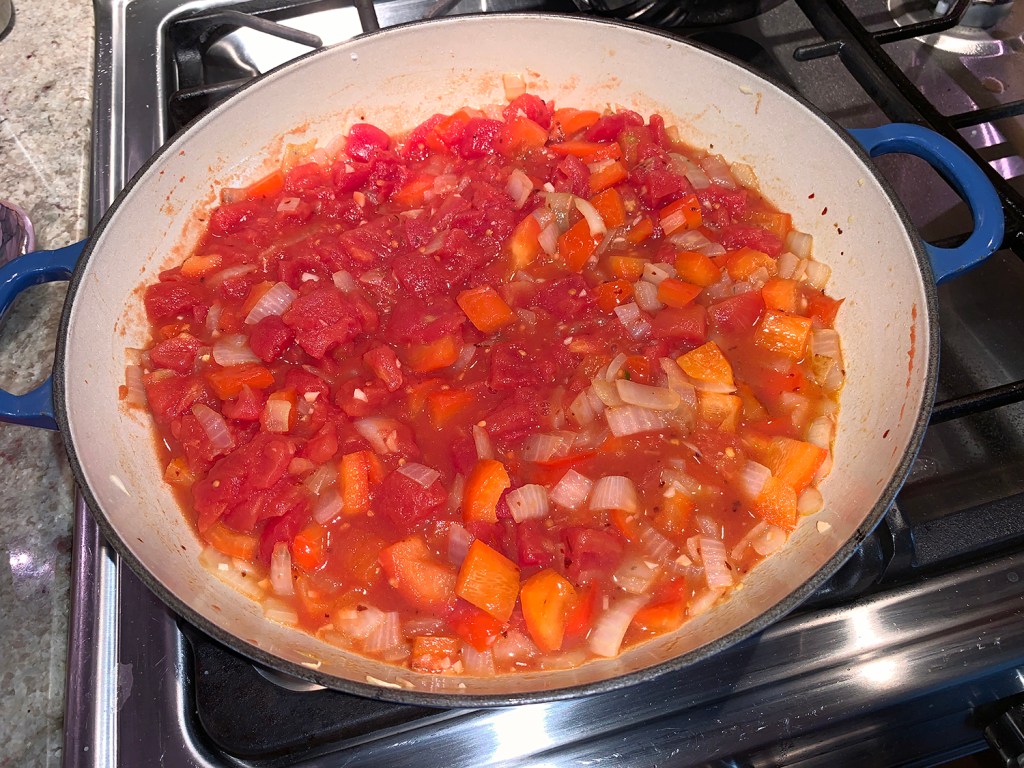
In a large, deep skillet, heat two tablespoons of the oil over medium heat. Add the onion and chile and cook, stirring until wilted, about 8 minutes. Stir in half the garlic. Add the tomatoes and bring to a simmer. Season lightly with salt and pepper. Raise the heat to medium-high and cook for 15 minutes, until most of the watery liquid from the tomatoes has evaporated.
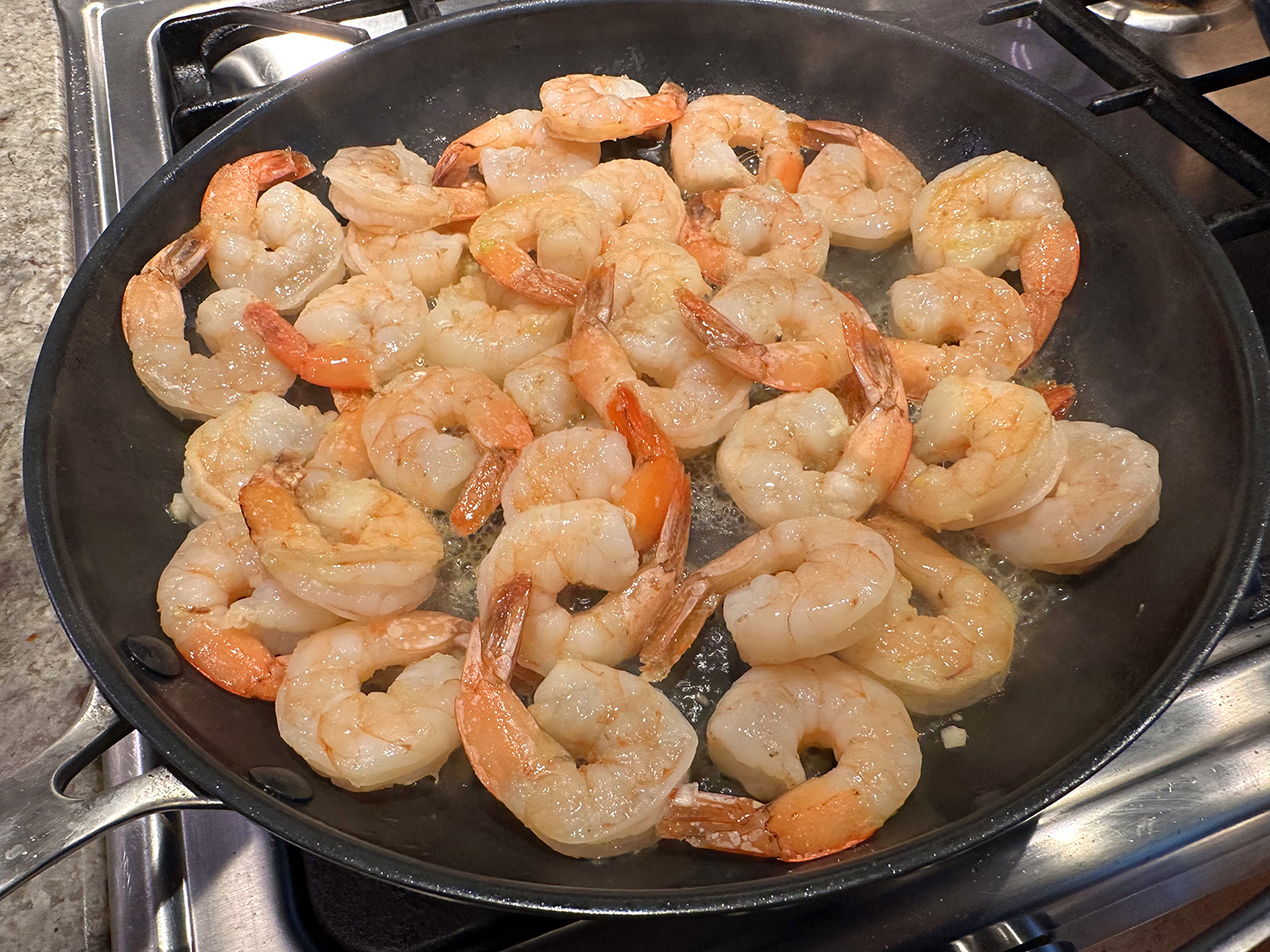
In a separate large skillet. heat the remaining two tablespoons of olive oil over medium-high heat. Add the shrimp and remaining garlic, toss to combine and cook until the shrimp turn pink. Carefully spritz with the remaining 3 tablespoons ouzo; it may flame up a bit.
Add the shrimp and pan juices to the tomato sauce. Stir in the lemon zest and feta. When the feta starts to melt, gently stir in the oregano and parsley. Remove from the heat and serve.
The name of the dish almost sounds Japanese, while the ingredients are an interesting mash-up inspired by Greek shrimp saganaki, that is combined wonderfully with sweet shrimp, tomatoes and feta with subtly smoky dried Mexican chiles. Identity crisis? In name only, because once you taste it, you are transported to another realm entirely — it is so utterly delicious!
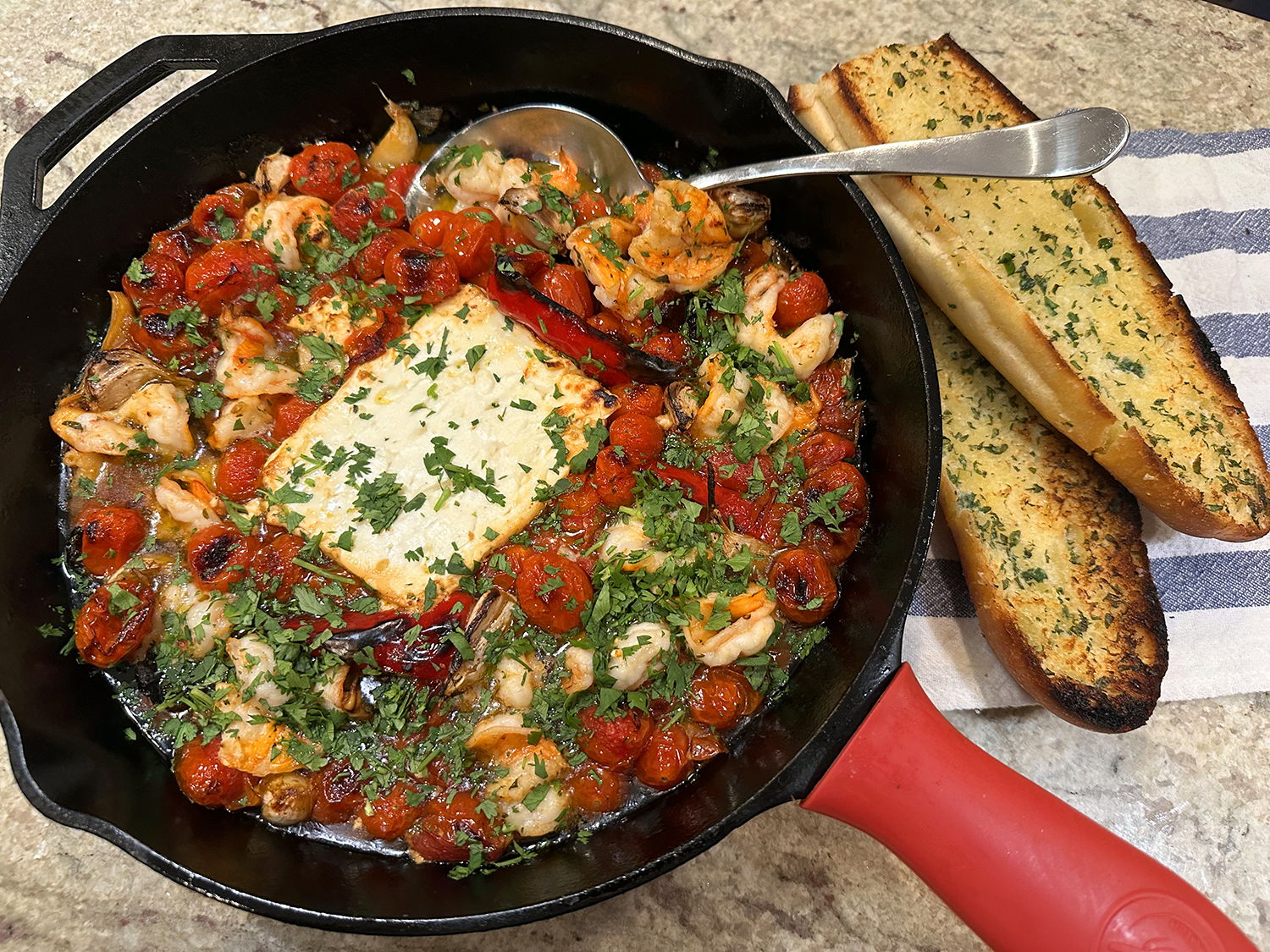
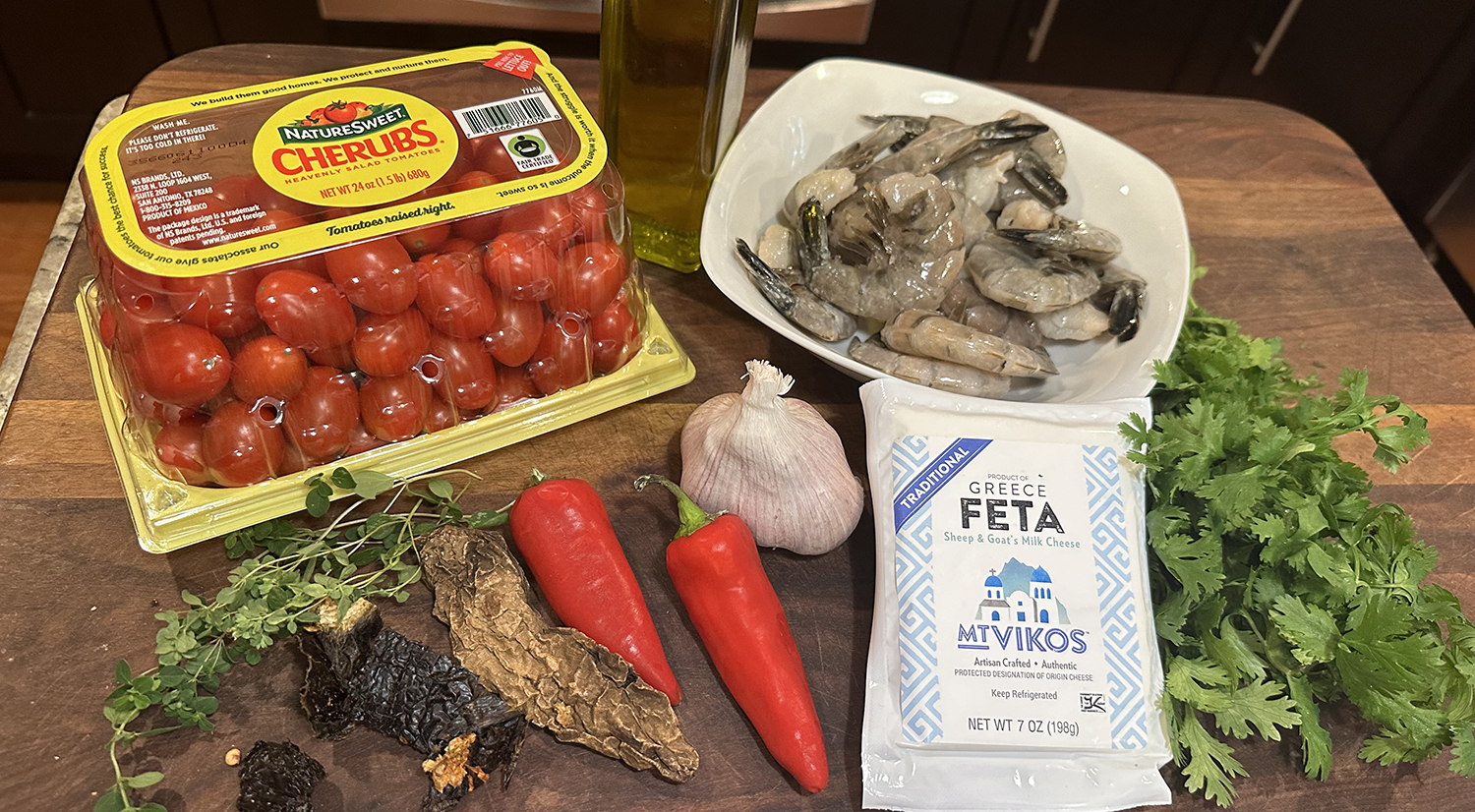
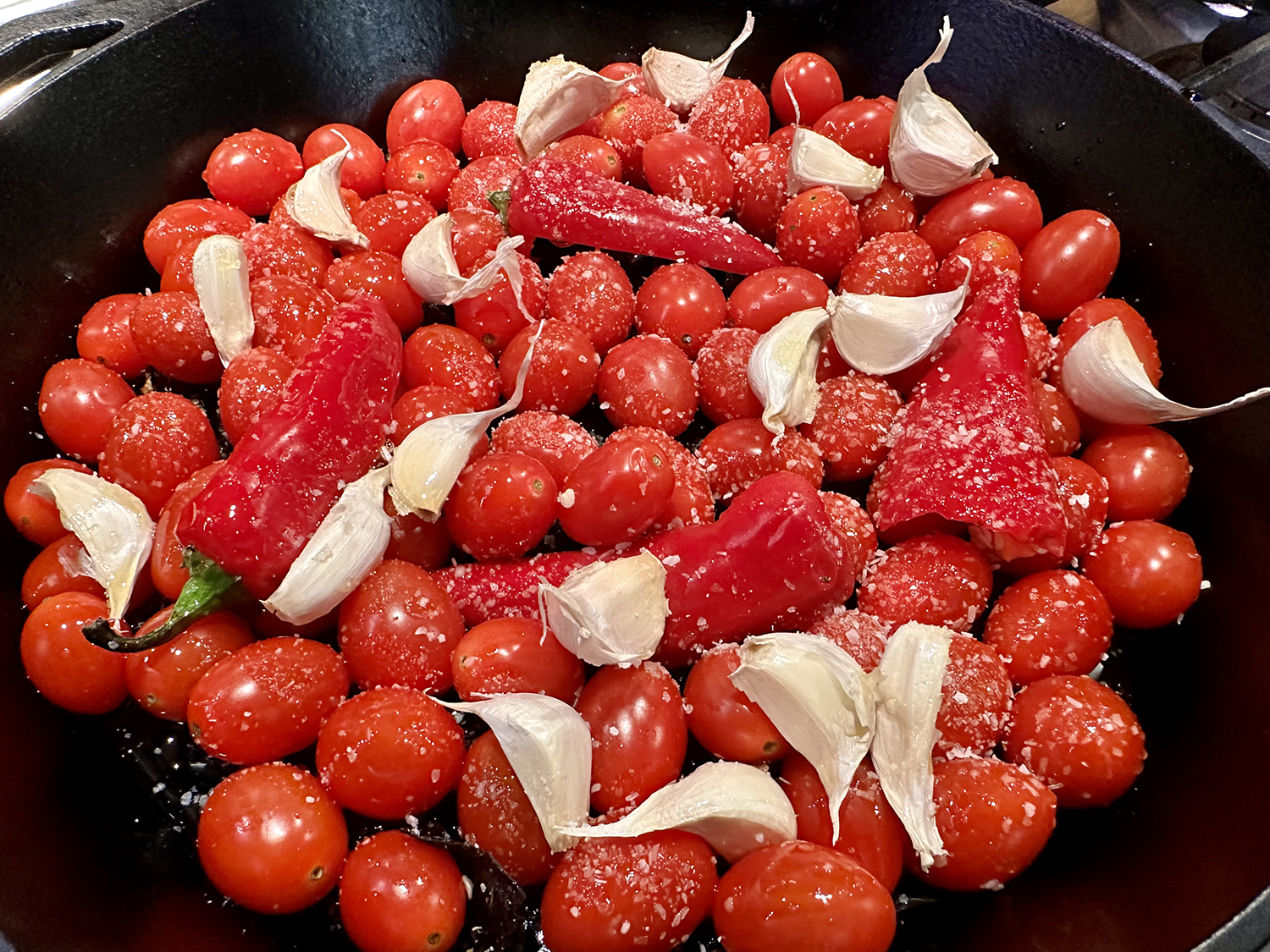
The aromatics — cherry tomatoes and garlic, plus an assortment of dried and fresh chiles — simmer and confit in oil in the oven, with shrimp and feta added toward the end of cooking, broiling quickly, to create a wonderfully oozy, charred dish. Now that description certainly got our attention!
It’s a simple, one-pan weeknight meal that cooks in just 30 minutes. This recipe allows flexibility in your choice of chiles; whichever you choose, the gentle confiting of the chiles releases their flavors, adding nuanced heat to complement the bright and tangy tomatoes and feta. (Make sure to get the whole block feta, not the precrumbled variety.)
According to the chef, you can switch out the ancho chile for pasilla chile, or dial up the heat with a fruity Scotch bonnet. Enjoy this dish straight from the pan, mopped up with a piece of crusty bread. Any leftovers can be easily turned into a show-stopping pasta sauce, making this recipe a versatile addition to any recipe collection.
1 chipotle chile (or similar), stem and seeds removed
1 ancho chile (or similar), stem and seeds removed
2 fresh long red chiles (or similar), split open lengthwise with the stem intact
1 head garlic (1 clove minced, the rest separated but left skin-on and whole)
24 oz. cherry tomatoes
¾ cup extra-virgin olive oil
Fine sea salt and black pepper
1 8-oz. block feta
½ lb. peeled and deveined medium shrimp
½ cup roughly chopped fresh cilantro
Crusty bread, for serving
Directions
Heat the oven to 425 degrees.
Add the chipotle chile, ancho chile, fresh chiles, whole garlic cloves, cherry tomatoes, oil, 1 teaspoon of salt and a good grind of pepper to a 10-inch cast-iron pan or an 8-by-11-inch broiler-safe baking dish. Tuck the dried chiles underneath so that they are submerged in oil to avoid burning. Bake for 10 minutes, then stir, keeping the dried chiles submerged in oil.
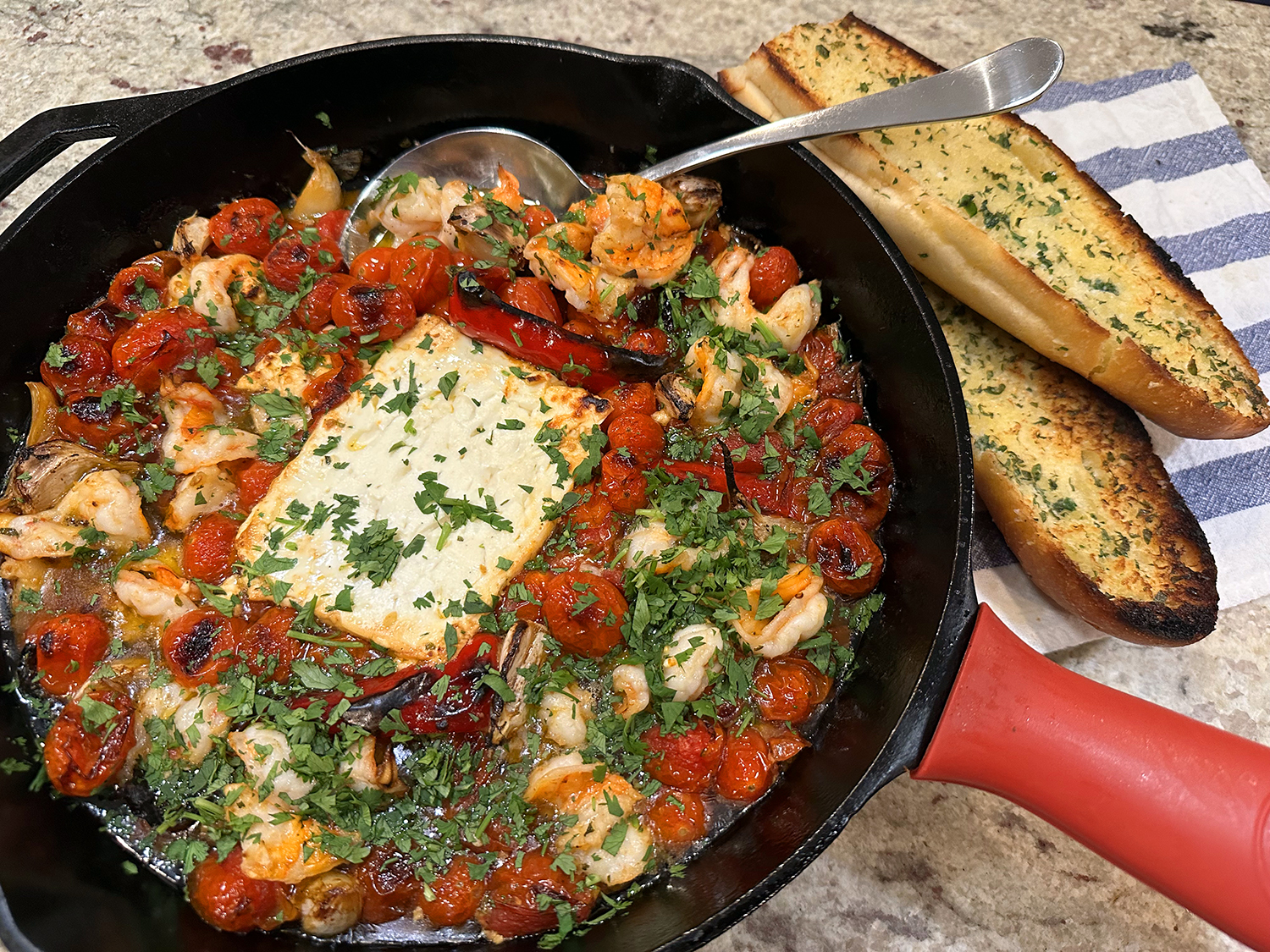
Nestle the feta into the middle of the mixture, and return to the oven for 15 minutes, until the tomatoes are nicely charred and the feta has softened, then remove from the oven.
While the feta cooks, delicately butterfly the shrimp by making a shallow cut using a sharp paring knife along the back of each shrimp from head to tail.
Set the broiler to the highest setting and let it heat up for 5 minutes.
Stir the shrimp and the crushed garlic into the tomato mixture, leaving the feta whole in the middle. Broil on the top rack for 3 to 5 minutes, until the shrimp is cooked through and the feta is golden brown.
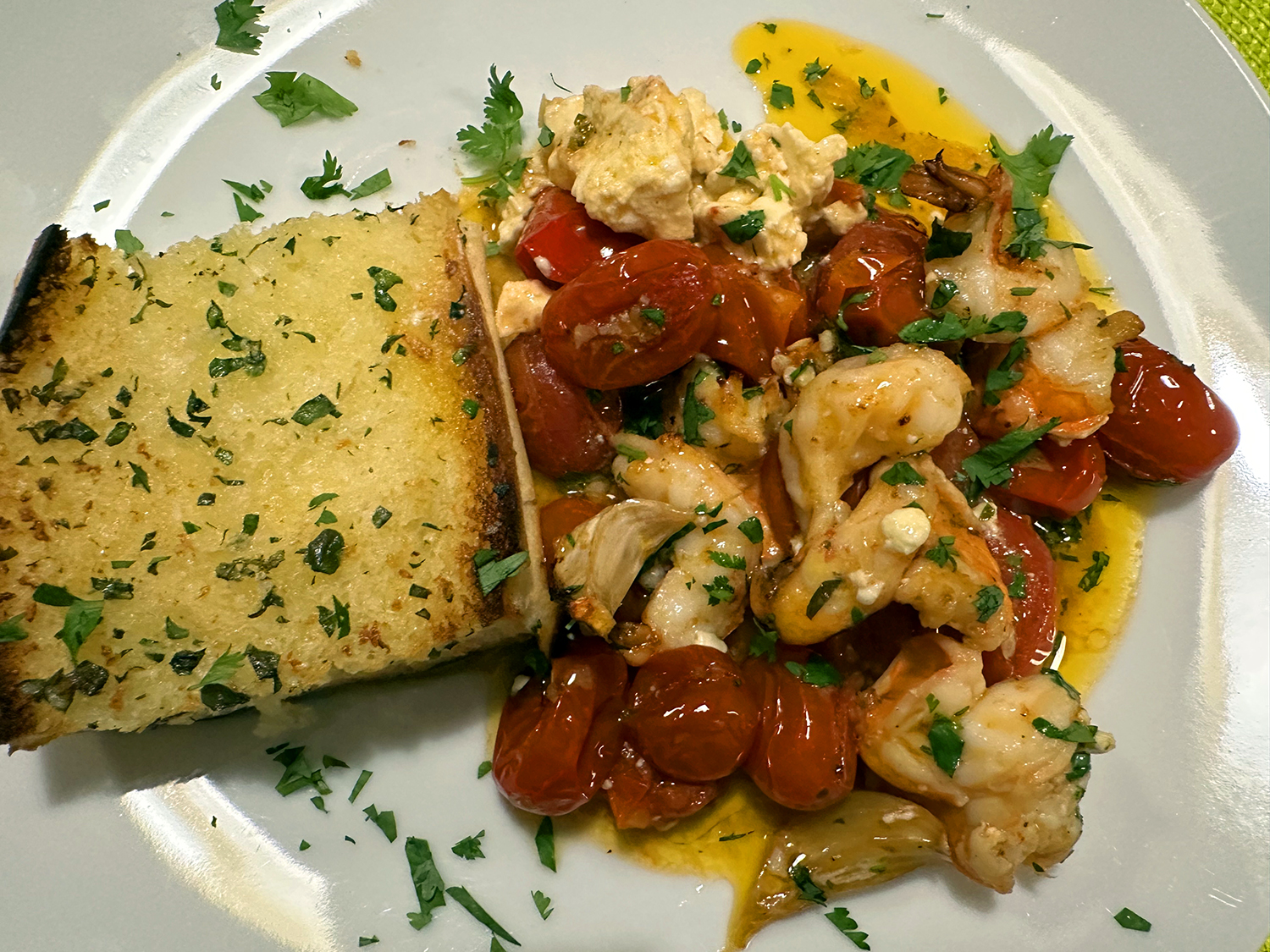
To serve, spoon some of the tomato mixture on top of the feta, then sprinkle over the cilantro. Serve with crusty bread.
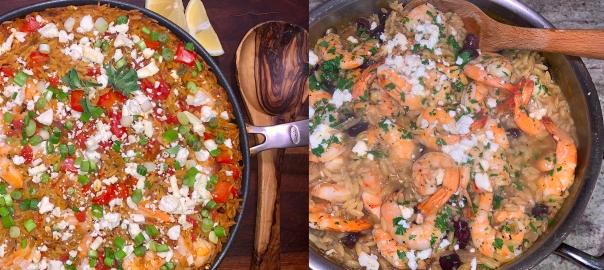
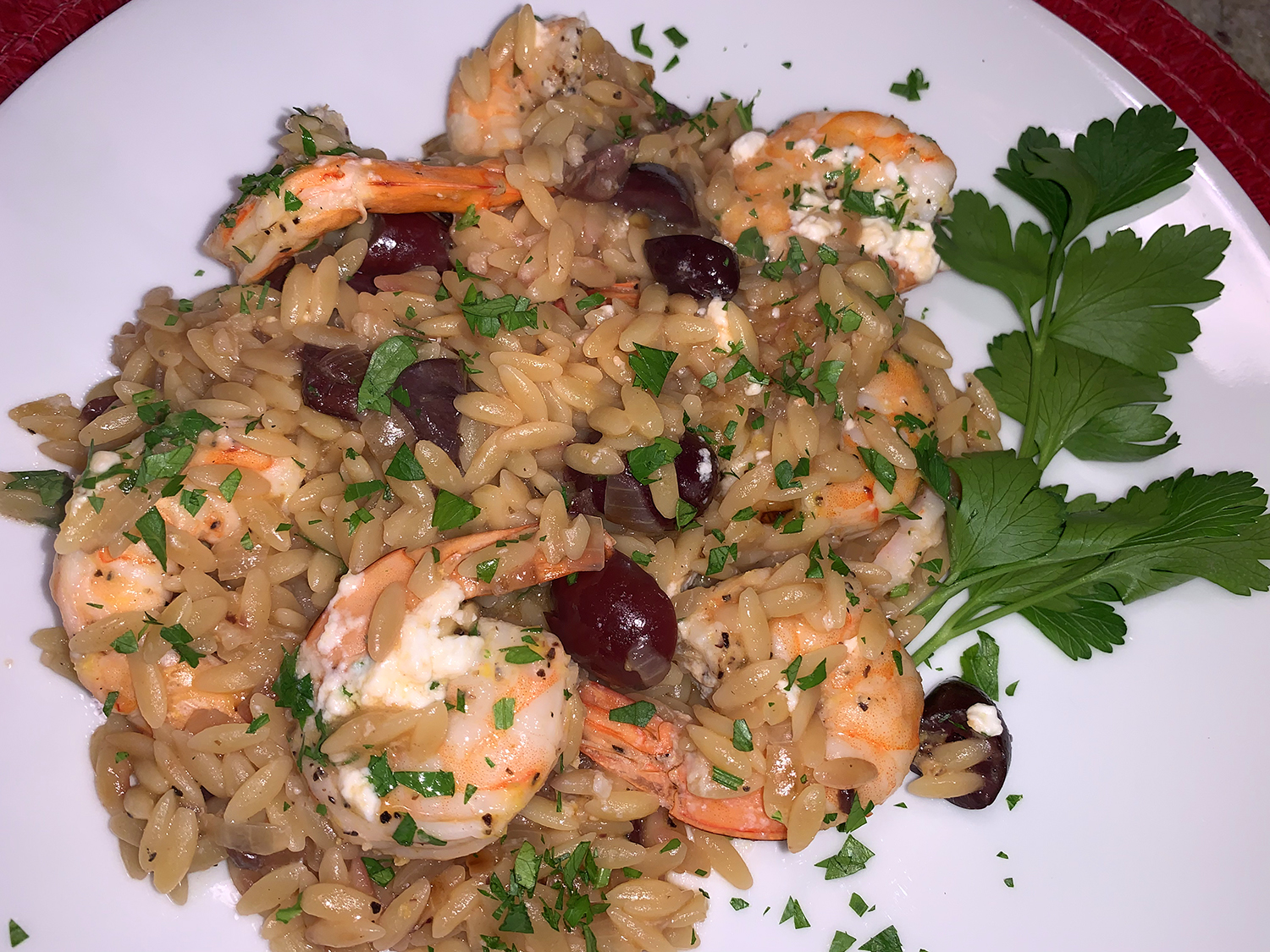
Does a Mediterranean diet appeal to you? Then these two recipes might be worth a try. The first from Cook’s Country, Orzo with Shrimp, Feta and Lemon dish will grab your attention. Cooking the orzo pilaf-style gives it extra flavor and allows you to control the slightly creamy consistency.
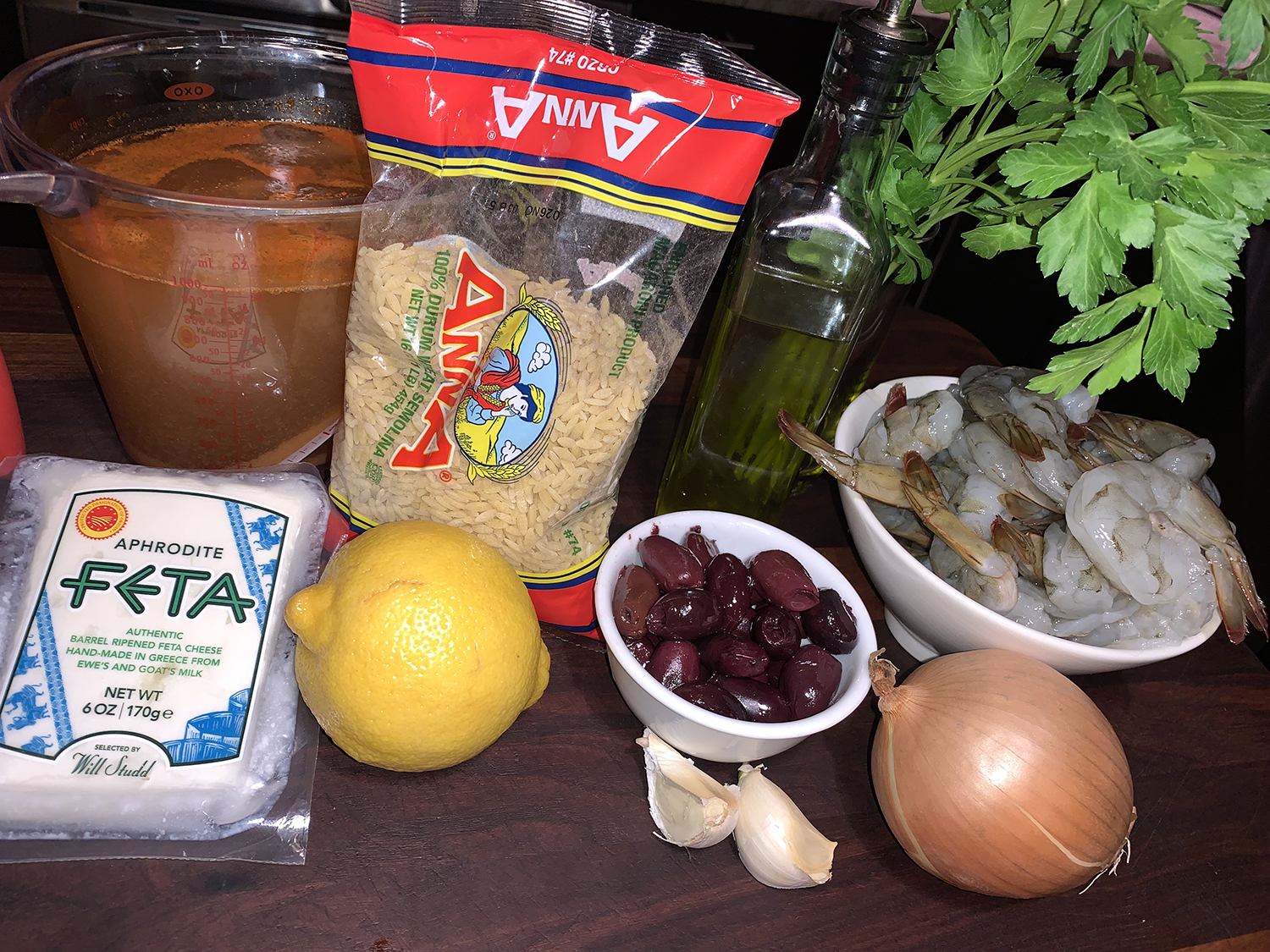
To keep this meatless, use seafood/shellfish stock as opposed to chicken broth. Also, if the broth you use is on the bland side, use 4 cups of the stock and omit the water. If, like our homemade shellfish stock, it is intense, dilute it with two cups of water.
Adjust the amounts of olives and feta to suit your own preferences. One version of the recipe indicated only a half cup of Kalamatas and only 2 ounces of feta, while the list below indicates double of each.
Because we cooked our meal in a 10-inch-wide nonstick pan, the shrimp took an extra two minutes to become opaque. Keep that in mind if using less than a 12-inch skillet.
1 ½ lbs. extra-large shrimp (21 to 25 per pound), peeled and deveined
2 Tbsp. extra-virgin olive oil, plus extra for drizzling
1 onion, chopped fine
2 garlic cloves, minced
2 cups orzo
2 cups seafood (or chicken) broth
2 cups water
1 cup pitted Kalamata olives, chopped coarse
4 oz. feta cheese, crumbled (1 cup)
Fresh parsley, for garnish
Directions
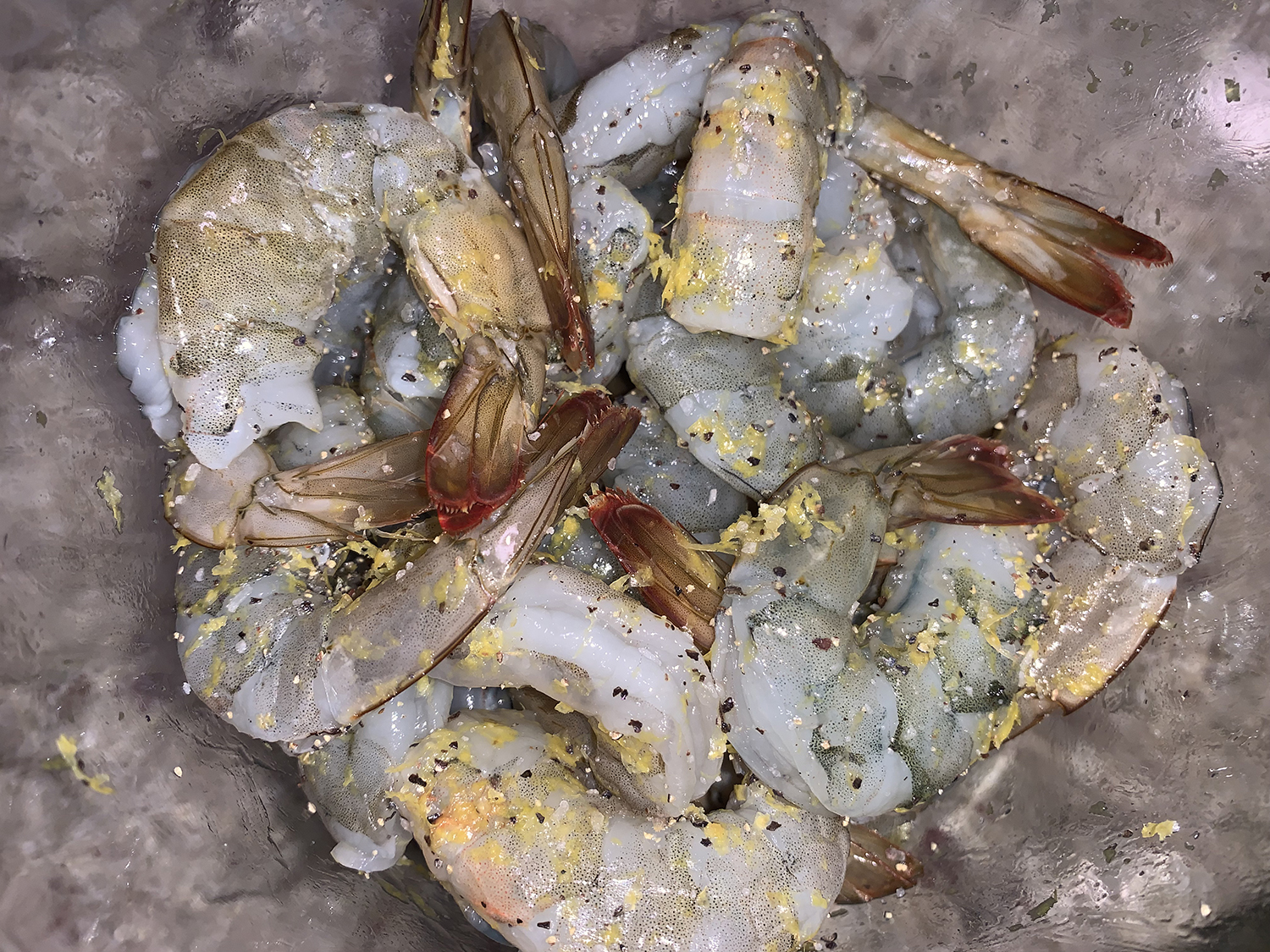
Mix lemon zest, 1/2 teaspoon salt, and 1/2 teaspoon pepper together. Pat shrimp dry with paper towels and toss with lemon-salt mixture to coat; set aside.
Heat 1 tablespoon oil in 12-inch nonstick skillet over medium-high heat until just smoking. Add onion and cook until softened, about 4 minutes.
Stir in garlic and cook until fragrant, about 30 seconds.
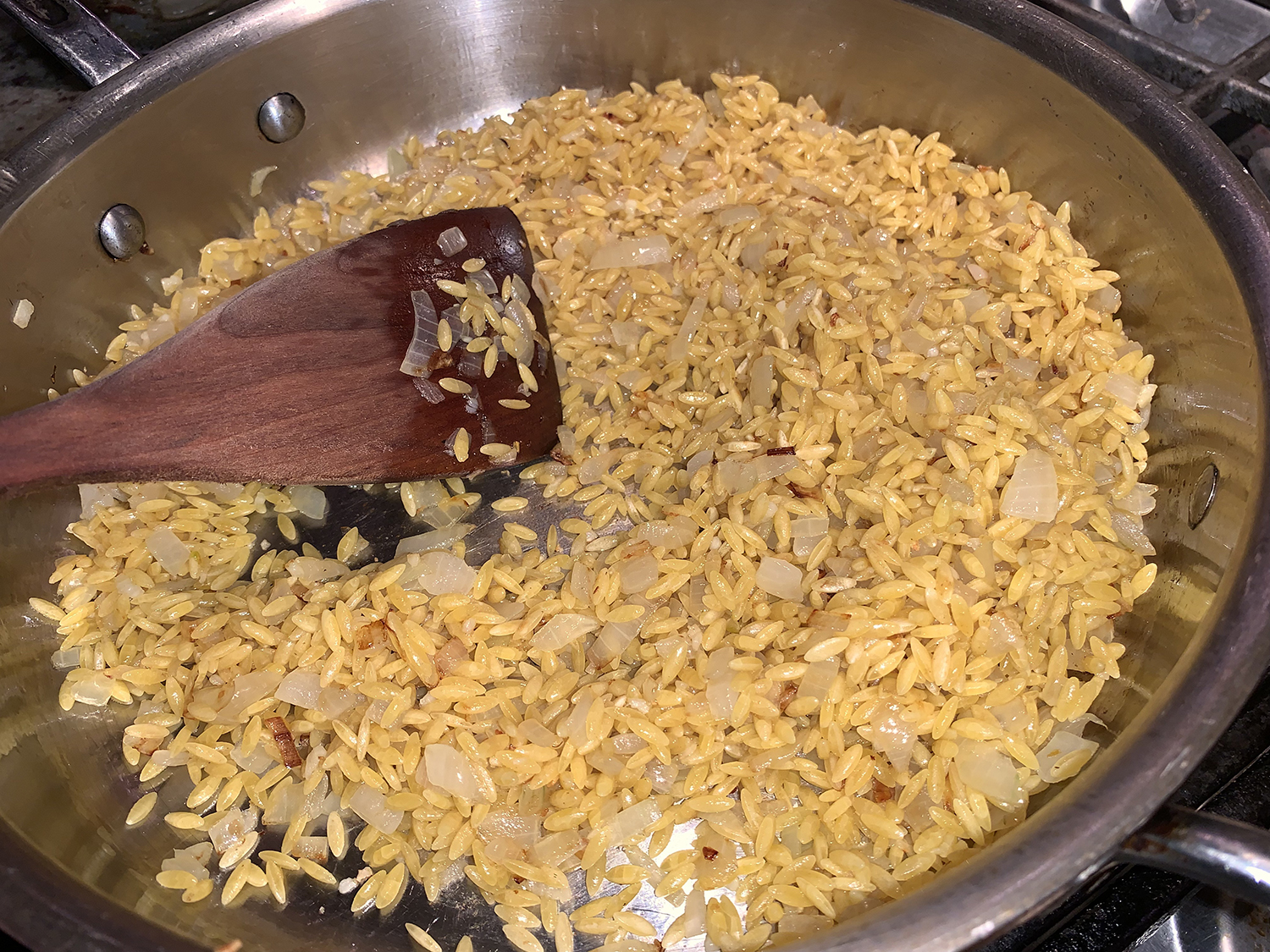
Stir in orzo and cook, stirring frequently, until orzo is coated with oil and lightly browned, about 4 minutes.
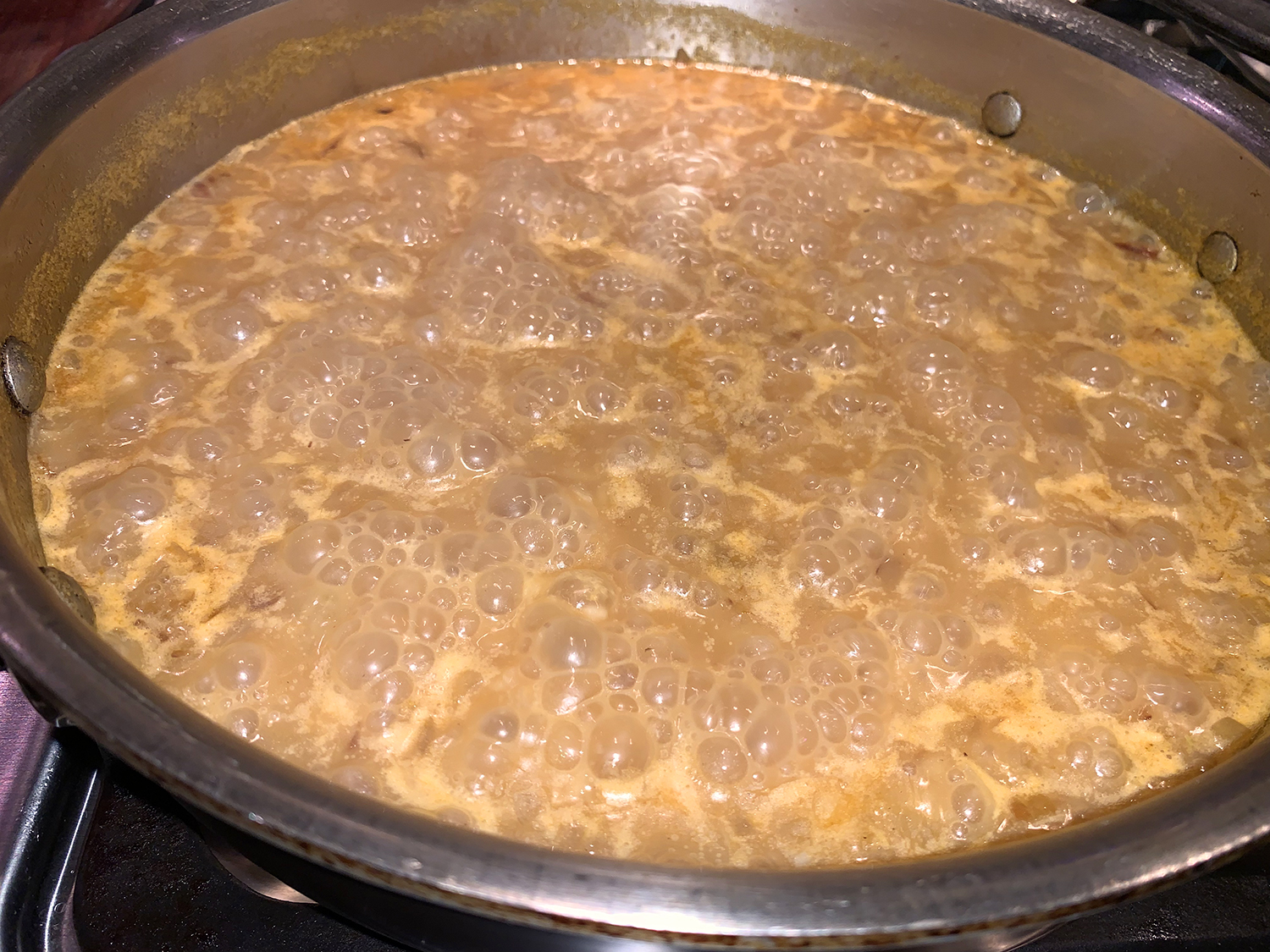
Add broth and water, bring to boil, and cook, uncovered, until orzo is al dente, about 6 minutes.
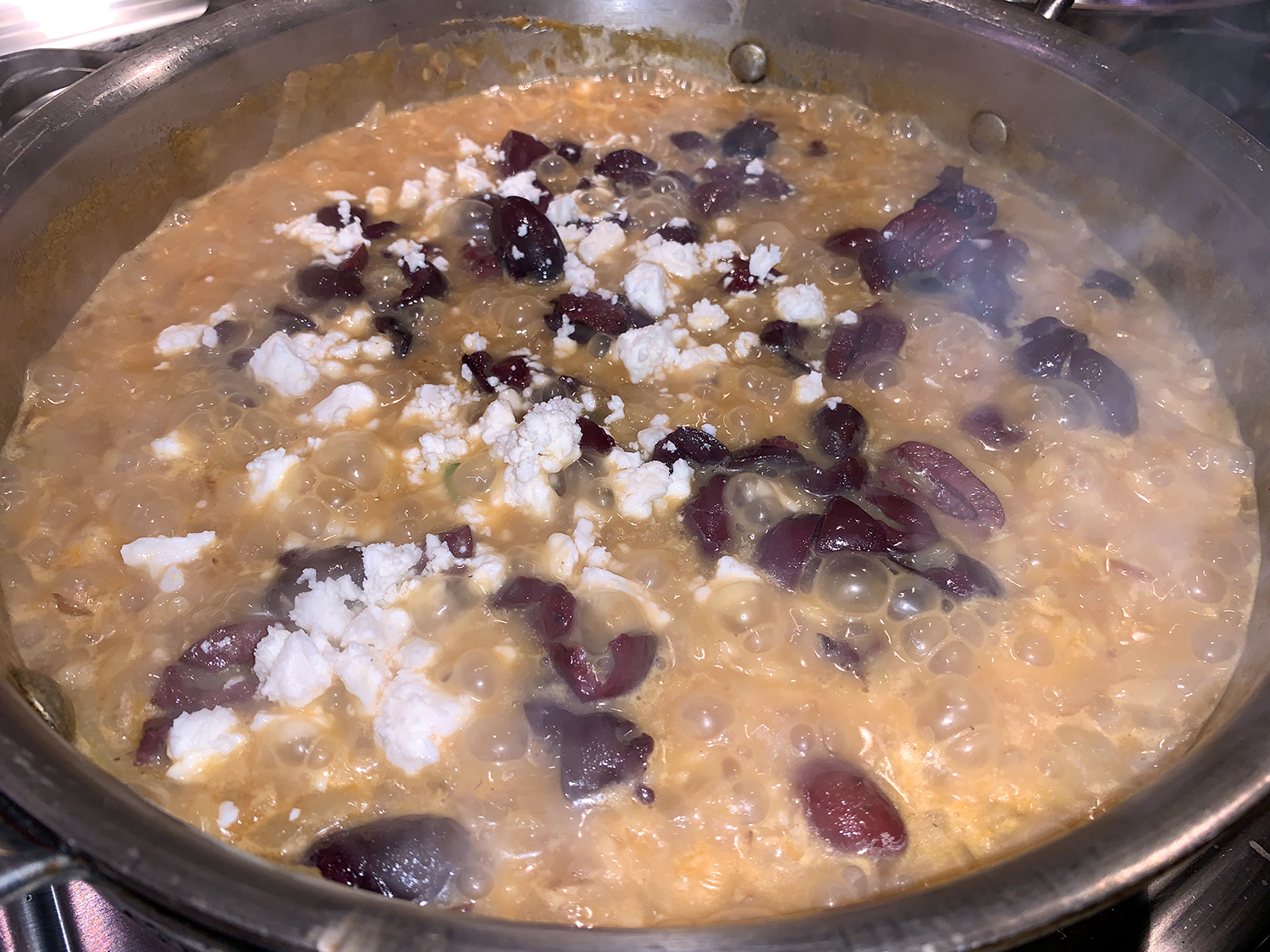
Stir in olives, 1/2 cup feta, and lemon juice. Season with salt and pepper to taste.
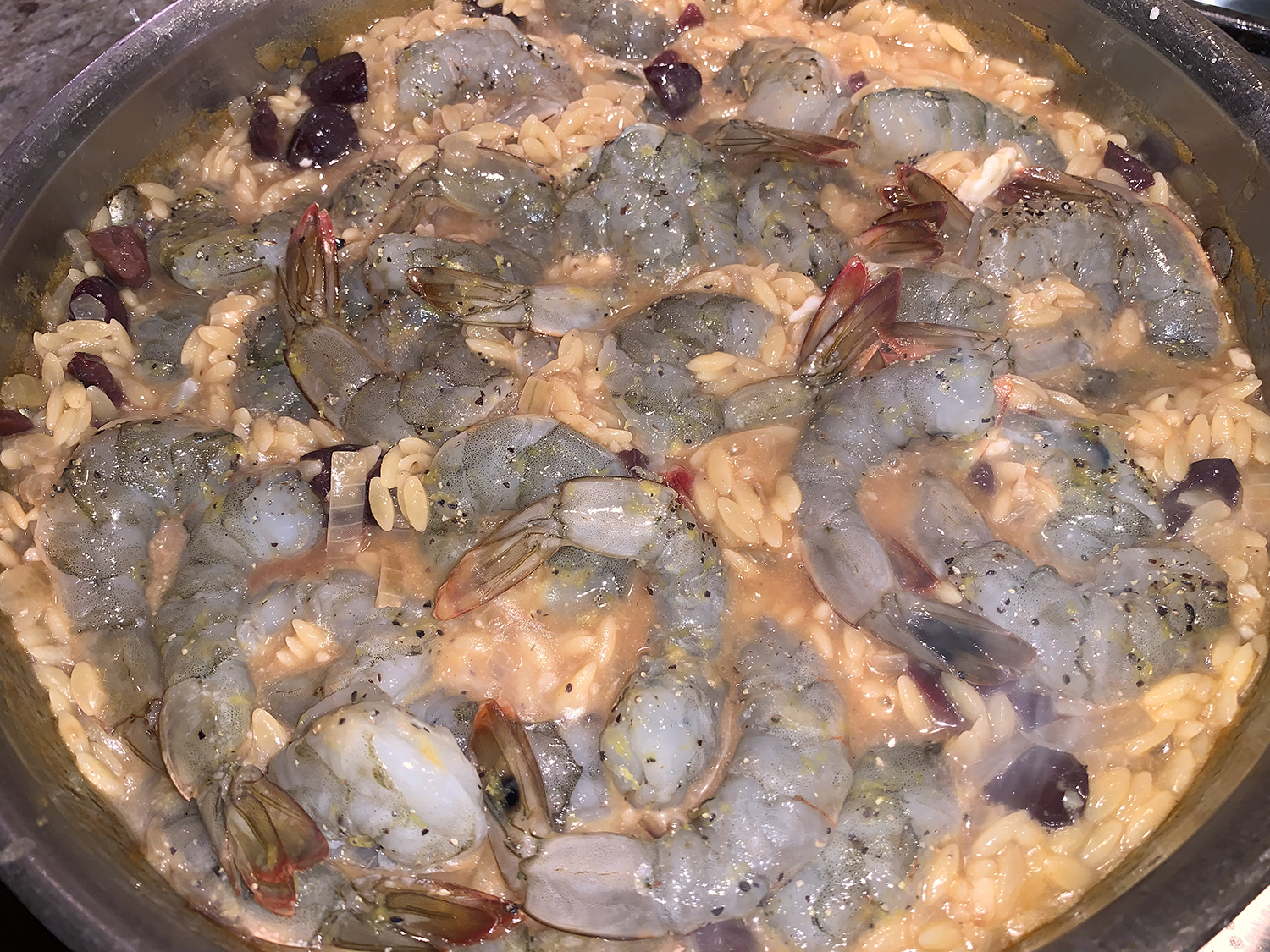
Reduce heat to medium-low, nestle shrimp into orzo, cover, and cook until shrimp are pink and cooked through, about 5 minutes.
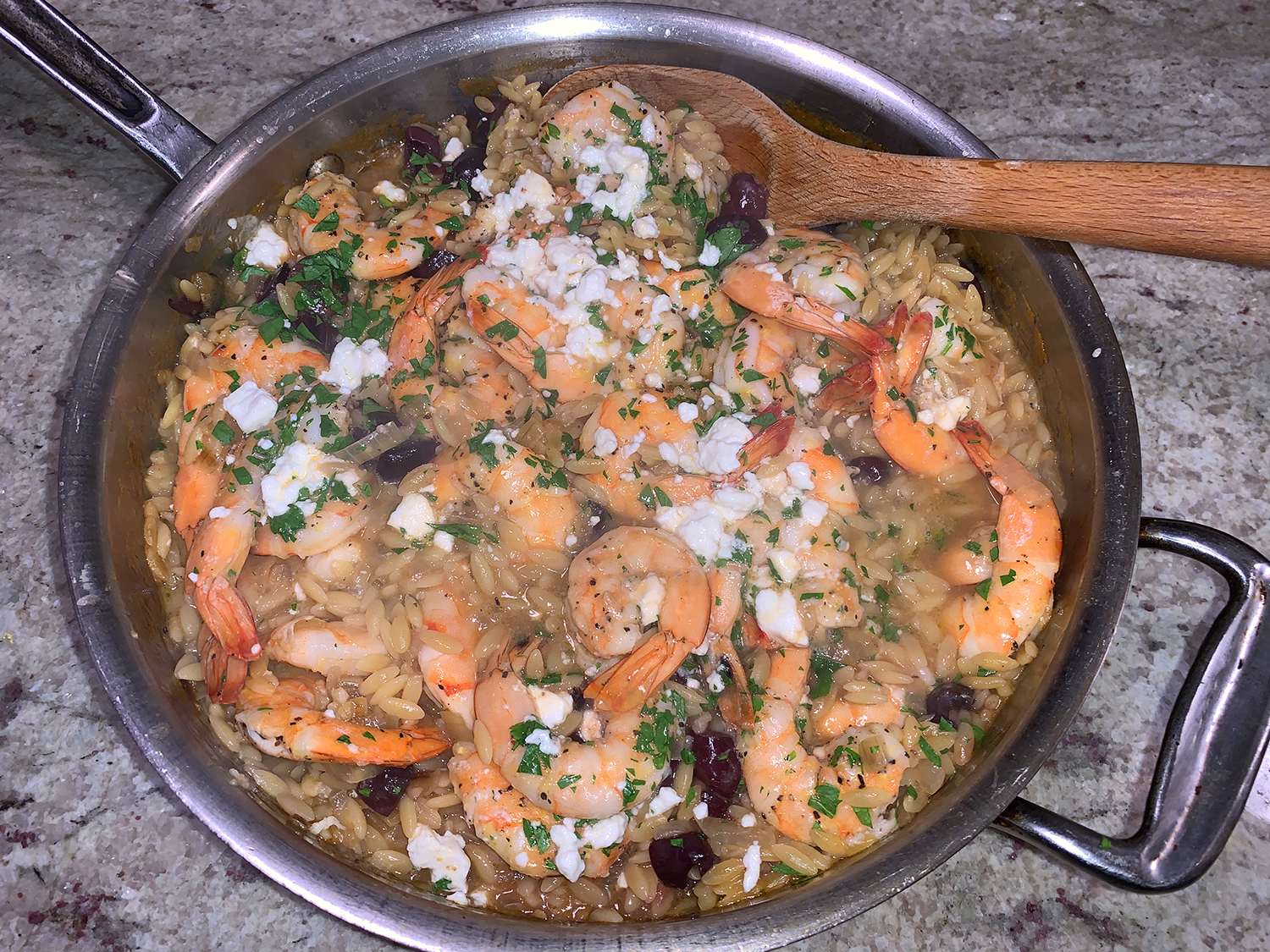
Sprinkle remaining 1/2 cup feta over top and drizzle with extra oil. Serve.
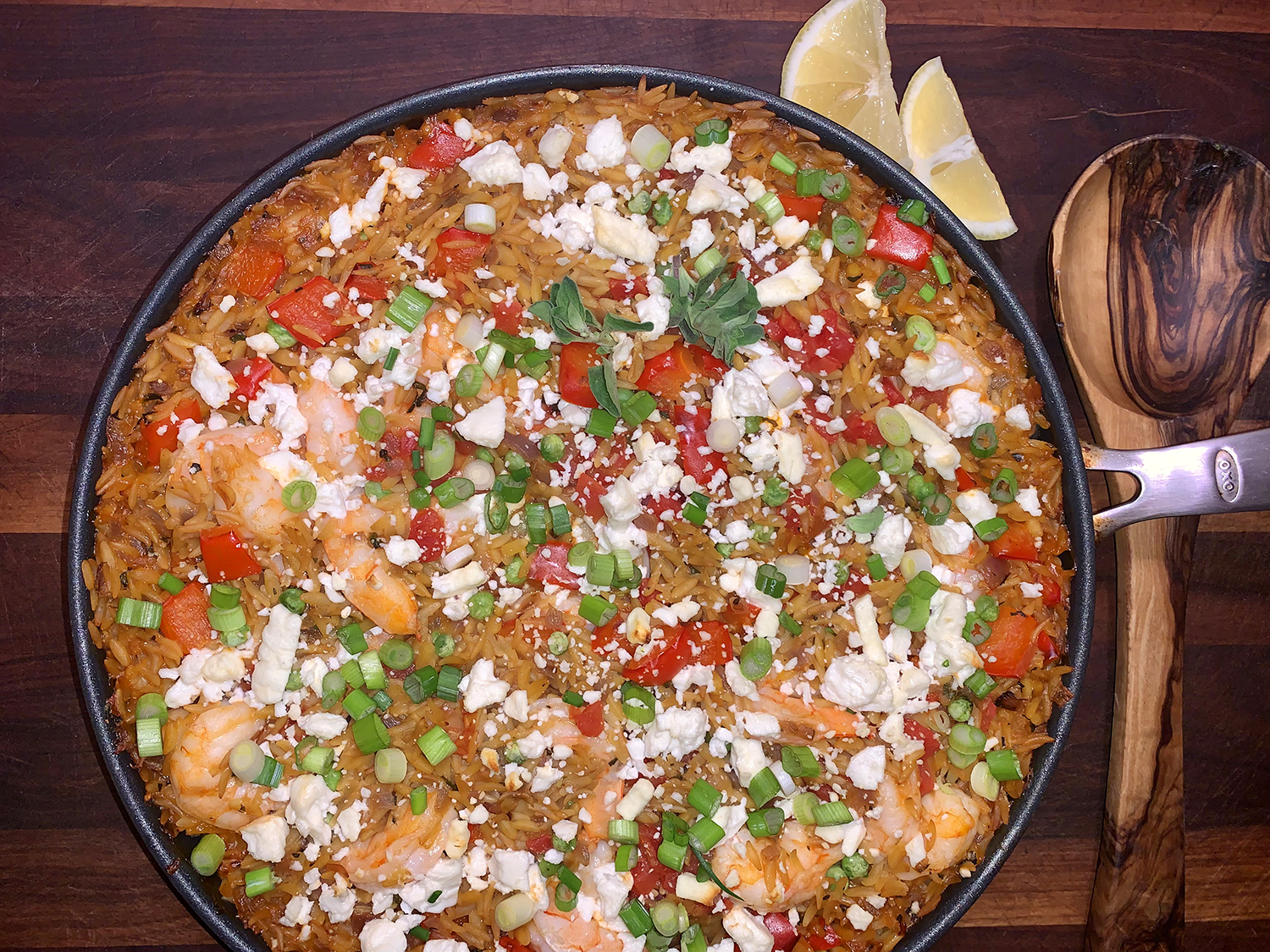
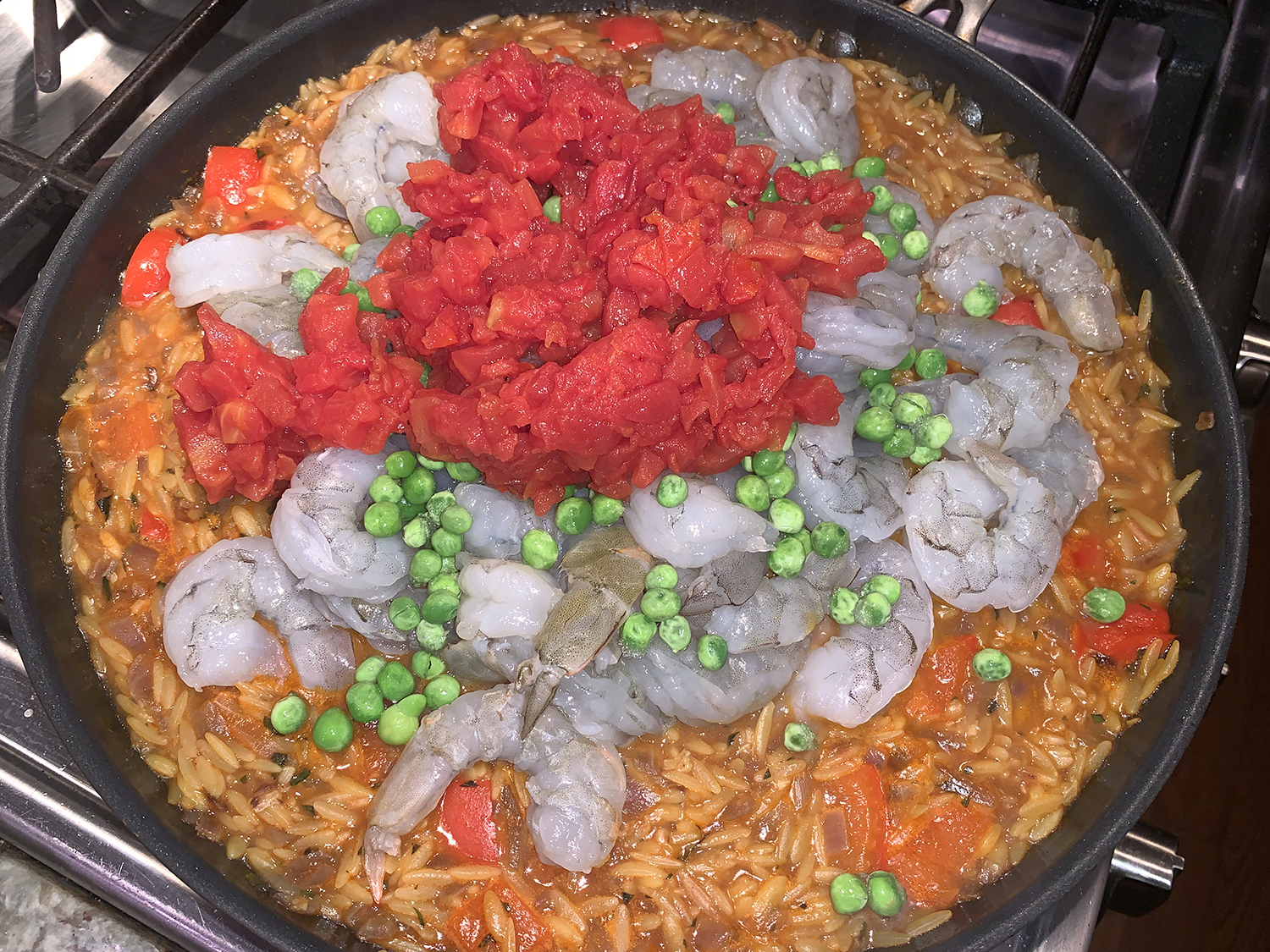
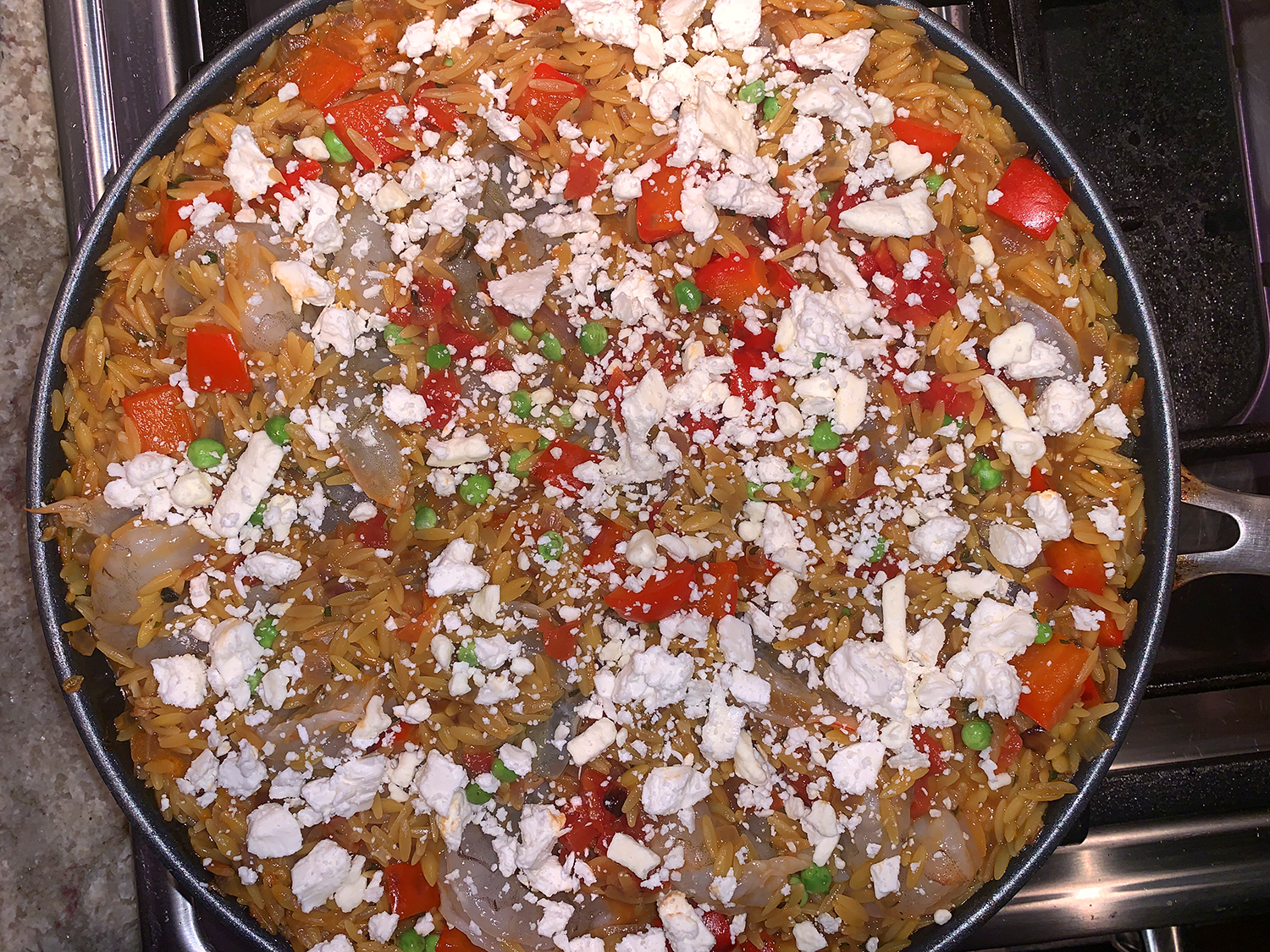
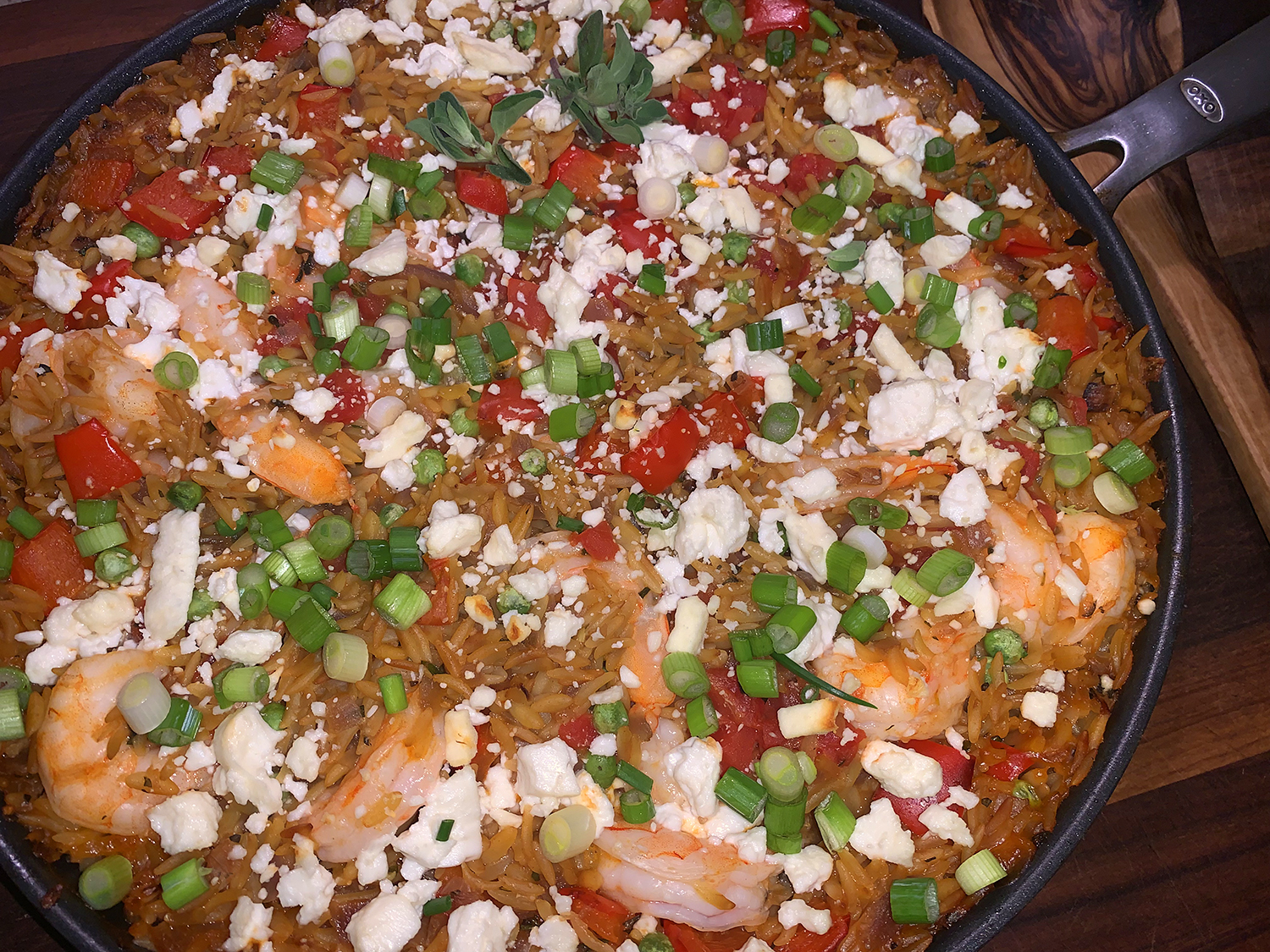
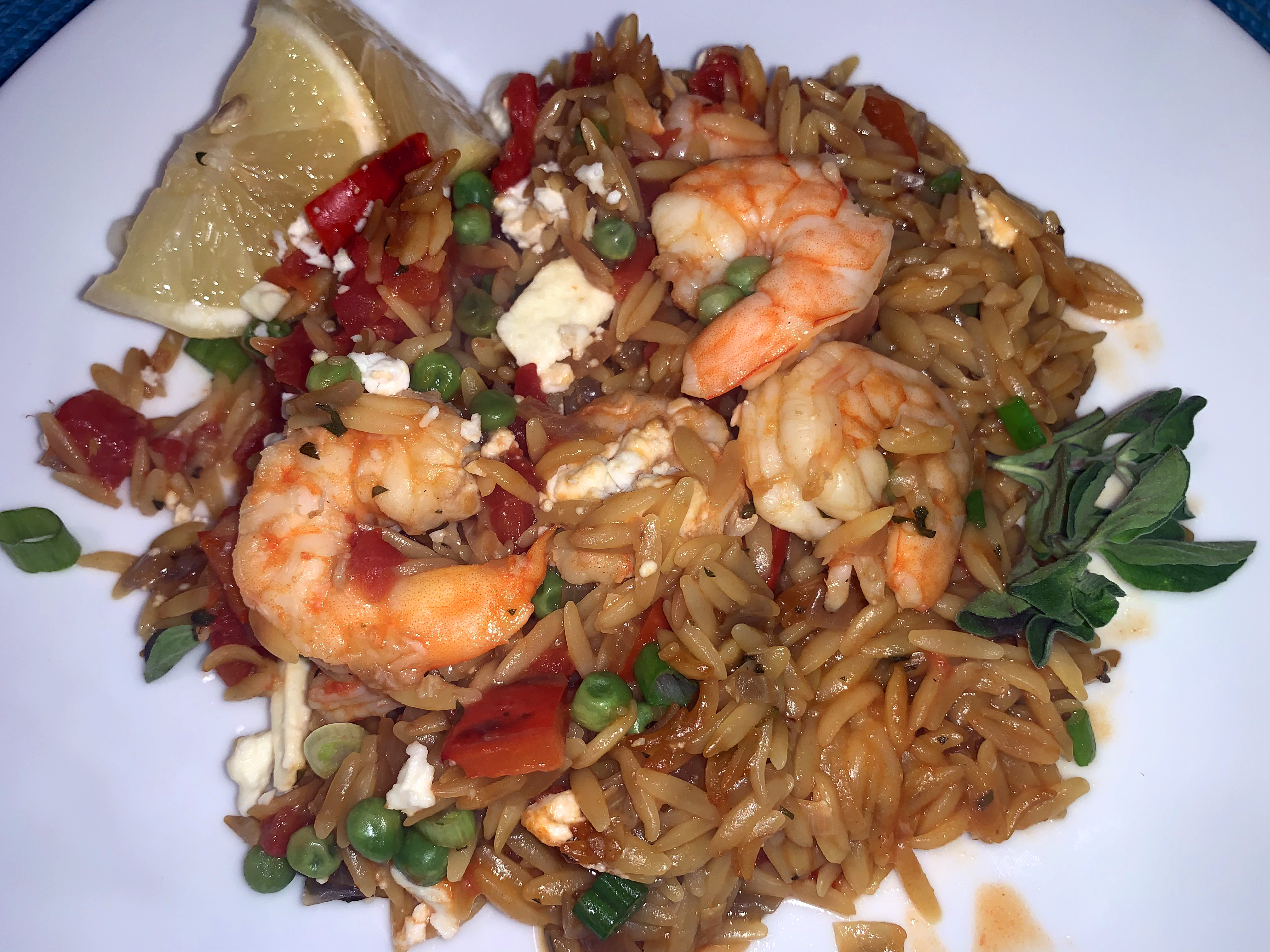
The second recipe, Baked Shrimp and Orzo with Feta and Tomatoes, is another Mediterranean-inspired shrimp dish similar to the Orzo with Shrimp, Feta and Lemon above, however this version gets started on the cooktop and then baked in the oven. It only calls for 1 pound of shrimp but we had 1 1⁄2 pounds and decided to use it all. The 12-inch skillet was brimming full. Our other change was incorporating homemade shellfish stock for the chicken broth.
To build in plenty of Mediterranean flavor, start by sautéing chopped onion and red bell pepper, to soften them before adding in minced garlic and oregano. To guarantee perfectly cooked shrimp and pasta, sauté the orzo in the aromatics to unlock its toasty notes. The crumbled saffron threads, though not traditional, introduce a sunny hue and warm, complex flavor.
Chicken (or shellfish) broth and the drained juice from a can of diced tomatoes are then stirred in; as the orzo cooks to al dente, its releases starch (similar to a risotto) creating a sauce with a subtly creamy texture. To prevent the shrimp from overcooking, stir them right into the orzo, along with the reserved tomatoes and frozen peas, and transfer the skillet to the oven to cook through gently. A sprinkling of feta before baking reinforces the dish’s Greek flavors and promises an appealing browned, cheesy crust.
Make sure that the orzo is al dente, or slightly firm to the bite; otherwise it may overcook in the oven. If using smaller or larger shrimp, the cooking times may vary accordingly. You can leave the shrimp tails on, if desired. The small amount of saffron makes a big difference to the flavor and look of the dish, so be sure to include it. You will need a 12-inch oven-safe nonstick skillet for this recipe.
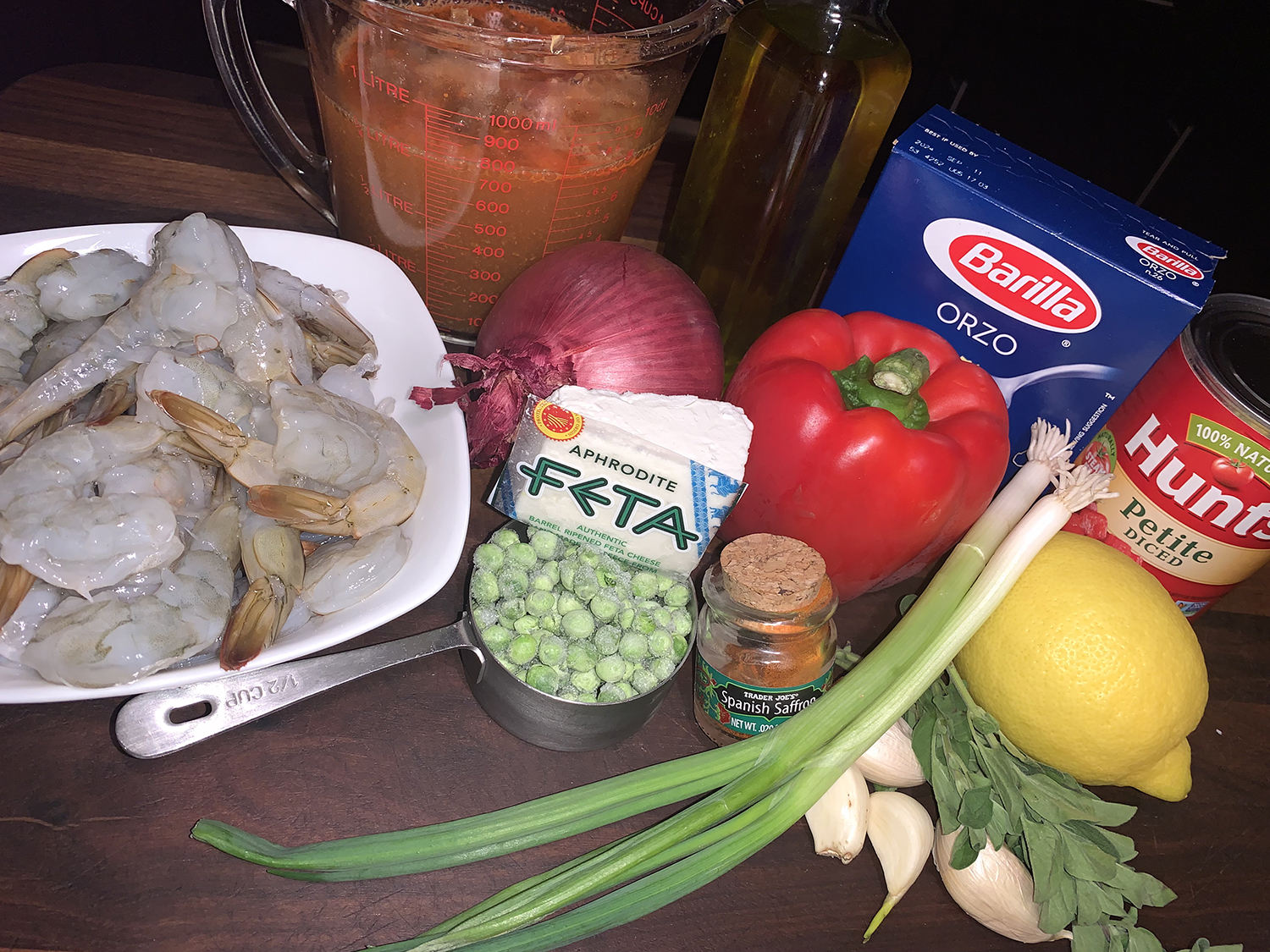
1 lb. extra-large shrimp (21 to 25 per pound), peeled, deveined, and tails removed
Salt and pepper
1 Tbsp. extra-virgin olive oil
1 red onion, chopped fine
1 red bell pepper, stemmed, seeded, and cut into ½-inch pieces
4 garlic cloves, minced
2 tsp. minced fresh oregano or ½ teaspoon dried
2 cups (12 oz.) orzo
Pinch saffron threads, crumbled
3 cups chicken or shellfish broth
1 (14.5-oz.) can diced tomatoes, drained with juice reserved
½ cup frozen peas
3 oz. feta cheese, crumbled (¾ cup)
2 scallions, sliced thin
Lemon wedges
Directions
Adjust oven rack to middle position and heat oven to 375 degrees. Pat shrimp dry with paper towels and season with salt and pepper; cover and refrigerate until needed.
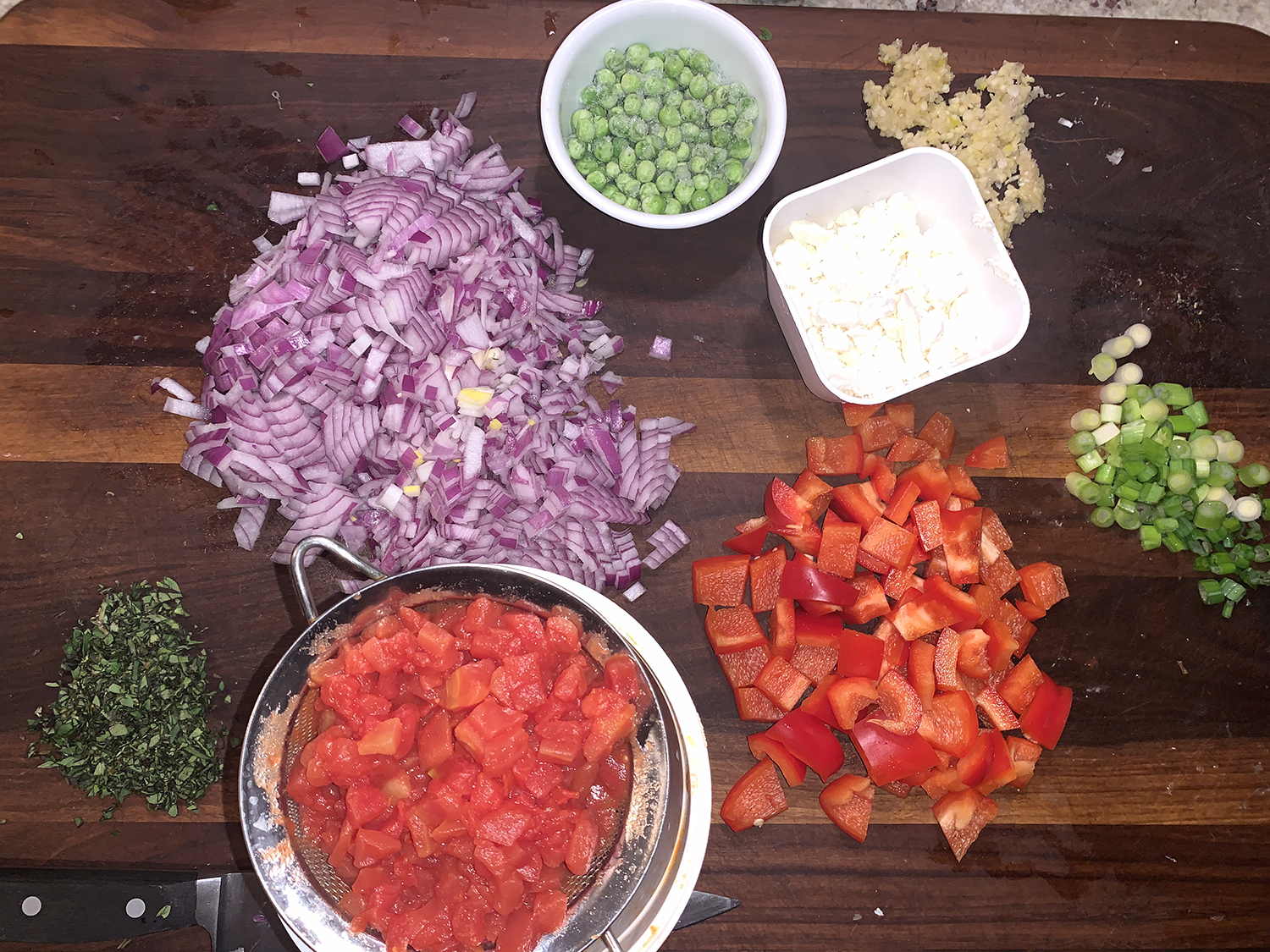
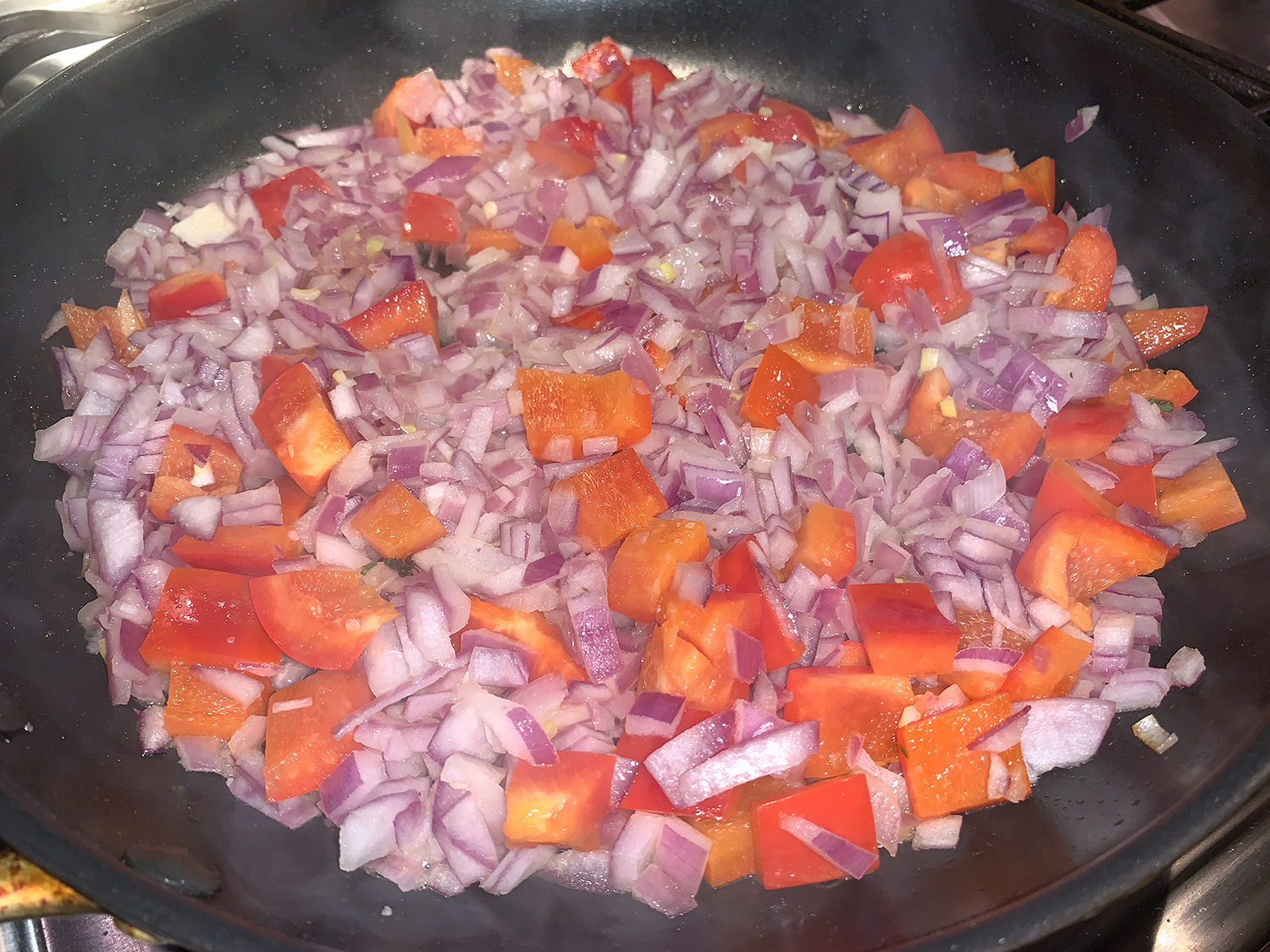
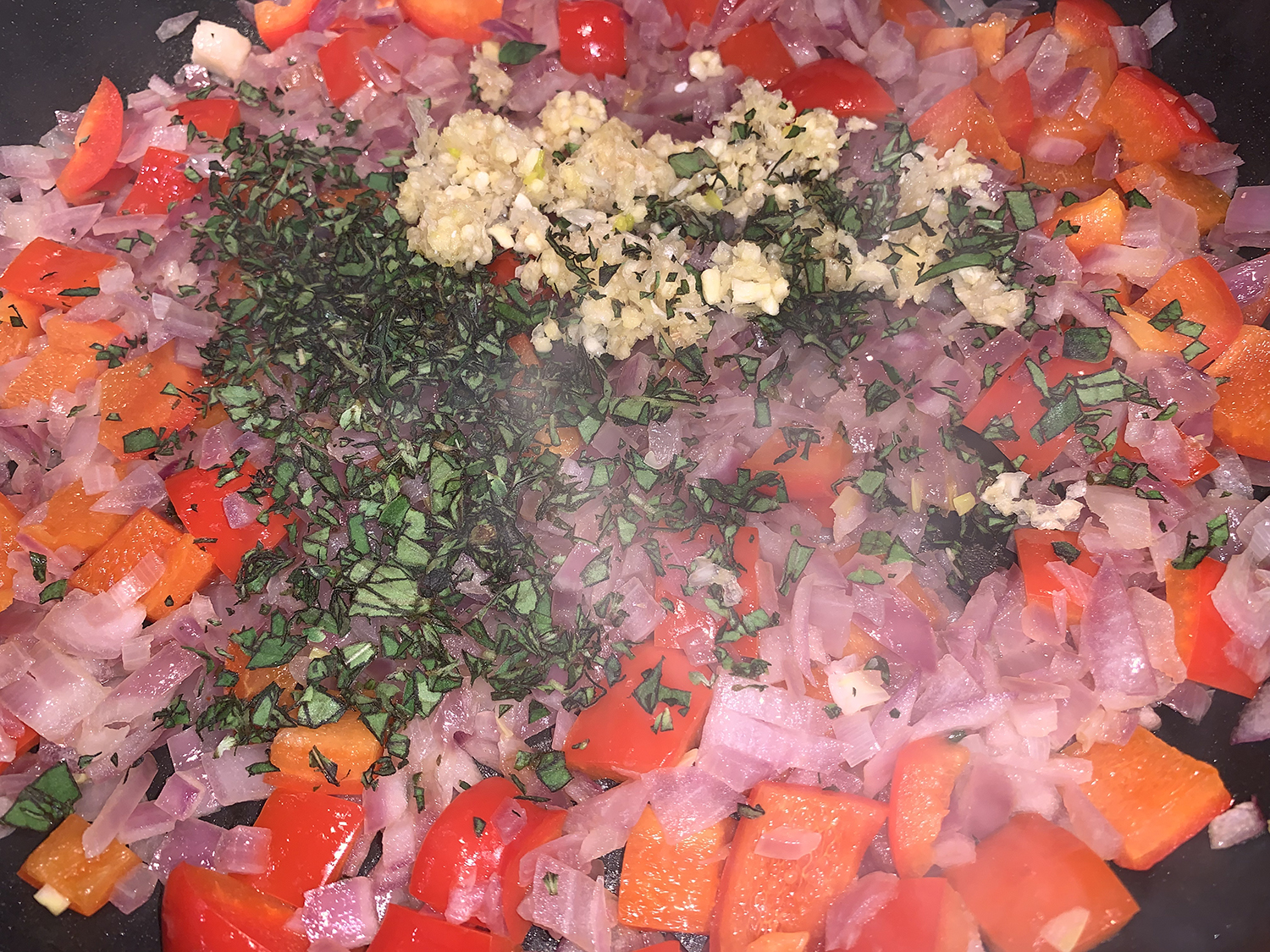
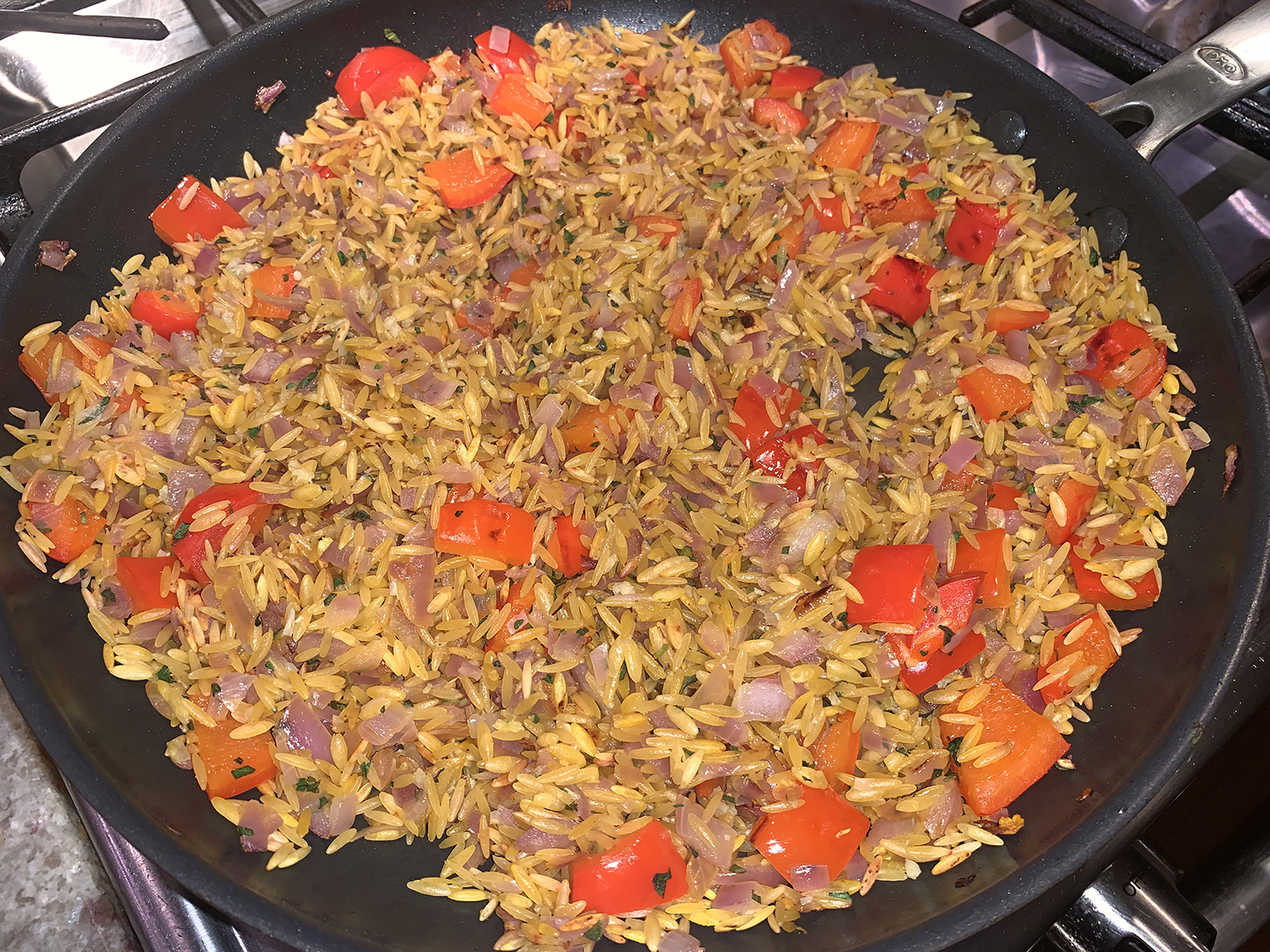
Heat oil in 12-inch oven-safe nonstick skillet over medium heat until shimmering. Add onion and bell pepper and cook until vegetables are softened, 5 to 7 minutes. Stir in garlic and oregano and cook until fragrant, about 30 seconds. Stir in orzo and saffron and cook, stirring often, until orzo is lightly browned, about 4 minutes.
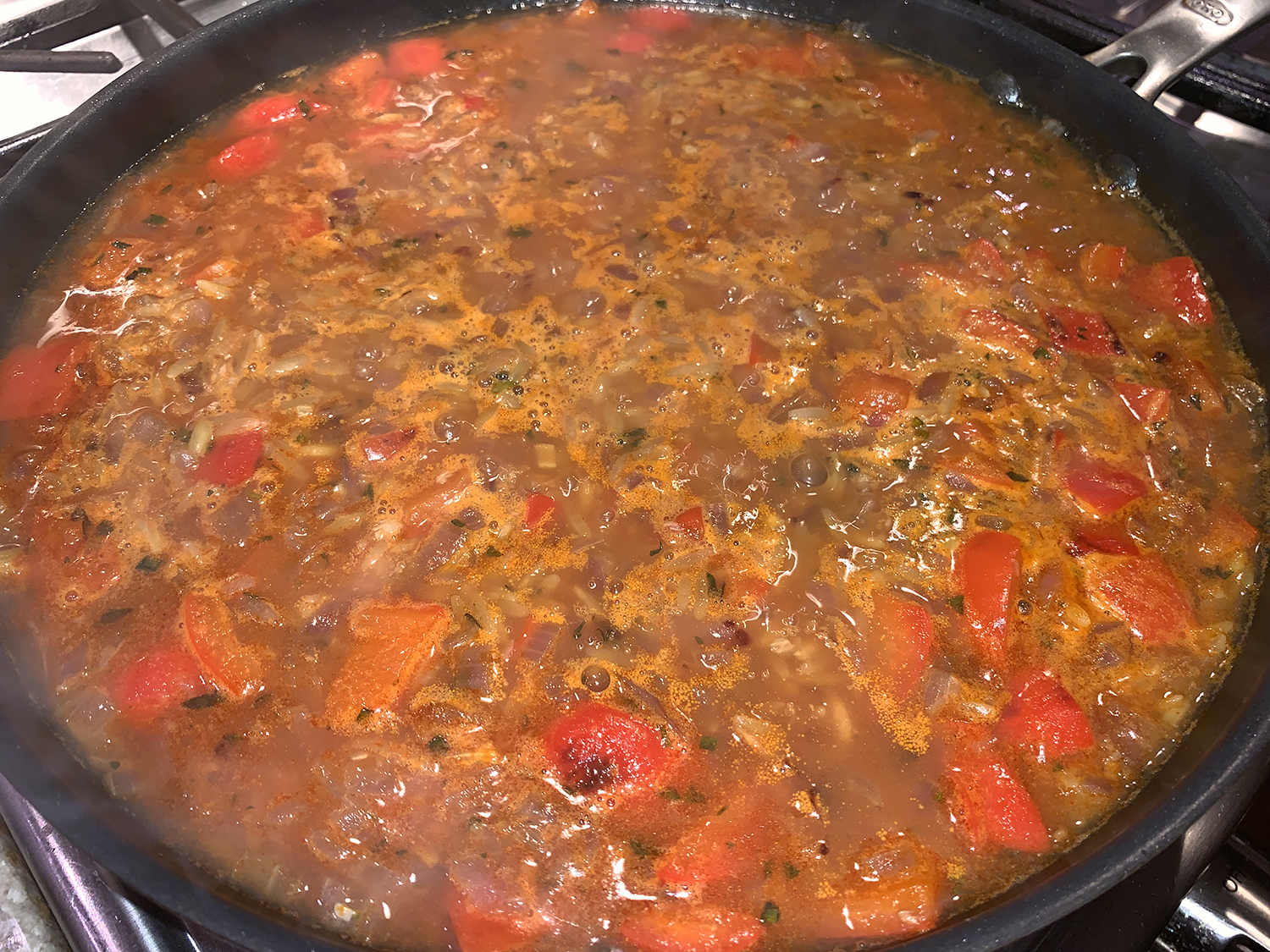
Stir in broth and reserved tomato juice, bring to simmer, and cook, stirring occasionally, until orzo is al dente, 10 to 12 minutes.
Stir in shrimp, tomatoes, and peas, then sprinkle feta evenly over top. Transfer skillet to oven and bake until shrimp are cooked through and feta is lightly browned, about 20 minutes.
Remove skillet from oven (skillet handle will be hot). Sprinkle scallions over top and serve with lemon wedges.
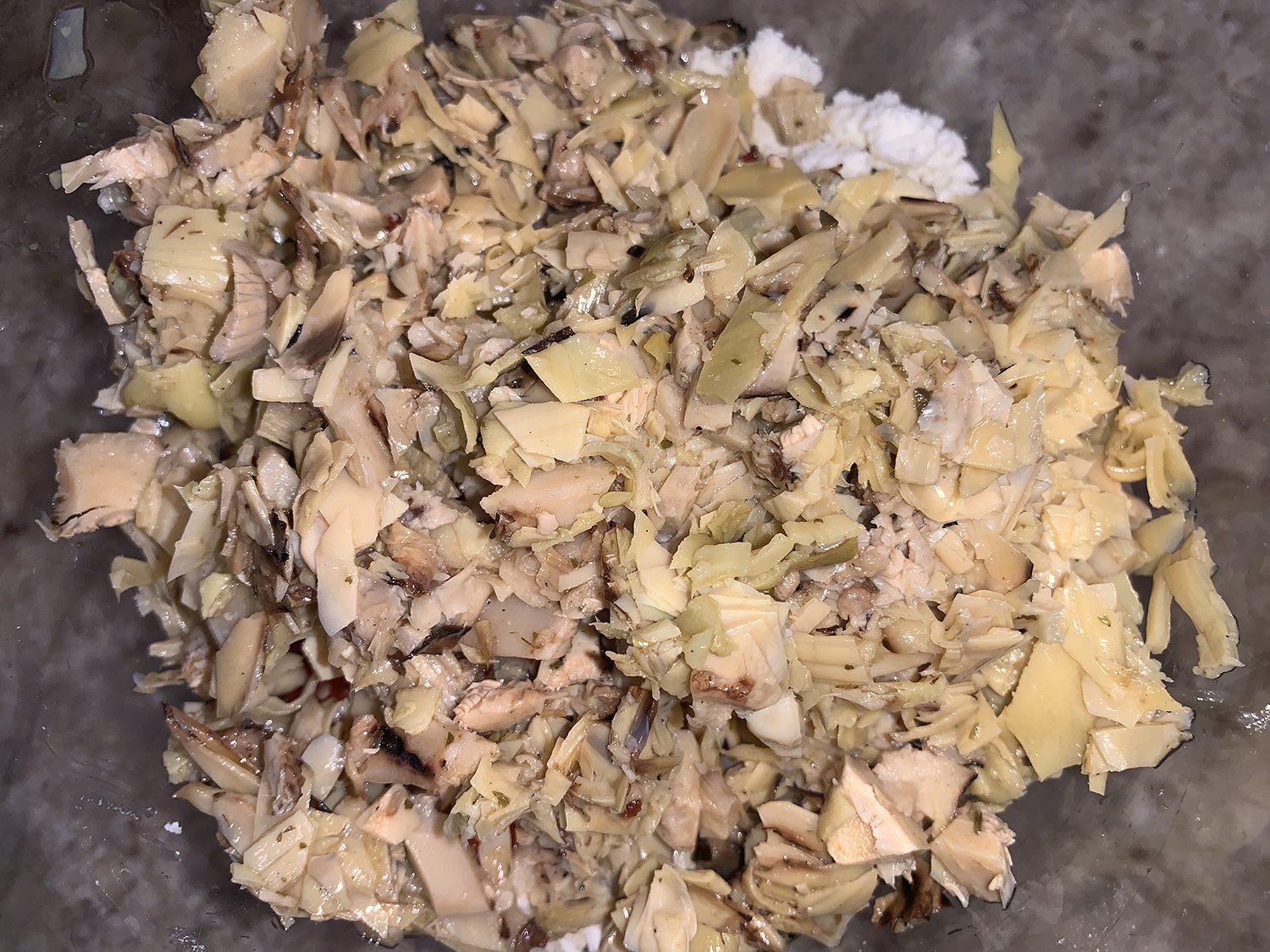
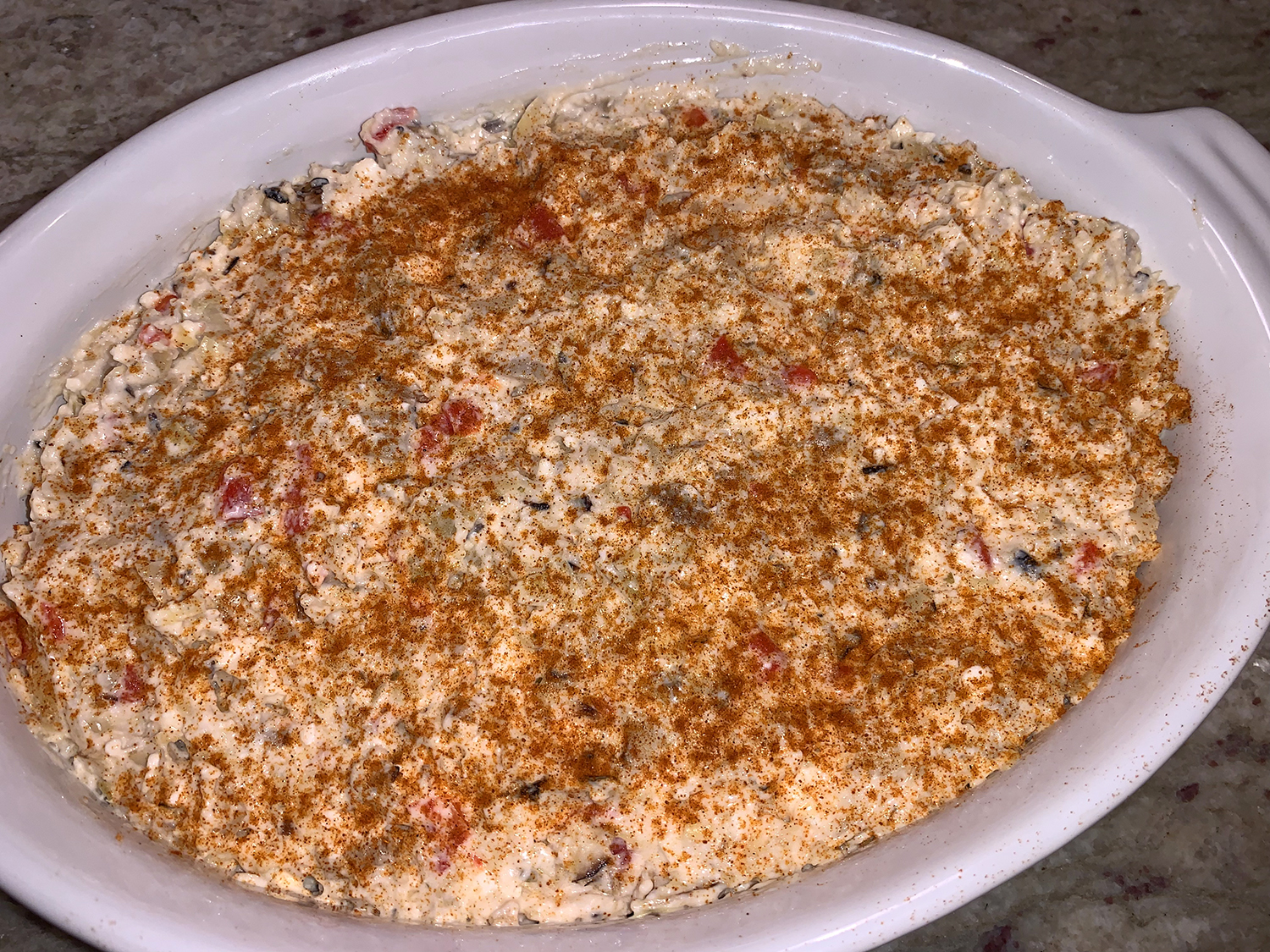
This is one of the easiest appetizers to make, thanks Trisha Yearwood! Instead of canned artichokes, we used the marinated jarred version, and we sprinkled some paprika on top for a touch of color and even more depth of flavor.
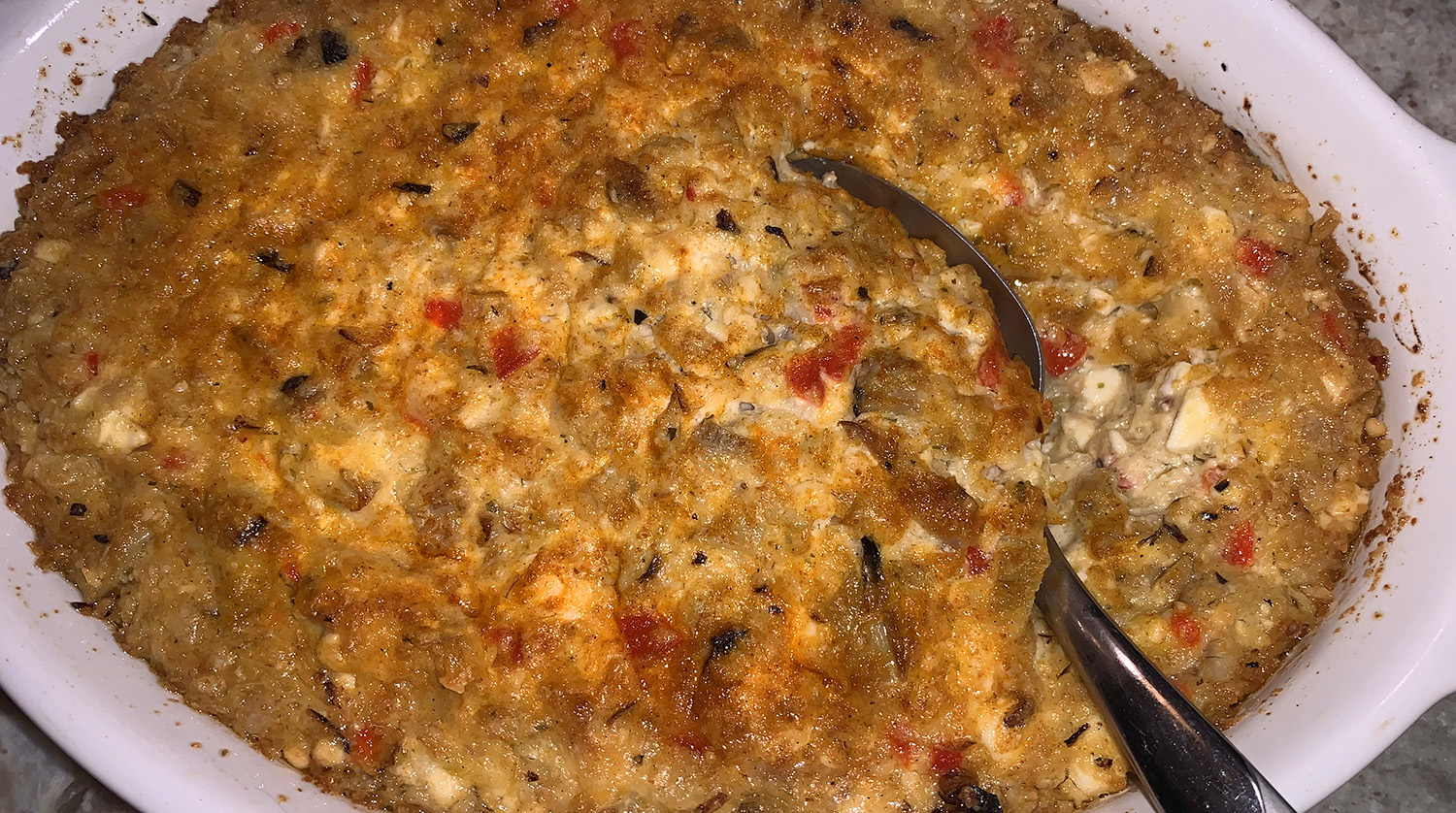
To lighten our load on the day of the party, the dish was made and put in a small casserole dish covered with foil, then refrigerated overnight. About an hour before it went into a 350° oven, it sat on the countertop to warm up. Make sure to uncover the dish before popping it in the oven.
One 14-oz. can artichoke hearts, drained and finely chopped
5 oz. feta cheese, crumbled
3/4 cup mayonnaise
1/2 cup grated Parmesan
2-oz. jarred roasted red peppers, drained and diced
2 cloves garlic, minced
Paprika for topping, optional
Sea salt pita chips, for dipping
Directions
Preheat the oven to 350 degrees F.
In a medium bowl, stir together the artichoke hearts, feta, mayonnaise, Parmesan, red pepper and garlic until thoroughly combined. Sprinkle paprika on top, if desired.
Transfer the mixture to a small casserole or glass pie plate and bake, uncovered, for 20 to 25 minutes, or until lightly browned.
To serve, place the dish on a larger platter and surround with pita chips.
These crispy zucchini fritters make a wonderful starter or side dish, and they’re a delicious way to use up summer zucchini, because Lord knows, you or your neighbors are likely swamped with it. Of course there is always the local farm market or grocery store…
The word fritter usually conjures up something heavy and deep-fried, but these zucchini fritters are as light as can be. Serve them as a light vegetarian meal or mezze (small plate) with tzatziki and a Greek salad, or as a side dish to any Mediterranean-style fish, chicken or lamb dish.
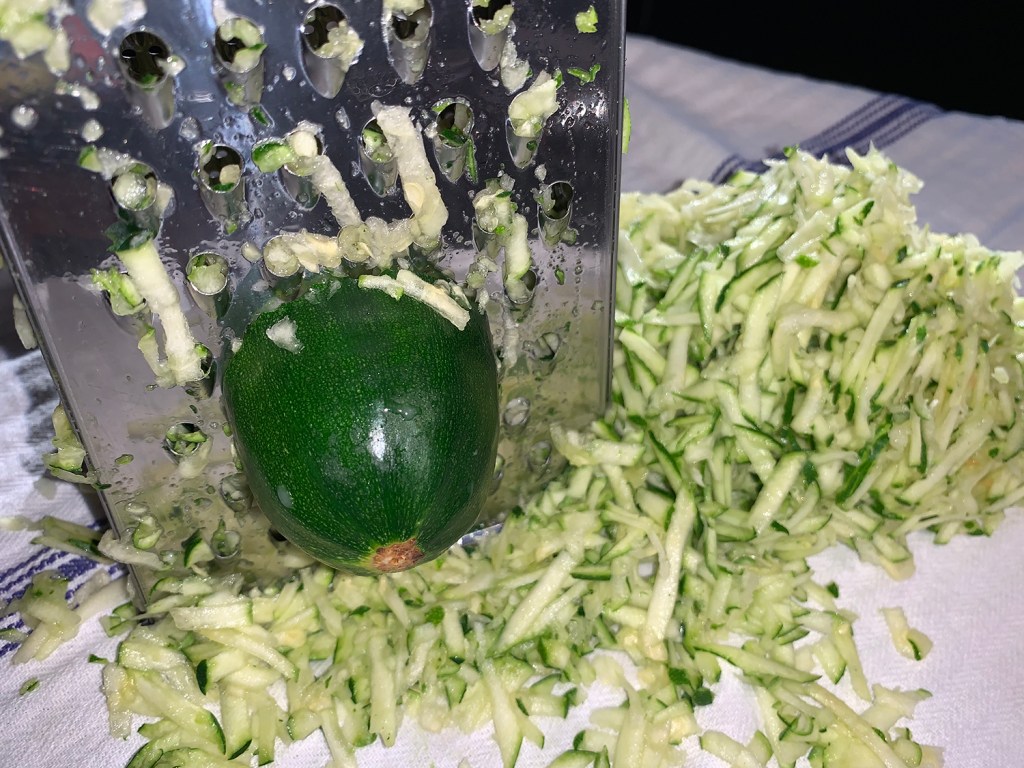
To eliminate all of the excess moisture in zucchini, shred on a box shredder, salt it and let it drain in a fine mesh strainer for 10 minutes. Finally you want to wrap it tightly in a clean towel and squeeze out any lingering moisture. Do not let the zucchini sit on its own for too long after it’s been squeezed dry or it will turn brown.
Bind the dried zucchini with eggs and a little flour which allows its delicate flavor to shine. In ATK’s The Complete Mediterranean Cookbook where we found this recipe, and the one I followed, it did not mention baking powder as an ingredient. However, online it shows adding 1/2 teaspoon, which makes sense so I listed it below.
Oh, and do yourself a favor and buy a good block of feta cheese, not the pre-crumbled varieties. Odyssey and Mt Vikos are two great brands that contain no preservatives, additives, or calcium chloride and are Non-GMO. Traditional feta is made authentically by small family dairies in central Greece using fresh milk from sheep and goats.
1 medium garlic clove, minced or pressed through a garlic press
1/4 tsp. black pepper
1/4 cup all-purpose flour (or cornstarch)
1/2 tsp. baking powder
3 Tbsp. olive oil, plus more if necessary
Lemon wedges, for serving
Directions
Shred the zucchini on the large holes of a box grater or in a food processor fitted with the shredding disk. Transfer the zucchini to a fine mesh strainer and set over a bowl. Toss the zucchini with the salt and let it sit for 10 minutes.
Put zucchini in a clean dish towel and fold and wring out real well with (you may need to repeat with another towel), then set aside.
Beat the eggs in a large bowl. Mix in the dried zucchini, scallions, dill, feta, garlic and black pepper. Sprinkle the flour (or corn starch) and baking powder over mixture and stir until uniformly incorporated.
Heat 3 tablespoons olive oil in a large non-stick skillet over medium heat. Drop 2-tablespoon sized portions into the pan, then use the back of a spoon to gently press the batter into 2-inch-wide fritters. Pan-fry until golden brown on both sides, 2-3 minutes per side. Repeat as needed.
Transfer the fritters to a paper towel-lined plate. Add a bit more oil to the pan if necessary, then repeat with the remaining batter. Serve warm or room temperature with lemon wedges.
Saganaki is a traditional Greek dish with sweet, briny shrimp covered with a garlic- and herb-accented tomato sauce, and topped with crumbles of creamy, salty feta cheese. This version hails from America’s Test Kitchen (ATK) “The Complete Mediterranean Cookbook.”
This recipe works equally well with jumbo (16 to 20 per pound) or extra-large (21 to 25 per pound) shrimp, but the cooking times in step 3 will vary slightly depending on which you use. The base for the sauce is provided by canned diced tomatoes along with sautéed onions and garlic. Dry white wine adds acidity, and ouzo brings welcome complexity with its slightly sweet anise flavor.
*Since ouzo is not in everyone’s liquor cabinet (it wasn’t in ours—but is now), here are two alternatives: Pernod—Though slightly sweeter than ouzo, this French anise-flavored liqueur is the next best thing. Or use a combo of Vodka + Anise Seed, with one tablespoon of vodka plus 1/8 teaspoon of anise seed to equal 1 tablespoon of ouzo.
Serve the shrimp with crusty bread or steamed white rice.
1 ½ lbs. shrimp, peeled and deveined, tails left on, if desired
4 Tbsp. extra-virgin olive oil
3 Tbsp. ouzo (*see note above)
5 medium garlic cloves, minced or pressed through garlic press (about 5 tsp.)
1 tsp. grated zest from 1 lemon
Table salt and ground black pepper
1 small onion, diced medium (about 3/4 cup)
1 medium red bell pepper, stemmed, seeded, and diced medium
½ tsp. red pepper flakes
1 28-oz. can diced tomato, drained, 1/3 cup juices reserved
¼ cup dry white wine
2 Tbsp. coarsely chopped fresh parsley leaves
6 oz. feta cheese, crumbled (about 1½ cups)
2 Tbsp. chopped fresh dill leaves
Directions
Toss shrimp, 1 tablespoon oil, 1 tablespoon ouzo, 1 teaspoon garlic, lemon zest, 1/4 teaspoon salt, and 1/8 teaspoon black pepper in small bowl until well combined. Set aside while preparing sauce.
Heat 2 tablespoons oil in 12-inch skillet over medium heat until shimmering. Add onion, red and green bell pepper, and 1/4 teaspoon salt and stir to combine. Cover skillet and cook, stirring occasionally, until vegetables release their moisture, 3 to 5 minutes. Uncover and continue to cook, stirring occasionally, until moisture cooks off and vegetables have softened, about 5 minutes longer.
Add remaining 4 teaspoons garlic and red pepper flakes and cook until fragrant, about 1 minute.
Add tomatoes and reserved juice, wine, and remaining 2 tablespoons ouzo; increase heat to medium-high and bring to simmer. Reduce heat to medium and simmer, stirring occasionally, until flavors have melded and sauce is slightly thickened (sauce should not be completely dry), 5 to 8 minutes. Stir in parsley and season to taste with salt and pepper.
Reduce heat to medium-low and add shrimp along with any accumulated liquid to pan; stir to coat and distribute evenly. Cover and cook, stirring occasionally, until shrimp are opaque throughout, 6 to 9 minutes for extra-large or 7 to 11 minutes for jumbo, adjusting heat as needed to maintain bare simmer.
Remove pan from heat and sprinkle evenly with feta. Drizzle remaining tablespoon oil evenly over top and sprinkle with dill. Serve immediately.
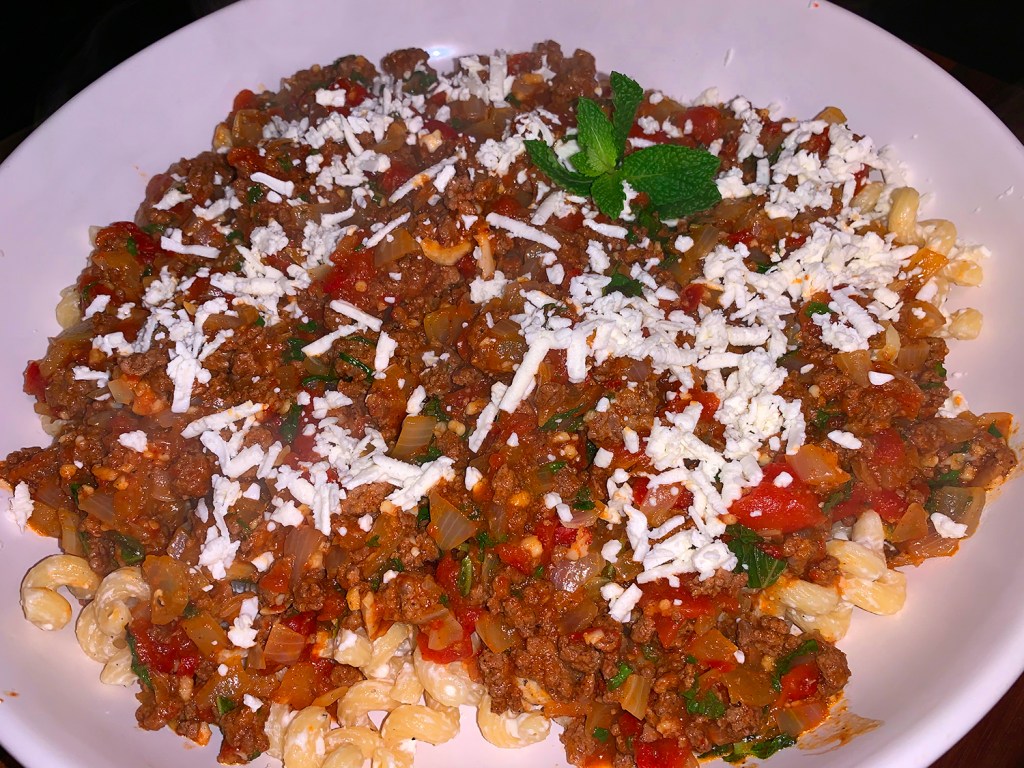
This savory pasta dish was inspired by kawarma, the spicy ground beef topping spooned over hummus in Israel. Milk Street re-envisioned it over pasta with just a few adjustments, resulting in a ground beef sauce seasoned with fragrant spices and generous amounts of onion and garlic, all lightened with a good dose of mint at the end.
I was scratching my head over the ingredients, wondering how they would all come together. Well we were both surprised how delicious the meal was! While we didn’t change anything dramatically, the amount of ground beef was a stretch over the one-and-a-half pounds by another four ounces, no biggie.
Milk Street warns not use ground beef fattier than 90 percent lean or the sauce will be greasy. However, we happened to have an 85 percent lean ground beef in the house and just made sure to siphon off the grease after Step 2, before adding the tomatoes. The type of pasta was switched from linguine to cellentani because that’s what we happened to have on hand, plus I think the feta clung to those curves more willingly.
And by all means, make sure to use authentic Greek block feta, not the already crumbled bits packaged in plastic containers—the taste is immeasurably more pleasant. Rather than sprinkle the feta as a garnish, it is tossed in with the just-cooked noodles so it melts and coats the strands, or in our case, the cork screws because we used cellentani pasta.
Perhaps because of the extra beef and thicker pasta, our version would easily feed five.
12 oz. cellentani, linguine, or your choice of pasta
8 oz. block feta cheese, shredded on the large holes of a box grater
1 cup chopped fresh mint
Directions
In a medium bowl, combine the beef, cumin, paprika, cinnamon, 1 teaspoon each salt and pepper and ¼ cup water. Mix with your hands until homogenous.
Add the beef mixture, onion and garlic to a 12-inch skillet. Set the pan over medium-high and cook, stirring and breaking up the meat with a spatula, until the onion has softened and the beef is no longer pink, 8 to 10 minutes.
Stir in the tomatoes with juices and bring to a simmer, then reduce to medium and cook uncovered, stirring, until most of the liquid has evaporated and the sauce has thickened, 10 to 15 minutes.
Meanwhile, in a large pot, bring 4 quarts water to a boil. Stir in the pasta and 2 tablespoons salt; cook until the pasta is al dente. Reserve about 1 cup of the cooking water (you probably won’t need it all), then drain the pasta.
Return the pasta to the pot. Add about ¾ of the feta and toss. Taste and season with salt and pepper, add reserved pasta water a bit at a time to loosen if needed, then transfer to a platter.
Stir the mint into the sauce, then taste and season with salt and pepper. Pour the sauce over the pasta and sprinkle with the remaining feta.



















 Accounting for Taste