Tag Archives: beef

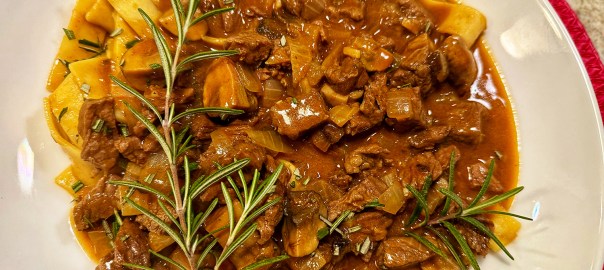
Quick Beef Stew with Mushrooms and Dijon

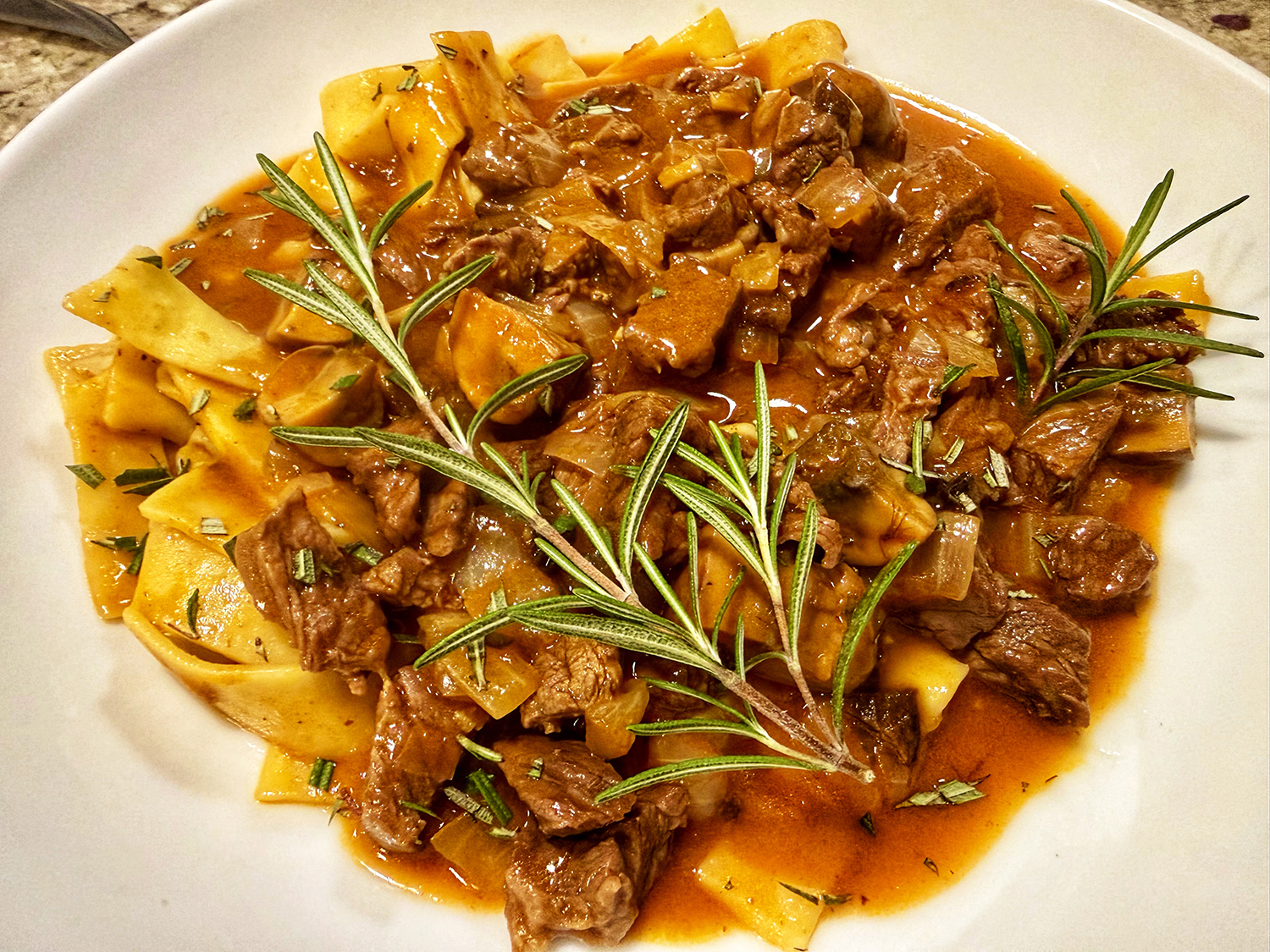
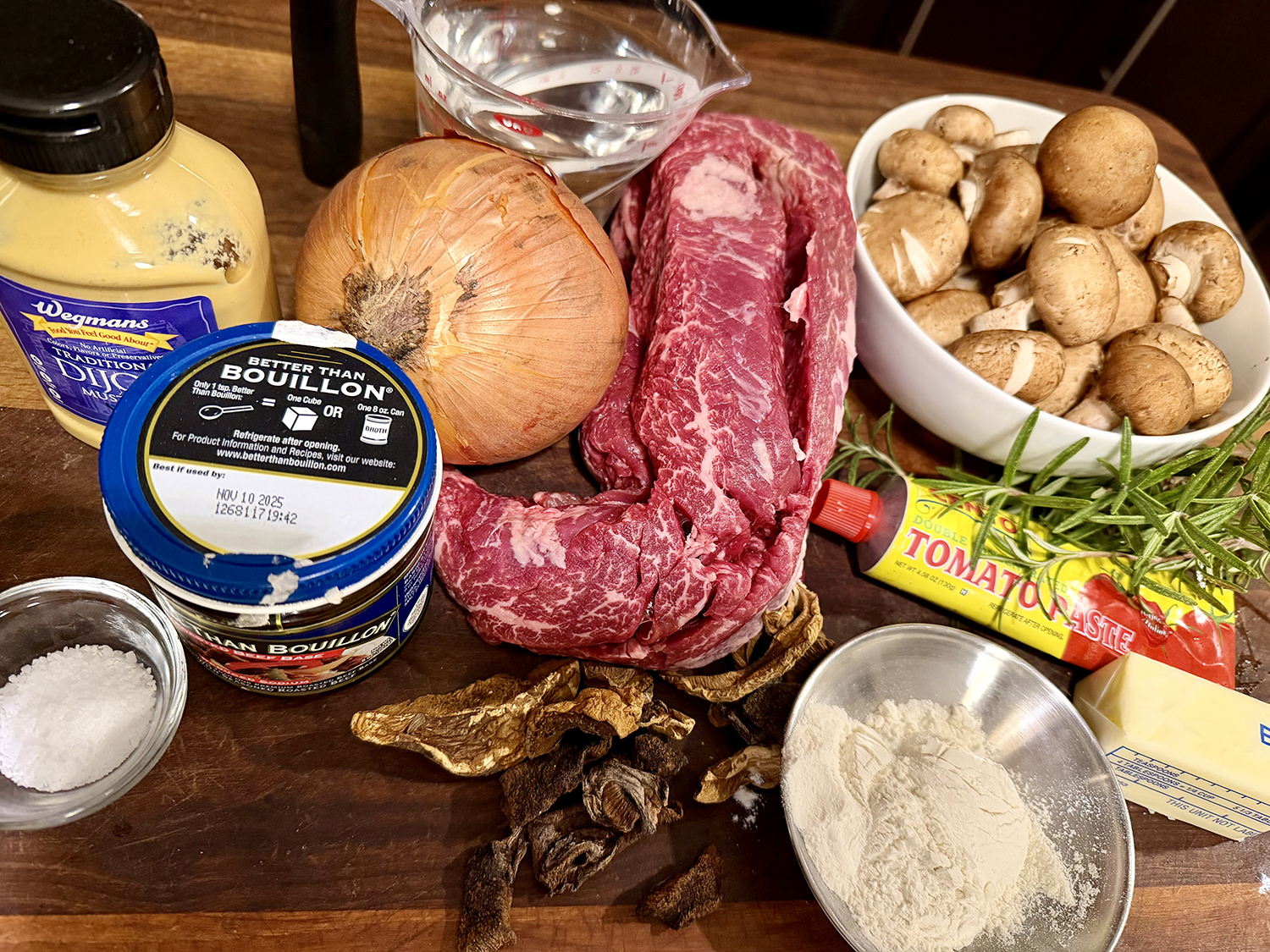
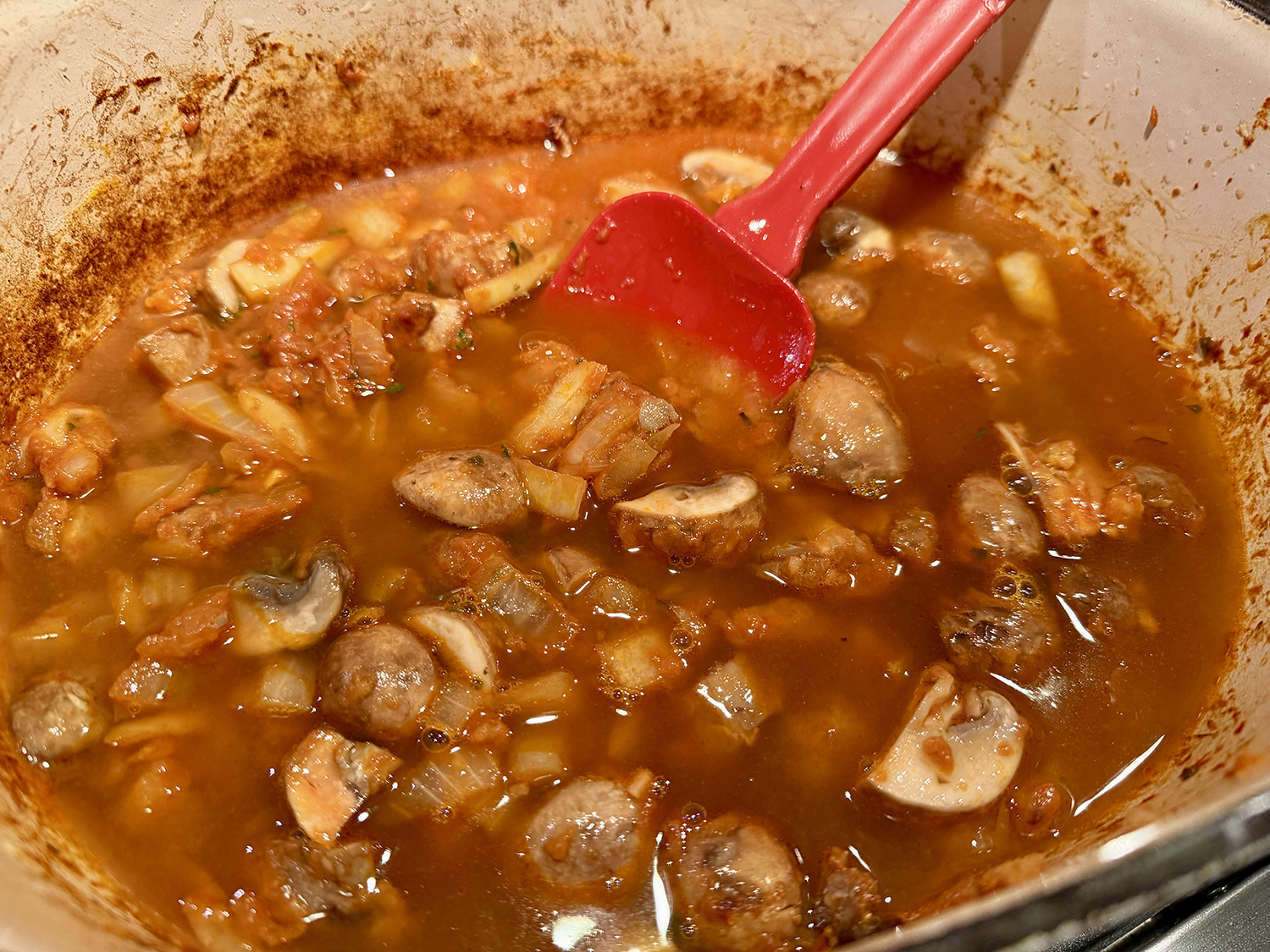
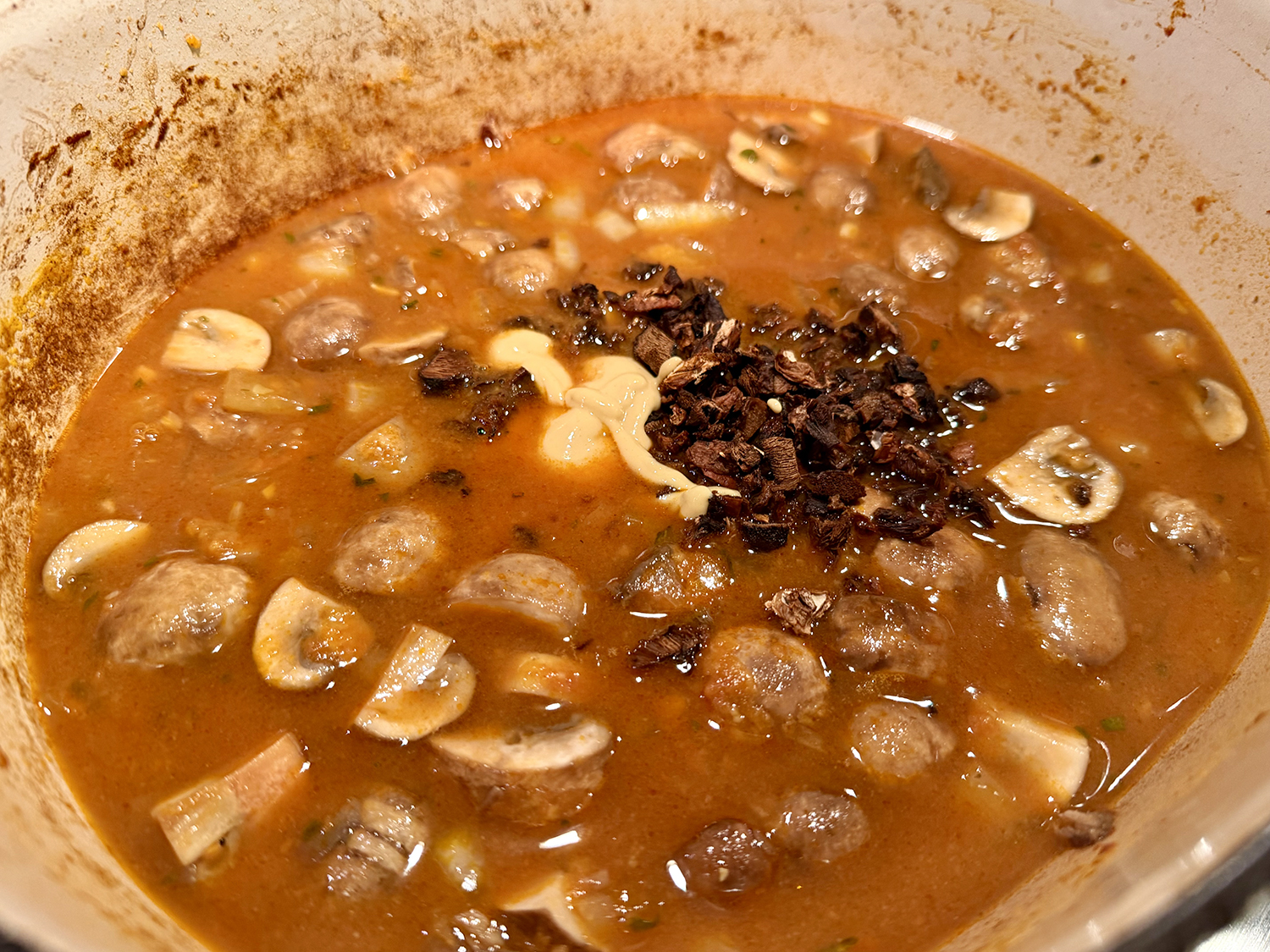
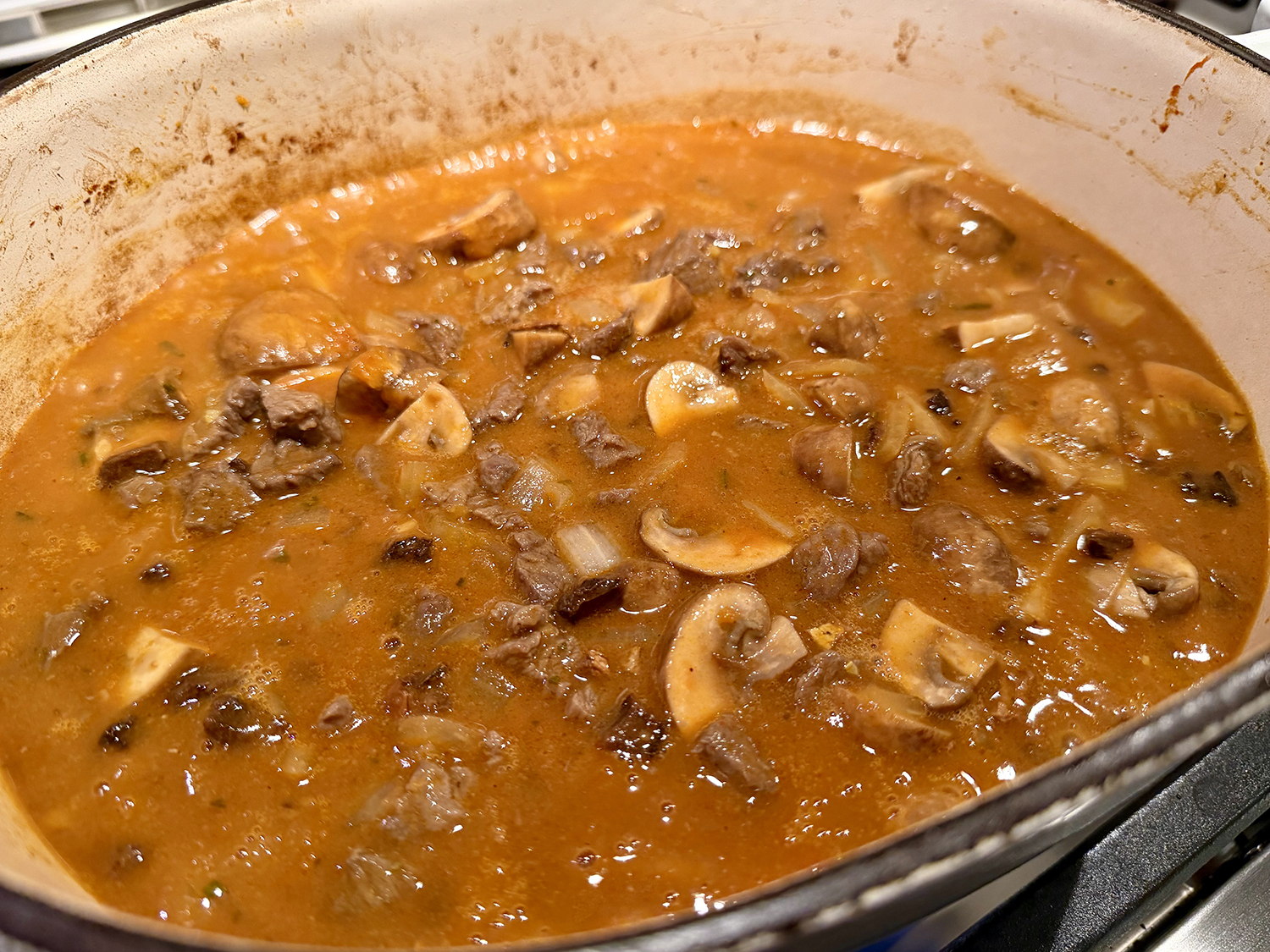
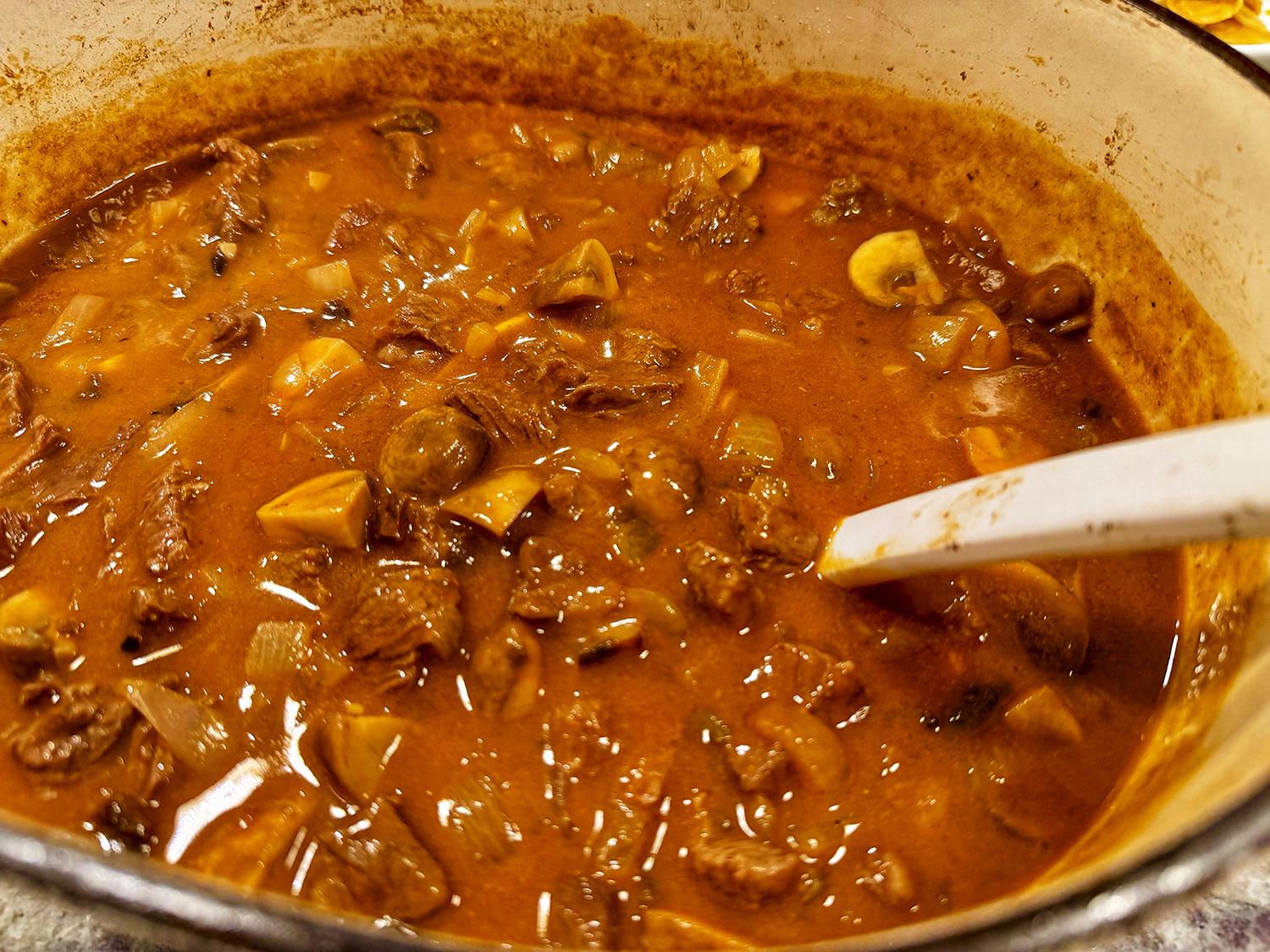
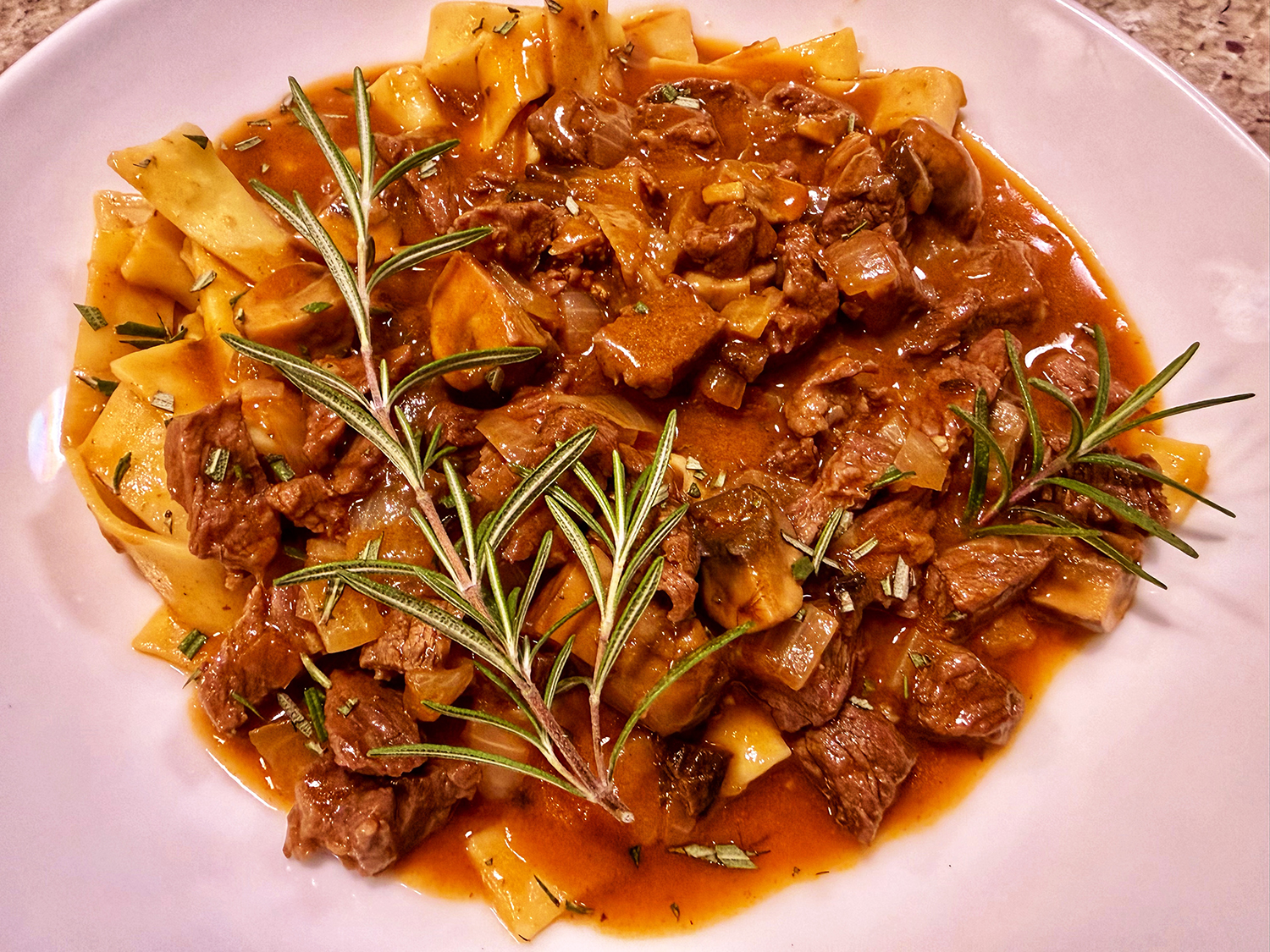
The main basis for this recipe from America’s Test Kitchen is a flavorful, yet quick, weeknight stew. Therefore the cut of meat is important. Sirloin steak tips (also known as flap meat or bavette steak) is essential if wanting a tender beef stew in less than an hour’s time. Yes, it is more expensive than chuck, but well worth it.

Quick-cooking sirloin steak tips have a beefy flavor and tender texture, so they are perfect for this speedy stew. Cutting the meat into small pieces allows it to get tender even faster. Smaller chunks are also easier to eat IMHO.

This stew tastes great after only 10 minutes of simmering but gets even better when cooked for longer; you can simmer it for up to 1 hour if time allows. Serve with mashed potatoes, polenta, egg noodles, rice, or crusty bread and sprinkle with additional chopped rosemary or fresh chives.

If you are simmering closer to an hour, you could consider adding in sliced carrots or parsnips.

Quick Beef Stew with Mushrooms and Dijon

  • Servings: 4
  • Difficulty: easy
  • Print

Ingredients

  • 1½ lbs. sirloin steak tips, trimmed and cut into ½-inch cubes
  • 1½ tsp. table salt, divided
  • 4 Tbsp. unsalted butter
  • 8 oz. cremini mushrooms, trimmed and quartered
  • 1 onion, chopped
  • 3 cloves garlic, minced
  • ¼ cup tomato paste
  • 1 tsp. chopped fresh rosemary
  • 3 Tbsp. all-purpose flour
  • 2 cups beef broth
  • 1 cup water
  • ½ oz. dried porcini mushrooms, rinsed and chopped fine
  • 2 Tbsp. Dijon mustard

Directions

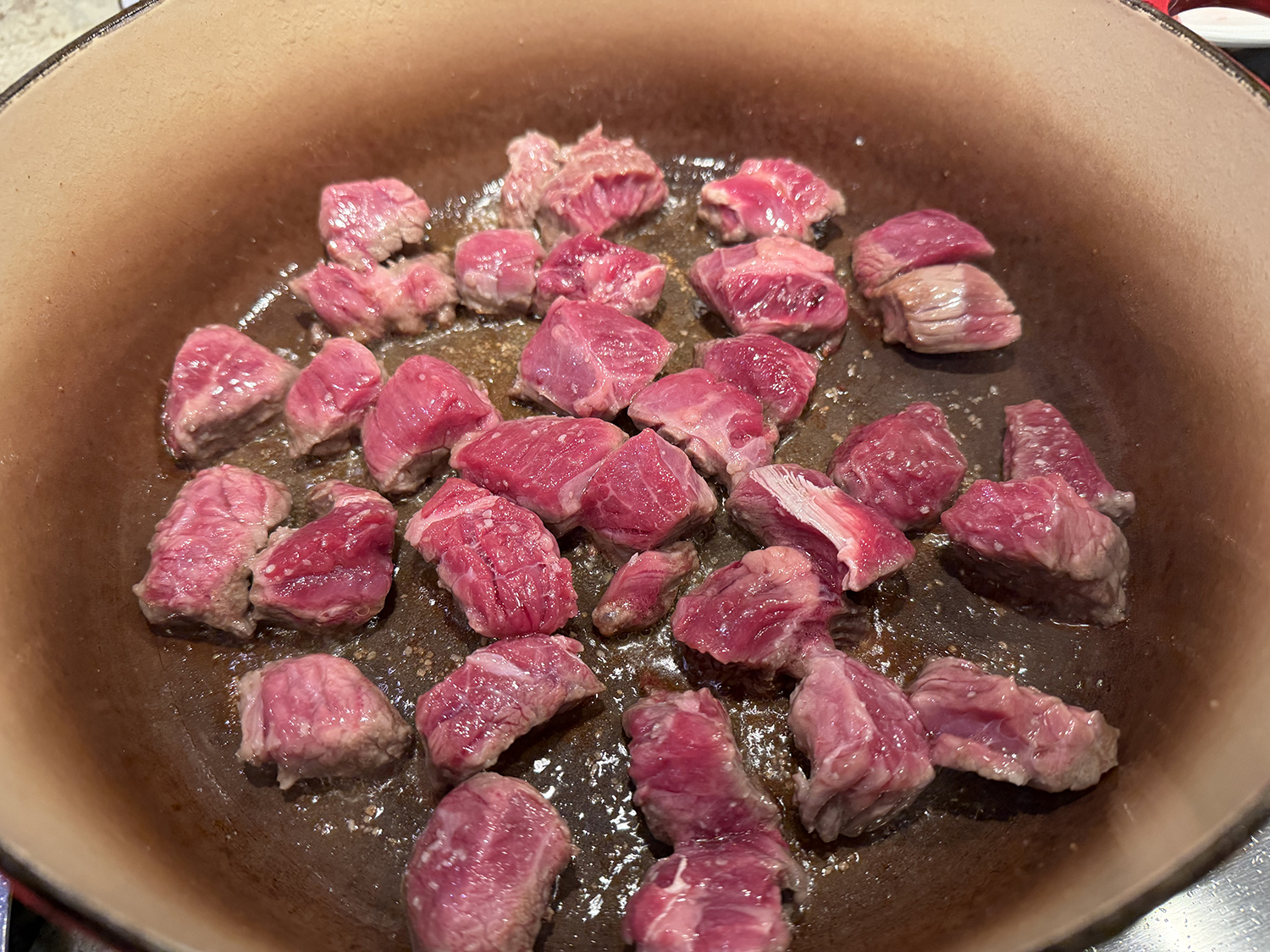
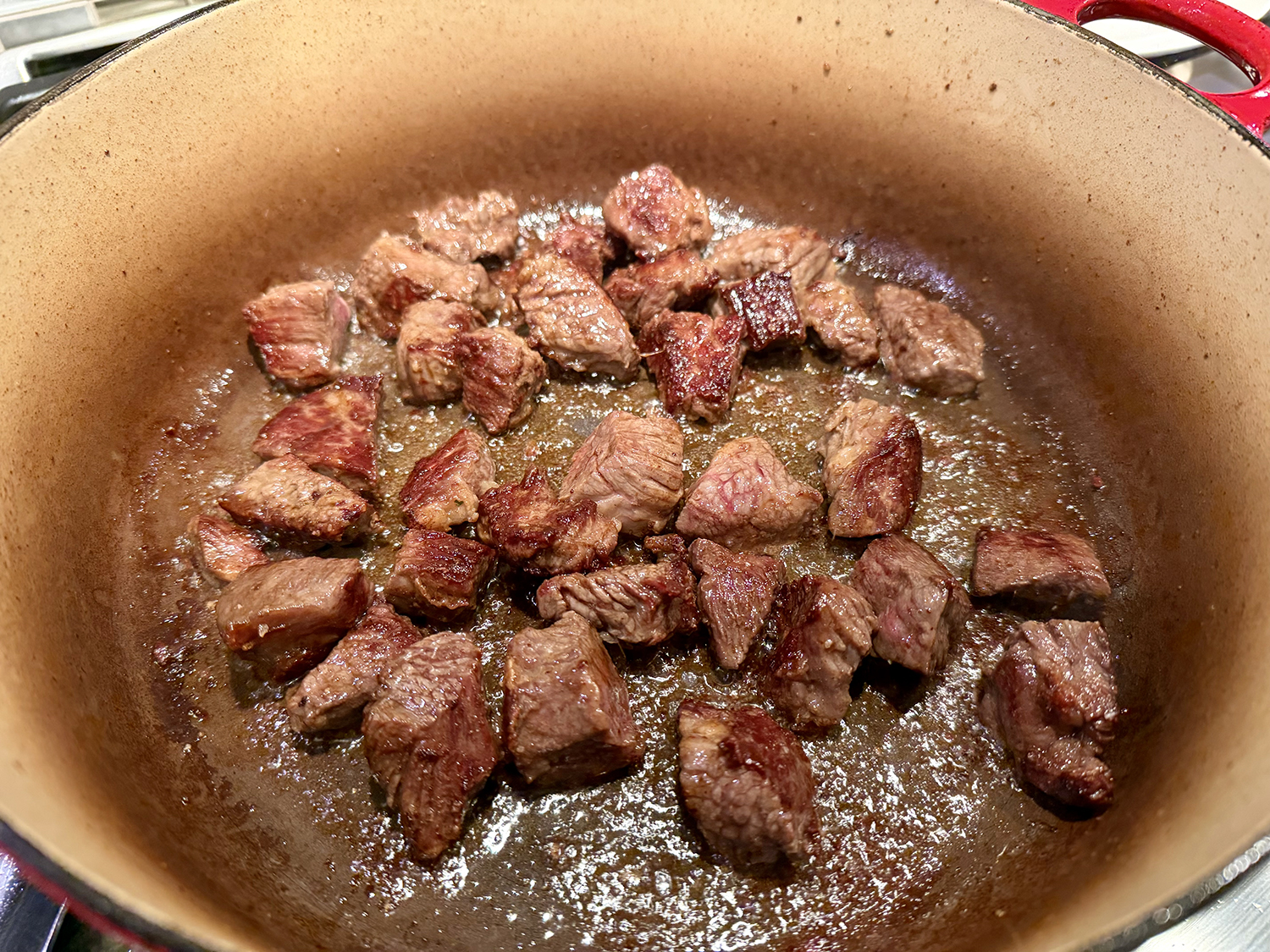
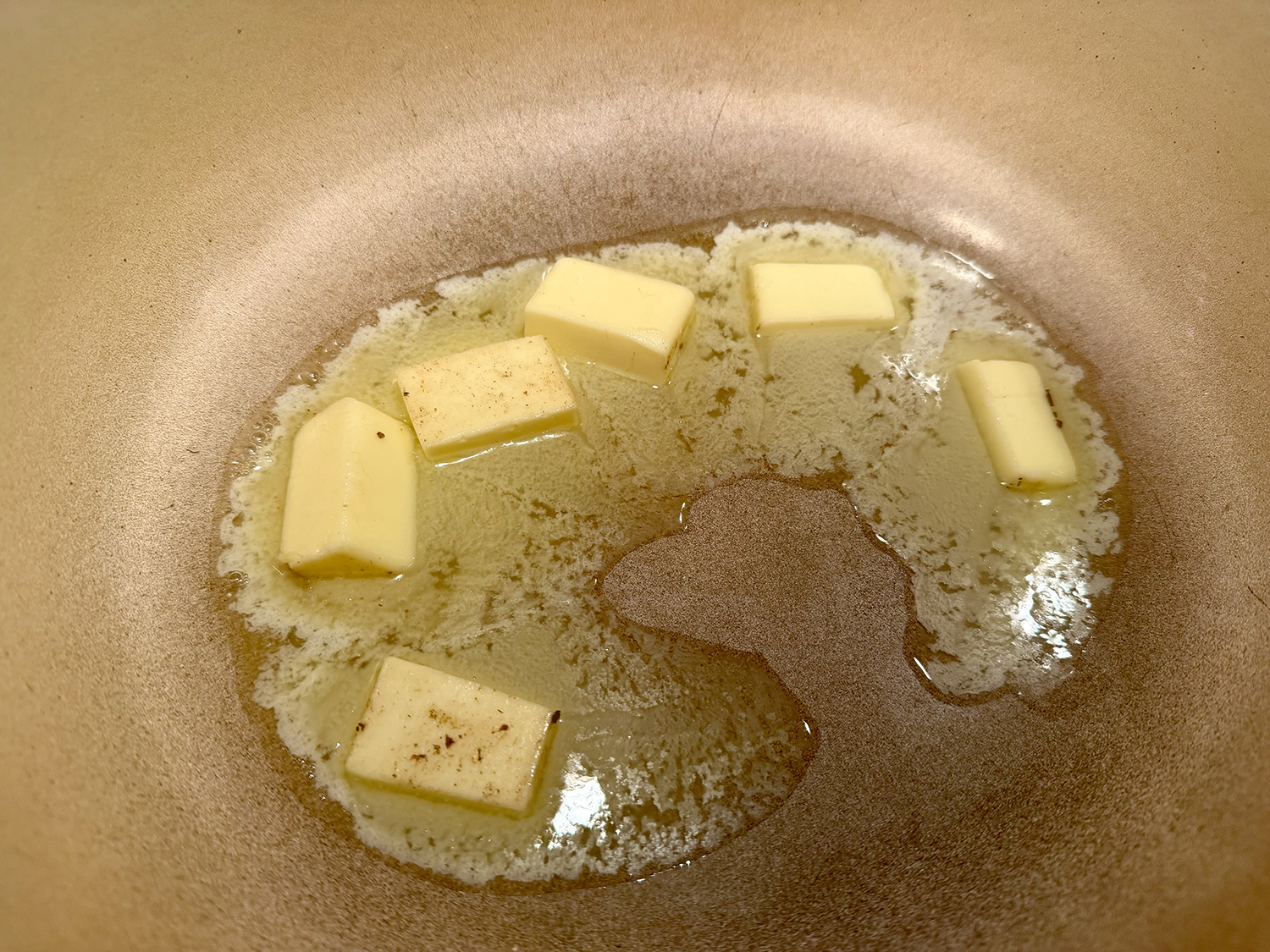
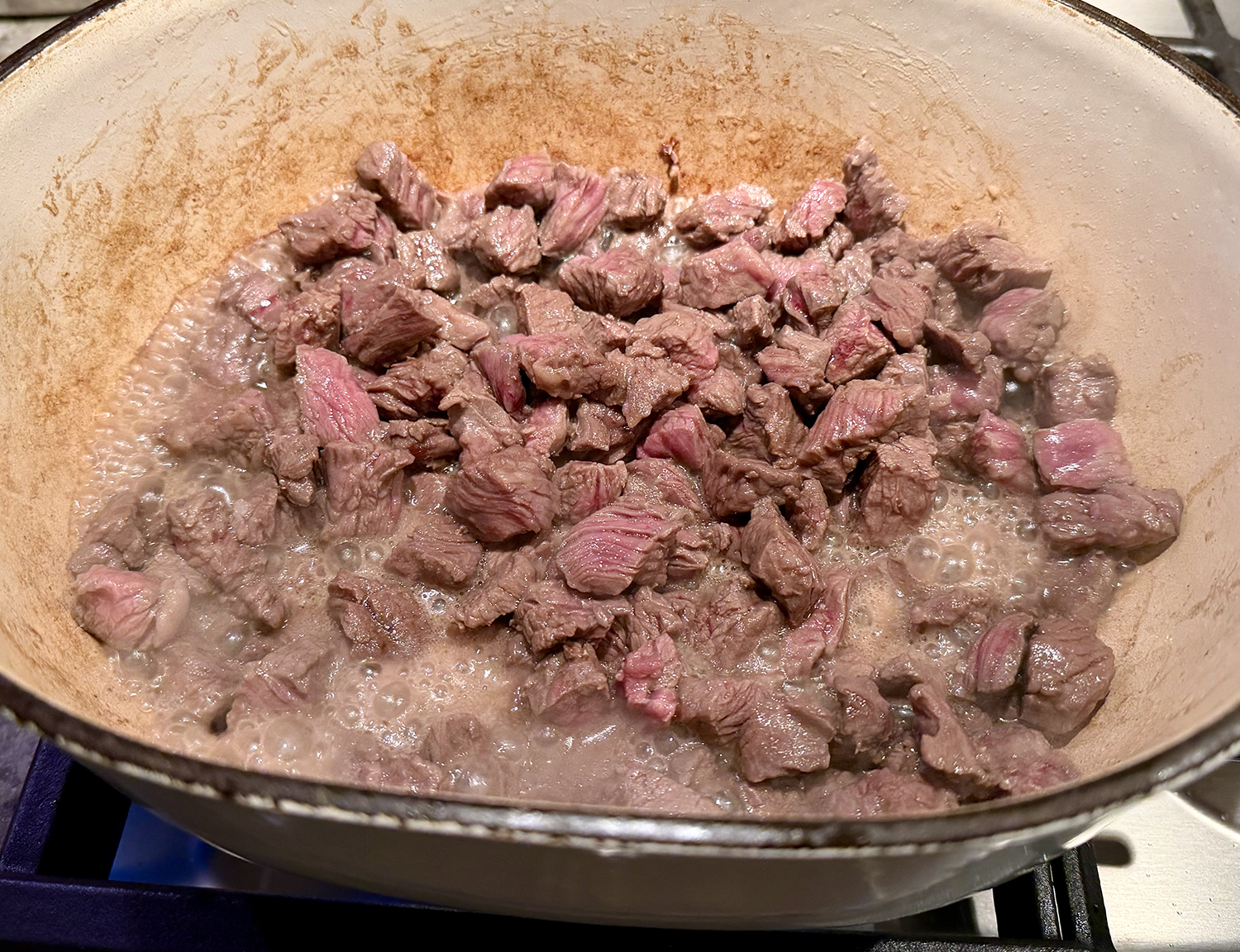
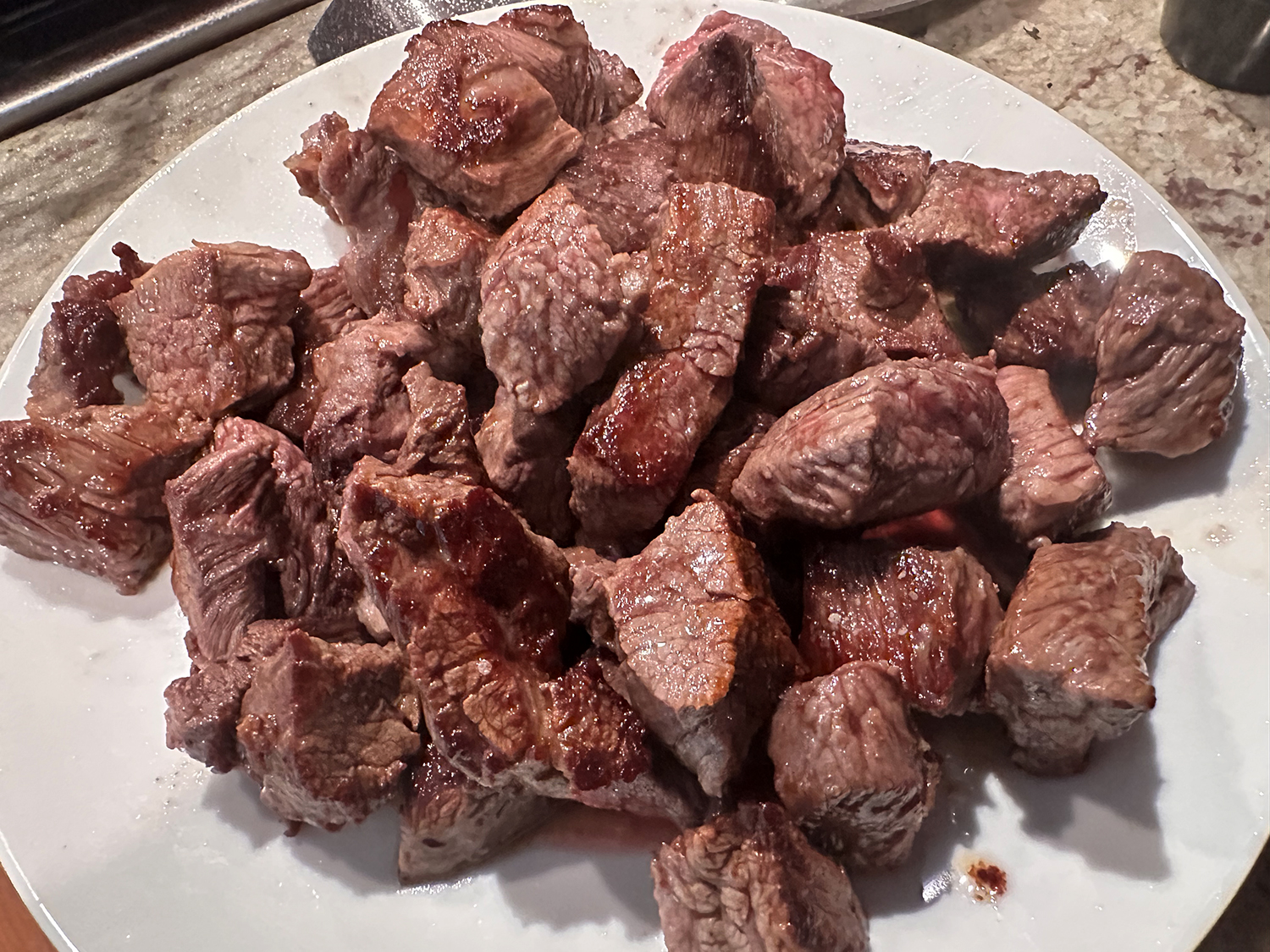
  1. Pat beef dry with paper towels and sprinkle with 1 teaspoon salt. Melt butter in Dutch oven over high heat. Add beef and cook, stirring occasionally, until browned, 6 to 8 minutes; transfer to plate.
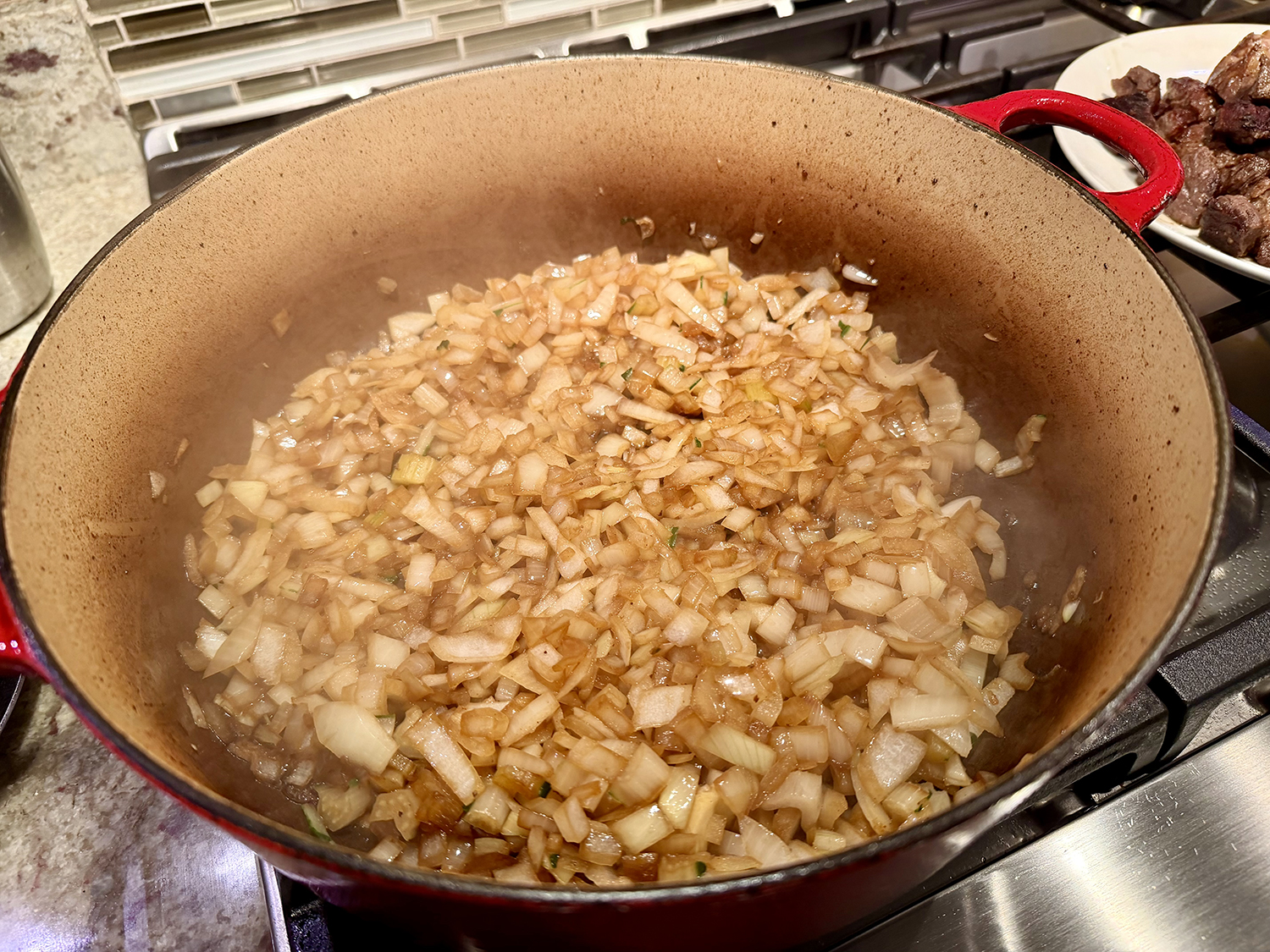
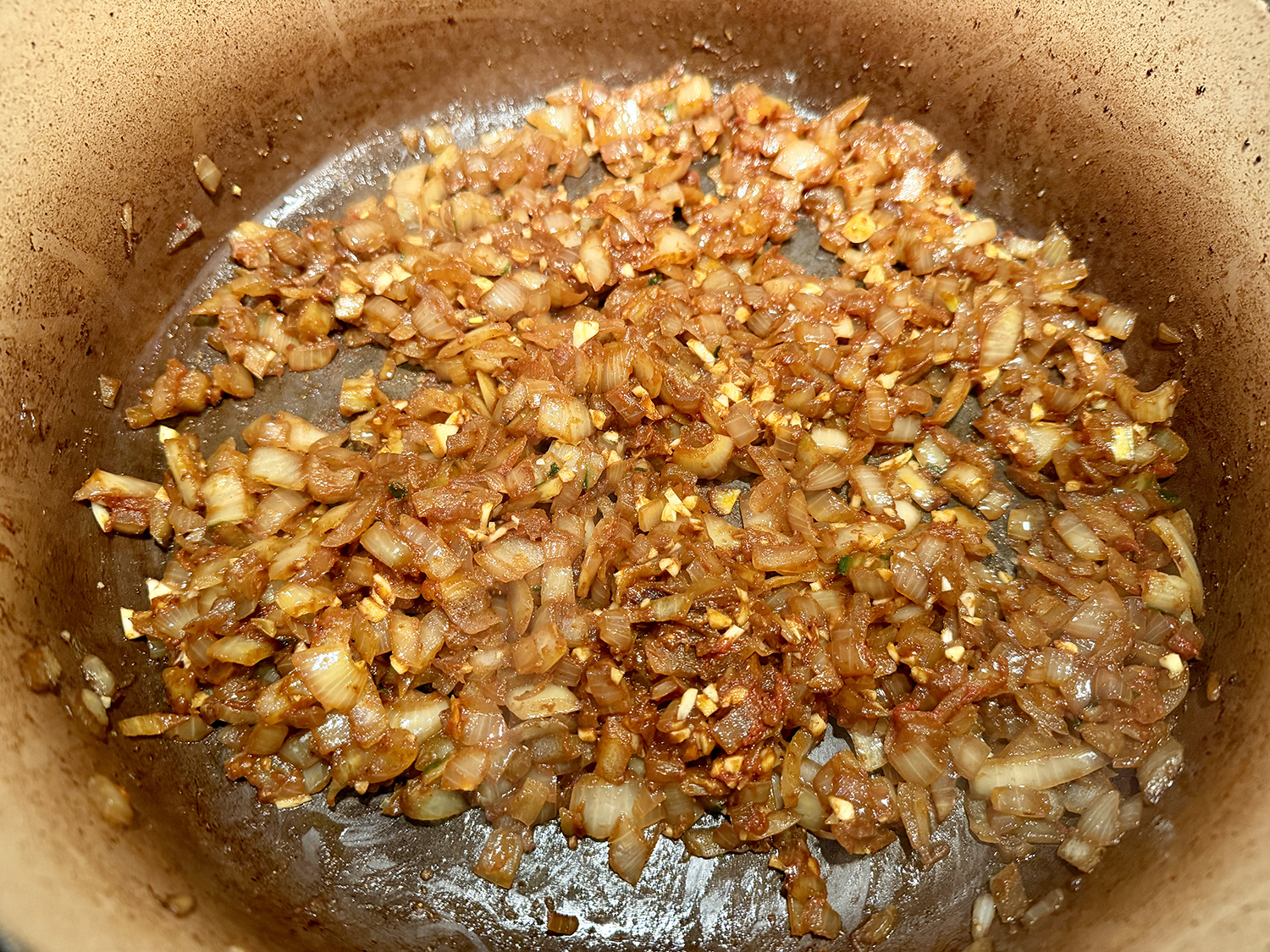
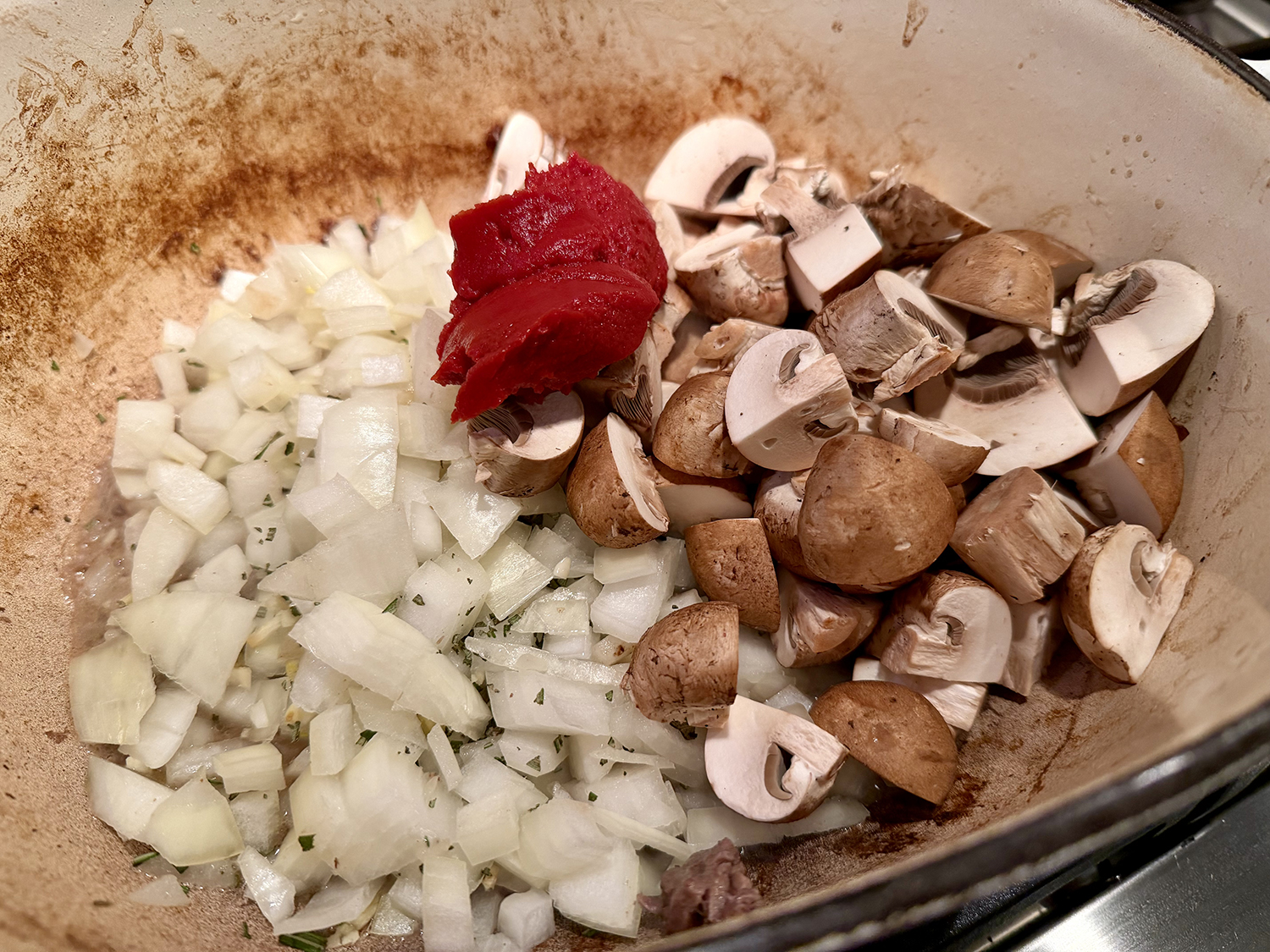
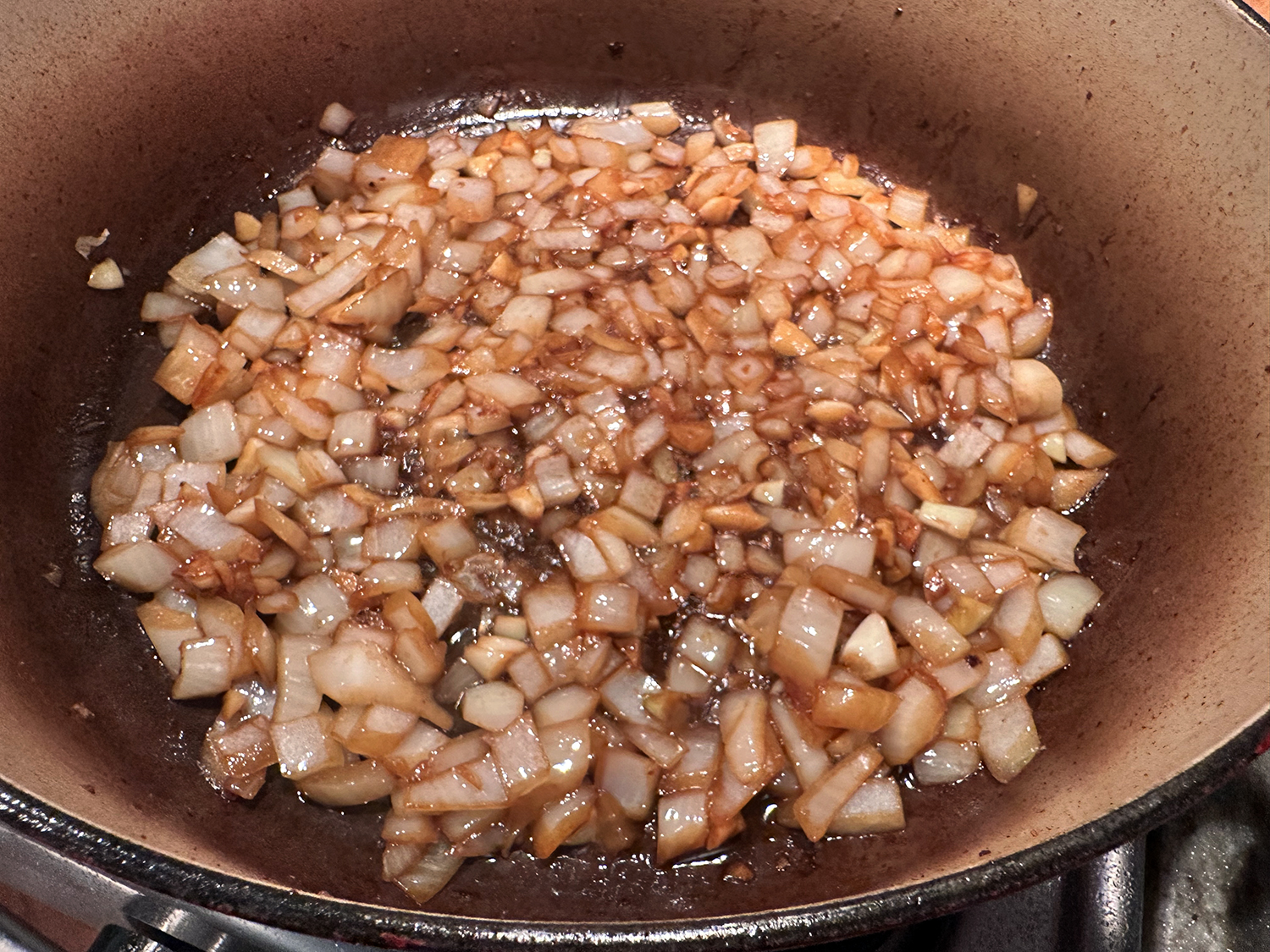
  2. Add cremini mushrooms, onion, garlic, tomato paste, rosemary, and remaining ½ teaspoon salt to fat left in pot and cook over medium heat, stirring occasionally, until vegetables begin to soften and tomato paste darkens, 4 to 7 minutes.
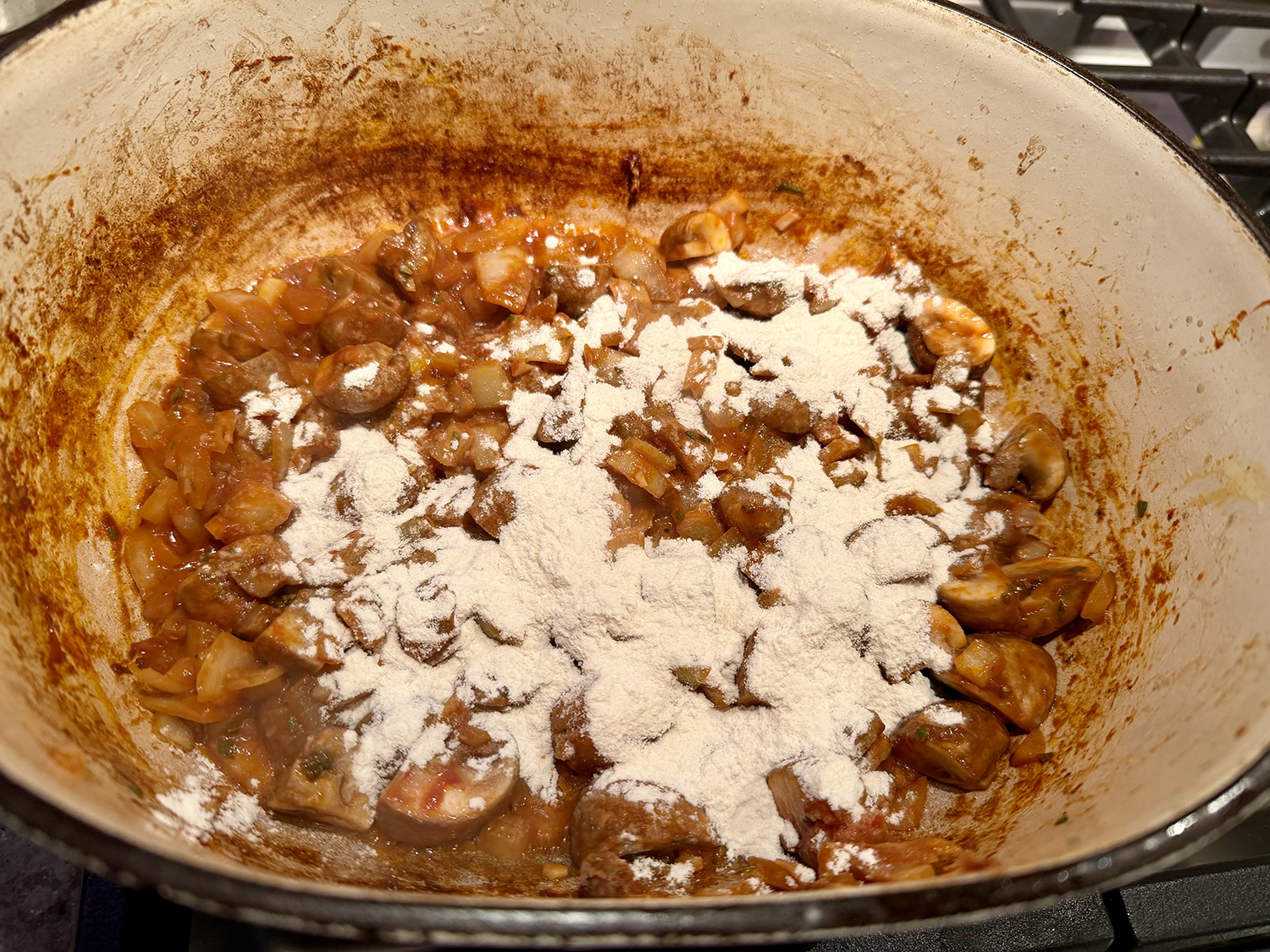
  3. Stir in flour and cook for 1 minute. Stir in broth and water, scraping up any browned bits. Stir in porcini mushrooms, mustard, and beef, along with any accumulated juices, and bring to boil.
  4. Reduce heat to low and simmer, covered, until beef and vegetables are tender, about 10 minutes (or up to 1 hour if time allows; the meat will get more tender the longer it’s simmered. Add extra water if stew gets too thick). Season with salt to taste. Serve.

http://www.lynnandruss.com

Adapted from a recipe by Jessica Rudolph for America’s Test Kitchen

Shio Koji-Marinated Flank Steak

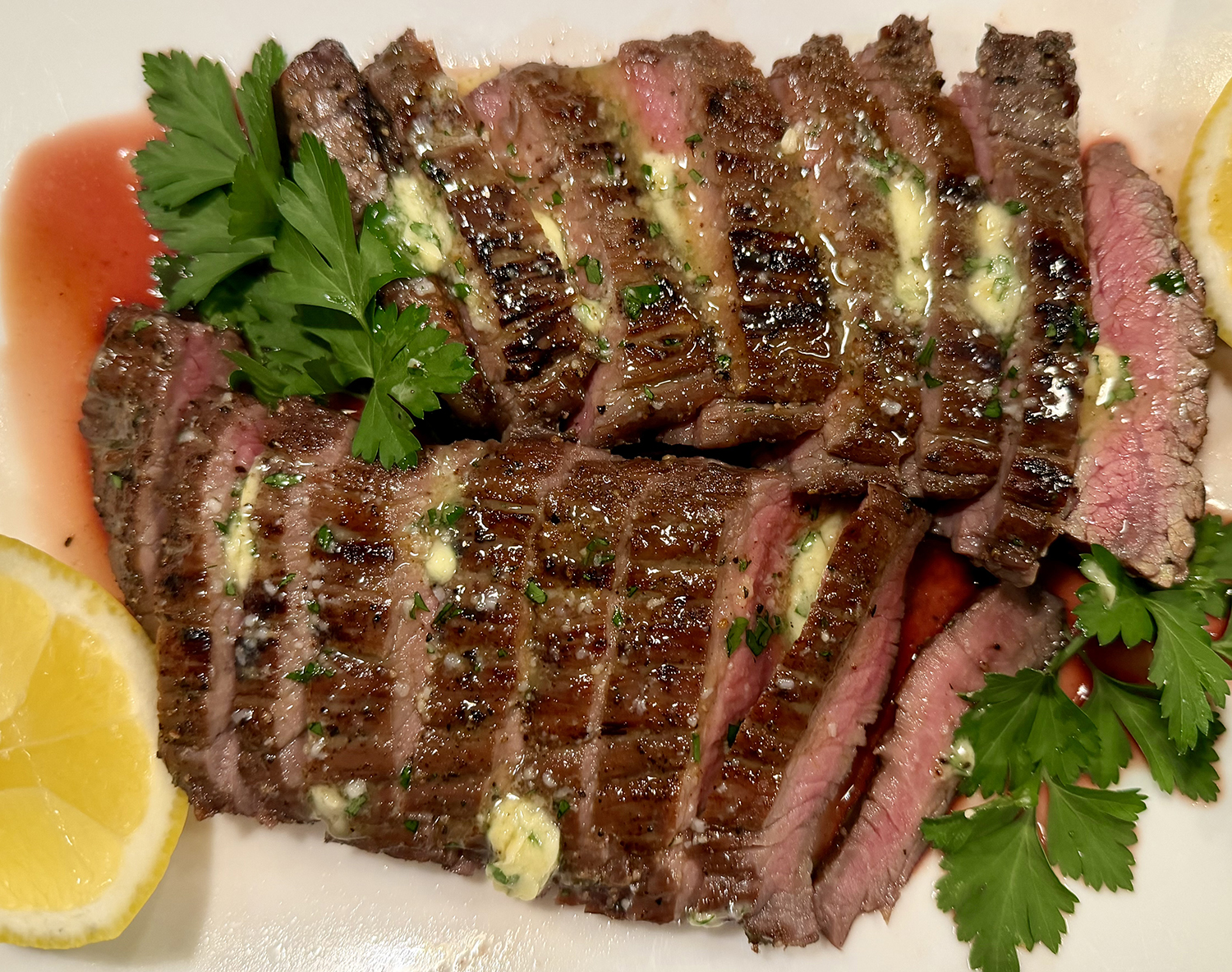
This super-easy reverse-seared steak recipe is just the thing for a flavor-packed tasty dinner. The list of ingredients is manageable, but one in particular, shio koji, may be unfamiliar to you.

To educate, Shio Koji is a fermented seasoning made from rice koji, salt, and water. The fermentation process of these three ingredients creates a creamy, paste-like condiment with a salty and sweet, umami-rich flavor. It contains enzymes like amylase and protease, which break down starches and proteins, making it a popular marinade and meat tenderizer. 

Shio koji, which can be made at home or purchased, is often used as a marinade because it is rich in protease enzymes (which break down proteins), so it can create an array of new flavors in protein-rich foods.

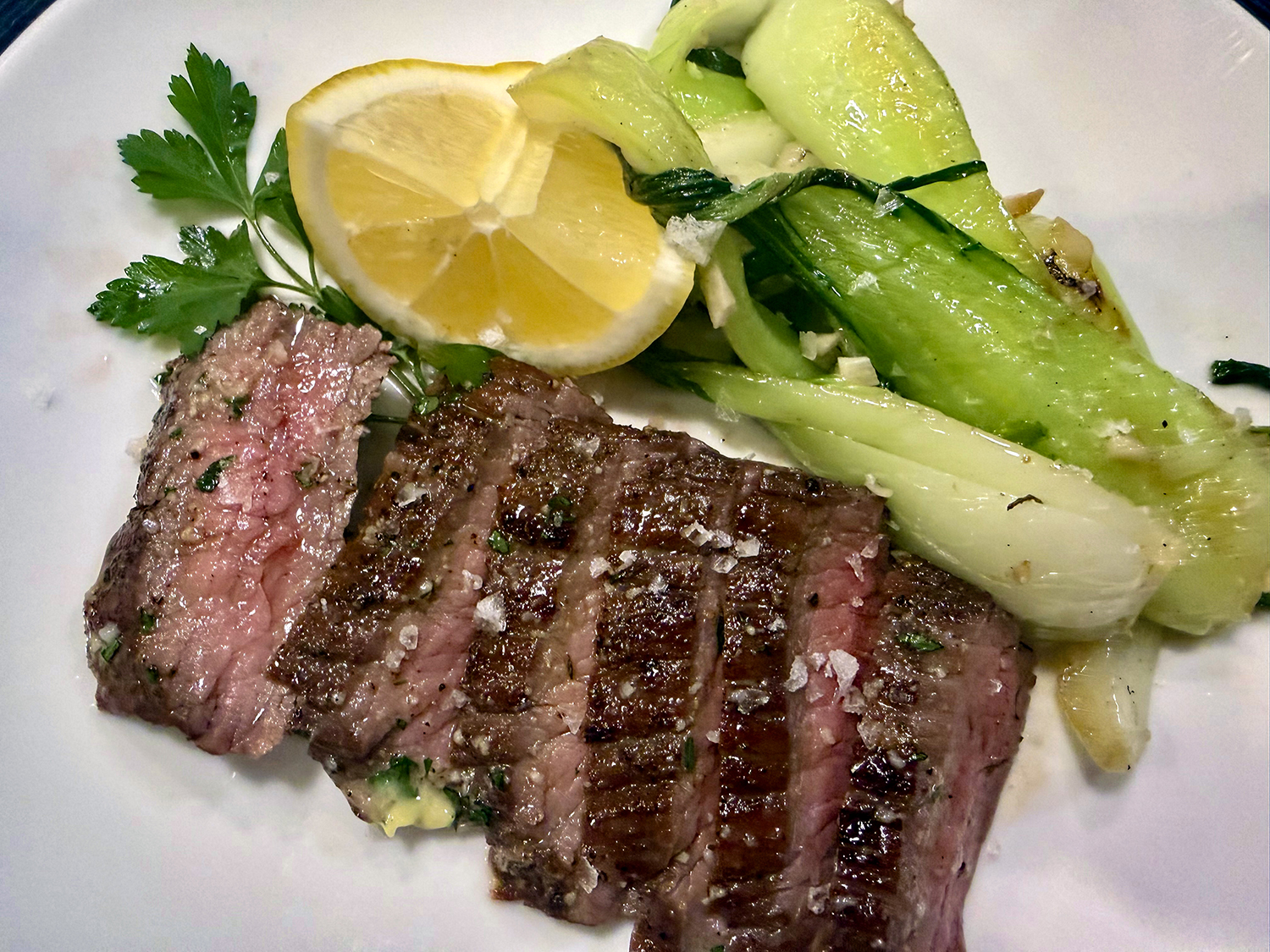
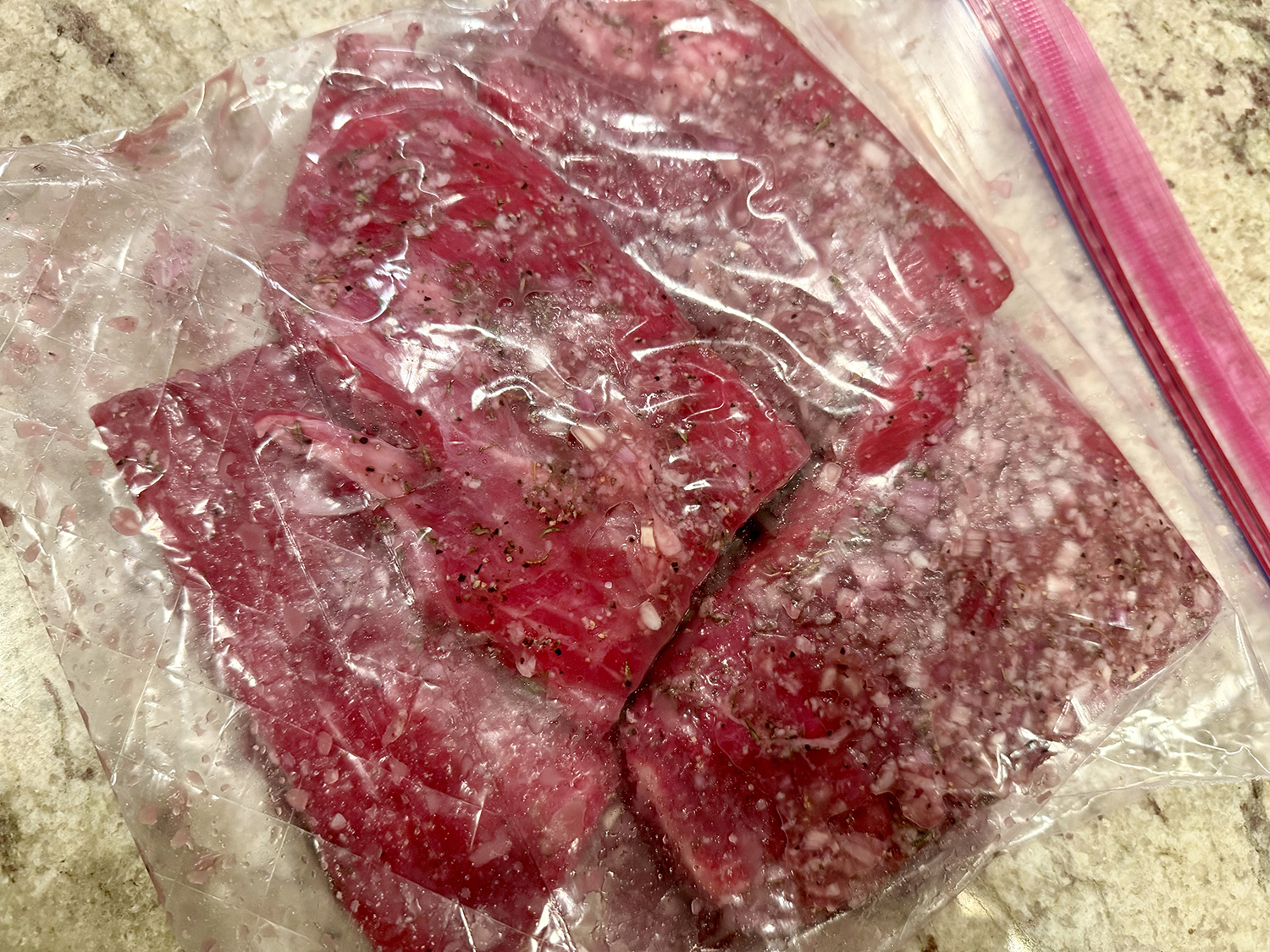
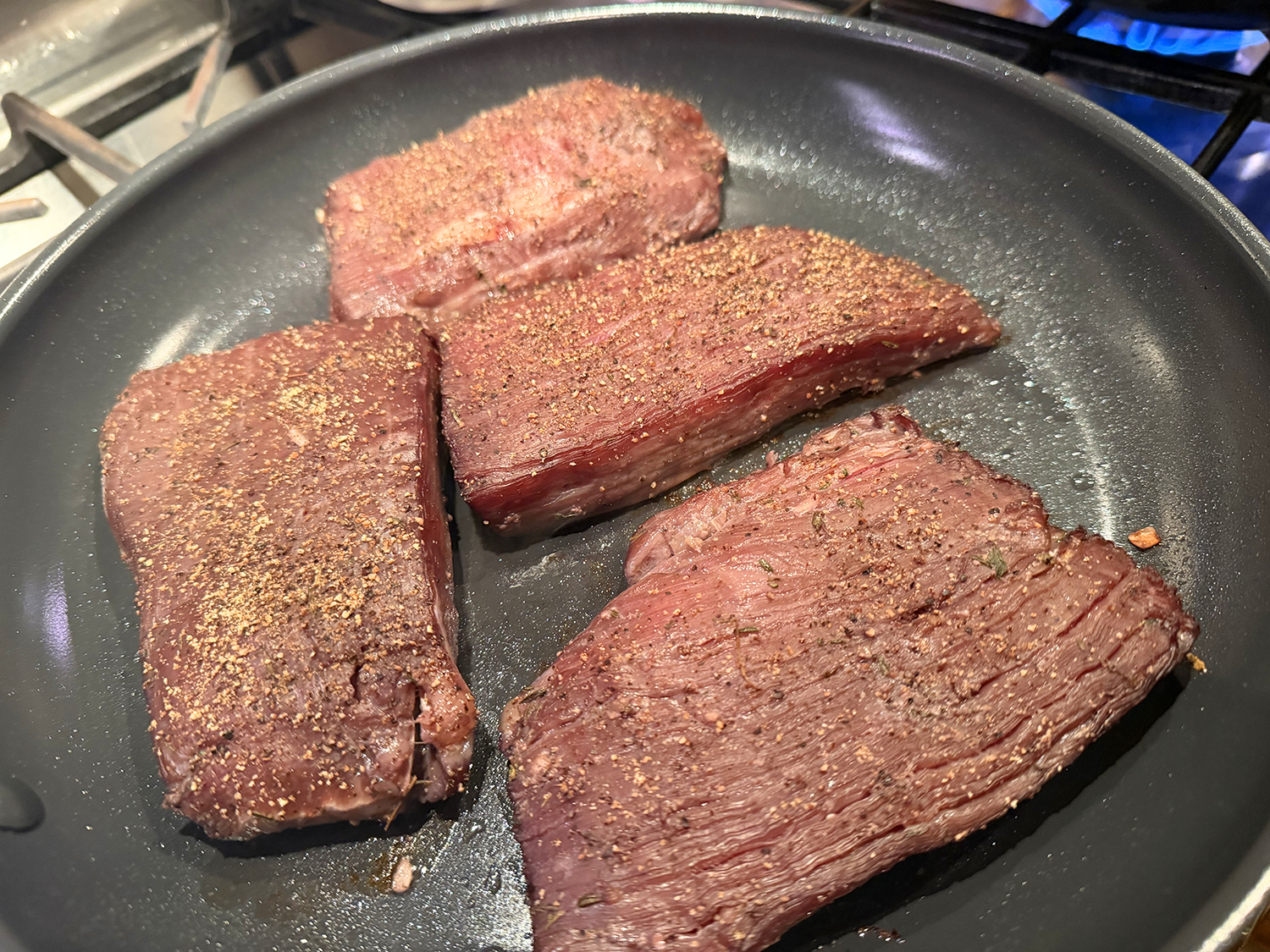
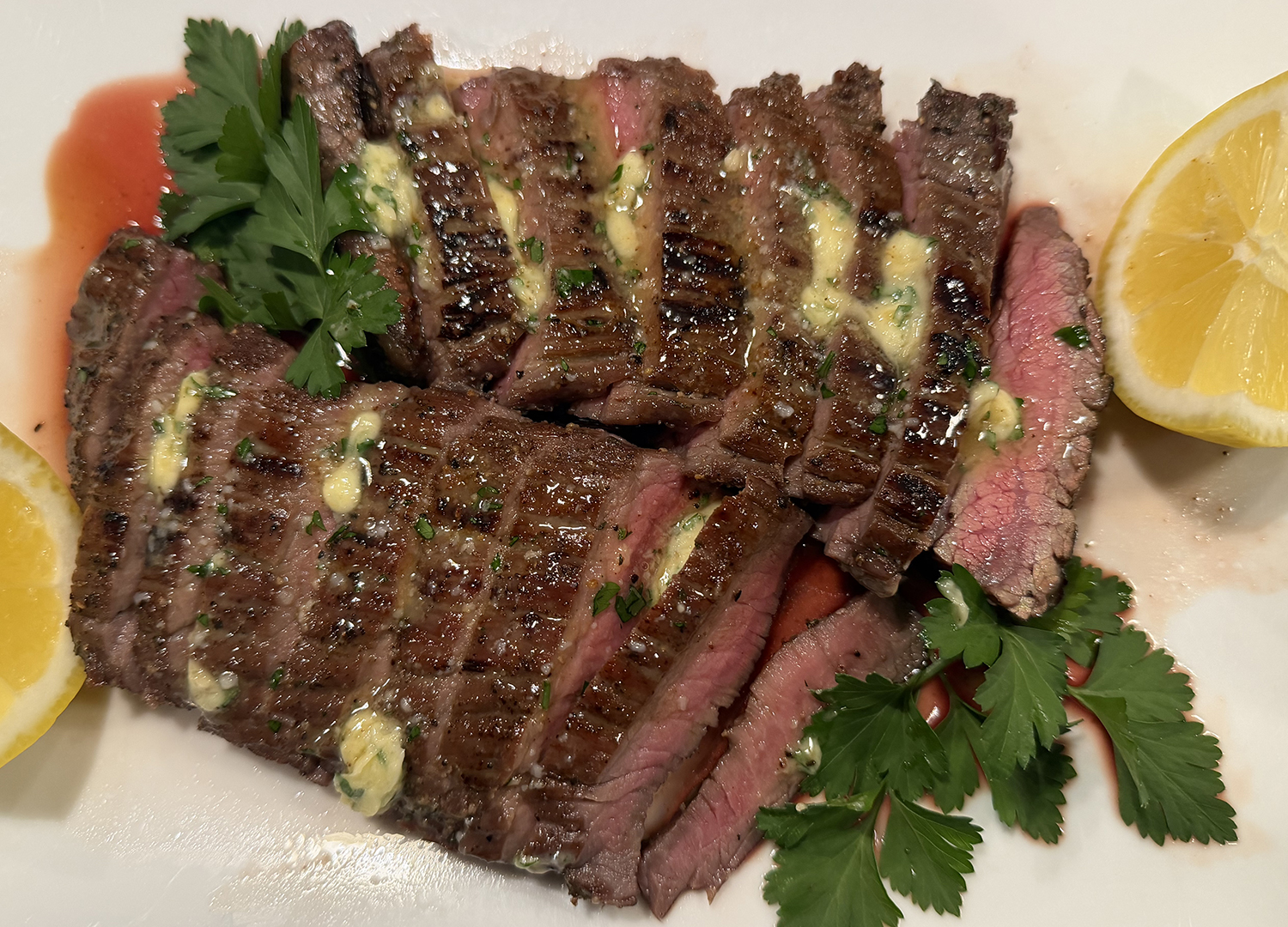
Here, shio koji gives marinated flank steaks the nutty, savory, blue-cheese-y flavors typically found in expensive dry-aged steaks. After wiping the marinade from the steaks, cook them in the oven with a gentle heat to keep their interiors juicy and rosy pink. Finally, quickly sear them on the stovetop to create a slightly charred crust.

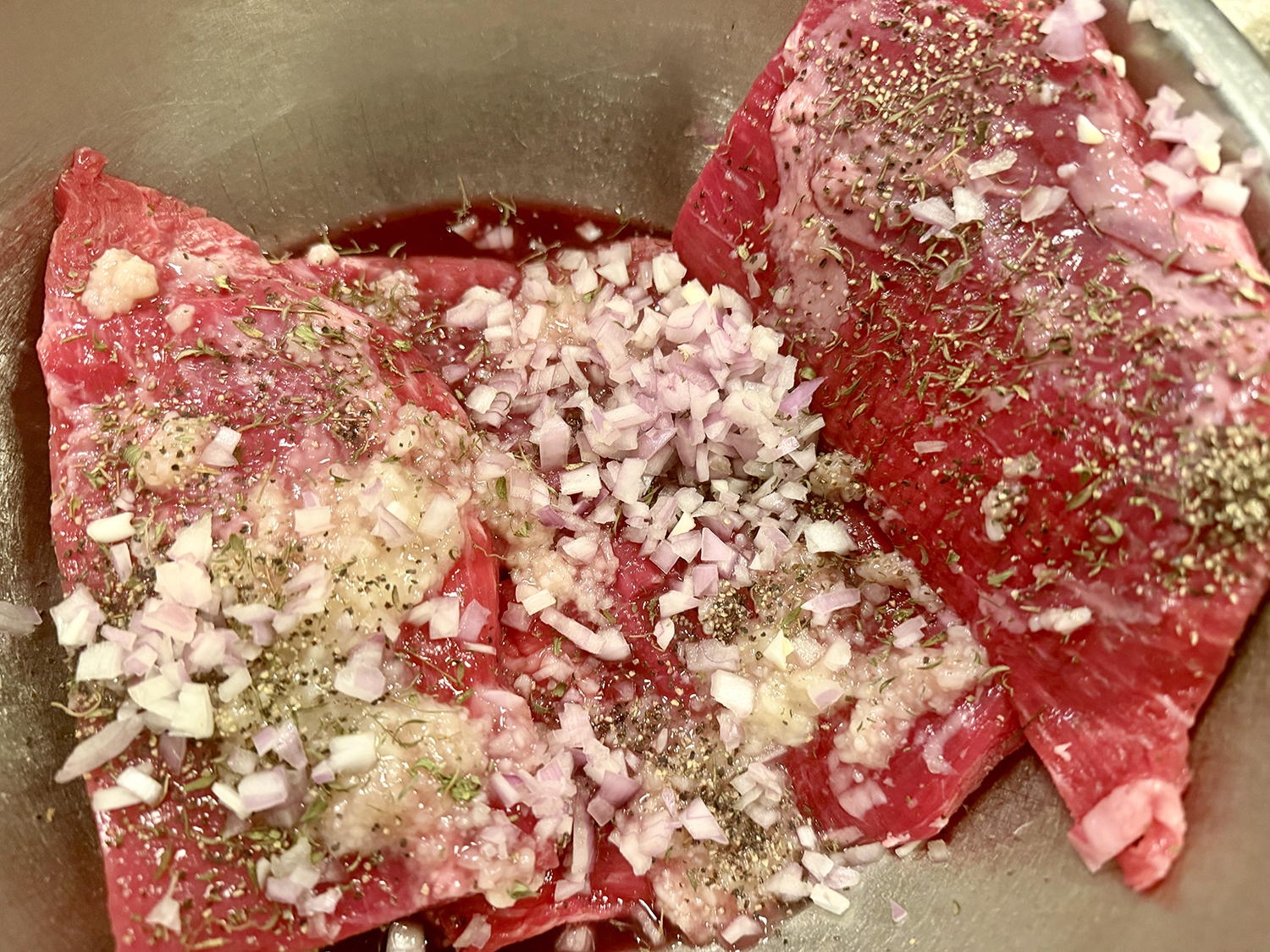
This recipe contains three marinating options (see below), of which we chose the Red-Wine Shallot variation.

Shio Koji-Marinated Flank Steak

  • Servings: 4
  • Difficulty: easy
  • Print

Ingredients

For the Steak

  • 1 (1½- to 1¾-lb.) flank steak, well trimmed
  • 3 Tbsp. shio koji
  • ½ tsp. pepper
  • 1 tsp. vegetable oil
  • Flaky sea salt (optional)
  • Lemon wedges (optional)

For the Butter

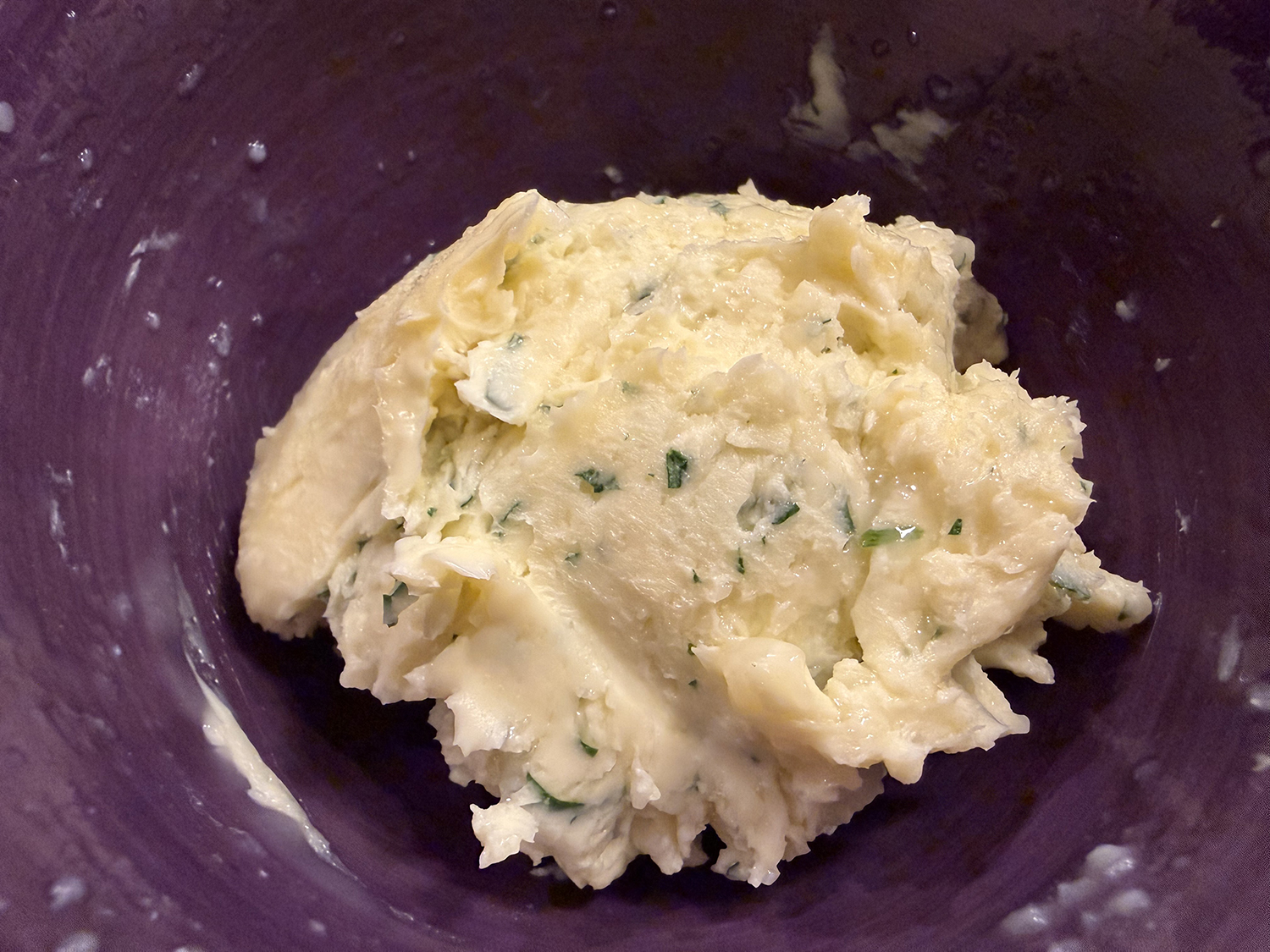
  • 4 Tbsp. unsalted butter, softened
  • 1 1⁄2 ysp. shio koji
  • 1 tsp. minced fresh parsley (or other herb of your choice)
  • 1⁄8 tsp. kosher salt

Directions

For the Steak

  1. Adjust oven rack to middle position and heat oven to 275 degrees. While oven heats, set wire rack in rimmed baking sheet. 
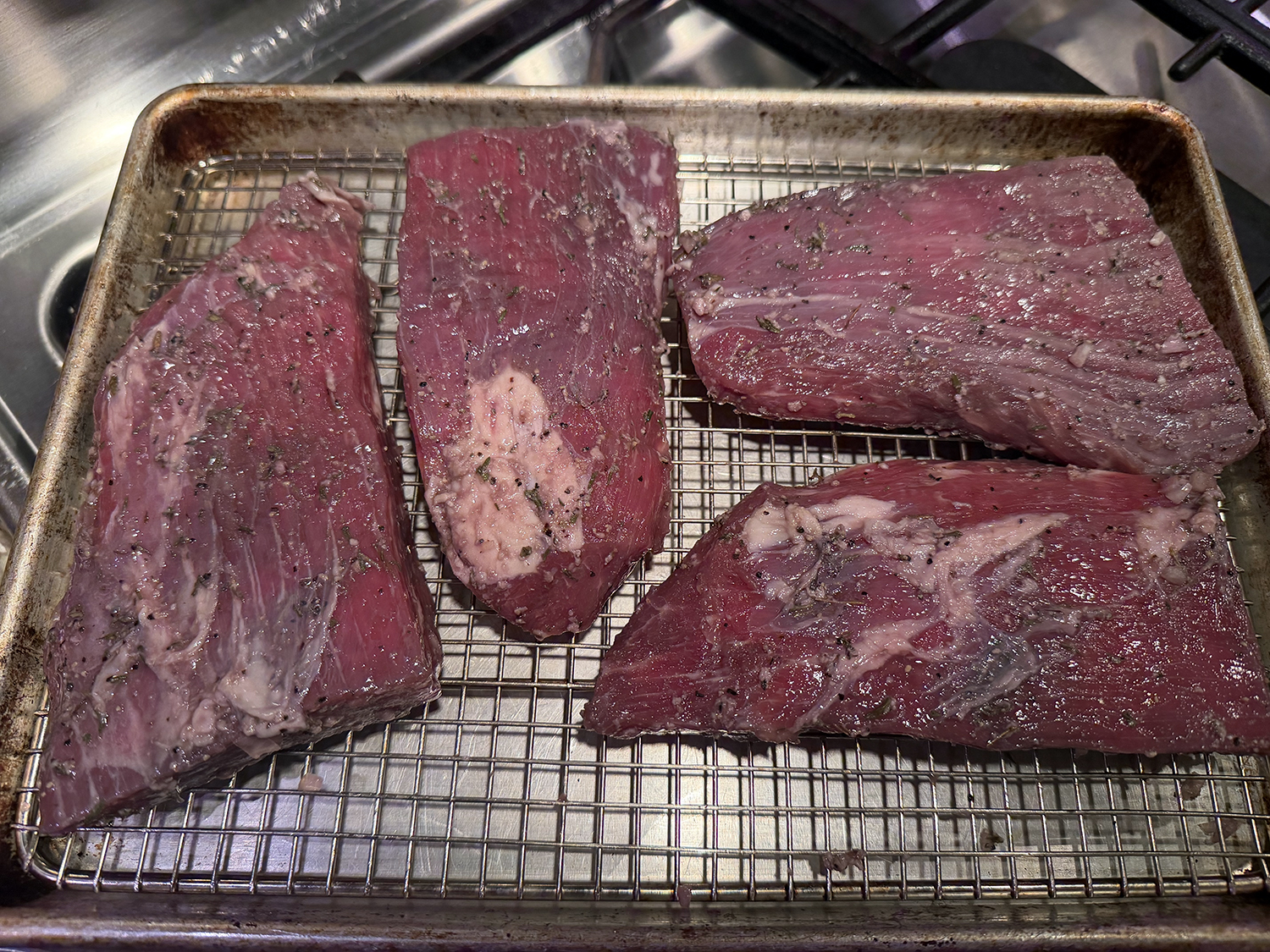
  2. With damp towel, wipe koji from steaks (it’s OK if a few grains remain on steak). Sprinkle with ½ teaspoon pepper. Set steaks on prepared rack and transfer to oven. Cook until thickest part of largest steak registers 125 degrees, 25 to 30 minutes.  
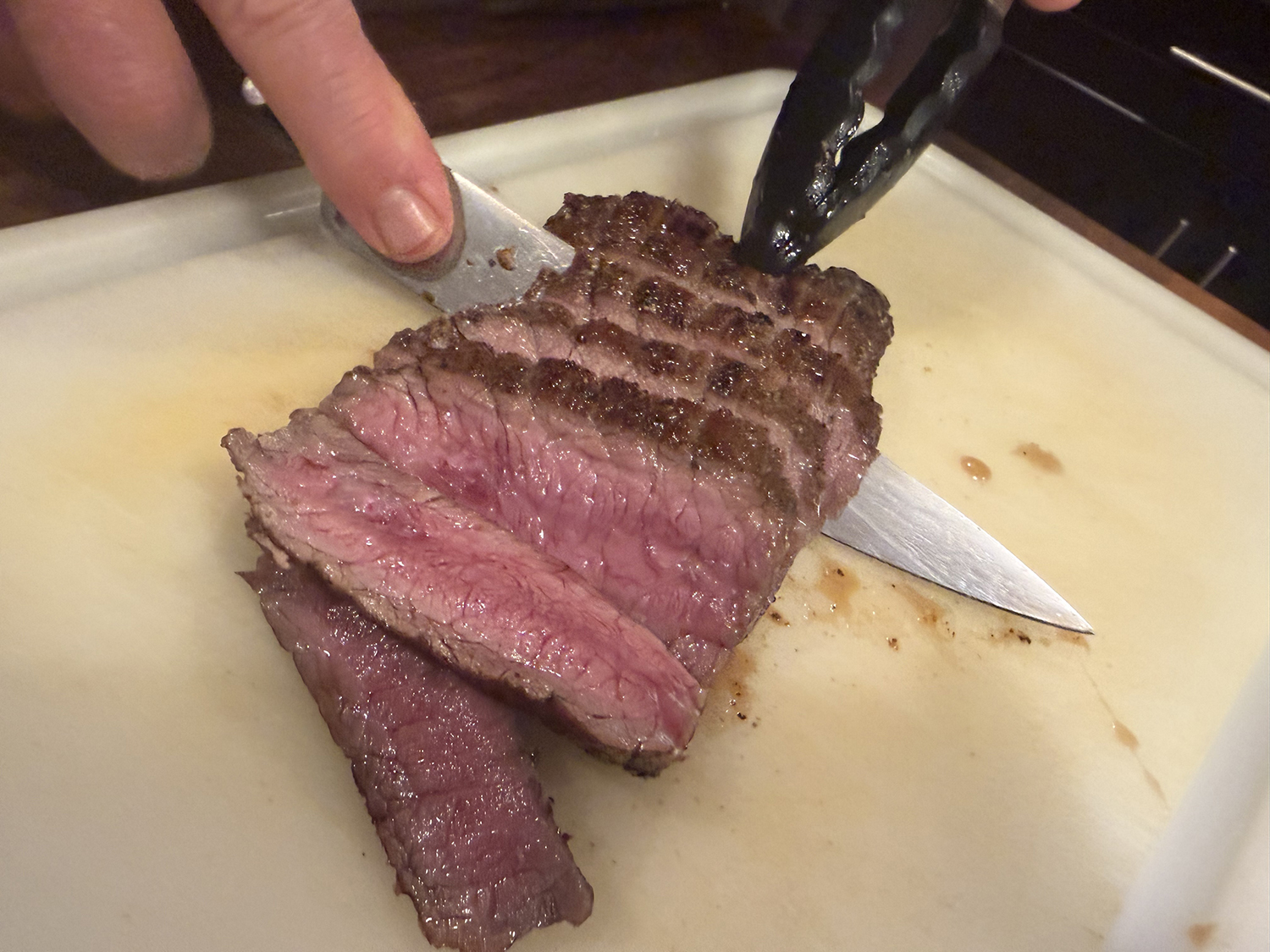
  3. Heat 1 teaspoon vegetable oil in 12-inch nonstick skillet over medium-high heat until shimmering. Add steaks and cook, pressing steaks gently into pan until browned and slightly charred in spots on both sides, 1 to 2 minutes per side. Cut steaks on bias against grain into ½-inch-thick slices. Serve, passing flake sea salt and lemon wedges, if using, separately.

For the Butter

  1. Combine all ingredients in a bowl. The butter mixture can be refrigerated for up to one week.

http://www.lynnandruss.com

Recipe by Lan Lam for America’s Test Kitchen

Simple Ways to Vary the Marinade

Shio koji creates plenty of complexity on its own, but it also enhances the flavors of additional seasonings. Try the following combinations, stirring the ingredients into 3 tablespoons of shio koji before applying the marinade to the steak.

WORCESTERSHIRE-GARLIC 

  • 3 Tbsp. Worcestershire sauce
  • 2 tsp. minced garlic
  • ½ tsp. pepper

BOURBON-SOY

  • 3 Tbsp. bourbon
  • 2 Tbsp. soy sauce
  • ¾ tsp. ground allspice

RED WINE–SHALLOT

  • 3 Tbsp. red wine
  • 2 Tbsp. minced shallot
  • 1 tsp. dried thyme
  • ½ tsp. pepper

Shio Koji Steak Primer

Shio koji works differently than other marinades. Here’s how to make the most of its special properties.

Shio-Koji-to-steak ratio: 1 tablespoon to 8 ounces

One tablespoon of shio koji per ½ pound of steak is enough to produce a broad range of flavors (and since commercially produced shio koji contains only 8 to 14 percent salt, that amount won’t make the meat overly salty.) Shio koji pairs beautifully with other seasonings too (see “Simple Ways to Vary the Marinade”).

Marinating time: 2 to 24 hours

The longer the steak marinates, the more intense its flavor will become. Four hours is a good place to start if it’s your first time using shio koji so that you can get to know how it changes the flavor of the meat.

Best cooking method: reverse searing

Both the simple sugars contained in shio koji and the amino acids that are liberated as the steak marinates facilitate browning, but the sugars are also prone to scorching. The most failproof cooking method, then, is reverse searing: gently bringing the steak to serving temperature in the oven and then quickly searing it in a skillet to develop a well-browned crust with a hint of char.

Stir-Fried Beef and Tomatoes

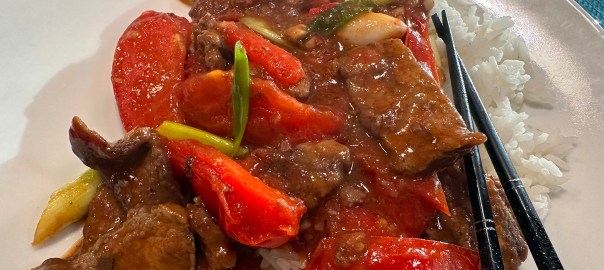
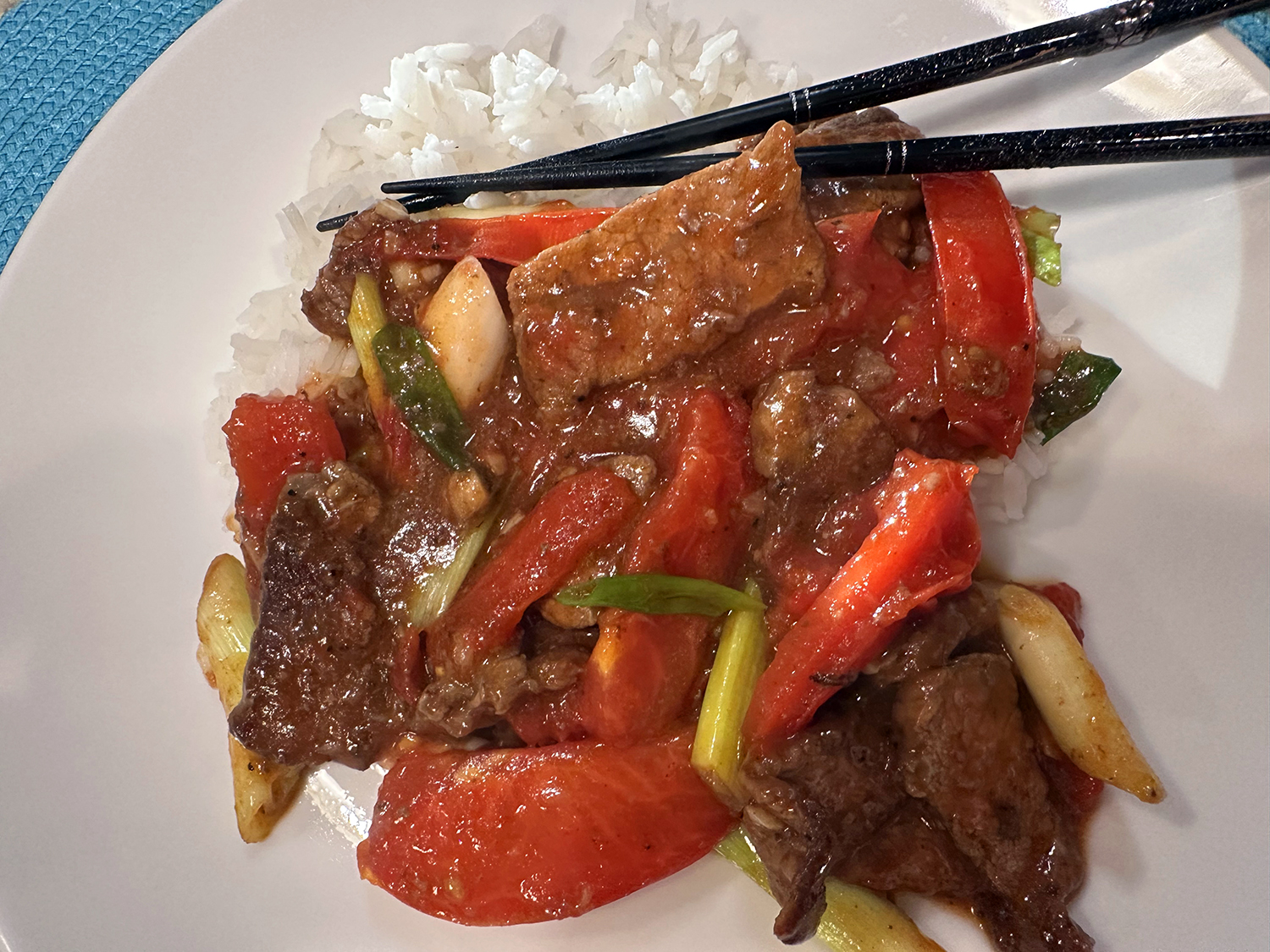
Here’s a very easy, low-count-ingredient, tasty stir-fry recipe from Milk Street. If you can get local in-season plum tomatoes, all the better.

The protein flank steak, has a beefy flavor and slightly coarse texture that makes it versatile for many dishes, from fajitas to stir-fries. But what happens when flank steak is unavailable, or you’re looking for a more budget-friendly or tender option? The good news is that several excellent flank steak alternatives can provide similar results.

Here are three possible options: Skirt steak is the most common substitute for flank steak. Both cuts are similar in shape and have pronounced muscle fibers, making them ideal for high-heat cooking. Cut from the shoulder, flat iron steak is tender and flavorful. It is often considered one of the most underrated cuts of beef. Or hanger steak, often called the “butcher’s cut” because of its rich flavor, hanger steak comes from the cow’s diaphragm.

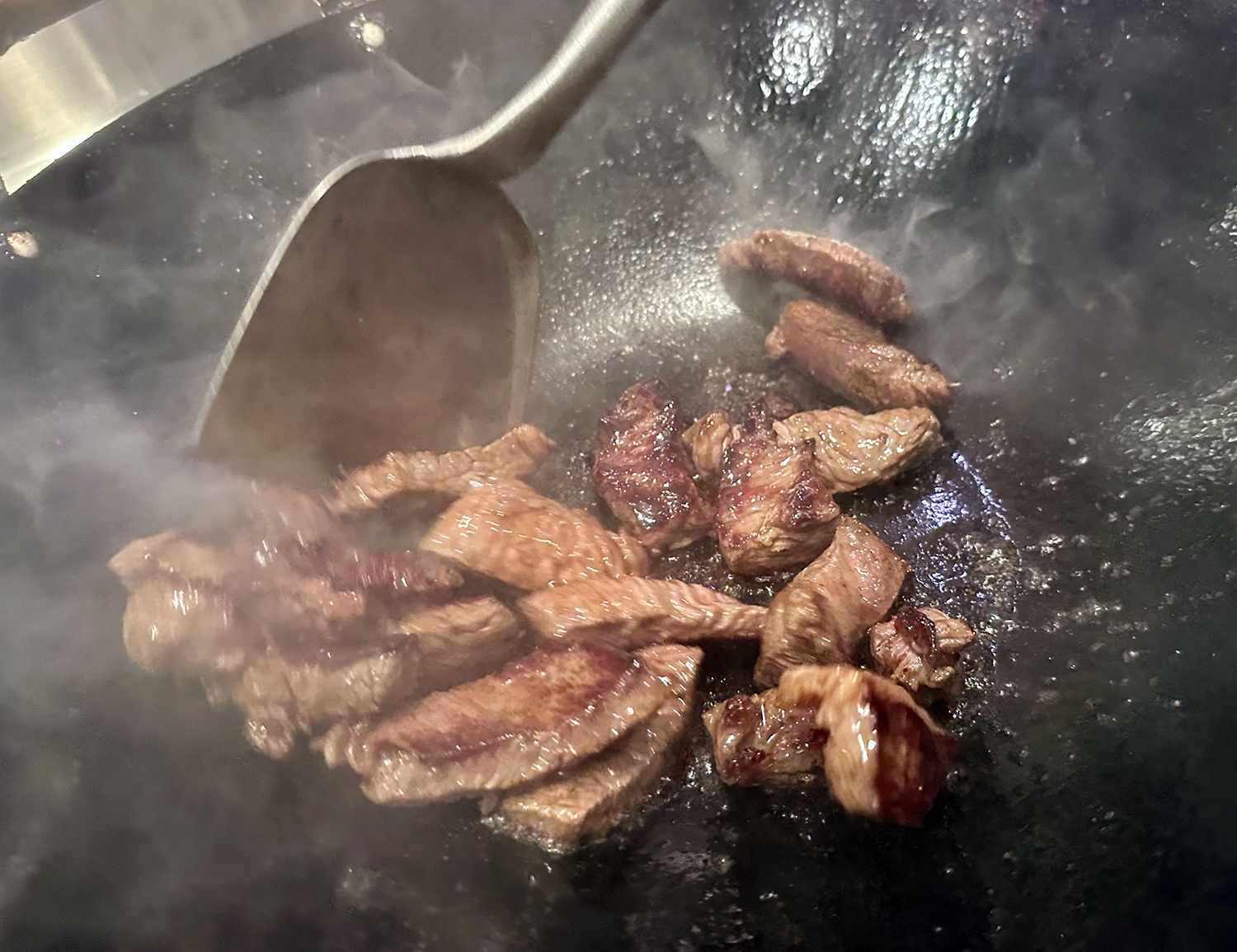
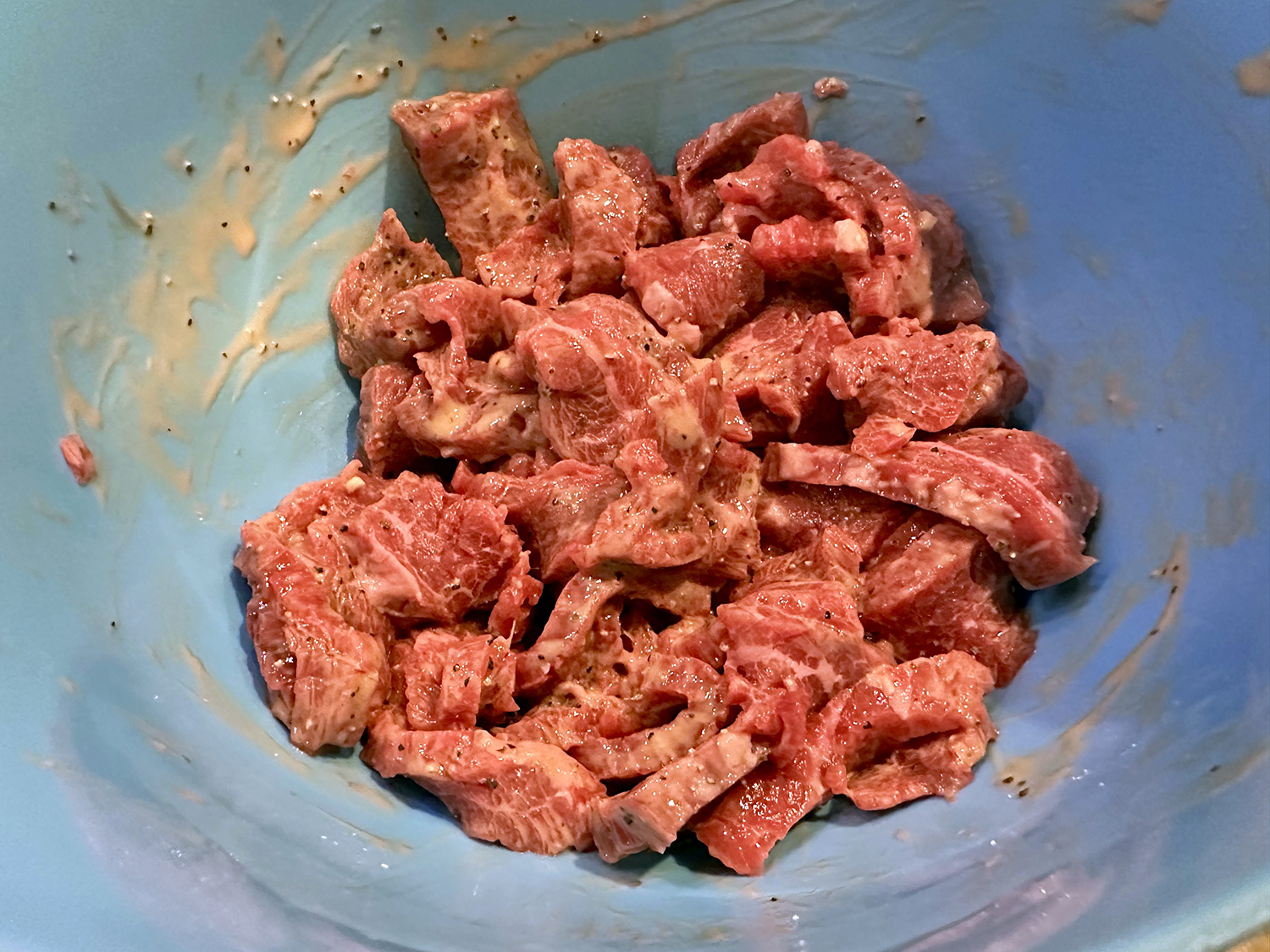
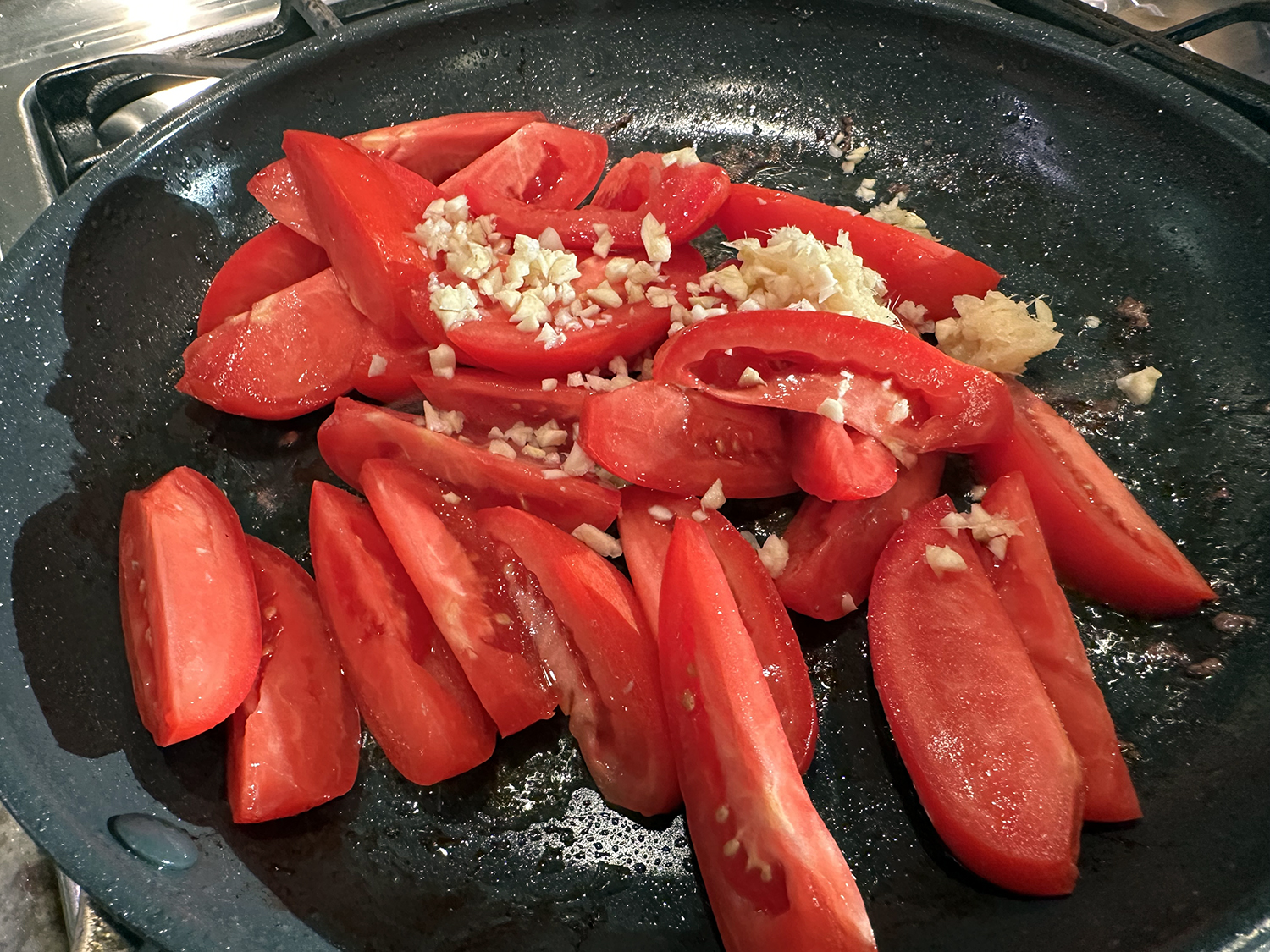
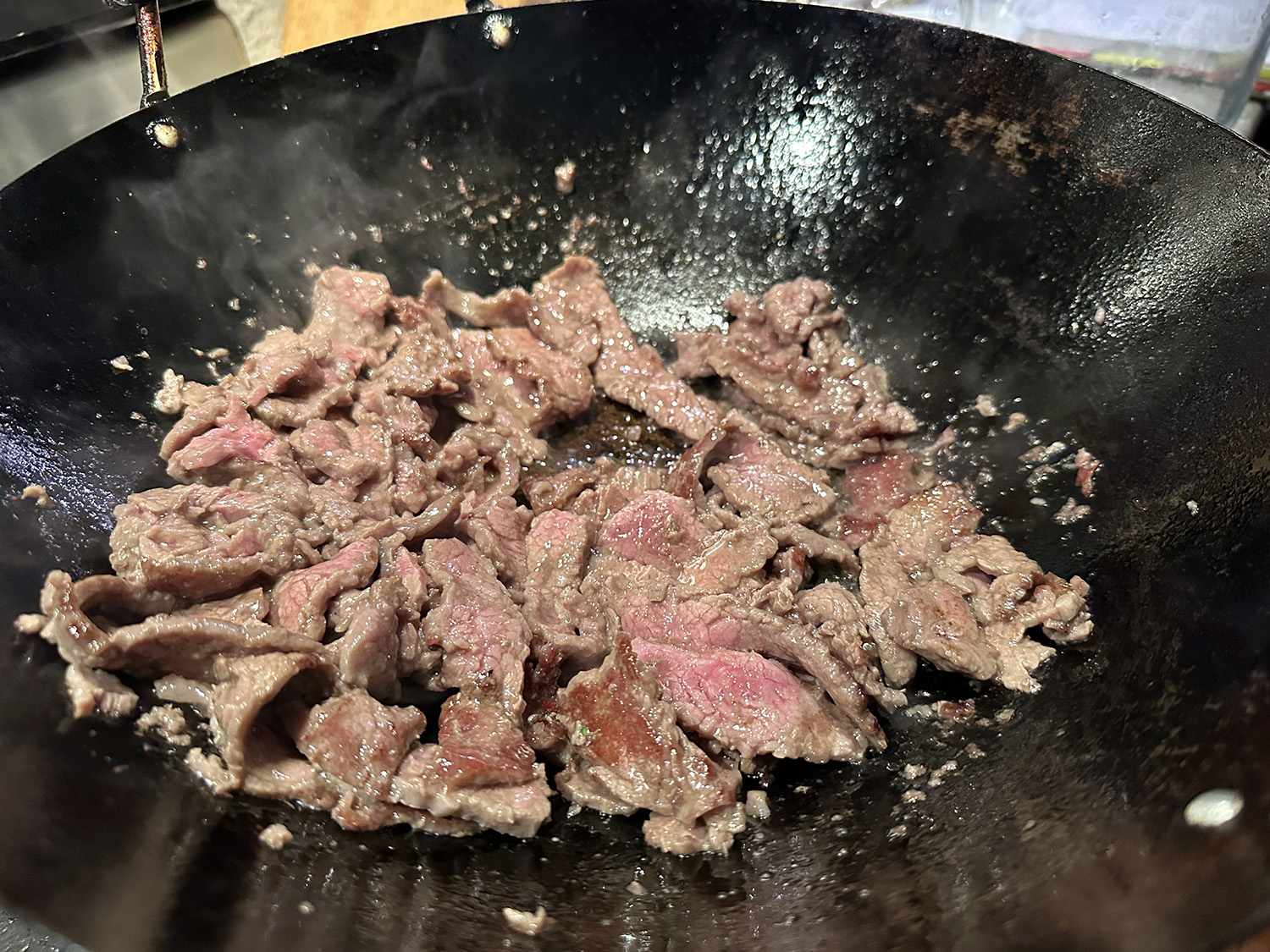
Whatever your protein choice, if the pan is too crowded the meat will steam instead of brown. At first, we thought all of that meat in the skillet was too much. But to our delight, the pieces did brown. If your amount looks tighter than the image below, you may want to cook in two batches just to be sure the beef does brown.

There is no spicy heat in this dish, but if that is your preference, you can always add some spicy chiles or include a bit of red pepper flakes.

Stir-Fried Beef and Tomatoes

  • Servings: 4
  • Difficulty: easy
  • Print

Ingredients

  • 4 Tbsp. oyster sauce OR hoisin sauce, divided
  • 1 Tbsp. cornstarch
  • Kosher salt and ground white or black pepper
  • 1 lb. flank steak, cut with the grain into 2- to 3-inch pieces, then thinly sliced against the grain
  • 1 lb. plum tomatoes, cored and cut into 1/2-inch wedges
  • 3 Tbsp. neutral oil, divided
  • 2 tsp. minced fresh ginger OR 3 medium garlic cloves, minced, OR both
  • 1 bunch scallions, cut on the diagonal into 1-inch lengths
  • Steamed rice
  • Optional garnish: Toasted sesame oil

Directions

  1. In a medium bowl, whisk 1 tbsp. oyster sauce, the cornstarch, ½ tsp. pepper, and 1 tbsp. water. Add the beef, stirring; let stand at room temperature for 15 minutes or cover and refrigerate for 1 hour. Meanwhile, place the tomatoes on a paper-towel-lined plate and sprinkle with ¼ tsp. salt; set aside.
  2. In a 12-inch skillet over high, heat 2 tbsp. oil until barely smoking. Add the beef in an even layer and cook without stirring until well browned and the pieces release easily from the skillet, 2 to 3 minutes. Stir, then transfer to a large plate.
  3. In the same skillet over medium-high, heat the remaining 1 tbsp. oil until shimmering. Add the tomatoes and ginger; cook, scraping up any browned bits, until the tomatoes soften and the ginger is aromatic, 30 to 60 seconds. Add the beef and any juices, then stir in the remaining 3 tbsp. oyster sauce and 2 tbsp. water. Cook, stirring, until the meat is tender and the sauce has thickened, 1 to 2 minutes. Stir in the scallions to wilt slightly, about 30 seconds. Off heat, taste and season with salt and pepper. Serve with hot cooked rice.

http://www.lynnandruss.com

Recipe by Christopher Kimball for Milk Street

Ginger Beef

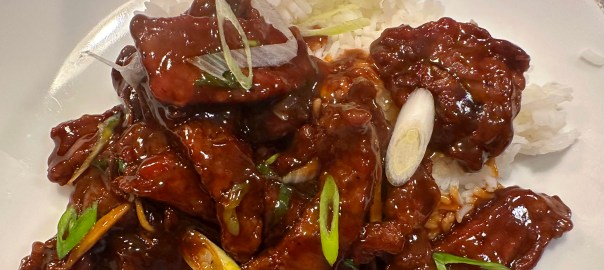
According to Woks of Life where we found this recipe, Ginger Beef isn’t a dish you see too often in the U.S., because it’s more well-known as a Canadian Chinese dish, with possible origins in Calgary. It is said to mimic Mongolian Beef—another North American dish that doesn’t have much to do with Mongolia, and that you’d be hard pressed to find in China. 

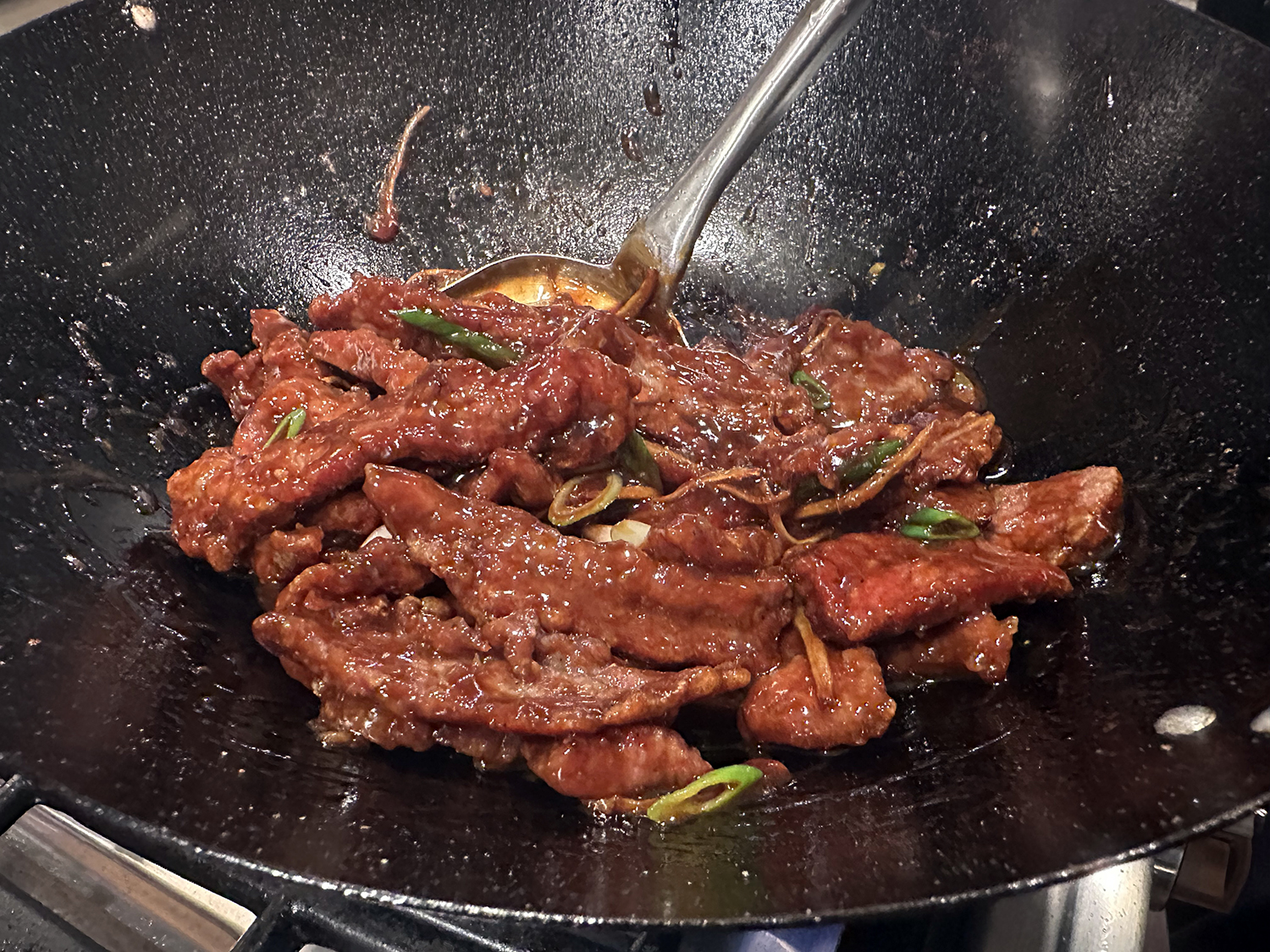
The sauce is sweet (this version goes lighter on the sugar; however we would reduce it even more next time) and savory. Minced ginger is added as well as caramelized julienned pieces of it to create a gingery flavor without it being TOO gingery. Some versions include vegetables like peppers and onions, but we paired it with a crunchy Asian Slaw to get more vegetables.

BTW, you’ll get the best out of this recipe with flank steak, but you can use other cuts. To amp up the meal, add in some red pepper strips, and snow peas or other vegetables you may have lying around. We paired our stir-fry with a side of Asian Slaw.

TIP: To julienne the ginger, thinly slice the ginger on its broadest side (so you have wide slices)—cutting the narrower side of the ginger to make a flat surface for the ginger to stand on will make this easier. Fan the slices out straight, so they’re slightly overlapping, like a deck of cards. Then you can just follow that line of slices to julienne into very thin matchsticks. 

Ginger Beef

  • Servings: 4
  • Difficulty: easy
  • Print

Ingredients

For the beef and marinade:

  • 1 lb. flank steak, sliced against the grain into ¼-inch thick slices
  • 2 tsp. cornstarch
  • 2 tsp. neutral oil, such as vegetable, canola, or avocado oil
  • 1 tsp. oyster sauce
  • 1 Tbsp. water
  • ¼ tsp. baking soda

For the sauce:

  • ⅔ cup water
  • 1 ½ Tbsp. light brown sugar
  • 1 Tbsp. light soy sauce
  • 1 Tbsp. oyster sauce
  • ¾ tsp. dark soy sauce, or more regular soy sauce; the dish just won’t be as dark
  • ½ tsp. sesame oil
  • 1 Tbsp. minced ginger

For the rest of the dish:

  • ⅓ – ½ cup cornstarch, plus 1 Tbsp.
  • ¼ – ⅓ cup neutral oil
  • 2 Tbsp. finely julienned ginger
  • 1 scallion, thinly sliced on an angle

Directions

  1. Add the sliced flank steak to a medium bowl, and add the marinade ingredients (the cornstarch, neutral oil, oyster sauce, water, and baking soda). Mix well, and marinate for at least 30 minutes (or up to overnight).
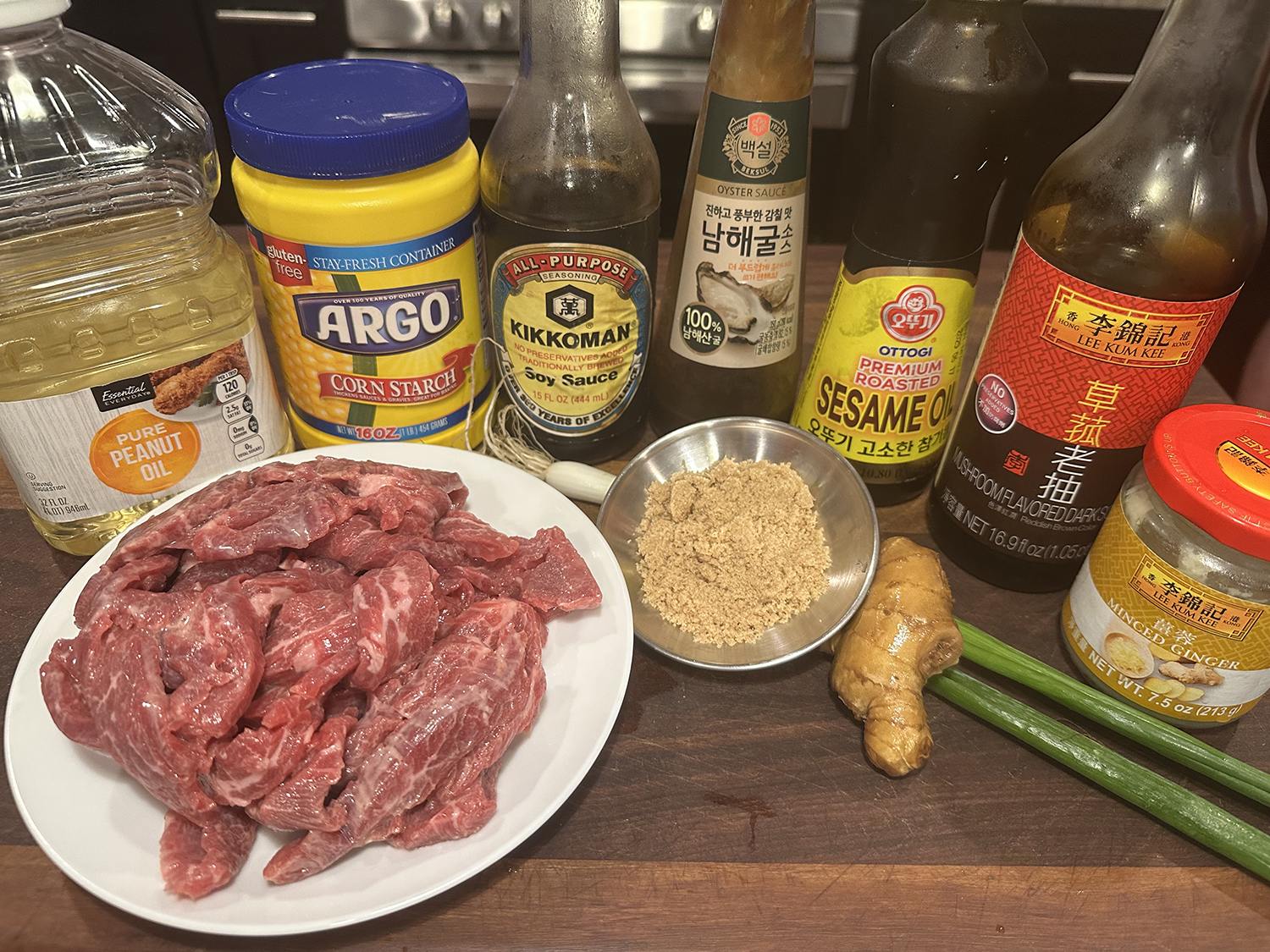
  2. In a liquid measuring cup, mix all the sauce ingredients together—the water, light brown sugar, light soy sauce, oyster sauce, dark soy sauce, sesame oil, and minced ginger. Set aside.
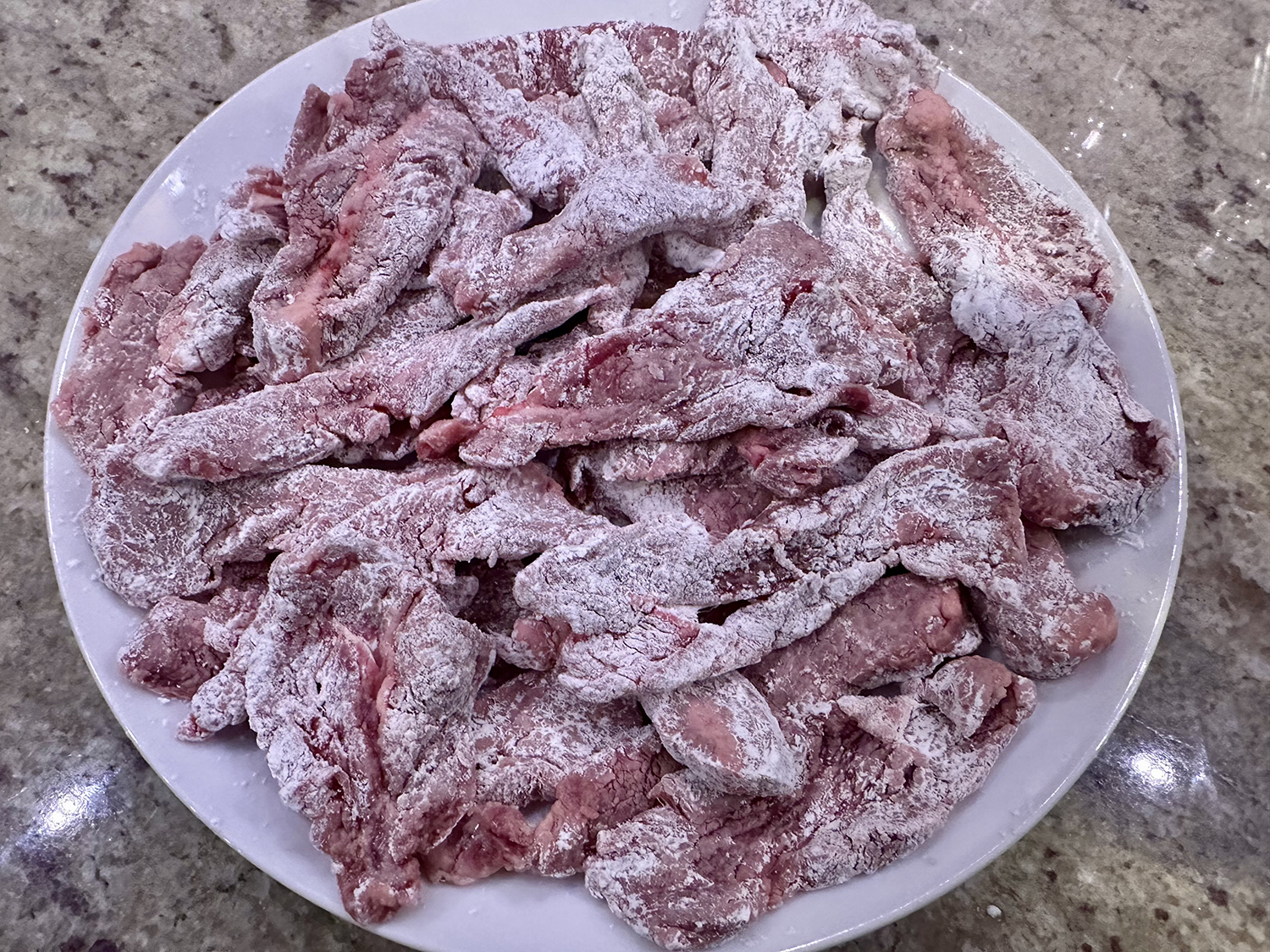
  3. Add the cornstarch to a shallow dish, and dredge the marinated beef slices in the cornstarch until thoroughly coated, placing the dredged beef on a clean plate or sheet pan.
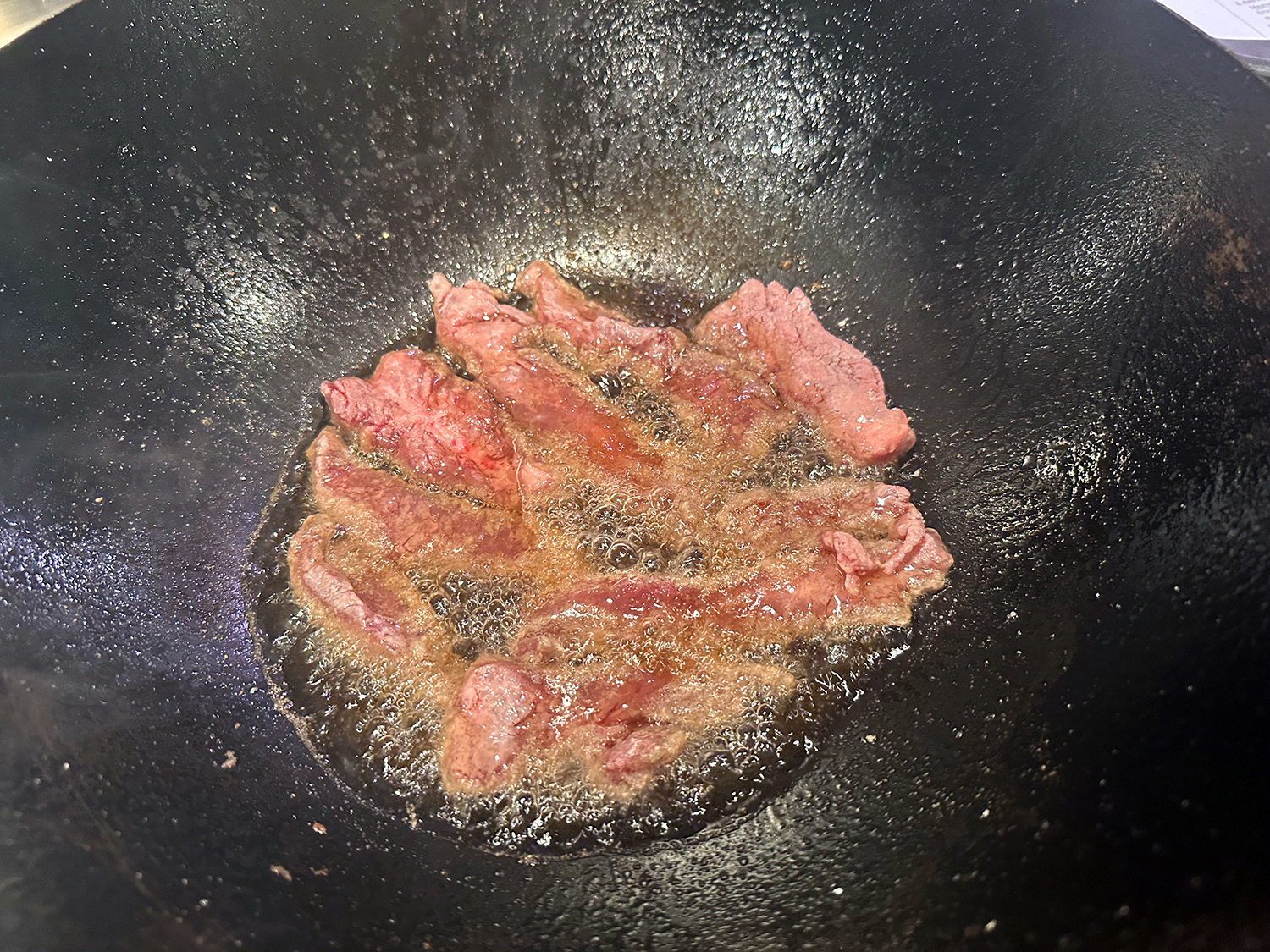
  4. Heat the neutral oil in a wok over high heat. Just before the oil starts to smoke, spread half the flank steak pieces evenly in the wok, and sear for 1-2 minutes on each side, until you have a crispy coating. 1/4 cup oil works for a 14-inch wok, but if you have a larger wok, you may need a tablespoon or two more to properly fry the beef. Remove the beef from the wok, leaving any oil behind, and repeat with the remaining beef. Turn off the heat and transfer the beef to a plate.
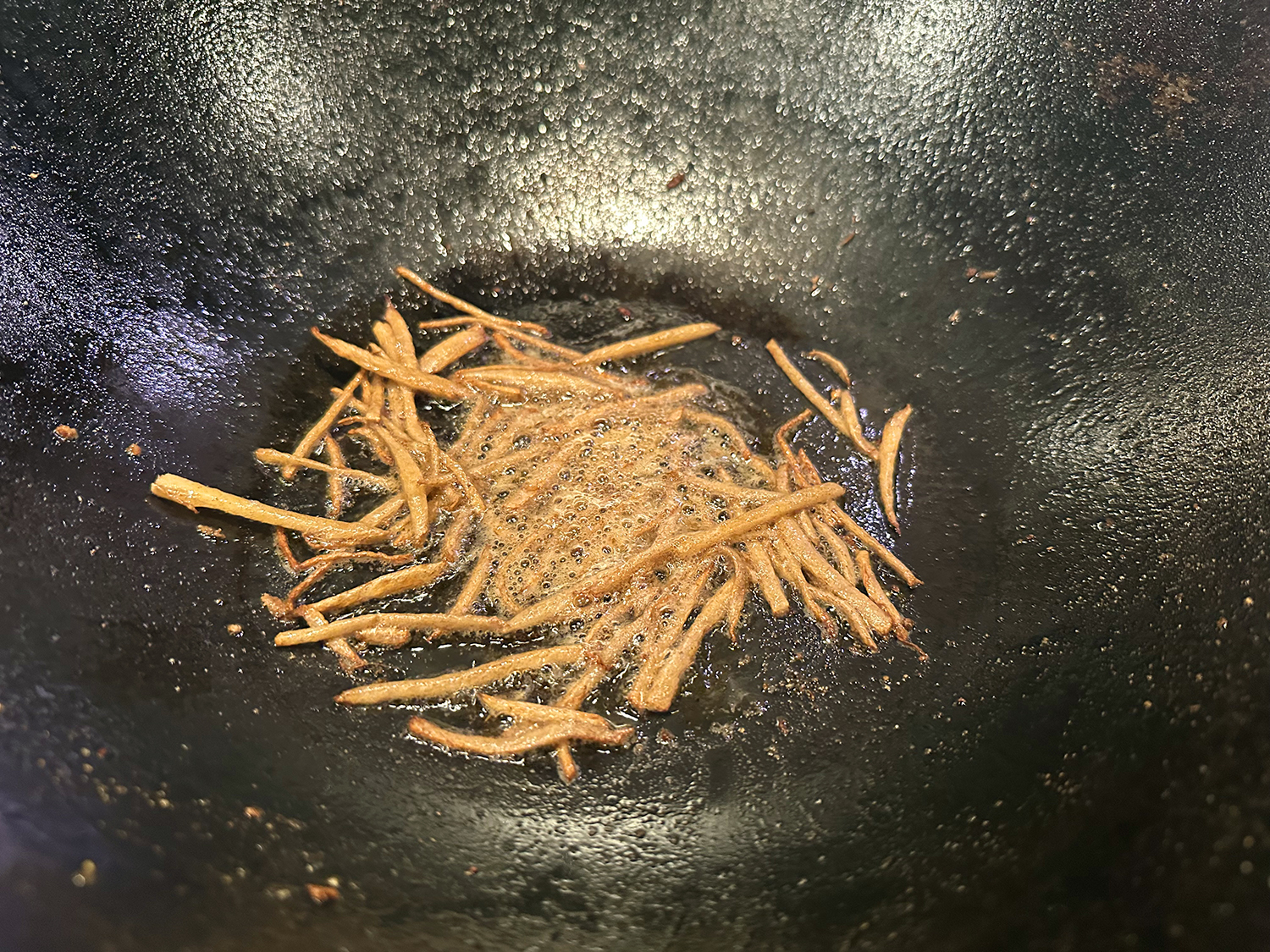
  5. Drain the oil from the wok (save it for other cooking), leaving 2 tablespoons behind. Turn the heat to medium-high. Add the julienned ginger, and fry until crispy. At this point, you can remove a few pieces of fried ginger and reserve it for a garnish if you like.
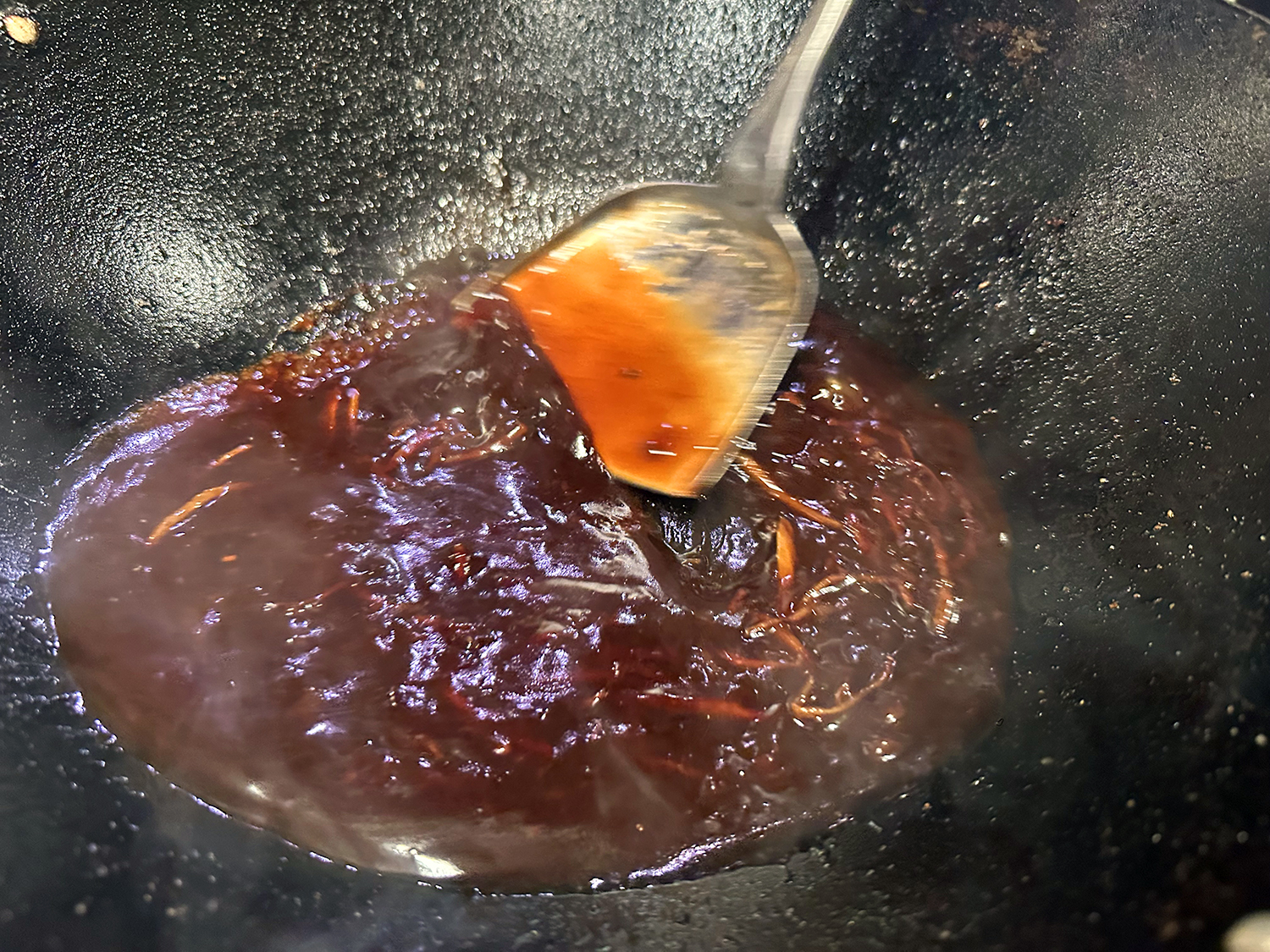
  6. Add the premixed sauce to the wok, and bring to a simmer. Simmer for 2 minutes. Meanwhile, combine the remaining 1 tablespoon of cornstarch with 3 tablespoons of water. Drizzle this cornstarch slurry into the sauce, and cook until it has thickened enough to coat the back of a spoon.
  7. Add the beef and the scallions, and toss everything together for another 30 seconds. The sauce should all be clinging to the beef. Serve!

http://www.lynnandruss.com

Adapted from a recipe from Woks of Life

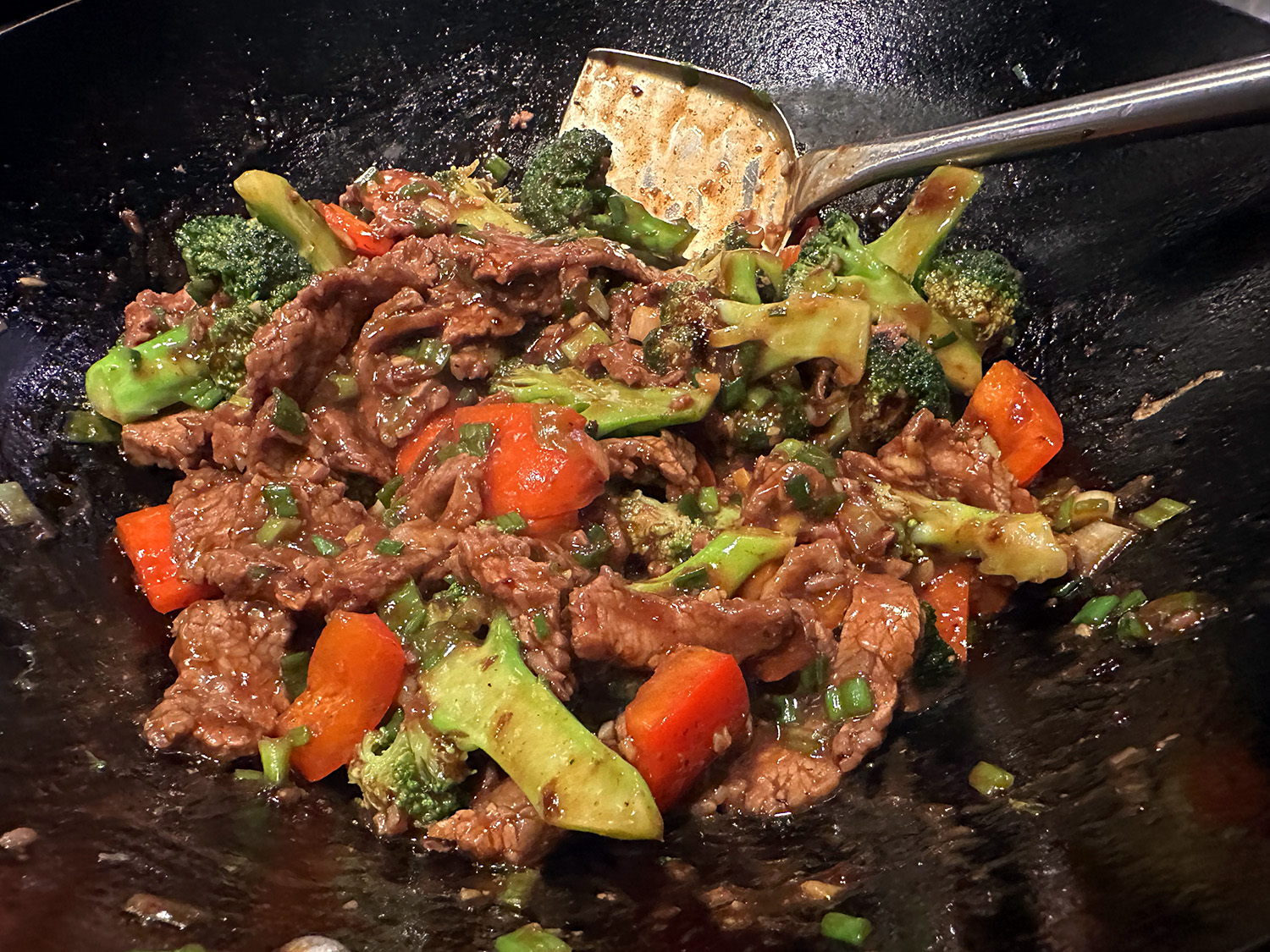
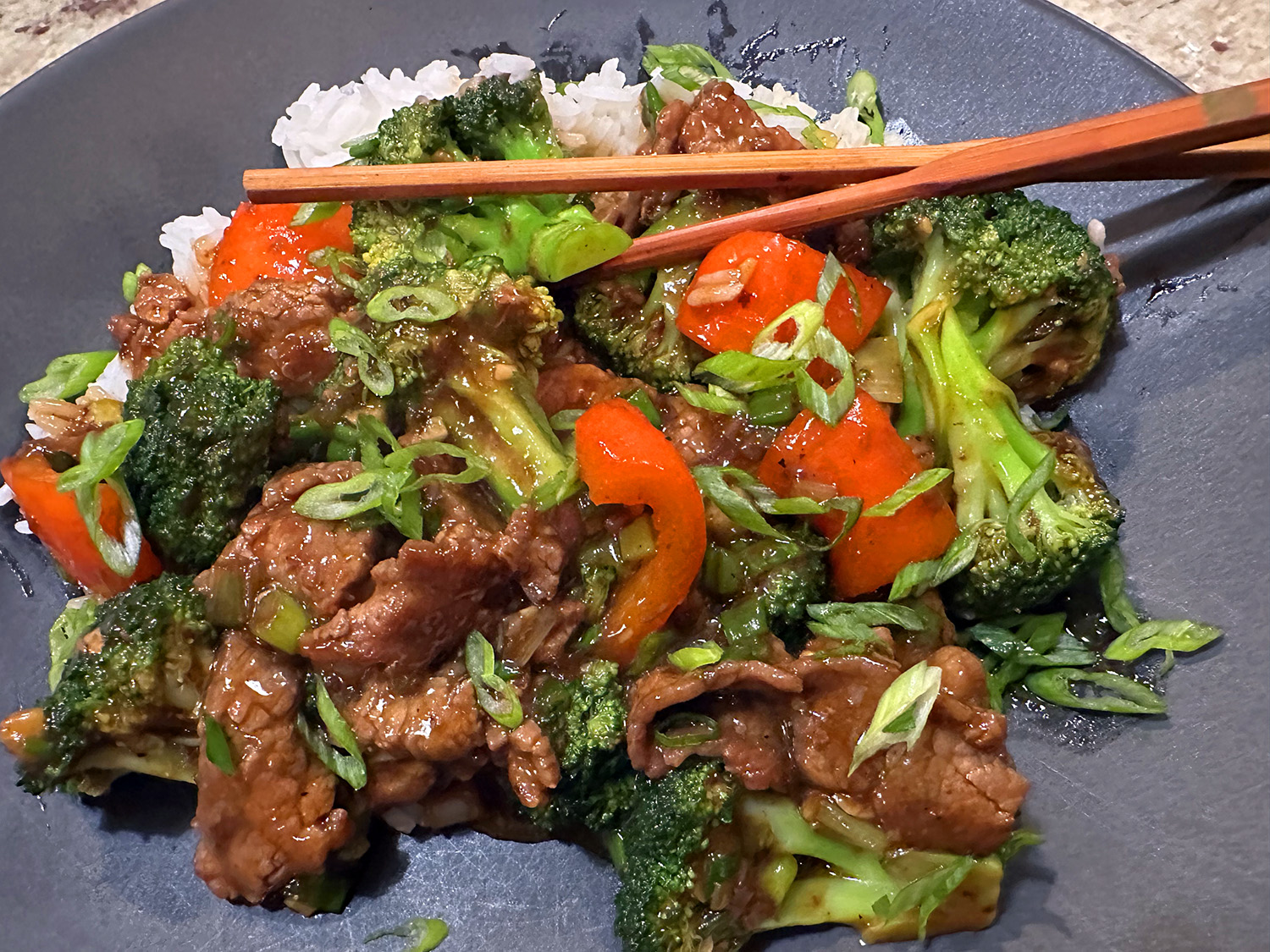
Beef and Broccoli with Red Pepper and Scallions

In many Chinese restaurants, this is one of the most-ordered items of their menus, and is also a favorite take-out dish.

There are many beef and broccoli recipes on the Internet, with variations made in slow cookers, in Instant Pots, and on sheet pans. This version from Woks of Life, however, will show you exactly how to easily achieve restaurant results at home.

Here are the basic steps to making an authentic beef broccoli stir-fry:

  • Tenderize & marinate the beef
  • Blanch the broccoli & sear the beef
  • Cook the sauce & stir-fry everything together

This simple method yields tender beef, still crisp, healthy broccoli, and a rich sauce, combined into a restaurant-style dish. For this recipe, you’ll need both light/regular soy sauce and dark soy sauce. A good dark soy sauce adds flavor and provides that rich dark color to your beef and broccoli. Just as important as the soy sauce is the oyster sauce, which is full of umami goodness and key to producing an authentic restaurant flavor.

Our broccoli florets were too firm in the final dish. For one, they could have been cut smaller, and The Hubs ran cool water over them after they were blanched which prevented any further cooking.

We took the liberty of adding some red bell pepper and scallions, both for color and added nutrition. In the end, we both felt the dish did not have enough bold flavors for our liking—which is probably why we never order it at a Chinese restaurant. But for those of you who prefer a more sedate flavor profile, then it is probably a recipe for you.

Beef and Broccoli with Red Pepper and Scallions

  • Servings: 4
  • Difficulty: easy
  • Print

Ingredients

For the beef and marinade:

  • 1 lb. flank steak (sliced 1/4-inch thick)
  • 1/4 tsp. baking soda (optional)
  • 3 Tbsp. water
  • 1 1/2 tsp. cornstarch
  • 2 tsp. vegetable oil
  • 1 tsp. oyster sauce

For the sauce:

  • 2/3 cup low sodium chicken stock (warmed)
  • 1 1/2 tsp. granulated sugar (or brown sugar)
  • 1 1/2 Tbsp. soy sauce
  • 1 tsp. dark soy sauce (or double black dark soy sauce)
  • 1 Tbsp. oyster sauce
  • 1/2 tsp. sesame oil
  • 1/8 tsp. white pepper

For the rest of the dish:

  • 4 cups broccoli florets
  • 1 red bell pepper, seeded and cut into 1 1/2-inch chunks
  • 1 bunch scallions, sliced thin, whites and greens divided (save some greens for garnish)
  • 3 Tbsp. vegetable oil (divided)
  • 2 cloves garlic (minced)
  • 1/4 tsp. ginger (grated/minced, optional)
  • 1 Tbsp. Shaoxing wine
  • 2 1/2 Tbsp. cornstarch (mixed with 3 Tbsp. water)

Directions

  1. In a bowl, add the sliced beef along with the baking soda and water (if you don’t want your beef tenderized too much, omit the baking soda). Massage the beef with your hands until all the liquid is absorbed. Mix in the remaining marinade ingredients: cornstarch, oil, and oyster sauce. Set aside to marinate for at least 30 minutes.
  2. Make the sauce mixture by mixing together the chicken stock, sugar, soy sauce, dark soy sauce, oyster sauce, sesame oil, and white pepper. Set aside.
  3. Bring a pot of water to a boil and blanch your broccoli for 30 to 60 seconds (depending on whether you like your broccoli crunchy or a little soft). Drain (but do not run cool water over them), and set aside.
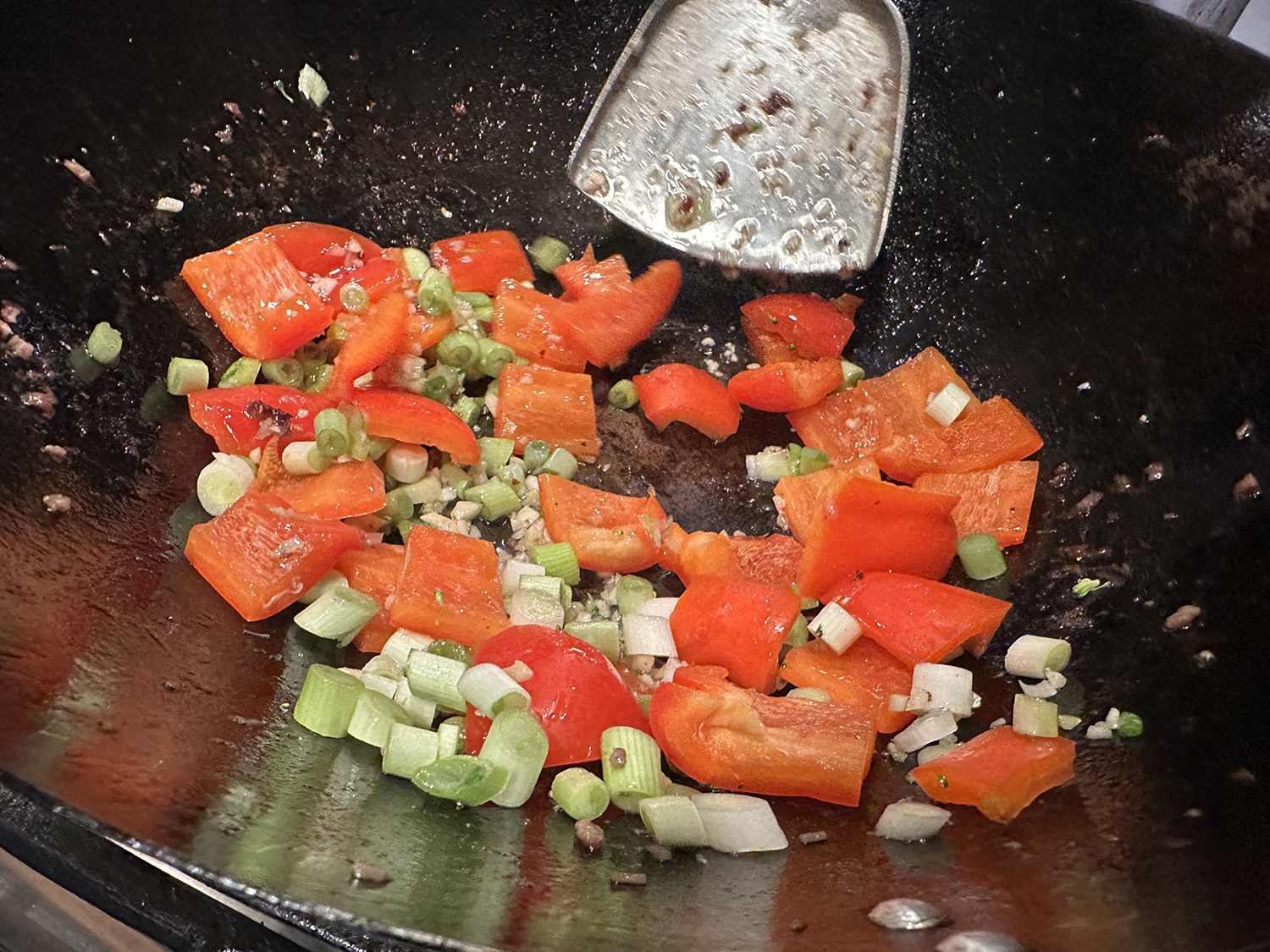
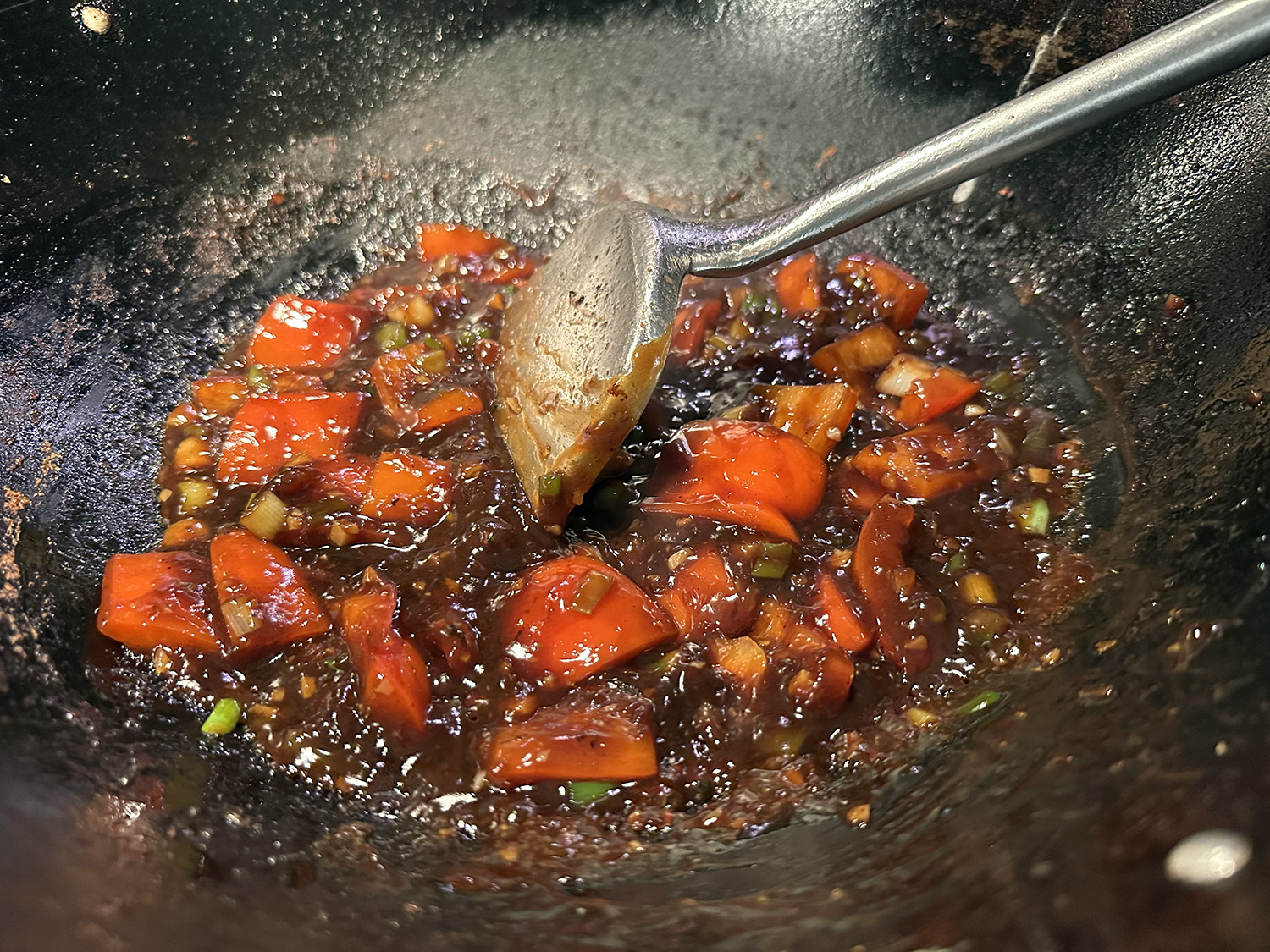
  4. Insert copy about bell pepper and scallions here…
  5. Heat your wok over high heat until smoking. Add 2 tablespoons oil and sear the beef on both sides until browned (this should only take 2-3 minutes). Turn off the heat, remove the beef from the wok, and set aside.
  6. Set the wok over medium heat and add another tablespoon of oil along with the garlic and ginger (if using). Stir the garlic and ginger for 5 seconds and then pour the Shaoxing wine around the perimeter of the wok.
  7. Next, add in the sauce mixture you made earlier. Stir the sauce around the sides of the wok to deglaze it (all those nice bits from stir-frying the beef should be absorbed into the sauce). Bring the sauce to a simmer. Stir the cornstarch and water into a slurry to ensure it’s well combined, and drizzle the mixture into sauce while stirring constantly. Allow it to simmer and thicken for 20 seconds.
  8. Toss in the blanched broccoli and seared beef (along with any juices). Mix everything together over medium heat until the sauce coats the beef and broccoli. If the sauce seems thin, turn up the heat and reduce it further, or add a bit more cornstarch slurry. If the sauce is too thick, add a splash of chicken stock or water. Serve with plenty of steamed rice.

http://www.lynnandruss.com

Adapted from a recipe by Bill from Woks of Life

The Ultimate Beef Wellington with Green Peppercorn Sauce

It’s the holidays, so not only do you dress to impress, but you dazzle with the ultimate in decadence when it comes to the star of the show, your entrée. This Beef Wellington recipe is not for culinary novices, so perhaps engage a more knowledgeable foodie to assist in the preparation.

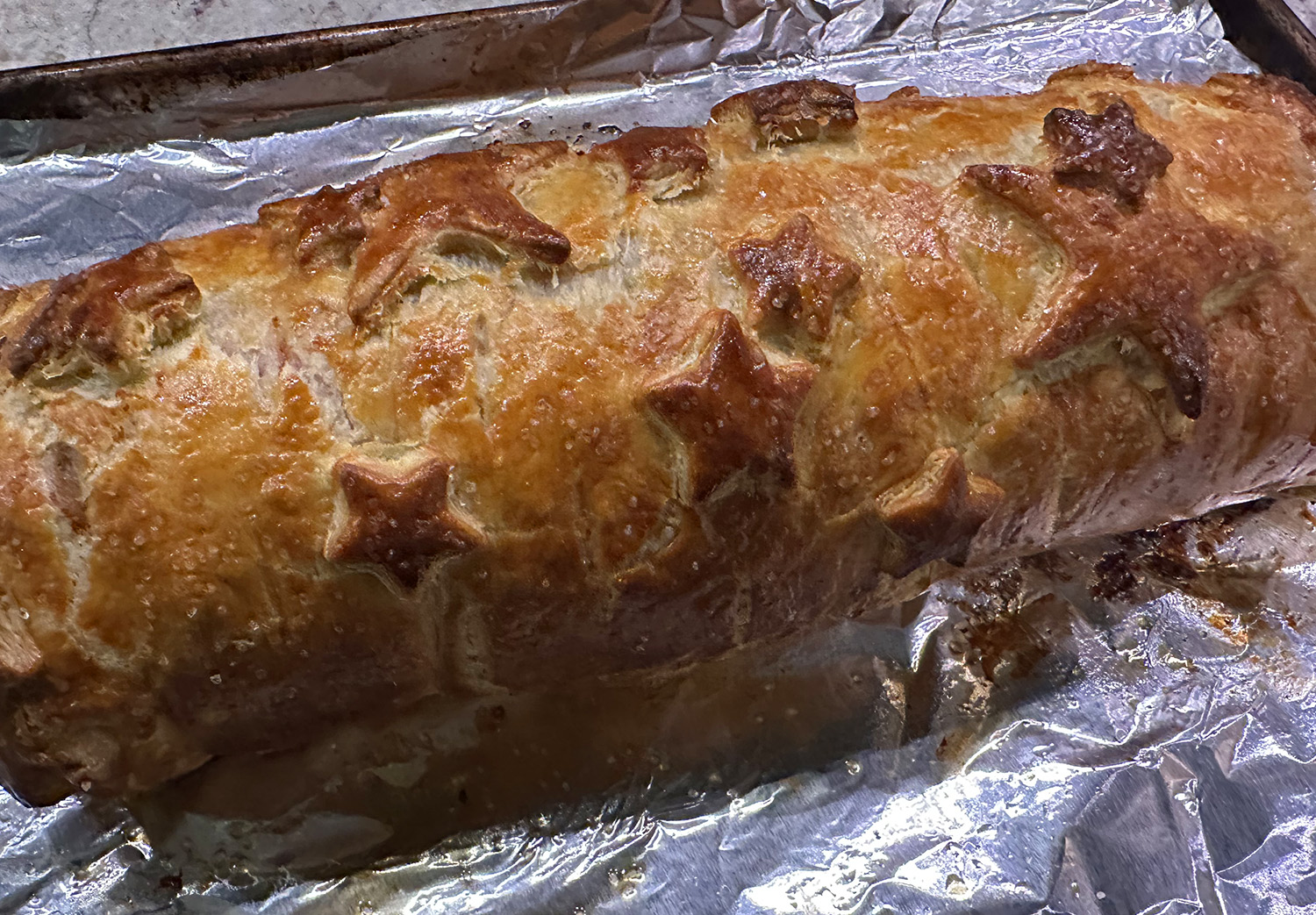
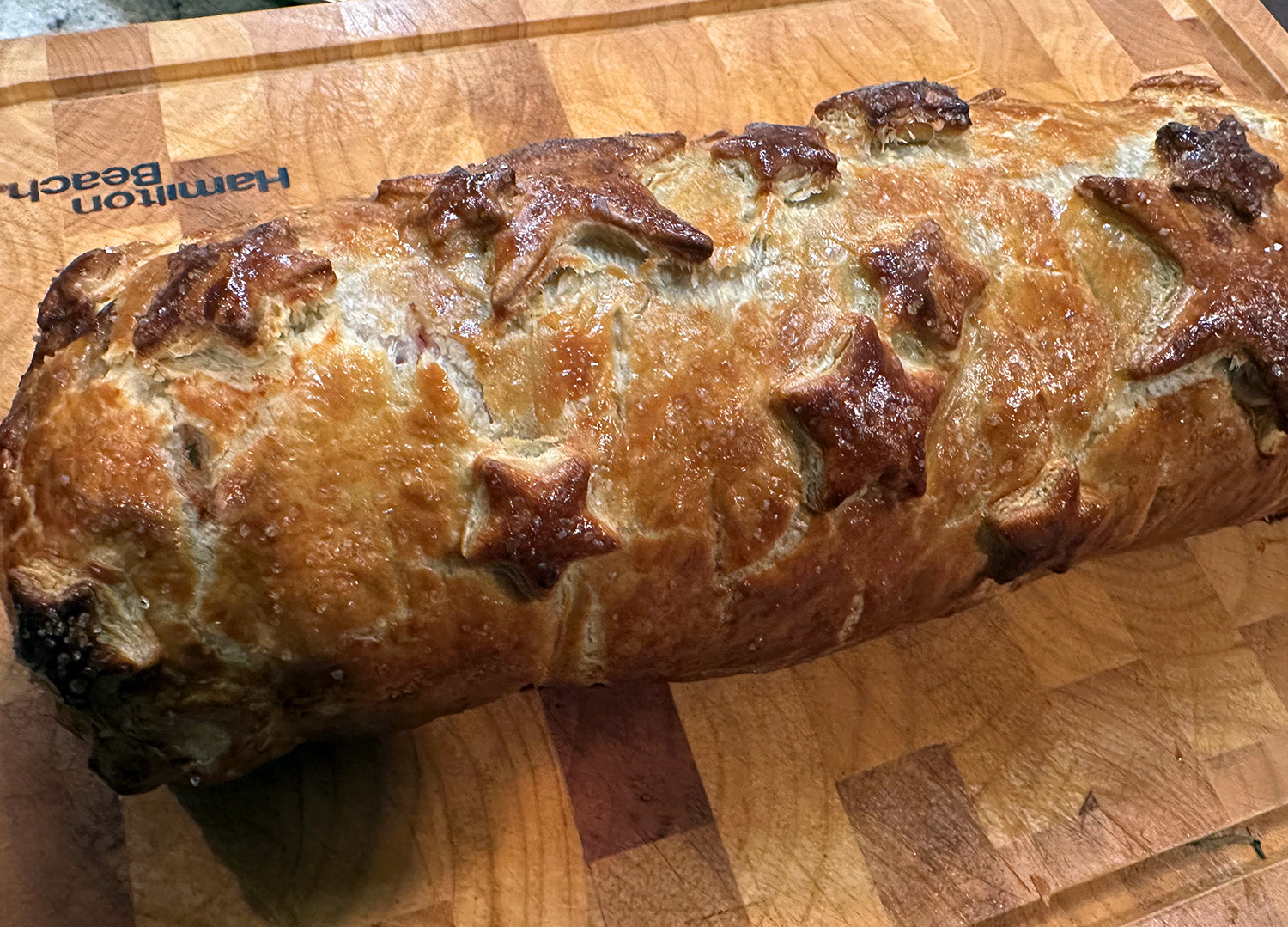
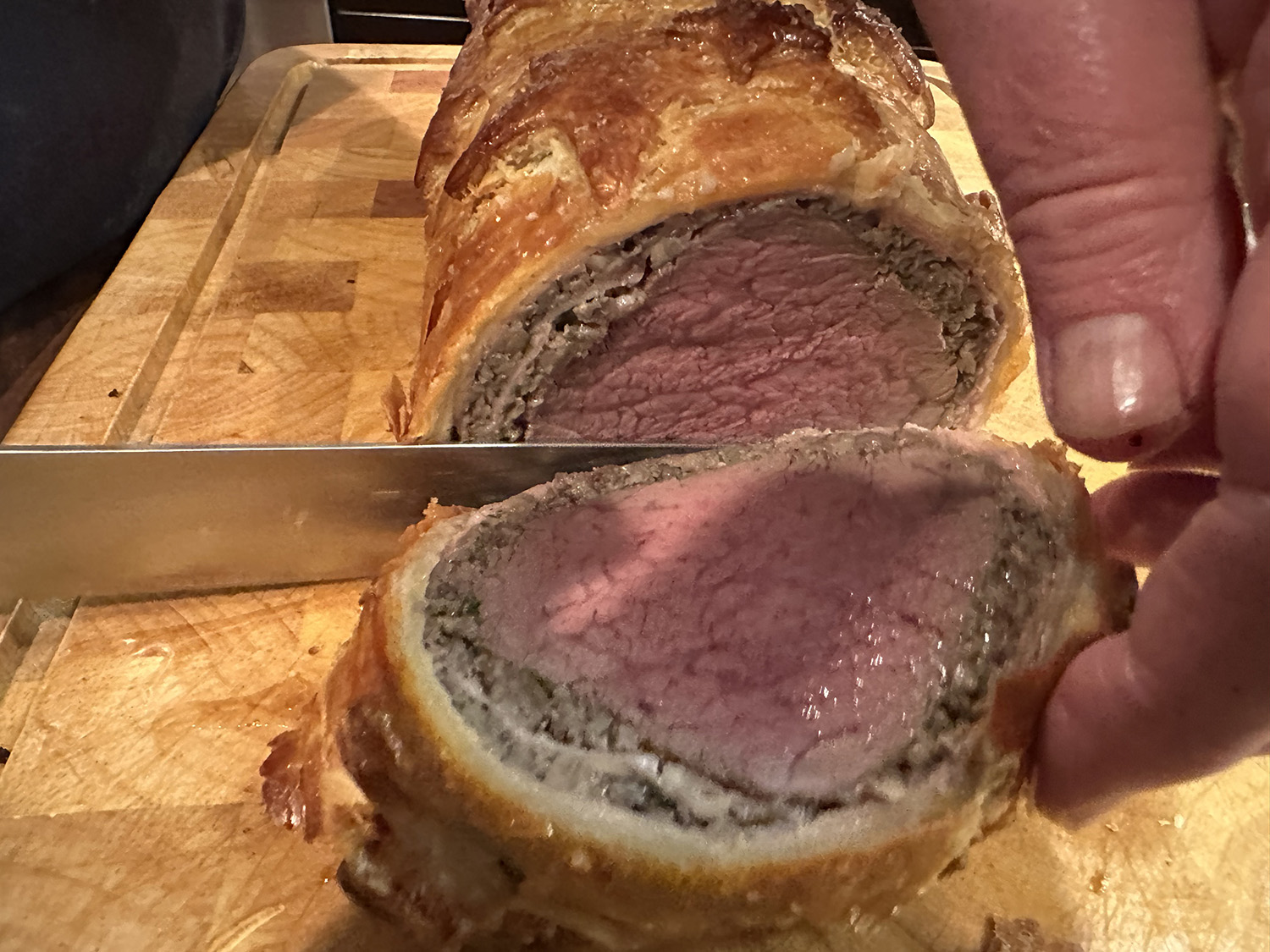
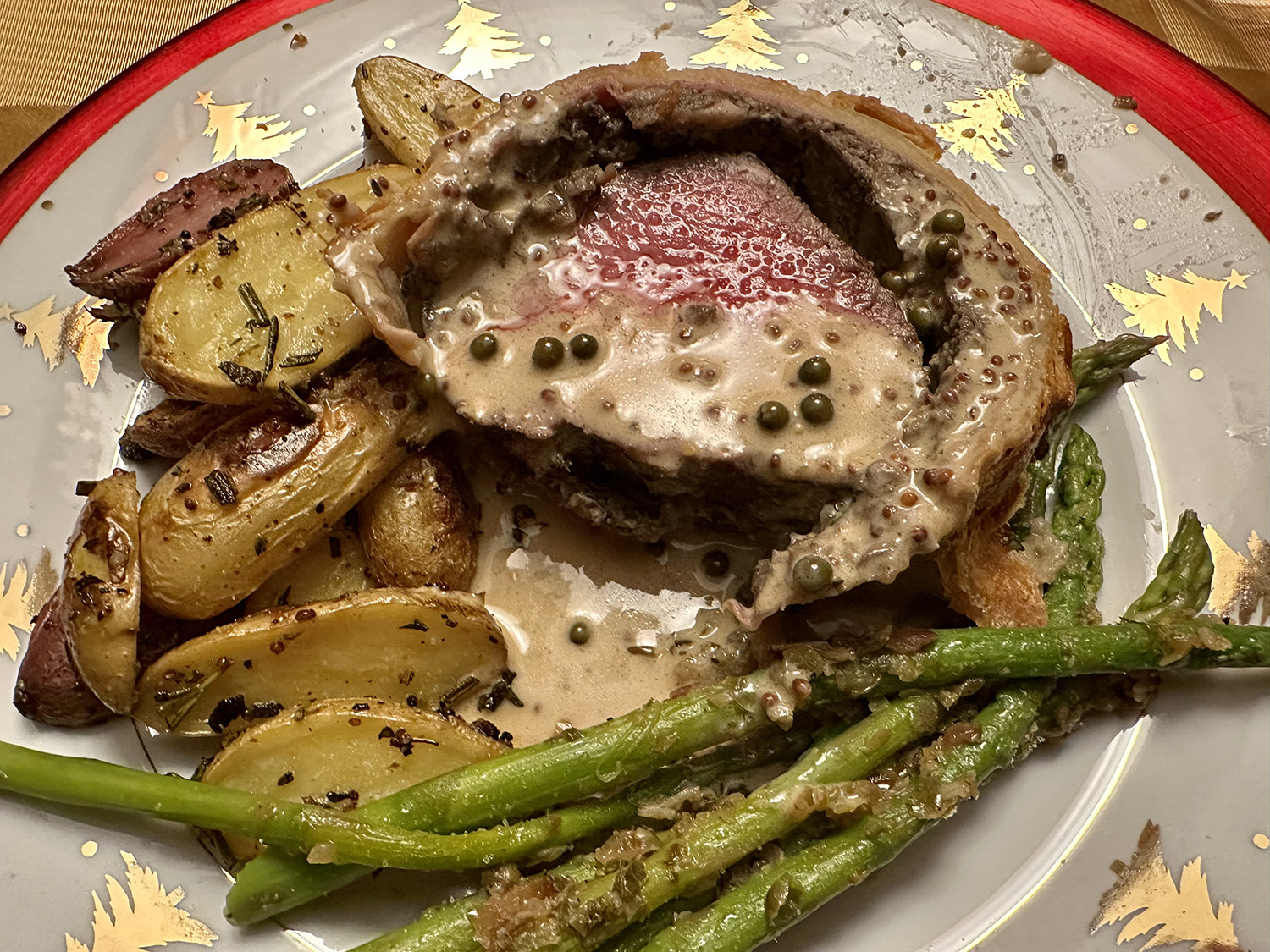
That being said, it’s definitely a special-occasion meal, so plan on giving it your all, and neither you, nor your guests, will be disappointed. In fact it was exclaimed the “BEST Christmas dinner ever” by a few at the table, and we couldn’t disagree.

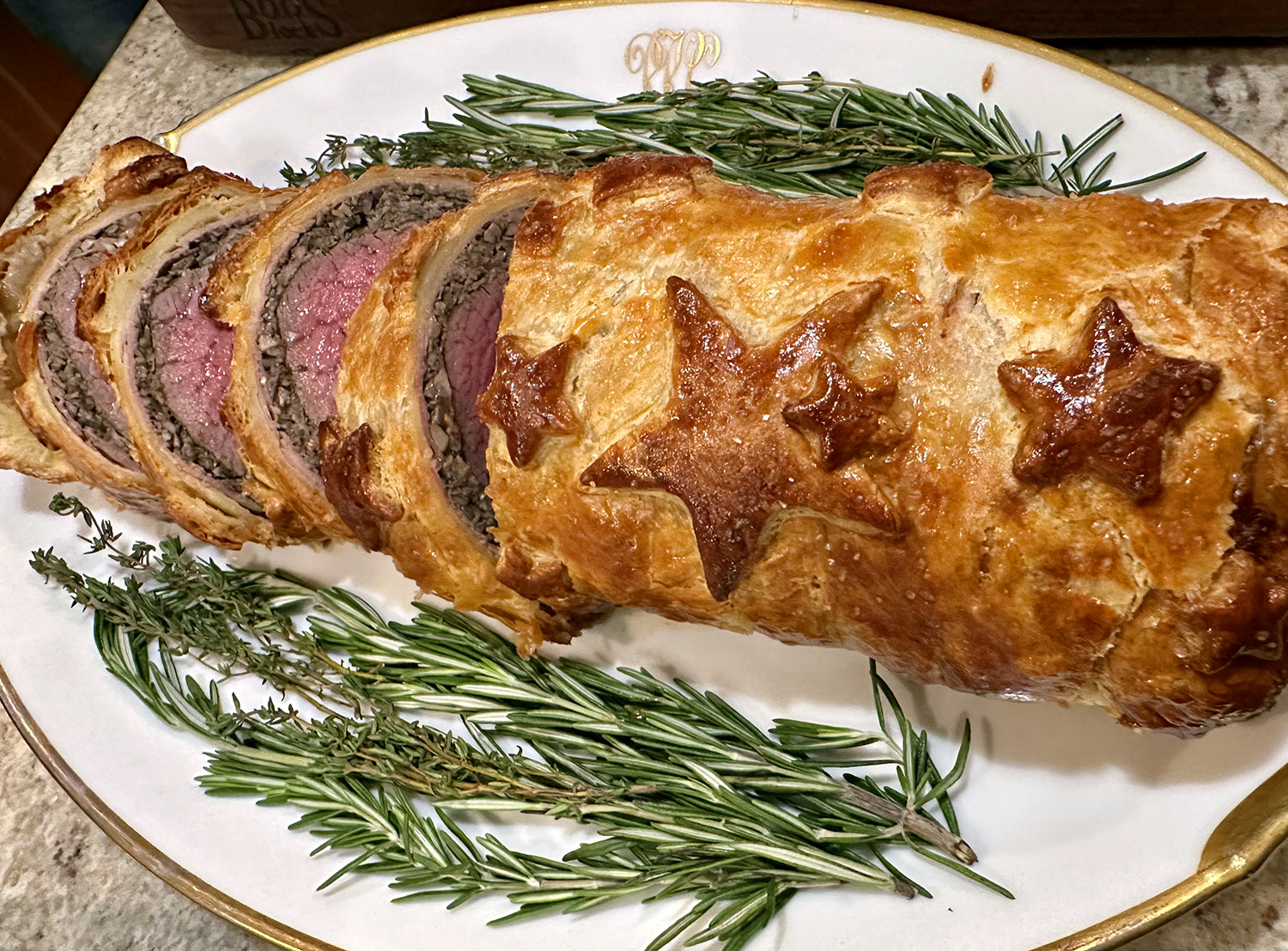
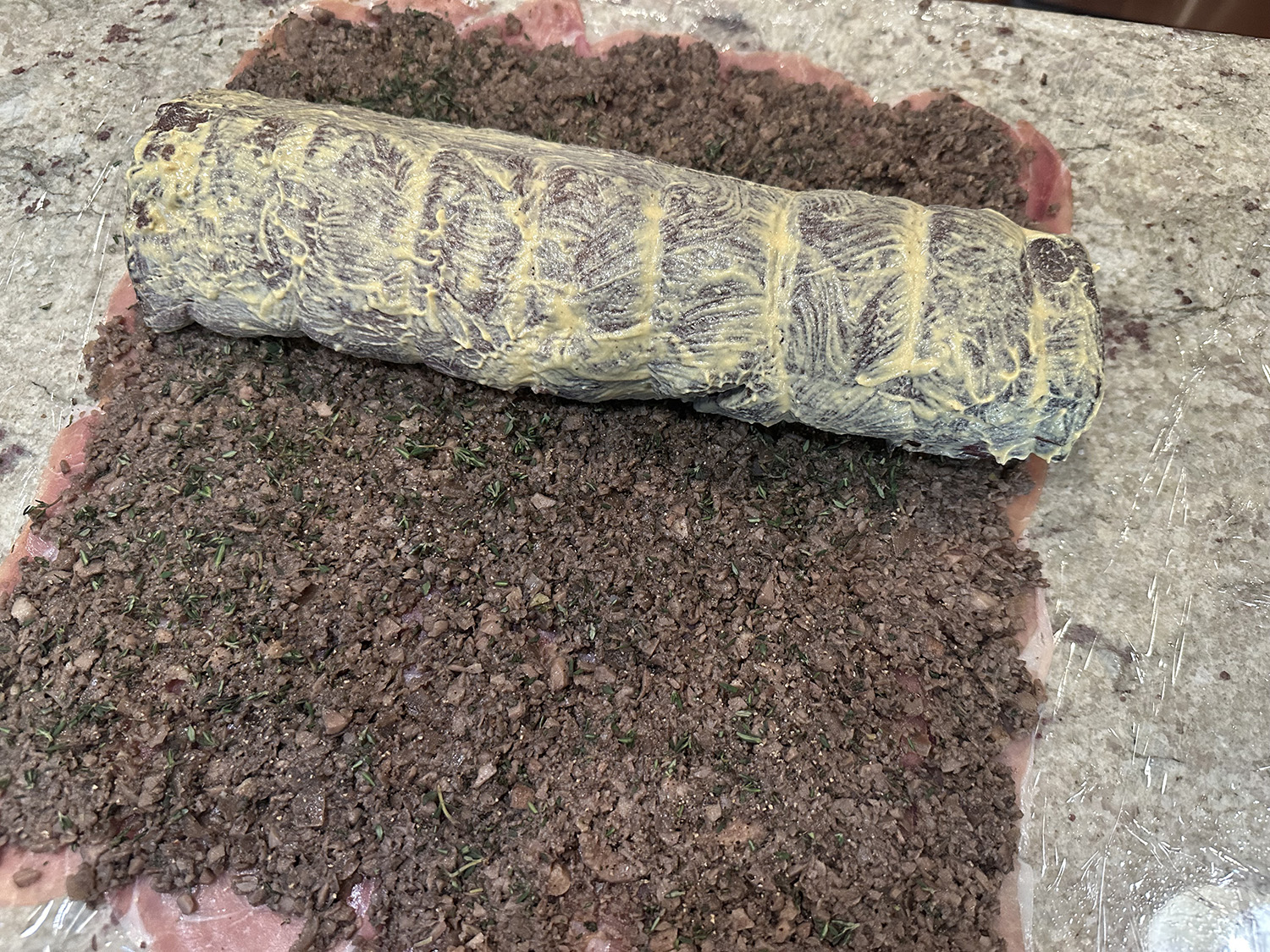
We decided to prep much of the work ahead, so we made the duxelles and the green peppercorn sauce the day before. The beef tenderloin had dry-aged overnight in the refrigerator the day before and got the wrap treatment after we finished making the duxelles, then again went into the fridge overnight. The puff pastry exterior was accomplished slightly before it made it’s way into the oven to roast.

And of course being a designer/artist, I couldn’t just wrap the beef in puff pastry without adding some sort of embellishment, in this case, various sized stars.

The Ultimate Beef Wellington with Green Peppercorn Sauce

  • Servings: 6-8
  • Difficulty: moderate
  • Print

Ingredients

For the Duxelles:

  • 3 pints (1 1/2 lbs.) white button mushrooms
  • 2 shallots, peeled and roughly chopped
  • 4 cloves garlic, peeled and roughly chopped
  • 2 sprigs fresh thyme, leaves only
  • 2 Tbsp. unsalted butter
  • 2 Tbsp. extra-virgin olive oil
  • Kosher salt and freshly ground black pepper

For the Beef:

  • One 3-lb. center cut beef tenderloin (filet mignon), trimmed
  • Extra-virgin olive oil
  • Kosher salt and freshly ground black pepper
  • 12 thin slices prosciutto
  • 6 sprigs of fresh thyme, leaves only
  • 2 Tbsp. Dijon mustard
  • Flour, for rolling out puff pastry
  • 1 lb. puff pastry, thawed if using frozen
  • 2 large eggs, lightly beaten
  • 1/2 tsp. coarse sea salt
  • Minced chives, for garnish
  • Green Peppercorn Sauce, recipe follows
  • Roasted Fingerling Potatoes with Fresh Herbs and Garlic, recipe follows

Green Peppercorn Sauce:

  • 2 Tbsp. olive oil
  • 2 shallots, sliced
  • 2 cloves garlic, peeled and smashed
  • 3 sprigs fresh thyme, leaves only
  • 1 cup brandy
  • 1 box beef stock
  • 2 cups cream
  • 2 Tbsp. grainy mustard
  • 1/2 cup green peppercorns in brine, drained, brine reserved

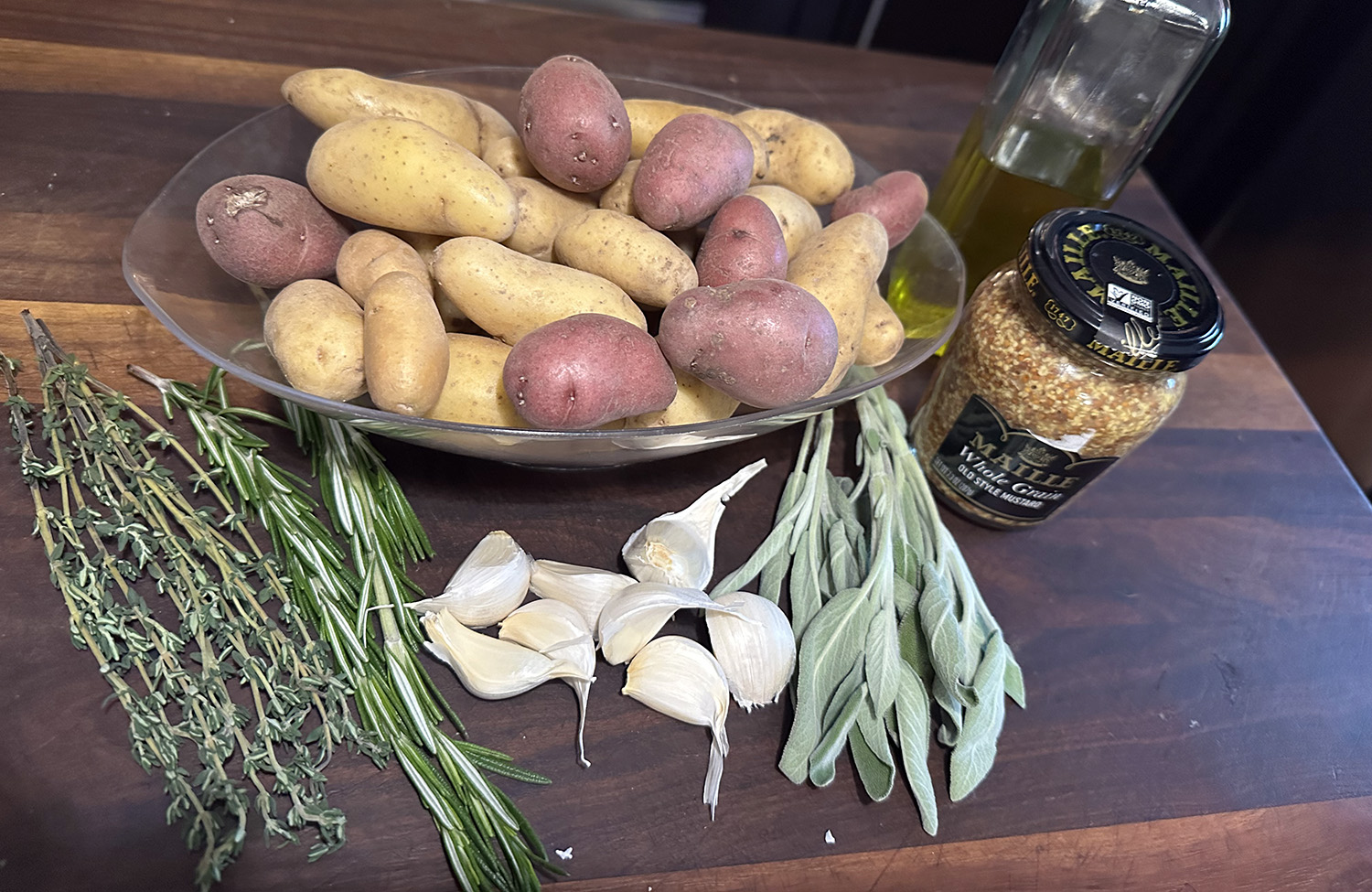
Roasted Fingerling Potatoes with Fresh Herbs and Garlic: 4-6 servings, 25 minutes.

  • 2 lbs. fingerling potatoes, cut in half horizontally
  • 2 sprigs fresh rosemary, leaves removed and coarsely chopped
  • 3 sprigs fresh sage, leaves removed and chopped
  • 3 sprigs fresh thyme, leaves removed and chopped
  • 6 cloves garlic, left unpeeled
  • 2 tsp. whole-grain mustard, (optional)
  • 3 Tbsp. extra-virgin olive oil, plus more for sheet pan
  • Salt and pepper, to taste

Directions

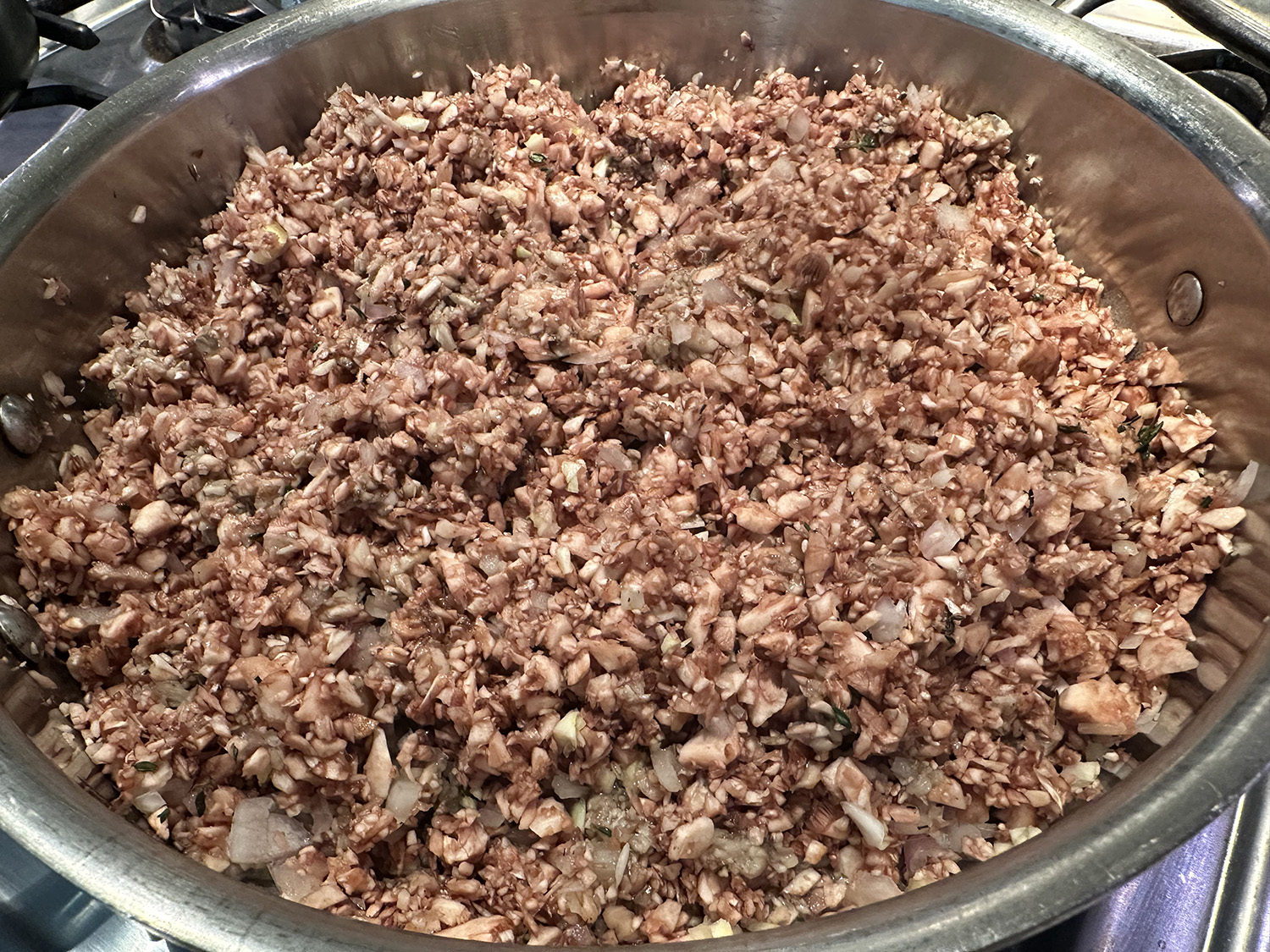
  1. To make the Duxelles: Add mushrooms, shallots, garlic, and thyme to a food processor and pulse until finely chopped. Add butter and olive oil to a large saute pan and set over medium heat. Add the shallot and mushroom mixture and saute for 8 to 10 minutes until most of the liquid has evaporated. Season with salt and pepper and set aside to cool.
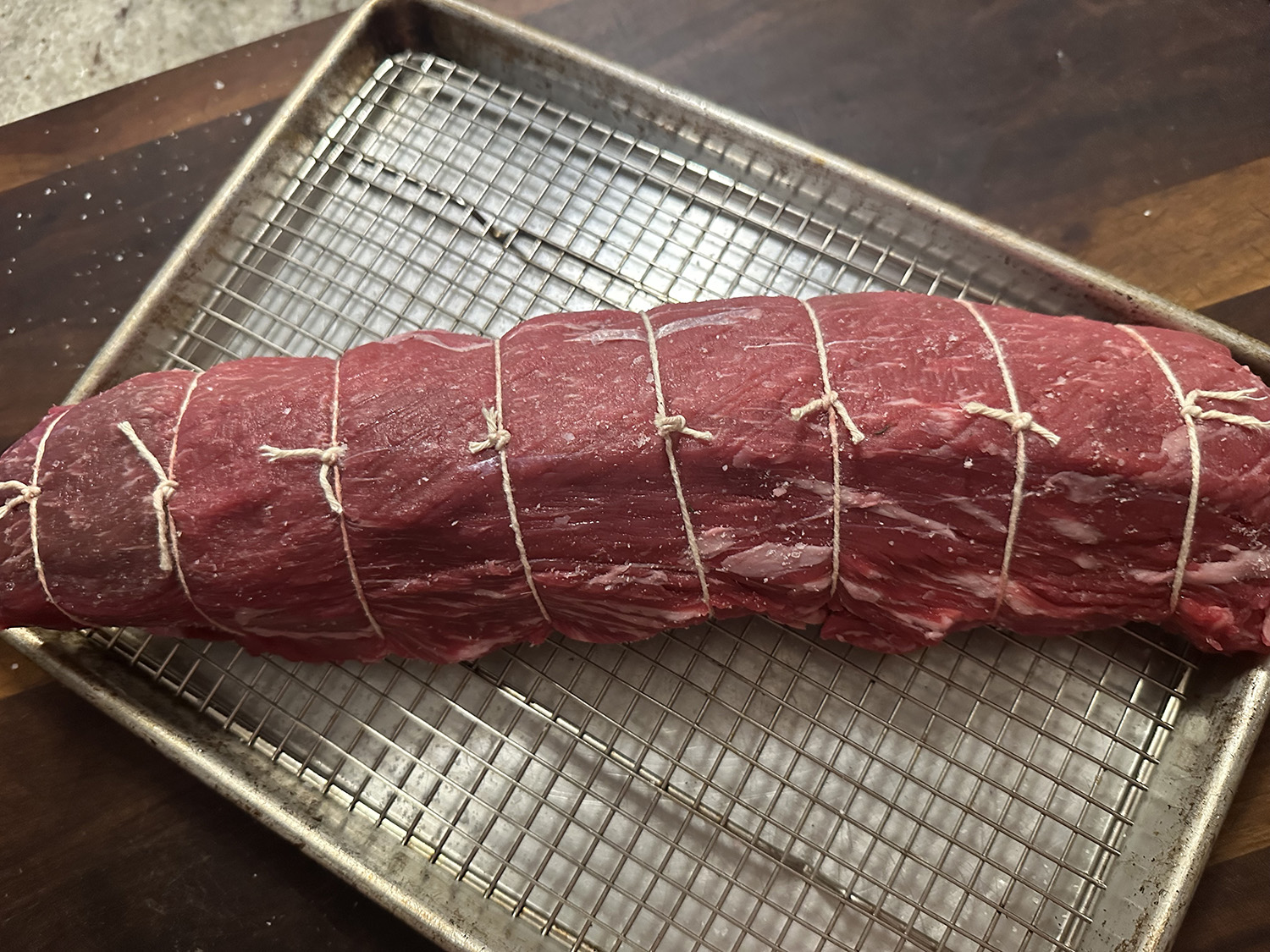
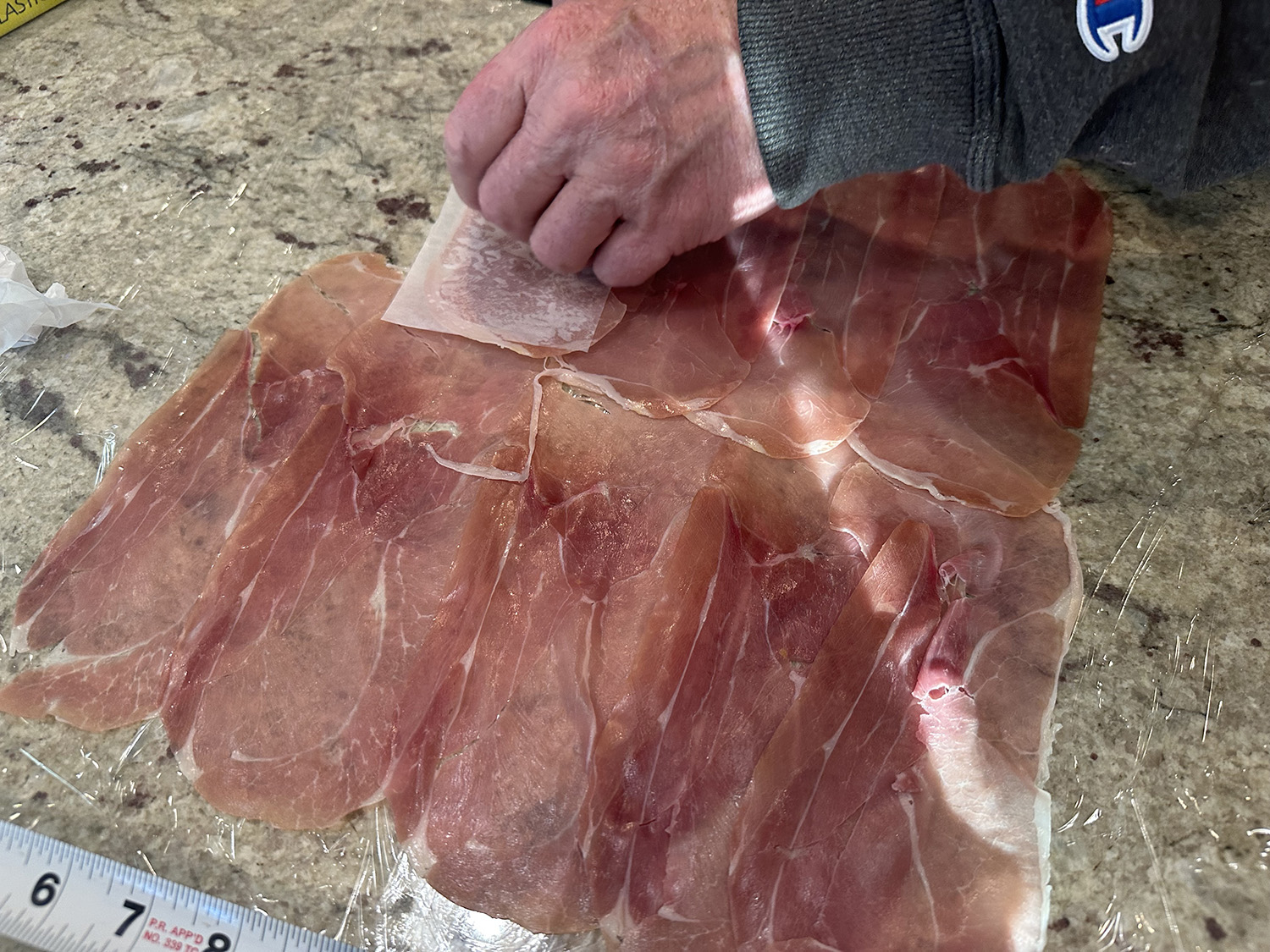
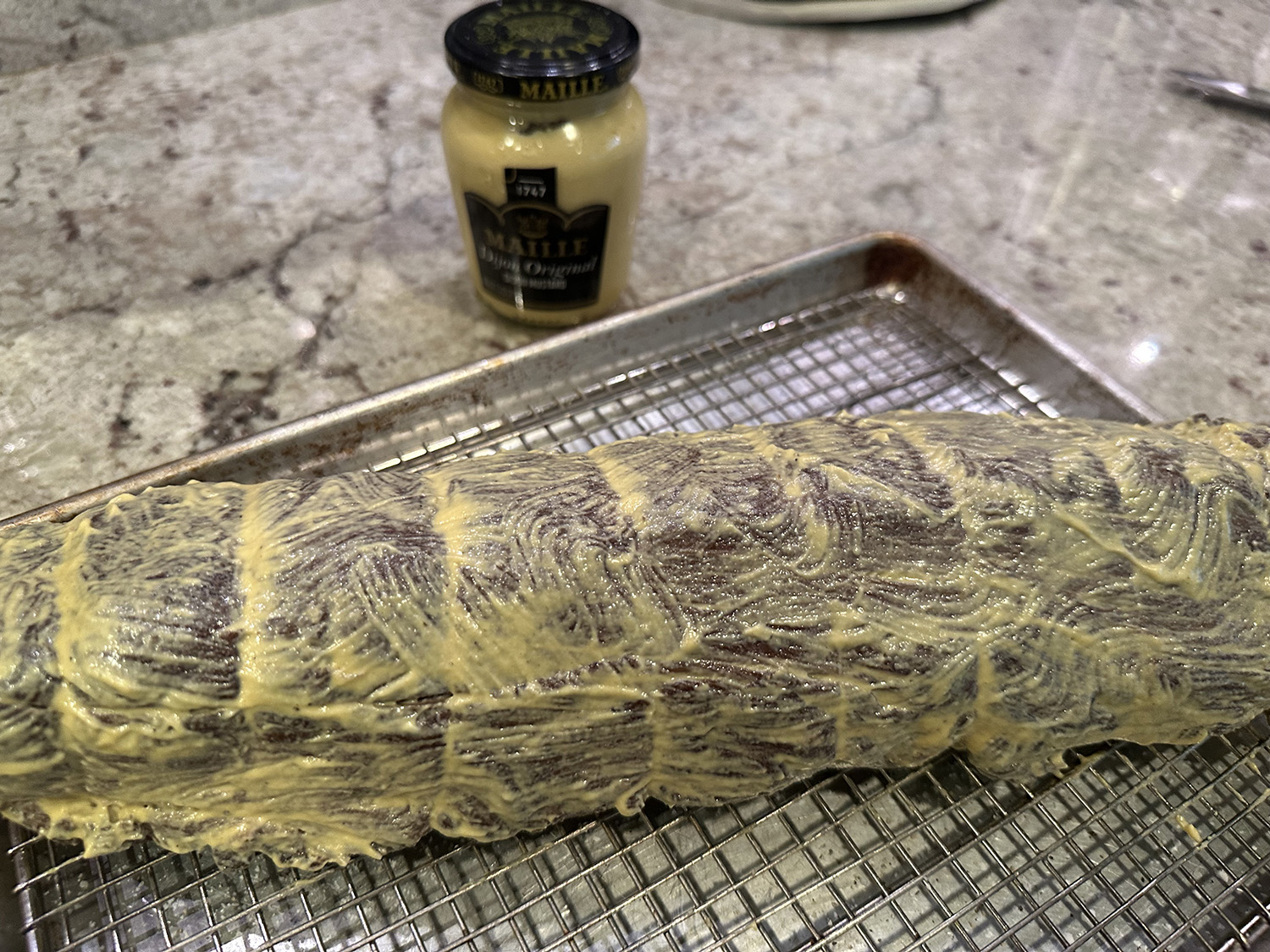
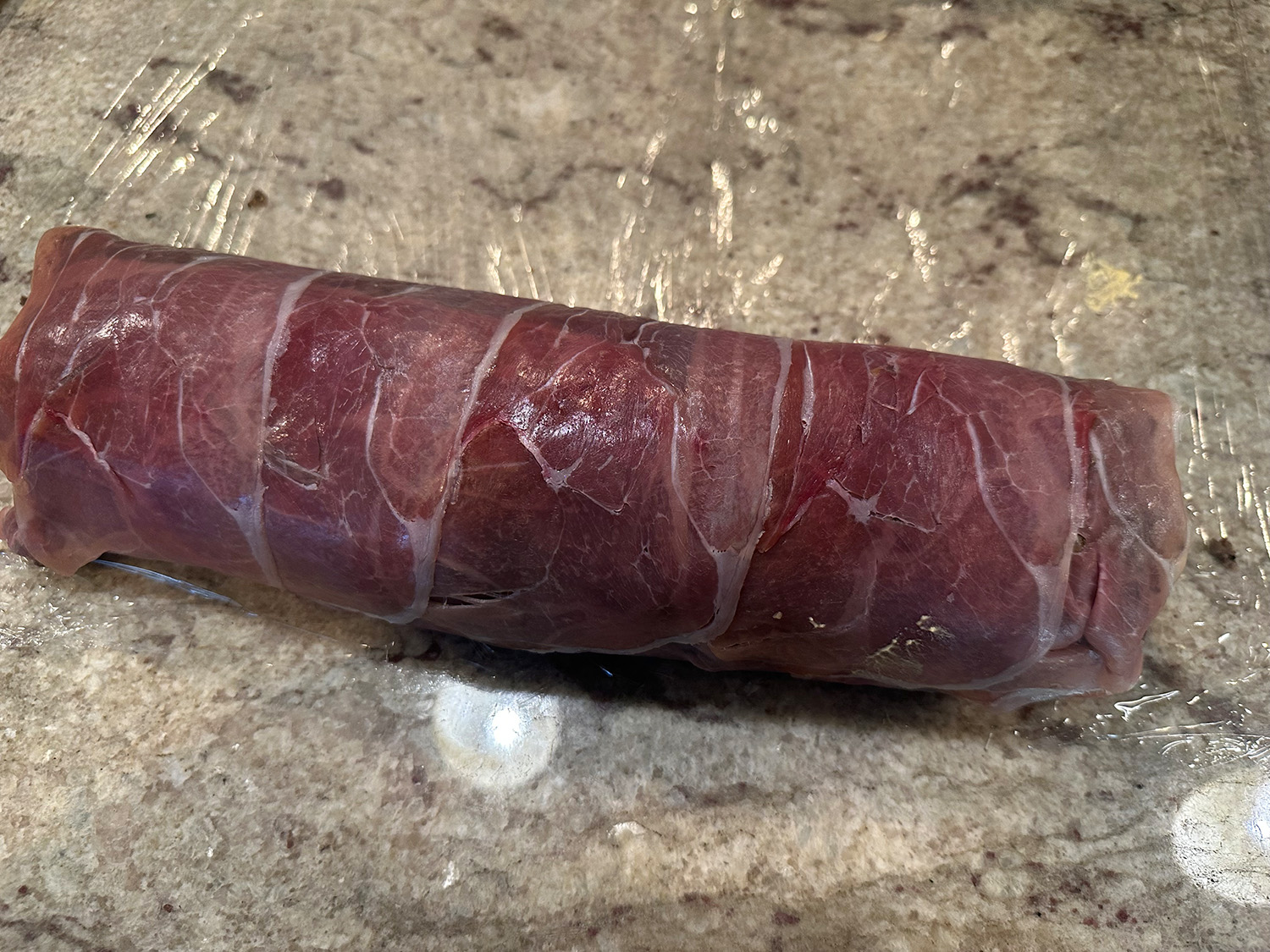
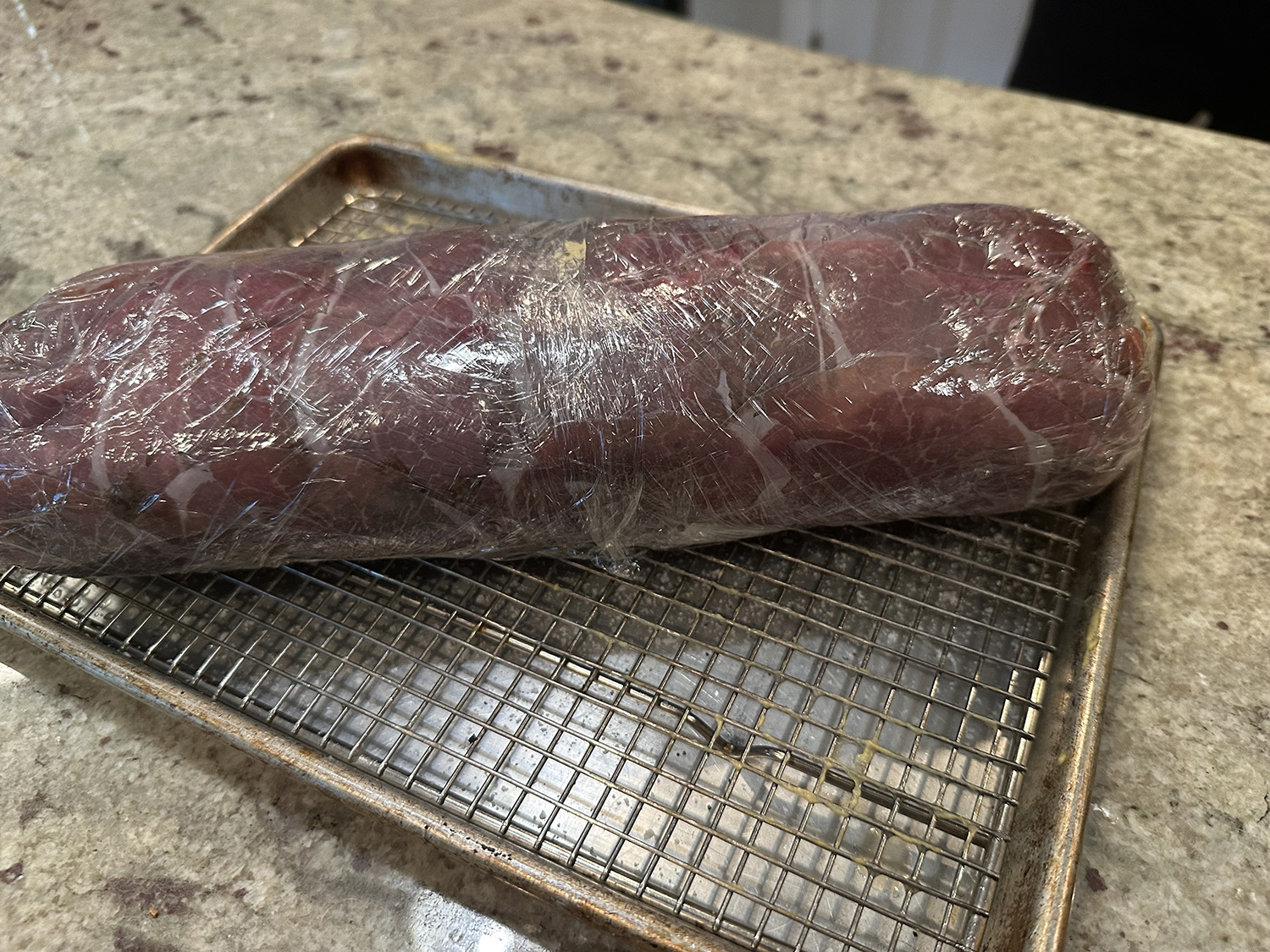
  2. To prepare the beef: Tie the tenderloin in 4 or more places so it holds its cylindrical shape while cooking. Drizzle with olive oil, then season with salt and pepper and sear all over, including the ends, in a hot, heavy-based skillet lightly coated with olive oil – about 2 to 3 minutes. Meanwhile set out your prosciutto on a sheet of plastic wrap (plastic needs to be about a foot and a half in length so you can wrap and tie the roast up in it) on top of your cutting board. Shingle the prosciutto so it forms a rectangle that is big enough to encompass the entire filet of beef. Using a rubber spatula cover evenly with a thin layer of duxelles. Season the surface of the duxelles with salt and pepper and sprinkle with fresh thyme leaves. When the beef is seared, remove from heat, cut off twine and smear lightly all over with Dijon mustard. Allow to cool slightly, then roll up in the duxelles covered prosciutto using the plastic wrap to tie it up nice and tight. Tuck in the ends of the prosciutto as you roll to completely encompass the beef. Roll it up tightly in plastic wrap and twist the ends to seal it completely and hold it in a nice log shape. Set in the refrigerator for 30 minutes, up to overnight, to ensure it maintains its shape.
  3. Preheat oven to 425 degrees F.
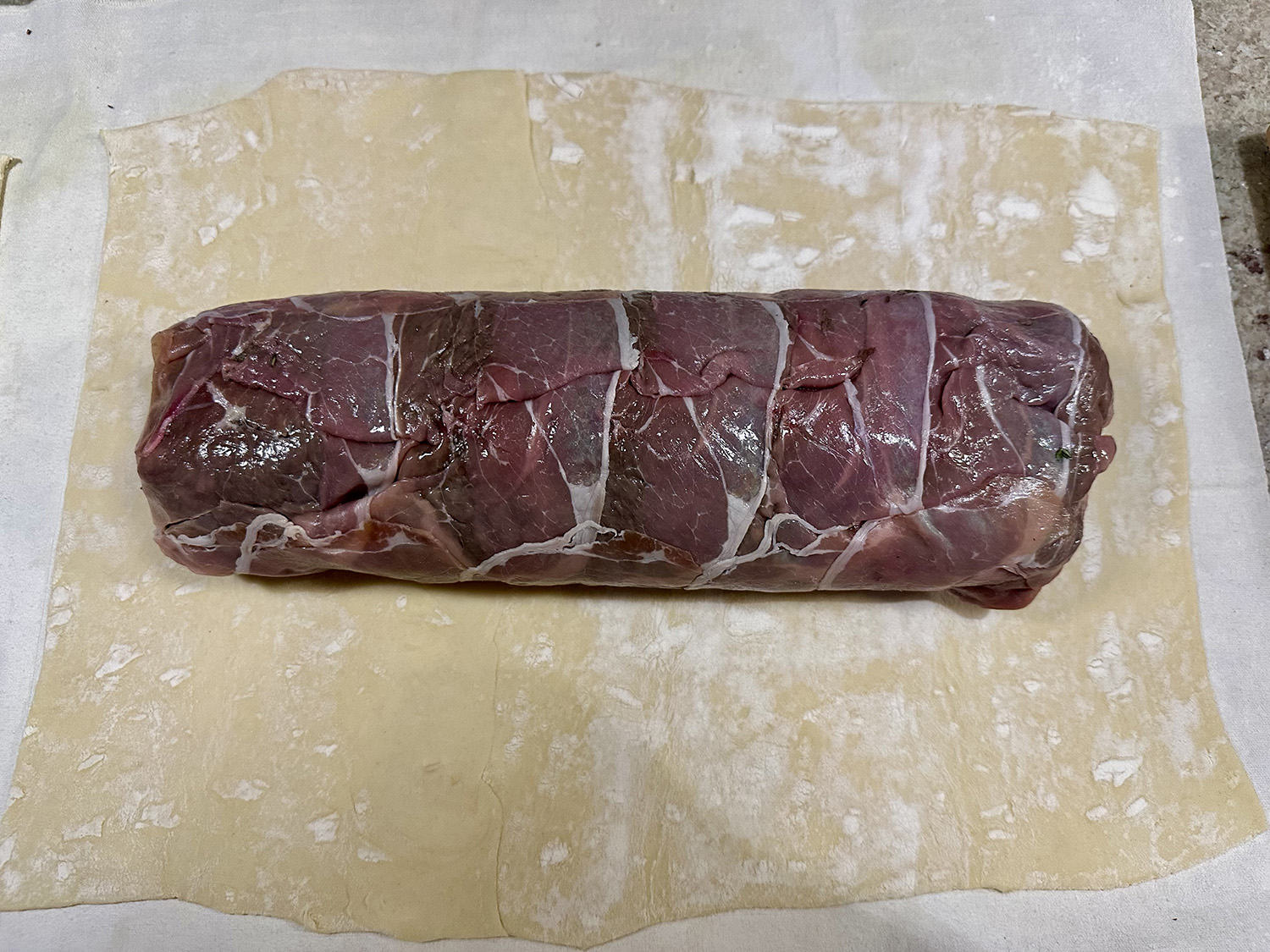
  4. On a lightly floured surface, roll the puff pastry out to about a 1/4-inch thickness. Depending on the size of your sheets you may have to overlap 2 sheets and press them together. Remove beef from refrigerator and cut off plastic. Set the beef in the center of the pastry and fold over the longer sides, brushing with egg wash to seal. Trim ends if necessary then brush with egg wash and fold over to completely seal the beef – saving ends to use as a decoration on top if desired. Top with coarse sea salt. Place the beef seam side down on a baking sheet.
  5. Brush the top of the pastry with egg wash then make a couple of slits in the top of the pastry using the tip of a paring knife—this creates vents that will allow the steam to escape when cooking. Bake for 40 to 45 minutes until pastry is golden brown and beef registers 125 degrees F on an instant-read thermometer. Remove from oven and rest before cutting into thick slices. Garnish with minced chives, and serve with Green Peppercorn Sauce and Roasted Fingerling Potatoes with Fresh Herbs and Garlic.
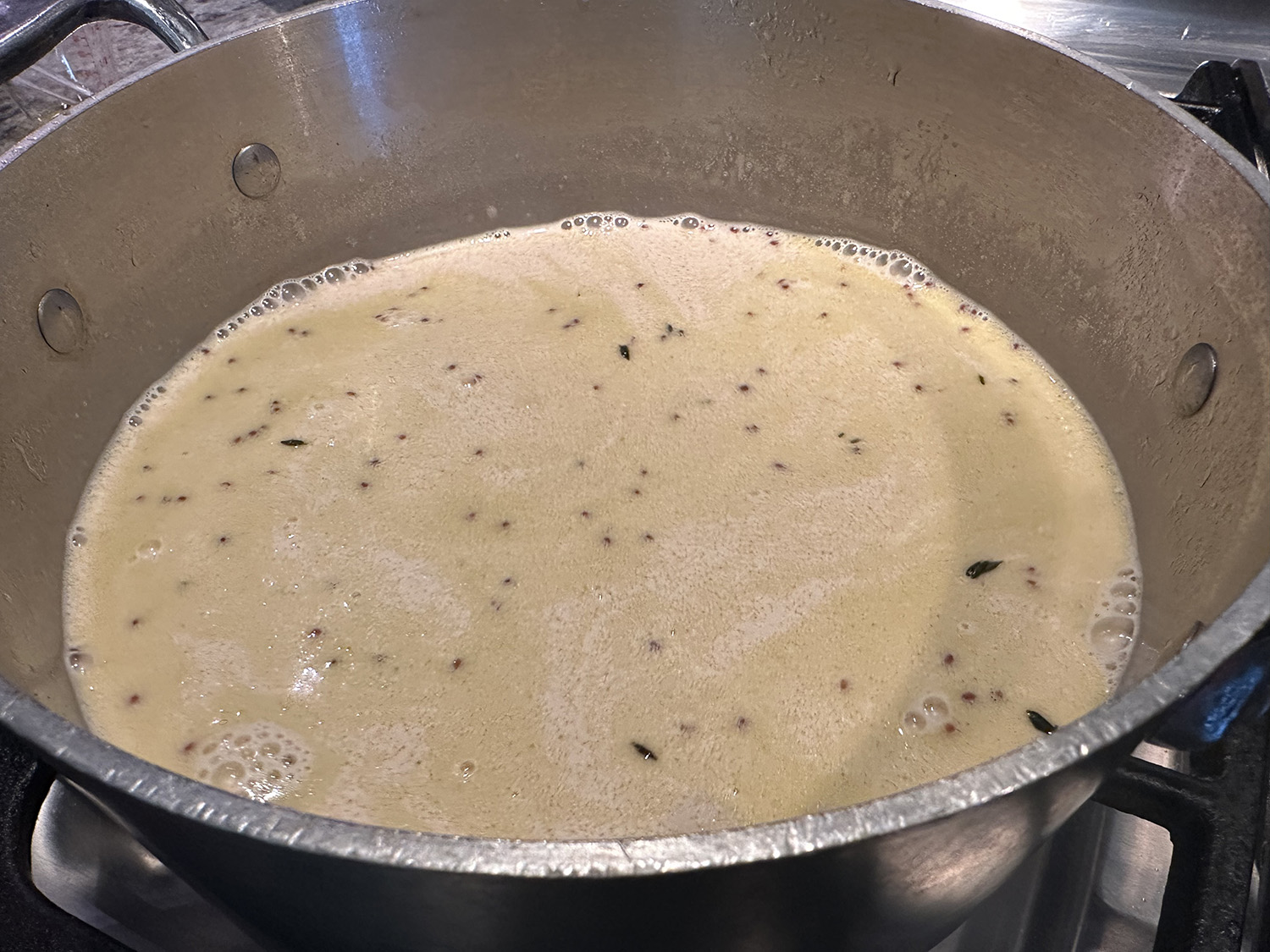
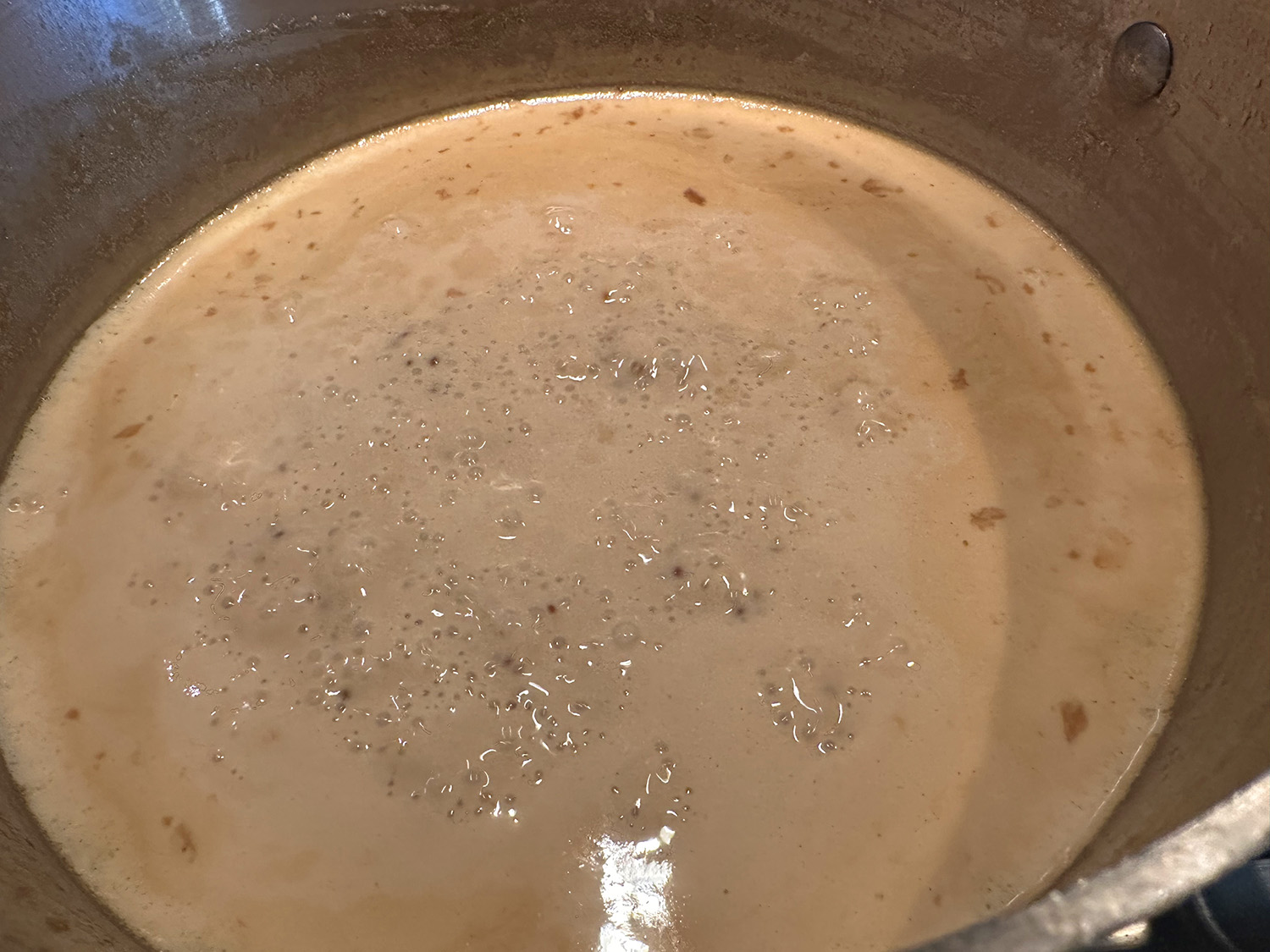
  6. For the Green Peppercorn Sauce: Add olive oil to pan after removing beef. Add shallots, garlic, and thyme; sauté for 1 to 2 minutes, then, off heat, add brandy and flambé using a long kitchen match. After flame dies down, return to the heat, add stock and reduce by about half. Strain out solids, then add 2 cups cream and mustard. Reduce by half again, then shut off heat and add green peppercorns. Can be made ahead, covered and put into the refrigerator. Reheat slowly in a saucepan when ready to eat.
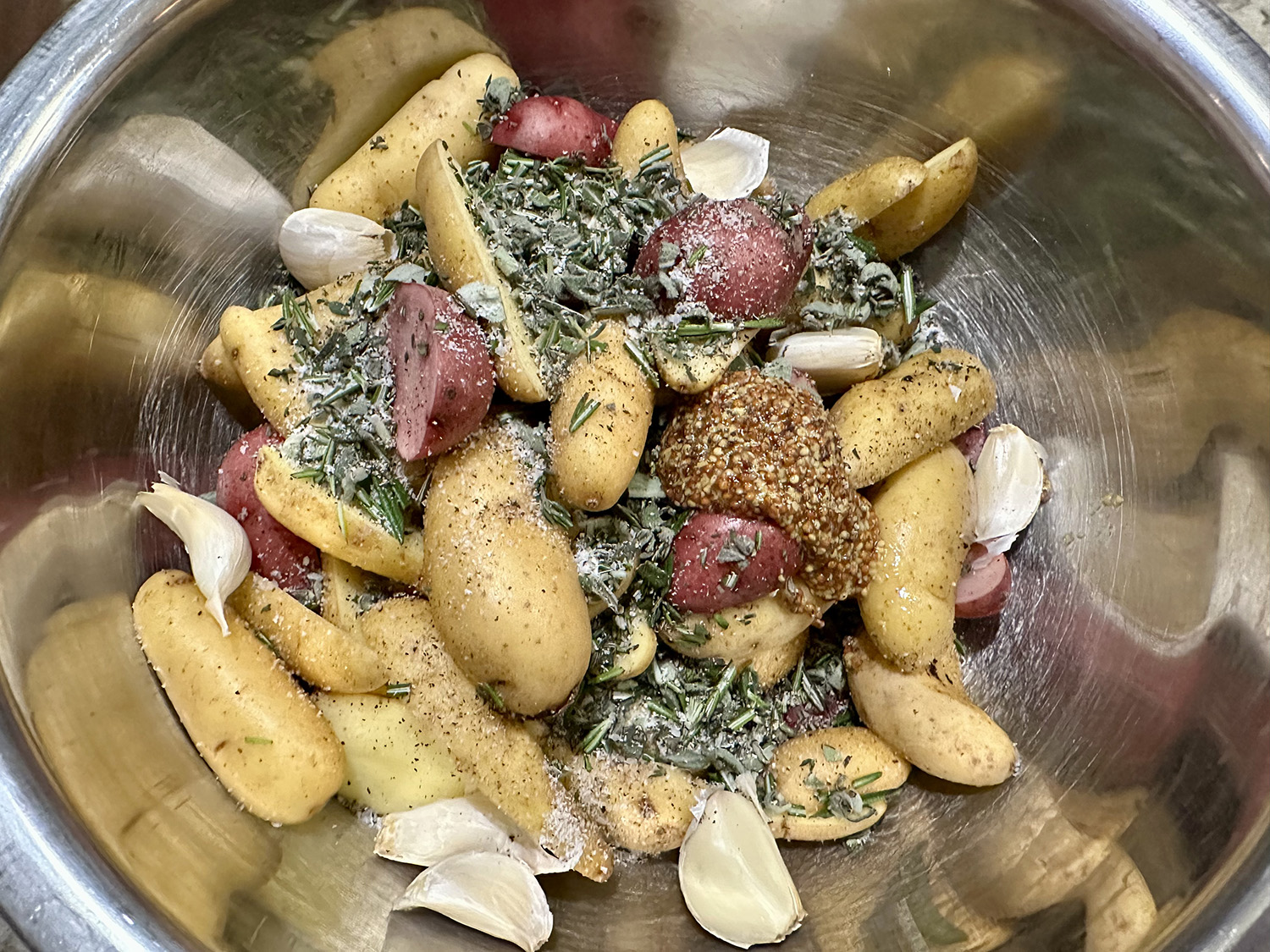
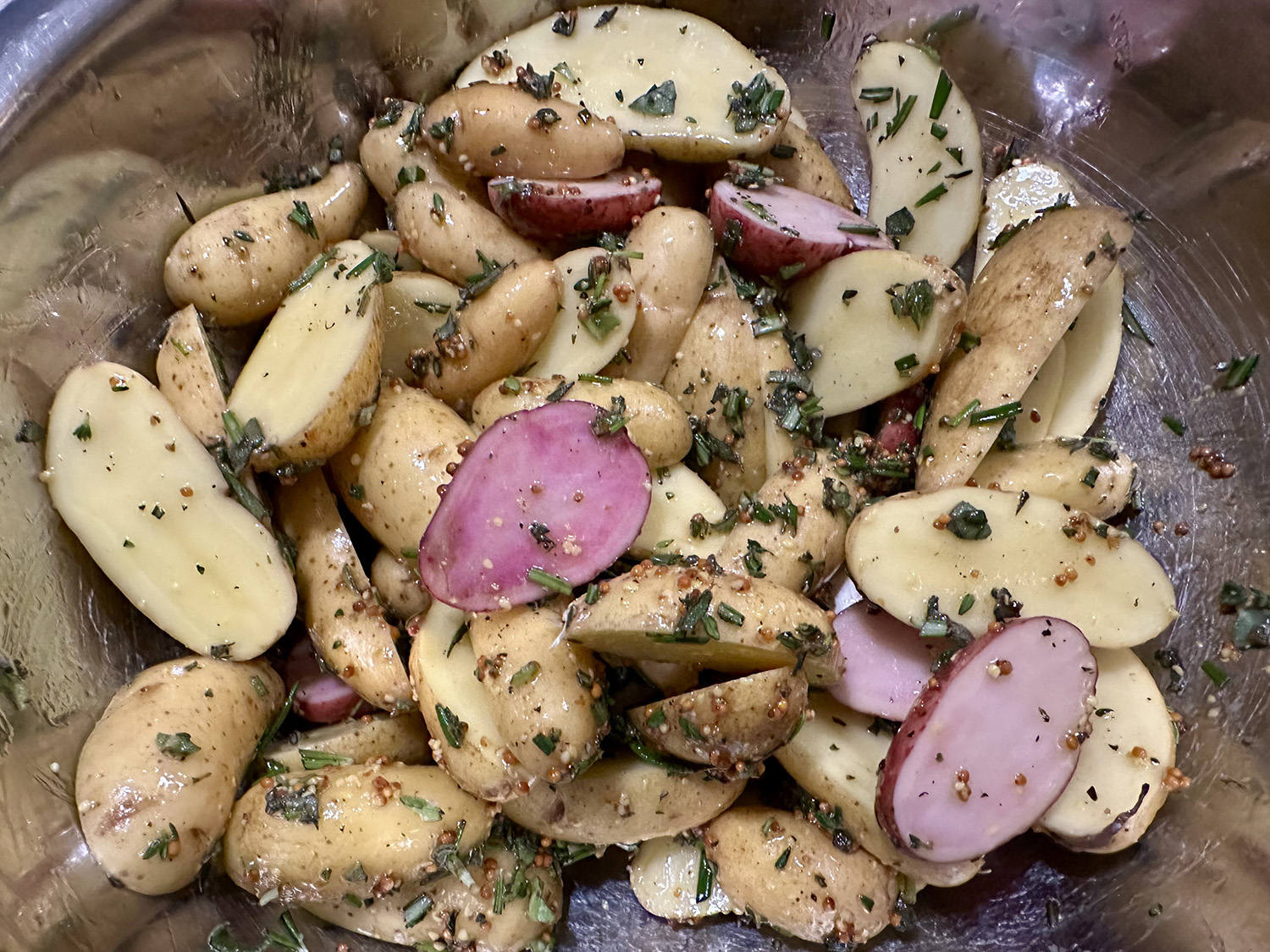
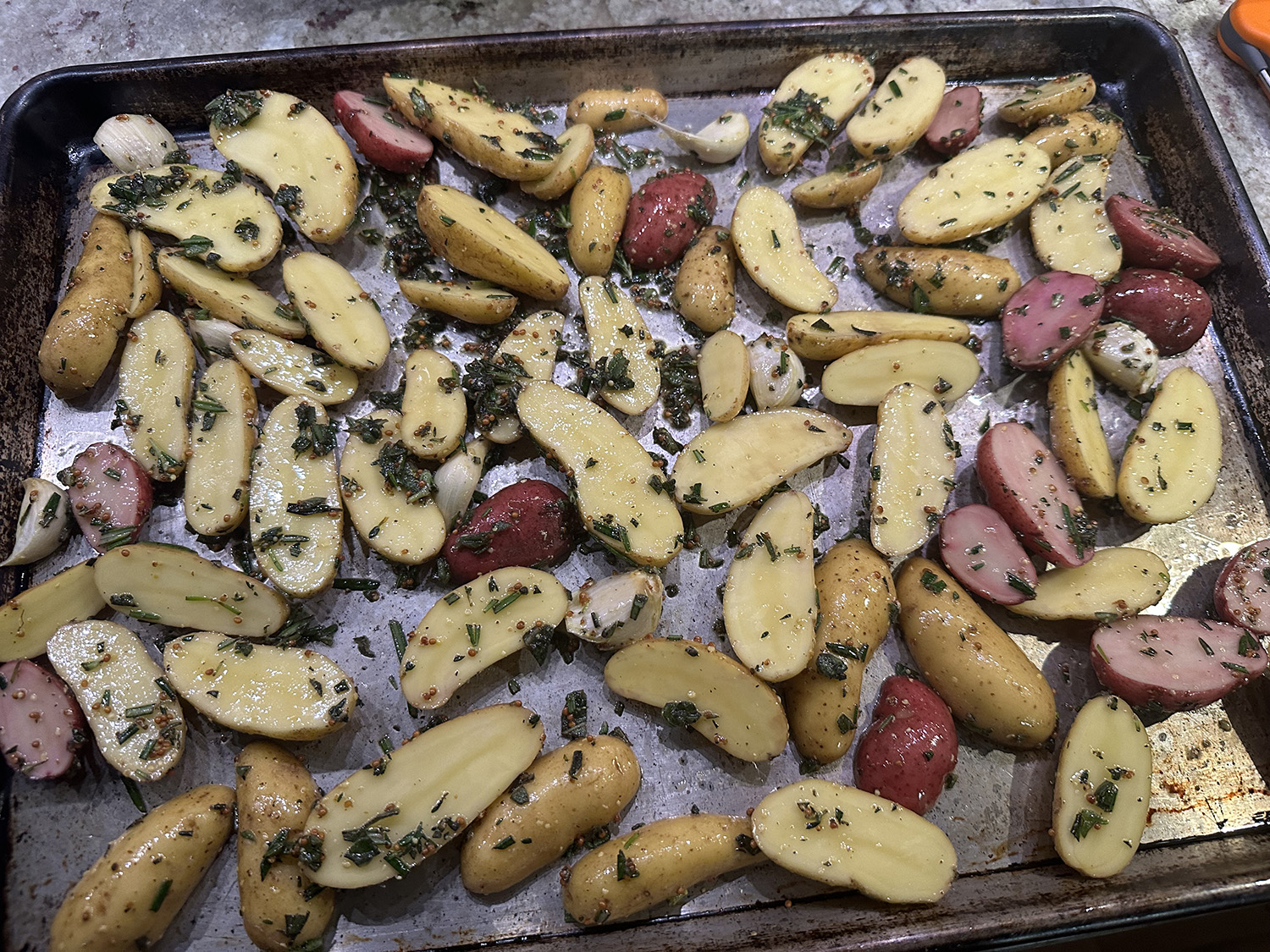
  7. Roasted Fingerling Potatoes with Fresh Herbs and Garlic: Preheat oven to 500 degrees F and place a baking sheet inside to heat. Add potatoes, rosemary, sage, thyme, garlic, and mustard (if using) to a medium bowl. Drizzle with the olive oil, season to taste with salt and pepper, and toss well.
  8. Remove sheet pan from oven, lightly coat it with olive oil, and pour potatoes onto pan, reserving the bowl. Place potatoes in oven and reduce heat to 425 degrees F. Roast for 20 minutes, or until crispy on outside and tender on inside.
  9. Place roasted potatoes in the bowl. Remove the garlic cloves from their peels and place in a small bowl. Mash the garlic, then return it to the bowl and blend it well with the potatoes. Serve.

http://www.lynnandruss.com

Adapted from recipes by Tyler Florence

Beef Tagine with Green Beans and Olives

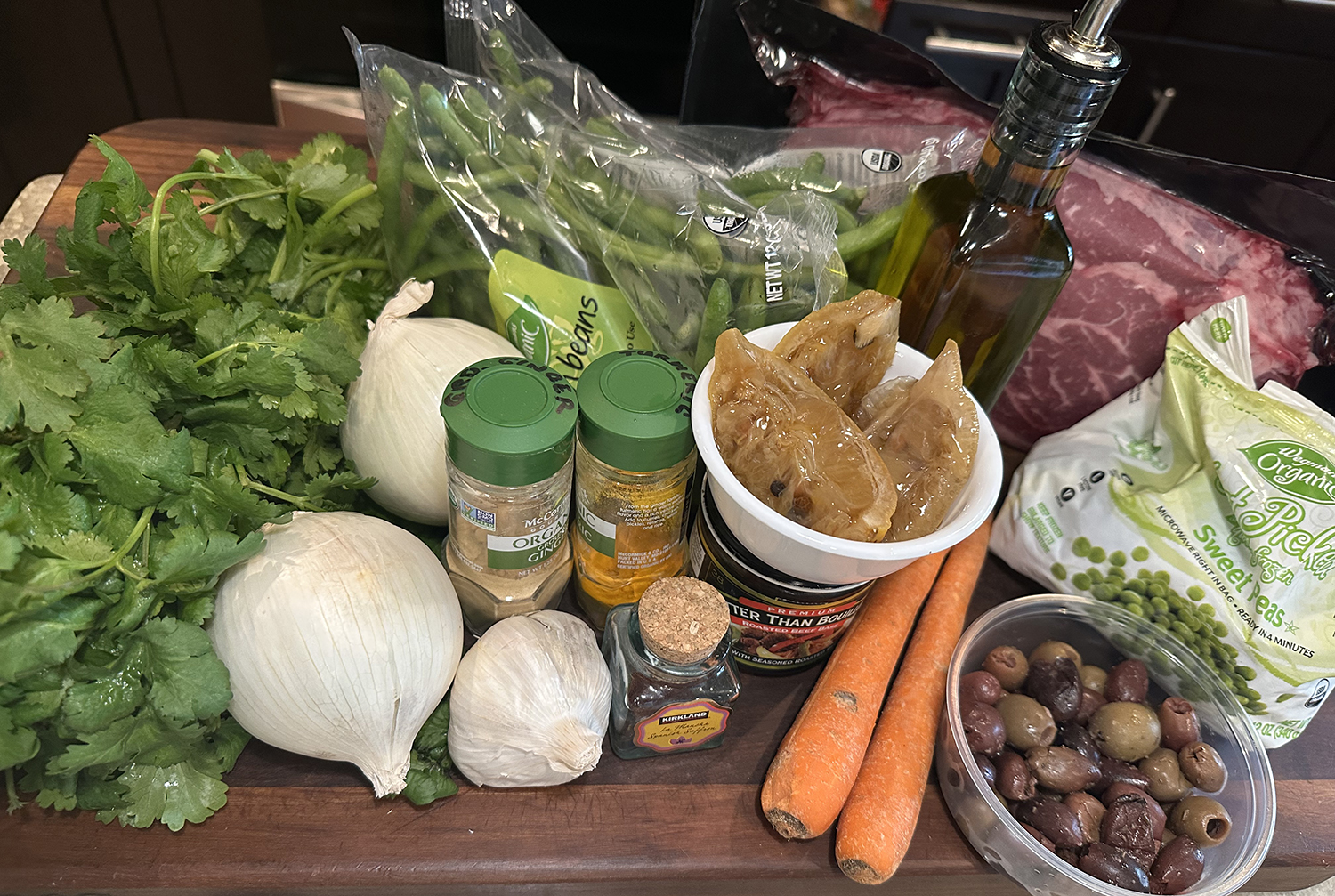
Even though it is labeled a tagine, it’s not cooked in one. This hearty tagine is a staple family meal in many Moroccan homes, cooked in the traditional m’qualli style with garlic, ground ginger and ground turmeric. The comforting, earthy flavors of the meat, spices and green beans create a satisfying dinner perfect for sharing or meal prepping.

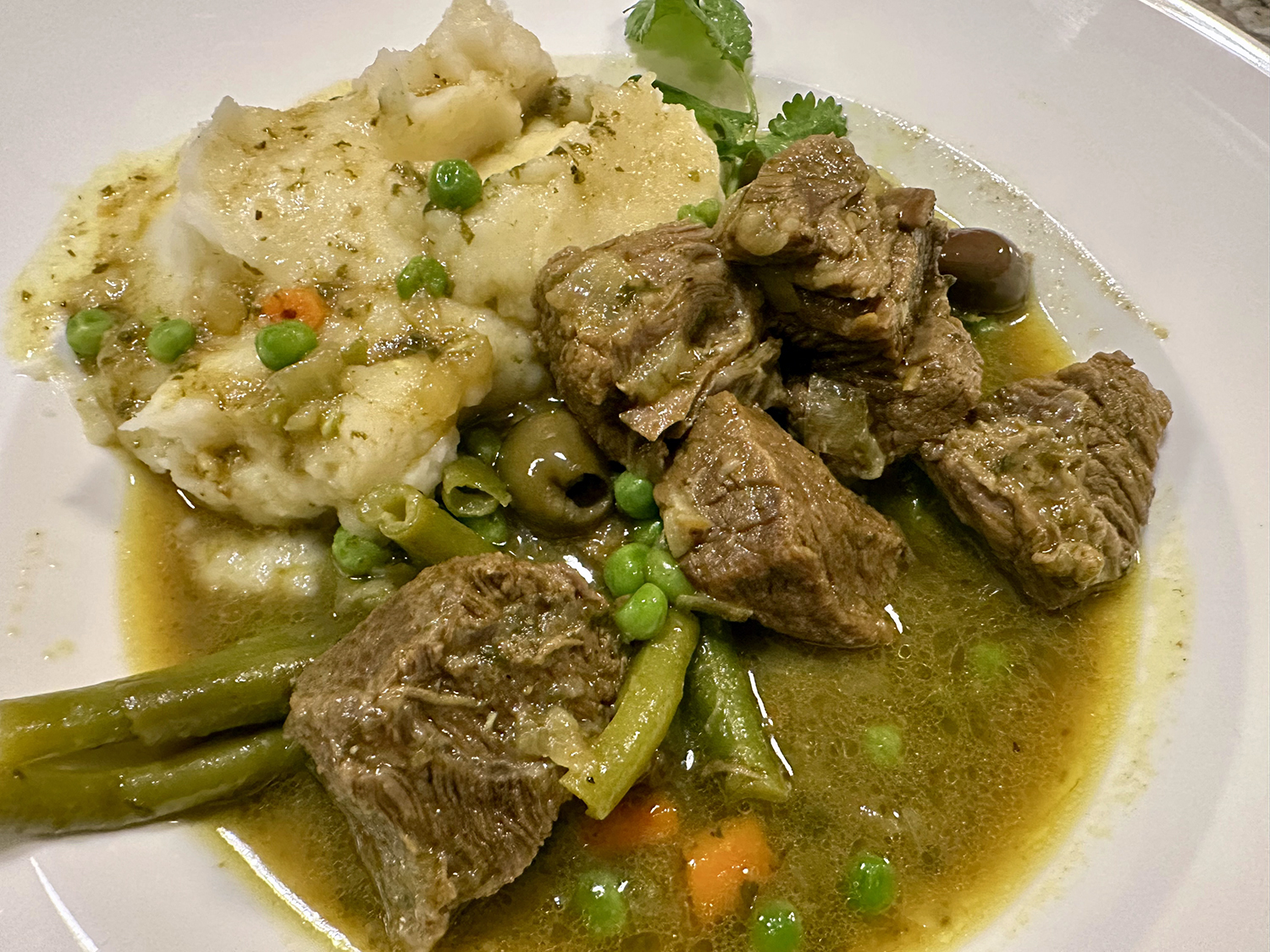
The cozy, fragrant stew is packed with pops of flavor from tangy preserved lemon and briny olives. The green beans are added towards the end when the meat is almost cooked. For a variation, consider substituting or adding peas and/or chopped carrots (see Tip). We added both peas and carrots.

This dish is supposed to take 2 1/4 hours from start to finish. *We decided to use our pressure cooker and therefore cut the total time down to one hour. What we neglected to do was reduce the amount of liquid, because when you use a pressure cooker, none of the moisture evaporates. Next time we will add less liquid to start with, then remove the ingredients with a slotted spoon to another bowl. Add a cornstarch slurry to thicken the sauce and pour it over the meat and vegetables in the bowl.

In addition, we would brown the seasoned (salt and pepper) meat chunks on all sides in shimmering oil in the Dutch oven first; in batches so as not to steam the beef. Remove the beef to a side plate, turn the heat to medium-low and add the onions, garlic and seasoning…

TIP: If making a variation on this recipe using peas and carrots, add the carrots about the same time as the green beans, and add the peas when the other vegetables are tender, cooking them for a few minutes.

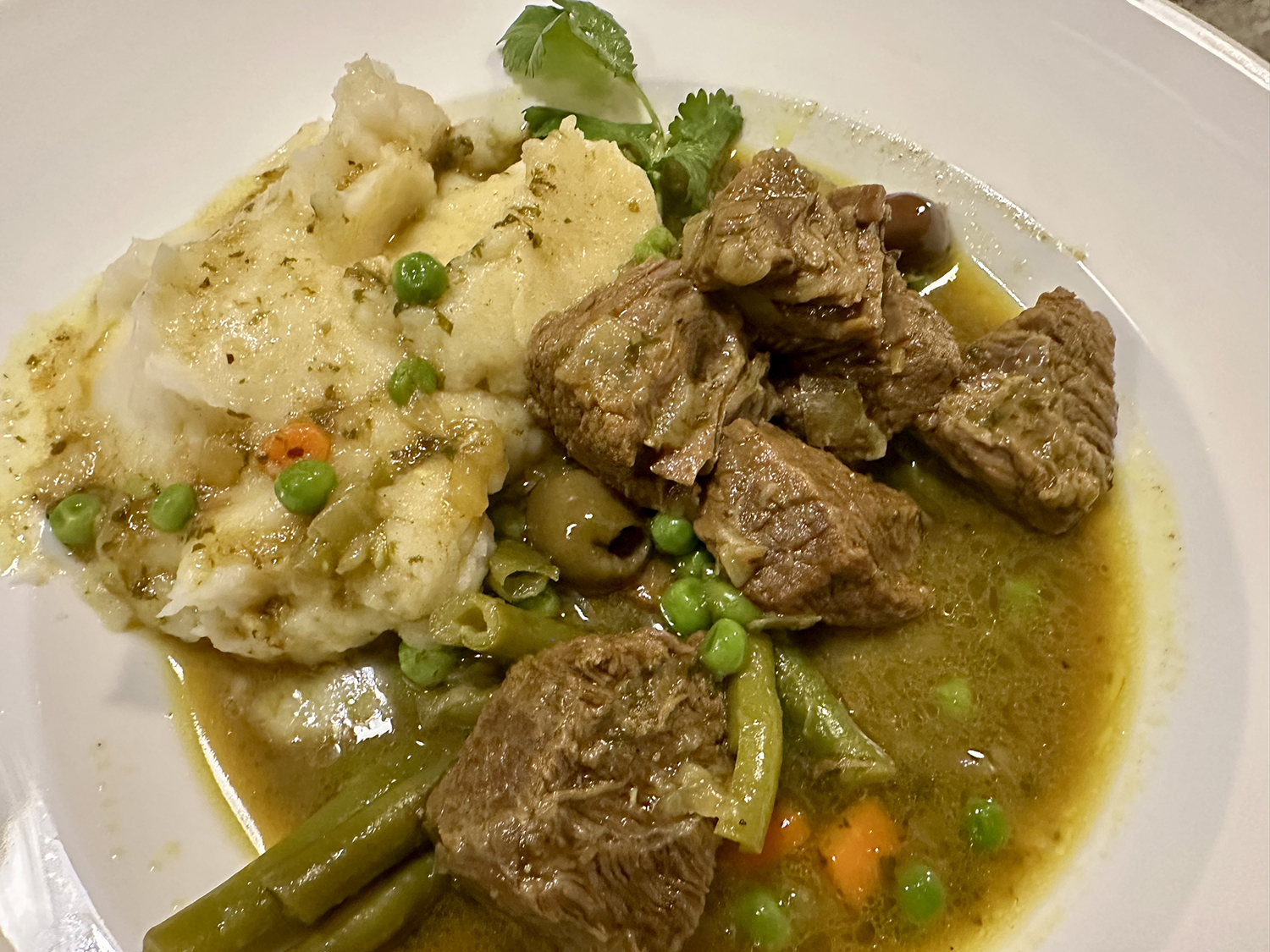
To enhance the Moroccan profile, serve over couscous, We decided on garlicky mashed potatoes, because we needed to use up our spud supply. All of our changes are noted in the recipe below.

Beef Tagine with Green Beans and Olives

  • Servings: 6-8
  • Difficulty: easy
  • Print

Ingredients

  • 3 Tbsp. olive oil
  • 2 medium onions, diced (about 3 cups)
  • 3 garlic cloves, minced or pressed
  • 1 tsp. ground turmeric
  • 1 tsp. ground ginger
  • 1 small pinch saffron (optional)
  • Fine sea salt and black pepper
  • 2½ lbs. boneless beef chuck or other stewing beef, trimmed of excess fat and cut into 2-inch pieces
  • ¾ cup vegetable or beef stock, or water, plus more if needed
  • 1 cup cilantro leaves and tender stems, finely chopped, plus more for serving
  • 1½ lbs. green beans, trimmed
  • 2 carrots peeled and cut into 1/2-inch rounds
  • 2 to 3 Tbsp. seeded and finely chopped preserved lemon (about ½ lemon), plus more to taste
  • ½ cup pitted Castelvetrano or Kalamata olives, and peas (if using)
  • Bread, for serving

Directions

  1. Heat oil in a large Dutch oven over medium. Add the beef, cook, stirring occasionally, until the meat is lightly browned on all sides, about 7-8 minutes. Remove to a plate.
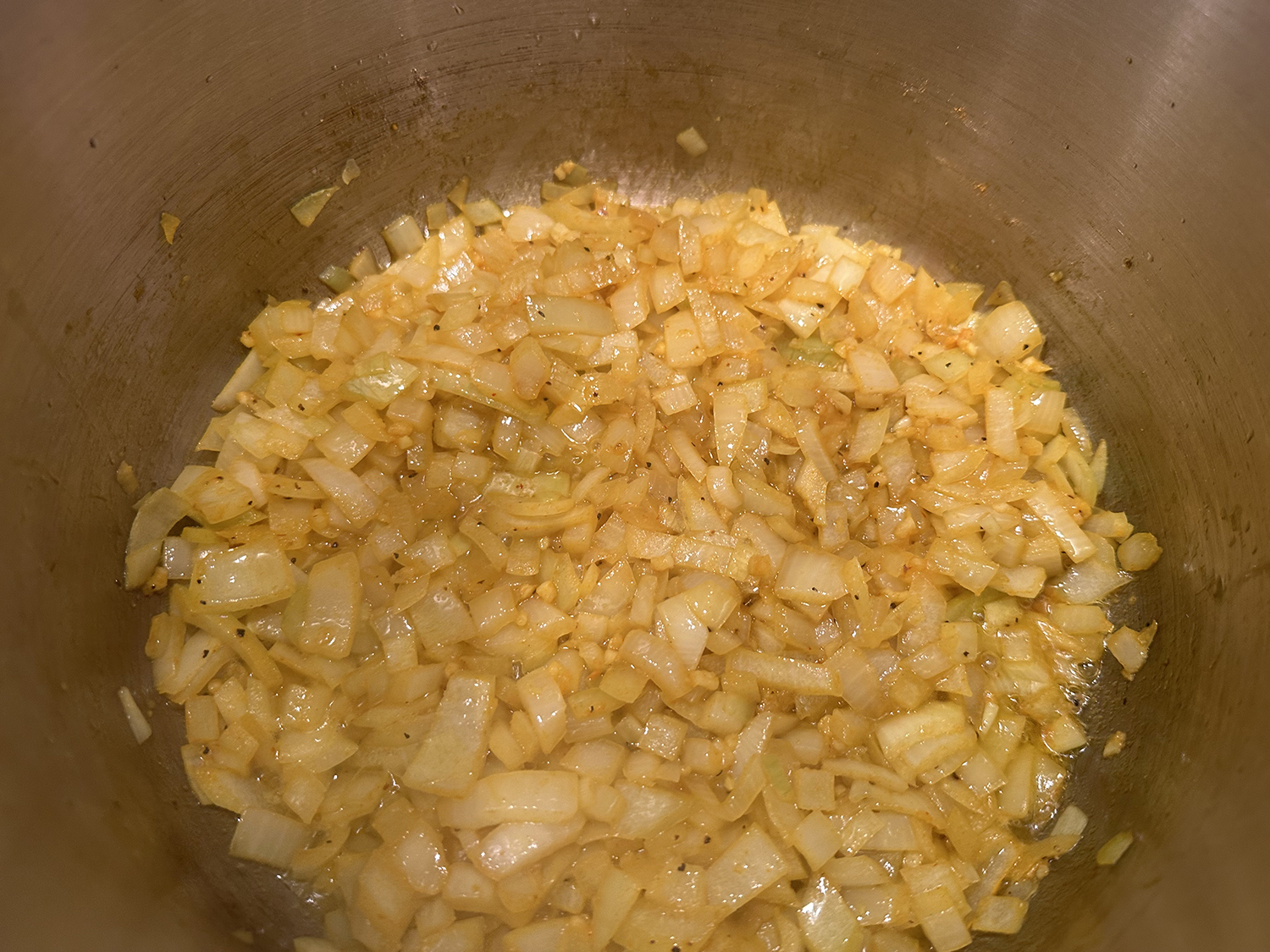
  2. Add onions, garlic, turmeric, ginger, saffron (if using), ¾ teaspoon salt and ¼ teaspoon pepper. Cook, stirring frequently, until the onions begin to soften, 5 to 7 minutes.
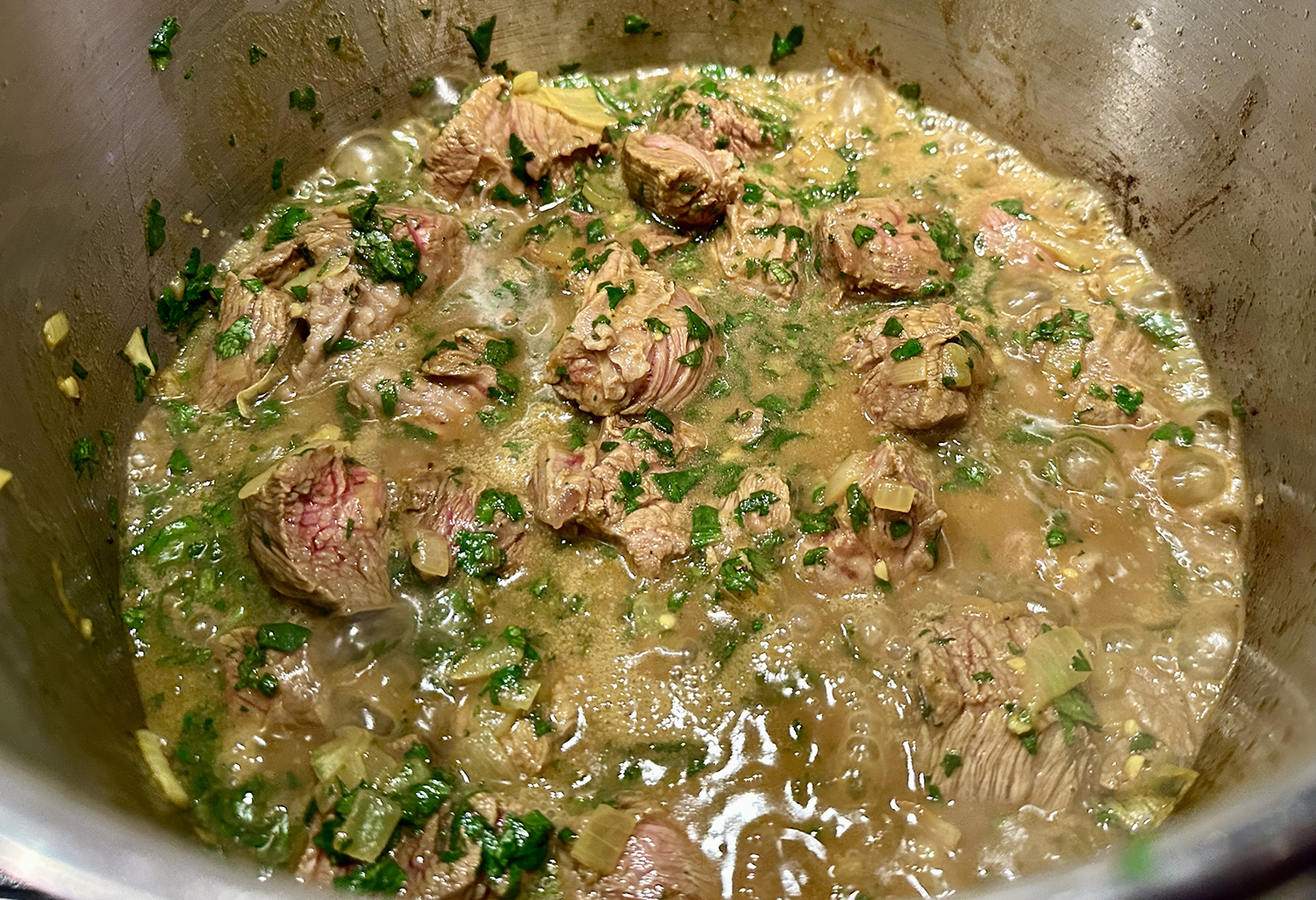
  3. Return meat to pot, add stock (or water) and cilantro, and bring to a boil over high heat.
  4. Cover the pot, adjust heat to low and simmer for about 1½ hours, until the beef has partially softened (when pressed with a fork it should feel soft but not fall apart).
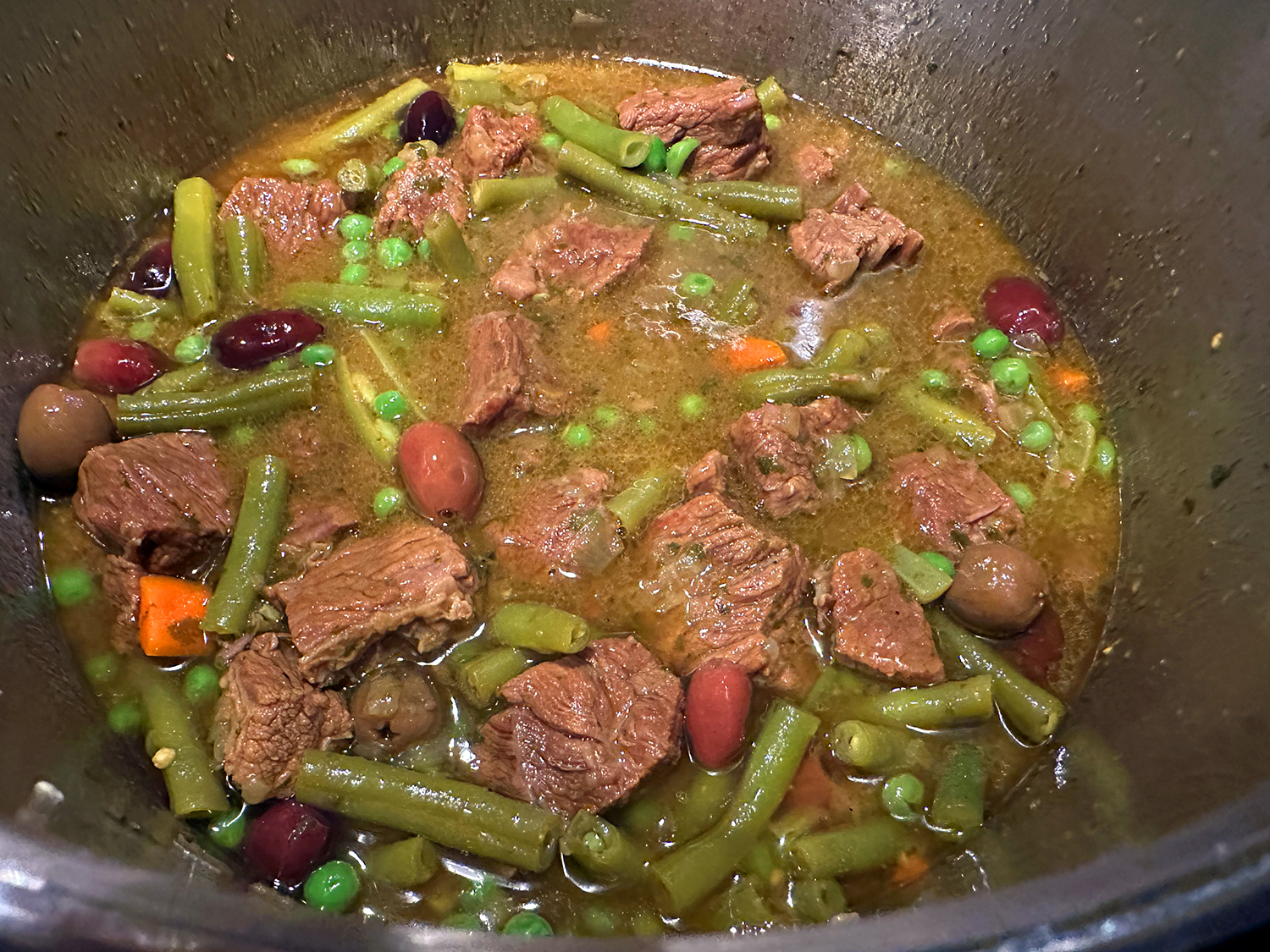
  5. Stir in the green beans, carrots and preserved lemon, adjust heat to high and bring to a boil. The green beans should be partially submerged in the liquid; add stock or water as needed. Turn down to low, cover and simmer until the green beans and carrots are tender, 15 to 20 minutes. Stir occasionally to make sure the beans cook evenly.
  6. Taste and add more preserved lemon or salt as necessary. Garnish with olives and more cilantro, and serve with bread.

http://www.lynnandruss.com

Recipe by Nargisse Benkabbou for NYTimes Cooking

Authentic Hunan Beef

Yes, there are a lot of ingredients. Yes, there are a lot of steps. Yes, there is a lot of prep. Yes, the process goes quickly (so make sure you have ALL of the prep work done beforehand). And YES, it is probably the best Hunan Beef we’ve ever had!

Bill from Woks of Life says “Our Hunan Beef recipe is an authentic Chinese version of the dish, not the Americanized version. Try it to taste what Hunan Beef should really be like!”

Peppers are vital to Hunan Beef, but the peppers you use are a matter of personal preference. We like to use a variety—both spicy and sweet. Poblano and Holland peppers are mild, but if you want more spice, you can add Fresnos or jalapeños to the mix.

Remember that the addition of the dried chili peppers can add a lot of spice (also depending on whether you chop them to release the seeds inside or leave them whole), so you’ll want to consider those factors as well. Slice all the fresh peppers crosswise into thin slices on the diagonal. Set aside the dried red peppers. Do not break them open or chop unless you want a very spicy Hunan Beef!

In the meantime, don’t forget to make your rice…

Authentic Hunan Beef

  • Servings: 4
  • Difficulty: easy
  • Print

Ingredients

For the beef:

  • 1 lb. flank steak, sliced 1/4-inch thick
  • 1/4 tsp. baking soda
  • 2 Tbsp. water
  • 1 tsp. oyster sauce
  • 1/3 cup cornstarch

For the Rest of the Dish:

  • 1 red Holland pepper, deseeded; can substitute red Fresno peppers
  • 1 small green bell pepper or poblano pepper, deseeded
  • 1 small red bell pepper, deseeded
  • 2 banana peppers, deseeded
  • 8 whole dried chili peppers
  • 1/2 tsp. granulated sugar
  • 2 Tbsp. hot water
  • 1/2 teaspoon Chinese black vinegar
  • 2 1/2 Tbsp. soy sauce
  • 1/4 teaspoon white pepper
  • 1/3 cup vegetable or canola oil for frying
  • 1 Tbsp. fresh ginger, sliced
  • 1/2 cup shallots, thinly sliced
  • 2 Tbsp. Shaoxing wine
  • 5 cloves garlic, sliced
  • 2 Tbsp. fermented black beans
  • 2 scallions cut at an angle into 2-inch lengths

Directions

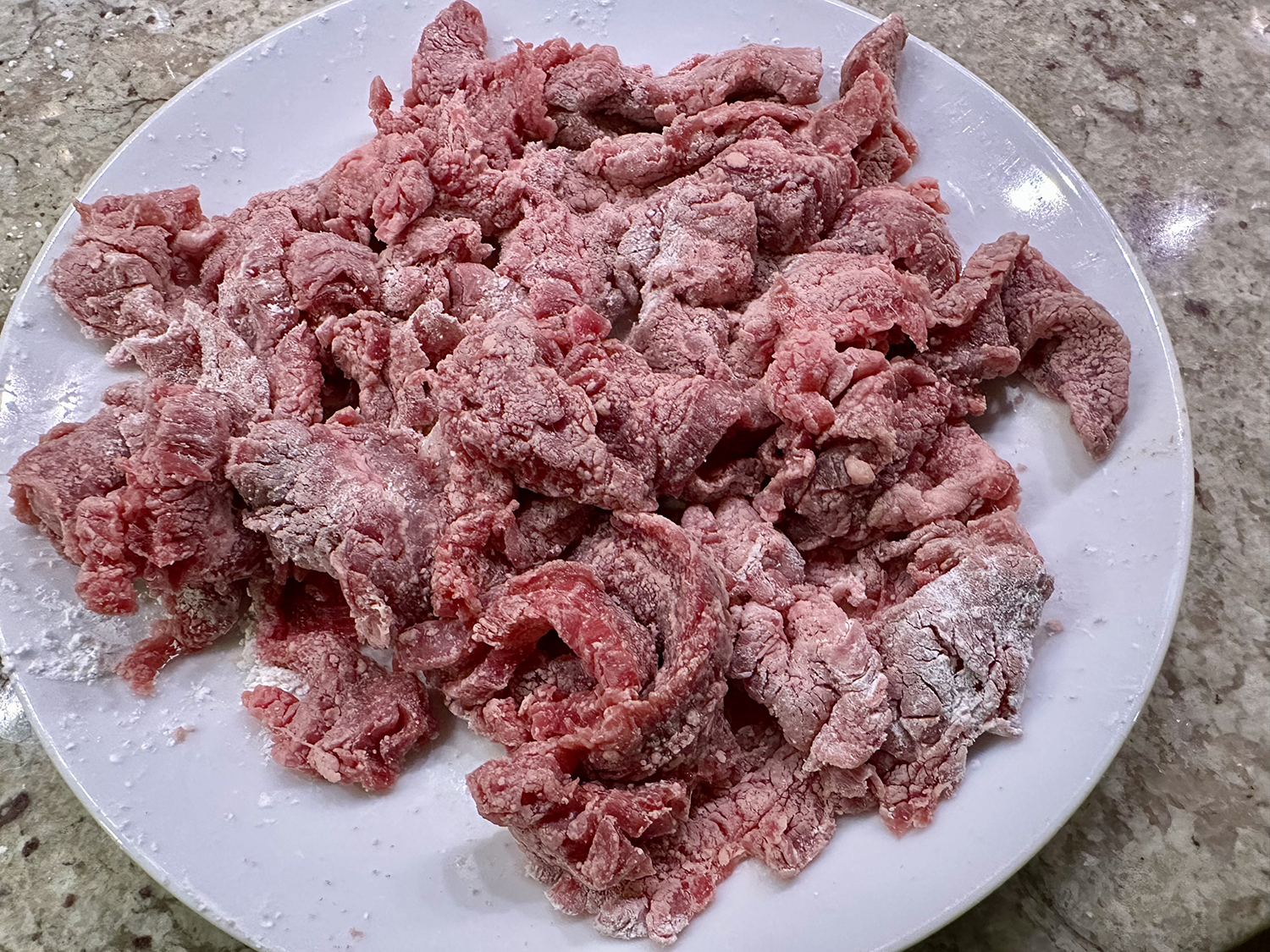
  1. In a medium bowl, combine the sliced flank steak with the baking soda, water and oyster sauce. Massage these ingredients into the beef until any liquid has been absorbed by the meat. Marinate for 30 minutes.
  2. Lightly dredge all of the beef slices in cornstarch. Set aside until ready to fry.
  3. Slice all the fresh peppers crosswise into thin slices on the diagonal. Set aside the dried red peppers. Do not break them open or chop unless you want a very spicy Hunan Beef!
  4. Stir the sugar into 2 tablespoons of hot water until dissolved. Add the Chinese black vinegar, soy sauce, and ground white pepper. Mix until well combined and set aside.
  5. Heat your wok over high heat until smoking. Spread ⅓ cup oil around the wok, and sear the beef in three batches on both sides until browned and slightly crispy on the outside. Be sure the wok and oil are hot each time you add a batch of beef.
  6. Between each batch, drain the crispy beef by moving it up to the side of the wok. The oil will drain to the bottom and you can then transfer the beef to a sheet pan or plate.   
  7. After frying the beef, leave about 2 tablespoons of the oil in the wok, and remove any excess. If your wok got burned in the frying process, this is a good time to wash it. While you want the beef flavor from frying, you definitely don’t want burned bits in the stir-fry if you got carried away with the heat during frying.
  8. Set the wok over medium heat. Add the sliced ginger and fry until caramelized, about 30 seconds.
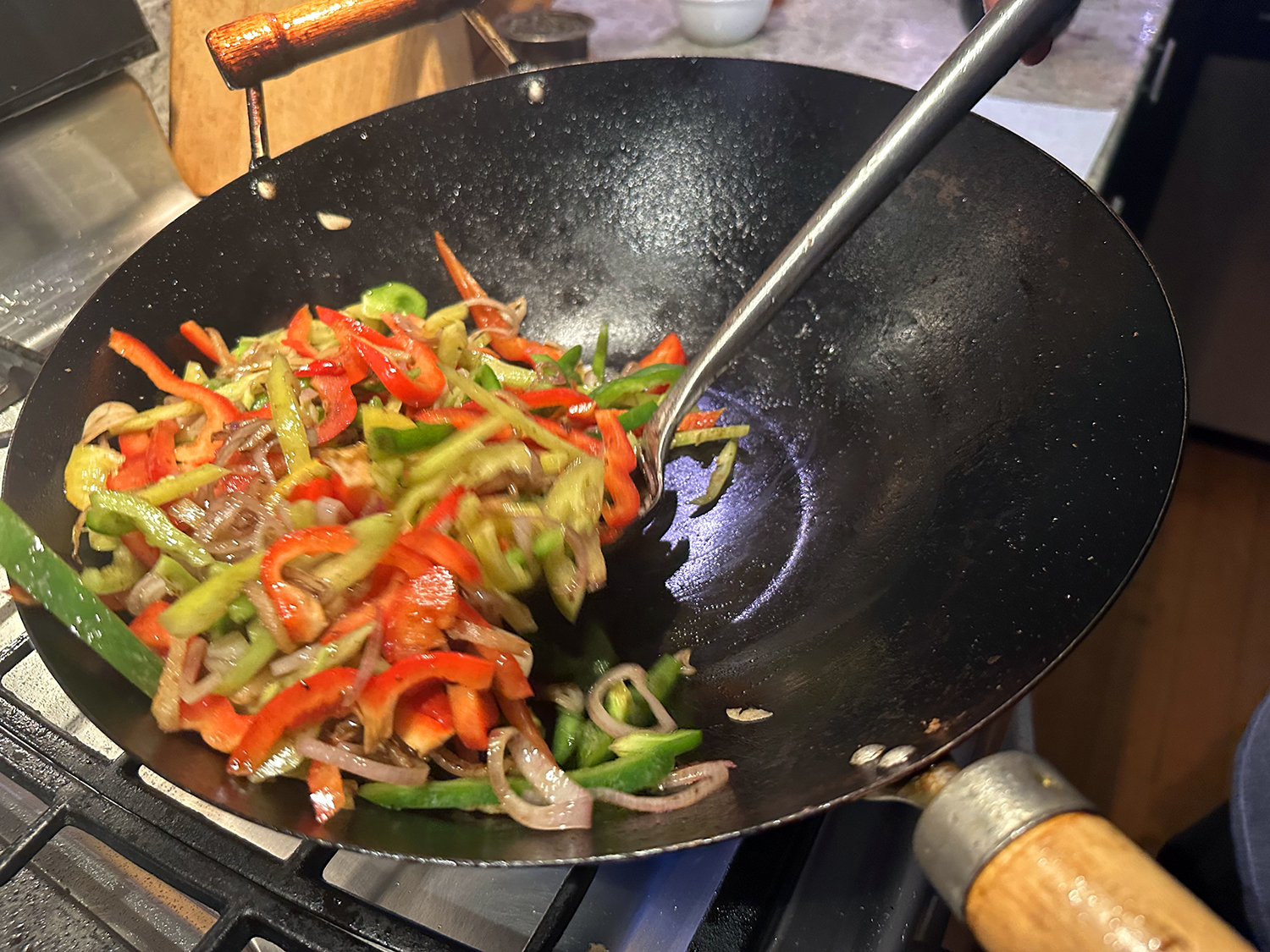
  9. Next, add the shallots. Continue to fry for another 30 seconds, and add the fresh peppers (except for the red holland or fresno peppers). Turn the heat up to high and stir-fry for 1 minute to get a nice sear on the peppers.
  10. Clear a section on the bottom of the wok, and add the dried chili peppers. Let them toast in the oil for 20 seconds. (If you want your dish spicier, add the dried chili peppers earlier, along with the shallots.)
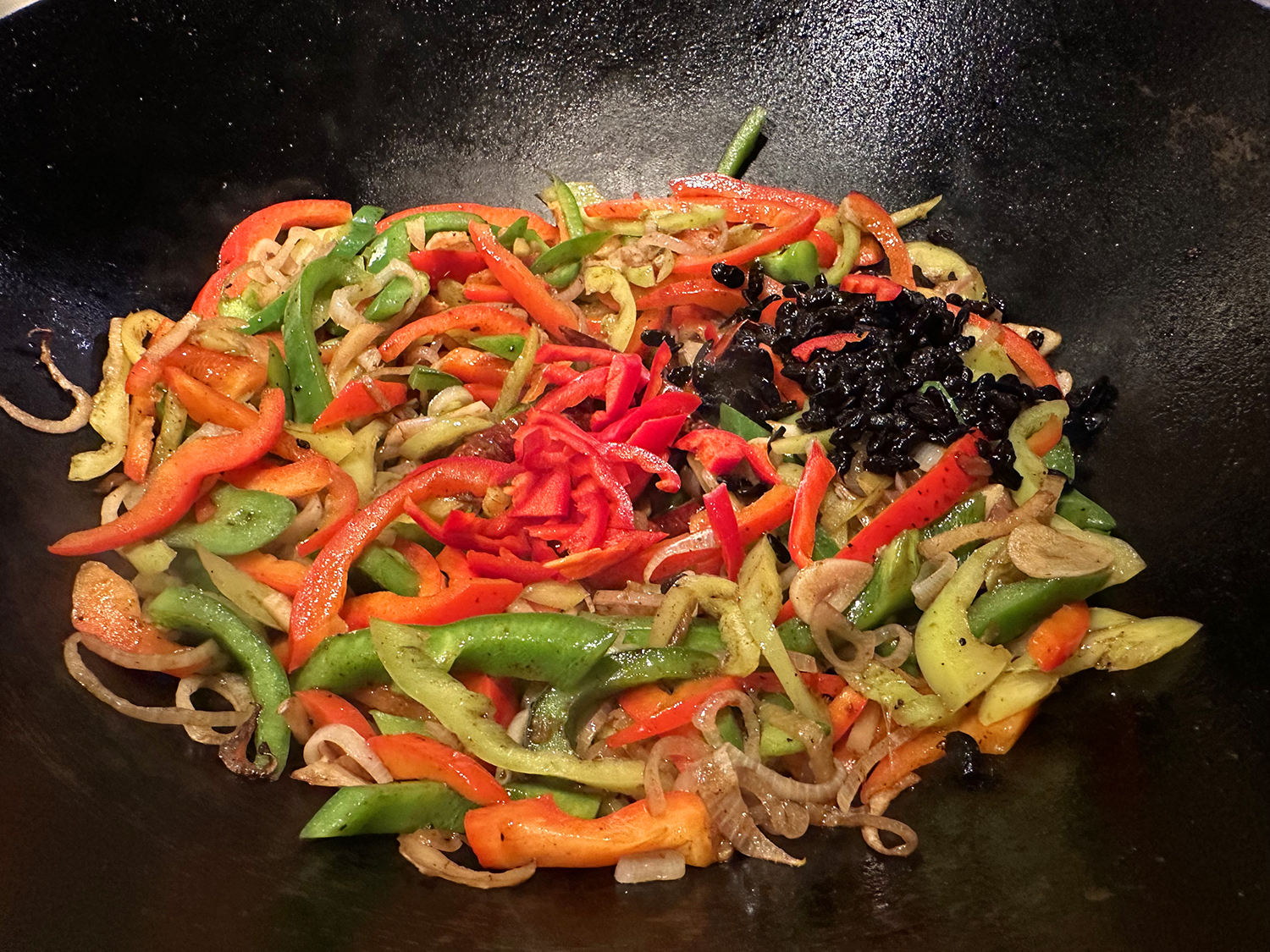
  11. Next, pour the Shaoxing wine around the perimeter of the wok. Add the sliced garlic, fermented black beans, and the red Holland or Fresno peppers. Stir-fry for another 30 to 60 seconds on high heat.
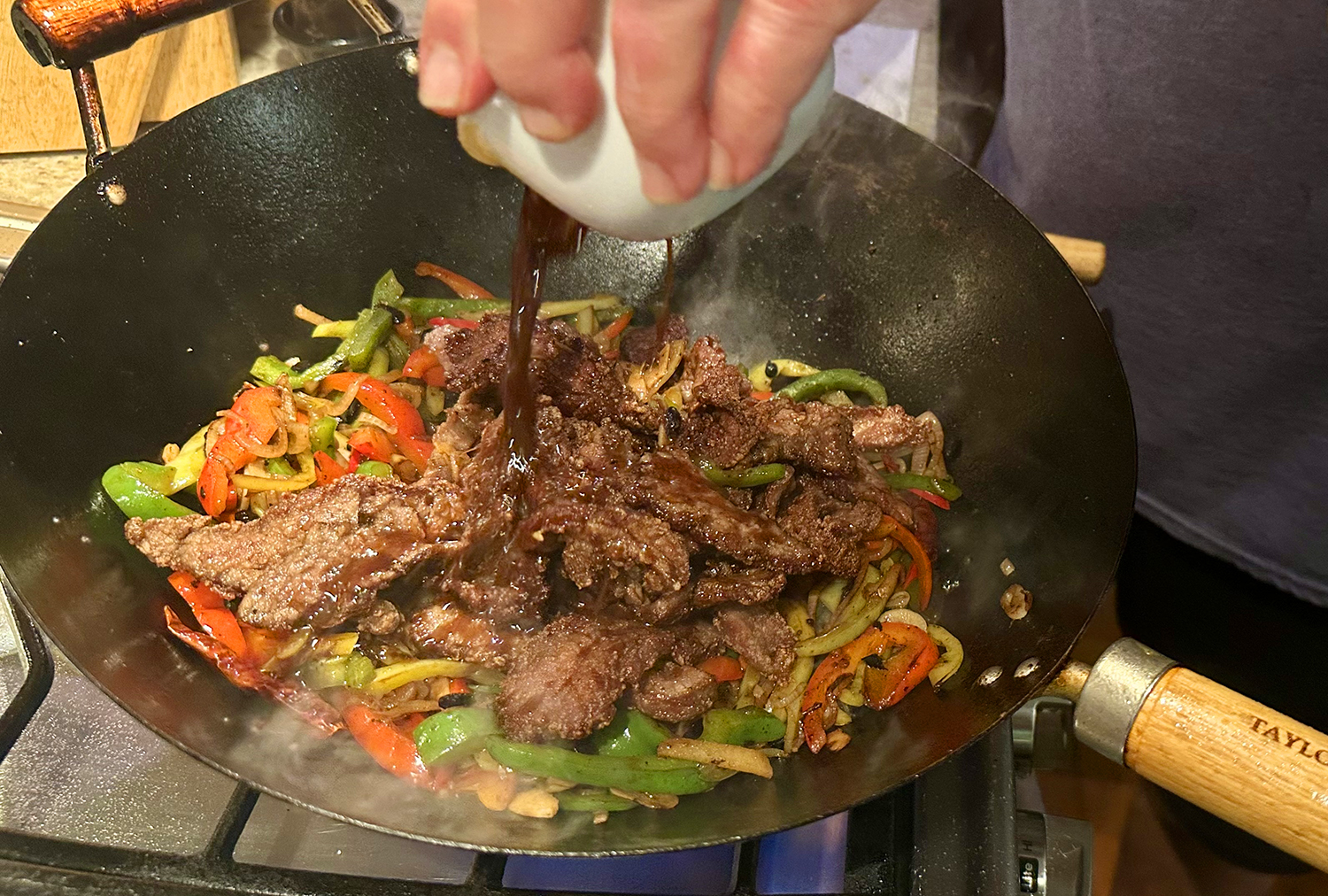
  12. Next, add the fried beef and pour over the pre-prepared sauce. Maintain the highest heat possible and stir-fry everything together for 20 seconds. Add the scallions. Continue to stir fry until most––if not all––of the sauce has evaporated.
  13. Serve over steamed rice.

http://www.lynnandruss.com

Adapted recipe from Bill for Woks of Life

Black Pepper Beef

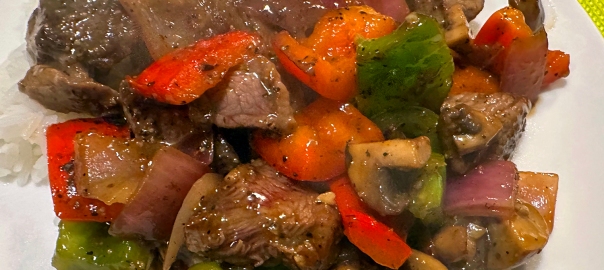
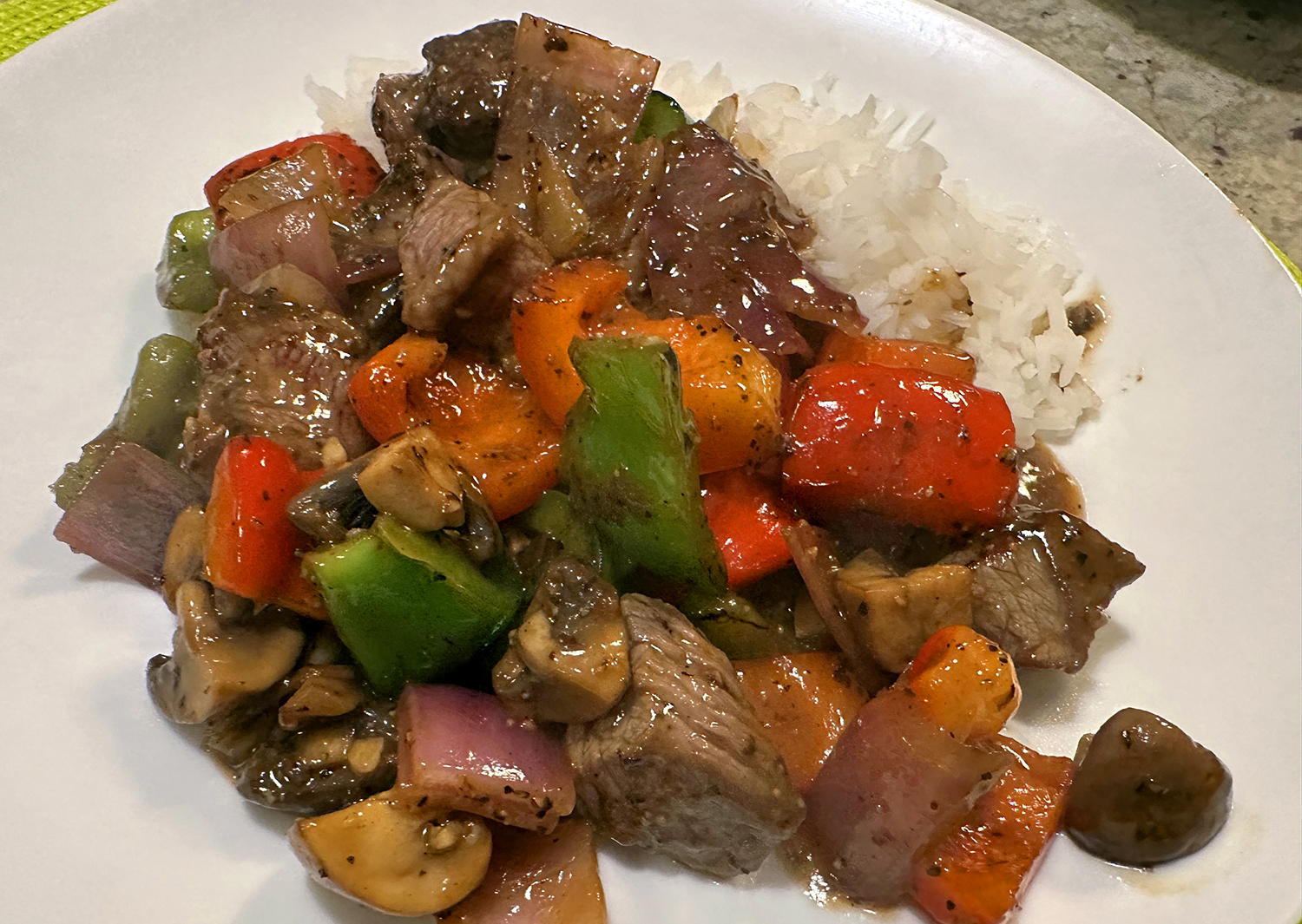
Hands-down better than your local Chinese take-out, this Chinese pepper steak recipe is a quick and easy stir-fry loaded with tender beef, peppers and onions in a luscious brown sauce. It hails from “The Woks of Life” by the Leung family.

Most of the time required for this recipe is in the preparation, but it’s not actually difficult to pull off. So long as you have everything prepared and within reach, things will go smoothly at the wok. The active cooking time in your wok or pan is less than 15 minutes before it’s ready to be served with steamed white rice.

Avoid any “pre-cut beef for stir-fry” that your grocery store sells. It usually looks like long rectangular beef sticks, cut from lean beef. These are too thick and chunky, and generally turn out tough. So what IS the best cut of beef for stir-fry?

The original recipe called for beef tenderloin. At nearly $35 per pound, we decided to go for something more reasonably priced and chose sirloin. Another option is flank steak, but we don’t advise using chuck roast which was listed as a substitute.

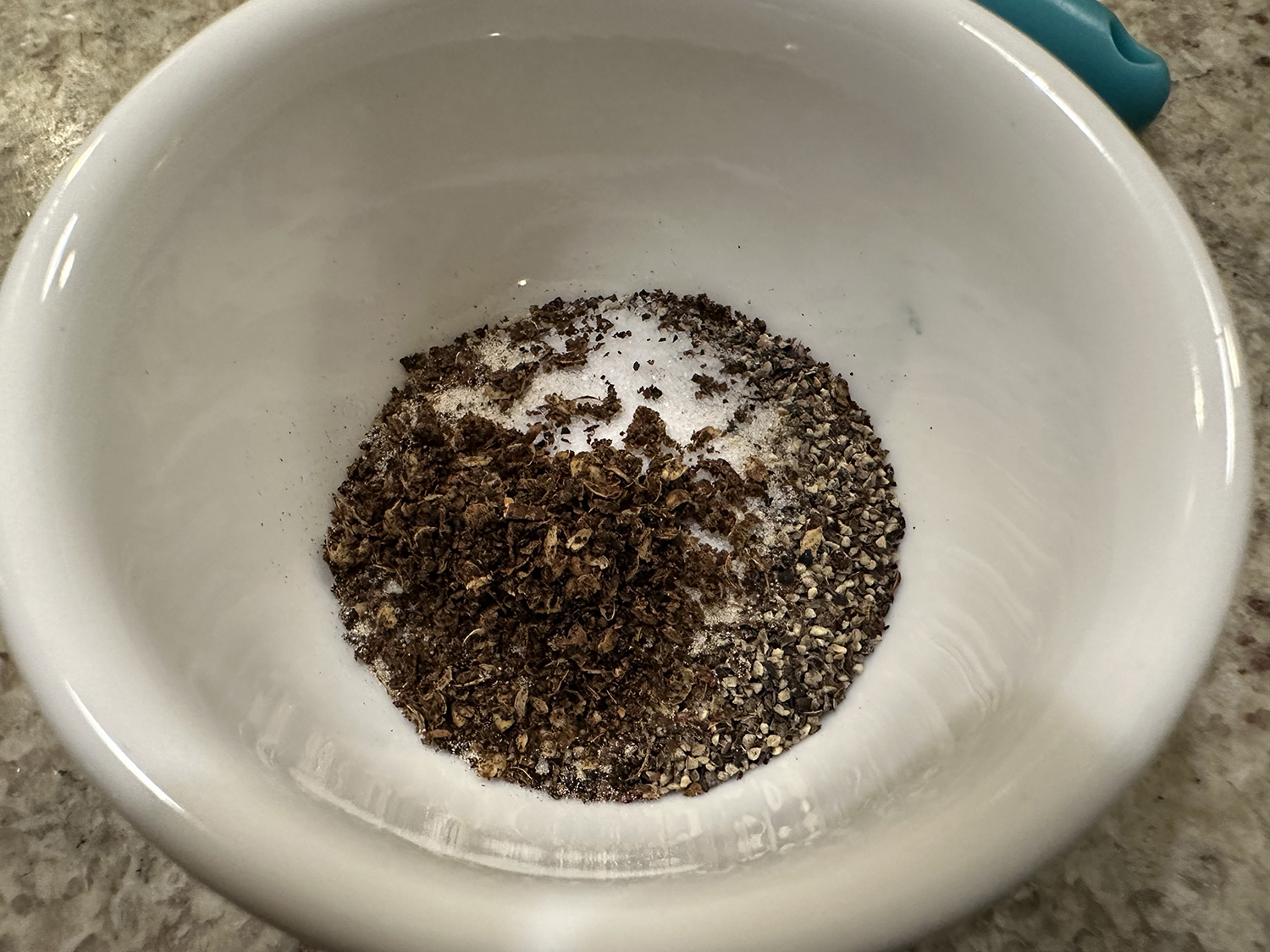
With several different pepper spices, we opted to use the lower amount, 1 1/2 tablespoons of ground black pepper. Using a full 2 tablespoons will likely be too much. While black pepper is a constant companion for salt in American kitchens, you don’t see it very often in Chinese cooking (it’s almost always white pepper.)

Black Pepper Beef

  • Servings: 4
  • Difficulty: easy
  • Print

Ingredients

  • For Velveting the Beef:
  • 1 lb. flank steak, (or sirloin steak)
  • 2 Tbsp. water
  • 1 tsp. cornstarch
  • 1 Tbsp. neutral oil
  • 1/4 tsp. table salt
  • For the Sauce:
  • 1/2 cup beef stock or water, warmed
  • 1 Tbsp. oyster sauce
  • 1 Tbsp. light soy sauce
  • 1 tsp. ketchup
  • 1/2 tsp. sugar
  • 1/4 tsp. sesame oil
  • For the Pepper Seasoning:
  • 1 1/2 to 2 Tbsp. coarsely ground black pepper
  • 1/2 tsp. white pepper
  • 1/2 tsp. ground Sichuan peppercorns
  • For the Rest of the Dish:
  • 1 green bell pepper, cut into 1″pieces
  • 1 red bell pepper, cut into 1″pieces
  • 1 medium red onion, cut into 1″pieces
  • 4 oz. cremini or button mushrooms, quartered
  • 2 Tbsp. neutral oil
  • 1/2 tsp. ginger
  • 2 cloves garlic (chopped)
  • 2 Tbsp. Shaoxing wine
  • 2 tsp. cornstarch
  • 1 Tbsp. water

Directions

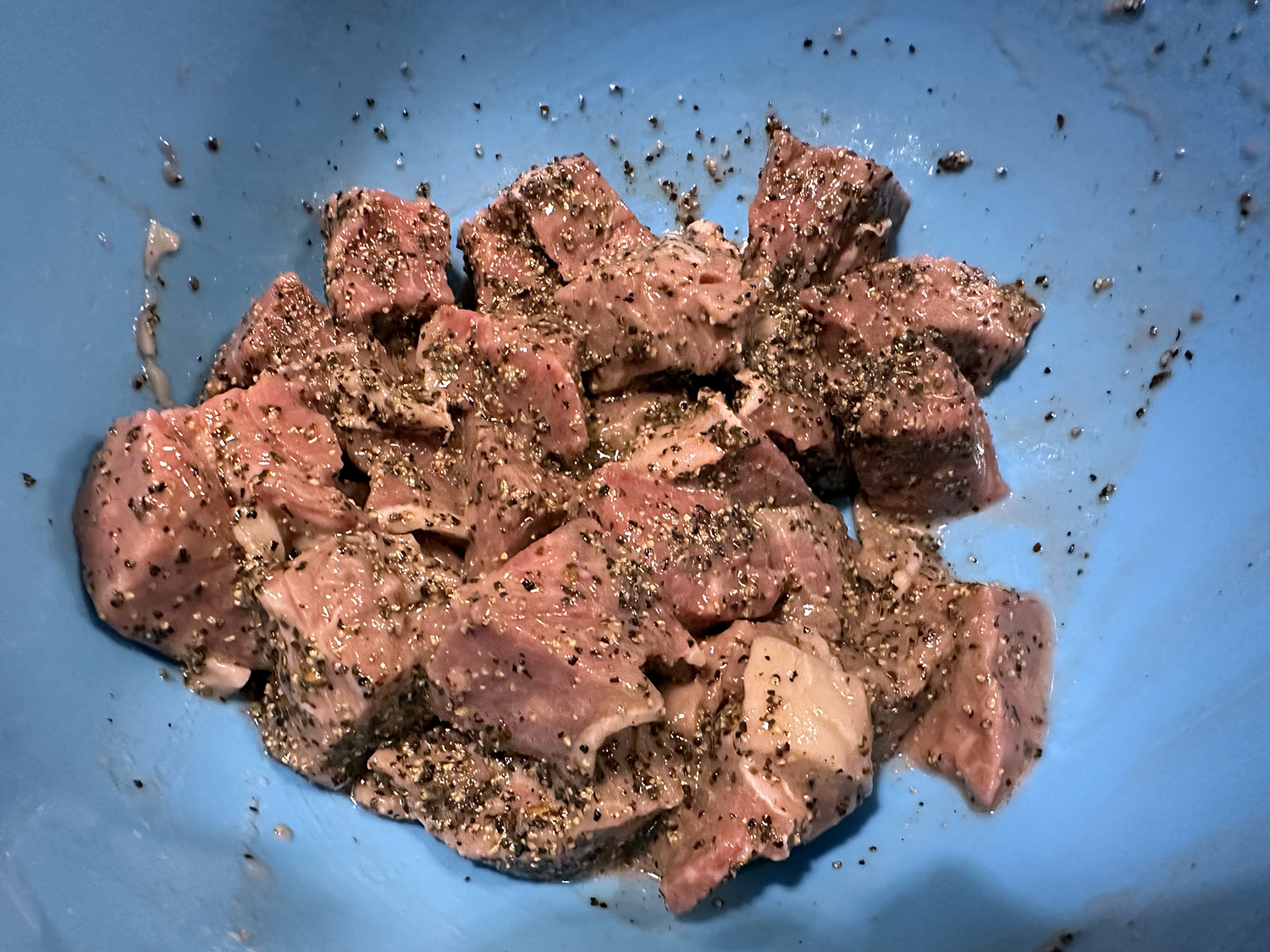
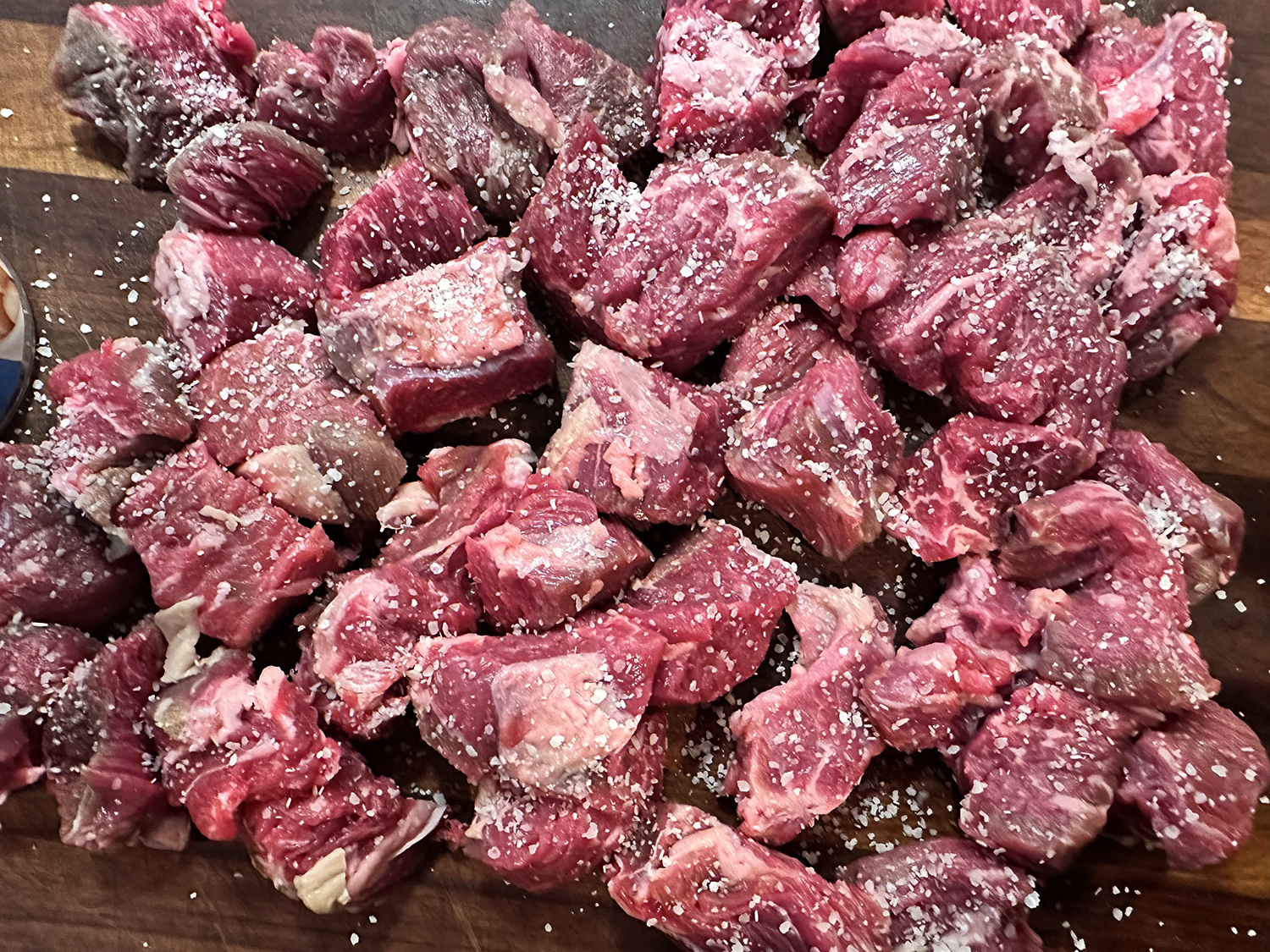
  1. Slice the beef into 1 1/4-inch cubes. Then velvet the beef: in a medium bowl, mix the beef with 2 Tbsp. water, 1 tsp. cornstarch, 1 Tbsp. neutral oil, and 1/4 tsp. table salt. Toss to coat, then set aside for at least 30 minutes.
  2. Make the sauce by mixing together the beef stock, cornstarch, oyster sauce, Shaoxing wine, soy sauce, ketchup, sugar, and sesame oil. Set aside.
  3. Make the pepper seasoning in a small bowl by combining black pepper, white pepper, ground Sichuan peppercorns, and salt. Season the beef cubes with 2/3 of the pepper mix, pressing the spices into the beef. Reserve the rest for later.
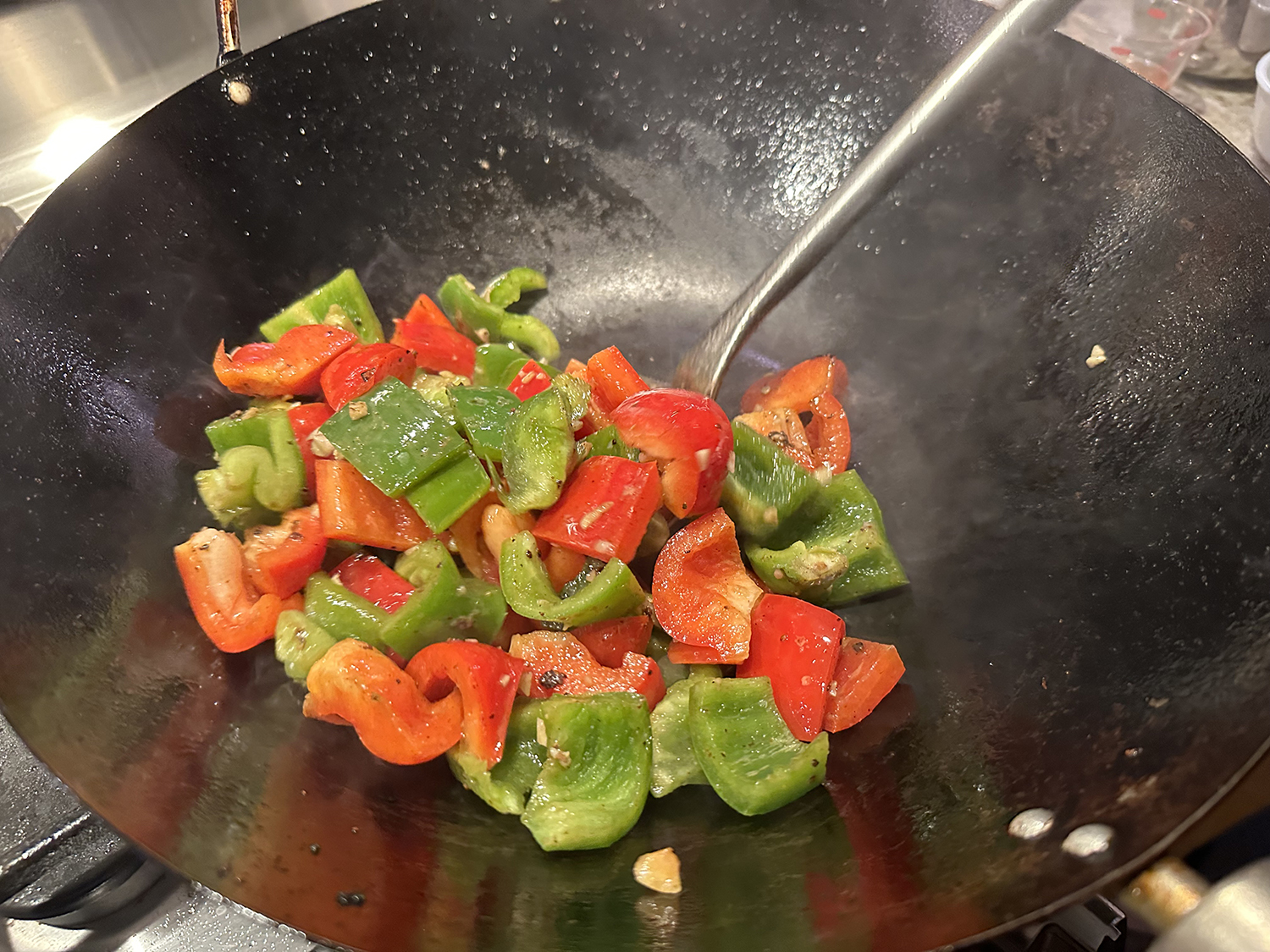
  4. Cut the bell peppers and onion into 1-inch pieces. You can also cut them into thin strips if you like. Just make sure that the pepper and onion pieces are all about the same size, so they cook evenly.
  5. Heat the wok over high heat until smoking. Add 1 tablespoon of oil to coat the wok. Sear the beef on both sides, about 30 seconds per side. Give everything a final stir, transfer it to a plate, and set aside. The beef should be about 80% cooked.
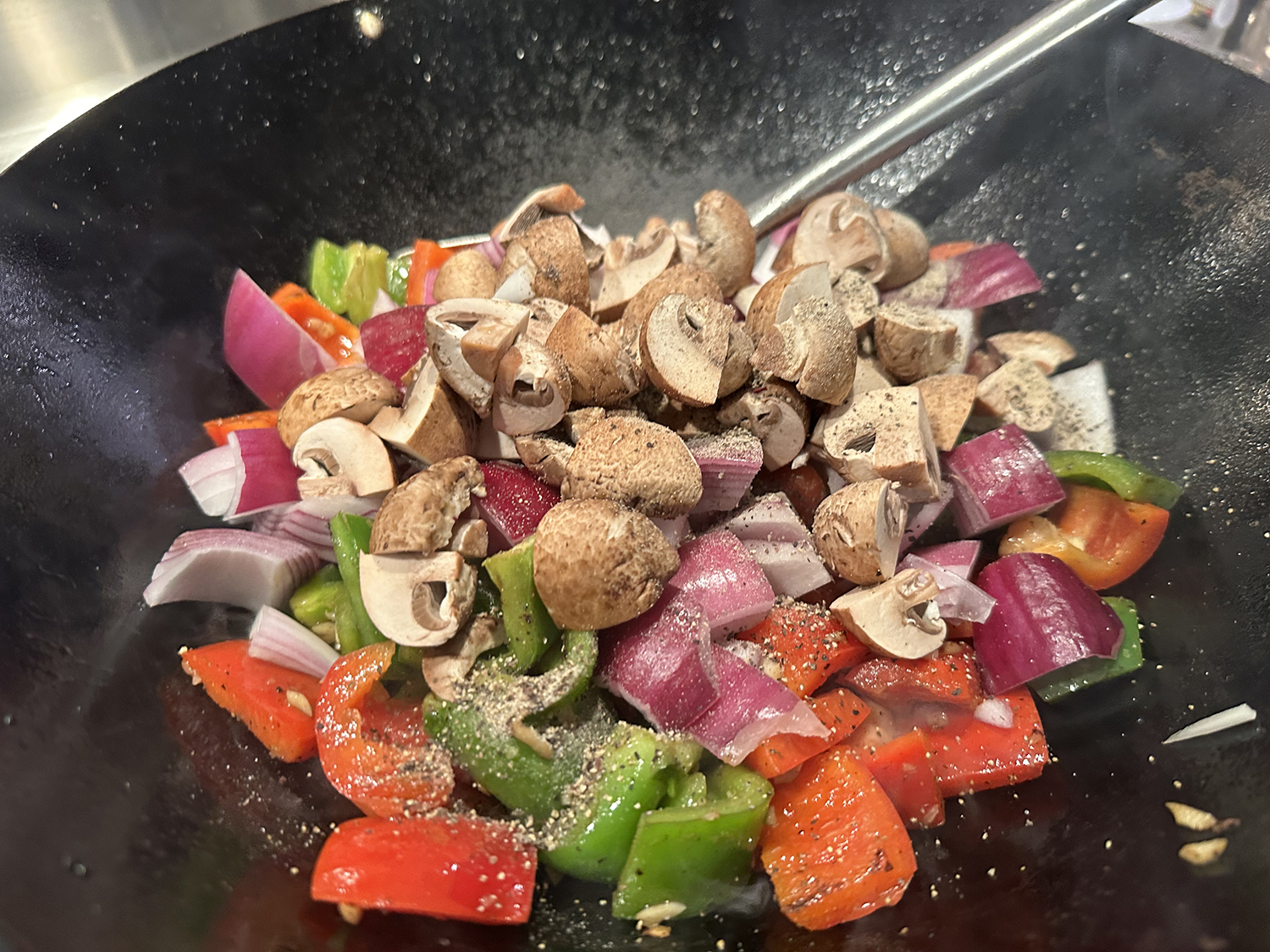
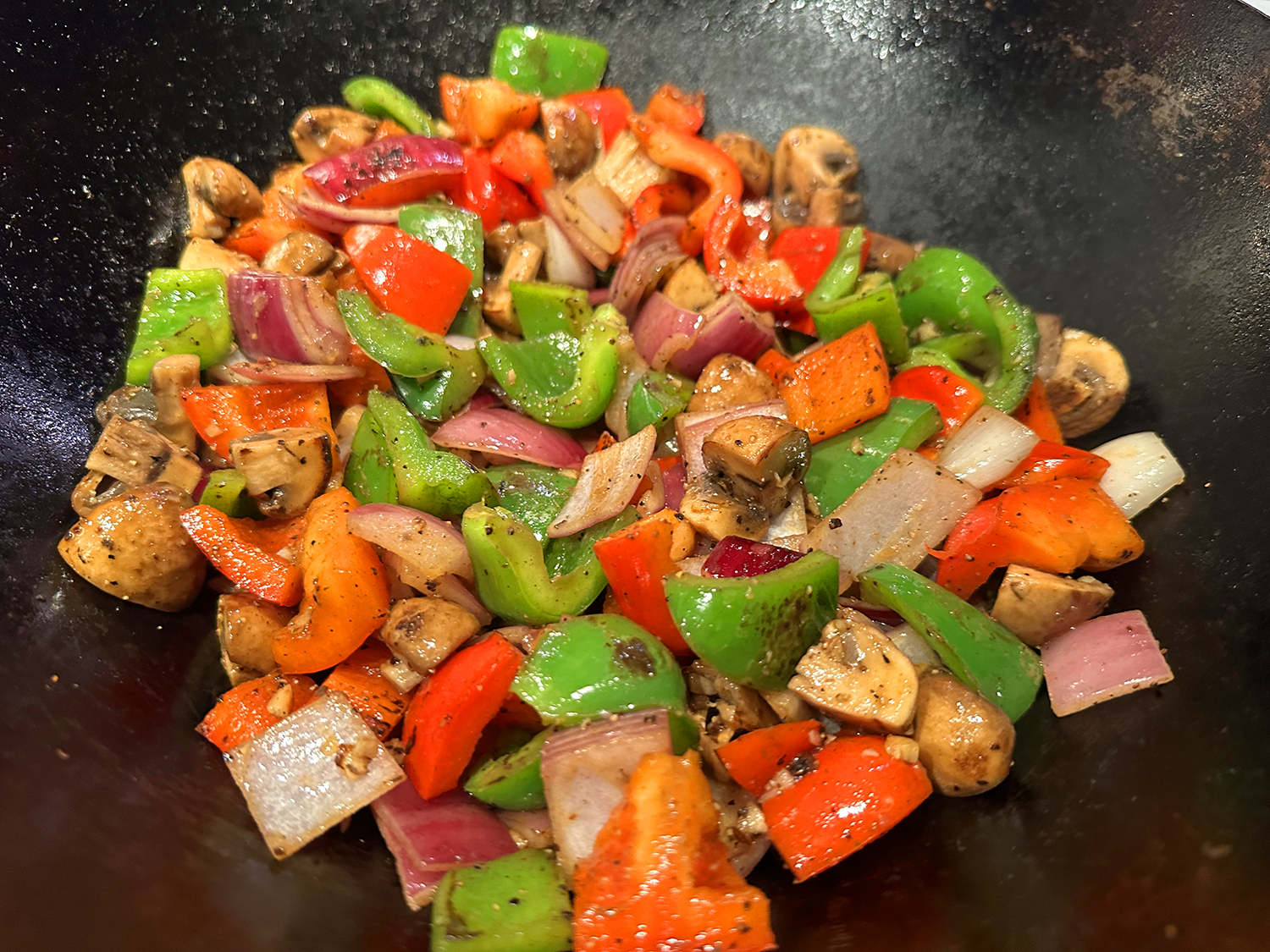
  6. Reduce the heat to medium-high. Add the remaining tablespoon of oil. Toss in the ginger, and caramelize for about 10 seconds. Then add the garlic, bell peppers, and onions. Stir-fry for 1 minute. Pour the Shaoxing wine around the perimeter of the wok, then stir-fry for 1 minute.
  7. Add the sauce mixture, and stir it around to deglaze, loosening any browned bits in the wok. Combine 2 tsp. cornstarch and 1 Tbsp. water in a small bowl to make a slurry. Drizzle half the slurry into the wok, stirring constantly until it is thick enough to coat a spoon.
  8. Add the beef along with any juices. Gently toss with the sauce and vegetables until combined.
  9. At this point, if the sauce is not thick enough, add the remaining cornstarch slurry and stir-fry for another 10 to 15 seconds to thicken. Once the sauce is simmering and thickened to your liking, transfer it to a serving plate, and serve it with steamed rice!

http://www.lynnandruss.com

Recipe from The Woks of Life by Bill Leung

Beef and White Bean Stew With Cumin

A perfect cool weather dish, this stellar, hearty meal is great for double-date night, Sunday supper, Shabbat and Rosh Hashanah, just to name a few options. It could even work for a weeknight if made ahead of time, and then reheated for dinner.

A homey one-pot stew, it’s a mix of tender beef and white beans swimming in a velvety sauce, and is much brighter than its short ingredient list might indicate. That’s all thanks to the technique of slowly building layered flavor with beef fond, aromatics, spices, and acidic tomatoes. 

Make sure to brown the beef in at least two batches, the pieces need room around them in order to brown properly, not steam. In the final hour after the beans go in, remove the lid entirely for the last 30 minutes, to thicken the stew nicely.

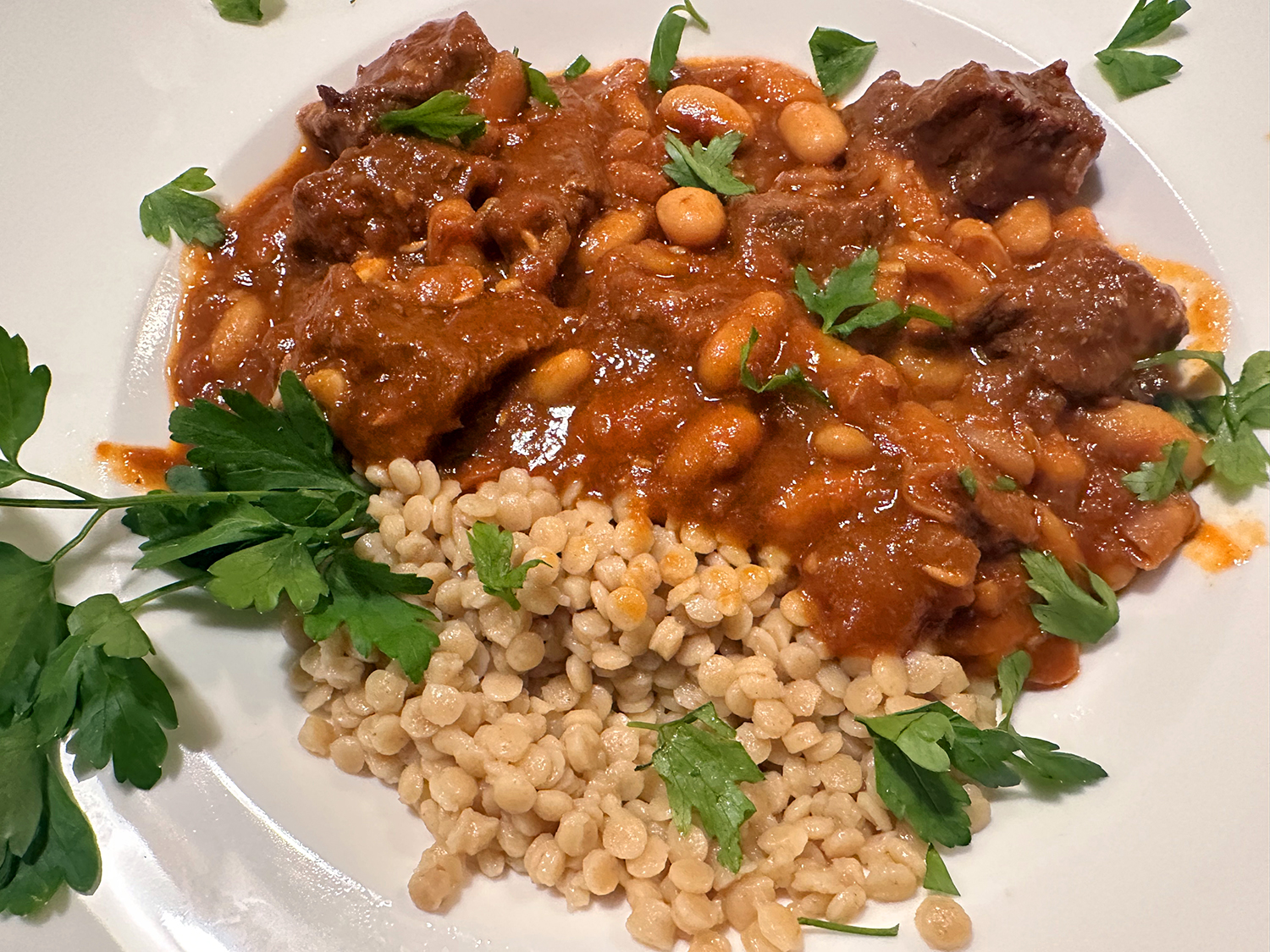
There are several serving suggestions, such as, couscous (we used whole wheat pearl), a loaf of crusty bread, sautéed greens, or a crisp side salad (our side dish), all of which work well to offset the stew’s richness. As far as garnishes go, try harissa or sambol oelek—although we didn’t feel any was necessary.

Beef and White Bean Stew with Cumin

  • Servings: 4-6
  • Difficulty: easy
  • Print

Ingredients

  • 3 lb. boneless beef chuck roast, excess fat trimmed, cut into 2″ pieces
  • 1½ tsp. Diamond Crystal or 1 tsp. Morton kosher salt, plus more
  • 2 Tbsp. (or more) extra-virgin olive oil
  • 1 large onion, finely chopped
  • 5 garlic cloves, finely chopped
  • 1 Tbsp. plus 1½ tsp. Hungarian hot paprika or ½ tsp. crushed red pepper flakes
  • 2 tsp. ground cumin
  • Freshly ground pepper
  • 3 Tbsp. double-concentrated tomato paste
  • 2 15-oz. cans cannellini (white kidney) beans, rinsed
  • 1 cup tomato purée
  • Steamed couscous and finely chopped parsley (for serving)

Directions

  1. Pat 3 pounds of boneless beef chuck roast dry with paper towels, excess fat trimmed, cut into 2″ pieces, and season generously with kosher salt. Heat 2 tablespoons extra-virgin olive oil in a large Dutch oven or other heavy pot over medium-high. Working in batches and adding more oil between batches if pot looks dry, cook beef, turning occasionally, until golden brown, about 5 minutes. Transfer to a plate.
  2. Reduce heat to medium and add 1 large onion, finely chopped, and 5 garlic cloves, finely chopped, to pot. Cook, stirring often, until onion is softened and golden, 6–8 minutes. Add 1 tablespoon plus 1½ teaspoon Hungarian hot paprika or ½ teaspoon crushed red pepper flakes, 2 teaspoon ground cumin, and 1½ teaspoon Diamond Crystal or 1 teaspoon Morton kosher salt; season generously with freshly ground black pepper. Cook, stirring often, until spices are fragrant, about 1 minute. Stir in 3 tablespoons double-concentrated tomato paste.
  3. Return beef along with any accumulated juices to pot. Pour in 4 cups water and bring to a boil. Immediately reduce heat to low, partially cover pot, and cook, stirring occasionally and adjusting heat as needed to maintain a simmer, until beef is tender and liquid is slightly thickened, about 2 hours.
  4. Uncover pot and stir in two 15-ounce cans cannellini (white kidney) beans, rinsed, and 1 cup tomato purée. Bring stew back to a simmer. Reduce heat to low, partially cover, and cook, stirring occasionally and adjusting heat as needed to maintain a simmer, until beef is very tender and stew is thick, 60 minutes. Remove the lid entirely for the final 30 minutes to thicken the stew. Taste and season with more salt and black pepper if needed.
  5. Divide steamed couscous among shallow bowls and ladle stew over. Top with finely chopped parsley.

Do ahead: Stew can be made 3 days ahead. Let cool; cover and chill.

http://www.lynnandruss.com

Recipe by Leah Koenig for Bon Appétit

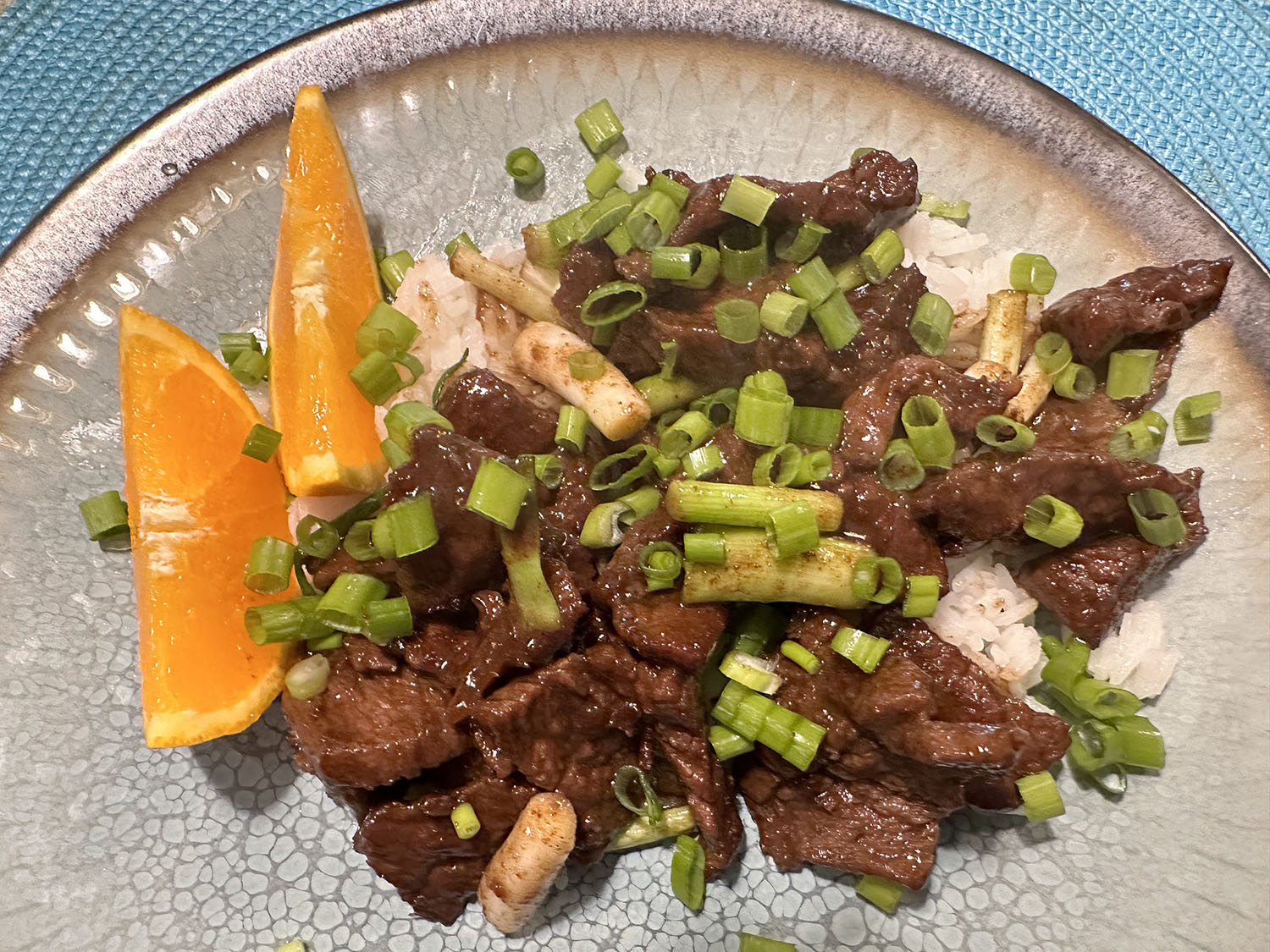
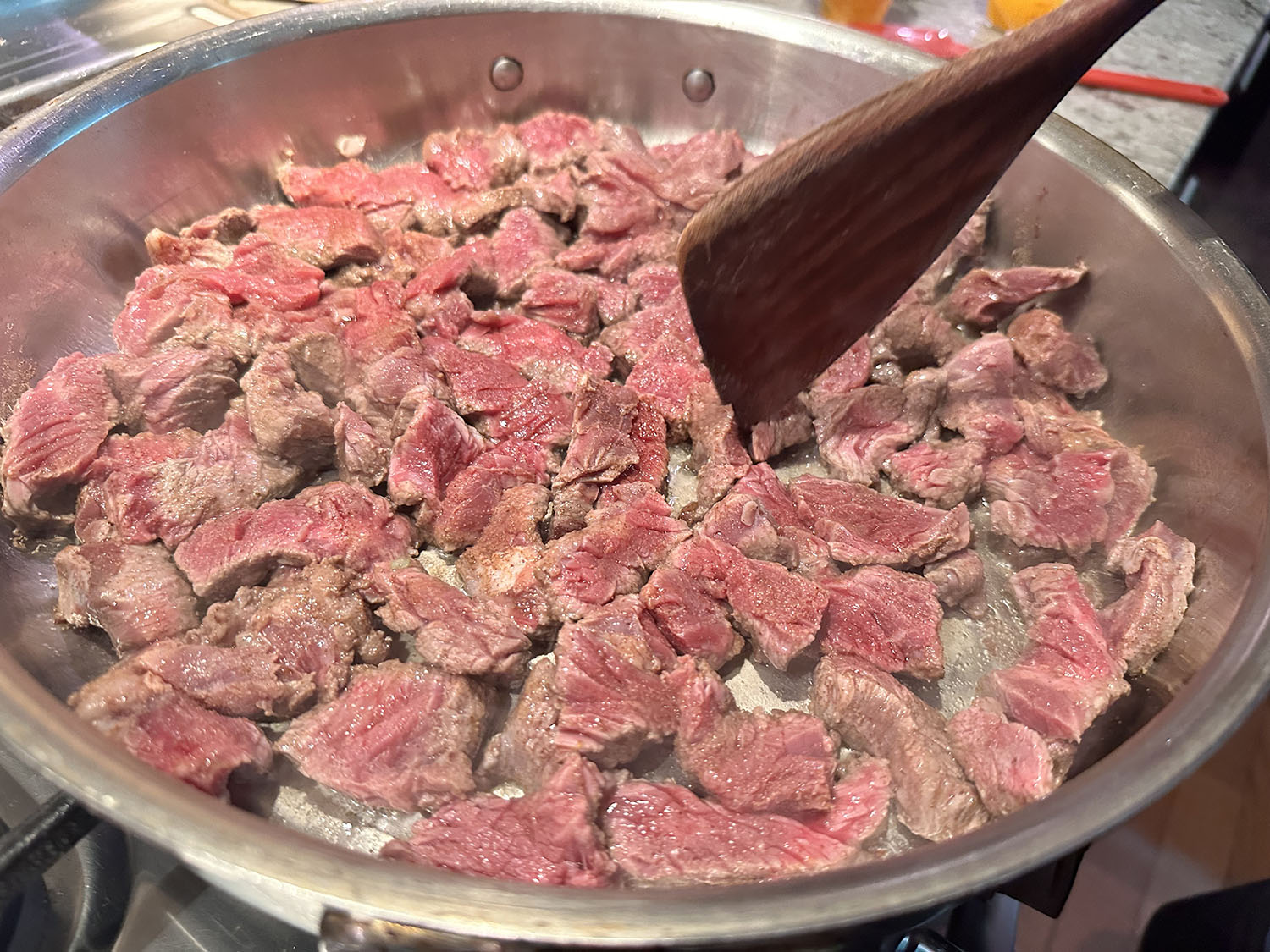
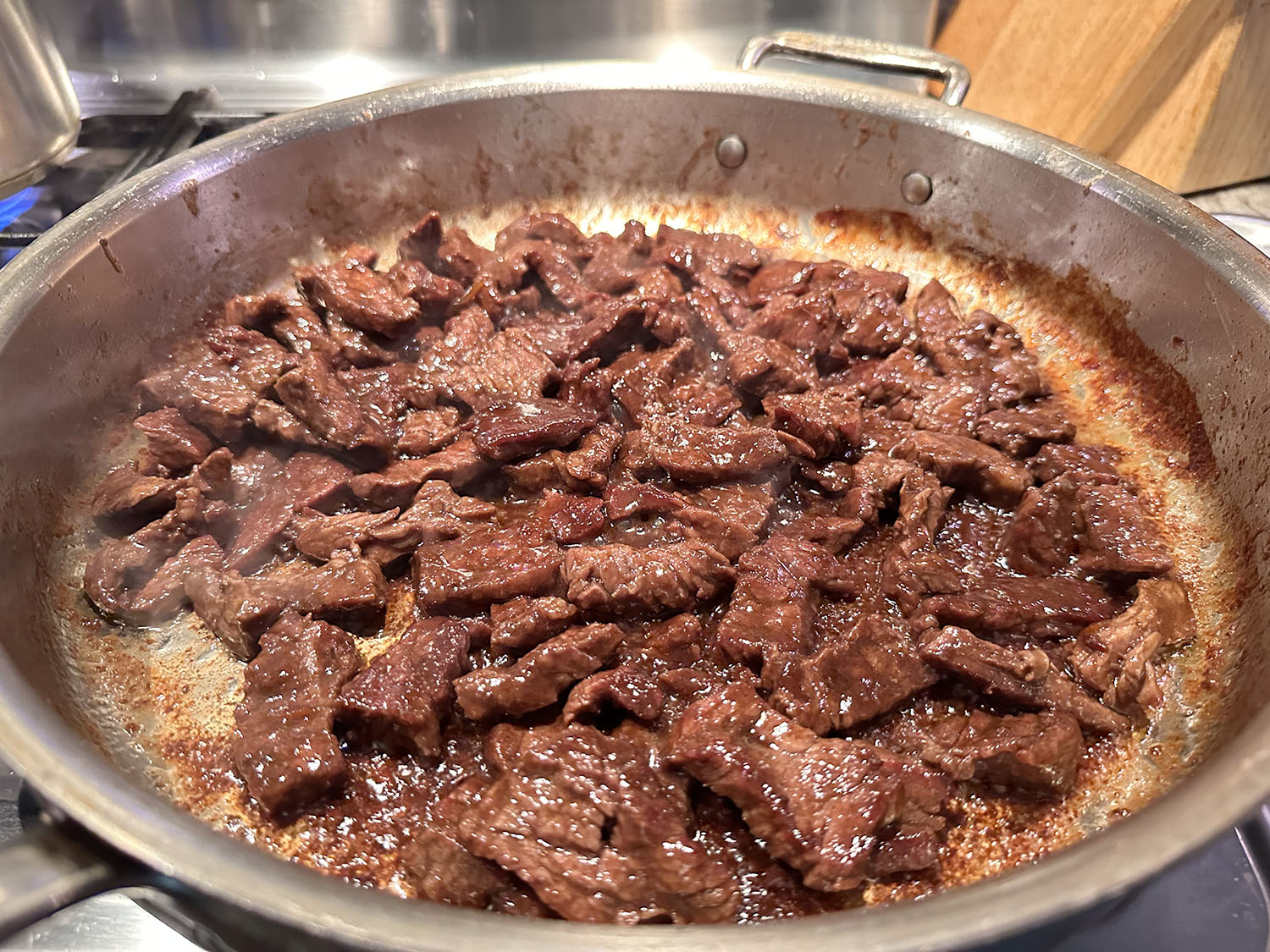
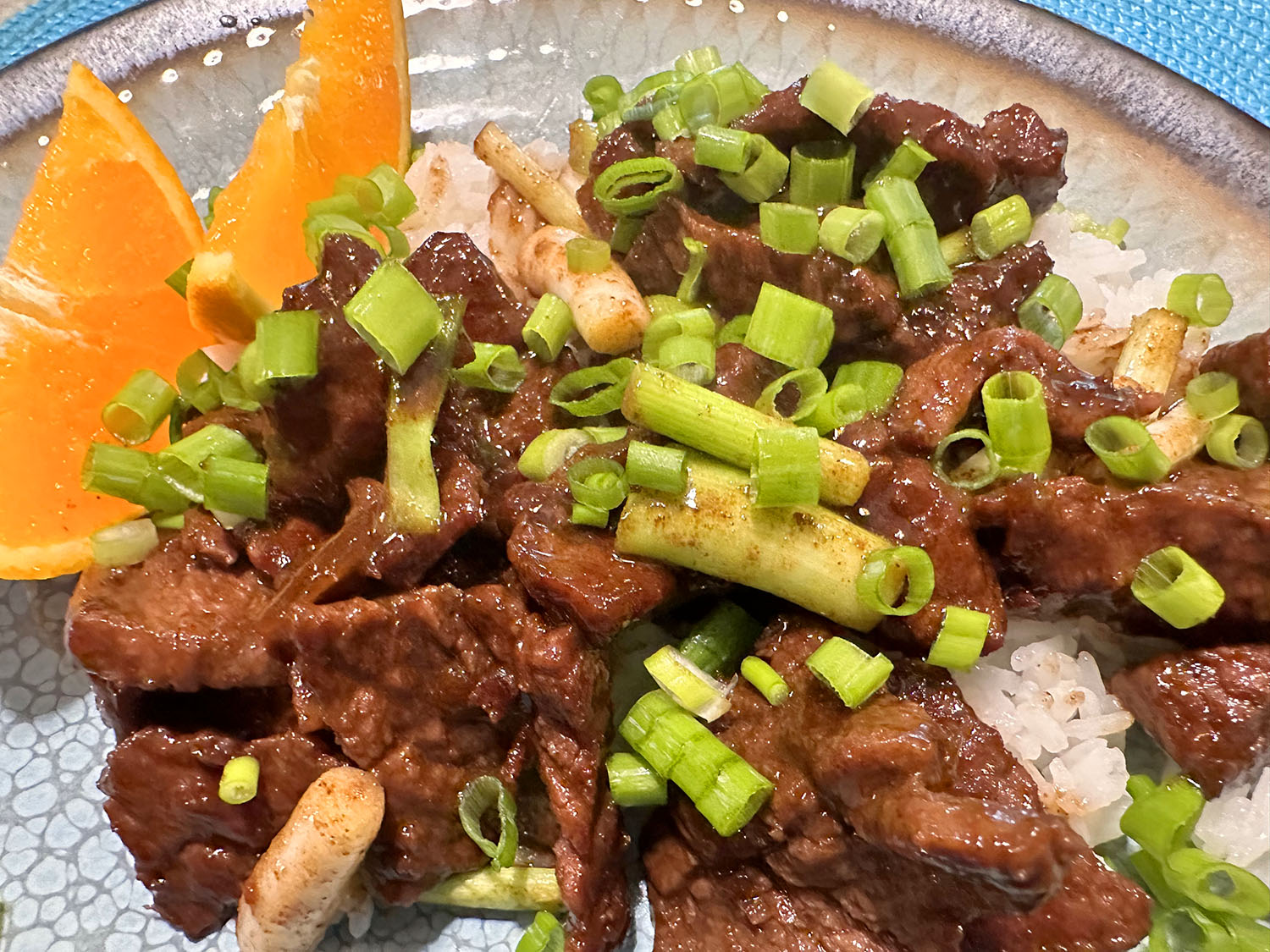
Stir-Fried Orange Beef with Scallions

For those home cooks who look forward to a short ingredient list and a quick cooking time, but demand great taste, this recipe is for you. This stir-fried spin on Chinese Orange Beef, a perennial favorite, typically calls for deep-frying the meat; plus using a myriad of spices and techniques. But you don’t have to worry about any of that here.

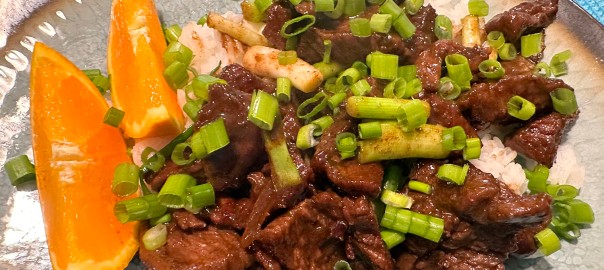
The recipe uses orange marmalade to add layers of sweetness, bitterness and citrusy brightness. Five-spice powder adds to the complexity with its warm spiciness. Then the stir-fry is finished with scallions or basil to accentuate the anise notes of the five-spice. Serve with steamed white or brown rice; and perhaps a side salad if you crave more veggies.

Stir-Fried Orange Beef with Scallions

  • Servings: 3-4
  • Difficulty: easy
  • Print

Ingredients

  • 1½ lbs. beef flat-iron steak OR boneless beef short ribs OR flap meat, trimmed and sliced ¼ inch thick against the grain
  • 1½ tsp. Chinese five-spice powder
  • Ground black pepper OR ground white pepper
  • 1 Tbsp. neutral oil
  • 3 Tbsp. orange marmalade
  • 2 Tbsp. soy sauce
  • 1 bunch scallions, whites and light greens cut into 1-inch lengths, dark greens chopped for garnish OR 1 cup lightly packed fresh basil, torn if large
  • Juice from 1⁄2 orange, plus extra wedges to serve

Directions

  1. Toss the beef with the five-spice and ½ teaspoon pepper.
  2. In a 12-inch skillet, heat the oil until barely smoking. Add the beef in an even layer and cook without stirring until browned on the bottom, about 3 minutes.
  3. Stir, then add the marmalade and soy sauce. Cook, stirring, until the beef is lightly glazed. Off heat, stir in the scallions and orange juice. Season with pepper and additional orange juice.

http://www.lynnandruss.com

Adapted from a recipe by Courtney Hill for Milk Street

Stir-Fried Thai-Style Beef with Chiles and Shallots

Stir-fried dishes are one of our favorite go-to meals. You can basically add whatever ingredients that suits your fancy—or in an effort to use up some fresh vegetables.

For a sophisticated Thai beef recipe using available ingredients and requiring minimal cooking time, you can use an inexpensive blade steak, which offers both tenderness and robust flavor. With a marinade made of fish sauce, white pepper, citrusy coriander, and a little light brown sugar, the beef needs to marinated for only 15 minutes to develop full flavor.

To add heat to this stir-fried Thai beef recipe, use an easily controlled heat source—Asian chili-garlic paste—that also adds toasty garlicky flavors along with heat.

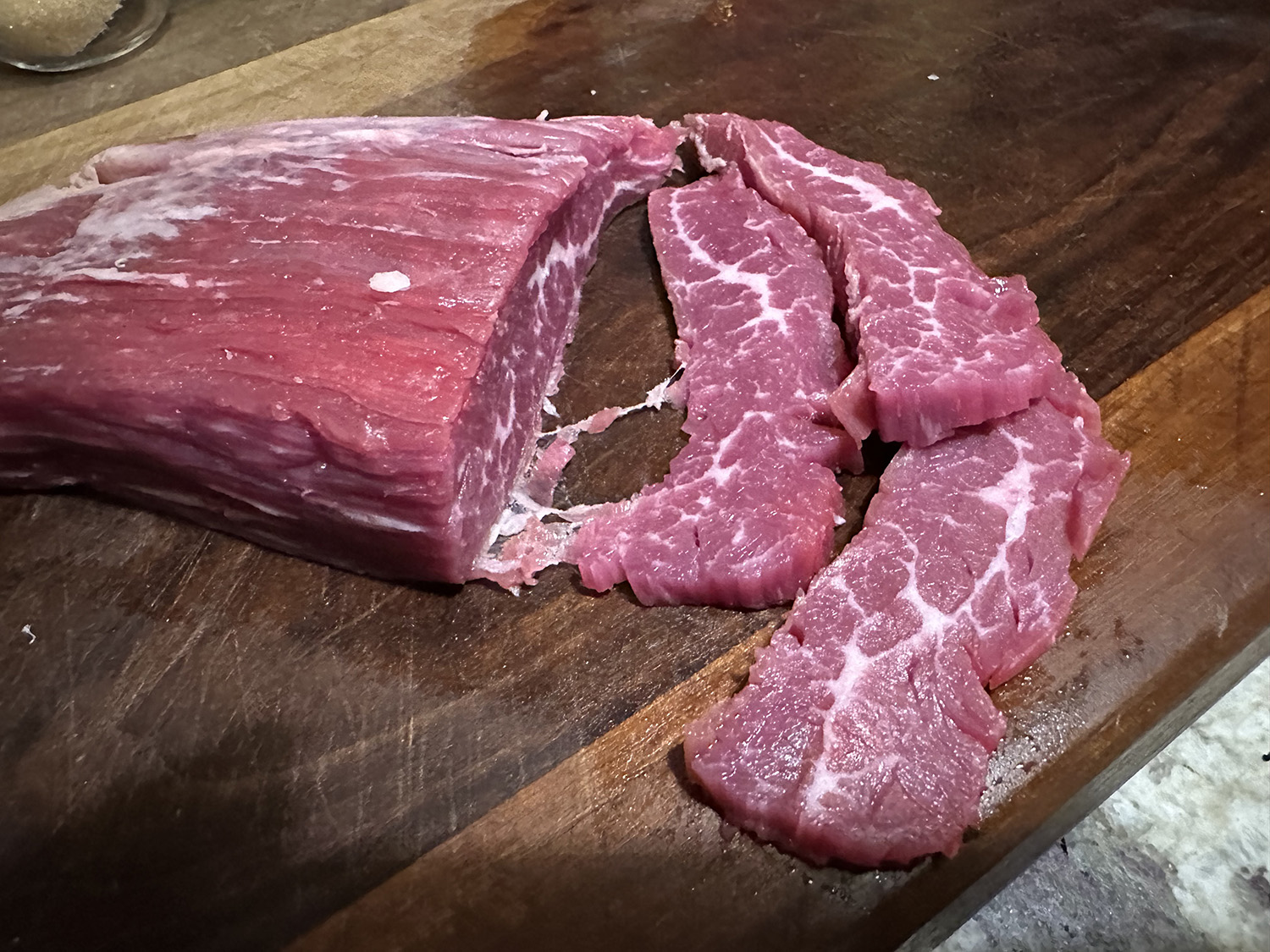
If you cannot find blade steaks, use flank steak (our choice). To cut a flank steak into the proper-sized slices for stir-frying, first cut the steak with the grain into 1 1/2-inch strips, then cut the strips against the grain into 1/4-inch-thick slices (see photo below). White pepper lends this stir-fry a unique flavor (black pepper is not a good substitute). Serve the stir-fry with steamed jasmine rice.

Stir-Fried Thai-Style Beef with Chiles and Shallots

  • Servings: 4
  • Difficulty: easy
  • Print

Ingredients

Beef and Marinade

  • ¾ tsp. ground coriander
  • ⅛ tsp. ground white pepper
  • 1 tsp. light brown sugar
  • 1 Tbsp. fish sauce
  • 2 lbs. blade or flank steak, trimmed and cut into 1/4-inch-thick strips

Stir-Fry

  • 2 Tbsp. fish sauce
  • 2 Tbsp. rice vinegar
  • 2 Tbsp. water
  • 1 Tbsp. light brown sugar
  • 1 Tbsp. Asian chili-garlic paste
  • 3 medium cloves garlic, minced or pressed through garlic press (about 1 Tbsp.)
  • 3 Tbsp. vegetable oil
  • 3 Serrano chiles or jalapeño chiles, halved, seeds and ribs removed, chiles cut crosswise ⅛ inch thick
  • 3 medium shallots, trimmed of ends, peeled, quartered lengthwise, and layers separated
  • ½ cup fresh mint leaves, large leaves torn into bite-sized pieces
  • ½ cup fresh cilantro leaves
  • ⅓ cup chopped unsalted roasted peanuts and lime wedges for serving

Directions

  1. FOR THE BEEF AND MARINADE: Combine coriander, white pepper, brown sugar, and fish sauce in large bowl. Add beef, toss well to combine; marinate 15 minutes.
  2. FOR THE STIR-FRY: In small bowl, stir together fish sauce, vinegar, water, brown sugar, and chili-garlic paste until sugar dissolves; set aside.
  3. In small bowl, mix garlic with 1 teaspoon oil; set aside. Heat 2 teaspoons oil in 12-inch nonstick skillet (or use a wok like we did) over high heat until smoking; add one-third of beef to skillet in even layer. Cook, without stirring, until well browned, about 2 minutes, then stir and continue cooking until beef is browned around edges and no longer pink in the center, about 30 seconds.
  4. Transfer beef to medium bowl. Repeat with additional oil and remaining meat in 2 more batches.
  5. After transferring last batch of beef to bowl, reduce heat to medium; add remaining 2 teaspoons oil to now-empty skillet and swirl to coat. Add chiles and shallots and cook, stirring frequently, until beginning to soften, 3 to 4 minutes.
  6. Push chile-shallot mixture to sides of skillet to clear center; add garlic to clearing and cook, mashing mixture with spoon, until fragrant, about 15 seconds. Stir to combine garlic with chile-shallot mixture.
  7. Add fish sauce mixture to skillet; increase heat to high and cook until slightly reduced and thickened, about 30 seconds.
  8. Return beef and any accumulated juices to skillet, toss well to combine and coat with sauce, stir in half of mint and cilantro; serve immediately, sprinkling individual servings with portion of peanuts and remaining herbs, and passing lime wedges separately.

http://www.lynnandruss.com

Adapted from a recipe in Cook’s Illustrated
Weeknight Beef Stroganoff

Beef Stroganoff preparation varies significantly not only based on geography, but based on other factors as well, such as the cut of meat and seasonings selected. When looking for a “quick” version of Beef Stroganoff, we ended up creating a mash-up of several different ones put together.

Originally a Russian dish, it is made up of sautéed pieces of beef served in a sauce of mustard and sour cream. From its origins in mid-19th-century Russia, it has become popular around the world, with considerable variation from the original recipe. Mushrooms are common in most variants.

Although are several starches you could serve with it, we opted for old fashioned wide egg noodles. Try to time it so that the noodles are done just as the meat and sauce are finishing.

TIP: If you substitute yogurt for the sour cream, use full fat yogurt, and make sure to take the pan off the heat before stirring it in or it may curdle.

Weeknight Beef Stroganoff

  • Servings: 4
  • Difficulty: easy
  • Print

Ingredients

  • 5 Tbsp. butter, divided
  • Salt
  • Freshly ground black pepper
  • 1 1/2 lb. top sirloin or tenderloin, cut thinly into 1-inch wide by 2 1/2-inch strips long
  • 1/3 cup chopped shallots or onions
  • 2 cloves garlic, minced
  • 1 tsp. Worcestershire sauce
  • 8 oz. cremini mushrooms, sliced
  • 1/8 tsp. nutmeg
  • 1/4 cup white wine
  • 1/2 cup beef broth
  • 1/2 tsp. dry tarragon or 2 tsp. chopped fresh tarragon
  • 1 cup sour cream (full fat), at room temperature
  • 8 oz. large wide egg noodles, cooked according to package directions

Directions

  1. Melt 3 tablespoons of butter in a large skillet on medium heat. Increase the heat to high/med-high. Working in 2 or 3 batches, add the strips of beef in a single layer with space between the strips. You want to cook the beef quickly, browning on each side, so the temp needs to be high enough to brown the beef, but not so high as to burn the butter. While cooking the beef, sprinkle generously with salt and pepper. When both sides are browned, remove the beef to a dish and set it aside. Repeat with remaining beef slices.
  2. In the same pan, reduce the heat to medium and add the shallots. Cook the shallots for a minute or two, allowing them to soak up any meat drippings.
  3. In the same pan with the shallots, melt the remaining 2 tablespoons of butter. Increase heat to medium-high and add the mushrooms. Cook, stirring occasionally for about 4 minutes. While cooking, sprinkle the nutmeg and the tarragon on the mushrooms.
  4. Add 1/4 cup wine to deglaze the pan and loosen brown bits. Add 1/2 beef broth.
  5. Reduce the heat to low and add the sour cream to the mushrooms. Mix in the sour cream thoroughly. Do not let it come to a simmer or boil or the sour cream may curdle. Stir in the beef.
  6. Add salt and pepper to taste. Note that you will likely need more salt than you expect. Taste, and if it needs salt, add 1/2 teaspoon or more. Serve immediately over cooked egg noodles.

http://www.lynnandruss.com

Spicy Beef with Peanuts and Chiles

Not a huge fan of take-out—although it does serve its purpose on occasion—here’s a stir-fry that will taste far better than any from the local Asian restaurant down the street. Yes, it is a bit prep-intensive, and uses several bowls, but well worth your time and effort. You could even do a lot of the prep earlier in the day, and throw it all together when ready to eat.

We paired the Spicy Beef with Peanuts and Chiles with a Rice Noodle Salad, that not only complimented the main dish, but shared many of the wonderful flavors. Even though the original recipe indicated to use a 12-inch skillet, next time we’ll use our wok. Keep in mind, you will probably need to sear the beef in two batches, so as not to steam the meat, but brown the slices.
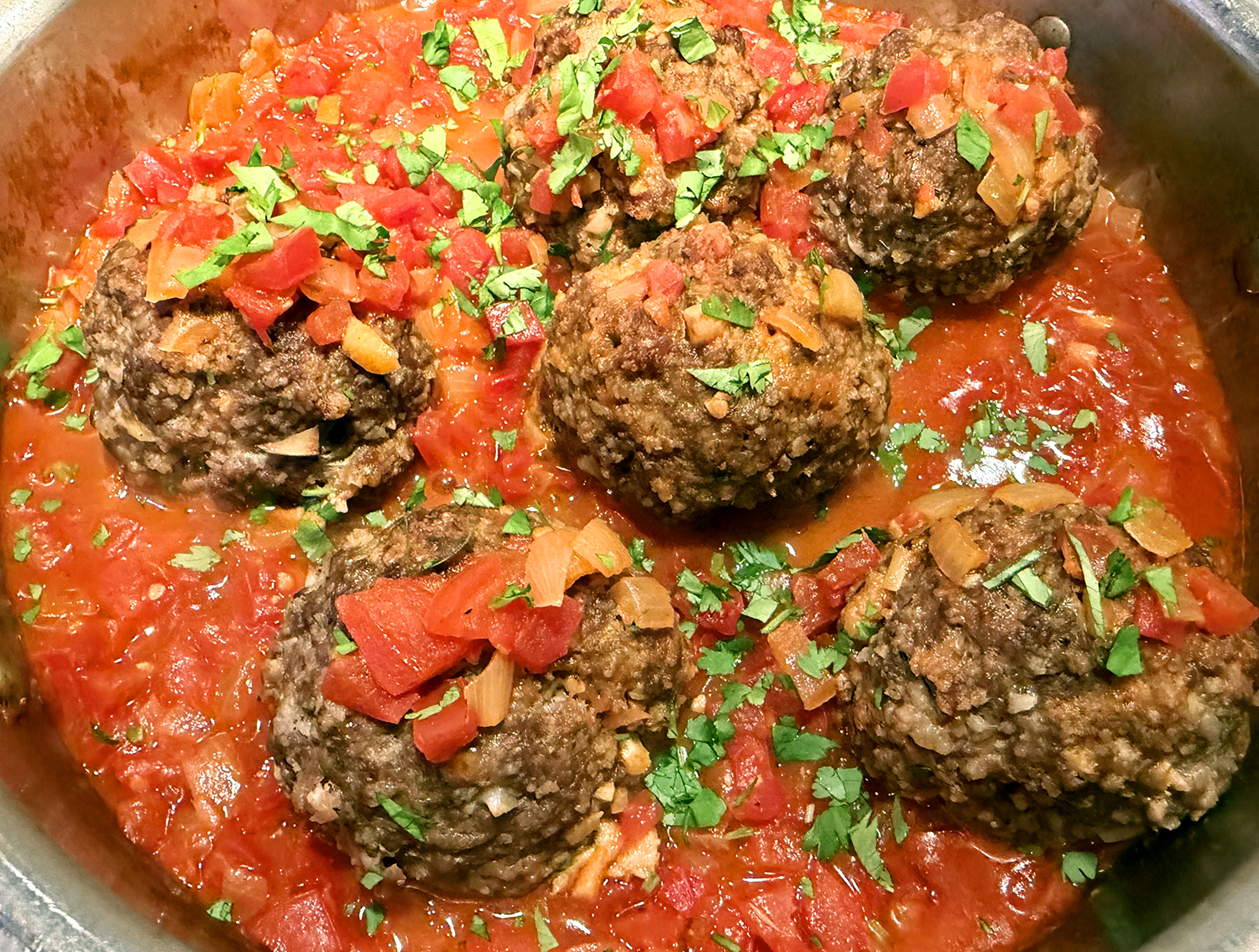
The supermarket was not carrying either serrano or Thai chili peppers so we opted for Fresnos. As the recipe instructs, we did not discard the seeds, but if you can’t tolerate heat, you may want to scale back some, or omit altogether.
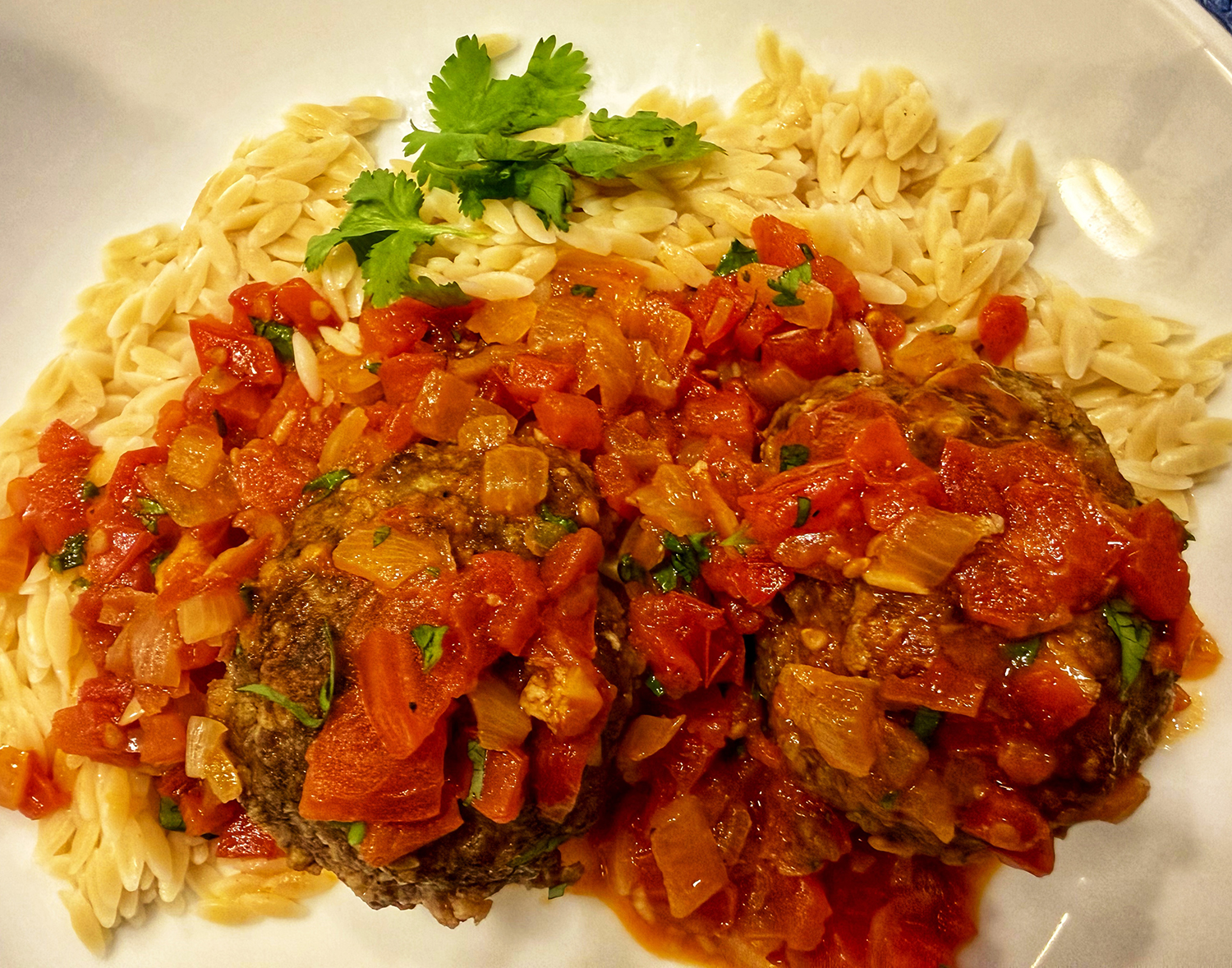
Our slices of flank steak measured about 1/4″-thick. If you prefer thinner slices, freeze the steak whole for about 15-20 minutes, then slice to your preferred width.
Spicy Beef with Peanuts and Chiles

  • Servings: 4-6
  • Difficulty: easy
  • Print

Ingredients

  • 1 lb. flank steak, thinly sliced on the diagonal against the grain
  • 2 Tbsp. soy sauce
  • 2 tsp. fish sauce
  • 1/4 tsp. kosher salt
  • 2 Tbsp. fresh lime juice
  • 1 Tbsp. light brown sugar
  • 1/4 cup salted peanuts
  • 2 large shallots, coarsely chopped
  • 2 Thai or serrano chiles, stemmed and coarsely chopped (don’t seed)
  • 3 Tbsp. canola or peanut oil
  • 1/3 cup coarsely chopped fresh cilantro
  • 3 Tbsp. chopped fresh basil

Directions

  1. Toss the steak with 1 tablespoon of the soy sauce, 1 tsp of the fish sauce, and the salt.
  2. Combine the remaining 1 tablespoon soy sauce and 1 tsp fish sauce with 1 tablespoon of the lime juice and the brown sugar and set aside.
  3. Pulse the peanuts, shallots, and chiles in a food processor until finely chopped. Transfer to a small bowl.
  4. Set a wok or 12-inch skillet over medium-high heat until hot, about 1 minute.
  5. Add 1-1/2 tablespoon of the oil and once it’s shimmering, add the beef.
  6. Cook, stirring, until the beef just loses its raw appearance, about 2 minutes. Transfer to a plate.
  7. Reduce the heat to medium, add the remaining 1-1/2 tablespoon oil and the shallot mixture, sprinkle with salt, and cook, stirring, until the shallots are soft, about 2 minutes.
  8. Return the beef to the pan. Stir the soy mixture and add it, along with half of the cilantro and basil, and cook, stirring to let the flavors meld, 2 minutes.
  9. Serve sprinkled with the remaining lime juice, cilantro, and basil.

http://www.lynnandruss.com

Original recipe from the now defunct Fine Cooking

Spicy Chinese Beef Skewers

Spice it twice—the mantra for this flavorful beef skewer. After skewering but before going on the grill, the meat is dusted generously with the spices. Those spices toast, their flavors deepening during cooking. Once the meat comes off the heat, it’s seasoned a second time with the same spice blend, creating multiple layers of nuanced flavors from the same few ingredients.

What did we do different? In place of flat iron steak, we substituted flap meat because it was already in our freezer and it’s easier to source than the aforementioned flat iron cut. In keeping with the Asian theme, we also grilled bok choy right along with the meat skewers. They benefited from a chili oil sauce that complimented the meat rub.

Don’t trim the fat from the beef before cooking. The fat adds flavor and helps keep the meat succulent. If you’re using a gas grill, make sure to give it at least 10 to 15 minutes to heat before cooking the skewers. This ensures the meat gets a nice surface char without overcooking the interior.

Spicy Chinese Beef Skewers

  • Servings: 4
  • Difficulty: easy
  • Print

Ingredients

  • 1½ lbs. beef flat iron steak, sliced against the grain into ¼-inch-thick strips
  • 1 Tbsp. dry sherry or Shaoxing wine
  • 1 Tbsp. soy sauce
  • 2 Tbsp. grapeseed or other neutral oil, plus more for grill grate
  • 2½ Tbsp. cumin seeds
  • 2½ tsp. fennel seeds
  • 1½ tsp. sichuan peppercorns
  • 2 tsp. red pepper flakes
  • Kosher salt
  • chili oil, to serve (optional)

Directions

  1. In a medium bowl, combine the beef, sherry, soy sauce and oil. Let stand at room temperature while preparing the spice mix and the grill.
  2. In a small skillet over medium-low, toast the cumin, fennel and Sichuan peppercorns until fragrant, about 2 minutes. Transfer to a spice grinder and add the pepper flakes. Process until coarsely ground, about 10 seconds. Transfer to a small bowl and stir in 1¾ teaspoons salt. Measure out 1 tablespoon of the mix and set aside to use as garnish.
  3. Prepare a charcoal or gas grill for direct, high-heat cooking. For a charcoal grill, ignite a large chimney of coals and let burn until lightly ashed over, then distribute the coals evenly over one side of the grill bed; open the bottom grill vents and the lid vent. For a gas grill, turn all burners to high. Heat the grill, covered, for 10 to 15 minutes, then clean and oil the cooking grate.
  4. While the grill heats, thread the beef onto ten 8- to 10-inch metal skewers, evenly dividing the meat and pushing the pieces together. Sprinkle the remaining spice mixture evenly over both sides of the meat, patting gently to adhere.
  5. Grill until lightly charred, 2 to 3 minutes, then flip and grill until the second sides are lightly charred, another 2 minutes. Transfer to a serving platter, sprinkling both sides of the skewers with the reserved spice mix, then drizzle with chili oil (if using).

http://www.lynnandruss.com

Adapted from a recipe by Laura Russell for Milk Street