Monthly Archives: October 2025

Umami Meatloaf with Red Pepper-Tomato Sauce

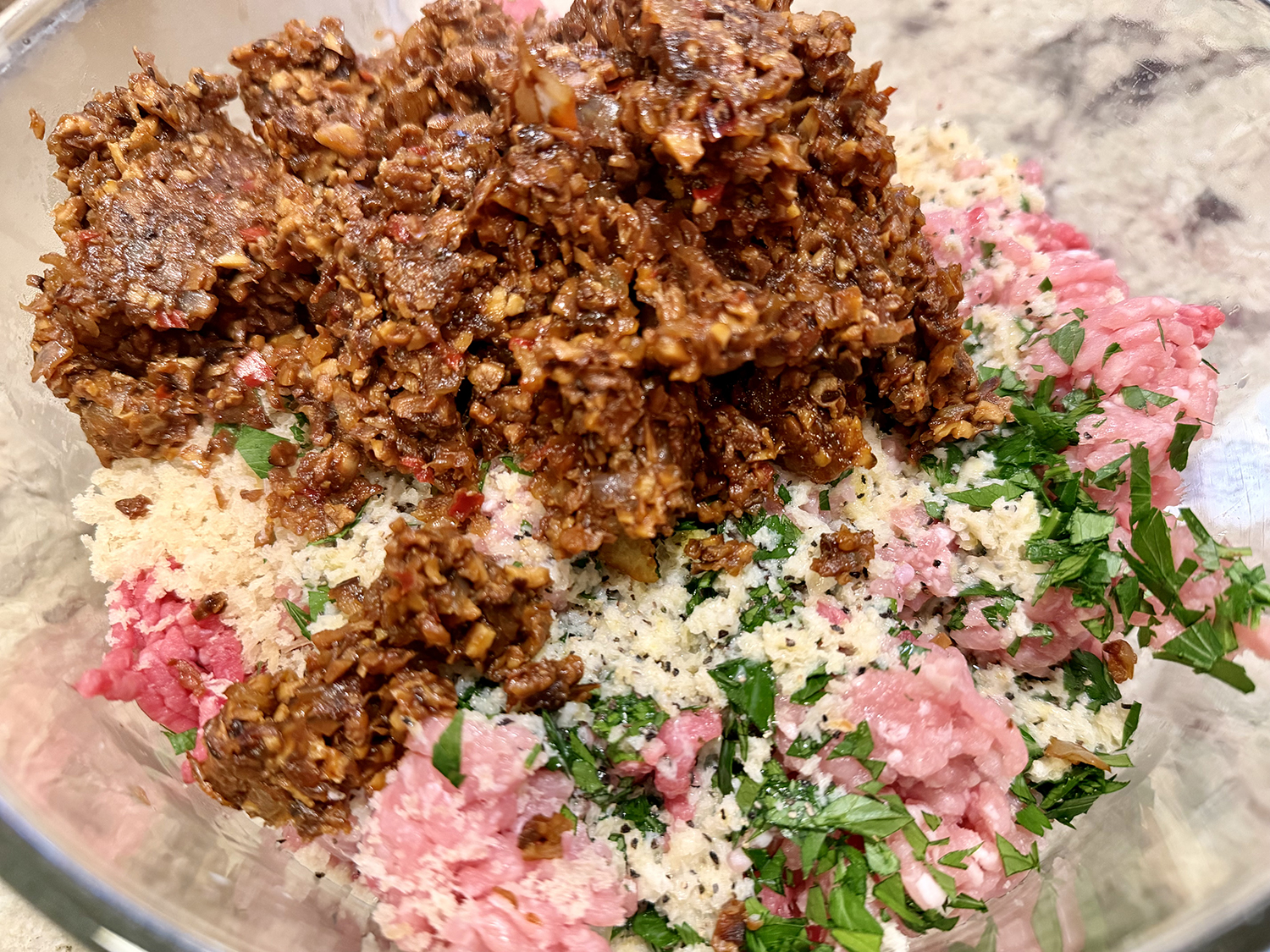
If the thought of meatloaf has you feeling a little meh, then get this version on your short list. Here’s a juicy and flavorful meatloaf made with a mix of mushrooms, beef, miso, soy and Worcestershire sauces for immensely satisfying umami.

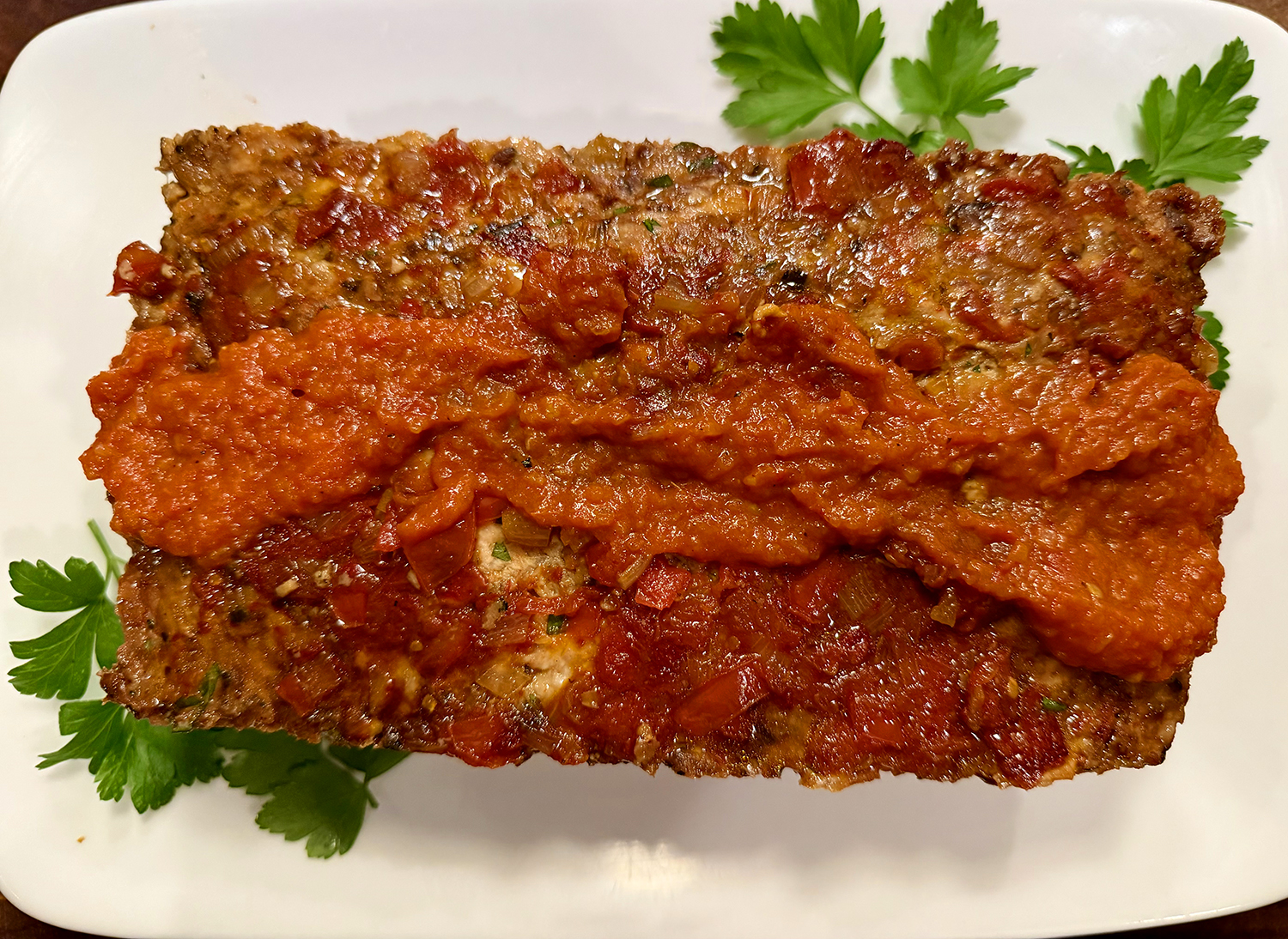
The milk-and-egg-soaked breadcrumbs are key for keeping the meat moist and promote tenderness. A sweet and tangy sauce both glazes the top of the meatloaf and is served alongside it. The glaze on the meatloaf deepens in flavor as it bakes, and the sauce reserved for serving is bright and fresh.
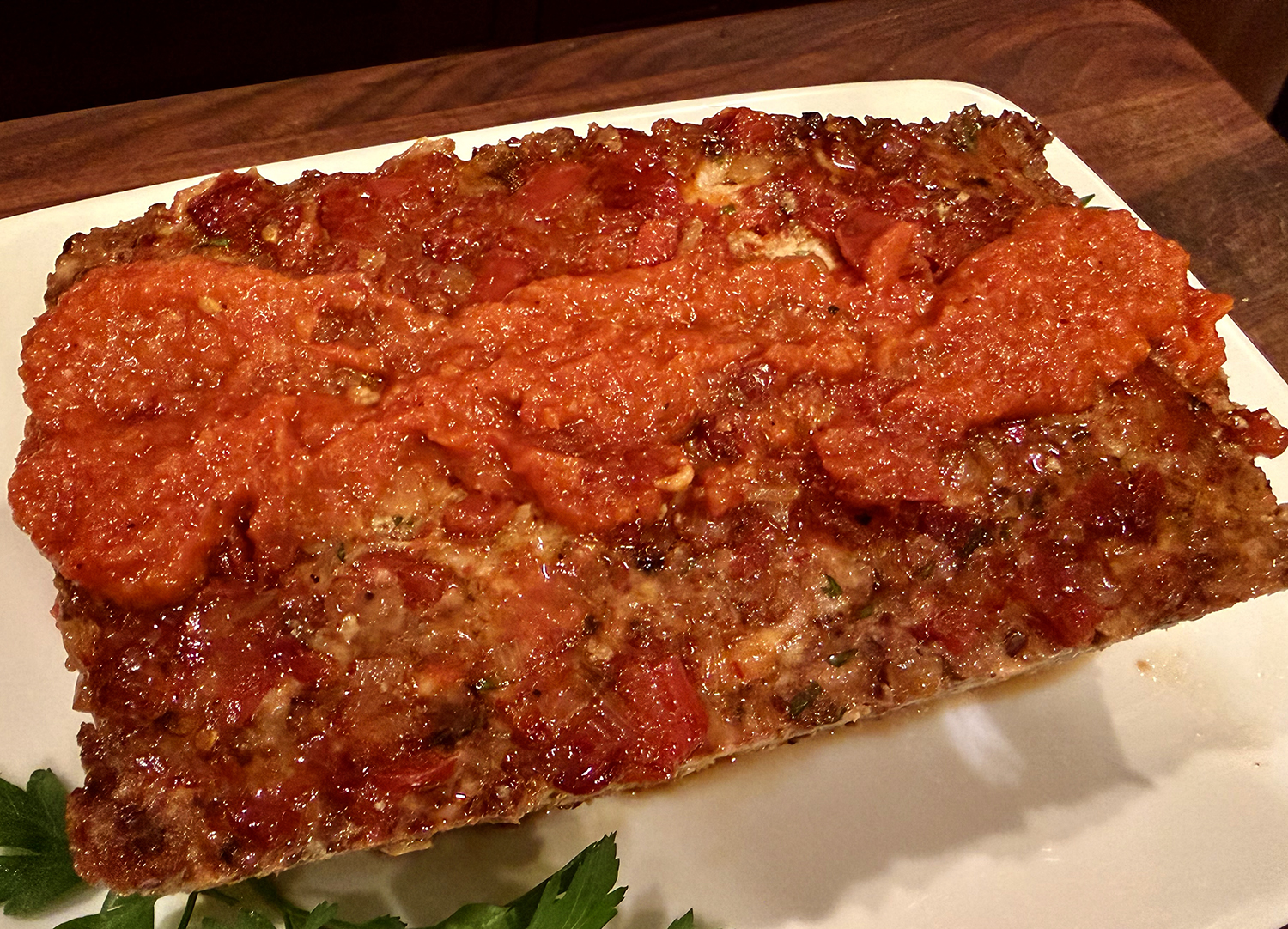
We paired the meatloaf with Go-With-Everything Celery Root Purée. You’ll love the leftovers — try them in a sandwich slathered with sauce. Oh, and we did just that with some leftover slabs, sauce, a slice of provolone on great bread and pan sautéed in a bit of butter. Truly memorable!

Make Ahead: The meatloaf sauce can be stored in an airtight container in the refrigerator for up to five days. The cooled meatloaf can be stored in an airtight container in the refrigerator for up to four days. Reheat slices in the oven, or gently warm in the microwave.

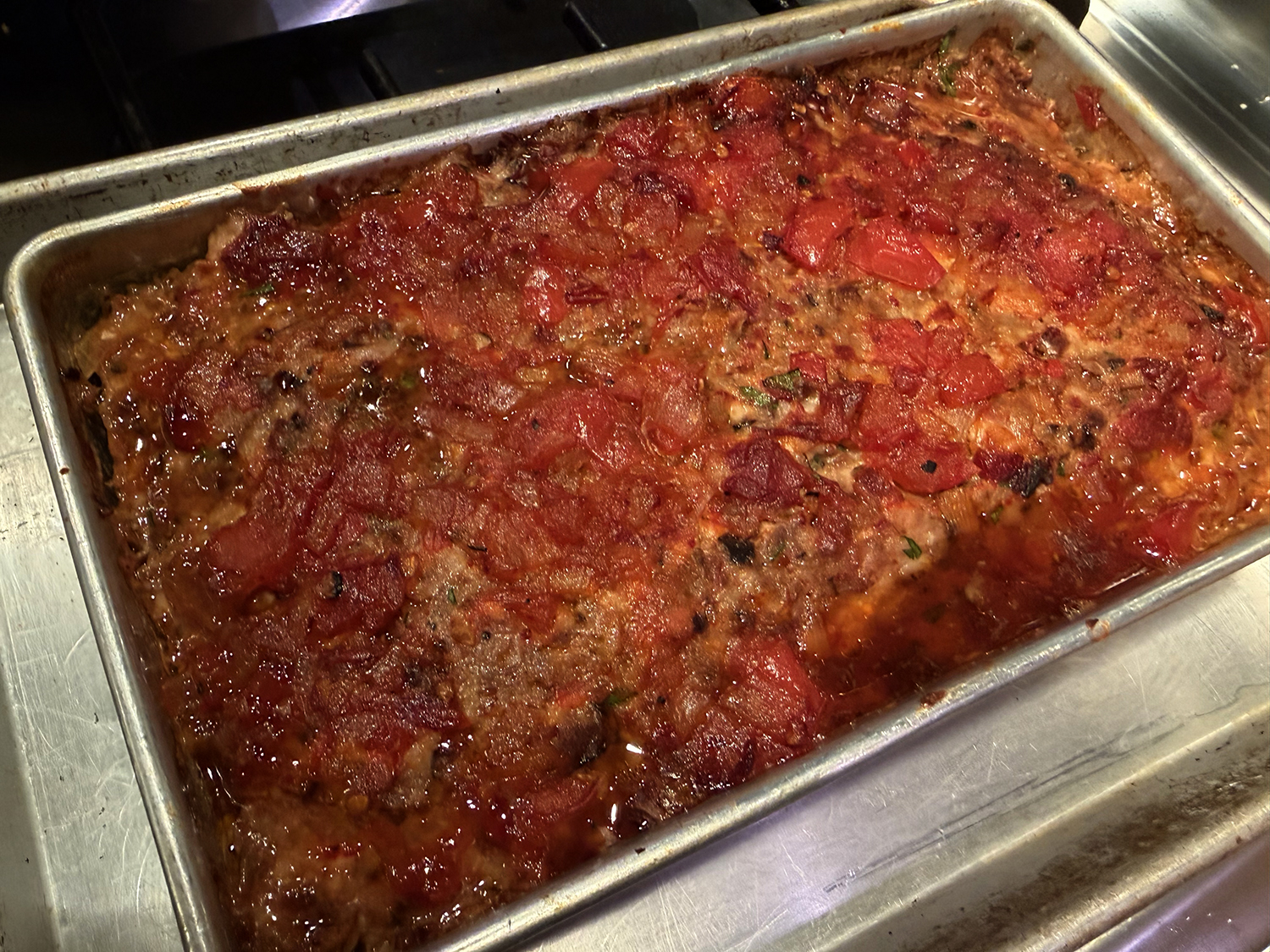
The recipe was adjusted so that more of the tomato-red pepper sauce was added on top of the loaf before baking. You will need to reheat the remaining sauce in a microwave before serving. And a word to the wise, you will be using a LOT of kitchen equipment, just sayin’…

Umami Meatloaf with Red Pepper-Tomato Sauce

  • Servings: 6
  • Difficulty: moderate
  • Print

Ingredients

Meatloaf Sauce

  • 2 Tbsp. extra-virgin olive oil
  • 2 large shallots, chopped (about 3/4 cup)
  • 2 cups chopped plum tomatoes (about 4 large tomatoes)
  • 1 cup chopped jarred roasted red bell pepper
  • 1/4 cup red wine vinegar
  • 2 Tbsp. light brown sugar
  • 1 tsp. kosher salt
  • 6 Tbsp. water

Meatloaf

  • 2 lbs. 85% lean ground beef
  • 2 tsp. kosher salt, divided
  • 2 Tbsp. extra-virgin olive oil
  • 1 yellow onion, finely chopped (about 1 cup)
  • 3 cups thinly sliced fresh shiitake mushrooms
  • 1 Fresno chile, seeded and minced (about 1 Tbsp.)
  • 2 Tbsp. Worcestershire sauce
  • 1 Tbsp. shoyu or light soy sauce
  • 1 Tbsp. white miso
  • 1/2 cup whole milk
  • 1 large egg
  • 1 cup day-old fresh breadcrumbs
  • 3/4 tsp. black pepper
  • 1/4 cup finely chopped fresh flat-leaf parsley

Directions

The Sauce:

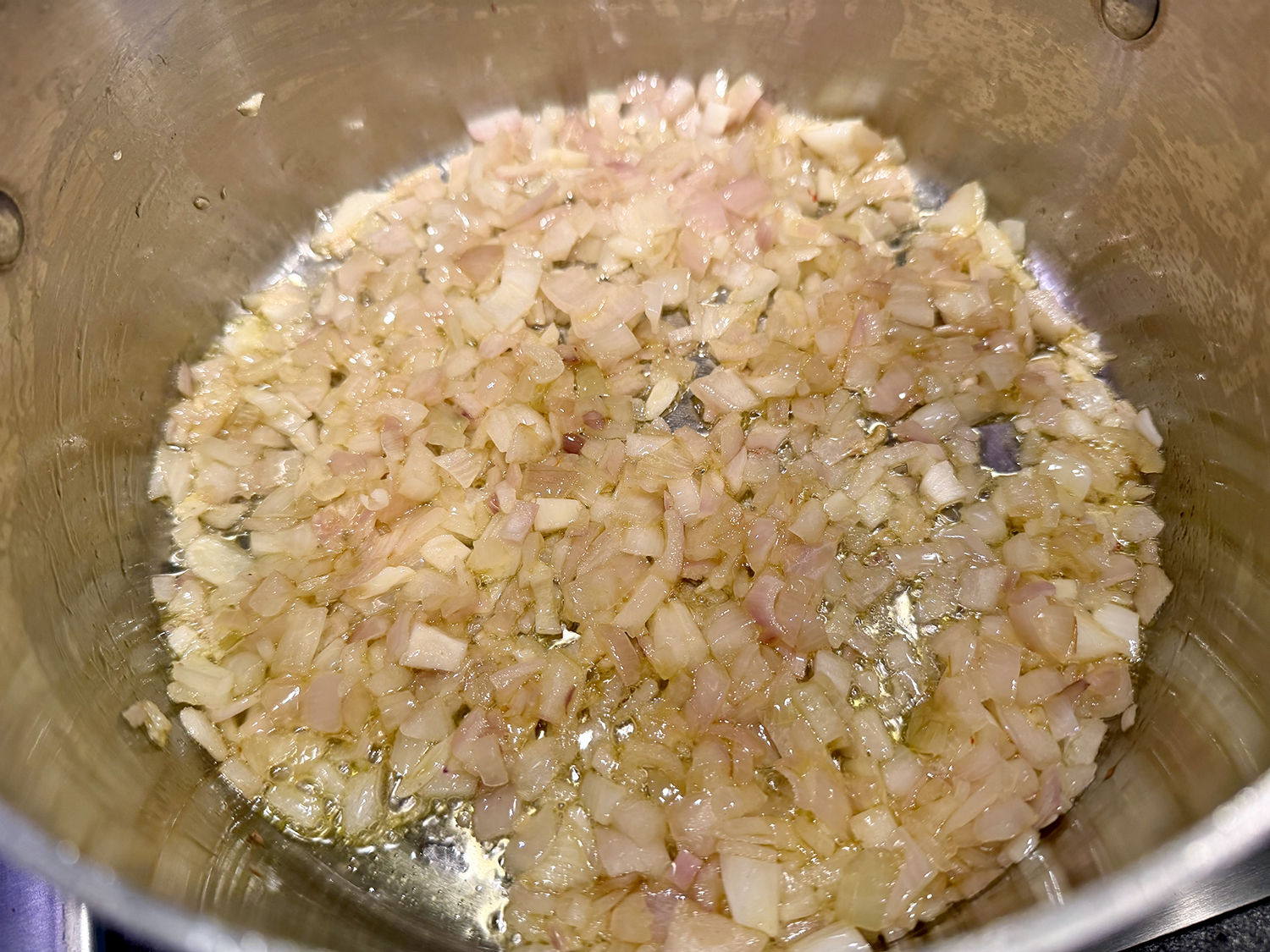
  1. Heat oil in a medium saucepan over medium. Add shallots; cook, stirring often, until translucent, about 3 minutes. Add tomatoes, peppers, vinegar, sugar, and salt. Cook, stirring often, until tomatoes break up, liquid evaporates, and mixture becomes a deep red paste, 25 to 30 minutes.
  2. Remove 1/2 cup tomato mixture, and set aside. Transfer remaining mixture to a food processor; add water, 1 to 2 tablespoons at a time and up to 4 to 5 tablespoons total, and pulse to make a thick sauce. (We did not use the entire amount of water.) Transfer sauce to a bowl; if desired, thin further with 1 tablespoon water. Set aside until ready to use.

The Meatloaf:

  1. Place beef in a large bowl, and sprinkle with 1 teaspoon salt. Set aside at room temperature for 30 minutes.
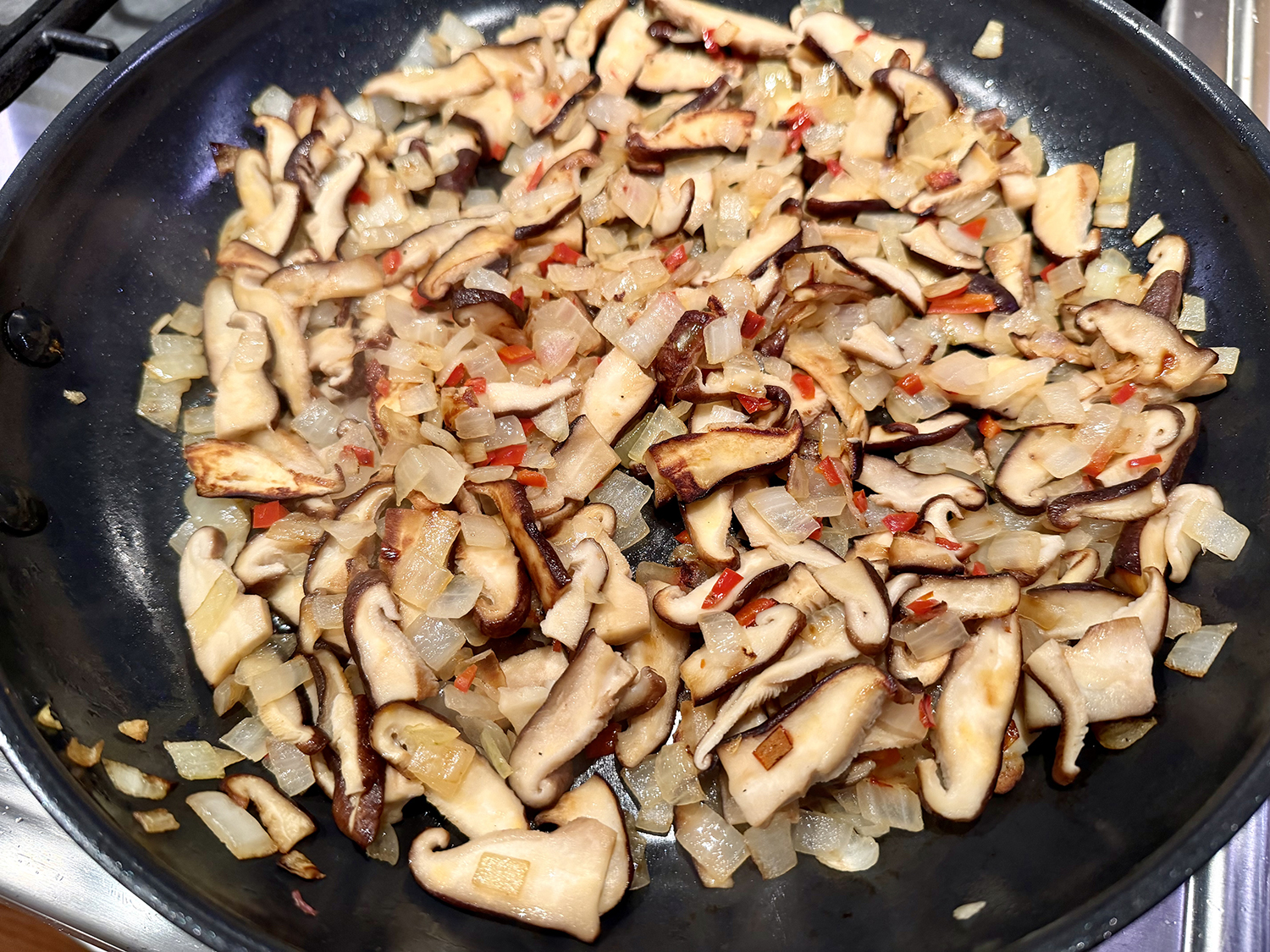
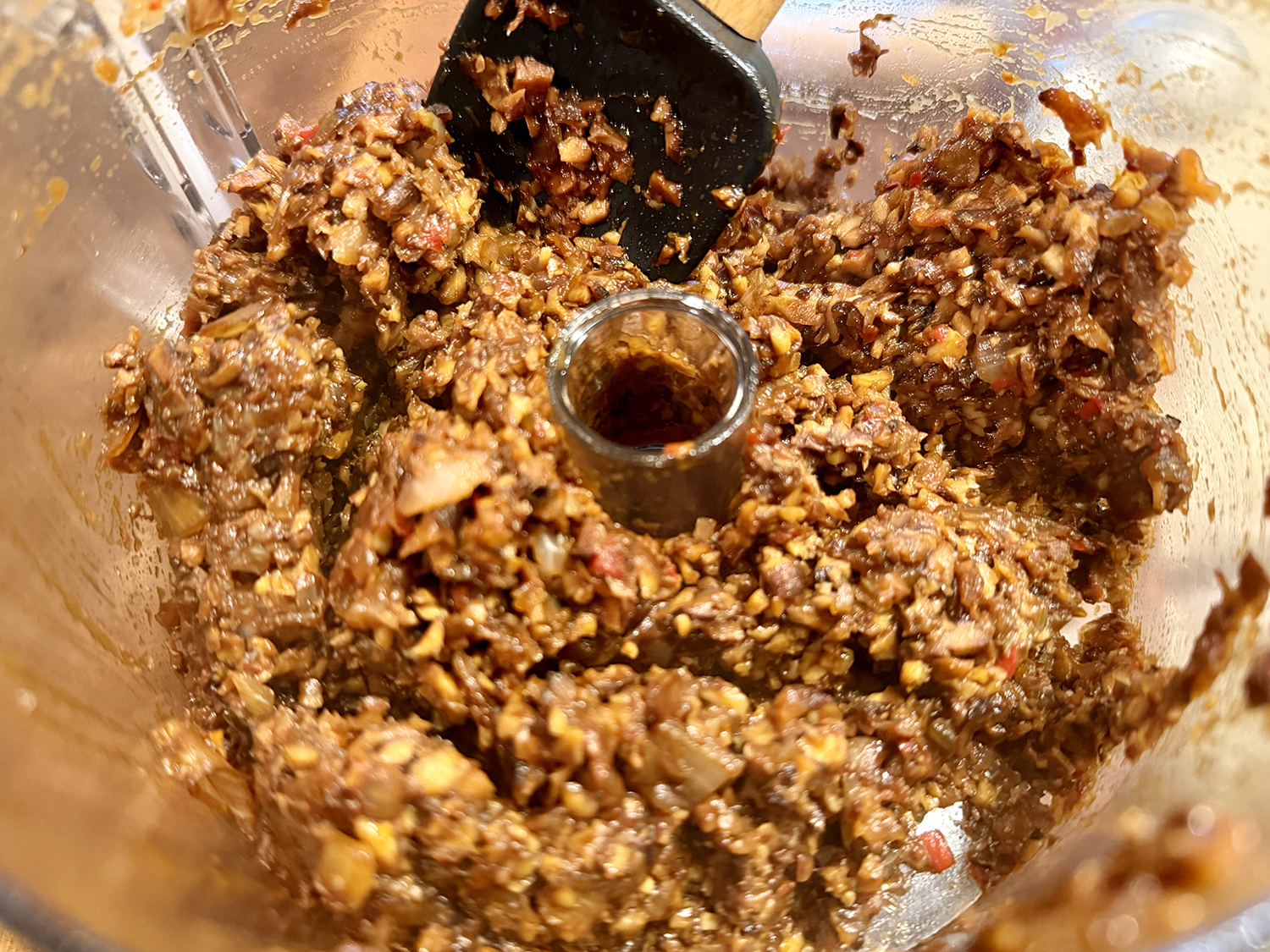
  2. Preheat oven to 350°F. Heat a large nonstick skillet over medium. Add oil and onion; cook, stirring occasionally, until softened, about 3 minutes. Add mushrooms and chile; cook, stirring often, until mushrooms are tender and golden brown, 15 to 20 minutes. Stir in Worcestershire sauce, shoyu, miso, and remaining 1 teaspoon salt until well combined. Transfer mixture to a food processor; pulse until finely chopped (not pureed), 8 to 10 pulses.
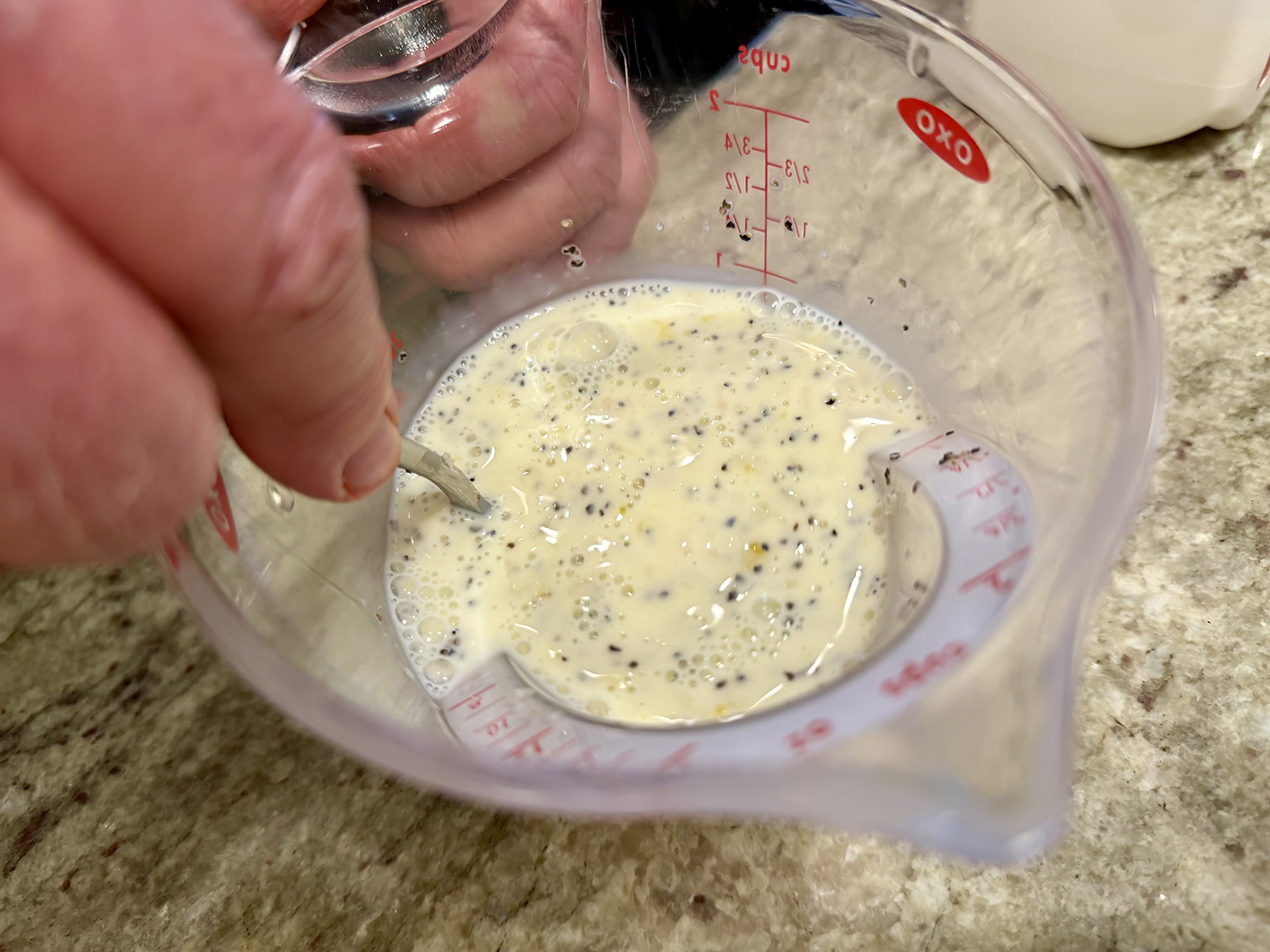
  3. Whisk together milk and egg in a medium bowl. Stir in breadcrumbs and black pepper. (Mixture will resemble cornbread batter.)
  4. Add parsley, breadcrumb mixture, and mushroom mixture to beef in large bowl. Using your hands or a rubber spatula, work ingredients into beef until combined. Pack beef mixture into an 8 1/2- x 4 1/2-inch loaf pan. Spread reserved 1/2 cup tomato mixture over top of meatloaf.
  5. Bake until an instant-read thermometer inserted into thickest portion of meatloaf registers 160°F, 50 minutes to 1 hour. Let meatloaf rest for about 5 minutes; pour off and discard any liquid. Allow meatloaf to cool for 15 minutes. Cut into 1-inch-thick slices; serve with remaining meatloaf sauce.

http://www.lynnandruss.com

Recipe by Hugh Acheson for Food & Wine

Spicy Korean Braised Chicken and Vegetables

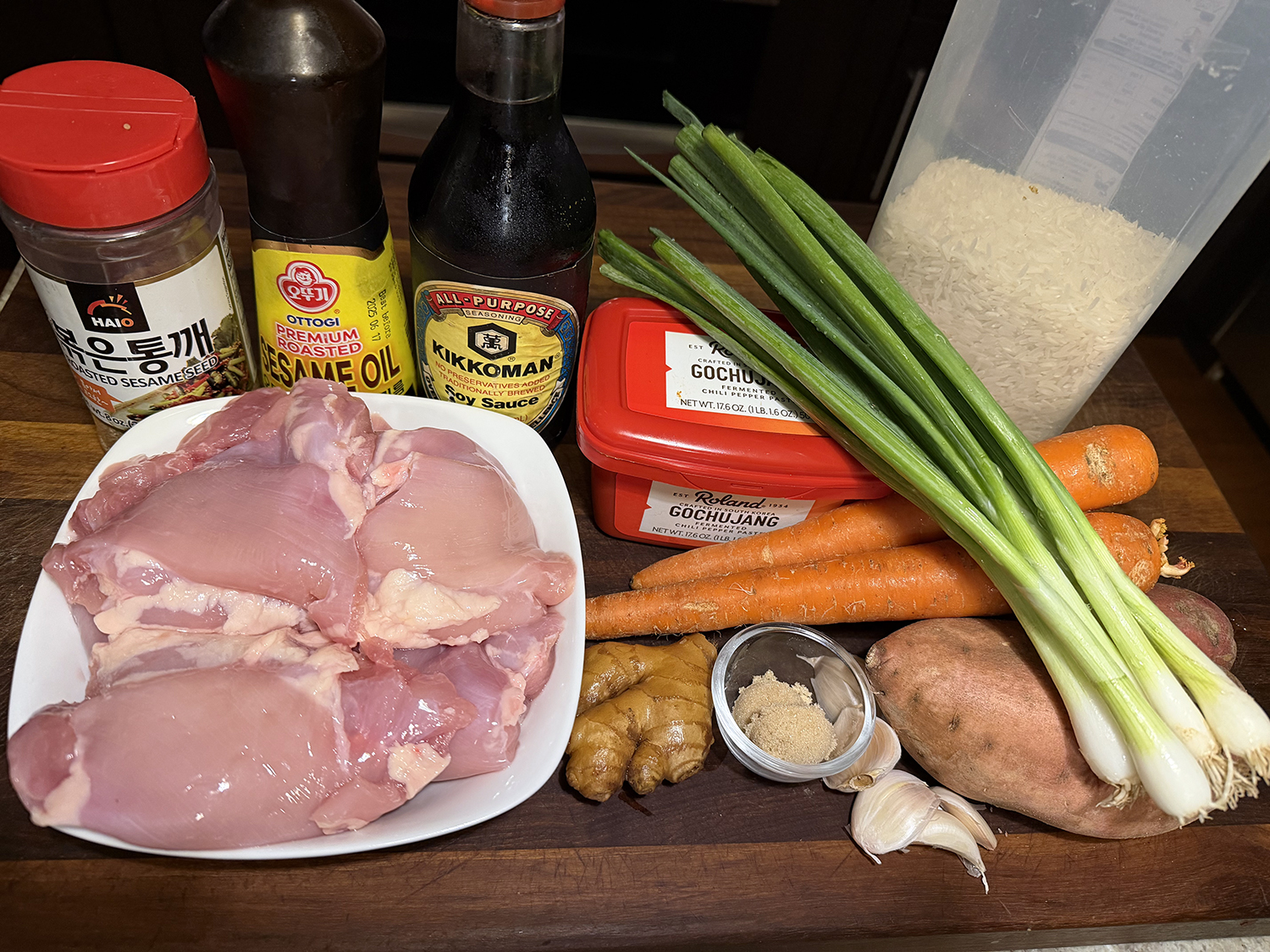
This flavor-packed stew from Milk Street, called dakbokkeumtang, counts gochujang—or Korean fermented chili paste—as one of its primary seasonings. The thick, bright-red paste usually is sold in plastic tubs or bottles in Asian markets or in the international aisle of regular supermarkets. It’s pretty much a staple in our house.

On the other hand, soy sauce and a dose of brown sugar add salty-sweet flavor to balance to the dish, while sesame oil and seeds add nutty notes. The potatoes and carrots absorb the seasonings so the pieces are flavored throughout. Therefore make sure to cut the vegetables into pieces about 1 inch in size, not smaller, so they don’t wind up overdone. Serve the stew with steamed rice.

NOTE: Don’t use chicken breasts instead of thighs. Sturdy dark meat does well when braised, but more delicate white meat dries out and turns tough. Dark meat also lends the finished dish a richer, meatier flavor.

There is a conflict in the quantity of potatoes to use. In the Milk Street Magazine Sept./Oct. issue, it notes 12 ounces (as listed below), while online, their recipe indicates the amount as 10 ounces. We decided on an even greater amount and switched out the Yukons for sweet potatoes. Because of this flip, we used a third less brown sugar. And the amount of ginger was increased because that’s how we roll!

After only 8 minutes in the pressure cooker (and 10 minutes more for pressure reduction), we had a scrumptiously incredible flavorful dinner! Every morsel was fork-tender, no knife needed.

Spicy Korean Braised Chicken and Vegetables

  • Servings: 4
  • Difficulty: easy
  • Print

Ingredients

  • 3 Tbsp. gochujang
  • 2 Tbsp. unseasoned rice vinegar
  • 2 Tbsp. soy sauce
  • 1 Tbsp. packed brown sugar
  • 1 Tbsp. toasted sesame oil, plus more to serve
  • 2 inch piece fresh ginger (about 1½ oz.), peeled, cut into 3 pieces and smashed
  • 5 medium garlic cloves, finely chopped
  • 1 bunch scallions, whites chopped, greens cut into 1-inch lengths, reserved separately
  • 2 lbs. boneless, skinless chicken thighs, trimmed and halved
  • 12 oz. Yukon Gold potatoes, peeled and cut into 1-inch chunks
  • 2 medium carrots, peeled and cut into 1-inch pieces
  • Sesame seeds, toasted, to serve

Directions

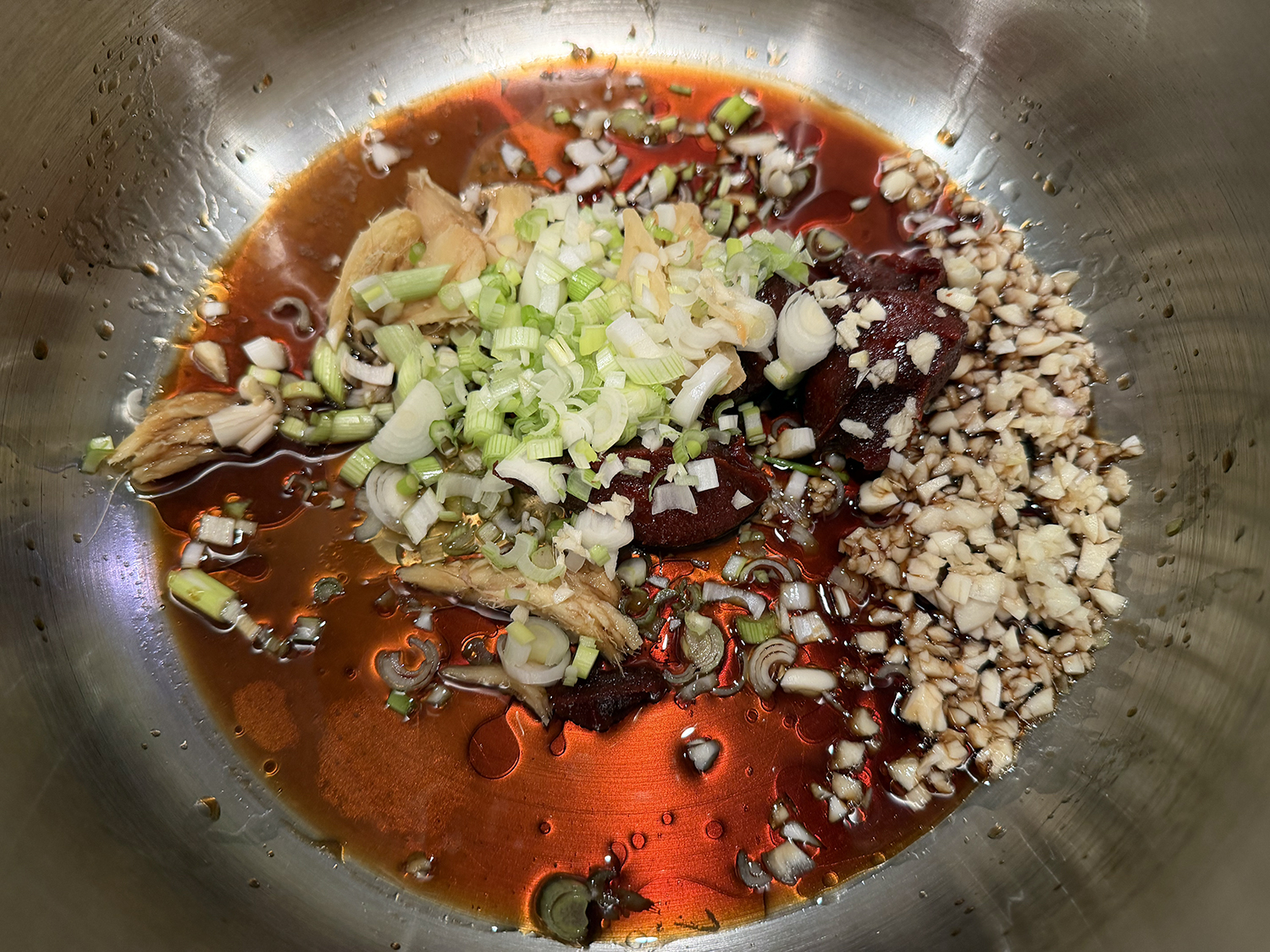
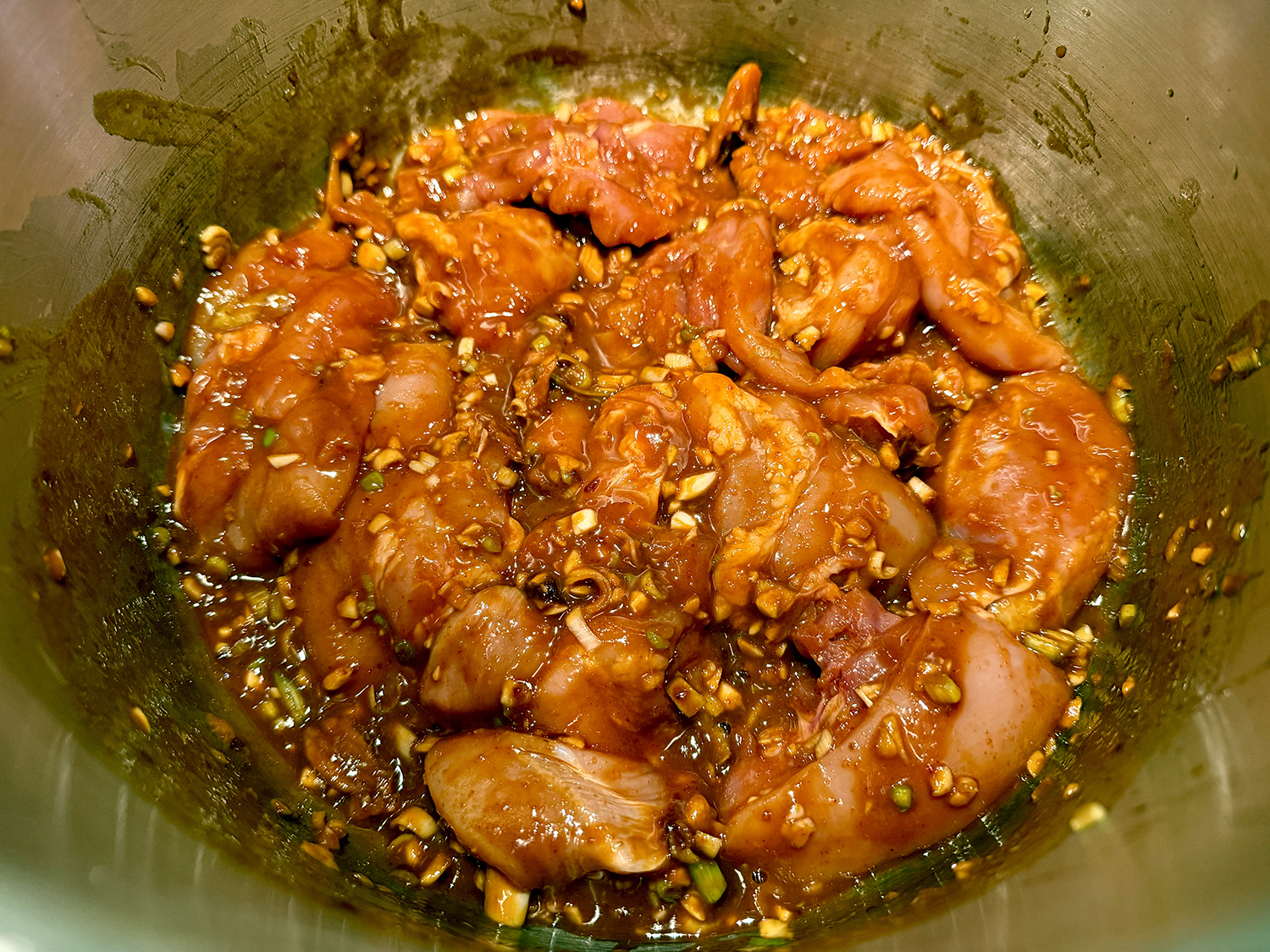
  1. In a 6-quart Instant Pot (or pressure cooker), whisk together the gochujang, vinegar, soy sauce, sugar, sesame oil, ginger, garlic and scallion whites. Add the chicken and toss to coat. Let stand for 15 minutes. Stir in the potatoes, carrots and ½ cup water, then distribute in an even layer.
  2. Add the chicken and toss to coat. Let stand for 15 minutes. Stir in the potatoes, carrots and ½ cup water, then distribute in an even layer.
  3. Lock the lid in place and move the pressure valve to Sealing. Select Pressure Cook or Manual; make sure the pressure level is set to High. Set the cooking time for 8 minutes. When pressure cooking is complete, let the pressure reduce naturally for 10 minutes, then quick-release the remaining steam by moving the pressure valve to Venting. Press Cancel, then carefully open the pot.
  4. Remove and discard the ginger (this may be a bit impossible), then stir in the scallion greens. Transfer to a serving bowl, drizzle with additional sesame oil and sprinkle with sesame seeds.

http://www.lynnandruss.com

Adapted from a recipe by Courtney Hill for Milk Street

Creamy Tuscan Chickpea Soup

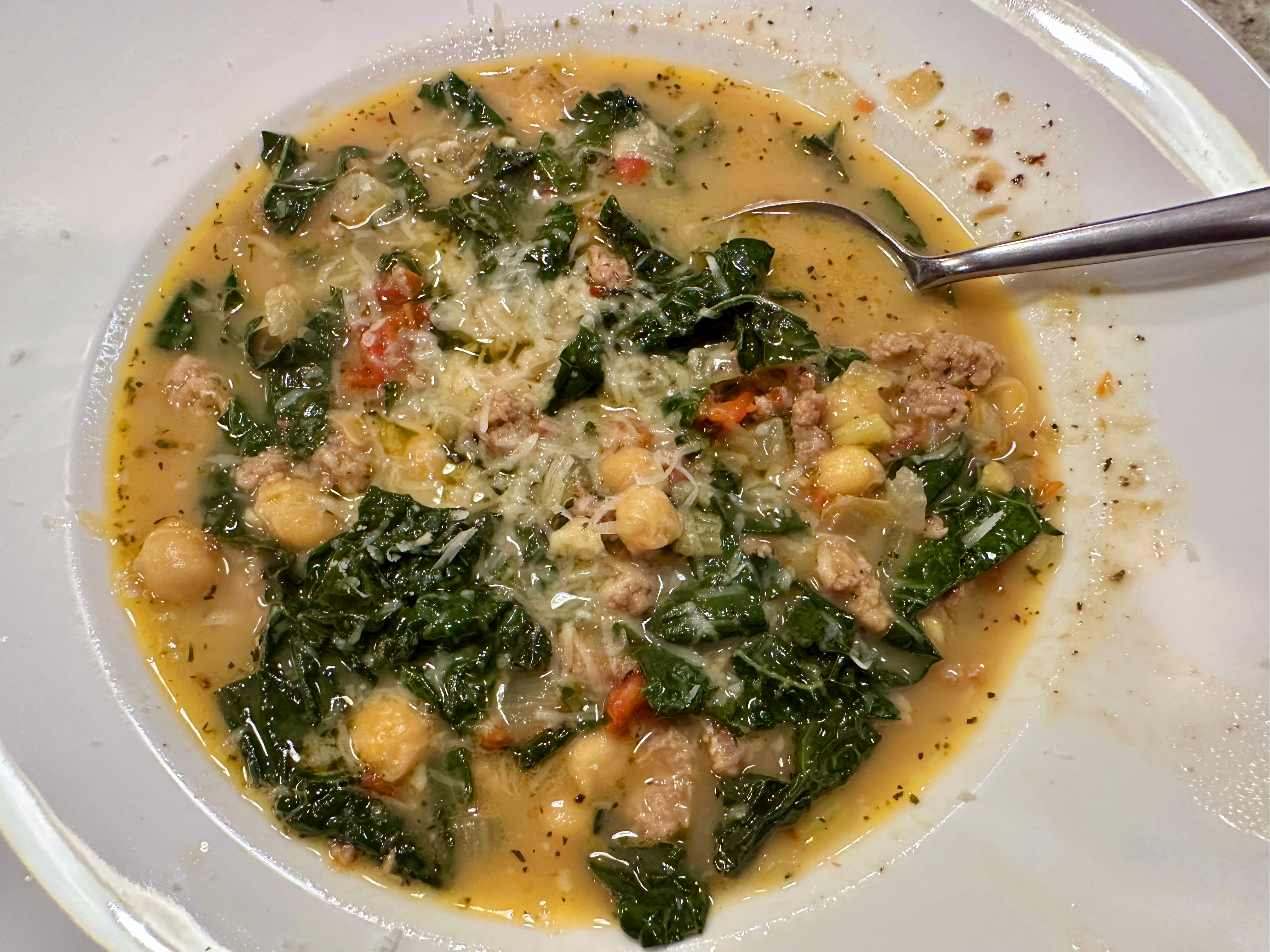
With the hot, humid dog days of summer behind us, that’s when we start craving cool-weather sustenance like soups and stews. Here, spicy sausage, tender chickpeas, and savory aromatics come together for a comforting bowl of goodness in this one-pot soup; a recipe found in Food & Wine Magazine.

Think of it as a cozy mash-up of Zuppa Toscana and Marry Me chicken. Spicy sausage adds a deep, savory flavor while sun-dried tomatoes lend a sweet-tangy richness to the broth. Chickpeas make the soup extra satisfying without feeling heavy, and the vegetables are perfectly tender with just a slight bite. It’s an umami-packed bowl that’s both comforting and nourishing. For the best texture and browning, use sausage out of its casing — it breaks up more easily with a spoon and browns more evenly in the pan.

For a milder soup, you can use regular Italian sausage instead of the spicy variety. We used sweet Italian sausage because that’s what we had on hand, but we added some red pepper flakes to include the spiciness. However, our fresh basil from the herb garden was past it’s prime. Instead of buying a bunch from the farm market or grocery store, we substituted 2 teaspoons of dried Tuscan Italian seasoning.

The soup was fantastic! *That being said, you want to maximize flavor by using homemade chicken stock. Canned or boxed stock just does not have the depth of flavor. Also, The Hubs used dried chickpeas that were soaked overnight with aromatics then cooked in a pressure cooker—a time-saver. **The broth (from canned or cooked) can be used along with the chicken stock for additional flavoring.

NOTE: Store soup in an airtight container in the refrigerator for up to four days. Reheat gently on the stovetop before serving. You may want to add more broth when reheating, and that’s totally fine. Soups like this also freeze well — just let it cool completely, then ladle into freezer-safe containers or large ziplock bags and store in the freezer for one to two months.

Creamy Tuscan Chickpea Soup

  • Servings: 4
  • Difficulty: easy
  • Print

Ingredients

  • 1 Tbsp. extra-virgin olive oil
  • 1 lb. spicy (or sweet) Italian sausage, casings removed
  • 1 large yellow onion, chopped (about 2 cups)
  • 1 large celery stalk, chopped (about 1/2 cup)
  • 1/2 cup finely chopped oil-packed sun-dried tomatoes
  • 4 large garlic cloves, minced
  • 1/2 tsp. red pepper flakes (optional)
  • 8 cups chicken stock*
  • 2 15-oz. cans **chickpeas, save the liquid for part of the broth
  • 4 cups torn lacinato kale leaves (about 1 bunch)
  • 2 oz. Parmigiano-Reggiano cheese, grated (about 1/2 cup), plus more for garnish (optional)
  • 1/4 cup heavy cream
  • 2  Tbsp. chopped fresh basil OR 2 tsp. dried Italian seasoning
  • 3/4 tsp. kosher salt

Directions

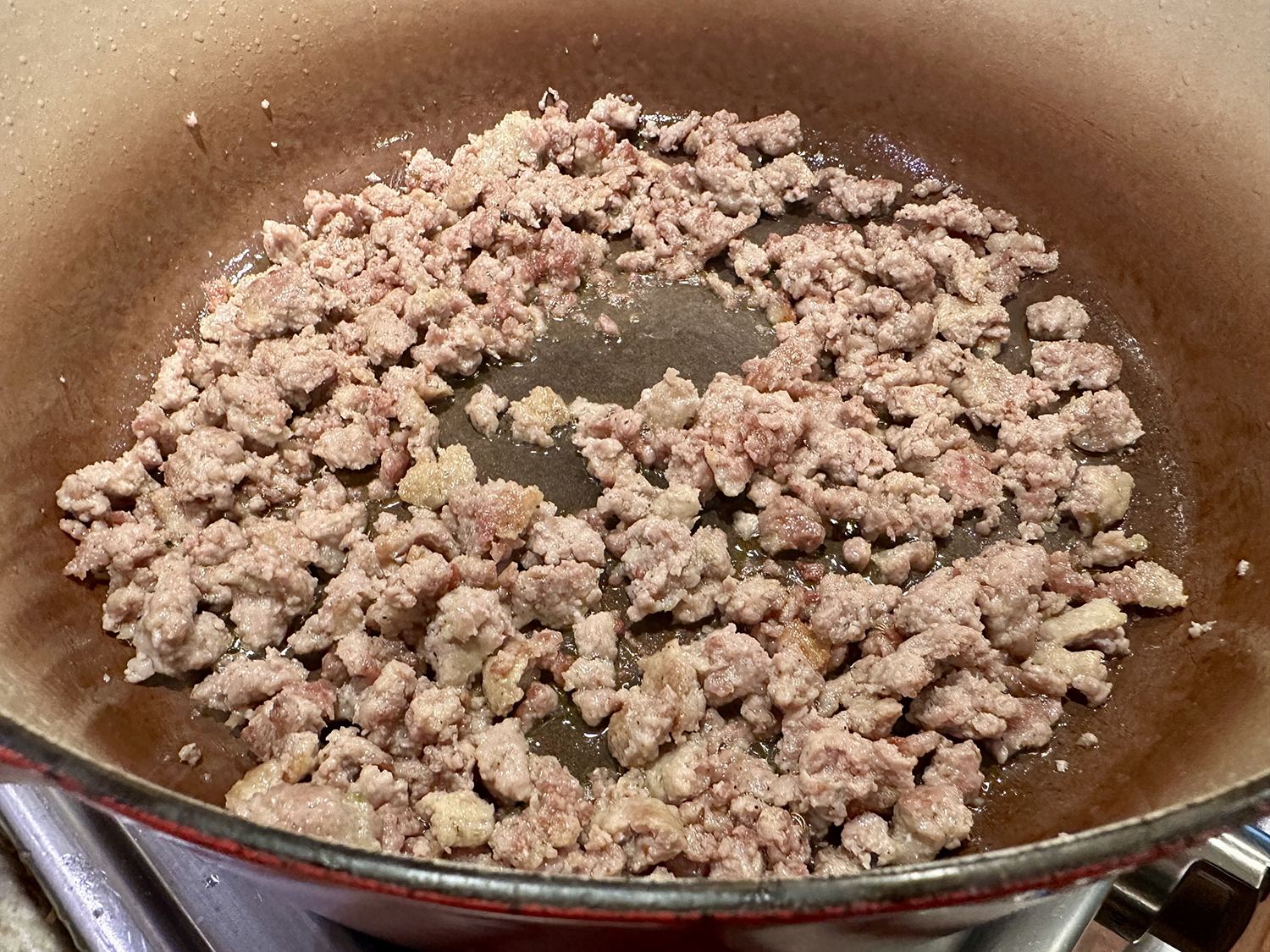
  1. Heat oil in a large Dutch oven over medium-high. Add sausage; cook, stirring often and breaking into small crumbles using a wooden spoon, until sausage is rendered and browned, 5 to 8 minutes.
  2. Add onion and celery to Dutch oven; cook, stirring often and scraping bottom of pot to loosen any browned bits, until vegetables begin to soften, 4 to 6 minutes. Stir in sun-dried tomatoes, red pepper flakes (if using) and garlic. Cook, stirring often, until fragrant, about 1 minute.
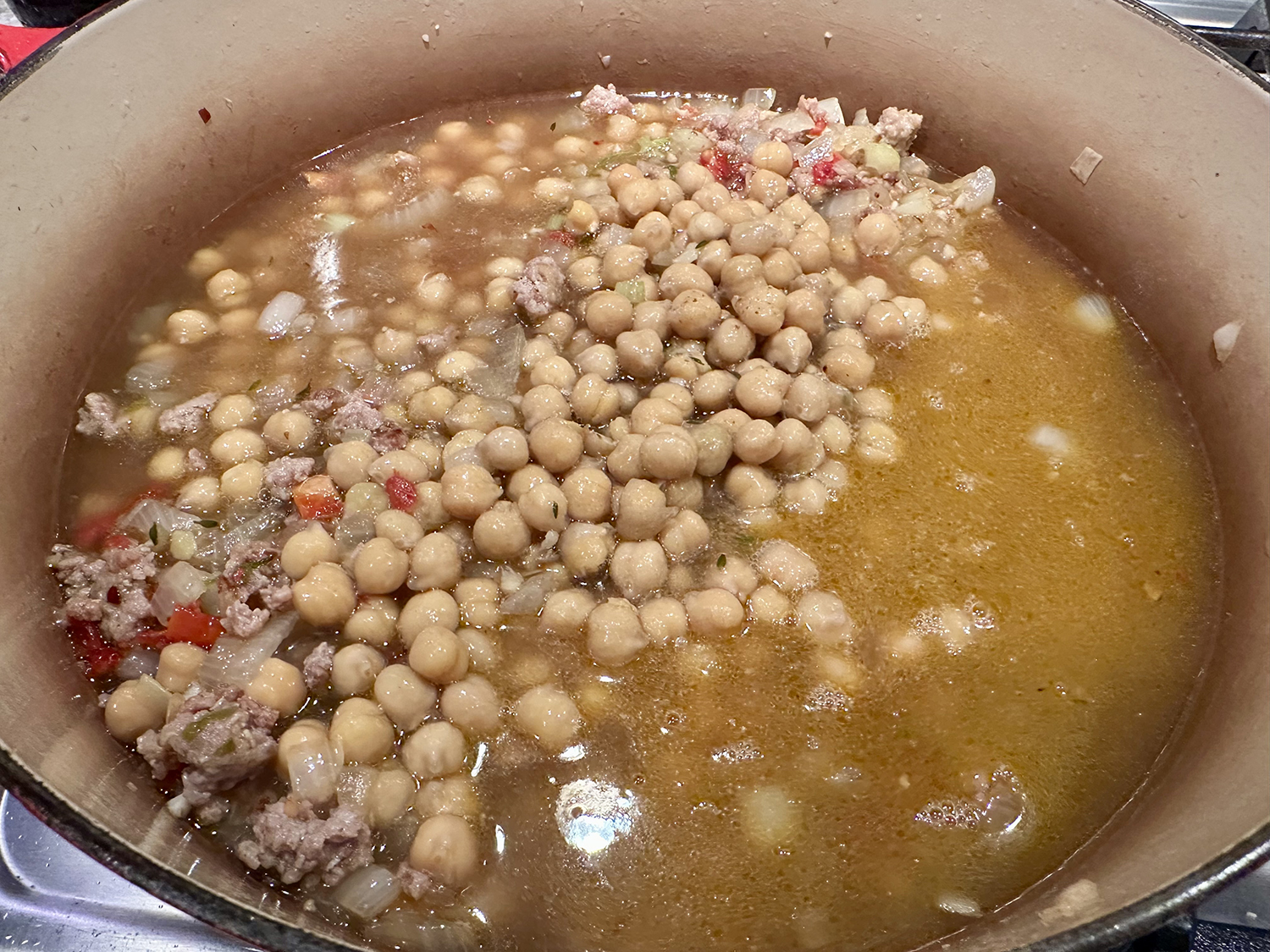
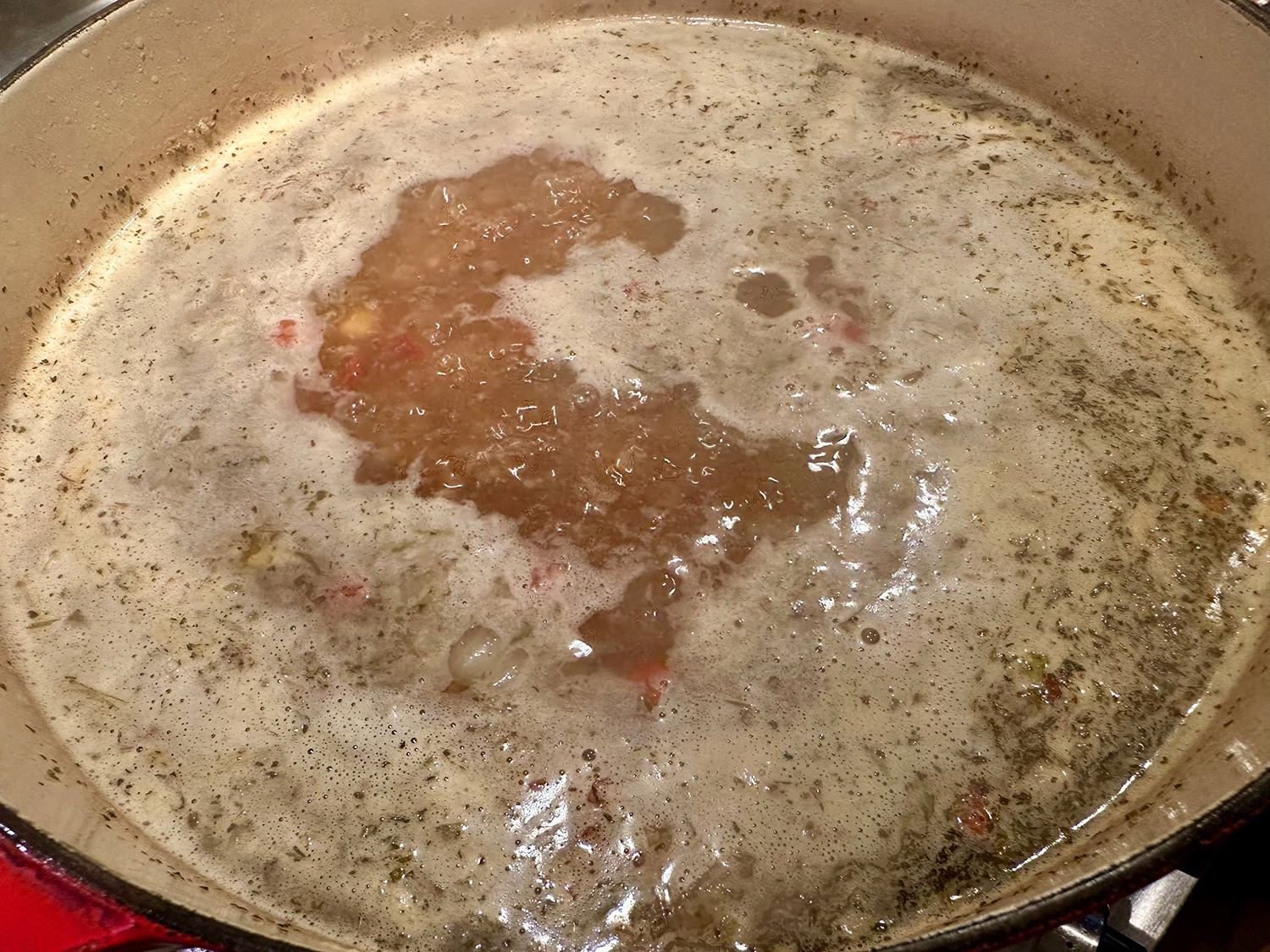
  3. Stir in stock and chickpea broth, Italian seasoning (if using) and chickpeas; bring to a boil over medium-high. Reduce heat to medium-low; simmer, uncovered, until flavors meld, about 15 minutes.
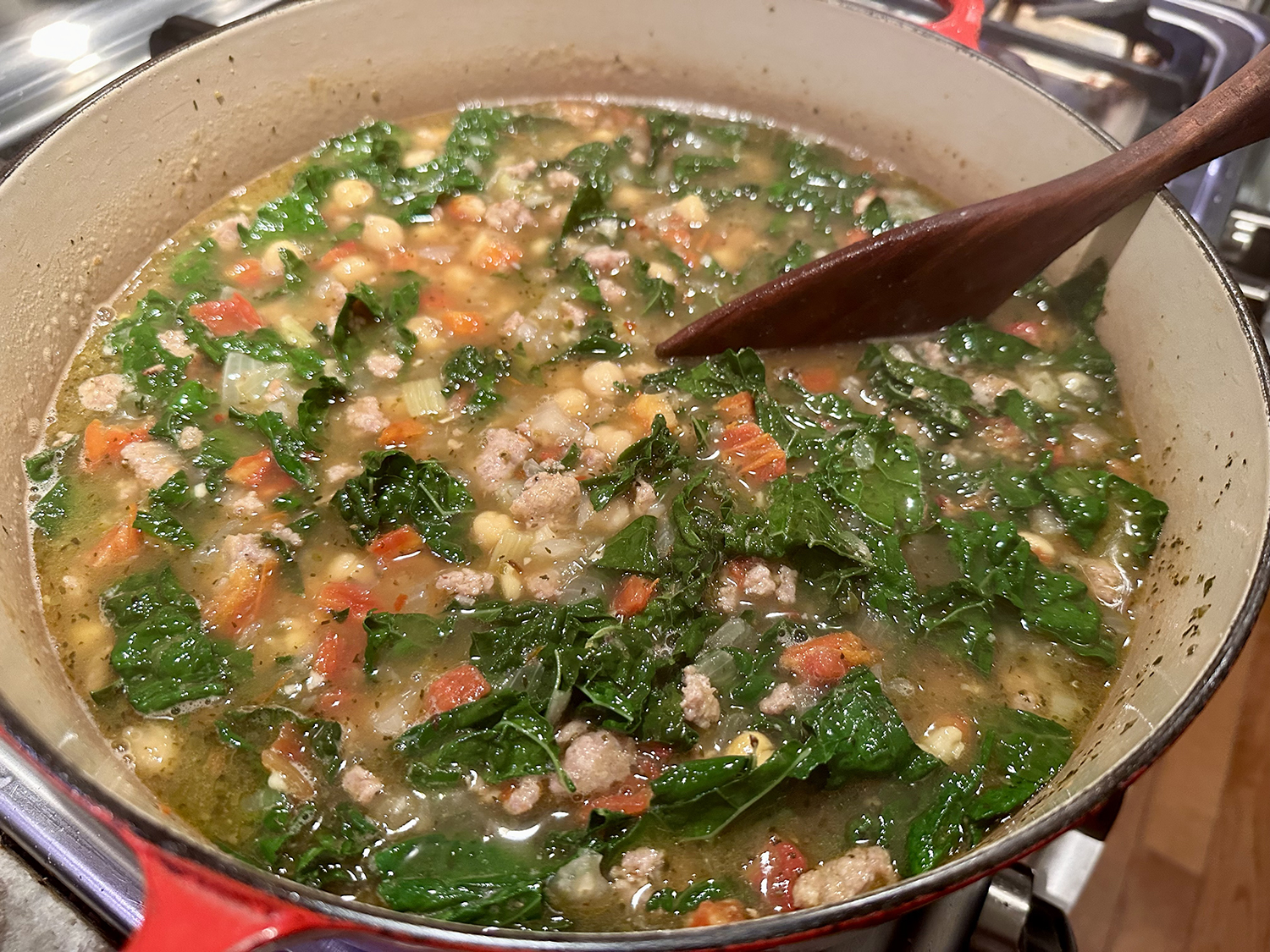
  4. Add kale to Dutch oven; cook, stirring occasionally, until tender, about 5 minutes. Remove from heat, and stir in cheese, cream, basil (if using), and salt.
  5. Divide soup evenly among bowls, and garnish with additional cheese, if desired.

http://www.lynnandruss.com

Adapted from a recipe by Anna Theoktisto for Food & Wine

Roast Leg of Lamb with Anchovy, Rosemary, Garlic and Piment d’Espelette

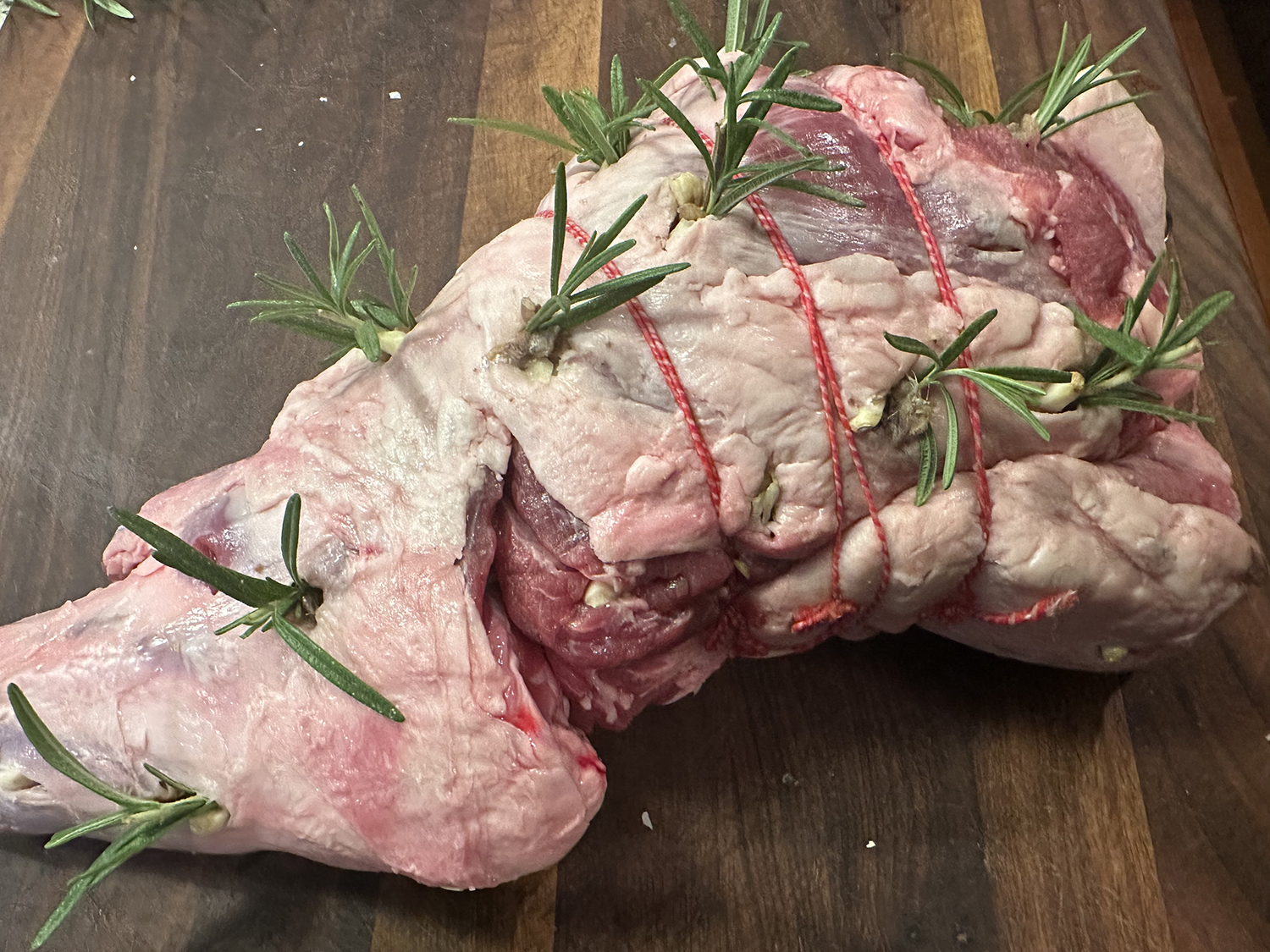
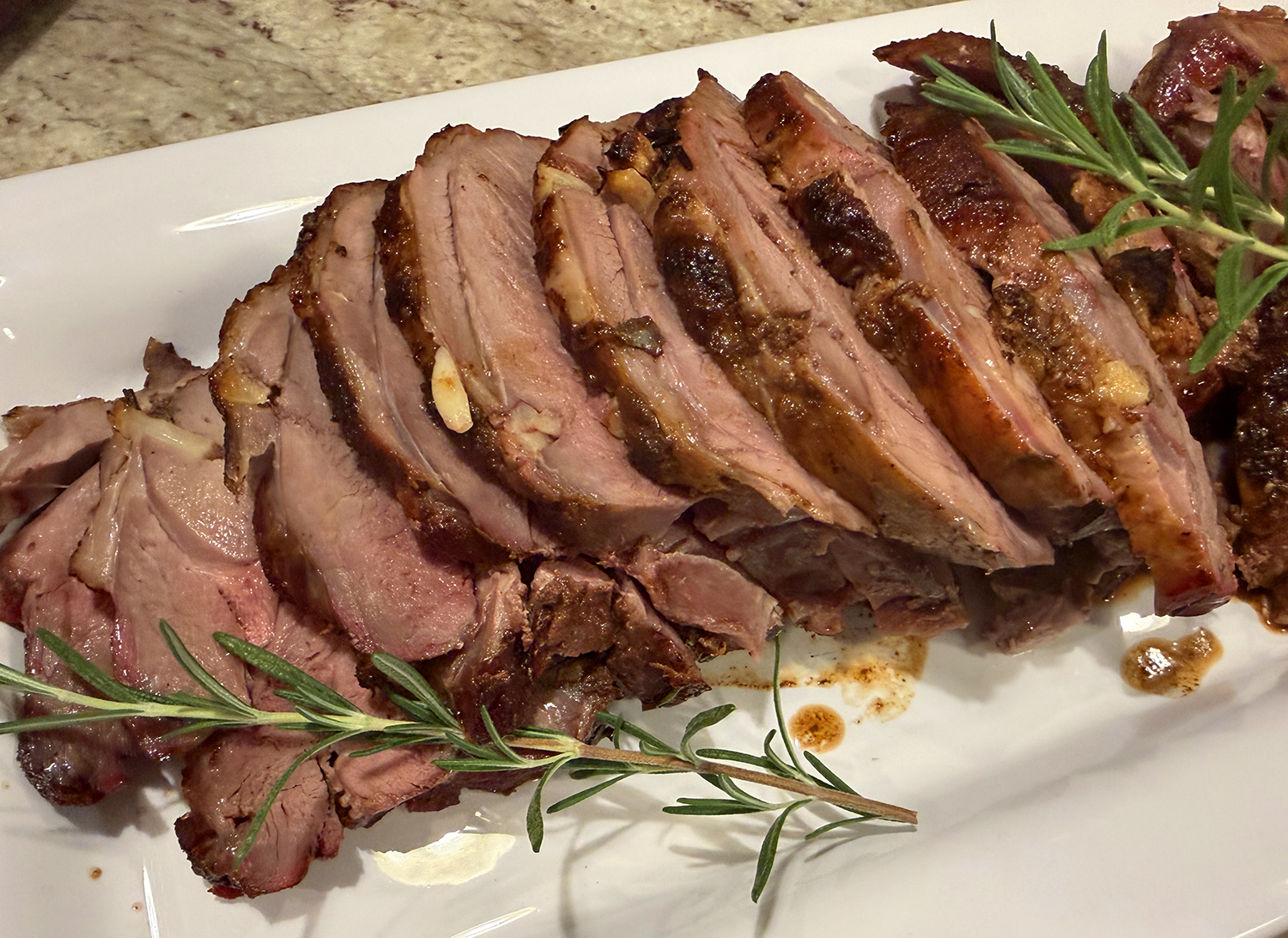
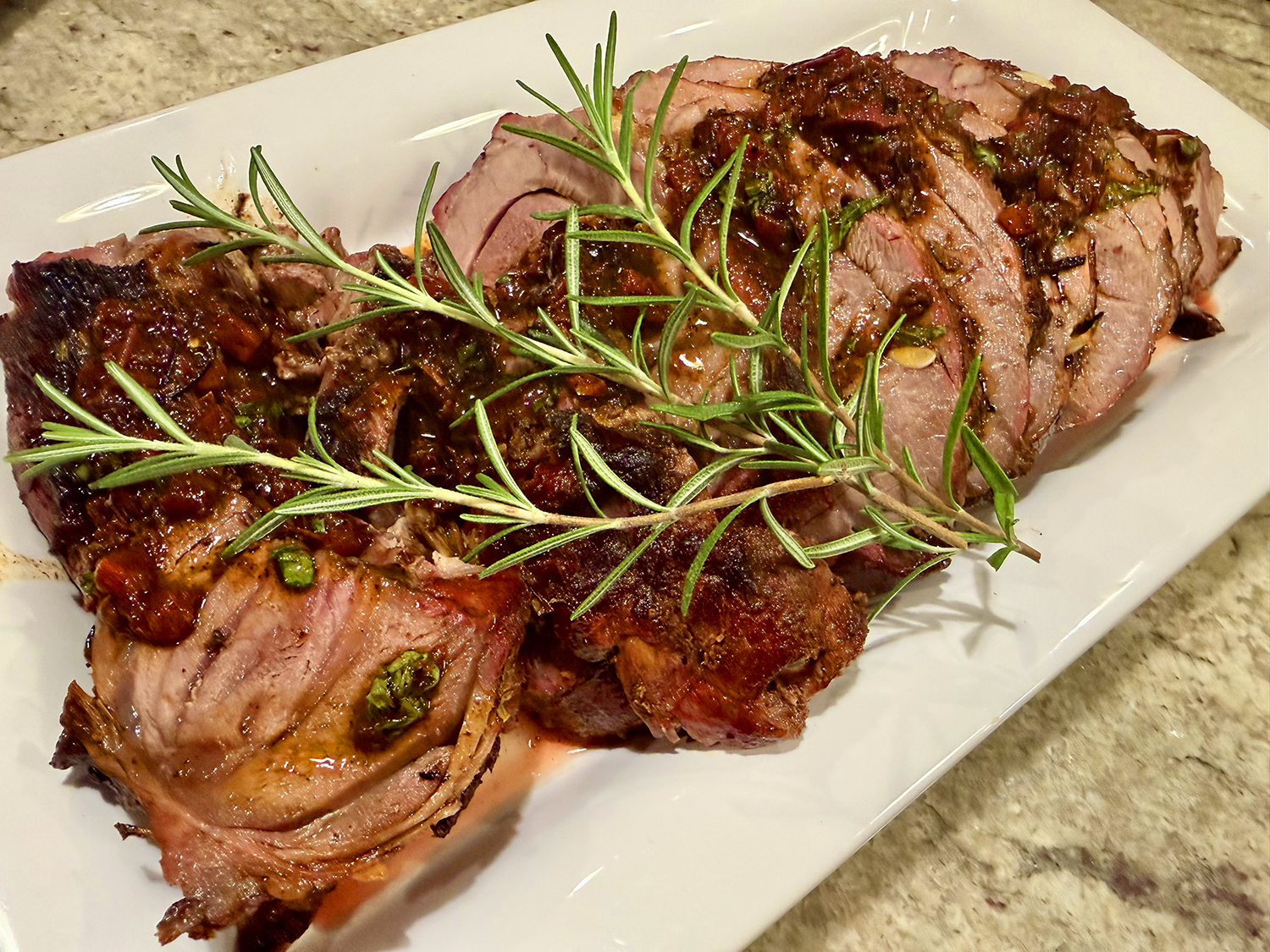
This lovely leg of lamb recipe hails from Molly Stevens’ cookbook All About Roasting, one of our go-to’s when it comes to roasting meat. Here, the lamb’s flavor is boosted with a combination of fresh rosemary, garlic and anchovies. But don’t get all squeamish, tucked into the meat, the anchovies dissolve during roasting, enriching the lamb a delicious, though elusive flavor that’s far less assertive than you might think.

Instead of black pepper, the roast is seasoned with piment d’Espelette, in which the light heat complements the lamb, but hot paprika (which we used) makes a good substitute. If you keep lard or have good bacon drippings, rub a little over the meat before roasting. It adds a wonderful richness to the drippings and helps deepen the caramelization of the surface.

NOTES: For the best flavor and texture, season the meat 1 to 2 days ahead of cooking and refrigerate, uncovered. Then the lamb needs to sit at room temperature for about two hours before roasting.

Our 5-pound semi bone-in leg of lamb was a few pounds less than the recipe called for, and therefore took slightly less time. With no lard on hand, or any available that day at the store, we chose the olive oil option.

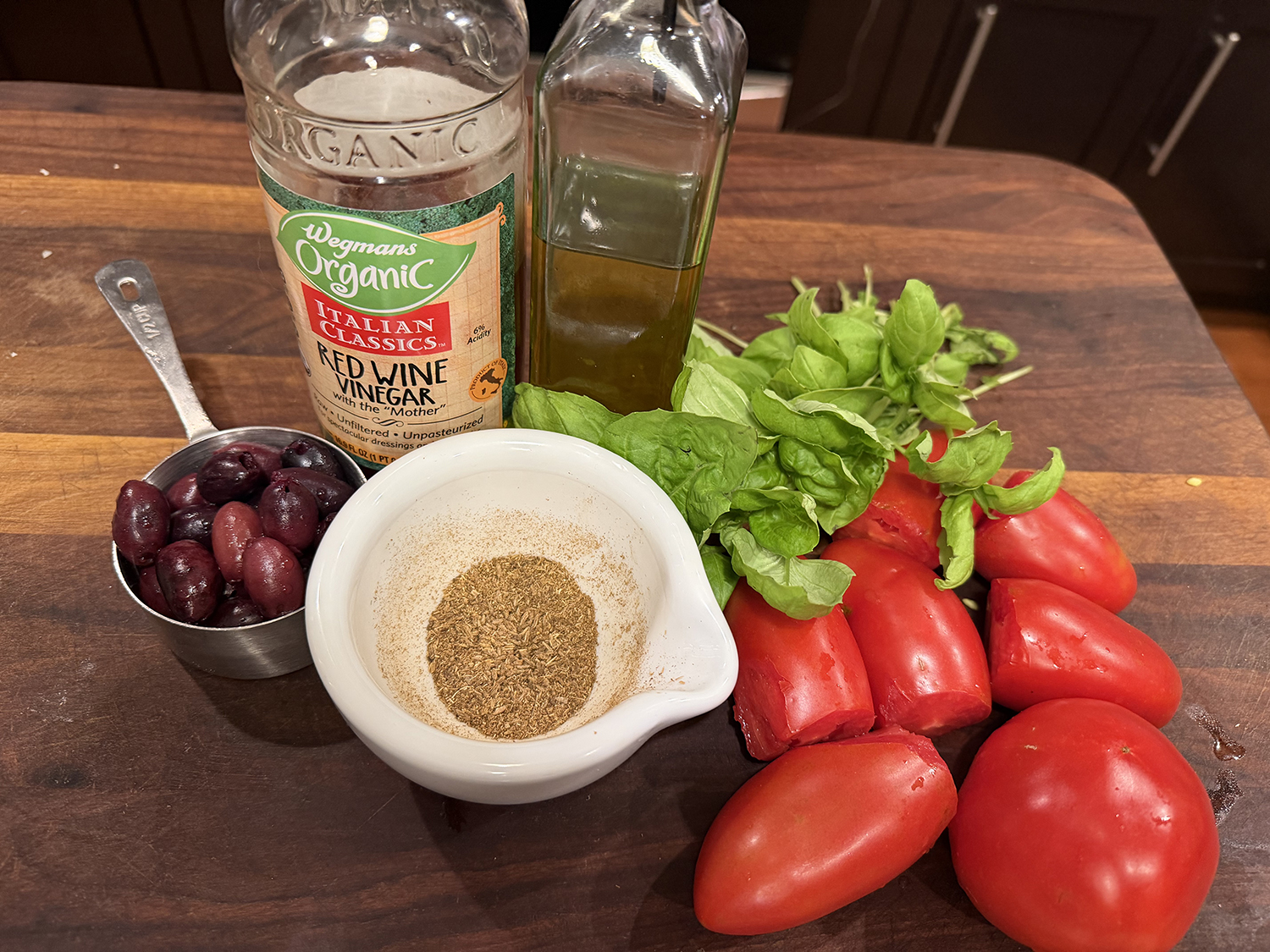
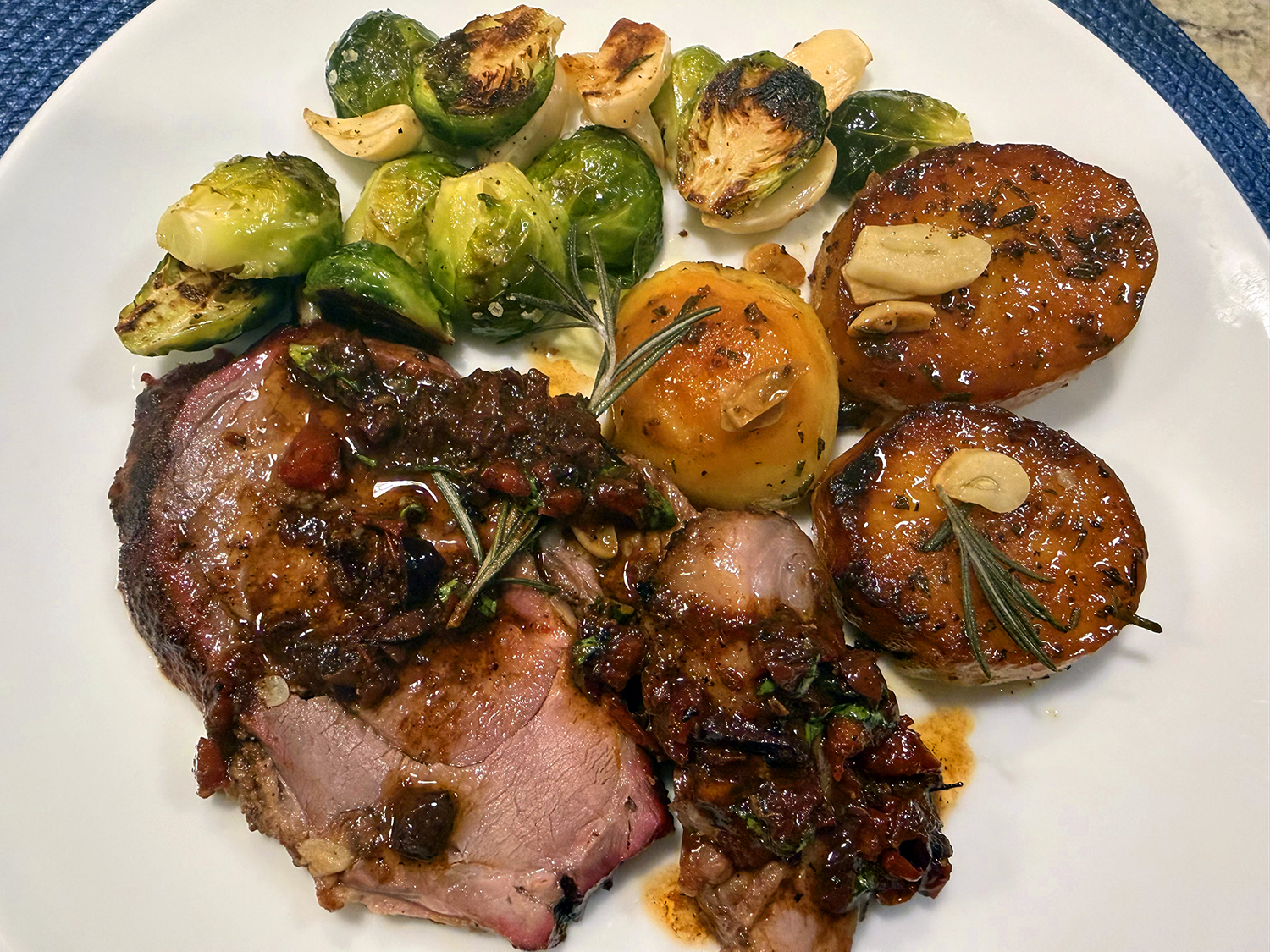
The Tomato-Fennel Vinaigrette is a surprising and delicious way to brighten up roast lamb. Combine the ingredients, and when the meat comes out of the pan to rest, pour the contents into the pan with the drippings.

Our meal was completed with Lemon-Rosemary Melting Potatoes and Roasted Brussels Sprouts with Garlic.

Roast Leg of Lamb with Anchovy, Rosemary , Garlic and Piment d'Espelette

  • Servings: 8-10
  • Difficulty: moderately easy
  • Print

Ingredients

  • 1 whole bone-in leg of lamb, 7 to 8 lbs., preferably with hip bone removed
  • 5 garlic cloves cut into 20 thin slivers
  • 4 anchovy fillets, rinsed, patted dry, and cut into 20 little pieces
  • 4 leafy sprigs rosemary, cut into 20 1-inch pieces
  • 2 tsp. kosher salt
  • 2 tsp. piment d’Espelette (or hot paprika)
  • 1 to 2 Tbsp.lard, or extra-virgin olive oil
  • 3/4 dry white wine or dry white vermouth

Directions

  1. Trim the Lamb. Examine the leg of lamb to determine what kind of trimming and perhaps tying you need to do before seasoning. If the pelvic bone has been removed, you may find a loose flap of meat at the wide end of the roast. if so, secure this with skewers or sew it shut with a trussing needle and kitchen string.Using a thin bladed sharp knife, trim any leathery membrane or excess fat from the exterior of the lamb. Leave a thin layer (1/8 inch) of fat to protect the meat from drying.
  2. Season the Lamb. Using the tip of a paring knife, make 20 small holes on all sides of the lamb. Stuff each hole with a sliver of garlic. a bit of anchovy, and a sprig of rosemary, leaving the tips of rosemary sticking out. After you’ve studded the entire roast, season the surface with the salt and the piment d’Espelette. Set in a large baking dish (or on a rimmed backing sheet with a rack) and refrigerate uncovered, for 1 to 2 days. Let the lamb sit at room temperature for 2 hours before roasting.
  3. Heat the Oven. Arrange a rack in the lower third of the oven and heat to 450 degrees.
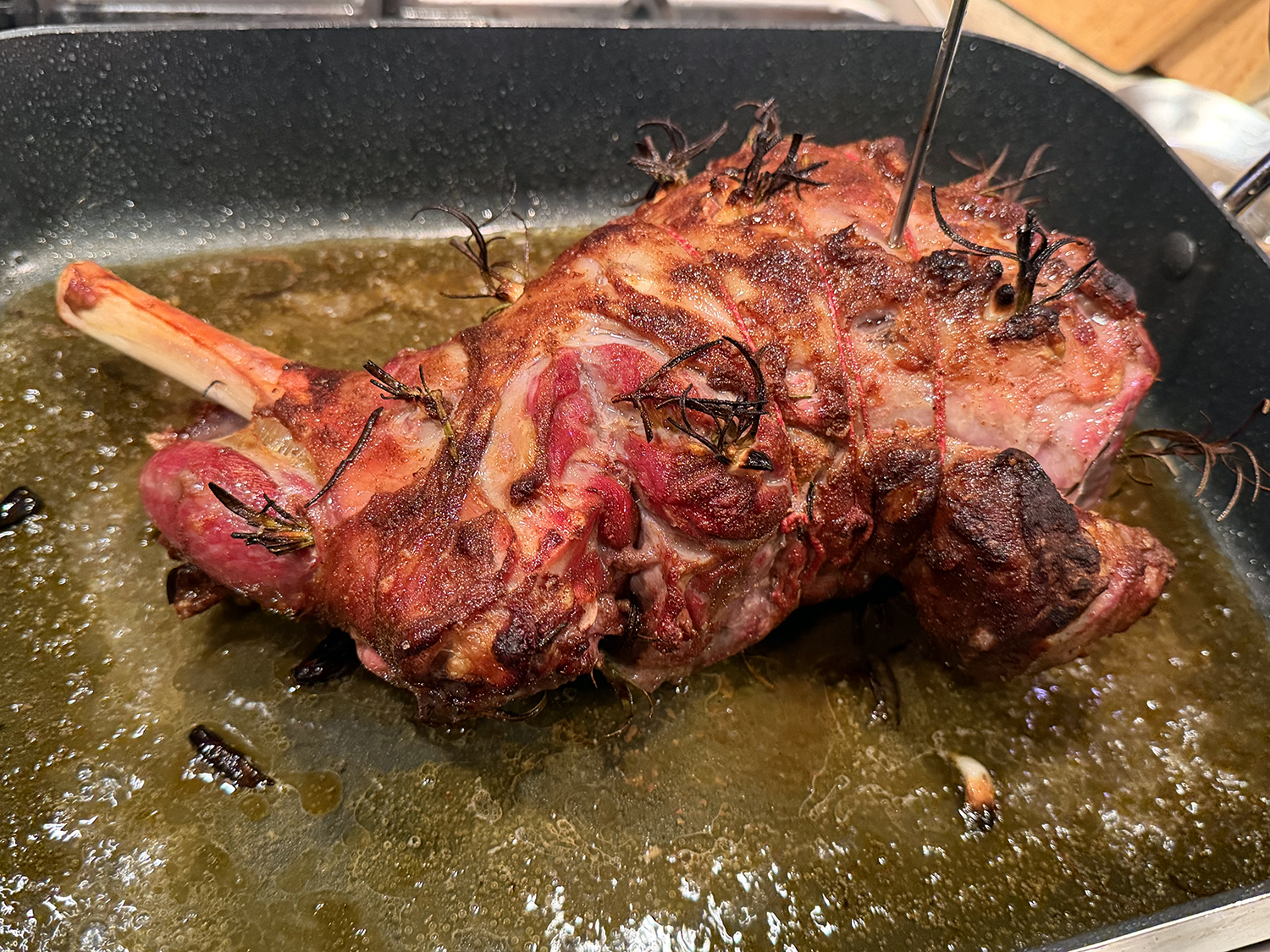
  4. Roast the Lamb. Rub the surface of the meat with lard or olive oil. Place the lamb with the rounder, meatier side up in a roasting pan just large enough to accommodate it. (It’s fine if the tip of the shank rests of the edge of the pan.) Roast for 25 minutes then pour the wine or vermouth over the lamb. Immediately lower the oven temperature to 325 degrees, and continue roasting until a meat thermometer inserted into the meatiest part of the leg reaches 120° to 125° degrees for rare, about 1 hour from the time you lowered the heat; or 130° to 135° degrees for medium-rare, about 1 1⁄4 hours.
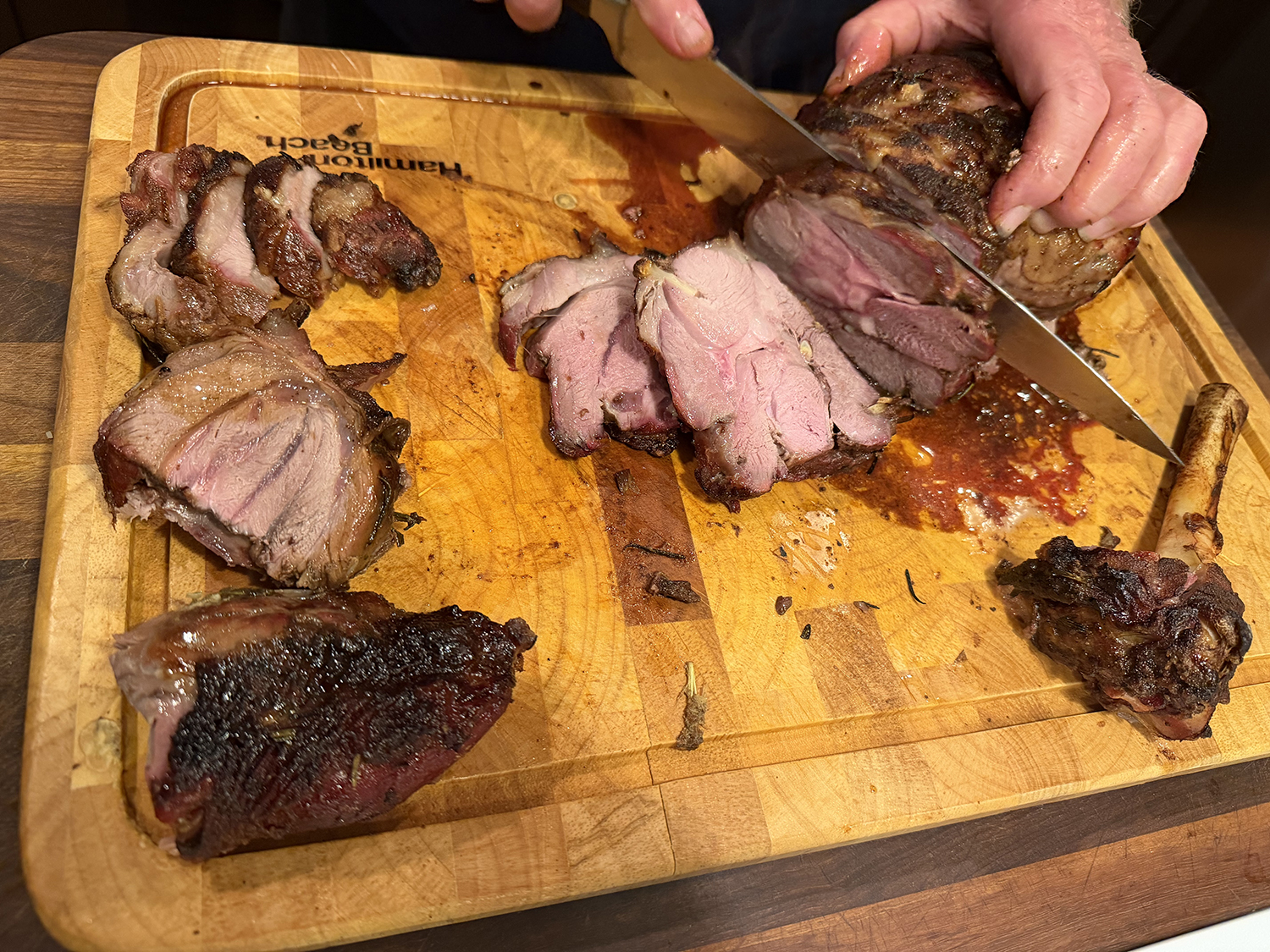
  5. Rest. Remove the lamb to a carving board, preferably one with a trough, to rest for 20 to 35 minutes. Tilt the roasting pan and spoon off as much of the clear fat as you can. Using a wooden spoon, scrape up the pan drippings (if they are too stuck to the pan, add 1⁄4 cup water to dissolve them). Set aside the pan drippings to drizzle over the carved lamb.
  6. Carve and Serve. Carve the leg of lamb and serve drizzled with the pan drippings, or layer the slices in the roasting pan so they soak up the pan juices and serve family-style from the pan.
    If making the optional vinaigrette (recipe below), see Step 3 for carving and serving.

Ingredients

  • 1 lb. rip tomatoes, seeded and finely chopped (about 2 cups)
  • 1⁄2 cup black olives, pitted and finely chopped
  • 3Tbsp. red wine vinegar
  • 1 1⁄2 tsp. fennel seeds, lightly toasted in a dry skillet and coarsely ground
  • freshly ground black pepper
  • 1⁄3 cup extra virgin olive oil
  • 1⁄3 thinly sliced, lightly packed fresh basil leaves

Directions

  1. Make the Vinaigrette. In a medium bowl, combine the tomatoes olives, vinegar and fennel seeds. Season with pepper (salt gets added later). Whisk in the olive oil and set aside.
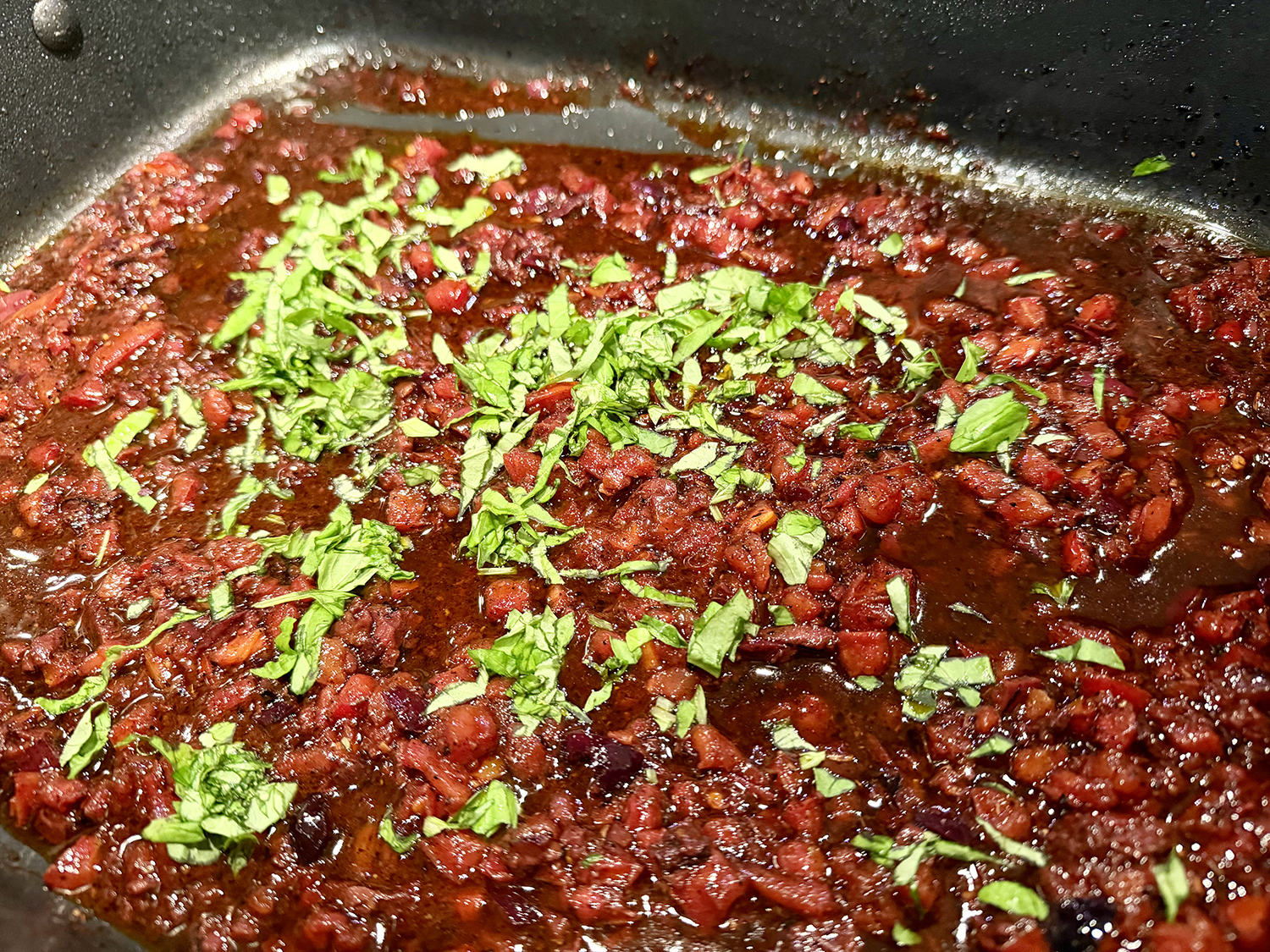
  2. Roast the as Directed Above. After transferring the lamb to the carving board in Step 5, spoon and pour off as much fat excess fat form the roasting pan as you can. (We used a fat separator to assist.) Using a wooden spoon, scrape up the pan drippings (if they are too stuck to the pan, add 2 to 3 tablespoons water to dissolve them). Add the vinaigrette to the pan, stir to combine with the drippings. Stir in the basil. Taste for salt and pepper. The vinaigrette should be warm, but not hot.
  3. Carve and Serve. Carve the leg of lamb. Add any juices from the carving board to the vinaigrette. Spoon some of the vinaigrette over the slices of meat and serve along with extra vinaigrette in a bowl.

http://www.lynnandruss.com

Recipe by Molly Stevens in her All About Roasting cookbook

Pan-Seared Flounder with Lemon-Caper Sauce

Flatfish such as flounder and sole are quick-cooking, ultraconvenient—and finicky. Because they lie in camouflage on the seabed waiting for prey, the flesh of these fish is unbeatably tender, flaky, and delicate. But their flesh is quick to tighten up and dry out over fierce heat, yet if you go too easy on the sear, the fragile fillets can tear or break when you attempt a flip. 

Once you nail the process, you are handsomely rewarded: Done right, flounder and sole are buttery, flaky, mild, and sweet, the perfect canvas for a variety of punchy sauces and toppings.

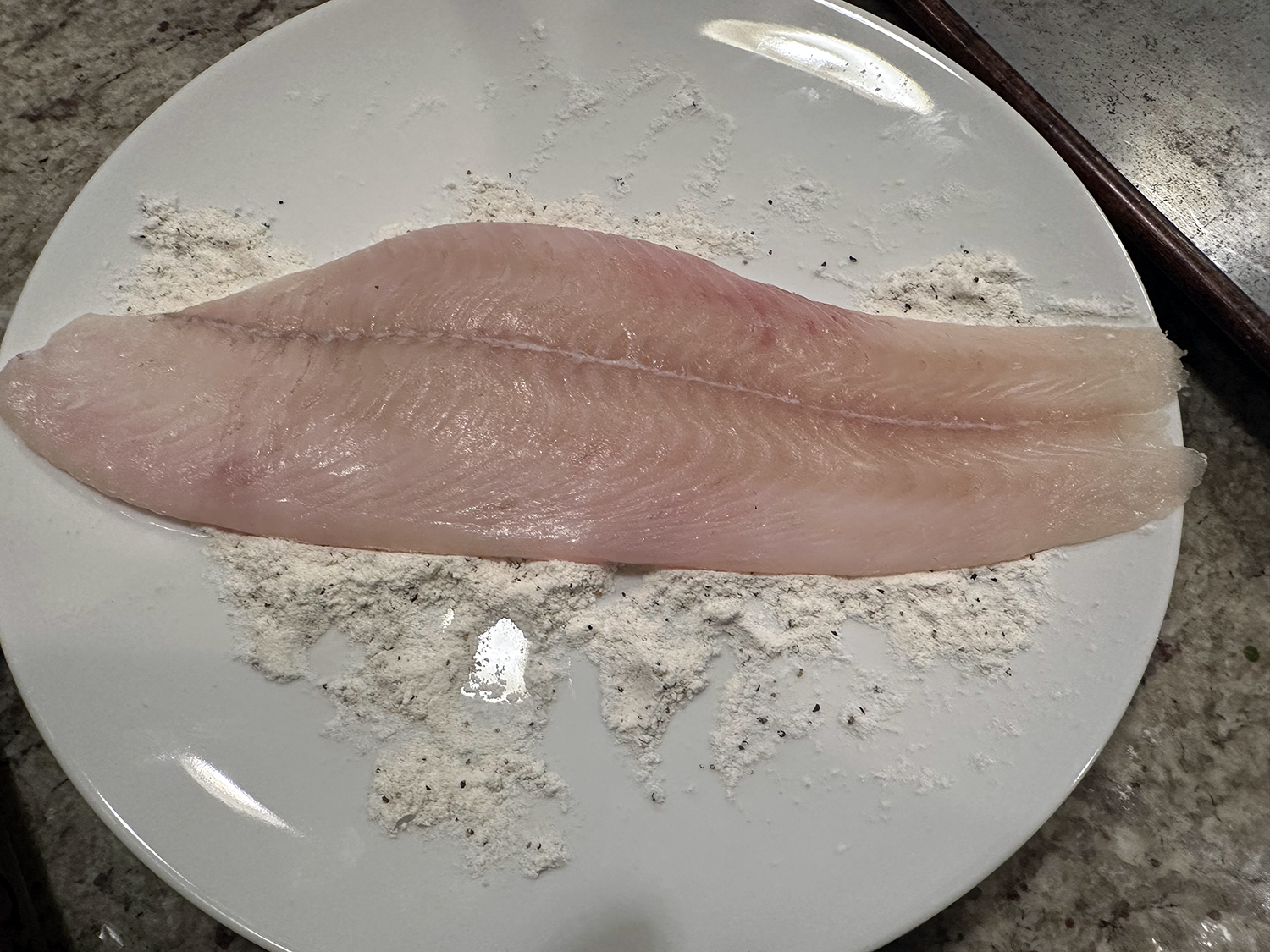
According to chef David Yu, when fish releases moisture in the skillet, that moisture impedes the fillet’s contact with the pan and oil and also lowers the temperature of everything, resulting in a longer browning time. So it’s key not only to thoroughly dry the fish with paper towels but also to dredge it in flour, which absorbs any moisture left on the fish’s surface.

Flour presents a couple of other perks as well: It helps hold the delicate flesh together by forming gluten, and its protein and sugar also help the fish to brown. Here, the fish is floured on only one side.

TIP: Using a well-oiled stainless-steel skillet rather than nonstick allows you to cook the fish at a higher temperature, quickly altering the proteins in the fish to keep them from bonding to the pan.

Our fillets were larger than noted in the original recipe, so we used a 13″ stainless steel skillet and a bit more oil in the pan. Because of their length, the fillets were a bit tricky to turn over. Pairing with steamed broccoli and a side salad, we enjoyed a fast, healthy and tasty dinner!

Pan-Seared Flounder with Lemon-Caper Sauce

  • Servings: 4
  • Difficulty: easy
  • Print

Ingredients

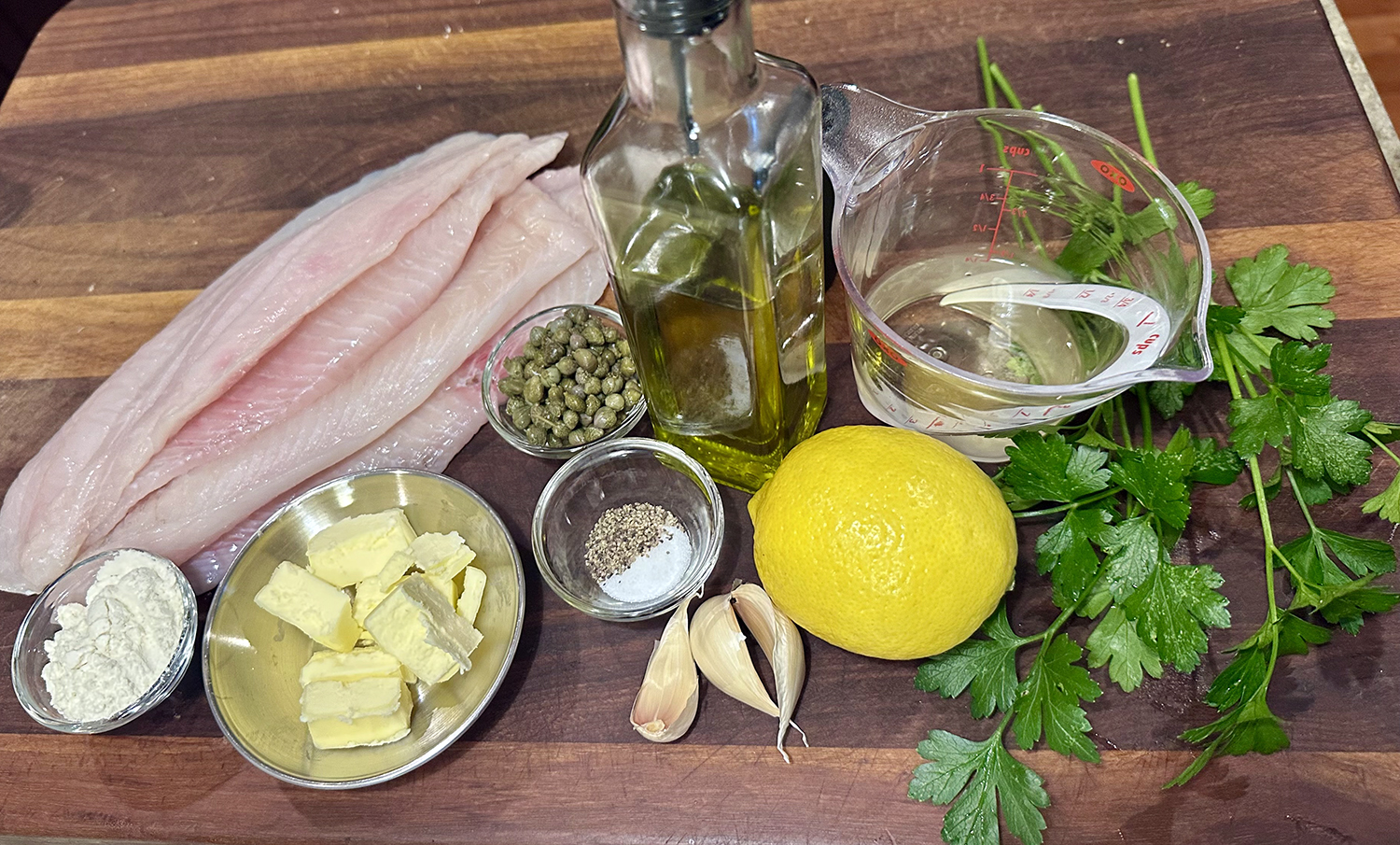
  • 2 Tbsp. all-purpose flour
  • ¾ tsp. table salt, divided
  • ¼ tsp. pepper
  • 6 (4- to 6-oz.) skinless flounder fillets, ¼ to ½ inch thick
  • 4 tsp. vegetable oil, divided
  • 3 garlic cloves, minced
  • ⅓ cup dry white wine
  • ⅓ cup water
  • 1½ tsp. grated lemon zest, plus 1½ Tbsp. juice
  • 3 Tbsp. unsalted butter, cut into 6 pieces and chilled
  • 2 Tbsp. capers, rinsed
  • 1 Tbsp. minced fresh parsley

Directions

  1. Whisk 2 tablespoons all-purpose flour, ½ teaspoon table salt, and ¼ teaspoon pepper together in small bowl. Reserve 1 teaspoon flour mixture, then spread remaining mixture in even layer on large plate. 
  2. Dry 6 skinless flounder fillets thoroughly with paper towels. Place 3 fillets, skinned side down, into flour mixture on plate to coat 1 side. Shake off excess and transfer to rimmed baking sheet, floured side up. 
  3. Heat 1½ teaspoons vegetable oil in 12-inch skillet over medium-high heat until just smoking. Carefully place fillets, floured side down, in pan and cook until bottom is golden brown, about 2 minutes. Remove skillet from heat. Using 2 thin spatulas, gently flip fillets and let stand until second side is opaque, 15 to 30 seconds. Transfer fillets, browned side up, to platter. Wipe out skillet with paper towels and repeat steps 2 and 3 with remaining fillets and 1½ teaspoons oil.
  4. Wipe out skillet with paper towels. Add remaining 1 teaspoon oil and 3 minced garlic cloves and cook over medium heat until fragrant, about 30 seconds. Stir in reserved 1 teaspoon flour mixture and cook for 15 seconds.
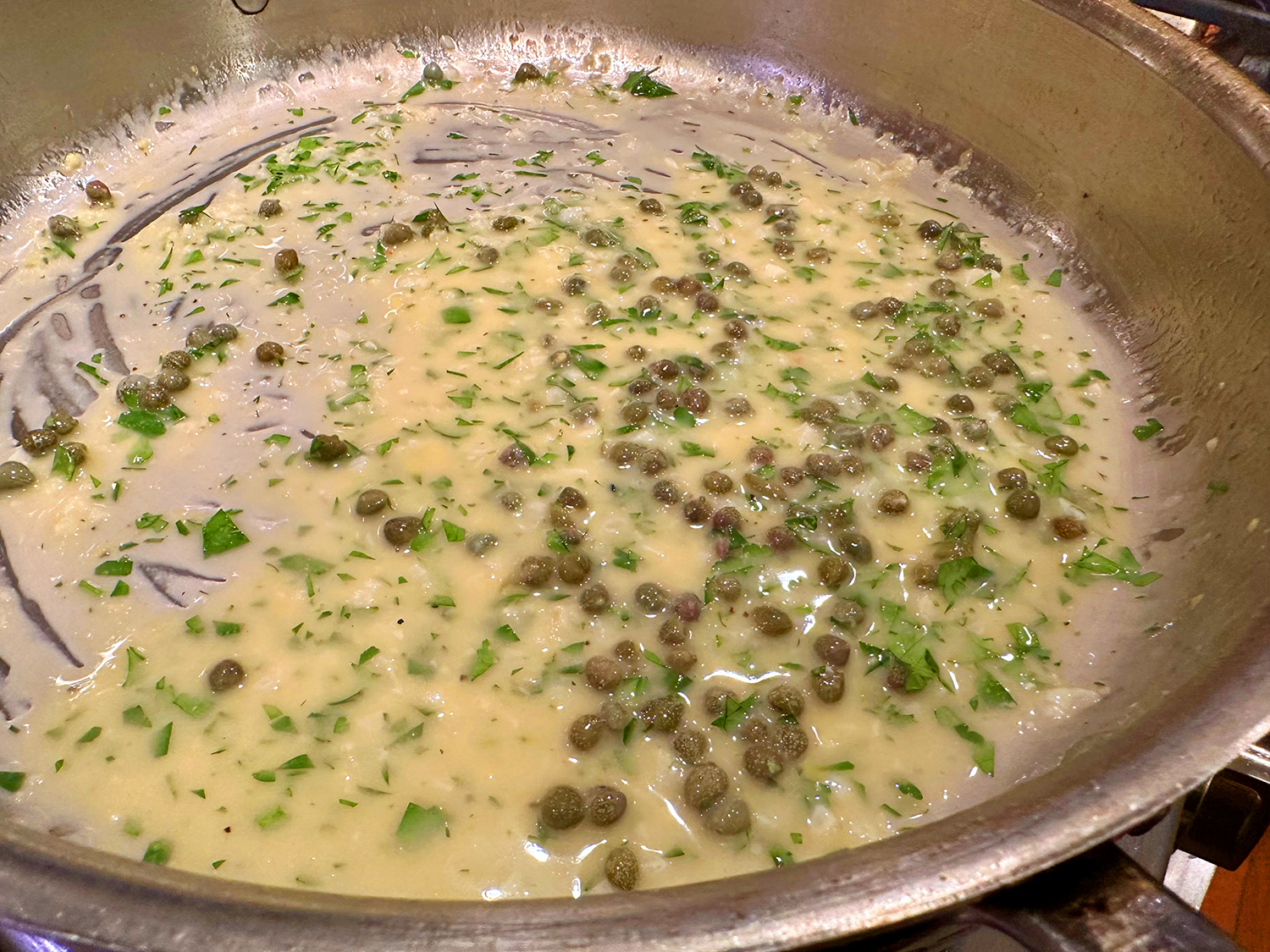
  5. Whisk in ⅓ cup white wine, ⅓ cup water, 1½ teaspoons grated lemon zest and 1½ tablespoons juice, and remaining ¼ teaspoon salt. Bring to simmer and cook until sauce has thickened slightly, about 2 minutes. 
  6. Off heat, whisk in 3 tablespoons chilled unsalted butter, cut into 6 pieces. Stir in 2 tablespoons rinsed capers and 1 tablespoon minced parsley. Spoon sauce over fish and serve.

http://www.lynnandruss.com

Recipe by David Yu for Cook’s Illustrated

The Ultimate Everything Chili

We’ve made more than our fair share of chili recipes over the past few decades—merging all types of ingredients. Beans of every variety, no beans. Cubed beef, ground beef, pork, turkey, chicken—even meatless. White chili, red chili, green chili. All different fresh and dried chiles and spices. Some we loved, others were just meh. A tip from a friend led us to a recent chili recipe in the NYTimes online cooking section and we decided to take a peek at it.

We agree with NYT’s assessment that a great chili should be richly spiced, with layers of deep, savory flavor. Here, that big flavor comes from the usual contenders, but also from the unexpected additions of unsweetened cocoa, soy sauce and Worcestershire, which provide wonderful complexity.

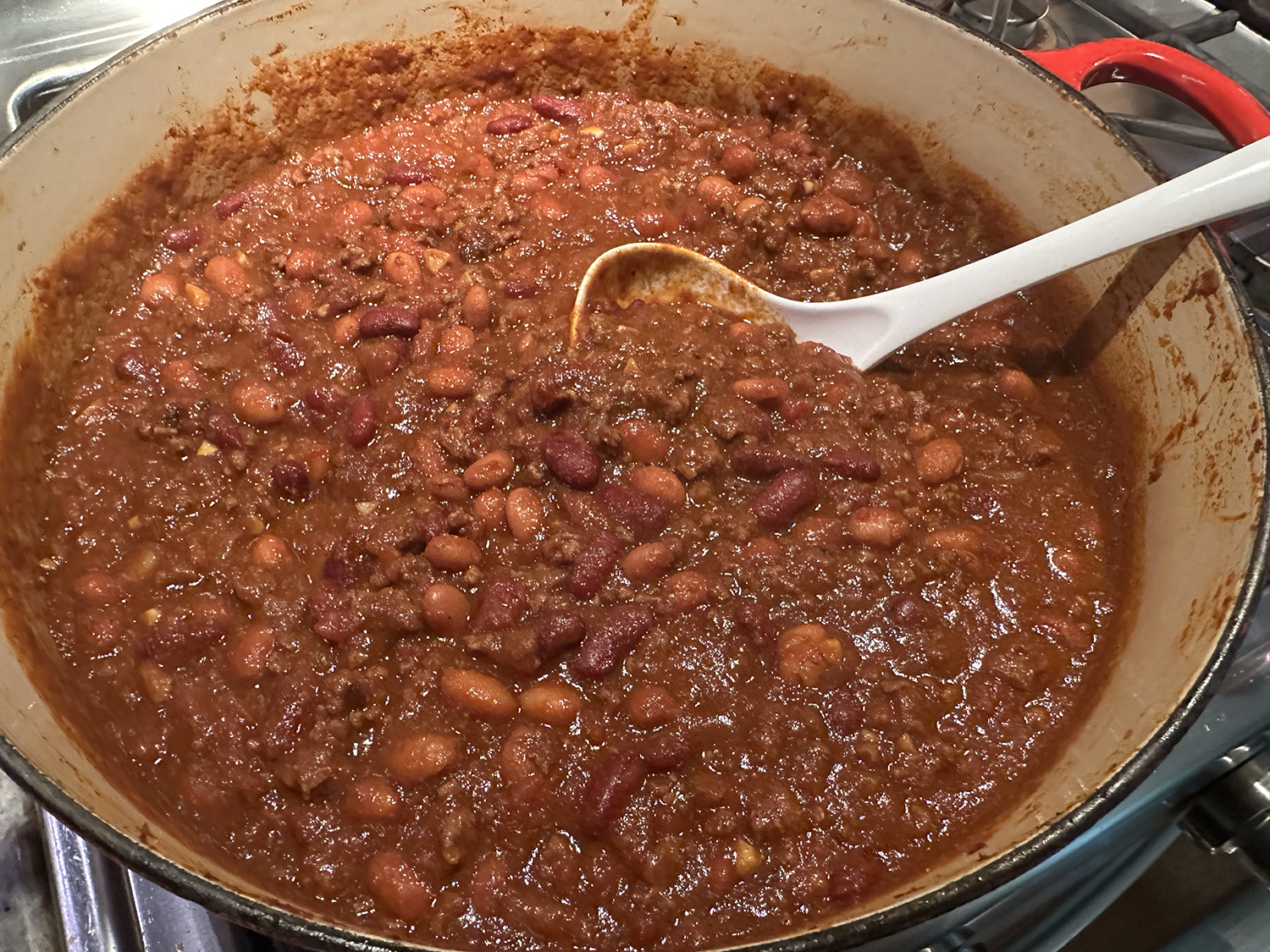
This recipe makes a thick, comforting chili that can be prepared in a Dutch oven on the stovetop (or in a slow-cooker); and it’s flavor improves with a long, slow simmer. It makes a decent-sized batch, perfect for a cold-weather get-together. If there are leftovers, they freeze well—or refrigerate for a few days and let the flavors meld even further.

Yeah, the list of ingredients is long, but the reward is a soulful bowl of goodness. Don’t forget to serve some, or all, of the extras: grated sharp Cheddar, sliced scallions, sour cream, hot sauce, pickled jalapeños and tortilla chips.

Our changes (noted in the recipe below) included doubling the amount of crushed tomatoes, using stout instead of pilsner beer, decreasing the maple syrup by half, swapping out chopped canned chipotles in adobo for the chipotle powder, and using our Le Creuset Dutch oven instead of a slow cooker.

The Ultimate Everything Chili

  • Servings: 8
  • Difficulty: easy
  • Print

Ingredients

  • 2 Tbsp. olive oil
  • 1 large yellow or red onion, finely chopped
  • Kosher salt
  • 2 lbs. ground beef, 80 percent lean, 20 percent fat
  • 8 garlic cloves, finely chopped
  • 1 6-oz can tomato paste
  • 1 Tbsp. sweet paprika
  • 1 1⁄2 Tbsp. canned chipotle, chopped
  • 2 tsp. ground cumin
  • 2 tsp. garlic powder
  • 2 tsp. onion powder
  • 2 tsp. mustard powder
  • 2 tsp. hot smoked paprika
  • ½ tsp. cayenne powder
  • ½ tsp. ground cinnamon
  • ¼ tsp. ground cloves
  • 12 oz. (1½ cups) stout beer, such as Guiness
  • 1 28-oz. can crushed tomatoes in juice
  • ¼ cup cider vinegar
  • 1 Tbsp. maple syrup or dark brown sugar
  • 2 Tbsp. soy sauce
  • 2 tsp. beef stock bouillon paste, such as Better Than Bouillon
  • 1½ tsp. unsweetened cocoa powder
  • 2 15.5-oz. cans kidney beans, drained and rinsed
  • 2 15-oz. cans pinto beans, drained and rinsed
  • 1 Tbsp. Worcestershire sauce
  • For serving: Hot sauce, grated sharp Cheddar, sliced scallions, sour cream, sliced jalapeños, and crushed tortilla chips

Directions

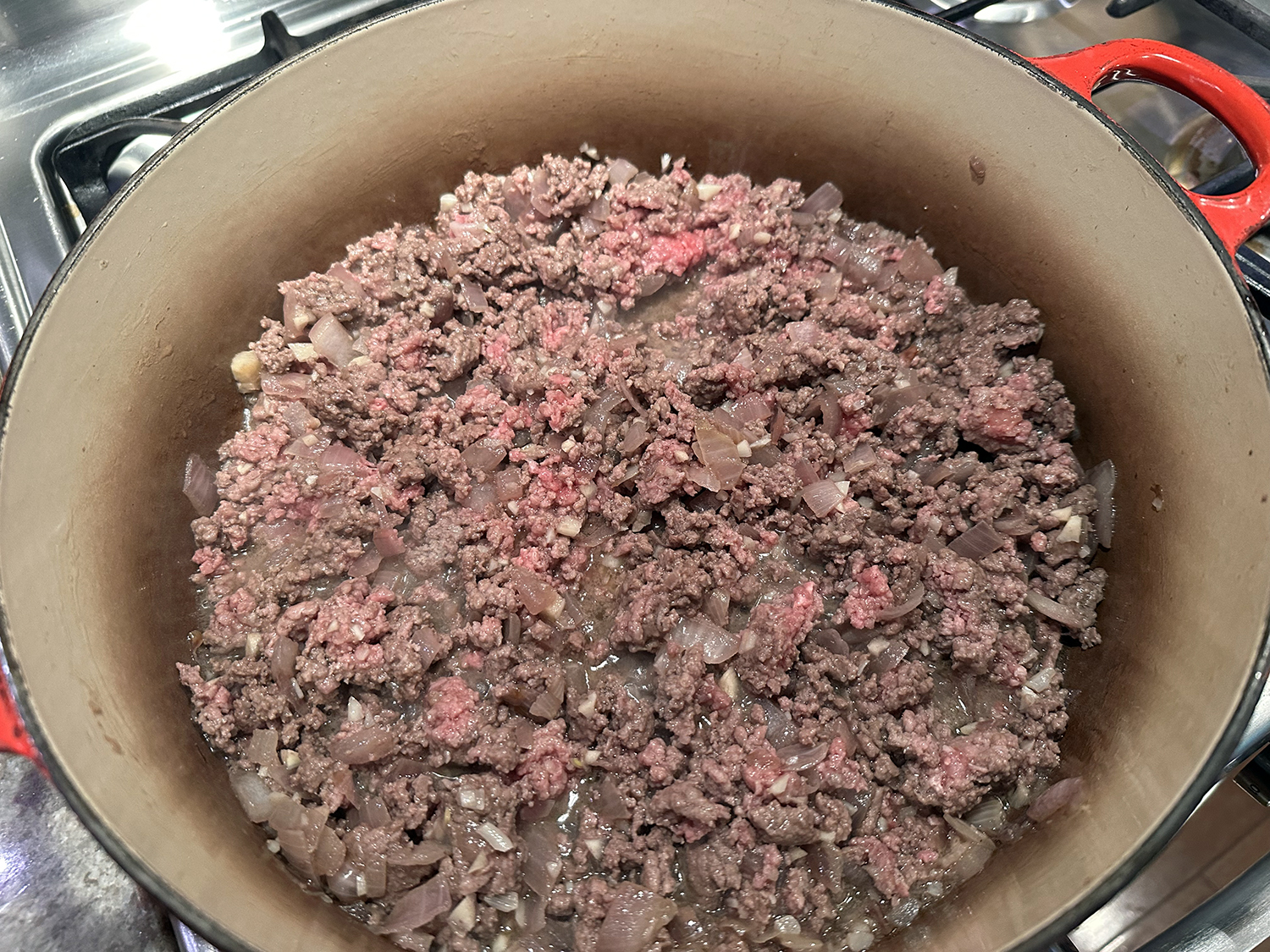
  1. Heat the oil in a large Dutch oven over medium. Add the onion, season with salt, and cook, stirring occasionally, until the onion is softened and translucent, about 8 minutes. Increase the heat to medium-high, add the beef and garlic, season with salt and cook, breaking the beef into crumbles with a spatula, until the beef has lost its pink color and some of the liquid has evaporated, about 10 minutes.
  2. Stir in the tomato paste and cook until slightly darkened and caramelized, about 1 minute. Stir in all the spices and chopped chipotle chiles and cook until fragrant, about 1 minute. Add the beer and stir, scraping the bottom of the pan.
  3. Stir in the tomatoes, vinegar, maple syrup, soy sauce, beef bouillon paste, cocoa, drained beans and ½ cup water. Cover and cook on low for at least 1 hour and up to 2 hours; stirring every 15 to 20 minutes.
  4. When ready to serve, stir in the Worcestershire sauce. If the chili is too thick, stir in a bit of water until the texture is to your liking. Season to taste with salt. Serve in bowls and pass the toppings at the table.

http://www.lynnandruss.com

Adapted from a recipe by SarahDiGregorio for NYTimes Cooking

Mushroom and Lentil Ragù

A vegetarian meal with a meaty undertone and a soulful depth of flavor. Here, nutty mushrooms and quick-cooking lentils play nicely together for a flavor-packed, meatless take on classic ragù. Traditionally, ragù gets its signature savory flavor from slow-cooked meat like ground beef or pork.

In this vegetarian version, a mix of sautéed mushrooms, such as oyster and cremini, lends earthy flavor and texture, while black lentils — a quicker-cooking legume than green or red lentils — gives the sauce body.

Lentils are prized in the Mediterranean, and most Italians would agree that the best lentils come from Southern Italy. Although they cook in under half an hour, black (Beluga) lentils remain a bit more sturdy throughout the cooking process than most other lentils. Instead (because we had them on hand), we used Puglia lentils which are celebrated for their earthy taste and numerous health benefits.

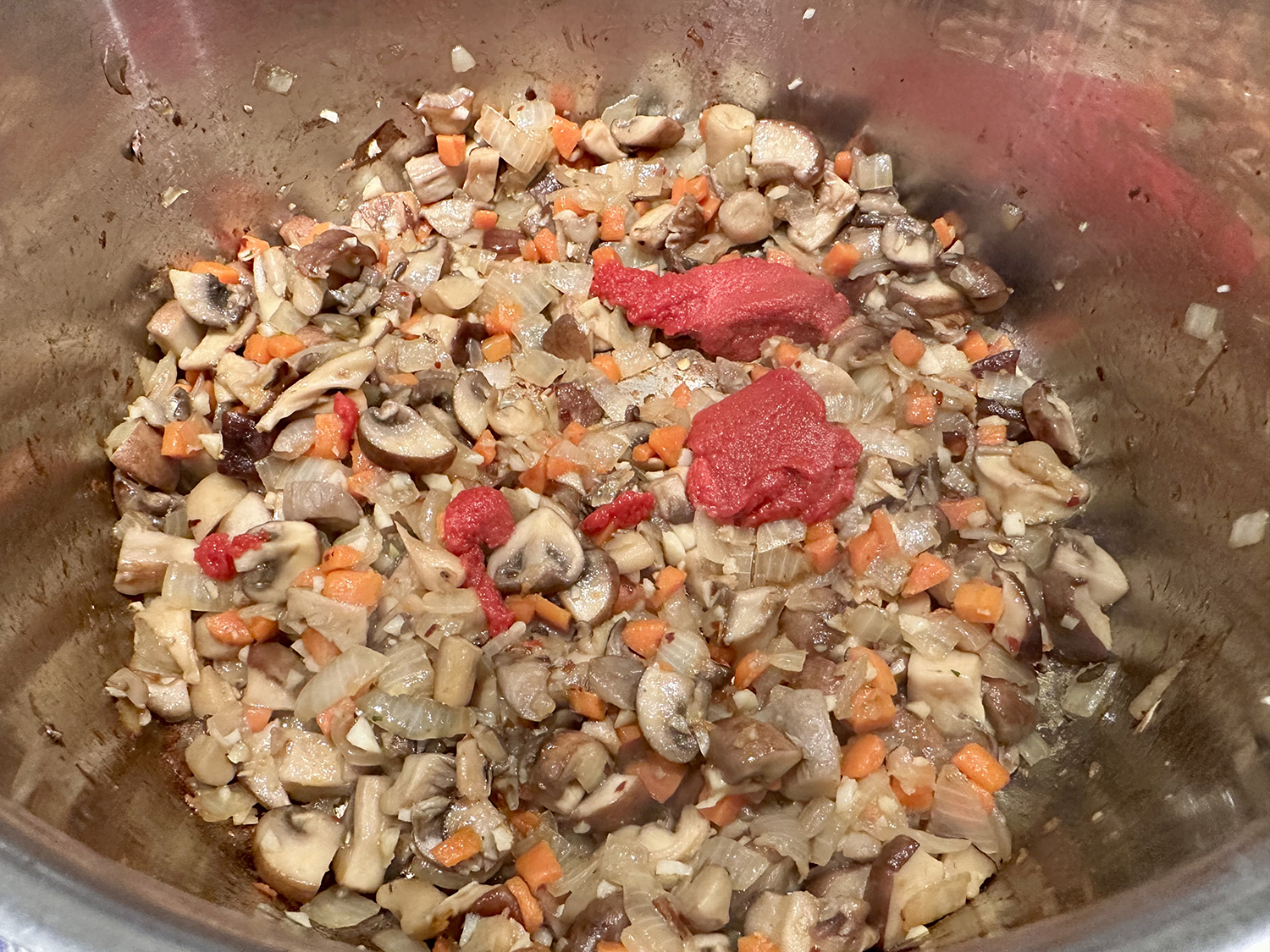
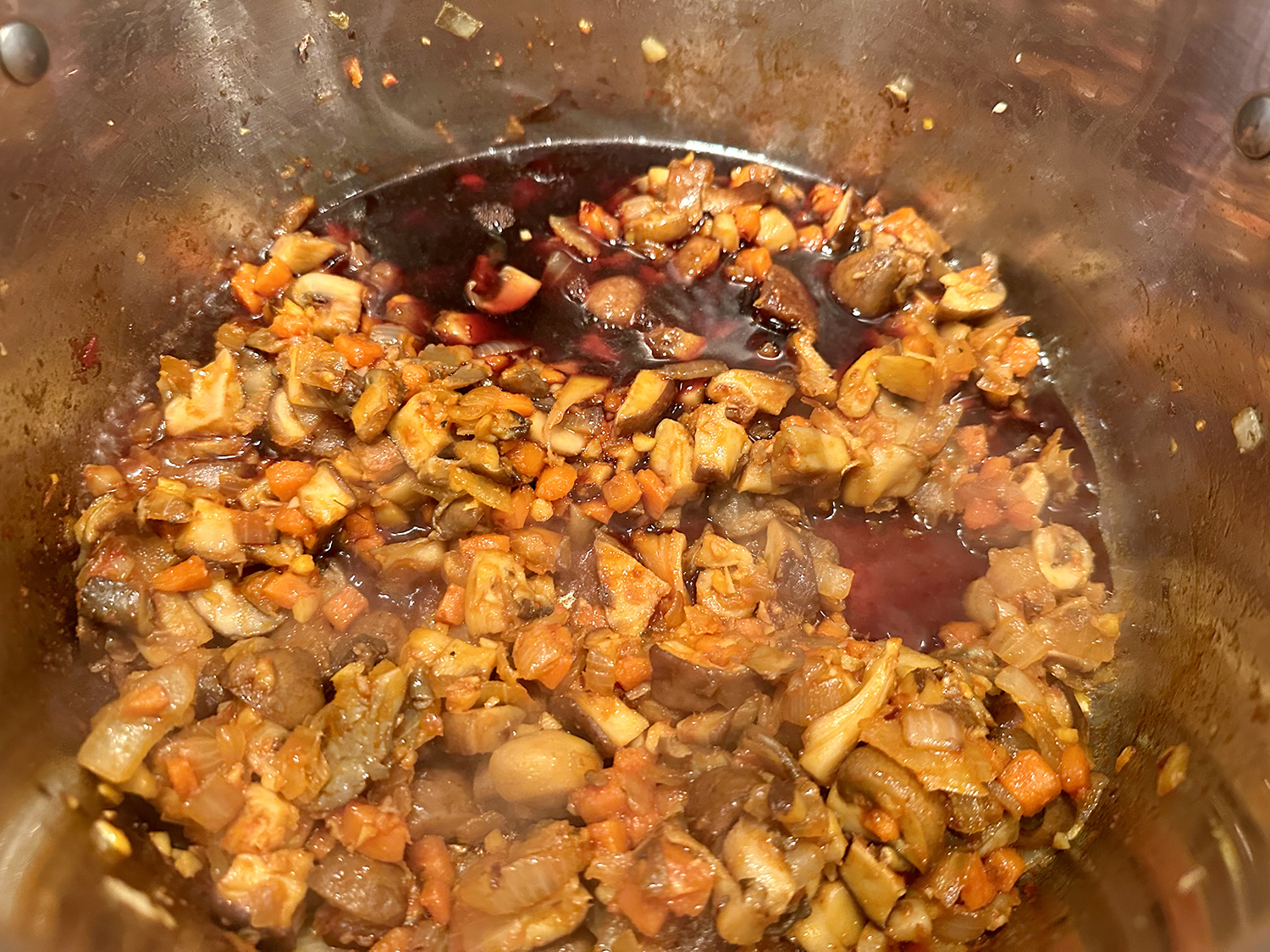
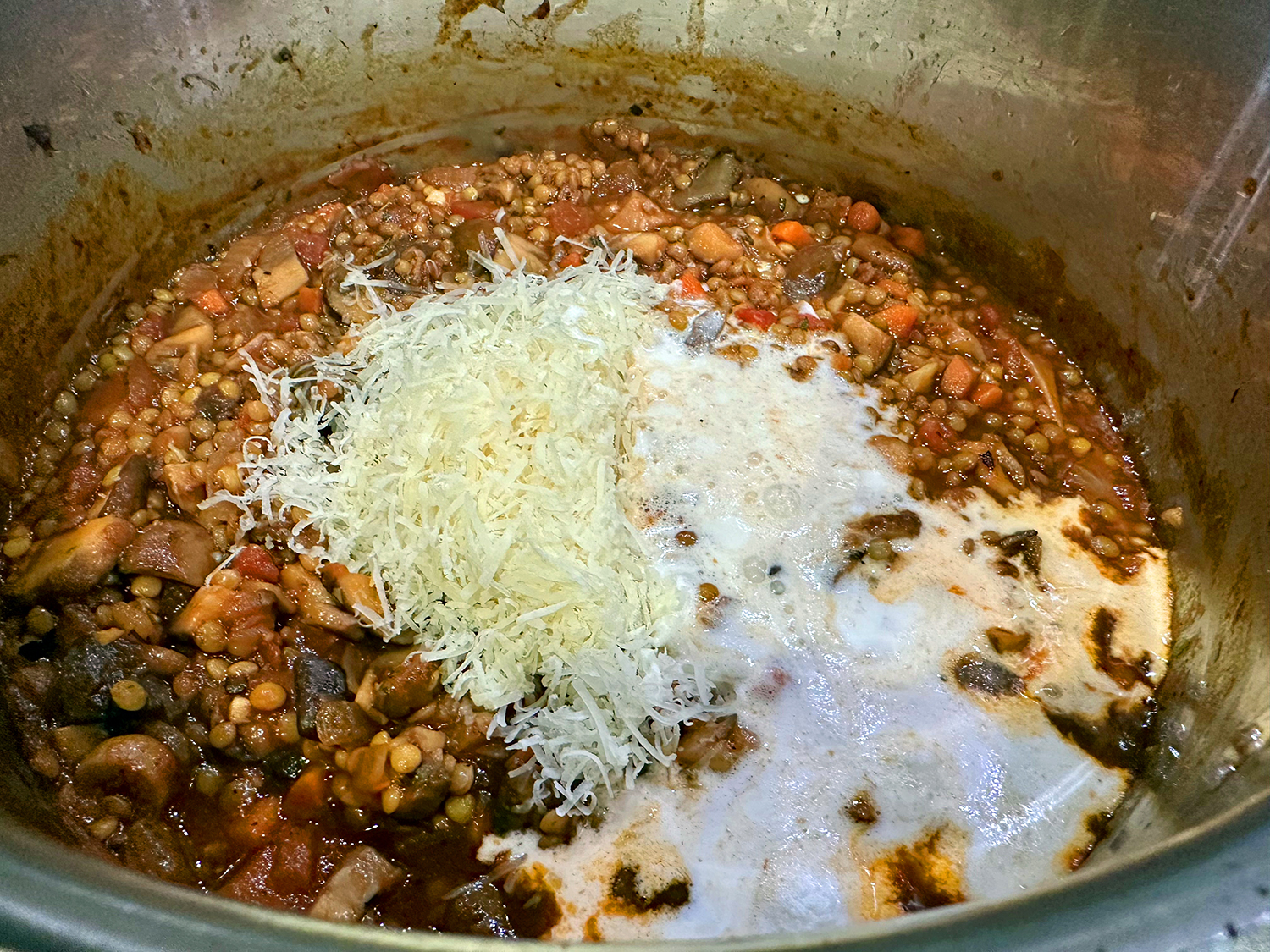
Like any ragù, this dish relies entirely on building layers of flavor. Sautéing the mushrooms, onions, and carrots until browned and toasting the tomato paste creates a deep foundation of umami. Deglazing the brown bits at the bottom of the Dutch oven with wine and stock infuses the lentils and sauce with rich, savory notes.

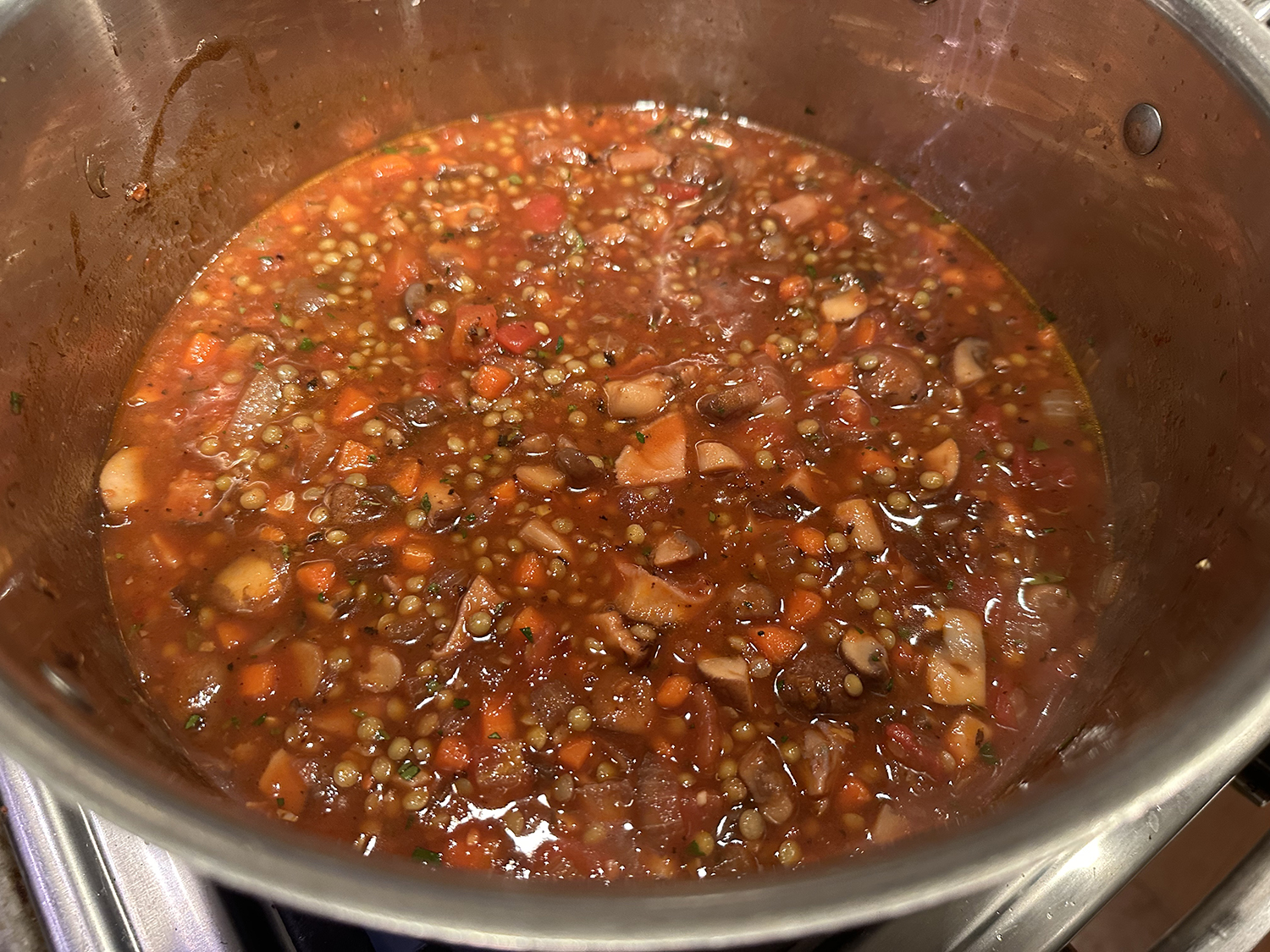
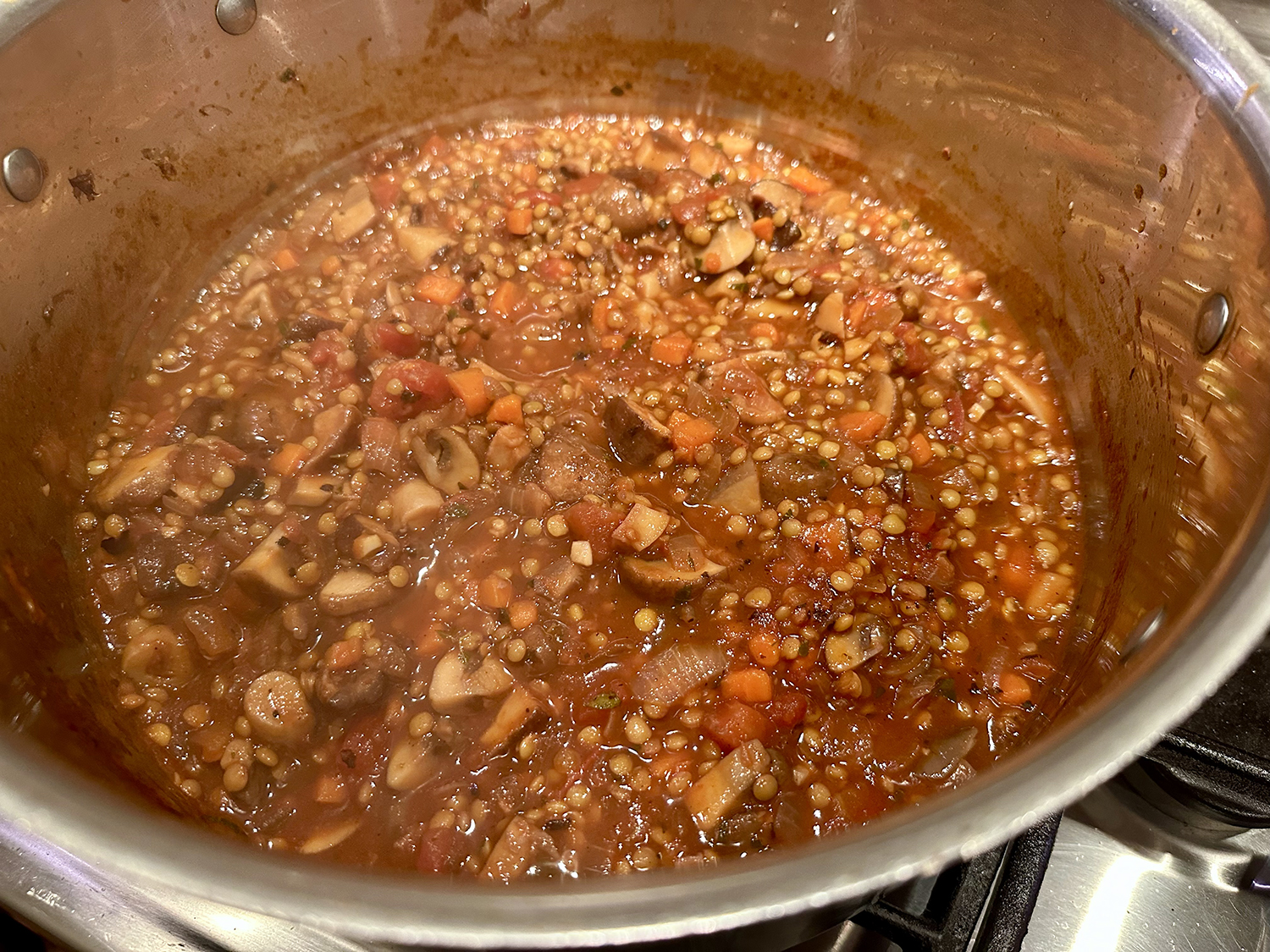
Simmered in a red wine sauce fortified with vegetable broth, the lentils become tender and creamy, resulting in a hearty sauce that comes together in less than an hour and proves to be more than the sum of its parts. Serve over creamy cooked polenta or fresh pappardelle for a filling meal. 

Make Ahead: You can make this ragù up to three days in advance and store it covered in the refrigerator. When reheating, you may find that the lentils have absorbed some of the liquid. Simply thin it back out to your desired consistency with vegetable stock or water. This recipe is also freezer-friendly. Let it cool completely, then ladle it into freezer-safe containers or large resealable plastic bags, and store it in the freezer for up to two months.

Mushroom and Lentil Ragù

  • Servings: 6-8
  • Difficulty: easy
  • Print

Ingredients

  • 1 cup dried black lentils
  • 1/4 cup extra-virgin olive oil, plus more for drizzling
  • 1 lb. mixed fresh mushrooms (such as cremini, oyster, and portobello), stemmed and chopped (about 5 1/2 cups)
  • 1 medium yellow onion, chopped (about 1 1/2 cups)
  • 2 medium carrots, peeled and diced (about 1 cup)
  • 4 tsp. kosher salt, divided
  • 4 large garlic cloves, minced
  • 1/4 tsp. crushed red pepper
  • 2 Tbsp. tomato paste
  • 1 cup (8 oz.) dry red wine
  • 2 cups vegetable broth
  • 1 14.5-oz. can crushed tomatoes
  • 2 Tbsp. chopped fresh oregano, plus more for garnish
  • 1/2 cup heavy cream
  • 2 oz. Parmigiano-Reggiano cheese, finely shredded (about 1/2 cup), plus more for garnish
  • Cooked polenta, for serving

Directions

  1. Bring a medium saucepan of water to a boil over high. Add lentils, and cook, uncovered, until plump and tender, about 10 minutes. Remove from heat, and let stand for 10 minutes; drain and set aside.
  2. Heat oil in a large Dutch oven over medium-high. Add mushrooms, onion, carrots, and 1 teaspoon salt. Cook, stirring occasionally, until mushrooms begin to brown and stick to the bottom of the pot, 12 to 14 minutes. Add garlic and crushed red pepper; cook, stirring often, until fragrant, about 2 minutes. Add tomato paste; cook, stirring constantly, until paste darkens in color, about 2 minutes.
  3. Add wine, and scrape up any browned bits from the bottom of the Dutch oven; cook until wine is almost evaporated, about 2 minutes. Stir in broth, crushed tomatoes, oregano, cooked lentils, and remaining 1 tablespoon salt. Bring to a boil over medium-high; reduce heat to medium-low, and simmer, uncovered, until flavors meld, 15 to 20 minutes.
  4. Remove Dutch oven from heat, and stir in cream and cheese. Serve ragù over cooked polenta. Garnish with additional oregano and cheese, and drizzle with olive oil. Serve hot.

http://www.lynnandruss.com

Recipe by Anna Theoktisto for Food & Wine

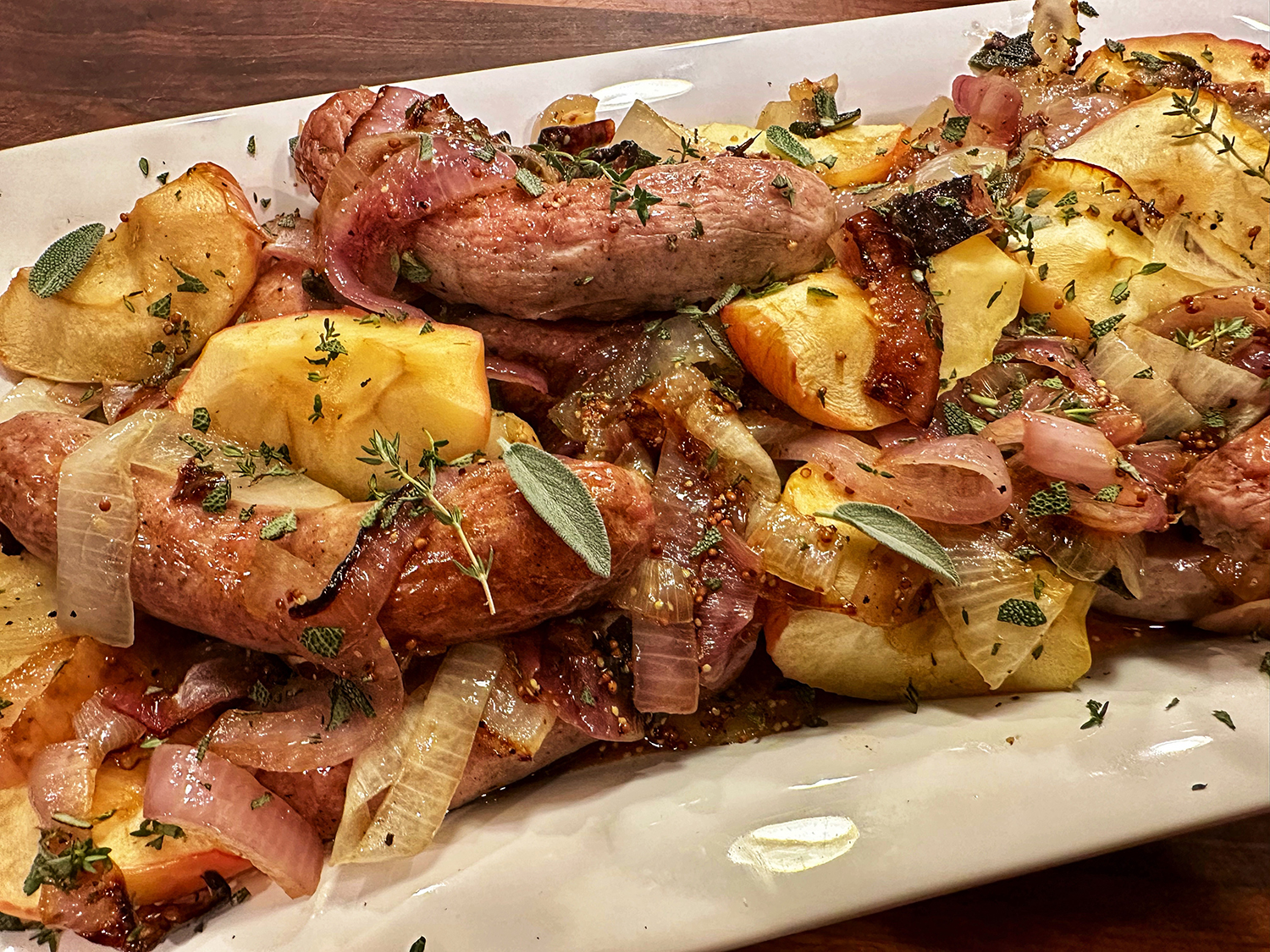
Sausage Traybake with Apples and Onions

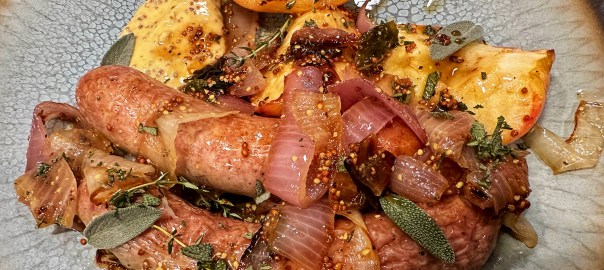
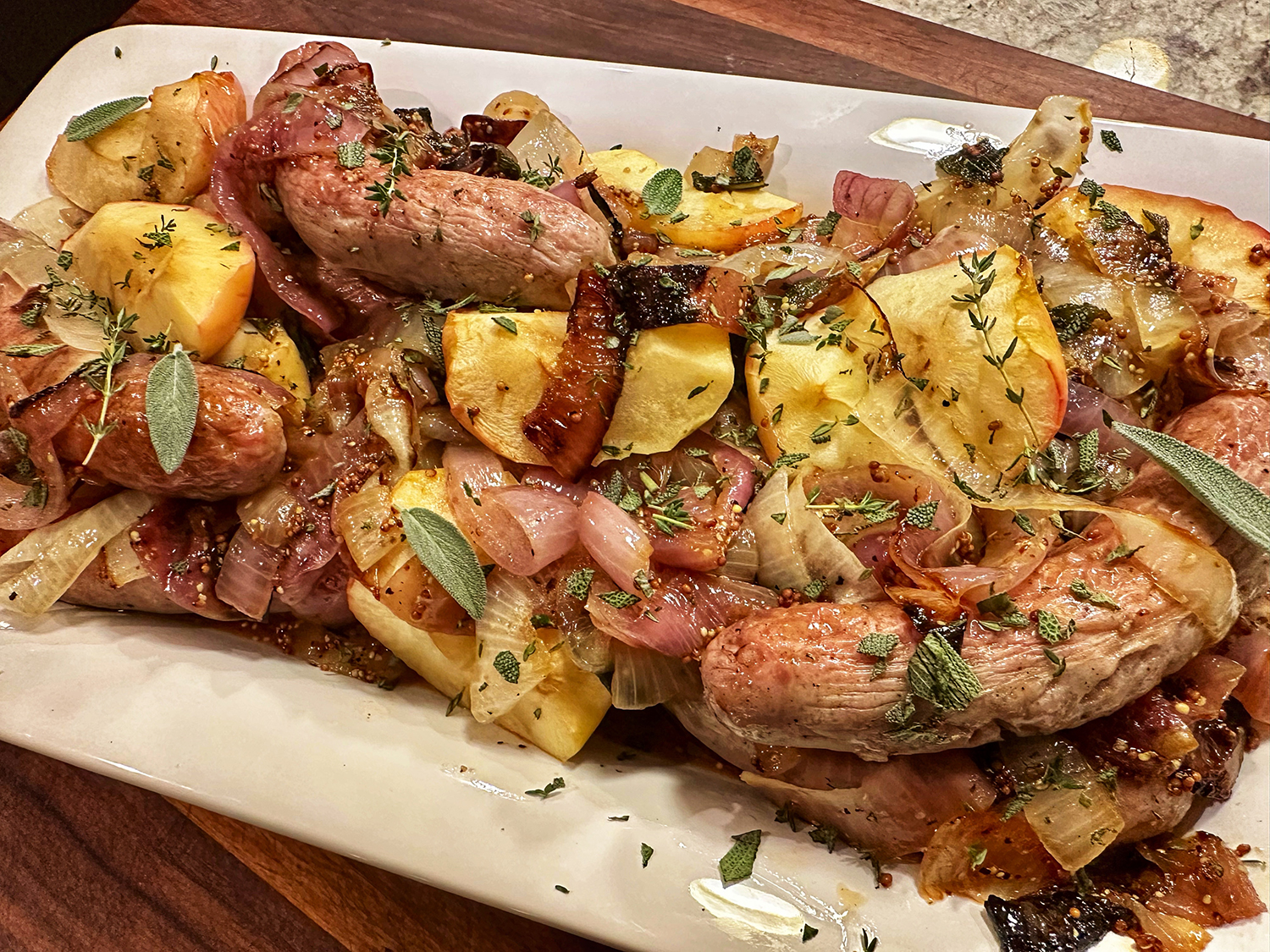
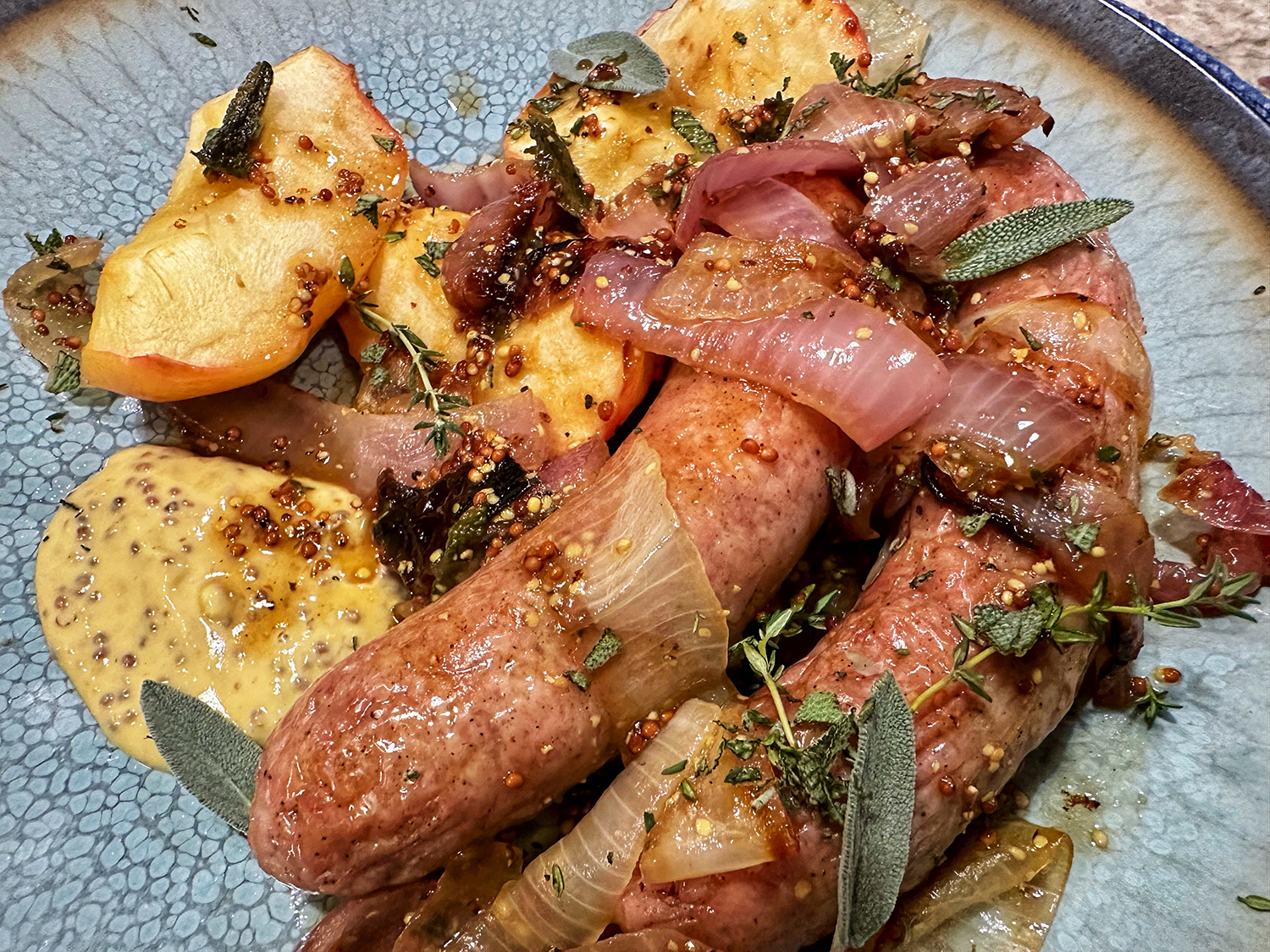
With Oktoberfest festivities in full swing, this meal is sure to be a top contender. It is simple, versatile, a one-pan wonder and sure to please! Wide, low-sided baking sheets are ideal for oven-easy dinners; they facilitate heat circulation for better browning.

Savory sausages are paired with sweet apples and onions, which get a flavor boost from spicy mustard. A glug of hard apple cider or beer is used to deglaze the baking sheet. The double dose of apple flavor from cider is spot-on, though a crisp lager or malty amber beer also is delicious.

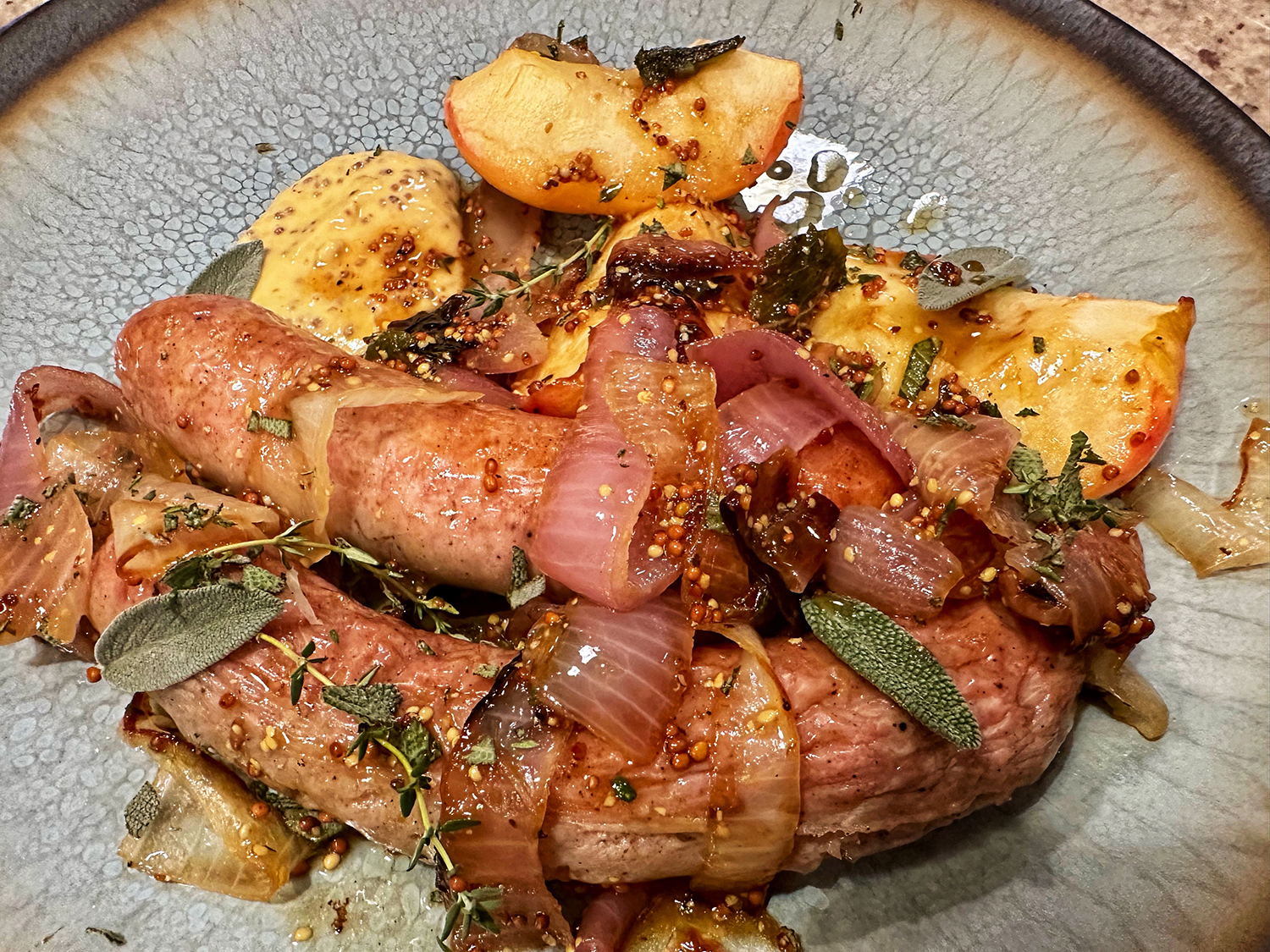
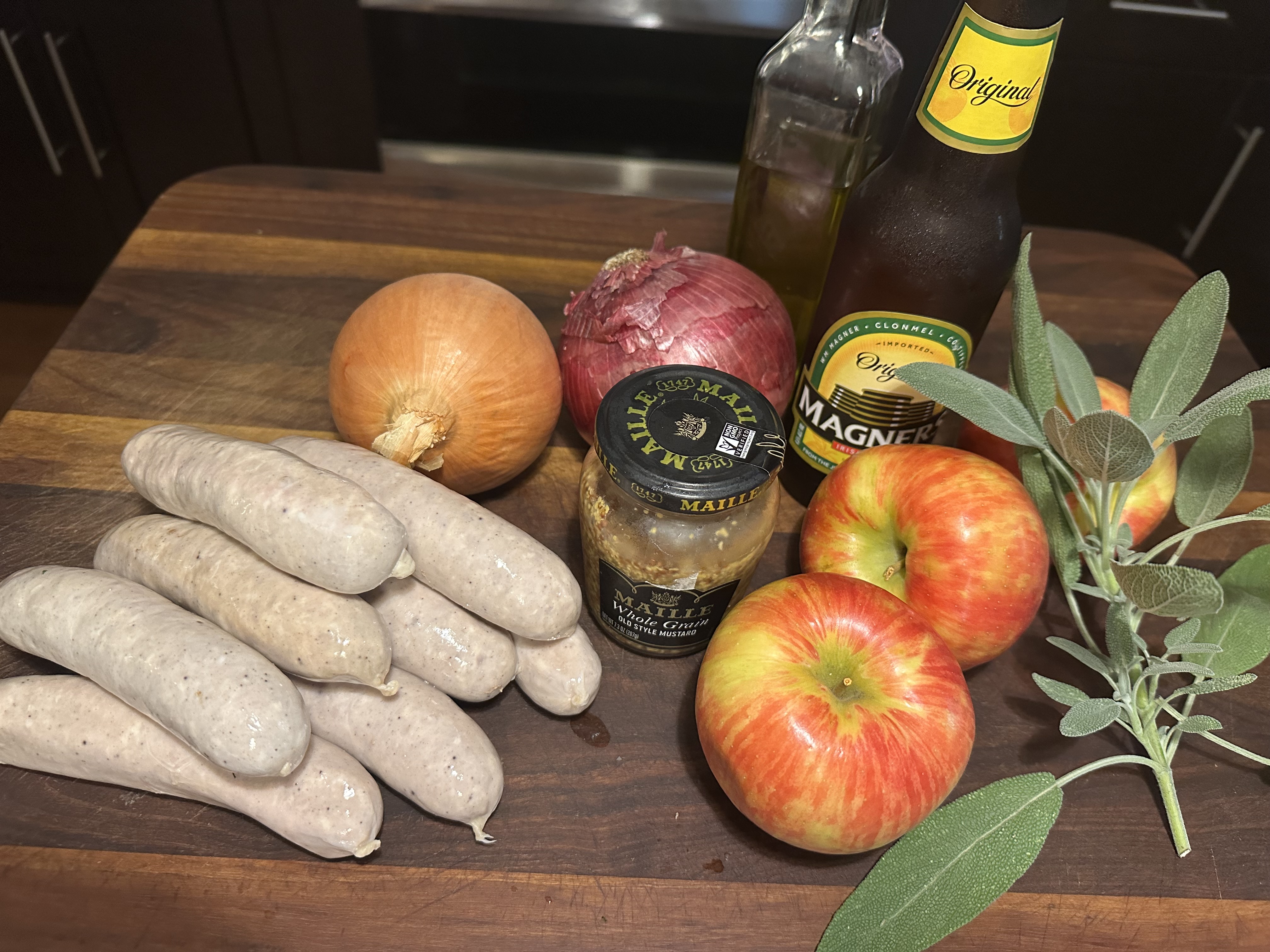
Select apples with a firm texture, yet thin skin that stays tender during roasting. Honeycrisp (our selection) and Gala are good options. Of the other choices, we used bratwurst, one each of red and yellow onions, hard apple cider, a combo of both Dijon and whole grain mustards, and both sage (which we tripled to 3 tablespoons) and thyme from our herb garden.

And is doesn’t hurt to have an extra-large dollop of a whole grain and Dijon mustard mixture on the plate.

Sausage Traybake with Apples and Onions

  • Servings: 4-6
  • Difficulty: easy
  • Print

Ingredients

  • 2 medium red OR yellow onions, halved and sliced about ½ inch thick
  • 1-3 Tbsp. torn fresh sage OR 2 tsp. fresh thyme; plus more chopped sage or thyme to serve
  • 2 Tbsp. extra-virgin olive oil
  • Kosher salt and ground black pepper
  • 1¼ lbs. firm apples, quartered lengthwise and cored
  • 1½ lbs. kielbasa OR bratwurst OR sweet or hot Italian sausages, poked in several places with a paring knife
  • 1/4 cup hard apple cider OR beer OR broth
  • 2 Tbsp. whole-grain mustard OR Dijon mustard, plus more to serve

Directions

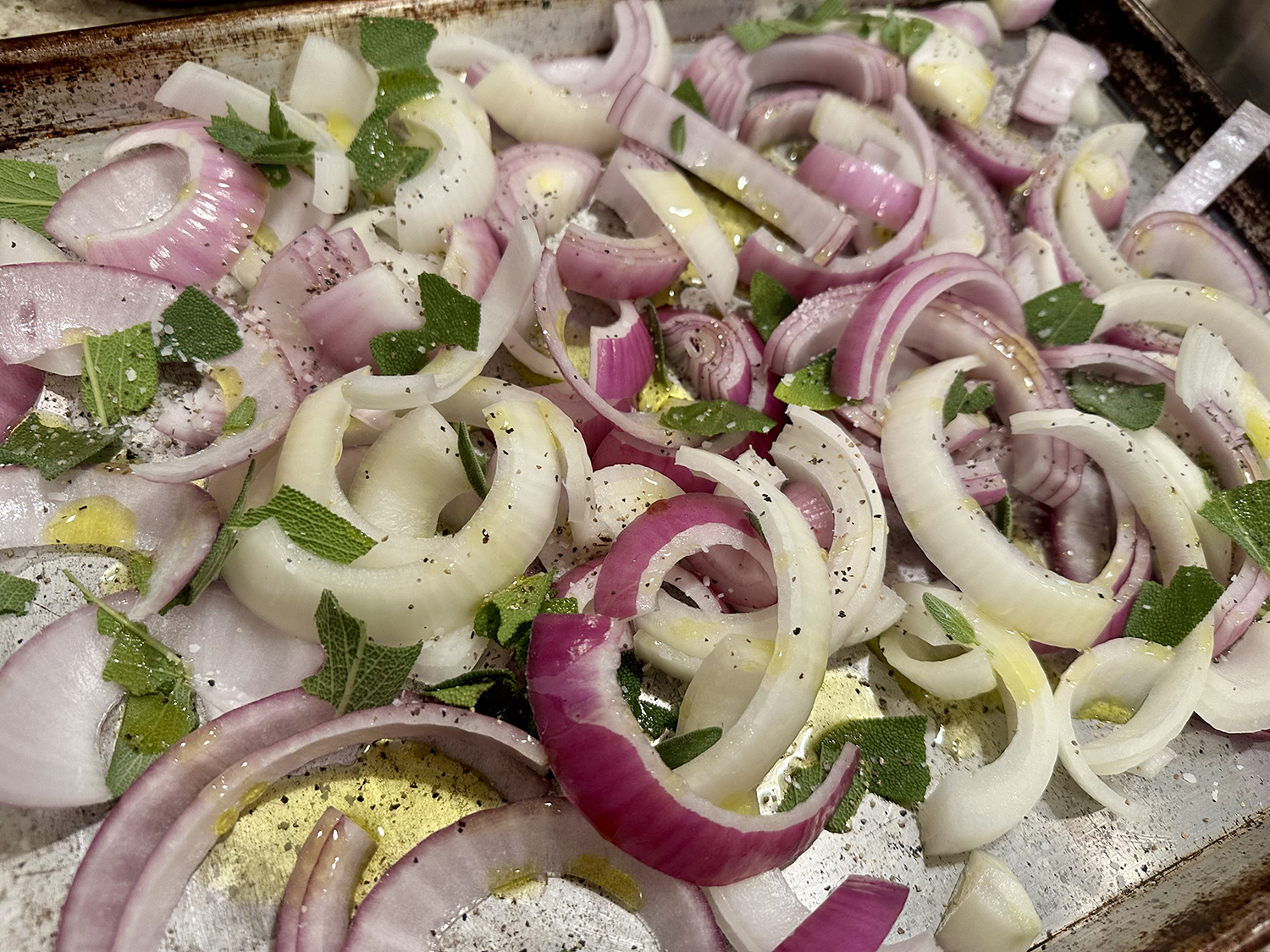
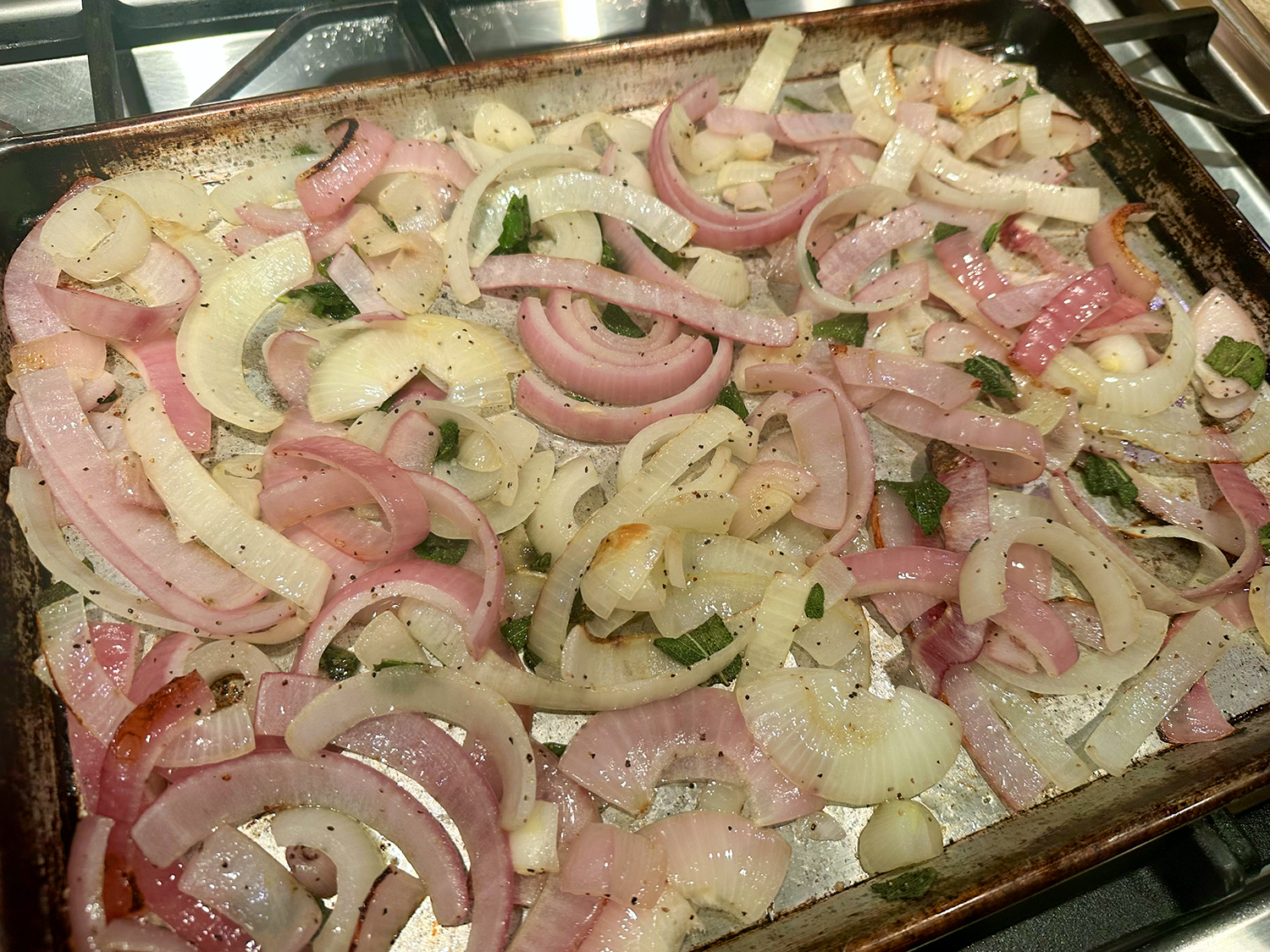
  1. Heat the oven to 450°F with a rack in the middle position. On a rimmed baking sheet, toss together the onions, torn sage, oil and ½ teaspoon each salt and pepper; distribute in an even layer. Roast until the onions begin to soften and brown, about 10 minutes.
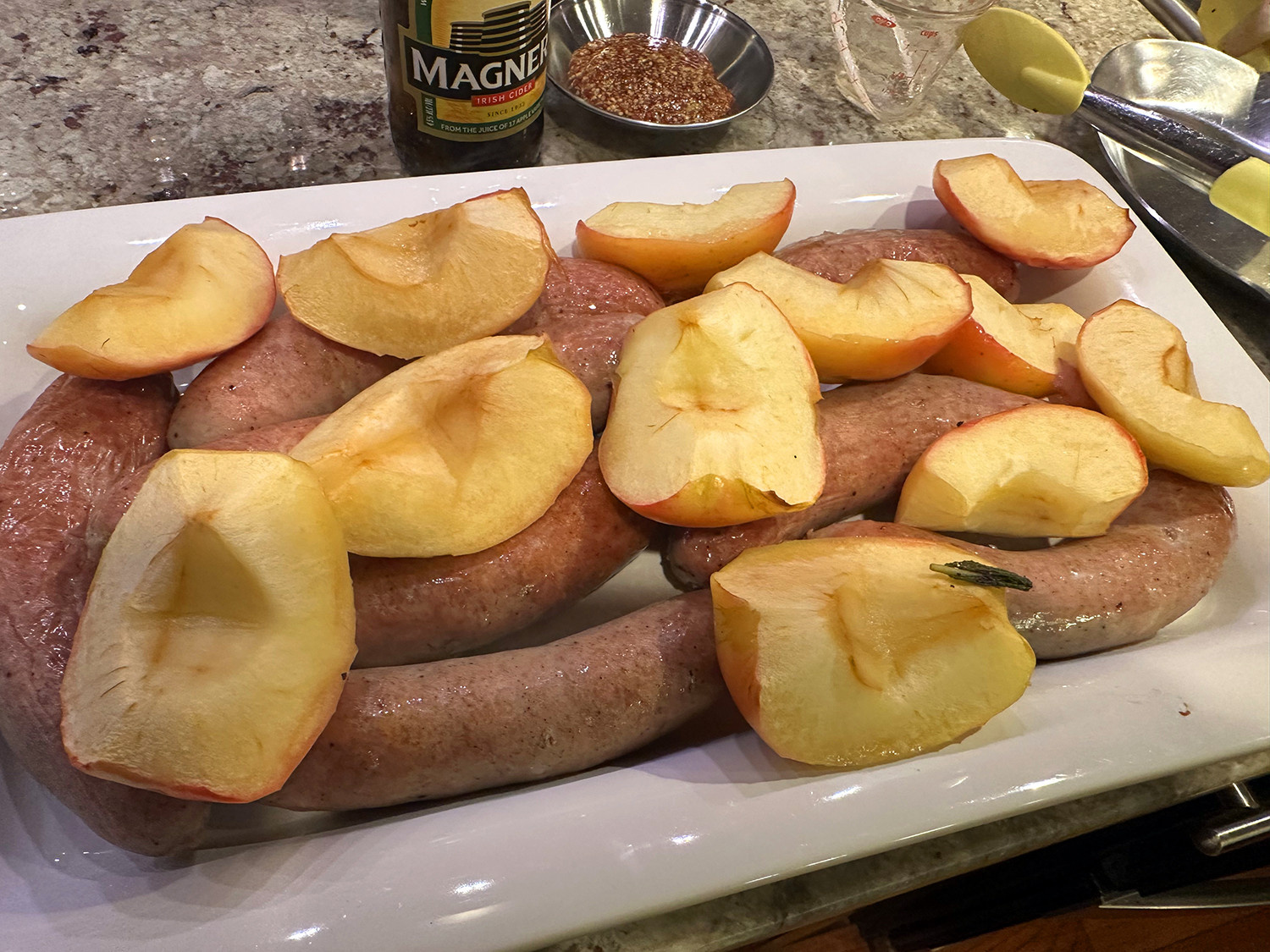
  2. Remove from the oven and stir the onions. Add the apples and arrange the sausages on top. Roast until the centers of the sausages reach 160°F and the onions and apples are tender and lightly browned, 15 to 20 minutes.
  3. Transfer the sausages and apples to a platter, leaving the onions in the pan. Pour the cider over the onions and stir, scraping up any browned bits. Stir in the mustard, then taste and season with salt and pepper. Transfer the onion mixture to the platter, spooning it around the sausages and apples. Sprinkle with chopped sage and serve with additional mustard.
  4. Optional garnish: Chopped fresh dill OR pickled peppers OR both

http://www.lynnandruss.com

Recipe from Courtney Hill for Milk Street

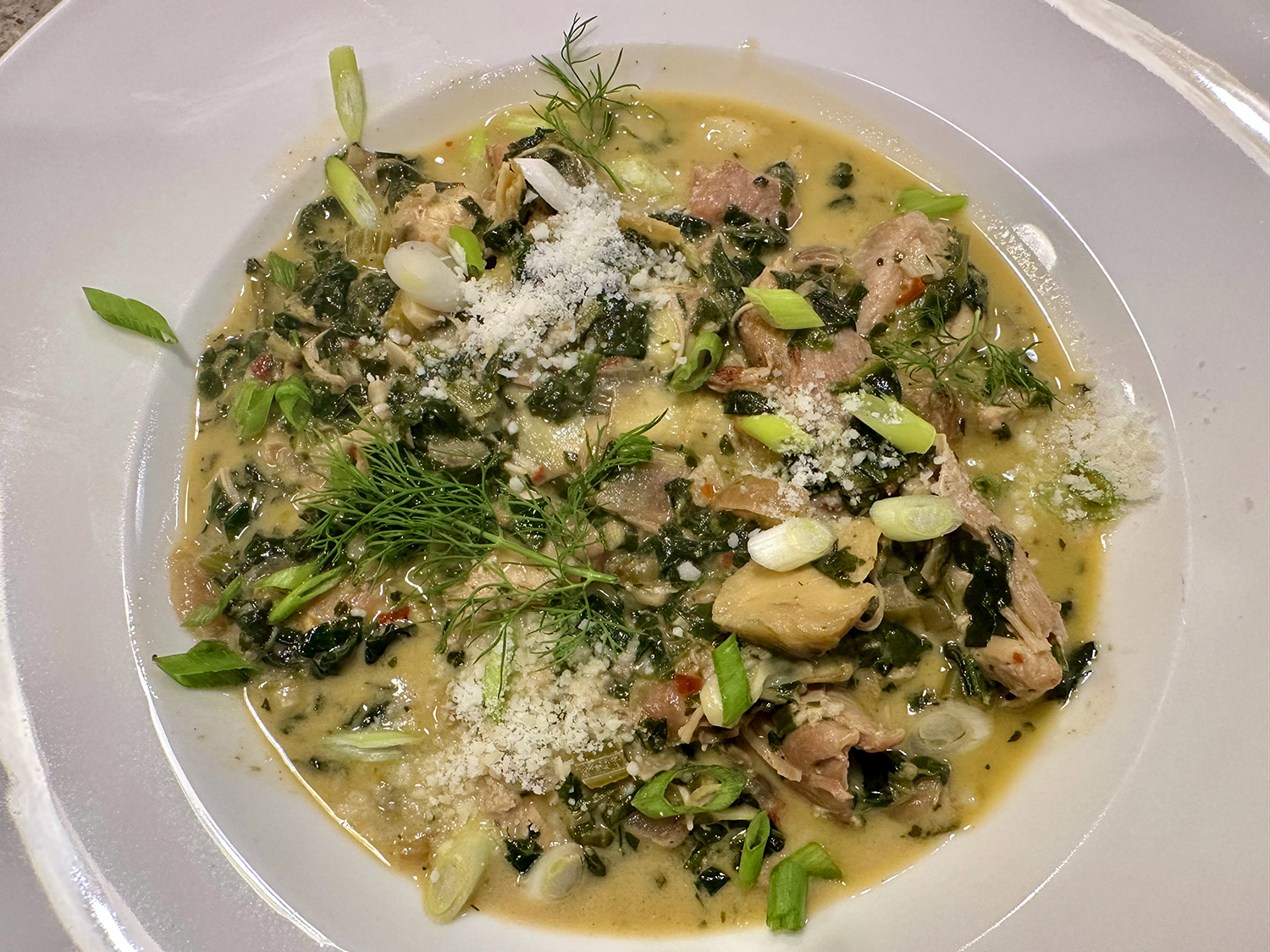
Creamy Spinach-Artichoke Stew

This creamy chicken stew is spinach-artichoke dip reimagined as a simple stovetop braise. It comes together quickly, thanks to frozen spinach and jarred artichoke hearts, though if you have time, NYTimes Cooking also has a slow-cooker version of this recipe.

Fresh dill and scallions are added just before serving, and provide bright, herbal flavor that offsets the richness of the finished dish. Delicious and packed with flavor, that is even better the next day!

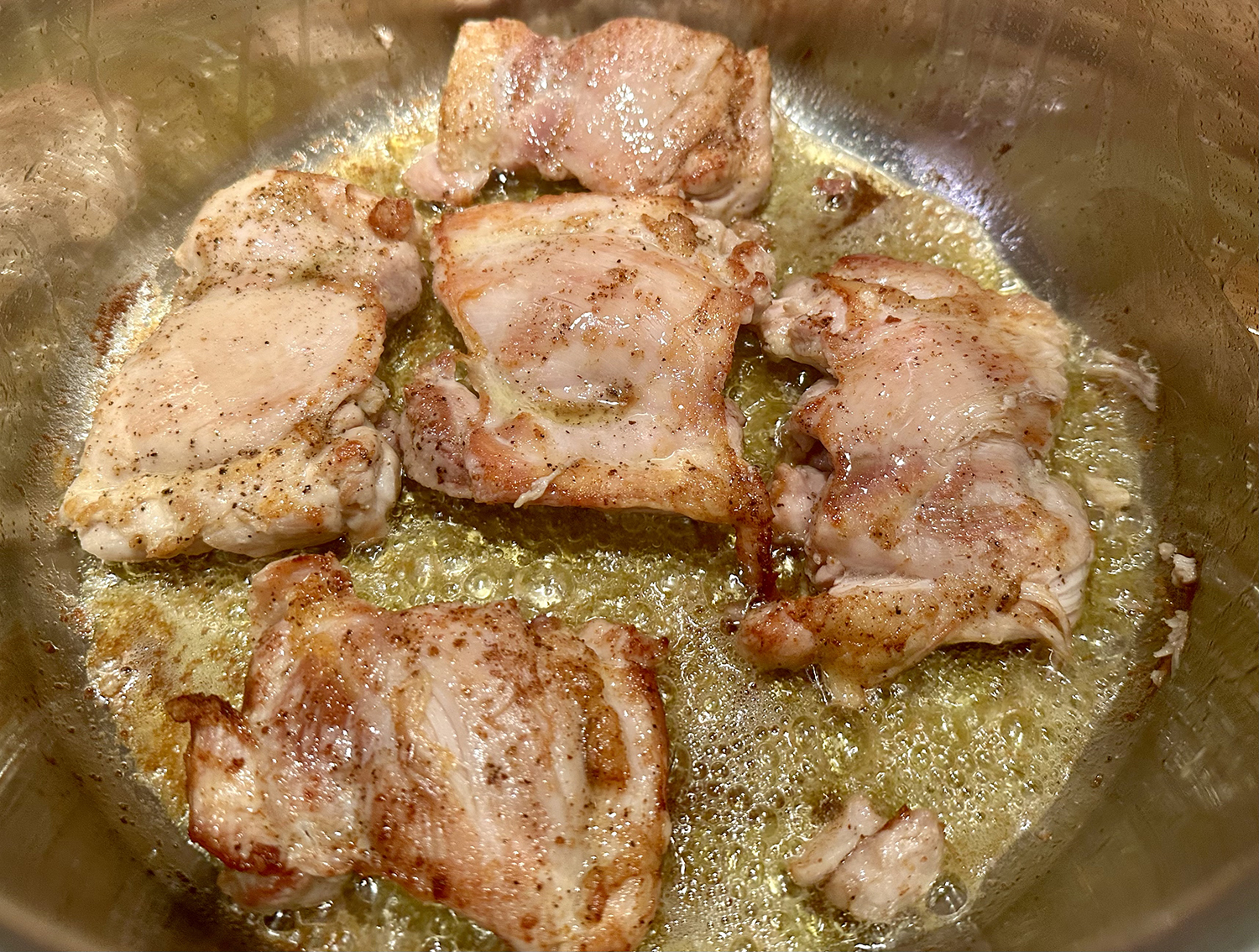
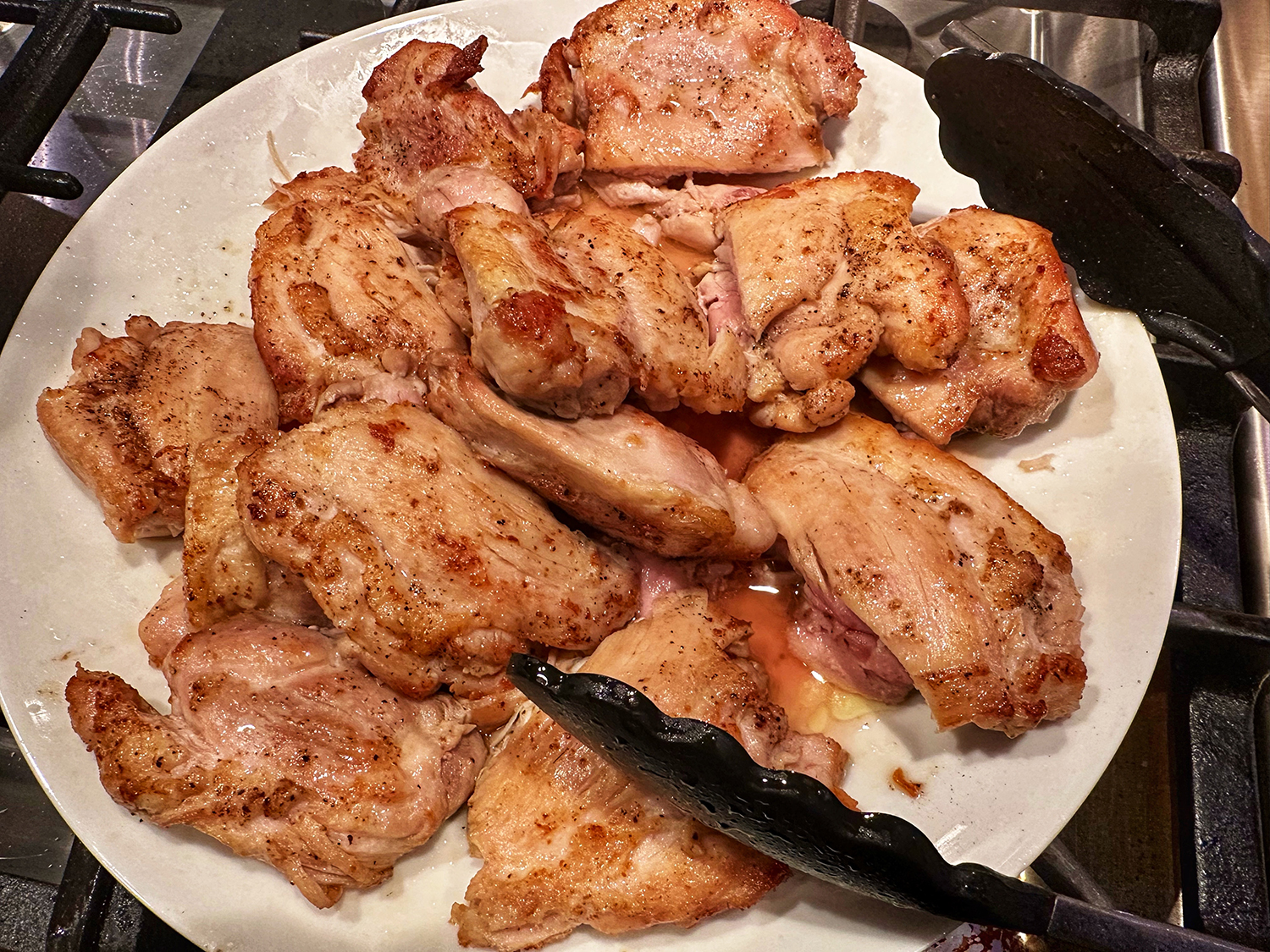
Some changes we made included adding olive oil with the butter and browning the chicken thighs on both sides to render some of the fat and add that extra layer of flavorful fond for the base. A parm rind was incorporated at the time the wine and stock are added to the pot. The original amount of 1/2 cup of fresh dill just seemed overpowering, so we cut by half, to a quarter cup, plus more for garnish.
Creamy Spinach-Artichoke Stew

  • Servings: 4
  • Difficulty: easy
  • Print

Ingredients

  • 2 Tbsp. unsalted butter
  • 3 Tbsp. olive oil
  • 2 to 2¼ lbs. boneless, skinless chicken thighs
  • 1 large yellow or red onion, finely chopped
  • Kosher salt and black pepper
  • 3 celery stalks, chopped
  • 8 garlic cloves, smashed and chopped
  • 2 cups chicken stock, preferably homemade
  • ¾ cup white wine
  • Parm rind
  • ½ lemon, juiced (about 1½ Tbsp.)
  • 1 tsp. red-pepper flakes
  • 1 10-oz. package frozen cut spinach
  • 1 12-oz. jar marinated artichoke hearts, drained (about 1 heaping cup artichoke hearts)
  • ½ cup cream cheese (about 4 oz.)
  • 1⁄4 cup finely chopped fresh dill, more for garnish
  • 4 to 6 scallions, thinly sliced, for topping
  • Grated Parmesan cheese, for topping

Directions

  1. In a large Dutch oven over medium-high heat, add the olive oil and melt the butter. Add the seasoned chicken thighs, and brown for a few minutes on both sides. Remove to a platter and cut in half.
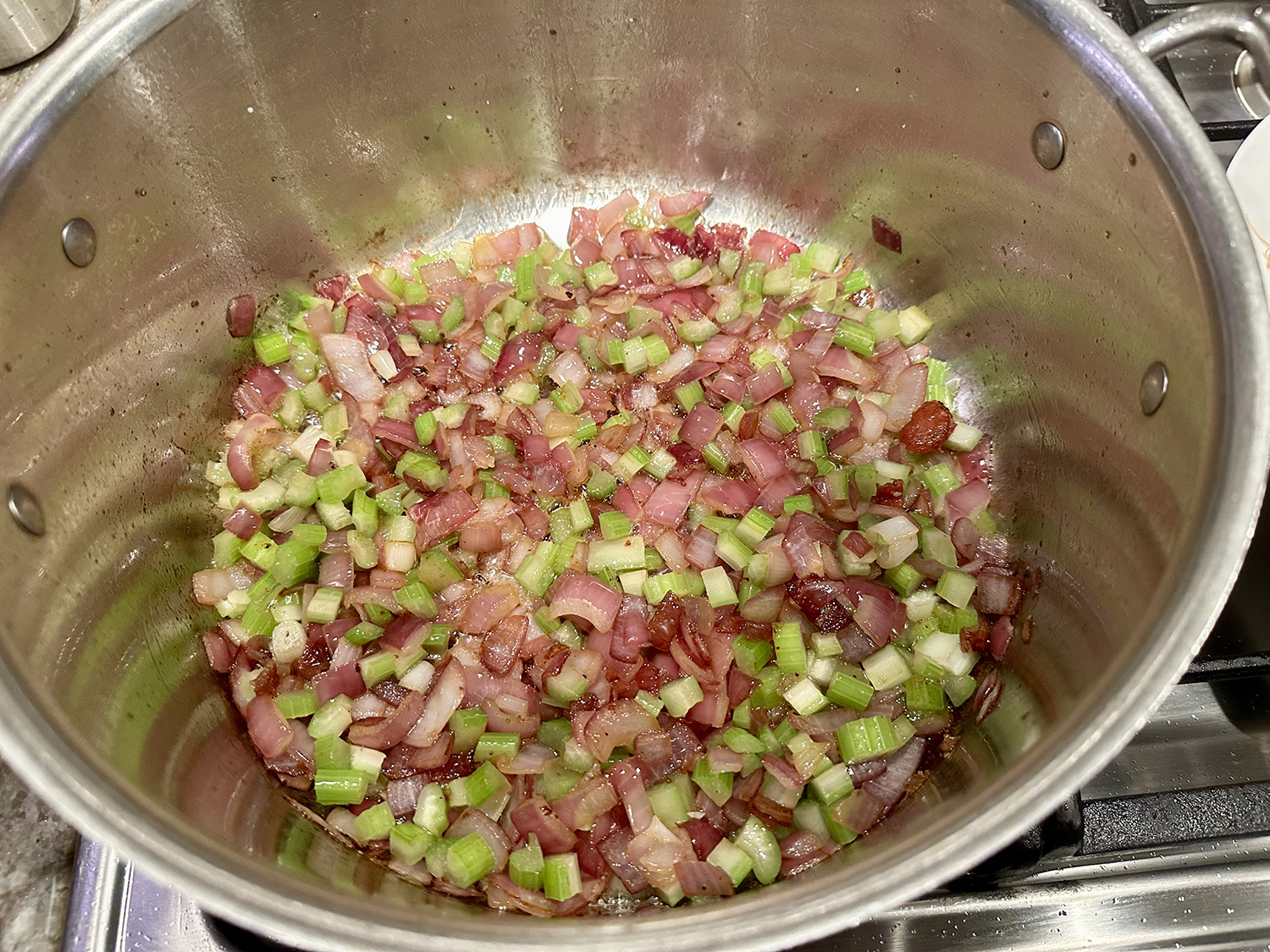
  2. Add the onion, season lightly with salt, and cook, stirring occasionally, until softened and translucent, about 5 minutes. Add the celery and cook, stirring, until softened, about 5 minutes, adjusting the heat as necessary to avoid scorching. Stir in the garlic.
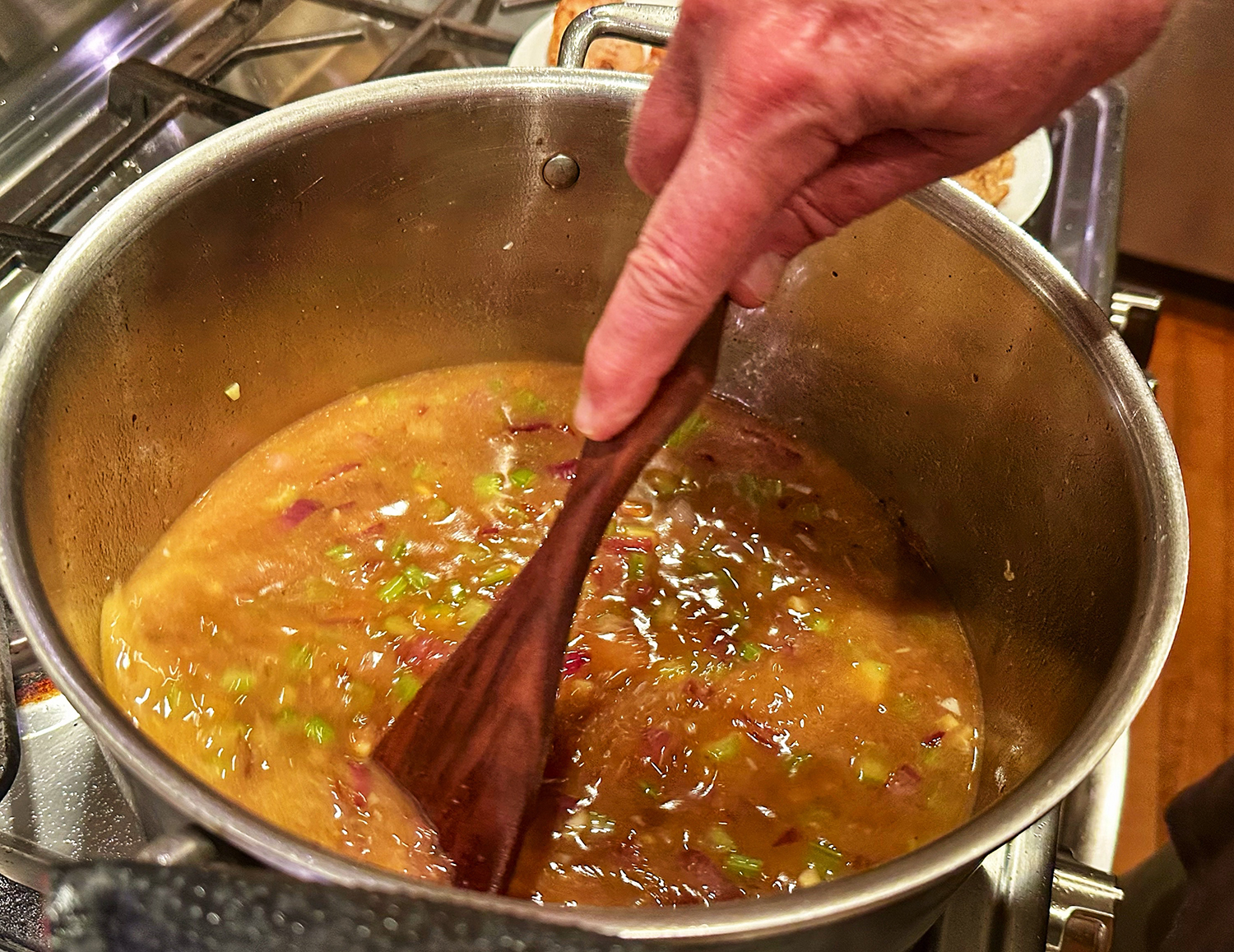
  3. Pour in the stock and wine and add the parm rind, and bring to a bubble. Add the chicken thighs, lemon juice and red-pepper flakes; season with 1 teaspoon salt and a generous amount of pepper. Mix well to combine all the ingredients and bring to a boil.
  4. Reduce the heat to maintain a low simmer and simmer, uncovered, for 20 minutes.
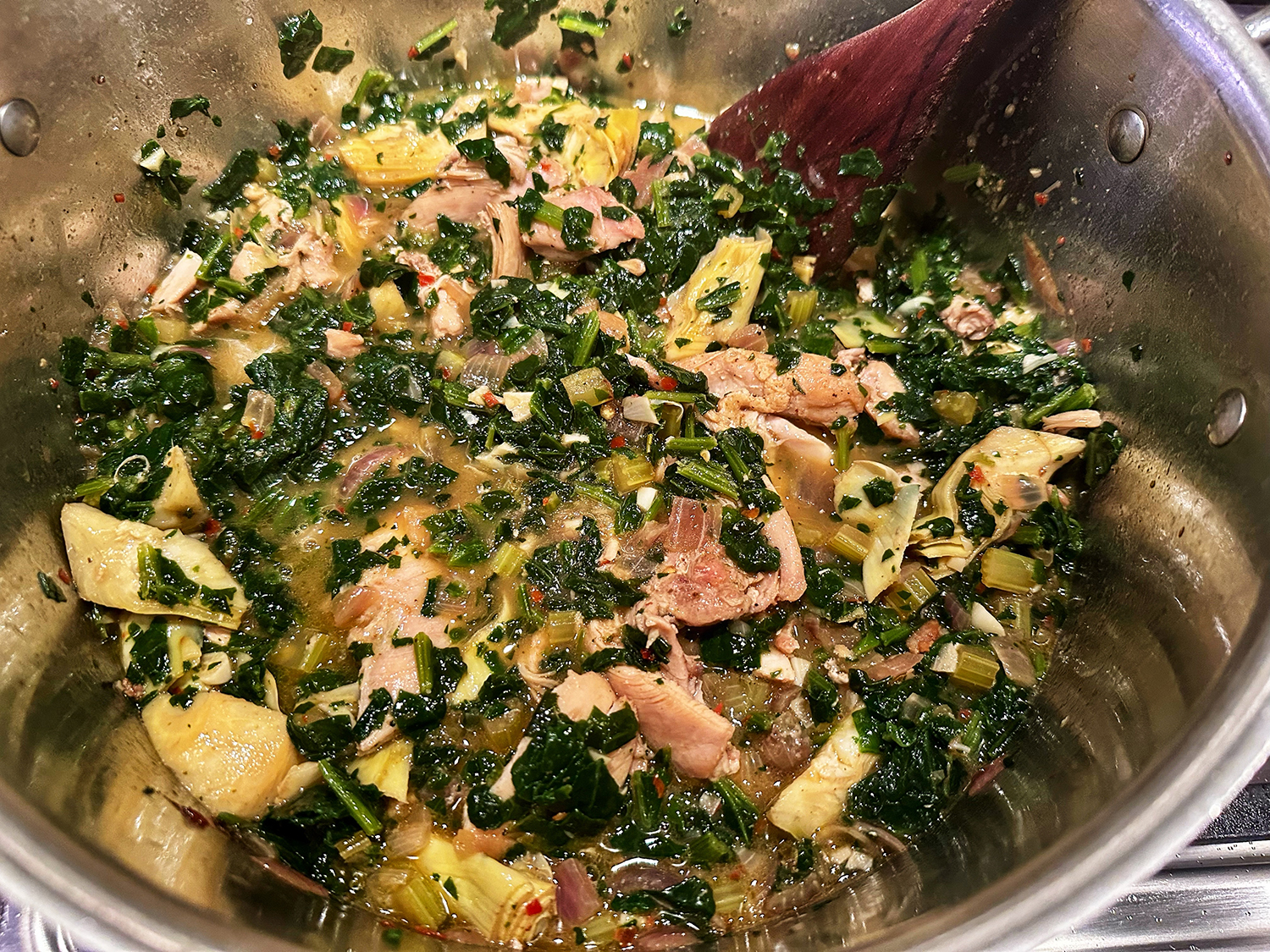
  5. Add the frozen spinach and the artichoke hearts to the pot. Increase the heat to medium-high and cook, stirring to help the spinach defrost and wilt into the stew. When the spinach is warm and evenly distributed, reduce the heat and simmer until the chicken is tender and the flavors are blended, another 10 to 15 minutes.
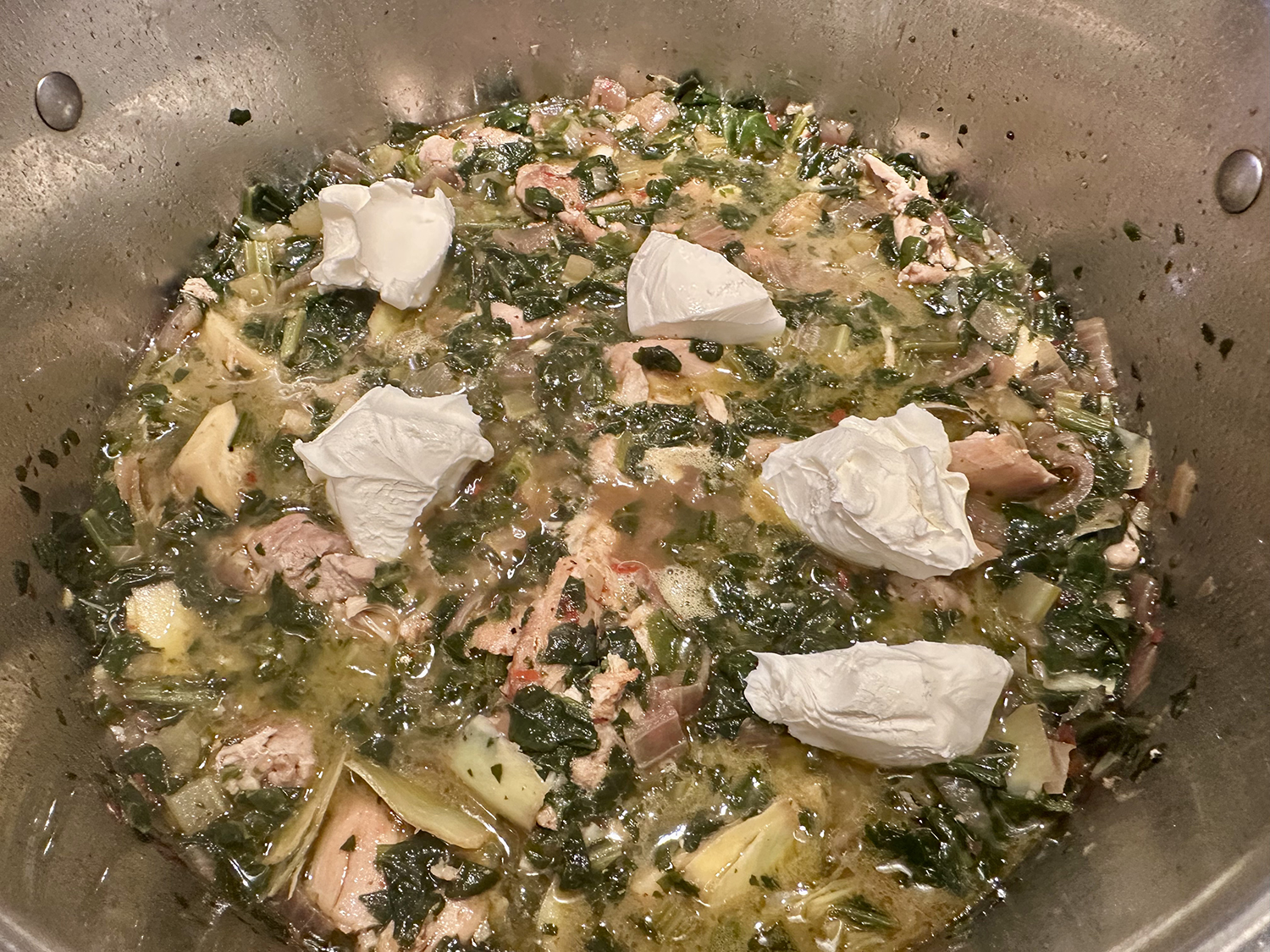
  6. Add the cream cheese in dollops, stirring to melt it into the soup. Add the dill. Using two forks, coarsely break or shred the chicken into large chunks. Taste and add more salt and black pepper if necessary. Remove the parm rind.
  7. Divide the stew among bowls, and top with scallions and Parmesan.

http://www.lynnandruss.com

Adapted from a recipe by Sarah DiGregorio for NYTimes Cooking.

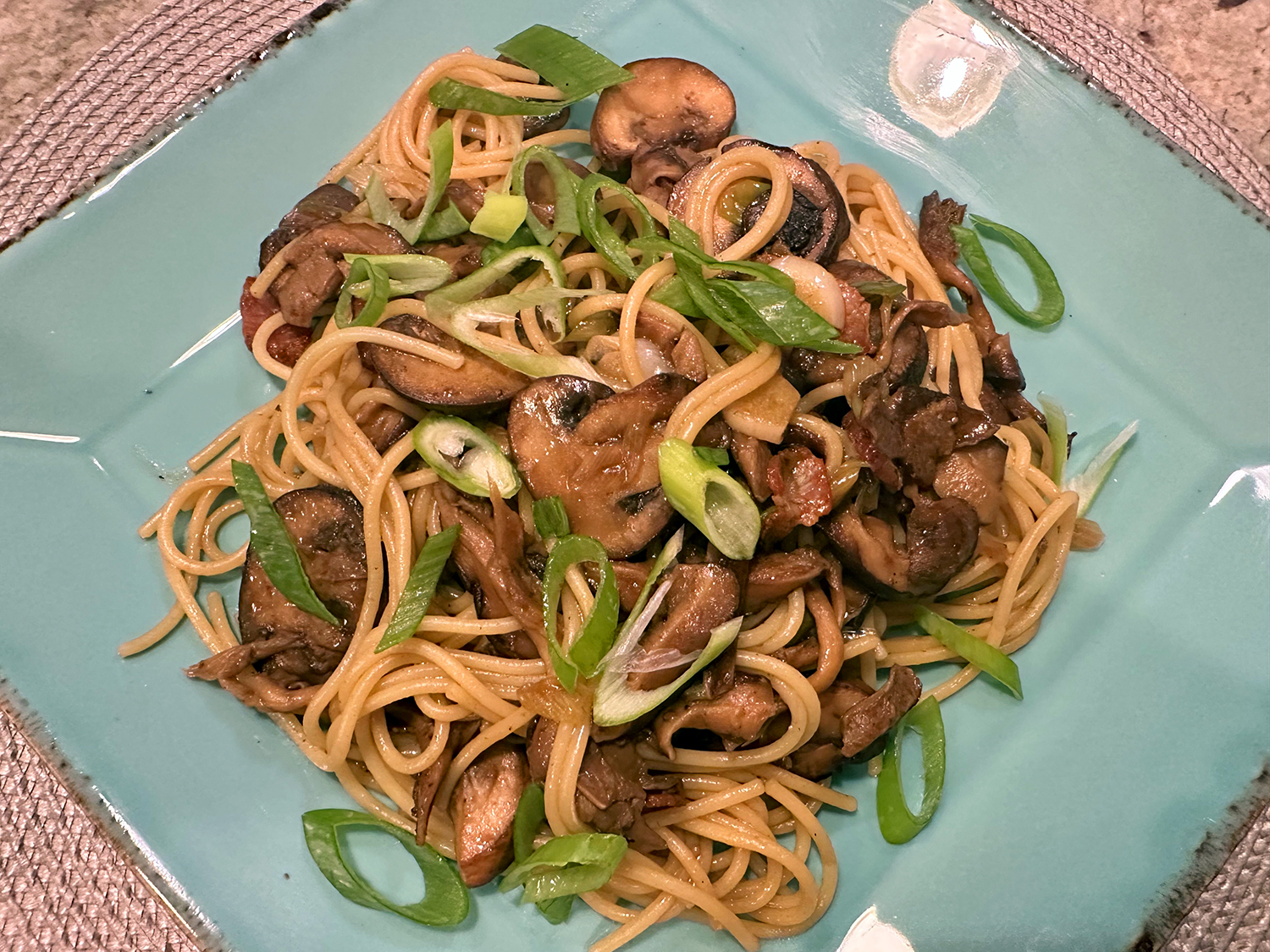
Savory Mushroom Bacon Pasta

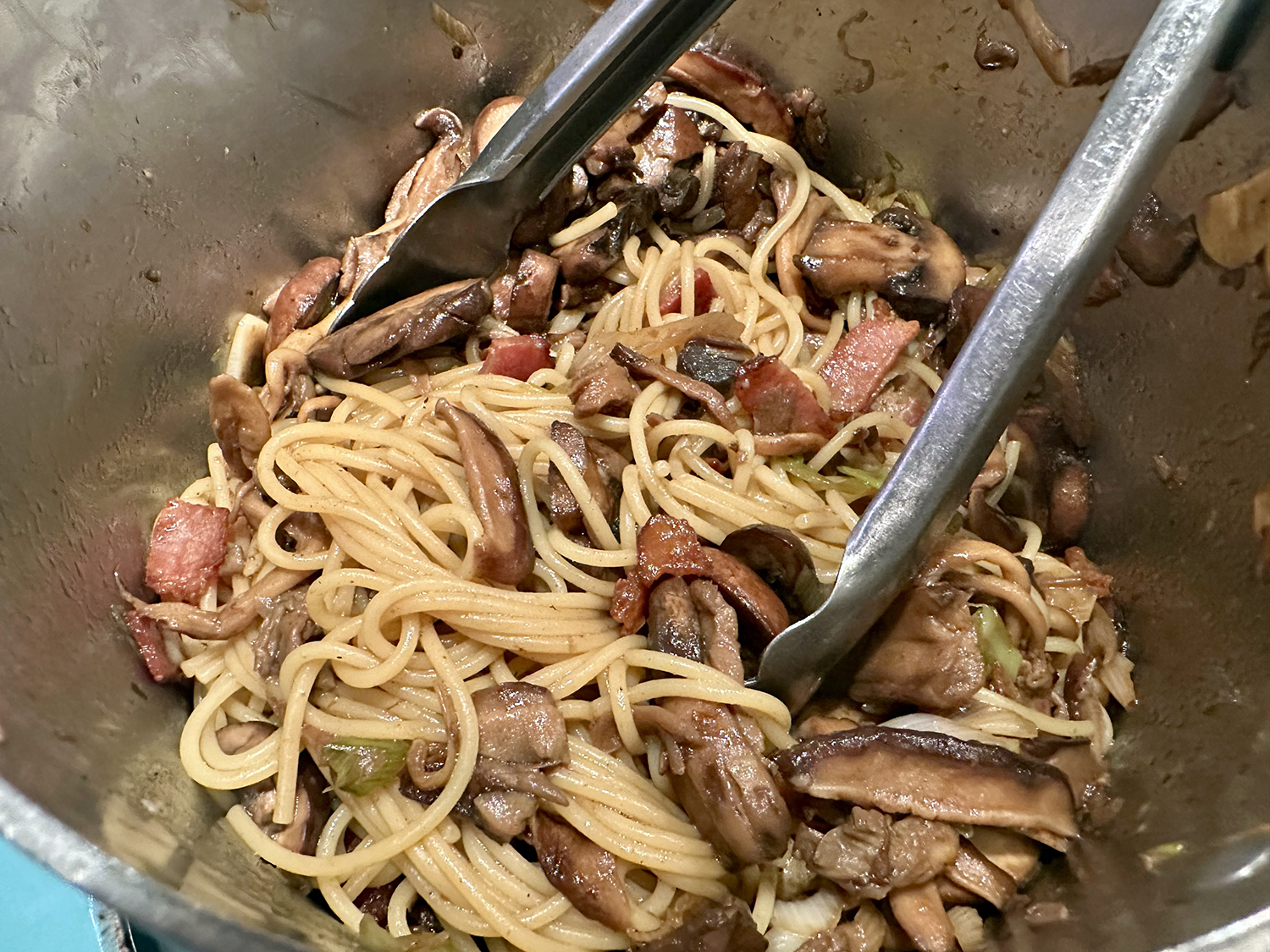
This Japanese-inspired mushroom pasta uses a mixture of mushrooms (such as oyster, shiitake, and cremini, but use whatever you prefer) and bacon tossed with garlic, soy sauce, butter, and spaghetti to make a quick pasta.

While the sauce coats the pasta lightly, its flavor is anything but subtle thanks to the addition of dashi powder. It is the key ingredient that adds a punch of umami to the dish. So before you start this dish, make sure you have dashi powder on hand. It is easy to get at an Asian market or online.

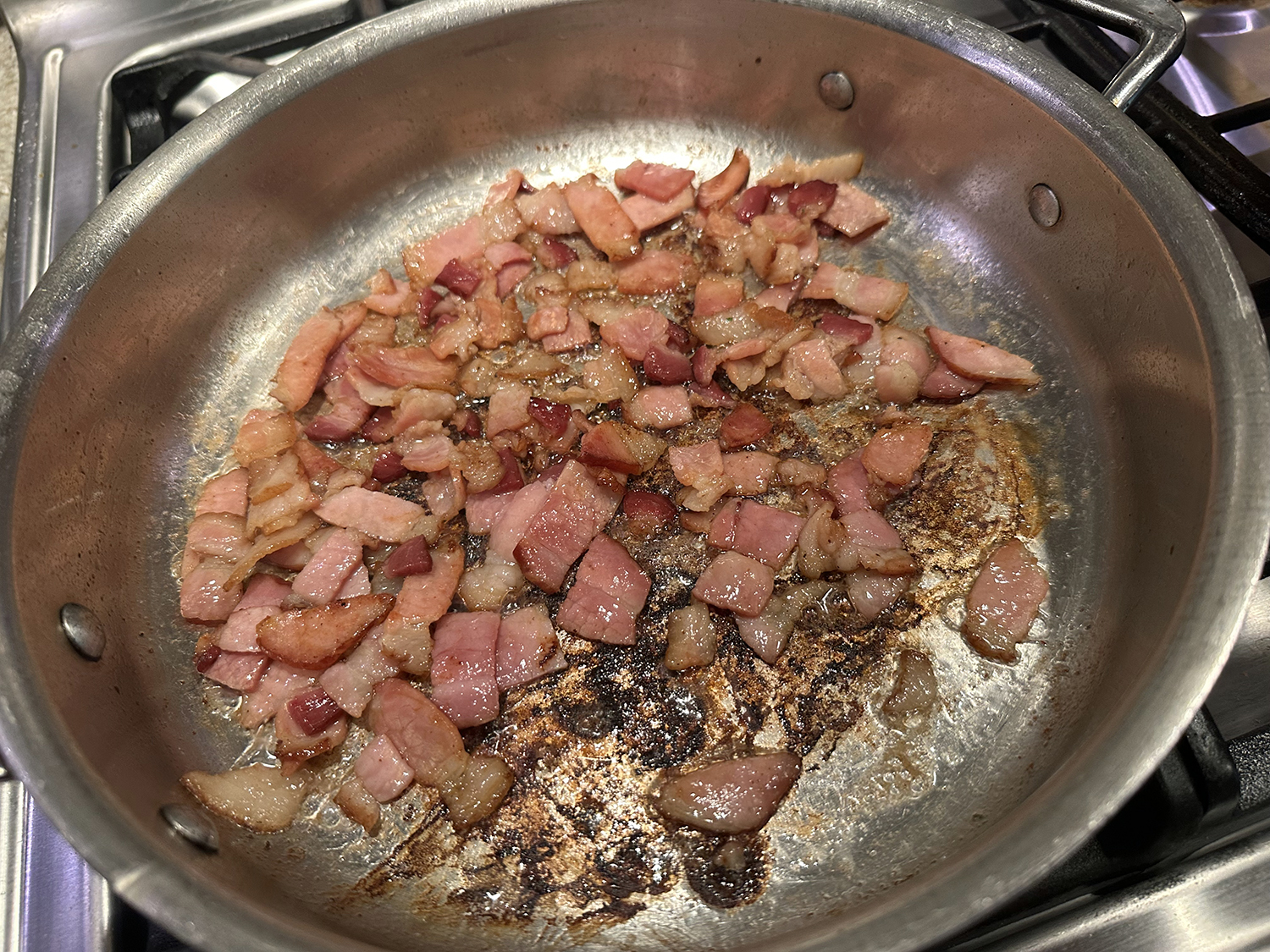
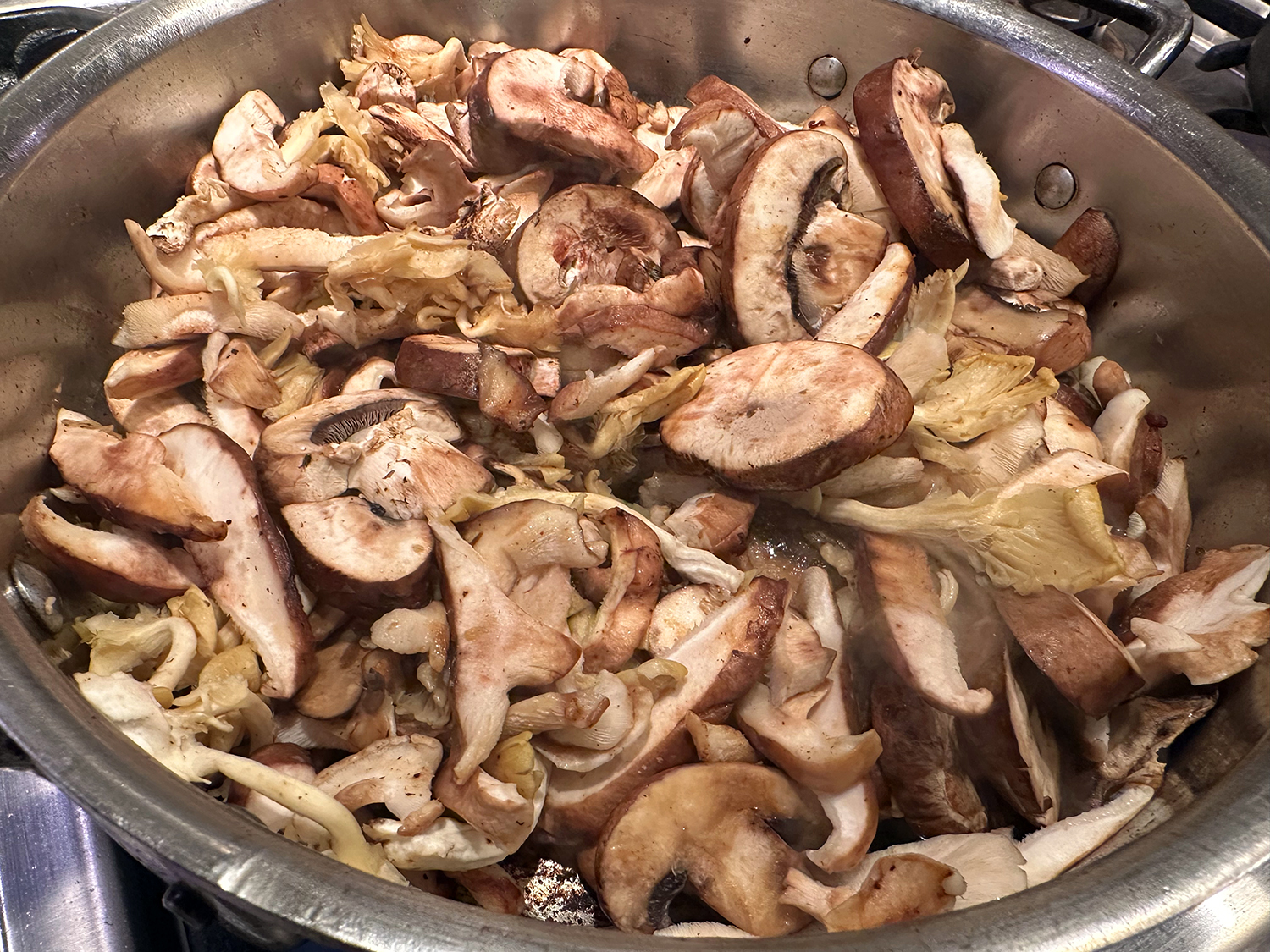
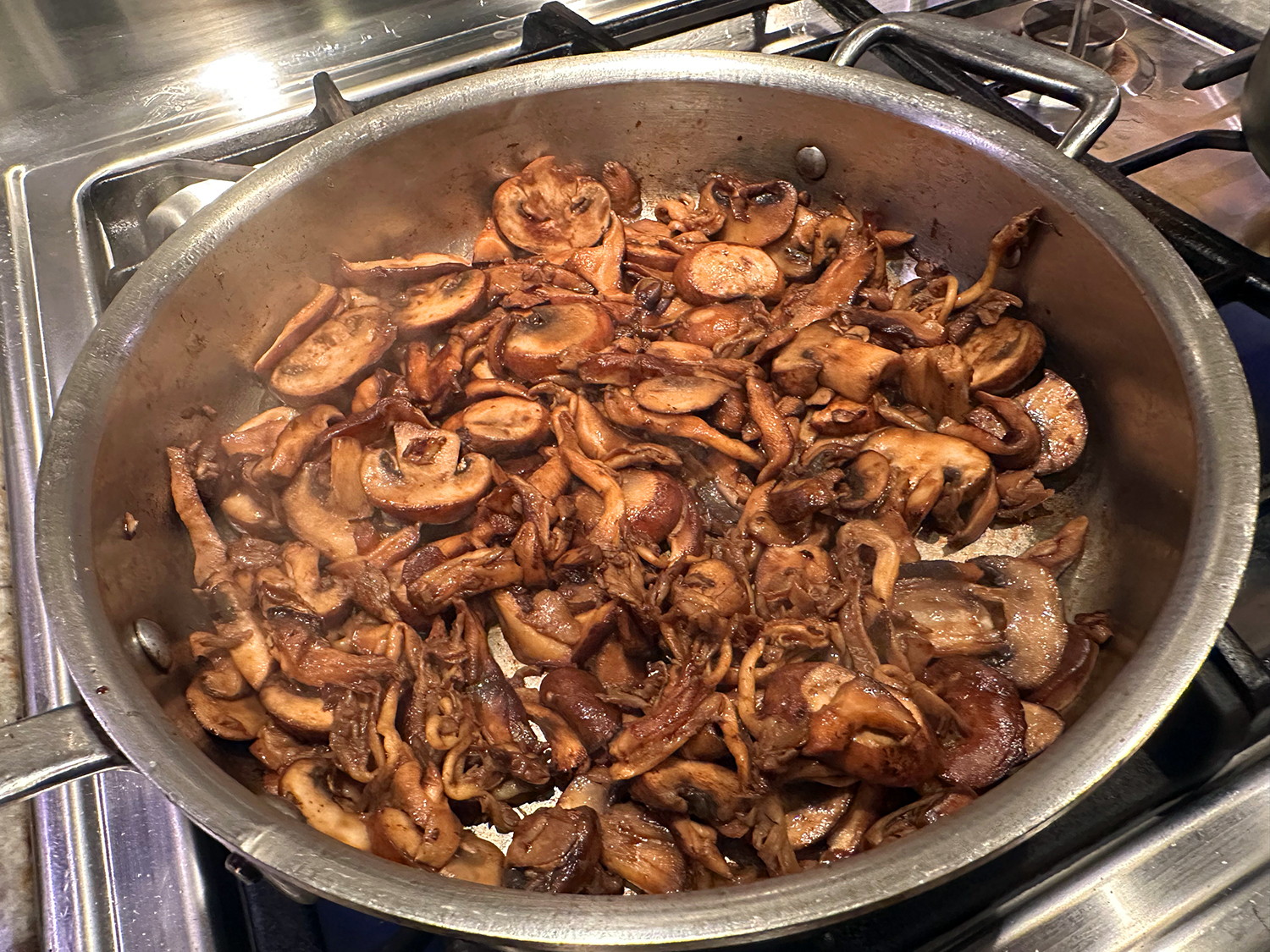
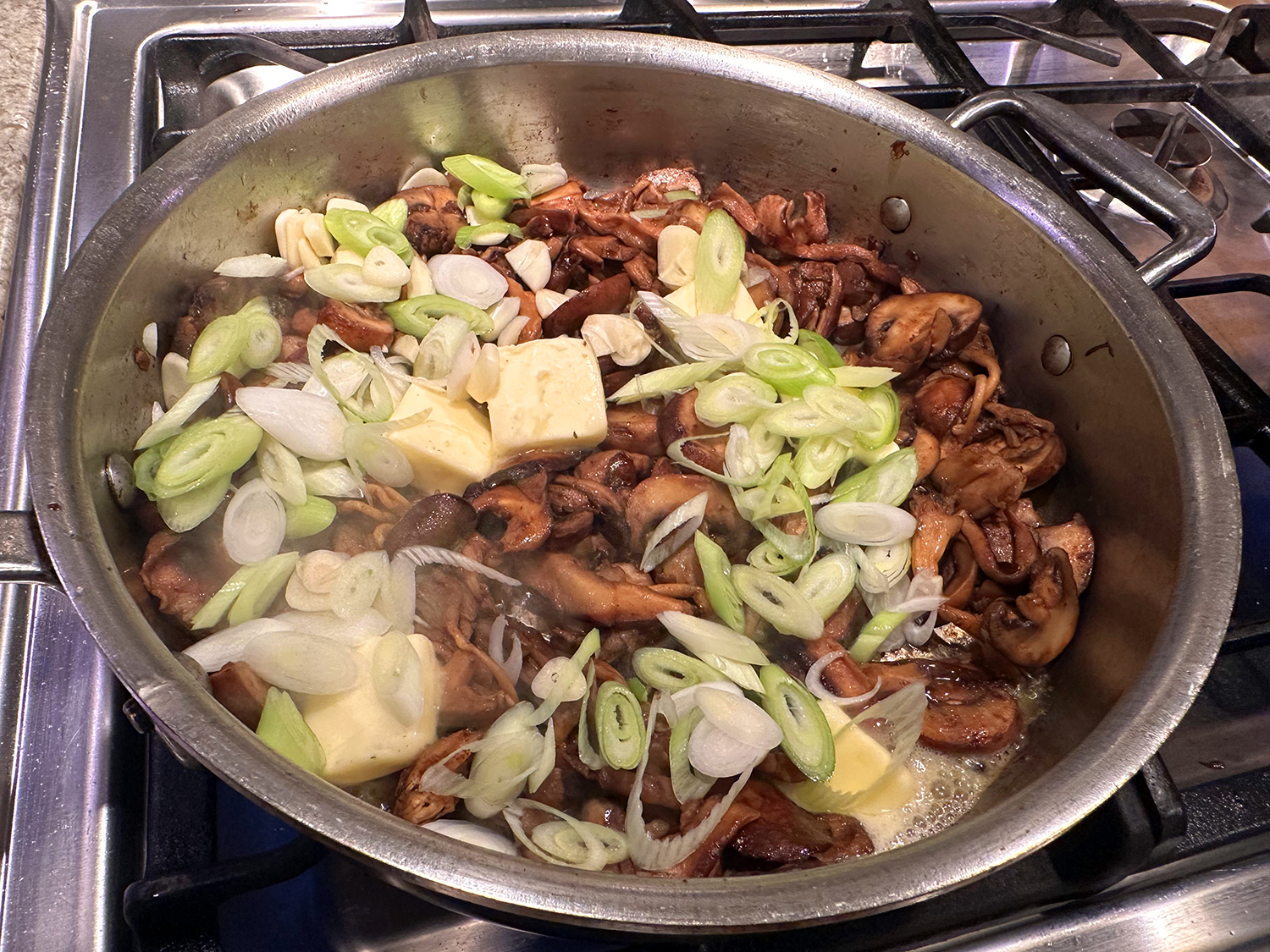
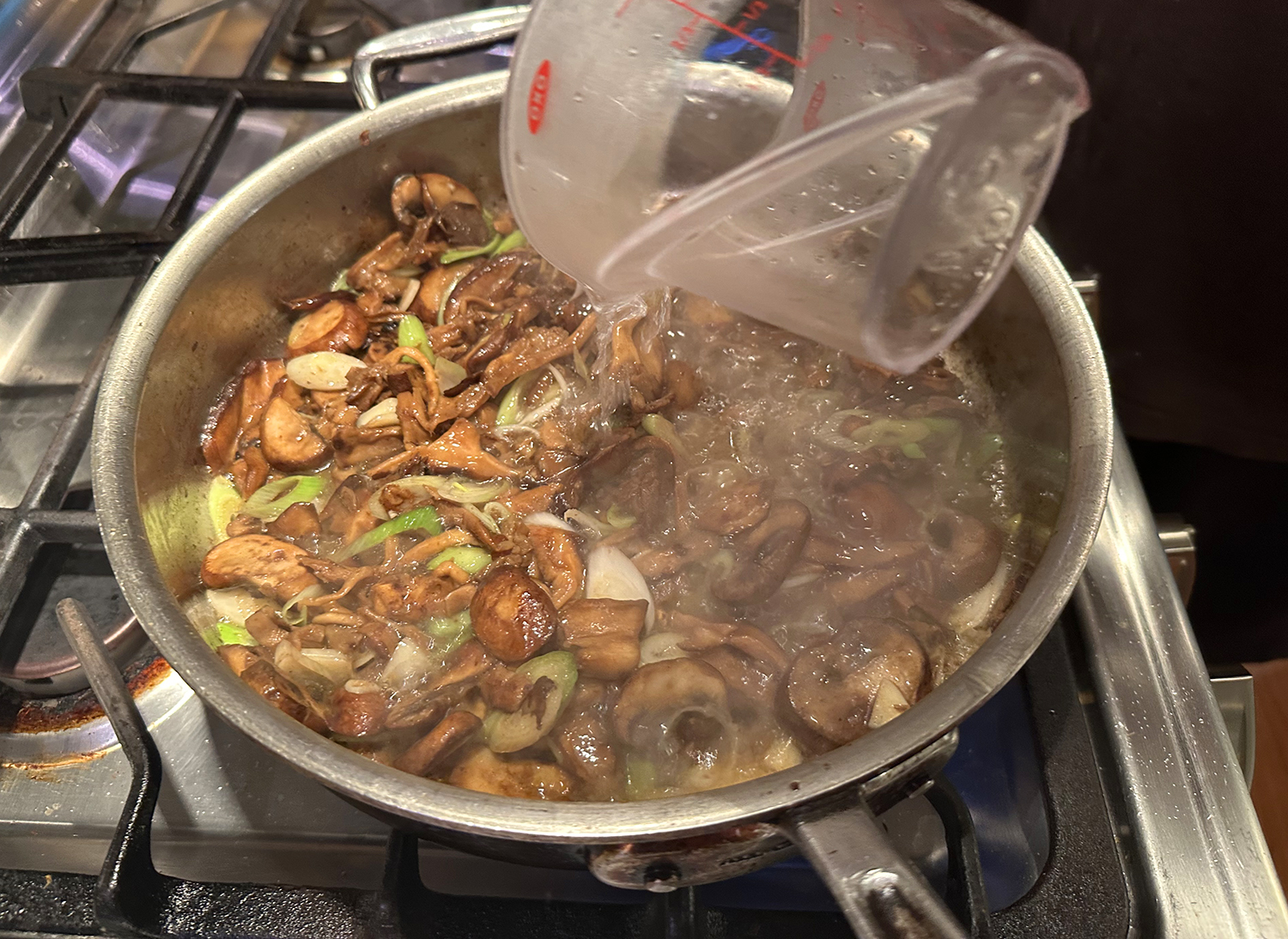
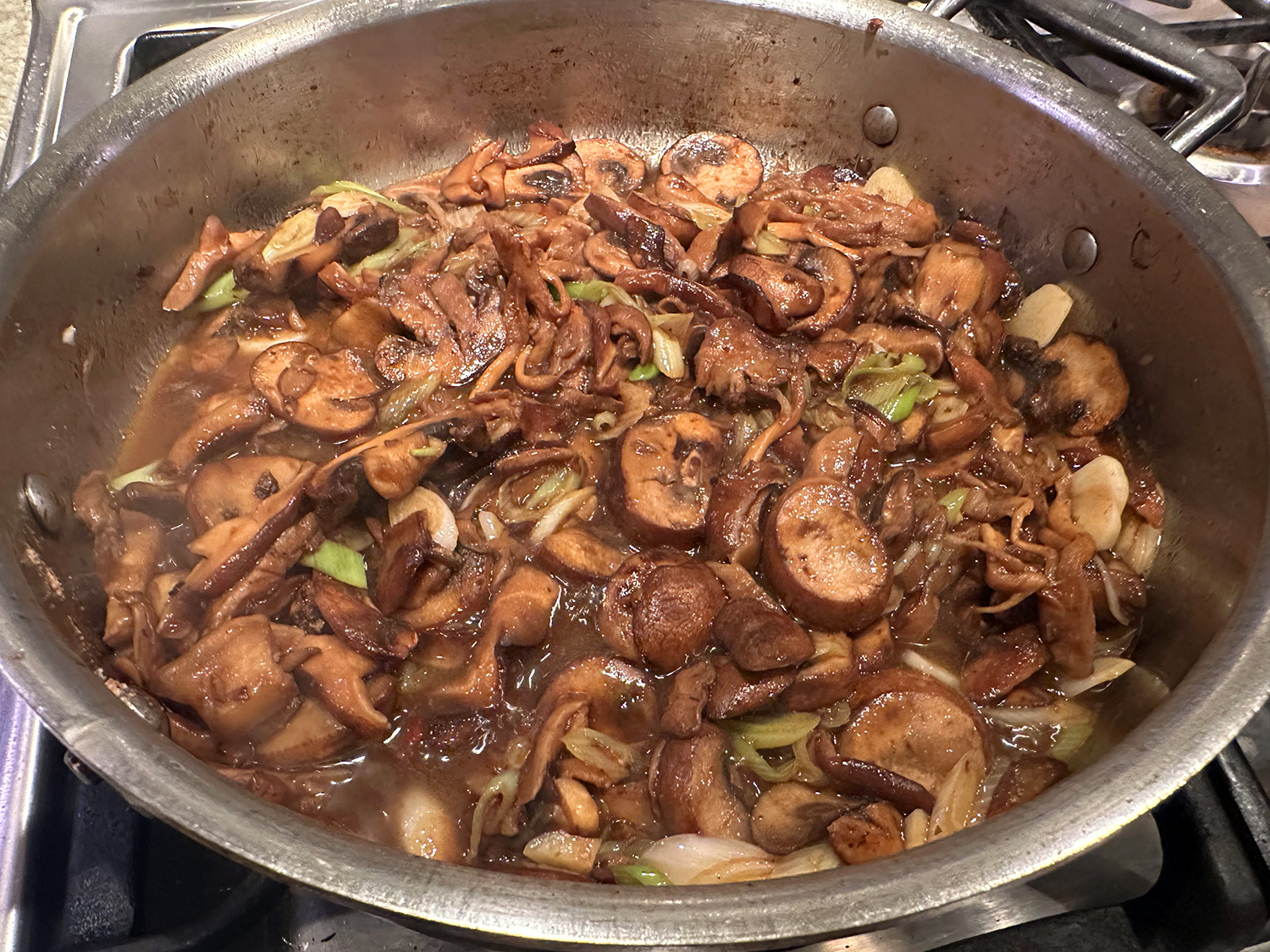
Begin by crisping the bacon in a skillet, then remove it and brown a pound of mushrooms in the fat left in the pan (any type or mix of mushrooms will do), followed by scallions and garlic. To finish the sauce, stir in some pasta cooking water, butter for silky texture, and the instant dashi powder and soy sauce. Despite only lightly coating the spaghetti, the resulting sauce turns the dish into a flavor powerhouse.

The Hubs had the leftovers for lunch the next day and said it was even better!

Mushroom Bacon Pasta

  • Servings: 4
  • Difficulty: easy
  • Print

Ingredients

  • 12 oz. spaghetti
  • Table salt for cooking pasta
  • 5 slices thick cut bacon, cut crosswise into ½-inch strips
  • 1 lb. assorted mushrooms, sliced ½-inch thick
  • 4 scallions, white and green parts separated and sliced thin
  • 3 garlic cloves, sliced thin
  • 5 Tbsp. unsalted butter
  • 3 Tbsp. soy sauce
  • 1 Tbsp. instant dashi powder

Directions

  1. Bring 2 quarts water to boil in large pot. Add pasta and ½ tablespoon salt and cook, stirring occasionally, until al dente. Reserve 1 cup cooking water, then drain pasta and return it to pot.
  2. Meanwhile, cook bacon in 12-inch skillet over medium heat until bacon is golden and crispy, 6 to 8 minutes. Using slotted spoon, transfer bacon to paper towel-lined plate.
  3. Add mushrooms to fat left in skillet. Cook over medium-high heat until mushrooms have softened and edges are golden, about 5 minutes. Add scallion whites and garlic and cook until fragrant and butter is melted, about 30 seconds. Stir in ½ cup reserved cooking water, butter, soy sauce, and dashi powder.
  4. Transfer to pot with pasta along with reserved bacon and toss to combine. Adjust consistency with additional reserved cooking water as needed. Sprinkle with scallion greens. Serve.

http://www.lynnandruss.com

Recipe by Maggie Zhu for America’s Test Kitchen