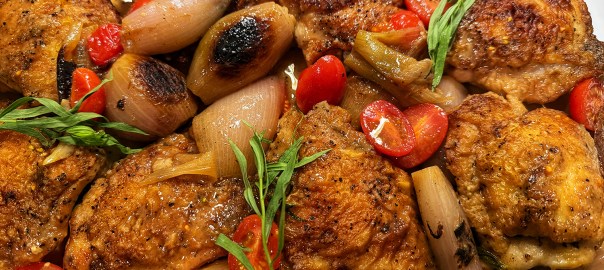
Tag Archives: shallots

Spicy Pork Stew with Peppers and Potatoes

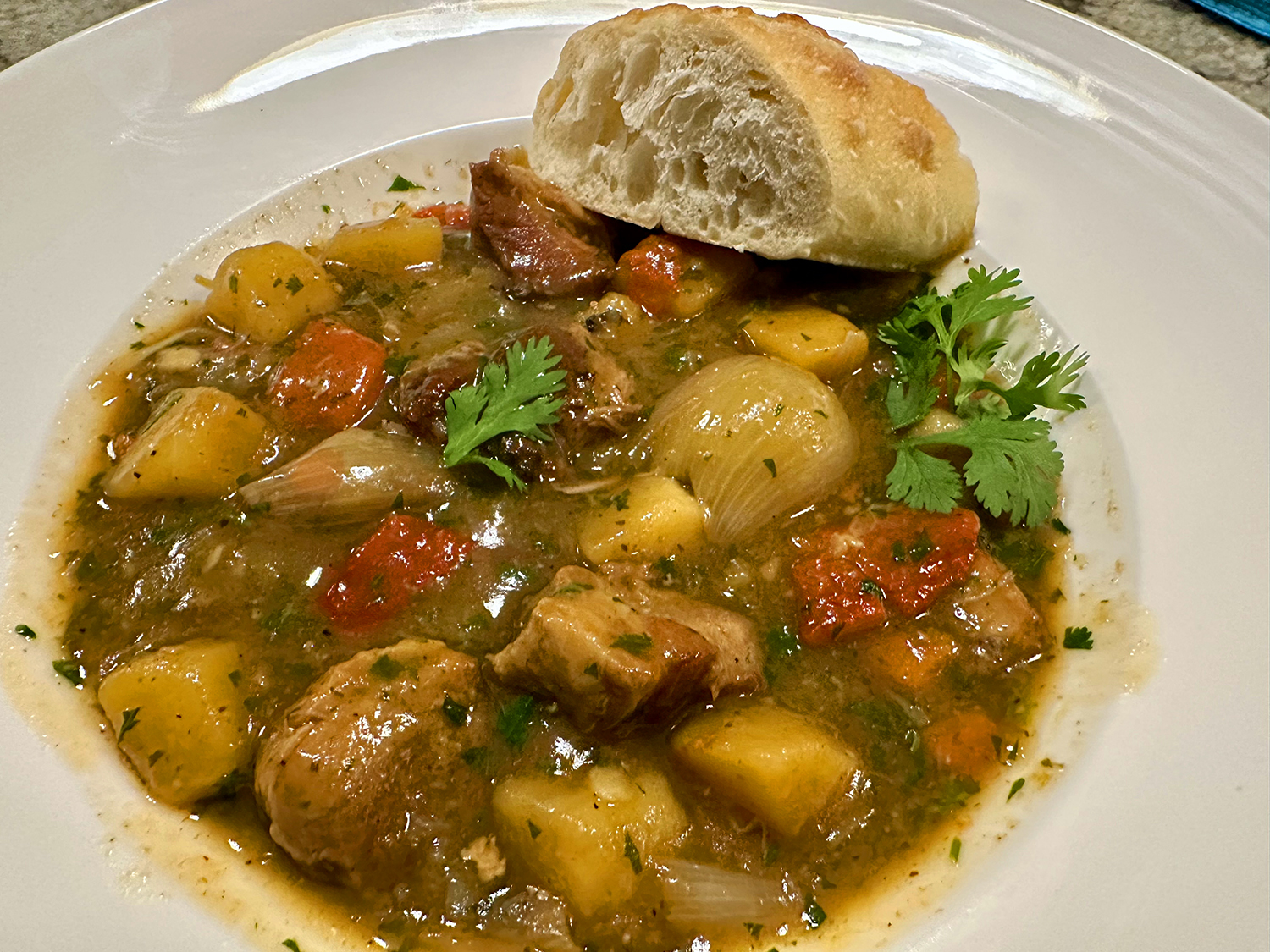
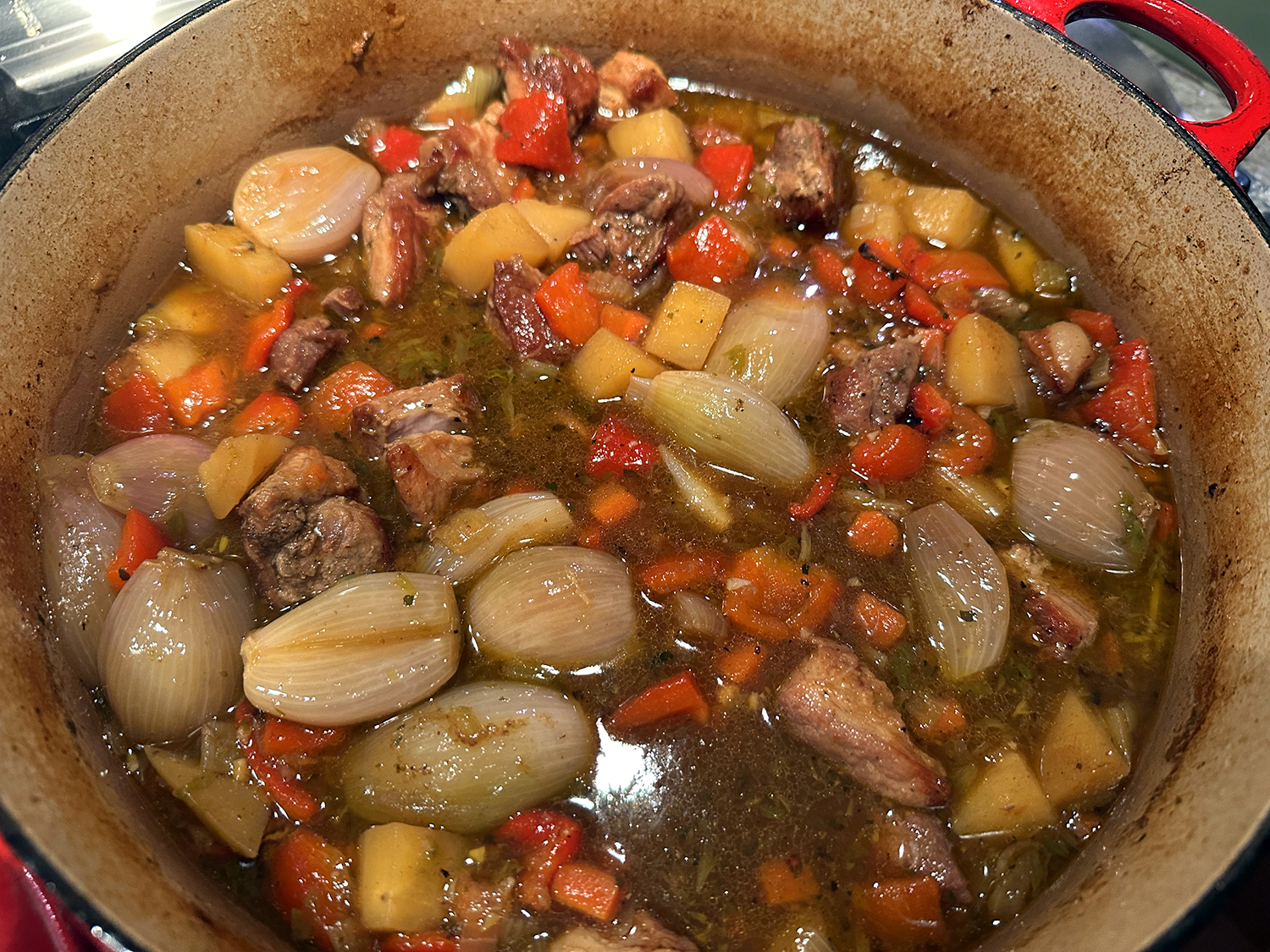
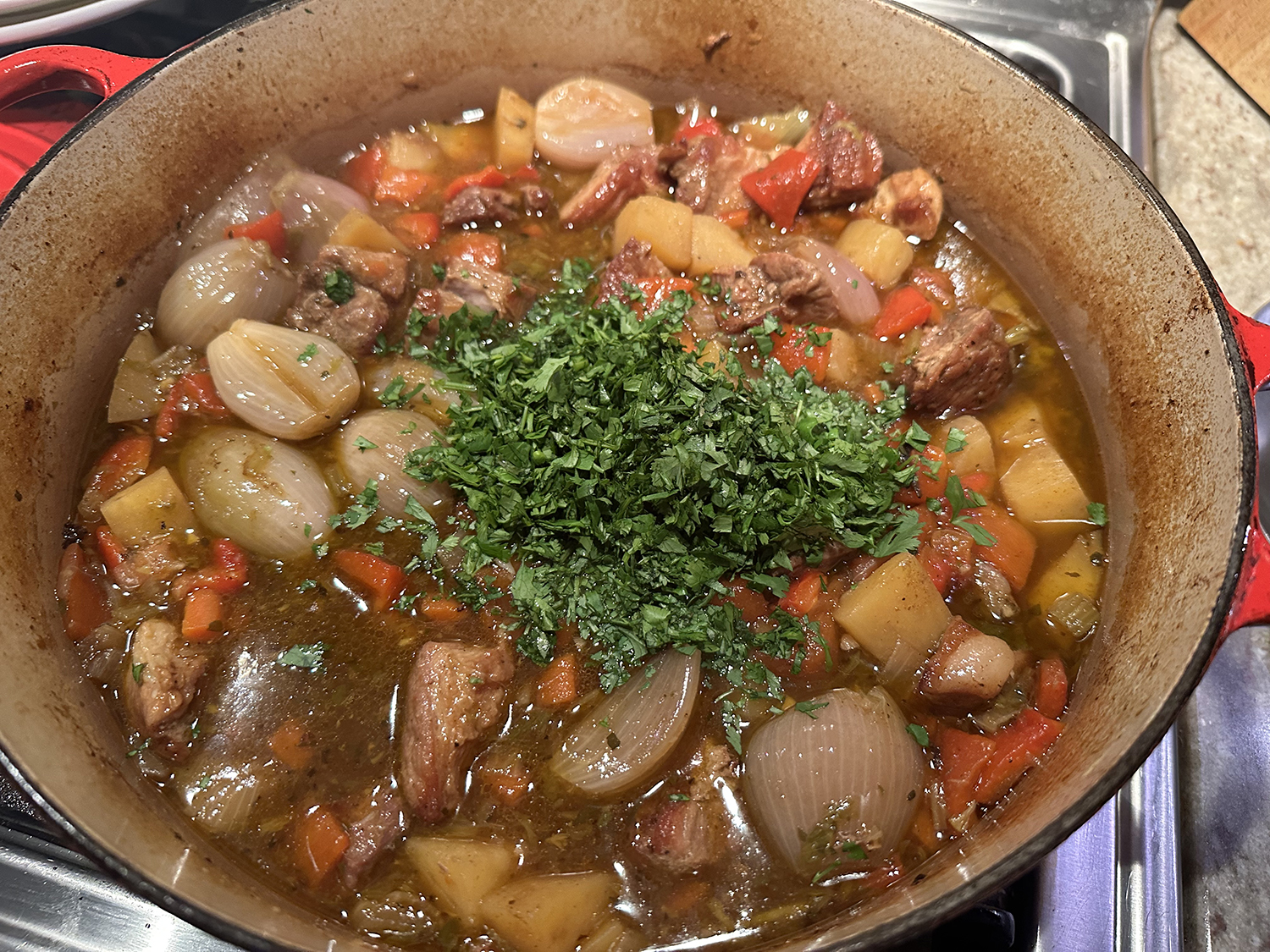
If you have a long, lazy afternoon ahead of you in the coming days, consider making this hearty stew by one of our favorite chef/authors, Molly Stevens. The inclusion of chipotles and roasted sweet peppers give this zesty pork stew a Southwestern flavor.

The original recipe produces a thin, watery liquid as the base while we prefer a thicker sauce. To accomplish this, you can either dredge the meat chunks in seasoned flour before browning them, and/or add a cornstarch slurry at the end, after degreasing (if necessary), but before adding cilantro.

The stew can be made up to 2 days ahead: Skip the degreasing step, cool to room temperature, cover, and refrigerate. Once the stew is chilled, lift the solidified fat off the top with a slotted spoon. Reheat the stew over medium-low heat to serve.

Spicy Pork Stew with Peppers and Potatoes

  • Servings: 4-5
  • Difficulty: easy
  • Print

Ingredients

  • 3 lbs. boneless pork shoulder, trimmed of excess fat and cut into 1-1/2- to 2-inch pieces
  • 3 Tbsp. grapeseed oil or vegetable oil, more as needed
  • Kosher salt and freshly ground pepper
  • 1 medium yellow onion, coarsely chopped (about 1 cup)
  • 2 medium celery stalks, coarsely chopped (about 1/2 cup)
  • 1 medium carrot, coarsely chopped (about 1/3 cup)
  • 2 cloves garlic, minced
  • 1 Tbsp. chipotles in adobo, minced
  • 1 tsp. cumin
  • 1/2 tsp. dried oregano
  • 1 cup beer (any kind)
  • 2 1/2 cups homemade or lower-salt store-bought chicken broth
  • 2 cups peeled diced white potatoes (1-inch dice)
  • 2 cups halved or quartered shallots (leave whole if small)
  • 2 cups chopped roasted, peeled red peppers (1-inch pieces)
  • 1/4 cup chopped fresh cilantro

Directions

  1. Position a rack in the bottom third of the oven and heat the oven to 325°F.
  2. Spread the pork on paper towels to dry for 10 to 20 minutes before browning. (You can use this time to chop the onion, celery, and carrot). If the meat is very wet, pat it dry.
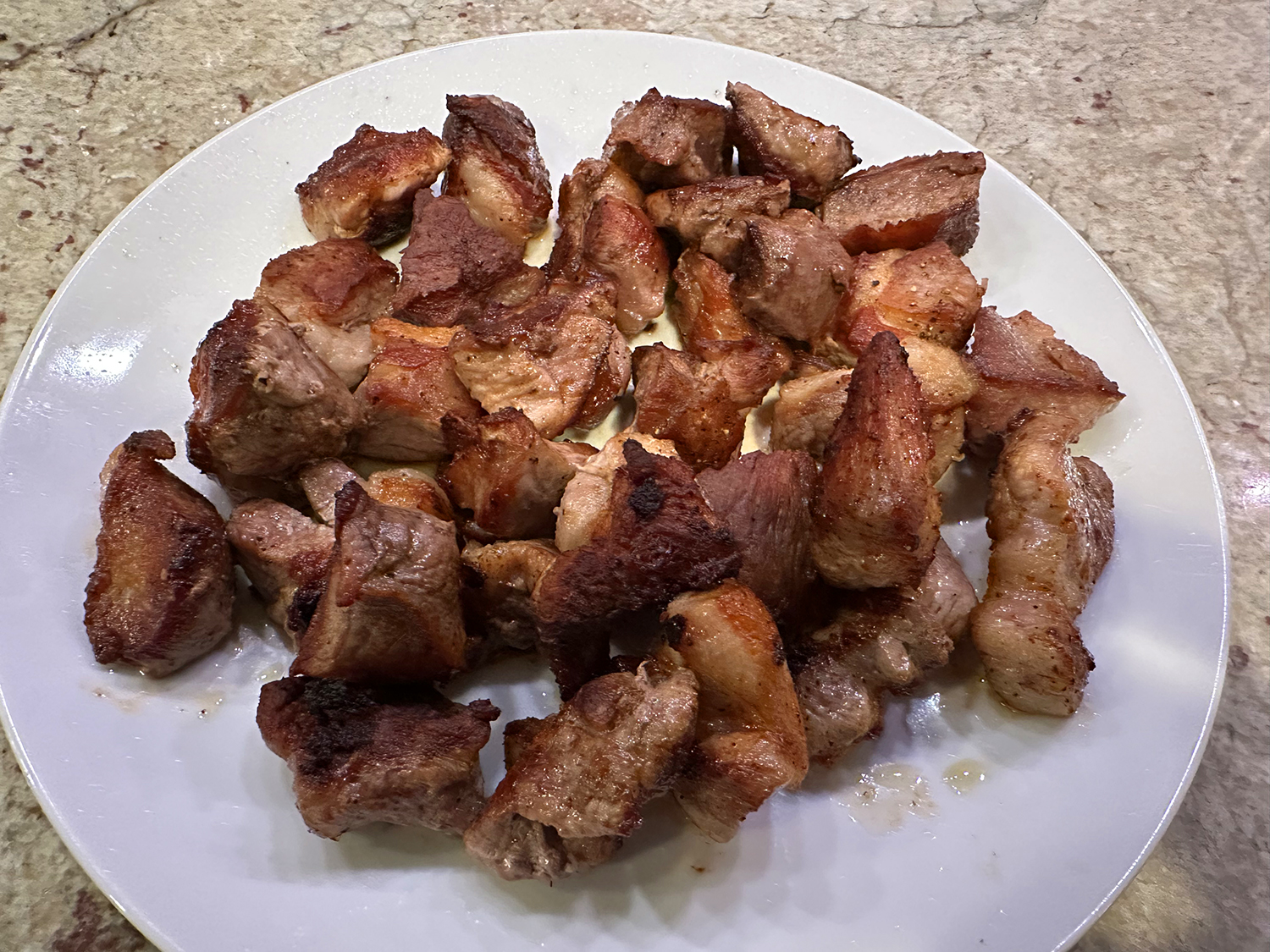
  3. In a 6-quart Dutch oven or other heavy-duty pot, heat the oil over medium to medium-high heat until shimmering hot. Season about one-third of pork with salt and pepper and arrange it in a single layer in the pot (there should be at least 1/2 inch of space between the pieces). Brown well on at least 4 sides, adjusting the heat as necessary; each batch should take about 10 minutes to brown. Transfer the pork to a large bowl or rimmed baking sheet as it browns and repeat with the rest of the pork, seasoning with salt and pepper before browning. Once all of the pork is browned, remove the pot from the heat to let it cool for a few minutes.
  4. Pour all but 2 tablespoons of the fat from the pot. (If there is not enough, add oil to equal 2 tablespoons) Return the pot to medium heat, then add the onion, celery, and carrot. Season with a pinch of salt and pepper, and cook, stirring often and scraping the bottom of the pot with a wooden spatula, until the vegetables begin to soften, 5 to 6 minutes. Stir in the garlic, chipotles, cumin, and oregano and cook, stirring occasionally, until fragrant, 1 to 2 minutes.
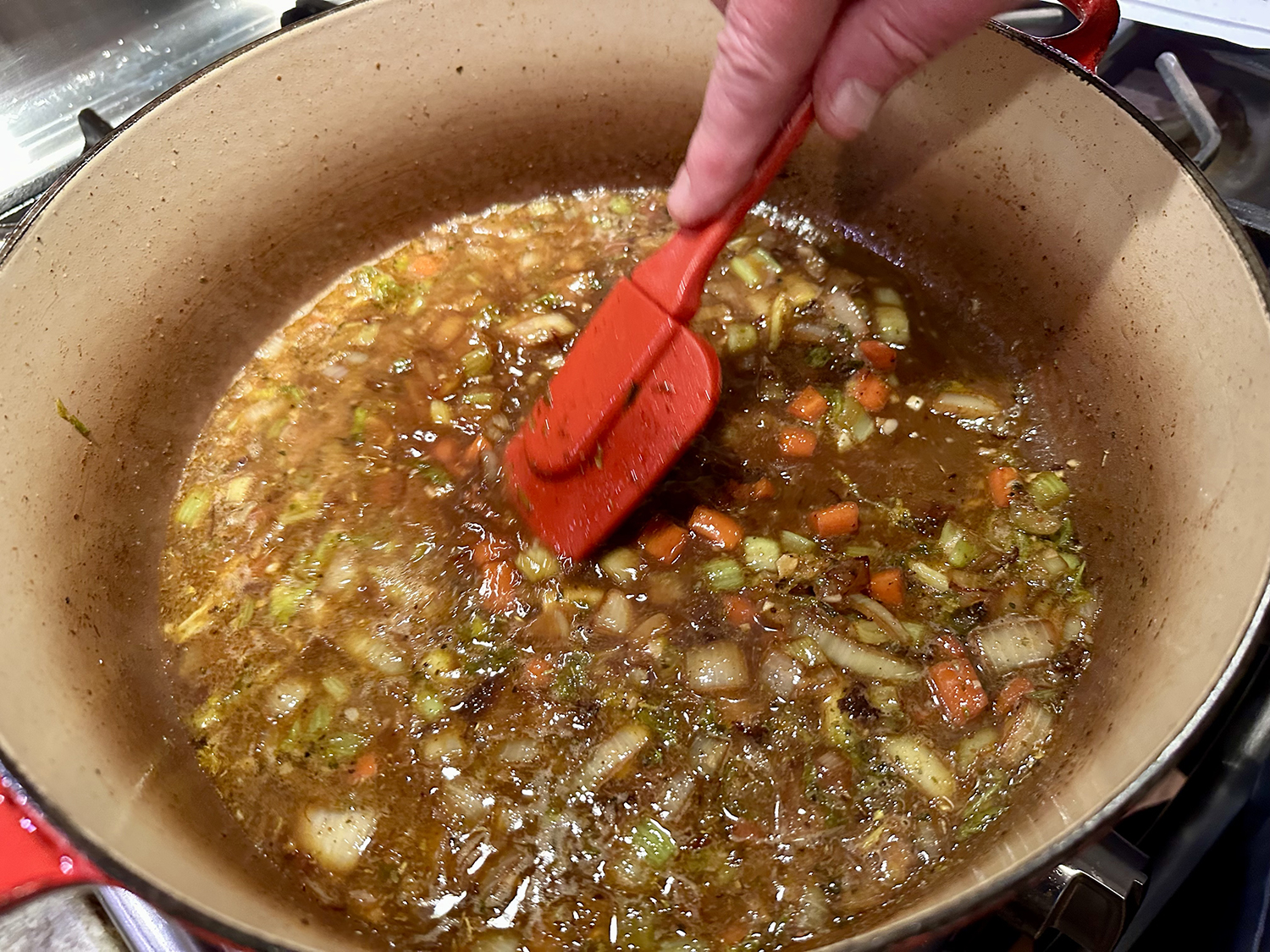
  5. Add the beer, stirring with the wooden spatula to dissolve any browned bits on the bottom of the pot. Raise the heat to medium high and boil to reduce by about half, 5 to 8 minutes. Add the chicken broth and 1-1/2 cups water. Bring to a boil.
  6. Return the pork to the pot along with any accumulated juice. Lower the heat to maintain a simmer.
  7. Crumple a 12×16-inch piece of parchment, then flatten it out. (Crumpling makes for easy handling.) Place the parchment directly on the surface of the stew, allowing the ends to come up the sides of the pot. Cover and put in the oven.
  8. After 30 minutes of stewing, add the potatoes and shallots to the pot. Cover with the parchment and lid, return to the oven. After another 30 minutes, add the peppers. Cover with the parchment and lid, return the pot to the oven, and cook until the pork is fork-tender, 1/2 to 1 hour more.
  9. Degrease the stew by laying a clean paper towel over the surface of the stew and gently pushing it into all the bumps and dips, then quickly peeling it off. Repeat as necessary with more paper towels.
  10. Thicken with a cornstarch slurry if desired. Stir in the cilantro. Season to taste with salt and pepper and serve.

http://www.lynnandruss.com

Original recipe by Molly Stevens

Golden Chicken with Mustard and Shallots

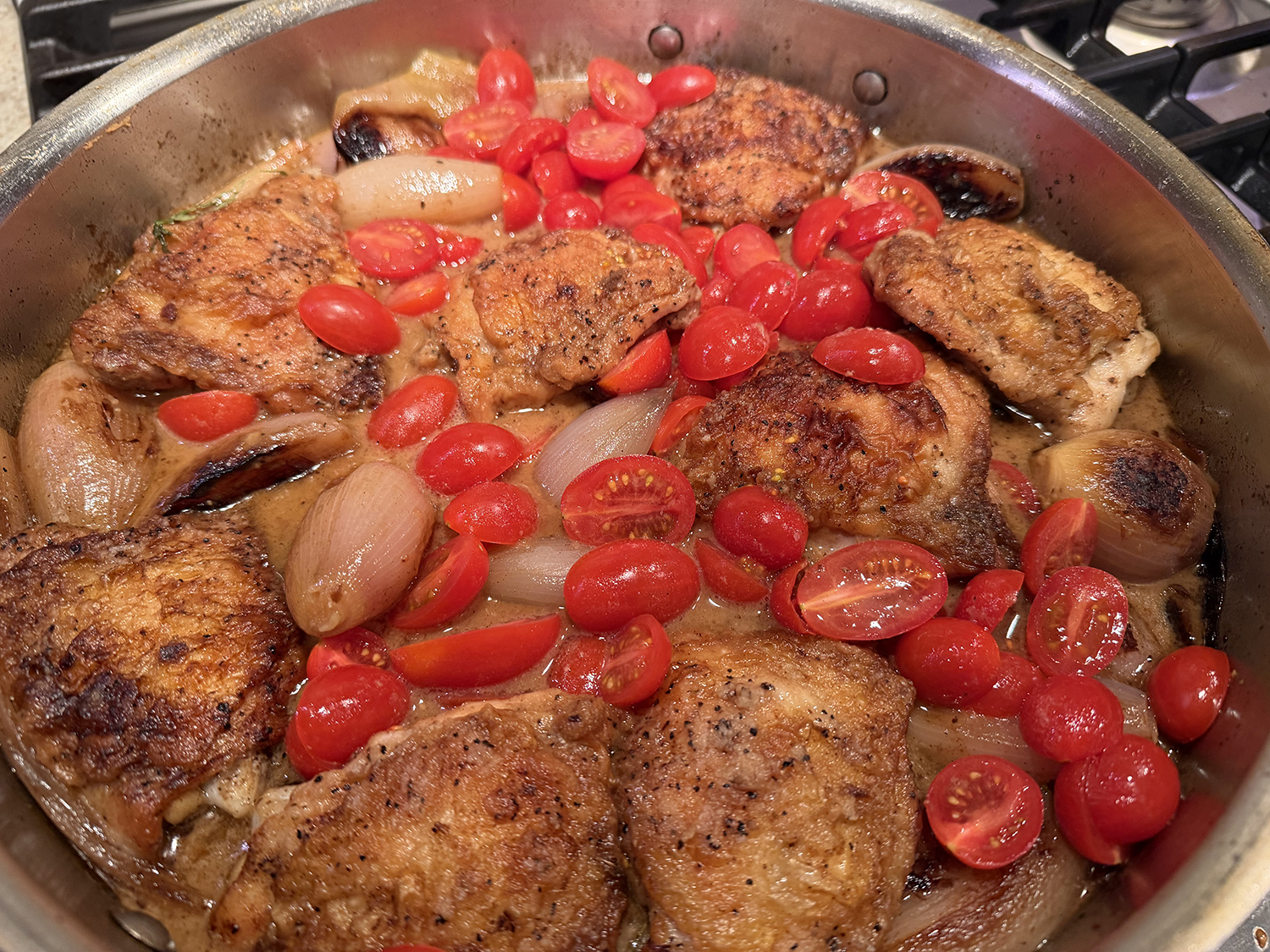
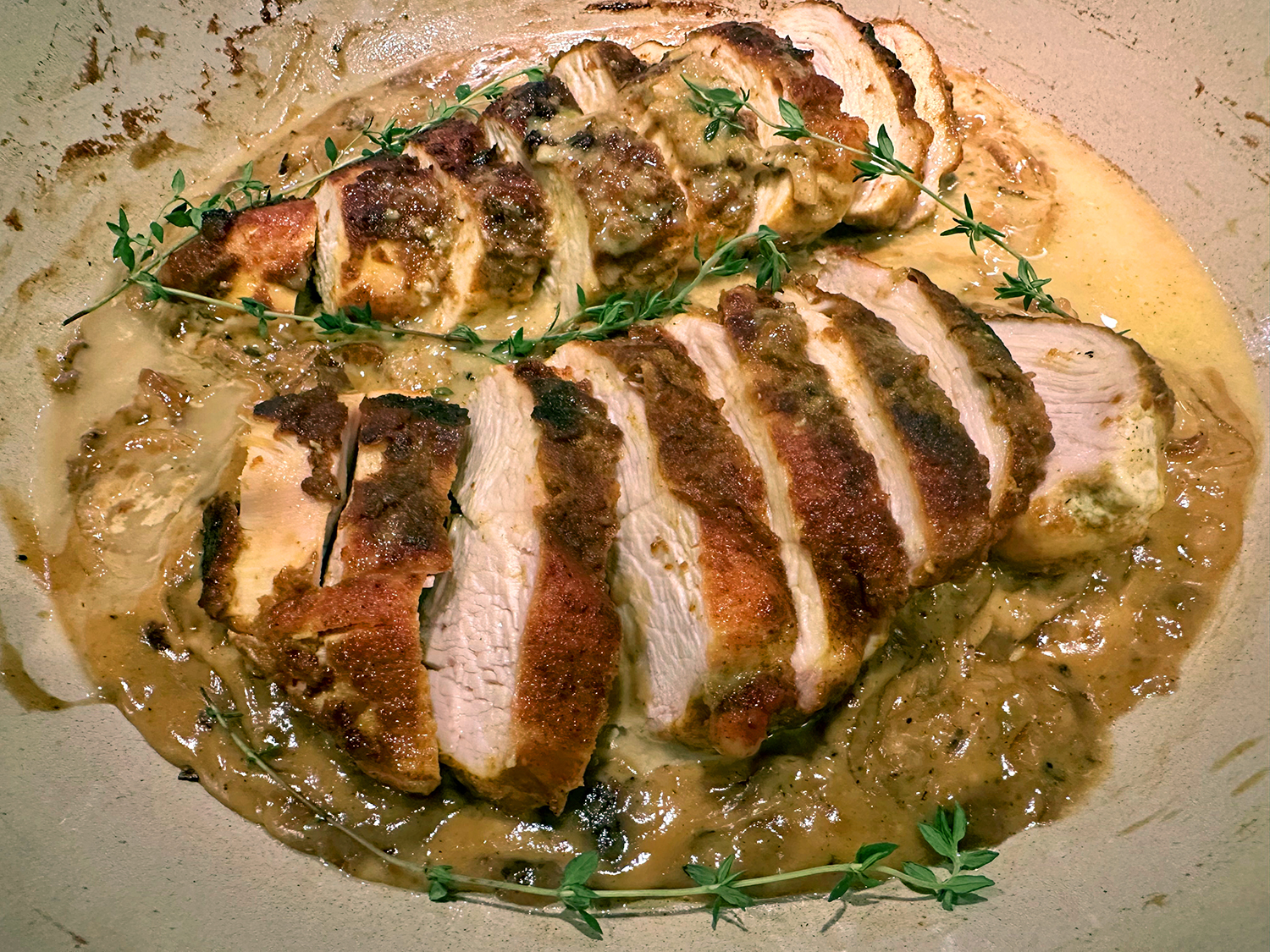
From a recent Bon Appétit magazine issue, this dish was featured in an article about the editor’s choice of the best 56 recipes since it first started publishing in 1956. OK, now that’s intriguing. And it is especially geared toward those who prefer the white meat of a chicken, although The Hubs, a dark meat fan, was surprised how delicious it was.

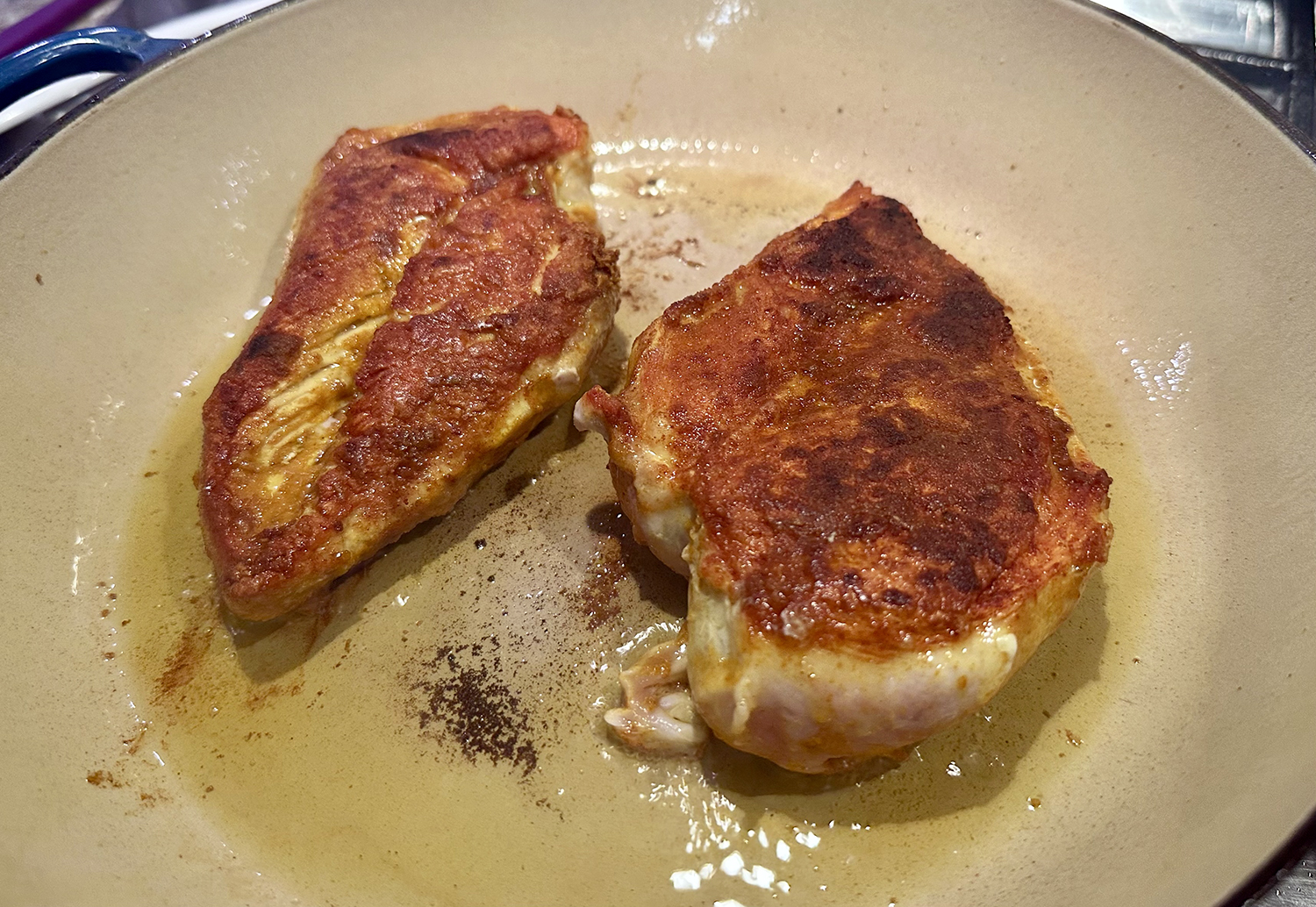
Yes, chicken breasts can be juicy and delightful. The key here is to coat them in a dusting of flour, salt, and turmeric, which yields a lightly seasoned crust and prevents them from sticking to the pan. Searing the chicken to start yields a crackly-golden exterior on the meat, and lots of flavorful browned bits too.

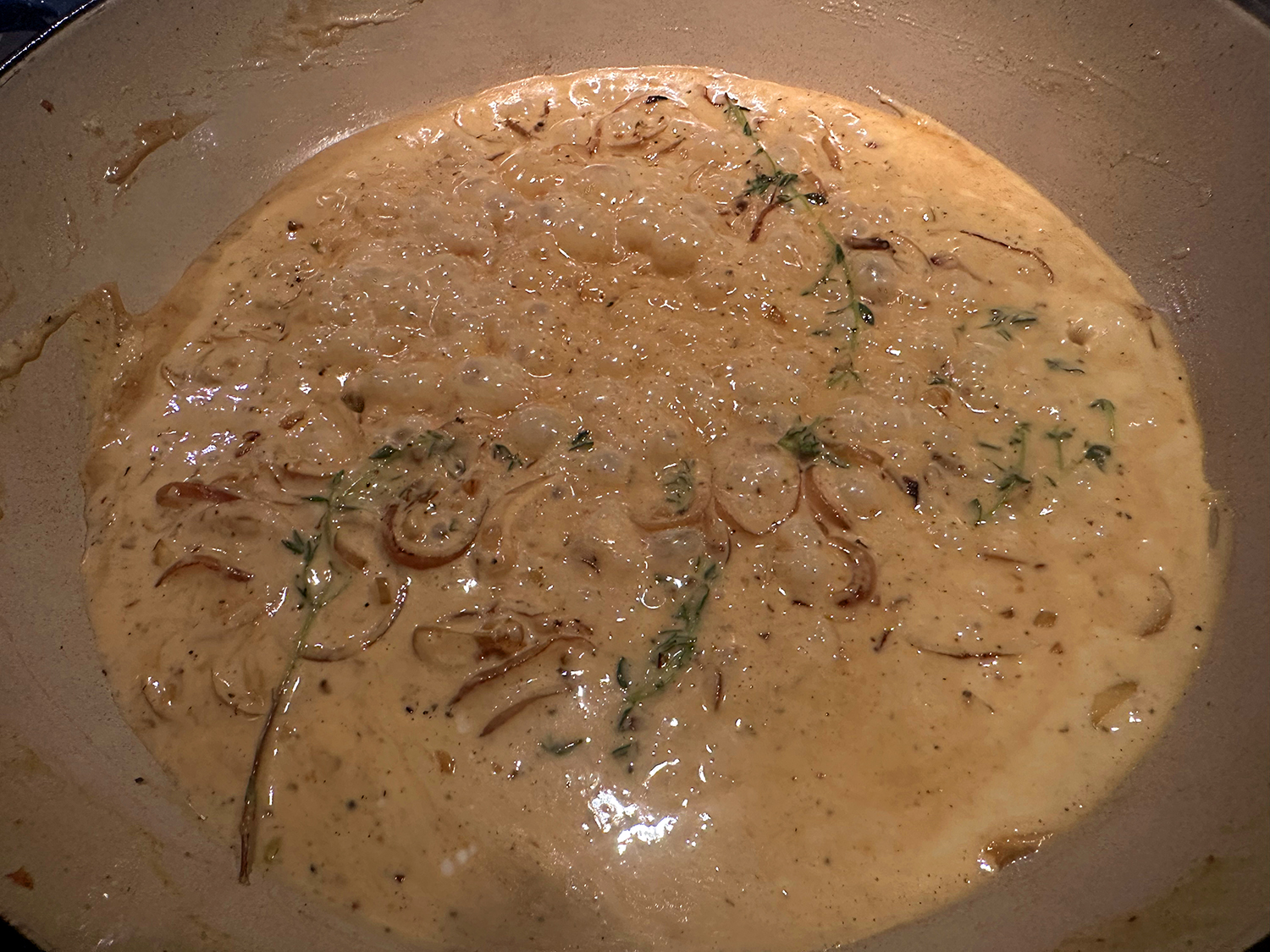
The sauce comes together in the same skillet, with shallots and garlic infusing the olive oil before Dijon mustard, heavy cream, and fresh thyme team up for a sunny, fragrant sauce. For maximum juiciness, the chicken gently finishes cooking in the oven, until it reaches succulent, tender perfection. Rely on an instant-read thermometer if you’re feeling unsure of its doneness, and make sure to let it rest before slicing.

The original recipe indicated it served two, but we had plenty leftover for a third portion, especially if it is served with rice (our choice) or bread.

Golden Chicken with Mustard and Shallots

  • Servings: 2-3
  • Difficulty: easy
  • Print

Ingredients

  • 1 Tbsp. all-purpose flour
  • 1½ tsp. Diamond Crystal or ¾ tsp. Morton kosher salt, divided
  • 1½ tsp. ground turmeric, divided
  • 2 skinless, boneless chicken breasts (about 1½ lb. total)
  • 2 Tbsp. extra-virgin olive oil, divided
  • 2 medium shallots, thinly sliced
  • 4 garlic cloves, finely chopped
  • 3 sprigs thyme, plus leaves for serving
  • 1 cup heavy cream
  • 3 Tbsp. Dijon mustard
  • 1 Tbsp. honey
  • 1 tsp. freshly ground pepper
  • Steamed rice or toasted country-style bread (for serving)

Directions

  1. Preheat oven to 375°. Mix 1 Tbsp. all-purpose flour, ½ tsp. Diamond Crystal or ¼ tsp. Morton kosher salt, and 1 tsp. ground turmeric in a small bowl to combine. Sprinkle 2 skinless, boneless chicken breasts (about 1½ lb. total) all over with flour mixture.
  2. Heat 1 Tbsp. extra-virgin olive oil in a medium ovenproof skillet over medium-high. Cook chicken until golden brown on both sides, about 5 minutes per side; transfer to a plate.
  3. Reduce heat to medium; heat remaining 1 Tbsp. extra-virgin olive oil in same skillet. Cook 2 medium shallots, thinly sliced, and 4 garlic cloves, finely chopped, stirring often, until shallots are translucent, about 4 minutes. Add 3 sprigs thyme, 1 cup heavy cream, 3 Tbsp. Dijon mustard, 1 Tbsp. honey, 1 tsp. freshly ground pepper, and remaining 1 tsp. Diamond Crystal or ½ tsp. Morton kosher salt and ½ tsp. ground turmeric; stir to combine. Bring to a simmer, then return chicken and any accumulated juices to skillet.
  4. Transfer skillet to oven and bake until sauce is slightly reduced and chicken is cooked through (an instant-read thermometer inserted into thickest part of breasts should register 160°), 20–25 minutes.

http://www.lynnandruss.com

Recipe by Rachel Gurjar for Bon Appétit

Veal Shanks Braised with Honey and Rosemary

According to chef/author Molly Stevens‘ cookbook “All About Braising” where this fabulous recipe hails from, veal has an inherent sweetness that really comes to the fore when it is braised with a bit of honey. Not too sweet, just a hint.

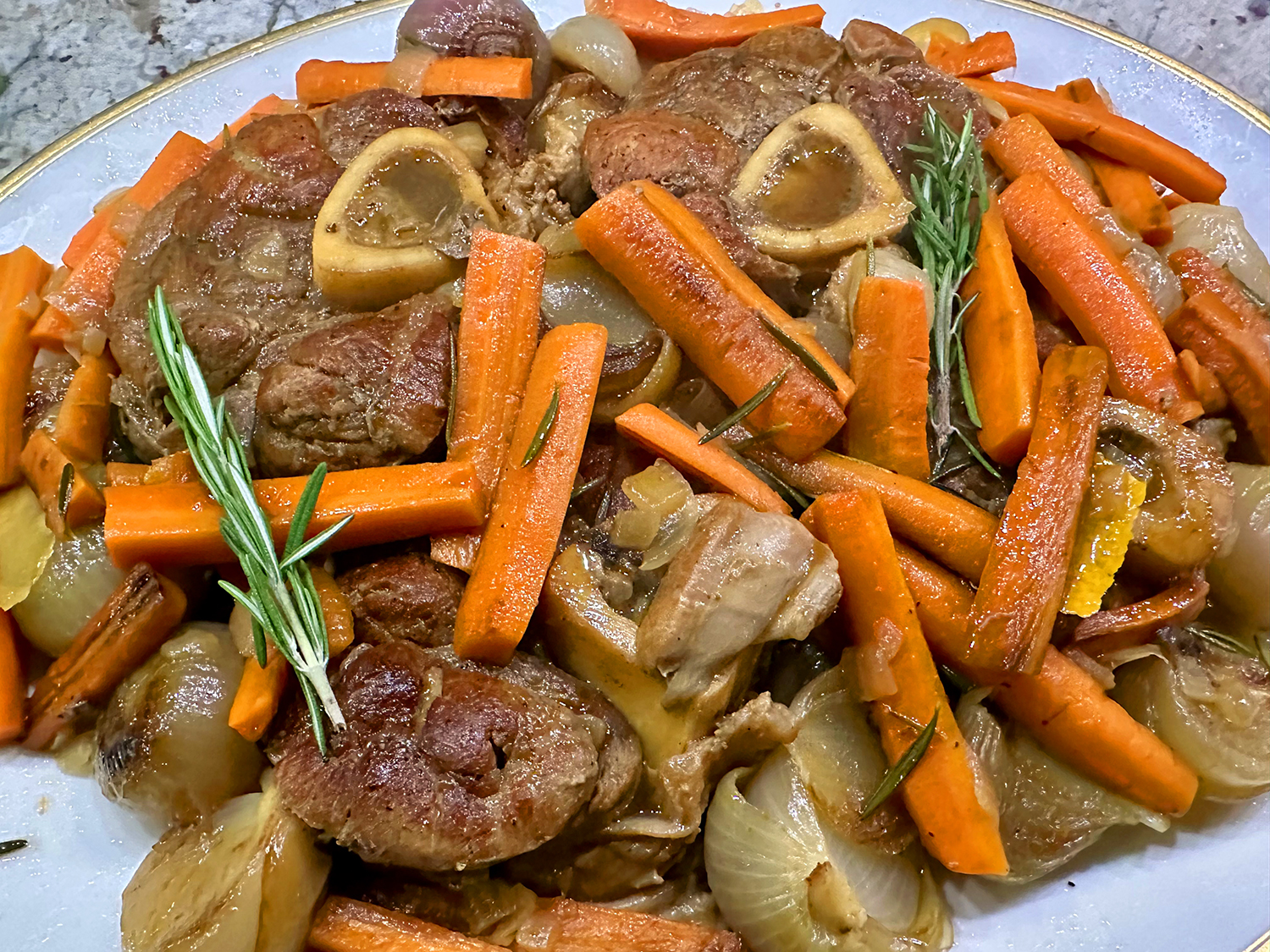
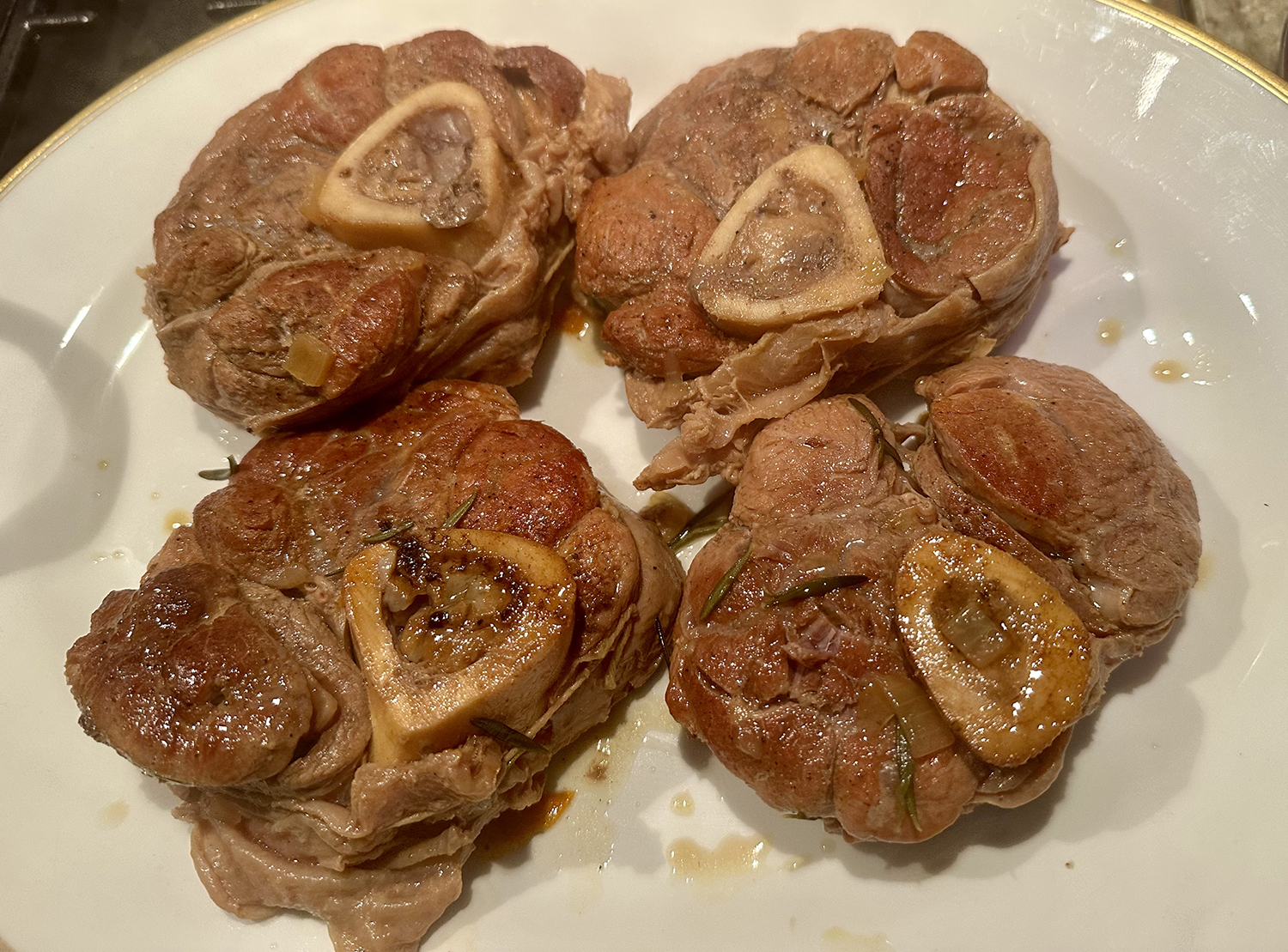
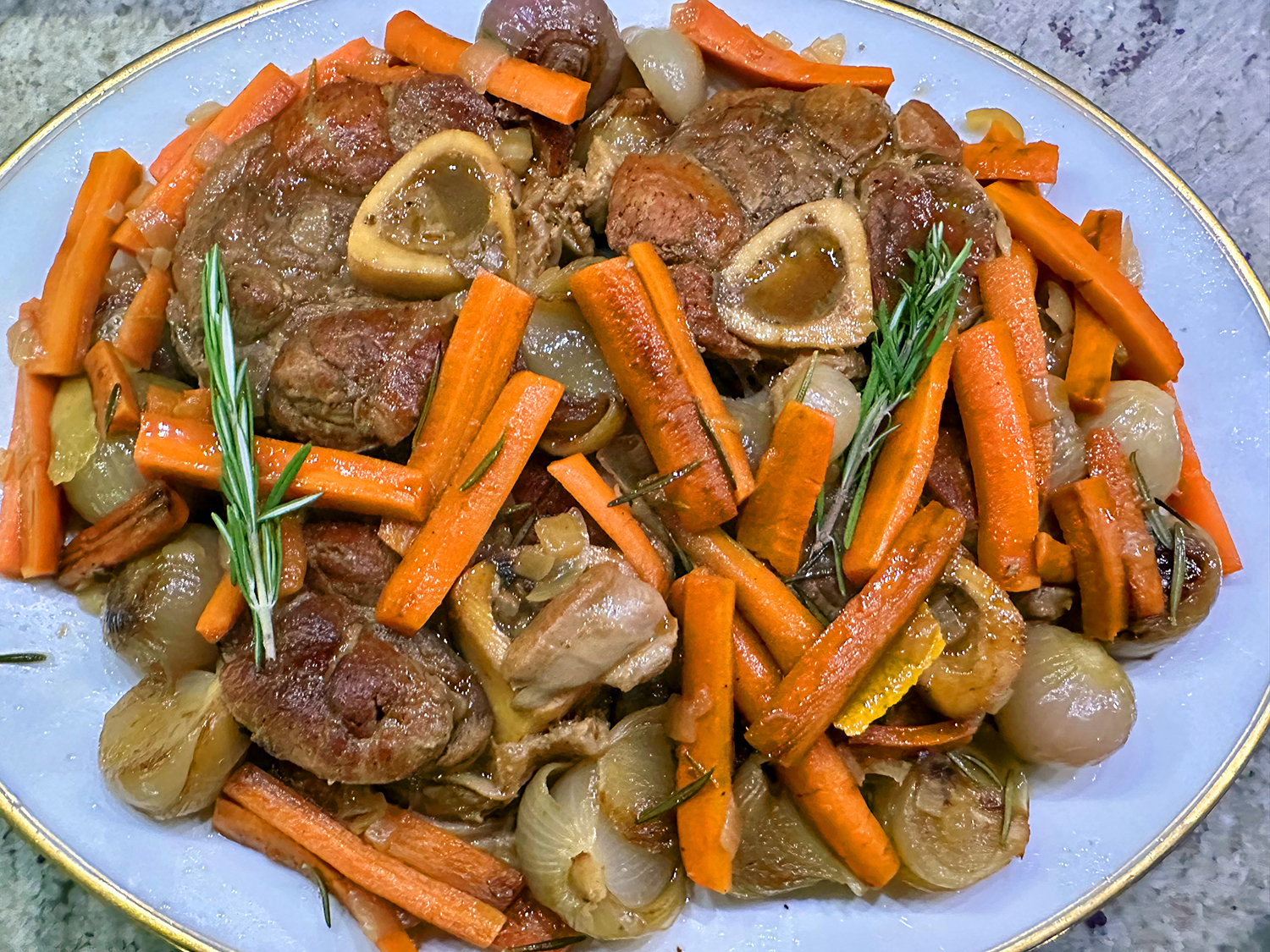
To ensure the veal shanks didn’t fall apart during braising, The Hubs tied each one around the outer diameter with kitchen twine. Once plated on a platter, the twine was removed before the carrots and shallots were added.

Along with the braised shallots and carrots, we served a side of velvety Manchego Mashed Potatoes, a perfect vehicle to corral some of the wonderful silky sauce. It was the perfect dinner to celebrate a close friend’s upcoming birthday.

Veal Shanks Braised with Honey and Rosemary

  • Servings: 4
  • Difficulty: easy
  • Print

Ingredients

The Braise

  • 4 meaty veal shanks, each 2 to 2 1/2 inches thick (3 to 3 1/2 lbs. total)
  • Coarse salt and freshly ground black pepper
  • 2 Tbsp. extra-virgin olive oil
  • 1 large onion, coarsely chopped
  • 1 cup dry white wine or vermouth
  • 2 cups veal or chicken stock, preferably homemade
  • 2 Tbsp. honey (rosemary or lavender if possible); we had lilac honey
  • Zest and juice of 1 orange, zest removed in strips with a vegetable peeler
  • Zest and juice of 1 lemon, zest removed in strips with a vegetable peeler
  • 2 6-inch leafy fresh rosemary branches
  • 2 Tbsp. balsamic vinegar

The Carrot and Shallot Garnish

  • 1 Tbsp. unsalted butter, plus more to finish
  • 1 Tbsp. extra-virgin olive oil
  • 12 to 18 medium shallots, peeled, larger ones cut in half
  • 12 to 18 small carrots, peeled; OR 4 larger carrots, cut into 3-by-3/4 inch sticks
  • Coarse salt and freshly ground black pepper
  • 2 6-inch leafy fresh rosemary branches

Directions

  1. Heat the oven to 300 degrees.
  2. Browning the shanks: Season the veal shanks on all sides with salt and pepper. Heat the oil in a wide Dutch oven or heavy braising pot (6- to7-quart) over medium-high heat. When the oil is quite hot, add as many shanks as will fit without crowding. (If necessary, sear the shanks in batches.) Sear the shanks, turning once withe tongs, until both flat sides have an attractive bronze color, about 5 minutes per side. transfer to a large plate or tray, without stacking.
  3. The aromatics and braising liquid: Add the onion to the pot, stir and sauté, still over medium-high heat, until they soften and begin to brown, 3 to 4 minutes. The bottom of the pot should be developing a caramelized crust. Pour in the wine, stir to dissolve the brown crust on the bottom of the pot, and boil until the wine is reduced by half, about 10 minutes.
  4. The braise: Add the stock, honey orange zest and juice, lemon zest, rosemary, and balsamic vinegar to the pot. Return the shanks to the pot, arranging them in a snug single layer, and pour over any juices that accumulated while they sat. Bring to a simmer and cover with parchment paper, pressing down so the paper nearly touches the shanks and the edges hang over the sides of the pot by about an inch. Then secure the lid in place and slide the pot into the lower third of the oven to braise at a gentle simmer for 1 hour. After the first 10 to 15 minutes, check that the liquid is not boiling too energetically; if i is lower the oven heat by 10 to 15 degrees and continue to braise.
  5. Prepare the garnish: heat the butter and oil in a large 12-inch skillet over medium-high heat. when the butter has melted and the oil is quite hot, add the shallots and carrots, season with salt and pepper, and sauté, stirring and shaking the pan frequently, until tinged with brown all over, about 8 minutes. Add the rosemary branches and sauté for another minute.
  6. Finishing the sauce: With a slotted spoon, lift the shanks along with the shallots and carrots, onto a platter, without stacking. Handle the veal carefully at this point, as it will tend to fall apart. Cover loosely with foil to keep warm. Strain the braising liquid into a saucepan, pushing down on the vegetables, zest, and spent herbs to extract all the juices, and discard the solids. Skim the surface fat from the strained liquid, and bring to a simmer over medium-high heat. Simmer, skimming a few more times, until reduced enough to lightly coat the back of a spoon, about 15 minutes. Season with salt and pepper, and keep at a low simmer.
  7. Portioning the veal shanks: If the shanks are reasonably sized, serve one shank per person. If the shanks are enormous, pull apart the larger shanks, separating them at their natural seams, and serve smaller amounts. be sure to offer the marrow bones as well.
  8. Serving: For a luxurious sauce, whisk a walnut-sized knob of butter into the barely simmering sauce.Once you’ve added the butter, avoid prolonged boiling. Serve the shanks accompanied by the carrots and shallots, and spoon the sauce over the top.

http://www.lynnandruss.com

Recipe by Molly Stevens from All About Braising

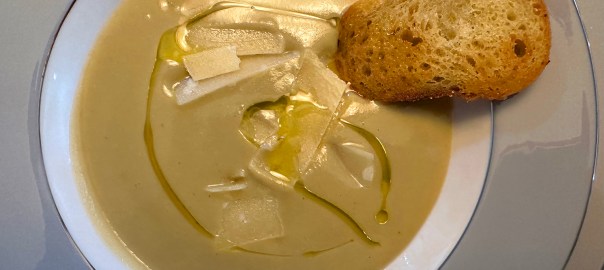
Artichoke-Parmesan Soup

This sublime soup combines the nutty flavor of artichokes and the richness of Parmesan. Although fresh artichokes are preferred many home cooks may not have the patience for turning artichoke bottoms. Frozen artichokes—usually sold in nine-ounce packages labeled artichoke hearts—are a worthy substitute. The wine here works its magic, adding just enough acid to lighten the soup. 

Homemade chicken stock adds oodles of flavor, so if you have some use it instead of the boxed or canned varieties. For a finishing touch, add a shower of shaved Parmesan, a swirl of good extra-virgin olive oil and serve with toasted brioche for dipping.

*If using frozen artichoke hearts, omit lemon and water and start at Step 2. The soup can be refrigerated overnight. Rewarm gently over moderately low heat.

Artichoke-Parmesan Soup

  • Servings: 4
  • Difficulty: easy
  • Print

Ingredients

  • One 2-oz. chunk of Parmigiano-Reggiano cheese, shaved into strips with a vegetable peeler
  • 1 lemon, halved
  • 4 large globe artichokes (about 3 1/2 lbs.); OR 4 cups frozen artichoke hearts*, thawed
  • 1/4 cup extra-virgin olive oil
  • 2 medium shallots, minced
  • Sea salt
  • 1 cup white wine, preferably Chardonnay
  • 3 cups chicken stock or canned low-sodium broth
  • 1 Tbsp. unsalted butter

Directions

  1. If using fresh artichokes: Squeeze the lemon juice into a large bowl of cold water and add the lemon halves. Break off or cut the stem from the base of the artichokes. Using your hands, snap off the tough outer leaves near the base. Continue snapping off leaves until only the central cone of yellow leaves with pale green tips remain. Using a large sharp knife, trim the top cone of leaves to just below the green tips. Trip any tough, dark green areas from the base with a small knife. Cut the artichoke hearts in half. Using a small spoon or a melon baller, scrape out and discard the hairy chokes. Cut each half lengthwise into 4 even slices. Place the artichoke slices in the acidulated water.
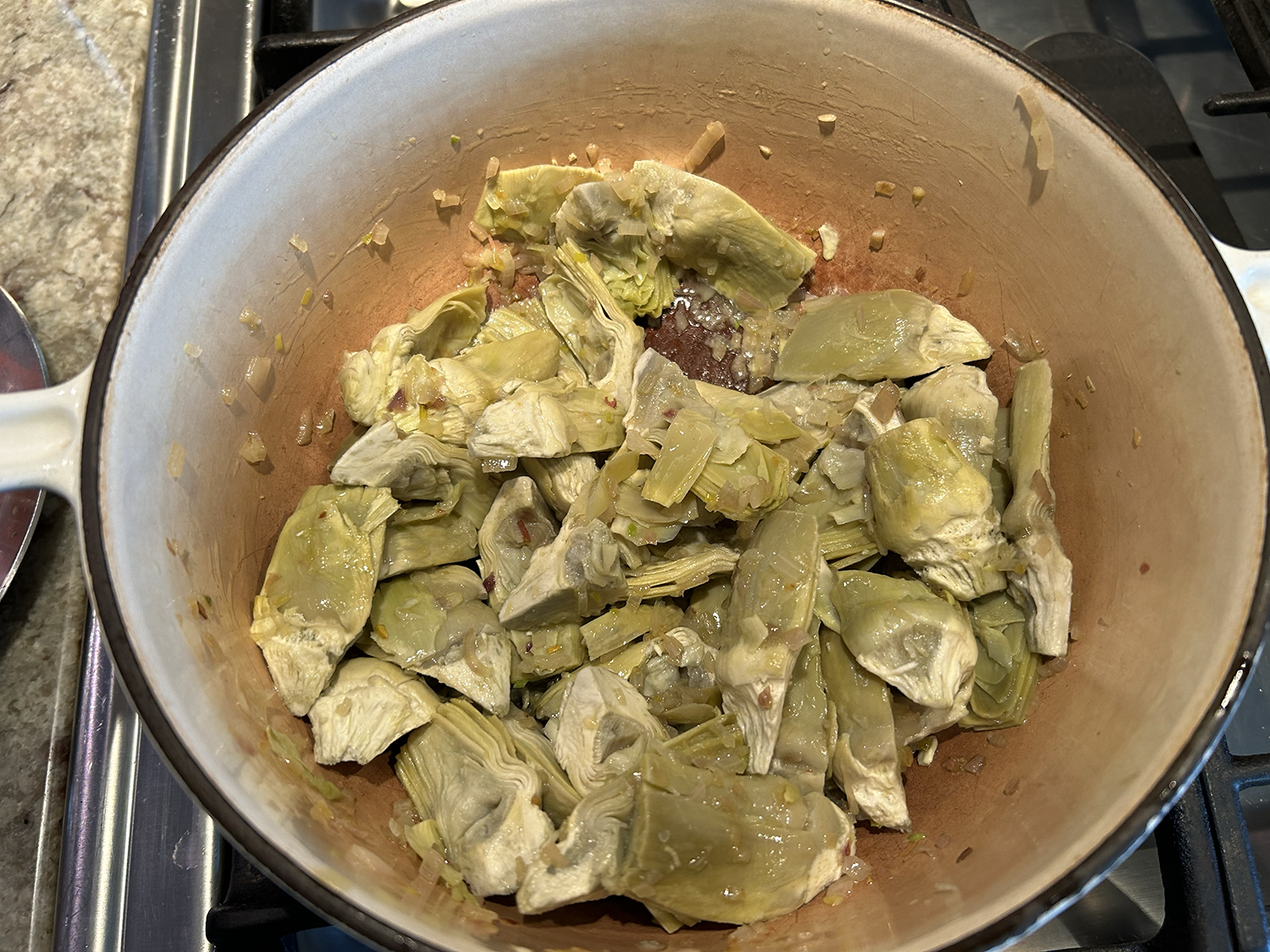
  2. In a large nonreactive saucepan, combine 2 tablespoons of the oil with the shallots and a pinch of sea salt and cook over moderate heat, stirring often, until softened but not brown.
  3. Stir in the remaining 2 tablespoons oil. Drain and add the artichoke slices and cook until slightly softened, about 2 minutes. Pour the wine all over the artichokes, increase the heat to moderately high and simmer until almost evaporated, about 7 minutes.
  4. Add the chicken stock and reduce the heat. Cover and simmer gently until the flavors have mingled, about 20 minutes.
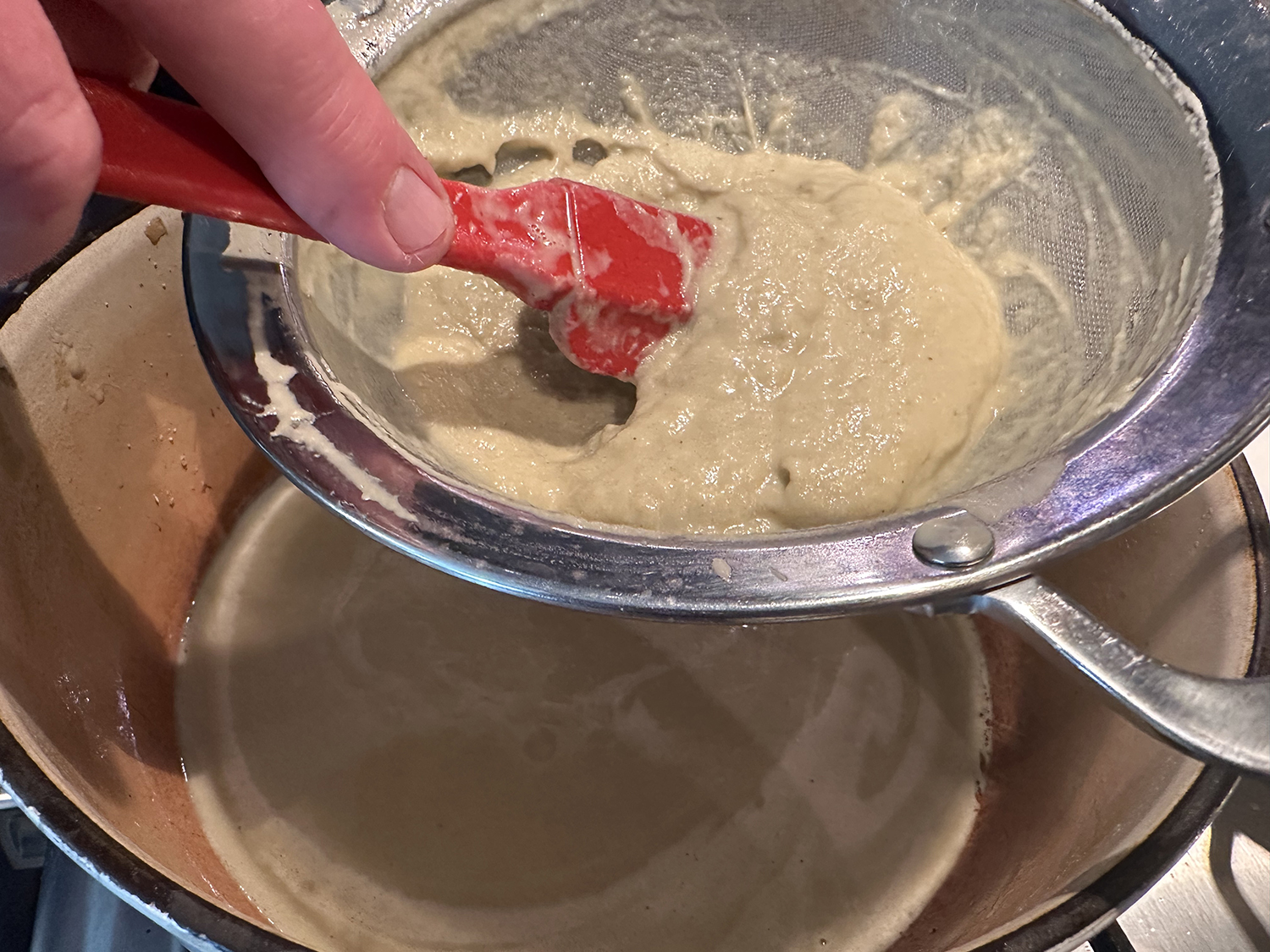
  5. Transfer the soup to a food mill with a fine disk and puree. Discard any fibrous artichoke pieces that remain in the food mill. Return the soup to the pan; you should have about 3 cups. If the soup is too thin, return it to the saucepan and boil until reduced and thickened.
  6. Just before serving, whisk the butter into the hot soup over moderate heat until melted and incorporated. Pour the soup into heated soup plates or bowls and scatter the cheese strips on top. Serve immediately.

http://www.lynnandruss.com

Recipe by Patricia Wells for Food & Wine

Braised Shallot Confit

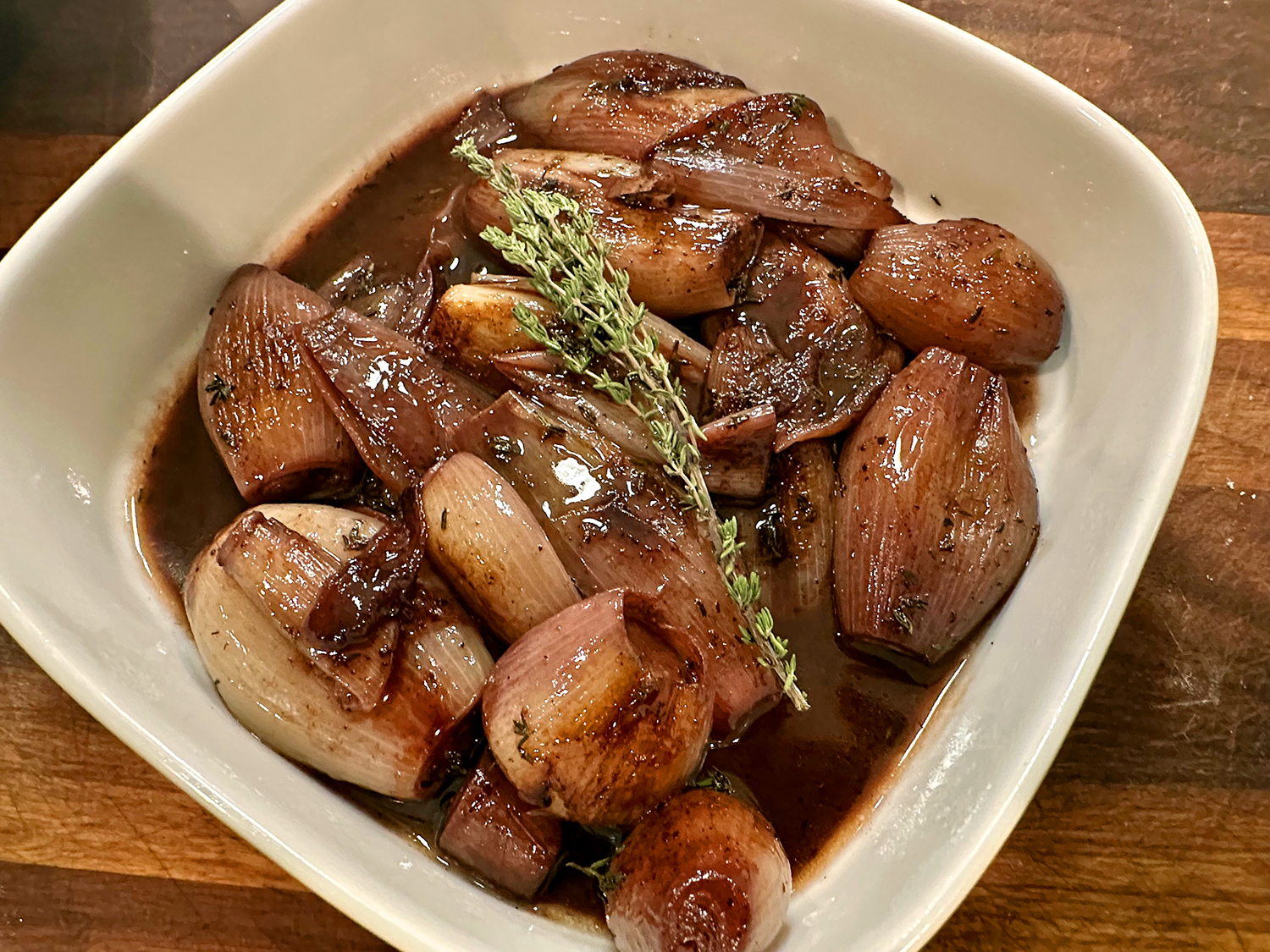
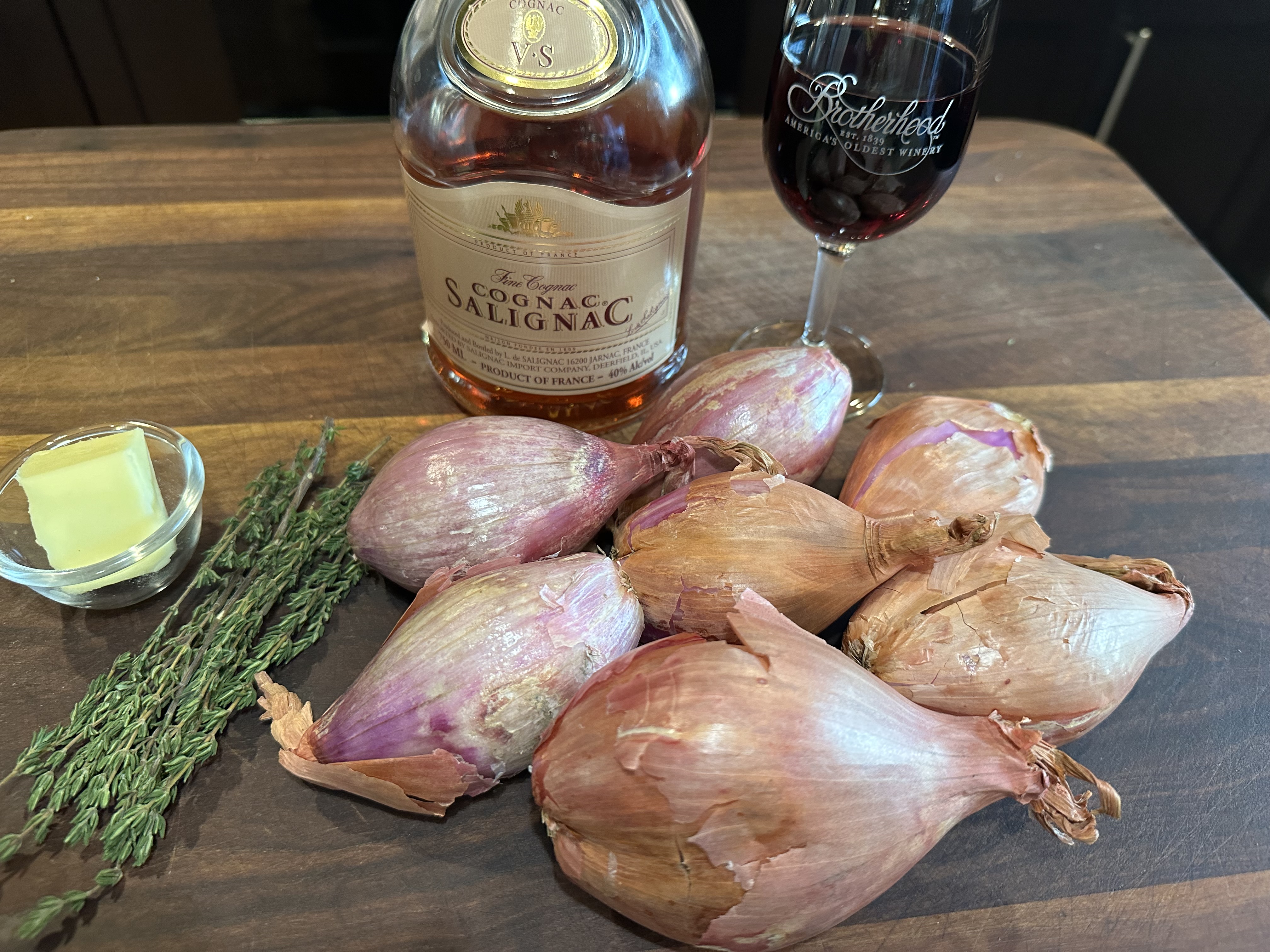
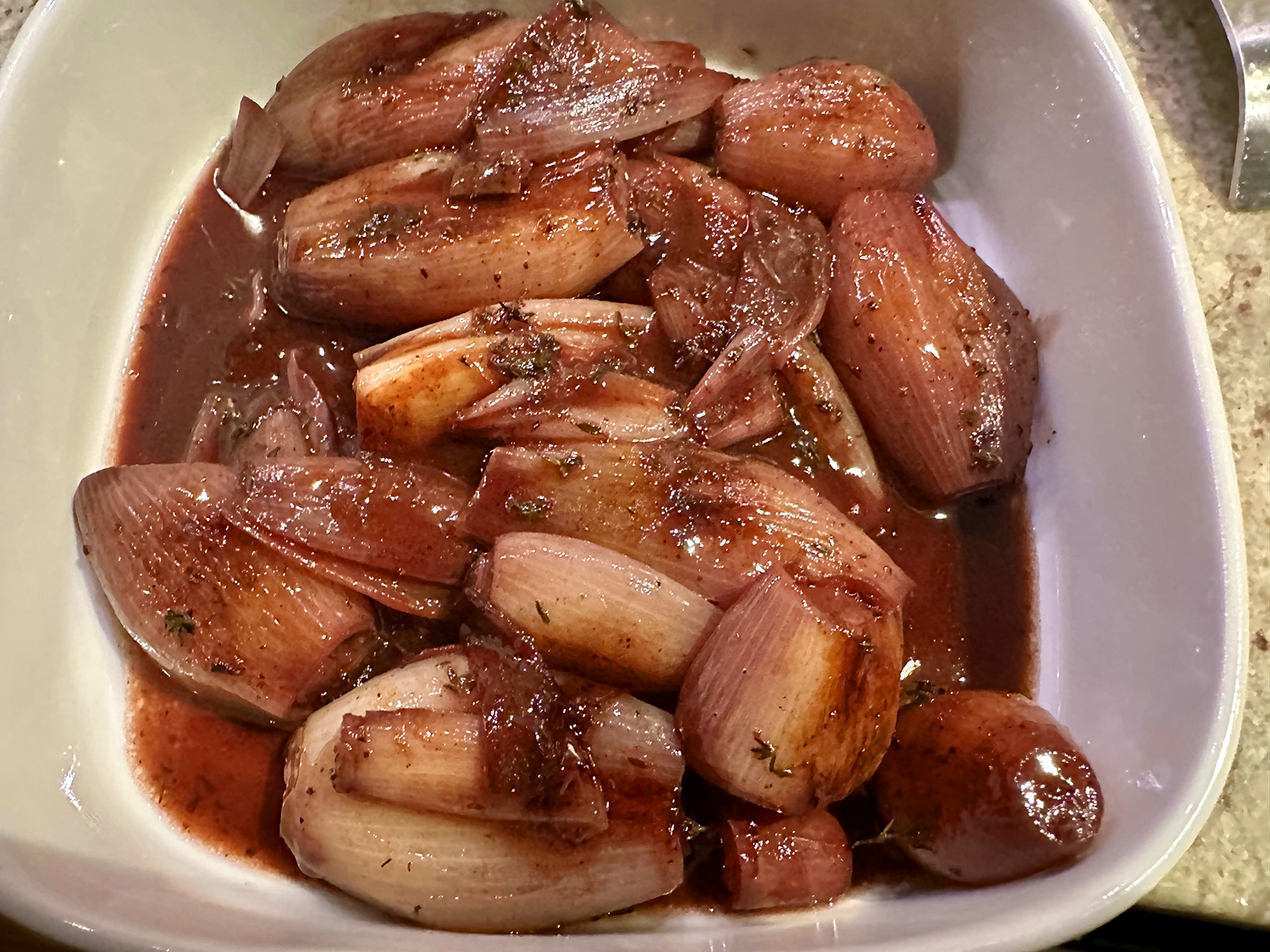
Braised shallots are one of those things that every resourceful cook should know about. When braised in a bit of red wine, Cognac and fresh thyme, shallots turn unbelievably sweet and jammy—wonderful served alongside roast chicken or a juicy grilled steak.

We loved, loved, loved this dish! In fact, you may want to make extra to spread onto bruschetta and top with a little goat cheese. Or try them tucked into a sliced turkey sandwich on chewy country bread.

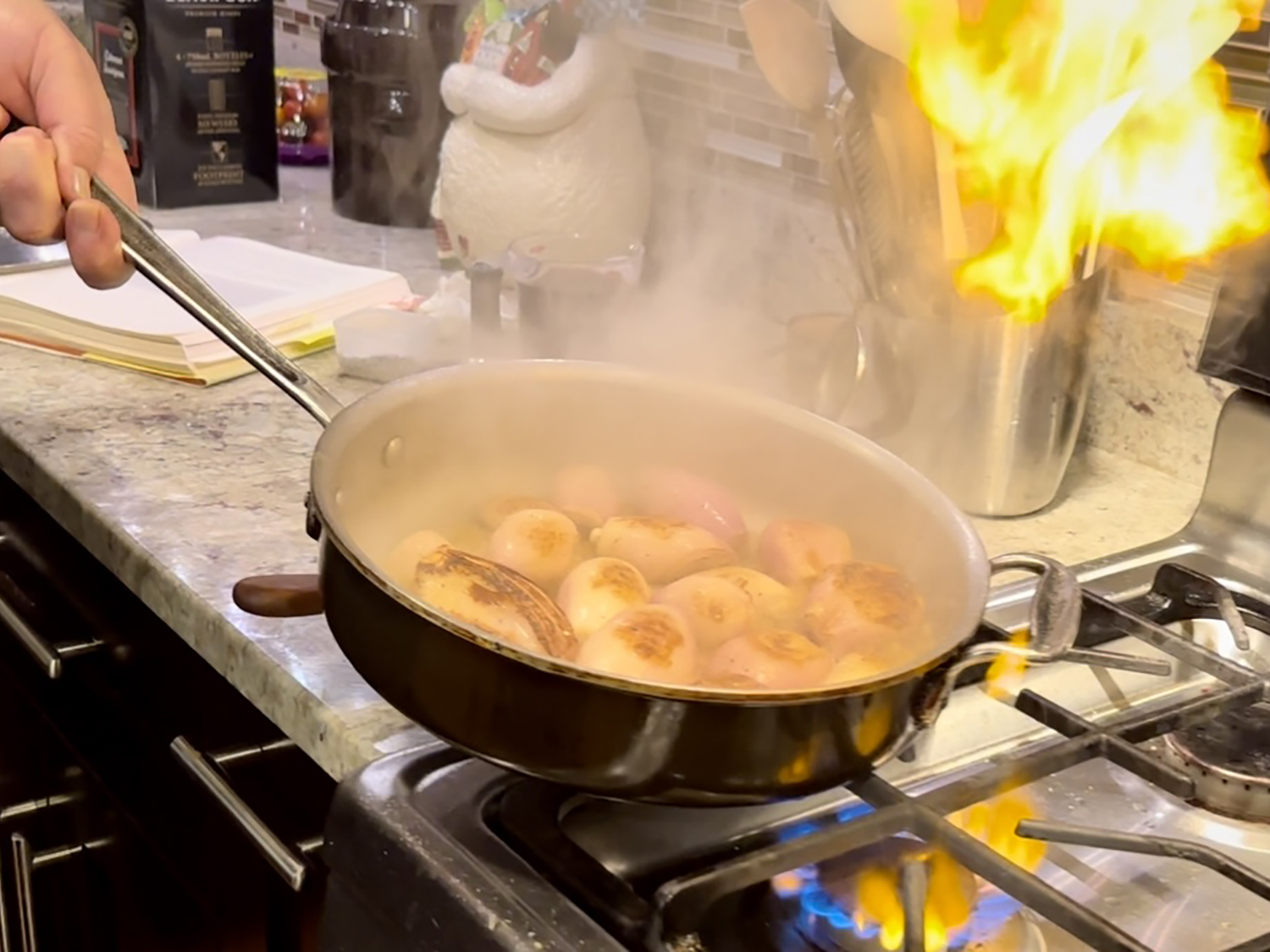
Look for shallots that are all about the same size—preferably medium sized 1 to 1 1/2 inch across—so they will braise evenly. One word of caution, when adding the cognac, be prepared for a flare up…

Screenshot

The shallots can be made ahead and kept, covered, at room temperature for several hours, or refrigerated for a few days.

Braised Shallot Confit

  • Servings: 4
  • Difficulty: easy
  • Print

Ingredients

  • 3/4 lb. shallots
  • 1 1/2 Tbsp. unsalted butter
  • Coarse salt and freshly ground pepper
  • 2 Tbsp. Cognac, or other brandy.
  • 1/2 cup dry red wine
  • 1 1/2 tsp. chopped fresh thyme.

Directions

  1. Trimming the shallots: Peel the shallots and trim off any bits of the root end that remain. Divide and large shallots in two—the halves should fall apart naturally, but you may need to peel off the first layer of shallot to serparate them.
  2. Browning and flaming the shallots. Melt the butter in a medium skillet over medium-high heat. Add the shallots, season with salt and pepper, and toss to coat. Sauté, tossing frequently, until the shallots are brown in spotsand you can smell the aromaof cooking onions, about 5 minutes.
  3. Add the Cognac: If you are cooking over a gas stove, carefully tilt the pan and let the flame ignite the Cognac. On electric, hold a match to the pan to light the cognac. Stand backas the flame flares up, then swirl the panaround and let the flameburn down. Simmeruntil there is onlya glaze lefton the bottom of the oan.
  4. The braise. Add the wine and one teaspoon of thymeand bring to a simmer, then reduce heat to medium-low and cover the pan. Simmer until the shallots are completely soft and falling apart, about 40 to 45 minutes.After the first 15 minutes, check to make sure that the pan is not dry, ad a few tablespoons of water if necessary.Check again 2 or 3 times as the shalloys braise.
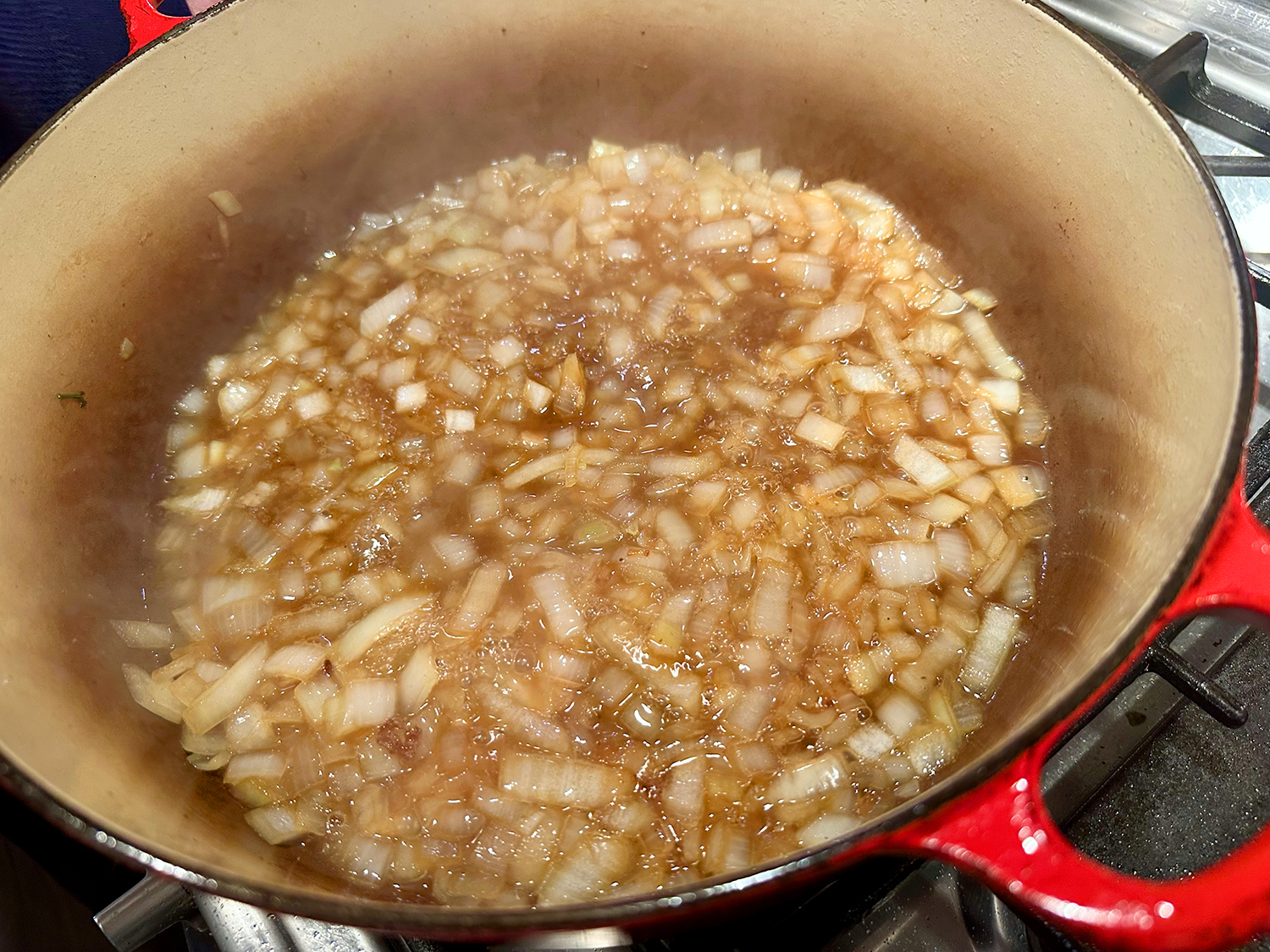
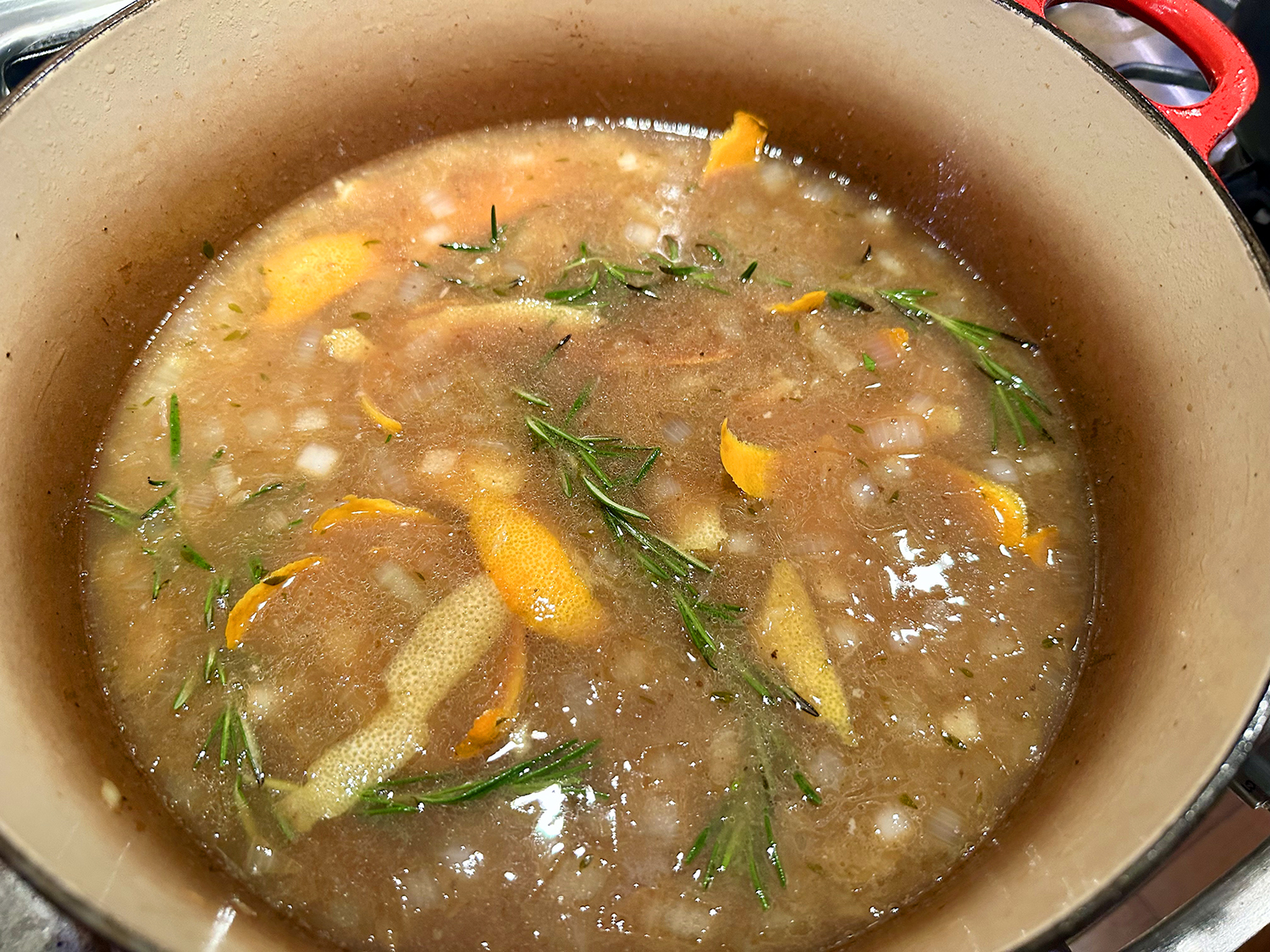
  5. The Finish: When the shallots are done, remove the lid and, over medium heat, boil down any liquid, shaking and stirring a few times, until a glaze forms on the shallots. Add the remaining 1/2 teaspoon thyme, gently stir (expect some of the shallots to fall apart a bit). Taste for salt and pepper; serve warm or a room temperature

http://www.lynnandruss.com

Recipe by Molly Stevens in “All About Braising”

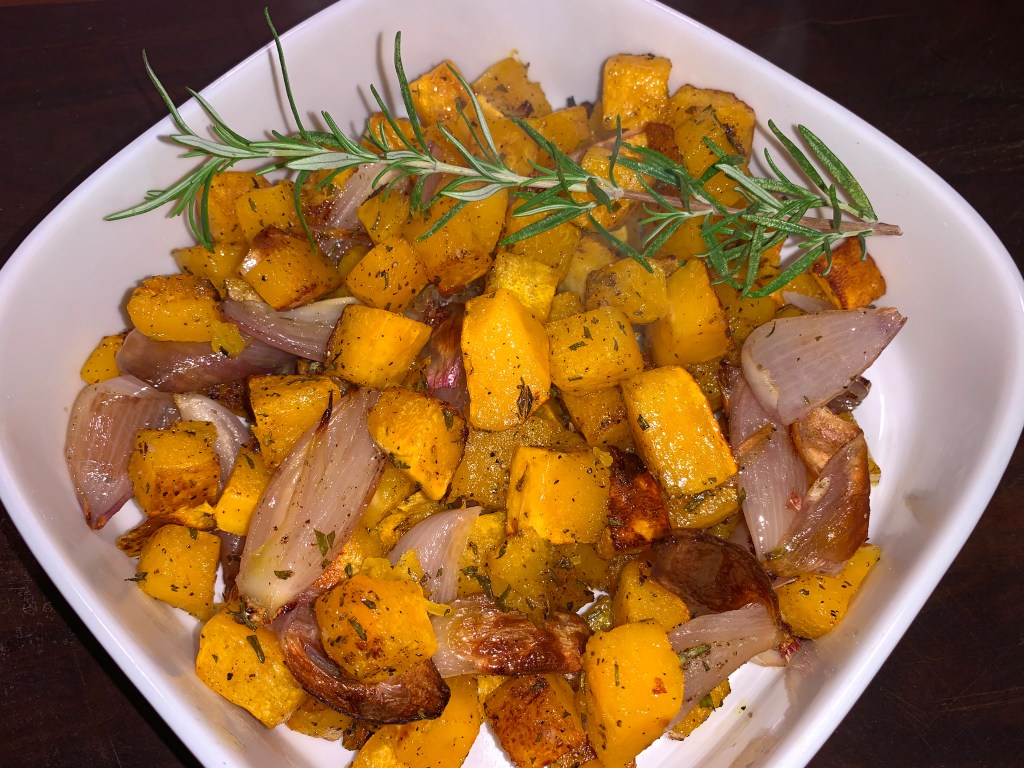
Roasted Rosemary Butternut Squash and Shallots

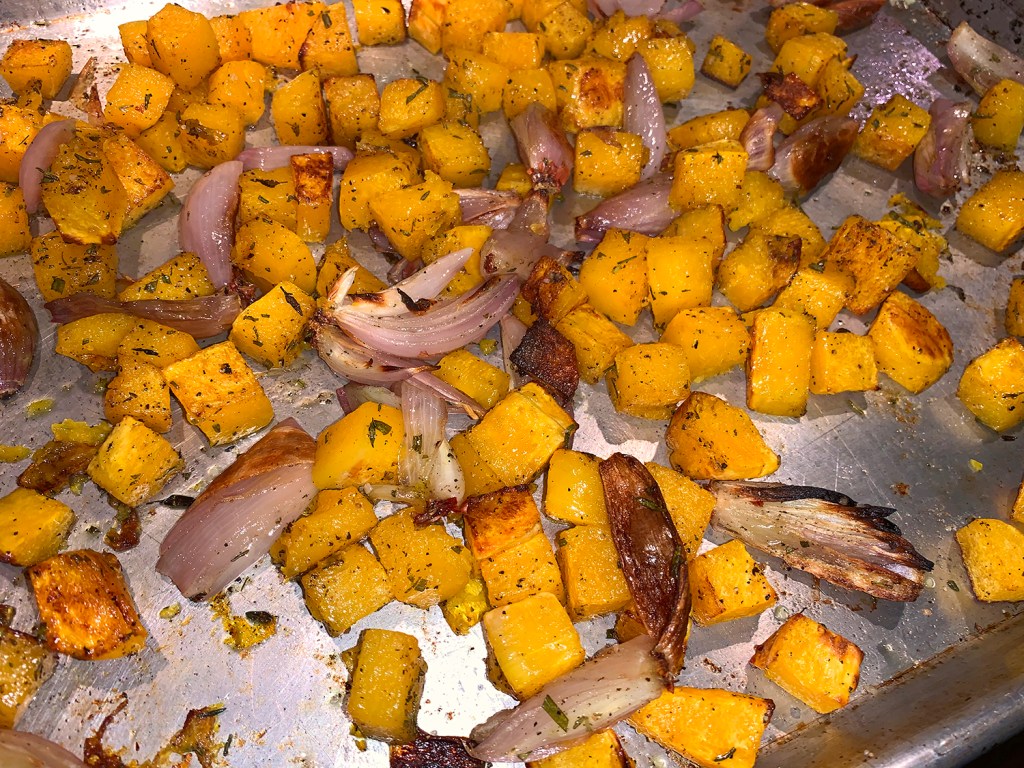
Butternut squash is a fall heavyweight in my opinion. It pairs well with a variety of flavors and can reinvent itself either sweet or spicy. In this case, we are talking naturally sweet which really develops as it roasts. And you all know that butternut squash is very nutritious with the flesh full of vitamins A and C.

It was a gift from our compost. I noticed squash vines starting to grow in our herb bed backed by a trellised fence. We hadn’t planted any squash so I knew it came from when we composted the garden earlier in the season. Plus the rosemary was freshly picked from our herb garden. Thank you Mother Nature!

Oops, I completely forgot to add the 1/2 teaspoon of granulated sugar. It really wasn’t needed taste-wise because our squash was naturally sweet, but the sugar was more a conductor for caramelization. Although our cubes were lightly browned without it.

This recipe calls for a specific amount of squash, so you may have some leftover. Ours weighed in at 3.3 pounds—a good bit larger than the recipe called for. After peeling and seeding, your squash will lose 2-3 ounces of weight. For example, a 3-pound squash will yield about 2 pounds 13 ounces of flesh. This recipe calls for 2 pounds of diced squash, you’ll want to look for a squash that is around 2 pounds, 3 ounces in weight.

If you have leftovers like us, you may want to sauté the extra cubes and use them in a future frittata, salad or side dish. The toughest part of this recipe is peeling the squash, so it is permissible to buy already cubed, just make sure they are cut to 3/4″ cubes and uniformly sized.

Roasted Rosemary Butternut Squash and Shallots

  • Servings: 4
  • Difficulty: easy
  • Print

Ingredients

  • 3 cups 3/4-inch-diced, peeled butternut squash (from about a 2-pound squash)
  • 4 medium shallots, peeled, root end left intact, quartered
  • 2 Tbsp. extra-virgin oil
  • 1 tsp. chopped fresh rosemary
  • 1 tsp. kosher salt
  • 1/2 tsp. granulated sugar
  • 1/2 tsp. freshly ground black pepper

Directions

  1. Preheat oven to 450°F.
  2. Put the squash cubes on a heavy-duty rimmed baking sheet. Add the shallot quarters to the squash.
  3. Drizzle the olive oil over the vegetables; toss to coat. Sprinkle the rosemary, salt, sugar and pepper over the veggies. Toss to coat again and distribute evenly over the baking sheet.
  4. Roast for 20 minutes. Stir, then continue rosting until the veggies are tender and lightly browned, 10-15 minutes more.
  5. Before serving, taste and season with more salt if desired.

http://www.lynnandruss.com

Adapted from a recipe found on finecooking.com

When Baked Chicken is What You Crave.

On vacation in Hilton Head in mid-September, and with plans to check out as many restaurants as the schedule would allow, we also anticipated dining in, at least a few evenings. The Hubs and I drove down with good friend Merry Sue (owner of the time share) which sported a modern, fully-equipped kitchen. As her guests, we promised to make dinner a couple of nights, although we had no pre-planned menus. (But we did intentionally schlepp down a few good knives 🙂 )

Lots of Shallots

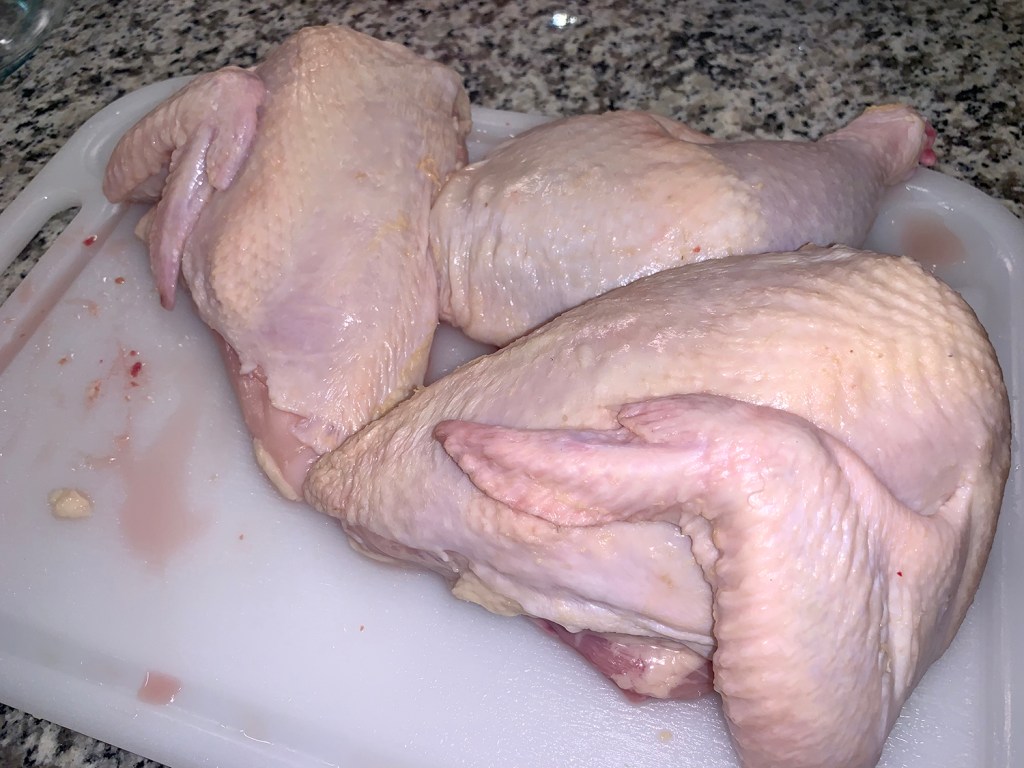
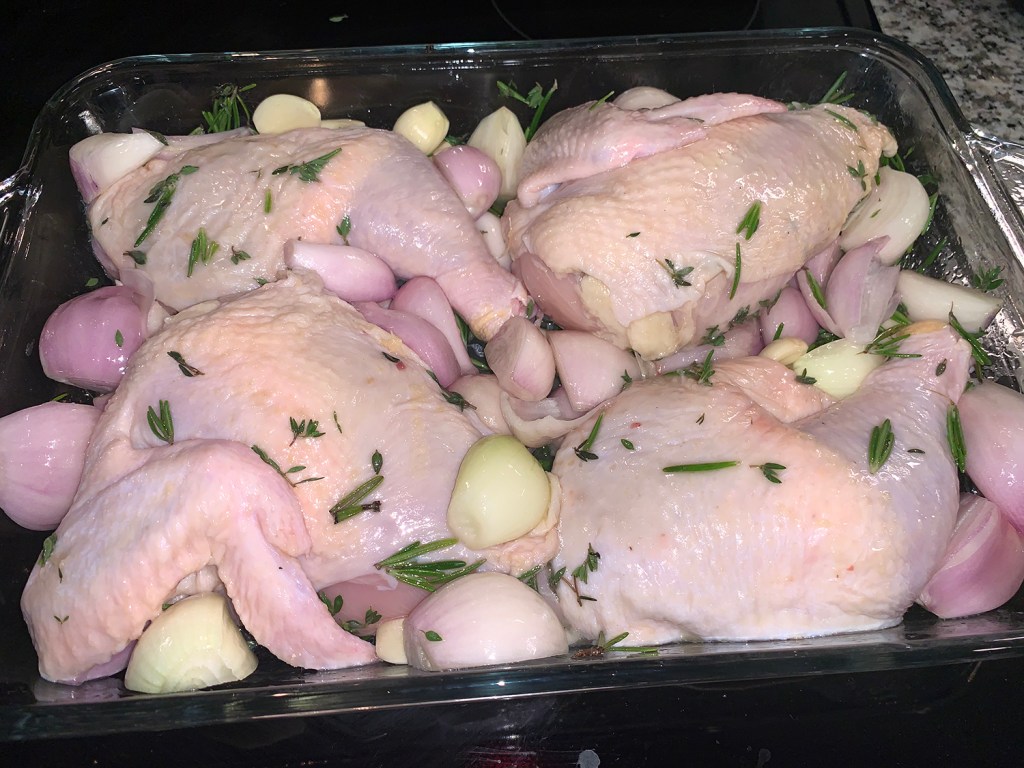
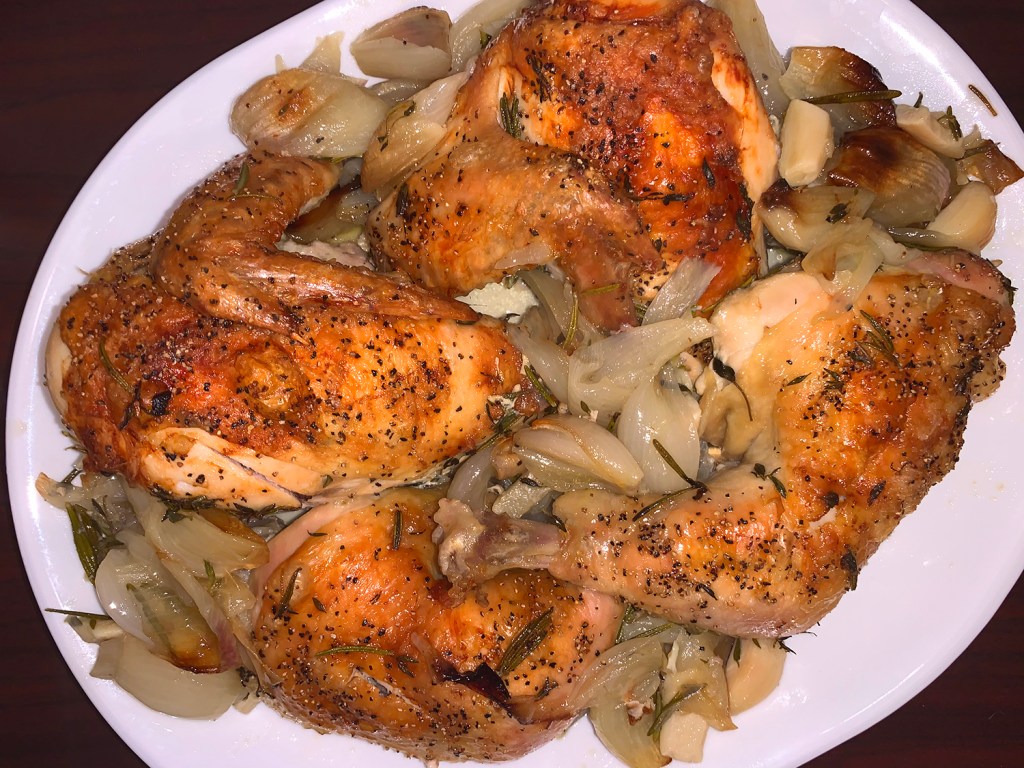
It was unanimous that chicken be the star of dinner this particular night, so The Hubs began his search on several of our recipe faves and found this perfect gem, Baked Chicken with Herbs, Garlic & Shallots, on FineCooking.com. Because it consisted of few ingredients, a good thing when on vacation, and was simple in employment, the recipe fit our criteria to a tee.

Merry Sue and Lynn on the condo balcony.

For some strange reason the local supermarket carried only four whole chickens, so I bought the smallest at just over 4 1/2 pounds—which in hind sight worked out well because we all ADORED the finished dish, plus had leftovers for a tasty chicken salad for lunch the next day! This recipe is so easy to modify to your liking with different herbs, extra garlic, small onions, etc. If you prefer white or dark meat only, you could also substitute bone-in, skin-on split breasts or thighs.

I believe this will easily become a staple of our weeknight dinner repertoire. Vary the herbs as you like, but stick to the hardy ones—thyme, rosemary, sage, and oregano. They’ll roast without burning and have a stronger flavor.

Without a lot of staples at our disposal, we opted to go for a packaged rice dish and a simple side salad (the grape tomatoes we transported from our garden at home) to complete the meal. When we make this delicious dish again, I think we’ll go ahead and make the pan sauce to pair with some garlicky mashed potatoes to accompany the baked chicken. Mmmm-mm good!

Baked Chicken with Herbs, Garlic and Shallots

  • Servings: 4
  • Difficulty: easy
  • Print

Ingredients

  • 1 chicken (3-1/2 to 4 lb.), cut into quarters
  • 3 Tbs. unsalted butter
  • 6 medium shallots, cut in half and peeled
  • 8 large garlic cloves, peeled
  • Leaves stripped from 10 sprigs fresh thyme
  • Leaves stripped from 8 sprigs fresh rosemary
  • 1-1/2 tsp. coarse salt
  • Freshly ground black pepper

Directions

  1. Heat the oven to 425°F. Rinse the chicken and pat it dry with paper towels. Cut away any excess fat and tuck the wings behind each breast.
  2. Put the butter into a large, shallow baking pan (a 10-1/2×15-1/2-inch Pyrex pan is ideal for this). Put the pan into the oven while it’s heating. When the butter is melted (about 10 minutes), remove the pan and set it on a heatproof surface or on a couple of potholders. Add the shallots, garlic, thyme, and rosemary, and swirl the pan to coat the ingredients in the butter.
  3. Dredge the chicken, skin side down, in the butter and herb mixture, and arrange, skin side up, in the pan. Sprinkle the chicken generously with the salt and pepper. Bake until the chicken is browned and cooked through, 50 to 60 minutes. Serve with the shallots and garlic along with a drizzle of the pan drippings.

http://www.lynnandruss.com

Adapted from a recipe by Abigail Johnson Dodge from Fine Cooking