Tag Archives: pork

Spicy Pork Stew with Peppers and Potatoes

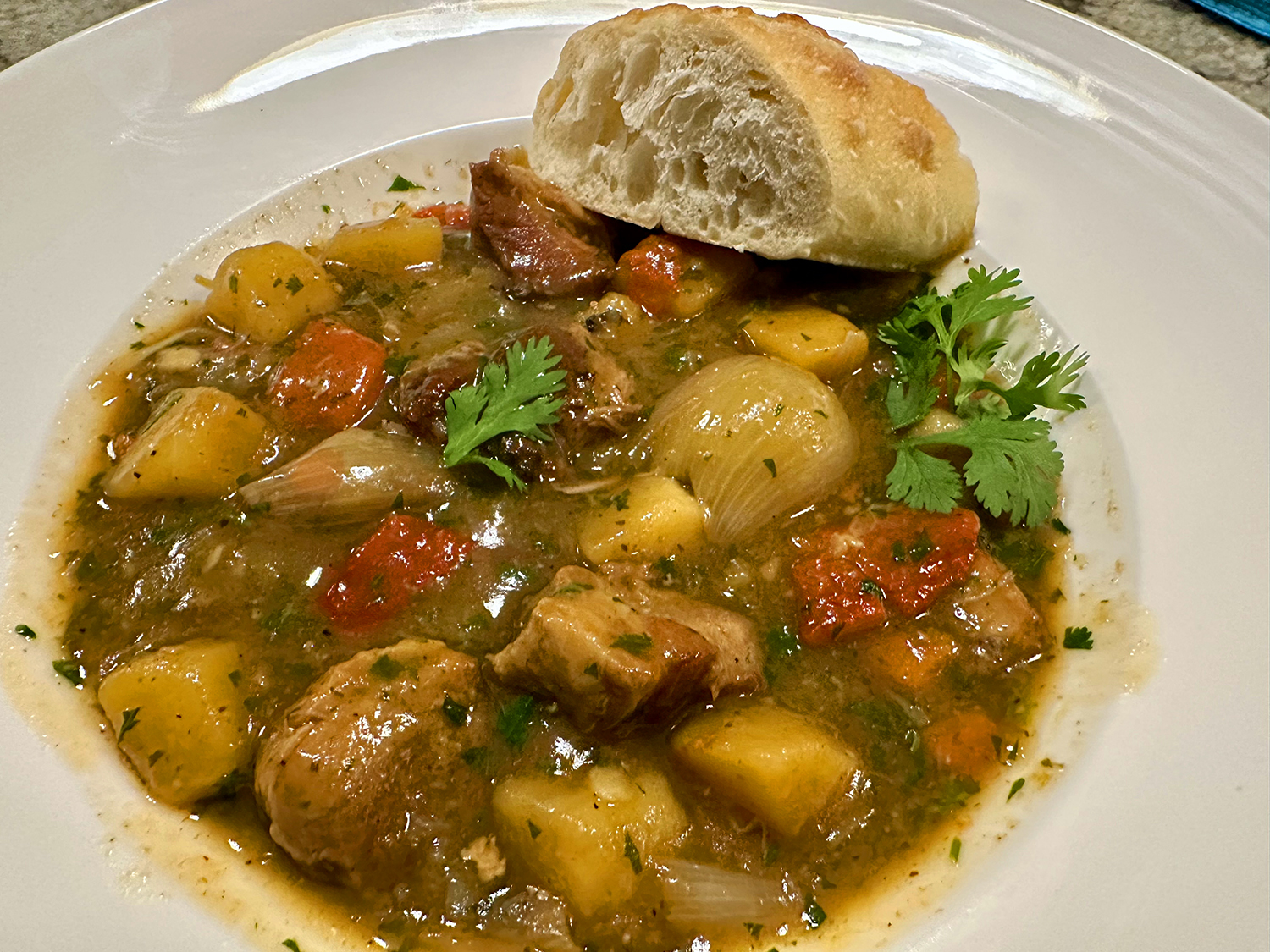
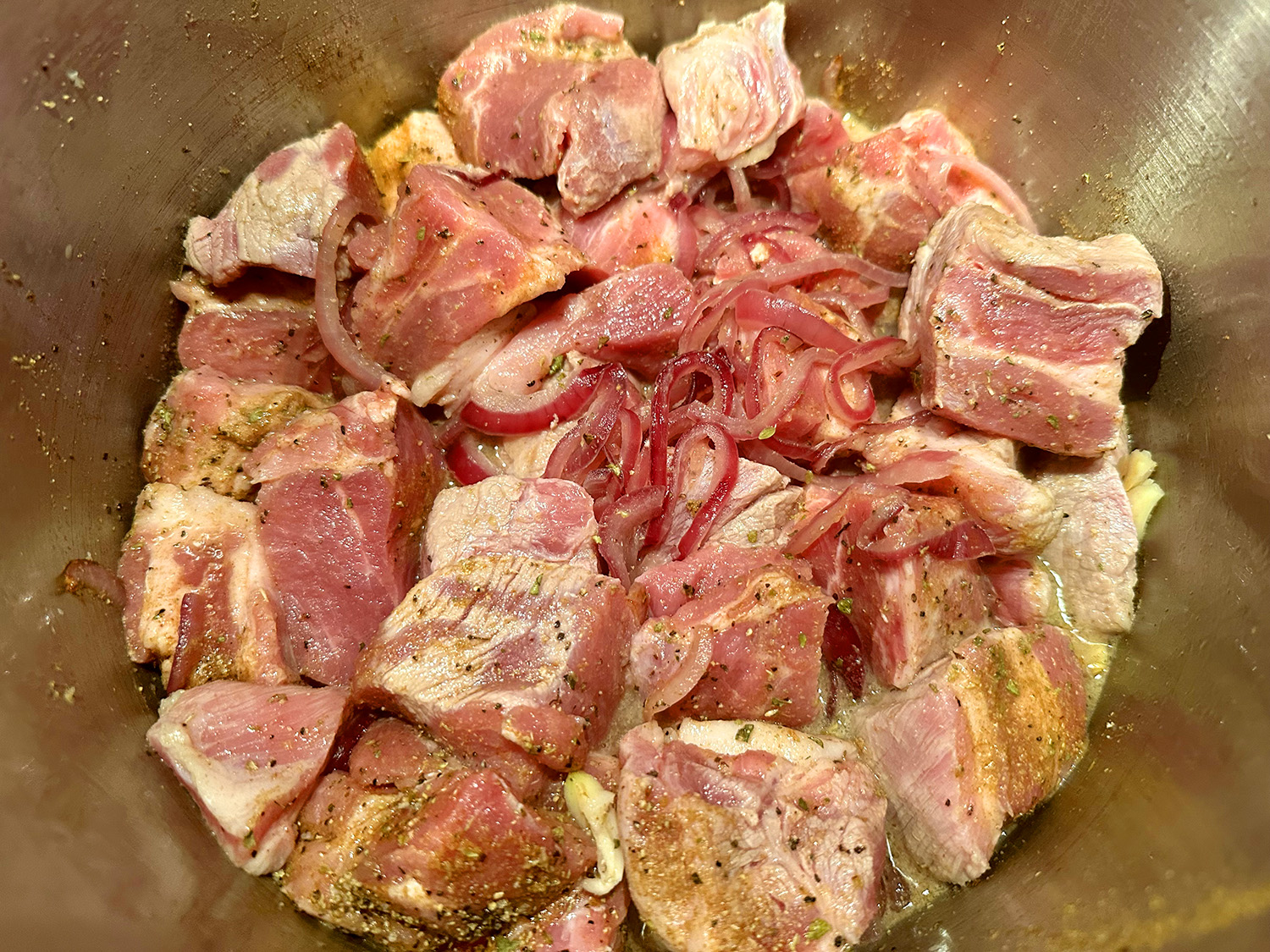
If you have a long, lazy afternoon ahead of you in the coming days, consider making this hearty stew by one of our favorite chef/authors, Molly Stevens. The inclusion of chipotles and roasted sweet peppers give this zesty pork stew a Southwestern flavor.

The original recipe produces a thin, watery liquid as the base while we prefer a thicker sauce. To accomplish this, you can either dredge the meat chunks in seasoned flour before browning them, and/or add a cornstarch slurry at the end, after degreasing (if necessary), but before adding cilantro.
The stew can be made up to 2 days ahead: Skip the degreasing step, cool to room temperature, cover, and refrigerate. Once the stew is chilled, lift the solidified fat off the top with a slotted spoon. Reheat the stew over medium-low heat to serve.

Spicy Pork Stew with Peppers and Potatoes

  • Servings: 4-5
  • Difficulty: easy
  • Print

Ingredients

  • 3 lbs. boneless pork shoulder, trimmed of excess fat and cut into 1-1/2- to 2-inch pieces
  • 3 Tbsp. grapeseed oil or vegetable oil, more as needed
  • Kosher salt and freshly ground pepper
  • 1 medium yellow onion, coarsely chopped (about 1 cup)
  • 2 medium celery stalks, coarsely chopped (about 1/2 cup)
  • 1 medium carrot, coarsely chopped (about 1/3 cup)
  • 2 cloves garlic, minced
  • 1 Tbsp. chipotles in adobo, minced
  • 1 tsp. cumin
  • 1/2 tsp. dried oregano
  • 1 cup beer (any kind)
  • 2 1/2 cups homemade or lower-salt store-bought chicken broth
  • 2 cups peeled diced white potatoes (1-inch dice)
  • 2 cups halved or quartered shallots (leave whole if small)
  • 2 cups chopped roasted, peeled red peppers (1-inch pieces)
  • 1/4 cup chopped fresh cilantro

Directions

  1. Position a rack in the bottom third of the oven and heat the oven to 325°F.
  2. Spread the pork on paper towels to dry for 10 to 20 minutes before browning. (You can use this time to chop the onion, celery, and carrot). If the meat is very wet, pat it dry.
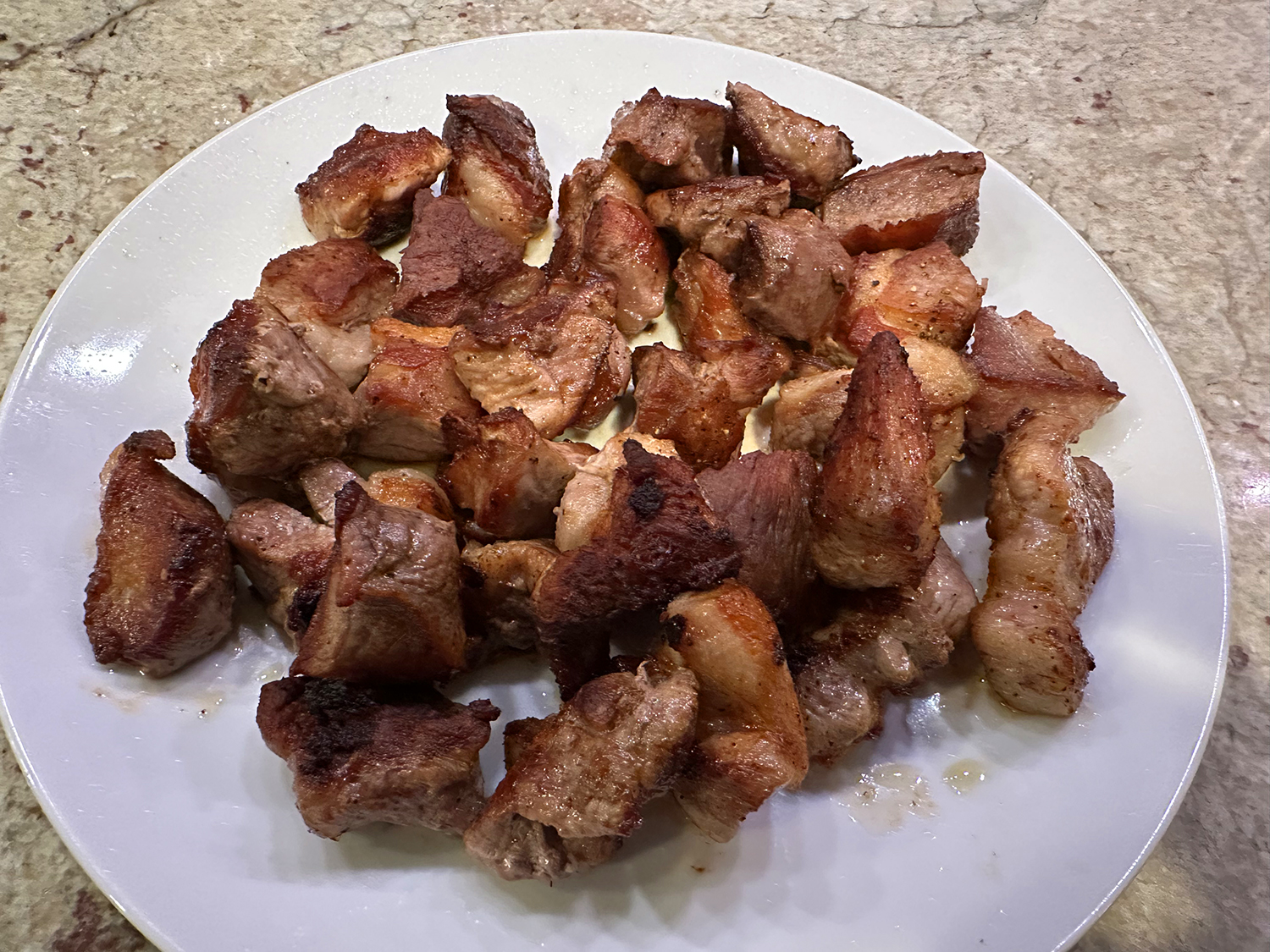
  3. In a 6-quart Dutch oven or other heavy-duty pot, heat the oil over medium to medium-high heat until shimmering hot. Season about one-third of pork with salt and pepper and arrange it in a single layer in the pot (there should be at least 1/2 inch of space between the pieces). Brown well on at least 4 sides, adjusting the heat as necessary; each batch should take about 10 minutes to brown. Transfer the pork to a large bowl or rimmed baking sheet as it browns and repeat with the rest of the pork, seasoning with salt and pepper before browning. Once all of the pork is browned, remove the pot from the heat to let it cool for a few minutes.
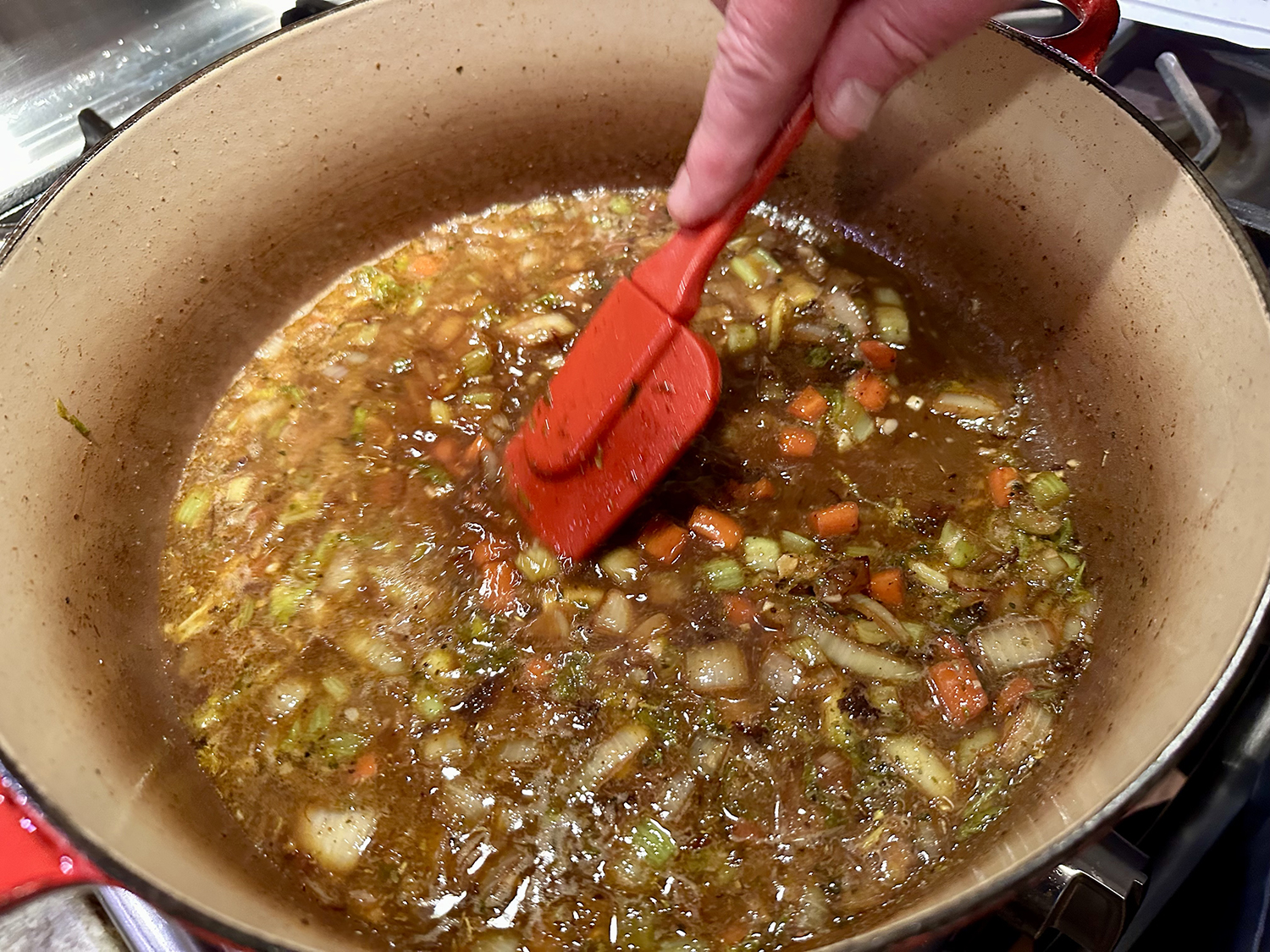
  4. Pour all but 2 tablespoons of the fat from the pot. (If there is not enough, add oil to equal 2 tablespoons) Return the pot to medium heat, then add the onion, celery, and carrot. Season with a pinch of salt and pepper, and cook, stirring often and scraping the bottom of the pot with a wooden spatula, until the vegetables begin to soften, 5 to 6 minutes. Stir in the garlic, chipotles, cumin, and oregano and cook, stirring occasionally, until fragrant, 1 to 2 minutes.
  5. Add the beer, stirring with the wooden spatula to dissolve any browned bits on the bottom of the pot. Raise the heat to medium high and boil to reduce by about half, 5 to 8 minutes. Add the chicken broth and 1-1/2 cups water. Bring to a boil.
  6. Return the pork to the pot along with any accumulated juice. Lower the heat to maintain a simmer.
  7. Crumple a 12×16-inch piece of parchment, then flatten it out. (Crumpling makes for easy handling.) Place the parchment directly on the surface of the stew, allowing the ends to come up the sides of the pot. Cover and put in the oven.
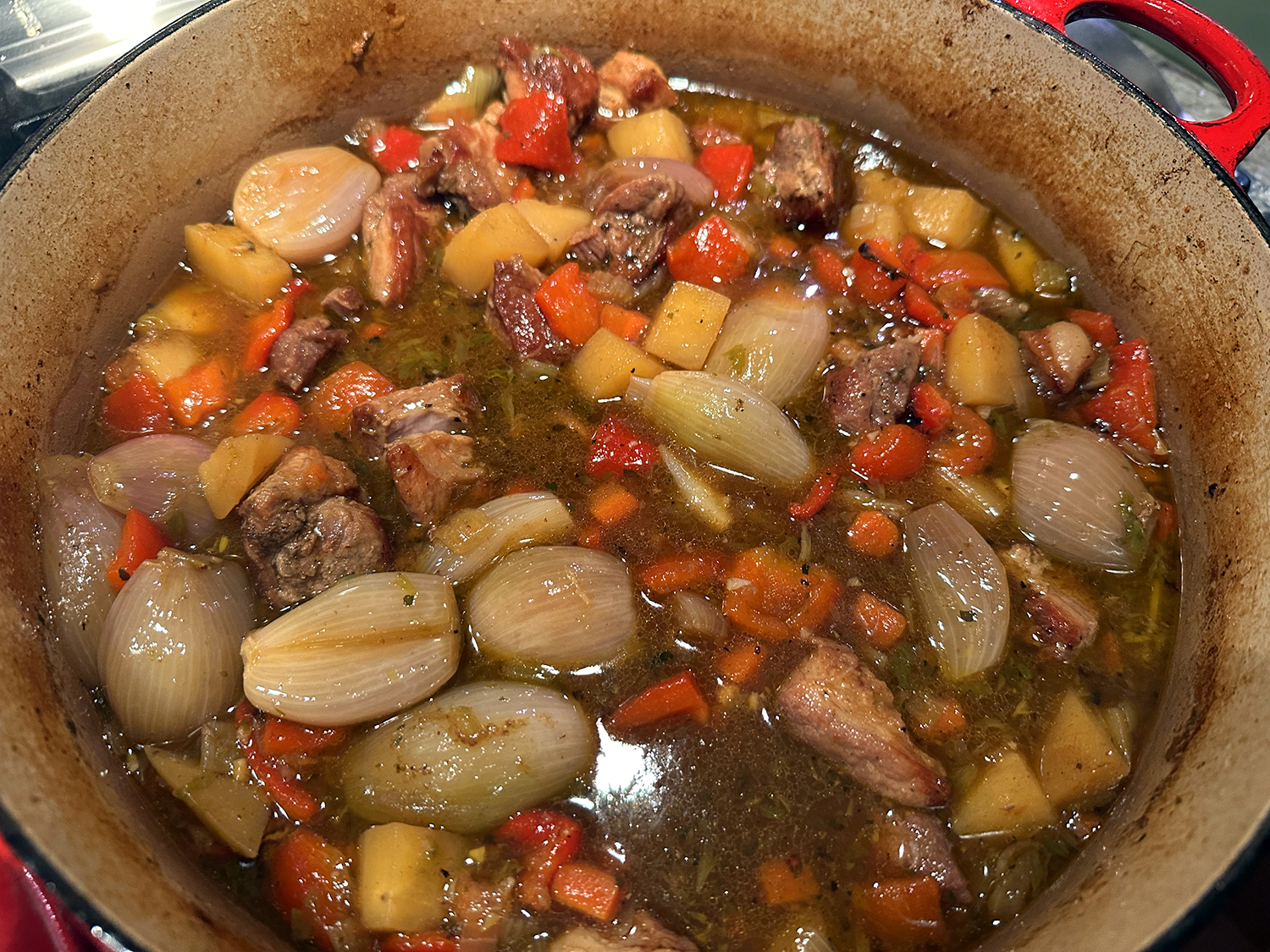
  8. After 30 minutes of stewing, add the potatoes and shallots to the pot. Cover with the parchment and lid, return to the oven. After another 30 minutes, add the peppers. Cover with the parchment and lid, return the pot to the oven, and cook until the pork is fork-tender, 1/2 to 1 hour more.
  9. Degrease the stew by laying a clean paper towel over the surface of the stew and gently pushing it into all the bumps and dips, then quickly peeling it off. Repeat as necessary with more paper towels.
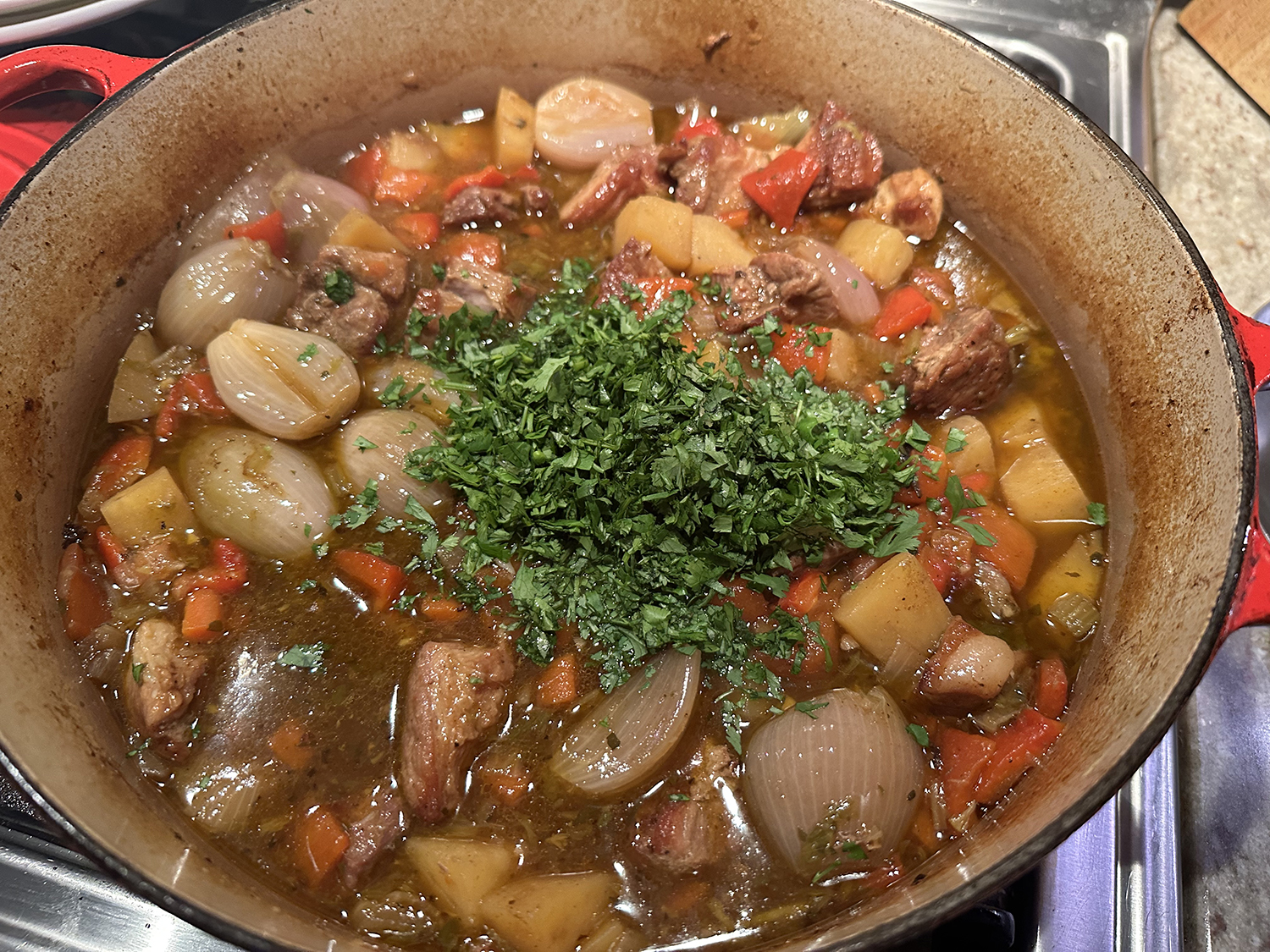
  10. Thicken with a cornstarch slurry if desired. Stir in the cilantro. Season to taste with salt and pepper and serve.

http://www.lynnandruss.com

Original recipe by Molly Stevens
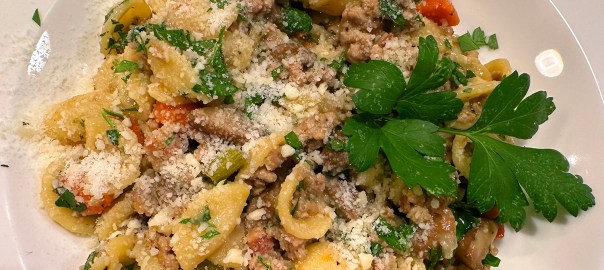
Orecchiette with White Bolognese

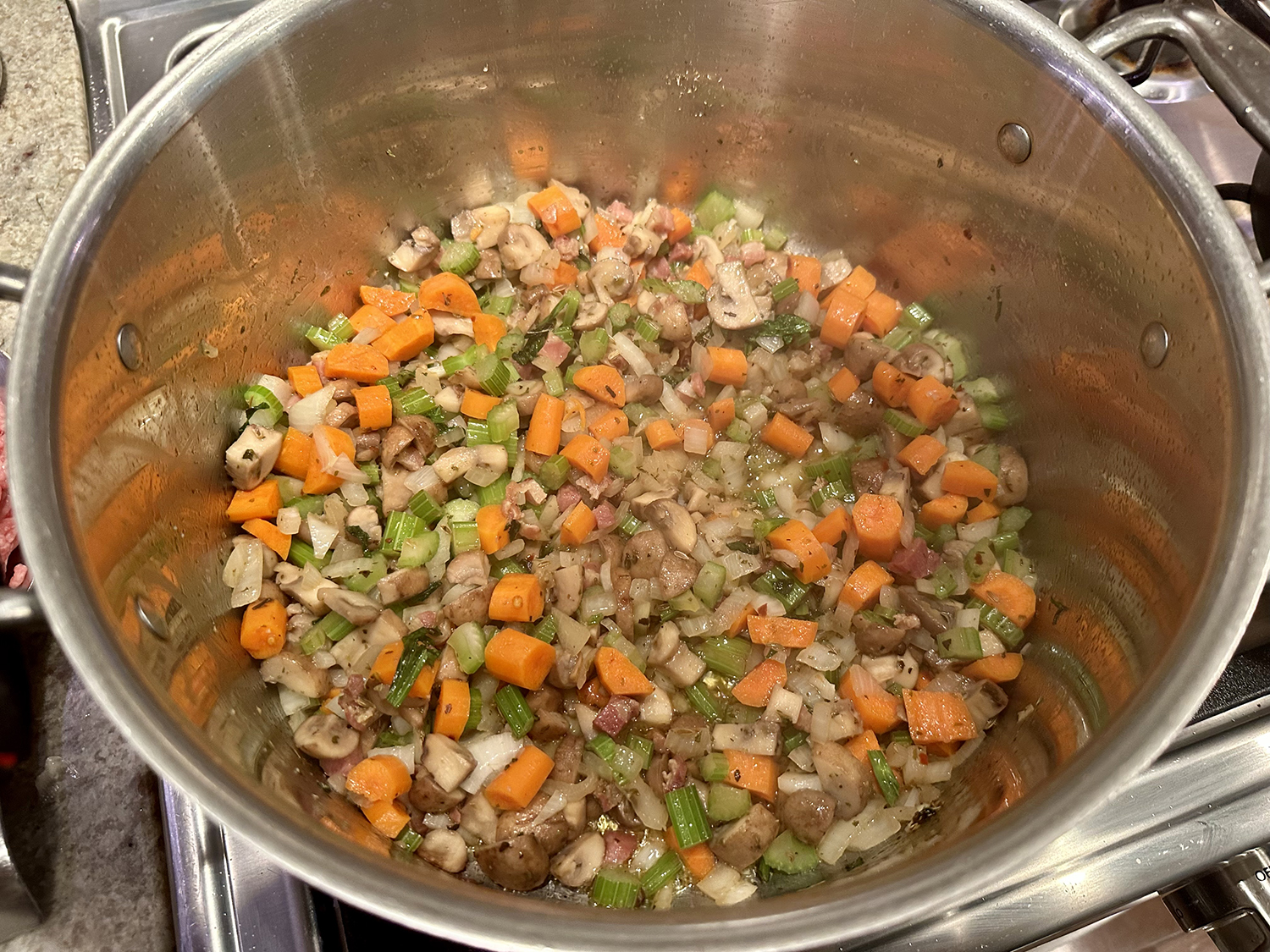
This white Bolognese sauce puts the spotlight on soffritto (sautéed onions, carrots, and celery), which is enhanced with salty pancetta, fennel seeds, ground pork, and a splash of heavy cream and white wine to make a rich and delicious pasta sauce.

Aromatic sautéed vegetables are the star of this no-tomato Bolognese. Adding the starchy pasta cooking liquid to the Bolognese sauce gives it just enough body to coat the al dente orecchiette.

*We reduced the amount of pasta down from 1 pound to 12 ounces, providing more delicious bolognese per bite. Doing so will most likely not produce six servings. The other quantities were not altered. You could substitute ground sausage for the pork.

Make Ahead: Bolognese can be made through step 2, cooled, and stored in an airtight container in the refrigerator for up to three days or frozen for up to two months. Bring Bolognese to a simmer over low heat, and proceed with step 3 as directed.

Orecchiette with White Bolognese

  • Servings: 6
  • Difficulty: easy
  • Print

Ingredients

  • 4 oz. diced pancetta
  • 8 oz. cremini mushrooms, cut into 1/2-inch pieces
  • 4 small carrots, peeled and cut into 1/2-inch pieces (about 1 1/2 cups)
  • 1 medium yellow onion, chopped (about 1 1/3 cups)
  • 3 celery stalks, trimmed and chopped (about 1 cup)
  • 2 Tbsp. unsalted butter
  • 1 tsp. fennel seeds
  • 1 tsp. dried oregano
  • 1 tsp. kosher salt, plus more to taste
  • 1/4 tsp. crushed red pepper
  • 2 Tbsp. minced garlic (about 6 cloves)
  • 1 lb. ground pork
  • 1/2 tsp. black pepper
  • 1 cup dry white wine
  • 1 cup lower-sodium chicken broth
  • 1/3 cup heavy cream
  • 1 lb. uncooked orecchiette pasta*
  • 1 cup chopped fresh flat-leaf parsley
  • Grated Parmesan cheese, for serving

Directions

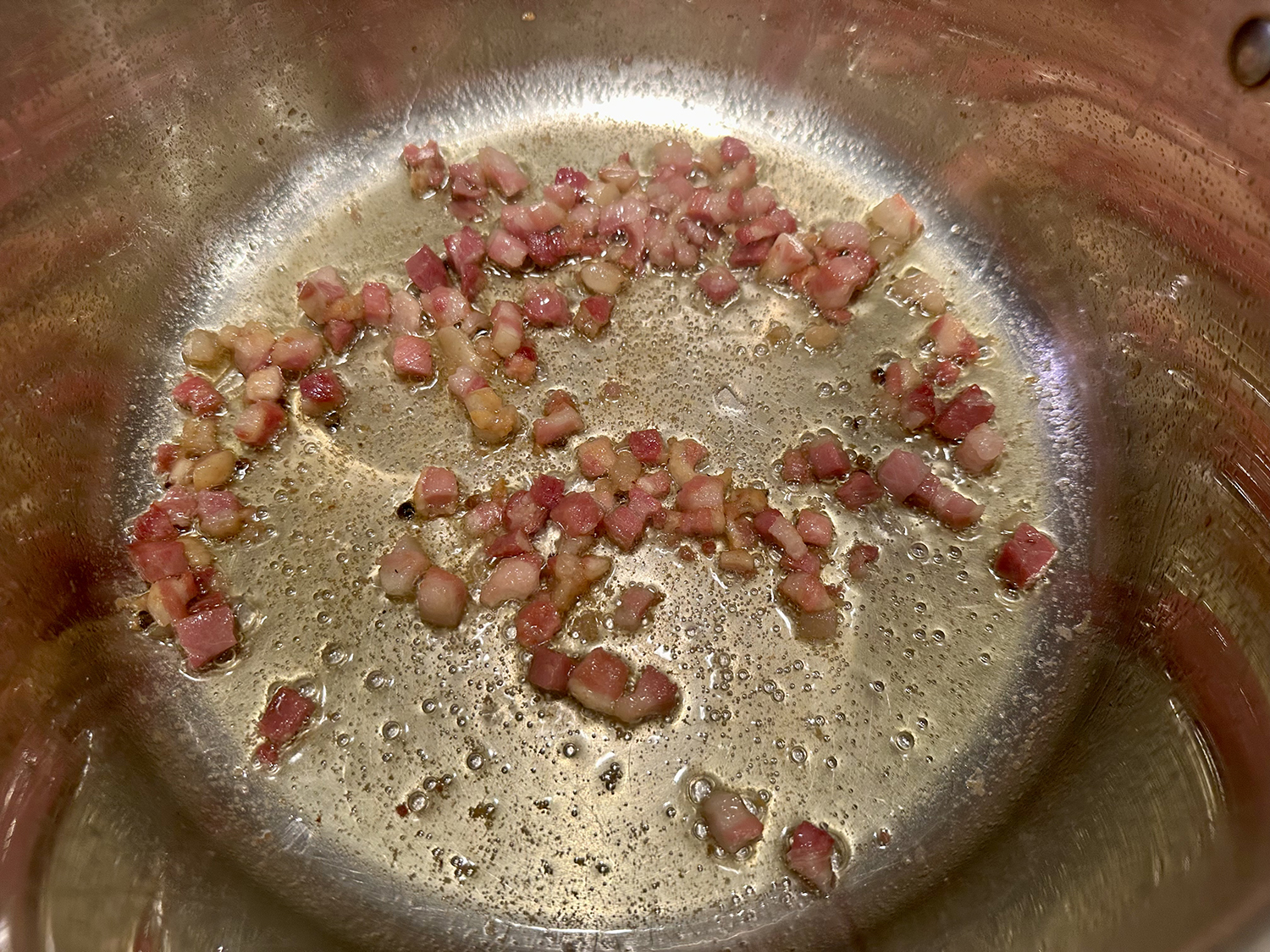
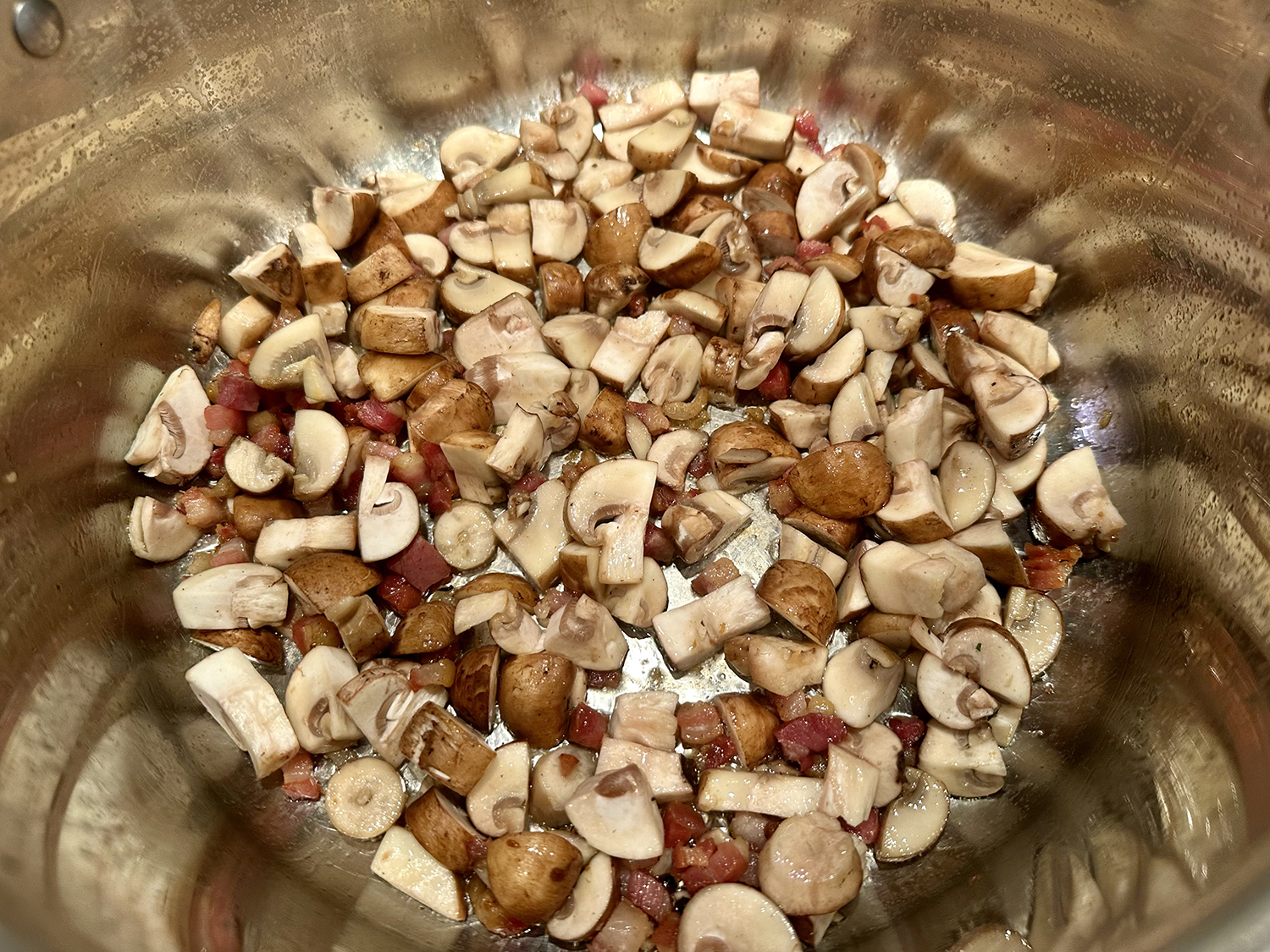
  1. Heat a large Dutch oven over medium. Add pancetta, and cook, stirring often, until browned, about 6 minutes. Add mushrooms, and cook, stirring occasionally, until liquid released by mushrooms has mostly evaporated, about 4 minutes.
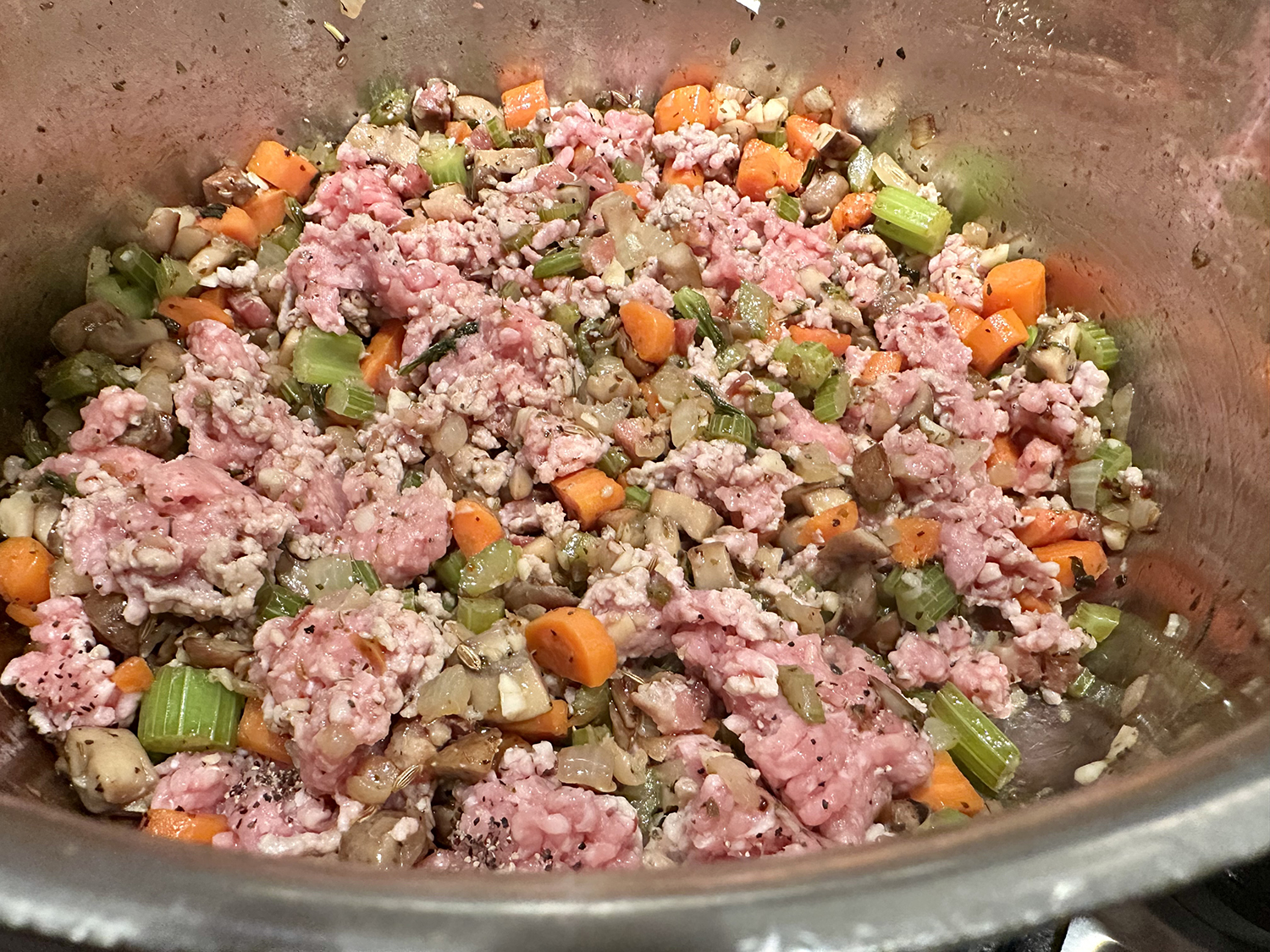
  2. Increase heat to medium-high; add carrots, onion, celery, butter, fennel seeds, oregano, salt, and crushed red pepper; cook, stirring occasionally, until vegetables are tender, 10 to 12 minutes. Add garlic, and cook, stirring constantly, until fragrant, about 1 minute.
  3. Add pork and black pepper; cook, stirring constantly with a wooden spoon to break meat into small pieces, until browned, about 4 minutes. Add wine, and bring to a simmer over medium-high. Add broth and cream, and return to a simmer. Reduce heat to low; simmer, uncovered, stirring occasionally, until broth mixture is slightly thickened and reduced to about 5 cups, about 15 minutes.
  4. While Bolognese cooks, bring a large pot of salted water to a boil over high. Add pasta, and cook according to package directions for al dente, stirring occasionally. Drain, reserving 1 cup pasta cooking liquid.
  5. Add cooked pasta and 1/2 cup reserved pasta cooking liquid to Bolognese. Cook over low, stirring constantly, until a creamy sauce forms and coats pasta, about 3 minutes, adding remaining 1/2 cup pasta cooking liquid as needed to loosen sauce.
  6. Season with salt to taste. Divide evenly among serving bowls, and sprinkle with parsley and cheese.

http://www.lynnandruss.com

Recipe from Lidey Heuck for Food & Wine

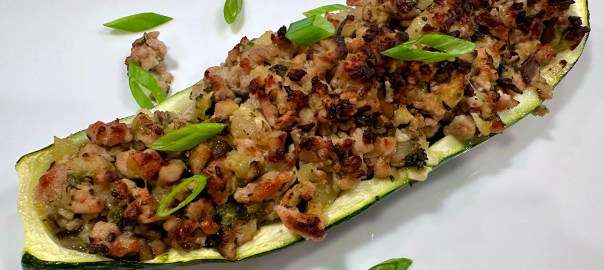
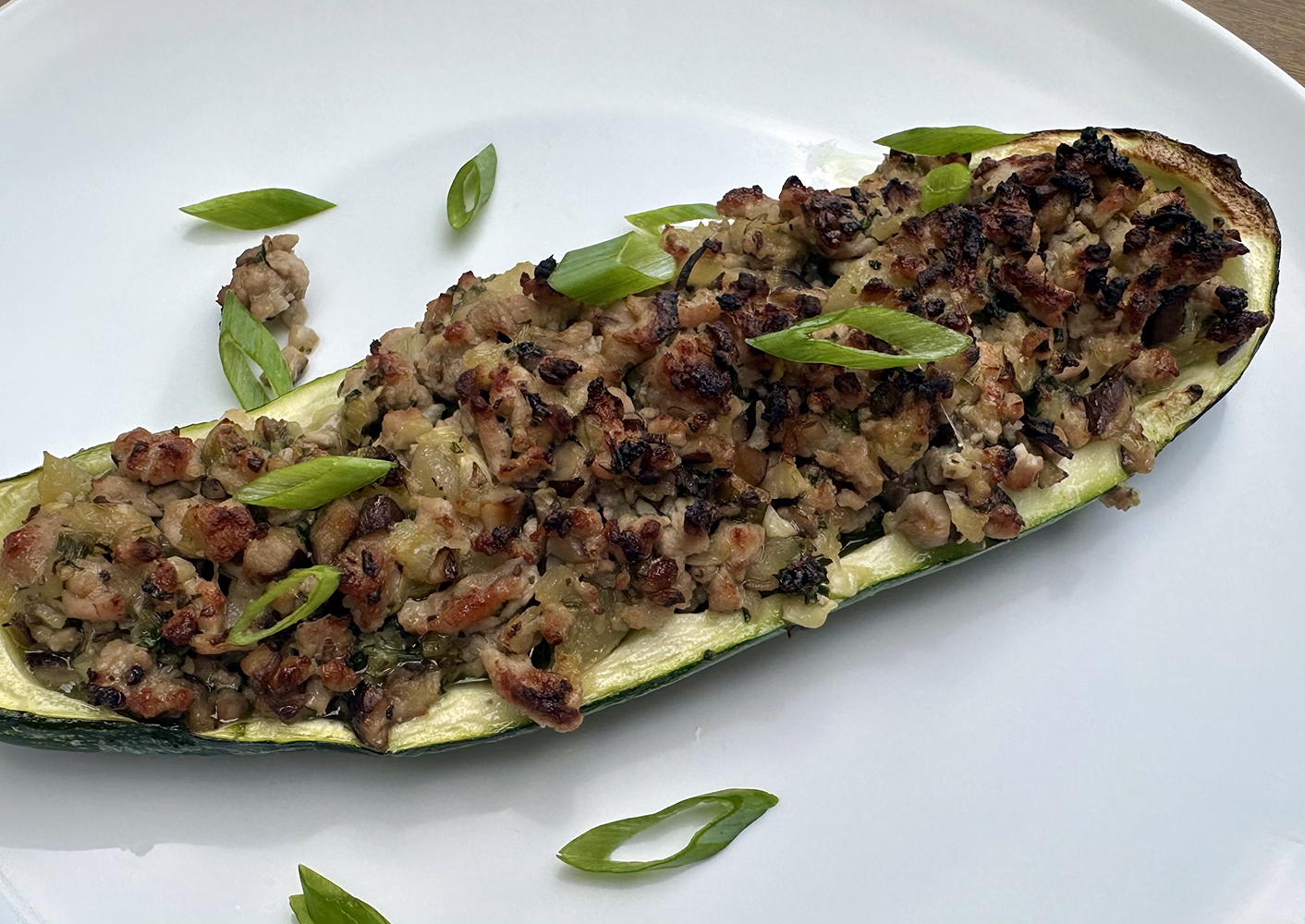
Pork-and-Mushroom Stuffed Zucchini Boats

A great keto-friendly, low-carb meal option from Food & Wine, these aromatic with garlic, scallions, and fish sauce, these zucchini boats are stuffed with juicy pork and mushrooms for a dish that’s light, satisfying, and packed with Vietnamese flavor. You can even make most of it a day ahead (which came in real handy when we went to make them).

It’s a fun and easy vegetable-and-meat dish that makes the most out of the bounty of farmers market squash. Reminiscent of a dumpling filling, the pork-and-mushroom stuffing has notes of ginger, garlic, and scallions.

Bouillon powder (although we used bullion paste) and fish sauce bring umami to the forefront. Salting and baking the scooped-out cavities of the zucchini help release excess moisture, creating a perfectly textured final dish.

If looking to amp up the meal, serve these stuffed zucchini boats with rice, and/or a side salad for a quick and delicious dinner. 

NOTE: If you don’t eat pork, you can easily swap it for an equal amount of ground beef or ground turkey in this recipe.

Pork-and-Mushroom Stuffed Zucchini Boats

  • Servings: 4
  • Difficulty: easy
  • Print

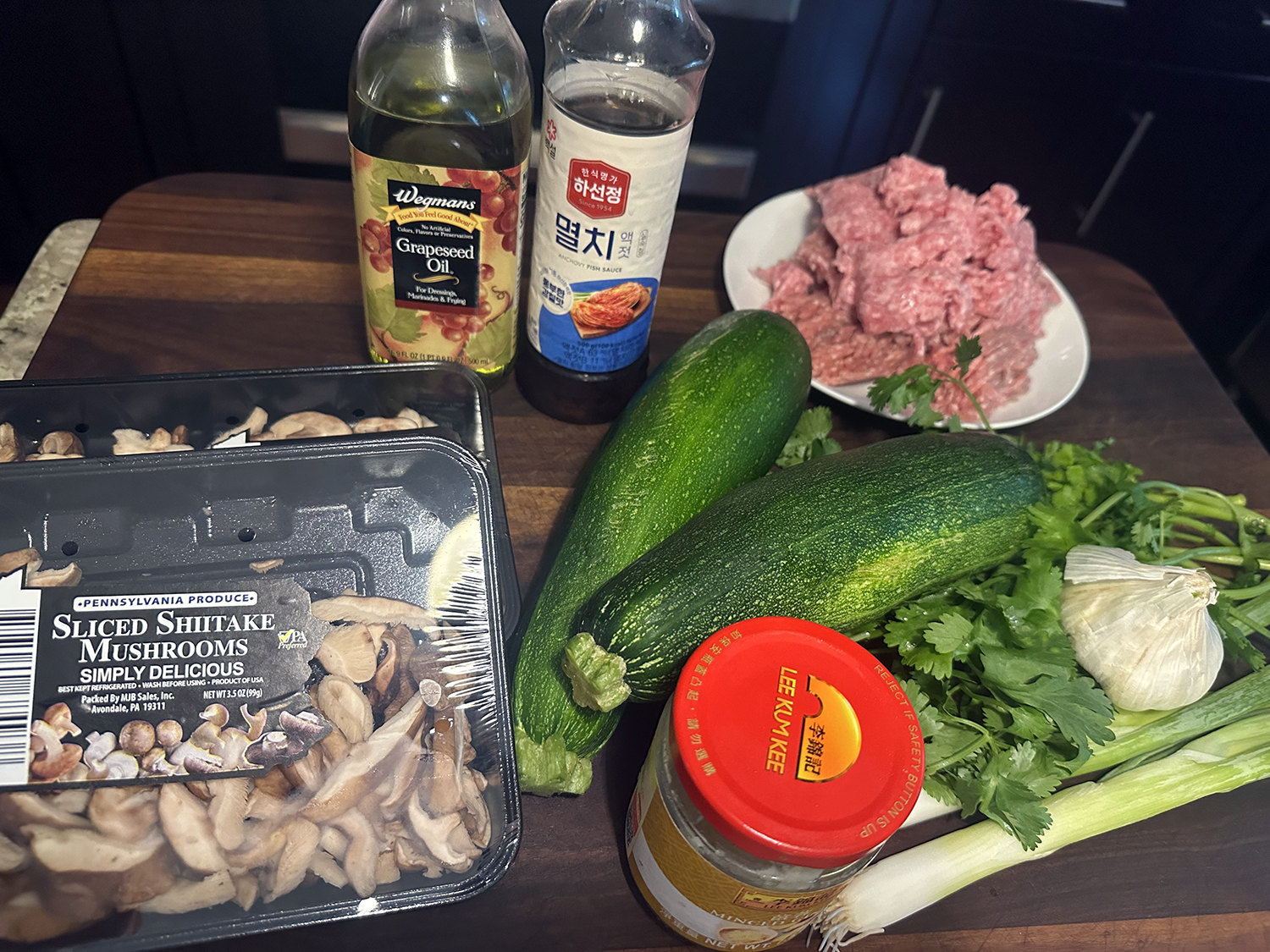
Ingredients

  • 2 12-oz. zucchini
  • 1/2 tsp. kosher salt
  • 2 Tbsp. neutral cooking oil, plus more for brushing
  • 1 (5-oz.) package sliced shiitake mushrooms, finely chopped
  • 1/4 cup thinly sliced scallion 
  • 1 Tbsp. finely chopped garlic (about 3 cloves)
  • 2 tsp. finely chopped fresh ginger, from 1-inch piece
  • 1 lb. ground pork
  • 1/4 cup chopped fresh cilantro, plus more for garnish
  • 2 Tbsp. fish sauce
  • 1 tsp. chicken bouillon granules
  • 1/2 tsp. black pepper

Directions

  1. Preheat oven to 425°F. Halve zucchini lengthwise; scoop the flesh from each half using a spoon or melon baller, leaving a 1/4- to 1/2-inch wall on the sides and base. Set scooped flesh aside. Sprinkle cut sides with salt, and place zucchini, cut side down, on a paper towel–lined plate. Let stand for 20 minutes.
  2. Meanwhile, heat oil in a large skillet over medium-high. Add mushrooms, and cook, stirring occasionally, until tender and browned, 4 to 5 minutes. Add scallion, garlic, ginger, and reserved zucchini flesh; cook, stirring often, until softened and the released liquids evaporate, 3 to 5 minutes. Add pork; cook, stirring occasionally to break meat into fine crumbles, until browned, 6 to 8 minutes. Remove from heat, and let cool for 5 minutes.
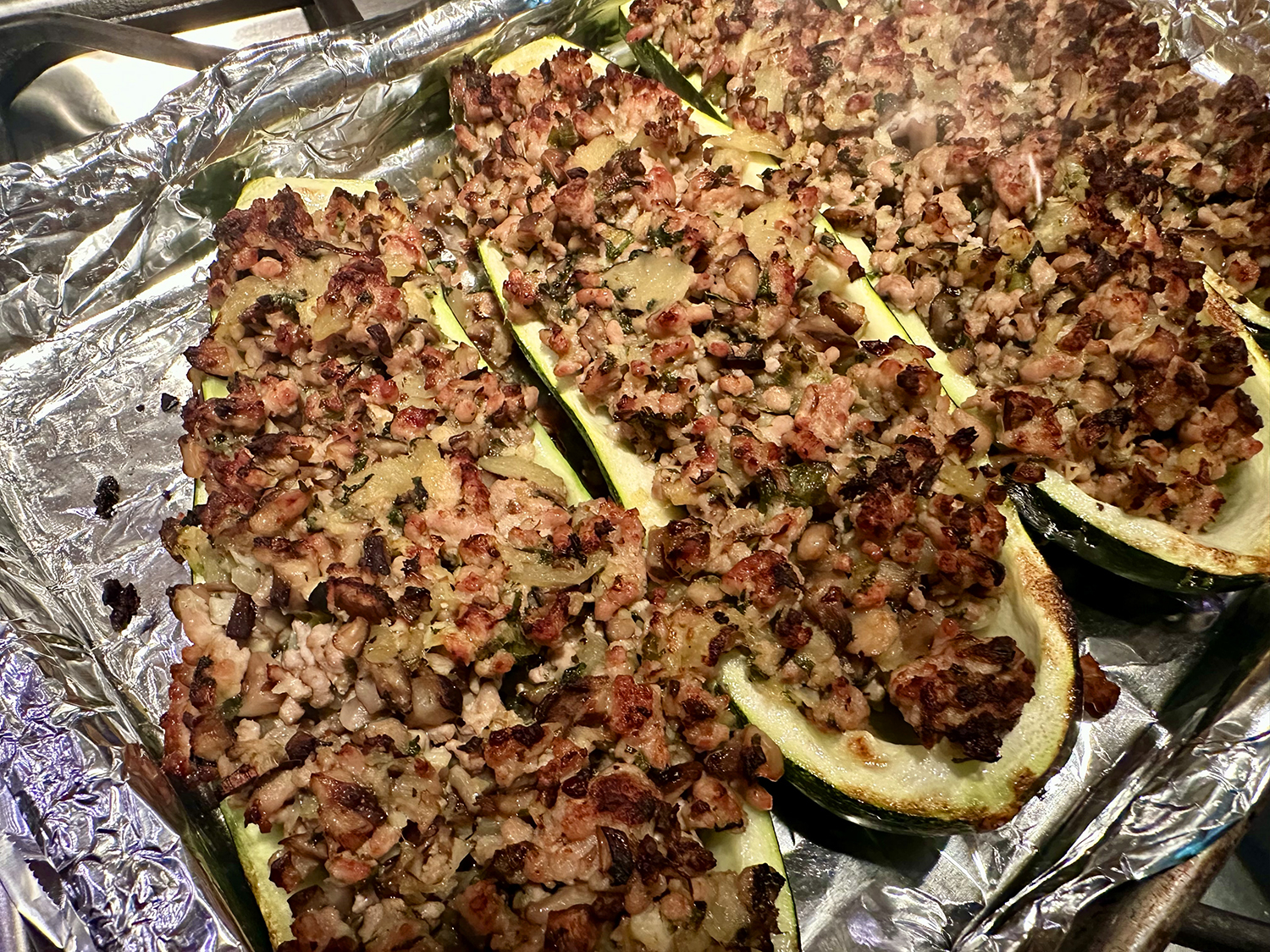
  3. Pat zucchini halves dry, and lightly brush with oil. Arrange zucchini, cut sides down, on an aluminum foil–lined baking sheet. Bake until the zucchini begins to soften, 8 to 10 minutes; remove from oven. Increase oven temperature to broil.
  4. Stir cilantro, fish sauce, bouillon, and pepper into pork mixture. Fill each zucchini cavity with pork mixture (about 2/3 cup per half); firmly press mixture into zucchini. Place on an aluminum foil–lined baking sheet, and broil until browned on top, 2 to 3 minutes. Let cool slightly, about 3 minutes. (With an electric oven, in order to get a little brown crisp on top, it took several minutes longer under the broiler.) Serve zucchini hot, garnished with additional cilantro and/oror scallion slices.

http://www.lynnandruss.com

Adapted from a recipe by Cường Phạm for Food & Wine

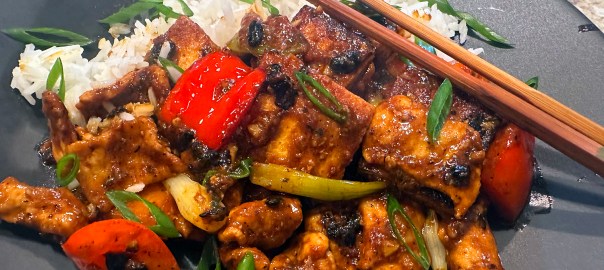
Hunan Pork and Tofu Spicy Stir-Fry

An easy and tasty Hunan Pork and Tofu classic dish served at many Hunan restaurants throughout China and the US., and now you can create in your own home. Hunan-style food, like Sichuan food, features chilis and spice as a core flavor, and has really taken off in popularity in recent years as more Chinese immigrants and visitors make their way into all parts of America. 

According to Woks of Life where we got this dish, this Hunan Pork and Tofu recipe uses a liberal amount of oil (6 tablespoons), but you’ll notice that it’s lacking the strong/visible greasiness that you might see in Chinese restaurants, thank goodness.

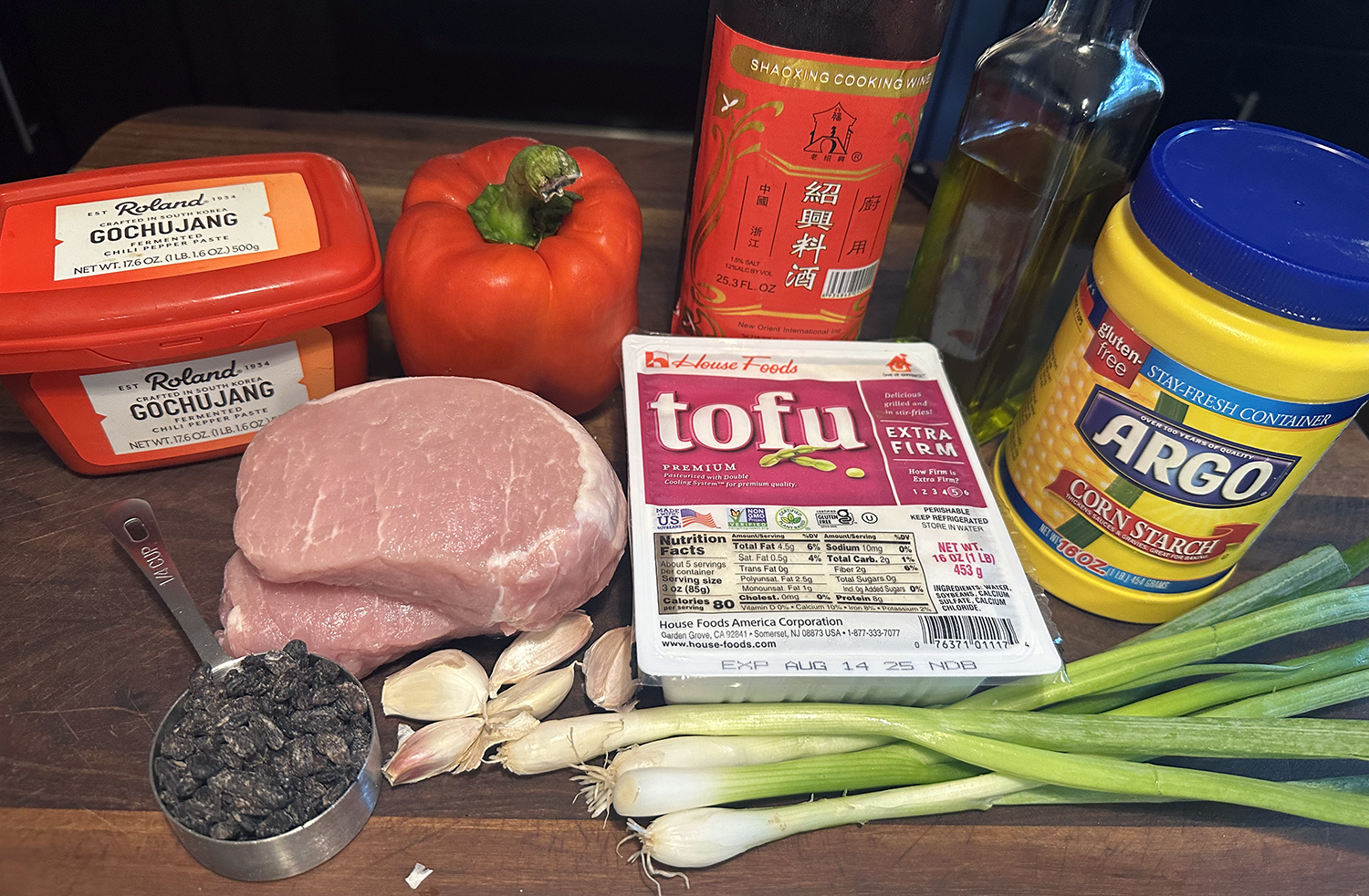
NOTES: We had two boneless pork loins, each weighing 8 ounces, we decided to use both thus increasing the amount of pork from 10 ounces to a total of 16*. Because of the additional protein, we upped the amount of some of the other ingredients. We also used extra-firm tofu.

Out of spicy bean sauce, we substituted gochujang. In most recipes, doubanjiang and gochujang are used in comparable ways. They both provide spicy hits to any meal. However, doubanjiang balances out that spiciness with savory flavors, while gochujang emits sweeter flavors to provide a similar balance. 

Hunan Pork and Tofu Spicy Stir-Fry

  • Servings: 4
  • Difficulty: easy
  • Print

Ingredients

For the pork and marinade:

  • 10 oz. pork (see above note*), sliced ⅛-inch thick
  • 2 Tbsp. water
  • 1 tsp. oil
  • 1 tsp. cornstarch

For the rest of the dish:

  • 6 Tbsp. vegetable or canola oil, divided
  • 1 lb. firm tofu, drained and cut into 2-inch squares, ½-inch thick
  • 1 tsp. ginger, minced
  • 2 Tbsp. spicy bean sauce (dou ban jiang)
  • 3 scallions, cut on an angle into 2-inch pieces
  • 2 tsp. fresh garlic, minced
  • 3 Tbsp. fermented black beans
  • 1 red bell pepper, cut into 1×2-inch pieces, about 1½ cups
  • 1 Tbsp. Shaoxing wine
  • ¾ tsp. sugar
  • ⅓ cup hot water or chicken stock
  • 1 tsp. cornstarch, mixed with 1 Tbsp. water

Directions

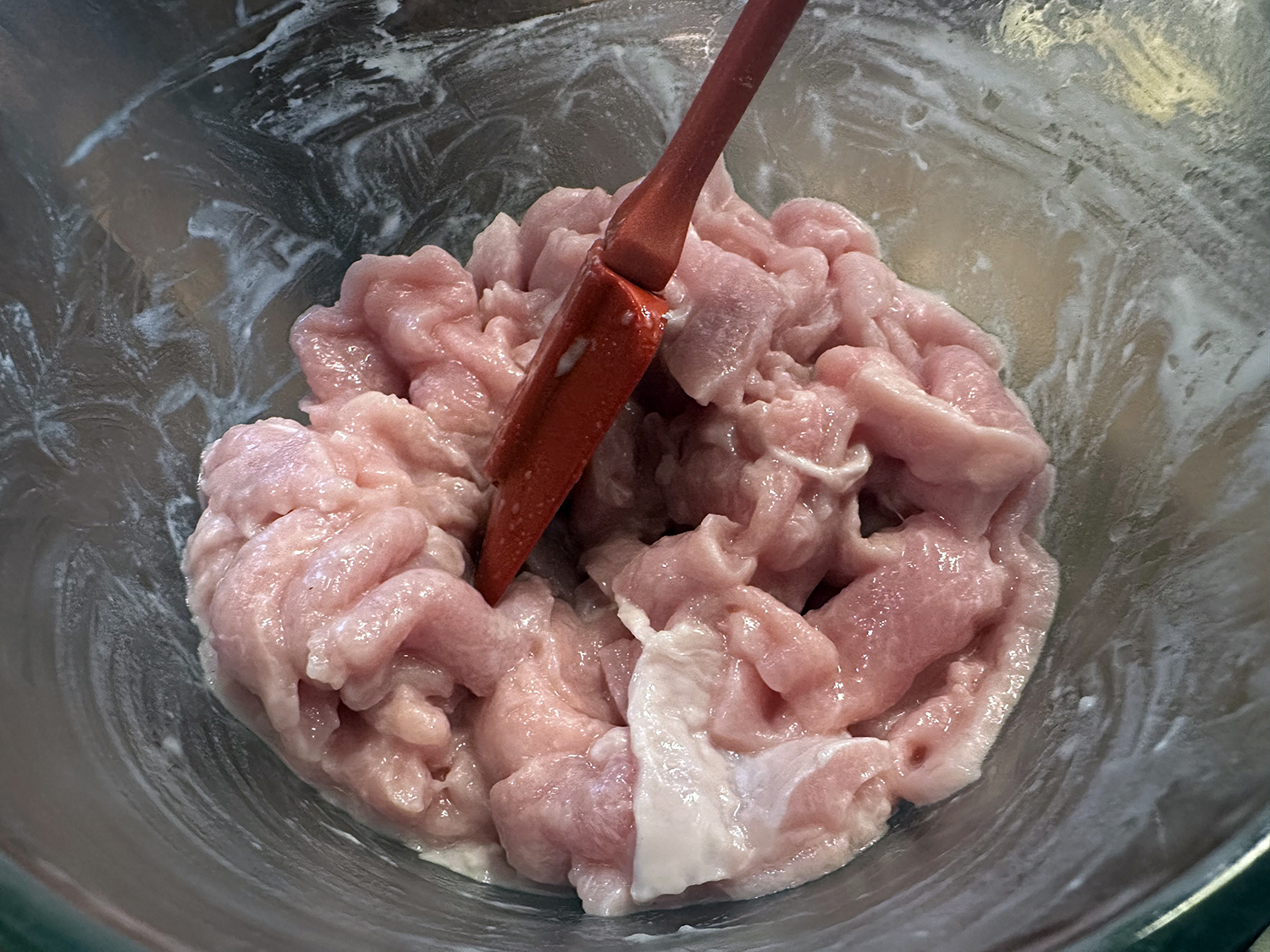
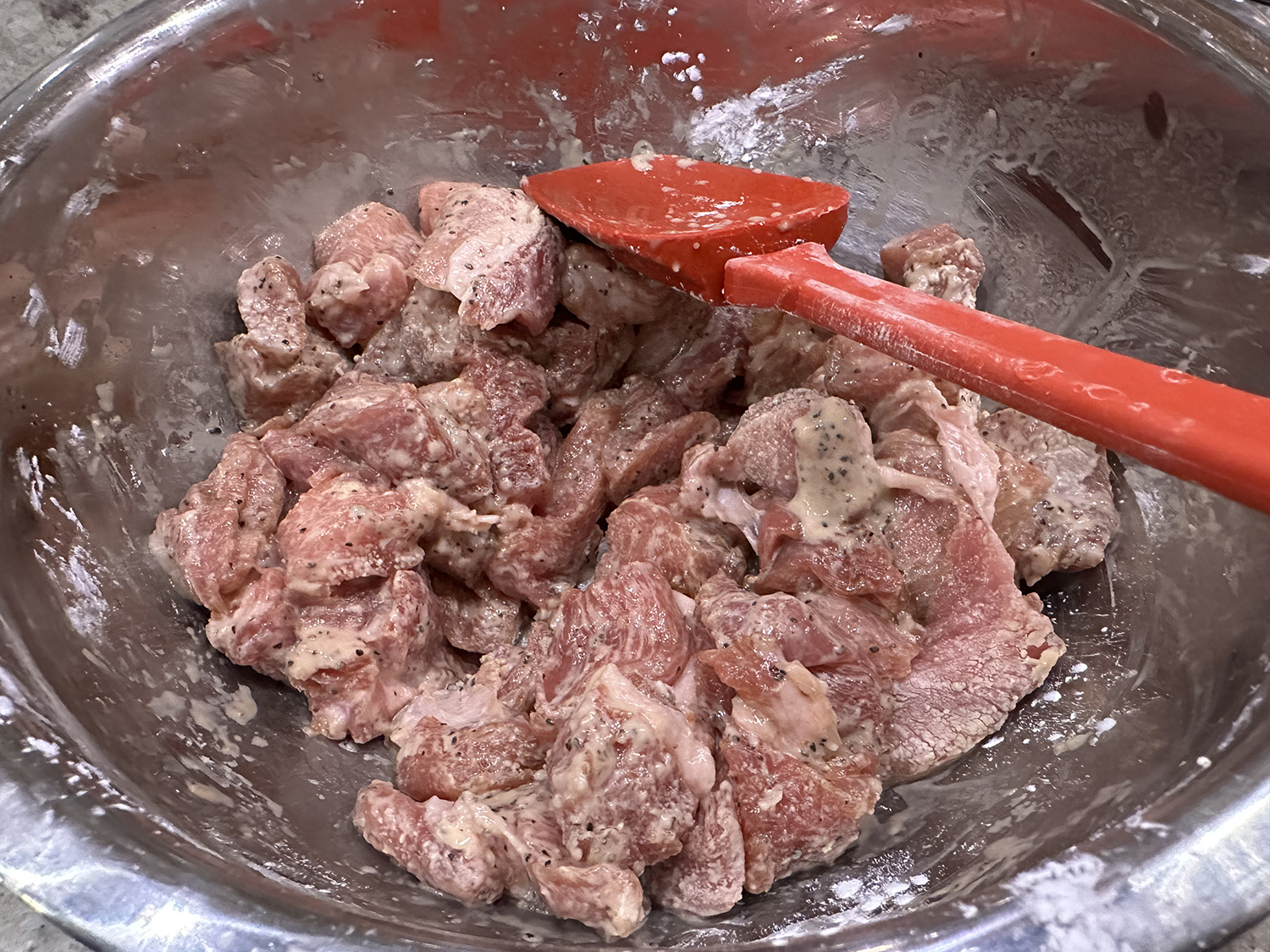
  1. In a bowl, add 2 tablespoons of water to the pork slices and massage until the pork absorbs all of the water. Next, add the oil and cornstarch, mix thoroughly until the pork is coated, and set aside.
  2. Heat your wok over high heat, and spread 2 tablespoons of oil around the wok to evenly coat the surface. Add the tofu slices to the wok in one layer, and let them sear. Don’t move them for a least 1 minute. Tilt your wok so the oil reaches the tofu on all sides. Add more oil if needed.
  3. After another 1 to 2 minutes, the tofu should be browned, and it should not stick to the wok. You may have use a metal spatula to loosen the pieces slightly. Turn down the heat, and carefully flip all of the tofu slices. After the tofu is golden brown on both sides, transfer to a plate. They should be much easier to handle now.
  4. Over high heat, add another 2 tablespoons of oil to your wok. When the wok just starts to smoke a bit, immediately add the pork. Spread the pork around the wok using your metal spatula, and let the meat sear for 20 seconds on one side. Stir fry for another 15 seconds, and scoop out the meat into your marinade bowl. It should be about 80% cooked.
  5. Using the same wok, turn the heat to low, and immediately add 2 tablespoons oil, the minced ginger, the spicy chili bean paste (doubanjiang), and the white parts of the scallions. Stir this mixture into the oil and let it fry at low heat for 15 seconds to infuse the oil and bring out a rich red color.
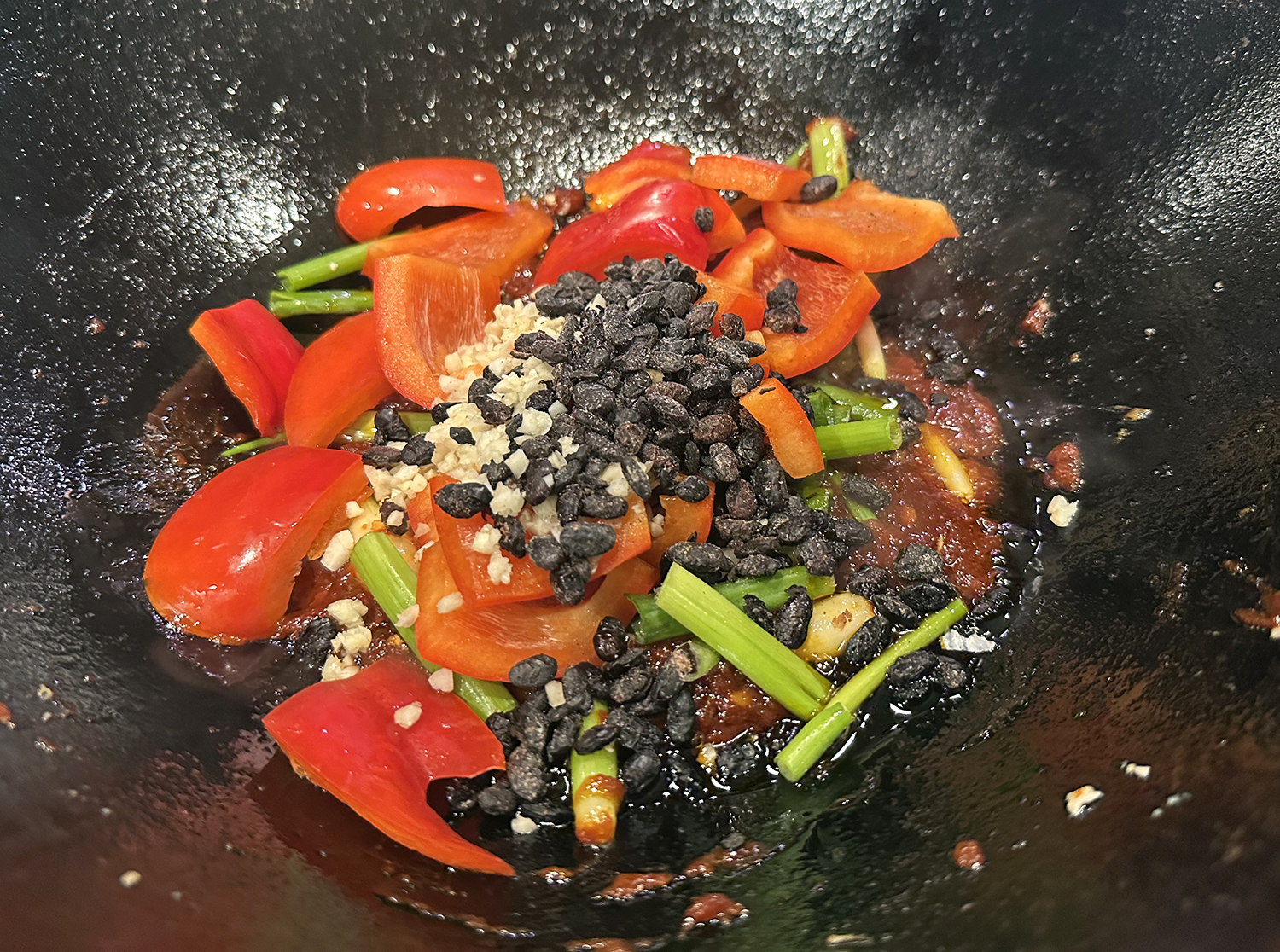
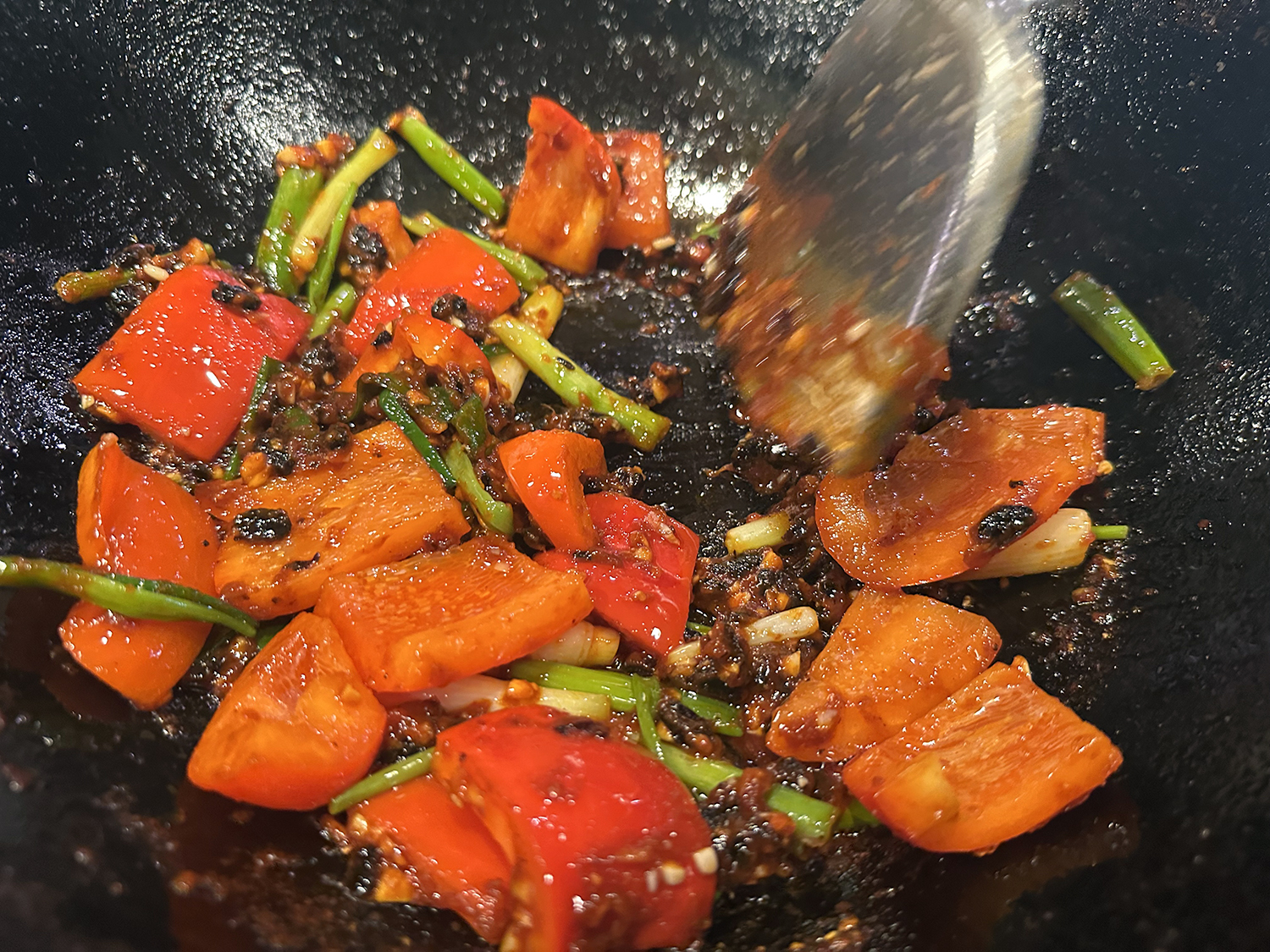
  6. Next, add the garlic, black beans, red bell peppers, and the rest of the scallions. Turn the heat to high, and give everything a good stir-frying for 45 seconds. The red pepper will sear and add more natural red color to this dish.
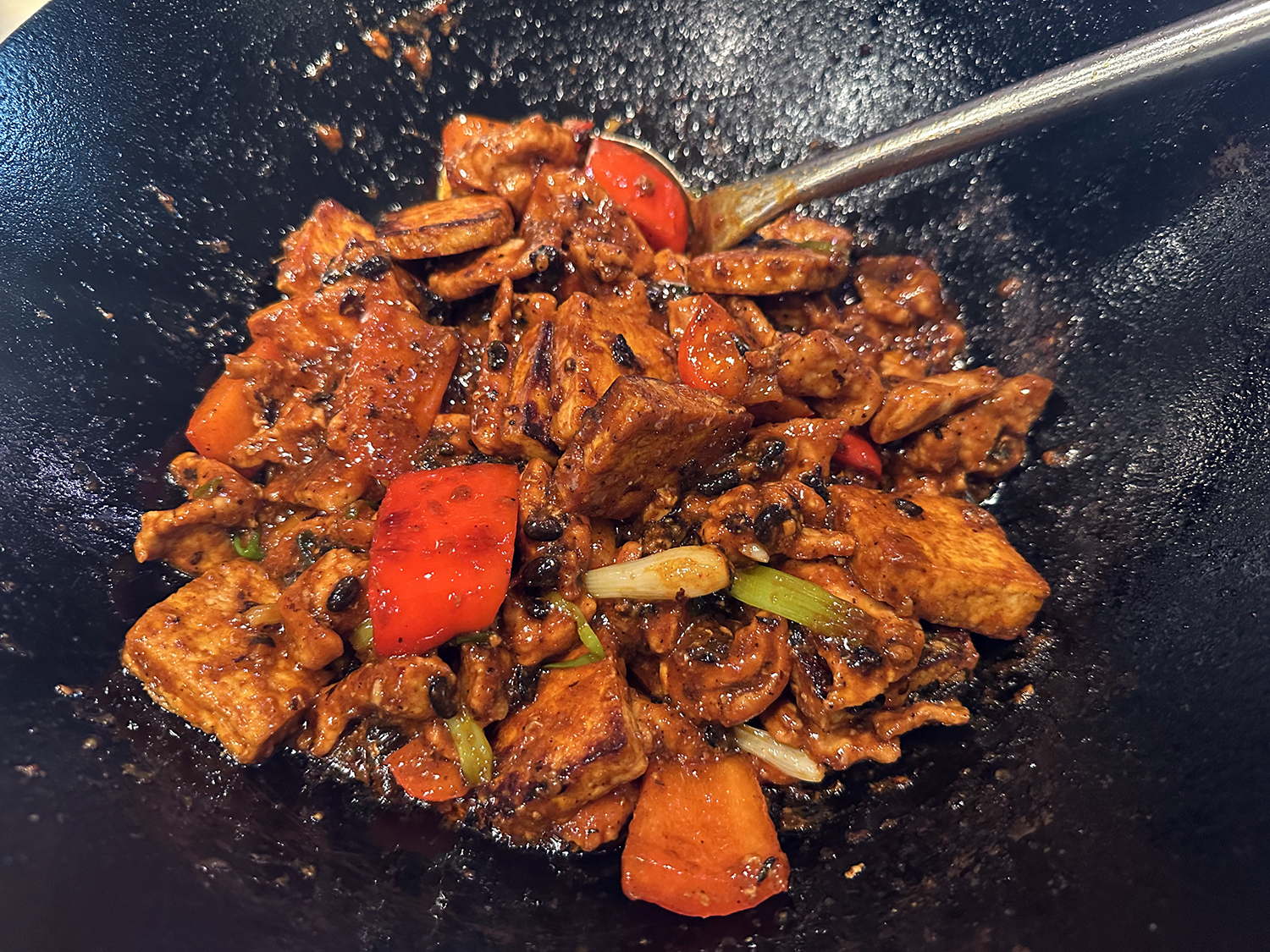
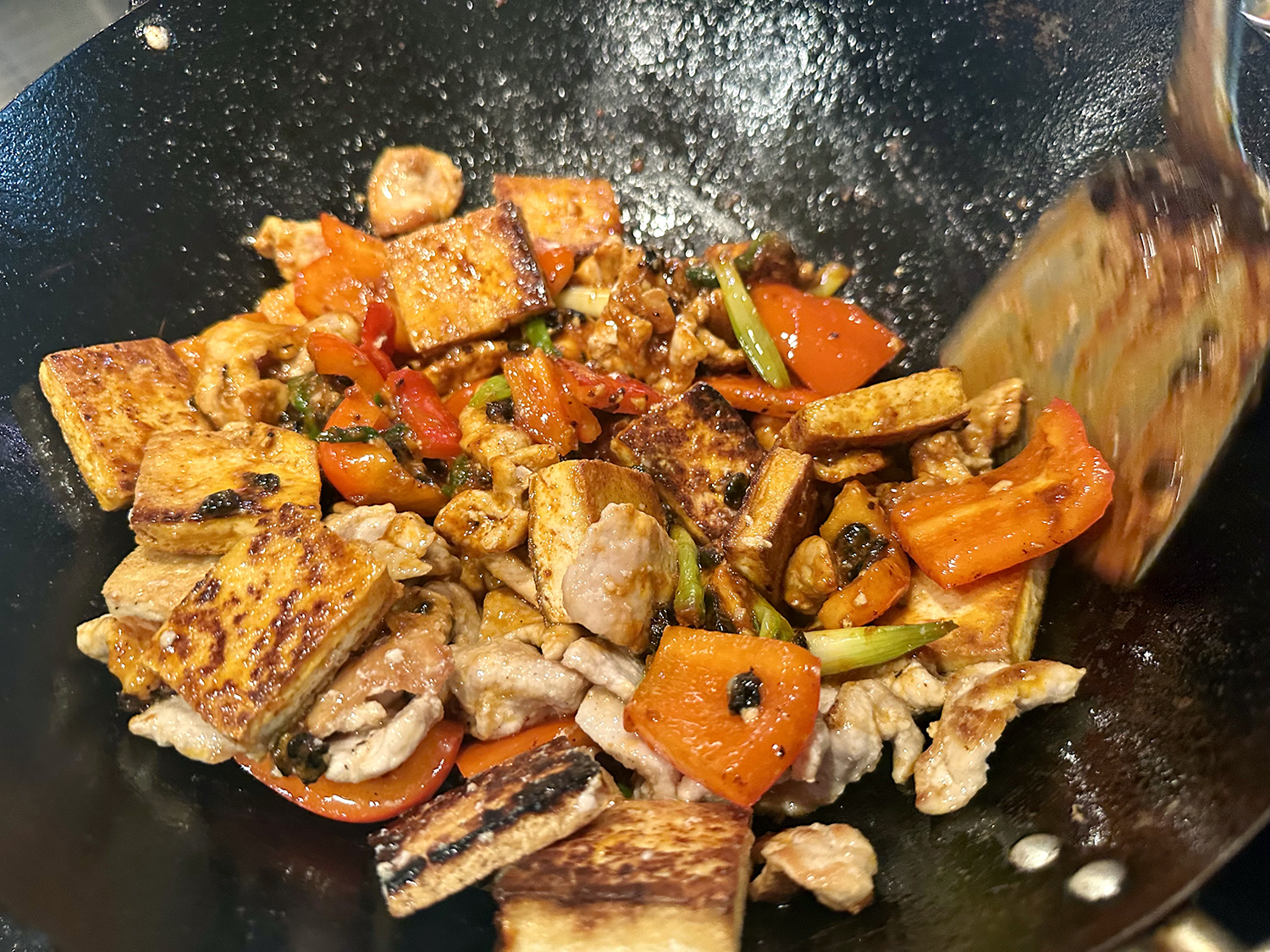
  7. Add the pork and juices from your marinade bowl and the tofu back to the wok. Next, spread 1 tablespoon of Shaoxing wine around the perimeter of the wok, add the sugar, and continue to stir-fry for 15 seconds. Be gentle so you don’t break up the tofu.
  8. After another 15 seconds of stir-frying, spread the hot chicken stock or water around the perimeter of the wok to deglaze it. Continue to stir fry for another 30 seconds, being sure to spread the liquid to the sides of the wok to further deglaze it.
  9. At this point, you can continue to stir-fry the dish until most of the liquid is reduced, or add the water and cornstarch to thicken any standing liquid. Plate with steamed rice.

http://www.lynnandruss.com

Adapted from a recipe by Woks of Life

Better-Than-My-Mom’s Chungking Pork

Although Sichuan is famous for its fiery food, the flavors in Chungking Pork are relatively mild on the heat scale, instead hitting you with a combination of three different fermented beans. However in this revised version by J. Kenji Lopez-Alt, it uses only fermented black beans, and a touch of hoisin sauce for sweetness.

Don’t forget to roughly chop the fermented beans. And if you have the time, try to marinate the pork for longer than 15 minutes. Our sliced meat did so for 3 and half hours and it turned out perfect.

In his revised recipe, it indicates it serves four. When we made it, which truth be told our pork weighed in at a bit under one pound, we didn’t even get 3 full servings, more like two-and-a-half. Something to keep in mind if you are meal planning for four people.

But lo and behold, it was absolutely delicious! A side salad rounds out the meal and provides more nutritious vegetables.

Better-Than-My-Mom's Chungking Pork

  • Servings: 3
  • Difficulty: easy
  • Print

Ingredients

For the Pork:

  • 1 lb. boneless pork loin or tenderloin cut into 1/4 by 1- by 2-inch pieces
  • 1 tsp. dark soy sauce
  • 1 tsp. Shaoxing wine or dry sherry
  • 1/4 tsp. baking soda
  • 1 tsp. cornstarch
  • 1/4 tsp. MSG (optional)

For the Sauce:

  • 2 Tbsp. dried fermented black beans, roughly chopped
  • 2 Tbsp. hoisin sauce
  • 2 tsp. dark soy sauce
  • 2 Tbsp. chicken stock or water
  • 1/2 tsp. hot red pepper flakes or ground Chinese hot chiles

For the Stir Fry:

  • 3 Tbsp. peanut, rice bran, or other neutral oil
  • 3 slices fresh ginger
  • 3 medium garlic cloves, peeled and lightly smashed with the side of a knife
  • 6 oz. green cabbage, cut into 1 1/2-inch squares
  • 2 scallions, sliced thinly on the diagonal for garnish (optional)

Directions

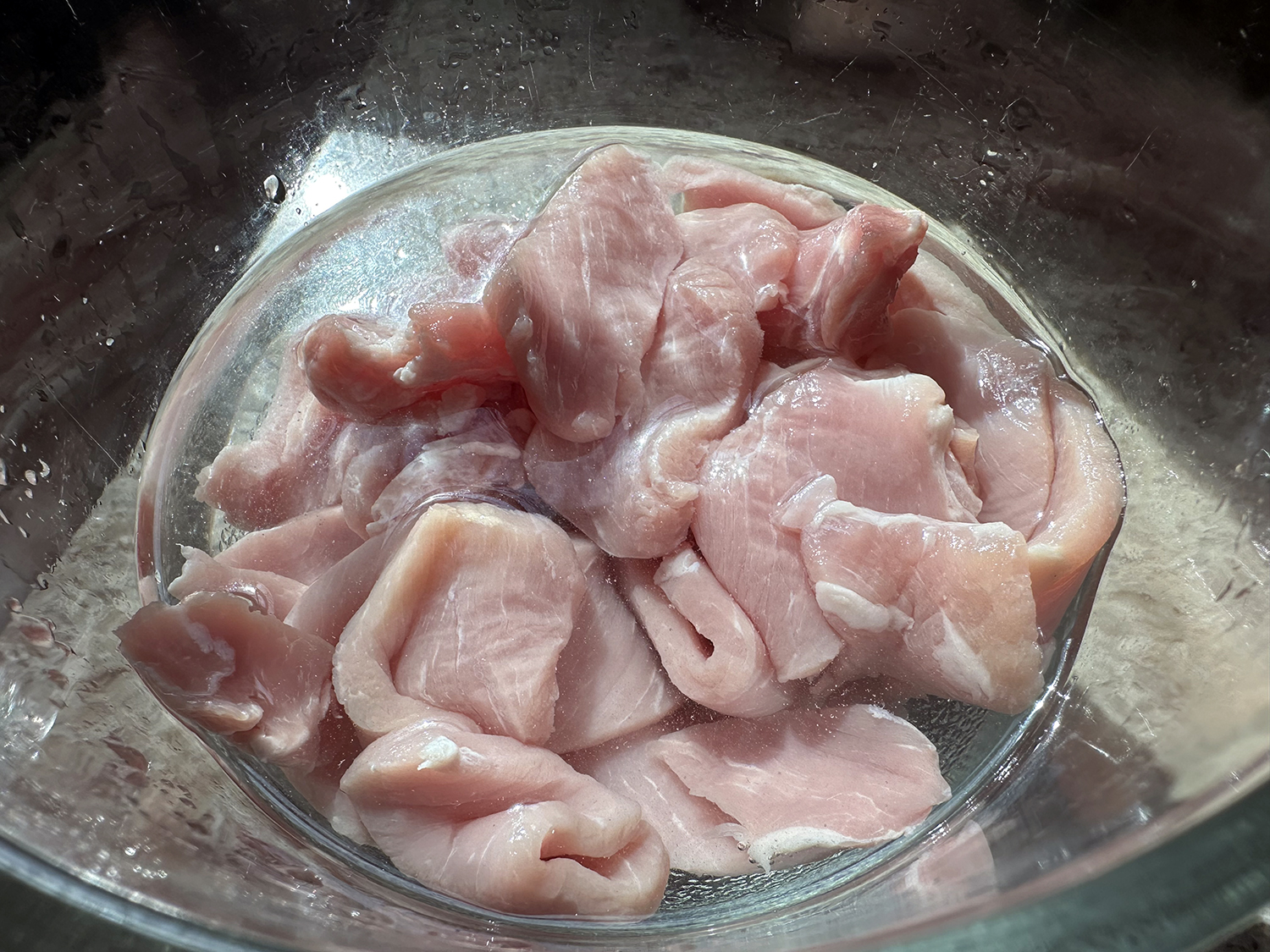
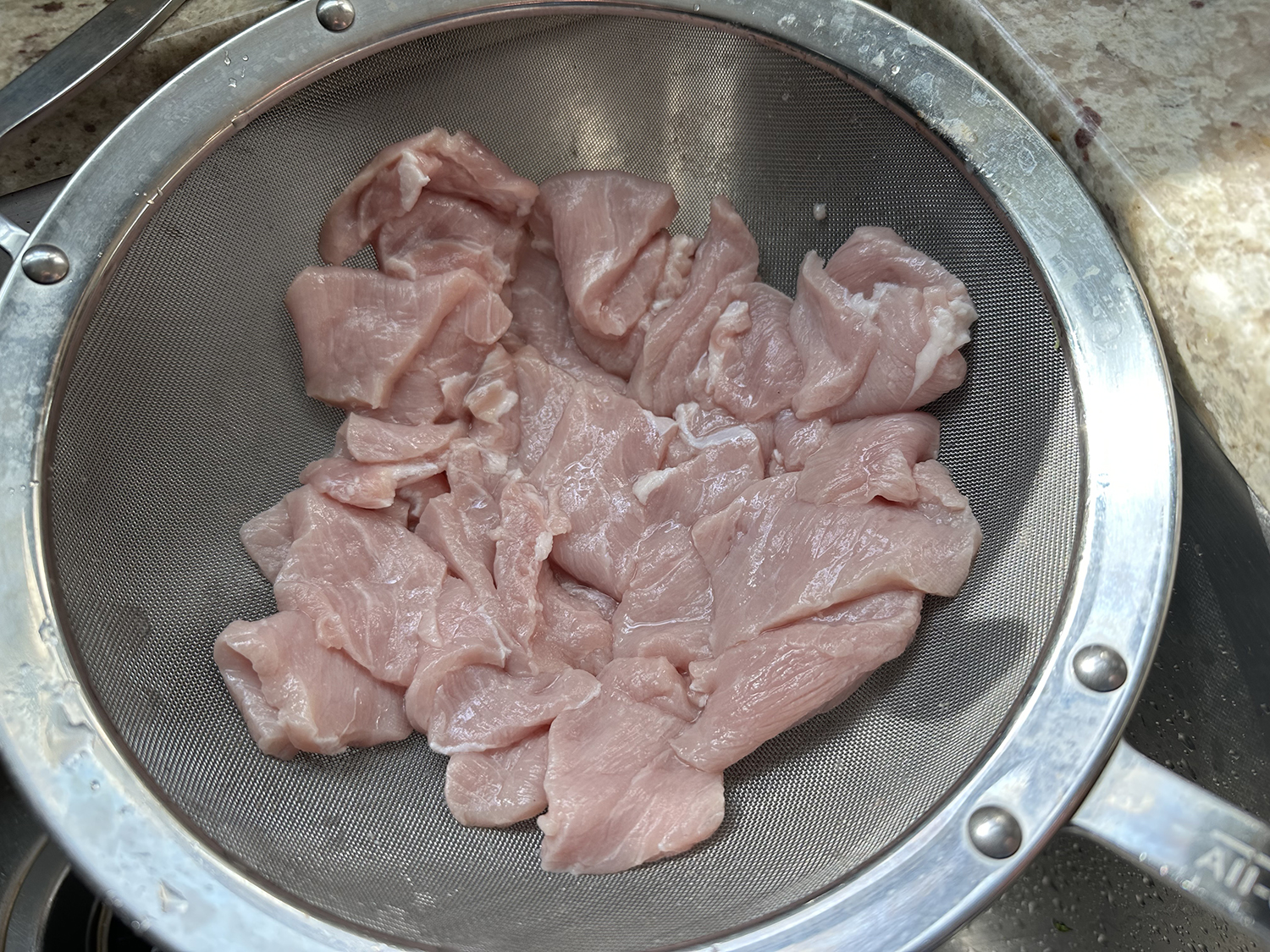
  1. For the Pork: Place the pork slices in a medium bowl, cover with cold water, and vigorously agitate it. Drain through a fine-mesh strainer set in the sink and press on the pork with your hands to remove excess water.
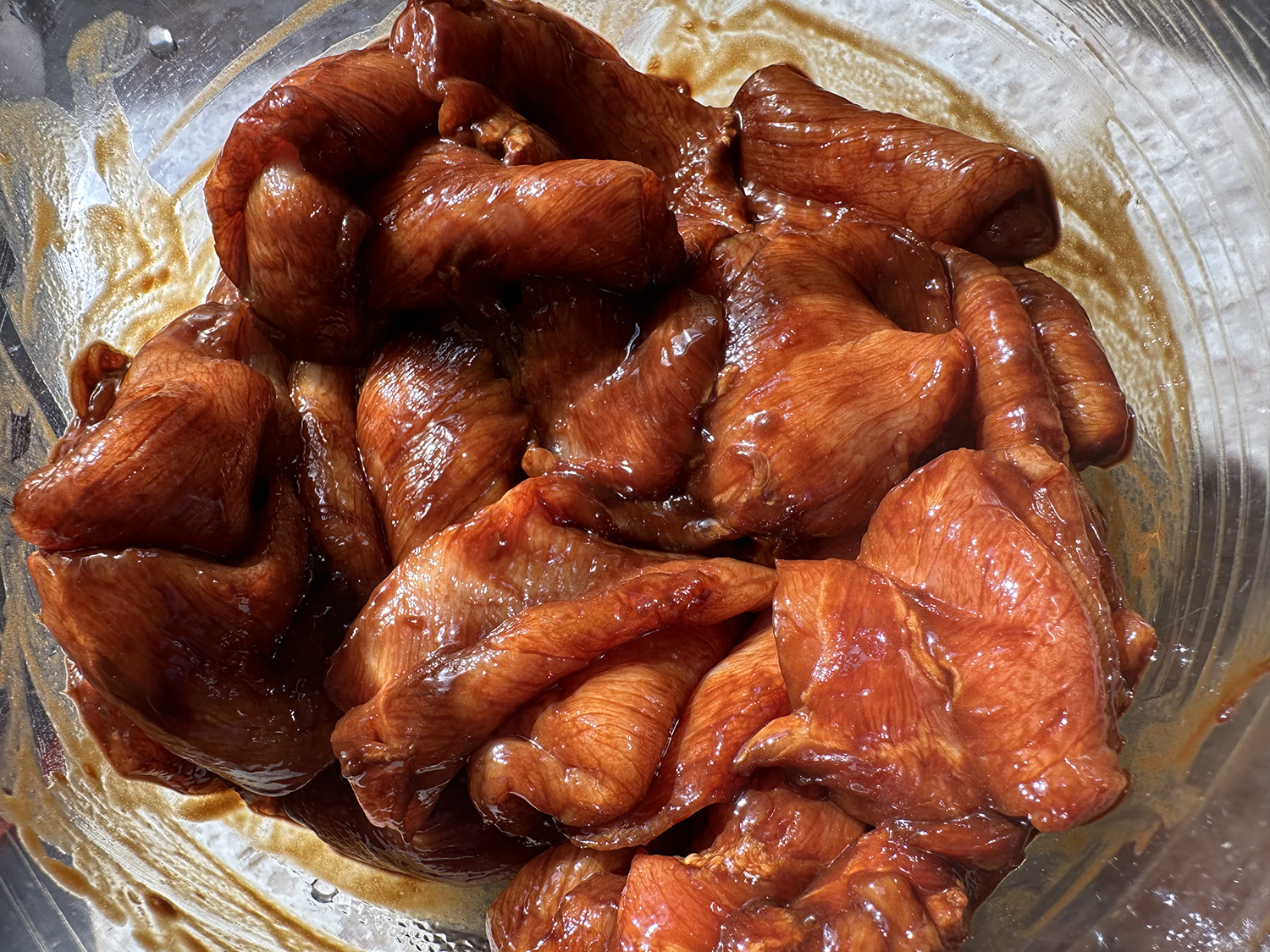
    Return the pork to the bowl and add the soy sauce, wine, baking soda and cornstarch. Stir vigourosly with your fingertips for 30 seconds. Set aside for 15 minutes at room temperature, or refrigerate for up to 8 hours.
  2. For the Sauce: Combine the fermented black beans, hoisin sauce, hoisin sauce, water or broth, and red pepper flakes in a small bowl and mix with a fork until homogenous.
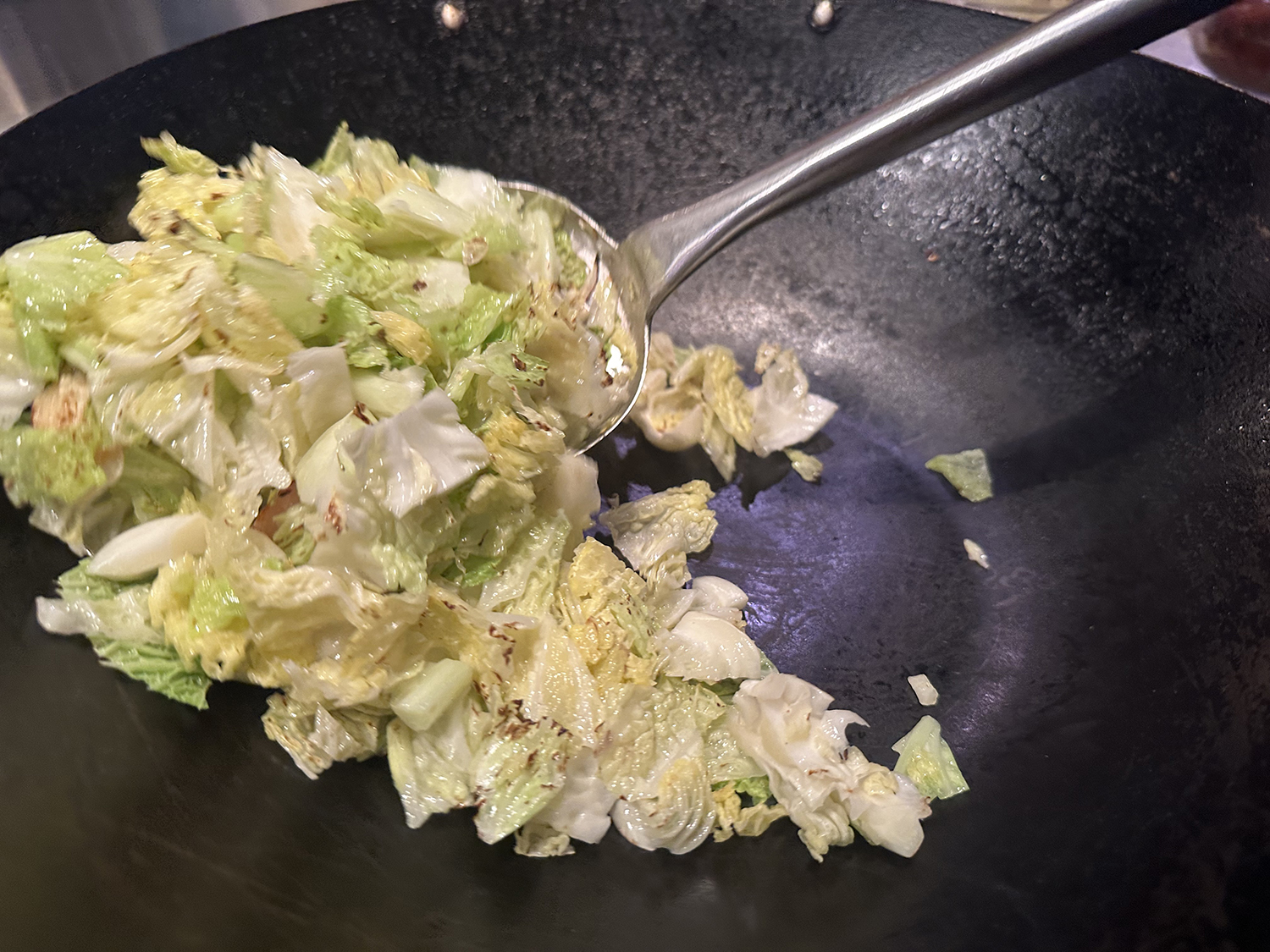
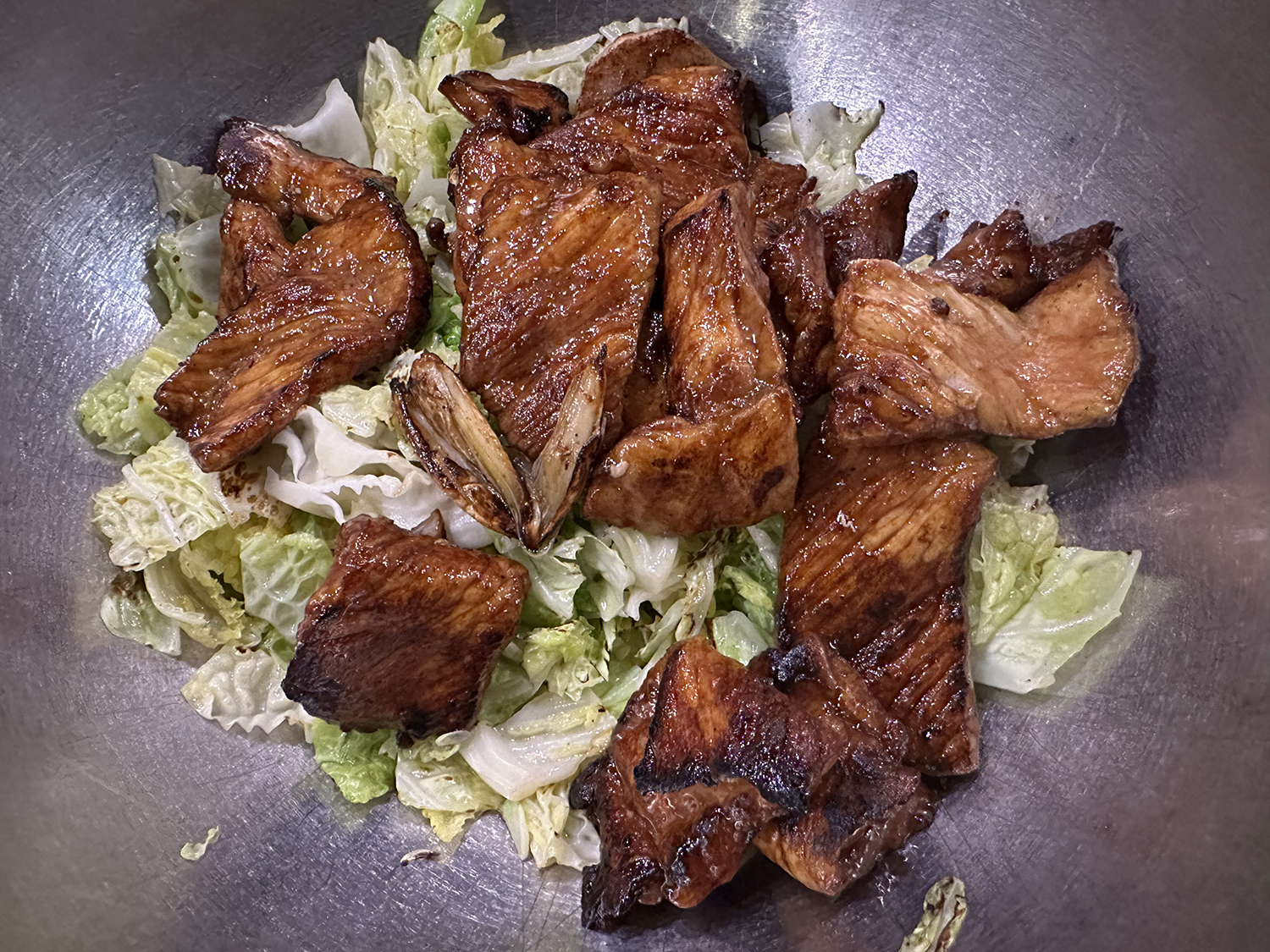
  3. For the Stir-fry: Heat a wok over high heat until lightly smoking. Add 1 tablespoon of the oil and swirl to coat. Add 1 slice of the ginger and 1 garlic clove and let sizzle for 5 seconds. Immediately add the cabbage and stir-fry until lightly translucent and browned in spots, 1 to 2 minutes. Transfer to a large bowl.
  4. Wipe out the wok and return to high heat until lightly smoking. Add 1 tablespoon of the remaining oil and swirl to coat. Add 1 more slice of ginger and 1 more garlic clove and let sizzle for 5 seconds. Immediately add half of the pork and stir-fry until the pork is no longer pink and is mostly cooked through, about 1 minute. Transfer the pork to the bowl with the cabbage, wipe out the wok, and repeat with the remaining oil, ginger, garlic and pork.
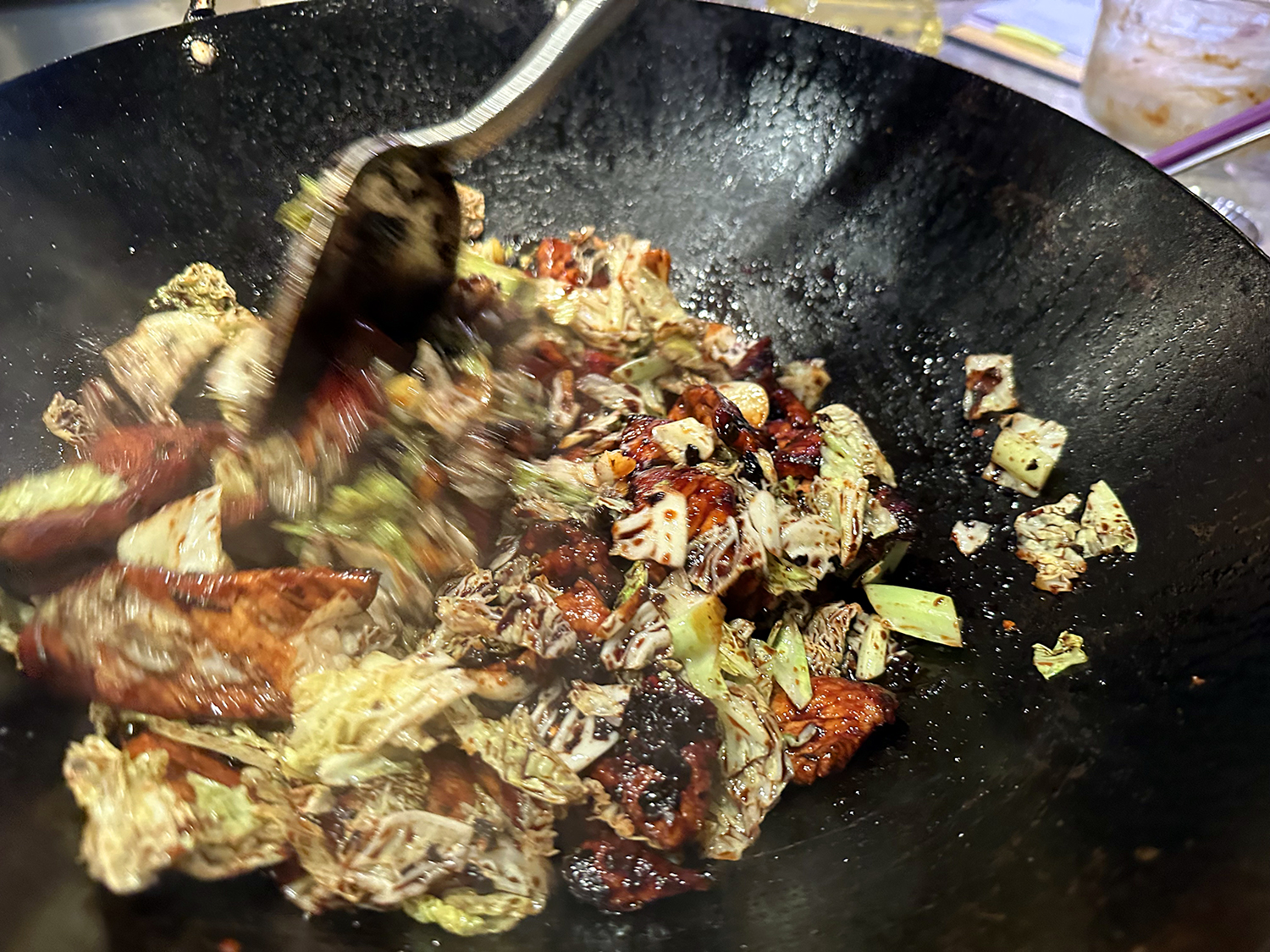
  5. Return all the pork and cabbage to the wok. Add the sauce mixture and toss until the cabbage and pork are coated evenly. Transfer to a serving platter and serve immediately with steamed rice.

http://www.lynnandruss.com

Recipe from J. Kenji Lopez-Alt’s cookbook “The Wok”

Cantonese Sweet-and-Sour Pork

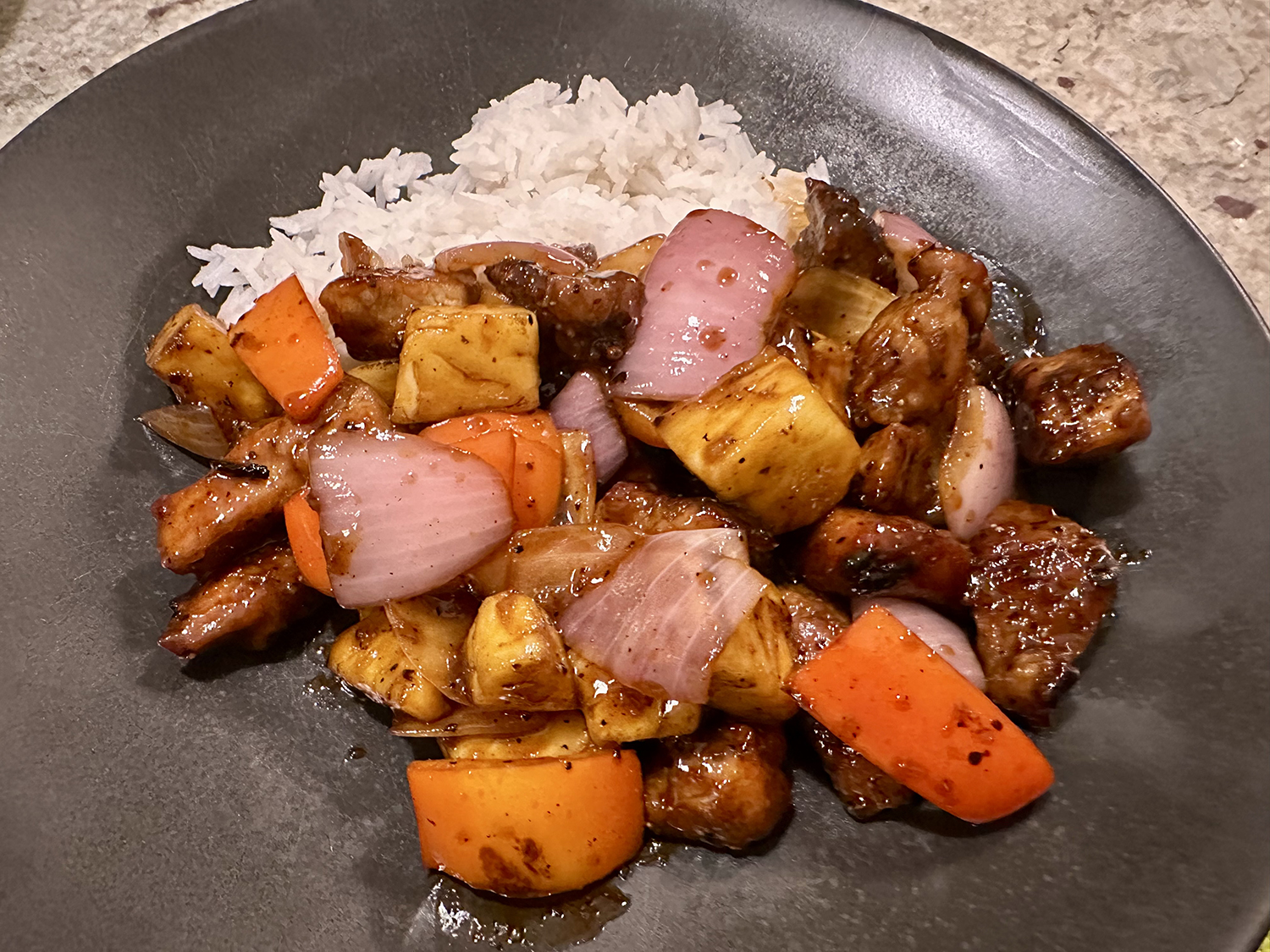
Hands down. THE. BEST. Sweet-and-Sour Pork ever! As The Hubs said “Finally a grown-up version that’s not all gloppy sweet.” In Hong Kong, a true Cantonese sweet-and-sour pork was the predecessor of the overly sweet versions served today in many Chinese-American restaurants (I’m sure you’ve had one or two?). Milk Street created this recipe by combining the attributes of the best ones.

Though the pork typically is deep-fried, it is kept lighter by pan-frying it in just ¼ cup of oil to crisp a thin cornstarch coating. Traditional versions are flavored with hawthorn berries, a crabapple-like fruit. To approximate the flavor of hawthorn berries, use apple jelly—it provides fruitiness, sweetness and a little body to the glaze-like sauce.

Finally, a little MSG amplifies the savoriness, but it’s optional. A 12- to 14-inch wok is the best pan to use, but a 12-inch skillet works, too. If using a skillet, cook the pork in a single batch instead of two.

Don’t use canned pineapple. Milk Street tasted versions in Hong Kong made with canned fruit and they claim the flavor and texture fell flat. Also, be sure the sauce is adequately reduced and thickened before returning the pork to the pan. If it is too thin, its flavor will be diluted and it won’t cling properly to the pork and vegetables.

We were definitely a little skeptical of the level of sweetness with ketchup, sugar and pineapple, but while there was a hint of sweetness, it was by no means cloying. A few changes that we made? Instead of a small red onion, we used a large one; and the amount of fresh pineapple chunks* was more like 3 cups worth.

We both love stir-fries because they are usually quick and contain a lot of vegetables. This recipe has now earned a well-deserved spot in the top ten best of all stir-fries!

Cantonese Sweet-and-Sour Pork

  • Servings: 4
  • Difficulty: easy
  • Print

Ingredients

  • 1 – 1¼ lbs. boneless country-style pork spareribs, cut into ¾- to 1-inch pieces
  • 4 Tbsp. white sugar, divided
  • 3 Tbsp. soy sauce, divided
  • 3/4 tsp. MSG, divided (optional)
  • Kosher salt and ground black pepper
  • 1/2 cup unseasoned rice vinegar
  • 1/4 cup apple jelly
  • 2 Tbsp. ketchup
  • 1/4 cup cornstarch
  • 1/4 cup grapeseed or other neutral oil
  • 1½ cups fresh pineapple chunks* (¾- to 1-inch pieces)
  • 1 small red onion, cut into 1-inch pieces
  • 1 medium red, orange, yellow or green bell pepper, stemmed, seeded and cut into 1-inch pieces

Directions

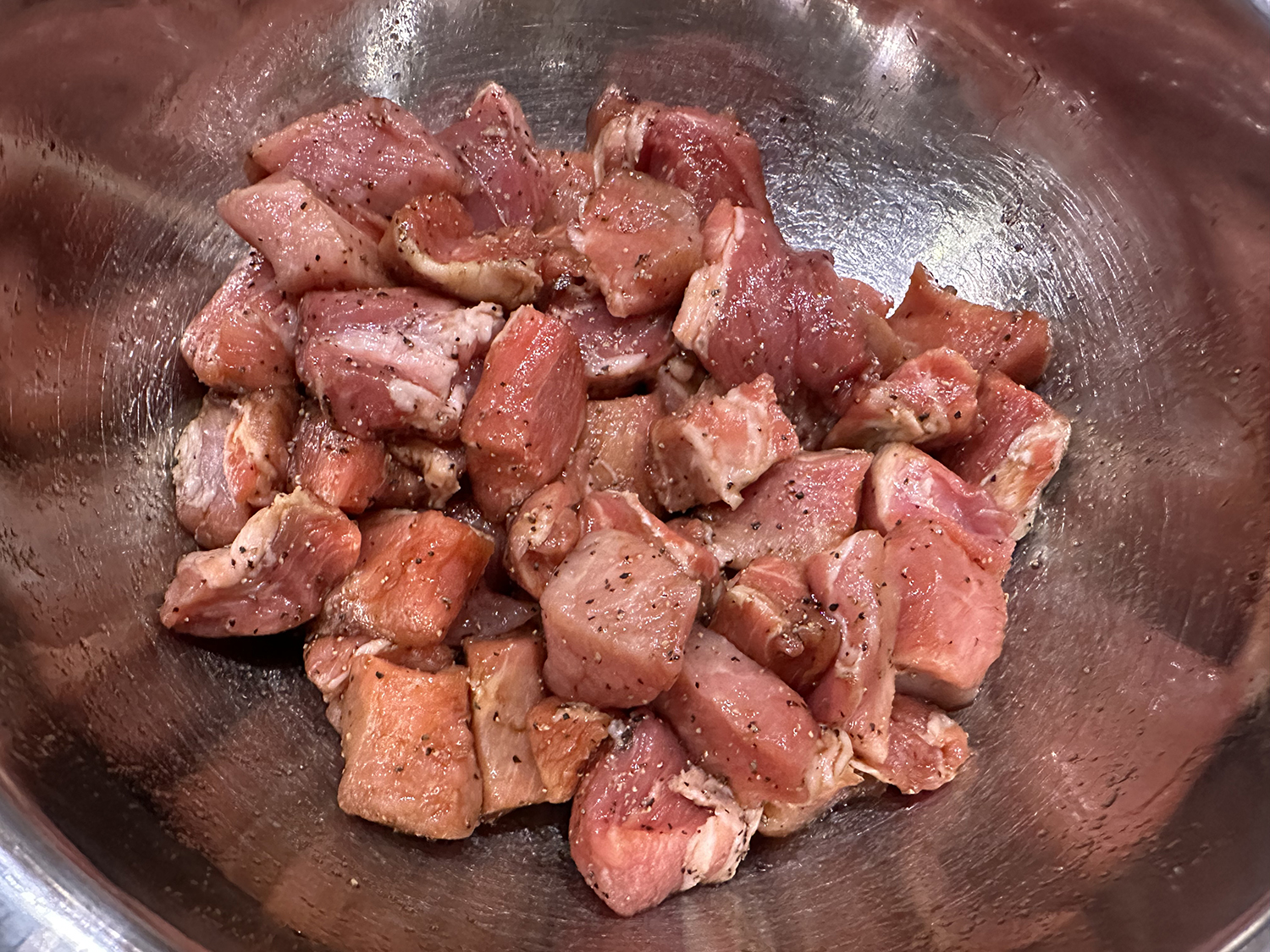
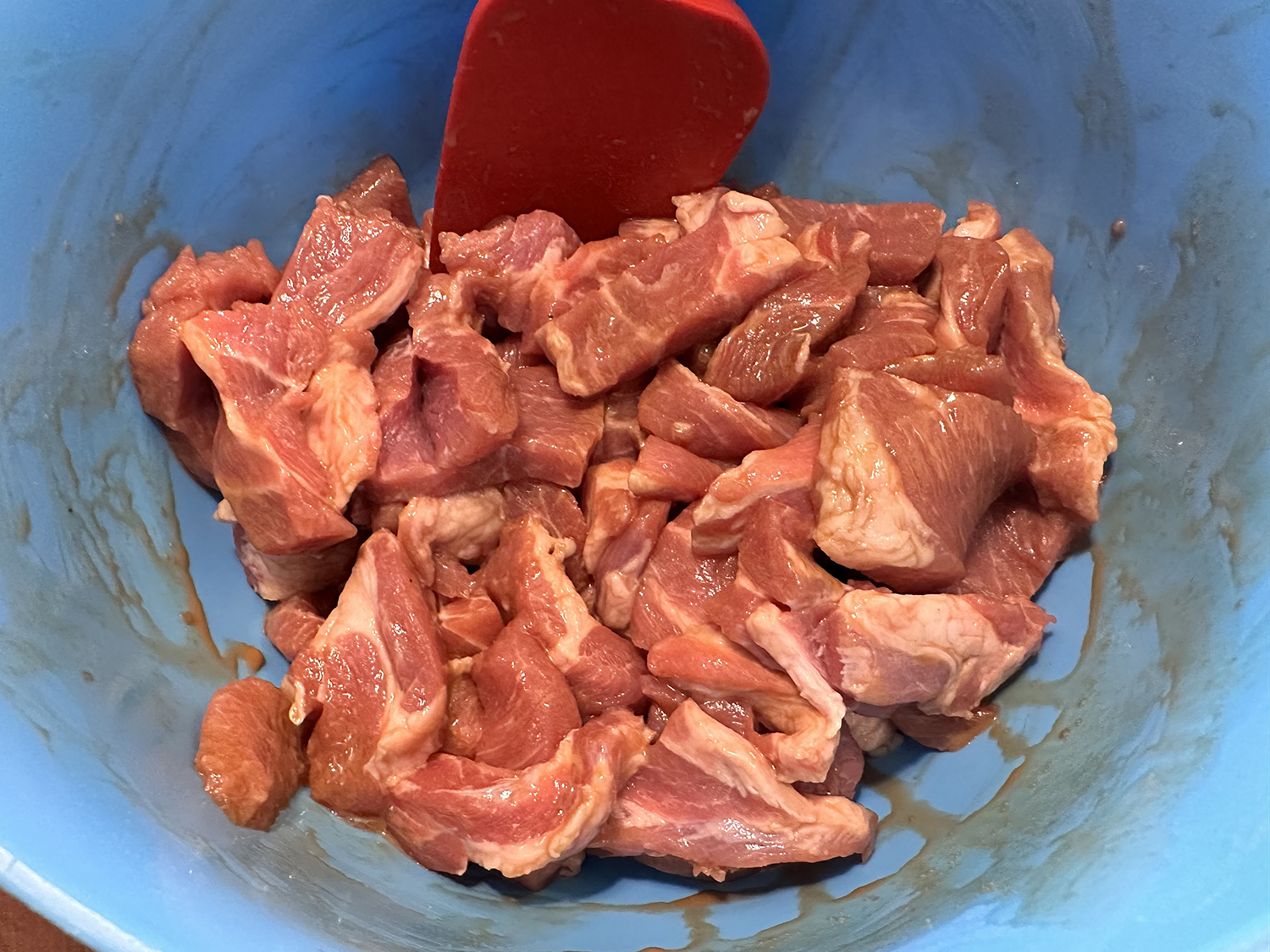
  1. In a medium bowl, combine the pork, 1 tablespoon of the sugar, 1 tablespoon of the soy sauce, ½ teaspoon of the MSG (if using), ¼ teaspoon salt and ¾ teaspoon pepper. Mix until the pork is thoroughly coated; set aside at room temperature for 30 minutes (for longer storage, cover and refrigerate for up to 2 hours).
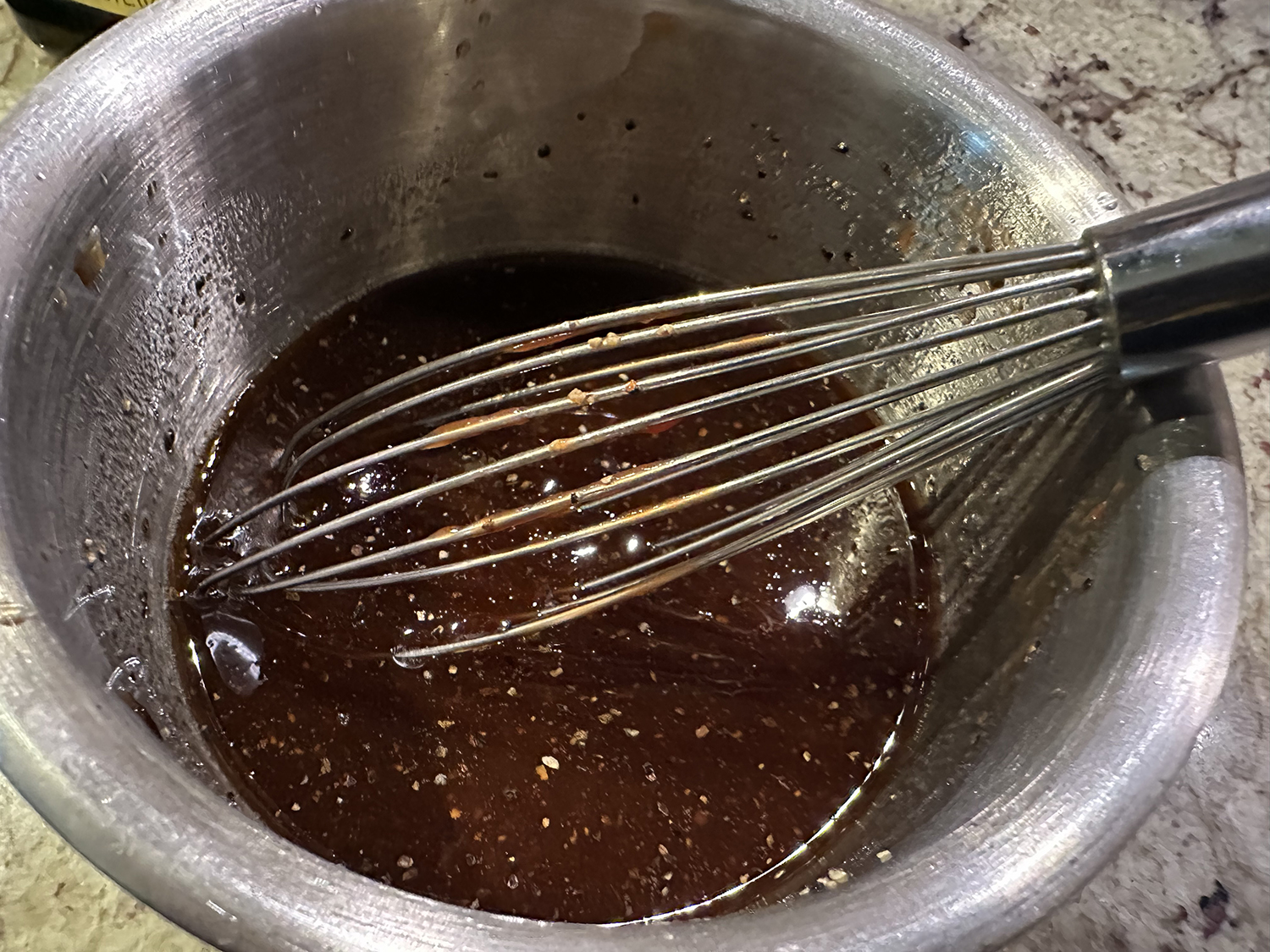
  2. Meanwhile, in a small bowl, whisk together the remaining 3 tablespoons sugar, remaining 2 tablespoons soy sauce, remaining ¼ teaspoon MSG (if using), vinegar, apple jelly, ketchup, ¼ teaspoon salt and ½ teaspoon pepper; set aside until ready to use.
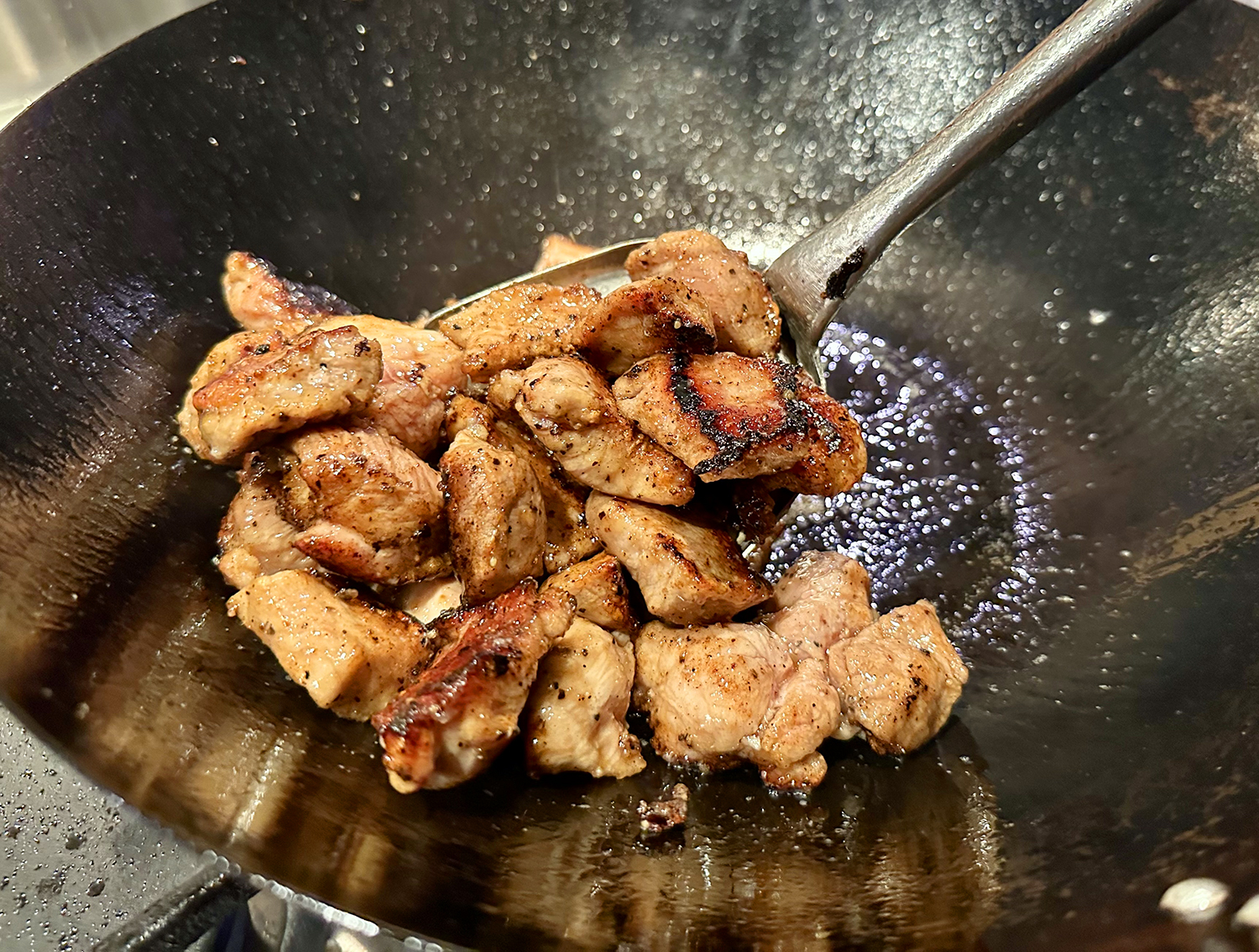
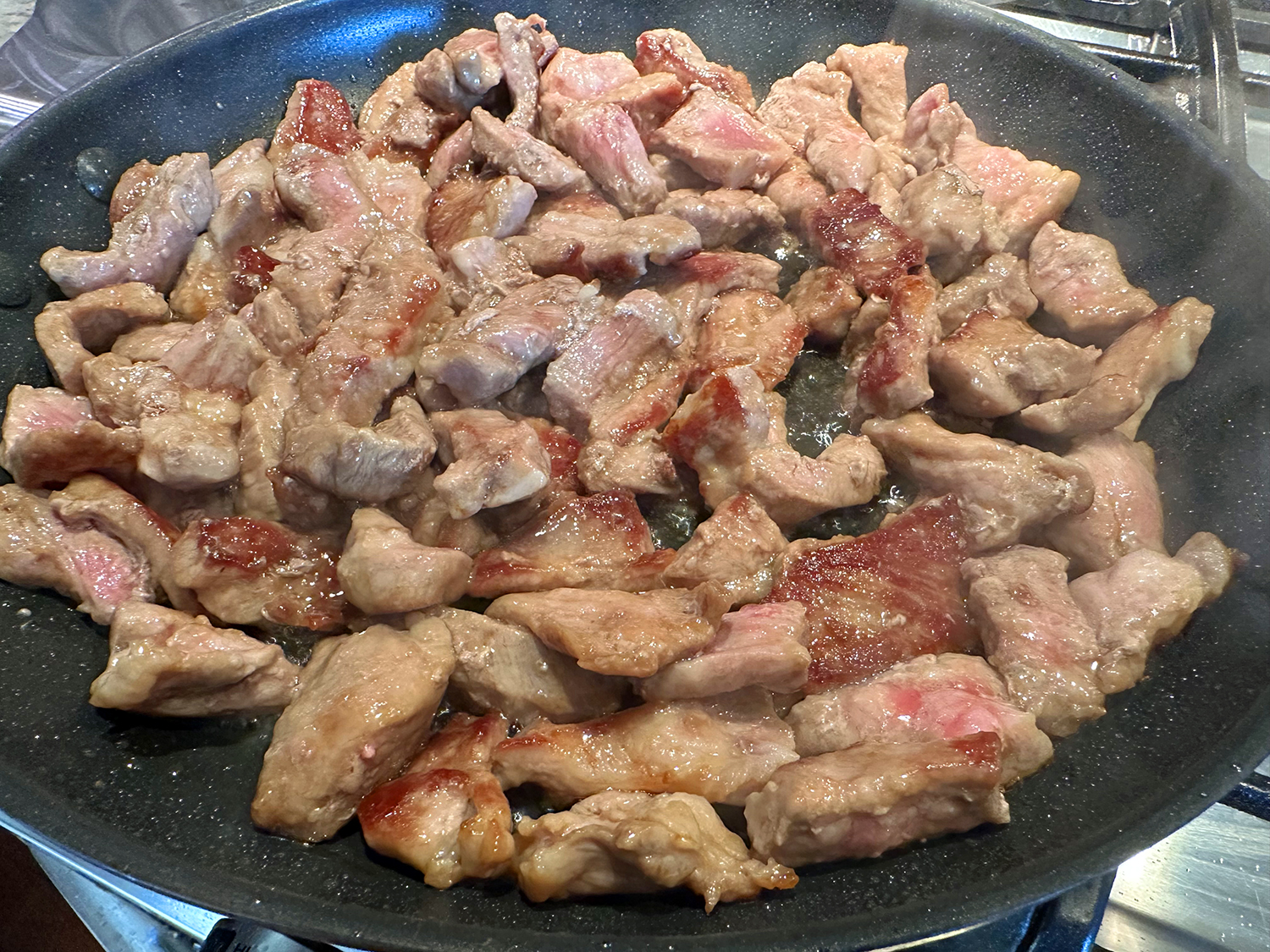
  3. When you are ready to cook, sprinkle the cornstarch over the pork and mix until evenly coated. In a 12- to 14-inch wok over high, heat the oil until barely smoking. Add half of the pork, separating the pieces and distributing them in an even layer. Cook, undisturbed, for 1 minute. Stir, then cook, stirring occasionally, until crisp and deeply browned on all sides, 5 to 7 minutes. Using a slotted spoon, transfer to a large plate and set aside. Using the oil remaining in the wok, cook the remaining pork in the same way and transfer to the plate. Pour off and discard all but 1 tablespoon of the oil.
  4. Return the wok to high and heat the oil until barely smoking. Add the pineapple, onion and bell pepper; cook, stirring once or twice, until spottily charred but still crisp, about 2 minutes. Transfer to another plate and set aside.
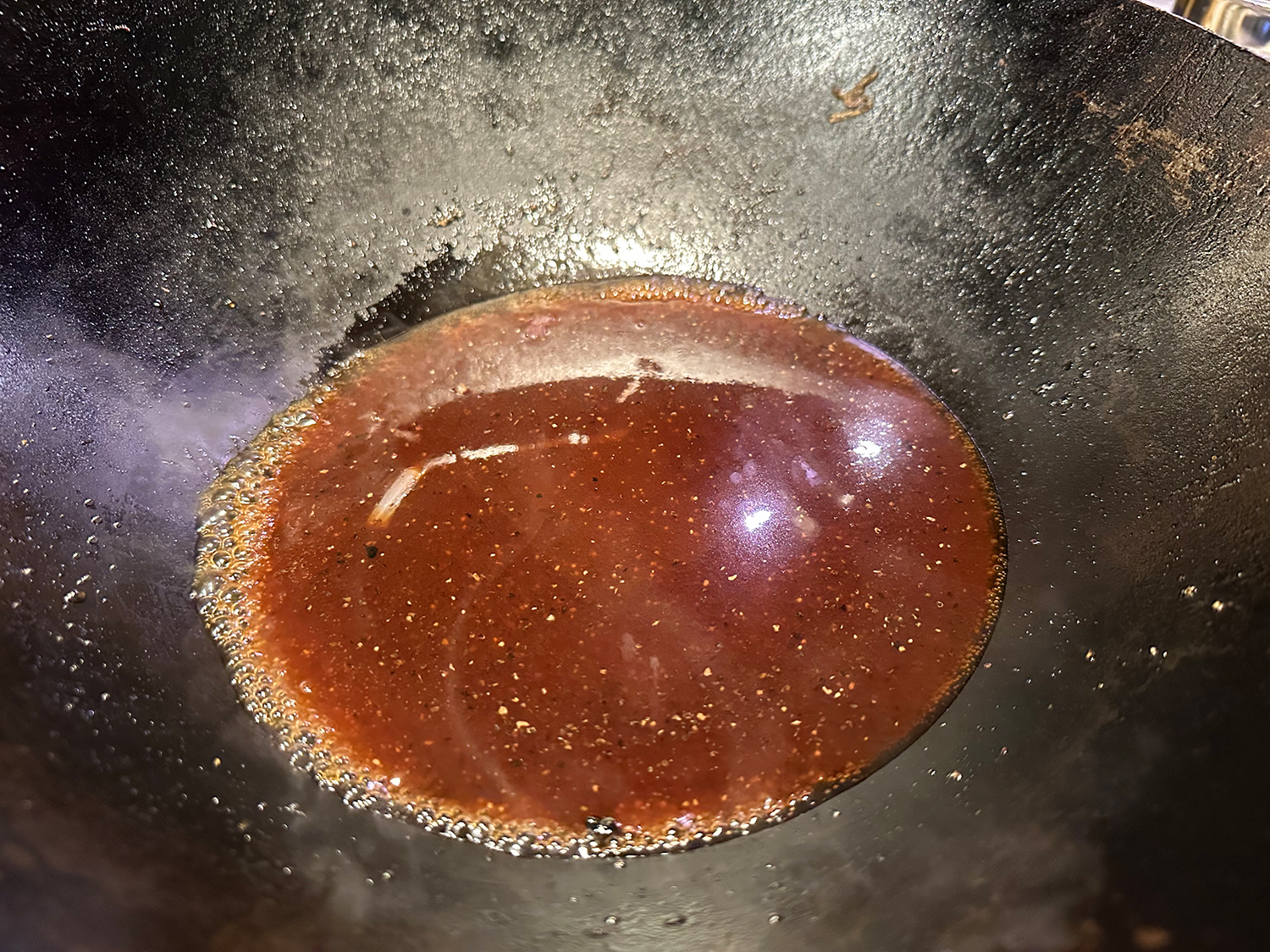
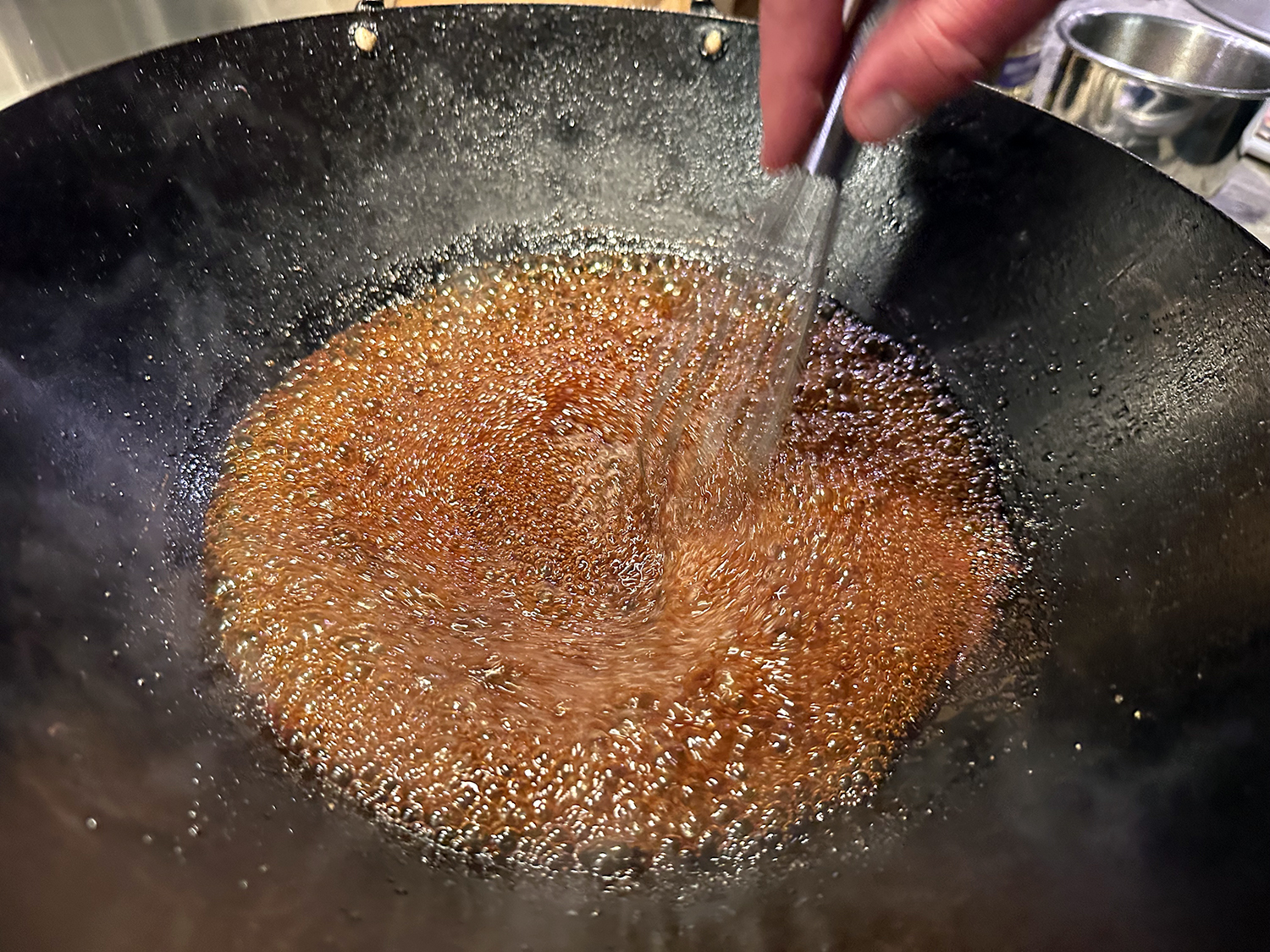
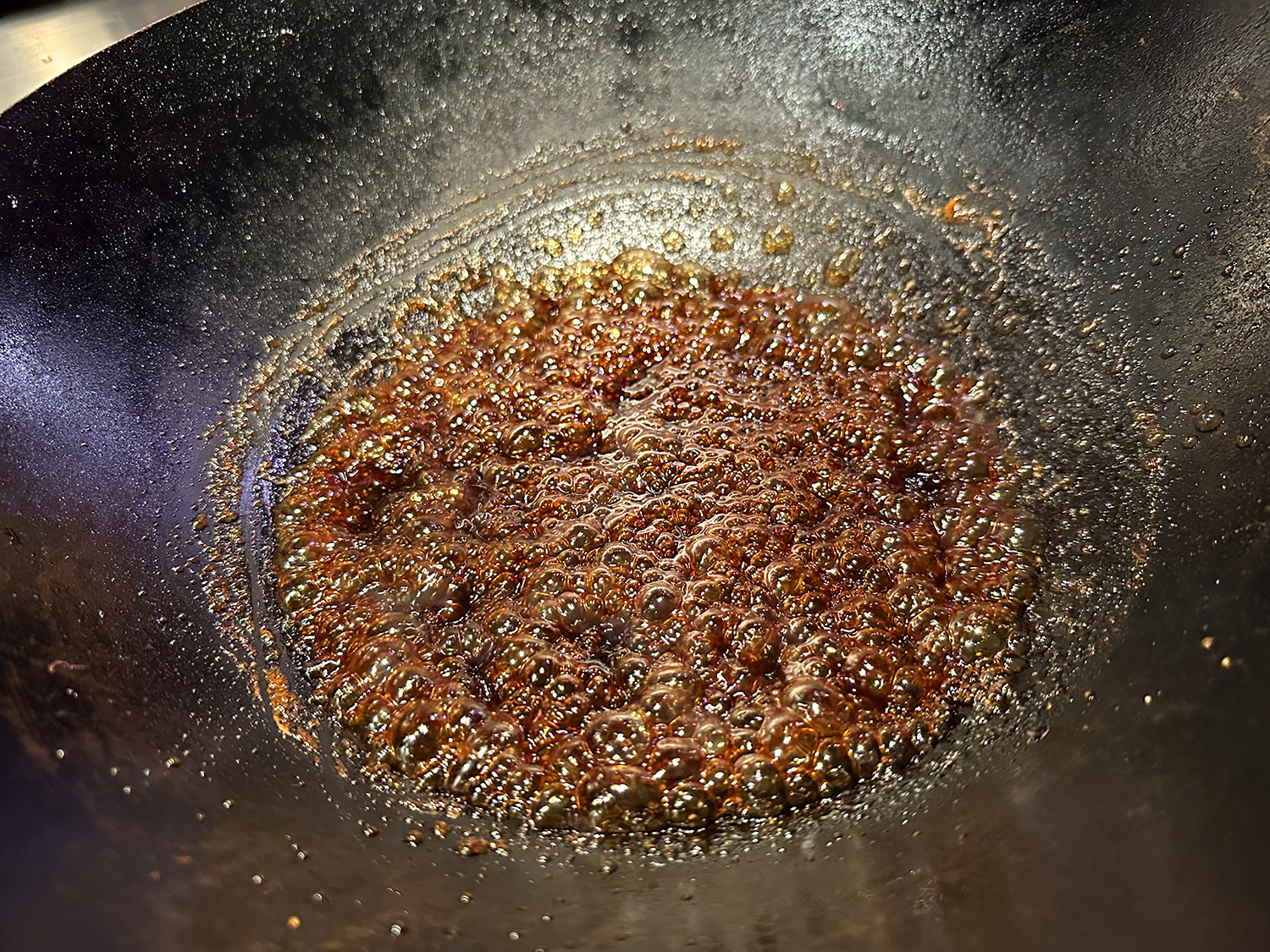
  5. Pour the sauce mixture into the wok and bring to a boil over medium-high. Cook, whisking to combine and to scrape up any browned bits, until the sauce is thick and syrupy and forms large bubbles across the entire surface, 5 to 7 minutes.
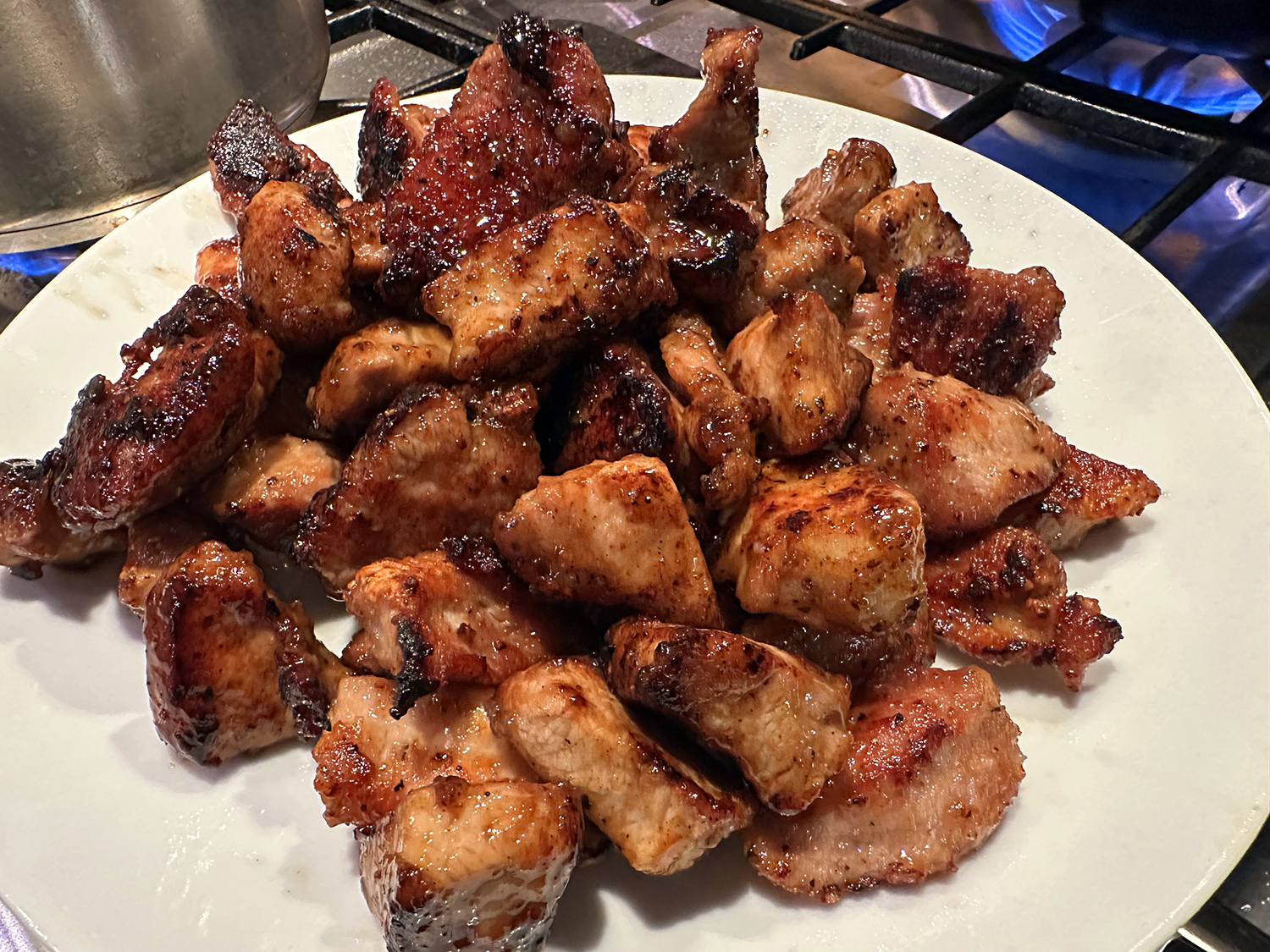
  6. Return the pork to the pan and cook, stirring and tossing, until well glazed, 2 to 3 minutes. Return the vegetable mixture and cook, tossing, until well coated, 1 to 2 minutes. Off heat, taste and season with salt and pepper.

http://www.lynnandruss.com

Recipe adapted by Courtney Hill for Milk Street

Colima-Style Shredded Braised Pork

OK, this is definitely a keeper! If shredded pork is your thing, than this recipe needs to get on your short list ASAP. Milk Street Magazine cites: “The state of Colima on the western coast of Mexico is home to the pork dish called tatemado de Colima. Dried chilies, spices and aromatics, all blended to a smooth puree, are key flavorings, but a defining ingredient, other than the pork itself, is vinegar. In chef Paola Briseño-González’s version, her recipe uses a generous amount of smooth-tasting, subtly sweet coconut vinegar, a common ingredient in the coconut-producing region of Colima, and after slow-cooking the pork, she shreds the meat and mixes it with the braising liquid.”

The flavors are rich and porky but deliciously balanced by the tangy vinegar and fresh ginger, whose sharpness disappears into the mix. Milk Street adapts González’s recipe, and in doing so, found widely available rice vinegar to be a decent alternative to coconut vinegar. Braise in the oven, where the heat is steady and all-encompassing; the meat will do a fine job of soaking up the seasonings after it is shredded. The pork is briefly broiled after braising to develop deep browning, so you will need a broiler-safe Dutch oven for this recipe.

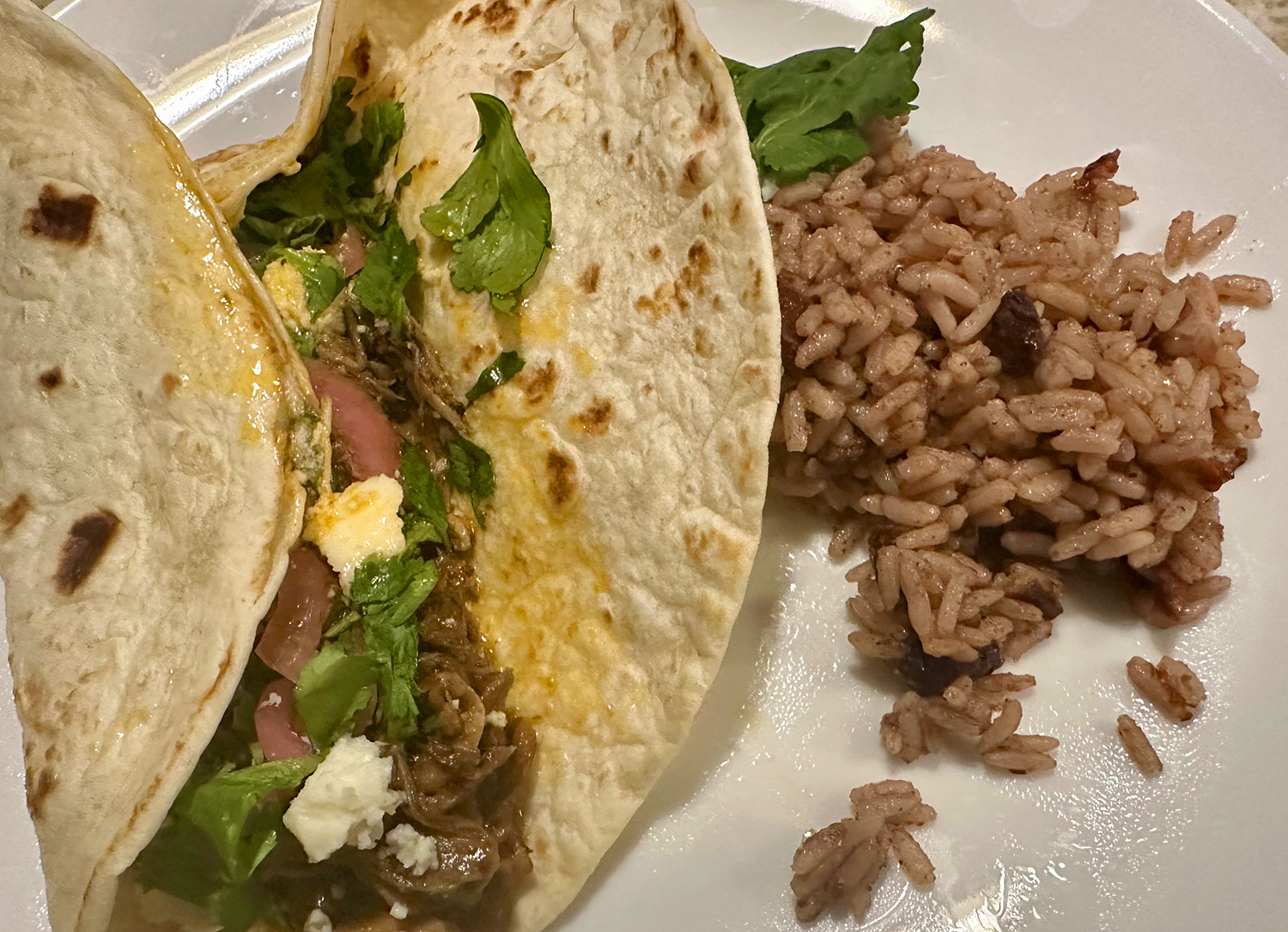
Pungent, flavorful, enticing, and delicious—this “tatemado de Colima” makes for a huge batch of succulent, juicy meat perfect on its own with a fork—or on top of some tortillas, tostada style. Now you have a dish that blows past everyday barbecue. Serve the shredded pork with rice and beans, or make tacos with it, offering shredded cabbage, chopped onion and lime wedges alongside. It’s low-carb if eaten without tortillas.

Word to the Wise: Don’t use an uncoated cast-iron Dutch oven, even if it is well seasoned. The acidity of the vinegar may react with the metal, resulting in a tinny, “off” flavor. However, an enamel-coated Dutch oven is fine.

Colima-Style Shredded Braised Pork

  • Servings: 8-10
  • Difficulty: easy
  • Print

Ingredients

  • 4 large (1¼ oz.) guajillo chilies, stemmed and seeded
  • 5-7 lb. bone-in pork butt or pork shoulder roast
  • 2 cups coconut vinegar or unseasoned rice vinegar
  • 1 cup coconut milk
  • 1/3 cup roughly chopped peeled fresh ginger
  • 9 medium garlic cloves, smashed and peeled
  • 3 bay leaves
  • 1 Tbsp. tomato paste
  • 1/2 tsp. coriander seeds
  • 1/2 tsp. cumin seeds
  • 1/2 tsp. white sugar
  • Kosher salt and ground black pepper

Directions

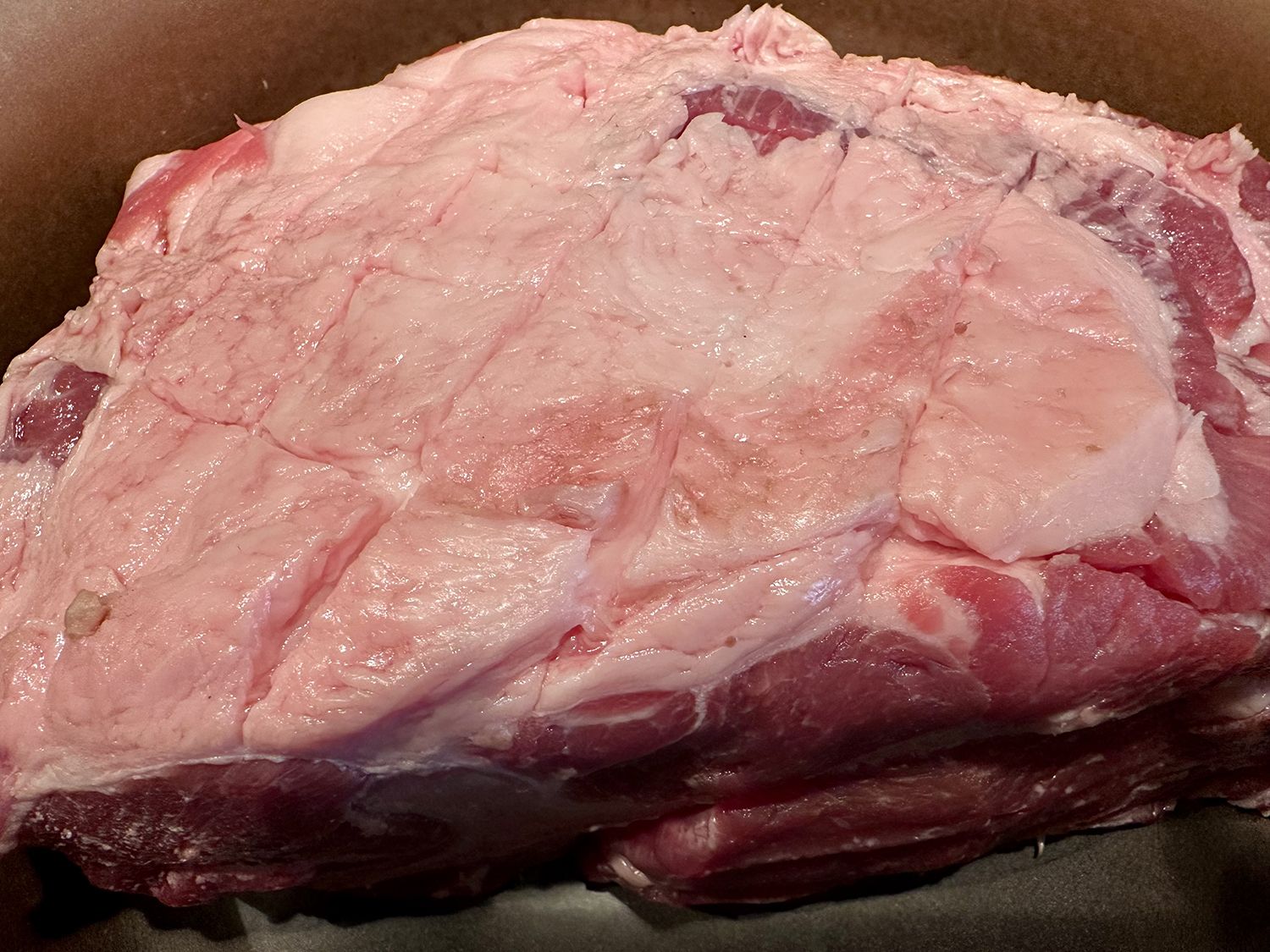
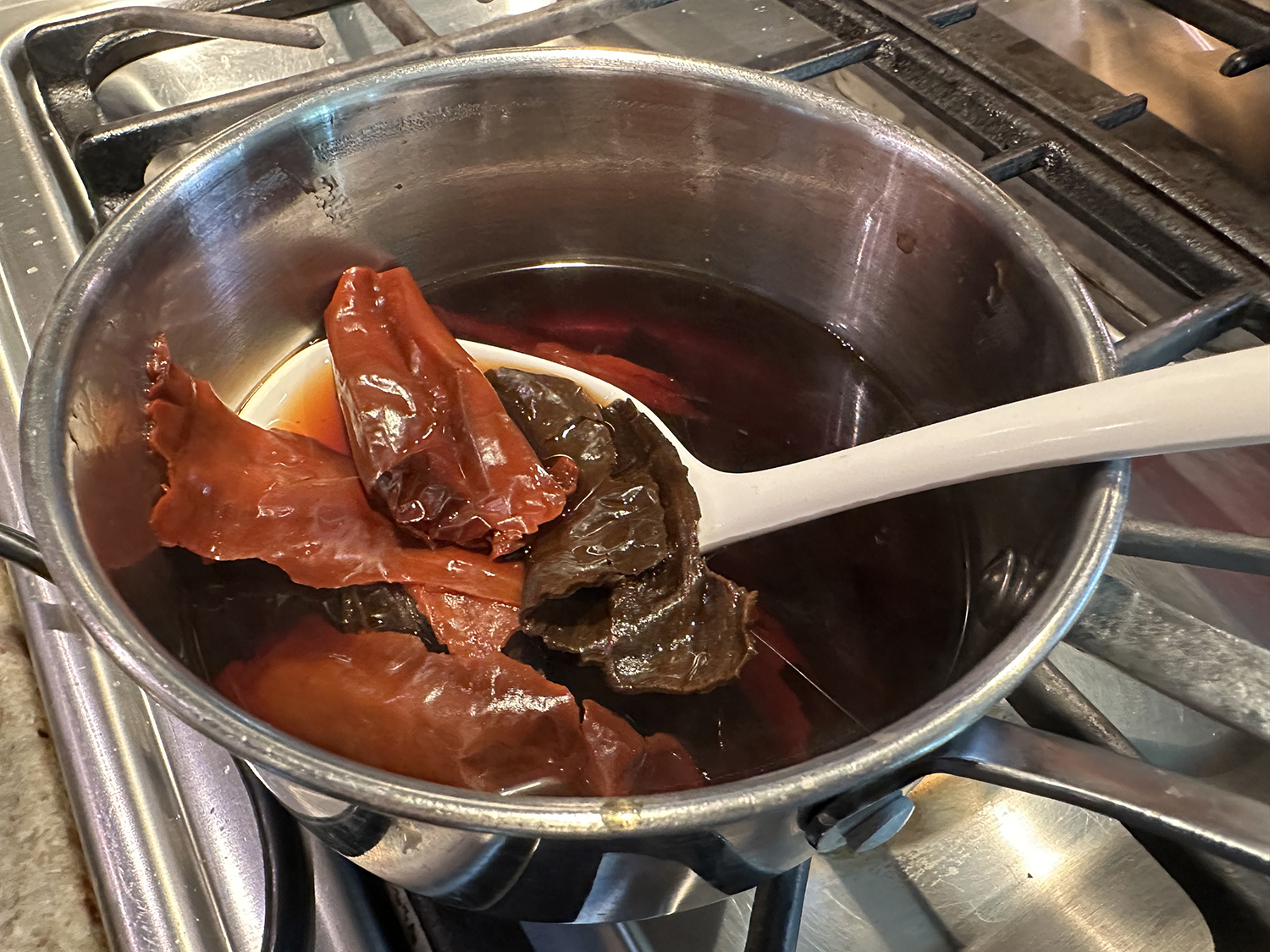
  1. In a small saucepan, combine the chilies and enough water to cover by about 1 inch. Bring to a boil over medium-high, pressing on the chilies to submerge them. Remove from the heat, cover and let stand until the chilies are fully softened, 15 to 20 minutes. Meanwhile, using a sharp knife, score the fat side of the pork roast with a 1-inch crosshatch pattern. Set the pork scored side up in a large enamel-coated Dutch oven.
  2. Using a slotted spoon, transfer the chilies to a blender; discard the soaking water. Add the vinegar, coconut milk, ginger, garlic, bay, tomato paste, coriander, cumin, sugar, 1 tablespoon salt and 1 teaspoon pepper. Blend until smooth, about 1 minute. Pour the puree over the pork and rub it into the meat, then cover the pot.
  3. Heat the oven to 325°F with a rack in the lower-middle position. When the oven comes up to temperature, place the pot in the oven and cook until a skewer inserted into the center of the pork meets no resistance, 4½ to 5½ hours.
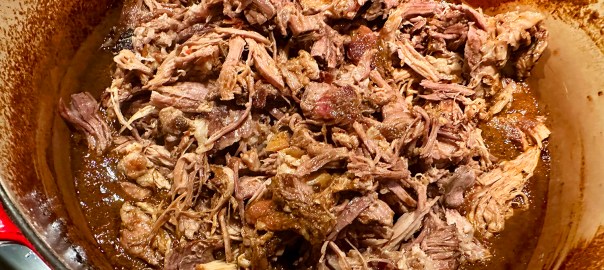
  4. Remove the pot from the oven and heat the broiler. Return the pot, uncovered, to the oven and broil until the surface of the pork is deeply browned, 2 to 4 minutes. Transfer the pork to a large bowl and set aside. Tilt the pot to pool the braising liquid to one side, then use a wide spoon to skim off and discard fat from the surface, leaving just a couple tablespoons for flavor. You should have between 2 and 4 cups defatted braising liquid; if you have more than 2 cups, set the pot over medium-high, bring the liquid to a rapid simmer and cook, stirring occasionally, until reduced to about 2 cups. Meanwhile, shred the pork into large bite-size pieces, discarding the bone and excess fat.
  5. Return the shredded pork to the pot and stir to combine with the braising liquid. Cover and cook over medium-low, stirring occasionally, just until heated through, 5 to 8 minutes, then taste and season with salt and pepper.

http://www.lynnandruss.com

Recipe adapted by Courtney Hill for Milk Street

Carnitas with Pickled Onions

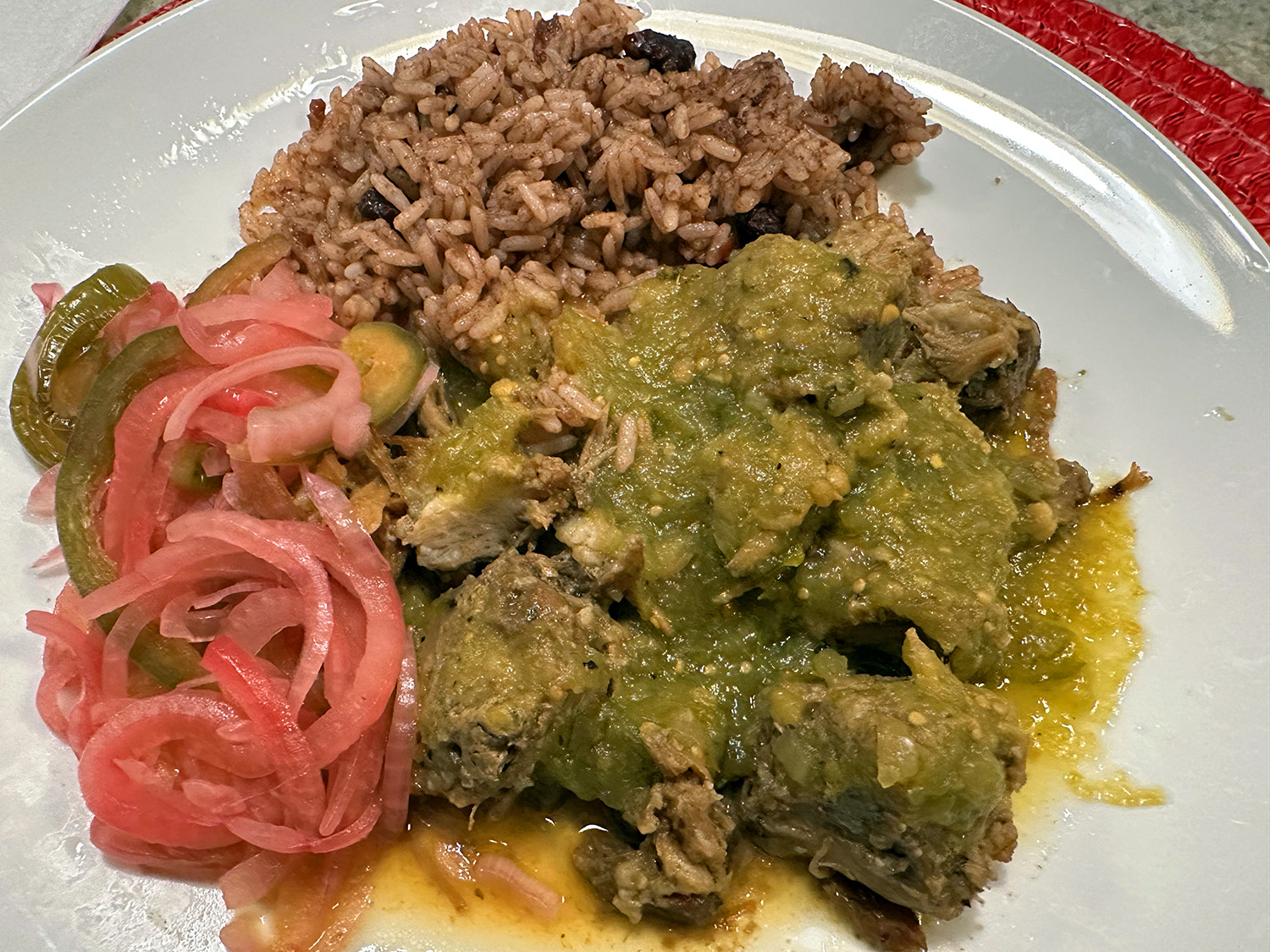
The Hubs exclaimed it was better than any carnitas he’s ordered at a Mexican restaurant! High praise indeed. While I don’t think I’ve ever had it while dining out, I certainly will be making it again in the near future. Scrumpdillyicious! And if even possible, better as leftovers!

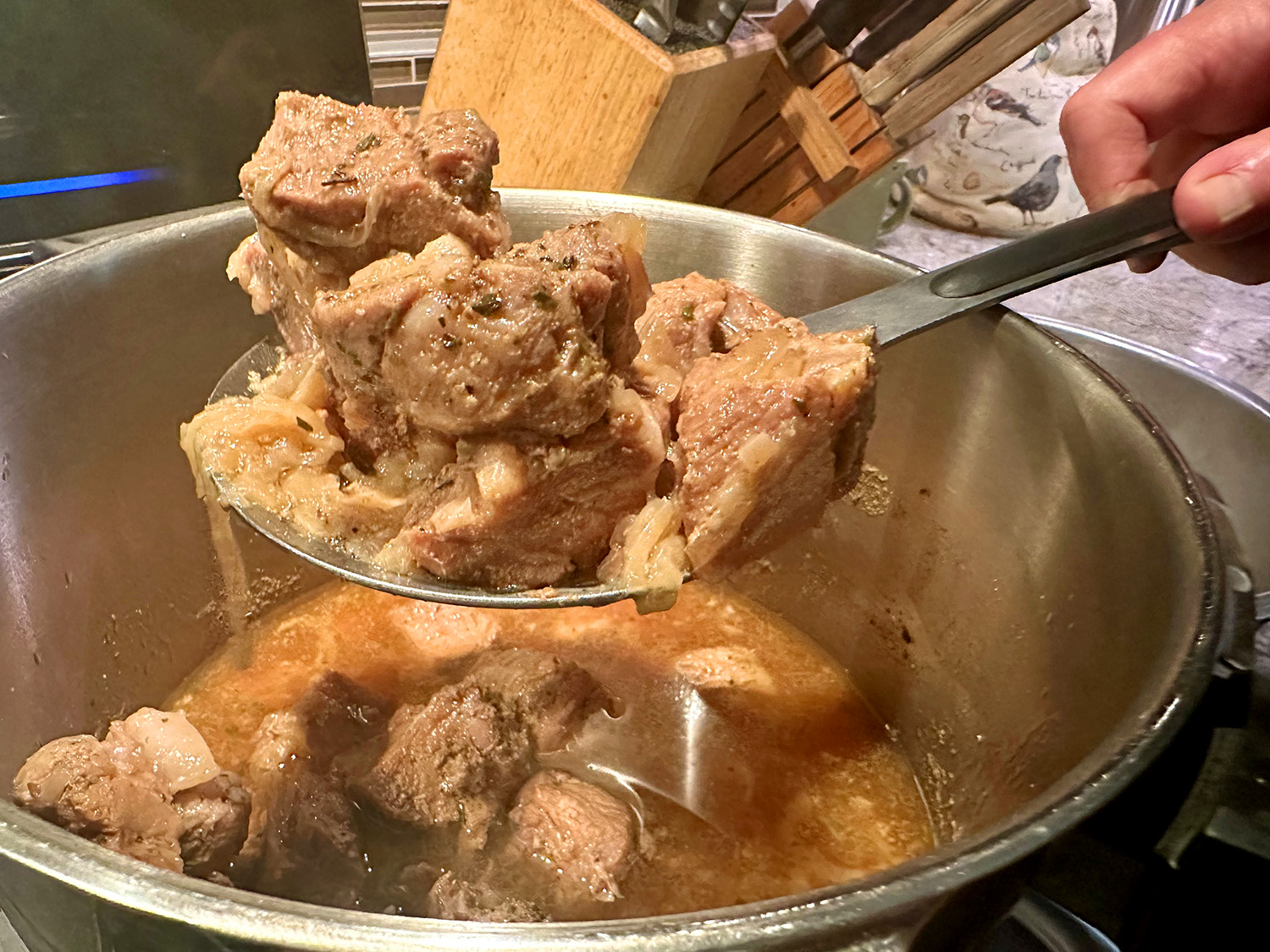
For this Instant Pot version of Mexican carnitas, you can either pressure-cook or slow-cook chunks of pork shoulder with spices and aromatics. Add only a small amount of water to the pot so when the cooking is done, the liquid already is rich and meaty. Still, reduce it for a few minutes to further concentrate the flavors, then use it to moisten the fork-tender pork that has been broken into bite-size pieces.

You can stop there and serve the carnitas as is or make it even more delicious by crisping it in a hot skillet in its own rendered fat. (We opted not to do this step.) To do so, in a 12-inch nonstick skillet over medium-high, heat 1 teaspoon of the reserved pork fat until barely smoking. Add the pork in an even layer and cook without stirring, pressing the meat against the skillet with a spatula, until the bottom is browned and crisp, three to five minutes.

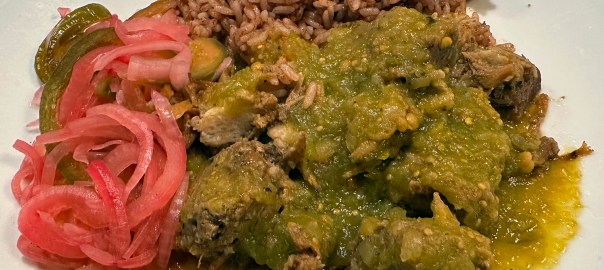
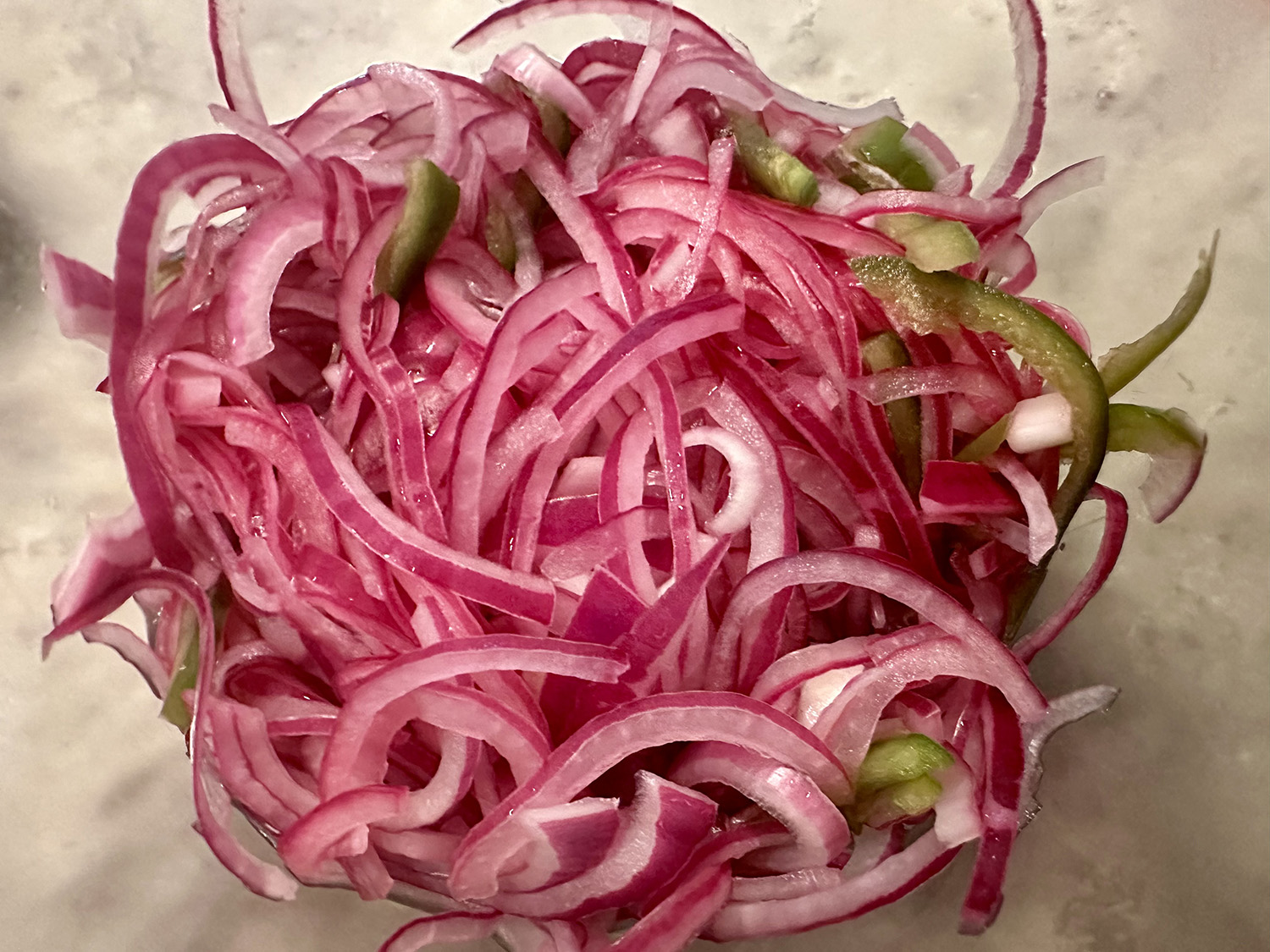
Serve carnitas with rice and beans, such as Goya Gallo Pinto, or make tacos with warmed tortillas. Either way, the pickled red onions are a must—their sharp acidity balances the richness of the pork. And for an added flavor boost, top the meat with Trader Joe’s Salsa Verde.

Don’t trim the fat from the pork. The fat rendered during cooking is essential for flavoring the carnitas. And if you plan to fry the pork after shredding, be sure to reserve the fat you skim off the cooking liquid—it’s ideal for crisping the meat.

In lieu of an Insta Pot, use a pressure cooker for the fast method (which we used), or a slow cooker for the slow method. Our piece of pork weighed in at almost 4 pounds. The recipe feeds 4 to 6 depending on your sides and if you serve with warmed tortillas.

Carnitas with Pickled Onions

  • Servings: 4-6
  • Difficulty: easy
  • Print

Ingredients

  • 1/2 cup white vinegar
  • 1 tsp. white sugar
  • Kosher salt and ground black pepper
  • 2 medium red onions, halved and thinly sliced, divided
  • 1 jalapeño chili, stemmed, seeded and thinly sliced lengthwise
  • 1 Tbsp. grapeseed or other neutral oil
  • 10 medium garlic cloves, smashed and peeled
  • 3 lbs. boneless pork shoulder, untrimmed, cut into 2-inch chunks
  • 1 Tbsp. ground cumin
  • 1 Tbsp. ground coriander
  • 1 tsp. dried oregano, preferably Mexican oregano

Directions

  1. In a medium bowl, stir together the vinegar, sugar and 1 teaspoon salt until dissolved. Stir in 1 red onion and the jalapeño; cover and refrigerate while you cook the pork. On a 6-quart Instant Pot, select More/High Sauté. Add the oil and heat until shimmering. Add the remaining onion and cook, stirring occasionally, until softened, about 3 minutes. Add the garlic and cook, stirring, until fragrant, about 30 seconds. Add the pork, cumin, coriander, oregano, ½ teaspoon salt, 1 teaspoon pepper and ½ cup water. Stir, then distribute in an even layer.
  2. FAST: Press Cancel, lock the lid in place and move the pressure valve to Sealing. Select Pressure Cook or Manual; make sure the pressure level is set to High. Set the cooking time for 30 minutes. When pressure cooking is complete, allow the pressure to reduce naturally for 15 minutes, then quick-release the remaining steam by moving the pressure valve to Venting. Press Cancel, then carefully open the pot.
    SLOW: With the pot still on More/High Sauté, bring the mixture to a boil, then stir and redistribute in an even layer. Press Cancel, lock the lid in place and move the pressure valve to Venting. Select Slow Cook and set the temperature to More/High. Set the cooking time for 5 to 6 hours; the meat is done when a skewer inserted into a chunk meets no resistance. Press Cancel, then carefully open the pot.
  3. Using a slotted spoon, transfer the meat-onion mixture to a large bowl. Cool for a few minutes, then break the meat into bite-size pieces. Skim off the fat from the surface of the cooking liquid; reserve the fat if you plan to fry the pork before serving (see headnote). Select More/High Sauté. Bring the liquid to a boil and cook, stirring occasionally, until reduced to about ½ cup (about ⅛ inch depth in the pot), about 15 minutes. Press Cancel to turn off the pot. Add the pork and stir until heated through and evenly moistened. Taste and season with salt and pepper. Serve with the pickled onions.

http://www.lynnandruss.com

Adapted from a recipe by Elizabeth Mindreau for Milk Street

Chinese Shredded Cabbage Stir-Fry

This recipe from the “Woks of Life” is an example of easy, tasty, healthy and cheap. Now we don’t consider “cheap” to necessarily be a top descriptor of our culinary approach, but this cabbage stir-fry is savory, tangy, very quick to prepare—and the overall ingredients are not costly. Cabbage is so inexpensive, filling, and healthy, but people don’t always know how to prepare it in a way that actually tastes, well…good.

All you need is very high heat, a couple of dried chilies, a few splashes of Chinese pantry staples—and a wok—to make all the difference. Just eating this cabbage dish over rice is a satisfying meal in and of itself.

In Chinese, the name of this dish can be translated as “hand-shredded cabbage.” The real reason is unknown, but a guess is that the rough, haphazardly torn pieces of cabbage offer textural variety, and do a great job of soaking up more sauce and flavor. OK, we’re down with that…

On another note, even though it was a truly delicious dish, our preference lies toward saucy when it comes to stir-fries, and this was decidedly not. So if you prefer a more saucy finish, just double the liquids (wine though vinegar).

While The Hubs likes pork belly, The Missus does not, so we compromised and used a small pork loin. We had a half head of cabbage on hand weighing about 50% less than called for, so we doubled the number of scallions from 2 to 4. The recipe says it feeds 4, well the two of us almost polished it off; therefore more realistically serves 2 to 3 people.

Chinese Shredded Cabbage Stir-Fry

  • Servings: 4
  • Difficulty: easy
  • Print

Ingredients

  • 2 Tbsp. oil
  • 6 oz. pork belly (pork loin, or chicken, thinly sliced)
  • 5 cloves garlic (smashed and cut in half)
  • 5 dried red chilies (deseeded and roughly chopped)
  • 1 1/2 lb. cabbage (hand-shredded into bite sized pieces, washed, and thoroughly dried)
  • 2 tsp. Shaoxing wine
  • 1 Tbsp. soy sauce
  • 1/2 tsp. sugar
  • 1 Tbsp. water
  • 1/2 tsp. Chinese black vinegar
  • 2 scallions (cut into 2-inch lengths)

Directions

  1. In a wok over high heat, add the oil. Sear the meat until caramelized. Add the garlic and chili, turn down the heat to medium, and stir-fry for a minute, taking care not to burn the garlic.
  2. Add the cabbage, wine, soy sauce, sugar, and water. Turn up the heat to high, cover the lid and let the cabbage cook for 1-2 minutes.
  3. Uncover the lid, and stir in the black vinegar, scallions, and salt to taste. The cabbage should be wilted, but still slightly crunchy and caramelized. Serve hot!

http://www.lynnandruss.com

Recipe from “The Woks of Life”

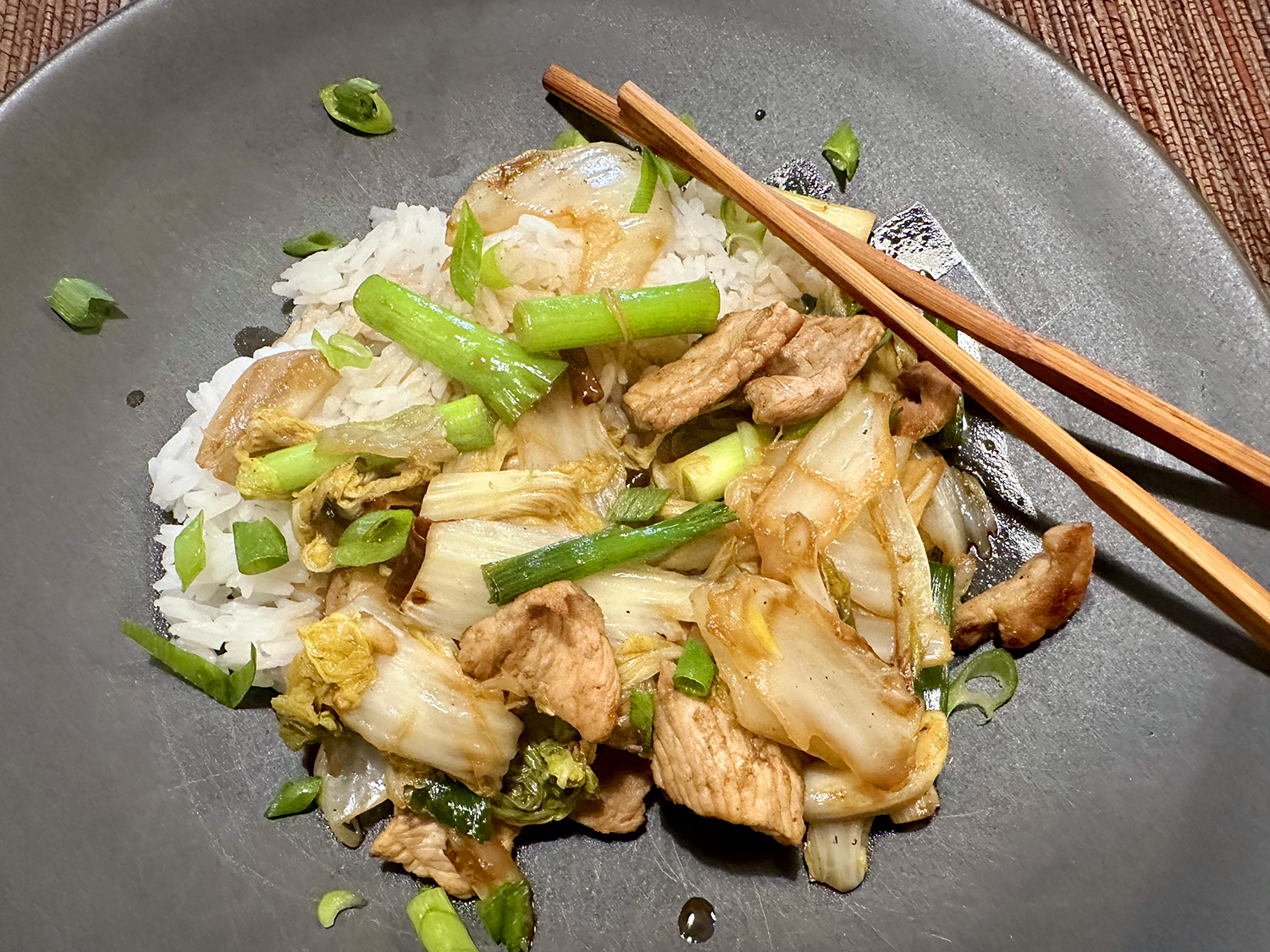
Pork and Tofu Soup with Miso and Cabbage

White miso is already packed with umami, but browning it like it is done to make this soup builds even more flavor. Just a small amount of pork is enough to create a rich, porky broth; firm tofu gives the dish substance without making it heavy.

Make sure to use napa cabbage, not regular green cabbage; the frilly leaves of napa are more delicate and become tender and silky after just a few minutes of simmering, but the stems will remain crisp-tender. The cabbage, tofu and scallions aren’t needed until near the end of cooking, so prep these ingredients while the soup cooks.

If you like, garnish with toasted sesame seeds and serve with Japanese short-grain rice. We chose to serve it with just the sliced scallions and sesame oil as toppings.

Pork and Tofu Soup with Miso and Cabbage

  • Servings: 4
  • Difficulty: easy
  • Print

Ingredients

  • 1/2 cup white miso
  • 6 medium garlic cloves, smashed and peeled
  • 1 3-inch piece fresh ginger, peeled and thinly sliced
  • 2 Tbsp. grapeseed or other neutral oil
  • 2/3 cup sake
  • 1 lb. boneless pork shoulder, trimmed and cut across the grain into 1/2-inch slabs
  • Kosher salt and ground white pepper
  • 1/2 medium head napa cabbage (1 to 1 1/2 lbs.), halved lengthwise, then cut crosswise into 1-inch pieces
  • 1 container firm tofu, (14 oz.) drained and cut into 1-inch cubes
  • 3 Tbsp. soy sauce
  • 4 scallions, thinly sliced on the diagonal
  • Toasted sesame oil, to serve

Directions

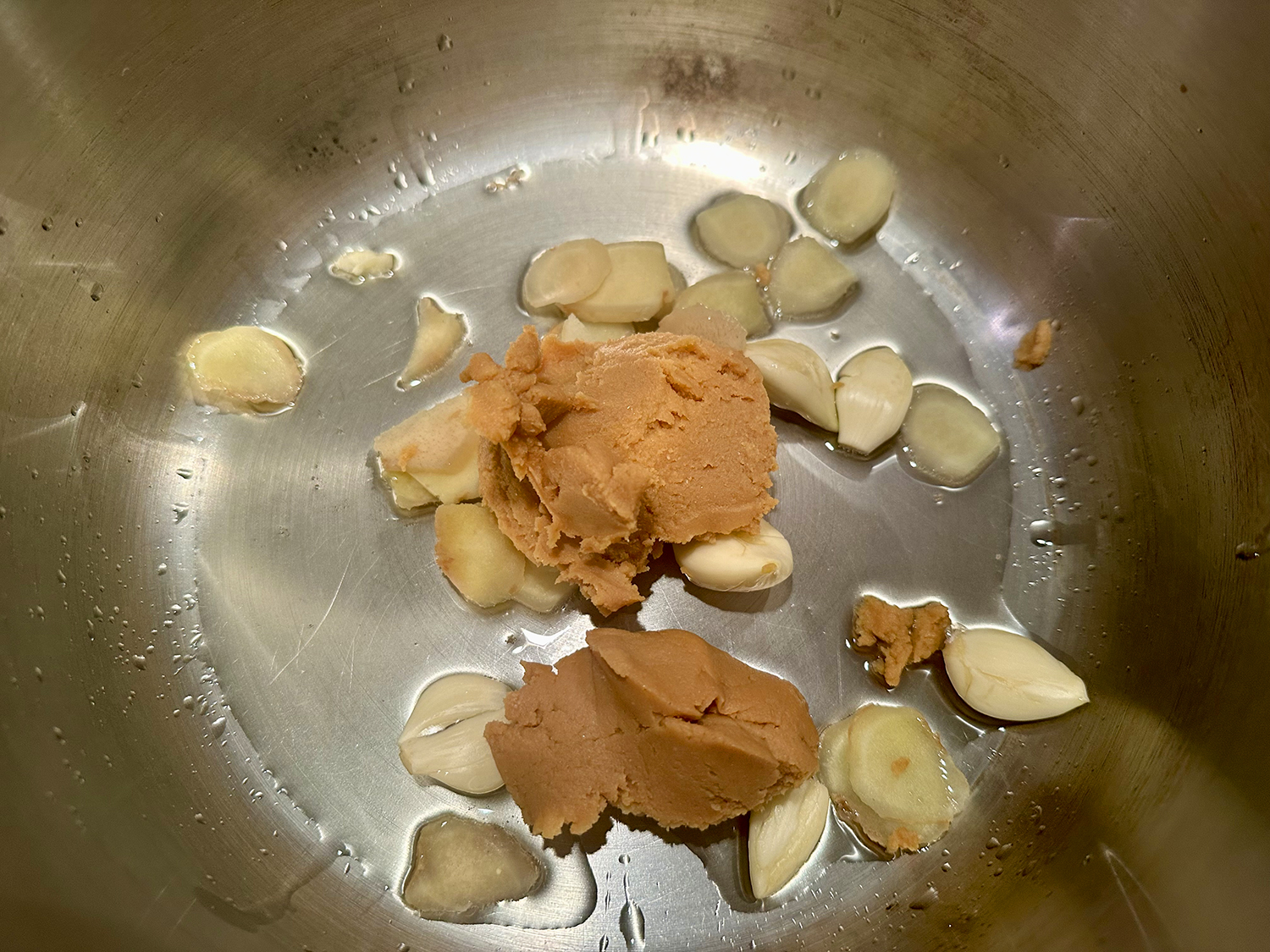
  1. On a 6-quart Instant Pot, select Normal/Medium Sauté. Add the miso, garlic, ginger and oil. Cook, stirring constantly, until the miso sticks to the bottom of the pot and browns evenly, 3 to 4 minutes. Add the sake and 4 cups water, scraping up the browned bits. Add the pork and 1 teaspoon white pepper; stir, then distribute in an even layer.
  2. Press Cancel, lock the lid in place and move the pressure valve to Sealing. Select Pressure Cook or Manual; make sure the pressure level is set to High. Set the cooking time for 27 minutes. When pressure cooking is complete, let the pressure reduce naturally for 15 minutes, then quick-release the remaining steam by moving the pressure valve to Venting. Press Cancel, then carefully open the pot.
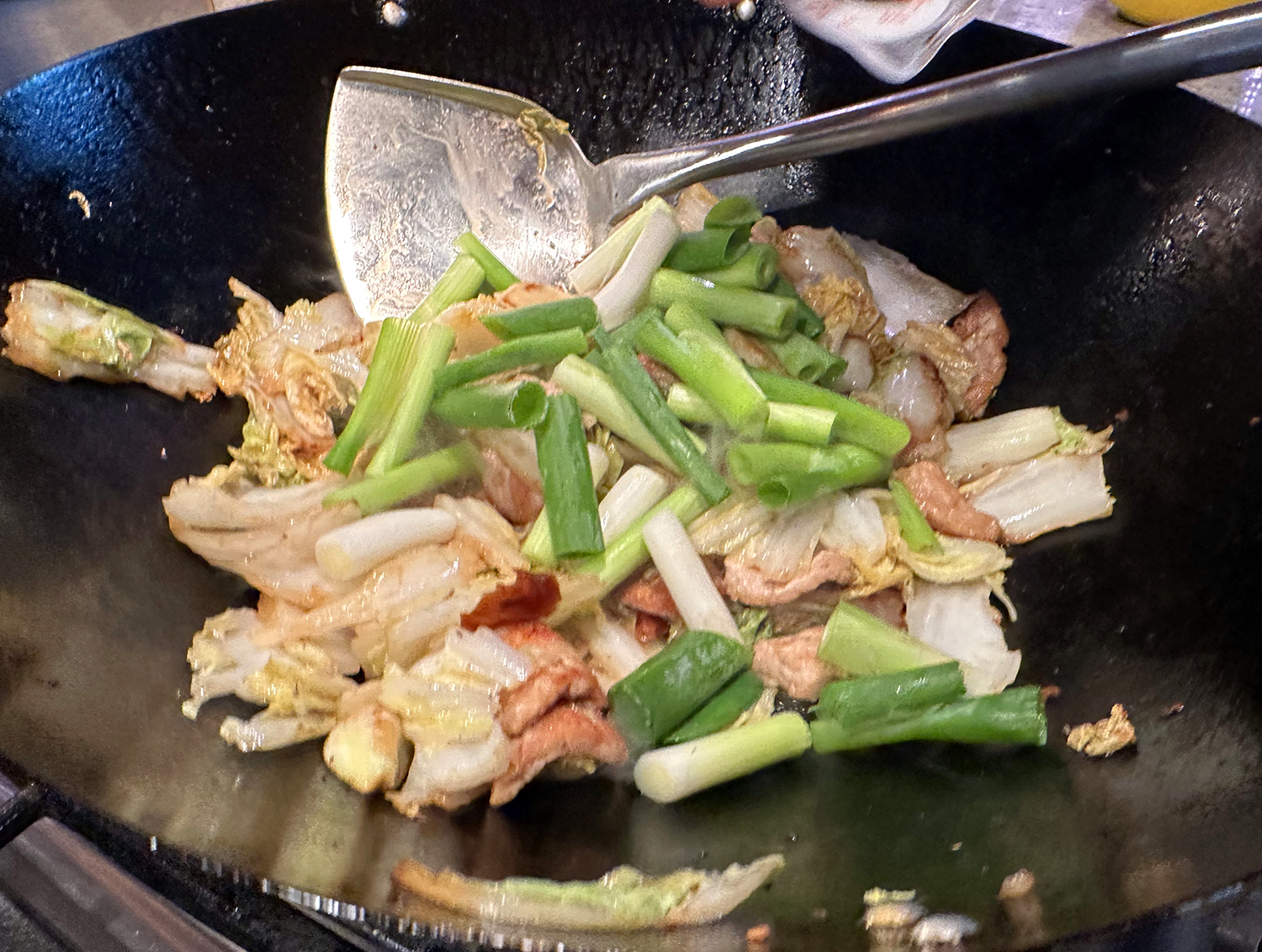
  3. Using a large spoon, skim off and discard the fat from the surface. Select Normal/Medium Sauté and bring to a simmer. Add the cabbage and tofu, then cook, stirring gently, until the leaves are wilted and the stems are crisp-tender, 2 to 4 minutes. Press Cancel to turn off the pot. Stir in the soy sauce, then taste and season with salt and pepper. Serve sprinkled with the scallions and drizzled with sesame oil.

http://www.lynnandruss.com

Recipe by Courtney Hill for Milk Street

Hearty Hungarian-Style Stew with Pork and Cabbage

This hearty stew is made for cool weather. It is an investment in time, but will be at the ready to eat anytime of day or night with a quick warm up on the stove top or in a microwave. To bulk it up even more, serve with a slice of nice toasted garlic bread.

Think of all the healthy veggies that add nutrients and fiber. Take cabbage for example. Cabbage’s impressive advantages stem from its nutritional composition, which includes a diverse range of antioxidants and phytochemicals. The high levels of folate, antioxidants, fiber, and anti-inflammatory properties aid in the battle against cancer and that’s just to get started!

Your beans will have a creamier texture if soaked overnight for this recipe. If you’re short on time, quick-soak them: Place the rinsed beans in a large heat-resistant bowl. Bring 2 quarts of water and 3 tablespoons of salt to a boil. Pour the water over the beans and let them sit for 1 hour. Drain and rinse the beans well before proceeding with step 2.

Don’t forget to add the last two items, apple cider vinegar to brighten the dish, and the thyme bundle for an added depth of flavor.

Hearty Hungarian-Style Stew with Pork and Cabbage

  • Servings: 8
  • Difficulty: easy
  • Print

Ingredients

  • 1 lb. dried cannellini or other white beans, rinsed and picked over
  • 1 Tbsp. extra-virgin olive oil, plus extra for drizzling
  • 1 1/2 lbs. pork shoulder, trimmed of excess fat and cut into 1-inch pieces
  • 1 large onion, chopped medium (about 1 1/2 cups)
  • 2 medium celery ribs, cut into 1/2-inch pieces (about 3/4 cup)
  • 2 medium carrots, peeled and cut into 1/2-inch pieces (about 1 cup)
  • 8 medium garlic cloves, peeled and crushed
  • 4 cups chicken broth
  • 4 cups water
  • 2 bay leaves
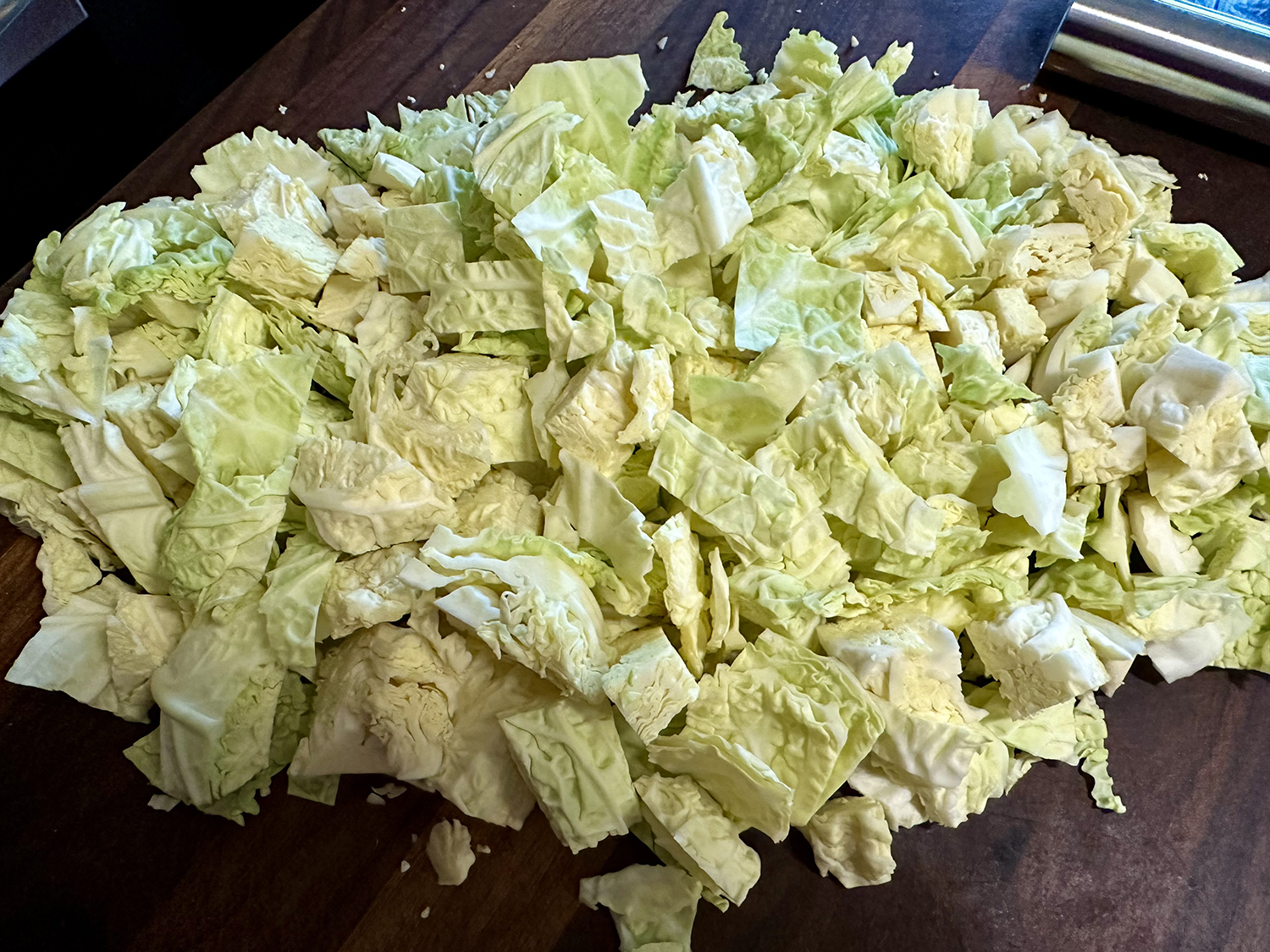
  • 1/2 medium head savoy cabbage, cut into 1-inch pieces
  • 1 can diced tomatoes, (14.5-oz.)
  • 1 tsp. hot Hungarian paprika
  • 2 Tbsp. sweet Hungarian paprika, or more to taste
  • 2 tsp. dried marjoram
  • 1 tsp. dried dill
  • 5 sprigs fresh thyme, tied into a bundle
  • 2 Tbsp. apple cider vinegar
  • Ground black pepper, to taste

Directions

  1. Dissolve 3 tablespoons salt in 4 quarts cold water in large bowl or container. Add beans and soak at room temperature for at least 8 hours and up to 24 hours. Drain and rinse well.
  2. Adjust oven rack to lower-middle position and heat oven to 250 degrees. Heat oil in large Dutch oven over medium-high heat. Add pork shoulder and brown on all sides, about 8 minutes. Transfer pork to a plate and place in set aside.
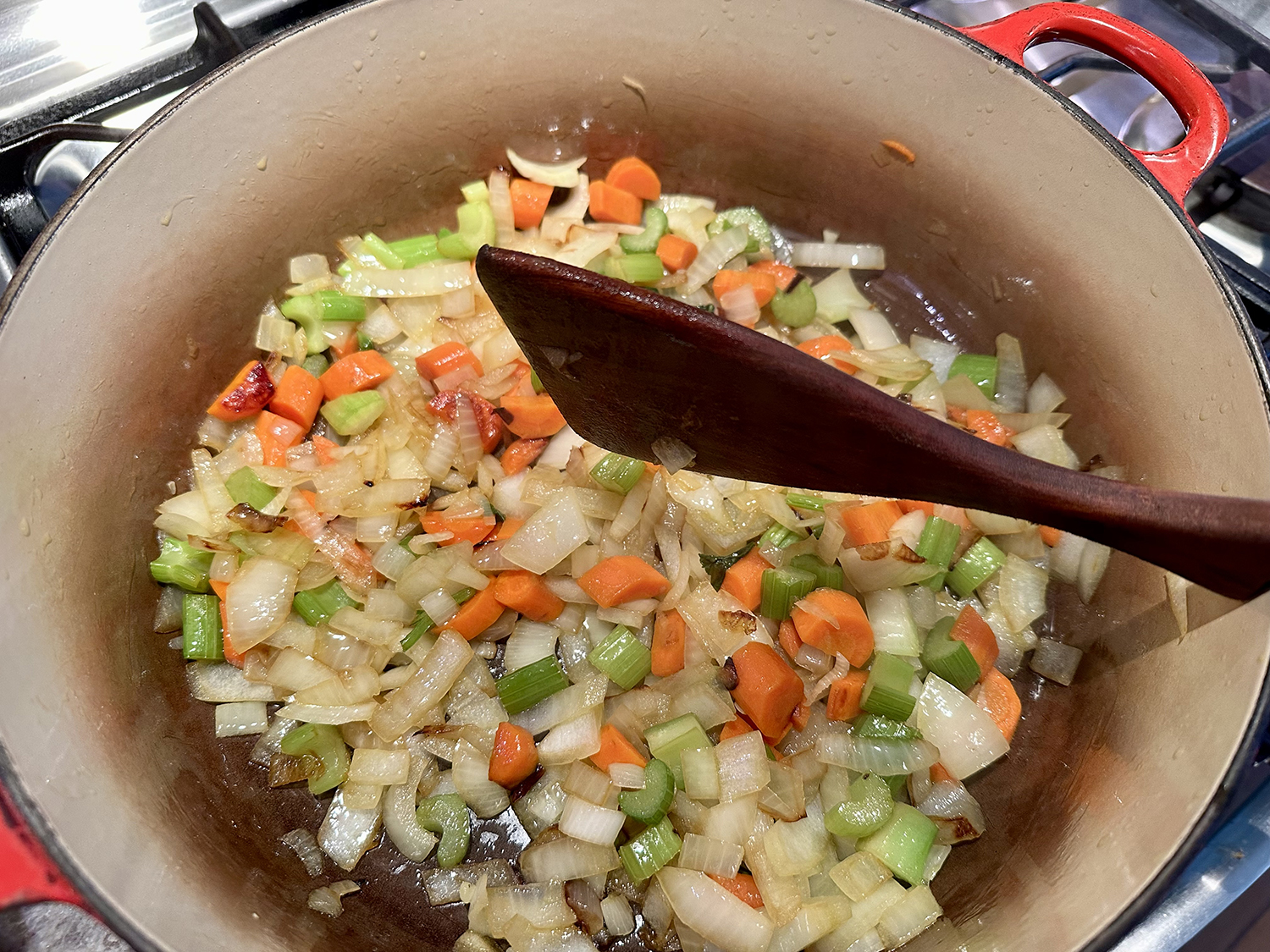
  3. Reduce heat to medium. Add onion, celery, and carrots. Cook, stirring occasionally, until vegetables are softened and lightly browned, 10 to 16 minutes.
  4. Stir in garlic and cook until fragrant, about 1 minute. Stir in broth, water, bay leaves, pork (along with any juices on the plate), and soaked beans. Increase heat to high and bring to simmer. Cover pot, transfer to oven, and cook until beans are almost tender (very center of beans will still be firm), about 1 hour.
  5. Remove pot from oven and stir in cabbage, tomatoes with their juices, hot and sweet paprika, marjoram, and dill. Cover pot, return pot to oven and continue to cook until beans and greens are fully tender, 45 minutes to one hour longer.
  6. Remove pot from oven and stir in the apple cider vinegar, and submerge thyme bundle in stew. Cover and let stand 15 minutes. Discard bay leaves and thyme bundle and season stew with salt and pepper to taste. If desired, use back of spoon to press some beans against side of pot to thicken stew.
http://www.lynnandruss.com

Loosely adapted from an America’s Test Kitchen recipe
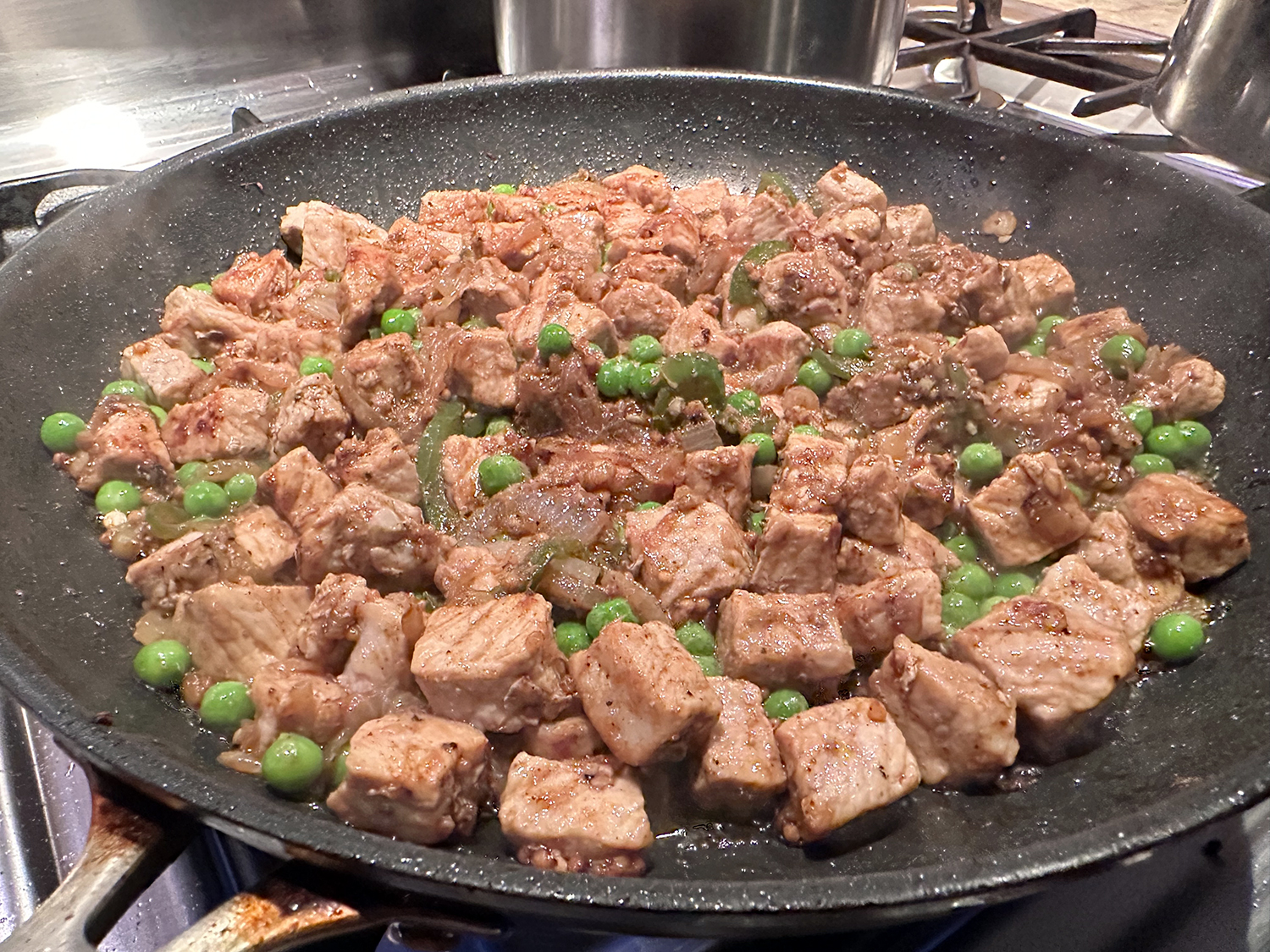
Stir-Fried Masala-Spiced Pork with Peas

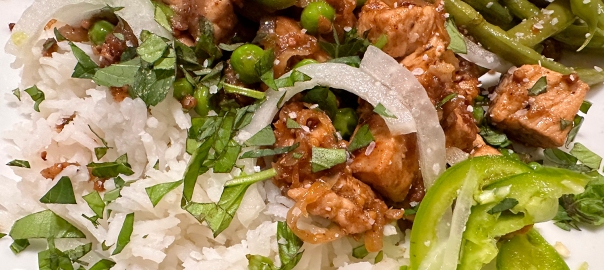
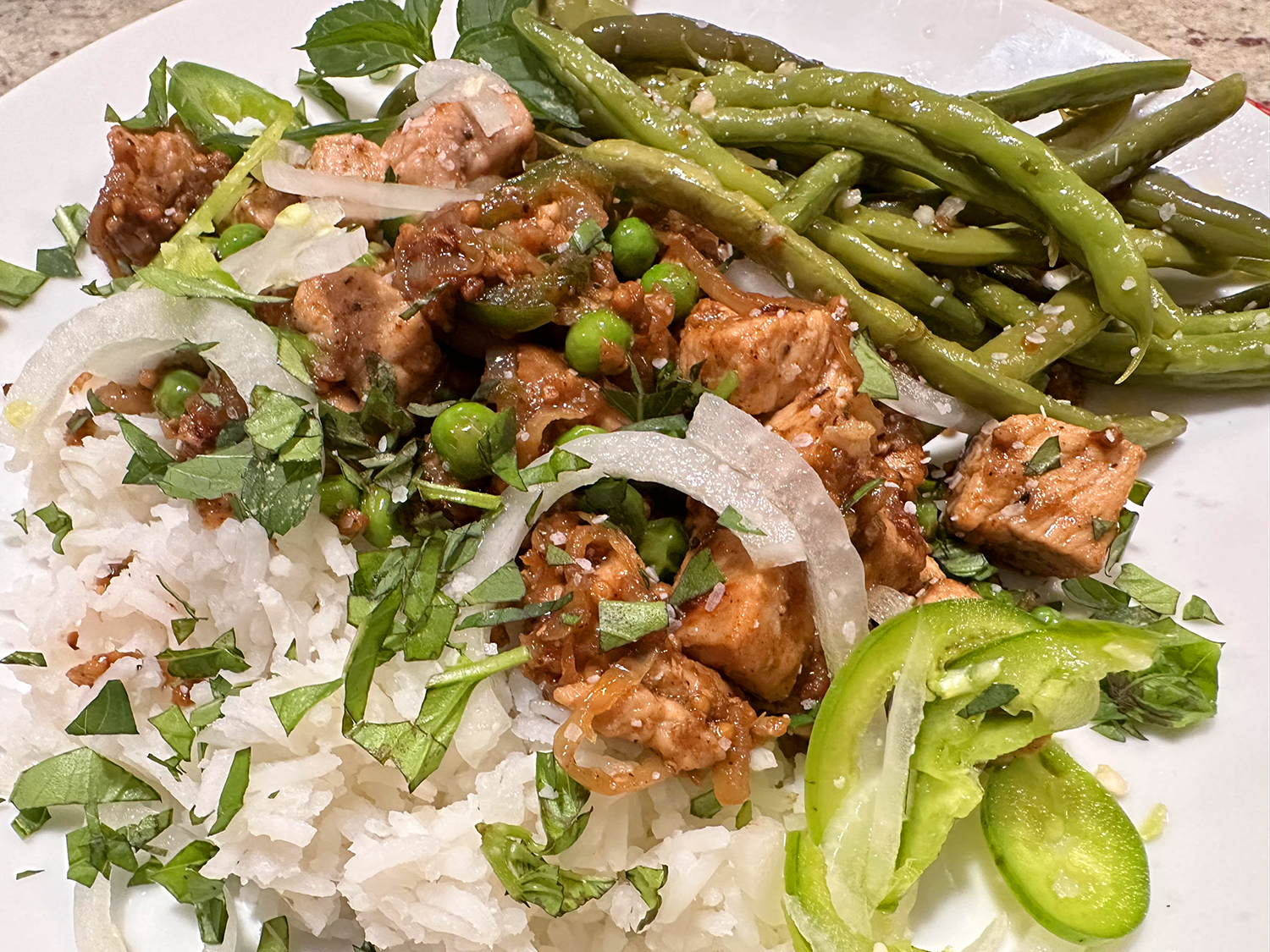
Fast, bold and casual, the perfect description for this weeknight stir-fry. The flavors are bold and bright. If you have a delicate palette, this may not be for you; however you could cut back on the chile peppers (it calls for serrano, we used jalapeños). Not a cilantro fan? A reasonable substitute for the cilantro is fresh basil and mint.

According to Milk Street, this stir-fry was inspired by a dish called pork ularthiyathu from the state of Kerala in southwestern India. Traditional recipes slowly braise the meat, then “dry-fry” it with aromatics until dark, rich and intensely flavored.

This is a weeknight-friendly version by stir-frying chunks of boneless pork loin chops with sliced onion and select spices. Peas add pops of color and sweetness. For balance and contrast in texture, make a tangy onion and fresh chili salad and pile it onto the stir-fry just before plating. Serve steamed basmati rice alongside. We also included a side of just-picked green beans and dressed with a similar spice profile.

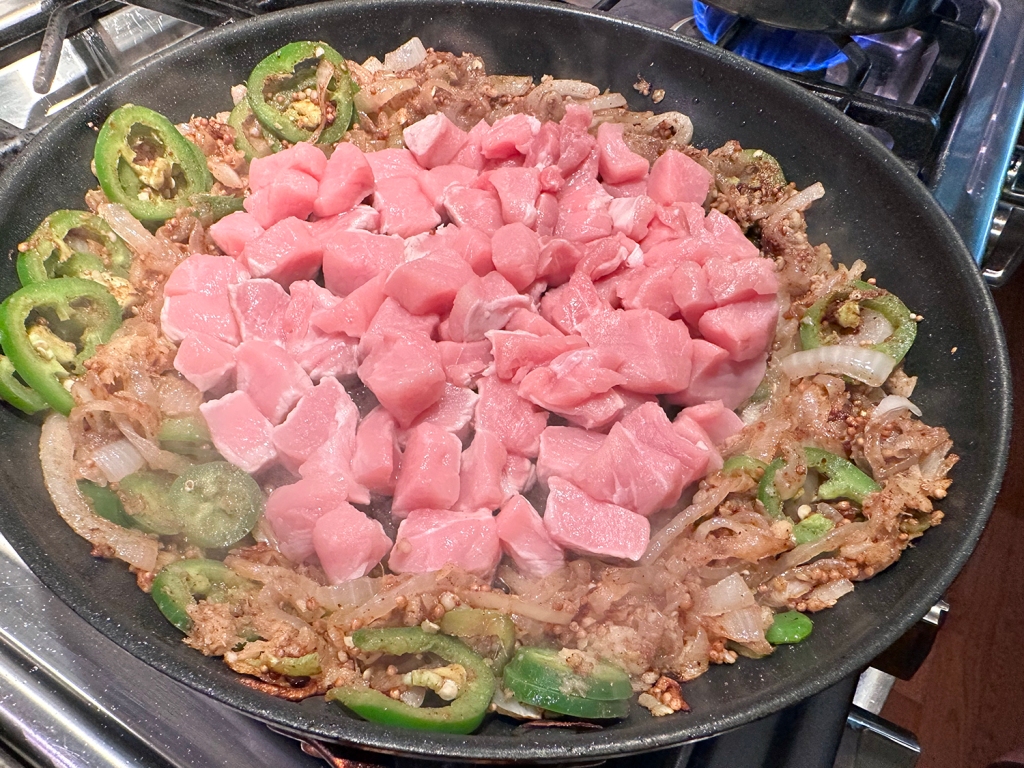
Don’t stir the pork for a couple of minutes after adding it to the skillet. Undisturbed cooking allows the pork to brown deeply, which is key to building flavor in the stir-fry. Once the pork is nicely seared, *stir to combine it with the onion mixture, pour in the first addition of water and scrape up the flavor-rich browned bits clinging to the pan.

*Here’s where the issue came in. With the onion mixture AND pork cubes, the skillet was overcrowded, and the ingredients were steaming instead of browning. To compensate, the Hubs removed the onion medley and cooked just the meat until charred a bit on the bottom; adding the mixture back to the pan after the pork browned. Next time he will use a wok.

Stir-Fried Masala-Spiced Pork with Peas

  • Servings: 3-4
  • Difficulty: easy
  • Print

Ingredients

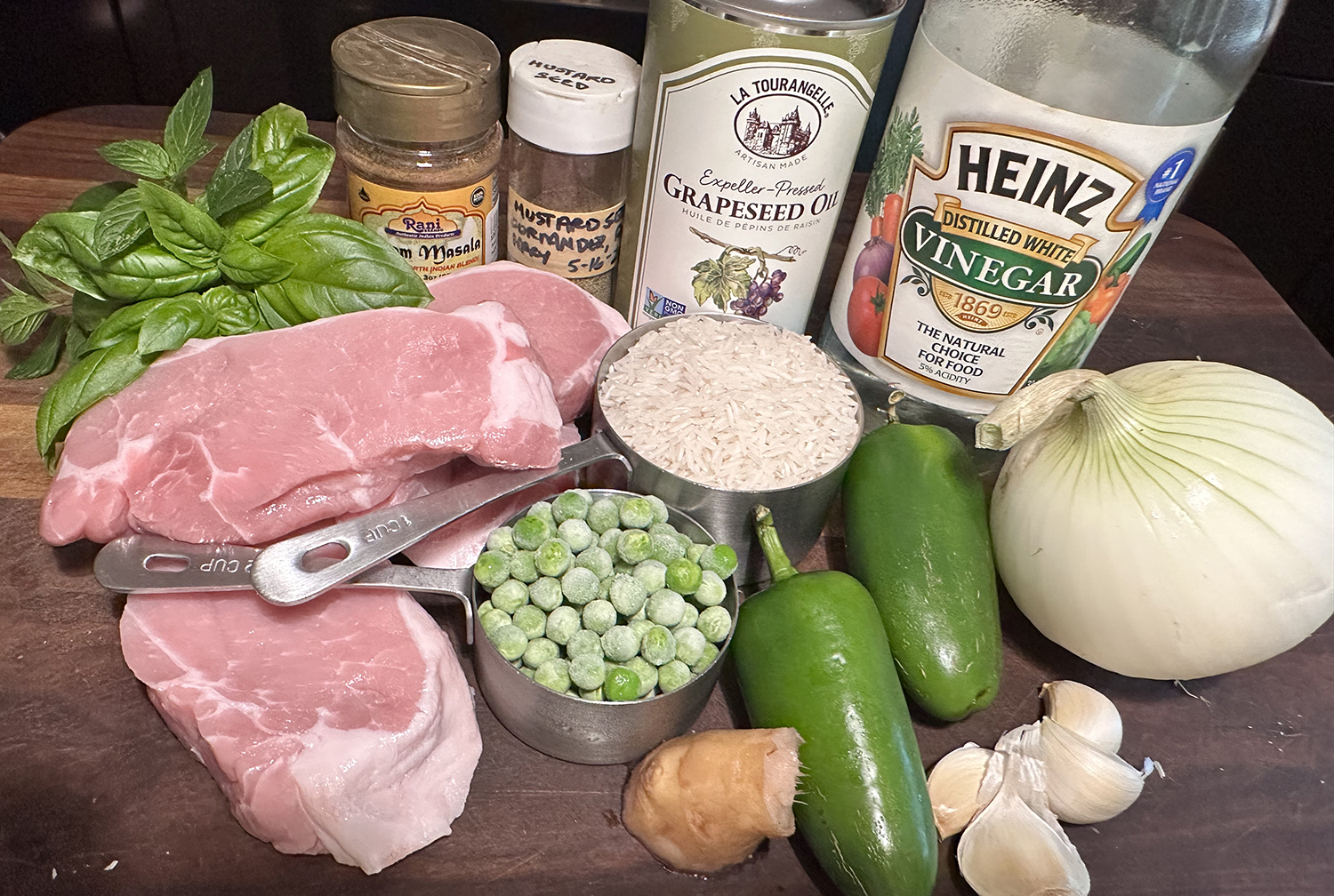
  • 1 large yellow onion, halved and thinly sliced
  • 2 serrano chilies, stemmed and sliced into thin rings
  • 2 Tbsp. white vinegar
  • Kosher salt and ground black pepper
  • 4 Tbsp. grapeseed or other neutral oil, divided
  • 1 Tbsp. yellow mustard seeds
  • 4 medium garlic cloves, finely grated
  • 1 Tbsp. finely grated fresh ginger
  • 2 tsp. garam masala
  • 1 1/2 lbs. boneless pork loin chops, trimmed of fat, cut into ½- to ¾-inch chunks
  • 1/2 cup frozen peas
  • 1/2 cup water
  • 1/4 cup lightly packed fresh cilantro, or a mix of fresh basil and mint

Directions

  1. In a small bowl, stir together a quarter of the onion, half of the chilies, the vinegar and ⅛ teaspoon salt; set aside.
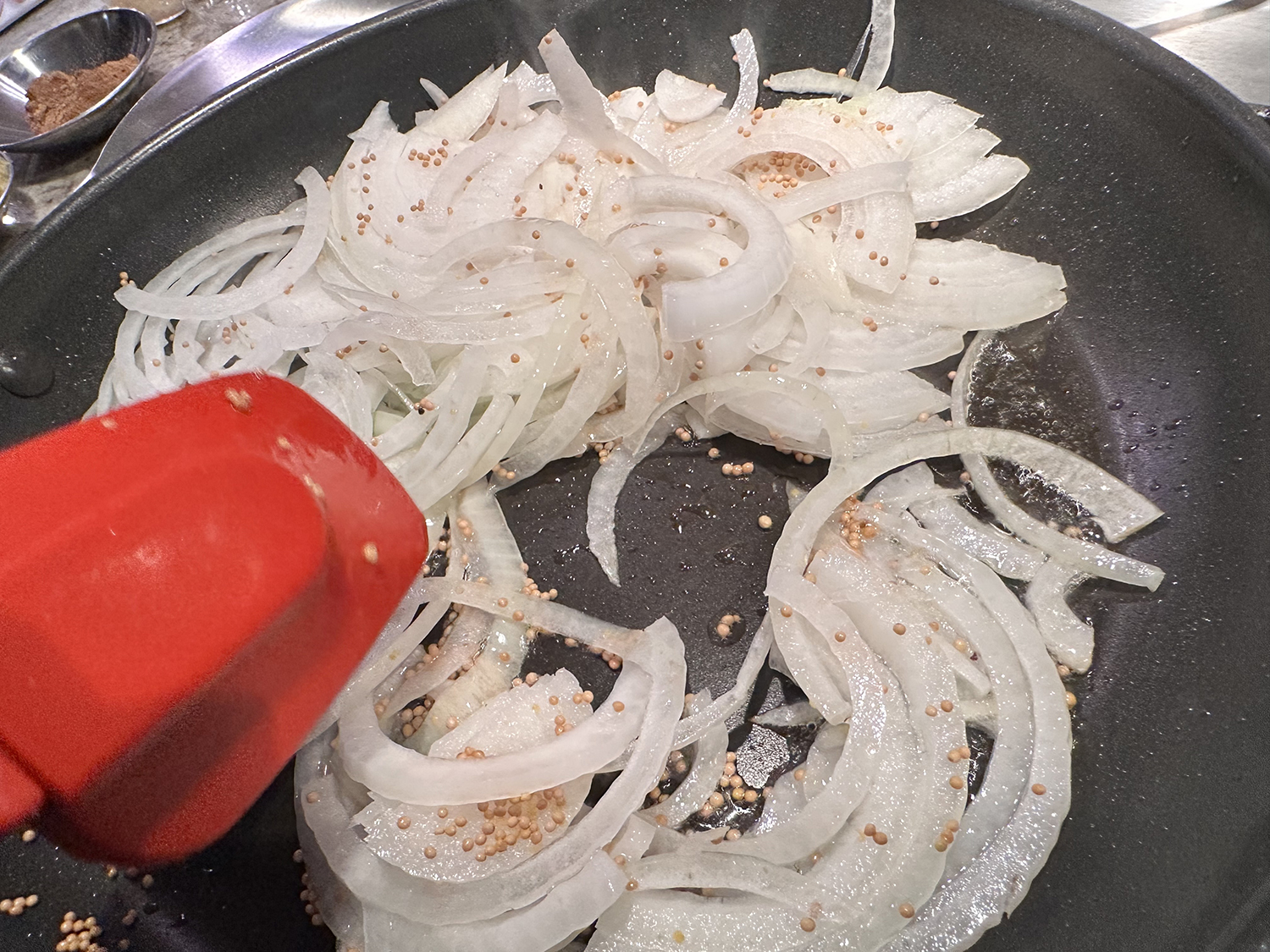
  2. In a 12-inch skillet over medium-high, heat 3 tablespoons of the oil until shimmering. Add the remaining onion, the mustard seeds and ¼ teaspoon salt; cook, stirring, until lightly browned, 4 to 5 minutes.
  3. Add the remaining chilies, the garlic, ginger and garam masala; cook, stirring, until fragrant, about 1 minute.
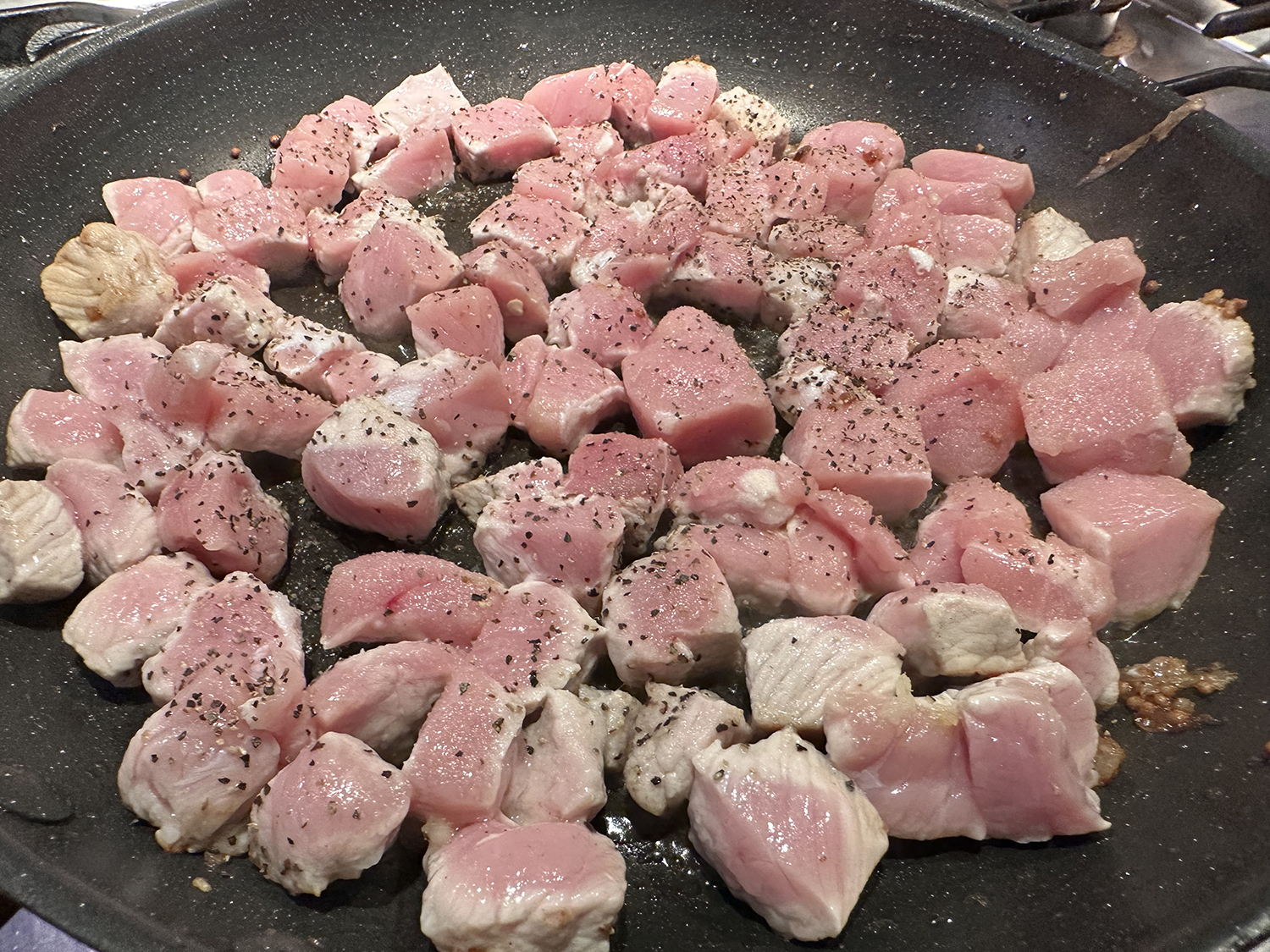
  4. Push the mixture to the perimeter of the pan*; add the remaining 1 tablespoon oil to the clearing. Add the pork in an even layer and sprinkle with ½ teaspoon each salt and pepper. Cook without stirring until browned on the bottom, about 3 minutes.
  5. Stir the onion mixture into the pork; cook, scraping up any browned bits, until the pork is browned all over, 4 to 5 minutes.
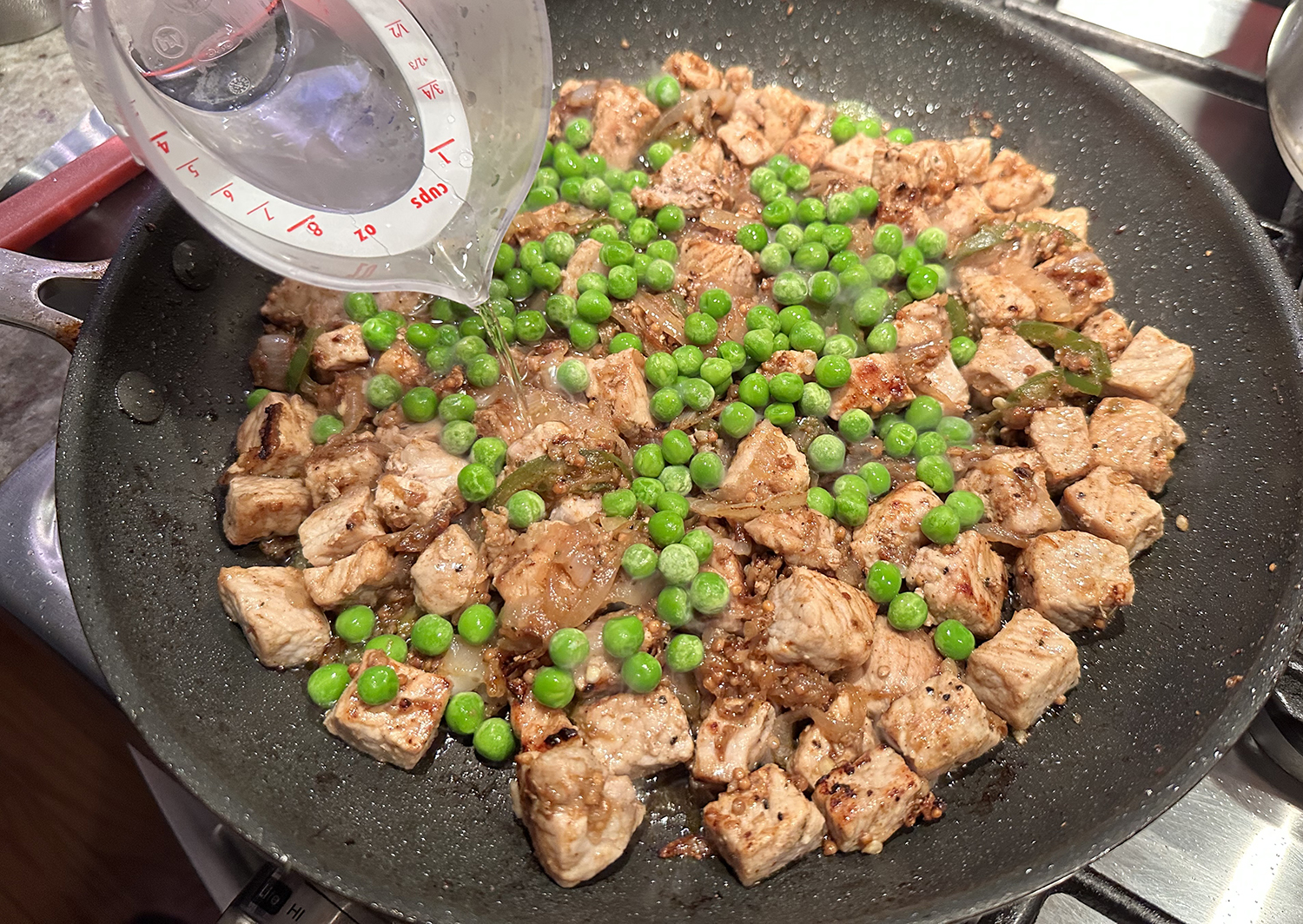
  6. Add the peas and ¼ cup water; cook, stirring, until the pork is lightly glazed, about 1 minute. Taste and season with salt and pepper. Transfer to a serving dish and top with the reserved onion mixture and cilantro or other herbs.

http://www.lynnandruss.com

Adapted from a recipe by Courtney Holl for Milk Street

Classic Pork Fried Rice

Pork Fried Rice is usually a dish we make with leftovers from a pork loin (or tenderloin) dinner. Here, we changed things up a tad by trying this restaurant-quality version from The Woks of Life. The rendition, in contrast to our typical Pork Fried Rice uses only half the amount of eggs, two versus four.

The intended pork meat is supposed to be Chinese BBQ pork (char siu). Char siu originally comes from Cantonese cuisine, and it means “fork roasted”, which is a nod to the traditional cooking method of skewering seasoned pork with long forks, and placing them in an oven or over a fire. It is known for its vibrant red exterior.

If you’ve never had Char Siu before, it’s one of the most tender and juicy balances of savory, sweet pork you might ever have. It’s got umami from various ingredients (like fermented bean curd, hoisin, oyster sauce), a bit of zest from wines, and sweetness from brown sugar and honey. Five spice powder, a popular Chinese ingredient, ties it all together with a distinctive blend of spices. It’s absolutely delicious.

Alas, we did not have any Char Siu, but plan to either make some or buy it at our local Asian foodmart for the next go-around.

Classic Pork Fried Rice

  • Servings: 6
  • Difficulty: easy
  • Print

Ingredients

  • 1 Tbsp. hot water
  • 1 tsp. honey
  • 1 tsp. sesame oil
  • 1 tsp. Shaoxing wine (or dry cooking sherry)
  • 1 Tbsp. soy sauce
  • 1 tsp. dark soy sauce
  • 1/4 tsp. white pepper
  • 5 cups cooked Jasmine rice, (add 1 tsp. oil to rice when cooking)
  • 1 Tbsp. oil
  • 1 medium onion, diced
  • 1 Lb. Chinese BBQ pork (char siu), cut into 1/2 inch chunks
  • 1 tsp. salt
  • 1/2 cup bean sprouts
  • 2 eggs, scrambled
  • 2 scallions, sliced

Directions

  1. Start by combining the hot water, honey, sesame oil, shaoxing wine (if using), soy sauce, dark soy sauce, and white pepper in a small bowl. This is the sauce that you’ll be adding to the rice, and it’s much easier to have it combined and ready to go before you start cooking.
  2. Take your cooked rice and fluff it with a fork or with your hands (you can rinse your hands in cold water if the rice starts sticking to them). There shouldn’t be any big clumps!
  3. With the wok over medium heat, add a tablespoon of oil and sauté the onions until translucent and then stir in the roast pork. Add the rice and mix well. If the rice is cold from the refrigerator, continue stir-frying until the rice is warmed up, which will take about 5 minutes. If the rice was made fresh, then you just need to mix until everything is incorporated.
  4. Add the sauce mixture and salt and mix with a scooping motion until the rice is evenly coated with sauce. You will have to break up any remaining clumps of rice with the spatula as best as possible, but no need to be obsessive. The rice should be hot by this time.
  5. Toss in your mung bean sprouts, scrambled eggs, and scallions. Mix thoroughly for another minute or two and serve!

http://www.lynnandruss.com

Recipe compliments of Bill from The Woks of Life

Sweet-and-Sour Pork with Pineapple

This takeout classic has delicious roots in Cantonese cooking. Now, it is tempting to dismiss sweet-and-sour pork as gloppy, Americanized Chinese food. And, let’s face it, it often is. Been there, tasted that.

Looking to harness that enticing sweet-tart profile without the saccharine stickiness, Milk Street was drawn to the dish’s origins. A lighter, earlier variation happens to be preserved in Taiwan, where cooks skip the deep-frying—and the ketchup—to better highlight the other ingredients.
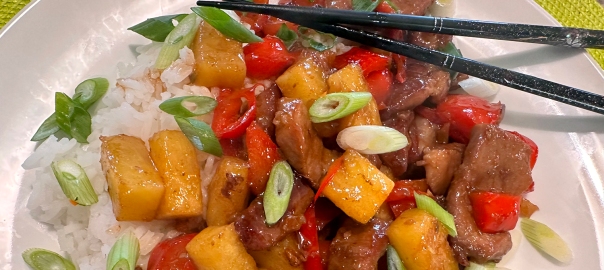
Thinly sliced pork shoulder is marinated in soy sauce, a bit of sugar and cornstarch. The starch creates a protective layer against the high heat of a stir-fry, helping to keep the pork tender by preventing it from overcooking. After briefly stir-frying the meat with ginger, in go red bell pepper, chilies, scallions and pineapple with roughly equal parts rice vinegar, sugar and more soy sauce.
A hefty chunk of ginger is cut into matchsticks for bigger pops of piquant flavor, while thinly sliced serrano chilies add spice to further balance the sweetness. It makes for a savory-sweet dish, a little tart and well-balanced to the last bite. A delicious return to the dish’s roots.

NOTES: Don’t use canned pineapple, as its flavor is dull compared to fresh. But if prepping a whole pineapple is too much work, look for ones sold already cleaned in the produce section of the supermarket. Also, don’t use a conventional (i.e., not nonstick) skillet. Without a nonstick coating, the sugars from the pineapple and sauce are likely to stick to the pan’s surface and scorch.

Sweet-and-Sour Pork with Pineapple

  • Servings: 4
  • Difficulty: easy
  • Print

Ingredients

  • 1 1/2 lbs. boneless pork shoulder, trimmed, cut into 2-inch-wide strips, and thinly sliced
  • 3 Tbsp. soy sauce, divided, plus more if needed
  • 1/2 tsp. plus 1 Tbsp. white sugar, divided
  • 1 Tbsp. cornstarch
  • 3 Tbsp. grapeseed or other neutral oil
  • 1 medium red bell pepper, stemmed, seeded and chopped
  • 1 cup chopped fresh pineapple (½-inch chunks)
  • 2-3 serrano chilies, stemmed, seeded and thinly sliced on the diagonal
  • 1 inch piece fresh ginger, peeled and cut into matchsticks (about 3 Tbsp.)
  • 1/3 cup unseasoned rice vinegar, plus more if needed
  • 3 scallions, thinly sliced on the diagonal

Directions

  1. In a medium bowl, combine the pork, 1 tablespoon soy sauce, the ½ teaspoon sugar and the cornstarch; stir until the pork is evenly coated.
  2. In a 12-inch nonstick skillet over medium-high, heat the oil until barely smoking. Add the pork in an even layer and cook, stirring only once or twice, until the pork is lightly browned, 4 to 5 minutes.
  3. Add the bell pepper and cook, stirring occasionally, until the pepper is lightly browned, 4 to 5 minutes.
  4. Add the pineapple, chilies and ginger, then cook, stirring occasionally, until the pineapple begins to brown, 2 to 3 minutes.
  5. Stir in the vinegar, the remaining 2 tablespoons soy sauce and the remaining 1 tablespoon sugar. Cook, stirring often, until the meat and vegetables are lightly coated with the sauce, 1 to 2 minutes.
  6. Off heat, taste and season with additional soy sauce and vinegar. Transfer to a serving dish and sprinkle with the scallions.

http://www.lynnandruss.com

Original recipe by Albert Stumm for Milk Street

Russ’s Braised Pork and Sauerkraut

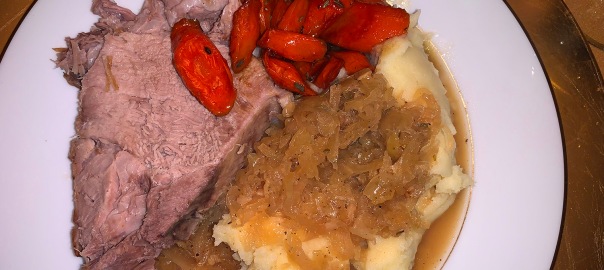
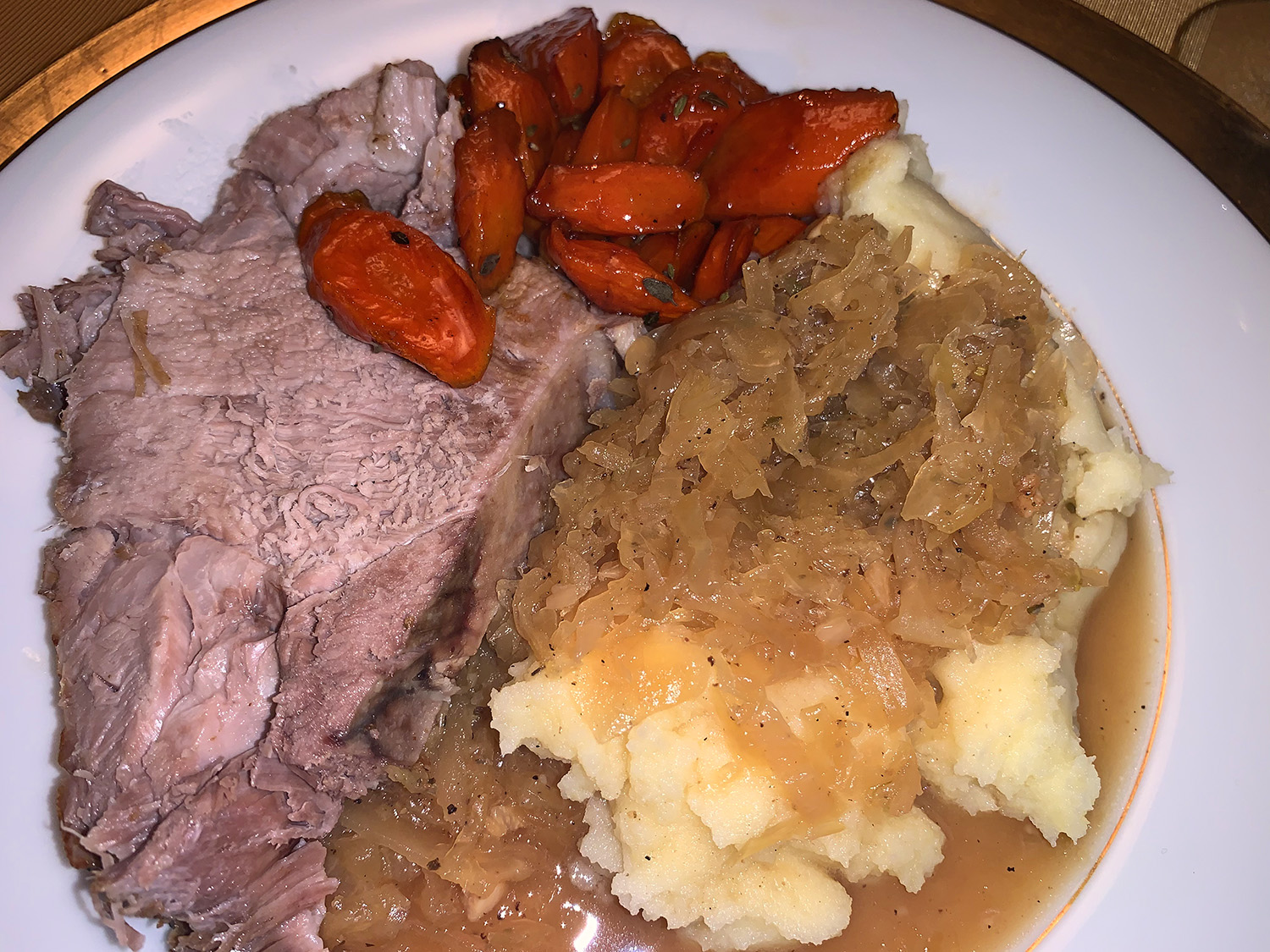
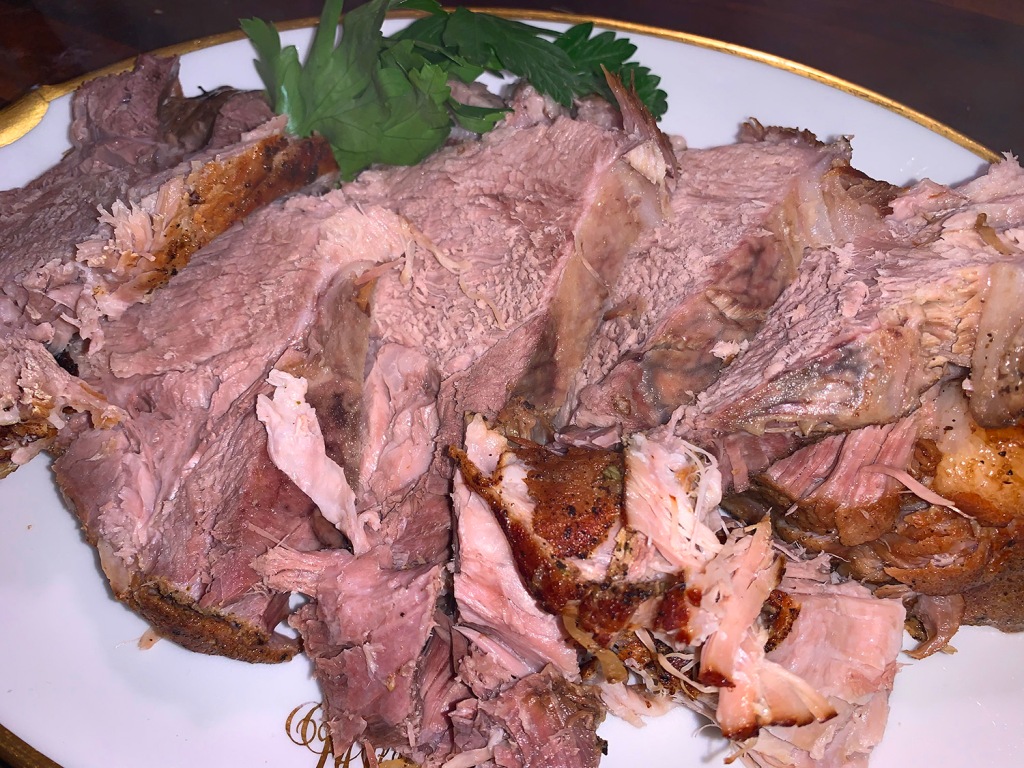
COVID-19 and its variants are following us into 2022, so invite good luck into your new year. For the Pennsylvania Dutch, that means pork and sauerkraut, which is good luck because pigs root around with their snouts in a forward motion. (You always want to move forward, not backward in life, of course.) Sauerkraut is made with cabbage, which is considered lucky because it’s green just like money.

It is also a household tradition on my husband’s German side of the family to serve pork and sauerkraut on New Year’s Day. A tradition I couldn’t quite get jiggy with when we first started dating twenty-plus years ago; however, I am now a huge convert. If you can’t beat ’em, join ’em, right?

This year the plan was to host a small NYD dinner party, thus the large piece of meat. Unfortunately, all of those folks came down with COVID a few days prior and were under quarantine, so it was just the two of us… I guess we didn’t start the good luck process early enough?

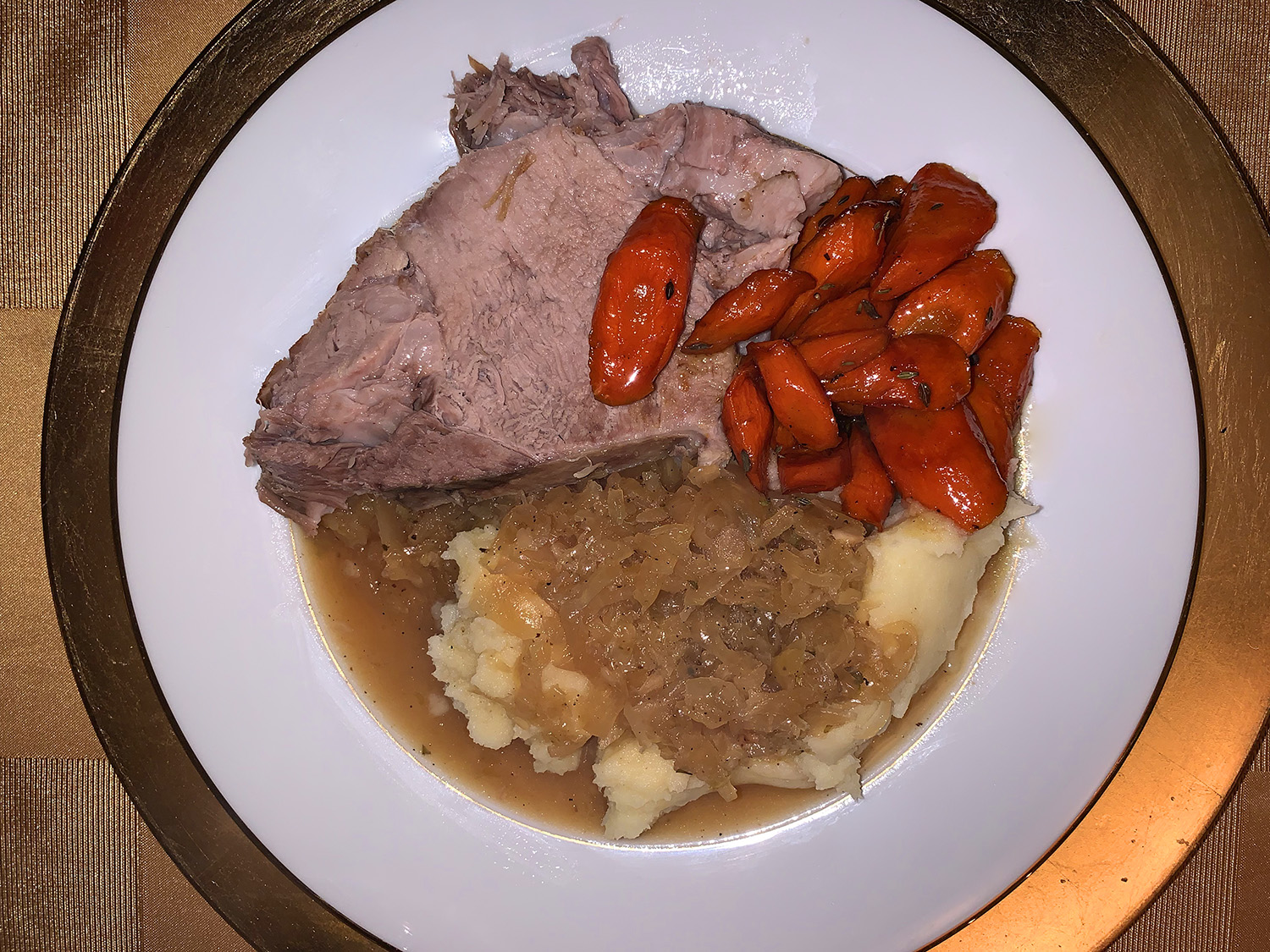
One minor switcharoo we made this time was using some hard cider brewed by son Daniel instead of the beer, lending a slight apple taste to the dish. Along with garlicky mashed potatoes, our other side was Whiskey-Glazed Carrots.

The Hubs made sure the COVID crew got part of the good luck meal too. He drove over all of the leftovers the following day. Paying it forward. See, their good luck has already started…

Russ's Braised Pork and Sauerkraut

  • Servings: 8
  • Difficulty: easy
  • Print

Ingredients

  • 1 Tbsp. salt
  • 1 1/2 tsp. onion powder
  • 1 1/2 tsp. garlic powder
  • 1 1/2 tsp. ground black pepper
  • 1/2 tsp. dried oregano, ground finely
  • 1 bone-in or boneless pork shoulder, 5-6 lbs.
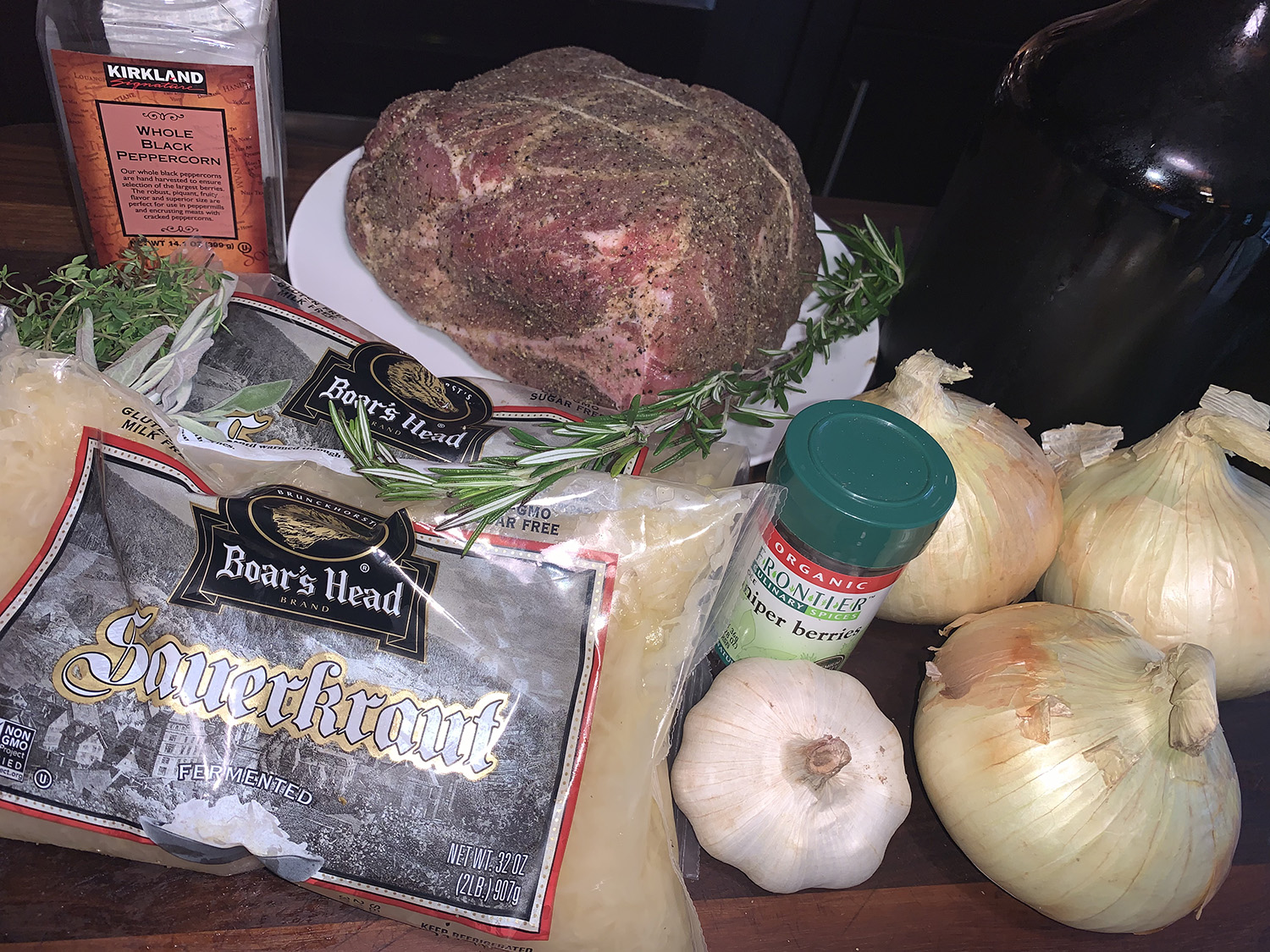
  • 3 large onions, peeled and sliced
  • 8 cloves garlic, peeled and chopped
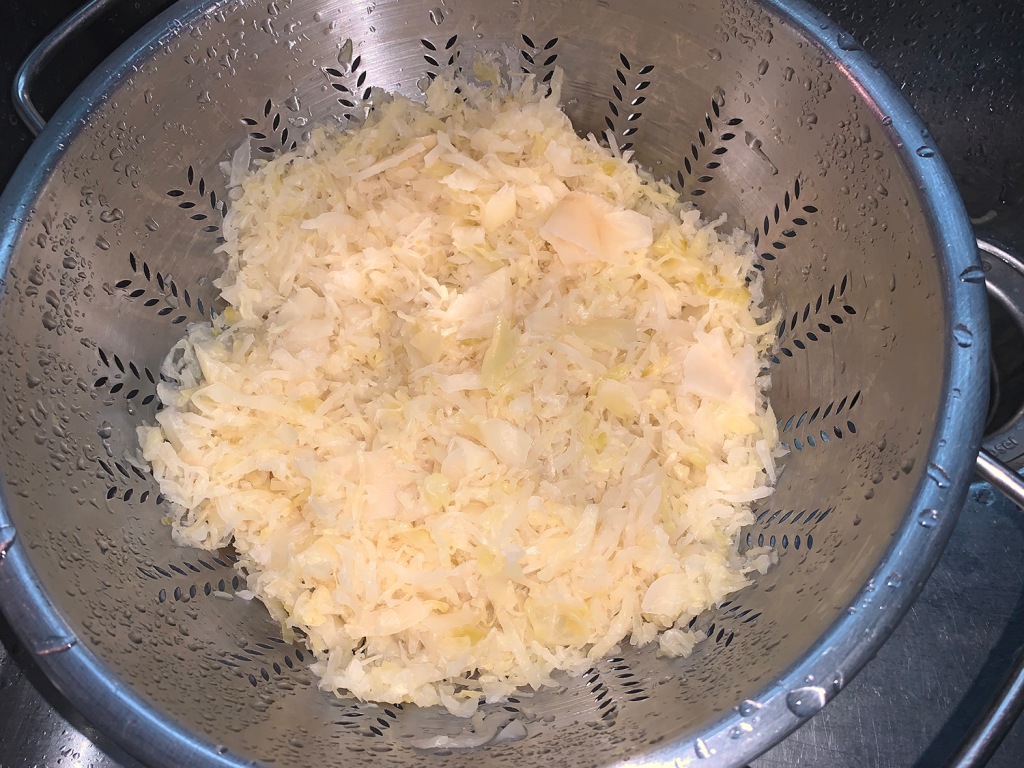
  • 4 lbs. sauerkraut, drained
  • 2 bottles amber beer
  • 2 bay leaves
  • 1 stalk rosemary
  • 6 stems thyme, tied in a bunch
  • 1 Tbsp. black peppercorns
  • 6 juniper berries (optional), lightly crushed
  • Olive oil

Directions

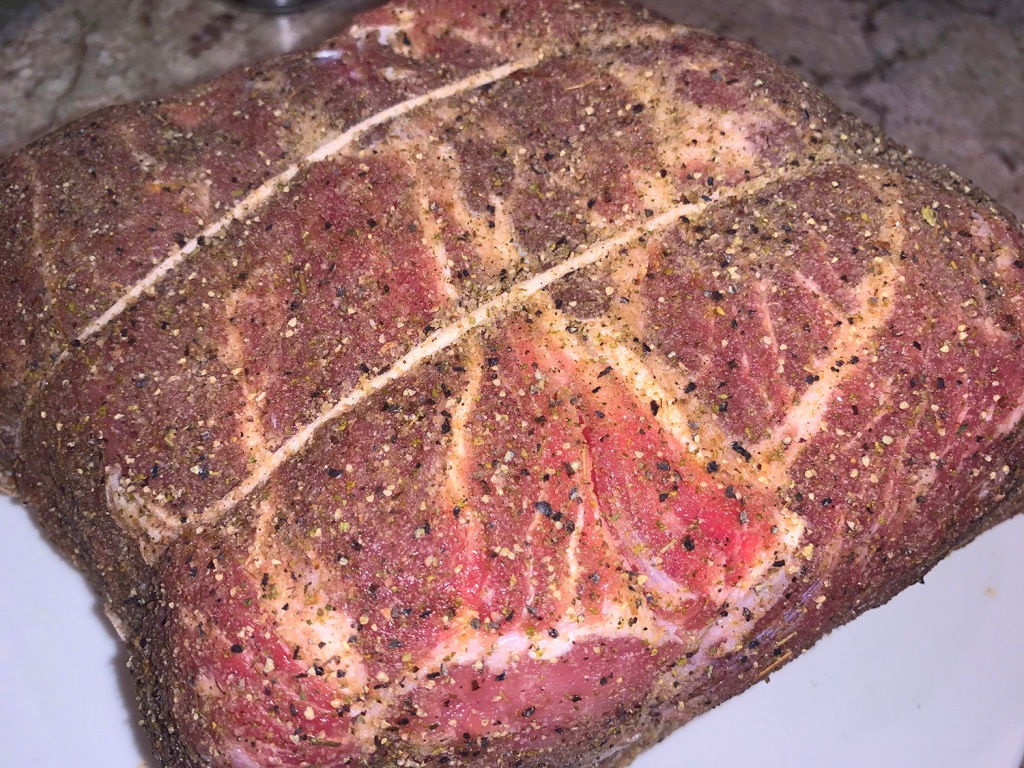
  1. At least 8, or preferably 24 hours before cooking the pork, combine the first five ingredients and rub all of over the pork. Wrap the meat tightly in plastic wrap, place on a plate and refrigerate. Remove meat from refrigerator and allow to warm at room temperature about an hour before you plan to cook it.
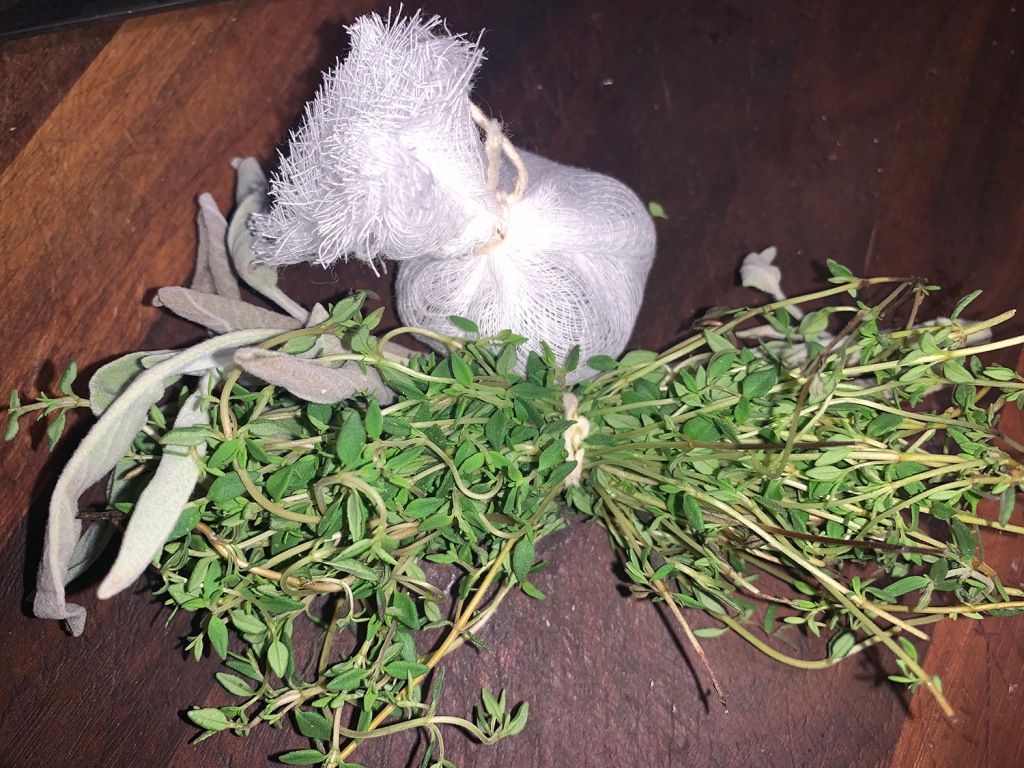
  2. Make a bouquet garni with the peppercorns and the juniper berries (if using them) and set aside. Be sure to double or triple the cheesecloth.
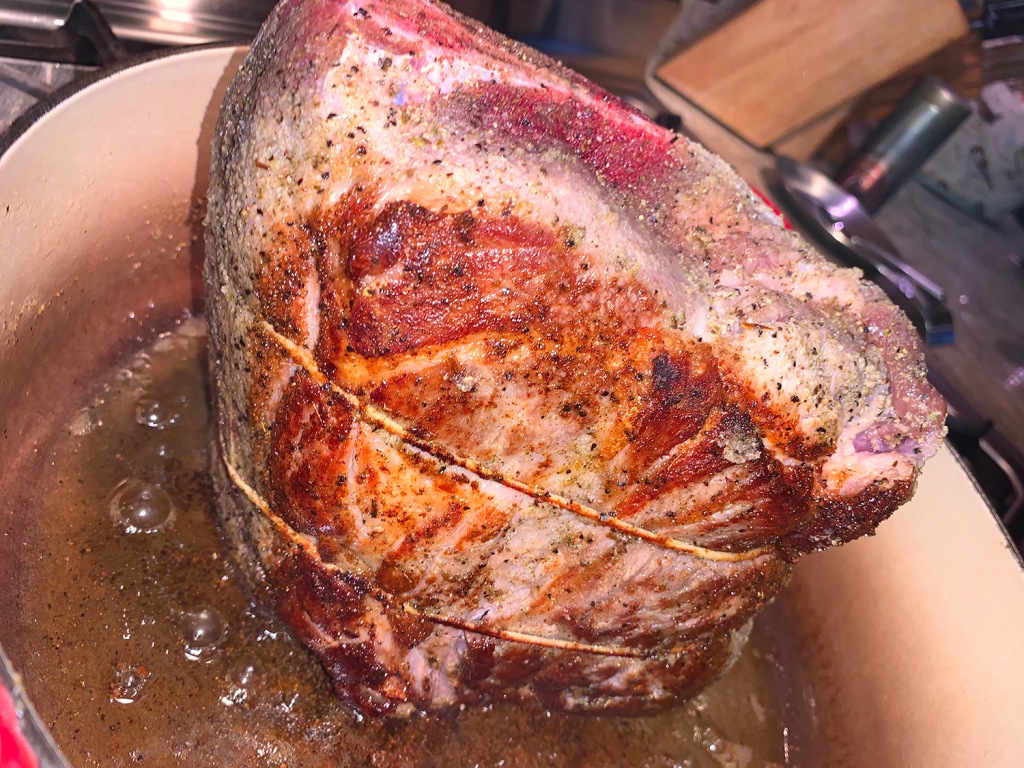
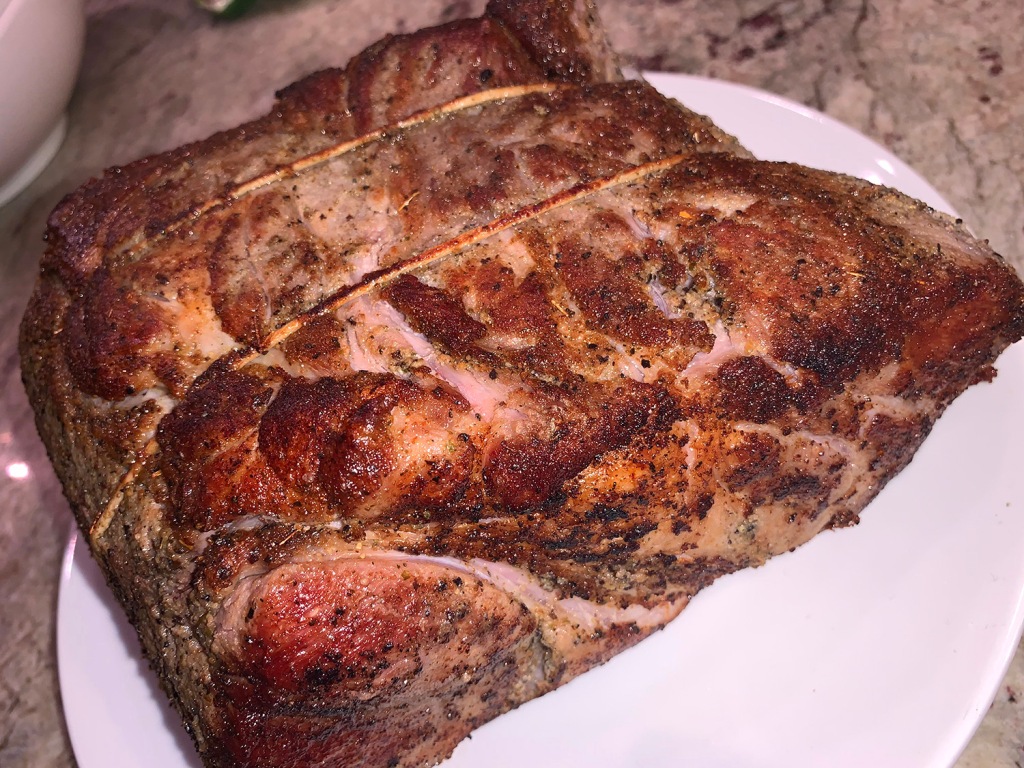
  3. Preheat the oven to 300 degrees F. In a large Dutch oven with a tight fitting lid, heat 3 tablespoons of olive oil over a medium high flame until shimmering. Unwrap the pork shoulder and brown on all sides, about 15-20 minutes. Remove meat from pot and set on plate while you complete the next steps.
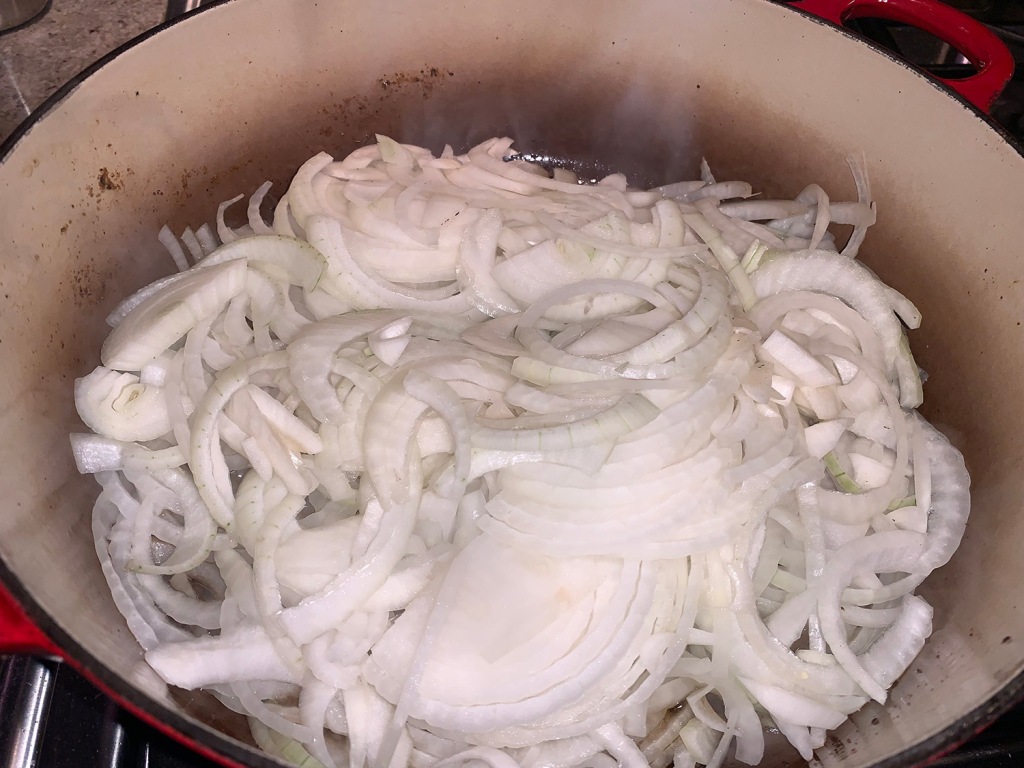
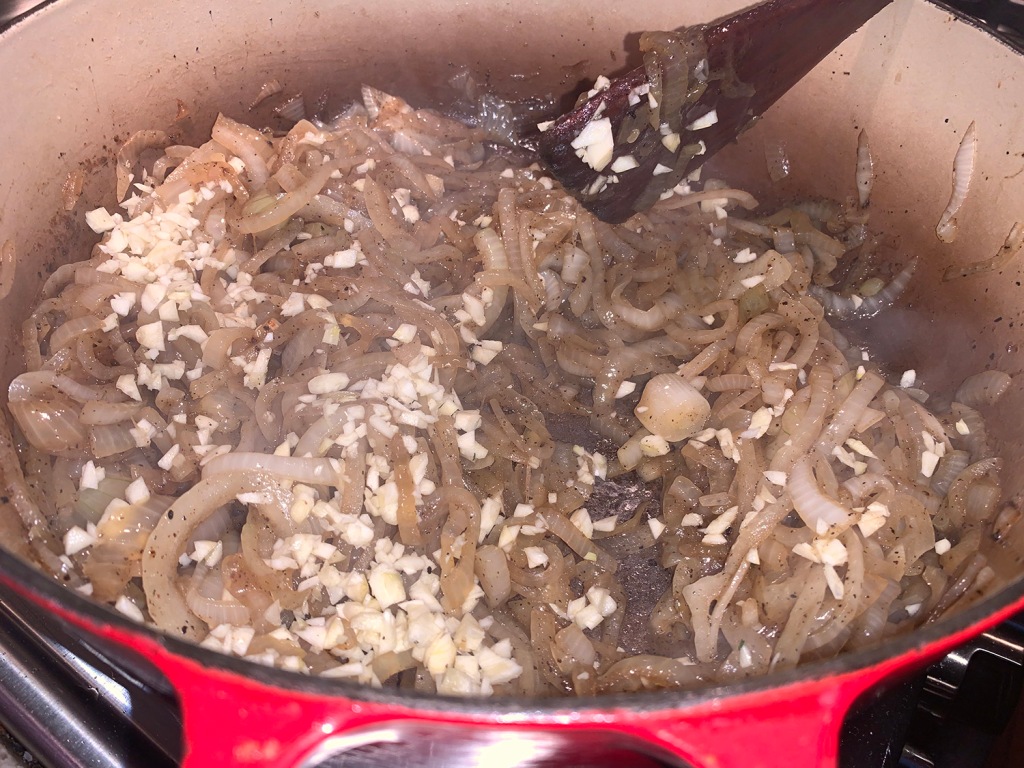
  4. Add the sliced onions to the pot and sauté until they be come translucent. Add the chopped garlic and sauté for about one minute. Add the drained sauerkraut, then the 2 bottles of beer. Mix everything together well, making sure to deglaze the bottom of the pan. Add the bay leaves, thyme, sprig of rosemary and the bouquet garni. Mix well again with the sauerkraut and onions.
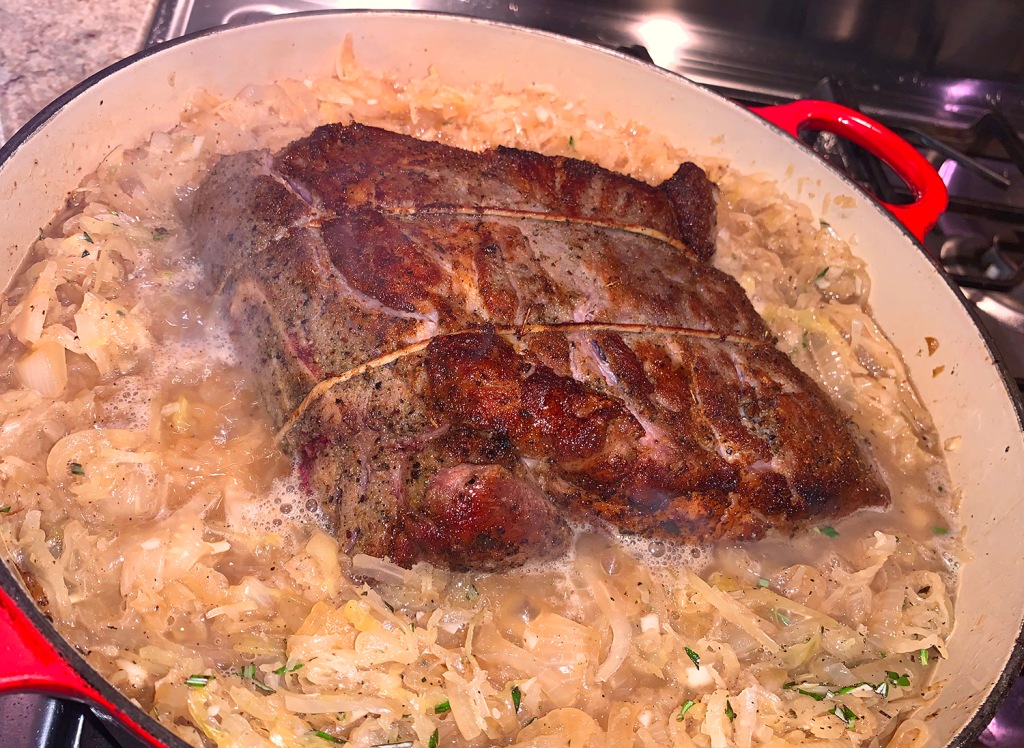
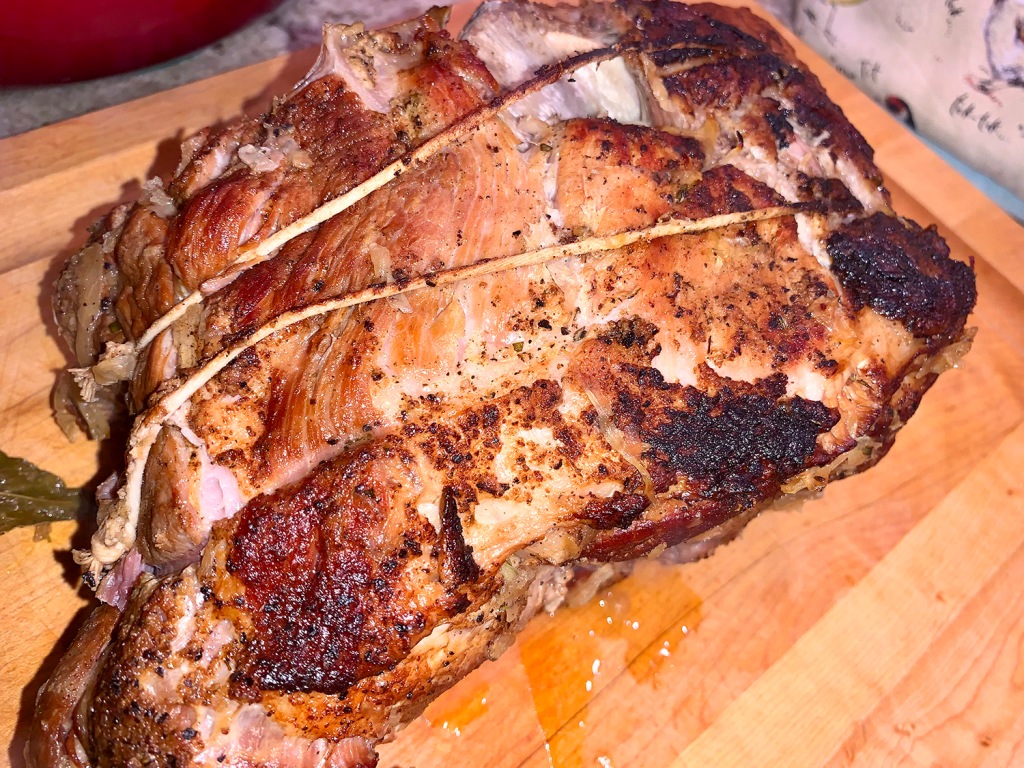
  5. Return the pork shoulder to the pot, nestling it into the sauerkraut. Place a sheet or parchment or aluminum foil over the pot, then put on the lid, ensuring that it fits tightly. Place the pot in the preheated oven and cook for 2 hours. Turn the roast, then return it to the oven for another 1 1/2 to 2 hours or until the meat is very tender and falls apart easily.
  6. To serve, remove the pork shoulder from the pot to a platter to carve. Remove the bay leaves, rosemary sprig, thyme and bouquet garni and discard. Give the sauerkraut mixture a good stir and serve with the pork.

http://www.lynnandruss.com