Tag Archives: Meat

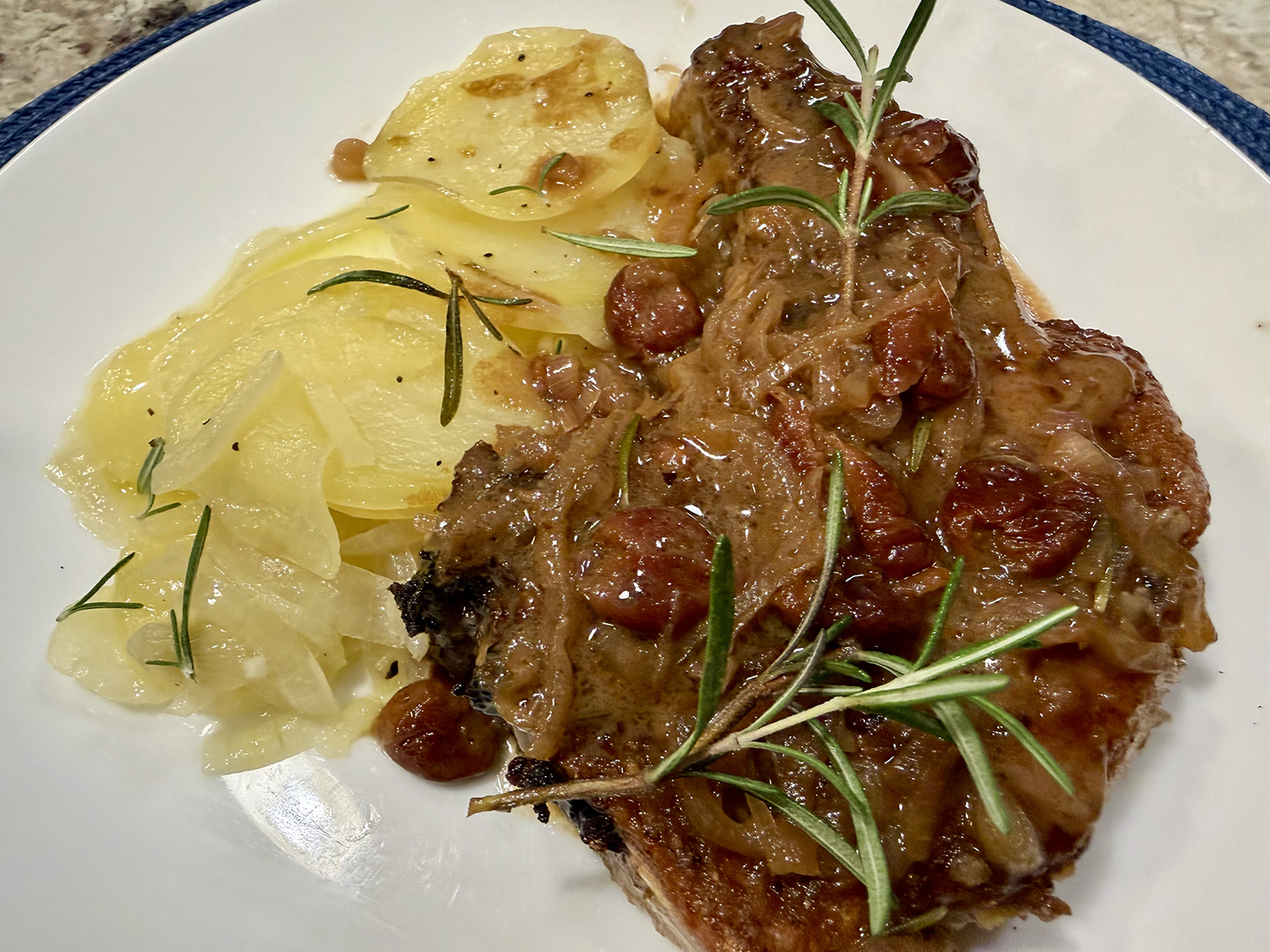
Rosemary and Dried Cherry Pork Chops

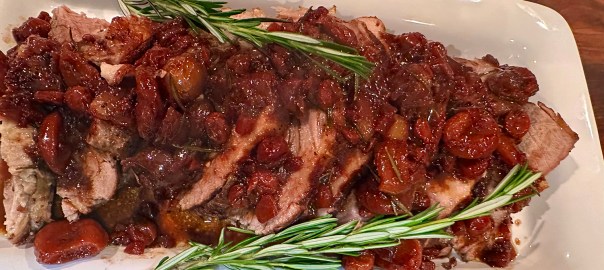
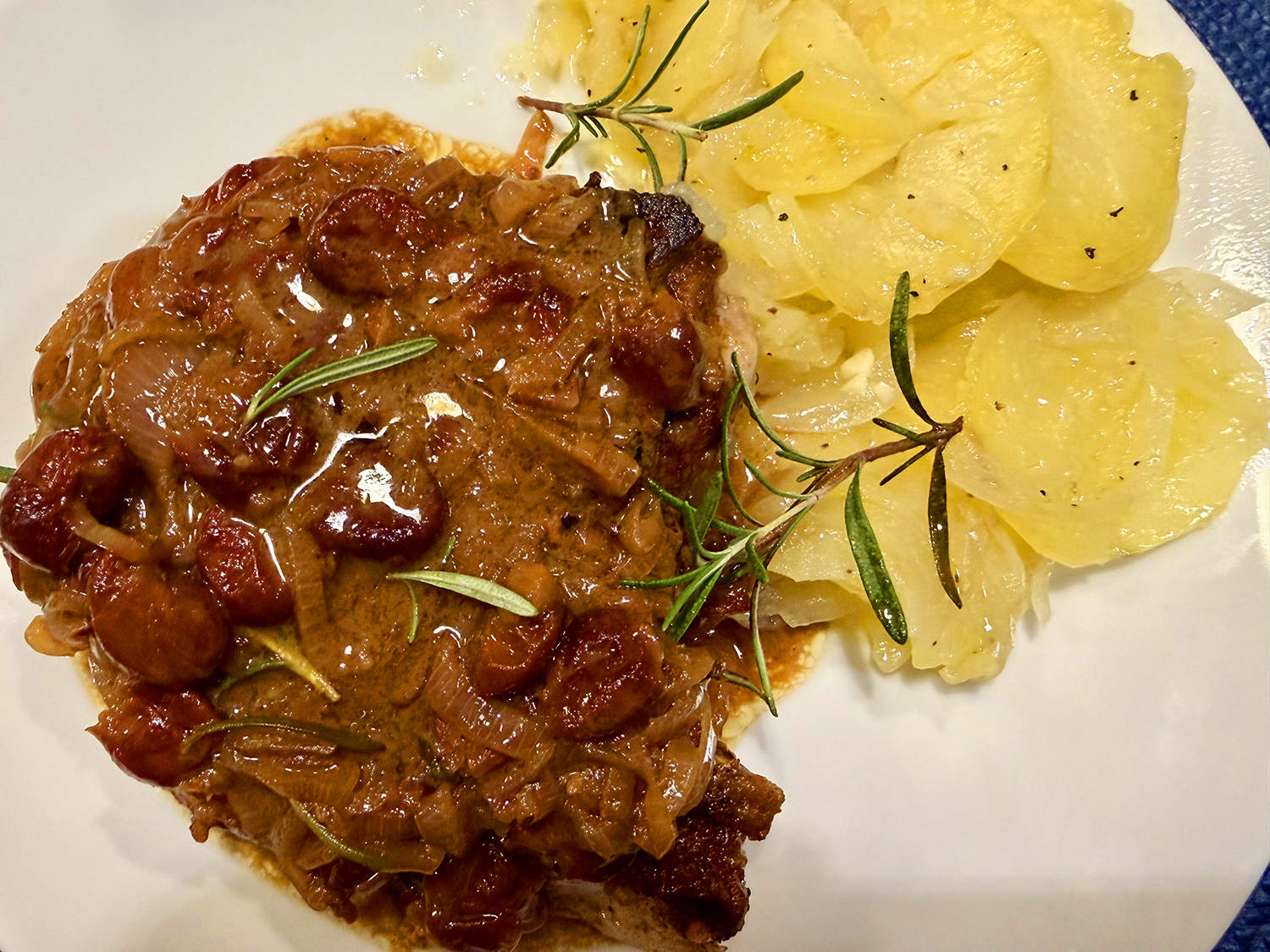
How about a to-die-for date night dinner for two? Pork and fruit are a classic partnership, and in this recipe from Bon Appétit, the marriage has lasting potential! It was a memorable dinner date for us… no future divorce attorneys on speed dial…

Rehydrating dried cherries in hot water turns them plump and juicy—exactly what you want scattered throughout a rosemary-scented pan sauce for thick-cut pork chops. Don’t be tempted to go for boneless chops; a dish this simple and flavorful calls for a heavy-hitting bone-in situation.

Our sides consisted of Patatas Panaderas and a side salad. Dinner Done!

Rosemary and Dried Cherry Pork Chops

  • Servings: 2
  • Difficulty: easy
  • Print

Ingredients

  • ⅓ cup dried tart cherries
  • 2 1″–1¼”-thick bone-in pork chops (10–12 oz. each)
  • Kosher salt, freshly ground pepper
  • 3 Tbsp. all-purpose flour
  • 2 Tbsp. extra-virgin olive oil
  • 1 large shallot, thinly sliced
  • 4 Tbsp. unsalted butter, divided
  • 2 cups low-sodium chicken broth
  • 2 Tbsp. Dijon mustard
  • 1 Tbsp. balsamic vinegar
  • 2 sprigs rosemary

Directions

  1. Combine ⅓ cup dried tart cherries and ½ cup hot water in a small bowl. Let sit to rehydrate while you cook the pork.
  2. Pat two 1”–1¼”-thick bone-in pork chops (10–12 oz. each) dry with paper towels. Season generously on both sides with kosher salt and freshly ground pepper. Sprinkle 3 tablespoon all-purpose flour evenly over both sides of each chop; press in gently to coat lightly.
  3. Heat 2 tablespoon extra-virgin olive oil in a large cast-iron skillet over medium-high. Shake off any excess flour and cook pork chops until deep golden brown underneath, about 5 minutes. Turn and cook until deep golden brown on other side and an instant-read thermometer inserted into the thickest part registers 135°, about 2 minutes, depending on thickness of chops. Transfer to a plate. Let pan cool slightly.
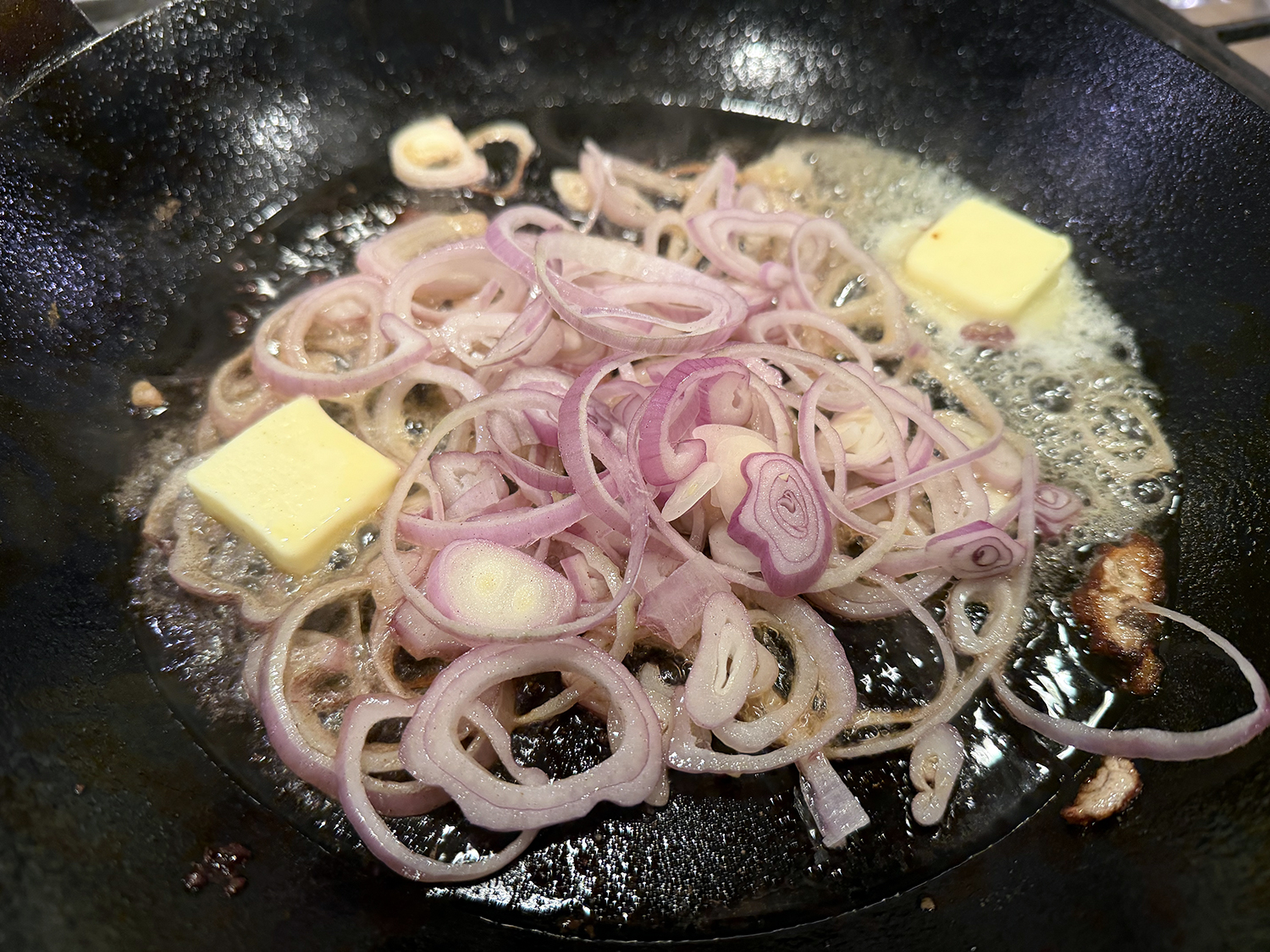
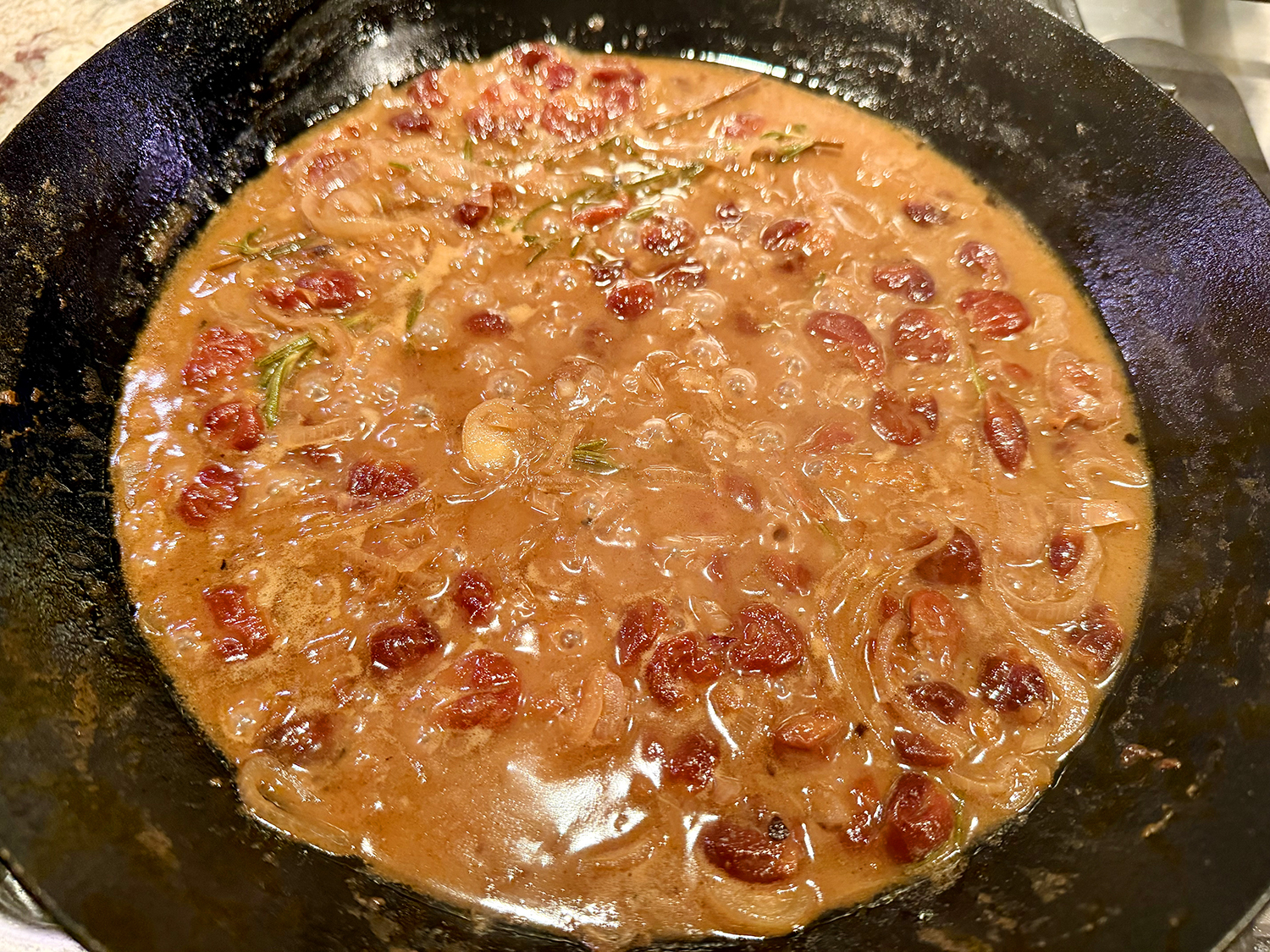
  4. Combine 1 large shallot, thinly sliced, and 2 tablespoon unsalted butter in same pan and cook over medium heat, stirring often, until shallot is softened, about 2 minutes. Add 2 cups low-sodium chicken broth, 2 tablespoon Dijon mustard, 1 tablespoon balsamic vinegar, and reserved cherries with their liquid. Cook, stirring constantly, until slightly reduced, about 5 minutes.
  5. Add 2 sprigs rosemary (OK maybe a bit more) and cook, stirring often, until sauce thickens further and is homogeneous, about 5 minutes. Remove from heat, add remaining 2 tablespoon unsalted butter, and vigorously stir to combine. Taste sauce and season with salt and pepper.
  6. To serve, nestle pork chops back into sauce in pan and spoon some sauce over.

http://www.lynnandruss.com

Recipe by Kendra Vaculin for Bon Appétit

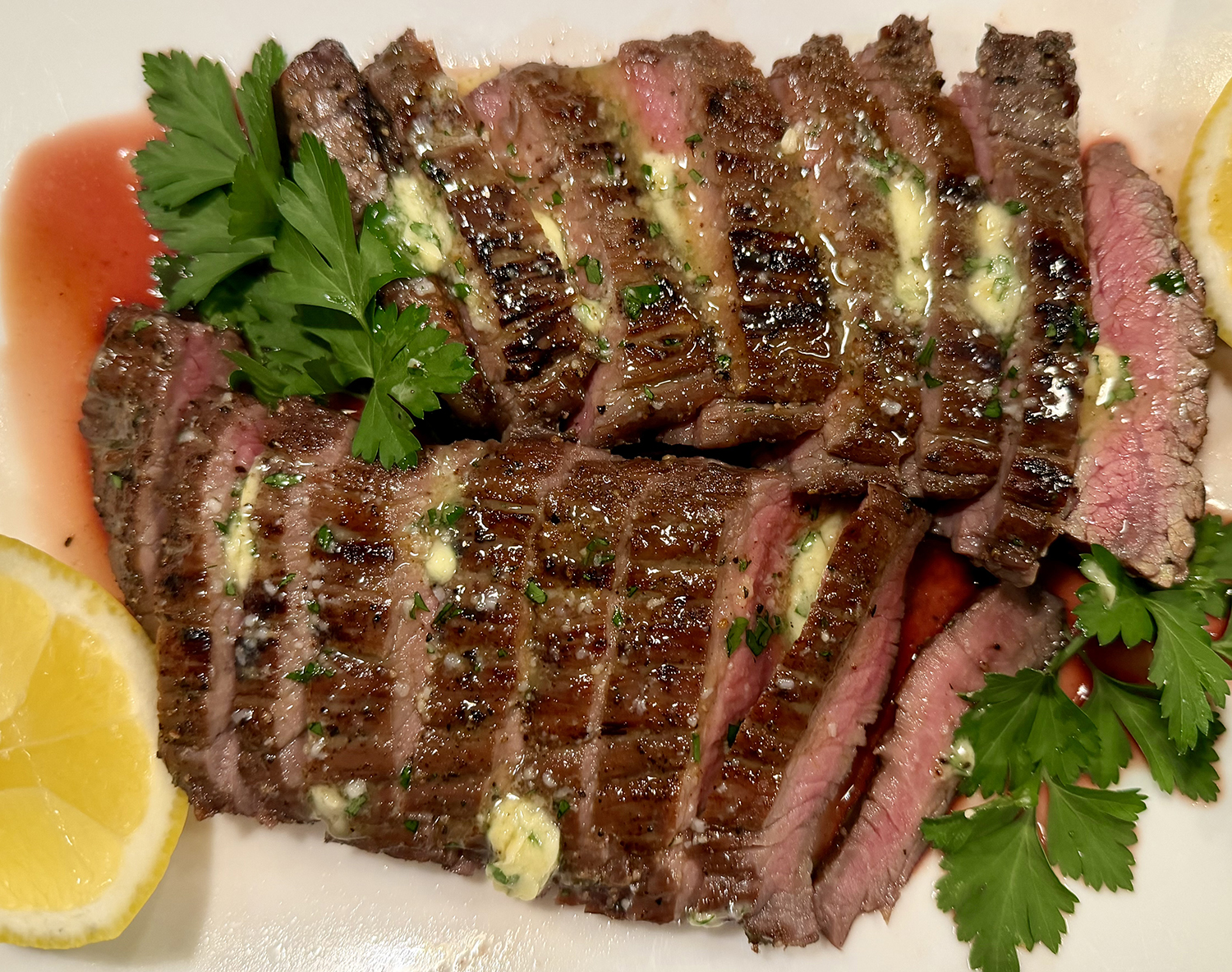
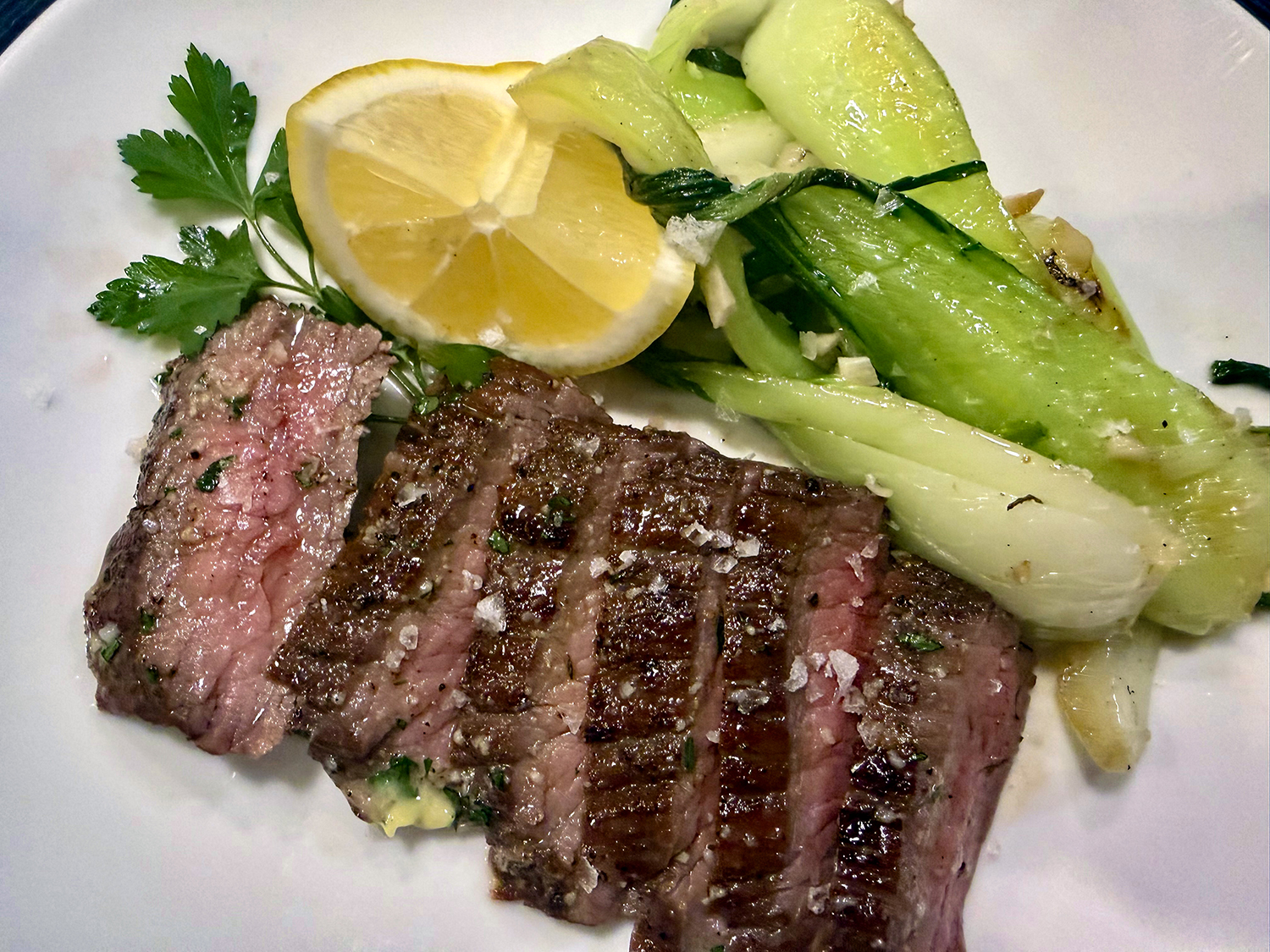
Shio Koji-Marinated Flank Steak

This super-easy reverse-seared steak recipe is just the thing for a flavor-packed tasty dinner. The list of ingredients is manageable, but one in particular, shio koji, may be unfamiliar to you.

To educate, Shio Koji is a fermented seasoning made from rice koji, salt, and water. The fermentation process of these three ingredients creates a creamy, paste-like condiment with a salty and sweet, umami-rich flavor. It contains enzymes like amylase and protease, which break down starches and proteins, making it a popular marinade and meat tenderizer. 

Shio koji, which can be made at home or purchased, is often used as a marinade because it is rich in protease enzymes (which break down proteins), so it can create an array of new flavors in protein-rich foods.

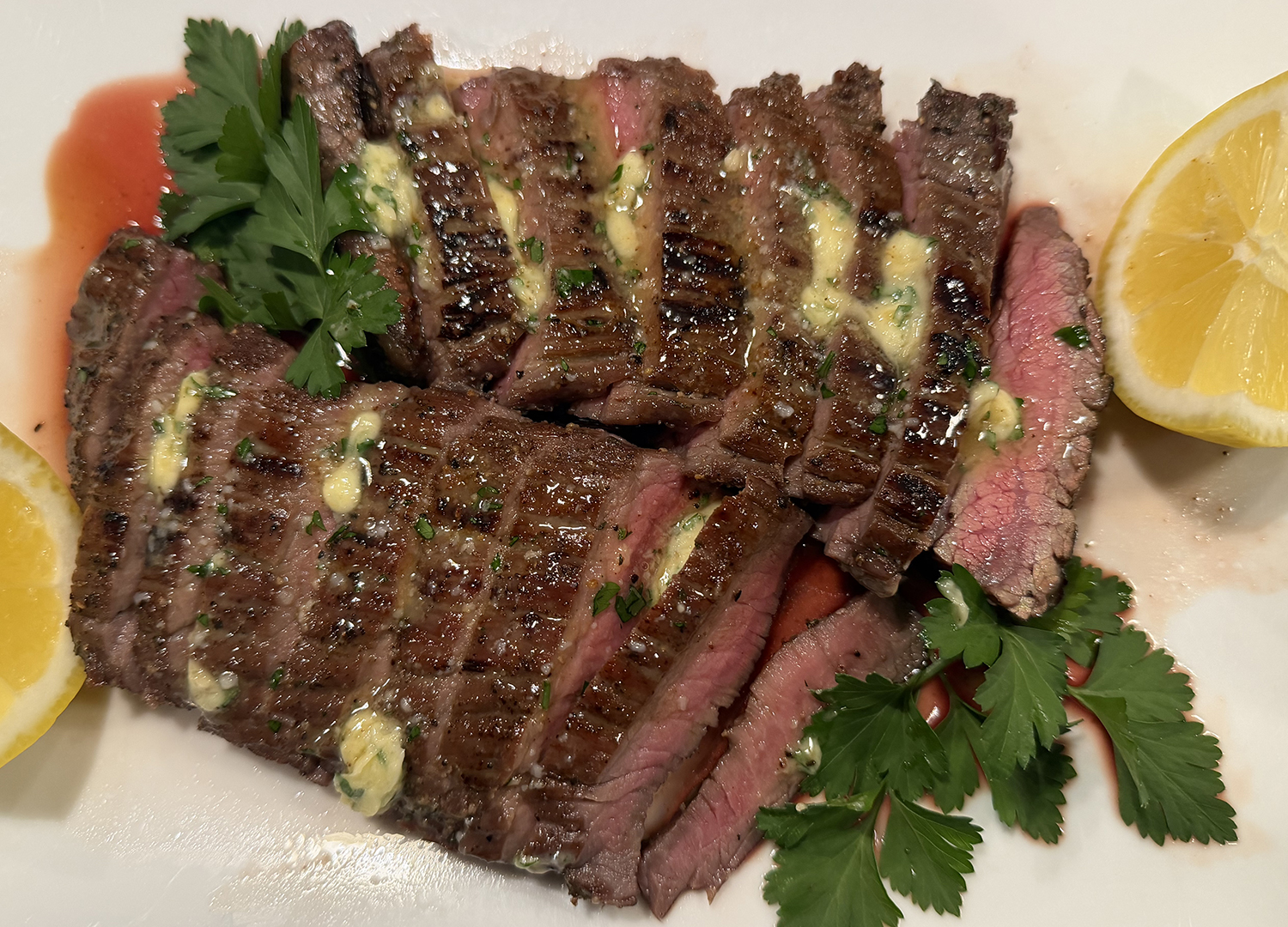
Here, shio koji gives marinated flank steaks the nutty, savory, blue-cheese-y flavors typically found in expensive dry-aged steaks. After wiping the marinade from the steaks, cook them in the oven with a gentle heat to keep their interiors juicy and rosy pink. Finally, quickly sear them on the stovetop to create a slightly charred crust.

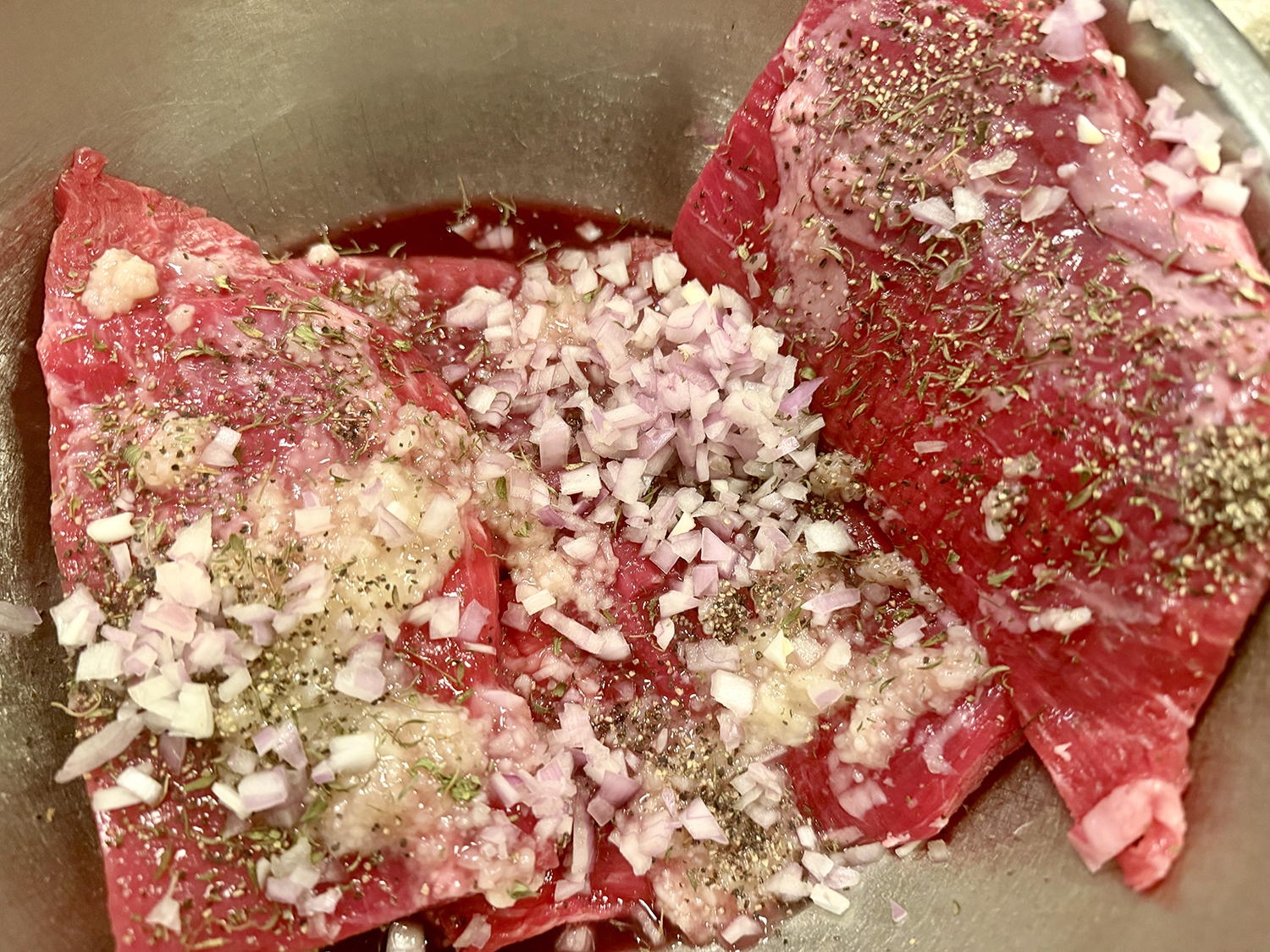
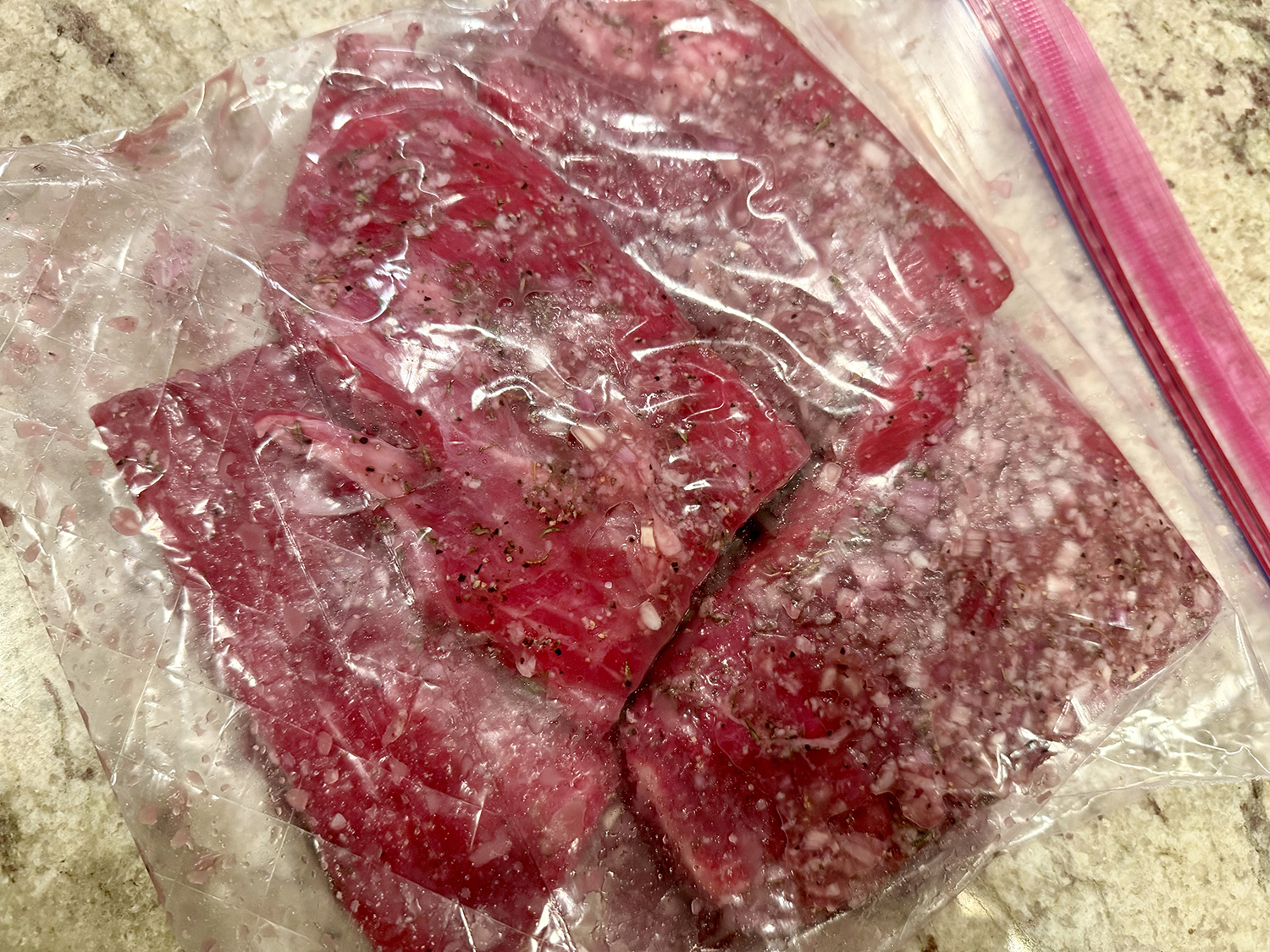
This recipe contains three marinating options (see below), of which we chose the Red-Wine Shallot variation.

Shio Koji-Marinated Flank Steak

  • Servings: 4
  • Difficulty: easy
  • Print

Ingredients

For the Steak

  • 1 (1½- to 1¾-lb.) flank steak, well trimmed
  • 3 Tbsp. shio koji
  • ½ tsp. pepper
  • 1 tsp. vegetable oil
  • Flaky sea salt (optional)
  • Lemon wedges (optional)

For the Butter

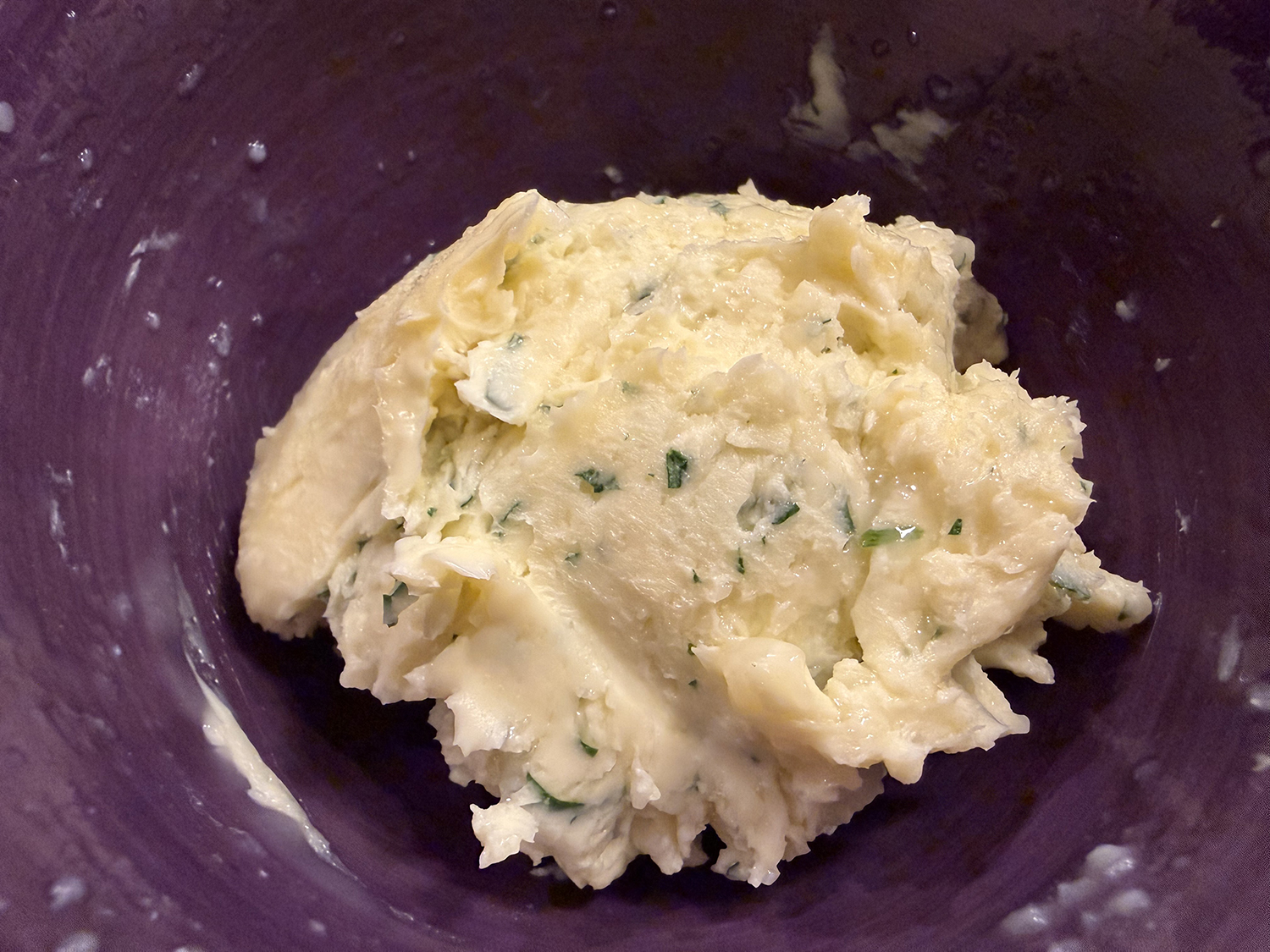
  • 4 Tbsp. unsalted butter, softened
  • 1 1⁄2 ysp. shio koji
  • 1 tsp. minced fresh parsley (or other herb of your choice)
  • 1⁄8 tsp. kosher salt

Directions

For the Steak

  1. Adjust oven rack to middle position and heat oven to 275 degrees. While oven heats, set wire rack in rimmed baking sheet. 
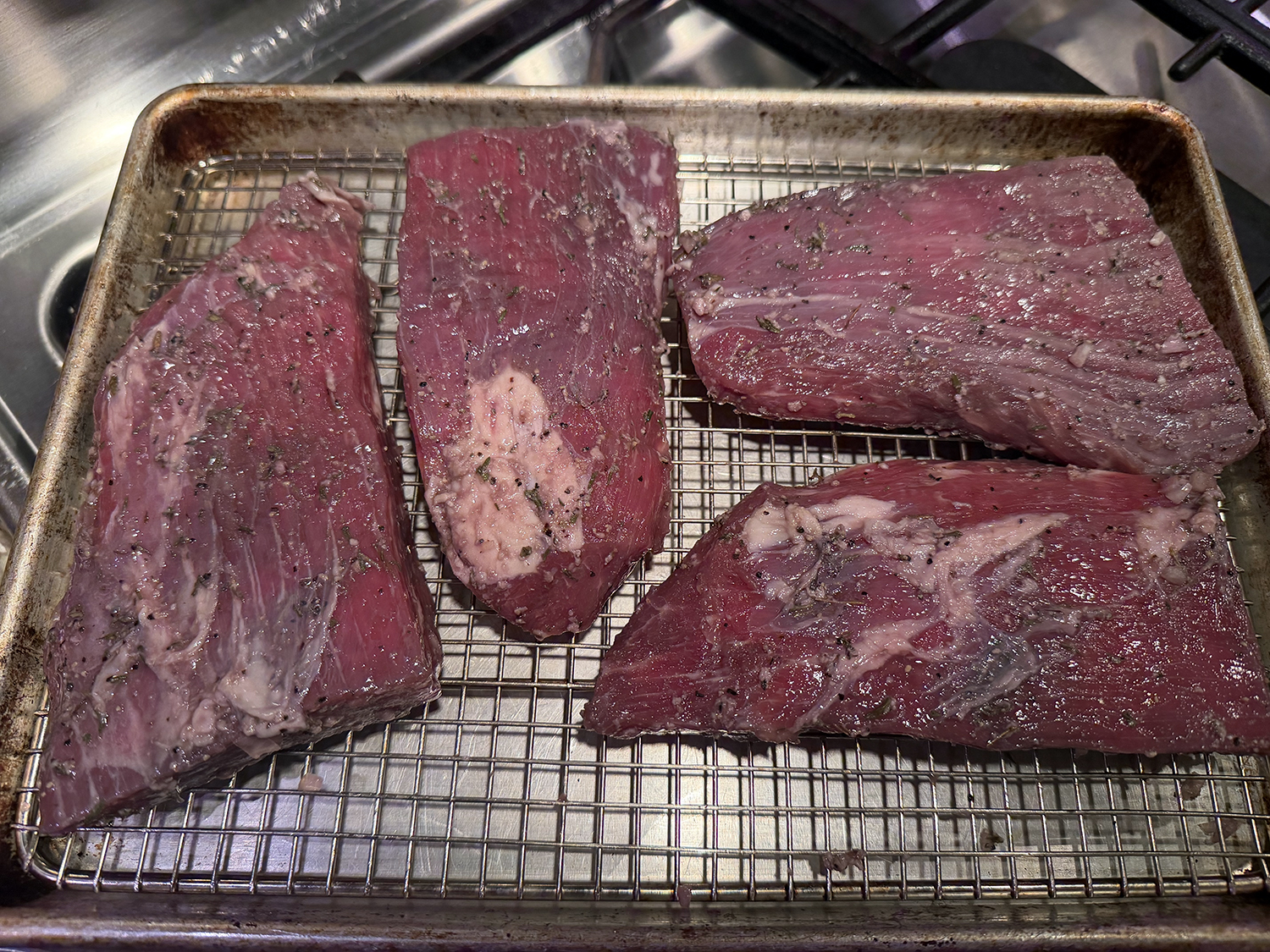
  2. With damp towel, wipe koji from steaks (it’s OK if a few grains remain on steak). Sprinkle with ½ teaspoon pepper. Set steaks on prepared rack and transfer to oven. Cook until thickest part of largest steak registers 125 degrees, 25 to 30 minutes.  
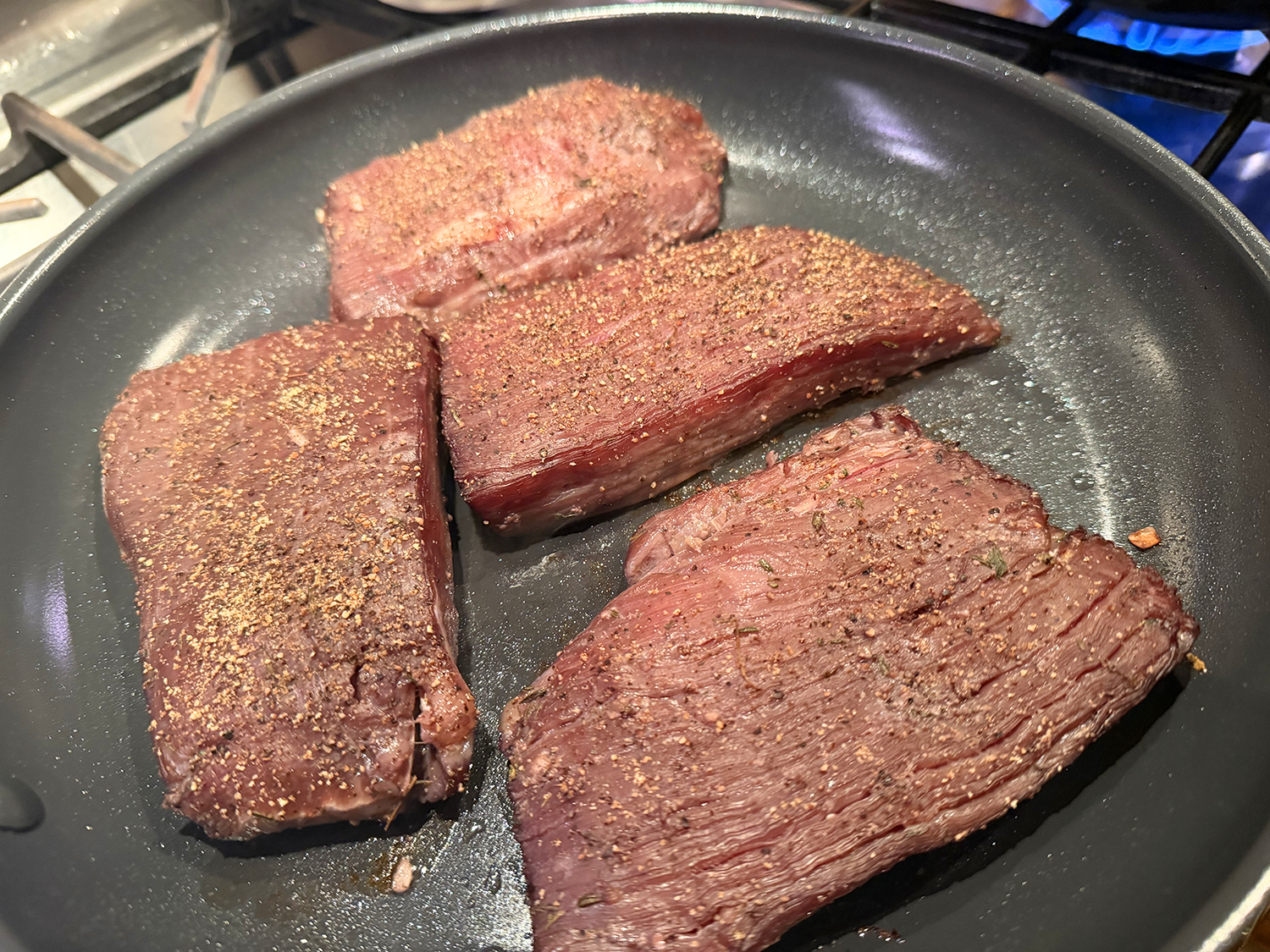
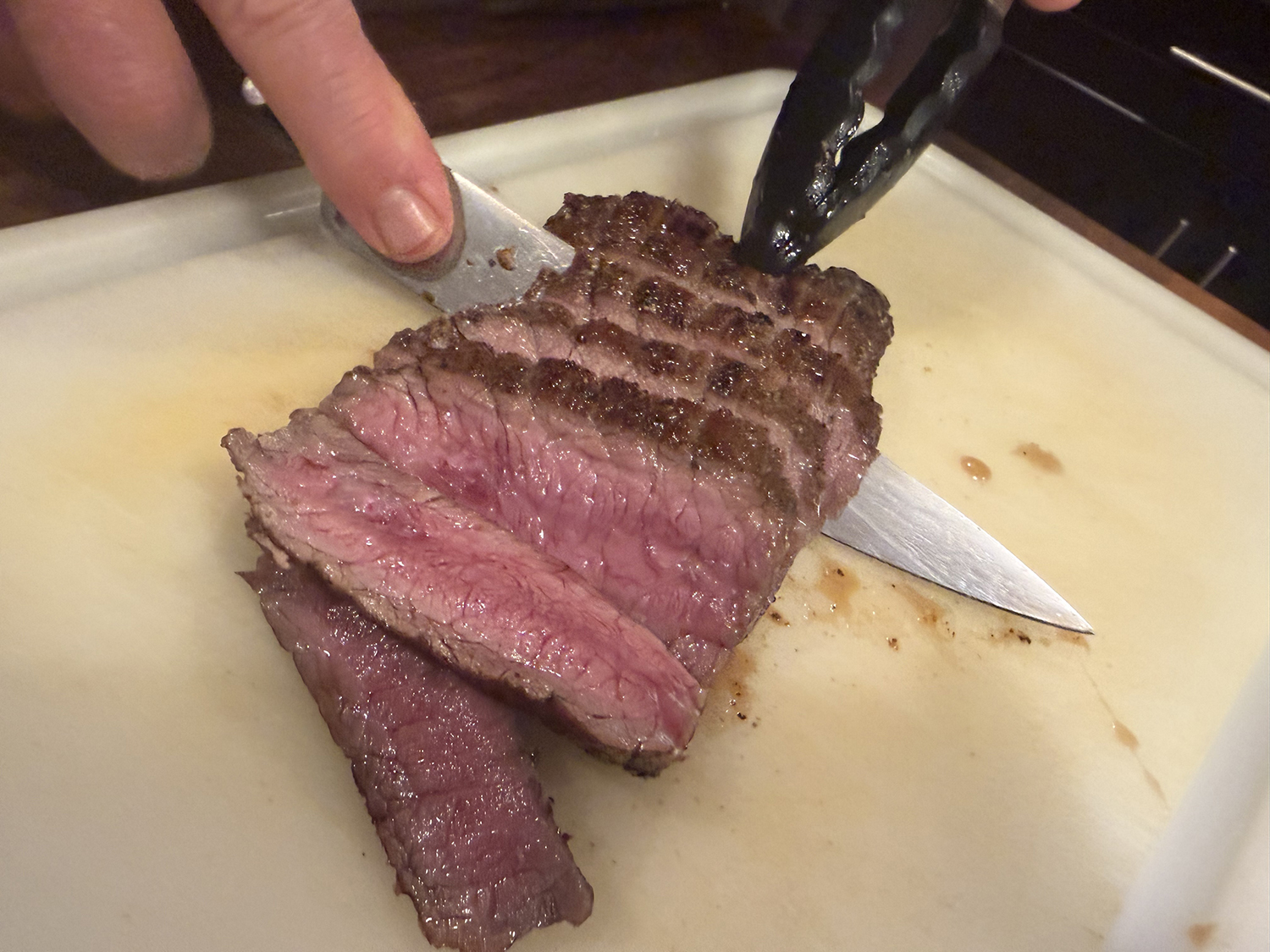
  3. Heat 1 teaspoon vegetable oil in 12-inch nonstick skillet over medium-high heat until shimmering. Add steaks and cook, pressing steaks gently into pan until browned and slightly charred in spots on both sides, 1 to 2 minutes per side. Cut steaks on bias against grain into ½-inch-thick slices. Serve, passing flake sea salt and lemon wedges, if using, separately.

For the Butter

  1. Combine all ingredients in a bowl. The butter mixture can be refrigerated for up to one week.

http://www.lynnandruss.com

Recipe by Lan Lam for America’s Test Kitchen

Simple Ways to Vary the Marinade

Shio koji creates plenty of complexity on its own, but it also enhances the flavors of additional seasonings. Try the following combinations, stirring the ingredients into 3 tablespoons of shio koji before applying the marinade to the steak.

WORCESTERSHIRE-GARLIC 

  • 3 Tbsp. Worcestershire sauce
  • 2 tsp. minced garlic
  • ½ tsp. pepper

BOURBON-SOY

  • 3 Tbsp. bourbon
  • 2 Tbsp. soy sauce
  • ¾ tsp. ground allspice

RED WINE–SHALLOT

  • 3 Tbsp. red wine
  • 2 Tbsp. minced shallot
  • 1 tsp. dried thyme
  • ½ tsp. pepper

Shio Koji Steak Primer

Shio koji works differently than other marinades. Here’s how to make the most of its special properties.

Shio-Koji-to-steak ratio: 1 tablespoon to 8 ounces

One tablespoon of shio koji per ½ pound of steak is enough to produce a broad range of flavors (and since commercially produced shio koji contains only 8 to 14 percent salt, that amount won’t make the meat overly salty.) Shio koji pairs beautifully with other seasonings too (see “Simple Ways to Vary the Marinade”).

Marinating time: 2 to 24 hours

The longer the steak marinates, the more intense its flavor will become. Four hours is a good place to start if it’s your first time using shio koji so that you can get to know how it changes the flavor of the meat.

Best cooking method: reverse searing

Both the simple sugars contained in shio koji and the amino acids that are liberated as the steak marinates facilitate browning, but the sugars are also prone to scorching. The most failproof cooking method, then, is reverse searing: gently bringing the steak to serving temperature in the oven and then quickly searing it in a skillet to develop a well-browned crust with a hint of char.

Umami Meatloaf with Red Pepper-Tomato Sauce

If the thought of meatloaf has you feeling a little meh, then get this version on your short list. Here’s a juicy and flavorful meatloaf made with a mix of mushrooms, beef, miso, soy and Worcestershire sauces for immensely satisfying umami.

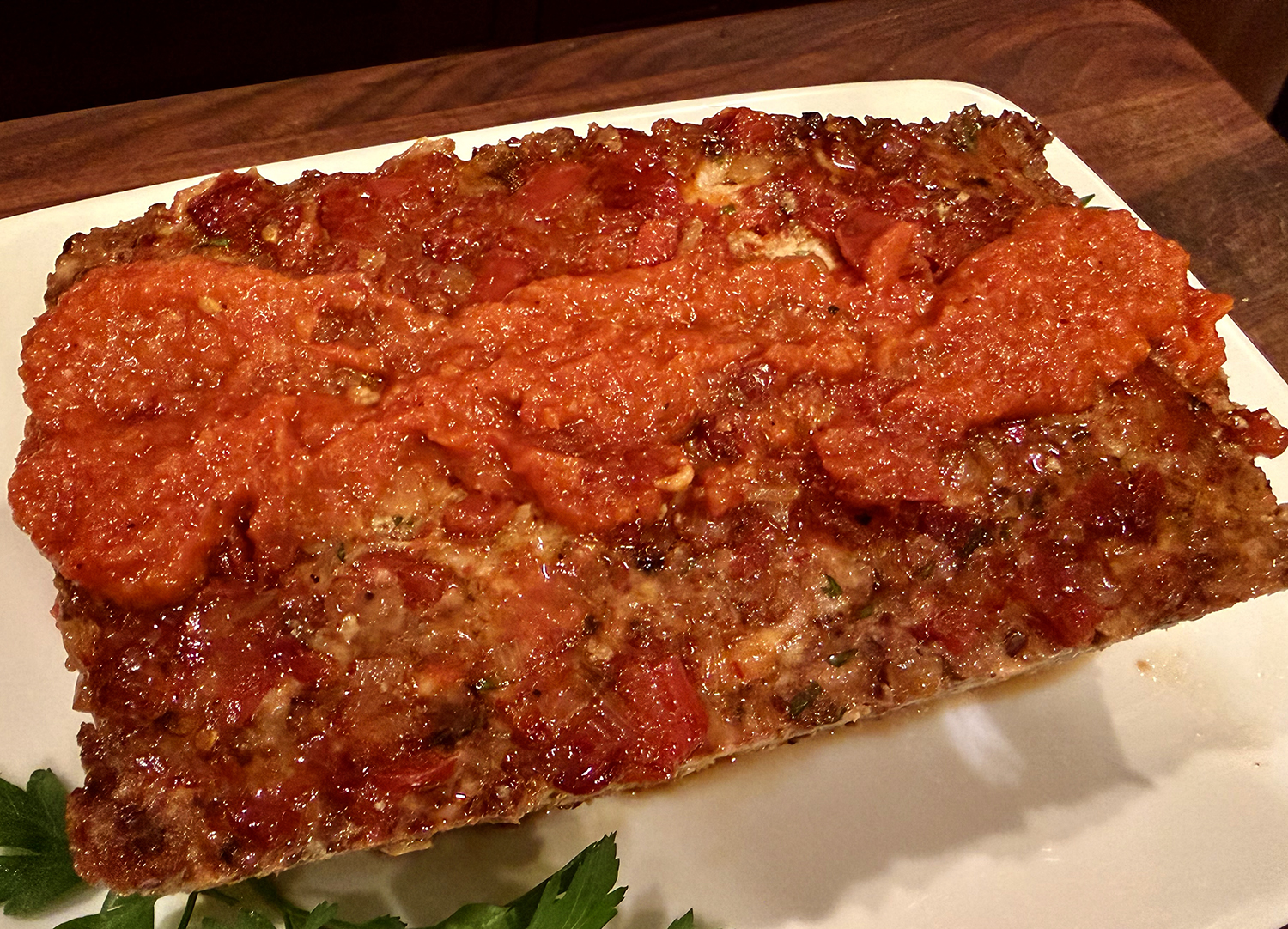
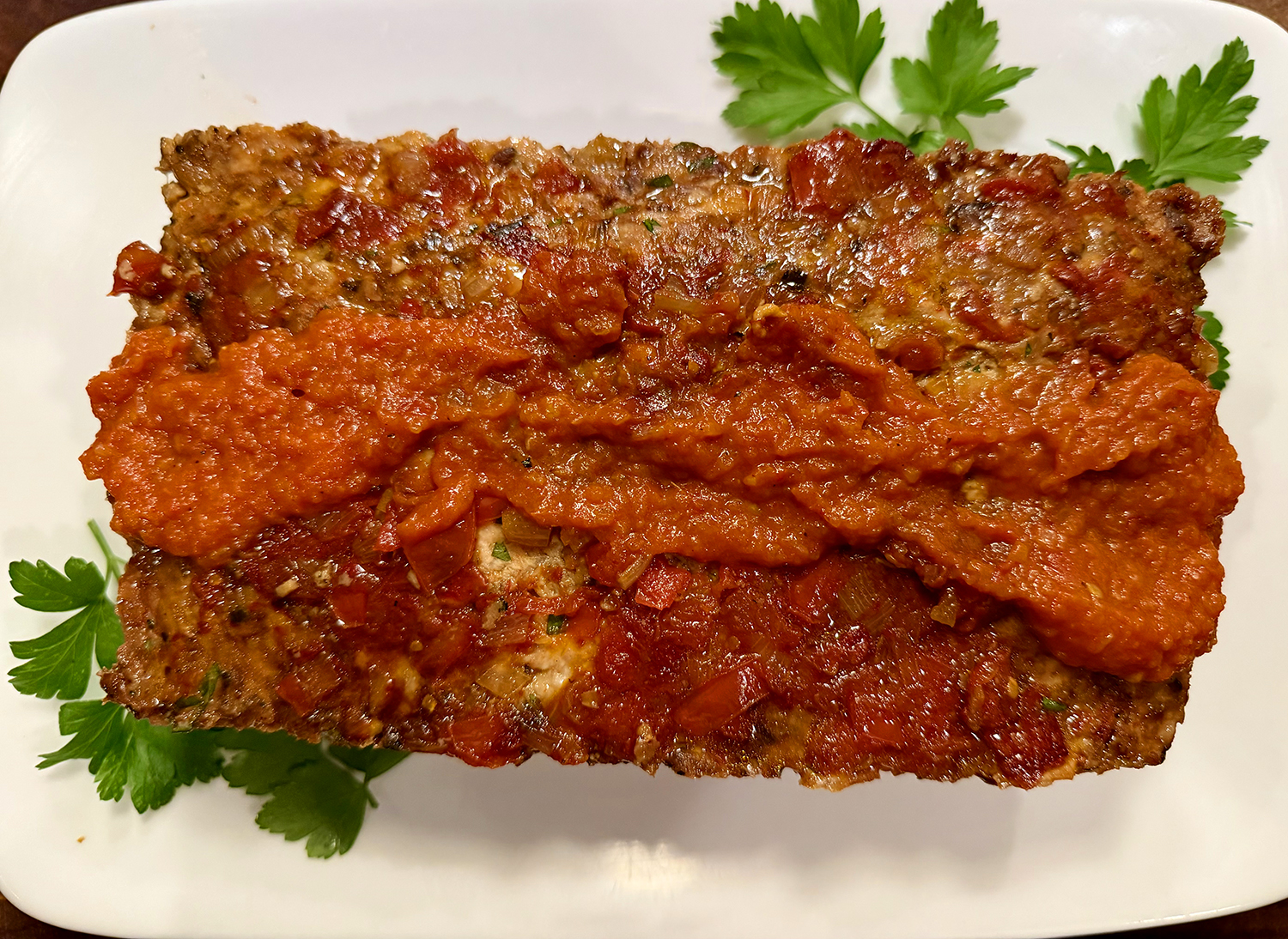
The milk-and-egg-soaked breadcrumbs are key for keeping the meat moist and promote tenderness. A sweet and tangy sauce both glazes the top of the meatloaf and is served alongside it. The glaze on the meatloaf deepens in flavor as it bakes, and the sauce reserved for serving is bright and fresh.

We paired the meatloaf with Go-With-Everything Celery Root Purée. You’ll love the leftovers — try them in a sandwich slathered with sauce. Oh, and we did just that with some leftover slabs, sauce, a slice of provolone on great bread and pan sautéed in a bit of butter. Truly memorable!

Make Ahead: The meatloaf sauce can be stored in an airtight container in the refrigerator for up to five days. The cooled meatloaf can be stored in an airtight container in the refrigerator for up to four days. Reheat slices in the oven, or gently warm in the microwave.

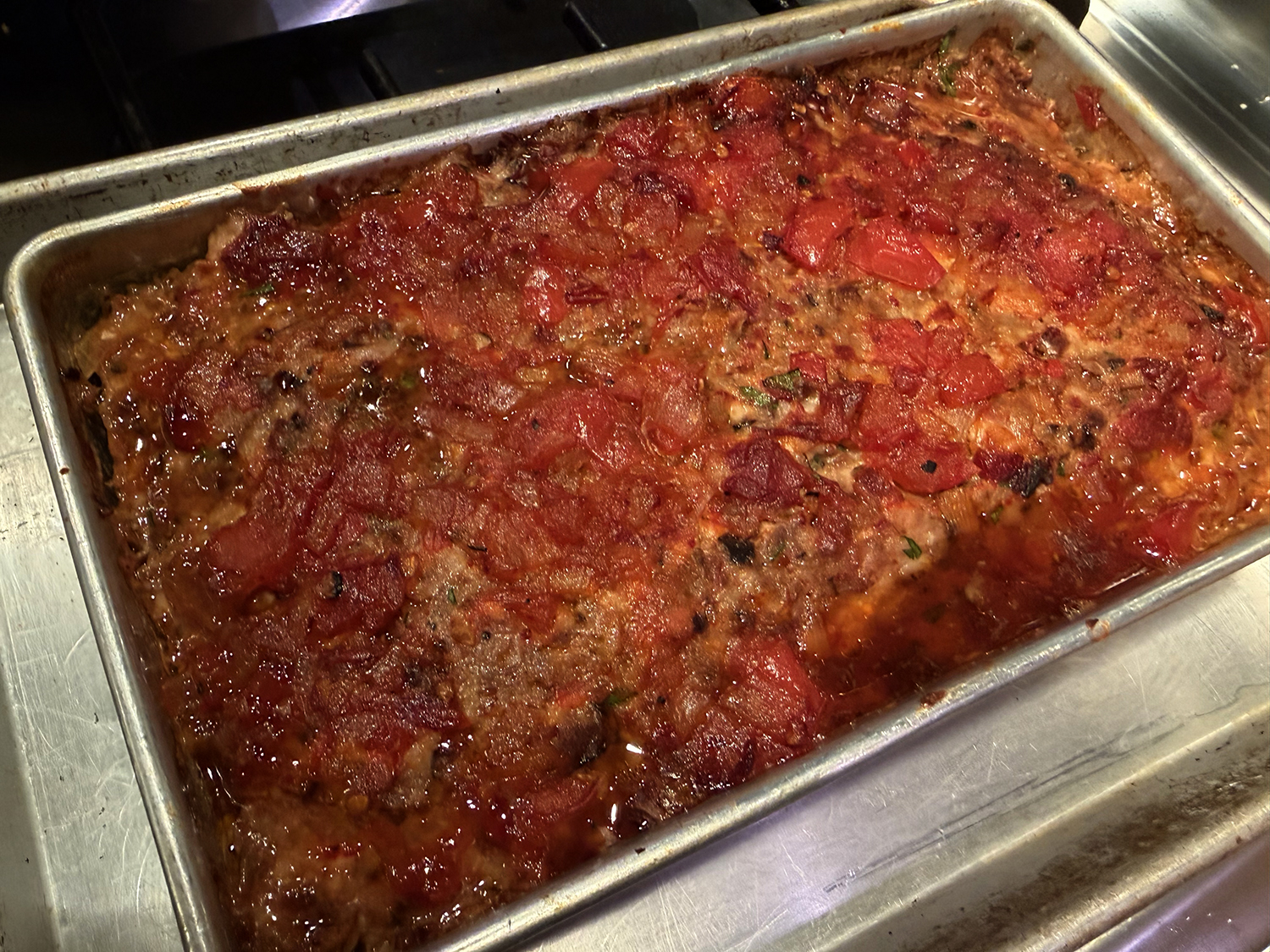
The recipe was adjusted so that more of the tomato-red pepper sauce was added on top of the loaf before baking. You will need to reheat the remaining sauce in a microwave before serving. And a word to the wise, you will be using a LOT of kitchen equipment, just sayin’…

Umami Meatloaf with Red Pepper-Tomato Sauce

  • Servings: 6
  • Difficulty: moderate
  • Print

Ingredients

Meatloaf Sauce

  • 2 Tbsp. extra-virgin olive oil
  • 2 large shallots, chopped (about 3/4 cup)
  • 2 cups chopped plum tomatoes (about 4 large tomatoes)
  • 1 cup chopped jarred roasted red bell pepper
  • 1/4 cup red wine vinegar
  • 2 Tbsp. light brown sugar
  • 1 tsp. kosher salt
  • 6 Tbsp. water

Meatloaf

  • 2 lbs. 85% lean ground beef
  • 2 tsp. kosher salt, divided
  • 2 Tbsp. extra-virgin olive oil
  • 1 yellow onion, finely chopped (about 1 cup)
  • 3 cups thinly sliced fresh shiitake mushrooms
  • 1 Fresno chile, seeded and minced (about 1 Tbsp.)
  • 2 Tbsp. Worcestershire sauce
  • 1 Tbsp. shoyu or light soy sauce
  • 1 Tbsp. white miso
  • 1/2 cup whole milk
  • 1 large egg
  • 1 cup day-old fresh breadcrumbs
  • 3/4 tsp. black pepper
  • 1/4 cup finely chopped fresh flat-leaf parsley

Directions

The Sauce:

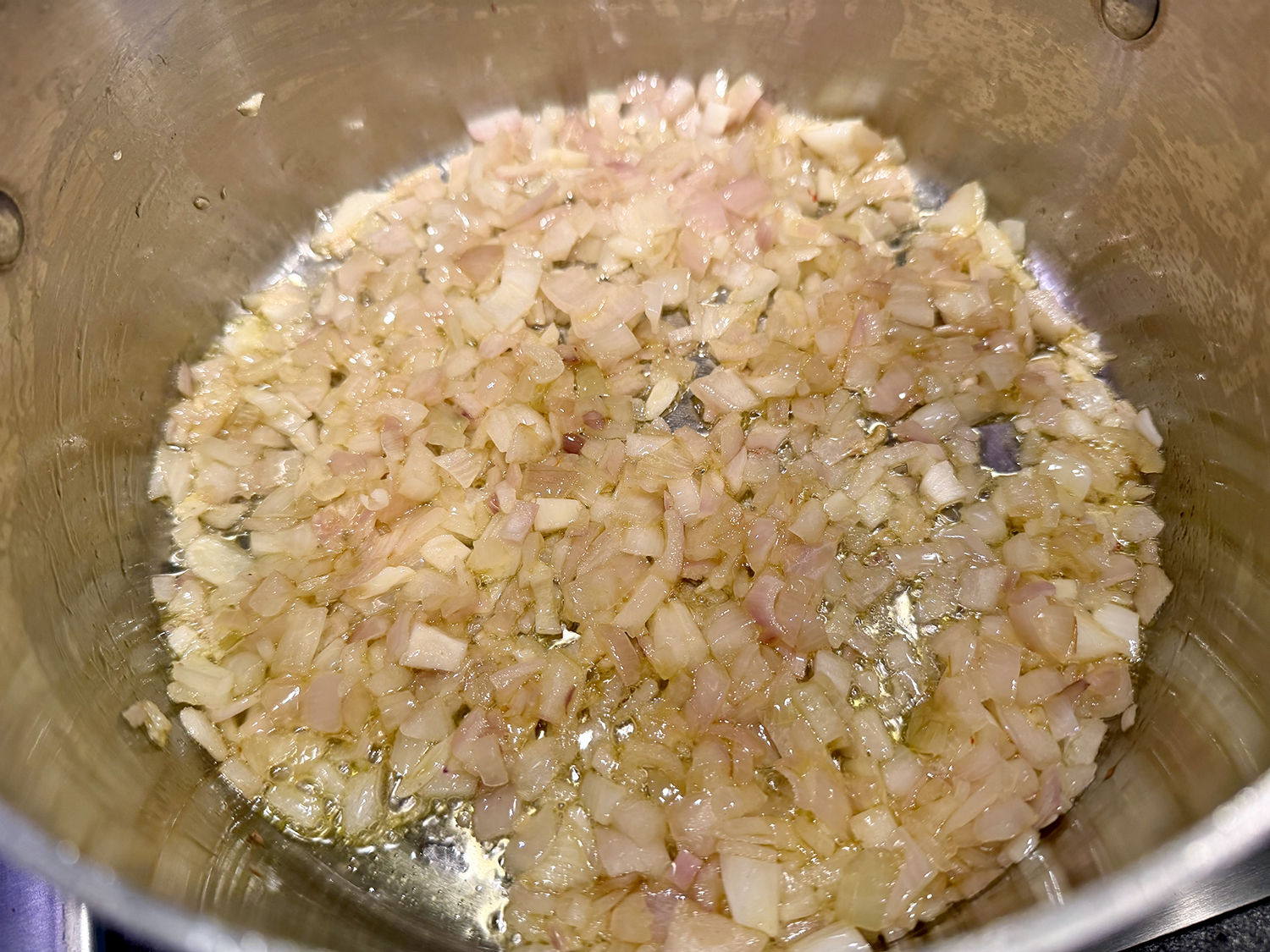
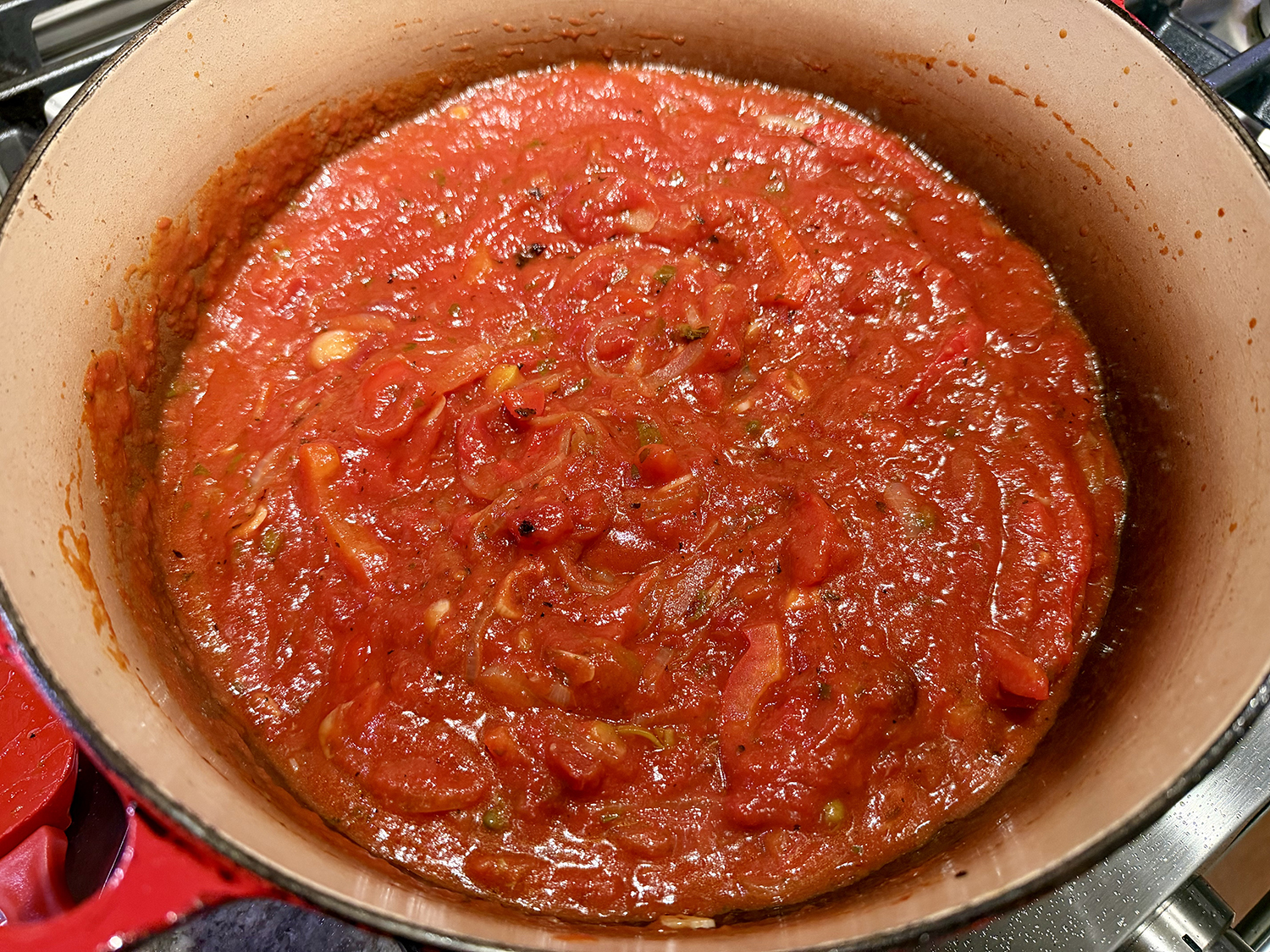
  1. Heat oil in a medium saucepan over medium. Add shallots; cook, stirring often, until translucent, about 3 minutes. Add tomatoes, peppers, vinegar, sugar, and salt. Cook, stirring often, until tomatoes break up, liquid evaporates, and mixture becomes a deep red paste, 25 to 30 minutes.
  2. Remove 1/2 cup tomato mixture, and set aside. Transfer remaining mixture to a food processor; add water, 1 to 2 tablespoons at a time and up to 4 to 5 tablespoons total, and pulse to make a thick sauce. (We did not use the entire amount of water.) Transfer sauce to a bowl; if desired, thin further with 1 tablespoon water. Set aside until ready to use.

The Meatloaf:

  1. Place beef in a large bowl, and sprinkle with 1 teaspoon salt. Set aside at room temperature for 30 minutes.
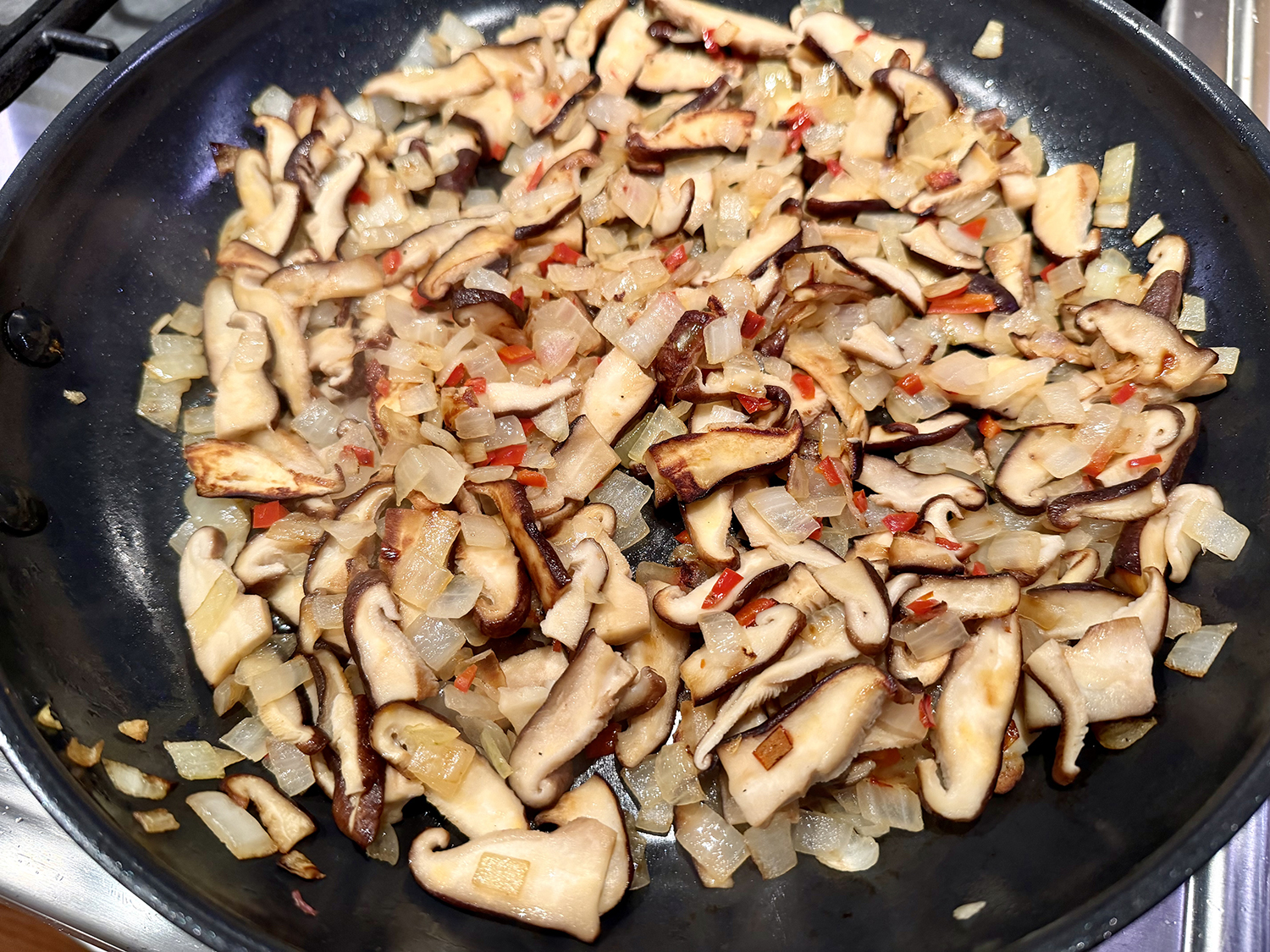
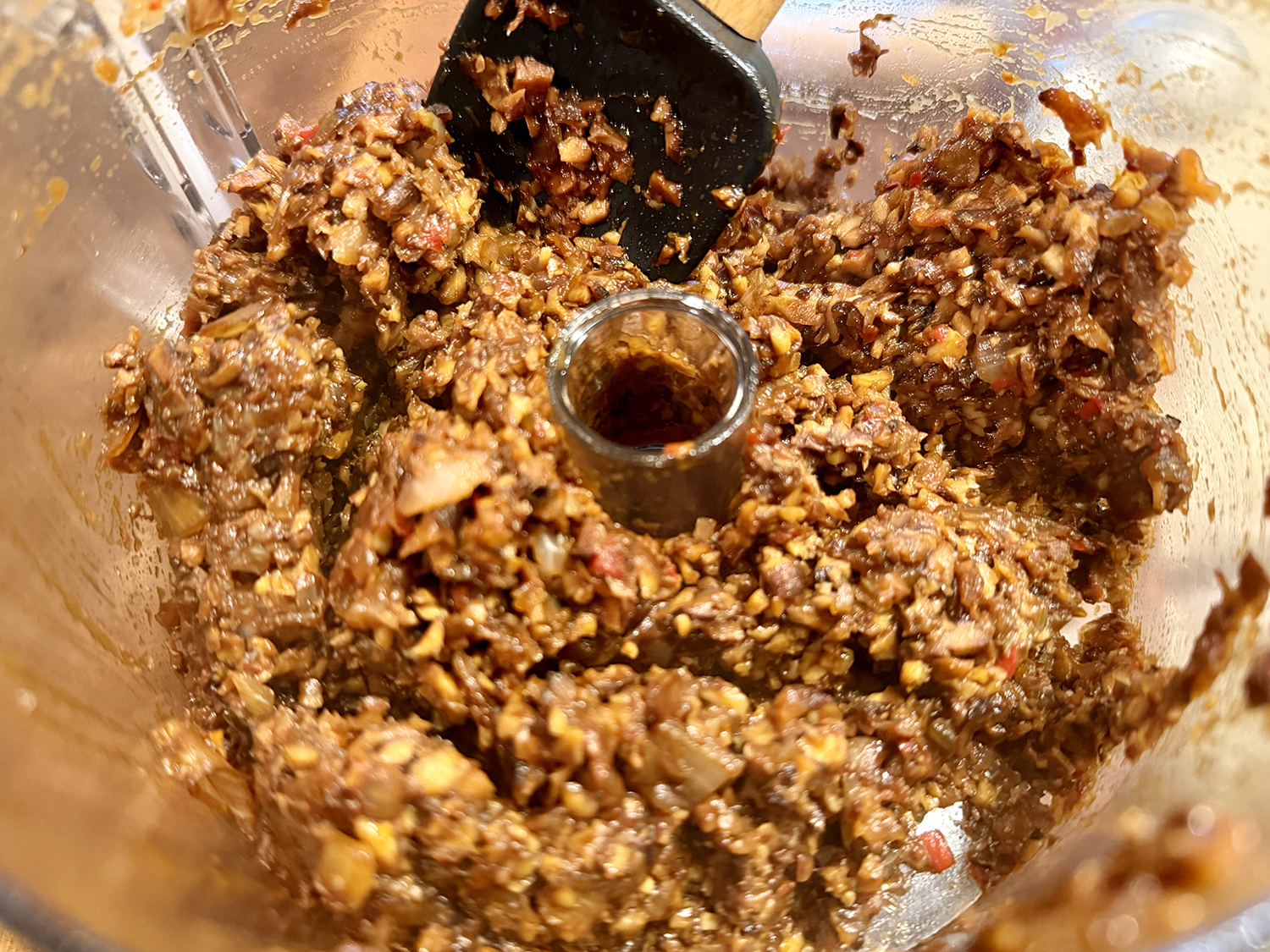
  2. Preheat oven to 350°F. Heat a large nonstick skillet over medium. Add oil and onion; cook, stirring occasionally, until softened, about 3 minutes. Add mushrooms and chile; cook, stirring often, until mushrooms are tender and golden brown, 15 to 20 minutes. Stir in Worcestershire sauce, shoyu, miso, and remaining 1 teaspoon salt until well combined. Transfer mixture to a food processor; pulse until finely chopped (not pureed), 8 to 10 pulses.
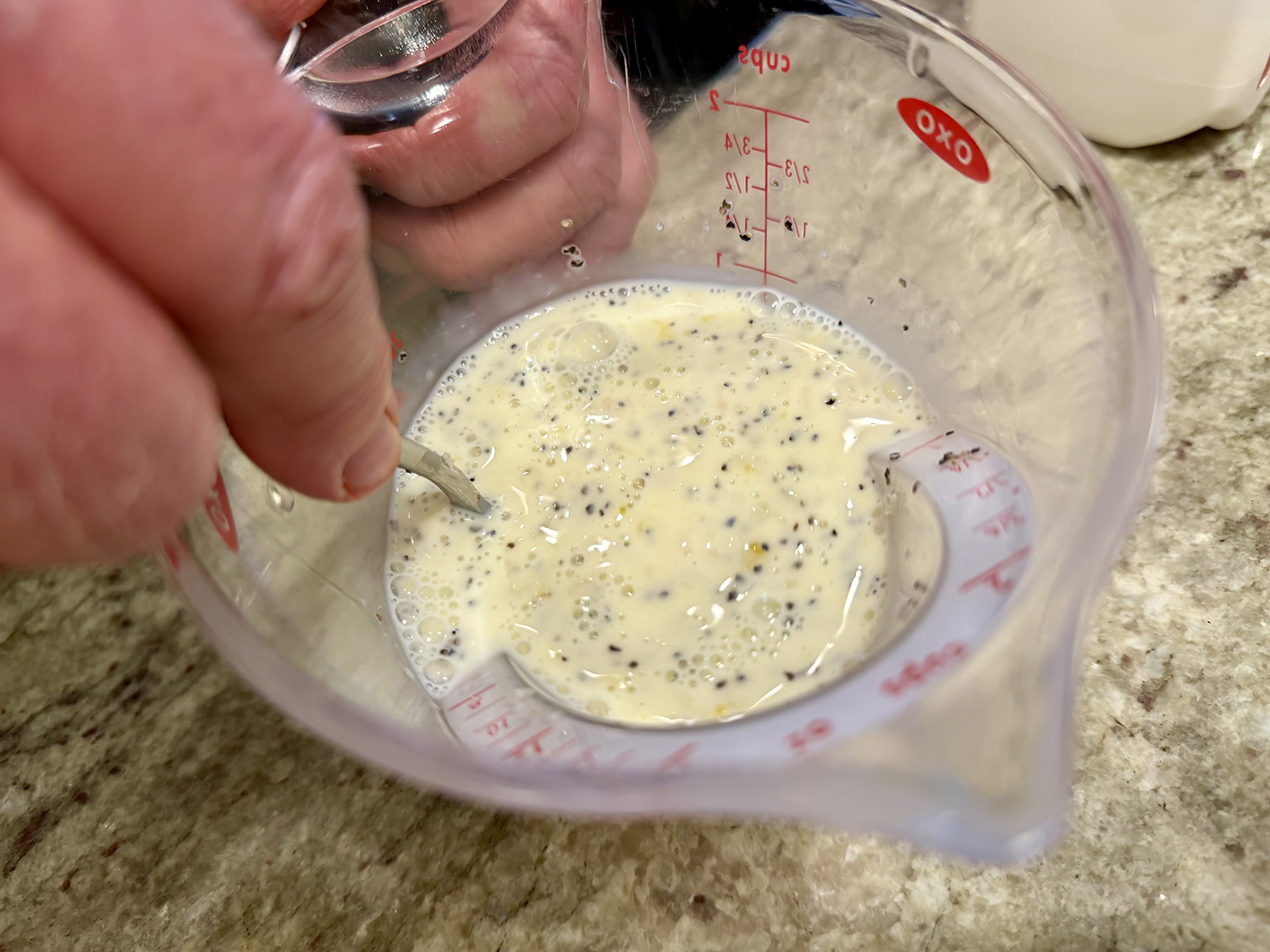
  3. Whisk together milk and egg in a medium bowl. Stir in breadcrumbs and black pepper. (Mixture will resemble cornbread batter.)
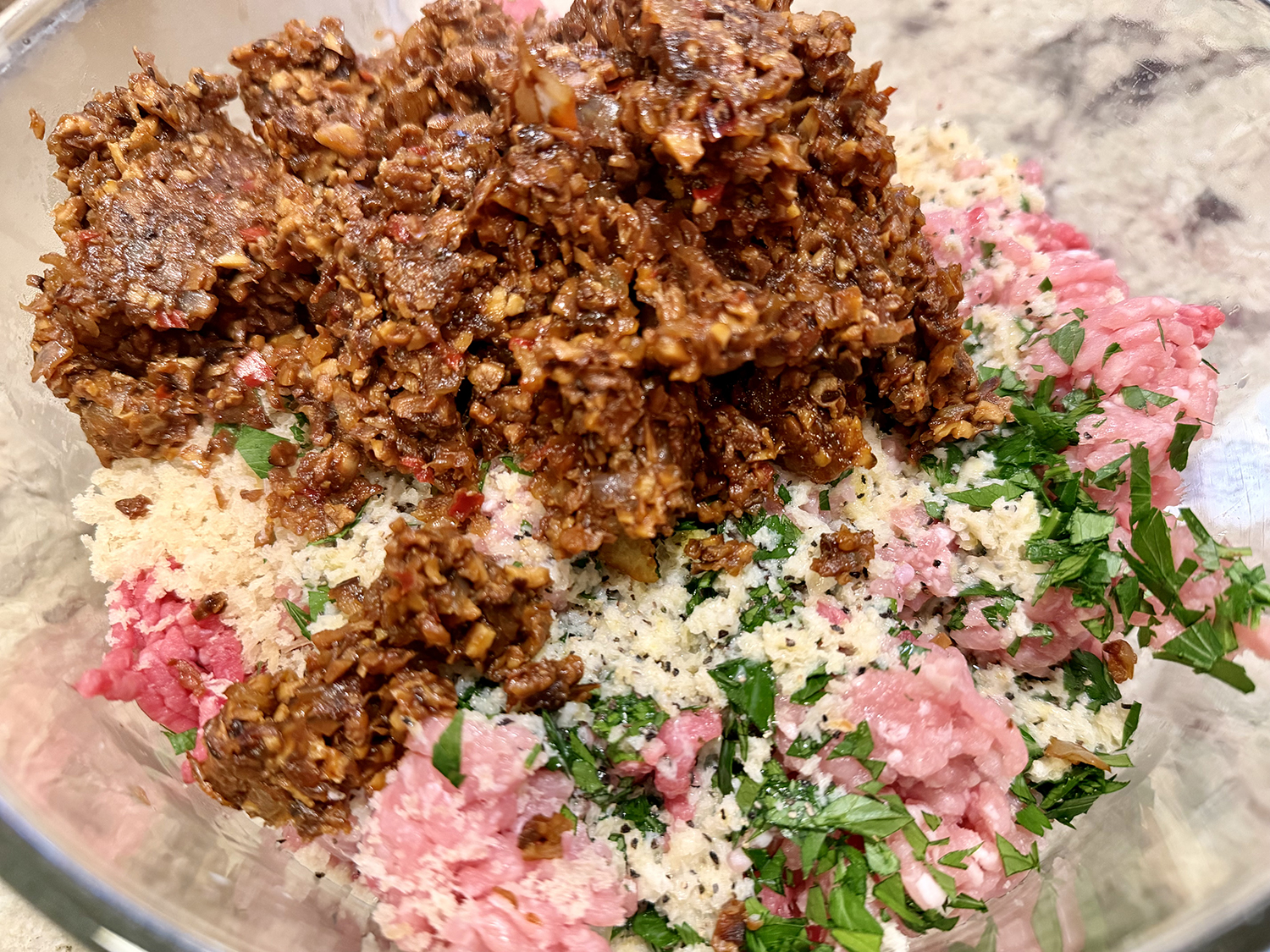
  4. Add parsley, breadcrumb mixture, and mushroom mixture to beef in large bowl. Using your hands or a rubber spatula, work ingredients into beef until combined. Pack beef mixture into an 8 1/2- x 4 1/2-inch loaf pan. Spread reserved 1/2 cup tomato mixture over top of meatloaf.
  5. Bake until an instant-read thermometer inserted into thickest portion of meatloaf registers 160°F, 50 minutes to 1 hour. Let meatloaf rest for about 5 minutes; pour off and discard any liquid. Allow meatloaf to cool for 15 minutes. Cut into 1-inch-thick slices; serve with remaining meatloaf sauce.

http://www.lynnandruss.com

Recipe by Hugh Acheson for Food & Wine

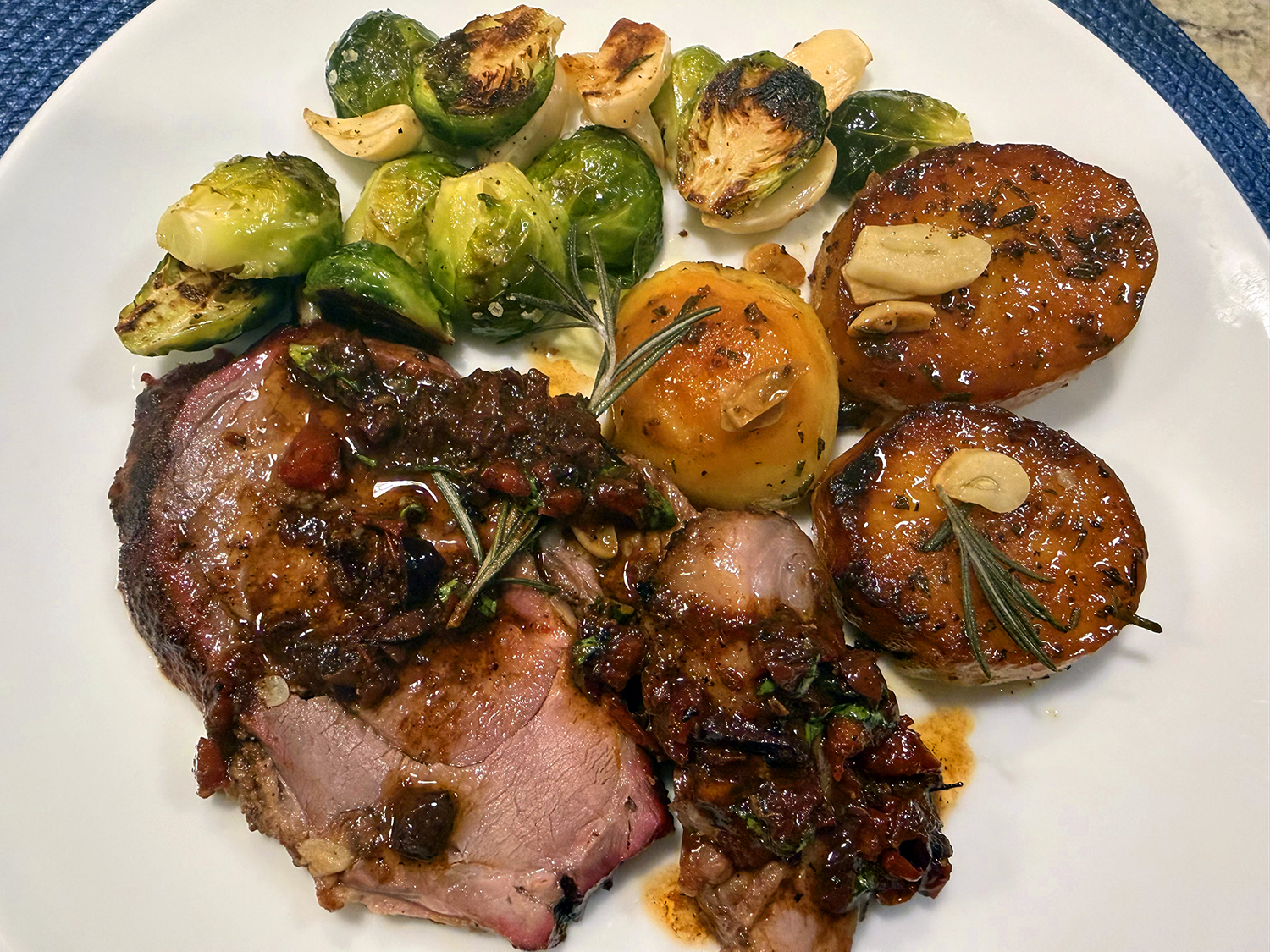
Roast Leg of Lamb with Anchovy, Rosemary, Garlic and Piment d’Espelette

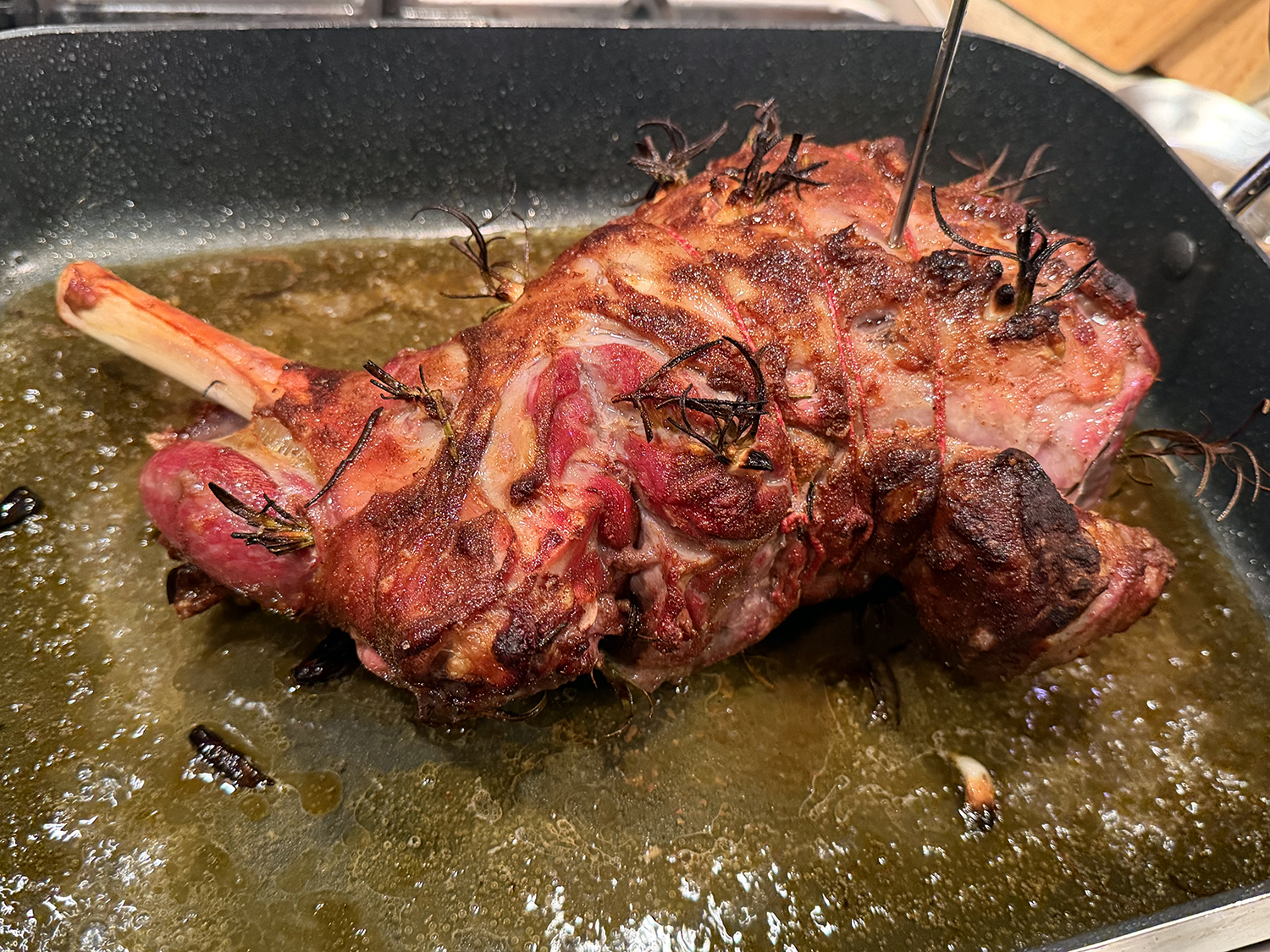
This lovely leg of lamb recipe hails from Molly Stevens’ cookbook All About Roasting, one of our go-to’s when it comes to roasting meat. Here, the lamb’s flavor is boosted with a combination of fresh rosemary, garlic and anchovies. But don’t get all squeamish, tucked into the meat, the anchovies dissolve during roasting, enriching the lamb a delicious, though elusive flavor that’s far less assertive than you might think.

Instead of black pepper, the roast is seasoned with piment d’Espelette, in which the light heat complements the lamb, but hot paprika (which we used) makes a good substitute. If you keep lard or have good bacon drippings, rub a little over the meat before roasting. It adds a wonderful richness to the drippings and helps deepen the caramelization of the surface.

NOTES: For the best flavor and texture, season the meat 1 to 2 days ahead of cooking and refrigerate, uncovered. Then the lamb needs to sit at room temperature for about two hours before roasting.

Our 5-pound semi bone-in leg of lamb was a few pounds less than the recipe called for, and therefore took slightly less time. With no lard on hand, or any available that day at the store, we chose the olive oil option.

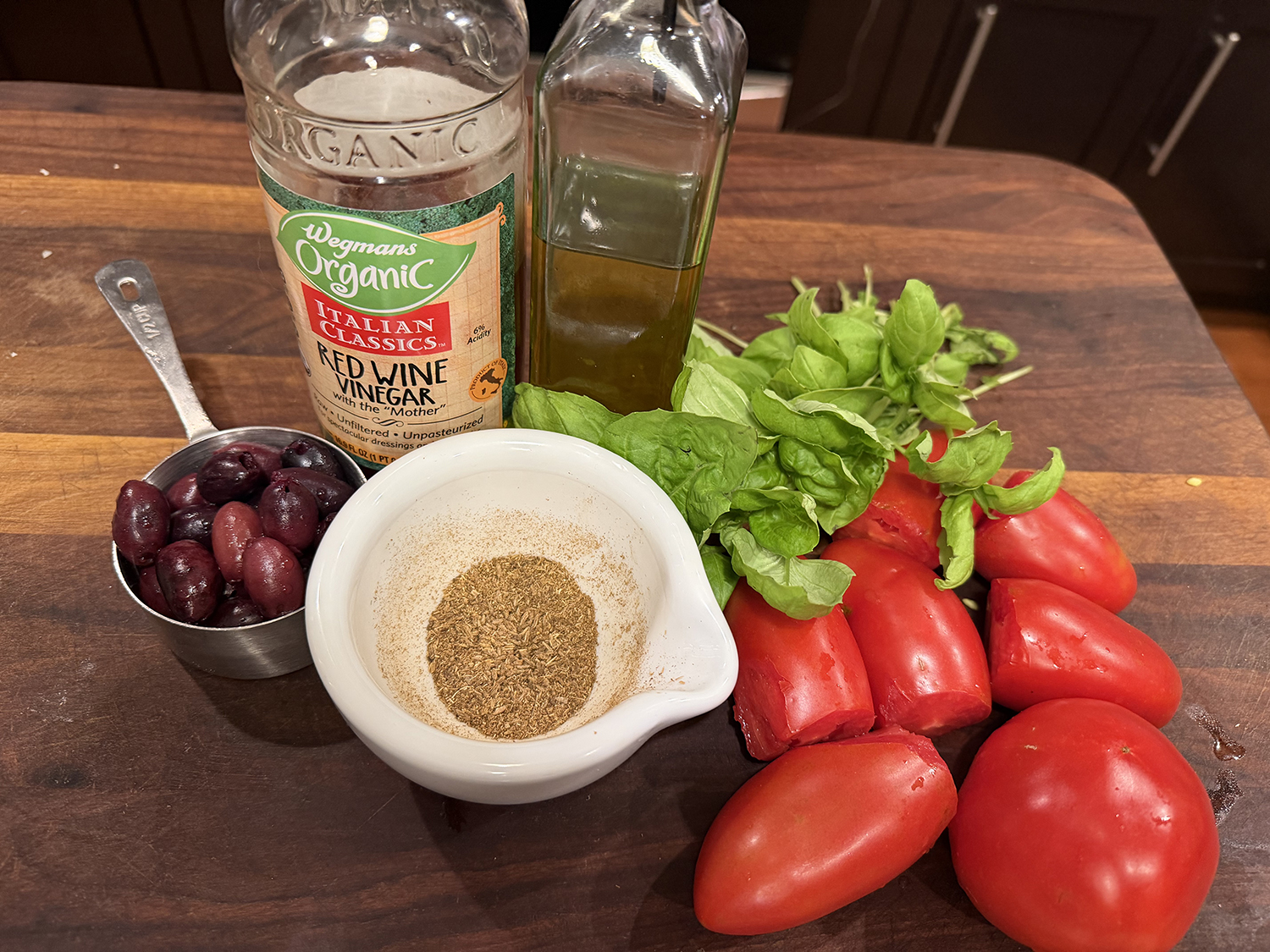
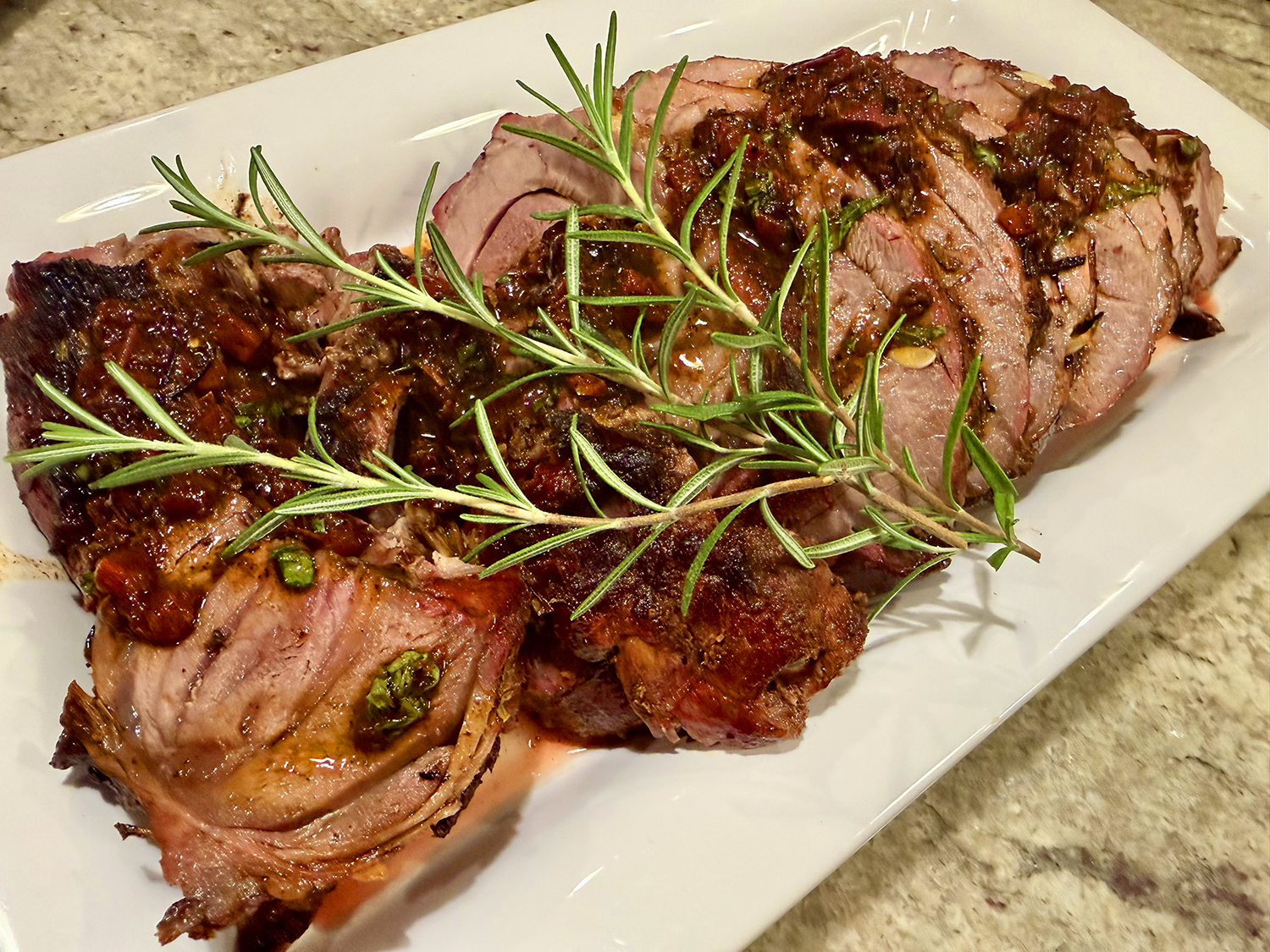
The Tomato-Fennel Vinaigrette is a surprising and delicious way to brighten up roast lamb. Combine the ingredients, and when the meat comes out of the pan to rest, pour the contents into the pan with the drippings.

Our meal was completed with Lemon-Rosemary Melting Potatoes and Roasted Brussels Sprouts with Garlic.

Roast Leg of Lamb with Anchovy, Rosemary , Garlic and Piment d'Espelette

  • Servings: 8-10
  • Difficulty: moderately easy
  • Print

Ingredients

  • 1 whole bone-in leg of lamb, 7 to 8 lbs., preferably with hip bone removed
  • 5 garlic cloves cut into 20 thin slivers
  • 4 anchovy fillets, rinsed, patted dry, and cut into 20 little pieces
  • 4 leafy sprigs rosemary, cut into 20 1-inch pieces
  • 2 tsp. kosher salt
  • 2 tsp. piment d’Espelette (or hot paprika)
  • 1 to 2 Tbsp.lard, or extra-virgin olive oil
  • 3/4 dry white wine or dry white vermouth

Directions

  1. Trim the Lamb. Examine the leg of lamb to determine what kind of trimming and perhaps tying you need to do before seasoning. If the pelvic bone has been removed, you may find a loose flap of meat at the wide end of the roast. if so, secure this with skewers or sew it shut with a trussing needle and kitchen string.Using a thin bladed sharp knife, trim any leathery membrane or excess fat from the exterior of the lamb. Leave a thin layer (1/8 inch) of fat to protect the meat from drying.
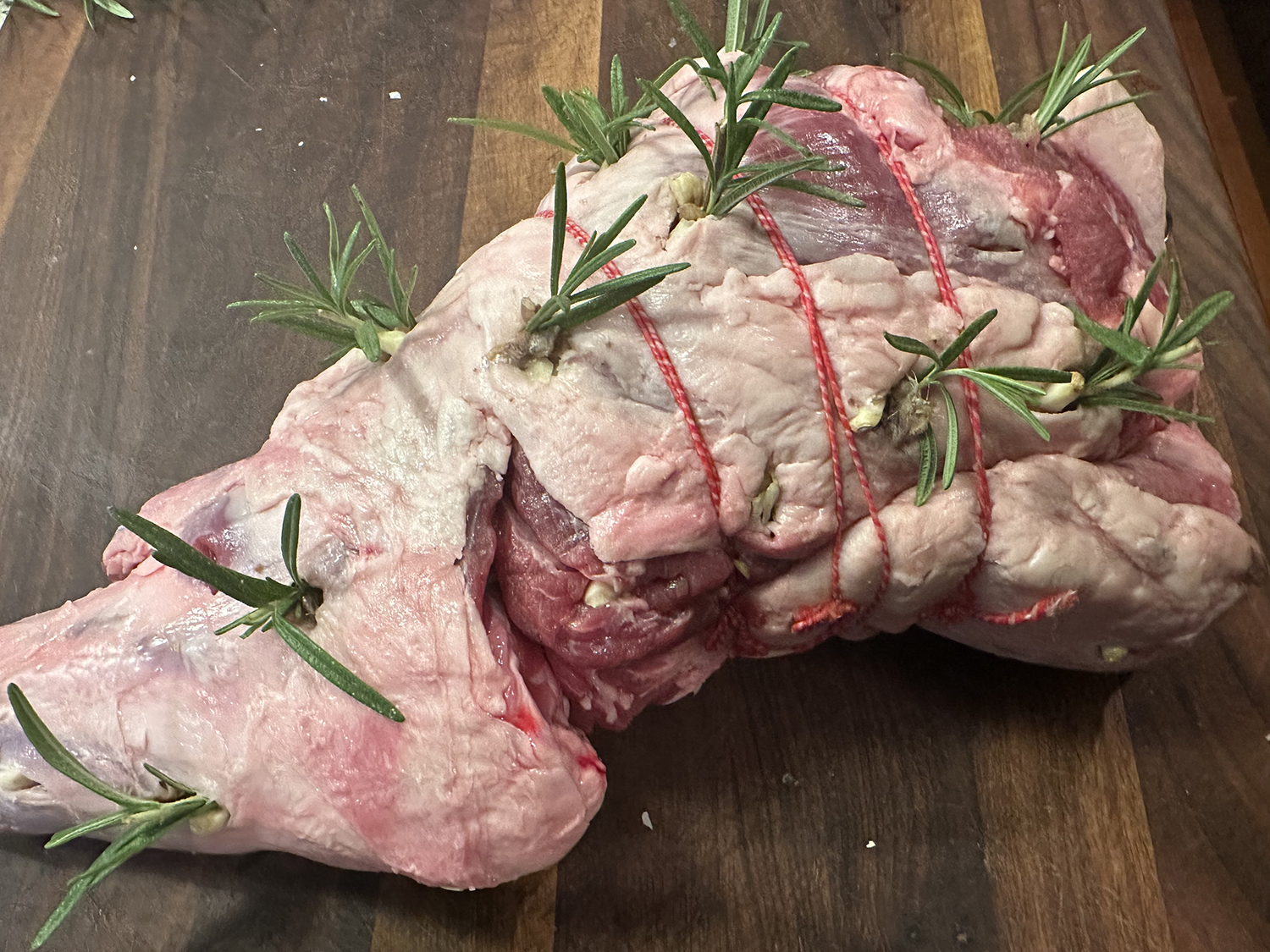
  2. Season the Lamb. Using the tip of a paring knife, make 20 small holes on all sides of the lamb. Stuff each hole with a sliver of garlic. a bit of anchovy, and a sprig of rosemary, leaving the tips of rosemary sticking out. After you’ve studded the entire roast, season the surface with the salt and the piment d’Espelette. Set in a large baking dish (or on a rimmed backing sheet with a rack) and refrigerate uncovered, for 1 to 2 days. Let the lamb sit at room temperature for 2 hours before roasting.
  3. Heat the Oven. Arrange a rack in the lower third of the oven and heat to 450 degrees.
  4. Roast the Lamb. Rub the surface of the meat with lard or olive oil. Place the lamb with the rounder, meatier side up in a roasting pan just large enough to accommodate it. (It’s fine if the tip of the shank rests of the edge of the pan.) Roast for 25 minutes then pour the wine or vermouth over the lamb. Immediately lower the oven temperature to 325 degrees, and continue roasting until a meat thermometer inserted into the meatiest part of the leg reaches 120° to 125° degrees for rare, about 1 hour from the time you lowered the heat; or 130° to 135° degrees for medium-rare, about 1 1⁄4 hours.
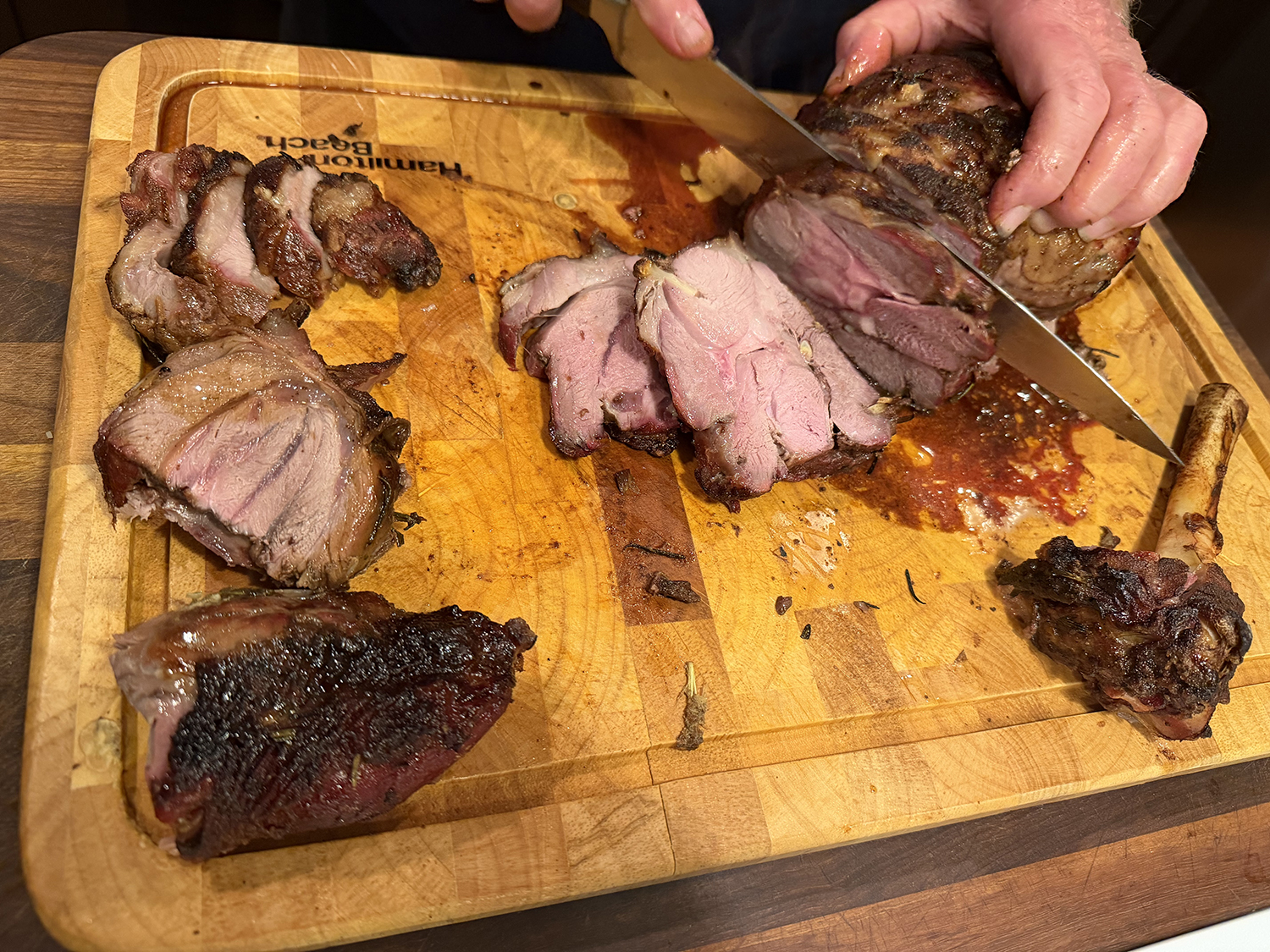
  5. Rest. Remove the lamb to a carving board, preferably one with a trough, to rest for 20 to 35 minutes. Tilt the roasting pan and spoon off as much of the clear fat as you can. Using a wooden spoon, scrape up the pan drippings (if they are too stuck to the pan, add 1⁄4 cup water to dissolve them). Set aside the pan drippings to drizzle over the carved lamb.
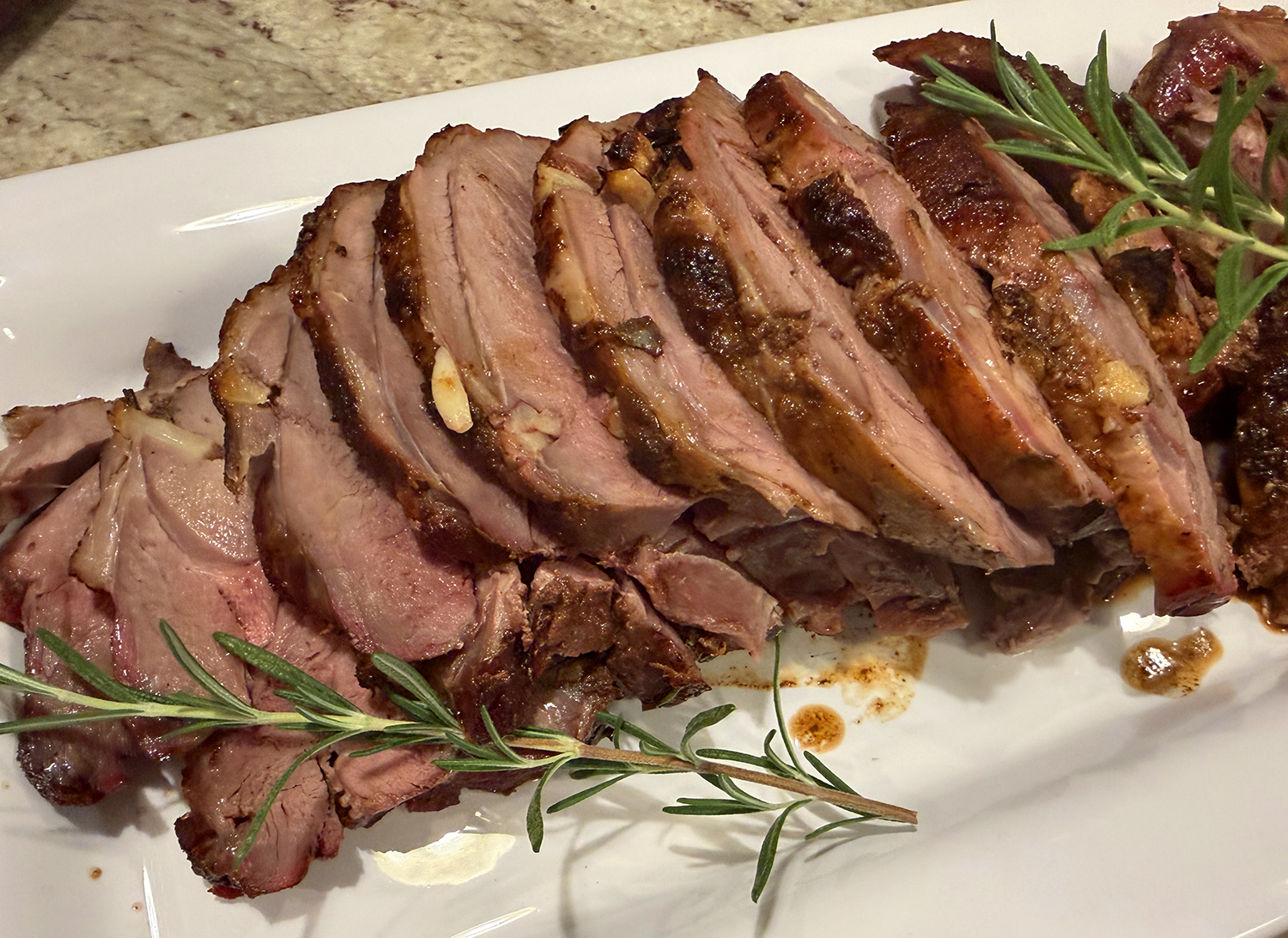
  6. Carve and Serve. Carve the leg of lamb and serve drizzled with the pan drippings, or layer the slices in the roasting pan so they soak up the pan juices and serve family-style from the pan.
    If making the optional vinaigrette (recipe below), see Step 3 for carving and serving.

Ingredients

  • 1 lb. rip tomatoes, seeded and finely chopped (about 2 cups)
  • 1⁄2 cup black olives, pitted and finely chopped
  • 3Tbsp. red wine vinegar
  • 1 1⁄2 tsp. fennel seeds, lightly toasted in a dry skillet and coarsely ground
  • freshly ground black pepper
  • 1⁄3 cup extra virgin olive oil
  • 1⁄3 thinly sliced, lightly packed fresh basil leaves

Directions

  1. Make the Vinaigrette. In a medium bowl, combine the tomatoes olives, vinegar and fennel seeds. Season with pepper (salt gets added later). Whisk in the olive oil and set aside.
  2. Roast the as Directed Above. After transferring the lamb to the carving board in Step 5, spoon and pour off as much fat excess fat form the roasting pan as you can. (We used a fat separator to assist.) Using a wooden spoon, scrape up the pan drippings (if they are too stuck to the pan, add 2 to 3 tablespoons water to dissolve them). Add the vinaigrette to the pan, stir to combine with the drippings. Stir in the basil. Taste for salt and pepper. The vinaigrette should be warm, but not hot.
  3. Carve and Serve. Carve the leg of lamb. Add any juices from the carving board to the vinaigrette. Spoon some of the vinaigrette over the slices of meat and serve along with extra vinaigrette in a bowl.

http://www.lynnandruss.com

Recipe by Molly Stevens in her All About Roasting cookbook

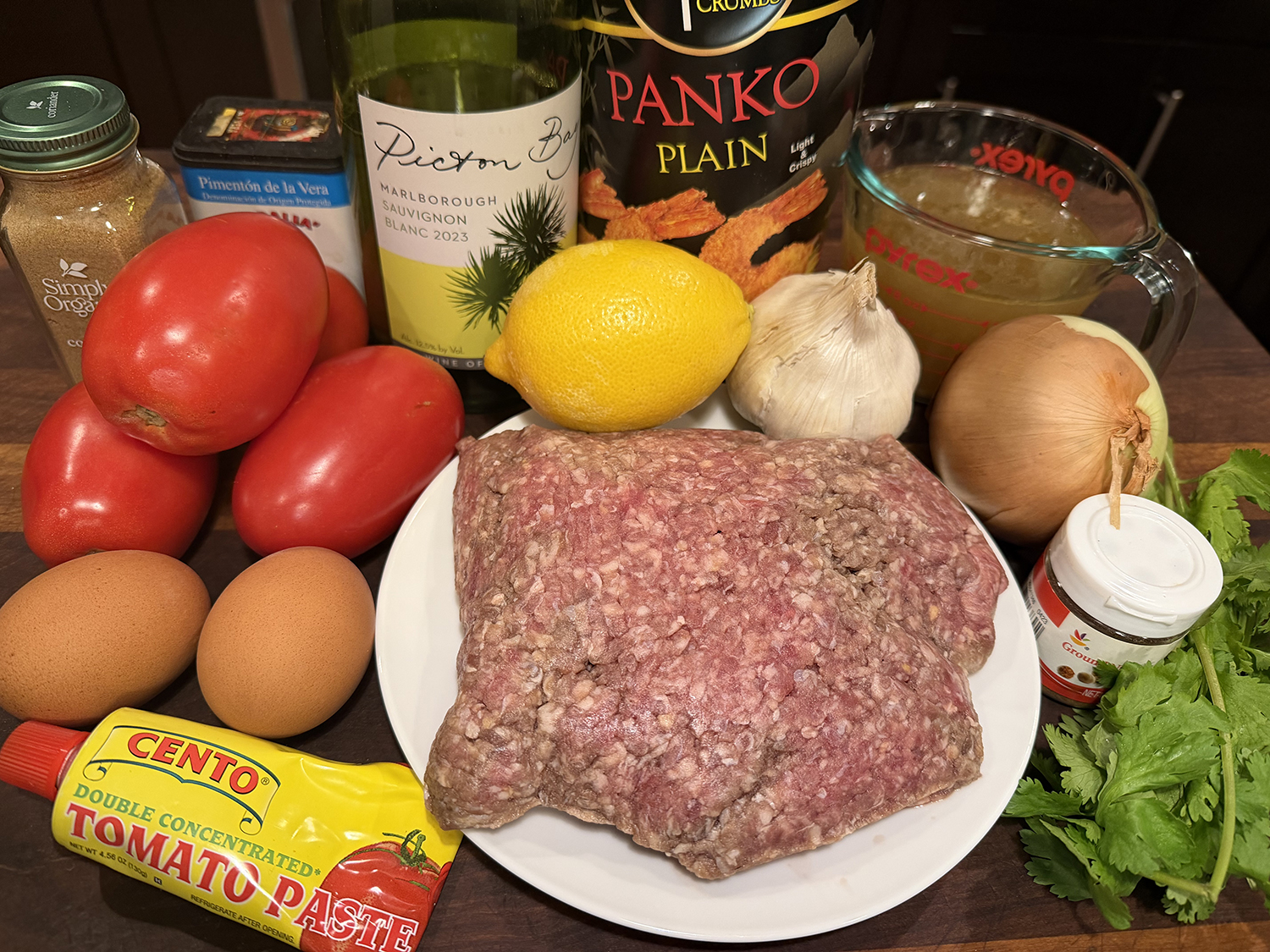
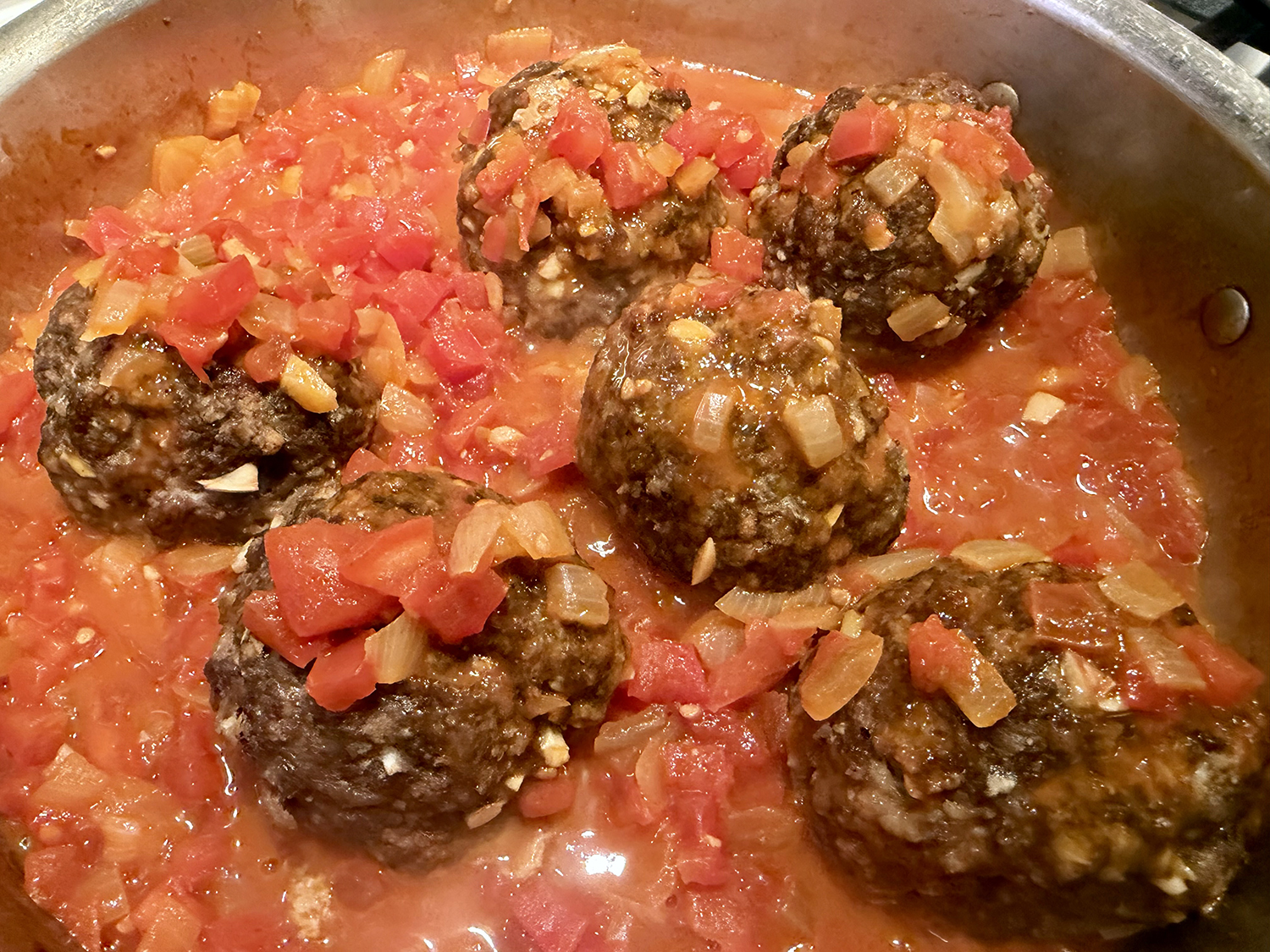
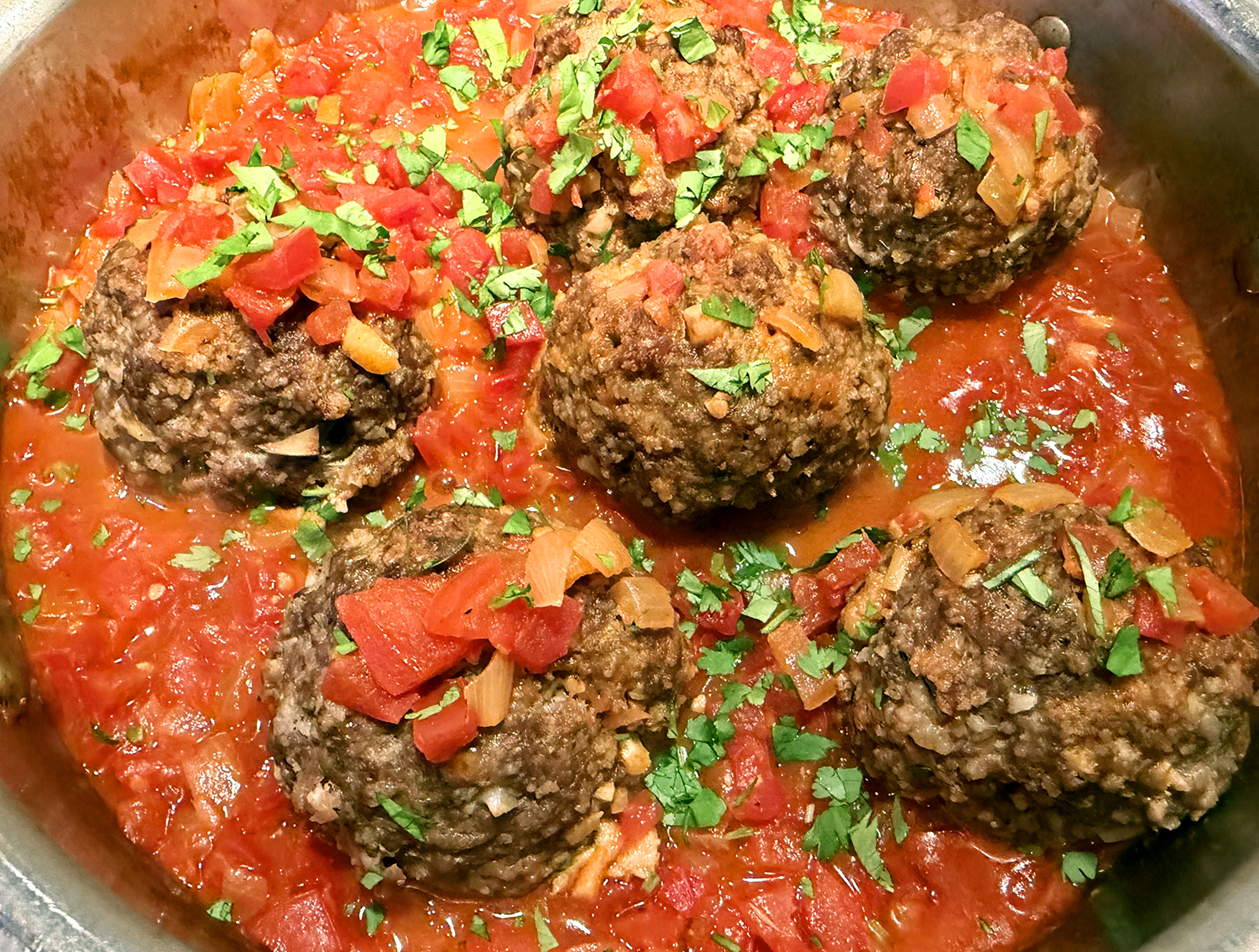
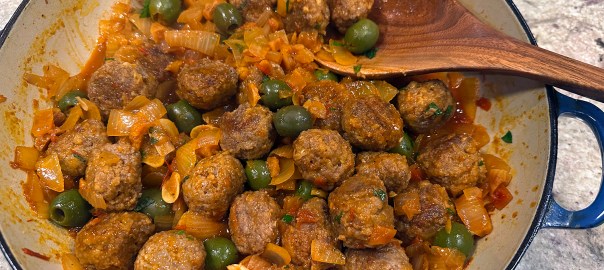
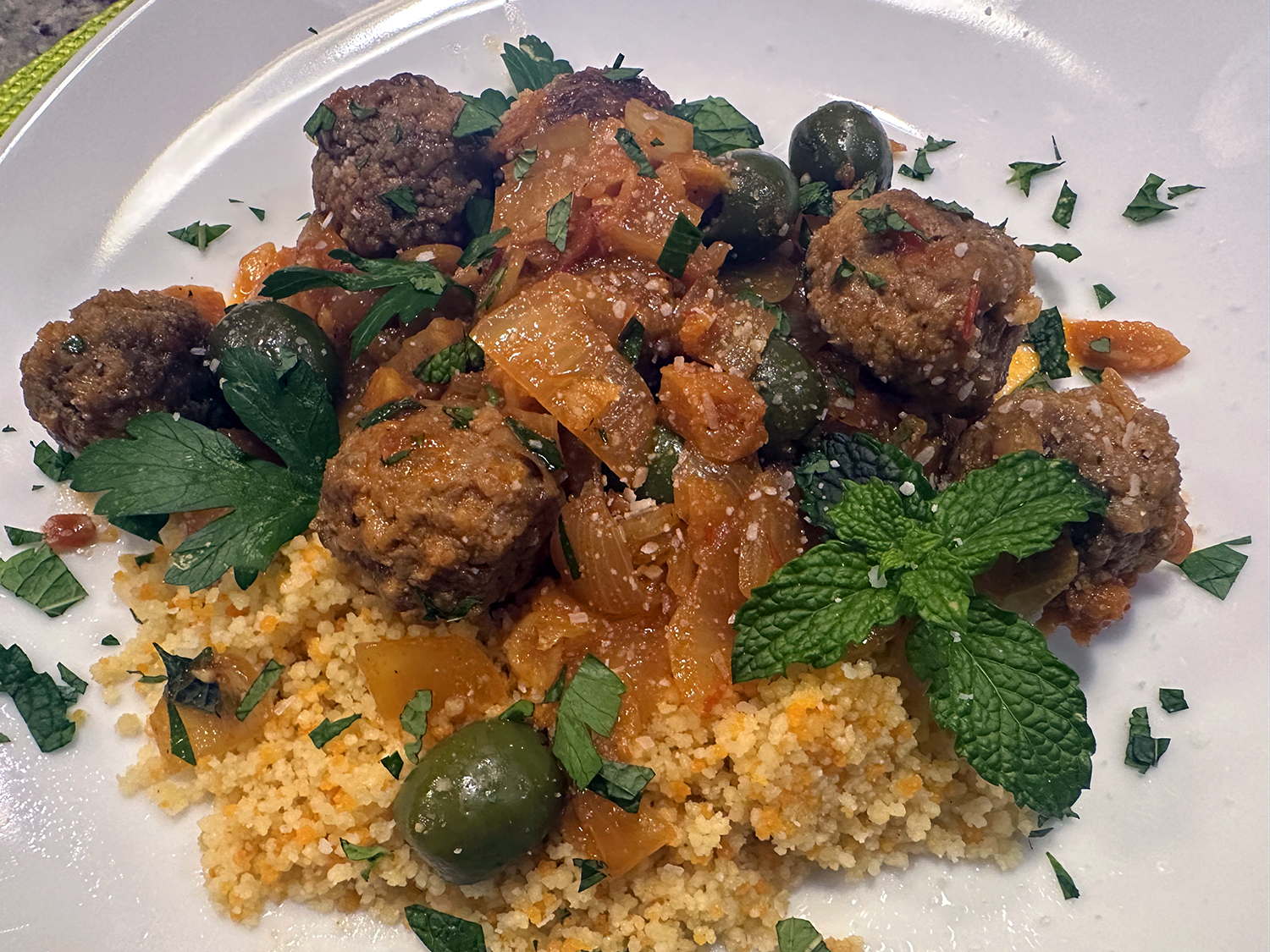
Meatball Tagine

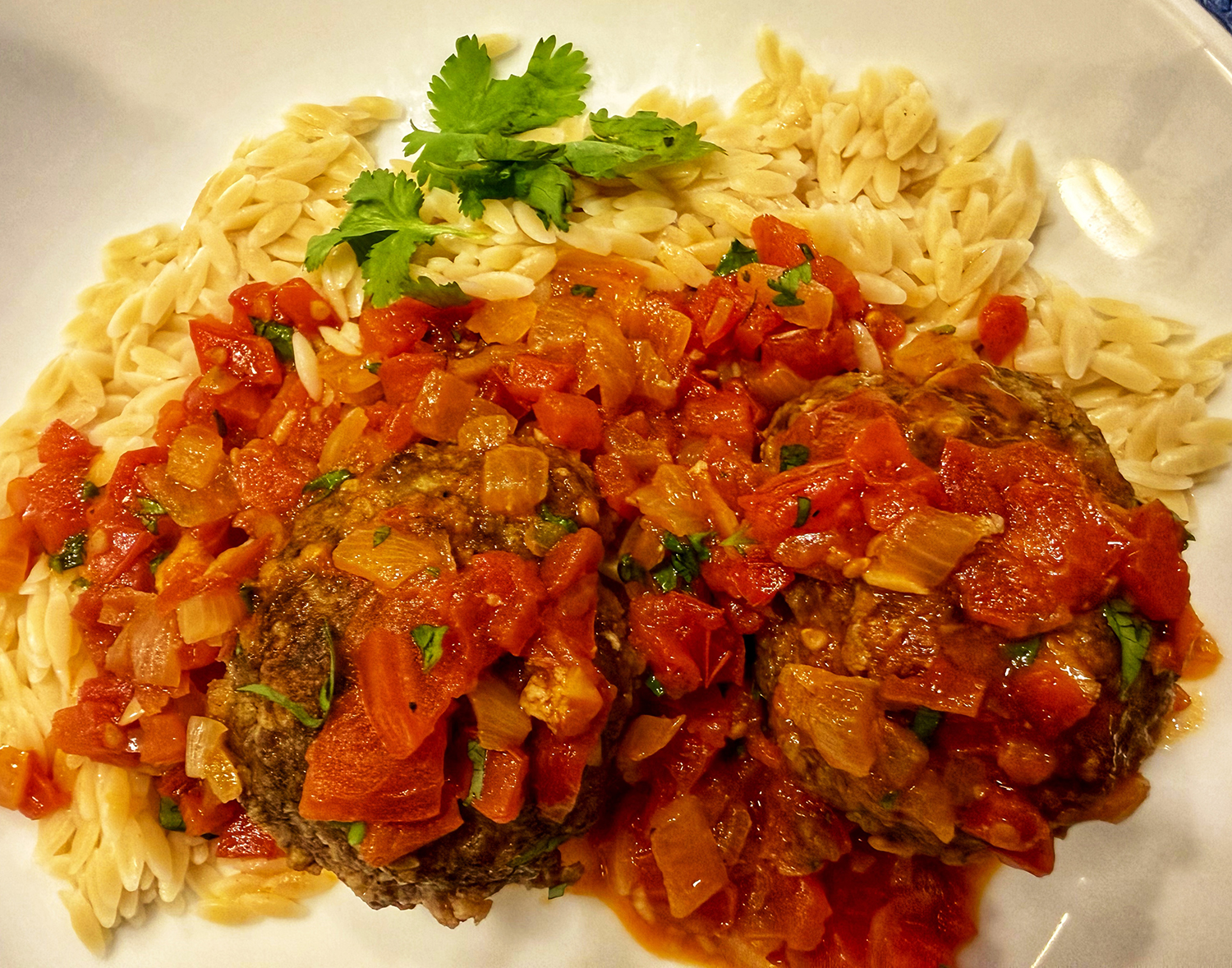
In Bon Appétit’s weeknight-friendly take on Moroccan tagine, it taps classic flavor powerhouses to create the robust sauce: peppery harissa (if yours is mild, you may to throw in a pinch of crushed red pepper flakes for balance), sweet dried fruit, briny olives, and warming spices like cinnamon and cumin. If lamb isn’t your bag, feel free to swap in ground beef or chicken instead. But hey, lamb is our bag!

Incorporating dried dates instead of apricots (that’s what we had on hand), will result in a darker sauce. And we made our tri-colored couscous with homemade chicken stock for an additional bump of flavor.

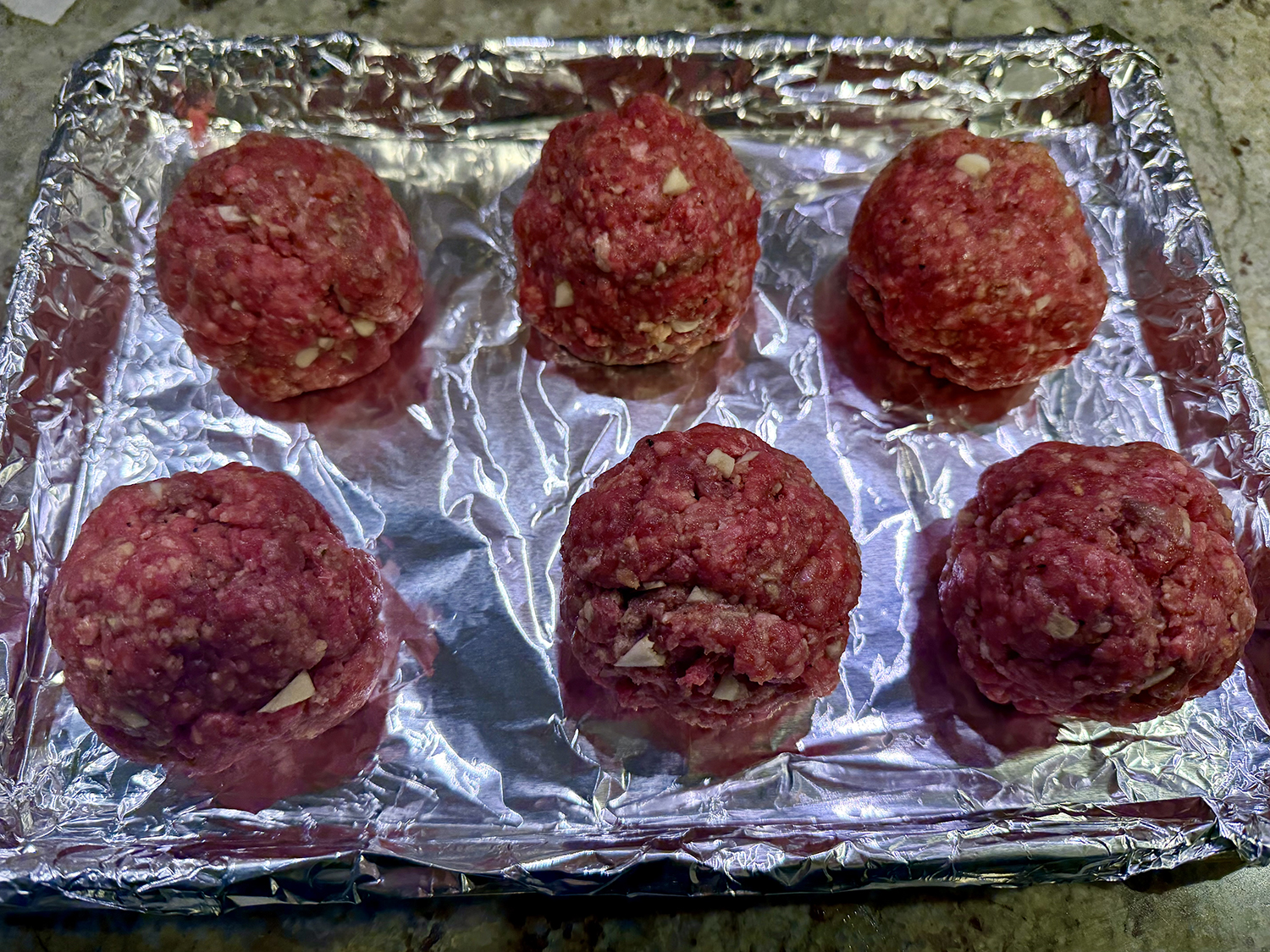
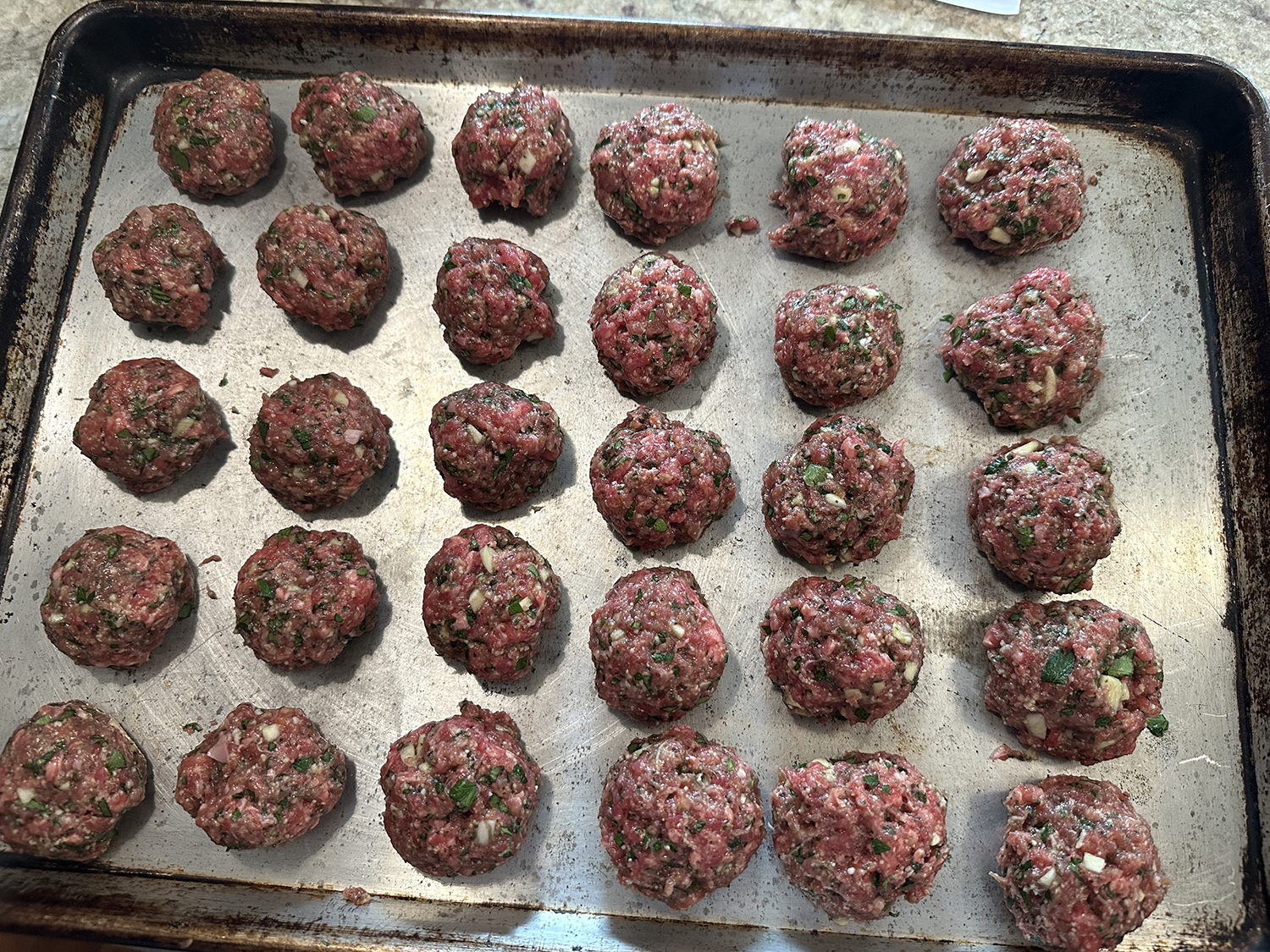
You’ll get about 30 meatballs, so the dish could possible feed a fifth diner.

Ingredients

Meatball Tagine

  • Servings: 4
  • Difficulty: easy
  • Print

  • 1 large egg, beaten to blend
  • 5 garlic cloves, 1 finely grated, 4 thinly sliced
  • 1 lb. ground lamb, OR ground beef or chicken
  • 1 cup panko
  • ½ tsp. smoked paprika
  • ¼ tsp. ground cinnamon
  • 5 Tbsp. extra-virgin olive oil, divided
  • 2 tsp. cumin, divided
  • 1½ tsp. Diamond Crystal or ¾ tsp. Morton kosher salt, divided, plus more
  • 1 large onion, coarsely chopped
  • ½ cup pitted green olives
  • ¼ cup coarsely chopped pitted Medjool dates, OR dried apricots
  • ⅓ cup mild (or spicy) harissa paste
  • Freshly ground pepper
  • 2 Tbsp. red wine vinegar
  • Cooked Moroccan couscous, mint leaves, and parsley leaves with tender stems (for serving)

Directions

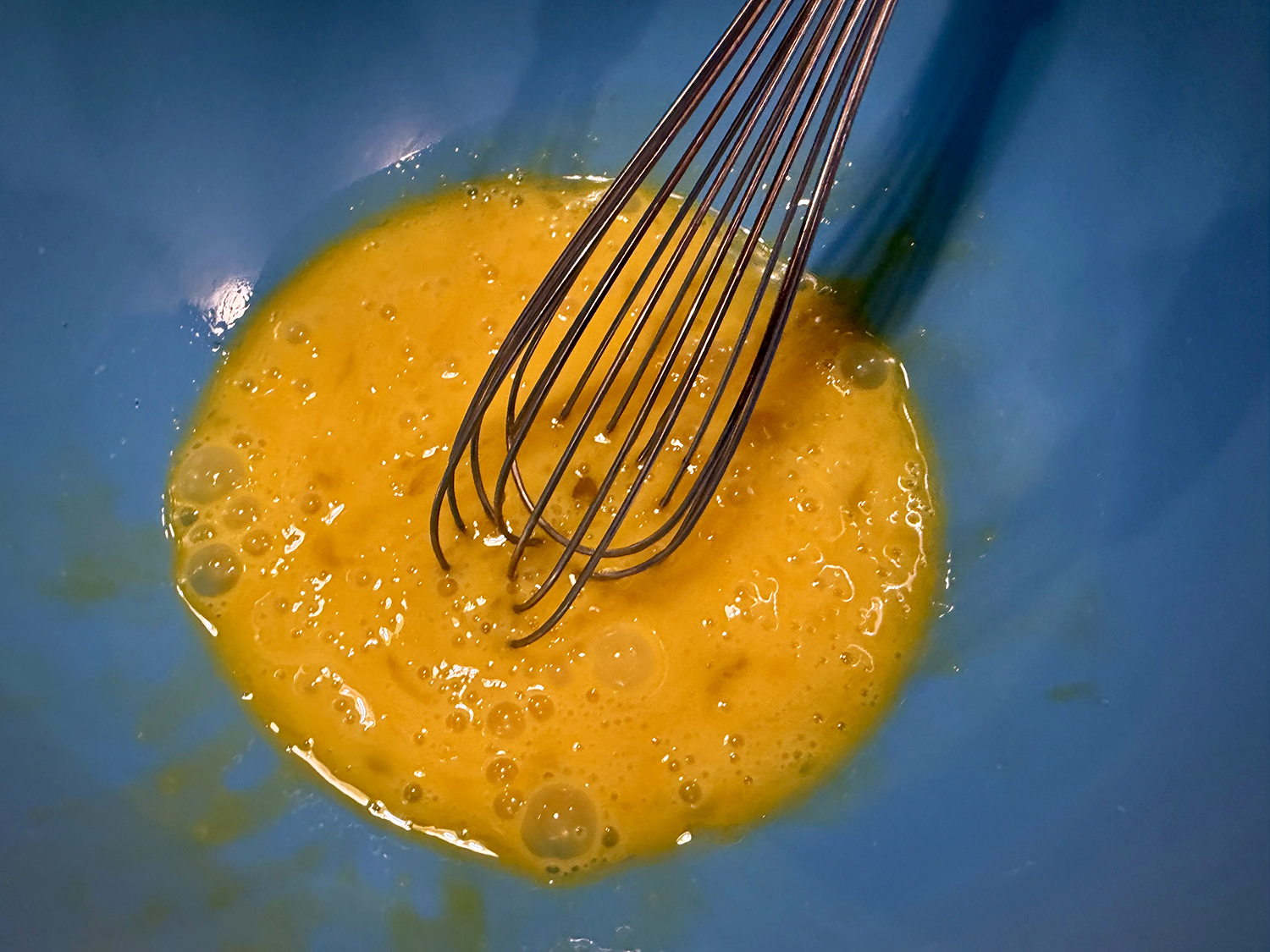
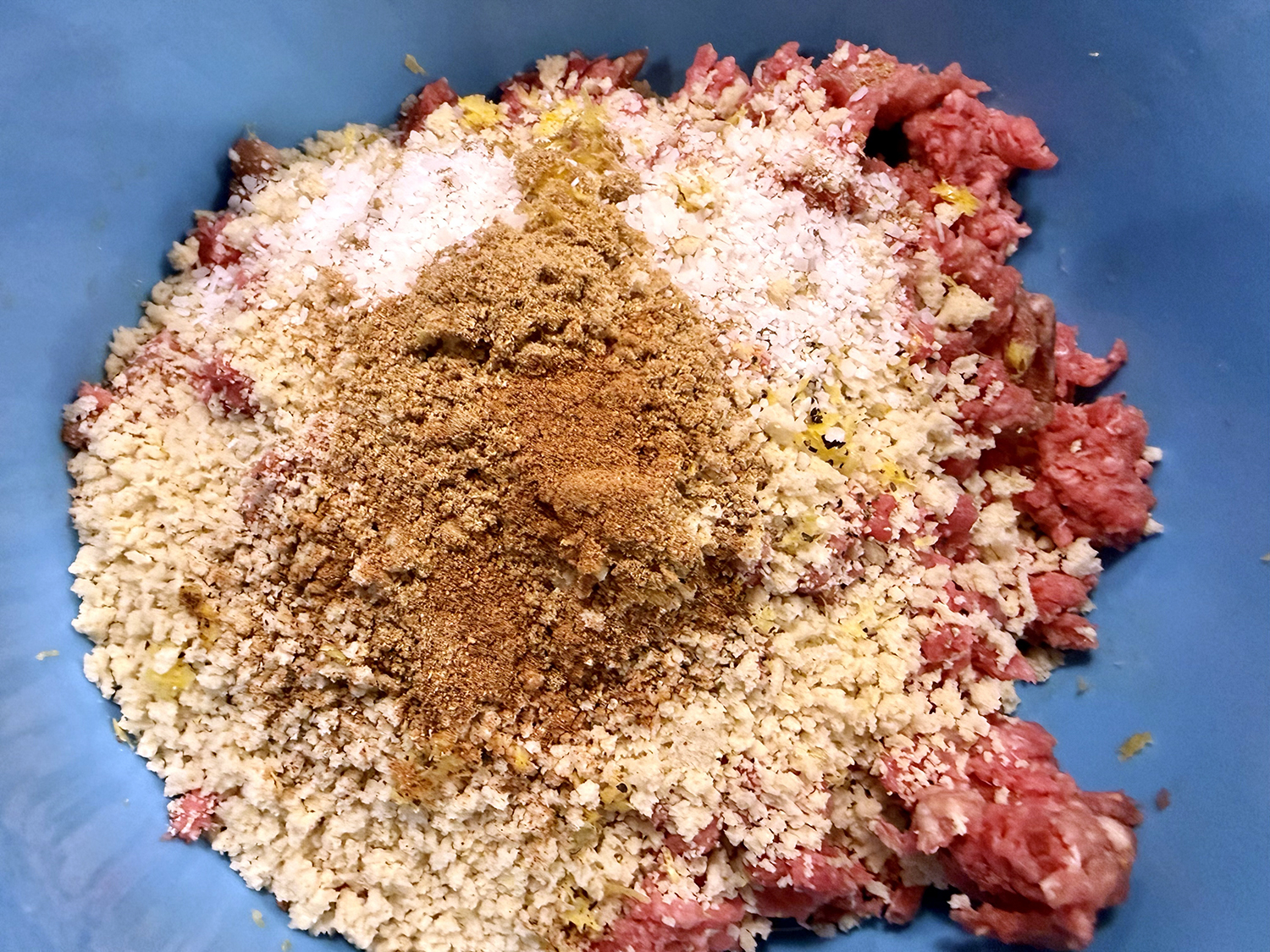
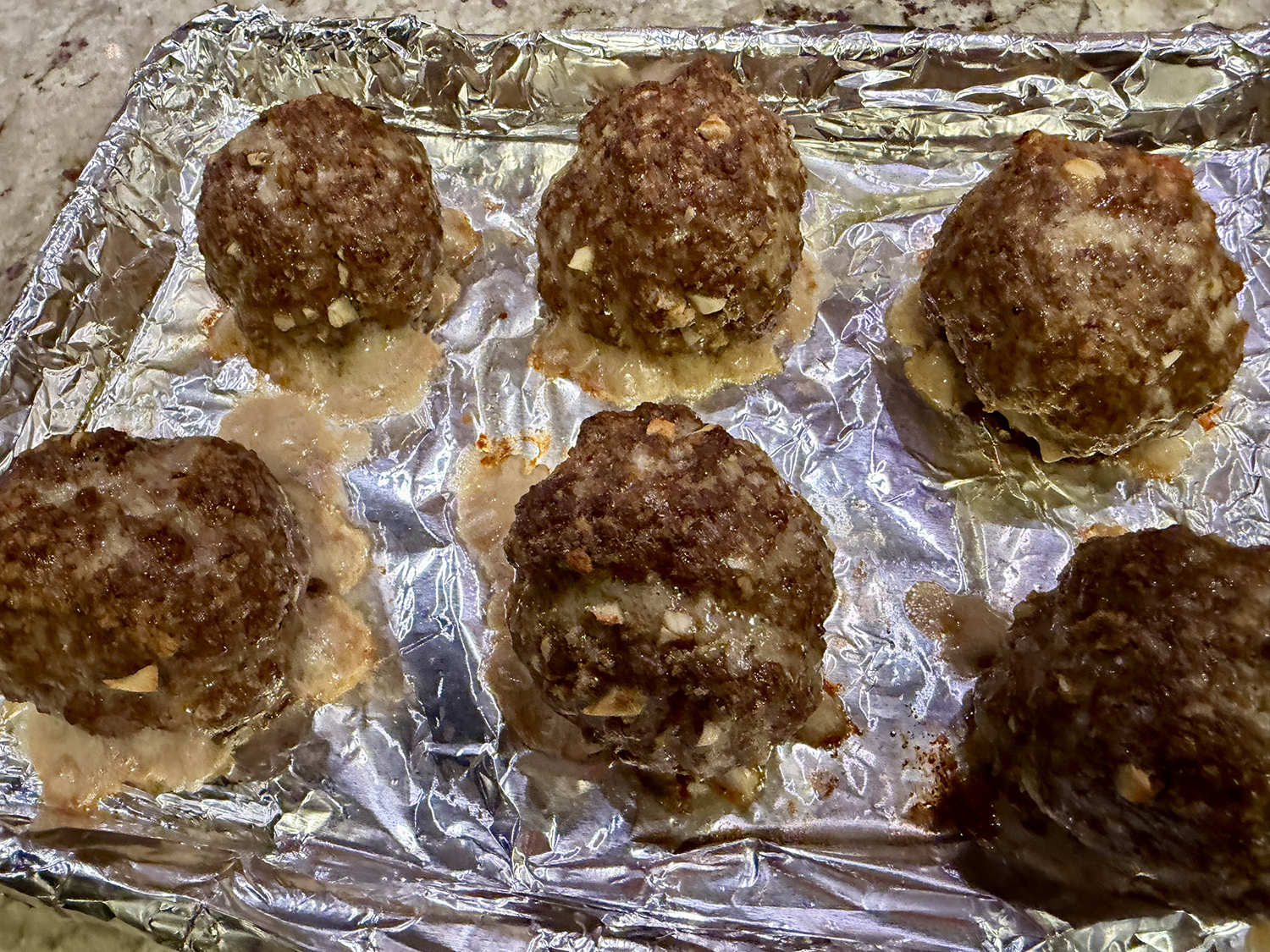
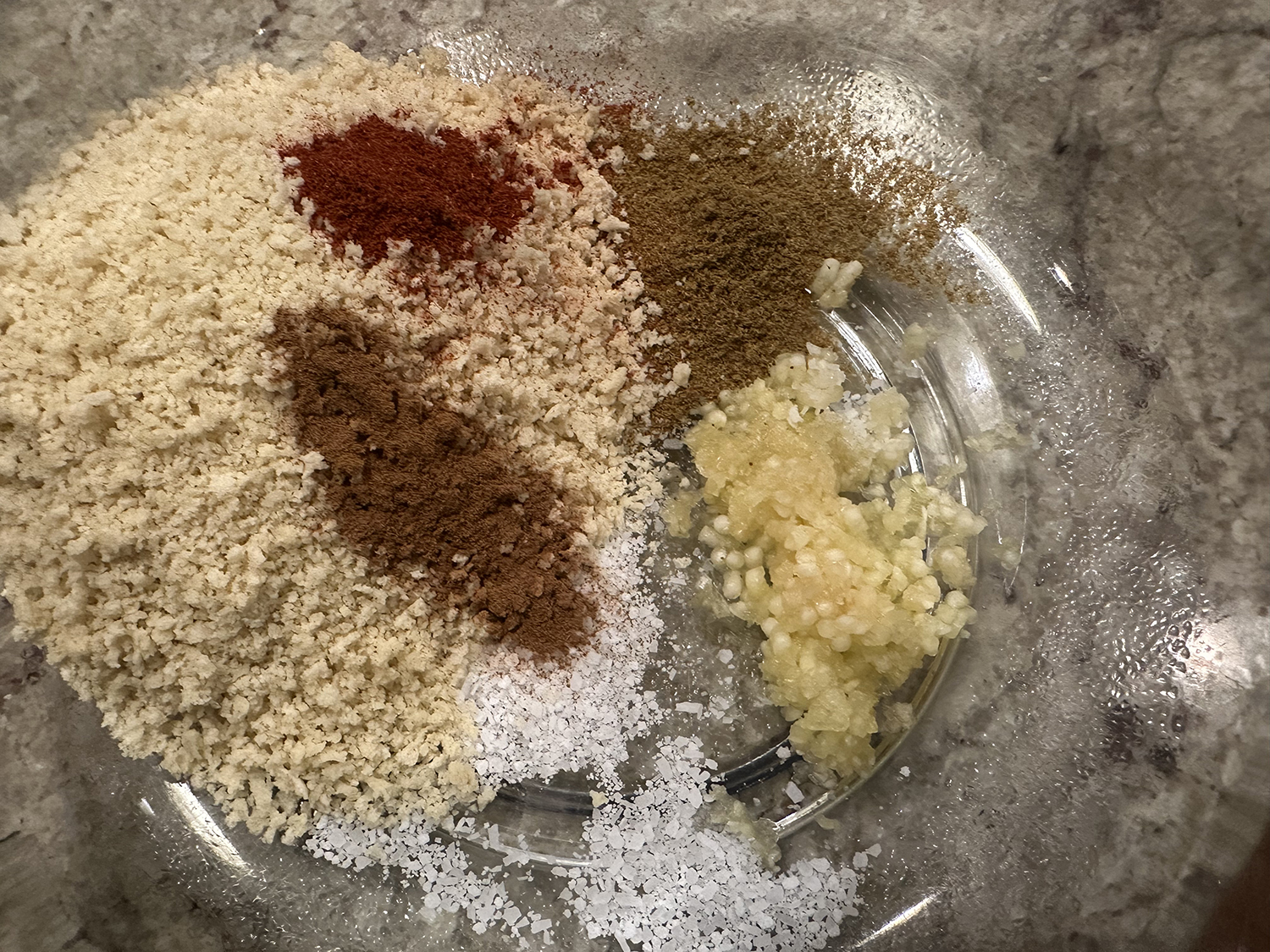
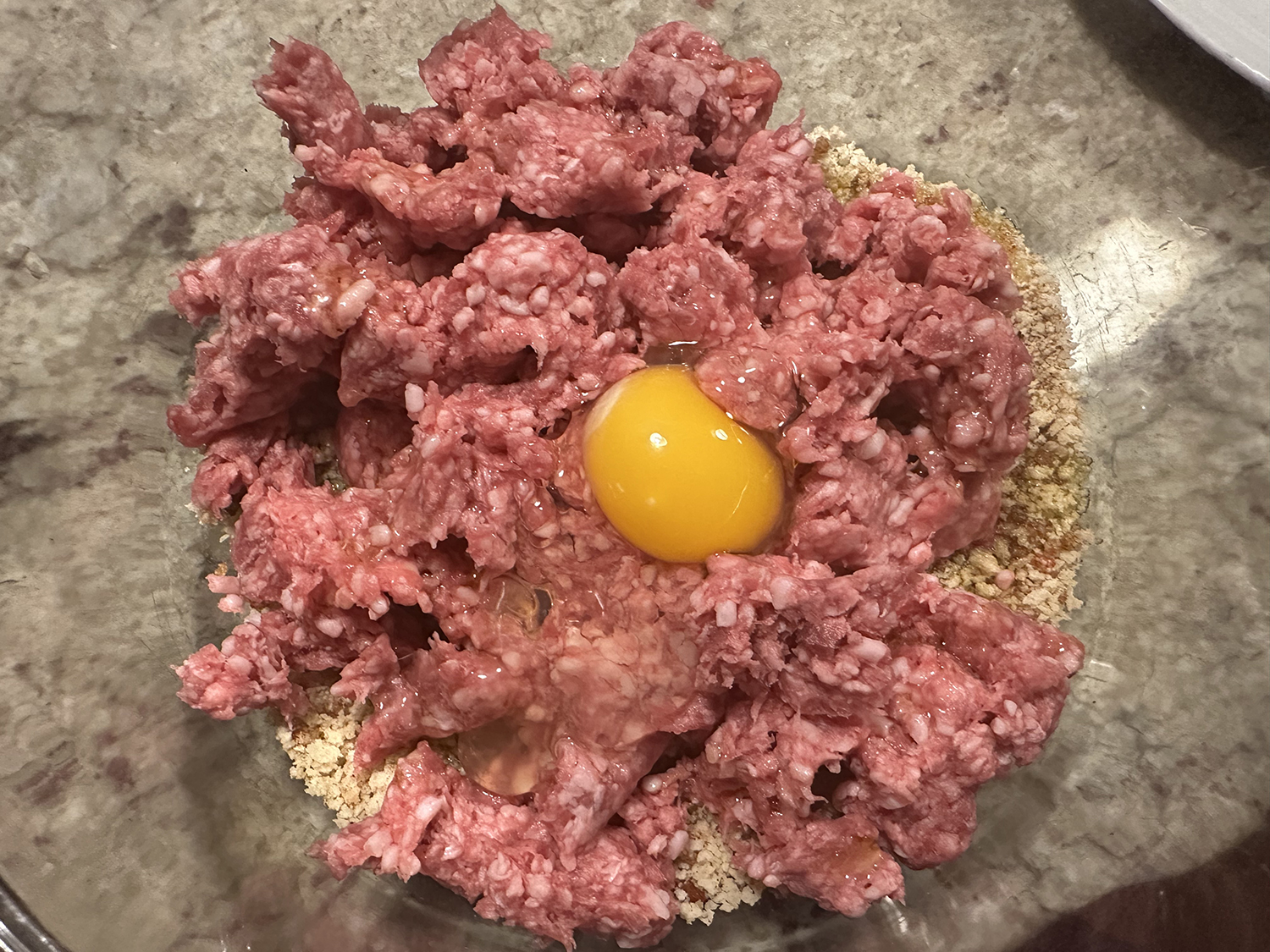
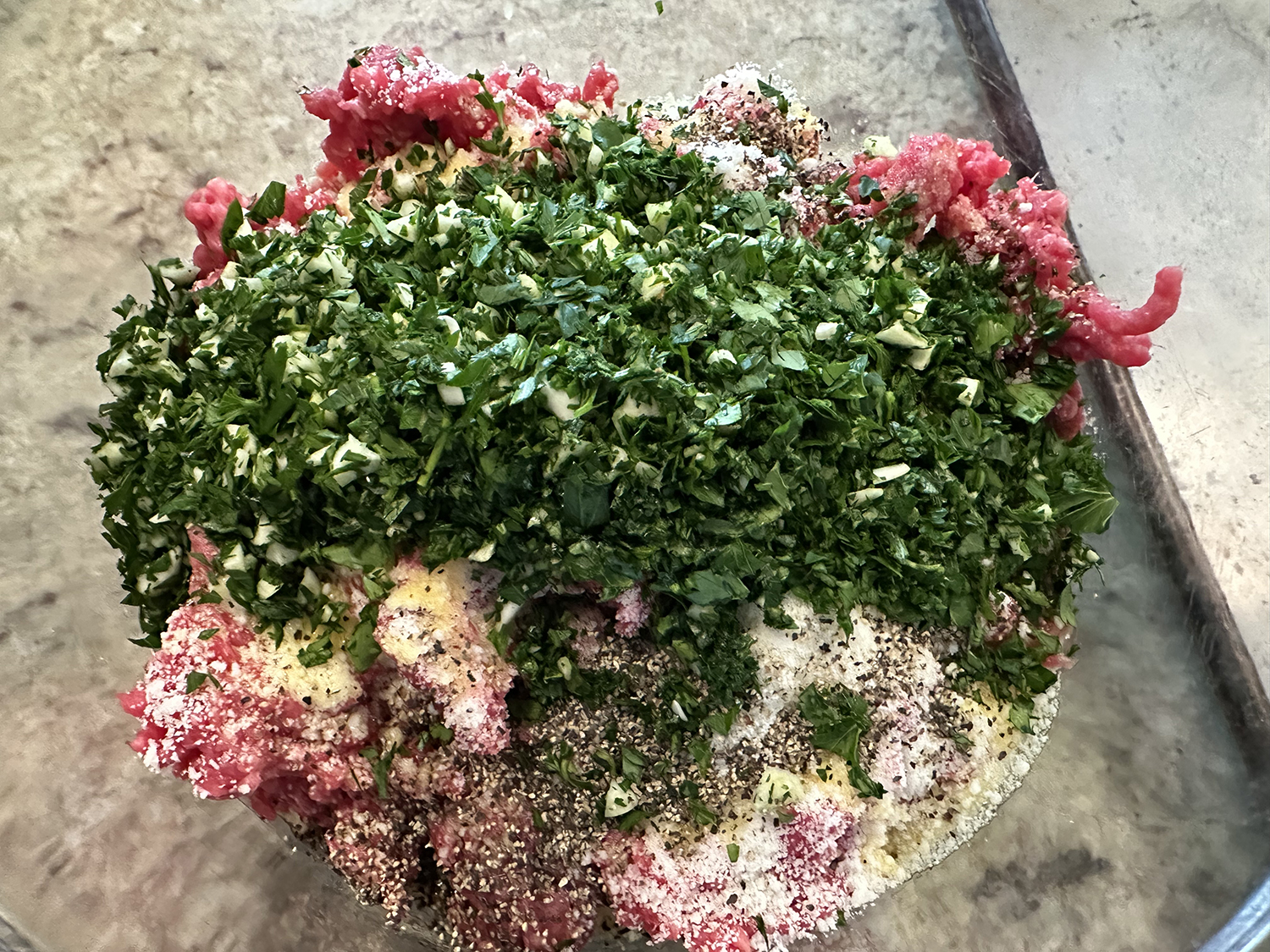
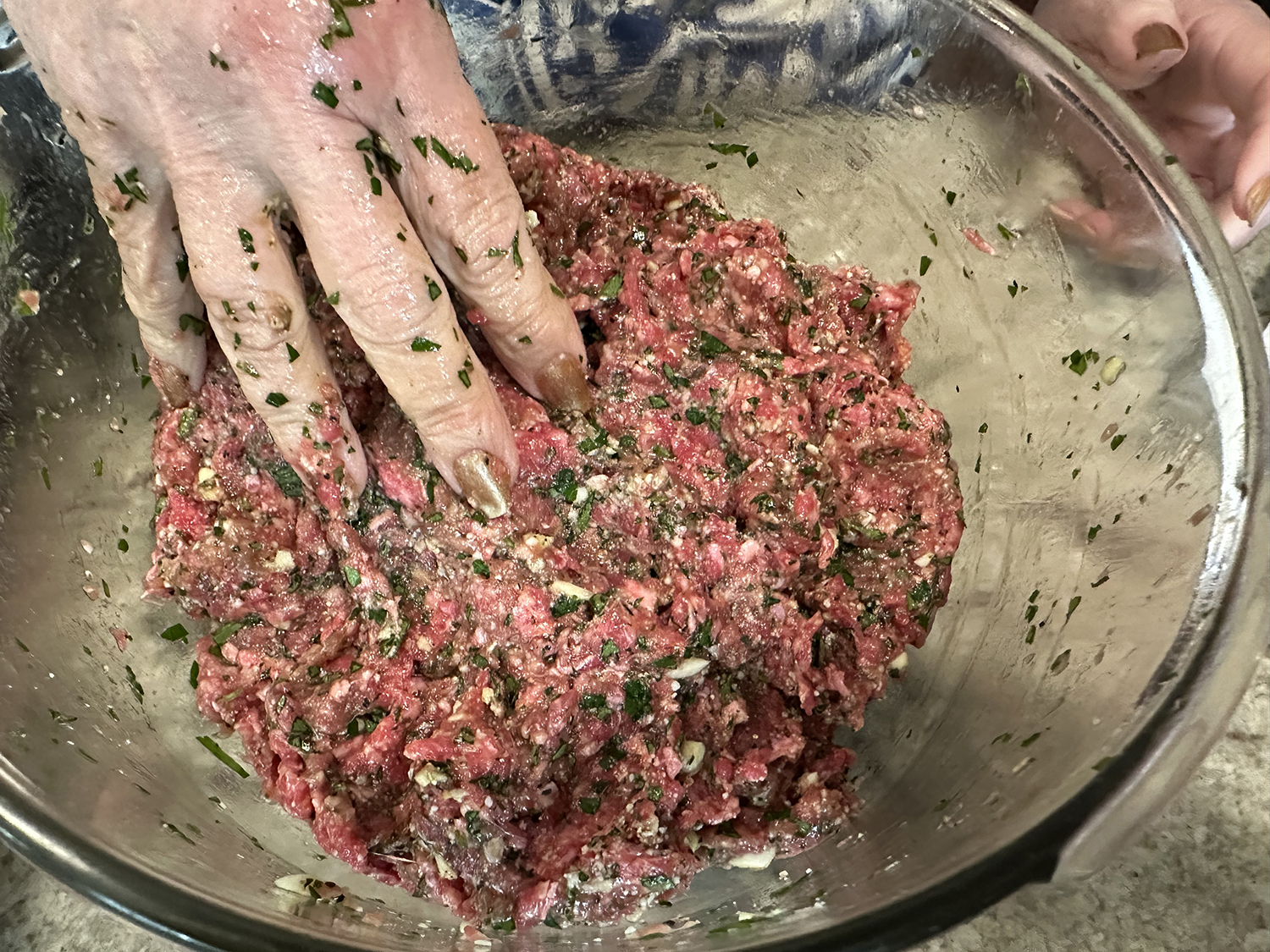
  1. Place 1 large egg, beaten to blend, 1 garlic clove, finely grated, 1 lb. ground lamb, 1 cup panko, ½ tsp. smoked paprika, ¼ tsp. ground cinnamon, 3 Tbsp. extra-virgin olive oil, 1 tsp. cumin, 1 tsp. Diamond Crystal or ½ tsp. Morton kosher salt, and 1 Tbsp. water in a large bowl. Using your hands, gently mix until combined, then break into golf-ball-size pieces and roll into balls.
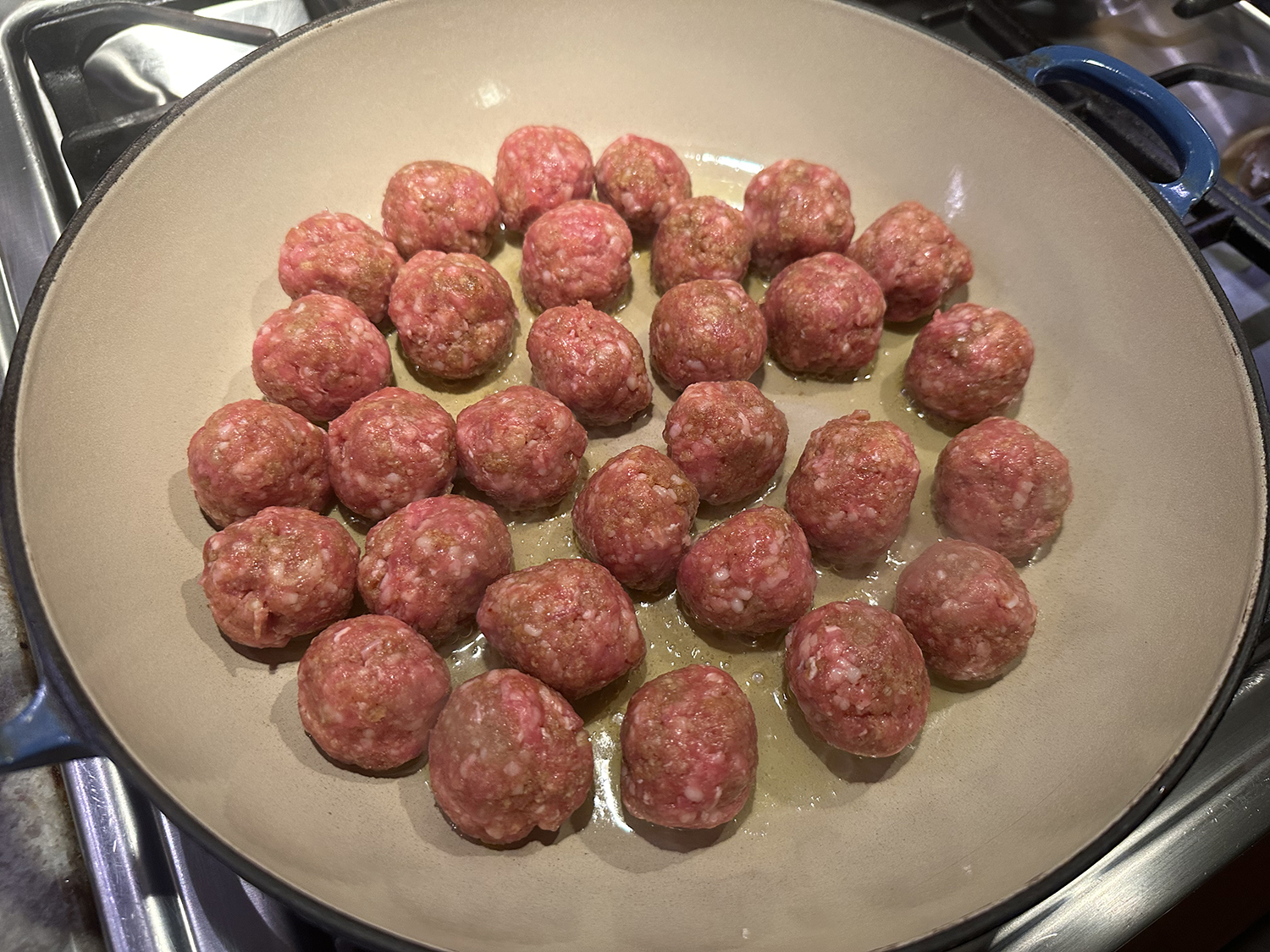
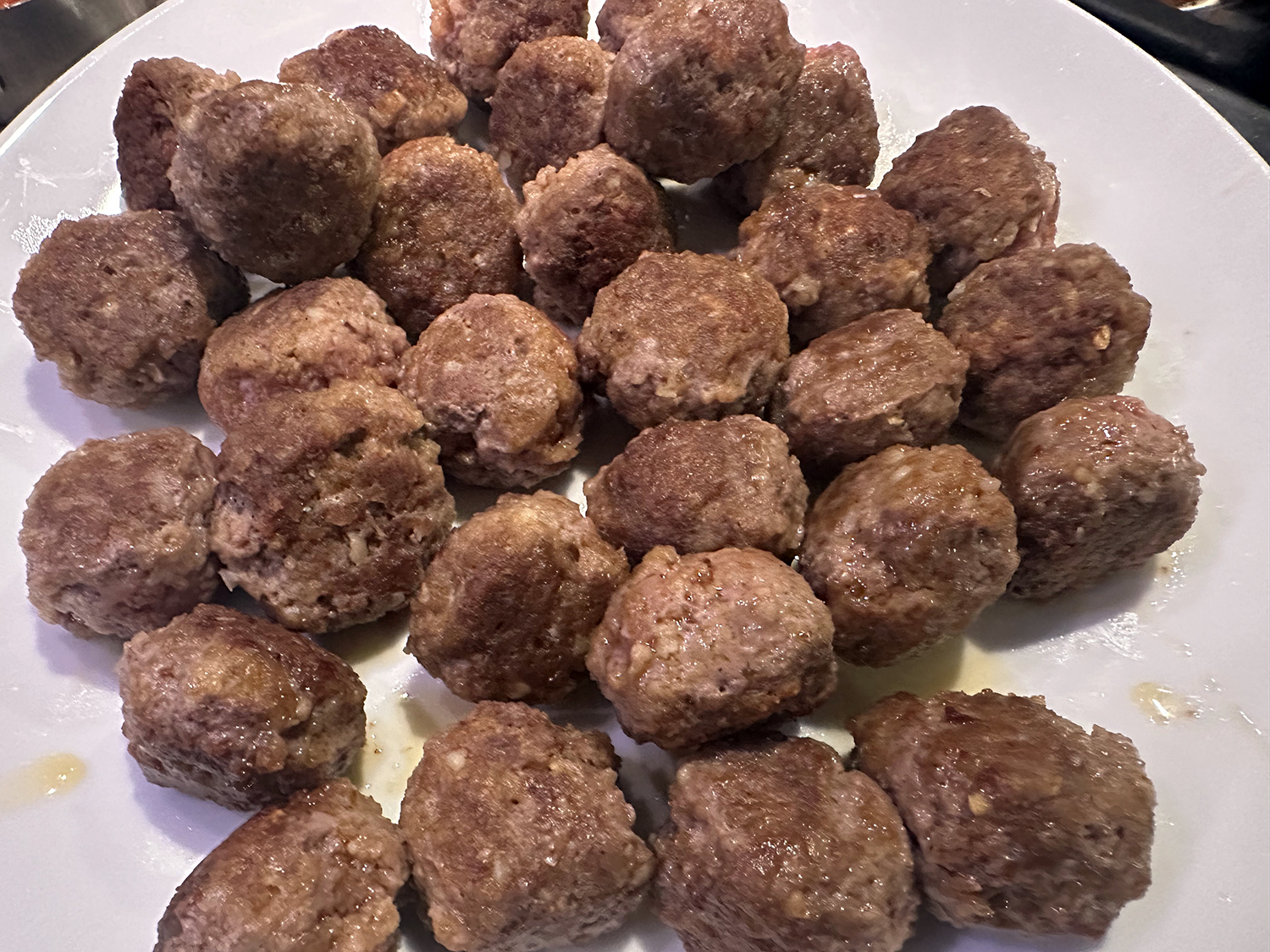
  2. Heat remaining 2 Tbsp. extra-virgin olive oil in a medium Dutch oven or other heavy pot over medium-high. Cook meatballs in a single layer, undisturbed, until browned underneath, about 3 minutes. Turn over and cook until browned underneath, about 3 minutes (they will not be cooked through). Using a slotted spoon, transfer meatballs to a plate.
  3. Pour off all but 2 Tbsp. fat from pot; discard. Add 1 large onion, coarsely chopped, and ½ tsp. Diamond Crystal or ¼ tsp. Morton kosher salt and cook over medium-high, stirring occasionally, until onion is softened and starting to brown around edges, about 3 to 5 minutes.
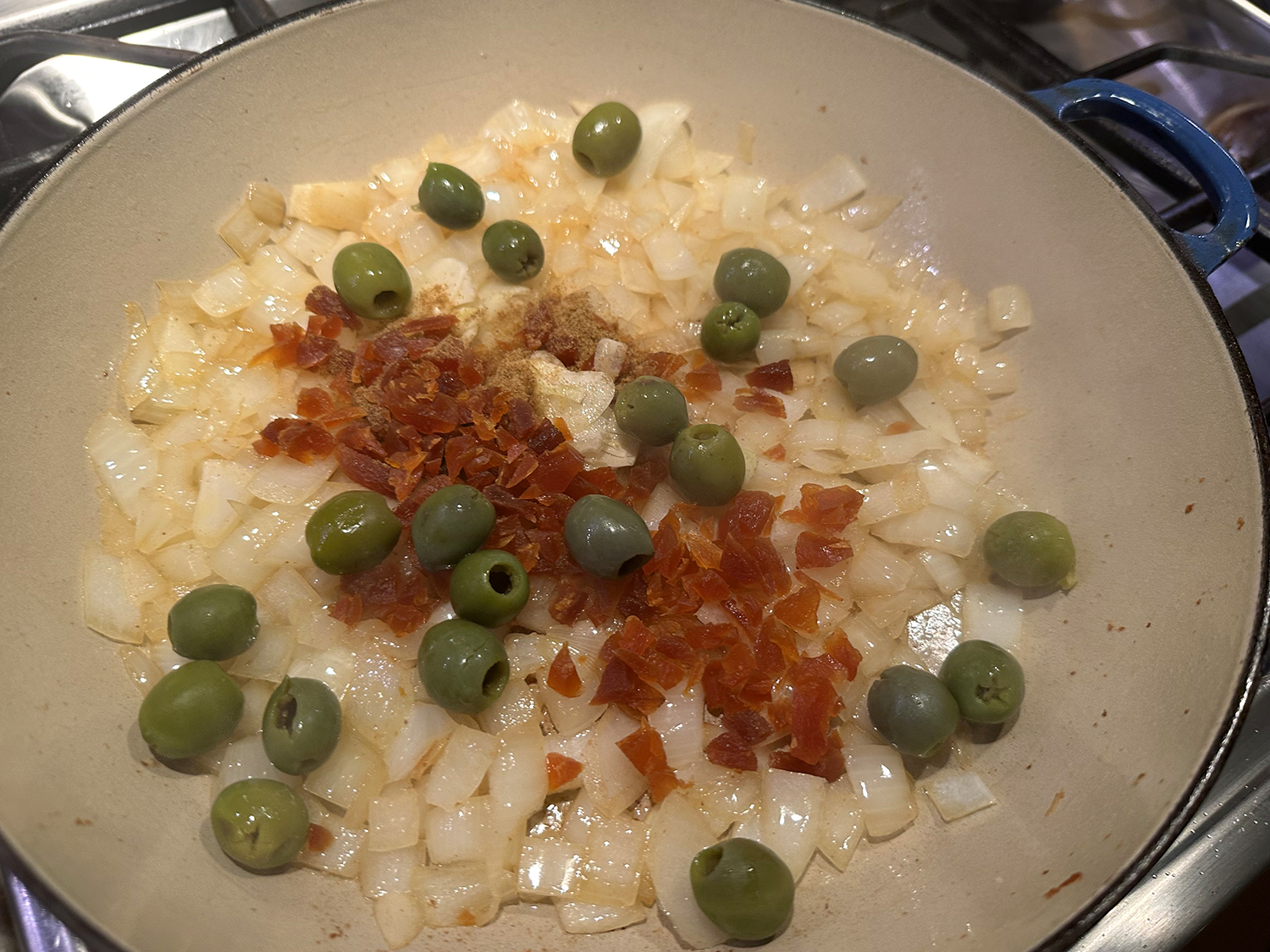
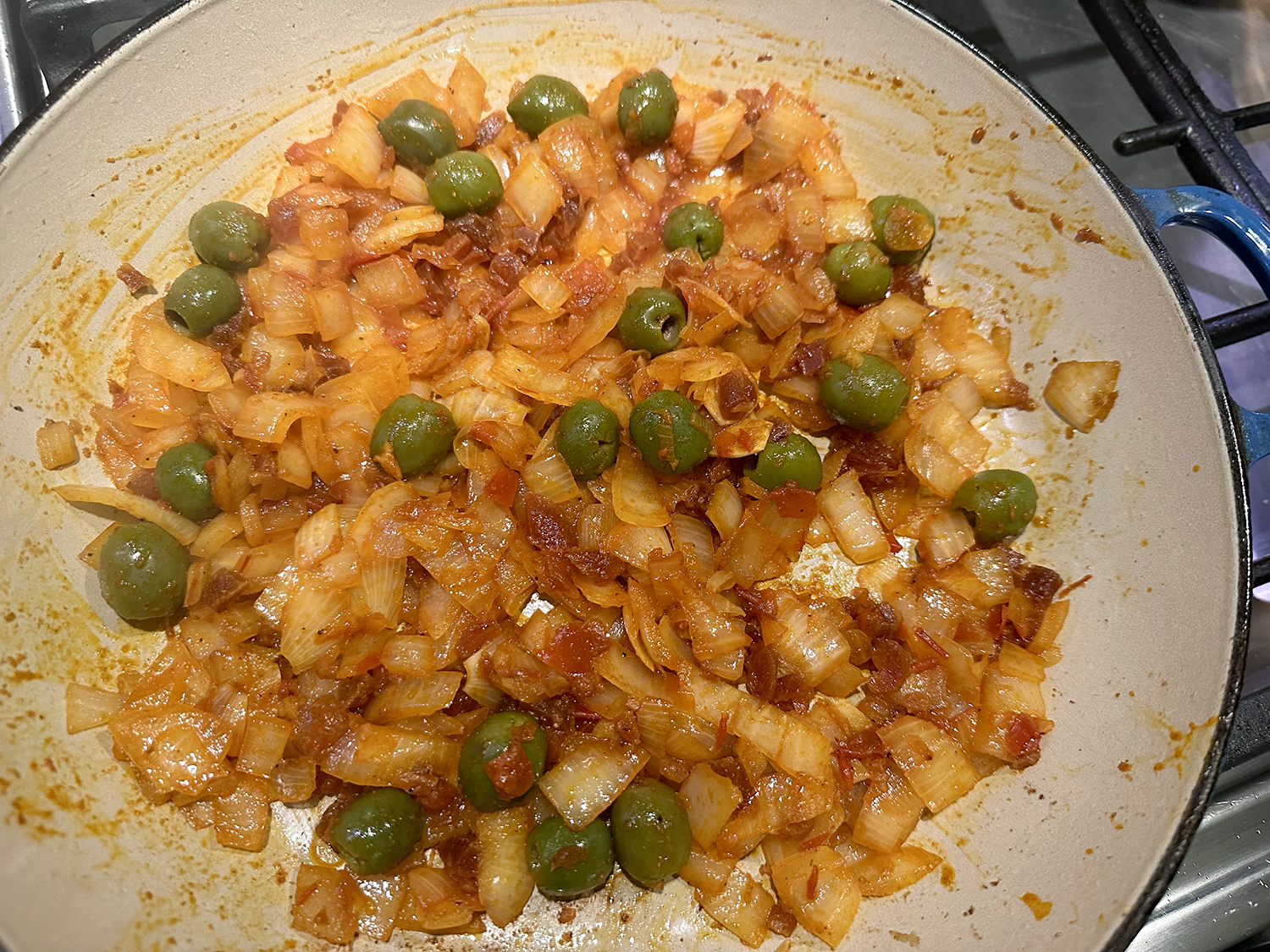
  4. Add 4 garlic cloves, thinly sliced, ½ cup pitted green olives, ¼ cup coarsely chopped pitted Medjool dates or dried apricots, and remaining 1 tsp. cumin. Cook, stirring often, until fragrant, about 1 minute.
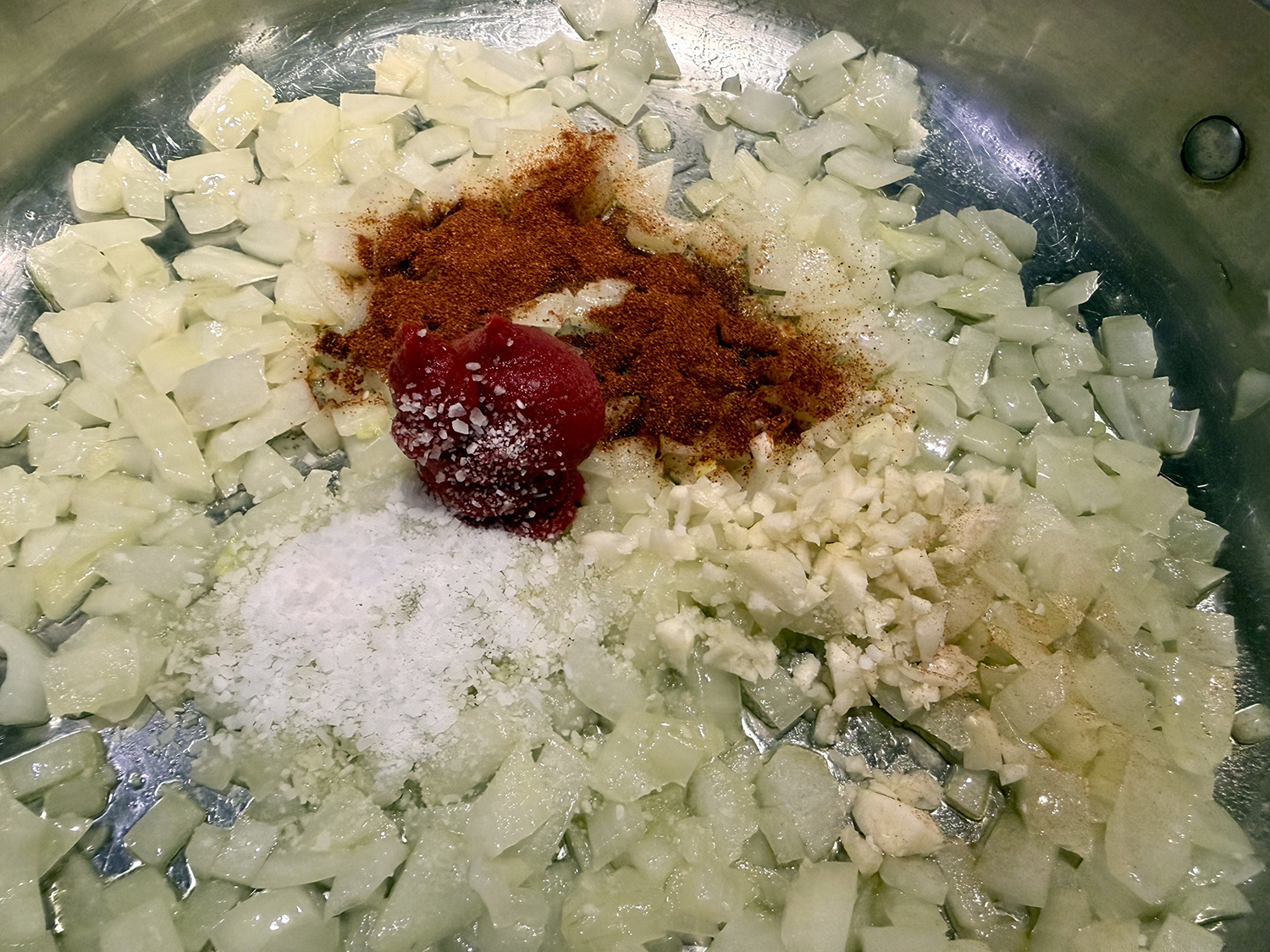
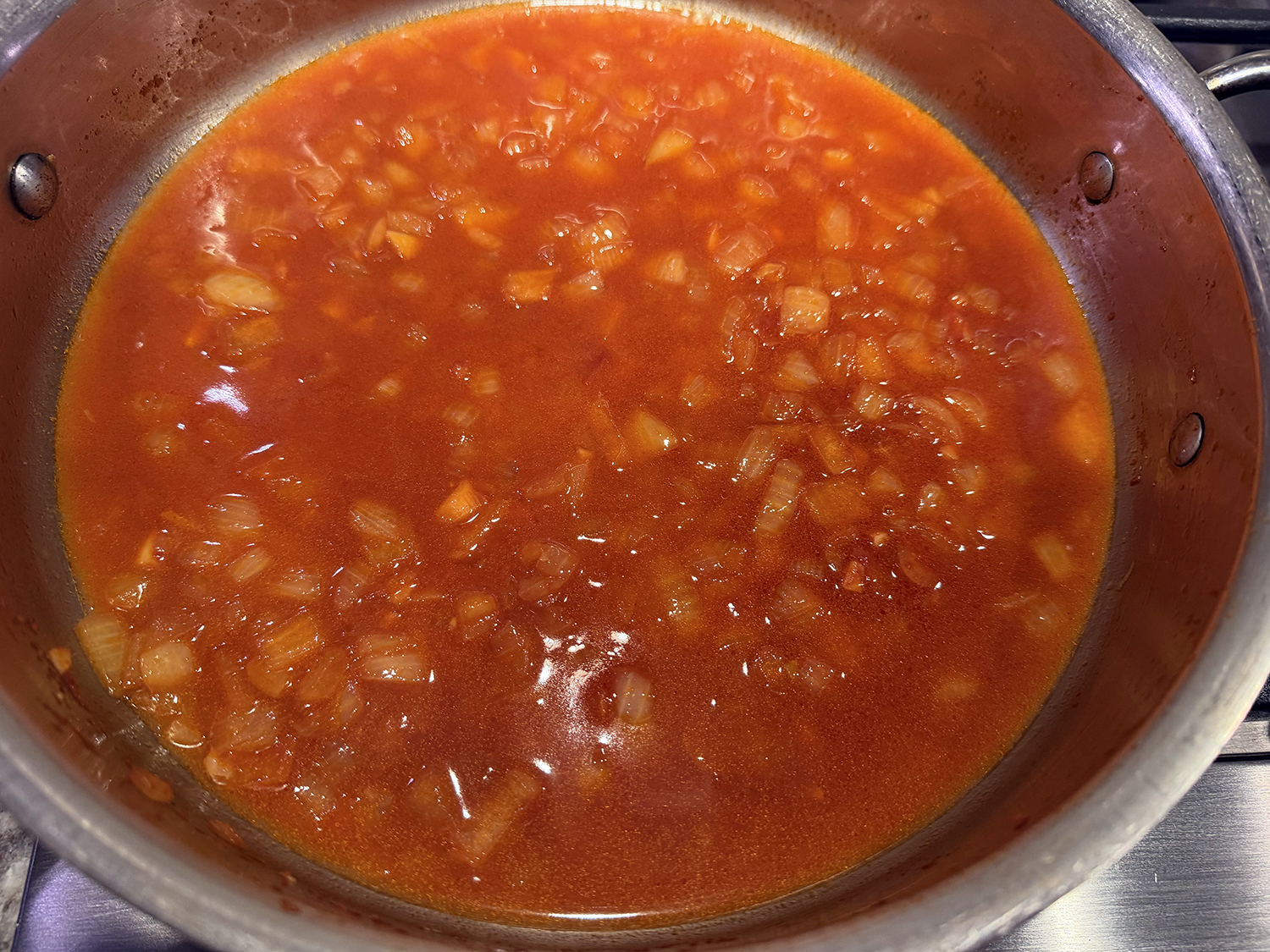
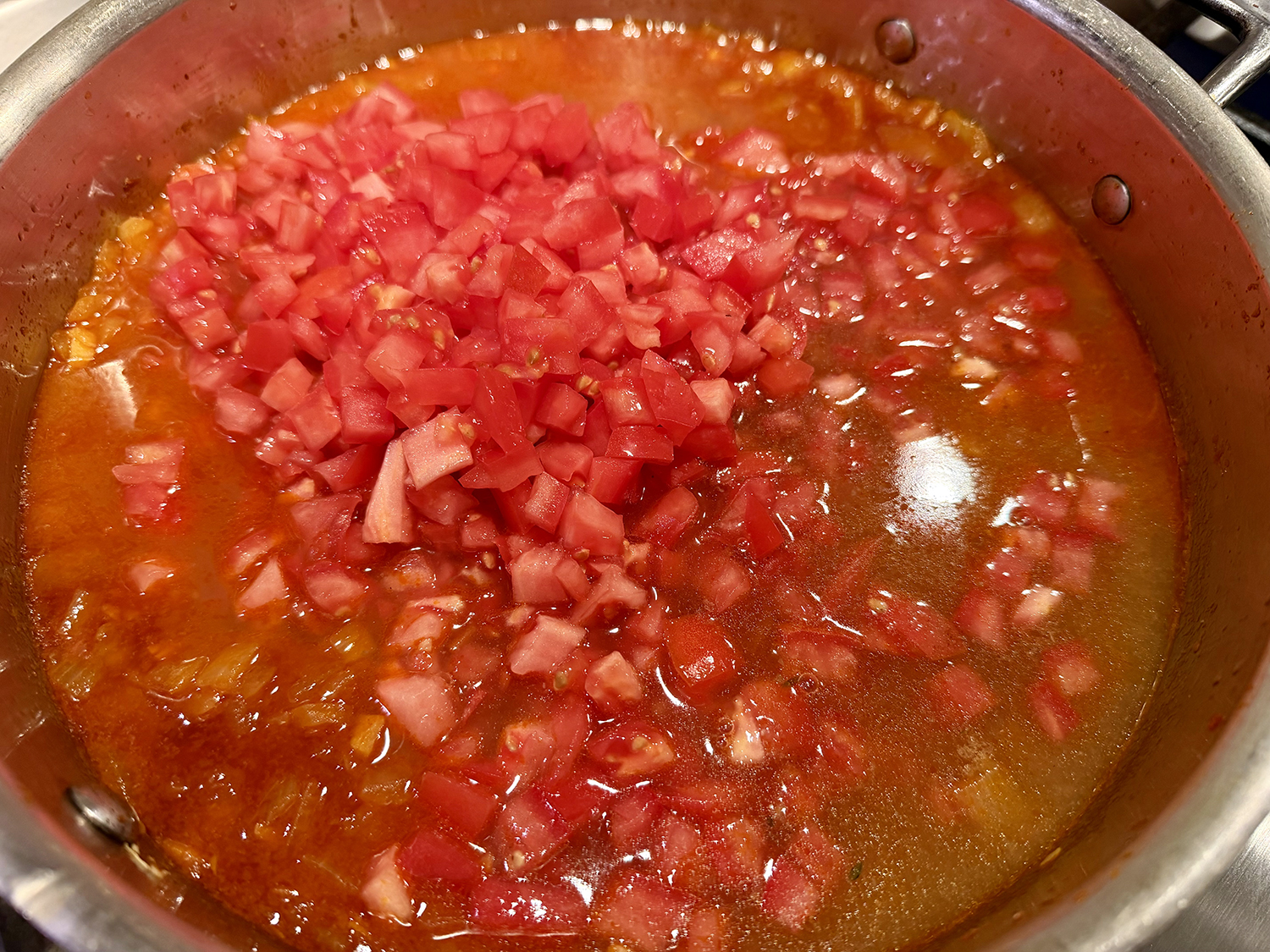
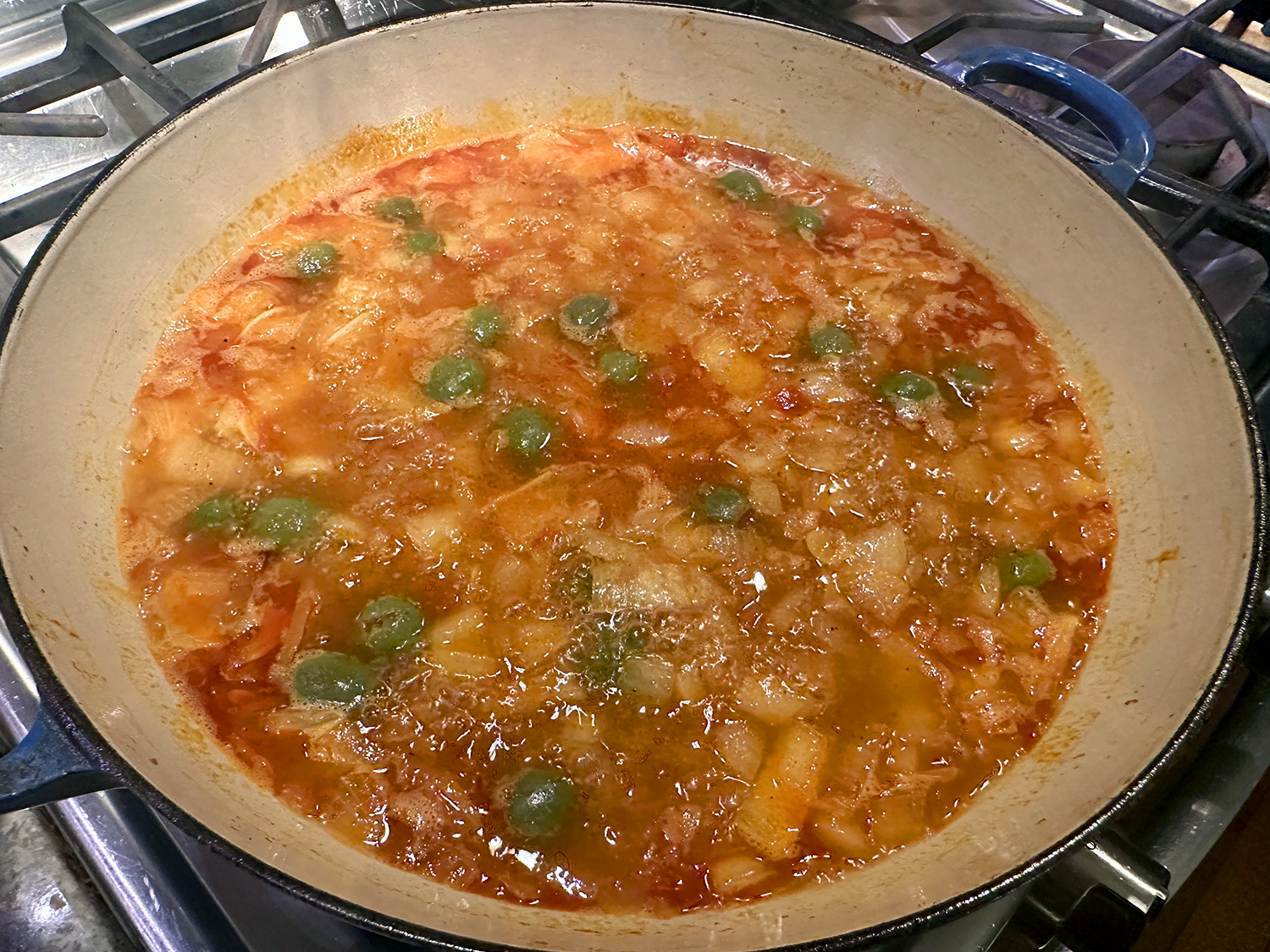
  5. Add ⅓ cup mild harissa paste and season with freshly ground pepper. Cook, stirring occasionally, until slightly darkened in color, about 2 minutes. Add 2½ cups water and bring sauce to a vigorous simmer. Cook, stirring occasionally, until slightly reduced, 10–12 minutes. Taste and season with salt.
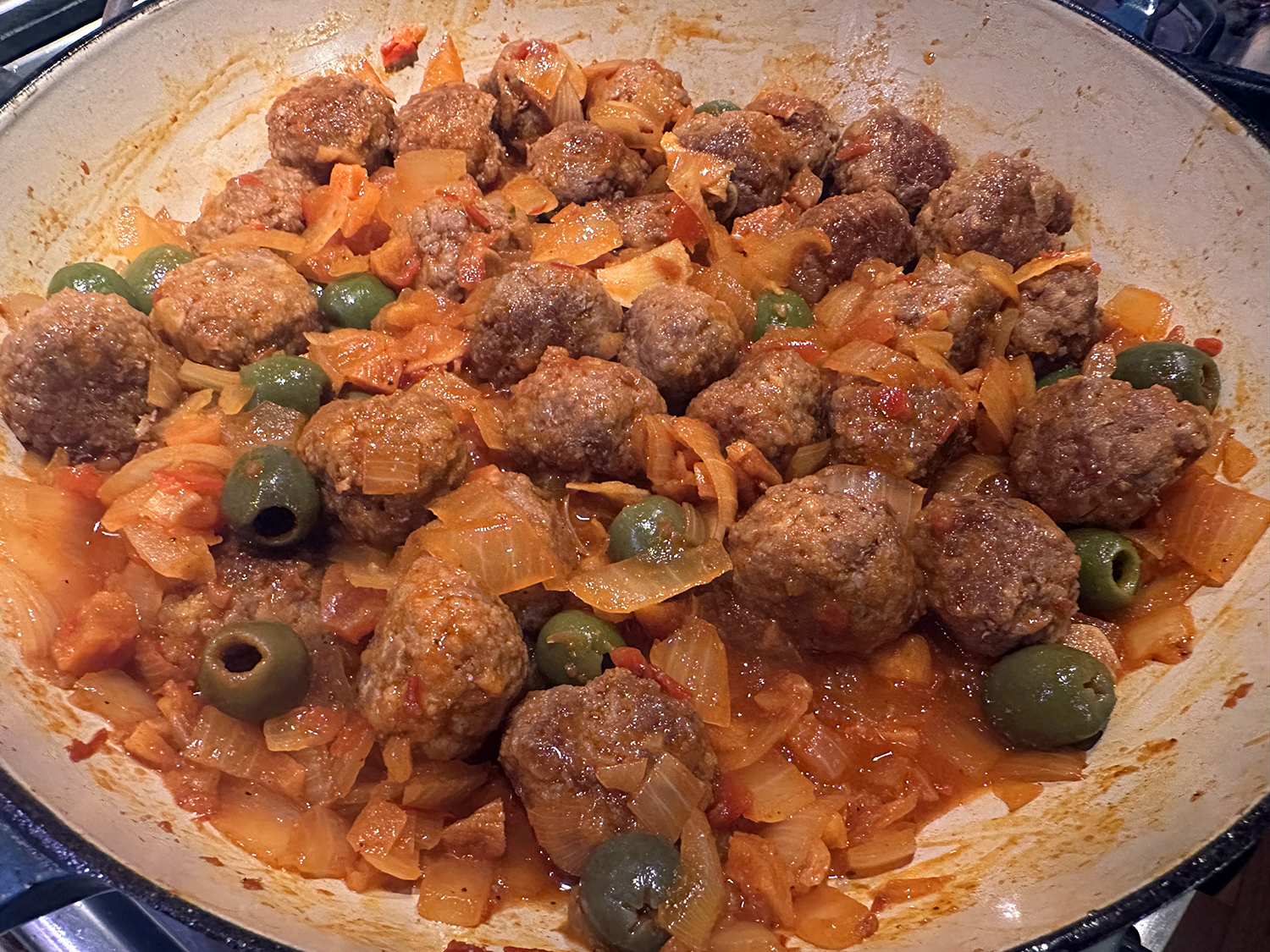
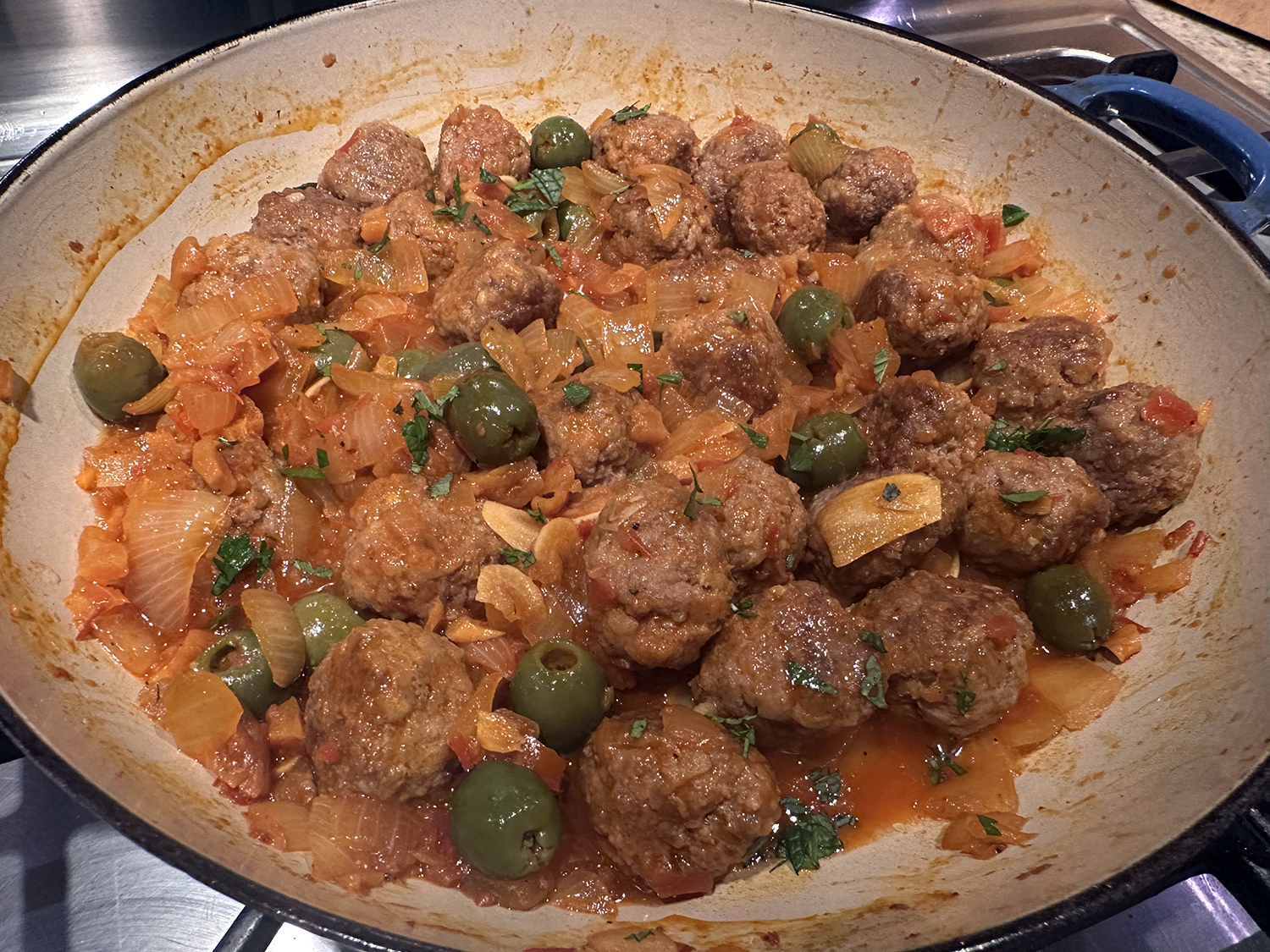
  6. Add meatballs to sauce, reduce heat to medium, and simmer until meatballs are cooked through and sauce is thickened, 7–9 minutes. Remove pan from heat and stir in 2 Tbsp. red wine vinegar.
  7. Serve meatballs over cooked Moroccan couscous, topped with mint leaves and parsley leaves with tender stems.

http://www.lynnandruss.com

Adapted from a recipe by Kendra Vaculin for Bon Appétit

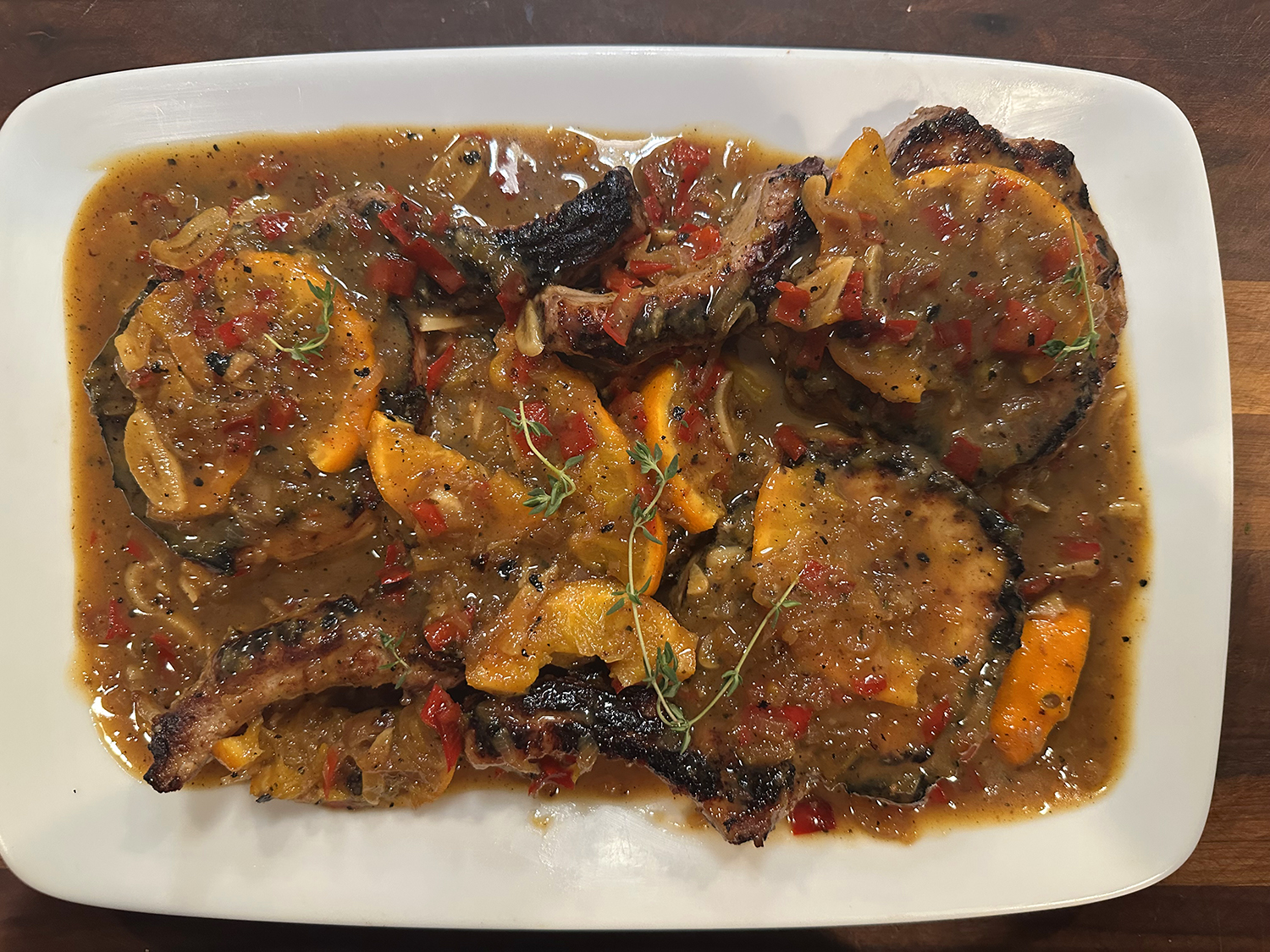
Hot Honey-Glazed Pork Chops

OMG, these skillet-cooked pork chops have it all going on, and then some. Here, Calabrian chiles combine with bright orange juice, honey, and salt for a sweet and zippy marinade that infuses the meat with smoky, fruity flavor while simultaneously tenderizing the chops. And sucking the meat off the bones is a must!

Calabrian chiles have a moderate heat level, comparable to cayenne peppers. There are three major types of Calabrian chiles, and their heat ranges from warming and tangy to mildly fruity. Whole jarred Calabrian chiles, such as the ones called for in this recipe, tend to be more warming and tangy than fruity.

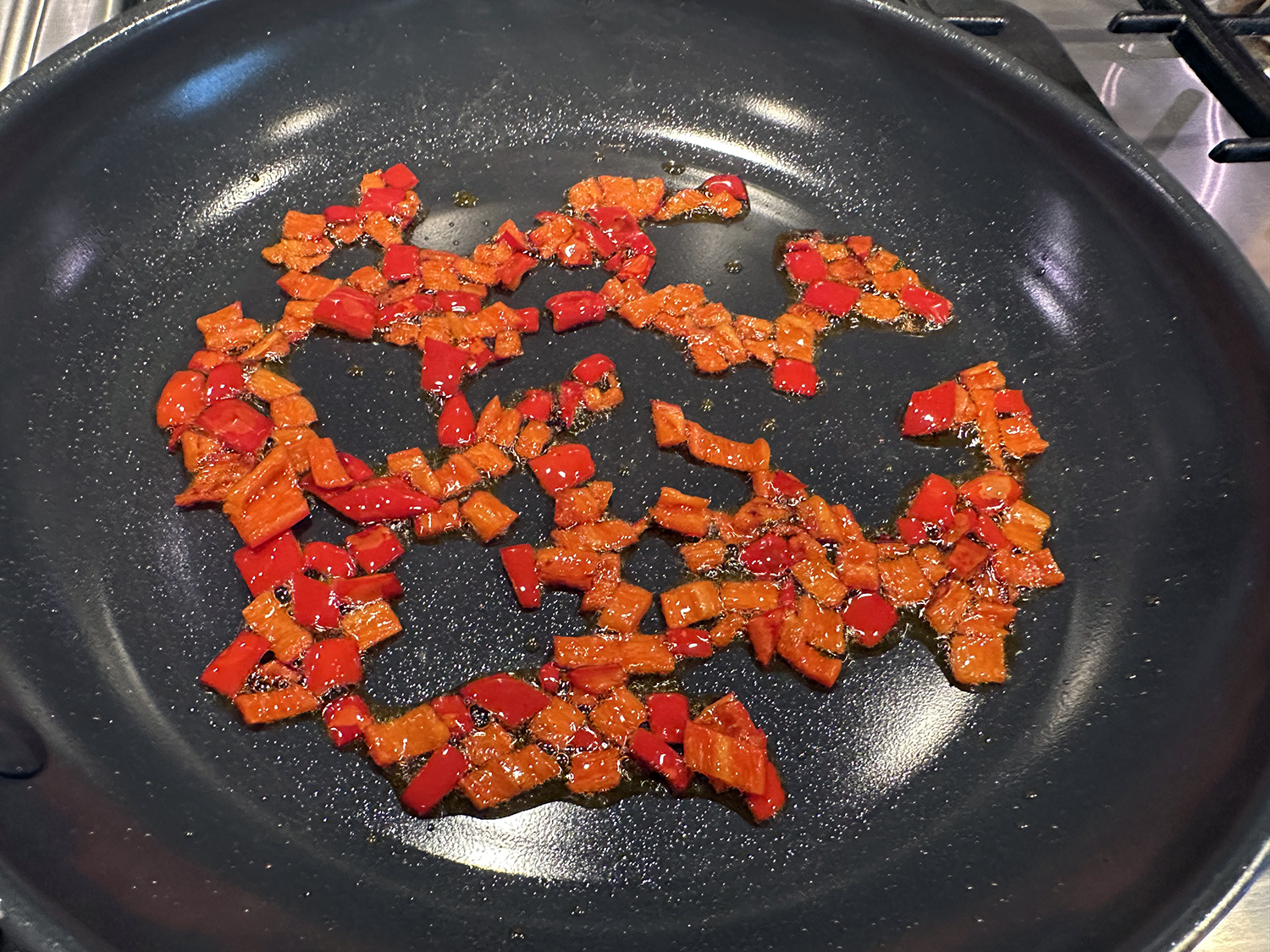
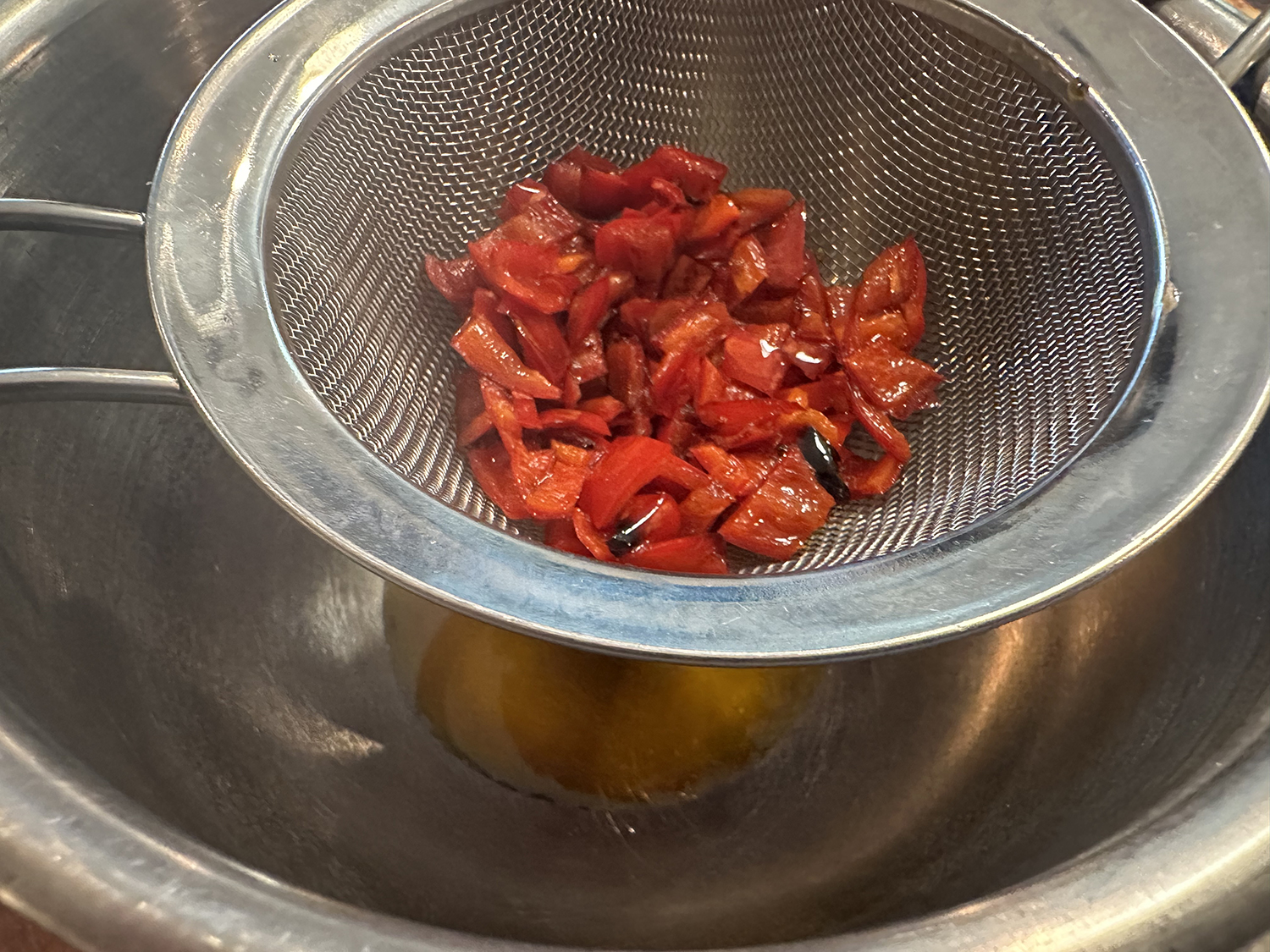
Can’t quickly source Calabrian chiles? Do what we did and use Fresno chiles as a substitution. Chop a couple of them up, sauté in about 1 tablespoon olive oil for several minutes, then strain the oil from the chiles. Separate and use both for the recipe.

Aside from adding flavor to a dish, raw honey is mildly acidic and contains trace amounts of a key enzyme called protease, which both help break down connective muscle tissue, gradually tenderizing tougher meat cuts. For more tender cuts like these chops, honey caramelizes the surface for a cracking crust suffused with toasty notes and a lustrous glaze that doesn’t require much work on your behalf.

Remember you’ll be marinating the pork chops for at least 1 hour. Ours marinated for 2 1/2 hours. And by all means, get the rib chops. We kept oohing and aahing through out the dinner, and again with the leftovers. It is on the short list to make again.

Hot Honey-Glazed Pork Chops

  • Servings: 4
  • Difficulty: easy
  • Print

Ingredients

  • 3/4 cup plus 1 Tbsp. orange juice, divided
  • 2 Tbsp. plus 1/4 cup honey, divided
  • 2 Jarred whole Calabrian chiles, chopped, plus 2 tsp. chile oil, divided
  • 1 Tbsp. kosher salt, divided, plus more to taste
  • 4 Bone-in rib-cut pork chops (about 1 inch thick) (about 2 lbs.)
  • 1 tsp. black pepper
  • 2 Tbsp. canola oil, divided
  • 2 Shallots, sliced
  • 4 Garlic cloves, thinly sliced 
  • 1 1/4 cups chicken broth
  • 1 Tbsp. Dijon mustard
  • 1 Whole small navel orange, sliced into half-moons
  • 2 Tbsp. cold unsalted butter, cut into 2 pieces 
  • 2 tsp. fresh thyme leaves

Directions

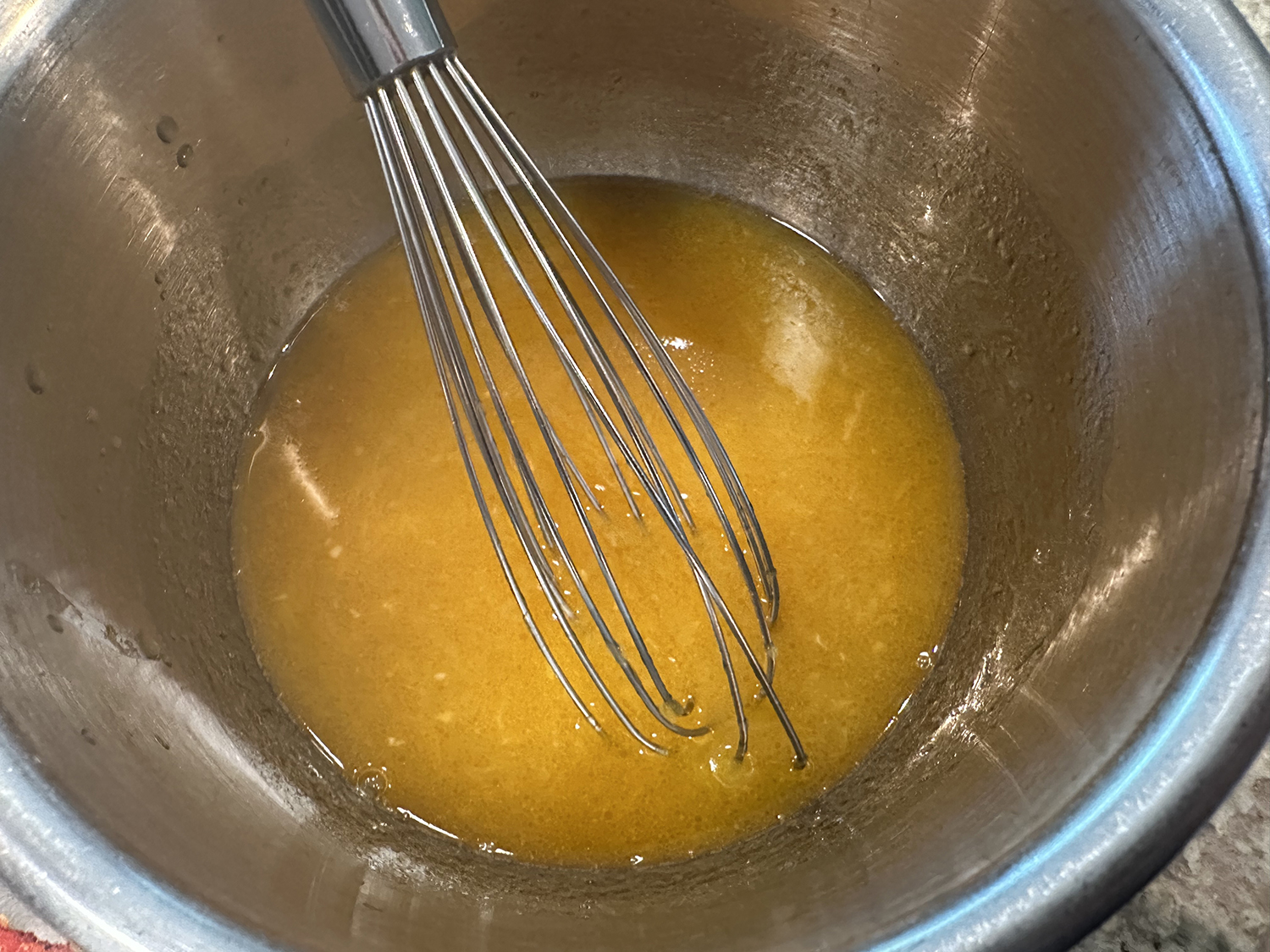
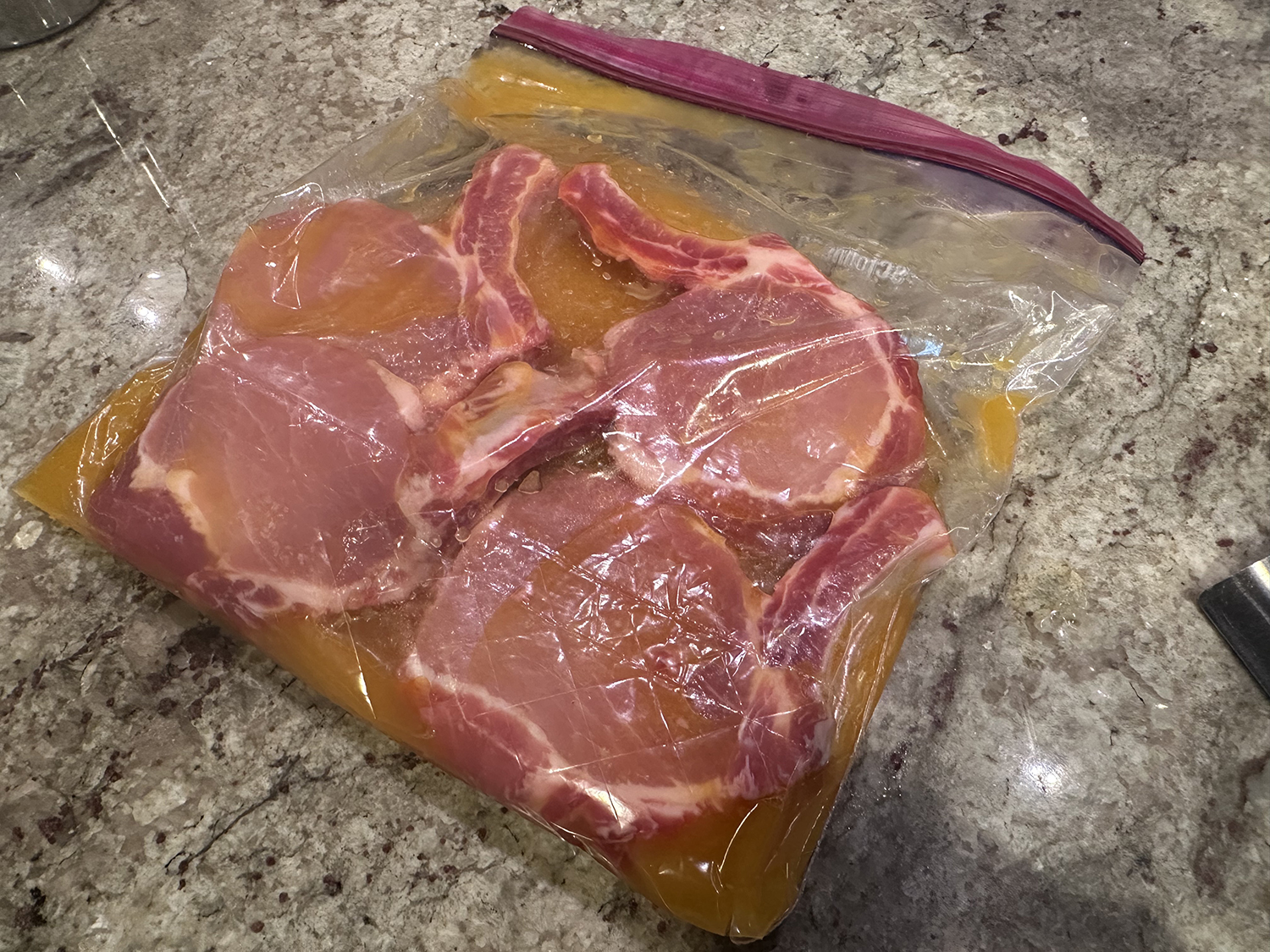
  1. Whisk together 3/4 cup orange juice, 2 tablespoons honey, Calabrian chile oil, and 1 teaspoon salt in a small bowl. Transfer mixture to a large ziplock plastic bag; add pork chops. Seal bag, and turn to coat pork. Refrigerate for at least 1 hour and up to 8 hours.
  2. Preheat oven to 425°F. Place marinated pork chops on a large plate; reserve marinade. Pat pork chops dry using paper towels. Sprinkle both sides evenly with black pepper and remaining 2 teaspoons salt.
  3. Heat a 12-inch cast-iron skillet over high until starting to smoke. Reduce heat to medium. Add 1 tablespoon canola oil to skillet, swirling to coat. Add 2 pork chops; cook, undisturbed, until browned on 1 side, 3 to 4 minutes. Transfer to a plate, browned side up; repeat cooking process with remaining 2 pork chops. Set aside.
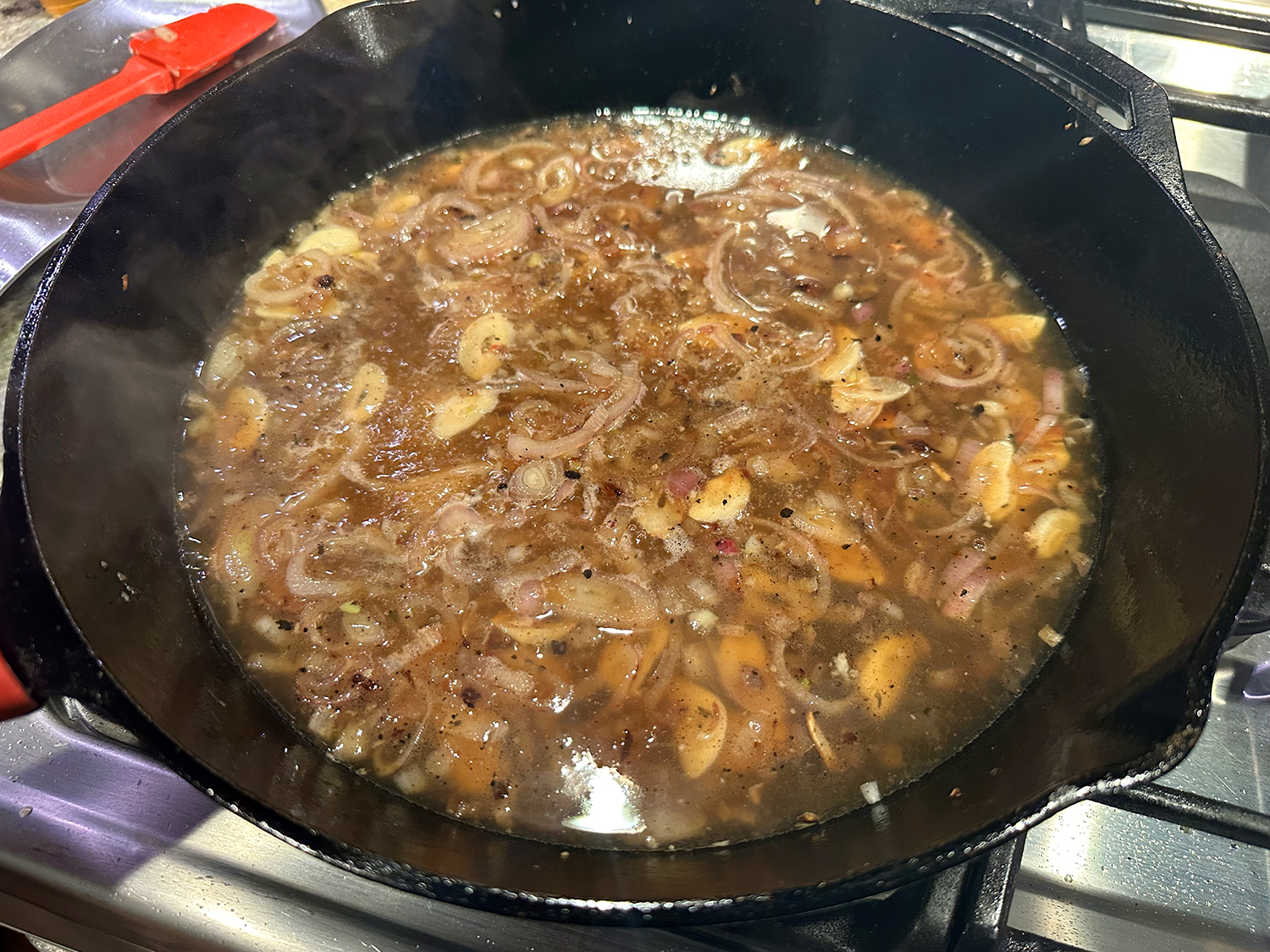
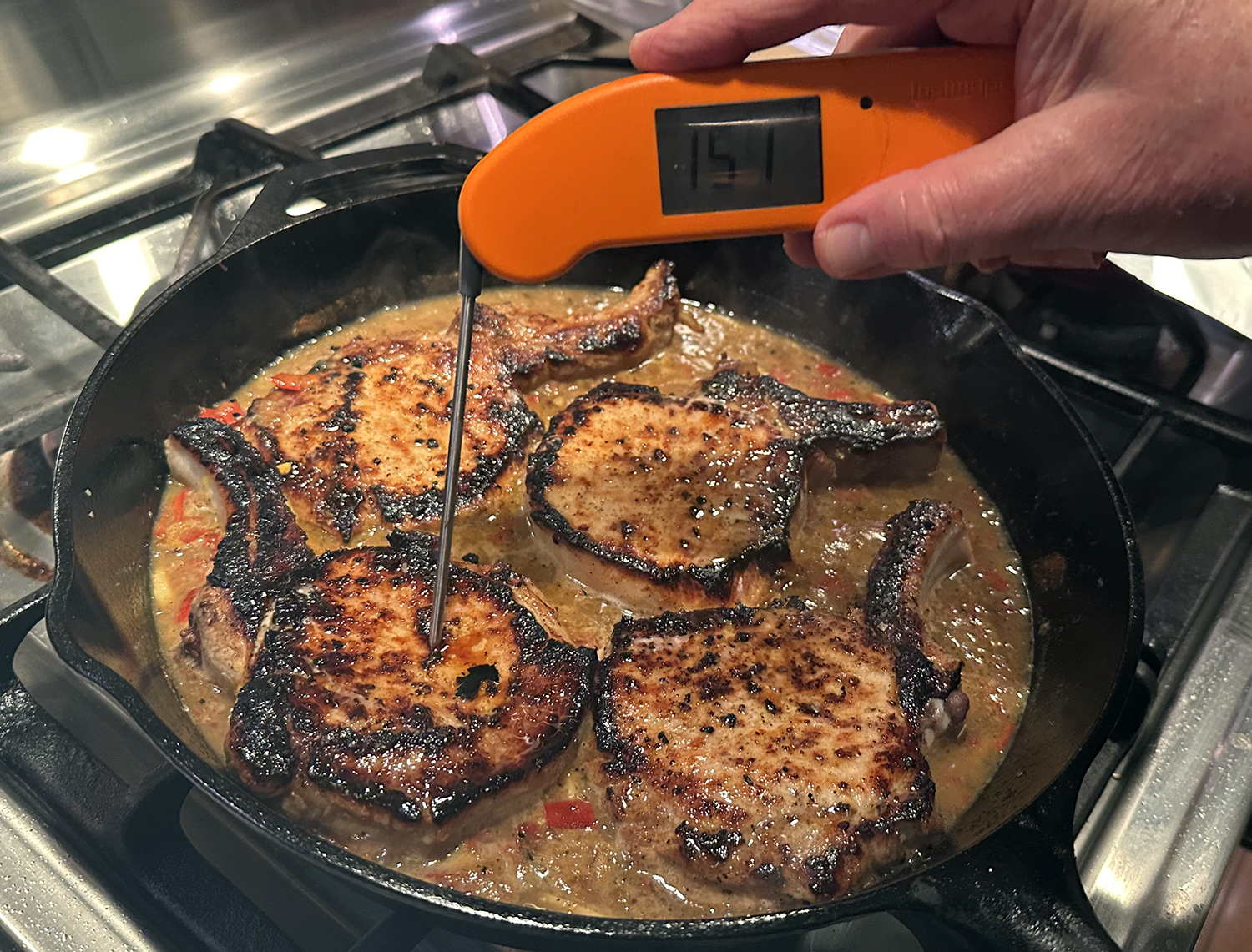
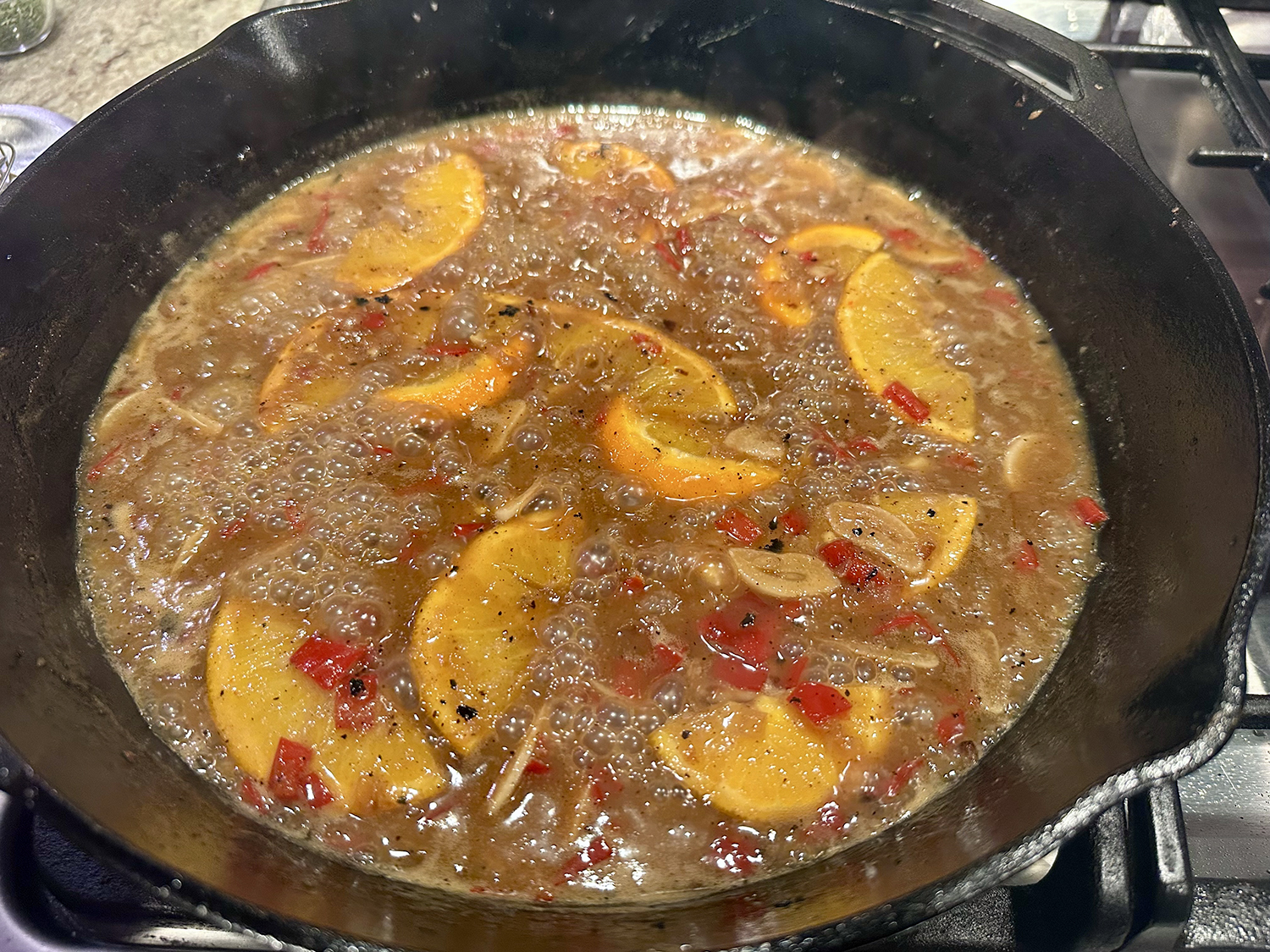
  4. Wipe skillet clean. Return skillet to medium heat and add remaining 1 tablespoon canola oil, shallots and garlic. Cook over medium, stirring often, until starting to soften, 2 to 3 minutes. Add chicken broth, and bring to a boil over high. Boil, stirring often, until slightly reduced, about 1 minute. Add reserved marinade, and continue to boil for 1 minute. Reduce heat to medium; add chopped Calabrian chiles. Place pork chops in skillet, browned side up, and bake until a meat thermometer inserted into thickest portion of pork chops registers 140°F, about 12 minutes.
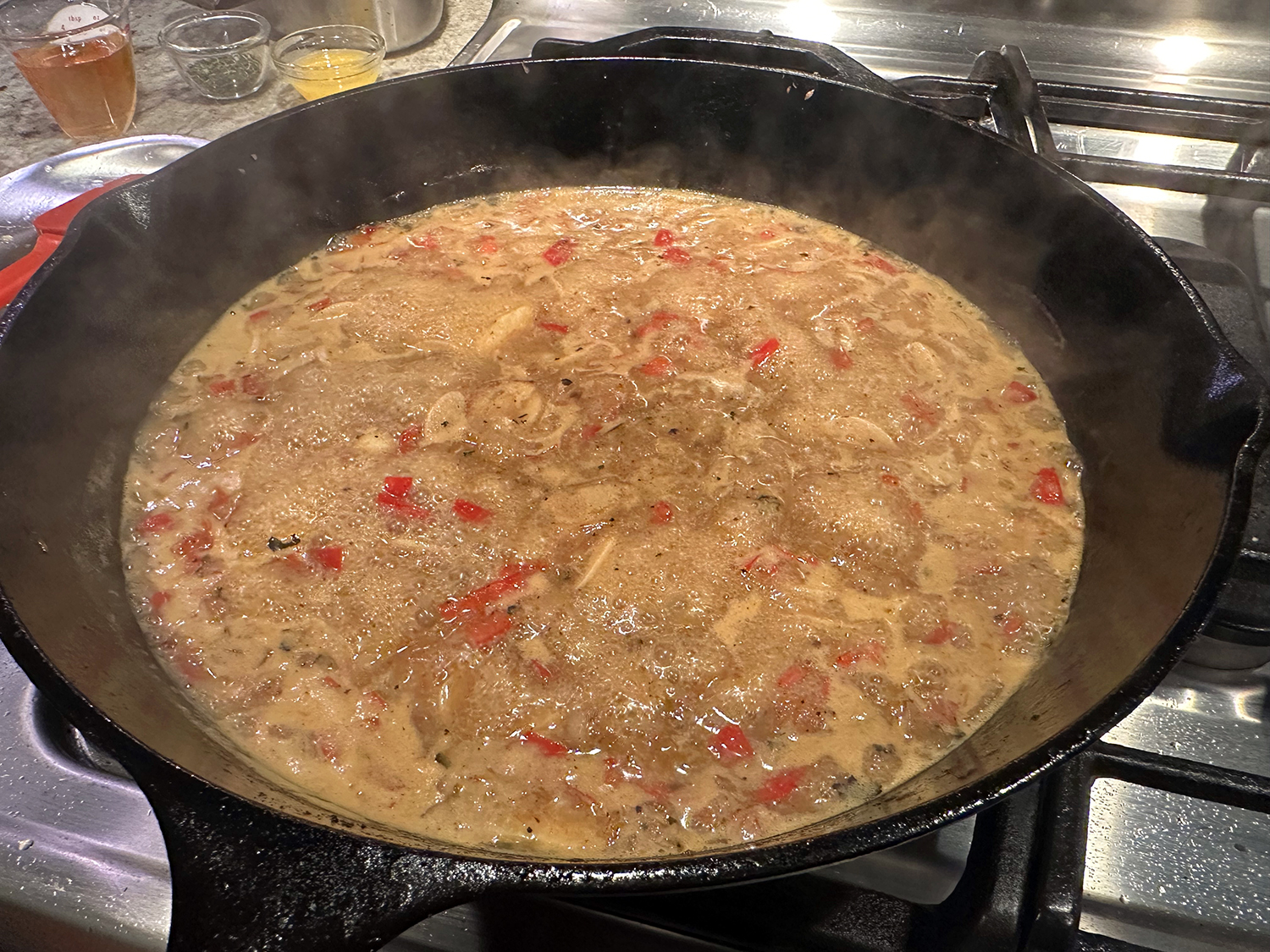
  5. Transfer pork chops to a plate. Bring marinade mixture in skillet to a boil over medium-high. Whisk in mustard, remaining 1/4 cup honey, and remaining 1 tablespoon orange juice until combined. Add orange slices, and cook, stirring occasionally, until mixture is thickened and begins to resemble a sauce, about 4 minutes. Remove from heat; add butter, 1 tablespoon at a time, whisking until emulsified, about 1 minute. Season to taste.
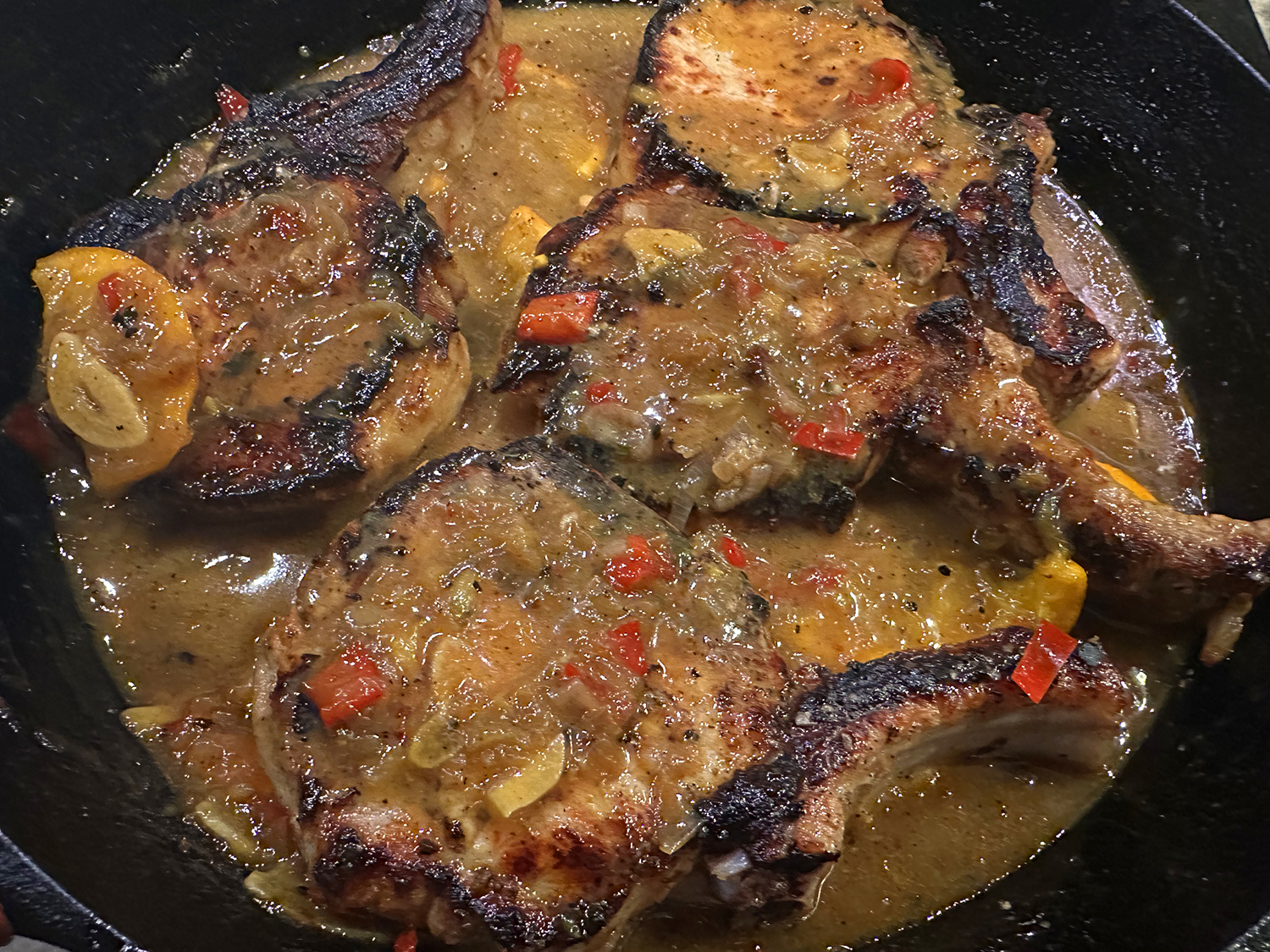
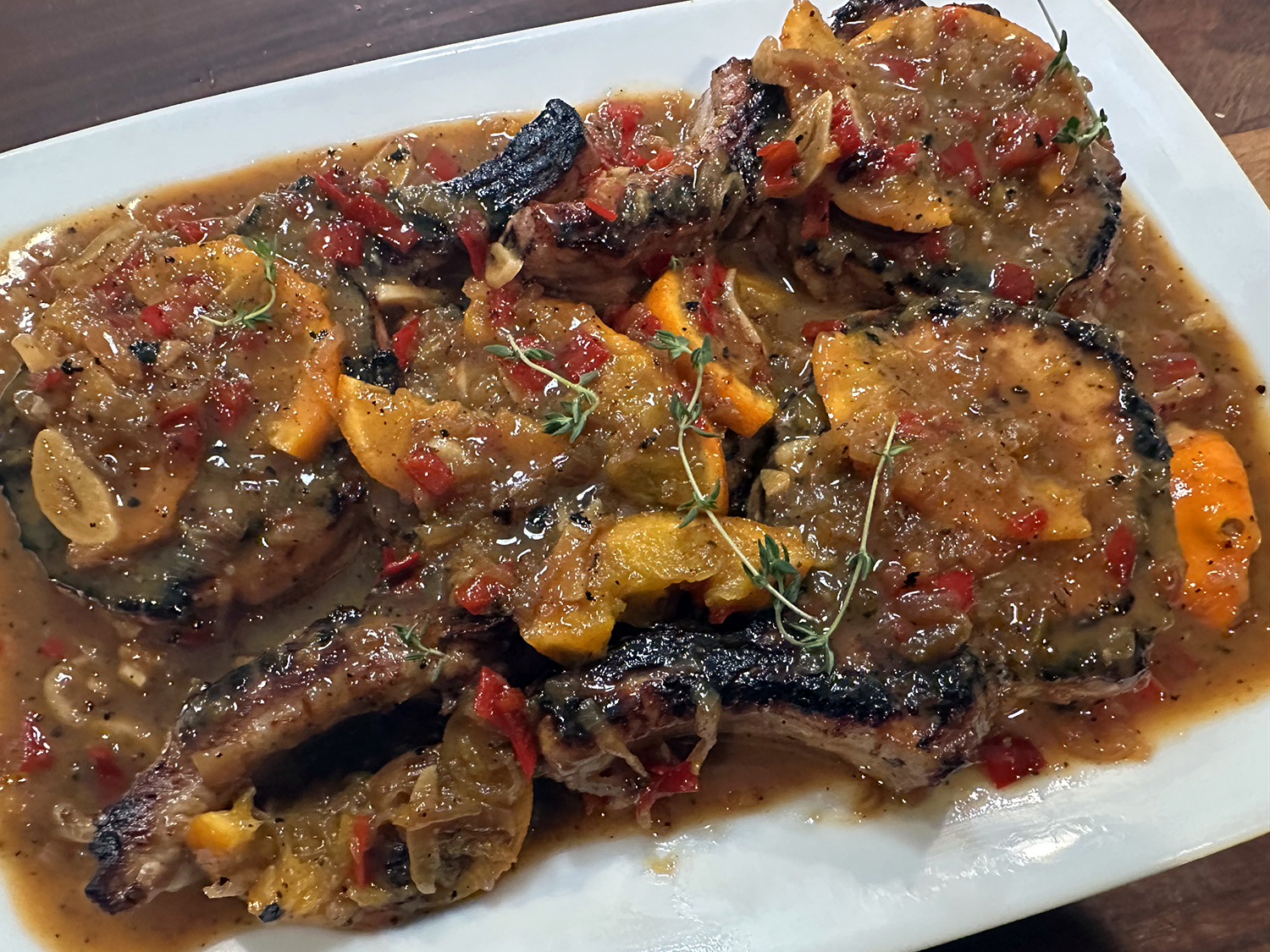
  6. Nestle pork chops in skillet, spooning orange slices and sauce over pork chops. Sprinkle with thyme; serve.

http://www.lynnandruss.com

Recipe by Andee Gosnell for Food & Wine

Porcini-Seasoned Steak au Poivre

For a decadent but easy “date-night” dinner, splurge a little on some decent steaks, then make this au poivre sauce to take it to the next level. Another hack to ensure great steak is to dry-age it. The dry-aging process allows the meat’s natural enzymes to break down the connective tissue, resulting in a more tender steak. The process also causes the meat’s moisture to evaporate, intensifying the beefy flavor and creating a unique taste and texture.

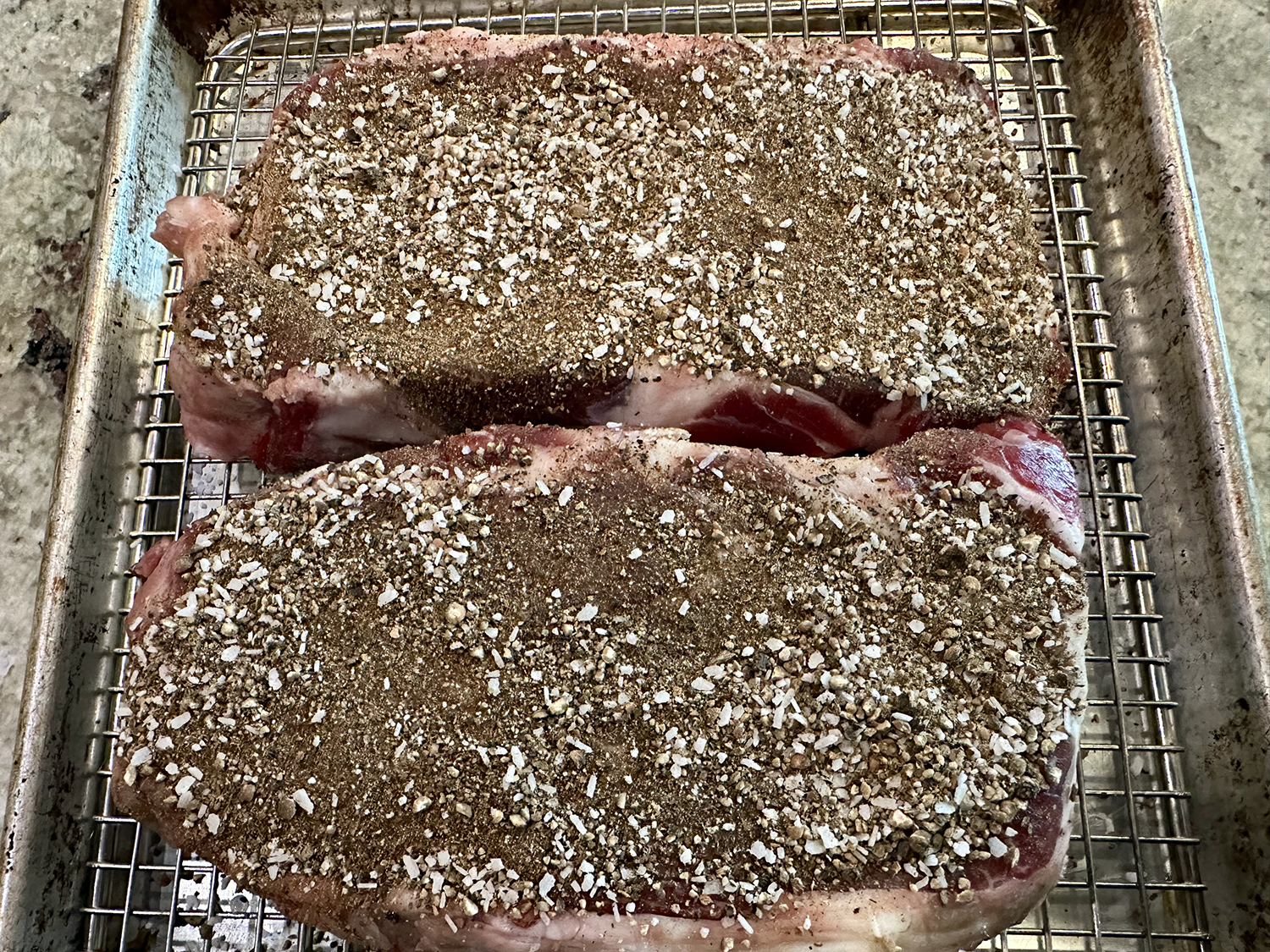
About the sauce. “Mushroom powder sounds illicit, but it’s actually a secret-weapon umami bomb.” Here, dried porcini mushrooms are pulverized, mixed with salt and pepper, then rubbed all over steaks for intense seasoning. Additionally, some water is stirred in for an instant broth, making a full-flavored pan sauce. Crème fraîche, instead of heavy cream, gives the sauce body and richness. And what a treat they are!

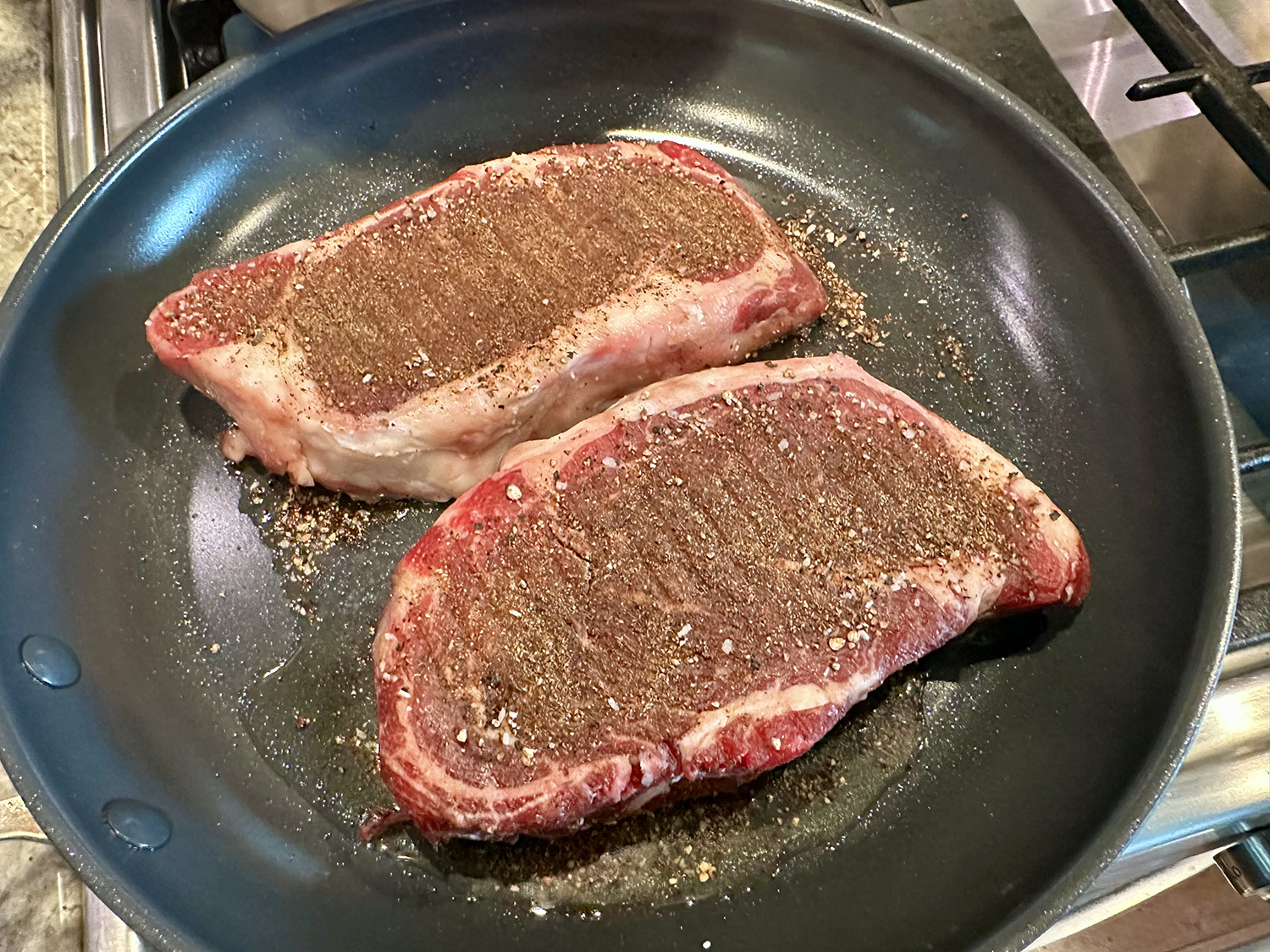
Avoid moving the steaks until halfway through cooking. They will release easily when properly seared. *We thought the amount of black pepper was pretty intense and would cut it back to 1 tablespoon, but that’s a choice we’ll leave up to you…

The extra sauced can be spooned over your sides such as pasta, mashed potatoes or vegetables. Our sides were porcini tagliatelle and sautéed spinach and garlic.

Porcini-Seasoned Steak au Poivre

  • Servings: 4
  • Difficulty: easy
  • Print

Ingredients

  • 1/4 oz. dried porcini mushrooms, broken into pieces
  • 1½ Tbsp.* whole black peppercorns
  • 1 ½ tsp. Kosher salt
  • 1 Tbsp. neutral oil
  • 2 1-lb. beef strip steaks or ribeye steaks, trimmed
  • 2 Tbsp. salted butter
  • 1 medium shallot, minced
  • 4 Tbsp. brandy, divided
  • 1/4 cup crème fraîche
  • Finely chopped fresh chives, to serve

Directions

  1. In a spice grinder, pulverize the porcini to a fine powder; transfer to a small bowl. Add 1 tablespoon of the porcini powder to 1½ cups water; set aside. In the spice grinder, pulse the peppercorns until coarsely ground. Stir the pepper and 1½ teaspoons salt into the remaining porcini powder; sprinkle and rub over the steaks. (Dry-age the steaks for 24 to 48 hours prior, if desired.) Add any seasoning that falls off to the porcini water.
  2. In a 12-inch skillet over medium-high, heat the oil until barely smoking. Add the steaks, reduce to medium and cook until the centers reach 120°F for medium-rare, 10 to 12 minutes; flip halfway through. Transfer to a platter, and tent with foil while you make the sauce. Discard any fat in the pan.
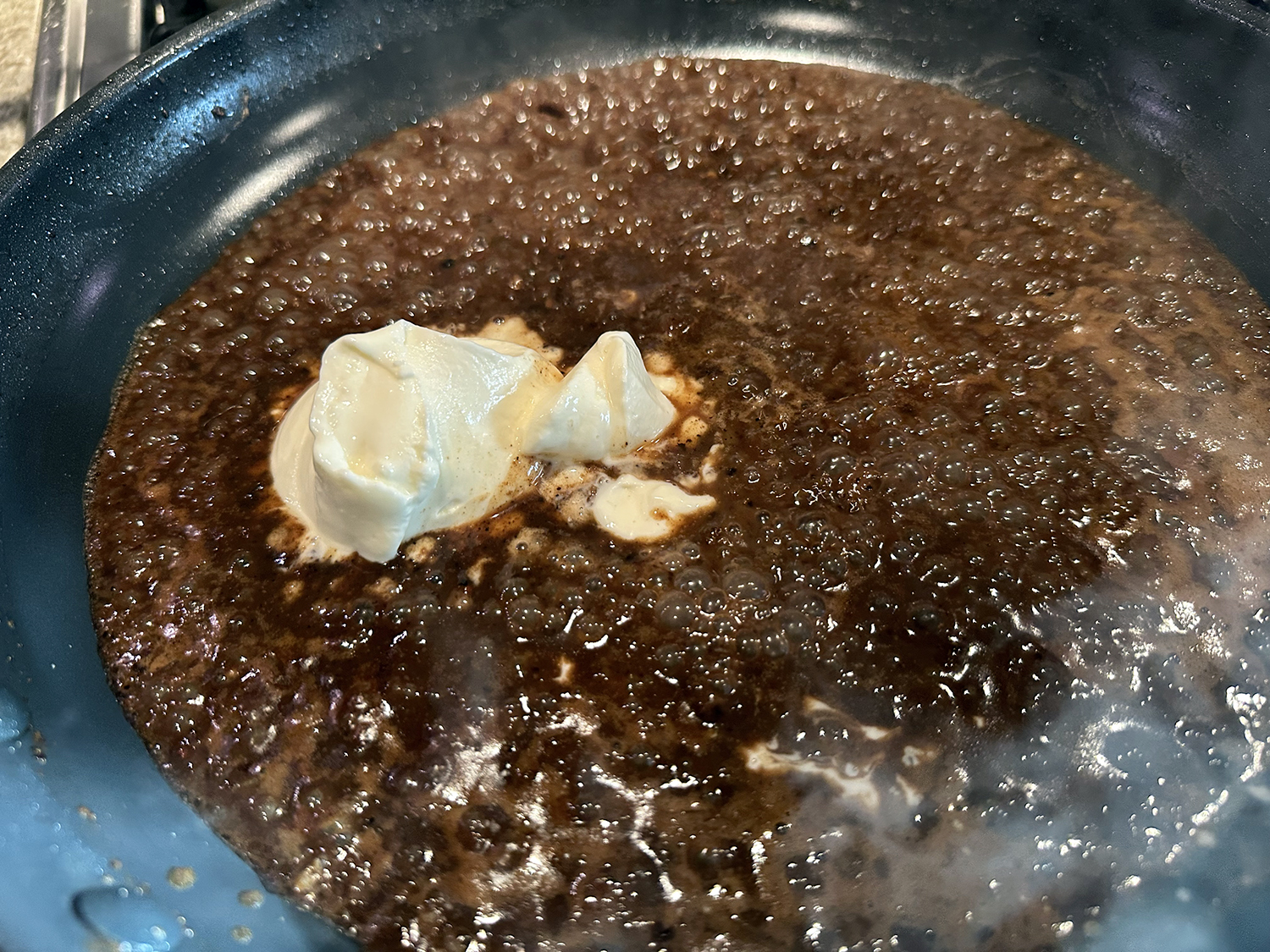
  3. In the same pan over medium, melt the butter. Add the shallot and cook, stirring, until softened, about 2 minutes. Off heat, add 3 tablespoons of the brandy. Return to medium and cook, scraping up the browned bits, until slightly reduced. Add the porcini water; cook over medium-high, stirring, until a spatula drawn through leaves a trail, 8 to 10 minutes.
  4. Whisk in the crème fraîche, remaining 1 tablespoon brandy and any steak juices; cook, whisking, until slightly thickened, 2 to 3 minutes. Off heat, taste and season with salt and pepper. Slice the steaks, return to the platter and pour the sauce over them. Sprinkle with chives.

http://www.lynnandruss.com

Recipe by Hisham Hassan for Milk Street

Catalan Braised Pork Shoulder with Dried Fruit

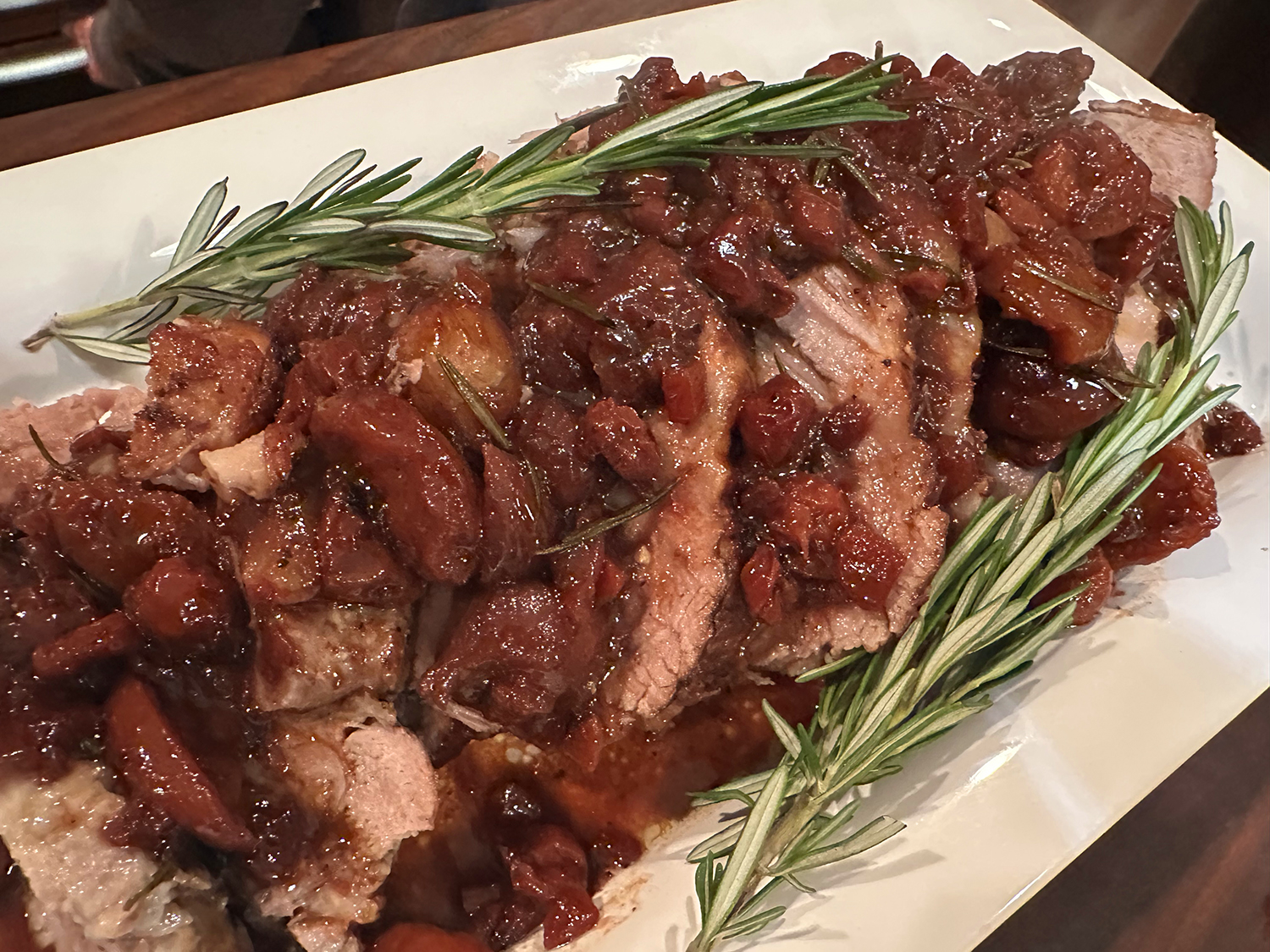
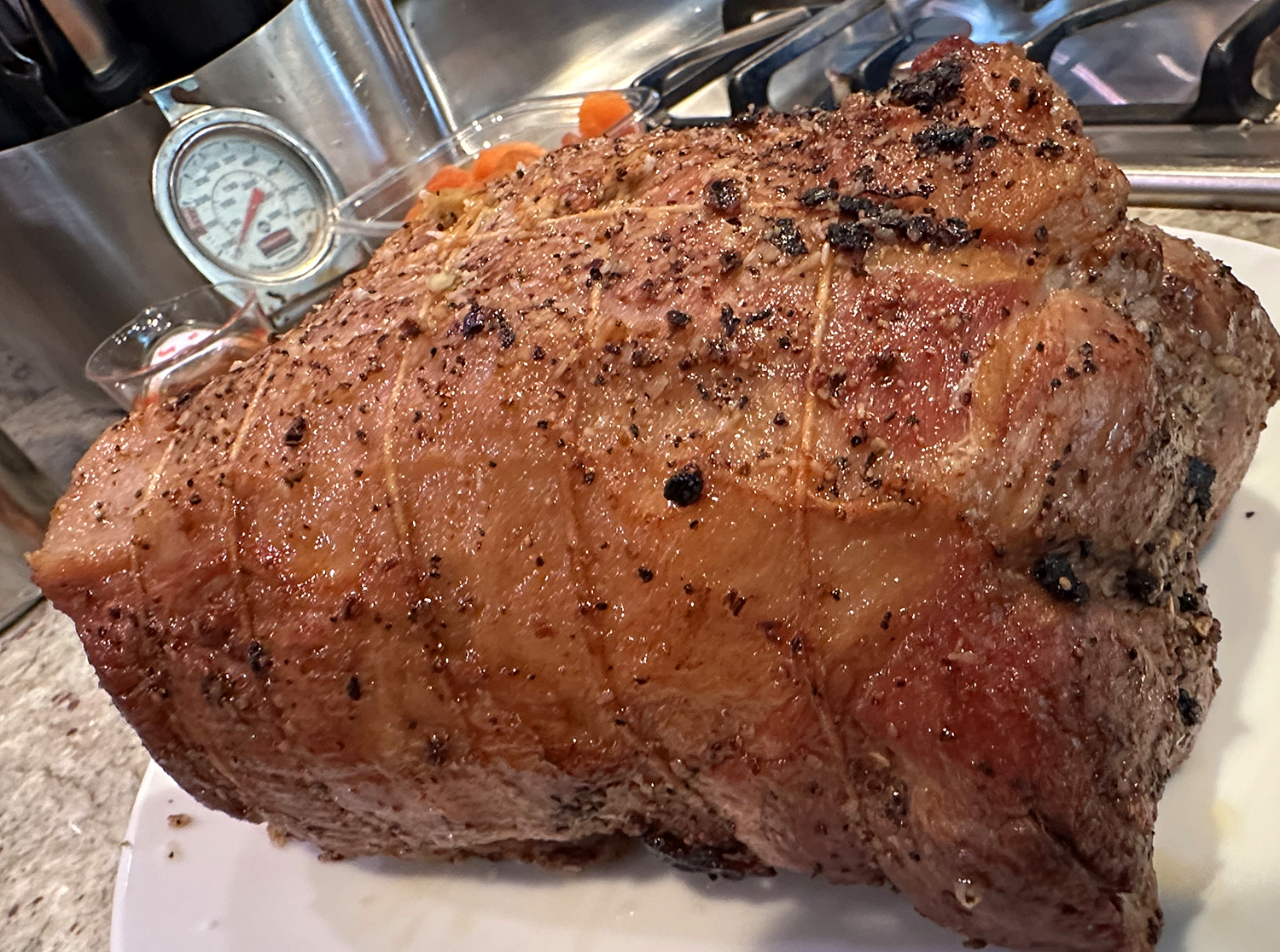
A long braise on a cool Sunday afternoon is not uncommon in our household. And we just happened to have a 4-pound pork shoulder in the freezer waiting for a chance to show off. It was over nine years ago since we made this luscious Catalan pork dish, so I located the post in our blog and resurrected the recipe, with several changes this time.

For a little background, I am repeating “Spain is a nation of pork eaters. Their penchant for pork has economic underpinnings because the matanza—the fall slaughter of the family hog—was central to rural life. A country within a country, with its own language, complex history, and a wealth of artistic traditions, Catalunya (to natives) has more in common with neighboring France, than macho Castile—but all share a love of pork. Catalan food blends Roman, Arabic and even Italian influences into one of Europe’s most distinct and emphatic cuisines.”

About those changes. One major alteration involves the cooking time. The original recipe said to cook the roast for 1 1/2 hours until it reaches an internal temperature of 165°. According to all of our other sources, a 4-pound pork shoulder roast needs to be cooked at least 2 hours with an internal temp of 180-185°F. This ensures tender slices.

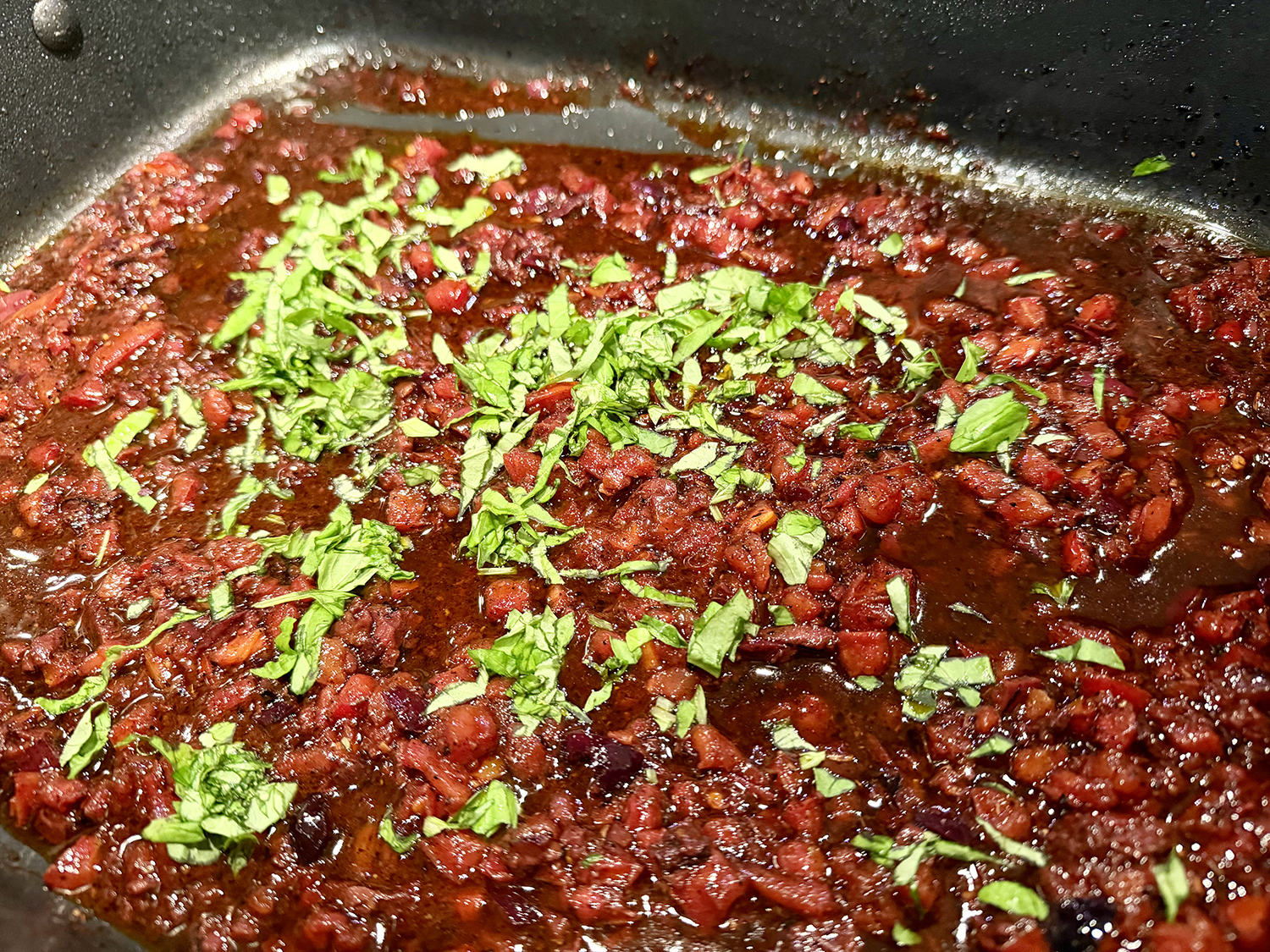
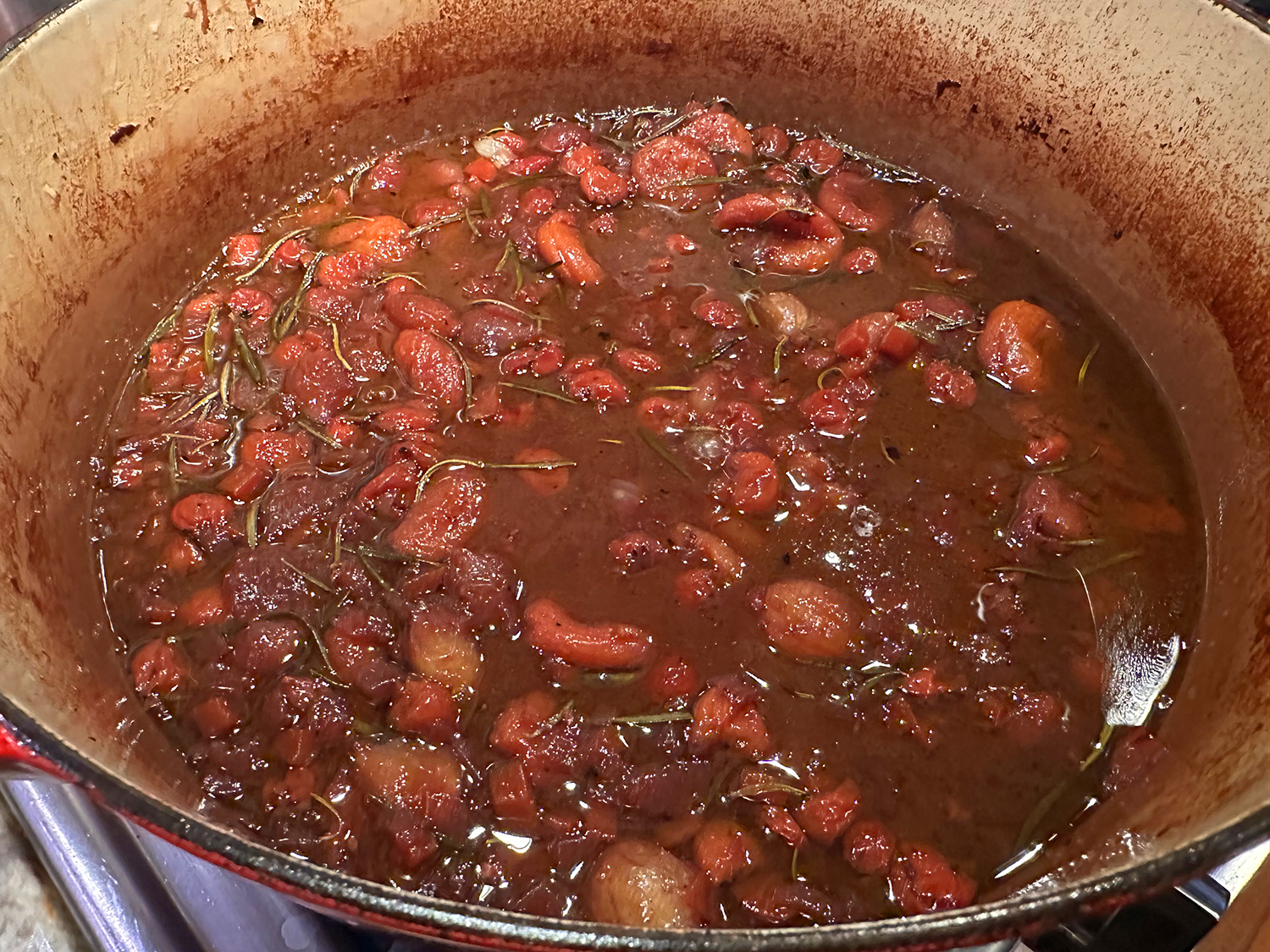
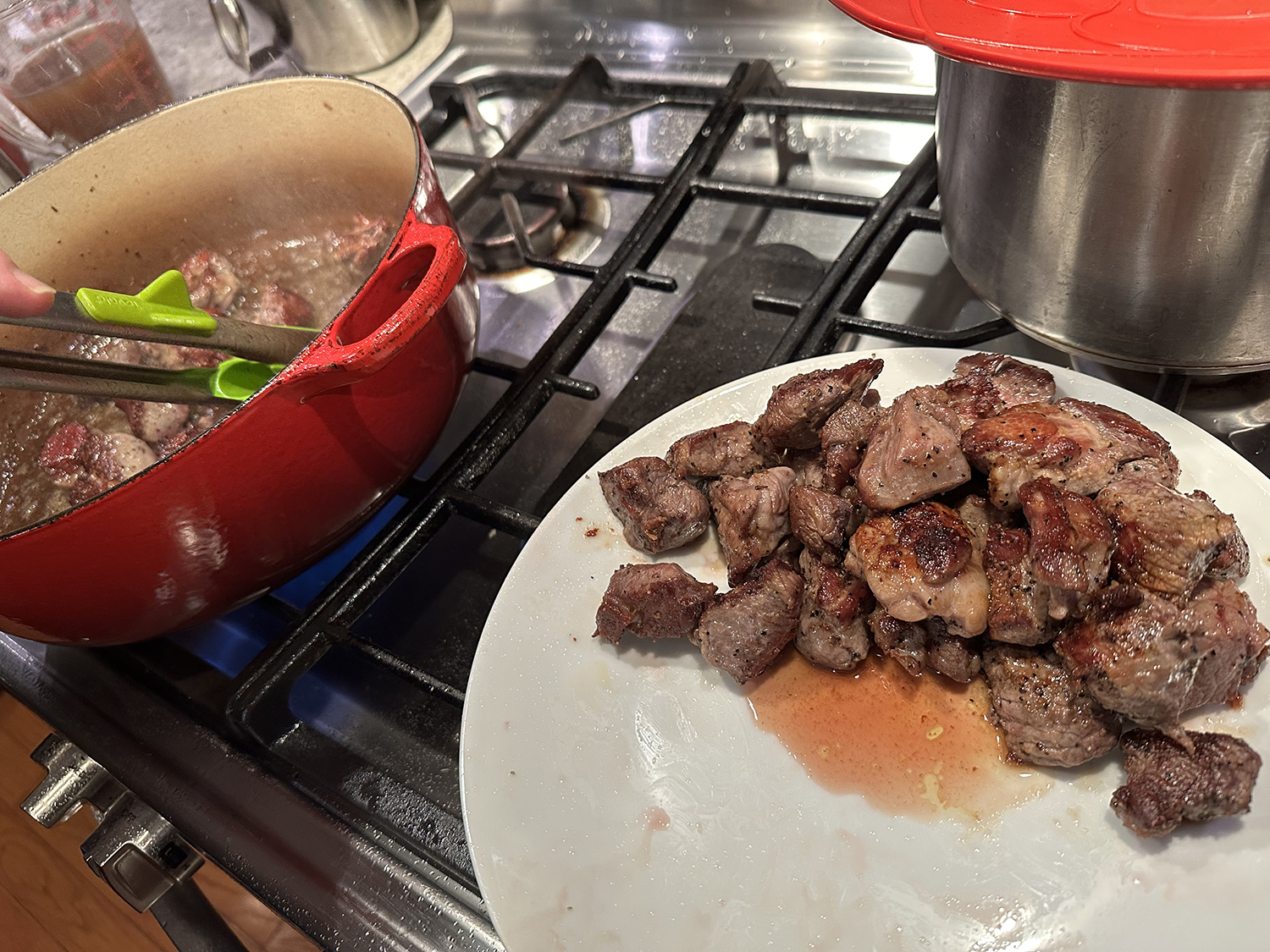
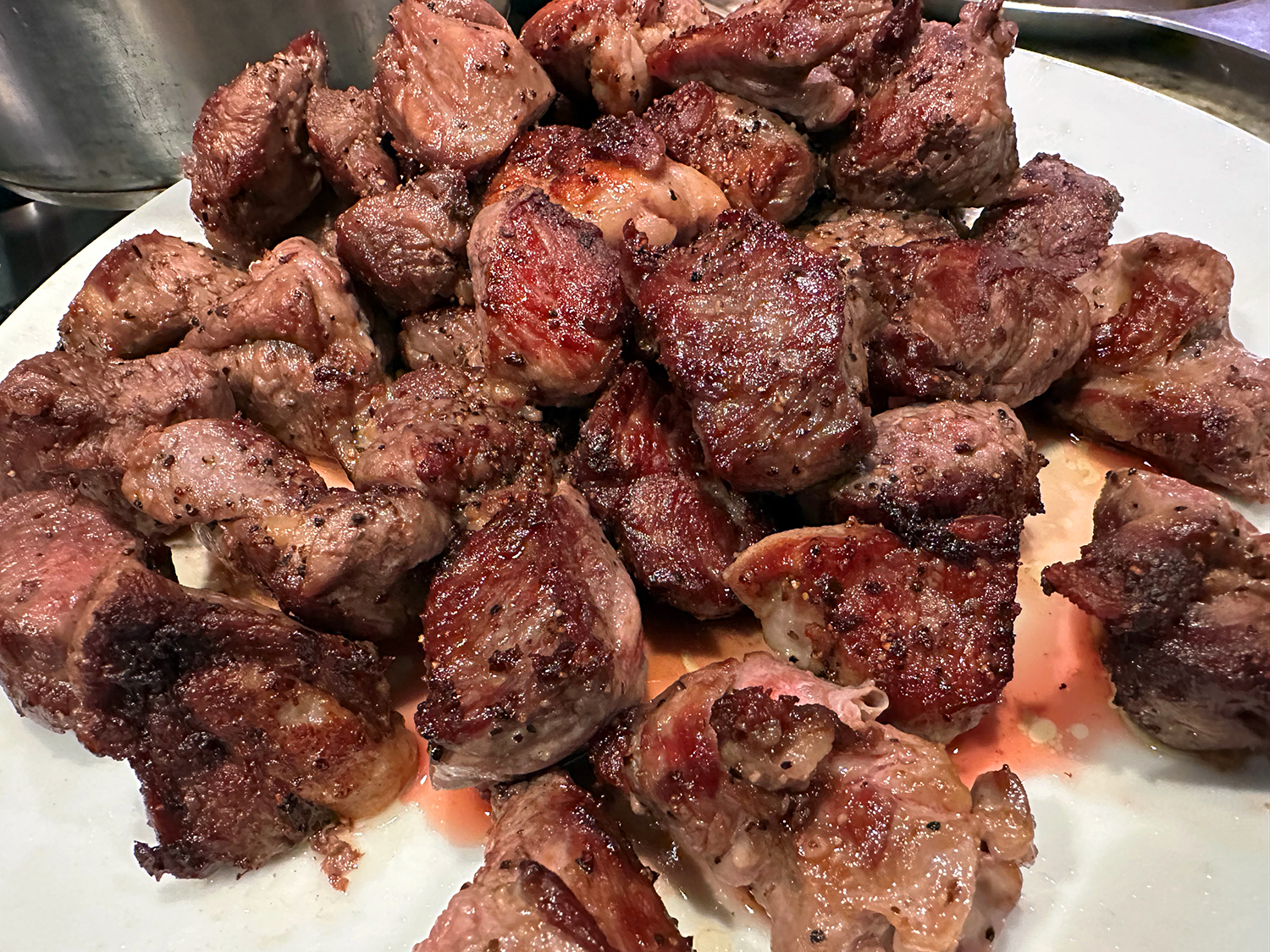
After searing the roast on all sides, including the end caps, The Hubs removed the meat to a platter and poured the contents of the pot through a strainer into a cup. This way it is easy to eliminate the burnt garlic, return the oil to the Dutch oven and continue the cooking process. And though we didn’t cut down the apricots this time or last, we suggest you give them a rough chop so that the pieces are easier to consume.

BTW, kirsch can be substituted for the brandy. We had never cooked with it before and thought you might be interested in the flavor profile, which sounds like a great match for this dish:

kirsch, dry, colourless brandy distilled from the fermented juice of the black morello cherry. Kirsch is made in the Black Forest of Germany, across the Rhine River in Alsace (France), and in the German-speaking cantons of Switzerland. Its production methods remain traditional. The fully ripened cherries are mashed in a large wooden tub or vat and allowed to ferment freely. Upon completion of this process, the entire mass—liquid, pulp, and cherry stones—is distilled in a pot still. During the mashing some of the cherry stones, or pits, are crushed, releasing some of their oils and acids. These include small amounts of hydrocyanic acid, which impart a distinctive bitter almond undertone to the beverage. Kirsch is not aged. It is marketed at 90 to 100 proof, in the clear white (colorless) state it comes off the still. It is a fruit brandy with a clean cherry fragrance and bitter almond taste. Kirsch is consumed neat, as brandy, and in cocktails and is also used in cooking as a flavoring.

So if pork is in your wheelhouse, you may want to get this on your shortlist.

Catalan Braised Pork Shoulder with Dried Fruit

  • Servings: 6-8
  • Difficulty: easy
  • Print

Ingredients

  • 1 boneless pork shoulder, such as Boston Butt (about 4 lbs., trimmed of excess fat)
  • Salt and freshly ground black pepper (kosher or sea)
  • 2 medium garlic cloves, crushed
  • 3 Tbsp. light olive oil
  • 1 medium onion, chopped
  • 1 carrot, diced
  • 8 oz. frozen white pearl onions
  • 1⁄4 cup brandy
  • 2 cups full-bodied dry red wine
  • 1 cup stock (beef or chicken)
  • 3⁄4 cup pitted dried sour cherries
  • 1⁄2 cup dried apricots (or dried figs), roughly chopped
  • 1 large bay leaf
  • 1 small piece cinnamon stick
  • 2 fresh rosemary sprigs

Directions

  1. Preheat oven to 325º.
  2. Using kitchen string, tie the pork shoulder crosswise, spacing the ties 1 inch apart. Rub the pork generously with salt and pepper and the garlic.
  3. Heat 2 tablespoons of the olive oil in a 5 to 6 quart flameproof casserole or Dutch oven over high heat until almost smoking. Add the pork and cook until richly browned on all sides, about 8 minutes total. Add the remaining oil while the pork browns, if the casserole looks too dry. Transfer the pork to a platter. Drain oil and drippings over a strainer on a cup to remove burnt garlic, and return strained oil to the Dutch oven.
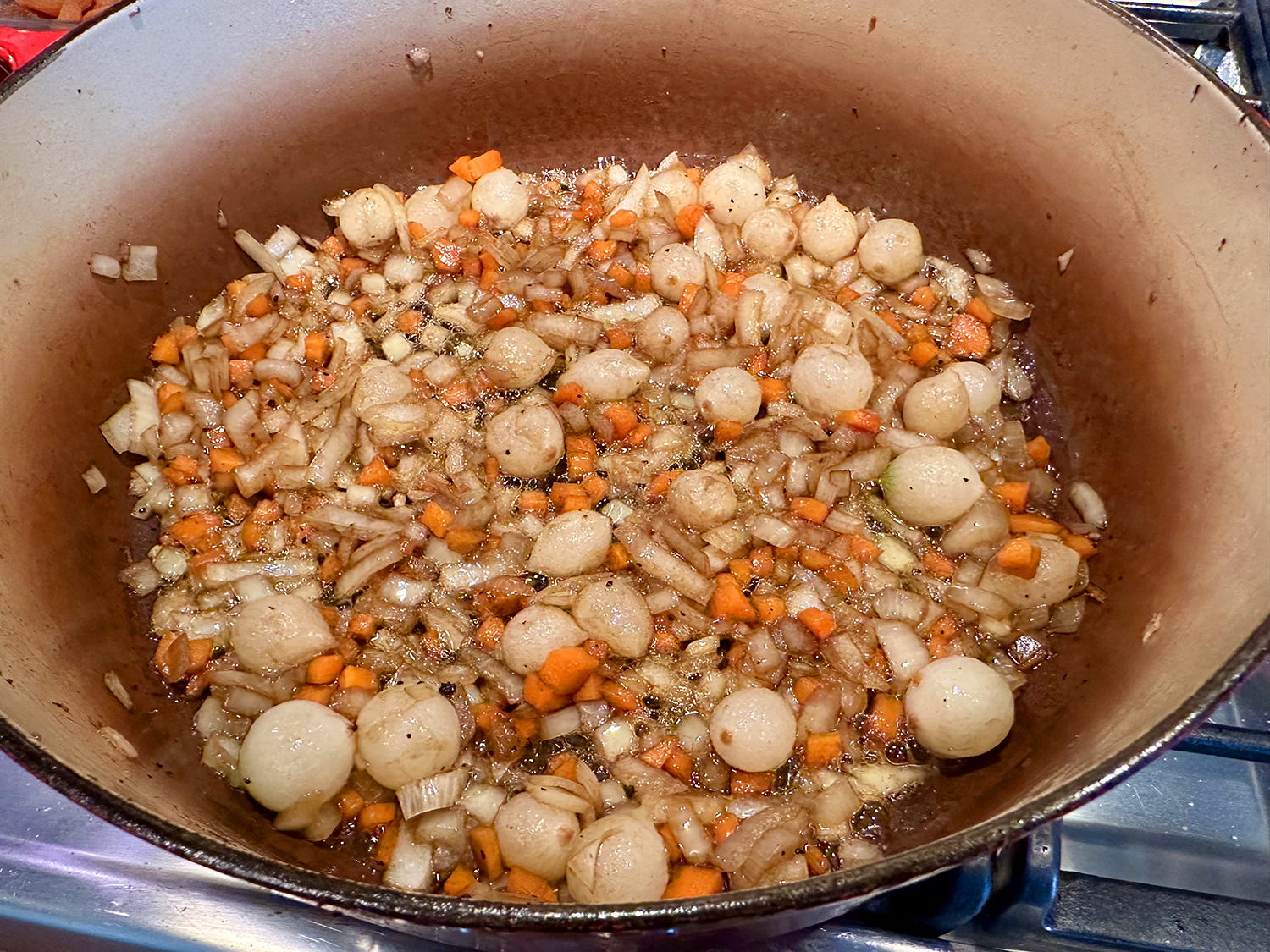
  4. Add the chopped onion, carrot, and pearl onions to the casserole and brown well, 6 to 7 minutes. Add the brandy and cook over high heat until it is reduced to about 1 tablespoon, about 1 minute.
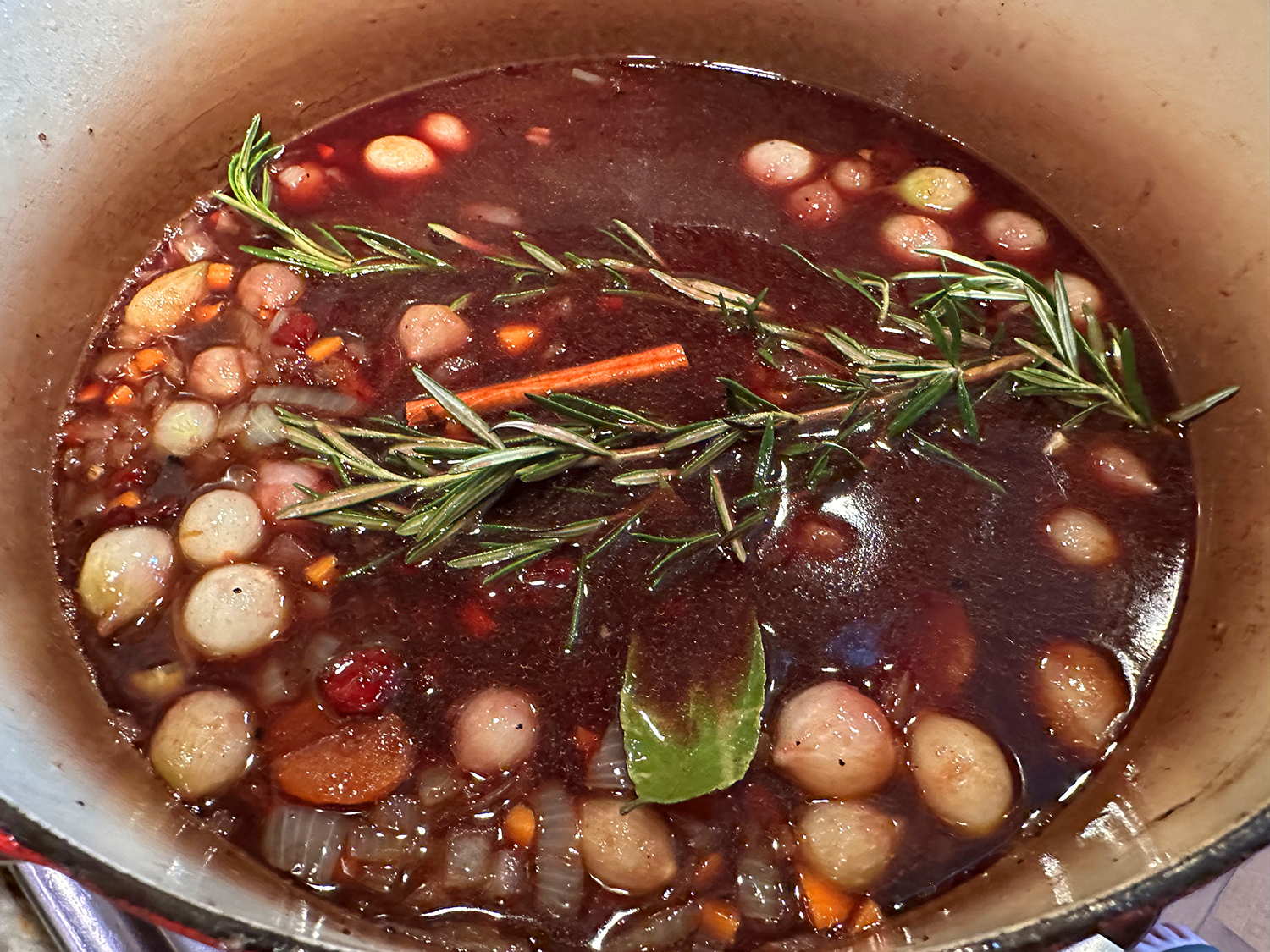
  5. Add the wine, beef stock, cherries, apricots, bay leaf, cinnamon stick, and rosemary sprigs and bring to a boil, scraping the bottom of the casserole to dislodge the brown bits. Season the sauce with salt to taste.
  6. Return the pork to the casserole. Place a large piece of parchment that over hangs the pot, then cover tightly and transfer it to the oven. Bake the pork, turning it once or twice, until it is very tender and an instant-read thermometer registers 180-185°, about 2 hours and 15 minutes. Start checking at 2 hours.
  7. Transfer the pork to a plate and cover it tightly with foil to keep warm. Remove and discard the bay leaf, cinnamon stick, and rosemary sprigs.
  8. Transfer the casserole to the stove top and cook the sauce over high heat until it is slightly syrupy, about 5 minutes.
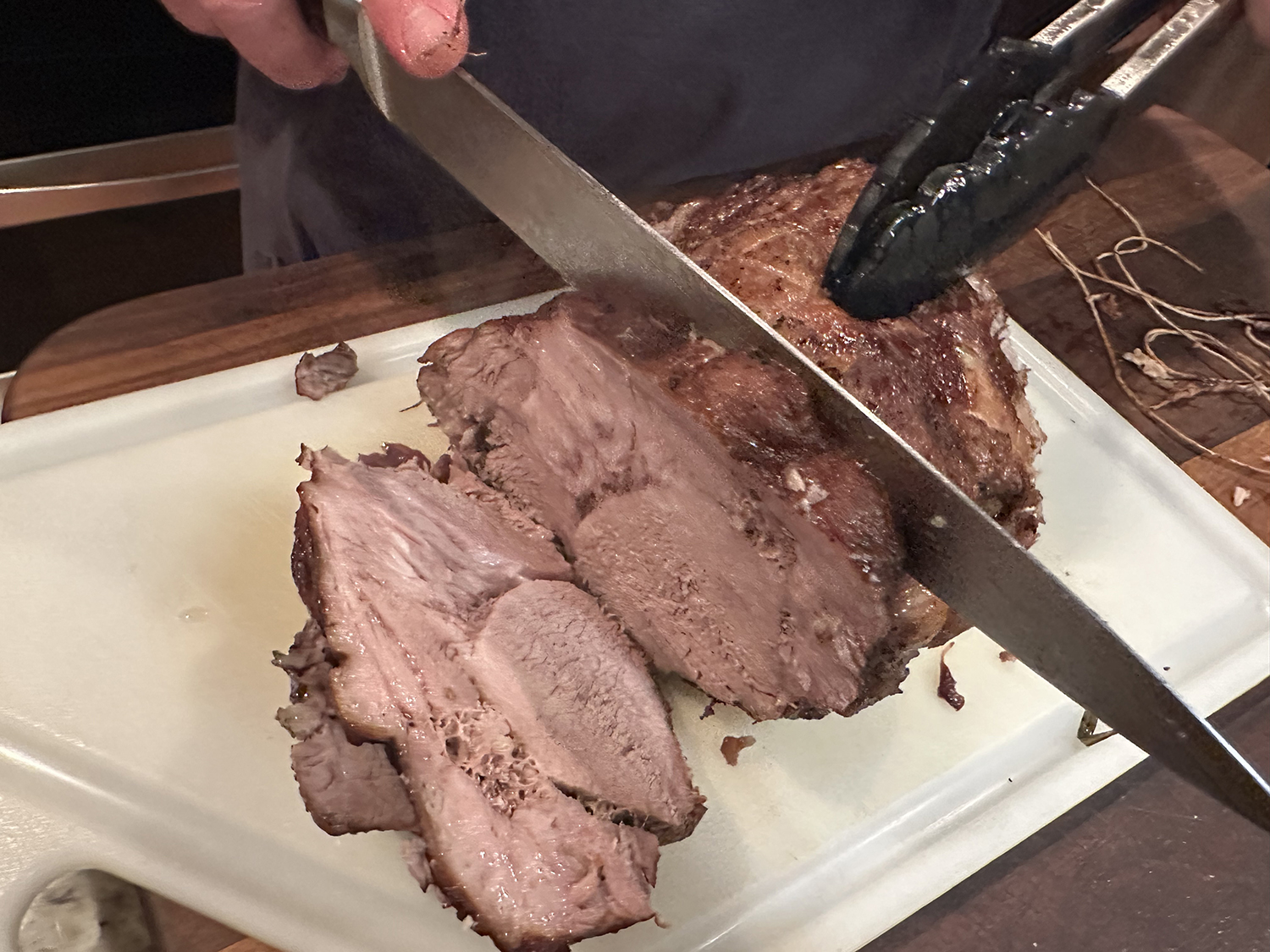
  9. Remove the string from the pork and discard it. Cut the pork into slices and arrange on a serving platter. Pour the sauce over the pork and serve.

http://www.lynnandruss.com

Adapted from a recipe in Anya Von Bremzen’s cookbook “The New Spanish Table”

Frite de Cordero (Lamb Stew)

Like all traditional recipes that pre-date cookbooks, it’s difficult to trace this recipe’s origins, but like many of its kind, it has a legend that goes with it. In this case, the legend says that King Alfonso XIII first tasted it in a hunting lodge in Extremadura and liked it so much that he sent his chef there to learn how to make it so he could prepare it at the palace. Lends a little intrigue to the recipe, right?

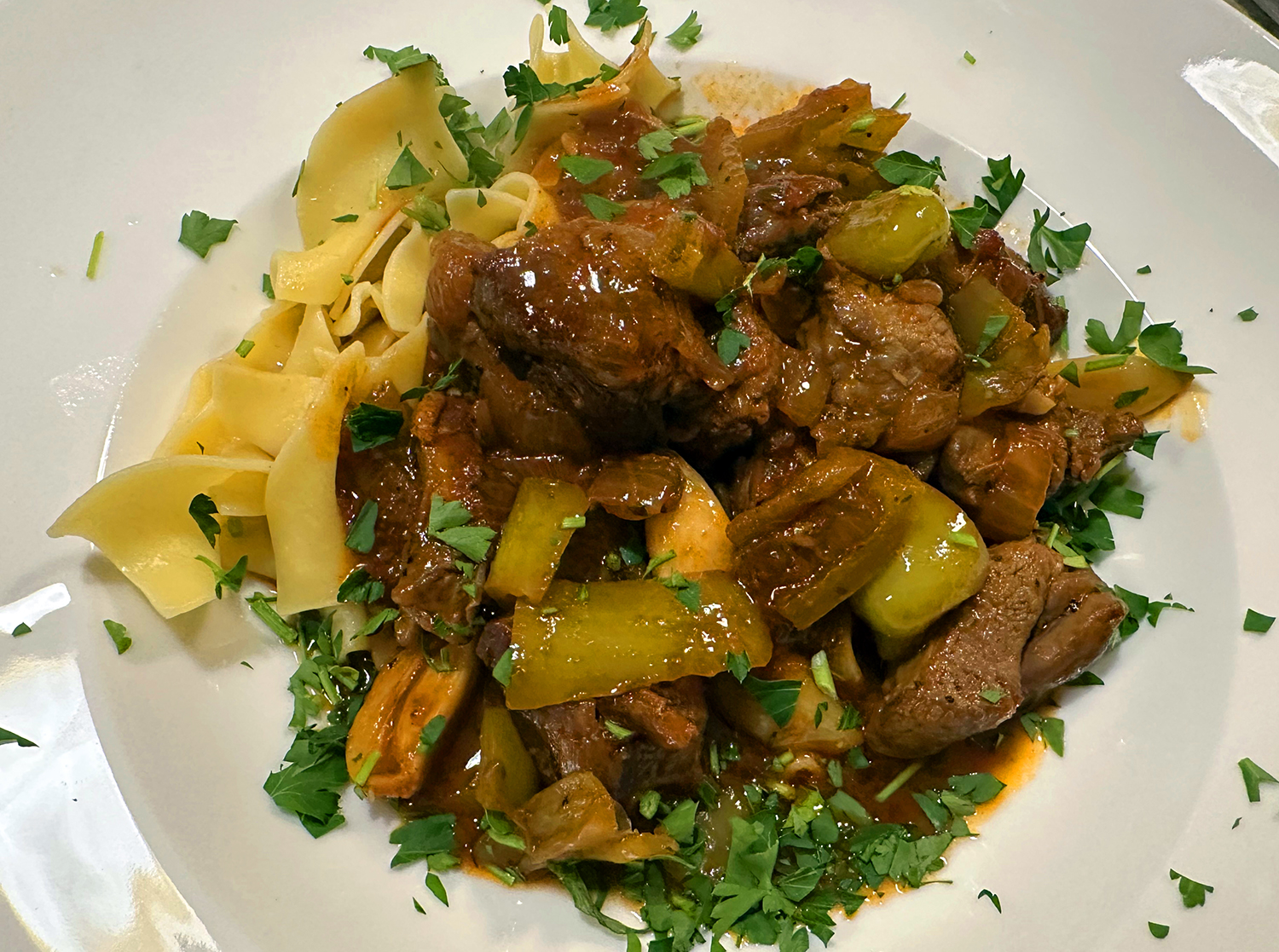
Another typical aspect of such traditional recipes is that each family prepares them with whatever variations they like. In this case, the different schools appear to be “tomato and peppers, yes or no”, whole cloves of garlic versus mashed with or without almonds, or with or without the lamb liver depending on which household you consult (not in my house).

The only non-negotiable thing is having a good quality loaf of crusty bread to avoid leaving a drop of the delicious sauce, although one can add some “snapped” potatoes to the pot about 25 minutes before the stew is ready. Or, alternatively, serve it over noodles or mashed potatoes.

As with most stews and braises, it tastes even better the second time around.

Frite de Cordero (Lamb Stew)

  • Servings: 6
  • Difficulty: easy
  • Print

Ingredients

  • 2 1/2 lbs. boneless lamb leg or shoulder, cut into 1 1/2 to 2-inch pieces
  • 1 lamb liver, (optional)
  • 1 head garlic, all cloves peeled and left whole
  • 2 Spanish onions, peeled and chopped
  • 3 Italian-style green peppers, seeded and roughly chopped
  • 3/4 cup canned crushed tomatoes, or passata
  • 1 bay leaf
  • 1 1/2 heaping tsp. smoked paprika, sweet, hot, or a mix
  • 1 tsp. dried oregano, or 1 tablespoon fresh oregano leaves, finely chopped
  • 1 tsp. dried thyme, or 1 tablespoon fresh thyme leaves
  • 3 Tbsp. olive oil
  • Kosher salt, to taste
  • 1 cup dry white wine
  • 1 cup beef, veal, or lamb broth
  • Finely chopped fresh parsley, for garnish (optional)

Directions

  1. Heat the olive oil in a Dutch oven over medium heat.
  2. Pat the lamb pieces and liver (if using) dry with paper towels, then salt and pepper generously. Brown them well on all sides, then remove them from the pot and set aside.
  3. Add more oil to the pot if necessary, then add the onion and saute until it becomes transparent about 7 minutes. Add the peeled garlic cloves, the green pepper, and a bit of salt, and saute the mixture a few minutes more until the peppers are tender. (If using the lamb liver, remove 4 of the whole cloves of garlic from the pot and mash them along with the liver in a mortar or grind them in a blender or food processor until smooth. Set aside.)
  4. Add the crushed tomatoes or passata to the pot and cook for about 10 minutes, stirring from time to time. Remove the pot from the heat, add the smoked paprika, oregano, thyme, and bay leaf, and mix well. Return the pot to the stove over medium heat. Return the lamb pieces and any juices to the pot. Add the wine and broth and bring the mixture to a boil, then reduce the heat to low and cover.
  5. Cook the stew until the lamb is tender, about 1 1/2 hours. After 45 minutes of cooking, check the pot from time to time. If the mixture is becoming dry, add more broth or water. If the stew is too watery, remove the lid and allow the stew to continue cooking uncovered until the mixture thickens to your liking.
  6. When the stew is about 10 minutes from being ready, add the mixture of garlic and liver and stir well.
  7. Serve the stew hot, garnished with the chopped parsley.

http://www.lynnandruss.com

Recipe by Mónica Escudero of El País, 17 Nov 2024

Amazing (But Prep-Intense) Lasagna

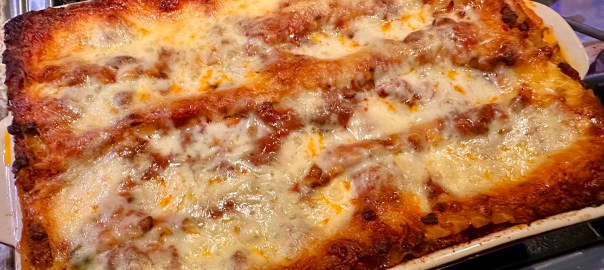
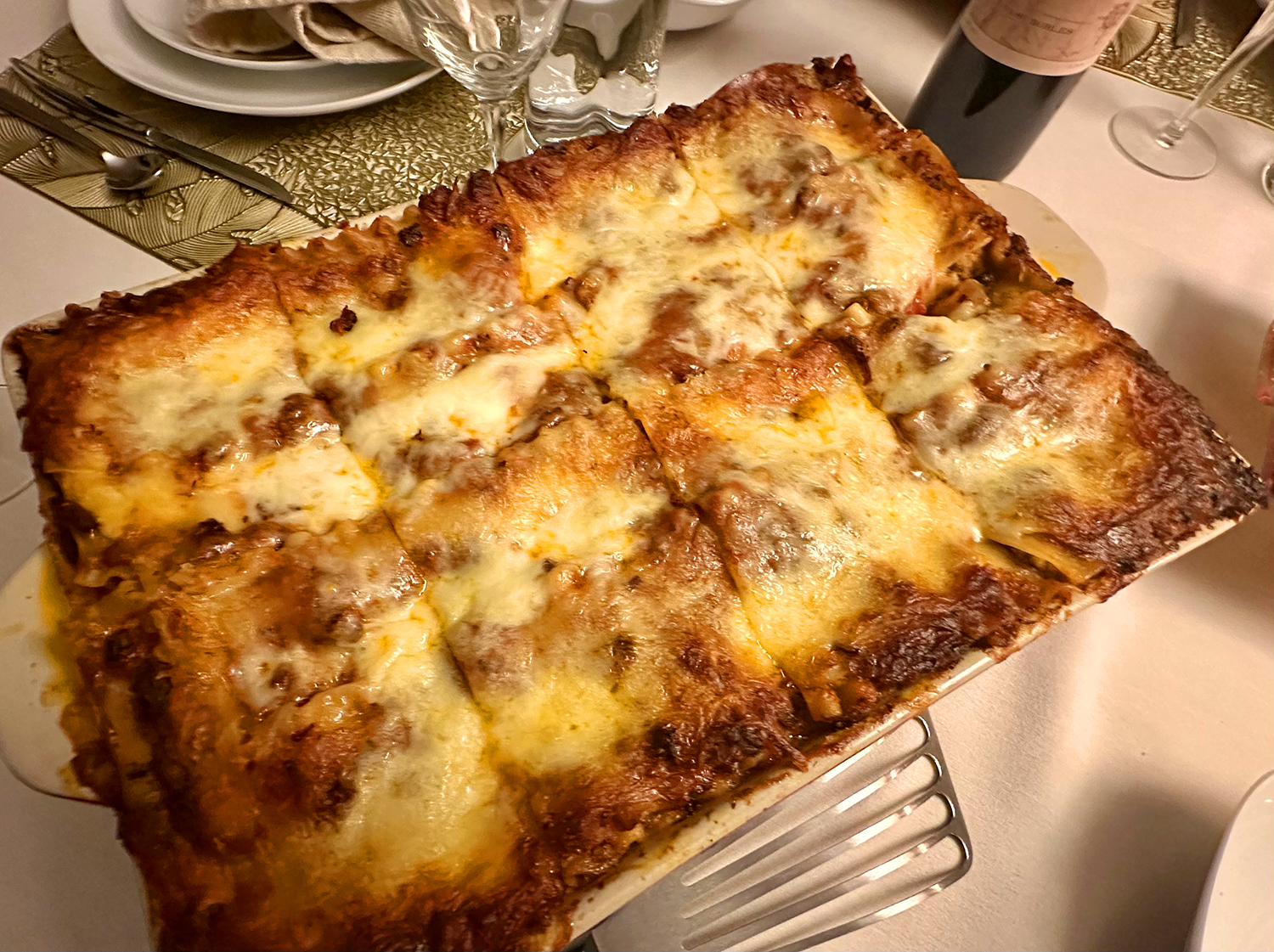
If you are of the ilk who actually likes a labor-intensive recipe challenge that brings out the masochist in you, then go ahead and double this lasagna recipe like we did. The original author claims the entire process takes a total of 4 hours. Well that depends…

We were hosting a potluck party of 10, and since this recipe feeds 8-10 servings (and we definitely wanted leftovers after all of that work), then two lasagnas it was! Because we made two casseroles, it took us 5 hours just to prep and assemble. They were refrigerated overnight, brought to room temperature before baking, and took nearly an hour to come to temperature of 165°F due to the cool ingredients.

All negatives aside, the lasagna was AMAZING! Our guests gushed over how yummy it was. This version produces an intensely flavored sauce, cheeses that melt into creaminess as if they were béchamel, meat that’s just chunky enough, and noodles that (hopefully) put up no resistance to the fork.

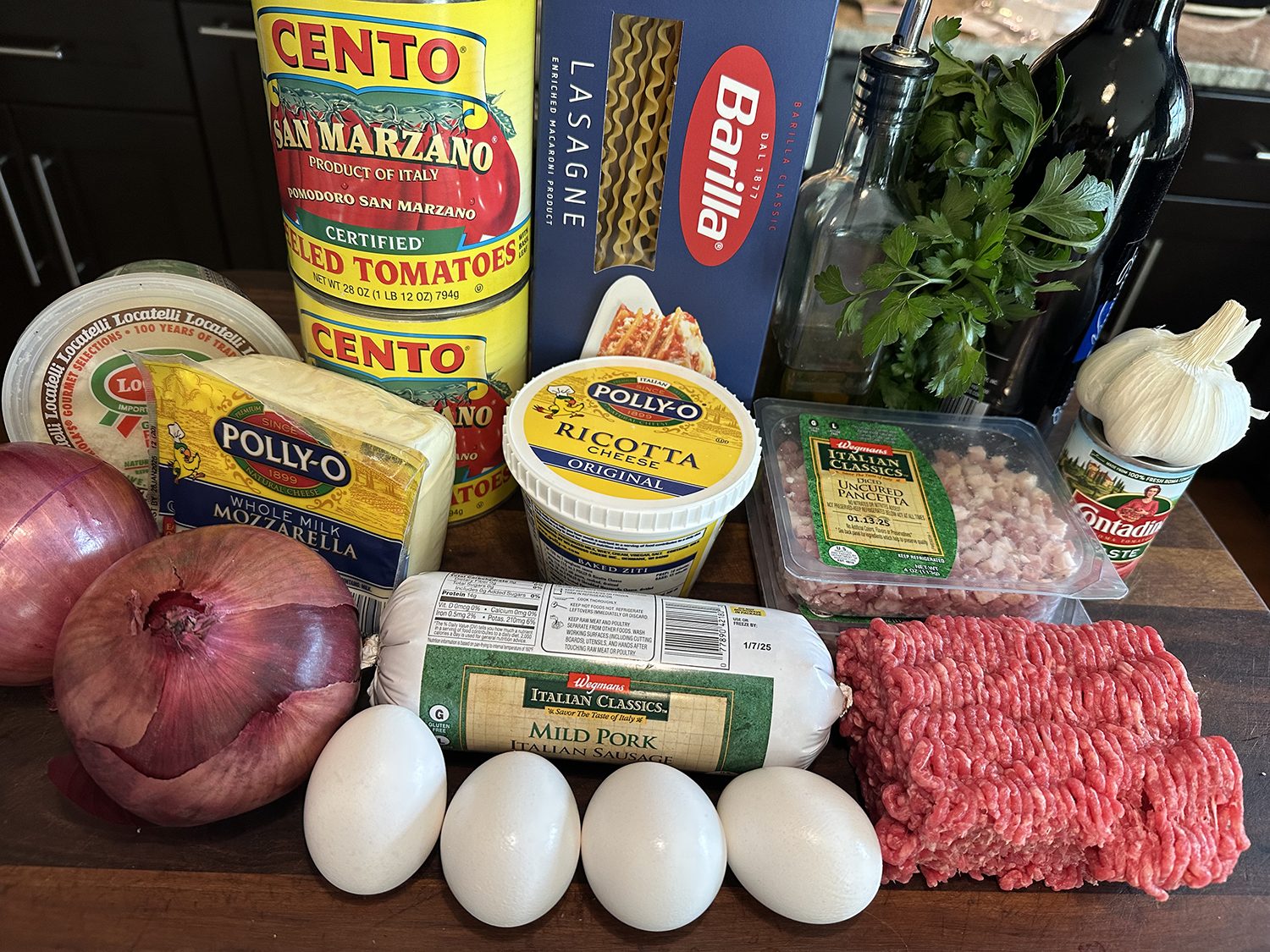
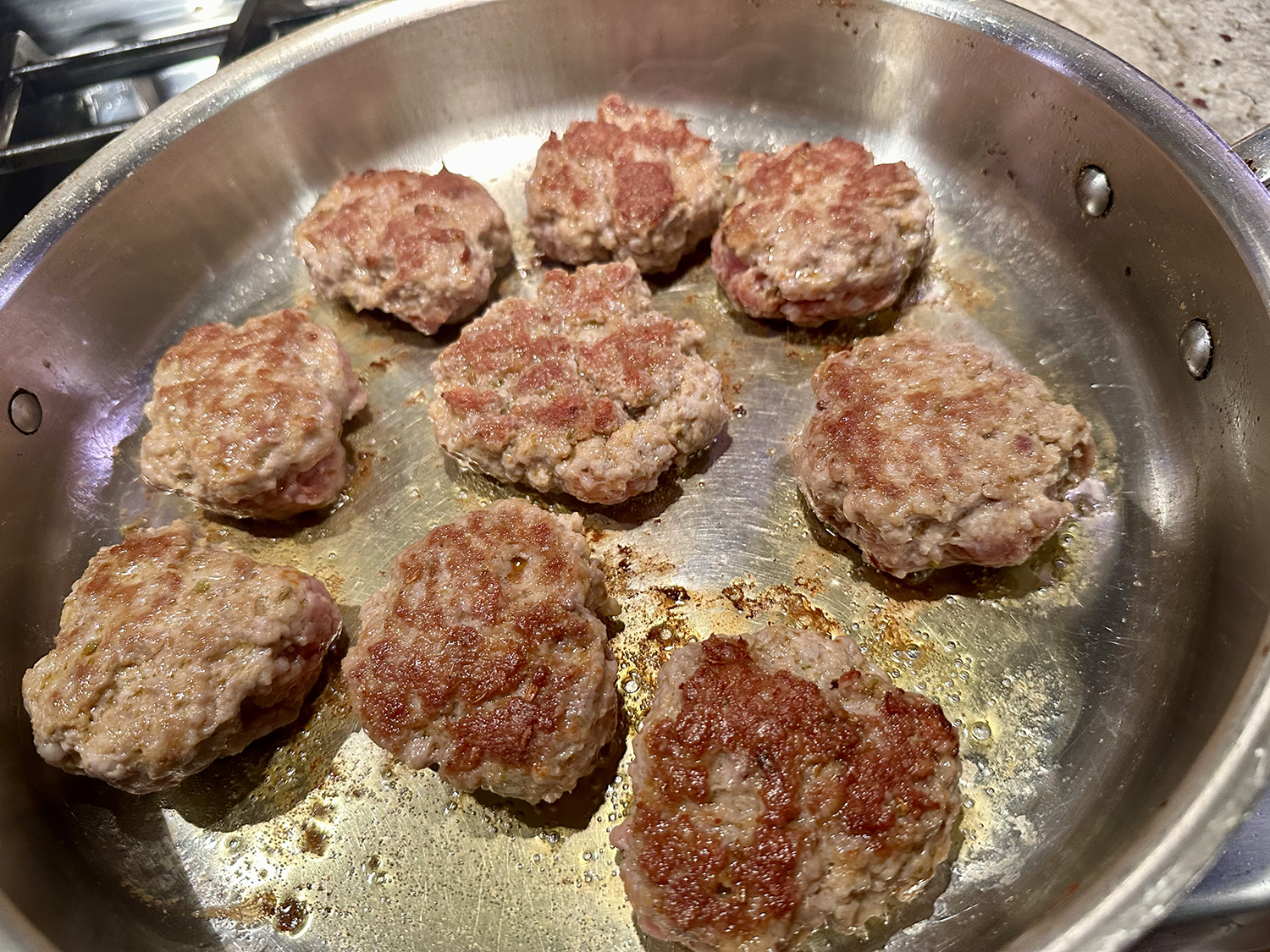
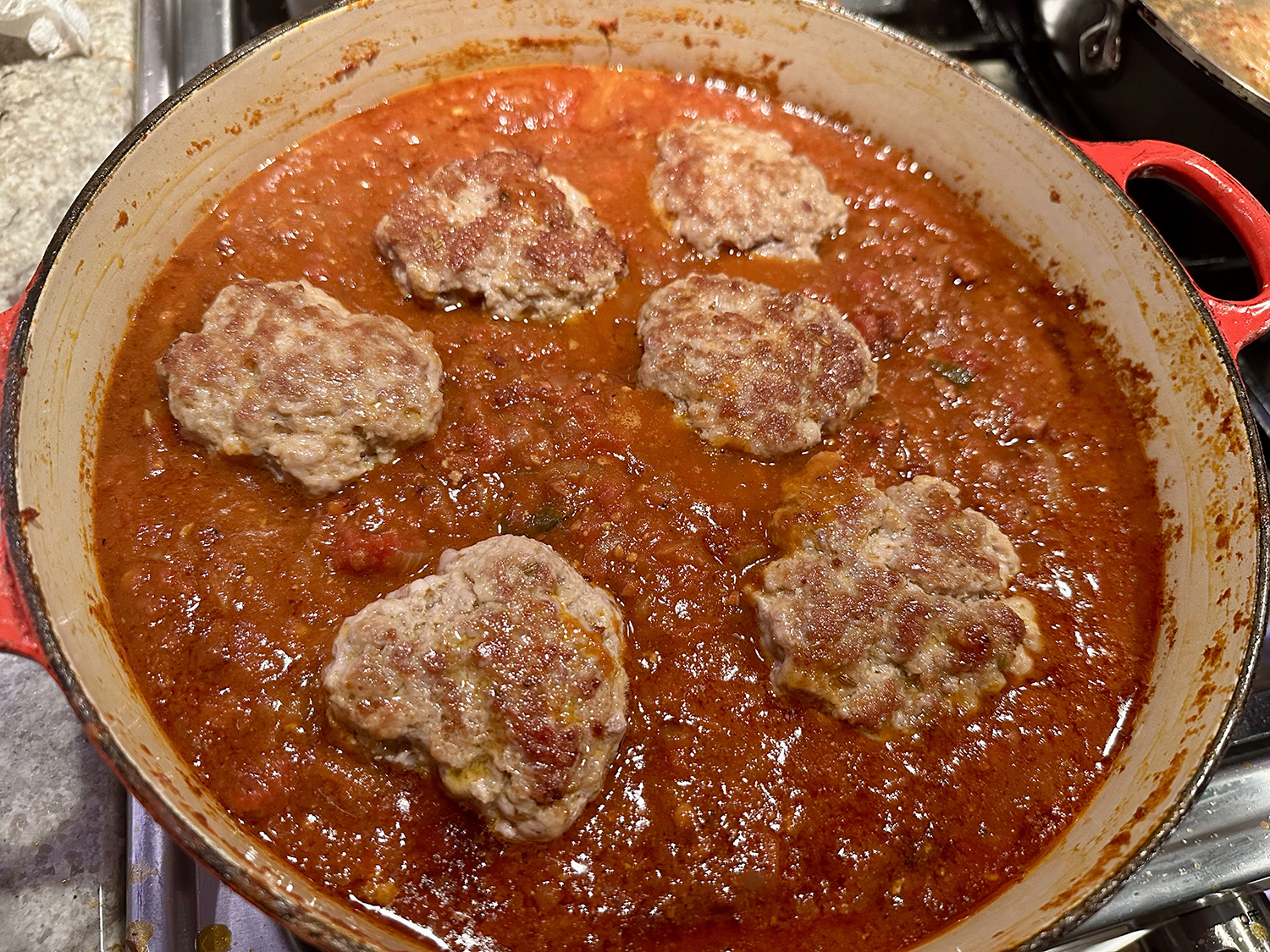
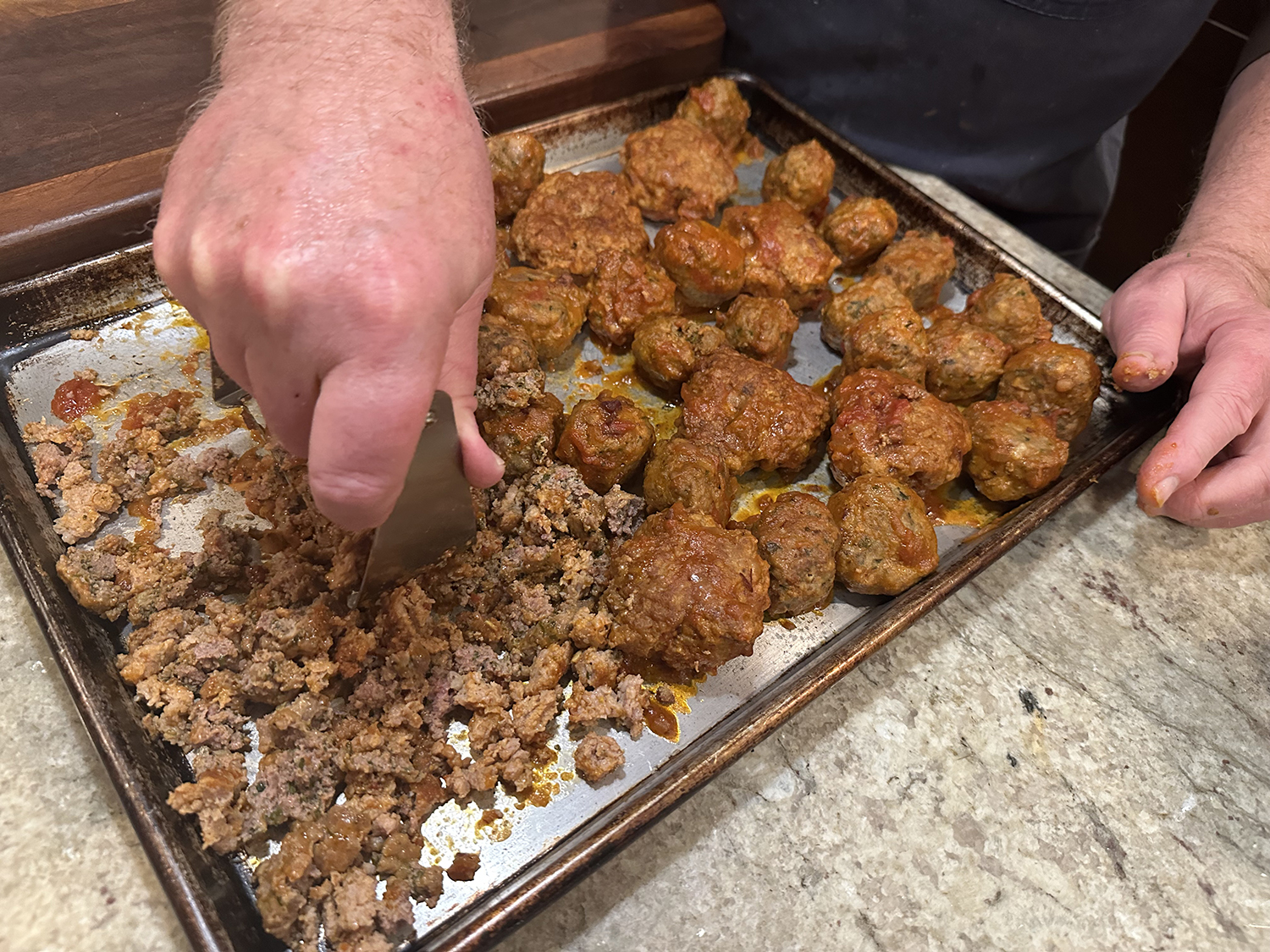
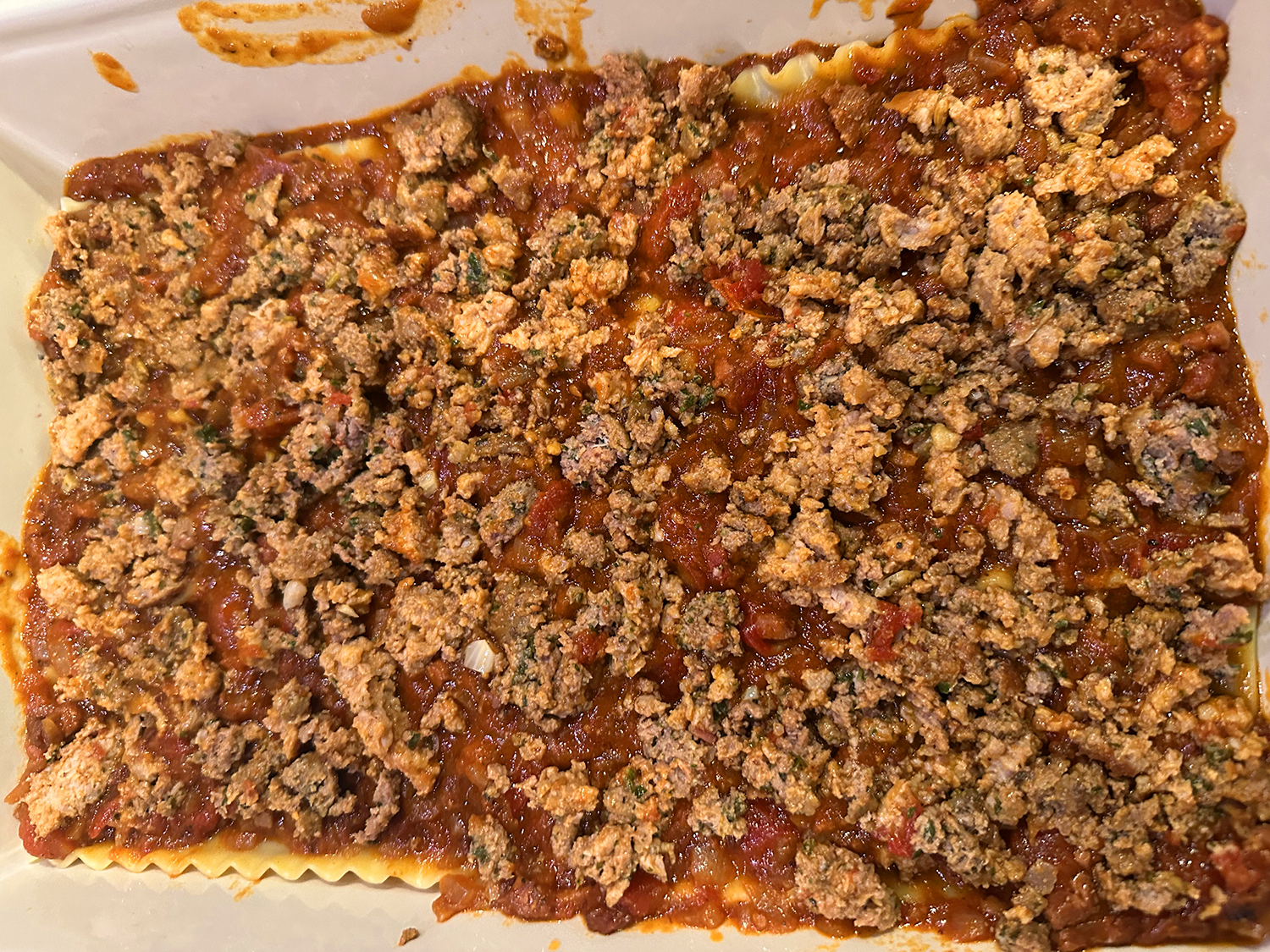
The ingredients and directions that follow are the original from Regina Schrambling for one lasagna. Instead of Italian sausage links, we used bulk and made them into patties for ease of searing and chopping. Many of our photos may show ingredients for two lasagnas, so keep that in mind when making yours.

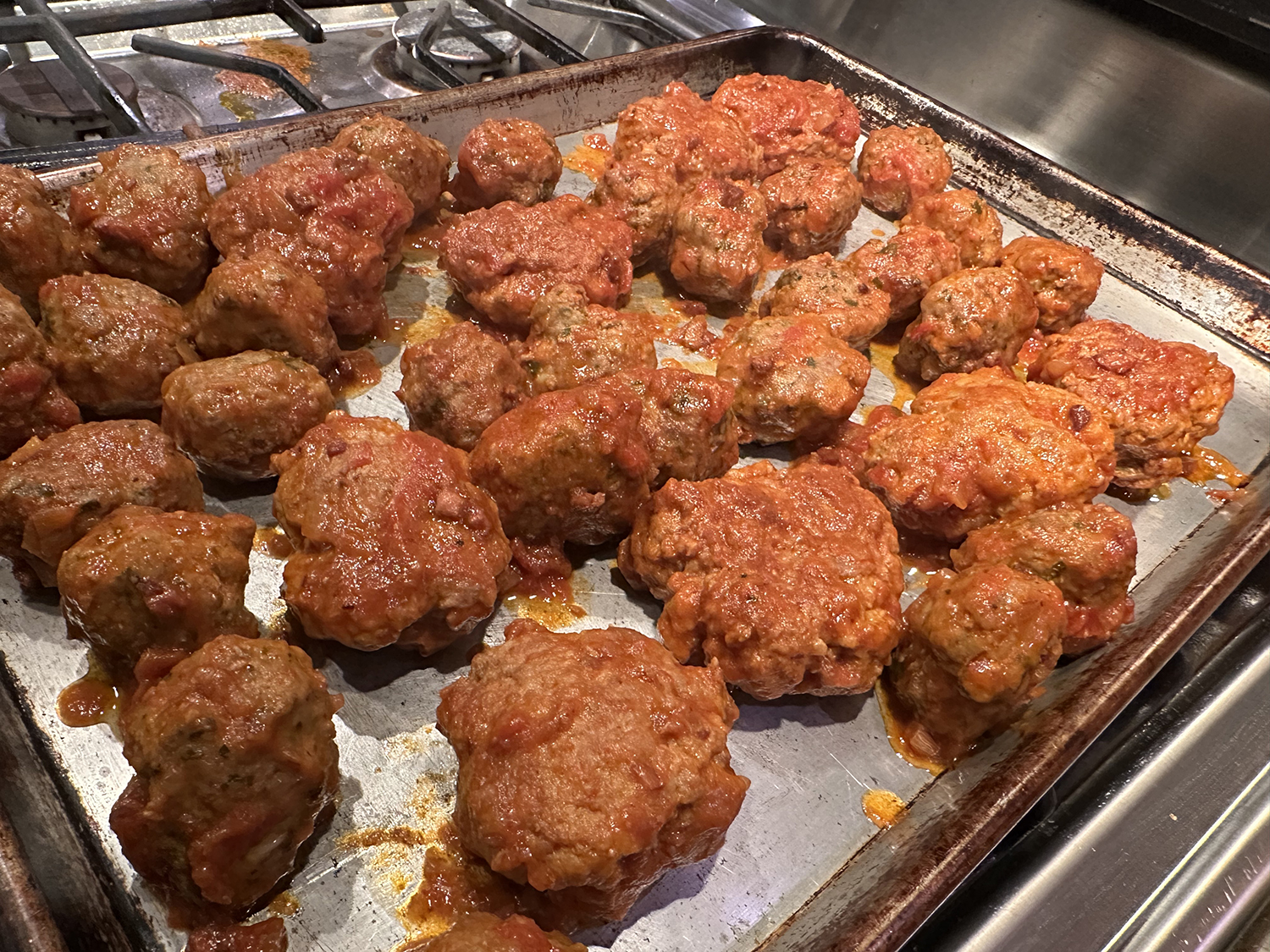
In case you are wondering why make the ground meat into meatballs, only to chop them up later? It certainly gave us pause. One reviewer wrote “I believe the point of cooking the meat in ball shape is to end up with more tender and flavorful meat involving fewer advanced glycation end products. When you “scramble” ground beef, the fat drains out by the time it is fully cooked, and it’s all a bit crispy, grey and tough. The ball shape holds in a lot of the fat and moisture.”

*(If not using fresh noodles, cook them according to package directions for al dente, rinse under cool water and let cool on dry towels until ready to use.)

Amazing (But Prep-Intense) Lasagna

  • Servings: 8-10
  • Difficulty: moderate
  • Print

Ingredients

For the Sauce:

  • 1 cup extra virgin olive oil
  • 2 medium red onions, finely diced
  • 2 large cloves minced garlic
  • 8 oz. pancetta, diced
  • Salt and freshly ground black pepper
  • 1½ cups good red wine, preferably Italian
  • 2 28-oz. cans Italian plum tomatoes
  • 3 Tbsp. tomato paste
  • ¾ lb. ground sirloin
  • ¼ cup freshly grated Pecorino Romano
  • 2 eggs
  • 10 sprigs fresh parsley, leaves only, washed and dried
  • 2 large whole cloves garlic
  • ½ cup flour
  • 1 lb. Italian sausage, hot or sweet, or a mix

For the Lasagna:

  • 1 15-oz. container ricotta cheese
  • 2 eggs
  • 2 cups freshly grated Pecorino Romano
  • ½ cup chopped parsley
  • 1 lb. mozzarella, grated
  • 16 sheets fresh lasagna noodles*

Directions

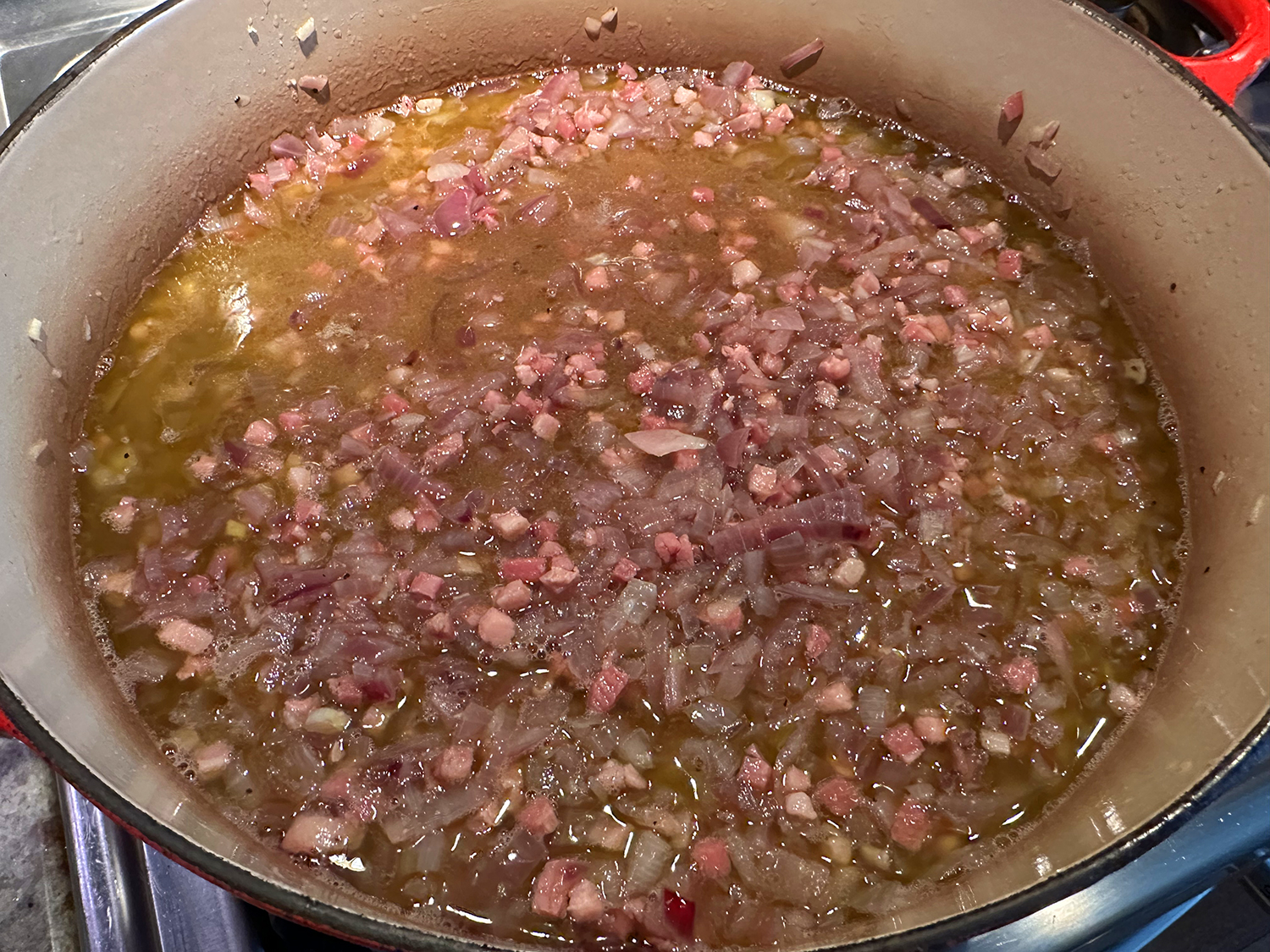
  1. For the sauce, heat ½ cup oil in a large heavy Dutch oven or kettle over low heat. Add the onions, minced garlic and pancetta, and cook, stirring, for 10 minutes, until the onions are wilted. Season liberally with salt and pepper. Raise heat slightly, add the wine and cook until it is mostly reduced, about 20 minutes. Crush the tomatoes into the pan, and add their juice. Add the tomato paste and 2 cups lukewarm water. Simmer for 1 hour.
  2. Combine the sirloin, cheese and eggs in a large bowl. Chop the parsley with the whole garlic until fine, then stir into the beef mixture. Season lavishly with salt and pepper. Using your hands, mix until all the ingredients are well blended. Shape into meatballs and set aside.
  3. Heat the remaining oil in a large skillet over medium-high heat. Dust the meatballs lightly with flour, shaking off excess, and lay into the hot oil. Brown the meatballs on all sides (do not cook through) and transfer to the sauce.
  4. In a clean skillet, brown the sausages over medium-high heat. Transfer to the sauce. Simmer 1½ hours.
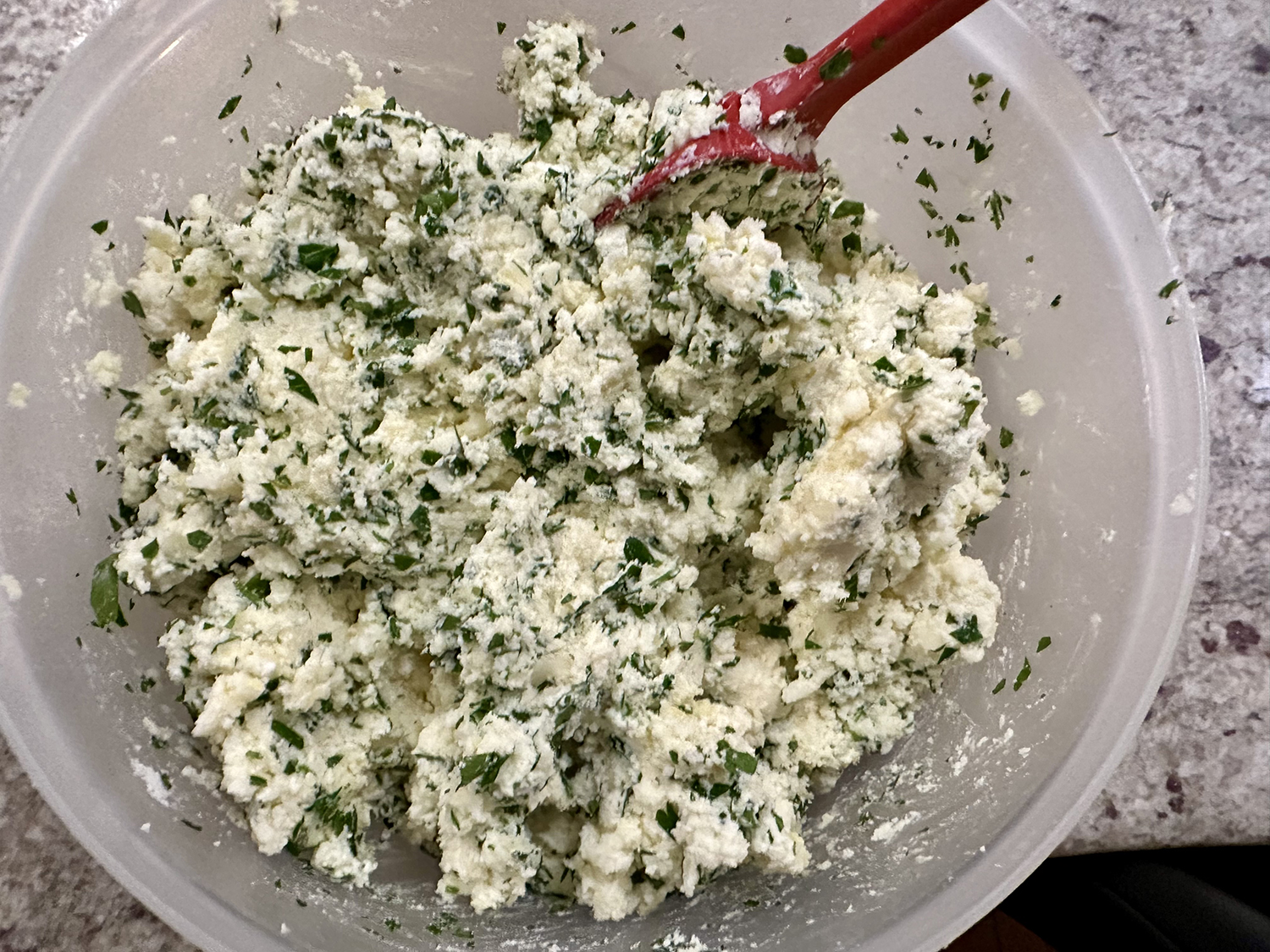
  5. Heat the oven to 350°F. In a large bowl, combine the ricotta, eggs, Pecorino Romano, parsley and all but 1 cup of the mozzarella. Season well with salt and pepper. Mix thoroughly.
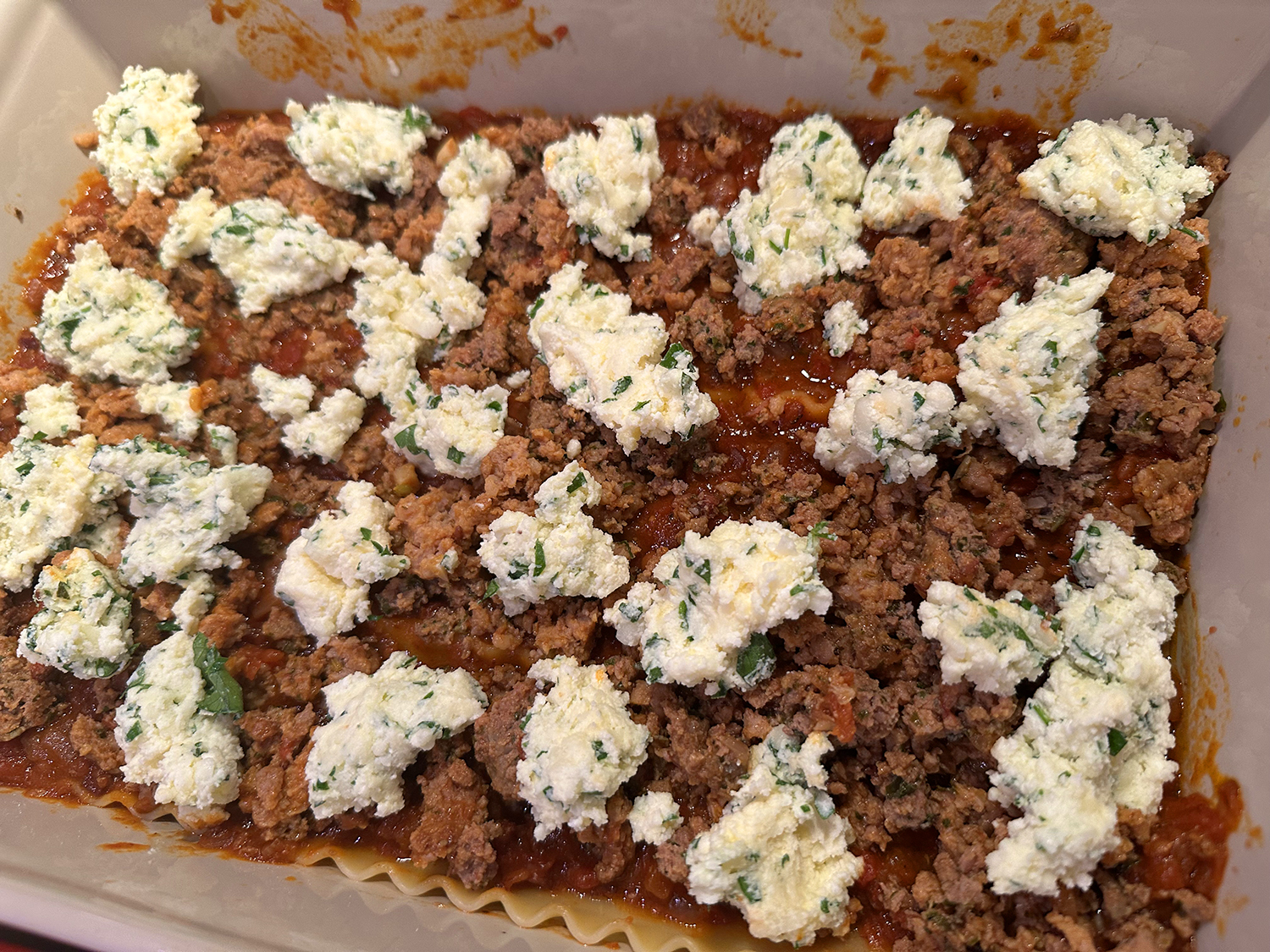
  6. Remove the meatballs and sausage from the sauce, and set aside to cool slightly, then chop coarsely. Spoon a thick layer of sauce into the bottom of a 9-by-12-inch lasagna pan. Cover with a layer of overlapping noodles (usually 4 per layer).
  7. Spoon more sauce on top, then add a third of the meat and a third of the cheese mixture. Repeat for 2 more layers, using all the meat and cheese. Top with a layer of noodles, and cover with the remaining sauce. Sprinkle reserved mozzarella evenly over the top.
  8. Bake 30* minutes. (If the lasagna was refrigerated overnight, take it out one hour before you bake. The baking time will be increased by almost double. Check with an internal thermometer and if the temp reads 165°F, it is done.) Let stand 10 minutes before serving.

http://www.lynnandruss.com

Adapted from a recipe by Regina Schrambling for NYTimes Cooking
Carnitas with Pickled Onions

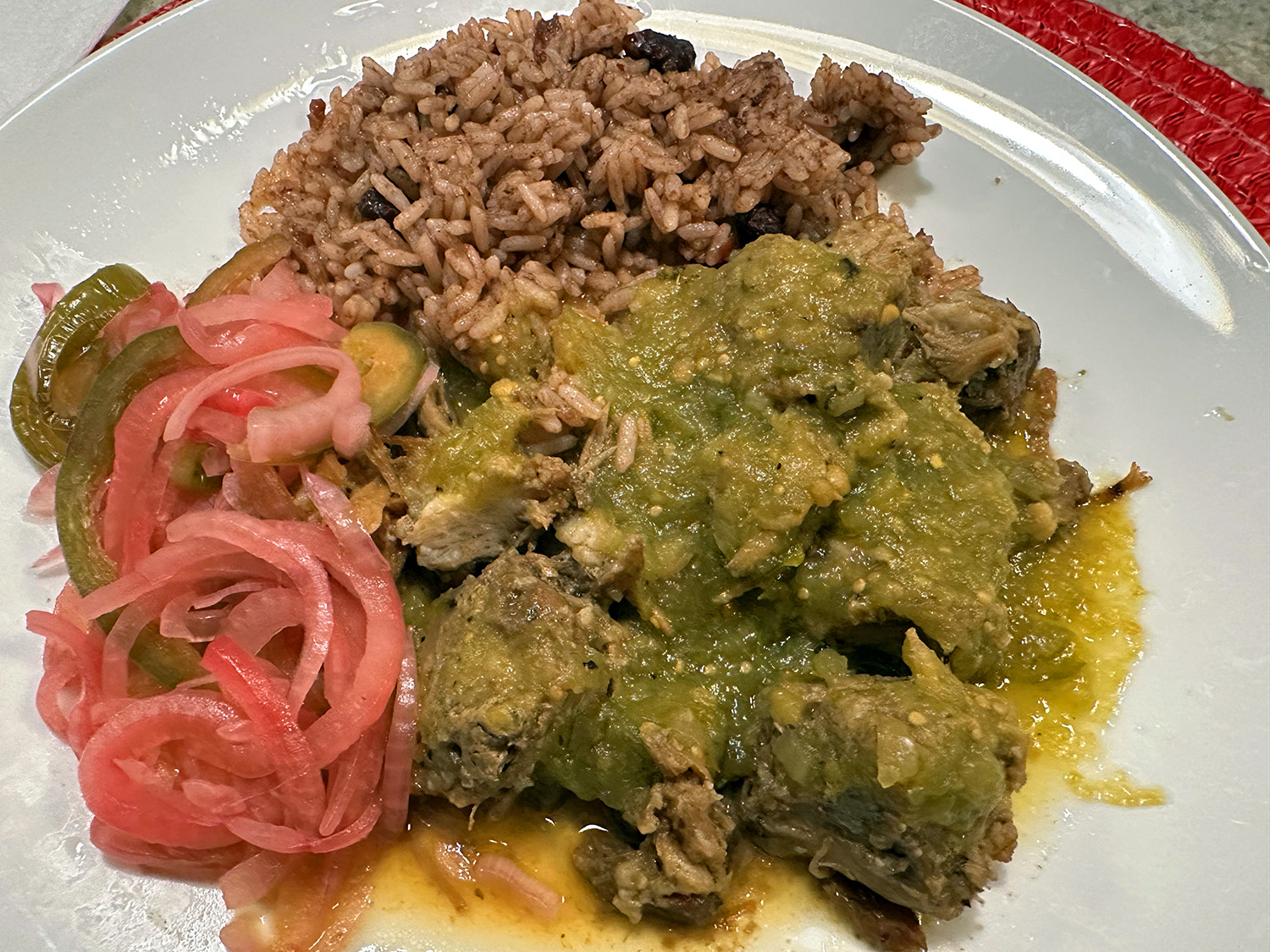
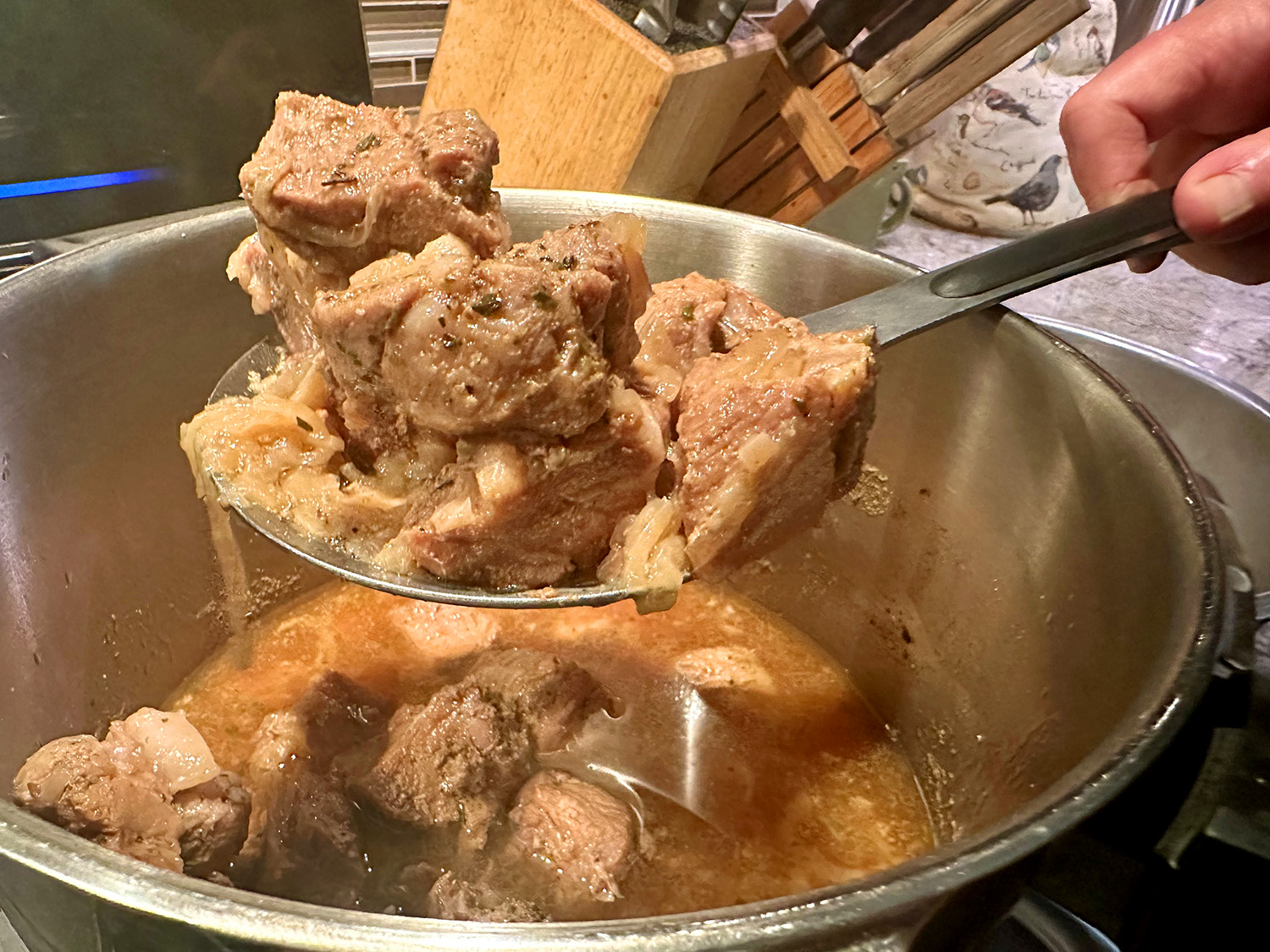
The Hubs exclaimed it was better than any carnitas he’s ordered at a Mexican restaurant! High praise indeed. While I don’t think I’ve ever had it while dining out, I certainly will be making it again in the near future. Scrumpdillyicious! And if even possible, better as leftovers!

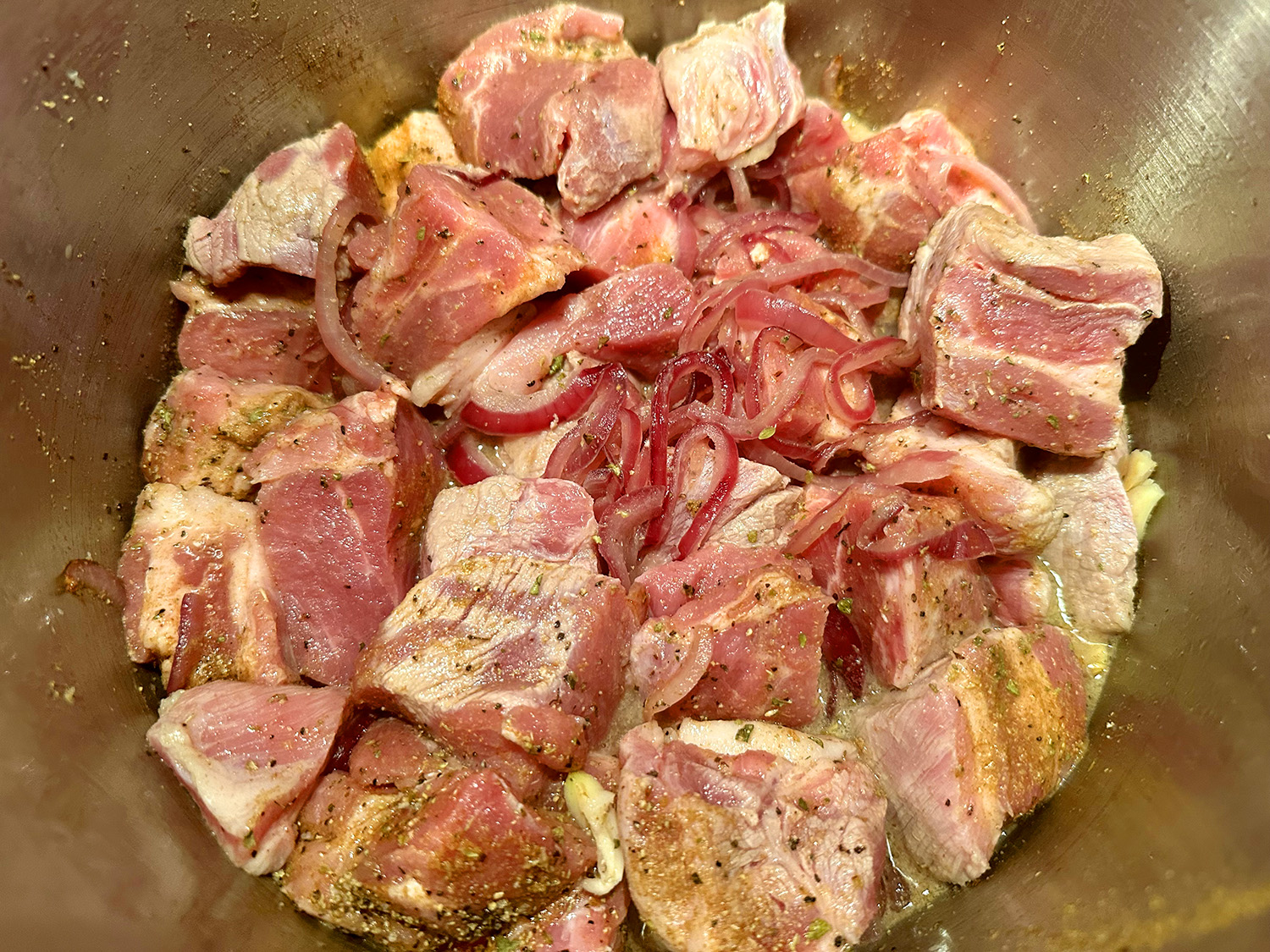
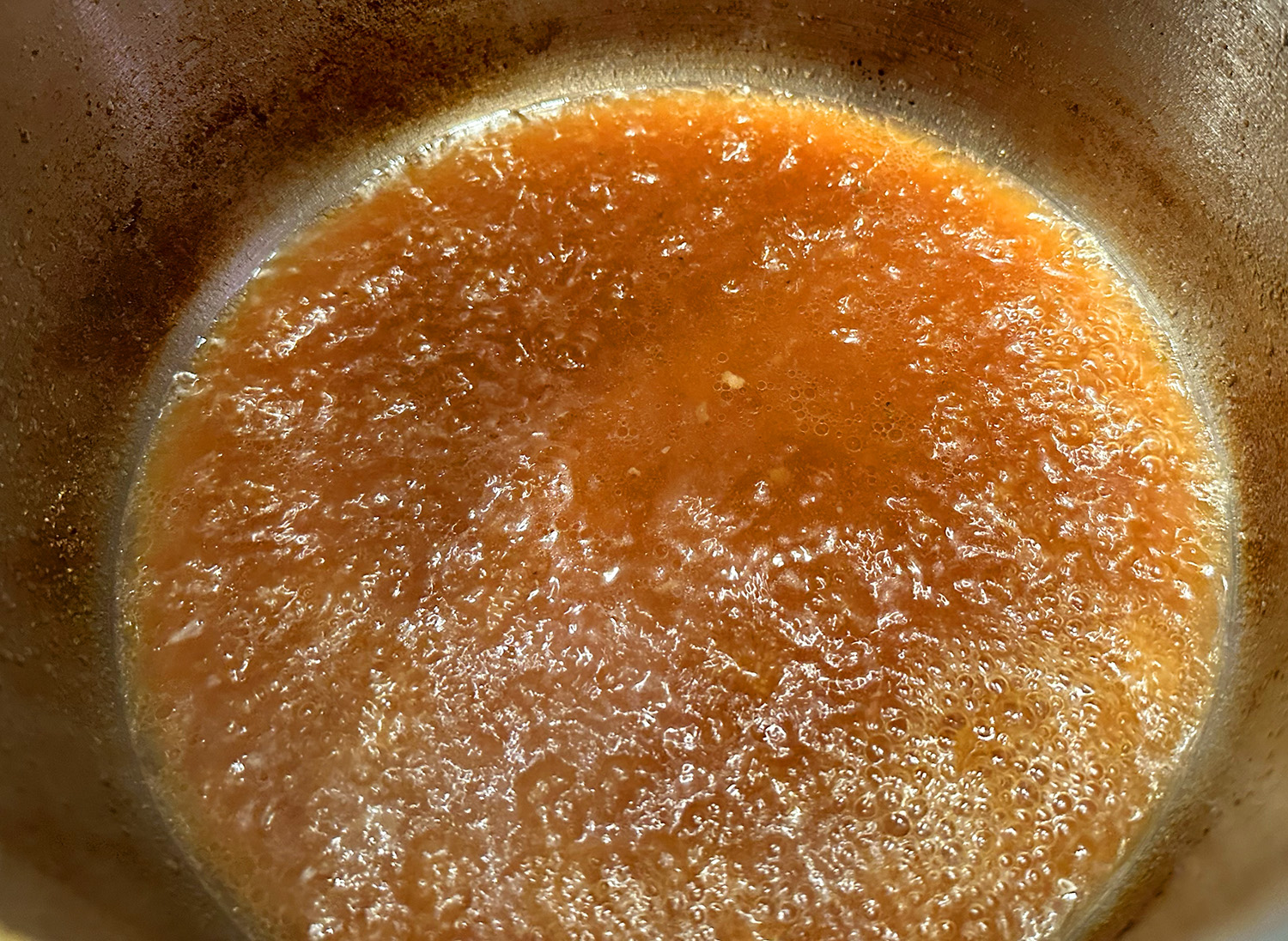
For this Instant Pot version of Mexican carnitas, you can either pressure-cook or slow-cook chunks of pork shoulder with spices and aromatics. Add only a small amount of water to the pot so when the cooking is done, the liquid already is rich and meaty. Still, reduce it for a few minutes to further concentrate the flavors, then use it to moisten the fork-tender pork that has been broken into bite-size pieces.

You can stop there and serve the carnitas as is or make it even more delicious by crisping it in a hot skillet in its own rendered fat. (We opted not to do this step.) To do so, in a 12-inch nonstick skillet over medium-high, heat 1 teaspoon of the reserved pork fat until barely smoking. Add the pork in an even layer and cook without stirring, pressing the meat against the skillet with a spatula, until the bottom is browned and crisp, three to five minutes.

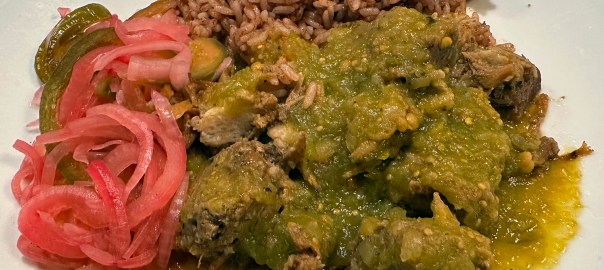
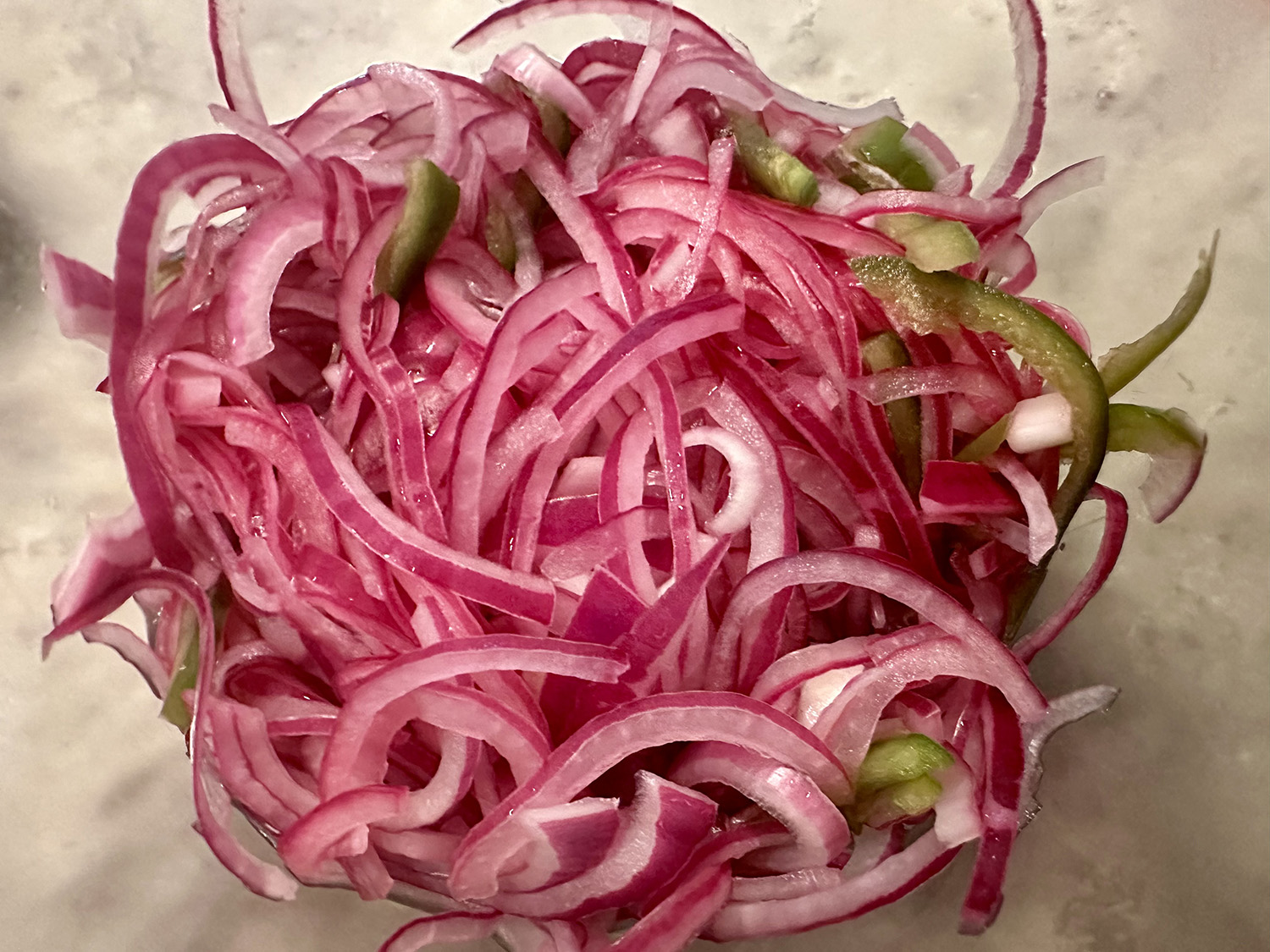
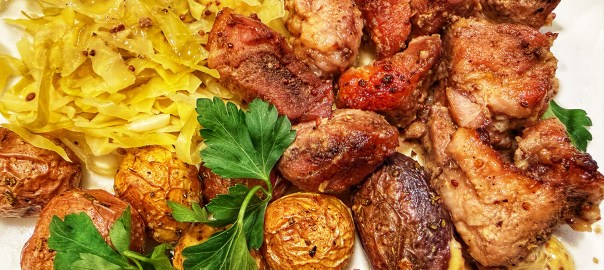
Serve carnitas with rice and beans, such as Goya Gallo Pinto, or make tacos with warmed tortillas. Either way, the pickled red onions are a must—their sharp acidity balances the richness of the pork. And for an added flavor boost, top the meat with Trader Joe’s Salsa Verde.

Don’t trim the fat from the pork. The fat rendered during cooking is essential for flavoring the carnitas. And if you plan to fry the pork after shredding, be sure to reserve the fat you skim off the cooking liquid—it’s ideal for crisping the meat.

In lieu of an Insta Pot, use a pressure cooker for the fast method (which we used), or a slow cooker for the slow method. Our piece of pork weighed in at almost 4 pounds. The recipe feeds 4 to 6 depending on your sides and if you serve with warmed tortillas.

Carnitas with Pickled Onions

  • Servings: 4-6
  • Difficulty: easy
  • Print

Ingredients

  • 1/2 cup white vinegar
  • 1 tsp. white sugar
  • Kosher salt and ground black pepper
  • 2 medium red onions, halved and thinly sliced, divided
  • 1 jalapeño chili, stemmed, seeded and thinly sliced lengthwise
  • 1 Tbsp. grapeseed or other neutral oil
  • 10 medium garlic cloves, smashed and peeled
  • 3 lbs. boneless pork shoulder, untrimmed, cut into 2-inch chunks
  • 1 Tbsp. ground cumin
  • 1 Tbsp. ground coriander
  • 1 tsp. dried oregano, preferably Mexican oregano

Directions

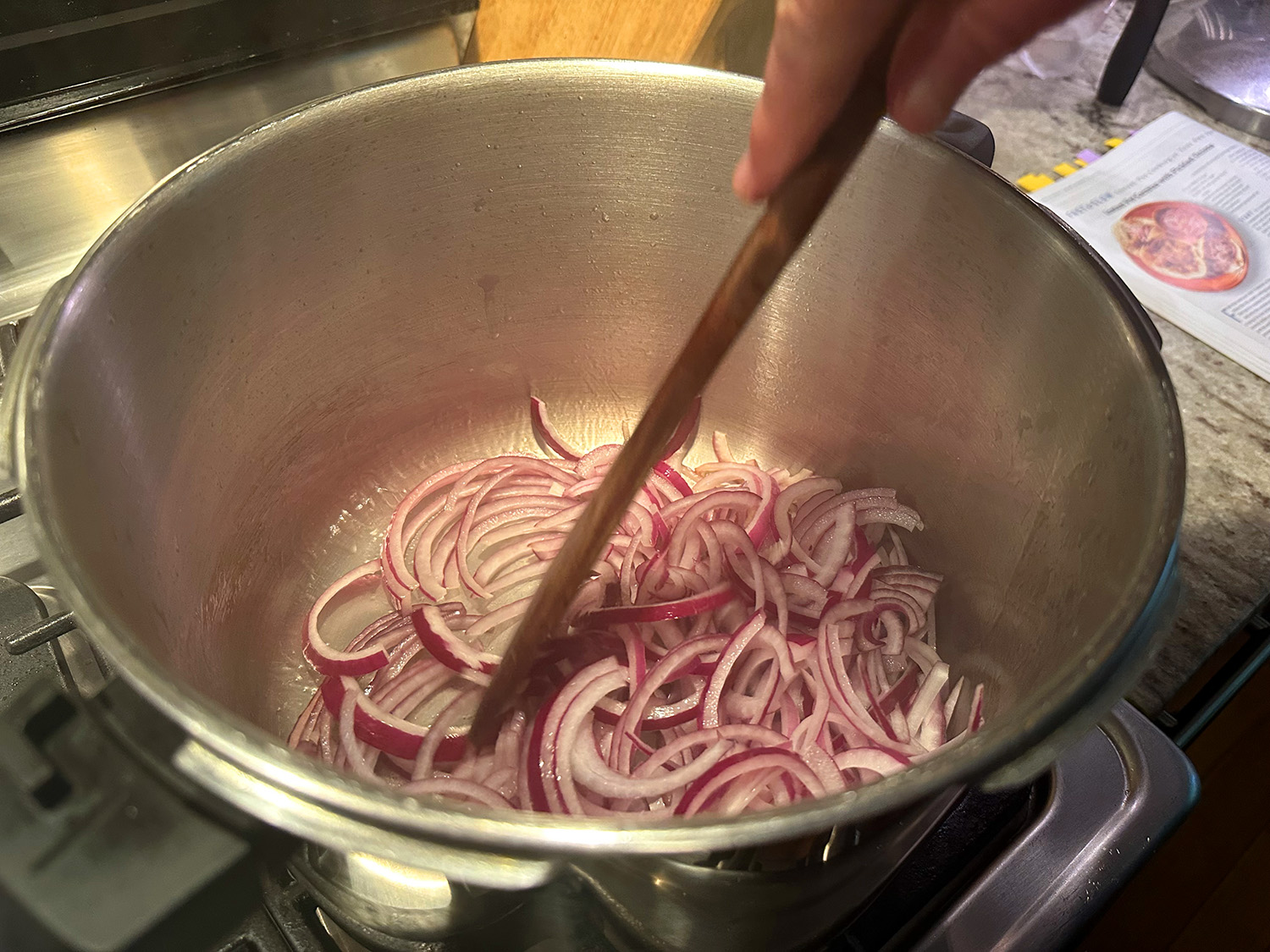
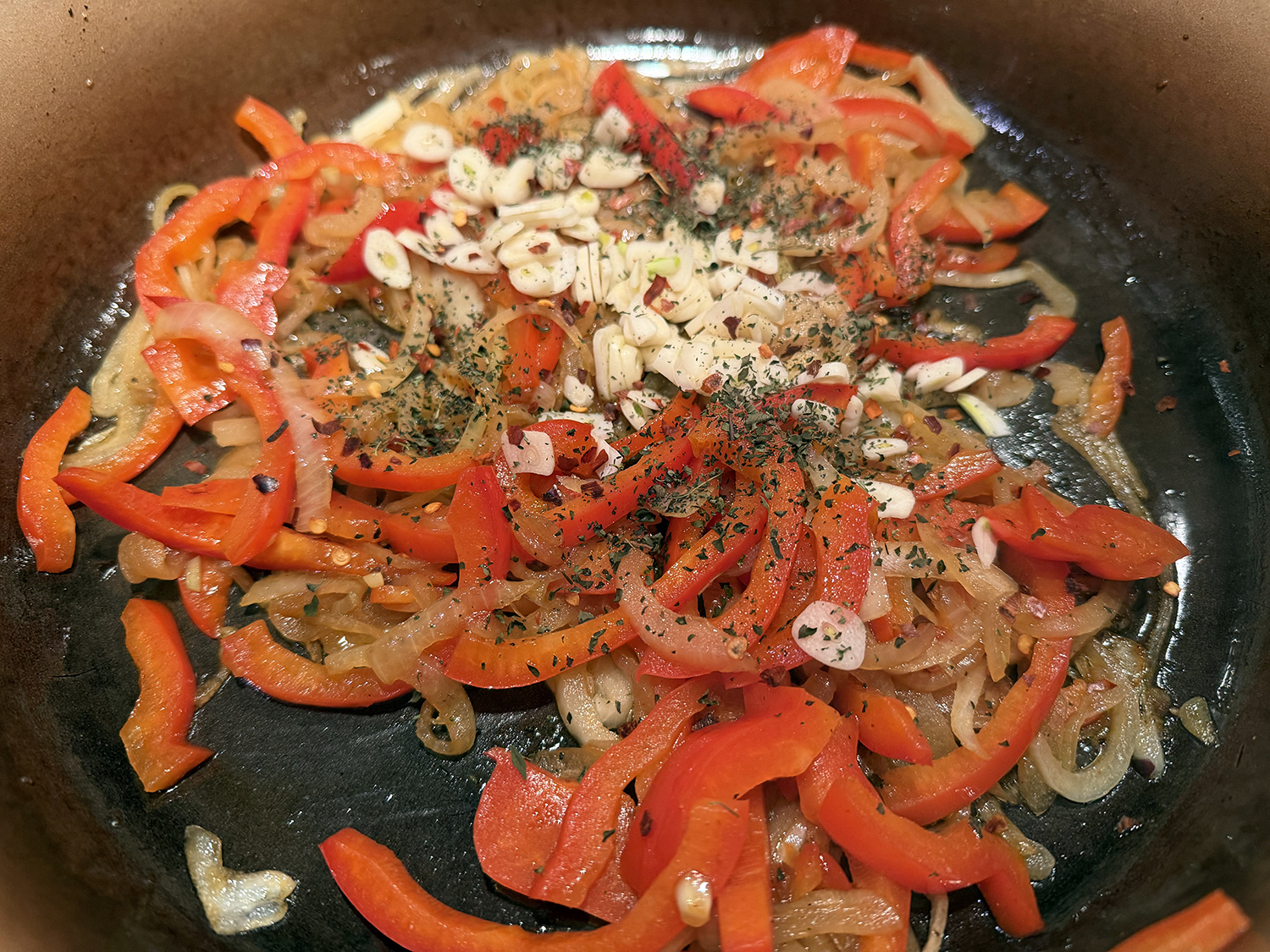
  1. In a medium bowl, stir together the vinegar, sugar and 1 teaspoon salt until dissolved. Stir in 1 red onion and the jalapeño; cover and refrigerate while you cook the pork. On a 6-quart Instant Pot, select More/High Sauté. Add the oil and heat until shimmering. Add the remaining onion and cook, stirring occasionally, until softened, about 3 minutes. Add the garlic and cook, stirring, until fragrant, about 30 seconds. Add the pork, cumin, coriander, oregano, ½ teaspoon salt, 1 teaspoon pepper and ½ cup water. Stir, then distribute in an even layer.
  2. FAST: Press Cancel, lock the lid in place and move the pressure valve to Sealing. Select Pressure Cook or Manual; make sure the pressure level is set to High. Set the cooking time for 30 minutes. When pressure cooking is complete, allow the pressure to reduce naturally for 15 minutes, then quick-release the remaining steam by moving the pressure valve to Venting. Press Cancel, then carefully open the pot.
    SLOW: With the pot still on More/High Sauté, bring the mixture to a boil, then stir and redistribute in an even layer. Press Cancel, lock the lid in place and move the pressure valve to Venting. Select Slow Cook and set the temperature to More/High. Set the cooking time for 5 to 6 hours; the meat is done when a skewer inserted into a chunk meets no resistance. Press Cancel, then carefully open the pot.
  3. Using a slotted spoon, transfer the meat-onion mixture to a large bowl. Cool for a few minutes, then break the meat into bite-size pieces. Skim off the fat from the surface of the cooking liquid; reserve the fat if you plan to fry the pork before serving (see headnote). Select More/High Sauté. Bring the liquid to a boil and cook, stirring occasionally, until reduced to about ½ cup (about ⅛ inch depth in the pot), about 15 minutes. Press Cancel to turn off the pot. Add the pork and stir until heated through and evenly moistened. Taste and season with salt and pepper. Serve with the pickled onions.

http://www.lynnandruss.com

Adapted from a recipe by Elizabeth Mindreau for Milk Street

Pepper-Crusted Flank Steak

Easy beyond belief. Only 3 ingredients for the main course? Count me in! One ingredient, coarse black pepper, coats the flank steak for a zesty bust of flavor, complementing the rare grilled meat. It’s best to crush your own, in a mortar and pestle or a spice mill. The entrée can be served warm or at room temperature.

Many reviewers commented that it was too salty, we didn’t think so. But because it’s very hard to find a 2-pound flank steak, ours was just over 1 1/2 pounds, and therefore we used less salt to begin with.

Ours sides were baked onion rings and a side salad. Dinner done.

Pepper-Crusted Flank Steak

  • Servings: 4
  • Difficulty: super easy
  • Print

Ingredients

  • 1 flank steak, about 2 lbs.
  • 2 Tbsp. kosher salt (such as Diamond Crystal)
  • 3 Tbsp. coarse crushed black peppercorns (do not use regular table pepper)

Directions

  1. Pat steak dry. Sprinkle 1 tablespoon salt on each side.
  2. Coat both sides of the steak with the crushed pepper, pressing down to coat evenly. Allow to rest and absorb seasoning for at least 1 hour. Or place on a rack over a rimmed baking sheet and put in the refrigerator, uncovered, overnight or up to 24 hours.
  3. Bring steak to room temperature. Grill over medium-hot coals or a covered gas grill at 450 degrees, about 4 to 5 minutes per side, until juices appear on the surface of the steak. Check with a meat thermometer; 125 degrees for rare, 130 for medium-rare. (Alternatively, cook in a cast-iron pan over medium-high heat or broil.) Let rest at least 10 minutes before slicing.
  4. With a sharp knife, slice on a slight bias against the grain, about ⅛-inch thick. Arrange on a serving platter. Serve warm or at room temperature.

http://www.lynnandruss.com

Adapted from a recipe by David Tanis for NYTimes Cooking
Slow-Roasted Boneless Leg of Lamb

For you seasoned lamb lovers and recent converts, this slow-roasted method delivers mild, flavorful meat with a tender texture and a perfectly rosy medium-rare hue all the way from edge to center, surrounded in a crisp layer of browned, crackly fat. Got your attention now?

Here, we are going with the classic combination of garlic, rosemary, lemon zest, and some shallots, which bring their milder allium sweetness to the mix. These aromatics are cooked down in olive oil, with a pinch of red pepper flakes for heat, and a few minced anchovy fillets (another classic lamb pairing). And don’t worry, those fillets won’t taste fishy in the final roast.

When applying a rub to the meat, it’s important to really work the salt deep into as many cracks and crevices as possible. Ideally, you want to let the mixture sit on the lamb for at least a day.

There’s a difference between edible and fantastic. That difference usually comes down to how crisp the fat is. After the lamb has rested for half an hour or so (which gives ample time for temperature differentials inside to even out), pop it back into a 500°F oven for about 15 minutes to fully crisp. The lamb fat crackles and those bits of garlic and shallot brown, lending a rich sweetness to the salty crust.

Your meat should be gloriously juicy, crispy on the outside, and because of its low, slow cooking, perfectly evenly cooked and extra-tender. Mmmm good!

Slow-Roasted Boneless Leg of Lamb

  • Servings: 8-10
  • Difficulty: easy
  • Print

Ingredients

  • 2 Tbsp. extra-virgin olive oil
  • 3 medium cloves garlic minced (about 1 Tbsp.)
  • 1 medium shallot, minced (about 1/2 cup)
  • 6 anchovy filets, minced (about 1 1/2 Tbsp.)
  • 2 Tbsp. finely chopped fresh rosemary leaves
  • 1 Tbsp. finely grated lemon zest (from 1 lemon)
  • 1/2 tsp. red pepper flakes
  • 2 Tbsp. Diamond Crystal kosher salt; for table salt, use half as much by volume or the same weight
  • Freshly ground black pepper
  • One 6- to 8-lbs. boneless leg of lamb, butterflied to even 1-inch thickness and trimmed of excess fat

Directions

  1. Adjust oven rack to lower-third position and preheat oven to 275°F. In a small saucepan set over medium heat, heat olive oil until shimmering, about 3 minutes. Add garlic, shallot, anchovies, rosemary, lemon zest, and red pepper flakes. Cook, stirring occasionally, until shallots and garlic are softened, 3 to 5 minutes. Transfer to a small heatproof  bowl. Stir in salt and pepper.
  2. Rub half of the mixture inside butterflied lamb leg. Roll leg and, using butcher’s twine, tie securely at 1-inch intervals. Rub remaining mixture over exterior of lamb. Cook immediately or let rest uncovered in the refrigerator for up to 12 hours for best flavor and texture.
  3. When ready to cook, place lamb, fat side up, on a wire rack set in a foil-lined rimmed baking sheet. Transfer to oven and roast until an instant-read thermometer inserted into thickest section of lamb registers 125°F to 130°F for medium-rare, or 130°F to 135°F for medium, 2 1/2  to 3 hours. Remove from oven and let rest, uncovered, for 40 minutes.
  4. While lamb is resting, increase oven temperature to 500°F. Return lamb to oven and roast until exterior is deep brown and crisp, about 15 minutes. Remove from oven and let rest 5 minutes. Remove twine with kitchen shears, transfer lamb to cutting board, slice into 1/4 inch slices, and serve.

http://www.lynnandruss.com

Recipe by J. Kenji López-Alt for Serious Eats

Tuscan-Style Roast Pork with Garlic and Rosemary (Arista)

Arista means “the best.” This dish promises a superlative pork loin flavored with garlic, rosemary, and deep browning. Too bad few versions live up to their name. Preparing it this way, the pork is very juicy and full of flavor; plus it makes a nice presentation on a platter. And it is a very economical piece of meat to feed a small dinner party without feeling you need to break the bank to impress.
Note that we doubled the amount of pancetta paste after other reviewers suggested it. Another change: just before adding the cooked lemon to the sauce at the end to make the vinaigrette, The Hubs added the oils first to the pan to lift the fond left after searing the roast, then strained this and added the strained cooked lemon.

Tuscan-Style Roast Pork with Garlic and Rosemary

  • Servings: 4-6
  • Difficulty: moderate
  • Print

ingredients

  • 1 lemon
  • ⅓ cup extra-virgin olive oil
  • 8 garlic cloves, minced
  • ¼ teaspoon red pepper flakes
  • 1 tablespoon chopped fresh rosemary
  • 4 oz. pancetta, diced
  • 1 (2 1/2-lb.) boneless center-cut pork loin roast, trimmed
  • Kosher salt

Directions

  1. Finely grate 1 teaspoon zest from lemon. Cut lemon in half and reserve. Combine lemon zest, oil, garlic, and pepper flakes in 10-inch nonstick skillet. Cook over medium-low heat, stirring frequently, until garlic is sizzling, about 3 minutes. Add rosemary and cook, 30 seconds. Strain mixture through fine-mesh strainer set over bowl, pushing on garlic-rosemary mixture to extract oil. Set oil aside and let garlic-rosemary mixture cool. Using paper towels, wipe out skillet.
  2. Process pancetta in food processor until smooth paste forms, 20 to 30 seconds, scraping down sides of bowl as needed. Add garlic-rosemary mixture and continue to process until mixture is homogeneous, 20 to 30 seconds longer, scraping down sides of bowl as needed.
  3. Position roast fat side up. Insert knife one-third of way up from bottom of roast along 1 long side and cut horizontally, stopping 1/2 inch before edge. Open up flap. Keeping knife parallel to cutting board, cut through thicker portion of roast about 1/2 inch from bottom of roast, keeping knife level with first cut and stopping about 1/2 inch before edge. Open up this flap. If uneven, cover with plastic wrap and use meat pounder to even out. Sprinkle 1 tablespoon kosher salt over both sides of roast (1/2 tablespoon per side) and rub into meat to adhere. Spread inside of roast evenly with pancetta-garlic paste, leaving about 1/4-inch border on all sides. Starting from short side, roll roast (keeping fat on outside) and tie with twine at 1-inch intervals. Set wire rack in rimmed baking sheet and spray with vegetable oil spray. Set roast fat side up on prepared rack and refrigerate for 1 hour.
  4. Adjust oven rack to middle position and heat oven to 275 degrees. Transfer roast to oven and cook until meat registers 135 degrees, 1 1/2 to 2 hours. Remove roast from oven, tent with aluminum foil, and let rest for 20 minutes.
  5. Heat 1 teaspoon reserved oil in now-empty skillet over high heat until just smoking. Add reserved lemon halves, cut side down, and cook until softened and cut surfaces are browned, 3 to 4 minutes. Transfer lemon halves to small plate.
  6. Pat roast dry with paper towels. Heat 2 tablespoons reserved oil in now-empty skillet over high heat until just smoking. Brown roast on fat side and sides (do not brown bottom of roast), 4 to 6 minutes. Transfer roast to carving board and remove twine.
  7. Once lemon halves are cool enough to handle, squeeze into fine-mesh strainer set over bowl. Press on solids to extract all pulp; discard solids. Whisk 2 tablespoons strained lemon juice into bowl with remaining reserved oil. Slice roast into 1/4-inch-thick slices and serve, passing vinaigrette separately.

http://www.lynnandruss.com

Adapted recipe from America’s Test Kitchen

Smoky Chili-Garlic Pork Burgers

Here’s taking that ordinary burger and kickin’ it up a notch or ten. These burgers exude a spicy-sweet flavor and mild garlickiness, by mixing Asian chili-garlic sauce and a little brown sugar into the ground pork; and then add a smear on the buns with a chili-garlic mayonnaise. Woweee!!

Pillow-soft, subtly sweet buns are a particularly good match for the tender, juicy burgers—potato buns or rolls are the perfect match. Serve with lettuce, sliced tomato, pickles or any of your favorite burger toppings. They are so good, you don’t even mind the absence of cheese.

Smoky Chili-Garlic Pork Burgers

  • Servings: 4
  • Difficulty: easy
  • Print

Ingredients

  • ⅓ cup mayonnaise
  • 5 tsp. plus 2 Tbsp. chili-garlic sauce, divided
  • 3 tsp. packed brown sugar, divided
  • 1 lb. ground pork
  • 2 tsp. smoked paprika
  • Kosher salt and ground black pepper
  • 1 Tbsp. neutral oil
  • 4 hamburger buns, preferably potato buns

Directions

  1. Mix the mayonnaise, 5 teaspoons chili-garlic sauce and 1 teaspoon sugar.
  2. In a medium bowl, mix the pork, paprika, the remaining 2 tablespoons chili-garlic sauce, the remaining 2 teaspoons sugar, 1 teaspoon salt and ½ teaspoon pepper.
  3. Form into 4 patties. In a 12-inch nonstick skillet, heat the oil until shimmering. Add the patties and cook, flipping once, until well browned on both sides and the centers reach 160°F, 8 to 10 minutes total.
  4. Serve in buns spread with the mayonnaise mixture.

http://www.lynnandruss.com

Recipe by Calvin Cox for Milk Street