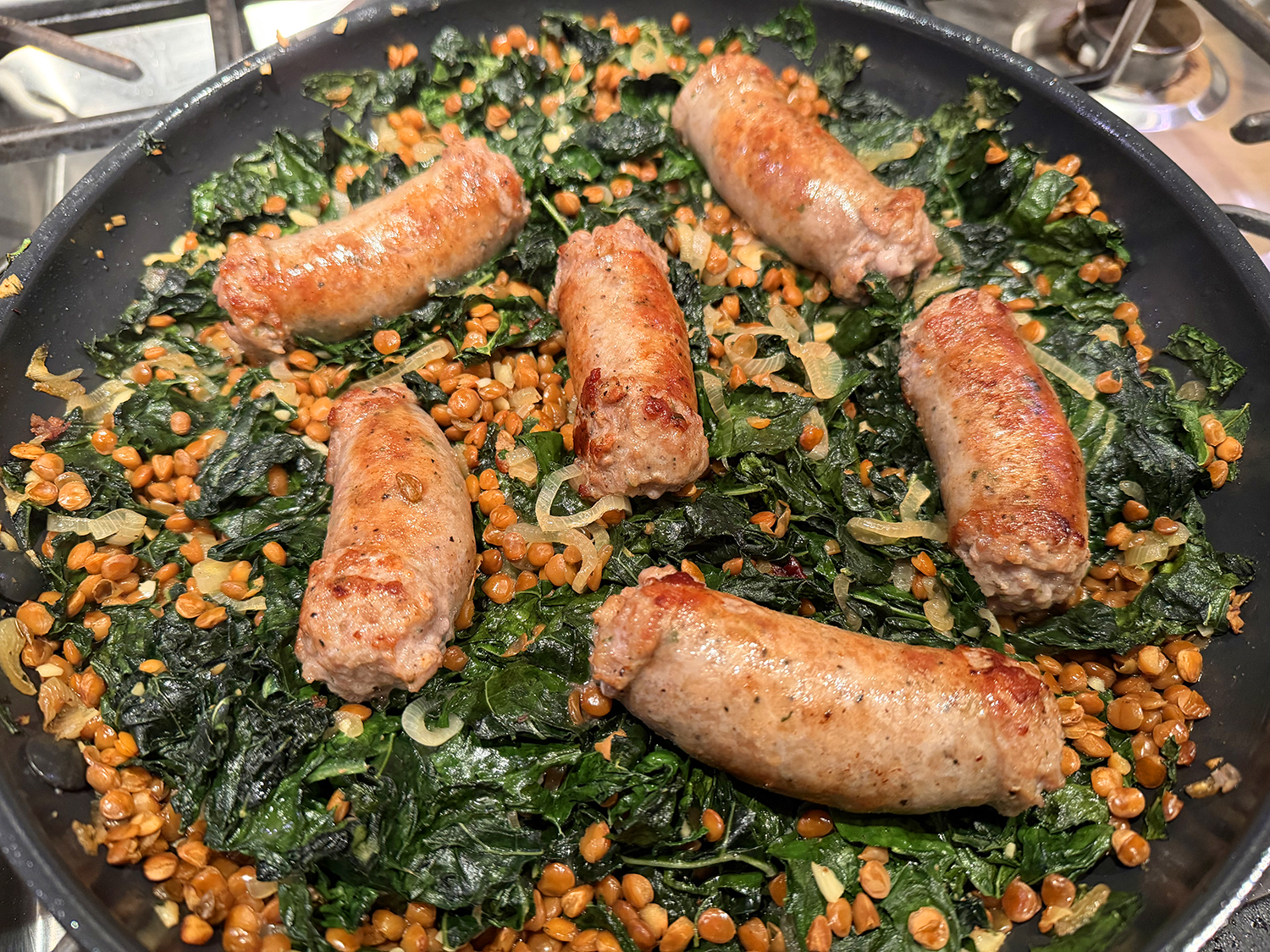
Here’s a one-skillet weeknight main dish that’s versatile, uncomplicated and sure to satisfy. Cooking sausages on top of the lentil mixture infuses this meal with rich, meaty flavor.
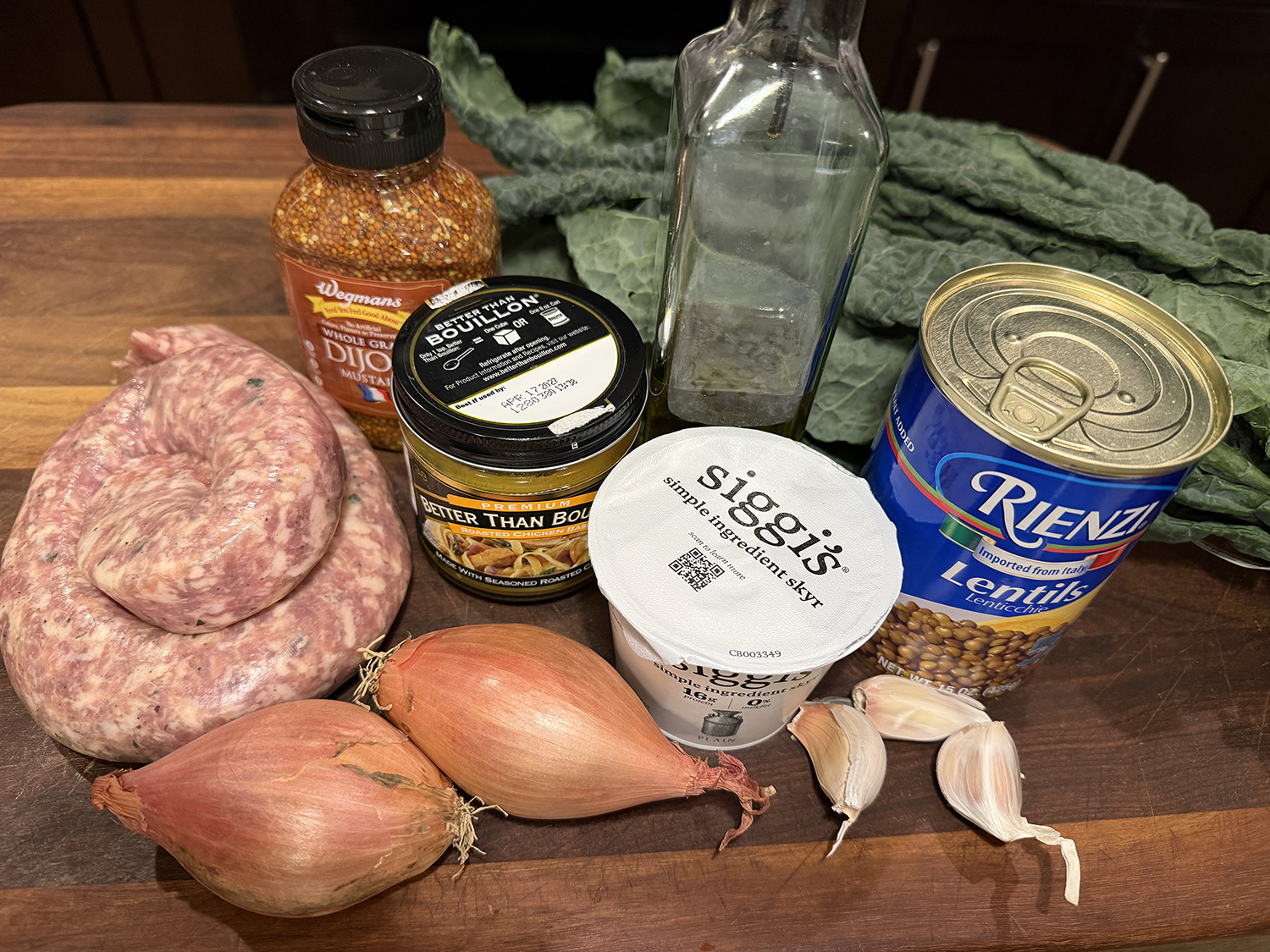
In lieu of Italian sausage, we used what we had on hand, one pound of homemade Garlic-Wine-Romano sausage from a local meat market. While the meat was 50% shy of the total amount in the original recipe, it suited the two of us just fine. All-in-all, an easy, quick weeknight recipe with a lot of flexibility.
The bonus here is, other than a skillet and a chef’s knife, there’s not a lot of clean up!
Adjust oven rack to middle position and heat oven to 375 degrees. Heat oil in 12-inch skillet over medium-high heat until just smoking. Add sausage and cook until browned all over, about 5 minutes; transfer to plate.
Reduce heat to medium, add shallots and garlic to now-empty skillet, and cook until vegetables start to brown, about 3 minutes. Add kale, broth, 1/4 teaspoon salt, and 1/4 teaspoon pepper; cover and cook until wilted, about 5 minutes.
Stir in lentils. Arrange browned sausage on top of lentil mixture and transfer skillet to oven. Cook, uncovered, until sausage registers 160 degrees, about 12 minutes. Whisk yogurt, mustard, and water together in bowl; drizzle over top. Serve.
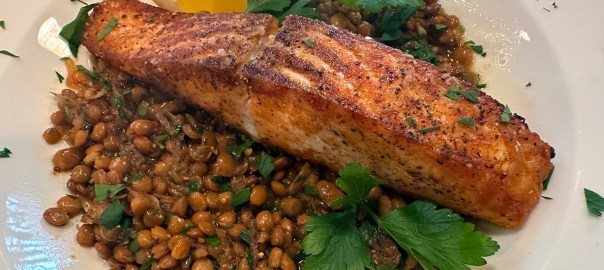
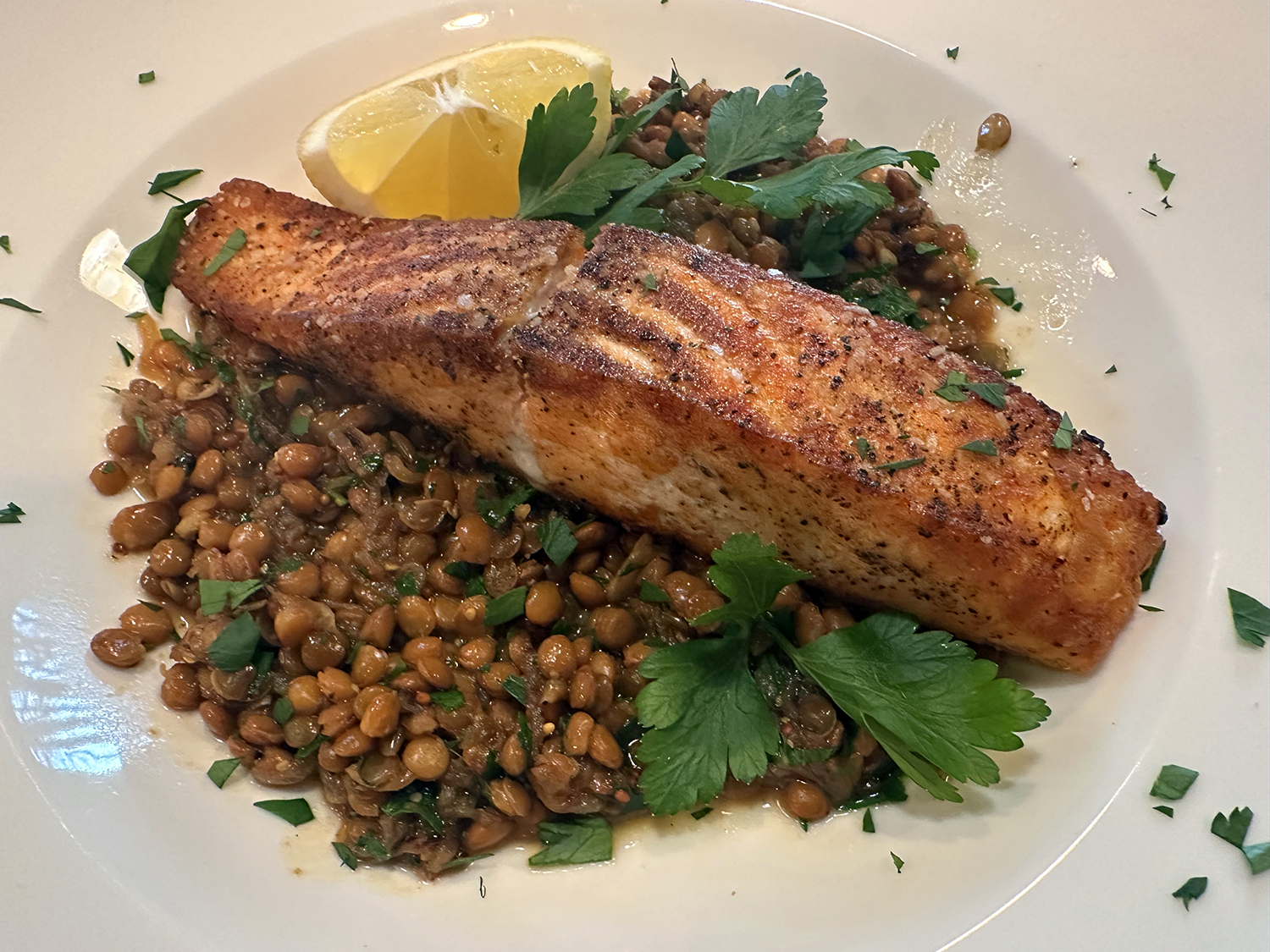
Salmon and lentils is an absolutely classic French pairing. In this simple, satisfying one-pot dinner for two that plays off the famous coupling, crispy salmon is served in a broth of lentils flavored with caramelized shallots and mustard.
Using one skillet for the entire recipe allows the caramelized shallots to play double duty, imparting their sweet flavor to both the salmon and the lentils. The salmon rests while the canned lentils are quickly cooked with vegetable broth, herbs, and mustard, so that the whole dish is ready without wasting a minute.
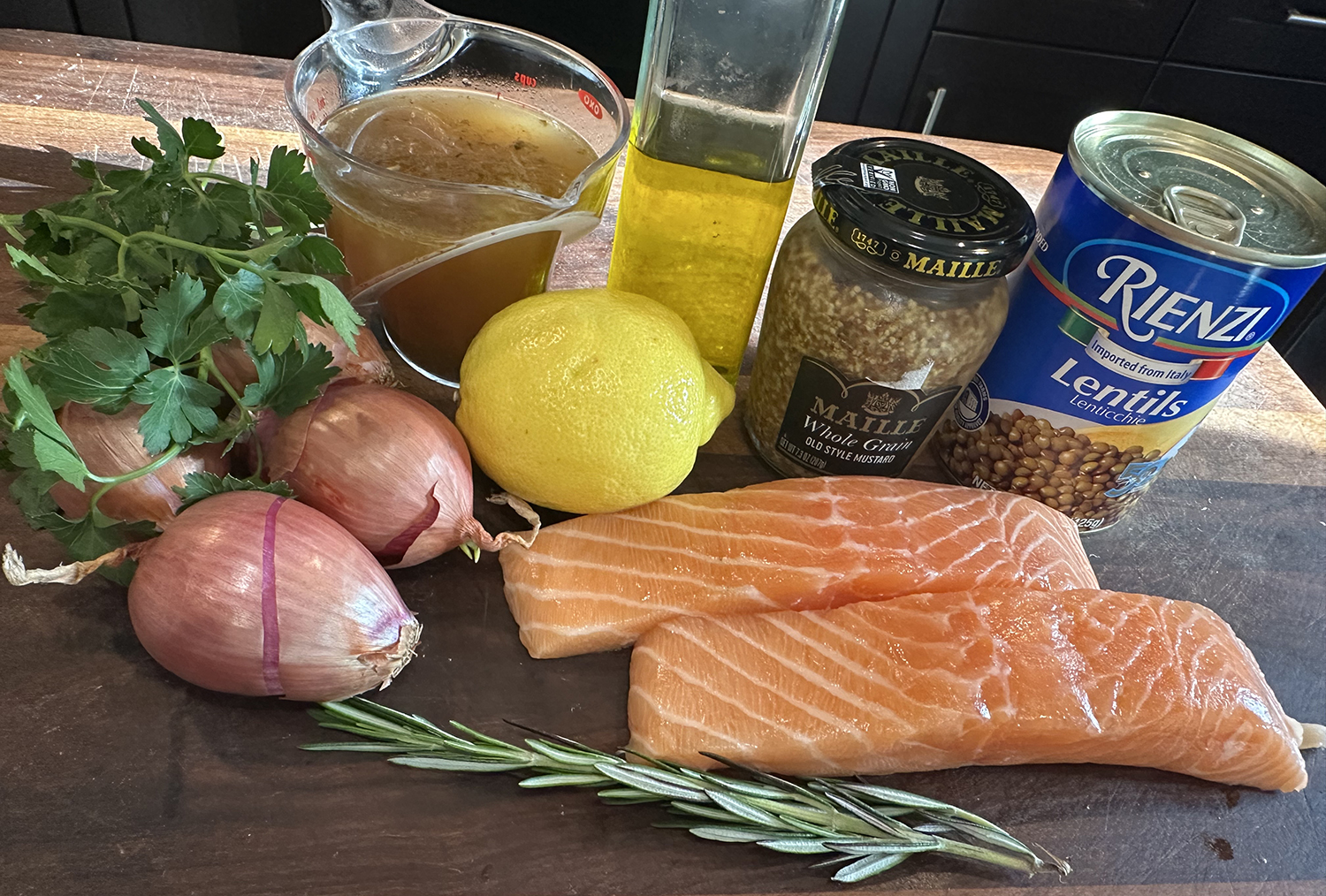
Mistakingly, we bought salmon filets without the skin, but it ended up being a positive error. I personally do not like to eat salmon skin and the fish got just as crispy without it. When making this dish again in the future, we will again purchase salmon filets without the skin. That choice is up yo you…
In the end, the meal was super simple and super-tasty!
2 Tbsp. extra-virgin olive oil, divided, plus more for serving
4 medium shallots, thinly sliced (about 1/2 cup)
Kosher salt and freshly ground black pepper
2 6-oz. salmon filets, skin on (or not, depending on your preference)
1 14.5-oz. can Puy lentils, drained and rinsed
3 sprigs thyme or 1 sprig rosemary
1 cup vegetable or chicken stock, preferably homemade
1 Tbsp. whole-grain mustard
1 Tbsp. chopped flat-leaf parsley
1 tsp. fresh lemon juice
Directions
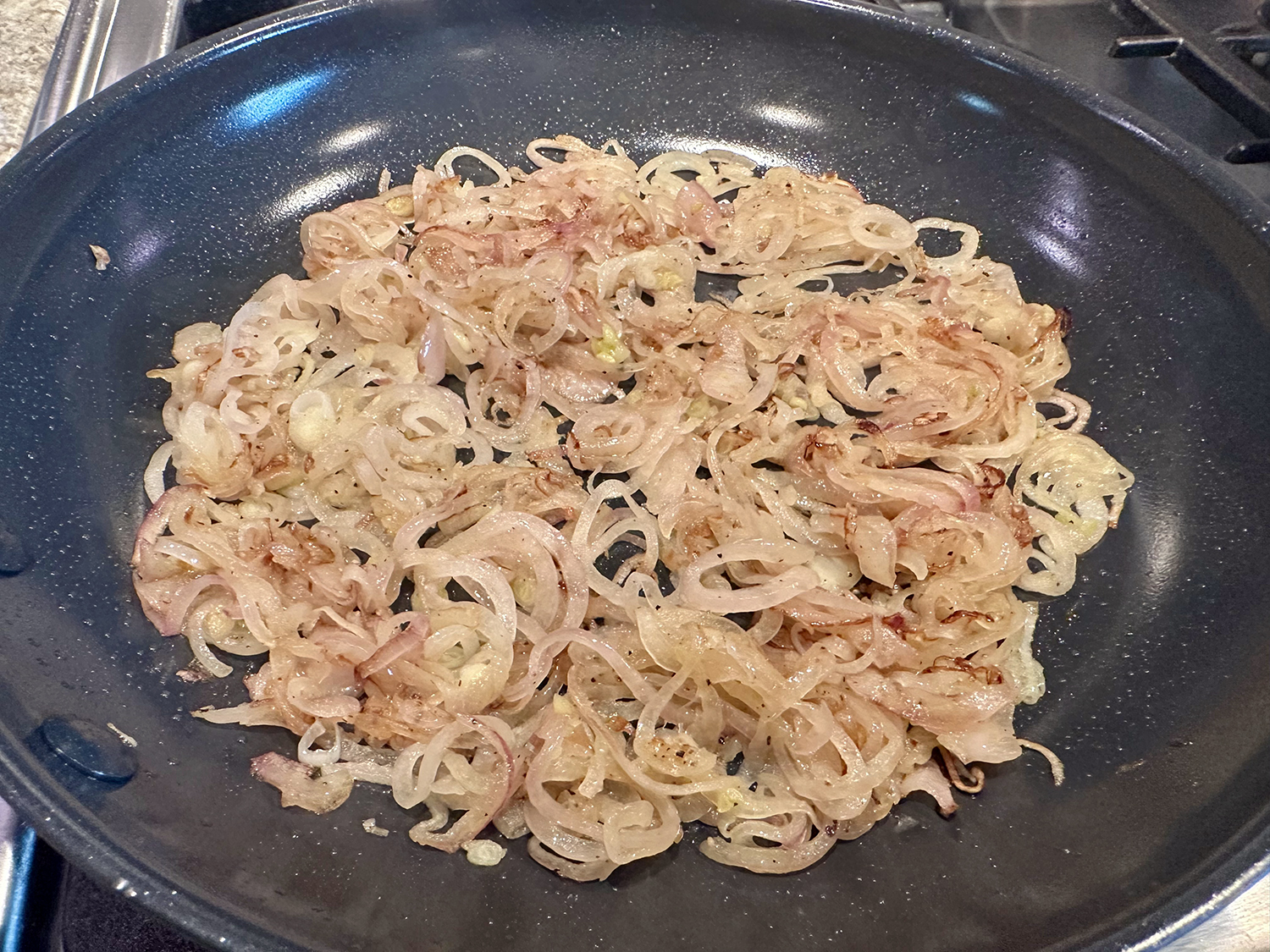
In a medium nonstick skillet, heat 1 tablespoon of olive oil over medium heat until shimmering. Add shallots and cook, stirring frequently, until very soft and browned, about 15 minutes; lower the heat if necessary to prevent burning. Season to taste with salt and pepper and set caramelized shallots aside. Wipe out skillet.
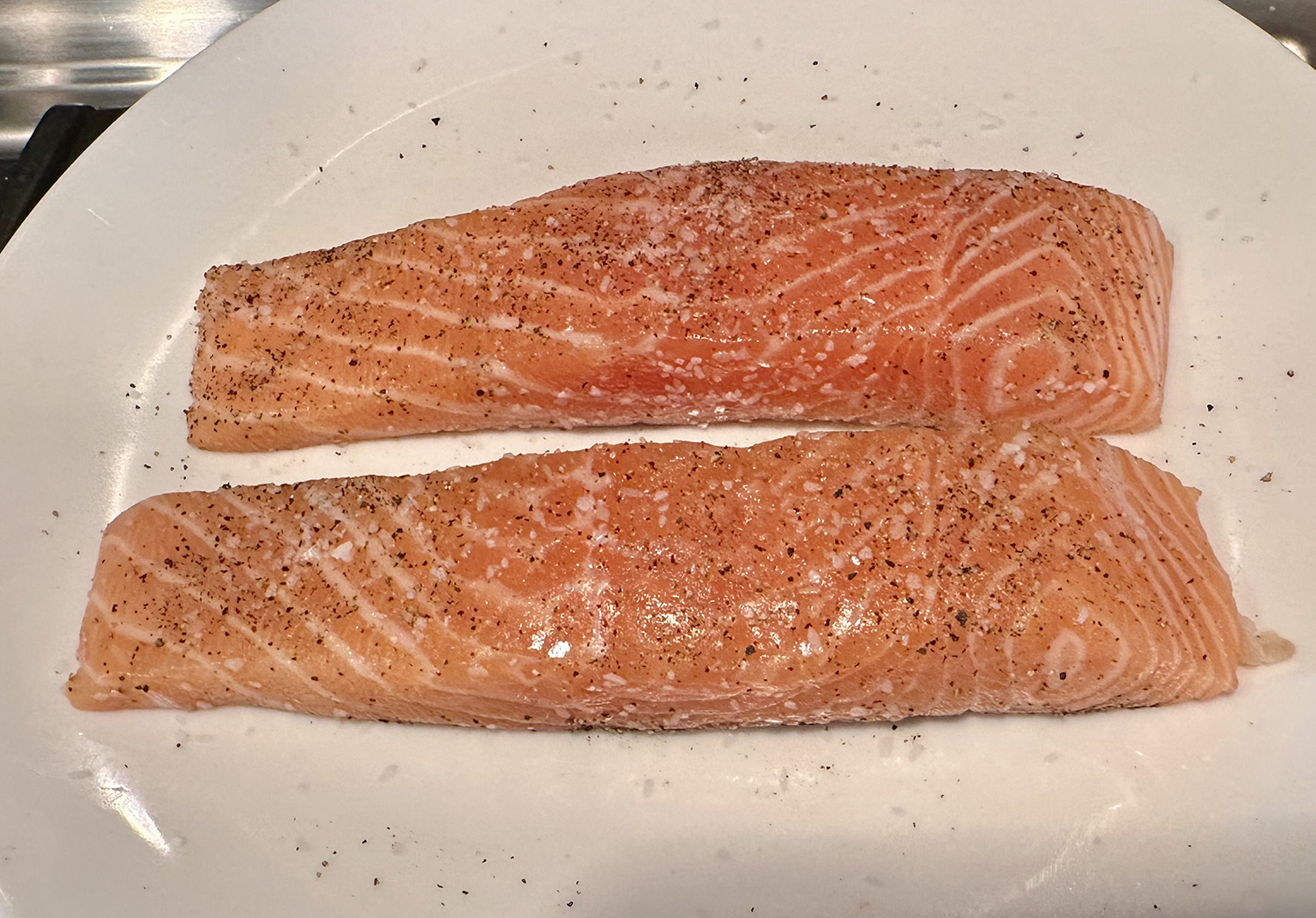
Press salmon filets between paper towels to dry surfaces thoroughly. Season on all sides with salt and pepper. Heat remaining 1 tablespoon in the skillet over medium-high heat until shimmering. Add salmon filets skin side-down. Immediately reduce heat to medium-low. Cook, pressing gently on back of filets to ensure good contact with skin, until skin is rendered and crisp, about 6 minutes. If skin shows resistance when attempting to lift with a spatula, allow it to continue to cook until it lifts easily. Flip salmon and cook on second side until a thermometer inserted into the thickest part registers 120°F for medium rare or 130°F for medium, about 1 minute longer. Transfer salmon to a paper towel-lined plate and allow to rest.
Add lentils, thyme or rosemary, broth, whole grain mustard, and caramelized shallots to the skillet and bring to a boil. Reduce heat to medium and simmer until the broth has reduced by about half, about 5 minutes. Remove from the heat and stir in parsley and lemon juice. Season to taste with salt and pepper. Spoon the lentils onto plates, set the salmon on top, drizzle with more olive oil, and serve immediately.
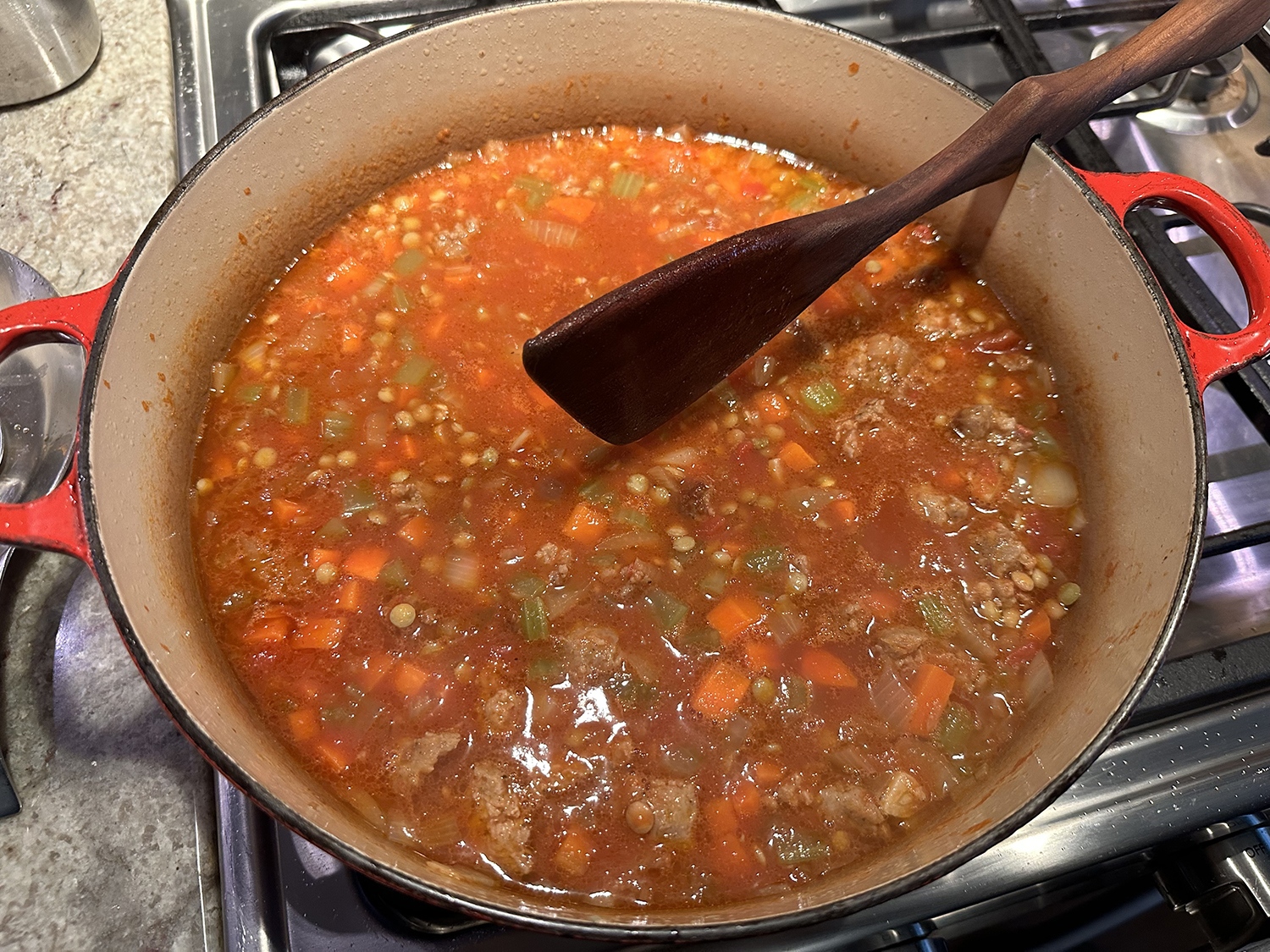
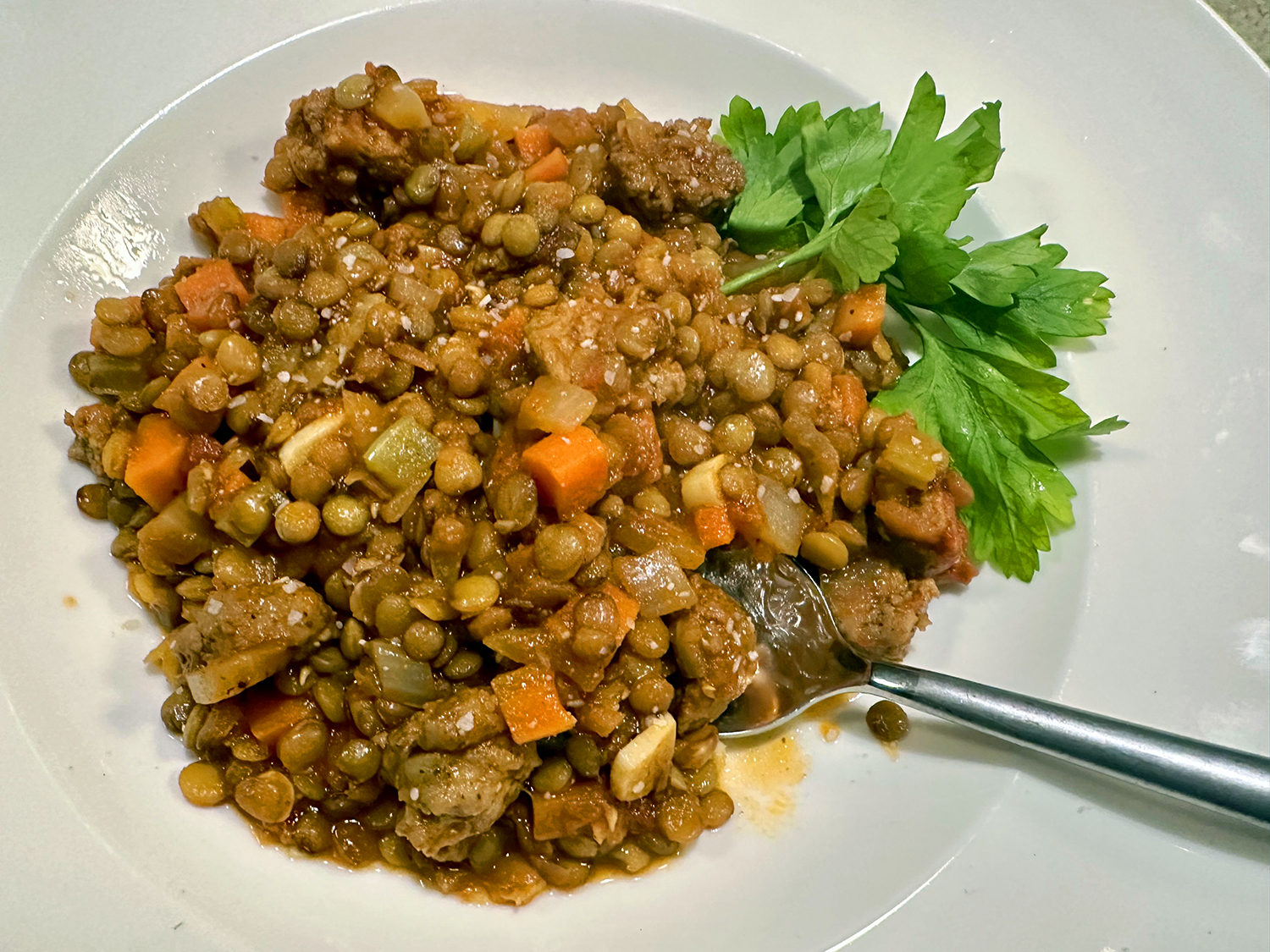
For this one-pot preparation, sausage is fried in oil to brown and release a bit of fat. Next, the soffritto and tomatoes come together, lentils are added, then the dish simmers until the legumes are tender and the liquid is saucy and thick. Like most stews, this dish can be made a few days ahead and reheated when desired.
While the recipe calls for hot or sweet Italian sausage, we used up some red pepper and provolone we had on hand. Most reviewers emphasized removing the casings on the sausage if they are in links, so that is noted that below.
Truly tasty, and then for even more flavor, we topped ours with some grated pecorino and a shake of red pepper flakes, which would be most welcome if not using hot Italian sausage.
Interesting tidbit. In Italy, lentils are traditionally eaten at midnight to bring luck in the coming year. Because lentils are round, resembling coins, they are believed to bring prosperity to those who eat them. We can run with that… although we ate much earlier than midnight…
NOTE: While the lentils do not need a presoak, a two-hour soak will cut the cooking time in half.
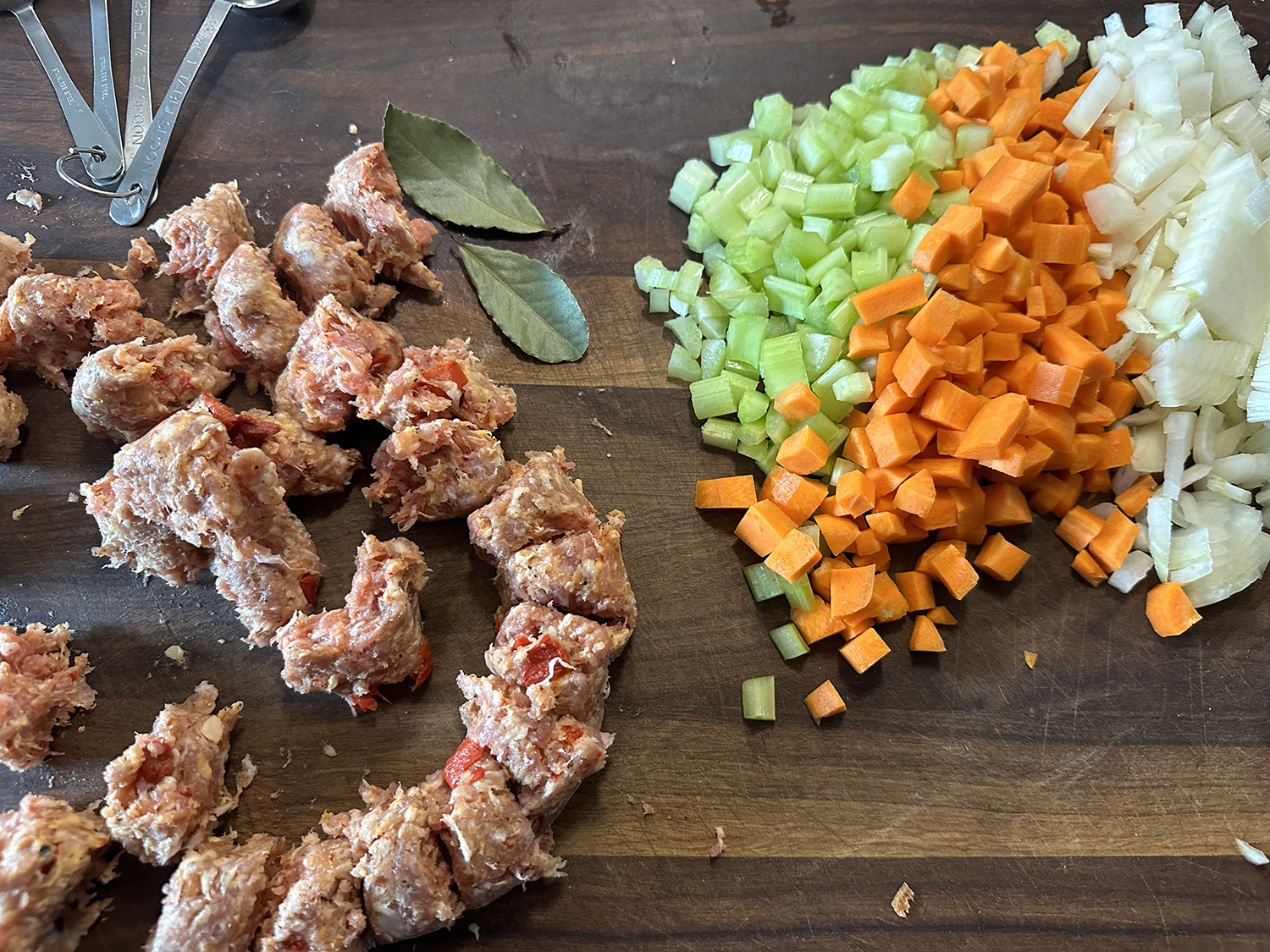
1 lb. large (sweet or hot) Italian sausages, casings removed; or bulk sausage
2 garlic cloves, thinly sliced
2 medium carrots, peeled and cut into ¼-inch dice
2 celery stalks, cut into ¼-inch dice
1 small yellow onion, cut into ¼-inch dice
1 Tbsp. tomato paste
Kosher salt and black pepper
3 cups vegetable stock
1 (15-oz.) can tomato purée; or 1 3/4 cup passatta
2 cups dried brown lentils (about 14 oz.), rinsed and picked over
2 dried bay leaves
Red pepper flakes, optional
½ cup finely grated Pecorino Romano cheese, for garnish
Directions
In a large heavy pot or Dutch oven, heat oil over medium. Break the sausages into 1-inch pieces and add to the pot. Allow the chunks to sear and brown on all sides for 3 to 4 minutes, occasionally smashing with a wooden spoon to break into smaller pieces. Leaving the oil and brown bits behind, transfer the sausages to a dish layered with paper towel to soak up excess oil.
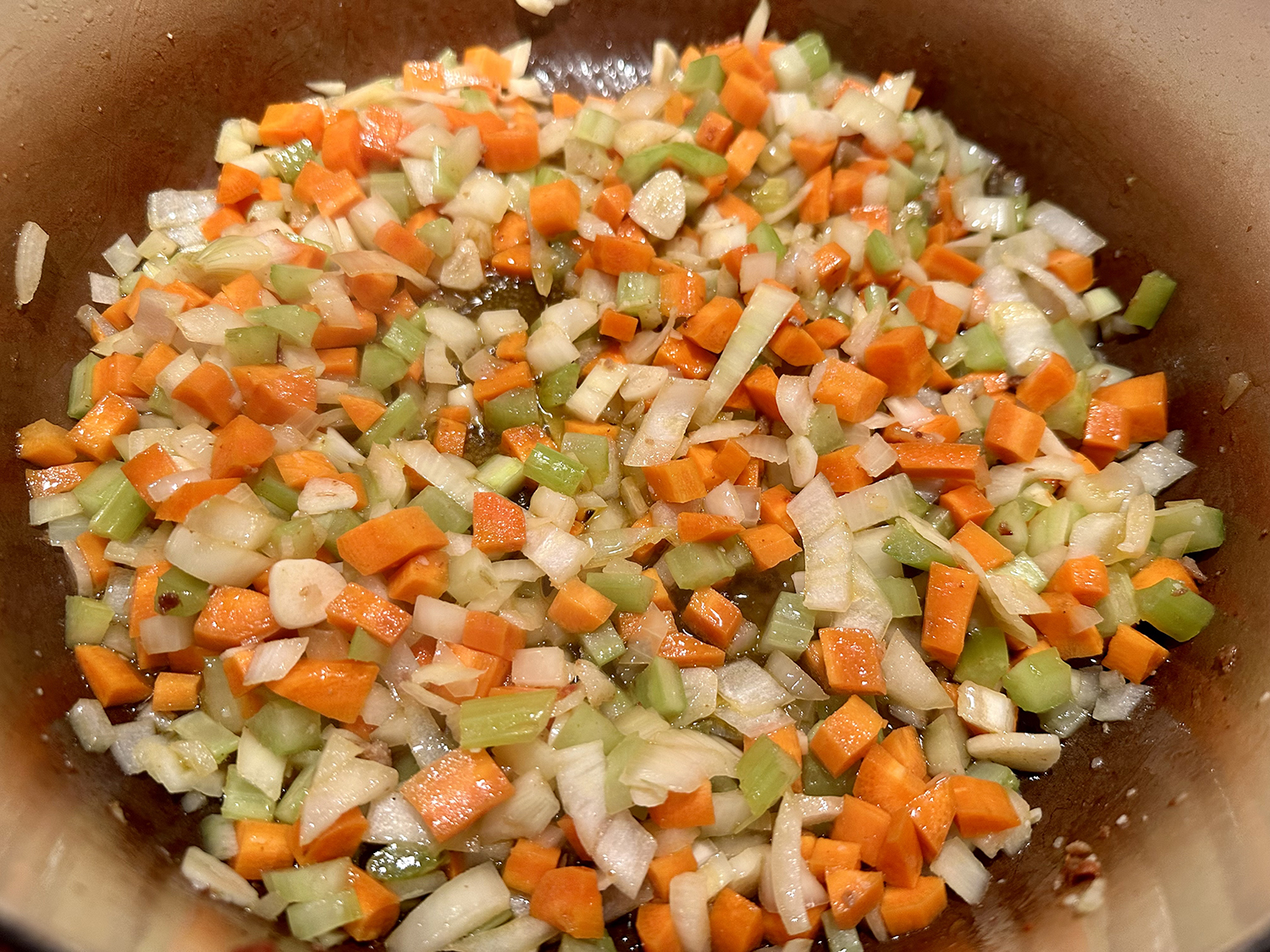
Add the garlic, carrots, celery and onion to the pot and allow to cook for 5 minutes, stirring occasionally, until vegetables have softened and onion is translucent; add salt to taste.
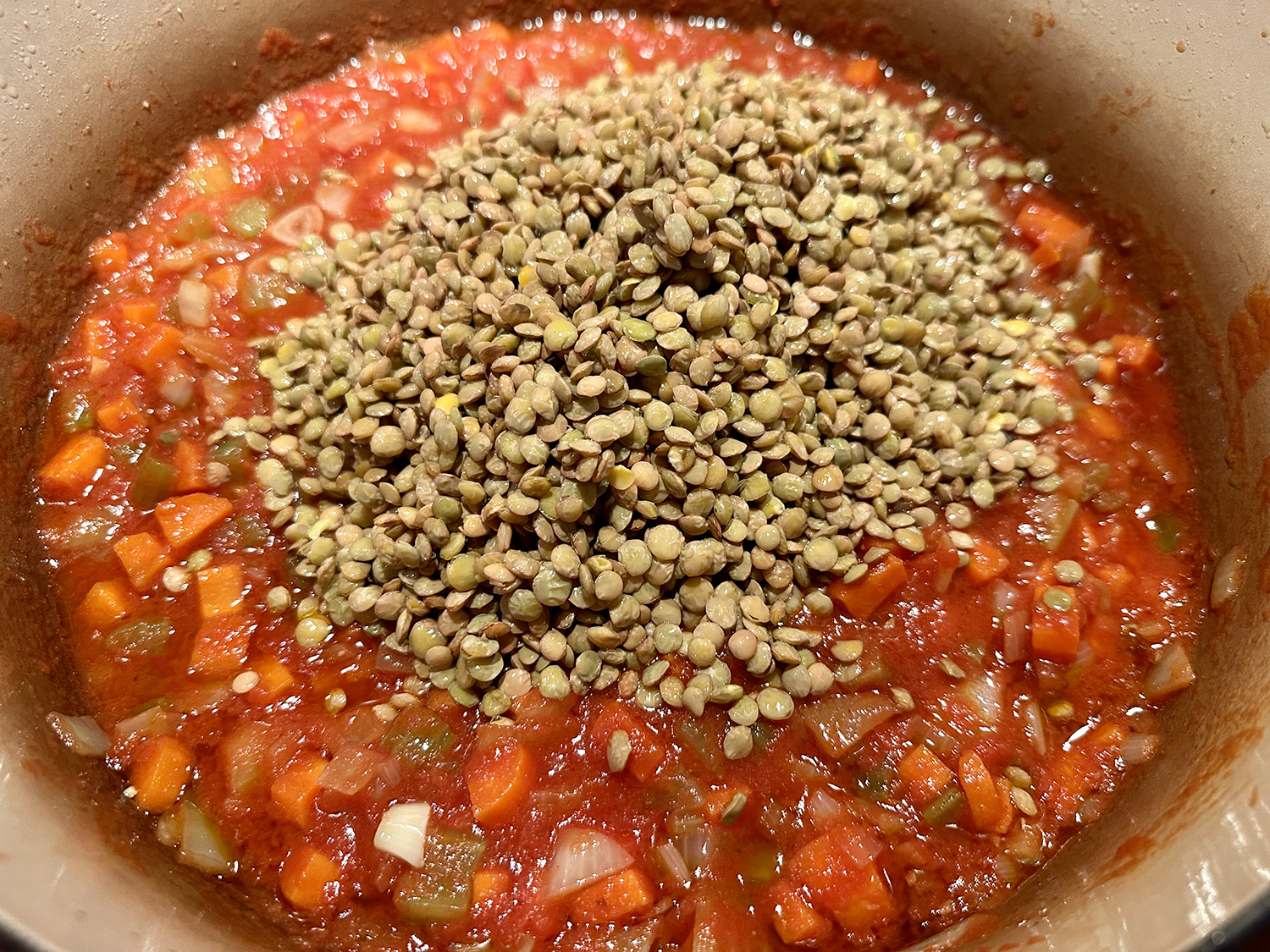
Stir in the tomato paste until the vegetables are coated, then stir in the vegetable stock, tomato purée and lentils. Add the sausages and bay leaves; bring to a boil, then reduce to a simmer.
Cover the pot and simmer gently for 45 to 50 minutes (ours took 60 min.), stirring occasionally to ensure the lentils are not sticking to the bottom. The final dish should be thick and lentils will have a bit of a bite. Discard bay leaves. Season to taste with salt and pepper; garnish each serving with cheese.
Just as there are umpteenth recipes for chili, so there are for mujaddara—that vegetarian Middle Eastern rice-and-lentil dish topped with crisp-fried onions and tangy yogurt sauce. It borrows ingredients and techniques from cookbook authors like Yotam Ottolenghi and Paula Wolfert, plus skilled home cooks. If you have time, toast the spices whole, then grind them yourself—it’s worth the extra step, but not necessary.
Never heard of Mujaddara? Mujaddara is a signature Middle Eastern dish of lentils, rice, and deeply caramelized onions. A bold and comforting dish that’s typically served with a topping of crispy onion rings and a side of plain yogurt with a fresh Mediterranean salad such as cucumber and tomato salad, fattoush salad, or shirazi salad.
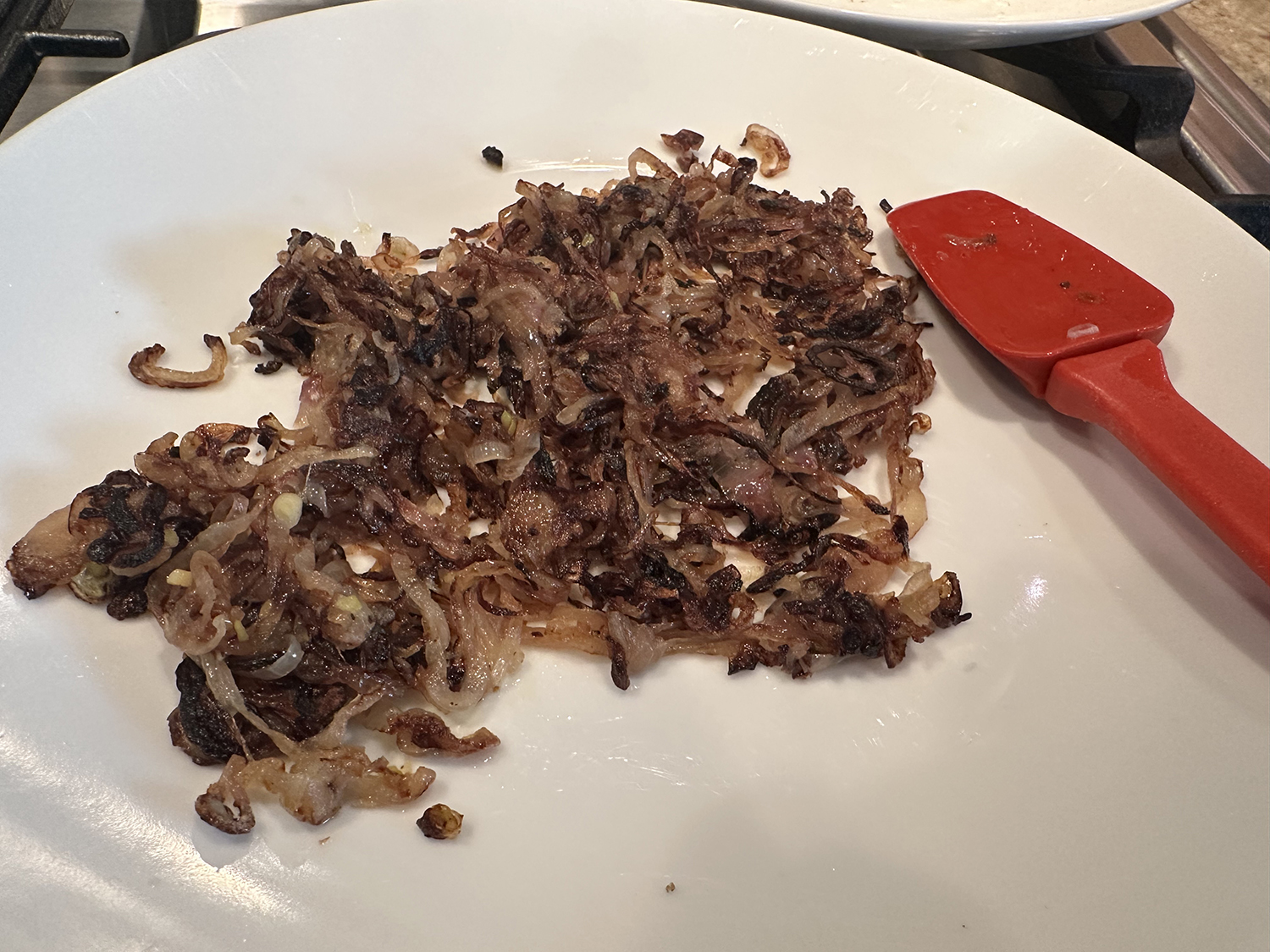
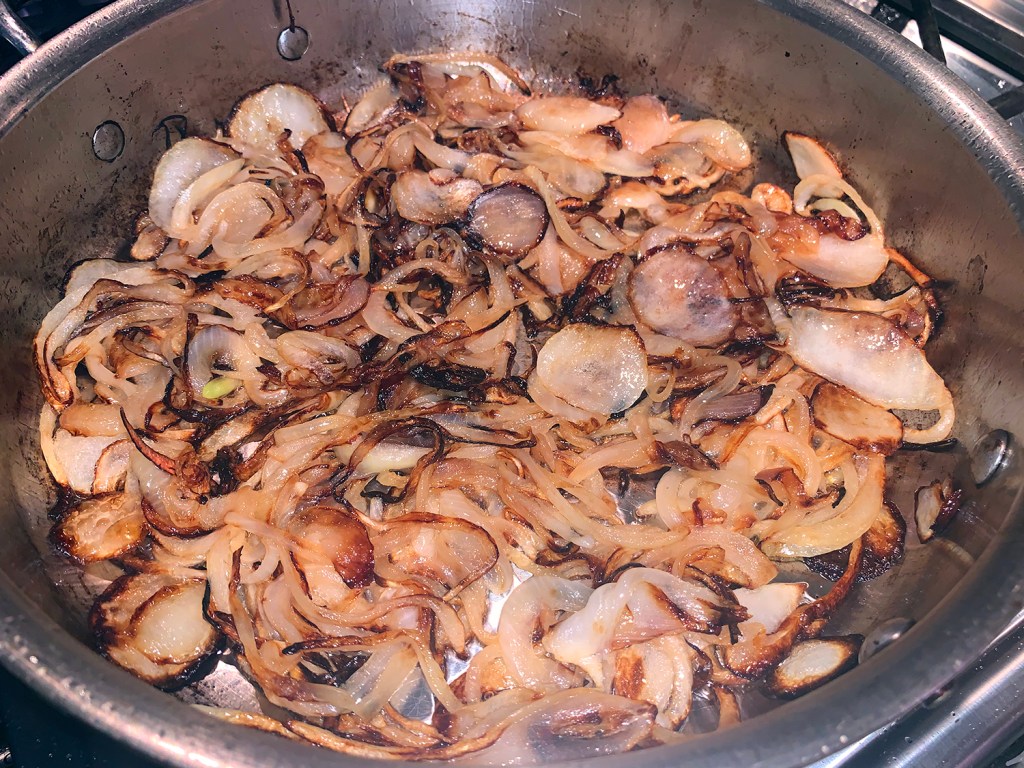
The secret to an authentic mujadara recipe is in the onions. This dish starts and ends with onions. First, deeply caramelized chopped onions are cooked with the rice and lentils, imparting flavor and the deep, golden hue this dish is known for. And to finish your mujaddara, you’ll top the cooked rice and lentils with thinly sliced, crispy onions. Alas, ours never got super crispy, we think due to the skillet not being wide enough. Instead they steamed more than crisped.
Mujaddara (Middle Eastern Rice with Lentils, Frizzled Onions, and Lemony Yogurt Sauce)
Ground sumac and extra-virgin olive oil, for garnish (optional)
FOR THE RICE AND LENTILS:
1 1/2 cups olive or vegetable oil, for frying
4 medium onions, (1 1/2 lbs.) halved through the root end then thinly sliced
Kosher salt
1 cup basmati rice, rinsed in a strainer until the water runs clear
2 tsp. ground coriander
2 tsp. ground cumin
3/4 tsp. ground cinnamon
1/2 tsp. ground allspice
1/4 tsp. ground turmeric
1 pinch cayenne pepper, or more to taste
4 cloves garlic, finely chopped
1 1/4 cups brown or green lentils, rinsed and checked for any debris
Coarsely chopped parsley leaves or cilantro, for garnish
4 scallions, trimmed and thinly sliced (optional)
Directions
In a small serving bowl, stir together the yogurt, garlic, lemon zest, lemon juice, and salt to taste. Cover and refrigerate.
Place the lentils in a small saucepan, cover with plenty of water, bring to a boil, and cook for 12 to 15 minutes, until the lentils have softened but still have a little bite. Drain and set aside.
To a large pot with a lid, such as a Dutch, add 1½ cups of oil and turn the heat to high. When it’s hot and shimmering, reduce the heat to medium-high, add one-third of the onions, and fry, stirring occasionally with a slotted spoon, until crisp and deep golden brown, about 5-7 minutes. Using the slotted spoon, transfer to a paper-towel-lined baking sheet and sprinkle with salt. Repeat with the two remaining batches of onions, adding a little extra oil to the pot if needed. When all of the onions have been fried, strain the oil into a heatproof container and set aside.
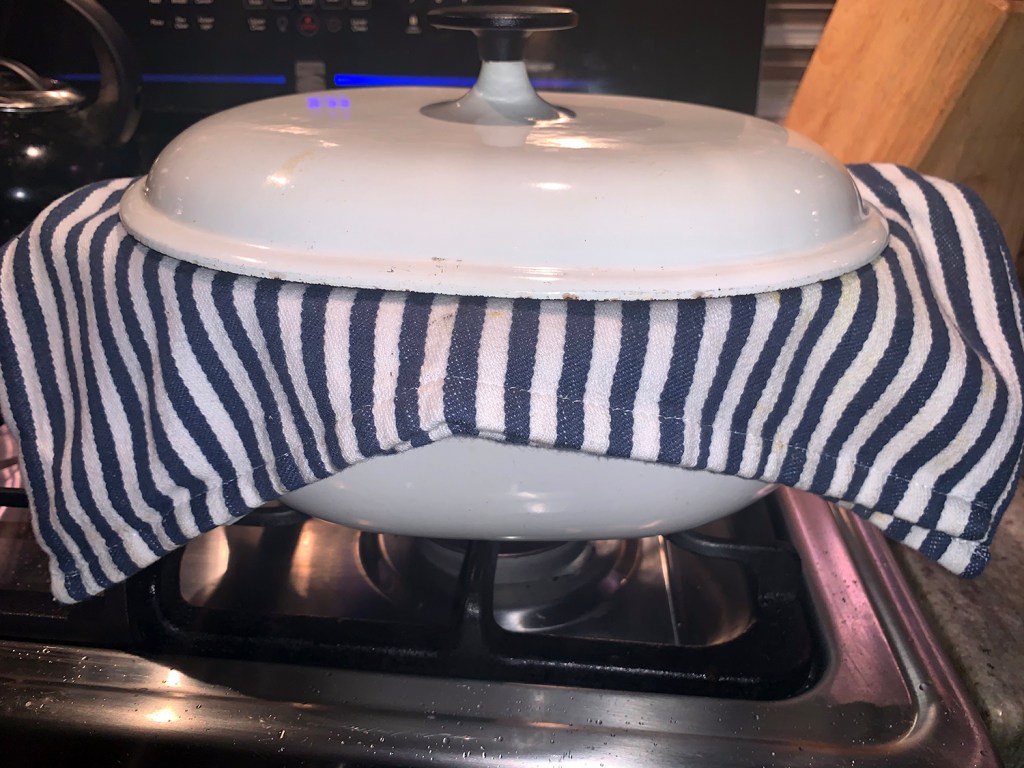
To the empty pot, add the coriander, cumin, cinnamon, allspice, turmeric, cayenne, garlic, and 3 tablespoons of the reserved oil and turn the heat to medium. Cook, stirring continuously, until fragrant, about 1-2 minutes. Add the rice and cook, stirring continuously, until translucent, about 2 minutes, then add 1 1/2 cups of water and 1 teaspoon of salt. Stir in the lentils and bring to a boil. Turn the heat to low, cover, and cook until the rice is cooked and has absorbed the water, about 15 minutes. Turn off the heat and remove the pot from the stove, lift off the lid, and quickly cover the pan with a clean tea towel. Seal tightly with the lid and let rest for 10 minutes.
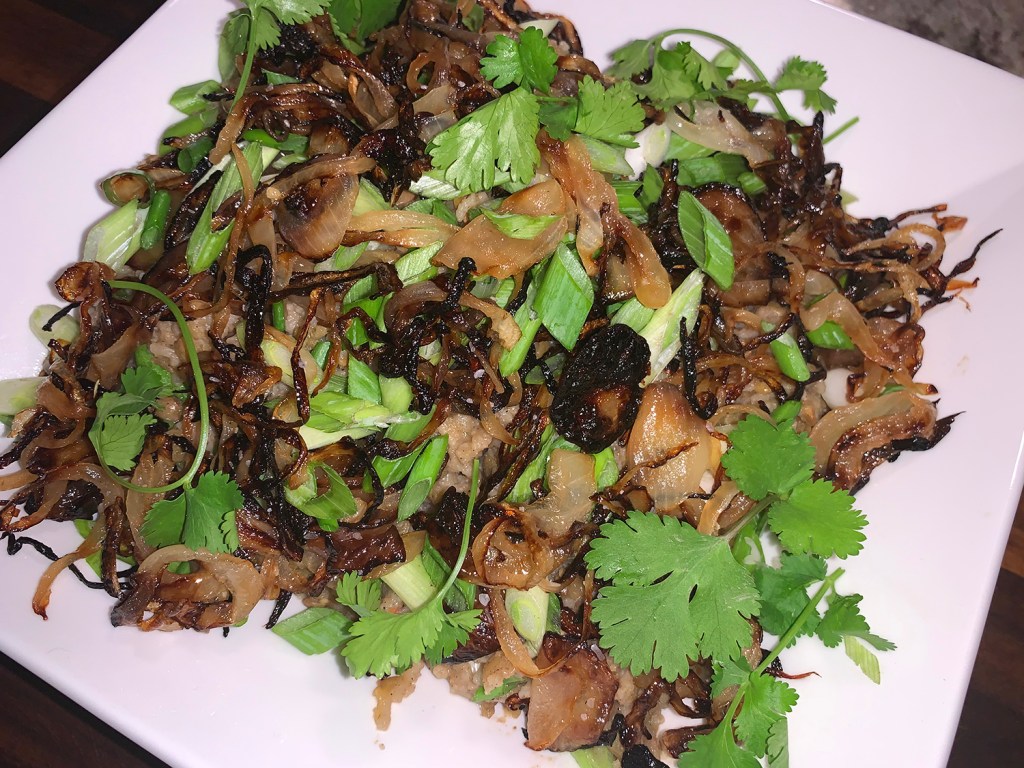
Remove the lid and the dish towel. Stir in half of the reserved onions, fluffing the rice as you go with a fork. Pile the mixture into a serving bowl, then scatter with the remaining onions and garnish with parsley or cilantro and the sliced scallions, if using. Uncover the yogurt sauce, sprinkle with sumac, drizzle with oil, and serve on the side.
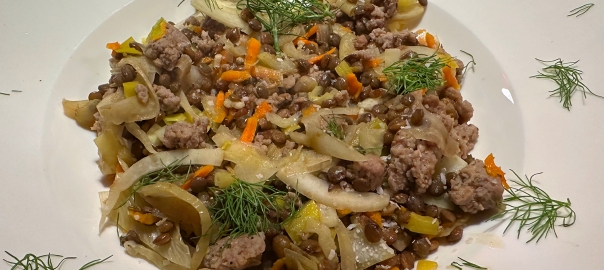
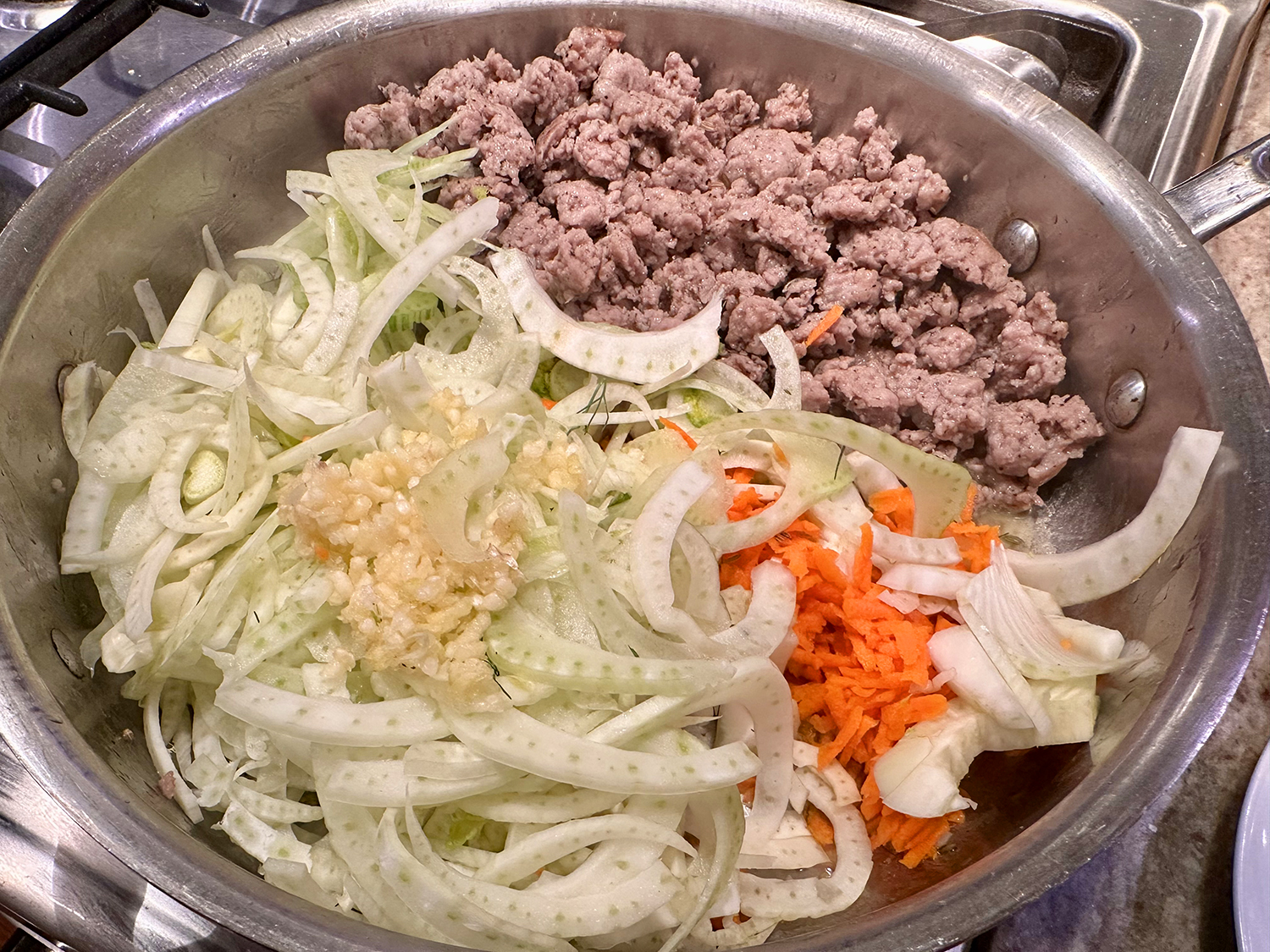
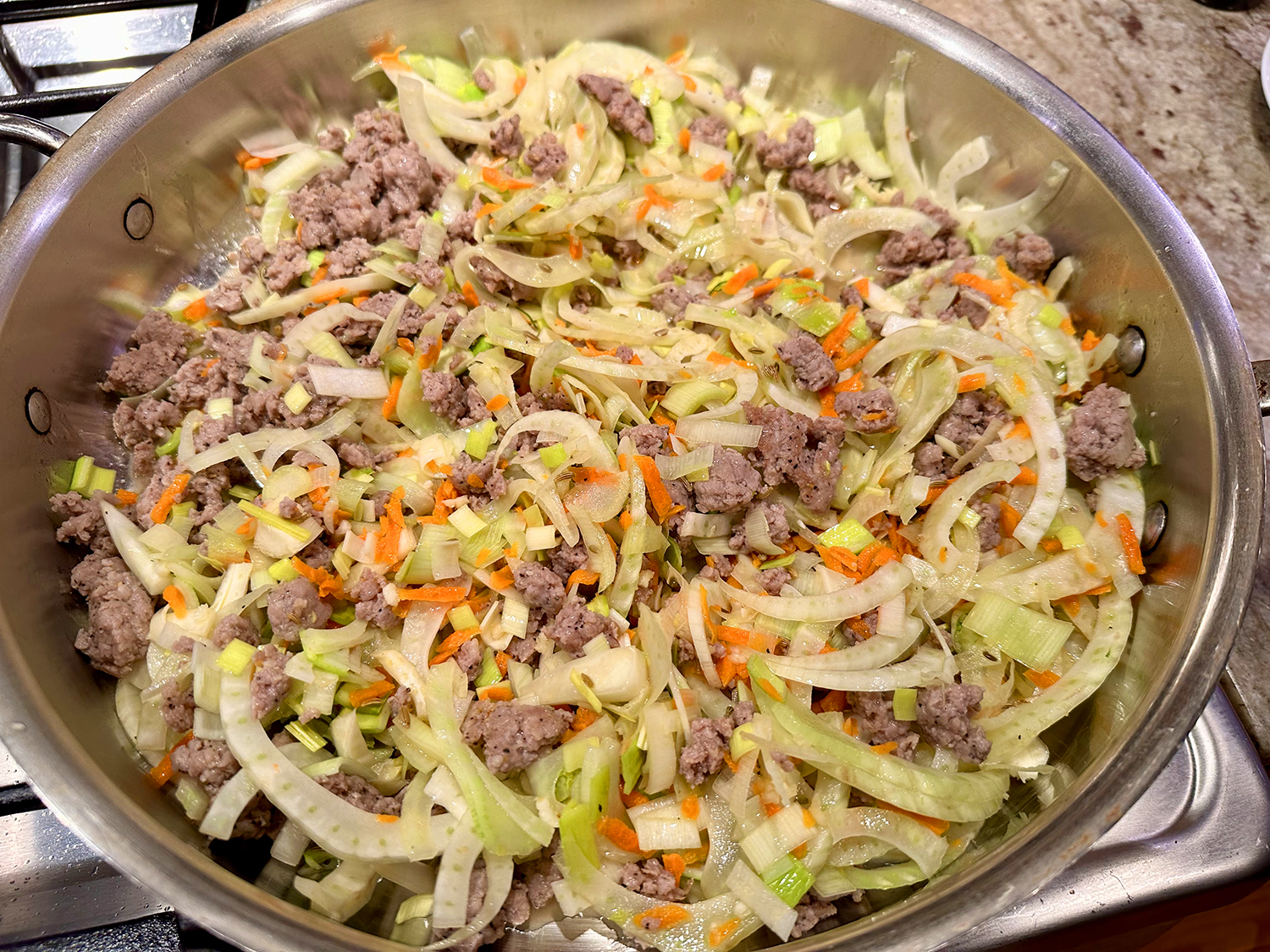
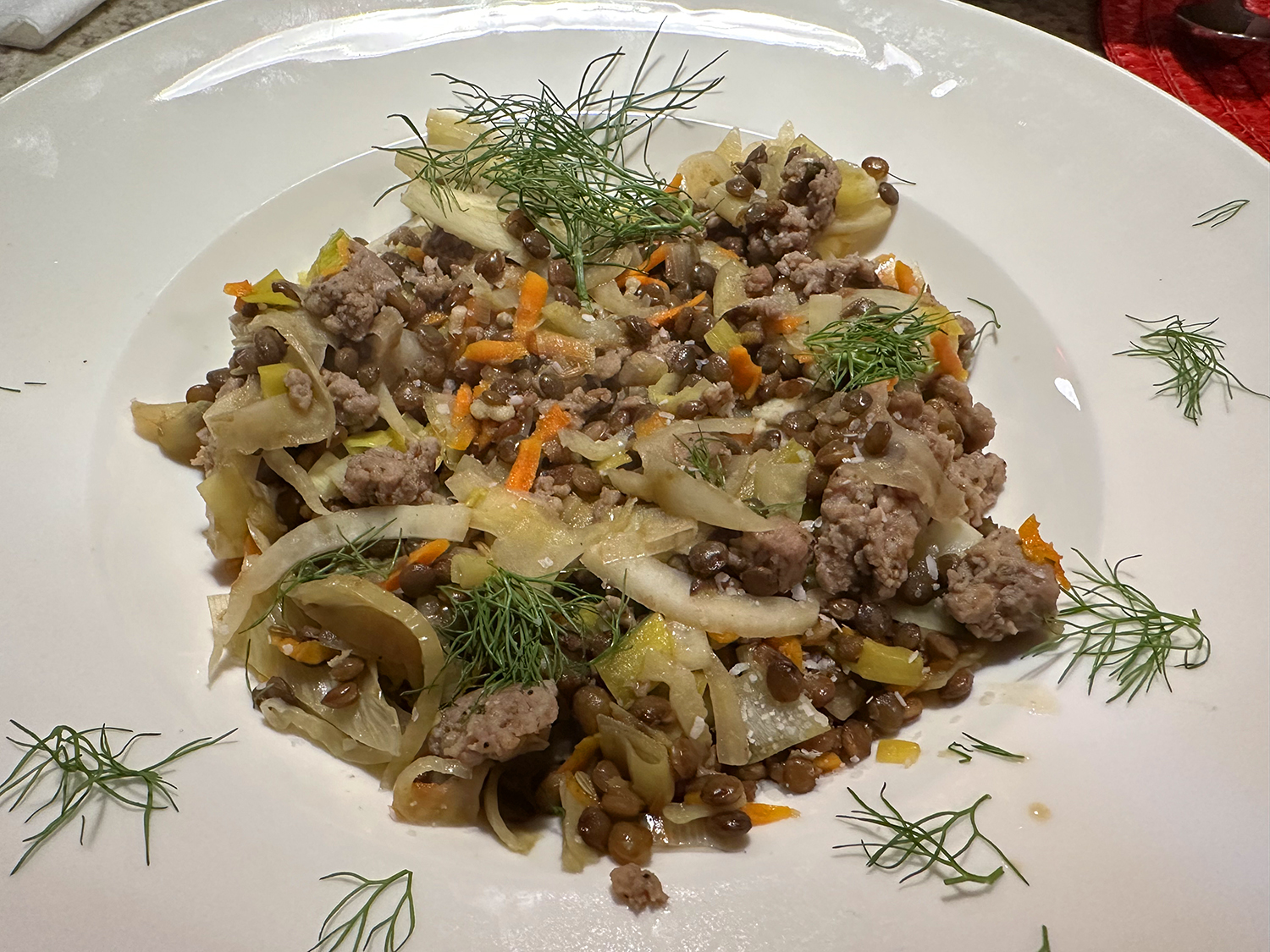
Our pantry is full of different grains and a variety of lentils, which are all part of a healthy diet. Lentils, like beans, soak up whatever flavor they are cooked with. Here, it is Italian chicken sausage and sweet fresh fennel with other aromatics like onions and garlic for a perfectly hearty lentil stew!
If you’re worried about the amount of fennel in the recipe, just know that the licorice-y taste of fresh fennel will mellow quite a bit once cooked, resulting in a slightly sweet flavor that is well balanced with the saltiness of the sausage.
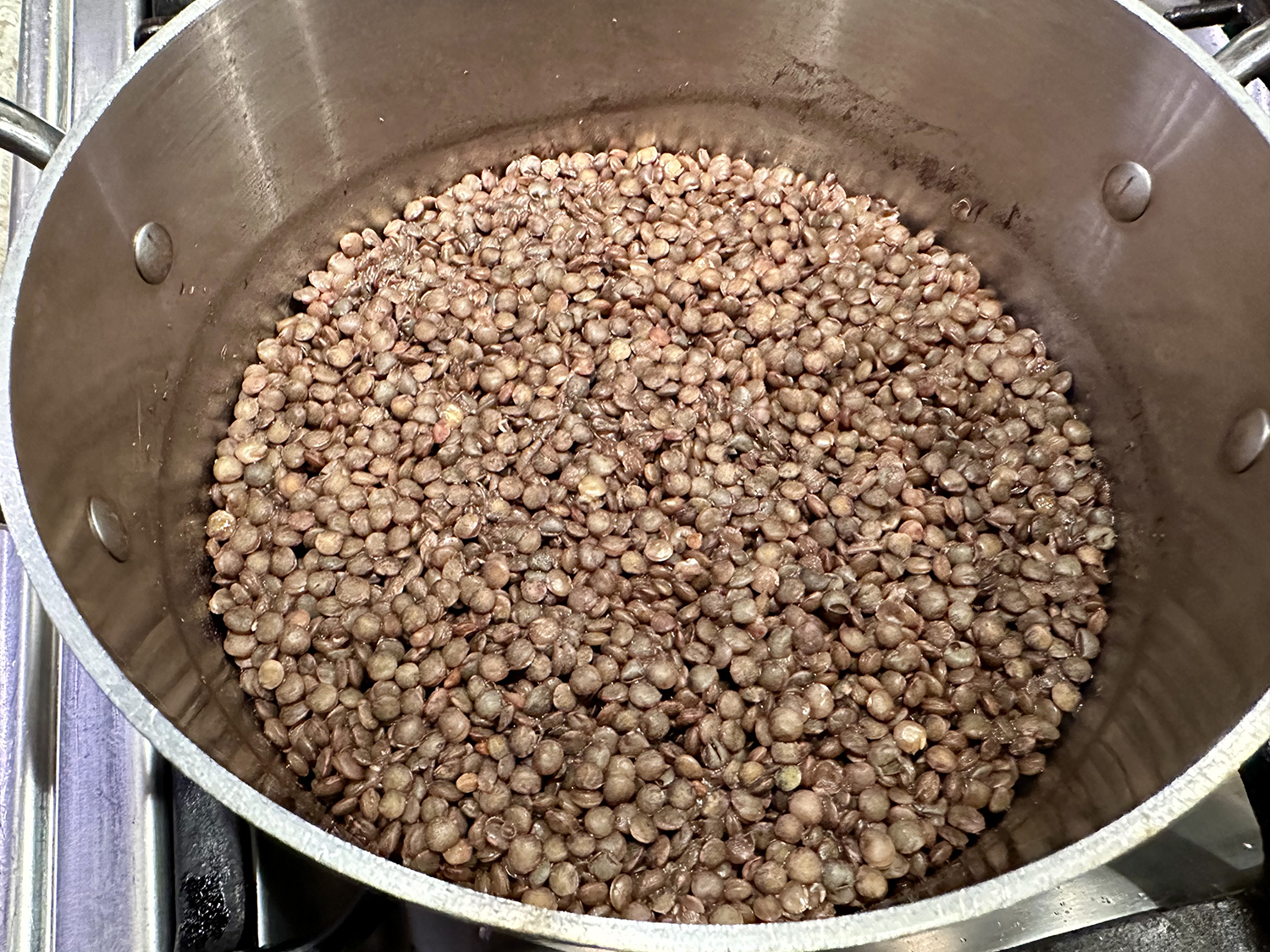
Parboiling basically means partially cooked, so you’ll cook the lentils for about 10 minutes, they will start to become tender but will still have a firm bite (don’t worry, they will finish cooking later with the rest of the ingredients). Do NOT discard the lentil cooking water, you’ll need it for the stew.
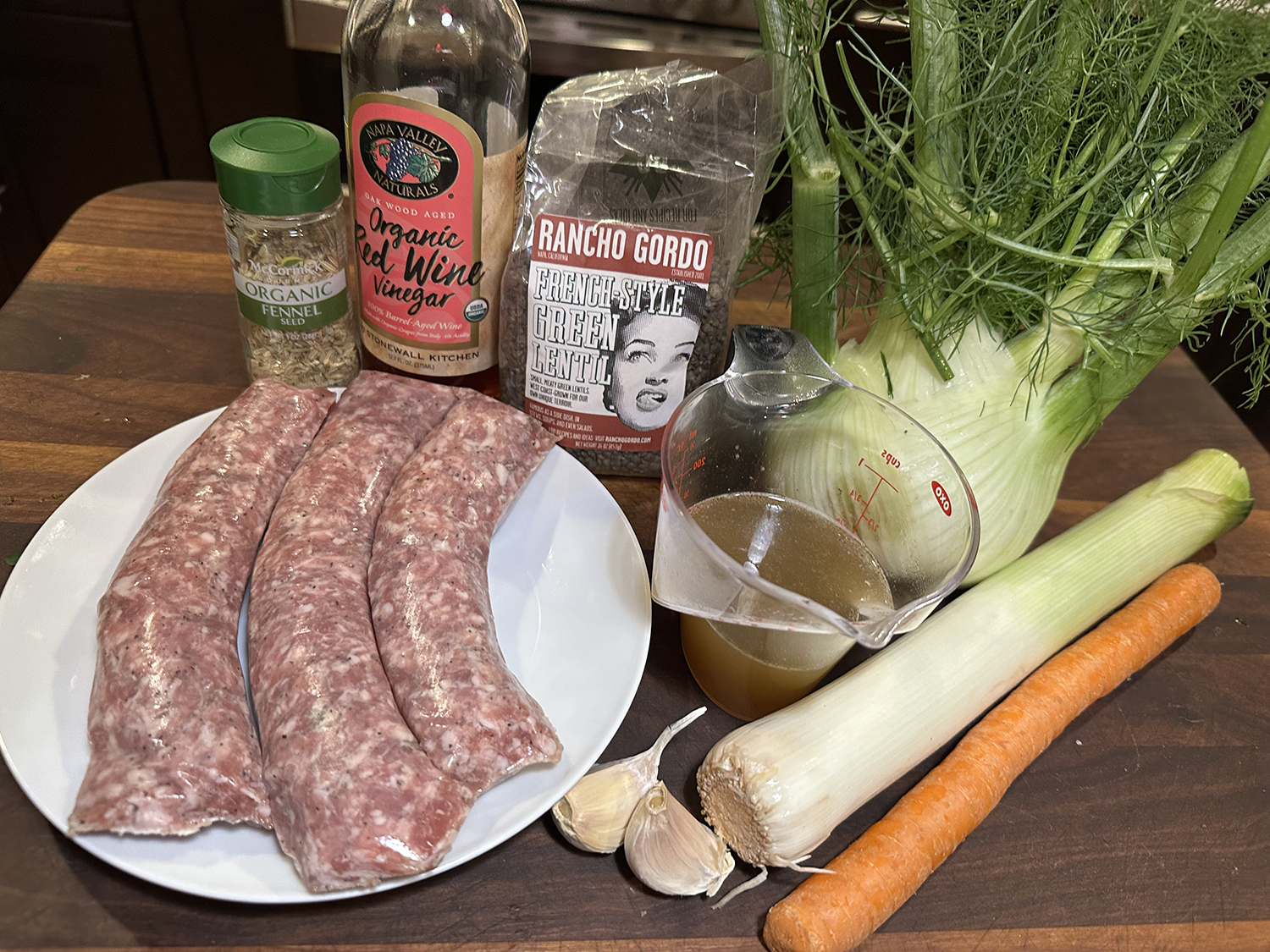
The dish is easily customizable. Use whatever type of sausage you prefer and adjust the amount according to your preferences—we used a full pound of sausage. Add in more variety of veggies, such as mushroom and/or peas.
1 cup green lentils, black lentils will work as well
Extra virgin olive oil
8 oz. chicken or pork sausage, casings removed (about 2 to 3 sausages)
1 fennel bulb large or 2 small, thinly sliced
1 to 2 large cloves garlic, grated
1 yellow onion, finely chopped
1 carrot, grated
½ tsp. fennel seeds
½ cup chicken broth
2 Tbsp. red wine vinegar
Directions
In a saucepan, combine the lentils with 3 cups of water. Bring to a boil, then lower the heat and cover part-way to simmer for about 10 minutes (the lentils should be cooked just part-way through (there should be some liquid in the pan still).
In a large 12″ skillet, heat 1 to 2 tablespoons of extra virgin olive oil. Add the sausage and cook over medium-high heat, tossing regularly and breaking the sausage up with a wooden spoon, until fully cooked and browned.
Push the sausage to one side of the skillet and add the fennel, garlic, onion, carrots, and fennel seed. Add broth and red wine vinegar. Alternatively, remove the sausage from the pan to a plate and cover, then add the fennel, garlic, onion, carrots, and fennel seed. Add broth and red wine vinegar. Cook until the fennel is soft, about 8-10 minutes.
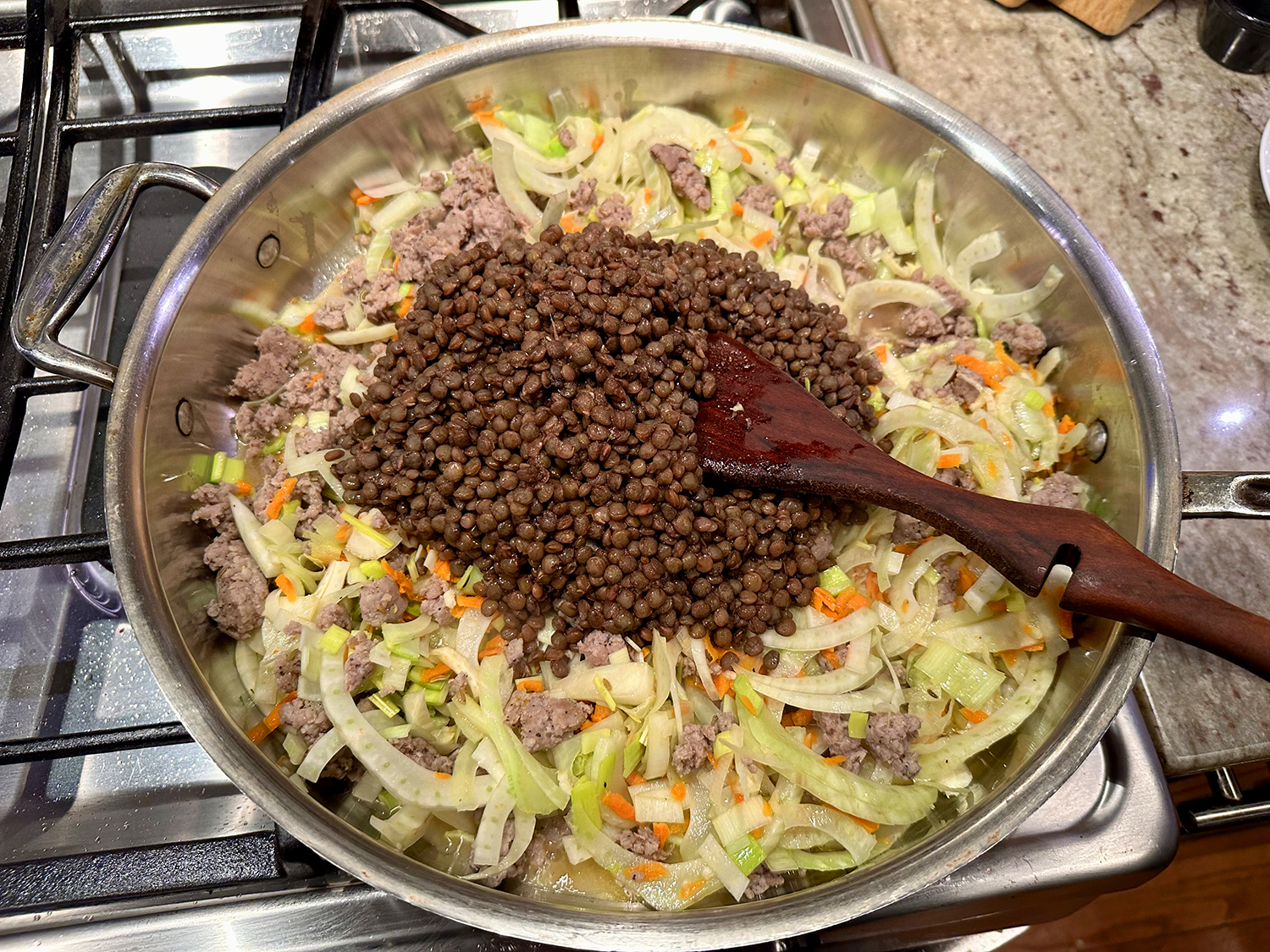
Add the par-boiled lentils and the sausage (If they were removed) to the fennel skillet. Bring to a boil, then lower the heat and let simmer, partially covered, for 15 to 20 minutes.
Taste and adjust seasoning. To serve, drizzle a bit of extra virgin olive oil on top. Serve immediately with your favorite crusty bread.
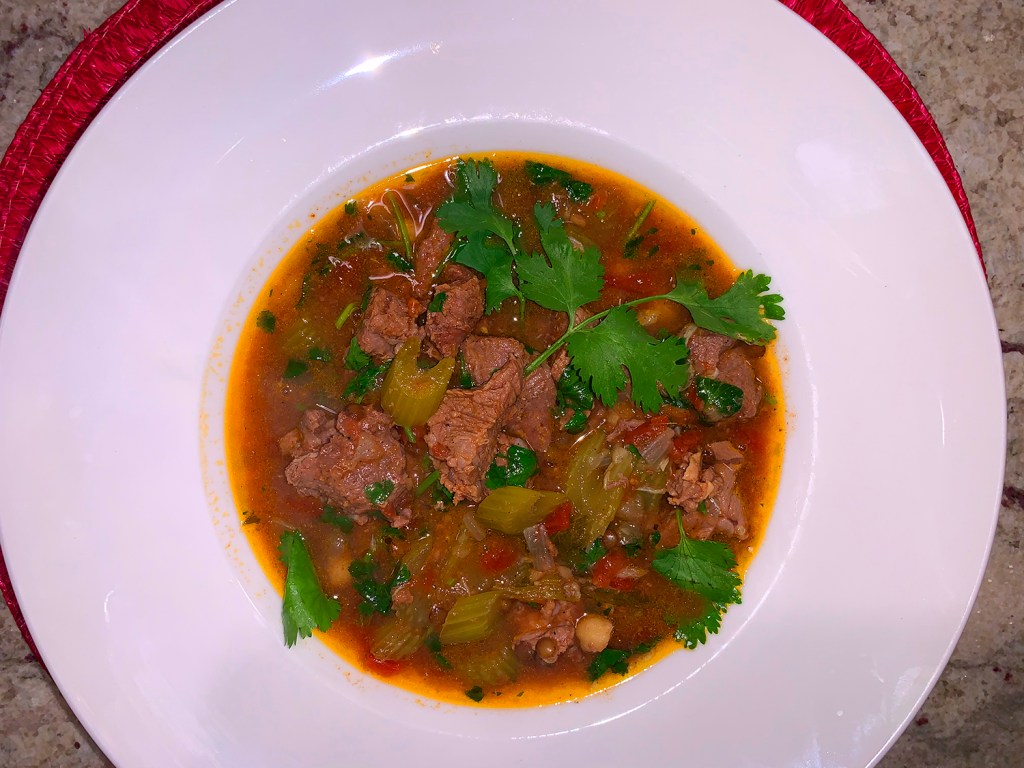
A new one on us, this aromatic Moroccan dish—called harira—traditionally is served during Ramadan to break the daily fast. As Milk Street explains, it’s sometimes vegetarian, other times meaty, and depending on the the cook, its consistency may be thick and hearty, or light and brothy. I personally thought it was too brothy and prefer a thicker base. This could be accomplished be cutting back on the amount of water and/or adding more lentils which absorb liquid.
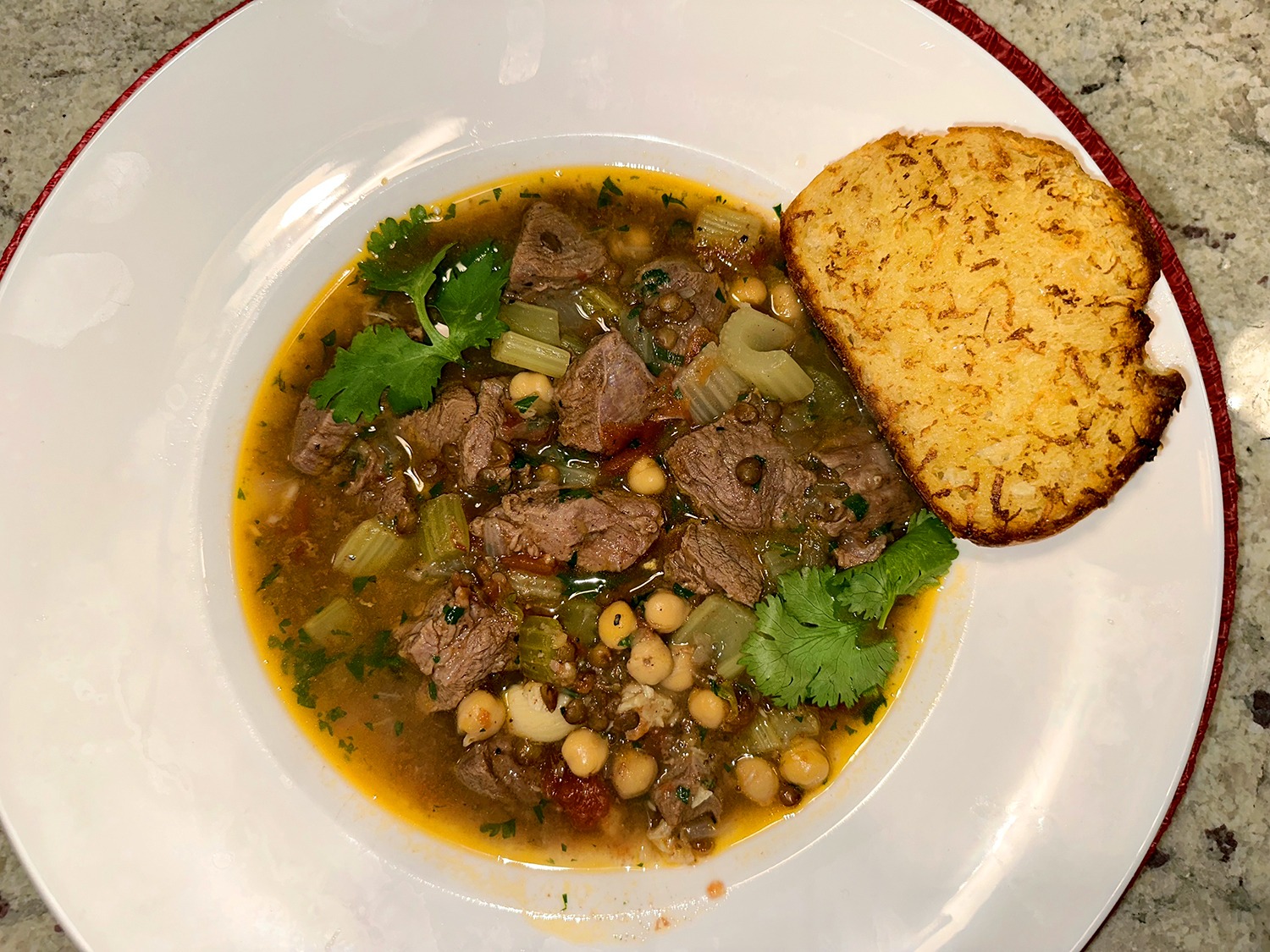
While the original recipe calls for lamb, you could substitute an equal amount of boneless beef chuck. For convenience and a time-saver, we omitted the step of soaking dried chickpeas and simply stirred in one can of drained chickpeas into the soup at the end. This is noted in the recipe below.
Serve with lemon wedges and a drizzle of grassy extra-virgin olive oil, and offer crusty bread for soaking up the broth. A nice toasted slab of crusty bread with a schmear of garlic butter was the perfect antidote.
2 Tbsp. extra-virgin olive oil, plus more to serve
6 medium celery stalks, sliced ½ to ¾ inch thick
1 medium yellow onion, roughly chopped
6 medium garlic cloves, smashed and peeled
3 Tbsp. finely chopped fresh ginger
¾ tsp. ground cinnamon
½ tsp. sweet paprika
14½ oz. can whole peeled tomatoes, crushed by hand
2 lbs. boneless lamb shoulder or beef chuck, trimmed and cut into ¾- to 1-inch chunks
⅓ cup lentils du Puy (French Lentils)
1 19 oz. can chickpeas, drained and rinsed
1 cup lightly packed fresh cilantro, flat-leaf parsley or a mixture, chopped, plus more to serve
Directions
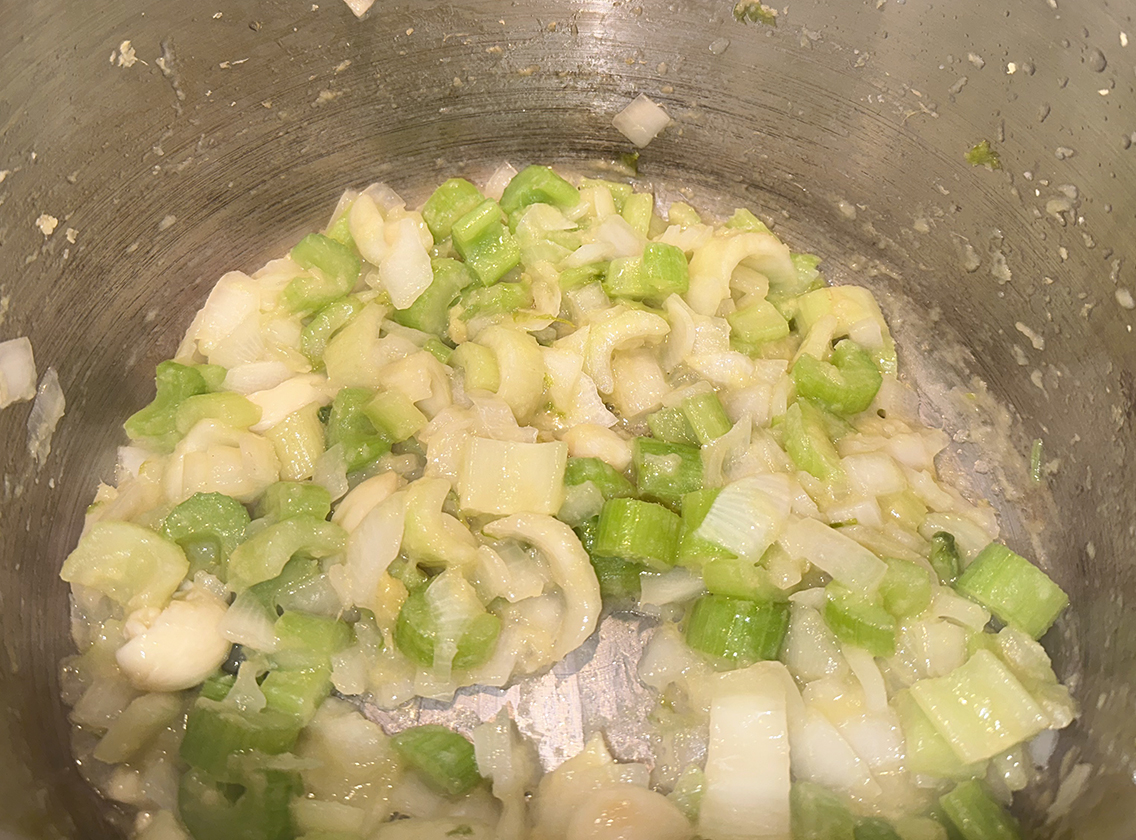
On a 6-quart Instant Pot, select Normal/Medium Sauté. Add the oil and heat until shimmering. Add the celery, onion, garlic, ginger and 2½ teaspoons salt. Cook, stirring occasionally, until the vegetables are softened, about 5 minutes.
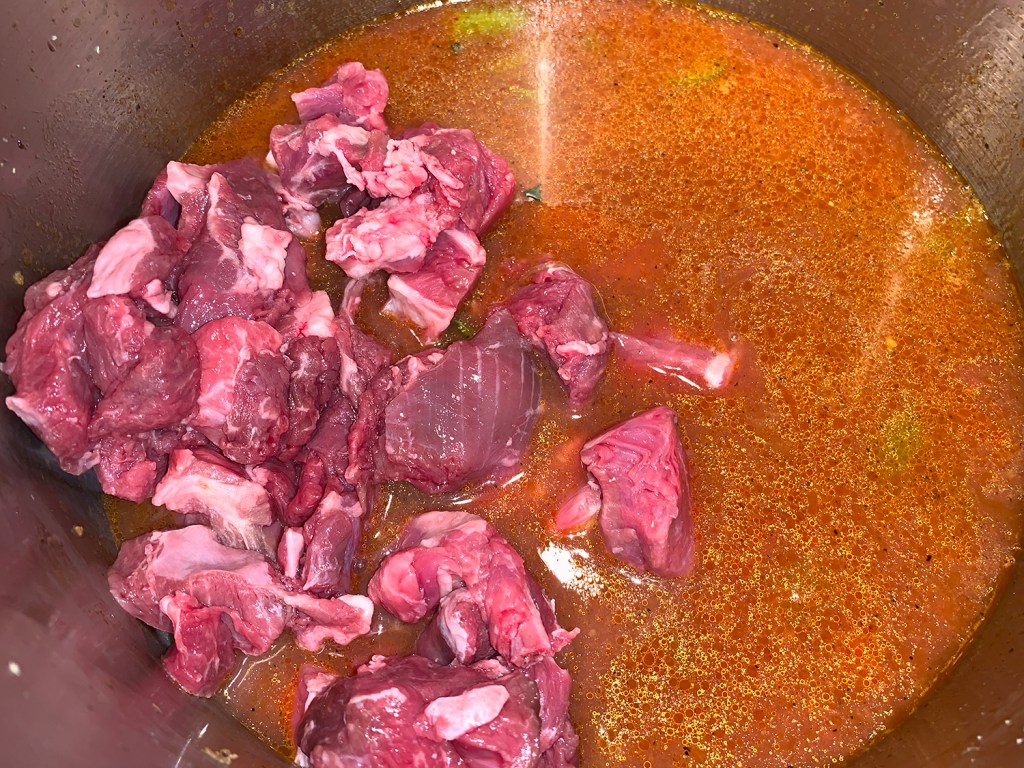
Add the cinnamon, paprika and 1½ teaspoons pepper, then cook, stirring, until fragrant, about 10 seconds. Stir in the tomatoes and 4 cups water, scraping up browned bits. Add the lamb, lentils and chickpeas; stir to combine, then distribute in an even layer.
Press Cancel, lock the lid in place and move the pressure valve to Sealing. Select Pressure Cook or Manual; make sure the pressure level is set to High. Set the cooking time for 15 minutes.
When pressure-cooking is complete, let the pressure reduce naturally for 15 minutes, then release the remaining steam by moving the pressure valve to Venting. Press Cancel, then carefully open the pot.
Taste and season with salt and pepper, then stir in the drained chickpeas, parsley and/or cilantro. Serve sprinkled with additional herbs and drizzled with oil.
According to a recent issue of Milk Street Magazine, this aromatic Moroccan dish, called harira, is traditionally served during Ramadan to break the daily fast. It’s sometimes vegetarian, other times meaty, and depending on the cook, its consistency may be thick and hearty or light and brothy.
This recipe calls for lamb, but you could substitute an equal amount of boneless beef chuck. Note that the chickpeas require soaking, which we did, to cook at the same rate as the meat. For convenience, however, you can skip the dried chickpeas and simply stir some drained canned chickpeas into the stew at the end.
Speaking of those chickpeas, we felt that only 1/3 cup for those and the lentils was way too few in the end. We advise tripling both to 1 cup each to help thicken the base, which we deemed too thin. These larger amounts are noted in the ingredients list below.
We opted for the Fast version here, but Milk Street also offers directions on a Slow method if you prefer. Don’t forget to serve with lemon wedges which add a bright note, and a drizzle of grassy extra-virgin olive oil. If not counting carbs, offer crusty bread for soaking up the broth.
Don’t use brown or regular green lentils in place of the lentils du Puy. Though those varieties do hold their shape, they cook up with a softer, more yielding texture than Puy lentils, which stay quite firm and offer textural contrast to the stew.
2 Tbsp. extra-virgin olive oil, plus more to serve
6 medium celery stalks, sliced ½ to ¾ inch thick
1 medium yellow onion, roughly chopped
6 medium garlic cloves, smashed and peeled
3 Tbsp. finely chopped fresh ginger
¾ tsp. ground cinnamon
½ tsp. sweet paprika
14½ oz. can whole peeled tomatoes, crushed by hand
2 lbs. boneless lamb shoulder or beef chuck, trimmed and cut into ¾- to 1-inch chunks
1 cup lentils du puy
1 cup lightly packed fresh cilantro, flat-leaf parsley or a mixture, chopped, plus more to serve
Directions (for the fast version)
In a small bowl, stir together 2 cups water and 1½ teaspoons salt. Add the chickpeas and soak at room temperature for at least 12 hours or up to 24 hours. Drain and set aside.
On a 6-quart Instant Pot, select Normal/Medium Sauté. Add the oil and heat until shimmering. Add the celery, onion, garlic, ginger and 2½ teaspoons salt. Cook, stirring occasionally, until the vegetables are softened, about 5 minutes.
Add the cinnamon, paprika and 1½ teaspoons pepper, then cook, stirring, until fragrant, about 10 seconds.
Stir in the tomatoes and 4 cups water, scraping up browned bits. Add the lamb, lentils and chickpeas; stir to combine, then distribute in an even layer.
Press Cancel, lock the lid in place and move the pressure valve to Sealing. Select Pressure Cook or Manual; make sure the pressure level is set to High. Set the cooking time for 15 minutes.
When pressure-cooking is complete, let the pressure reduce naturally for 15 minutes, then release the remaining steam by moving the pressure valve to Venting. Press Cancel, then carefully open the pot.
Taste and season with salt and pepper, then stir in the parsley and/or cilantro. Serve sprinkled with additional herbs and drizzled with oil
Rice and lentils with caramelized onions is a much-loved food in the Middle East. This is Milk Street’s take on the version they tasted in Lebanon, where the dish is called mujaddara. The rice and lentils are simmered together in the same pot, with the lentils getting a 10-minute head start so both finish at the same time.
Meanwhile, the onions are fried until crisp and deeply caramelized—almost burnt, really—to coax out a savory bittersweet flavor. Serve hot, warm or at room temperature with a dollop of plain yogurt. It’s a delicious accompaniment to grilled or roasted meats, but it’s hearty enough to be the center of a vegetarian meal.
We took the flavor up a notch by using homemade chicken broth instead of the water. Of course, it’s no longer vegetarian after that, but you could use vegetable or mushroom stock if that is your goal. I must admit, without the pop of green from scallions (and I added a garnish of cilantro), the dish is very bland and brown looking—the taste is anything BUT.
For the uninitiated, lentils are tiny round legumes—aka a seed that grows in a pod—a plant-based protein source that come in a variety of sizes and colors, including black, brown, yellow, red, or green. They’re low in fat, extremely nutrient-dense, and generally pretty affordable to buy, and they pack in a lot of health benefits. They are high in protein, are a good source of iron, and pack a lot of healthy fiber.
Tip: Don’t use French green lentils (Puy lentils) in place of the brown lentils called for. Even when fully cooked, green lentils retain a firm, almost al dente texture, while brown lentils take on a softness that combines well with the rice. Don’t worry if the onions turn quite dark at the edge of the skillet; deep browning is desirable. But do stir the browned bits into the mix to ensure the onions color evenly. However, if the onions brown deeply before they soften, lower the heat a notch or two and keep stirring until the pan cools slightly.
Lebanese Lentils and Rice with Crisped Onions (Mujaddara
5 cups water, or choice of stock (we used homemade chicken stock)
1 cup brown lentils, rinsed and drained
1 cup basmati rice, rinsed and drained
⅓ cup peanut oil
2 medium yellow onions, halved and thinly sliced
1 bunch scallions, thinly sliced
Plain whole-milk yogurt, to serve
Directions
In a large Dutch oven over medium-high, combine 5 cups water, the garlic, bay, cumin, allspice, 1 tablespoon salt and 1 teaspoon pepper. Bring to a boil, then stir in the lentils and reduce to medium. Cover and cook, stirring occasionally and adjusting the heat to maintain a simmer, until the lentils are softened but still quite firm at the center, about 10 minutes.
Stir in the rice and return to a simmer. Cover, reduce to medium-low and cook until the liquid is absorbed and the lentils and rice are tender, about 25 minutes.
Meanwhile, in a 12-inch skillet over medium-high, heat the oil until shimmering. Add the onions and cook, stirring only occasionally at the start then more frequently once browning begins at the edges of the pan, until the onions are deeply caramelized and crisped, 10 to 15 minutes; adjust the heat if the onions brown too quickly. Using a slotted spoon, transfer the onions to a paper towel–lined plate and spread evenly. Sprinkle with ¼ teaspoon salt and set aside; the onions will crisp as they cool.
When the lentils and rice are tender, remove the pot from the heat. Uncover and lay a kitchen towel across the pan, then replace the lid and let stand for 10 minutes.
Using a fork, fluff the lentils and rice, removing and discarding the bay. Taste and season with salt and pepper.
Stir in half the scallions, then transfer to a serving bowl. Top with the fried onions and remaining scallions.
Serve hot, warm or at room temperature with yogurt on the side.































 Accounting for Taste