Tag Archives: chicken

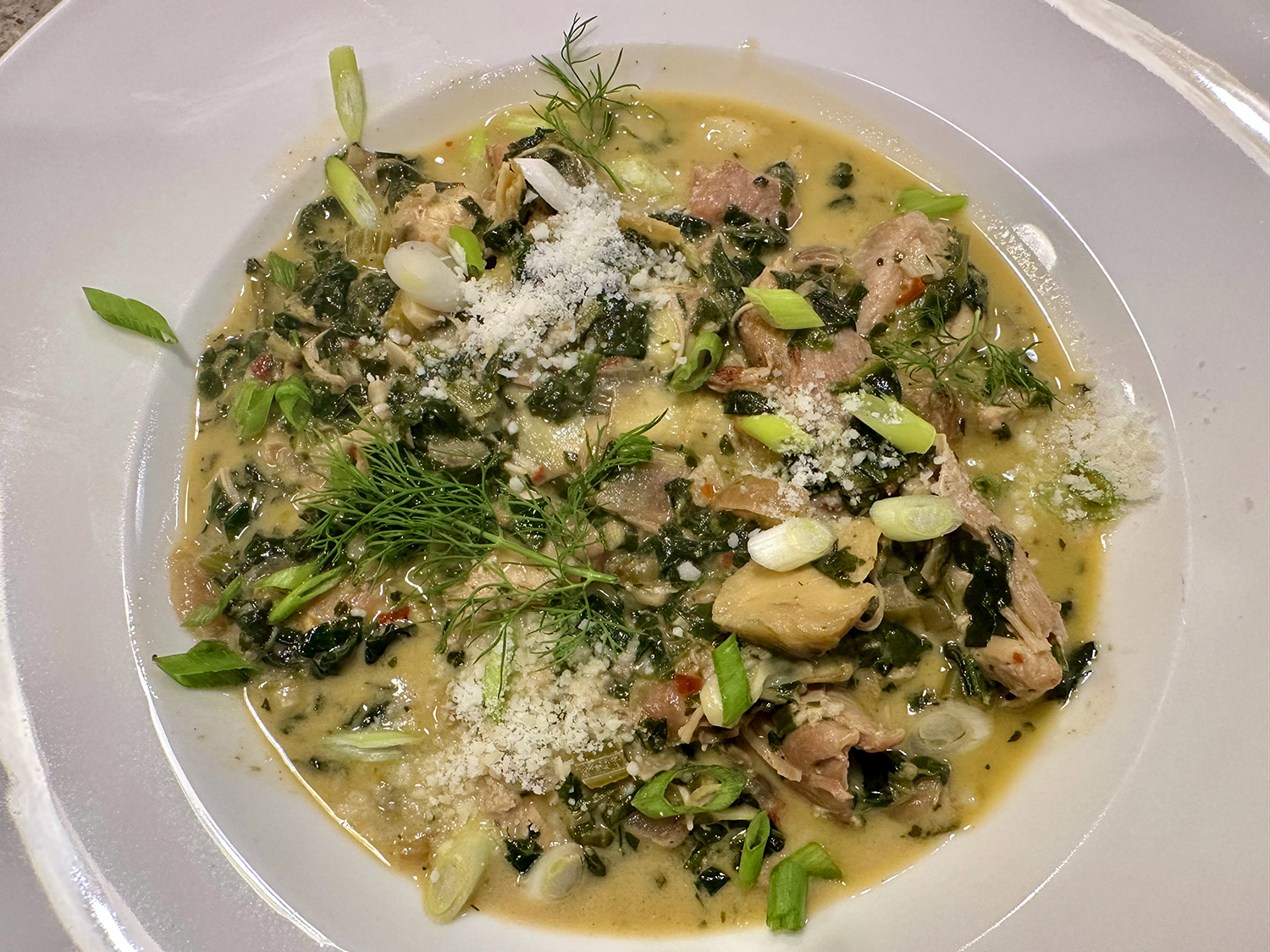
Creamy Spinach-Artichoke Stew

This creamy chicken stew is spinach-artichoke dip reimagined as a simple stovetop braise. It comes together quickly, thanks to frozen spinach and jarred artichoke hearts, though if you have time, NYTimes Cooking also has a slow-cooker version of this recipe.

Fresh dill and scallions are added just before serving, and provide bright, herbal flavor that offsets the richness of the finished dish. Delicious and packed with flavor, that is even better the next day!

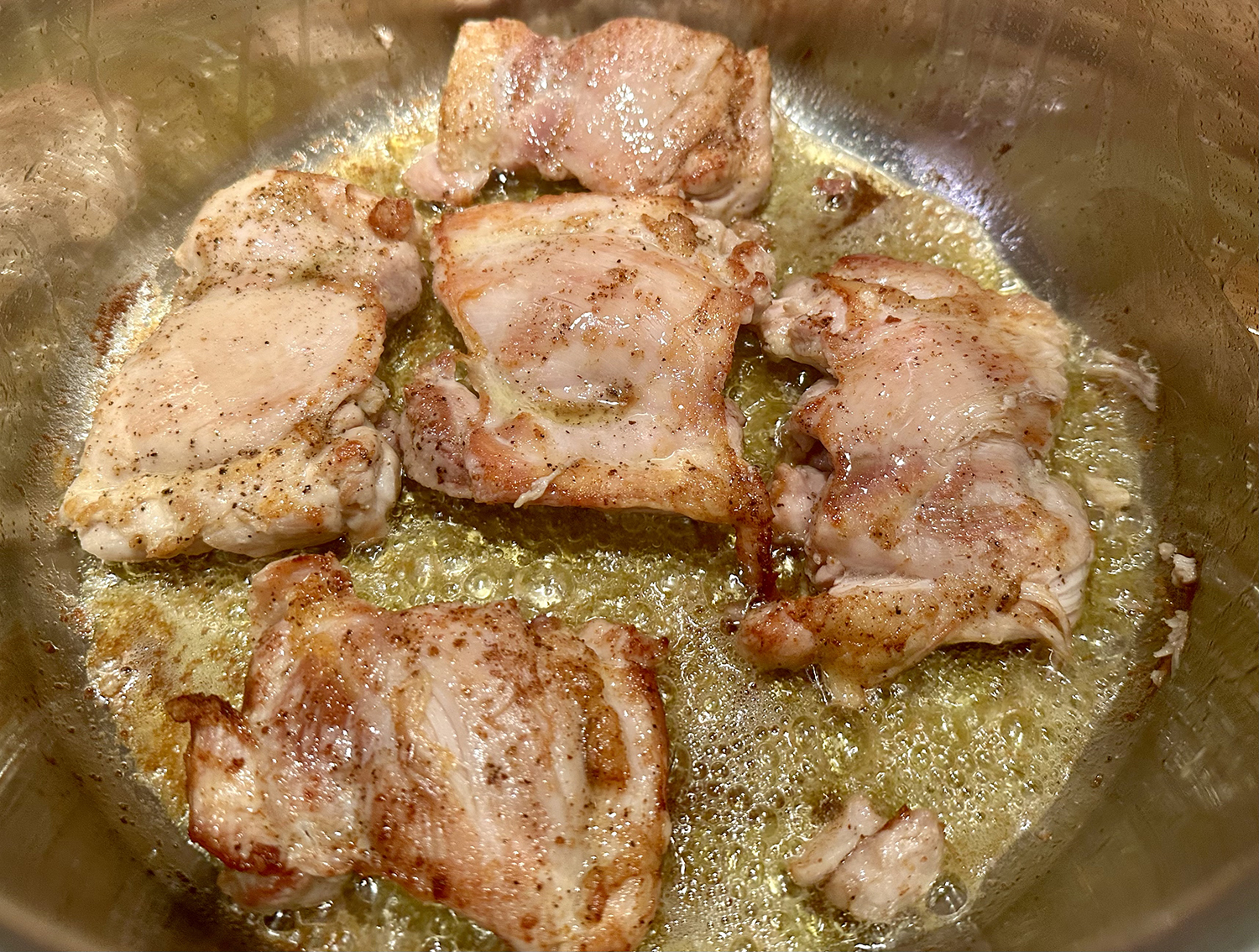
Some changes we made included adding olive oil with the butter and browning the chicken thighs on both sides to render some of the fat and add that extra layer of flavorful fond for the base. A parm rind was incorporated at the time the wine and stock are added to the pot. The original amount of 1/2 cup of fresh dill just seemed overpowering, so we cut by half, to a quarter cup, plus more for garnish.

Creamy Spinach-Artichoke Stew

  • Servings: 4
  • Difficulty: easy
  • Print

Ingredients

  • 2 Tbsp. unsalted butter
  • 3 Tbsp. olive oil
  • 2 to 2¼ lbs. boneless, skinless chicken thighs
  • 1 large yellow or red onion, finely chopped
  • Kosher salt and black pepper
  • 3 celery stalks, chopped
  • 8 garlic cloves, smashed and chopped
  • 2 cups chicken stock, preferably homemade
  • ¾ cup white wine
  • Parm rind
  • ½ lemon, juiced (about 1½ Tbsp.)
  • 1 tsp. red-pepper flakes
  • 1 10-oz. package frozen cut spinach
  • 1 12-oz. jar marinated artichoke hearts, drained (about 1 heaping cup artichoke hearts)
  • ½ cup cream cheese (about 4 oz.)
  • 1⁄4 cup finely chopped fresh dill, more for garnish
  • 4 to 6 scallions, thinly sliced, for topping
  • Grated Parmesan cheese, for topping

Directions

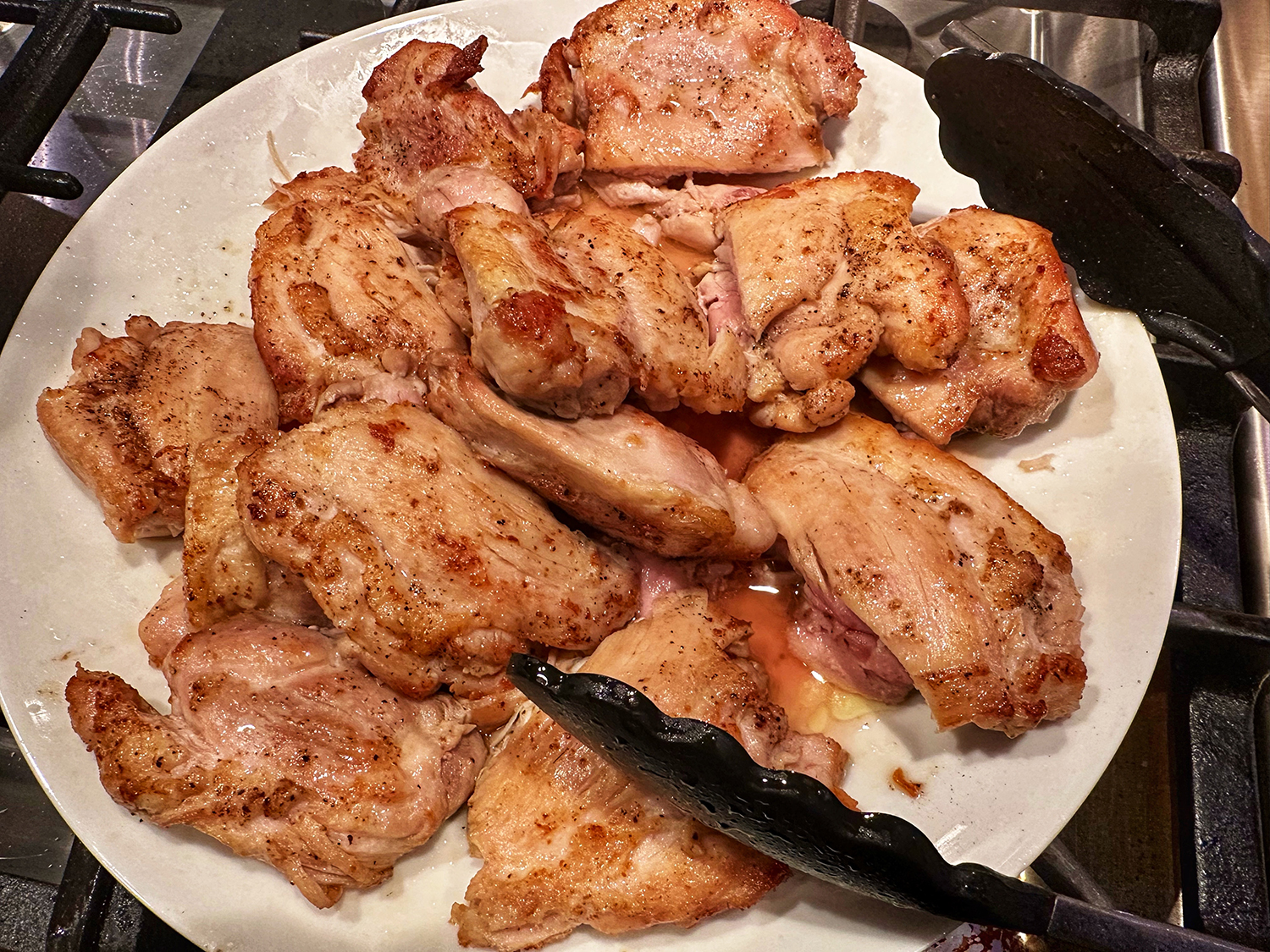
  1. In a large Dutch oven over medium-high heat, add the olive oil and melt the butter. Add the seasoned chicken thighs, and brown for a few minutes on both sides. Remove to a platter and cut in half.
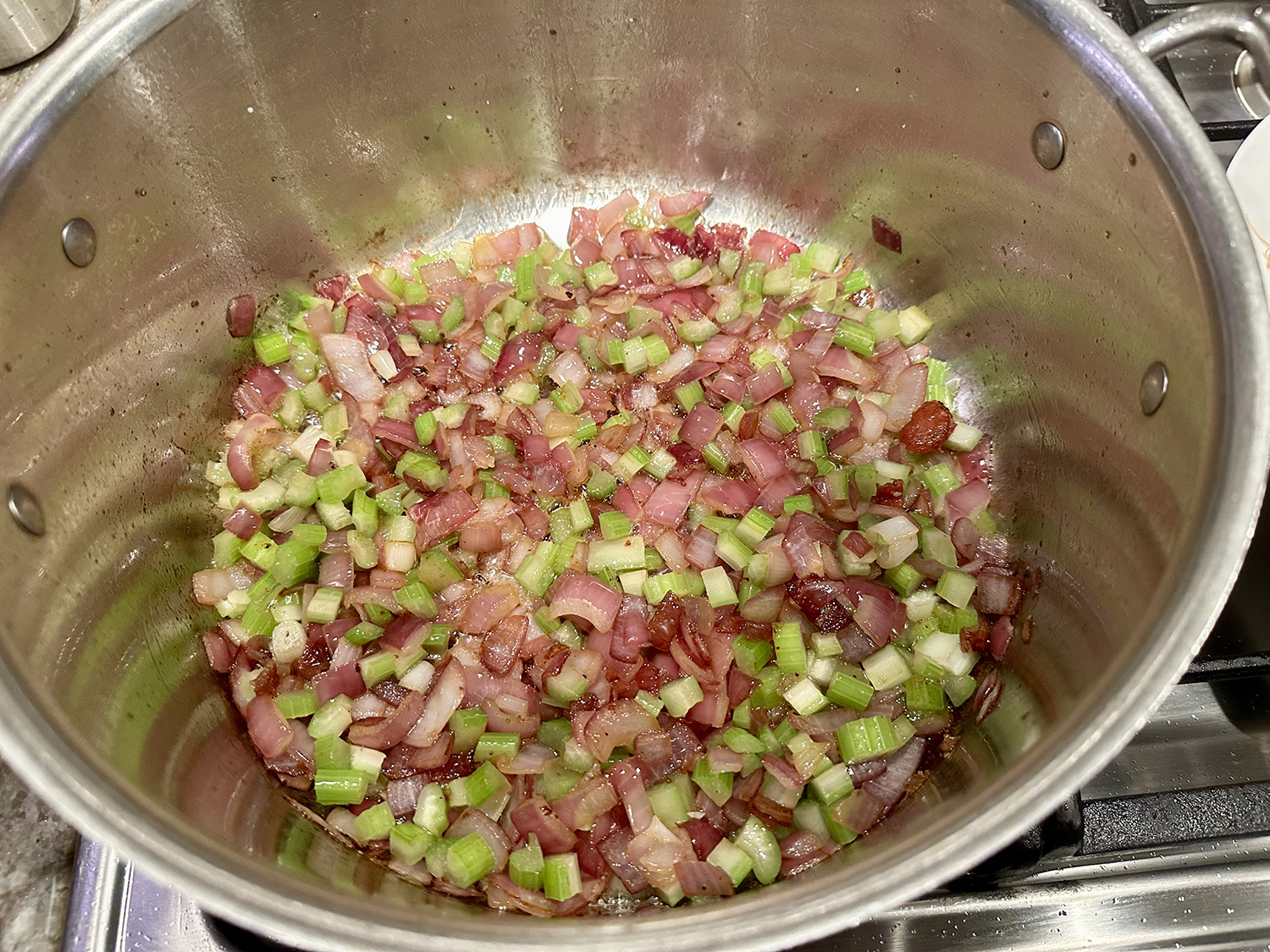
  2. Add the onion, season lightly with salt, and cook, stirring occasionally, until softened and translucent, about 5 minutes. Add the celery and cook, stirring, until softened, about 5 minutes, adjusting the heat as necessary to avoid scorching. Stir in the garlic.
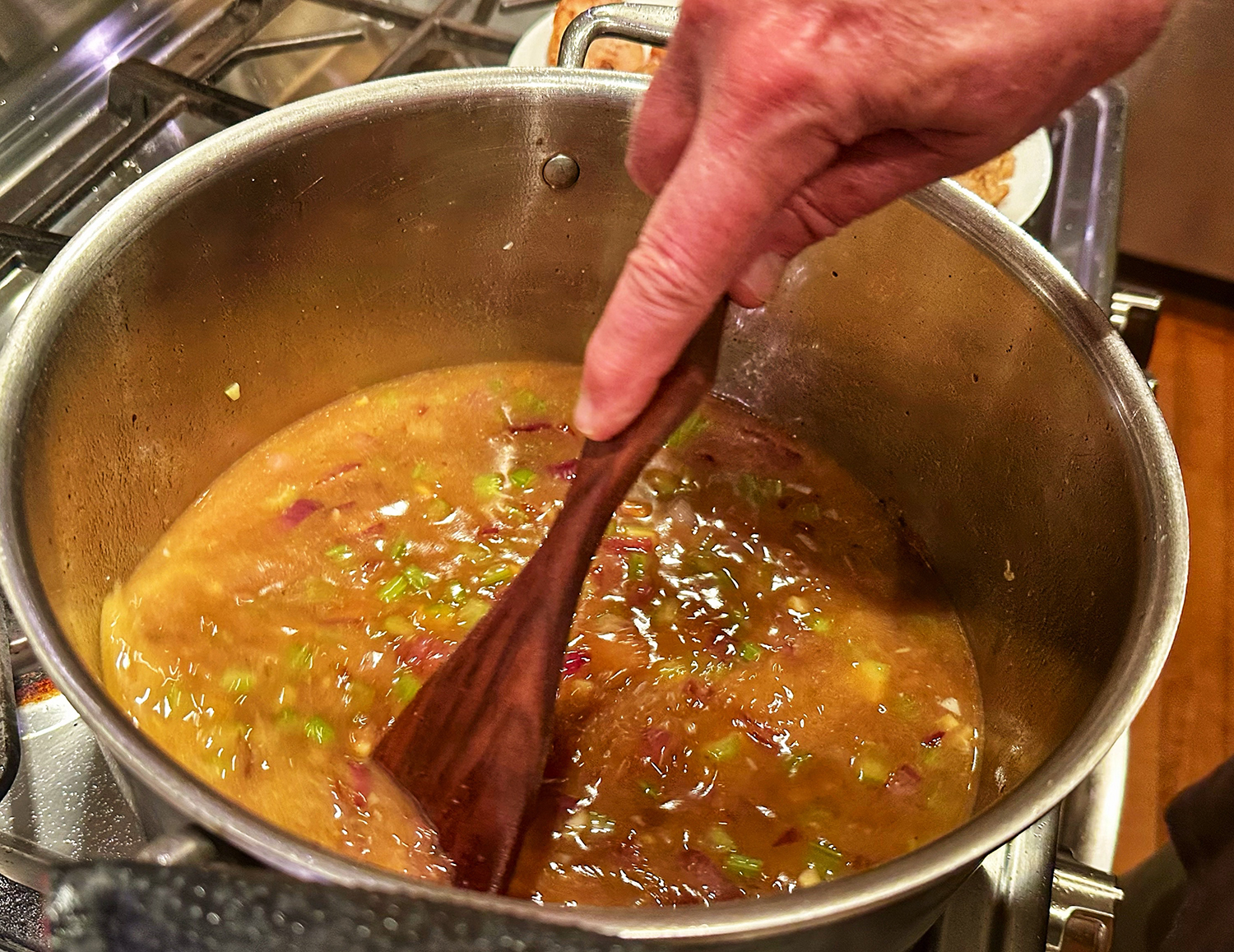
  3. Pour in the stock and wine and add the parm rind, and bring to a bubble. Add the chicken thighs, lemon juice and red-pepper flakes; season with 1 teaspoon salt and a generous amount of pepper. Mix well to combine all the ingredients and bring to a boil.
  4. Reduce the heat to maintain a low simmer and simmer, uncovered, for 20 minutes.
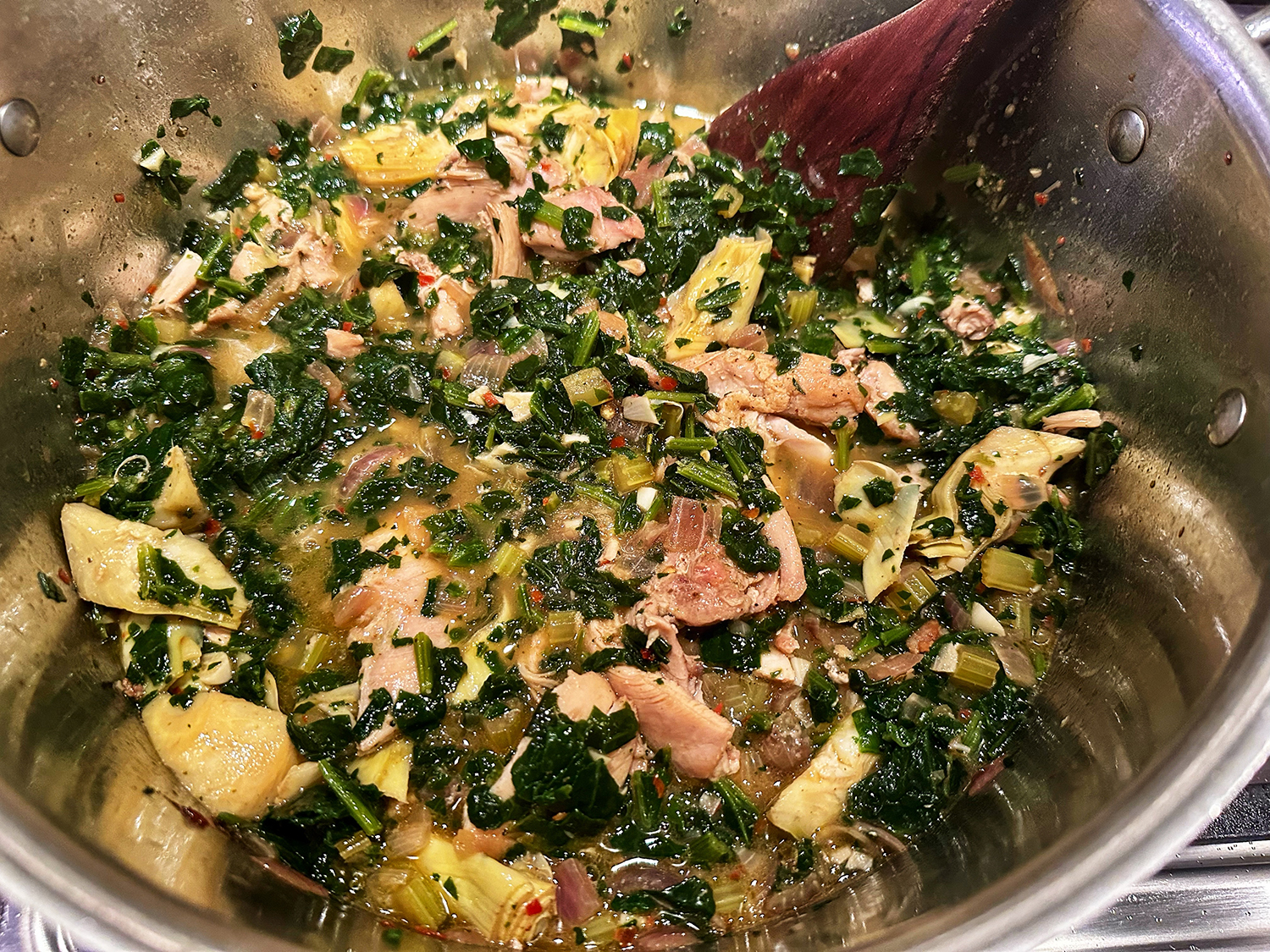
  5. Add the frozen spinach and the artichoke hearts to the pot. Increase the heat to medium-high and cook, stirring to help the spinach defrost and wilt into the stew. When the spinach is warm and evenly distributed, reduce the heat and simmer until the chicken is tender and the flavors are blended, another 10 to 15 minutes.
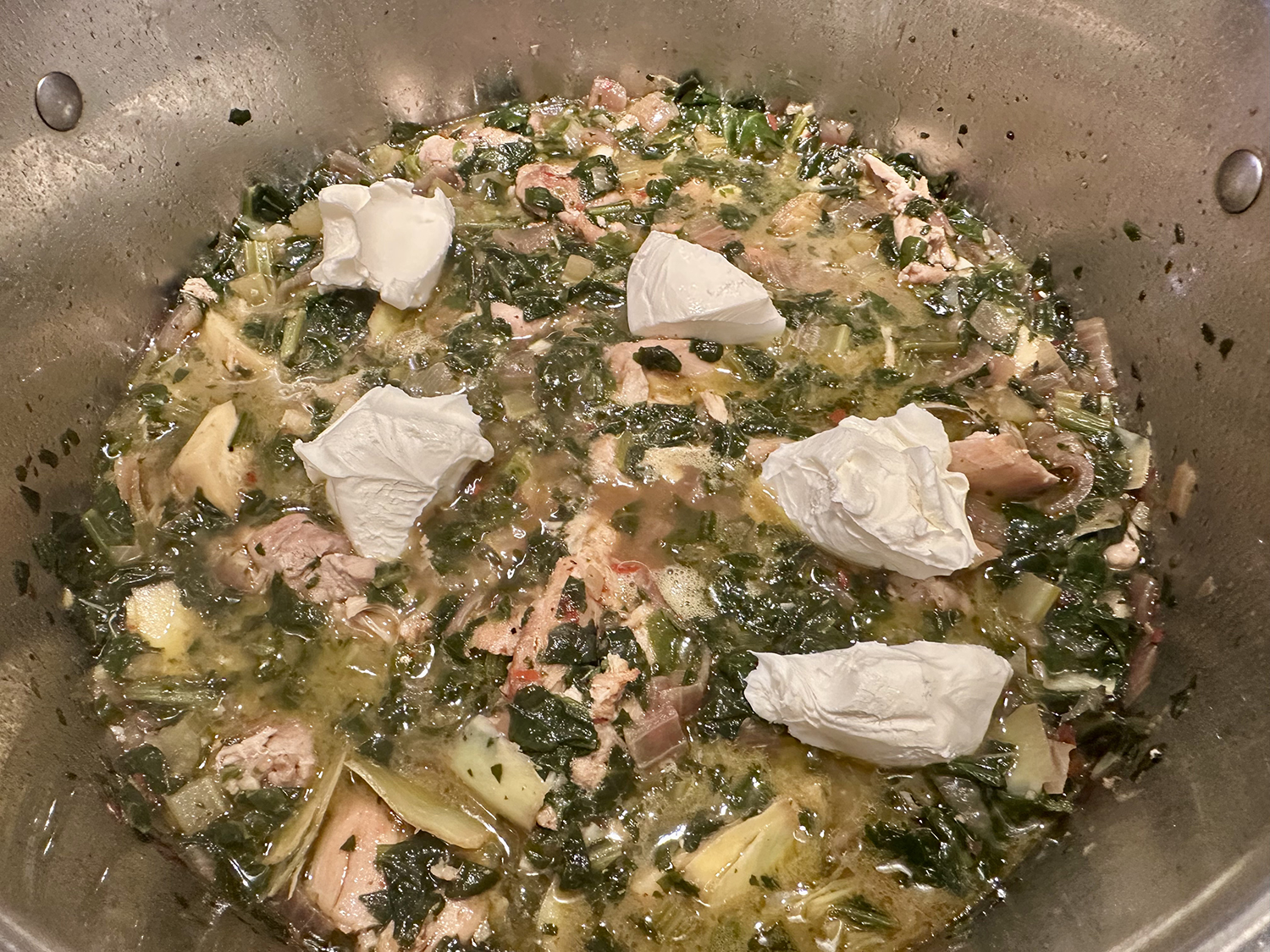
  6. Add the cream cheese in dollops, stirring to melt it into the soup. Add the dill. Using two forks, coarsely break or shred the chicken into large chunks. Taste and add more salt and black pepper if necessary. Remove the parm rind.
  7. Divide the stew among bowls, and top with scallions and Parmesan.

http://www.lynnandruss.com

Adapted from a recipe by Sarah DiGregorio for NYTimes Cooking.

Chicken Paillard with Lemon Butter Sauce

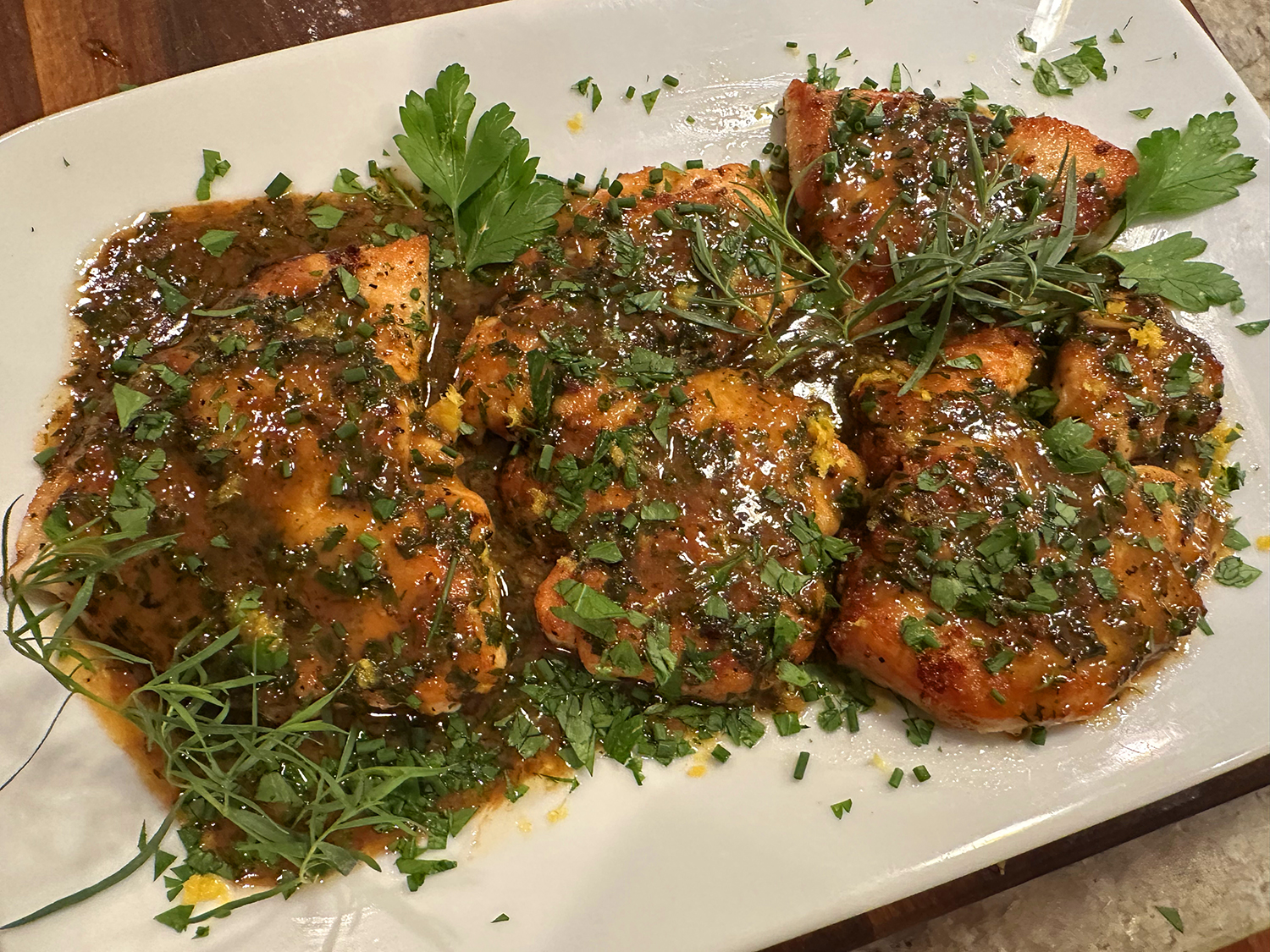
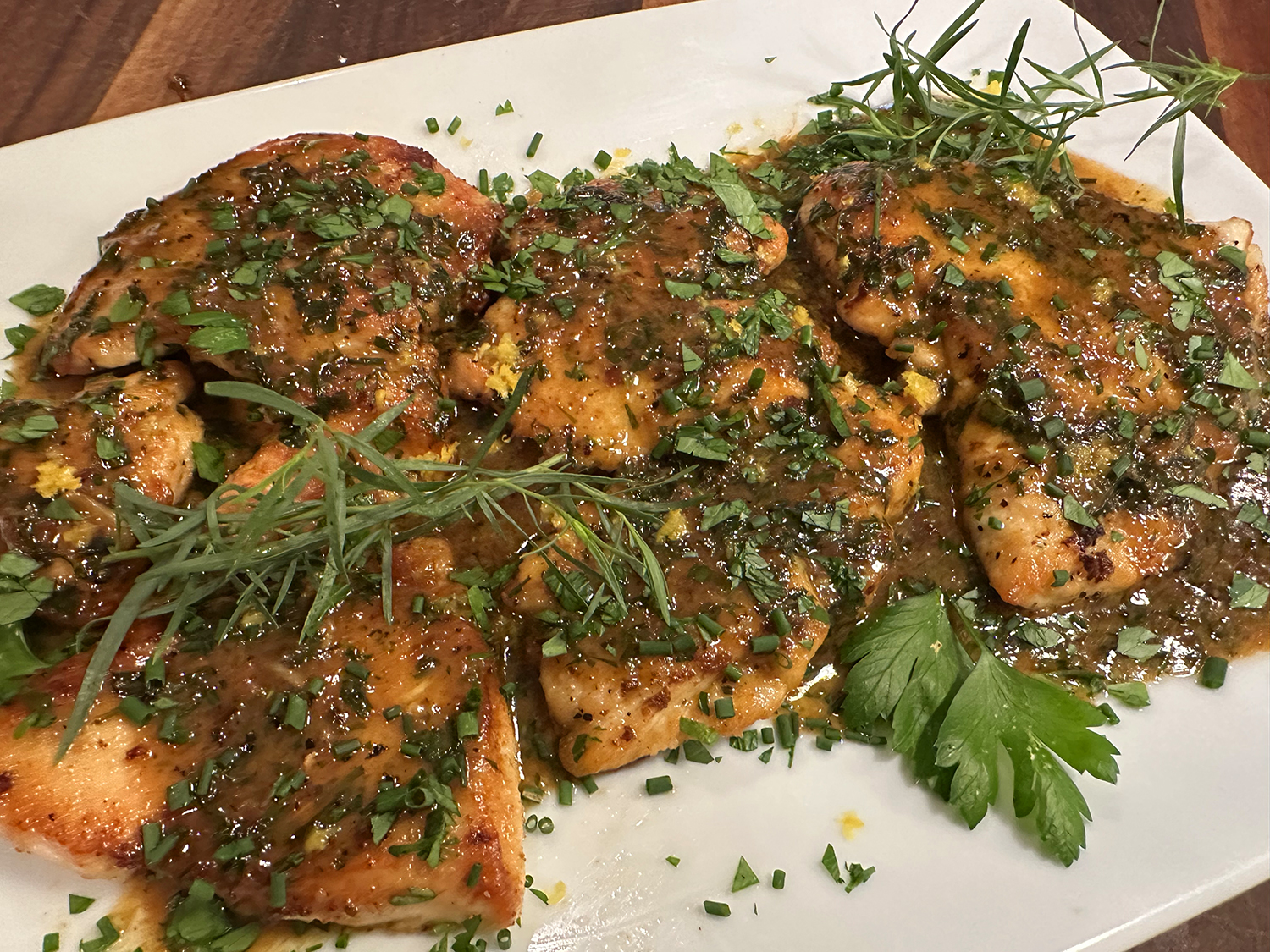
Not only is this French-inspired chicken paillard delicious, but the entire dish comes together in about a half hour with one pan and a handful of ingredients. It’s quick enough for any night of the week, but special enough to serve whenever you want something that feels a bit elevated. Don’t know of any home cook that doesn’t appreciate that!

Thin, golden, and covered in a bright lemon-butter sauce, this chicken paillard turns boneless, skinless chicken breasts into a dish that’s quick, elegant, and unexpectedly luxurious—-not necessarily an easy thing to accomplish.

By pounding the meat into thin, even cutlets, the chicken cooks quickly, develops a golden exterior, and stays juicy—a far cry from the dry, tasteless results that often afflict boneless, skinless chicken breasts.

While paillard is a French culinary term for pounding meat thin for quick and even cooking, in the US, chicken paillard often refers to seared chicken breasts with a lemony herb-butter sauce. It’s become a weeknight staple thanks to its ease and speed, offering a meal that feels far more refined than its quick cooking time might suggest.

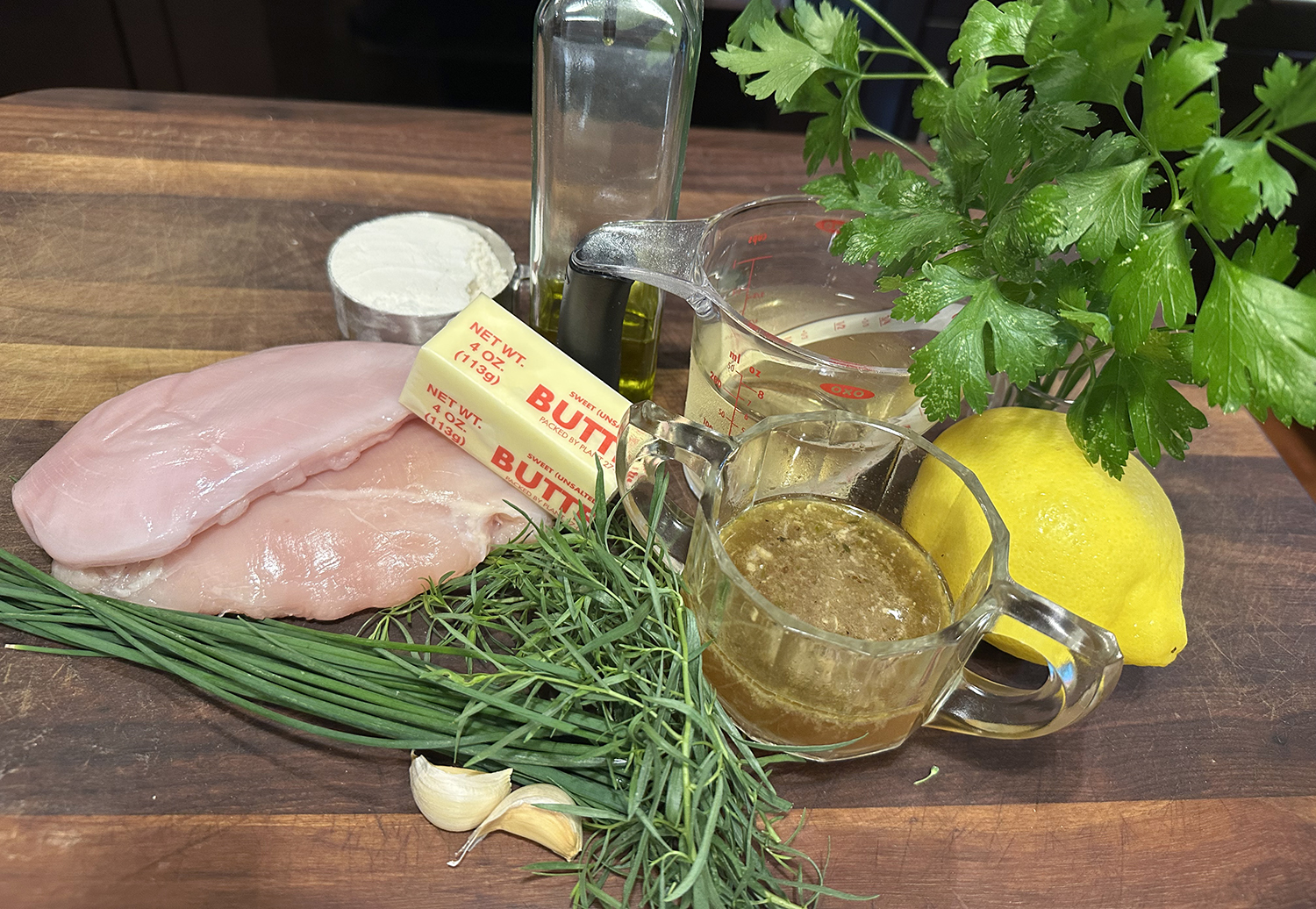
The fond in the pan becomes the base for a quick pan sauce after the chicken is seared. Wine and stock deglaze the browned bits, and cold butter melts gradually as it is swirled in at the end. This allows the fat to emulsify evenly into the sauce creating a rich, glossy consistency. Lemon zest and juice brighten the flavors, and fresh parsley, chives, and tarragon add a burst of herbal freshness.

We find it is easier to pound the chicken inside a large ziploc as opposed to covering with plastic wrap because the bag is thicker and is easier to handle.

NOTE: You can use 4 store-bought chicken breast cutlets instead of whole chicken breasts, but pounding your own ensures even thickness and more reliable cooking.

Chicken Paillard with Lemon Butter Sauce

  • Servings: 3-4
  • Difficulty: easy
  • Print

Ingredients

  • 1/2 cup all-purpose flour
  • 2 tsp. Diamond Crystal kosher salt, divided; for table salt, use half as much by volume
  • 1 tsp. freshly ground black pepper, divided
  • 2 medium boneless, skinless chicken breasts (about 6 to 8 oz. each)
  • 1/4 cup extra-virgin olive oil, divided
  • 3/4 cup dry white wine
  • 1/2 cup homemade chicken stock (preferable) or store-bought chicken broth
  • 1 medium garlic clove, grated
  • 5 Tbsp. unsalted butter, cut into ½-inch pieces and chilled
  • 1 tsp. grated lemon zest, plus 1 Tbsp.  fresh juice, divided
  • 2 Tbsp. finely chopped fresh flat-leaf parsley, divided
  • 2 Tbsp. thinly sliced chives, divided
  • 2 tsp. finely chopped tarragon leaves, optional, plus more for garnish
  • Flaky sea salt, such as Maldon, for sprinkling

Directions

  1. Preheat oven to 200°F. Place a wire rack inside a baking sheet; set aside.
  2. In a shallow dish or plate, stir together flour, 1 1/2 teaspoons kosher salt, and 3/4 teaspoon pepper; set aside. Set aside a large plate to transfer chicken to after breading.
  3. Working with one chicken breast at a time, place chicken breast on a cutting board. Hold it in place with the palm of your non-cutting hand, and use a sharp knife to slice chicken horizontally into two even cutlets. Repeat process with remaining chicken breast. Cover each breast half with plastic wrap, and use a meat mallet or rolling pin to pound to 1/3-inch thickness.
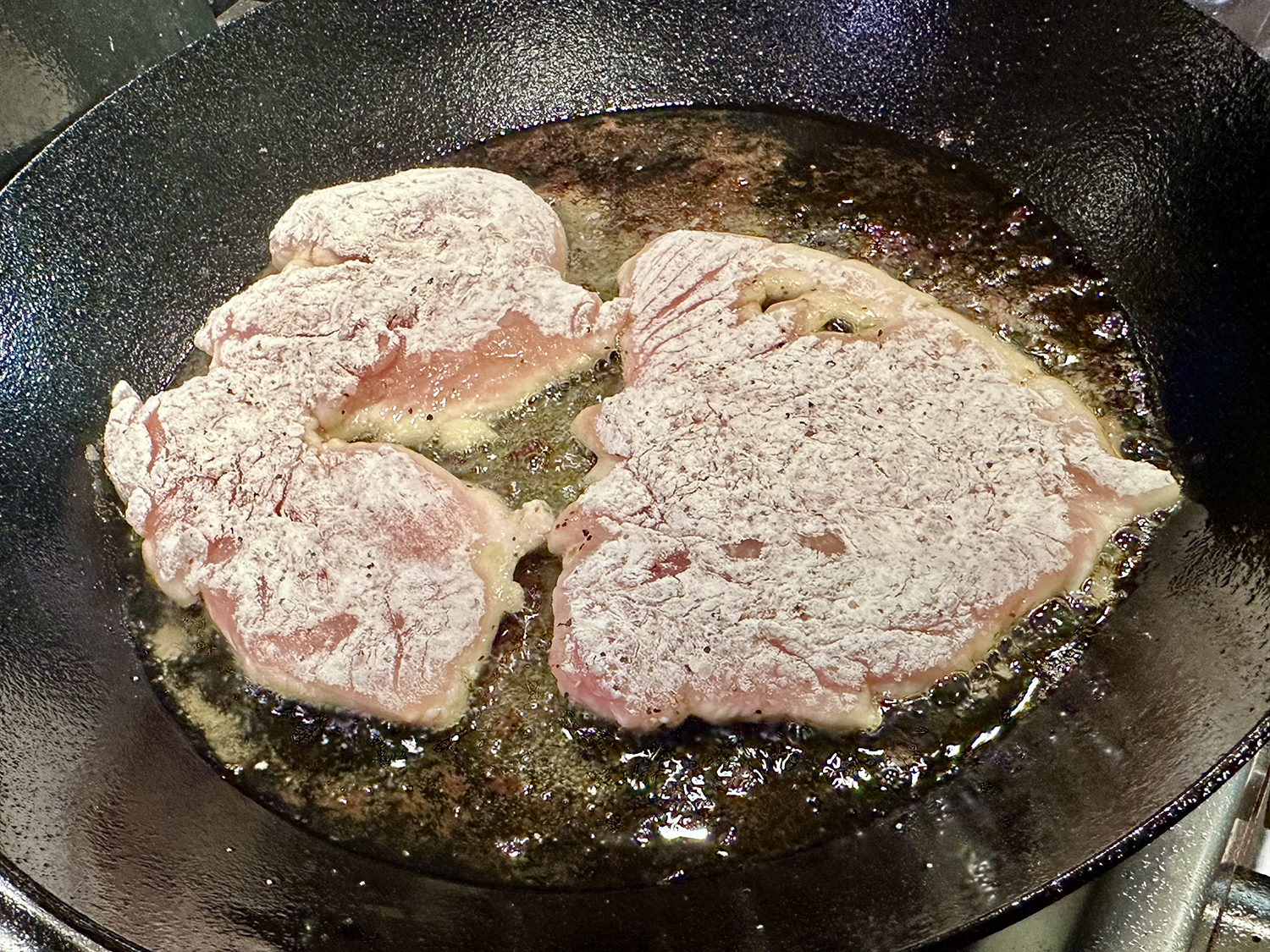
  4. Place 2 chicken halves in prepared flour mixture, and turn to coat; tap off excess flour mixture, and transfer chicken to the large plate. Repeat process with remaining chicken halves.
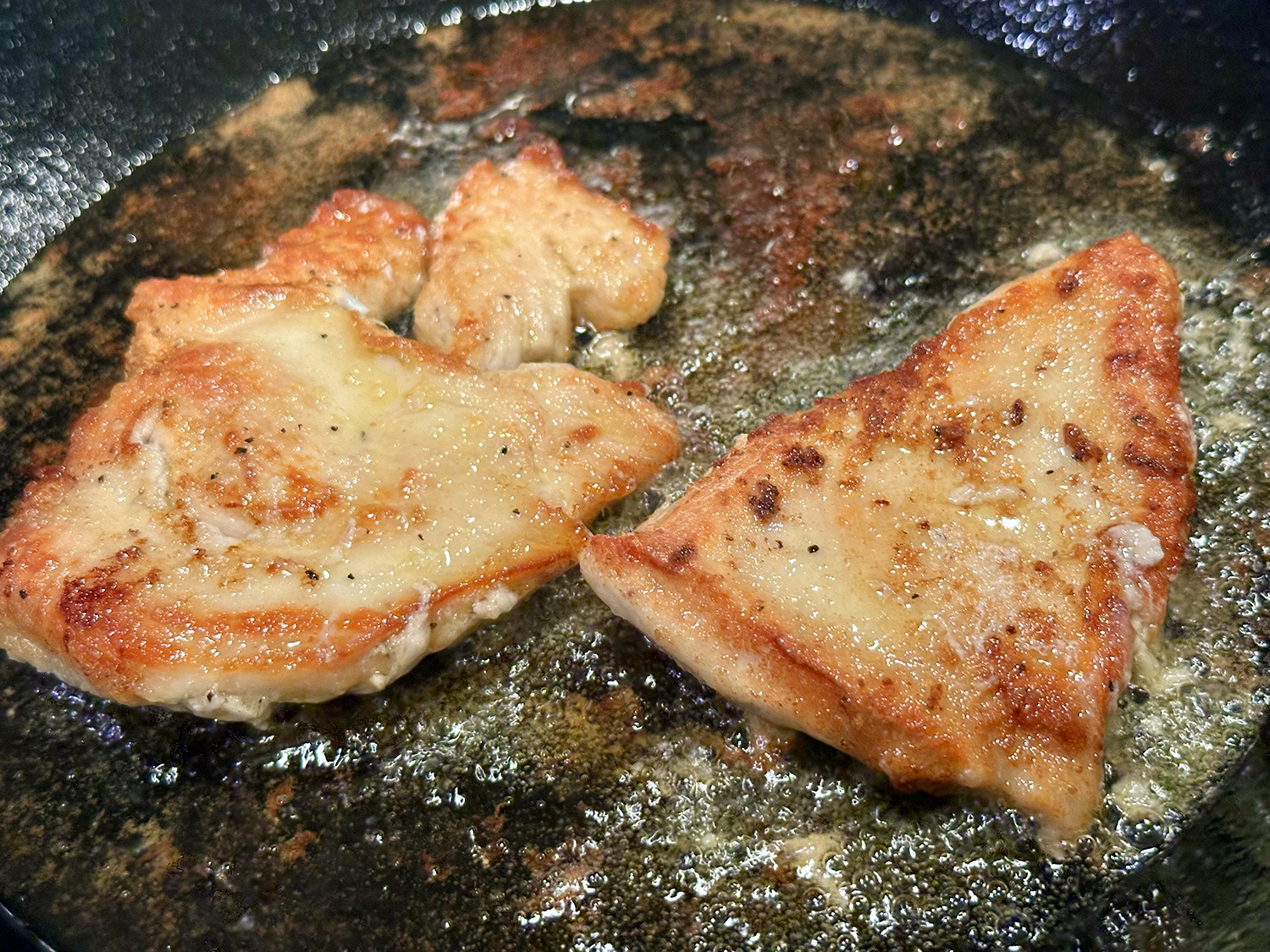
  5. In a large stainless steel, cast iron, or carbon steel skillet, heat oil over medium-high until shimmering. Working in batches, add two chicken pieces to hot oil; cook, undisturbed, until golden brown on both sides, 4 to 5 minutes total. Repeat process with remaining 2 chicken pieces. Place browned chicken halves on prepared baking sheet, and place in warm oven (do not wipe out skillet).
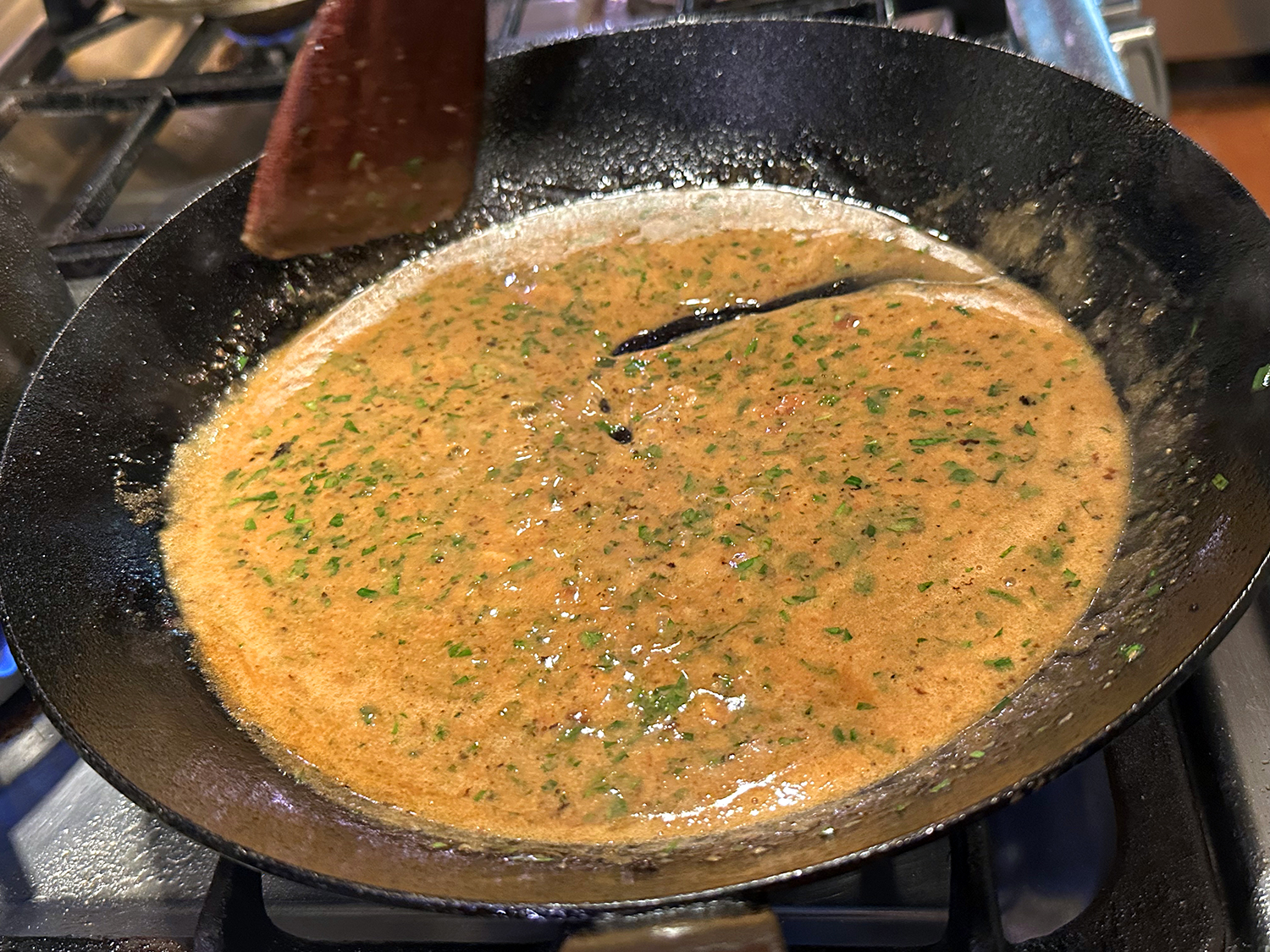
  6. While chicken is resting in oven, heat the same skillet over medium-high. Add wine; cook, stirring occasionally and scraping up browned bits from bottom of skillet, until reduced to about 1/4 cup, 3 to 4 minutes. Add stock and cook, stirring constantly, until mixture has reduced to about 1/3 cup, 3 to 4 minutes. Reduce heat to medium-low. Add garlic, butter, lemon juice, 1 tablespoon of parsley, 1 tablespoon of chives, 2 teaspoons tarragon (if using), remaining 1/2 teaspoon salt, and remaining 1/4 teaspoon pepper; cook, swirling and stirring constantly, until butter is completely melted, about 1 minute.
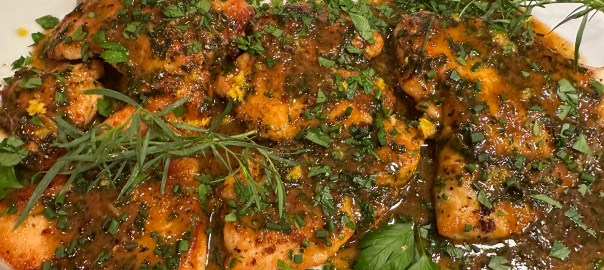
  7. Spoon sauce over chicken, and garnish with remaining chives, parsley, and additional tarragon (if using), lemon zest, and flaky salt. Serve immediately.

http://www.lynnandruss.com

From a recipe developed by Marianne Williams for Serious Eats

Orecchiette Salad with Roasted Vegetables, Chicken and Jalapeño-Lime Dressing

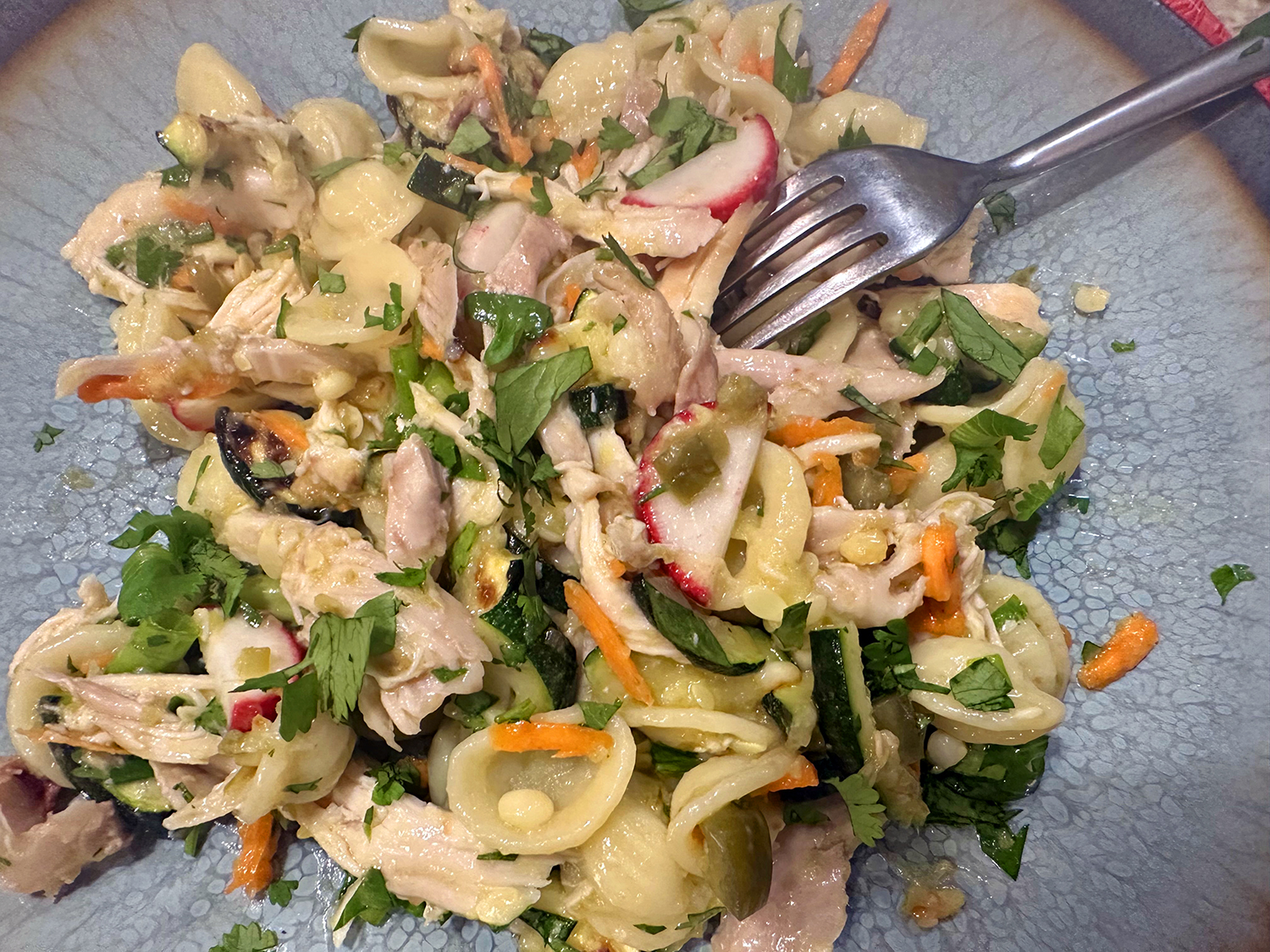
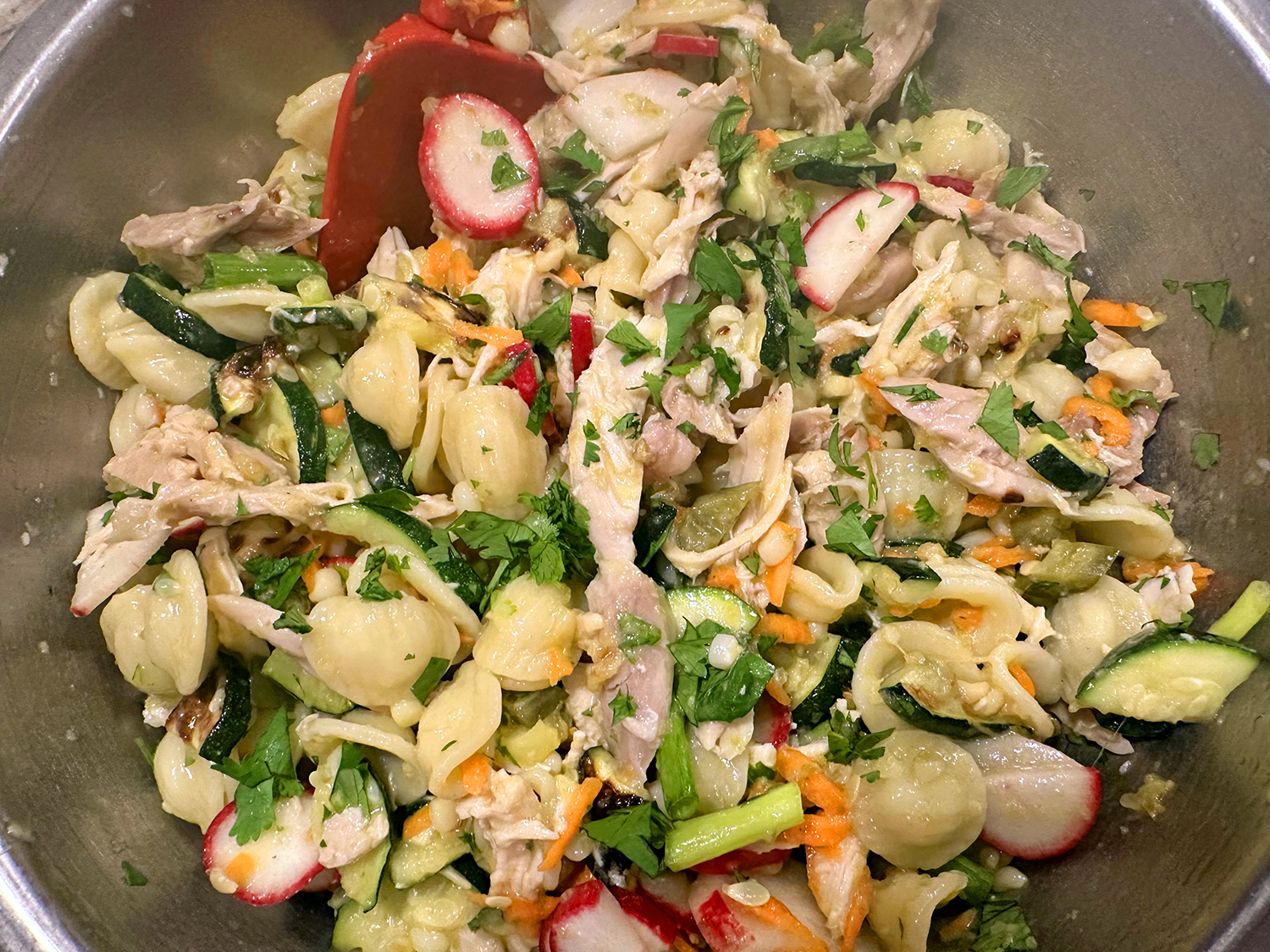
For a pasta salad that could serve as a main course, some of the pasta is swapped out for chicken, roasted corn and zucchini. Orecchiette works great because its little cup shapes are perfect for holding dressing. The pasta is cooked until it is a little too soft so that as it cools and firms up, it has just the right tender texture.

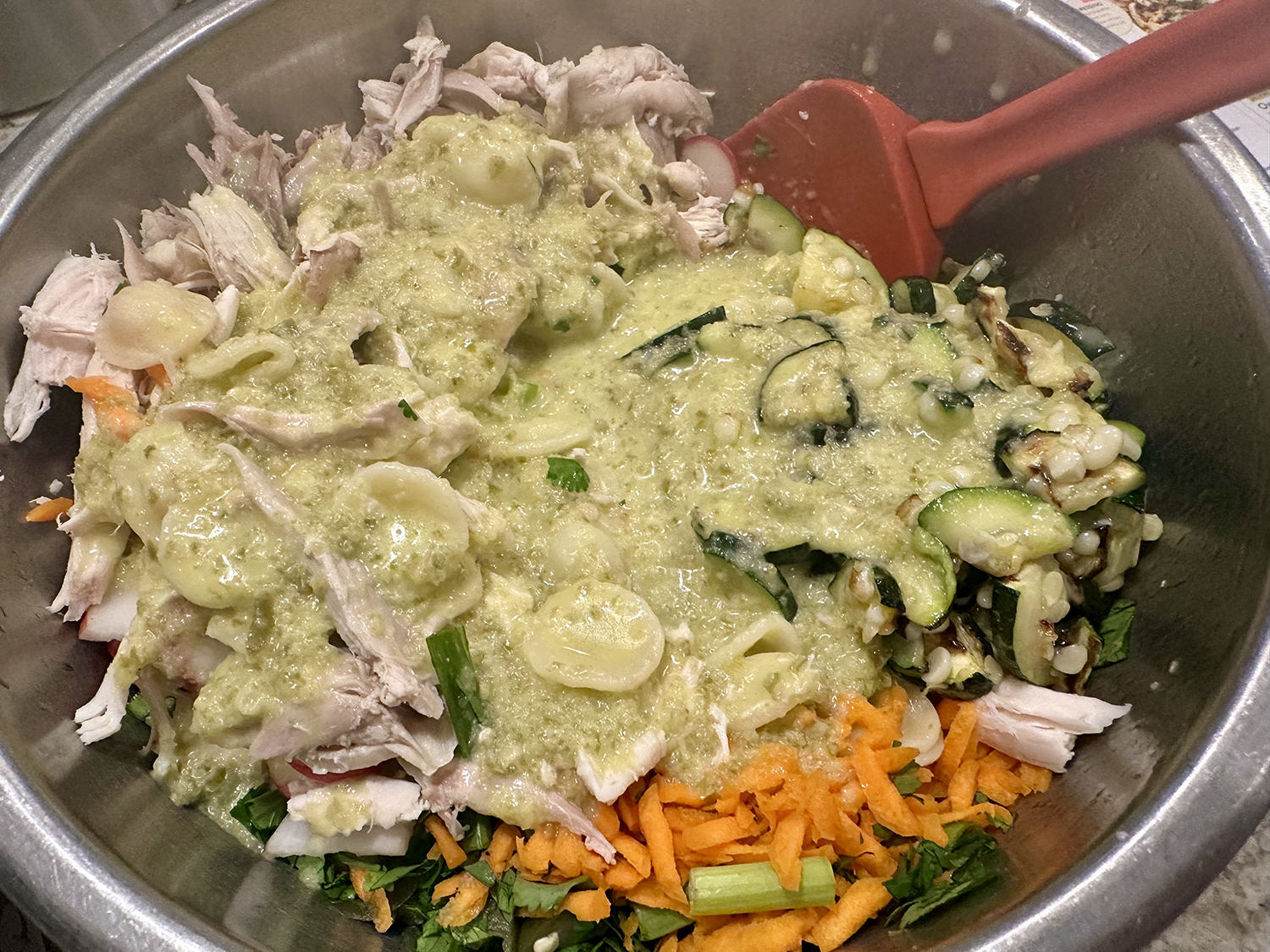
Because a classic thin vinaigrette would slide to the bottom of the bowl, it is thickened by blending it with pickled jalapeños and scallion whites. Add some crunch with bits of carrot and sliced radish, then top with cilantro leaves and scallions to contribute color and fresh herbal notes.

NOTES: For convenience, a store-bought rotisserie is the way to go. And, the pasta is intentionally overcooked in this recipe so that it remains tender, even when served cold. If making this salad ahead, dress the salad and garnish it with the reserved cilantro right before serving.

There is a fair amount of prep, and it easily took closer to an hour than the 45 minutes suggested in the original recipe. Since good fresh corn was available at farm stands, we used that instead of frozen corn. Just slice the kernels off the cob, and mix with the cut zucchini.

It may seem like a lot of jalapeños, but we found it to be just right. The quantity is versatile, so add or subtract the pickled chile to suit your own preferences.

Orecchiette Salad with Roasted vegetables, chicken and Jalapeño-Lime Dressing

  • Servings: 4-6
  • Difficulty: easy
  • Print

Ingredients

  • 1 lb. zucchini, quartered lengthwise and sliced ¼ inch thick
  • 1½ cups fresh or frozen corn kernels
  • 2 Tbsp. plus
  • ½ cup vegetable oil, divided
  • 1½ tsp. table salt, divided, plus salt for cooking pasta
  • 8 oz. (2¼ cups) orecchiette
  • ⅓ cup plus ¼ cup jarred sliced jalapeños, drained, divided
  • 4 scallions, white parts sliced thin, green parts cut into 1-inch pieces
  • ¼ cup lime juice (2 limes)
  • 1 lb. cooked chicken, torn into bite-size pieces (3 cups)
  • ¾ cup fresh cilantro leaves, divided
  • 8 radishes, trimmed, halved, and sliced thin
  • 1 large carrot, peeled and shredded

Directions

  1. Arrange oven rack 4 inches from broiler element and heat broiler. Combine zucchini, corn kernels, 2 tablespoons oil, and ½ teaspoon salt in large bowl and toss to coat. Transfer to rimmed baking sheet (do not wash bowl) and spread into even layer. Broil until spotty brown in places, 8 to 10 minutes, stirring halfway through broiling. Transfer sheet to wire rack to cool.
  2. Meanwhile, bring 2 quarts water to boil in large saucepan. Add pasta and 1½ teaspoons salt and cook until pasta is tender throughout, 2 to 3 minutes past al dente. Drain well and rinse with cold water. Drain well and transfer to now-empty bowl.
  3. Process ⅓ cup jalapeños, scallion whites, lime juice, and remaining 1 teaspoon salt in blender until coarse paste forms, about 30 seconds. With blender running, drizzle in remaining ½ cup oil and continue to process until dressing is emulsified and smooth, about 1 minute.
  4. Chop remaining ¼ cup jalapeños and add to pasta along with chicken, ½ cup cilantro, radishes, carrot, zucchini and corn, and scallion greens. Pour dressing over salad and toss to coat. Transfer to serving bowl. Sprinkle with remaining ¼ cup cilantro and serve.
http://www.lynnandruss.com

Recipe by Andrea Geary for America’s Test Kitchen

Hibachi-Style Chicken with Charred Vegetables

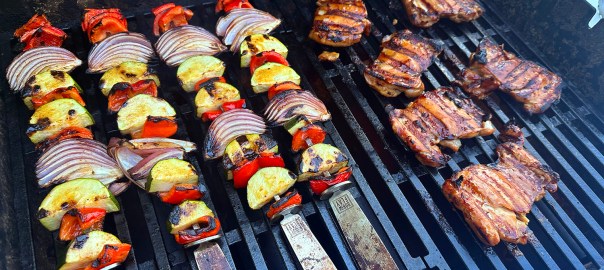
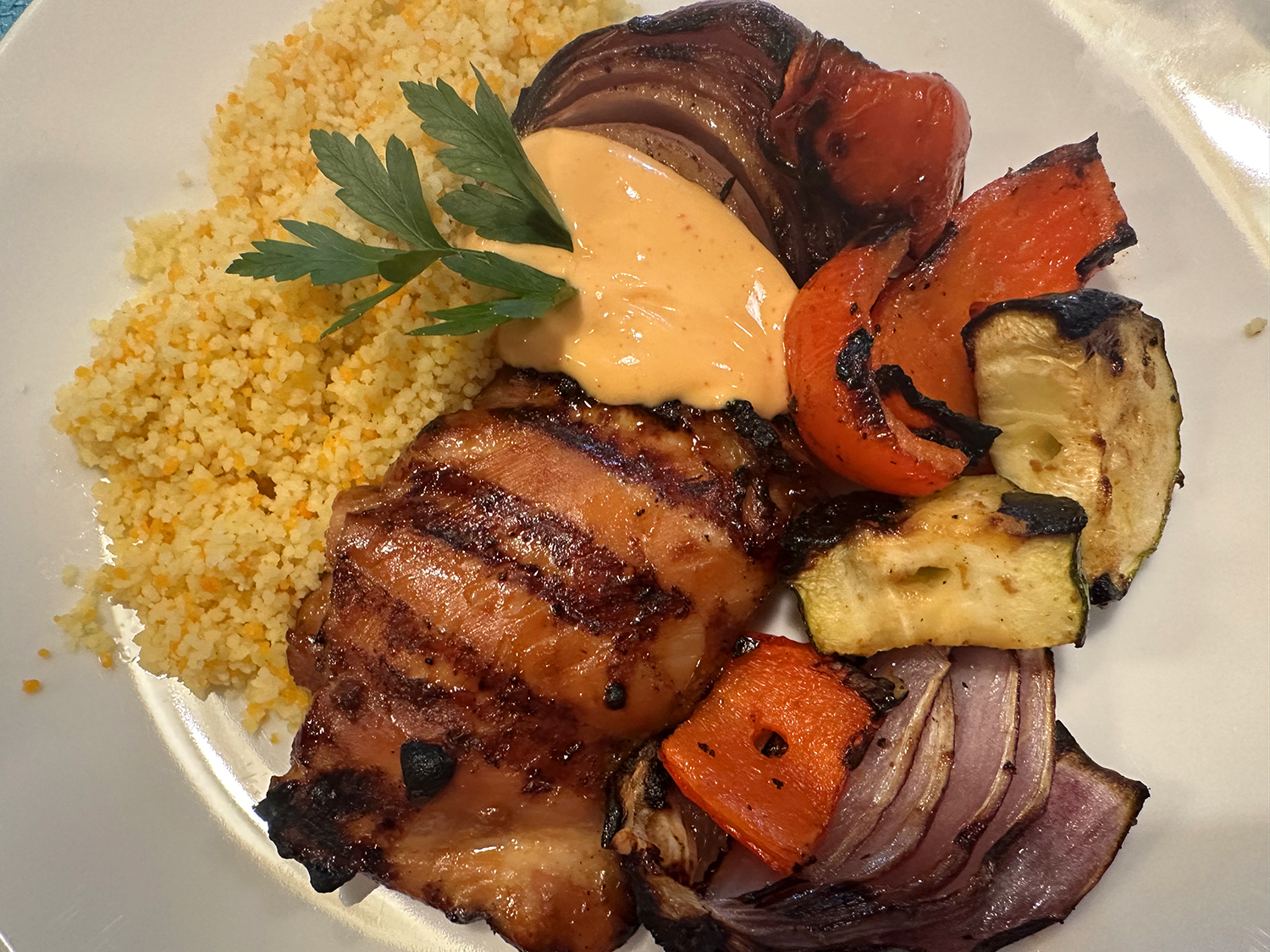
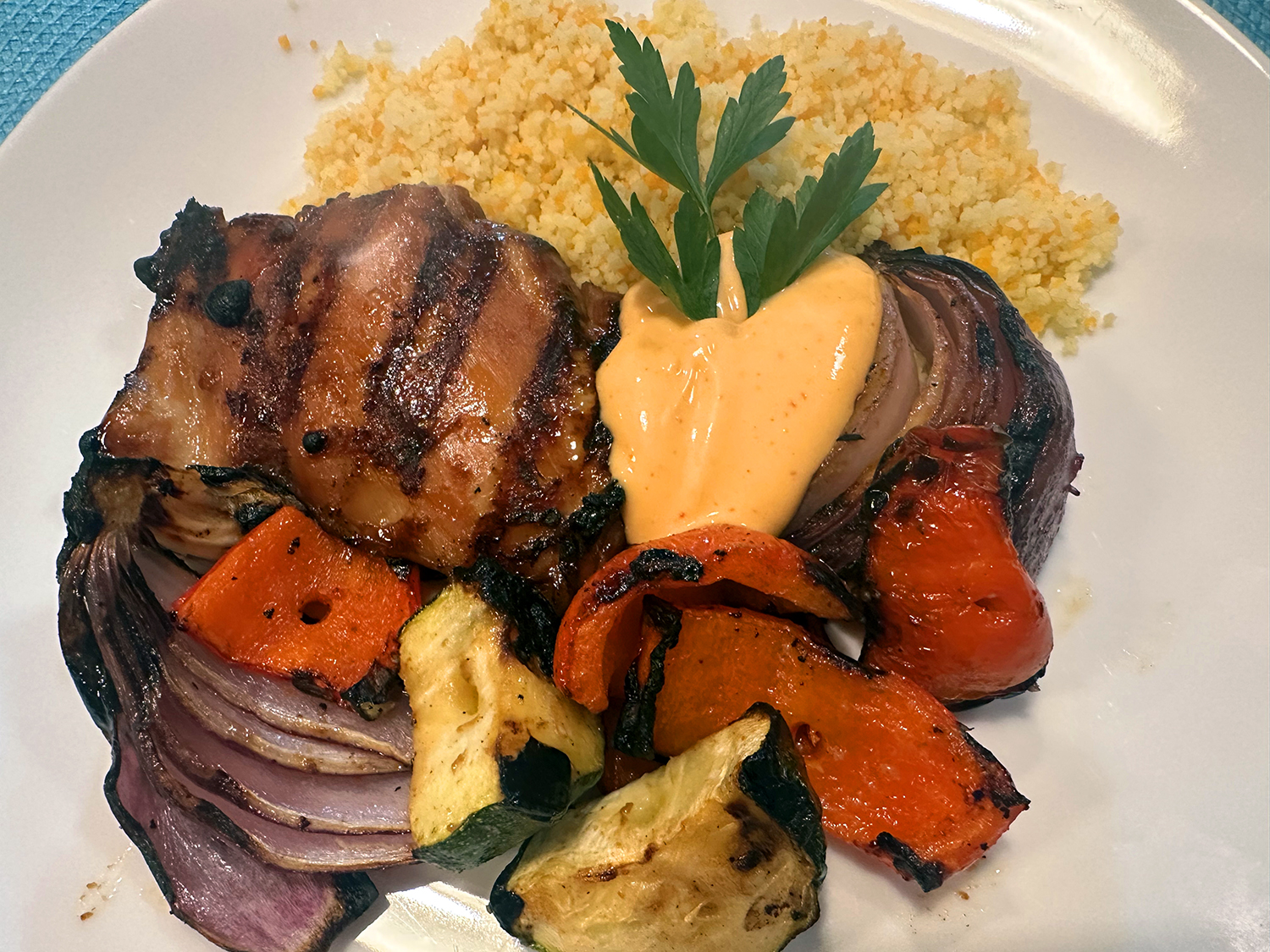
Soy-marinated grilled chicken thighs paired with smoky, charred summer vegetables make this a sensational summer supper. Here, grilled chicken thighs are soaked in a sweet, garlicky, soy-based marinade and grilled alongside skewers with peak-season summer vegetables. Some steamed rice or couscous completes the meal.

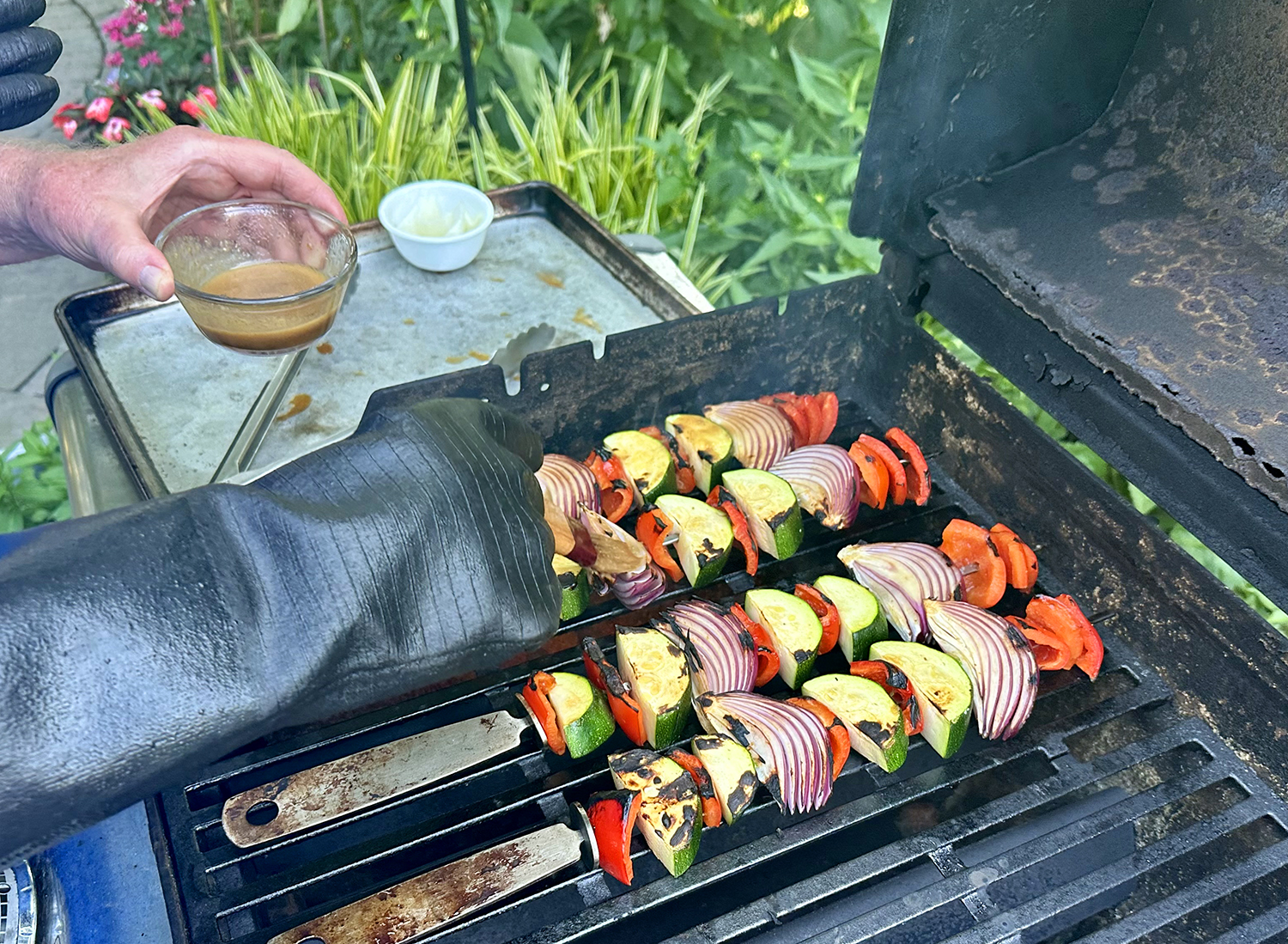
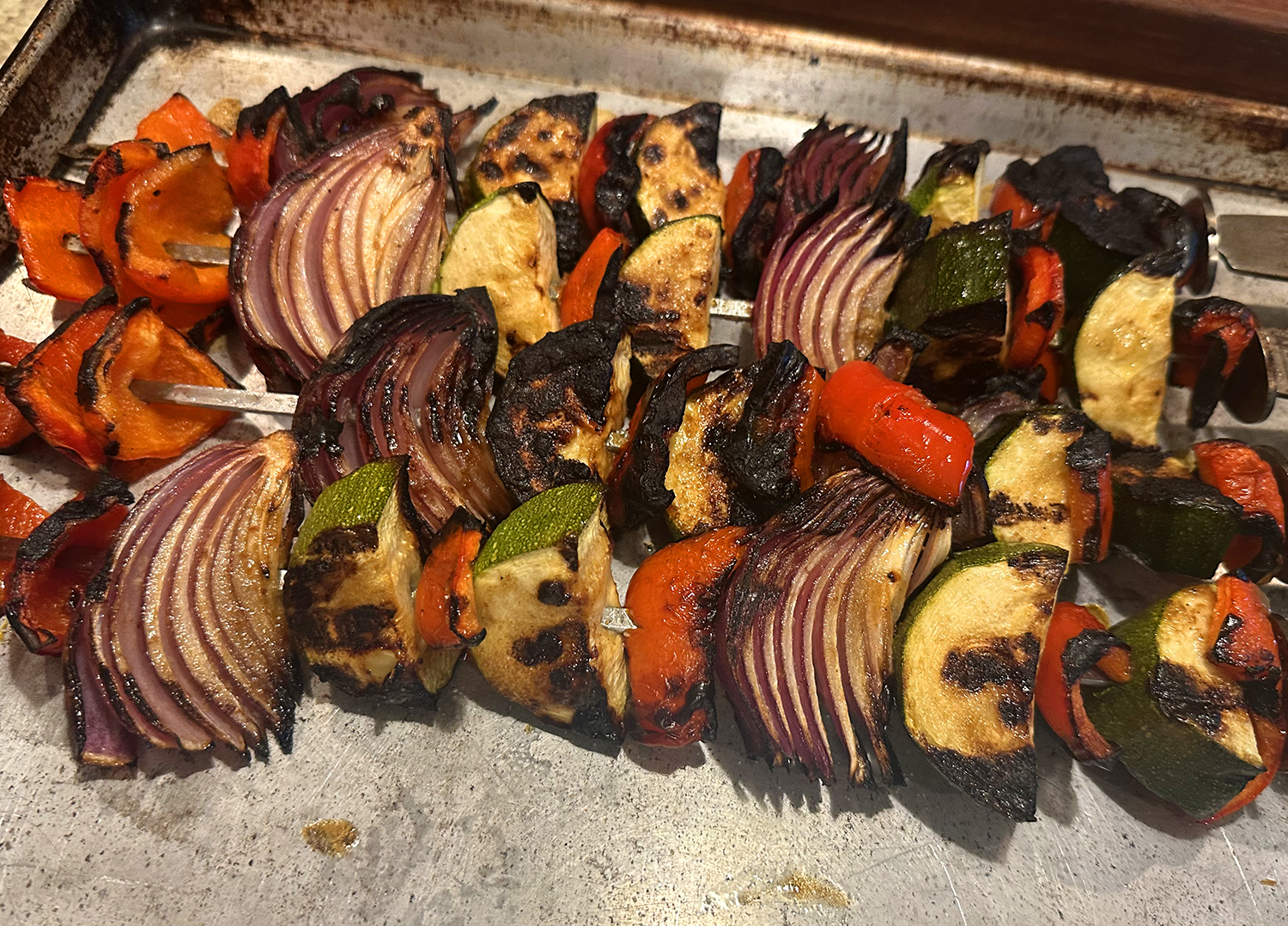
The grill imparts a delicious char, similar to a Japanese hibachi charcoal grill, while basting the vegetables with a mixture of melted butter and reserved marinade enhances the full-bodied smoky flavor signature to hibachi.

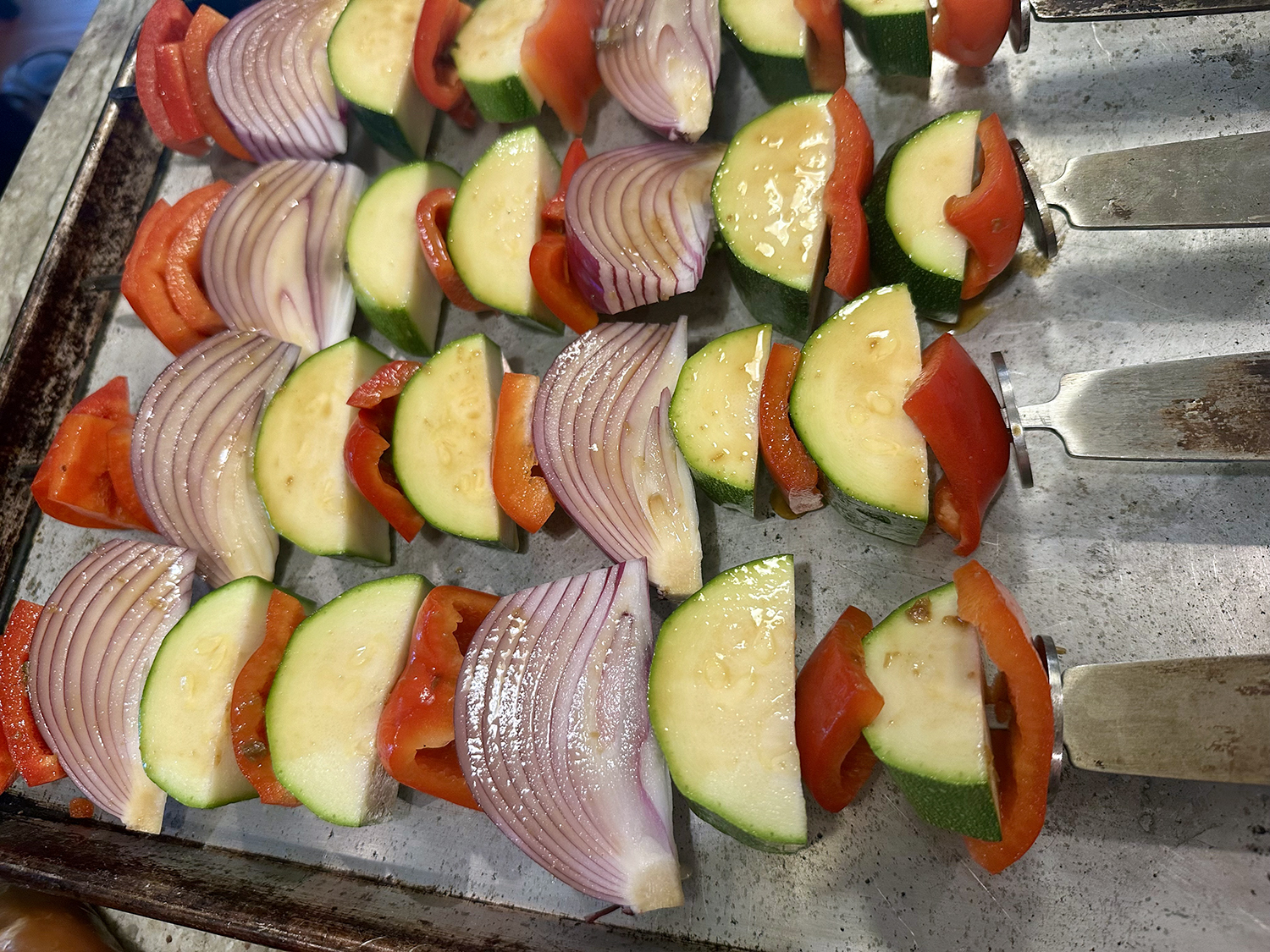
The key to evenly cooked vegetable skewers is cutting the veggies into similarly sized pieces so they fit neatly on the skewers. Drizzled with a creamy chile-mayo sauce and served over rice (or couscous), this dish becomes a hearty, flavor-packed meal that can be easily prepped ahead for the week.

Make Ahead TIPS: Marinate chicken overnight, covered in the refrigerator, for up to 12 hours. Chop and store all vegetables in an airtight container in the refrigerator for up to one day. The mayonnaise sauce can be prepared up to five days in advance and stored in an airtight container in the refrigerator.

BTW, Kewpie mayonnaise is a Japanese brand of mayo made with egg yolks, vinegar, and MSG. Its use of egg yolks (rather than whole eggs) and vinegar makes it richer and tangier than regular mayonnaise. Find it at most grocery stores or online at yamibuy.com.

NOTE: *We knew the skewered vegetables would take longer than the chicken, so we started them about 8-10 minutes prior to adding the thighs to the hot grill. So in total, the veggies grilled for 20 minutes, while the chicken was on for 12 minutes.

While the mayo sauce was indeed tasty, we don’t feel it is absolutely necessary to complete the dish, so if it is not inspiring to you, just omit it. HOWEVER, we feel strongly that the basting marinade and butter sauce need to be doubled, as there was not enough. The new amounts are indicated in the ingredients list below.

Hibachi-Style Chicken with Charred Vegetables

  • Servings: 4
  • Difficulty: easy
  • Print

Ingredients

Chicken Marinade:

  • 1 1/4 cup soy sauce
  • 1/4 cup light brown sugar
  • 1/4 cup finely chopped garlic (about 5 large garlic cloves) 
  • 2 Tbsp. plus 1/2 tsp. toasted sesame oil, divided
  • 2 lb. boneless, skinless chicken thighs (about 6 thighs), patted dry

Vegetables:

  • 2 red bell peppers, cut into 1 1/2-inch pieces (about 2 cups)
  • 1 zucchini, halved lengthwise and cut into 1-inch-thick half-moons (about 2 1/2 cups) 
  • 1 medium red onion, cut into 1 1/2-inch-thick wedges (about 1 1/2 cups)
  • 4 (8-inch) metal or wooden skewers
  • 1/2 tsp. kosher salt, divided

Butter and Sauce:

  • 4 Tbsp. unsalted butter, melted 
  • Canola oil, for grilling
  • 1/2 cup Kewpie mayonnaise
  • 2 tsp. sriracha chile sauce
  • 1/2 tsp. Dijon mustard
  • Cooked white rice, or couscous, for serving

Directions

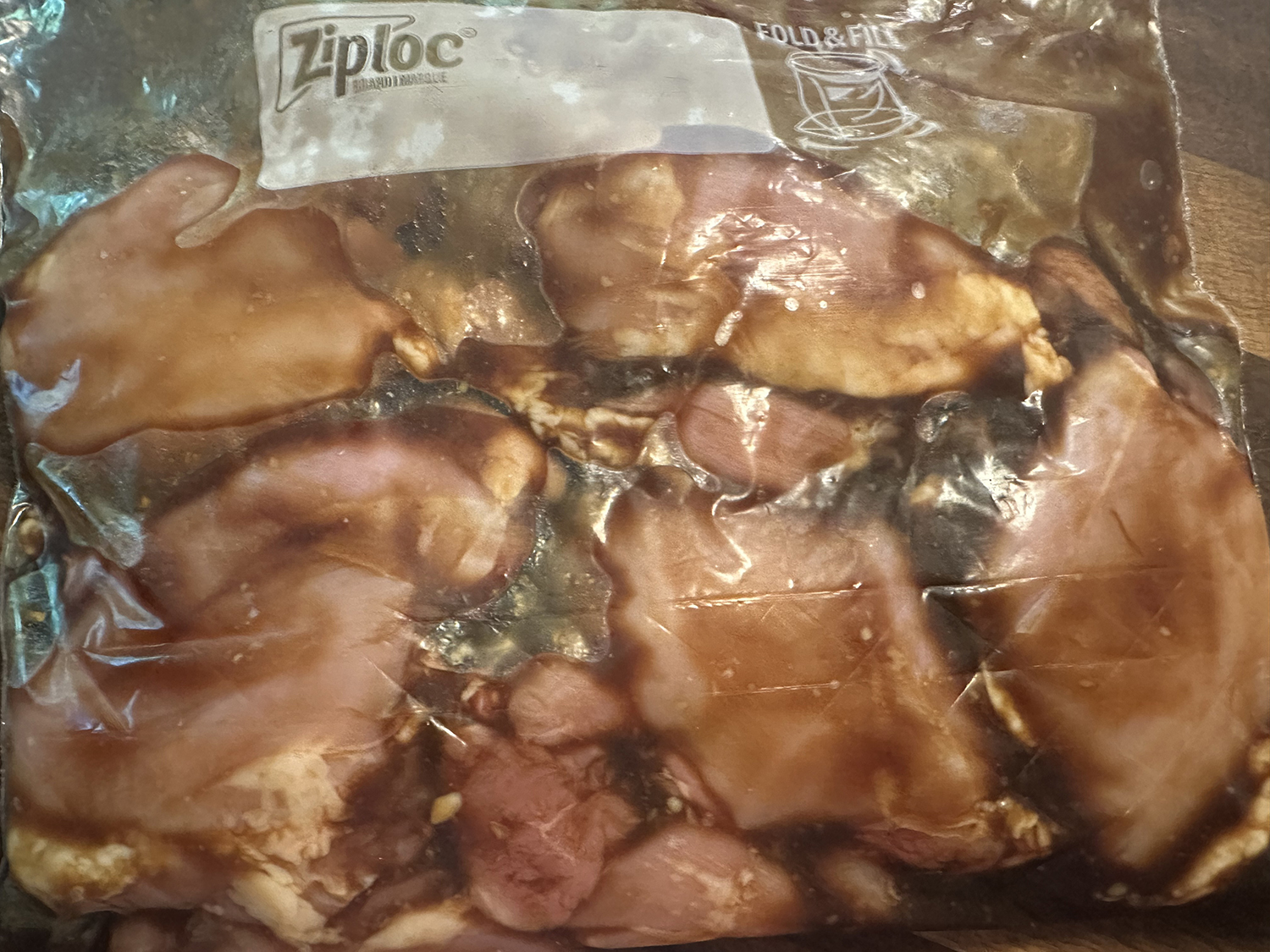
  1. Whisk together soy sauce, brown sugar, garlic, and 1 tablespoon sesame oil in a small bowl until sugar is dissolved. Pour soy mixture into a large ziplock plastic bag, reserving 6 tablespoons soy mixture in bowl. Add chicken to bag; seal bag, and gently massage soy mixture into chicken. Set aside, and let marinate at room temperature for at least 30 minutes or up to 12 hours.
  2. Thread peppers, zucchini, and onion onto skewers. Brush vegetables with 1 tablespoon reserved soy mixture; sprinkle with 1/4 teaspoon salt. Stir melted butter and remaining 1/4 teaspoon salt into remaining 2 tablespoons soy mixture in bowl; set aside.
  3. Preheat grill to medium-high (400°F to 450°F). Remove chicken from marinade, shaking off excess; discard marinade. Lightly grease grill grates with canola oil; place chicken and skewered vegetables on grates. Grill, uncovered, turning skewers and chicken occasionally and basting with soy-butter mixture until a thermometer inserted into thickest portion of chicken registers 170°F, 12 to 15 minutes, and vegetables are tender and charred in spots, about 12 minutes. (*Please see note our cooking times above.) Transfer to a cutting board, and let rest for 5 minutes.
  4. Stir together mayonnaise, sriracha, mustard, and remaining 1/2 teaspoon sesame oil in a small bowl. Chop chicken into bite-size pieces, and remove vegetables from skewers. Serve chicken and vegetables over cooked rice, and drizzle with mayonnaise mixture. Garnish with scallions and shichimi togarashi.

http://www.lynnandruss.com

Adapted from a recipe by Andee Gosnell for Food & Wine

Panang Curry

Rich with coconut milk and crushed peanuts, panang curry, also known as phanaeng or panaeng curry, is subtly spiced with coriander and cumin. This version is made with chicken, but you’ll often find it made with beef and sometimes prawns.

Panang curry is sometimes mistakenly linked to Penang, a Malaysian island, but it actually originated in Thailand. It’s important to use thick coconut milk for the creamiest results, and be sure to break the sauce by simmering until a layer of bright red oil shimmers on top. Purchase panang curry paste online or at an Asian market and add crushed peanuts to it if it doesn’t include them (not all of them do), or prepare your own paste, as is done here.

Since there are really no veggies other than the Fresno chili, serve with a vegetable side and/or salad. The original recipe indicates it will create 4 servings with rice. We beg to differ. You could maybe squeeze out 3 servings, but realistically plan on 2. (See above photo showing one of our serving portions.)

TIPS: Different brands of curry paste vary in spice levels. Taste a little first and determine how much to use. Maesri brand curry paste is highly recommended.
Coconut milk varies widely in its make up. Some cheap brands have as little as 25% coconut. Look at the ingredients, you should not accept less than 60%, some brands go up to 85% plus… Not all coconut milks are the same, it will makes a huge difference to the taste.

Panang Curry

  • Servings: 2-3
  • Difficulty: easy
  • Print

Ingredients

For the Panang Curry Paste

  • ½ tsp. coriander seeds
  • ½ tsp. cumin seeds
  • ¼ cup/1 ounce dry-roasted, unsalted peanuts
  • 2 to 4 Tbsp. red curry paste, to taste (see Tip)

For the Curry

  • 1 lb. boneless, skinless chicken breasts or thighs
  • 2 tsp. fish sauce, plus more as needed
  • 1 (13.5-oz) can full-fat coconut milk (do not shake)
  • 8 makrut lime leaves, deveined, 6 torn and 2 thinly sliced, OR 1 teaspoon grated lime zest, for serving
  • 1½ tsp. palm, granulated or brown sugar, plus more as needed
  • 1 small, mild, thin-skinned pepper, such as a Fresno, Anaheim or banana pepper, or ½ small red bell pepper, thinly sliced
  • Thai basil, thinly sliced, for serving (optional, if makrut lime leaves are not used)
  • Rice, for serving

Directions

  1. Prepare the curry paste: Heat a medium sauté pan over medium. Add the coriander and cumin. Swirl the pan around, or toss the seeds with a wooden spoon, and gently toast until fragrant, about 1 minute, taking care not to burn the spices. Transfer to a small plate and cool, then place in a spice grinder or mortar and pestle, and grind to a fine powder.
  2. Add the peanuts and finely grind until smooth. Transfer the mixture to a small bowl, add the red curry paste and stir until mixed.
  3. Thinly slice the chicken into 1½-inch-long pieces. Place in a medium bowl, drizzle with the fish sauce and mix until coated.
  4. Heat the same pan over medium-high. Scoop 4 tablespoons of the thick cream off the top of the coconut milk and add it to the pan; it will immediately sizzle. Stir until thickened and bubbling on the sides, about 30 seconds. Stir in the curry paste, to taste. Reduce to medium, and cook the paste, continuously stirring, until a thick paste forms and the coconut oil separates (the sauce “breaks”), 2 to 3 minutes. If it starts sticking, add a splash of coconut milk and scrape up anything from the bottom of the pan.
  5. Add the torn lime leaves or zest and sugar. Cook, continuously stirring, to dissolve the sugar and infuse the flavors, about 2 minutes. Add the remaining coconut milk, increase to medium-high, bring to a boil and cook, continuously stirring, until the curry has thickened enough to coat the back of a spoon and has a layer of bright red oil on top, 4 to 8 minutes. The curry should be at a lively simmer; adjust the heat as necessary.
  6. Add the chicken and cook, stirring frequently, until cooked through, 3 to 4 minutes. If using, stir in the peppers, saving a few for serving, and cook until just incorporated, about 1 minute. Taste and add more fish sauce and sugar, if needed. (Be mindful, this is not a sweet curry; the sweetness should hit a back note, not lead with it.)
  7. Garnish with the sliced lime leaves or Thai basil and reserved peppers. Serve alongside rice.

http://www.lynnandruss.com

Recipe by Naz Deravian for NYTimes Cooking

Go-To Grilled Chicken Kebabs

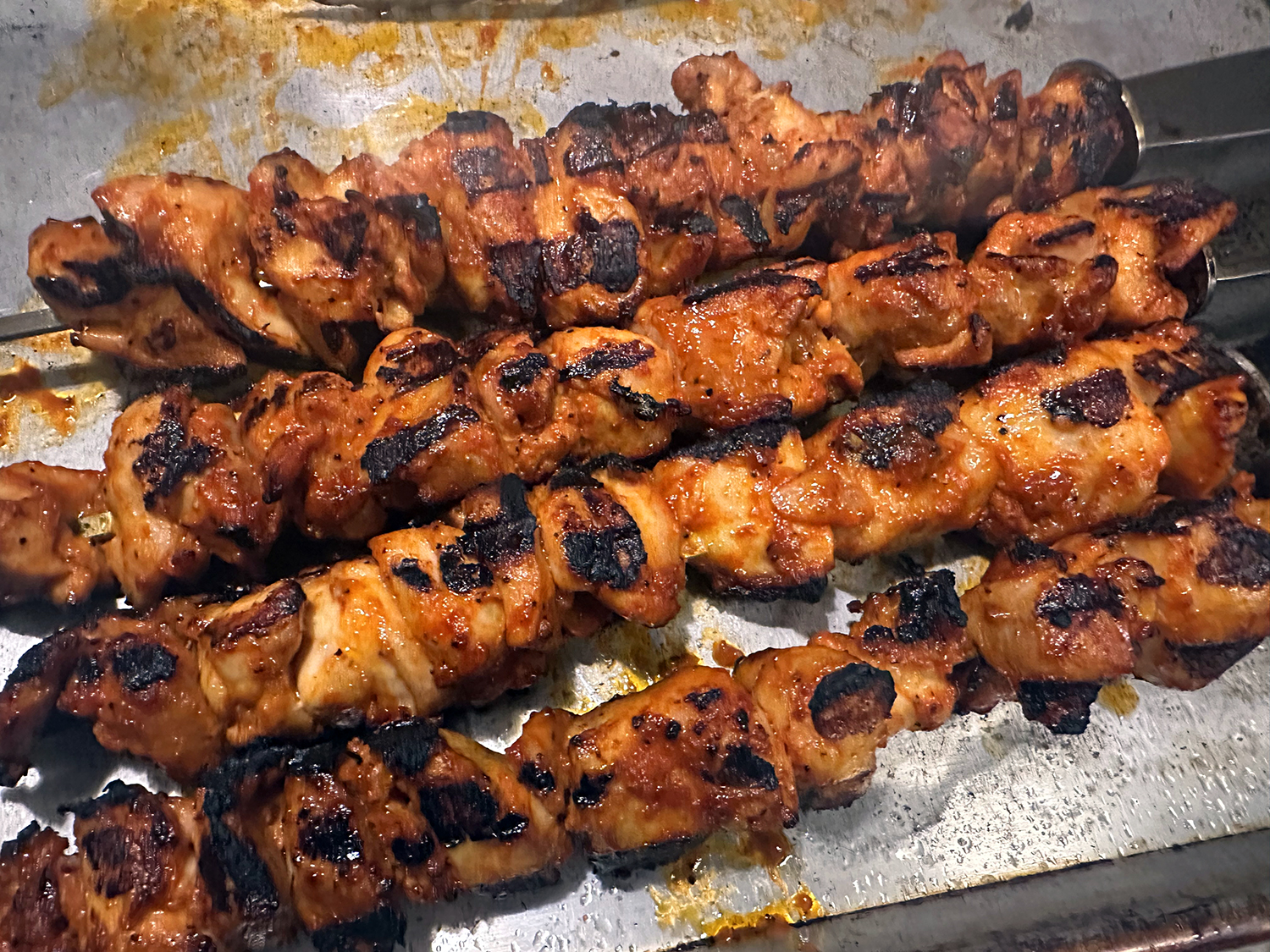
Grilled kebabs that are juicy and savory with deep browning and charring are pretty much everyone’s desired result. So to start, use boneless, skinless chicken thighs, which have a rich flavor and collagen that can break down to keep the meat juicy.

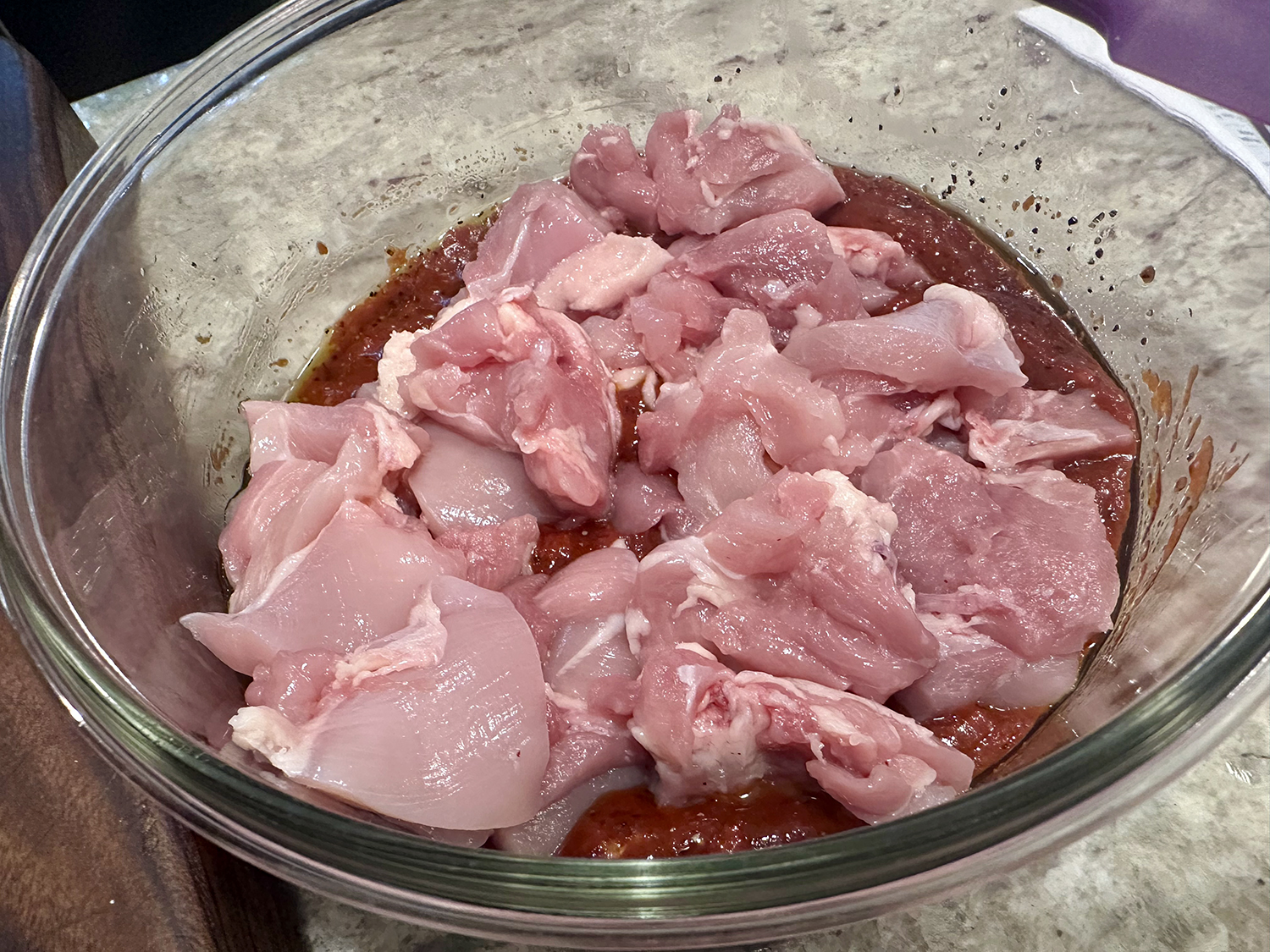
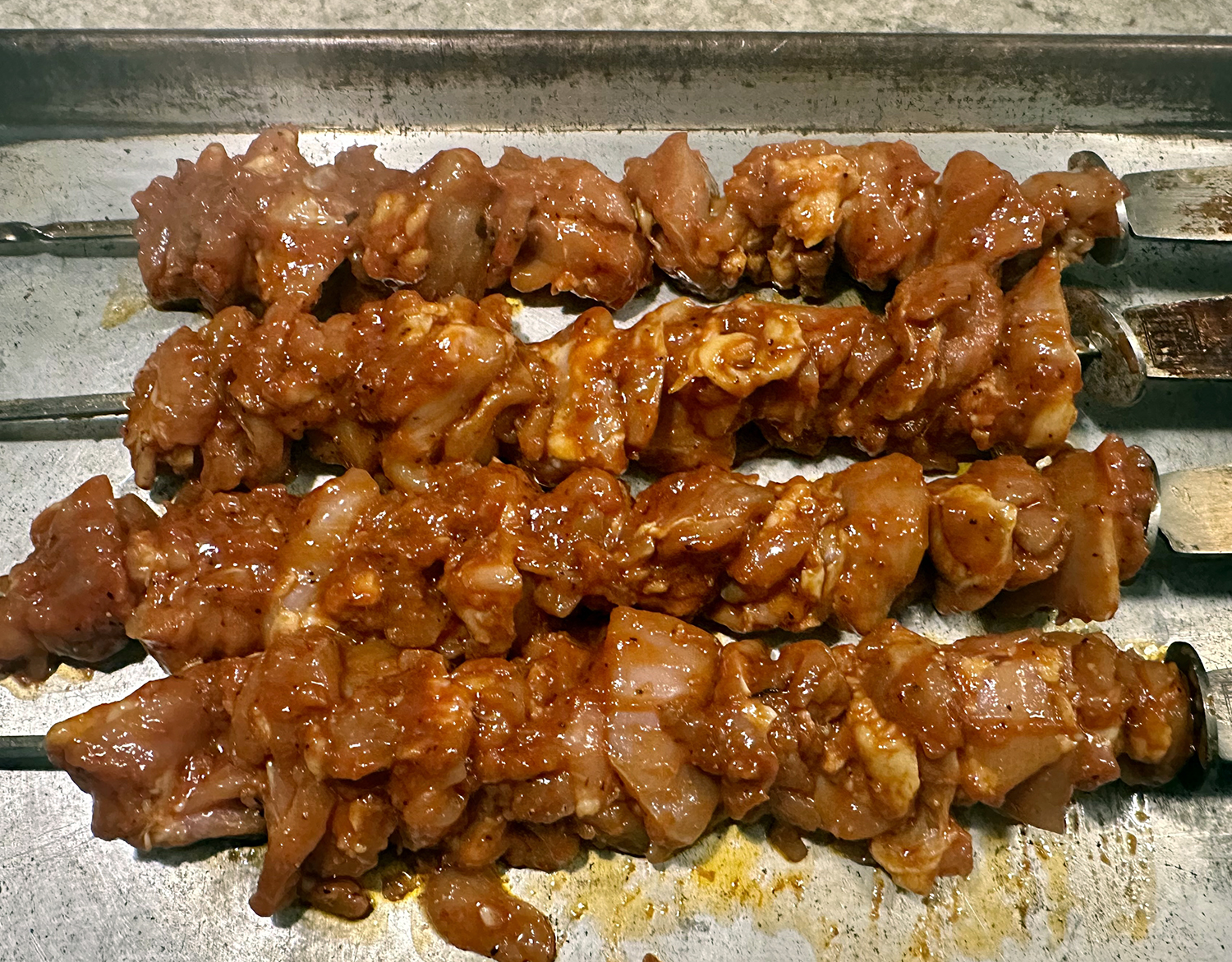
It may not please you, but leave the fat on the chicken to encourage small flare-ups, which contribute to creating char and grill flavor. Cut the chicken into 1-inch pieces and toss them in a thick, flavorful mixture of tomato paste*, salt, sugar, fish sauce, garlic, and oil.

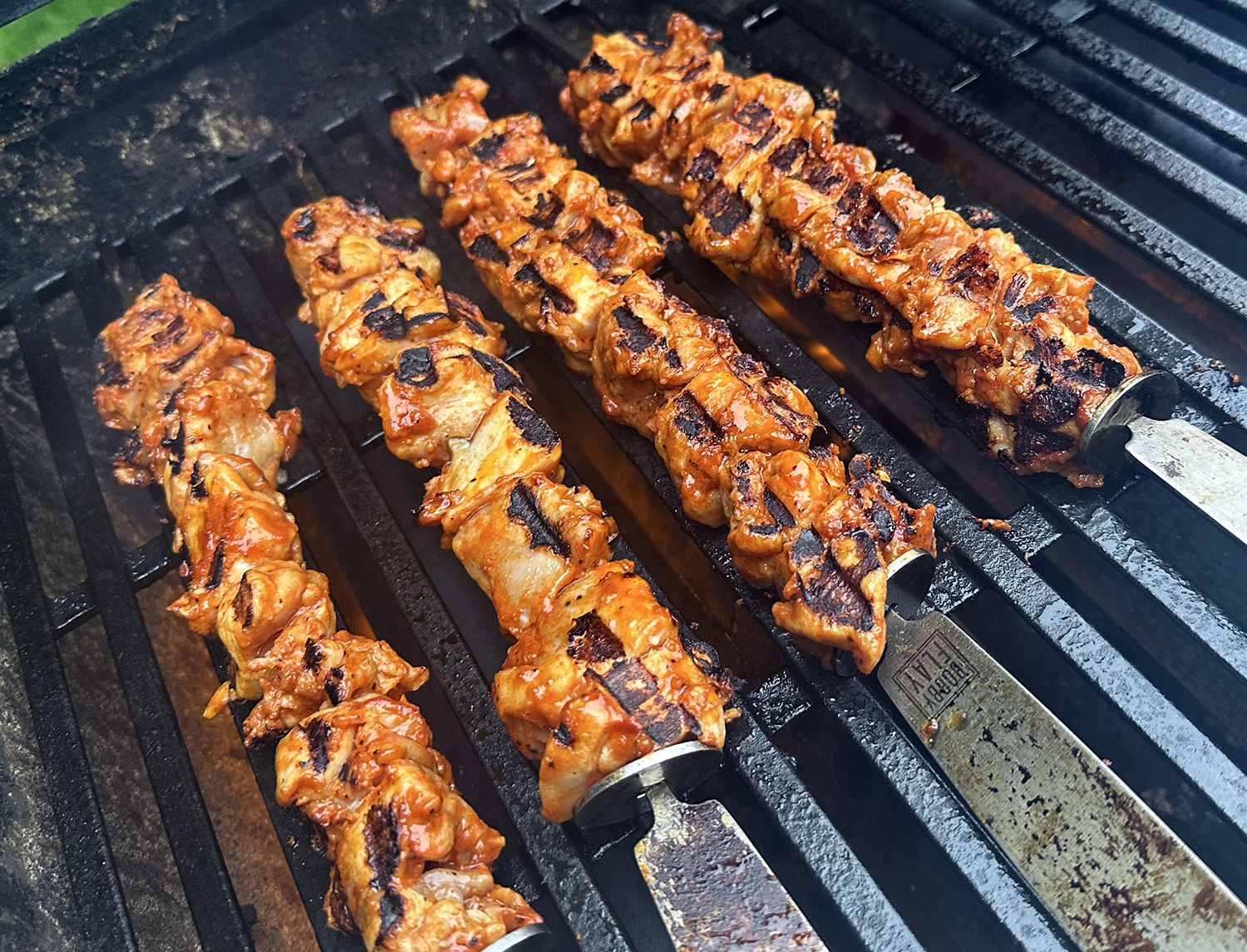
After letting the chicken marinate for at least an hour (up to 12 hours), thread onto skewers and cook over a moderately hot grill. The fat on the chicken encourages small flare-ups that create lots of char and grill flavor. Rotate the skewers a quarter-turn every couple of minutes to ensure even cooking and browning.

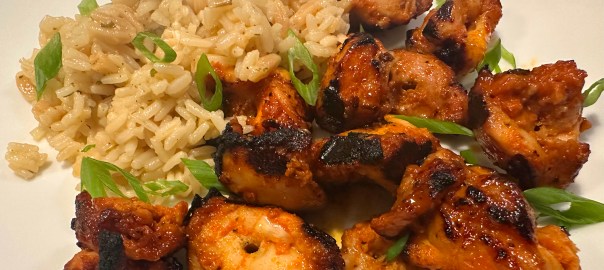
These bite-size morsels are tailor-made for sliding off the skewer onto warm flatbread or scooping up with rice and vegetables. We paired ours with a rice pilaf dish and a side salad.

*For a little kick, the tomato paste was cut in half and and two tablespoons of gochujang was added. Our chicken chunks marinated for 6 1/2 hours before threading them onto metal skewers.

TIP: Chose boneless, skinless thighs for the kebabs. They are more flavorful and fattier than breasts and, more important, can be cooked to a higher temperature, which allows them to thoroughly brown without drying out. That’s because thighs contain collagen, which, when heated, breaks down and becomes able to hold water and thus keeps the meat juicier.

Go-To Grilled Chicken Kebabs

  • Servings: 4
  • Difficulty: easy
  • Print

Ingredients

  • ¼ cup tomato paste, OR 2 Tbsp. each of tomato paste and gochujang for a little kick
  • 3 Tbsp. vegetable oil
  • 2 Tbsp. fish sauce
  • 3 garlic cloves, minced to paste
  • 1½ tsp. sugar
  • 1¼ tsp. kosher salt
  • ½ tsp. pepper
  • 2 lbs. boneless, skinless chicken thighs, untrimmed, cut into 1-inch pieces
  • 4 (12-inch) metal skewers

Directions

  1. Whisk tomato paste, oil, fish sauce, garlic, sugar, salt, and pepper in medium bowl until smooth. Add chicken and, using your hands or silicone spatula, mix until chicken is evenly coated. Cover and refrigerate for at least 1 hour or up to 12 hours.
  2. FOR A CHARCOAL GRILL: Open bottom vent completely. Light large chimney starter three-quarters filled with charcoal briquettes (4½ quarts). When top coals are partially covered with ash, pour evenly over half of grill. Set cooking grate in place, cover, and open lid vent completely. Heat grill until hot, about 5 minutes.
  3. FOR A GAS GRILL: Turn all burners to high; cover; and heat grill until hot, about 15 minutes. Leave primary burner on high and turn off other burner(s).
  4. While grill heats, thread chicken onto skewers, rolling or folding pieces as necessary to form 1-inch pieces and alternating leaner pieces with fattier pieces (fold any excess fat onto skewers as needed to keep it from hanging loose).
  5. Clean and oil cooking grate. Place kebabs directly over coals (over primary burner if using gas) and cook (covered if using gas) until grilled side is well browned and slightly charred, 2 to 2½ minutes. Turn one-quarter turn. Continue to cook and turn until all sides are browned and charred and meat registers 175 degrees, about 12 minutes in total, rearranging skewers halfway through cooking so those farthest from heat source are now closer and vice versa. (If large flare-ups occur, slide kebabs to cool side of grill until fire dies down.) Remove kebabs from grill and let rest for 5 minutes. Serve.

Two Other Options

FOR HARISSA, ALEPPO PEPPER, AND MINT MARINADE: Reduce tomato paste to 2 tablespoons. Add 2 tablespoons harissa, 2 teaspoons ground dried Aleppo pepper, and 2 teaspoons dried mint to marinade in step 1.

FOR RED CURRY PASTE AND LIME MARINADE: Reduce tomato paste to 2 tablespoons. Add 2 tablespoons Thai red curry paste and 2 teaspoons grated lime zest to marinade in step 1. Serve kebabs with lime wedges.

http://www.lynnandruss.com

Adapted from a recipe by Annie Petito for Cook’s Illustrated

Chicken Manchurian

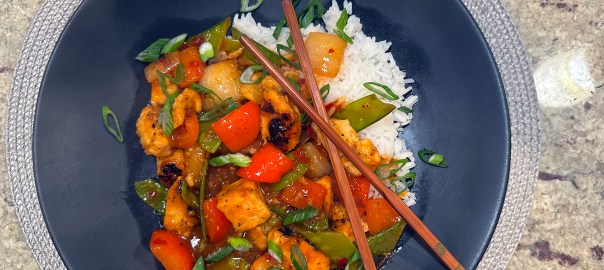
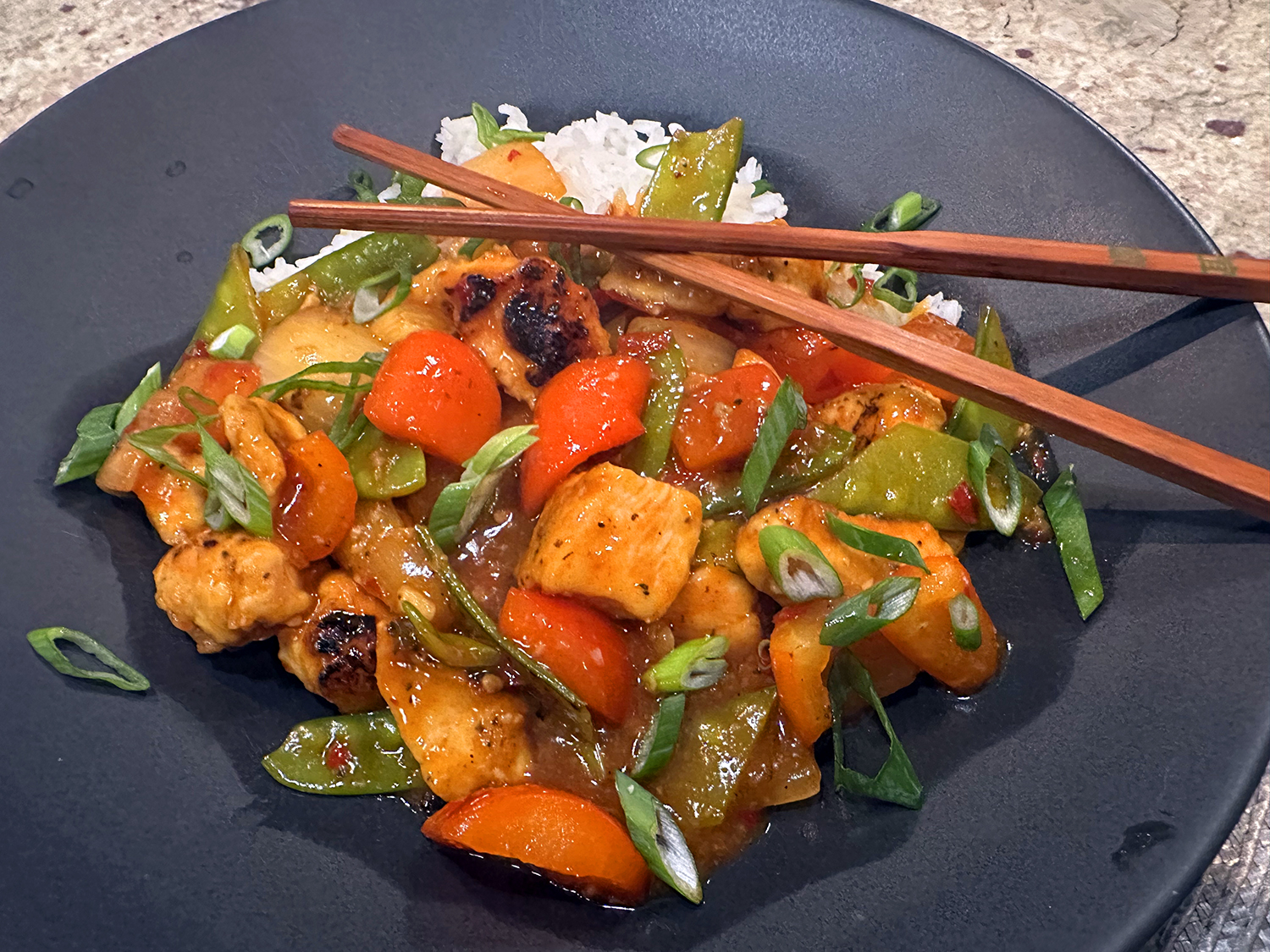
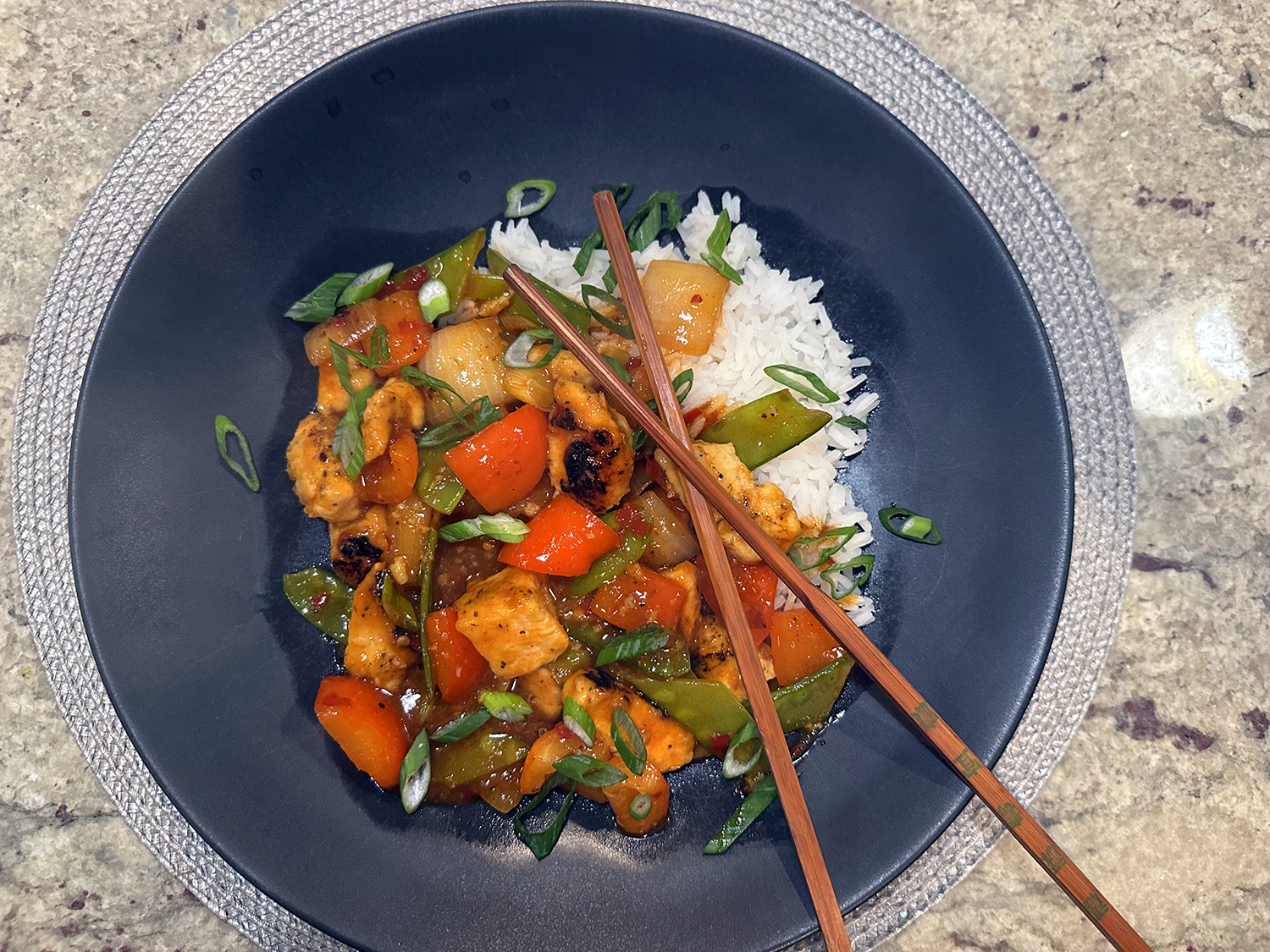
We just love colorful stir-fries that explode with flavor! And this recipe doesn’t disappoint.

A bit of background: “A stalwart of Desi Chinese cooking, chicken Manchurian is immensely popular at Chinese restaurants across South Asia. Nelson Wang, a third generation Chinese chef who was born in Kolkata (formerly Calcutta), is credited with inventing the dish in Mumbai in the 1970s. This recipe comes from attempts at recreating the version served at Hsin Kuang in Lahore, Pakistan, in the late ’90s.”

You may have noticed at restaurants, it’s almost always served on a sizzler platter, the tangy, sweet-and-sour sauce bubbling and thickening on its way to the table. But making it at home doesn’t compromise any of the punchy flavors, in fact you can adjust the spiciness to your own preferences.

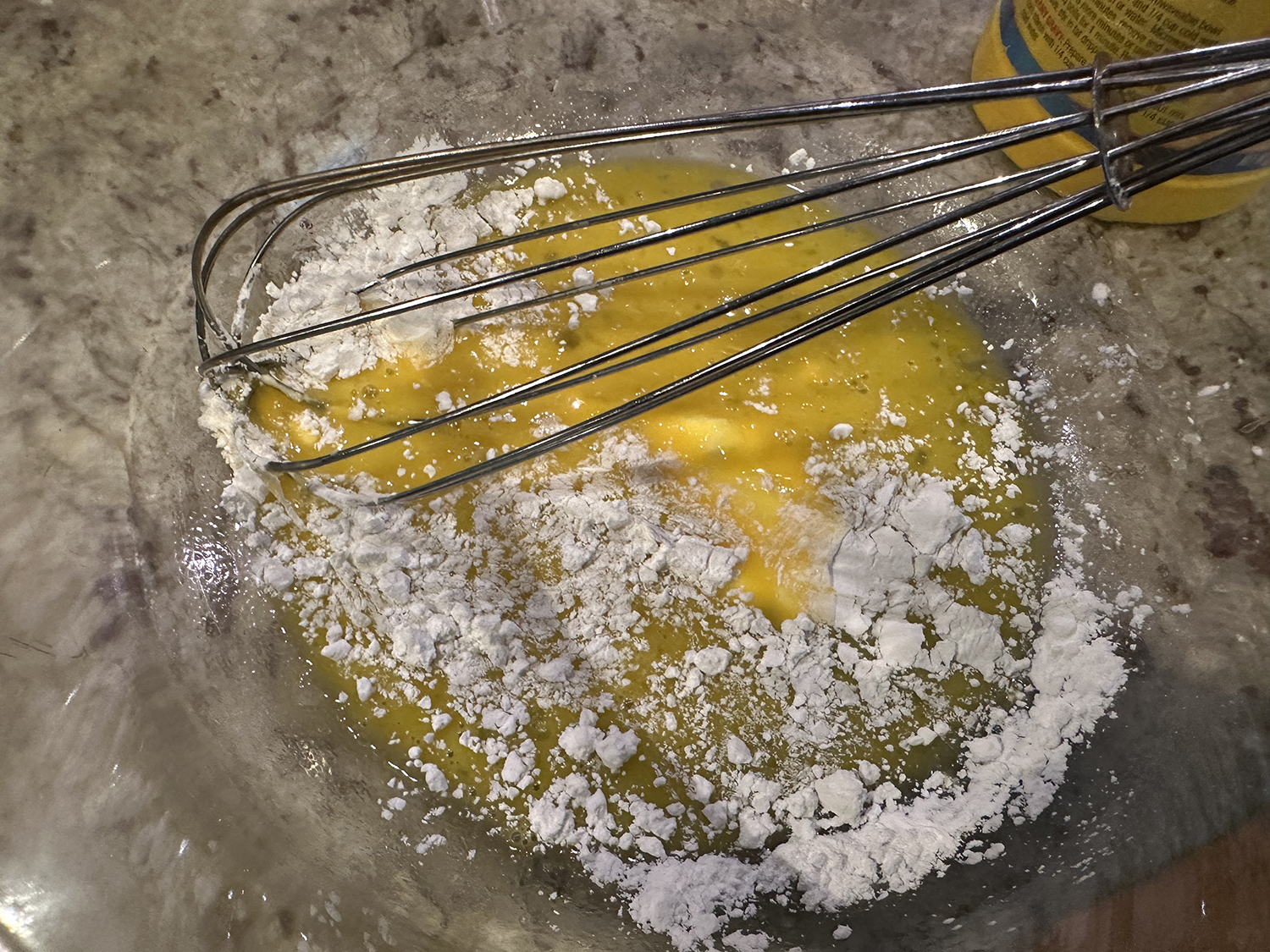
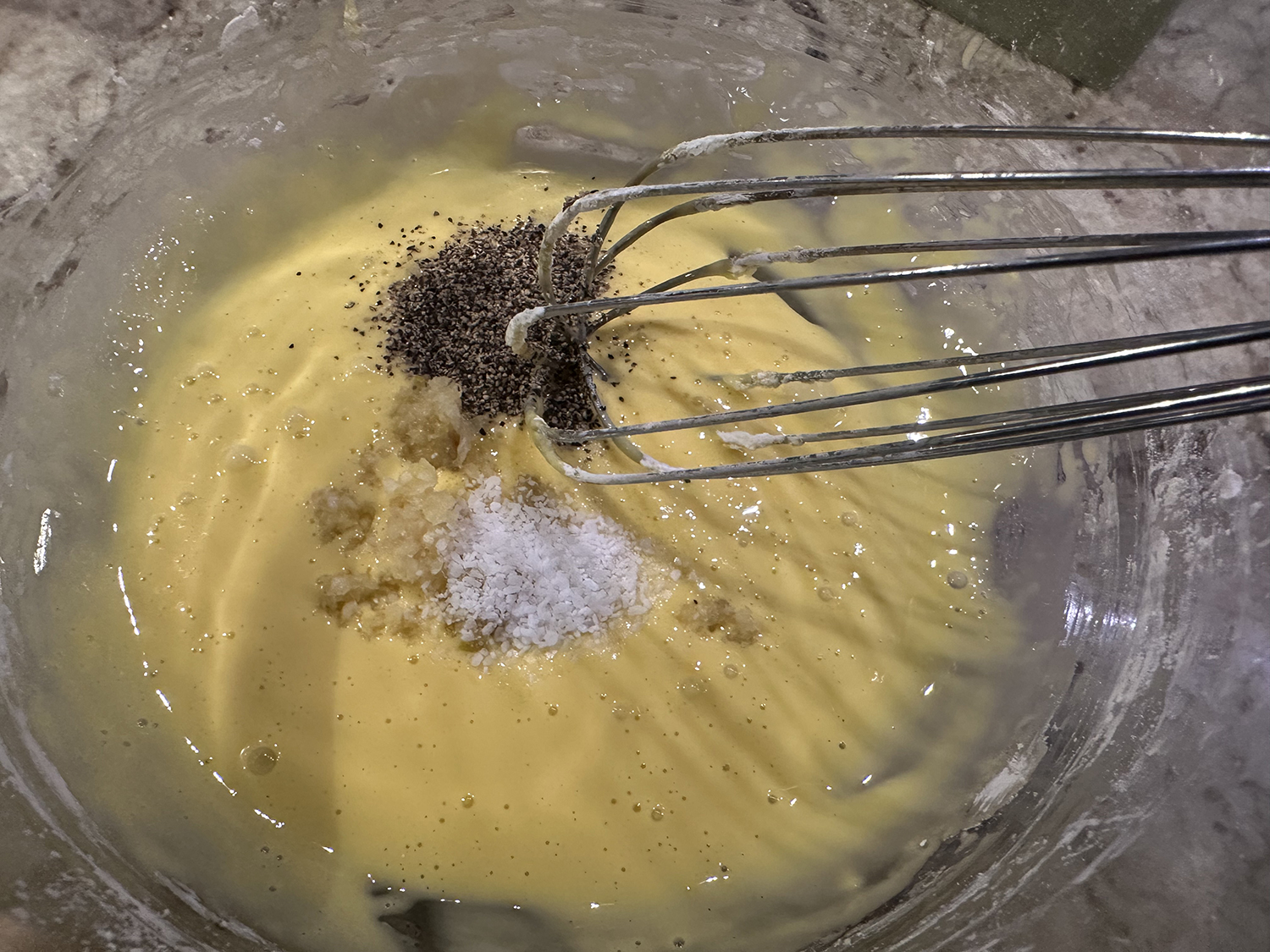
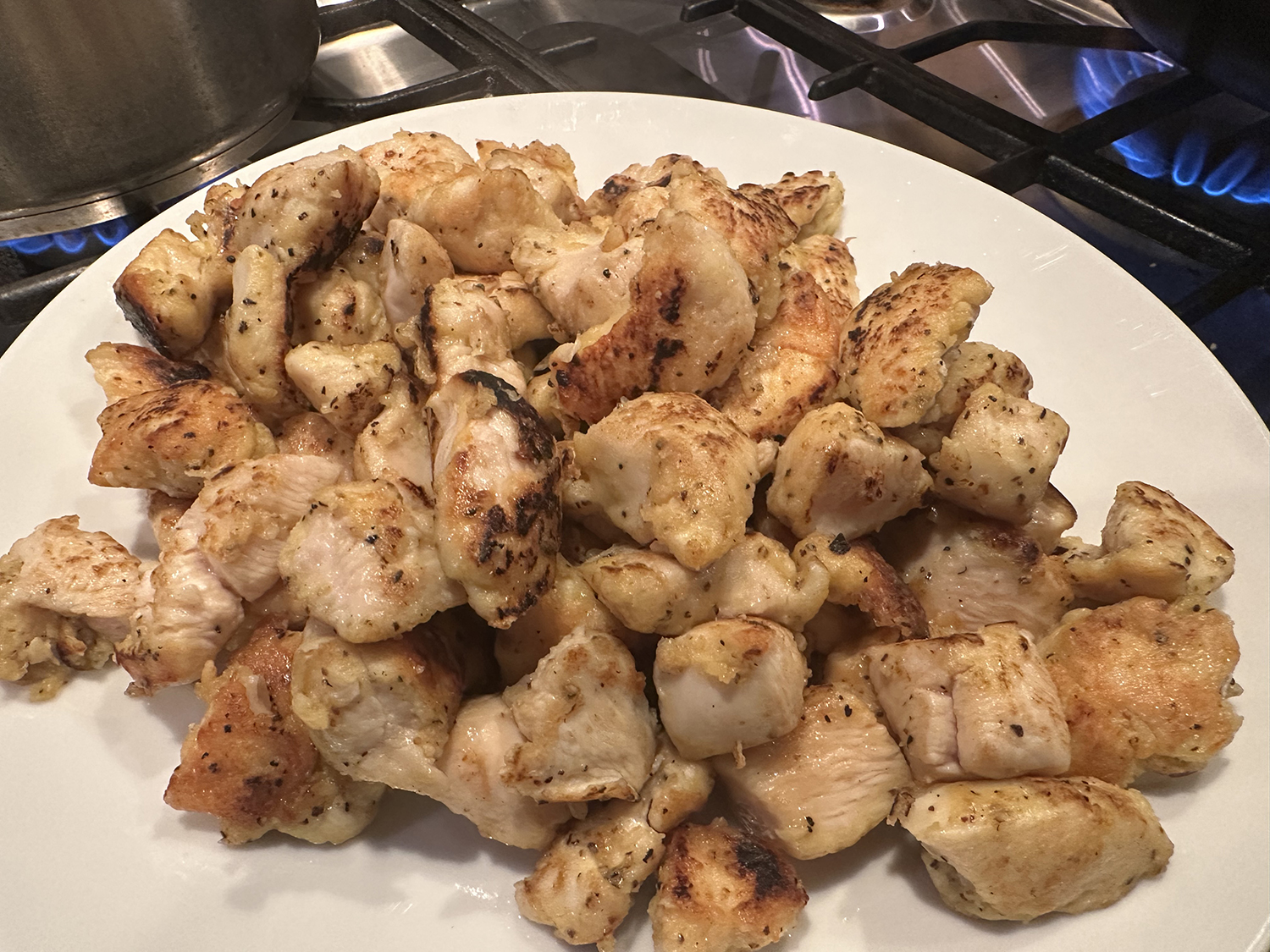
Velveting the chicken in egg and cornstarch means it’ll stay tender through the short cooking process; bell pepper, snow peas and onions add freshness and crunch to the otherwise intense flavors from ketchup and chile-garlic sauce.

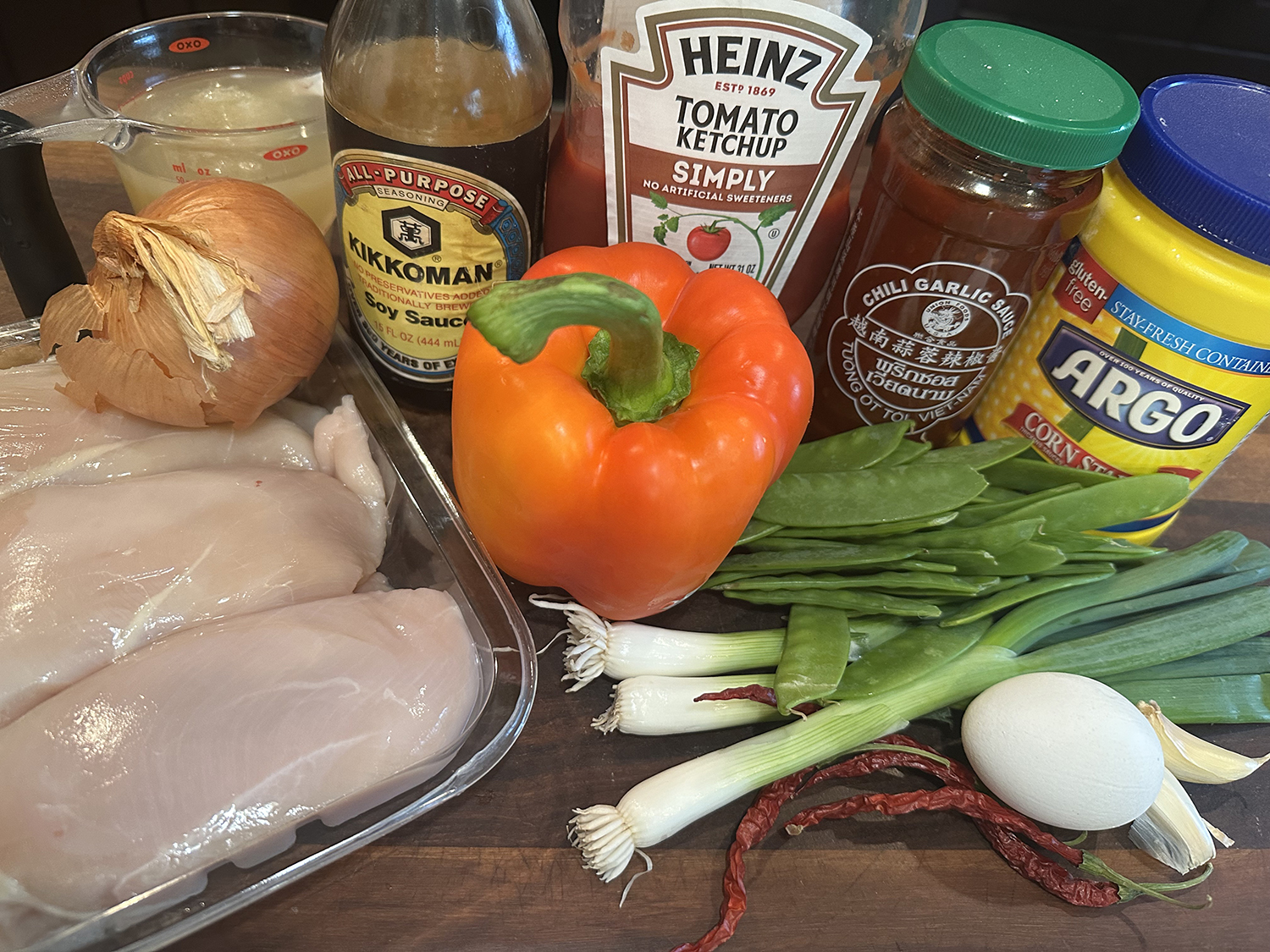
As is typical, we did make some alterations. The ketchup was cut back by half to limit the sweetness. And last minute, we nixed the dried chiles altogether since their was so much chile-garlic sauce, and it was plenty spicy. Six ounces of snow peas were included for more color and crunch.

Finally at the end, for the slurry, a mere teaspoon of cornstarch wasn’t enough. Start with 1 tablespoon of corn starch in 1/4 cup of cool water combined until smooth. In Step 6, add half of it, and if more is needed, add a tablespoon at a time until you get your consistency. We used it all.

Chicken Manchurian

  • Servings: 4
  • Difficulty: easy
  • Print

Ingredients

  • 1 egg
  • 1/4 cup cornstarch, plus 1 Tbsp. for the slurry
  • 1 tsp. garlic paste or freshly grated garlic
  • 1 tsp. black pepper
  • Fine sea salt
  • 1½ lbs. boneless, skinless chicken breast, cut into ¾-inch cubes
  • ⅓ cup vegetable oil
  • 3 whole dried dundicut chiles or bird’s-eye chiles (optional)
  • 2-4 Tbsp. ketchup
  • ¼ cup chile-garlic sauce
  • 2 Tbsp. soy sauce
  • 1 cup chicken stock
  • 1 red bell pepper, halved, seeded and cut into ¾-inch pieces
  • 1 small onion, cut into ¾-inch cubes; OR 4 large scallion, trimmed and thinly sliced, more for garnish; OR both
  • 6 oz. snow peas, trimmed of strings, cut in half diagonally if large
  • Cooked white rice or fried rice, for serving

Directions

  1. Velvet the chicken: In a medium bowl, whisk the egg. Continue whisking and gradually add 4 tablespoons of cornstarch until there are no lumps. Stir in garlic, black pepper and ½ teaspoon salt. Add the chicken pieces and stir until well coated. Cover and set aside for 30 minutes.
  2. Meanwhile, in a small bowl, stir together ketchup, chile-garlic sauce, soy sauce, ½ teaspoon salt and chicken stock (if not using chicken stock, stir in 1 cup water). Set aside.
  3. In a large wok or deep, high-sided skillet, heat oil on medium for 45 seconds. Add half of the chicken (done in two batches to avoid crowding) and cook until it starts turning white, 1 to 2 minutes. Flip the pieces and continue cooking until the chicken starts to turn golden, 2 to 3 minutes. Using a slotted spoon, remove chicken and set aside. Repeat with remaining chicken.
  4. (Optional) Add dried chiles and cook on medium for about 1 minute, stirring occasionally.
  5. Add more oil to the wok. When hot, add the bell pepper and onion. Cook, stir-frying constantly until crisp tender. Add the snow peas and scallions, stirring altogether for about 1 minute more.
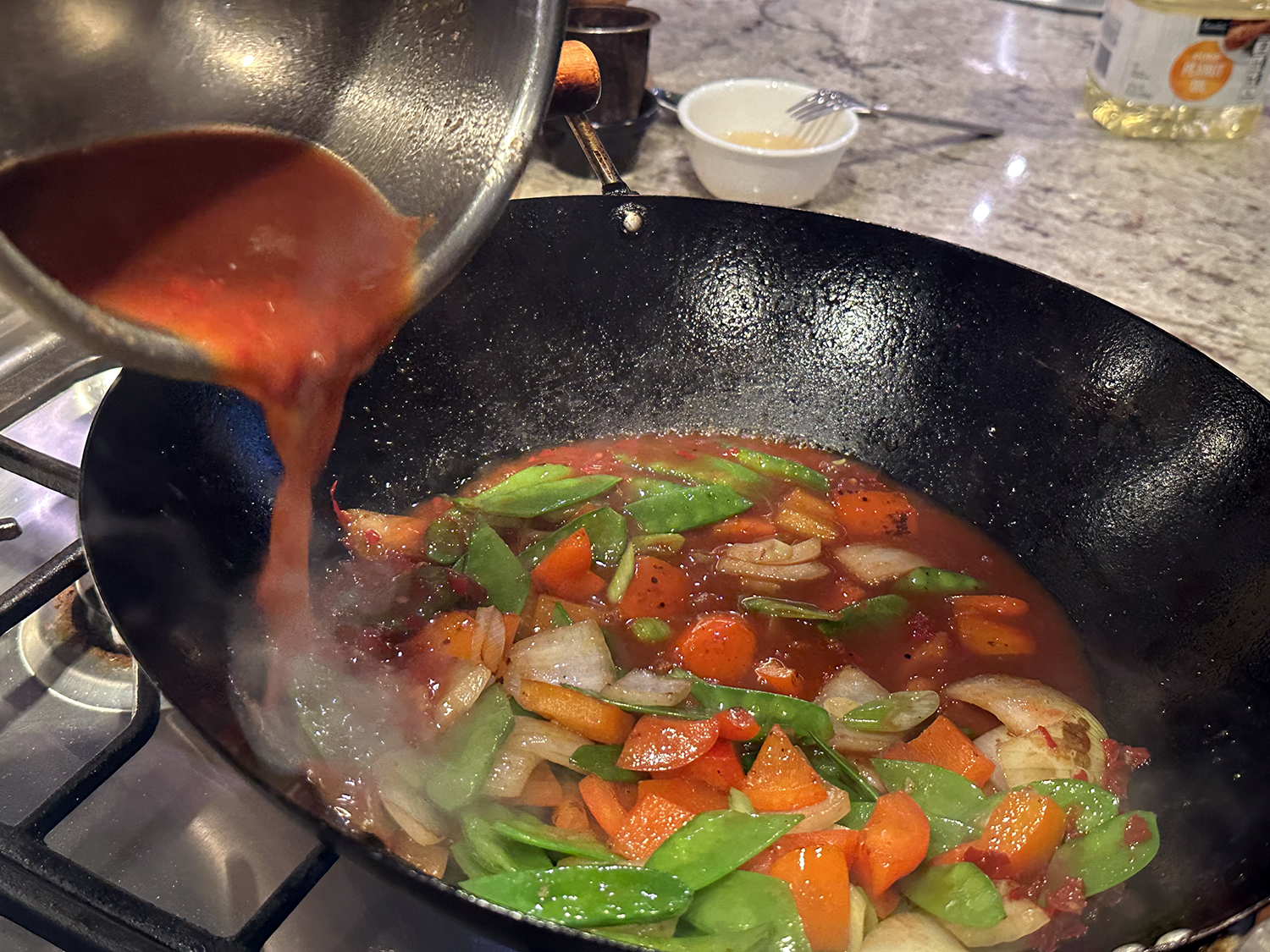
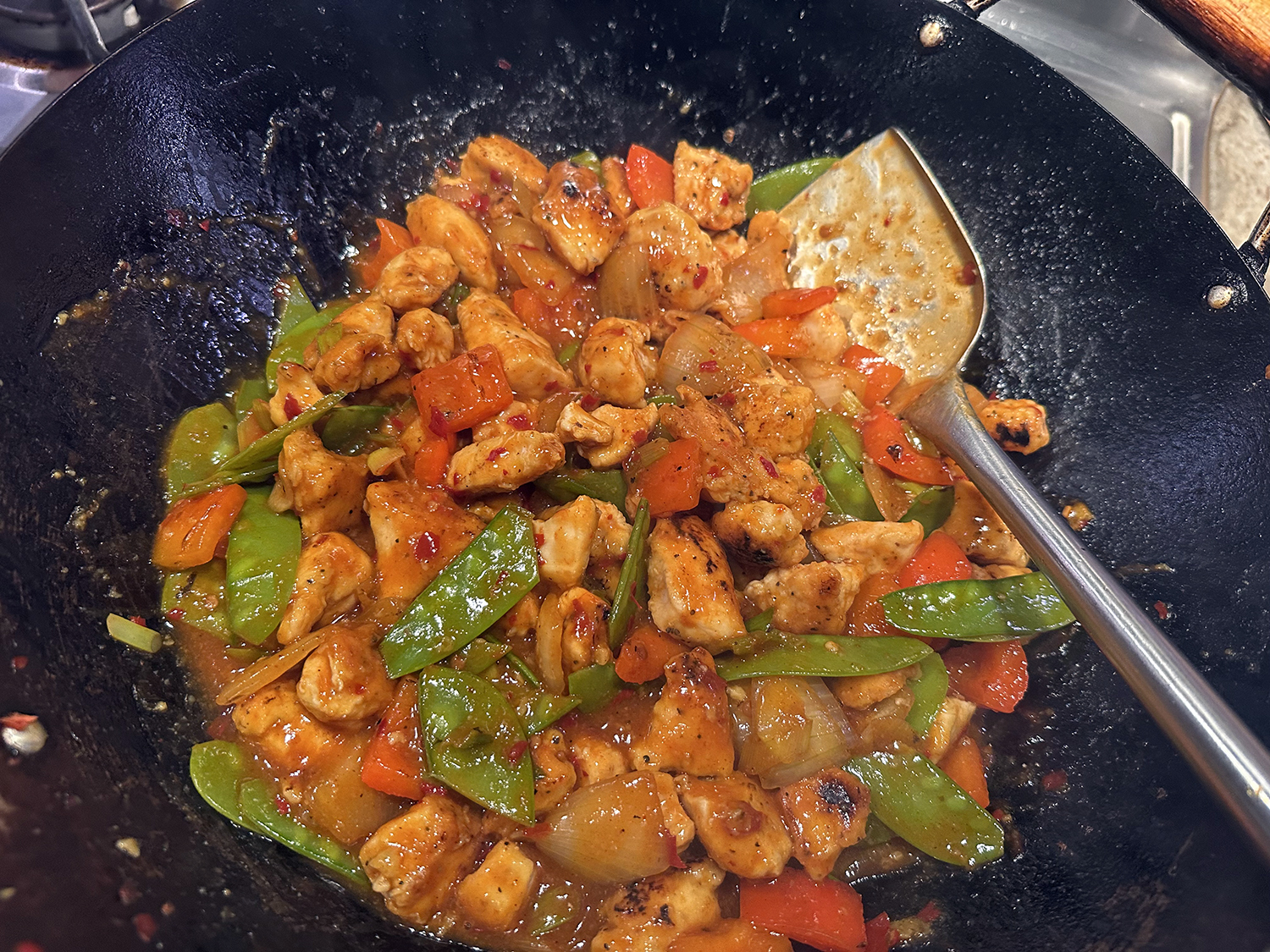
  6. Separately, mix the remaining 1 tablespoon cornstarch with ¼ cup water until smooth. Stir it into the wok and simmer until the sauce thickens and starts to turn glossy, 3 to 4 minutes. Add chicken and stir to combine. Top with scallion slices. Serve over steamed rice.

http://www.lynnandruss.com

Adapted from a recipe by Zainab Shah for NYTimes Cooking

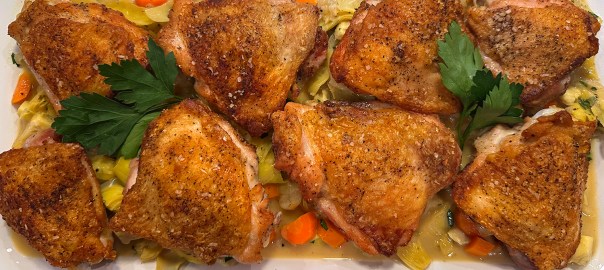
Chicken with Artichokes and White Wine

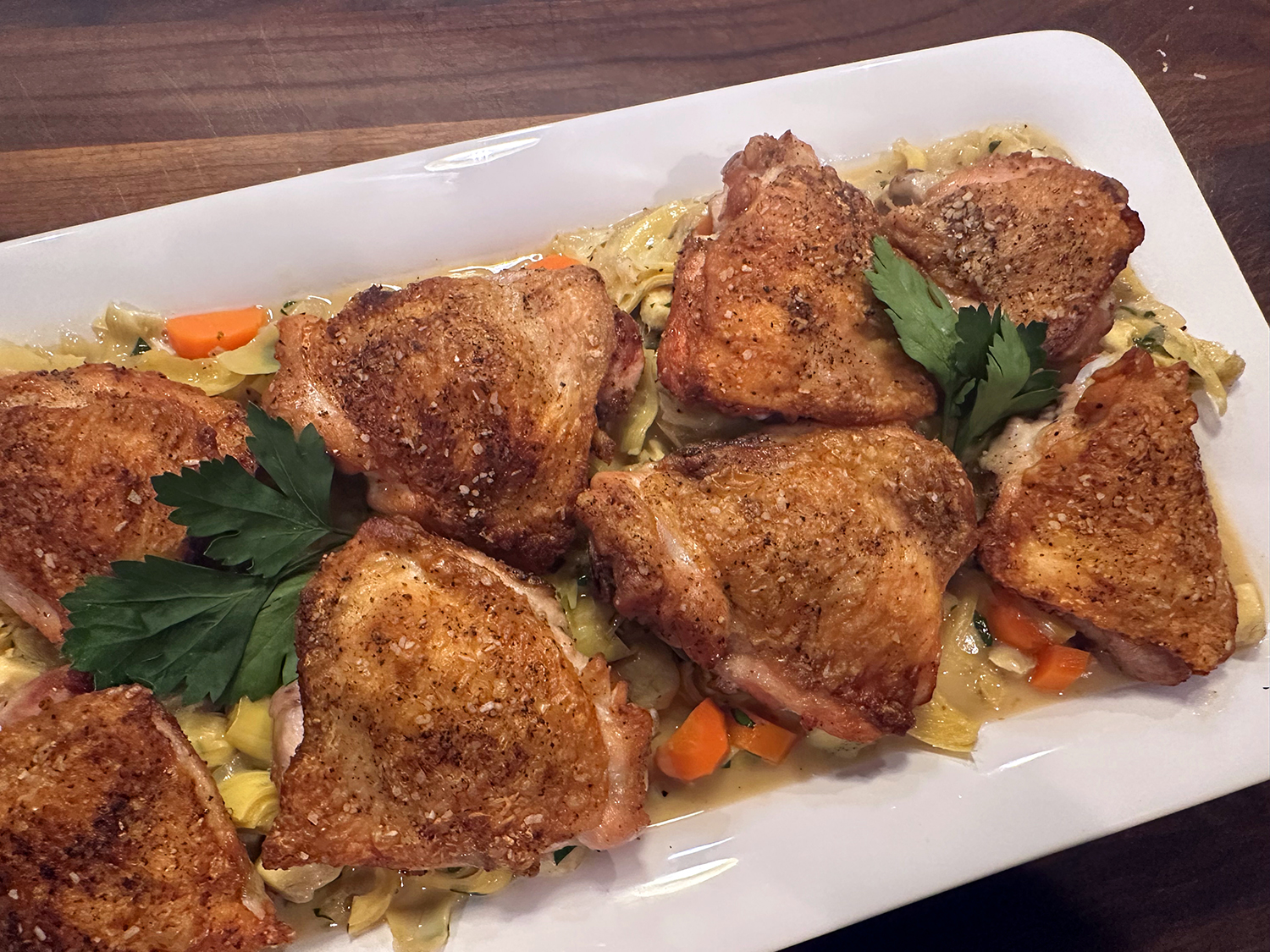
Maybe you have never of Artichauts à la barigoule, a classic Provençal braise that combines fresh artichoke hearts with aromatic vegetables, herbs and white wine. If not, this recipe is worth a try. Here, chicken thighs are seared on the stovetop and while they finish cooking in the oven, canned artichokes are used to put together a simplified barigoule that serves as both a vegetable accompaniment and a flavorful sauce.

For subtle lemony notes, strips of zest are simmered with the artichokes. A Y-style vegetable peeler is the best tool for removing zest in strips from the fruit, but try to take only the yellow peel, as the white pith underneath is bitter. If desired, serve with warm crusty bread and or a side salad.

Don’t use marinated artichoke hearts for this recipe. The seasonings will overpower the other ingredients. Instead of spooning the artichoke mixture on and around the thighs, we laid the mixture in a deep platter and placed the chicken on top to prevent the crispy skin from getting soggy before serving.

Chicken with Artichokes and White Wine

  • Servings: 4
  • Difficulty: easy
  • Print

Ingredients

  • 2½ lbs. bone-in, skin-on chicken thighs, trimmed and patted dry
  • Kosher salt and ground black pepper
  • 1 Tbsp. extra-virgin olive oil
  • 3 Tbsp. salted butter, cut into 1-Tbsp. pieces, divided
  • 1 medium yellow onion, halved and thinly sliced
  • 2 medium carrots, peeled, halved lengthwise and sliced crosswise ¼ inch thick
  • 4 medium garlic cloves, minced
  • 1 cup dry white wine
  • 2 14-oz. cans artichoke hearts, drained, cut into quarters if whole
  • 3 3-inch-long strips lemon zest, plus 2 Tbsp. lemon juice
  • 1 cup low-sodium chicken broth
  • ¼ cup finely chopped fresh flat-leaf parsley

Directions

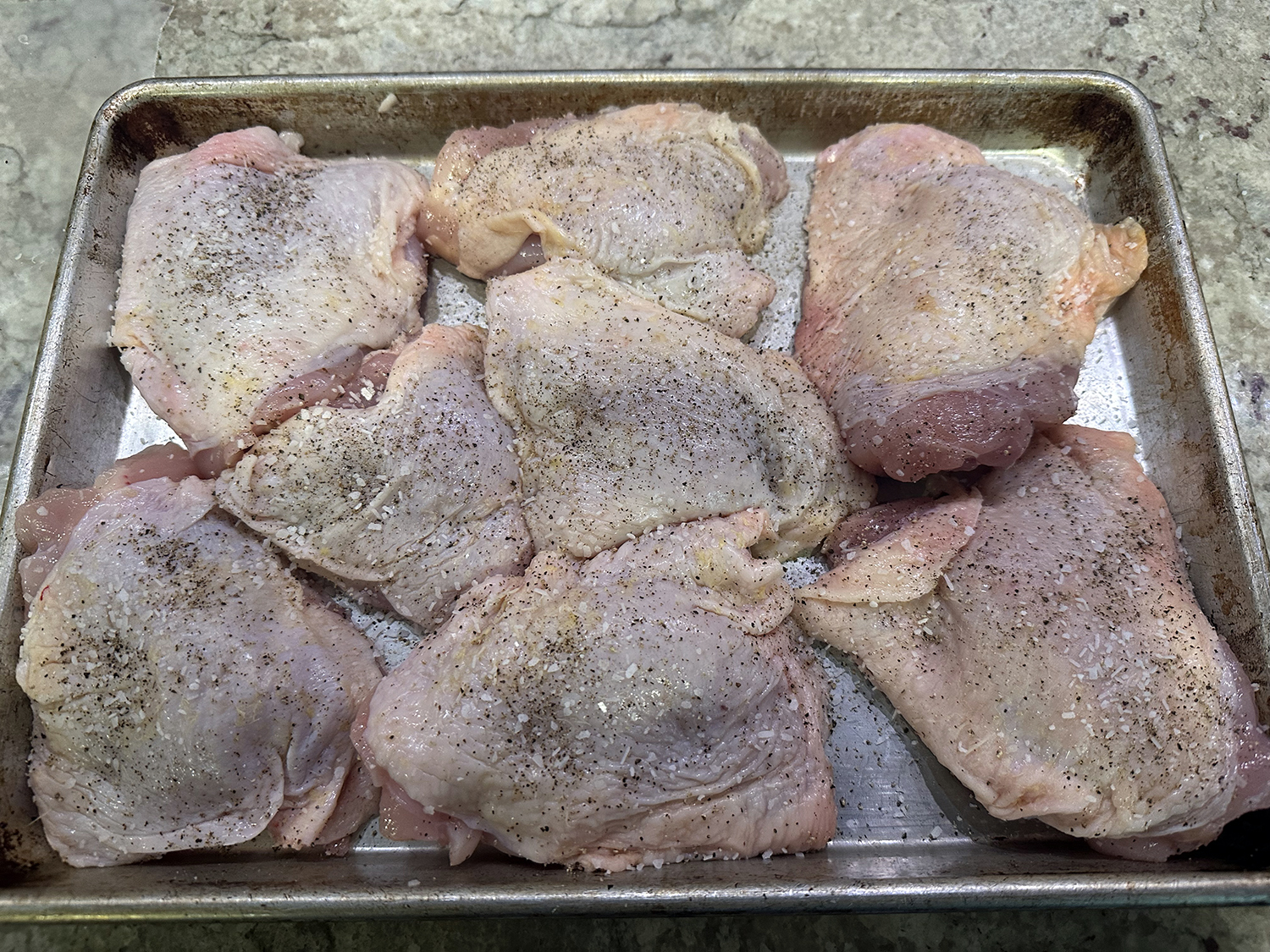
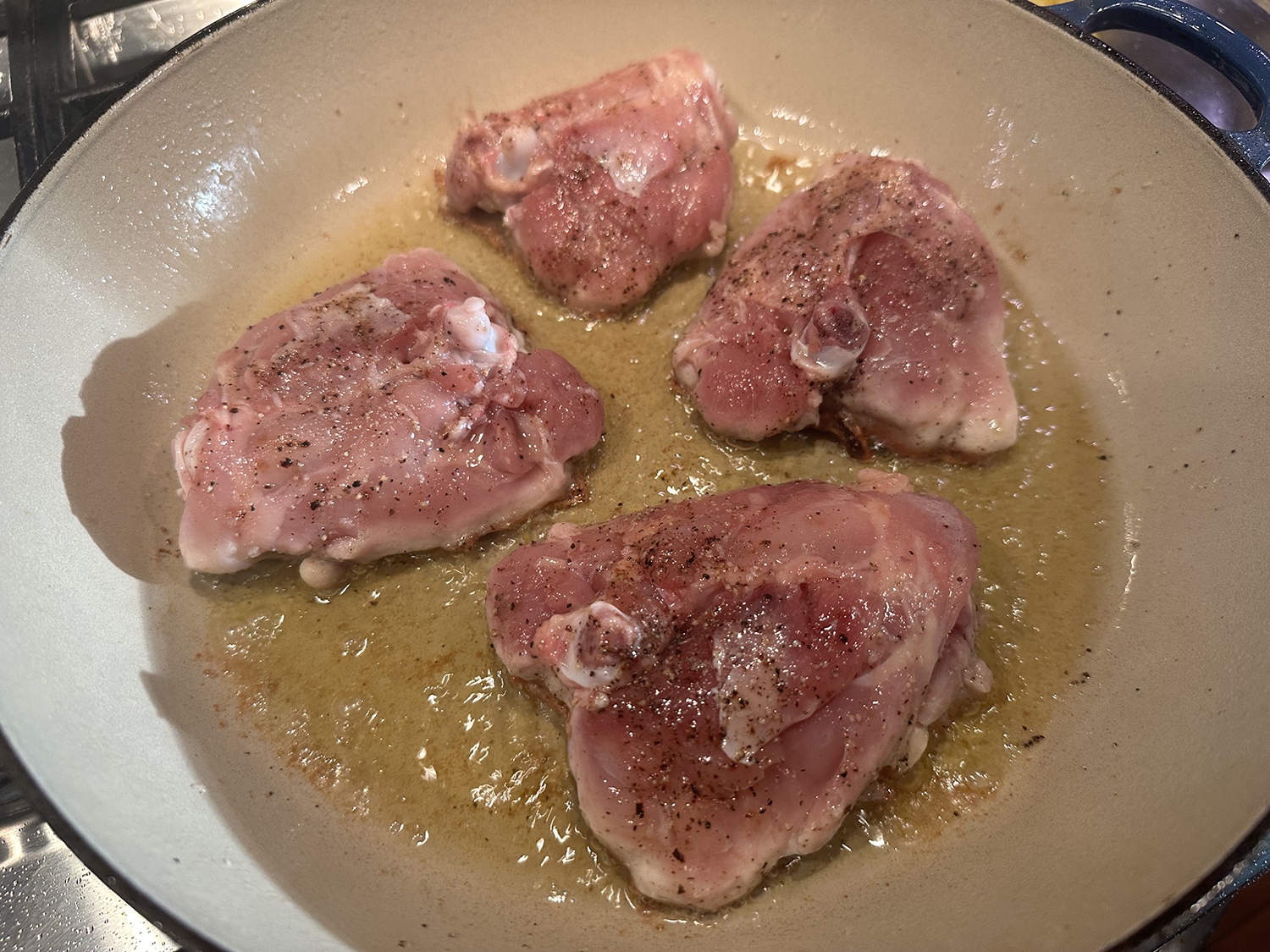
  1. Heat the oven to 475°F with a rack in the middle position. Season the chicken all over with salt and pepper. In a 12-inch skillet over medium-high, heat the oil until barely smoking. Add the chicken skin down and cook without disturbing until golden brown on the bottoms, 5 to 8 minutes. Using tongs, transfer the chicken skin up to a rimmed baking sheet and roast until the thickest part of the thighs reach 175°F, 15 to 20 minutes.
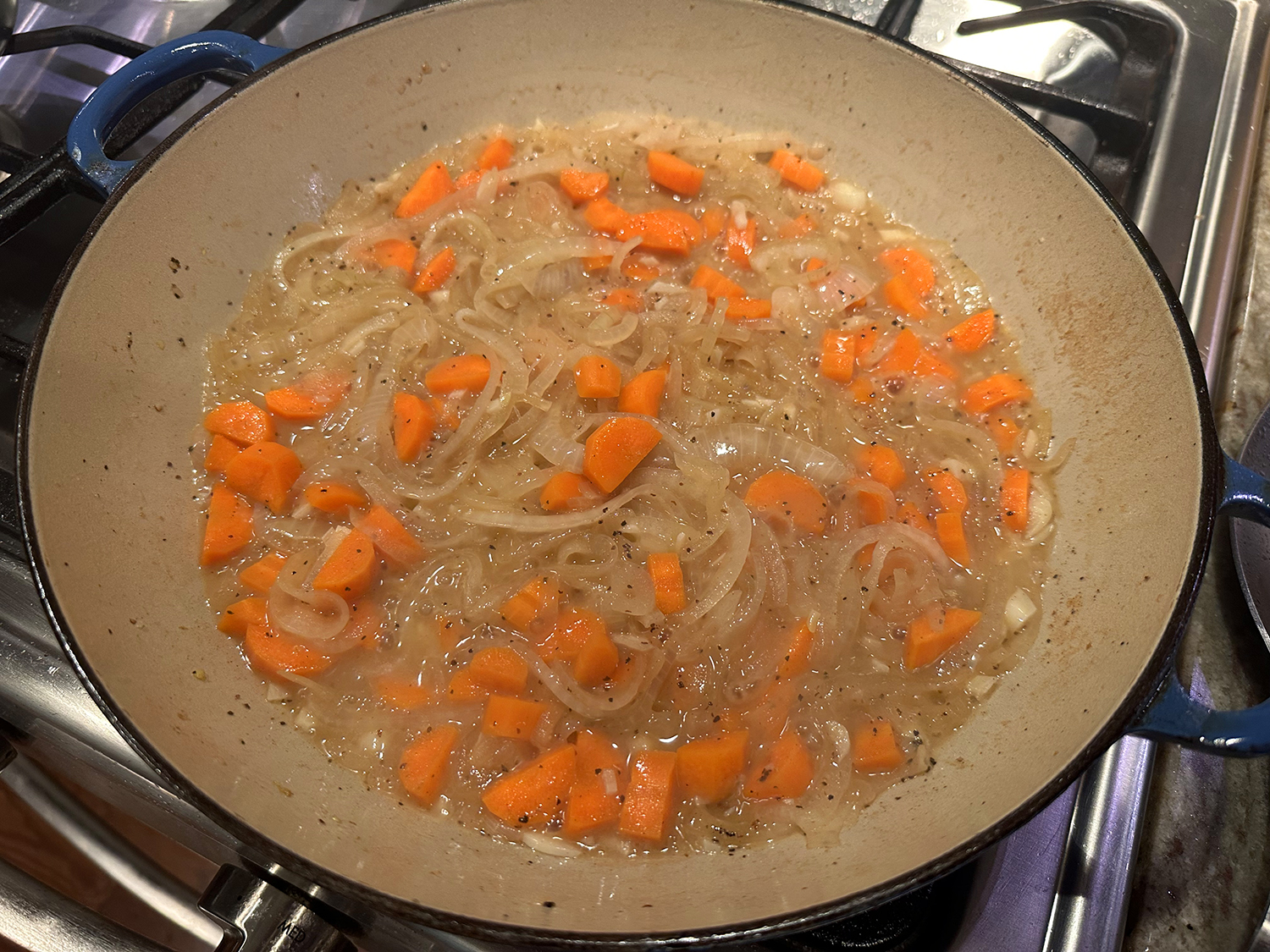
  2. While the chicken roasts, pour off and discard all but 1 tablespoon fat from the skillet. Set the pan over medium and melt 2 tablespoons of butter.Add the onion, carrots and ¼ teaspoon salt and ½ teaspoon pepper, then cook, stirring occasionally, until the onion is translucent, 3 to 5 minutes. Add the garlic and cook, stirring, until fragrant, about 30 seconds. Add the wine and cook, scraping up any browned bits, until reduced by about half, 2 to 4 minutes.
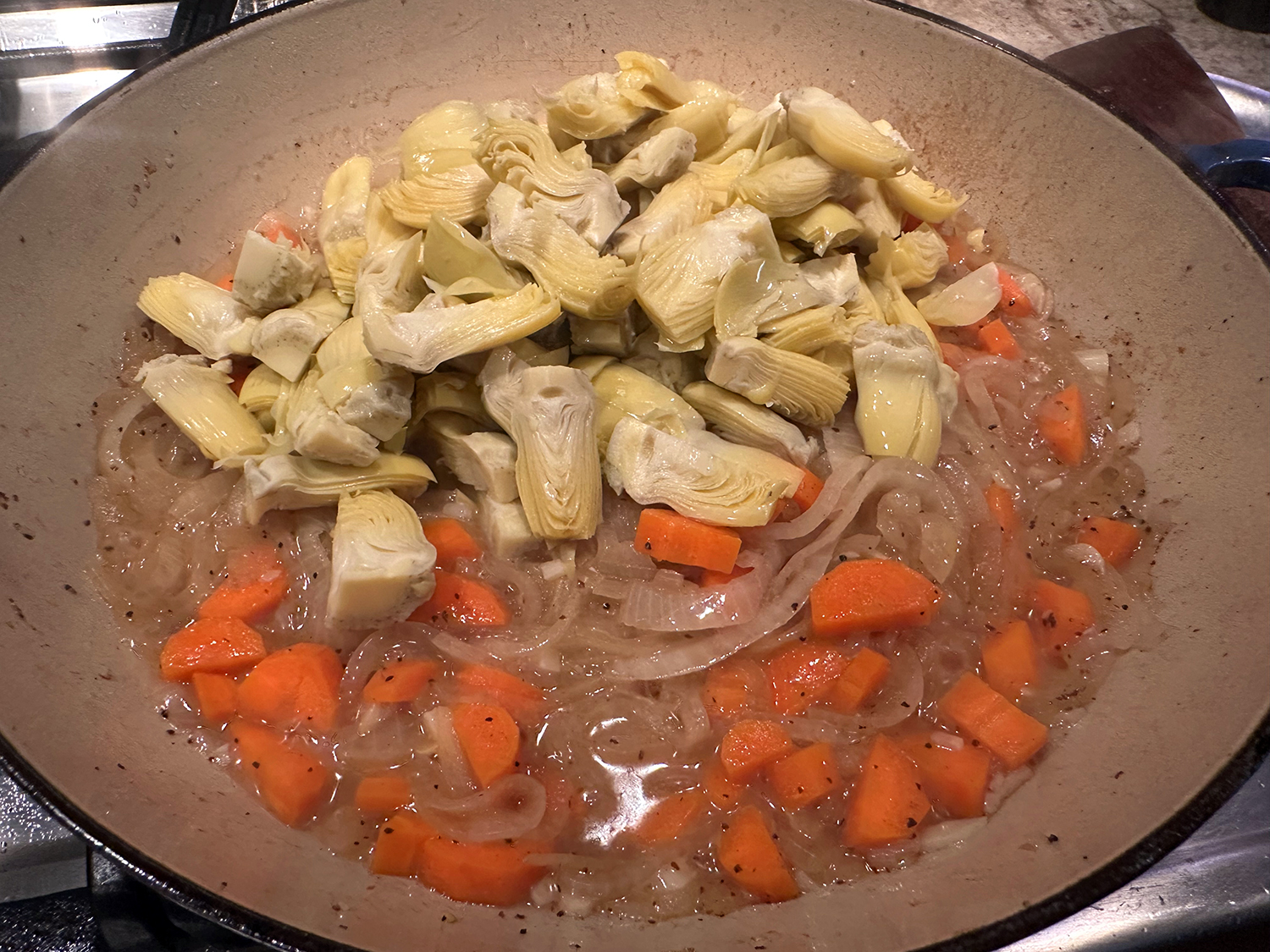
  3. Stir in the artichokes, lemon zest and broth. Bring to a simmer over medium-high and cook, uncovered and stirring occasionally, until the carrots are tender and the liquid is slightly reduced, 4 to 5 minutes. Remove from the heat, cover and set aside.
  4. When the chicken is done, using tongs, transfer it to a plate. Remove and discard the lemon zest from the artichoke mixture. Add the remaining 1 tablespoon butter and stir until melted, then stir in the lemon juice and parsley. Taste and season with salt and pepper. Transfer the mixture to a deep platter and place the chicken thighs on top to keep the crispy skin from getting soggy before serving.

http://www.lynnandruss.com

Recipe from Rose Hattabaugh for Milk Street

Braised Chicken with Olives and Capers

With chicken being the most popular meat in America, it’s no wonder there are an endless variety of recipes worth your time and effort! This lovely Mediterranean-influenced braised dish from Williams Sonoma’s Test Kitchen is right up there with the best of them.

Braising chicken in white wine instead of red results in a lighter, brighter flavor, which in this recipe is heightened with piquant olives and capers. If desired, serve with a good loaf of bread, some mashed potatoes, or polenta so you can soak up the flavorful braising liquid, because it is worth every drop.

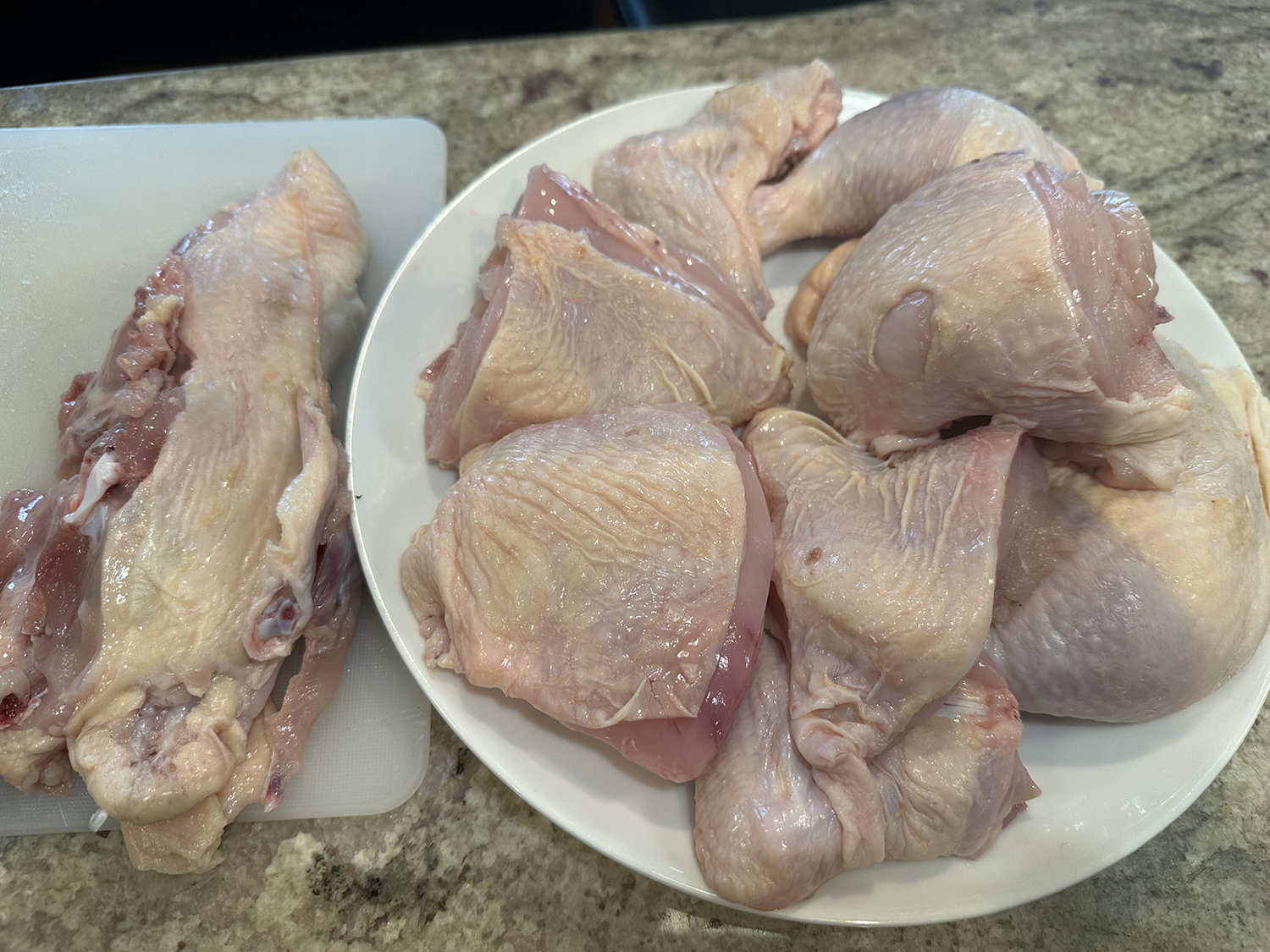
Instead of cutting up a whole chicken, you could certainly save some time buying a selection of bone-in, skin-on pieces such as thighs, breasts and legs. For us, the positive in using an entire bird, is saving the leftover parts (back, wingtips, etc.) for making home made stock at another time.

The regular amounts of white wine (3/4 cup) and chicken broth (2 1/2 cups) were way too much, thus causing the reduction time to increase considerably, from 5 to 20 minutes. The opposite was true of braising the chicken. Instead of the hour to hour-and-a-half noted in the original directions, the pieces were overdone after only 45 minutes.

To offset the chicken (especially white meat) from being overcooked, the oven temp gets lowered down to 325°F (braises are typically low heat). Additionally, pile the breast pieces on top of the dark meat 15 minutes after the the braise goes into the oven. In Step 3, the stovetop burner was reduced to medium. All of our corrections are noted in the recipe below.

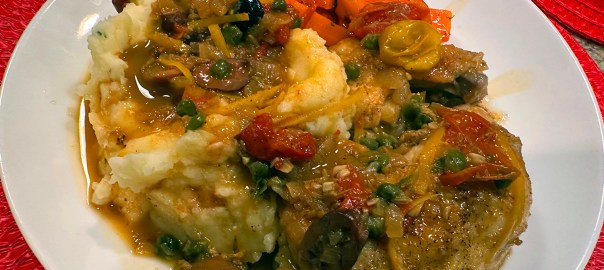
To complete our meal, we served the chicken with sides of glazed carrots and a potato-parsnip mash. WOW, was that sauce amazing!!

Braised Chicken with Olives and Capers

  • Servings: 4
  • Difficulty: easy
  • Print

Ingredients

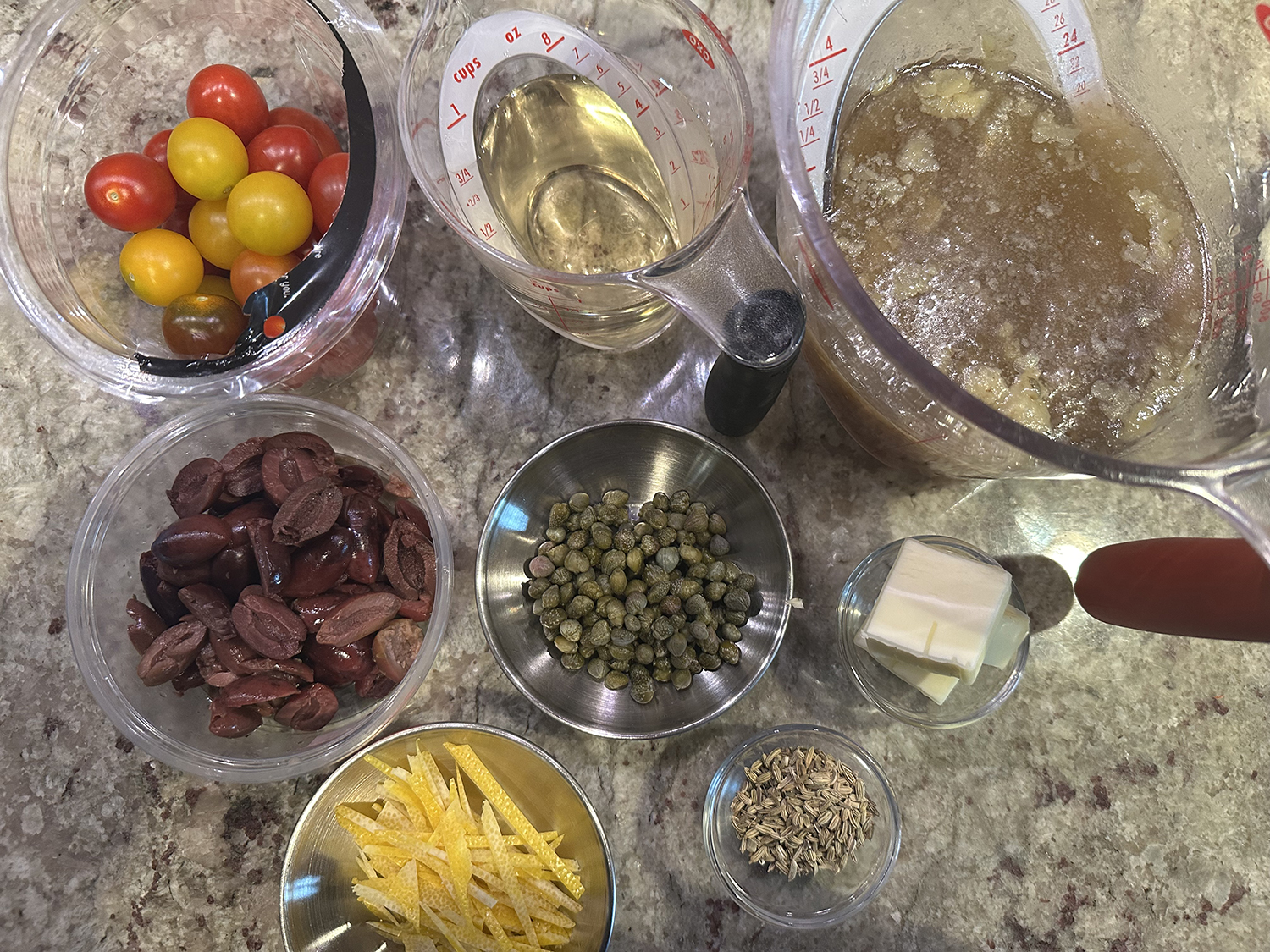
  • 1 whole chicken, about 3 1/2- to 4-lb, cut into 8-10 serving pieces
  • Kosher salt and freshly ground pepper, to taste
  • 1 Tbsp. olive oil
  • 3 Tbsp. unsalted butter
  • 1 onion, diced
  • 2 garlic cloves, chopped
  • 1/2 cup dry white wine
  • 1 1/2 cups chicken broth, preferably homemade
  • 3/4 cup pitted olives, such as Kalamata, halved
  • Zest of 1 lemon, peeled into strips using a vegetable peeler and
      then julienned
  • 3 Tbsp. capers, drained and rinsed
  • 2 tsp. fennel seeds
  • 8 oz. cup cherry tomatoes

Directions

  1. Preheat an oven to 325ºF.
  2. Pat the chicken dry and season with salt and pepper. In a Dutch oven over medium-high heat, warm the olive oil. Working in batches, brown the chicken on all sides, 8 to 10 minutes per batch. Transfer the chicken to a plate and carefully pour the fat from the Dutch oven.
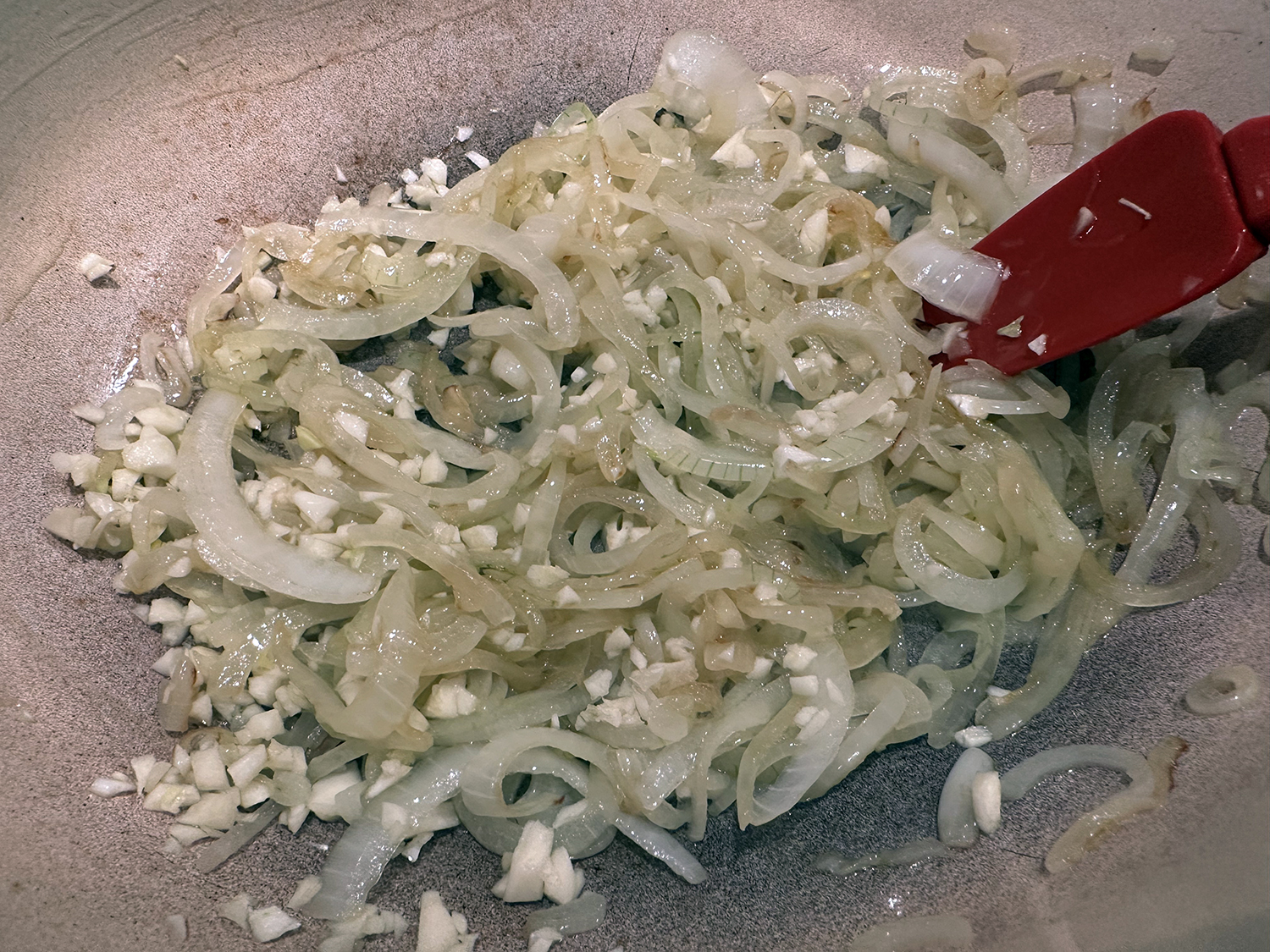
  3. Reduce heat to medium. Add the butter to the Dutch oven. When it has melted, add the onion and sauté until translucent, 4 to 6 minutes. Add the garlic and continue to cook for 1 minute more.
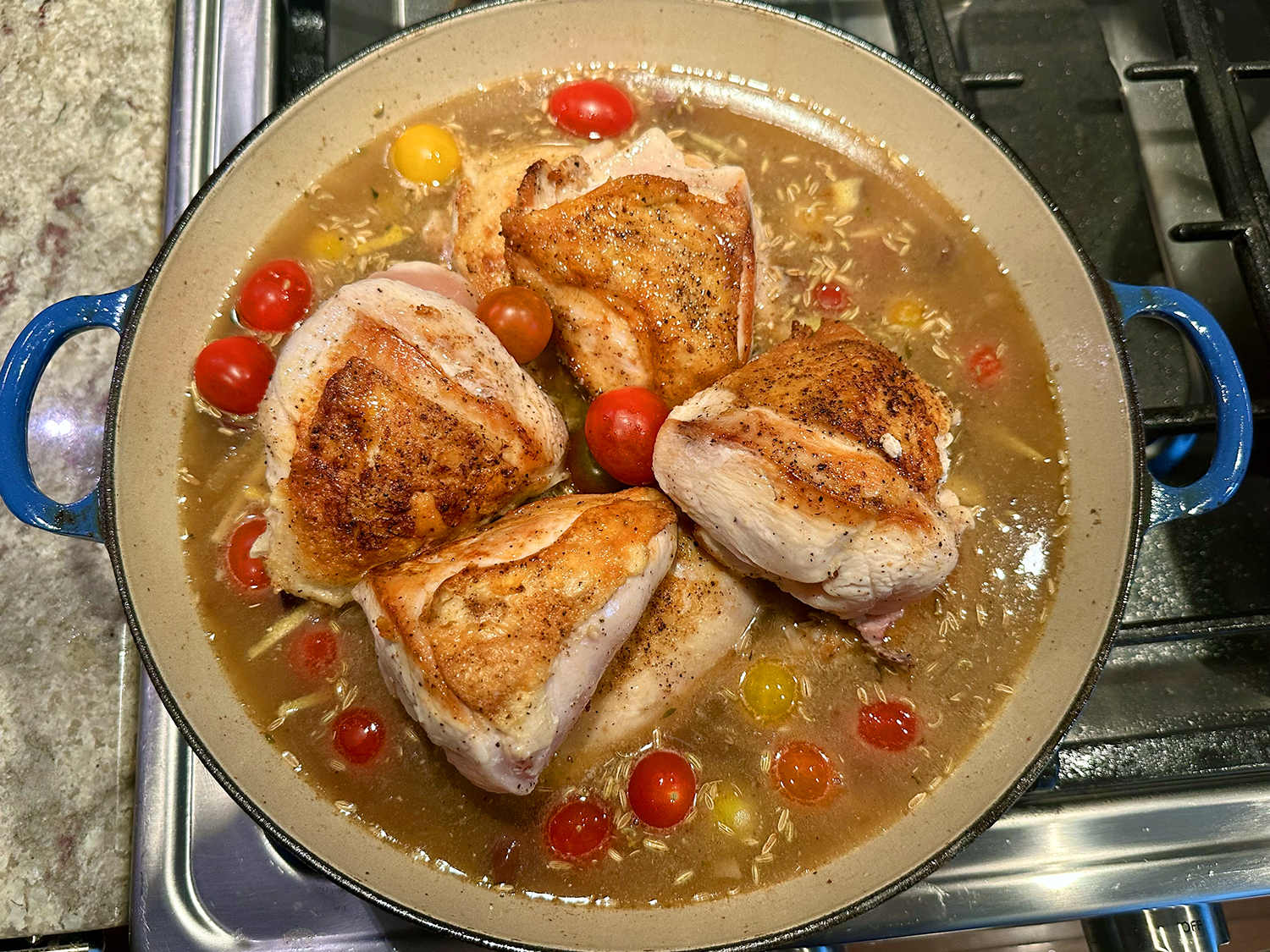
  4. Add the wine and cook, stirring to scrape up the browned bits from the bottom, until the wine reduces slightly, about 2 minutes. Add the broth, olives, lemon zest, capers and fennel seeds.  Return the dark meat chicken to the Dutch oven and top with the tomatoes.
  5. Cover, place the Dutch oven in the oven. After 15 minutes of cooking, place the breast pieces on top of the dark meat, cover, and cook until the chicken is tender, 20 minutes more — 35 to 40 minutes total, checking with an insta-read thermometer at 35 minutes. The breast meat should register 155° and the thigh meat should be 165°.
  6. When the chicken is cooked, transfer the chicken pieces to a plate and place the Dutch oven over medium-high heat. Cook until the braising liquid is thickened a good bit, about 10-15 minutes. Season with salt and pepper and return the chicken to the Dutch oven. Serve immediately.

http://www.lynnandruss.com

Recipe was loosely adapted from one by Williams Sonoma Test Kitchen

Chicken Tinga Tacos

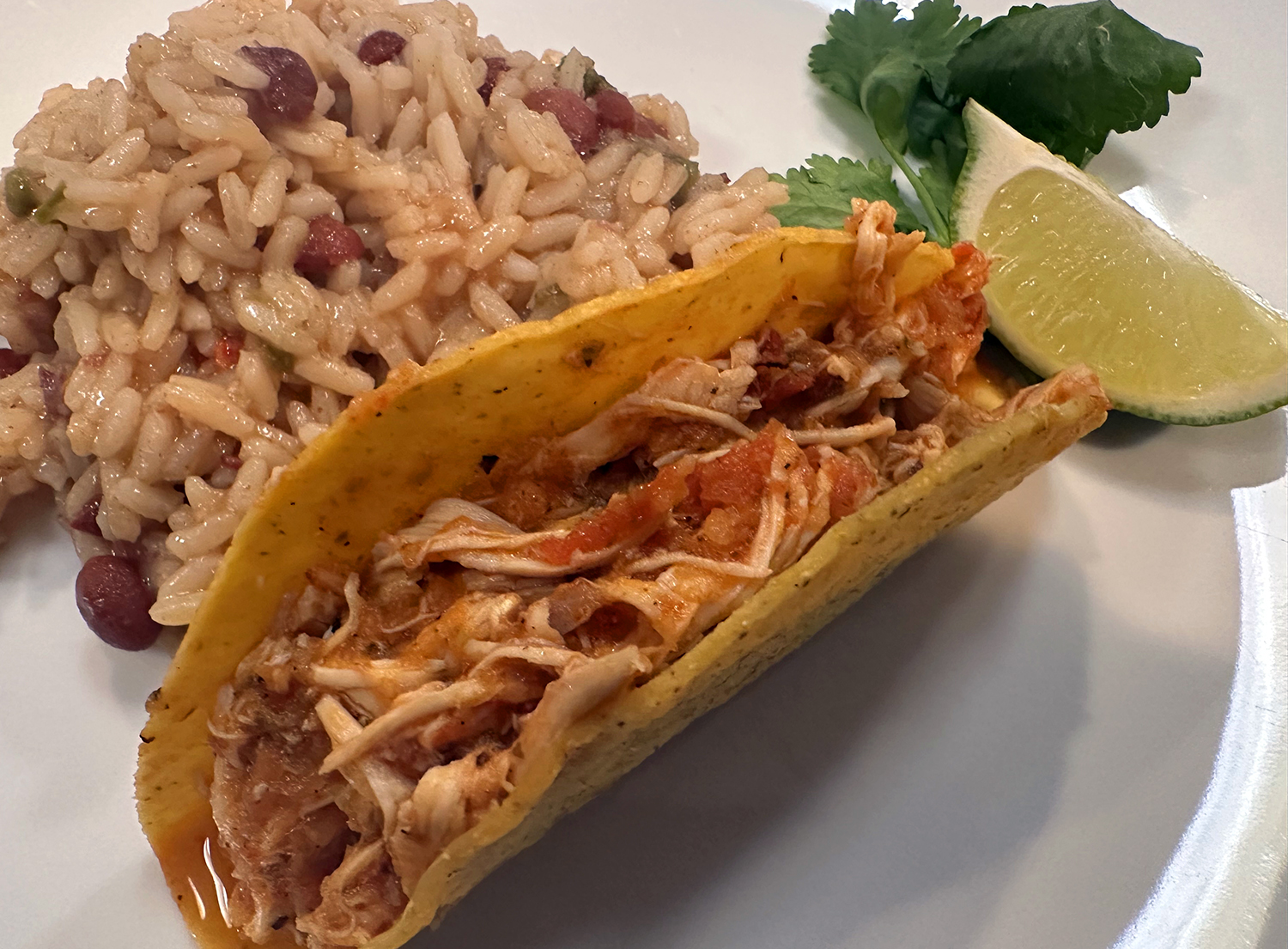
We took a basic Chicken Tinga recipe using a rotisserie chicken and made tacos as our main dish. If you’ve never had it, chicken tinga has a smoky sweetness that’s hard to resist and uses easy-to-find ingredients such as tomatoes (canned or fresh), chipotle peppers in adobo, and of course, chicken.

The dish originates from Puebla, Mexico, and it falls under what a guisado: a meat or vegetable that is cooked with few ingredients and is stewy, homey, and delicious. There are many variations for this recipe so feel free to adjust to your own preferences.

The number of servings will vary depending on how and what you serve the tinga in. For us, one serving equaled two stuffed tacos and a side of rice and beans.

Not fans of anything too sweet with our meat, we reduced the amount of honey from three tablespoons down to one.

Chicken Tinga Tacos

  • Servings: 5-6
  • Difficulty: easy
  • Print

Ingredients

  • 1 Tbsp. olive oil
  • 1 medium white onion
  • 4 large cloves garlic
  • 2-4 chipotle chiles in adobo sauce (plus 1 Tbsp. of the adobo sauce)
  • 1 15-oz. can fire-roasted tomatoes
  • 1 cup chicken stock
  • 1 Tbsp. honey
  • 1 1/2 tsp. ground cumin
  • 1 tsp. dried oregano
  • 6 cups shredded cooked chicken (such as from a 3 1/2 lb. rotisserie chicken)
  • 1 bay leaf
  • Optional toppings: chopped fresh cilantro, shredded Mexican cheese blend, crumbled cotija cheese, fresh lime wedges, quick pickled red onions, sliced avocado, and/or Mexican crema
  • Corn tortillas, taco shells, or tostadas, for serving

Directions

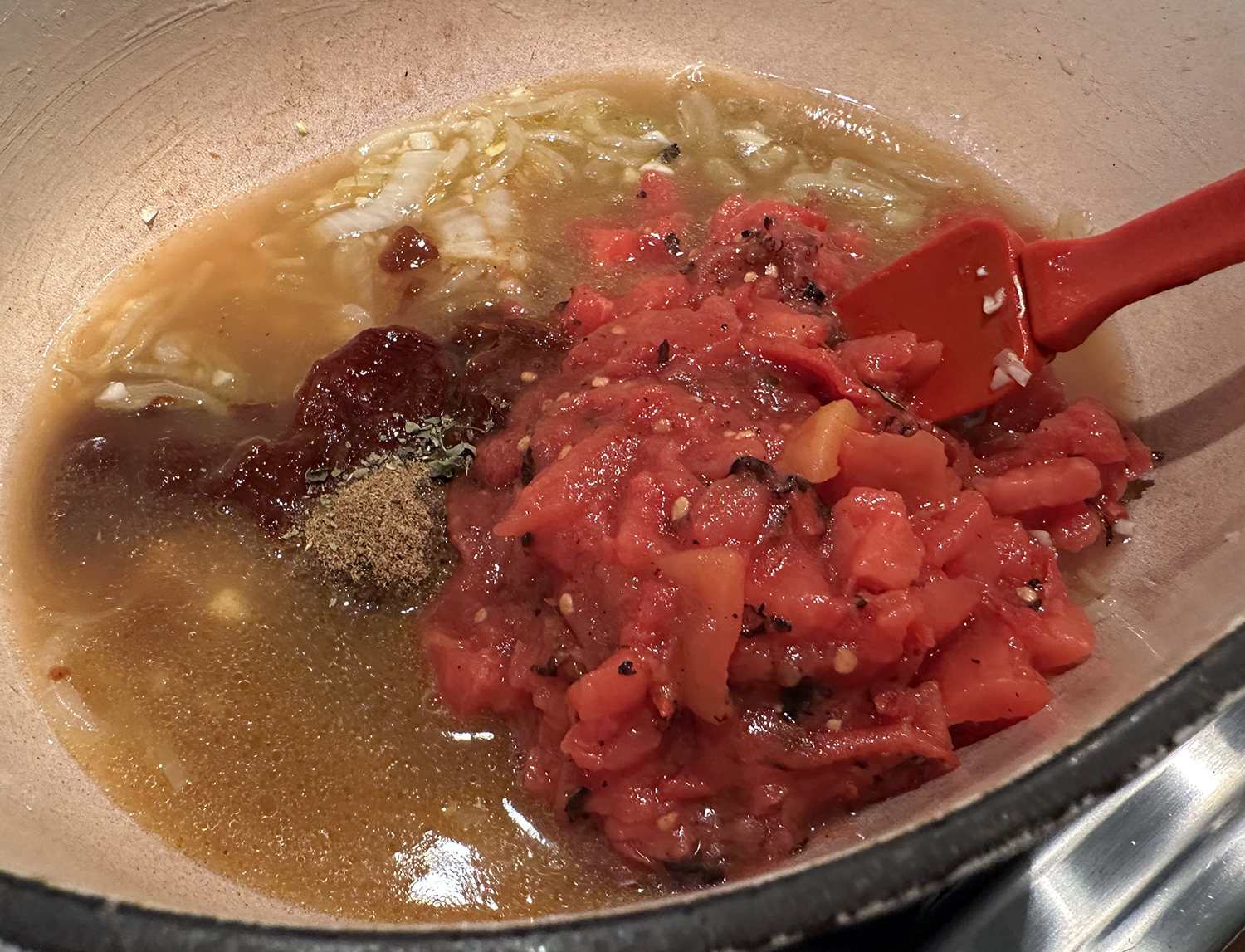
  1. Heat oil in a large stockpot over medium-high heat. Add the onion and sauté for 5 minutes, stirring occasionally. Add the garlic and sauté for 1-2 minutes, stirring frequently, until fragrant. Remove stockpot from heat and transfer the onion mixture to a blender.
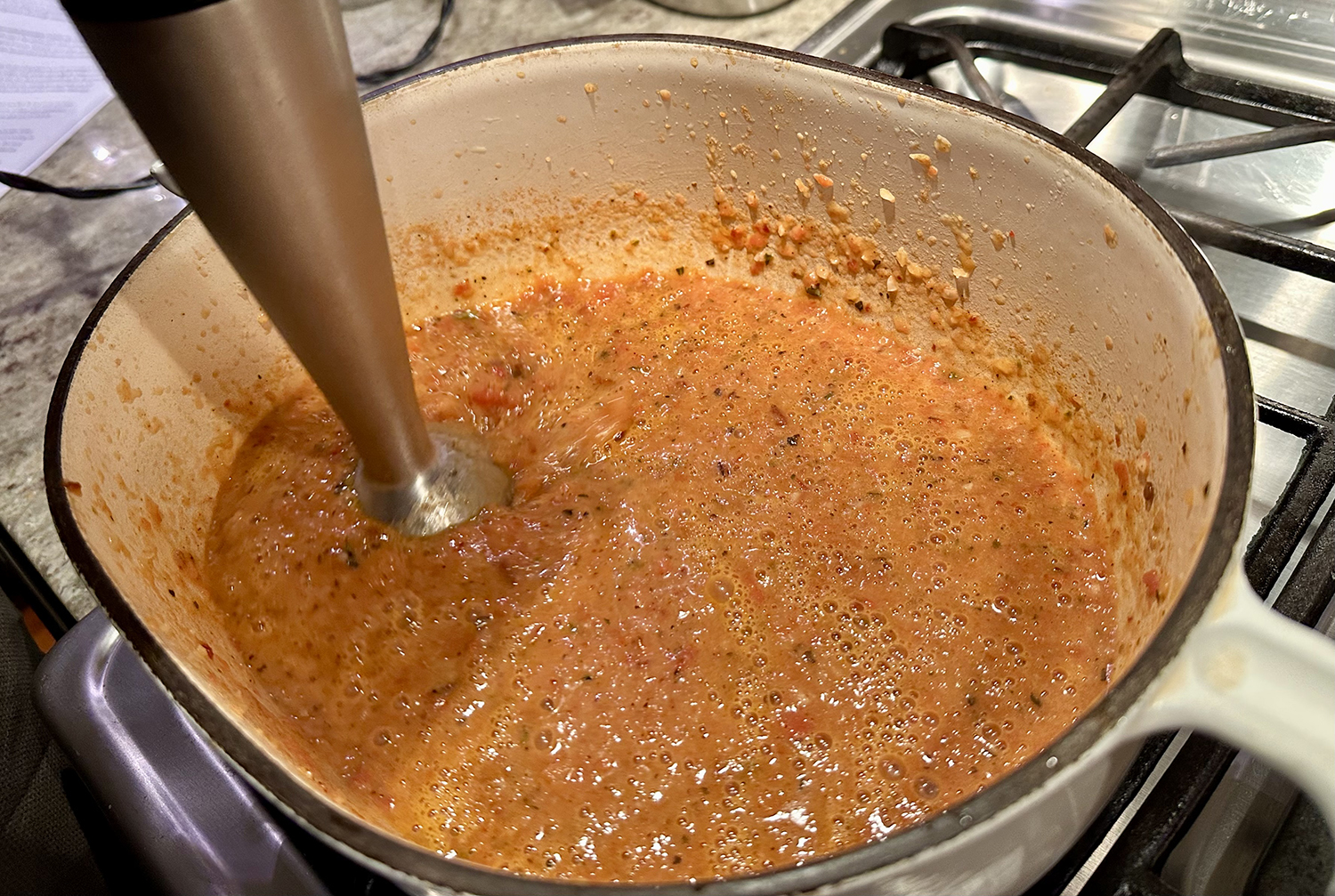
  2. Add the chipotles and 1 tablespoon of adobo sauce, tomatoes, chicken stock, honey, cumin and oregano to the blender. Cover and purée until smooth, then pour the sauce back into the stockpot.
    Alternatively, use a an immersion blender directly into the stockpot.
  3. Add the chicken and bay leaf to the sauce and toss until combined. Cook over medium-high heat for 5 minutes, stirring occasionally. Remove and discard the bay leaf.
  4. Season the chicken with salt and pepper to your taste.
  5. Serve it warm with your tortillas and choice of toppings.

http://www.lynnandruss.com

Adapted from a recipe from GimmeSomeOven.com

King Ranch Casserole

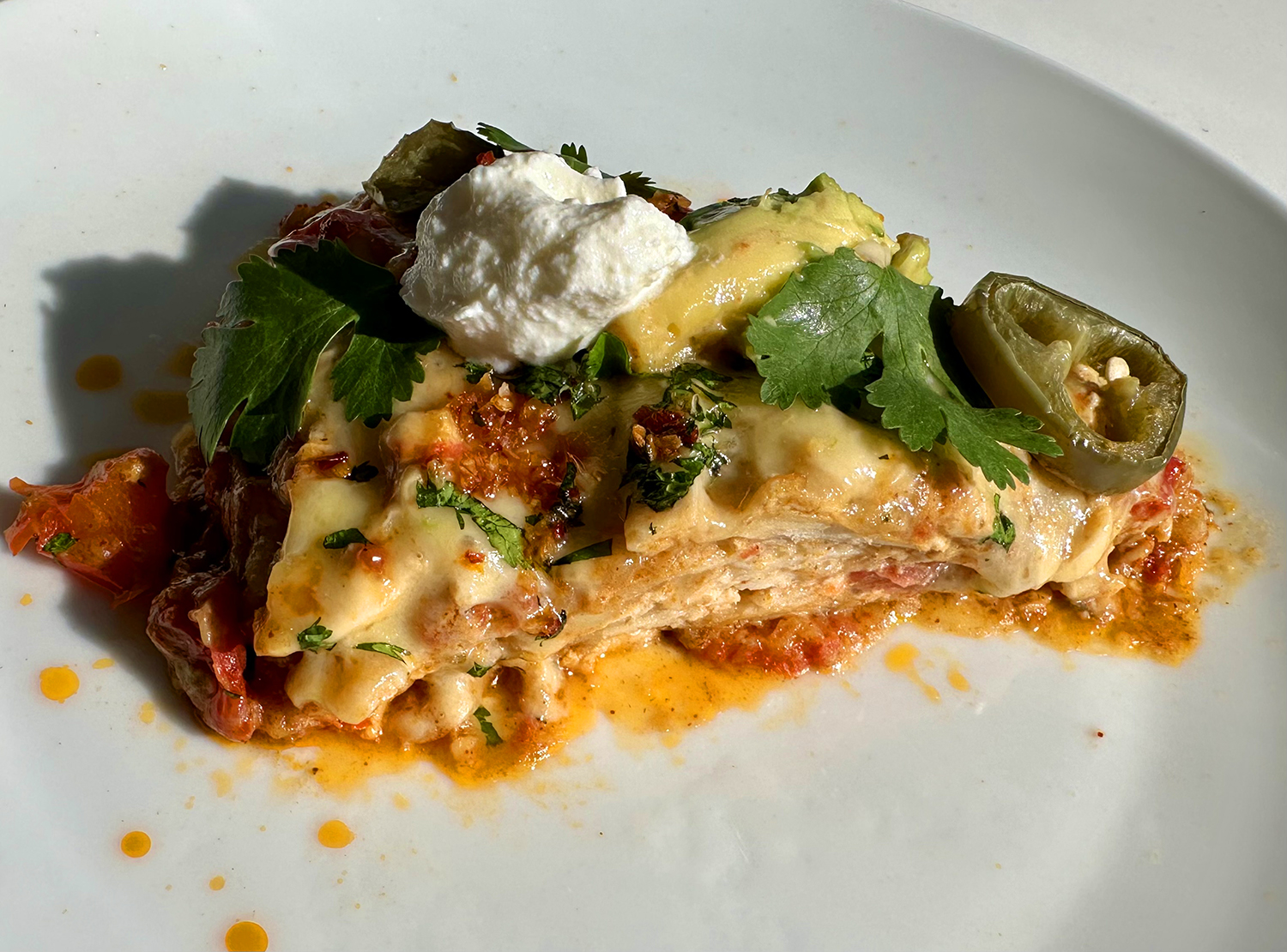
This creamy, hearty, Tex-Mex weeknight casserole is packed with shredded chicken, corn tortillas, melty cheese, and chiles. It combines smoky and spicy ingredients into a comforting weeknight dinner. Shred the meat from a rotisserie chicken the night before, and your ahead of the game when it is time to make dinner.

While the flavors are reminiscent of enchilada casserole, the assembly process is even easier — rather than filling and rolling tortillas, the ingredients and melty cheese are layered like a lasagna. The salsa macha verde is a crunchy and spicy dried chile condiment with garlic, nuts, and seeds that adds a punch of spicy umami; chile crisp can be used in place of it.

If you don’t have a large (12-inch) cast-iron skillet, you can bake the casserole in a 9- x 13-inch baking dish. The layering and assembly instructions as well as the bake time will be the same.

Even though The Hubs added a 1/4 teaspoon of cayenne, we found the dish could have been spicier. So we also included pickled jalapeños as an extra garnish and a salsa verde as a side.

NOTE: Wrap the tortillas in aluminum foil and pop them in the already heated oven for about 10 minutes to soften them and bring out their flavors. You can also char them in a pan on the stove. Or do as we did, wrap them in a moistened paper towel and microwave the stack for one minute.

Let the casserole sit for 10 minutes after removing from the oven. The slices will still be sloppy when first serving, but if you have leftovers, you can easily cut wedges and heat them in a microwave.

King Ranch Casserole

  • Servings: 8
  • Difficulty: easy
  • Print

Ingredients

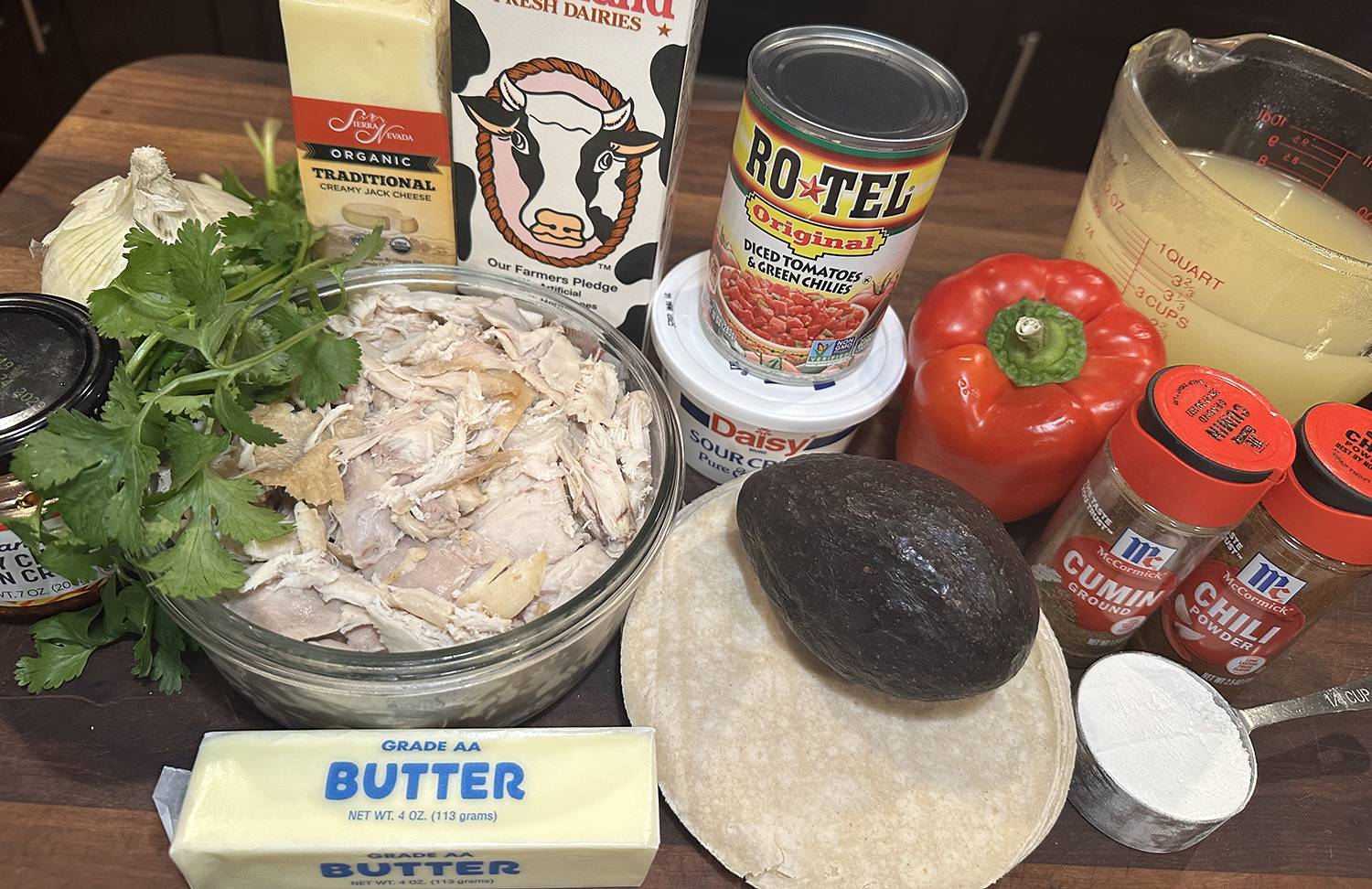
  • 3 Tbsp. unsalted butter 
  • 1 red bell pepper, stemmed, seeded, and chopped (about 1 2/3 cups)
  • 1 yellow onion, chopped (about 1 1/2 cups)
  • 1 Tbsp. chili powder
  • 2 tsp. ground cumin
  • 3 1/2 cups chicken broth
  • 1/4 cup all-purpose flour
  • 3 cups shredded rotisserie chicken (about 1 rotisserie chicken)
  • 1 (10-oz.) can diced tomatoes and green chiles (such as Rotel), drained 
  • 3/4 cup heavy cream
  • 3/4 cup sour cream, plus more for garnish
  • 3 Tbsp. salsa macha verde or chile crisp, plus more for serving
  • 1 tsp. kosher salt
  • 2 cups shredded Monterey Jack cheese (about 8 oz.), divided
  • 12 (5 1/2-inch) corn tortillas, warmed, divided
  • Sliced avocado and fresh cilantro leaves, for garnish  

Directions

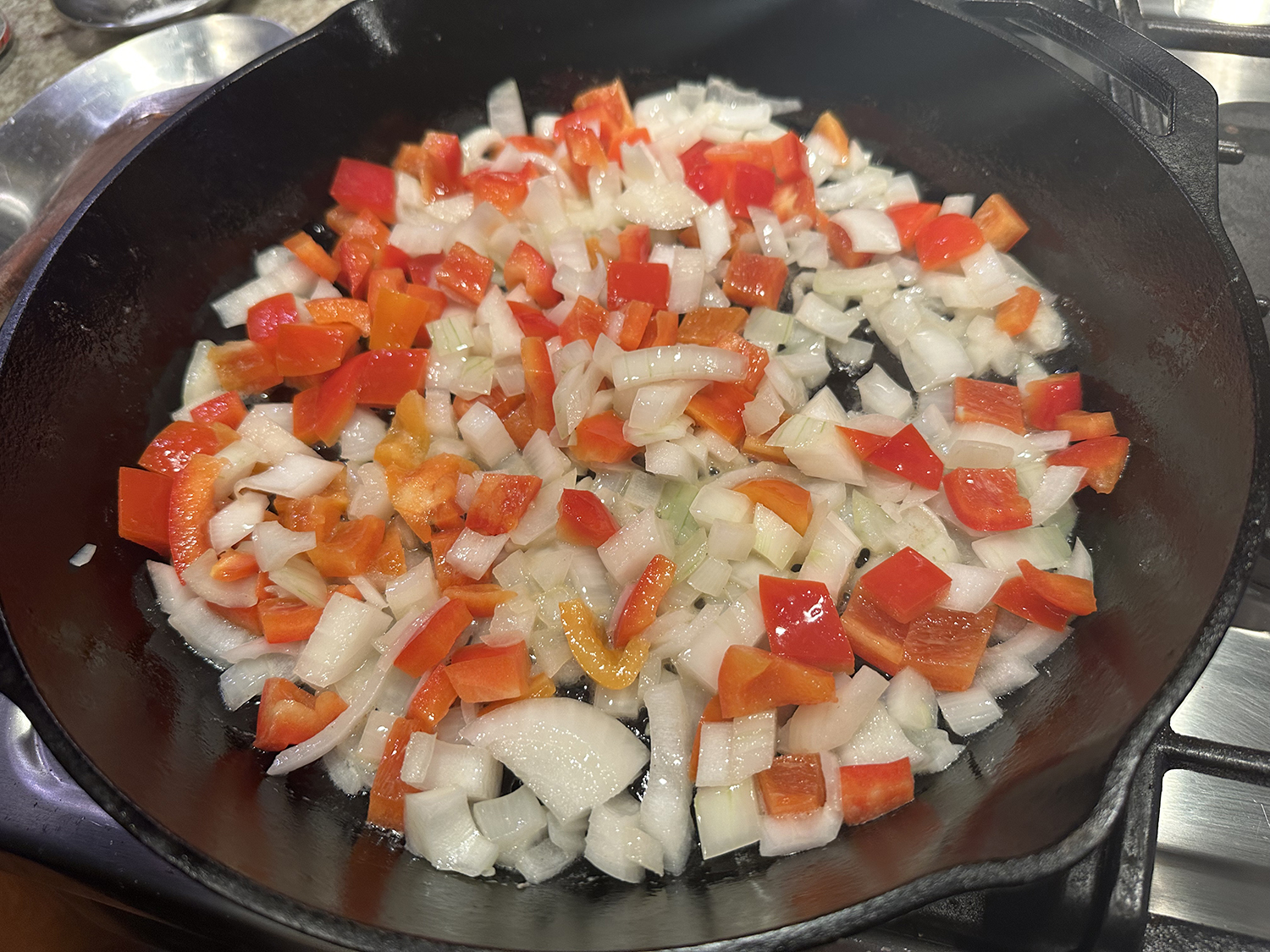
  1. Preheat oven to 425°F. Melt butter in a 12-inch cast-iron skillet over medium-high. Add bell pepper and onion; cook, stirring occasionally, until softened, about 6 minutes. Add chili powder and cumin, and cook, stirring often, until fragrant, about 1 minute. Add chicken broth; bring to a boil over high, stirring occasionally. Boil until broth is reduced by about one-third, 8 to 10 minutes.
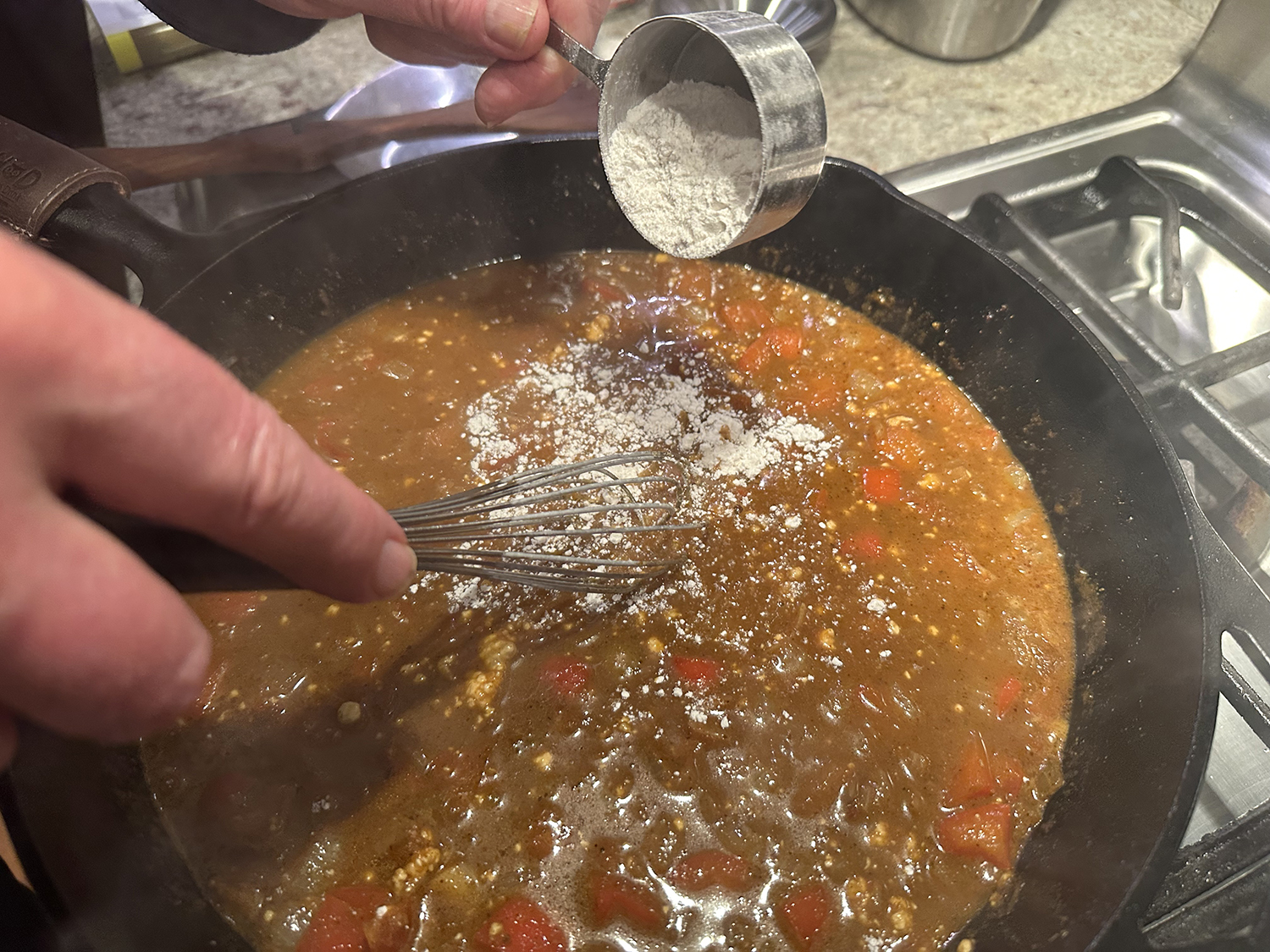
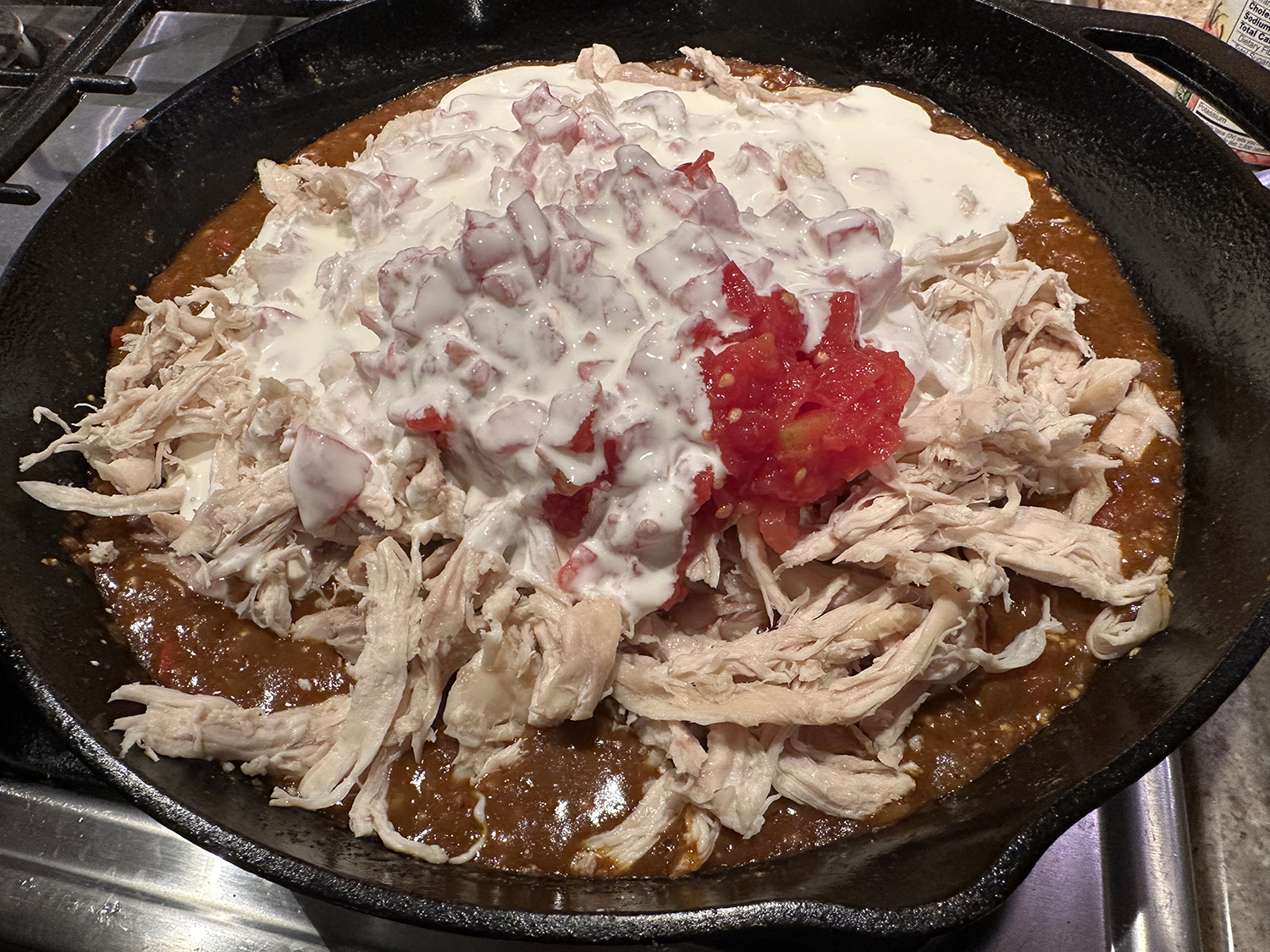
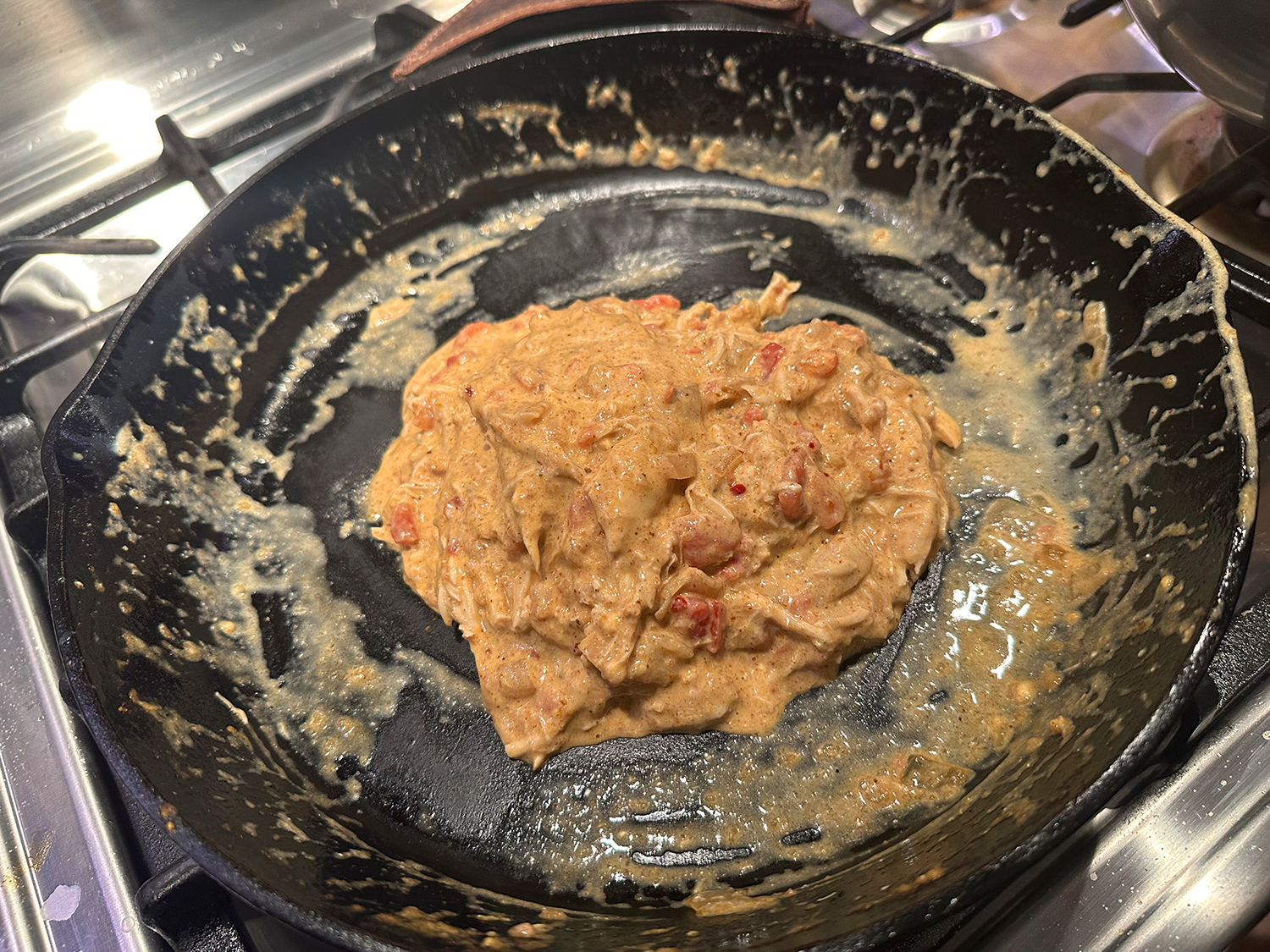
  2. Reduce heat to low, and gradually whisk in flour; cook, whisking constantly, until broth mixture thickens slightly, about 1 minute. Remove from heat; stir in chicken, diced tomatoes and green chiles, heavy cream, sour cream, salsa macha verde, and salt until well combined; transfer to a large bowl. Do not wipe skillet clean.
  3. Spoon 2 cups chicken mixture back into skillet; spread in an even layer. Top evenly with 1/2 cup cheese and 6 tortillas, overlapping slightly and tearing as needed to fit. Repeat layering process with chicken mixture and cheese. Top with remaining 6 tortillas, remaining 2 cups chicken mixture, and remaining 1 cup cheese.
  4. Bake casserole in preheated oven until bubbly and cheese is browned in spots, 15 to 20 minutes. Let the casserole sit for 10 minutes before slicing into wedges.
  5. Garnish with sliced avocado, cilantro, and sour cream. Drizzle with salsa macha verde or chili crisp.

http://www.lynnandruss.com

Adapted from a recipe by Liz Mervosh for Food and Wine

Chicken Chili Verde with Poblanos and Beans

Cozy up with a bowl of this white bean chicken chili made with tender shredded chicken, poblano chilies, white beans, cilantro, coriander and lime. Flavorful and hearty, this one-pot meal is nourishing and delicious! Serve it up with Skillet Cornbread (recipe below) and dinner is ready.

This Southwest favorite is hearty, healthy, and delicious. The Hubs kicked it up a notch by increasing the chipotle powder from a pinch to 1 teaspoon, and adding 1 teaspoon of smoked paprika. Then for an extra punch, we topped with pickled jalapeños… we like bold flavors!

Leftovers will keep up to 4 days in an airtight container in the refrigerator or can be placed in the freezer for up to 3 months.

NOTES:  If using canned green chilies, add when you add the chicken, no need to sauté. Fire-roasted canned chilies add good flavor, although the vibrant color of fresh poblanos are preferred. Feel free to add 1 to 2 cups corn for extra heartiness. You can also use whole seed cumin and coriander, toasted and ground.

Chicken Chili Verde with Poblanos and Beans

  • Servings: 4-6
  • Difficulty: easy
  • Print

Ingredients

  • 2 Tbsp. olive oil
  • 1 large onion, diced
  • 6 garlic cloves, rough chopped
  • 1–2 poblano peppers, finely diced (or sub 1 to 2,  4 oz. cans green chilies)
  • 1 Tbsp. ground cumin
  • 1 Tbsp. ground coriander
  • 1 Tbsp. chili powder
  • 1 tsp. smoked paprika
  • 4 cups chicken broth
  • 1 Tbsp. soy sauce
  • 1 Tbsp. apple cider vinegar
  • 1 1/2 tsp. Kosher salt, more to taste
  • 1 Tbsp. dried oregano (or 2 Tbsp. fresh)
  • 1 1/2 lbs. chicken breasts or thighs – boneless, skinless
  • 3 cups white beans, cooked. (2 14-oz. cans, drained; OR 1 1/2 cups dry, soaked and cooked)
  • 1 bunch cilantro, chopped, divided
  • 2 limes
  • 1 tsp. cayenne or chipotle powder to taste
  • Garnishes: cilantro, sour cream, lime, sliced scallions, avocado, sliced jalapeño

Directions

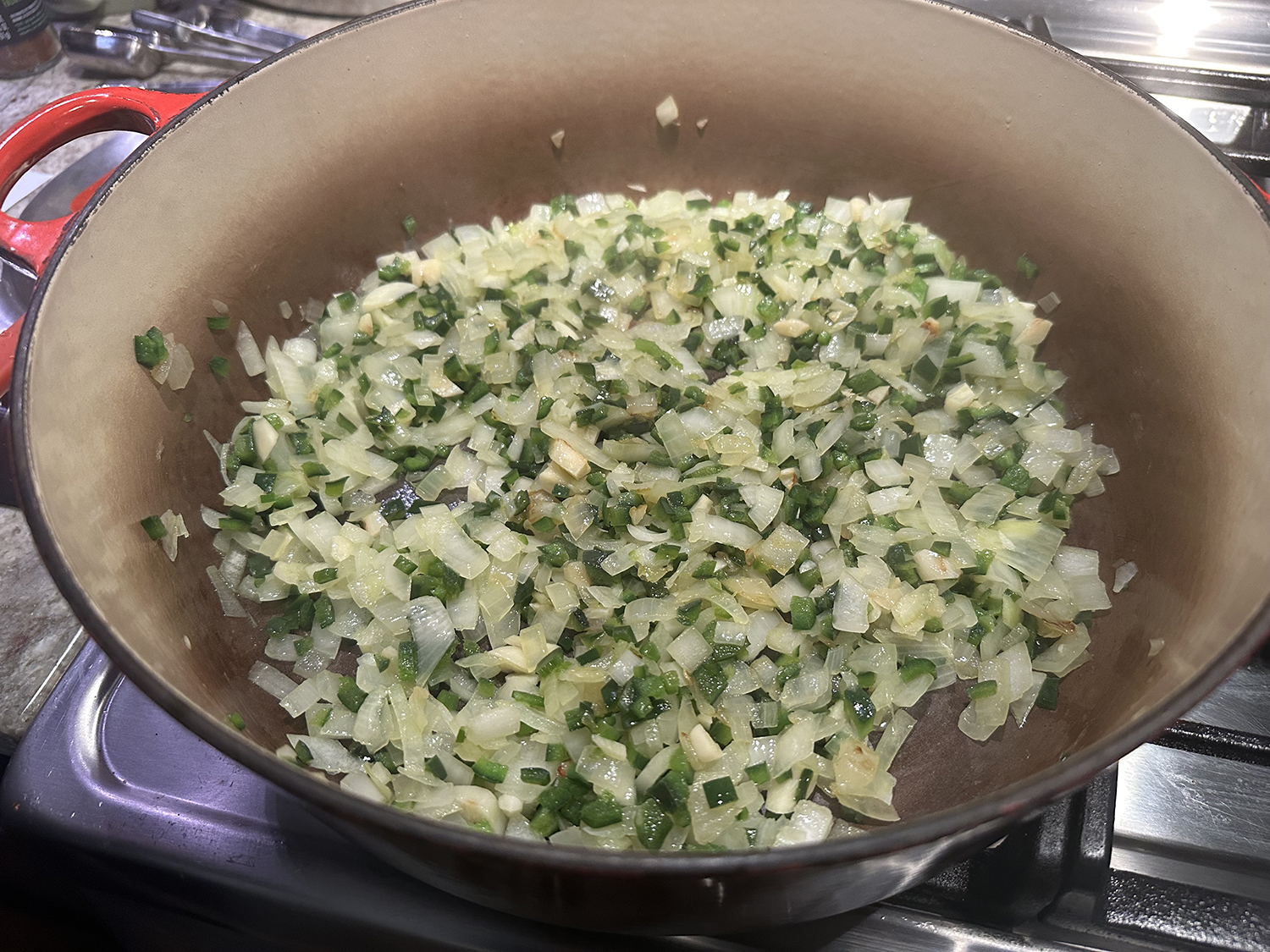
  1. Heat oil in a large heavy bottom pot or Dutch oven over medium heat. Add onion, garlic and poblano pepper and sauté until tender about 8 minutes.
  2. Add cumin, coriander, paprika and chili powder and lightly toast, for about 1 minute.
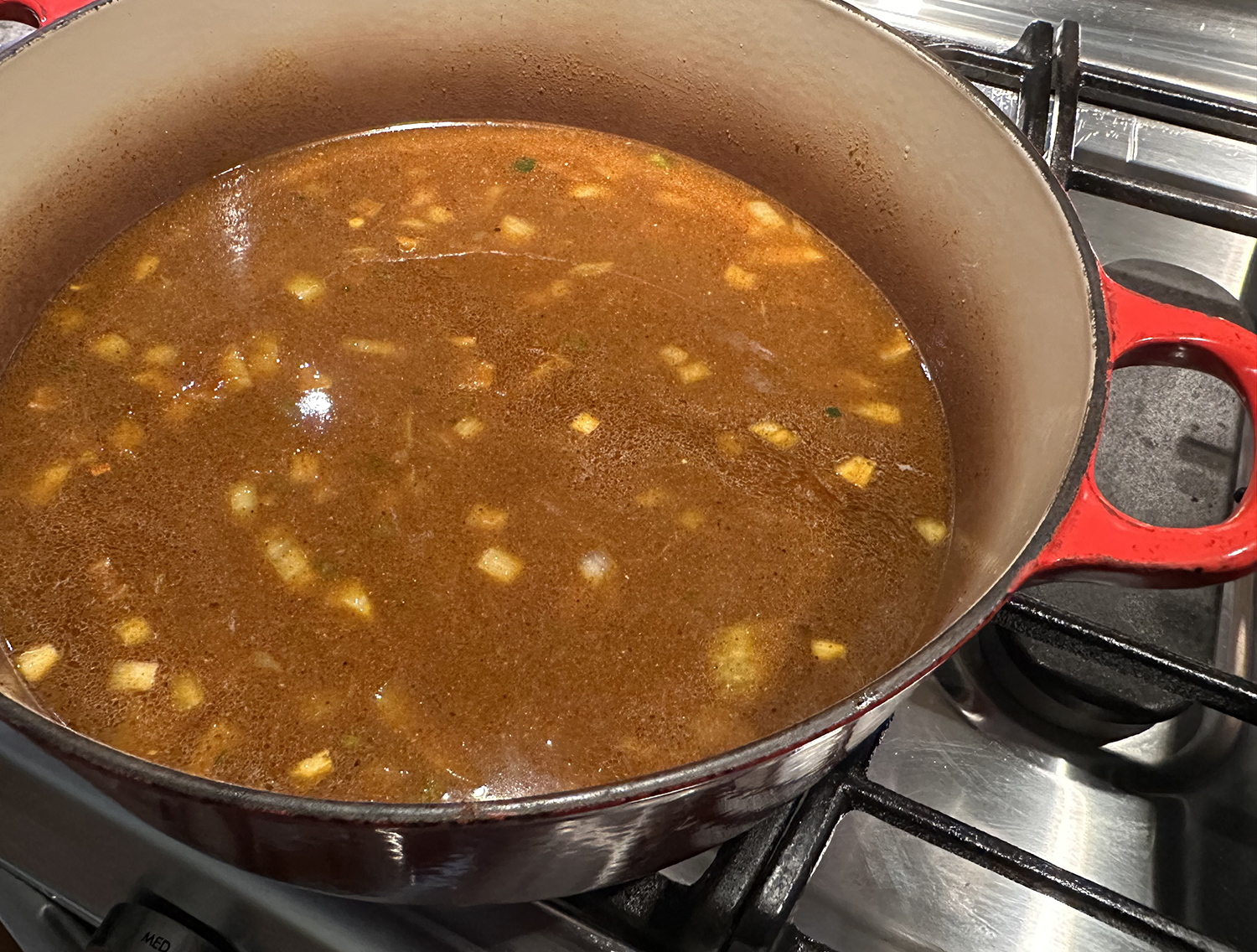
  3. Add broth, scraping up the brown bits. Turn heat to high.
  4. Add soy sauce, vinegar, oregano and salt.
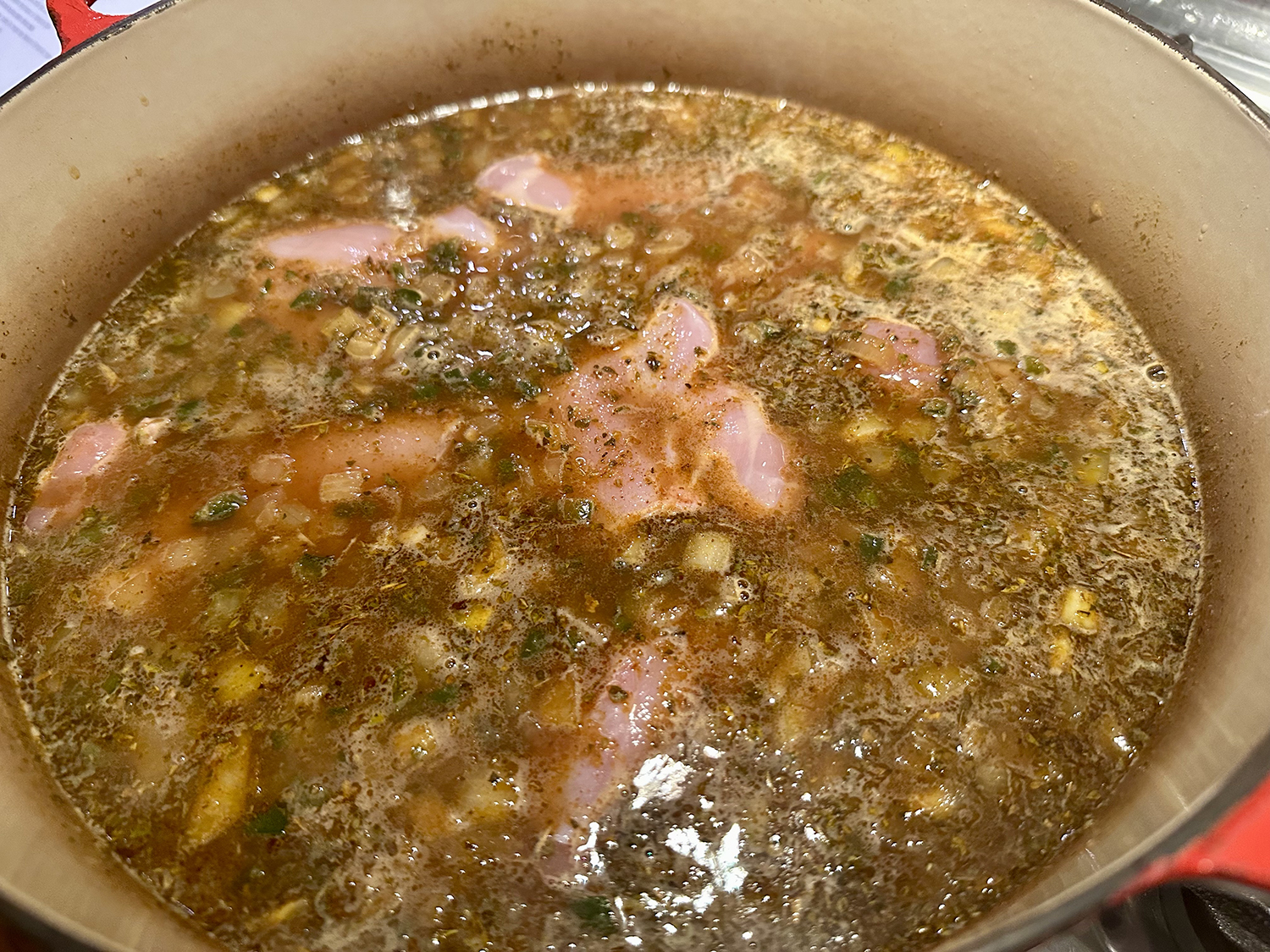
  5. Stir, add chicken breasts or thighs whole and bring to a boil. Cover turn heat to low and keep at a low simmer for 20-30 minutes, until chicken is cooked through and breaks apart easily.
  6. Once the chicken is tender, shred it into smaller pieces with two forks. (If it is not shredding easily, it may need longer to cook.)
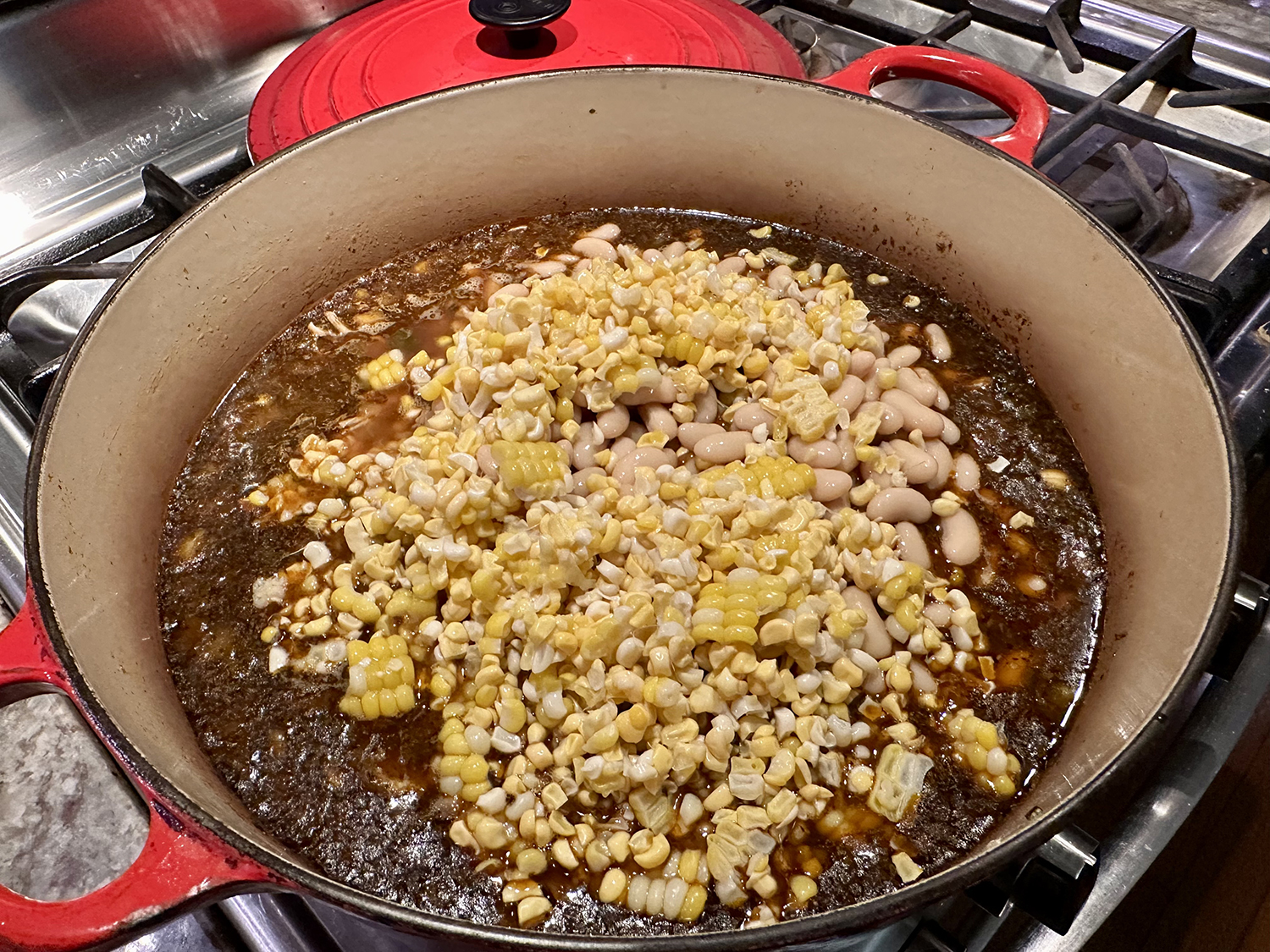
  7. Add the cooked white beans and juice of 1 lime (for a thicker consistency you could mash 1 cup of beans). Bring to a boil, then simmer over medium heat, uncovered for 10 minutes, until it reduces and thickens just a bit. Taste, adjust salt and spice level -adding a pinch of chipotle powder or cayenne of you like.
  8. Stir in half the cilantro and serve.
  9. Divide among bowls and serve with any combination of more cilantro, dollops of sour cream, sliced jalapeño, sliced scallion, avocado, and lime wedges.

http://www.lynnandruss.com

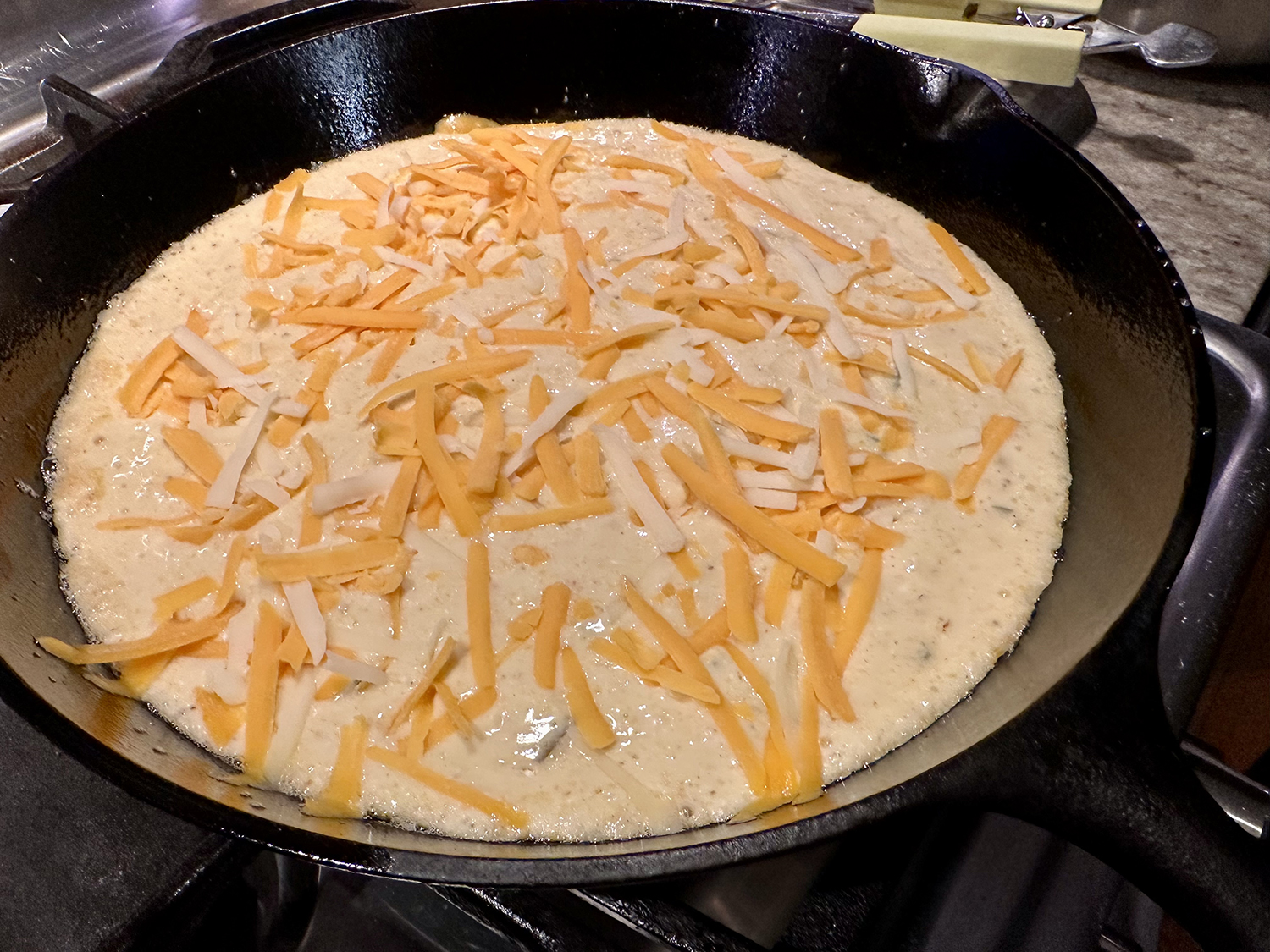
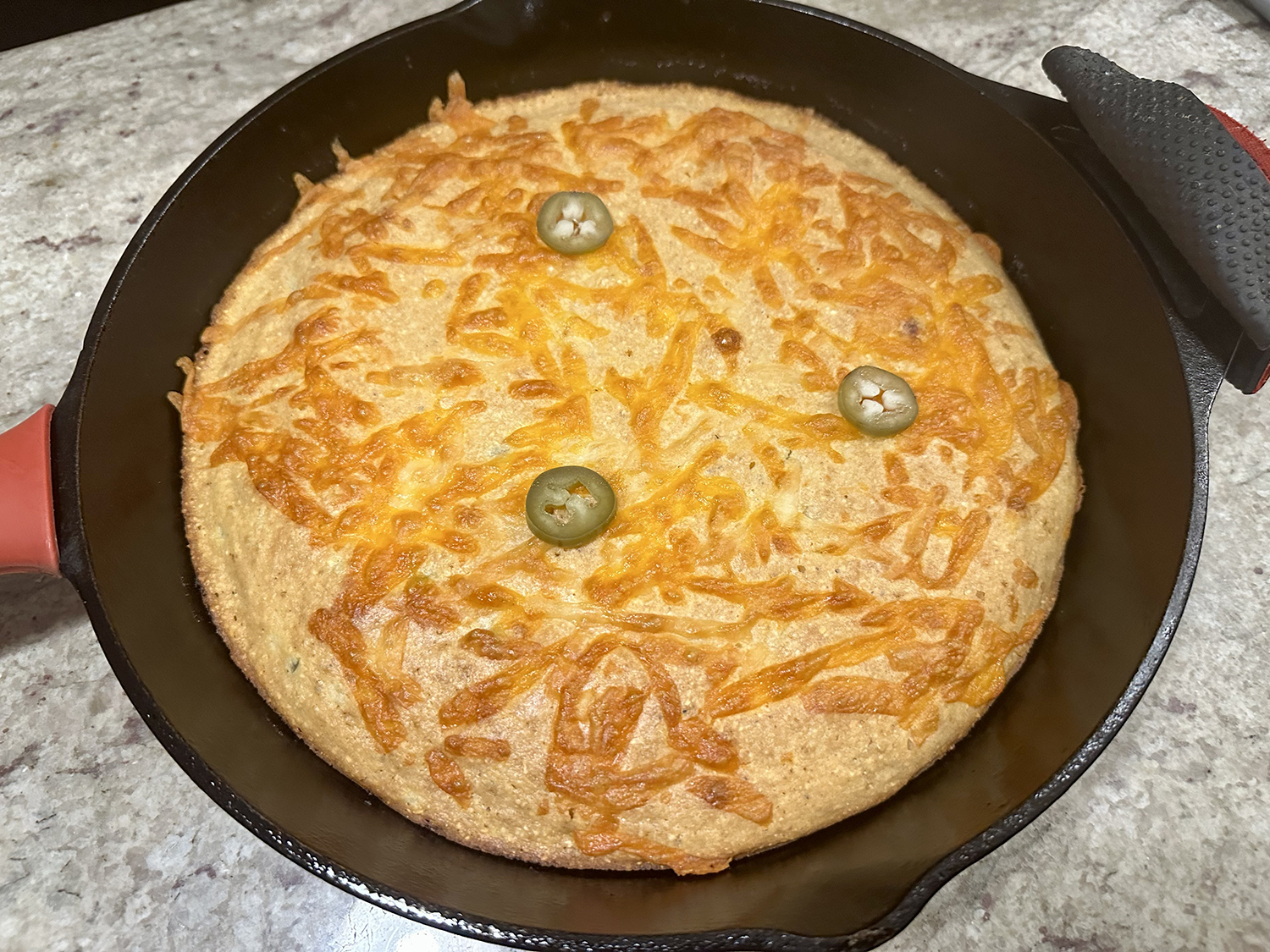
This classic cast-iron cornbread recipe is homey, delicious, and full of wholesome cornmeal flavor with an irresistible crusty edge. Bake it in a skillet or baking dish and it’s ready in just 35 minutes! It is a perfect companion for the above chicken chili. Our twists were adding some chopped pickled jalapeños and topping with shredded cheese.

Made with simple pantry ingredients, medium-grind cornmeal gives a chewy and hearty texture. If you prefer a smoother cornbread, go for a fine grind.

Skillet Cornbread with Pickled Jalapeños

  • Servings: 8
  • Difficulty: easy
  • Print

Ingredients

  • 1/2 cup unsalted butter (or olive oil or coconut oil)
  • 1 cup medium grind cornmeal (or fine grind)
  • 1 cup all-purpose flour
  • 1 tsp. baking powder
  • 1/2 tsp. baking soda
  • 1 tsp. sea salt
  • 1 Tbsp. honey (or maple syrup) or add up to 3 Tbsp. for a sweeter version.
  • 2 eggs
  • 1/4 cup chopped pickled jalapeños
  • 1 1/4 cup buttermilk (or sub yogurt, milk kefir, or milk)
  • 1/4 chopped pickled jalapeños
  • 1/2 cup shredded cheddar cheese

Directions

  1. Preheat oven to 400F.
  2. Place a  9-10″ cast iron skillet in the oven. (If you don’t have a cast-iron skillet a round cake pan will do or an 8×8 baking dish.)
  3. Whisk together cornmeal, flour, baking powder, baking soda and salt.
  4. After at least 8 minutes remove the skillet from oven and put the butter in the hot skillet, stir around until it melts. Pour melted butter into a medium bowl, leaving the skillet buttered and warm. This makes a nice crust on your cornbread.
  5. Along with the melted butter, whisk in honey, buttermilk, jalapeños and eggs. Fully mix.
  6. Pour flour mixture into the wet ingredients and gently mix until just combined.
  7. Pour into the buttered skillet, spreading out evenly. Top with the shredded cheese.
  8. Bake at 400° for 20-25 minutes. The cornbread is done when the edges begin to pull away from the side of the pan and the center is slightly puffed up.

http://www.lynnandruss.com

Adapted from recipes by Sylvia Fontaine for FeastingAtHome.com

Creole-Style Red Jambalaya With Chicken, Sausage, and Shrimp

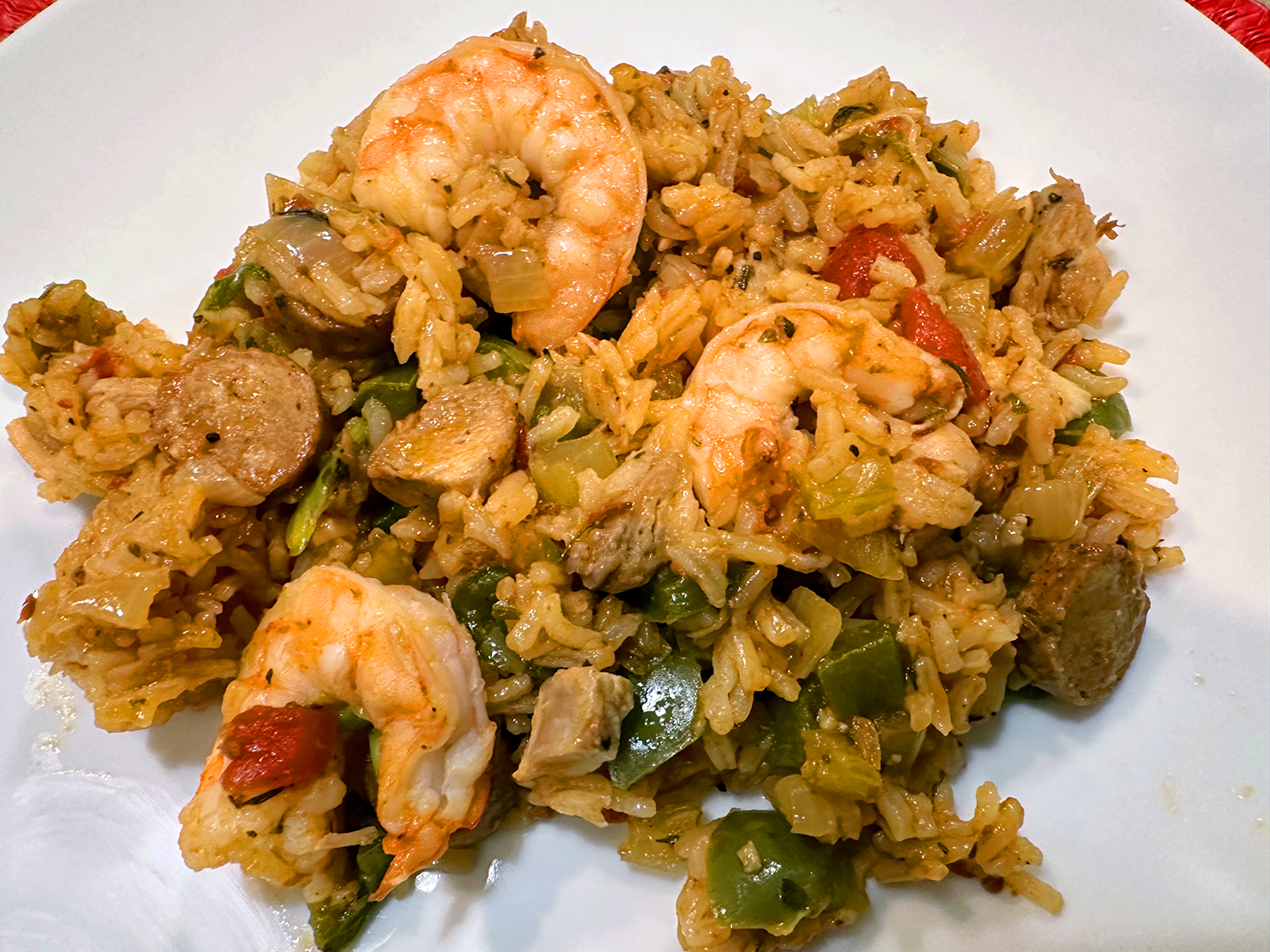
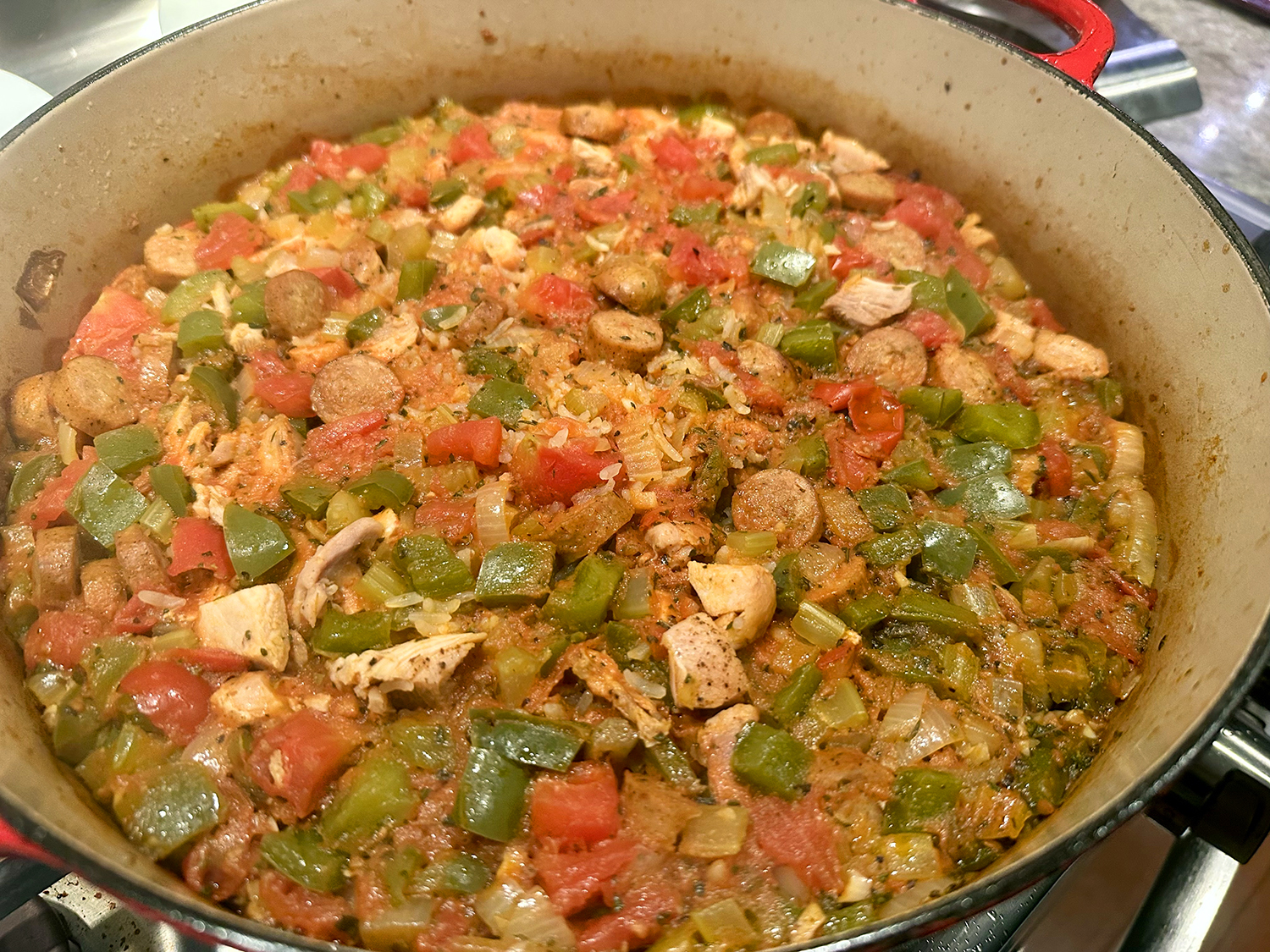
This New Orleans classic is loaded with meat, seafood, and tomatoes. Two main categories of jambalaya exist: Creole (or red) jambalaya, which is associated with the city of New Orleans and contains tomato; and Cajun (or brown) jambalaya, which contains no tomato and is more common in other parts of Louisiana. This recipe focuses on the Creole version with tomato.

According to Serious Eats “Beyond those two categories, though, it gets more difficult to pin down specifics. Meats often include pork (ham or sausage), chicken, shrimp, and crawfish, but oysters, turtle, duck, alligator, and more can also find their way into the jambalaya pot. Many recipes call for the “holy trinity”—Cajun cooking’s signature aromatic mixture of onion, green bell pepper, and celery—but I’ve found examples that omit or alter some part of it.”

This version sticks with some of the most common choices: a mixture of chicken, smoked andouille sausage, and shrimp, along with the trinity in its most typical form. The rice ratio? Rice can be tricky, but as a rule of thumb, using twice as much liquid as rice by volume will more or less put you in the ballpark.

You’ll need the juice from the tomatoes to function as a portion of the rice-cooking liquid, so be sure to check the ingredients and get canned peeled whole tomatoes packed in juice, not in purée.

The reason to use canned whole tomatoes is threefold. First, they tend to be better quality than crushed or puréed. Second, canned whole tomatoes tend not to have the firming agents that crushed tomatoes do—those firming agents can prevent the tomatoes from softening as they cook, so that they never fully melt into the dish. And third, because it’s easier to separate the flesh of whole tomatoes from their juices than it is to separate crushed or puréed tomatoes from them.

Creole-Style Red Jambalaya With Chicken, Sausage, and Shrimp

  • Servings: 6-8
  • Difficulty: easy
  • Print

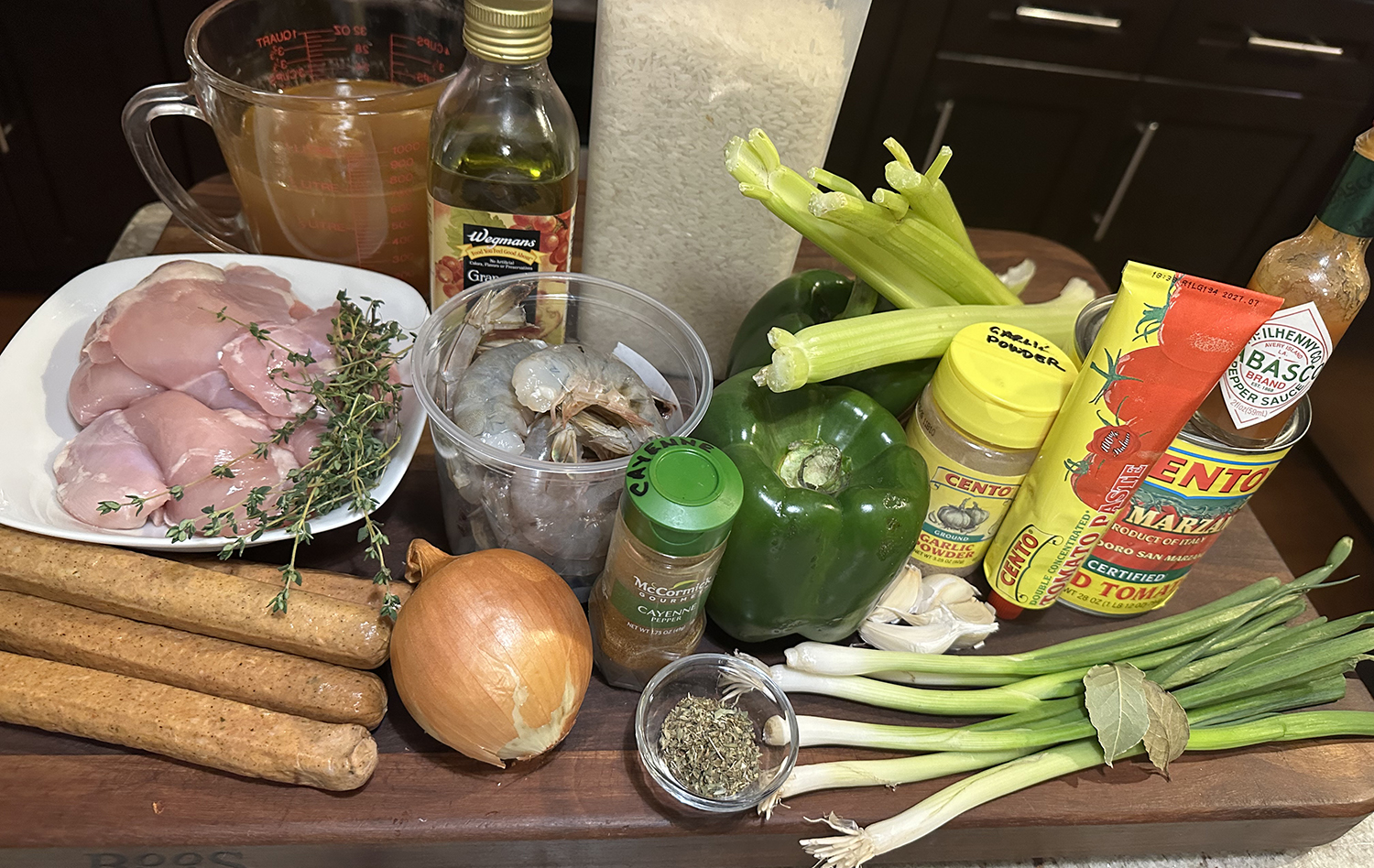
Ingredients

  • 1 28-oz. can peeled whole tomatoes, packed in juice
  • About 3 cups homemade chicken or shellfish stock, plus more as needed
  • 1 1/4 lbs. boneless, skinless chicken thighs
  • Kosher salt and freshly ground black pepper
  • 1 Tbsp. vegetable, canola, or other neutral oil, plus more if needed
  • 3/4 lb. cooked Cajun or Creole sausage, such as andouille or chaurice (or other similar smoked or spiced pork sausage), sliced into thin rounds
  • 1 medium yellow onion, diced
  • 2 medium green bell peppers, stemmed, seeded, and diced
  • 4 celery ribs, diced
  • 4 medium cloves garlic, minced
  • 1 tsp. tomato paste
  • 1 Tbsp. Louisiana-style hot sauce (like Tabasco sauce), plus more for serving
  • 2 tsp. minced fresh thyme leaves or 1 tsp. dried thyme
  • 1 tsp. dried oregano
  • 1/4 tsp. cayenne pepper, or to taste
  • 1/4 tsp. garlic powder
  • 2 bay leaves
  • 2 cups long-grain rice
  • 3/4 lb. peeled and deveined shrimp
  • 6 scallions, white and light green parts only, thinly sliced

Directions

  1. Strain tomatoes and add juice to a 4-cup measuring cup. Place tomatoes in a medium bowl. Using your fingers, carefully tear each tomato open to release the liquid inside its seed compartments. Strain all this liquid into measuring cup. Crush tomatoes well with your hands. Add enough chicken stock to tomato juices to total 4 cups (960ml). Set aside.
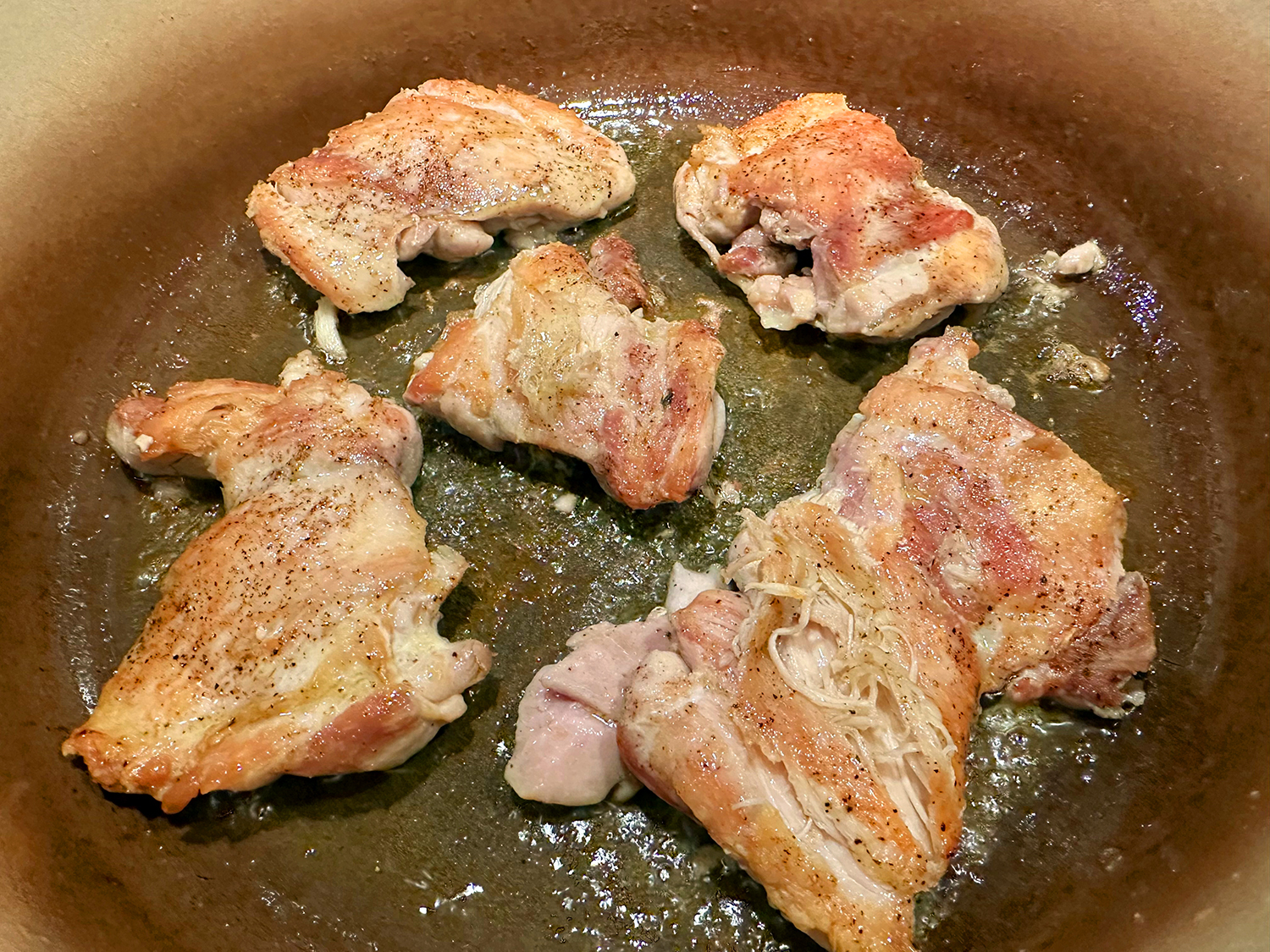
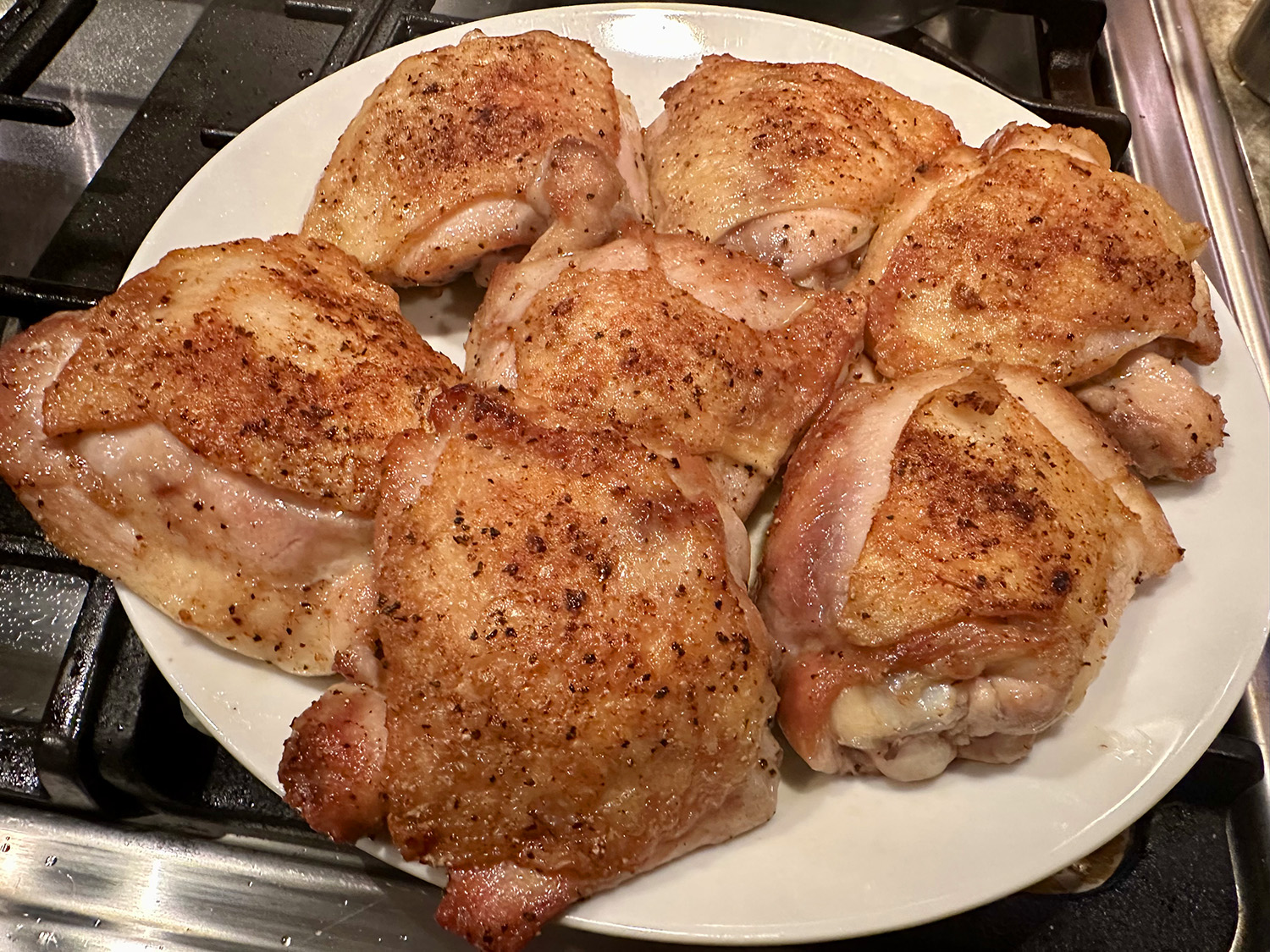
  2. Preheat oven to 325°F (160°C). Season chicken all over with salt and pepper. In a Dutch oven, heat oil over medium-high heat until shimmering. Add chicken and cook, turning, until browned on both sides, about 6 minutes per side. Transfer chicken to a cutting board and let rest for 5 minutes, then cut into 1/2-inch chunks and set aside.
  3. Meanwhile, add sausage to Dutch oven and cook, stirring often, until just starting to darken, about 3 minutes; lower heat and/or add oil at any point to prevent burning. Add onion, bell pepper, celery, and garlic and cook, stirring and scraping bottom of Dutch oven, until browned bits have come loose and vegetables just begin to turn lightly golden, about 8 minutes.
  4. Stir in tomato paste and cook, stirring, until lightly browned, about 1 minute. Add hot sauce, thyme, oregano, cayenne, garlic powder, and a very generous dose of black pepper. Add crushed tomatoes, tomato/stock mixture, diced chicken, and bay leaves and bring to a simmer. Season with salt, tasting liquid to ensure it is well seasoned.
  5. Stir in rice and return to a simmer. Cover with lid and transfer to oven. Bake until liquid is fully absorbed and rice is tender, about 40 minutes.
  6. Gently stir in shrimp and scallions and return to oven until shrimp are just cooked through, about 5 minutes. Cover pot and let rest 15 minutes. Remove bay leaves.
  7. Serve, passing hot sauce at the table for diners to add to taste.

http://www.lynnandruss.com

Original recipe by Daniel Gritzer for Serious Eats

Skillet-Braised Chicken With Greens and Olives

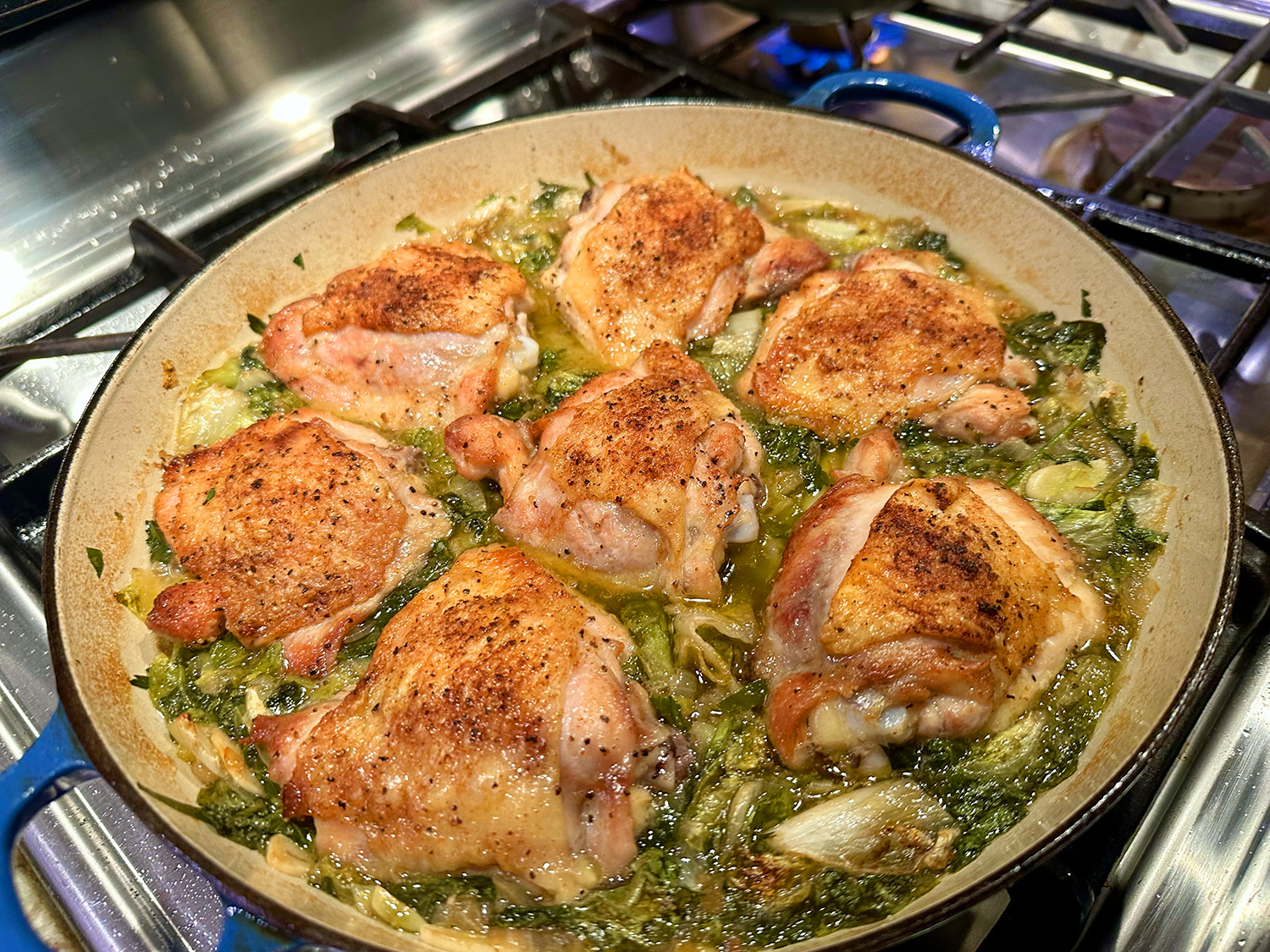
Braising chicken and greens together in a skillet does wonderful things to both bird and vegetables. As the chicken cooks, the skin browns, crisps, and renders savory fat, which suffuses the greens with flavor. The greens, in turn, make a soft, moist bed on which to cook the chicken, keeping the meat supremely tender.

In the end, the silky greens make a rich, mineral contrast to the juicy meat, while lemon juice and olives add brightness and acidity to the mix, giving it a pleasant jolt. Serve this with crusty bread, mashed potatoes, or a bed of couscous to catch all the juices.

Using homemade chicken stock will add oodles of flavor, plus some preserved lemon (about 1 1/2 tablespoons of chopped rind) adds an additional depth of flavor.

Skillet-Braised Chicken With Greens and Olives

  • Servings: 4
  • Difficulty: easy
  • Print

Ingredients

  • 2 ¼ to 2½ lbs. bone-in chicken thighs and drumsticks
  • Fine sea salt or table salt and freshly ground black pepper
  • 1/4 tsp. hot smoked paprika, plus more for serving (or use red-pepper flakes)
  • 3 Tbsp. extra-virgin olive oil, more for serving
  • 1 cup sliced shallots, about 2 to 3 (or use red onion)
  • 3 garlic cloves, thinly sliced
  • 1 pound sturdy greens, such as escarole, Swiss chard or kale, coarsely chopped
  • 1 cup coarsely chopped cilantro or parsley
  • 1¼ cups chicken stock, preferably homemade, plus more as needed
  • ½ cup pitted coarsely chopped Castelvetrano olives
  • 1 lemon, halved
  • Flaky salt, for serving (optional)

Directions

  1. In a small bowl, blend 1 teaspoon of salt, 1/2 teaspoon of black pepper, and the paprika. Pat the chicken pieces dry with paper towels and then sprinkle all over with the seasoning mix.
  2. Preheat oven to 400F (375F convection).
  3. In a large (12-inch), heavy-bottomed skillet heat the oil over medium-high. Add chicken to the skillet and let sear until it browns lightly on both sides, removing it to a plate when finished browning.
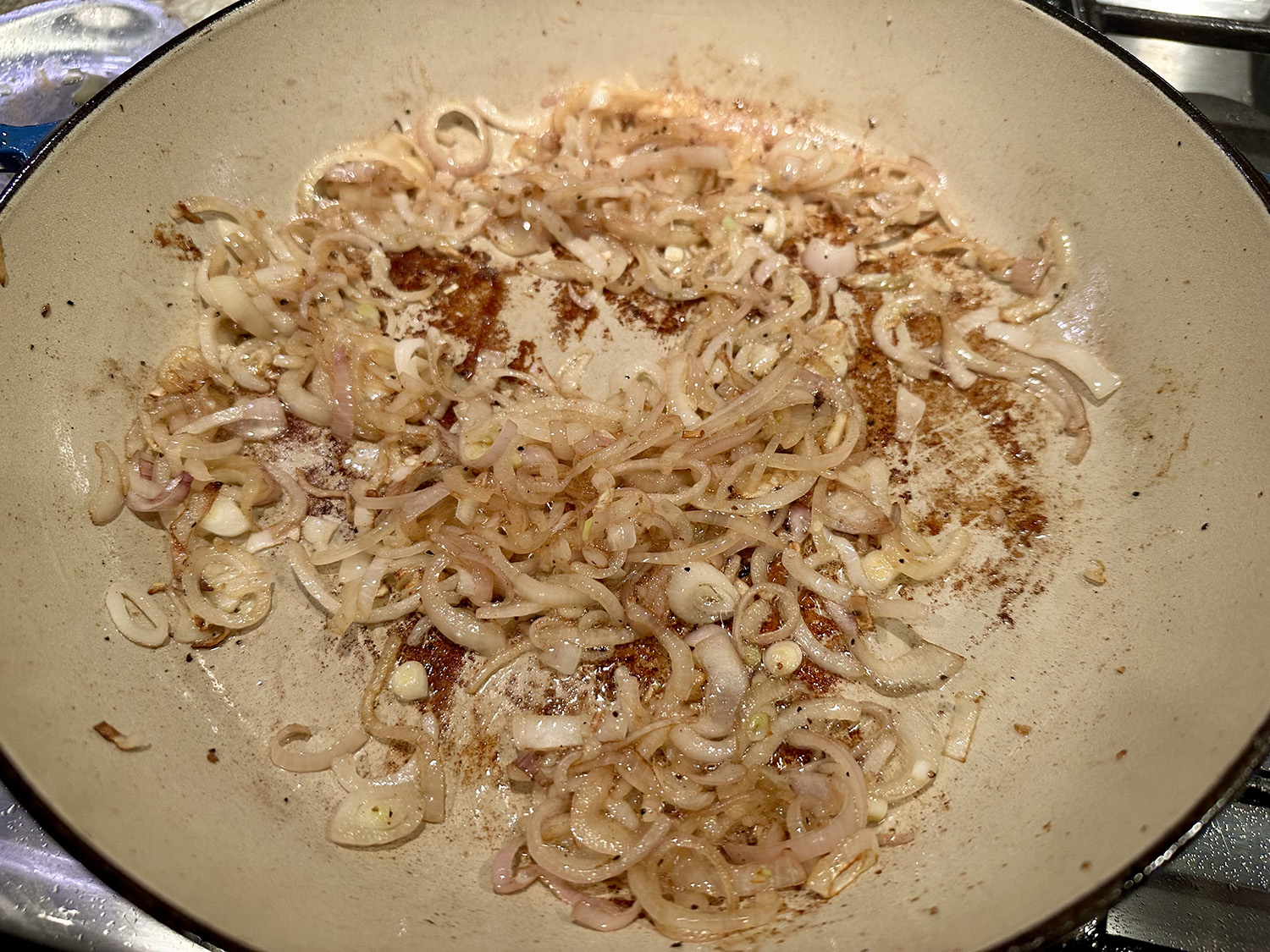
  4. Add shallots and a pinch of salt, and cook until pale golden brown all over, 5 to 7 minutes.
  5. Add garlic to the pan and cook until fragrant, 1 minute more. Add chopped greens, cilantro, and another ¼ teaspoon salt to the pan, and stir, tossing to coat in the residual chicken fat. It may seem like a lot of greens, but they will cook down. Cook until they have just started to wilt, about 2 minutes.
  6. Add the chicken and any juices on the plate to the skillet with the greens. Pour in enough of the chicken stock to come halfway up the chicken. Bring liquid to a gentle simmer. Place the skillet in the oven and bake until the internal temperature of the chicken reaches 165 degrees, about 25 to 35 minutes. Add more stock as needed to keep the greens tender and moist.
  7. Remove the skillet from the oven. Stir in olives and cook uncovered over medium heat until they are warmed through, about 1 minute more. Squeeze one lemon half over everything, then taste greens, and add more salt or lemon juice if needed. Serve topped with flaky salt, a drizzle of extra-virgin olive oil, and more smoked paprika.

http://www.lynnandruss.com

Adapted from a recipe by Melissa Clark for NYTimes Cooking

Chicken Gratin

This decadent, company-worthy casserole, features tender chicken thighs and melted turnips and leeks bathed in a creamy gratin sauce reminiscent of fondue and topped with garlicky breadcrumbs. Sherry and Cognac join forces to cut through the richness of the gratin while adding a touch of nuttiness.

Allow the flavorful browned bits to build in the skillet as the chicken sears — these golden nuggets are key to building the foundation of the cheese-laden sauce. (If necessary, brown the chicken pieces in two batches so that they brown instead of steam.)

For a more funky and pungent flavor, try Gruyère cheese. For a more mild, buttery, and nutty flavor, opt for aged Gouda. The topping of breadcrumbs helps to provide a pleasantly crunchy contrast to the soft, creamy chicken gratin. Tossing the breadcrumbs with olive oil, garlic, salt, and pepper before baking infuses them with extra flavor.

A few things we did differently was incorporate 3 leeks instead of two, use a bit more cheese, and mixed in the cheese with the breadcrumb mixture (that was actually a mistake, but we liked the result!).

We served ours with a Herbed Barley Pilaf. But upon consideration, it was a rather heavy side dish for the gratin, so a green vegetable or side salad might be a better match.

Chicken Gratin

  • Servings: 6
  • Difficulty: moderately easy
  • Print

Ingredients

  • 8 small boneless, skinless chicken thighs (about 2 1/4 lbs.)
  • 1 3/4 tsp. kosher salt, plus more to taste
  • 1 1/4 tsp. black pepper, divided
  • 5 Tbsp. unsalted butter, divided
  • 2 medium (about 12-oz.) leeks, thoroughly washed, light green and white parts of leeks cut in half lengthwise, and sliced diagonally into 1 1/2-inch pieces
  • 5 garlic cloves, 4 finely chopped and 1 grated
  • 1 1/4 pounds turnips (about 3 medium turnips), peeled and cut into 1/2-inch pieces
  • 2 Tbsp. all-purpose flour
  • 1 cup chicken stock 
  • 3 Tbsp. (1 1/2 oz.) Cognac
  • 2 Tbsp. (1 oz.) dry sherry
  • 3/4 cup heavy cream
  • 1 Tbsp. Dijon mustard
  • 1 1/2 tsp. finely chopped fresh thyme, plus thyme sprigs for garnish
  • 1/2 tsp. ground nutmeg
  • 5 oz. Gruyère or aged Gouda cheese, grated (about 1 1/4 cups)
  • 3 Tbsp. olive oil
  • 1 1/2 cups fresh breadcrumbs (from 1 small French bread loaf)

Directions

  1. Pat chicken dry with paper towels. Sprinkle evenly with 1 teaspoon salt and 1/2 teaspoon pepper. Heat 3 tablespoons butter in a large skillet over medium until foamy. Working in batches, if needed, cook chicken, undisturbed, until well browned, about 10 minutes, adjusting heat as needed to prevent browned bits in skillet from burning. Flip chicken; cook until no longer pink on the outside, about 1 minute. (You may to do this in two batches.) Transfer chicken to a plate, and set aside. Remove skillet from heat; do not wipe clean. Preheat oven to 375°F.
  2. Increase heat to medium-high under skillet. Add turnips, and sprinkle with 1/4 teaspoon salt and 1/4 teaspoon pepper. Cook, stirring occasionally, until turnip edges are browned, 4 to 5 minutes. Transfer turnips to a large (2 1/2- to 3-quart) baking dish; set aside. Reduce heat to medium.
  3. Add leeks to the skillet and sprinkle with 1/4 teaspoon salt and 1/4 teaspoon pepper. Cook over medium, stirring often, until softened, about 3 minutes. Transfer the leeks to the baking dish with turnips. Do not wipe the skillet clean.
  4. Add remaining 2 tablespoons butter to skillet and melt over medium. Add finely chopped garlic; cook, stirring constantly, until fragrant, about 30 seconds. Add flour; cook, stirring constantly, 1 minute. Stir in chicken stock, Cognac, and sherry. Bring to a simmer over medium, and stir using a wooden spoon to scrape up browned bits from the bottom of the skillet. Stir in cream, mustard, chopped thyme, and nutmeg; simmer over medium, stirring occasionally, until sauce is slightly thickened, 2 to 3 minutes. Remove from heat. Season with additional salt to taste.
  5. Arrange chicken thighs over turnip-and-leek mixture in the baking dish. Pour sauce evenly over the mixture; sprinkle with cheese.
  6. Place the grated garlic clove in a medium bowl. Stir in oil. Add breadcrumbs, remaining 1/4 teaspoon salt, and remaining 1/4 teaspoon pepper; toss to combine. Sprinkle evenly over chicken mixture.
  7. Bake in preheated oven, uncovered, until breadcrumbs turn dark amber brown, sauce bubbles in the center, and a thermometer inserted in the thickest portion of chicken registers at least 165°F, 30 to 40 minutes. Remove from oven, and let cool 5 minutes. Garnish with thyme sprigs, and serve.

http://www.lynnandruss.com

Adapted from a recipe by Amy Thielen for Food & Wine