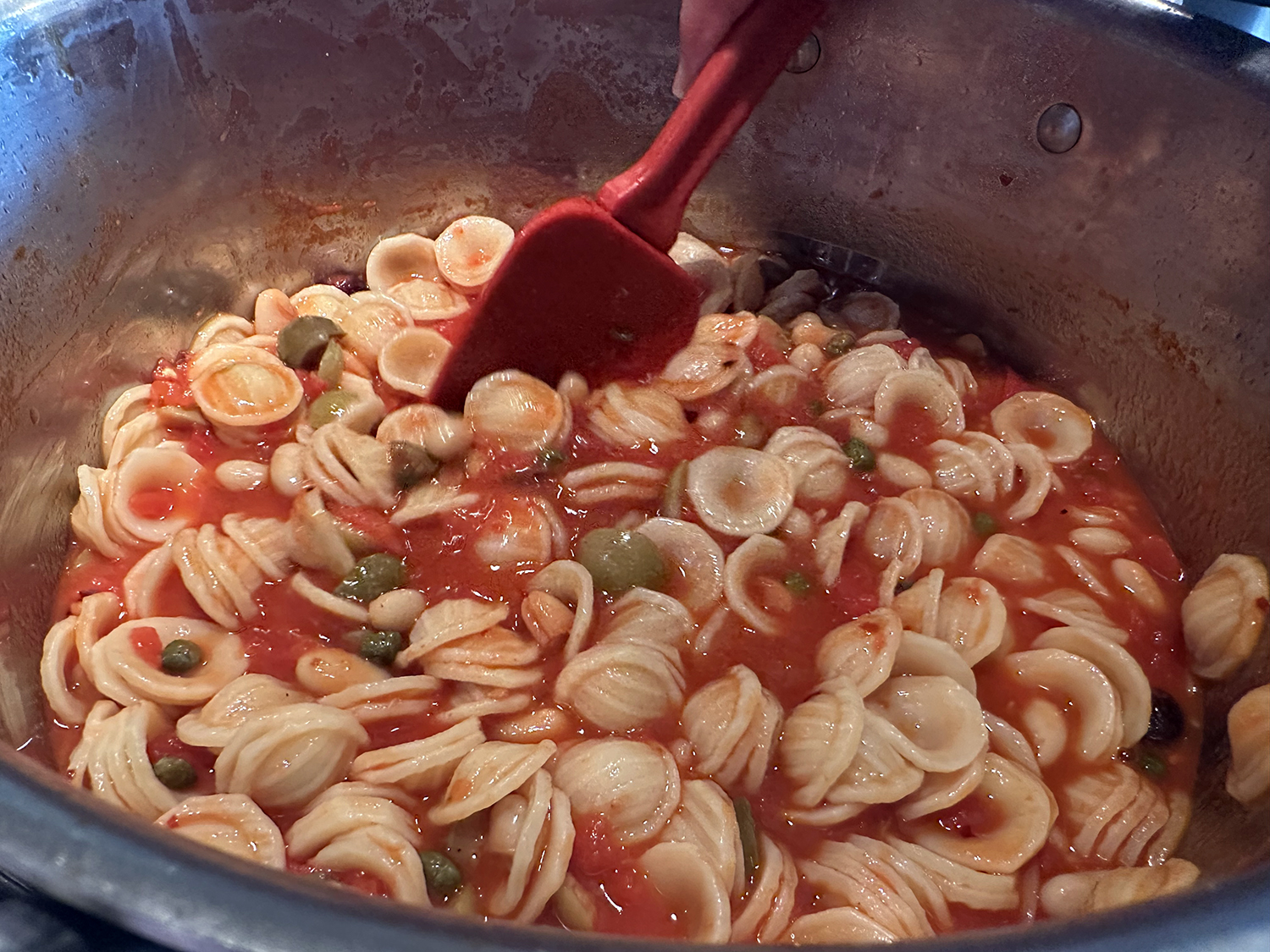
Hungarian-Style Sheperd’s Stew with Potatoes and Sausage

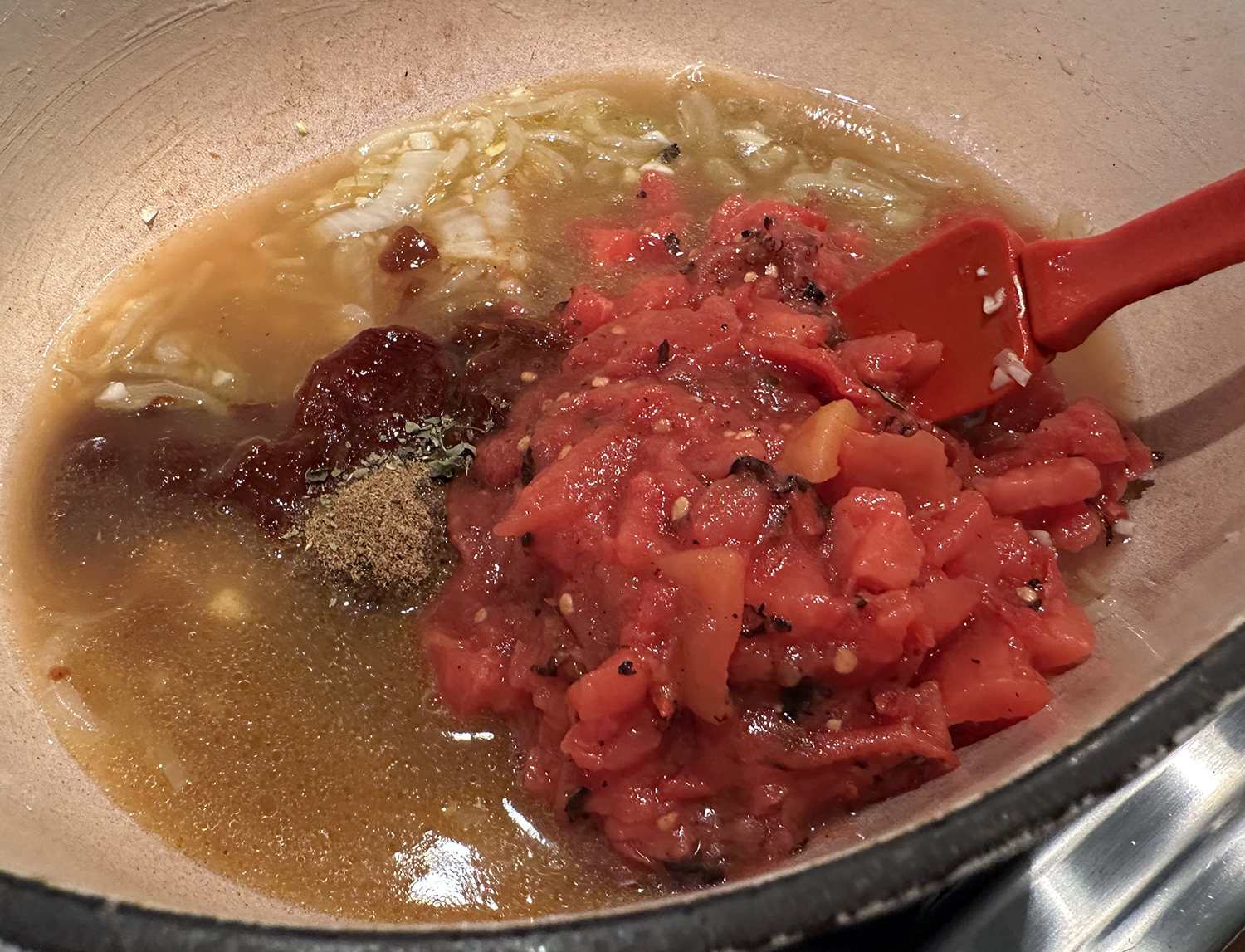
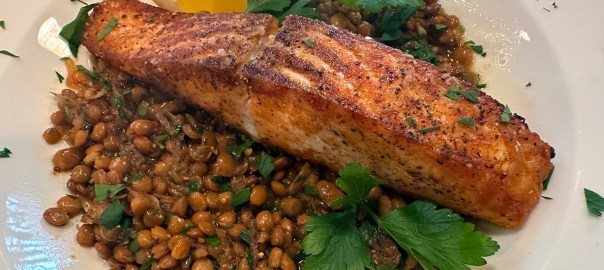
This rich Hungarian stew recipe hails from a recent Milk Street Magazine. With the temps below freezing, and the winds howling, it was a perfect evening to make this dish and warm our insides.

Without easy-to-source options for Hungarian sausage, Cajun andouille is used for its spiciness and smokiness that pair well with the other flavors in the stew. Don’t forget to cover the pot when cooking the pasta. If too much liquid evaporates, the stew will be overly thick and starchy—not an appealing result.

For a bit more fiber and flavor, we used whole wheat pearl couscous, and some chicken broth in place of the two cups of water. The cubanelle peppers weren’t large at time of purchase so we included three smaller ones.

Surprisingly, the potatoes were not tender after the 20 minute allotment time, so we added an additional 10 minutes. Believe it or not, many of those small spud pieces were still not totally tender! But the dish had a lot of depth of flavor—we gave it two thumbs up!

Hungarian-Style Sheperd's Stew with Potatoes and Sausage

  • Servings: 4-6
  • Difficulty: easy
  • Print

Ingredients

  • 1/2 cup drained roasted red peppers, patted dry
  • 2 Tbsp. tomato paste
  • 1 Tbsp. white vinegar
  • 1 1/2 Tbsp. sweet paprika
  • 1/8 to 1/4 tsp. cayenne pepper
  • Kosher salt and ground black pepper
  • 2 Tbsp. grapeseed or other neutral oil, divided
  • 1/2 cup fregola or pearl couscous
  • 1 large yellow onion, cut into 1/2-inch pieces
  • 1 large banana pepper or cubanelle pepper, stemmed, seeded and cut into 1/2-inch pieces
  • 8 to 12 oz. Yukon Gold potatoes, unpeeled, cut into 1/2-inch chunks
  • 8 oz. andouille sausage, quartered lengthwise and cut into 1/2-inch chunks
  • Chopped fresh dill, to serve
  • Sour cream, to serve

Directions

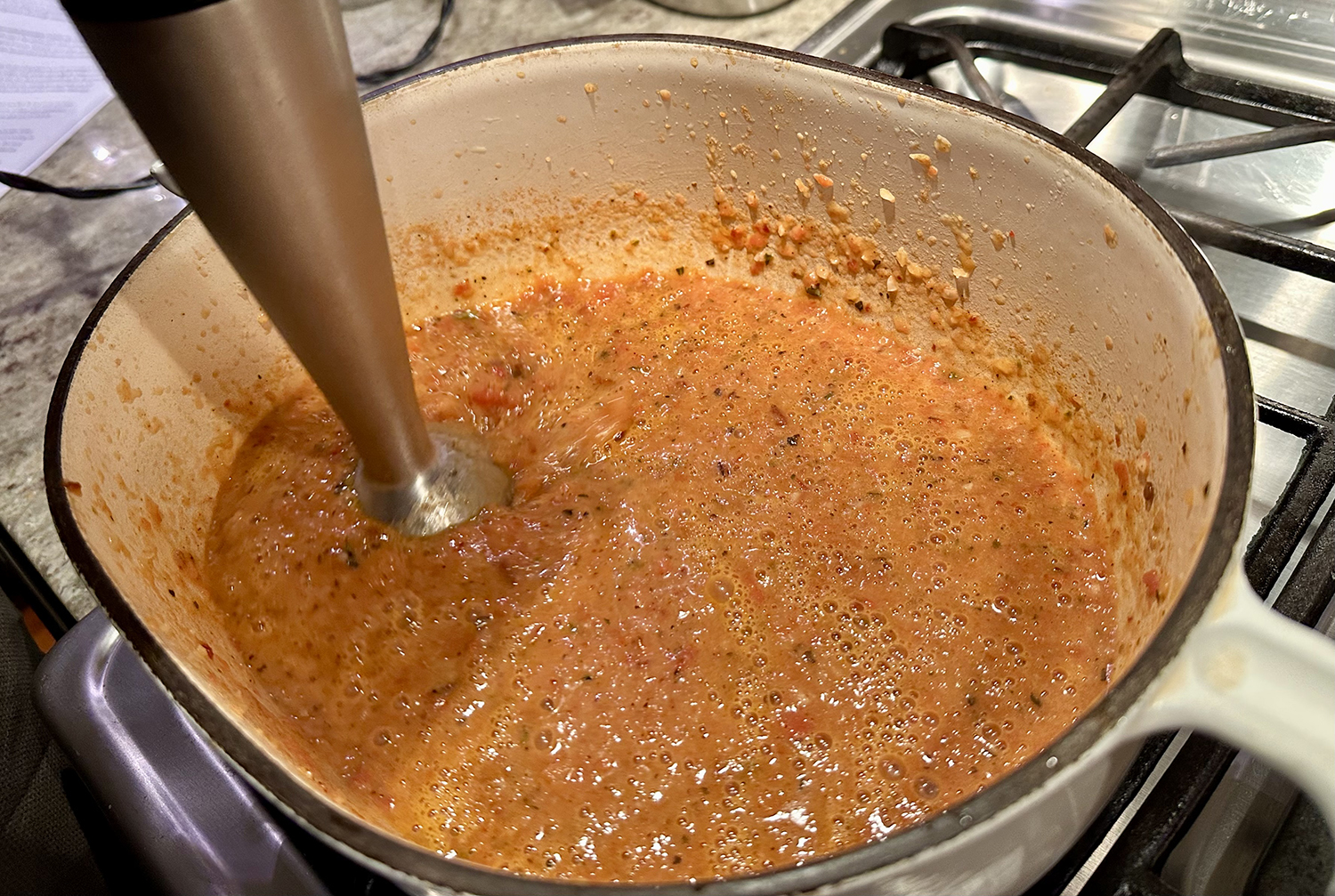
  1. In a blender, combine the roasted peppers, tomato paste, vinegar, paprika, cayenne, and 1/2 teaspoon salt. Purée, scraping the blender jar as needed, until smooth, about 30 seconds. (Alternatively, combine the ingredients in a 2-cup liquid measuring cup and blend with an immersion blender until smooth.)
  2. In a Dutch oven over medium-high, combine 1 tablespoon of the oil and the fregola/pearl couscous. Cook, stirring until golden brown, 2 to 3 minutes. Transfer to a small bowl and set aside.
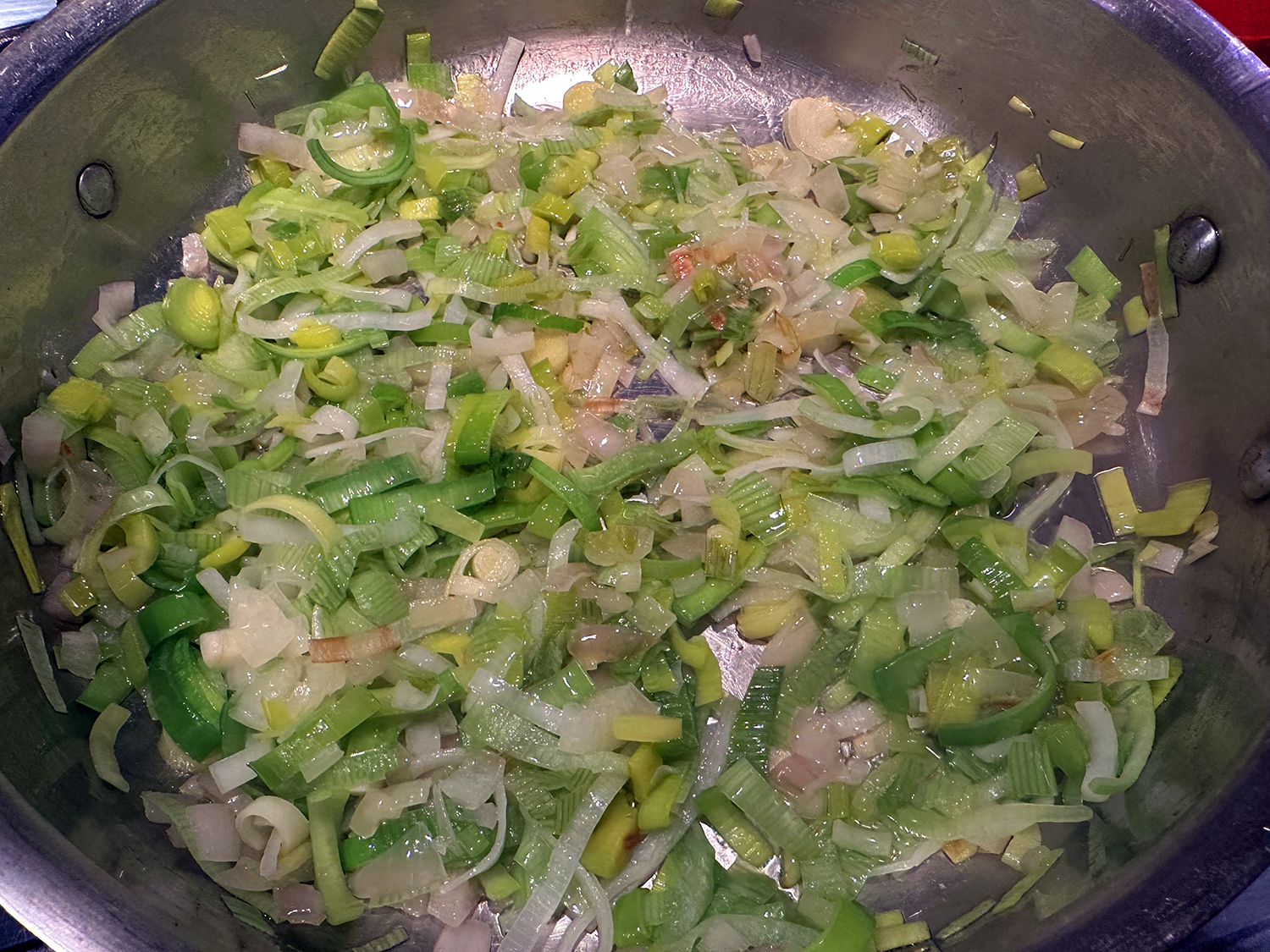
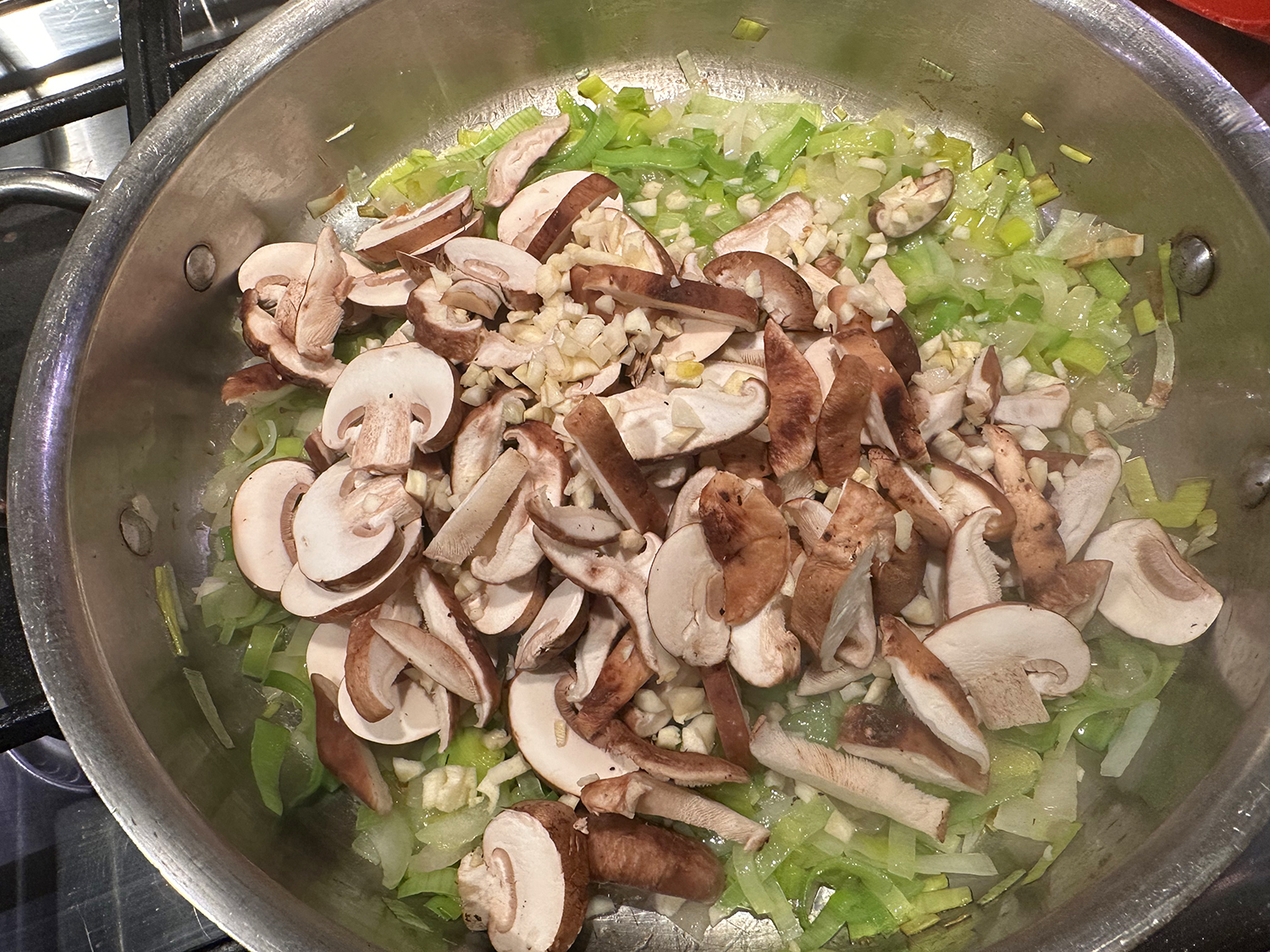
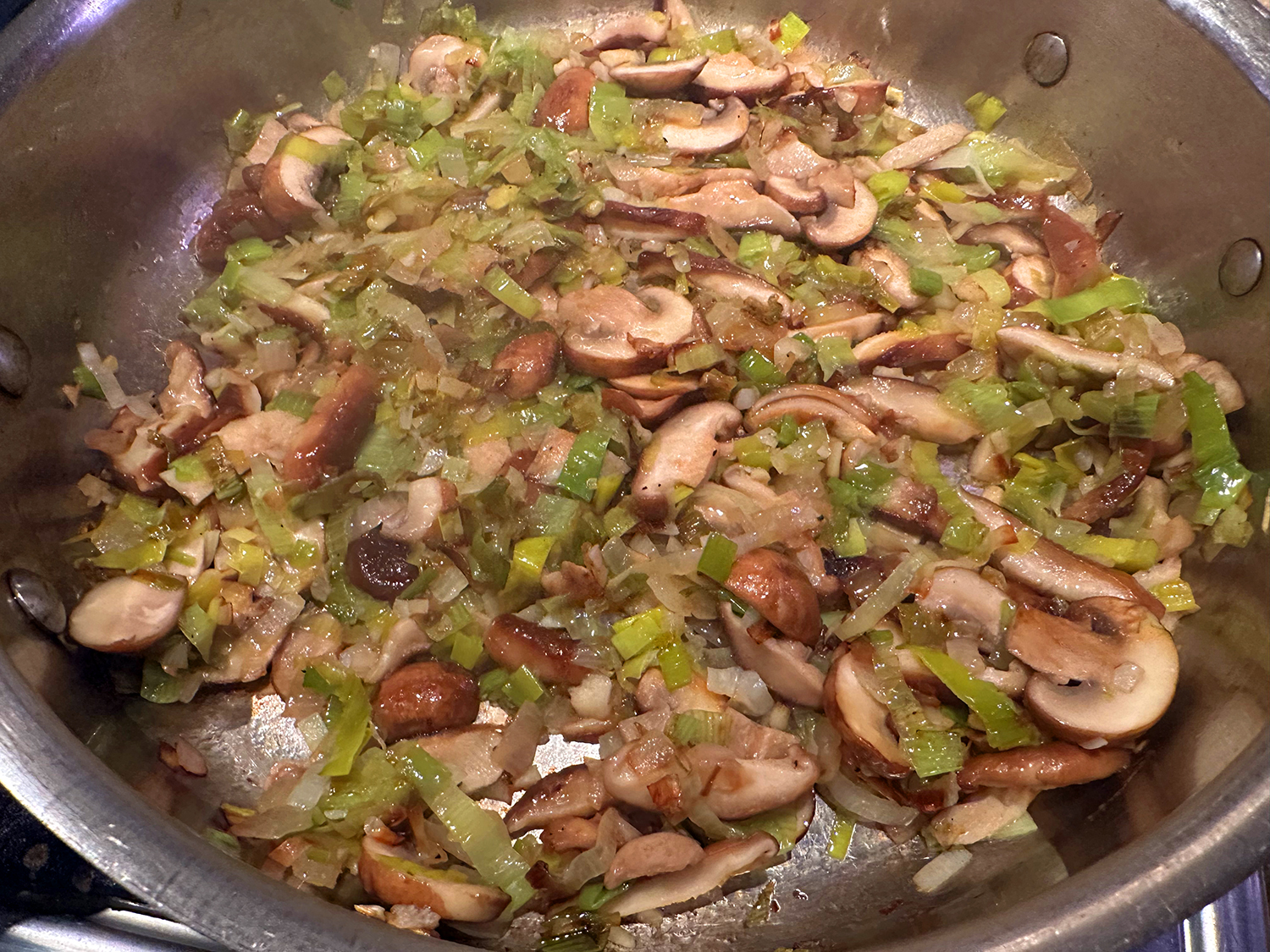
  3. In the same pot over medium-high, heat the remaining 1 tablespoon of oil until shimmering. Add the onion, banana/cubanelle pepper, potatoes and a 1/2 teaspoon each salt and black pepper. Cook, stirring until the vegetables are browned at the edges, 4 to 5 minutes.
  4. Add the pepper purée and cook, scraping up any browned bits, until the mixture begins to stick to the bottom of the pot, 1 to 2 minutes. Stir in 2 cups water and simmer.
  5. Stir in the fregola/pearl couscous, then cover, reduce to medium-low and cook, stirring occasionally until a pairing knife inserted into the potatoes meets no resistance, 15 to 20 minutes.
  6. Stir in the sausage. Cook uncovered, stirring until heated through and thickened, 3 to 5 minutes. Taste and season with salt and pepper. Serve sprinkled with dill and with sour cream on the side.

http://www.lynnandruss.com

Recipe by Rose Hattabaugh for Milk Street

Roasted Cherry Tomato Sauce

Luscious. Simple. Versatile. Easy. There are many descriptors for this super-easy tomato sauce. It’s amazing how so few ingredients can produce this very scrumptious sauce. This is a slow-roasted version of Martha Stewart’s stove-top tomato sauce, and it’s jam-packed with flavor.

You’ll want to have it with everything not just over pasta but on crusty bread and scrambled eggs, and paired with soft cheeses. We served ours with riccioli, a twisty-shaped pasta. Dinner Done. Diners Satisfied.

Roasted Cherry Tomato Sauce

  • Servings: 2 cups sauce
  • Difficulty: easy
  • Print

Ingredients

  • 1 1/2 lbs. cherry tomatoes
  • 3 cloves garlic, smashed
  • 1/2 cup extra-virgin olive oil
  • 2 Tbsp. balsamic vinegar
  • 1 Tbsp. fresh thyme
  • 2 tsp. packed light-brown sugar
  • 1 tsp. coarse salt

Directions

  1. Preheat oven to 325 degrees. Mix together tomatoes and garlic in a nonreactive 9-by-13-inch baking dish. Whisk together oil, vinegar, thyme, brown sugar, and salt in a bowl. Drizzle over tomato mixture.
  2. Bake until tomatoes are softened and caramelized, about 1 hour. If making pasta, follow package directions.
  3. Serve warm or at room temperature. Sauce can be stored in refrigerator up to 5 days; let cool before storing.

http://www.lynnandruss.com

Recipe from Martha Stewart

Amazing (But Prep-Intense) Lasagna

If you are of the ilk who actually likes a labor-intensive recipe challenge that brings out the masochist in you, then go ahead and double this lasagna recipe like we did. The original author claims the entire process takes a total of 4 hours. Well that depends…

We were hosting a potluck party of 10, and since this recipe feeds 8-10 servings (and we definitely wanted leftovers after all of that work), then two lasagnas it was! Because we made two casseroles, it took us 5 hours just to prep and assemble. They were refrigerated overnight, brought to room temperature before baking, and took nearly an hour to come to temperature of 165°F due to the cool ingredients.

All negatives aside, the lasagna was AMAZING! Our guests gushed over how yummy it was. This version produces an intensely flavored sauce, cheeses that melt into creaminess as if they were béchamel, meat that’s just chunky enough, and noodles that (hopefully) put up no resistance to the fork.

The ingredients and directions that follow are the original from Regina Schrambling for one lasagna. Instead of Italian sausage links, we used bulk and made them into patties for ease of searing and chopping. Many of our photos may show ingredients for two lasagnas, so keep that in mind when making yours.

In case you are wondering why make the ground meat into meatballs, only to chop them up later? It certainly gave us pause. One reviewer wrote “I believe the point of cooking the meat in ball shape is to end up with more tender and flavorful meat involving fewer advanced glycation end products. When you “scramble” ground beef, the fat drains out by the time it is fully cooked, and it’s all a bit crispy, grey and tough. The ball shape holds in a lot of the fat and moisture.”

*(If not using fresh noodles, cook them according to package directions for al dente, rinse under cool water and let cool on dry towels until ready to use.)

Amazing (But Prep-Intense) Lasagna

  • Servings: 8-10
  • Difficulty: moderate
  • Print

Ingredients

For the Sauce:

  • 1 cup extra virgin olive oil
  • 2 medium red onions, finely diced
  • 2 large cloves minced garlic
  • 8 oz. pancetta, diced
  • Salt and freshly ground black pepper
  • 1½ cups good red wine, preferably Italian
  • 2 28-oz. cans Italian plum tomatoes
  • 3 Tbsp. tomato paste
  • ¾ lb. ground sirloin
  • ¼ cup freshly grated Pecorino Romano
  • 2 eggs
  • 10 sprigs fresh parsley, leaves only, washed and dried
  • 2 large whole cloves garlic
  • ½ cup flour
  • 1 lb. Italian sausage, hot or sweet, or a mix

For the Lasagna:

  • 1 15-oz. container ricotta cheese
  • 2 eggs
  • 2 cups freshly grated Pecorino Romano
  • ½ cup chopped parsley
  • 1 lb. mozzarella, grated
  • 16 sheets fresh lasagna noodles*

Directions

  1. For the sauce, heat ½ cup oil in a large heavy Dutch oven or kettle over low heat. Add the onions, minced garlic and pancetta, and cook, stirring, for 10 minutes, until the onions are wilted. Season liberally with salt and pepper. Raise heat slightly, add the wine and cook until it is mostly reduced, about 20 minutes. Crush the tomatoes into the pan, and add their juice. Add the tomato paste and 2 cups lukewarm water. Simmer for 1 hour.
  2. Combine the sirloin, cheese and eggs in a large bowl. Chop the parsley with the whole garlic until fine, then stir into the beef mixture. Season lavishly with salt and pepper. Using your hands, mix until all the ingredients are well blended. Shape into meatballs and set aside.
  3. Heat the remaining oil in a large skillet over medium-high heat. Dust the meatballs lightly with flour, shaking off excess, and lay into the hot oil. Brown the meatballs on all sides (do not cook through) and transfer to the sauce.
  4. In a clean skillet, brown the sausages over medium-high heat. Transfer to the sauce. Simmer 1½ hours.
  5. Heat the oven to 350°F. In a large bowl, combine the ricotta, eggs, Pecorino Romano, parsley and all but 1 cup of the mozzarella. Season well with salt and pepper. Mix thoroughly.
  6. Remove the meatballs and sausage from the sauce, and set aside to cool slightly, then chop coarsely. Spoon a thick layer of sauce into the bottom of a 9-by-12-inch lasagna pan. Cover with a layer of overlapping noodles (usually 4 per layer).
  7. Spoon more sauce on top, then add a third of the meat and a third of the cheese mixture. Repeat for 2 more layers, using all the meat and cheese. Top with a layer of noodles, and cover with the remaining sauce. Sprinkle reserved mozzarella evenly over the top.
  8. Bake 30* minutes. (If the lasagna was refrigerated overnight, take it out one hour before you bake. The baking time will be increased by almost double. Check with an internal thermometer and if the temp reads 165°F, it is done.) Let stand 10 minutes before serving.

http://www.lynnandruss.com

Adapted from a recipe by Regina Schrambling for NYTimes Cooking

Beef and Broccoli with Red Pepper and Scallions

In many Chinese restaurants, this is one of the most-ordered items of their menus, and is also a favorite take-out dish.

There are many beef and broccoli recipes on the Internet, with variations made in slow cookers, in Instant Pots, and on sheet pans. This version from Woks of Life, however, will show you exactly how to easily achieve restaurant results at home.

Here are the basic steps to making an authentic beef broccoli stir-fry:

  • Tenderize & marinate the beef
  • Blanch the broccoli & sear the beef
  • Cook the sauce & stir-fry everything together

This simple method yields tender beef, still crisp, healthy broccoli, and a rich sauce, combined into a restaurant-style dish. For this recipe, you’ll need both light/regular soy sauce and dark soy sauce. A good dark soy sauce adds flavor and provides that rich dark color to your beef and broccoli. Just as important as the soy sauce is the oyster sauce, which is full of umami goodness and key to producing an authentic restaurant flavor.

Our broccoli florets were too firm in the final dish. For one, they could have been cut smaller, and The Hubs ran cool water over them after they were blanched which prevented any further cooking.

We took the liberty of adding some red bell pepper and scallions, both for color and added nutrition. In the end, we both felt the dish did not have enough bold flavors for our liking—which is probably why we never order it at a Chinese restaurant. But for those of you who prefer a more sedate flavor profile, then it is probably a recipe for you.

Beef and Broccoli with Red Pepper and Scallions

  • Servings: 4
  • Difficulty: easy
  • Print

Ingredients

For the beef and marinade:

  • 1 lb. flank steak (sliced 1/4-inch thick)
  • 1/4 tsp. baking soda (optional)
  • 3 Tbsp. water
  • 1 1/2 tsp. cornstarch
  • 2 tsp. vegetable oil
  • 1 tsp. oyster sauce

For the sauce:

  • 2/3 cup low sodium chicken stock (warmed)
  • 1 1/2 tsp. granulated sugar (or brown sugar)
  • 1 1/2 Tbsp. soy sauce
  • 1 tsp. dark soy sauce (or double black dark soy sauce)
  • 1 Tbsp. oyster sauce
  • 1/2 tsp. sesame oil
  • 1/8 tsp. white pepper

For the rest of the dish:

  • 4 cups broccoli florets
  • 1 red bell pepper, seeded and cut into 1 1/2-inch chunks
  • 1 bunch scallions, sliced thin, whites and greens divided (save some greens for garnish)
  • 3 Tbsp. vegetable oil (divided)
  • 2 cloves garlic (minced)
  • 1/4 tsp. ginger (grated/minced, optional)
  • 1 Tbsp. Shaoxing wine
  • 2 1/2 Tbsp. cornstarch (mixed with 3 Tbsp. water)

Directions

  1. In a bowl, add the sliced beef along with the baking soda and water (if you don’t want your beef tenderized too much, omit the baking soda). Massage the beef with your hands until all the liquid is absorbed. Mix in the remaining marinade ingredients: cornstarch, oil, and oyster sauce. Set aside to marinate for at least 30 minutes.
  2. Make the sauce mixture by mixing together the chicken stock, sugar, soy sauce, dark soy sauce, oyster sauce, sesame oil, and white pepper. Set aside.
  3. Bring a pot of water to a boil and blanch your broccoli for 30 to 60 seconds (depending on whether you like your broccoli crunchy or a little soft). Drain (but do not run cool water over them), and set aside.
  4. Insert copy about bell pepper and scallions here…
  5. Heat your wok over high heat until smoking. Add 2 tablespoons oil and sear the beef on both sides until browned (this should only take 2-3 minutes). Turn off the heat, remove the beef from the wok, and set aside.
  6. Set the wok over medium heat and add another tablespoon of oil along with the garlic and ginger (if using). Stir the garlic and ginger for 5 seconds and then pour the Shaoxing wine around the perimeter of the wok.
  7. Next, add in the sauce mixture you made earlier. Stir the sauce around the sides of the wok to deglaze it (all those nice bits from stir-frying the beef should be absorbed into the sauce). Bring the sauce to a simmer. Stir the cornstarch and water into a slurry to ensure it’s well combined, and drizzle the mixture into sauce while stirring constantly. Allow it to simmer and thicken for 20 seconds.
  8. Toss in the blanched broccoli and seared beef (along with any juices). Mix everything together over medium heat until the sauce coats the beef and broccoli. If the sauce seems thin, turn up the heat and reduce it further, or add a bit more cornstarch slurry. If the sauce is too thick, add a splash of chicken stock or water. Serve with plenty of steamed rice.
http://www.lynnandruss.com

Adapted from a recipe by Bill from Woks of Life

Seafood Fra Diavolo

In this version from America’s Test Kitchen, we made a few changes based on what we had on hand, or preferred to use. Since Yours Truly doesn’t like mussels, but we had a couple of recently purchased lobster tails in the freezer, they became the star of the show.

In addition, instead of a 28-ounce can of whole peeled tomatoes, we used a quart of our homemade marinara sauce. Otherwise we finished the recipe as written. And it was amazing!

We made it for just the two of us with enough leftovers for two more servings, although we cooked only two lobster tails the night of the dinner. For leftovers, you can either steam two more tails or forego them altogether. If serving four guests at once, of course use all four lobster tails.

This ever-popular Italian American restaurant classic consists of an abundant amount of mixed seafood (shrimp, scallops, and lobster tails in our version) and pasta tossed in a rich, homemade marinara sauce. To make the recipe doable at home, most of the ingredients cook in the same pot, and the pasta gets just enough flavorful liquid to hydrate and fully soften. Not only does this method simplify cleanup, but it also ensures that every element of the dish is infused with fresh seafood flavor.

We started by making a potent mix of garlic, white wine, tomato paste, and fiery red pepper flakes, making a flavorful cooking liquid as a base for the sauce. After adding a quart of our homemade marinara sauce and a bottle of clean-tasting, briny clam juice (to enhance the seafood presence in the sauce), we brought the liquid to a boil, and added the linguine to cook through and soak up the flavors of the sauce.

Once the pasta was nearly cooked through, we tossed in the quick-cooking shrimp and scallops, and after just a few minutes, they were gently cooked through to perfection. For a bright, spicy finish we stirred in the chopped pickled cherry peppers and fresh parsley, then topped our plates with a steamed lobster tail and a swirl of good extra-virgin olive oil.

NOTES: If you’re spice-averse, use a lesser amount of pepper flakes and cherry peppers. Different brands of linguine will cook at different rates and absorb different amounts of liquid; you may not need to add any hot water in Step 5, but having some on hand provides insurance against the pasta being too dry.

Seafood Fra Diavolo

  • Servings: 4
  • Difficulty: easy
  • Print

Ingredients

  • 12-oz. extra-large shrimp (21 to 25 per lb.), peeled, deveined, and tails removed
  • 12-oz. large sea scallops, tendons removed, cut in half horizontally
  • 6 Tbsp. extra-virgin olive oil, divided, plus extra for drizzling
  • 7 garlic cloves, minced, divided
  • ¾ teaspoon table salt, divided
  • 3 anchovy fillets, rinsed
  • 3 Tbsp. tomato paste
  • 2 tsp. dried oregano
  • 1–1½ tsp.red pepper flakes, plus extra for sprinkling
  • 4 lobster tails
  • 1 cup dry white wine
  • 1 (28-oz.) can whole peeled tomatoes; OR 1 qt. of homamade marina sauce
  • 1 (8-oz.) bottle clam juice
  • 12-oz. linguine
  • Hot water
  • ½ cup chopped fresh parsley
  • 1–2 Tbsp. chopped jarred hot cherry peppers, plus 1 Tbsp. brine

Directions

  1. Toss shrimp and scallops with 2 tablespoons oil, 1 tablespoon garlic, and ½ teaspoon salt in bowl. Refrigerate until ready to use.
  2. Combine anchovies, remaining ¼ cup oil, and remaining garlic in large Dutch oven and cook over medium heat until garlic is just beginning to brown, 3 to 5 minutes, breaking up anchovies with wooden spoon.
  3. Add tomato paste, oregano, and pepper flakes and cook, stirring constantly, until tomato paste begins to darken, about 2 minutes. Increase heat to medium-high, cover and cook, stirring pot occasionally, for about 3 to 4 minutes.
  4. Add canned tomatoes and their juice (or homemade marinara), clam juice, and remaining ¼ teaspoon salt to pot. Using a potato masher, mash tomatoes in pot until coarsely pureed. (Not necessary if using homemade marina.)
  5. Bring tomato mixture to boil over medium-high heat. Add pasta (it needn’t be fully submerged) and cook, stirring often, until strands are flexible but still slightly firm in center, 6 to 10 minutes. (If sauce begins to dry up before pasta is done, add hot water, ½ cup at a time, and continue cooking pasta. Begin checking pasta 2 minutes shy of package instructions; it should be nearly cooked to your liking before adding seafood.)
  6. Add water to a separate pot with a steamer basket, bring to a boil, drop in the lobster tails and cover, steaming for 3 minutes. Remove tails from pot set aside.
  7. While the lobster is steaming, stir shrimp and scallops into red sauce and cook, stirring frequently, until pasta is al dente and seafood is opaque, about 3 minutes.
  8. Off heat, add parsley, cherry peppers and brine, and toss to combine. (Pasta sauce will continue to thicken. Adjust consistency with additional hot water as needed.) Season with salt to taste.
  9. Serve, sprinkled with extra pepper flakes (optional), topped with lobster tails and drizzled with extra oil.

http://www.lynnandruss.com

Recipe by Matthew Fairman for America’s Test Kitchen

Roast Chicken with Potatoes, Shallot, and Lemon

Another simple, yet tasty, recipe for you roast chicken dinner lovers. Roast a spatchcocked chicken on a bed of potatoes, shallots, garlic, lemon, and herbs in this simple but flavor-packed one-pan dinner—which we all love for the convenience and clean-up.

From Food & Wine: “A savory roast chicken dinner is an elegant weeknight staple, especially if it all comes together in one baking dish. This version is styled after the dripping, spinning, deeply aromatic poulet rôti that’s found in nearly every Provençal marché. Potatoes, shallots, garlic, and lemons are arranged under the bird. As the chicken roasts, the rendered fat coats the potatoes with savory drippings and mingles with the dry white wine and fresh tarragon, while the herb sprigs soften and release their aroma and flavor.”

TIPS: Make sure to pat chicken dry to remove any excess moisture. This ensures that the chicken will have a crisp, golden exterior. If you don’t have access to fresh tarragon, or simply don’t like its delicate licorice-like flavor, feel free to use fresh rosemary or thyme instead.

Not familiar with spatchcocking? It is a technique where the backbone is removed so the bird lays flat for an evenly cooked, golden-brown chicken with delicious, crispy skin. Ask your butcher to do this for you or use sharp kitchen shears or a chef’s knife to remove the backbone easily.

We found (as some reviewers also noted) that some of the baby potatoes and shallots were not melting soft like the others. That seemed odd to us because the spuds were quite small, even halved, and they should all have been equally tender after an hour in the oven. We surmised that perhaps the shallots and potatoes under the poultry were the culprits.

To avoid this happening, roast all of the potato/shallot/garlic lemon mixture first for 15 minutes before topping with the chicken. OR, place a rack above the veggies for the chicken allowing the hot air to get to all of them.

Instead of placing your sprigs of herbs on top of the potatoes and shallots, you will get more flavor from mixing the leaves of the tarragon (or other herb) directly into the vegetables. This change is noted in the directions below, although the photos do not indicate this step.

Roast Chicken with Potatoes, Shallot, and Lemon

  • Servings: 4-6
  • Difficulty: easy
  • Print

Ingredients

  • 1 (3 1/2- to 4-lb.) whole chicken
  • 3 3/4 tsp. fine sea salt, divided
  • 1 tsp. black pepper divided
  • 1 1/2 lbs. baby new potatoes (about 1 inch in diameter), halved if larger
  • 10 medium shallots, halved
  • 1/4 cup extra-virgin olive oil, divided
  • 2 small garlic heads (unpeeled), halved crosswise
  • 2 lemons, halved
  • 1/3 cup dry white wine
  • 4 fresh tarragon sprigs, OR rosemary OR thyme, leaves removed from stems

Directions

  1. Preheat oven to 425°F. Pat chicken dry using paper towels. Place chicken, backbone side up, on a cutting board. Using kitchen shears, cut along each side of backbone; remove and discard backbone. Flip chicken breast side up, and push down on breast to flatten. Sprinkle chicken all over with 2 1/2 teaspoons salt and 1/2 teaspoon pepper. Set aside at room temperature for 30 minutes. (Alternatively, refrigerate, uncovered, on a wire rack set inside a baking sheet until skin is dried, at least 8 hours or up to 12 hours. Remove from refrigerator, and let come to room temperature, about 1 hour.)
  2. In a 9- x 13-inch ceramic baking dish or braiser, toss together potatoes and shallots with 2 tablespoons olive oil, remaining 1 1/4 teaspoons salt, and remaining 1/2 teaspoon pepper. Add garlic and lemon halves, and toss until lightly coated in oil; arrange garlic cut side down in baking dish. Drizzle with wine, and sprinkle in tarragon leaves.
  3. Roast for 15 minutes before placing the chicken breast side up, over mixture in center of baking dish; drizzle with remaining 2 tablespoons olive oil. Roast in preheated oven until potatoes are browned and very tender and a thermometer inserted in thickest portion of chicken registers 165°F, 55 minutes to 1 hour.
  4. Remove from oven, and let chicken rest 10 minutes. Squeeze garlic cloves from skins into baking dish, and toss with potatoes. (Discard garlic skins.) Squeeze lemon halves over potatoes; discard lemons. Serve warm.

http://www.lynnandruss.com

Recipe by Rebekah Peppler for Food & Wine

Cheesy French Onion Garlic Bread

Love garlic bread? Well, this cheesy French onion garlic bread is the best of both worlds, combining garlic bread and French onion soup, with none of the hassle. With just a few ingredients and a little help from the grocery store, you’ll have a delicious twist on garlic bread in no time. A great addition to most dinner parties.

Here, I use a packet of onion soup mix and some butter to season the bread. Topping it with gooey mozzarella, Gruyère, fresh thyme, and black pepper achieves that signature French onion soup flavor. The bread crisps up in the oven to become a buttery, cheesy delight. It’s the ideal companion to any pasta dish — or perhaps a great midday snack. No matter what you pair it with, it’s one of the best complements to any meal.

While the original recipe didn’t say to, we found it’s best to let the butter/onion soup mix sit at room temperature so that the dried bits of onion hydrate some.

Make ahead: The butter mixture can be made up to two days ahead and refrigerated in an airtight container. Let sit at room temperature until softened before using.

Storage: Leftover bread can be refrigerated in an airtight container for up to four days. Reheat in a 350ºF oven until warmed through, about 8 minutes.

Cheesy French Onion Garlic Bread

  • Servings: 8-10
  • Difficulty: easy
  • Print

Ingredients

For the Butter

  • 9 Tbsp. unsalted butter, at room temperature
  • 3 Tbsp. mayonnaise
  • 1 1-oz. packet of dried onion soup mix, such as Lipton’s
  • 3 cloves garlic, minced

For the Bread

  • 1 12-oz. loaf French or Italian bread
  • 4 1/2 oz. low-moisture mozzarella cheese, shredded
  • 4 1/2 oz. Gruyère cheese, shredded
  • 1 Tbsp. fresh thyme leaves from about 5 sprigs, plus more for garnish
  • Freshly ground black pepper

Directions

  1. Make the butter: Stir and smash room-temperature unsalted butter, mayonnaise, onion soup mix, and minced garlic cloves together with a flexible spatula in a small bowl until combined. Let sit for about 30 minutes to ensure the dried onion bits hydrate.
  2. Assemble the bread: Heat the oven to 375ºF. Line a baking sheet with parchment paper or aluminum foil.
  3. Use a serrated knife to split 1 loaf French bread in half. Place cut side up on the baking sheet. Spread the butter mixture evenly onto the bread.
  4. Sprinkle evenly with shredded mozzarella cheese, shredded Gruyère cheese, fresh thyme leaves, and liberally season with black pepper.
  5. Bake, rotating halfway through, until the cheese is melted and the top is browned in spots, about 15 minutes total. Let cool for at least 10 minutes. Garnish with more fresh thyme leaves if desired and cut crosswise into pieces.

http://www.lynnandruss.com

Recipe by Janette Zepeda for The Kitchn.com

Triple-Chocolate Mousse Cake

This Triple Chocolate Mousse Cake is definitely labor-intensive, but is a truly decadent dessert, and OH SO WORTH IT! It is bakery-quality and has that wow factor that will have your guests talking about it for years to come!

Here, America’s Test Kitchen (ATK) set out to tweak this showy confection. By finessing one layer at a time, starting with the dark chocolate base and building to the top white chocolate tier, ATK aimed to create a triple-decker that was incrementally lighter in texture than normal—and richness.

For simplicity’s sake, ATK decided to build the whole dessert, layer by layer, in the same springform pan. For a base layer that had the heft to support the upper two tiers, flourless chocolate cake was chosen instead of the typical mousse. Folding egg whites into the batter helped lighten the cake without affecting its structural integrity.

For the middle layer, the eggs were removed and the chocolate was cut back a bit—this resulted in a lighter, creamier layer. And for the crowning layer to the cake, ATK made an easy white chocolate mousse by folding whipped cream into melted white chocolate—and to prevent the soft mousse from oozing during slicing, a little gelatin was added to the mix.

This recipe requires a springform pan at least 3 inches high. It is imperative that each layer is made in sequential order. Cool the base completely before topping it with the middle layer. For best results, chill the mixer bowl before whipping the heavy cream. The entire cake can be made through step 8 and refrigerated up to a day in advance; leave it out at room temperature for up to 45 minutes before releasing it from the cake pan and serving. For neater slices, use a cheese wire or dip your knife in hot water before cutting each slice.

Triple-Chocolate Mousse Cake

  • Servings: 10-14
  • Difficulty: moderately difficult
  • Print

Ingredients

Bottom Layer

  • 6 Tbsp. (3/4 stick) unsalted butter, cut into 6 pieces, plus extra for greasing pan
  • 7 oz. bittersweet chocolate, chopped fine (see note)
  • ¾ teaspoon instant espresso powder
  • 1 ½ teaspoons vanilla extract
  • 4 large eggs, separated
  • Pinch table salt
  • ⅓ cup packed (about 2 1/2 oz.) light brown sugar, crumbled with fingers to remove lumps

Middle Layer

  • 2 Tbsp. cocoa powder, preferably Dutch-processed
  • 5 Tbsp. hot water
  • 7 oz. bittersweet chocolate, chopped fine (see note)
  • 1 ½ cups cold heavy cream
  • 1 Tbsp. granulated sugar
  •  tsp. table salt

Top Layer

  • ¾ tsp. powdered gelatin
  • 1 Tbsp. water
  • 6 oz. white chocolate chips (see note)
  • 1 ½ cups cold heavy cream
  • Shaved chocolate or cocoa powder for serving, optional (see note)

Directions

  1. FOR THE BOTTOM LAYER: Adjust oven rack to middle position and heat oven to 325 degrees. Butter bottom and sides of 91/2-inch springform pan. Melt butter, chocolate, and espresso powder in large heatproof bowl set over saucepan filled with 1 inch of barely simmering water, stirring occasionally until smooth. Remove from heat and cool mixture slightly, about 5 minutes. Whisk in vanilla and egg yolks; set aside.
  2. In stand mixer fitted with whisk attachment, beat egg whites and salt at medium speed until frothy, about 30 seconds. Add half of brown sugar and beat until combined, about 15 seconds. Add remaining brown sugar and beat at high speed until soft peaks form when whisk is lifted, about 1 minute longer, scraping down sides halfway through. Using whisk, fold one-third of beaten egg whites into chocolate mixture to lighten. Using rubber spatula, fold in remaining egg whites until no white streaks remain. Carefully transfer batter to prepared springform pan, gently smoothing top with offset spatula.
  3. Bake until cake has risen, is firm around edges, and center has just set but is still soft (center of cake will spring back after pressing gently with finger), 13 to 18 minutes. Transfer cake to wire rack to cool completely, about 1 hour. (Cake will collapse as it cools.) Do not remove cake from pan.
  4. FOR THE MIDDLE LAYER: Combine cocoa powder and hot water in small bowl; set aside. Melt chocolate in large heatproof bowl set over saucepan filled with 1 inch of barely simmering water, stirring occasionally until smooth. Remove from heat and cool slightly, 2 to 5 minutes.
  5. In clean bowl of stand mixer fitted with whisk attachment, whip cream, granulated sugar, and salt at medium speed until mixture begins to thicken, about 30 seconds. Increase speed to high and whip until soft peaks form when whisk is lifted, 15 to 60 seconds.
  6. Whisk cocoa powder mixture into melted chocolate until smooth. Using whisk, fold one-third of whipped cream into chocolate mixture to lighten. Using rubber spatula, fold in remaining whipped cream until no white streaks remain. Spoon mousse into springform pan over cooled cake and gently tap pan on counter 3 times to remove any large air bubbles; gently smooth top with offset spatula. Wipe inside edge of pan with damp cloth to remove any drips. Refrigerate cake at least 15 minutes while preparing top layer.
  7. FOR THE TOP LAYER: In small bowl, sprinkle gelatin over water; let stand at least 5 minutes. Place white chocolate in medium bowl. Bring ½ cup cream to simmer in small saucepan over medium-high heat. Remove from heat; add gelatin mixture and stir until fully dissolved. Pour cream mixture over white chocolate and whisk until chocolate is melted and mixture is smooth, about 30 seconds. Cool to room temperature, stirring occasionally, 5 to 8 minutes (mixture will thicken slightly).
  8. In clean bowl of stand mixer fitted with whisk attachment, whip remaining cup cream at medium speed until it begins to thicken, about 30 seconds. Increase speed to high and whip until soft peaks form when whisk is lifted, 15 to 60 seconds. Using whisk, fold one-third of whipped cream into white chocolate mixture to lighten. Using rubber spatula, fold remaining whipped cream into white chocolate mixture until no white streaks remain. Spoon white chocolate mousse into pan over middle layer. Smooth top with offset spatula. Return cake to refrigerator and chill until set, at least 2½ hours.
  9. TO SERVE: If using, garnish top of cake with chocolate curls or dust with cocoa. Run thin knife between cake and side of springform pan; remove side of pan. Run cleaned knife along outside of cake to smooth sides. Cut into slices and serve.

http://www.lynnandruss.com

Recipe from America’s Test Kitchen

The Ultimate Beef Wellington with Green Peppercorn Sauce

It’s the holidays, so not only do you dress to impress, but you dazzle with the ultimate in decadence when it comes to the star of the show, your entrée. This Beef Wellington recipe is not for culinary novices, so perhaps engage a more knowledgeable foodie to assist in the preparation.

That being said, it’s definitely a special-occasion meal, so plan on giving it your all, and neither you, nor your guests, will be disappointed. In fact it was exclaimed the “BEST Christmas dinner ever” by a few at the table, and we couldn’t disagree.

We decided to prep much of the work ahead, so we made the duxelles and the green peppercorn sauce the day before. The beef tenderloin had dry-aged overnight in the refrigerator the day before and got the wrap treatment after we finished making the duxelles, then again went into the fridge overnight. The puff pastry exterior was accomplished slightly before it made it’s way into the oven to roast.

And of course being a designer/artist, I couldn’t just wrap the beef in puff pastry without adding some sort of embellishment, in this case, various sized stars.

The Ultimate Beef Wellington with Green Peppercorn Sauce

  • Servings: 6-8
  • Difficulty: moderate
  • Print

Ingredients

For the Duxelles:

  • 3 pints (1 1/2 lbs.) white button mushrooms
  • 2 shallots, peeled and roughly chopped
  • 4 cloves garlic, peeled and roughly chopped
  • 2 sprigs fresh thyme, leaves only
  • 2 Tbsp. unsalted butter
  • 2 Tbsp. extra-virgin olive oil
  • Kosher salt and freshly ground black pepper

For the Beef:

  • One 3-lb. center cut beef tenderloin (filet mignon), trimmed
  • Extra-virgin olive oil
  • Kosher salt and freshly ground black pepper
  • 12 thin slices prosciutto
  • 6 sprigs of fresh thyme, leaves only
  • 2 Tbsp. Dijon mustard
  • Flour, for rolling out puff pastry
  • 1 lb. puff pastry, thawed if using frozen
  • 2 large eggs, lightly beaten
  • 1/2 tsp. coarse sea salt
  • Minced chives, for garnish
  • Green Peppercorn Sauce, recipe follows
  • Roasted Fingerling Potatoes with Fresh Herbs and Garlic, recipe follows

Green Peppercorn Sauce:

  • 2 Tbsp. olive oil
  • 2 shallots, sliced
  • 2 cloves garlic, peeled and smashed
  • 3 sprigs fresh thyme, leaves only
  • 1 cup brandy
  • 1 box beef stock
  • 2 cups cream
  • 2 Tbsp. grainy mustard
  • 1/2 cup green peppercorns in brine, drained, brine reserved

Roasted Fingerling Potatoes with Fresh Herbs and Garlic: 4-6 servings, 25 minutes.

  • 2 lbs. fingerling potatoes, cut in half horizontally
  • 2 sprigs fresh rosemary, leaves removed and coarsely chopped
  • 3 sprigs fresh sage, leaves removed and chopped
  • 3 sprigs fresh thyme, leaves removed and chopped
  • 6 cloves garlic, left unpeeled
  • 2 tsp. whole-grain mustard, (optional)
  • 3 Tbsp. extra-virgin olive oil, plus more for sheet pan
  • Salt and pepper, to taste

Directions

  1. To make the Duxelles: Add mushrooms, shallots, garlic, and thyme to a food processor and pulse until finely chopped. Add butter and olive oil to a large saute pan and set over medium heat. Add the shallot and mushroom mixture and saute for 8 to 10 minutes until most of the liquid has evaporated. Season with salt and pepper and set aside to cool.
  2. To prepare the beef: Tie the tenderloin in 4 or more places so it holds its cylindrical shape while cooking. Drizzle with olive oil, then season with salt and pepper and sear all over, including the ends, in a hot, heavy-based skillet lightly coated with olive oil – about 2 to 3 minutes. Meanwhile set out your prosciutto on a sheet of plastic wrap (plastic needs to be about a foot and a half in length so you can wrap and tie the roast up in it) on top of your cutting board. Shingle the prosciutto so it forms a rectangle that is big enough to encompass the entire filet of beef. Using a rubber spatula cover evenly with a thin layer of duxelles. Season the surface of the duxelles with salt and pepper and sprinkle with fresh thyme leaves. When the beef is seared, remove from heat, cut off twine and smear lightly all over with Dijon mustard. Allow to cool slightly, then roll up in the duxelles covered prosciutto using the plastic wrap to tie it up nice and tight. Tuck in the ends of the prosciutto as you roll to completely encompass the beef. Roll it up tightly in plastic wrap and twist the ends to seal it completely and hold it in a nice log shape. Set in the refrigerator for 30 minutes, up to overnight, to ensure it maintains its shape.
  3. Preheat oven to 425 degrees F.
  4. On a lightly floured surface, roll the puff pastry out to about a 1/4-inch thickness. Depending on the size of your sheets you may have to overlap 2 sheets and press them together. Remove beef from refrigerator and cut off plastic. Set the beef in the center of the pastry and fold over the longer sides, brushing with egg wash to seal. Trim ends if necessary then brush with egg wash and fold over to completely seal the beef – saving ends to use as a decoration on top if desired. Top with coarse sea salt. Place the beef seam side down on a baking sheet.
  5. Brush the top of the pastry with egg wash then make a couple of slits in the top of the pastry using the tip of a paring knife—this creates vents that will allow the steam to escape when cooking. Bake for 40 to 45 minutes until pastry is golden brown and beef registers 125 degrees F on an instant-read thermometer. Remove from oven and rest before cutting into thick slices. Garnish with minced chives, and serve with Green Peppercorn Sauce and Roasted Fingerling Potatoes with Fresh Herbs and Garlic.
  6. For the Green Peppercorn Sauce: Add olive oil to pan after removing beef. Add shallots, garlic, and thyme; sauté for 1 to 2 minutes, then, off heat, add brandy and flambé using a long kitchen match. After flame dies down, return to the heat, add stock and reduce by about half. Strain out solids, then add 2 cups cream and mustard. Reduce by half again, then shut off heat and add green peppercorns. Can be made ahead, covered and put into the refrigerator. Reheat slowly in a saucepan when ready to eat.
  7. Roasted Fingerling Potatoes with Fresh Herbs and Garlic: Preheat oven to 500 degrees F and place a baking sheet inside to heat. Add potatoes, rosemary, sage, thyme, garlic, and mustard (if using) to a medium bowl. Drizzle with the olive oil, season to taste with salt and pepper, and toss well.
  8. Remove sheet pan from oven, lightly coat it with olive oil, and pour potatoes onto pan, reserving the bowl. Place potatoes in oven and reduce heat to 425 degrees F. Roast for 20 minutes, or until crispy on outside and tender on inside.
  9. Place roasted potatoes in the bowl. Remove the garlic cloves from their peels and place in a small bowl. Mash the garlic, then return it to the bowl and blend it well with the potatoes. Serve.

http://www.lynnandruss.com

Adapted from recipes by Tyler Florence

Hearty Tuscan Bean Stew with Sausage and Cabbage

In Tuscany, creamy, flavorful beans transform rustic soups and stews into something special, perfect for hunkering down on a cool weather afternoon/evening. But you want to avoid tough, exploded beans in this Tuscan bean stew recipe. Therefore, soak the beans overnight in salted water, which softens the skins.

Gently cooking the beans in a 250-degree oven produces perfectly cooked beans that stay intact. To complete the bean stew recipe, add tomatoes toward the end of cooking, since their acid keeps the beans from becoming too soft.

Please note: The creamier texture of beans soaked overnight are preferred for this recipe. If you’re short on time, quick-soak them: Place the rinsed beans in a large heat-resistant bowl. Bring 2 quarts of water and 3 tablespoons of salt to a boil. Pour the water over the beans and let them sit for 1 hour. Drain and rinse the beans well before proceeding with step 2. For a more substantial dish, serve the stew over toasted bread. This variation has much more meat than the Hearty Tuscan Bean Stew and is made with crinkly Savoy cabbage.

Hearty Tuscan Bean Stew with Sausage and Cabbage

  • Servings: 8
  • Difficulty: easy
  • Print

Ingredients

  • Table salt
  • 1 lb. dried cannellini beans (about 2 cups), rinsed and picked over
  • 1 Tbsp. extra virgin olive oil, plus extra for drizzling
  • 1 ½ lbs. sweet Italian sausage, casings removed
  • 1 large onion, chopped medium (about 1 1/2 cups)
  • 2 medium celery ribs, cut into 1/2-inch pieces (about 3/4 cup)
  • 2 medium carrots, peeled and cut into 1/2-inch pieces (about 1 cup)
  • 8 medium garlic cloves, peeled and crushed
  • 4 cups chicken broth, preferably homemade
  • 3 cups water
  • 2 bay leaves
  • ½ medium head savoy cabbage, cut into 1-inch pieces
  • 1 (14.5-oz.) can diced tomatoes drained and rinsed
  • 1 sprig fresh oregano leaves
  • Ground black pepper
  • 8 slices country white bread, each 1 1/4 inches thick, broiled until golden brown on both sides and rubbed with garlic clove, (optional)

Directions

  1. Dissolve 3 tablespoons salt in 4 quarts cold water in large bowl or container. Add beans and soak at room temperature for at least 8 hours and up to 24 hours. Drain and rinse well.
  2. Adjust oven rack to lower-middle position and heat oven to 250 degrees. Heat oil and sausage in large Dutch oven over medium heat. Cook, breaking meat into small pieces with wooden spoon until it loses its raw color, about 8 minutes. Transfer sausage to paper towel-lined plate and place in refrigerator. Add onion, celery, and carrots. Cook, stirring occasionally, until vegetables are softened and lightly browned, 10 to 16 minutes. Stir in garlic and cook until fragrant, about 1 minute. Stir in broth, water, bay leaves, and soaked beans. Increase heat to high and bring to simmer. Cover pot, transfer to oven, and cook until beans are almost tender (very center of beans will still be firm), 45 minutes to 1 hour.
  3. Remove pot from oven and stir in greens, sausage, and tomatoes. Cover pot, return pot to oven and continue to cook until beans and greens are fully tender, 30 to 40 minutes longer.
  4. Remove pot from oven and submerge oregano sprig in stew. Cover and let stand 15 minutes. Discard bay leaves and oregano sprig and season stew with salt and pepper to taste. If desired, use back of spoon to press some beans against side of pot to thicken stew. Serve over toasted bread, if desired, and drizzle with olive oil.

http://www.lynnandruss.com

Recipe from America’s Test Kitchen

Italian Wedding Risotto

For a more substantial, main-course variation on Italian wedding soup, serve this garlicky meatball and spinach risotto with a drizzle of olive oil, grated Parmesan, and parsley. Pair with a side salad—dinner done.

Inspired by the classic soup, this heartier Italian wedding risotto is filled with just-wilted spinach and topped with crispy, garlicky meatballs. Use a cookie scoop to quickly portion out the meatballs; make a double batch and freeze half to whip up this dish in a flash. Remove the risotto from the heat while it’s still a little soupy — it will thicken slightly as it rests. 

A few changes we made started with baking (instead of broiling) the meatballs. The size of the meatballs was reduced slightly, creating 25 instead of 20. We preferred a less liquidy finish, so we reduced the water by 1 cup. And the fact that baby spinach wilts down to nothing, we used the entire package of 5 ounces. These alterations are all noted below.

While the original recipe said the total prep/cook time was 45 minutes, it realistically took over an hour; perhaps due to the fact that we baked the meatballs instead of broiled them.

Italian Wedding Risotto

  • Servings: 4-6
  • Difficulty: easy
  • Print

Ingredients

  • 1 lb. ground pork
  • 1/2 cup panko
  • 1 1/2 oz. Parmigiano-Reggiano cheese, finely grated with a Microplane (about 2/3 cup), divided, plus more for garnish
  • 1/4 cup finely chopped fresh flat-leaf parsley, plus more for garnish
  • 1 large egg, lightly beaten
  • 4 garlic cloves, finely chopped, divided
  • 2 tsp. kosher salt, plus more to taste
  • 1 tsp. black pepper, plus more to taste and for garnish
  • 4 cups chicken stock or broth, preferably homemade
  • 1-2 cups water (depending on how liquidy you want it to be)
  • 2 Tbsp. extra-virgin olive oil, plus more for drizzling
  • 1/4 cup unsalted butter (2 oz.), divided 
  • 1 medium-size yellow onion, finely chopped (about 2 cups)
  • 1 medium celery stalk, finely chopped (about 1/3 cup)
  • 1 1/2 cups uncooked arborio rice (about 10 1/2 oz.)
  • 3/4 cup dry white wine
  • 5 oz. packed fresh baby spinach

Directions

  1. Preheat oven to 375°F. Combine pork, panko, 1/3 cup Parmigiano-Reggiano cheese, parsley, egg, 2 teaspoons chopped garlic, salt, and pepper in a medium bowl. Mix gently with hands until just combined.
  2. Roll mixture into 20-25 meatballs (about 1 1/2 to 2 tablespoons each). Place meatballs 1 inch apart on a parchment-lined baking sheet.
  3. Bake until browned and cooked through, 18-22 minutes, or until the internal temperature reads 160°F. Set cooked meatballs aside at room temperature until ready to serve.
  4. Combine stock and 1 cup water in a medium saucepan; bring to a simmer over medium. Reduce heat to medium-low.
  5. Heat oil and 2 tablespoons butter in a large saucepan over medium. Add onion, celery, and remaining chopped garlic; cook, stirring often, until softened, about 5 minutes.
  6. Add rice and cook, stirring constantly, until translucent, 1 to 2 minutes.
  7. Add wine and cook, stirring often, until almost completely reduced, 1 to 2 minutes.
  8. Add 1 cup warm stock mixture and cook, stirring constantly, until most of the liquid has been absorbed.
  9. Add remaining stock mixture, 1 cup at a time, stirring until liquid has been absorbed after each addition, until rice is al dente, about 20 minutes.
  10. Remove from heat. Stir in remaining cheese and remaining 2 tablespoons butter. Stir in spinach; cook, stirring occasionally, until just wilted, about 30 seconds.
  11. Divide risotto and meatballs among bowls. Drizzle with oil; garnish with additional cheese, parsley, and black pepper.

http://www.lynnandruss.com

Adapted from a recipe by Justin Chapple for Food & Wine

Orange Beef

Many years ago when we were first dating, there was this local Chinese restaurant that had a wonderful Orange Beef on their menu. Once they closed down, we never found another satisfactory restaurant nearby with a version that quite measured up. Recently we saw this home cook’s recipe in the NYTimes Cooking by Sam Sifton that certainly looked fantastic, and tasted phenomenal.

This recipe for takeout-style orange beef, has a more intense orange-flavored sauce than many. It is important to use very good steak, and cook it fast, so that below the lovely crust of its egg-white-and-cornstarch batter, the meat remains rare and luscious.

And make it a few times because what appears difficult, and a lot of prep, the first time through — the coating of the beef, the making of the sauce, the stir-frying of the aromatics, the stir-frying of the beef — is in fact, fast and easy work, and much, much better than takeout.

As suggested, we served with steamed broccoli and white rice. But there is no way that you get 4 decent servings* out of it—between 2 and 3 is more realistic. Based on some reviewer’s comments on the longish prep time, go ahead and make the sauce the night before while cooking something else, then throw it in the fridge. This will certainly expedite the prep time.

One suggestion: *Throw in some veggies and cook them for 3-5 min in a hot wok/sauté pan. Some examples are snap peas, red and yellow peppers and some mushrooms. It would be a more balanced and substantial meal.

Orange Beef

  • Servings: 2-3
  • Difficulty: moderately easy
  • Print

Ingredients

For the Sauce

  • 1 Tbsp. neutral oil
  • 1 1½-inch piece fresh ginger, peeled and minced
  • 1 jalapeño pepper, seeded and minced
  • 2 Tbsp. orange zest, plus the juice of one orange
  • 3 garlic cloves, peeled and minced
  • ¼ cup light brown sugar
  • ¼ cup rice vinegar (do not use seasoned rice vinegar)
  • ¼ cup soy sauce
  • 1 Tbsp. fish sauce

For the Beef

  • 1 large egg white
  • 1 Tbsp. cornstarch
  • 1 pinch kosher salt
  • 1 boneless rib-eye steak, approximately 1 to 1½ lbs, cut into 1-inch pieces
  • ¼ cup neutral oil
  • 6 scallions, white and green parts cut into inchlong pieces and separated
  • 2 to 4 dried red chiles, or to taste

Directions

  1. Make the sauce: Heat oil in a small sauce pan set over medium-high heat. When it begins to shimmer, add ginger, jalapeño and orange zest and stir to combine. Sauté mixture until ingredients soften, approximately 2 to 3 minutes, then add garlic and continue cooking until it softens, approximately 1 to 2 minutes longer.
  2. Add orange juice, brown sugar, rice vinegar, soy sauce and fish sauce to pan and stir to combine. Allow mixture to come to a boil, then lower the heat and cook, stirring occasionally, until it thickens and reduces by half, approximately 10 to 15 minutes.
  3. Meanwhile, prepare the meat: Combine egg white, cornstarch and salt in a bowl. Add steak, tossing to coat the meat with the batter.
  4. In a large skillet or wok set over high heat, heat oil until it shimmers and is about to smoke. Add beef to the pan or wok in a single layer and cook without stirring until the bottoms of the pieces are crisp and golden, approximately 60 to 90 seconds. Add white pieces of scallion and chiles to the pan, then turn the beef pieces over and cook the other sides, stirring occasionally, about 3 minutes more for medium-rare. Transfer to a platter.
  5. Pour orange sauce into the hot pan or wok, let it boil and stir it as it thickens. Add meat and white scallions and stir to coat with the sauce. Return meat and sauce to the platter and scatter green scallions over the top. Serve with steamed broccoli and white rice.

http://www.lynnandruss.com

Recipe by Sam Sifton for the NYTimes Cooking

Sheet-Pan Sausages and Brussels Sprouts with Honey Mustard

This hearty pan of sticky, honey mustard-glazed sausages, Brussels sprouts and potatoes only adds to the argument that sheet-pan dinners make the best weeknight meals. As the sausages roast, they yield a delicious fat that coats and seasons the caramelized vegetables. Use any fresh sausage you like, as long as it pairs well with the honey mustard. Feel free to substitute or add other vegetables like red onion, squash, cherry tomatoes, broccoli, carrots or cabbage. The mustard seeds and nuts provide texture and crunch, but leave them out if you prefer.

Our potatoes may look charred in the photo, but they were actually baby purple spuds that hold their deep coloring all the way through. As mentioned, you can substitute, or add vegetables that appeal to your own preferences.

As many other reviewers noted, they would double the honey mustard mix to fully coat all of the ingredients. We agree. An increase by half to 1 1/2 pounds of sausage could be beneficial especially for those meat-centric foodies. We also served additional Dijon mustard on the side.

Sheet-Pan Sausages and Brussels Sprouts with Honey Mustard

  • Servings: 4
  • Difficulty: easy
  • Print

Ingredients

  • 1 lb. fresh sausage, such as sweet or hot Italian, or bratwurst
  • 1 lb. Brussels sprouts, trimmed and halved lengthwise
  • 1 lb. small potatoes, like baby Yukon gold, purple or red potatoes, halved
  • 2 Tbsp. extra-virgin olive oil, plus more as needed
  • Kosher salt and black pepper
  • 4 tsp. honey
  • 1 Tbsp. Dijon mustard
  • 1 Tbsp. yellow mustard seeds (optional)
  • ¼ cup almonds or walnuts, chopped (optional)

Directions

  1. Heat oven to 450 degrees, and place a sheet pan in the oven. Score the sausages in a few places on both sides, making sure not to cut all the way through. Transfer to a large bowl with the brussels sprouts, potatoes and 2 tablespoons olive oil, and stir until coated. (If the mixture seems dry, add a little more oil.) Season with salt and pepper.
  2. Spread the mixture in an even layer on the heated baking sheet, and arrange the vegetables cut-sides down. Roast 15 minutes, until the brussels sprouts and potatoes start to soften. (The sausages will not be cooked through yet.)
  3. Meanwhile, in a small bowl, stir together the honey, mustard and mustard seeds, if using.
  4. Drizzle the honey mustard over the sausages and vegetables, and toss or shake to coat. Flip the sausages. Sprinkle with almonds, if using. Roast until the sausages are cooked through and the vegetables are golden and tender, another 10 minutes or so. Season to taste with salt and pepper.

http://www.lynnandruss.com

Recipe by Ali Slagle for NYTimes Cooking

Chicken Scarpariello

With fast-cooking boneless chicken thighs and sweet-spicy jarred Peppadews, this version of the Italian-American classic is ready in just 45 minutes. And as one reviewer exclaimed, we might just have to call this “Marry Me Again” chicken. It is superb!

Chicken scarpariello means “shoemaker’s chicken,” but the story behind its name isn’t well documented. Most sources agree that it’s an entirely Italian-American construct; some claim it originated in Sicily and Calabria. Given this dish’s vague historical background, it’s no wonder that chicken scarpariello recipes vary quite a bit.

White wine, potatoes, and either sweet and/or hot Italian sausage pop up in some renditions of this recipe but not others. Many include pickled peppers, though some use fresh or a combination of the two. Lemon juice is a popular addition, but white wine vinegar sometimes makes an appearance instead. Comparatively speaking, this chicken scapariello recipe keeps things basic with a relatively short ingredient list. If you’ve never had the dish before, this quick take is a terrific one to start with.

Of course, using a homemade chicken stock adds oodles of flavor on its own. For additional ingredients consider artichoke hearts, or dry vermouth or white wine in place of some of the chicken broth. Serve with crusty bread, or as we did, served over a bed of Spaghetti Aglio e Olio (Garlic Paste). Fantastic!

Chicken Scarpariello

  • Servings: 4
  • Difficulty: easy
  • Print

Ingredients

  • 8 small skinless, boneless chicken thighs (2 lbs.)
  • Kosher salt
  • Freshly ground black pepper
  • All-purpose flour, for dusting
  • 1/2 cup extra-virgin olive oil
  • 8 garlic cloves, halved lengthwise and lightly smashed
  • 4 large rosemary sprigs, broken into 2-inch pieces
  • 2 cup chicken stock/broth, preferably homemade
  • 2 Tbsp. fresh lemon juice
  • 2 Tbsp. unsalted butter 
  • 1/2 cup Peppadew peppers or other pickled peppers, sliced

Directions

  1. Season the chicken with salt and pepper and dust with flour. In a large skillet, heat the oil until shimmering. Add the chicken and cook over high heat, turning once, until browned and crusty on both sides, about 10 minutes.
  2. Add the garlic and rosemary and cook for 3 minutes, until the garlic is lightly browned. Transfer the chicken to a platter, leaving the rosemary and garlic in the skillet.
  3. Add the stock to the skillet and cook over high heat, scraping up any browned bits, until reduced by half, about 5 minutes.
  4. Add the lemon juice and butter and swirl until emulsified. Return the chicken and any accumulated juices to the skillet.
  5. Add the peppers and cook, turning the chicken until coated in the sauce, about 3 minutes. Transfer the chicken and sauce to the platter and serve.

http://www.lynnandruss.com

Recipe by Grace Parisi for Food & Wine

Jamaican-Style Chili-Lime Fish Stew

This dish truly showcases the wonderful fruitiness of habanero and the heat* is a lovely combination with the rest of the ingredients. This simple skillet stew is rich with Caribbean flavors. It’s inspired by a dish called Jamaican run-down, which simmers mackerel in coconut milk, along with tomatoes, thyme and aromatics.

The cooking liquid reduces to a luxurious sauce with spiciness and fruity notes from the habanero chili, tropical flavor from the coconut and brightness from the lime juice. Instead of mackerel, which can be difficult to source and also has an assertiveness that’s polarizing, (and we just flat out don’t like it) mild, firm sea bass or cod fillets are used. Serve with steamed jasmine rice, fried plantains or rice and beans.

TIP: Don’t touch your face if you’ve handled the habanero with bare hands, as there will be residual capsaicin on your fingers. If you have food-safe gloves, consider slipping them on before prepping the chili. And don’t use light coconut milk, as its flavor and consistency are too lean and watery.

*Word to the wise: Do not substitute a Carolina Reaper chili for the Habanero (a Serrano would be an OK choice). The supermarket didn’t have habaneros at the time so we just grabbed a reaper chili and didn’t bother looking at how they compared with the habanero heat-wise on the Scoville Heat Unit Scale. As we ate dinner, while The Hubs was sweating, had teary eyes and a flushed face, I quickly Googled only to find out while habaneros rate between 100,000 and 350,000, the Carolina Reaper clocks in at 2.5 million!! (Luckily when I was prepping the ingredients, I wore food-safe rubber gloves.)

A few changes that we made included adding a 1 1/2-inch piece of ginger cut into fine slices, increasing the coconut milk to one cup and reduced the water to a 1/2 cup.

Jamaican-Style Chili-Lime Fish Stew

  • Servings: 4
  • Difficulty: easy
  • Print

Ingredients

  • 2 Tbsp. grapeseed or other neutral oil
  • 1 medium yellow onion, halved and thinly sliced
  • 1 1/2 inch piece of fresh ginger sliced into thin circles
  • 2 medium garlic cloves, minced
  • 1 habanero chili, stemmed and sliced into thin rings
  • 1/4 tsp. ground allspice
  • 12 oz. ripe tomatoes, cored and chopped
  • 3/4 cup coconut milk
  • 2 large thyme sprigs
  • Kosher salt and ground black pepper
  • 1 1/2 lbs. skinless sea bass or snapper fillets, about 1 inch thick, cut into 1½-inch chunks (we used cod, much more economical)
  • 2 Tbsp. lime juice, plus lime wedges to serve
  • 3 scallions, thinly sliced

Directions

  1. In a 12-inch skillet over medium-high, heat the oil until shimmering. Add the onion and ginger slices and cook, stirring occasionally, until softened and beginning to brown, 4 to 5 minutes. Add the garlic, habanero and allspice; cook, stirring, until fragrant, 30 to 60 seconds. Stir in the tomatoes and cook, stirring occasionally, until they begin to break down and release their liquid, 3 to 4 minutes.
  2. Add the coconut milk and 1⁄2 cup water; scrape up any browned bits. Add the thyme, ½ teaspoon salt and ¼ teaspoon pepper, then bring to a simmer. Cover and simmer, stirring occasionally, until the tomatoes have fully broken down and the sauce is slightly thickened, about 10 minutes.
  3. Nestle the fish into the sauce. Bring to a gentle simmer and cook, stirring gently and occasionally, until the fish is opaque throughout, 4 to 5 minutes. Off heat, remove and discard the thyme, then stir in the lime juice. Taste and season with salt and pepper. Serve with lime wedges.

http://www.lynnandruss.com

Recipe by Calvin Cox for Milk Street