Monthly Archives: March 2026

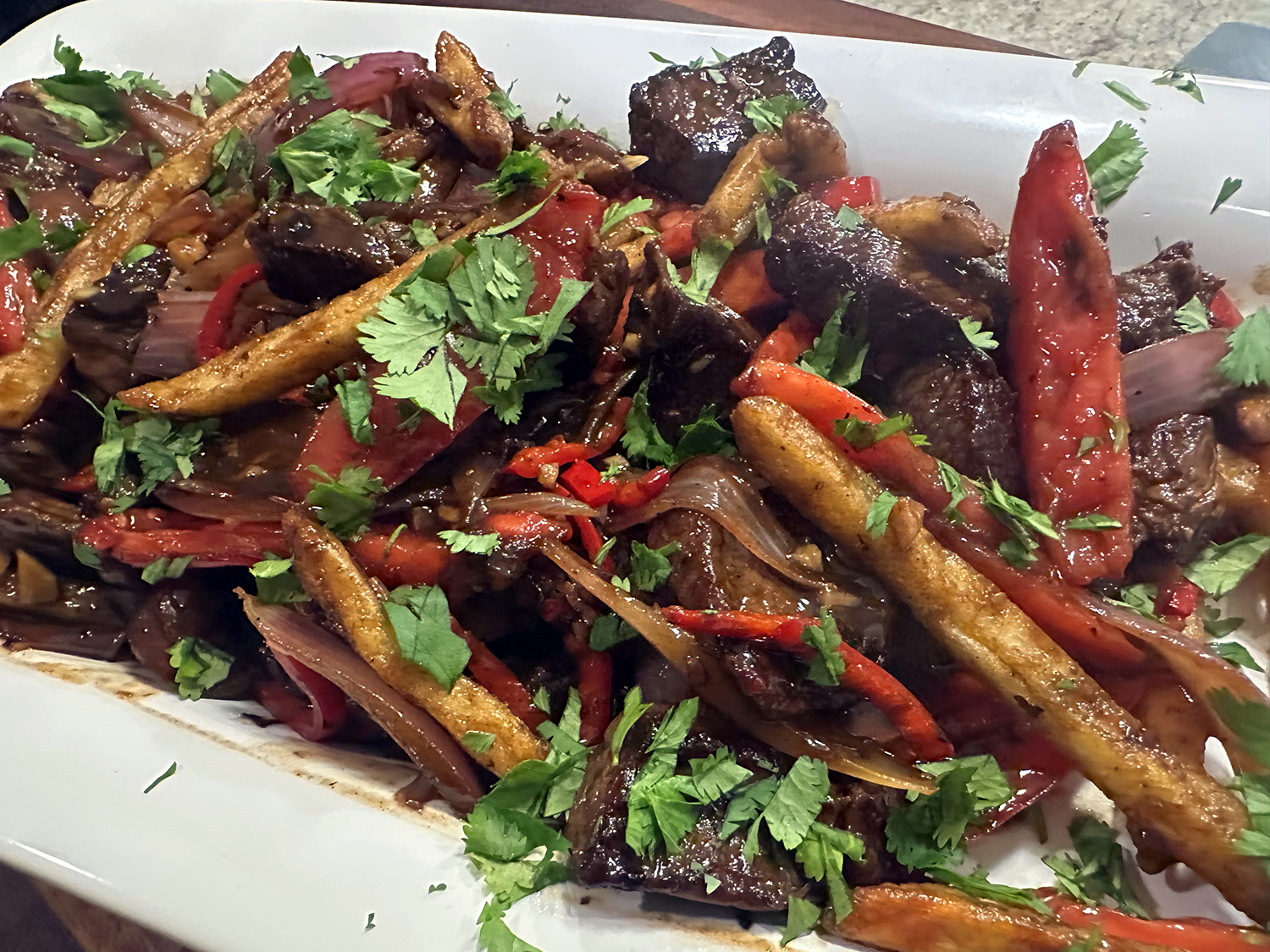
Lomo Saltado (Peruvian Beef Stir-Fry)

In the mid-19th century, Chinese and Japanese immigrants arrived in Peru, introducing ingredients, like soy sauce, ginger and rice vinegar. These Asian flavors quickly were integrated into Peruvian cuisine, giving birth to the popular Lomo Saltado, a stir-fry of beef, onions, tomatoes and soy sauce served with french fries and rice.

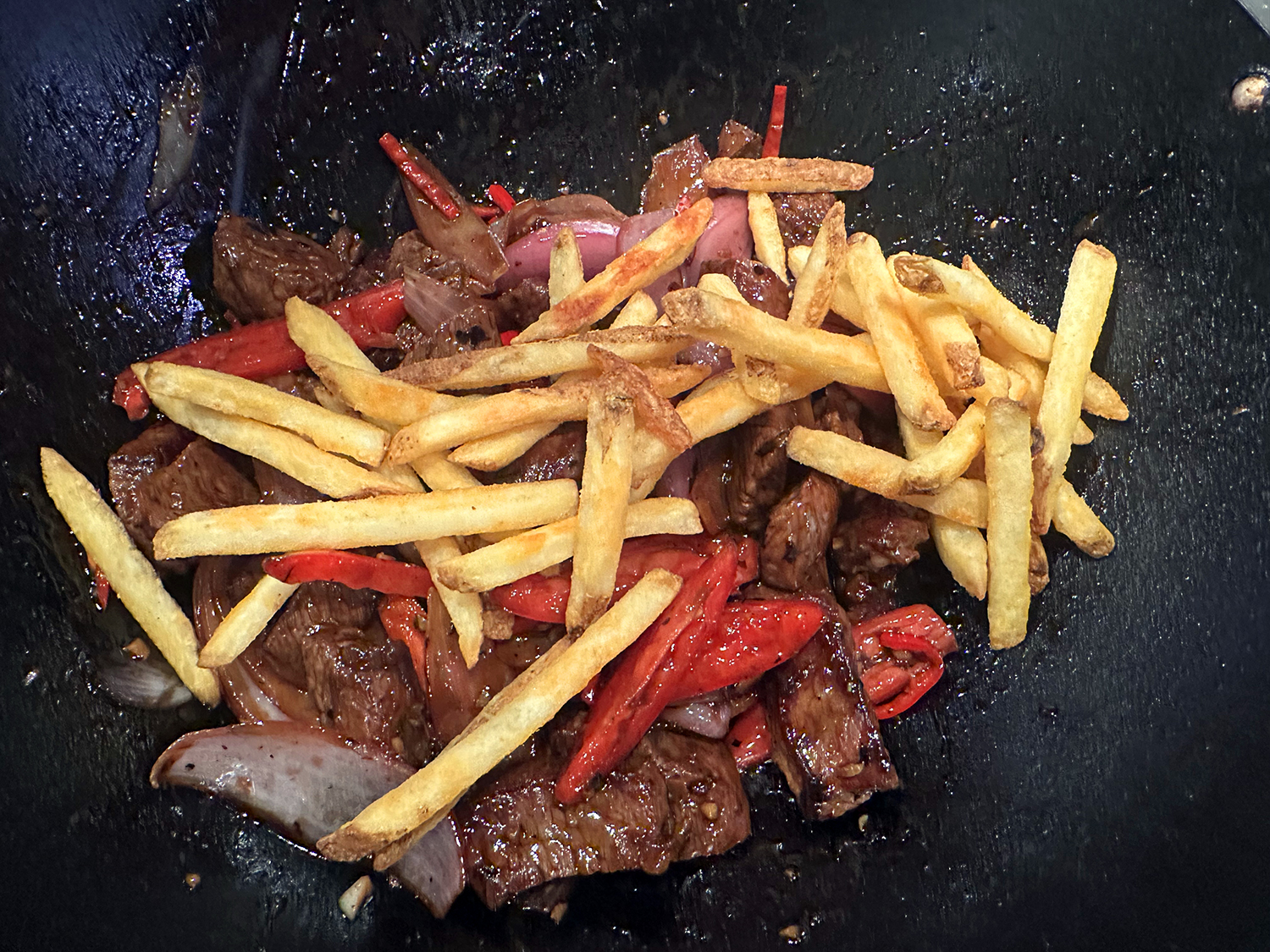
As beta-testers for America’s Test Kitchen, we did the trial version for Cook’s Illustrated several months back. Here, you want tender beef and crisp-tender vegetables coated in a lightly thickened, savory and tangy sauce. There should be enough sauce to coat the meat, vegetables, and French fries, which should begin to soften as they soak it up.
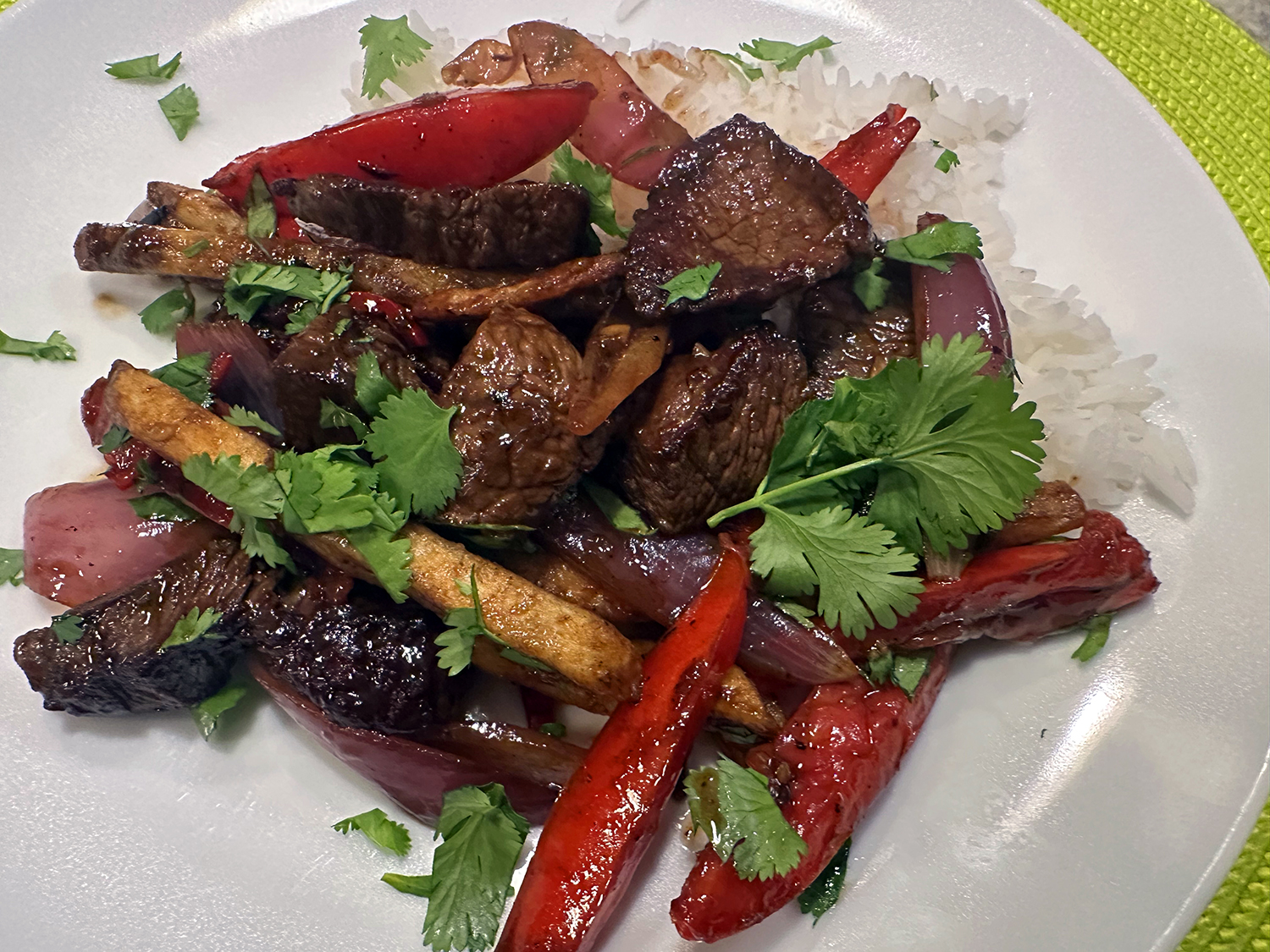
For starters, we were a bit apprehensive regarding the added French fries. But after eating it, we were astonished how much we liked the potatoes in the dish. They soak up some of that luscious sauce and add additional texture. We feel the rice is not necessary, but it also doesn’t diminish the meal in any way.

Fresh aji amarillo chiles can be challenging to find; look for frozen chiles in some Peruvian, Hispanic, or possibly Asian grocery stores. If unavailable, use red fresnos, red jalapeños, or orange mini bell peppers. Beef tenderloin is preferred (and expensive!) but sirloin or skirt steak will also work. We used a sirloin steak, the least expensive of the three options, and it was perfect!

TIP: Make sure to start preheating your oven for the French fries before you begin prep, so that you don’t have lag time until the oven reaches temperature.
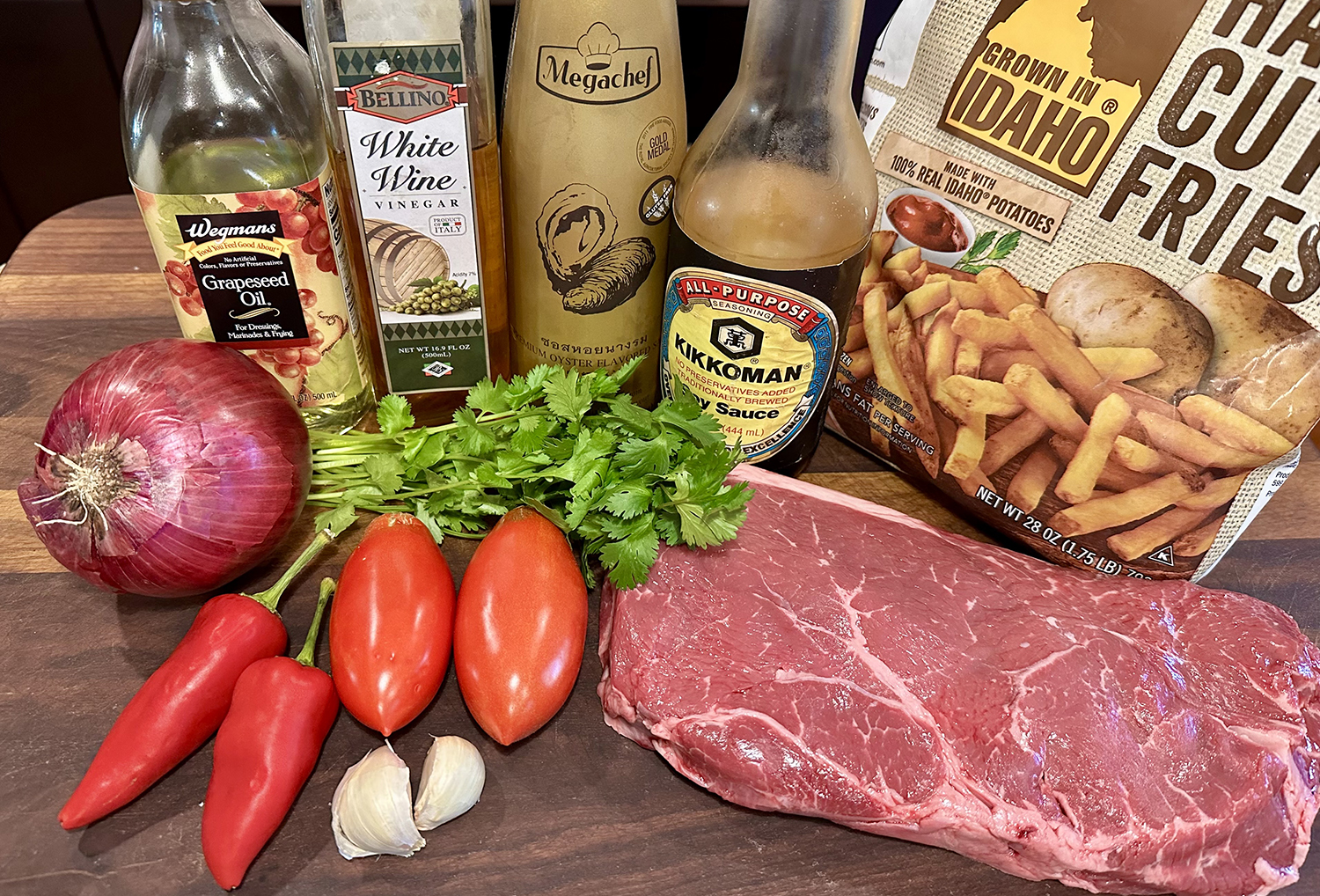
Lomo Saltado (Peruvian Beef Stir-Fry)

  • Servings: 4
  • Difficulty: easy
  • Print

Ingredients

  • 2 Tbsp. soy sauce
  • 2 Tbsp. oyster sauce
  • 5 tsp. white wine vinegar
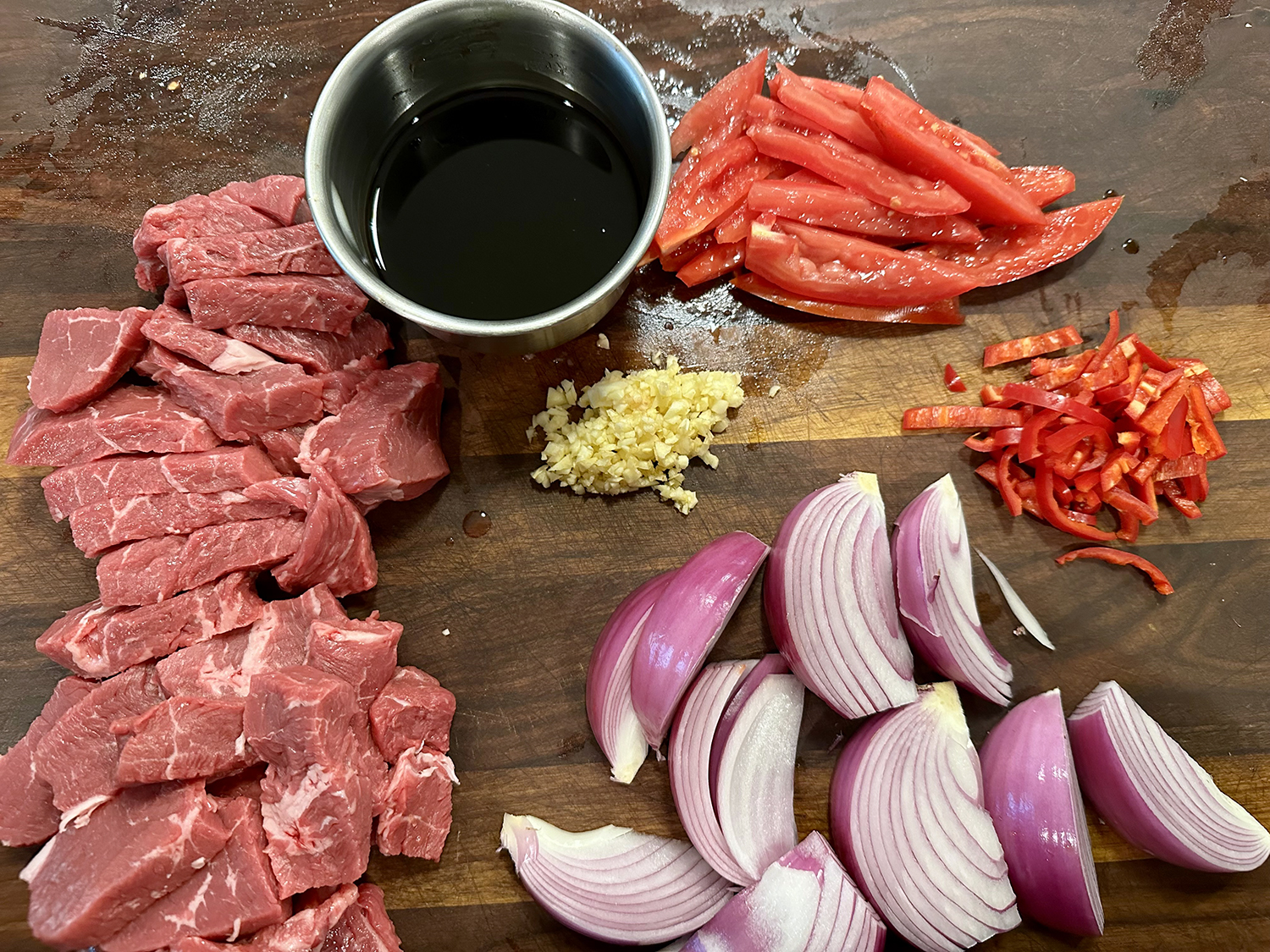
  • 1 lb. beef tenderloin, trimmed, cut into 2- to 2-½ inch wide strips with grain, each strip cut crosswise against grain into ½-inch-thick slices, divided
  • 4 tsp. vegetable oil, divided
  • 1 small red onion, halved and sliced through root end into ¾ inch‑thick pieces
  • 2 garlic cloves, minced
  • 2 plum tomatoes, cored, seeded, and cut into ¾-inch-thick wedges
  • 2 aji amarillo chiles, stemmed, seeded, halved, and sliced thin
  • 8 oz. french fries, cooked
  • 2 Tbsp. chopped fresh cilantro
Directions

  1. Whisk 2 tablespoons plus 1 teaspoon soy sauce, 2 tablespoons plus 1 teaspoon oyster sauce, and 5 teaspoons white wine vinegar together in small bowl and set aside. Cut 1 pound beef tenderloin, trimmed, into 2-inch-long, ½-inch-wide strips.
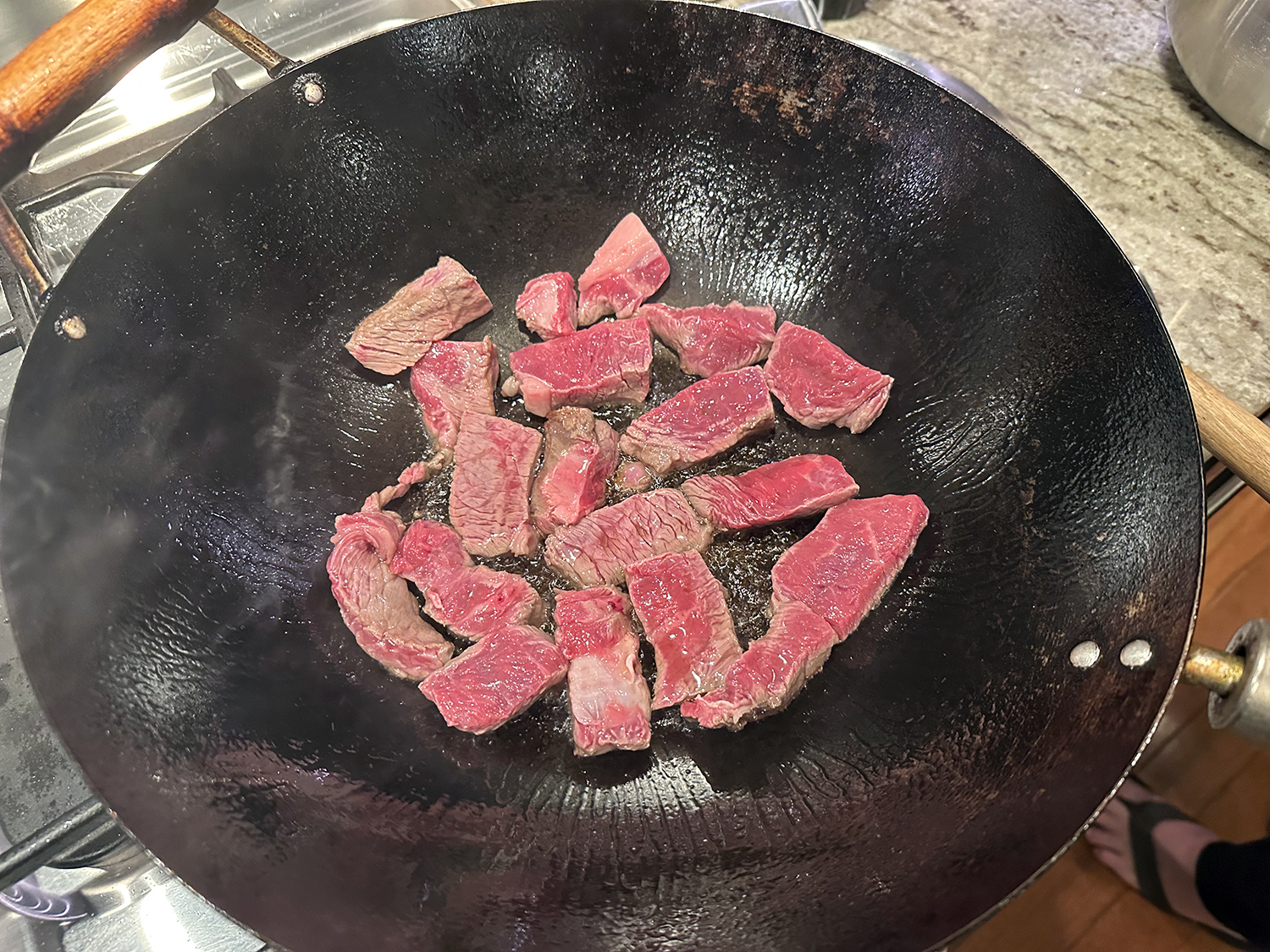
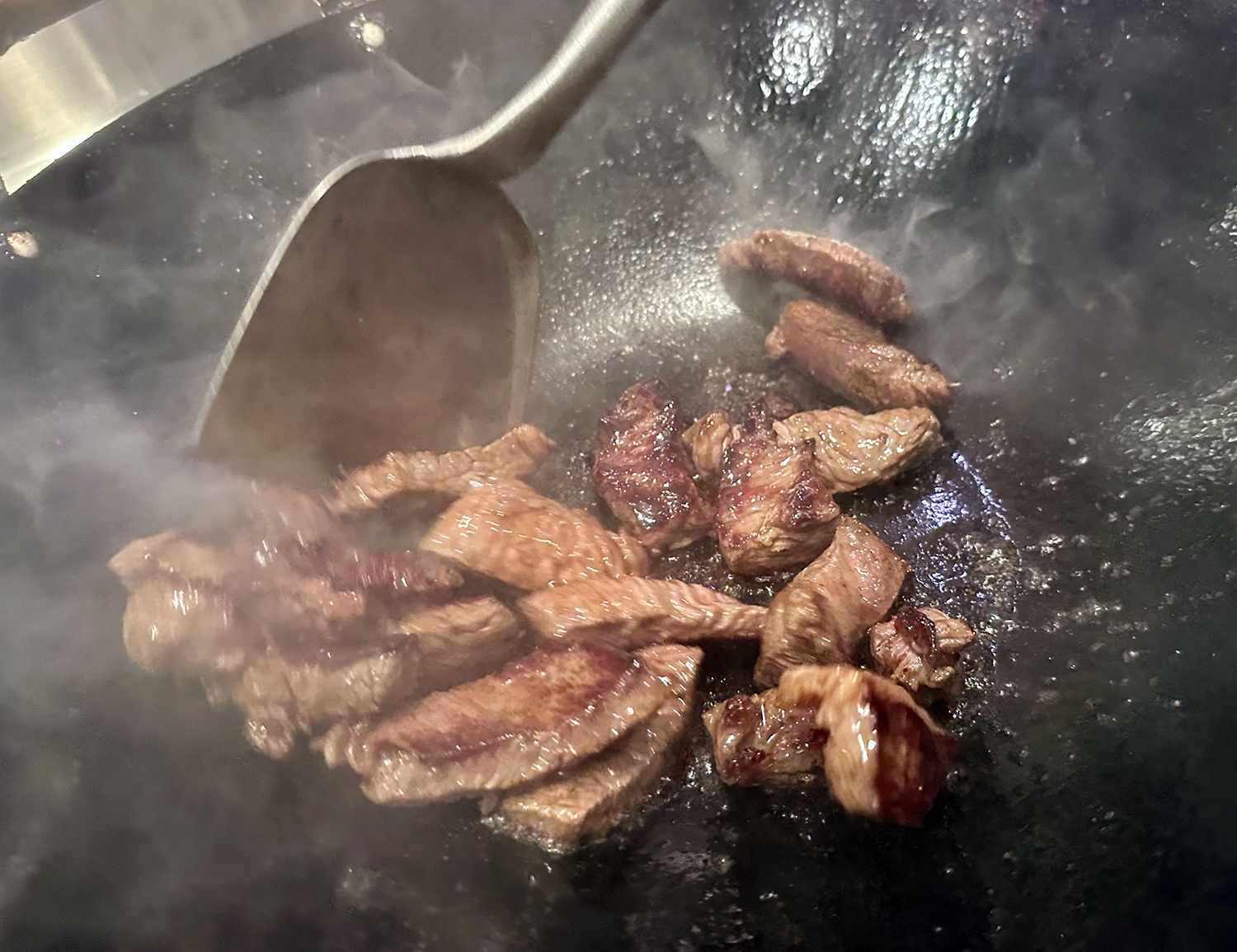
  2. Heat empty 14-inch flat-bottom wok over high heat until just beginning to smoke. Drizzle 1½ teaspoons vegetable oil around perimeter of wok and heat until smoking. Add half of beef and use tongs to break up any meat that clumps. Cook, without stirring, until beef is browned on bottom, about 1 minute, then stir and cook until beef is browned around edges, about 1 minute longer. Transfer beef to medium bowl. Wipe wok clean and repeat with 1½ teaspoons oil and remaining beef.
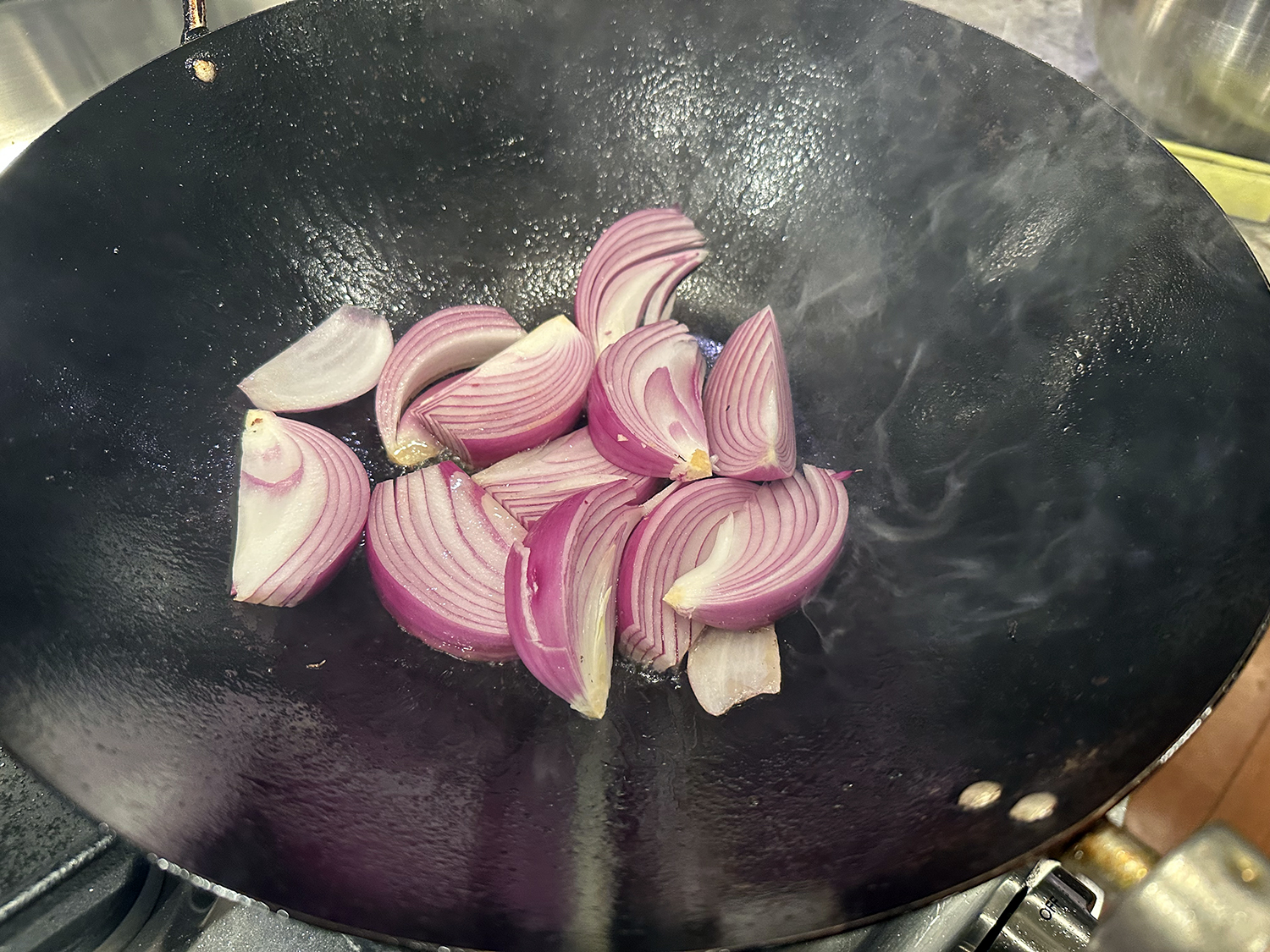
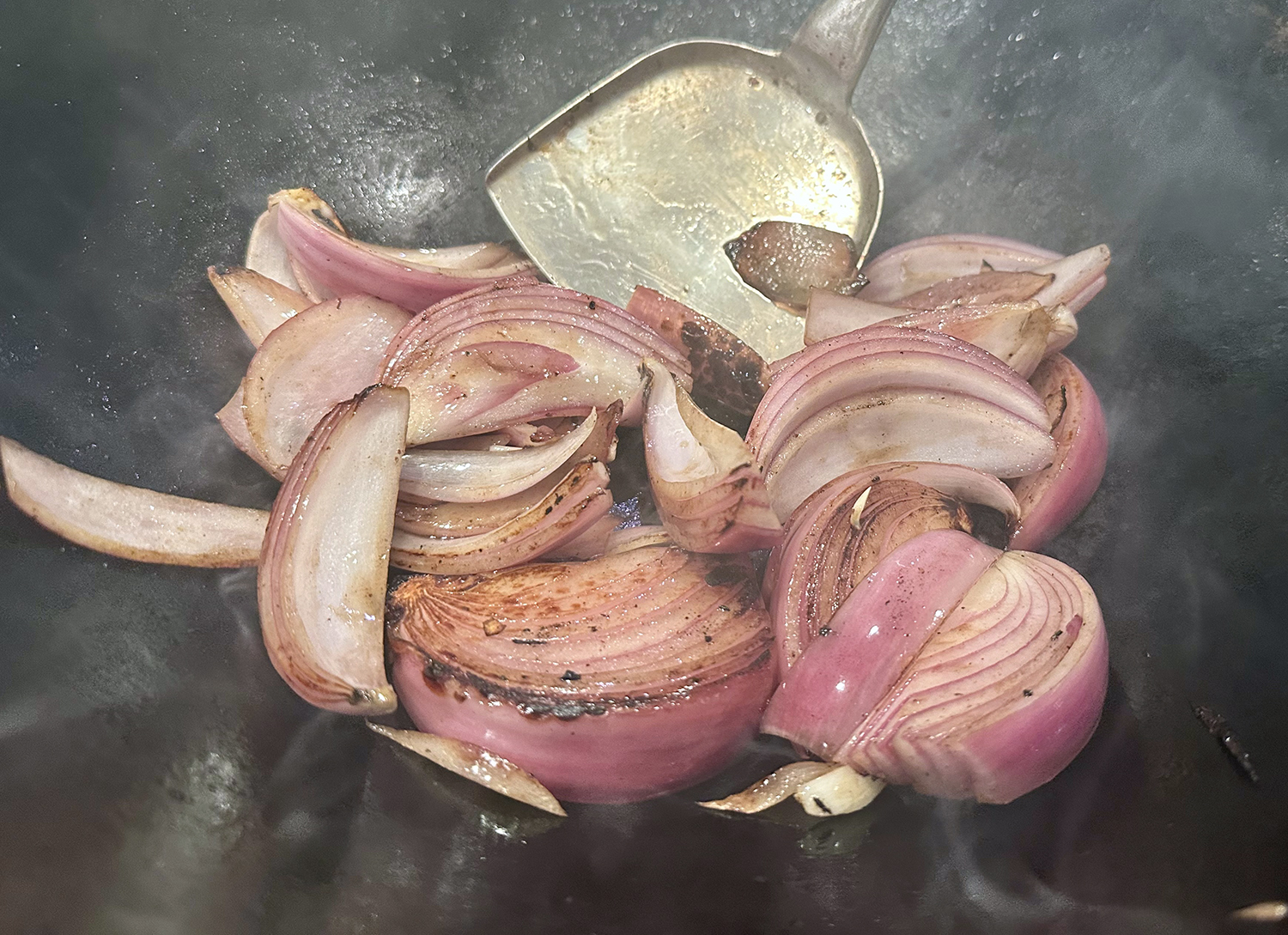
  3. Wipe wok clean, then add remaining 1 teaspoon oil; heat over high heat until just beginning to smoke. Add 1 small red onion, halved and sliced through root end into ¾-inch‑thick pieces, and cook, stirring occasionally, until beginning to brown, about 1 minute. Add 2 minced garlic cloves and cook until fragrant, about 30 seconds. Transfer to bowl with beef.
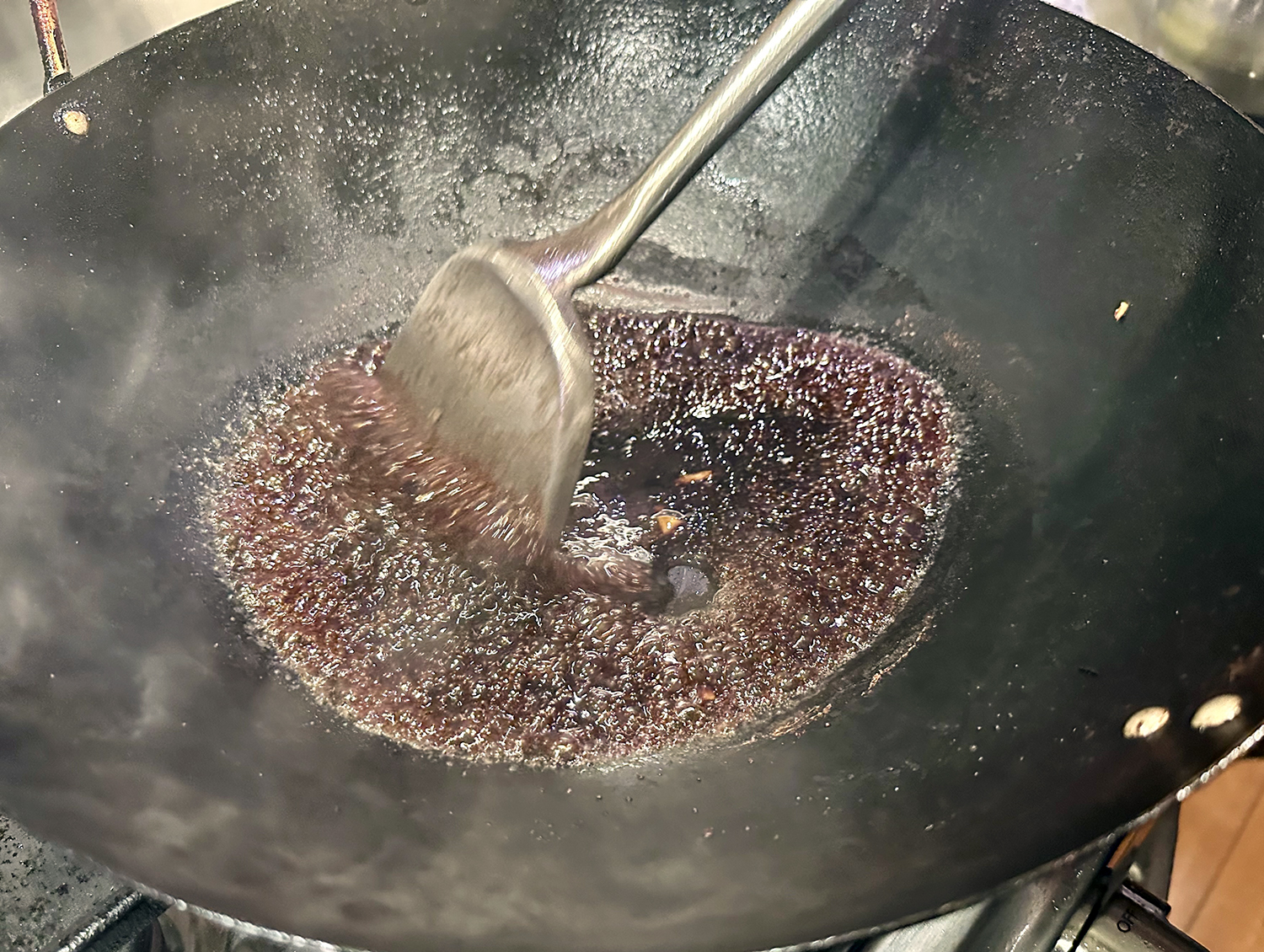
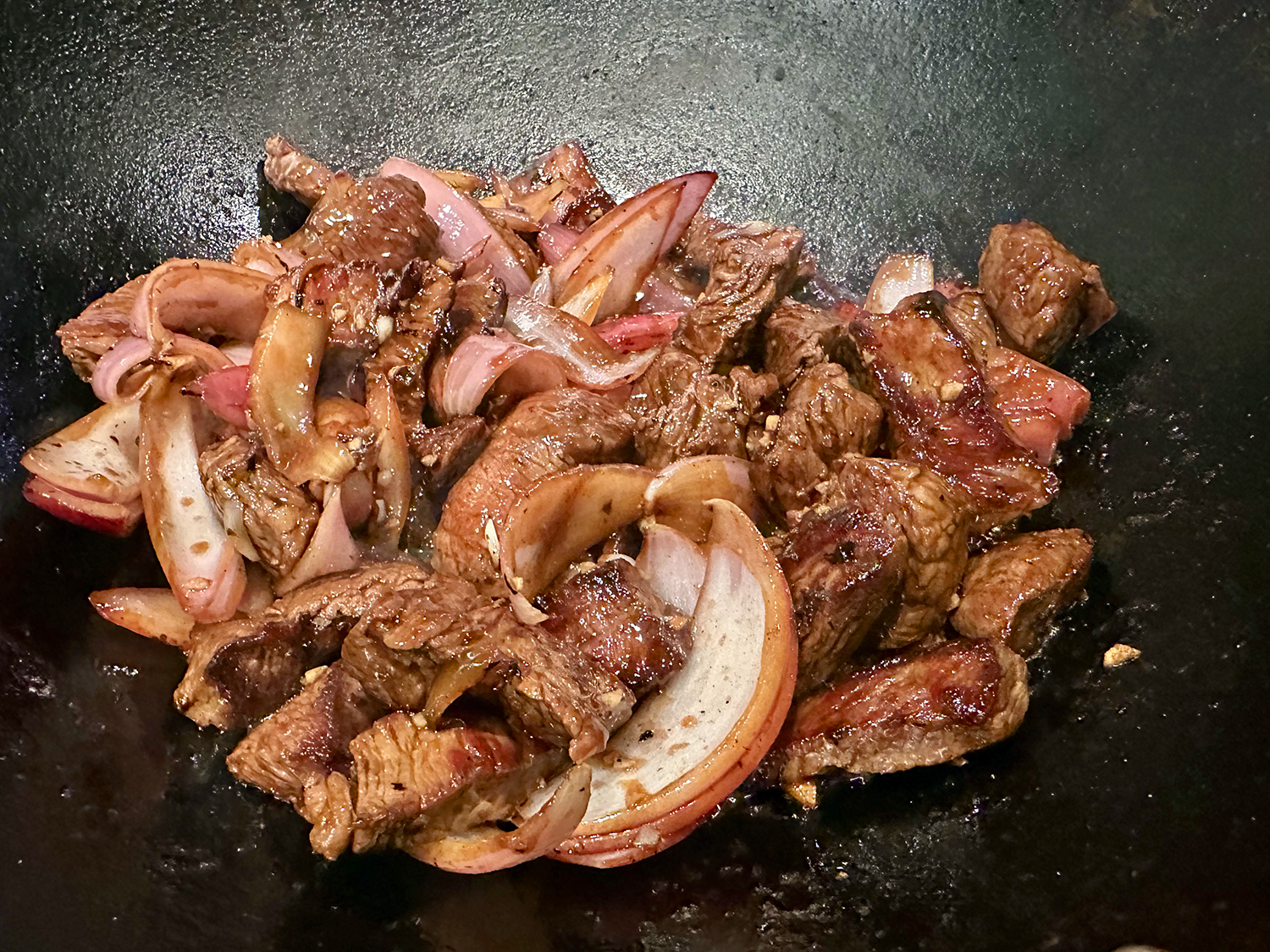
  4. Return wok to high heat, add soy sauce mixture, and bring to simmer. Cook until sauce is thickened slightly, about 1 minute. Add beef mixture and simmer, stirring occasionally, until sauce is thick enough to coat ingredients but still pools slightly at bottom of wok, 1 to 2 minutes.
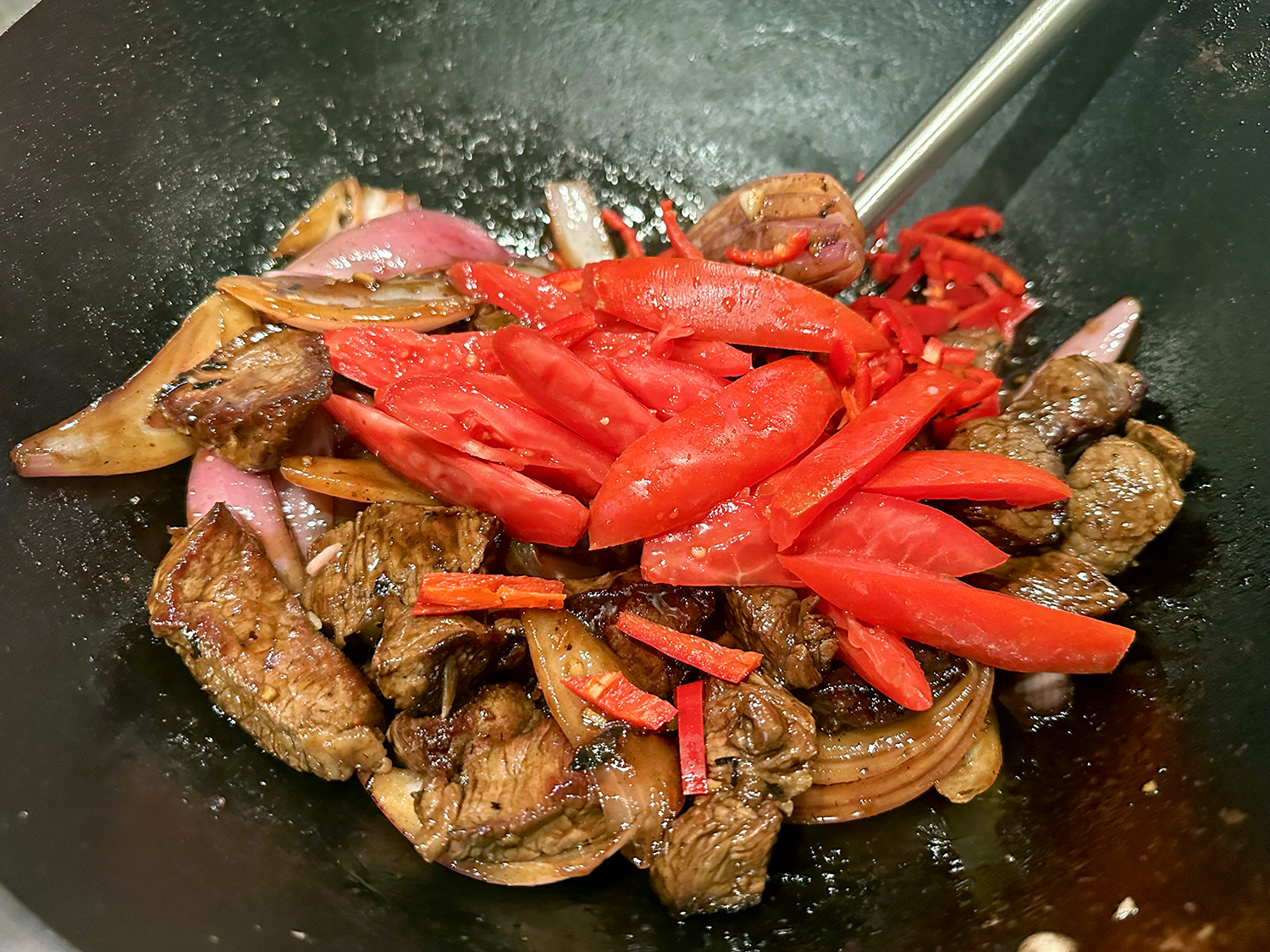
  5. Off heat, add 2 plum tomatoes, cored, seeded, and cut into ¾-inch-thick wedges, and 2 ají amarillo chiles, stemmed, halved, seeded, and sliced lengthwise, and toss to combine. Gently fold in 8 ounces cooked french fries. Transfer to platter, garnish with 2 tablespoons chopped cilantro, and serve.

http://www.lynnandruss.com

Recipe by David Yu for Cook’s illustrated

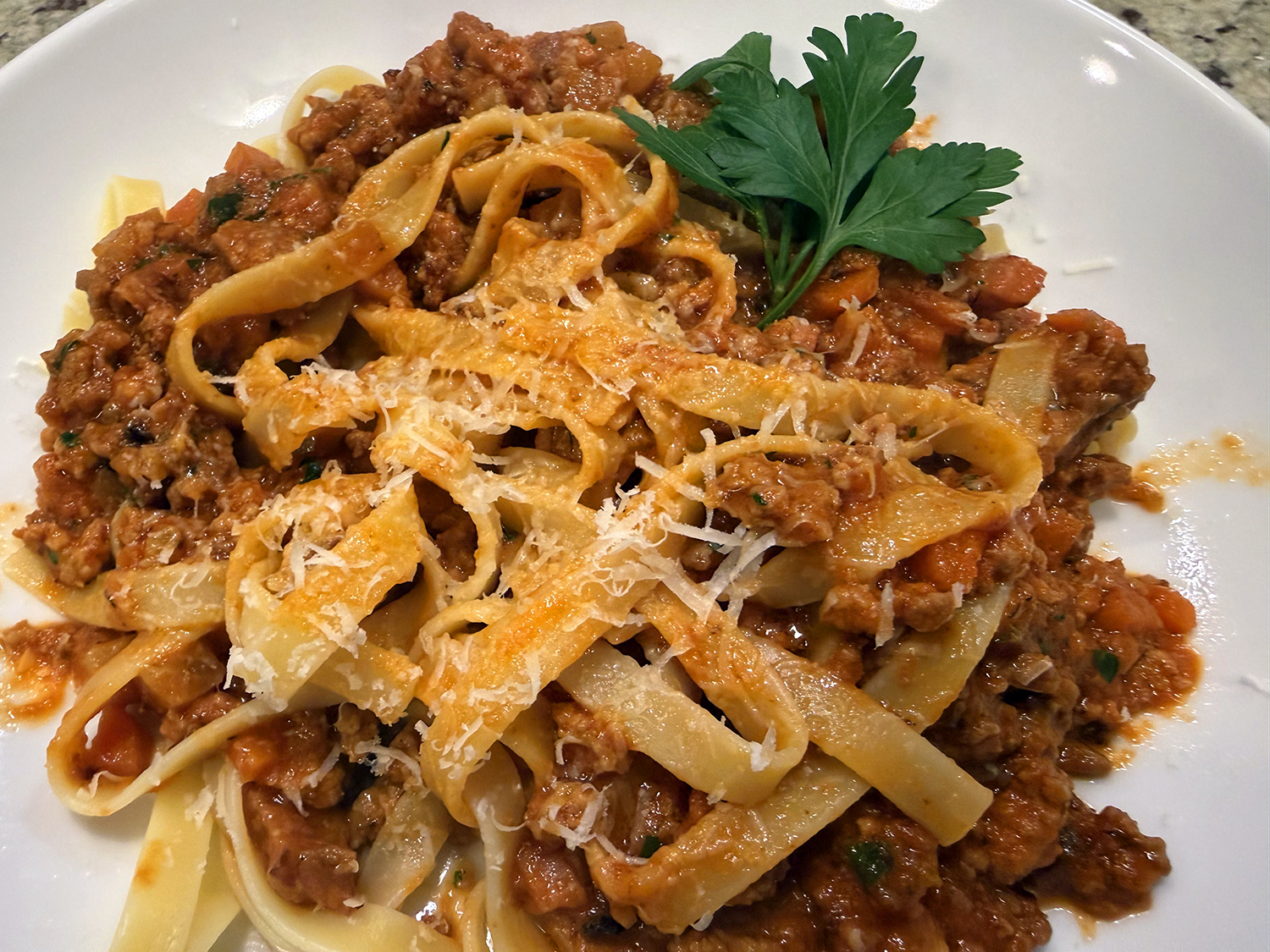
Weeknight Ragù Bolognese

Ragù Bolognese over Fettuccine is one of the great classics of Italian cuisine — a deeply satisfying, soul-warming dish from the Emilia-Romagna region of northern Italy.

The aroma is heady — savory, sweet from the carrot and onion, with hints of wine and the warm, roasted depth of slowly cooked meat. The taste is profoundly comforting: rich without being heavy, complex without being fussy. It’s the kind of dish that feels like it took all day — but here you get top-quality results in one hour!

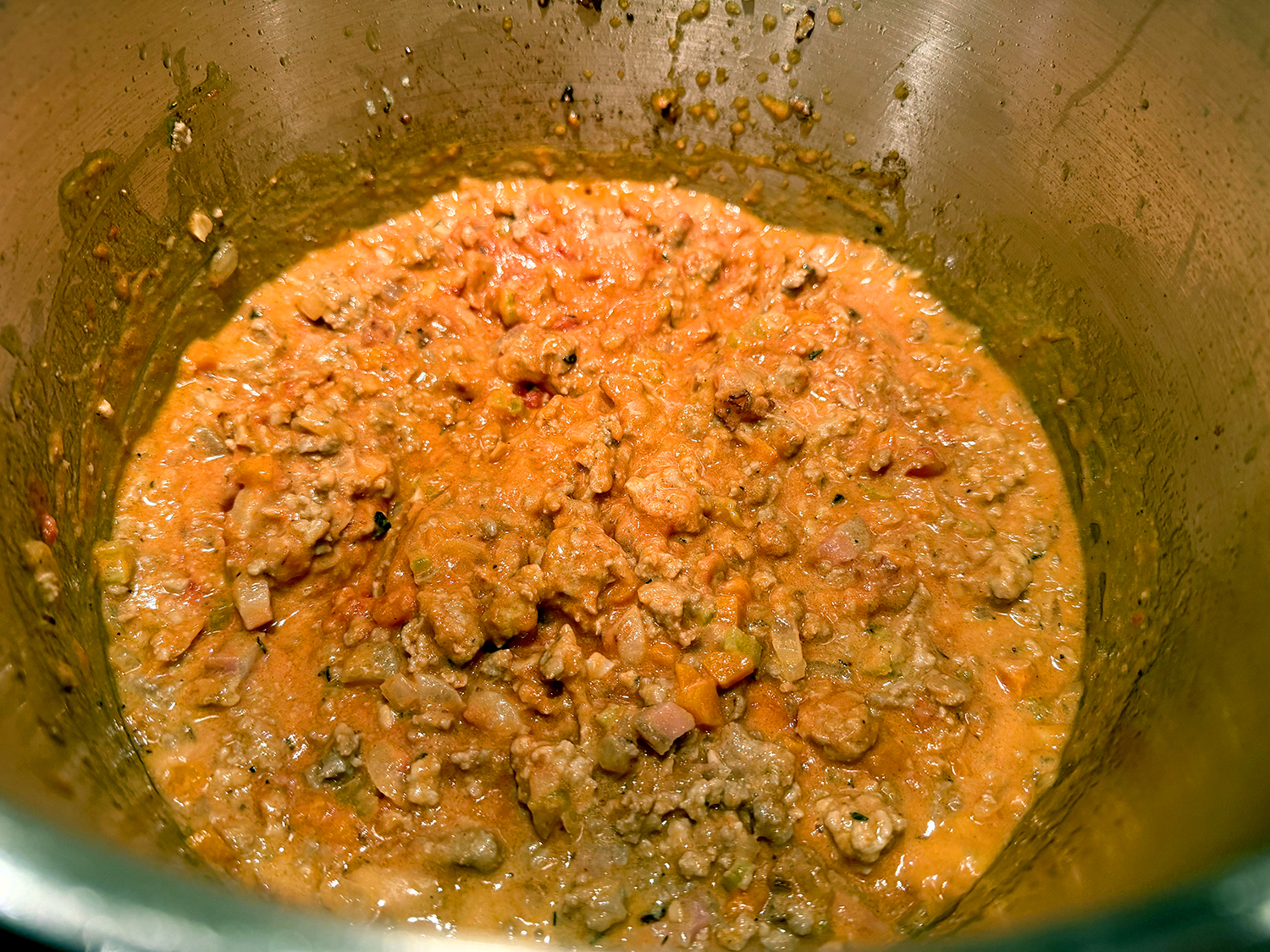
Typically, the ragù is a slow-cooked meat sauce, rich and complex in flavor. In this short-cut version, meatloaf mix is used. Beginning with a soffritto — a fragrant base of finely diced onion, celery, and carrot sweated in butter and olive oil, the meat mixture is browned into this base, then married with dry white or red wine, a modest amount of tomato paste, and heavy cream, which softens the acidity and rounds out the sauce.

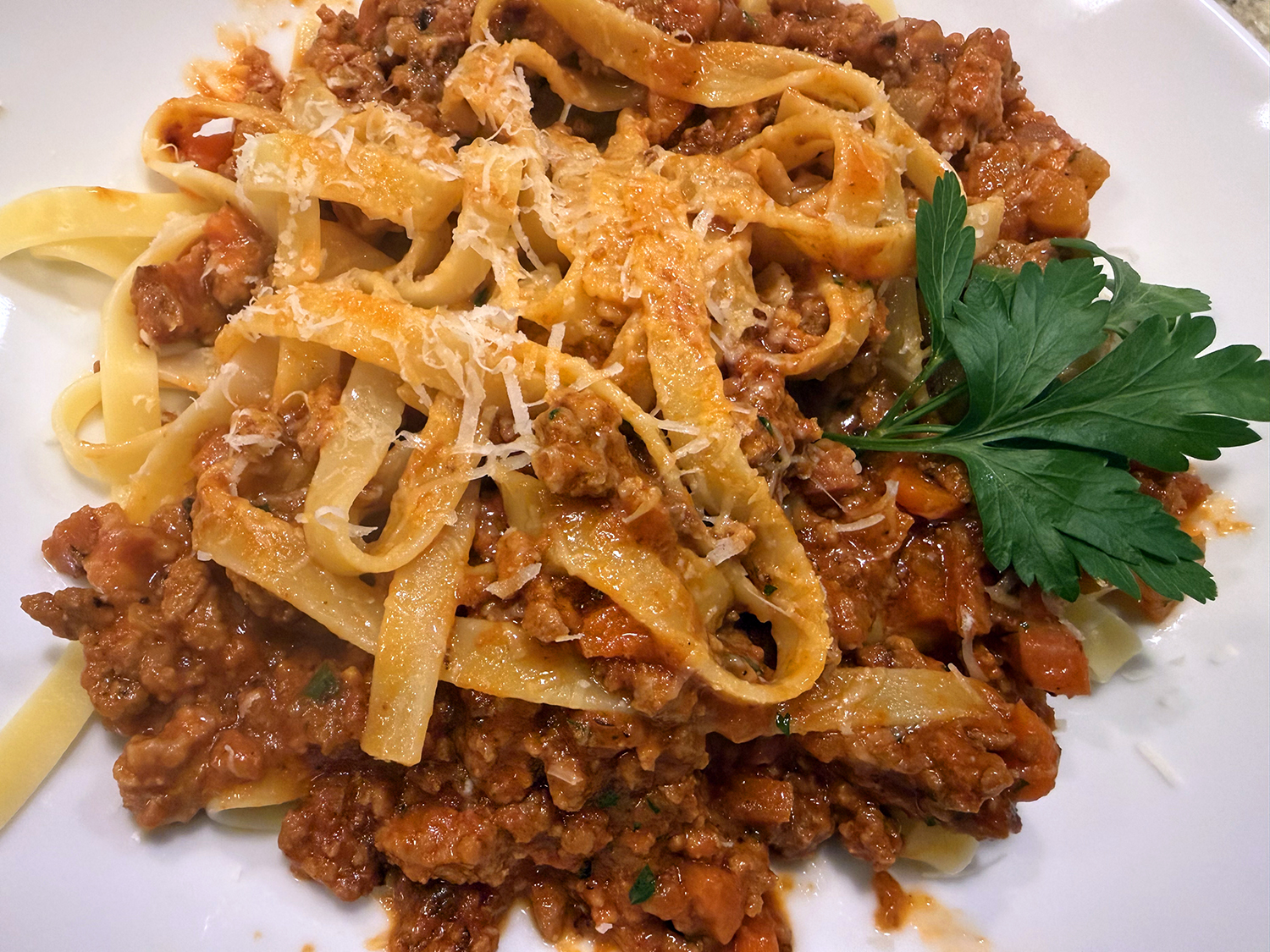
Flat, ribbon-like egg pasta — such as pappardelle, fettuccine or tagliatelle — is the ideal vehicle. Its broad, slightly porous surface clings to the thick ragù beautifully, and its richness (egg yolk in the dough) complements the butteriness of the sauce. When cooked properly to al dente, it has a satisfying chew and a gentle golden color.

On the plate, the result is a lustrous, amber-brown tangle of pasta, each strand coated in a clinging, meaty sauce studded with tender bits of browned meat. It’s finished with a generous shower of freshly grated Parmesan, which melts slightly into the warmth of the dish and adds a sharp, nutty counterpoint. A drizzle of good olive oil or a knob of butter can be added at the end for gloss.

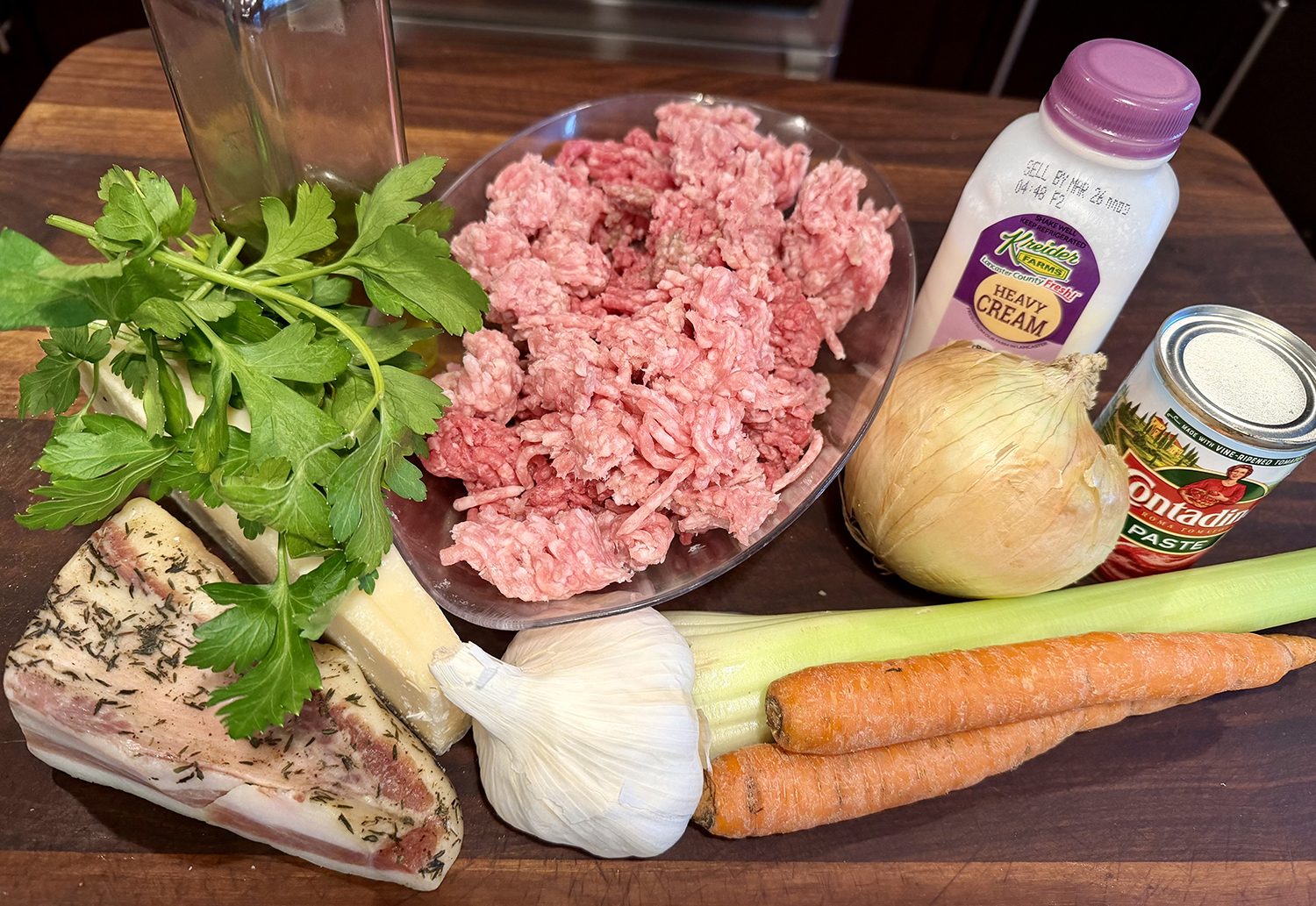
In lieu of pancetta, we used guanciale since we had exactly 4 ounces on hand.

Weeknight Ragù Bolognese

  • Servings: 4
  • Difficulty: easy
  • Print

Ingredients

  • 3 Tbsp. extra-virgin olive oil
  • 4 oz. piece pancetta, cut into ½-inch chunks
  • 1 medium yellow onion, finely chopped
  • 1 medium celery stalk, finely chopped
  • 1 medium carrot, peeled and finely chopped
  • 2 garlic cloves, chopped
  • Kosher salt and ground black pepper
  • ½ cup dry red or white wine
  • 1 lb. meatloaf mix
  • 6 oz. can tomato paste
  • 1⁄2 cup heavy cream
  • 1⁄2 oz. Parmesan cheese, finely grated (1⁄4 cup); more for serving

  • 1 qt. low-sodium beef broth
  • 1⁄4 cup finely chopped fresh flat-leaf parsley

Directions

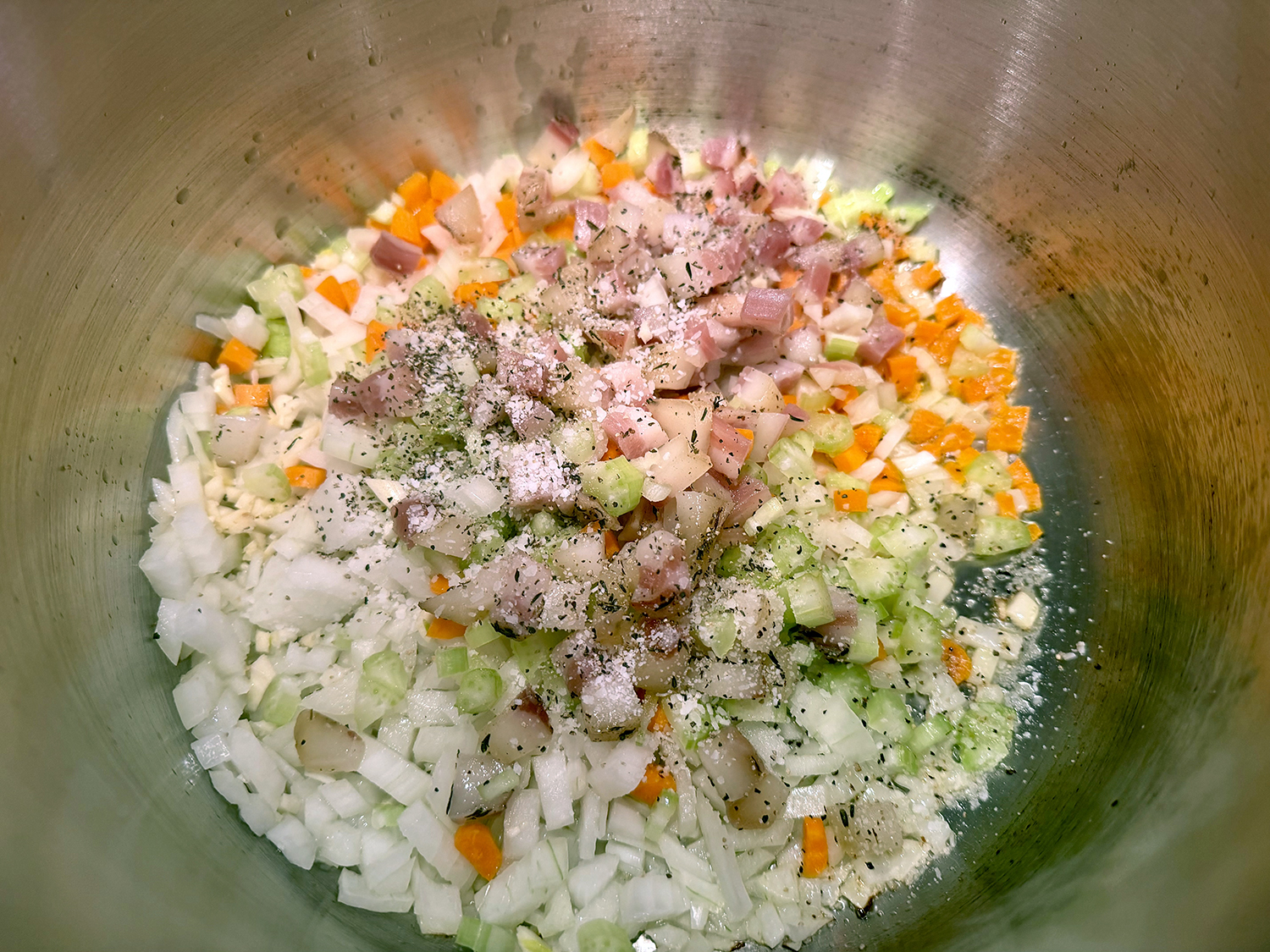
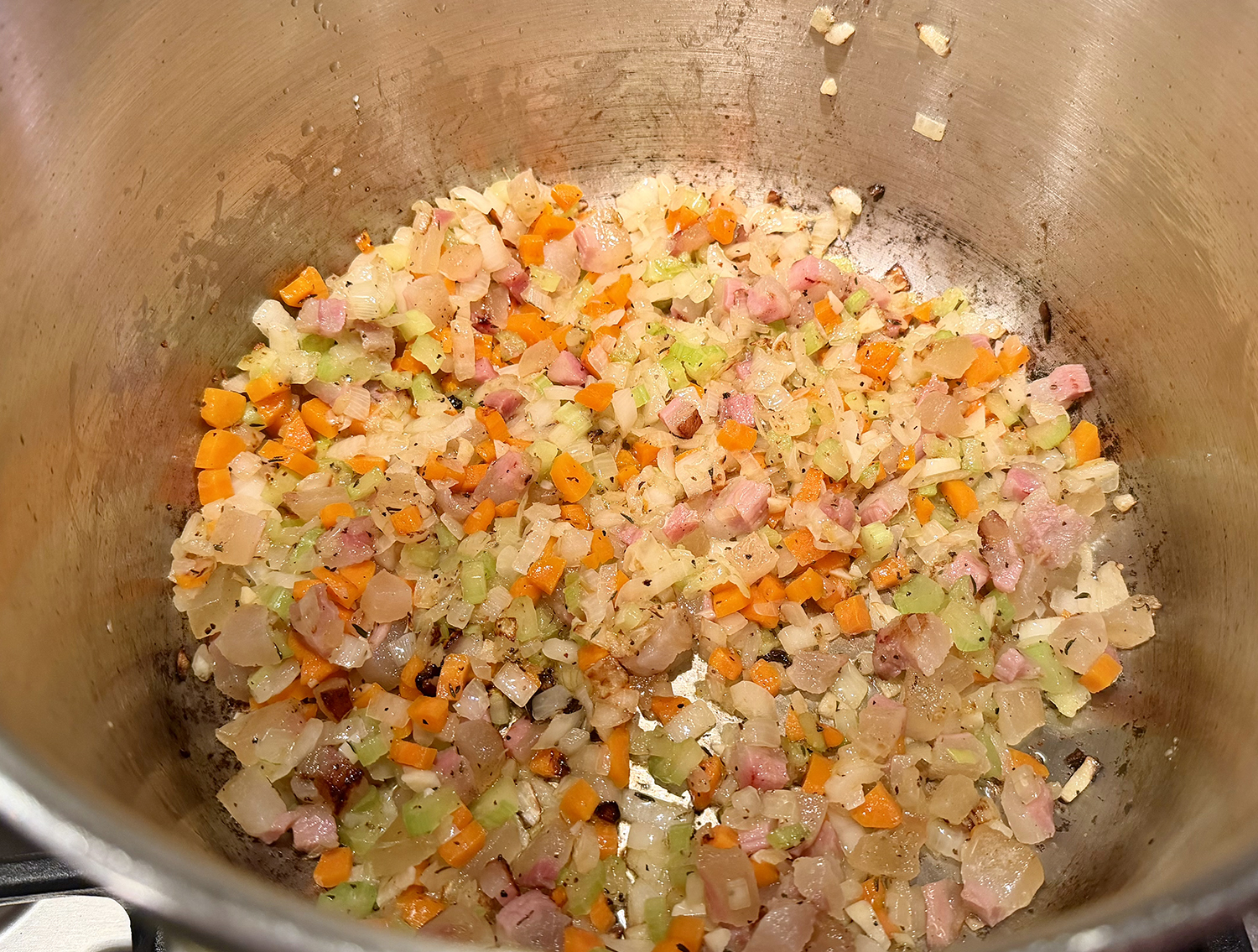
  1. On a 6-quart Instant Pot, select More/High Sauté. Add the oil, pancetta, onion, celery, carrot, garlic, 1 teaspoon salt and 1/2 teaspoon pepper. Cook, stirring occasionally, until the onion is translucent and the pancetta has rendered some fat, 5 to 6 minutes.
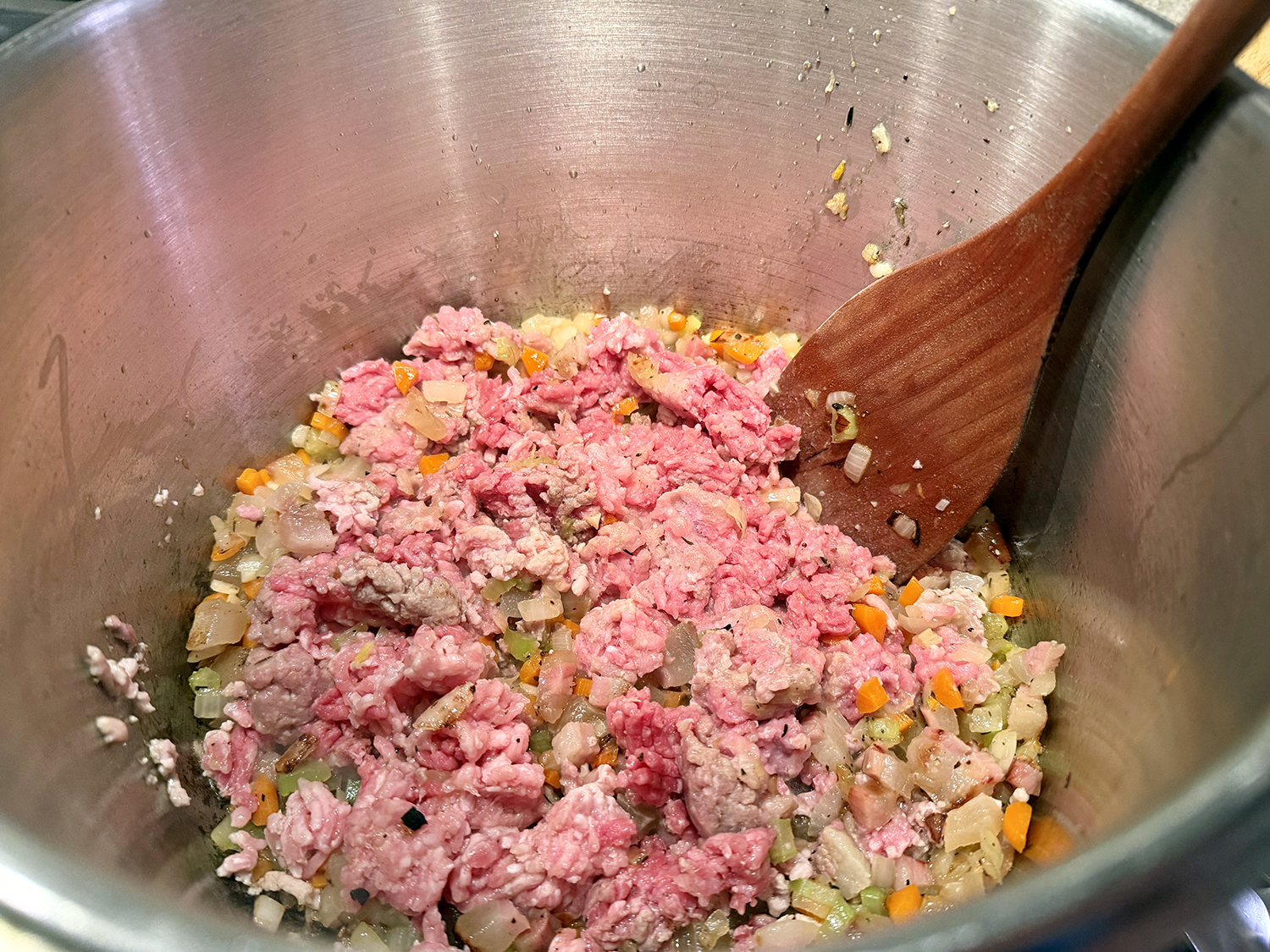
  2. Add the wine and meatloaf mix; cook, breaking up the meat in small pieces, until no longer pink, 4 to 5 minutes.
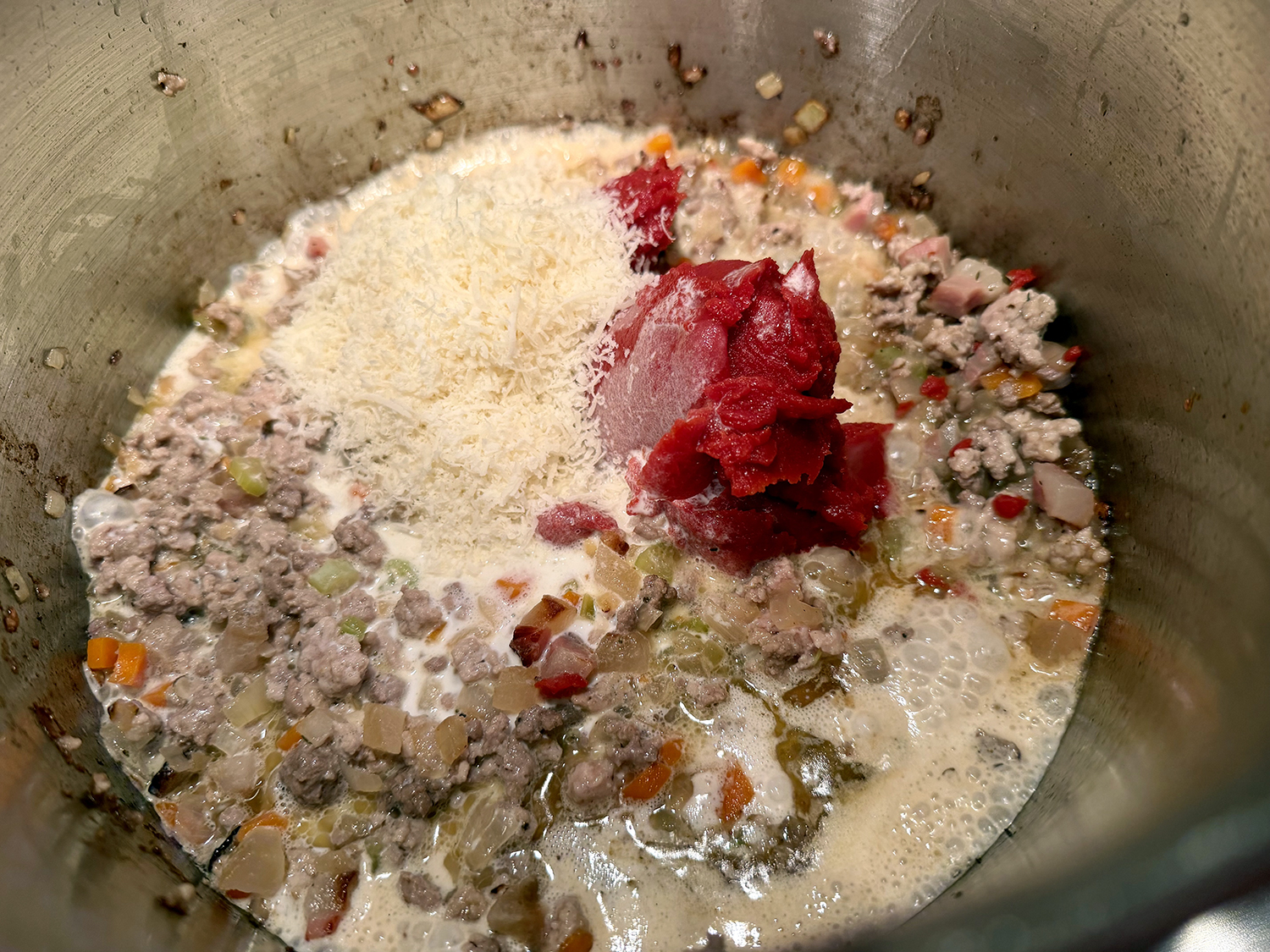
  3. Stir in the tomato paste, cream, Parmesan and 1/2 cup water, then distribute the mixture into an even layer.
  4. Press Cancel, lock the lid in place and move the pressure valve to Sealing. Select Pressure Cook or Manual; making sure pressure level is set to High. Set the cooking time for 15 minutes. When pressure cooking is complete, quick-release the steam by moving the pressure valve to Venting. Press Cancel, then open the pot.
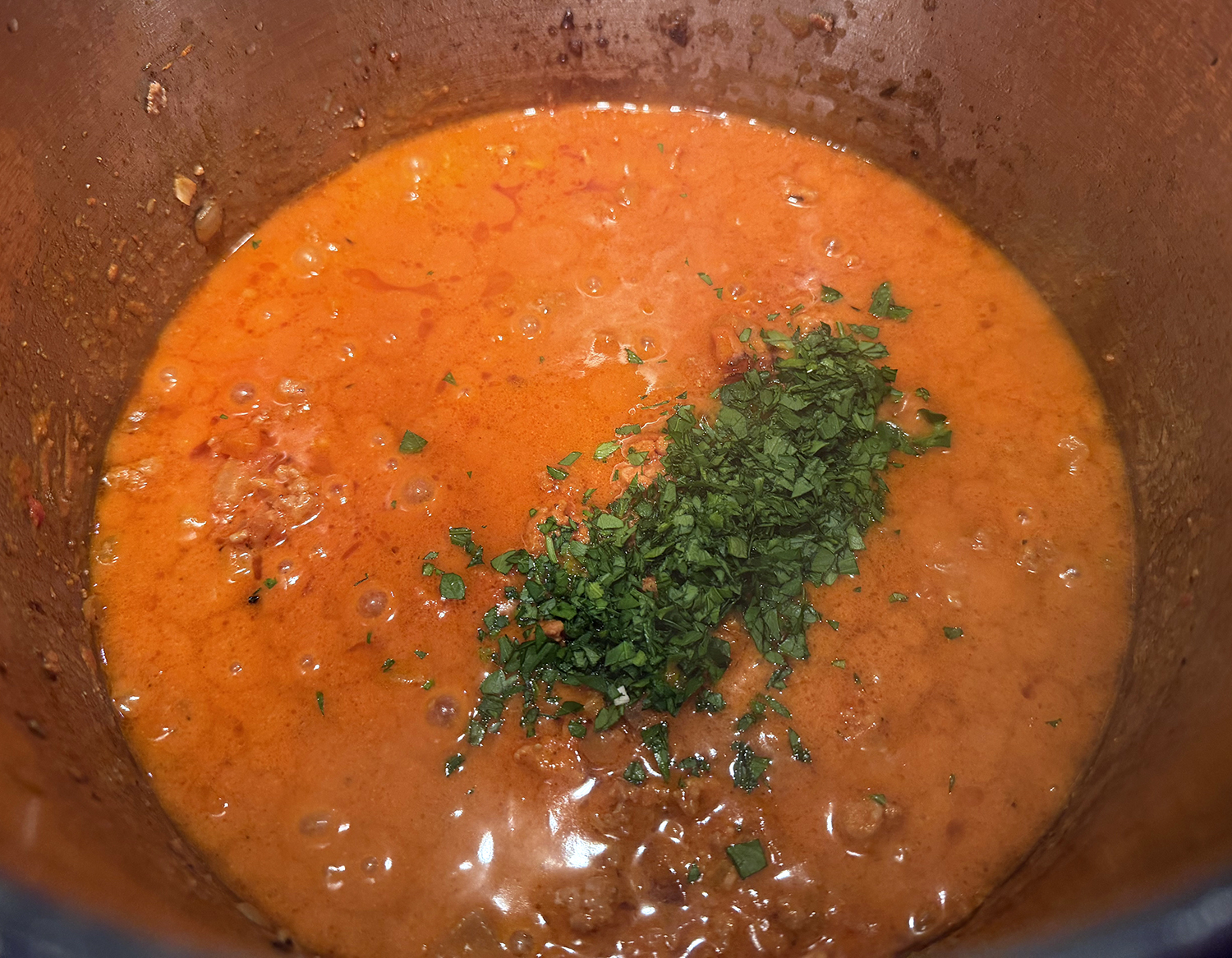
  5. Stir the parsley into the sauce, then taste and season with salt and pepper. Serve over cooked ribbon-like pasta.

http://www.lynnandruss.com

Adapted from a recipe for Milk Street
Creamy Fennel and White Bean Soup

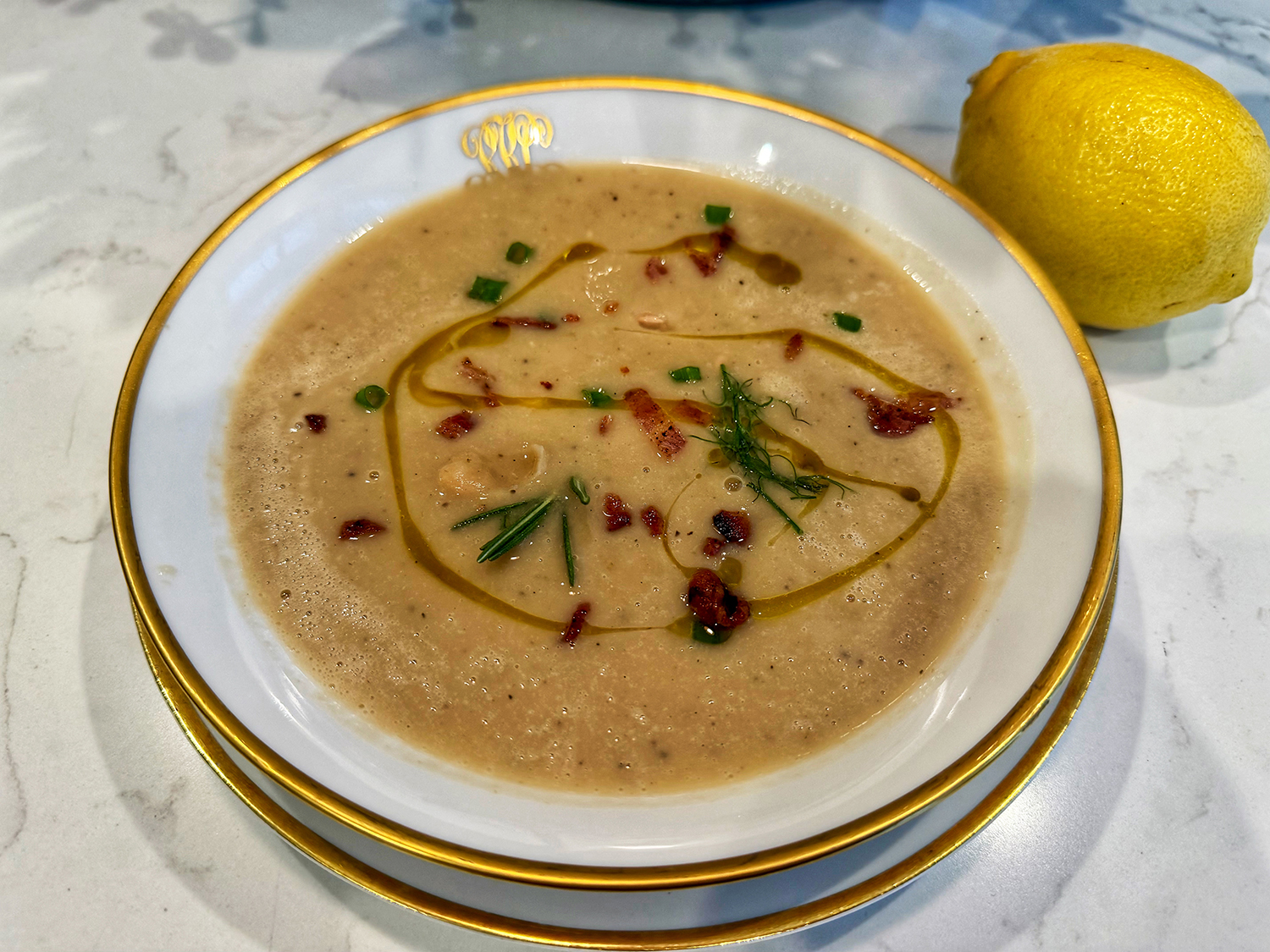
Creamy Fennel and White Bean Soup is a comforting and flavorful dish characterized by its smooth, velvety texture and aromatic taste. The soup typically features tender white beans (such as cannellini or great northern beans) cooked until soft and then blended or partially puréed to create a creamy base without needing heavy cream.
Fennel, with its mild anise-like flavor, is a standout ingredient that adds a subtle sweetness and a hint of licorice aroma to the soup. Other common ingredients included here are onions, garlic, vegetable or chicken broth, and olive oil. The seasonings are rosemary, chives, salt, and pepper which round out the savory profile.

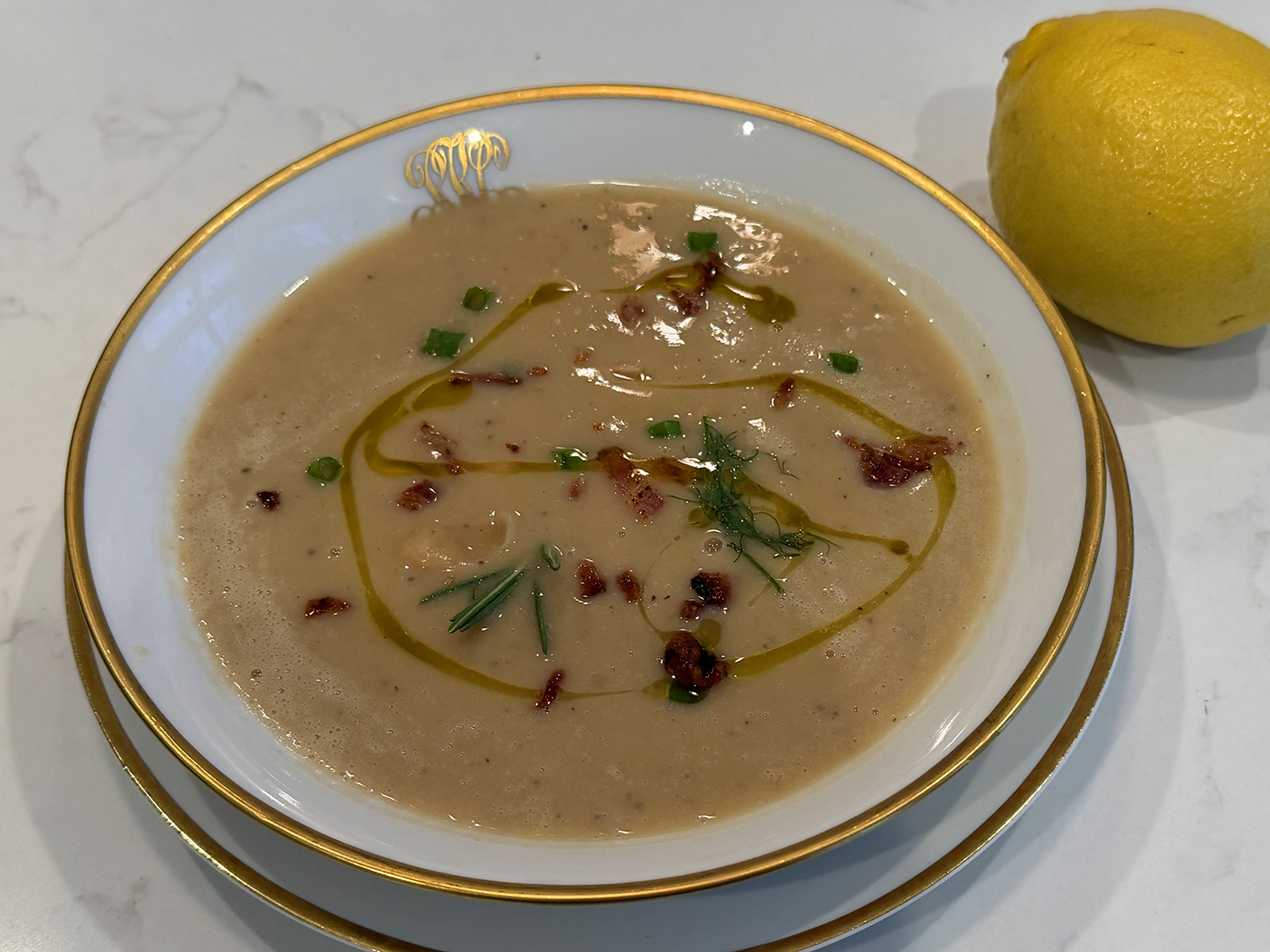
For contrast, as well as a smoky-savory counterpoint, top the soup with crisped bacon. Chopped fresh chives and a squeeze of lemon juice finish it with freshness. Overall, Creamy Fennel and White Bean Soup is a nourishing, mildly sweet, and savory soup that’s perfect for a light lunch or dinner, especially during cooler months.

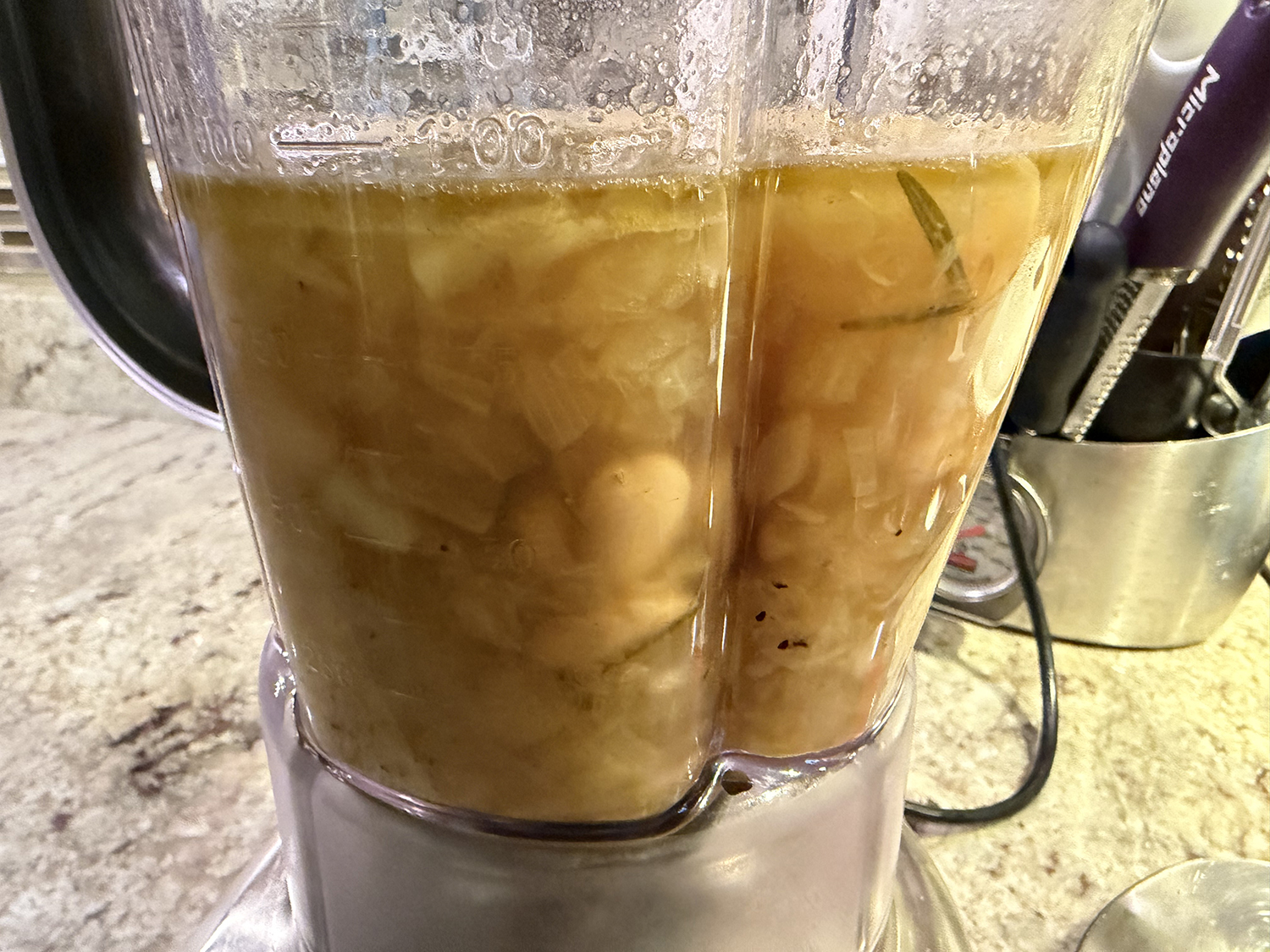
NOTE: Don’t fill the blender jar more than a third full of the hot soup mixture; hot liquids tend to splash out when the blender is turned on. To help prevent this, remove the cap from the blender lid and cover tightly with a kitchen towel. Start the blender on low and gradually increase the speed.

Of course, using homemade stock is always preferable. Homemade chicken stock is one of the most versatile and flavorful ingredients you can have in your kitchen. Unlike store-bought stocks, homemade stock has a richer, deeper flavor and aroma, and it is free from preservatives, artificial flavors, and excess sodium. As an added bonus, homemade chicken stock is also incredibly inexpensive, and it is an excellent way to use up kitchen scraps and leftover chicken bones.

Creamy Fennel and White Bean Soup

  • Servings: 4
  • Difficulty: easy
  • Print

Ingredients

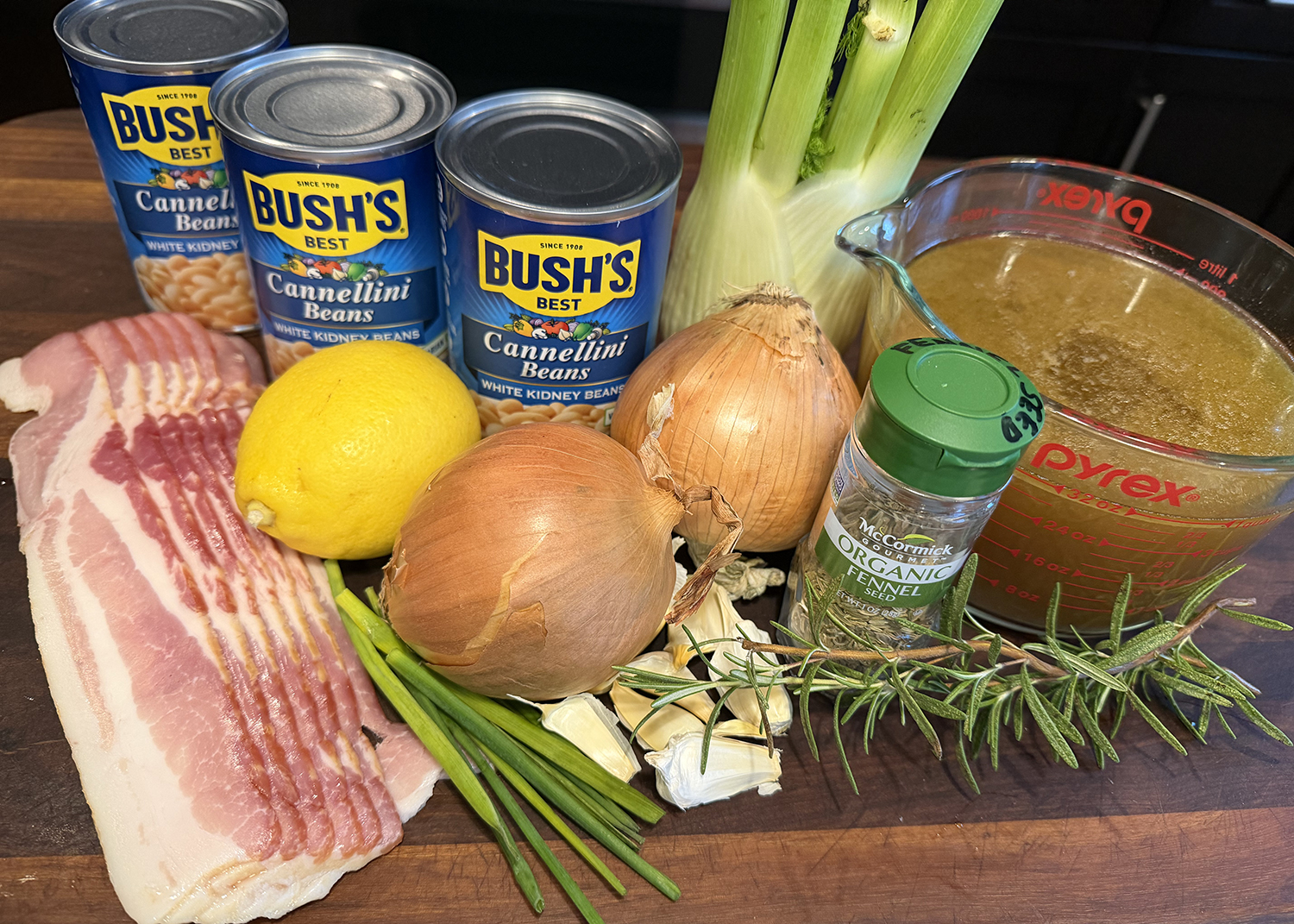
  • 8 oz. bacon, finely chopped
  • 2 medium yellow onions, finely chopped
  • 1 medium fennel bulb, trimmed and finely chopped
  • 5 medium garlic cloves, smashed and peeled
  • 2 tsp. fennel seeds, finely ground
  • 3 15½-oz. cans cannellini beans, rinsed and drained, divided
  • 5 cups chicken, or vegetable broth, preferably homemade
  • 1 4-inch sprig fresh rosemary
  • Kosher salt and ground black pepper
  • 3 Tbsp. extra-virgin olive oil, plus extra to serve
  • 3 Tbsp. finely chopped fresh chives
  • Lemon wedges, to serve

Directions

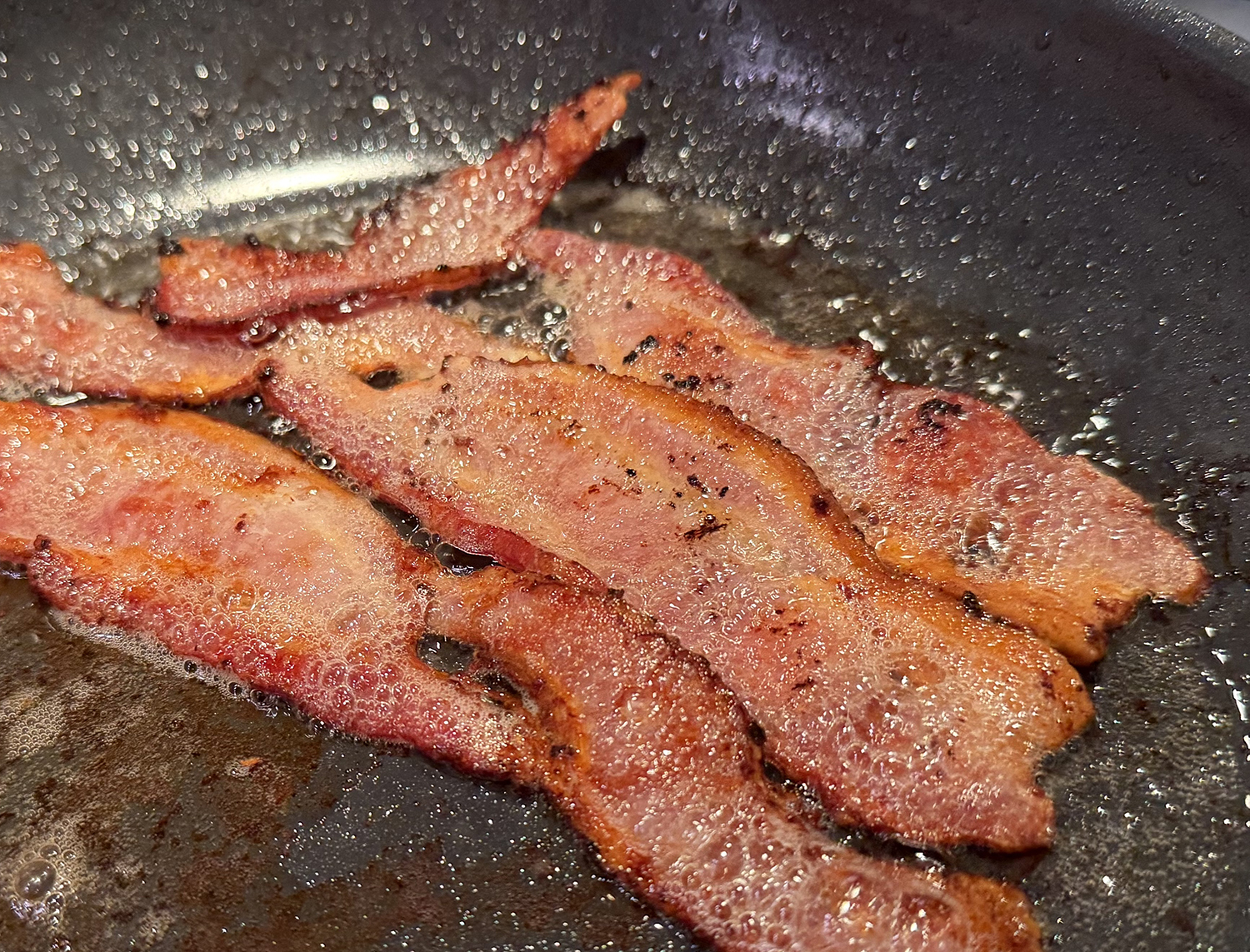
  1. In a large Dutch oven over medium, cook the bacon, stirring occasionally, until crisp, about 10 minutes.
  2. Using a slotted spoon, transfer the bacon to a paper towel-lined plate. Pour off all but 2 tablespoons fat from the pot.
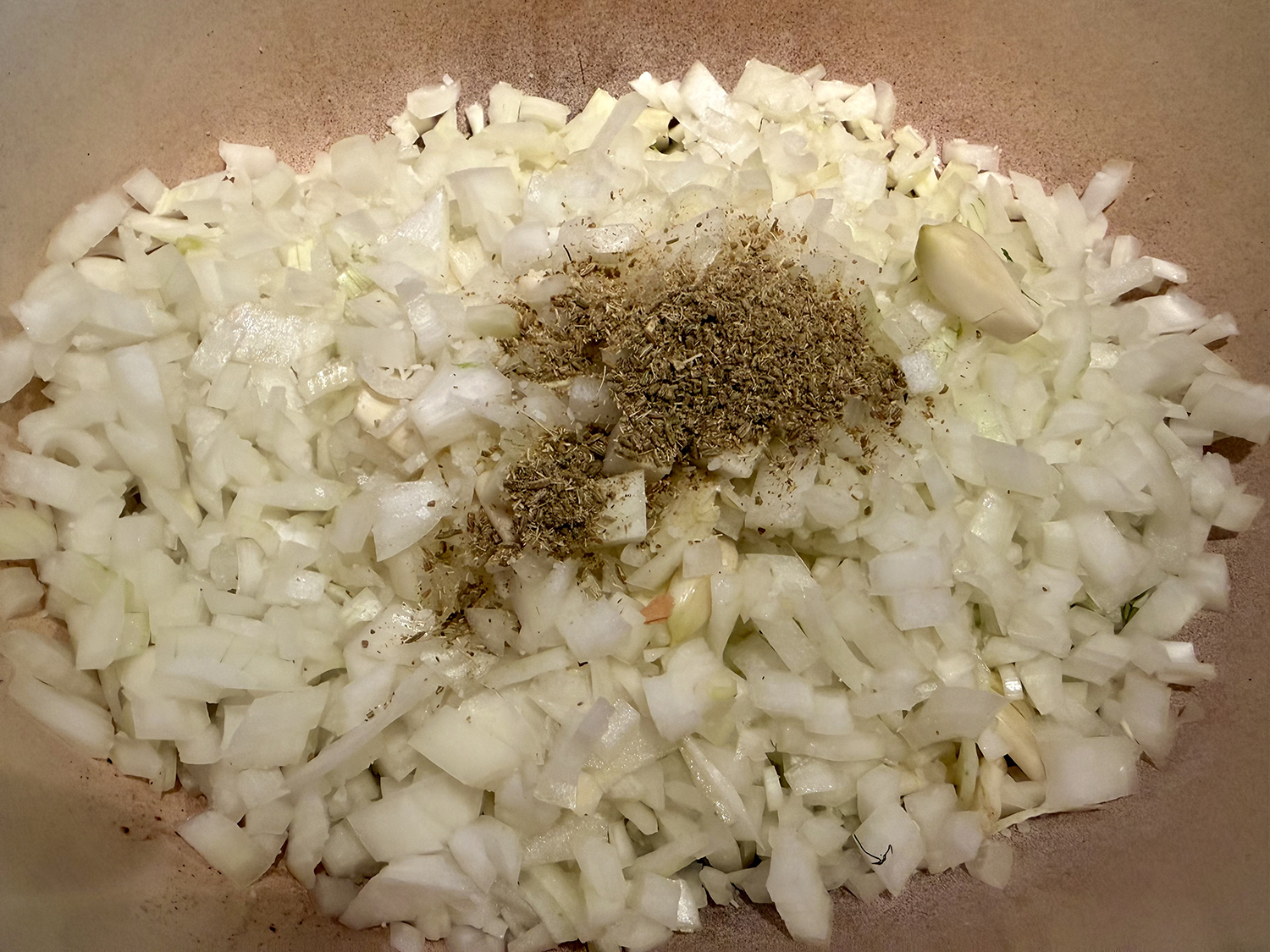
  3. Add the onions, fennel, garlic and ground fennel to the pot, cover and cook over medium-low, stirring occasionally, until the vegetables are tender, about 15 minutes.
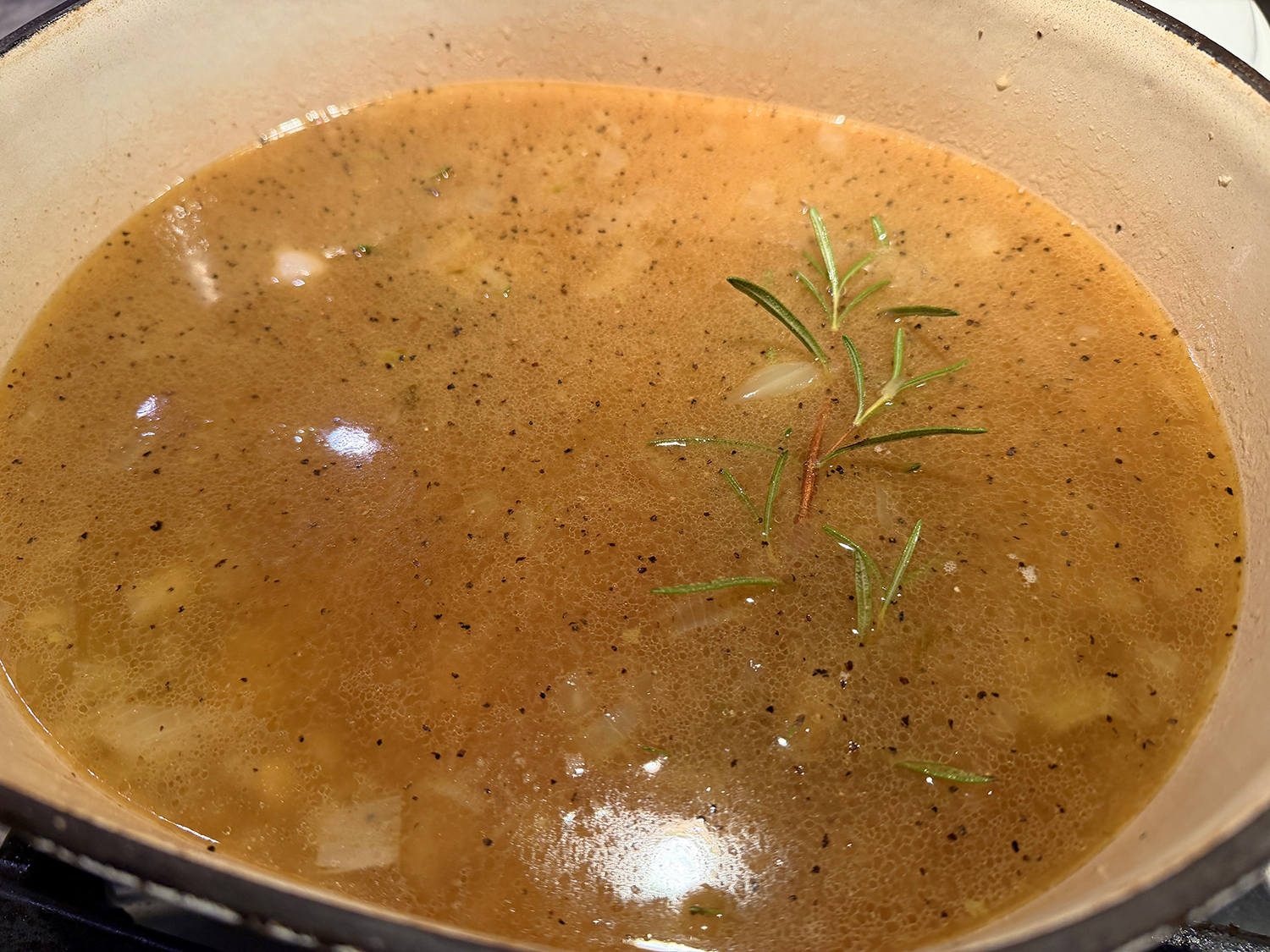
  4. Measure out 1½ cups of the beans and set aside. Add the remaining beans to the pot along with the broth, rosemary, ½ teaspoon salt and 1 teaspoon pepper. Bring to a simmer over medium-high. Cover, reduce to medium-low and simmer for 15 minutes.
  5. Remove and discard the rosemary sprig. Let the soup cool slightly, about 15 minutes. Transfer about ⅓ of the soup to a blender. Add 1 tablespoon of the oil and puree until smooth.
  6. Transfer to a large saucepan, then repeat with the remaining soup and oil, working in batches. Add the reserved beans and heat over medium-low, stirring, until the soup is heated through, about 10 minutes.
  7. Taste and season with salt and pepper. Serve drizzled with oil, sprinkled with the bacon and chives, with lemon wedges on the side.

http://www.lynnandruss.com

Adapted from a recipe for Milk Street

Green Chile Puttanesca Pork Chops

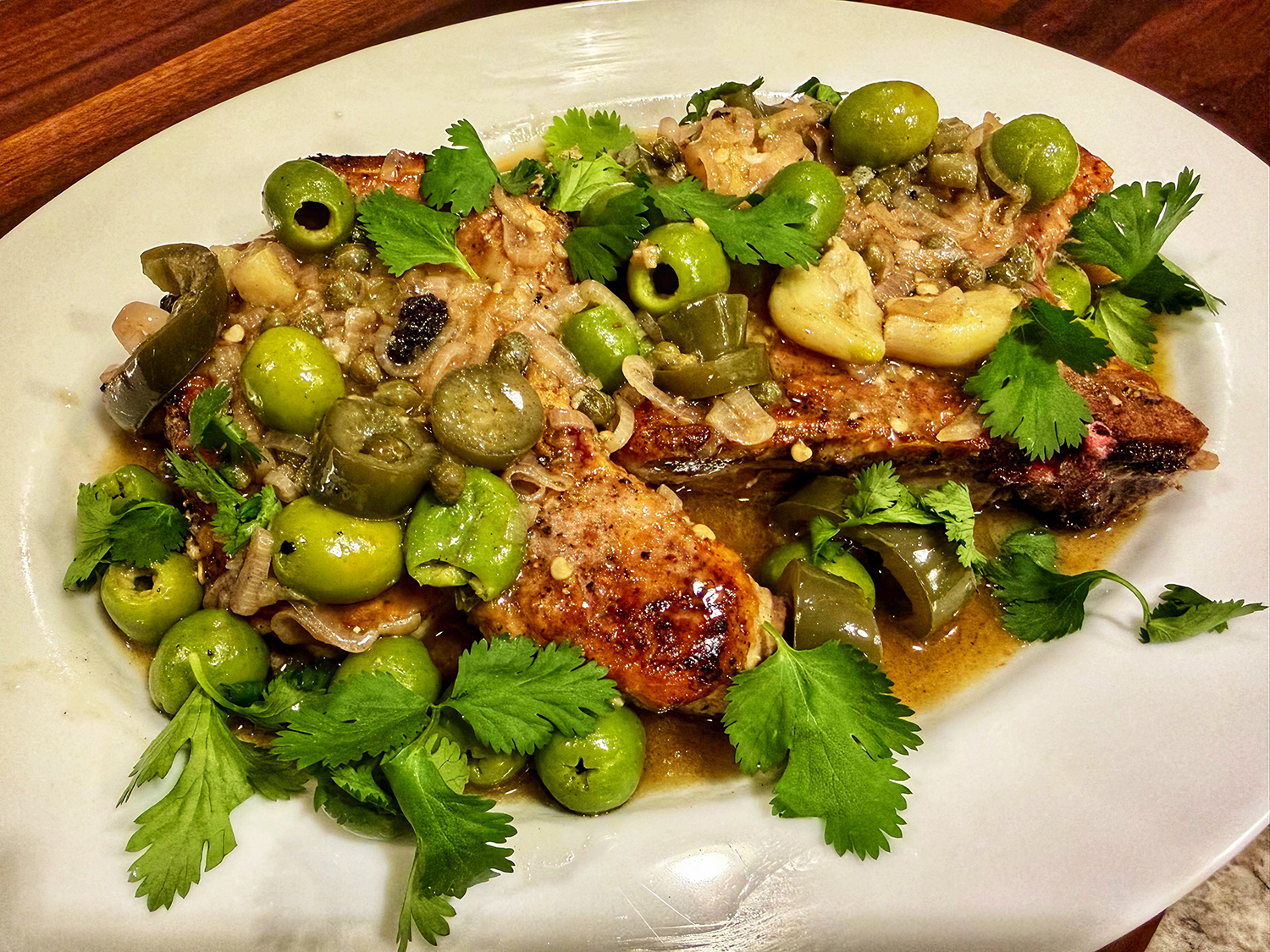
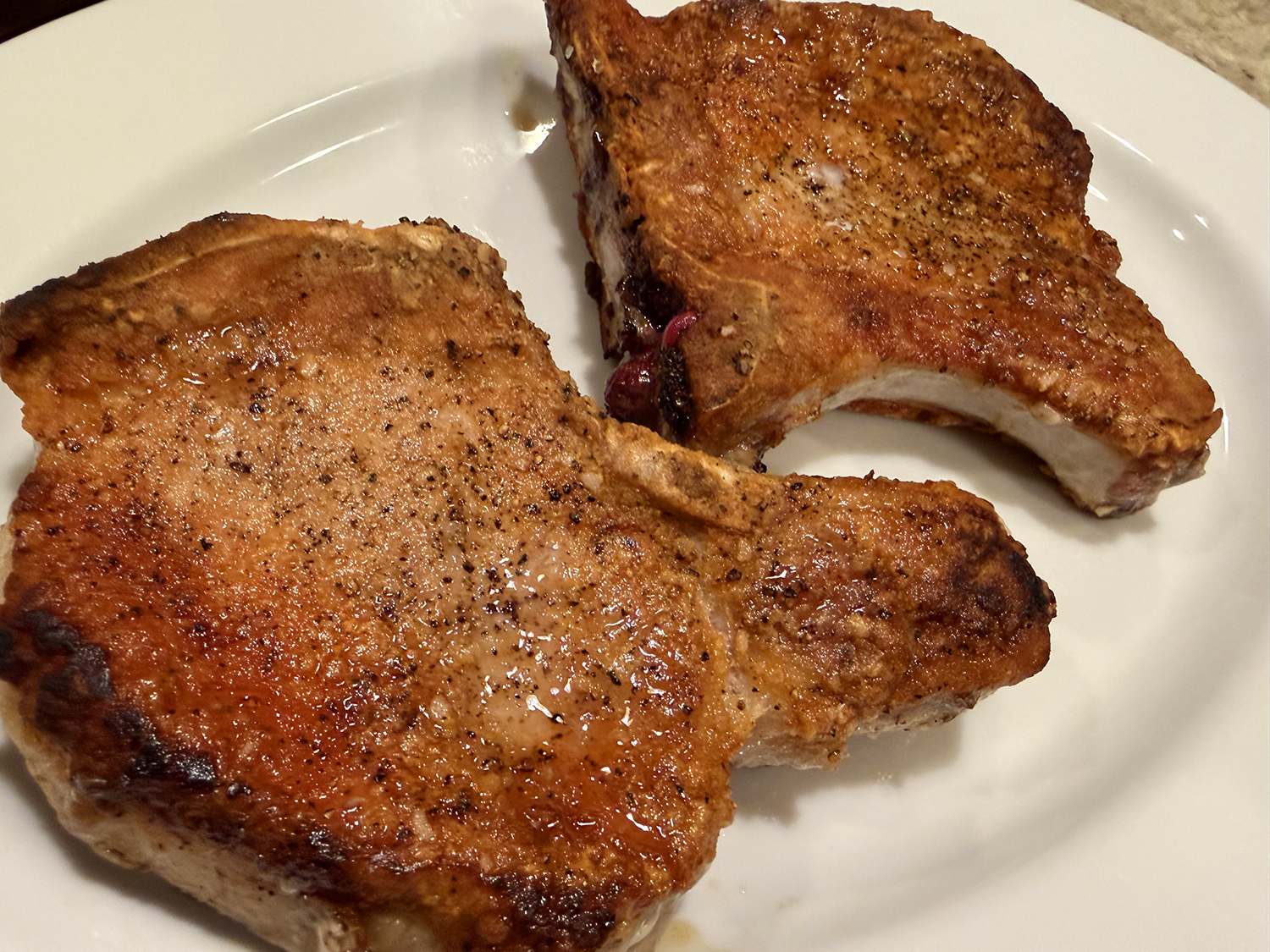
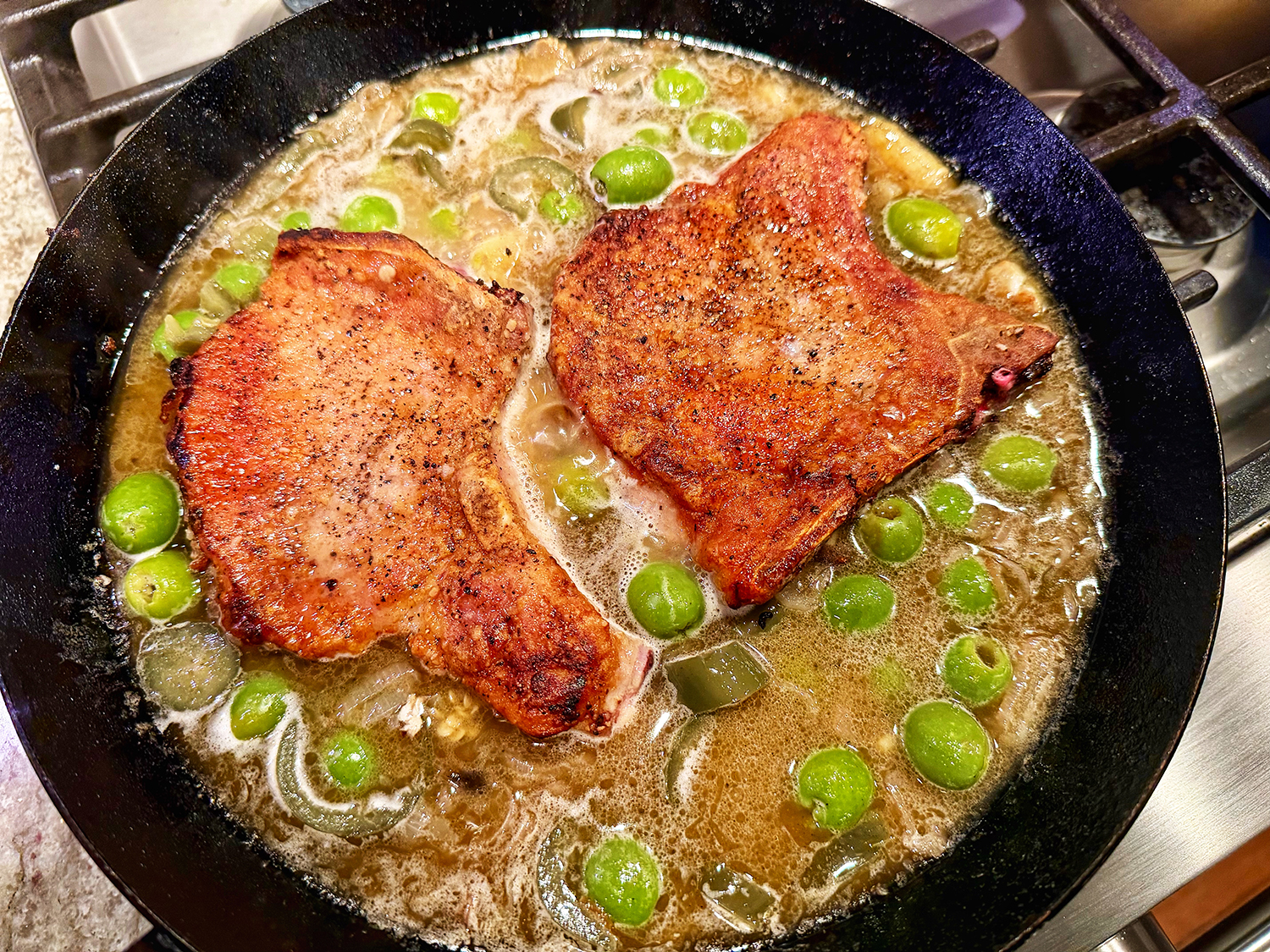
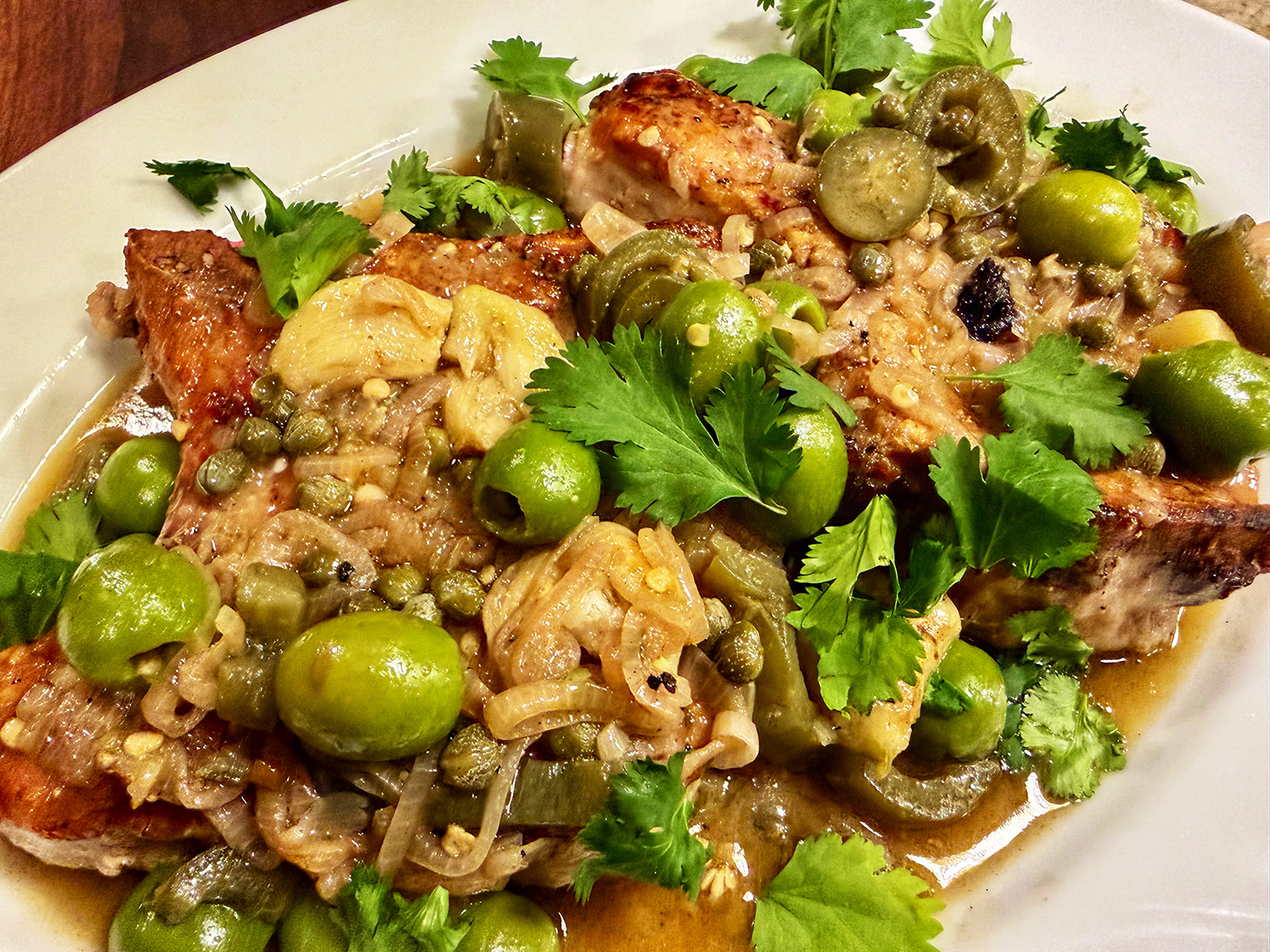
Piquant was my initial descriptor as I savored my first bite; delicious was a very quick second. As chef Chris Morocco from Bon Appétit explains, every pork chop is a bit different, depending on its thickness and where it has been cut along the ribs or sirloin. That means each chop is somewhat unique and they often don’t cook evenly, particularly when seared like steaks.

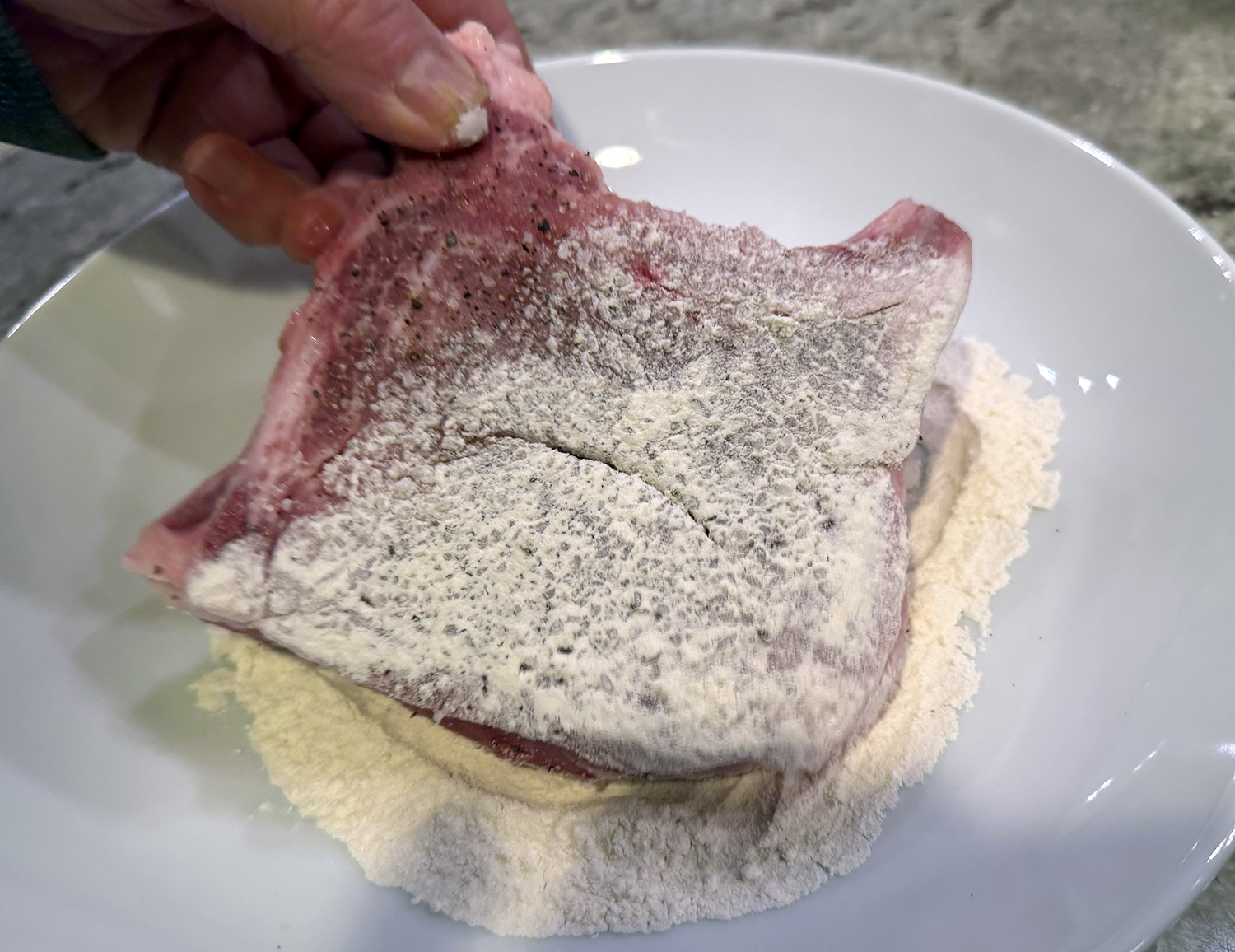
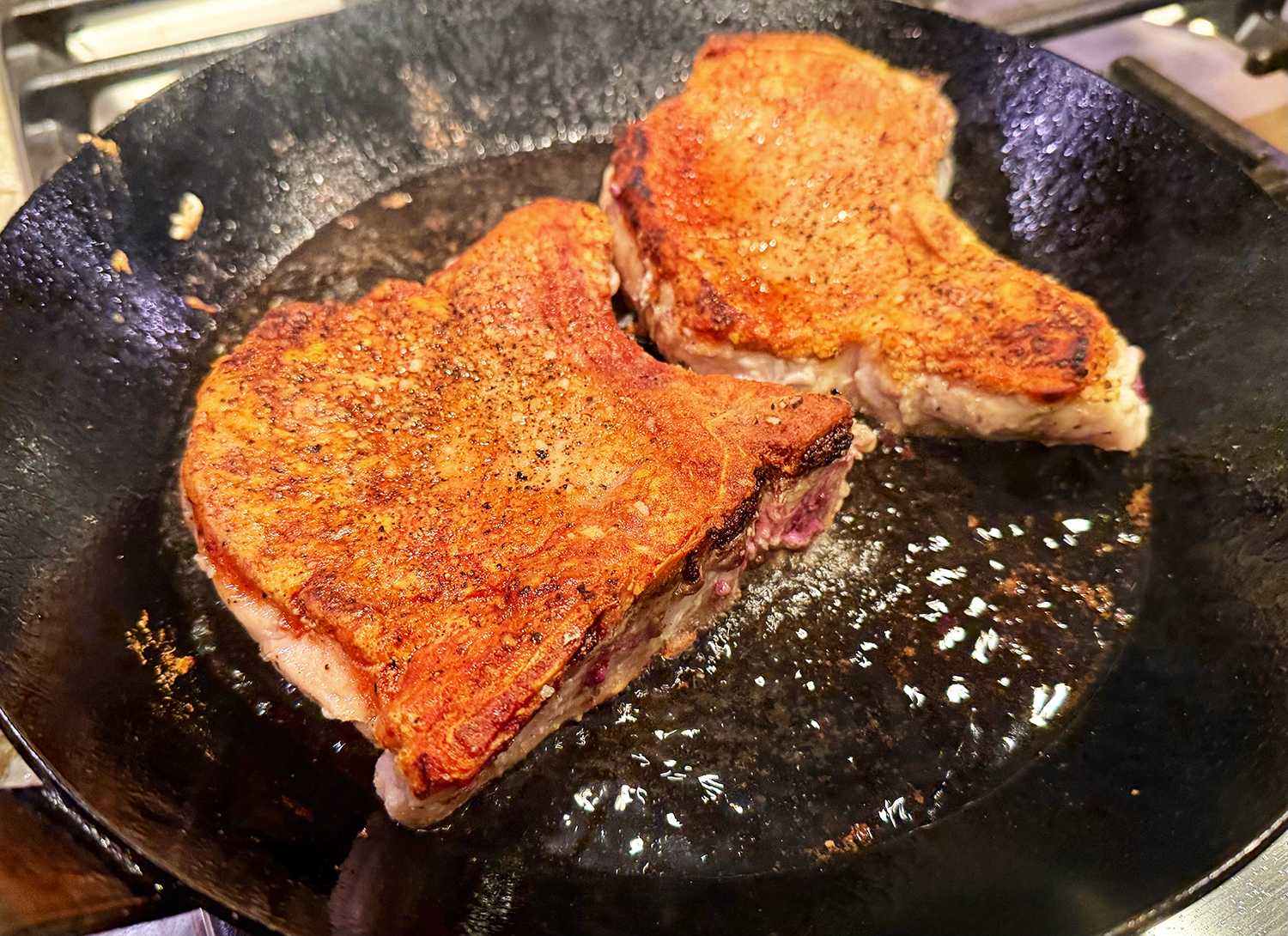
However, this recipe calls for a two-step cooking process that mitigates this tendency, ideally starting with thinner chops of around ½” thickness, but the technique works for thicker chops as well (which ours were). A light dusting of flour allows for a deeper sear in less time, which is followed by a very fast and gentle braise in the pan sauce, allowing the chops to cook through but stay wonderfully juicy.

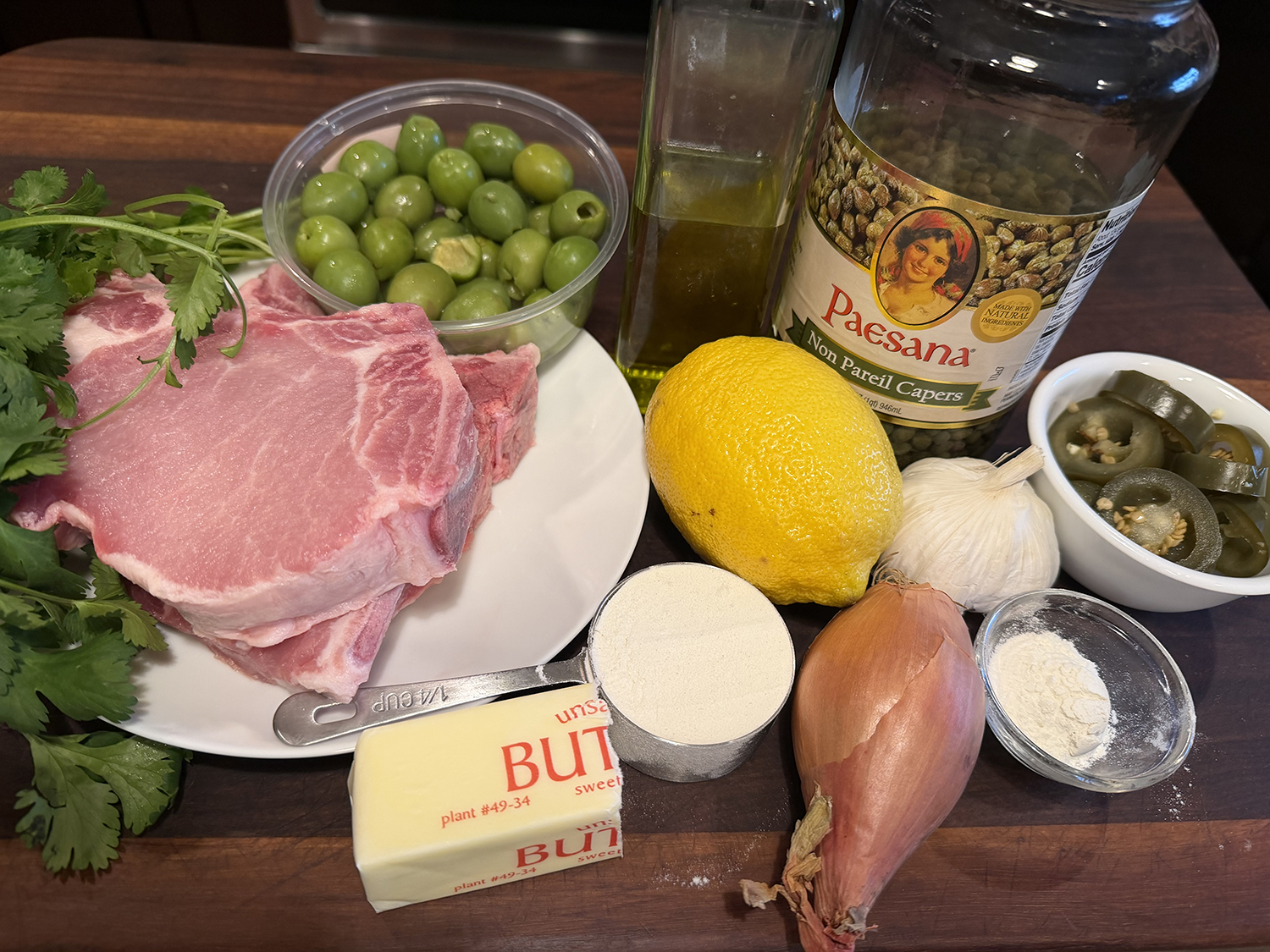
The heat of store-bought pickled chiles, like jalapeños (we always have our own pickled chiles on hand) and guindillas, brings a welcome zing that integrates seamlessly with the salty elements of puttanesca (made with pantry staples like olives and capers) and acts like a counterweight to rich pork chops.

With only two of us for dinner, and not wanting leftovers (unusual for us), we created the dish using only two chops, but did not decrease the other ingredients (except the flour, way too much!) You can easily cut that amount of flour by half, or more (which is indicated in ingredients list below).

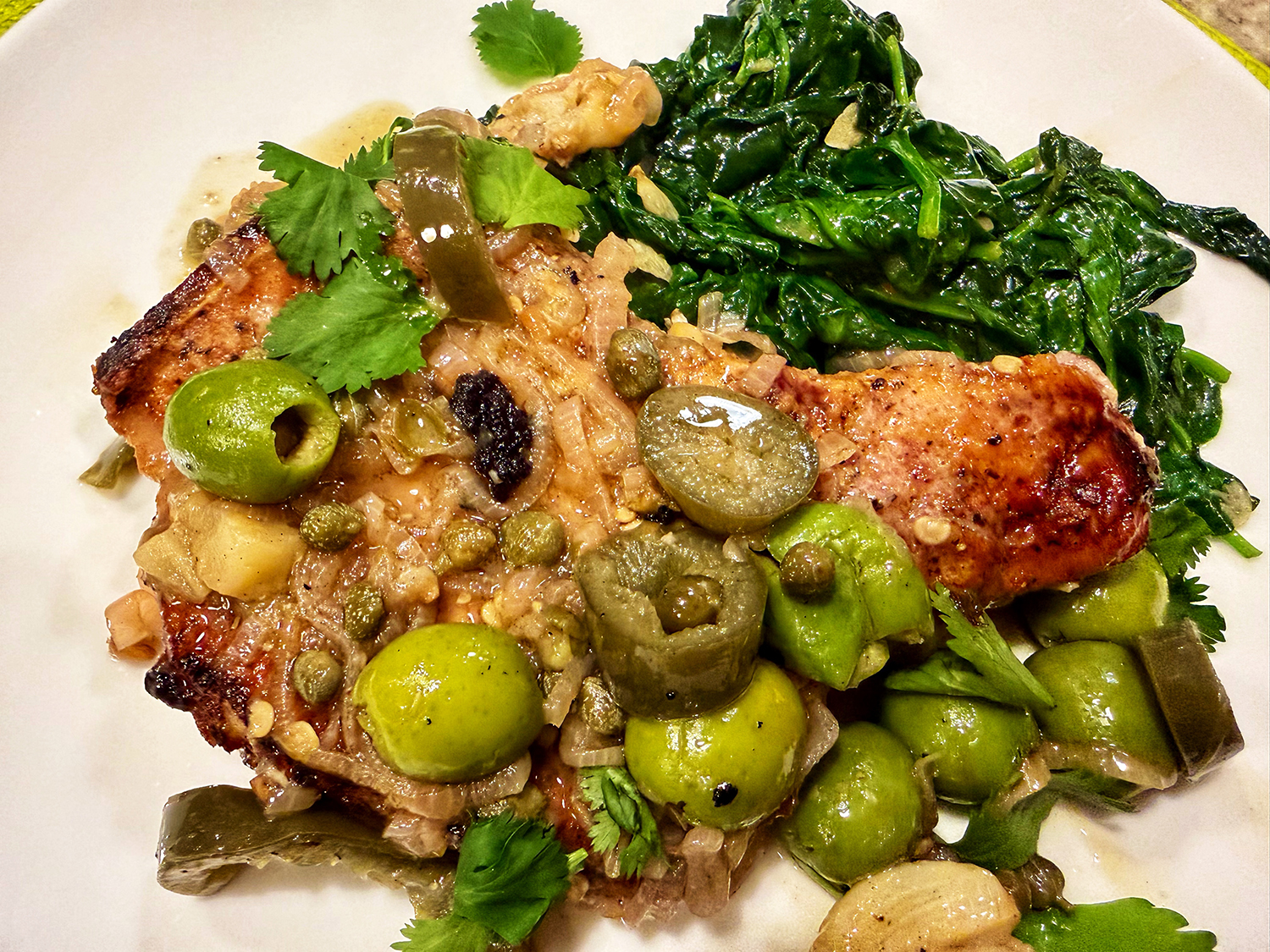
Our accompaniment was sautéed baby spinach with garlic (yes, more!). If you would like to pair with a starch, polenta would make a good choice.

Green Chile Puttanesca Pork Chops

  • Servings: 4
  • Difficulty: easy
  • Print

Ingredients

  • ½ cup, all-purpose flour; plus 2 tsp. from dusting leftovers for sauce
  • 4 ½”-thick pork rib chops (look for the most marbled ones you can find), preferably bone-in (1½–2 lb.)
  • Kosher salt, freshly ground pepper
  • 3 Tbsp. extra-virgin olive oil, divided
  • 1 large shallot, thinly sliced into rings
  • 8 garlic cloves, crushed
  • ½ cup pitted Castelvetrano or other green olives
  • ¼ cup (or more) halved or sliced pickled jalapeños or guindilla peppers
  • 2 Tbsp. drained capers
  • ¼ cup fresh lemon juice
  • 4 Tbsp. unsalted butter, cut into pieces

Directions

  1. Place 1 cup all-purpose flour in a shallow bowl. Season four ½”-thick pork rib chops, preferably bone-in (1½–2 lb.), with kosher salt and freshly ground pepper; lightly dredge in flour, shaking off excess. Heat 2 tablespoons. extra-virgin olive oil in a large skillet over medium-high. Working in batches if needed, cook pork chops until deep golden brown underneath, about 5 minutes. Turn; cook until light golden on other side, about 2 minutes. Transfer to a plate.
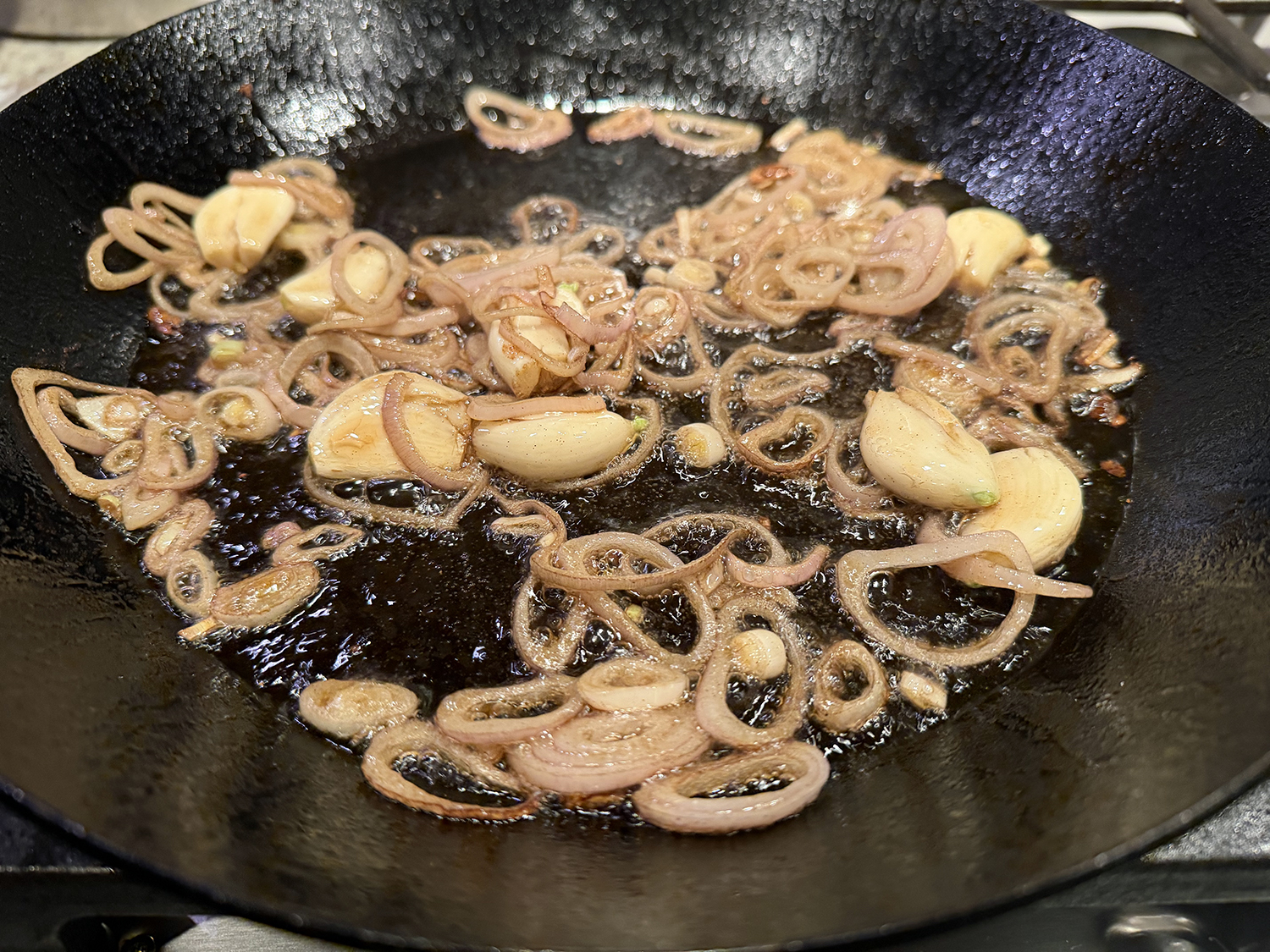
  2. Reduce heat to medium; pour remaining 1 tablespoons extra-virgin olive oil into pan. Add 1 large shallot, thinly sliced into rings, and 8 garlic cloves, crushed, and cook, stirring often, until softened and light golden around the edges, 3–4 minutes.
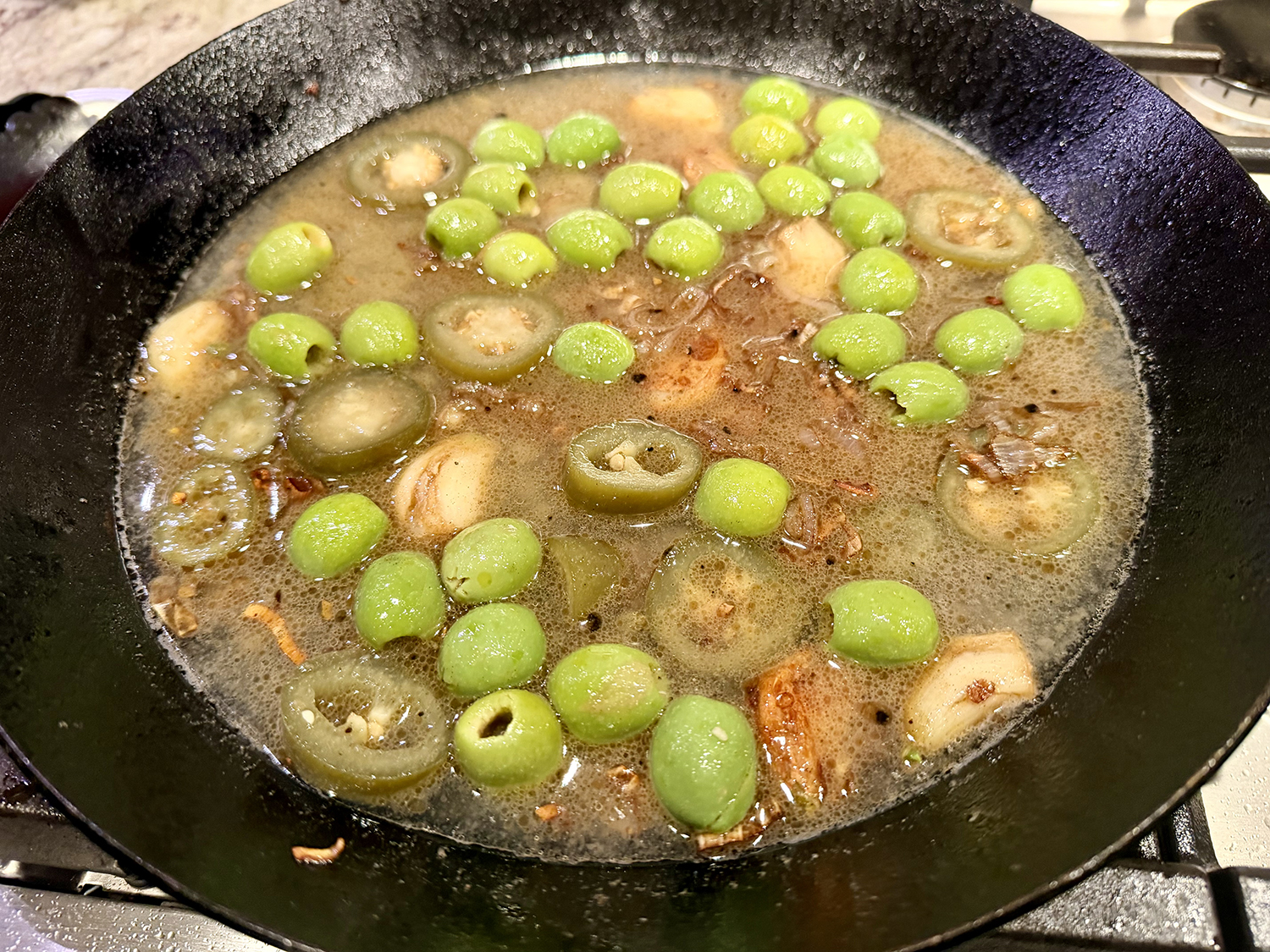
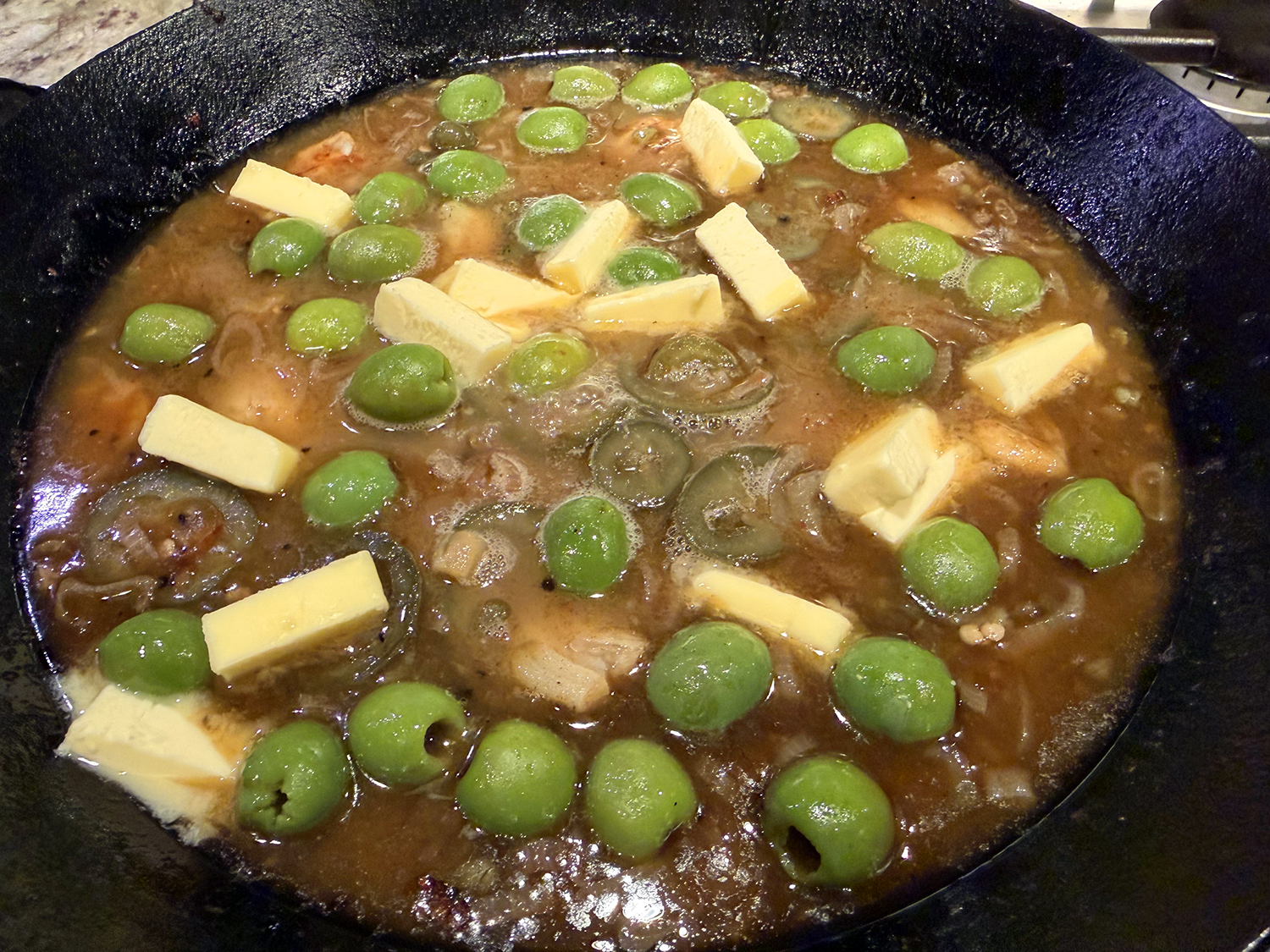
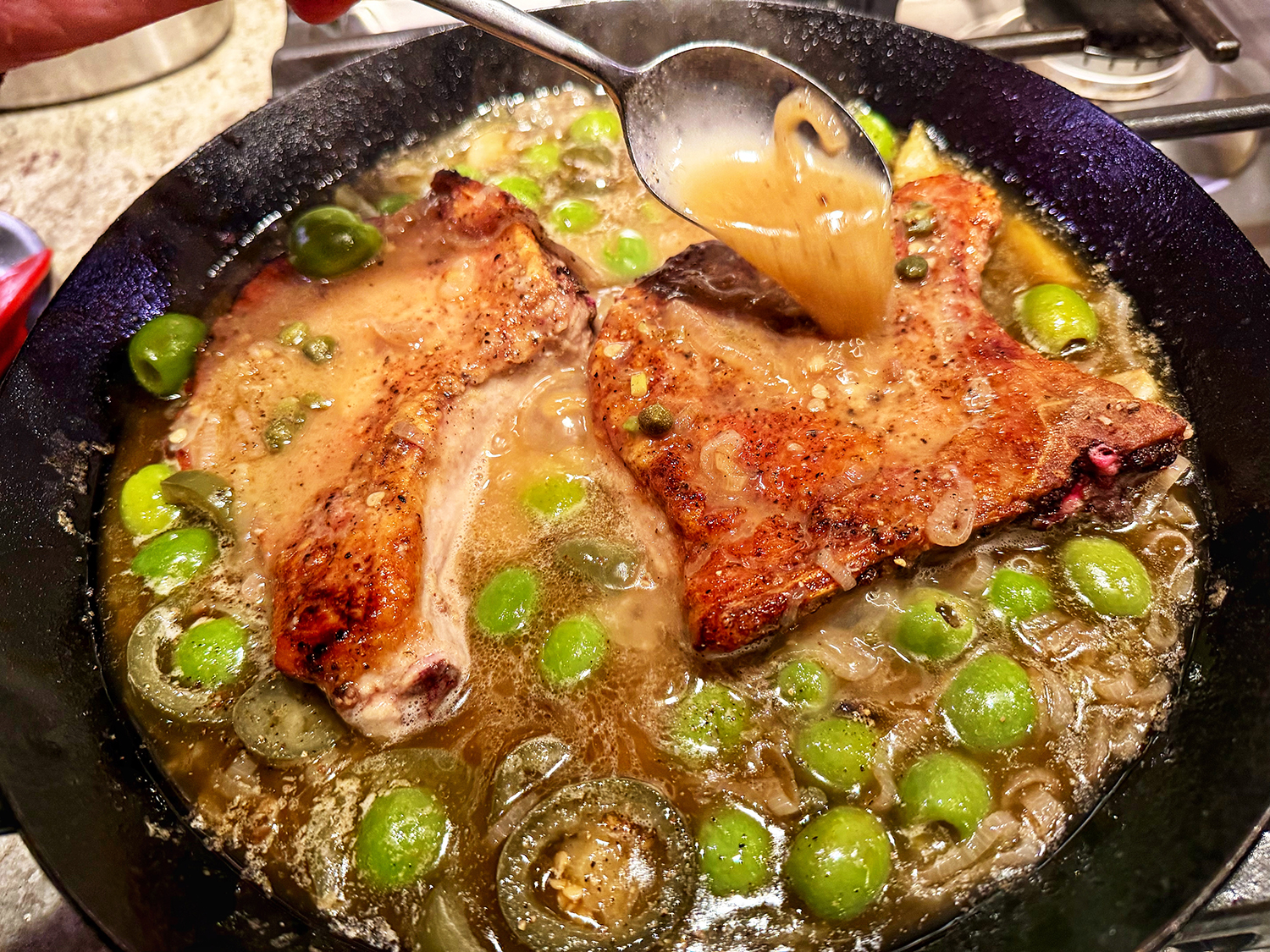
  3. Add 2 teaspoons of leftover flour; cook, stirring constantly, until aromatics are coated, about 1 minute. Add ½ cup pitted Castelvetrano or other green olives, ¼ cup halved or sliced pickled jalapeños or guindilla peppers, 2 tablespoons drained capers, and 1 cup water and cook, stirring constantly and scraping up any browned bits, until sauce is simmering and beginning to thicken, about 2 minutes. Add ¼ cup fresh lemon juice and 4 Tbsp. unsalted butter, cut into pieces, and swirl pan until butter is incorporated. Taste sauce; season with salt and add more jalapeños and/or some brine if needed.
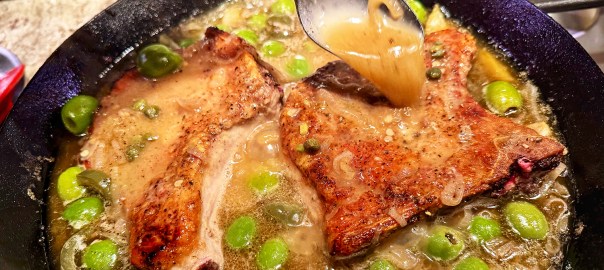
  4. Return pork chops to pan, reduce heat to medium-low, and bring sauce to a gentle simmer. Cook, basting with sauce, just until warmed and cooked through, 3–4 minutes. Transfer pork chops to a platter and top with sauce and cilantro.

http://www.lynnandruss.com

Adapted from a recipe by Chris Morocco for Bon Appétit

Baked Potatoes for Two with Broccoli Cheese Topping

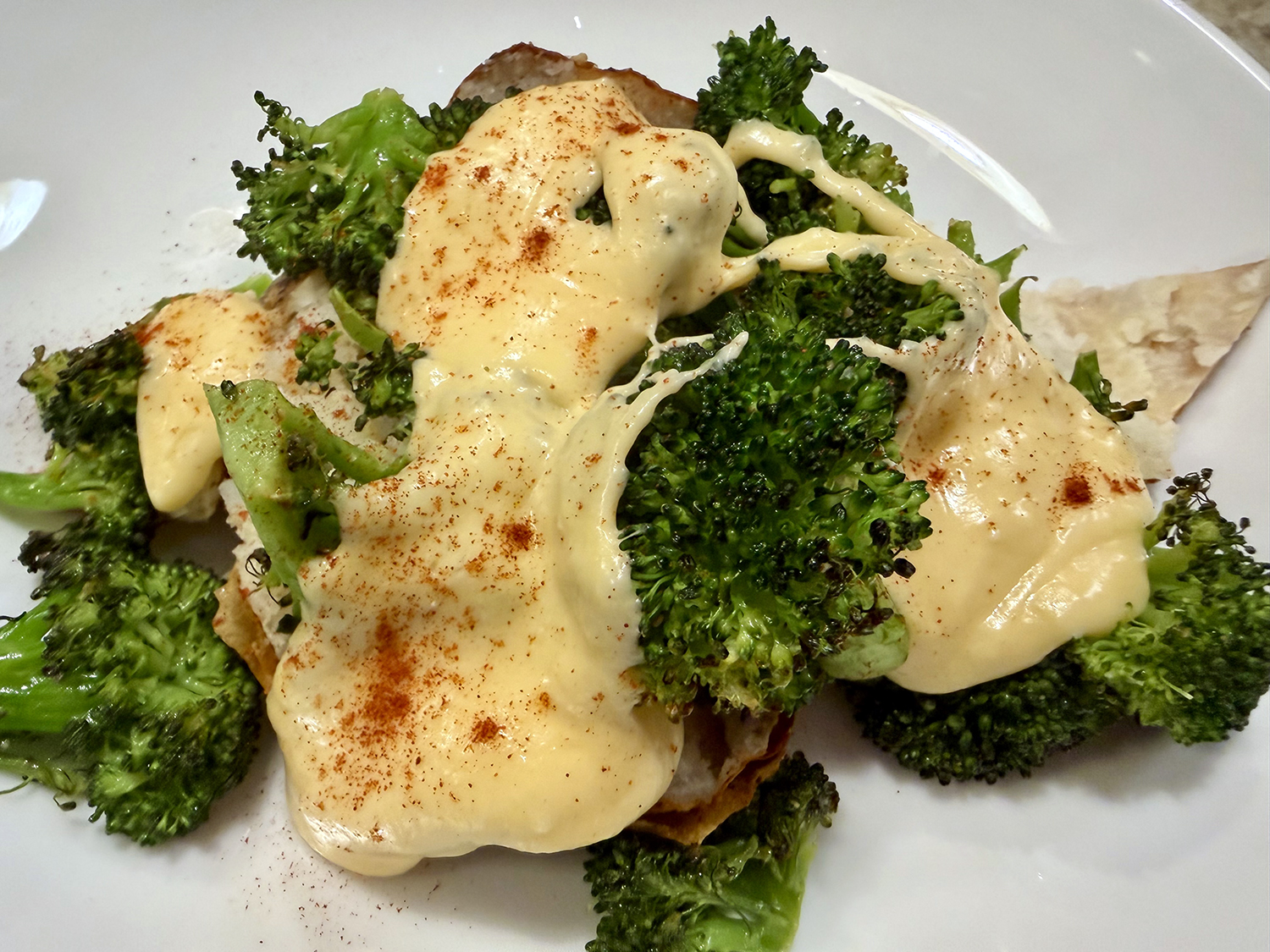
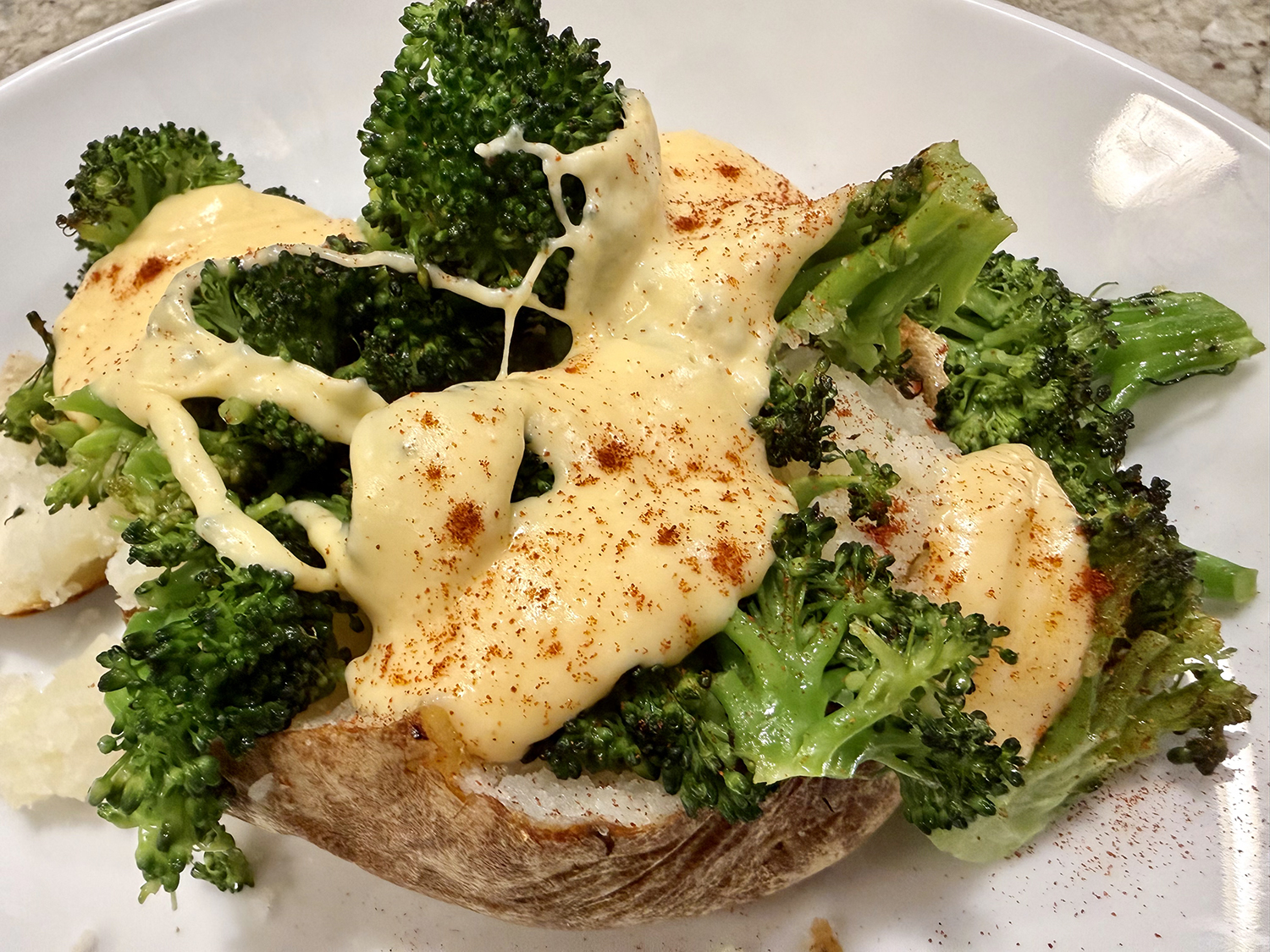
These babies are a meal in themselves, and that’s exactly what we had for dinner recently. Sometimes a perfectly cooked baked potato can be just as satisfying as a fancy gratin.

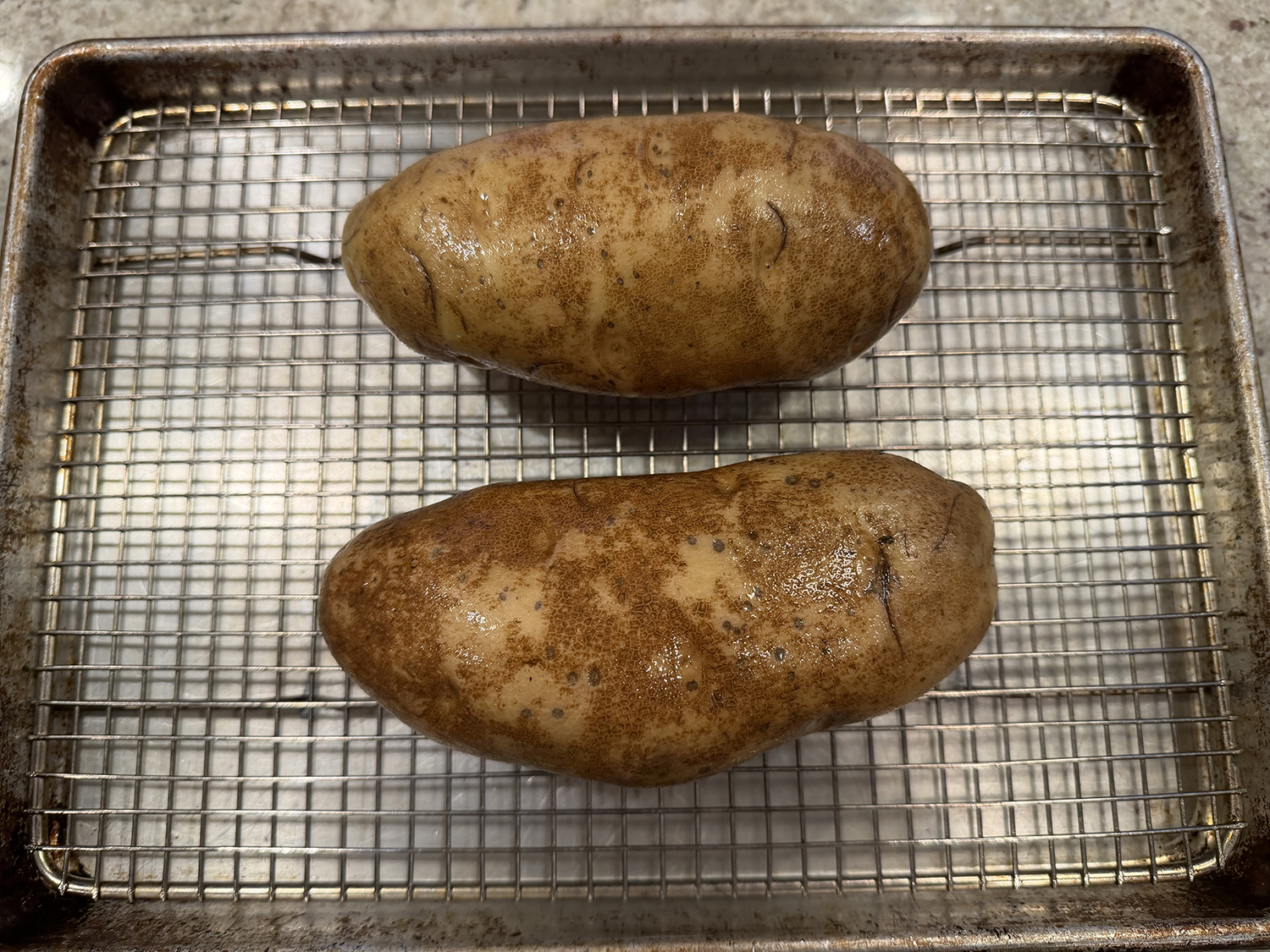
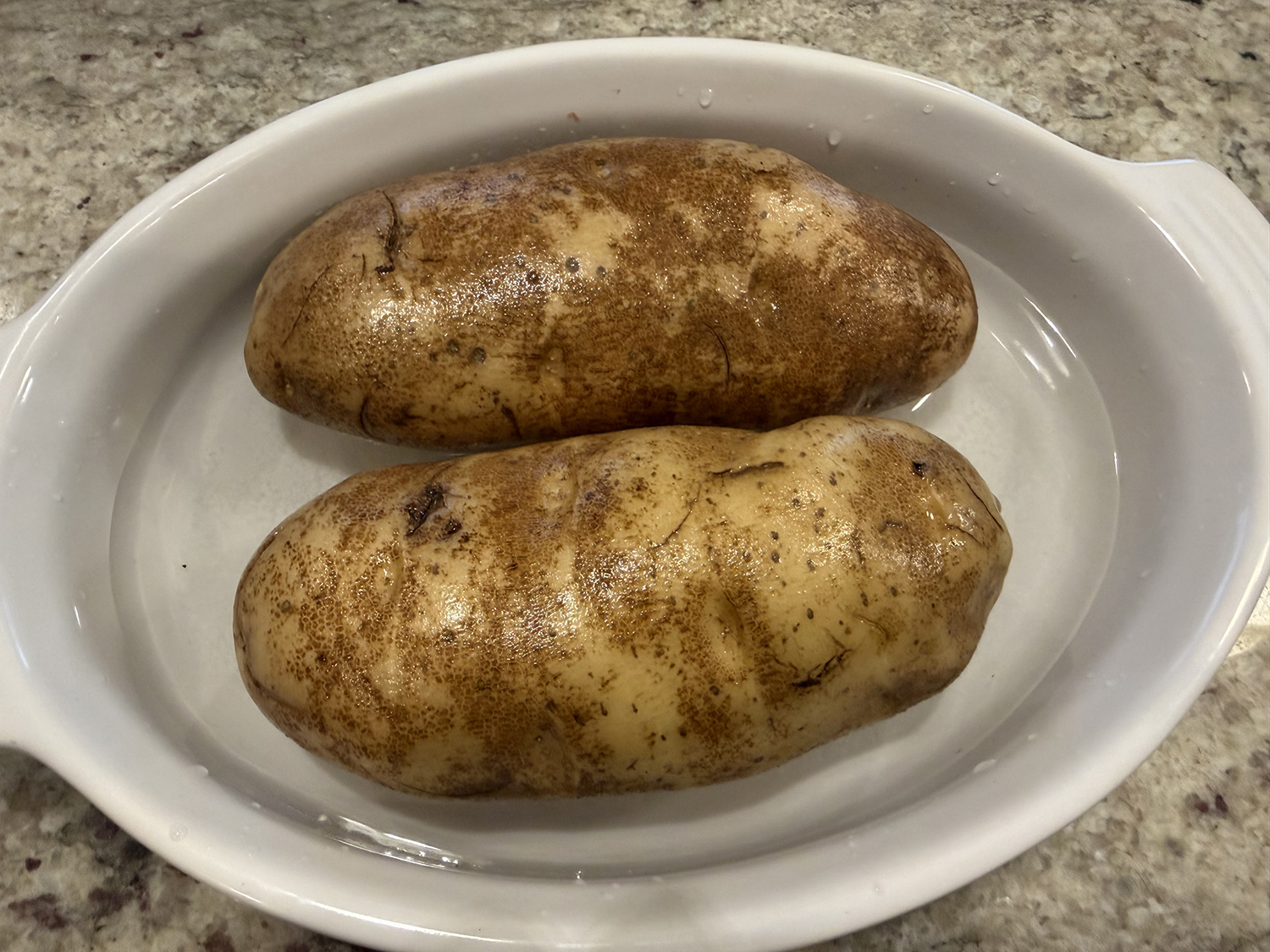
To produce baked potatoes with an evenly fluffy interior, their ideal doneness temperature is 205 degrees. Baking them in a hot (450-degree) oven prevents a leathery “pellicle” from forming underneath the peel.

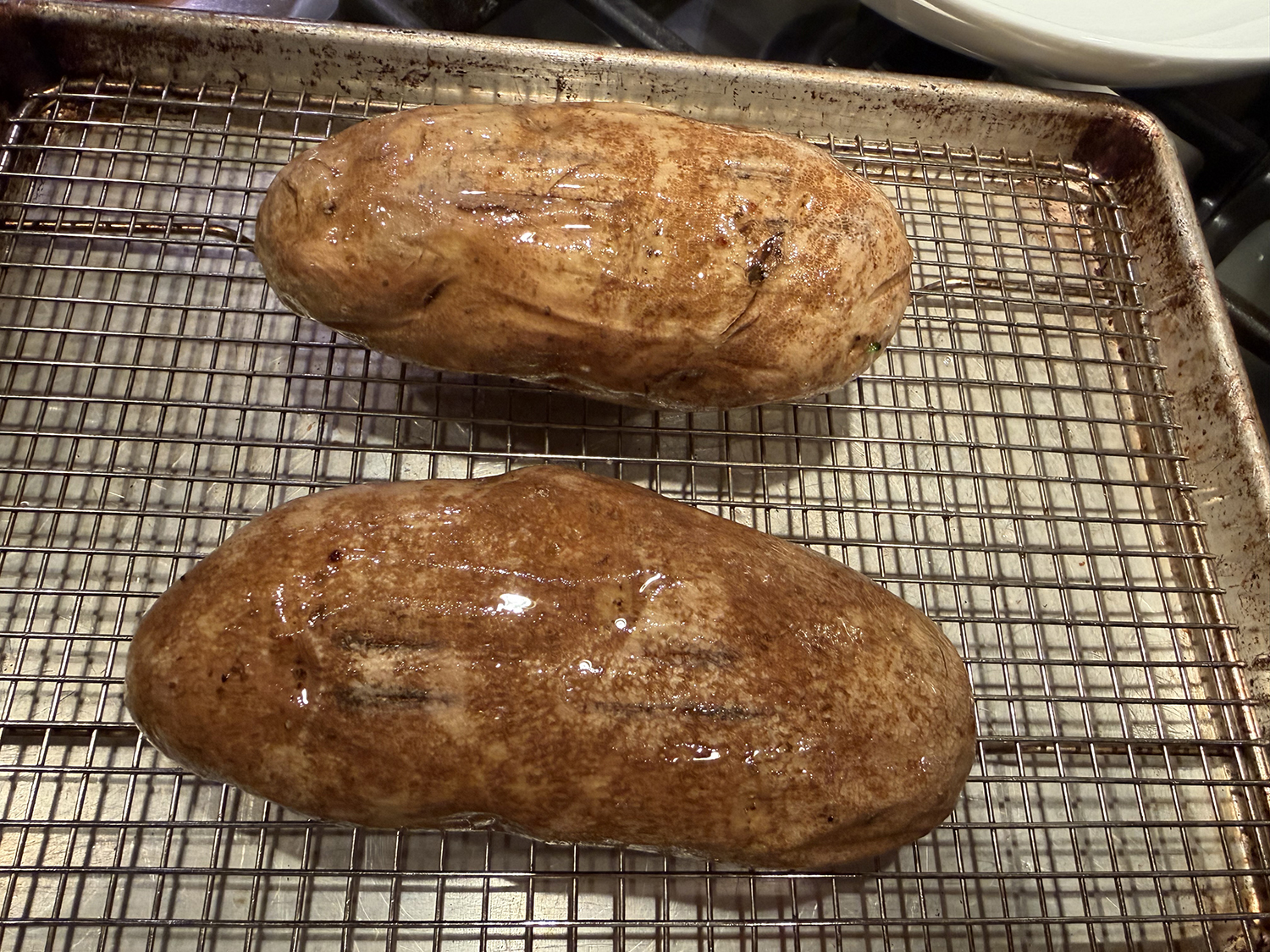
To season the skin, coat the potatoes in salty water before baking; crisp the skin by painting it with vegetable oil (do not use olive oil as it will burn at such a high temp) once the potatoes are cooked through, and then bake the potatoes for an additional 10 minutes.

Adding a broccoli cheese sauce topping elevates these spuds to another level. Make sure to use a good quality Parmesan. Grate it from a block cheese to avoid a grainy effect. The sauce can easily be cut in half if desired (which we did, but then wished we had made the full amount).

Baked Potatoes for Two with Broccoli Cheese Topping

  • Servings: 2
  • Difficulty: easy
  • Print

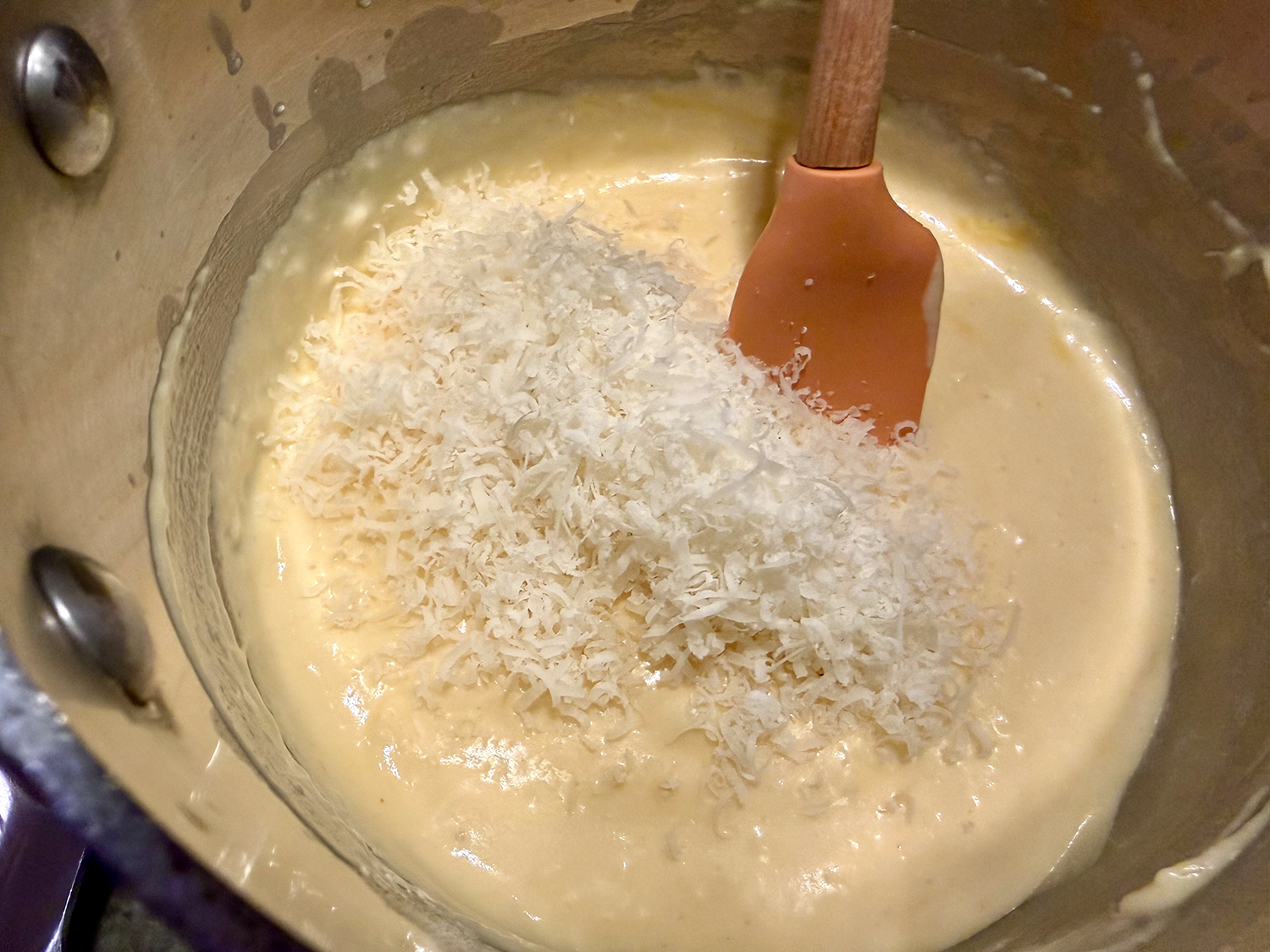
TIP: For a silky smooth sauce, wait until the Monterey Jack and cheddar are thoroughly integrated before you add the Parmesan. If the sauce gets too thick, whisk in 1 tablespoon of hot water.

Ingredients

  • Salt and pepper
  • 2 12-oz. russet potatoes, unpeeled, each lightly pricked with fork in 6 places
  • 2 tsp. vegetable oil

Broccoli Cheese Sauce

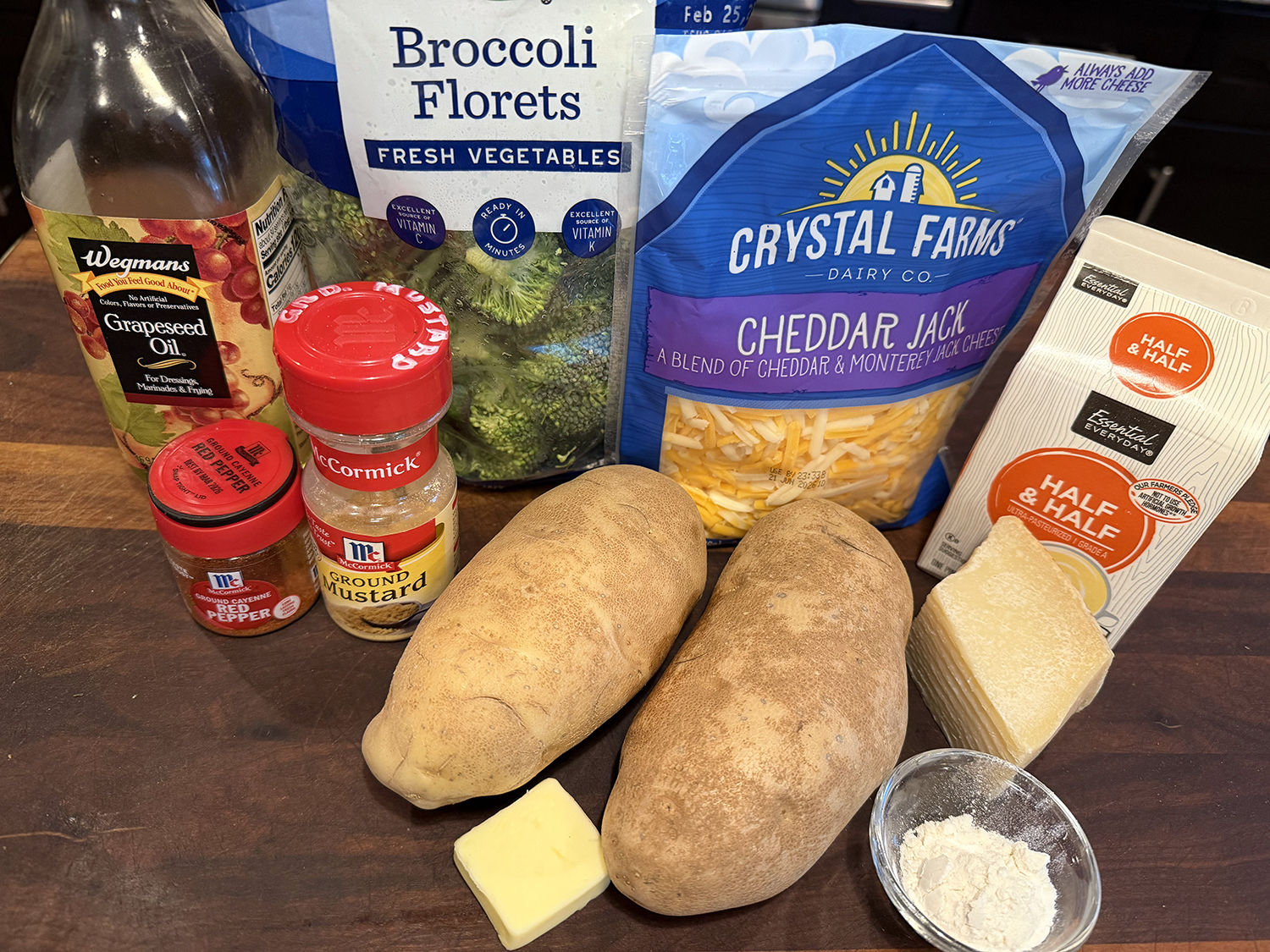
  • 12 oz. broccoli, florets cut into 1-inch pieces
  • 1 Tbsp. vegetable oil
  • Salt and pepper
  • 1 Tbsp. unsalted butter
  • 4 tsp. all-purpose flour
  • 1⁄4 tsp. dry mustard
  • 1⁄8 tsp. cayenne pepper
  • 1 cup half-and-half
  • 1⁄2 cup water
  • 1⁄2 cup shredded Monterey Jack cheese
  • 1⁄2 cup shredded sharp cheddar cheese
  • ¼ cup Parmesan cheese, grated from a block

Directions

  1. Potatoes: Adjust oven rack to middle position and heat oven to 450 degrees. Dissolve 2 tablespoons salt in ½ cup water in medium bowl. Place potatoes in bowl and toss so exteriors of potatoes are evenly moistened. (If you have time, turn the potatoes in the water several times over 15 minutes.) Transfer potatoes to wire rack set in rimmed baking sheet and bake until center of largest potato registers 205 degrees, about 1 hour. (Depending on the size of your potatoes, this could take longer.)
  2. Add a quarter-sized rimmed baking sheet (in same oven as potatoes) and heat for 15 minutes. This will be used to bake the broccoli.
  3. Remove potatoes from oven and brush tops and sides with oil. Return potatoes to oven and continue to bake for 10 minutes.
  4. Remove potatoes from oven and, using paring knife, make 2 slits, forming X, in each potato. Using clean dish towel, hold ends and squeeze slightly to push flesh up and out. Season with salt and pepper to taste.
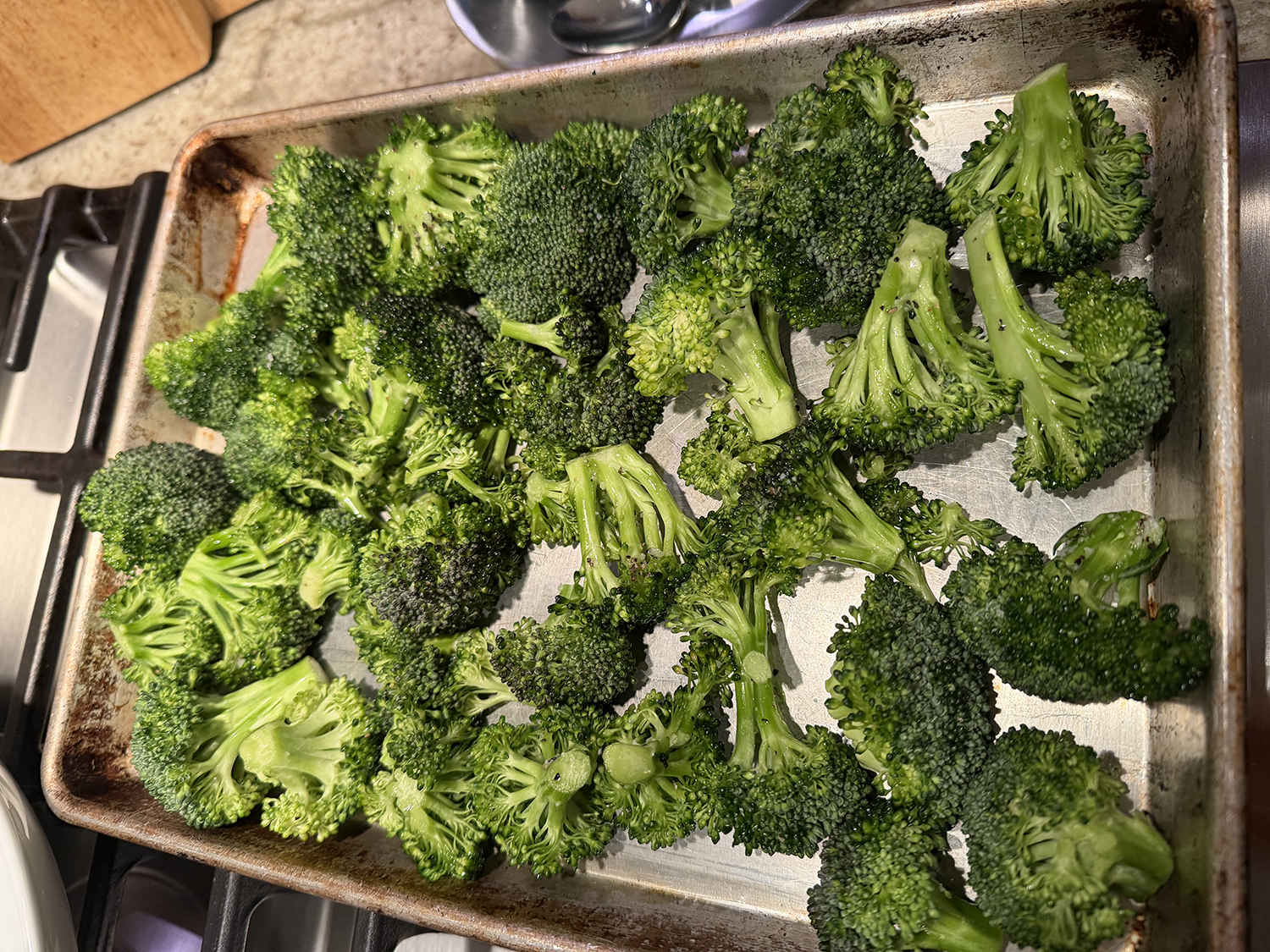
  5. Broccoli Cheese Sauce: While potatoes are roasting, toss broccoli florets with oil, ¾ teaspoon salt, and ¼ teaspoon pepper in large bowl.
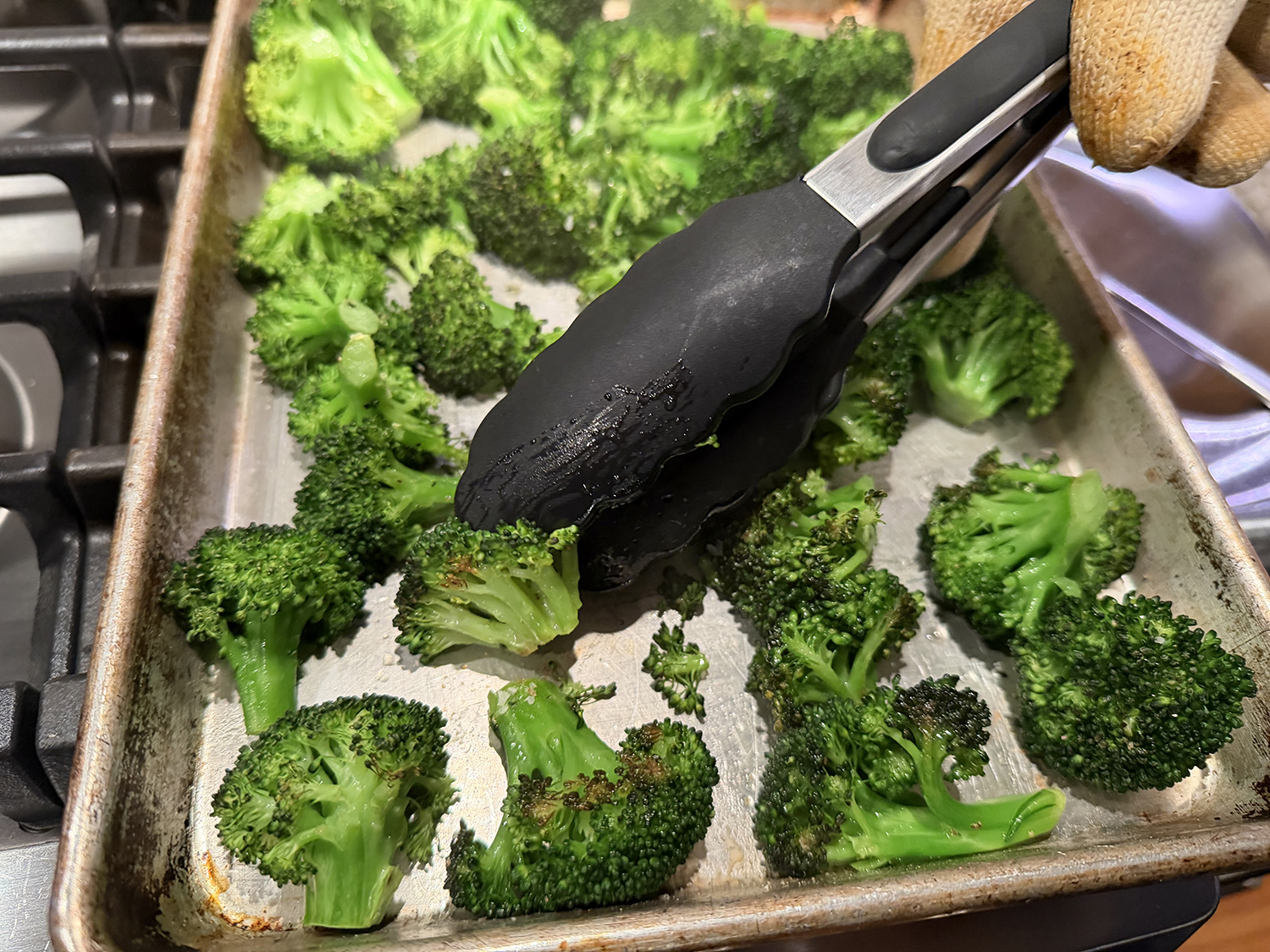
  6. Arrange broccoli in single layer on heated rimmed baking sheet. In the same 450° degree oven, after the potatoes have cooked for about 50 minutes, roast the broccoli until spotty brown, about 15-18 minutes, turning florets halfway through cooking.
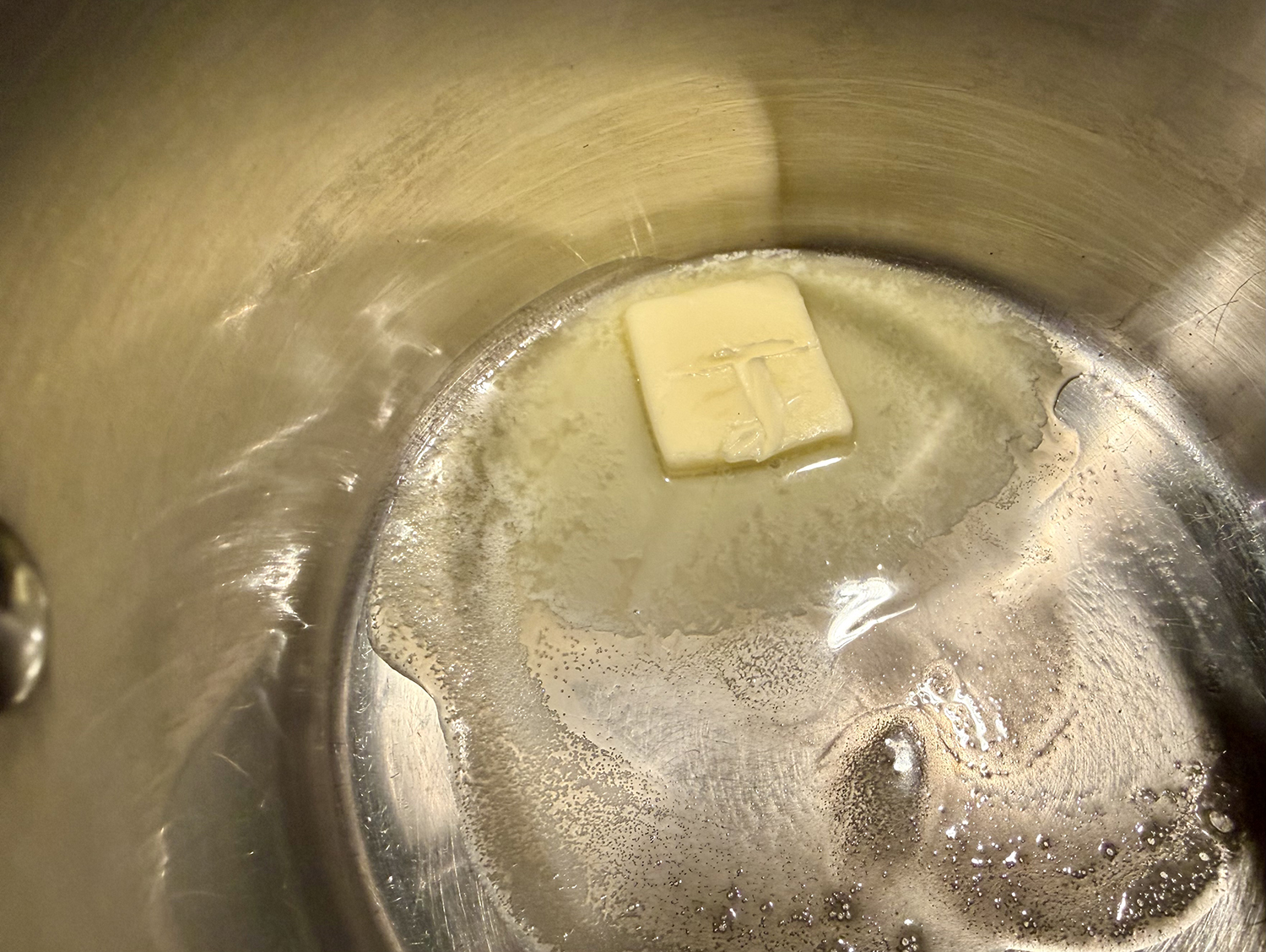
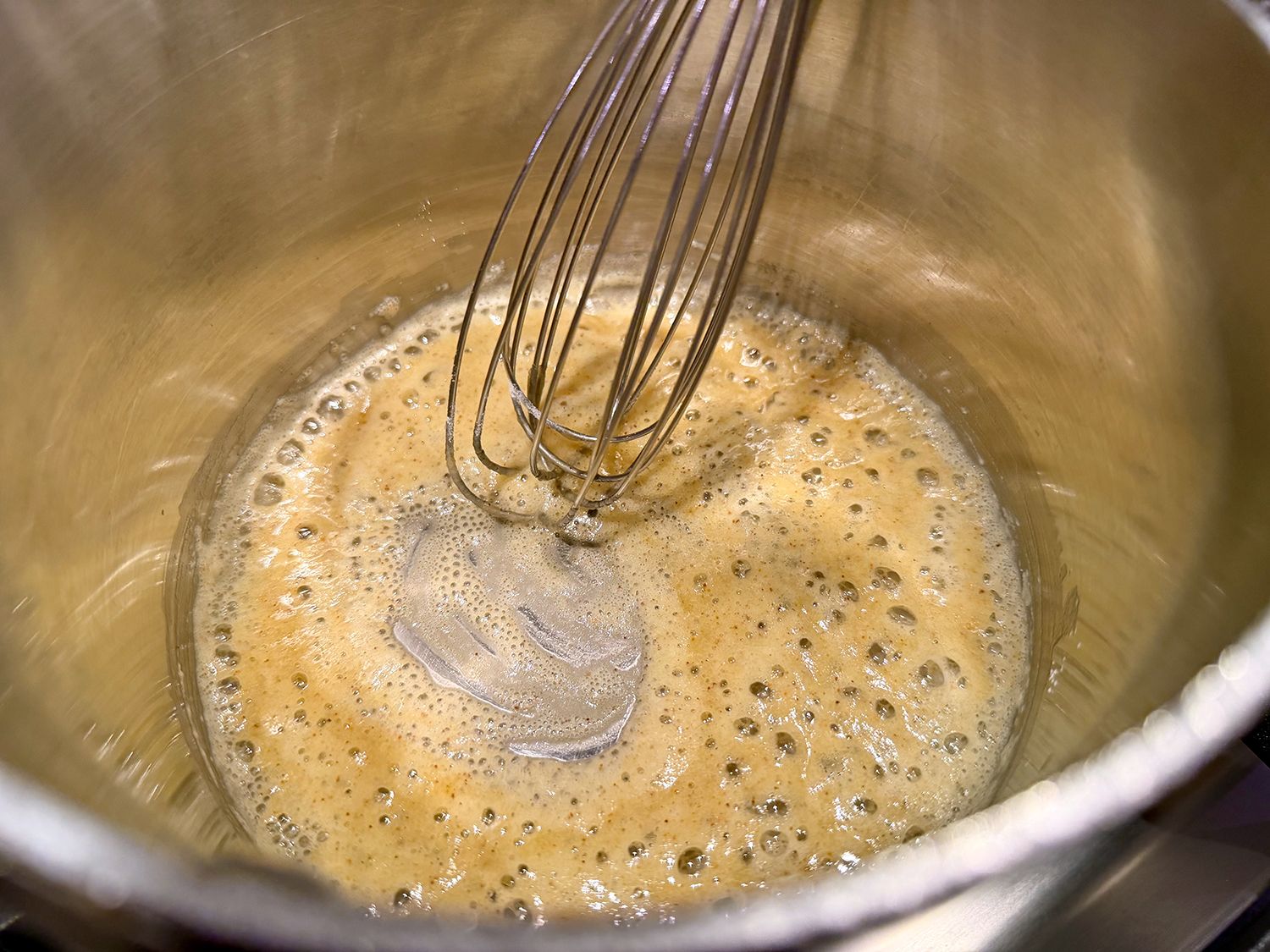
  7. Meanwhile, melt butter in medium saucepan over medium heat. Add flour, mustard, and cayenne and cook, stirring constantly, until golden and fragrant, about 1 minute. Slowly whisk in half-and-half and water and bring to boil. Reduce heat to medium-low and simmer until slightly thickened, 8 to 10 minutes.
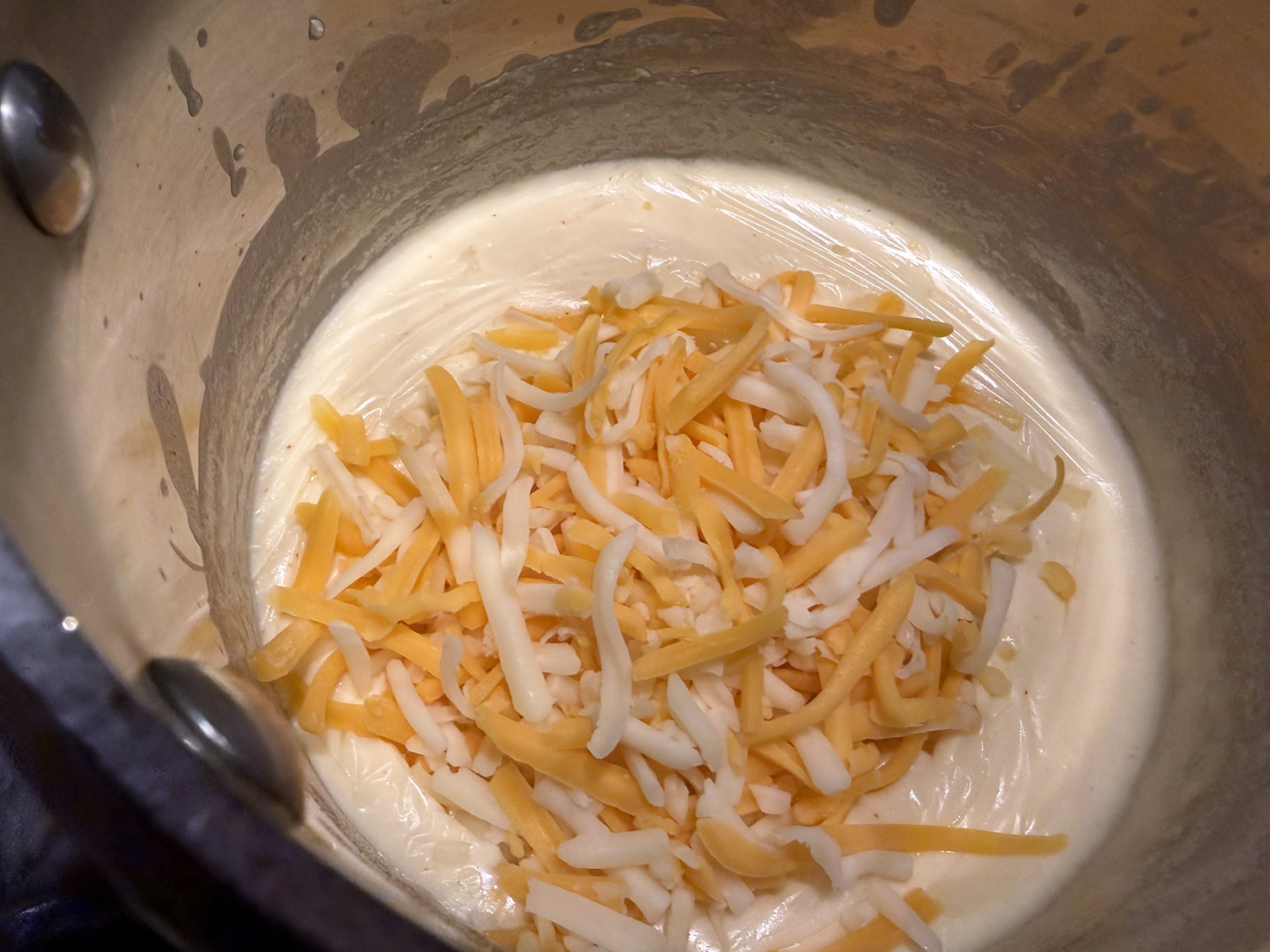
  8. Off heat, whisk in Monterey Jack and cheddar until smooth. Stir in Parmesan until smooth. Season with salt and pepper. Top potatoes with roasted broccoli, pour sauce over broccoli and serve immediately. Sprinkle with a touch of paprika, if desired.

http://www.lynnandruss.com

Adapted from recipes for America’s Test Kitchen

Creamy Braised Chicken with Bacon and White Wine

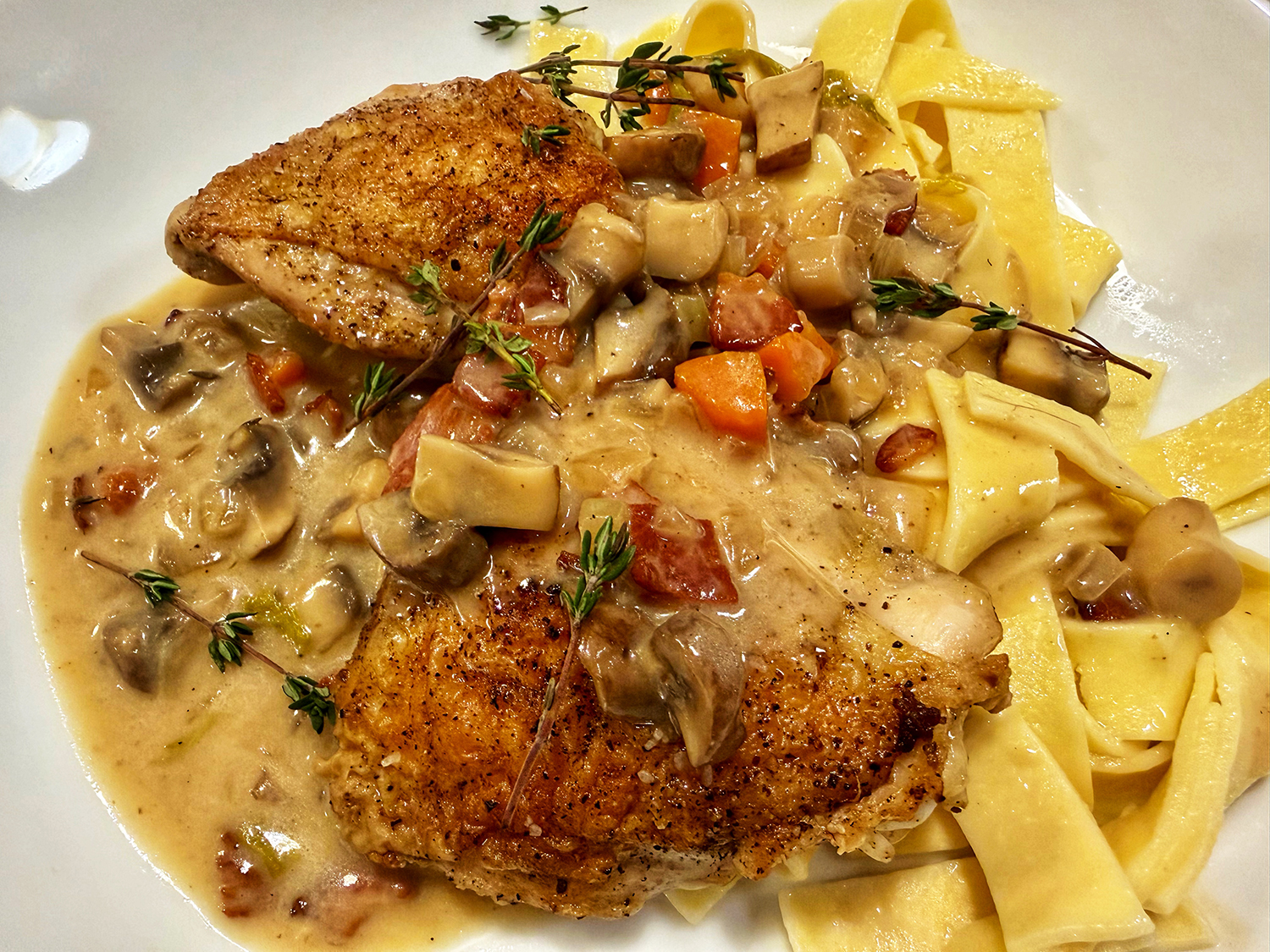
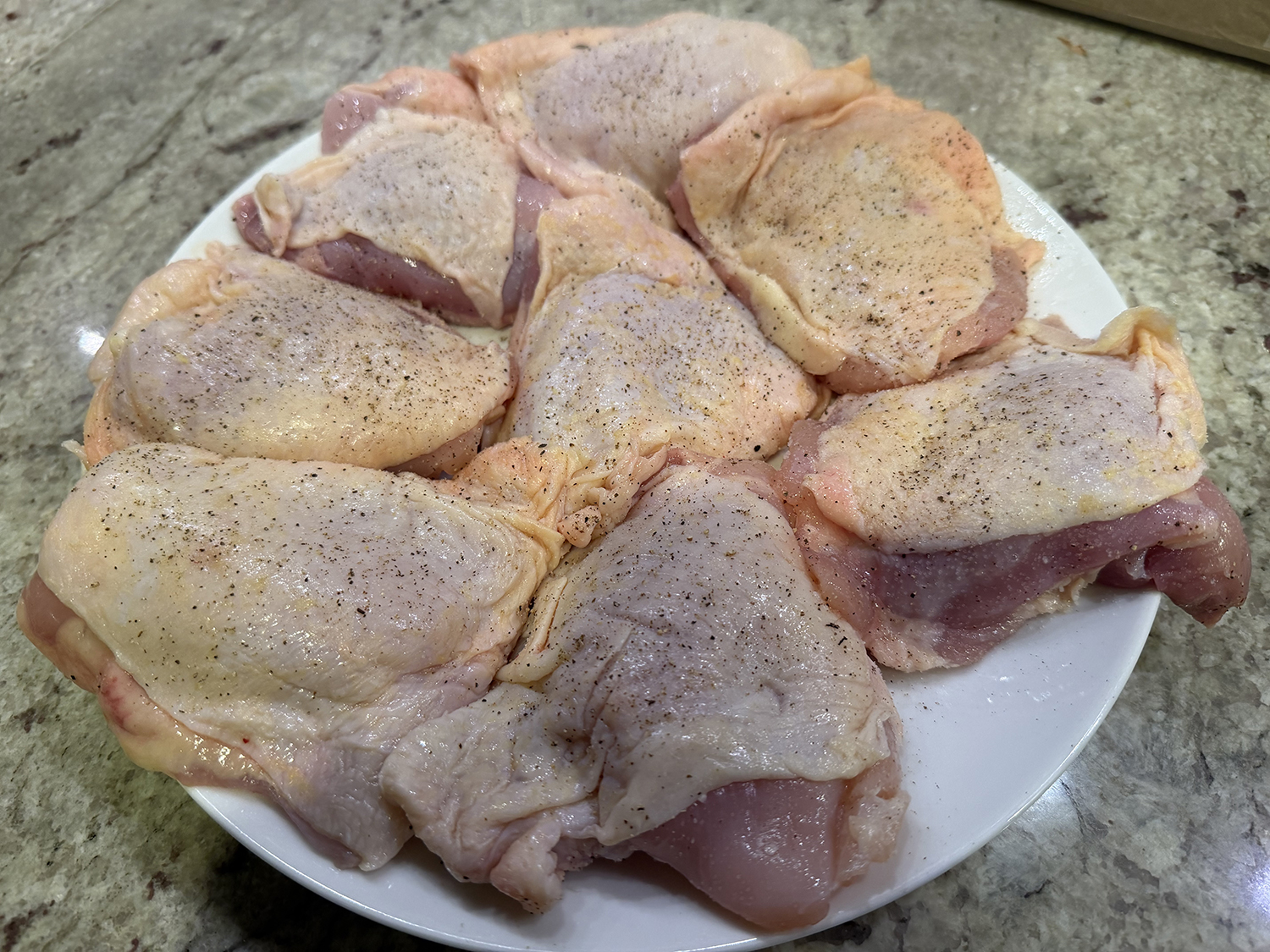
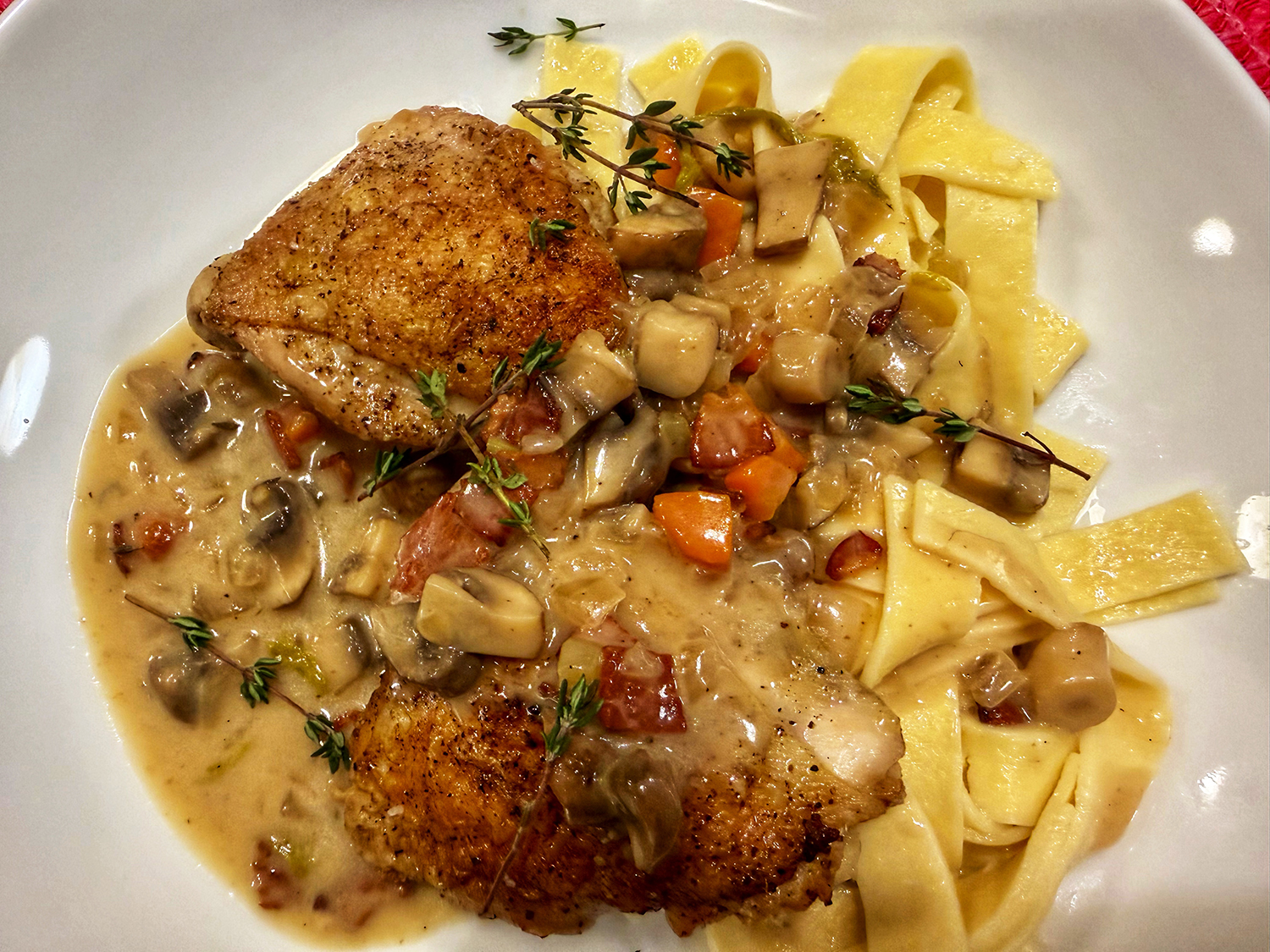
Let’s face it, chicken thighs are one of the most versatile and forgiving proteins to work with, and the options to create an amazing dish are boundless. Example, also known as Blanquette de Poulet, this weeknight-friendly comforting dinner comes together with a silky white wine sauce, tender chicken and vegetables. Cooking something en blanquette refers to the French method of preparing white meat in a white sauce.

This homey French stew is typically made with veal (blanquette de veau), but chicken (blanquette de poulet) and other meats can be used as well, such as this recipe. To make it, simmer veal and vegetables in stock until tender, remove the meat, and thicken the broth with a roux to make a sauce velouté—essentially a béchamel with a base of chicken stock instead of milk.

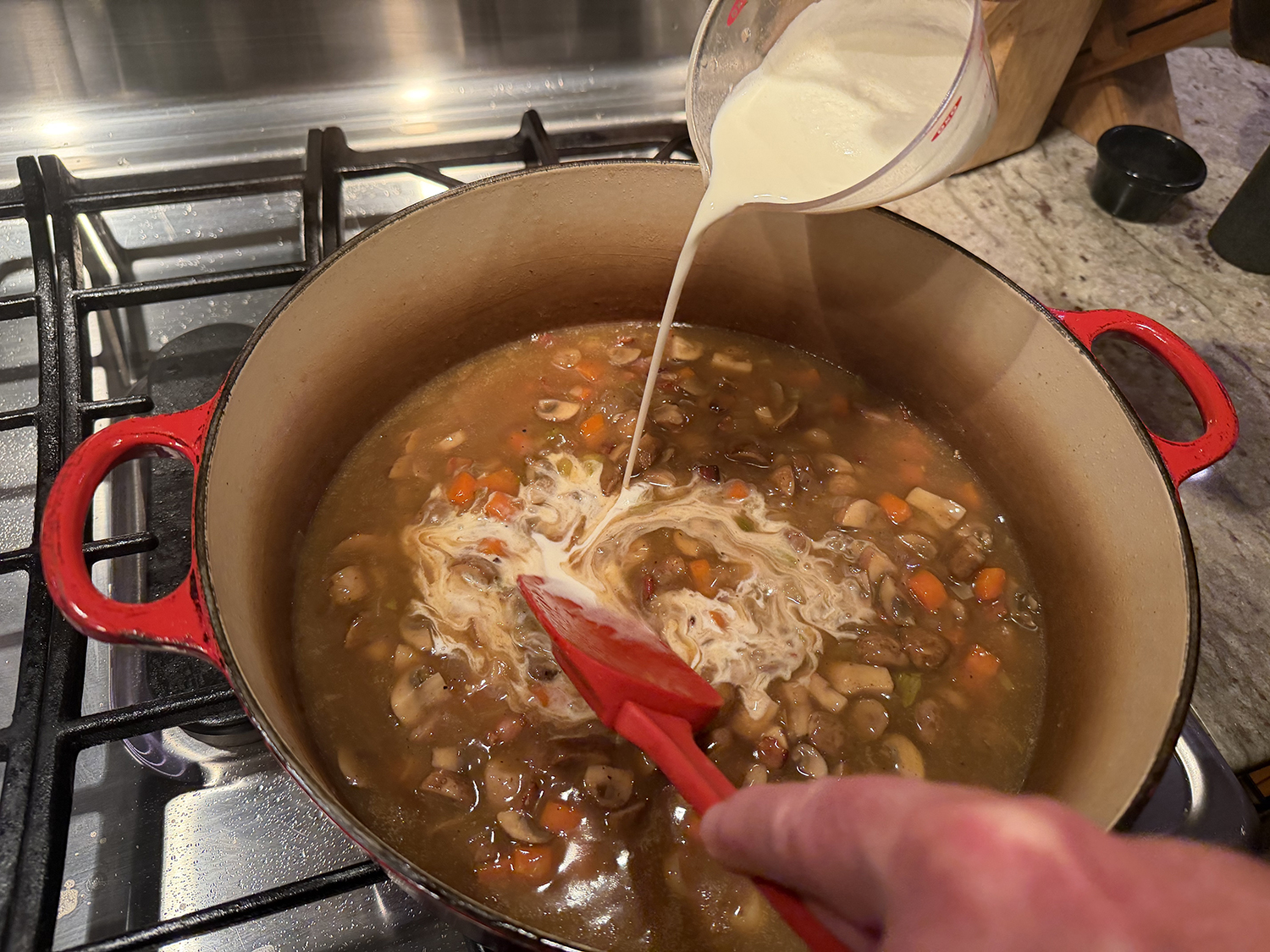
Finally, a mixture of cream and egg, called a “liaison” in French, thickens the sauce further, adding richness and a super silky texture — but no egg is used here. The meat is returned to the pot along with some sautéed mushrooms, and the dish is served with rice, bread, or egg noodles (our choice).

  • Servings: 4
  • Difficulty: easy
  • Print

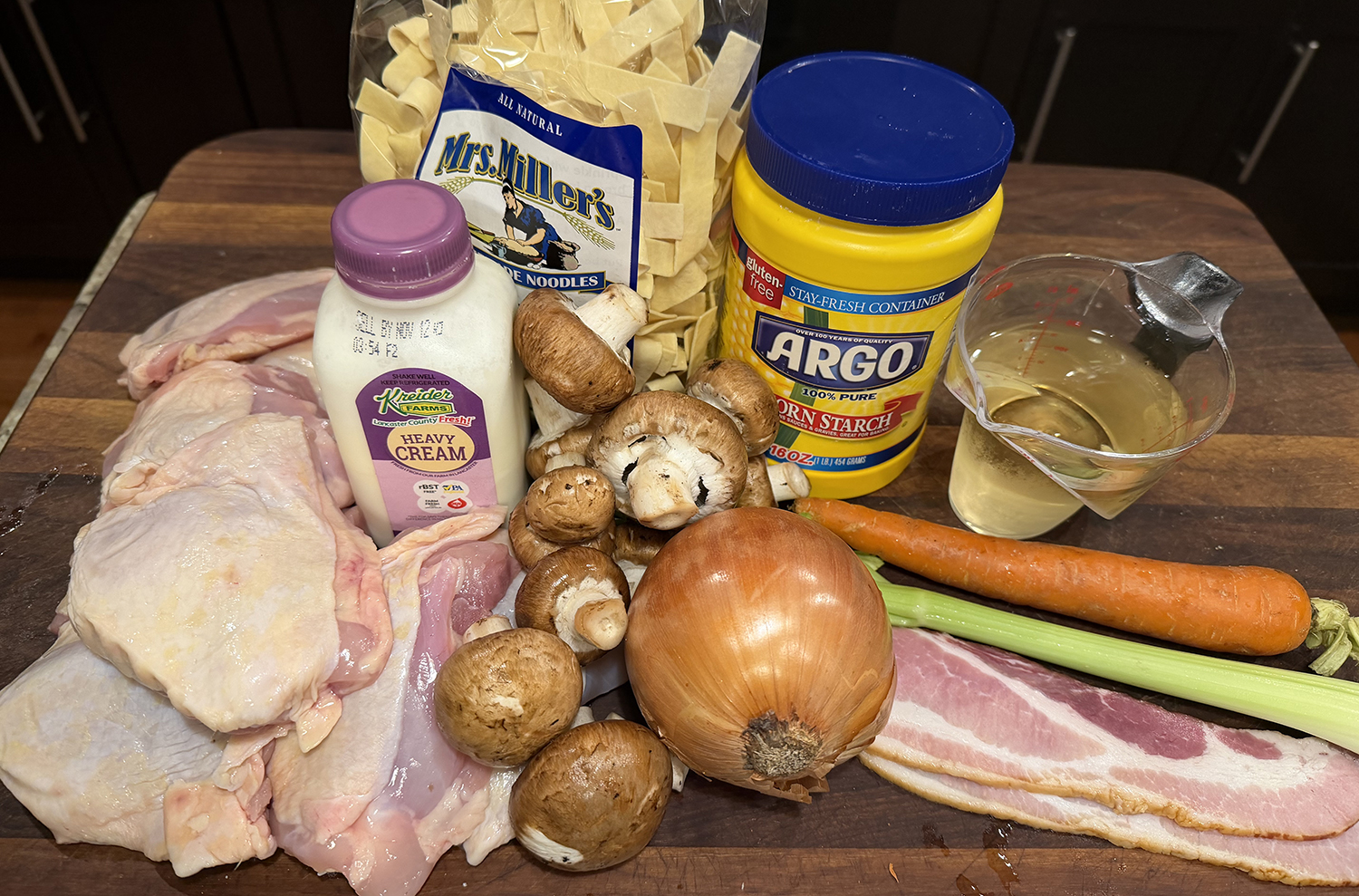
Ingredients

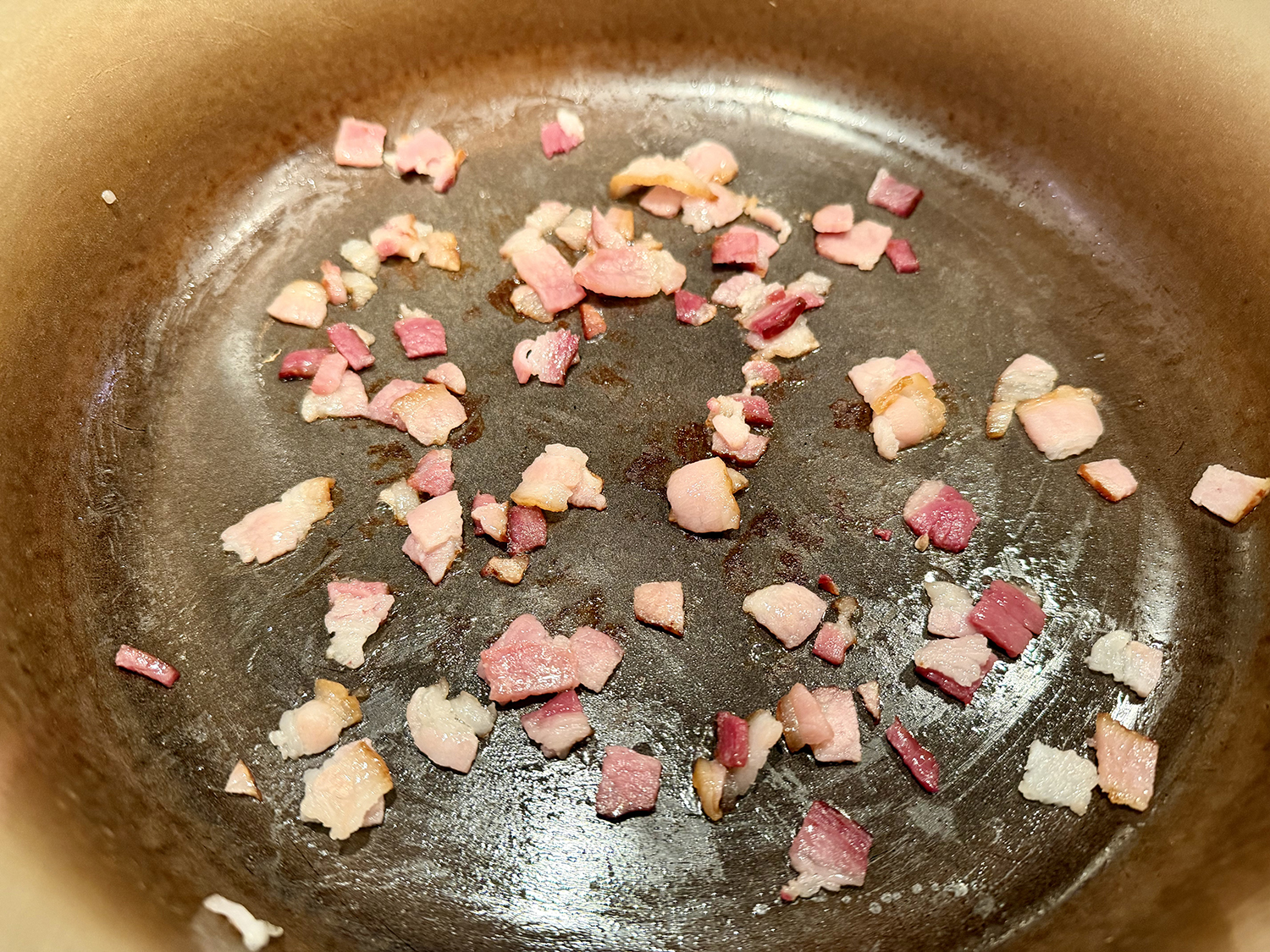
  • 2 slices thick-cut bacon, cut into 1/4-inch pieces
  • 2 lbs. bone-in, skin-on chicken thighs, patted dry
  • Kosher salt and black pepper to taste
  • 8 oz. cremini mushrooms, stemmed and sliced into 1/4-inch pieces
  • 1/2 medium yellow onion, finely diced
  • 1 large carrot, cut into a ½-inch dice
  • 1 large celery rib, finely diced
  • 1 cup dry white wine, such as riesling or sauvignon blanc
  • 1 cup low-sodium chicken broth, homemade or store-bought, or water
  • 4 tsp. cornstarch
  • 1/2 cup heavy cream
  • Crusty bread, egg noodles, or cooked farro, for serving

Directions

  1. In a 5-quart Dutch oven set over medium-low heat, cook bacon, stirring occasionally, until fat has rendered and bacon is crispy, about 8 minutes. Using a slotted spoon, transfer bacon to a small bowl. Increase heat to medium-high.
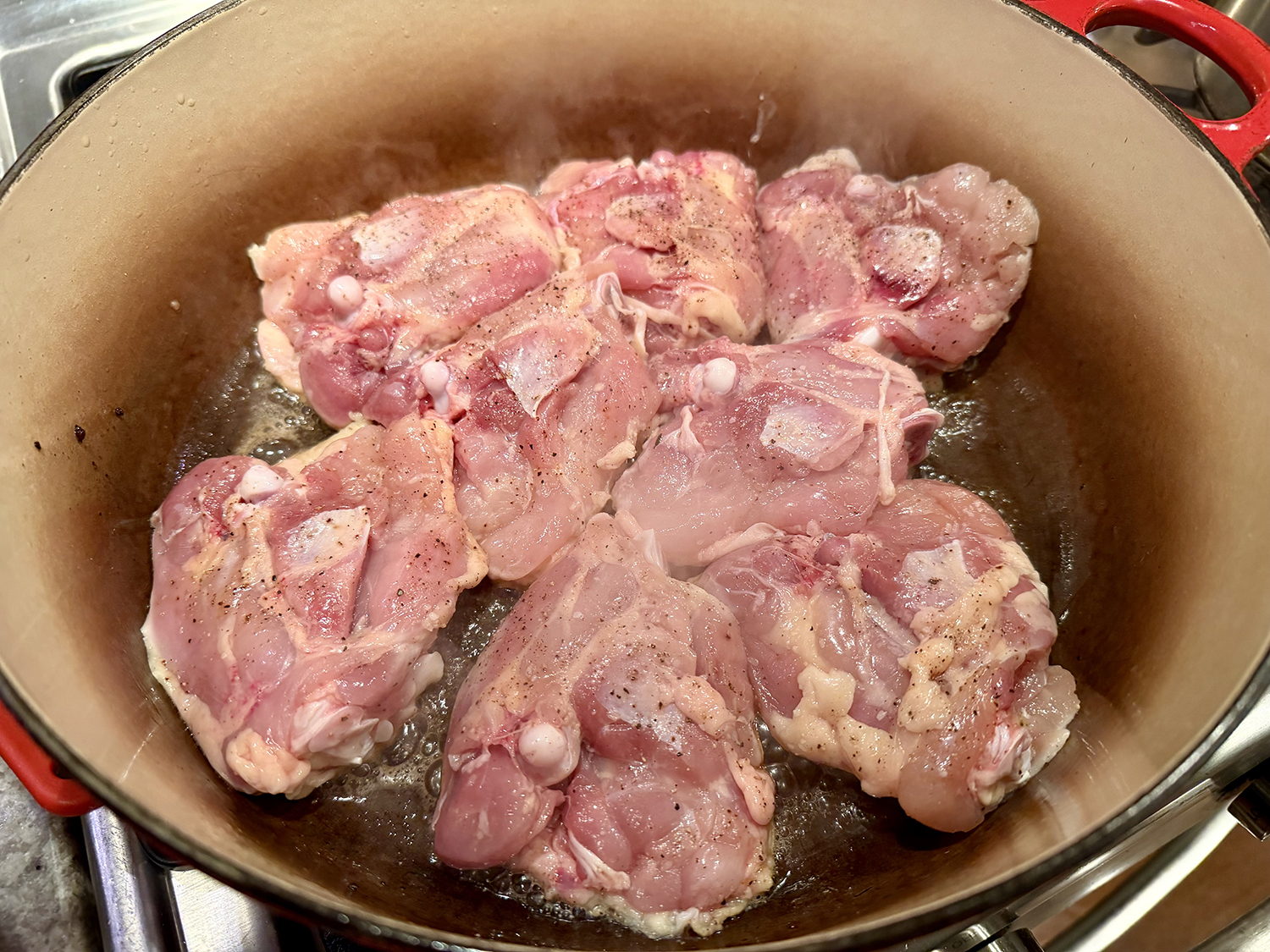
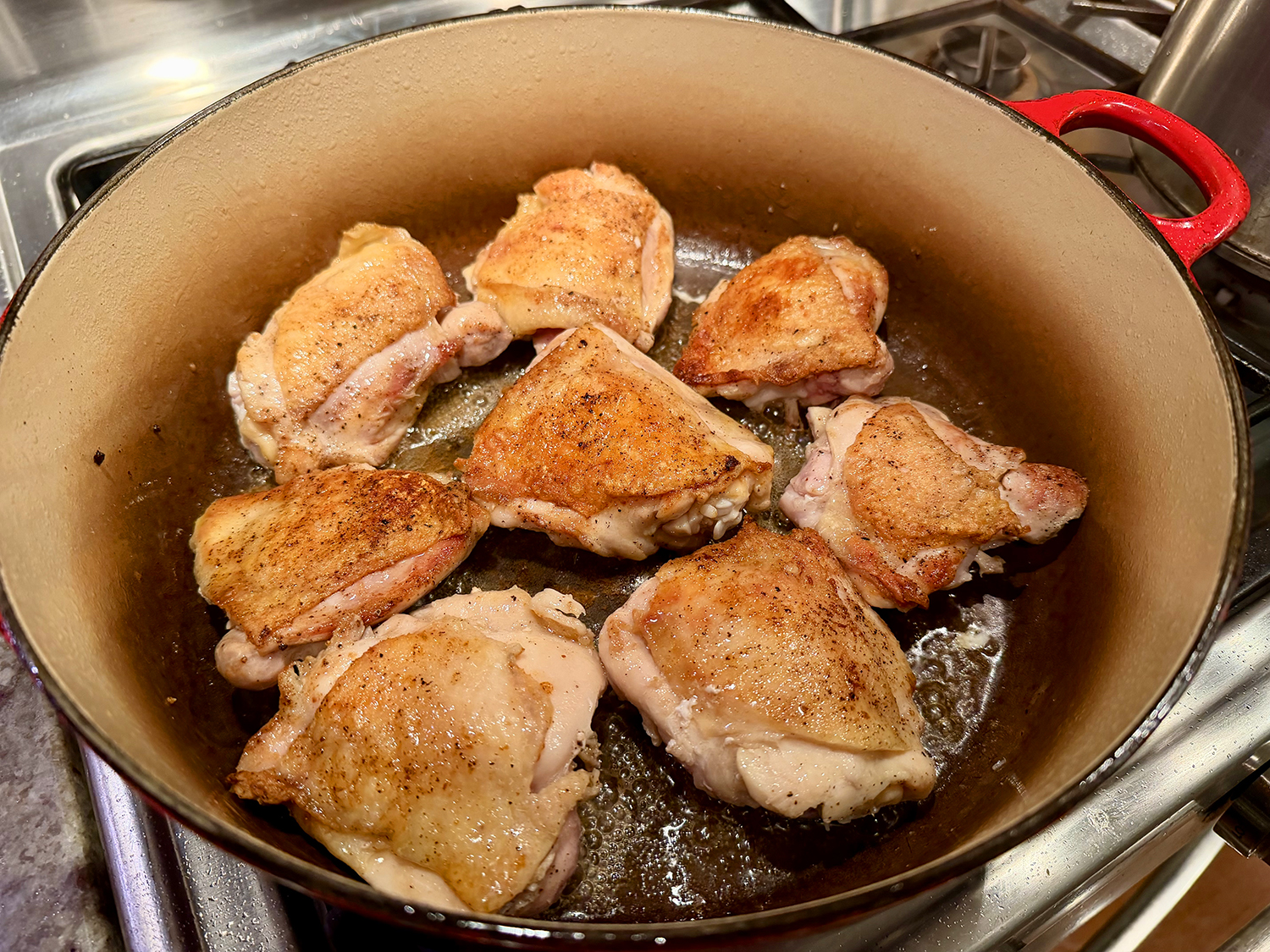
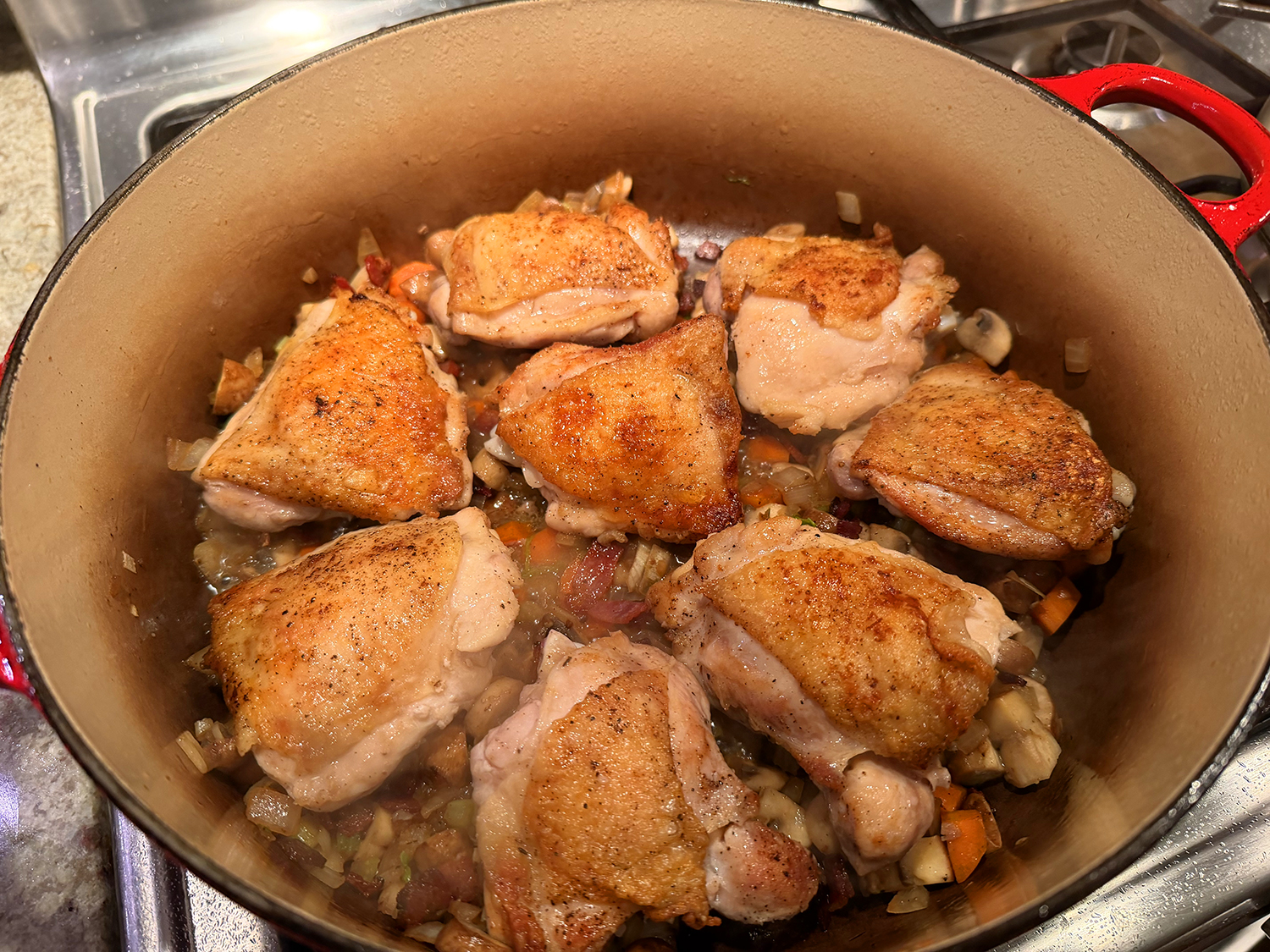
  2. Lightly season chicken all over with salt and pepper, then place it skin-side-down in the Dutch oven. Cook until well browned, 5 to 7 minutes per side. Using tongs, remove the chicken to a plate. Pour all but 2 tablespoons of fat from Dutch oven; discard excess fat.
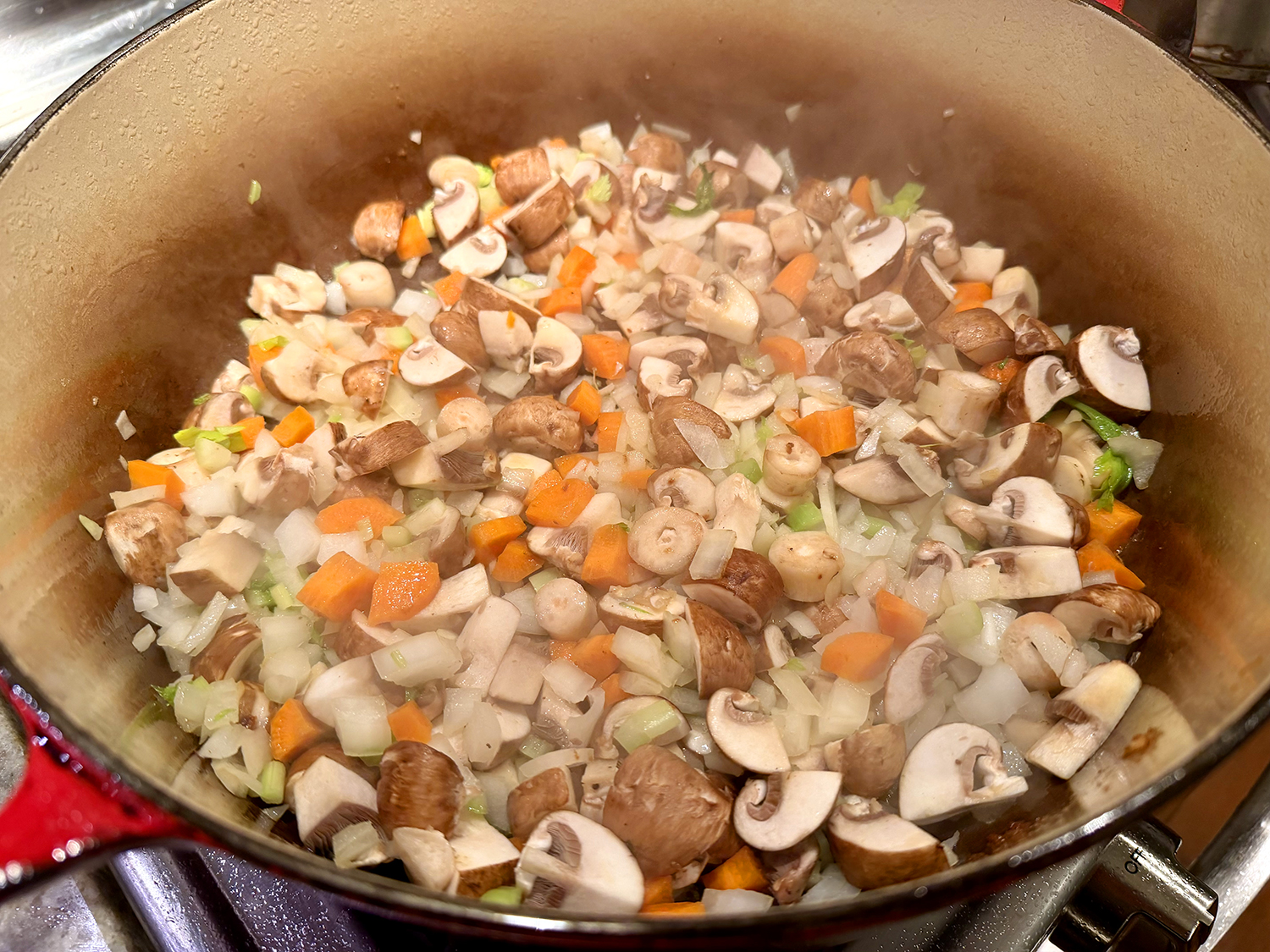
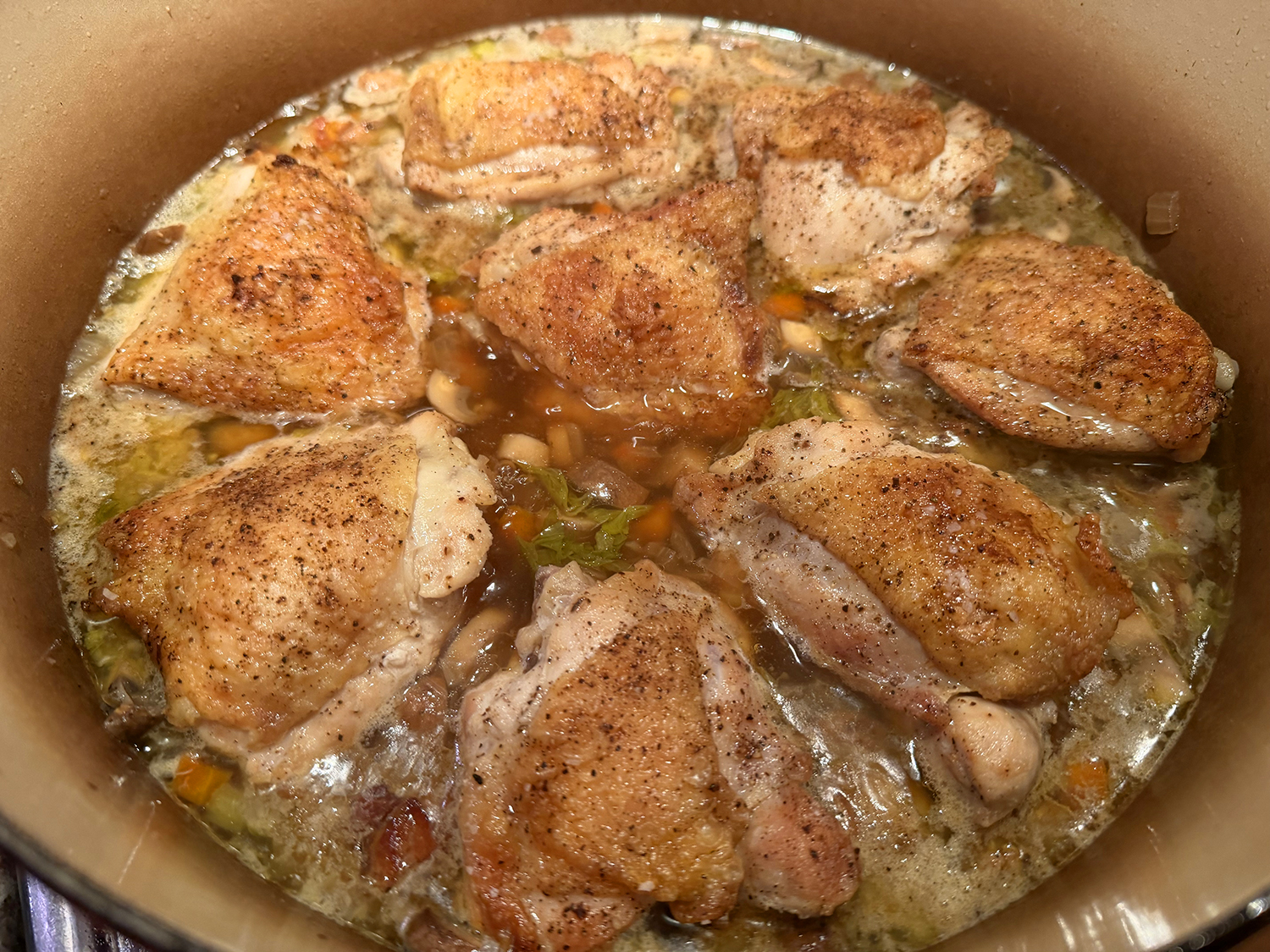
  3. Add mushrooms, onion, carrots, and celery to Dutch oven and cook over medium-high heat, stirring occasionally, until vegetables are tender and onion and celery are translucent, about 7 minutes. Using a wooden spoon, scrape fond from bottom and sides of pot. Return bacon and chicken to the pan; nestle chicken skin-side-up among the vegetables. Add wine and 1 cup low-sodium chicken broth or water, and season generously. (Liquid should reach about 2/3 of the way up sides of the chicken; add more water as needed.)
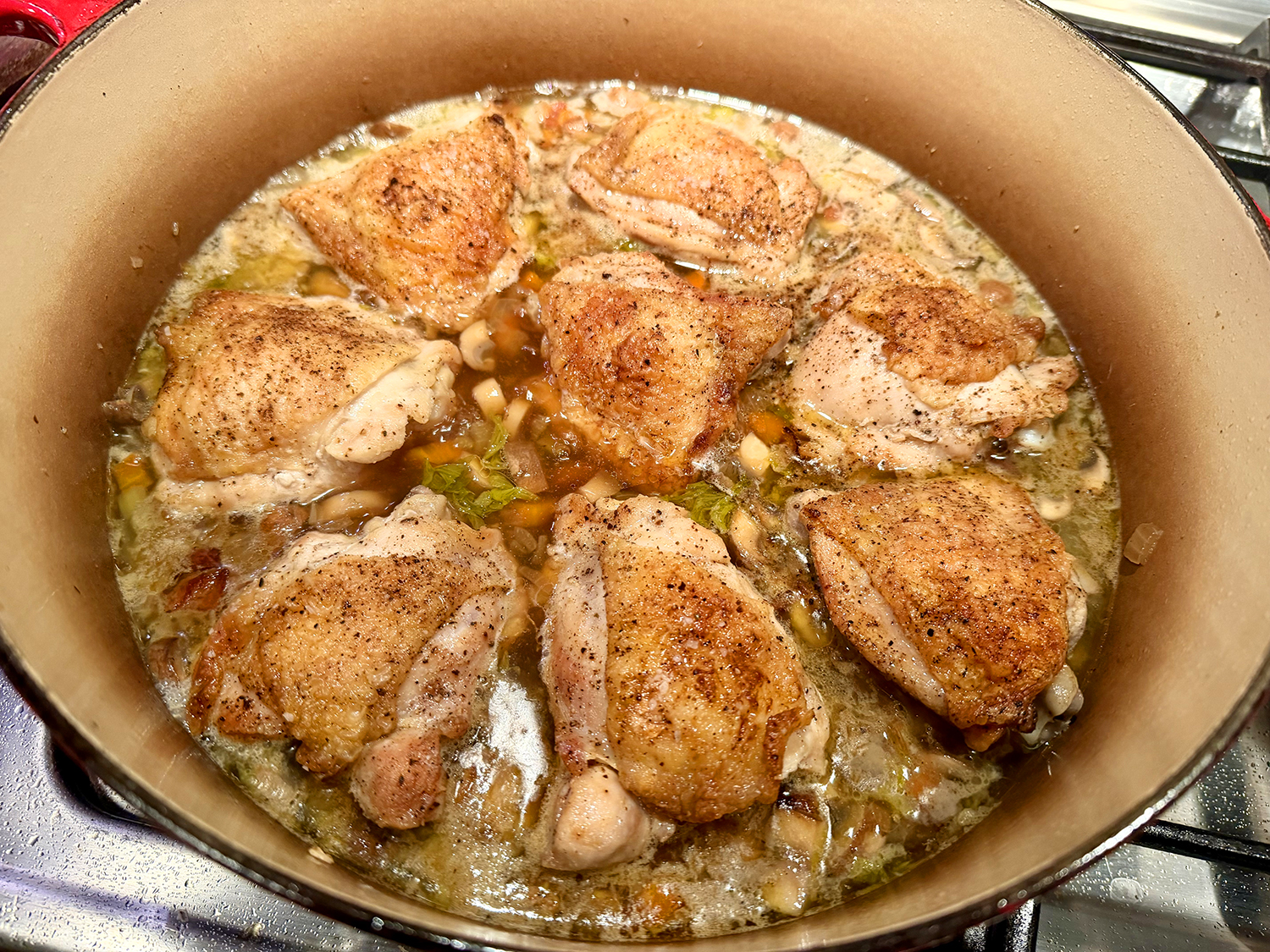
  4. Bring to a simmer, then reduce heat to low. Cover pot and gently simmer until the vegetables are soft and the meat is tender, 45 to 55 minutes. Using tongs, remove chicken to a plate; set aside.
  5. Bring to a simmer, then reduce heat to low. Cover pot and gently simmer until the vegetables are soft and the meat is tender, 45 to 55 minutes. Using tongs, remove chicken to a plate; set aside.
  6. In a small bowl, whisk cornstarch and 3 tablespoons cold water to combine. Pour cornstarch slurry into braising liquid; stir well to combine and cook until sauce is thick enough to coat back of a spoon, about 3 minutes. Remove from heat and stir in cream until well-combined. To serve, place individual thighs onto plates and ladle the vegetables and sauce over the top. Serve with crusty bread, egg noodles, or cooked farro.

http://www.lynnandruss.com

Adapted from a recipe by Zola Gregory for SeriousEats.com

Easy Moroccan Lamb Stew

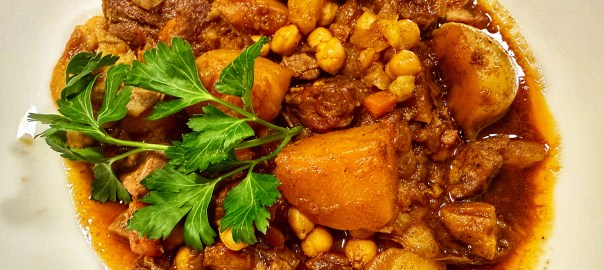
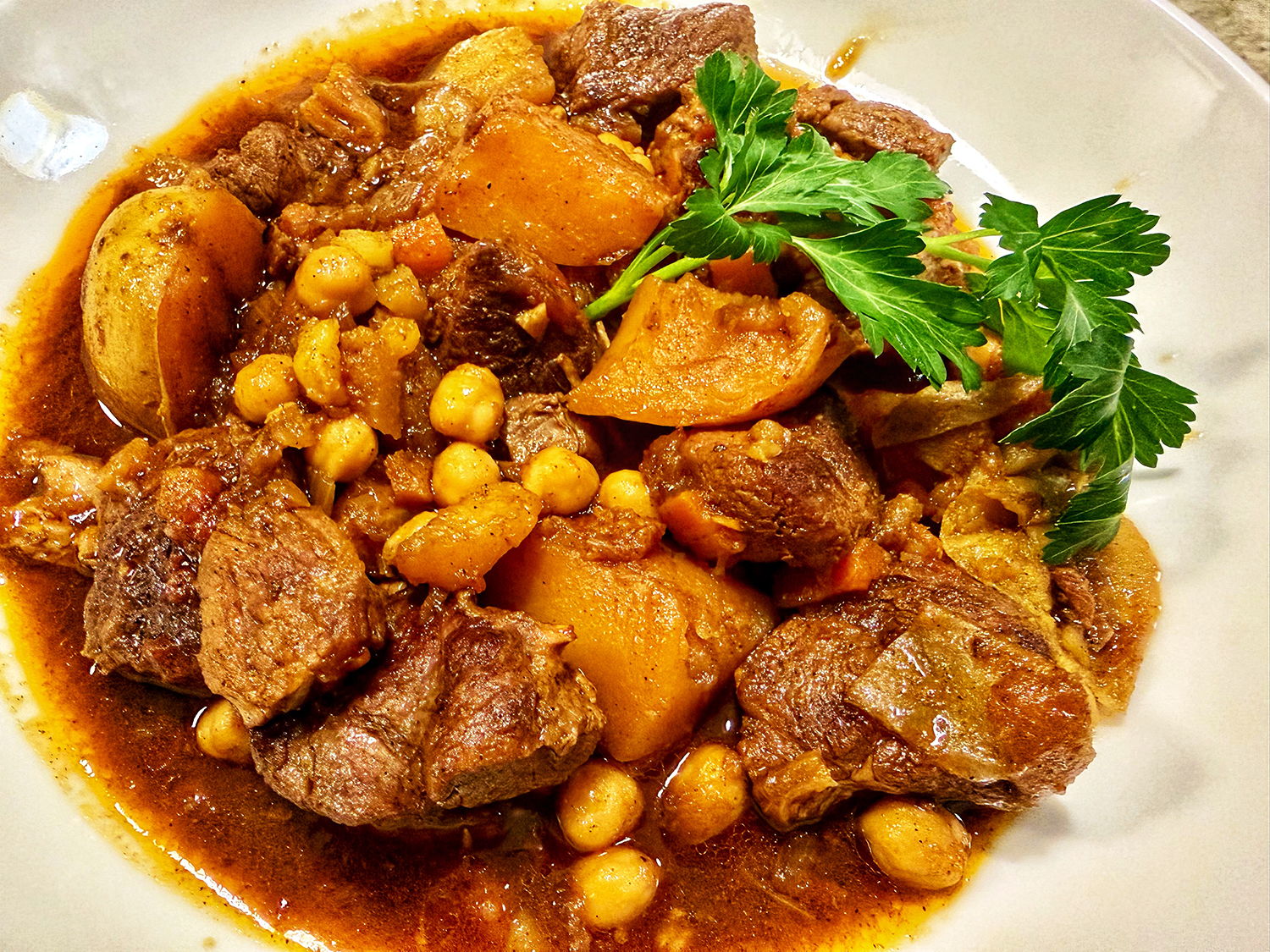
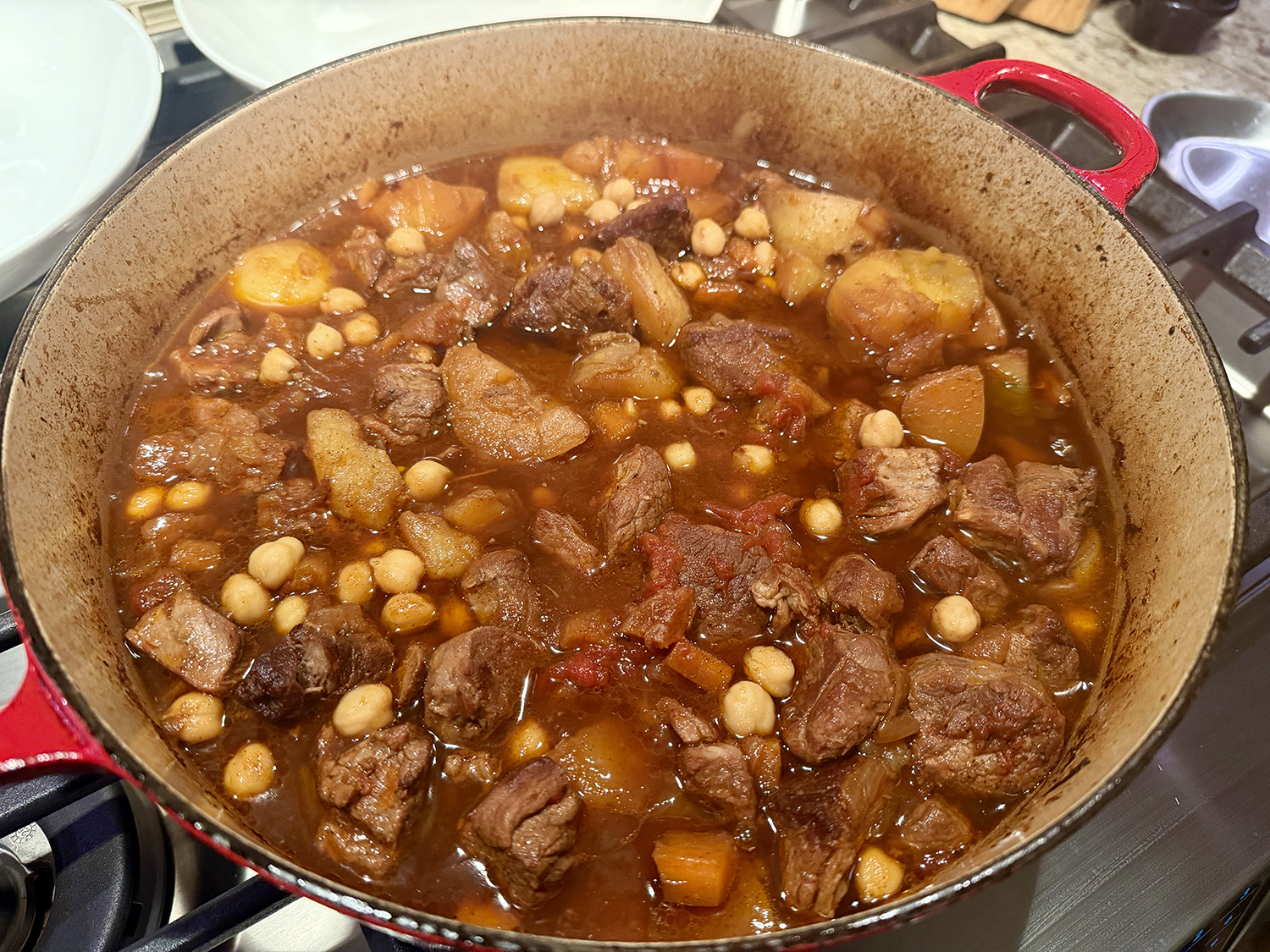
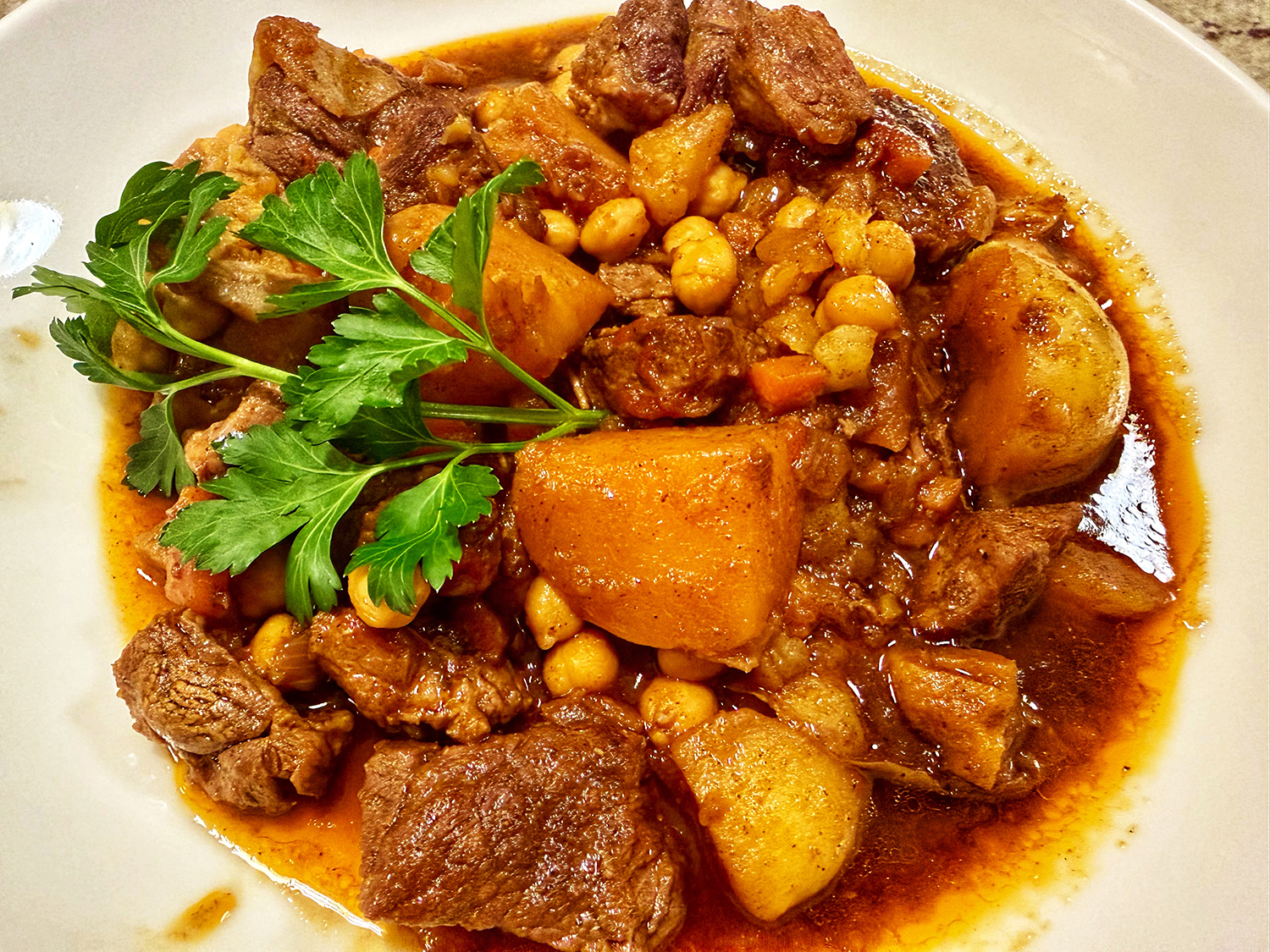
Comforting, fall-apart tender braised lamb with loads of veggies, chickpeas and warm Moroccan flavors (served with couscous if desired). Perfect for a cool-weather Sunday supper. In fact, as we made this meal on a Sunday, we were under a Winter weather warning with up to anywhere from 12 to 18 inches of snow predicted. (A similar scenario as when we made a beef stew several weekends ago.) We ended up with over 21 inches!

I digress… Lamb stew has that rich heartiness with deep and well-developed flavors. Here we provide three options. A quick cook in a pressure cooker; a long-slow cook in a crockpot; or as we did it, in a braising pot in the oven. Times will vary depending upon your chosen cooking method.

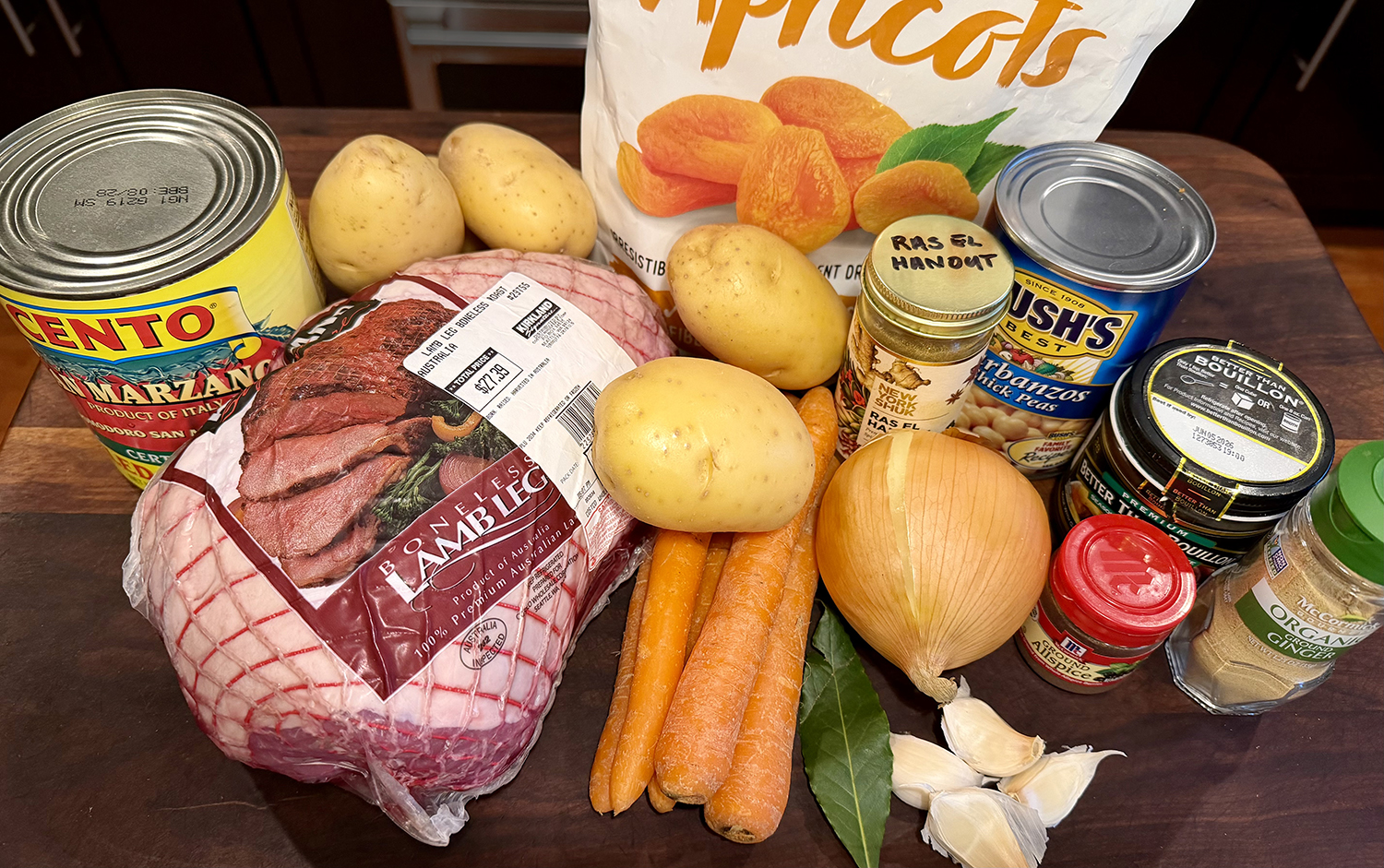
Using dried apricots, or other dried fruits like figs or raisins gives a mild, very subtle sweetness to help round out the flavors in the dish without being at all overpowering. If using whole apricots sounds a bit too adventurous, chop them up into small bits using a sharp knife. Chopping the apricot will help it better dissolve in the sauce and give the flavor it needs without being too obvious.

This Moroccan lamb stew uses a blend of different spices and flavor-makers such as cinnamon, allspice, bay leaves, and Moroccan Ras el Hanout — a decidedly North African/Moroccan spice blend that includes notes of turmeric, cloves, ginger, cardamom, nutmeg and more. It has a deep aroma and layers of warm, deep flavor that adds to dishes, especially in something like lamb stew.

Crockpot Instructions: If you prefer, after step #5 is completed, transfer the lamb stew to a large slow cooker insert. Cover and cook on low for about 6 hours, then stir in chickpeas and cook another 1 to 2 hours (total of up to 8 hours.) Or cook on high for 4 to 5 hours in total.

Pressure-Cooker Instructions: Instead of using a Dutch oven or other oven-safe cooking pot, follow the steps below to sauté and braise using your pressure cooker. Then, add in all the ingredients except for the chickpeas to the pot and lock the lid in place. Cook for 30 minutes on high pressure. When the timer is up, allow the pressure to safely release for about 10 minutes before using quick-release according to the manufacturer’s directions. Add in the chickpeas, bring up to pressure, and cook for another 5 minutes. Allow the pressure to release again for 5 minutes, then release remaining pressure using quick release.

Easy Moroccan Lamb Stew

  • Servings: 6-7
  • Difficulty: easy
  • Print

Ingredients

  • Extra-virgin olive oil
  • 1 large yellow onion chopped
  • 3 carrots cubed
  • 6 Yukon gold potatoes (or any small potatoes), peeled, cubed
  • Kosher salt and pepper
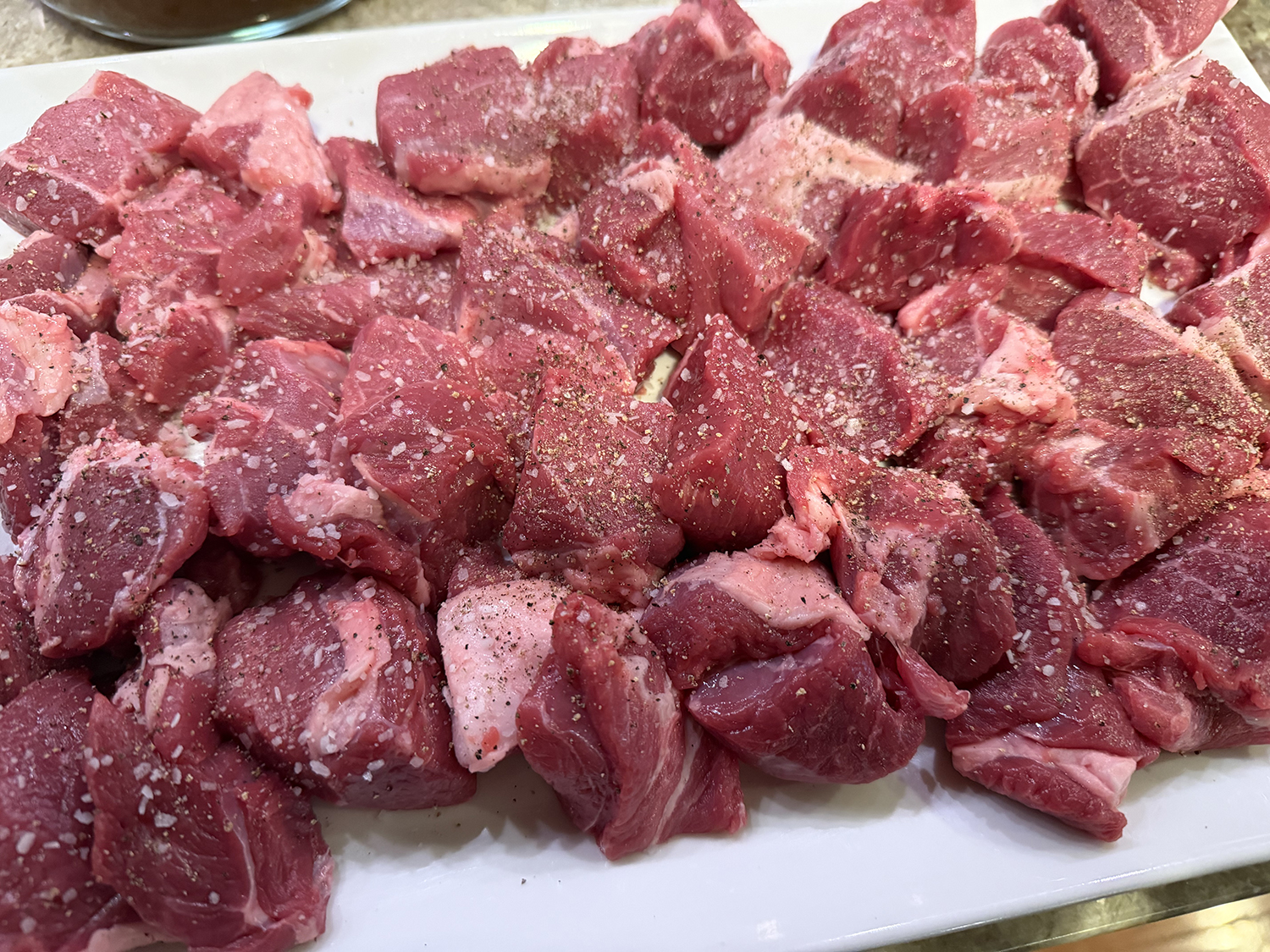
  • 2 1/2 lbs. boneless leg of lamb, fat trimmed, cut into cubes
  • 3 large cloves garlic roughly chopped
  • 1/2 cup dried apricots, quartered
  • 1 cinnamon stick
  • 1 dried bay leaf, OR 2 fresh
  • 1 1/2 tsp. ground allspice
  • 1 1/2 tsp. ras el hanout
  • 1/2 tsp. ground ginger
  • 6 canned whole tomatoes preferably plum tomatoes, halved
  • 2 1/2 cups beef broth
  • 1 15-oz. can chickpeas, drained and rinsed

Directions

  1.  Preheat oven to 325° degrees.
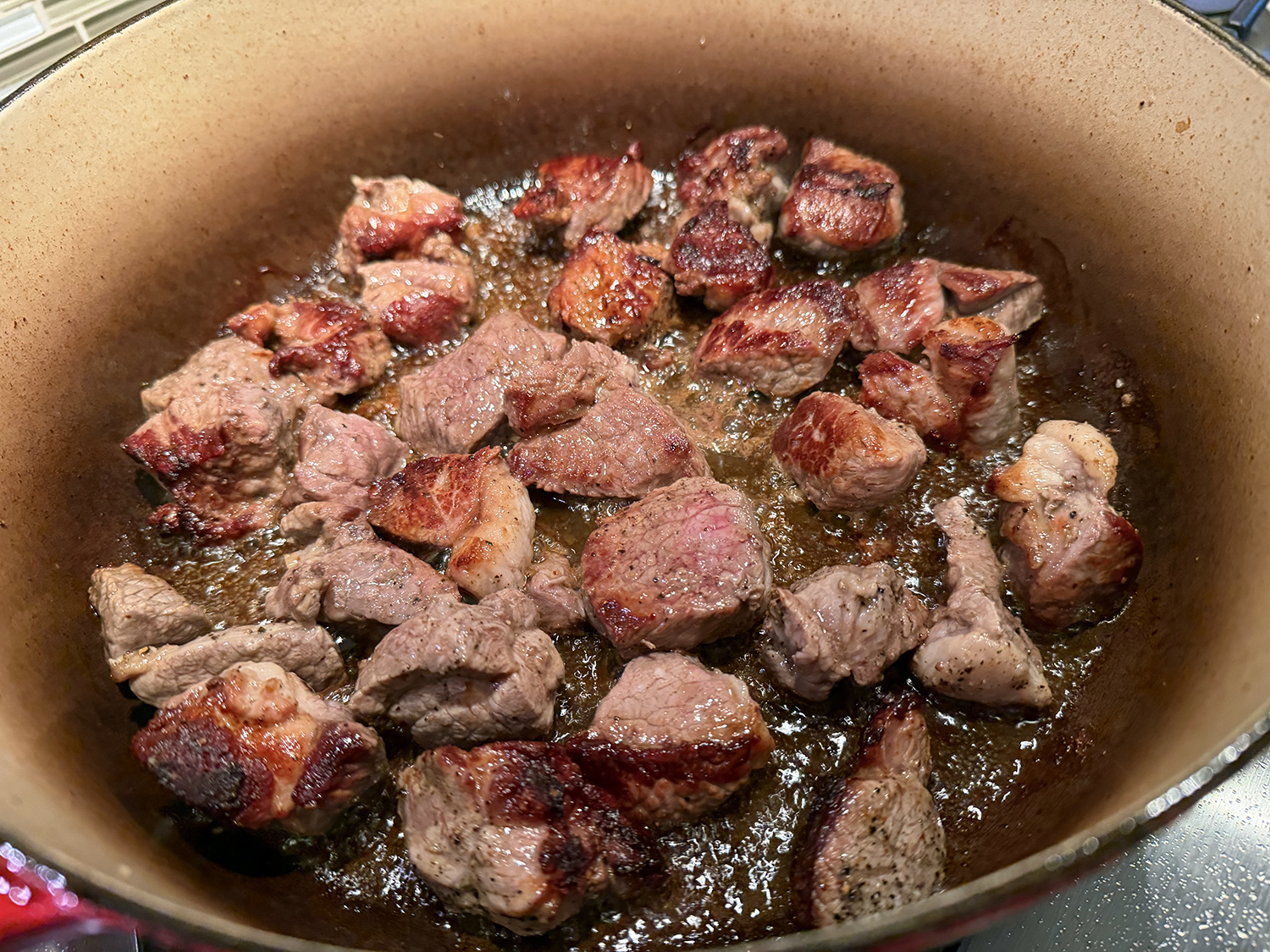
  2. In a large Dutch oven or heavy oven-safe pot, heat 3 tablespoons olive oil over medium-high heat until shimmering but not smoking. Season half the lamb with salt and brown the seasoned lamb on all sides, about 10 minutes total. Remove the lamb to a bowl or quarter sheet pan. Salt and pepper the remaining lamb, and brown on all sides, another 10 minutes total. Remove to bowl or sheet pan when done.
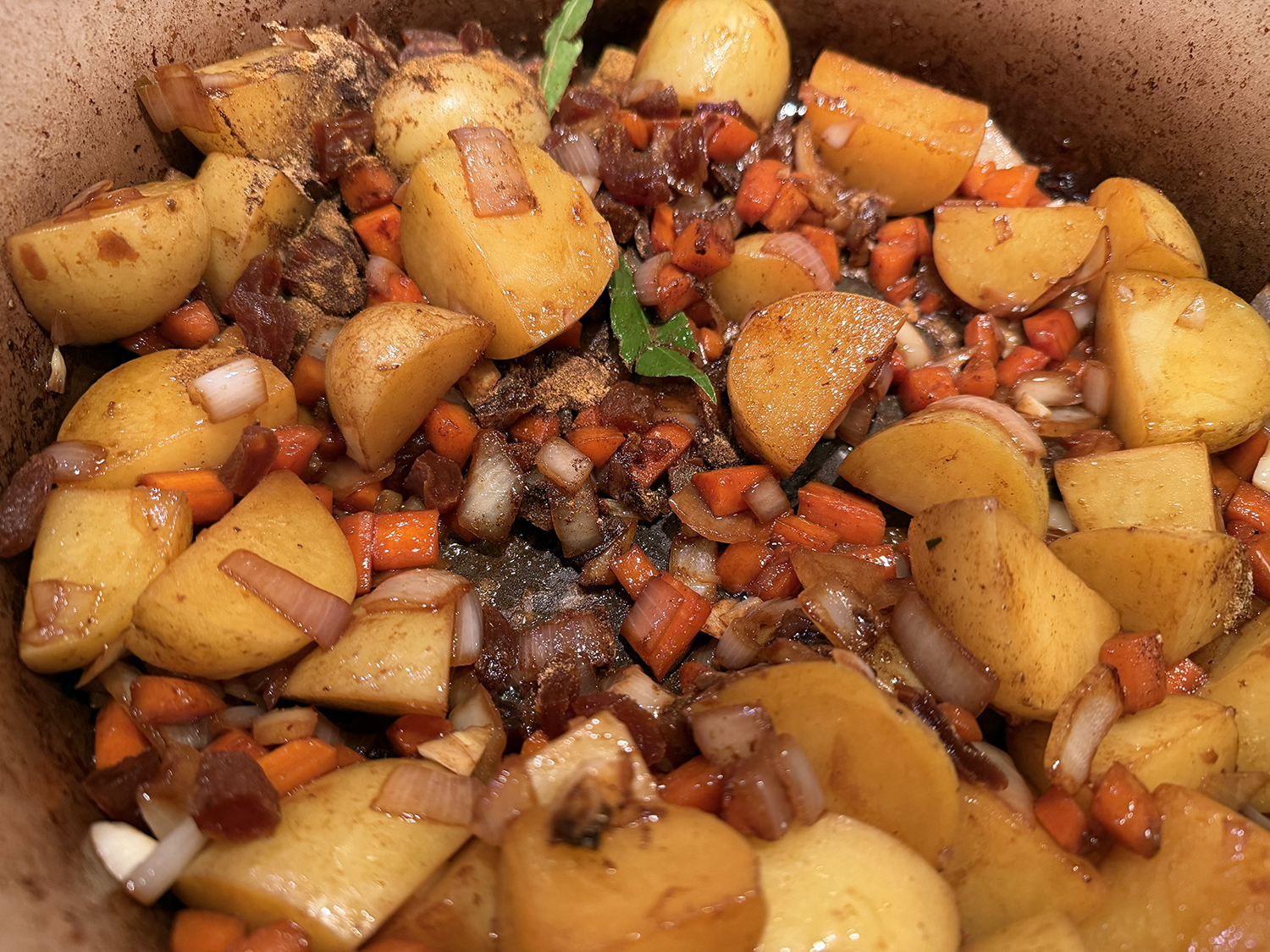
  3. Reduce heat to medium and add more oil if needed. In the heated oil, sauté the onions, carrots, and potatoes for 5 minutes. Add the garlic, season the vegetables with salt and pepper, and sauté for an additional 2 minutes.
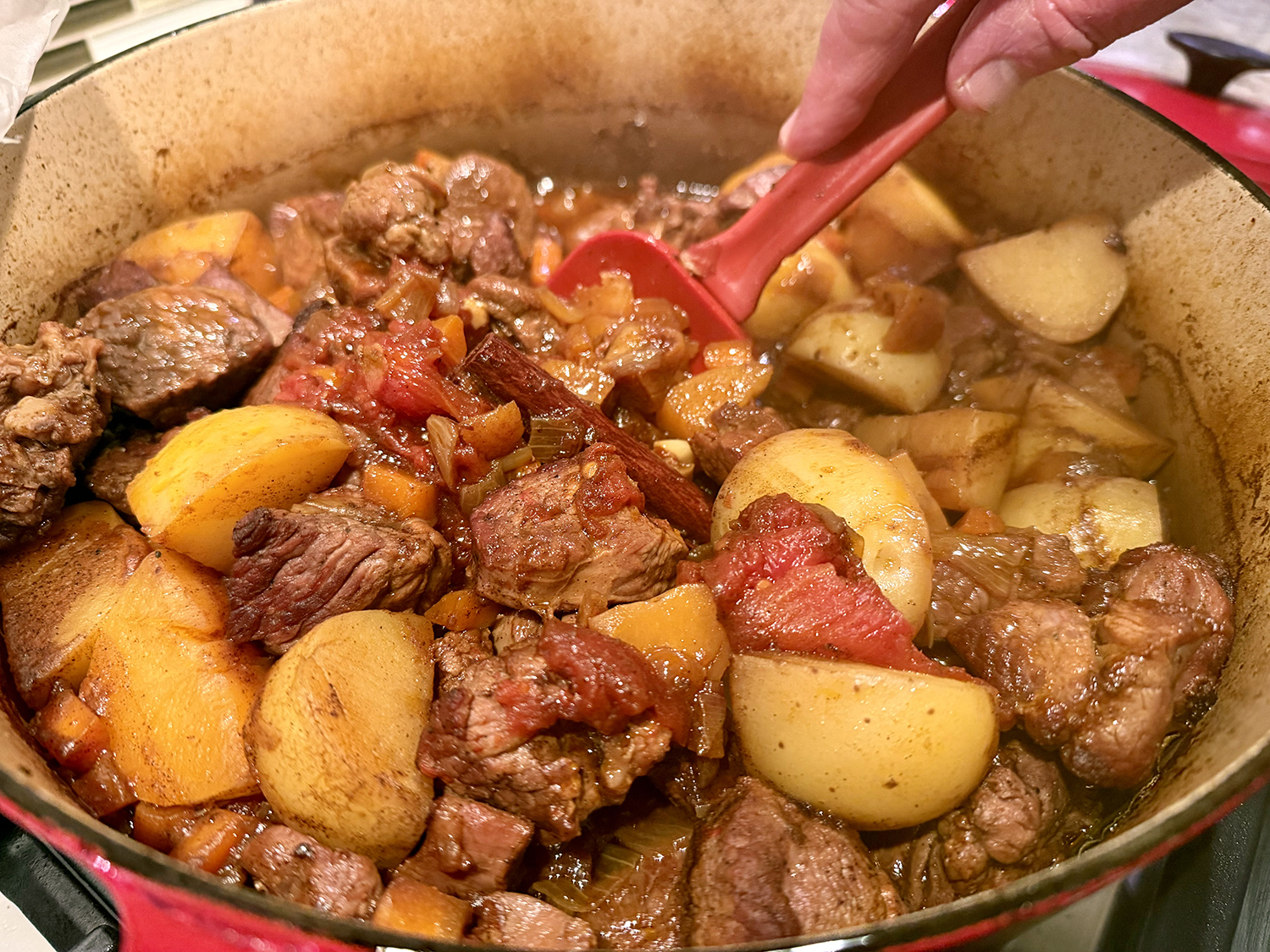
  4. Return the lamb to the pot. Add the dried apricots, cinnamon stick, bay leaf and spices and stir to coat.
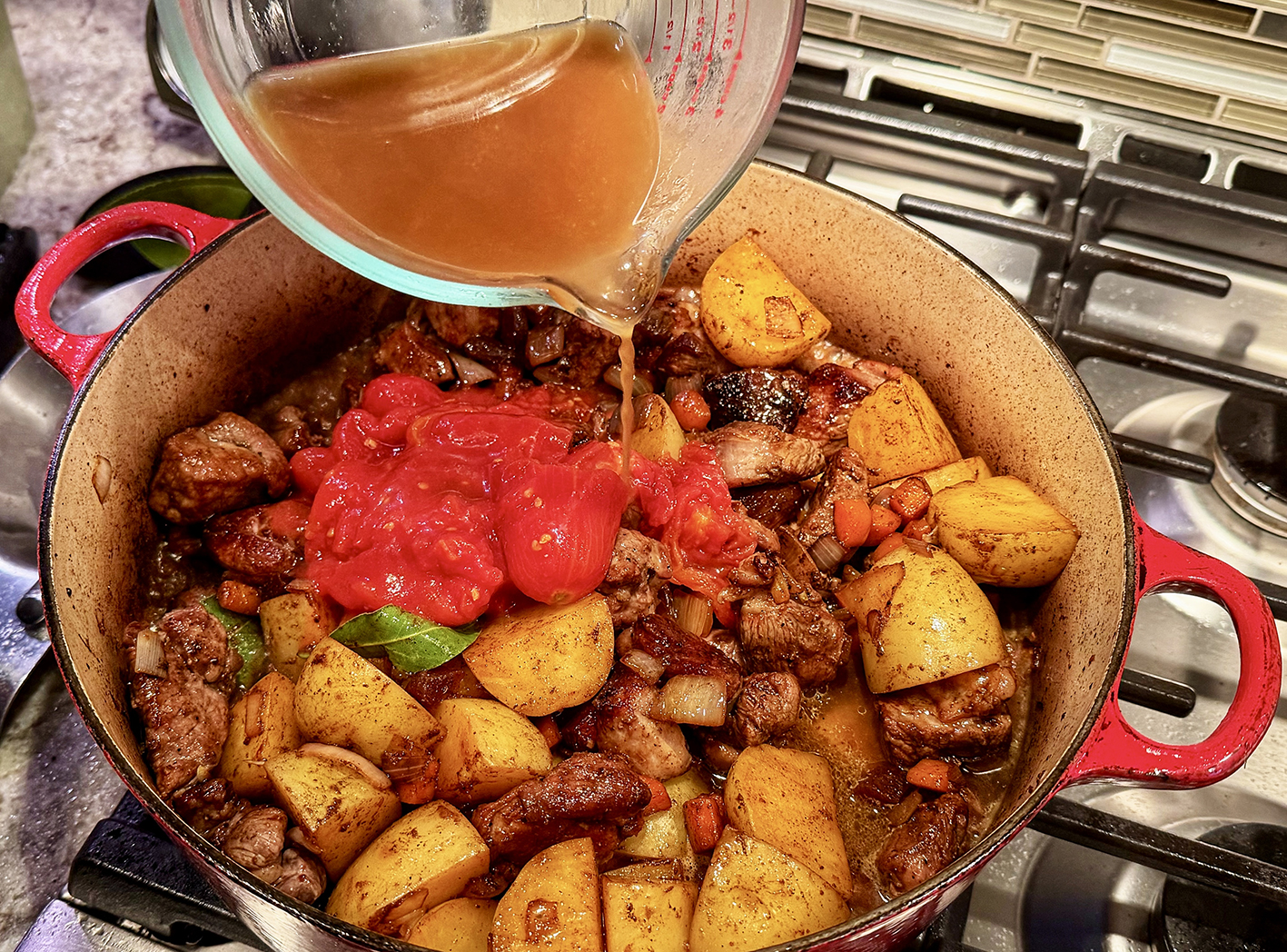
  5. Add the plum tomatoes with their juices and broth and bring everything to a boil.
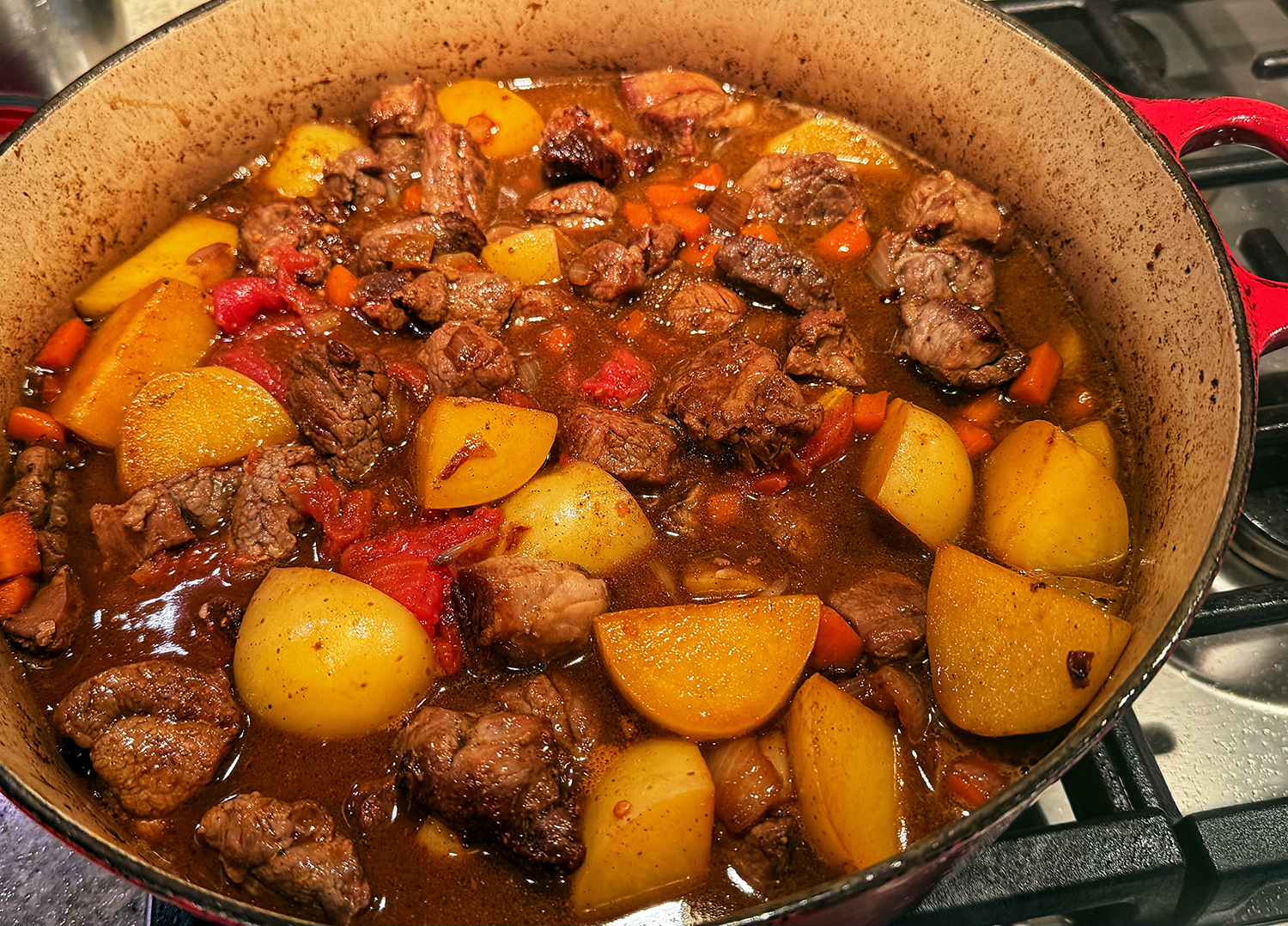
  6. Cover the pot and place in the pre-heated oven for 2 hours (check partway through to add water or broth if needed—we needed to add an additional cup of liquid).
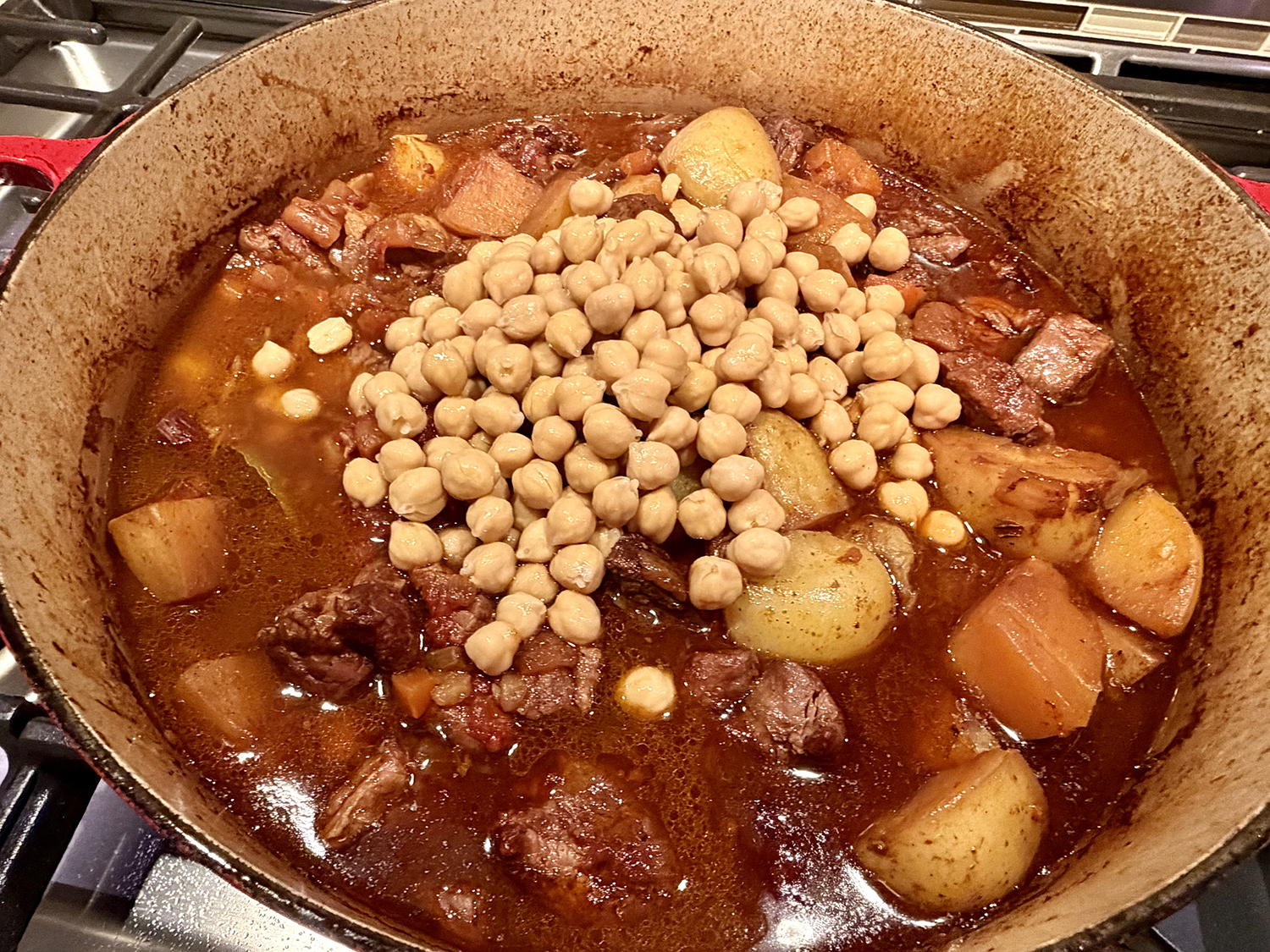
  7. Stir in the chickpeas, cover and return to the oven for another 30 minutes.
  8. Remove from the oven, discard the cinnamon stick and bay leaf, and serve.

http://www.lynnandruss.com

Loosely adapted from a recipe by Suzy Karadsheh, with influences from Molly Stevens