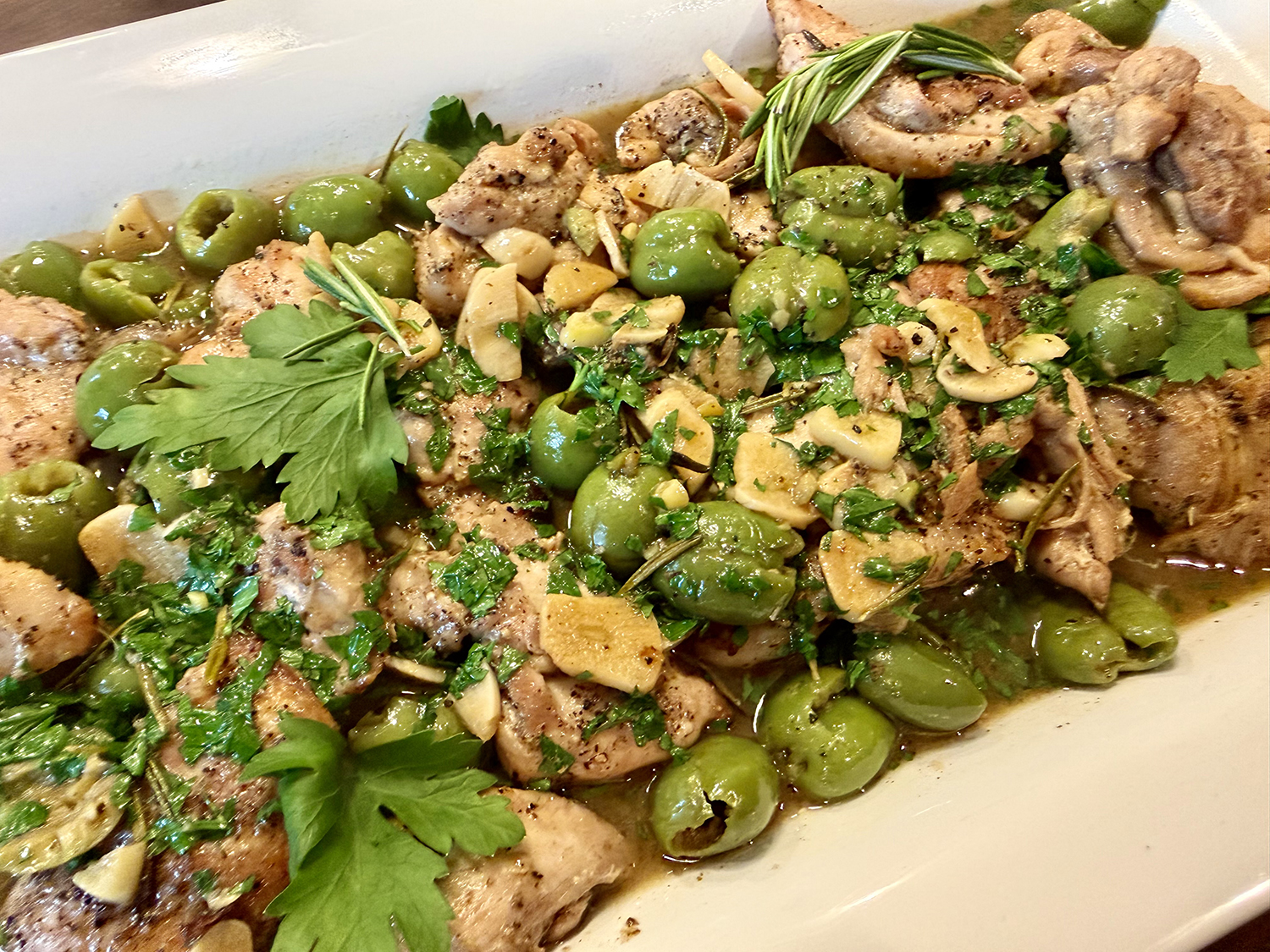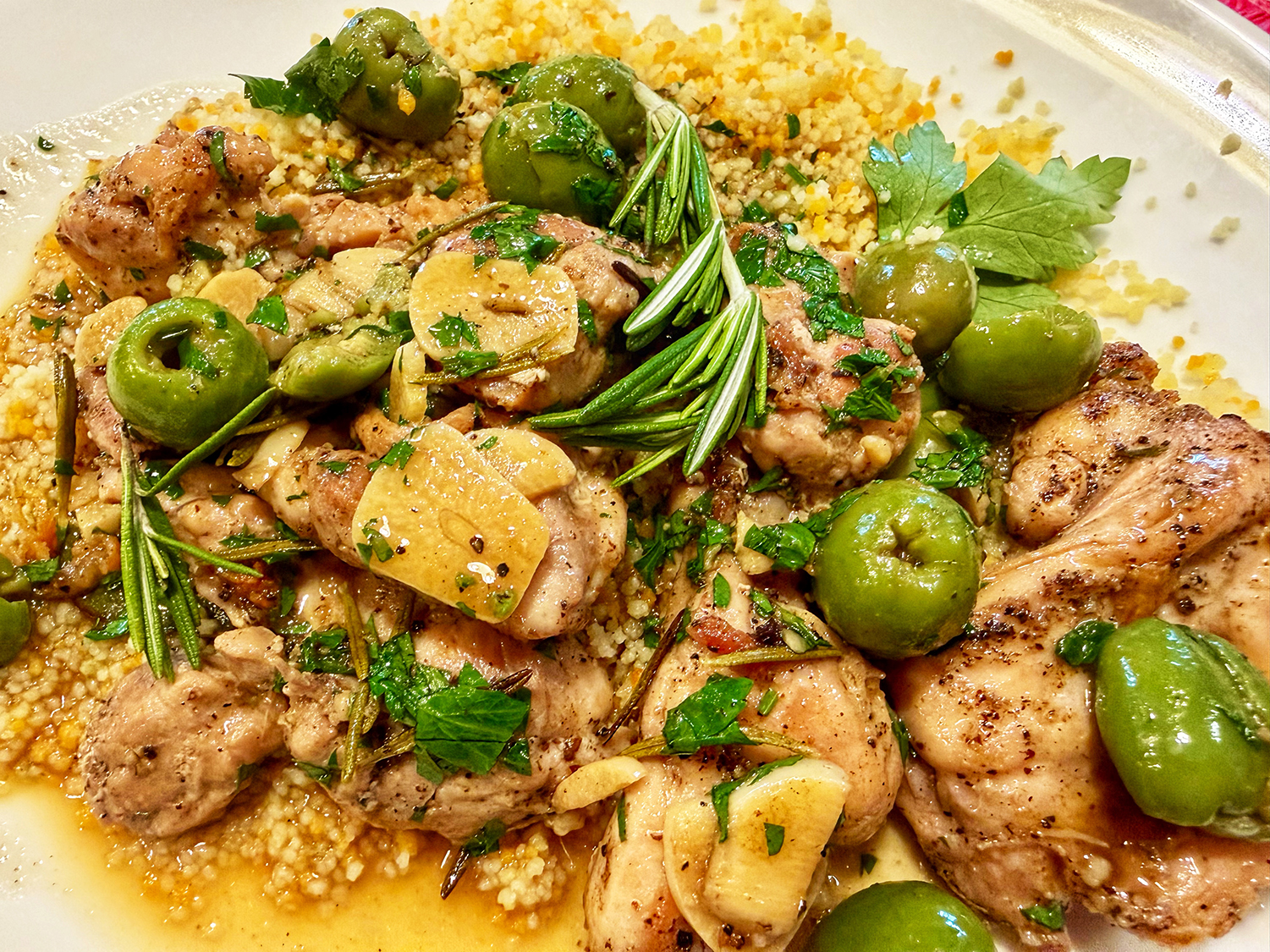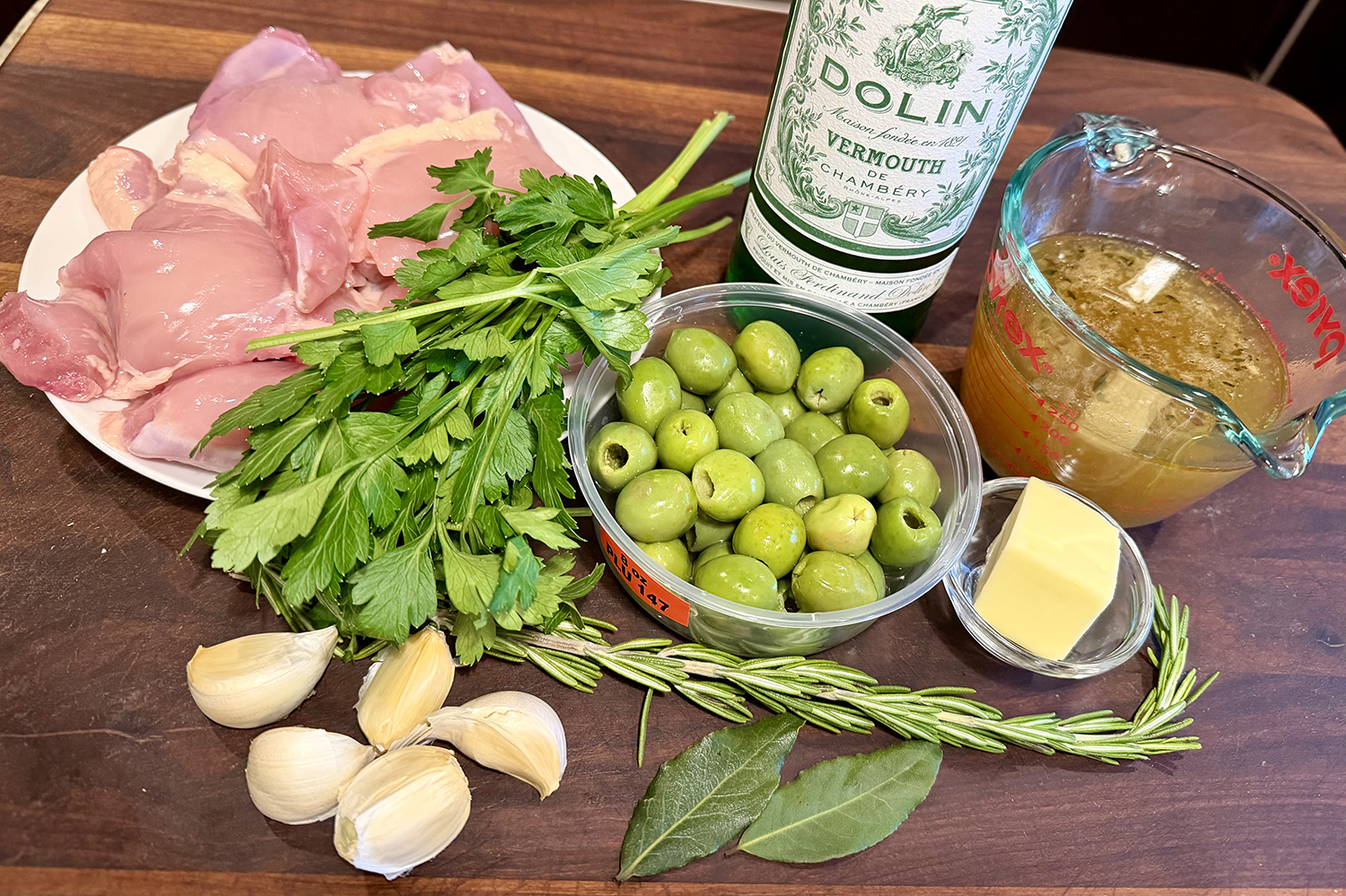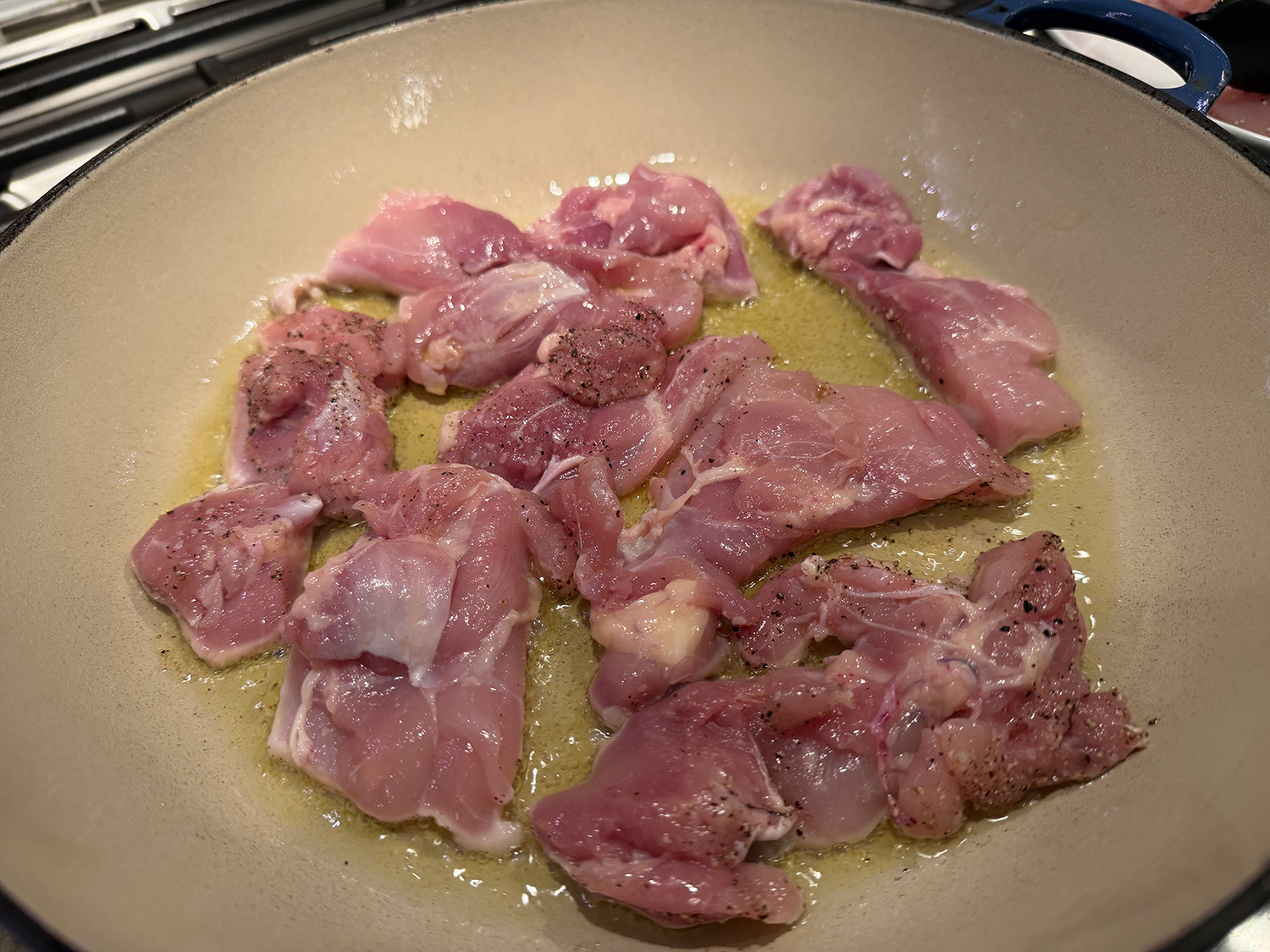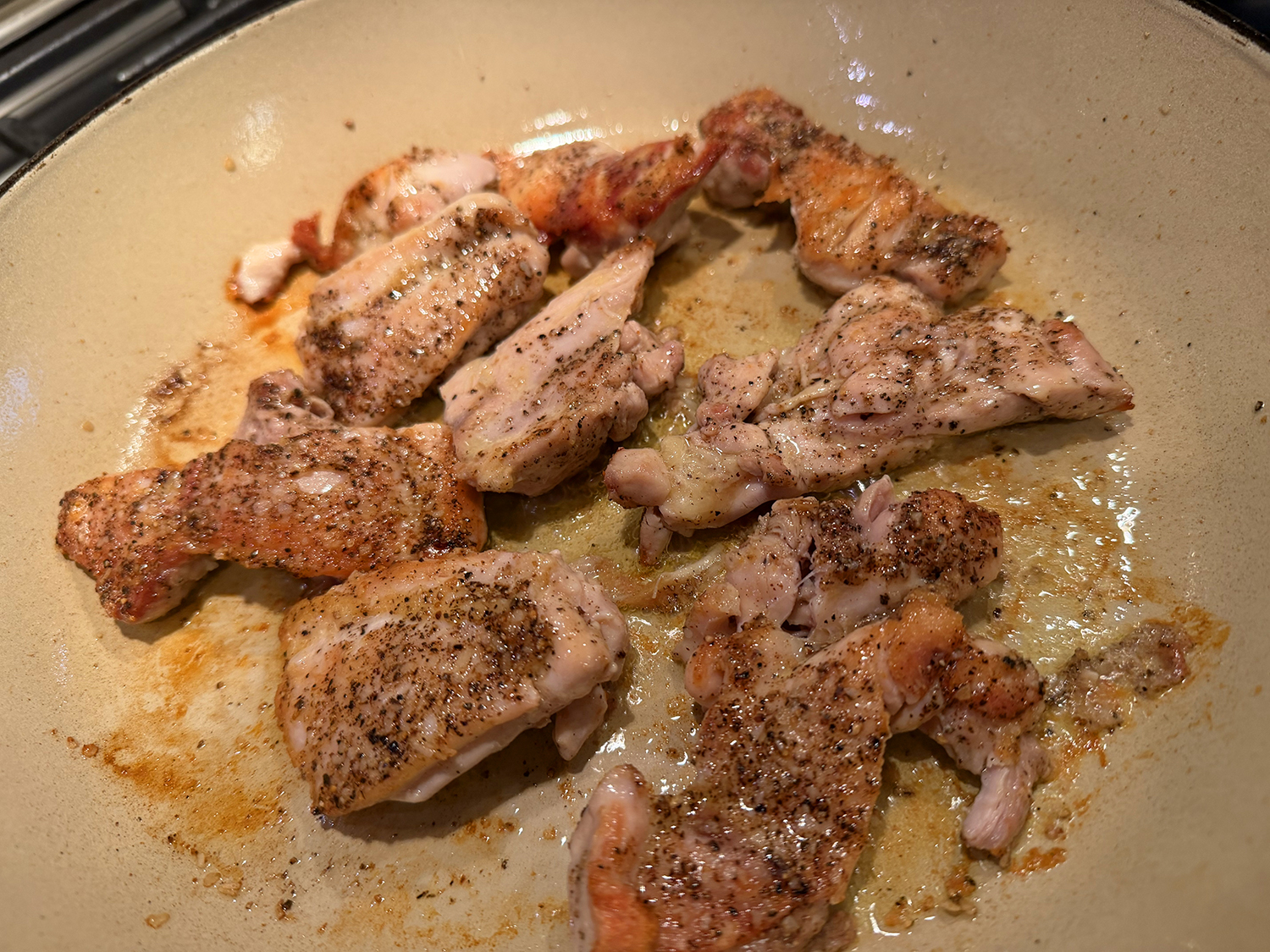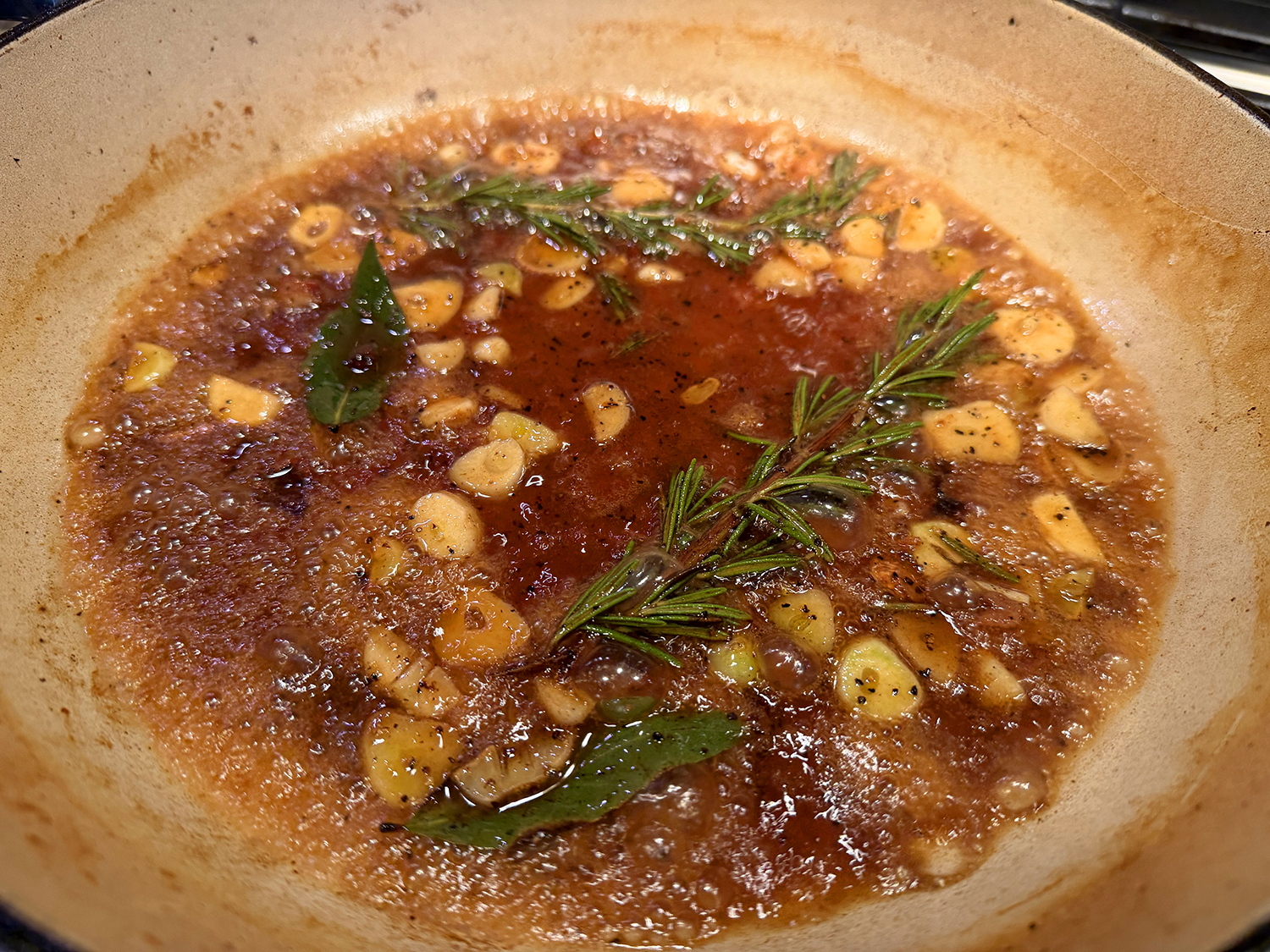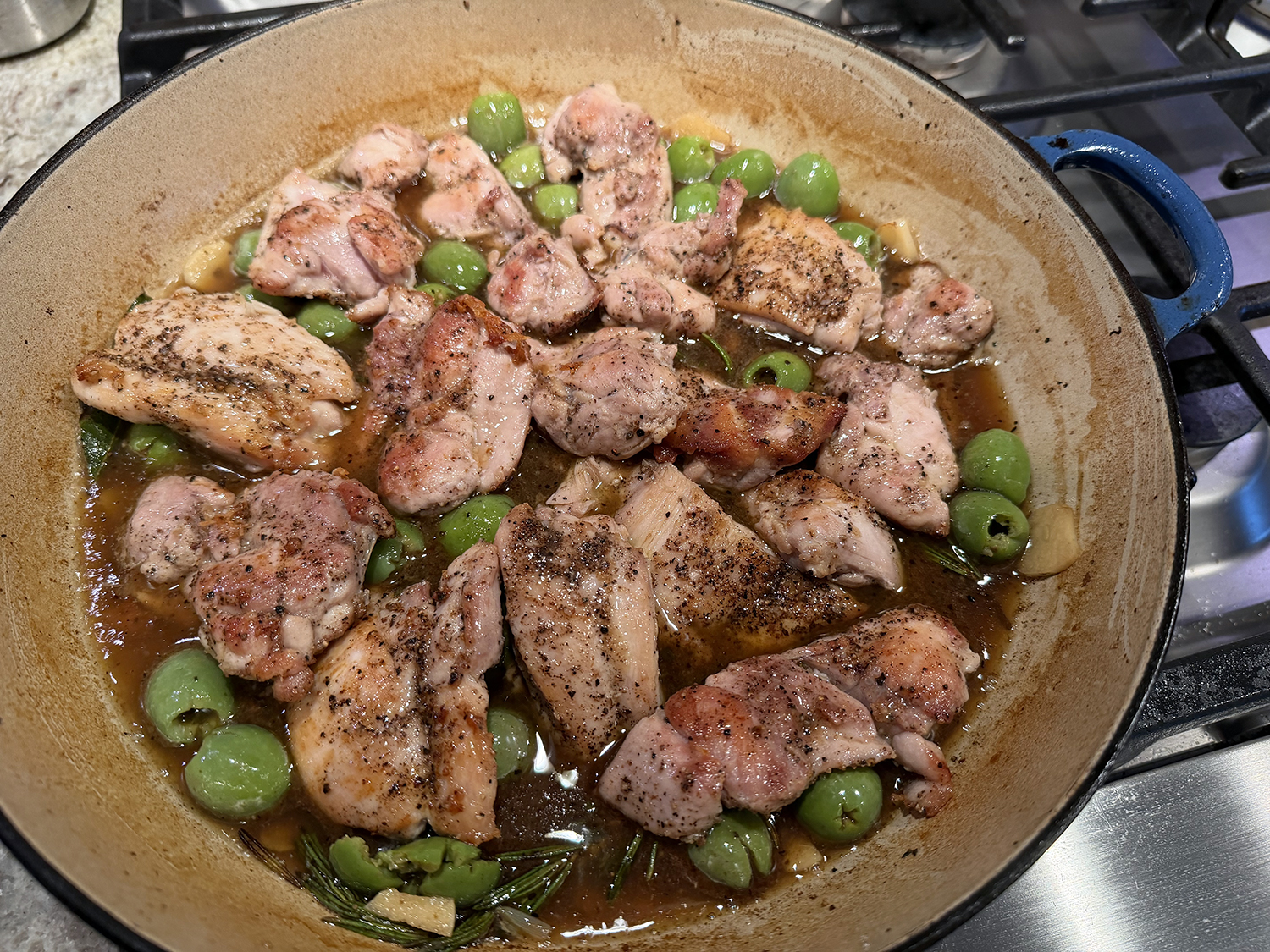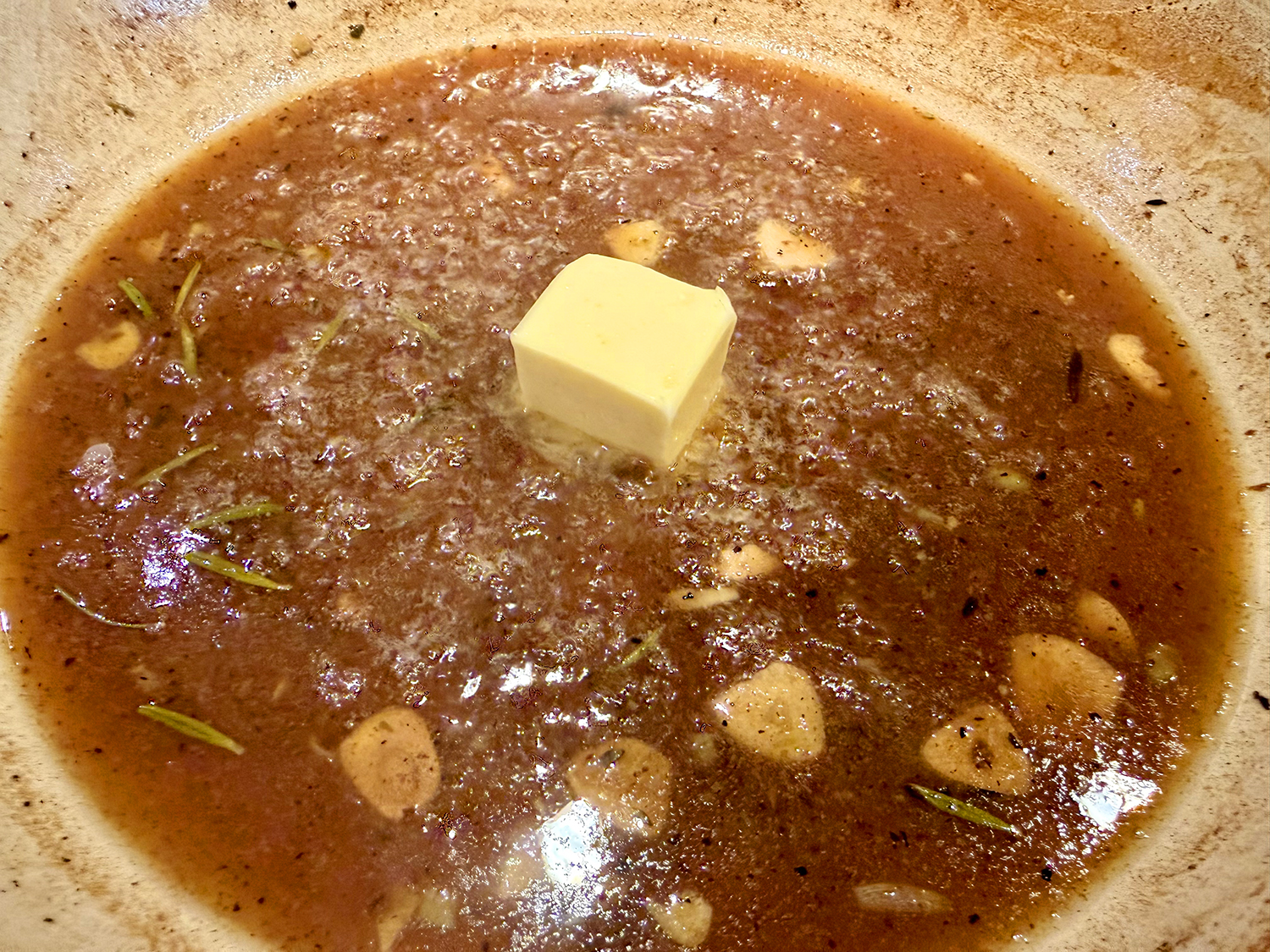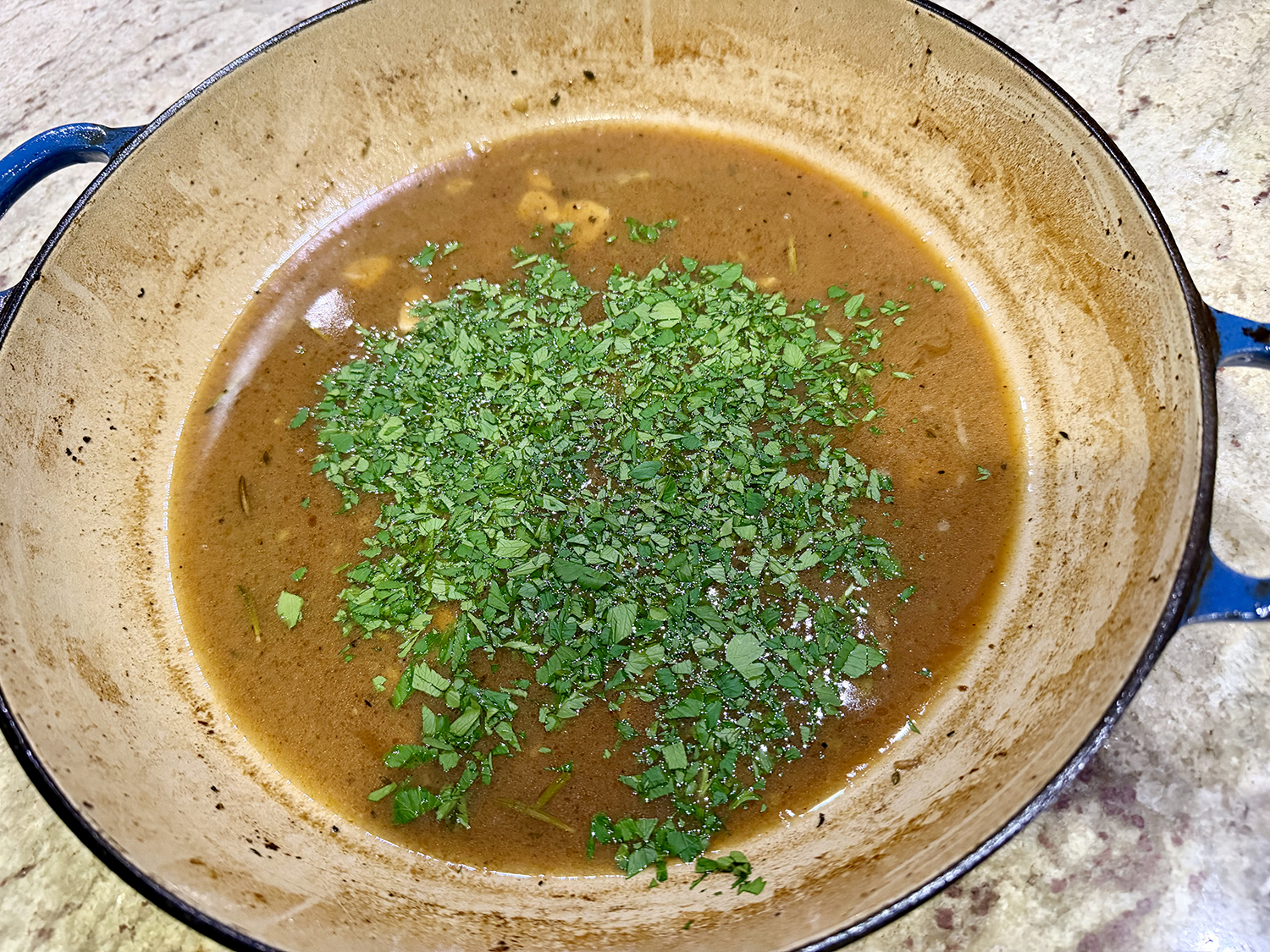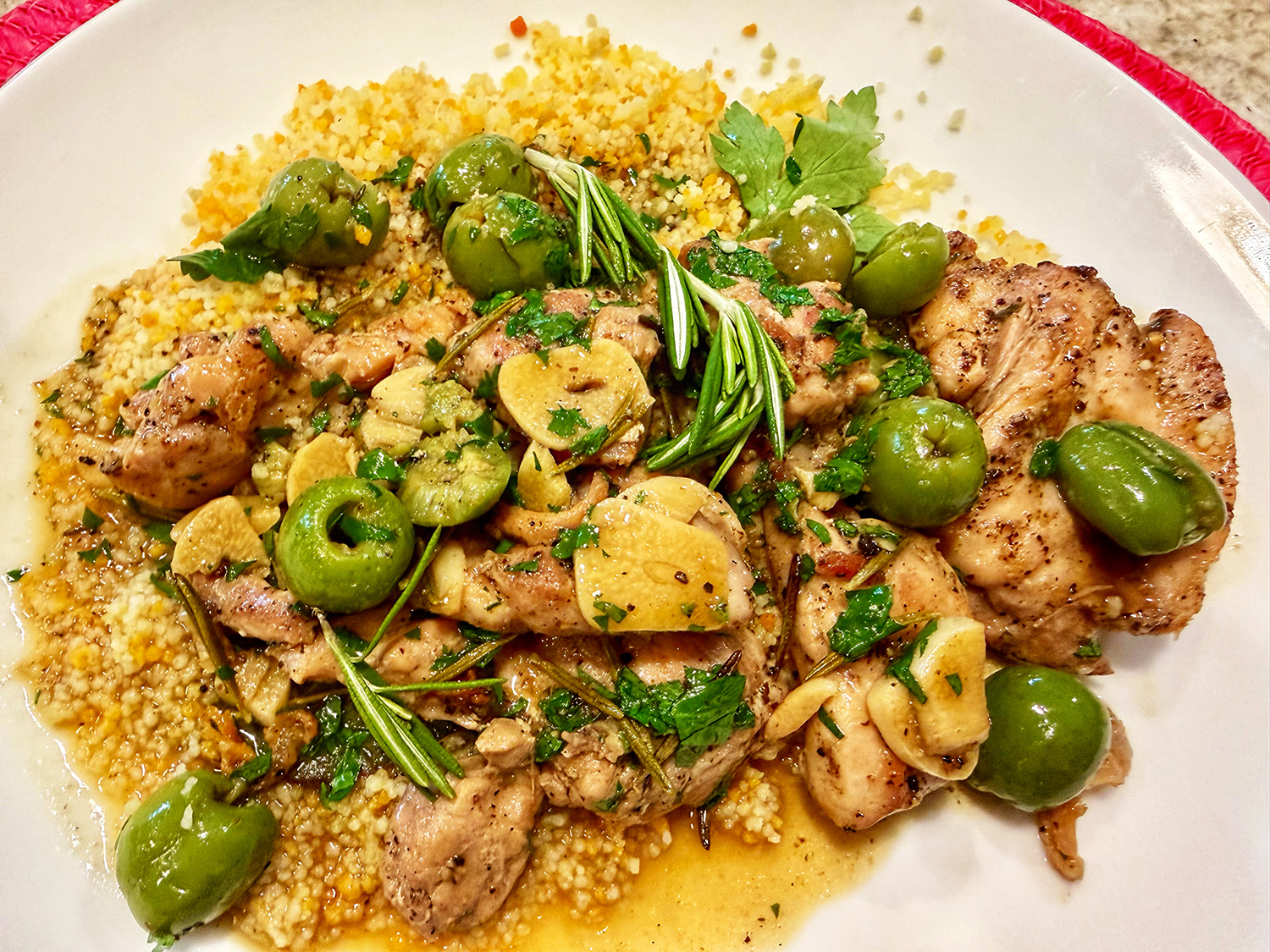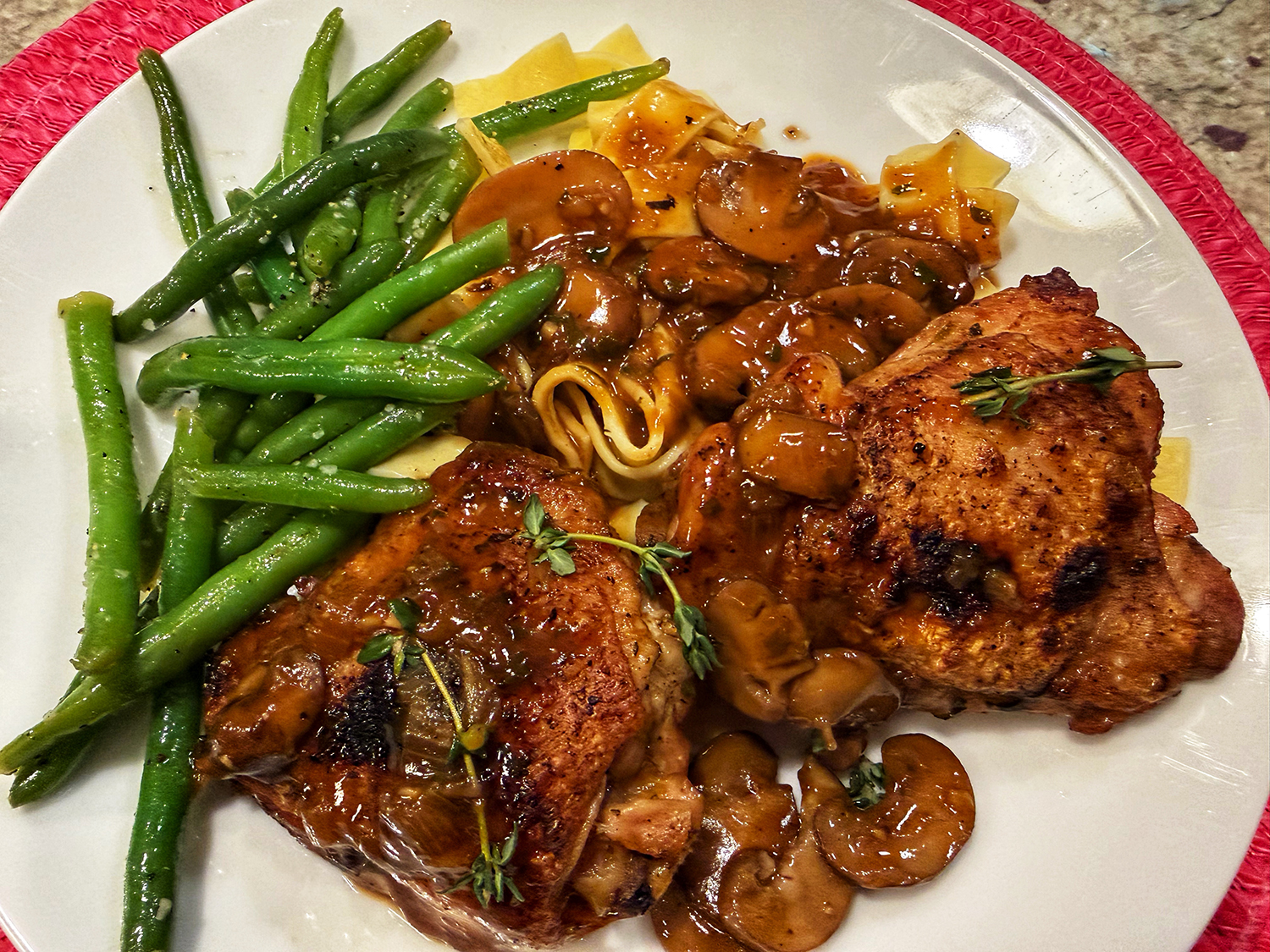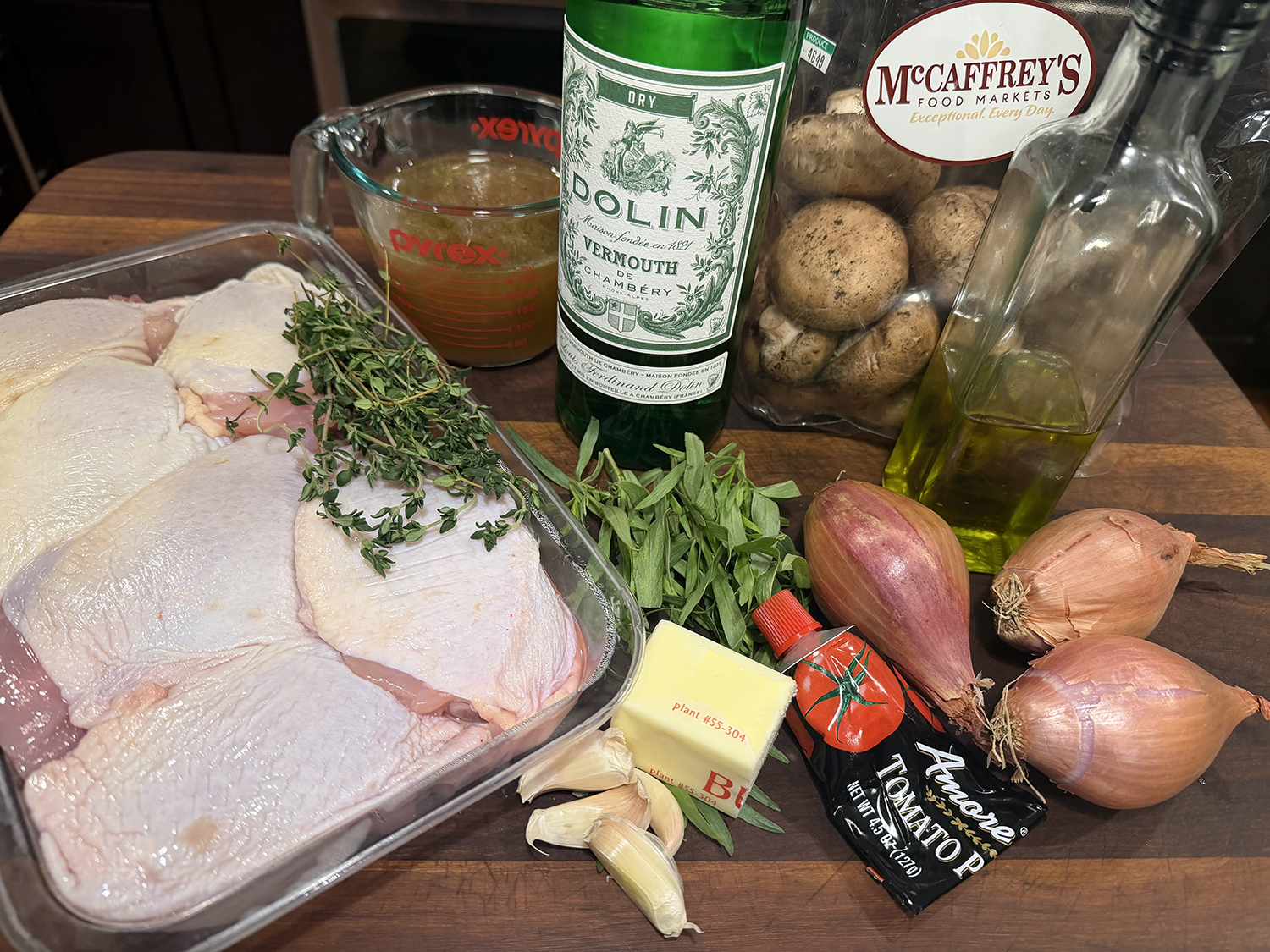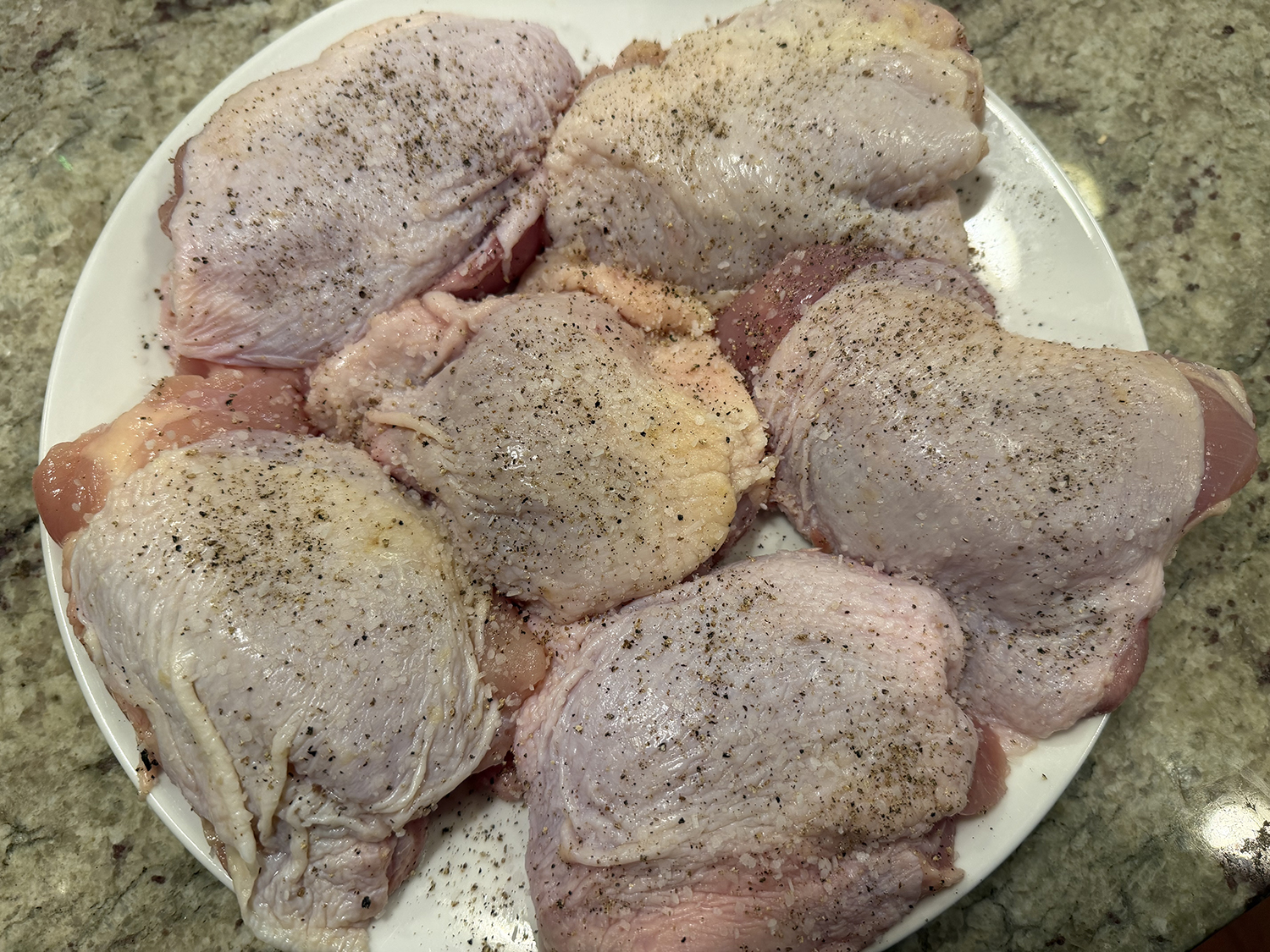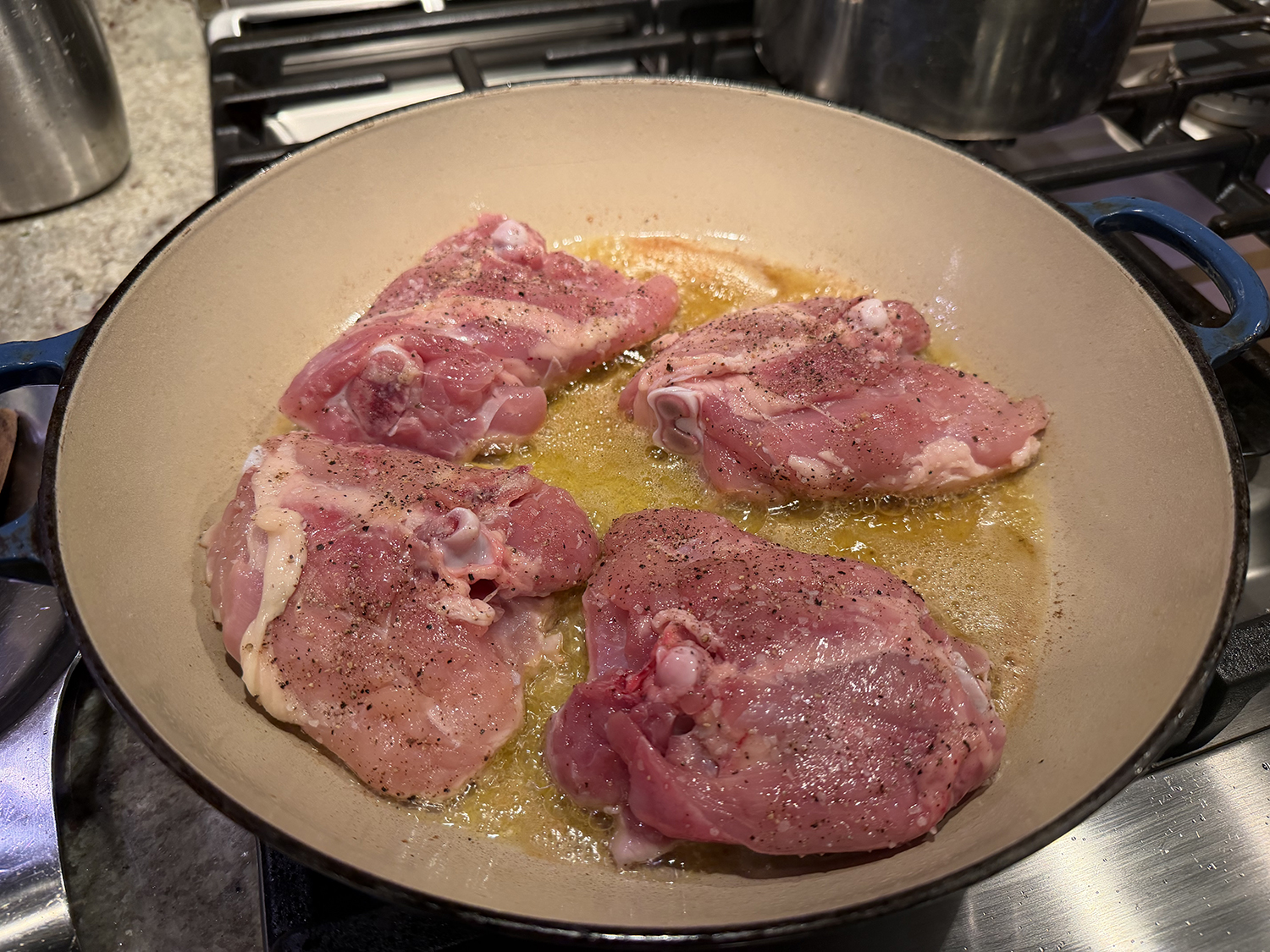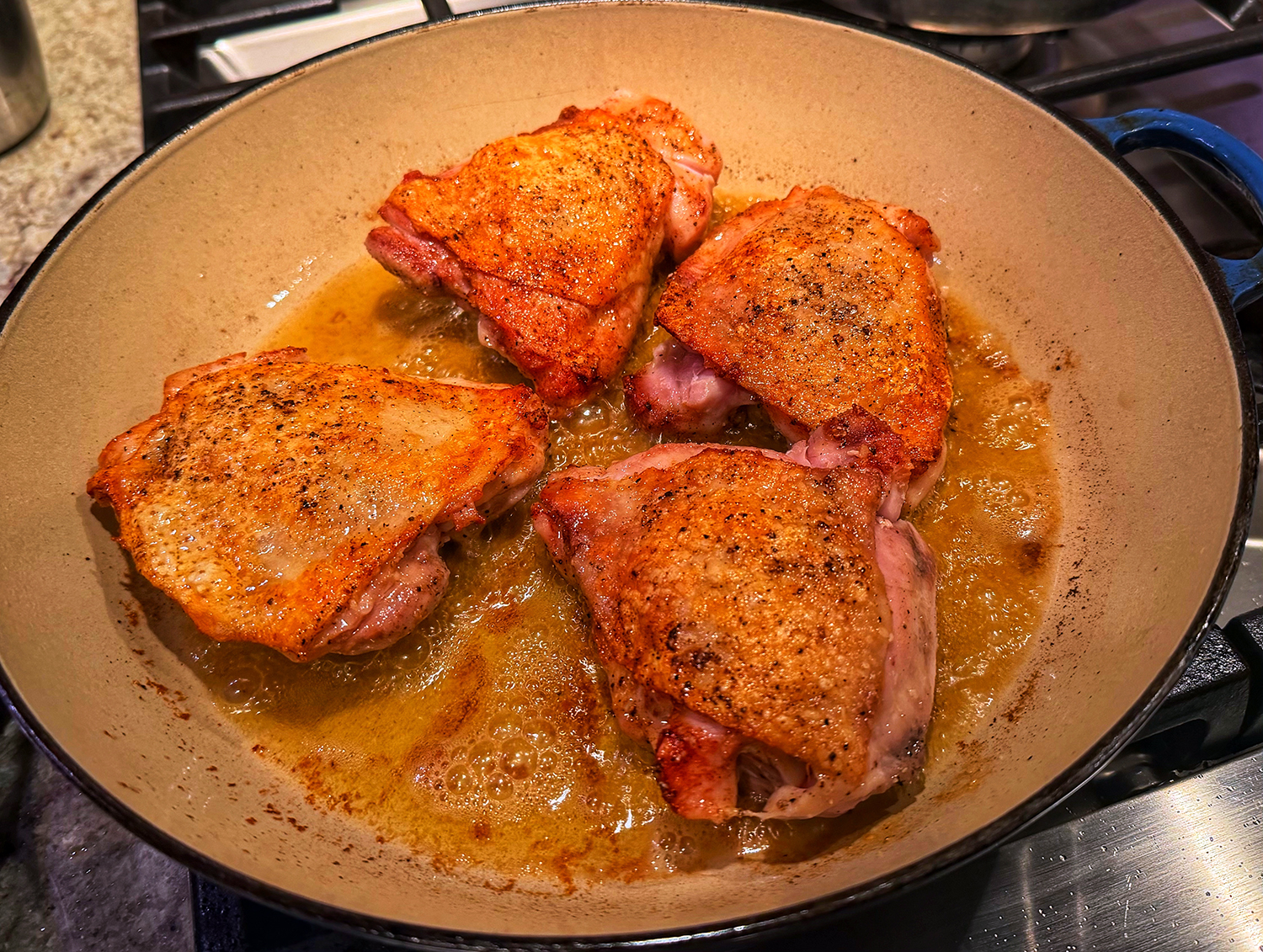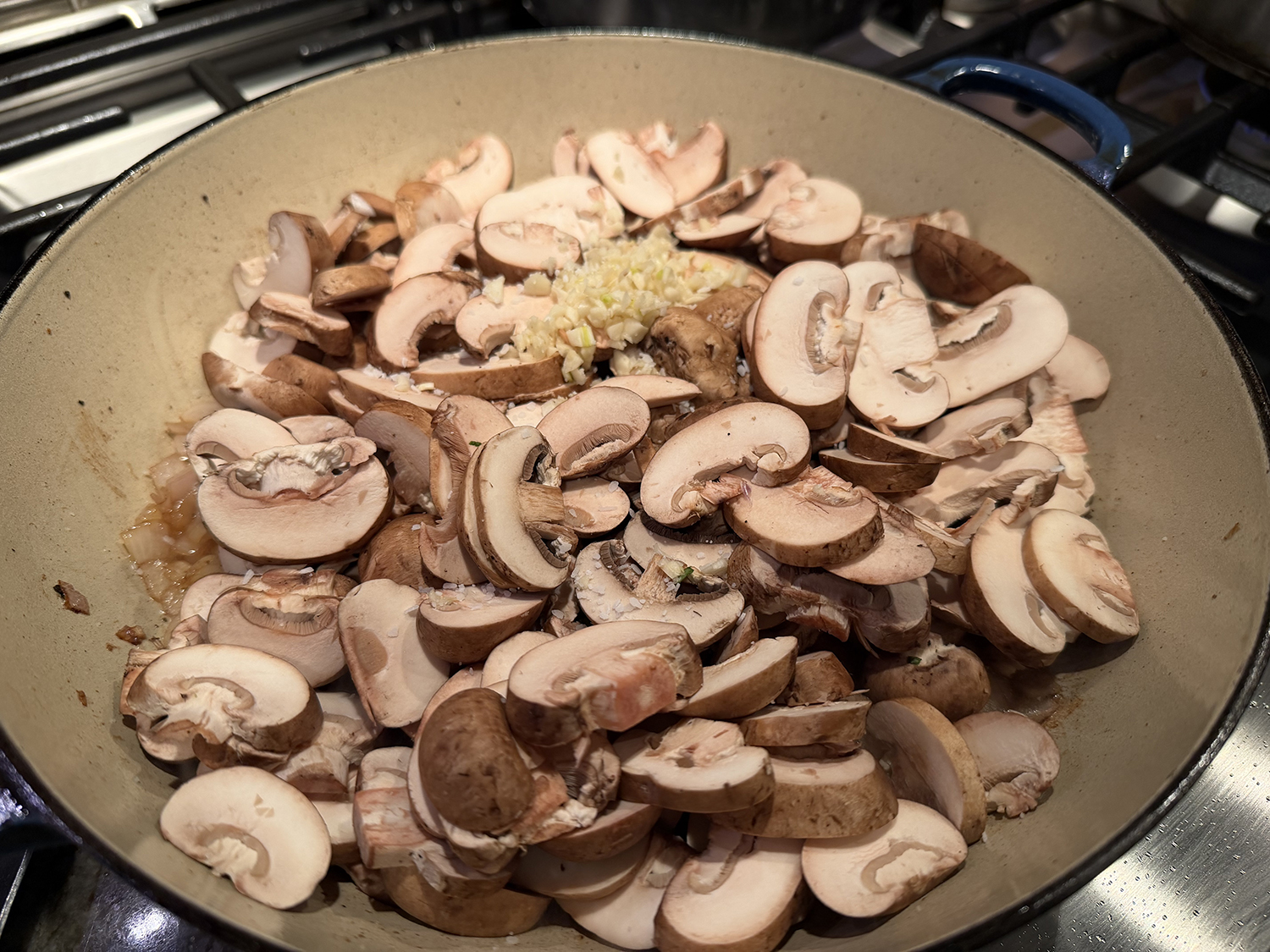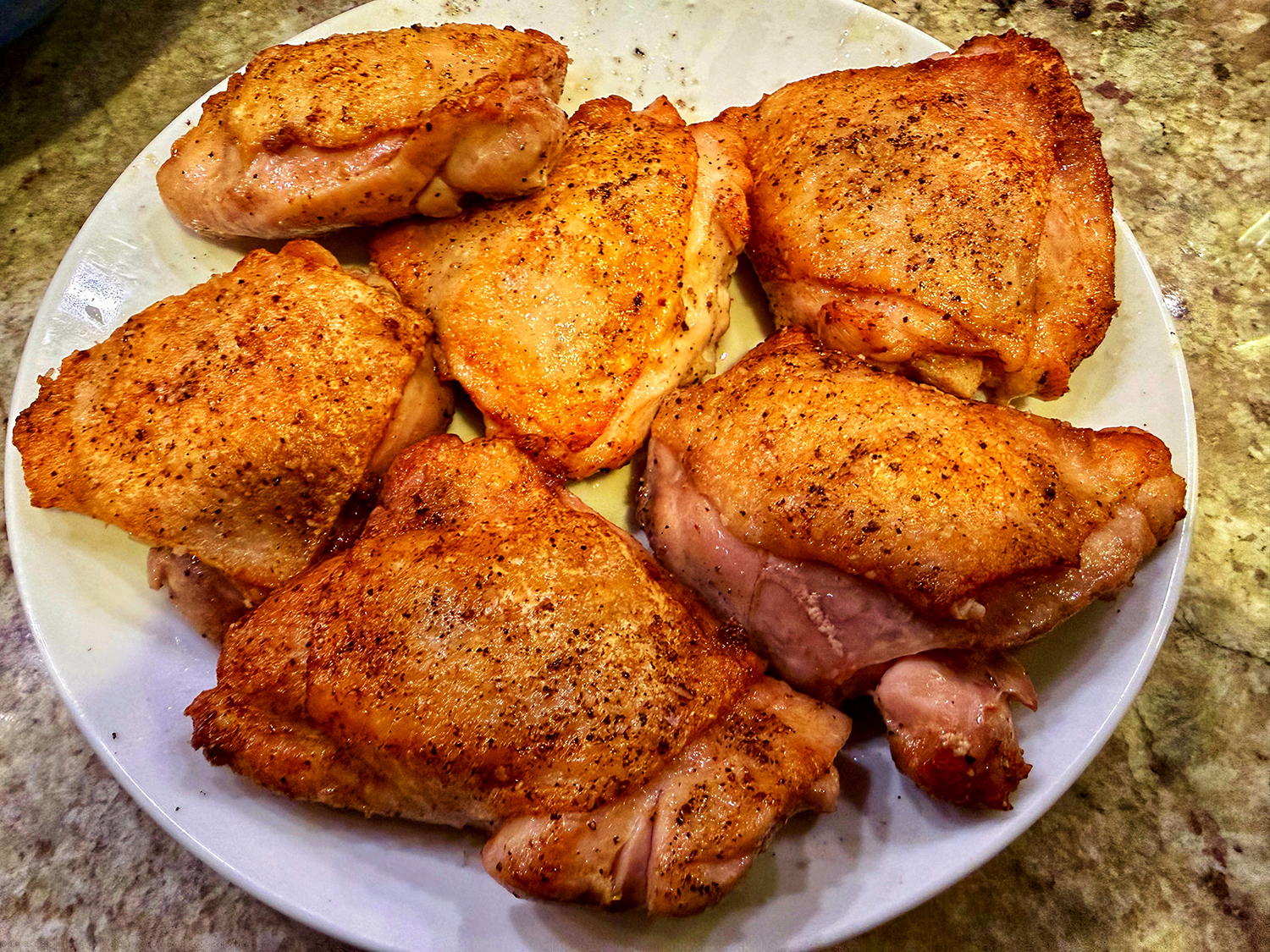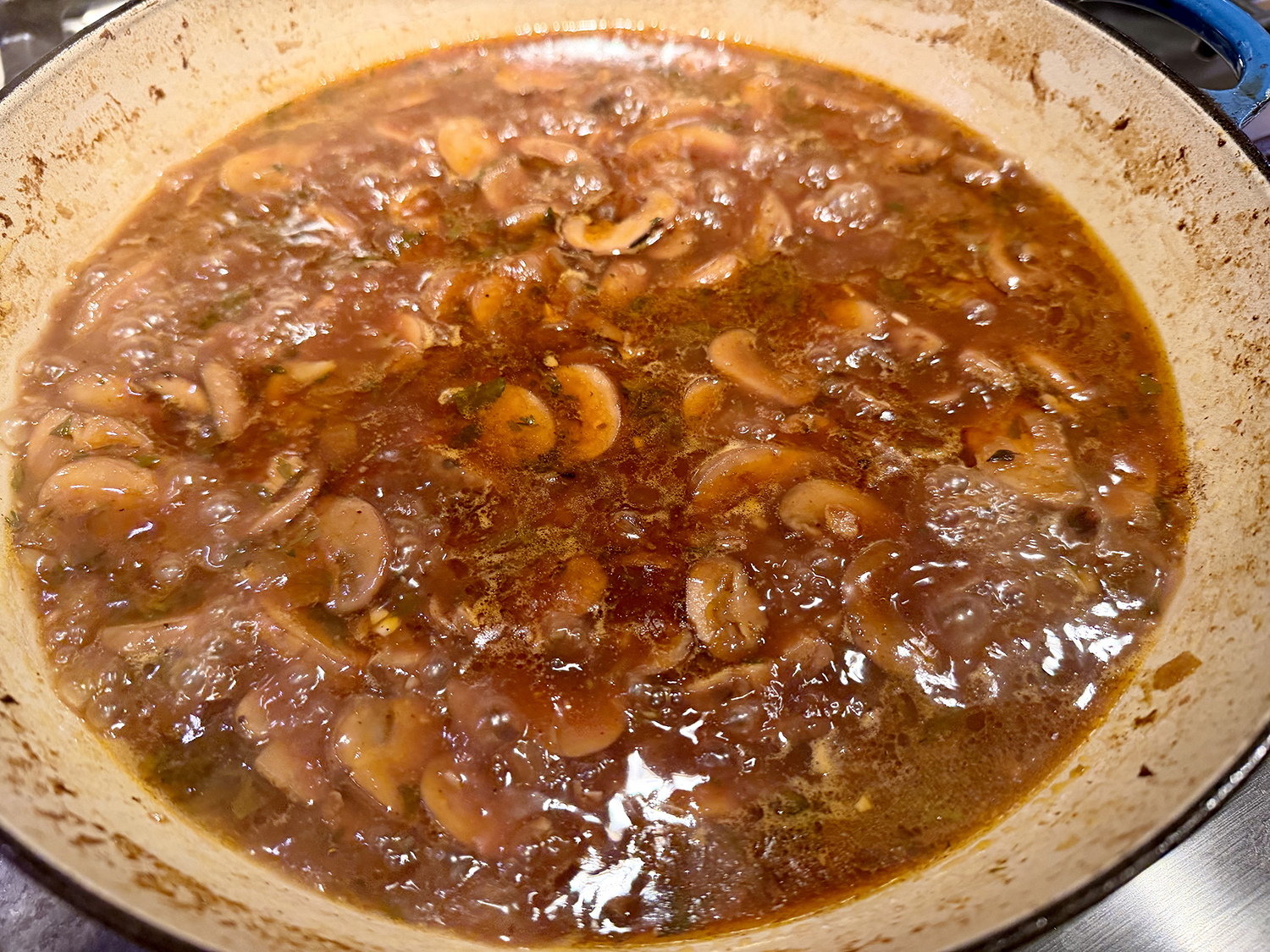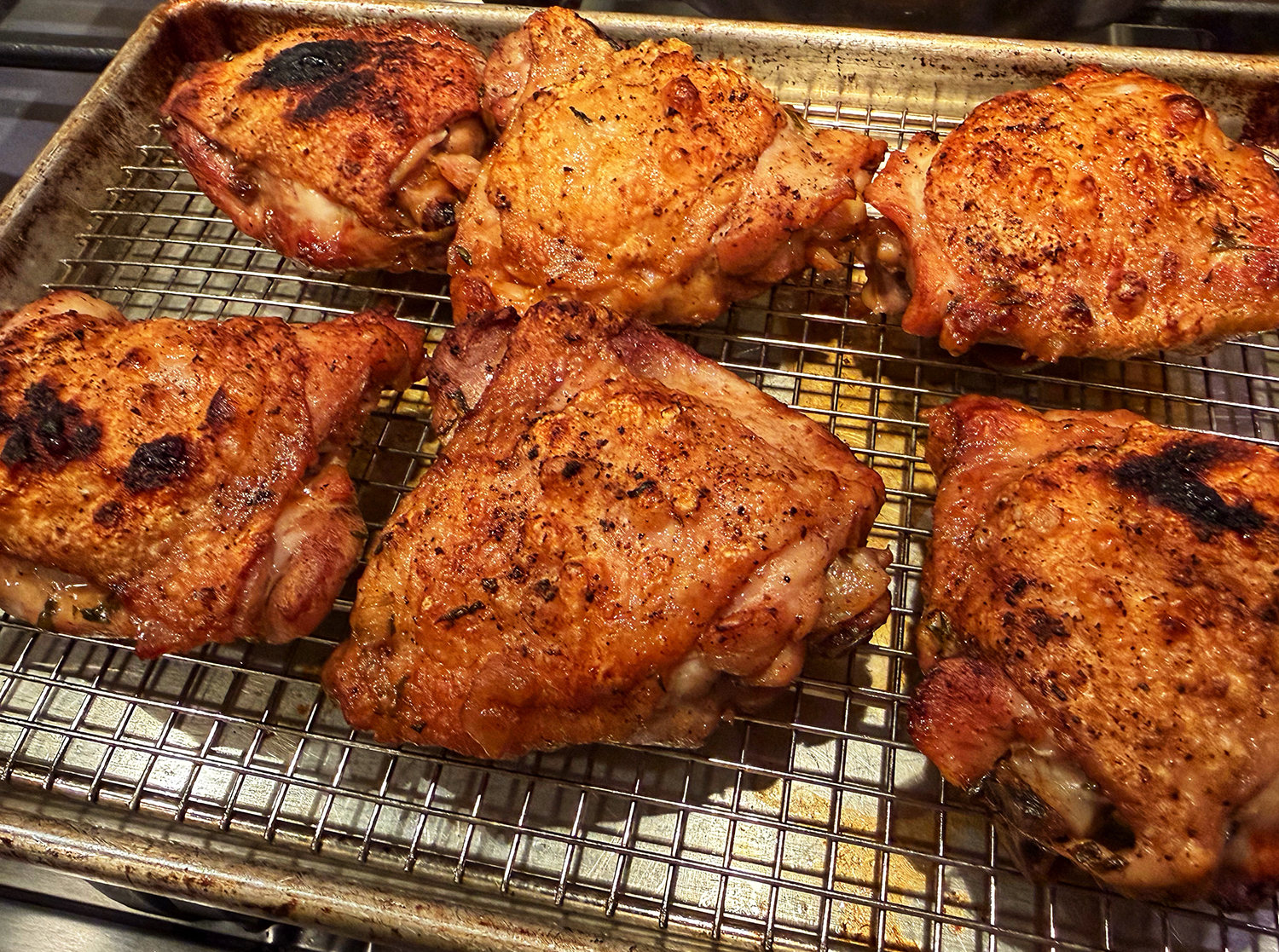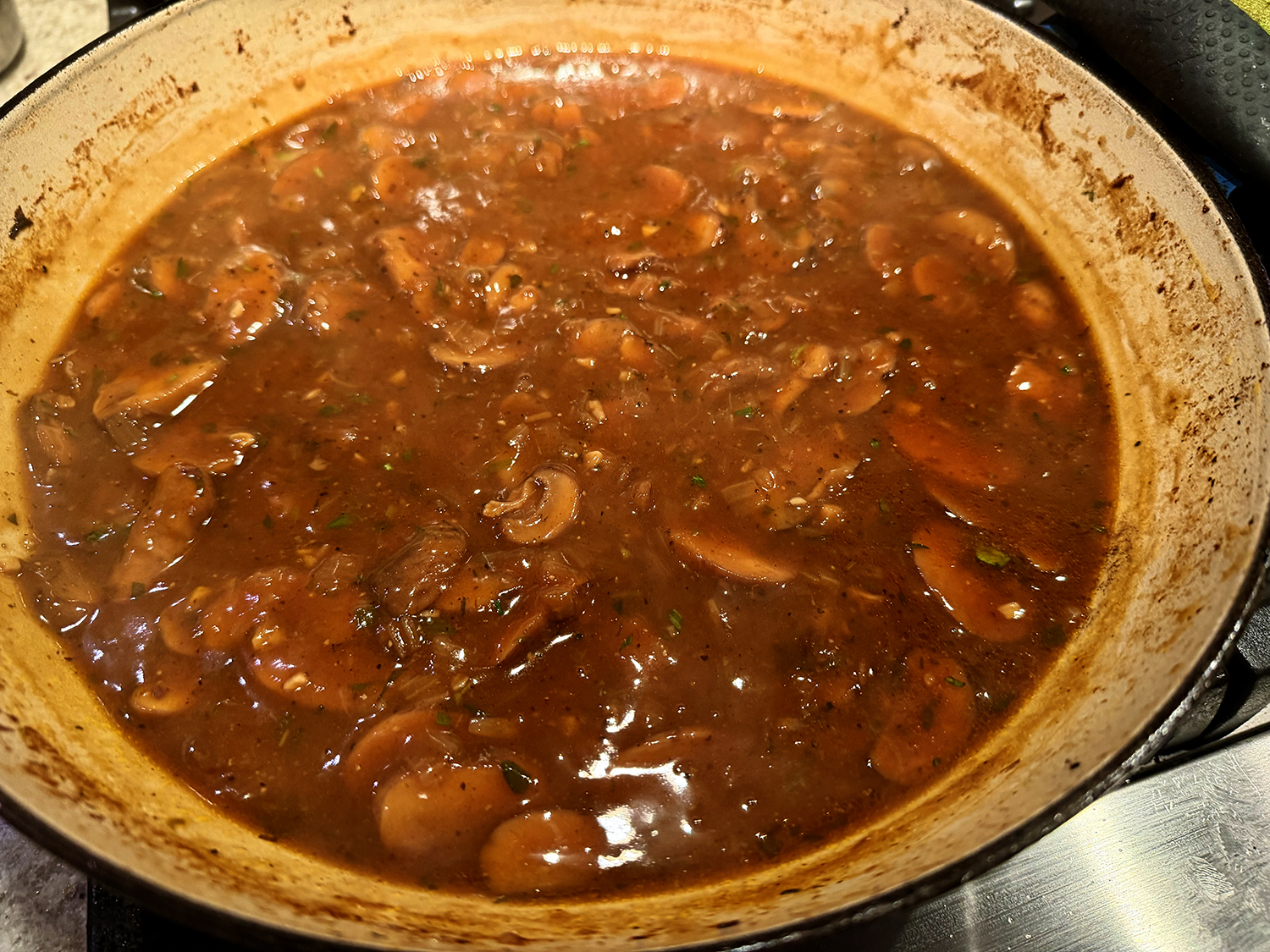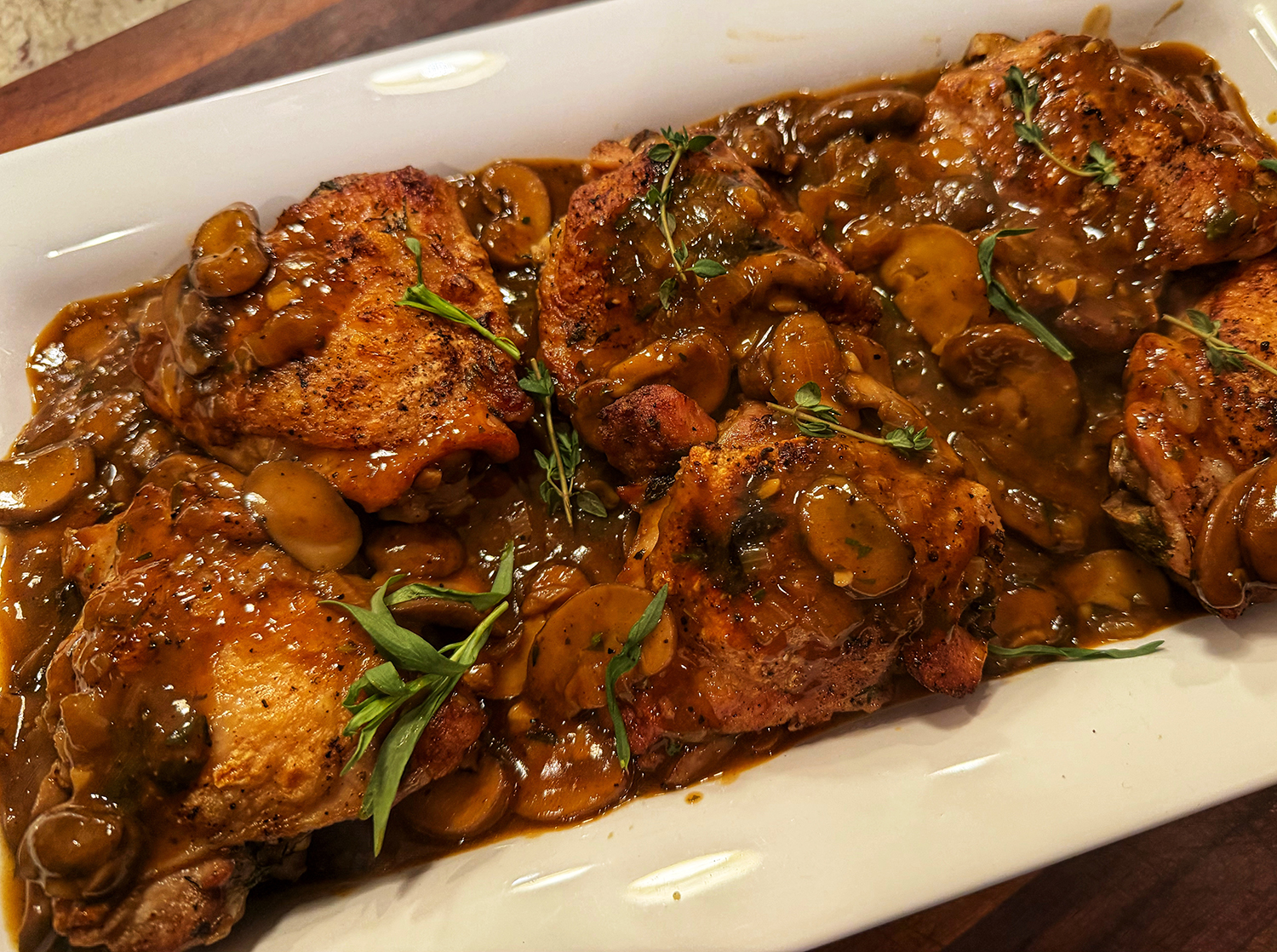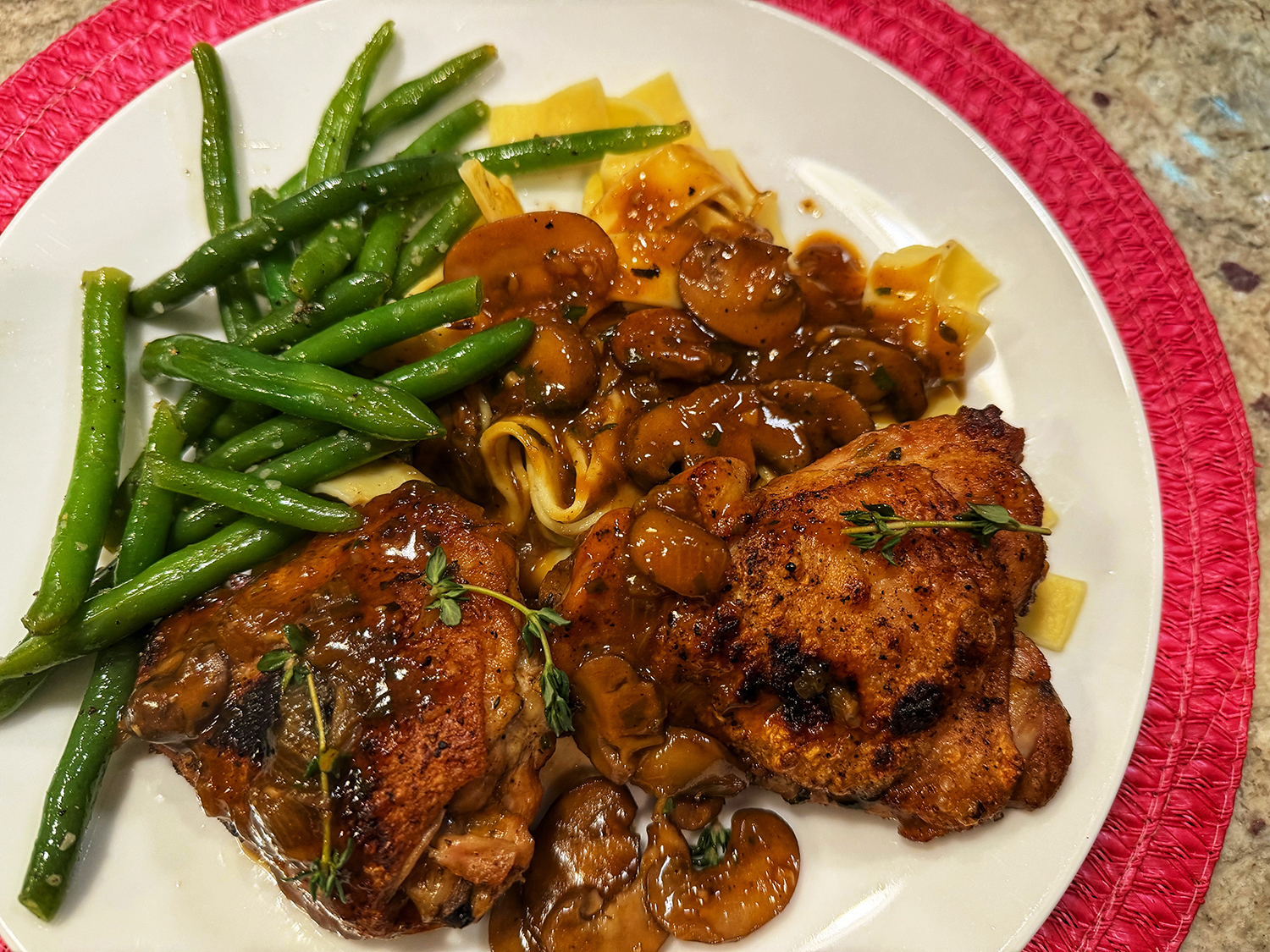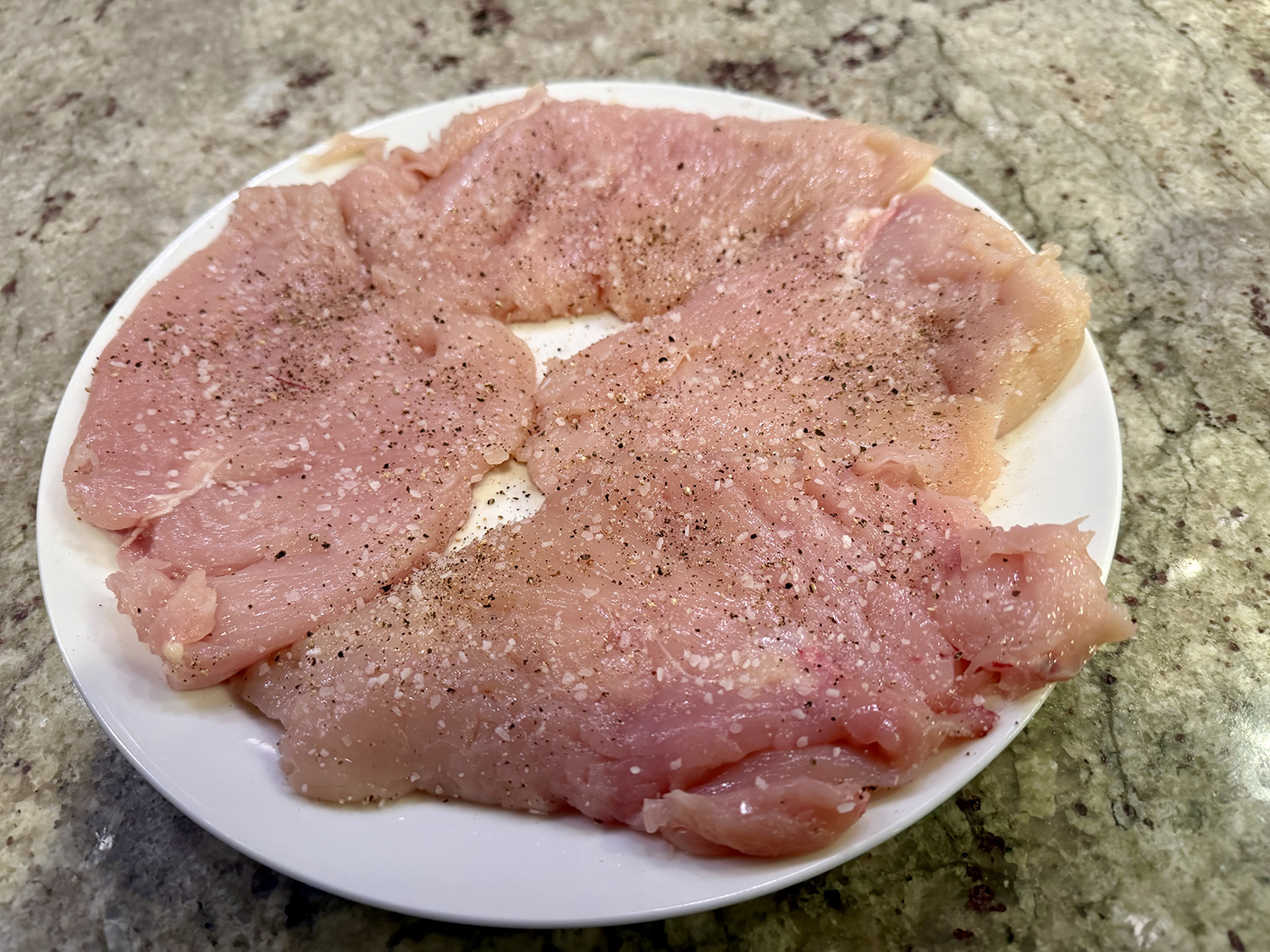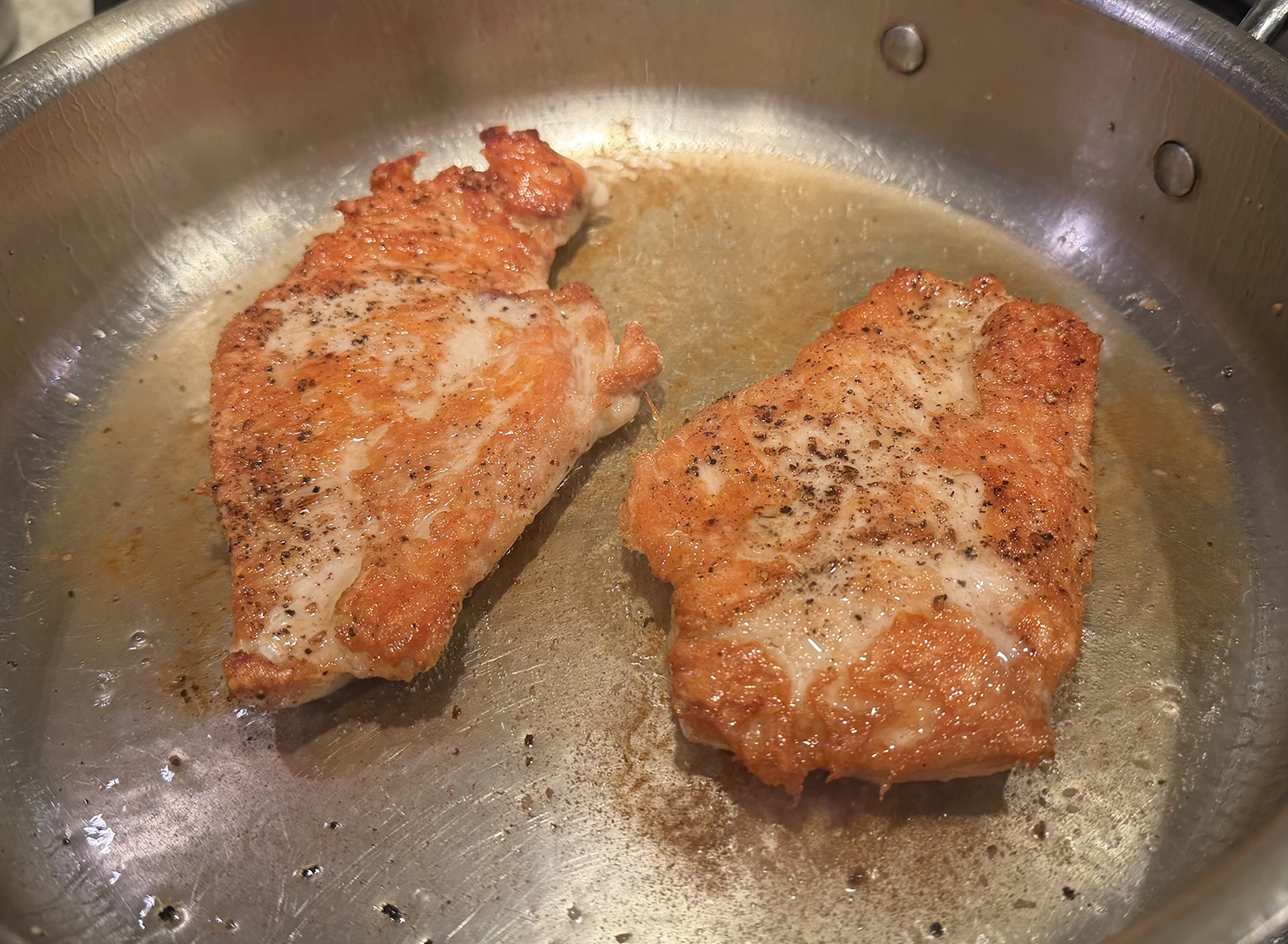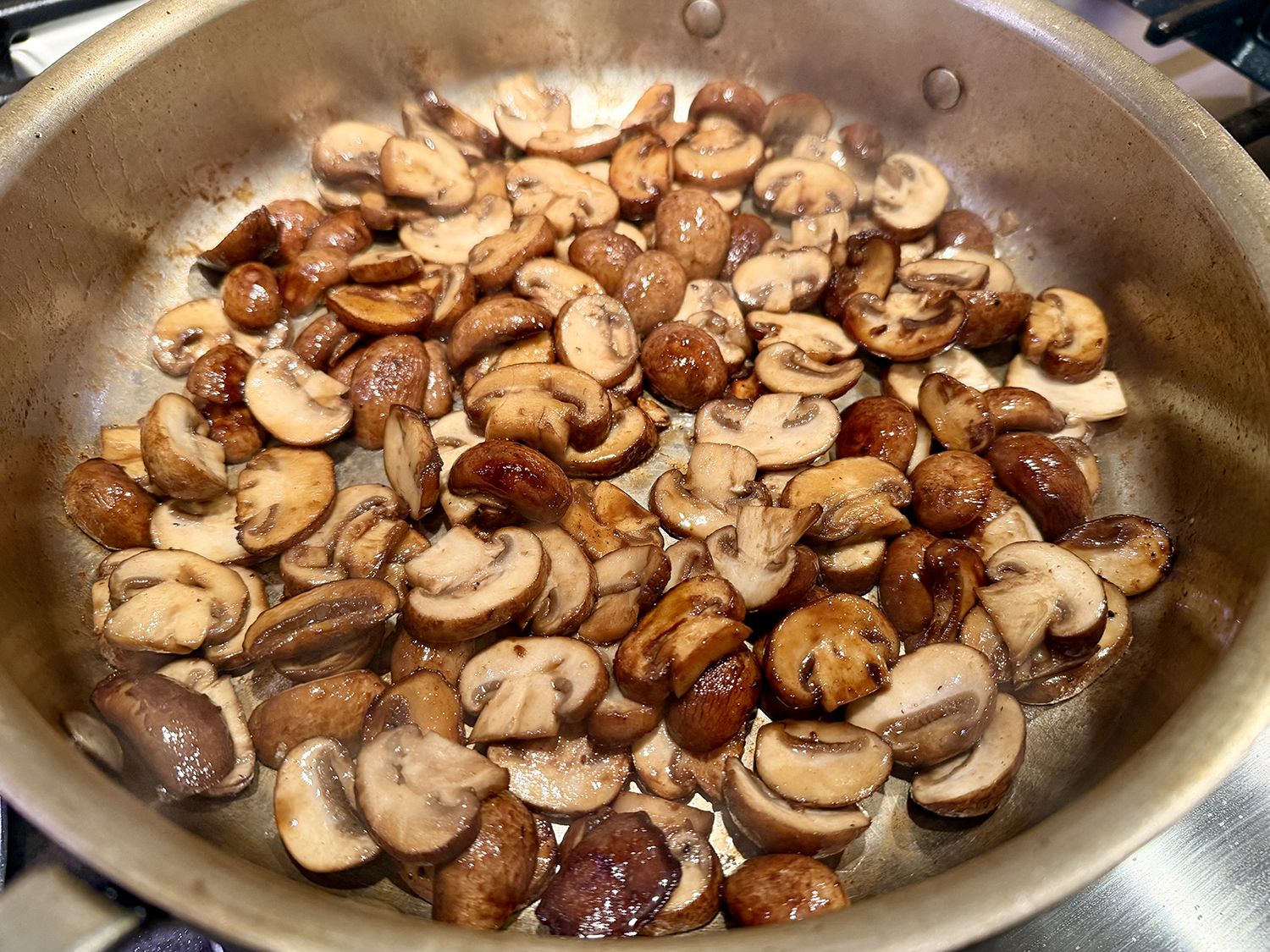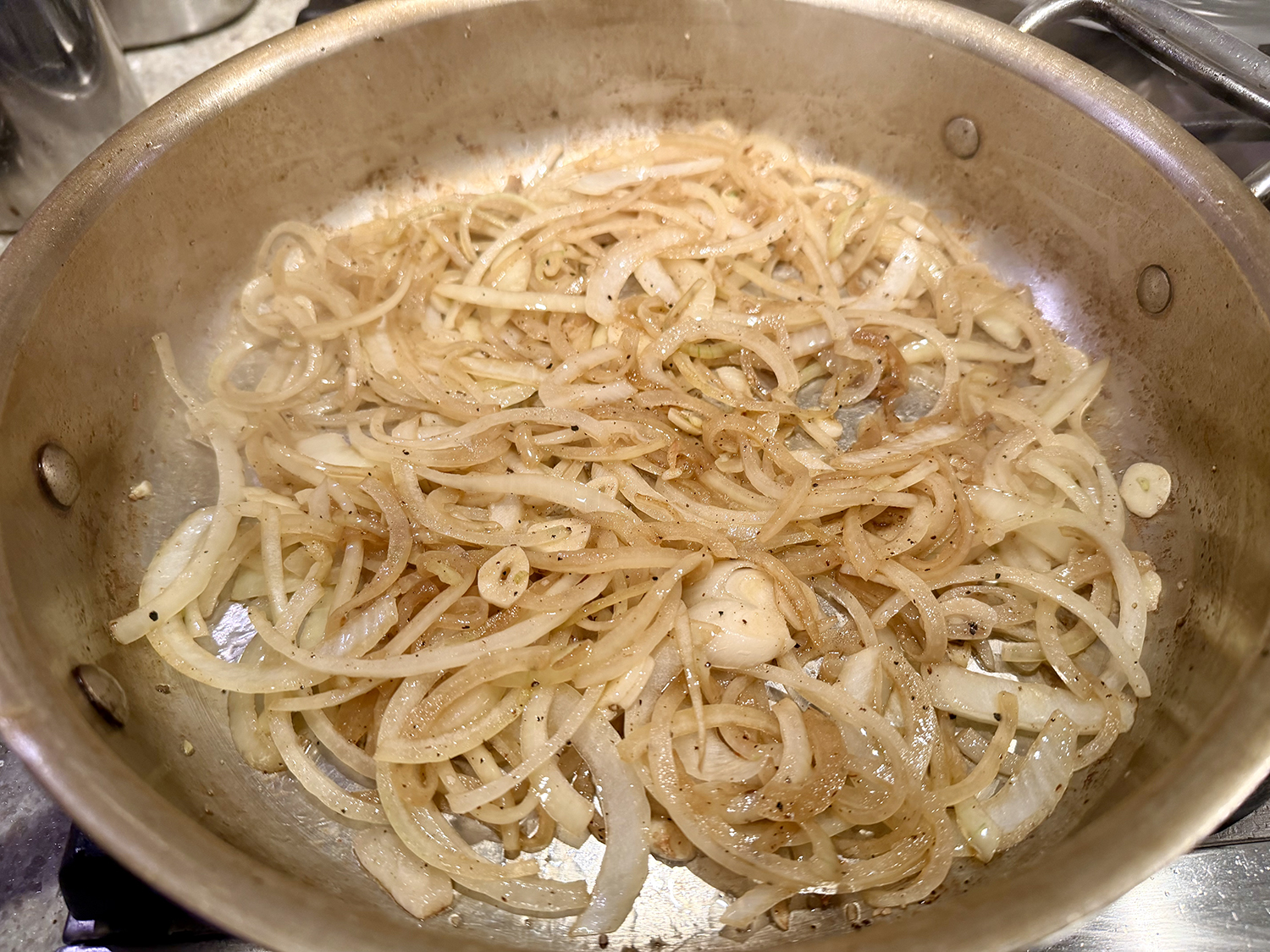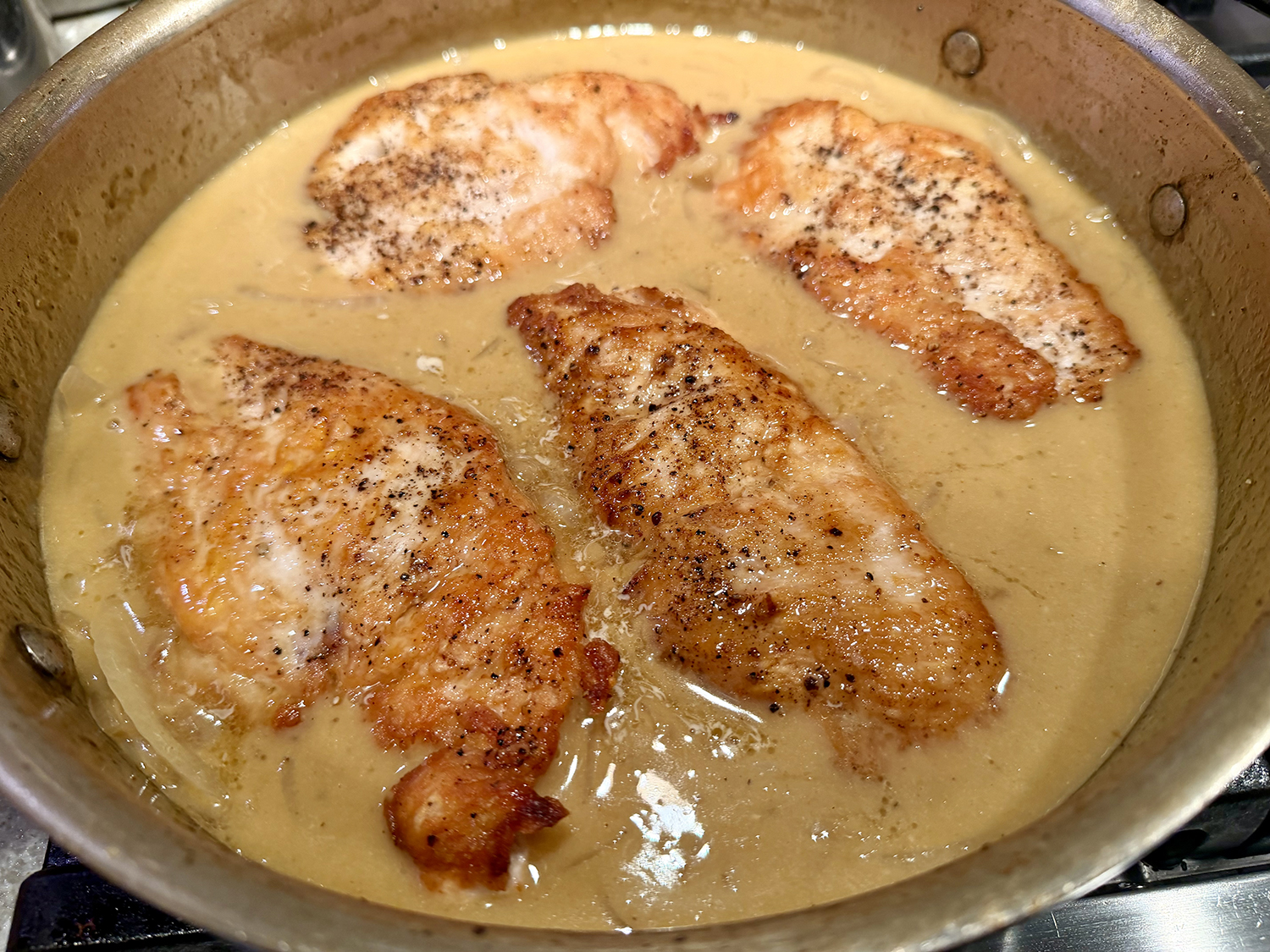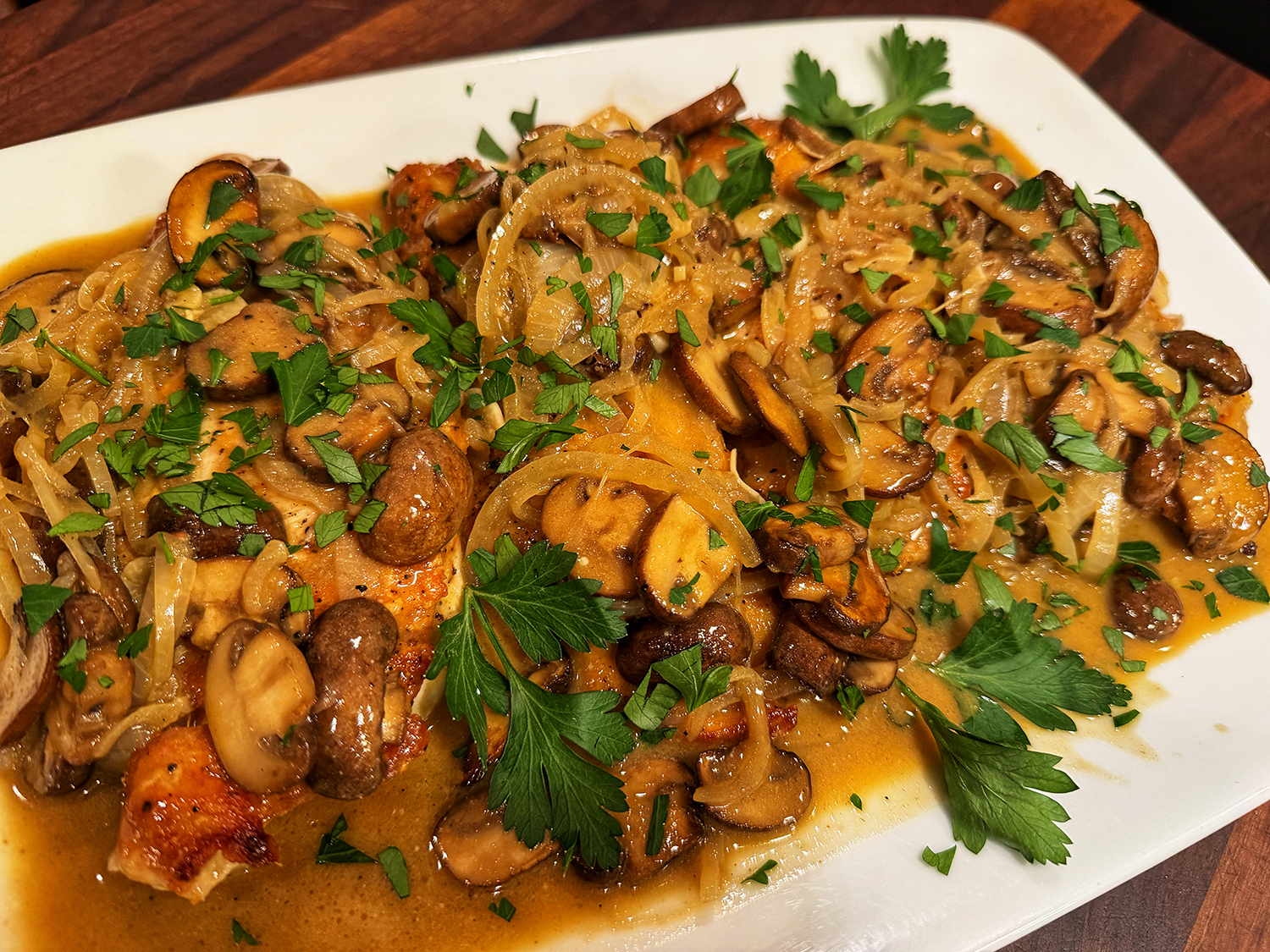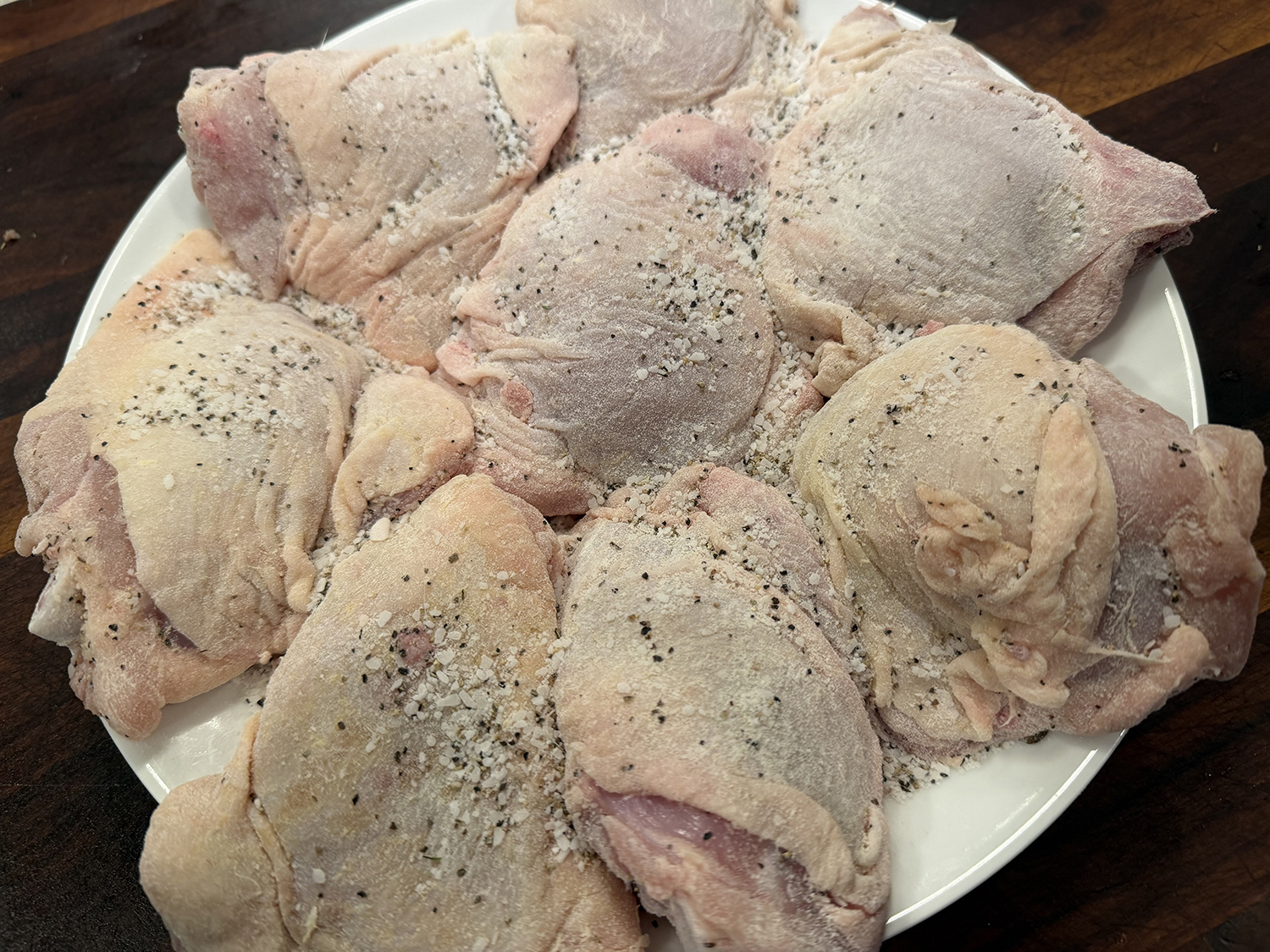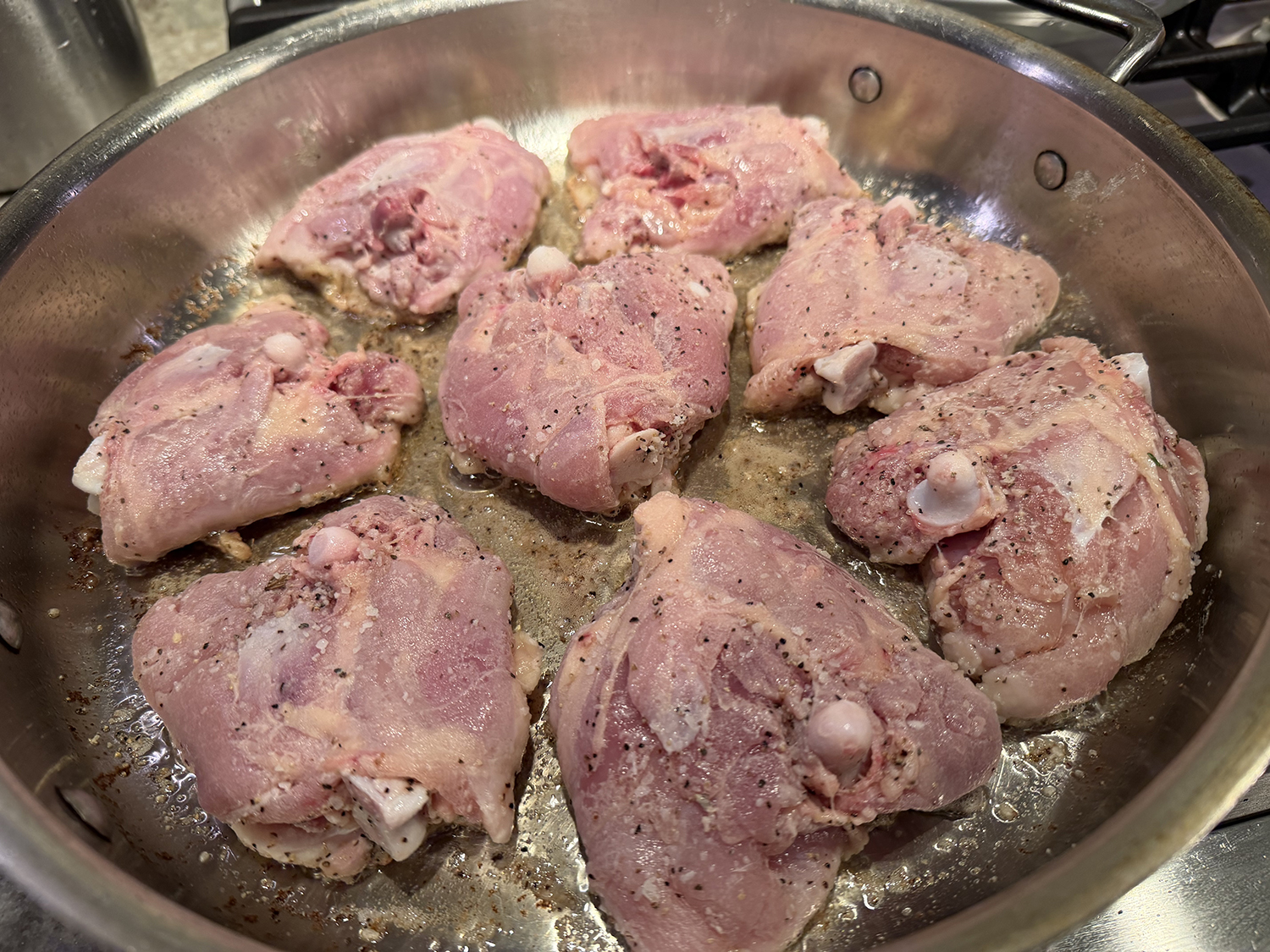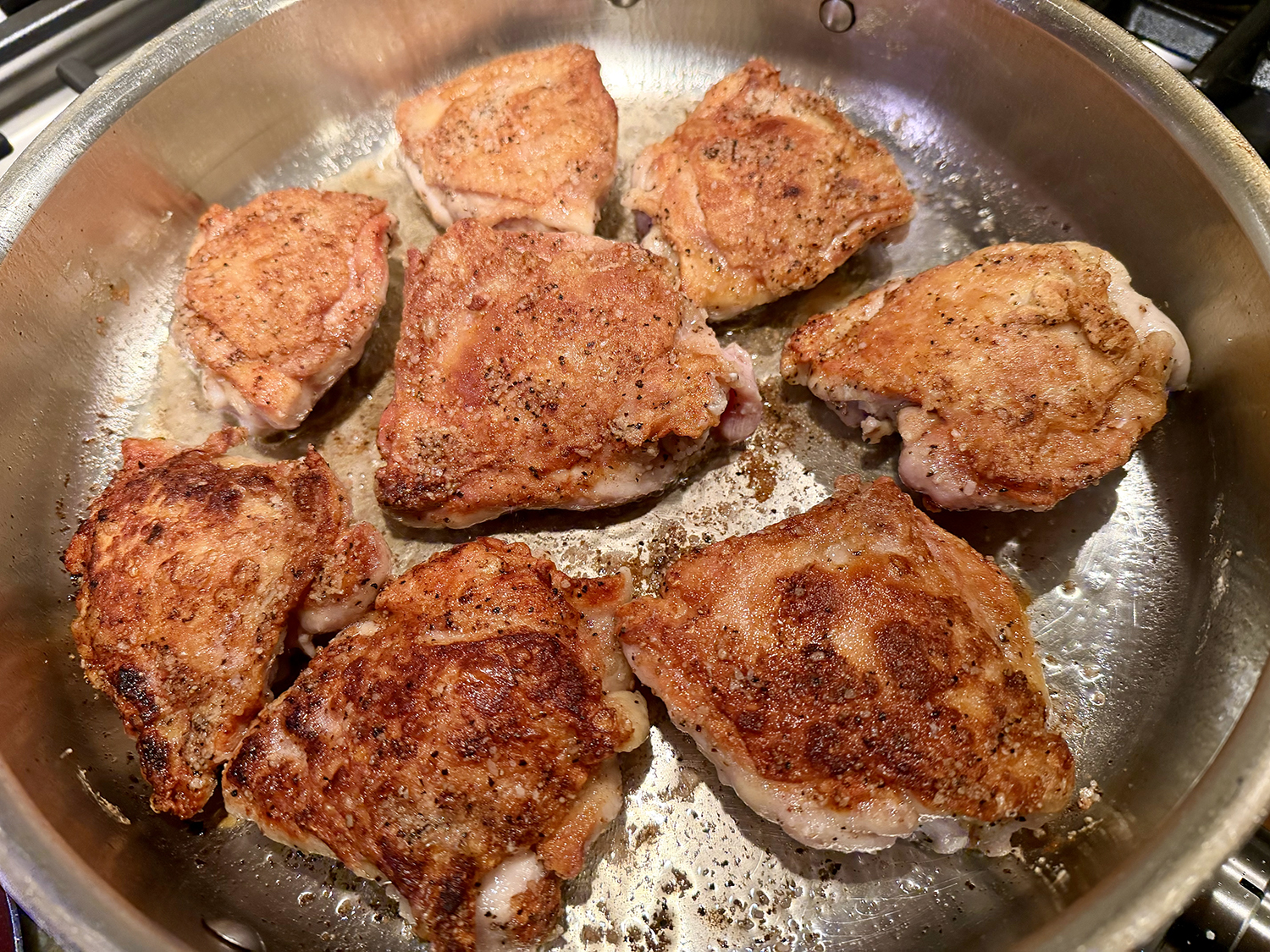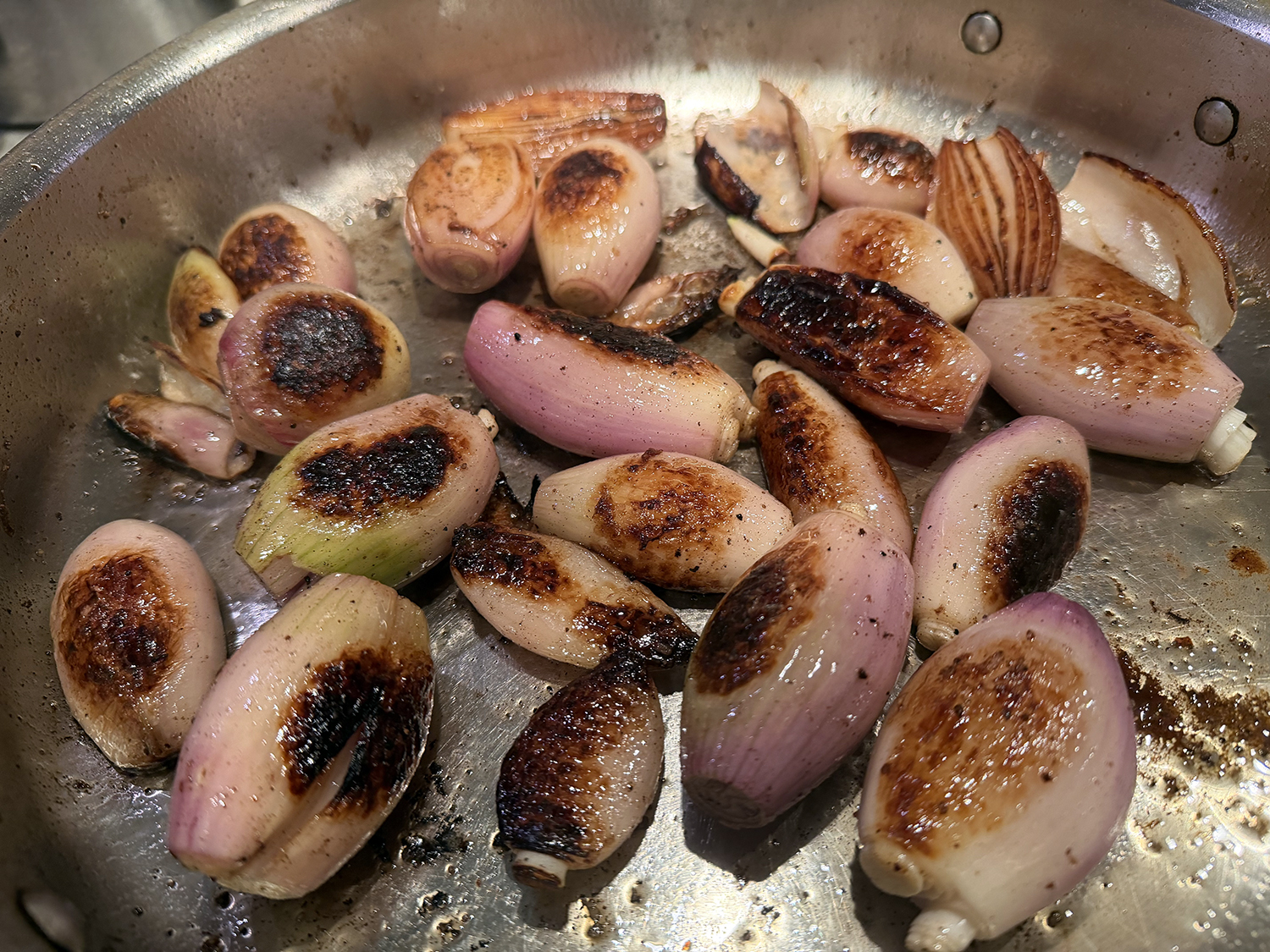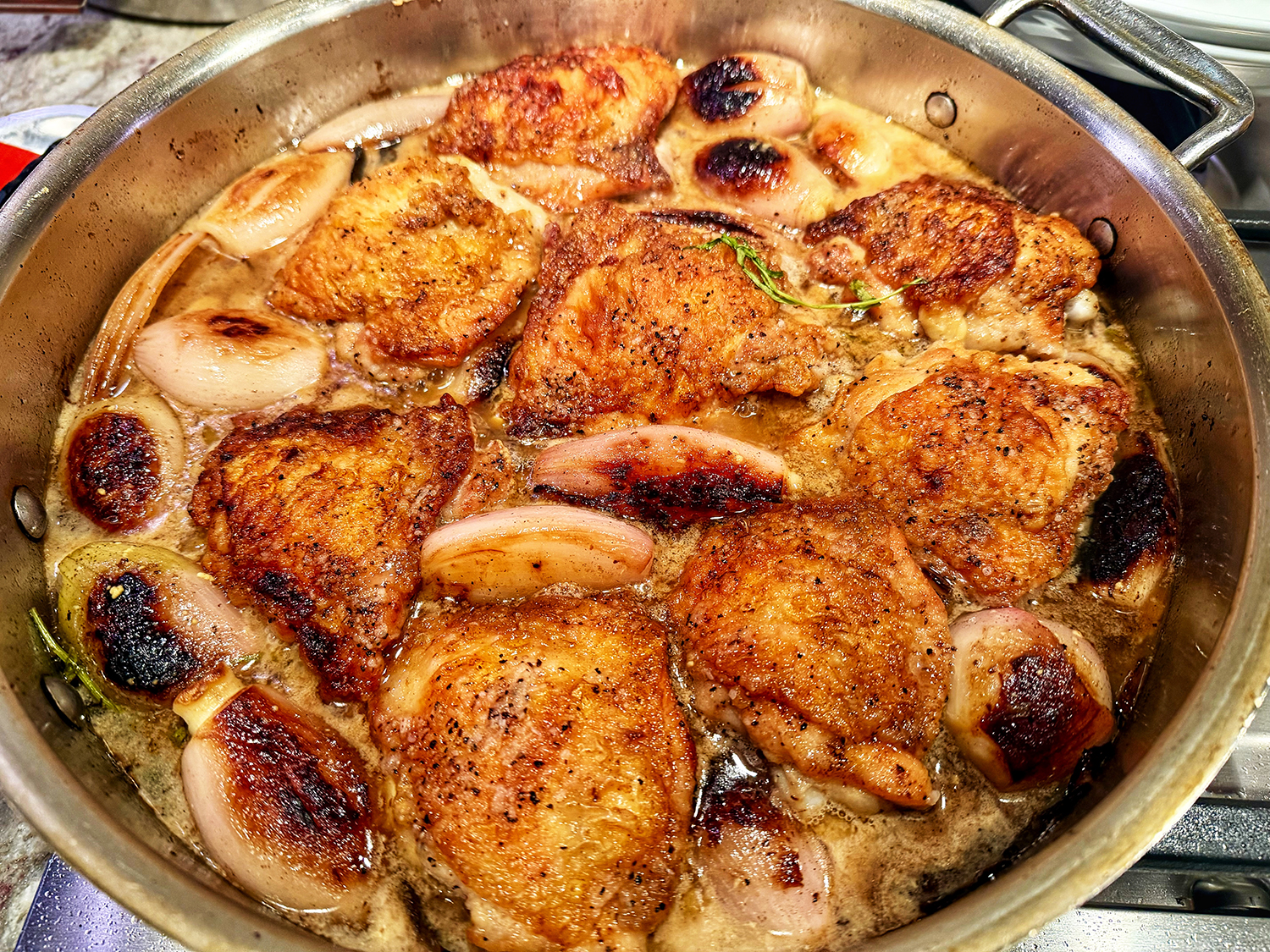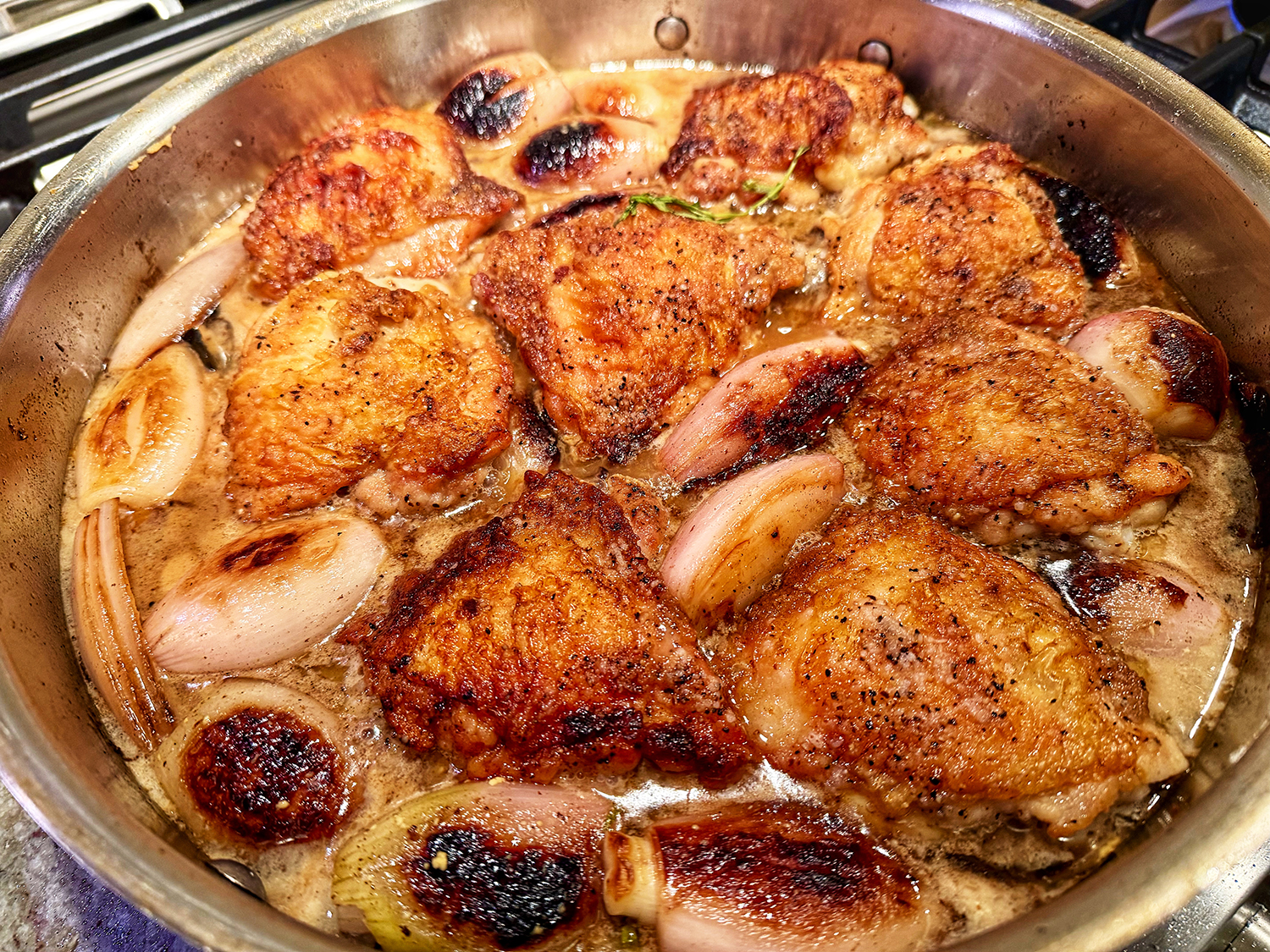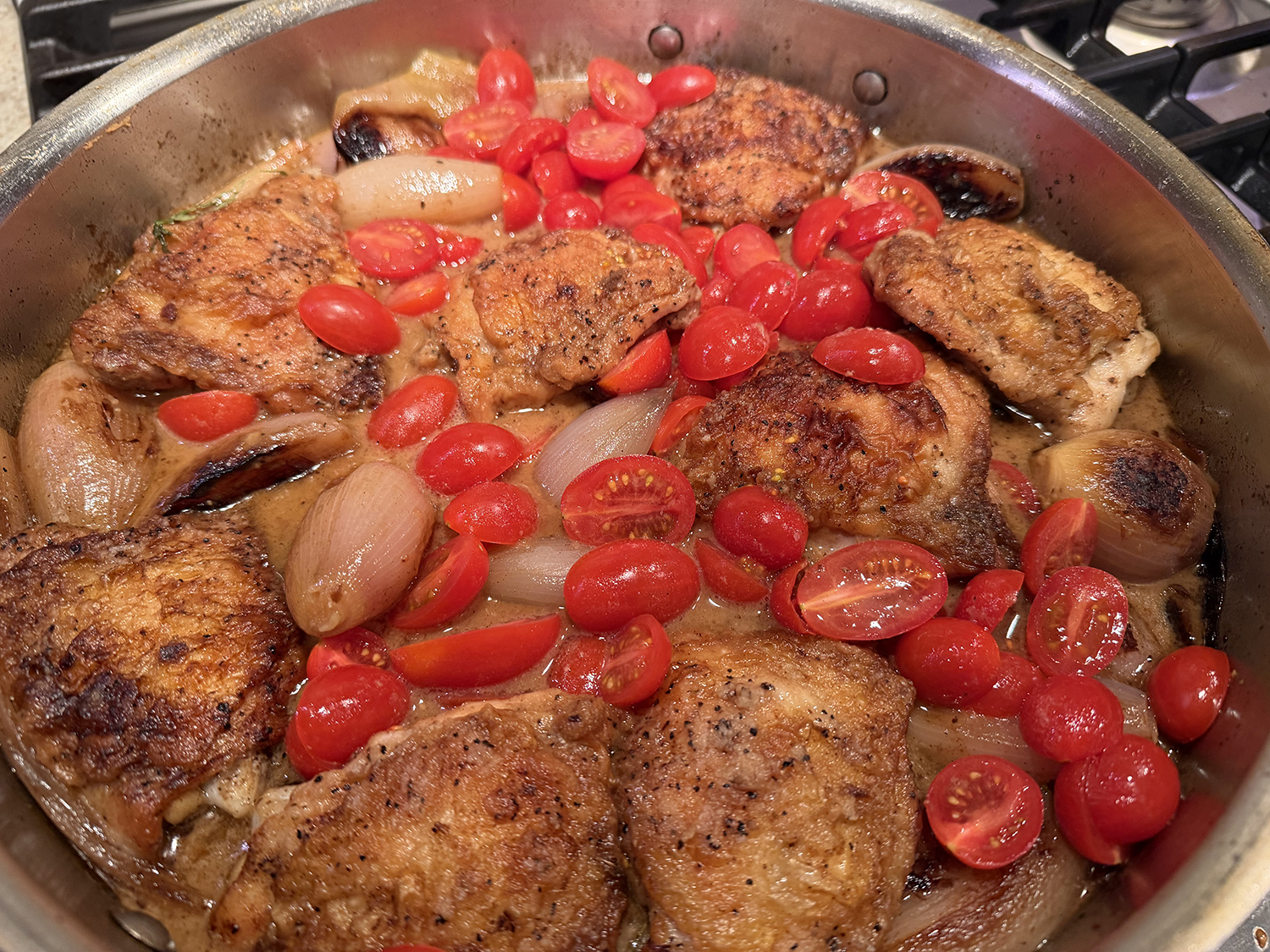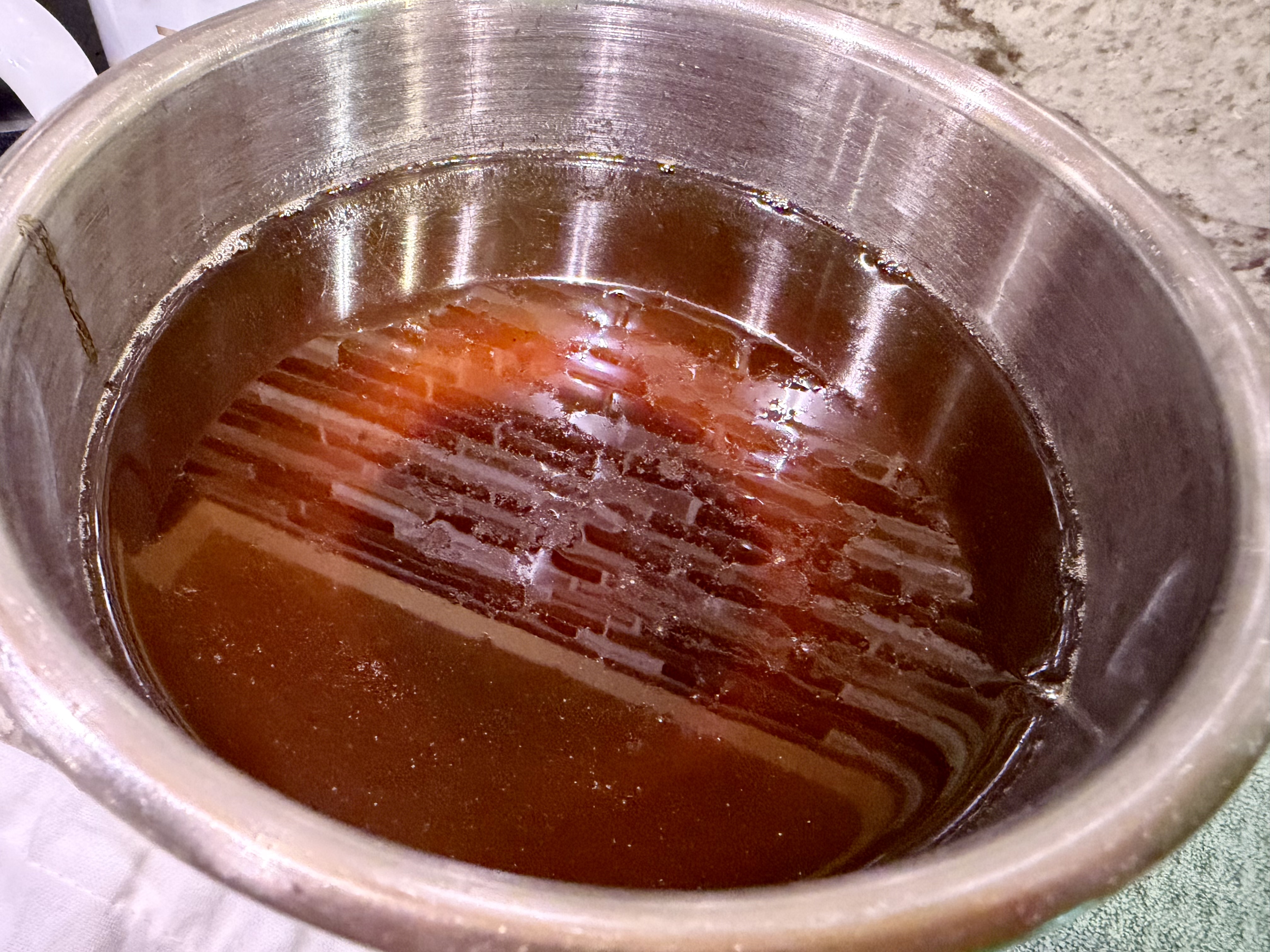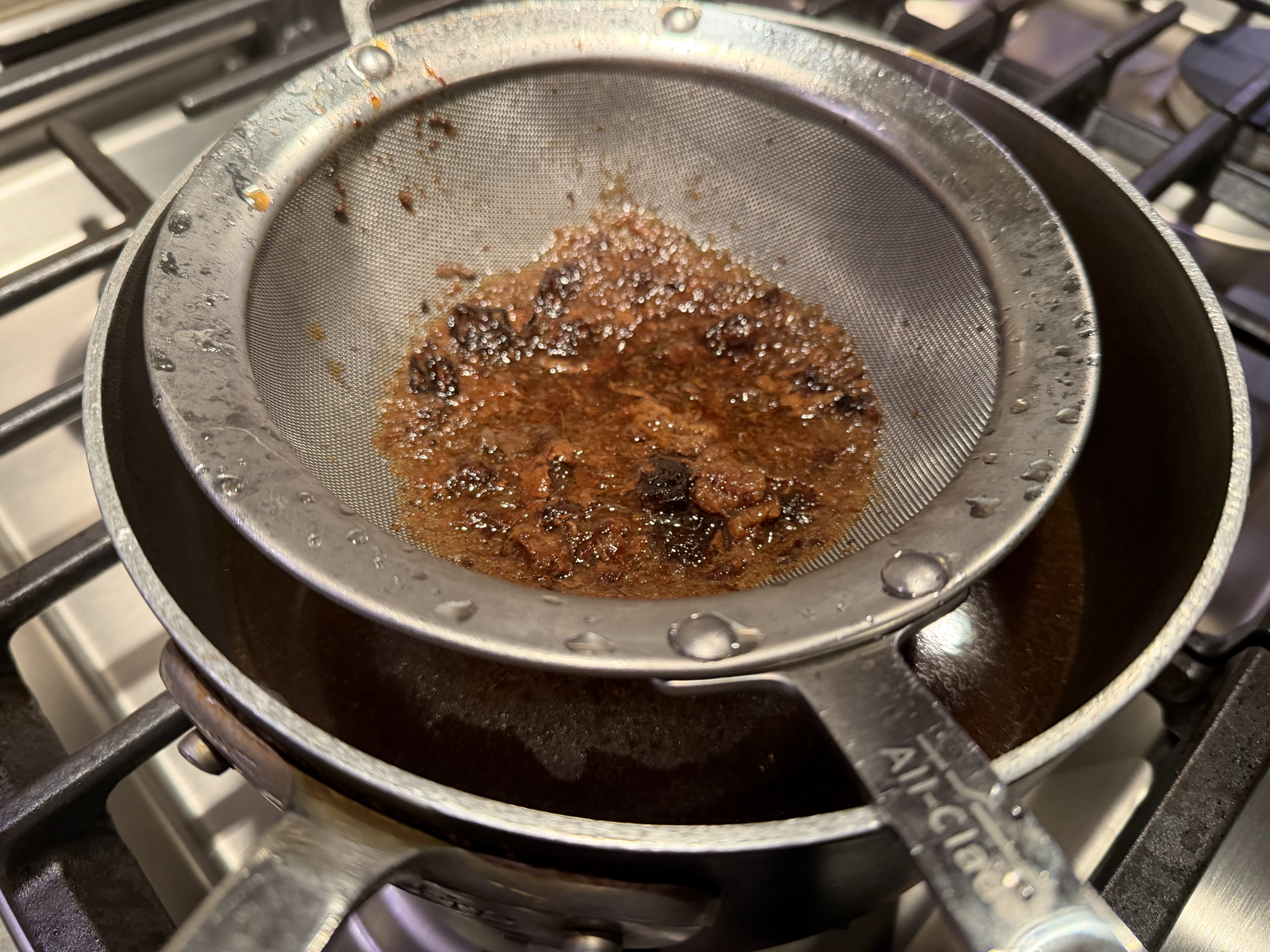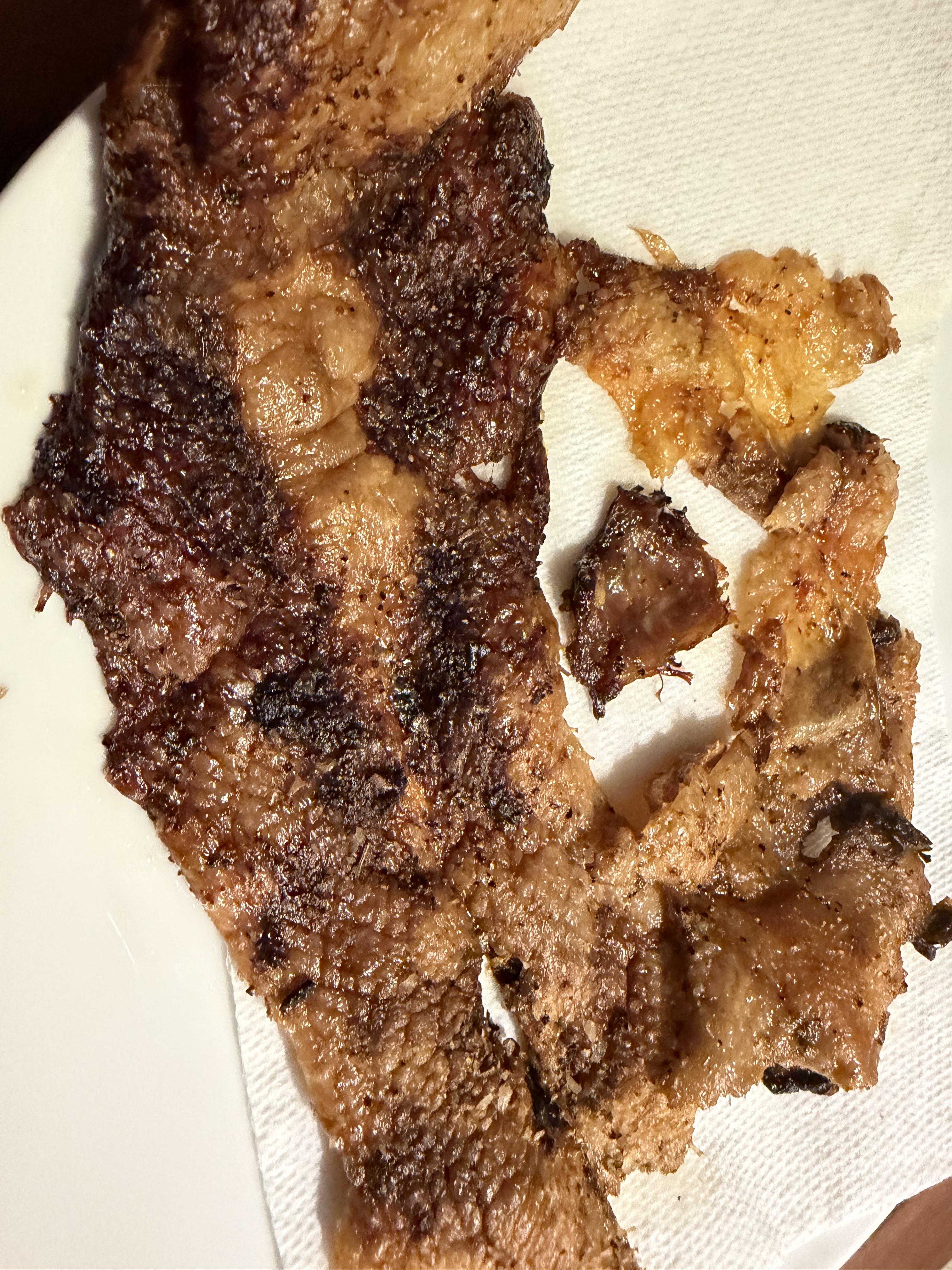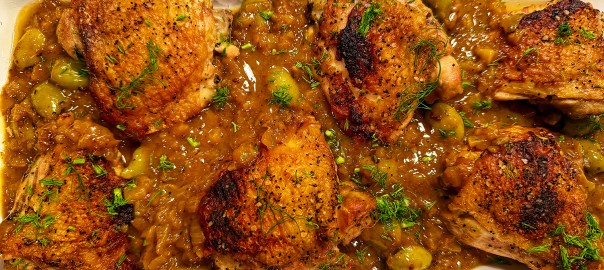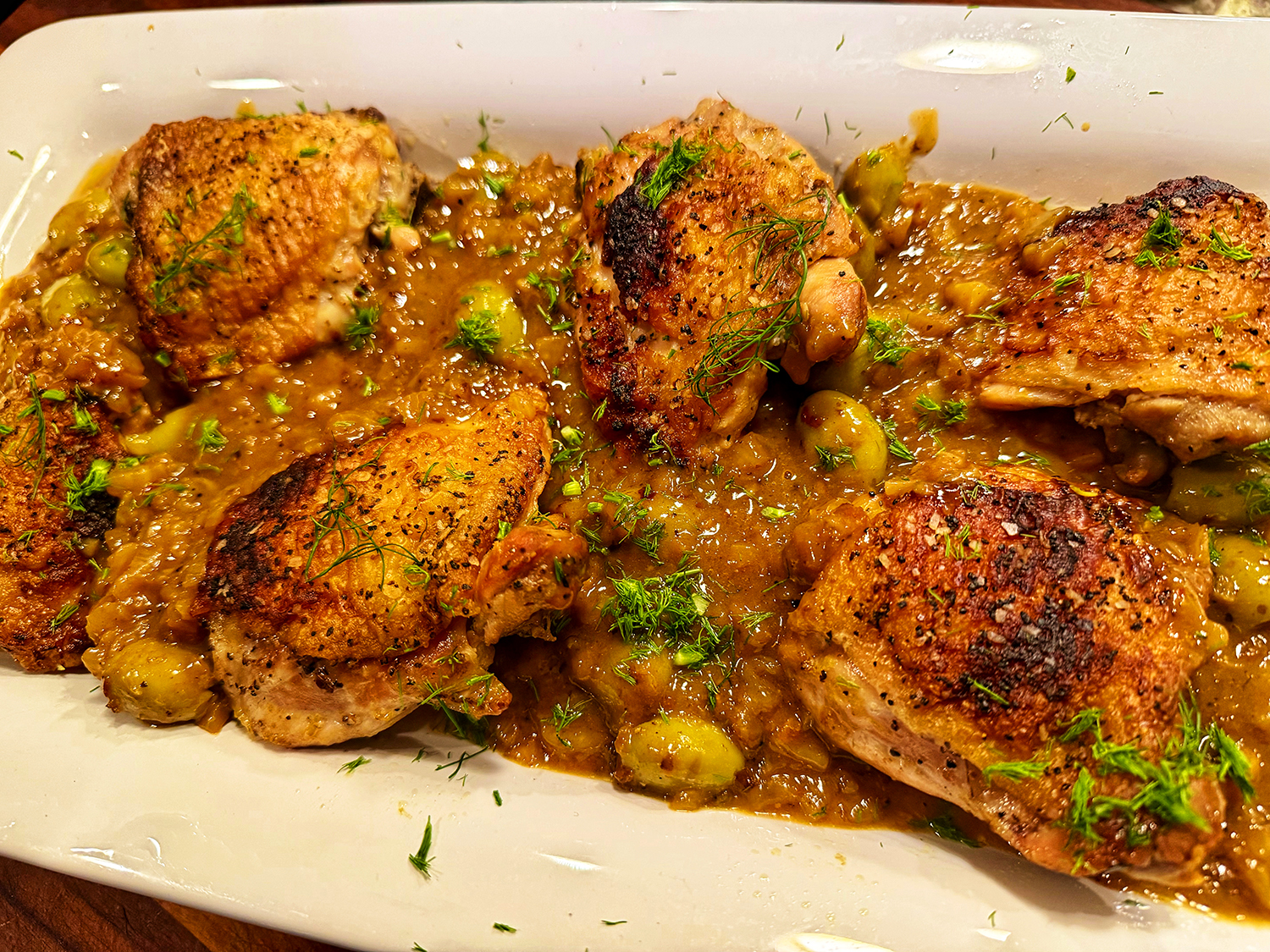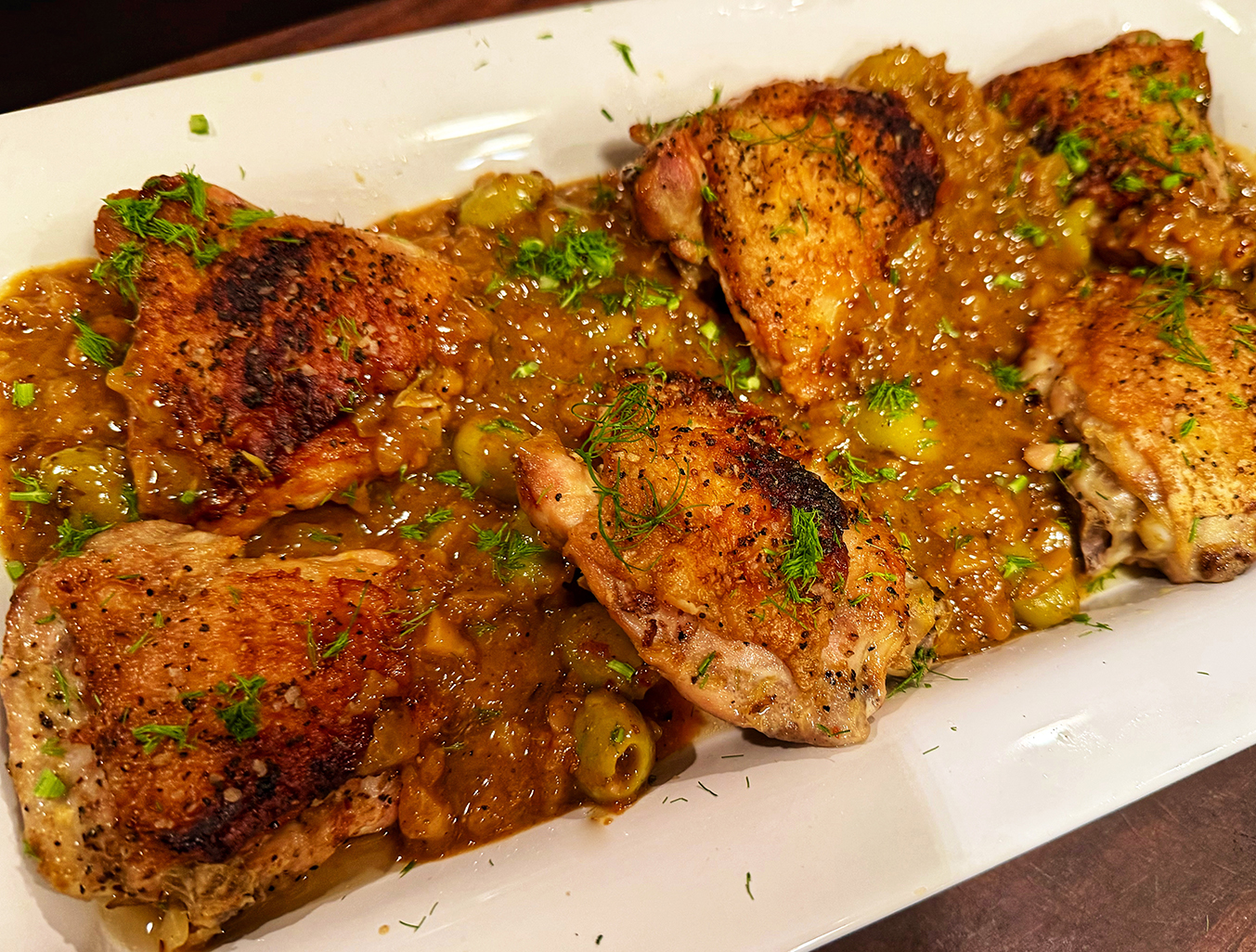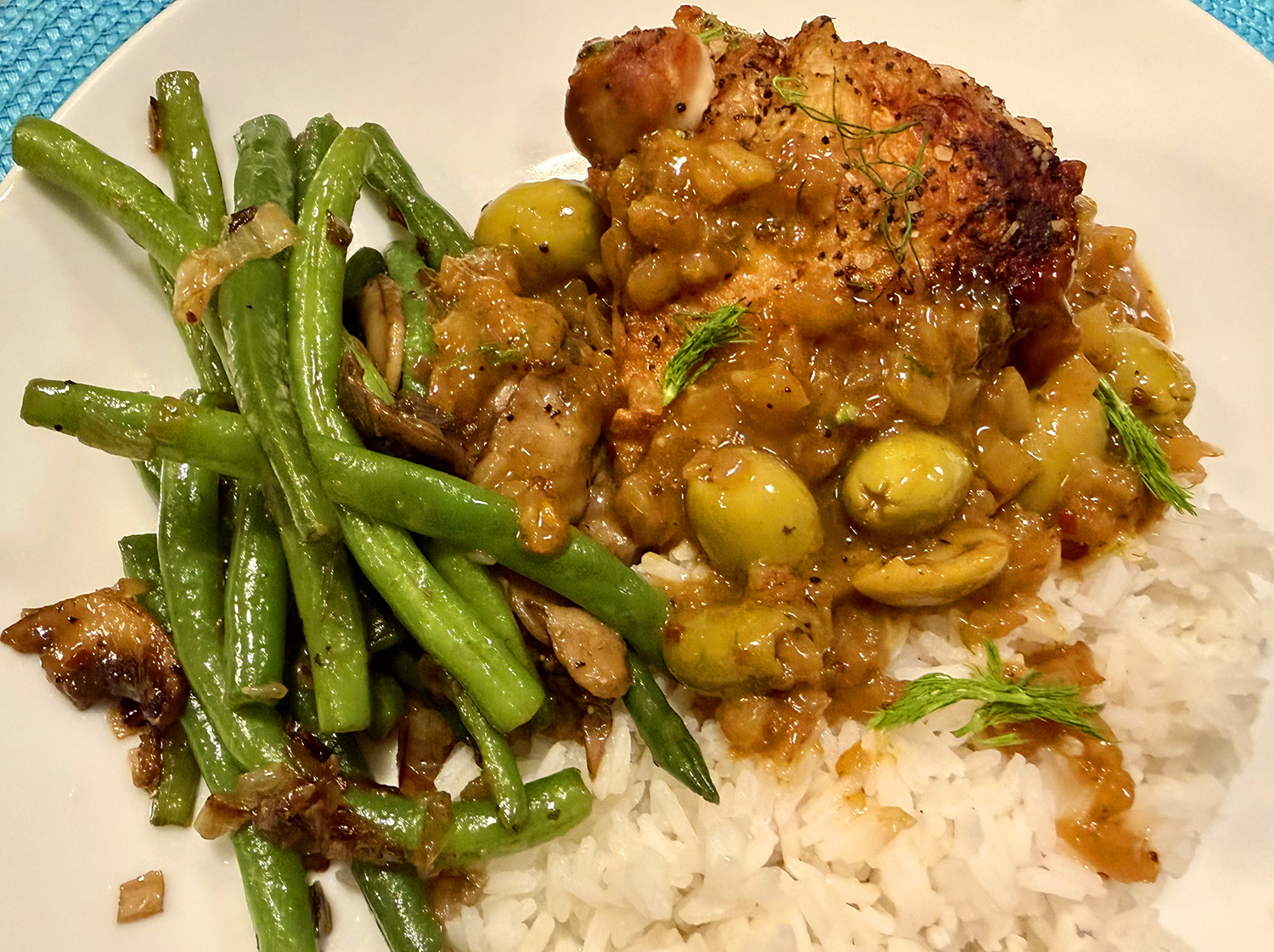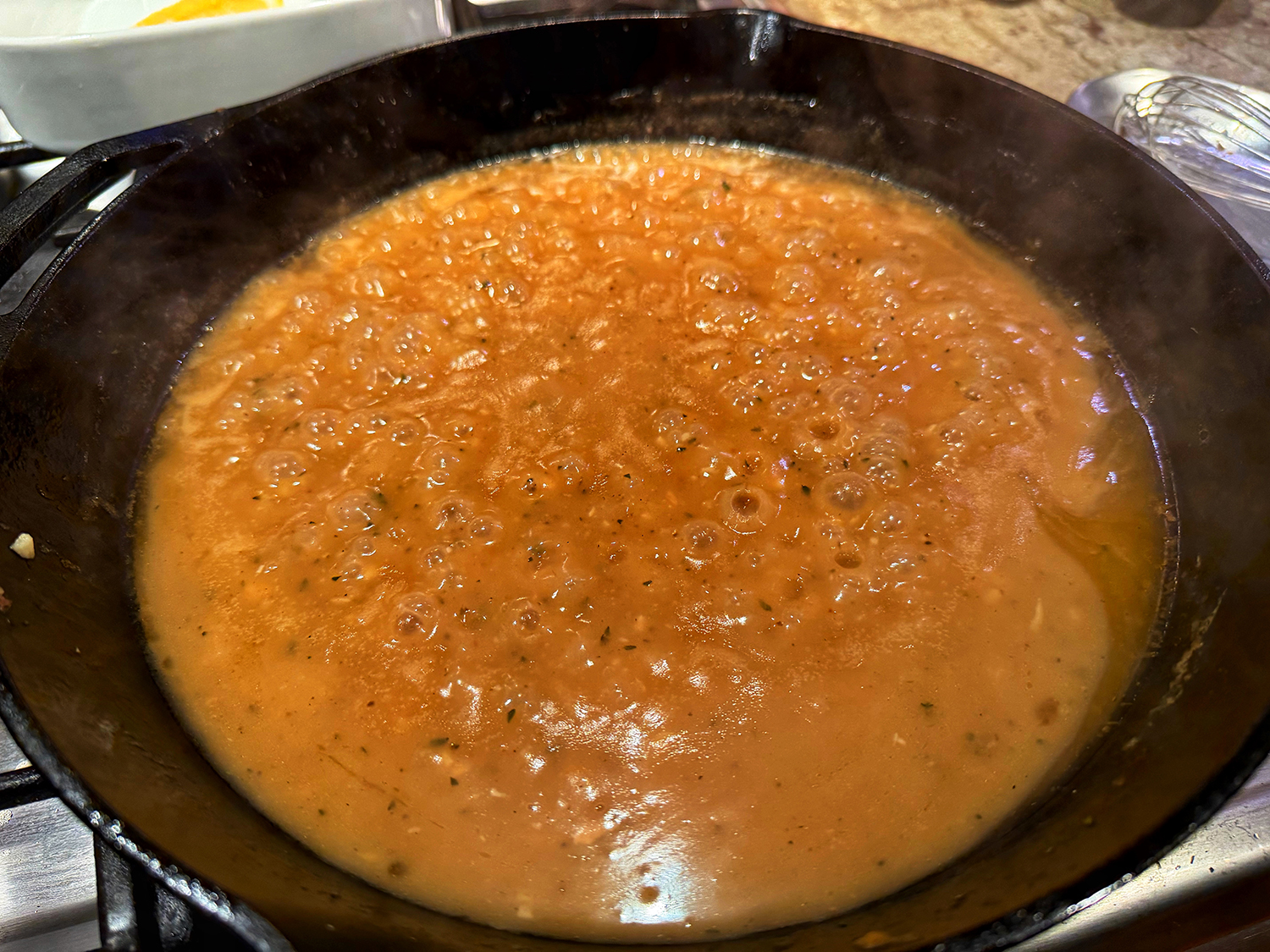
Awesome sauce—literally!! Of course using your own homemade chicken stock amps up the depth of flavor tremendously, and The Hubs had recently made a double batch. This stove-to-oven method produces well-rendered skin, meltingly-tender meat, and a savory ready-made sauce.
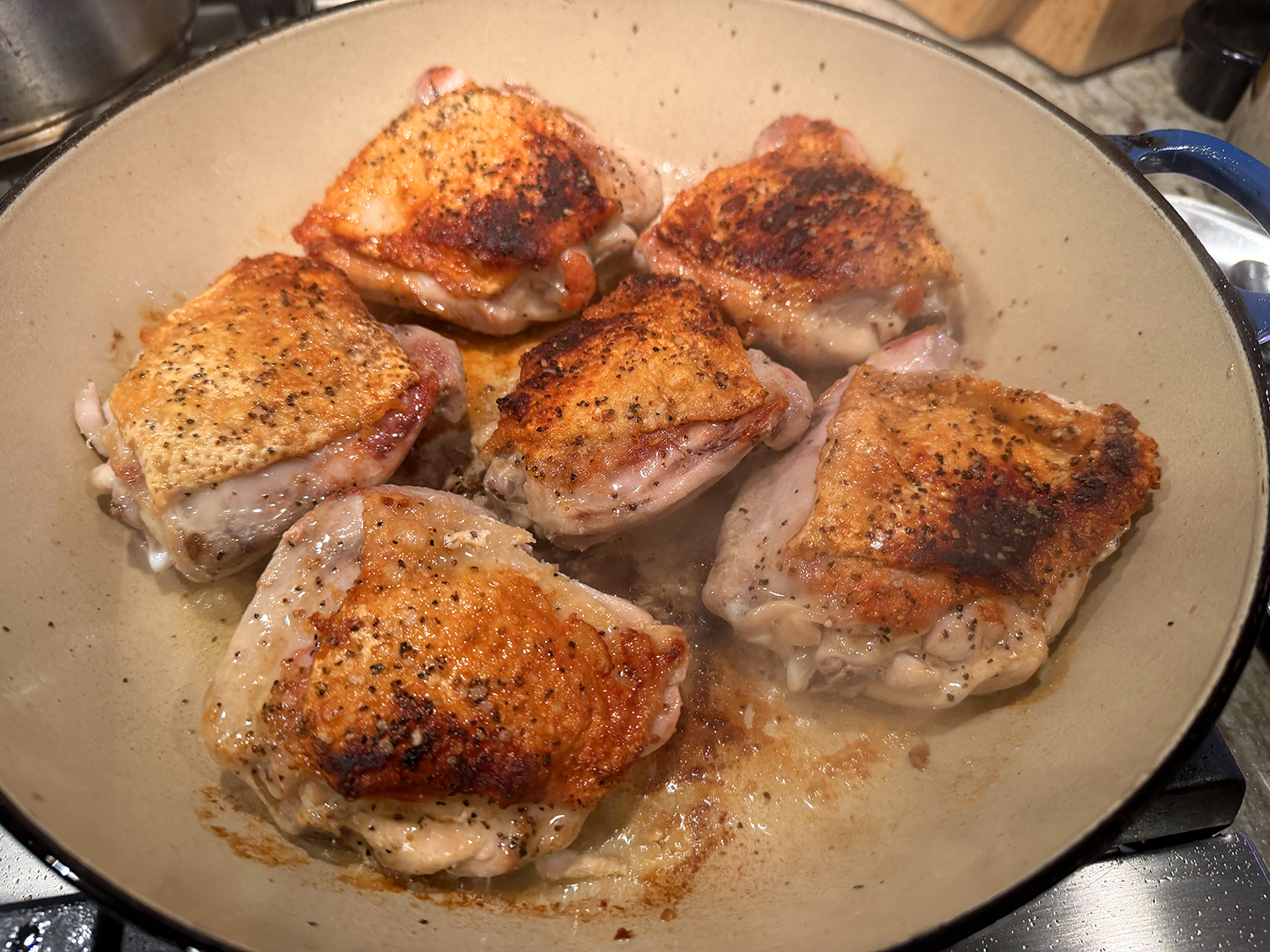
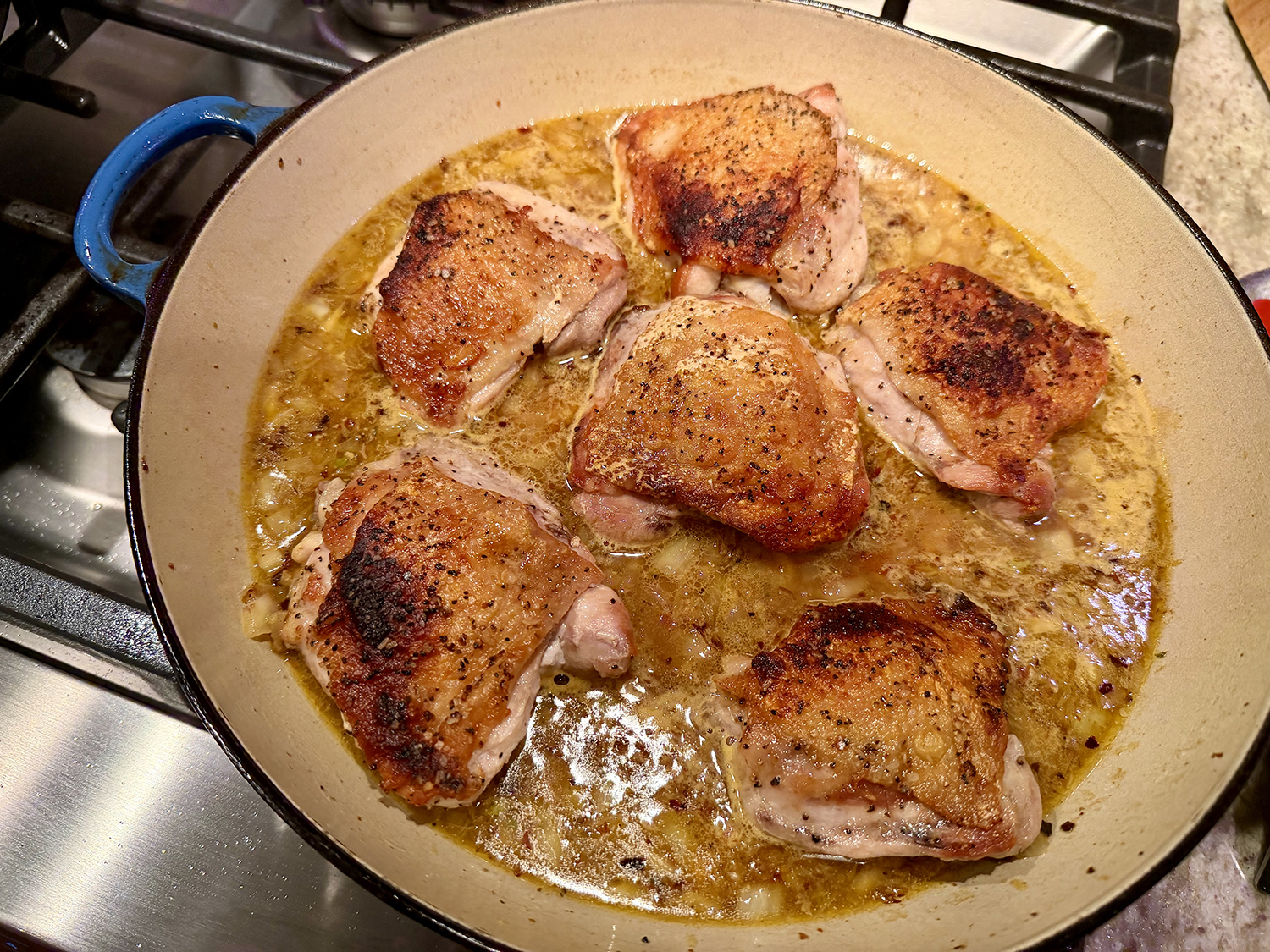
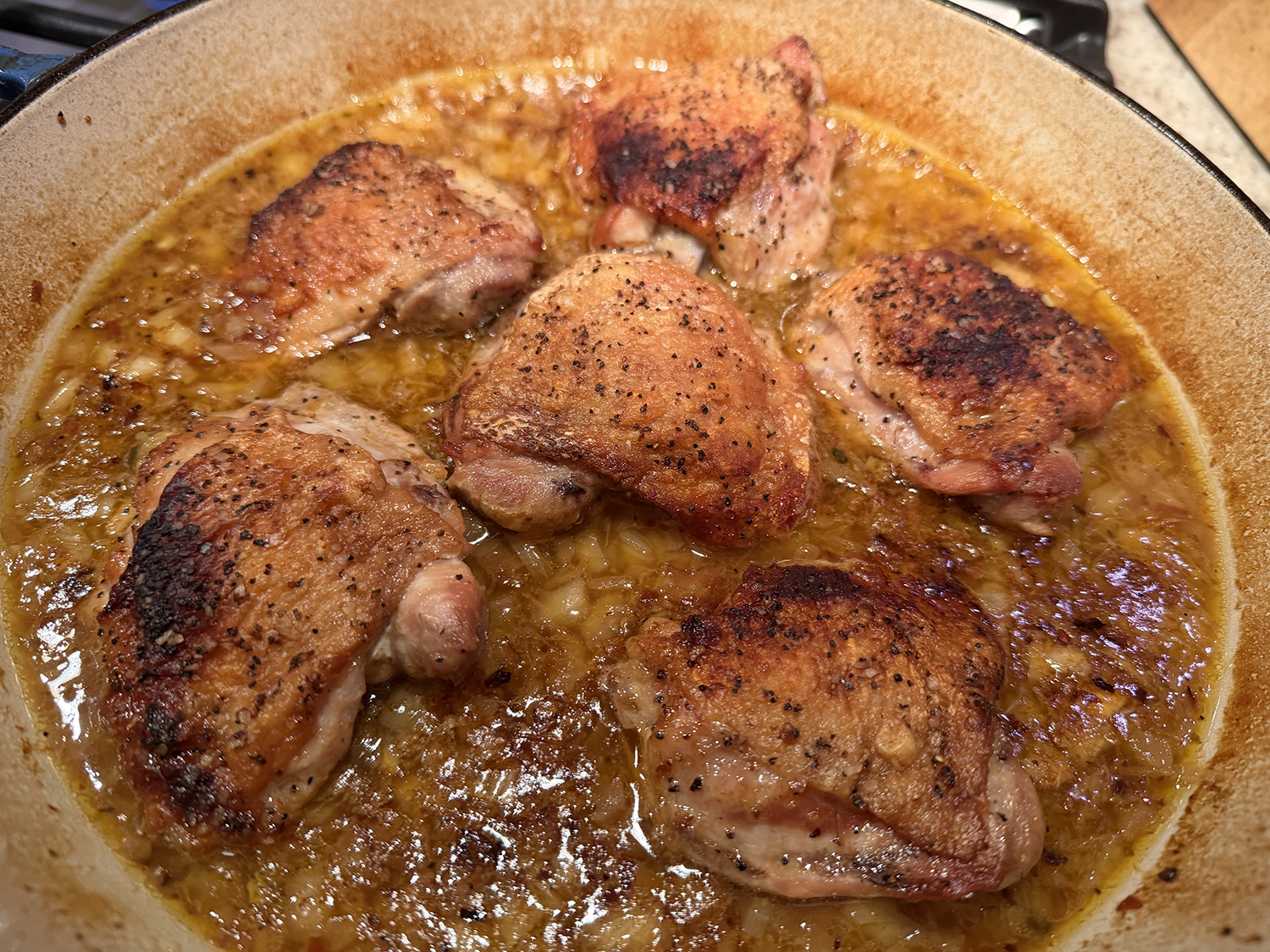
The braise is started by searing bone-in, skin-on thighs to crisp the skin. The thighs are then transferred to the oven where they simmer, skin side up, in a flavorful mix of chicken broth, orange juice, fennel, and Pernod until they reached 195 degrees and turned tender and juicy.
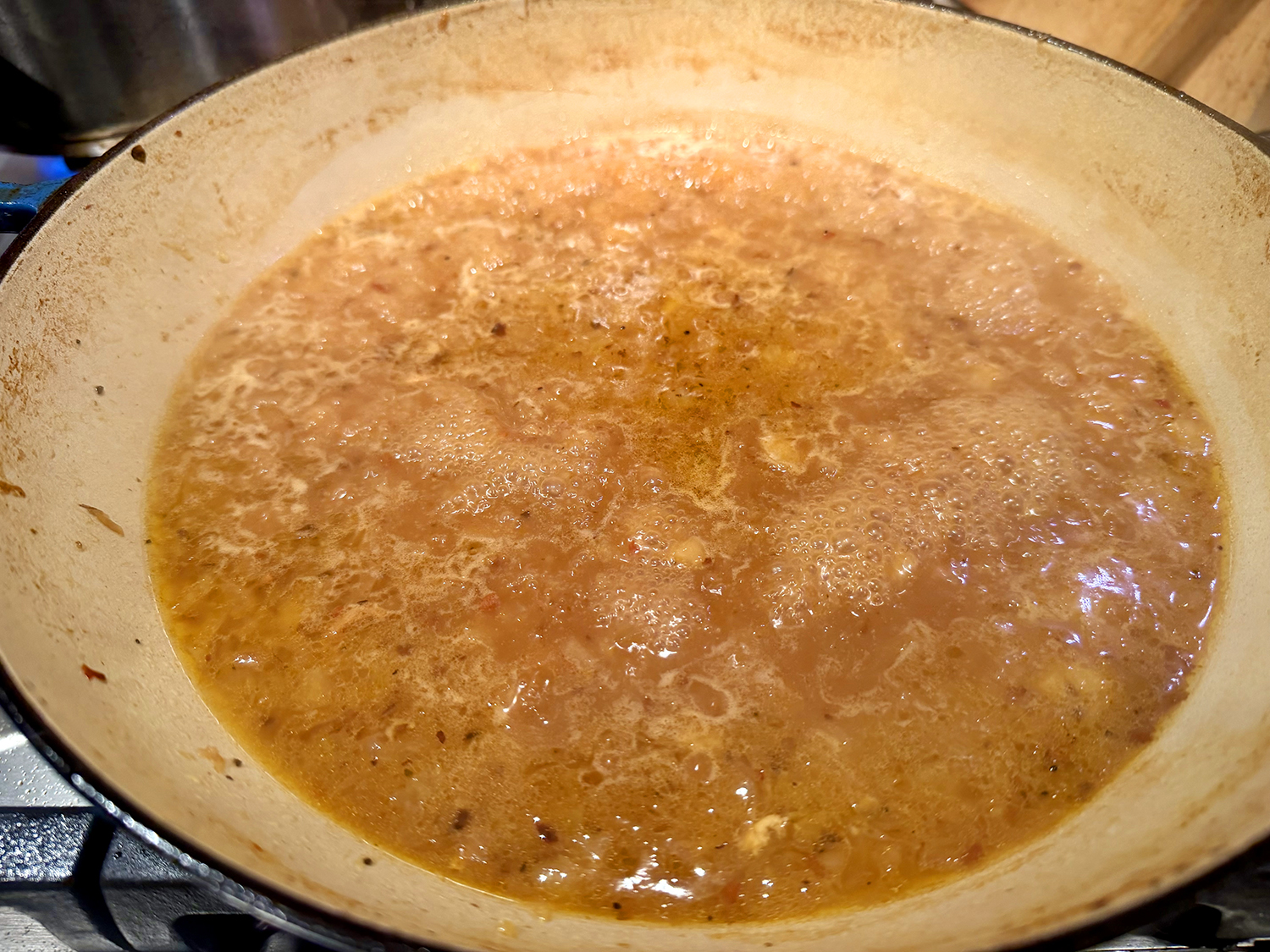
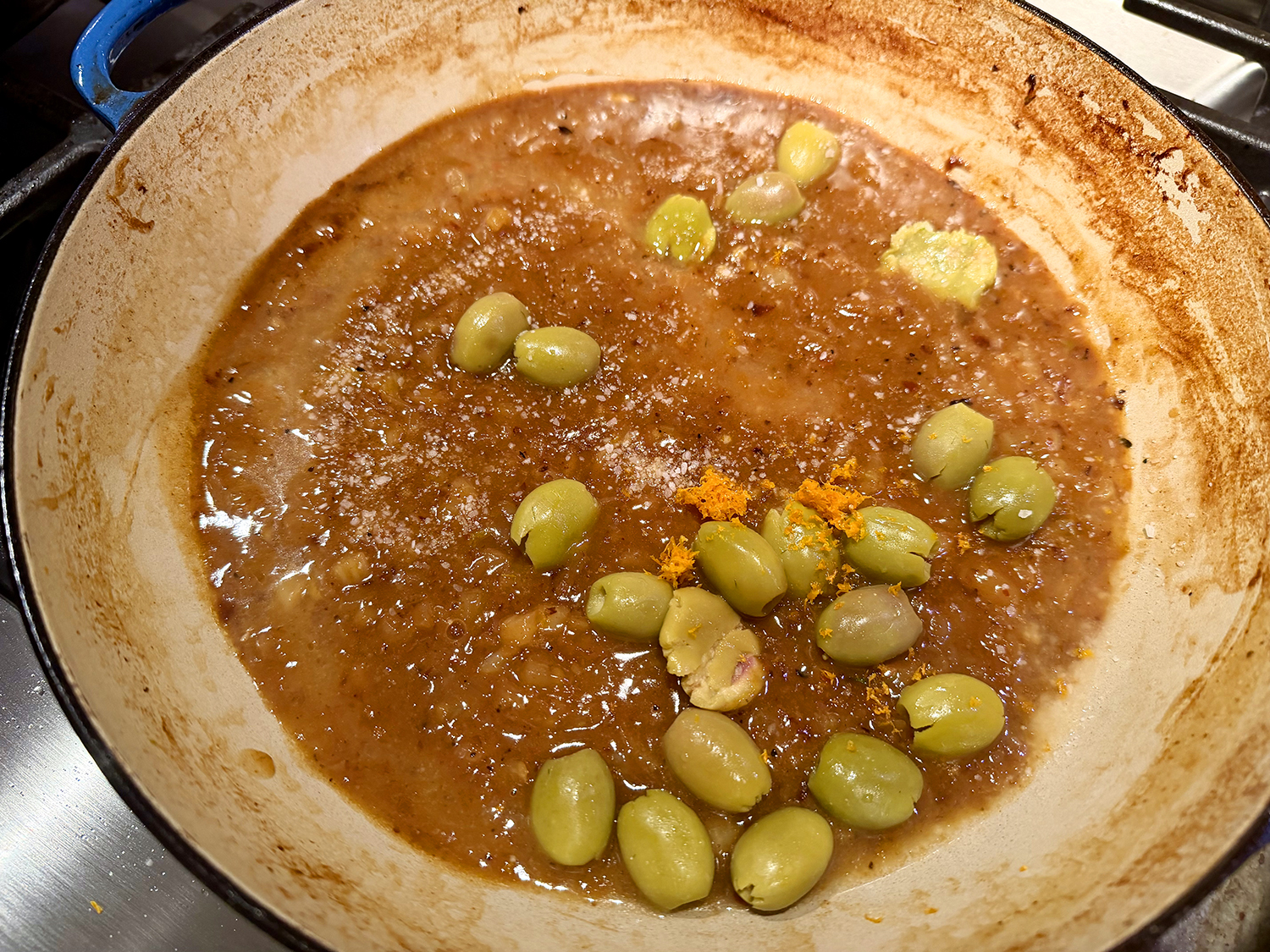
To finish that incredible sauce, the braising liquid is reduced to concentrate its flavors before whisking in a cornstarch slurry to thicken it to a luxurious, velvety consistency. Last-minute additions of olives, orange zest, and minced fennel fronds make for a deliciously fragrant finish.
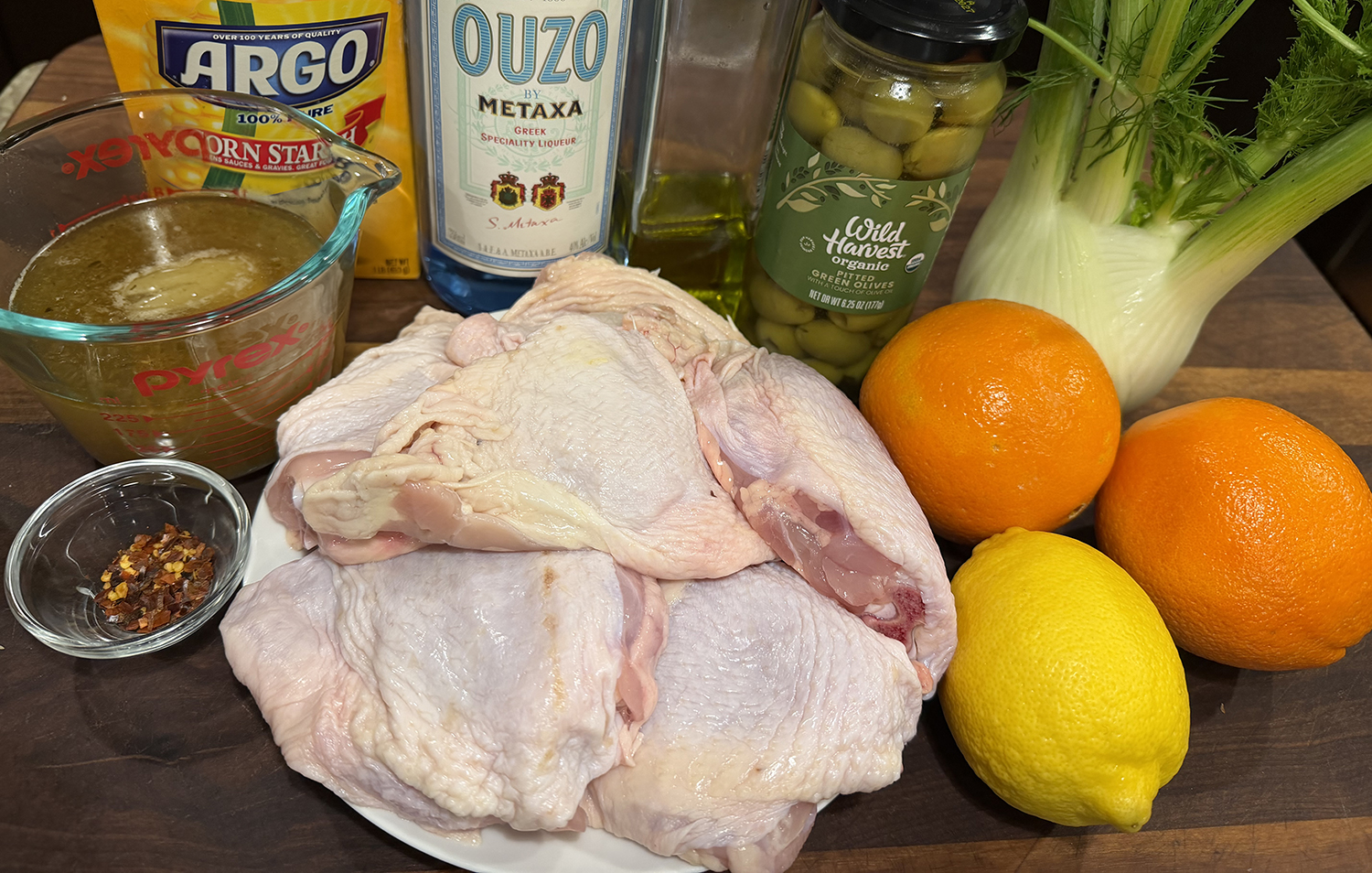
French Pernod is made with star anise, fennel, and other herbs and botanicals. The anise or black licorice flavor is strong, though not quite as potent as liqueurs like absinthe and pastis. Not having any Pernod on hand, we substituted Greek Ouzo, a dry anise-flavored aperitif.
NOTES: Other brine-cured green olives such as Cerignola or Picholine can be used for the Castelvetrano. Sambuca or Ouzo can be substituted for the Pernod. Serve with your favorite potatoes, rice, or buttered noodles and a vegetable side dish.
Braised Chicken Thighs with Fennel, Orange and Cracked Olives
1 small fennel bulb, 2 tsp. fronds minced, stalks discarded, bulb halved, cored, and chopped fine
¼ tsp. red pepper flakes
1 cup chicken broth, preferably homemade
½ teaspoon grated orange zest plus 1 cup juice (2 oranges)
2 Tbsp. Pernod, OR Sambuca, OR Ouzo
2 Tbsp. lemon juice
2 tsp. water
1½ tsp. cornstarch
20 pitted Castelvetrano olives, cracked
Directions
Adjust oven rack to lower-middle position and heat oven to 325 degrees. Pat chicken dry with paper towels and sprinkle both sides with salt and pepper. Heat oil in 12-inch ovensafe skillet over medium heat until shimmering. Add chicken, skin side down, and cook, without moving it, until well browned, about 8 minutes. Using tongs, flip chicken and brown on second side, about 3 minutes. Transfer chicken to large plate.
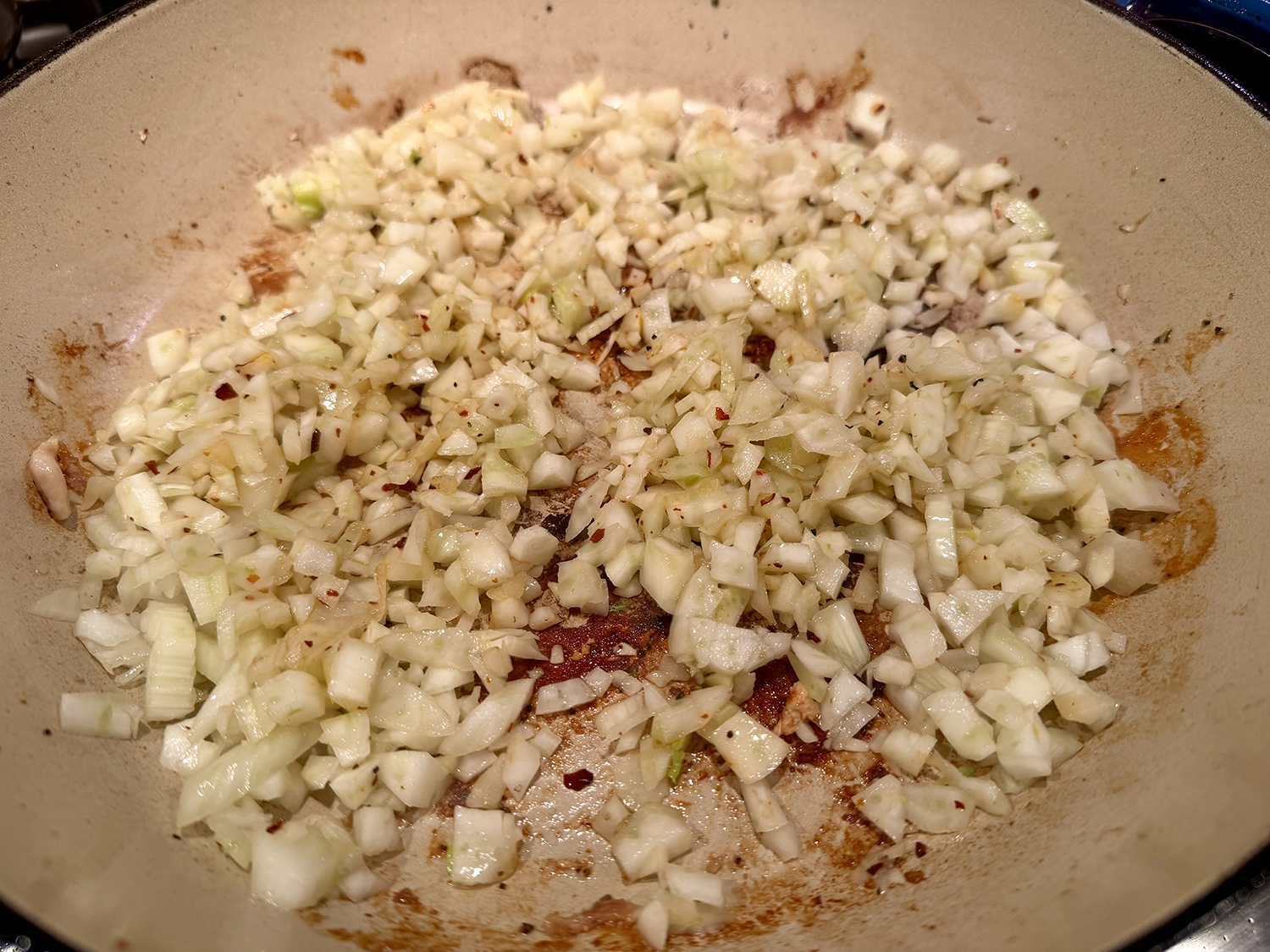
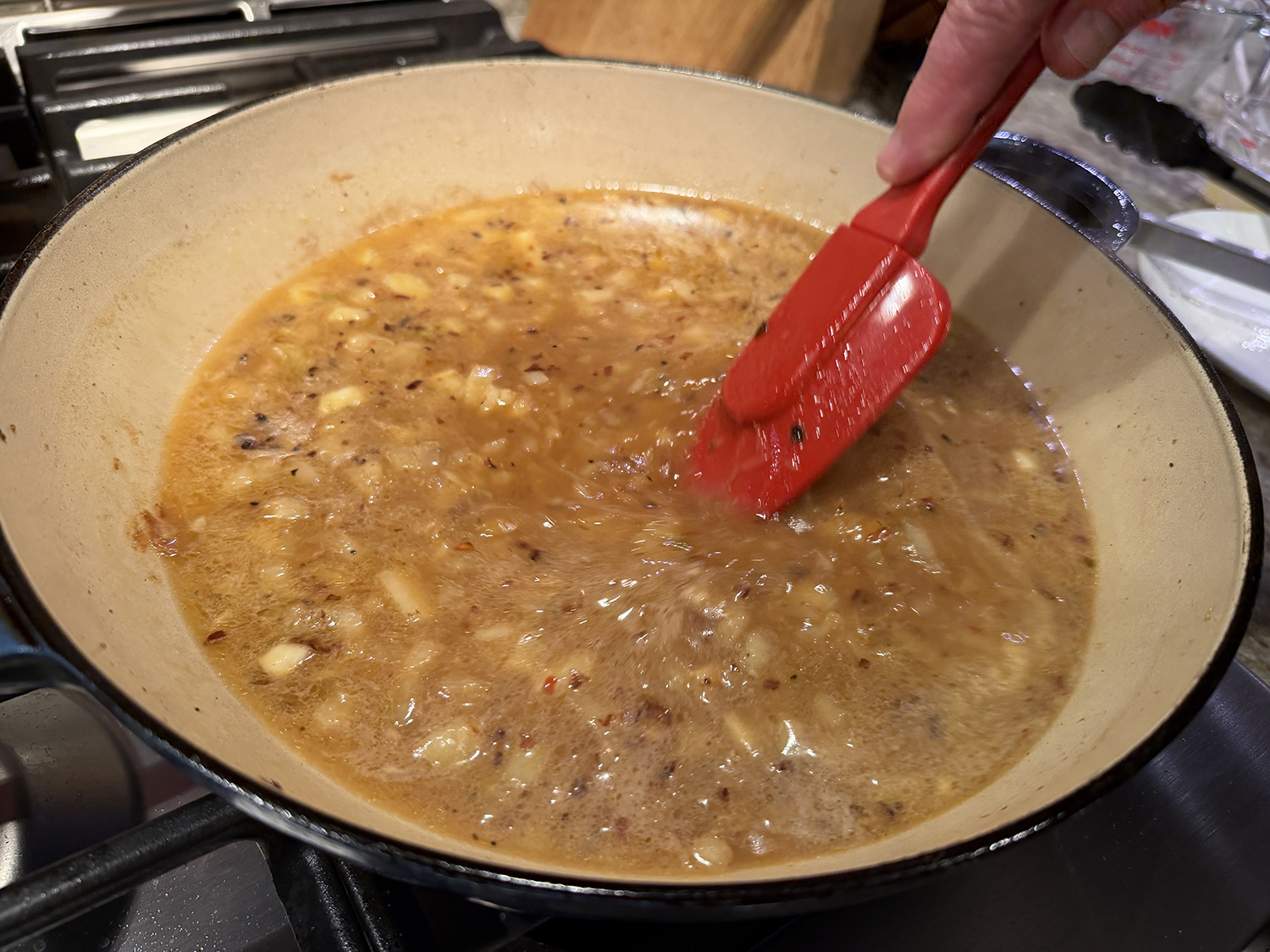
Pour off all but 2 tablespoons fat from skillet. Add chopped fennel and red pepper flakes and cook, stirring frequently, until fennel is lightly browned, 4 to 5 minutes. Add broth, orange juice, and Pernod; bring to simmer, scraping up any browned bits. Return chicken to skillet, skin side up (skin will be above surface of liquid). Transfer skillet to oven and bake, uncovered, until chicken registers 195 degrees, 35 to 40 minutes. Whisk water and cornstarch together in small bowl; set aside.
Using tongs, transfer chicken to serving platter and tent with aluminum foil. Place skillet over high heat. Cook, occasionally scraping side of skillet to incorporate fond, until sauce is thickened and reduced to 1½ cups, 8 to 10 minutes. Adjust heat to medium-low. Whisk cornstarch mixture to recombine and then whisk into sauce and simmer until thickened, about 1 minute. Off heat, whisk in lemon juice, olives, and orange zest, and season with salt and pepper to taste. Pour sauce around chicken, top with fennel fronds, and serve.
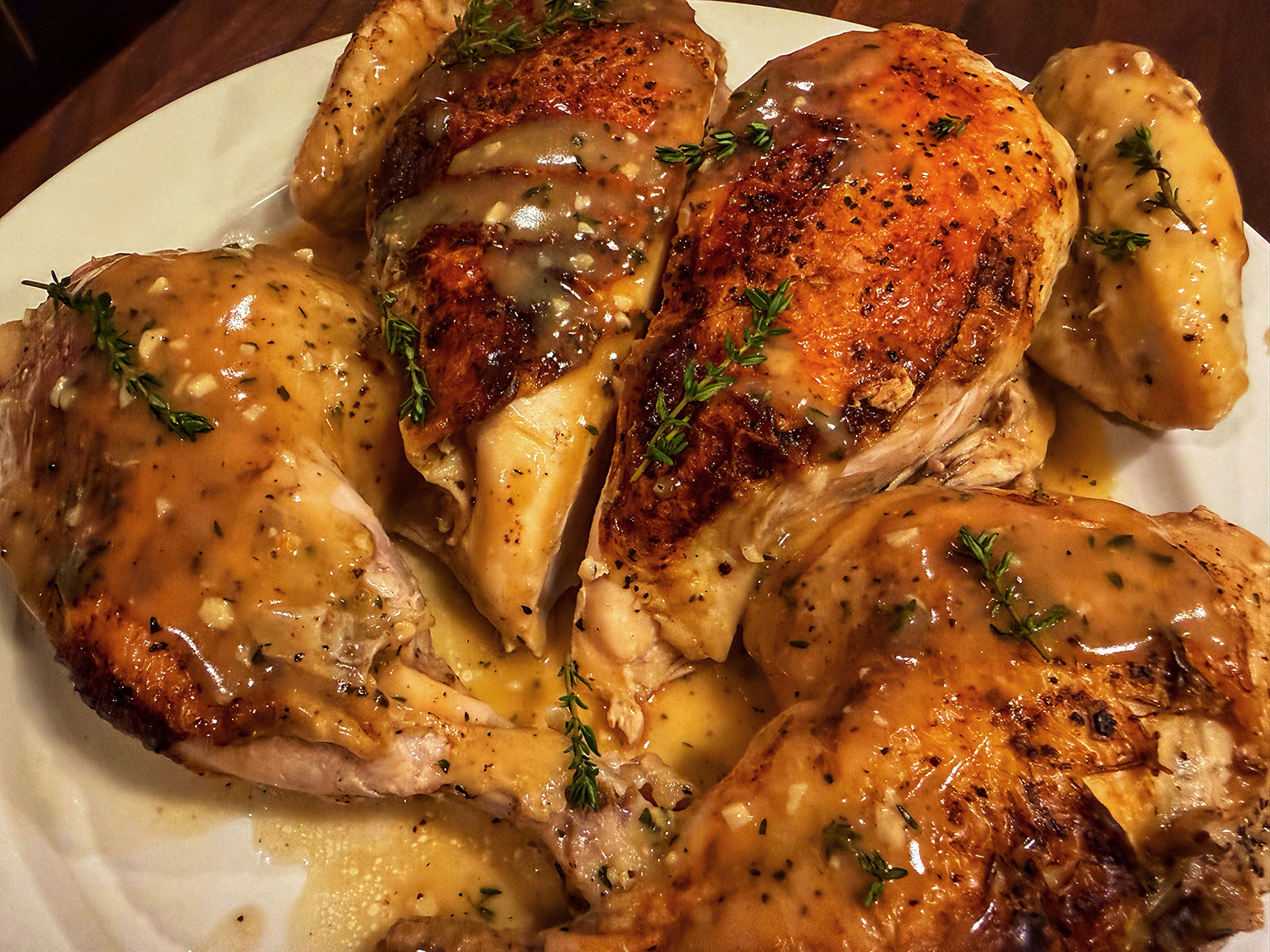
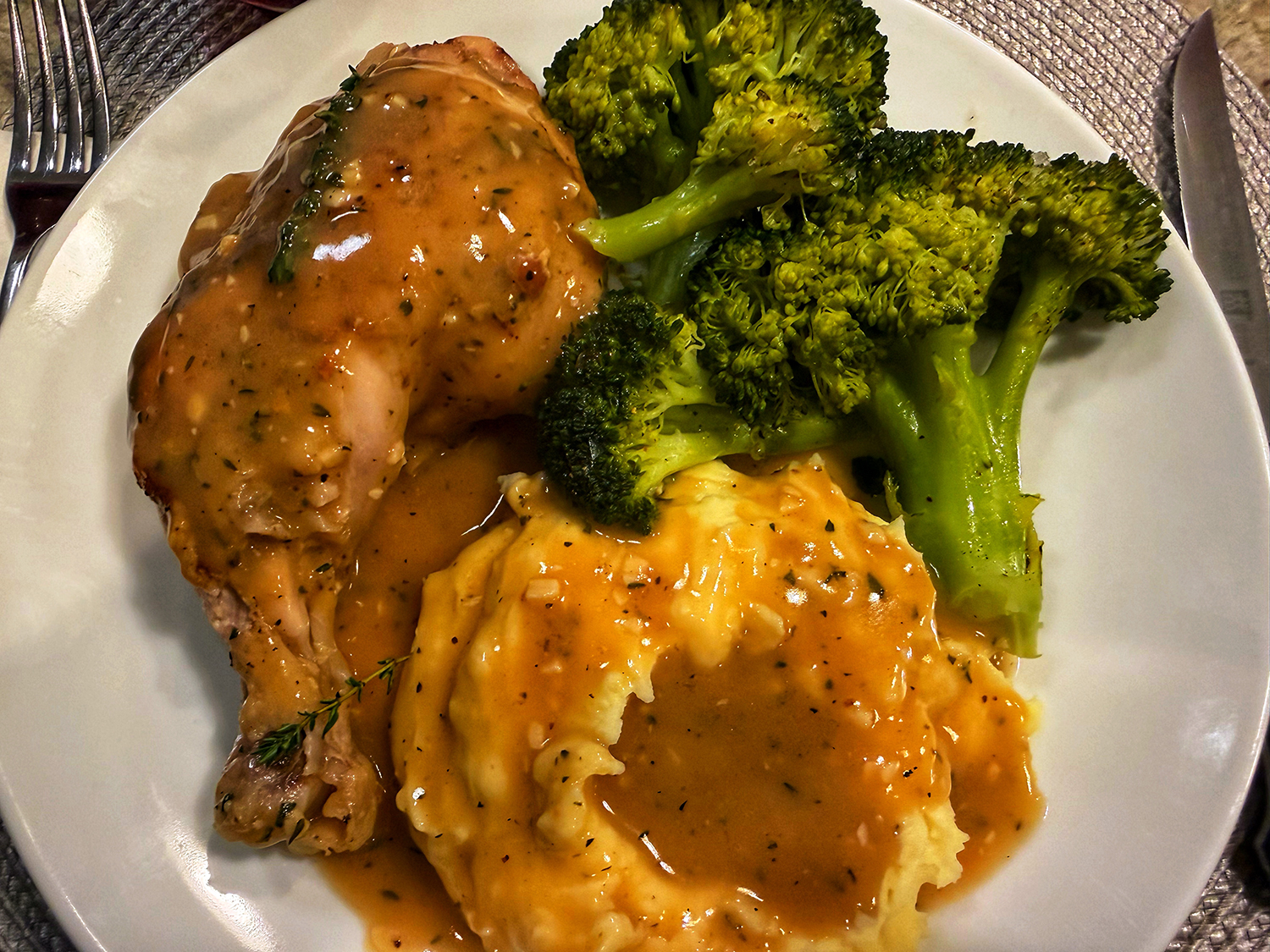
A whole roasted chicken with mashed potatoes and homemade gravy will always fall into the “comfort food” category for me. This recipe is adapted from Craig Claiborne, a child of Mississippi who started as food editor of The NY Times in 1957, and believed a cast-iron skillet to be essential for the authentic preparation of this dish. All of it is done on the stovetop, no need to heat up the oven.
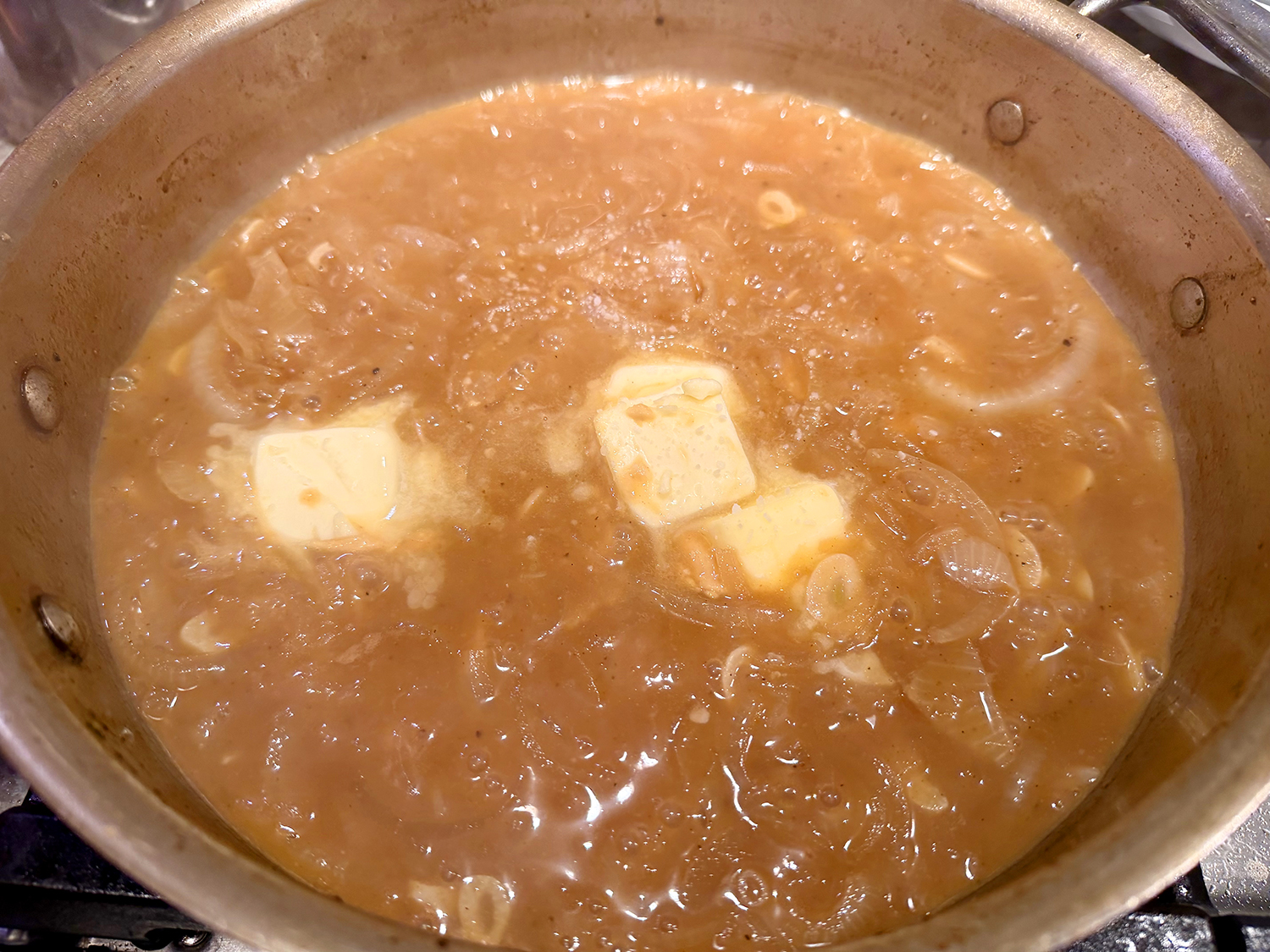
We took the liberty of enhancing the recipe with a few more aromatics including garlic and fresh thyme (noted below). Our variation when making the gravy, was to add 3 cloves of minced garlic along with the butter into the fat in the pan, cooking until fragrant.
Some vermouth was also included along with homemade chicken stock. Our bird weighed in at more than 4 pounds, so we adjusted the liquid to produce a bit more gravy—which we wanted to drench the creamy mashed potatoes.
Now you can substitute bone-in, skin-on thighs for the whole chicken, but we love the leftover parts for making our homemade stock. And if you have both white meat and dark meat lovers at the table, an entire bird makes sense. The white meat is super moist when cooked in this fashion.
Our choice sides included steamed broccoli and garlicky mashed potatoes.
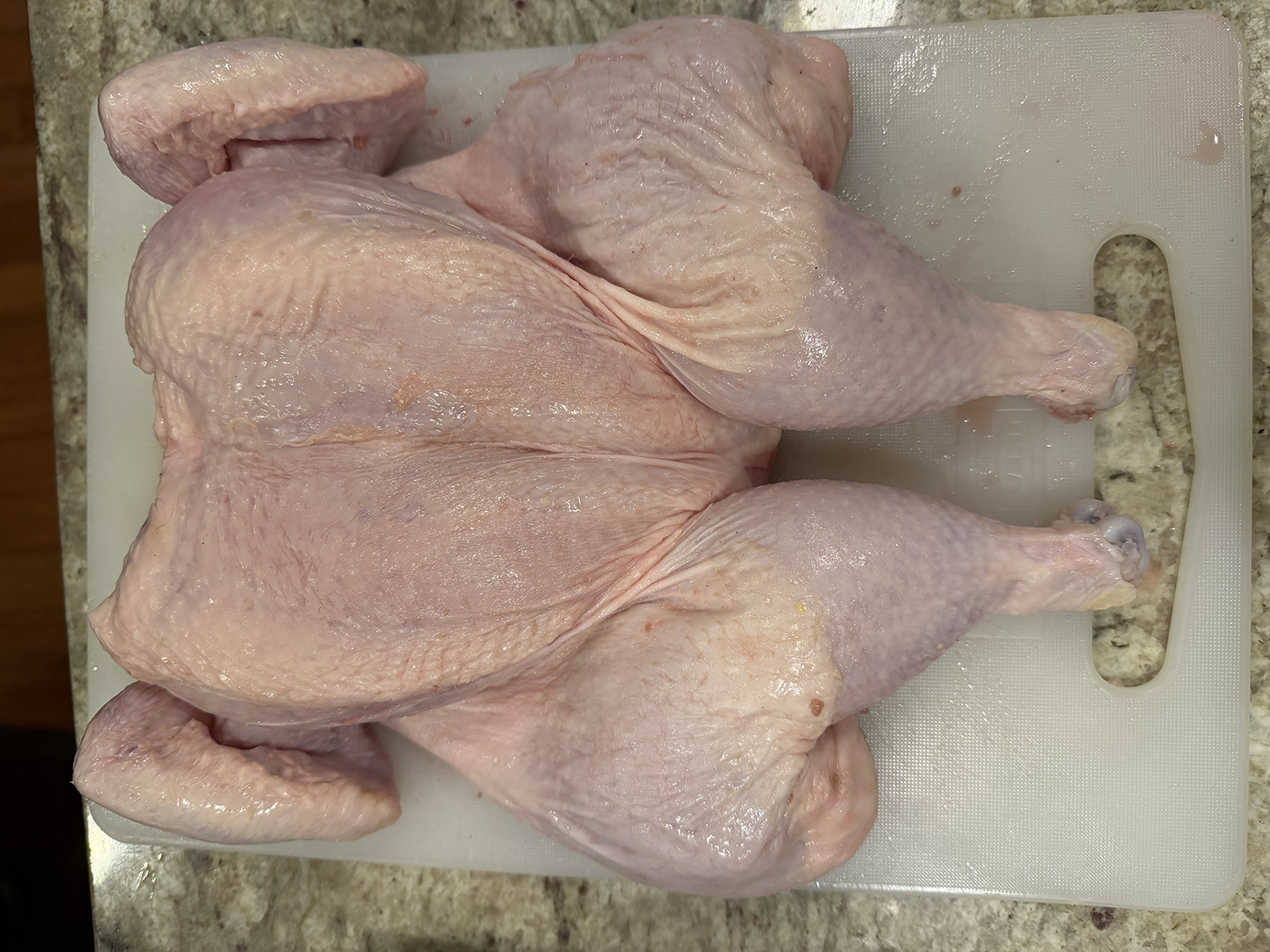
1 chicken, about 3½ to 4 lbs., spatchcocked (split down the backbone, breast left intact and unsplit)
Kosher salt, to taste
Freshly ground pepper, to taste
2 Tbsp. unsalted butter
2 Tbsp. all-purpose flour
1 Tbsp., fresh thyme leaves, chopped
3 large garlic cloves, minced
1½ cups chicken broth, ideally homemade
1/4 cup dry vermouth
Directions
Sprinkle the chicken on both sides with salt and pepper. Select a skillet large enough to hold the chicken comfortably when it is opened up, as for broiling. Fold wings under to secure them.
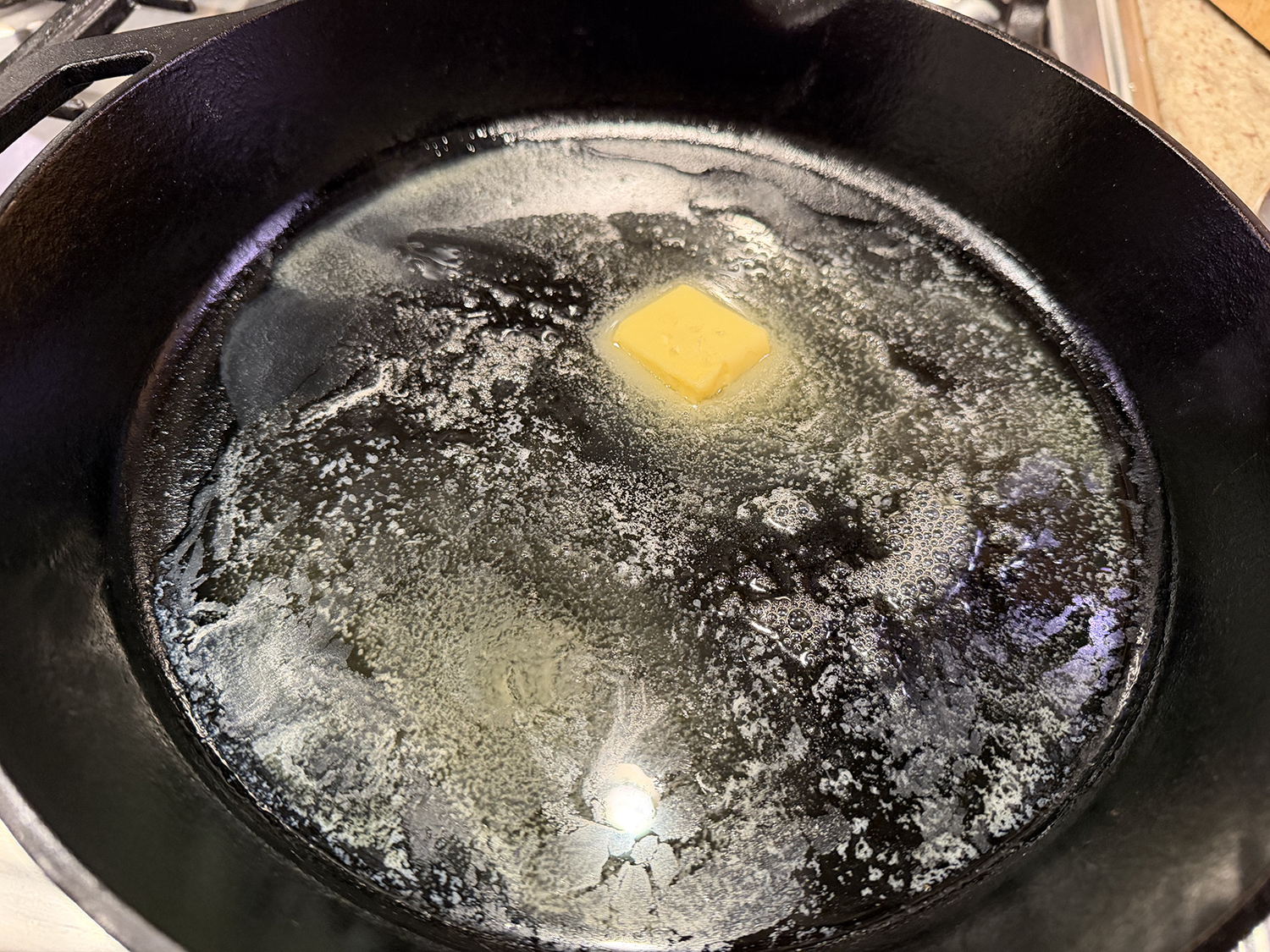
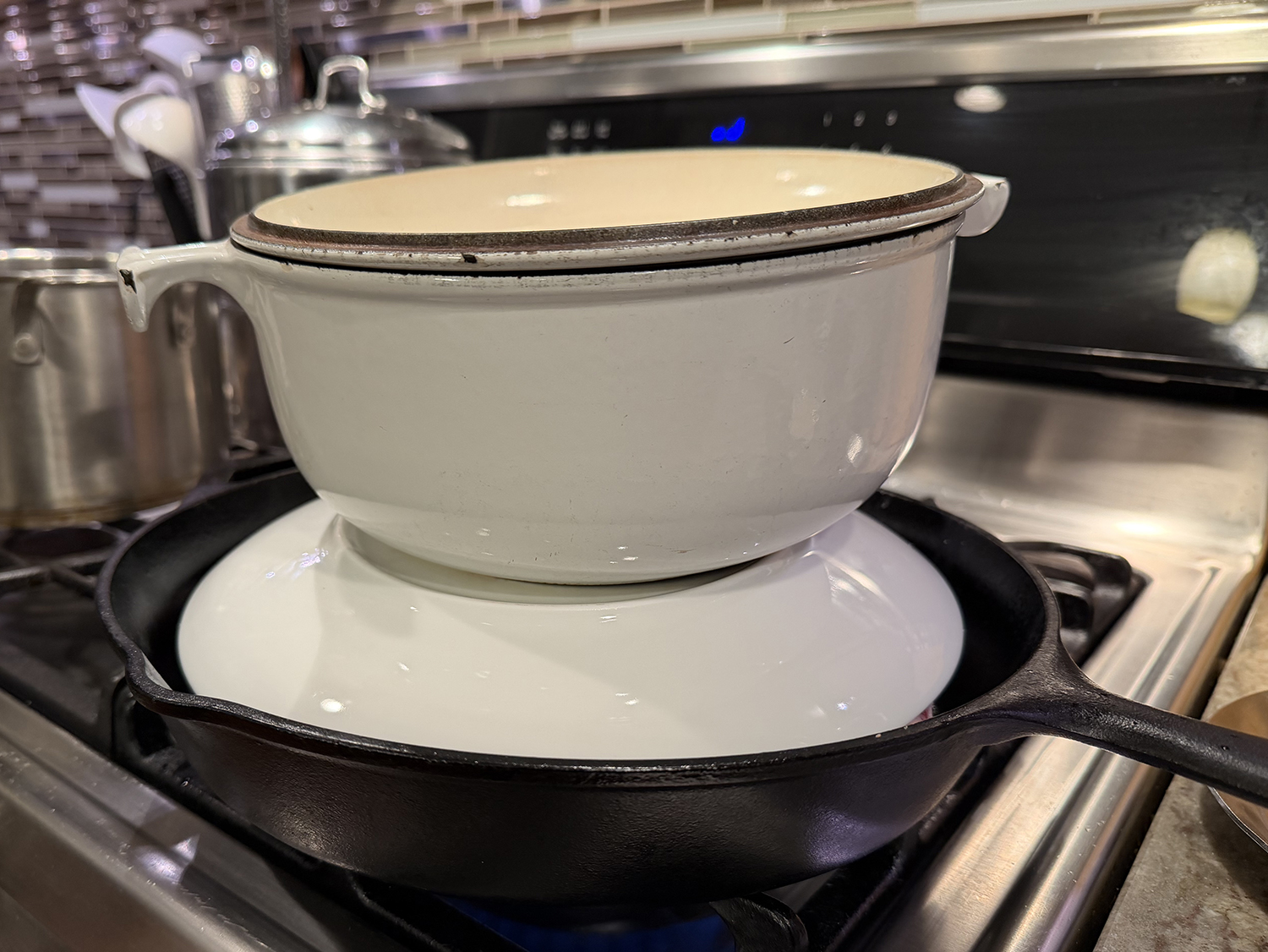
Melt the butter in the pan and add the chicken, skin side down. Cover chicken with a plate that will fit comfortably inside the skillet. Place a heavy pot, stone or brick on top of the plate to weigh it down. Cook over low heat, checking the chicken skin, until it is nicely browned, about 25 minutes.
Remove weight and plate. Turn chicken so skin side is up. Replace plate and weight and continue cooking for about 15 minutes more.
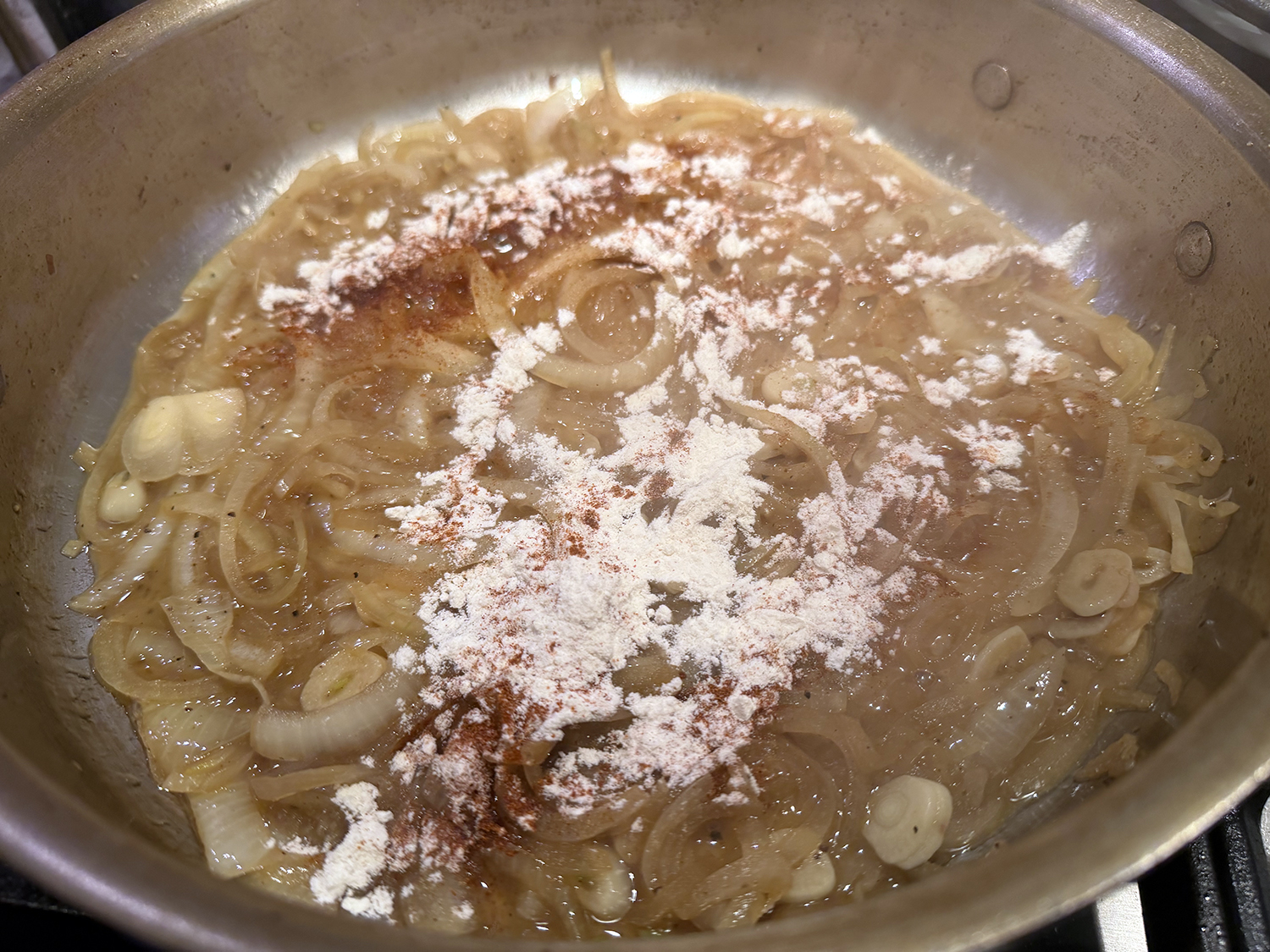
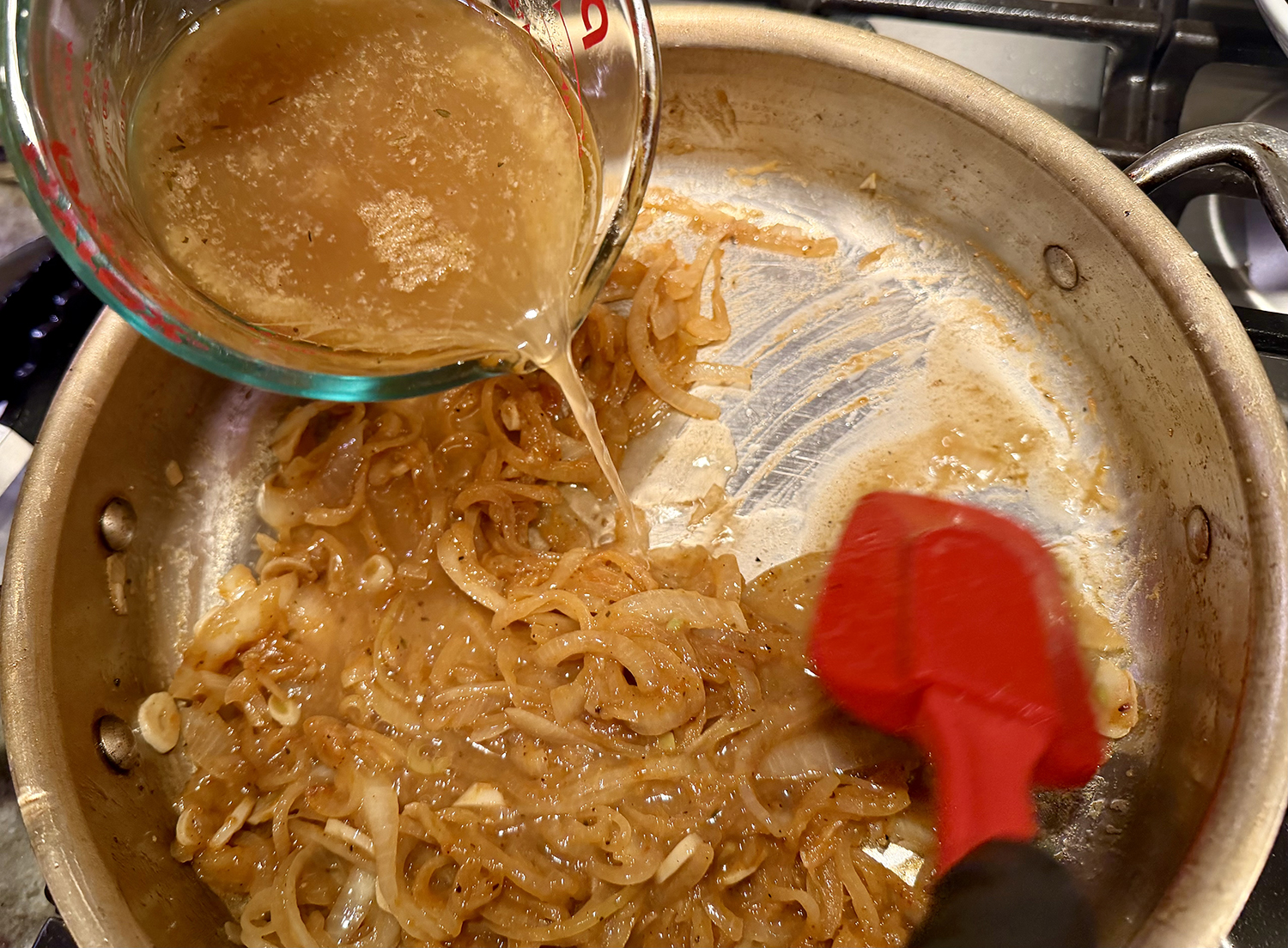
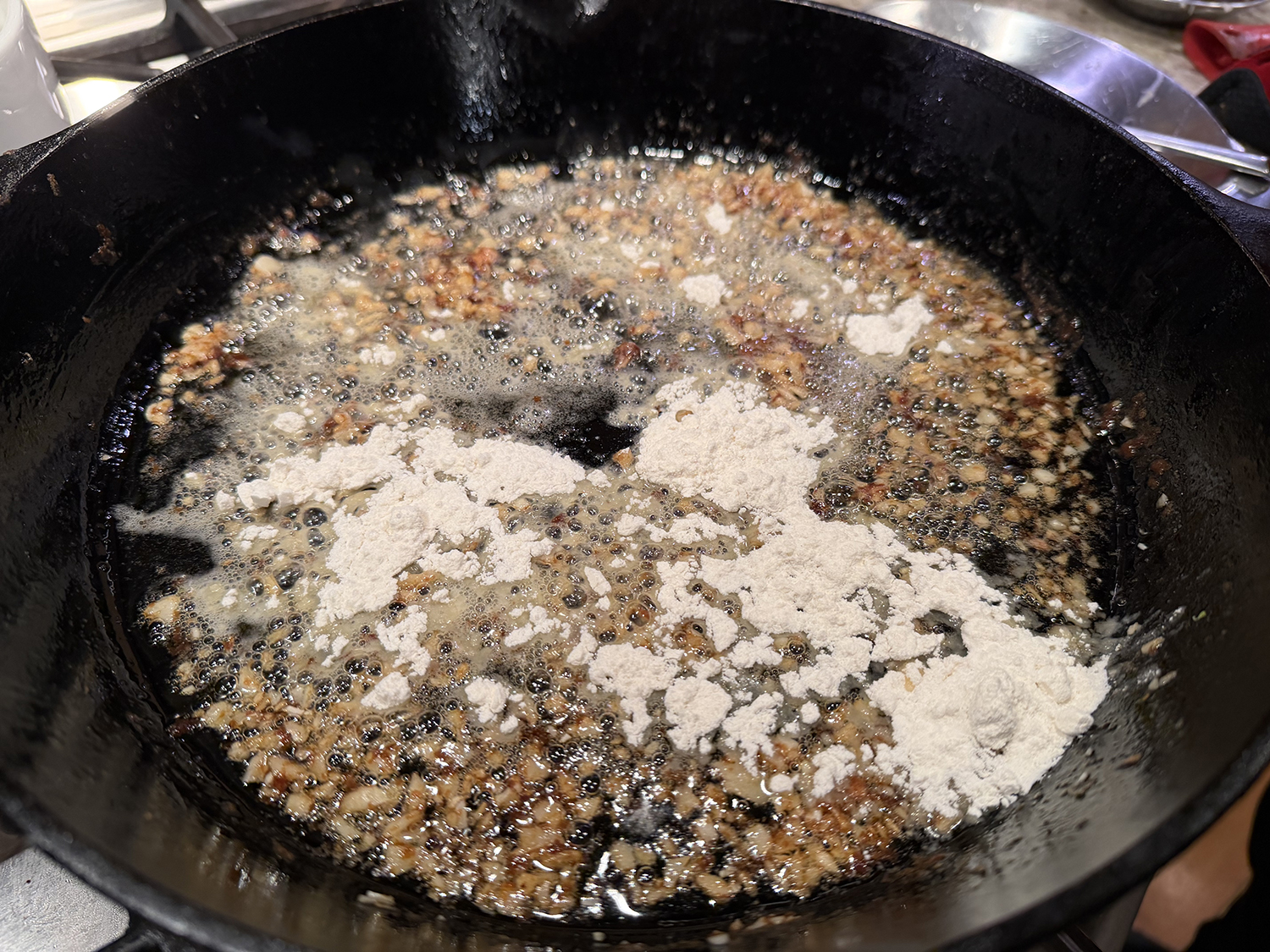
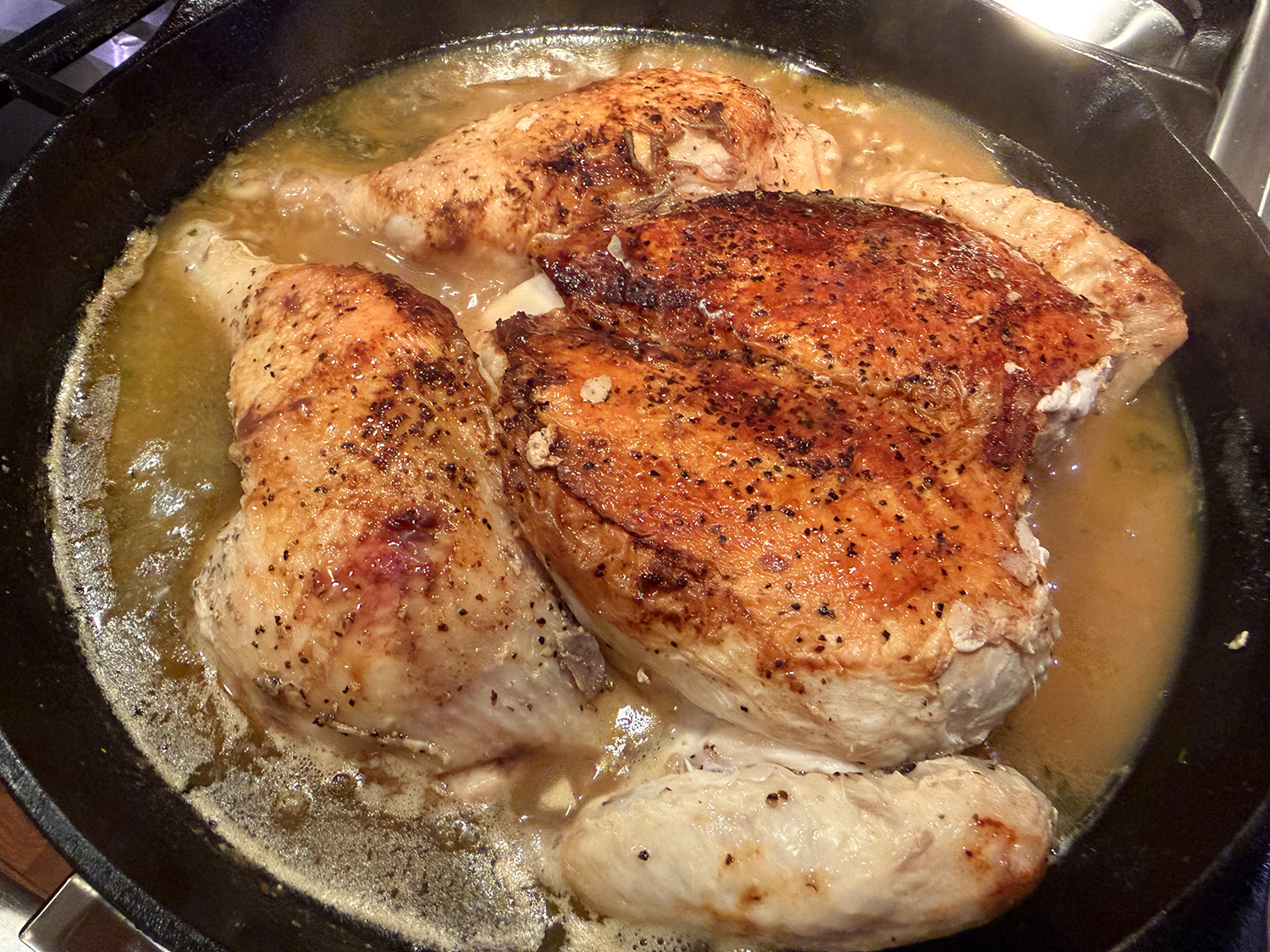
Remove chicken and pour off fat from the skillet, leaving about 2 tablespoons in the pan. Add the minced garlic and flour to the fat, stirring with a wire whisk over medium heat. Gradually add the chicken broth and dry vermouth and, when thickened, return chicken to the skillet, skin side up. Add salt and pepper to taste. Cover with the plate and weight and continue cooking over low heat about 20 to 30 minutes longer or until the meat is exceptionally tender.
Cut chicken into serving pieces, and spoon the sauce over it. Serve with the extra sauce and fluffy rice or mashed potatoes on the side.
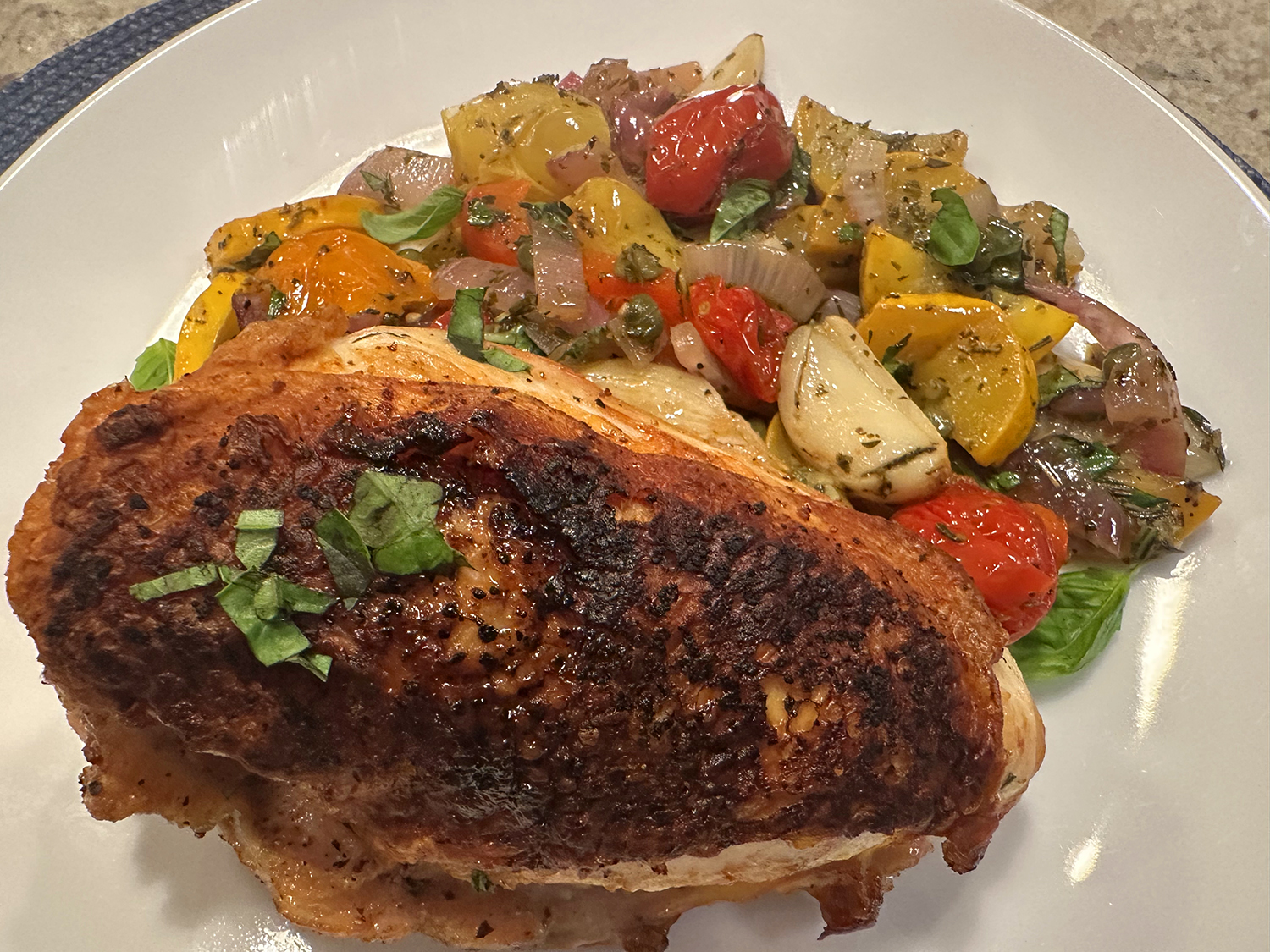
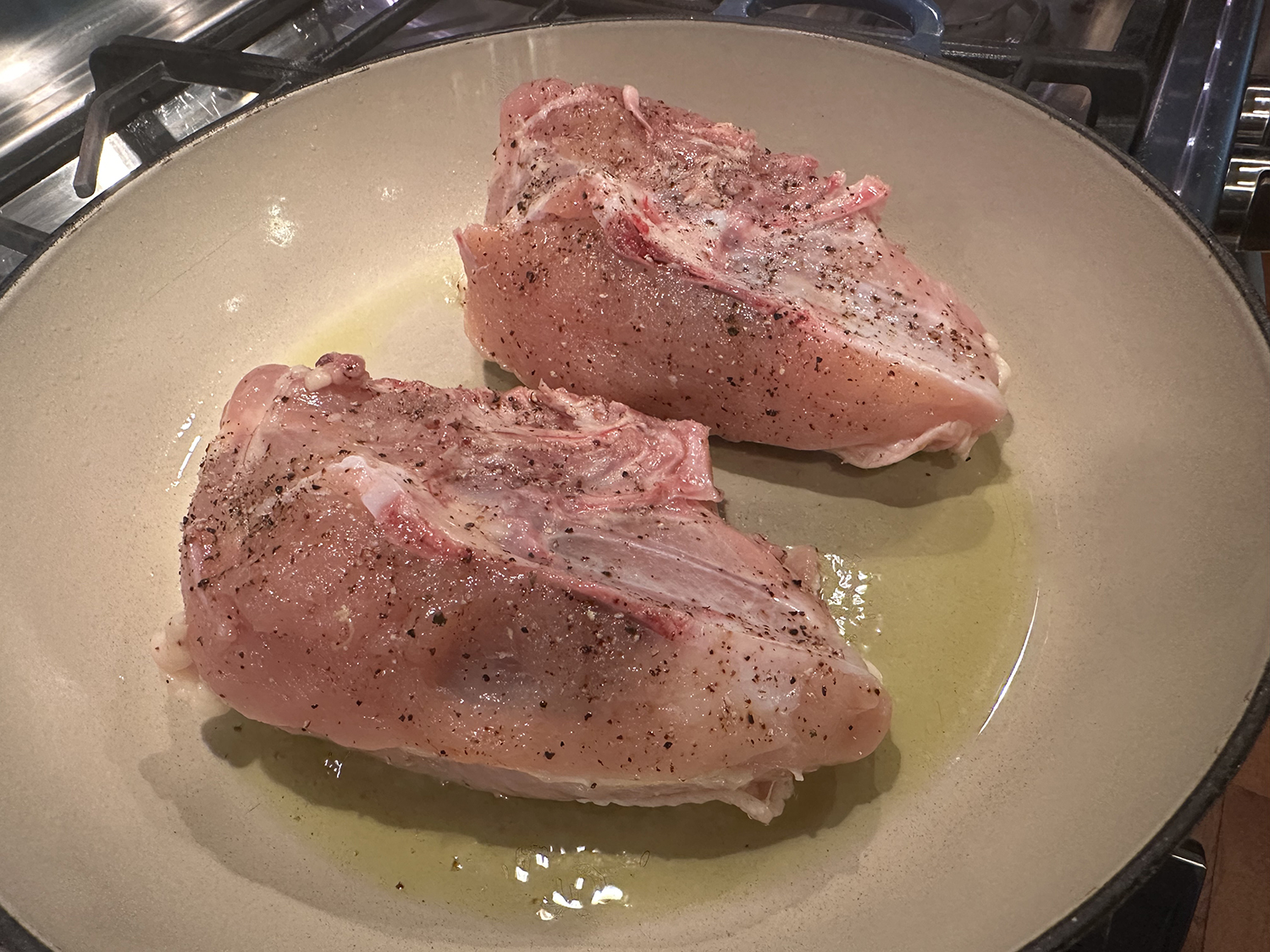
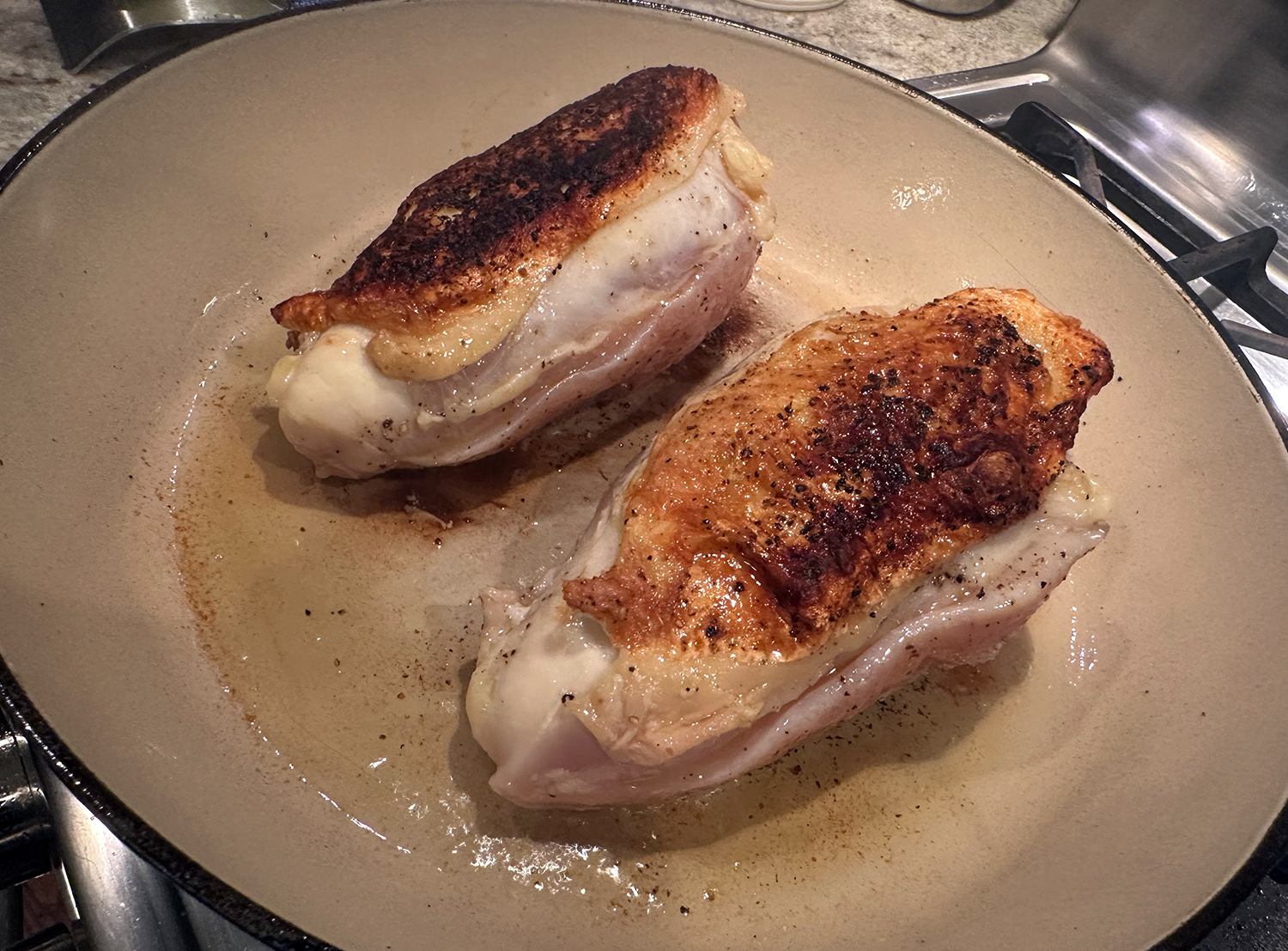
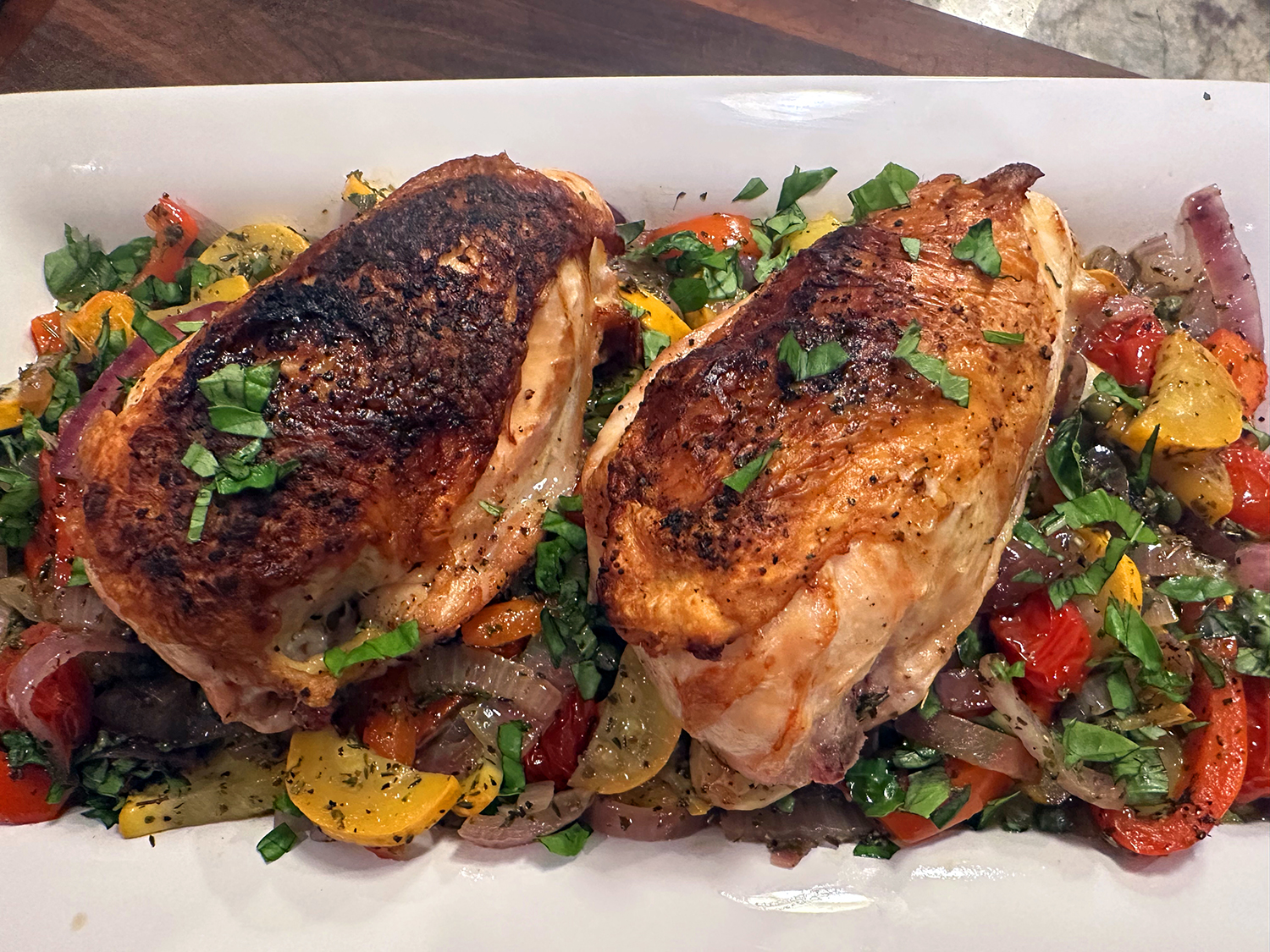
In this simple skillet dinner, the skin side of bone-in chicken breasts are seared, then roasted on top of a bed of sunny Mediterranean vegetables. Keep in mind, the recipe advises the use 12-ounce chicken breasts, using larger ones will require a longer cooking time and thus overcook the veggies. The only pieces available when we shopped weighed in at 18 ounces, 50% larger! (The first grocery store we visited, had no bone-in breasts at all.)
*The Hubs Hack: Because of the larger pieces, after browning the skin, we put the pan with the chicken skin side up in the pre-heated oven for 10 minutes before removing them and adding the vegetables. The breasts were then placed on top of the veggies and the skillet was returned to the oven until the chicken reached an internal temperature of 160°F., about 30 min. (Check temp after 20 minutes.)
Before cooking, the veggies are tossed with herbes de Provence, an aromatic seasoning blend that typically includes rosemary, thyme, savory, marjoram and oregano, and sometimes other spices and herbs such as fennel, sage, lavender and tarragon.
Dry vermouth, with its herbaceousness, is an ideal deglazing liquid for the browned bits left in the pan after searing the chicken, but dry white wine works, too. The vermouth and caper brines are important because they really help take this dish over the top and not just an average chicken and vegetable dish. We usually like thighs over breasts in similar recipes, but these turned out juicy with good crispy skin.
Another food item that the store was completely out of was zucchini, so we just substituted a yellow summer squash. And again, because of the enormous breast size, we roasted only two, which was still enough to feed four people.
Pan-Roasted Chicken and Summer Vegetables with Herbes de Provence
4 12-oz. bone-in, skin-on chicken breasts, trimmed of excess fat
Kosher salt and ground black pepper
3 Tbsp. extra-virgin olive oil, divided
2 Tbsp. herbes de Provence
6 medium garlic cloves, smashed and peeled
1 medium red onion, halved and sliced about ¼ inch thick
1 yellow, orange or red bell pepper, stemmed, seeded, cut into ¼ slices
1 pint grape tomatoes, uncut
1 small zucchini, halved lengthwise and sliced crosswise ¼ inch thick
¼ cup drained capers, plus 1 Tbsp. caper brine
½ cup dry vermouth
1 cup lightly packed fresh basil, torn (optional)
Directions
Heat the oven to 475℉ with a rack in the middle position. Season the chicken on all sides with salt and pepper. In a large bowl, stir together 2 tablespoons of oil, the herbes de Provence, ¼ teaspoon salt and 1 teaspoon pepper. Add the garlic, onion, bell pepper, tomatoes, zucchini and capers, then toss to combine; set aside.
In a 12-inch skillet oven-safe skillet over medium-high, heat the remaining 1 tablespoon oil until shimmering. Add the chicken skin down and cook without disturbing until golden brown, 6 to 8 minutes. Using tongs, transfer the chicken skin up to a large plate. (If your chicken weighs much more than 12 ounces each, see note above.*)
Pour off and discard all but 1 tablespoon fat from the skillet. Add the vermouth, bring to a boil over medium-high and cook, scraping up any browned bits, until reduced to about 2 tablespoons, 1 to 2 minutes. Add the vegetables and cook, stirring, until just warmed through, about 1 minute, then distribute in an even layer. Nestle the chicken skin up in the vegetables and add any accumulated juices. Transfer the skillet to the oven and cook until the thickest part of the breast reaches about 160°F, 20 to 25 minutes.
Remove the pan from the oven (the handle will be hot). Transfer the chicken skin up to a serving platter. Using a slotted spoon, transfer the vegetables the platter, arranging them around the chicken.
Set the skillet over high, bring the liquid to a simmer and cook, stirring, until slightly thickened and reduced, 1 to 2 minutes. Off heat, stir in the caper brine, then taste and season with salt and pepper. Pour the sauce around the chicken and over the vegetables. Sprinkle with basil (if using).
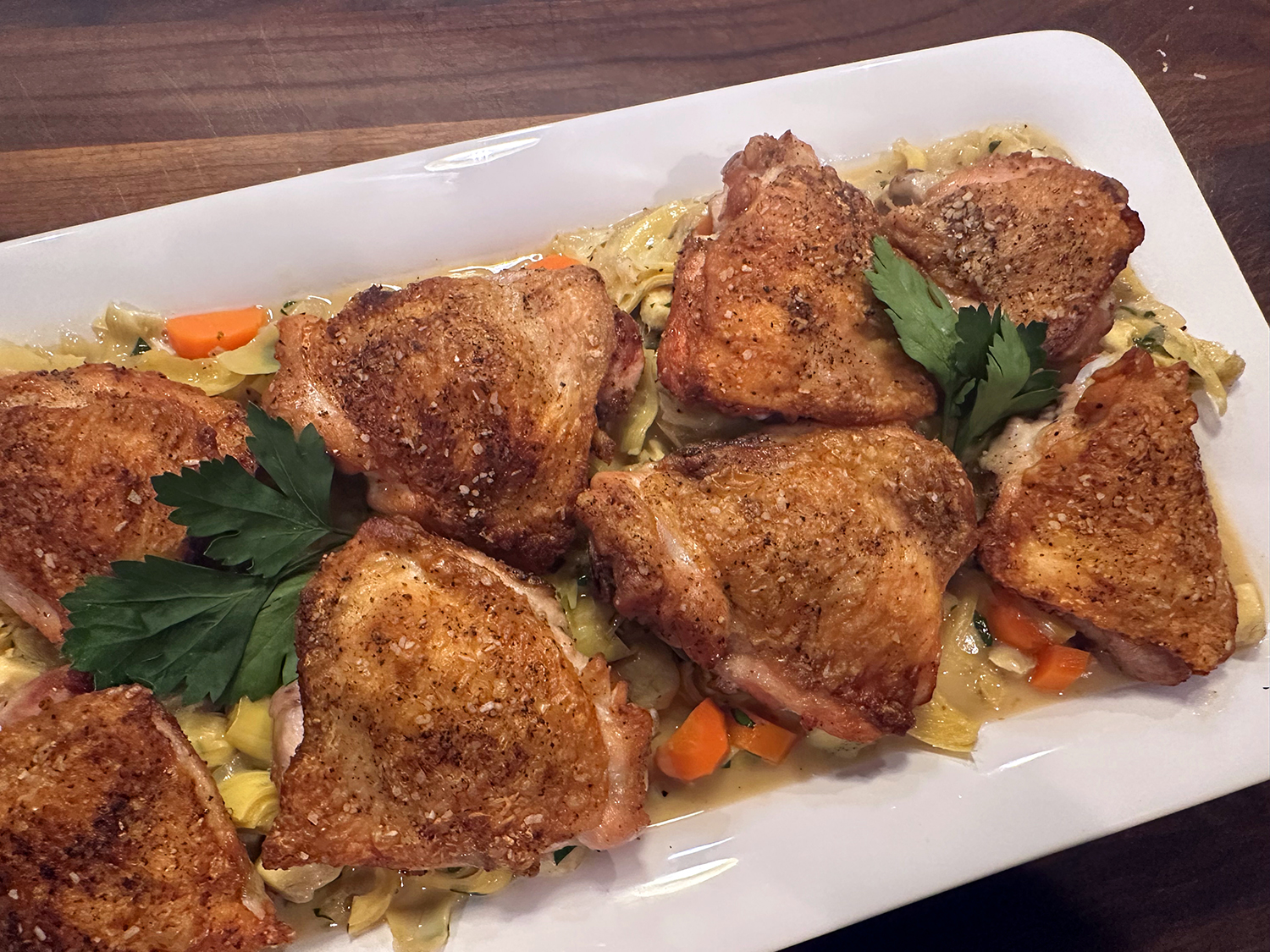
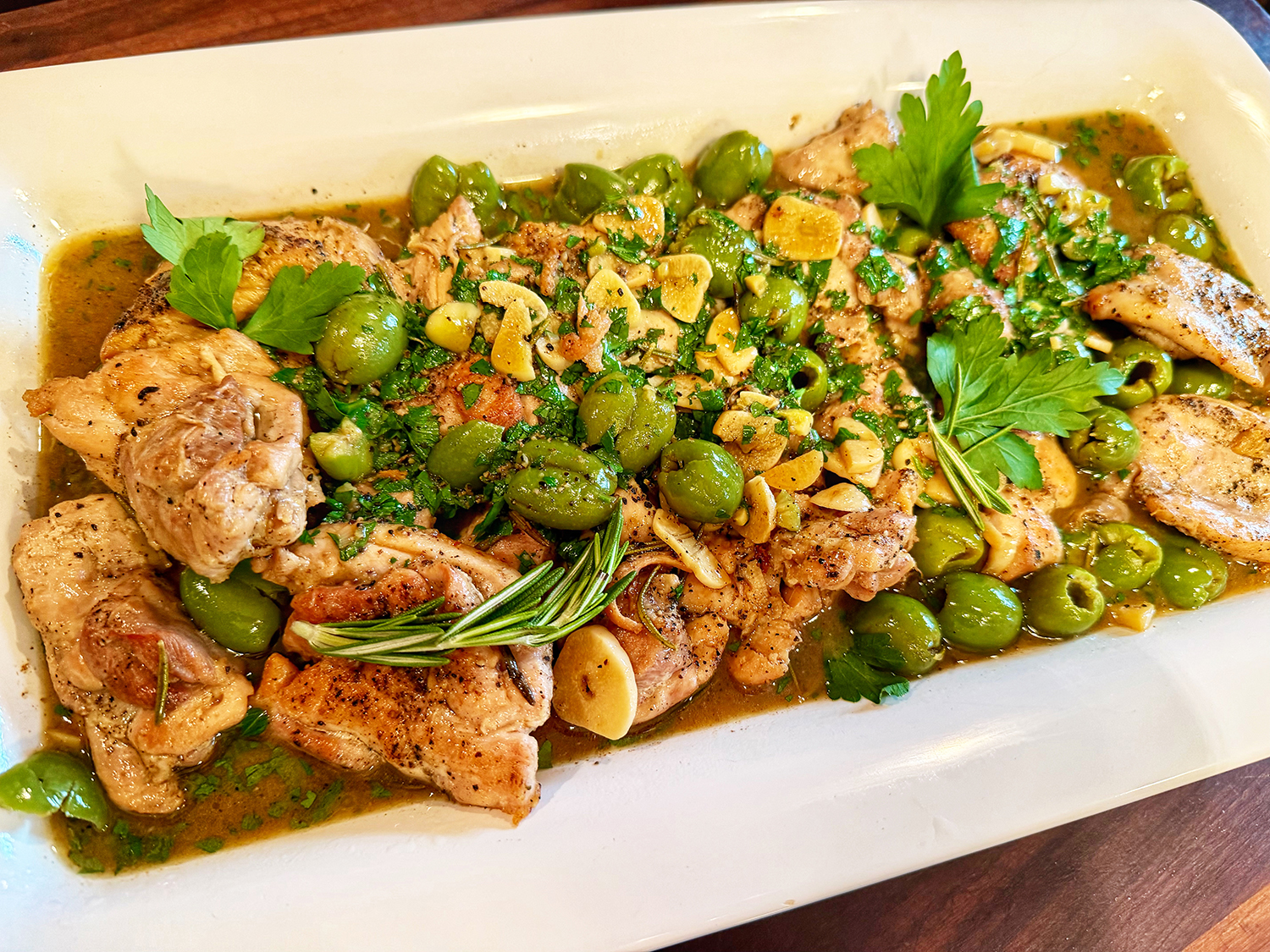
Maybe you have never of Artichauts à la barigoule, a classic Provençal braise that combines fresh artichoke hearts with aromatic vegetables, herbs and white wine. If not, this recipe is worth a try. Here, chicken thighs are seared on the stovetop and while they finish cooking in the oven, canned artichokes are used to put together a simplified barigoule that serves as both a vegetable accompaniment and a flavorful sauce.
For subtle lemony notes, strips of zest are simmered with the artichokes. A Y-style vegetable peeler is the best tool for removing zest in strips from the fruit, but try to take only the yellow peel, as the white pith underneath is bitter. If desired, serve with warm crusty bread and or a side salad.
Don’t use marinated artichoke hearts for this recipe. The seasonings will overpower the other ingredients. Instead of spooning the artichoke mixture on and around the thighs, we laid the mixture in a deep platter and placed the chicken on top to prevent the crispy skin from getting soggy before serving.
2½ lbs. bone-in, skin-on chicken thighs, trimmed and patted dry
Kosher salt and ground black pepper
1 Tbsp. extra-virgin olive oil
3 Tbsp. salted butter, cut into 1-Tbsp. pieces, divided
1 medium yellow onion, halved and thinly sliced
2 medium carrots, peeled, halved lengthwise and sliced crosswise ¼ inch thick
4 medium garlic cloves, minced
1 cup dry white wine
2 14-oz. cans artichoke hearts, drained, cut into quarters if whole
3 3-inch-long strips lemon zest, plus 2 Tbsp. lemon juice
1 cup low-sodium chicken broth
¼ cup finely chopped fresh flat-leaf parsley
Directions
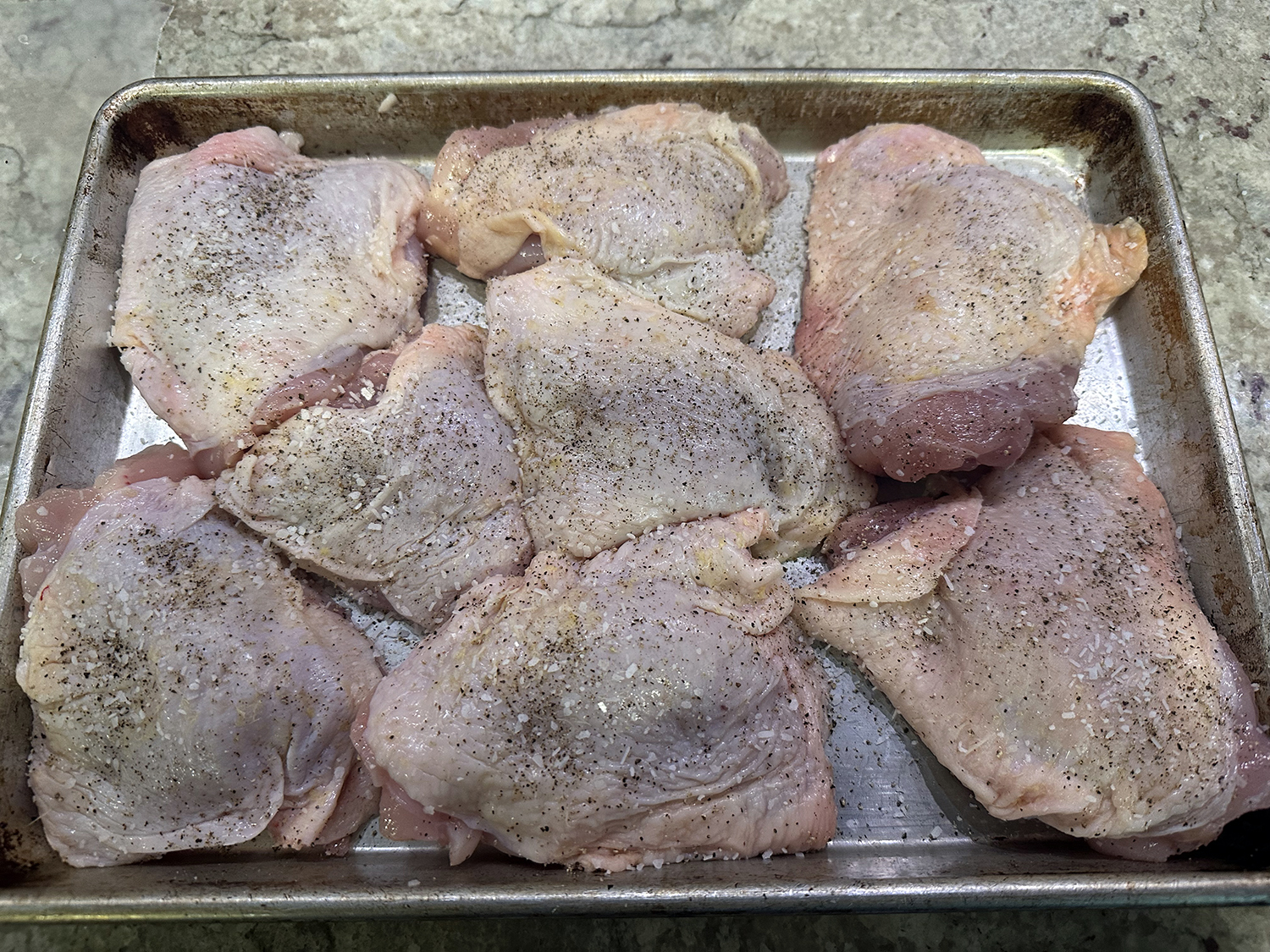
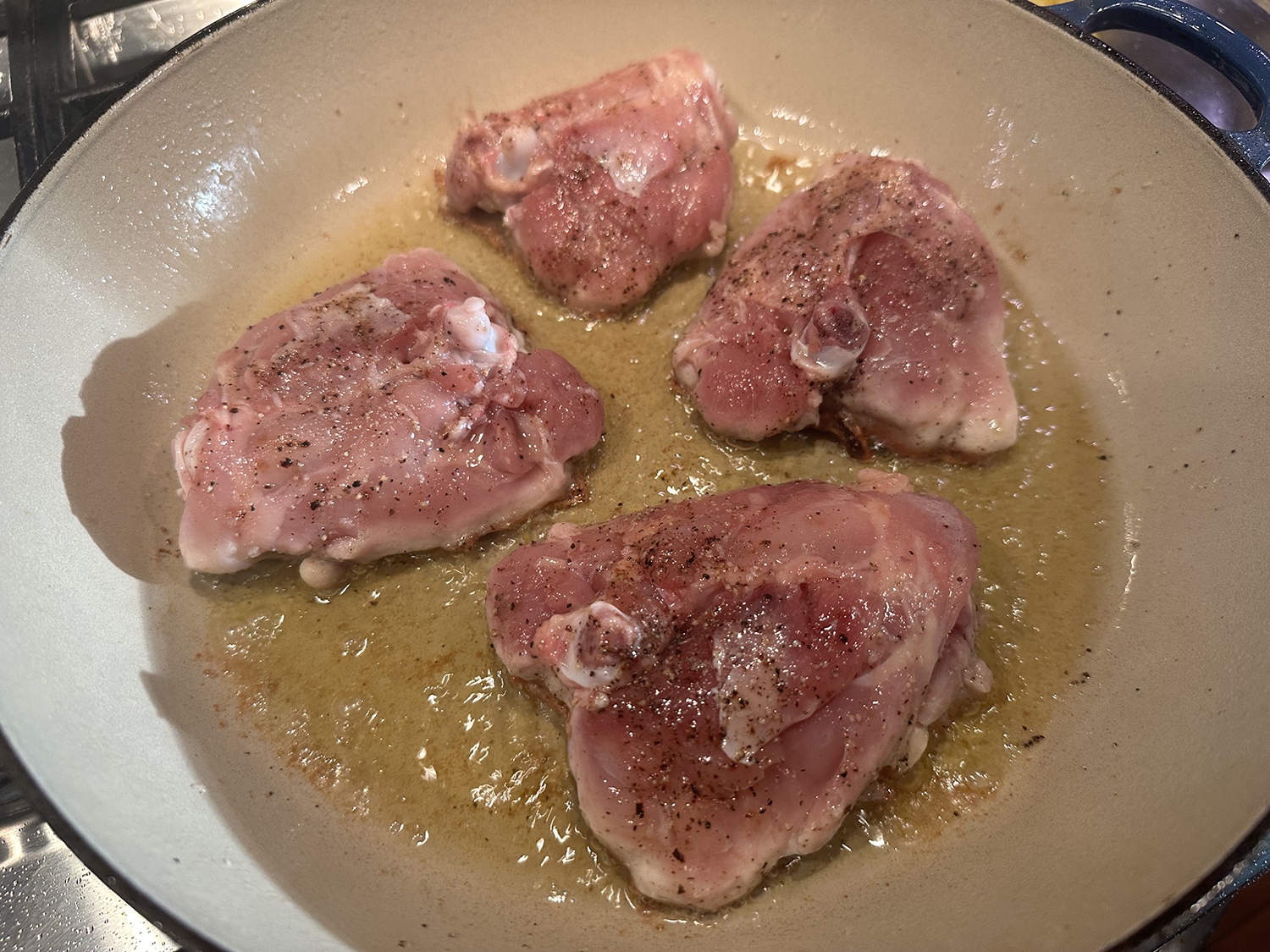
Heat the oven to 475°F with a rack in the middle position. Season the chicken all over with salt and pepper. In a 12-inch skillet over medium-high, heat the oil until barely smoking. Add the chicken skin down and cook without disturbing until golden brown on the bottoms, 5 to 8 minutes. Using tongs, transfer the chicken skin up to a rimmed baking sheet and roast until the thickest part of the thighs reach 175°F, 15 to 20 minutes.
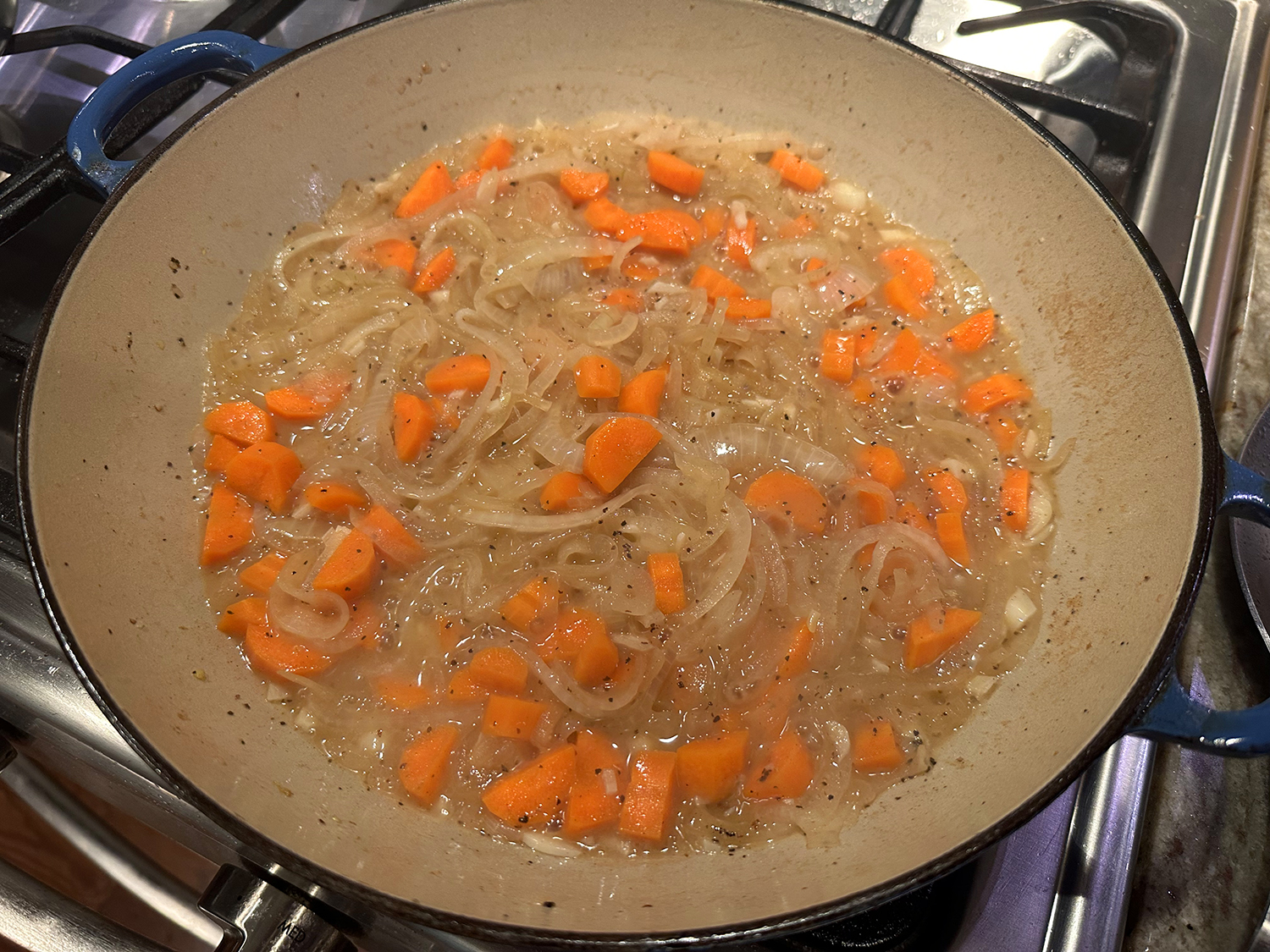
While the chicken roasts, pour off and discard all but 1 tablespoon fat from the skillet. Set the pan over medium and melt 2 tablespoons of butter.Add the onion, carrots and ¼ teaspoon salt and ½ teaspoon pepper, then cook, stirring occasionally, until the onion is translucent, 3 to 5 minutes. Add the garlic and cook, stirring, until fragrant, about 30 seconds. Add the wine and cook, scraping up any browned bits, until reduced by about half, 2 to 4 minutes.
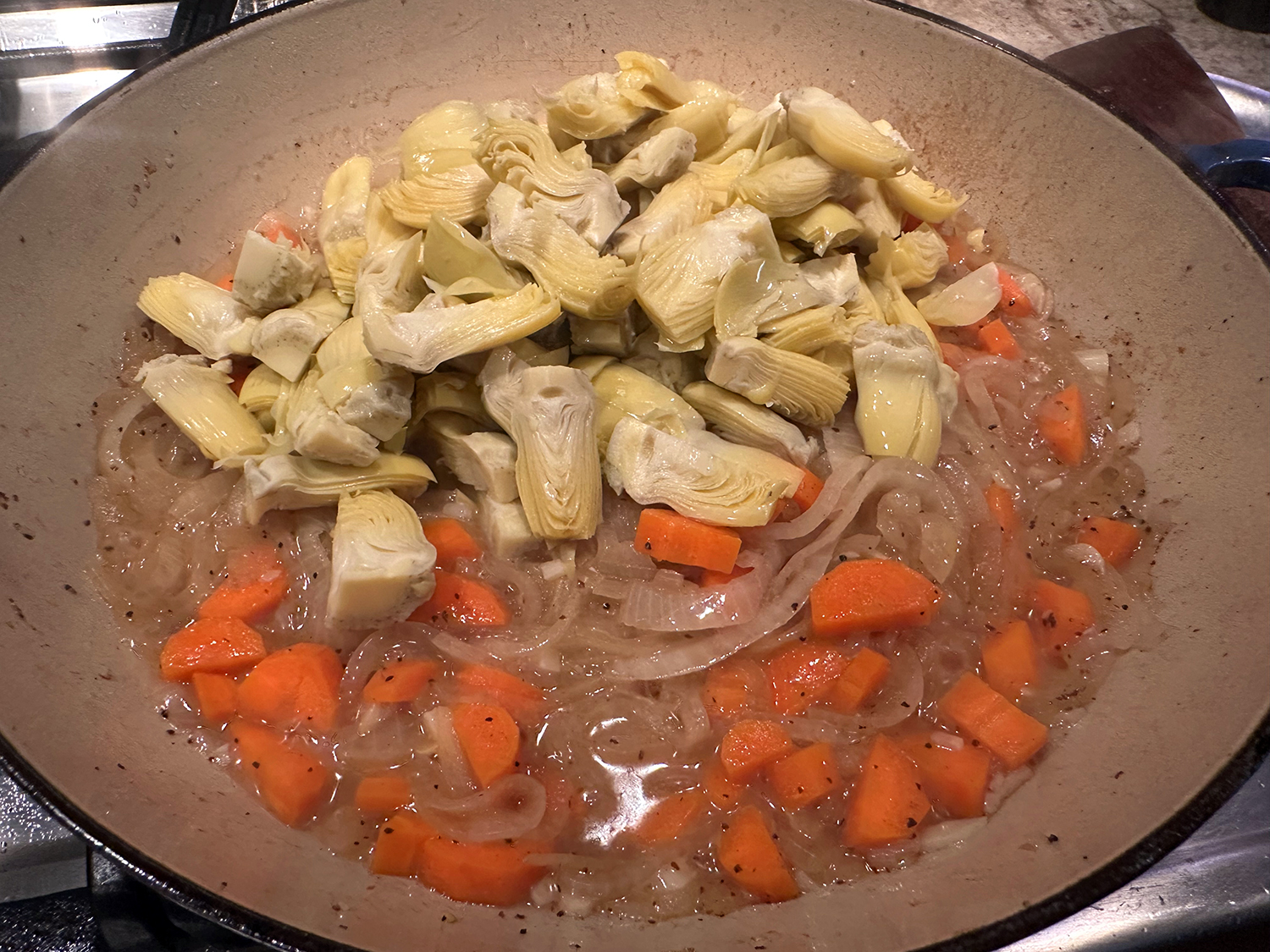
Stir in the artichokes, lemon zest and broth. Bring to a simmer over medium-high and cook, uncovered and stirring occasionally, until the carrots are tender and the liquid is slightly reduced, 4 to 5 minutes. Remove from the heat, cover and set aside.
When the chicken is done, using tongs, transfer it to a plate. Remove and discard the lemon zest from the artichoke mixture. Add the remaining 1 tablespoon butter and stir until melted, then stir in the lemon juice and parsley. Taste and season with salt and pepper. Transfer the mixture to a deep platter and place the chicken thighs on top to keep the crispy skin from getting soggy before serving.
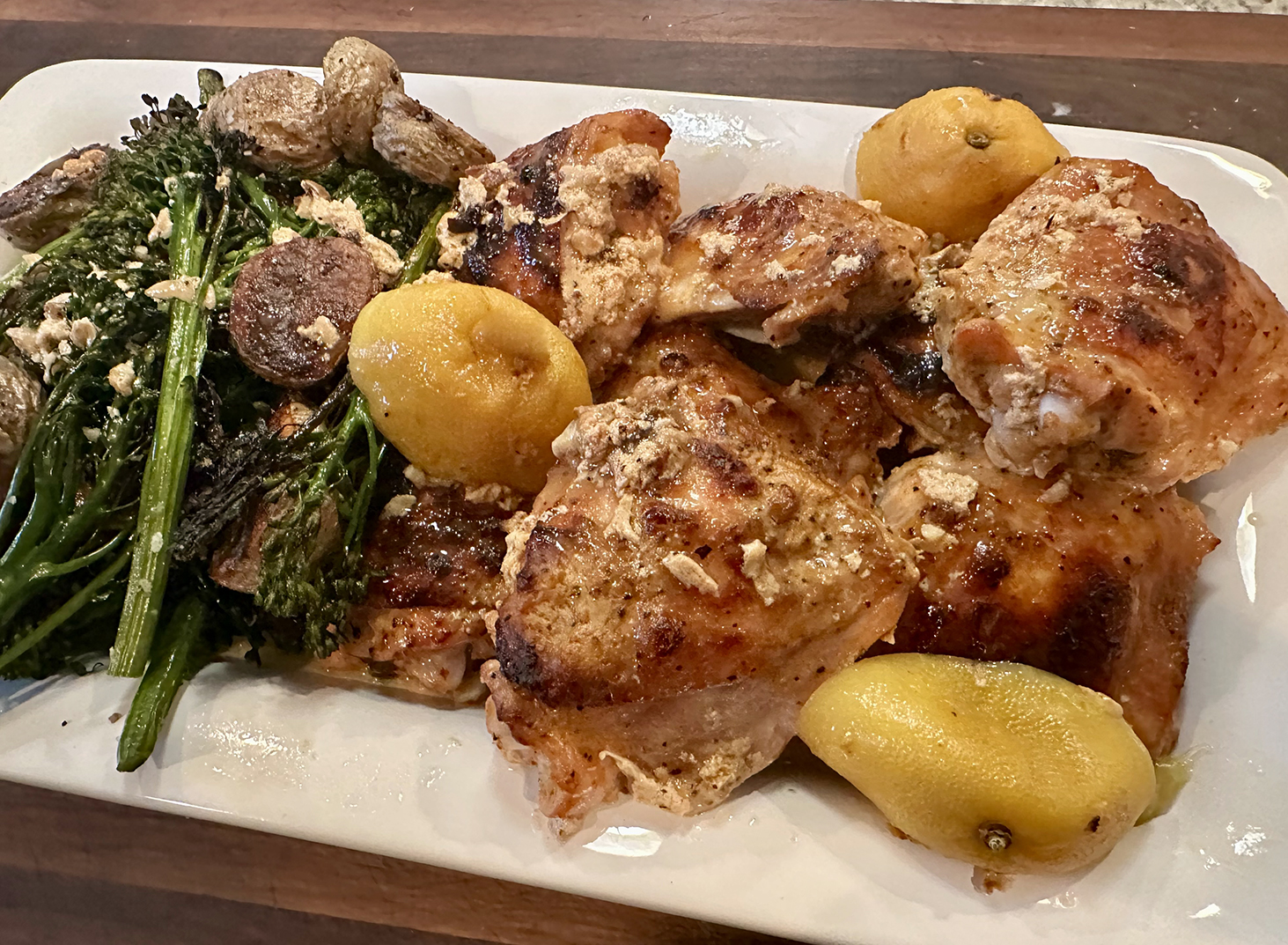
This sheet pan dinner features yogurt-marinated chicken thighs with charred broccolini and potatoes. Juicy chicken thighs and roasted vegetables come together in this effortless sheet pan dinner. The lactic acid in yogurt, responsible for the dairy’s characteristic tang, gently tenderizes the chicken thighs as they marinate.
To ensure crispy potatoes and charred broccolini, prevent overcrowding by roasting the vegetables and chicken on separate sheet pans. The flavorful chicken drippings are liquid gold — drizzle them over the chicken and vegetables just before serving.
Yogurt is ideal to use in a marinade for both its flavor and ability to tenderize meat. It contains lactic acid, which tenderizes more slowly and gently than a citrus juice – or vinegar-based marinade. However, in this recipe, we also add a bit of lemon juice to bump up the marinade’s acidity and reap some of its benefits in a shorter time frame.
OK, yeah so it is two sheet pans instead of one. But, roasting the vegetables and chicken on two separate pans means you get the best of both worlds: crispy and tender vegetables and juicy chicken thighs with crispy skin and lots of schmaltzy pan drippings. Can’t argue with that.
Yogurt-Marinated Chicken Thighs with Potatoes and Broccolini
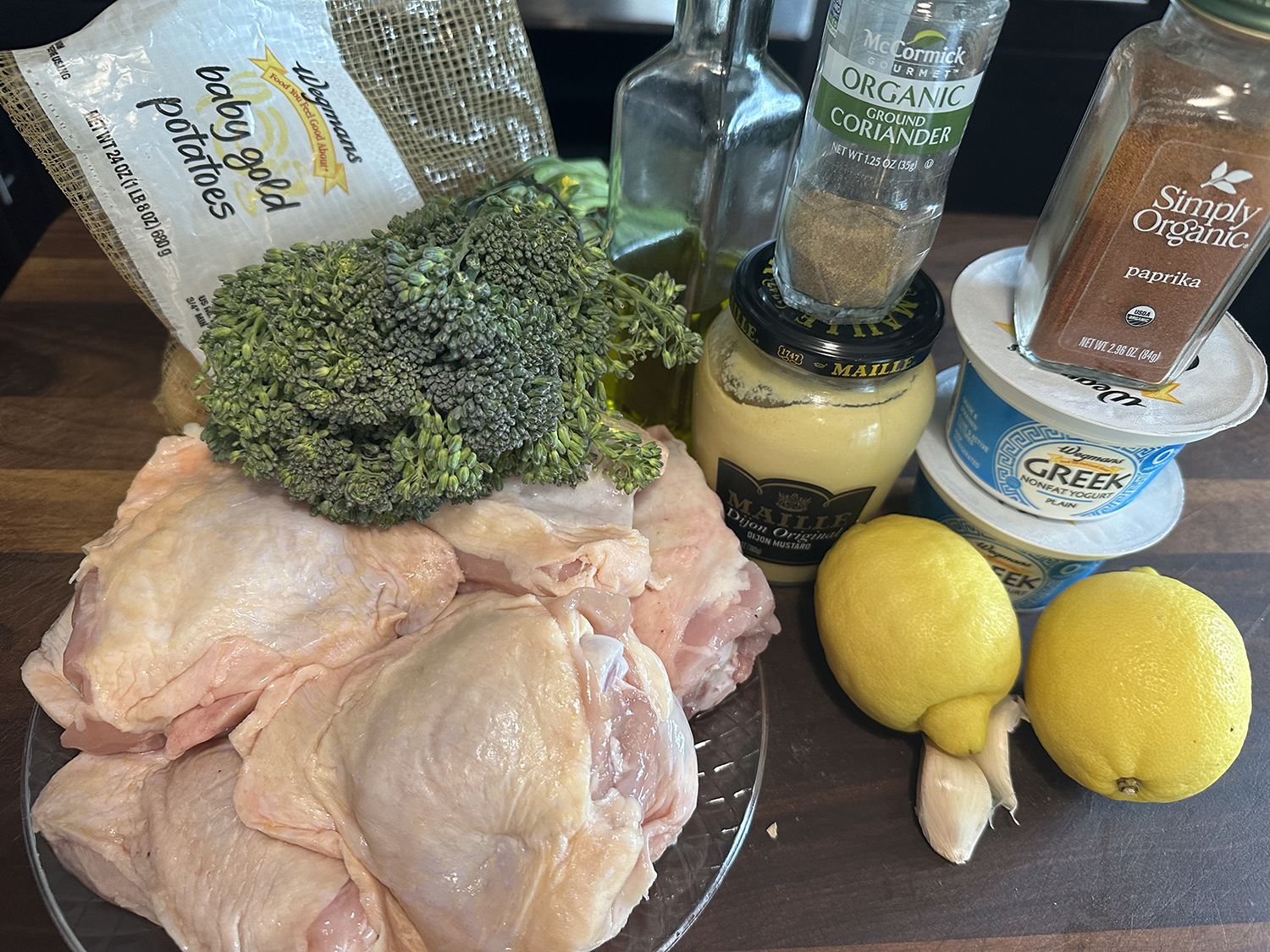
3/4 cup plain whole-milk strained (Greek-style) yogurt
2 Tbsp. fresh lemon juice
2 garlic cloves, grated
1 tsp. coarse-ground Dijon mustard
1 tsp. paprika
3/4 tsp. ground coriander
5 Tbsp. extra-virgin olive oil, divided
3 1/2 tsp. kosher salt, divided
1 1/2 tsp. black pepper, divided
3 lbs. bone-in, skin-on chicken thighs (about 8 small thighs)
1 lb. baby gold potatoes, halved
1 8-oz. bunch broccolini, trimmed
2 lemons, halved crosswise
Directions
Whisk together yogurt, lemon juice, garlic, mustard, paprika, coriander, 2 tablespoons oil, 2 teaspoons salt, and 1 teaspoon pepper in a large bowl until smooth. Add chicken thighs; toss to coat, rubbing yogurt mixture evenly over chicken. Cover and refrigerate for at least 30 minutes or up to 4 hours.
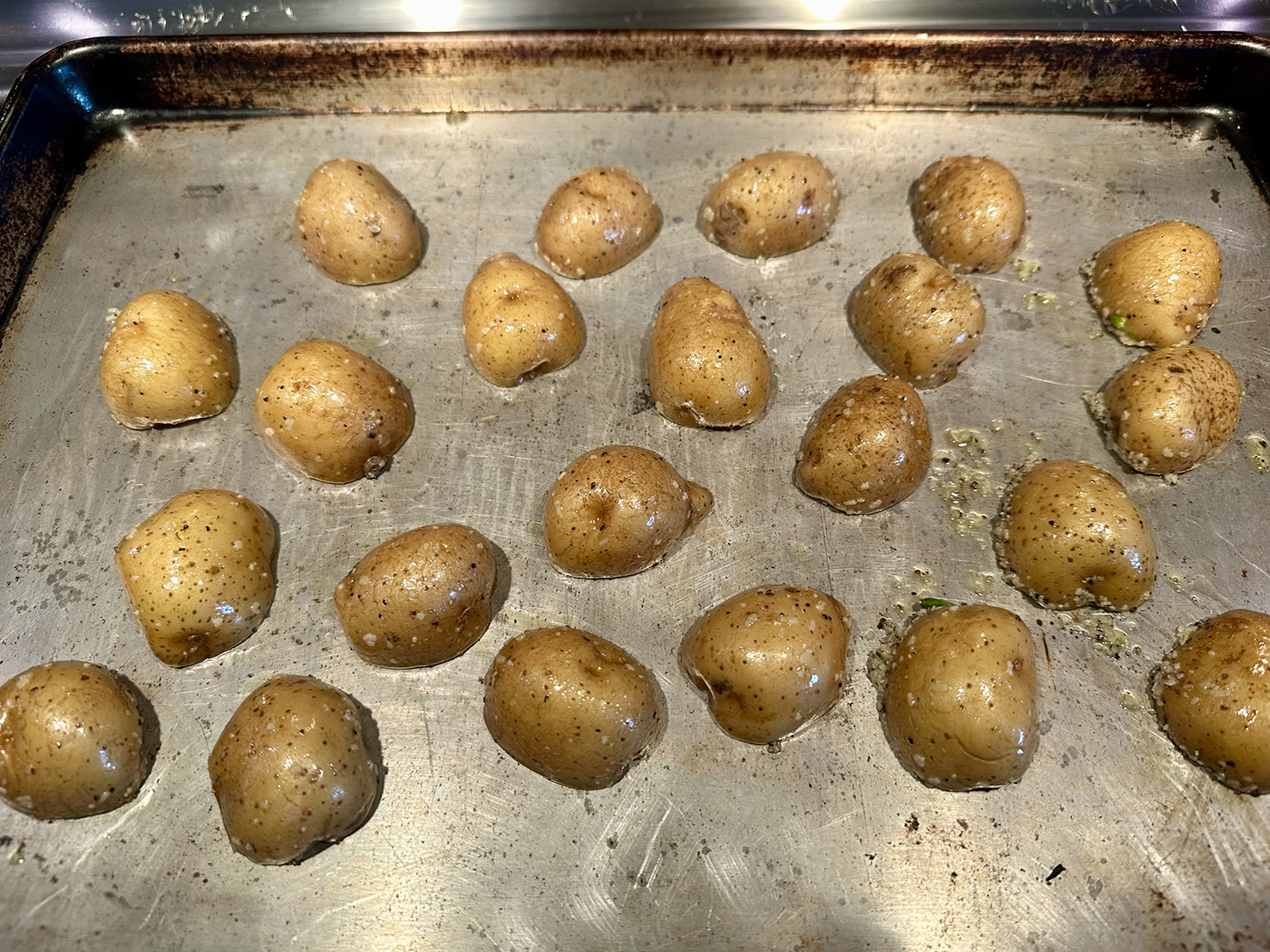
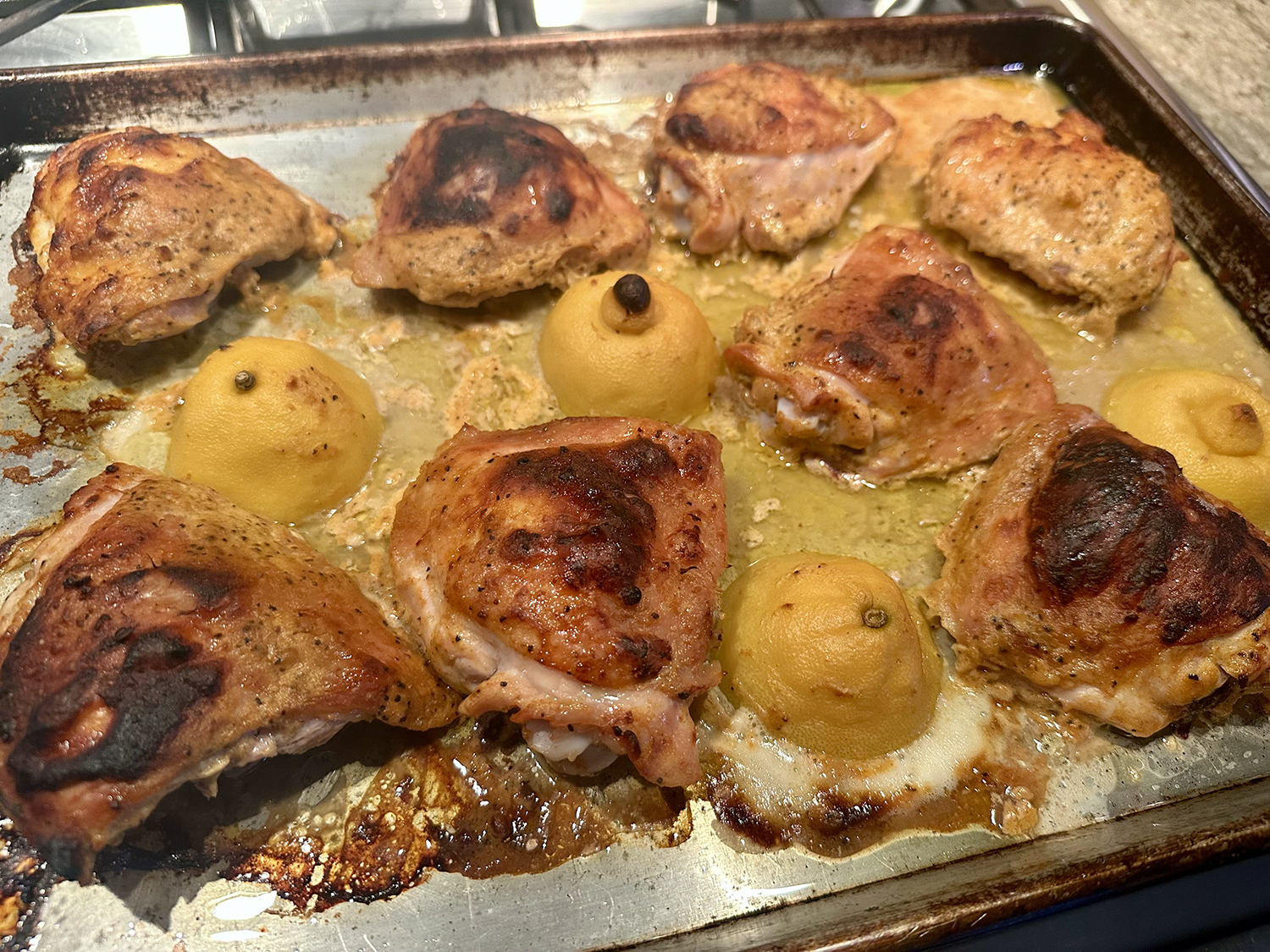
Preheat oven to 425°F with racks in the upper and lower third positions. Toss potatoes and broccolini with remaining 3 tablespoons olive oil, remaining 1 1/2 teaspoons salt, and remaining 1/2 teaspoon pepper in a large bowl until evenly coated. Arrange potatoes, cut sides down, in a single layer on a large rimmed baking sheet; set broccolini in bowl aside. Remove chicken thighs from marinade; place chicken, skin side up, on a second large rimmed baking sheet; discard marinade. Arrange lemon halves, cut sides down, around chicken.
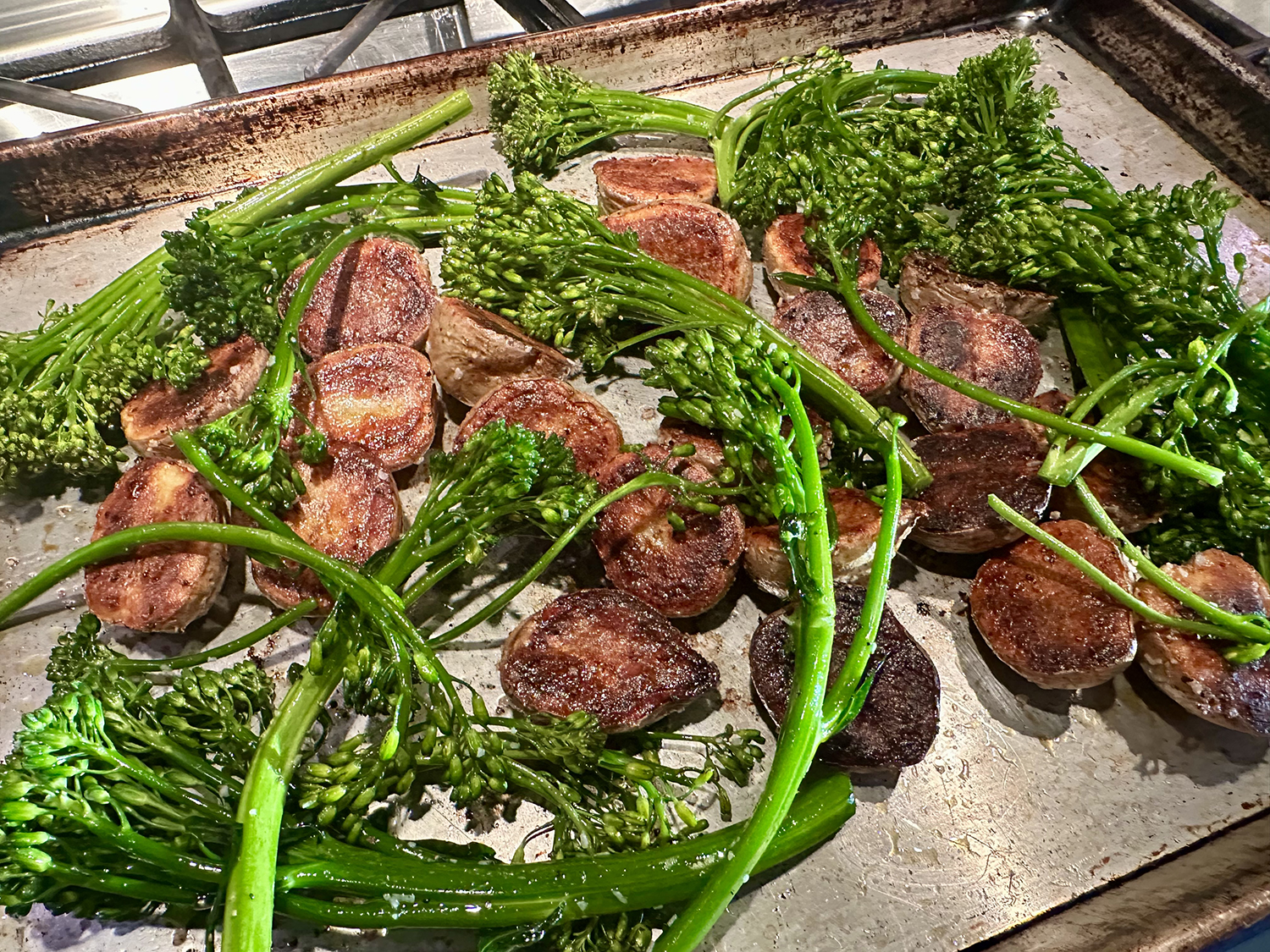
Place baking sheet with chicken on upper rack and baking sheet with potatoes on lower rack of oven; roast for 25 minutes. Remove potatoes from oven, and flip using a thin metal spatula; arrange broccolini on baking sheet with potatoes, making sure to drape some stalks over the potatoes so as not to completely char. Return to oven; continue roasting until potatoes and broccolini are tender and a thermometer inserted into thickest portion of chicken registers 165°F, 12 to 15 minutes. (Ours only took another 11 minutes.)
Skim off fat from chicken pan juices and discard. Drizzle pan juices over chicken and vegetables. Serve hot.
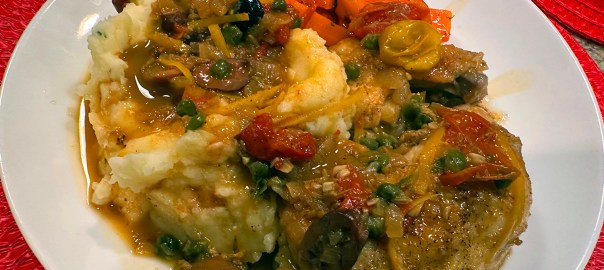
With chicken being the most popular meat in America, it’s no wonder there are an endless variety of recipes worth your time and effort! This lovely Mediterranean-influenced braised dish from Williams Sonoma’s Test Kitchen is right up there with the best of them.
Braising chicken in white wine instead of red results in a lighter, brighter flavor, which in this recipe is heightened with piquant olives and capers. If desired, serve with a good loaf of bread, some mashed potatoes, or polenta so you can soak up the flavorful braising liquid, because it is worth every drop.
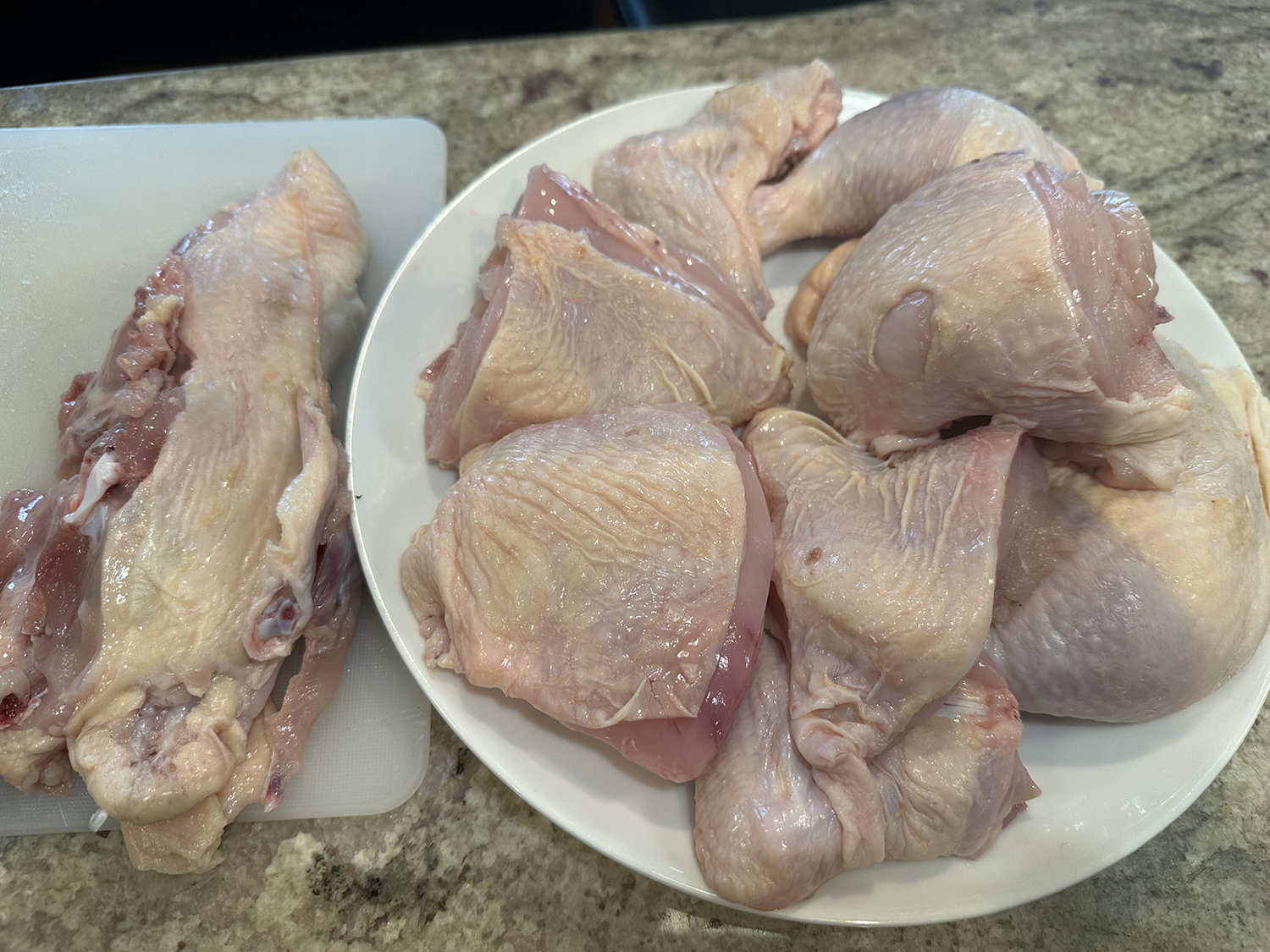
Instead of cutting up a whole chicken, you could certainly save some time buying a selection of bone-in, skin-on pieces such as thighs, breasts and legs. For us, the positive in using an entire bird, is saving the leftover parts (back, wingtips, etc.) for making home made stock at another time.
The regular amounts of white wine (3/4 cup) and chicken broth (2 1/2 cups) were way too much, thus causing the reduction time to increase considerably, from 5 to 20 minutes. The opposite was true of braising the chicken. Instead of the hour to hour-and-a-half noted in the original directions, the pieces were overdone after only 45 minutes.
To offset the chicken (especially white meat) from being overcooked, the oven temp gets lowered down to 325°F (braises are typically low heat). Additionally, pile the breast pieces on top of the dark meat 15 minutes after the the braise goes into the oven. In Step 3, the stovetop burner was reduced to medium. All of our corrections are noted in the recipe below.
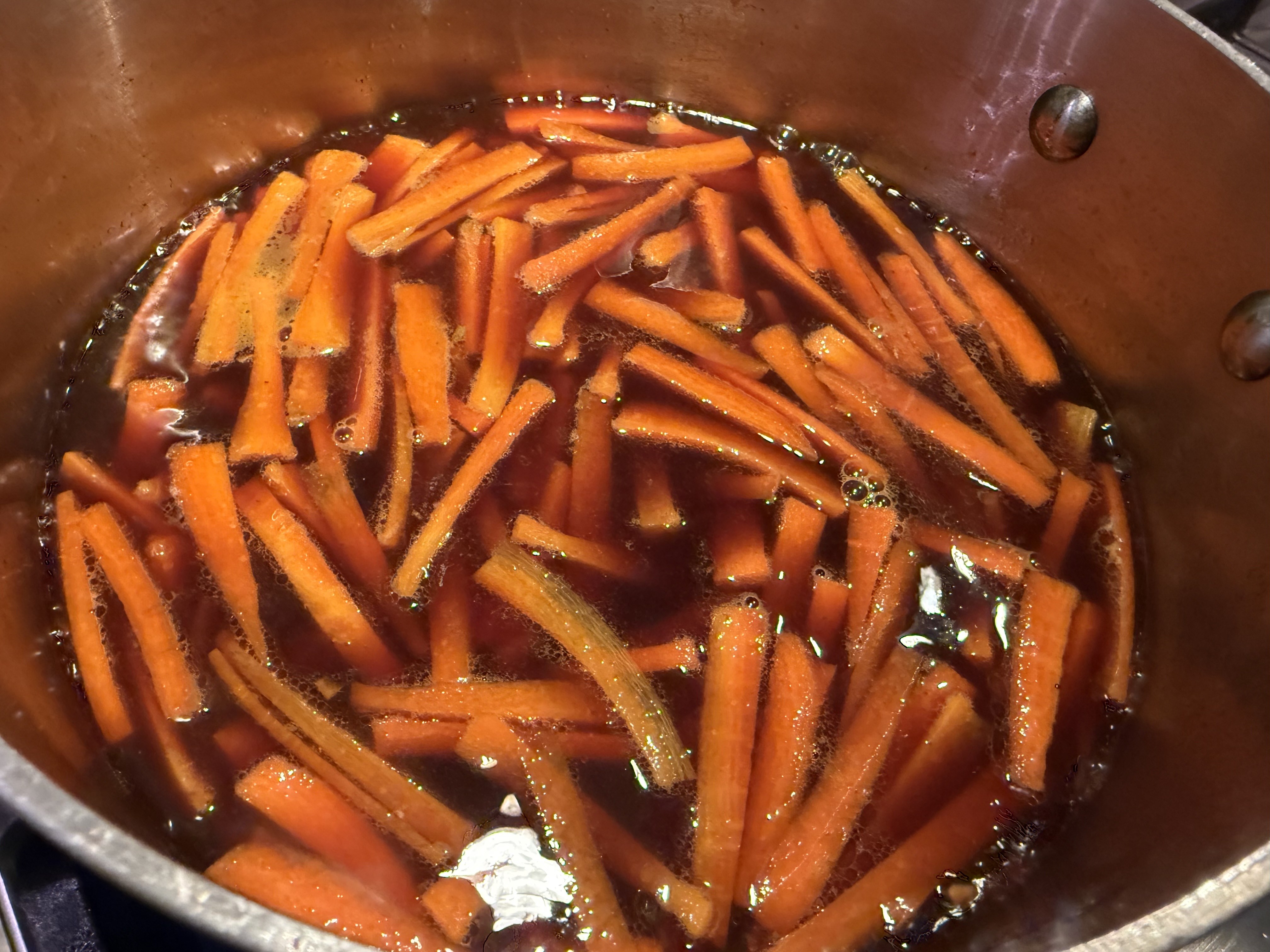
To complete our meal, we served the chicken with sides of glazed carrots and a potato-parsnip mash. WOW, was that sauce amazing!!
1 whole chicken, about 3 1/2- to 4-lb, cut into 8-10 serving pieces
Kosher salt and freshly ground pepper, to taste
1 Tbsp. olive oil
3 Tbsp. unsalted butter
1 onion, diced
2 garlic cloves, chopped
1/2 cup dry white wine
1 1/2 cups chicken broth, preferably homemade
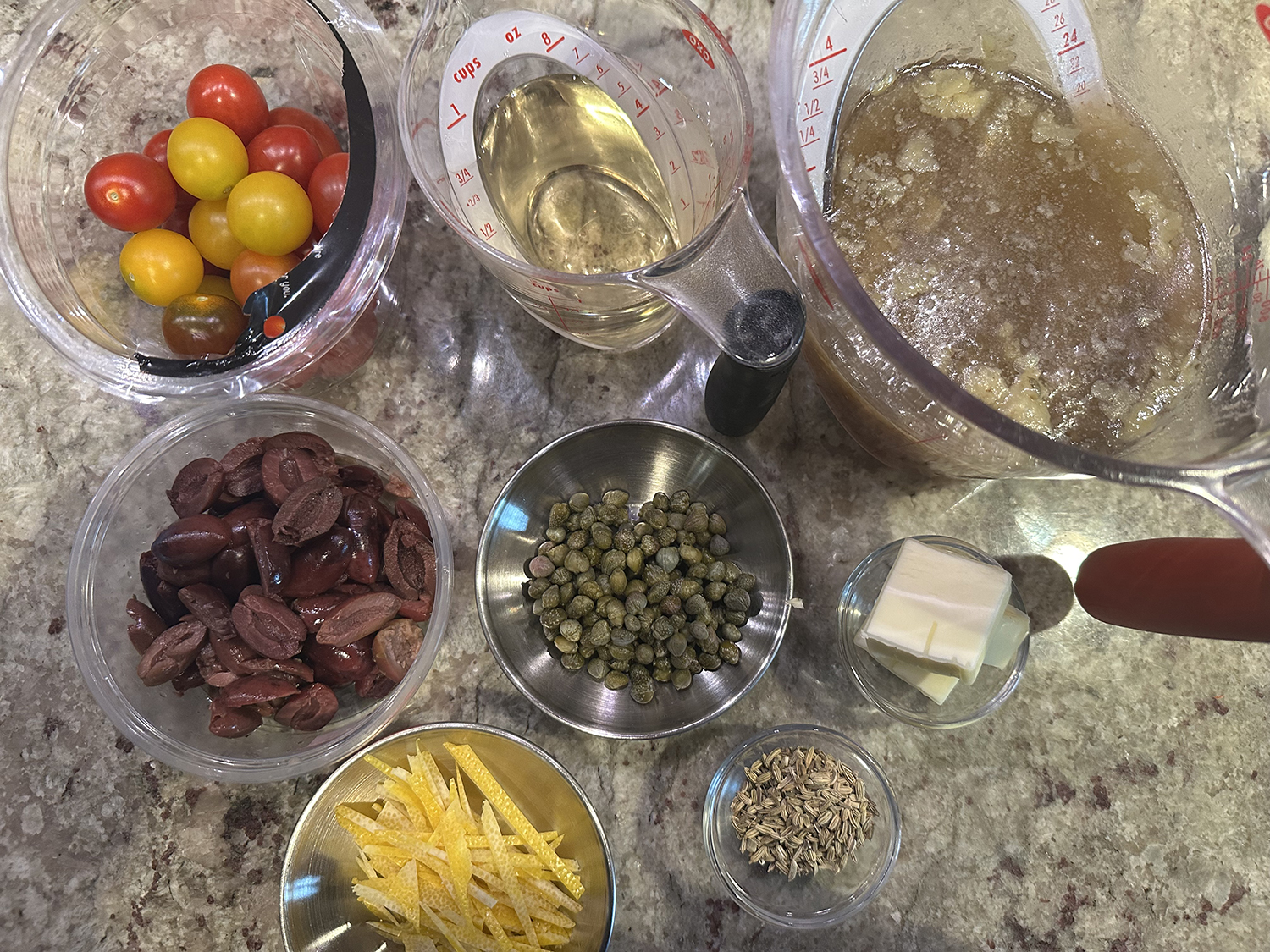
3/4 cup pitted olives, such as Kalamata, halved
Zest of 1 lemon, peeled into strips using a vegetable peeler and then julienned
3 Tbsp. capers, drained and rinsed
2 tsp. fennel seeds
8 oz. cup cherry tomatoes
Directions
Preheat an oven to 325ºF.
Pat the chicken dry and season with salt and pepper. In a Dutch oven over medium-high heat, warm the olive oil. Working in batches, brown the chicken on all sides, 8 to 10 minutes per batch. Transfer the chicken to a plate and carefully pour the fat from the Dutch oven.
Reduce heat to medium. Add the butter to the Dutch oven. When it has melted, add the onion and sauté until translucent, 4 to 6 minutes. Add the garlic and continue to cook for 1 minute more.
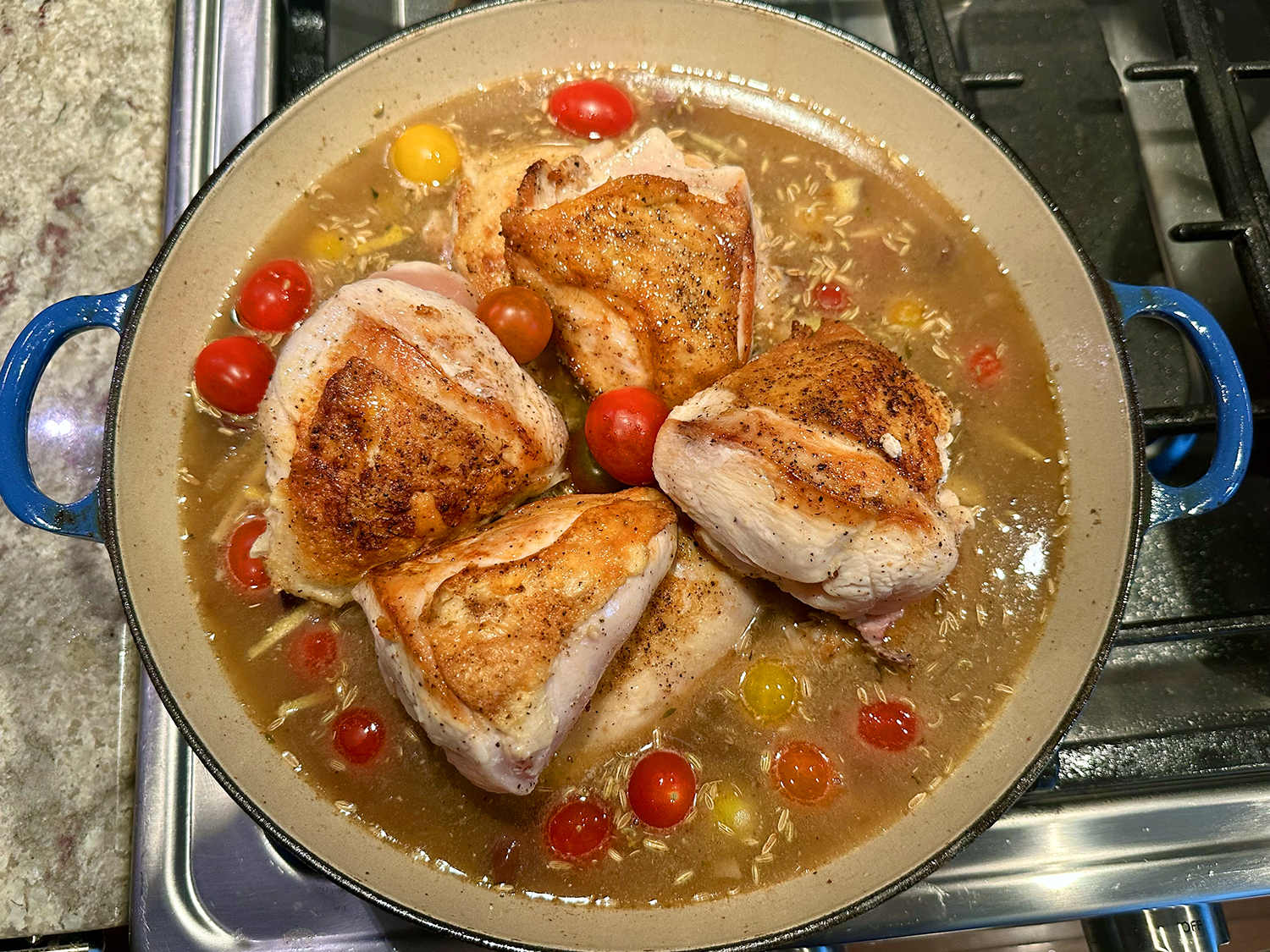
Add the wine and cook, stirring to scrape up the browned bits from the bottom, until the wine reduces slightly, about 2 minutes. Add the broth, olives, lemon zest, capers and fennel seeds. Return the dark meat chicken to the Dutch oven and top with the tomatoes.
Cover, place the Dutch oven in the oven. After 15 minutes of cooking, place the breast pieces on top of the dark meat, cover, and cook until the chicken is tender, 20 minutes more — 35 to 40 minutes total, checking with an insta-read thermometer at 35 minutes. The breast meat should register 155° and the thigh meat should be 165°.
When the chicken is cooked, transfer the chicken pieces to a plate and place the Dutch oven over medium-high heat. Cook until the braising liquid is thickened a good bit, about 10-15 minutes. Season with salt and pepper and return the chicken to the Dutch oven. Serve immediately.
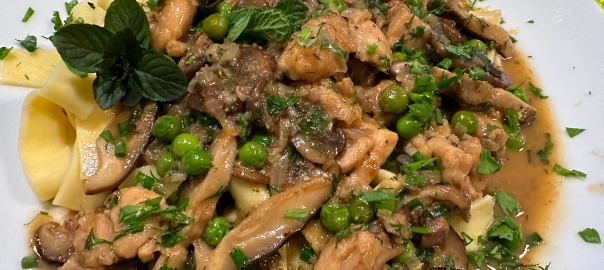
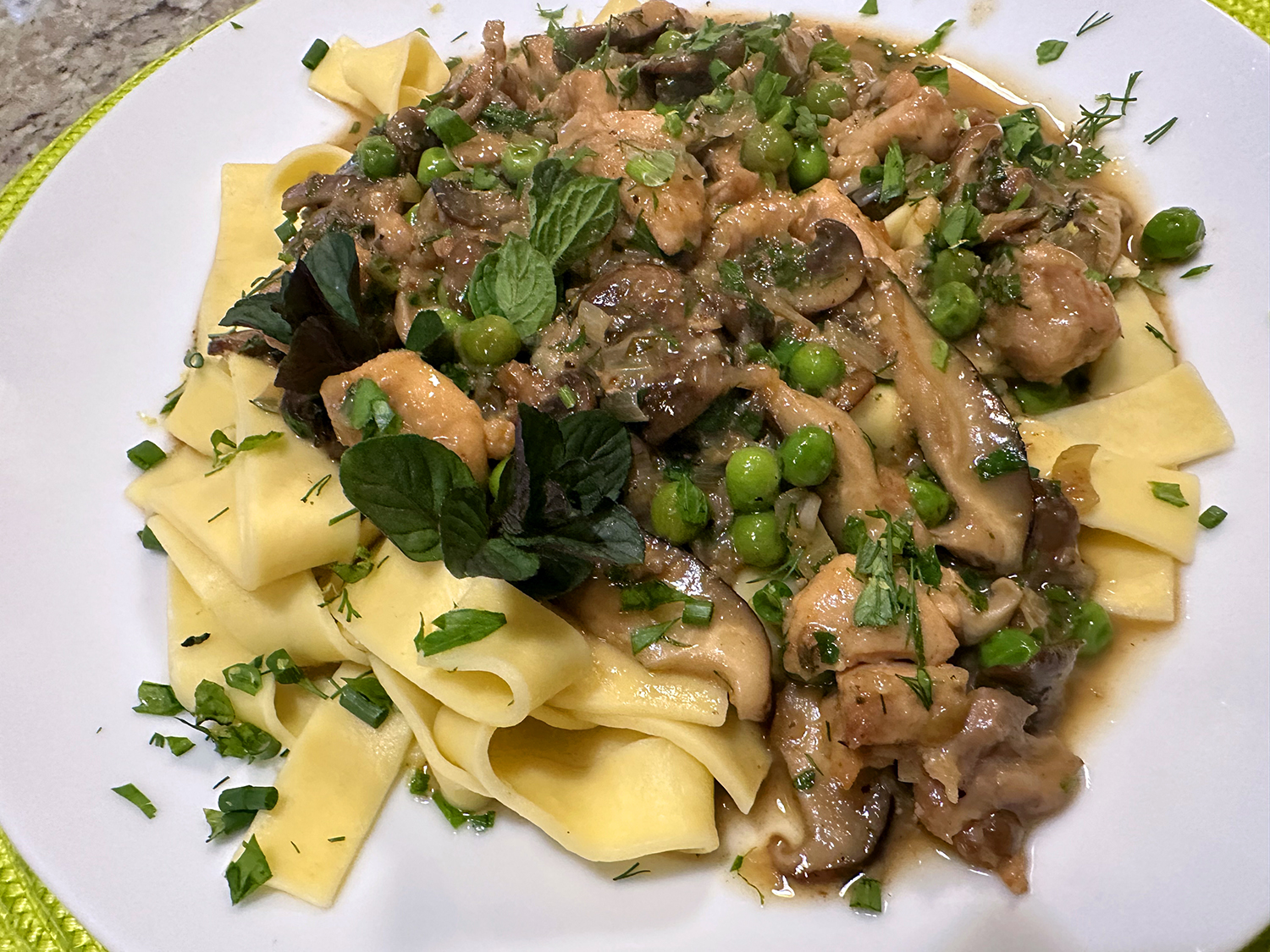
For a main course, chicken-noodle anything is always an attractive option, and here, boneless, skinless chicken thighs come together with button mushrooms and a sauce of chicken broth, white wine and crème fraîche for a bright, filling stew.
To make it sparkle, it’s all finished with a generous handful of tender sweet herbs and lots — lots! — of lemon zest. To serve, ladle over egg noodles, or fresh pasta, such as pappardelle; all are a good choice.
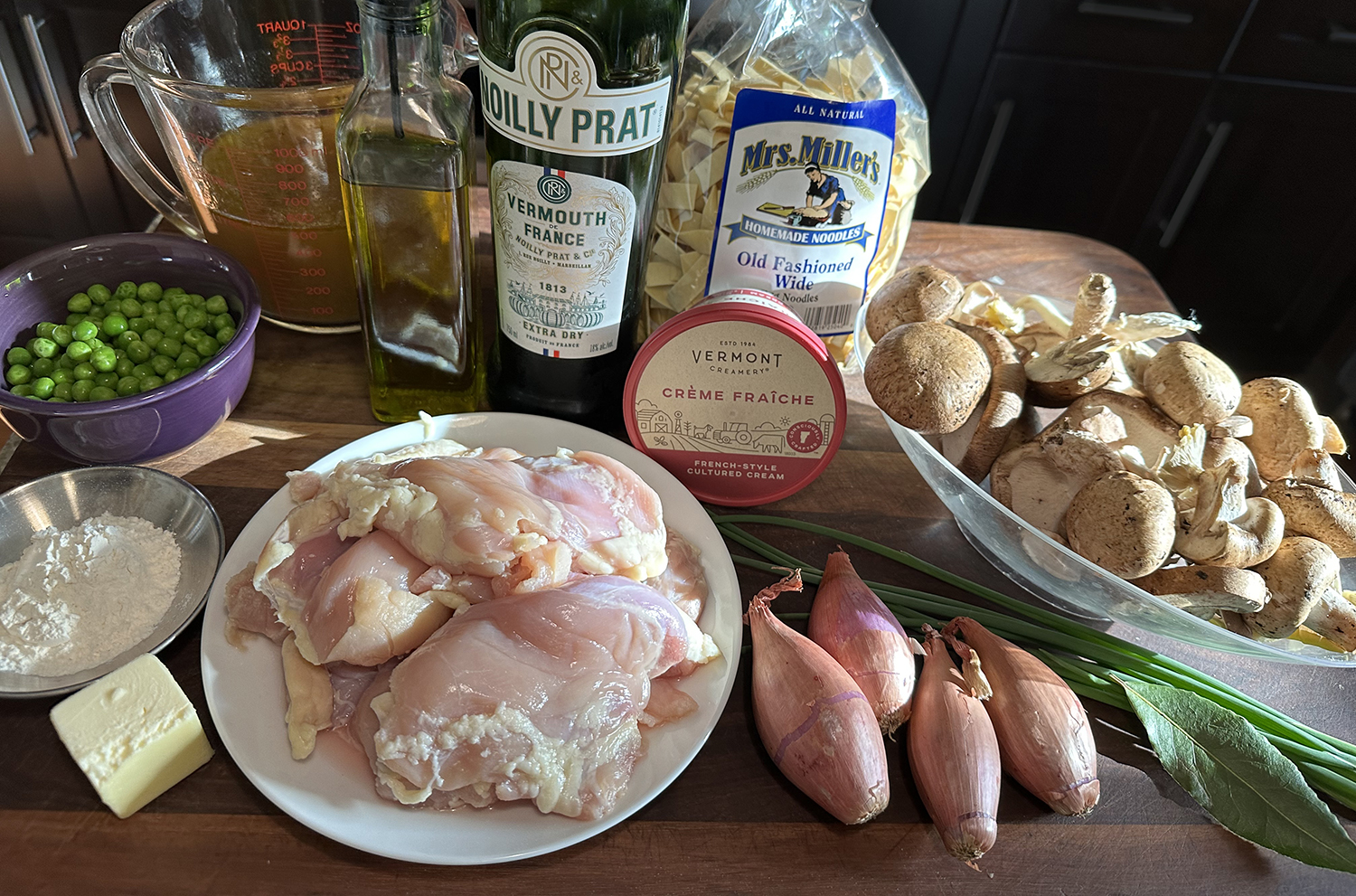
4 Tbsp. unsalted butter or extra-virgin olive oil, plus more as needed
1 lb. button mushrooms, or a mix of other mushrooms, sliced
Salt and black pepper
1½ lbs. boneless, skinless chicken thighs, cut into ½-inch pieces
2 Tbsp. all-purpose flour, for dusting
2 large shallots, diced
1 small bay leaf
½ cup dry white wine or vermouth
2 cups chicken broth
12 oz. wide egg noodles or wide-cut pasta, for serving
¼ cup crème fraîche
1 cup frozen peas (optional)
2 Tbsp. snipped chives
2 Tbsp. roughly chopped dill
1 Tbsp. roughly chopped tarragon
1 Tbsp. roughly chopped mint
3 Tbsp. roughly chopped chervil or parsley
Zest of 2 lemons (about 2 Tbsp.)
Directions
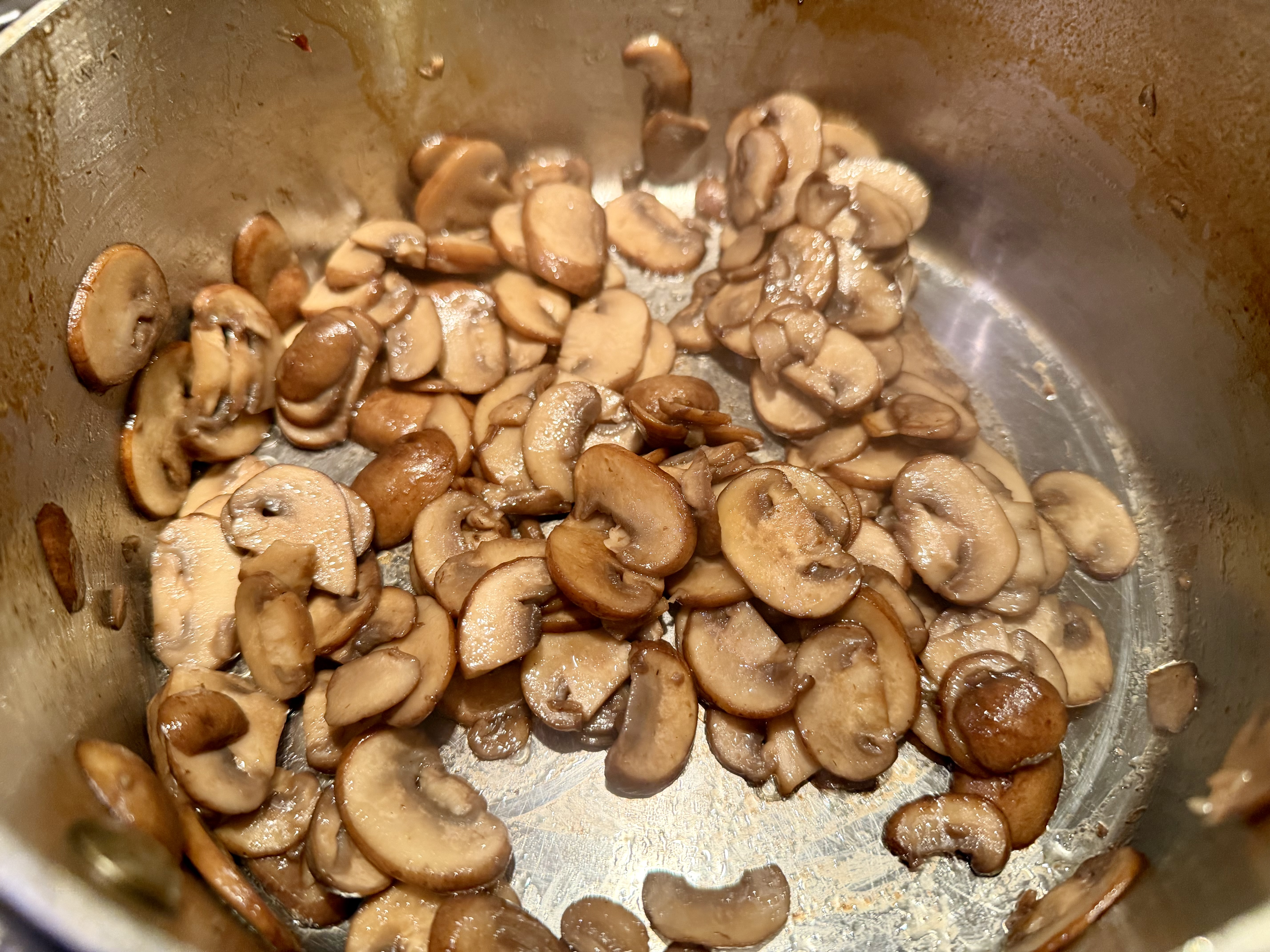
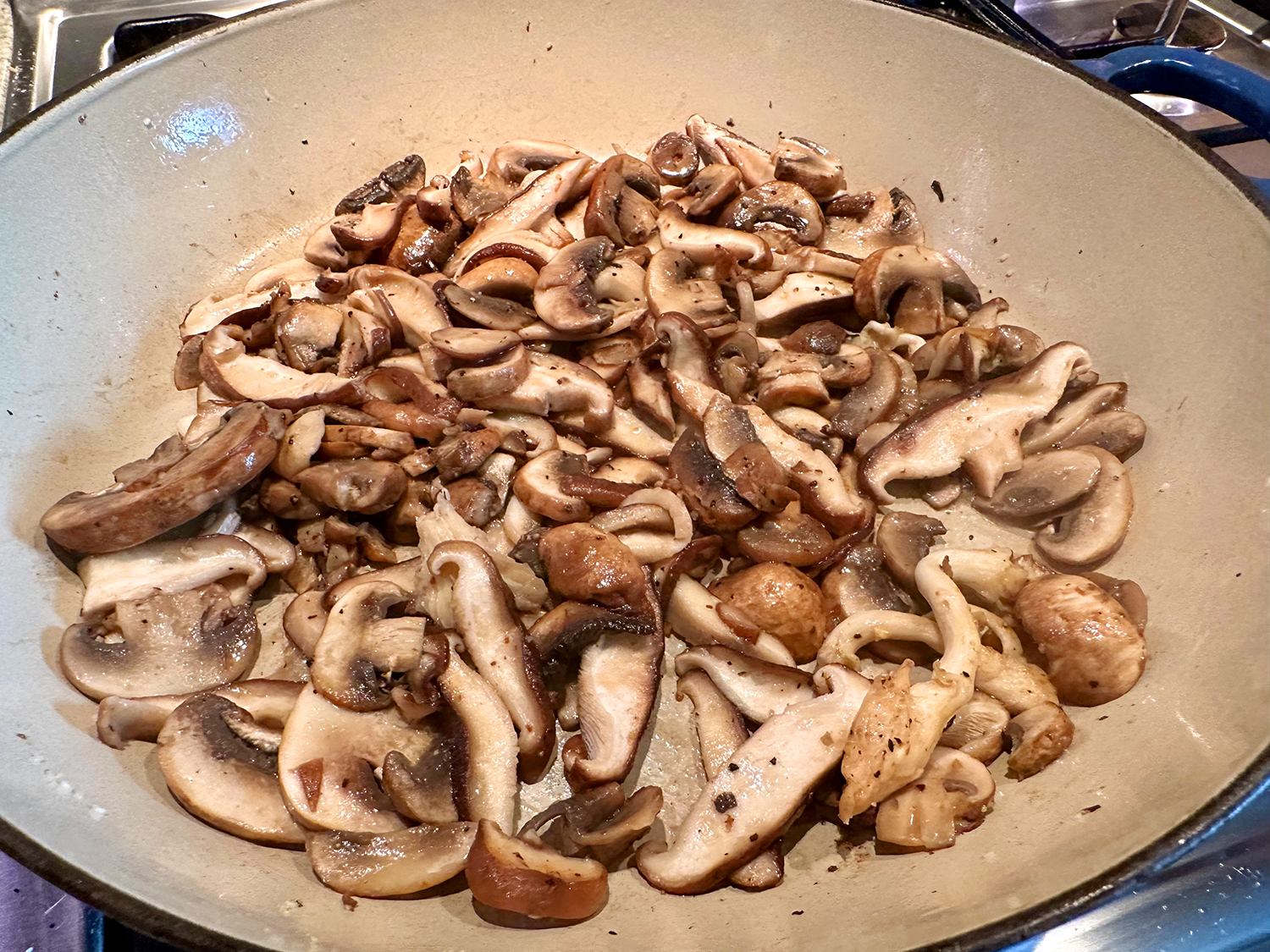
Put 2 tablespoons butter or olive oil in a Dutch oven or deep, wide skillet over medium-high heat. When butter sizzles, add mushrooms, season with salt and pepper, and cook, stirring, until mushrooms are lightly browned and softened, 3 to 4 minutes. Turn off heat. Transfer mushrooms to a plate, and set aside.
Season chicken with salt and pepper. Dust lightly with flour; shake off excess. Add the remaining 2 tablespoons butter to the same Dutch oven and turn heat to medium. When butter sizzles, add half of the chicken, letting it brown on all sides, about 5 minutes per batch. Remove from the pot. Add remaining chicken and repeat, setting aside the chicken. (You may have to add more butter or oil.)
Add shallots to the Dutch oven, and cook over medium-high heat until softened, about 2 minutes. Add bay leaf and wine, and simmer for about 2 minutes, scraping the pot to deglaze any browned bits. Return chicken to pot and turn heat to high.
Add chicken broth and bring to a boil. Turn down heat to maintain a brisk simmer and cook, uncovered, until the chicken is tender, about 20 minutes, then raise heat to high and let liquid reduce by half, about 5 minutes.
Meanwhile, cook noodles or pasta in salted water.
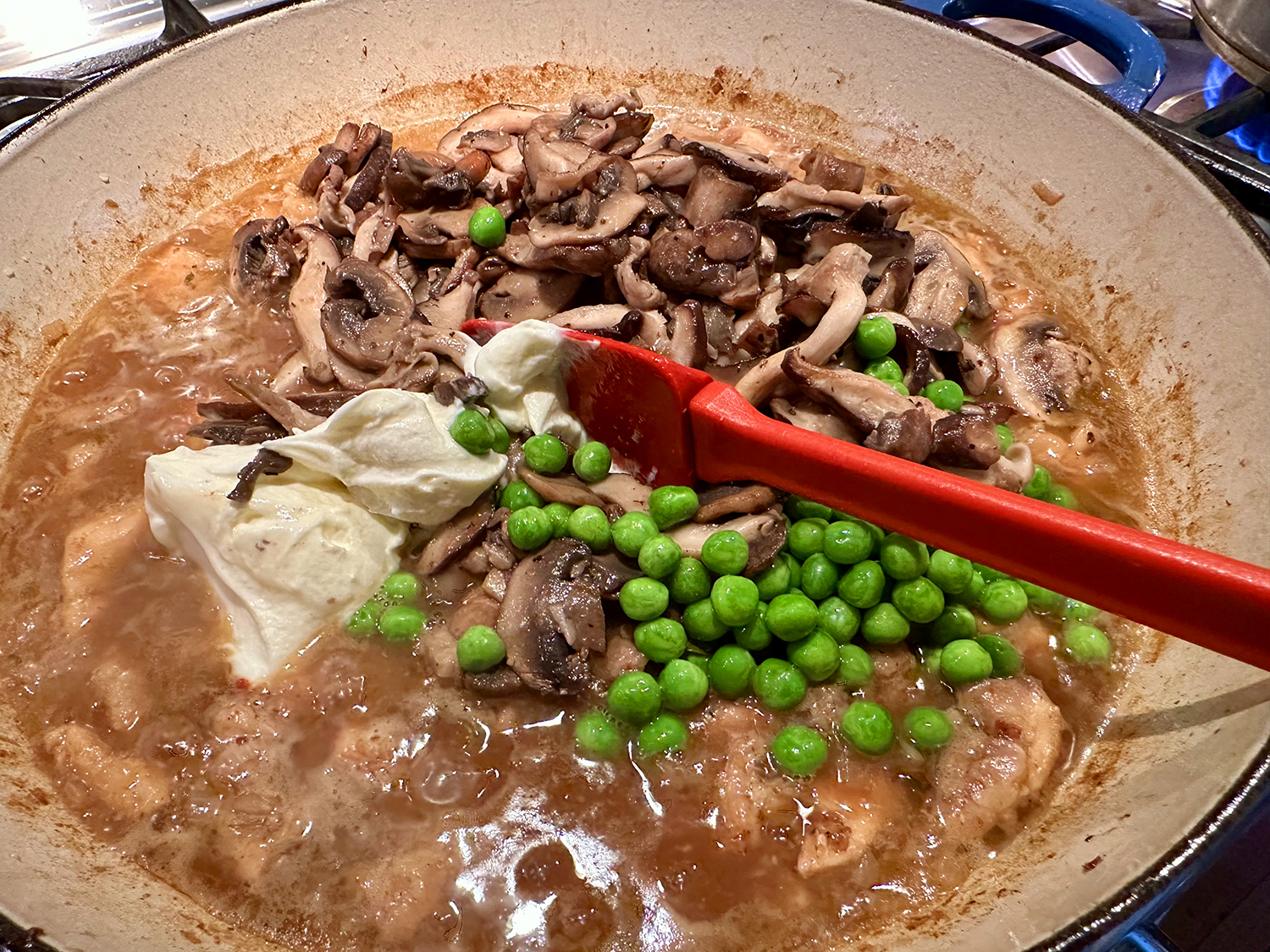
Add reserved mushrooms, crème fraîche and peas, if using, to the stew. Reduce sauce again, until thickened to a gravy- like consistency, a few minutes more. Taste and adjust seasoning. To finish, stir in half of the chives, dill, tarragon, mint, chervil and lemon zest, reserving part of the herb mix to sprinkle over top.
Drain noodles or pasta, transfer to a warm serving platter and spoon chicken and sauce on top, and finish with more of the herb mixture.
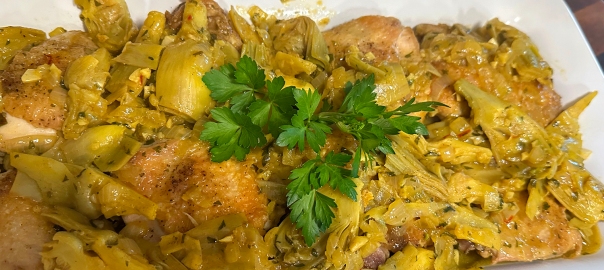
The original recipe called for using fresh artichokes, which adds a lot more time and effort to this tasty dish. And since we had a 12-ounce bag of frozen artichokes at the ready, we opted to make this recipe in a more time-sensitive manner. And it didn’t disappoint.
This chicken dish partnered well with our side of Mushroom Risotto with Peas. The meal was absolutely delicious!
1 tablespoon chopped fresh parsley, plus more to garnish
½ tsp. saffron
½ tsp. ground cinnamon
1½ cups chicken broth, plus more if needed
Directions
Pat chicken dry, then season all over with salt and pepper. In a large skillet, warm the olive oil over medium-high heat, then add the chicken, skin-side down. Cook, undisturbed until well browned, 7 to 8 minutes. Flip and brown the other side, about 5 minutes. Transfer chicken thighs to a plate and spoon out about 3 tablespoons of fat from the pan, if desired. (You can discard the excess fat or save for another use.)
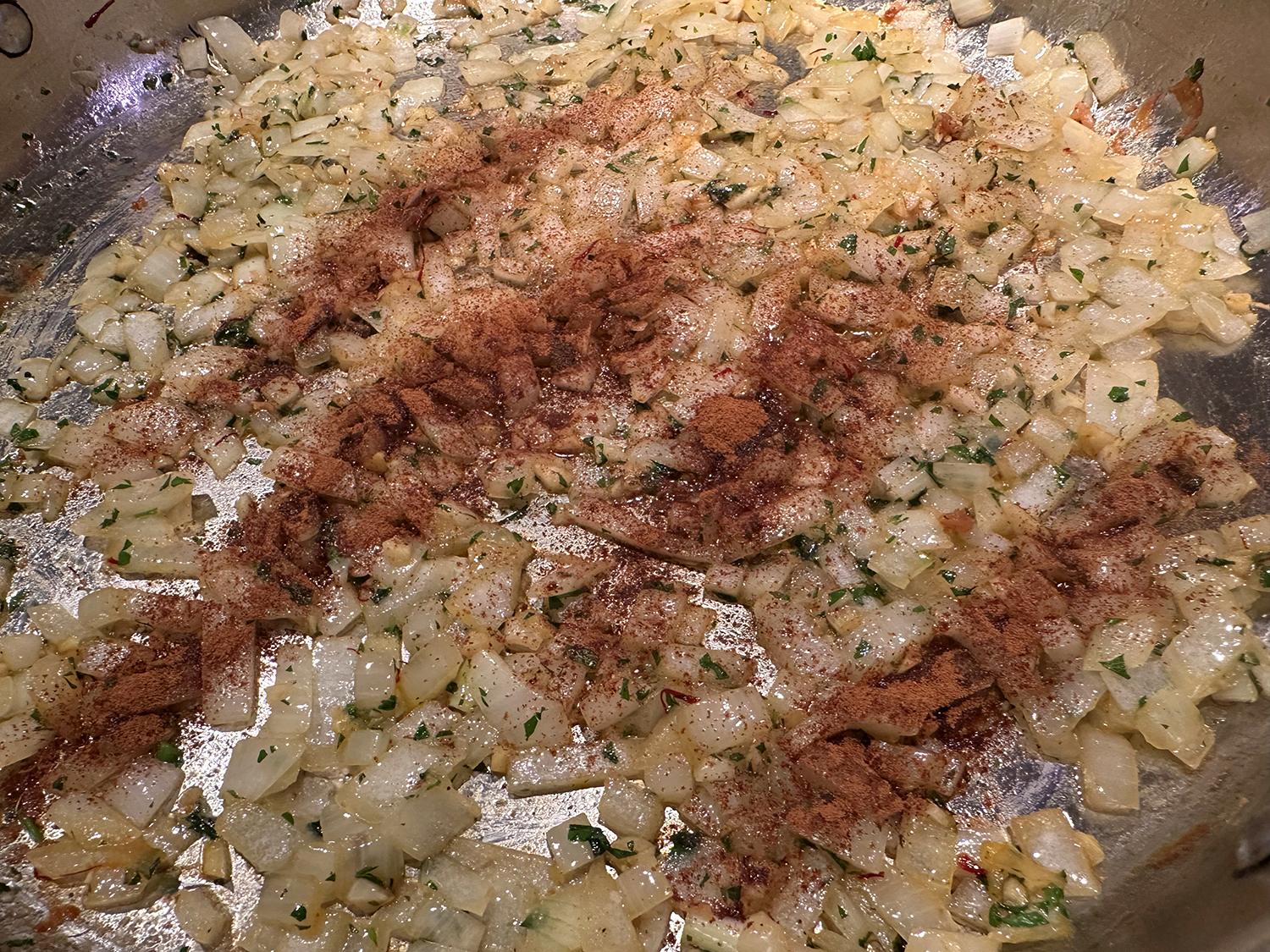
Return the skillet to medium heat and add the onion, garlic, parsley and saffron. Season with salt and pepper, and cook, stirring occasionally, until onion is translucent, about 5 minutes. Sprinkle the cinnamon over the onion, then stir to combine.
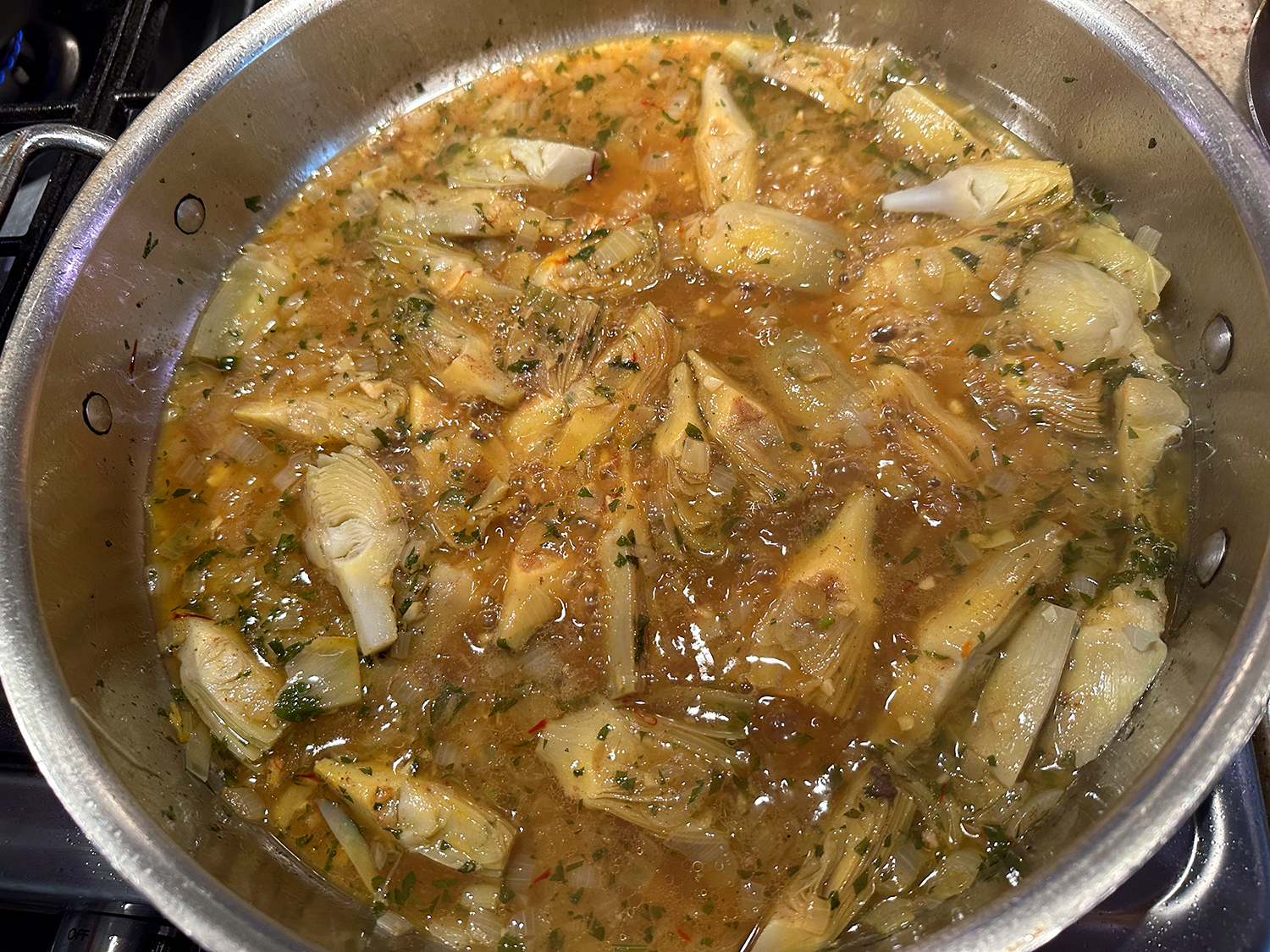
Add the broth to deglaze, scraping the bottom of the pan, and bring to a simmer over medium-high. Return the chicken to the pan, nestling it into the pan skin-side up. Arrange the artichokes between the chicken pieces, cover, and simmer over medium-low until the chicken is cooked through, 20 to 25 minutes. Remove the chicken with a slotted spoon and transfer to a plate.
Raise the heat to medium-high and cook until the sauce is thickened and the artichokes slightly browned, about 5 minutes. Stir in the juice from half the remaining lemon, taste, and adjust with salt and more lemon juice if needed. Spoon artichokes and pan sauces over the chicken, sprinkle with parsley to garnish, and serve.
A whole roasted chicken with citrus and fresh herbs always brings me back to my childhood when Mom would make Sunday dinner and serve her Orange Juice Chicken/Turkey. To this day, whenever The Hubs and I cook a similar recipe, those warm memories come flooding back.
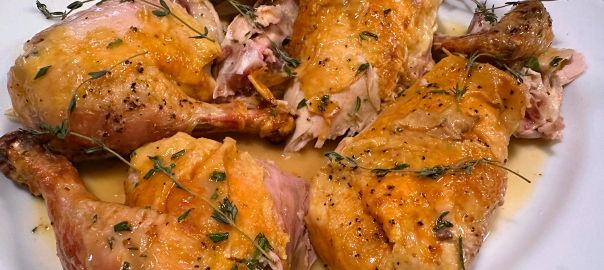
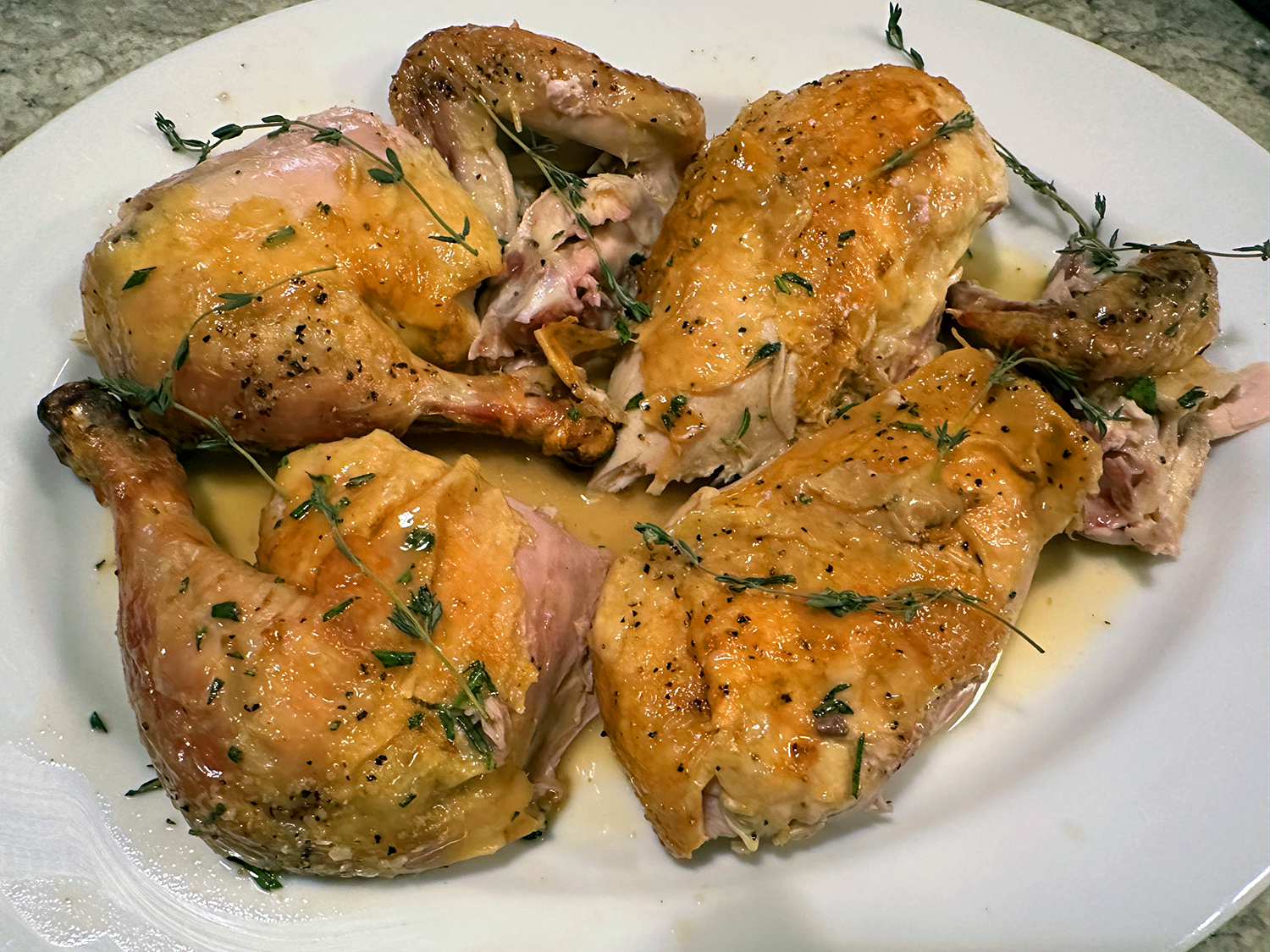
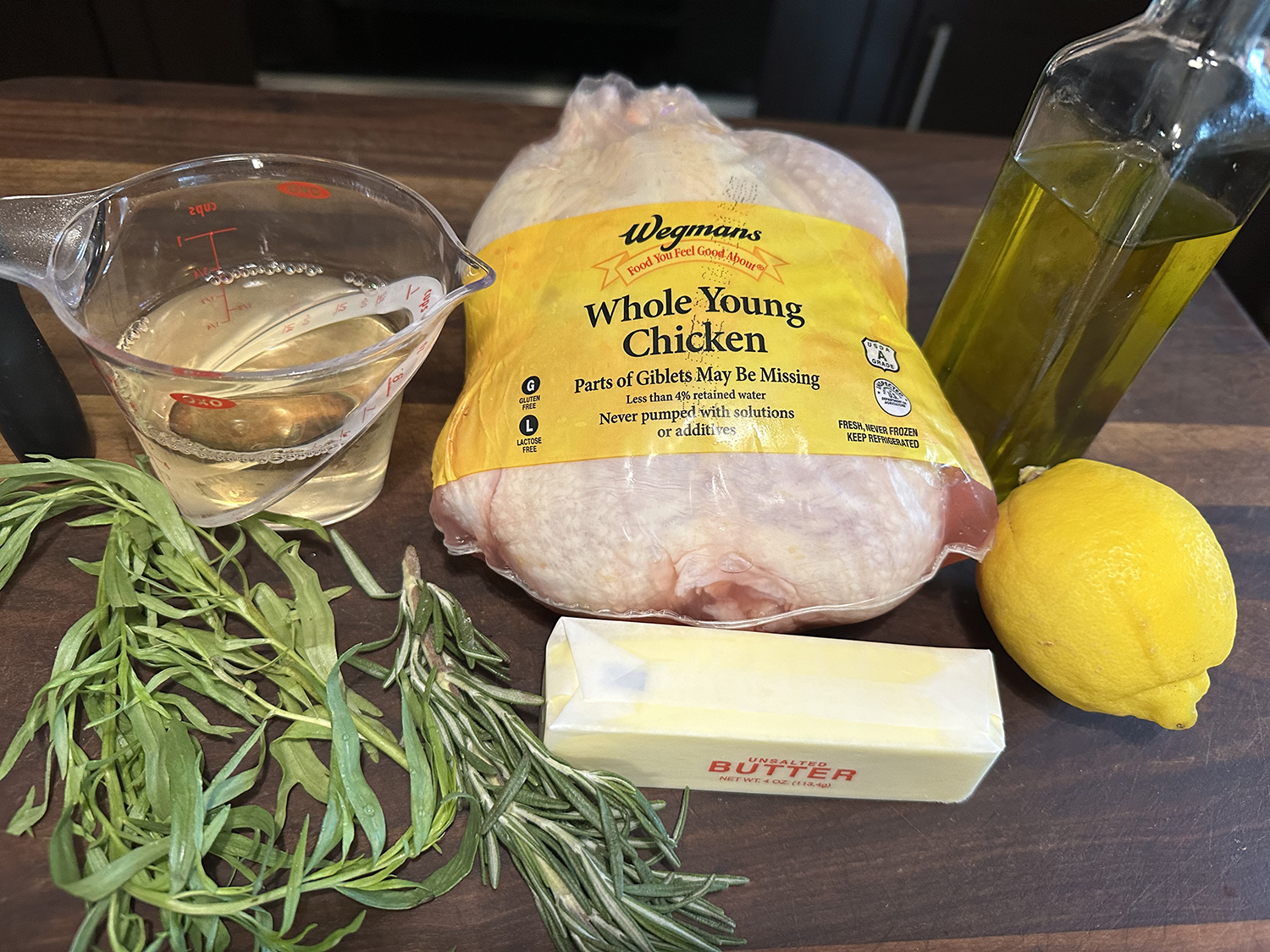
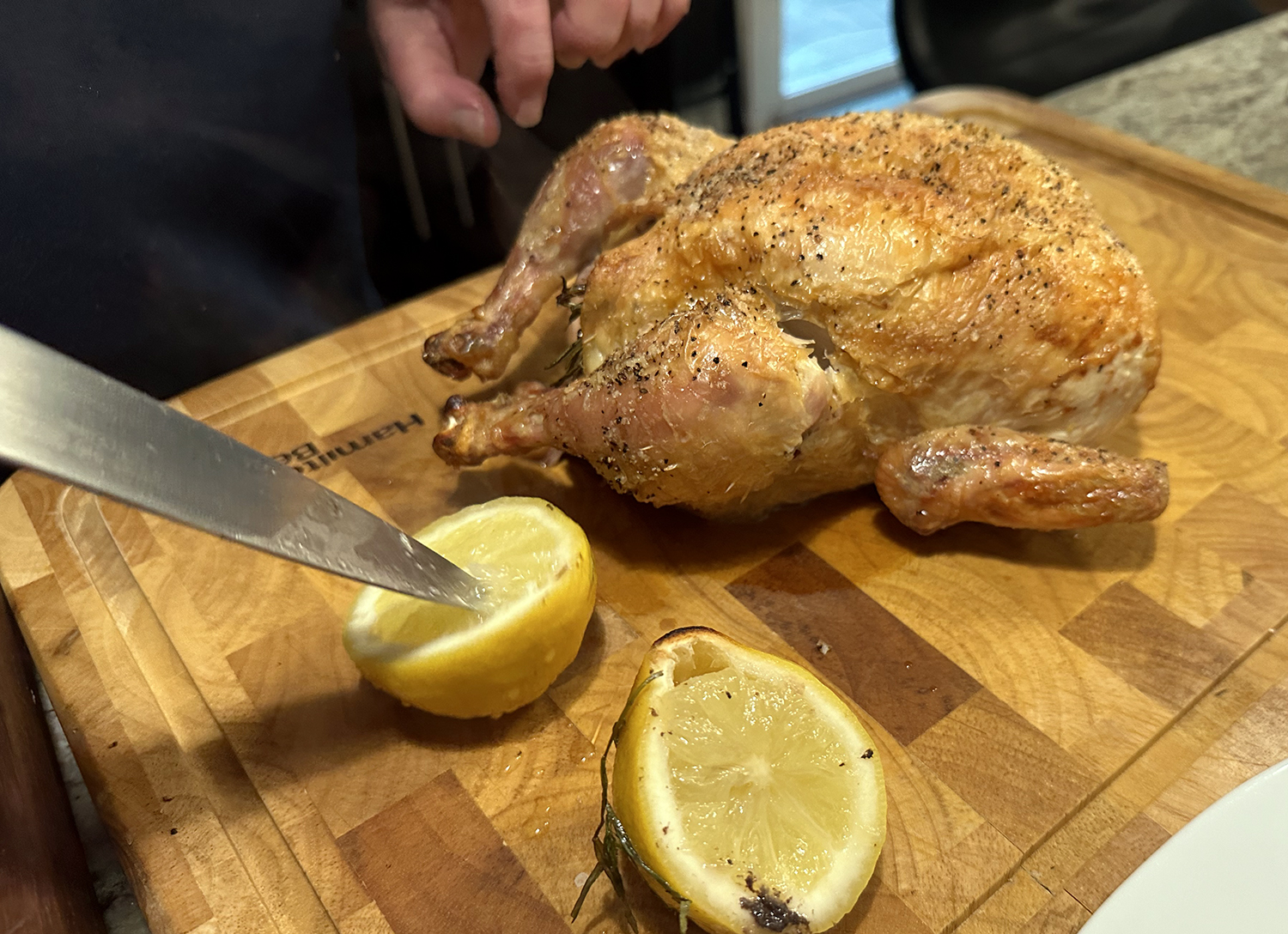
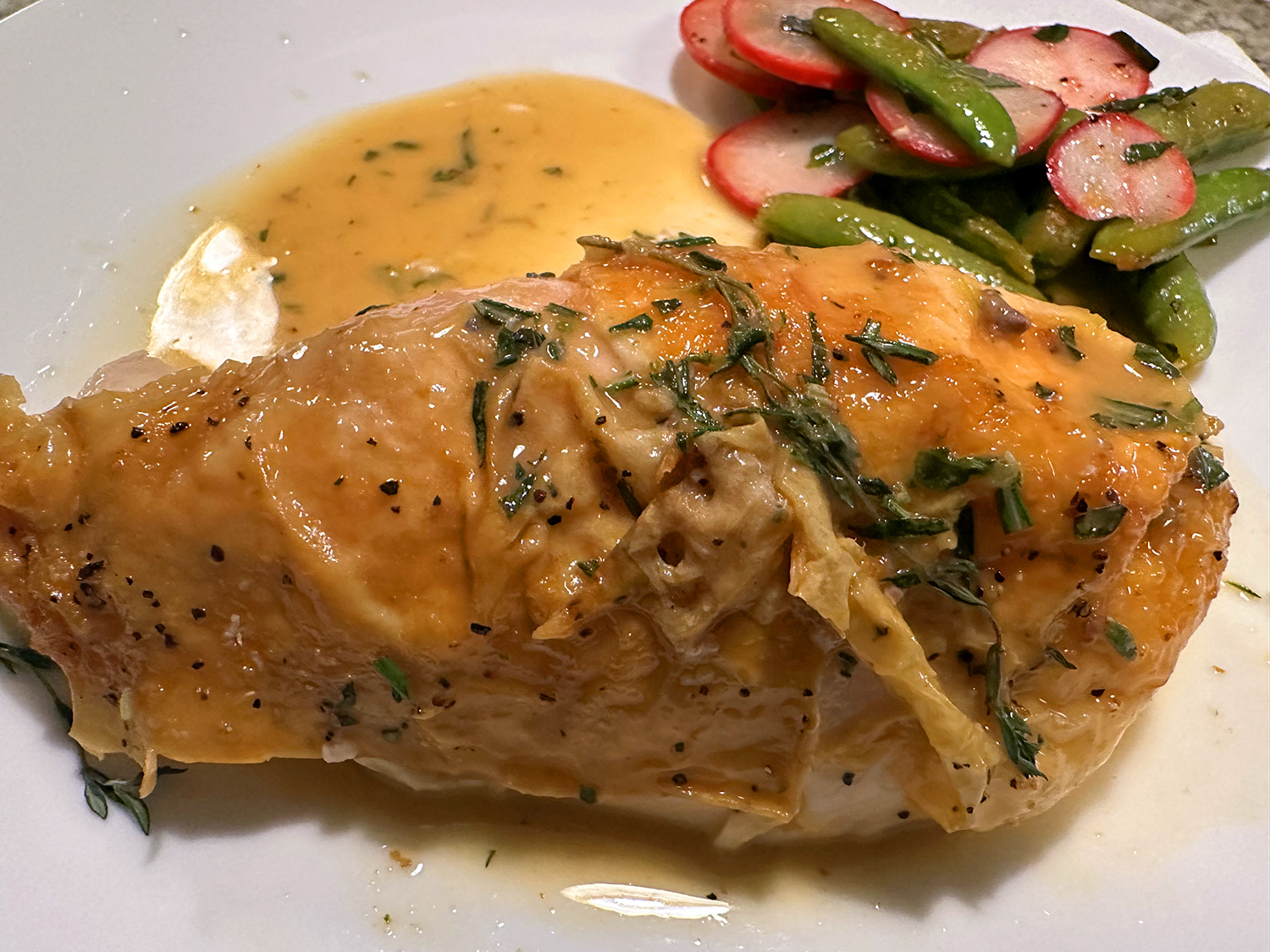
This simple roasted chicken recipe from Milk Street makes a buttery yet bright sauce. Tucking fresh herbs and lemon halves in the cavity flavors the juices for the incredible sauce; cooking mellows the lemon’s acidity. We used a mix of rosemary and tarragon sprigs for the cavity, and chopped for a garnish.
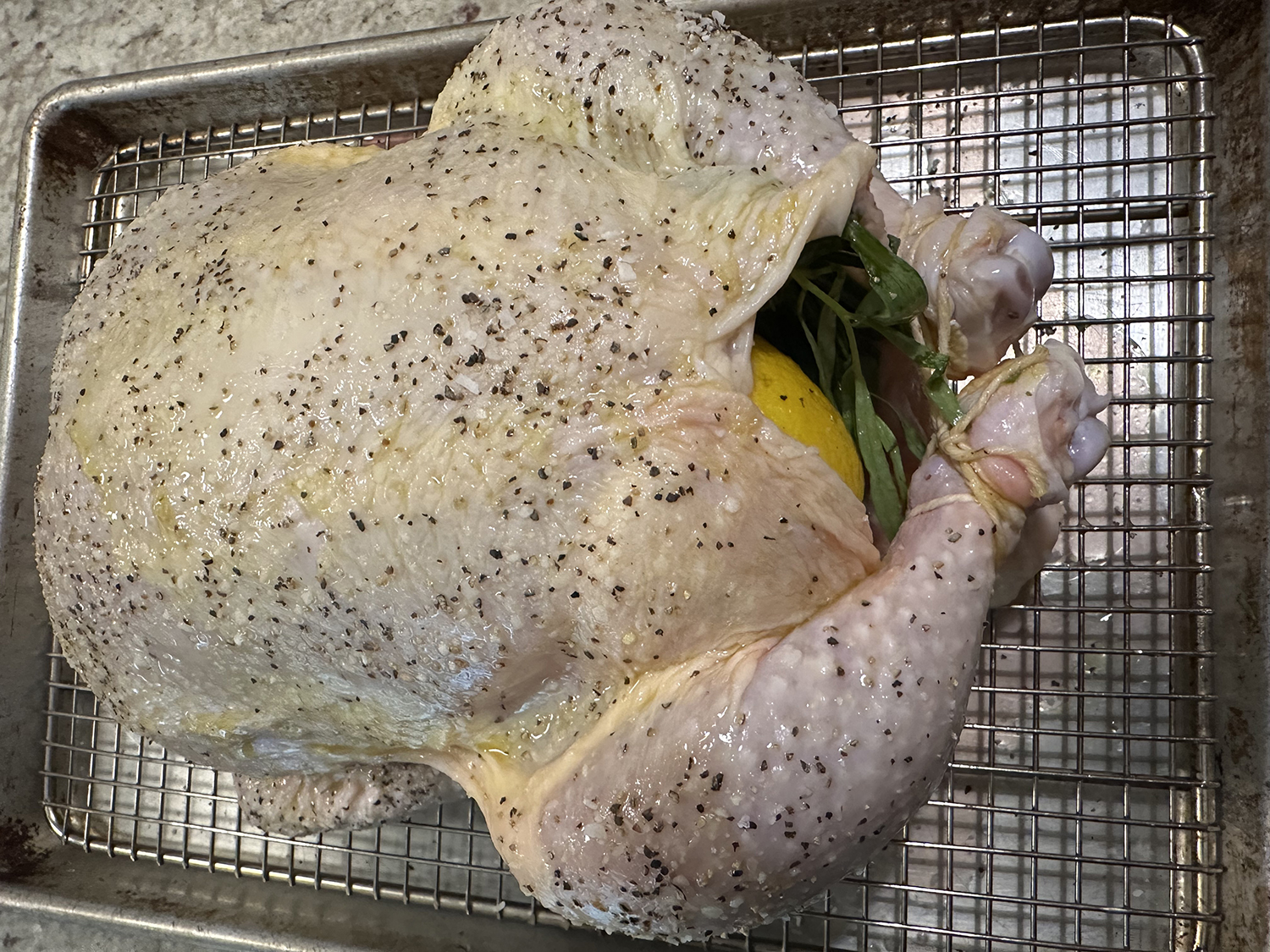
Roasting on a flat wire rack in a rimmed baking sheet allows for improved circulation, resulting in better browning and even cooking. Resulting in a super-juicy chicken with crispy skin.
With just a handful of ingredients, and a mostly hands-off approach, this dish comes together quickly. While the bird roasts in the oven, you can attend to your guests, and/or prepare any sides you wish to serve.
4-lb. whole chicken, patted ry, fat near the cavity removed and discarded
6 tarragon OR rosemary OR thyme OR flat-leaf parsley sprigs, plus 1 Tbsp. chopped
1 lemon, halved crosswise
1 Tbsp.extra-virgin olive oil
Kosher salt and ground pepper
3/4 cup dry wine
4 Tbsp. salted butter, cut into 4 pieces
Directions
Heat the oven to 425°F. Place the chicken on a wire rack set in a rimmed baking sheet.
Place the lemon halves and the herb sprigs in the cavity, tie the legs together with kitchen twine, and tuck the wings back.
Brush the bird with olive oil and season with salt and pepper. Roast until the thighs reach 175°F, about 1 hour, 15 minutes. tilt the chicken so the juices run out of the cavity into the pan, transfer to a cutting board; let rest.
Meanwhile remove the rack and pour half of the wine onto the baking sheet. Scrape up any browned bits, then pour the mixture into a medium suace pan; add the remaining wine. Simmer over medium until reduced by half, about 10 minutes.
Remove from the heat, untie the chicken, remove and reserve the lemon halves. Carve the chicken, transfer to a platter and pour on any accumulated juices. Return the sauce to simmer, then remove from the heat and whisk in the butter until melted.
Add chopped herbs, then squeeze in 2 tablespoon juice from the lemon halves. Season to taste. Serve the sauce with the chicken.
This Braised Chicken with Endive is a reinterpretation of coq au vin. This Food & Wine recipe features white wine-marinated chicken thighs and caramelized endive in a gorgeous pan sauce. So yes, we fell in love with yet another braised chicken dish. The flavors are just amazing, and amped up by using homemade chicken stock which bursts with depth of flavor.
You may have to brown the chicken in two batches (we did), so as not to crowd them in the pan which would steam the thighs causing flaccid skin. Not the result you are looking for.
If you’ve never had braised endive, you are in for a treat! Mske sure to get Belgian endive, which is shaped like a torpedo and grows to about six inches in length. It has tender white leaves with either yellow or red-colored leaf edges. The leaves offer a soft texture and delicate crunch with a pleasantly bitter flavor.
And our potato side dish also used homemade chicken stock and were the creamiest little spuds ever!
3 thick-cut bacon slices, cut crosswise into 1/4 inch pieces
4 Belgian endive heads, trimmed and halved lengthwise
1/2 cup chicken stock
2 Tbsp. unsalted butter, chilled and cut into pieces
1 tsp. Dijon mustard
2 Tbsp. finely chopped mixed tender herbs (such as chives, parsley and tarragon)
Crusty bread for serving
Directions
Sprinkle chicken evenly with 1 1/2 teaspoons of salt; place in large bowl. Add wine, and turn chicken to coat. Cover with plastic wrap, and marinate in refrigerator at least 8 hours or up to 24 hours.
Preheat oven to 400°F. Remove chicken from bowl; reserve 1/2 cup of the wine liquid. Pat chicken dry with paper towels, and sprinkle evenly with pepper and remaining 1/2 teaspoon of salt; set aside.
Cook bacon in a large nonreactive skillet over medium, stirring often until crisp and fat has rendered, about 8 minutes. Using a slotted spoon, transfer bacon to a small bowl; set aside. Reserve rendered fat in skillet. Place chicken thighs skin side down in skillet. Cook over medium-high, undisturbed until skin is deeply browned, about 8-10 minutes. Transfer chicken skin side up to a large plate, set aside. Reserve 2 tablespoons drippings in skillet, discard the remaining drippings.
Return skillet to heat over medium-high. Add endive halves, cut sides down. Cook, undisturbed until browned, about 3 minutes. Flip endive cut sides up, and add stock, cooked bacon, and reserved 1/2 cup of white wine. Nestle chicken skin side up, in skillet. Bring to a boil over high.
Transfer skillet to preheated oven. Roast until endive is tender and a meat thermometer inserted in thickest portion of chicken registers at least 170°F, about 15 minutes. Transfer chicken and endive to a large platter, reserving sauce in skillet.
Bring sauce in skillet to a simmer over medium-high. Simmer, undisturbed, until slightly reduced, about 4 minutes.
Remove from heat, and stir in butter, mustard and herbs. Spoon sauce over chicken, and sprinkle with slat to taste. Serve with crusty bread if desired.
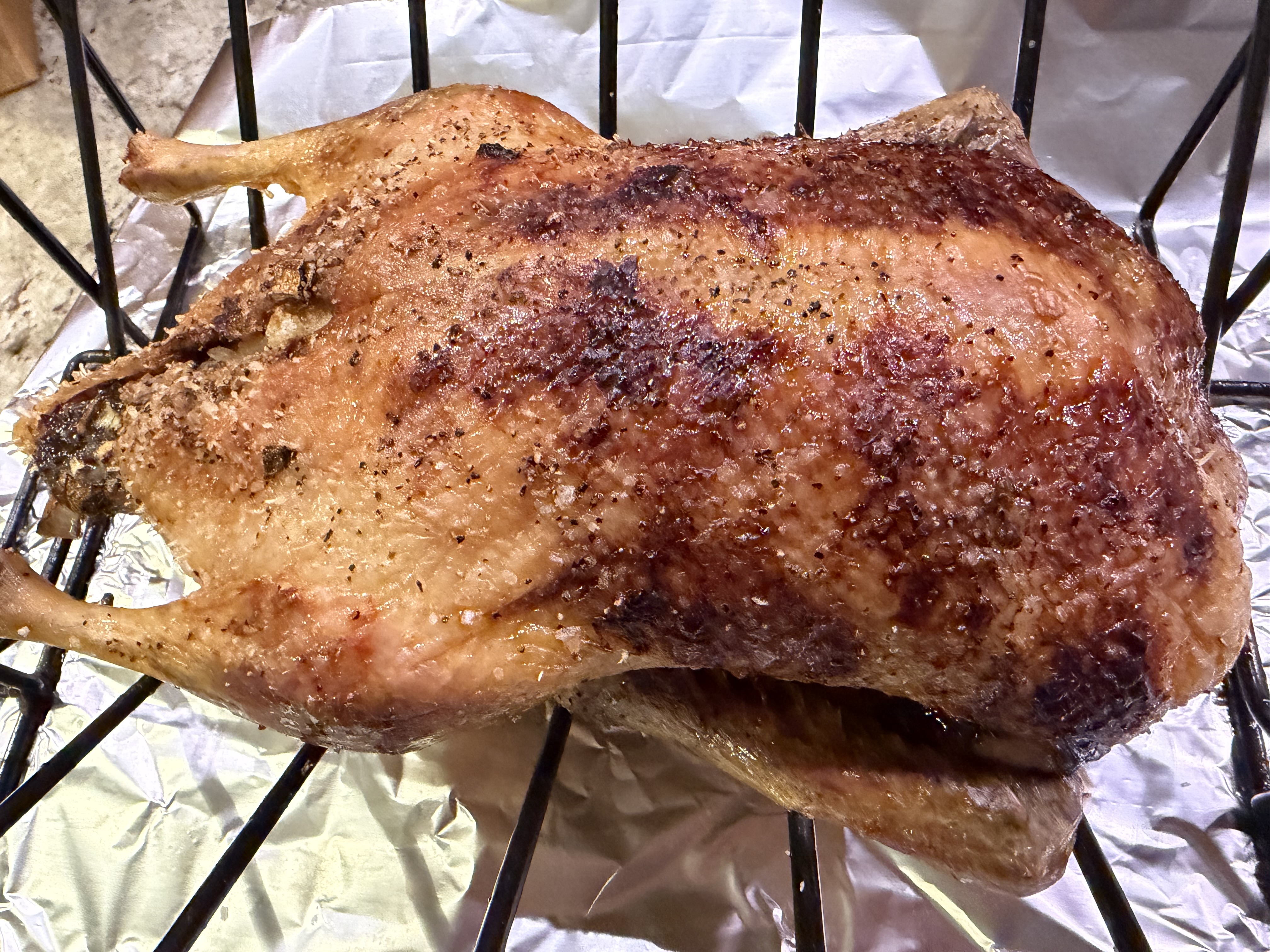
For a festive occasion, a burnished whole duck makes quite an impression — fancier than chicken and more elegant than turkey. When I was growing up, Mom roasted duck a few times a year, a favorite for most of the family.
I remember as a young teen going out to eat at a Chinese restaurant for the first time because it was my sister’s birthday and that was her venue of choice. Picky as I was, I was not a happy camper as I walked in, but was a convert when I walked out because I had ordered Wor Shu Opp (pressed almond duck).
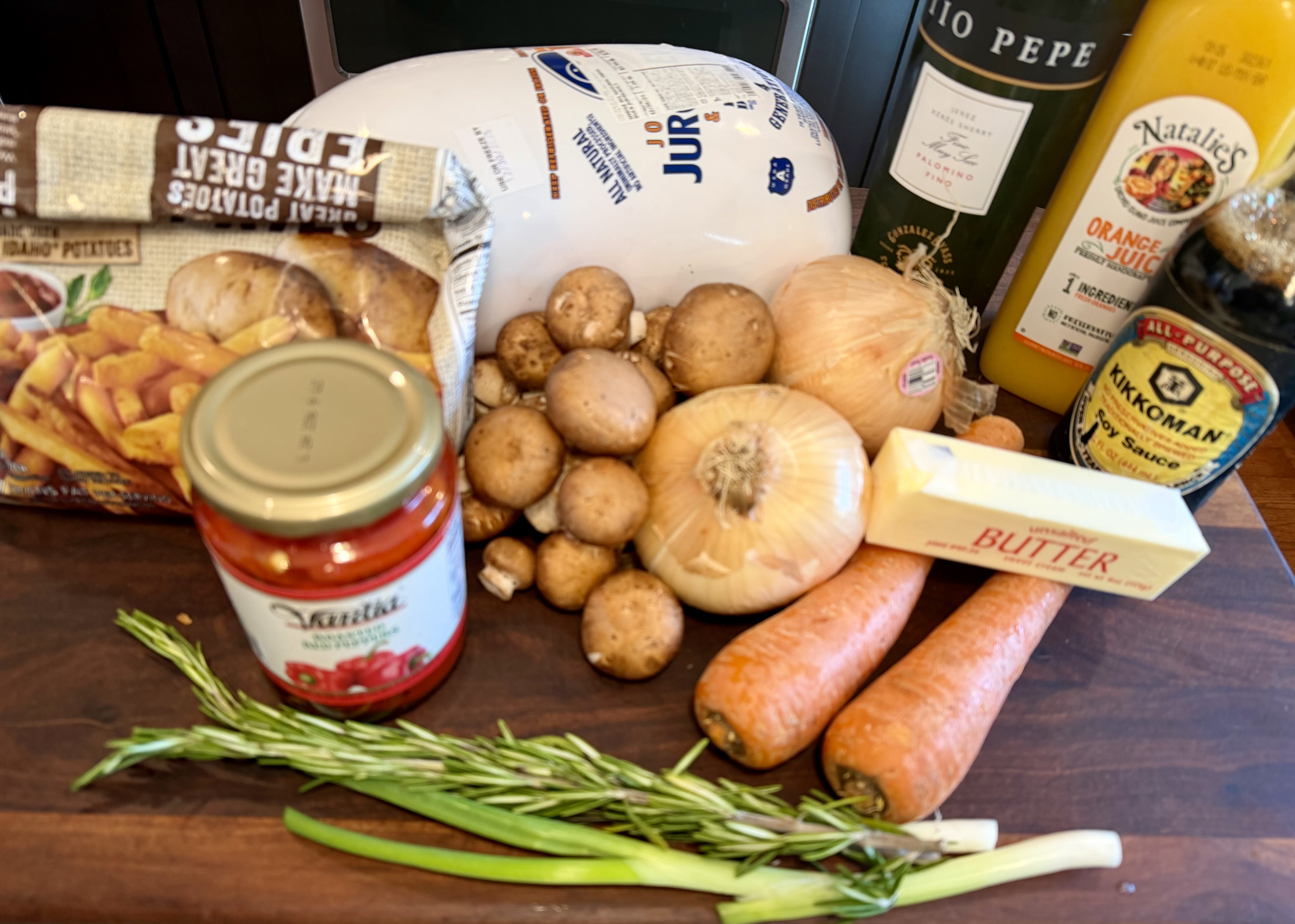
Roasting the duck is not so difficult to do. Seasoning the duck ahead and leaving it in the fridge overnight helps to deepen the flavor and keeps work to a minimum the following day. This one is seasoned with orange zest, along with fair amount of ginger and five-spice powder, which gives it a marvelous perfume. We paired ours with a Kobocha-Cauliflower Mash.
The ingredient list is minimal, and the hands-on prep doesn’t take long—most of the time the duck is either in the refrigerator or the oven. Because the bird gets glazed often, the skin will be a gorgeous burnished tawny color, but the skin won’t be extra crispy.
Keep in mind when serving more than 4 people, you will need two ducks. Of course there is no need to wait until a special occasion…
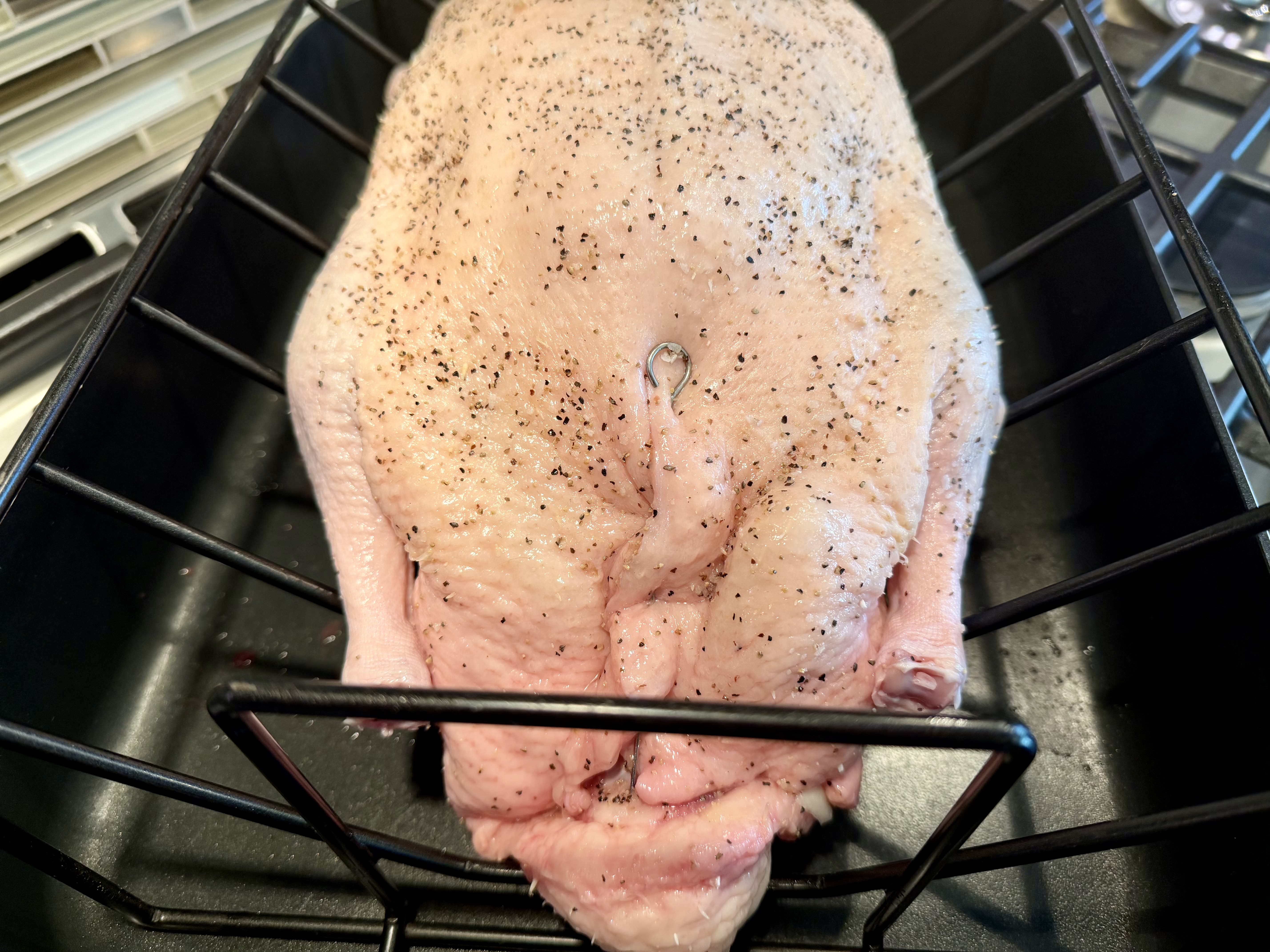
Rinse duck and pat dry. Remove neck and giblets and save for another purpose. Remove excess fat from cavity and tail area and trim off a bit of flappy neck skin. Prick duck skin all over with tip of sharp paring knife, making sure not to penetrate meat.
Mix together salt and 5-spice powder. Season interior of duck with 1 tablespoon salt mixture; use remainder to generously season exterior (you may have a little left over).
Combine orange zest with grated ginger and garlic, then smear mixture inside cavity. Place orange wedges in cavity. Tie legs together. Secure neck flap with wooden skewer or toothpicks. Place duck on rack in roasting pan breast-side-up and refrigerate overnight, uncovered.
Heat oven to 350 degrees. Meanwhile, bring duck to room temperature and make the glaze: Bring orange juice, honey, sugar and soy sauce to a simmer. Add sliced ginger and star anise, then reduce mixture until you have a medium-thick syrup, about 10 minutes. Remove from heat and set aside.
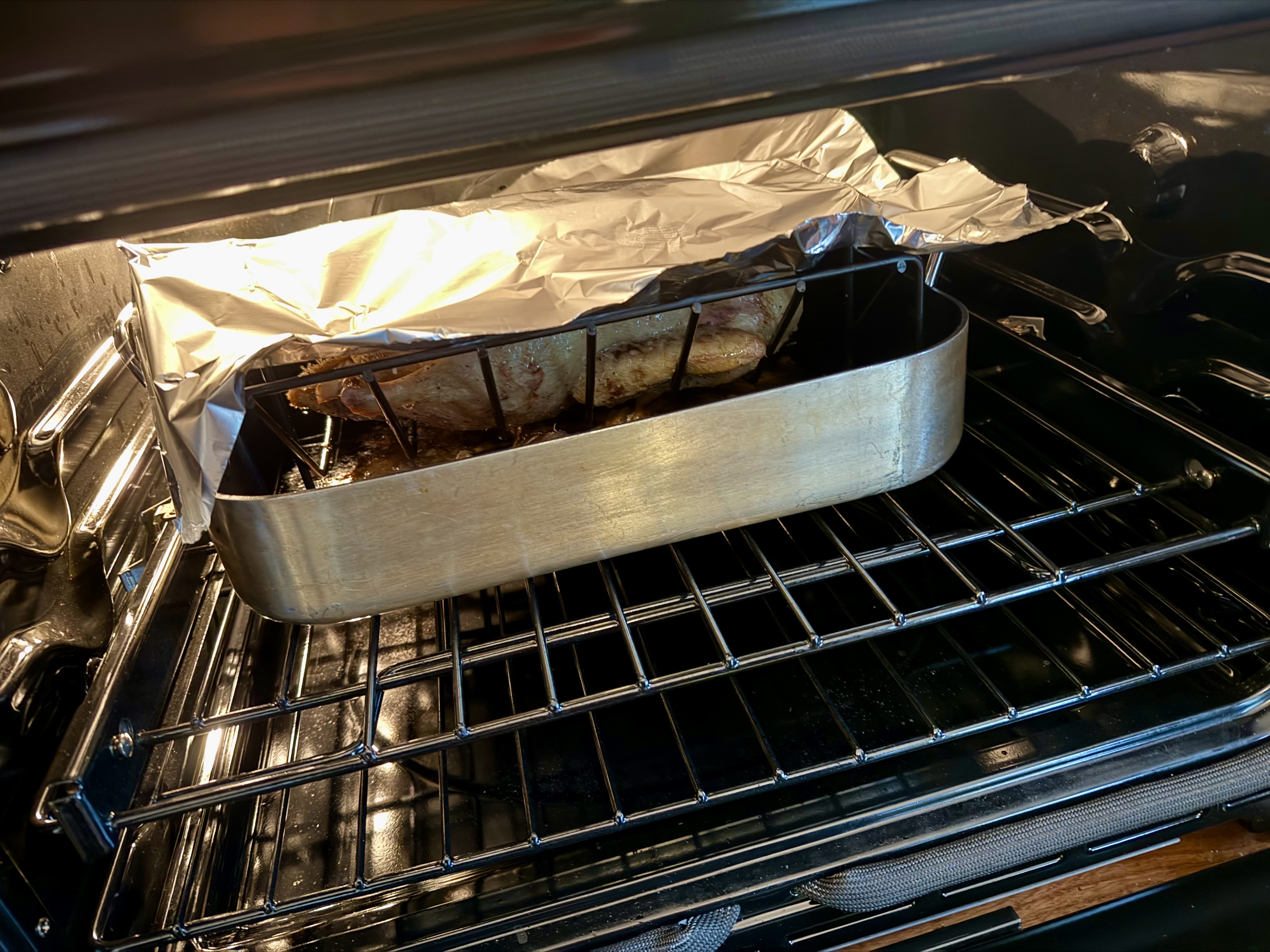
Roast duck for 2 hours, carefully pouring off fat and turning duck over every 30 minutes. Paint with glaze and roast for another 30 minutes (2 1/2 hours in all). Tent with foil if the glaze begins to get too dark. Duck is done when the temperature at the thickest part of the leg reads 165 degrees.
Paint the duck once more, keep it warm and let rest for 20 minutes. Use poultry shears to cut into quarters (remove backbone first) or carve in the traditional way, removing legs from carcass and slicing breast.
A turkey dinner with all, or some, of the trimmings is not just for Thanksgiving you know. Growing up, our mother made a turkey dinner several times a year, usually, Christmas, New Years and/or Easter. Our family of seven all loved it, and it is not that complicated. Plus, we loved the leftovers.
Thanksgiving dinner is one of those meals that is revered in our house to this day. There are certain staples that are a must such as, stuffing, mashed potatoes and gravy, cranberry sauce, and of course the star of the show, Mr. Tom Turkey. But we do not hesitate to try out different recipes concerning these staples. For instance, this year we cooked a Mayo-Roasted Thanksgiving Turkey With Gravy recipe from J. Kenji Lopez-Alt.
Some recipes for mayo-roasted turkey promise extra-juicy results with minimal effort. This one does no such thing. The mayonnaise won’t help the turkey stay juicy: Only salting and resting (a light curing process known colloquially as dry-brining) and carefully monitoring its internal temperature as it roasts will. The mayonnaise will, however, produce a turkey with glistening, burnished, golden-brown skin evenly flavored with herbs, no basting required. (Perfect for a photo op!)
The mayo’s viscosity helps it stay in place as it roasts, while the extra protein from egg aids in browning. This recipe will make a little more mayonnaise than you’ll need. Use the excess for leftovers sandwiches, or toss it with roughly chopped vegetables (carrots, broccoli, brussels sprouts, zucchini or squash) before roasting at high heat for 10 to 15 minutes.
To the turkey ingredients we added bay leaves and fresh thyme. These herbs were placed on top of the cubed celery, onion and carrots, with the turkey placed ontop of it all to cook in the sheet pan.
If spatchcocking intimidates, you can cook the turkey whole. Place a baking stone or steel directly on an oven rack set in the lowest position when heating your oven in Step 4. (Let it preheat for at least 45 minutes.) Place the whole turkey, breast-side up on the rimmed baking sheet. Roast as directed in Step 6 for 30 minutes, then reduce heat to 350 degrees, and continue roasting, tenting with aluminum foil if the skin starts brown too quickly, until the breast meat registers 150 degrees at its coolest point and the thigh and leg meat register at least 165 degrees at their coolest point, another 80 to 100 minutes. Remove from oven, transfer turkey to a cutting board as soon as you can handle it, then continue recipe as directed from Step 7. You can make the herb mayo from scratch, if you like. In a tall container just wide enough to fit the head of a hand blender, combine 2 teaspoons Dijon mustard, 3 medium garlic cloves, 1 whole egg, and the zest and juice of 1 lemon. Top with 1 cup neutral oil, such as vegetable, light olive oil or canola, so that the oil forms a distinct layer. Place the head of a hand blender firmly at the bottom of the container. (The garlic cloves should be entirely within the business-end of the blender.) Turn on the blender and, over the course of 15 seconds, slowly pull it up through the oil. A thick, stable mayonnaise should form. Remove the blender, shaking off most of the excess mayonnaise back into the jar. Proceed with the recipe.
1 whole turkey, (10- to 14-lb.) backbone removed, neck, giblets and backbone reserved for the gravy (see Notes)
1/2 cup kosher salt, or 6 tablespoons coarse salt
2 celery ribs, diced
1 large onion, diced
1 large carrot, diced
3 bay leaves
6-8 sprigs of fresh thyme
For the Herb Mayo:
1 1/2 cups mayonnaise
1 cup loosely packed fresh parsley leaves, stems reserved
1/2 cup loosely packed fresh sage leaves, stems reserved
2 Tbsp. fresh thyme or oregano leaves, stems reserved
2 scallions, roughly chopped
1 lemon, zested
Kosher salt and freshly ground black pepper
For the Gravy:
2 tsp. neutral oil, such as vegetable, light olive oil or canola
2 celery ribs, roughly chopped
1 large onion, diced
1 large carrot, roughly chopped
Reserved backbone, and any neck or giblets from the turkey, roughly chopped
1 1/2 quarts homemade chicken or turkey stock
Reserved herb stems from the Herb Mayo
2 bay leaves
1/4 cup all-purpose flour
4 Tbsp. unsalted butter
1 Tbsp. soy sauce
Directions
Dry-brine the turkey: Pat the turkey dry with paper towels. Carefully loosen the skin from the breast of the turkey — going in through the neck may be easier here — until you can slide your hand between the skin and the meat. Season each turkey breast with 1 teaspoon salt, spreading it as evenly as possible with your hands. Sprinkle the remaining salt evenly over every surface of the turkey. Place the turkey skin-side up on a rimmed sheet pan, and refrigerate, uncovered, for 12 to 24 hours.
While the turkey dry-brines, make the herb mayo: In a tall container just wide enough to fit the head of a hand blender (or using a regular blender or food processor), combine the mayonnaise with the parsley, sage, thyme, or oregano, scallions, lemon zest, and 1 tablespoon water. Season generously with salt and pepper. Use the hand blender to blend until it all forms a relatively smooth, pale-green sauce. Transfer to a sealed container until ready to use. You should have about 1¾ cups of herb mayo. (You can make the mayo in advance for up to a week and keep it in the fridge.)
Roast the turkey: Take the turkey out of the refrigerator to let it rest as the oven heats. Adjust the oven rack to a lower-middle position and heat the oven to 425 degrees for a 10- to 12-pound bird or 400 degrees for a 12- to 14-pound bird. Line a sheet pan with aluminum foil. Scatter the diced celery, onion, and carrot over it. Place a cooling rack directly on top of the vegetables, then place the turkey on top, skin-side down.
With your hands, slather ½ cup of the herb-mayo mixture over the exposed side of the turkey, making sure to lightly coat every surface. Flip the turkey skin-side up. Spread the legs out to the sides (they should remain skin-side up) and tuck the wing tips behind the breast. With your hands, spread a couple of tablespoons of the herb mayo between the skin and meat of the breast. Generously slather the rest of the turkey with the herb mayo, getting it into every crack and crevice. (Reserve any remaining herb mayo for your day-after-Thanksgiving sandwiches.)
Transfer the turkey to the oven and roast until the breast meat registers 150 degrees at its coolest point (typically the deepest point of the breast next to the breastbone) and the thigh and leg meat register at least 165 degrees at their coolest point (typically the center of the joint between the drumstick and thigh or thigh and hip), 80 to 90 minutes, rotating halfway through. (You may want to start checking the turkey’s internal temperature after about 1 hour.) If any of the skin starts to darken too much during roasting, tent darker areas loosely with aluminum foil. Remove from oven, transfer to a cutting board, and let it rest.
While the turkey cooks, make the gravy: Heat the oil in a large saucepan over high until lightly smoking. Add the celery, onion, carrot, and turkey parts, and cook, stirring occasionally, until lightly browned, about 15 minutes. Add the stock, herb stems and bay leaves. Bring to a simmer and cook gently until reduced by about half, or until the turkey is done.
After removing the turkey from the oven, strain the stock mixture through a fine-mesh strainer into a large bowl. Tilt and strain any collected liquids from the turkey-roasting tray into the same bowl. Discard the vegetables at the bottom of the tray. Skim off and discard most of the excess fat from the liquid.
Heat the flour and butter in a medium saucepan over medium, stirring constantly with a whisk until the mixture is golden brown. Ladle the stock mixture into the saucepan, about a 1/2 cup at a time, whisking until smooth after each addition. Once all the stock is added, bring the gravy to a simmer until your desired consistency, stir in the soy sauce, and season to taste with salt and pepper.
If you are a duck fan, then you must put this fabulous recipe on your shortlist. Never tried duck? Then this recipe is a great jumping off point. Keep in mind, the duck anatomy has quite a different bone structure than that of chicken or turkey. If you are unsure how to break one down, watch on a video, ask the butcher, or simply buy 4 duck legs.
On another note, all of the meat on a duck is dark meat, even the breast. But with this method all of the meat comes out juicy and tender—not greasy at all! Duck and goose are poultry and considered “white” meat. Because they are birds of flight, however, the breast meat is darker than chicken and turkey breast.
On the plus side, duck meat’s rich flavor and color provides a red meat eating experience with the health benefits of poultry. Duck meat is rich in iron and protein like beef but is leaner and has fewer calories like its poultry counterparts. Plus, duck fat is healthier with less saturated fat and more omega-3 fat than beef.
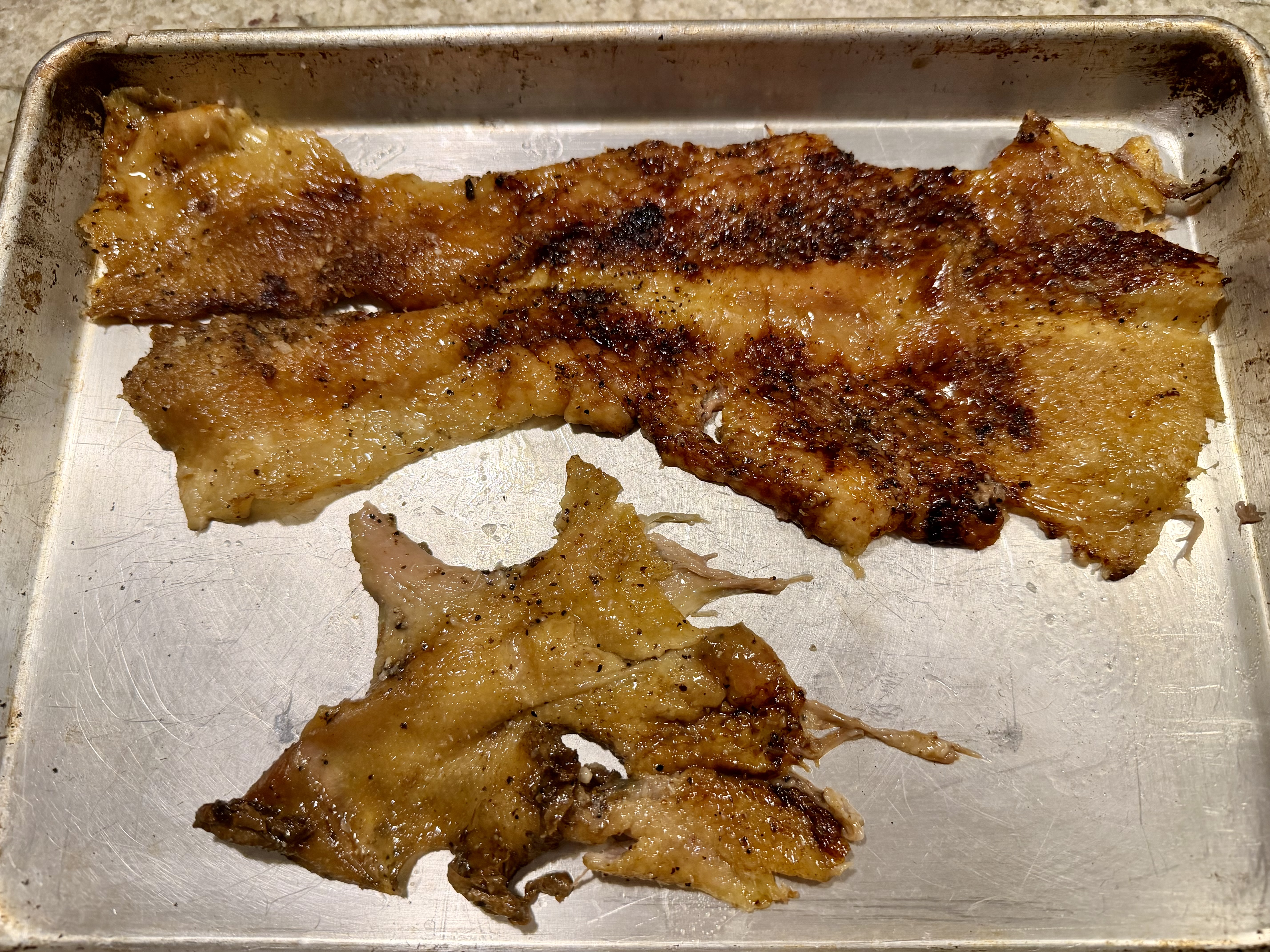
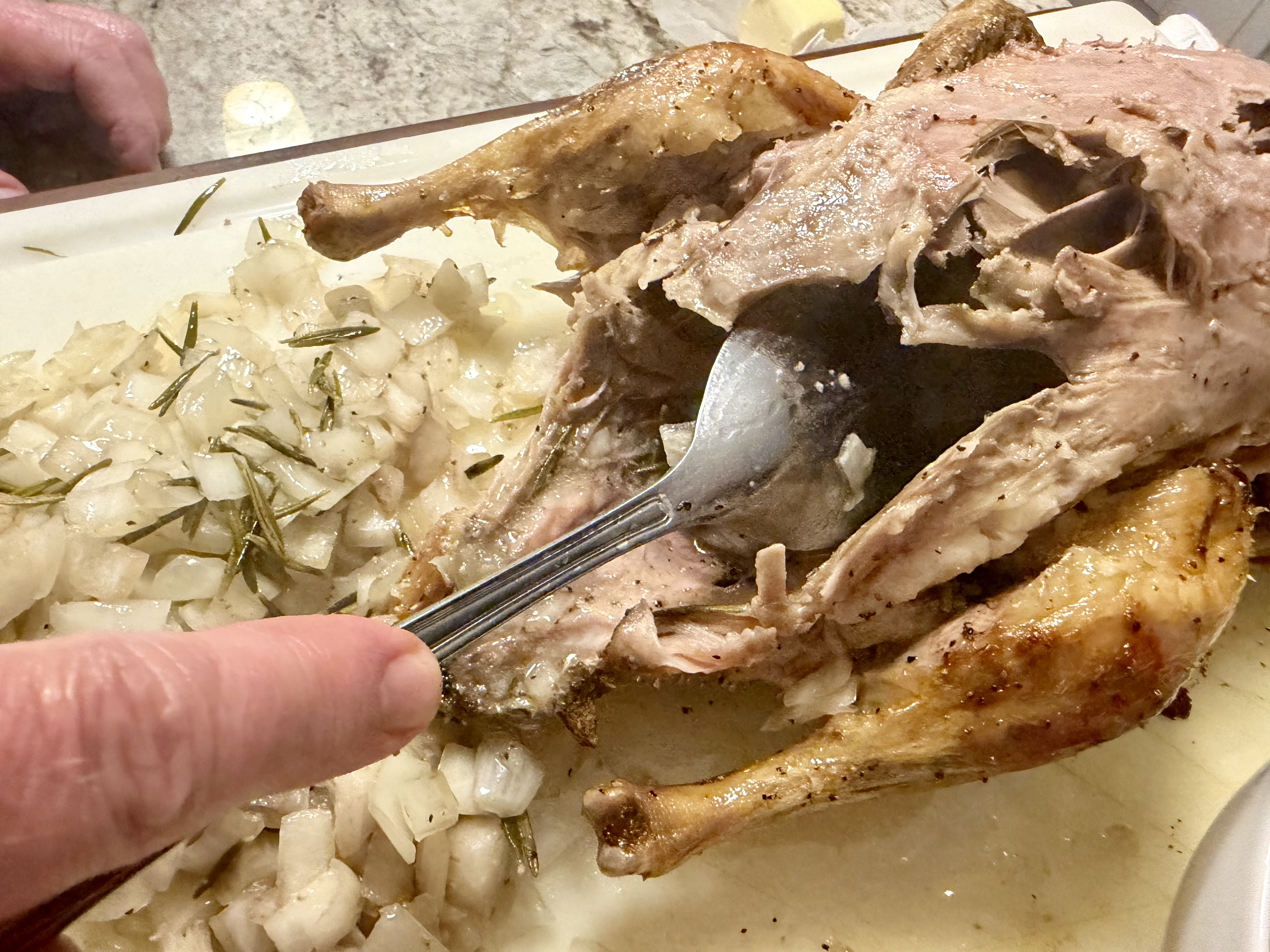
Speaking of the fat on a duck, you want to make sure it gets rendered down. The Hubs decided to render the extra pieces of fat and skin in another skillet, and when crisp he removed them from the hot oil on a paper towel-lined plate, sprinkled with salt and ate as a snack once cooled. With the remaining leftover oil (we had 3 cups!), he will freeze the fat and save it to make duck confit sometime in the future.
Once bottom browns, turn the pieces. Eventually liquid will evaporate and duck will cook in its fat only. At this point lower heat and continue to cook duck, turning occasionally, until it becomes tender, about 1 hour. While the skin does look nice and brown, it will not be crispy once it steams with the beans in a covered dish.
Rice would make a fine accompaniment, but we paired ours this time with Roasted Parmesan Potatoes, which were wonderfully crispy on the outside, meltingly tender on the inside. Stock will be made from the unused pieces of the duck, such as the back and wings.
Remove excess fat from duck. Season with salt and pepper and put in a skillet or saute pan that will fit it comfortably. Turn heat to medium and cover. Check once you hear sizzling; duck should be simmering in its own fat and exuding liquid. Adjust heat to create a steady simmer.
Once bottom browns, turn. Eventually liquid will evaporate and duck will cook in its fat only. At this point lower heat and continue to cook duck, turning occasionally, until it becomes tender, about 1 hour.
Transfer duck when tender to a plate. Pour off all but 2 tablespoons of fat. Turn heat to medium and add onion; cook until it softens, about 5 minutes. Add ginger, garlic and chilies and cook, stirring, for 30 seconds. Add beans and sugar and turn heat to high; cook, stirring occasionally, until beans begin to brown, about 5 minutes.
Add 2 tablespoons water and nam pla (fish sauce) or soy sauce. Put duck on top of bean mixture and bring to a simmer, Cover and cook until both beans and duck are very tender, 15 to 30 more minutes, adding a little more water if necessary to keep mixture moist. Uncover and stir in lime juice; taste and adjust seasoning, then sprinkle with cilantro and serve.
Arguably, the most anticipated feasting day of the year in the U.S. is Thanksgiving. With just a few short weeks away, it’s time to start planning the meal(s). If turkey is at the bottom of your must-have meats because you think it is dry and tasteless, then you need to rethink your stance on the poultry subject with this recipe.
Not often (ever?) have we thought of serving a whole turkey with gravy on Super Bowl Sunday. But this recipe was under development and was intended for America’s Test Kitchen, Cook’s Illustrated and Cook’s Country recipe testers only. That’s us, and we were under a deadline to get it done.
The meal was ready to eat just as half-time started… not bad timing… There are three options for the herb paste and we chose the Thyme-Fennel Paste. Keep in mind you need to make the paste and rub it under the skin of the turkey, and refrigerate the bird uncovered anywhere from 24 to 48 hours before you start cooking, so it takes a bit of planning on your end. We are debating which rub to make for this coming Thanksgiving. (List of rubs follows recipe.)
This process also requires a baking stone, and the success of the recipe is dependent on saturating the baking stone and roasting pan with heat. Luckily The Hubs received a rectangular one for Christmas a few months prior that fit perfectly under the roasting pan.
And don’t omit making the fabulous gravy, it brings everything on your plate altogether, and is so good you may be tempted to drink it…
1 (12- to 14-lb.) turkey, neck and giblets removed and reserved for gravy
2½ Tbsp. vegetable oil, divided
1 tsp. baking powder
2 Tbsp. unsalted butter, melted
1 small onion, chopped fine
1 carrot, sliced thin
5 Tbsp. all-purpose flour
3 ¼ cups water
¼ cup dry white wine
5 sprigs fresh parsley
2 bay leaves
Directions
Combine ¼ cup herb paste, 4 tablespoons salt, and 4 teaspoons sugar in bowl. Place turkey, breast side up, on counter. Using your fingers, carefully loosen skin covering breast and legs. Rub 2 tablespoons herb mixture under skin of each breast, 4 teaspoons under skin of each leg, and remaining herb mixture inside cavity. Tuck wings behind back and tie legs together with kitchen twine. Place turkey on wire rack set in rimmed baking sheet and refrigerate, uncovered, for 24 to 48 hours.
At least 30 minutes before roasting turkey, adjust oven rack to lowest position, set baking stone on rack, set roasting pan on baking stone, and heat oven to 500 degrees.
Combine 1½ teaspoons oil and baking powder in small bowl. Pat turkey dry with paper towels. Rub oil mixture evenly over turkey. Cover turkey breast with double layer of aluminum foil.
Remove roasting pan from oven. Drizzle remaining 2 tablespoons oil into roasting pan. Place turkey, breast side up, in pan and return pan to oven. Reduce oven temperature to 425 degrees and roast for 45 minutes.
Stir 1 tablespoon herb paste into melted butter.
Remove turkey from oven. Discard foil and brush herb butter evenly over turkey. Return turkey to oven, reduce oven temperature to 325 degrees, and continue to roast until breast registers 160 degrees and drumsticks/thighs register 175 degrees, 1 to 1½ hours longer.
Using a spatula, loosen turkey from roasting pan; transfer to carving board and let rest, uncovered, for 45 minutes. While turkey rests, using wooden spoon, scrape up any browned bits from bottom of roasting pan. Strain mixture through fine-mesh strainer set over bowl. Transfer drippings to fat separator and let rest for 10 minutes. Reserve 3 tablespoons fat and defatted liquid (you should have 1 cup; add water if necessary). Discard remaining fat.
Heat reserved fat in large saucepan over medium-high heat until shimmering. Add reserved neck and giblets and cook until well browned, 10 to 12 minutes. Transfer neck and giblets to large plate. Reduce heat to medium; add onion and carrot, and cook, stirring frequently, until vegetables are softened, 5 to 7 minutes. Add flour and cook, stirring constantly, until flour is well coated with fat, about 1 minute. Slowly whisk in reserved defatted liquid and cook until thickened, about 1 minute.
Whisk in water, wine, parsley sprigs, and bay leaves. Return neck and giblets to pan and bring to simmer. Simmer for 10 minutes. Discard neck. Strain gravy through fine-mesh strainer, discarding solids. Stir in remaining herb paste and season with salt and pepper to taste. Transfer to serving bowl.
Carve turkey and arrange on serving platter. Serve with gravy.
Citrusy roast chicken with mashed potatoes and gravy are my go-to comfort food, especially on a cool Sunday afternoon. The meal conjures up fond memories from my formative years growing up in Michigan. According to chef/author Suzy Karadsheh, this simple twist on roast chicken makes a dish that is at once crisp and succulent, with the perfect balance of savory, tangy, and warm flavors! Delicious and impressive with a modicum of work involved. You had me at “roast chicken.”
I say bring it on with crisp, tangy, and succulent citrus rosemary chicken, seasoned Mediterranean-style with garlic, rosemary, and oregano, and covered in a bold wine and orange marinade. It is preferable to use split chicken or chicken pieces of similar size for even cooking. We used a whole chicken split in half for this recipe, but you can also use chicken breast or thighs, and you may have to adjust the cooking time accordingly.
As wine pairings go, many people choose white wine to serve next to chicken dinners. But roast chicken is one of those rustic meals that pairs incredibly well with certain red wines, such as Pinot Noir. The beautiful red fruit notes in Pinot compliment the rosemary and citrus flavors in the chicken without overwhelming the palate. And the smooth, lengthy finish is just perfection! To elevate the flavor even more, Suzy also uses some of the wine in the chicken marinade.
The citrus marinade in this recipe is made of a combination of wine, orange juice, lime juice, olive oil, tomato paste for color and umami, and fresh garlic, onions, rosemary, and other Mediterranean spices. The key to great flavor here is to allow the chicken a good 1 to 2 hours in the marinade (refrigerated), and make sure to lift up the chicken skin to spoon some of the garlicky, citrus marinade underneath.
When the chicken was done, we plated it and the onions on a platter covered with foil. The remaining juices were added with a quart of homemade chicken stock to a pot; then thickened with a corn starch slurry when the liquids began to boil. To complete the meal, we made Roasted Brussels Sprouts with Orange-Butter Sauce and garlicky mashed potatoes with gravy.
Please note: Since the pan will go under the broiler at the end, make sure to use a broiler-proof pan such as enameled cast iron.
1 whole chicken (about 3 ½ lbs.), split in half through the backbone
Kosher salt
1 cup Pinot Noir
1 orange zested and juiced plus 1 sliced orange
1 lime juiced, plus 1 sliced lime
Extra virgin olive oil
3 Tbsp. tomato paste
1 ½ tsp. dried oregano
1 tsp. dried rosemary
1 tsp. sweet paprika
1 tsp. Aleppo pepper
7 to 8 garlic cloves minced
1 yellow onion halved and sliced
1 Tbsp. honey
Directions
Season the chicken with kosher salt on all sides, making sure to season underneath the skin as well. (You can do this one night ahead of time and keep the chicken in the fridge to air-chill uncovered).
Prepare the citrus marinade. In a large bowl, add the wine, orange juice and zest, lime juice, 3 tablespoons extra virgin olive oil, tomato paste, spices, and a good dash of kosher salt. Add the garlic and onion. Whisk to combine.
Add the chicken and toss to coat, making sure to lift the skin up and spoon some of the marinade underneath (this will give you more flavor). Set aside at room temperature for 30 minutes. Alternatively, cover and refrigerate for an hour or two (for best results, take it out of the fridge and leave the chicken at room temperature for 30 to 45 minutes before cooking).
Preheat the oven to 425° F and adjust a rack in the middle.
Transfer the chicken and the marinade to a braising pan. Roast for 30 minutes, then carefully turn the pan 180 degrees and roast for another 15 minutes or until the chicken is fully cooked and tender, with an internal temperature of the breast meat at 165°.
In a small bowl, mix together the honey with 1 tablespoon of extra virgin olive oil. Carefully remove the chicken from the oven and brush the top with the honey and olive oil mixture.
Switch the oven to the broil function. Return the chicken back to the oven about 6 inches away from the broiler and cook briefly for 3 to 4 minutes, watching for the skin to turn a nice golden brown.
Remove from the heat. Move chicken and onions to platter. Garnish with slices of fresh orange, wedges of lime and fresh herbs. Allow chicken 10 minutes to rest before slicing and serving.
If desired, while the chicken rests, bring 1 quart of chicken stock and the pan juices to a boil, then add a cornstarch slurry to thicken the gravy.