Tag Archives: pan sauce

Dirty Martini Chicken Thighs

“You only live twice, so live and let die.” Channeling 007! OK, the recipe name alone got our attention! As Bon Appétit puts it “This cheeky chicken dish takes its cues from the king of cocktails: the dirty martini. A healthy pour of vodka stands in for the more typical beer or wine in this braise, lending its distinct piercing brightness and a touch of boozy heat.”

The idea of adding the same notes of the briny beverage to food might sound off-putting at first but don’t knock it until you’ve tried it. Giving your meals a dirty martini twist can actually add so much savoriness to each bite, and if you love the taste of the classic drink, why wouldn’t you want to include the unique umami flavor in your meals, too?

The spirit’s sharp top notes cut through the heaviness of the ultra-savory pan sauce, much like vinegar or lemon juice but with a bit more bite. As is the case in a classic vodka sauce for pasta, the alcohol helps the dish straddle the line between rich and vibrant. As it all simmers, why not mix up a drink for dinner too—just sayin’ you’ve got all the ingredients at the ready!

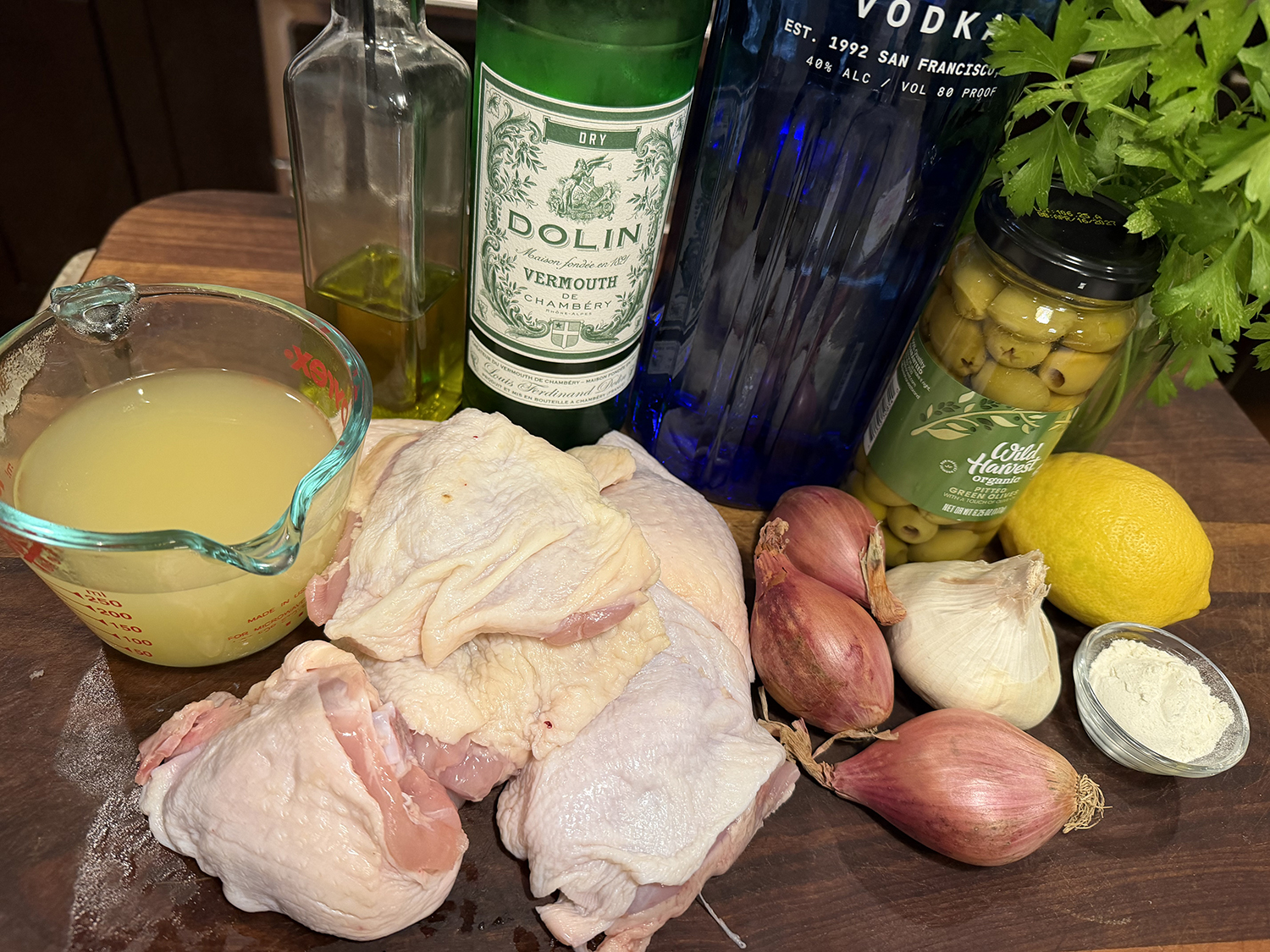
For the best flavor, Castelvetrano olives are the perfect choice here. Their firm, meaty texture means they hold up well during cooking, and their mild, buttery flavor isn’t as salty as other types. Because you are using both the olives and the brine they are packed in, it’s a small luxury worth investing in. Find them already pitted—jarred, canned, or at an olive bar—our favorite— if your grocery store has one. Unfortunately, the olive bar uses slitted spoons so we couldn’t gather the brine; and the jarred Castelvetrano olives weren’t pitted. The brand we selected worked fine.

A little labor intensive but so worth the time and effort! Now, this took MUCH longer than the stated 45 minutes (and many other reviewers agreed). From start to finish, it took us more than 1 hour and 45 minutes! Reduction of the sauce needs a lot more that 9 to 12 minutes. What to serve it with? How about steamed rice, velvety mashed potatoes, or as we did, wide egg noodles.

OK, now let’s get real. The amount of chicken is considered measly in our minds. Two pounds of bone-in chicken thighs is just not enough to feed 4 adults. Plan on 6 to 8 decent-sized thighs, no matter what the weight ends up being. Regarding the olives, our jar was 6.25 ounces*, and gave us exactly 2/3 brine.

“You only live twice, so live and let die.”
Dirty Martini Chicken Thighs

  • Servings: 3-4
  • Difficulty: easy
  • Print

Ingredients

  • Skin-on, bone-in chicken thighs (6-8), about 3 lbs.
  • 1 tsp. freshly ground pepper
  • 2 tsp. Diamond Crystal or 1¼ tsp. Morton kosher salt, plus more
  • 3 Tbsp. extra-virgin olive oil
  • 3 medium shallots, thinly sliced
  • 12 garlic cloves, thinly sliced
  • 1 Tbsp. all-purpose flour
  • 1¼ cups dry vermouth
  • 1 cup low-sodium chicken broth
  • 1 5.5-oz. jar* pitted Castelvetrano or other green olives, rinsed (about 1 cup), brine reserved (about â…” cup)
  • â…” cup vodka, divided
  • 1 tsp. finely grated lemon zest
  • Parsley leaves with tender stems and lemon wedges (optional; for serving)
Directions

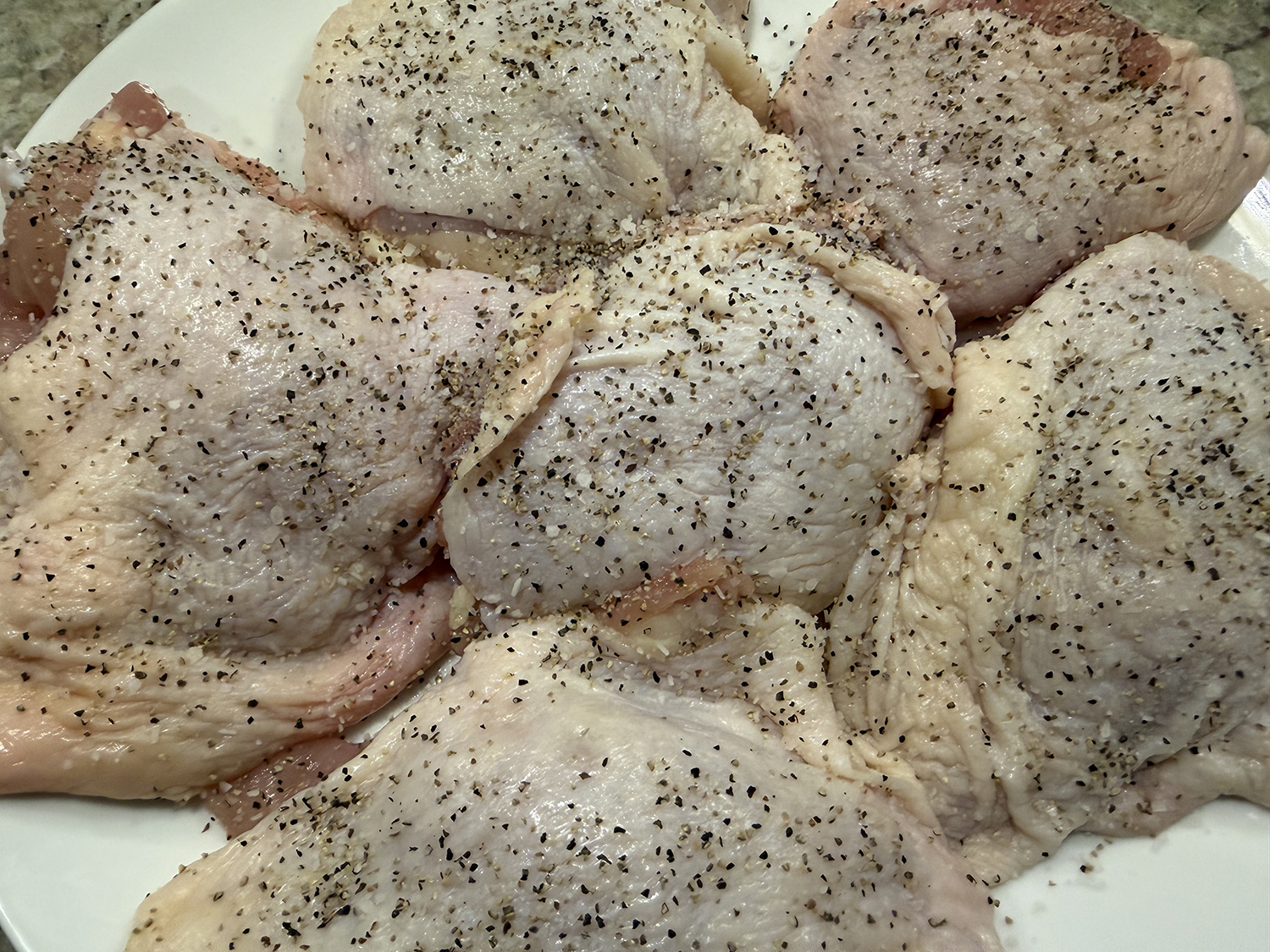
  1. Place a rack in middle of oven; preheat to 350°. Pat 2 lb. skin-on, bone-in chicken thighs (4–6) dry with paper towels and sprinkle all over with 1 tsp. freshly ground pepper and 2 tsp. Diamond Crystal or 1¼ tsp. Morton kosher salt.
  2. Pour 3 Tbsp. extra-virgin olive oil into a cold very large high-sided ovenproof skillet or short-sided pot over medium (you want the vessel to be at least 3½-qt. capacity; if you don’t have any of the preferred options, a large Dutch oven will work). Arrange chicken thighs, skin side down, in pan and set over medium heat. Cook, undisturbed, rotating pan around on burner for even browning, until chicken is deep golden brown and releases easily from pan, 14–17 minutes. Transfer chicken thighs to a plate, arranging skin side up.
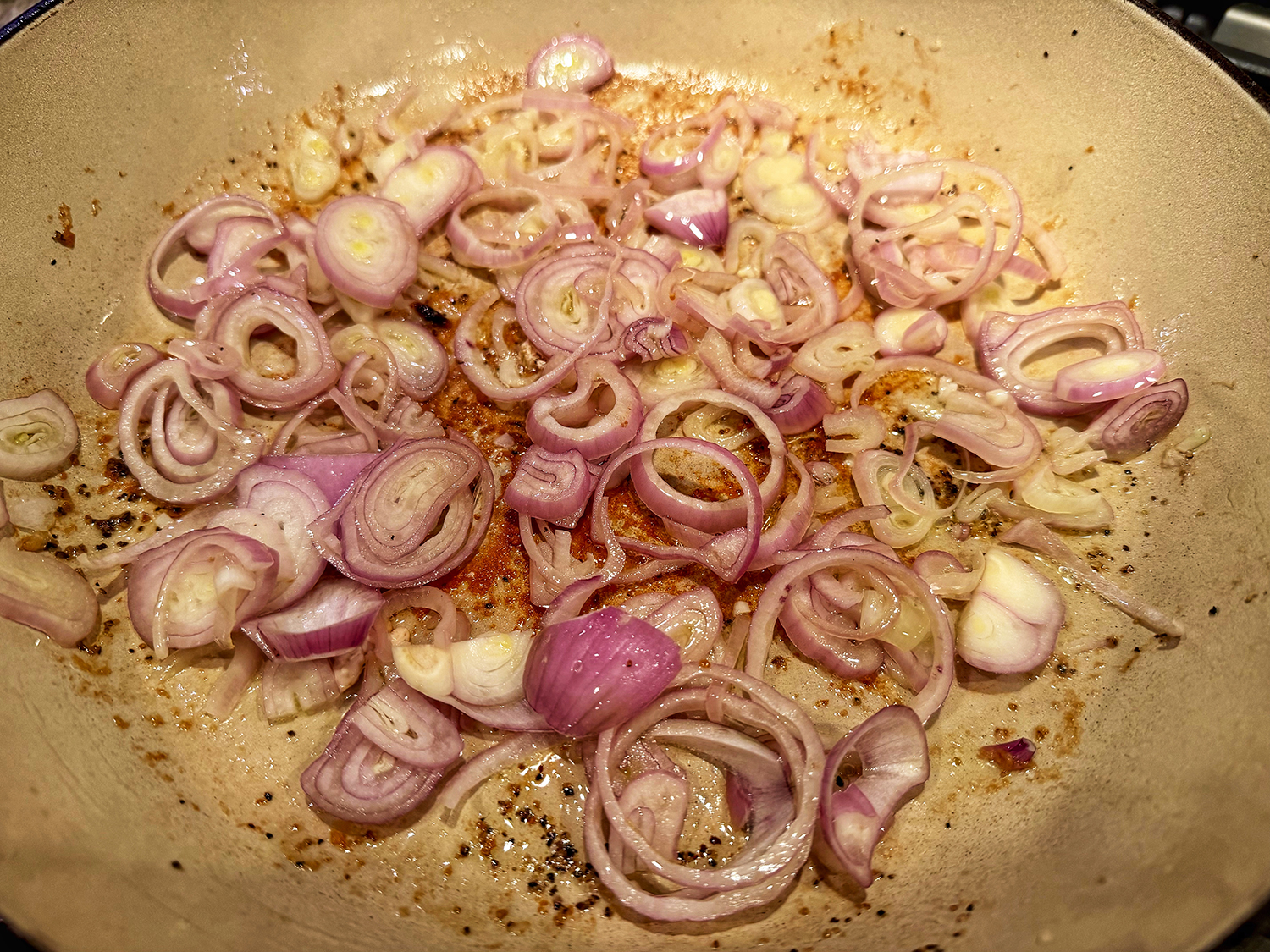
  3. Pour off all but 4 tsp. oil from pan; discard. Return pan to medium heat and cook 3 medium shallots, thinly sliced, stirring often, until just tender, about 4 minutes. Add 12 garlic cloves, thinly sliced, and cook, stirring often, until fragrant, about 3 minutes. Sprinkle in 1 Tbsp. all-purpose flour and stir to coat, then remove from heat (make sure pan is far away from the burner).
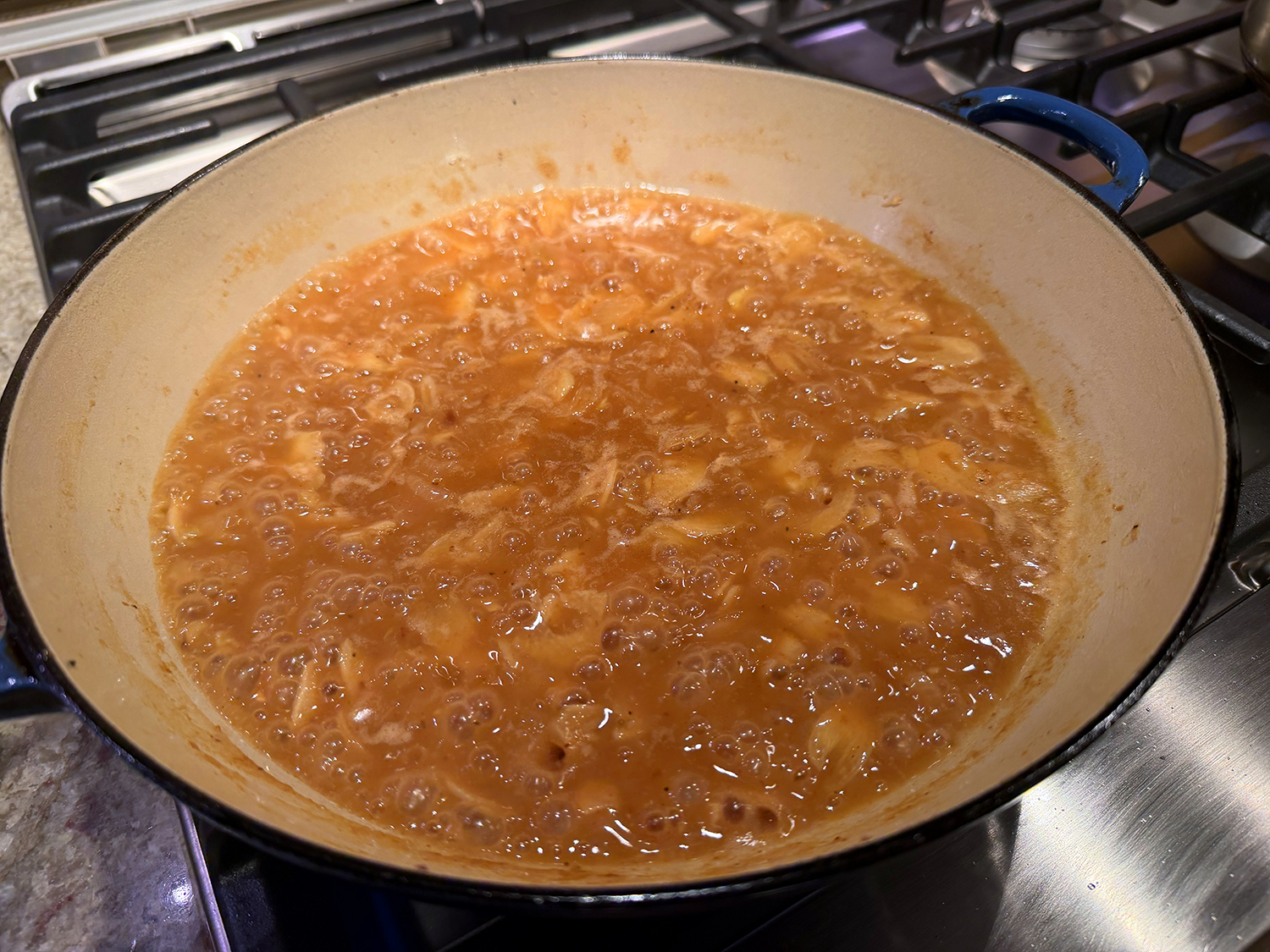
  4. Carefully pour in 1¼ cups dry vermouth, 1 cup low-sodium chicken broth, ⅔ cup olive brine, and ⅓ cup vodka. Place pan over medium-high heat and bring liquid to a simmer. Cook, stirring occasionally, until sauce is reduced by two thirds, 9–12 minutes. (It took us nearly 25 minutes to reduce it down to 2/3 the original amount.) Remove from heat; stir in remaining ⅓ cup vodka. Taste sauce and season with more salt if needed.
  5. Nestle chicken thighs, skin side up, into sauce. Scatter one 5.5-oz. jar pitted Castelvetrano or other green olives, rinsed (about 1 cup), over, allowing most of them to fall into the sauce. Bake, uncovered, until chicken is cooked through and an instant-read thermometer inserted into the thickest part of a thigh registers 165°, 25–35 minutes.
  6. Remove pan from heat, stir in 1 tsp. finely grated lemon zest and and scatter parsley leaves with tender stems over chicken and sauce. Serve with lemon wedges for squeezing over if desired.

http://www.lynnandruss.com

Adapted from a recipe by Jesse Szewczyk for Bon Appétit

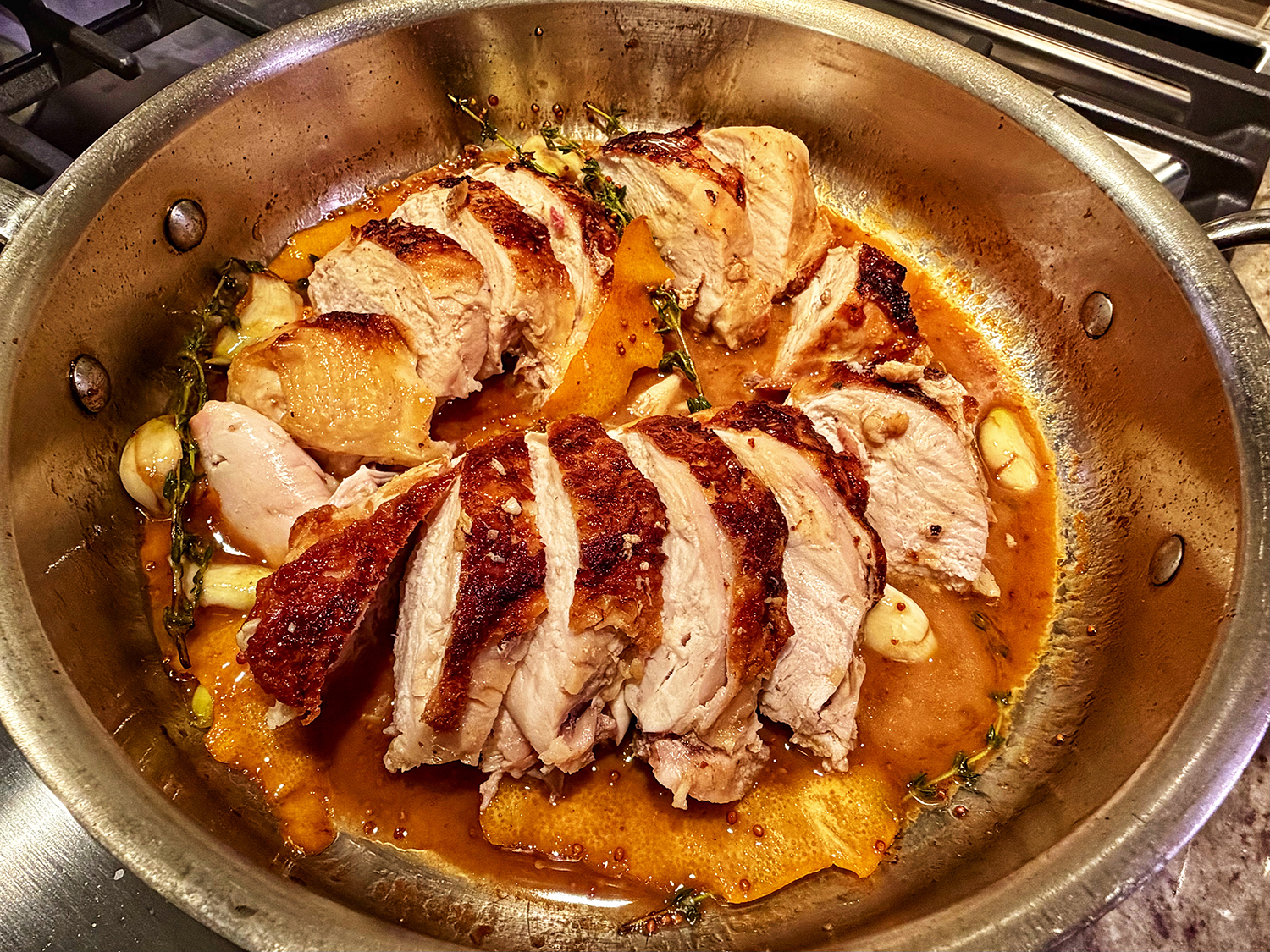
Skillet-Roasted Chicken Breasts with Rustic Orange-Thyme Sauce

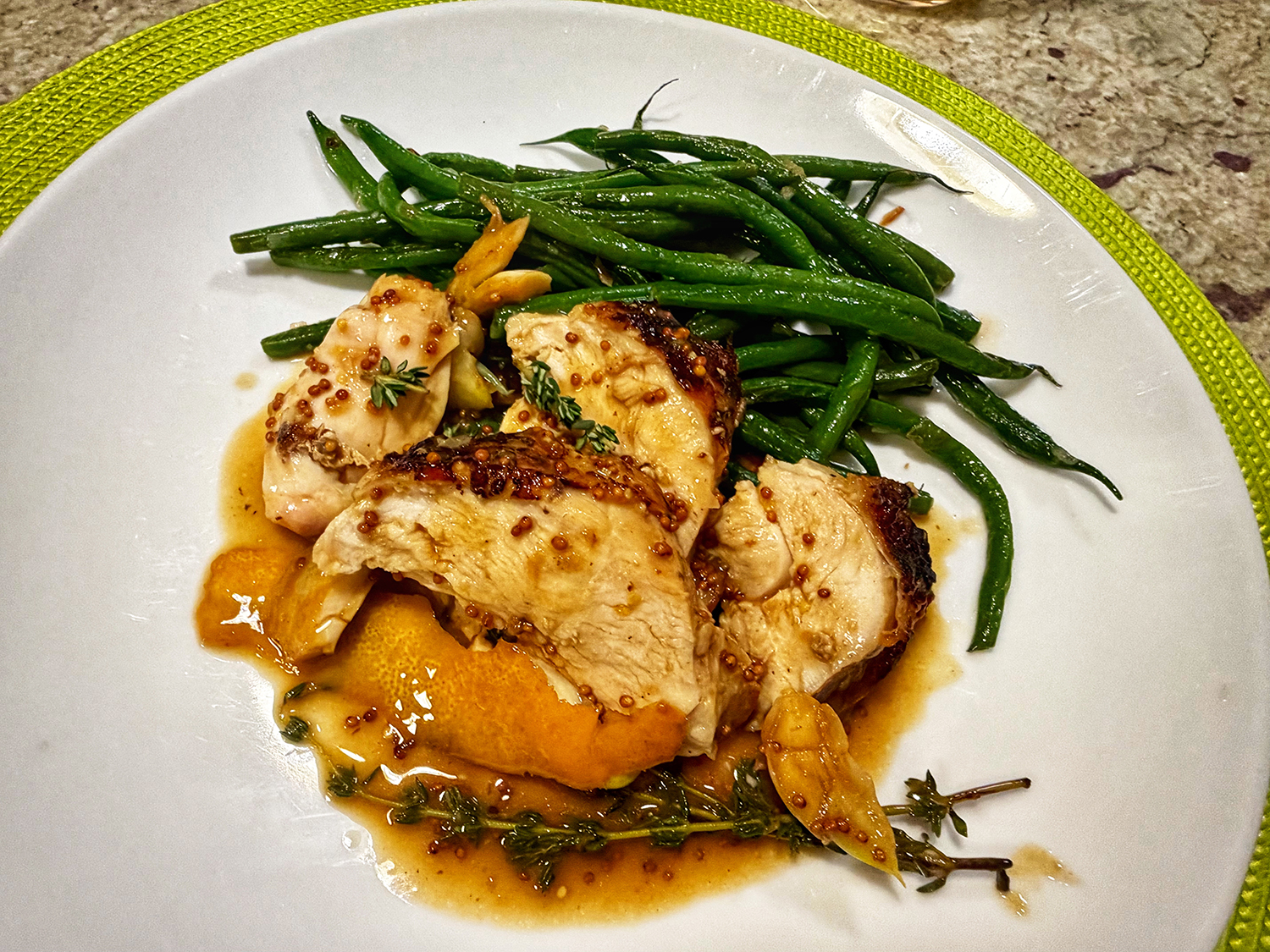
This low-fuss method for skillet-roasted chicken breasts produces perfectly tender, juicy white meat and flavorful pan juices that are easily transformed into a bright, buttery sauce. Bone-in, skin-on chicken breasts are used—the skin and bones make the breasts less prone to overcooking.

Salting under the skin seasons the meat directly, while piercing the skin helps it render efficiently. Spraying the chicken—not the pan—with cooking spray minimizes the fat in the skillet and, thus, grease splatters, and starting in a cold pan gives the skin time to render and brown before the meat overcooks.
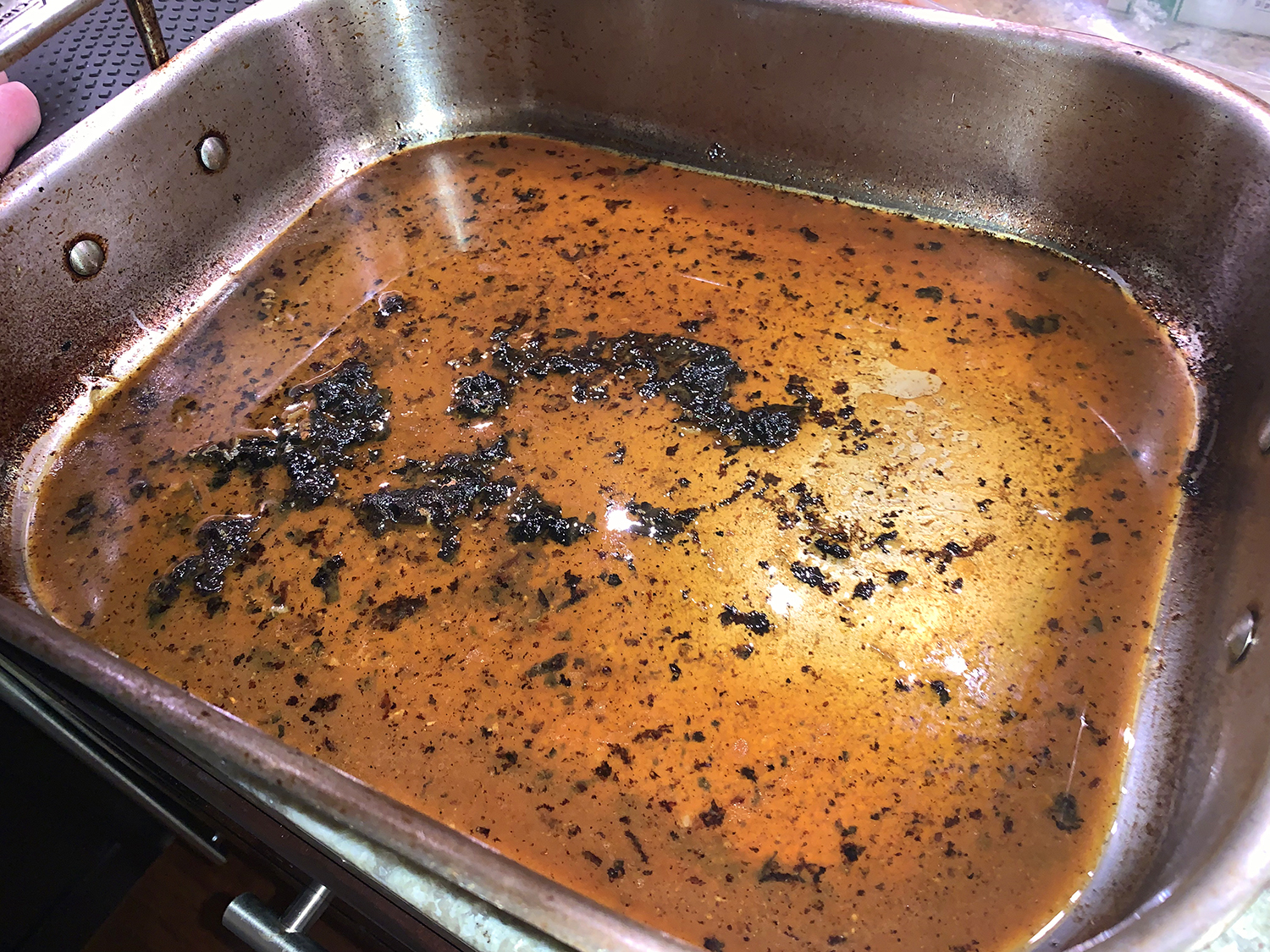
Finishing the chicken in the oven brings it up to temperature gently, so the thinner portions don’t dry out. It is fast and easy to reduce the juices left in the pan, creating a rich fond for the sauce that doesn’t require boxed broth.

To cut back on knife-work, leave the garlic, zest, and herbs in large pieces and simply add more of them. Melting a generous amount of butter all at once is much faster and easier than emulsifying it piece by piece and results in a rustically elegant sauce. The meat is sliced and served it in the skillet, which keeps the chicken and sauce warm.

For the best results, buy chicken breasts of similar size. Use kitchen shears to snip off the ribs and trim the excess fatty skin from the thick ends of the breasts. (See illustration box below.)

Illustration above from Cook’s Illustrated No. 198, January, February 2026

Skillet-Roasted Chicken Breasts with Rustic Orange-Thyme Sauce

  • Servings: 4-6
  • Difficulty: moderate
  • Print

Ingredients

  • 4 (10- to 12-oz.) bone-in* split chicken breasts, ribs removed, trimmed
  • 1½ tsp. kosher salt, divided
  • Vegetable oil spray
  • 4 Tbsp. unsalted butter
  • 4 garlic cloves, smashed and peeled
  • 4 (3-inch) strips orange zest, divided, plus ¼ cup orange juice
  • 10 sprigs fresh thyme, divided
  • 1½ Tbsp. whole-grain mustard

Directions

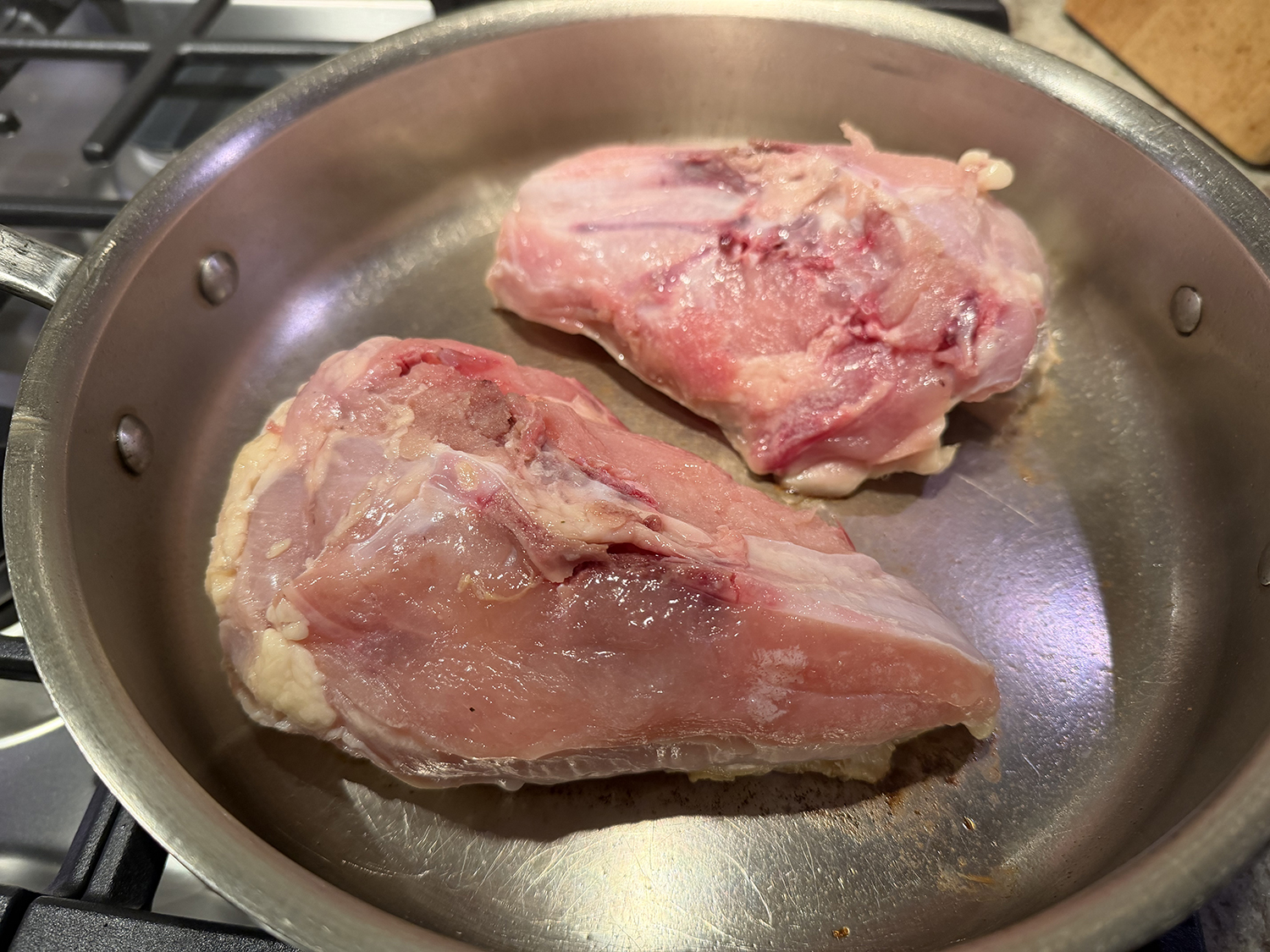
  1. Adjust oven rack to upper-middle position and heat oven to 325 degrees. Use your fingers to carefully separate skin from 4 trimmed chicken breasts, ribs removed. Peel back skin, leaving skin attached at top and bottom of breast. 
  2. Sprinkle 1½ teaspoons kosher salt evenly over chicken (⅜ teaspoon per breast). Lay skin back in place. Using metal skewer or tip of paring knife, poke 6 to 8 holes in fat deposits in skin of each breast. Spray skin with vegetable oil spray.
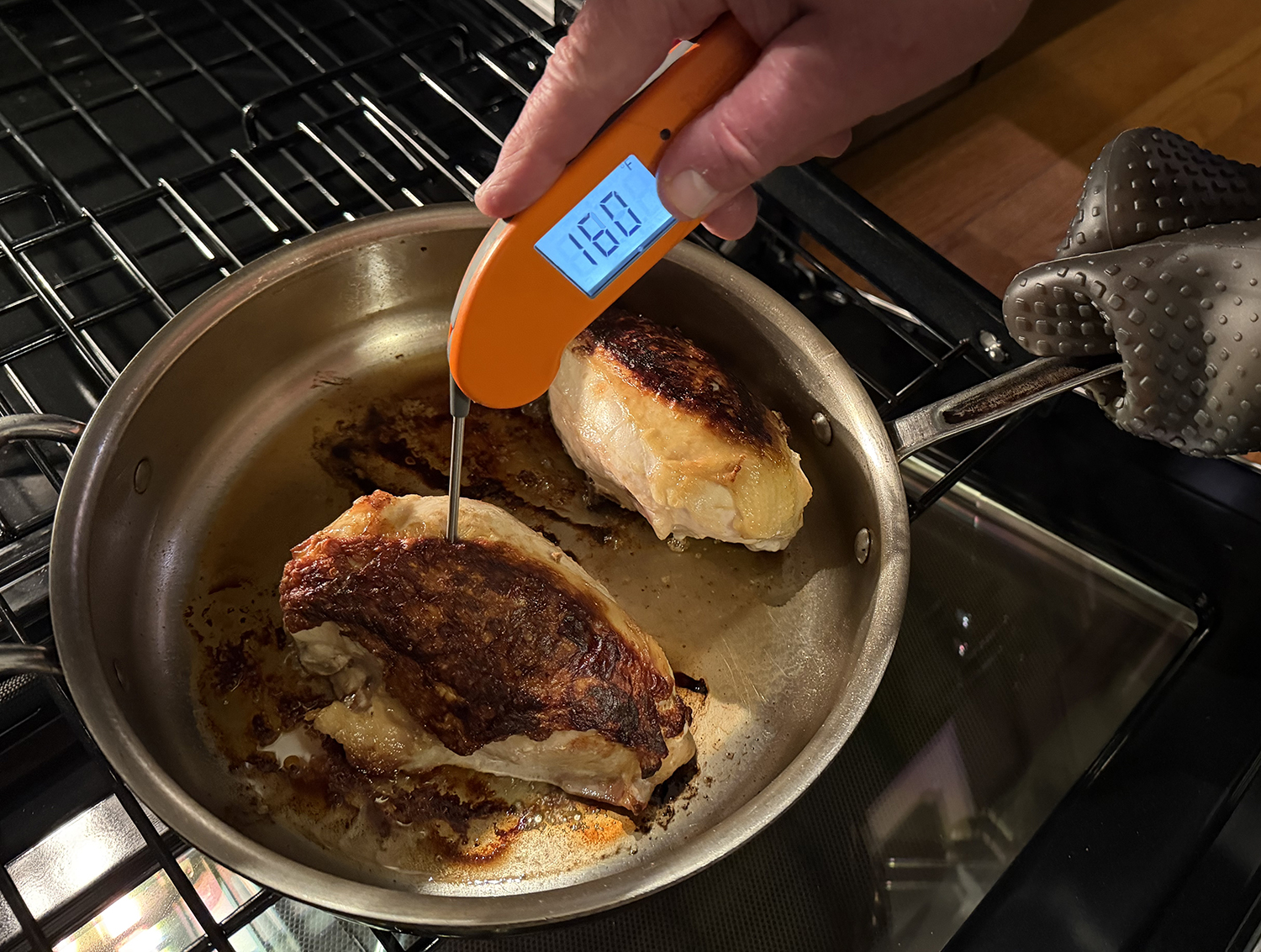
  3. Place chicken skin side down in 12-inch skillet and set over medium-high heat. Cook until skin is well browned, 7 to 9 minutes. Carefully flip chicken, transfer skillet to oven, and roast until chicken registers 160 degrees, about 30 minutes. 
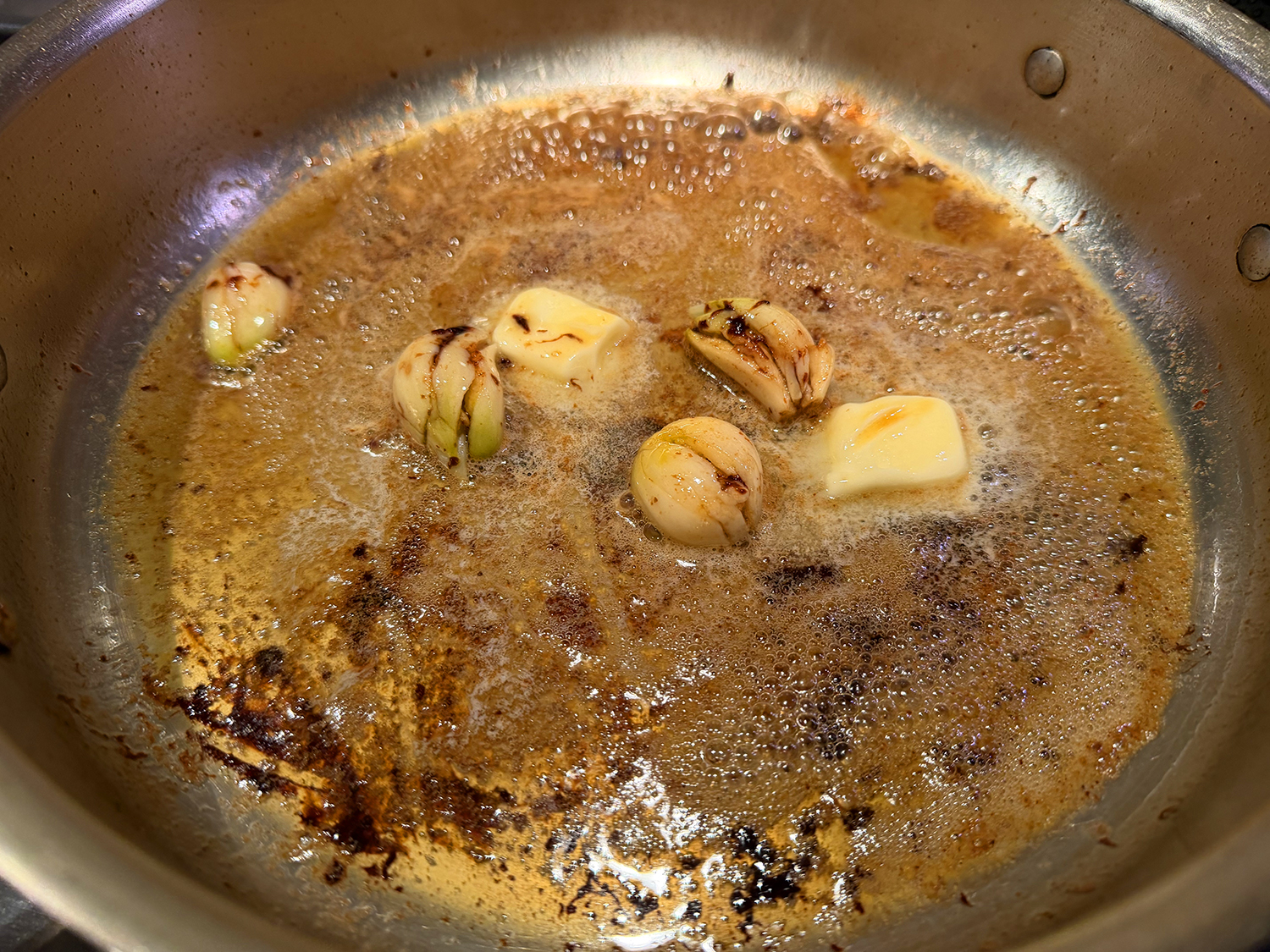
  4. Transfer chicken to plate skin side up. Place skillet over medium heat and cook, stirring occasionally, until juices in skillet form dark fond, about 1 minute. Add 4 tablespoons unsalted butter and 4 smashed and peeled garlic cloves and cook, stirring constantly, until butter is fully melted, about 1 minute. Add 2 (3-inch) strips orange zest and 5 sprigs thyme and cook, stirring constantly until fragrant, about 20 seconds. 
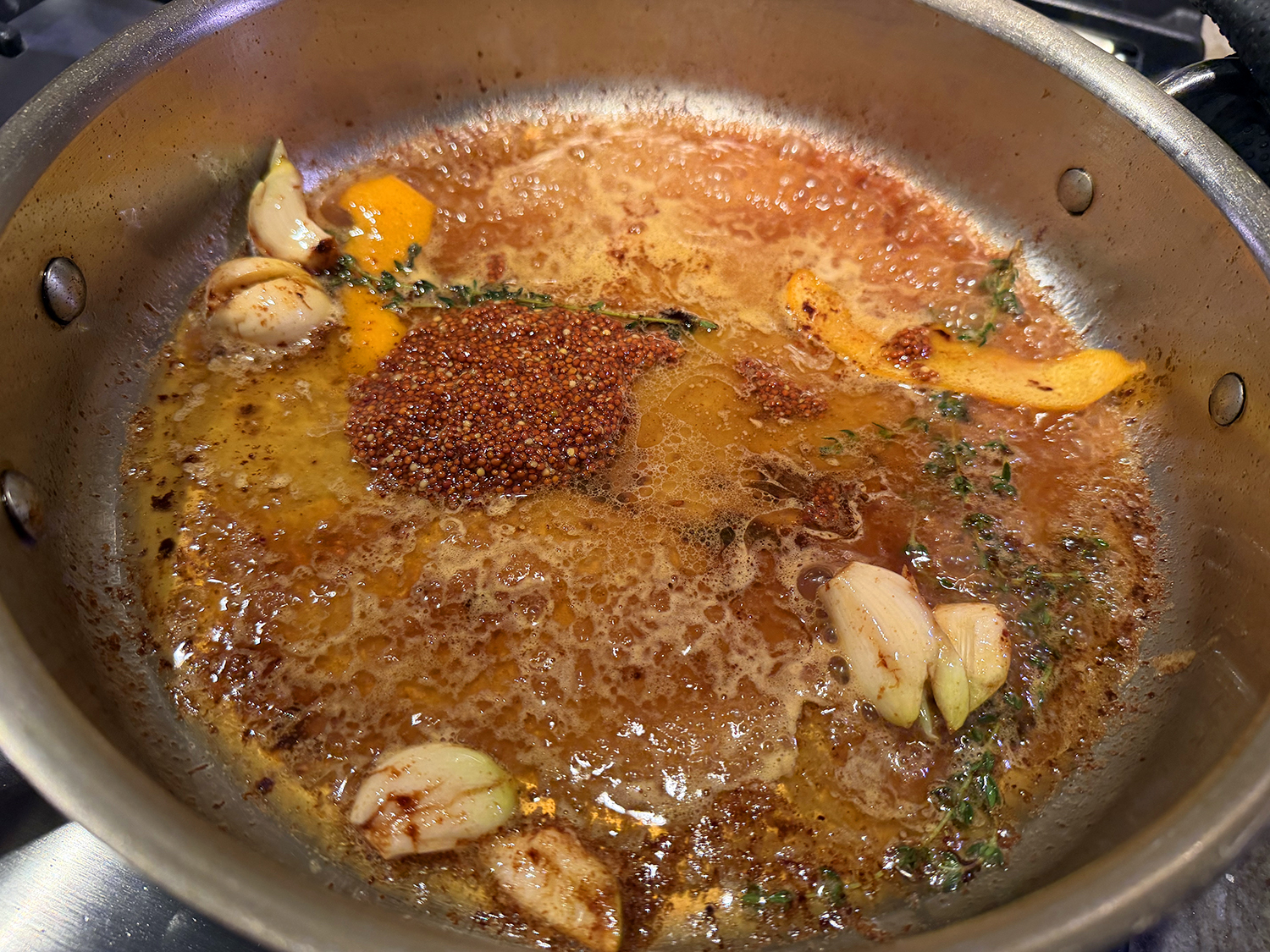
  5. Stir in ¼ cup orange juice and 1½ tablespoons whole-grain mustard. Off heat, add remaining 2 (3-inch) strips orange zest and 5 sprigs thyme. Season with salt and pepper to taste.
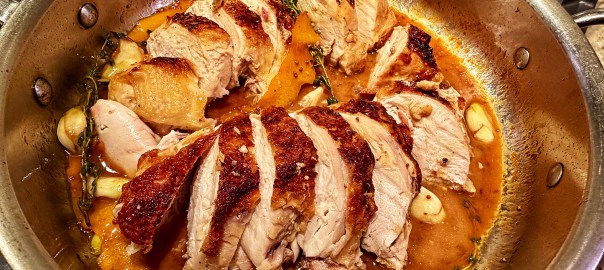
  6. Carve meat from bones and slice breasts on bias against grain into ¾-inch-thick slices. Return slices to skillet along with any accumulated juices and serve.

http://www.lynnandruss.com

Recipe by Lan Lam for Cook’s Illustrated

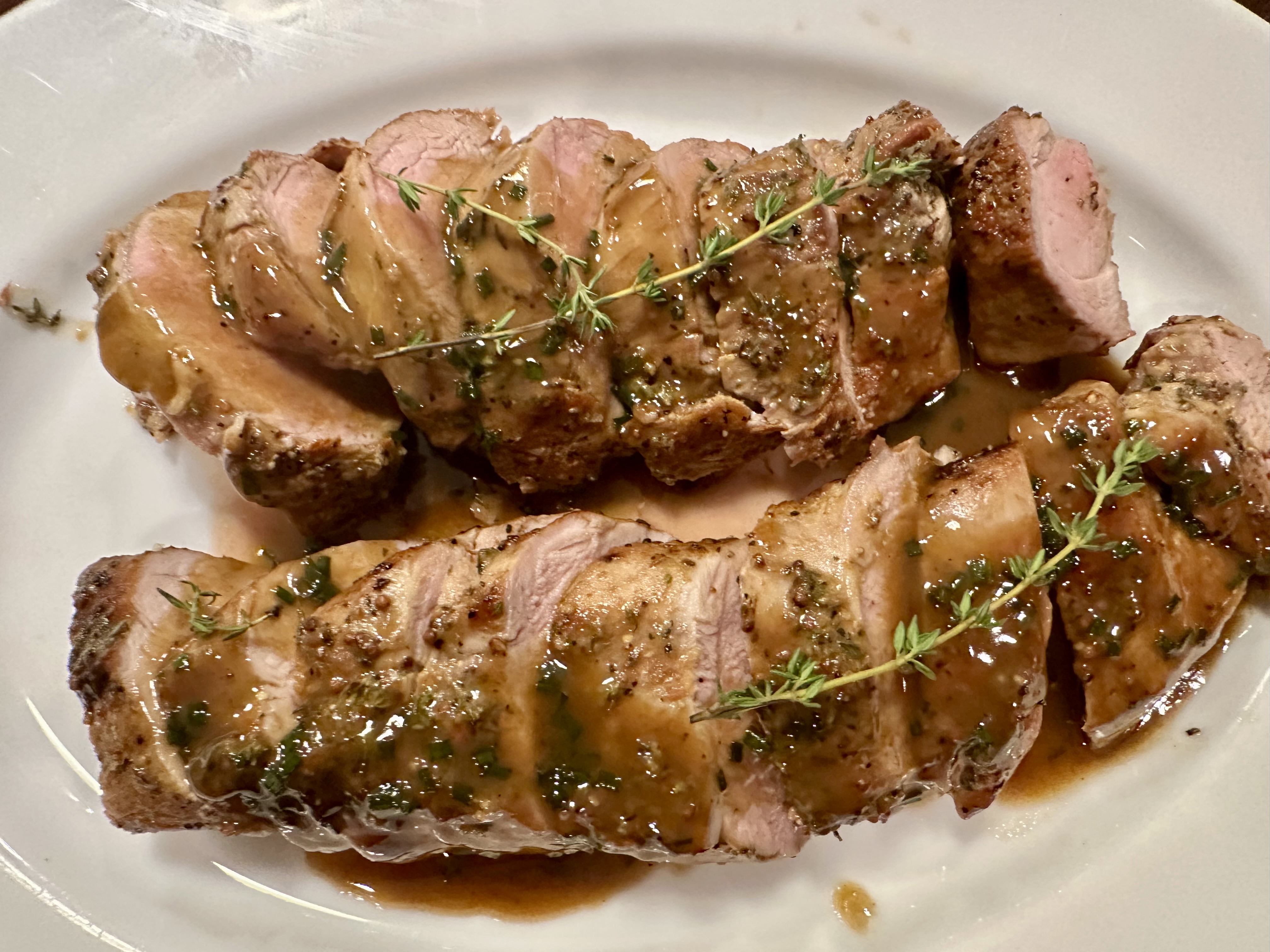
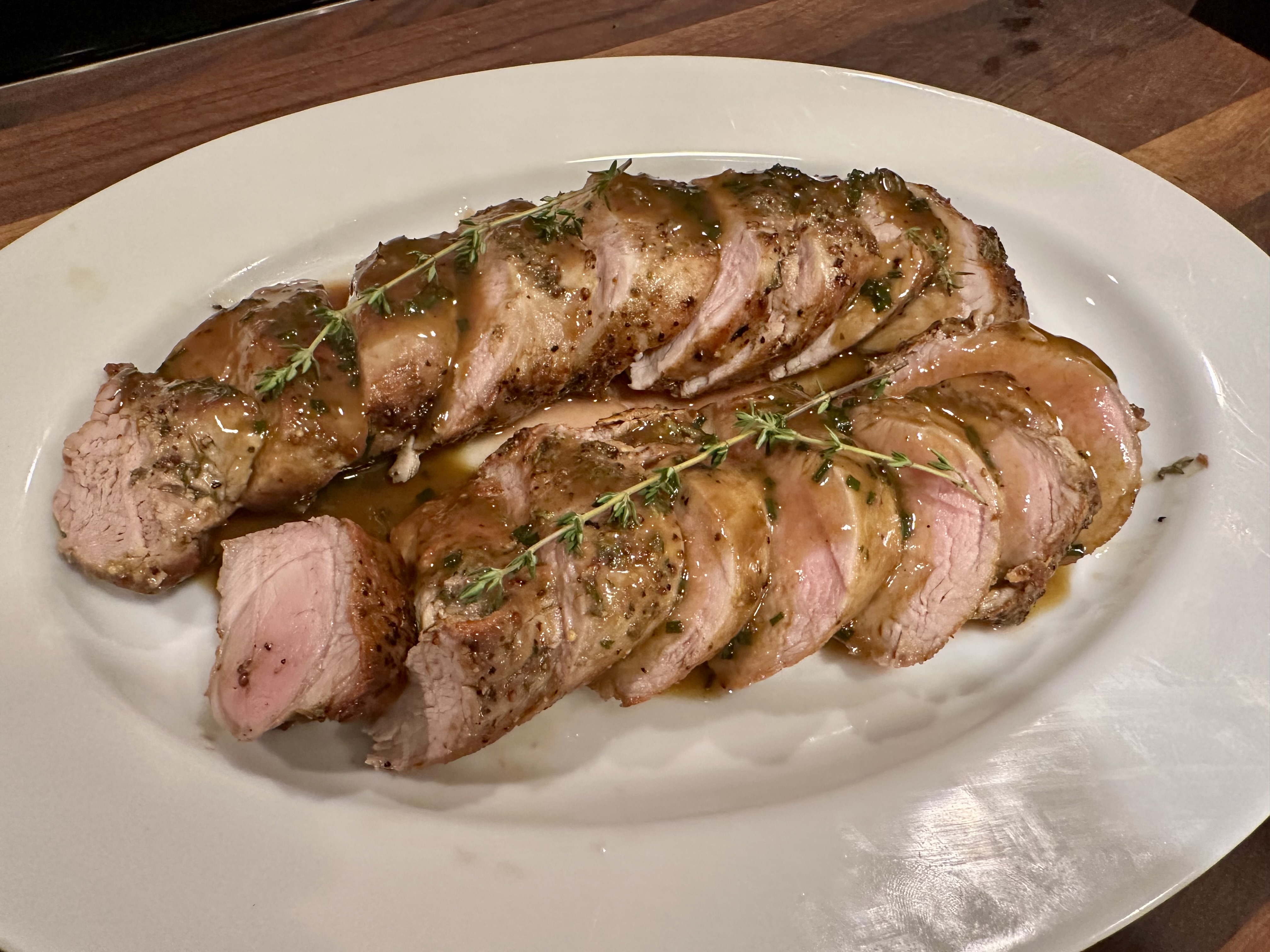
Thyme-and-Dijon-Seared Pork Tenderloin with Cider Pan Sauce

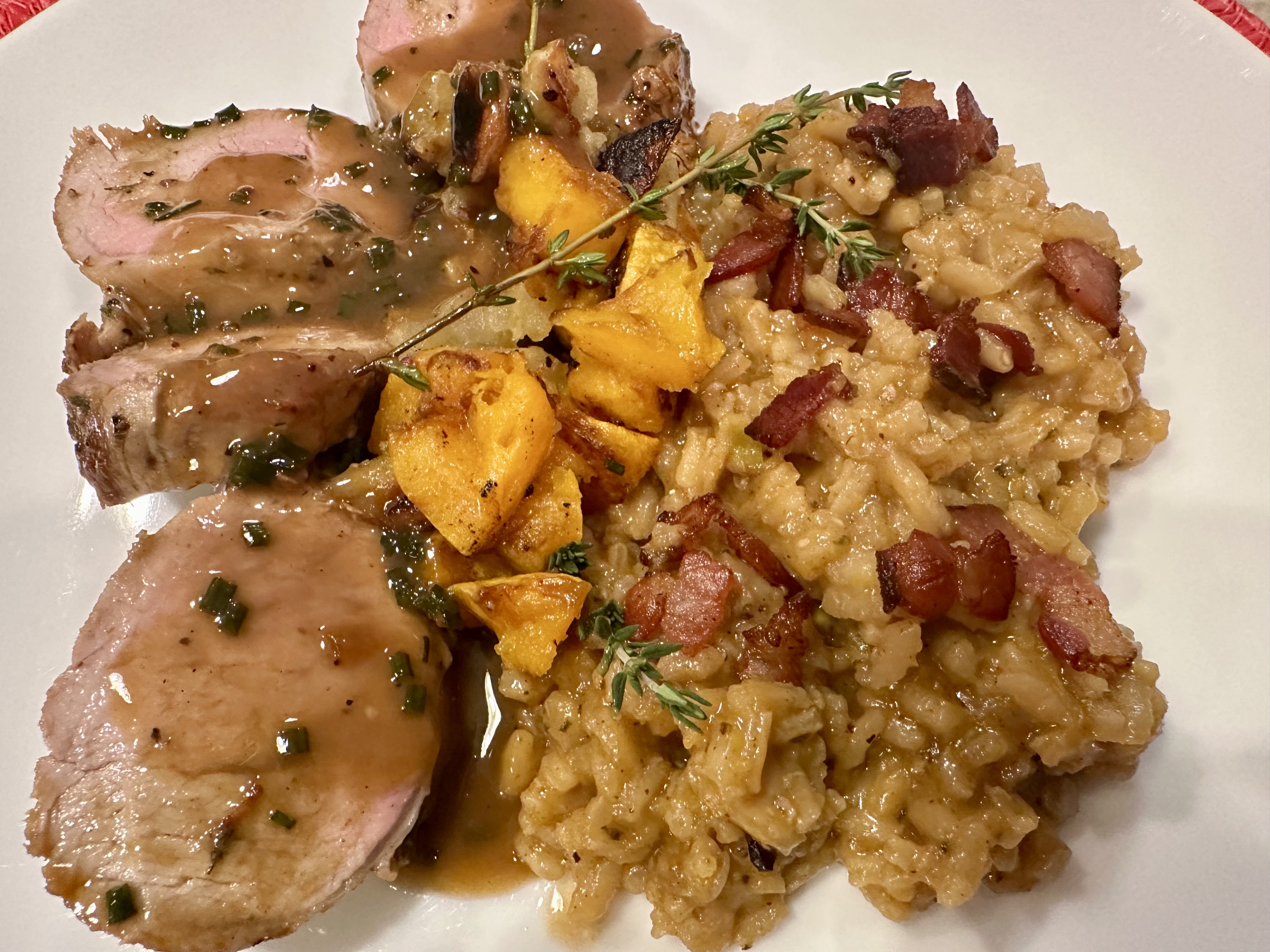
Yummy-to-my-tummy! A fragrant thyme-and-Dijon crust locks in the tenderloin’s juiciness, while a quick cider deglaze turns pan drippings into a bright, tangy-sweet sauce for an elegant weeknight or holiday main. Welcome to Autumn cooking!

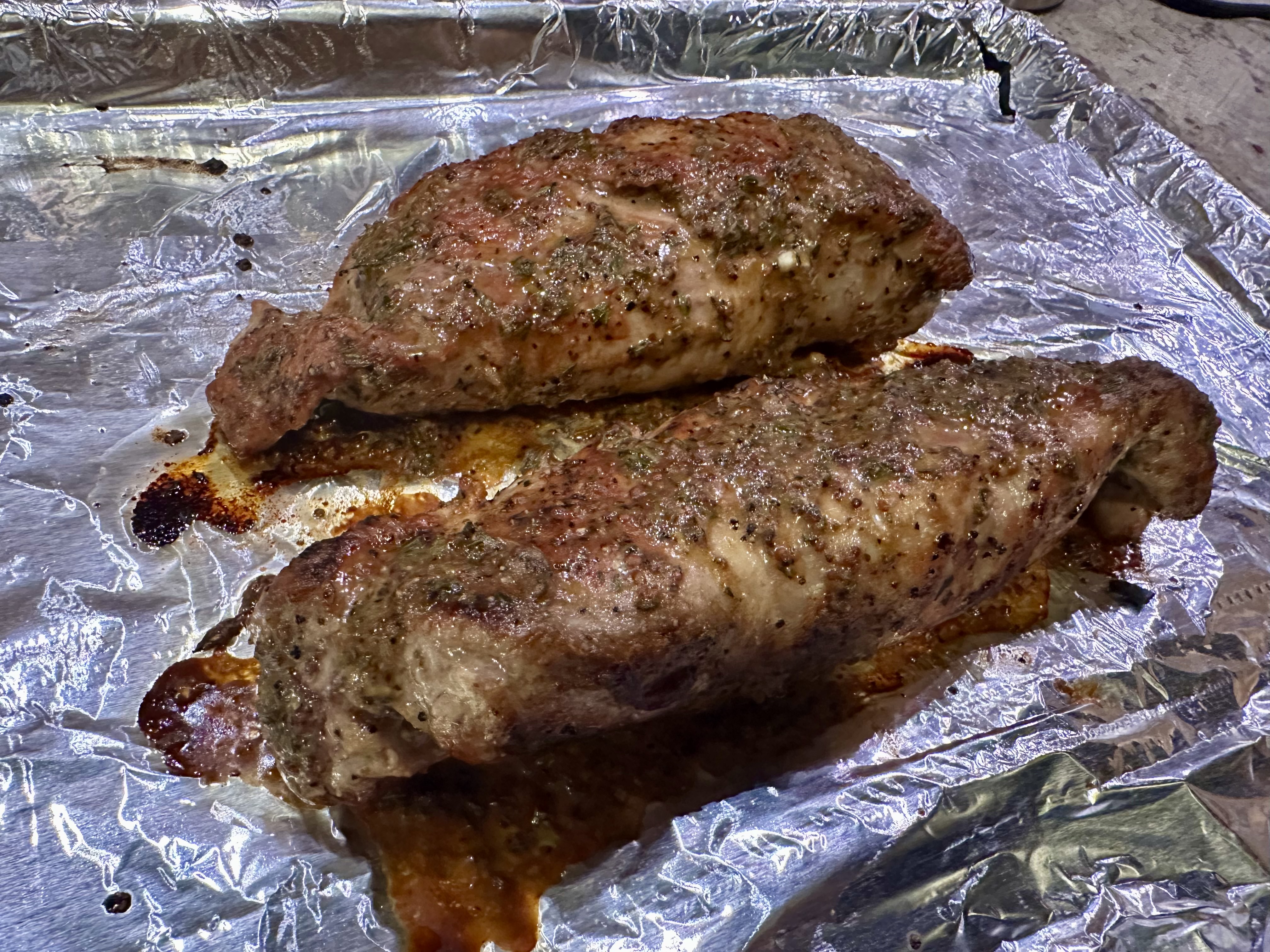
This show-stopping, juicy pork tenderloin recipe is fantastic! A quick sear in a hot pan seals in the moisture before being brushed with a simple dijon, Worcestershire sauce and thyme glaze and roasted until perfectly cooked through.

Meanwhile, an easy pan sauce with shallots, clove, juniper, and allspice are simmered with fresh apple cider until reduced and thickened. A touch of butter finishes the sauce to give it a rich and luscious mouthfeel.

BTW, apple cider and apple juice both contain apples that have been pressed for their juice, but they differ in how they are processed. Generally, apple cider is unfiltered and unpasteurized, resulting in a drink that needs to be refrigerated and has a richer apple flavor. Apple juice is the opposite and is typically filtered and pasteurized, allowing for it to be more shelf-stable and giving it a sweeter taste and paler color. 

Serve the pork with mashed potatoes or rice, and your favorite roasted vegetables. We chose to pair it with Apple Cider Risotto with Bacon and Butternut Squash, which utilized many of the same flavors.

NOTE: This recipe doesn’t yield a ton of sauce, but if you want things saucier, you could easily double the sauce (which we did), though it’ll need more time to reduce. However, in the end, we did not feel it was absolutely necessary to do so.

In the end the meal was delicious — thank goodness because the process was long and excruciating, and the number of pans and bowls mounted up. For those who love a challenge, it’s a perfect endeavor!

Thyme-and-Dijon-Seared Pork Tenderloin with Cider Pan Sauce

  • Servings: 4-6
  • Difficulty: moderate
  • Print

Ingredients

  • 2 (about 1 1/4-lb.) pork tenderloins, silver skin trimmed
  • 2 1/2 tsp. kosher salt, divided
  • 1 1/4 tsp. black pepper, divided
  • 1 Tbsp. Worcestershire sauce
  • 1/2 tsp. grated garlic
  • 3 Tbsp. neutral cooking oil (such as avocado oil), divided
  • 2 Tbsp. coarse-ground Dijon mustard, divided
  • 1 Tbsp. finely chopped fresh thyme, divided
  • 3 Tbsp. cold unsalted butter, divided
  • 2 Tbsp. finely chopped shallot
  • 2 whole allspice
  • 2 whole cloves
  • 2 juniper berries (optional)
  • 3 Tbsp. apple cider vinegar
  • 1 cup fresh apple cider
  • 1 Tbsp. finely chopped fresh chives, plus more for garnish

Directions

  1. Preheat oven to 350°F. Line a large rimmed baking sheet with aluminum foil; set aside.
  2. Pat pork dry with paper towels, and season with 2 teaspoons salt and 1/2 teaspoon pepper; set aside. Whisk together Worcestershire sauce, grated garlic, 1 tablespoon oil, 1 tablespoon mustard, 2 teaspoons thyme, and 1/2 teaspoon pepper in a small bowl until smooth; set aside.
  3. Heat remaining 2 tablespoons oil in a large stainless steel skillet over high until shimmering, about 3 minutes. Add pork; cook, turning occasionally, until well browned on all sides, 6 to 8 minutes total. Remove from heat, and transfer pork to prepared baking sheet. Brush reserved Worcestershire mixture evenly over pork. Do not wipe skillet clean.
  4. Bake pork until an instant-read thermometer inserted into the thickest portion of pork registers 140°F (for medium), 15 to 18 minutes, or until desired degree of doneness. Remove from the oven, and let rest for 5 to 10 minutes.
  5. While pork is baking, melt 1 tablespoon butter in reserved skillet over medium-low. Add shallot, allspice, cloves, juniper berries (if using), remaining 1 teaspoon thyme, and remaining 1/4 teaspoon pepper. Cook, stirring constantly, until shallot is softened, about 1 minute. Add vinegar; cook, scraping bottom of skillet to release any browned bits, until vinegar is nearly evaporated, about 2 minutes. Add apple cider, remaining 1 tablespoon mustard, and remaining 1/2 teaspoon salt.
  6. Bring to a simmer over medium-high, and cook, stirring occasionally, until sauce thickens and is reduced to about 1/3 cup, about 8 minutes. Remove from heat.
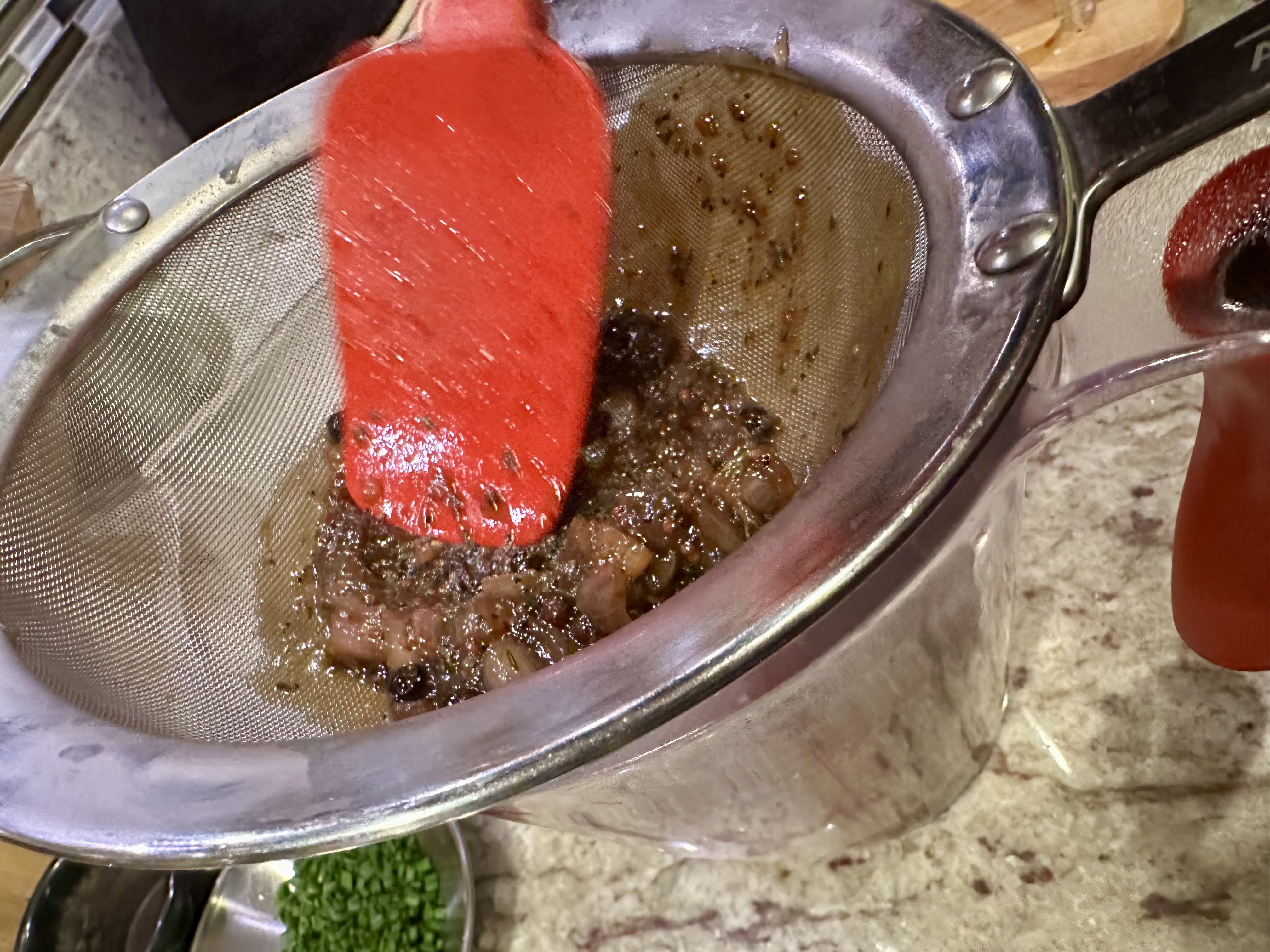
  7. Strain sauce through fine-mesh sieve; pressing down on solids. Return velvety silken sauce to pan. Vigorously stir in chives and remaining 2 tablespoons butter until sauce is glossy and emulsified, about 1 minute.
  8. Transfer pork to a cutting board, and cut into 1/2-inch-thick slices. Transfer to a platter, and spoon cider sauce over top. Garnish with additional chives.

http://www.lynnandruss.com

Recipe by Breana Lai Killeen for Food & Wine

Ginger Roast Chicken and Elbow Macaroni with Tomatoes and Pan Sauce

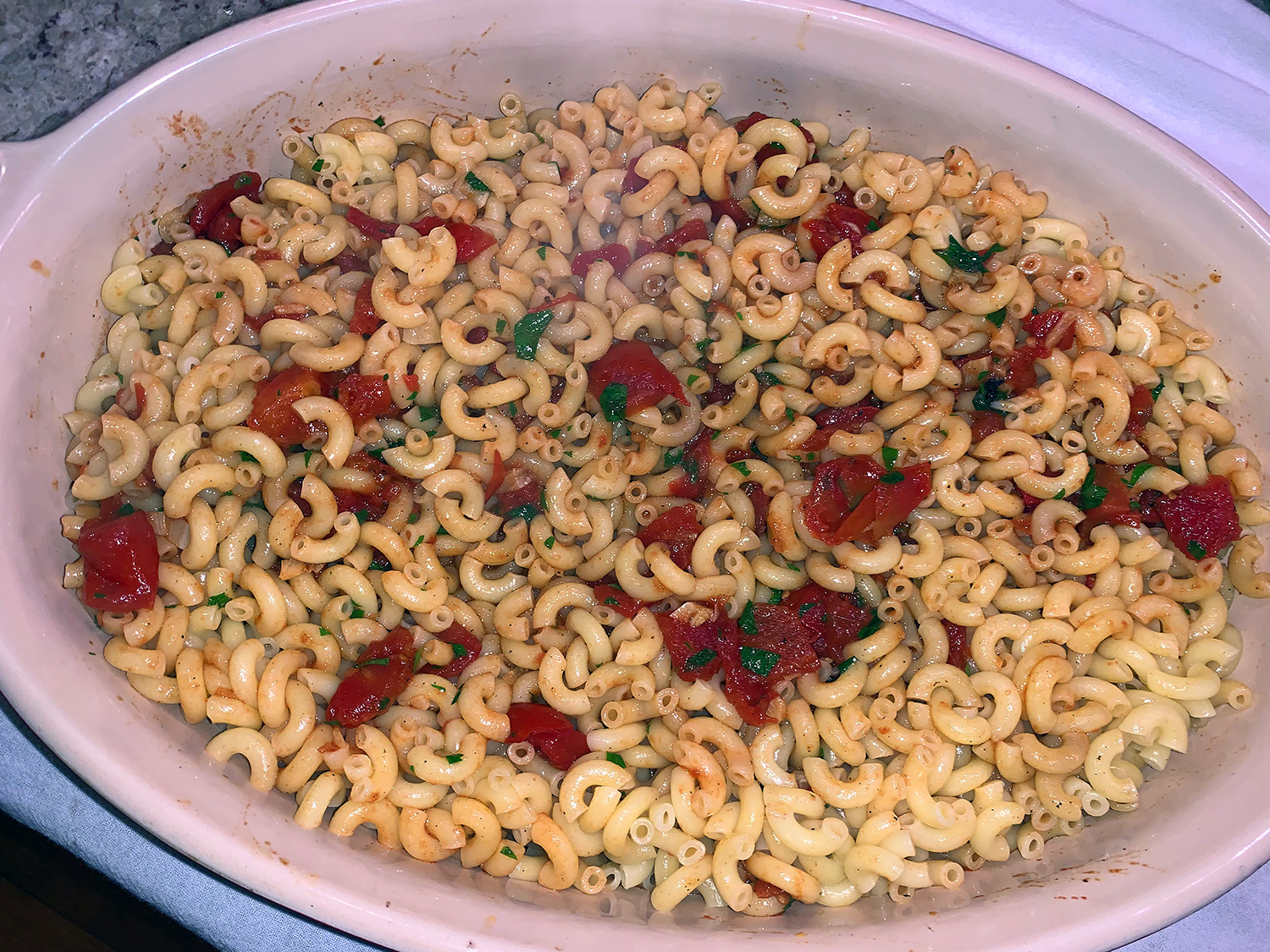
Chef/author Molly Stevens says of her recipe, “This is what I call a sleeper recipe. At first glance it doesn’t look like much — a whole chicken rubbed with a little fresh ginger, roasted, and served alongside elbow macaroni tossed with diced tomatoes and the roasting juices. Exactly what makes this dish so remarkable is hard to pinpoint, but there’s a wonderful alchemy that occurs when the chicken, ginger, and tomato all come together. It’s comforting, a little exotic, and truly delicious.”

During roasting, the drippings, the wine, and the roasted giblets cook together, creating a savory jus. The chicken also roasts on a rack to encourage the drippings to caramelize a bit as they hit the hot pan, developing even more flavor. It can be made year-round using canned tomatoes; in season, use fresh if you wish.

In the end, the chicken was juicy and delicious! My only criticism was that there were too few tomatoes. Next time, I will double the amount and use two cans of diced. The Hubs thought it was fine as is, but also wouldn’t be adverse to the possibility of additional tomatoes. We completed the meal with a simple side salad.

Plan ahead: For the best flavor, season the chicken 8 to 24 hours ahead of roasting.

Ginger Roast Chicken and Elbow Macaroni with Tomatoes and Pan Sauce

  • Servings: 3-4
  • Difficulty: easy
  • Print

Ingredients

  • 1 Tbsp. plus 2 tsp. peeled and grated fresh ginger, divided
  • 2 Tbsp. extra-virgin olive oil
  • Kosher salt and freshly ground black pepper
  • One 3 1/2- to 4-lb. chicken, preferably with giblets
  • Juice of 1 lemon
  • 3/4 cup dry vermouth or dry white wine
  • 12 oz. dried elbow macaroni
  • 2 to 3 garlic cloves, chopped
  • One 14 1/2-oz. can diced tomatoes, with juices, or 1 scant lb. fresh tomatoes, peeled, seeded, and chopped
  • 1/4 cup chopped fresh basil or flat-leaf parsley, plus sprigs for garnish, if desired

Directions

  1. Season the chicken. In a small bowl, combine 1 tablespoon of the ginger, 2 teaspoons of the olive oil, 1 teaspoon salt, and 3/4 teaspoon pepper.
  2. Over the sink, remove the giblets from the chicken, if there are any (they are usually tucked into the cavity). Reserve all but the liver. (Discard the liver or save it for another use.) Hold the chicken over the drain and let any juice run out. Pat the chicken dry inside and out with paper towels. With your fingers, pull away and discard any large deposits of fat from the neck or body cavity opening. Then, using your fingertips and starting at the cavity opening, gently loosen the skin over the breast and thighs of the chicken. Once the skin is loose, rub about three quarters of the ginger mixture under the skin, over the breast and thighs. Rub the rest inside the cavity. Smear the surface all over with about 1 teaspoon olive oil. Season the breast liberally with more salt and pepper. Tuck the wing tips back so they are secure under the neck bone.
  3. If you are seasoning the bird ahead of time, refrigerate it for at least 8 hours and up to 48 hours, uncovered or lightly covered with plastic wrap. Refrigerate the giblets too, if using. If you are not seasoning that far in advance, let the bird stand at room temperature to allow some of the rub’s flavoring to penetrate; it can safely stay at room temperature for up to 2 hours.
  4. Heat the oven. Position a rack in the center of the oven and heat to 400 degrees (375 degrees convection).
  5. Roast the chicken. If you have giblets, put them in a medium, low-sided roasting pan or gratin or baking dish (about 8 by 12 inches). Set a roasting rack over the giblets and put the chicken breast side up on the rack. Squeeze the lemon juice over the chicken and put it in the oven, with the legs facing the rear wall. After 25 minutes, open the oven door and pour the vermouth or wine over the chicken.
  6. If at any time the liquid in the pan appears to dry up, add 1/4 cup water to the pan. Continue roasting, basting the chicken once or twice by spooning the pan drippings over the breast, until the juices run clear with only a trace of pink when you prick the thigh and an instant-read thermometer inserted in the thickest part of the thigh (without touching bone) registers 170 degrees, another 35 to 55 minutes.
  7. Lift the chicken out of the pan, using a fork or tongs to steady it, and carefully tilt it to pour the juices from the cavity into the roasting pan. Transfer the chicken to a carving board (preferably one with a trough). Discard the giblets, but reserve all the juices in the pan.
  8. Cook the macaroni. About 10 minutes before the chicken is done, bring a large pot of well-salted water to a boil. While the chicken rests, warm a wide, shallow serving dish or bowl big enough for the cooked macaroni; I like to use a 2- to 3-quart gratin or baking dish. A pasta bowl works as well. Cook the macaroni until tender but not mushy, about 7 minutes or according to the package instructions.
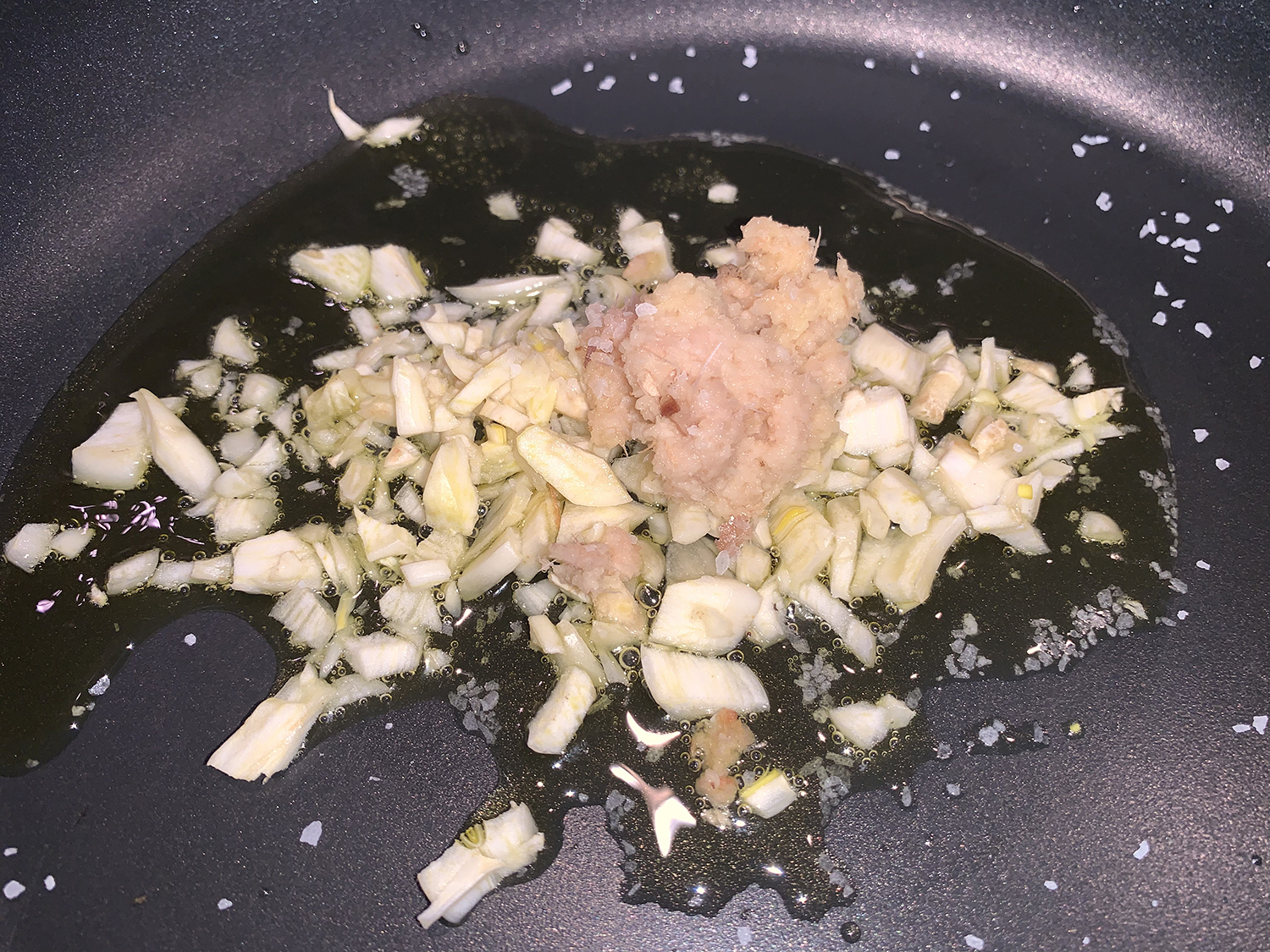
  9. Meanwhile, make the sauce. In a medium 10-inch skillet, heat the remaining 1 tablespoon olive oil over medium heat. Add the garlic, the remaining 2 teaspoons ginger, and a pinch of salt. Cook, stirring, until fragrant and just golden, about 1 minute (lower the heat if the garlic threatens to scorch).
  10. Add the tomatoes and their juices and increase the heat to high. Cook, stirring often, evaporating some of the juice, until the tomatoes begin to brown in spots, about 8 minutes. (They won’t get very brown because of the liquid, but you want to see a few caramelized bits.)
  11. Taste for salt and pepper. Remove from the heat and immediately stir in the basil or parsley.

http://www.lynnandruss.com

Recipe from Molly Steven’s cookbook, All About Roasting