Tag Archives: onions

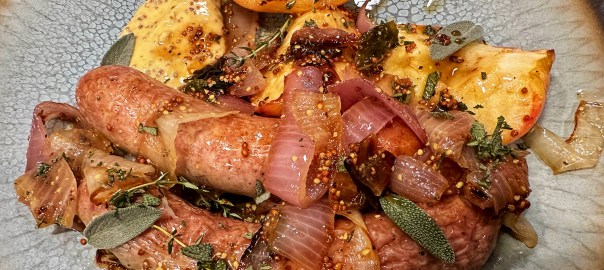
Sausage Traybake with Apples and Onions

With Oktoberfest festivities in full swing, this meal is sure to be a top contender. It is simple, versatile, a one-pan wonder and sure to please! Wide, low-sided baking sheets are ideal for oven-easy dinners; they facilitate heat circulation for better browning.

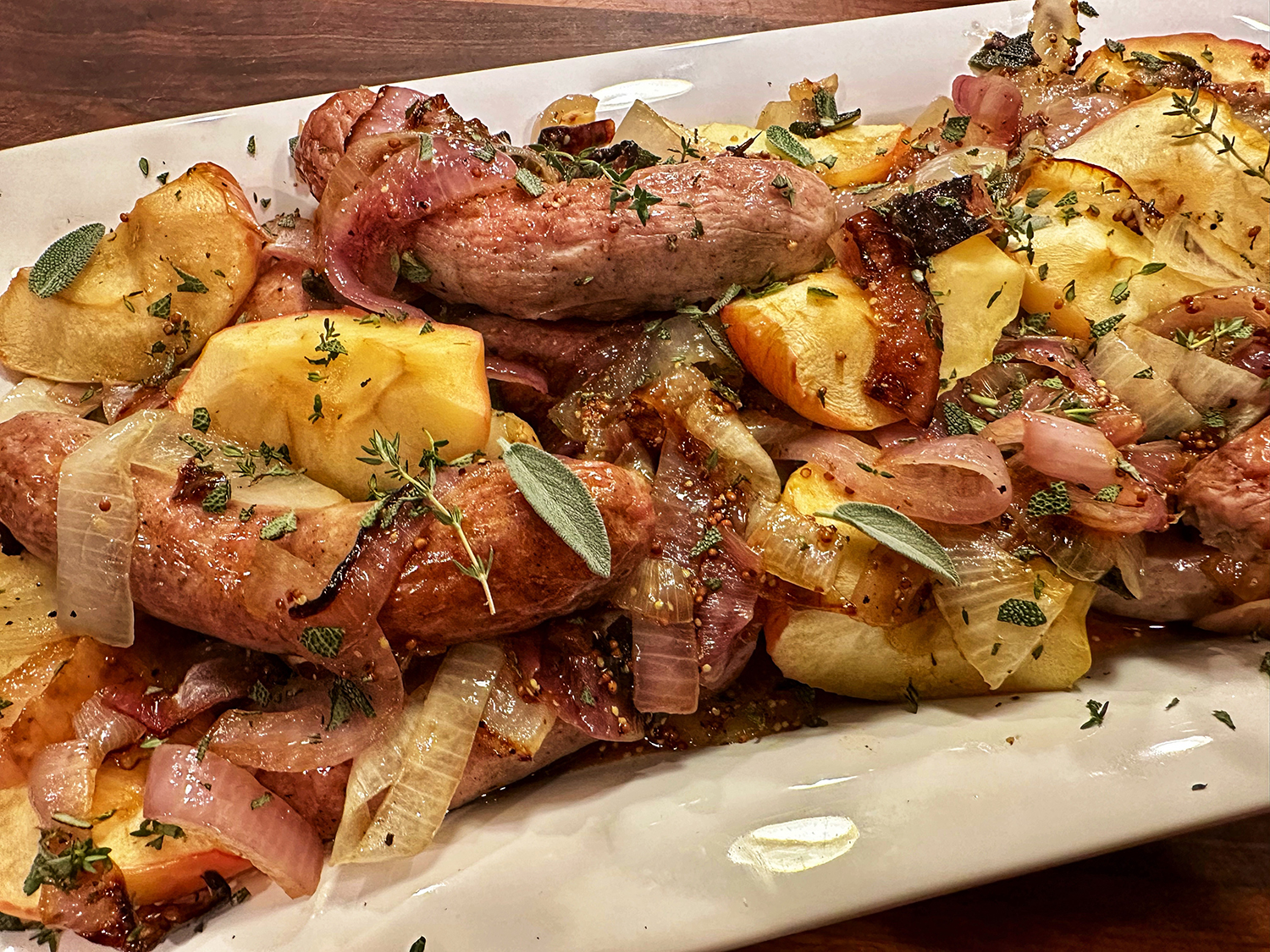
Savory sausages are paired with sweet apples and onions, which get a flavor boost from spicy mustard. A glug of hard apple cider or beer is used to deglaze the baking sheet. The double dose of apple flavor from cider is spot-on, though a crisp lager or malty amber beer also is delicious.
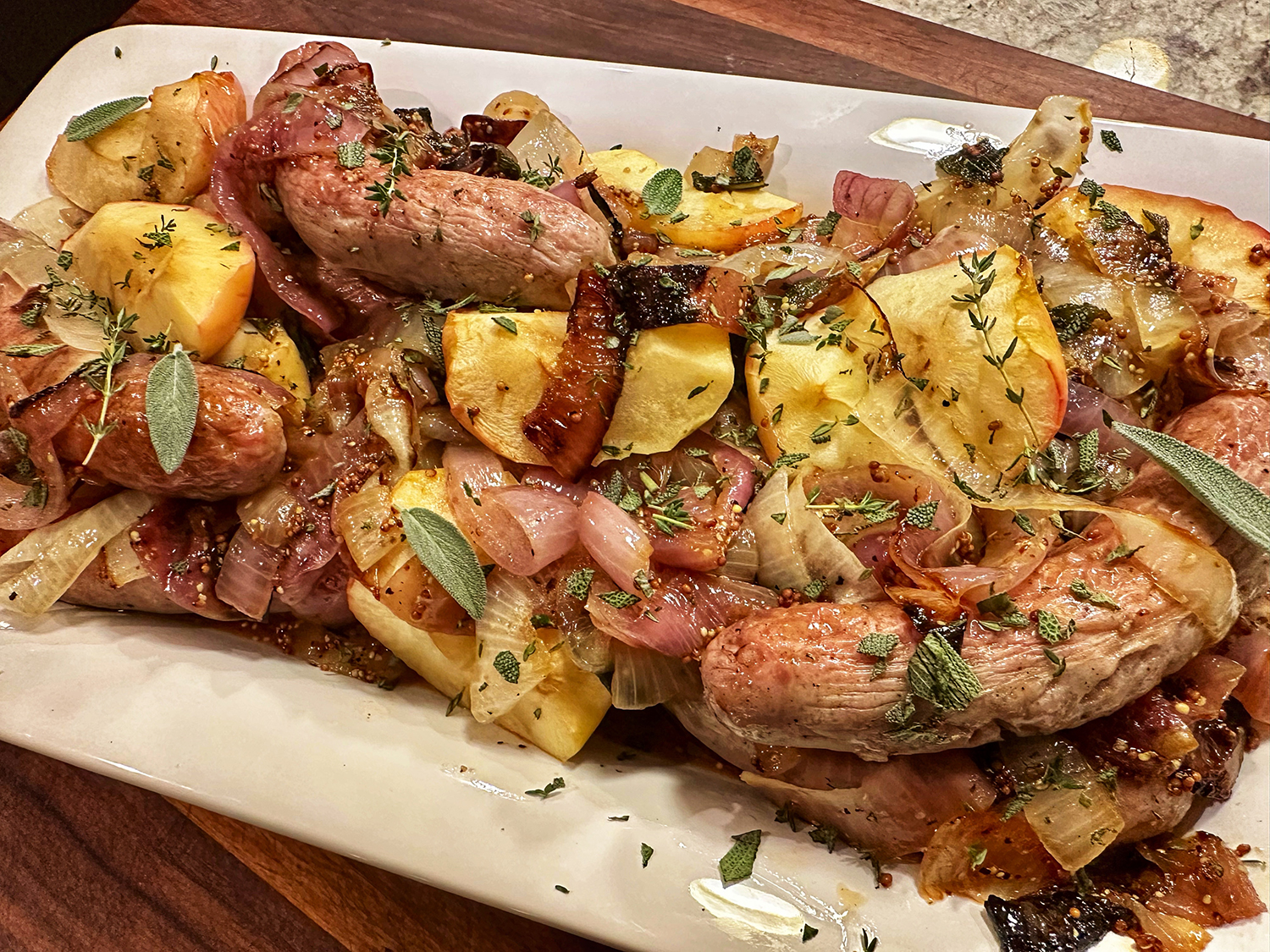
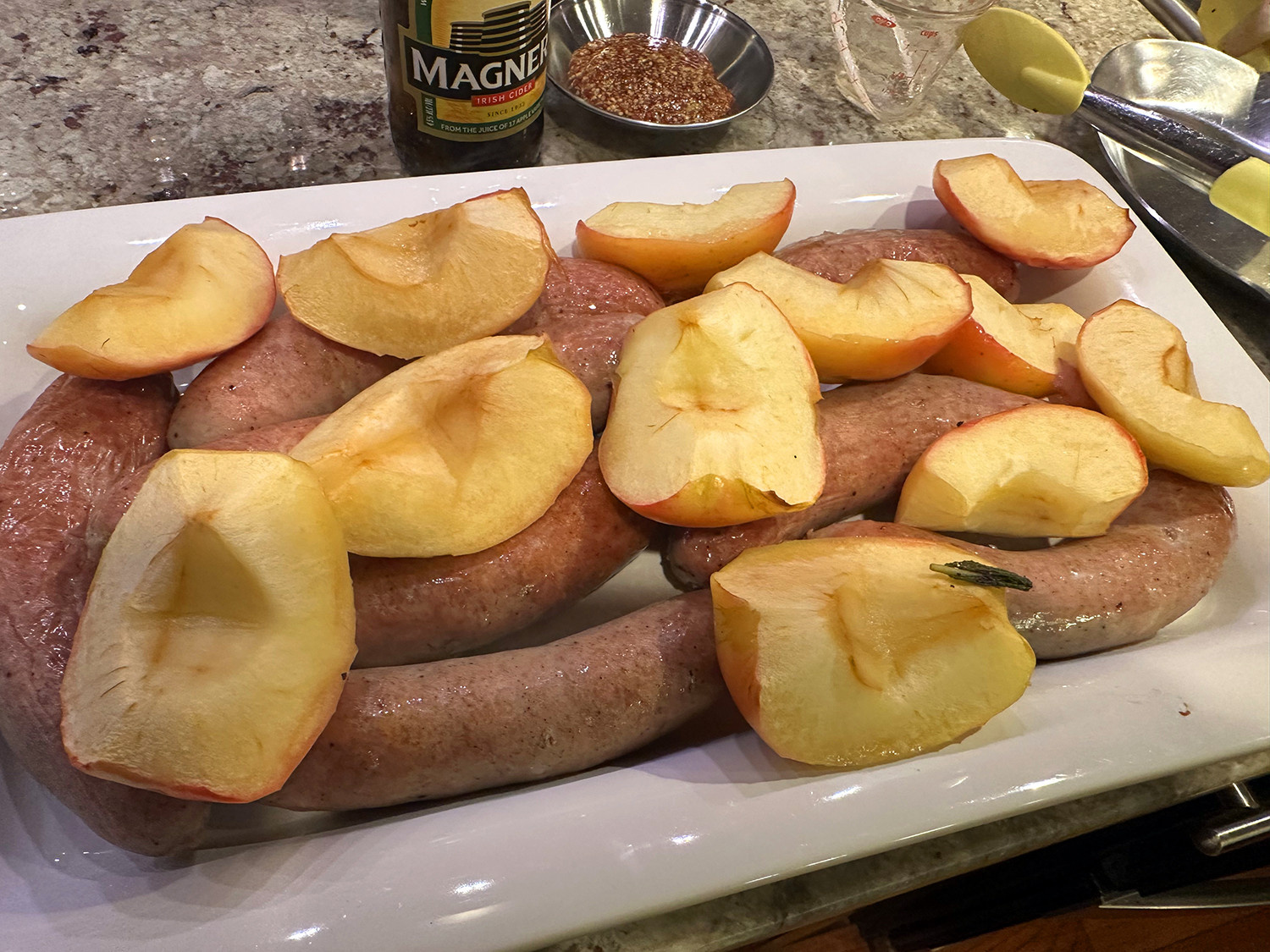
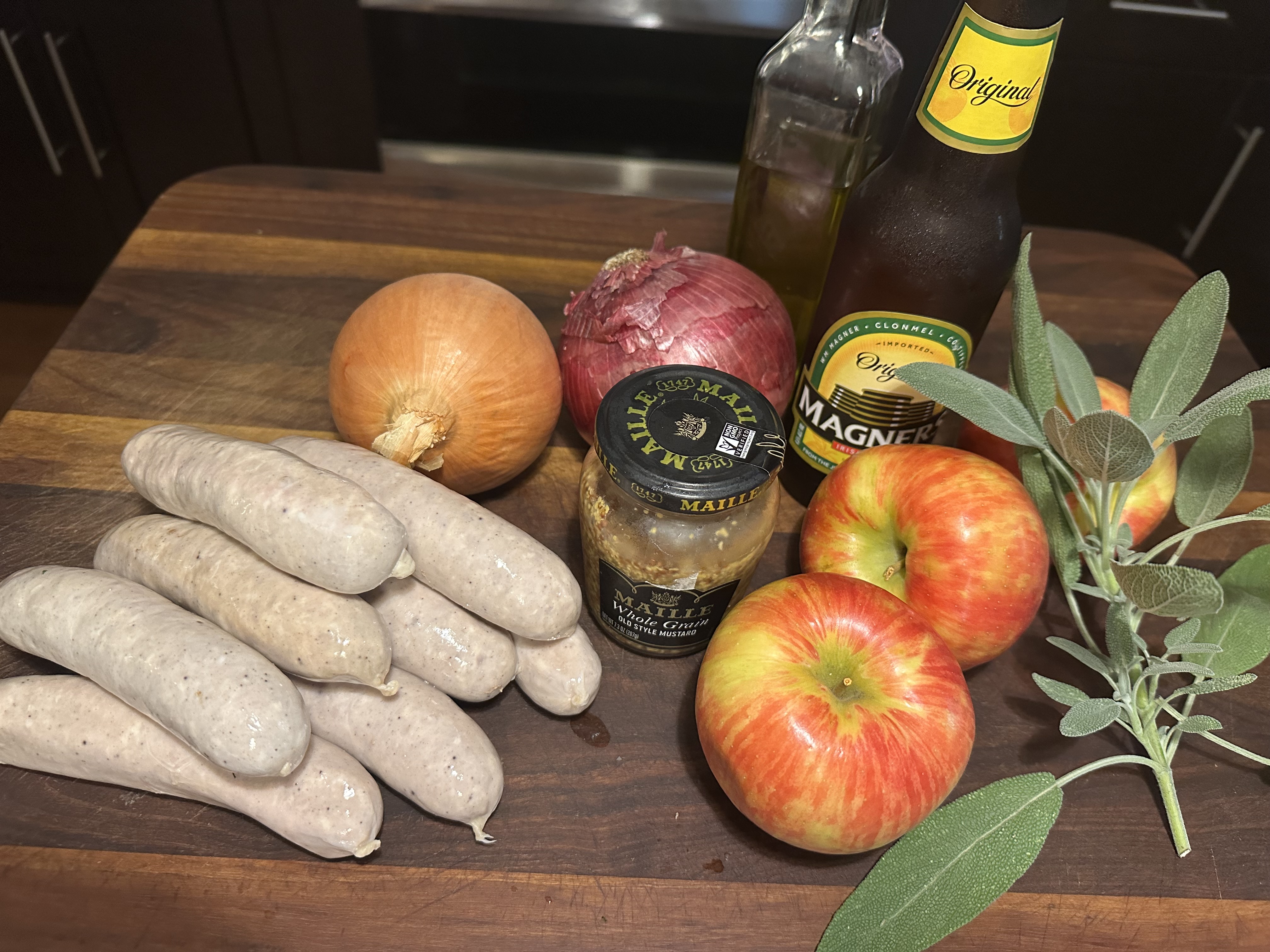
Select apples with a firm texture, yet thin skin that stays tender during roasting. Honeycrisp (our selection) and Gala are good options. Of the other choices, we used bratwurst, one each of red and yellow onions, hard apple cider, a combo of both Dijon and whole grain mustards, and both sage (which we tripled to 3 tablespoons) and thyme from our herb garden.
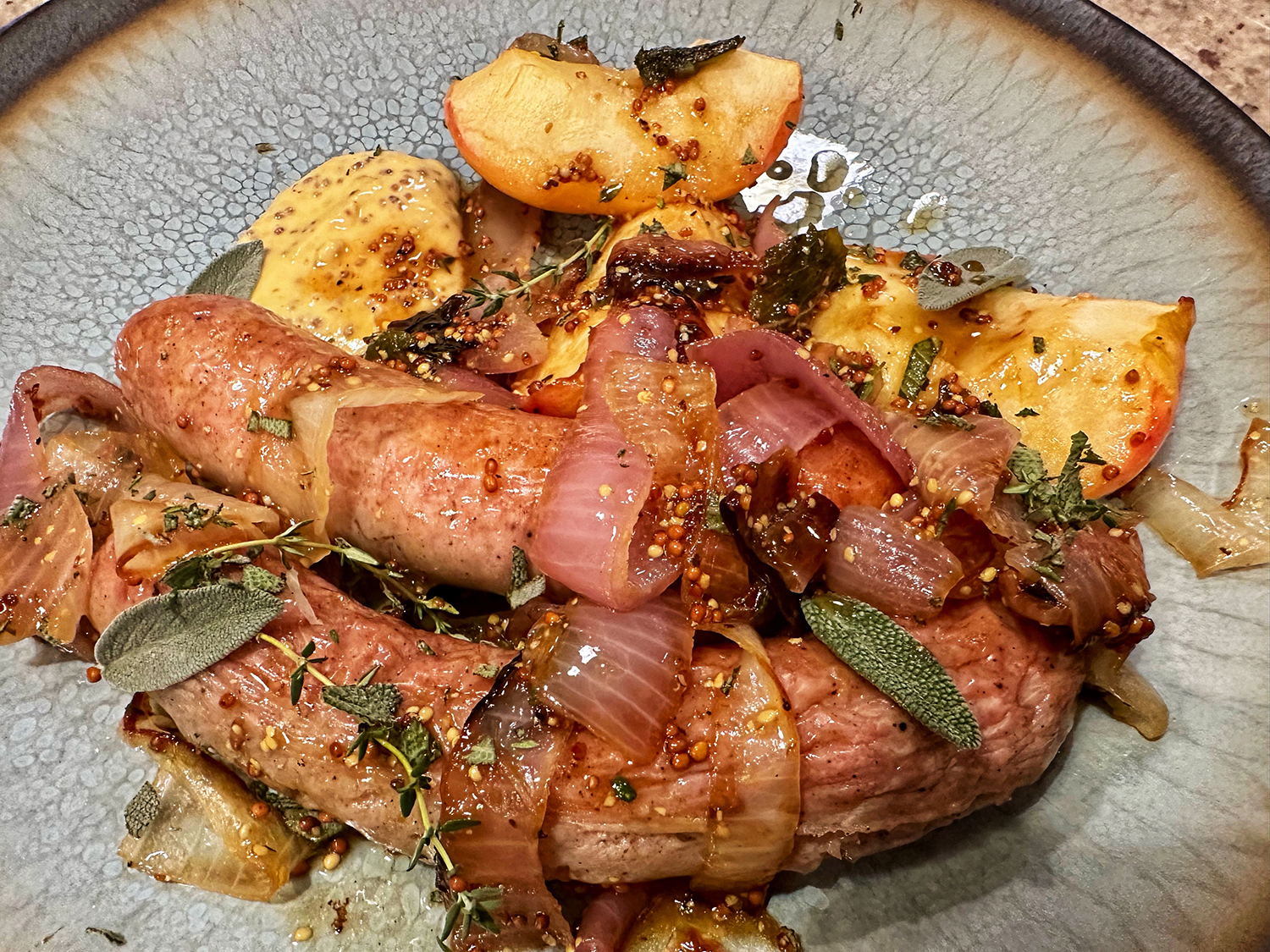
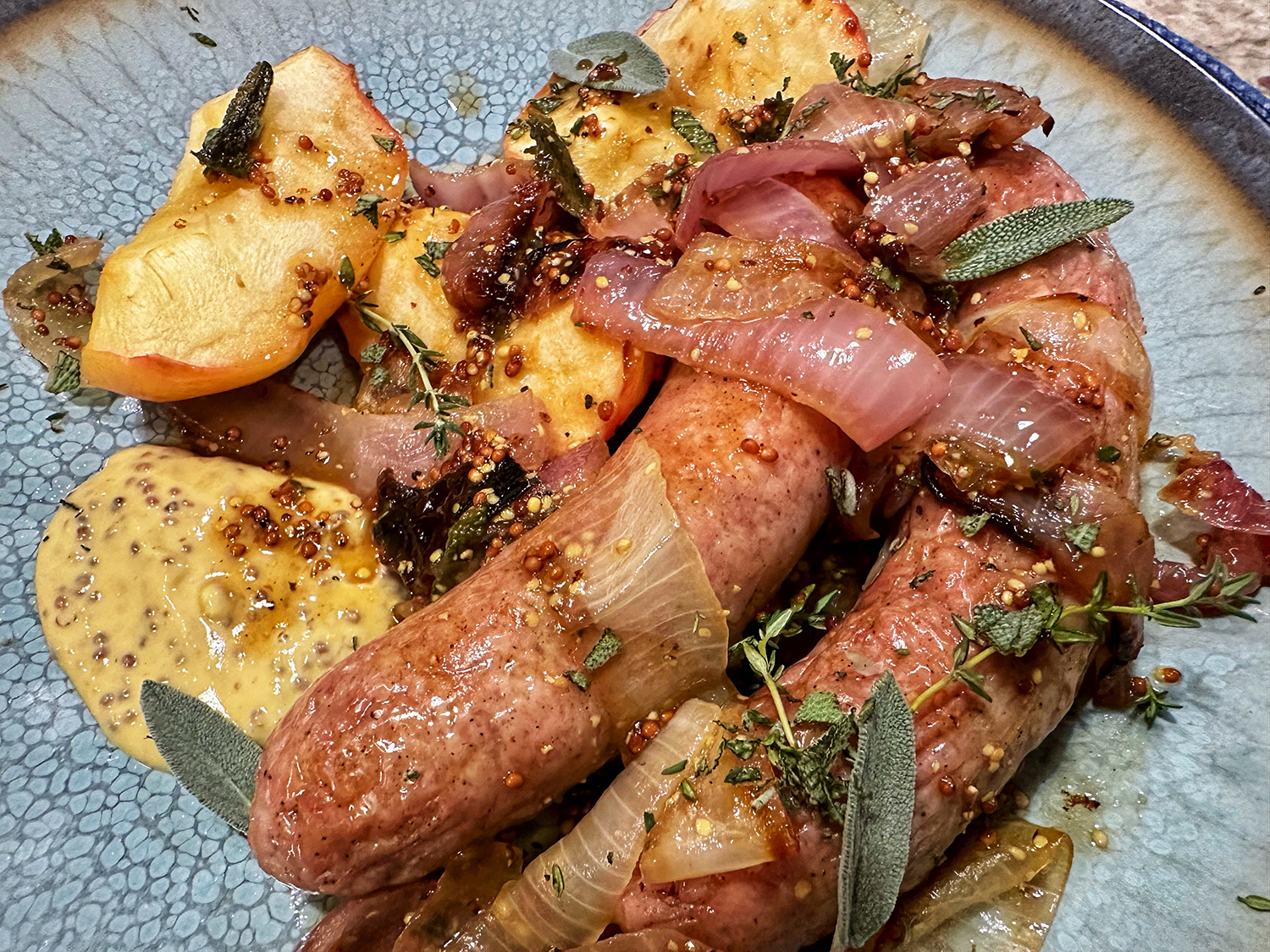
And is doesn’t hurt to have an extra-large dollop of a whole grain and Dijon mustard mixture on the plate.
Sausage Traybake with Apples and Onions

  • Servings: 4-6
  • Difficulty: easy
  • Print

Ingredients

  • 2 medium red OR yellow onions, halved and sliced about ½ inch thick
  • 1-3 Tbsp. torn fresh sage OR 2 tsp. fresh thyme; plus more chopped sage or thyme to serve
  • 2 Tbsp. extra-virgin olive oil
  • Kosher salt and ground black pepper
  • 1¼ lbs. firm apples, quartered lengthwise and cored
  • 1½ lbs. kielbasa OR bratwurst OR sweet or hot Italian sausages, poked in several places with a paring knife
  • 1/4 cup hard apple cider OR beer OR broth
  • 2 Tbsp. whole-grain mustard OR Dijon mustard, plus more to serve
Directions

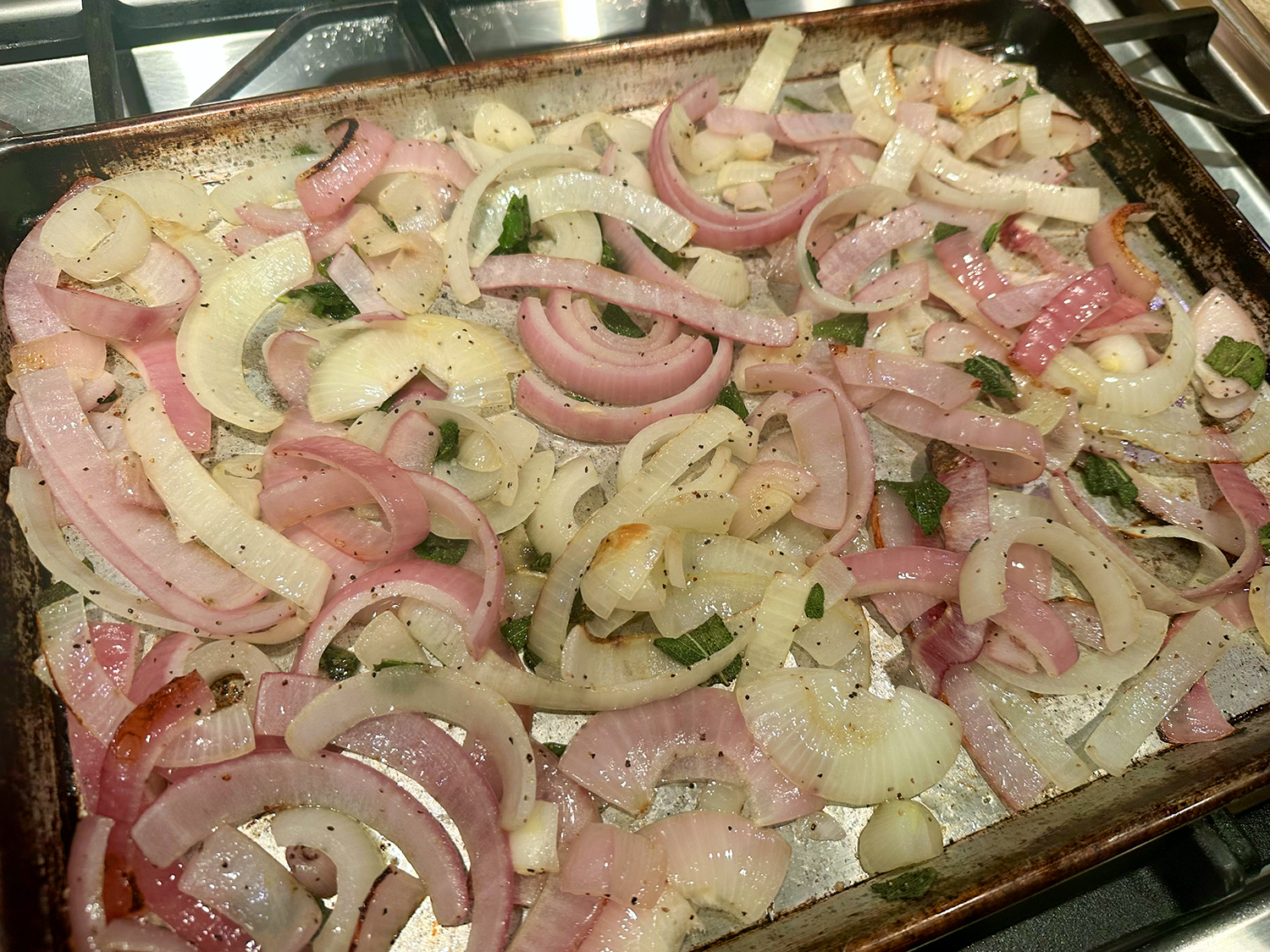
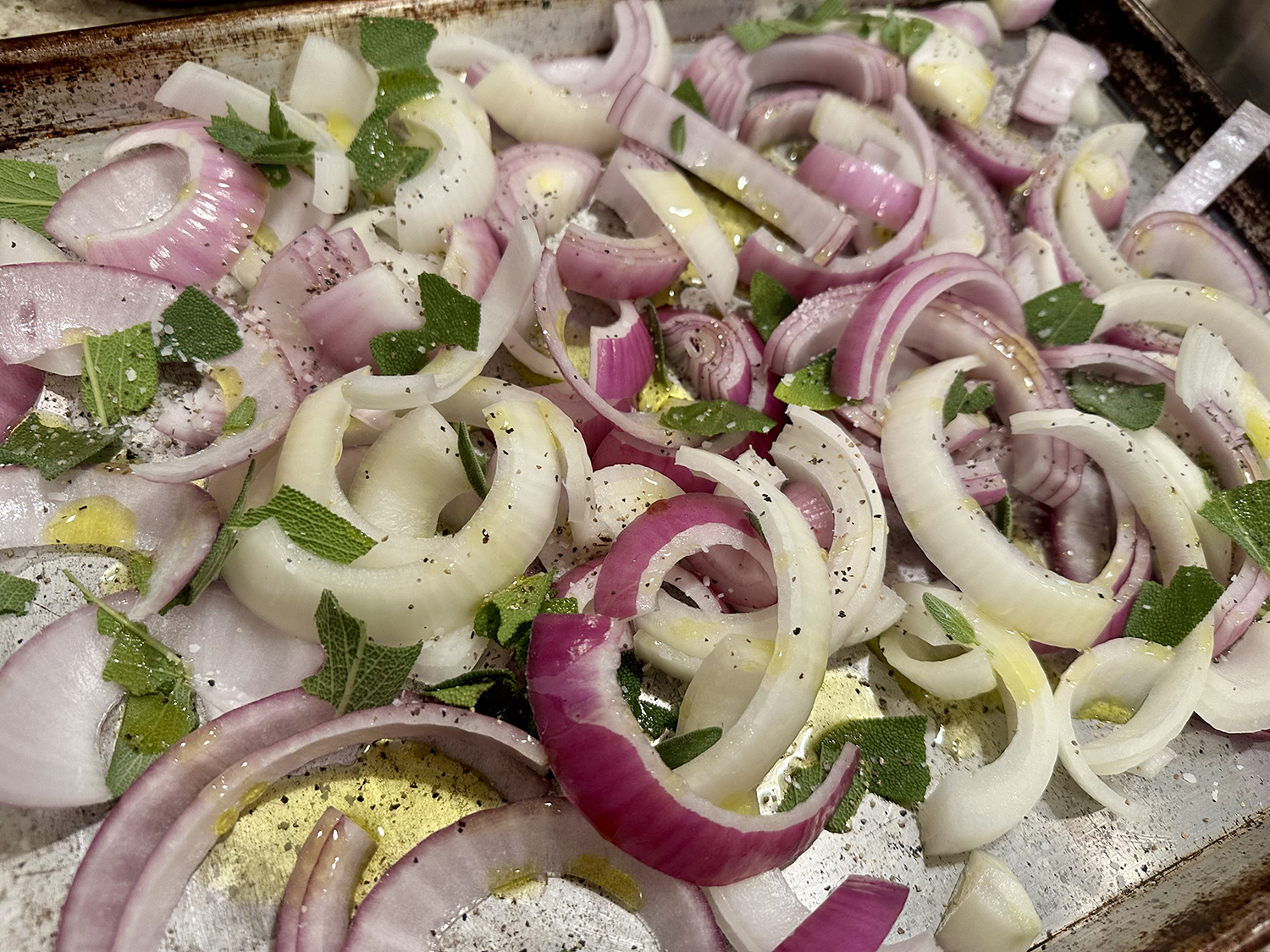
  1. Heat the oven to 450°F with a rack in the middle position. On a rimmed baking sheet, toss together the onions, torn sage, oil and ½ teaspoon each salt and pepper; distribute in an even layer. Roast until the onions begin to soften and brown, about 10 minutes.
  2. Remove from the oven and stir the onions. Add the apples and arrange the sausages on top. Roast until the centers of the sausages reach 160°F and the onions and apples are tender and lightly browned, 15 to 20 minutes.
  3. Transfer the sausages and apples to a platter, leaving the onions in the pan. Pour the cider over the onions and stir, scraping up any browned bits. Stir in the mustard, then taste and season with salt and pepper. Transfer the onion mixture to the platter, spooning it around the sausages and apples. Sprinkle with chopped sage and serve with additional mustard.
  4. Optional garnish: Chopped fresh dill OR pickled peppers OR both

http://www.lynnandruss.com

Recipe from Courtney Hill for Milk Street

Tomato-Roasted Onions with Paprika

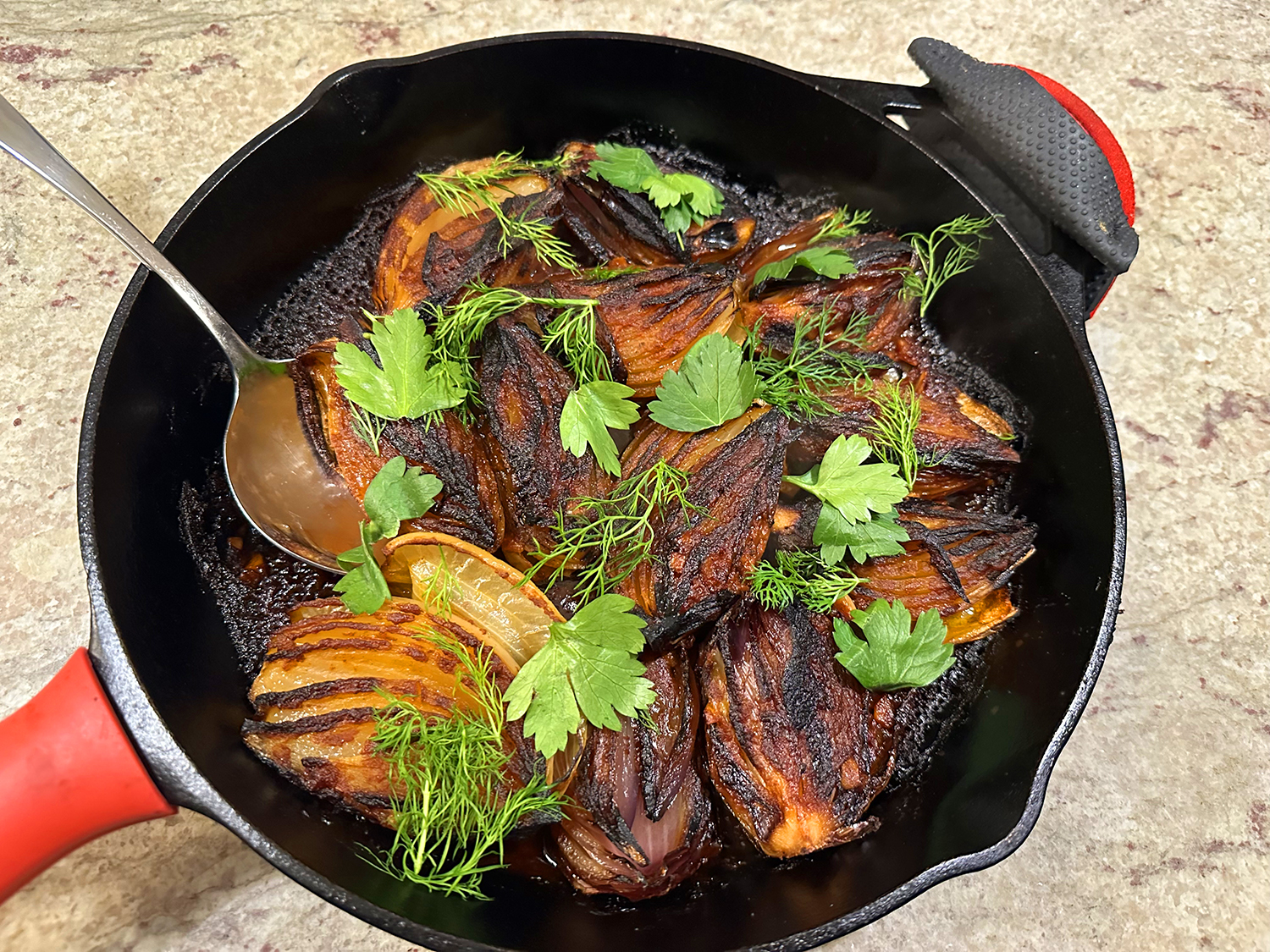
We have never considered onions as an entrée—side dish, absolutely; condiment, of course; salad addition, naturally. But onions can be a startling delight when they’re served as the main event. Here, a hot sear produces a glorious collection of complex flavors, and the gentle roast that follows renders the collection of onions fully spoonable, soft like butter on a hot day.

If you’re looking for proof that onions can be more than just background players, this is it. Sweet paprika balances the richness of the dish, lending its vibrant red hue and a fruity, mild heat. To better appreciate every nuance of the onions, serve this simply—a side of buttered egg noodles or rice will do nicely.

But we went whole hog and paired the onions with a reverse-seared NY strip steak and a side salad. The recipe calls for a mix of six small onions, we bought three large. Therefore our wedges were much bigger than they would have been with small onions. Luckily they all fit in a large cast-iron skillet, so we didn’t need to brown them in two batches. However, we did need to brown them almost 50% longer.

Next time, we will cover the skillet for the first 30 minutes in the oven, then remove the cover, cooking until the onions are tender all the way through.

Tomato-Roasted Onions with Paprika

  • Servings: 4-6
  • Difficulty: easy
  • Print

Ingredients

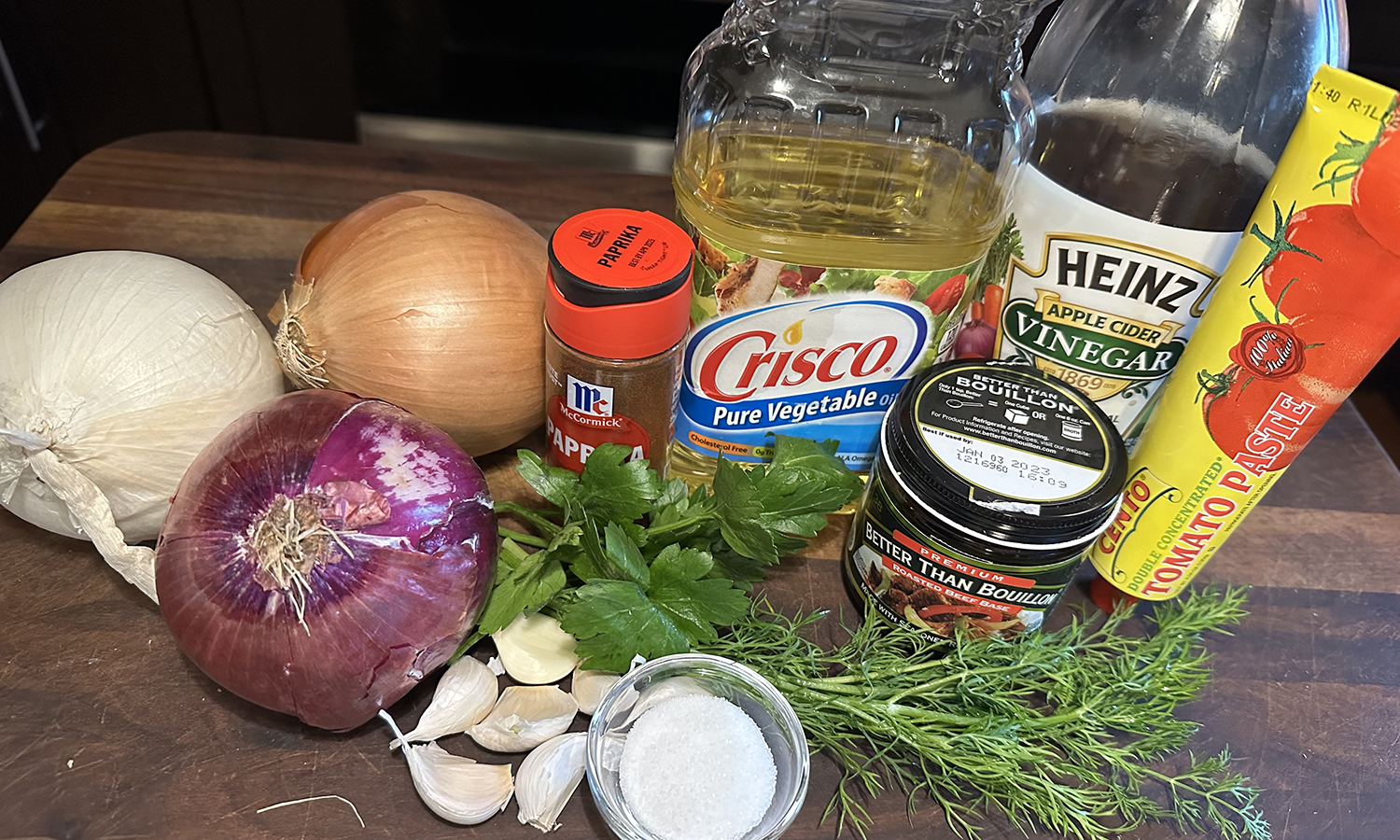
  • 6 garlic cloves, coarsely chopped
  • ¼ cup double-concentrated tomato paste
  • ¼ cup extra-virgin olive oil
  • 3 Tbsp. paprika
  • 1 Tbsp. vegetable or beef bouillon paste
  • 2 tsp. apple cider vinegar
  • 2 tsp. sugar
  • 2 tsp. Diamond Crystal or 1¼ tsp. Morton kosher salt, plus more
  • 2 Tbsp. (or more) vegetable oil
  • 2 lb. mixed onions (about 6 small), roots trimmed with ends left intact, peeled, quartered through root ends
  • Dill sprigs and parsley leaves with tender stems (for serving)

Directions

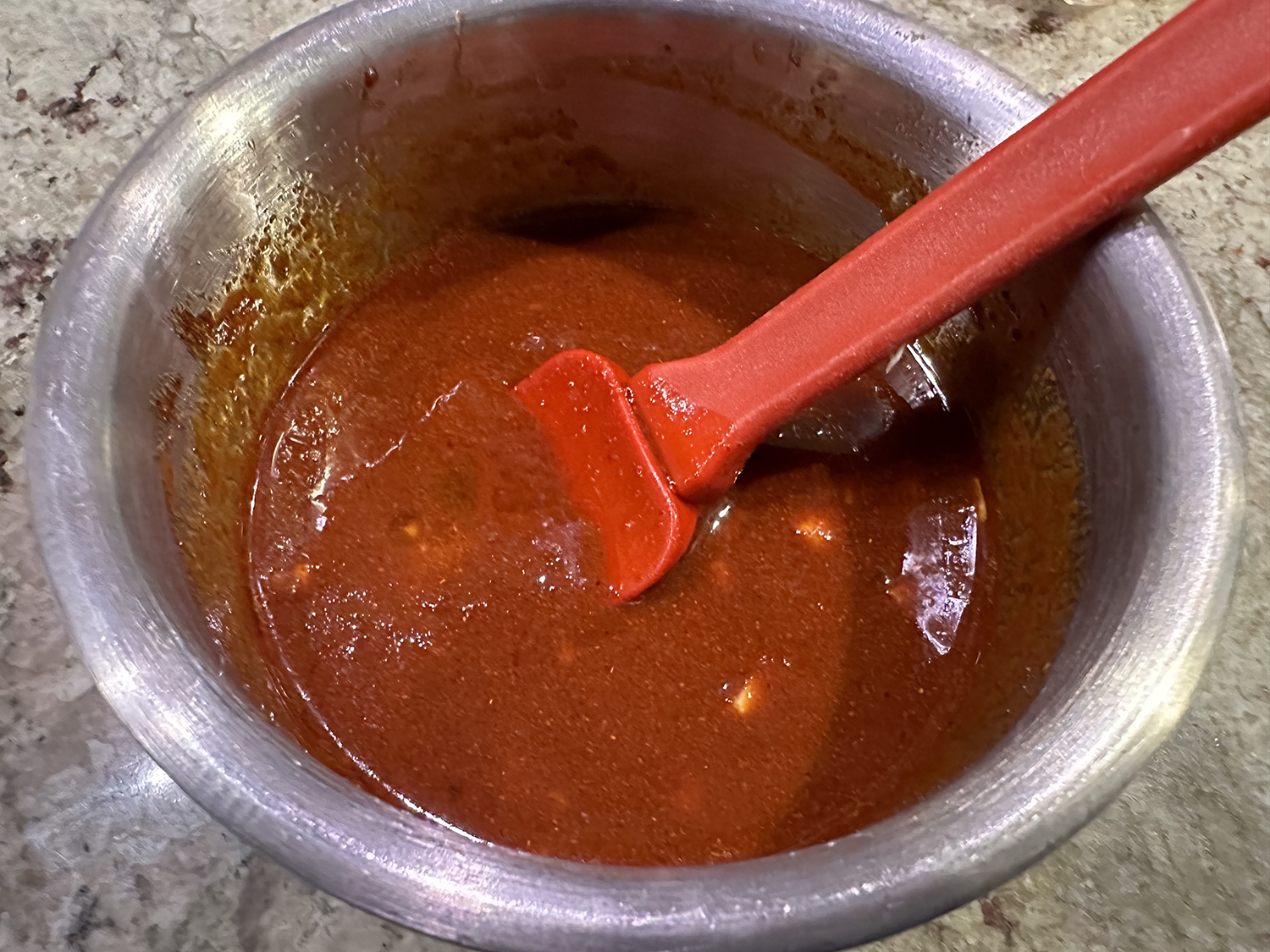
  1. Place a rack in middle of oven; preheat to 375°. Mix 6 garlic cloves, coarsely chopped, ¼ cup double-concentrated tomato paste, ¼ cup extra-virgin olive oil, 3 Tbsp. paprika, 1 Tbsp. vegetable or beef bouillon paste, 2 tsp. apple cider vinegar, 2 tsp. sugar, and 2 tsp. Diamond Crystal or 1¼ tsp. Morton kosher salt, and ¾ cup water in a small bowl to combine; set garlic mixture aside.
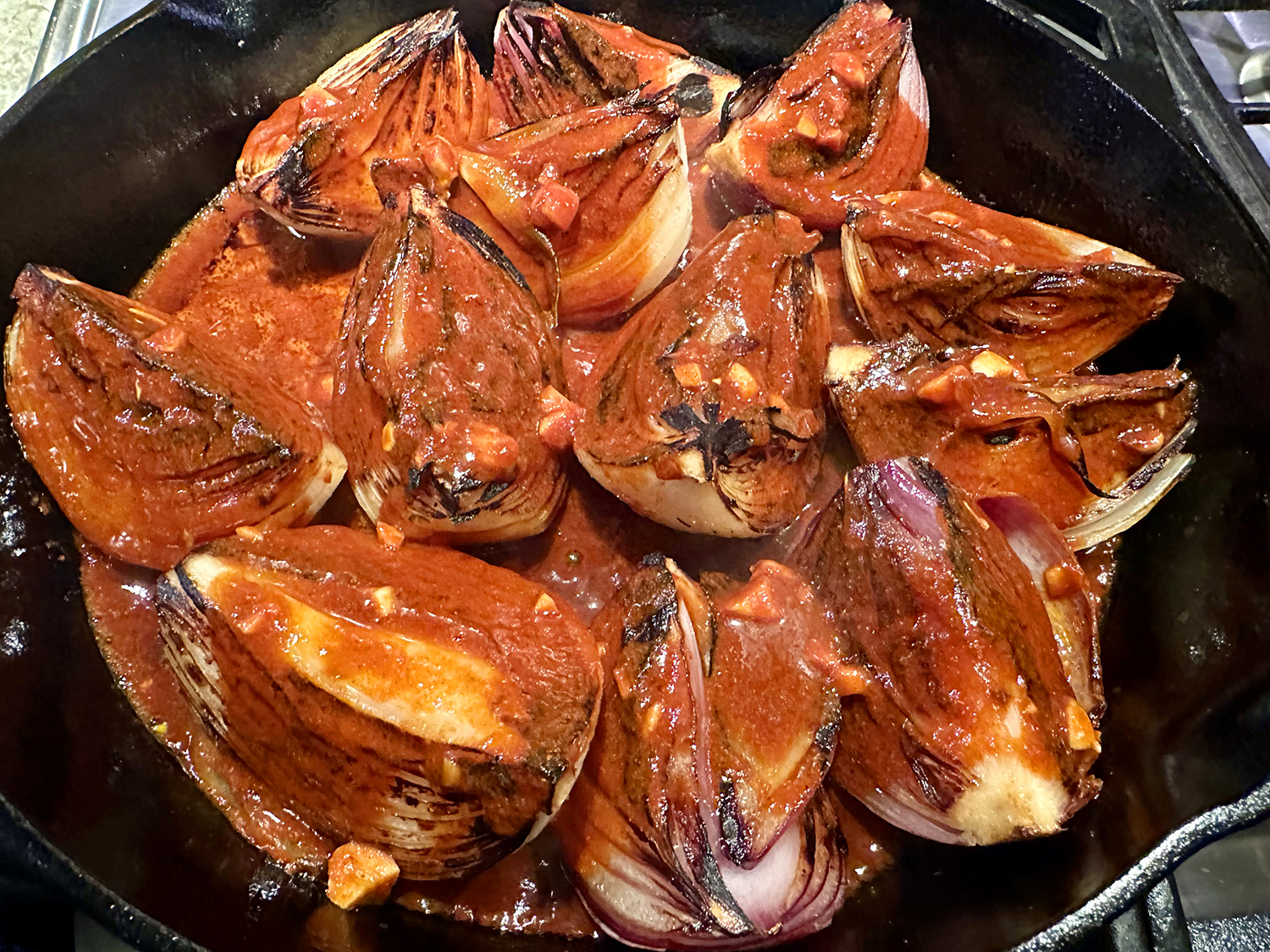
  2. Heat 2 Tbsp. vegetable oil in a medium cast-iron skillet over medium-high. Working in batches if needed and adding up to 1 Tbsp. more vegetable oil to pan if it looks dry at any point, arrange 2 lb. mixed onions (about 6 small), roots trimmed with ends left intact, peeled, quartered through root ends, cut side down, in pan with tongs (be careful and stand back; the oil will spatter) and season lightly with salt. Cook until charred underneath, about 5 minutes; repeat for the other cut side of each wedge. If working in batches, transfer onions to a plate as you go (be gentle here; you want them to hold their shape).
  3. Return all onions to pan if you cooked them in batches and arrange so cut sides are facing up. Add reserved garlic mixture and shake pan gently to settle sauce. Bake in oven until onions are very tender and oil begins to separate from tomato paste, 30–40 minutes. (Our large onion wedges took over an hour before they were completely softened the entire way through.)
  4. Scatter dill sprigs and parsley leaves with tender stems over onions to serve.

http://www.lynnandruss.com

Recipe by Shilva Uskokovic for Bon Appétit

Carabaccia (Tuscan Onion Soup)

For this recipe, we were beta testers for America’s Test Kitchen (ATK). As part of the rules, we were unable to post anything until it was published in their magazine and online; which was six months after the fact.

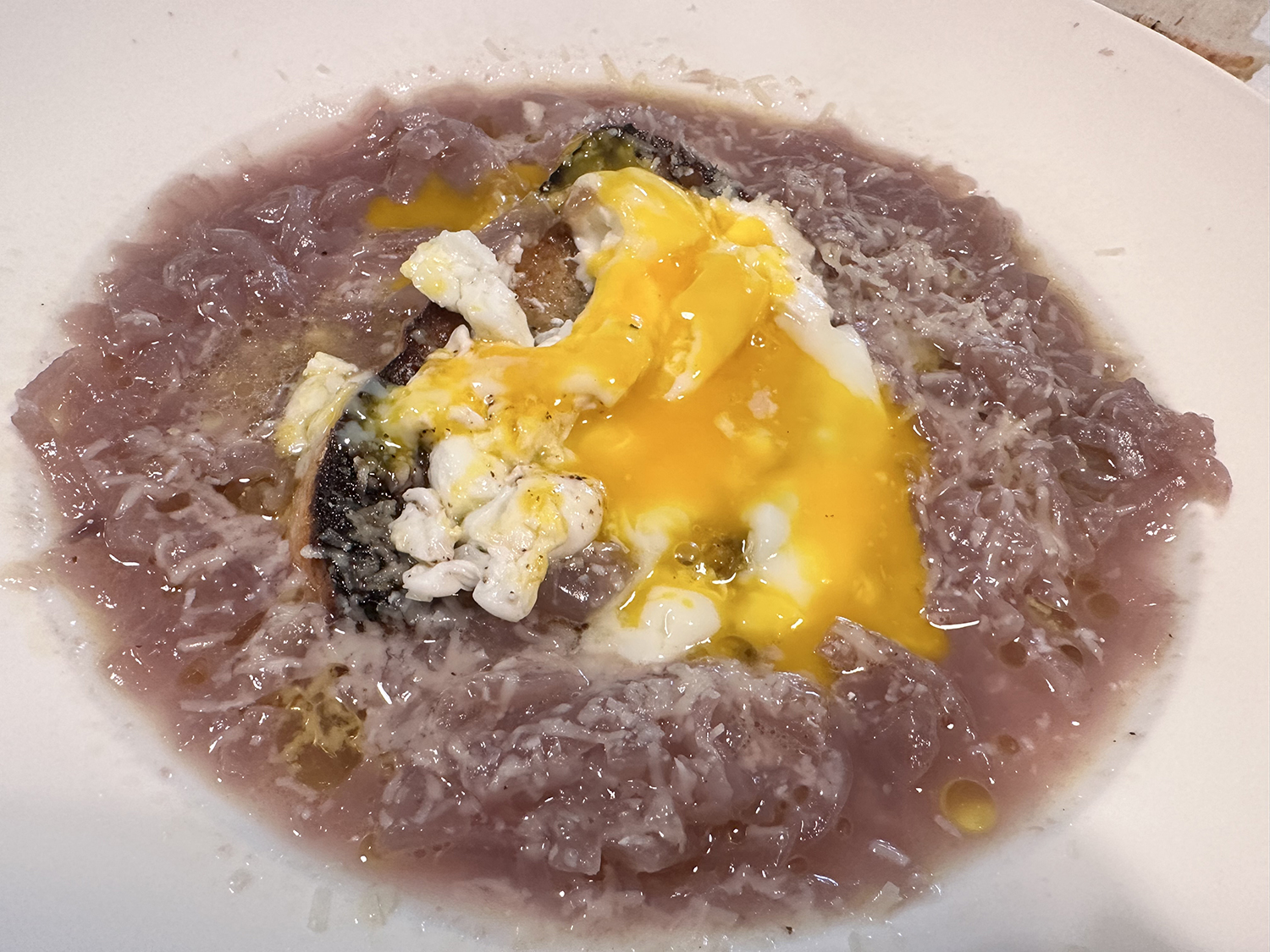
In the same vein as French Onion Soup, the buttery, sweet savoriness of carabaccia, Tuscany’s centuries-old red onion soup, introduces you to an entirely different side of allium complexity.

As ATK explains, Carabaccia is a simple, centuries-old Tuscan onion soup made by softening (but not browning) and then simmering loads of onions in water until the liquid is gently savory-sweet; the soup is served with toasted bread, grated Parmesan or Pecorino, and perhaps a poached egg.

For this take, 2 pounds of thin-sliced red onions are softened by first simmering them covered, with a little water, salt, and olive oil, so that the moist heat would encourage them to quickly collapse. Then they are briefly cooked uncovered to evaporate the liquid and concentrate their flavor; finally they are simmered with water, sage, and bay leaf to infuse the broth with the onions’ sweet savor.

Stirring grated Parmesan into the soup enhances its flavor. While the soup simmers, you broil slices of crusty bread and poach the eggs. To serve, placed a slice of toast in each bowl and top with a poached egg; then ladle the soup around the bowl.

Carabaccia is traditionally made with water but feel free to use your favorite chicken or vegetable broth in Step 2. A rasp grater works well for grating the Parmesan. Serve this soup with a poached egg spooned on top of the toast before the soup is ladled into the bowl.

Carabaccia (Tuscan Onion Soup)

  • Servings: 4
  • Difficulty: easy
  • Print

Ingredients

  • 2 lbs. red onions, halved and sliced through root end ¼ inch thick
  • 5 cups water, divided; OR chicken or vegetable broth
  • 3 Tbsp. extra-virgin olive oil, divided
  • ¾ tsp. table salt, divided
  • 2 sprigs fresh sage
  • 1 bay leaf
  • ½ cup (1 oz.) finely grated Parmesan cheese, plus extra for serving
  • 4 poached eggs
  • 4 (½-inch-thick) slices thick-crusted country bread

Directions

  1. Bring onions, 1 cup water, 2 tablespoons oil, and ½ teaspoon salt to boil in Dutch oven over high heat. Adjust heat to medium, cover, and cook at rapid simmer, stirring occasionally, until onions have fully softened and collapsed, 18 to 20 minutes. Uncover and continue to cook, stirring occasionally, until liquid evaporates (onions should not brown), 6 to 8 minutes. (Onions can be refrigerated for up to 3 days or frozen for up to 1 month.)
  2. Add sage sprigs, bay leaf, remaining 4 cups water, and remaining ¼ teaspoon salt. Bring to boil, adjust heat to gentle simmer and cook, covered, for 30 minutes. Remove sage sprigs and bay leaf. Stir in Parmesan. Season with salt and pepper to taste.
  3. Meanwhile, adjust oven rack about 6 inches from broiler element and heat broiler. Place bread on aluminum foil-lined rimmed baking sheet, drizzle with remaining 1 tablespoon oil and season with salt and pepper. Broil until browned, crisp, and starting to char at edges, 2 to 4 minutes. Flip bread and continue to broil until bottom is starting to char, 2 to 4 minutes longer.
  4. Place 1 slice bread in bottom of each individual bowl. Top bread with poached egg. Ladle soup into bowl. Serve, passing Parmesan separately.

http://www.lynnandruss.com

Recipe from Annie Petito for America’s Test Kitchen

Bangers with Onion Gravy

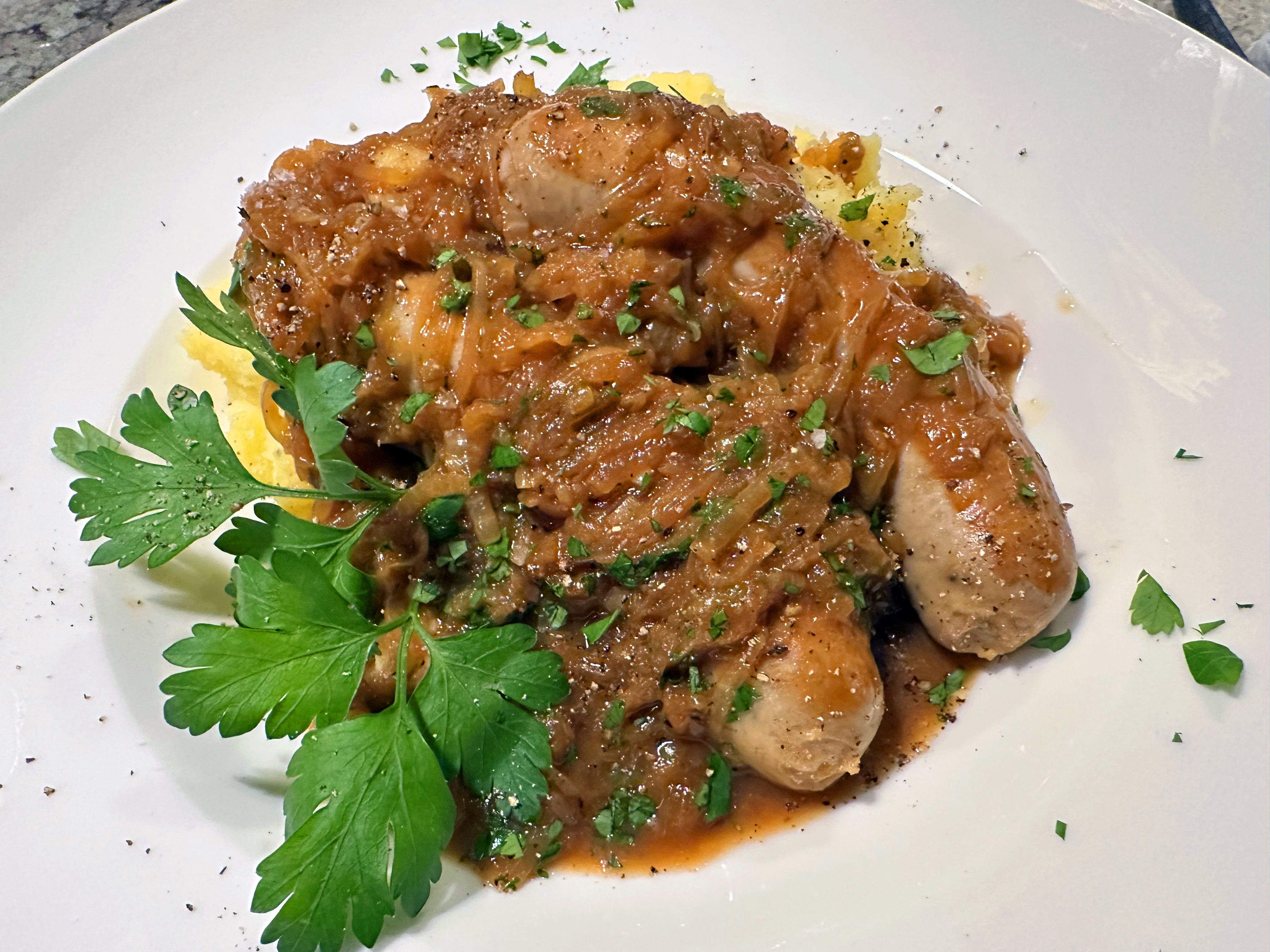
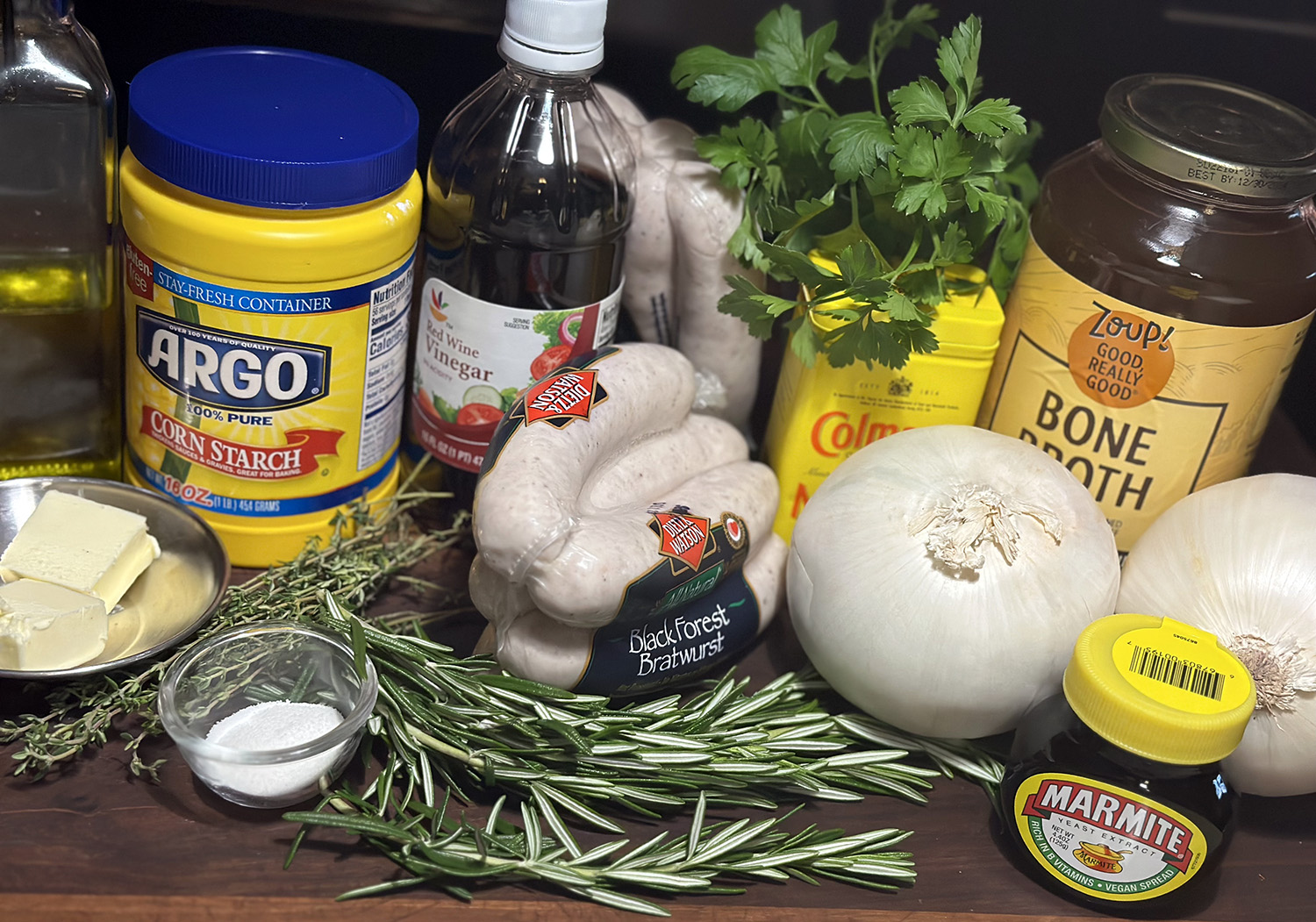
Ever eat Bangers and Mash that left you underwhelmed? So this version found in Milk Street Magazine, enticed us to want to try making it on our own. It’s clearly not a complicated recipe, and the flavor profile looked downright yummy. So after ordering the Marmite online, and receiving it a few days later, we took the plunge.

Great bangers and mash with onion gravy, the iconic British pub staple, revolves around plump, well-browned links napped with an ultrasavory sauce. Searing the sausages ensures that the links develop attractive, flavorful browning; steaming cooks them through gently so that they are plump and juicy.

Adding the onions (thin-sliced so that they softened quickly) to the pan to steam with the sausages jump-starts their cooking. Continuing to sauté them after the sausage comes out further softens them and caramelizes their sugars; doing so also develops a deep, flavor-packed fond on the bottom of the skillet.

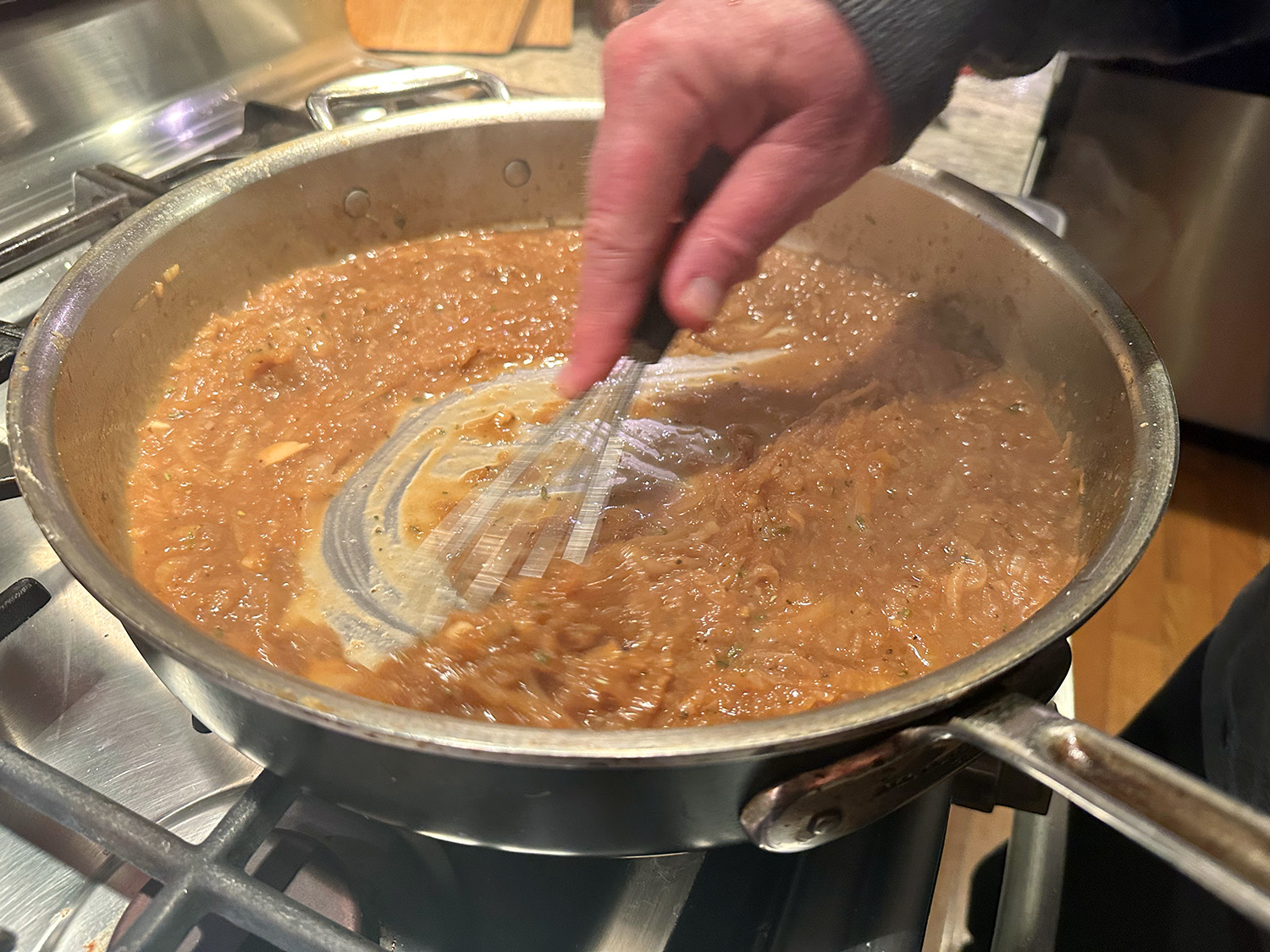
Deglazing the pan with a highly seasoned beef broth captures the fond, and simmering the onions in the broth tenderizes them more and concentrates the flavor of the gravy. A cornstarch slurry and butter, whisked in just before serving, gives the gravy the requisite viscosity, shine, and richness.

To capture every bit of that savory flavor base, deglaze the pan with beef broth that is seasoned with dry mustard, rosemary, thyme, and Marmite the glutamate-rich British yeast extract that infuses the gravy with meaty fussed-over flavor. Marmite is sold at most grocery stores or easliy accessible online.

If Cumberland sausage is unavailable, you can substitute bratwurst or any mildly spiced fresh pork sausage. For the best-tasting gravy, cook the onions until a dark fond forms in the skillet. Serve the sausages and gravy over your favorite mashed potato recipe.

Bangers with Onion Gravy

  • Servings: 4-6
  • Difficulty: easy
  • Print

Ingredients

  • 1 Tbsp. vegetable oil
  • 1½ lbs. Cumberland sausage (6 links)
  • 2 onions, halved and sliced thin (3 cups)
  • ½ cup water plus 1 Tbsp., divided
  • 2½ cups beef broth
  • 1 tsp. dry mustard
  • 1 tsp. minced fresh thyme
  • ½ tsp. minced fresh rosemary
  • 1¼ tsp. sugar
  • 1 Tbsp. Marmite
  • ½ tsp. pepper
  • ¼ tsp. table salt
  • 1 Tbsp. cornstarch
  • 2 Tbsp. unsalted butter, cut into 2 pieces
  • 1 tsp. red wine vinegar
  • 1 Tbsp. minced fresh parsley

Directions

  1. Heat oil in 12-inch skillet over medium heat until shimmering. Arrange sausages in pan and cook, turning once, until browned on 2 sides, about 5 minutes. Move sausages to 1 side of skillet. Add onions, evenly distributing around bottom of pan, and nestle sausages on top. Add ½ cup water and immediately cover. Cook, turning sausages once until they register between 160 and 165 degrees and onions have softened, about 10 minutes.
  2. While sausages cook, whisk broth, Marmite, mustard, thyme, and rosemary in 4-cup liquid measuring cup until Marmite dissolves.
  3. Transfer sausages to plate and tent with aluminum foil. Make sure onions are spread evenly; cook without stirring until beginning to brown, about 5 minutes (if onions have not browned, increase heat to medium-high). Continue to cook, stirring occasionally, until onions are tender and well browned, and dark fond forms on bottom of skillet, 3 to 5 minutes longer. Stir in sugar, pepper, and salt and cook for 1 minute.
  4. Add broth mixture, increase heat to medium-high, and bring to boil. Cook, scraping up any browned bits from bottom and sides of skillet and stirring back into sauce, until sauce is slightly reduced, about 5 minutes. Combine cornstarch and remaining 1 tablespoon water in small bowl. Whisk cornstarch mixture into sauce and cook until sauce is glossy and has consistency of heavy cream, about 2 minutes.
  5. Off heat, whisk in butter, 1 piece at a time. Stir in vinegar and season with salt and pepper to taste. Sprinkle with parsley and serve.

http://www.lynnandruss.com

Adapted from a recipe by Steve Dunn for Cook’s Illustrated

A Chicken Dish Worth Repeating

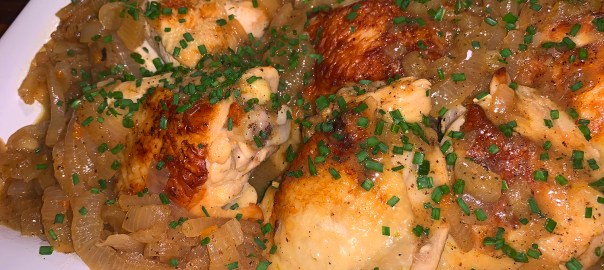
When it comes to poultry, The Hubs favors the dark meat and I most often prefer the white meat. What’s nice about this Senegalese Braised Chicken with Onions and Lime recipe is you can use a combination of both and make everyone happy. And happy is the name of the game when you’ve been hunkered down together for months (thanks COVID).

Don’t let the name fool you. With just a few ingredients, “Yassa Ginaar” delivers multiple layers of flavor—savory yet sweet with lightly caramelized onions, citrusy with lime zest and juice, meaty from the deeply browned chicken, and slightly spicy from the heat of a habañero chili. This version from Milk Street is based on a recipe in “Yolele!” by Pierre Thiam, who marinates then sears the chicken, then uses the marinade as a base for the flavorful sauce.

Bouillon concentrate adds to the savoriness of the dish. As it is for Milk Street, our preferred brand is Better than Bouillon. We paired our entrée with a side of sautéed spinach in roasted garlic olive oil and jasmine rice steamed in homemade chicken stock. A side of creamy mashed potatoes would work easily as well for the saucy onion bed.

Keep in mind that you don’t want to marinate the chicken for longer than two hours; the acidity of the lime juice will soften the meat and turn it mushy. Likewise, don’t use an uncoated cast-iron pot. The lime’s acidity will react with the metal, causing the sauce to taste metallic—not necessarily a flavor enhancer in our book!

Senegalese Braised Chicken with Onions and Lime

  • Servings: 6
  • Difficulty: easy
  • Print

Ingredients

  • 4 Tbsp. peanut oil, divided
  • 3 Tbsp. grated lime zest, plus 6 tablespoons lime juice
  • 1 habanero chili, seeded and minced
  • Kosher salt and ground black pepper
  • 2 tsp. chicken bouillon concentrate
  • 2 lbs. bone-in, skin-on chicken breasts, thighs or drumsticks, trimmed
  • 3 medium yellow onions, halved and thinly sliced
  • Finely chopped fresh chives, to serve

Directions

  1. In a small bowl, stir together 3 tablespoons of oil, the lime zest, habanero, 1 tablespoon salt and 1 teaspoon pepper. Transfer 2 teaspoons of the mixture to a pinch pot and set aside.
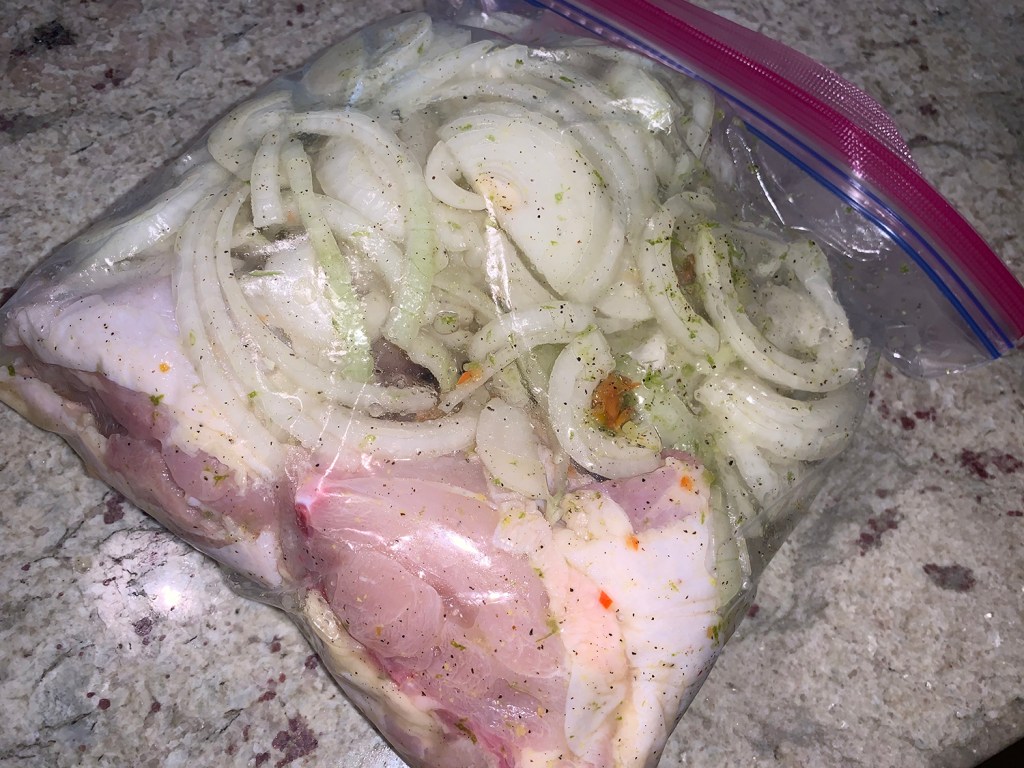
  2. To the remaining oil-zest mixture, whisk in the lime juice, bouillon and ¼ cup water. Place the chicken and onions in a large ziploc bag, add the oil-zest mixture, seal and toss. Let marinate at room temperature for 1 hour or refrigerate up to 2 hours, turning once.
  3. Set a colander over a large bowl and strain the contents of the ziploc. Remove the chicken and pat dry with paper towels. Reserve both the marinade and the onions for later.
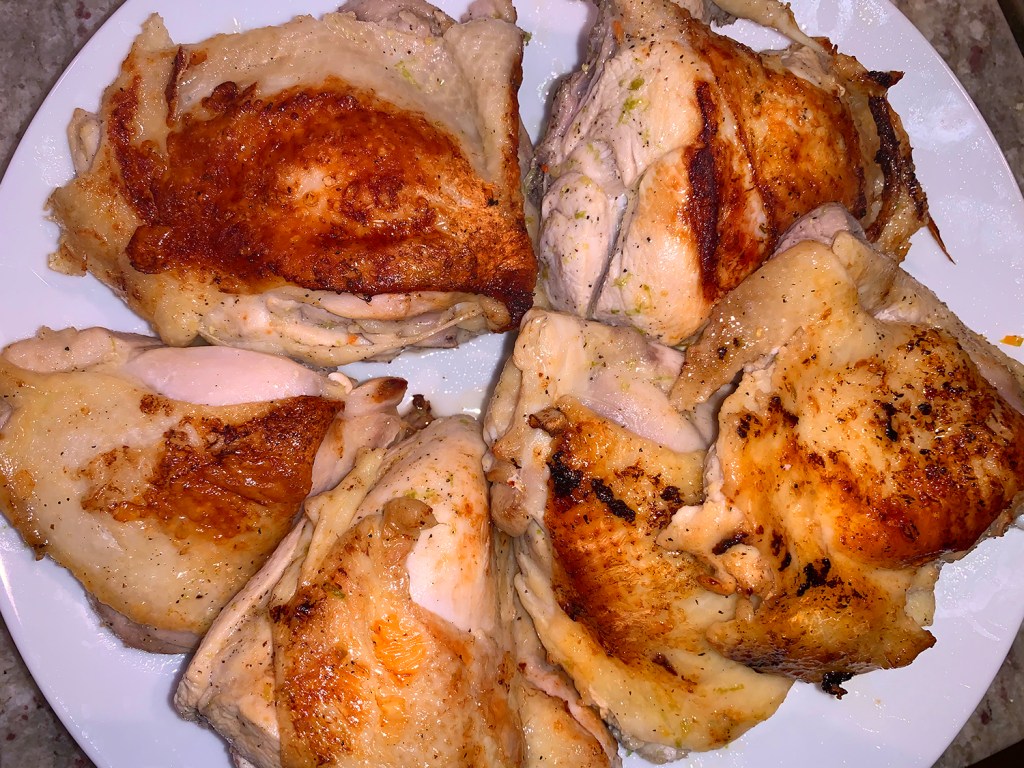
  4. In a large Dutch oven over medium-high, heat the remaining 1 tablespoon oil until barely smoking. Add the chicken, skin side down, and cook until well browned, about 4-5 minutes.
  5. Transfer to a plate and pour off and discard all but 1 tablespoon of the fat. Set the pot over medium heat and stir in the onions and ¼ cup water, scraping up any browned bits.
  6. Cover and cook, stirring frequently, until the onions are softened and lightly browned, 15 to 20 minutes.
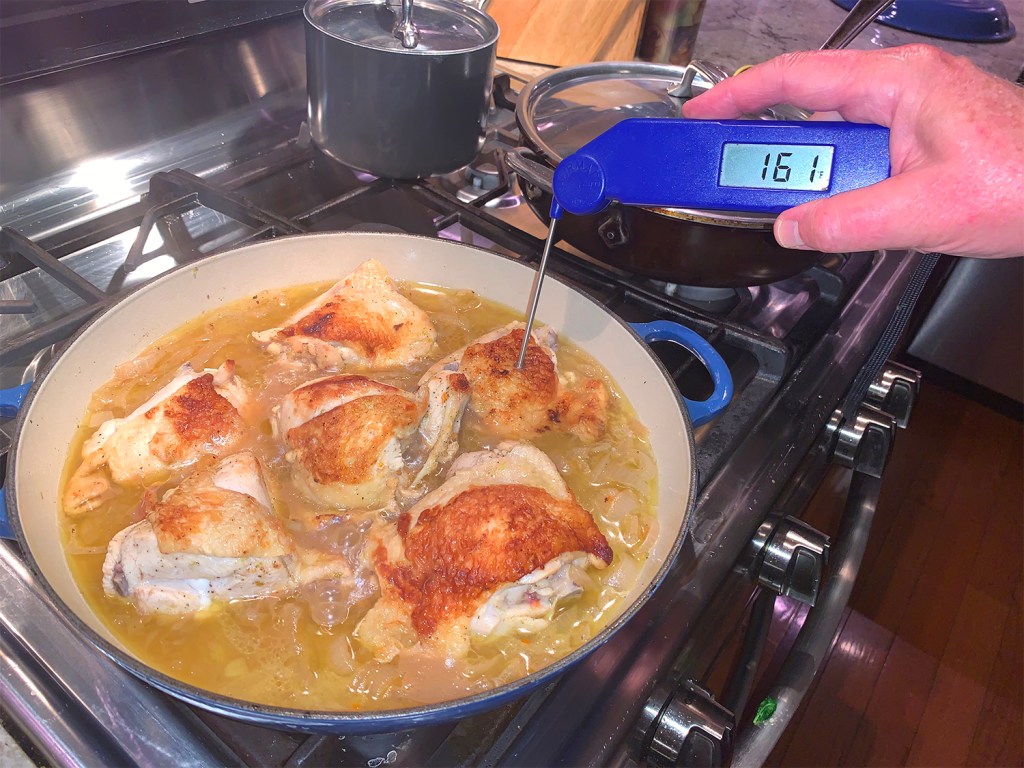
  7. Stir the reserved marinade into the onions. Return the chicken, skin side up, nestling the pieces into the sauce, and pour in any accumulated juices. Reduce to medium-low, cover and cook until a skewer inserted into the thickest part meets no resistance, about 20-25 minutes.
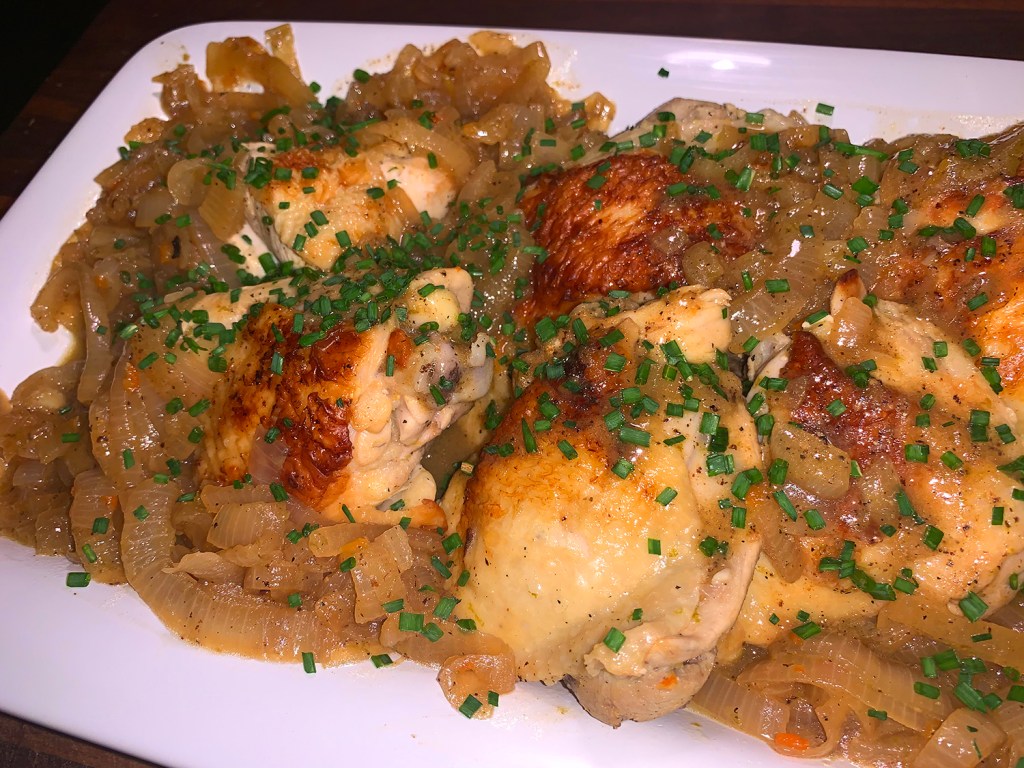
  8. Using a slotted spoon, transfer the chicken to a serving platter or shallow bowl. If the saucy onions appear too watery, reduce them down, uncovered, for 10-15 minutes at a rolling simmer to thicken. Off heat, stir the reserved oil-zest mixture into the onions, then taste and season with salt and pepper.
  9. Spoon the onions and sauce around the chicken and sprinkle with chives.

http://www.lynnandruss.com

Adapted from a recipe found on Milk Street