Tag Archives: main dish

Perfect Reverse-Seared Leg of Lamb

What many don’t realize is that prepping and cooking a big cut of meat can actually be easier and more forgiving than working with smaller cuts. According to chef Alan Bergo, you just need to know a few basic principles, and have a simple trick or two up your sleeve. Here he shares his favorite method for serving up a flawless roast leg of lamb on your first try. It employs a surprisingly simple kitchen hack known as the reverse-sear.

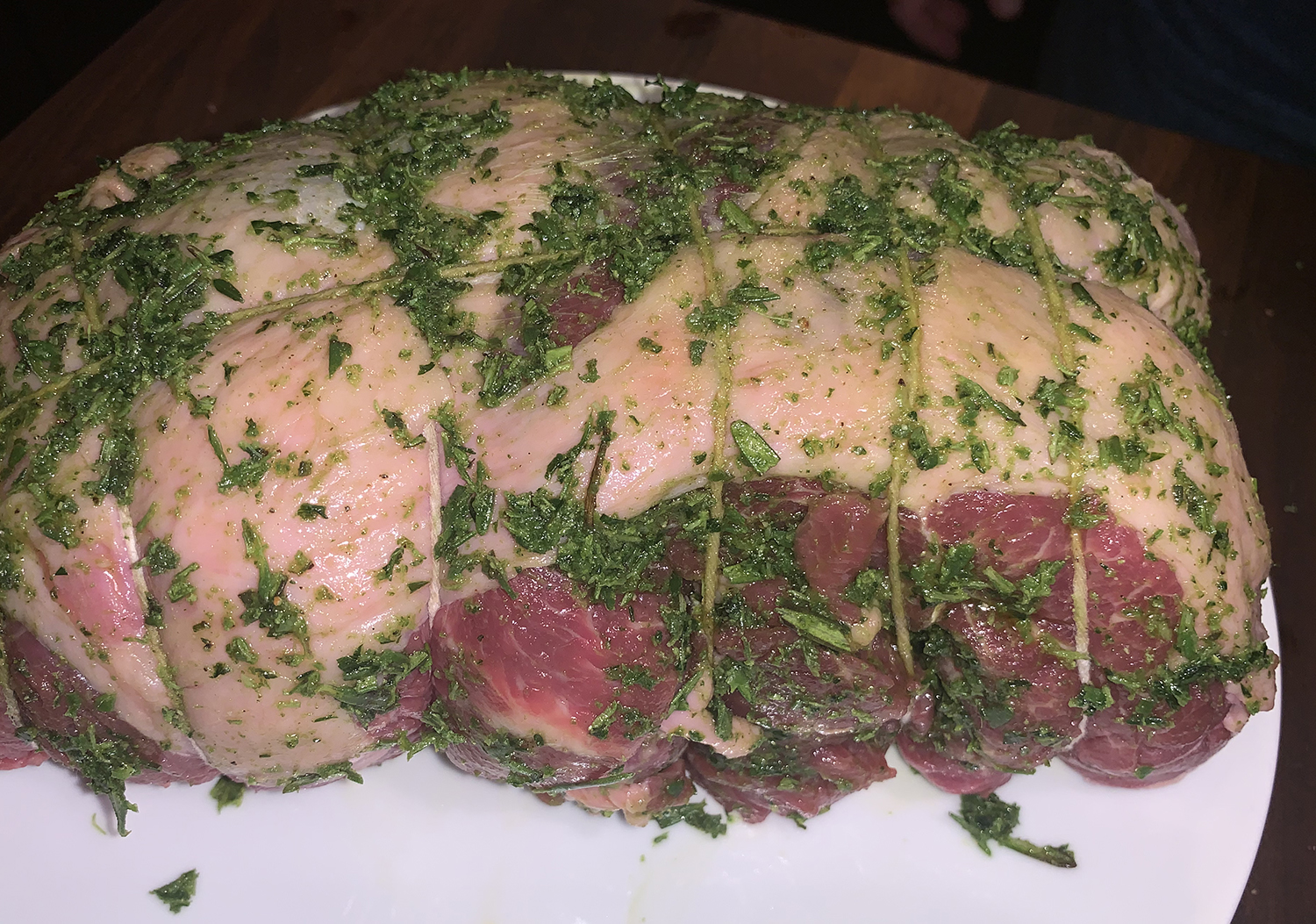
Truth be told, while we’ve done the reverse-sear method on a number of cuts of beef, this was our maiden voyage with lamb. In this case, the recipe called for a 3-4 pound leg of lamb, but ours was nearly 5 pounds so the cooking time was actually 2 hours and 20 minutes. We used an internal thermometer to measure the temperature the entire time it was roasting.

One ingredient not included in the original recipe was garlic, so we included 4 cloves and mashed them in a large mortar with salt. Next we added the herbs (which we increased from 1/4 cup to a 1/2 cup since our roast was larger), and mashed it altogether to make a paste.

The lamb entrée was paired with Smashed Sage-Butter Potatoes that were so tender and creamy and Balsamic Roasted Brussels Sprouts and Shallots. A word to the wise on the potatoes: make sure to get the small baby Yukons. This time around the store wasn’t carrying them, and we picked up 3+” potatoes, shown below. They came out wonderfully creamy, but the sagey butter didn’t really penetrate into the interiors as much.

Perfect Reverse-Seared Leg of Lamb

  • Servings: 6
  • Difficulty: easy
  • Print

Ingredients

  • 1 Boneless leg of lamb (3-4 pounds)
  • Flavorless high heat cooking oil, like grape seed
  • 1/2 cup aromatic herbs like rosemary sage and thyme, finely chopped
  • 4 cloves of garlic, peeled and mashed in a mortar with salt
  • 2 tsp. kosher salt or more to taste
  • 1 tsp. fresh ground black pepper or more to taste
  • Extra-virgin olive oil

Directions

  1. In a large mortar, mash the garlic cloves with kosher salt until pulverized. If using rosemary, mash that with the garlic and then finish with the remaining herbs.
  2. Season the meat with salt, pepper and the garlic-herbs paste inside and out. Roll the leg up tightly and tie with kitchen twine to ensure even cooking. Let it sit uncovered in the fridge overnight.
  3. The next day, 1 1/2 hours before you want to serve (assuming a 3-4 lb leg) preheat the oven to 250 °F and place the leg in the oven. Insert an internal thermometer if you have one and set it for 130° for medium-rare. If all you have is an instant-read thermometer, start checking after one hour to monitor the meat doneness.
  4. When the internal temperature comes up to your target temperature (which could be 2 hours or more), remove the leg from the oven and allow to cool on its rack loosely tented with foil in a warmish location for 15-20 minutes.
  5. Finally, rub some extra-virgin olive oil all around the roast and heat a few tablespoons of grape seed oil in the sauté or cast iron pan on high. Turn on the hood, and or open a window, since you’ll be using some high heat for a few minutes. When the oil is just starting to smoke gently, reduce the heat to medium-high and brown the roast deeply on all sides.
  6. After the roast is browned, transfer to a cutting board, remove the twine, cut into slices with a sharp knife and serve immediately.

http://www.lynnandruss.com

Original recipe by Alan Bergo

Sear-Roasted Salmon Fillets with Chive-Shallot Butter

For deep flavor and a handsomely browned surface, the practice of pan-searing fish fillets on a hot stove and finishing them in the oven is your best bet. This luscious recipe is very simple and takes very little time to prep and cook.

The idea for the butter mixture is that the heat from the salmon will melt just enough of the butter to sauce it lightly and leave a small amount unmelted so it’s apparent when served at the table. Our side dish of Roasted Fennel with Orange-Honey Dressing was a perfect complement to the salmon.

TIP: A metal fish spatula is a great kitchen tool to have, especially if you often cook fish at home. The thin-gauge, flexible metal head is designed to flip and lift delicate fish fillets without tearing them.

Sear-Roasted Salmon Fillets with Chive-Shallot Butter

  • Servings: 4
  • Difficulty: easy
  • Print

Ingredients

  • 4 center-cut salmon fillets, about 6-8 oz. each
  • Kosher salt and freshly ground pepper
  • 2 Tbsp. peanut oil, grapeseed oil, or other neutral tasting oil

Chive-Shallot Butter

  • 1/4 cup dry white wine or dry vermouth
  • 1 Tbsp. finely chopped shallots
  • 1/3 cup coarsely chopped chives
  • Kosher salt
  • 4 Tbsp. unsalted butter, at room temperature
  • 1/2 tsp. Dijon mustard
  • 1 tsp. fresh lemon juice
  • Freshly ground balck pepper

Directions

  1. Position a rack near the center of the oven and preheat to 425° (400° convection). Let the salmon sit at room temperature as the oven heats.
  2. Set a 12-inch ovenproof skillet over medium-high heat and heat for 1-2 minutes. Meanwhile, pat the fish dry and season it liberally on all sides with salt and pepper.
  3. Add the oil to the skillet. When it begins to shimmer, lower in the filets one by one, skin side up. Sear, without disturbing, until one side is nicely browned, lifting with a metal spatula (or fish spatula if you have one) to check that it’s well seared before committing to flipping, 1-2 minutes. Flip the filets and immediately transfer the skillet to the oven.
  4. Roast until the thickest part of the filets are just firm to the touch, 5-7 minutes (or when an instant-read thermometer reads 130-135 for medium-rare). Carefully remove the skillet from the oven and serve the fish right away.
  5. For the Chive-Shallot Butter: Combine the wine or vermouth and shallots in your smallest saucepan. Simmer over medium heat until the liquid is mostly evaporated, about 5 minutes; keep an eye on it so that the shallots don’t scorch. Set aside to cool.
  6. Pound the chives with a 1/4 teaspoon salt in a large mortar to make a coarse paste (or grind in a small food processor).
  7. Place the butter in a mixing bowl and, using a wooden spoon or paddle beater, beat until smooth.
  8. Add the wine-shallot mixture, the pounded chives, and the mustard and lemon juice and stir until everything is incorporated. season with salt and pepper.
  9. If you plan to serve the butter within a few hours, scrape into a small ramekin; other wise cover and refrigerate. Let sit at room temperature for about 15 minutes before serving.

http://www.lynnandruss.com

Recipe from Molly Stevens “All About Roasting” cookbook.

Kielbasa Skillet Dinner

“Kielbasa,” the Polish word for “sausage” typically carries a more pronounced garlic flavor and is lightly smoked. When you purchase kielbasa in the grocery store, it has already been smoked and pre-cooked so you are automatically saving cooking time with this ingredient.

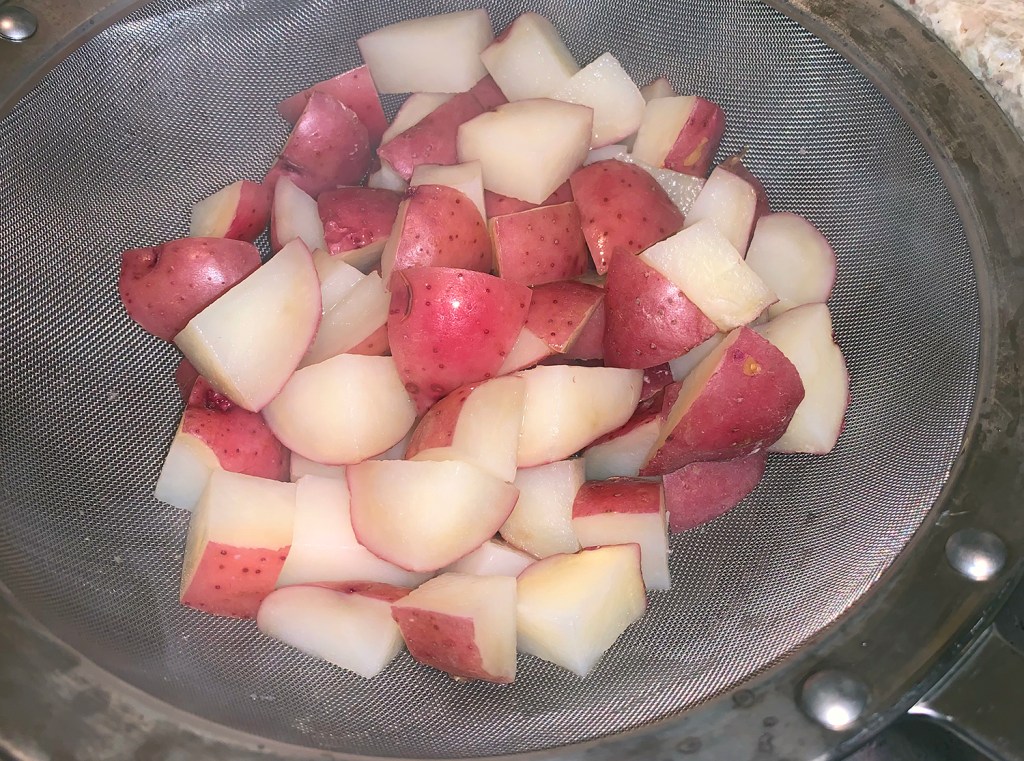
While microwaving the potato pieces also saves time, the results are uneven. In fact, they were nowhere near done after four minutes, so I zapped them for another four. If you can spare a bit of extra time, I suggest boiling the potatoes in water until soft for a more uniform tenderness.

After the fact, we thought the softened potatoes should have been browned with the onion to get a crisp on the outside. It’s nearly impossible to do so in the crowded pan with all of the sausage.

Our conclusion? The original recipe (as listed below) was too sweet with two tablespoons of brown sugar. If like us, you prefer a more savory flavor, cut back on the brown sugar to—at most—one tablespoon; and increase the amount of Dijon mustard. Finally, using only half an onion seemed a bit underwhelming so an entire onion was chopped.

Kielbasa Skillet Dinner

  • Servings: 4
  • Difficulty: easy
  • Print

Ingredients

  • 1 lb. red potatoes (3-4 medium), cut into 1-inch pieces
  • 3 Tbsp. water
  • 2 Tbsp. brown sugar
  • 2 Tbsp. cider vinegar
  • 1 Tbsp. Dijon mustard
  • 1-1/2 tsp. minced fresh thyme or 1/2 tsp. dried thyme
  • 1/4 tsp. pepper
  • 1 Tbsp. olive oil
  • 1/2 cup chopped onion
  • 3/4 1b. smoked kielbasa or Polish sausage, cut into 1/4-inch slices
  • 4 cups fresh baby spinach
  • 5 bacon strips, cooked and crumbled

Directions

  1. Place potatoes and water in a microwave-safe dish. Microwave, covered, on high until potatoes are tender, 3-4 minutes (ours took 8 minutes); drain.
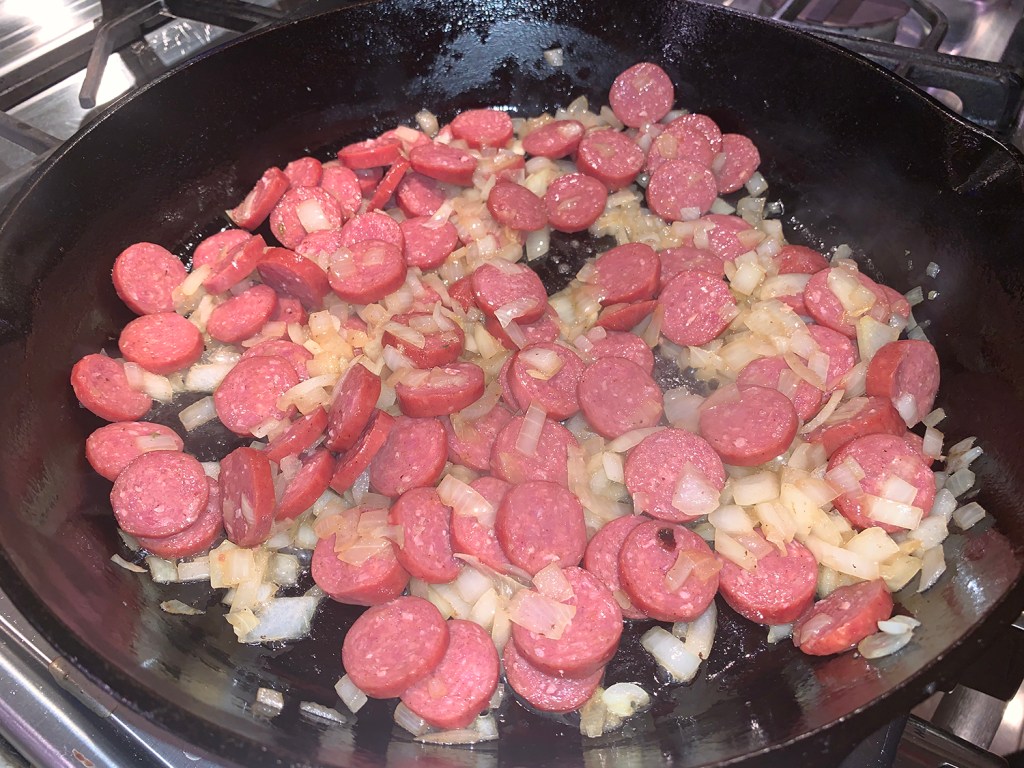
  2. Meanwhile, mix brown sugar, vinegar, mustard, thyme and pepper. In a large skillet, heat oil over medium-high heat; sauté onion and kielbasa until onion is tender.
  3. Add potatoes; cook and stir until lightly browned, 3-5 minutes. Stir in brown sugar mixture; bring to a boil. Reduce heat; simmer, uncovered, 2 minutes, stirring occasionally.
  4. Stir in spinach until wilted. Stir in bacon.

http://www.lynnandruss.com

Adapted from a recipe for TasteOfHome.com

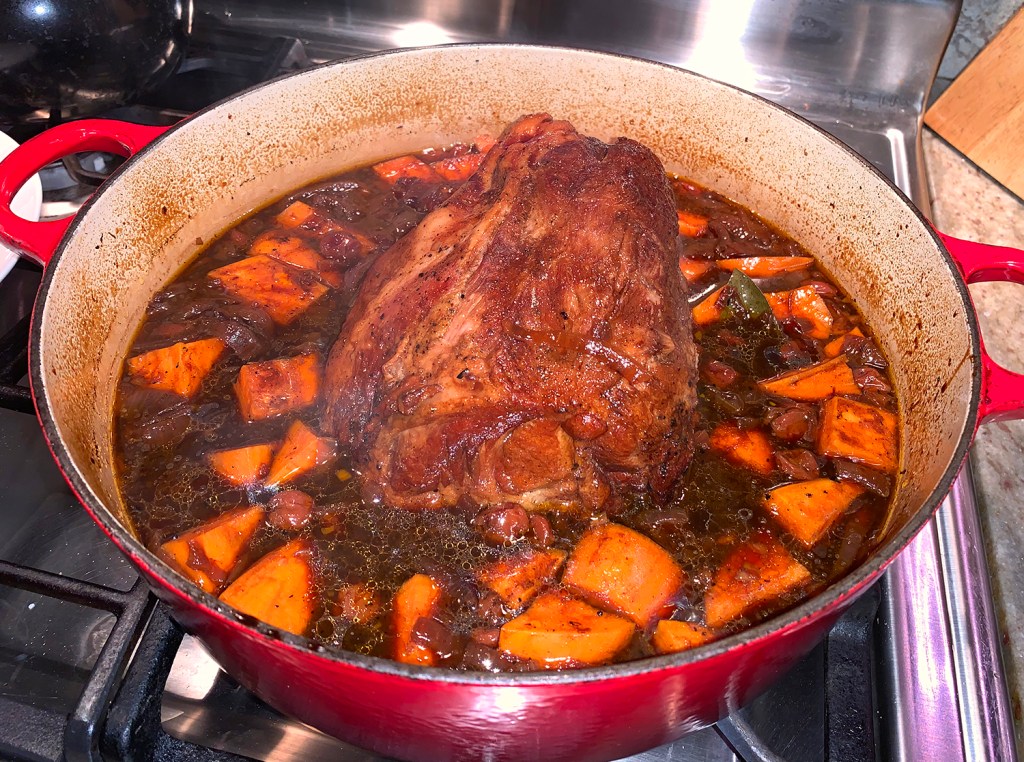
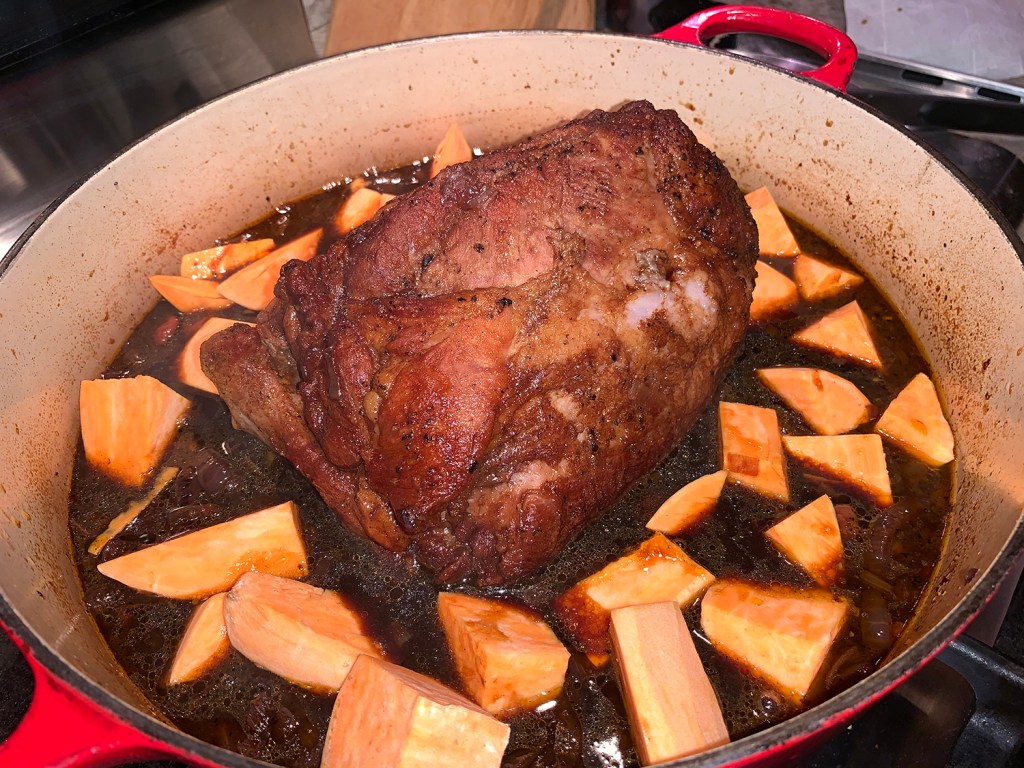
Pork Shoulder with Guinness, Dried Cherries and Sweet Potato

Pork shoulder is a classic for braising. The meat turns nearly spoonable but still slices nicely, and leftovers are great for sandwiches. In this recipe the pork is combined with dried cherries and sweet potatoes, balancing their sweetness with the slightly bitter taste of Guinness stout and molasses. Odd combination? I thought so too, but OMG, it was fantastic!

It hailed from renowned Chef Daniel Boulud’s cookbook “Braise, A Journey Through International Cuisine” where all of his recipes are influenced with a global perspective. We know that braising transforms inexpensive, tough cuts of meat into succulent soft morsels. And as Daniel writes “In fact, the cheaper, more sinewy, and more chewy the meat is to begin with, the more delectable it’s texture and the thicker the sauce after cooking.”

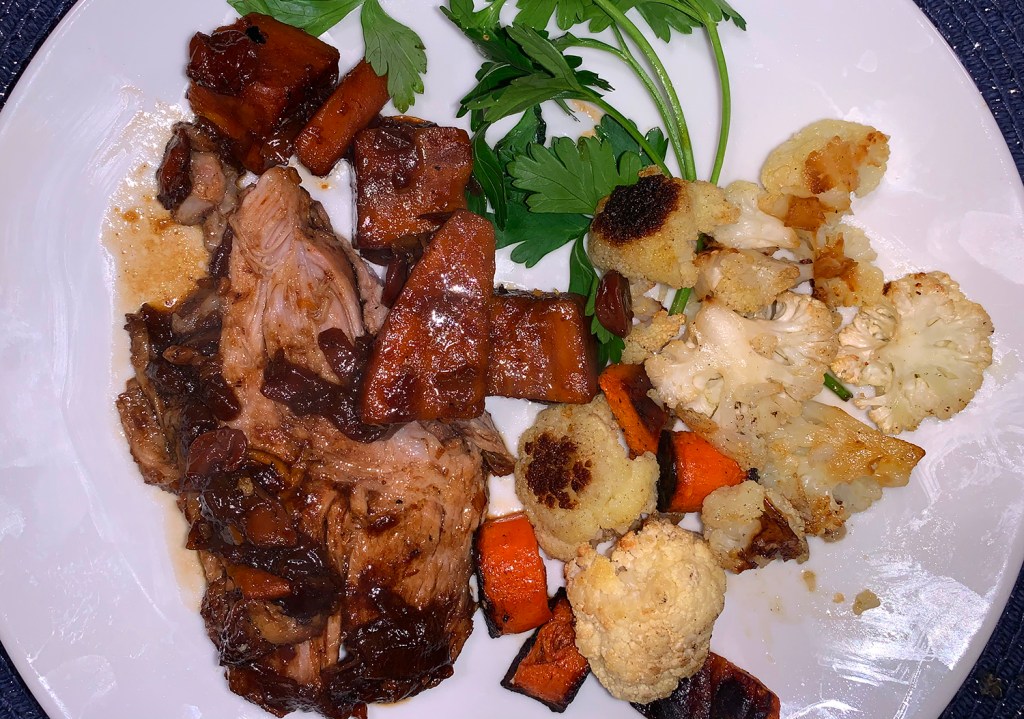
The original recipe, which is depicted below, calls for a 5-1/2 pound shoulder roast. We happened to have a 3-1/2 pound pork roast on hand, so that’s what we used and adjusted the other ingredients to follow suit. Then we completed the meal with roasted cauliflower and carrots.

Don’t forget to make the Guinness stout and cherry sauce ahead of time. It needs to sit for at least an hour or be refrigerated overnight for the flavors to meld.

Pork Shoulder with Guinness, Dried Cherries and Sweet Potato

  • Servings: 6-8
  • Difficulty: easy
  • Print

Ingredients

  • 5 cups Guinness stout
  • 1 cup dried cherries
  • 1/3 cup balsamic vinegar
  • 2 Tbsp. vegetable or extra-virgin olive oil
  • 1 (51/2-lb.) pork shoulder roast
  • Coarse sea salt or kosher salt and freshly ground black pepper
  • 3 large red onions, peeled and sliced
  • 1/2 tsp. crushed black pepper
  • 4 garlic cloves, peeled and finely minced
  • 1 Tbsp. tomato paste
  • 5 whole allspice, crushed
  • 2 bay leaves
  • 1/4 cup molasses
  • 3 Tbsp. packed dark brown sugar
  • 2 lbs. sweet potatoes or yams, peeled and roughly chopped

Directions

  1. Bring the stout, cherries, and vinegar to a simmer in a saucepan. Transfer to a bowl, cover tightly with plastic wrap, and let sit for at least 1 hour, or refrigerate overnight.
  2. Center a rack in the oven and preheat the oven to 300°F.
  3. Warm the oil in a large cast-iron pot or Dutch oven over high heat. Season the pork shoulder with salt and ground black pepper and sear on all sides until golden brown, 12 to 15 minutes. Transfer the pork shoulder to a platter. Remove all but 2 tablespoons of the fat in the pot.
  4. Add the onion and the crushed black pepper to the pot and sauté for 7 minutes. Add the garlic and continue cooking until the onions are translucent, about 3 minutes. Stir in the tomato paste and cook for 2 to 3 minutes longer.
  5. Add the pork shoulder, the marinated cherries and liquid, allspice, bay leaves, molasses, brown sugar, 1 teaspoon salt, and 2 cups water. Bring the mixture to a simmer.
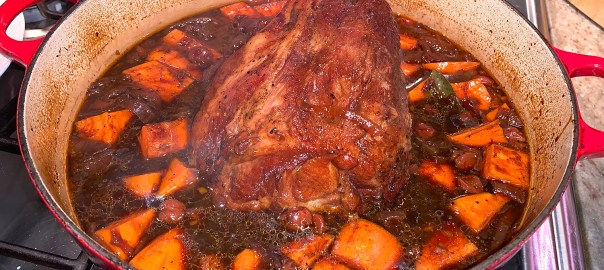
  6. Cover the pot, transfer it to the oven, and braise for 1 hour, turning the pork once during cooking. Add the sweet potatoes and continue to braise for 2 more hours, turning two more times. If the sauce is too thin or is not flavored intensely enough, ladle most of it off into another pot and simmer it until it thickens and intensifies. Then add it back to the first pot.
  7. Slice the pork and serve with the sauce on top.

http://www.lynnandruss.com

Recipe Courtesy of “Braise: A Journey Through International Cuisine,” ECCO/Harper Collins – 2006

Split Decision Chicken

On weekends, we usually work out dinner menus for Sunday through Wednesday for the following week. Then Thursday is leftover night, while Friday and Saturday we dine out. (Of course, COVID put a big dent in that typical scenario for much of 2020.)

Recently, one Saturday morning I was creating the menu while simultaneously preparing a shopping list of necessary ingredients. Part way into process, The Mr. joined me to work out the details. Shortly afterward we hit the road to make our purchases.

As I mentioned, Saturday night is a dine-out event. As we enjoyed our repast at a nearby restaurant, I wondered aloud what we had planned for dinner the next day on Sunday? We just stared at each other open-mouthed, and realized that somehow, we had entirely overlooked that meal altogether, duh! So we made a split decision and decided to retrieve two chicken halves from the freezer as soon as we got home.

That begged the question of exactly what to do with said chicken halves, not to mention what sides to serve with it? I decided to make a butter-garlic rub for the chicken and roast some Balsamic Roasted Brussels Sprouts with Shallots and garlic, all of which could go into a 425° oven. Hubby was going to throw together a baked rice dish which he could do entirely on the stovetop. Crisis averted.
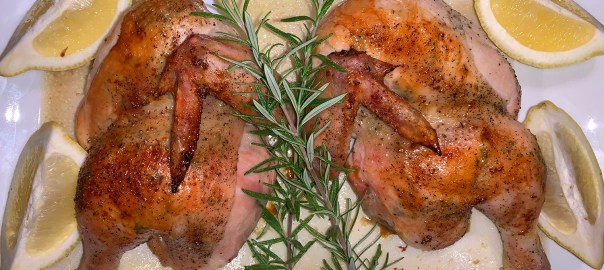
I always keep a container of homemade roasted garlic paste in the fridge and decided to make a butter rub using the paste, rosemary and lemon zest. Our Lynn’s Split-Decision Roast Chicken not only spoke to our separate preferences of white versus dark meat, it resulted in a wonderful dinner full of flavor!

Lynn's Split Decision Chicken

  • Servings: 4
  • Difficulty: easy
  • Print

Ingredients

  • 2 chicken halves, each about 1 3/4 lbs.
  • 2 Tbsp. softened (not melted) butter
  • 1 Tbsp. roasted garlic paste
  • 1 tsp. minced fresh rosemary
  • 1 tsp. lemon zest
  • Salt and pepper

Directions

  1. If you’re starting with a whole chicken, cut out the back and split the chicken into two equal halves. Preheat the oven to 425°F.
  2. Combine the other ingredients with 1/2 teaspoon salt and 1/4 teaspoon pepper in a small bowl. Lifting the skin of the chicken rub the butter mixture all over the breast, thigh and legs without ripping the skin.
  3. Oil a rimmed quarter baking sheet. Arrange the chicken halves, skin side up on the baking sheet, rub more oil over the skin and sprinkle on salt and pepper.
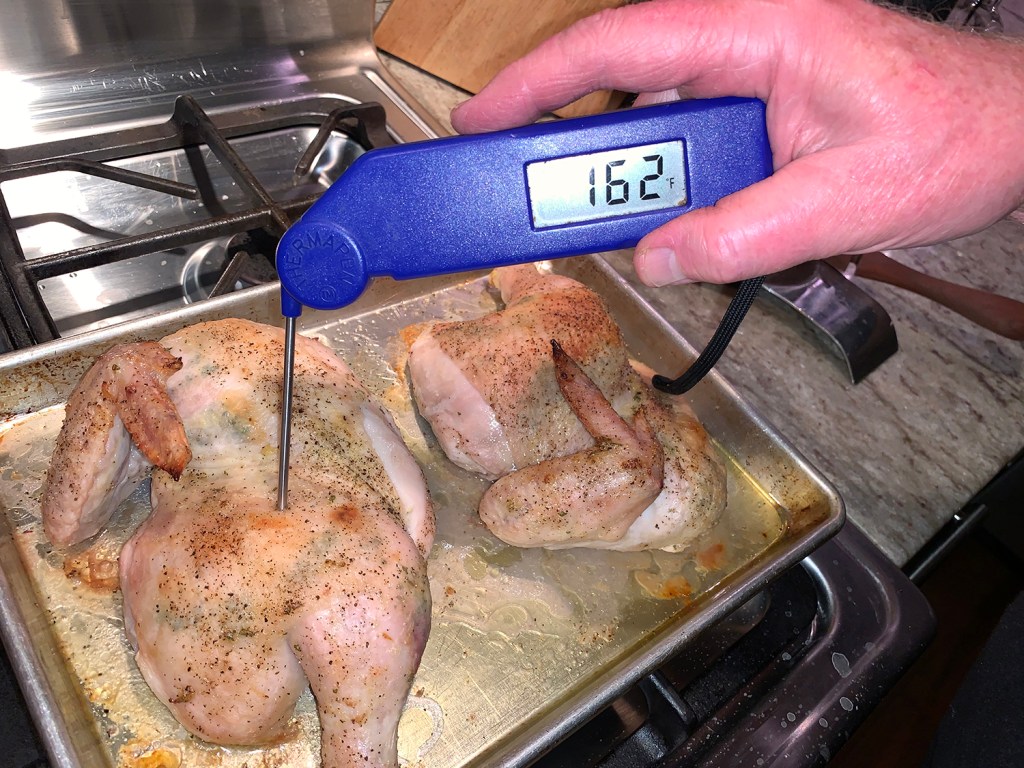
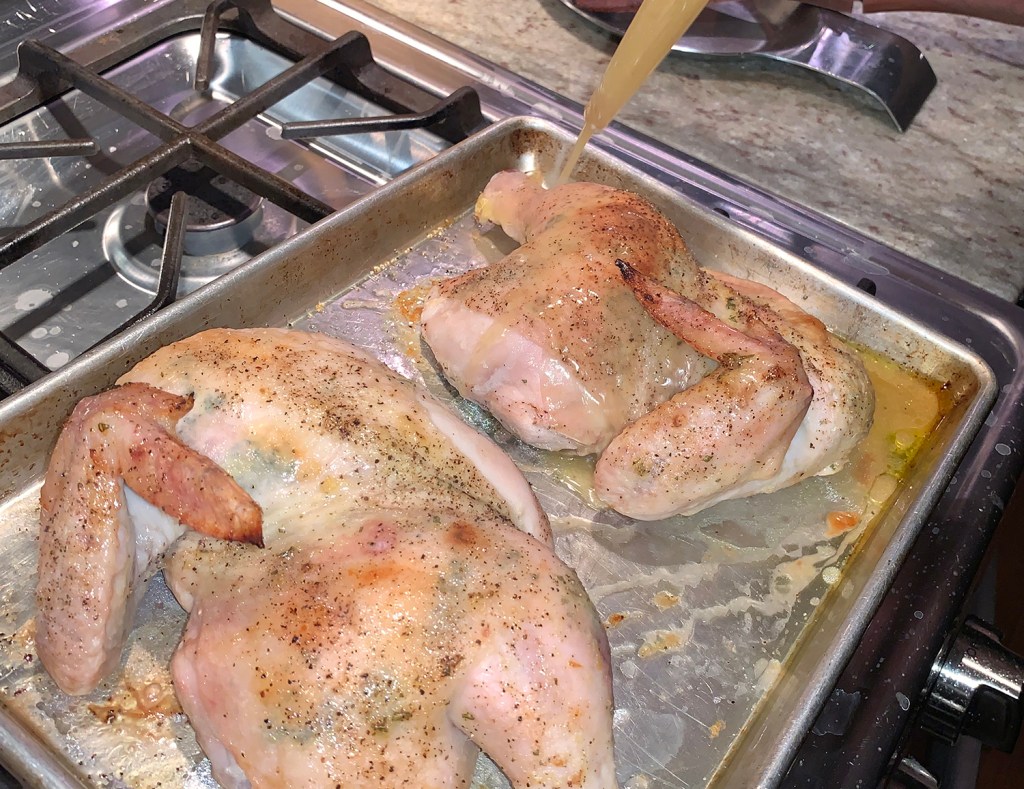
  4. After 30 minutes, baste the chicken with the drippings to help the skin brown and crisp. Check the temperature and return to the oven for about another 10 minutes. The thickest part of the thigh, without touching the bone, should register 170° when done.
  5. Remove the baking sheet from the oven, move chicken to a platter, and tent with foil for 5-10 minutes. If desired, cut the breasts away from the thighs to create 4 pieces total.

http://www.lynnandruss.com

Up Your Game with this Shrimp Risotto Recipe

When preparing our weekly menus, we try to be as diverse as possible concerning the main entrée. And we certainly are suckers for trying new dishes or twists to an old favorite. Variety is the spice of life, right? We need a little variation during the extended periods of lockdown when we are all so weary of the challenges 2020 has thrown our way.

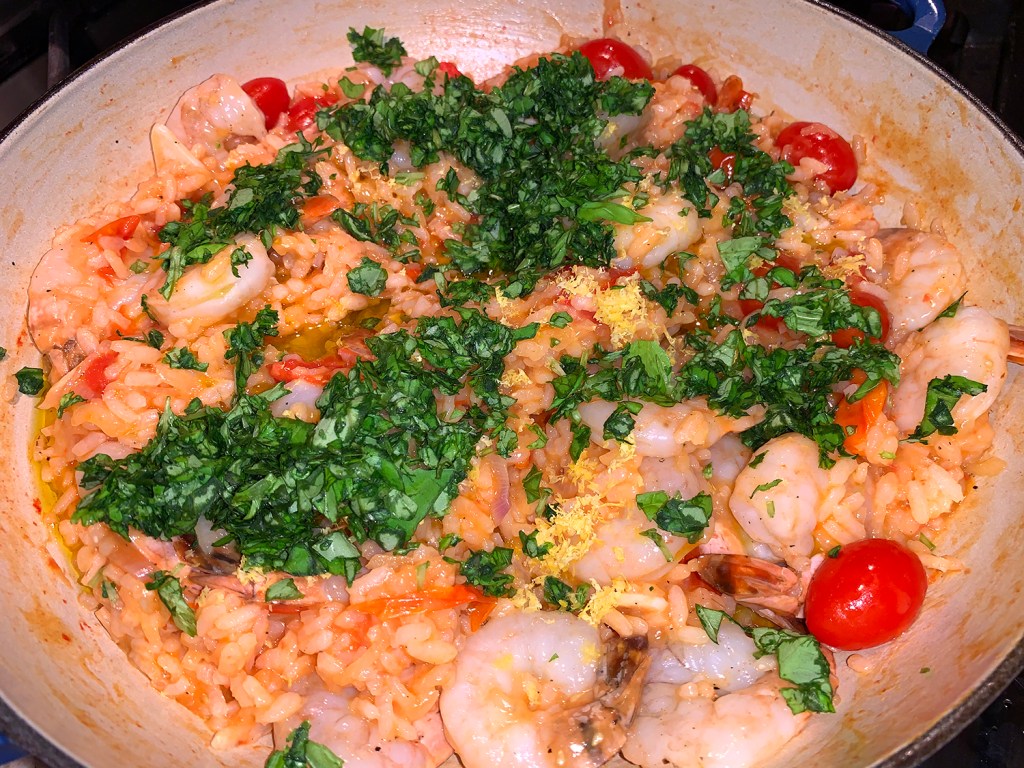
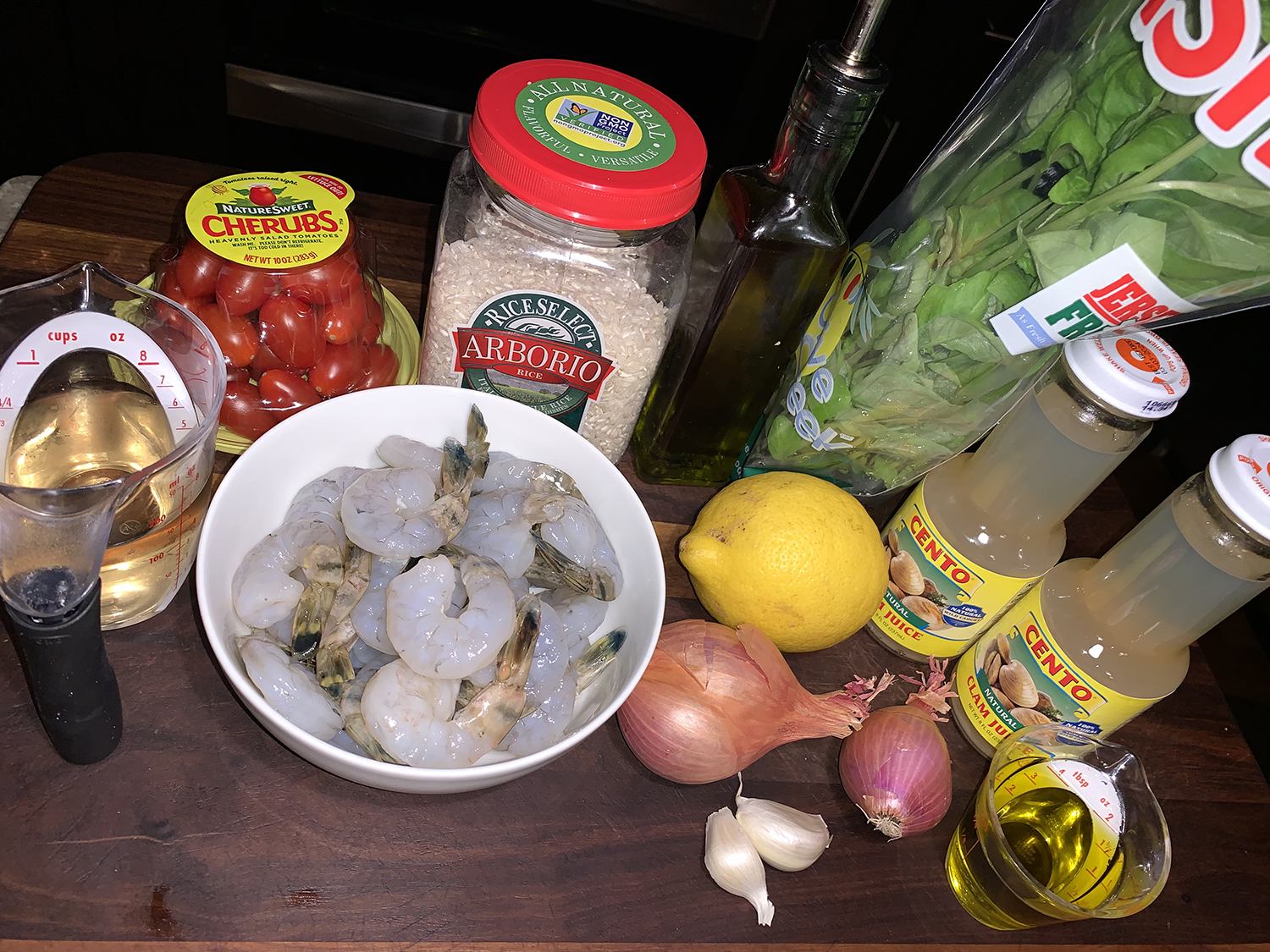
After seeing this Shrimp Risotto with Tomatoes and Basil recipe in our latest Milk Street magazine, it quickly prompted us to add shrimp to the grocery list. Classic risotto-cooking technique calls for adding hot broth in several additions to the rice as it cooks, as well as for constant stirring. This simplified method from Milk Street adds the liquid in just two batches with frequent but vigorous stirring which coaxes the starch from the grains, yielding a rich, velvety risotto with minimal effort.

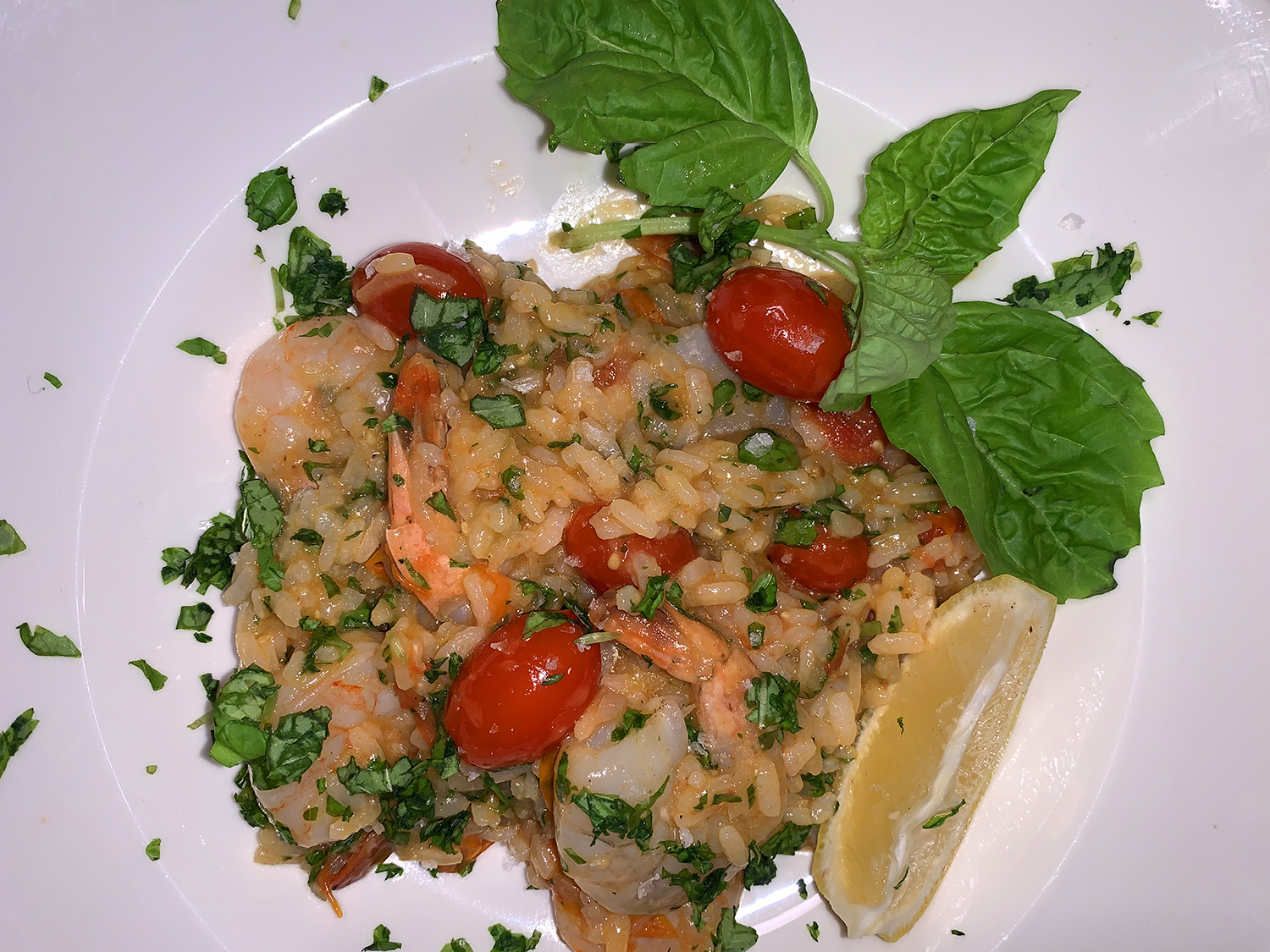
The starchy, creamy consistency of carnaroli (or Arborio) rice is a perfect backdrop for the briny-sweet flavor of plump, perfectly cooked shrimp; juicy tomatoes; and fresh, fragrant basil.

Milk Street

Don’t forget to cover the pot after adding the shrimp; this traps heat in the pot so that the shrimp gently cook through. Ours took 8 minutes to become fully opaque. And just to note, we increased the quantity from 12 ounces to a full pound. That seemed more reasonable for 4 servings as a main course.

If you happen to have homemade shellfish stock on hand, use that in place of, or in addition to, the clam juice.

Shrimp Risotto with Tomatoes and Basil

  • Servings: 4
  • Difficulty: easy
  • Print

Ingredients

  • 2 8-oz. bottles clam juice (or homemade shellfish stock)
  • 12-16 oz. extra-large shrimp, peeled, deveined and patted dry
  • Kosher salt and ground black pepper
  • 4 Tbsp. extra-virgin olive oil, divided, plus more to serve
  • 2 medium shallots, halved and sliced
  • 1 cup carnaroli or arborio rice
  • 1 pint grape tomatoes
  • 2 medium garlic cloves, thinly sliced
  • ¾ cup dry white wine
  • 1½ cups lightly packed fresh basil, finely chopped
  • 1 tsp. grated lemon zest, plus 1 Tbsp. lemon juice

Directions

  1. In a 1-quart liquid measuring cup or medium microwave-safe bowl, combine the clam juice and 2 cups water. Cover and microwave on high until hot, about 4 minutes; set aside, covered. Season the shrimp with salt and pepper; set aside.
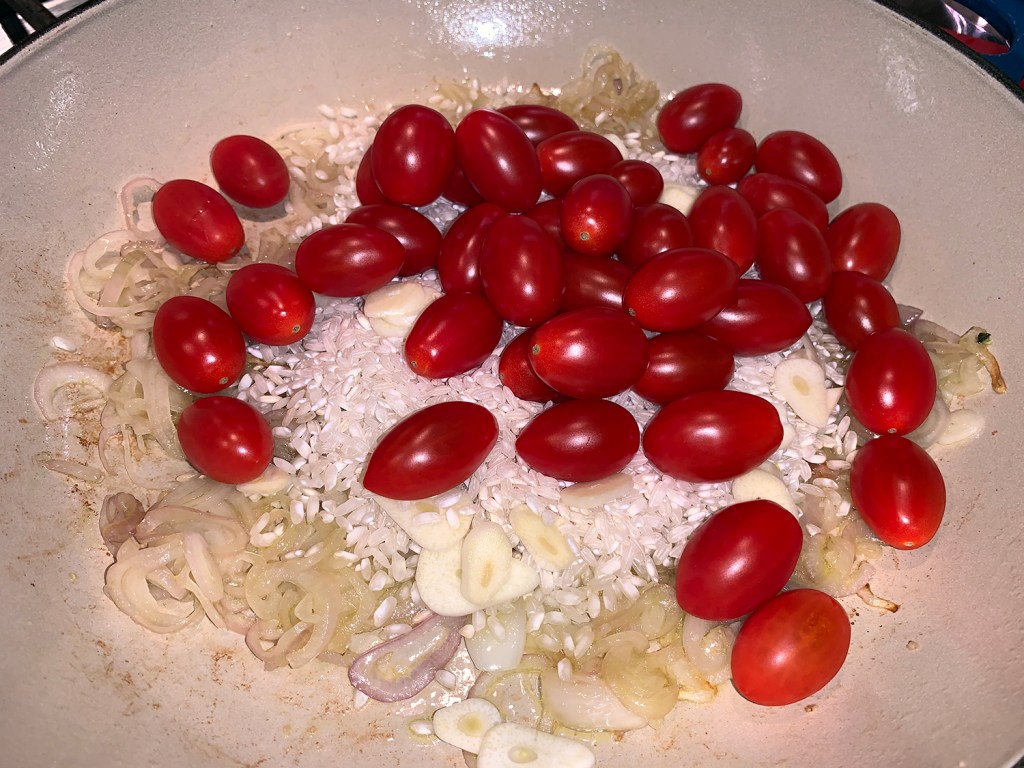
  2. In a large Dutch oven over medium-high, heat 2 tablespoons oil until shimmering. Add the shallots and ½ teaspoon salt. Cook, stirring often, until softened, about 2 minutes. Add the rice, tomatoes and garlic, then cook, stirring, until the grains are translucent at the edges, 1 to 2 minutes.
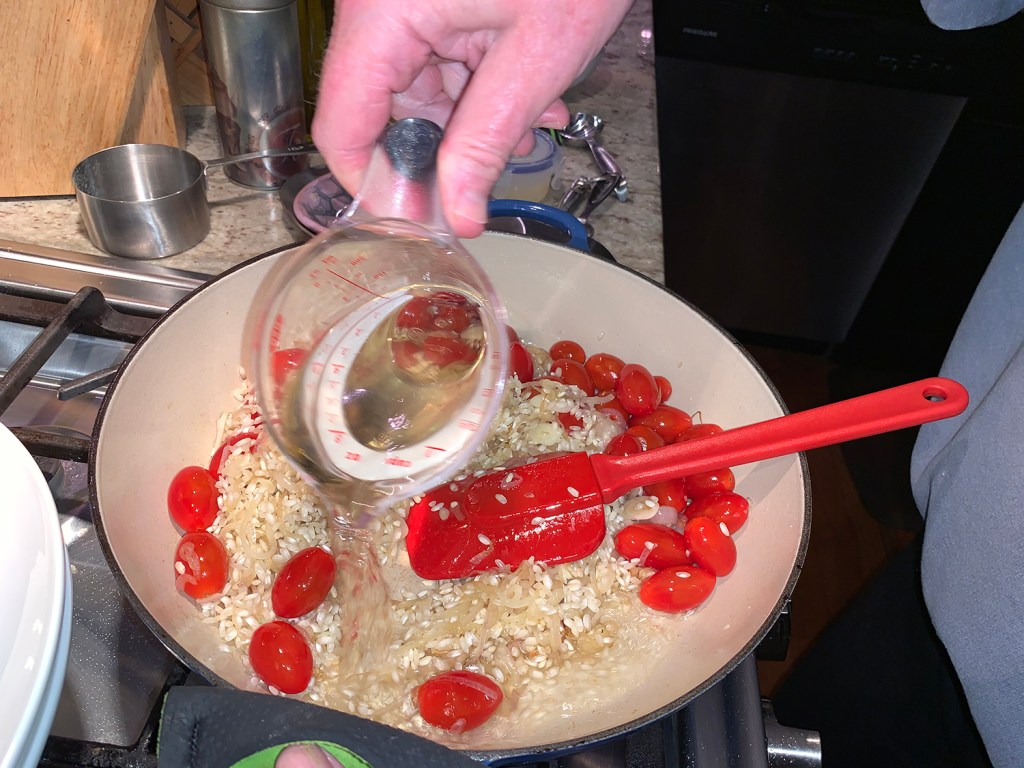
  3. Add the wine and cook, stirring, until almost dry, about 4 minutes.
  4. Add 3 cups of the hot liquid and cook, stirring often and briskly, until a spoon drawn through the mixture leaves a trail, 10 to 12 minutes.
  5. Add the remaining hot liquid and cook, stirring, until the rice is al dente, 6 to 8 minutes. Remove from the heat and stir in the shrimp. Cover and let stand until the shrimp are opaque throughout, 5 to 7 minutes. The risotto should be loose but not soupy; if needed, stir in water 1 tablespoon at a time to achieve the proper consistency.
  6. Stir in the remaining 2 tablespoons oil, the lemon zest and juice and all but 2 tablespoons of the basil. Taste and season with salt and pepper. Serve drizzled with additional oil and sprinkled with the remaining basil.

http://www.lynnandruss.com

Recipe from Rebecca Richmond for Milk Street

Herb-Rubbed Pork with Squash and Grapes

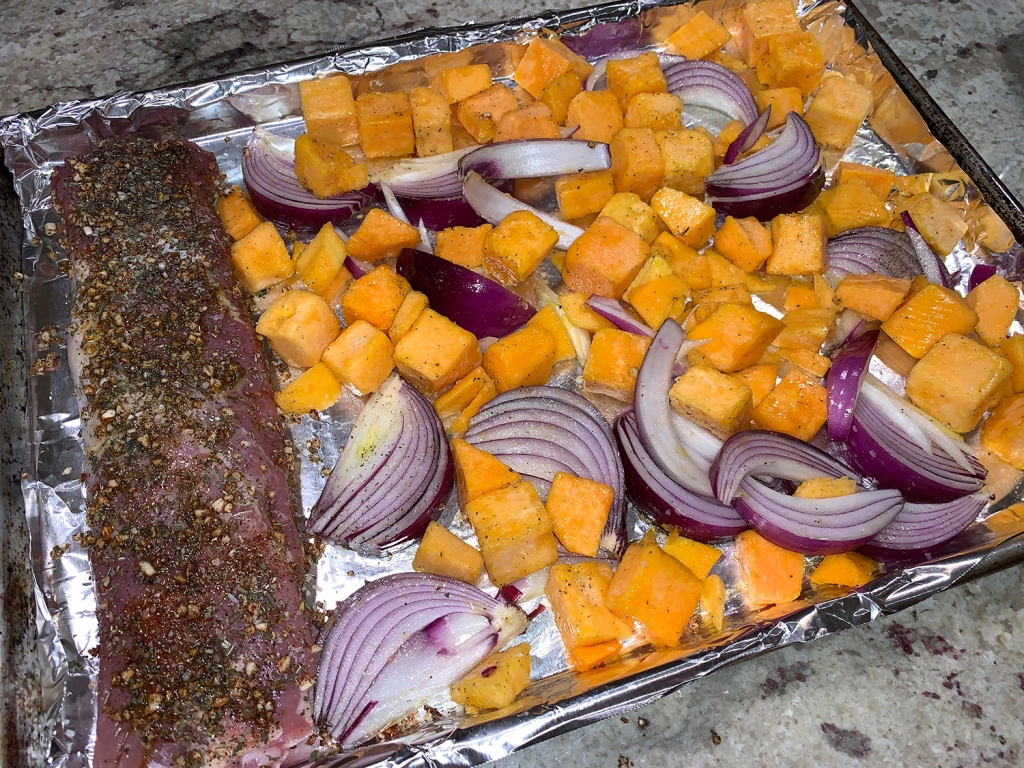
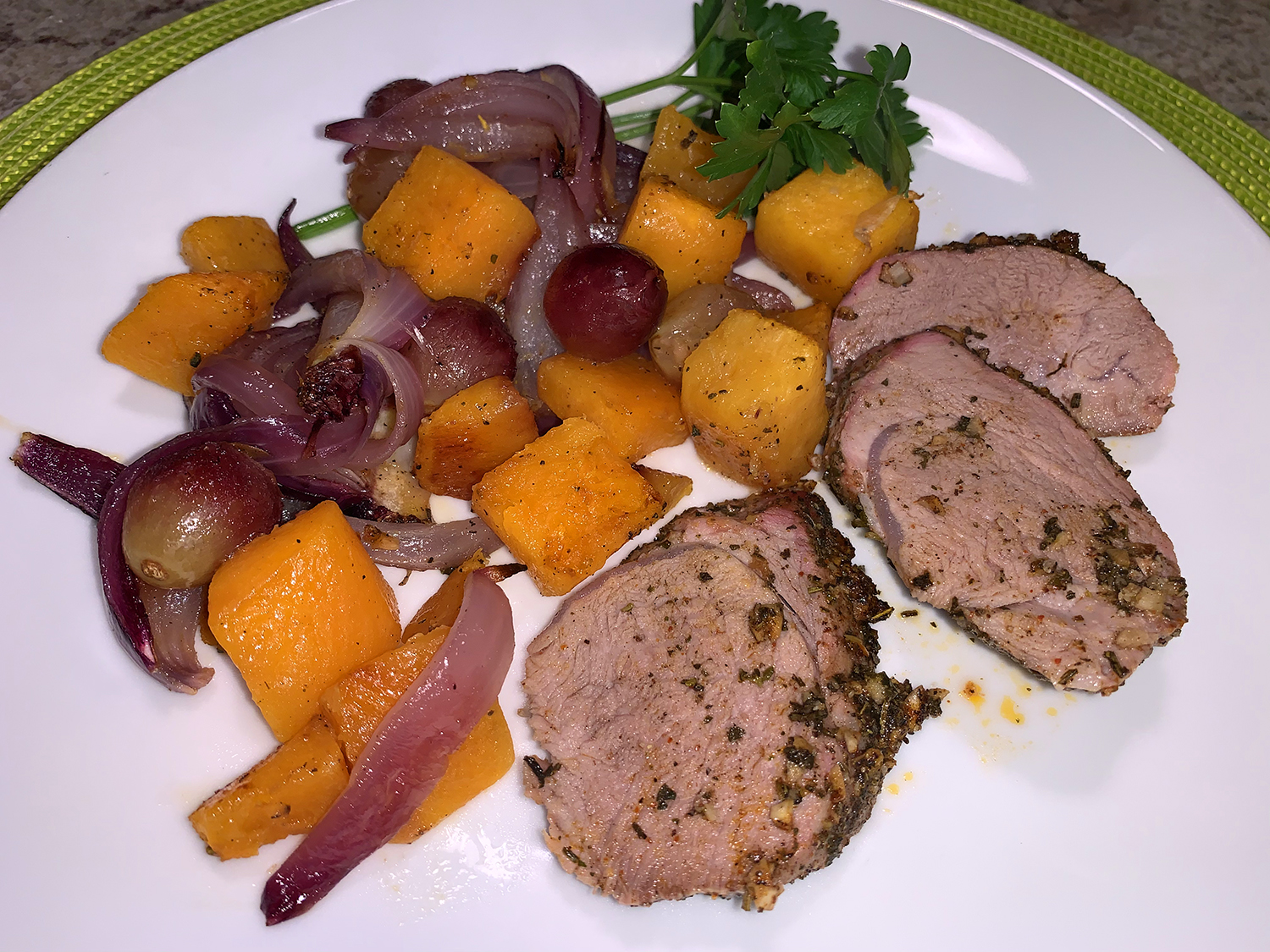
So simple, with minimal ingredients, using only one sheet pan, but packs a lot of flavor. Do I have your interest now? Here, fruit, vegetables, and pork tenderloin all roast on one pan for this hands-off dinner recipe. The sweet, wine-y flavor of grapes intensifies while roasting, a perfect pairing for the natural sweetness of pork.

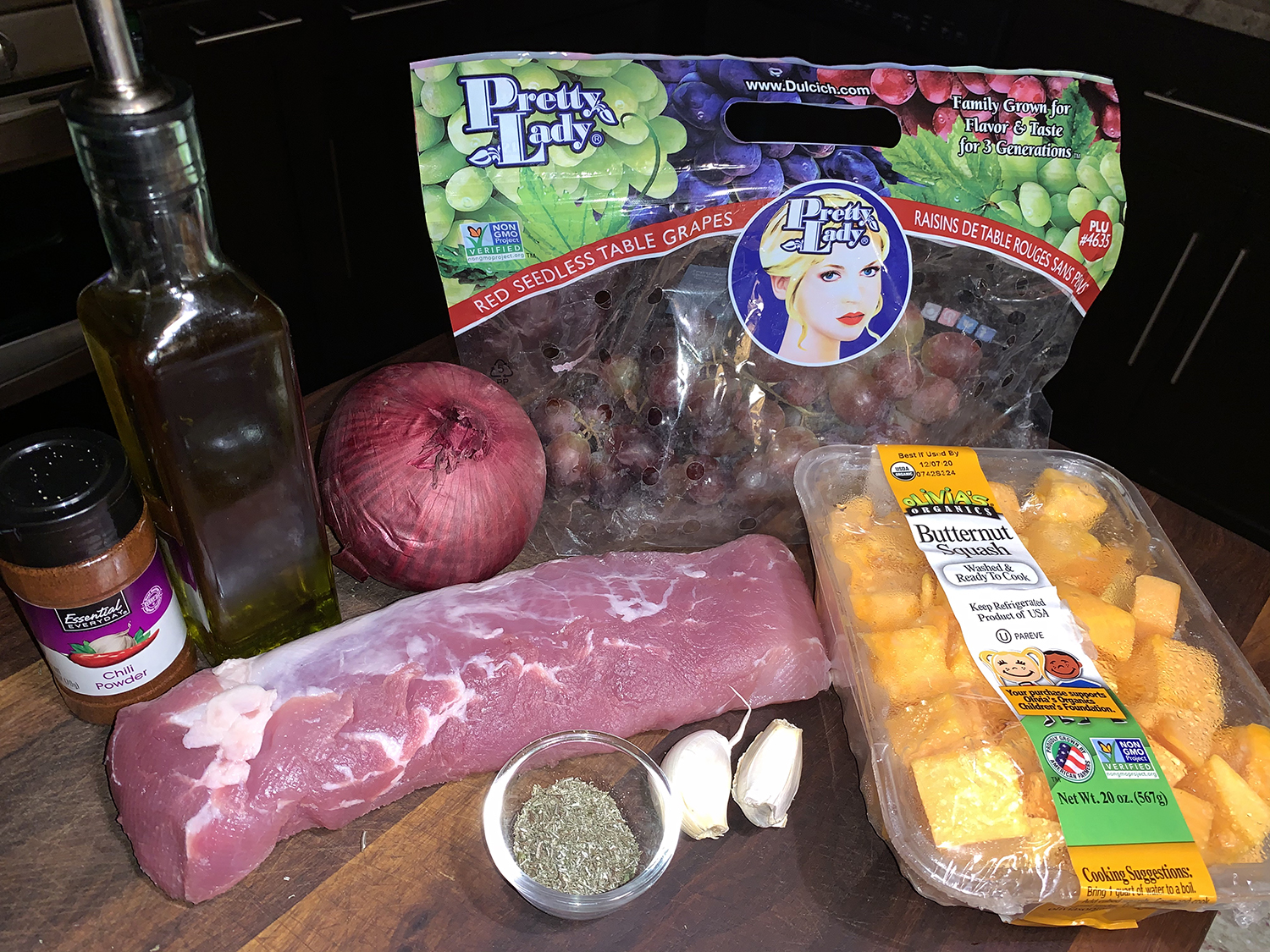
I tweaked the recipe a tad by purchasing already-prepped butternut squash. I mean, who really likes peeling those things? Plus, the original directions had you buy a 2-pound squash, peel it, but only use half of it. Save yourself time and aggravation and buy it already cubed.

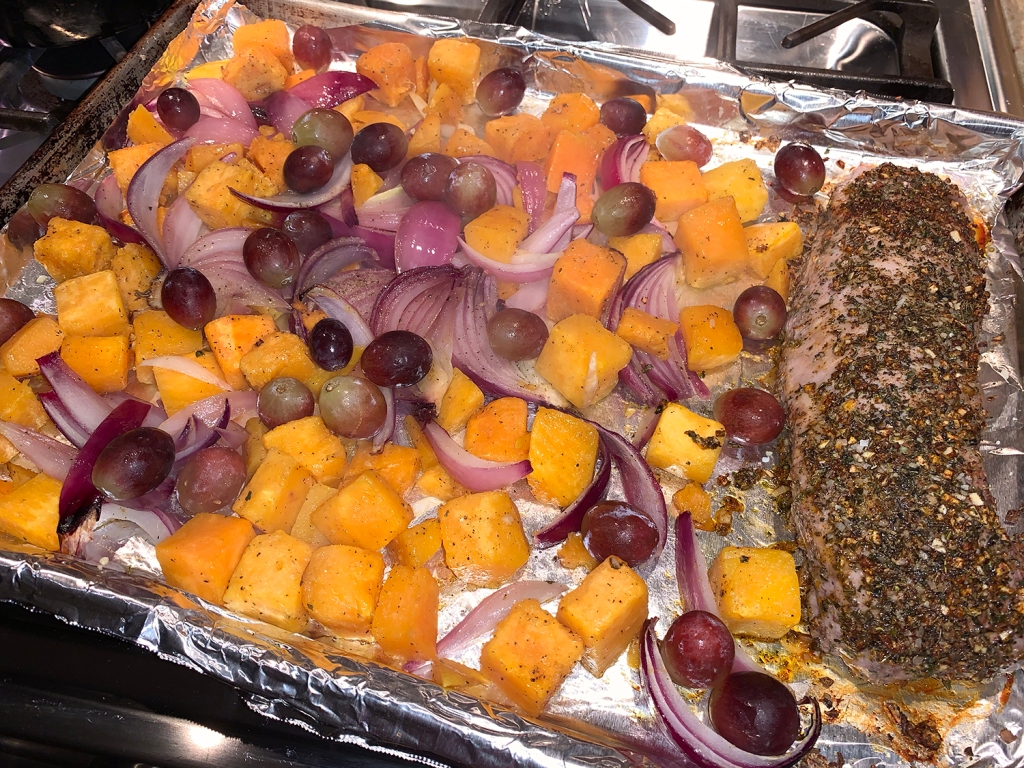
In addition, the original amount of grapes was 1 cup. If you try to measure 1 cup of whole grapes, it doesn’t amount to many. Therefore, I changed the quantity to 8 ounces, which ended up being a perfect amount.

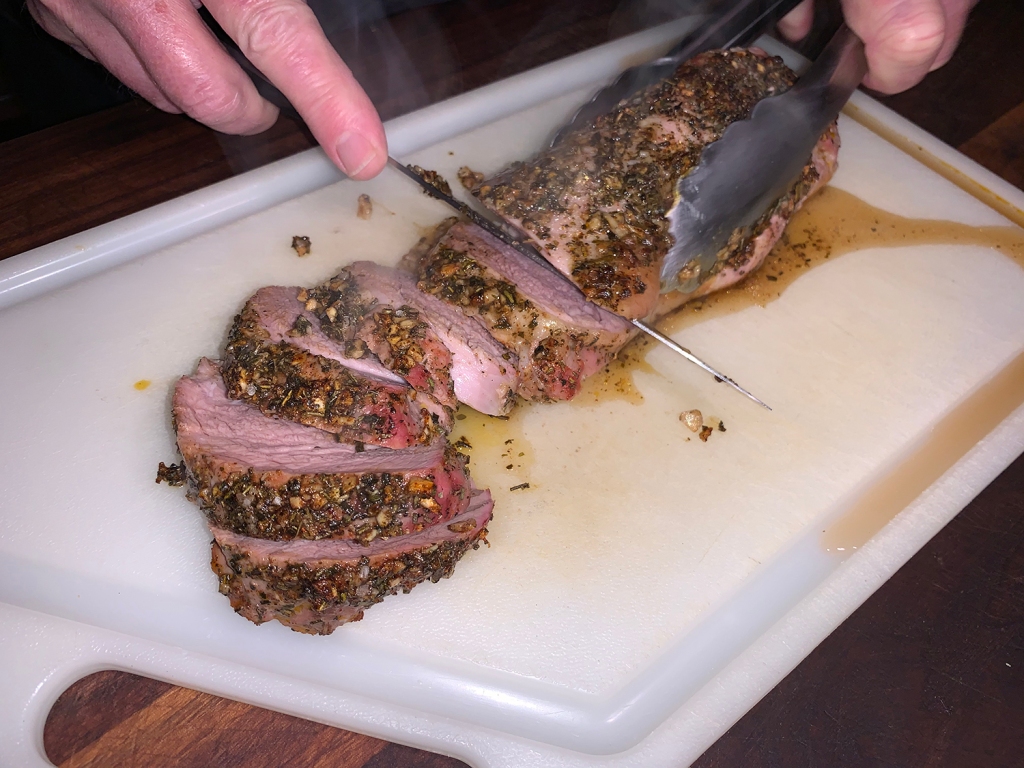
During the last step of roasting, make sure to check the meat after 10 minutes. I waited the full 15 minutes and our pork was a little more done than we prefer. After resting and slicing, pour any accumulated juices back over the meat.

Herb-Rubbed Pork with Squash and Grapes

  • Servings: 3-4
  • Difficulty: easy
  • Print

Ingredients

  • 2 tsp. dried herbs, such as thyme, oregano, basil, and/or rosemary
  • 1/2 tsp. chili powder
  • 2 cloves garlic, minced
  • 1/2 tsp. salt
  • 1/2 tsp. freshly ground black pepper
  • 1, 1 to 1 1/2 lbs. pork tenderloin
  • 1 lb. butternut squash, already peeled and cut in 1- to 2-inch pieces
  • 1/2 red onion, cut into wedges
  • 2 Tbsp. olive oil
  • 8 oz. seedless red grapes

Directions

  1. Preheat oven to 425°F.
  2. Line a large rimmed baking sheet with foil.
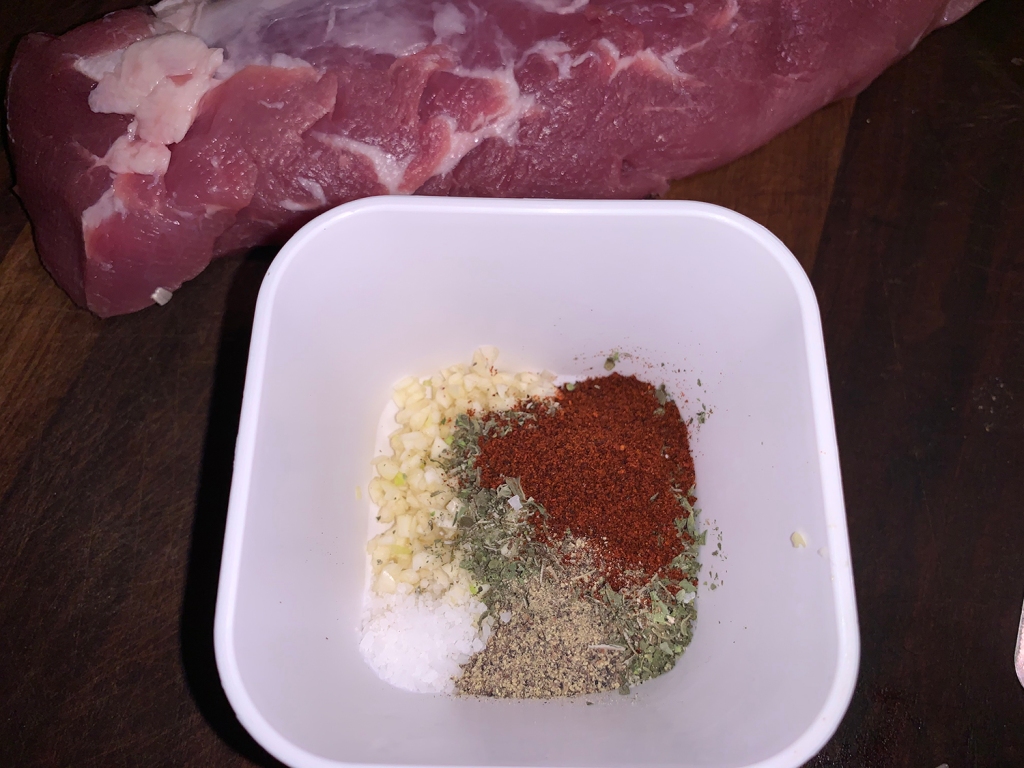
  3. In a small bowl combine herbs, chili powder, garlic, 1/4 teaspoon salt, and 1/4 teaspoon black pepper. Rub all over pork.
  4. Place pork on one side of prepared pan. Add squash and onion on other side of pan; sprinkle with 1/4 teaspoon salt and 1/4 teaspoon black pepper. Drizzle pork, squash, and onion with 2 tablespoons olive oil. Roast 15 minutes.
  5. Stir squash and onion; add grapes. Roast 10 to 15 minutes more until pork is done (145°F). Remove pork to a moated cutting board, tent with foil and let rest 5 minutes before slicing.
  6. Turn off the oven and leave the veggies in to keep warm while meat rests.

http://www.lynnandruss.com

Recipe found in Better Homes & Garden Magazine

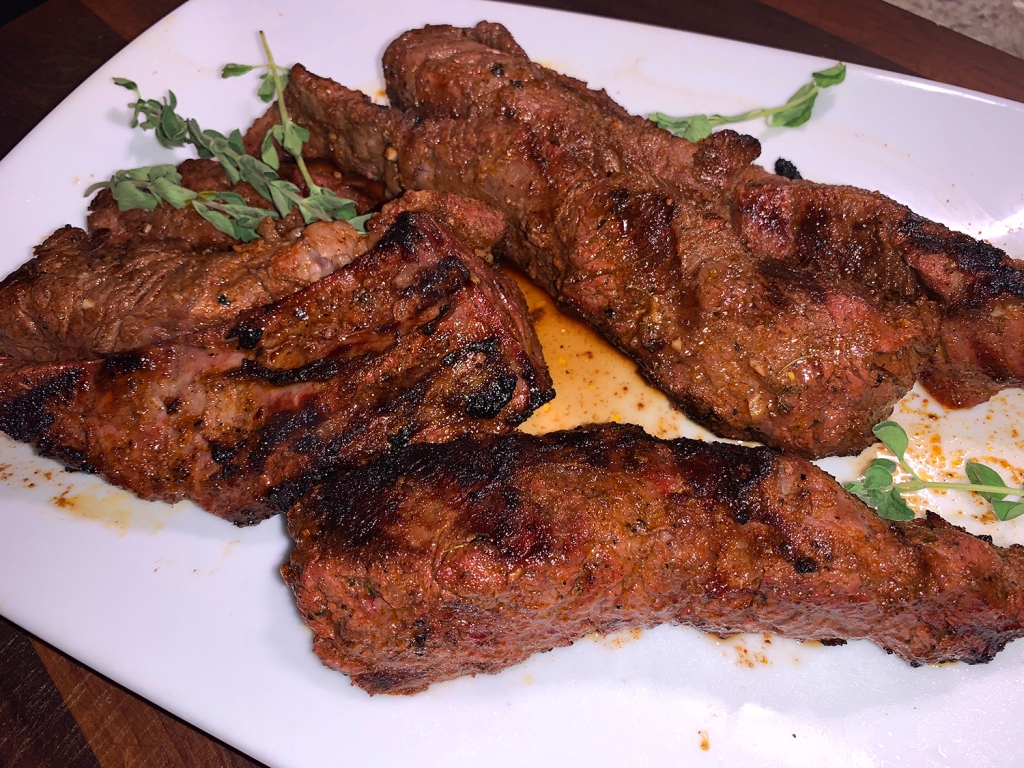
Marinated Sirloin Flap Steak

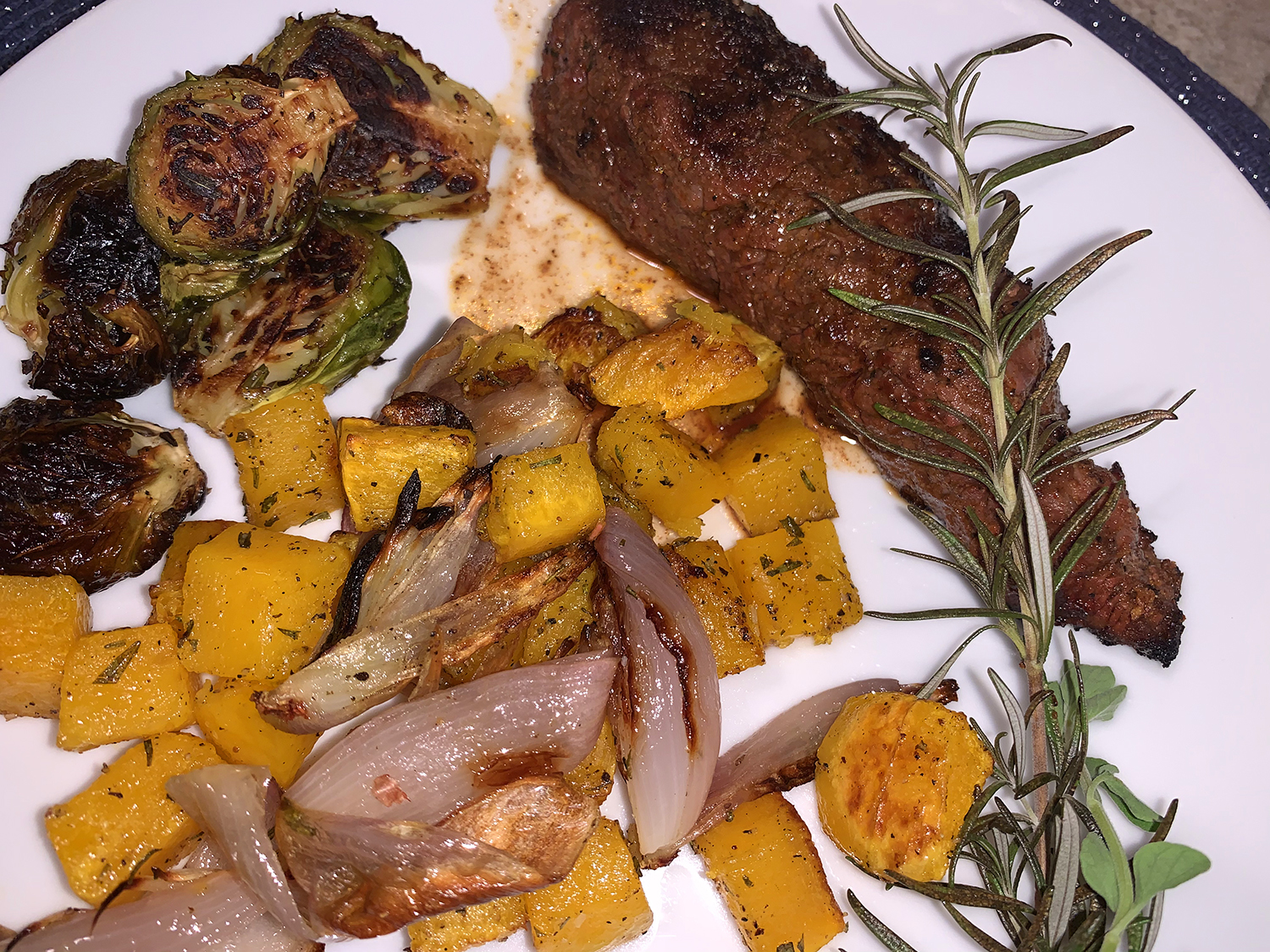
I‘ve posted several blogs on flap meat. The only place we ever find it is at Costco, so we load up on it when we go there. Flap steak is cut from the bottom sirloin and is sometimes call beef loin tip. It is less tender than more expensive steaks, but has a great beefy flavor. It is ideal for marinating and needs to be cooked quickly on high heat for medium rare.

Although it has the reputation for not being very tender, we don’t seem to have that experience. It is well-marbled and flavorful and sometimes called bavette, but bavette can also refer to flank steak, which is a different cut altogether.

Our steak marinated for the full eight hours, and then we grilled it for about 12 minutes total for medium-rare at 125°. The original recipe indicated to cook the meat for 20-25 minutes, that would be well-done, a no-no in our house!

Some of our strips had thick and thinner ends. You may want to cut the thinner portions off and add them to the grill a few minutes after the thick pieces have cooked. This will ensure the meat is all cooked to the same temperature, if that is your desired outcome. (Discard any leftover marinade.)

Our accompaniments were roasted Brussels sprouts with thyme and a divine Roasted Rosemary Butternut Squash and Shallots.

Marinated Sirloin Flap Steak

  • Servings: 4
  • Difficulty: easy
  • Print

Ingredients

  • 2 lbs. sirloin flap steak
  • 1/3 cup cider vinegar
  • 1/4 cup olive oil
  • 1 Tbsp. water
  • 2 tsp. onion powder
  • 2 tsp. chili powder
  • 2 tsp. salt
  • 2 tsp. Worcestershire sauce
  • 2 tsp. red wine vinegar
  • 2 tsp. paprika
  • 2 tsp. ground cumin
  • 1 tsp. dried marjoram (1 Tbsp. if using fresh)
  • 1 tsp. black pepper
  • 1/2 tsp. garlic powder (or 2 fresh cloves, minced)
  • 1/2 tsp. ground ginger
  • 1/2 tsp. ground cloves

Directions

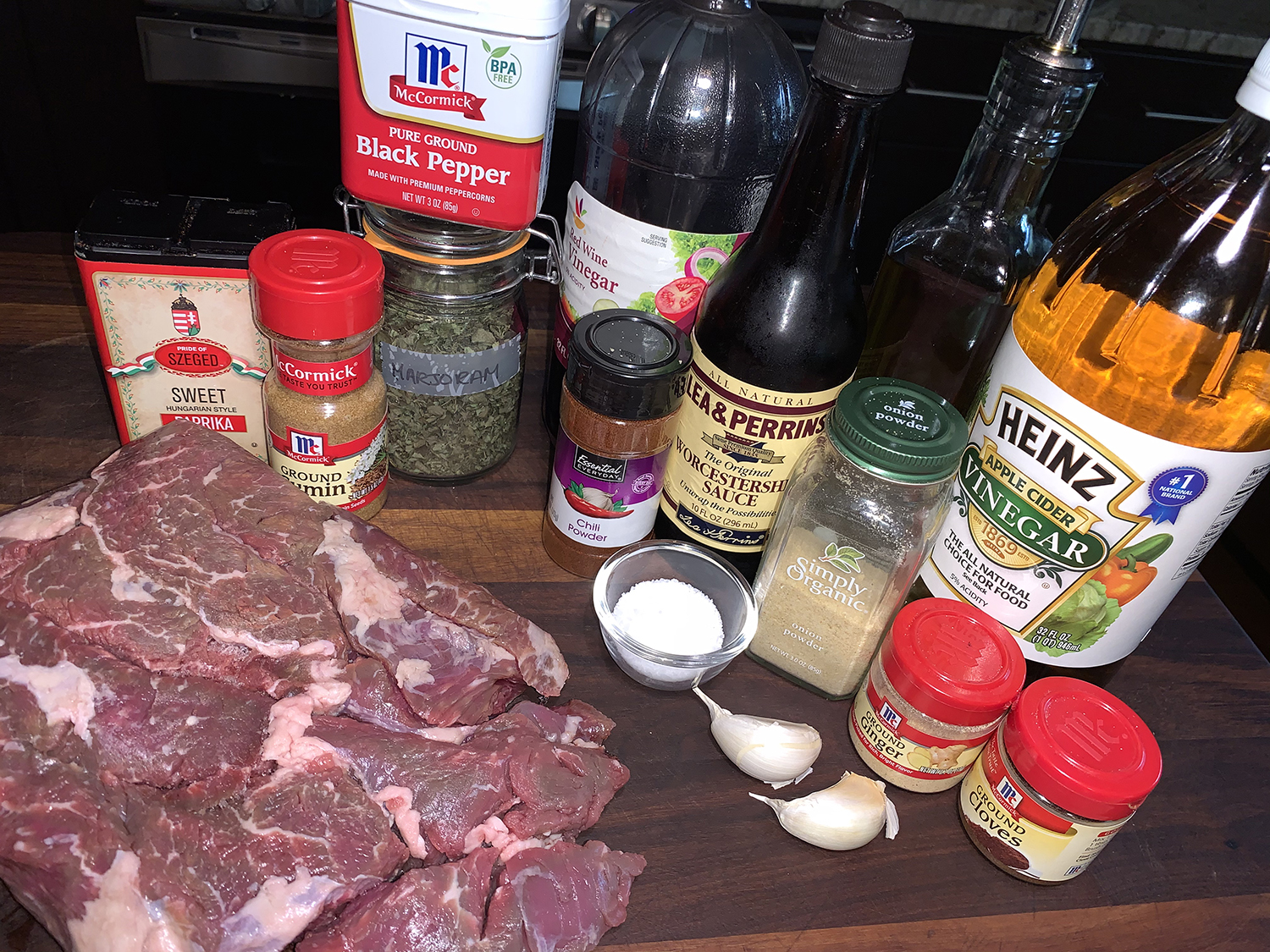
  1. Gather the ingredients.
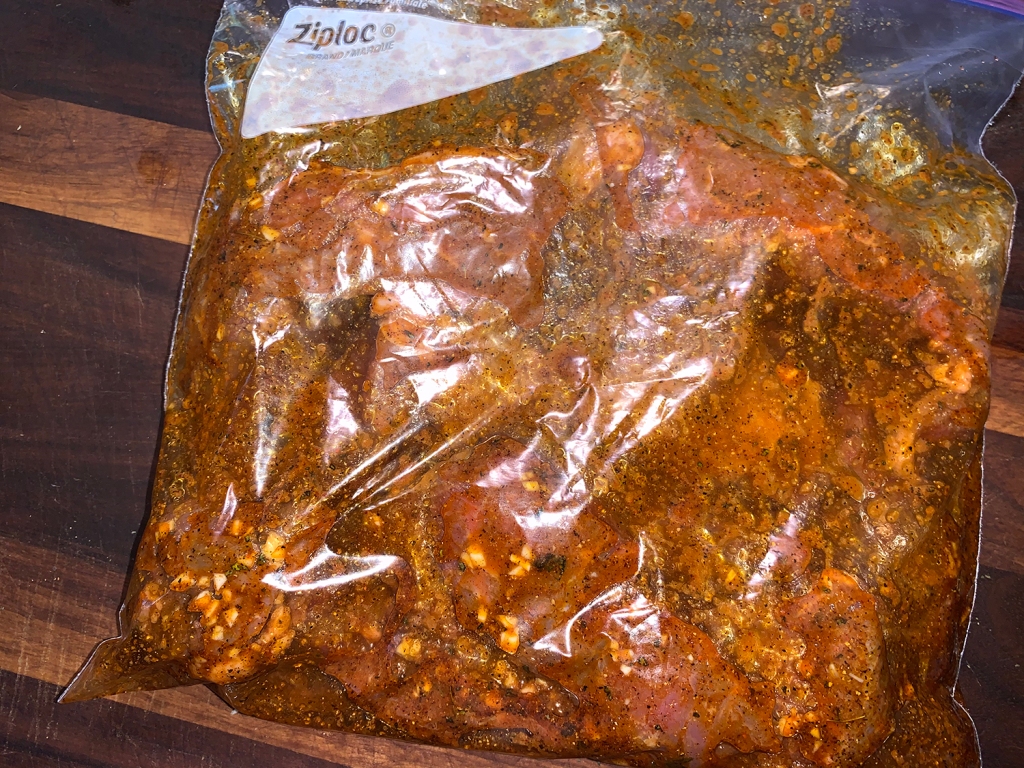
  2. Place the flap steaks into a resealable plastic bag.
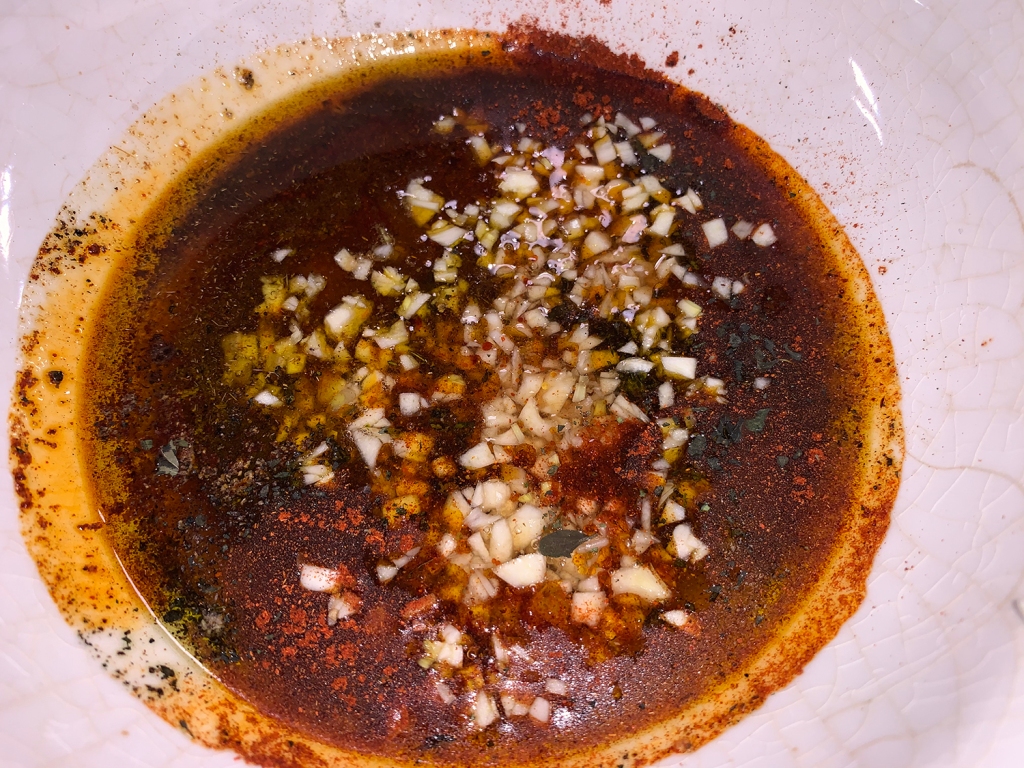
  3. Combine marinade ingredients together and pour over the steaks, making sure all surfaces are well coated. Carefully let air out of the bag, seal, and place into refrigerator for 2 to 8 hours. 
  4. Preheat the grill for medium-high heat.
  5. Remove the steaks from the bag and place them onto a hot grill grate over direct flames. Cook, turning occasionally, for 12 to 15 minutes for medium-rare at 125°, or to your desired doneness.
  6. Once cooked, remove the steaks from the heat and place them onto a cutting board. Let steaks rest for 5 minutes before slicing.
  7. Serve with your favorite sides and enjoy!

http://www.lynnandruss.com

Miso Loved this Savory Dish!

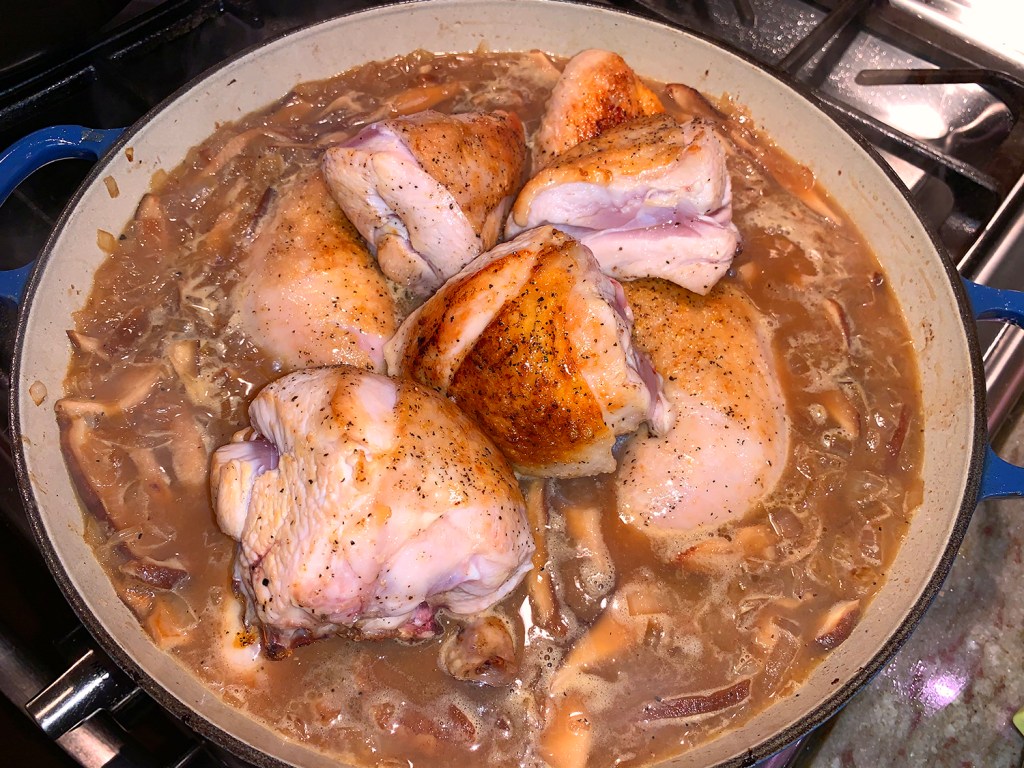
We saw this Smothered Chicken with Bourbon and Miso recipe in our latest Milk Street magazine and knew it had to get on our short list. It is their adaptation of a recipe from the cookbook “Smoke and Pickles” by Edward Lee.

As described by Milk Street, “It’s a fantastic Asian-inflected spin on an all-American favorite: smothered pork chops. A combination of umami-rich ingredients, woodsy bourbon and sweet-tangy orange juice produces a silky, deeply flavored mushroom sauce for smothering tender bone-in chicken legs.”

And since I am not a fan of chicken legs, we decided to buy a whole 3 1/2-pound chicken. This option gives us the extra “body parts” for making homemade stock later on. Plus, I get my preferred white meat.

Don’t worry if you have the wrong variety of miso. Dark miso, such as red (aka) or barley (mugi) miso is preferred, but white (shiro) miso is easier to find and more versatile. The sauce will be a little sweeter and milder, but still delicious.

Smothering typically refers to braising meats in gravy, a process that produces tender meat and a rich sauce to ladle over it—but it is time-intensive. Here, corners are cut to streamline the technique but keep the savory flavor. Chief among them are the bourbon whisky, dark soy sauce and shiitake mushrooms.

Bourbon is a wonderful ingredient to add when you want a smoky, aged sweetness with a bit of leathery caramel flavor.

Edward Lee

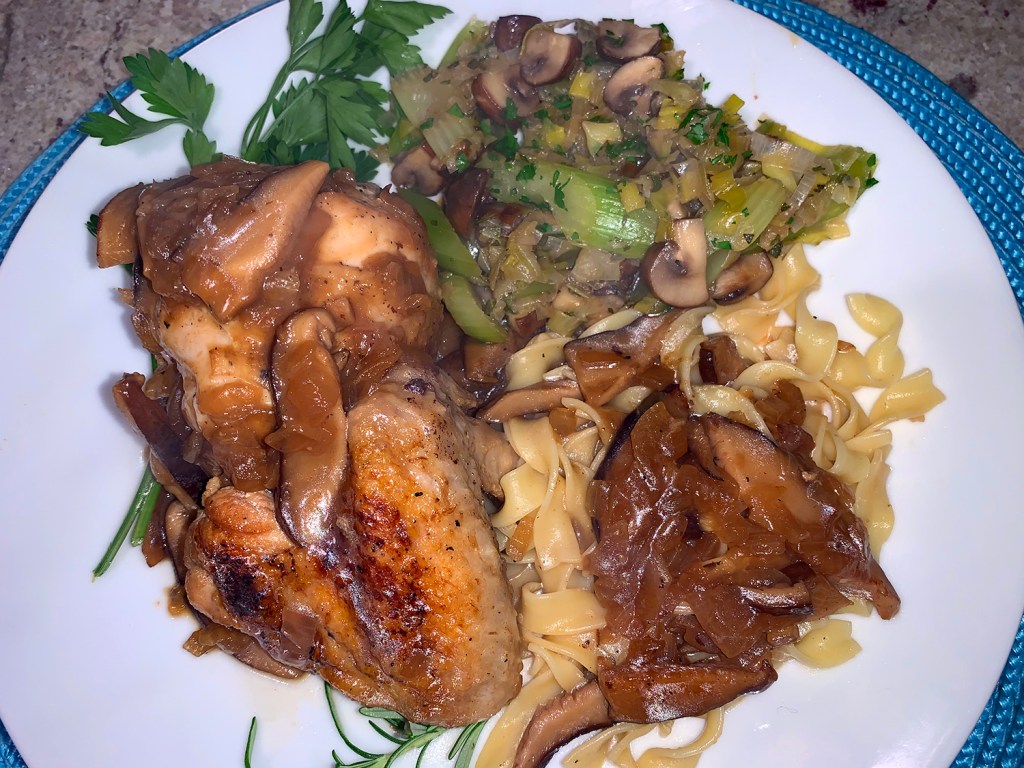
The result? A rich, velvety umami-packed chicken that offers the savory flavors of a long braise in a fraction of the time. Works for us!

If you are interested in the unusual but fantastic side dish, check out this recipe for Sautéed Celery with Leeks and Mushrooms.

Smothered Chicken with Bourbon and Miso

  • Servings: 4
  • Difficulty: easy
  • Print

Ingredients

  • 2 Tbsp. soy sauce
  • 1 Tbsp. dark miso, such as red or barley miso (see note)
  • ½ cup orange juice
  • 4 bone-in, skin-on chicken leg quarters (about 3 pounds total), patted dry
  • Kosher salt and ground black pepper
  • 2 Tbsp. grapeseed or other neutral oil
  • 2 medium yellow onions, chopped
  • 12 oz. shiitake mushrooms, stemmed and thinly sliced
  • 4 large garlic cloves, smashed and peeled
  • ⅓ cup bourbon

Directions

  1. In a small bowl, whisk together the soy sauce and miso until smooth. Whisk in the orange juice and set aside.
  2. Season the chicken on both sides with salt and pepper. In a large Dutch oven over medium-high, heat the oil until shimmering. Add the chicken skin down and cook undisturbed until well browned, about 5 minutes. (You may have to do this in two batches.)
  3. Flip and cook until the second sides are well browned, another 5 minutes. Transfer to a large plate, then pour off and discard all but 2 tablespoons fat from the pot.
  4. Return the pot to medium-high. Add the onions, mushrooms and garlic, then cook, stirring occasionally, until the vegetables are softened and beginning to brown, about 5 minutes.
  5. Add the bourbon and cook, scraping up the browned bits, until most of the liquid has evaporated, about 30 seconds.
  6. Pour in the miso mixture and 2 cups water, then bring to a simmer. Return the chicken skin up to the pot and pour in the accumulated juices.
  7. Cover, reduce to medium-low and cook, adjusting the heat as needed to maintain a gentle simmer, until the thickest parts of the legs reach 175°F, 20 to 25 minutes.
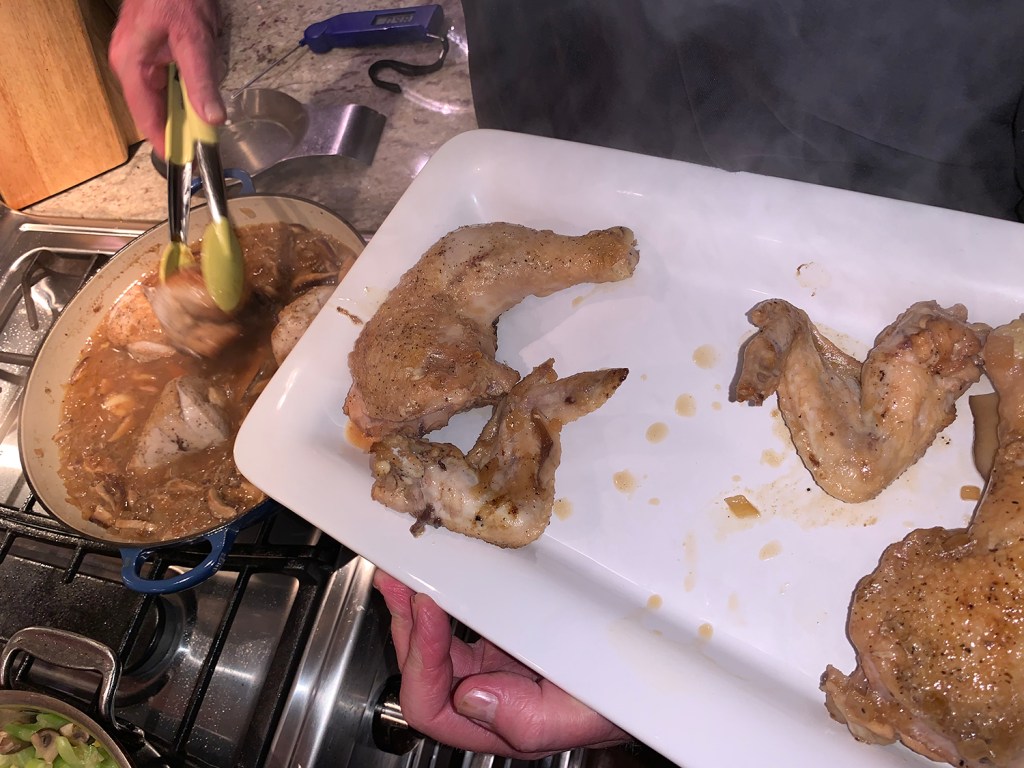
  8. Using tongs, transfer the chicken to a serving dish. Bring the sauce to a boil over high and cook, uncovered and stirring occasionally, until the sauce has thickened to a gravy consistency, 7 to 9 minutes.
  9. Taste and season with salt and pepper, then spoon over the chicken.

http://www.lynnandruss.com

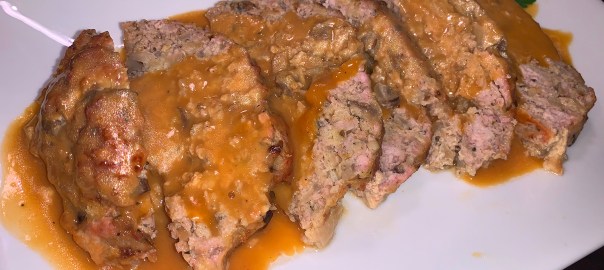
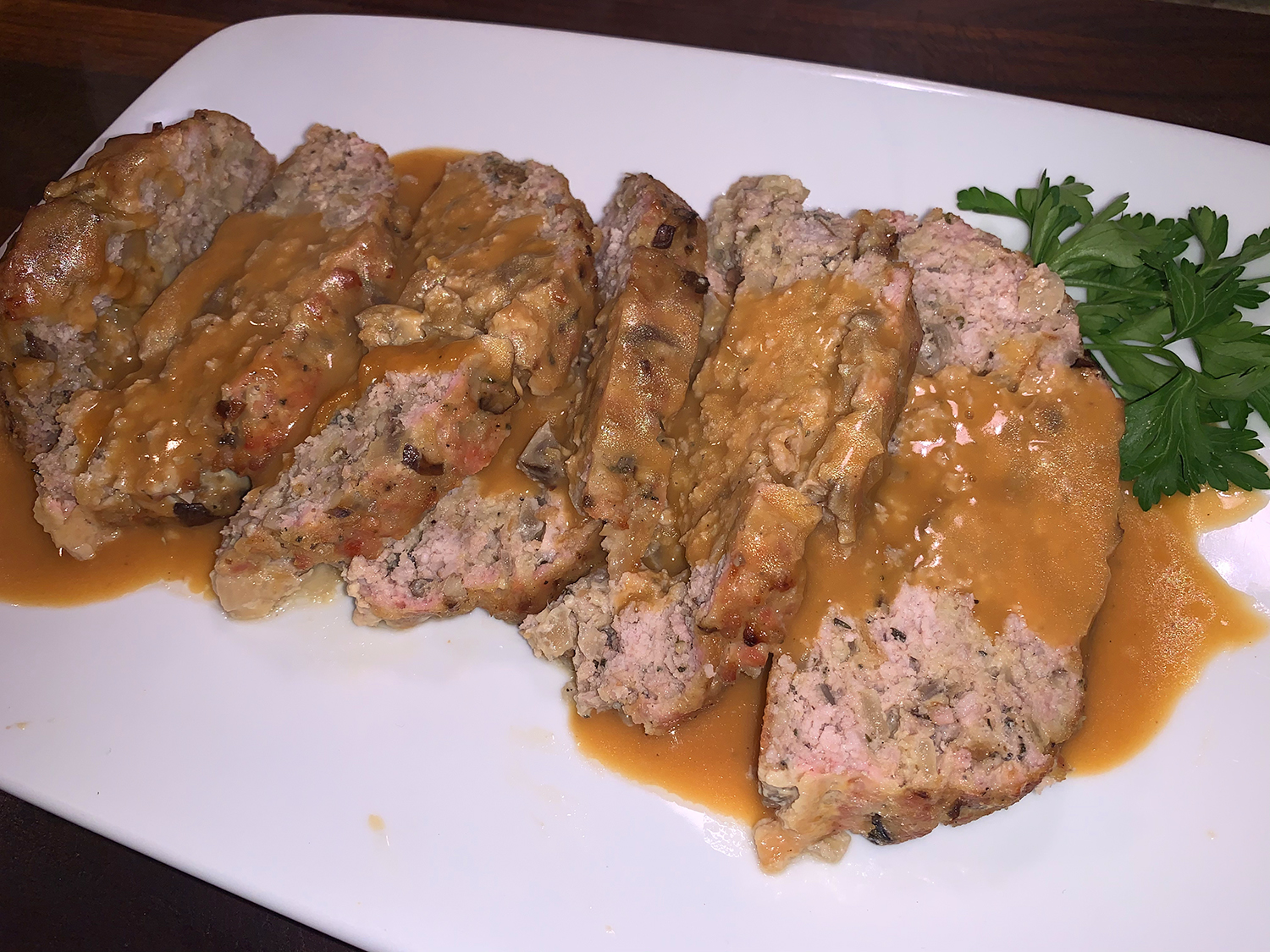
Double Mushroom and Sherry Meatloaf with a Companion Gravy

The beauty of this meatloaf and gravy is that they share several essential ingredients: mushrooms, dry sherry and garlic. While this recipe uses just ground pork and veal, if all you can get your hands on is the meatloaf mix combo, go ahead, the flavor profile won’t be too heavily altered.

Soaking the bread in the milk gives the meatloaf its tender texture. The bread should be wet but not drenched, so squeeze it gently to remove excess liquid. Then chop it all up into very small pieces. You don’t want big hunks of bread marring the perfect loaf.

A bed of garlicky mashed potatoes and steamed broccolini rounded out our meal.

Double Mushroom and Sherry Meatloaf

  • Servings: 6-8
  • Difficulty: easy
  • Print

Ingredients

  • 1 lb. ground veal
  • 1 lb. ground pork
  • 2 large eggs, lightly beaten
  • 1 Tbsp. Worcestershire sauce
  • 2 1/2 tsp. kosher salt
  • 1/2 tsp. freshly ground black pepper
  • 1/4 cup dried porcini mushrooms, rehydrated and chopped (save the hydration water for the gravy, if making)
  • 4 oz. sliced medium-coarse white bread such as Italian, French or sourdough
  • 1 cup whole milk
  • 2 Tbsp. canola or olive oil
  • 1 medium yellow onion, chopped
  • 2 large garlic cloves, finely chopped
  • 1 cup fresh cremini mushrooms, coarsely chopped
  • 3/4 cup dry sherry (do not use cooking sherry)
  • 2 Tbsp. fresh sage, finely chopped
  • 2 Tbsp. fresh thyme, finely chopped

Directions

  1. Preheat oven to 375°F. Line the bottom of a 9″ x 13″ rimmed baking sheet with parchment.
  2. In a shallow dish that holds it in a single layer, soak the bread in the milk, flipping once, until soggy but not drenched, 5 to 10 minutes depending on your bread type.
  3. Heat oil in a 12″ skillet over medium-low heat. Cook the onion, garlic and fresh mushrooms, stirring frequently, until softened and just beginning to brown, about 4-5 minutes.
  4. Add the sherry and simmer briskly until almost dry, 4 to 5 minutes. Transfer to a large bowl and let cool until warm.
  5. Lightly squeeze a handful of bread at a time to remove some of the milk. Finely chop and add to the bowl of cooked aromatics.
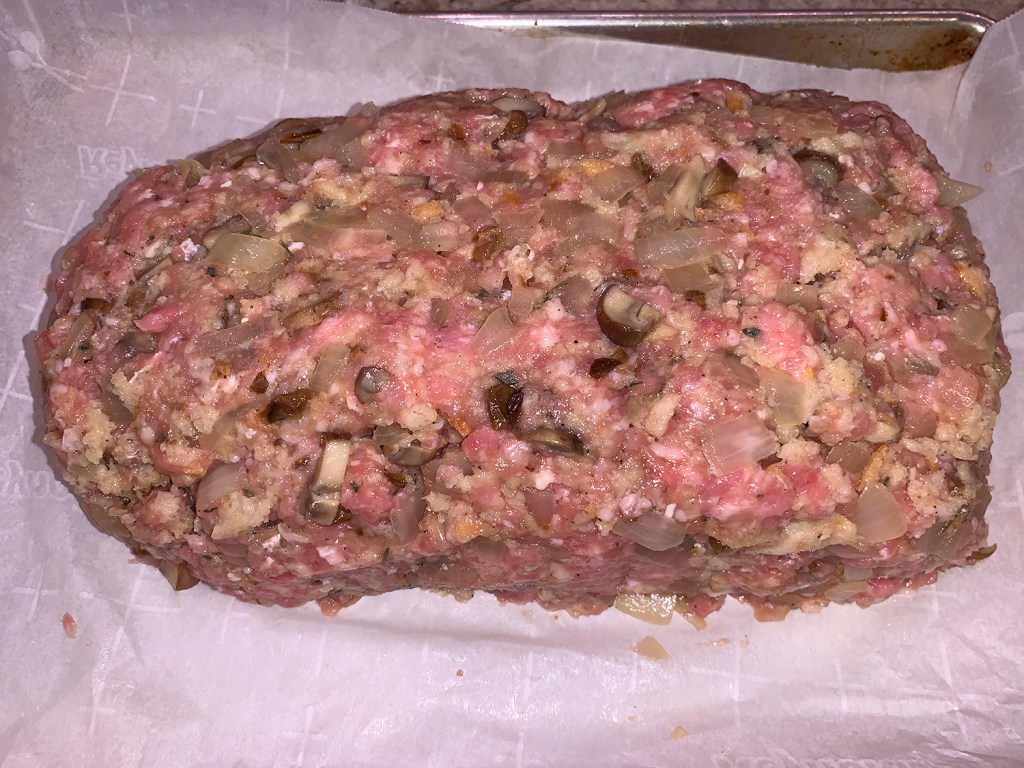
  6. Add the ground pork and veal, eggs, Worcestershire sauce, salt and pepper to the bowl. Use you hands to gently combine the meat mixture without overworking it.
  7. Transfer the meatloaf mixture to the prepared baking sheet and form into a 10″ x 4″ rectangle.
  8. Bake until an instant read thermometer registers 160°, 55 to 60 minutes. Let rest for 10 minutes. Cover with foil if the meatloaf won’t be sliced until the gravy is ready.
  9. Slice into 3/4″ to 1″ slabs.

http://www.lynnandruss.com

Mushroom Gravy with Sherry and Thyme

This ridiculously flavorful vegetarian gravy will satisfy even the heartiest meat-eaters. Along with sherry and tomato paste, dried porcini mushrooms (available in the produce sections of large supermarkets) replicate the savory flavor of drippings. It has to be up there as one of the best gravies we’ve ever had!

Mushroom Gravy with Sherry and Thyme

  • Servings: Yields 3 cups
  • Difficulty: easy
  • Print

Ingredients

  • 8 Tbsp. butter, divided
  • 1 medium onion, chopped
  • 3 cloves garlic, finely chopped
  • 1 Tbsp. tomato paste
  • ⅔ cup dry sherry (do not use cooking sherry)
  • 3 cups vegetable or mushroom broth
  • ½ oz. dried porcini mushrooms, see below*
  • *1 cup porcini soaking liquid from rehydrating above mushrooms
  • 3 large thyme sprigs
  • 6 Tbsp. all-purpose flour
  • Freshly ground black pepper

Directions

  1. Rehydrate porcini mushrooms by pouring 1 cup of boiling water over them in a heat-proof bowl. Let soak 15 minutes. Drain liquid into 1 cup measure, squeezing porcinis over container to remove all liquid. Strain through a very fine sieve to remove any grit from liquid, and set aside. (Add more water if necessary to equal 1 full cup.)
  2. In a medium saucepan, melt 2 tablespoons of the butter over medium heat.
  3. Add onion; cook, stirring occasionally, until softened but not browned, about 5 minutes.
  4. Add garlic; cook 1 minute more.
  5. Add tomato paste; cook, stirring until color deepens, about 2 minutes.
  6. Add sherry; bring to a boil. Reduce heat and simmer until reduced slightly, about 3 minutes.
  7. Add broth, strained mushroom liquid, rehydrated mushrooms and thyme sprigs; bring to a boil. Simmer 15 minutes.
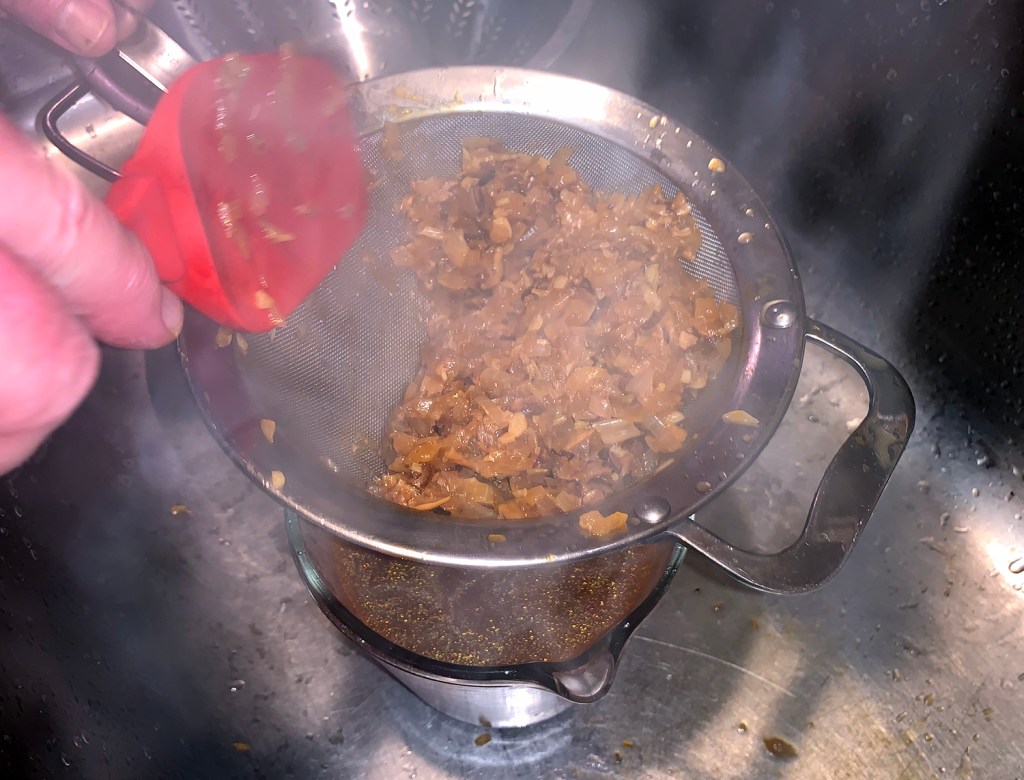
  8. Strain again through a fine-mesh sieve into a bowl, pressing on solids (discard solids). Do not wash pan.
  9. Melt remaining 6 tablespoons butter in the same saucepan over medium heat. Add flour; cook, whisking, 1 to 2 minutes (don’t let flour brown).
  10. Add about 1/2 cup of the hot broth, whisking to blend. Add remaining broth a bit at a time, whisking until mixture is smooth. Season with pepper.

http://www.lynnandruss.com

Gravy source: MidwestLiving.com

Braised Lamb Shanks Provençal

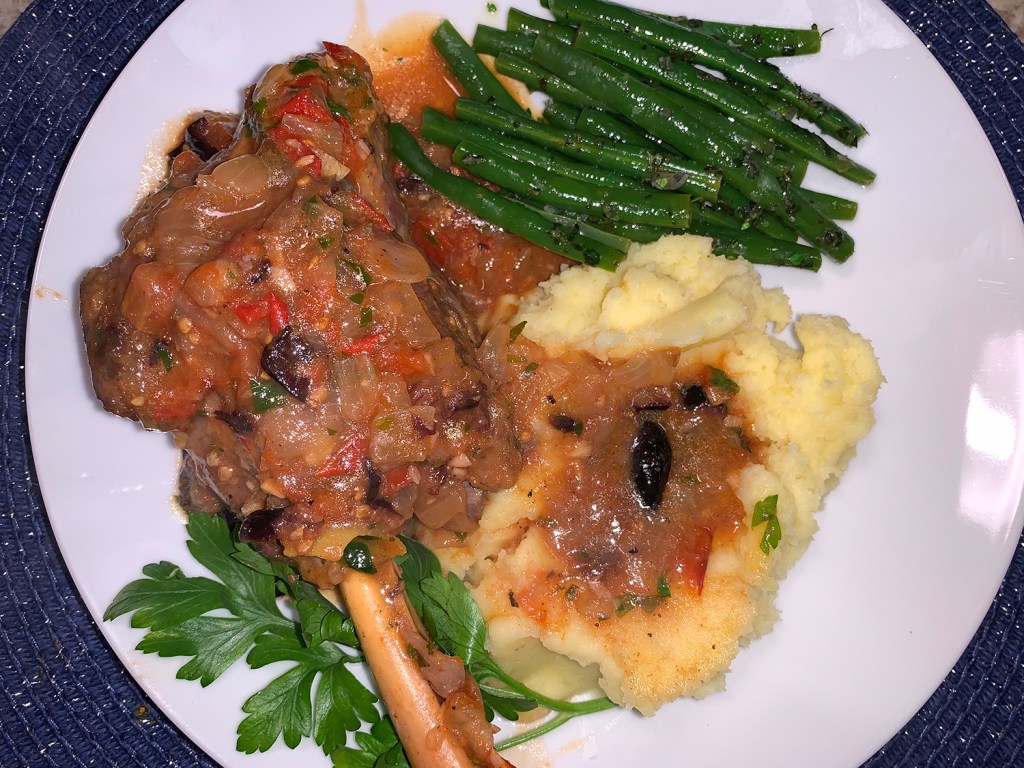
In Autumn, the first nips of cold air waken our desire for braised dishes which take hours in the oven permeating the house with wonderful appetite-inducing aromas. One of our favorite go-to chef/authors for slow-cooking recipes is—as I’ve mentioned many times—Molly Stevens. This Braised Lamb Shanks Provençal hails from her All About Braising, a treasury of one-pot meals.

While it is not a complicated dish, you do have to carve out a good chunk of time from start to finish. We happened to have four lamb shanks in the freezer, and while the recipe calls for six, it was only The Hubs and me for dinner, which would also give us scrumptious leftovers for another weeknight.

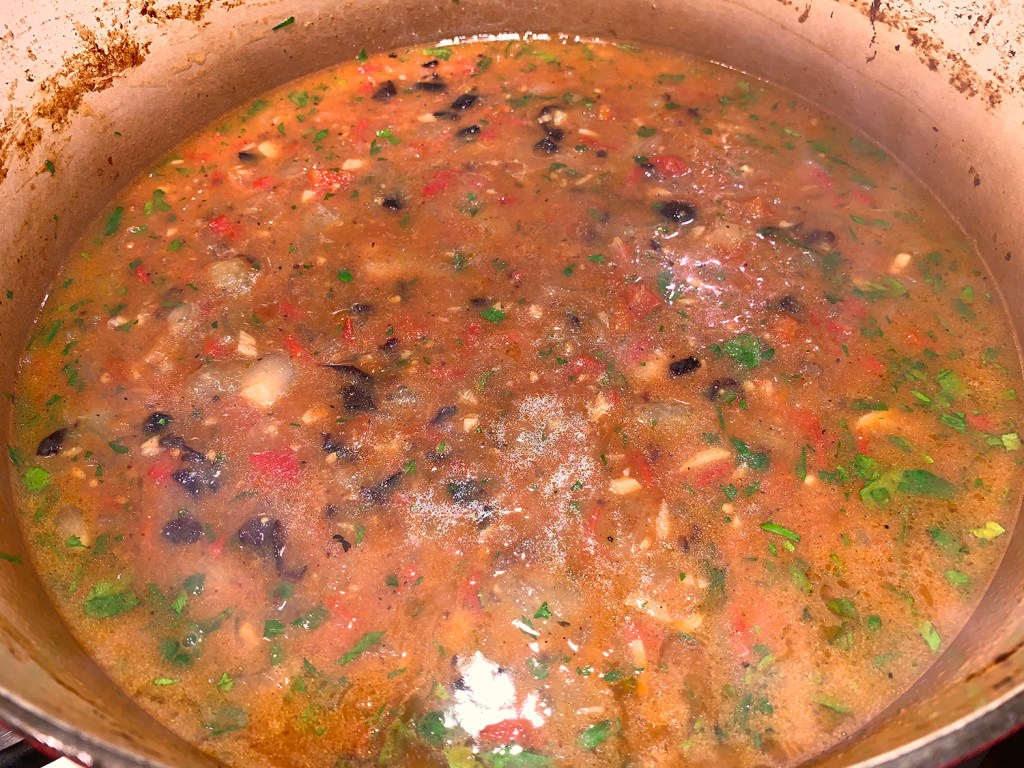
Make sure to take the time to remove the bit of papery white covering called “fell”, and any large fatty deposits, from the shanks. This will lessen any gamey flavor as the meat is cooked. Best to use a small, sharp knife to loosen the silverskin, but don’t fuss with trying to peel off any of the thin membrane—this holds the shank together and will melt down during braising. (Oops, I may have gotten a little carried away and removed some of the silver skin too, mea culpa.)

If you’ve never removed “fell” before, you can check out this short YouTube video for a quick tutorial. https://www.youtube.com/watch?v=6Qvf98zVzCk

A cherished side dish as an accompaniment for braised dishes is garlicky mashed potatoes—sigh. And this lamb dish provides plenty of luscious sauce for topping those spuds. Steamed green beans with a lemony vinaigrette completed the meal.

Braised Lamb Shanks Provençal

  • Servings: 6
  • Difficulty: moderate
  • Print

Ingredients

  • 6 lamb shanks (about 1 pound each)
  • All-purpose flour for dredging (about 1 cup)
  • 1 Tbsp. plus ½ teaspoon sweet Hungarian paprika
  • Coarse salt and freshly ground black pepper
  • 1 Tbsp. extra-virgin olive oil
  • 2 large yellow onions (about 1 pound total), chopped into ½-inch pieces
  • 1 lb. plum tomatoes, coarsely chopped (or one 14½-ounce can whole peeled tomatoes, coarsely chopped, juice reserved)
  • 4 garlic cloves, finely minced
  • 1 cup dry white wine or dry white vermouth
  • 1 cup chicken stock, homemade or store-bought
  • 2 lemons
  • 3 small or 2 large bay leaves
  • ½ cup pitted and coarsely chopped oil-cured black olives, such as Nyons or Moroccan
  • ¼ cup coarsely chopped flat-leaf parsley

Directions

  1. Heat the oven to 325°F.
  2. Trim the lamb shanks: If the shanks are covered in a tough parchment-like outer layer (called the fell), trim this away by inserting a thin knife under it to loosen and peeling back this layer. Remove any excess fat as well, but don’t fuss with trying to peel off any of the thin membrane—this holds the shank together and will melt down during braising.
  3. Dredge the lamb shanks: Pour the flour into a shallow dish and stir in 1 tablespoon of the paprika. Season the shanks all over with salt and pepper. Roll half the shanks in the flour, lifting them out one by one and patting to remove any excess, and set them on a large plate or tray, without touching.
  4. Brown the lamb shanks: Heat the oil in a large heavy-based braising pot (6- to 7- quart) over medium heat until it shimmers. Add the 3 flour-dredged shanks (you’re searing in two batches so as not to crowd the pot). Cook, turning the shanks with tongs, until they are gently browned on all sides, about 10 minutes total. Transfer the shanks to a plate or tray, without stacking or crowding. Dredge the remaining shanks in flour, patting to remove any excess, and brown them. Set beside the already browned shanks, and discard the remaining flour.
  5. Make the aromatics and braising liquid: Pour off all but 1 tablespoon of fat from the pot and return the pot to the heat. If the bottom of the pot is at all blackened, wipe it out with a damp paper towel, being careful to leave behind any tasty caramelized drippings. Add the onions, tomatoes with their juice, and the garlic and season with the remaining ½ teaspoon paprika and salt and pepper to taste. Sauté over medium heat, stirring occasionally, for 8 to 10 minutes, or until the onions are mostly tender. Pour in the wine and stir and scrape with a wooden spoon to dislodge any browned bits on the bottom of the pot that will contribute flavor to the liquid. Simmer for 3 minutes. Pour in the stock, stir and scrape the bottom again, and simmer for another 3 minutes.
  6. Meanwhile, zest the lemon: Using a vegetable peeler, remove the zest from half of 1 lemon, being careful to remove only the outermost yellow zest, not the bitter-tasting white pith; reserve the lemon. Add the zest to the pot, along with the bay leaves.
  7. Make the braise: Arrange the lamb shanks on top of the vegetables. The shanks should fit fairly snugly in the pot, but you may need to arrange them “head-to-toe” so they fit more evenly. Don’t worry if they are stacked in two layers. Cover the pot with parchment paper, pressing down so that it nearly touches the lamb and the edges of the paper extend about an inch over the side of the pot. Set the lid in place, slide the pot into the lower part of the oven, and braise for about 2½ hours. Check the shanks every 35 to 45 minutes, turning them with tongs and moving those on top to the bottom and vice versa, and making sure that there is still plenty of braising liquid. If the liquid seems to be simmering too aggressively at any point, lower the oven heat by 10 to 15 degrees. If the liquid threatens to dry out, add ⅓ cup water. The shanks are done when the meat is entirely tender and they slide off a meat fork when you try to spear them.
  8. Segment the lemon: While the shanks braise, use a thin-bladed knife (a boning knife works well) to carve the entire peel from the 2 lemons. The easiest way to do this is to first cut off the stem and blossom end of each one so the lemon is flat on the top and bottom. Then stand the lemon up and carve off the peel and white pith beneath it with arcing slices to expose the fruit. Trim away any bits of pith or membrane that you’ve left behind, until you have a whole naked lemon. Now, working over a small bowl to collect the juices, hold a lemon in one hand and cut out the individual segments, leaving as much of the membrane behind as you can. Drop the segments into the bowl, and pick out the seeds as you go. When you finish, you should be holding a random star-shaped membrane with very little fruit pulp attached. Give this a squeeze into the bowl and discard. Repeat with the second lemon.
  9. The Finish: Transfer the shanks to a tray to catch any juices, and cover with foil to keep warm. Using a wide spoon, skim as much surface fat from the cooking liquid as possible. Lamb shanks tend to throw off quite a bit of fat: continue skimming (tilting the pot to gather all the liquid in one corner makes it easier) until you are satisfied. (We barely had any fat.) Set the pot over medium heat and bring to a simmer. Stir in the lemon segments, olives, and parsley. Taste for salt and pepper. Return the shanks to the braising liquid to reheat for a minute or two. Serve with plenty of sauce.

http://www.lynnandruss.com

Oven Lamb and Barley Stew

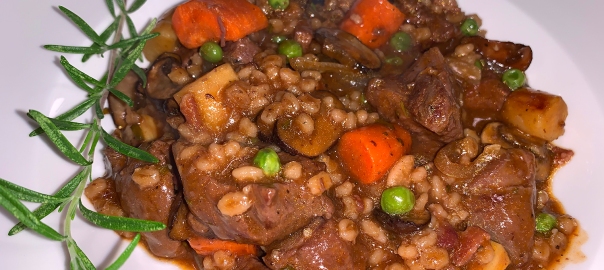
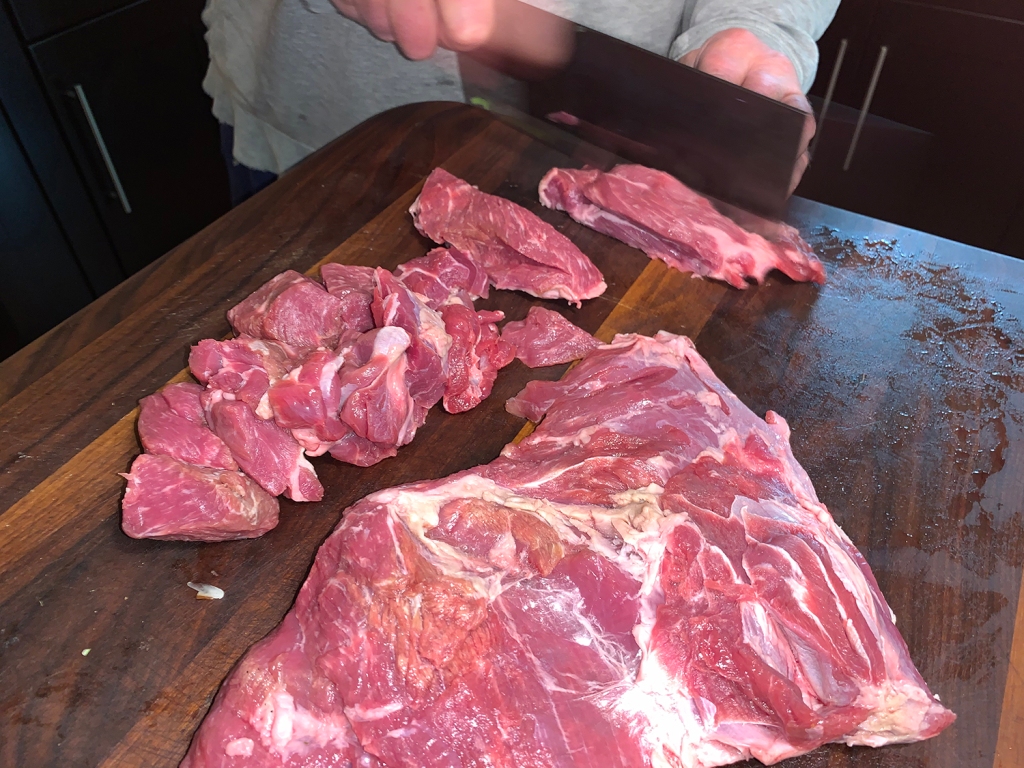
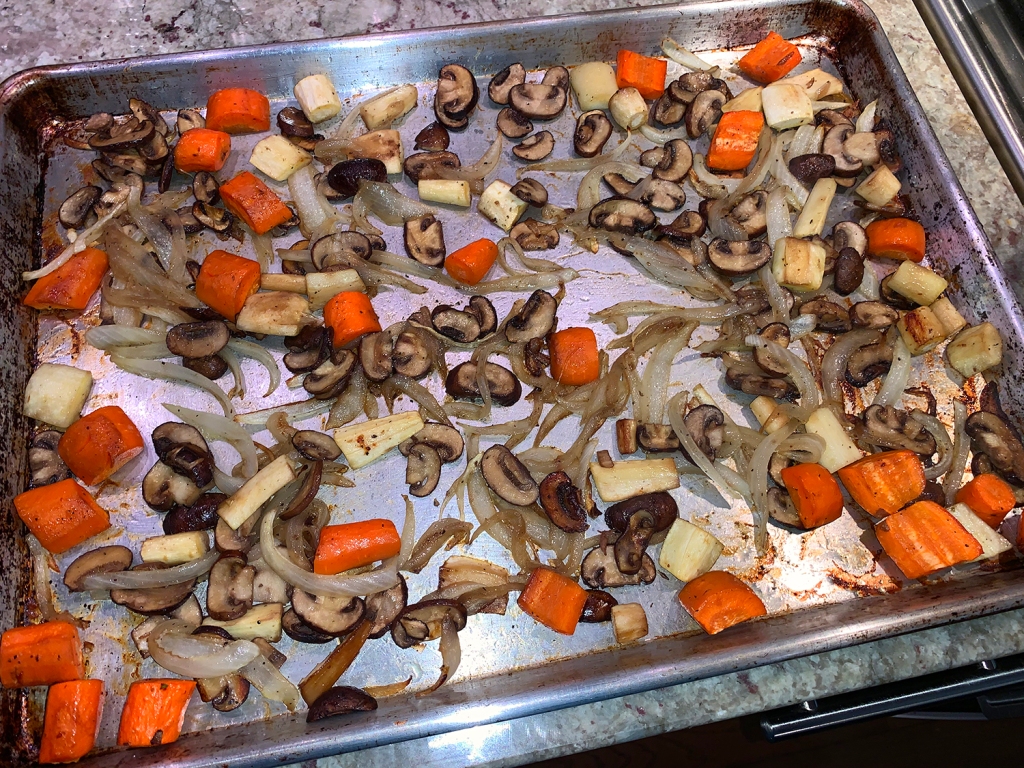
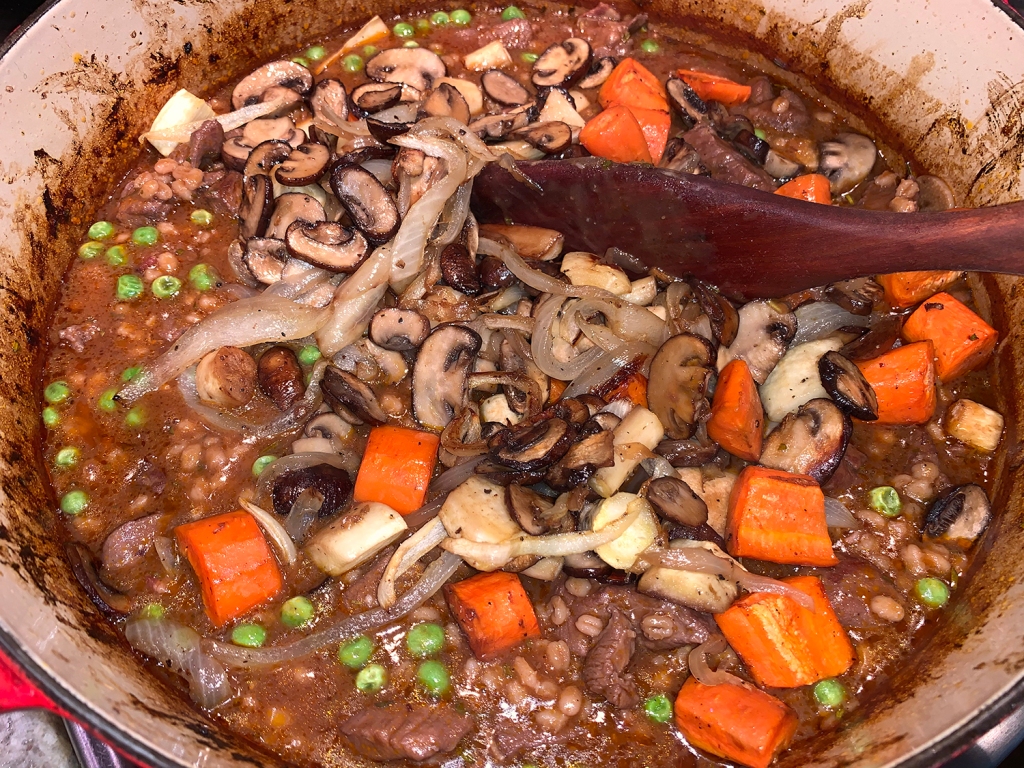
Although this looks like a traditional beef stew recipe, it’s not made like one. While the beef—or lamb as in our recipe—braises in the oven, the carrots, mushrooms, and onions roast on a sheet pan alongside for a caramelized flavor. How’s that for a change?

We made this on a Sunday afternoon for a weeknight meal when we knew there wouldn’t be much time to prep dinner. But of course we had to taste-test the finished product. WOW, it was fantastic. The lamb (you could use stew beef instead) was super tender and the sauce was so silky and full of flavor.

Instead of one or the other, we used both carrots and parsnips. If you choose to include parsnips, make sure to remove the woody core before cooking them.

Oven Lamb and Barley Stew

  • Servings: 6
  • Difficulty: easy
  • Print

Ingredients

  • 3 Tbsp. olive oil
  • 2–2.5 lbs. beef or lamb stew meat
  • 2 strips bacon, coarsely chopped
  • 3 cloves garlic, thinly sliced
  • 3 Tbsp. tomato paste
  • 1 cup dry red wine or 50%-less-sodium beef broth
  • 1 qt. (32 oz.) beef broth
  • 1–2 Tbsp. fresh thyme or rosemary, chopped
  • ¾ tsp. kosher salt
  • ¾ tsp. ground black pepper
  • ¼ cup all-purpose flour
  • ½ cup regular barley, farro, or brown rice*
  • 4 carrots or parsnips, peeled and cut into 1- to 2-inch pieces, or 2 cups baby carrots
  • 2 cups sliced cremini or button mushrooms
  • 1 medium onion, cut into thin wedges
  • 1 cup frozen peas
  • 2 croissants, cut into 1/2-inch chunks (optional)
  • 2 Tbsp. butter, melted
  • 2 cloves garlic, minced
  • 1 Tbsp. finely chopped flat-leaf parsley

Directions

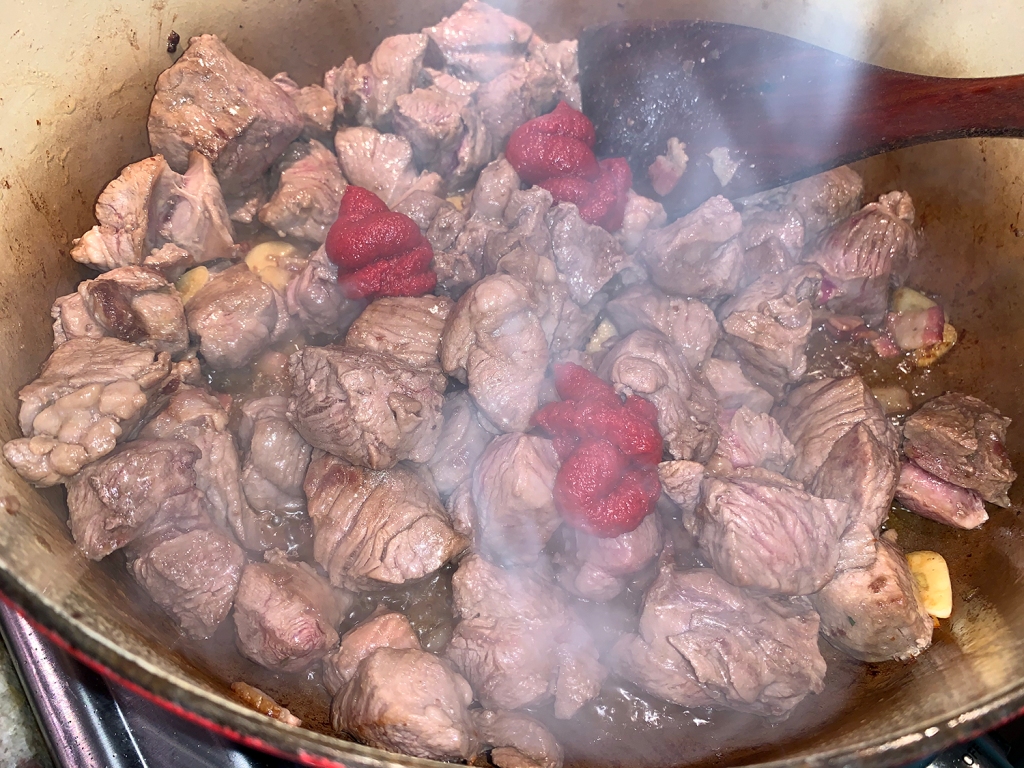
  1. Arrange oven racks, placing one rack at the lowest level. Preheat oven to 325°F. In a 5- to 6-qt. Dutch oven heat 1 Tbsp. olive oil over medium-high. Add half the beef and bacon; cook until browned, stirring occasionally. Using a slotted spoon, transfer meat to a bowl. Add an additional 1 Tbsp. olive oil, remaining beef and bacon, and the sliced garlic to Dutch oven. Cook 3 minutes, stirring occasionally. Return all meat to Dutch oven. Stir in tomato paste; cook and stir 2 minutes.
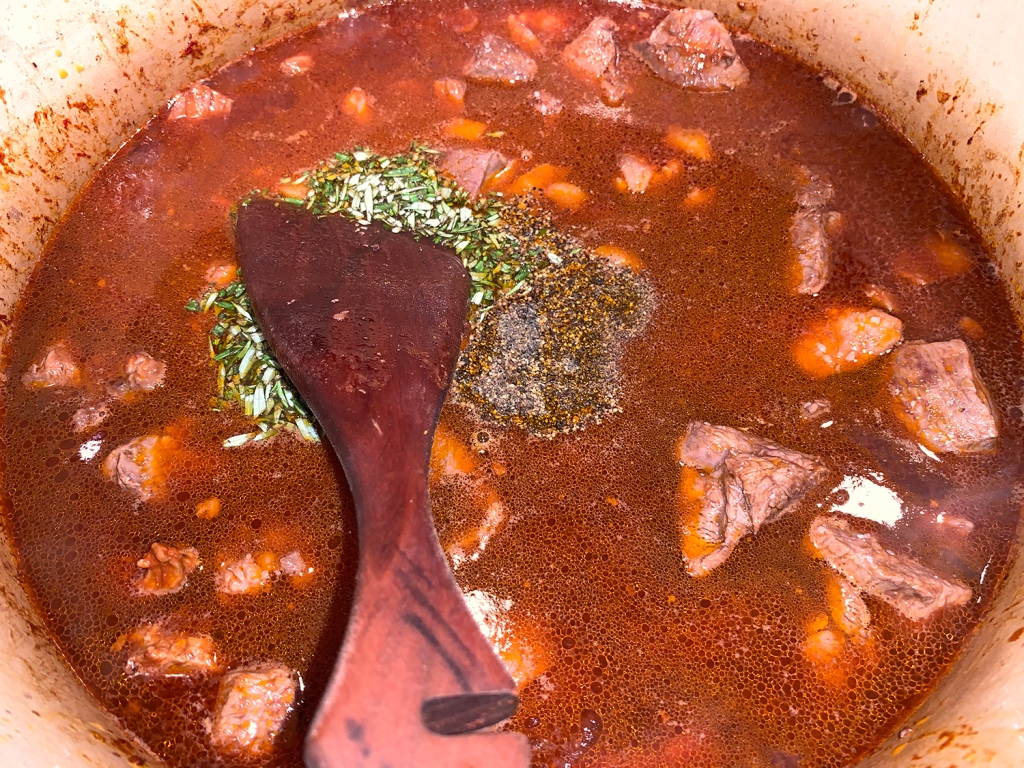
  2. Carefully add wine, stirring to scrape up any browned bits from bottom of pot. Reserve 1/2 cup of the 50%-less-sodium beef broth. Add remaining broth to meat mixture. Stir in thyme and 1/2 tsp. each salt and ground black pepper. Bring to boiling. Cover and place pot on the lower oven rack; braise 1 hour.
  3. In a small bowl whisk together reserved 1/2 cup broth and the flour; stir into beef mixture. Stir in barley. Bake, covered, 35 minutes more or until barley is tender and stew is thickened.
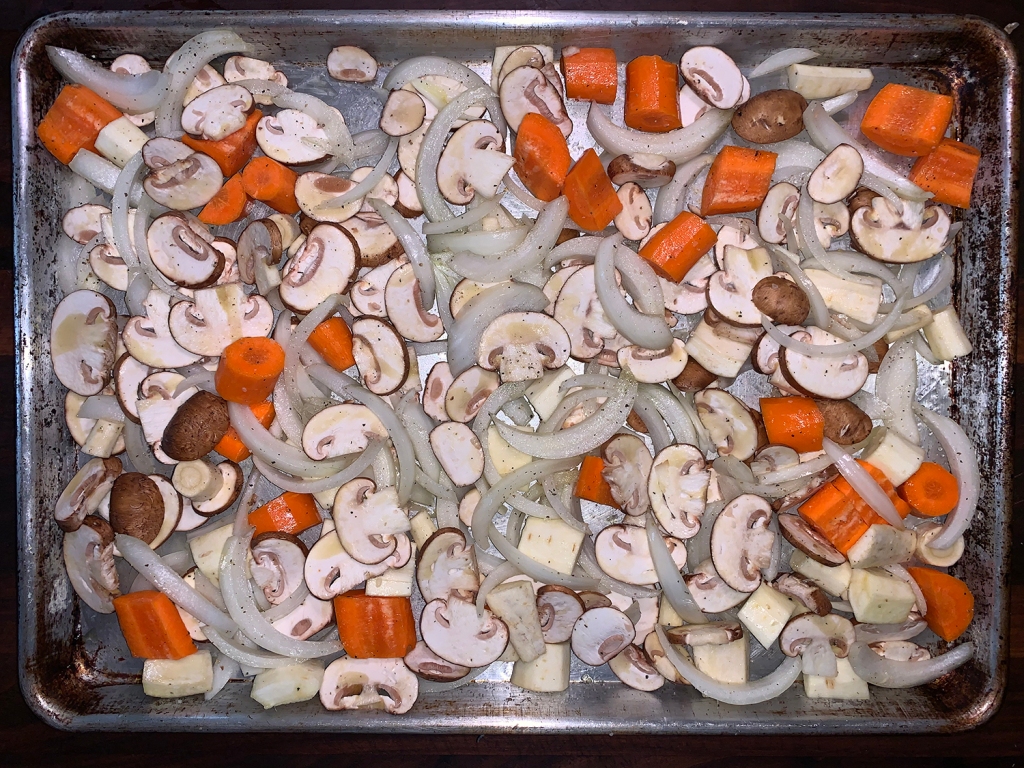
  4. Meanwhile, in a shallow baking pan combine carrots, mushrooms, onion, remaining 1 Tbsp. olive oil, and remaining 1/4 tsp. each salt and pepper; toss to coat. Place on a separate oven rack; roast, uncovered, 45 minutes, stirring once.
  5. Stir vegetables and peas into stew; let stand, covered, 5 minutes. Increase oven temperature to 425°F.
  6. OPTIONAL: For croutons: Line a shallow baking pan with foil. In a large bowl combine croissant chunks, melted butter, minced garlic, and parsley; toss to mix. Spread croissants evenly in prepared pan. Bake 5 minutes or until toasted; let cool. Serve croutons over stew.

*If you sub in brown rice, increase baking time in Step 3 to 45 minutes.

http://www.lynnandruss.com

Recipe found in Better Homes & Gardens October 2020 issue

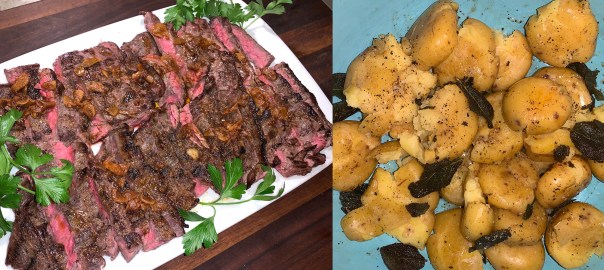
Skirt Steak with Paprika Butter and Sagey Potatoes

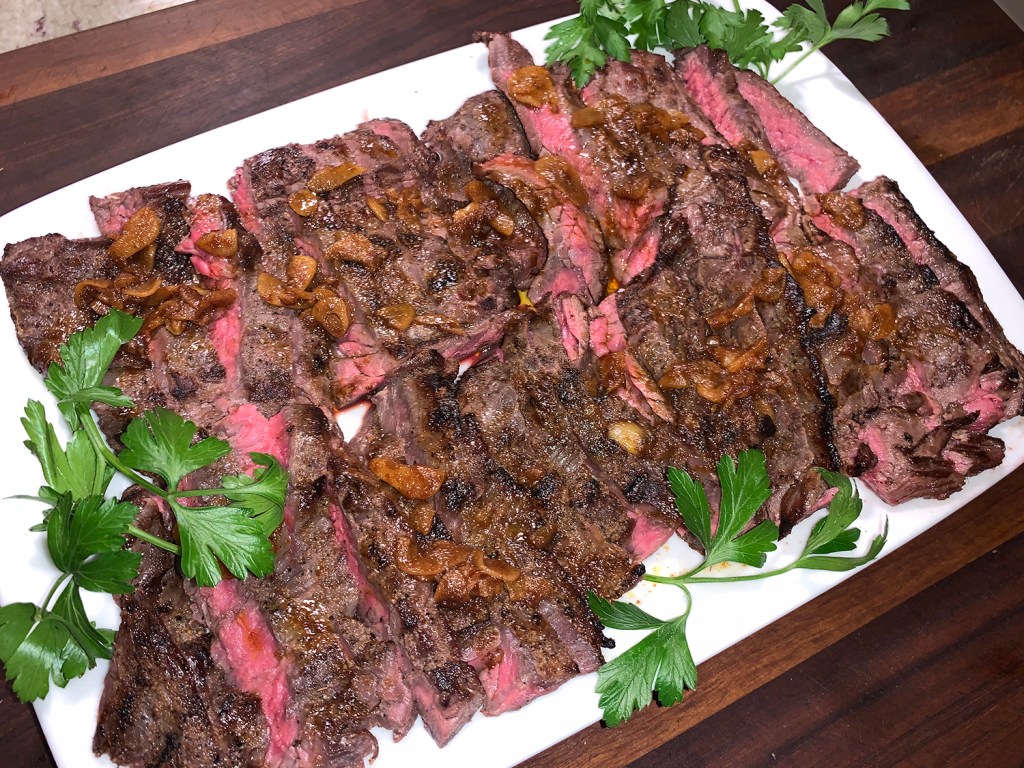
A new take on your steak and potatoes menu is this thinly sliced skirt steak with a lightly smoky, tangy paprika butter. While the steak recipe is enough to feed 10, and the potato recipe feeds 6-8, we halved both of them and still had leftovers for another meal. Both the meat and potato recipes hail from Food & Wine, neither of which employ a long list of ingredients.

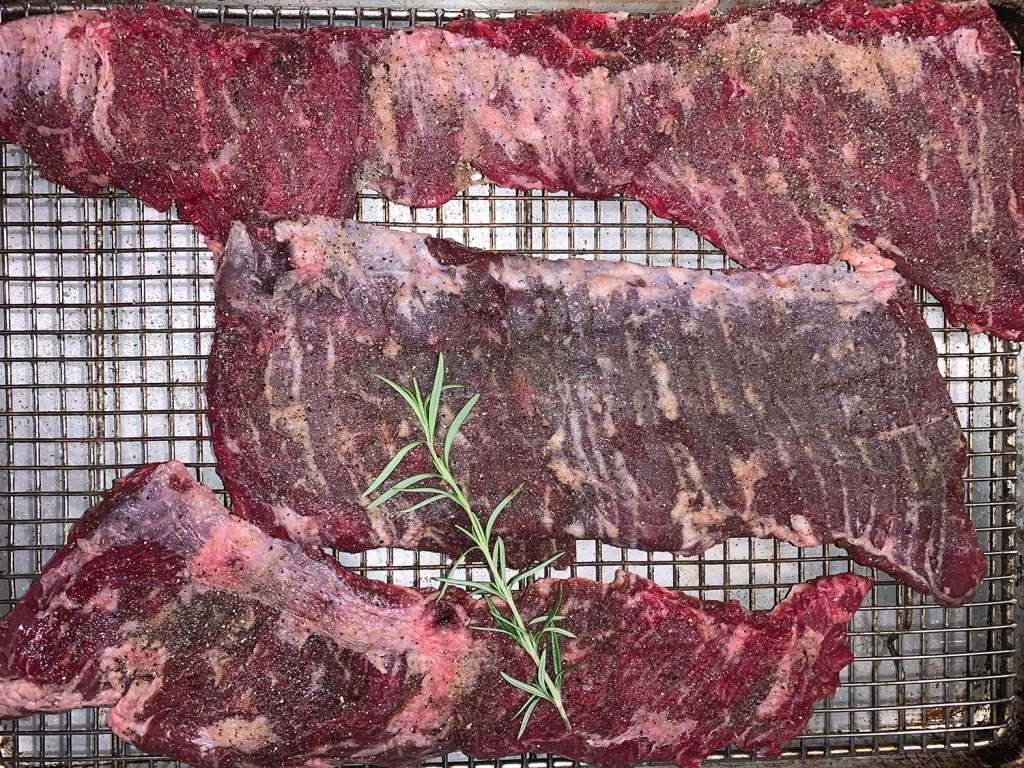
Adobo Seco was our seasoning of choice for rubbing both sides of the steak(s), although just using salt and pepper works fine too. Remember, skirt steak is a very thin piece of meat so it will cook quickly on the grill, just a couple of minutes per side for medium rare. Make sure to slice against the grain when cutting it.

If desired, go ahead and make the paprika butter which can stand at room temperature for up to 4 hours; reheat the butter gently. We took the opportunity to do this step ahead of time, so we wouldn’t be rushed at the last minute.

Skirt Steak with Paprika Butter

  • Servings: 10
  • Difficulty: easy
  • Print

Ingredients

  • 6 Tbsp. unsalted butter
  • 6 garlic cloves, thinly sliced
  • 1 1/2 tsp. smoked hot paprika
  • 2 Tbsp. fresh lemon juice
  • Salt
  • 5 lbs. skirt steaks
  • Vegetable oil, for rubbing
  • Freshly ground pepper

Directions

  1. Light a grill or heat a grill pan. In a small saucepan, melt the butter. Add the garlic and cook over low heat, stirring, until golden, about 3 minutes.
  2. Add the paprika and cook until fragrant, about 30 seconds. Remove from the heat, stir in the lemon juice and season with salt; keep warm.
  3. Rub the skirt steaks with oil and season with salt and pepper (or Adobo Seco seasoning). Grill over high heat until nicely charred and medium-rare, about 3 minutes per side.
  4. Transfer the steaks to a cutting board and let rest for 5 minutes. Thinly slice the steaks across the grain.
  5. Spoon the paprika butter over the steak and serve right away.

http://www.lynnandruss.com

Recipe compliments of Jon Shook and Vinny Dotolo for Food & Wine

We also added ratatouille made a few days ago and reheated for tonite’s dinner.

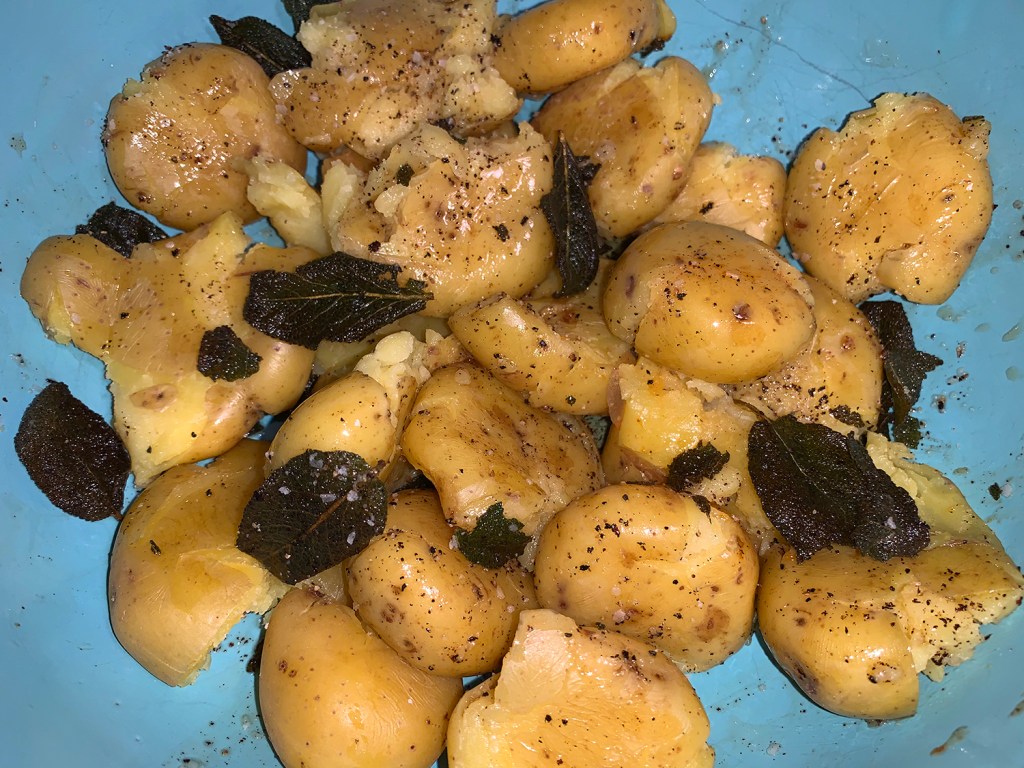
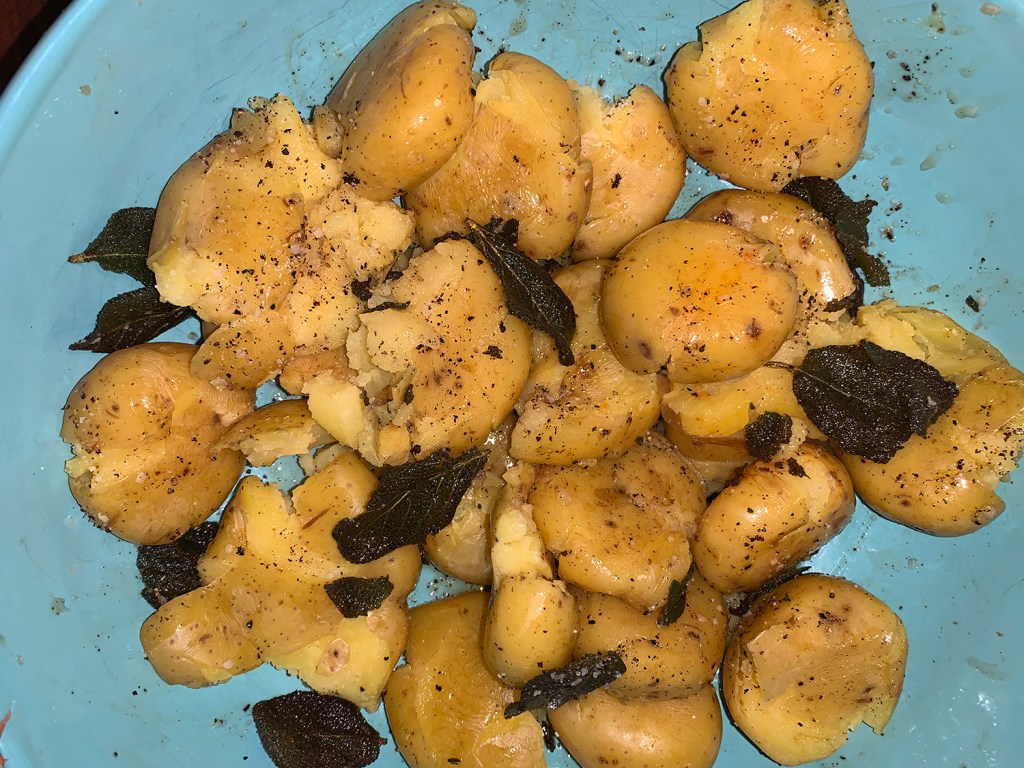
Smashed Sage-Butter Potatoes

Among the BEST potatoes we’ve ever eaten!

Smashed Sage-Butter Potatoes

  • Servings: 6-8
  • Difficulty: easy
  • Print

Ingredients

  • 4 lbs small Yukon Gold potatoes, about 1 1/2″ diameter
  • 1/2 cup unsalted butter (4 ounce)
  • 1/2 cup fresh sage leaves (about 1/4 ounce)
  • Kosher salt, to taste

Directions

  1. Add water to a Dutch oven to a depth of 1/2 inch; place a steamer basket in Dutch oven. Bring water to a boil over high. Place potatoes in steamer basket. Cover, reduce heat to medium, and steam until potatoes are tender, 30 to 35 minutes. Let cool 10 minutes.
  2. Meanwhile, melt butter in a large skillet over medium. Add sage leaves, and cook, stirring constantly, until leaves turn dark green in spots and butter is light golden brown, 4 to 5 minutes. Remove from heat.
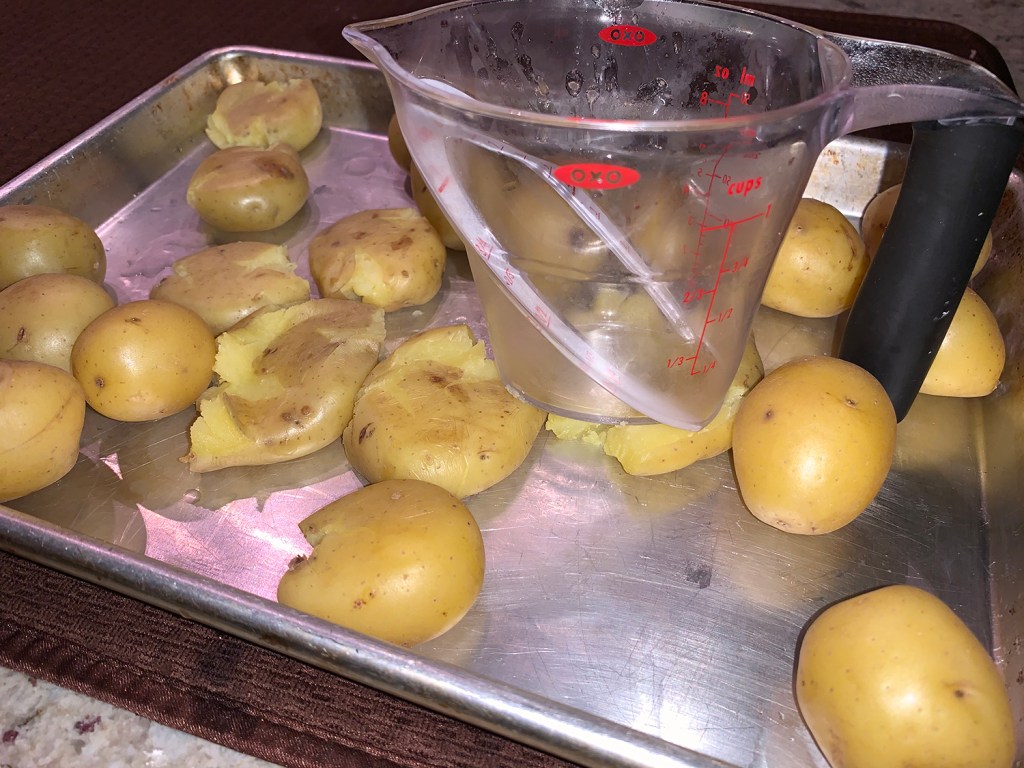
  3. Place potatoes on a baking sheet, and gently smash using the bottom of a measuring cup. Transfer to a large serving bowl, and gently toss with sage butter. Season with salt to taste.

http://www.lynnandruss.com

Recipe compliments of Brian Marcy for Food & Wine

French-Style Pork Chops with Apples and Brandy

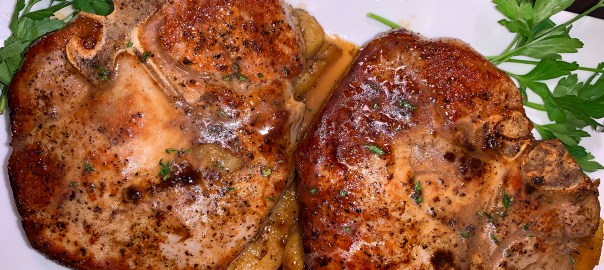
Pork and apples is a classic, but usually an everyday pairing. Cook’s Illustrated turned to the French recipe for porc à la Normande to inspire a more elegant rendition. Using thick bone-in chops allows more leeway to avoid overcooking, while salting them an hour before cooking helps keep them moist.

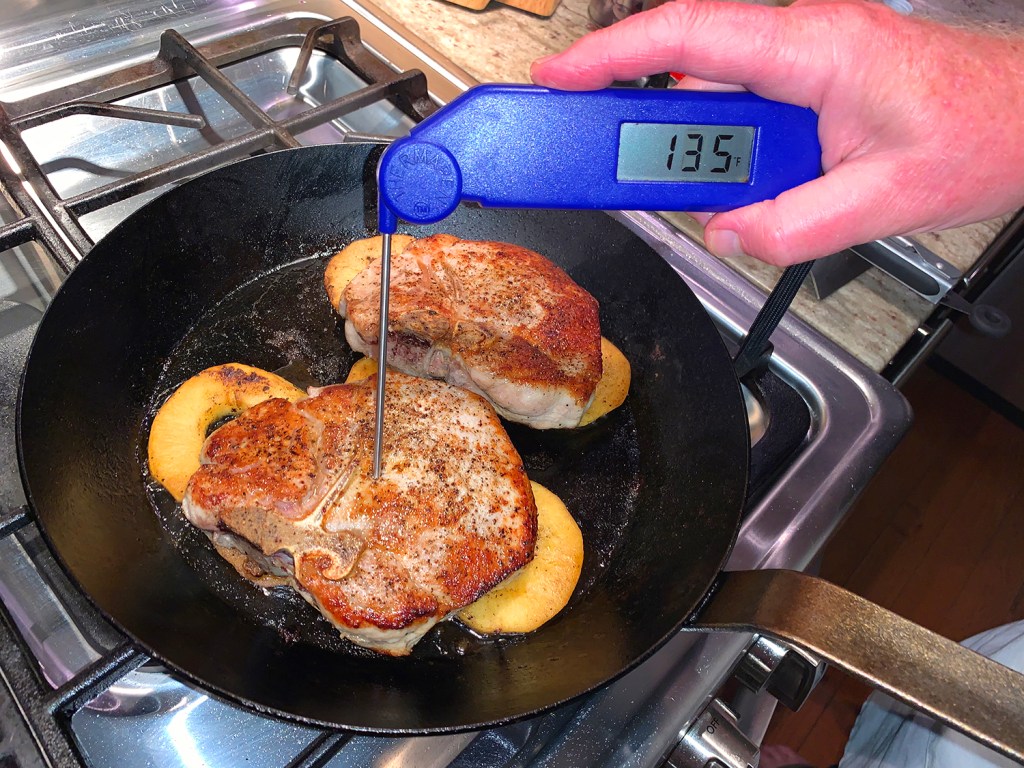
An evenly heated pan is key to a good sear on these big chops, so heat your skillet over medium high for a full 5 minutes before turning up the heat. Cutting the apples into attractive rings provides a bed to raise the chops off the skillet’s bottom to allow for even cooking once transferred to the oven.

For a sauce with layered apple flavor, rely on a combination of sweet cider, cider vinegar, Calvados (or regular brandy), and a few chopped apples, which break down and help produce the right texture. A bit of butter gives the sauce richness, while chicken broth and bacon lend a balancing savoriness. Flambéing the sauce is critical to create an elegantly complex sauce, and doing it in two batches keeps the job easy.

Natural pork is preferred, but if the pork is enhanced (injected with a salt solution), just decrease the salt in step 1 to 1/2 teaspoon per chop. To ensure that they fit in the skillet, choose apples that are approximately 3 inches in diameter. With just the two of us for dinner, we cut the number of chops and apples down from 4 to 2, but kept the amount of the other ingredients the same. Applejack or regular brandy can be used in place of the Calvados. The amount of vinegar to add in step 4 will vary depending on the sweetness of your cider.

Before flambéing, Cook’s Illustrated highly suggests to roll up long shirtsleeves, tie back long hair, and turn off the exhaust fan and any lit burners. Use a long match or wooden skewer to flambé the brandy.

We paired this main dish with a Braised Red Cabbage dish from The NY Times cooking site that also included apples.

French-Style Pork Chops with Apples and Brandy

  • Servings: 4
  • Difficulty: moderate
  • Print

Ingredients

  • (12- to 14-ounce) bone-in pork rib chops, 1 inch thick
  • Kosher salt and pepper
  • 4 Gala or Golden Delicious apples, peeled and cored
  • 2 slices bacon, cut into 1/2-inch pieces
  • 3 shallots, sliced
  • Pinch ground nutmeg
  • ½ cup Calvados, Applejack or other brandy
  • 1 ¾ cups apple cider
  • 1 ¼ cups chicken broth
  • 4 sprigs fresh thyme, plus 1/4 tsp. minced
  • 2 Tbsp. unsalted butter
  • 2 tsp. vegetable oil
  • ½ – 1 tsp. apple cider vinegar

Directions

  1. Evenly sprinkle each chop with 3/4 teaspoon salt. Place chops on large plate, cover loosely with plastic wrap, and refrigerate for 1 hour.
  2. While chops rest, cut 2 apples into 1/2-inch pieces. Cook bacon in medium saucepan over medium heat until crisp, 5 to 7 minutes. Add shallots, nutmeg, and 1/4 teaspoon salt; cook, stirring frequently, until shallots are softened and beginning to brown, 3 to 4 minutes.
  3. Off heat, add 1/4 cup Calvados and let warm through, about 5 seconds. Wave lit match over pan until Calvados ignites, then shake pan gently to distribute flames. When flames subside, 30 to 60 seconds, cover pan to ensure flame is extinguished, 15 seconds.
  4. Add remaining 1/4 cup Calvados and repeat flambéing (flames will subside after 1 1/2 to 2 minutes). (If you have trouble igniting second addition, return pan to medium heat, bring to bare simmer, and remove from heat and try again.)
  5. Once flames have extinguished, increase heat to medium-high; add cider, 1 cup broth, thyme sprigs, butter, and chopped apples; and bring to rapid simmer. Cook, stirring occasionally, until apples are very tender and mixture has reduced to 2 1/3 cups, 25 to 35 minutes. Cover and set aside.
  6. Adjust oven rack to middle position and heat oven to 300 degrees.
  7. Slice remaining 2 apples into 1/2-inch-thick rings. Pat chops dry with paper towels and evenly sprinkle each chop with pepper to taste.
  8. Heat oil in 12-inch skillet over medium heat until beginning to smoke. Increase heat to high and brown chops on both sides, 6 to 8 minutes total. Transfer chops to large plate and reduce heat to medium.
  9. Add apple rings and cook until lightly browned, 1 to 2 minutes. Add remaining 1/4 cup broth and cook, scraping up any browned bits with rubber spatula, until liquid has evaporated, about 30 seconds.
  10. Remove pan from heat, flip apple rings, and place chops on top of apple rings. Place skillet in oven and cook until chops register 135 to 140 degrees, 11 to 15 minutes.
  11. Transfer chops and apple rings to serving platter, tent loosely with foil, and let rest for 10 minutes.
  12. While chops rest, strain apple/brandy mixture through fine-mesh strainer set in large bowl, pressing on solids with ladle or rubber spatula to extract liquid; discard solids. (Make sure to use rubber spatula to scrape any apple solids on bottom of strainer into sauce.)
  13. Stir in minced thyme and season sauce with vinegar, salt, and pepper to taste. Transfer sauce to serving bowl. Serve chops and apple rings, passing sauce separately.

http://www.lynnandruss.com