Tag Archives: chinese

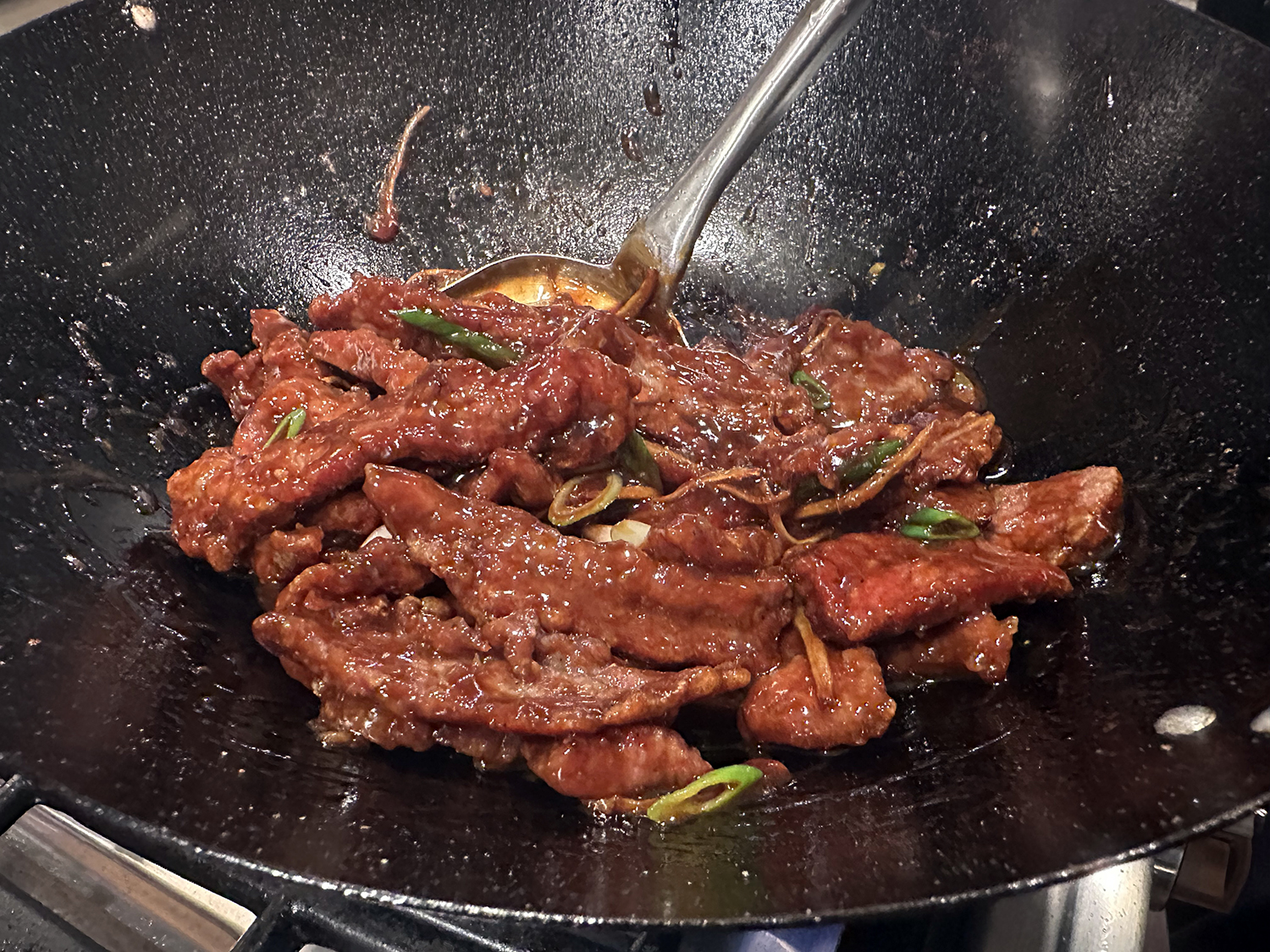
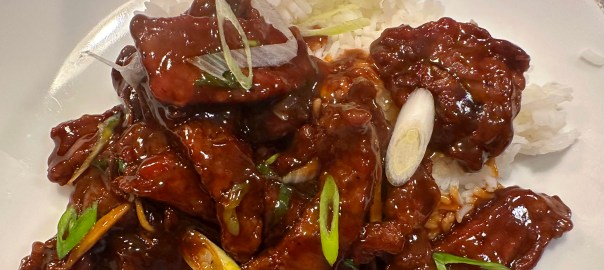
Ginger Beef

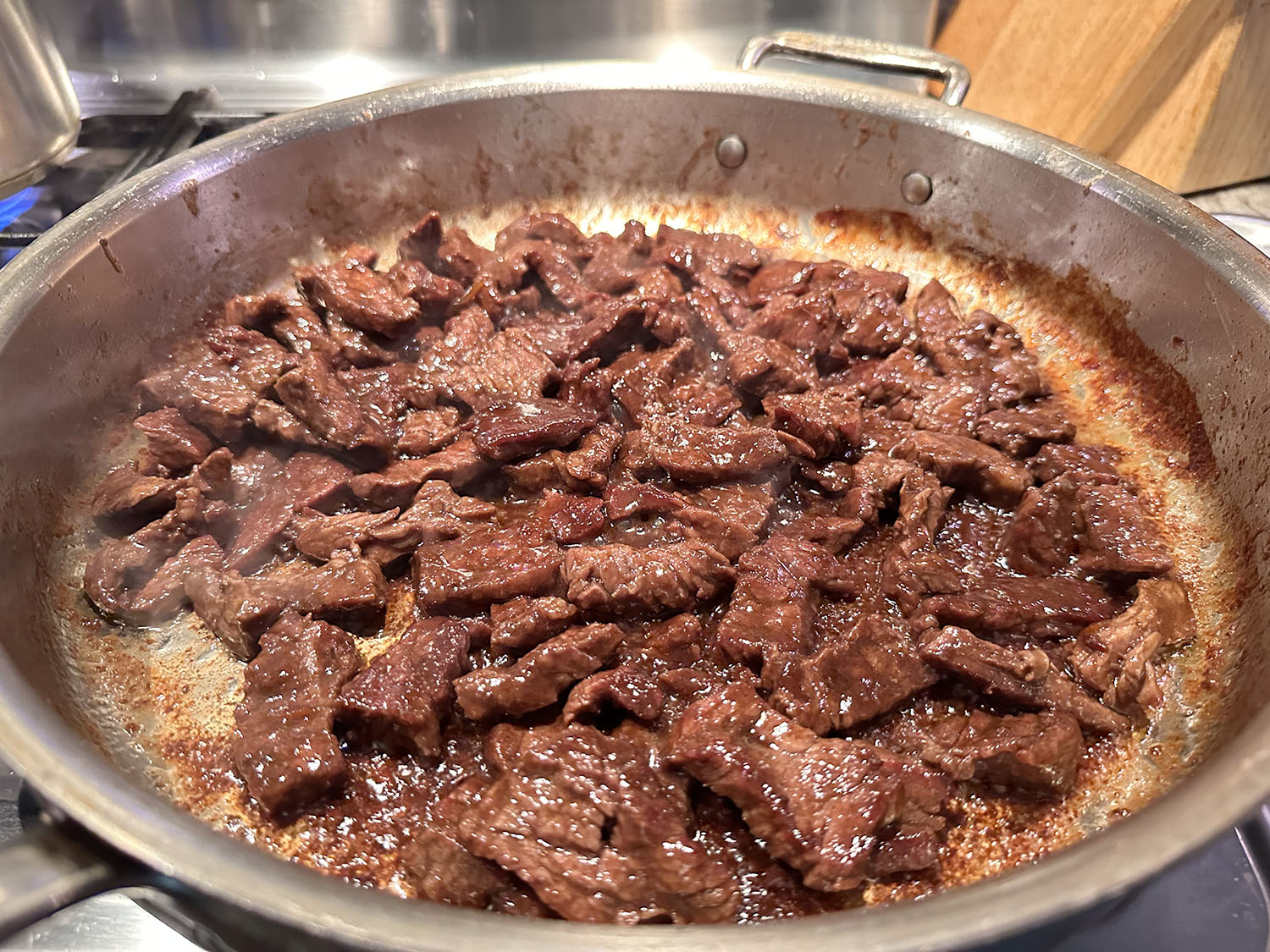
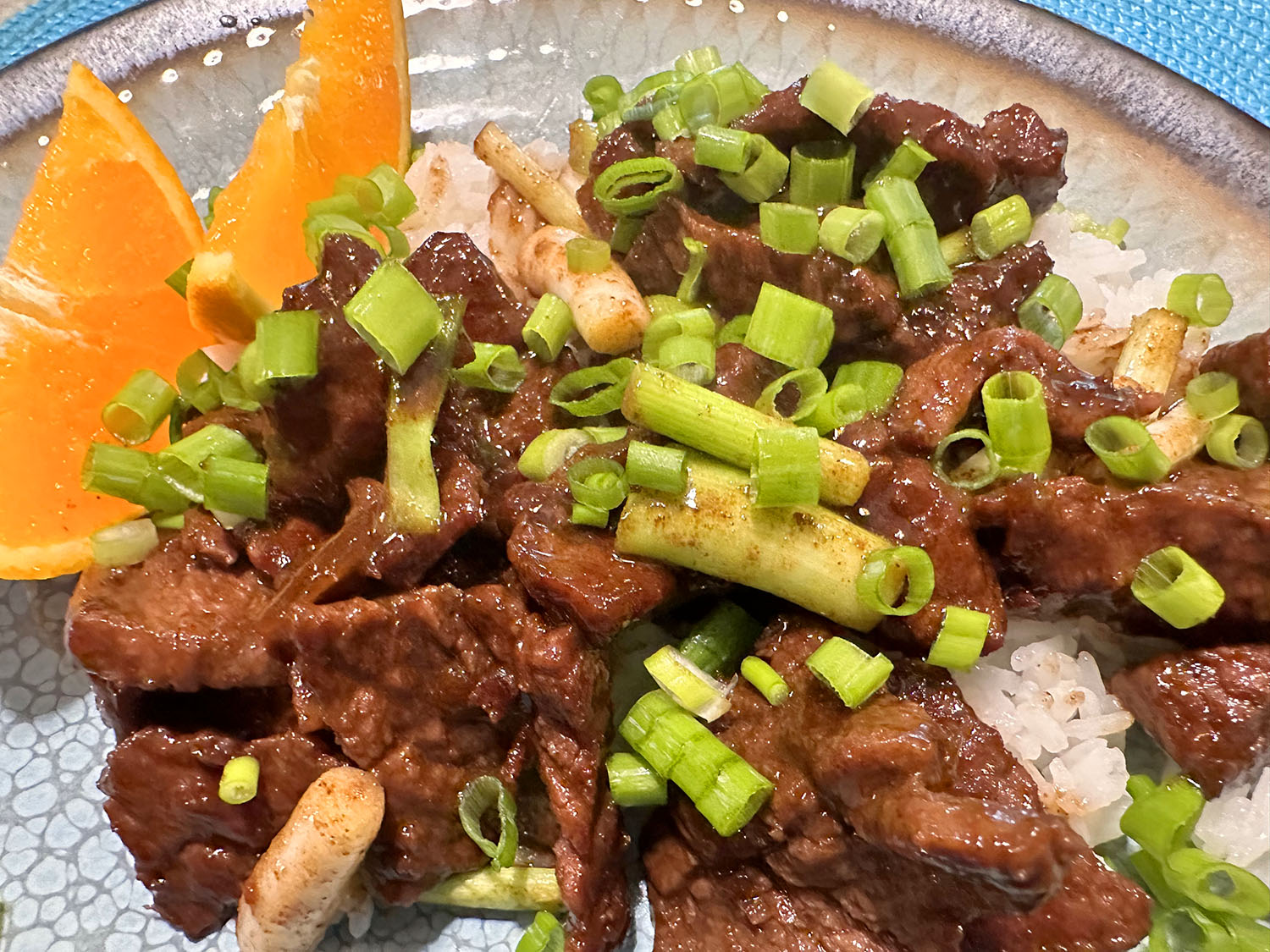
According to Woks of Life where we found this recipe, Ginger Beef isn’t a dish you see too often in the U.S., because it’s more well-known as a Canadian Chinese dish, with possible origins in Calgary. It is said to mimic Mongolian Beef—another North American dish that doesn’t have much to do with Mongolia, and that you’d be hard pressed to find in China. 

The sauce is sweet (this version goes lighter on the sugar; however we would reduce it even more next time) and savory. Minced ginger is added as well as caramelized julienned pieces of it to create a gingery flavor without it being TOO gingery. Some versions include vegetables like peppers and onions, but we paired it with a crunchy Asian Slaw to get more vegetables.

BTW, you’ll get the best out of this recipe with flank steak, but you can use other cuts. To amp up the meal, add in some red pepper strips, and snow peas or other vegetables you may have lying around. We paired our stir-fry with a side of Asian Slaw.

TIP: To julienne the ginger, thinly slice the ginger on its broadest side (so you have wide slices)—cutting the narrower side of the ginger to make a flat surface for the ginger to stand on will make this easier. Fan the slices out straight, so they’re slightly overlapping, like a deck of cards. Then you can just follow that line of slices to julienne into very thin matchsticks. 

Ginger Beef

  • Servings: 4
  • Difficulty: easy
  • Print

Ingredients

For the beef and marinade:

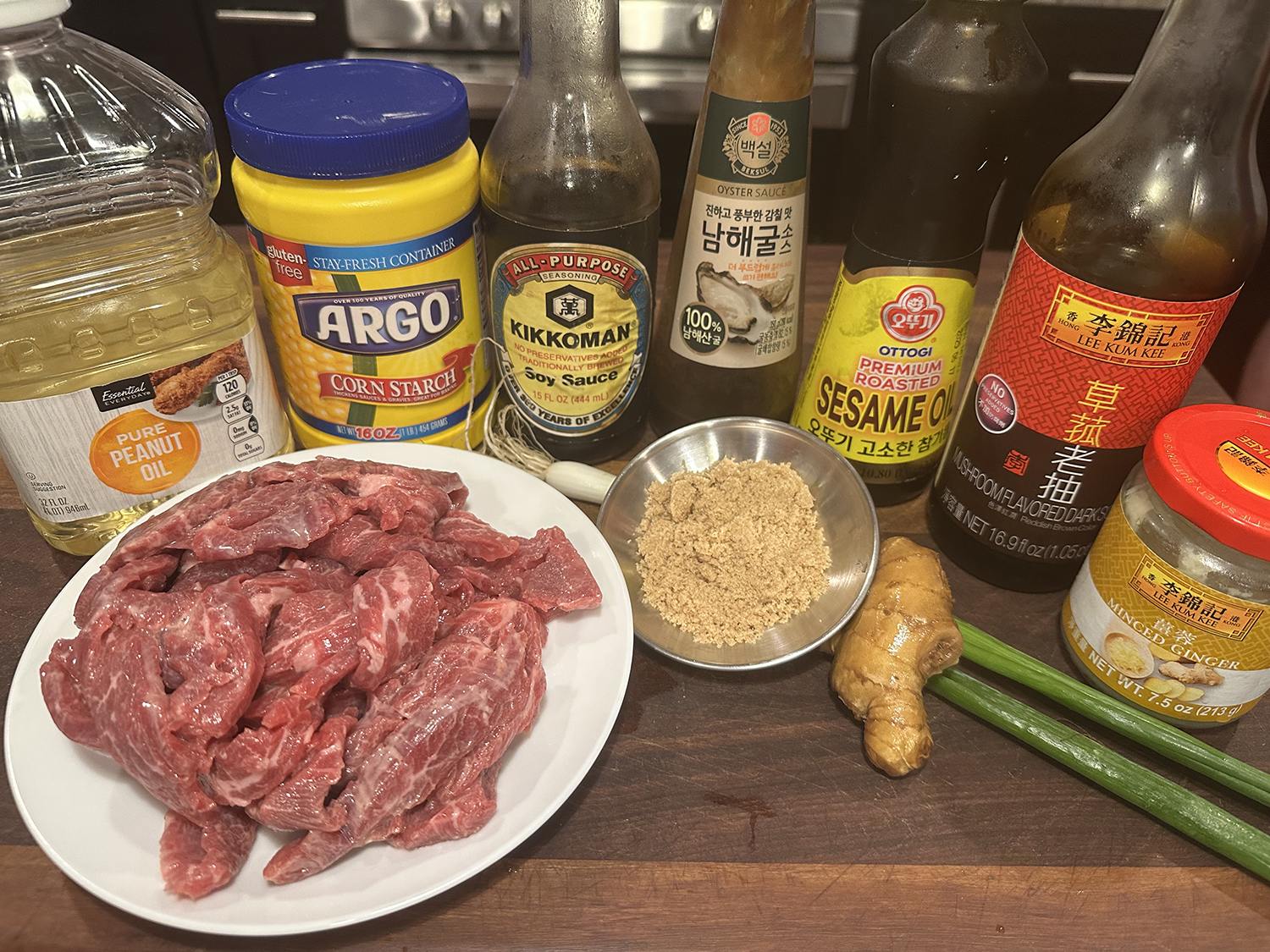
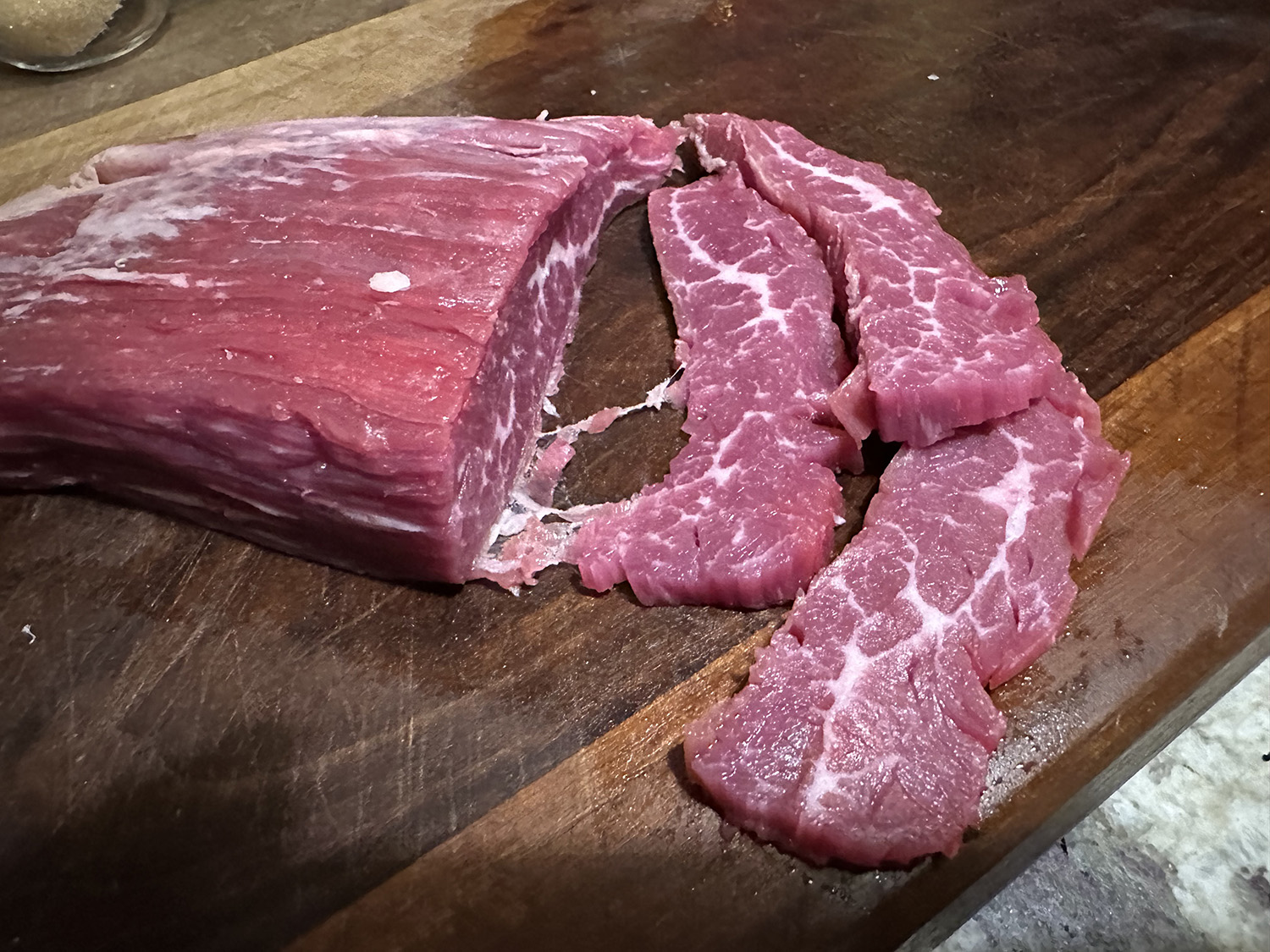
  • 1 lb. flank steak, sliced against the grain into ¼-inch thick slices
  • 2 tsp. cornstarch
  • 2 tsp. neutral oil, such as vegetable, canola, or avocado oil
  • 1 tsp. oyster sauce
  • 1 Tbsp. water
  • ¼ tsp. baking soda

For the sauce:

  • ⅔ cup water
  • 1 ½ Tbsp. light brown sugar
  • 1 Tbsp. light soy sauce
  • 1 Tbsp. oyster sauce
  • ¾ tsp. dark soy sauce, or more regular soy sauce; the dish just won’t be as dark
  • ½ tsp. sesame oil
  • 1 Tbsp. minced ginger

For the rest of the dish:

  • ⅓ – ½ cup cornstarch, plus 1 Tbsp.
  • ¼ – ⅓ cup neutral oil
  • 2 Tbsp. finely julienned ginger
  • 1 scallion, thinly sliced on an angle
Directions

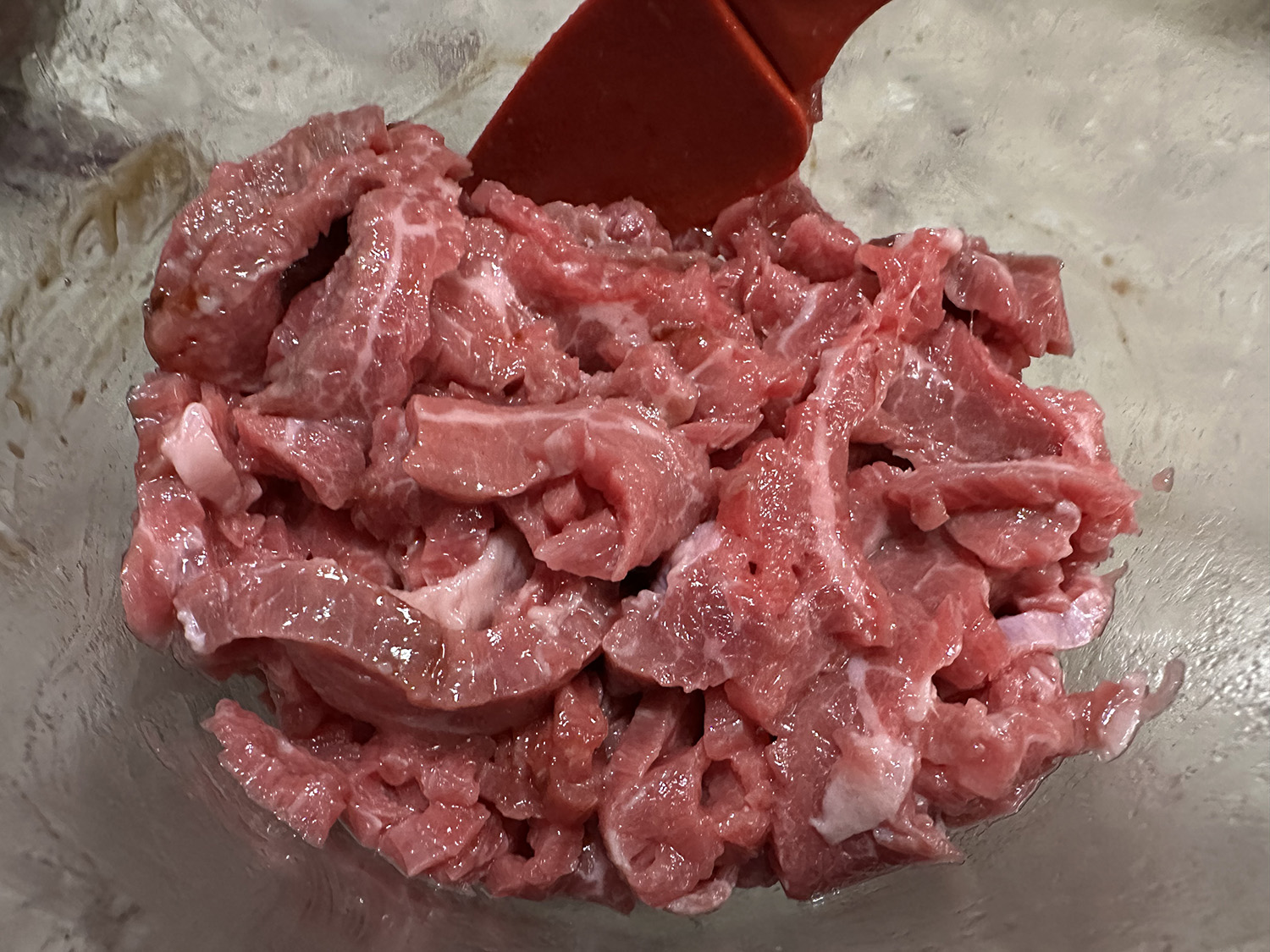
  1. Add the sliced flank steak to a medium bowl, and add the marinade ingredients (the cornstarch, neutral oil, oyster sauce, water, and baking soda). Mix well, and marinate for at least 30 minutes (or up to overnight).
  2. In a liquid measuring cup, mix all the sauce ingredients together—the water, light brown sugar, light soy sauce, oyster sauce, dark soy sauce, sesame oil, and minced ginger. Set aside.
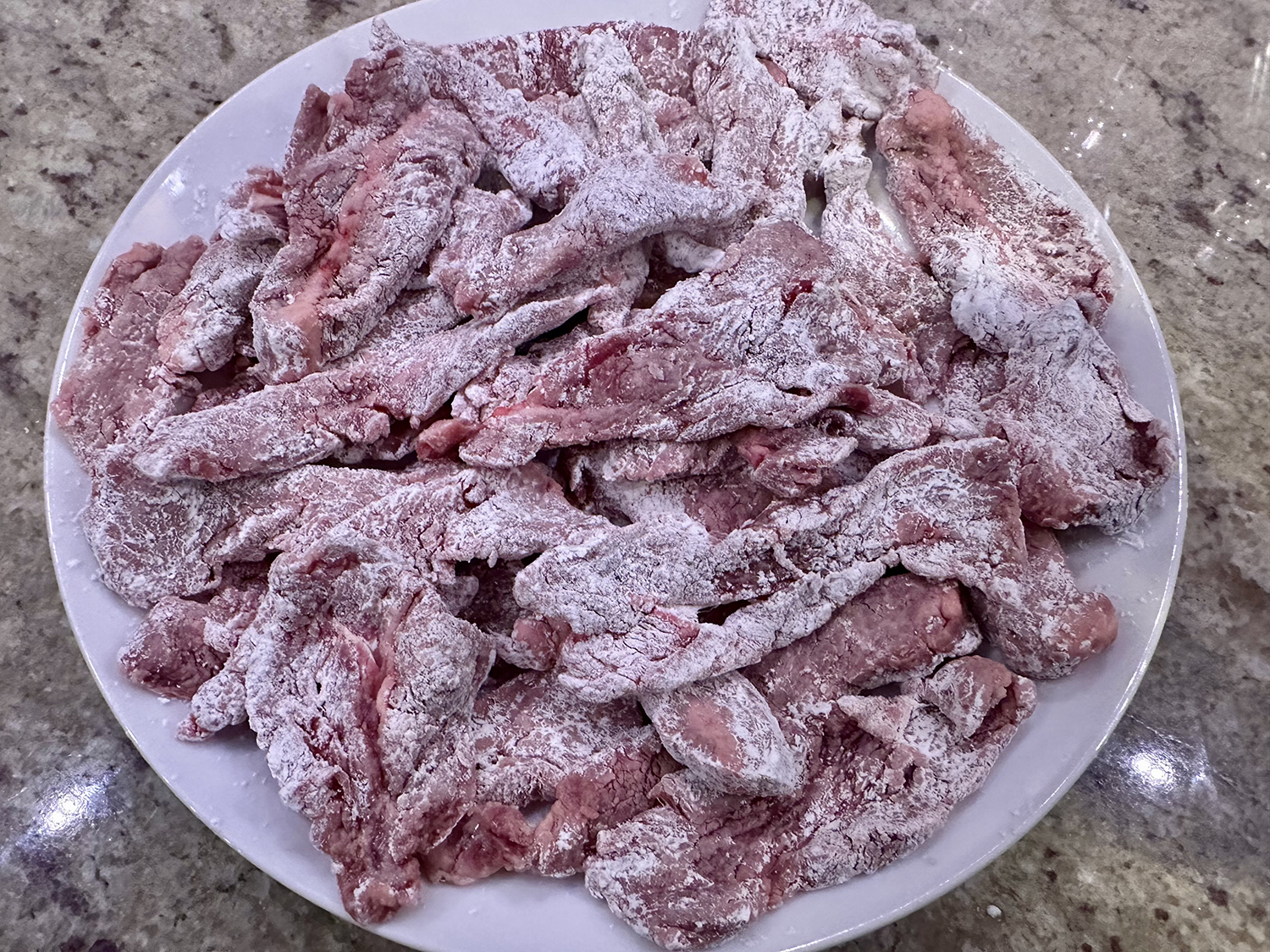
  3. Add the cornstarch to a shallow dish, and dredge the marinated beef slices in the cornstarch until thoroughly coated, placing the dredged beef on a clean plate or sheet pan.
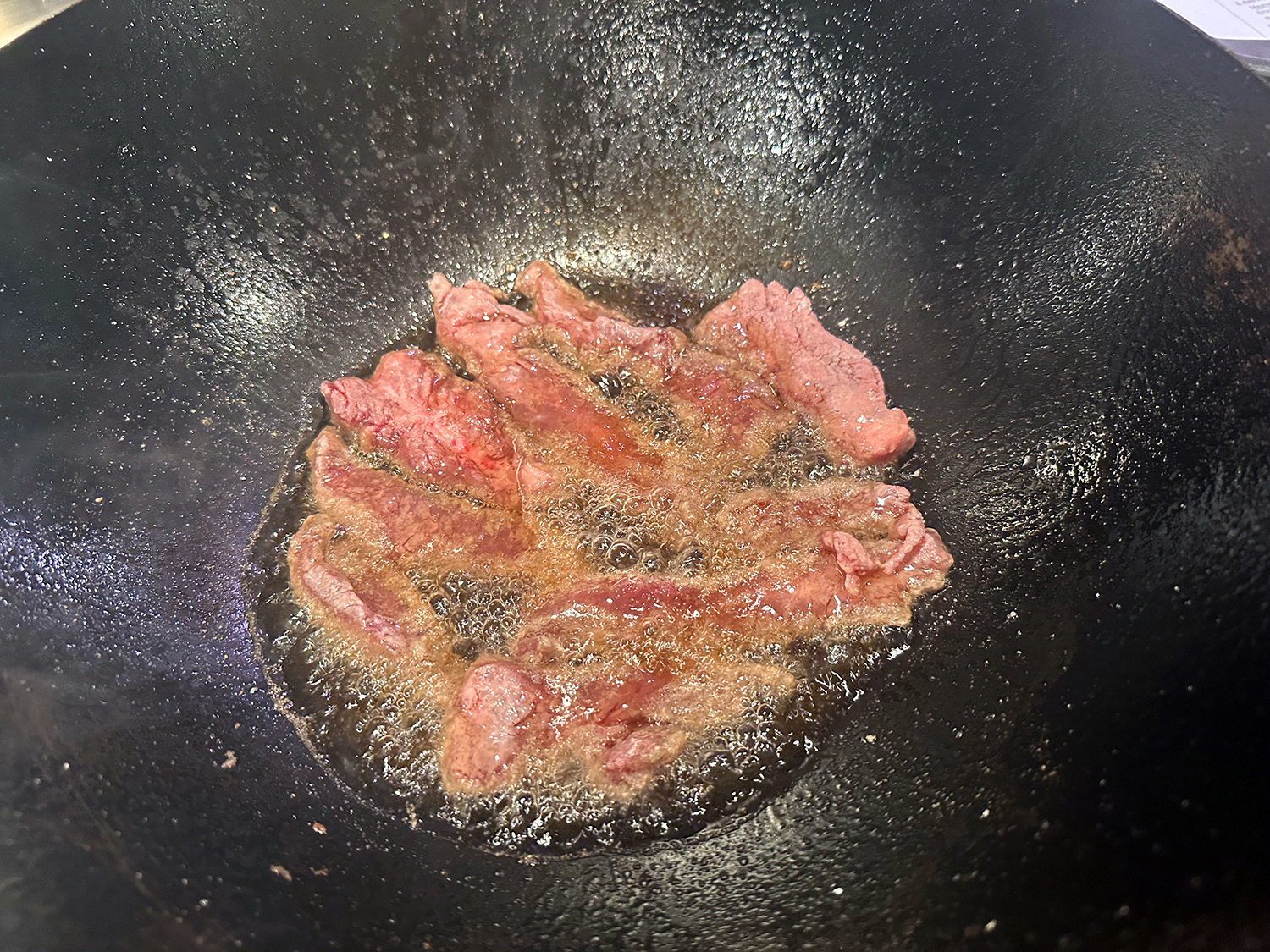
  4. Heat the neutral oil in a wok over high heat. Just before the oil starts to smoke, spread half the flank steak pieces evenly in the wok, and sear for 1-2 minutes on each side, until you have a crispy coating. 1/4 cup oil works for a 14-inch wok, but if you have a larger wok, you may need a tablespoon or two more to properly fry the beef. Remove the beef from the wok, leaving any oil behind, and repeat with the remaining beef. Turn off the heat and transfer the beef to a plate.
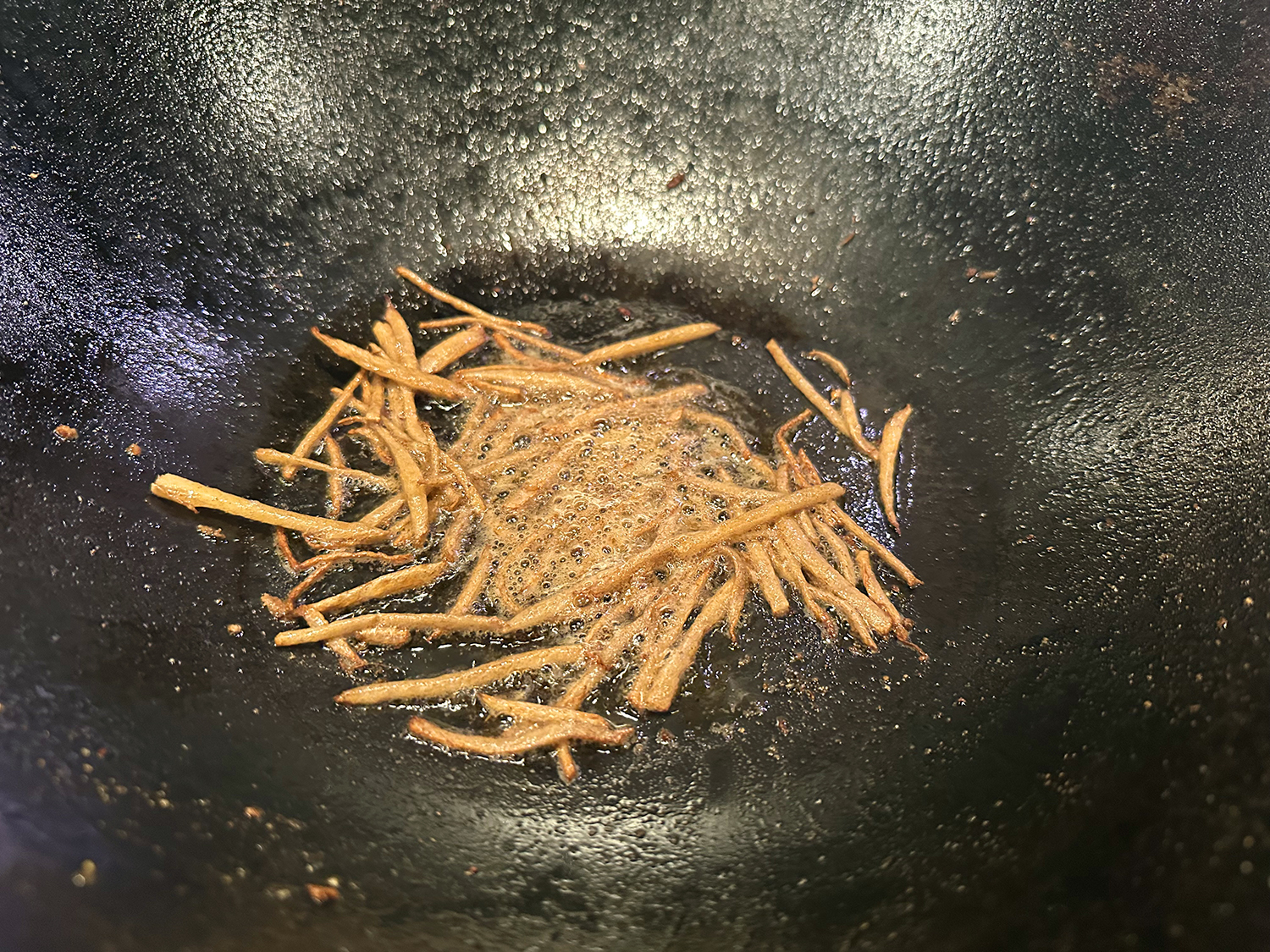
  5. Drain the oil from the wok (save it for other cooking), leaving 2 tablespoons behind. Turn the heat to medium-high. Add the julienned ginger, and fry until crispy. At this point, you can remove a few pieces of fried ginger and reserve it for a garnish if you like.
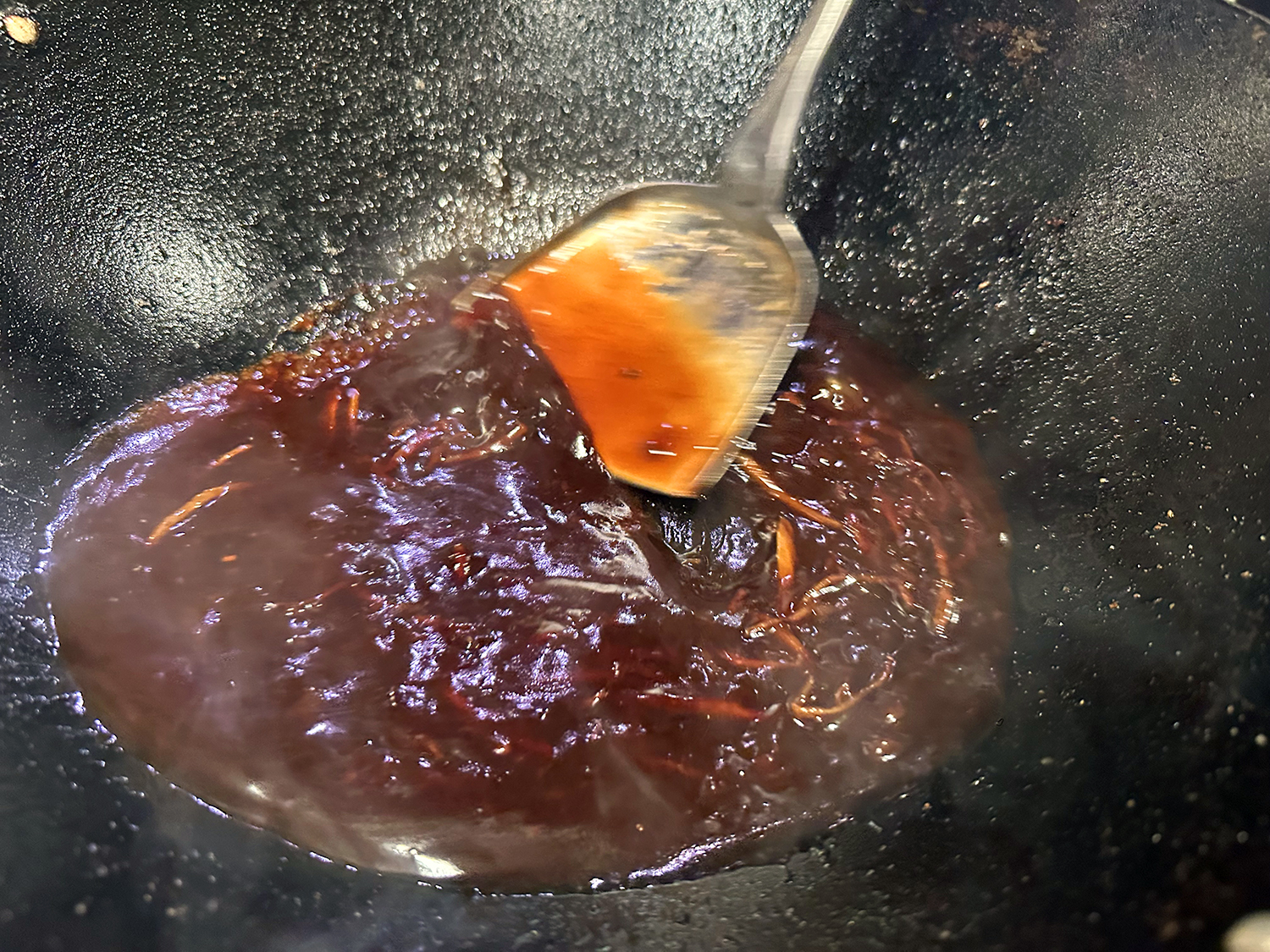
  6. Add the premixed sauce to the wok, and bring to a simmer. Simmer for 2 minutes. Meanwhile, combine the remaining 1 tablespoon of cornstarch with 3 tablespoons of water. Drizzle this cornstarch slurry into the sauce, and cook until it has thickened enough to coat the back of a spoon.
  7. Add the beef and the scallions, and toss everything together for another 30 seconds. The sauce should all be clinging to the beef. Serve!

http://www.lynnandruss.com

Adapted from a recipe from Woks of Life

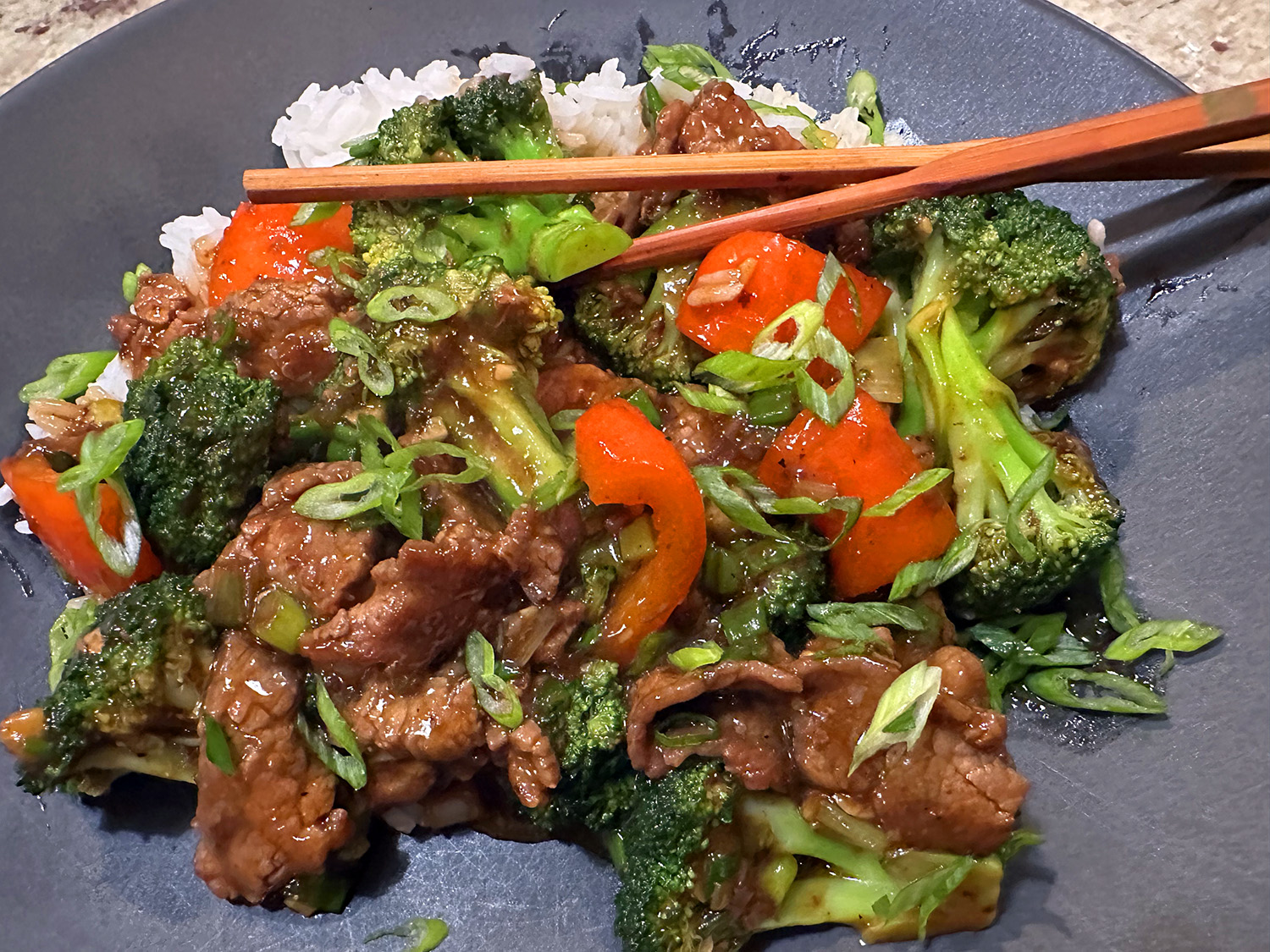
Beef and Broccoli with Red Pepper and Scallions

In many Chinese restaurants, this is one of the most-ordered items of their menus, and is also a favorite take-out dish.

There are many beef and broccoli recipes on the Internet, with variations made in slow cookers, in Instant Pots, and on sheet pans. This version from Woks of Life, however, will show you exactly how to easily achieve restaurant results at home.

Here are the basic steps to making an authentic beef broccoli stir-fry:

  • Tenderize & marinate the beef
  • Blanch the broccoli & sear the beef
  • Cook the sauce & stir-fry everything together

This simple method yields tender beef, still crisp, healthy broccoli, and a rich sauce, combined into a restaurant-style dish. For this recipe, you’ll need both light/regular soy sauce and dark soy sauce. A good dark soy sauce adds flavor and provides that rich dark color to your beef and broccoli. Just as important as the soy sauce is the oyster sauce, which is full of umami goodness and key to producing an authentic restaurant flavor.

Our broccoli florets were too firm in the final dish. For one, they could have been cut smaller, and The Hubs ran cool water over them after they were blanched which prevented any further cooking.

We took the liberty of adding some red bell pepper and scallions, both for color and added nutrition. In the end, we both felt the dish did not have enough bold flavors for our liking—which is probably why we never order it at a Chinese restaurant. But for those of you who prefer a more sedate flavor profile, then it is probably a recipe for you.

Beef and Broccoli with Red Pepper and Scallions

  • Servings: 4
  • Difficulty: easy
  • Print

Ingredients

For the beef and marinade:

  • 1 lb. flank steak (sliced 1/4-inch thick)
  • 1/4 tsp. baking soda (optional)
  • 3 Tbsp. water
  • 1 1/2 tsp. cornstarch
  • 2 tsp. vegetable oil
  • 1 tsp. oyster sauce

For the sauce:

  • 2/3 cup low sodium chicken stock (warmed)
  • 1 1/2 tsp. granulated sugar (or brown sugar)
  • 1 1/2 Tbsp. soy sauce
  • 1 tsp. dark soy sauce (or double black dark soy sauce)
  • 1 Tbsp. oyster sauce
  • 1/2 tsp. sesame oil
  • 1/8 tsp. white pepper

For the rest of the dish:

  • 4 cups broccoli florets
  • 1 red bell pepper, seeded and cut into 1 1/2-inch chunks
  • 1 bunch scallions, sliced thin, whites and greens divided (save some greens for garnish)
  • 3 Tbsp. vegetable oil (divided)
  • 2 cloves garlic (minced)
  • 1/4 tsp. ginger (grated/minced, optional)
  • 1 Tbsp. Shaoxing wine
  • 2 1/2 Tbsp. cornstarch (mixed with 3 Tbsp. water)

Directions

  1. In a bowl, add the sliced beef along with the baking soda and water (if you don’t want your beef tenderized too much, omit the baking soda). Massage the beef with your hands until all the liquid is absorbed. Mix in the remaining marinade ingredients: cornstarch, oil, and oyster sauce. Set aside to marinate for at least 30 minutes.
  2. Make the sauce mixture by mixing together the chicken stock, sugar, soy sauce, dark soy sauce, oyster sauce, sesame oil, and white pepper. Set aside.
  3. Bring a pot of water to a boil and blanch your broccoli for 30 to 60 seconds (depending on whether you like your broccoli crunchy or a little soft). Drain (but do not run cool water over them), and set aside.
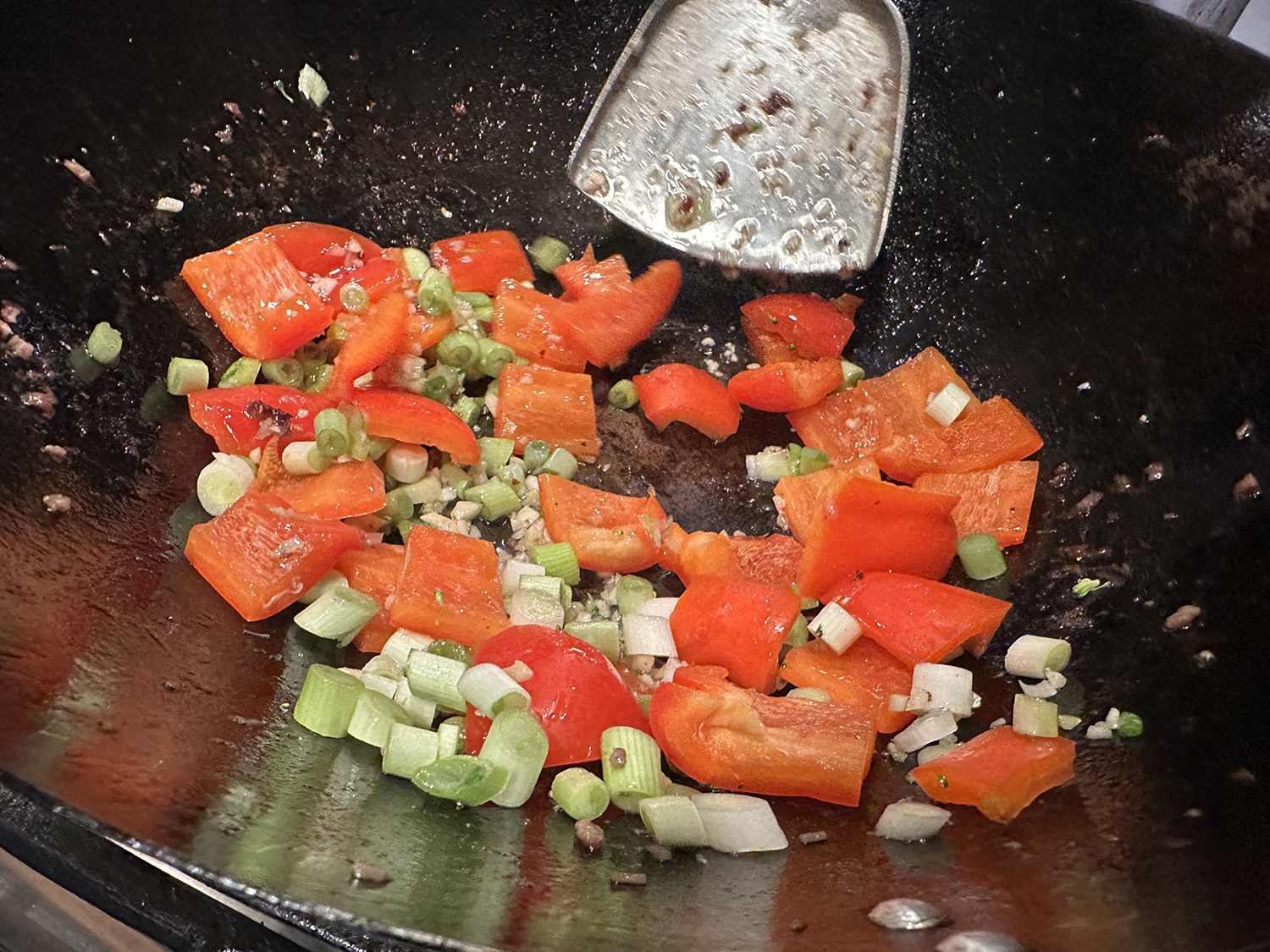
  4. Insert copy about bell pepper and scallions here…
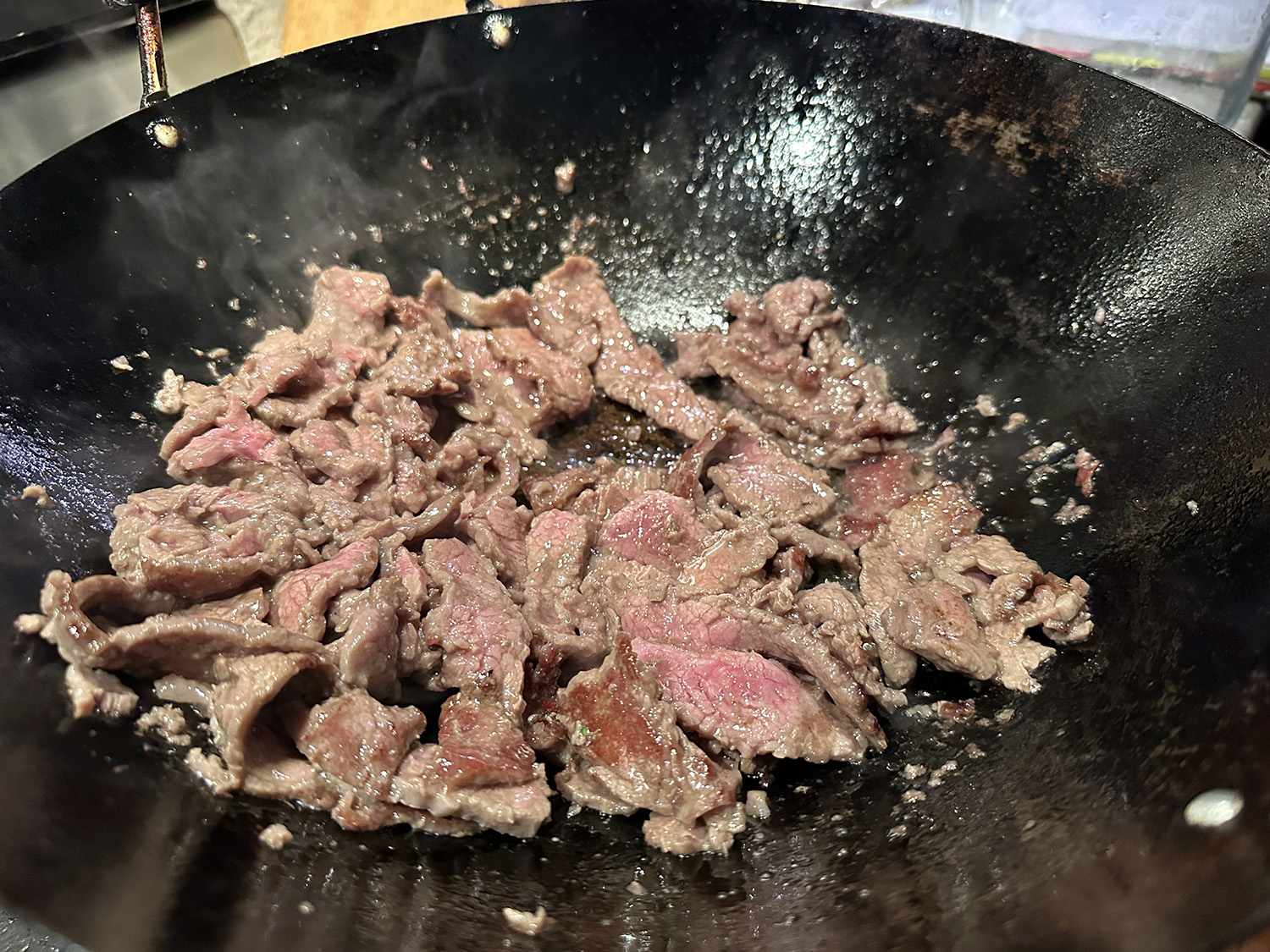
  5. Heat your wok over high heat until smoking. Add 2 tablespoons oil and sear the beef on both sides until browned (this should only take 2-3 minutes). Turn off the heat, remove the beef from the wok, and set aside.
  6. Set the wok over medium heat and add another tablespoon of oil along with the garlic and ginger (if using). Stir the garlic and ginger for 5 seconds and then pour the Shaoxing wine around the perimeter of the wok.
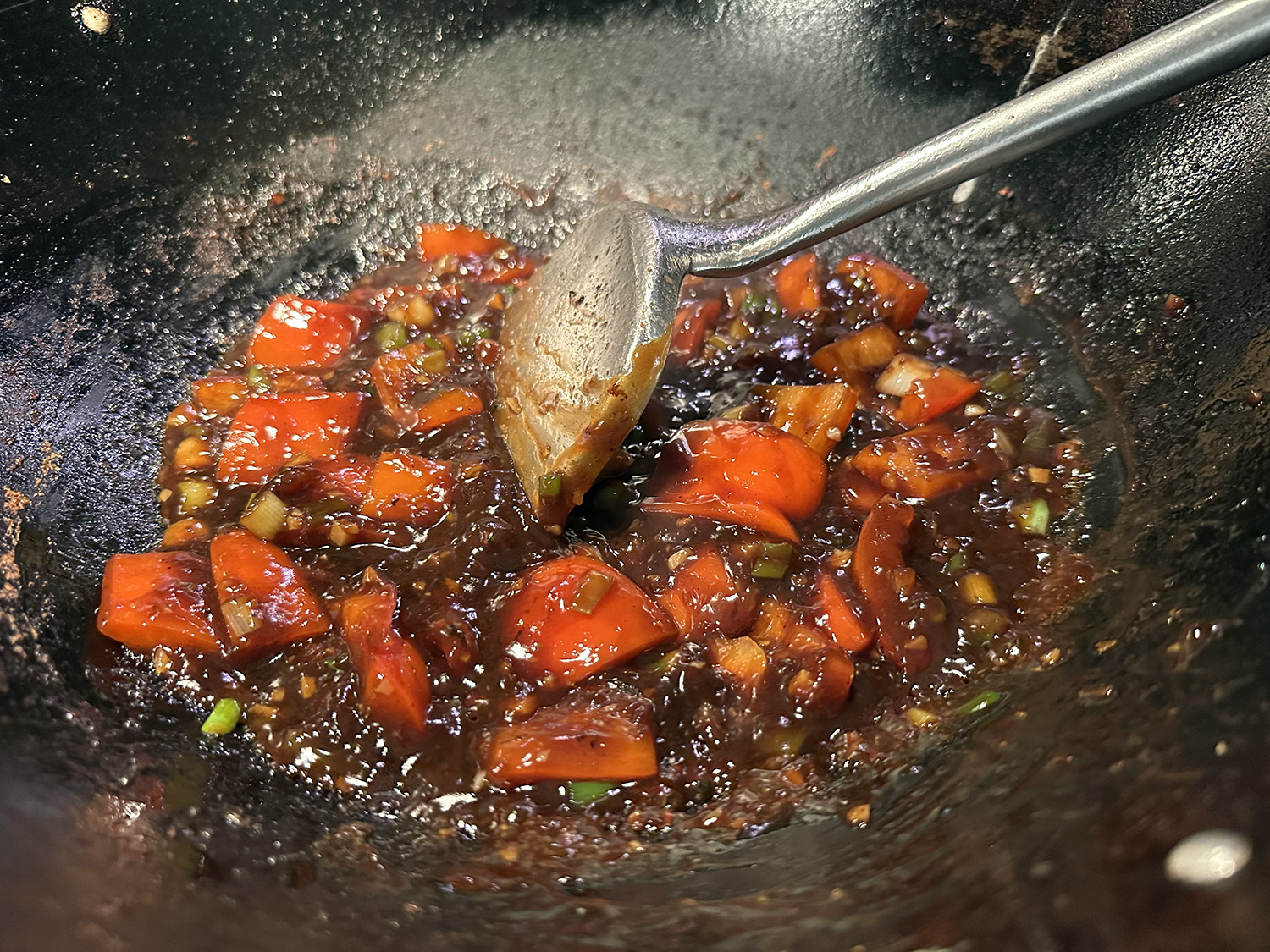
  7. Next, add in the sauce mixture you made earlier. Stir the sauce around the sides of the wok to deglaze it (all those nice bits from stir-frying the beef should be absorbed into the sauce). Bring the sauce to a simmer. Stir the cornstarch and water into a slurry to ensure it’s well combined, and drizzle the mixture into sauce while stirring constantly. Allow it to simmer and thicken for 20 seconds.
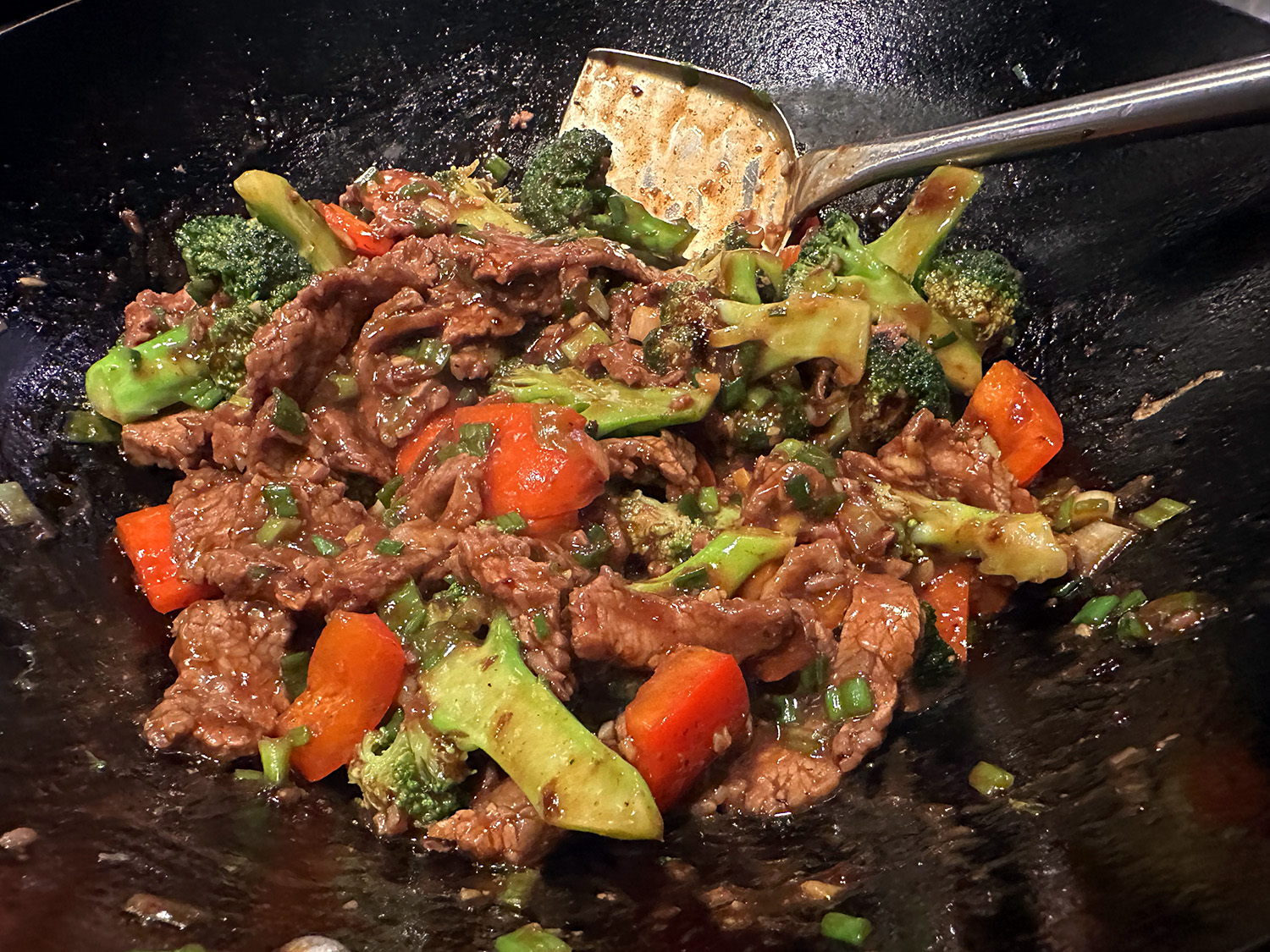
  8. Toss in the blanched broccoli and seared beef (along with any juices). Mix everything together over medium heat until the sauce coats the beef and broccoli. If the sauce seems thin, turn up the heat and reduce it further, or add a bit more cornstarch slurry. If the sauce is too thick, add a splash of chicken stock or water. Serve with plenty of steamed rice.

http://www.lynnandruss.com

Adapted from a recipe by Bill from Woks of Life

Chinese Shredded Cabbage Stir-Fry

This recipe from the “Woks of Life” is an example of easy, tasty, healthy and cheap. Now we don’t consider “cheap” to necessarily be a top descriptor of our culinary approach, but this cabbage stir-fry is savory, tangy, very quick to prepare—and the overall ingredients are not costly. Cabbage is so inexpensive, filling, and healthy, but people don’t always know how to prepare it in a way that actually tastes, well…good.

All you need is very high heat, a couple of dried chilies, a few splashes of Chinese pantry staples—and a wok—to make all the difference. Just eating this cabbage dish over rice is a satisfying meal in and of itself.

In Chinese, the name of this dish can be translated as “hand-shredded cabbage.” The real reason is unknown, but a guess is that the rough, haphazardly torn pieces of cabbage offer textural variety, and do a great job of soaking up more sauce and flavor. OK, we’re down with that…

On another note, even though it was a truly delicious dish, our preference lies toward saucy when it comes to stir-fries, and this was decidedly not. So if you prefer a more saucy finish, just double the liquids (wine though vinegar).

While The Hubs likes pork belly, The Missus does not, so we compromised and used a small pork loin. We had a half head of cabbage on hand weighing about 50% less than called for, so we doubled the number of scallions from 2 to 4. The recipe says it feeds 4, well the two of us almost polished it off; therefore more realistically serves 2 to 3 people.

Chinese Shredded Cabbage Stir-Fry

  • Servings: 4
  • Difficulty: easy
  • Print

Ingredients

  • 2 Tbsp. oil
  • 6 oz. pork belly (pork loin, or chicken, thinly sliced)
  • 5 cloves garlic (smashed and cut in half)
  • 5 dried red chilies (deseeded and roughly chopped)
  • 1 1/2 lb. cabbage (hand-shredded into bite sized pieces, washed, and thoroughly dried)
  • 2 tsp. Shaoxing wine
  • 1 Tbsp. soy sauce
  • 1/2 tsp. sugar
  • 1 Tbsp. water
  • 1/2 tsp. Chinese black vinegar
  • 2 scallions (cut into 2-inch lengths)

Directions

  1. In a wok over high heat, add the oil. Sear the meat until caramelized. Add the garlic and chili, turn down the heat to medium, and stir-fry for a minute, taking care not to burn the garlic.
  2. Add the cabbage, wine, soy sauce, sugar, and water. Turn up the heat to high, cover the lid and let the cabbage cook for 1-2 minutes.
  3. Uncover the lid, and stir in the black vinegar, scallions, and salt to taste. The cabbage should be wilted, but still slightly crunchy and caramelized. Serve hot!

http://www.lynnandruss.com

Recipe from “The Woks of Life”

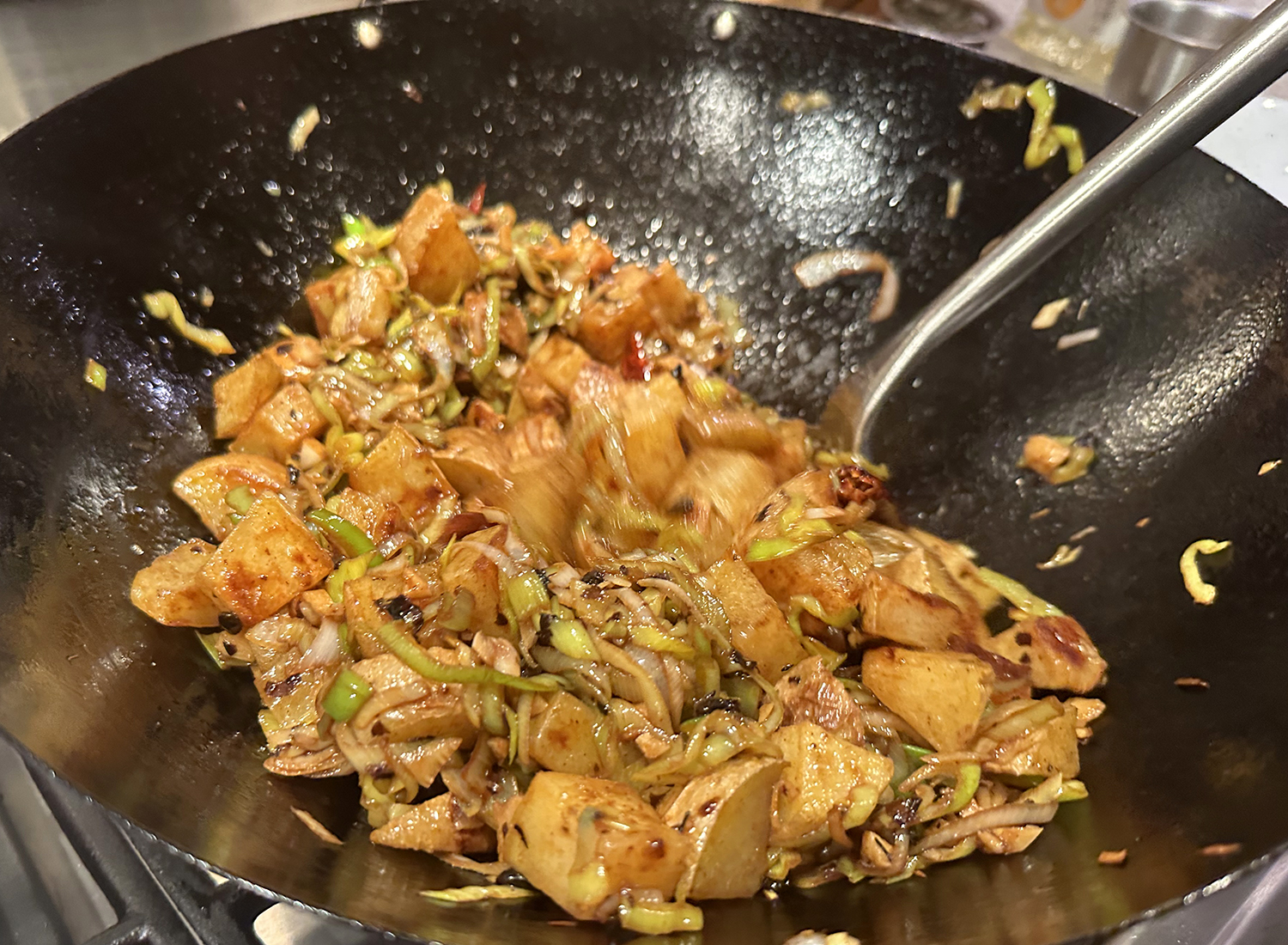
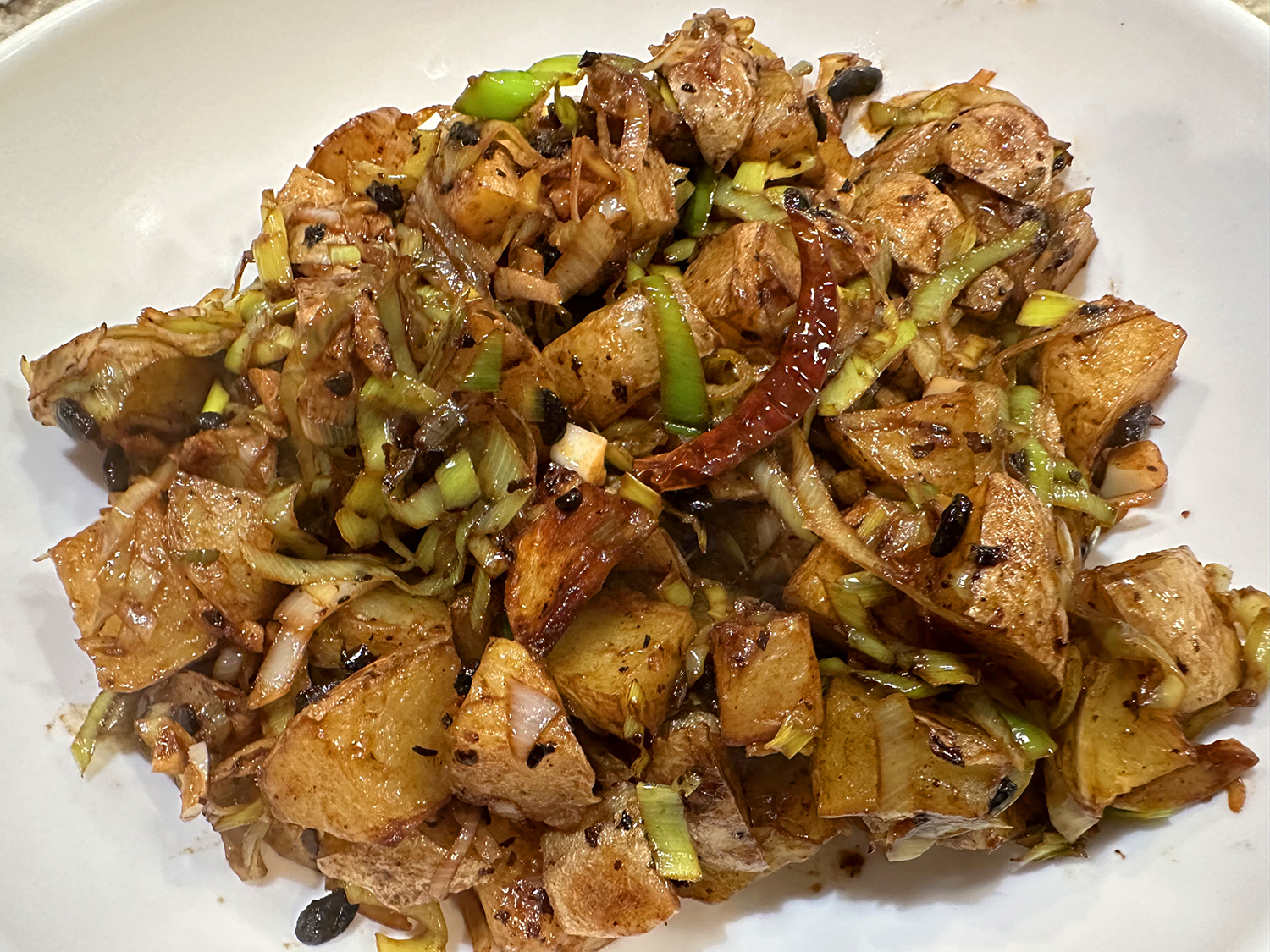
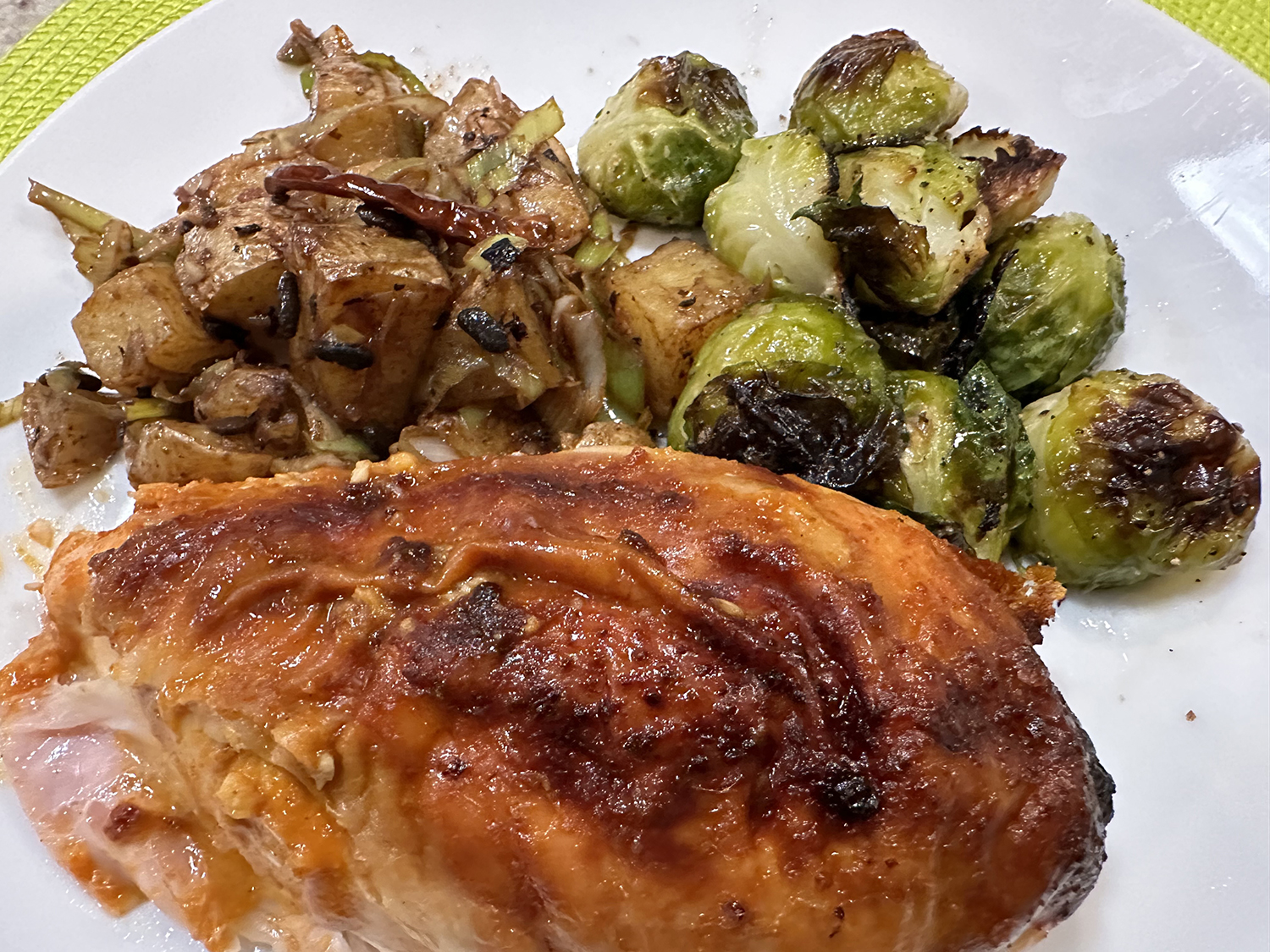
Spicy Black Bean, Twice-Cooked Potatoes

Admittedly, we have never stir-fried potatoes before. So our first foray was this vegetarian/vegan dish based on a favorite Chinese dish called “Twice-Cooked Pork”. In lieu of meat, this dish features potatoes roasted in the oven and then stir-fried with a spicy black sauce. You can adjust the heat to cater to your own preferences.

When the potatoes come out of the oven after 30 minutes or so, they are fabulous to eat as they are, without the additional ingredients and stir-frying. So if you have a picky eater, push a small portion aside for them (reheat briefly in microwave if necessary).

Spicy Black Bean, Twice-Cooked Potatoes

  • Servings: 4
  • Difficulty: easy
  • Print

Ingredients

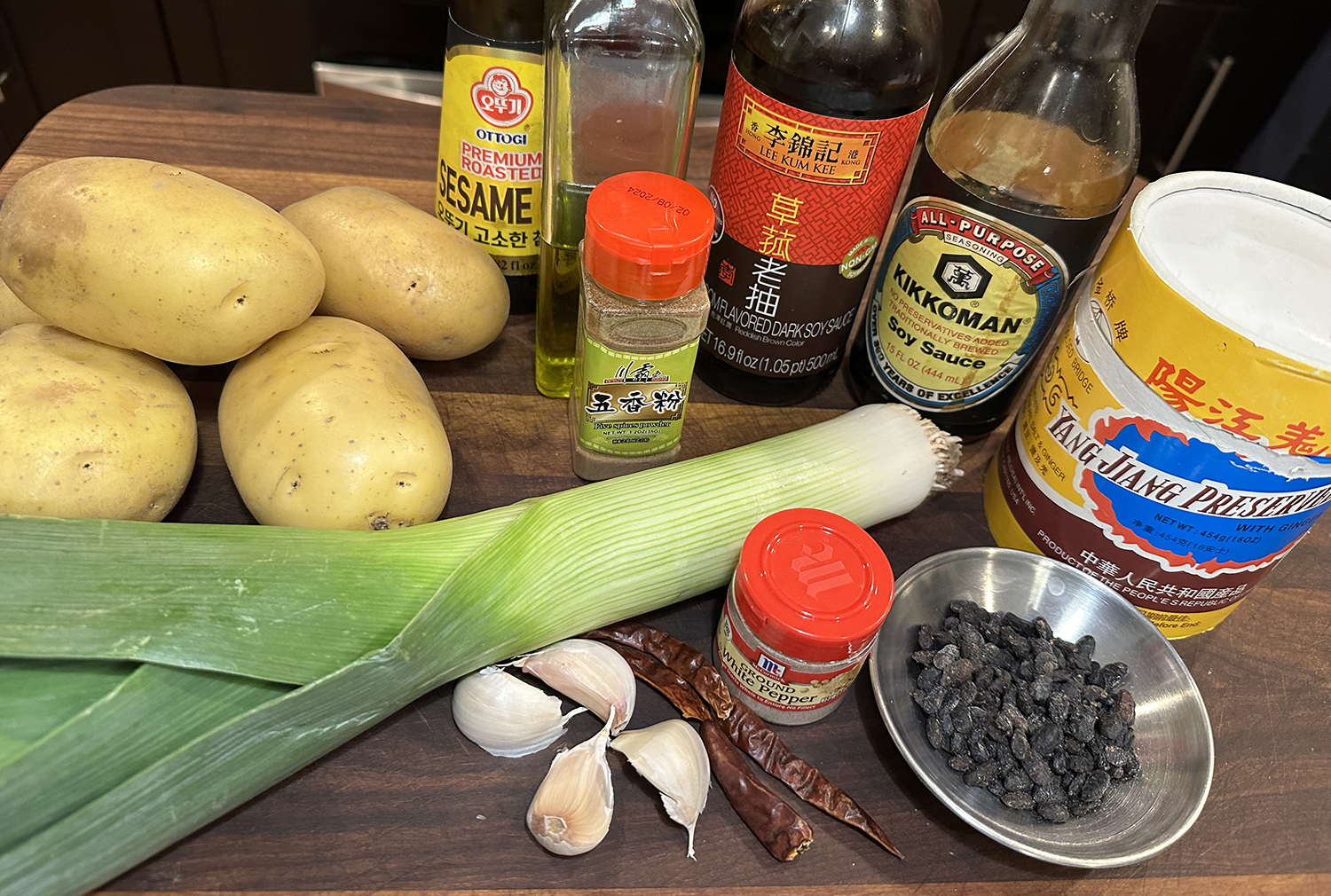
  • 4-5 medium Yukon gold potatoes; scrubbed and cut into bite-sized chunks
  • 1 Tbsp. salt
  • 1/4 tsp. white pepper
  • 1/4 tsp. five-spice powder
  • Neutral oil
  • 4 cloves garlic (smashed and coarsely chopped)
  • 1-6 dried red chilies, chopped and de-seeded; depending on your tolerance for heat
  • 2 Tbsp. fermented black beans; soaked in hot water for 15 minutes; do not discard water
  • 1 Tbsp. Shaoxing wine
  • 1 tsp. light soy sauce
  • 1 tsp. dark soy sauce
  • ½ tsp. sesame oil
  • 2 Tbsp. black bean soaking water
  • 1 cup leeks; sliced on the diagonal into thin strips

Directions

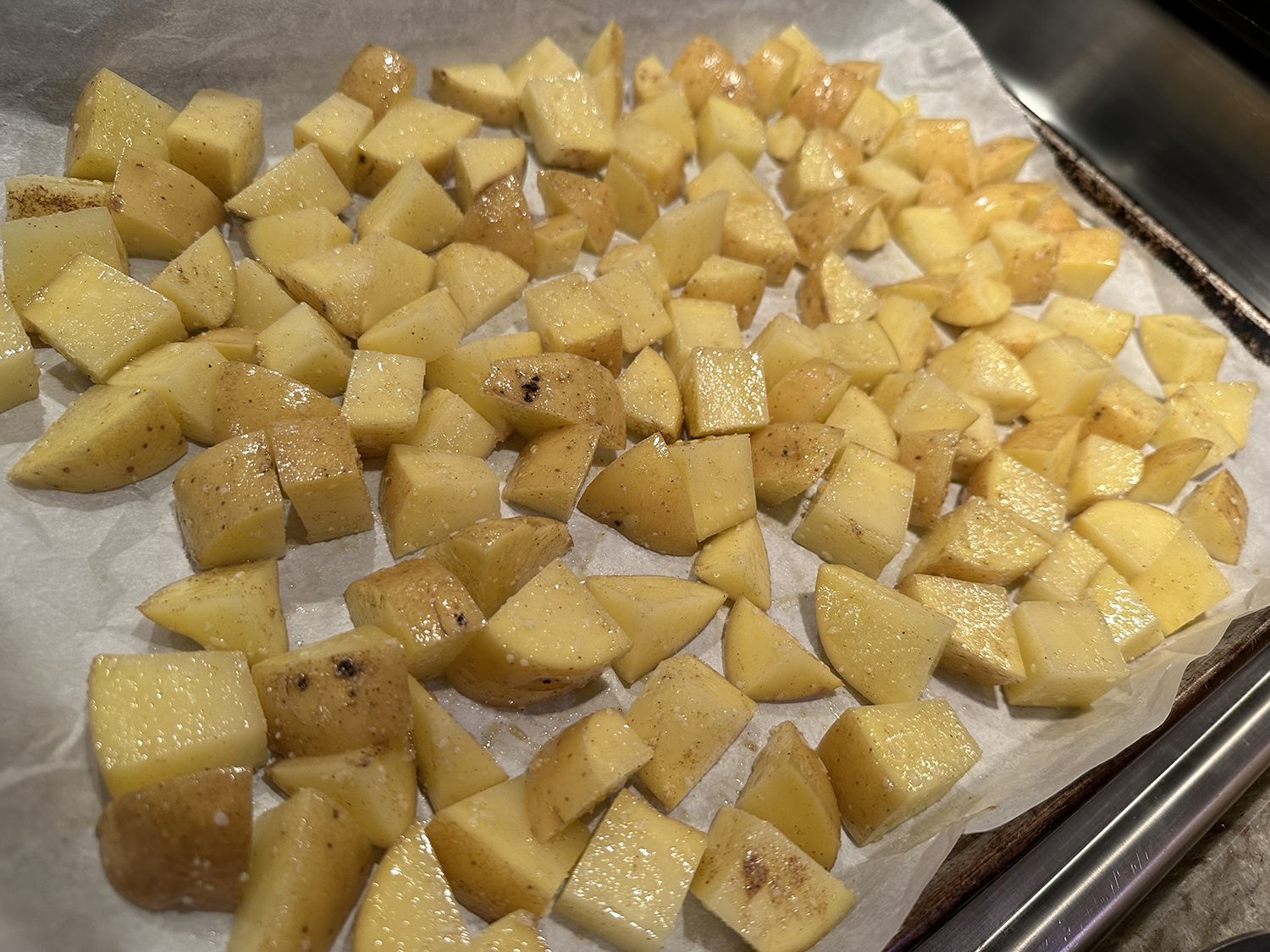
  1. Preheat the oven to 375 degrees F, and spread the potatoes on a parchment-lined baking sheet. Toss with salt to taste, white pepper, and five-spice powder. Drizzle with olive oil and roast for about 30 minutes, or until fork tender. (Ours took 10 minutes longer.)
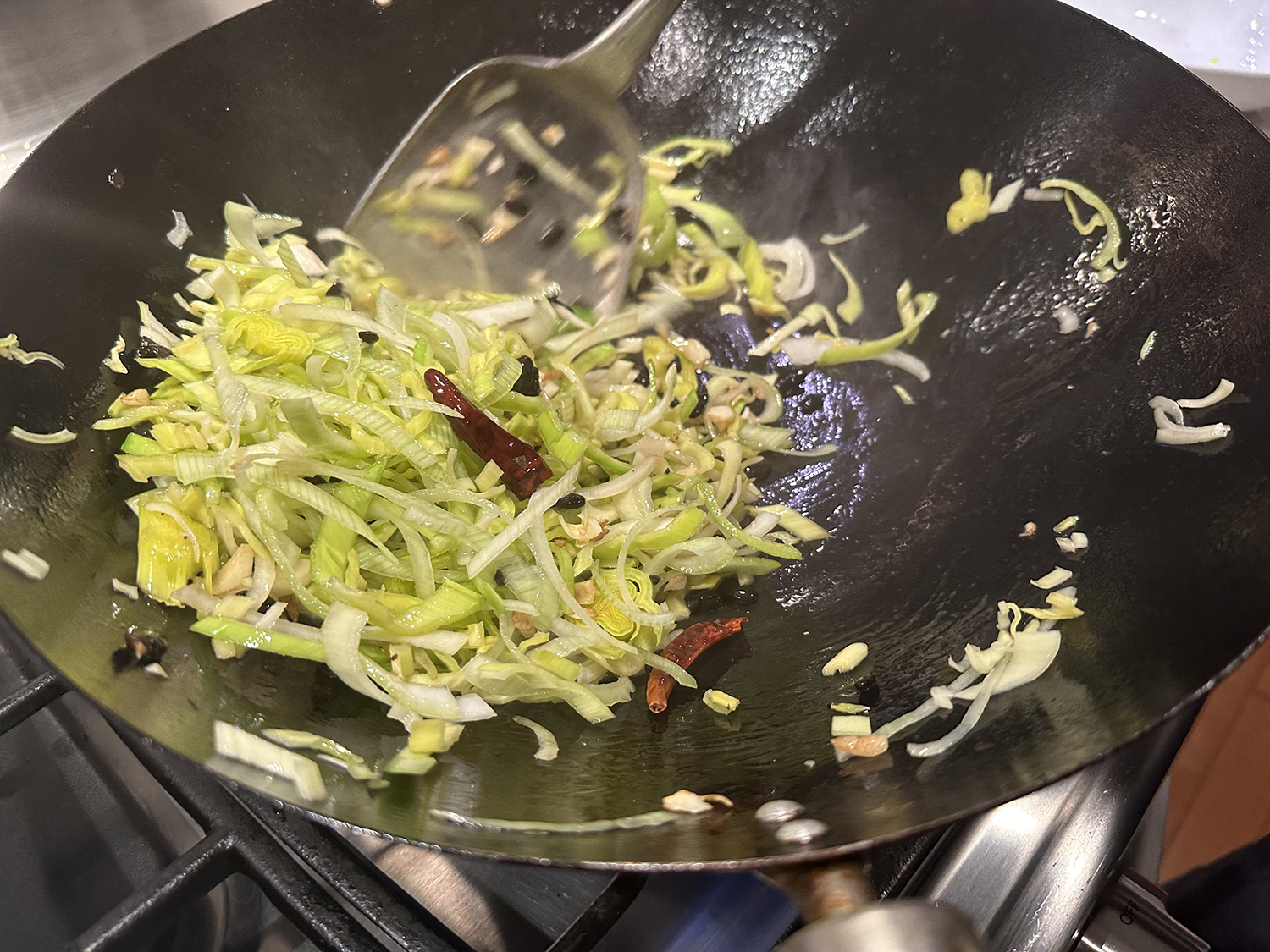
  2. Once the potatoes are done roasting, heat a couple tablespoons of oil in a wok over medium heat. Add the garlic, chili, and black beans. Cook for 30 seconds, and be careful not to burn the ingredients.
  3. Turn heat to high and add the sliced leeks. Stir-fry for 2 minutes.
  4. Add the wine, soy sauces, sesame oil, and water. Stir everything together and add the roasted potatoes. Stir-fry for another 2 minutes. Serve immediately.

http://www.lynnandruss.com

Adapted from a recipe by Judy Leung in The Woks of Life
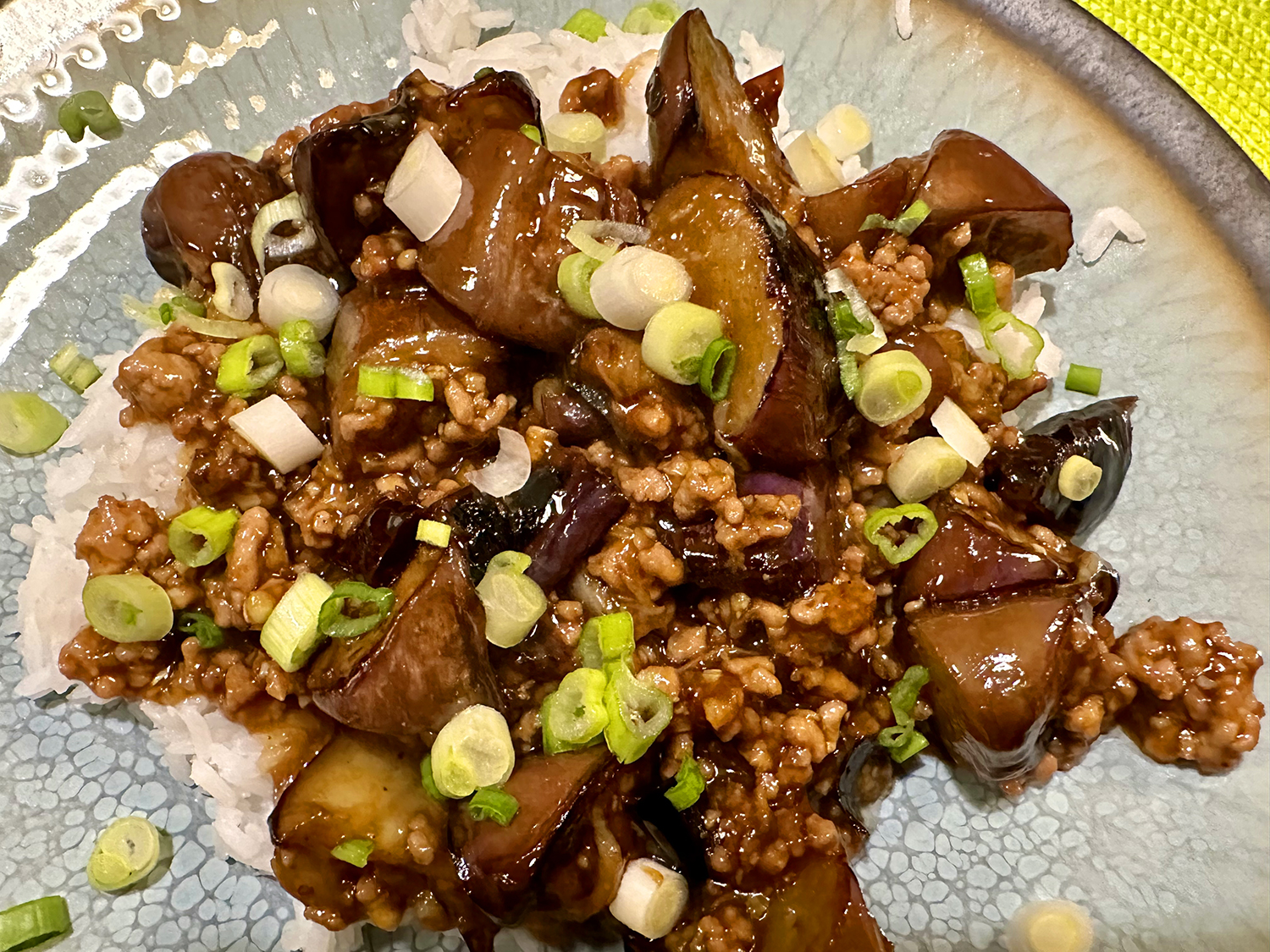
Eggplant with Garlic Sauce

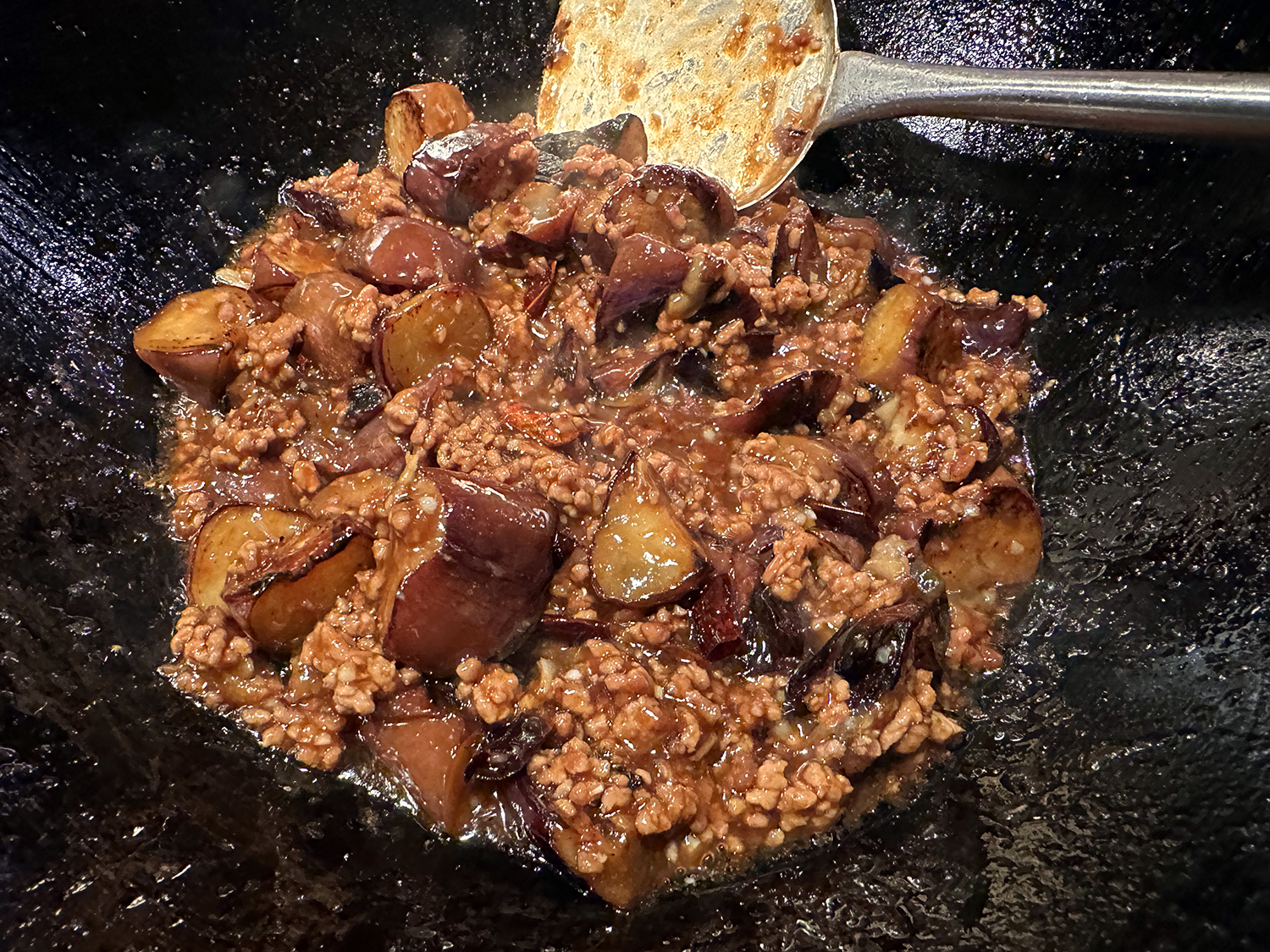
If you are an eggplant fan, you need to add this stir-fry to your shortlist. Chinese eggplant with garlic sauce, or “fish fragrant eggplant” (yuxiang qiezi) is a familiar dish in many American Chinese restaurants and buffets these days, but it’s also a dish with many authentic variations in China. Here is another version of this much-loved classic.

In most cases, Chinese restaurants make this Chinese eggplant with garlic sauce dish by deep frying the eggplant, resulting in very tasty, soft eggplant, but also a very oily dish. This Chinese eggplant with garlic sauce uses a fraction of the oil in restaurant versions and is a game-changing healthy dish!

The eggplant pieces had to be cooked in two batches to ensure they would brown instead of steam. If you need to do this also, it will add some time to the overall recipe. As far as the ground pork, we used a bit more (25%) than called for. If you are vegetarian, you can skip the meat altogether or replace it with tofu.

Eggplant with Garlic Sauce

  • Servings: 2-4
  • Difficulty: easy
  • Print

Ingredients

FOR THE SAUCE MIXTURE:

  • 1/2 cup hot water
  • 1 Tbsp. corn starch
  • 1 tsp. toasted sesame oil
  • 1 Tbsp. light soy sauce
  • 1/2 tsp. dark soy sauce
  • 1 Tbsp. sugar
  • 1 Tbsp. Shaoxing wine or sherry
  • 1 Tbsp. rice vinegar
  • 1 1/2 Tbsp. oyster sauce or vegetarian oyster sauce
  • 1/8 tsp. ground white pepper
  • 6 cloves garlic, (finely minced), divided

FOR THE REST OF THE DISH:

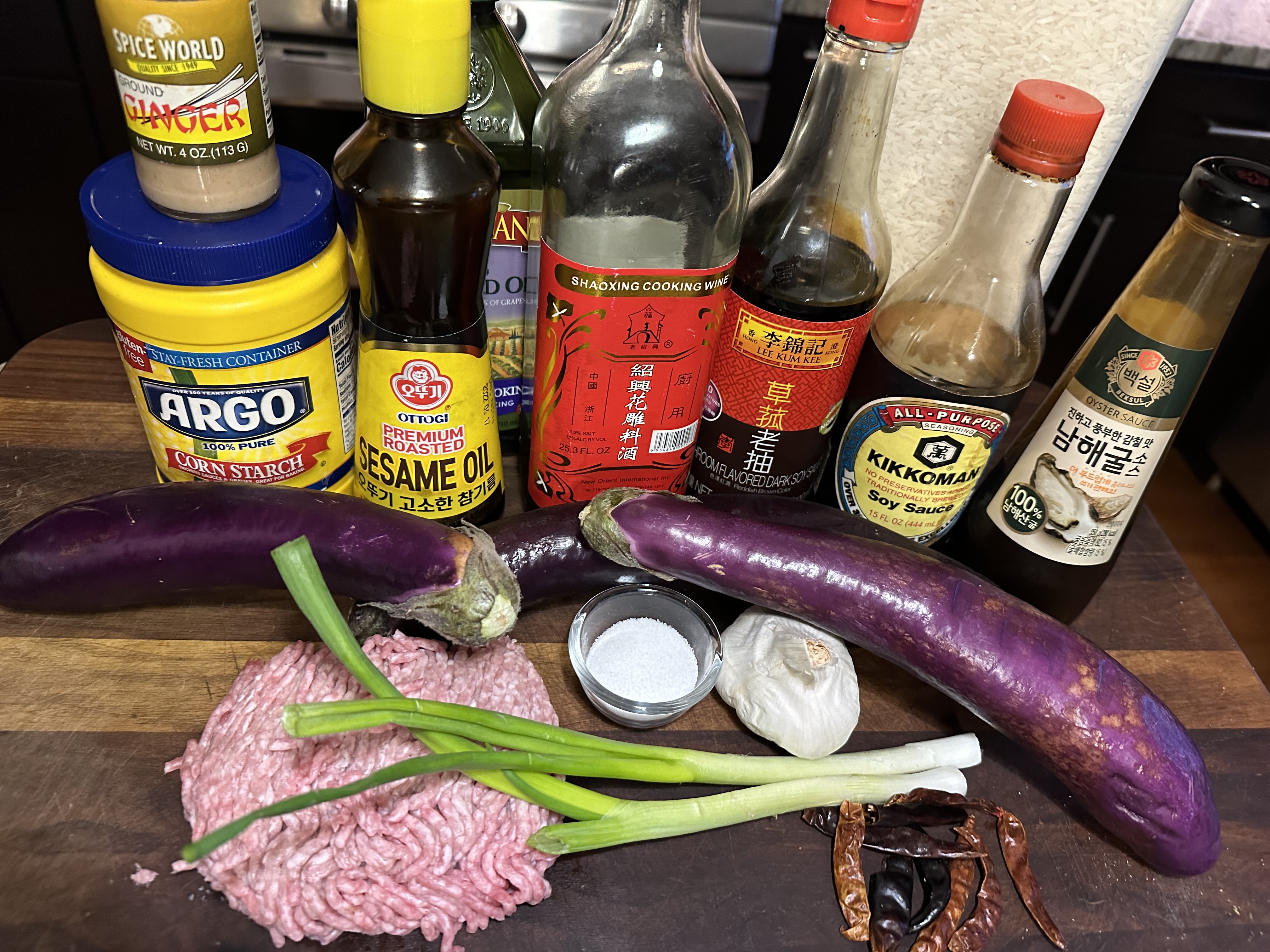
  • 2-3 Japanese or Chinese eggplants, (about 1 pound)
  • 2 scallions, white and green parts finely chopped
  • 4 Tbsp. neutral oil, divided
  • 4 oz. ground pork, chicken, or turkey (optional)
  • 2 tsp. minced fresh ginger
  • 5 dried red chilies, or more to taste, seeded and sliced into small pieces

Directions

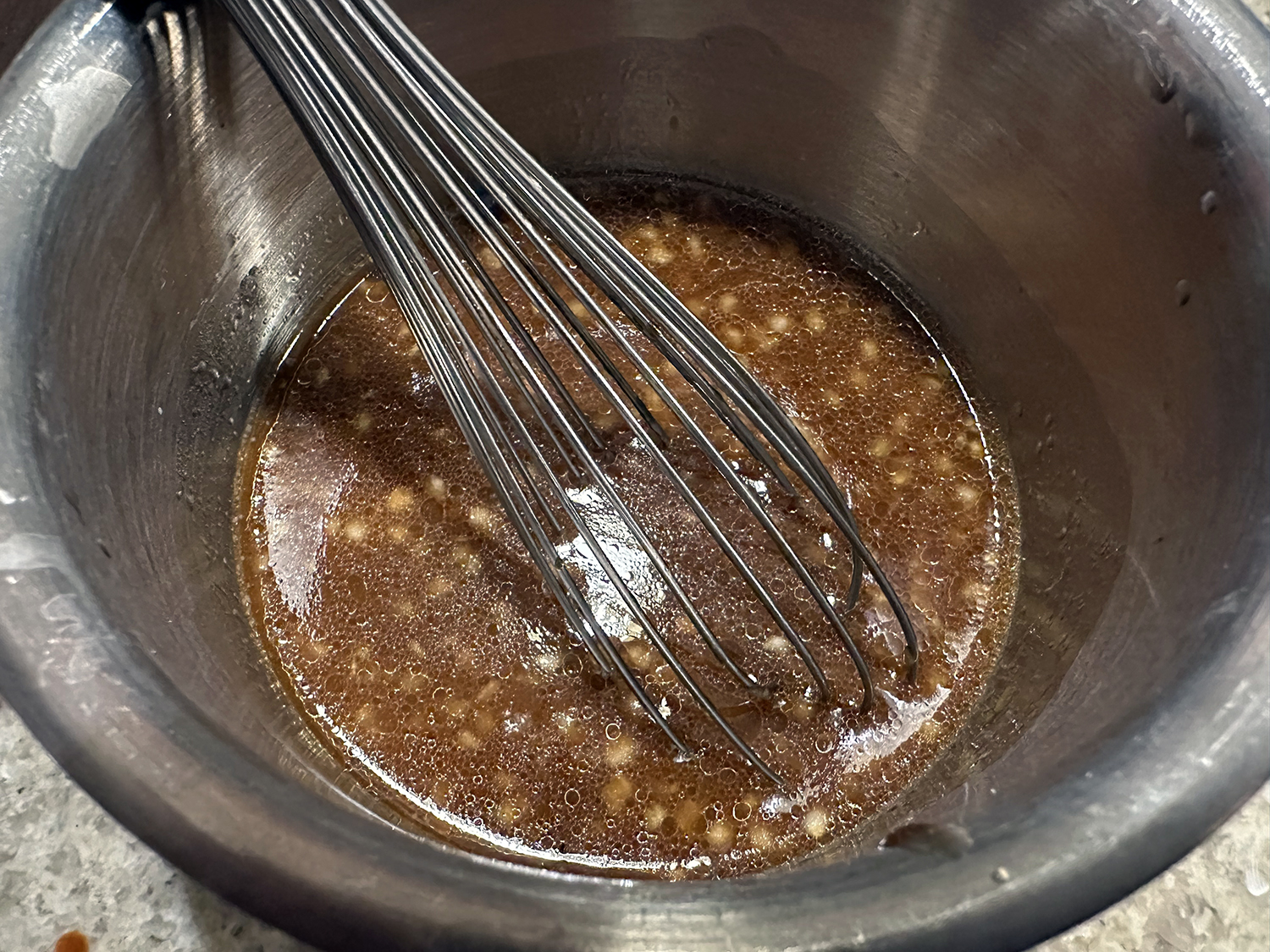
  1. Combine the sauce ingredients, adding only half of the minced garlic, in a small bowl and set aside. Reserve the remaining half of the garlic for later.
  2. Wash the eggplants, cut the ends off, and slice them into equal-sized pieces. After slicing, separate the green and white portions of the scallions into roughly two piles.
  3. Over medium-high heat, heat 1 1/2 tablespoons of oil in your wok. Add half of the eggplant and spread it into a single layer, then reduce the heat to medium. Let it sear until brown, about 3 minutes, then begin flipping and stirring it occasionally until it’s lightly browned all over. Take this first batch of eggplant out of the pan, heat a second tablespoon and a half of oil, and do the same with your second batch. Set all the cooked eggplant aside on a plate.
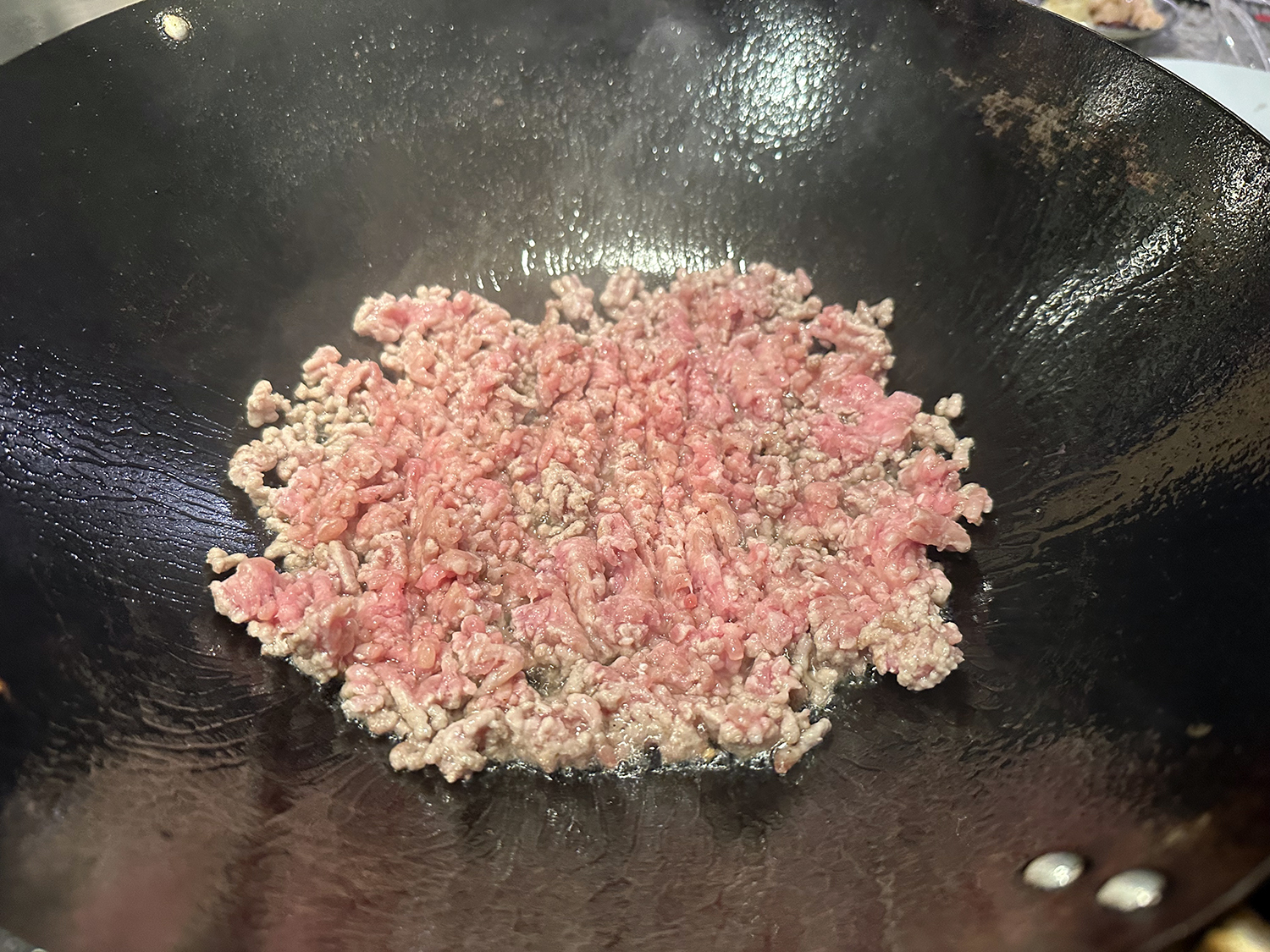
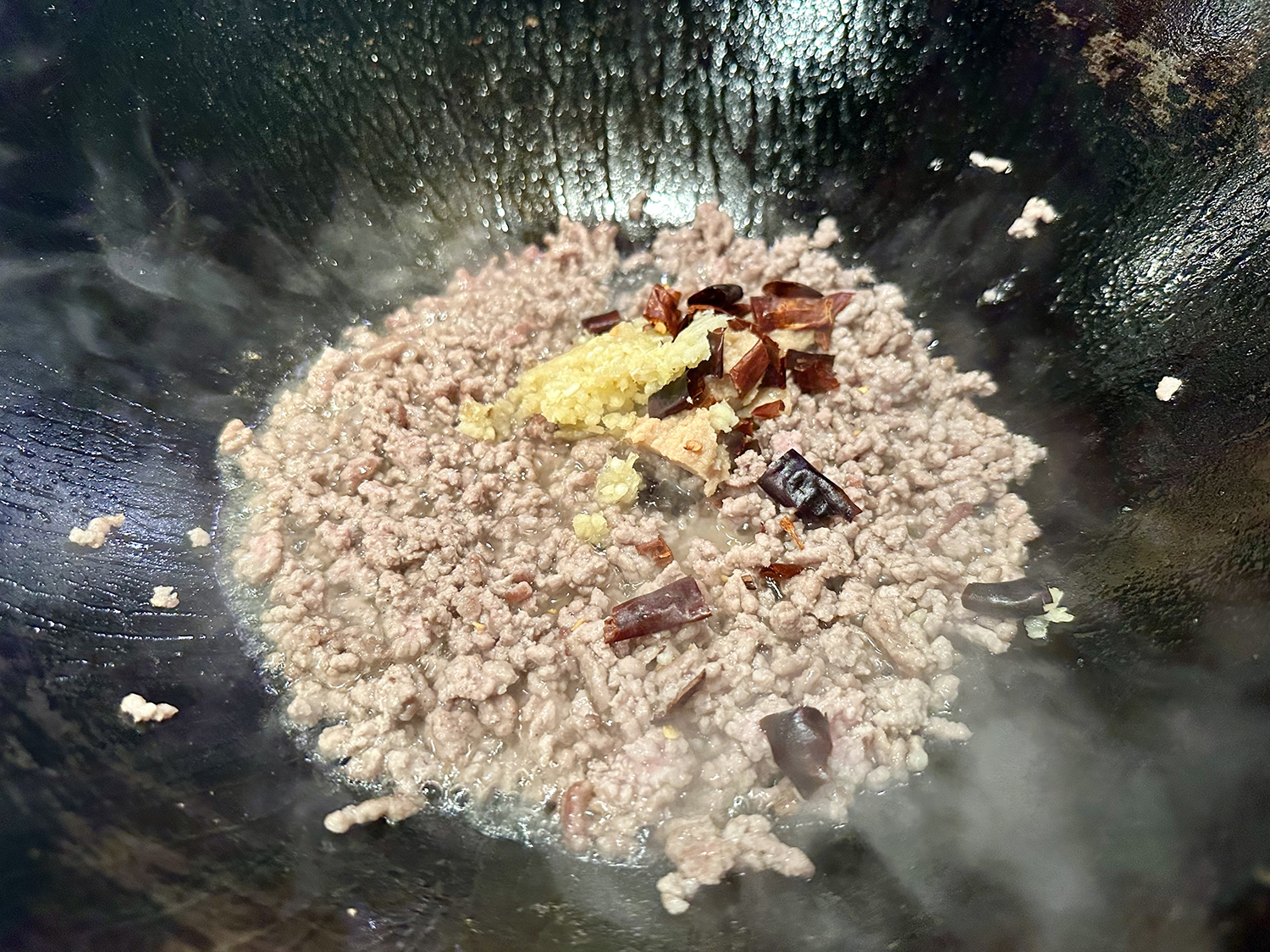
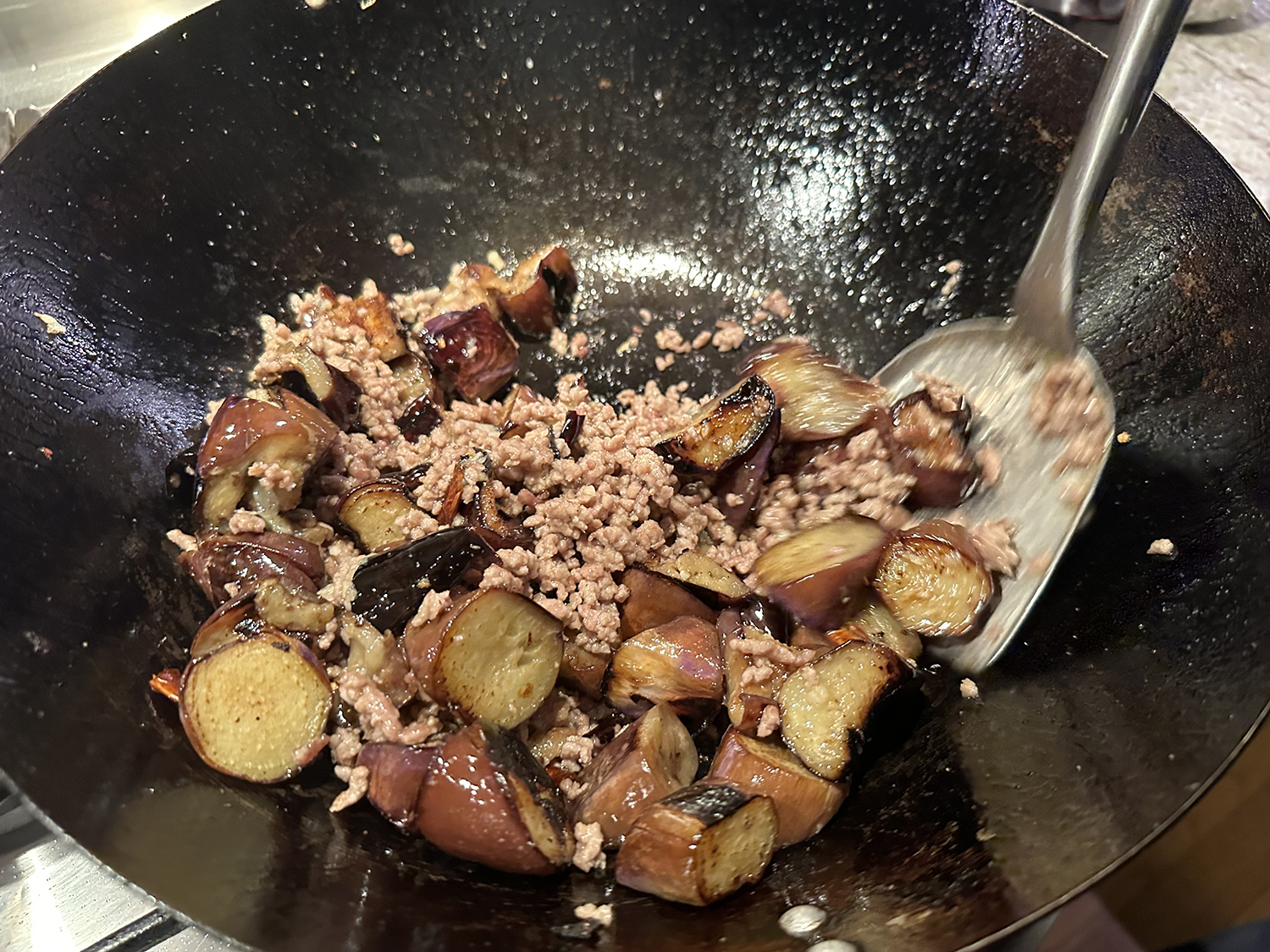
  4. Set the heat to high and add the last tablespoon of oil to the wok along with the ground pork and cook until opaque, breaking it up into small bits as you go. Add the ginger, dried chili peppers, and 3 cloves of minced garlic. Cook for 1 to 2 minutes, stirring constantly, until the aromatics are fragrant and lightly toasted. Add the eggplant back in, along with the stir-fry sauce. Stir-fry everything together for another 2 minutes, making sure everything is well combined.
  5. Toss in the scallions and stir-fry for another 20 seconds. Serve immediately with white or brown steamed rice.

http://www.lynnandruss.com

Recipe from the Woks of Life Cookbook
Black Pepper Beef

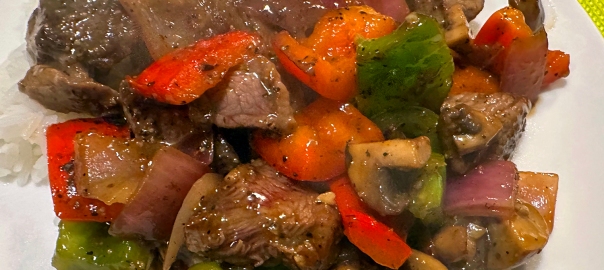
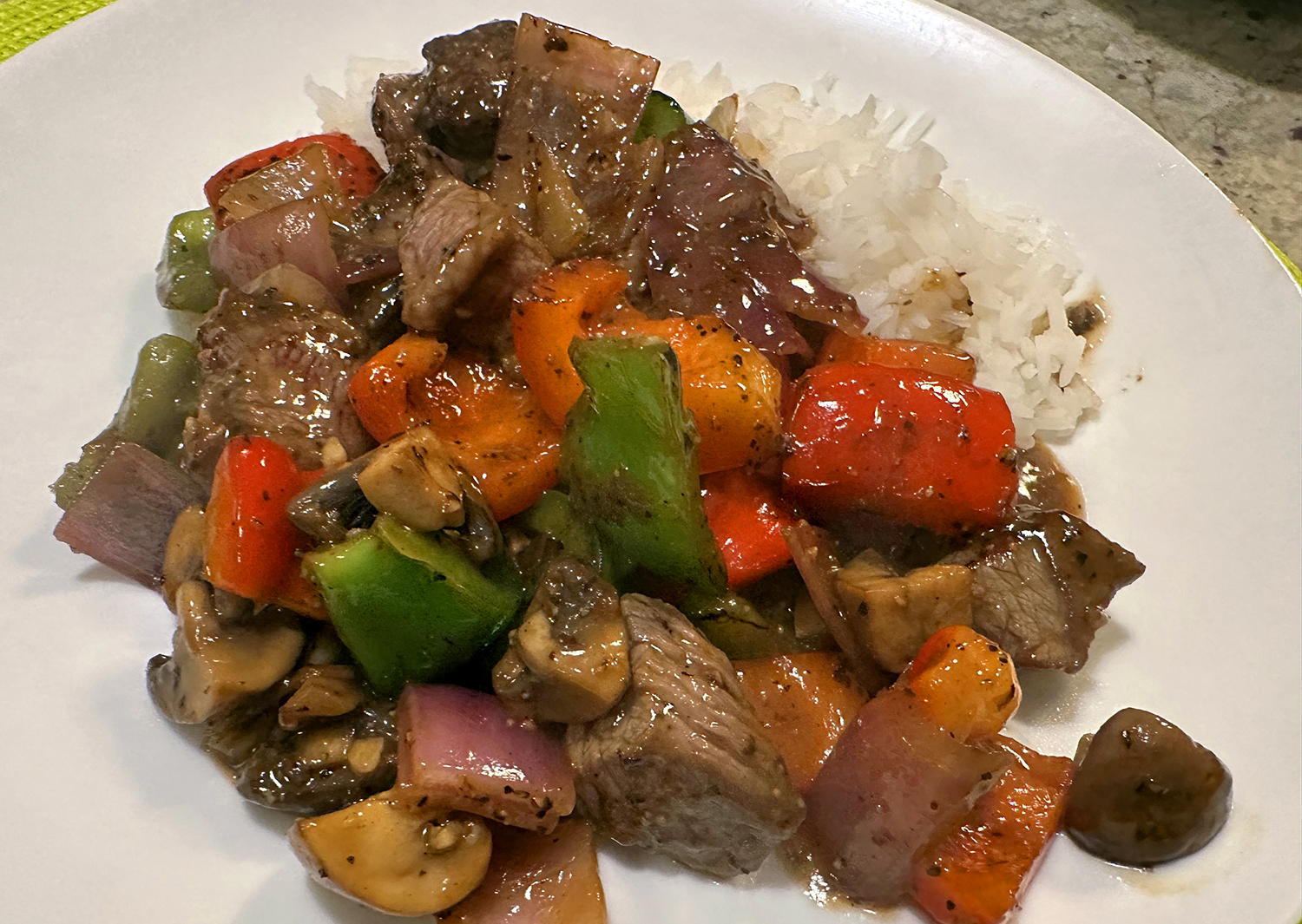
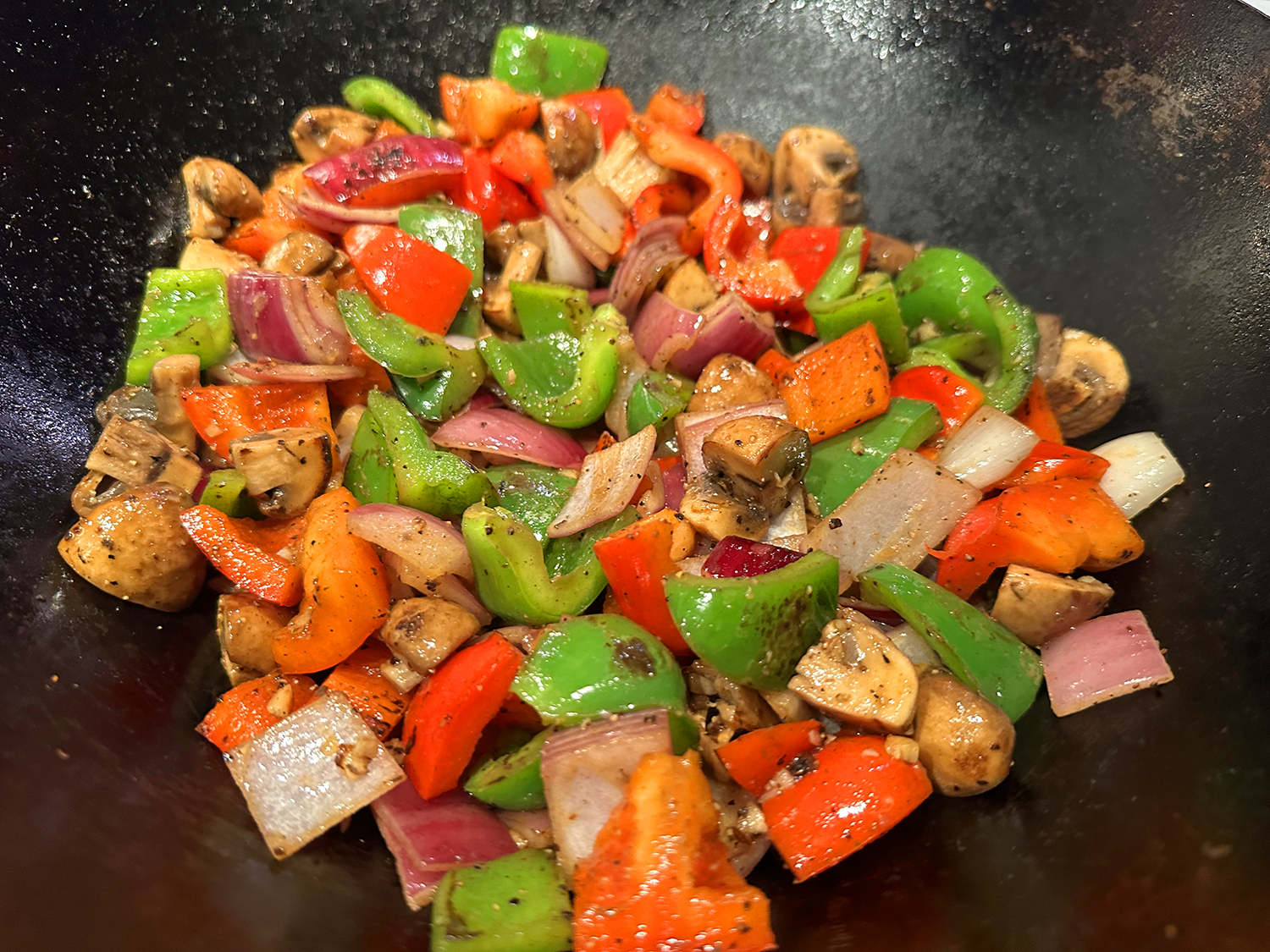
Hands-down better than your local Chinese take-out, this Chinese pepper steak recipe is a quick and easy stir-fry loaded with tender beef, peppers and onions in a luscious brown sauce. It hails from “The Woks of Life” by the Leung family.

Most of the time required for this recipe is in the preparation, but it’s not actually difficult to pull off. So long as you have everything prepared and within reach, things will go smoothly at the wok. The active cooking time in your wok or pan is less than 15 minutes before it’s ready to be served with steamed white rice.

Avoid any “pre-cut beef for stir-fry” that your grocery store sells. It usually looks like long rectangular beef sticks, cut from lean beef. These are too thick and chunky, and generally turn out tough. So what IS the best cut of beef for stir-fry?

The original recipe called for beef tenderloin. At nearly $35 per pound, we decided to go for something more reasonably priced and chose sirloin. Another option is flank steak, but we don’t advise using chuck roast which was listed as a substitute.

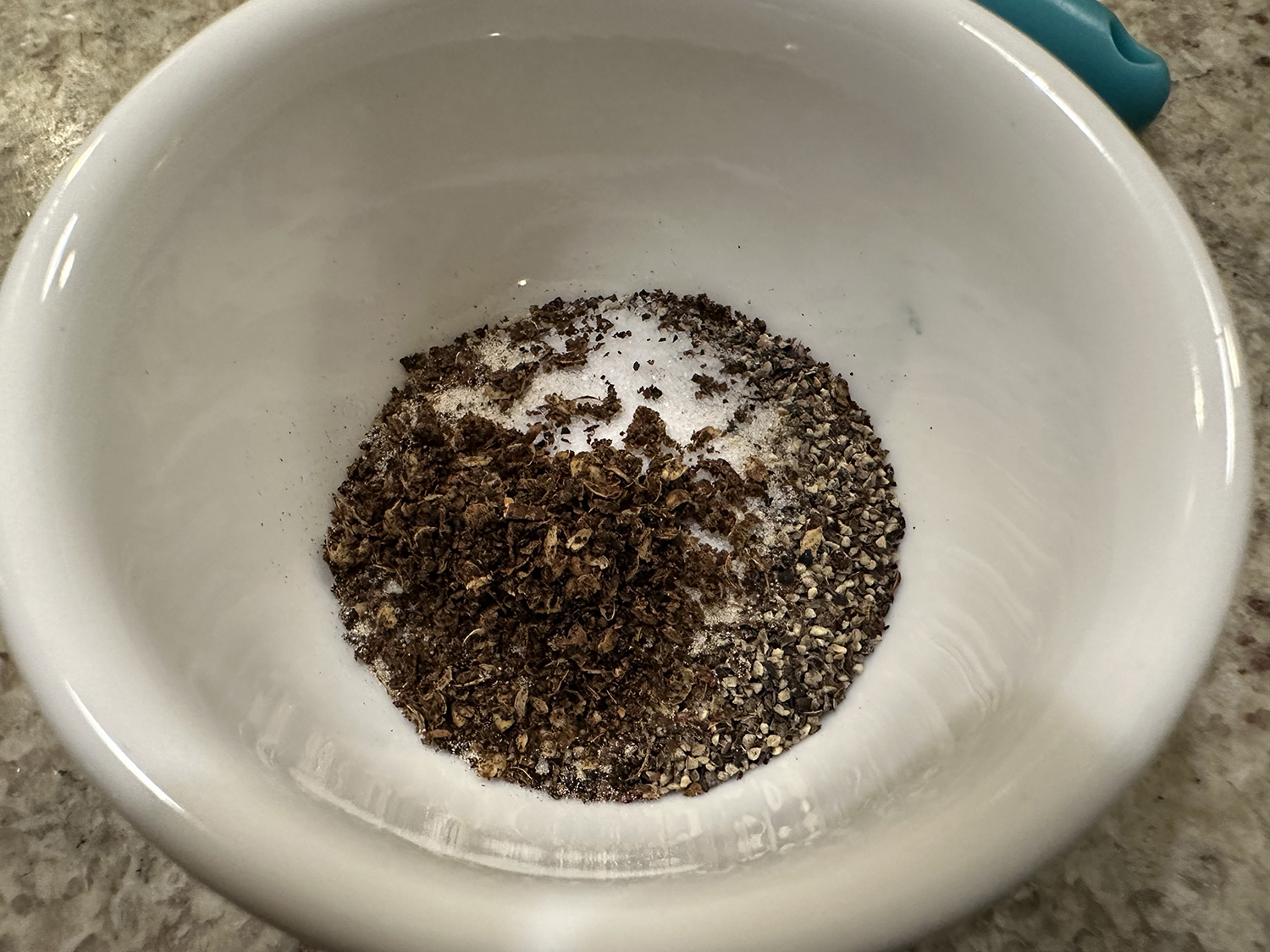
With several different pepper spices, we opted to use the lower amount, 1 1/2 tablespoons of ground black pepper. Using a full 2 tablespoons will likely be too much. While black pepper is a constant companion for salt in American kitchens, you don’t see it very often in Chinese cooking (it’s almost always white pepper.)

Black Pepper Beef

  • Servings: 4
  • Difficulty: easy
  • Print

Ingredients

  • For Velveting the Beef:
  • 1 lb. flank steak, (or sirloin steak)
  • 2 Tbsp. water
  • 1 tsp. cornstarch
  • 1 Tbsp. neutral oil
  • 1/4 tsp. table salt
  • For the Sauce:
  • 1/2 cup beef stock or water, warmed
  • 1 Tbsp. oyster sauce
  • 1 Tbsp. light soy sauce
  • 1 tsp. ketchup
  • 1/2 tsp. sugar
  • 1/4 tsp. sesame oil
  • For the Pepper Seasoning:
  • 1 1/2 to 2 Tbsp. coarsely ground black pepper
  • 1/2 tsp. white pepper
  • 1/2 tsp. ground Sichuan peppercorns
  • For the Rest of the Dish:
  • 1 green bell pepper, cut into 1″pieces
  • 1 red bell pepper, cut into 1″pieces
  • 1 medium red onion, cut into 1″pieces
  • 4 oz. cremini or button mushrooms, quartered
  • 2 Tbsp. neutral oil
  • 1/2 tsp. ginger
  • 2 cloves garlic (chopped)
  • 2 Tbsp. Shaoxing wine
  • 2 tsp. cornstarch
  • 1 Tbsp. water

Directions

  1. Slice the beef into 1 1/4-inch cubes. Then velvet the beef: in a medium bowl, mix the beef with 2 Tbsp. water, 1 tsp. cornstarch, 1 Tbsp. neutral oil, and 1/4 tsp. table salt. Toss to coat, then set aside for at least 30 minutes.
  2. Make the sauce by mixing together the beef stock, cornstarch, oyster sauce, Shaoxing wine, soy sauce, ketchup, sugar, and sesame oil. Set aside.
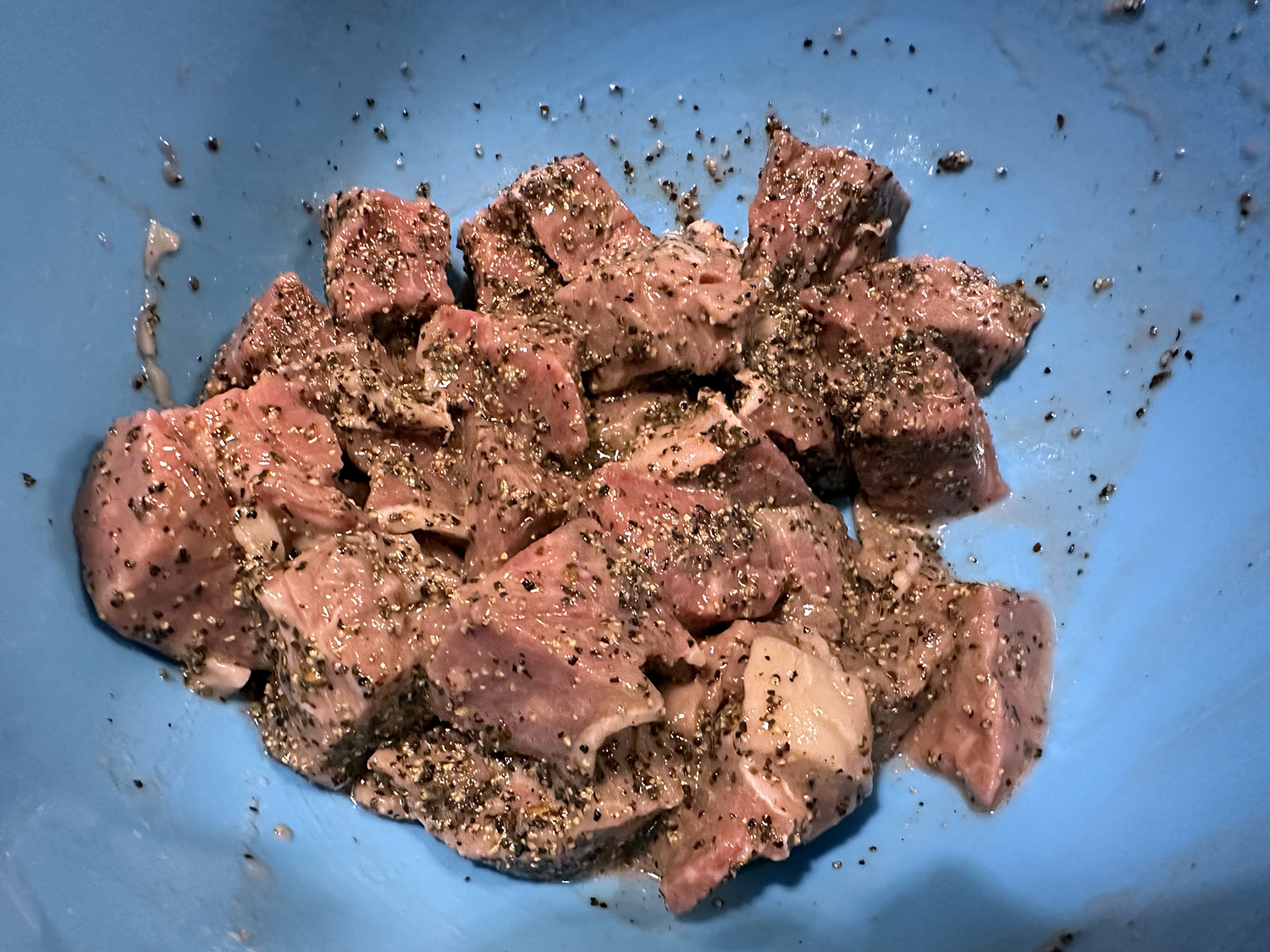
  3. Make the pepper seasoning in a small bowl by combining black pepper, white pepper, ground Sichuan peppercorns, and salt. Season the beef cubes with 2/3 of the pepper mix, pressing the spices into the beef. Reserve the rest for later.
  4. Cut the bell peppers and onion into 1-inch pieces. You can also cut them into thin strips if you like. Just make sure that the pepper and onion pieces are all about the same size, so they cook evenly.
  5. Heat the wok over high heat until smoking. Add 1 tablespoon of oil to coat the wok. Sear the beef on both sides, about 30 seconds per side. Give everything a final stir, transfer it to a plate, and set aside. The beef should be about 80% cooked.
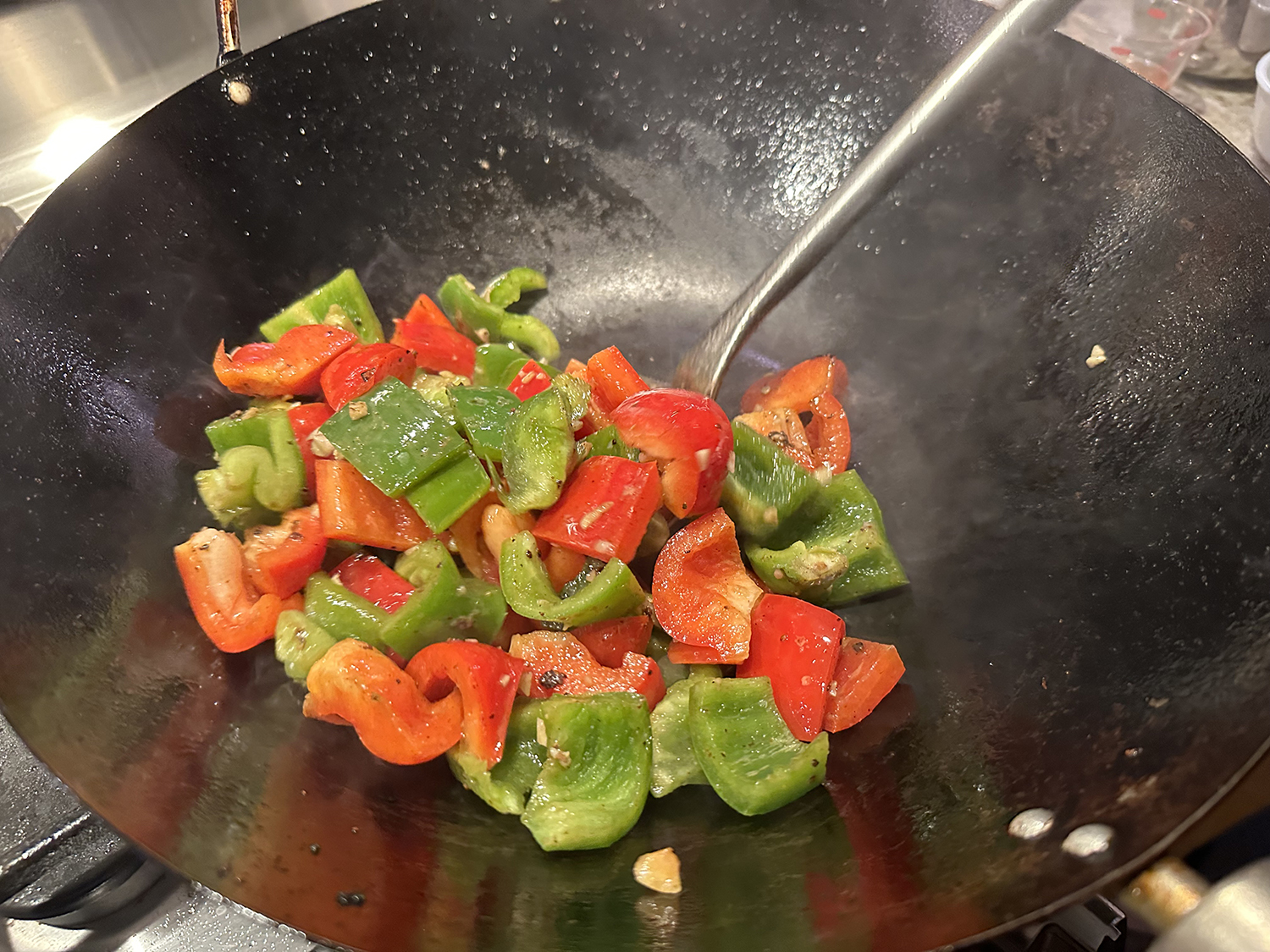
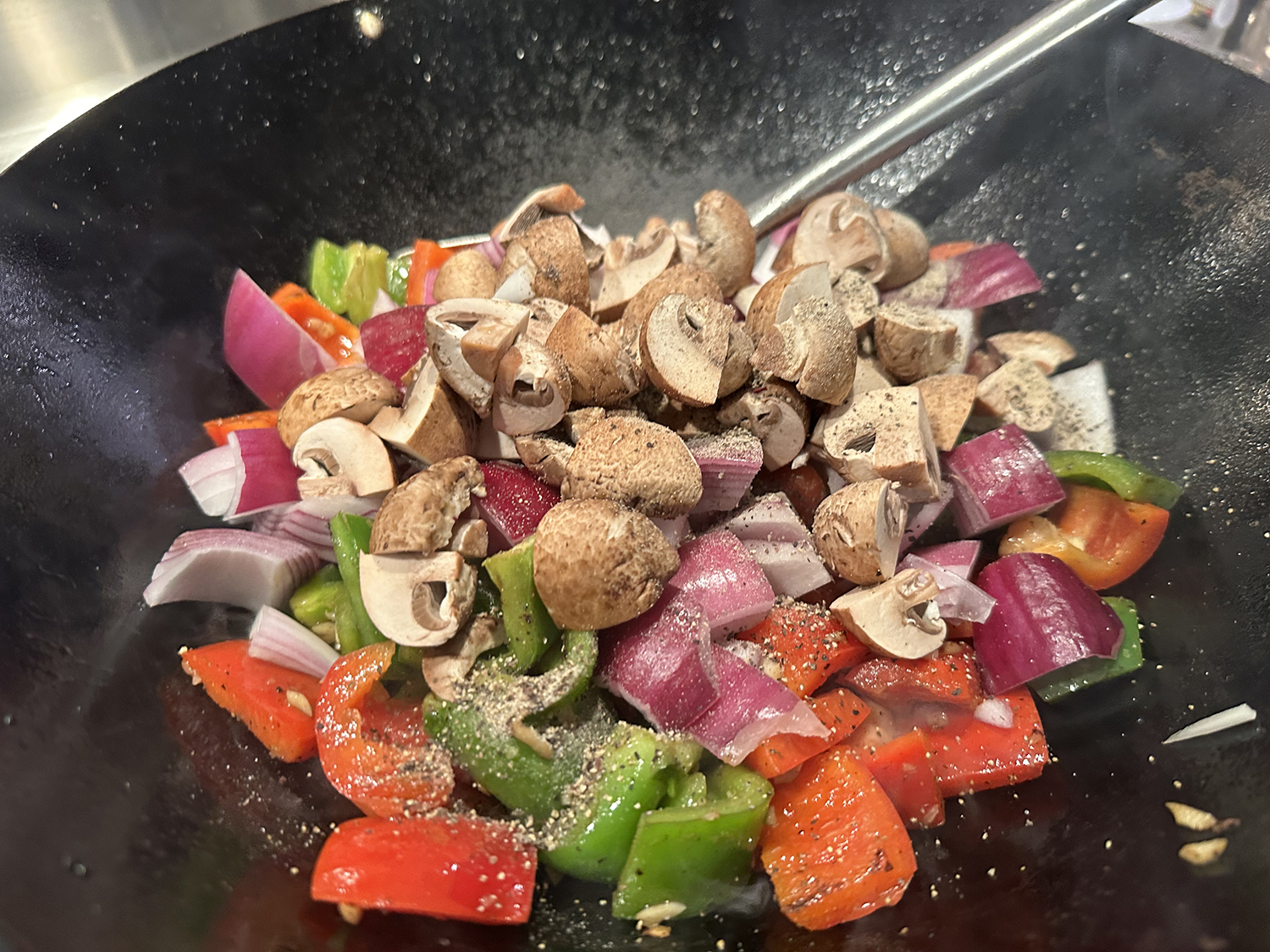
  6. Reduce the heat to medium-high. Add the remaining tablespoon of oil. Toss in the ginger, and caramelize for about 10 seconds. Then add the garlic, bell peppers, and onions. Stir-fry for 1 minute. Pour the Shaoxing wine around the perimeter of the wok, then stir-fry for 1 minute.
  7. Add the sauce mixture, and stir it around to deglaze, loosening any browned bits in the wok. Combine 2 tsp. cornstarch and 1 Tbsp. water in a small bowl to make a slurry. Drizzle half the slurry into the wok, stirring constantly until it is thick enough to coat a spoon.
  8. Add the beef along with any juices. Gently toss with the sauce and vegetables until combined.
  9. At this point, if the sauce is not thick enough, add the remaining cornstarch slurry and stir-fry for another 10 to 15 seconds to thicken. Once the sauce is simmering and thickened to your liking, transfer it to a serving plate, and serve it with steamed rice!

http://www.lynnandruss.com

Recipe from The Woks of Life by Bill Leung

Home-Style Tofu Stir-Fry

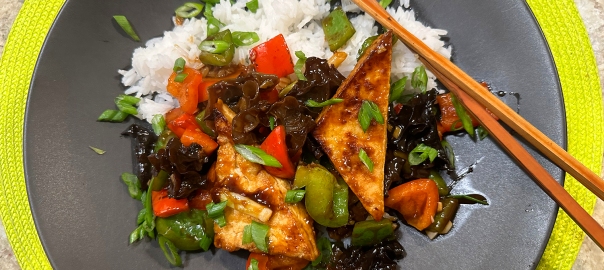
This home-style tofu recipe from “The Woks of Life” is as delicious as it is comforting. With firm tofu slices, some aromatics, crisp veggies and a light sauce, it’s perfect over rice and so easy to make. Just keep in mind, you’ll need to rehydrate the dried mushrooms for two hours prior to cooking.

On some Chinese menus you may notice the word jiā cháng in front of several dishes. It translates to “home-style or family-style.” So the dish can vary greatly depending on what the chef’s interpretation of “home” tastes like.

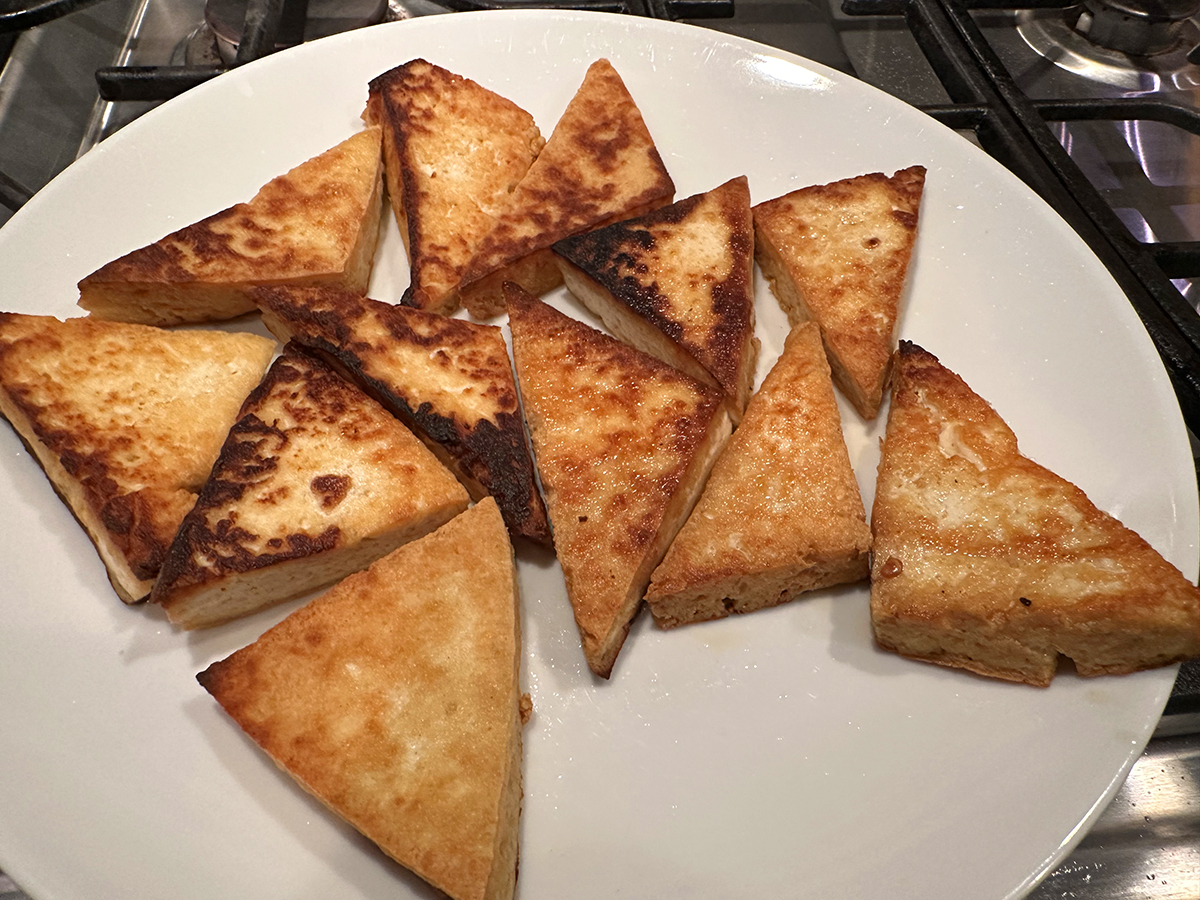
Now we made a few changes, (all included in recipe below) starting with incorporating a whole red, and a whole green bell pepper, rather than half of each. We also increased the sauce by 50%; cut the tofu into smaller triangles than originally noted; and fried the tofu pieces in two batches, in the same wok instead of an additional cast-iron skillet.

Home-Style Tofu Stir-Fry

  • Servings: 4
  • Difficulty: easy
  • Print

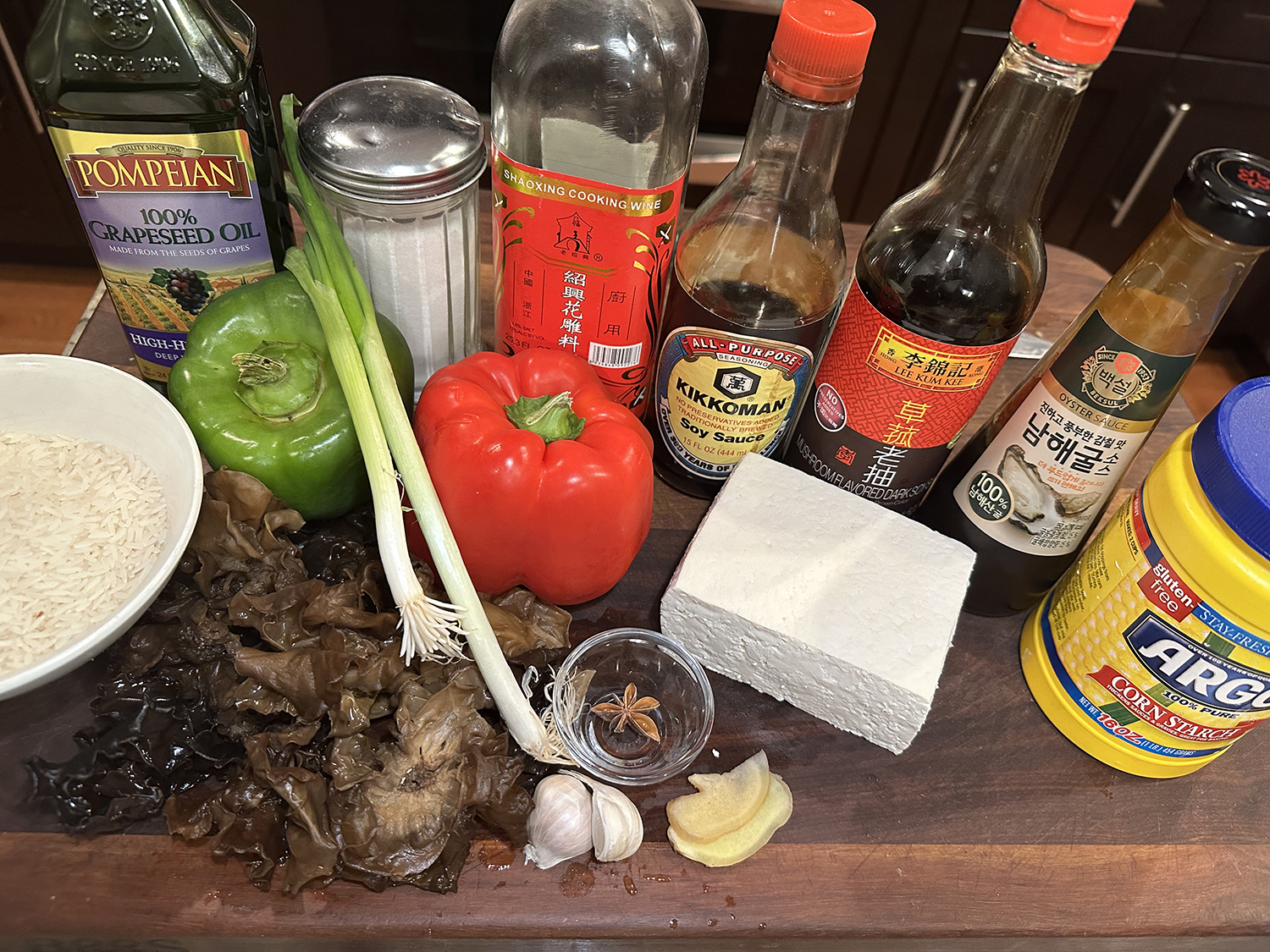
Ingredients

For the Mushrooms and Tofu:

  • 2/3 cup dried wood ear mushrooms
  • 1 lb. firm tofu

For the Sauce:

  • 1 1/2 tsp. dark soy sauce
  • 1 1/2 Tbsp. light soy sauce
  • 1 1/2 Tbsp. oyster sauce, or vegetarian oyster sauce
  • 3/4 tsp. sugar
  • 3/4 tsp. table salt
  • 1/4 cup Shaoxing wine
  • 1/2 cup water
  • 1 1/2 Tbsp. cornstarch

For the Rest of the Dish:

  • 4 Tbsp. neutral oil, divided
  • 2 cloves garlic, minced
  • 2 slices fresh ginger, each 1/8-inch thick
  • 1 star anise
  • 1 red chili pepper, deseeded and thinly sliced, optional
  • 1 red bell pepper, seeded and cut into 1-inch pieces
  • 1 green pepper, seeded and cut into 1-inch pieces, or 2 long hot green peppers or Anaheim peppers
  • 3 scallions, white parts separated from the green parts and cut on the diagonal into 2-inch lengths
  • 1 Tbsp. water
  • 1 Tbsp. Shaoxing wine

Directions

  1. Prepare the Mushrooms and Tofu: In a medium bowl, cover the wood ear mushrooms with enough water to cover by 2 inches and soak for at least 2 hours or until rehydrated. Rinse them to remove any grit or dirt. Drain and cut the mushrooms into bite-size pieces. Drain the tofu and pat it dry. Cut it crosswise into 1/2-thick rectangles, then cut each rectangle into 4 triangles.
  2. Make the Sauce: In a small bowl, combine the water, wine, cornstarch, oyster sauce, light soy sauce, dark soy sauce, sugar, and salt. Mix well and set aside.
  3. Pan-Fry the Tofu: Heat a wok over medium-high heat until lightly smoking. Add 3 tablespoons of the neutral oil and swirl it around the wok to coat the surface. Carefully add half of the tofu pieces in a single layer and fry for 4 minutes on the first side until golden brown. Use a thin spatula to carefully flip the tofu pieces and fry on the other side for another 4 minutes. Transfer the tofu to a plate. Repeat.
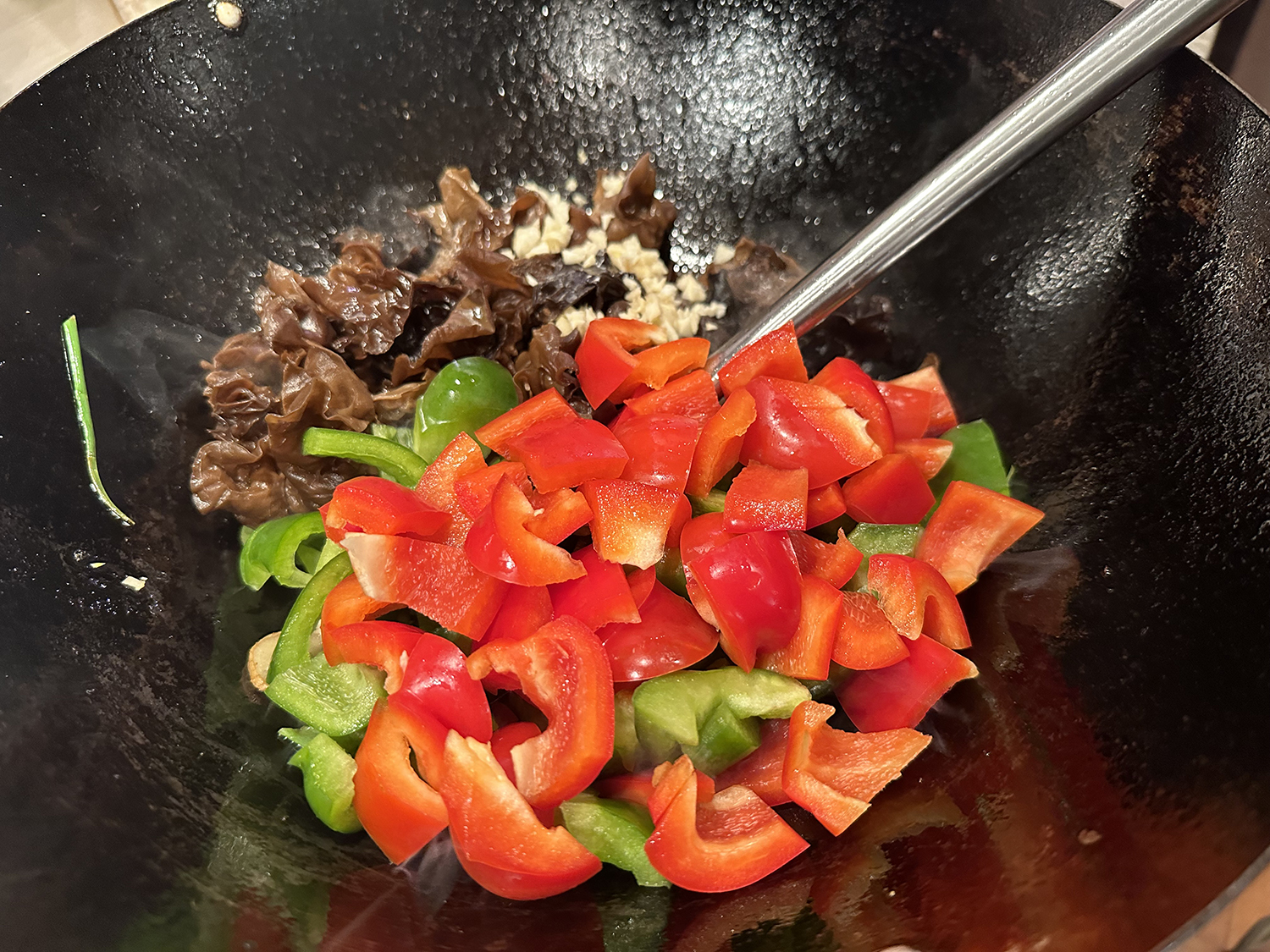
  4. Assemble the Dish: Over medium heat, add the remaining tablespoon of oil along with the ginger slices and star anise. Toss quickly for 20 seconds, then add the white part of the scallions and stir fry for another 30 seconds. Add the wood ears, garlic, peppers, and 1 tablespoon water. Stir fry for 2-3 minutes until the peppers are tender but still have a fresh crunch. Increase the heat to medium-high and add the Shaoxing wine around the perimeter of the wok.
  5. Stir the sauce to make sure the cornstarch is well incorporated into the liquid. Add the sauce to the wok and bring it to a simmer. Let the sauce thicken until coats the back of a spoon. (If it’s too thick, add a splash of water.) Stir in the tofu and add the green parts of the scallions. Mix until the tofu and vegetables are evenly coated in sauce and the scallions are wilted. Serve.

http://www.lynnandruss.com

Adapted from a recipe by Judy Leung for Woks of Life
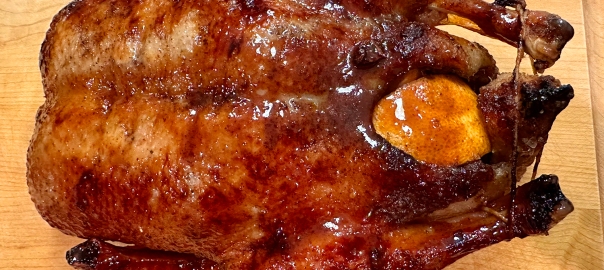
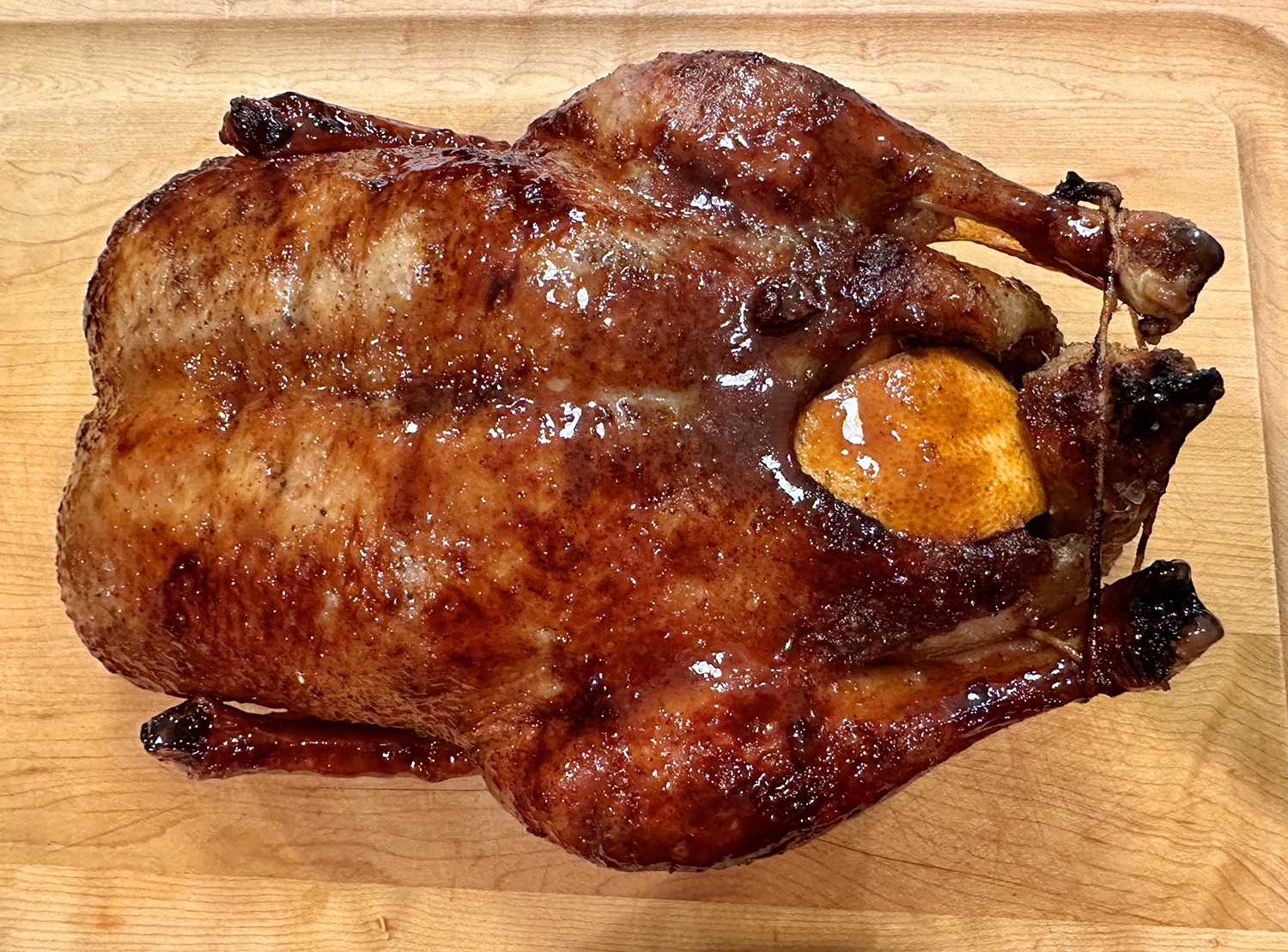
Roast Duck with Orange and Ginger
For a festive occasion, a burnished whole duck makes quite an impression — fancier than chicken and more elegant than turkey. When I was growing up, Mom roasted duck a few times a year, a favorite for most of the family.

I remember as a young teen going out to eat at a Chinese restaurant for the first time because it was my sister’s birthday and that was her venue of choice. Picky as I was, I was not a happy camper as I walked in, but was a convert when I walked out because I had ordered Wor Shu Opp (pressed almond duck).

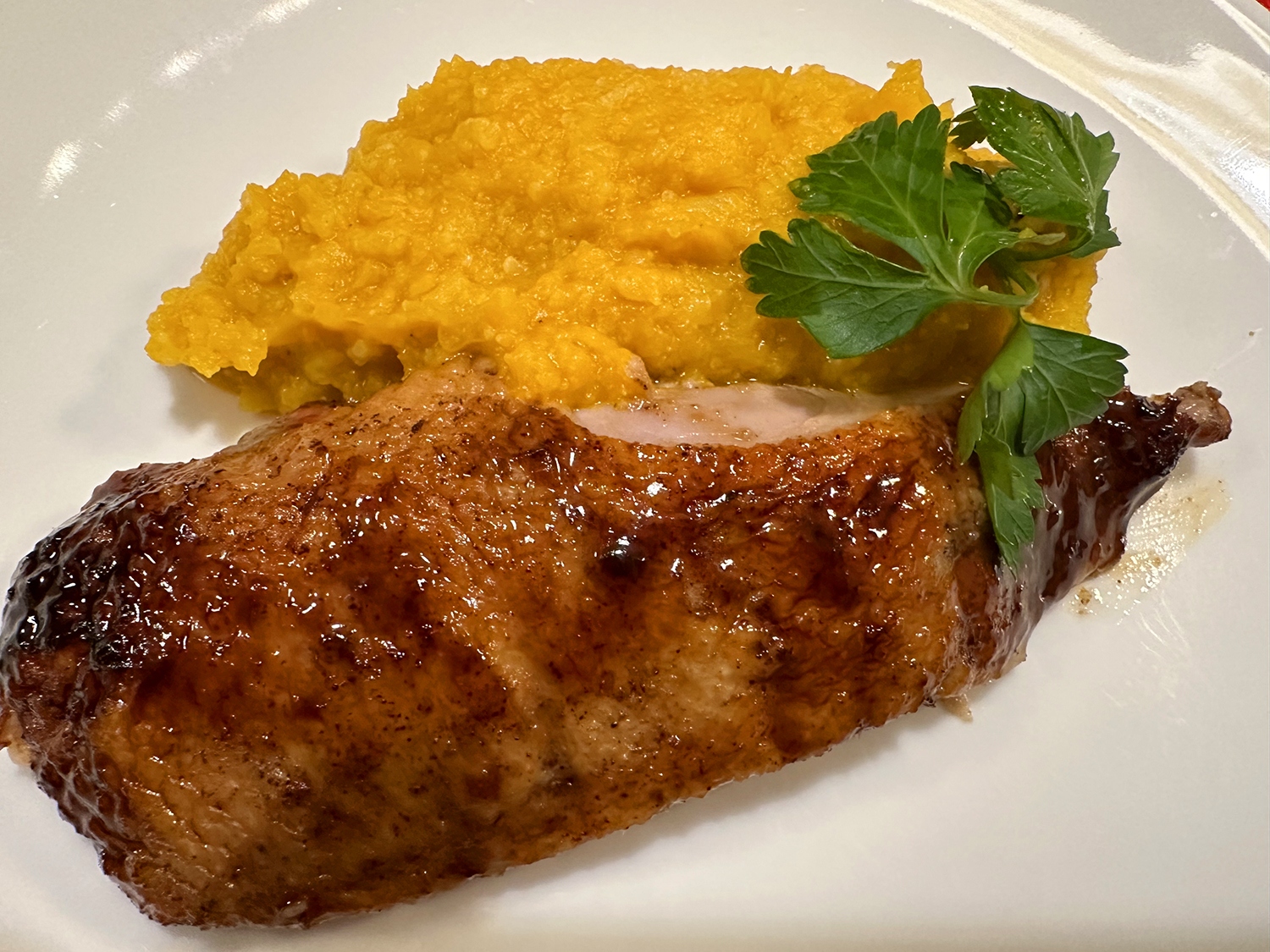
Roasting the duck is not so difficult to do. Seasoning the duck ahead and leaving it in the fridge overnight helps to deepen the flavor and keeps work to a minimum the following day. This one is seasoned with orange zest, along with fair amount of ginger and five-spice powder, which gives it a marvelous perfume. We paired ours with a Kobocha-Cauliflower Mash.

The ingredient list is minimal, and the hands-on prep doesn’t take long—most of the time the duck is either in the refrigerator or the oven. Because the bird gets glazed often, the skin will be a gorgeous burnished tawny color, but the skin won’t be extra crispy.

Keep in mind when serving more than 4 people, you will need two ducks. Of course there is no need to wait until a special occasion…

Roast Duck with Orange and Ginger

  • Servings: 4
  • Difficulty: easy
  • Print

Ingredients

For the Duck:

  • 1 Pekin (Long Island) duck, 5- to 6-lb.
  • 3 Tbsp. kosher salt
  • 1 Tbsp. five-spice powder
  • 1 large orange, zested and cut into 6 wedges
  • 1 Tbsp. grated ginger
  • 1 Tbsp. grated garlic

For the Glaze:

  • 2 cups orange juice
  • 1 Tbsp. honey
  • 2 Tbsp. Demerara sugar
  • 2 Tbsp. soy sauce
  • 1 piece ginger, (2-inch) thickly sliced
  • 3 star anise

Directions

  1. Rinse duck and pat dry. Remove neck and giblets and save for another purpose. Remove excess fat from cavity and tail area and trim off a bit of flappy neck skin. Prick duck skin all over with tip of sharp paring knife, making sure not to penetrate meat.
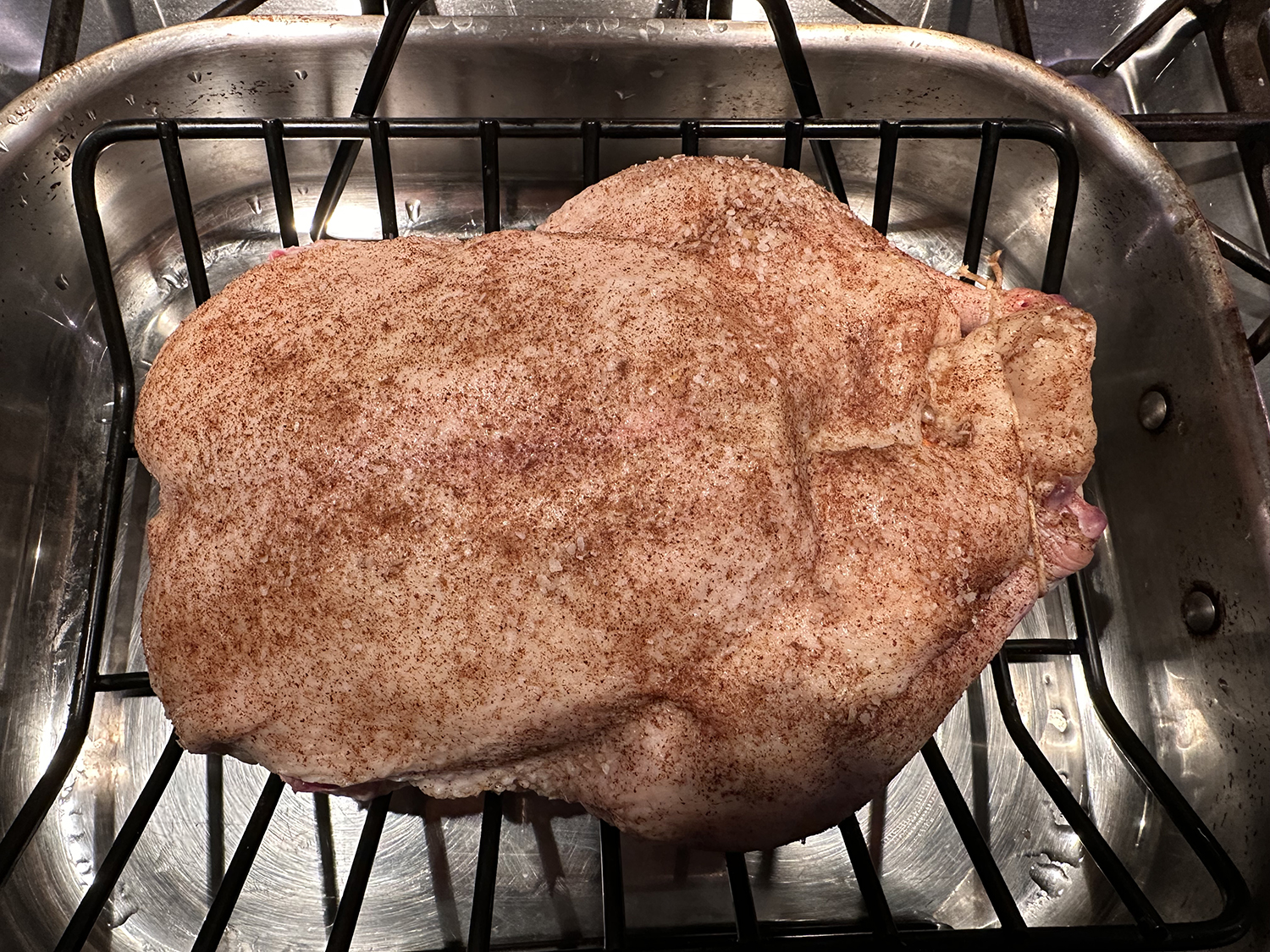
  2. Mix together salt and 5-spice powder. Season interior of duck with 1 tablespoon salt mixture; use remainder to generously season exterior (you may have a little left over).
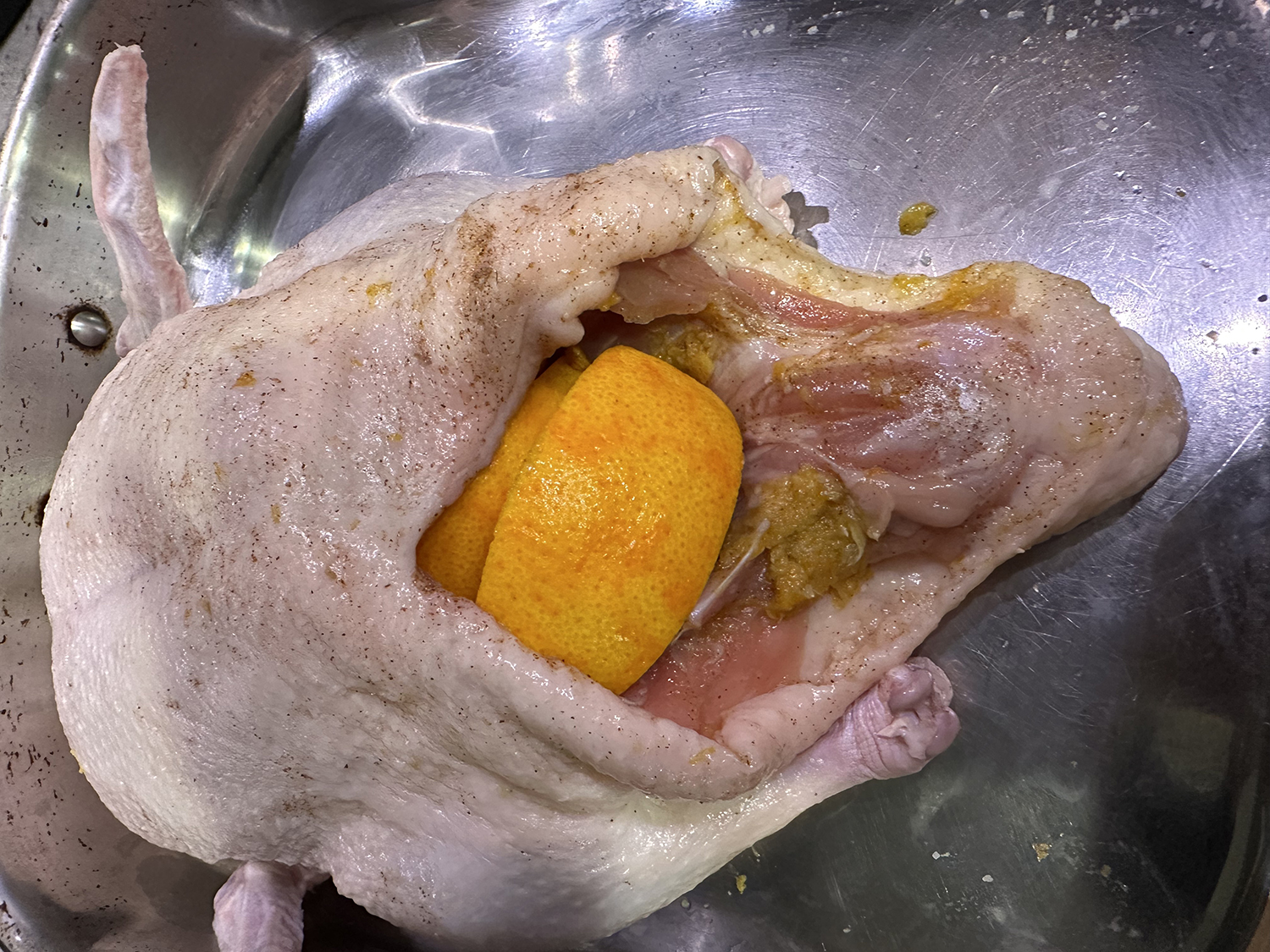
  3. Combine orange zest with grated ginger and garlic, then smear mixture inside cavity. Place orange wedges in cavity. Tie legs together. Secure neck flap with wooden skewer or toothpicks. Place duck on rack in roasting pan breast-side-up and refrigerate overnight, uncovered.
  4. Heat oven to 350 degrees. Meanwhile, bring duck to room temperature and make the glaze: Bring orange juice, honey, sugar and soy sauce to a simmer. Add sliced ginger and star anise, then reduce mixture until you have a medium-thick syrup, about 10 minutes. Remove from heat and set aside.
  5. Roast duck for 2 hours, carefully pouring off fat and turning duck over every 30 minutes. Paint with glaze and roast for another 30 minutes (2 1/2 hours in all). Tent with foil if the glaze begins to get too dark. Duck is done when the temperature at the thickest part of the leg reads 165 degrees.
  6. Paint the duck once more, keep it warm and let rest for 20 minutes. Use poultry shears to cut into quarters (remove backbone first) or carve in the traditional way, removing legs from carcass and slicing breast.

http://www.lynnandruss.com

Recipe by Dave Tanis for NYTimes Cooking

Stir-Fried Orange Beef with Scallions

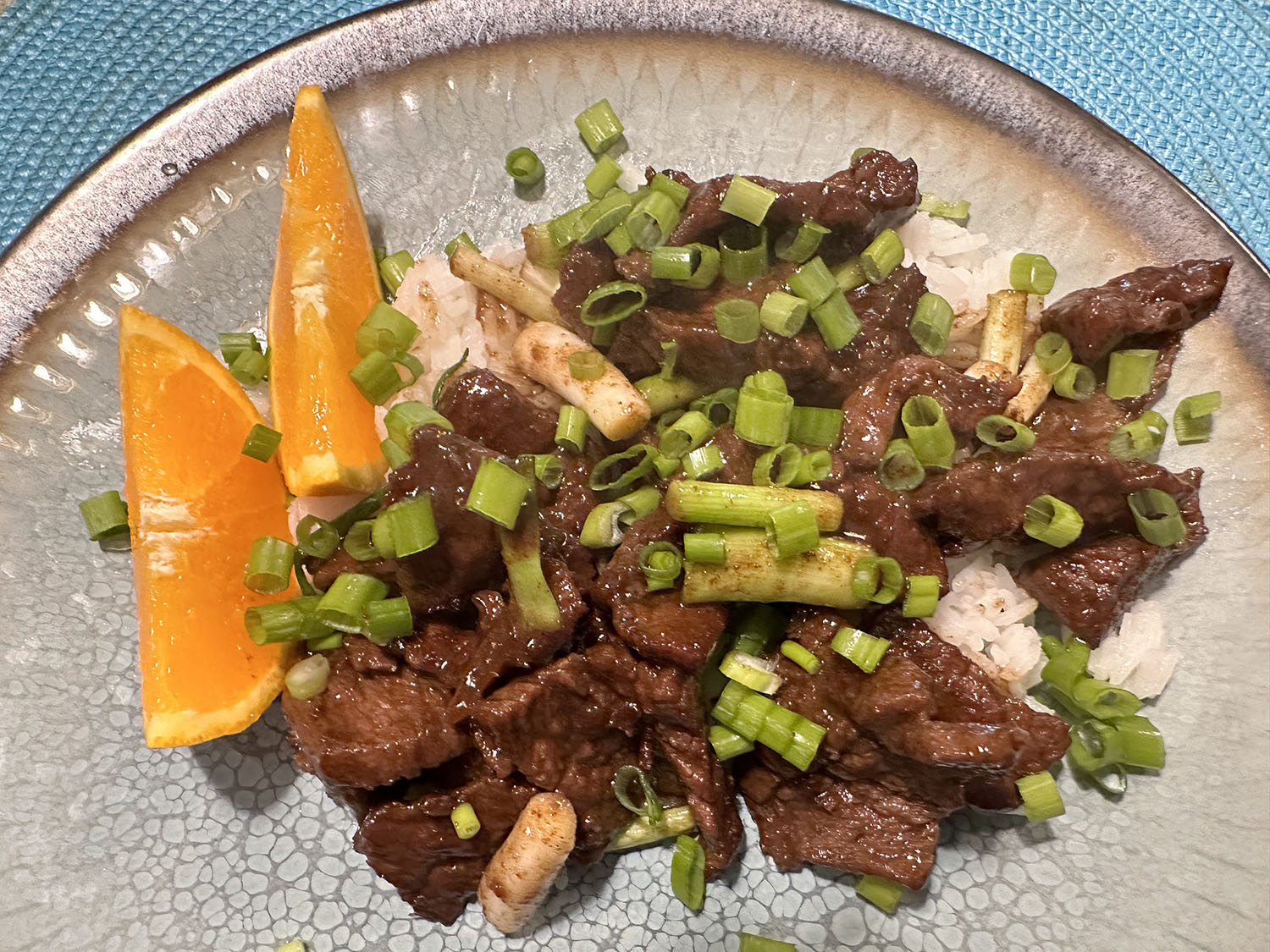
For those home cooks who look forward to a short ingredient list and a quick cooking time, but demand great taste, this recipe is for you. This stir-fried spin on Chinese Orange Beef, a perennial favorite, typically calls for deep-frying the meat; plus using a myriad of spices and techniques. But you don’t have to worry about any of that here.

The recipe uses orange marmalade to add layers of sweetness, bitterness and citrusy brightness. Five-spice powder adds to the complexity with its warm spiciness. Then the stir-fry is finished with scallions or basil to accentuate the anise notes of the five-spice. Serve with steamed white or brown rice; and perhaps a side salad if you crave more veggies.

Stir-Fried Orange Beef with Scallions

  • Servings: 3-4
  • Difficulty: easy
  • Print

Ingredients

  • 1½ lbs. beef flat-iron steak OR boneless beef short ribs OR flap meat, trimmed and sliced ¼ inch thick against the grain
  • 1½ tsp. Chinese five-spice powder
  • Ground black pepper OR ground white pepper
  • 1 Tbsp. neutral oil
  • 3 Tbsp. orange marmalade
  • 2 Tbsp. soy sauce
  • 1 bunch scallions, whites and light greens cut into 1-inch lengths, dark greens chopped for garnish OR 1 cup lightly packed fresh basil, torn if large
  • Juice from 1⁄2 orange, plus extra wedges to serve

Directions

  1. Toss the beef with the five-spice and ½ teaspoon pepper.
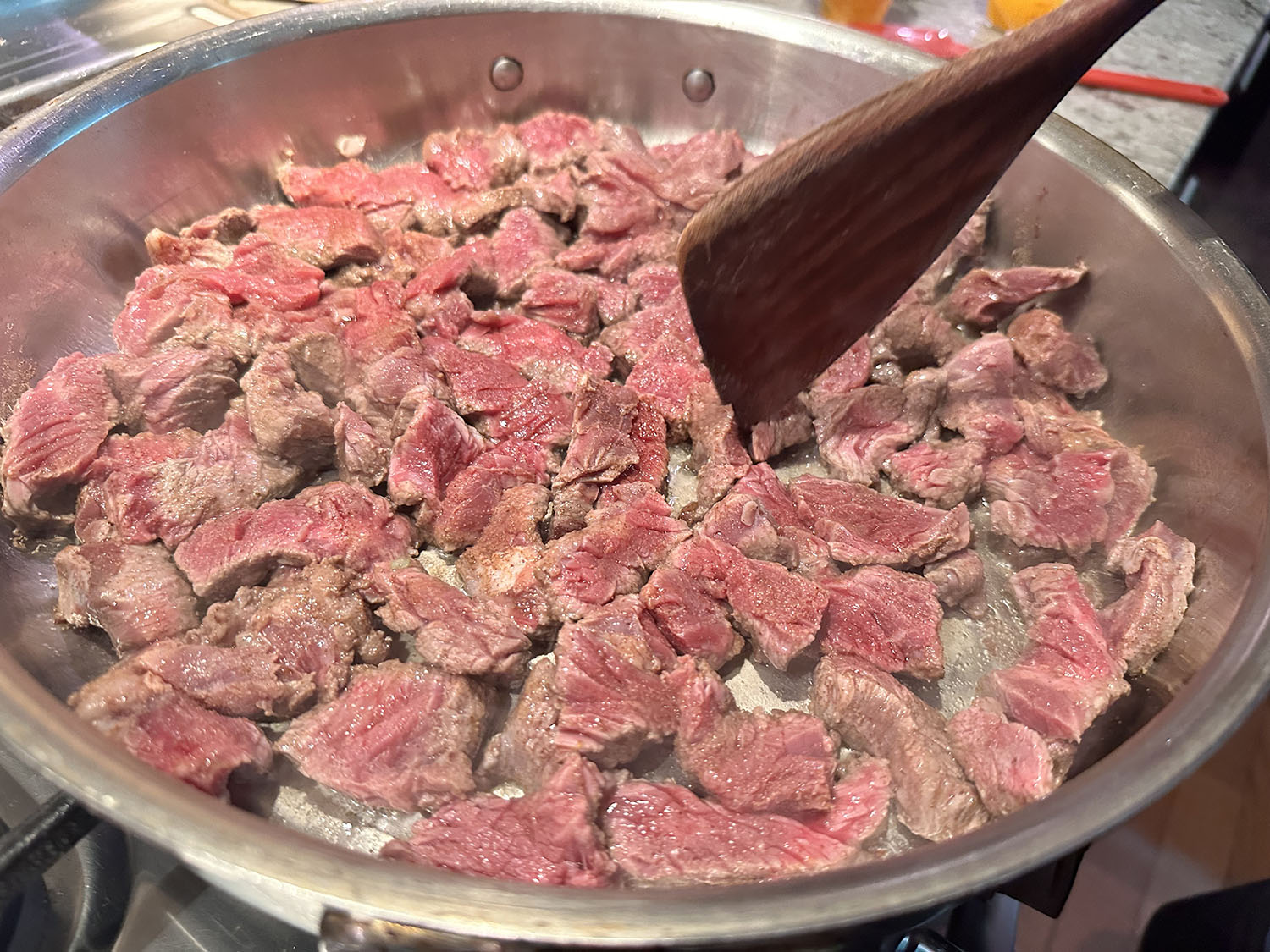
  2. In a 12-inch skillet, heat the oil until barely smoking. Add the beef in an even layer and cook without stirring until browned on the bottom, about 3 minutes.
  3. Stir, then add the marmalade and soy sauce. Cook, stirring, until the beef is lightly glazed. Off heat, stir in the scallions and orange juice. Season with pepper and additional orange juice.

http://www.lynnandruss.com

Adapted from a recipe by Courtney Hill for Milk Street

Kung Pao Cauliflower

Even though Kung Pao Chicken originated in China’s Sichuan Province, it has become an iconic Chinese-American dish. The popular stir-fry typically includes chicken, vegetables and peanuts tossed in a dark, salty, sweet and spicy sauce, but in this vegan take, cauliflower steps in for the chicken.

Dark soy sauce is more caramel-flavored and less salty than regular soy sauce, and it adds color and richness to the dish. If you don’t have dark soy, substitute with regular soy sauce or hoisin sauce.

Make sure you have a lid for your skillet or wok on hand before you start cooking, as covering the cauliflower allows it to cook quicker and more evenly. And as with any stir-fry, always prep each ingredient ahead of cooking because you won’t have time in between.

Now, The Hubs inadvertently made more sauce than called for. He was using the “ounce” side of the small measuring cup instead of the “tablespoon” side. So he ended up doubling the soy sauces, vinegar, sugar and cornstarch. The vegetable stock remained at 1/4 cup. It ended up being a good mistake, as we tend to prefer our stir-fries on the saucier side anyway.

Kung Pao Cauliflower

  • Servings: 4
  • Difficulty: easy
  • Print

Ingredients

  • 1 Tbsp. dark soy sauce
  • 1 Tbsp. soy sauce
  • 1 Tbsp. black vinegar
  • 1 Tbsp. granulated sugar
  • 1/4 cup vegetable stock or water
  • 1 tsp. cornstarch
  • 3 Tbsp. neutral oil, such as grapeseed or canola
  • 1 head cauliflower (about 2 lbs.), cut into small 2-inch-long florets
  • Kosher salt
  • 1 green or red bell pepper, core, seeds and membrane removed, and cut into 1-inch pieces
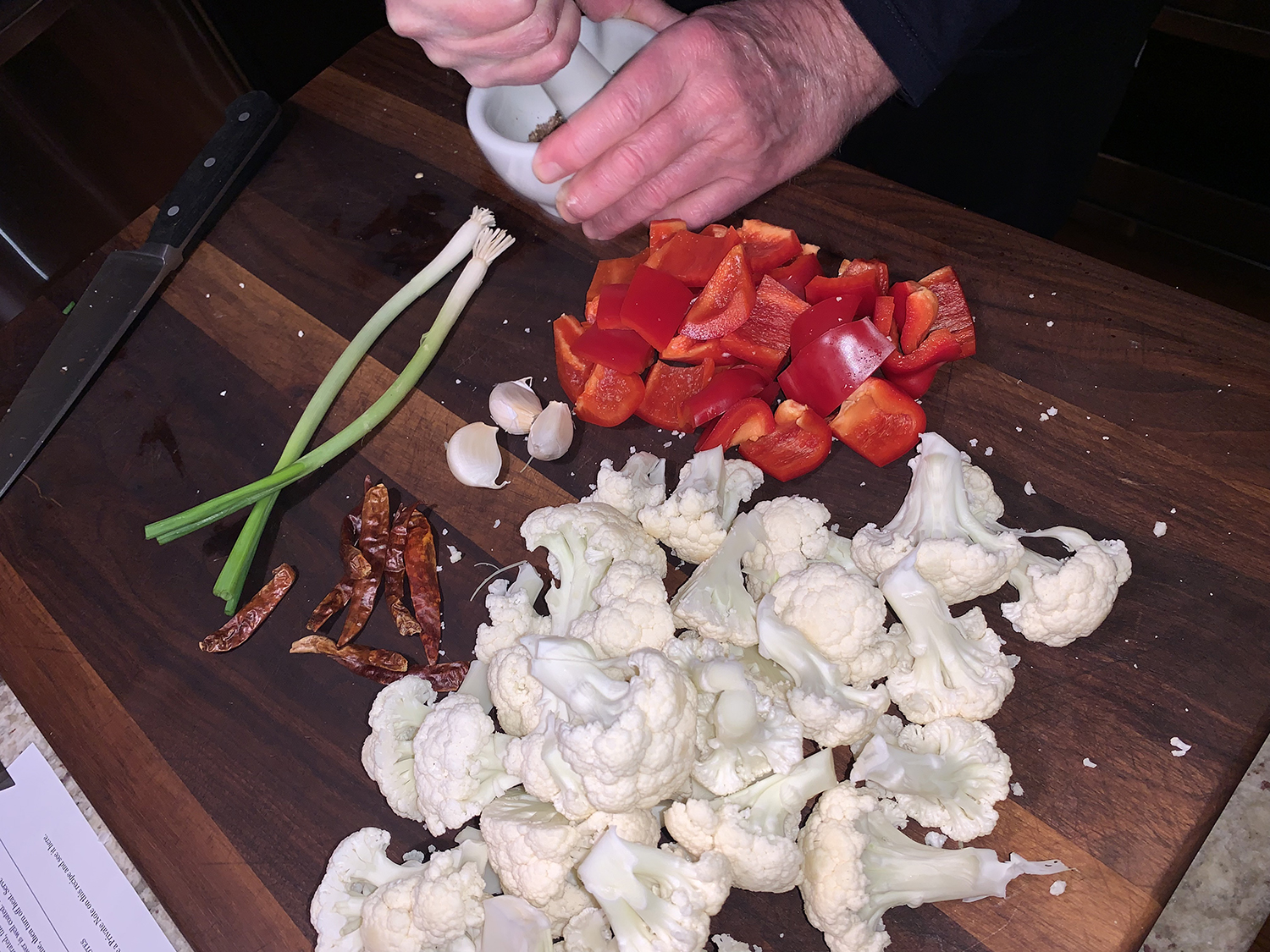
  • 1 tsp. Sichuan peppercorns, lightly ground in a mortar and pestle, spice grinder or crushed with a rolling pin
  • 8 whole dried chiles, such as er jing tiao or chiles de árbol
  • 2 cloves garlic, finely chopped
  • 1 piece ginger, (1-inch) peeled and finely sliced
  • 1/3 cup roasted peanuts
  • 2 scallions, white and green parts, finely sliced
  • Steamed rice, to serve

Directions

  1. In a small bowl, whisk together the dark soy sauce, soy sauce, black vinegar, sugar, vegetable stock or water, and cornstarch. Set aside.
  2. Heat wok or large (12-inch) skillet on medium-high until very hot. Add 2 tablespoons of oil, the cauliflower florets and 1/2 teaspoon salt, and toss for 1 minute. Cover and cook for 5 to 6 minutes, tossing the cauliflower every 1 1/2 minutes or so, until the cauliflower is crisp-tender and charred in some parts. Remove from the pan and set aside.
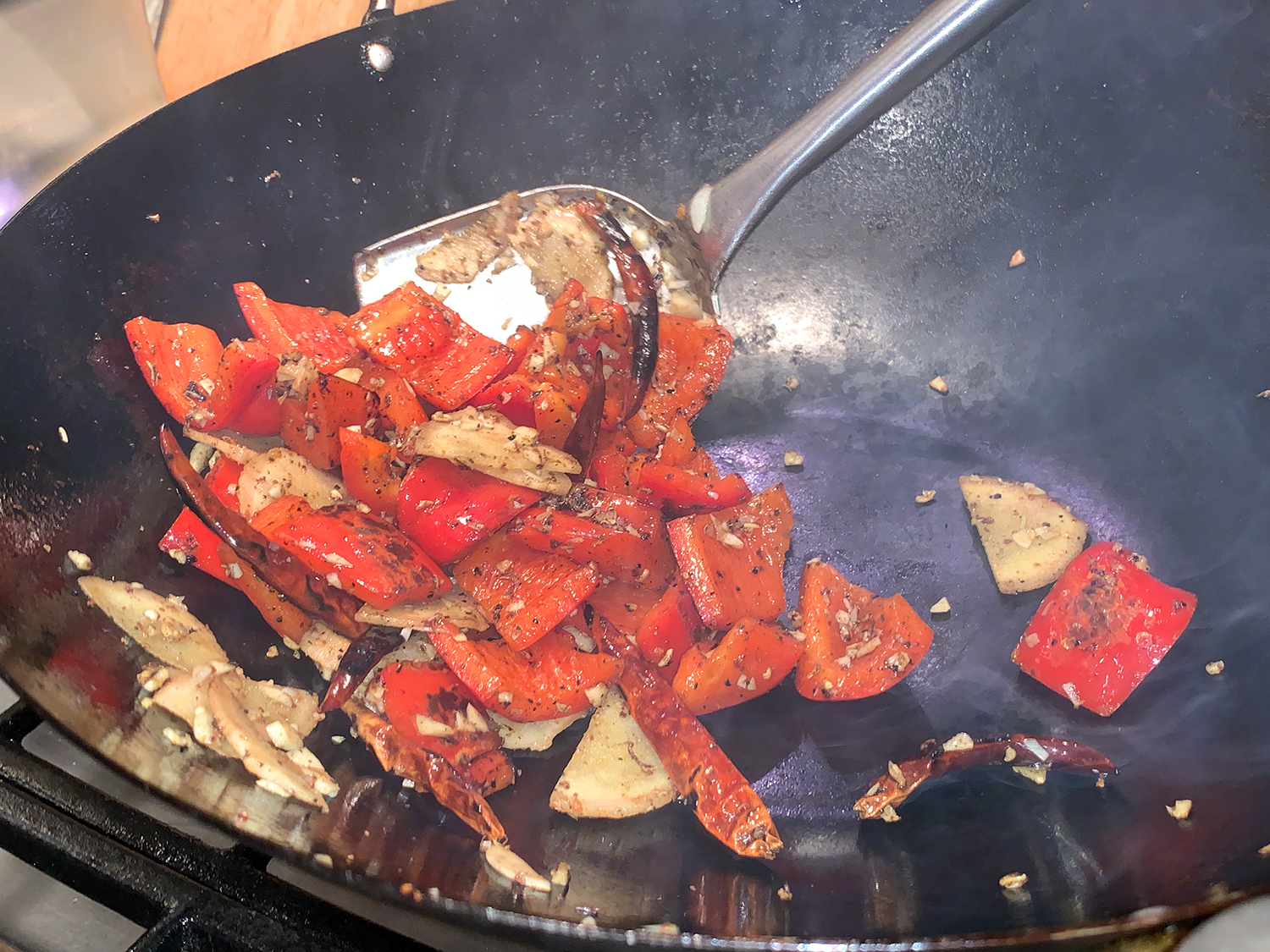
  3. In the same wok or skillet, add the remaining 1 tablespoon of neutral oil, along with the bell pepper. Toss for 1 minute, then add the Sichuan peppercorns and whole dried chiles, and stir for 1 minute until fragrant.
  4. Add the garlic and ginger, and stir for 30 seconds, then add the cauliflower back to the pan. Stir the sauce in the bowl to make sure the cornstarch is well incorporated, then pour it over the cauliflower and toss until the cauliflower is well coated.
  5. Toss in the peanuts and scallions, stir to combine, then turn off heat. Serve with rice.

http://www.lynnandruss.com

Recipe from Hetty McKinnon for The NY Times Cooking

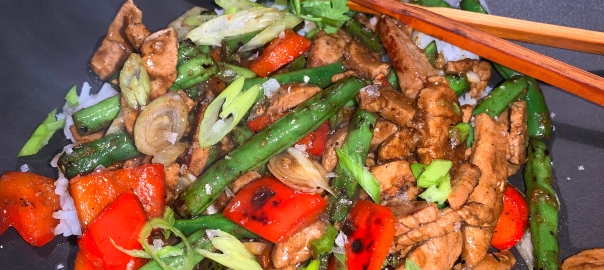
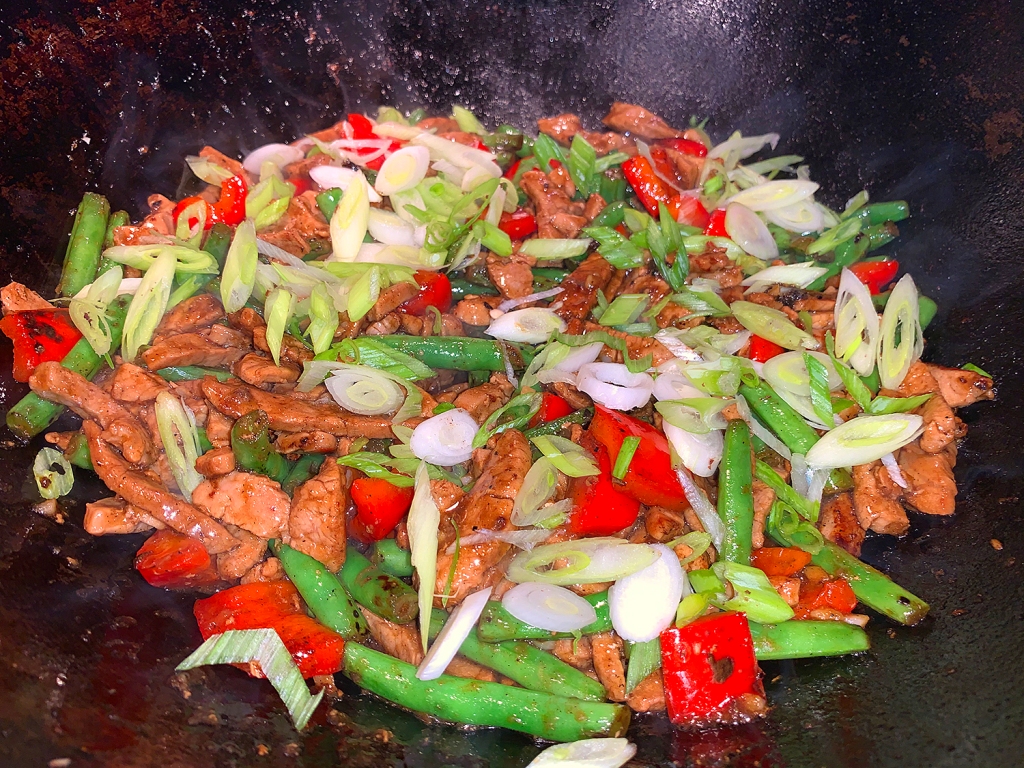
Stir-Fried Pork, Green Beans and Red Bell Pepper with Gingery Oyster Sauce

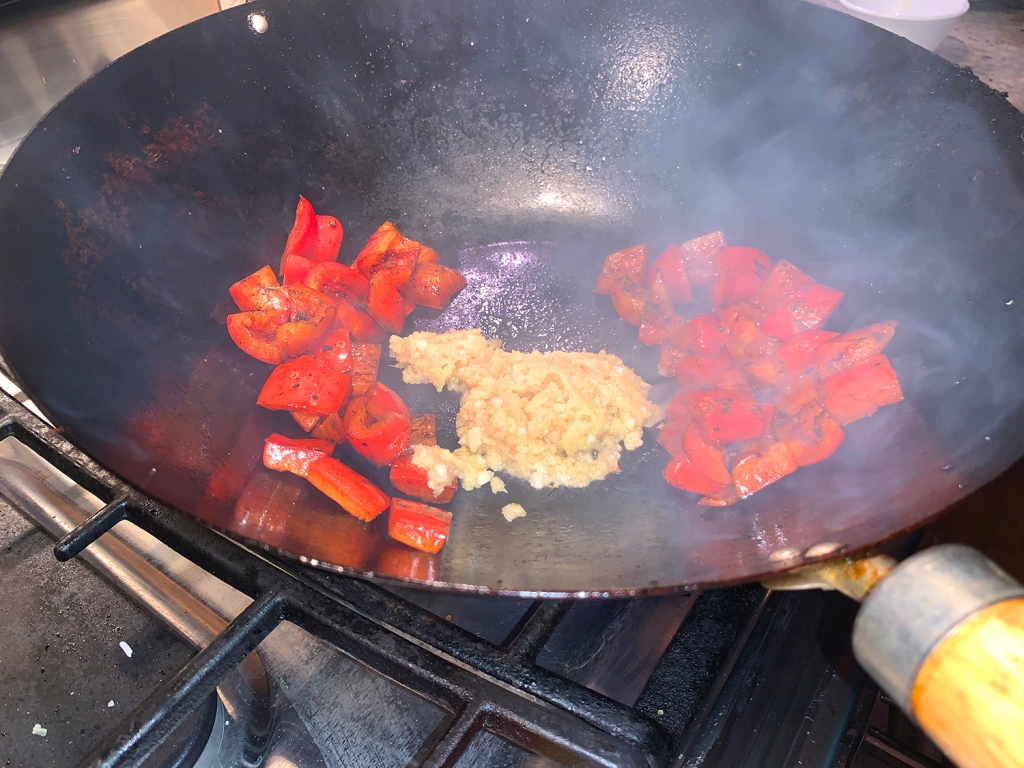
Stir-frying is the name of the game when you want something quick and healthy. And making it yourself ensures you know exactly what’s in it, as compared to many Asian take-out places loaded with unwanted fat and calories. Cook’s Illustrated found that marinating pork tenderloin in a simple soy-sherry mixture and cooking it quickly (about two minutes) in batches over high heat kept the meat tender and beautifully seasoned. In place of the sherry, we substituted Shaoxing wine which is fermented from rice.

Because different vegetables cook at different rates, batch-cook the vegetables and add aromatics (like ginger and garlic) at the end so they are cooked long enough to develop their flavors but not long enough to burn. Chicken broth gives the sauce some backbone, and cornstarch slightly thickens it so that it lightly cloaks the meat and veggies.

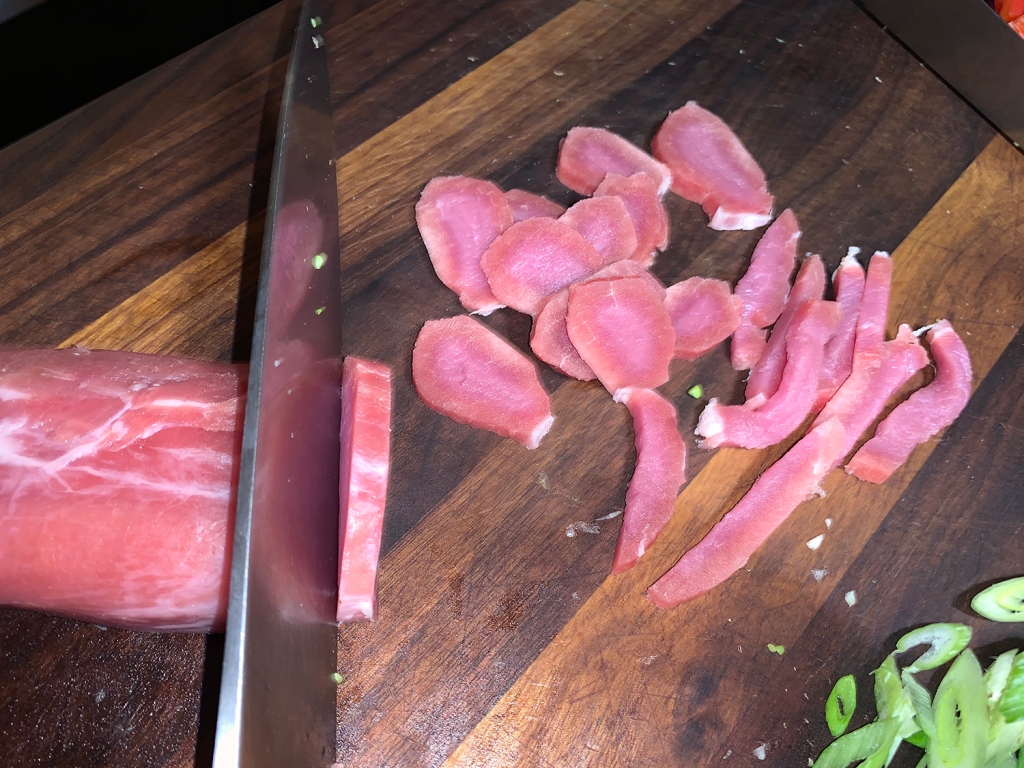
We increased the amount of pork tenderloin from the original 12 ounces to one pound. And because of that, we doubled the soy sauce and sherry that gets mixed with the pork strips (which is all noted below). Keep in mind that pork tenderloin is easier to slice if it is partially frozen. *Freeze the tenderloin until firm but not frozen solid, 45 minutes to 1 hour. Then cut the tenderloin crosswise into 1/4-inch slices. Cut the slices into 1/4-inch strips.

Stir-frying isn’t rocket science, and that’s what’s so great about it. It doesn’t require lots of fancy equipment. Instructions indicate to cook in a skillet, however we feel most stir-fries benefit from being cooked in a flat-bottomed wok. It helps to have a stir-fry spatula which fits the contour of the wok and has a long handle (to keep distance from the intense heat).

Stir frying is advantageous over other methods of cooking as it requires very little oil, which is healthier than deep frying or pan frying, and it also retains the nutrients present in the food being stir fried. As the name indicates, the food is constantly stirred while you cook it. Make sure to use an oil with a high smoke point such as peanut, canola, safflower, soybean, etc.

Stir-Fried Pork, Green Beans and Red Bell Pepper with Gingery Oyster Sauce

  • Servings: 3-4
  • Difficulty: easy
  • Print

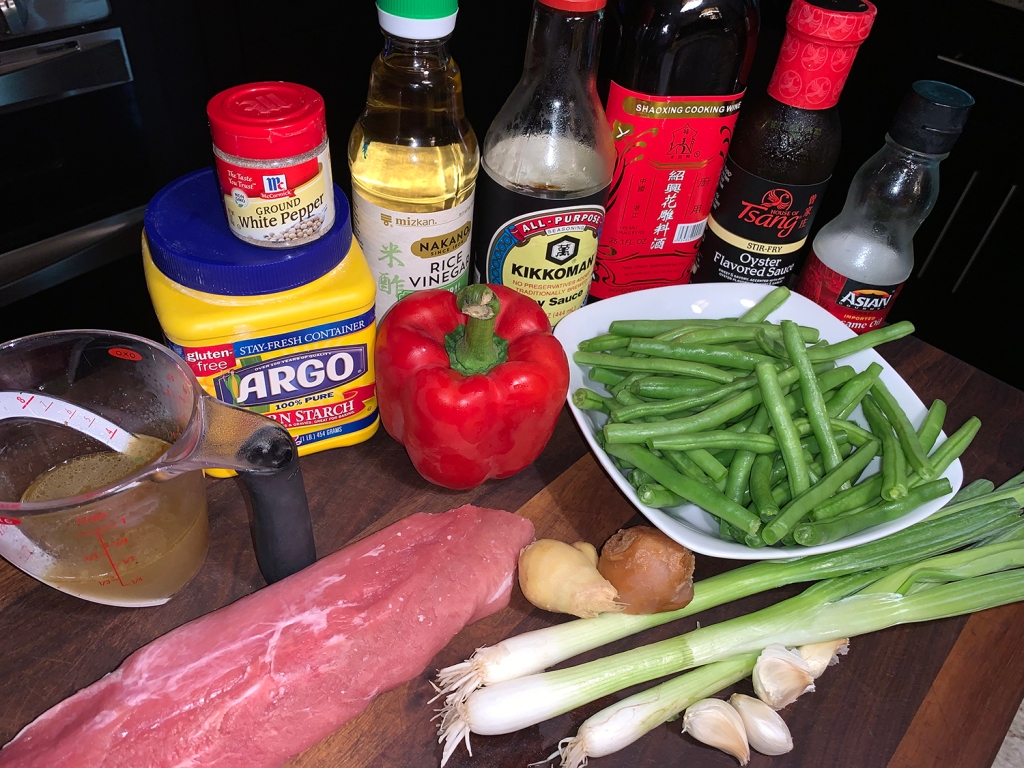
Ingredients

  • 1 lb. pork tenderloin, prepared as noted above*
  • 1 Tbsp. + 1 tsp. soy sauce
  • 1 Tbsp. + 1 tsp. dry sherry, or Shaoxing wine
  • 1 Tbsp. dry sherry, or Shaoxing wine
  • ⅓ cup low-sodium chicken broth
  • 2 ½ Tbsp. oyster sauce
  • 2 tsp. toasted sesame oil
  • 1 tsp. rice vinegar
  • ¼ tsp. ground white pepper
  • 1 tsp. cornstarch
  • 2 cloves garlic, minced (about 2 teaspoons)
  • 2 inch piece fresh ginger, grated (about 2 tablespoons)
  • 3 Tbsp. peanut oil or vegetable oil
  • 12 oz. green beans, cut on bias into 2-inch lengths
  • 1 large red bell pepper (about 8 ounces), cut into 3/4-inch squares
  • 3 medium scallions, sliced thin on bias
  • Jasmine rice, cooked according to package directions (or brown rice if you prefer)

Directions

  1. Combine pork, soy sauce, and 1 Tbsp. + 1 teaspoon sherry in small bowl. Whisk remaining 1 tablespoon sherry, chicken broth, oyster sauce, sesame oil, rice vinegar, white pepper, and cornstarch in measuring cup.
  2. Combine garlic, ginger and 1 1/2 teaspoons peanut oil in small bowl.
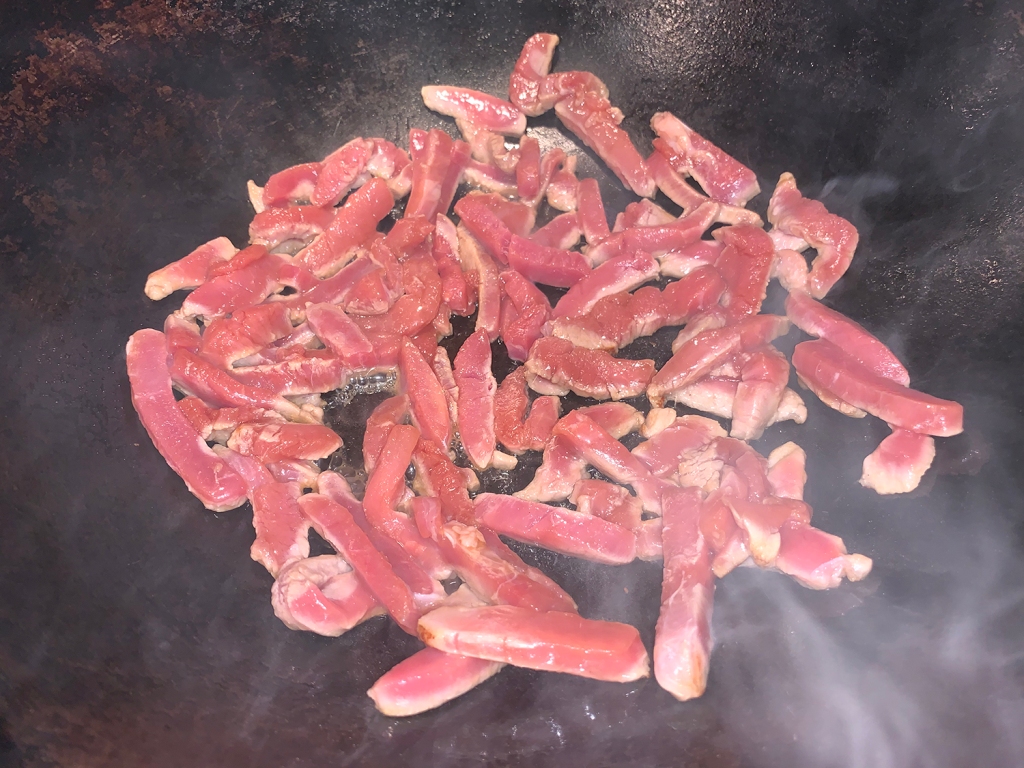
  3. Heat 1 1/2 teaspoons peanut oil in 12-inch nonstick skillet over high heat until smoking; add half of pork to skillet and cook, stirring occasionally and breaking up clumps, until well-browned, about 2 minutes.
  4. Transfer pork to medium bowl. Repeat with additional 1 1/2 teaspoons peanut oil and remaining pork.
  5. Add 1 tablespoon peanut oil to now-empty skillet; add green beans and cook, stirring occasionally, until spotty brown and tender-crisp, about 5 minutes; transfer to bowl with pork.
  6. Add remaining 1 1/2 teaspoons oil to skillet; add bell pepper and cook, stirring frequently, until spotty brown, about 2 minutes.
  7. Clear center of skillet, then add garlic/ginger mixture to clearing; cook, mashing mixture with spoon, until fragrant, about 45 seconds, then stir mixture into peppers.
  8. Add pork and green beans; toss to combine. Whisk sauce to recombine, then add to skillet; cook, stirring constantly, until sauce is thickened and evenly distributed, about 30 seconds.
  9. Transfer to serving platter; sprinkle with scallions and serve over hot jasmine rice.

http://www.lynnandruss.com

Adapted from a recipe by Cook’s Illustrated