Tag Archives: gochujang

Spicy Korean Braised Chicken and Vegetables

This flavor-packed stew from Milk Street, called dakbokkeumtang, counts gochujang—or Korean fermented chili paste—as one of its primary seasonings. The thick, bright-red paste usually is sold in plastic tubs or bottles in Asian markets or in the international aisle of regular supermarkets. It’s pretty much a staple in our house.

On the other hand, soy sauce and a dose of brown sugar add salty-sweet flavor to balance to the dish, while sesame oil and seeds add nutty notes. The potatoes and carrots absorb the seasonings so the pieces are flavored throughout. Therefore make sure to cut the vegetables into pieces about 1 inch in size, not smaller, so they don’t wind up overdone. Serve the stew with steamed rice.

NOTE: Don’t use chicken breasts instead of thighs. Sturdy dark meat does well when braised, but more delicate white meat dries out and turns tough. Dark meat also lends the finished dish a richer, meatier flavor.

There is a conflict in the quantity of potatoes to use. In the Milk Street Magazine Sept./Oct. issue, it notes 12 ounces (as listed below), while online, their recipe indicates the amount as 10 ounces. We decided on an even greater amount and switched out the Yukons for sweet potatoes. Because of this flip, we used a third less brown sugar. And the amount of ginger was increased because that’s how we roll!

After only 8 minutes in the pressure cooker (and 10 minutes more for pressure reduction), we had a scrumptiously incredible flavorful dinner! Every morsel was fork-tender, no knife needed.
Spicy Korean Braised Chicken and Vegetables

  • Servings: 4
  • Difficulty: easy
  • Print

Ingredients

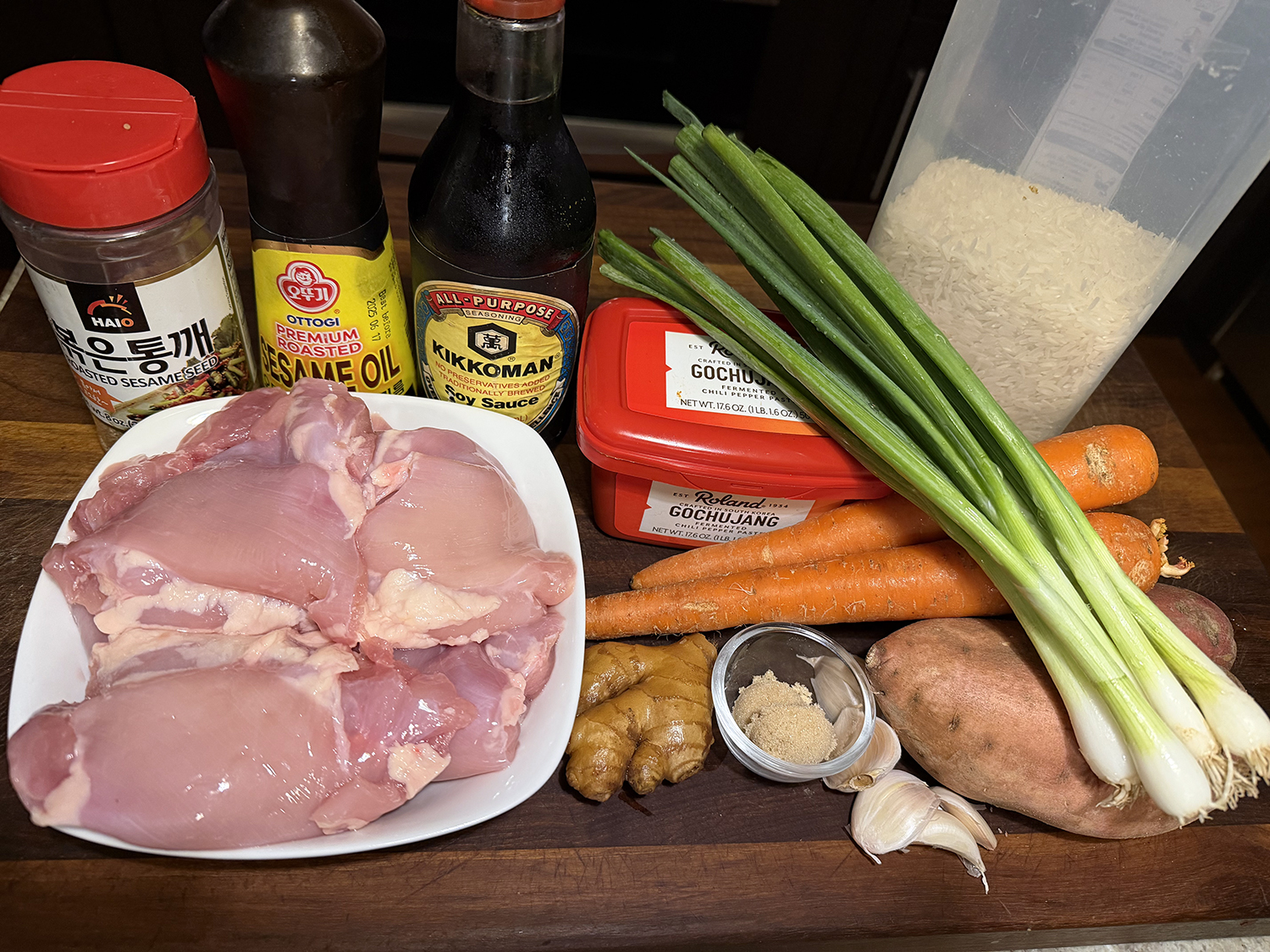
  • 3 Tbsp. gochujang
  • 2 Tbsp. unseasoned rice vinegar
  • 2 Tbsp. soy sauce
  • 1 Tbsp. packed brown sugar
  • 1 Tbsp. toasted sesame oil, plus more to serve
  • 2 inch piece fresh ginger (about 1½ oz.), peeled, cut into 3 pieces and smashed
  • 5 medium garlic cloves, finely chopped
  • 1 bunch scallions, whites chopped, greens cut into 1-inch lengths, reserved separately
  • 2 lbs. boneless, skinless chicken thighs, trimmed and halved
  • 12 oz. Yukon Gold potatoes, peeled and cut into 1-inch chunks
  • 2 medium carrots, peeled and cut into 1-inch pieces
  • Sesame seeds, toasted, to serve

Directions

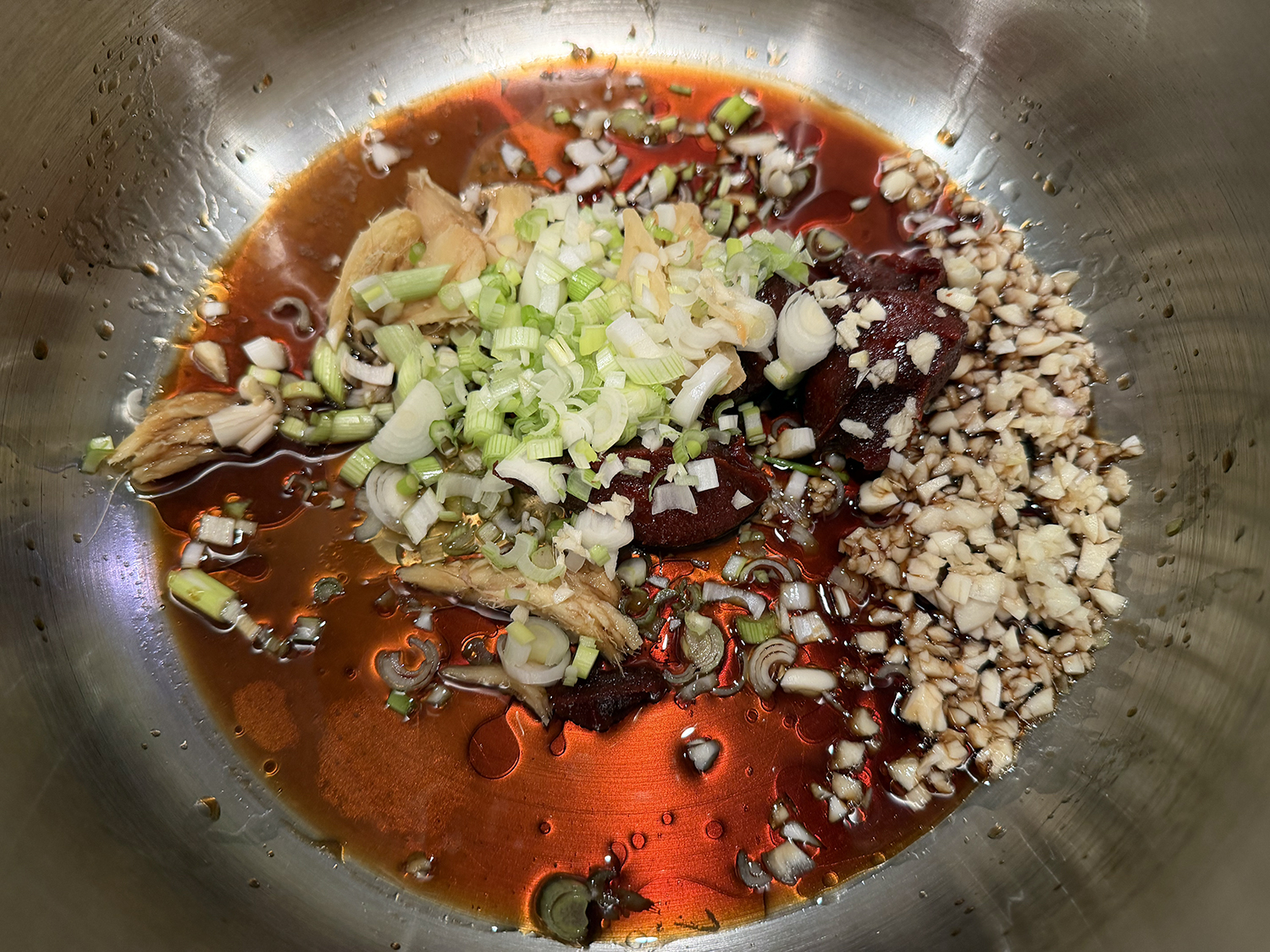
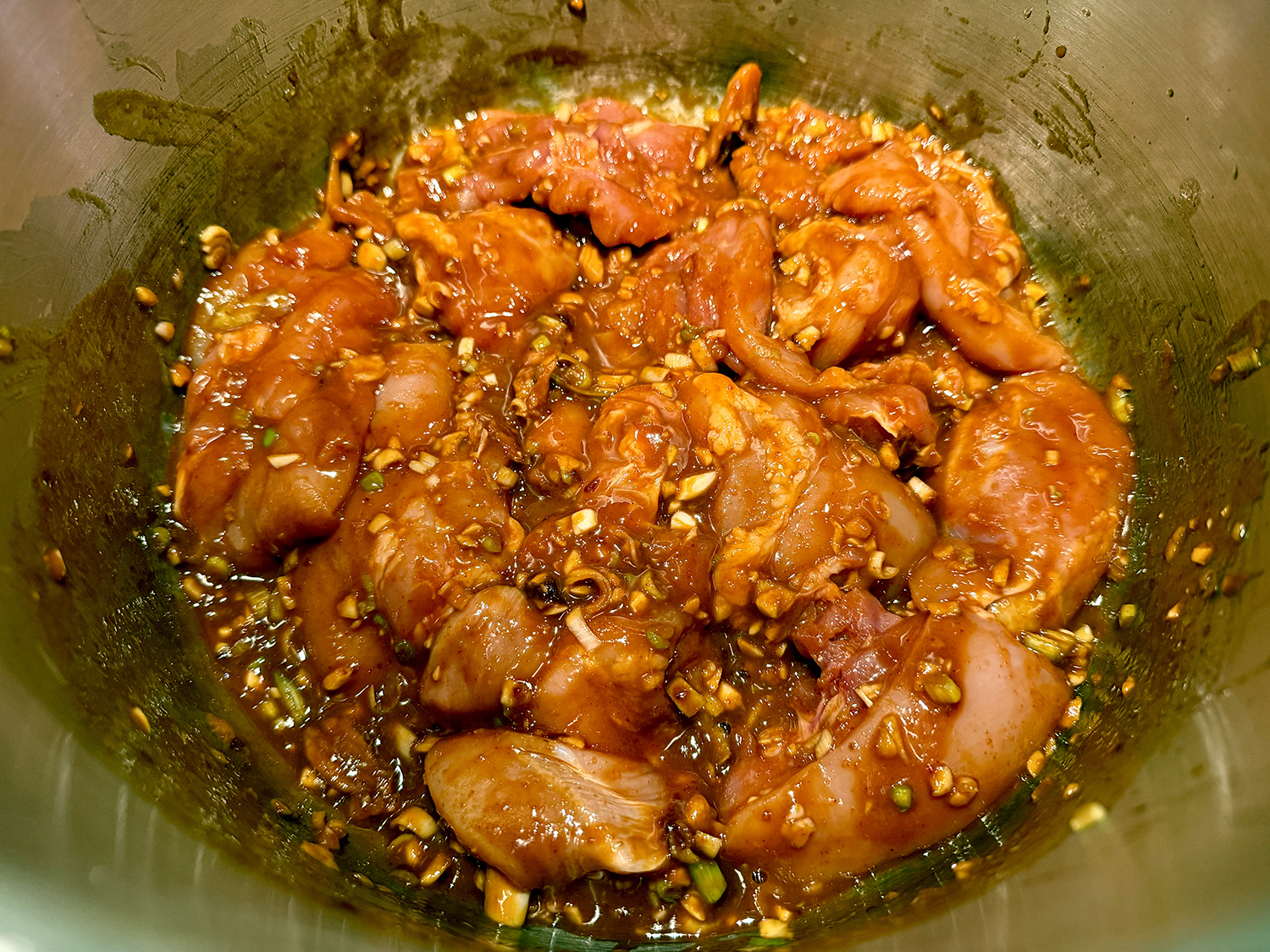
  1. In a 6-quart Instant Pot (or pressure cooker), whisk together the gochujang, vinegar, soy sauce, sugar, sesame oil, ginger, garlic and scallion whites. Add the chicken and toss to coat. Let stand for 15 minutes. Stir in the potatoes, carrots and ½ cup water, then distribute in an even layer.
  2. Add the chicken and toss to coat. Let stand for 15 minutes. Stir in the potatoes, carrots and ½ cup water, then distribute in an even layer.
  3. Lock the lid in place and move the pressure valve to Sealing. Select Pressure Cook or Manual; make sure the pressure level is set to High. Set the cooking time for 8 minutes. When pressure cooking is complete, let the pressure reduce naturally for 10 minutes, then quick-release the remaining steam by moving the pressure valve to Venting. Press Cancel, then carefully open the pot.
  4. Remove and discard the ginger (this may be a bit impossible), then stir in the scallion greens. Transfer to a serving bowl, drizzle with additional sesame oil and sprinkle with sesame seeds.

http://www.lynnandruss.com

Adapted from a recipe by Courtney Hill for Milk Street

Spatchcocked Roasted Chicken with Gochujang Butter

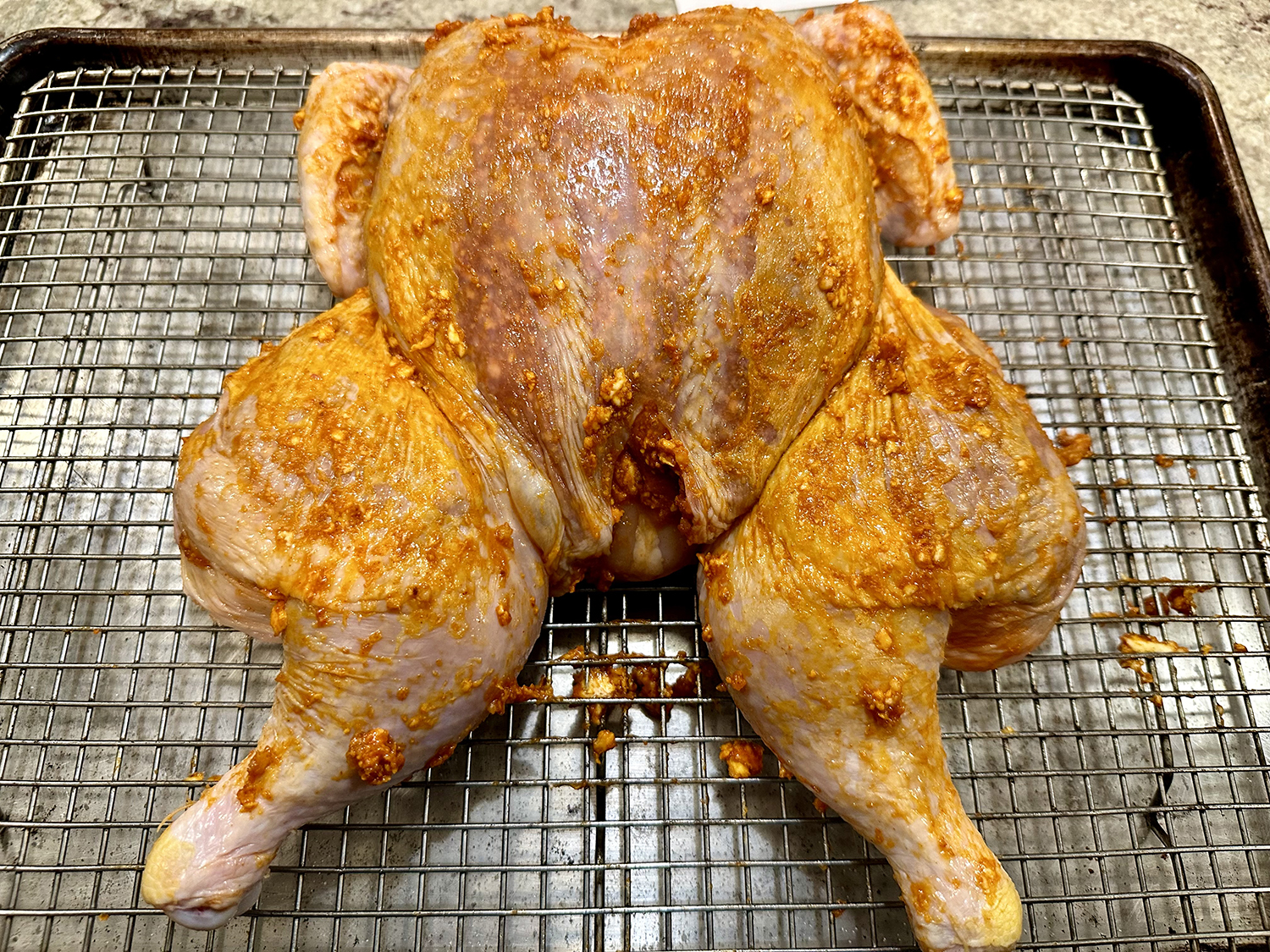
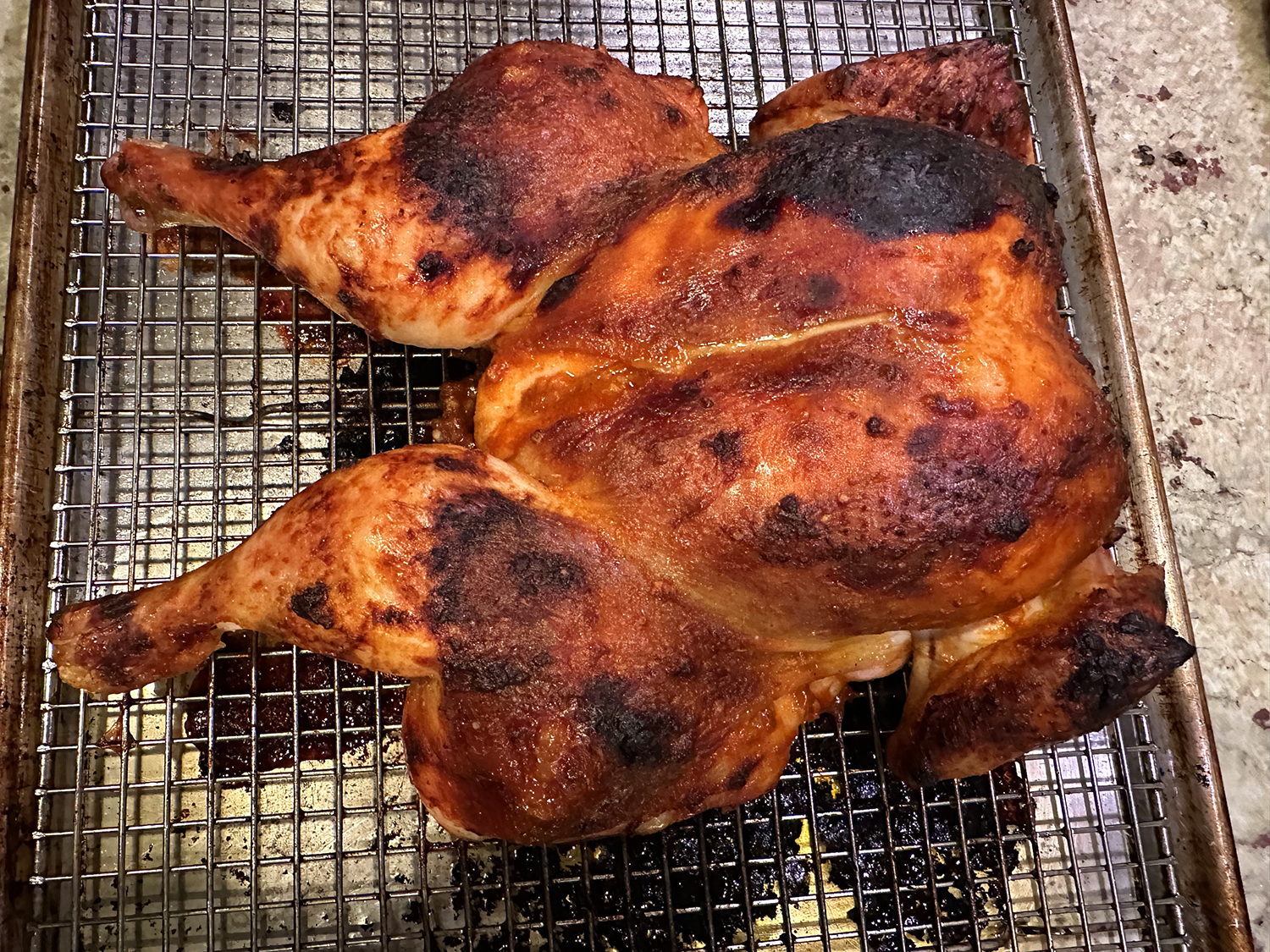
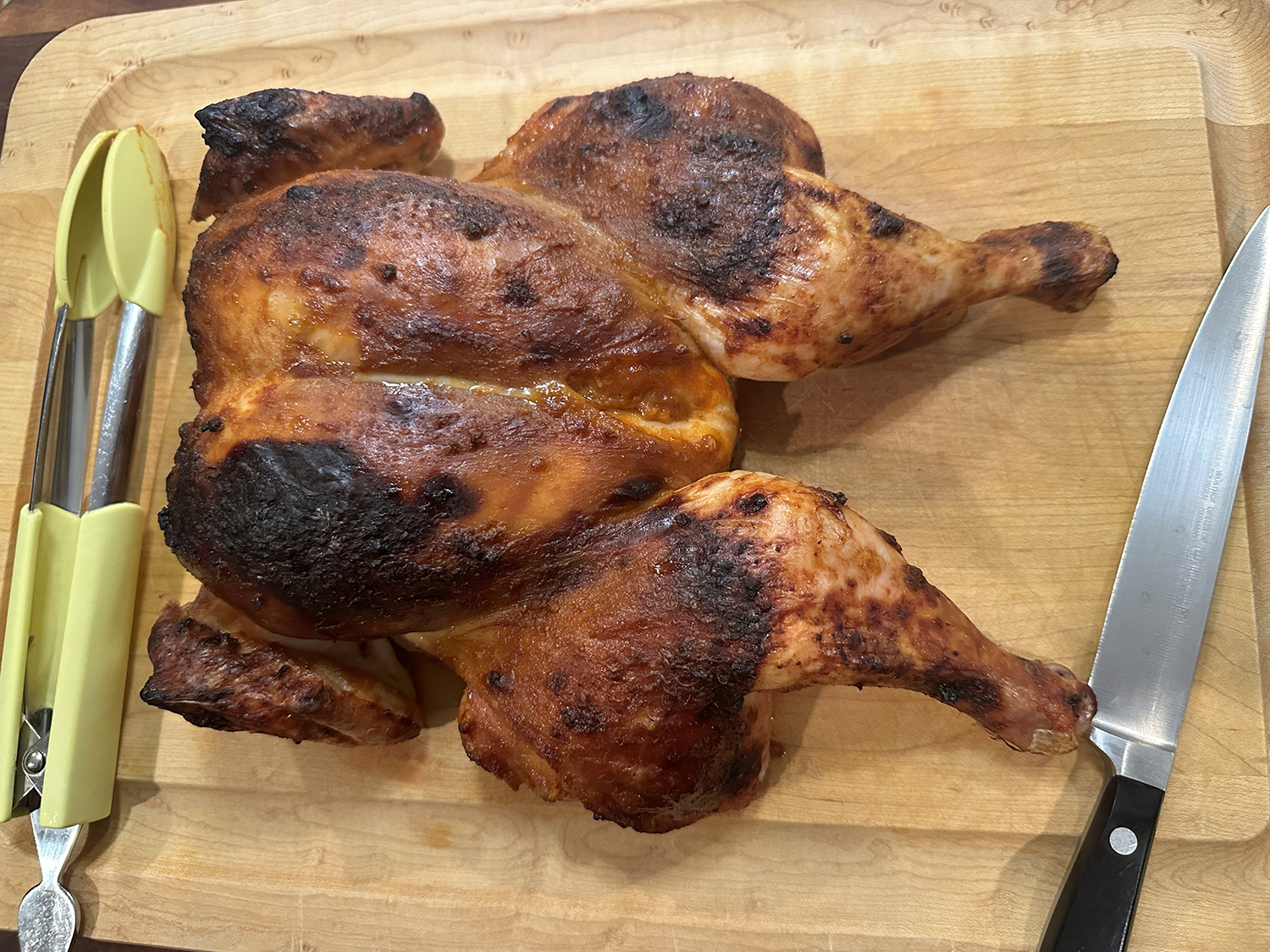
Yet another juicy roasted chicken recipe to add to your growing list. In my humble opinion, there is always room for one more fabulous juicy, flavorful chicken recipe. For this, a Korean-inspired seasoning paste elevates a simple roast chicken with spicy-sweet flavor. The blend includes softened butter, gochujang and honey, plus fresh ginger and garlic, which mellow and sweeten as they cook.

The paste is smeared under the bird’s skin, directly on the meat, so it takes on the bold flavors. Gochujang, one of our pantry staples, is a fermented chili paste commonly used in Korean cooking; it is loaded with spiciness, a hint of sweetness and lots of umami. You’ll find it in the international section of the supermarket or in Asian grocery stores.

Serve with steamed rice. Or, as in our case, with sides of roasted Brussels Sprouts and Spicy Black Bean, Twice-Cooked Potatoes that have an Asian bent.

Spatchcocked Roasted Chicken with Gochujang Butter

  • Servings: 4
  • Difficulty: easy
  • Print

Ingredients

  • 4 Tbsp. salted butter, room temperature
  • 1/4 cup gochujang
  • 4 tsp. finely grated fresh ginger
  • 3 medium garlic cloves, finely grated
  • 1 Tbsp. honey
  • Kosher salt
  • 4 lb. whole chicken

Directions

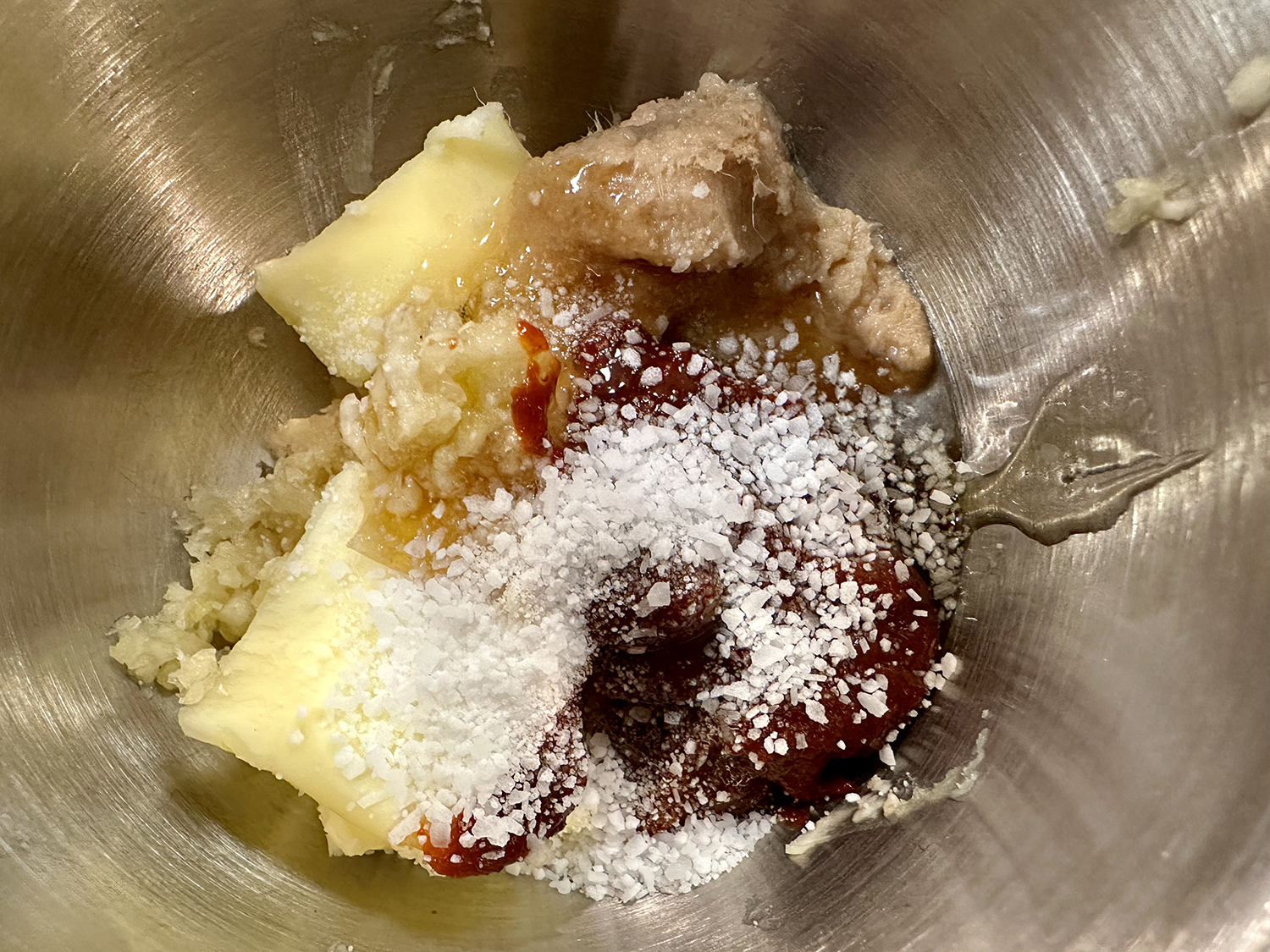
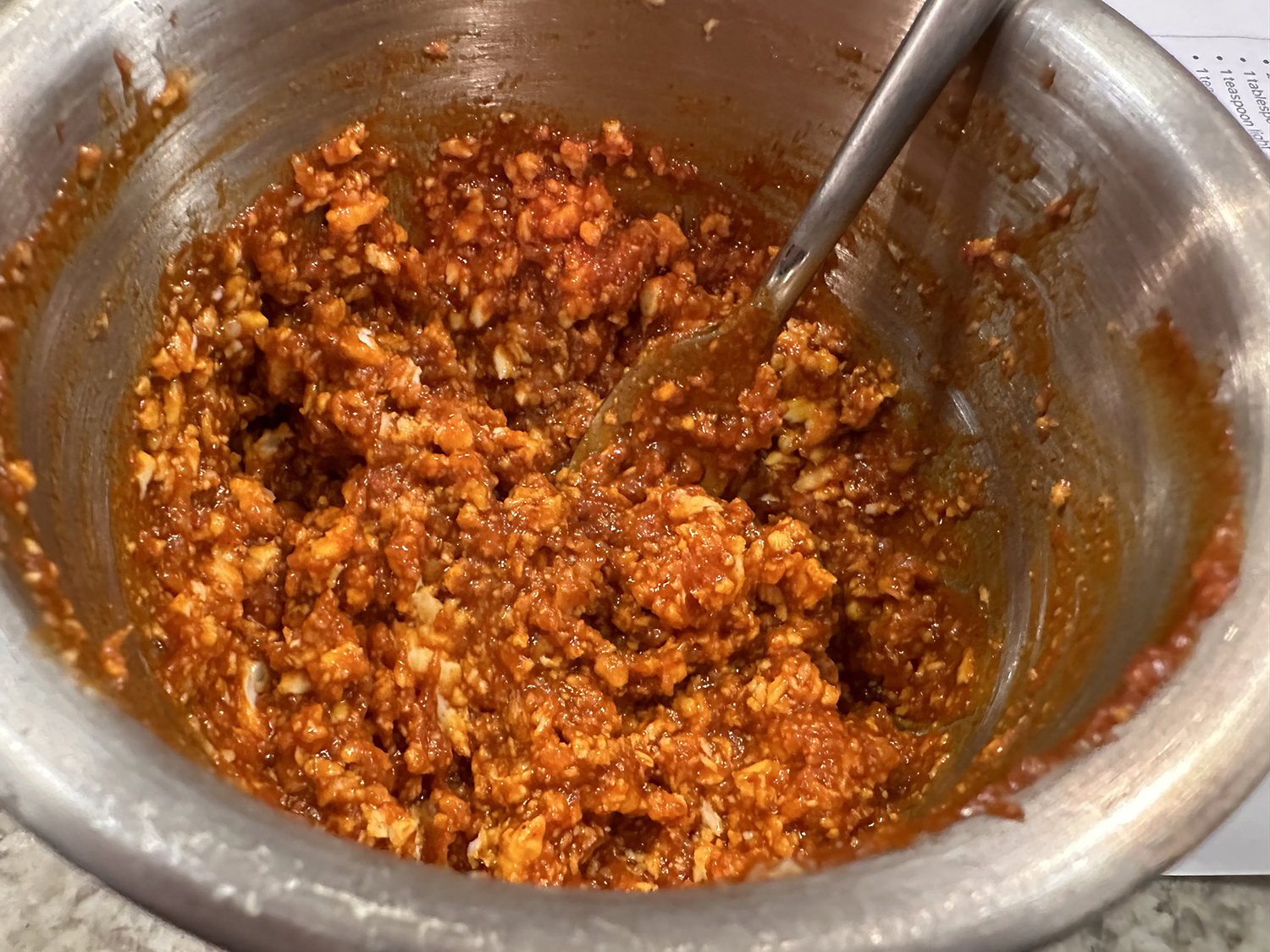
  1. Heat the oven to 425°F with a rack in the middle position. Set a wire rack in a rimmed baking sheet. In a small bowl, stir together the butter, gochujang, ginger, garlic, honey and ½ teaspoon salt; set aside.
  2. Place the chicken breast down on a cutting board. Using sturdy kitchen shears, cut along both sides of the backbone, end to end; remove the backbone and discard. Spread open the chicken, then turn it breast up. Using the heel of your hand, press down firmly on the thickest part of the breast until the wishbone snaps.
  3. Season the underside of the chicken with salt, then place it breast up on the wire rack. With your fingers, carefully loosen the skin from the meat on the breast and thighs. Using a spoon, distribute the butter mixture under the skin in those areas, then massage the skin to evenly spread the mixture and rub it into the flesh. Rub any remaining gochujang paste on the outside of the bird and season the skin side with salt, then tuck the wing tips to the back.
  4. Roast until well browned and the thighs reach 175°F, check at about 40 minutes. If it has not reached temperature, continue cooking for 10-15 minutes more. Let the chicken rest for about 10 minutes, then carve.

http://www.lynnandruss.com

Recipe by Dimitri Demopolous for Milk Street

Spicy Korean-Style Braised Cod

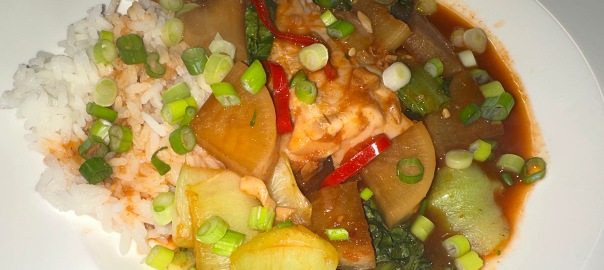
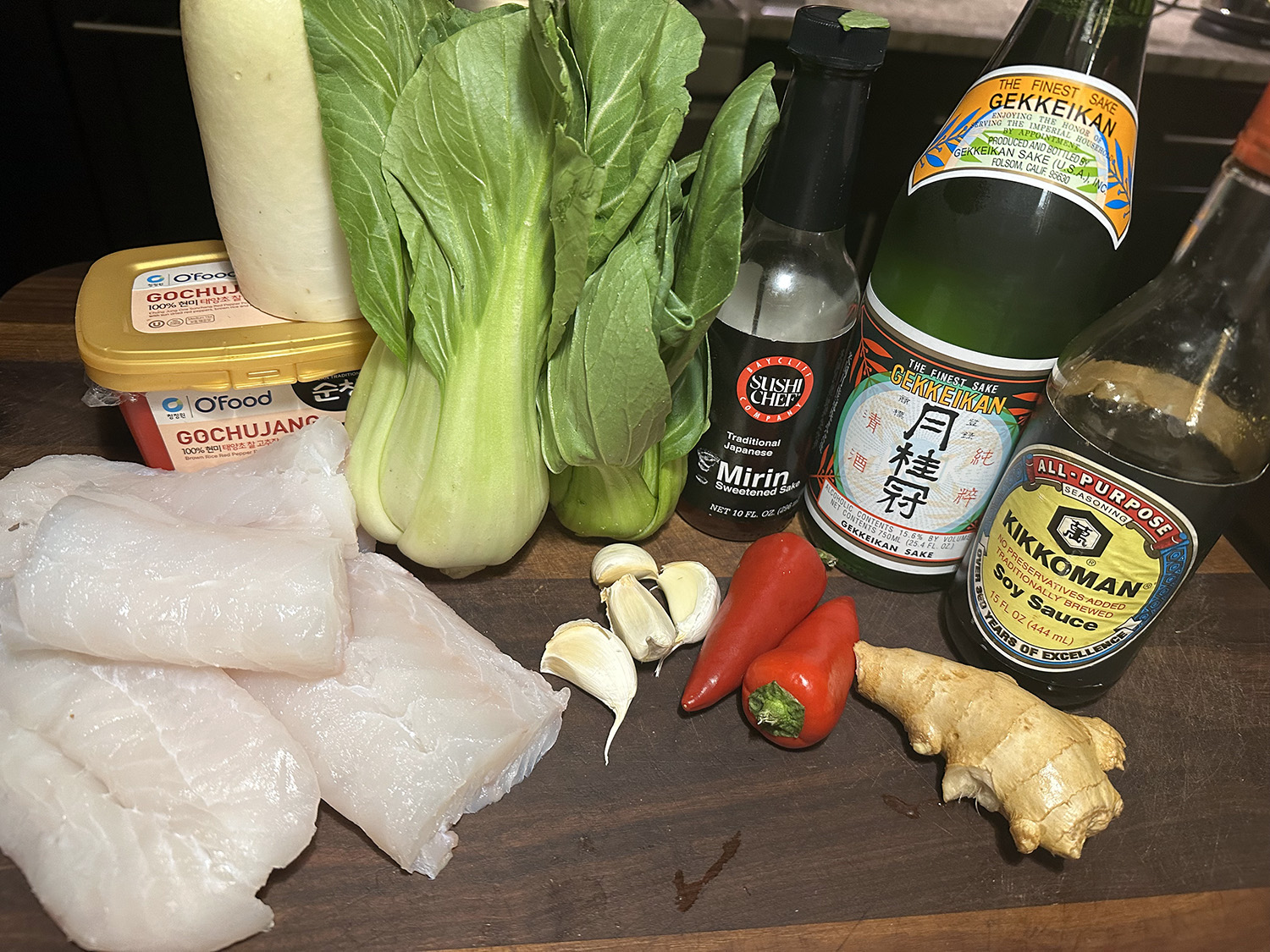
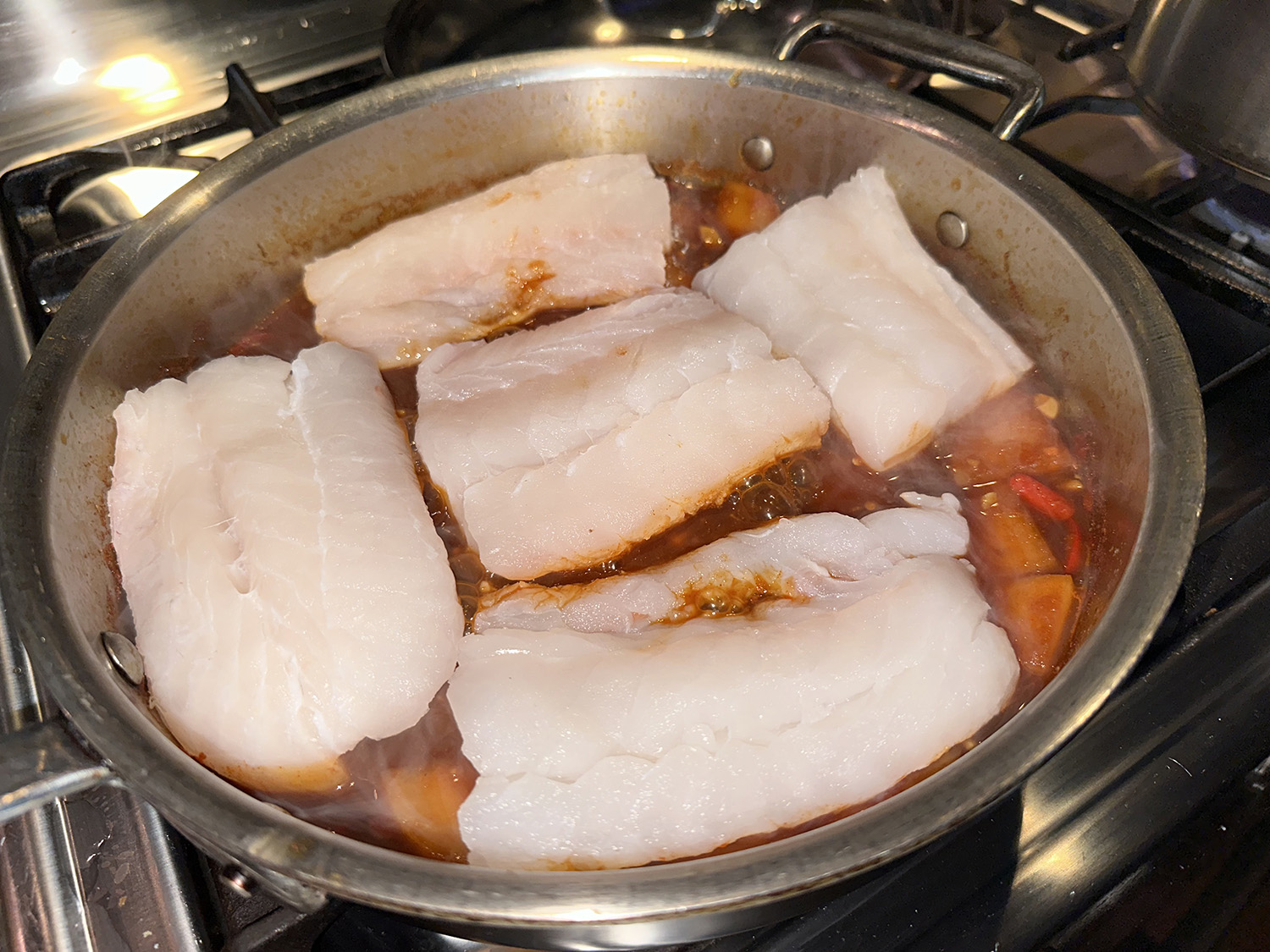
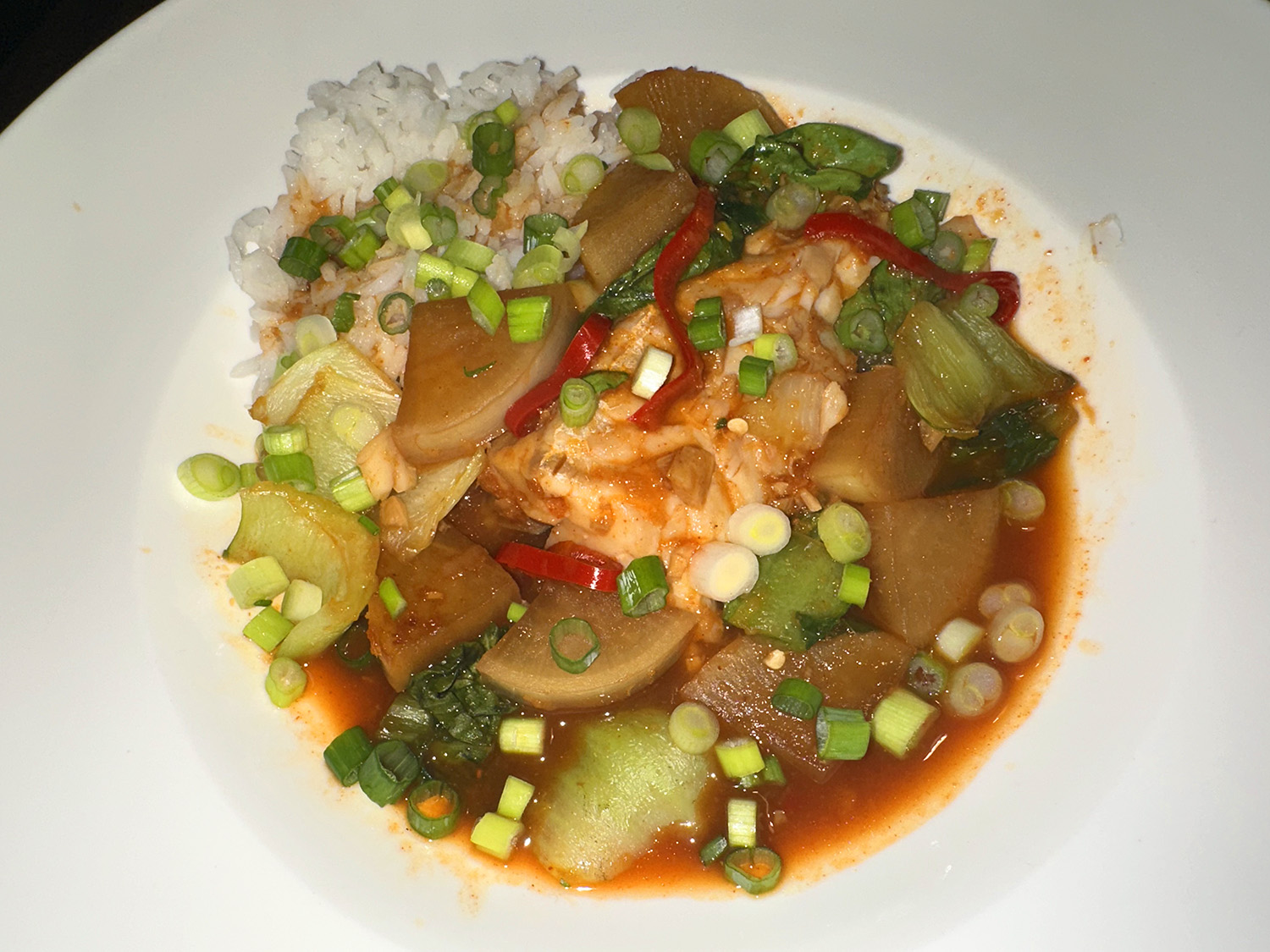
OK, I’ll go out on a limb here and claim this cod recipe is probably one of the best fish dishes I’ve ever eaten! The skillet braise is a simplified version of daegu jorim, or Korean braised cod. Here, Milk Street builds an umami-rich braising liquid by combining sake, mirin, soy sauce and gochujang (Korean fermented chili paste), plus garlic, ginger and chilies.

In the Korean kitchen, steaks of fatty fish, such as black cod or mackerel, are commonly used in daegu jorim, but this recipe opts for easy to source Atlantic cod fillets. Instead of buying individual fillets, we bought a 1 1⁄2-pound piece and cut it down to our preferences.

Earthy, subtly sweet daikon radish is a standard ingredient in the braise but Yukon Gold potatoes are said to be a good alternative. Baby bok choy is also added for color and to round out the braise. Let ‘s just say, this packs quite a punch—which we loved—but to tone it down a notch or three, use only one Fresno chili and discard the seeds and veins.

If you like, sprinkle on sliced scallions or toasted sesame seeds as a garnish, and/or drizzle on some sesame oil. Be sure to serve steamed short-grain rice alongside. Kimchi would be a great accompaniment, too. It was even very good as leftovers. — Just YUM!

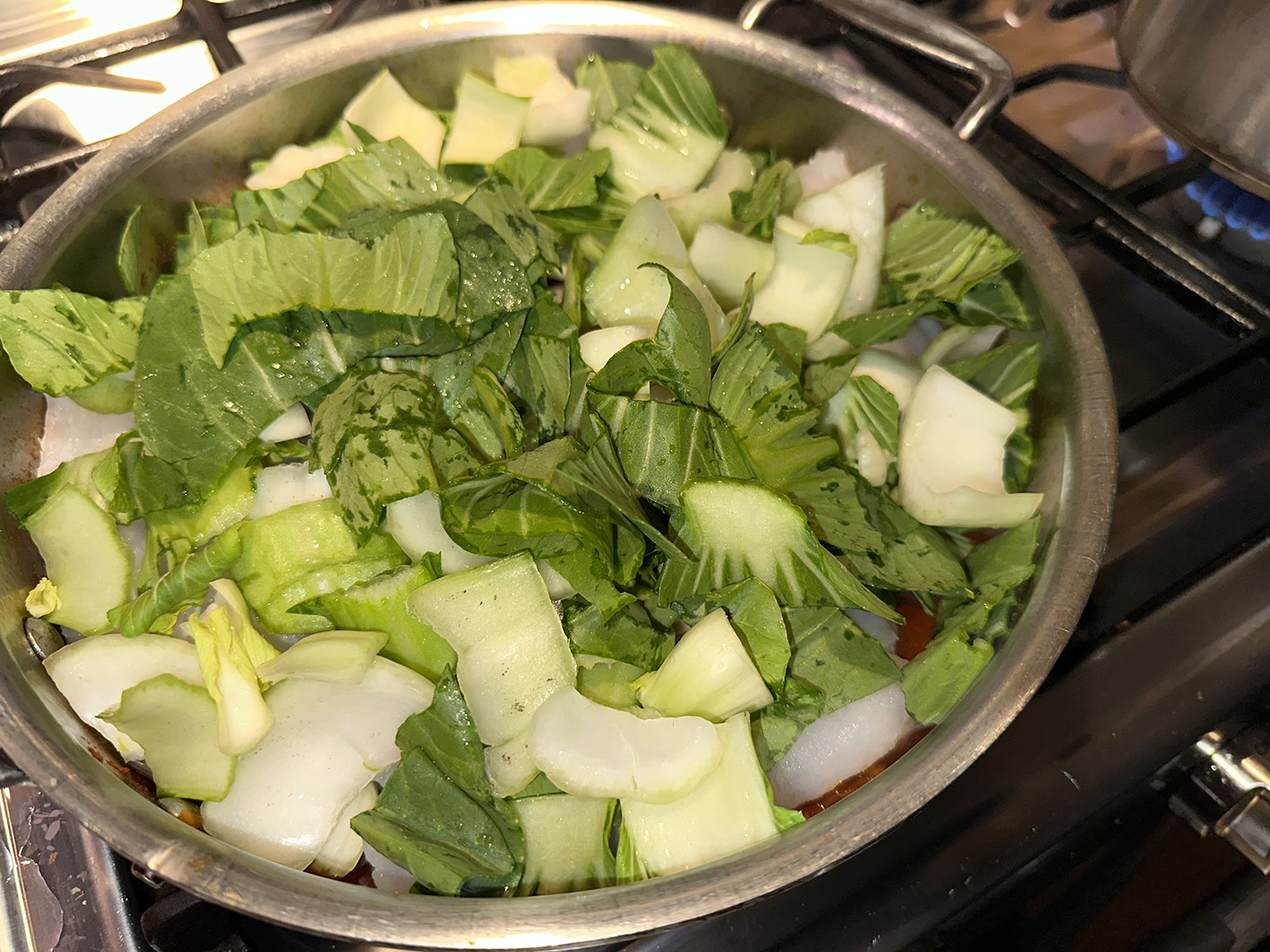
Don’t cover the skillet tightly after adding the cod and bok choy. Leaving the lid ajar allows some steam to escape, so the broth reduces slightly, for more concentrated flavor and consistency.

Spicy Korean-Style Braised Cod

  • Servings: 4
  • Difficulty: easy
  • Print

Ingredients

  • 1 1/2 cups sake
  • 1/3 cup mirin
  • 1/4 cup soy sauce
  • 3 Tbsp. gochujang
  • 4 medium garlic cloves, minced
  • 2 Tbsp. minced fresh ginger
  • 1 – 2 Fresno or jalapeño chilies, stemmed and sliced into thin rounds
  • 12 oz. daikon radish, peeled, quartered lengthwise and cut crosswise into ½-inch pieces or 12 oz. medium Yukon Gold potatoes, peeled and sliced into ½-inch rounds
  • 4 6-oz. skinless cod fillets, each about 1 inch thick
  • 8 oz. baby bok choy, trimmed and cut crosswise into 1-inch pieces
  • Kosher salt and ground black pepper
  • Steamed rice

Directions

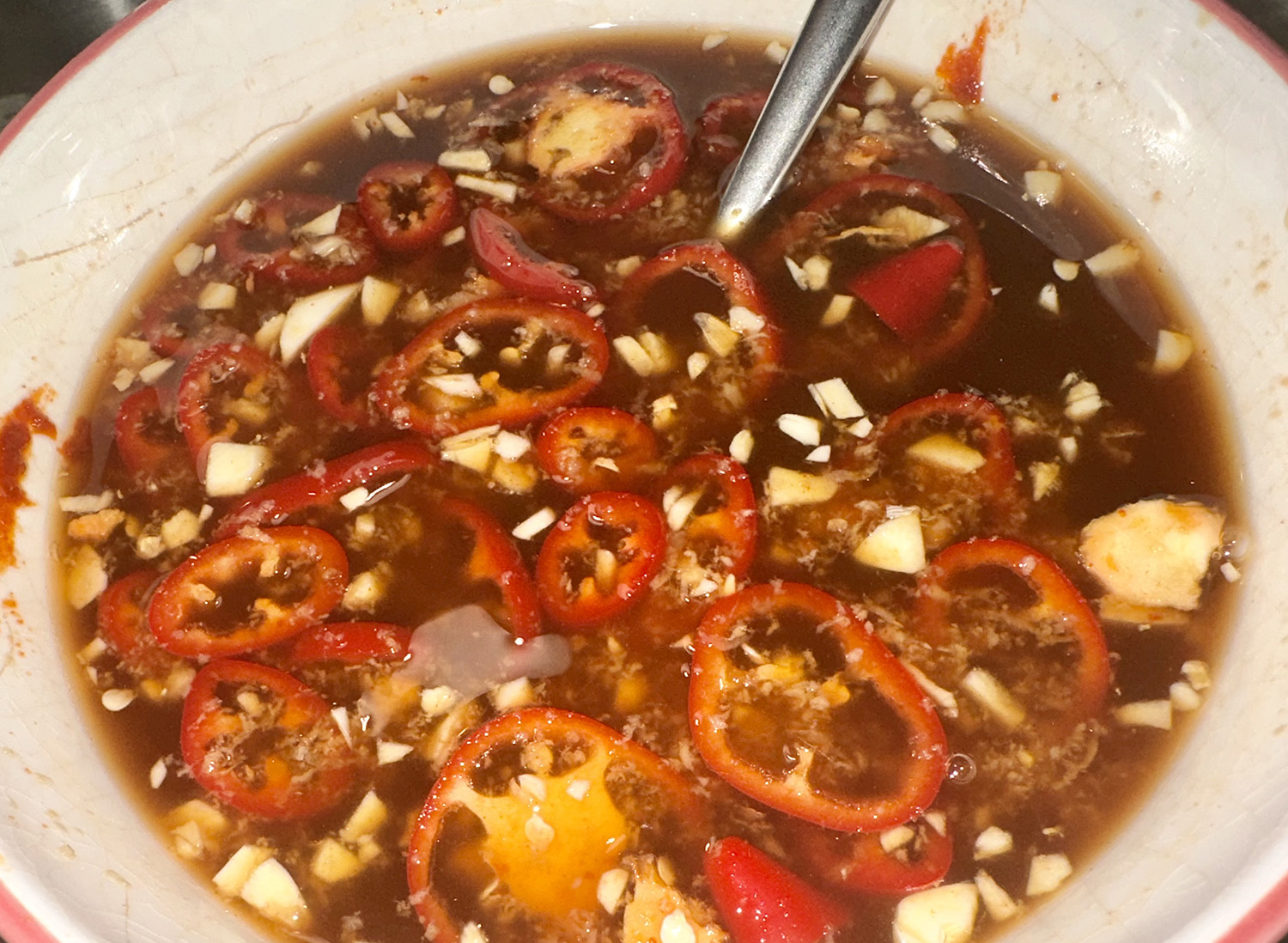
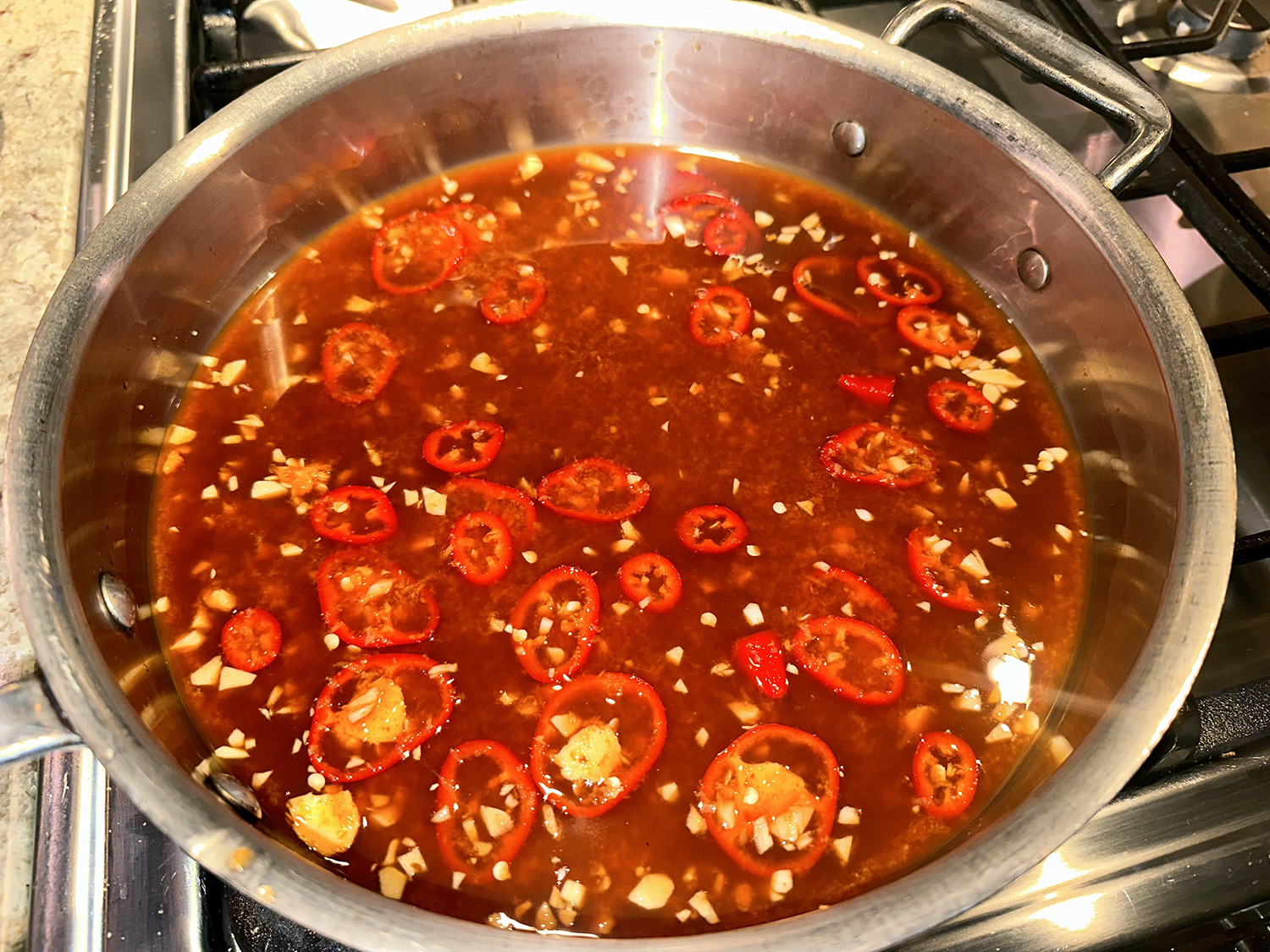
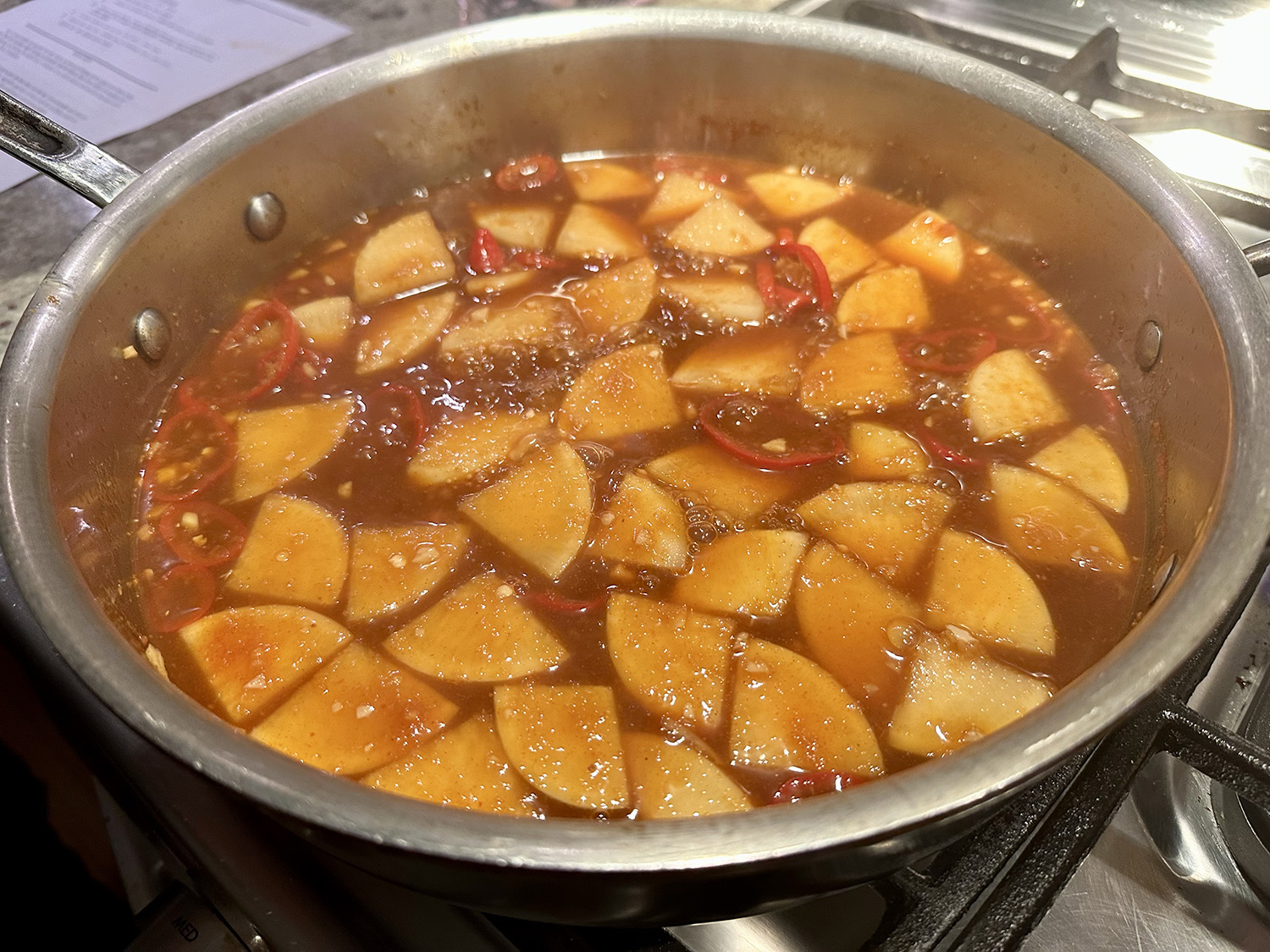
  1. In a 12-inch skillet, stir together the sake, mirin, soy sauce, gochujang, garlic, ginger and chilies; bring to a boil over medium-high, stirring occasionally. Add the daikon (or potato), then cover, reduce to medium, and cook, flipping and stirring the radish every 5 minutes or so, until a skewer inserted into the pieces meets no resistance, 10 to 15 minutes.
  2. Slide the cod fillets into the skillet and scatter the bok choy over the top. Cover partially and cook over medium, turning the fish and stirring the vegetables just once or twice, until the cod flakes easily and the sauce is slightly thickened, 5 to 8 minutes. Taste and season with salt and pepper.
  3. Ladle into shallow bowls and garnish with sliced scallions and sesame seeds.

http://www.lynnandruss.com

Adapted from a recipe by Courtney Hill for Milk Street