Tag Archives: braised dish

Braised Chicken with Olives and Capers

With chicken being the most popular meat in America, it’s no wonder there are an endless variety of recipes worth your time and effort! This lovely Mediterranean-influenced braised dish from Williams Sonoma’s Test Kitchen is right up there with the best of them.

Braising chicken in white wine instead of red results in a lighter, brighter flavor, which in this recipe is heightened with piquant olives and capers. If desired, serve with a good loaf of bread, some mashed potatoes, or polenta so you can soak up the flavorful braising liquid, because it is worth every drop.

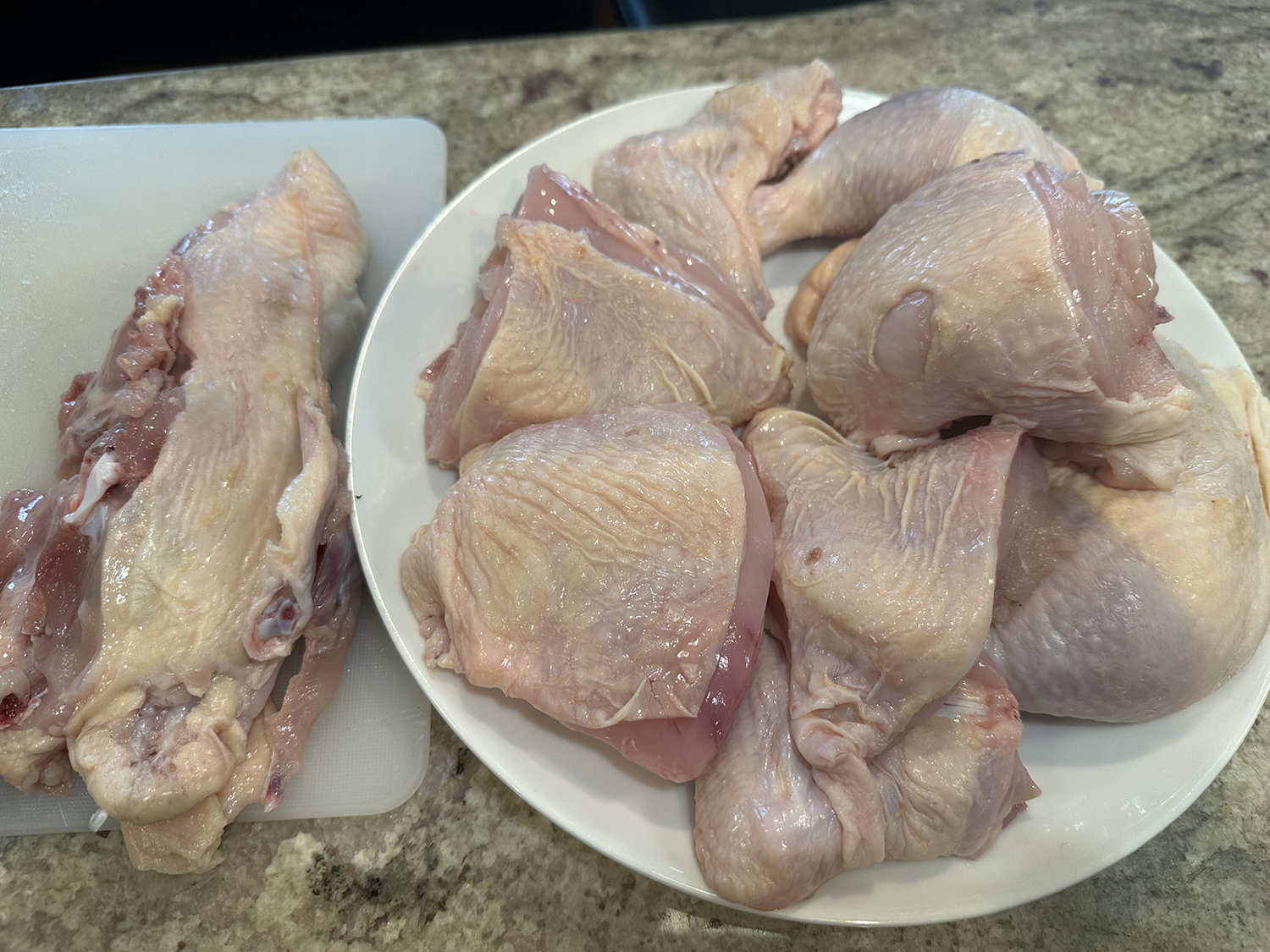
Instead of cutting up a whole chicken, you could certainly save some time buying a selection of bone-in, skin-on pieces such as thighs, breasts and legs. For us, the positive in using an entire bird, is saving the leftover parts (back, wingtips, etc.) for making home made stock at another time.

The regular amounts of white wine (3/4 cup) and chicken broth (2 1/2 cups) were way too much, thus causing the reduction time to increase considerably, from 5 to 20 minutes. The opposite was true of braising the chicken. Instead of the hour to hour-and-a-half noted in the original directions, the pieces were overdone after only 45 minutes.

To offset the chicken (especially white meat) from being overcooked, the oven temp gets lowered down to 325°F (braises are typically low heat). Additionally, pile the breast pieces on top of the dark meat 15 minutes after the the braise goes into the oven. In Step 3, the stovetop burner was reduced to medium. All of our corrections are noted in the recipe below.

To complete our meal, we served the chicken with sides of glazed carrots and a potato-parsnip mash. WOW, was that sauce amazing!!

Braised Chicken with Olives and Capers

  • Servings: 4
  • Difficulty: easy
  • Print

Ingredients

  • 1 whole chicken, about 3 1/2- to 4-lb, cut into 8-10 serving pieces
  • Kosher salt and freshly ground pepper, to taste
  • 1 Tbsp. olive oil
  • 3 Tbsp. unsalted butter
  • 1 onion, diced
  • 2 garlic cloves, chopped
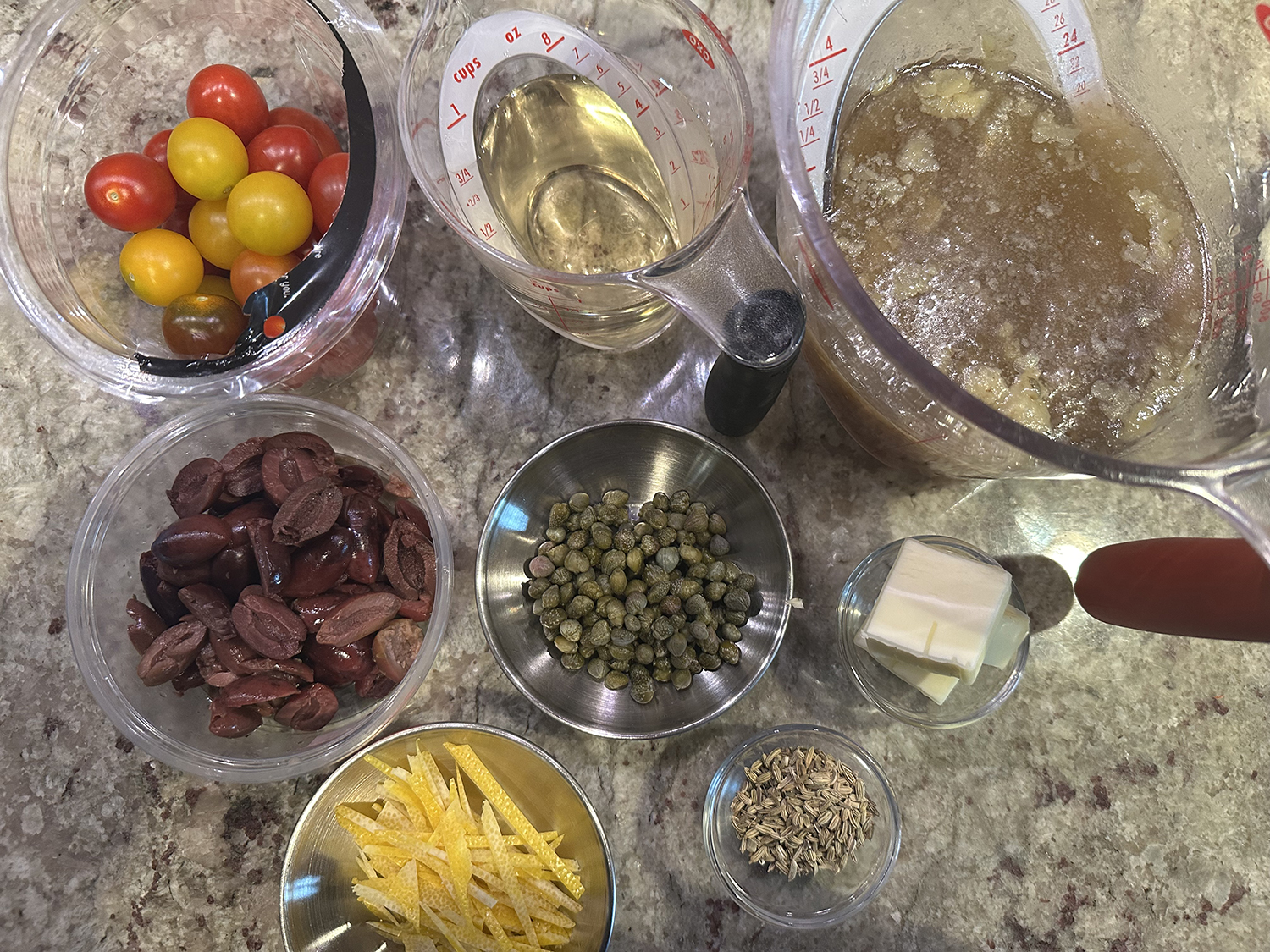
  • 1/2 cup dry white wine
  • 1 1/2 cups chicken broth, preferably homemade
  • 3/4 cup pitted olives, such as Kalamata, halved
  • Zest of 1 lemon, peeled into strips using a vegetable peeler and
      then julienned
  • 3 Tbsp. capers, drained and rinsed
  • 2 tsp. fennel seeds
  • 8 oz. cup cherry tomatoes

Directions

  1. Preheat an oven to 325ºF.
  2. Pat the chicken dry and season with salt and pepper. In a Dutch oven over medium-high heat, warm the olive oil. Working in batches, brown the chicken on all sides, 8 to 10 minutes per batch. Transfer the chicken to a plate and carefully pour the fat from the Dutch oven.
  3. Reduce heat to medium. Add the butter to the Dutch oven. When it has melted, add the onion and sauté until translucent, 4 to 6 minutes. Add the garlic and continue to cook for 1 minute more.
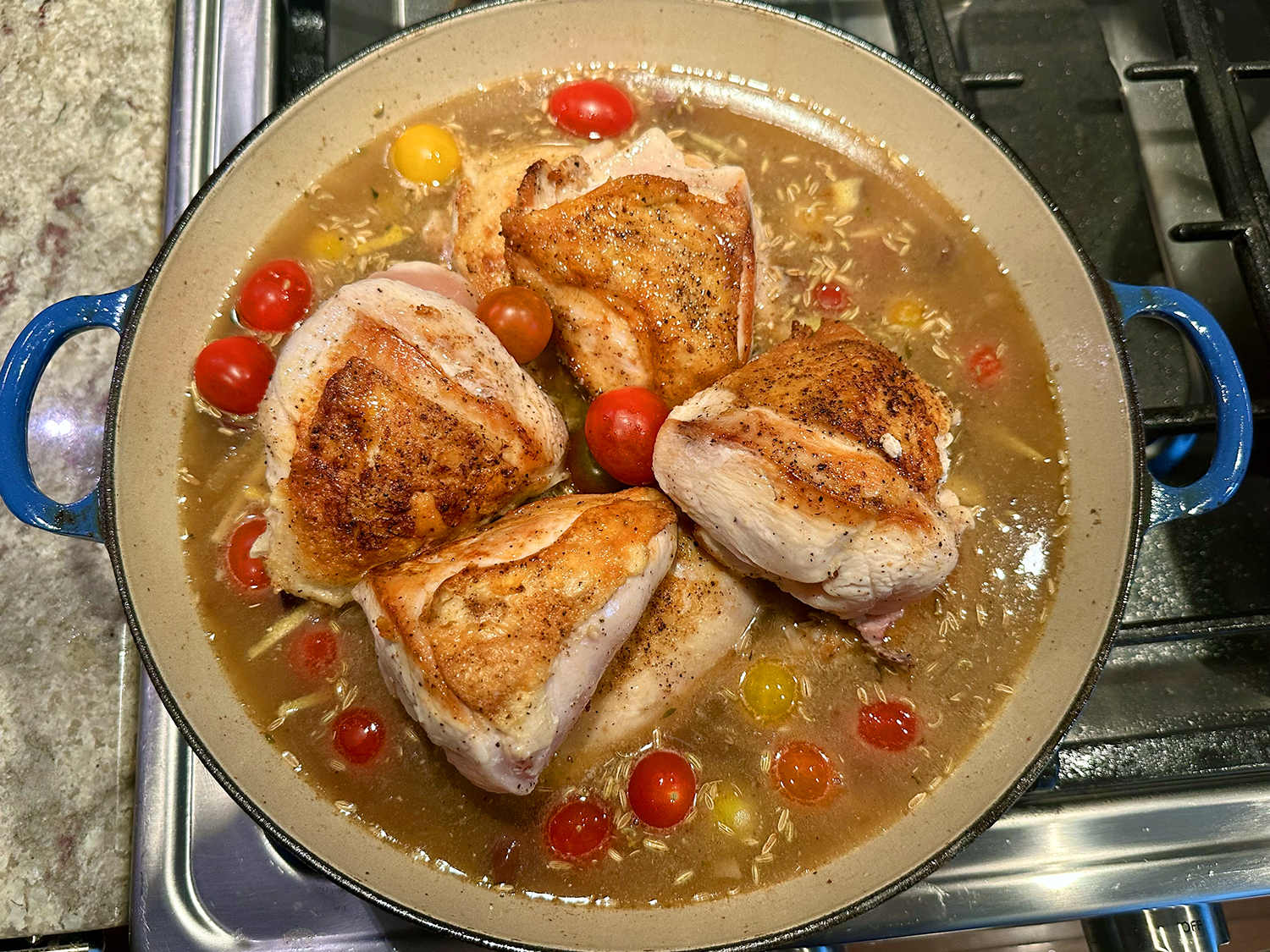
  4. Add the wine and cook, stirring to scrape up the browned bits from the bottom, until the wine reduces slightly, about 2 minutes. Add the broth, olives, lemon zest, capers and fennel seeds.  Return the dark meat chicken to the Dutch oven and top with the tomatoes.
  5. Cover, place the Dutch oven in the oven. After 15 minutes of cooking, place the breast pieces on top of the dark meat, cover, and cook until the chicken is tender, 20 minutes more — 35 to 40 minutes total, checking with an insta-read thermometer at 35 minutes. The breast meat should register 155° and the thigh meat should be 165°.
  6. When the chicken is cooked, transfer the chicken pieces to a plate and place the Dutch oven over medium-high heat. Cook until the braising liquid is thickened a good bit, about 10-15 minutes. Season with salt and pepper and return the chicken to the Dutch oven. Serve immediately.

http://www.lynnandruss.com

Recipe was loosely adapted from one by Williams Sonoma Test Kitchen

Orange-Wine-Braised Chicken Thighs

Chicken is the basis for at least one of our meals most weeks. It is so versatile and pretty much all meat eaters love the bird. But if it is bland and dry, then nobody is happy. And this recipe is anything but.

For a brighter winter braise, this recipe turns to floral, sweet-tart oranges and zippy, tannic orange wine. (We did not have orange wine so we used a rosé.) The result: falling-off-the-bone tender chicken and a spoon-coating sauce that keeps you going back for bite after bite. The duo offers a just-right balance of acid and sugar and a hit of fermented complexity that mellows out in the sauce while giving it structure.

Orange wine, simply put, is made from white grapes that have been fermented with their skins (like red wine). The result is a complex drink with deep flavor. It’s a broad category, and flavors can range drastically from bottle to bottle. For this recipe, it is recommended to use something dry to balance out the citrus. Taste before using: If your bottle skews sweet, you can still use it; just omit the sugar from the recipe.

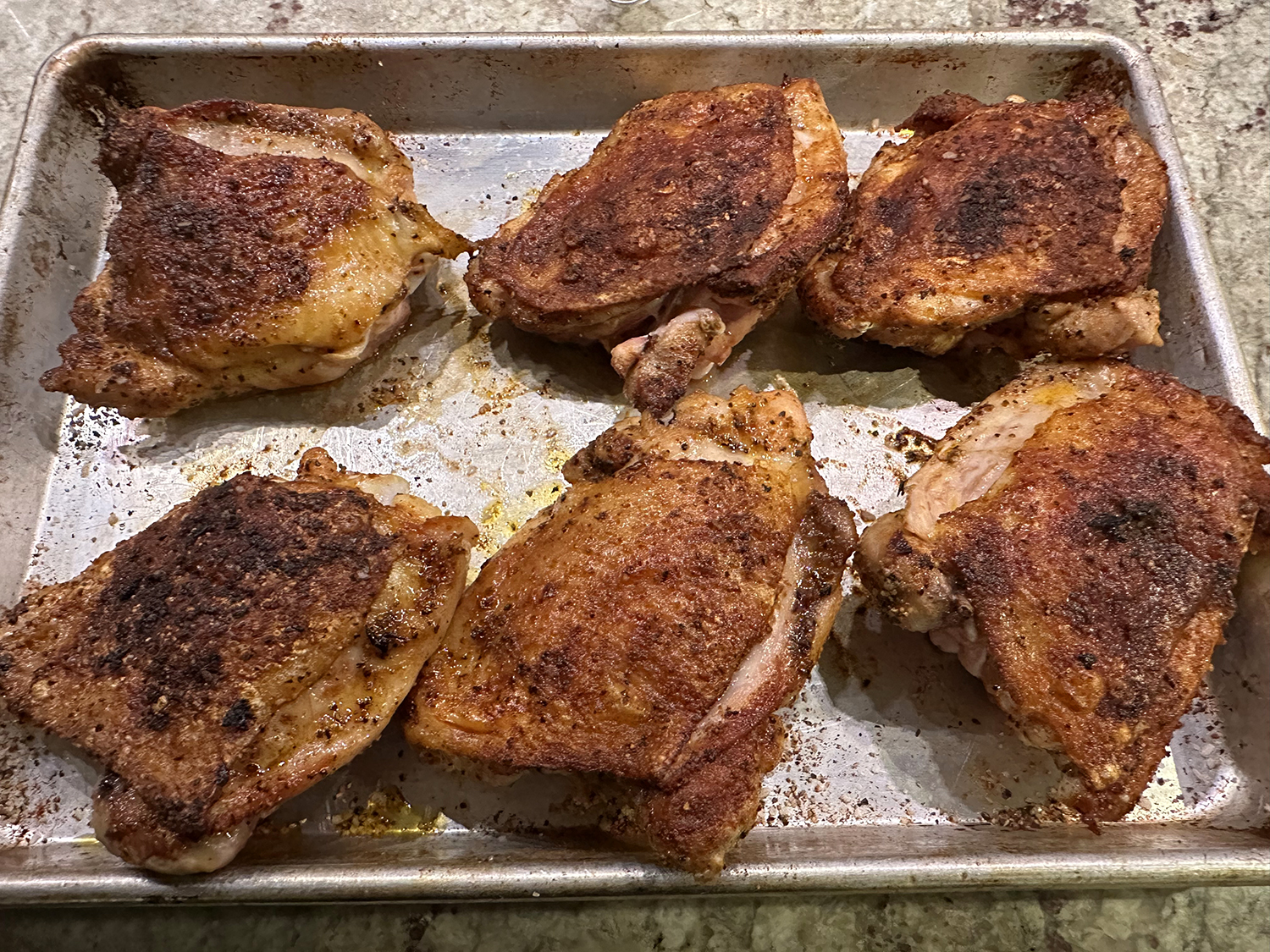
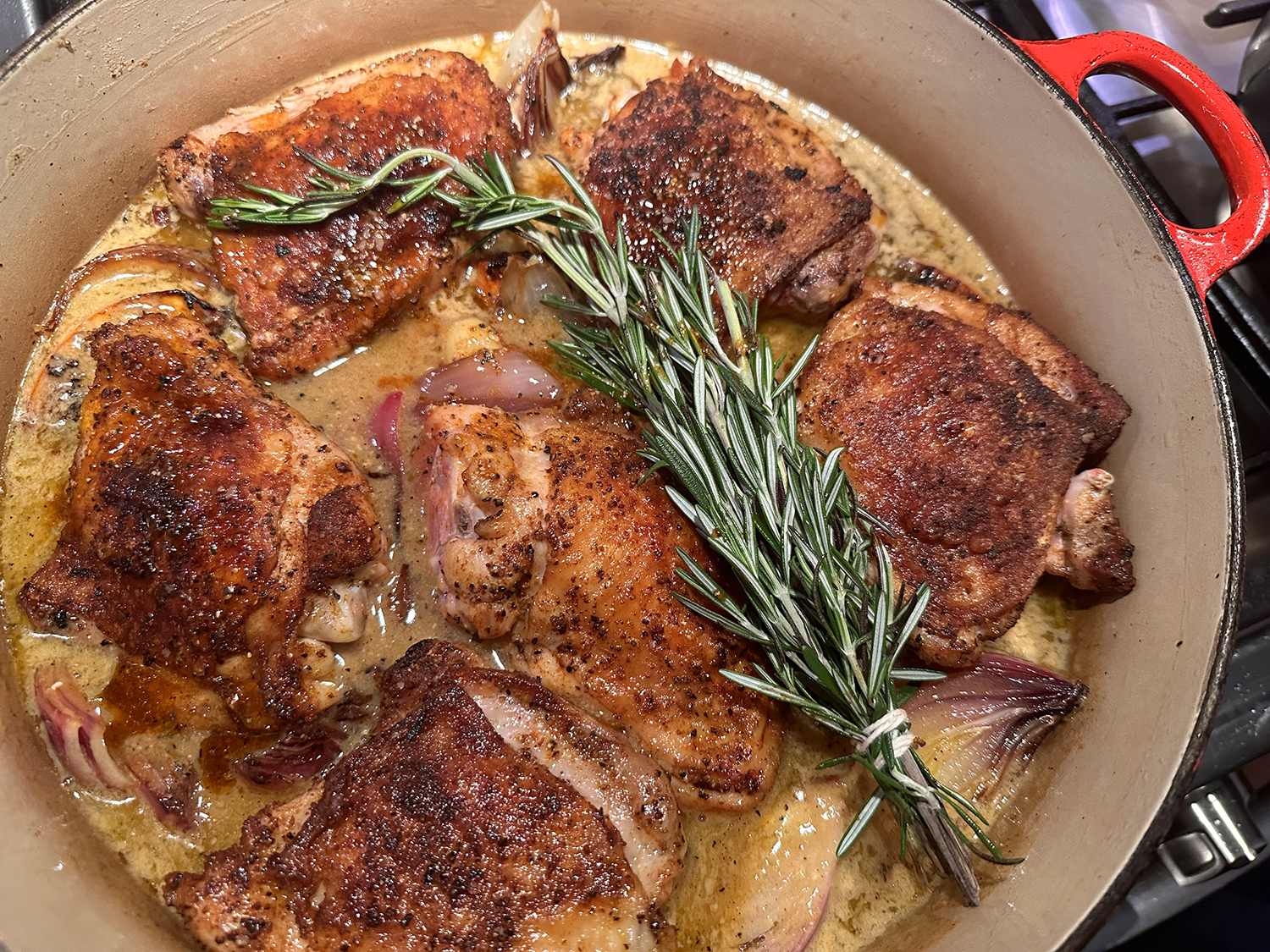
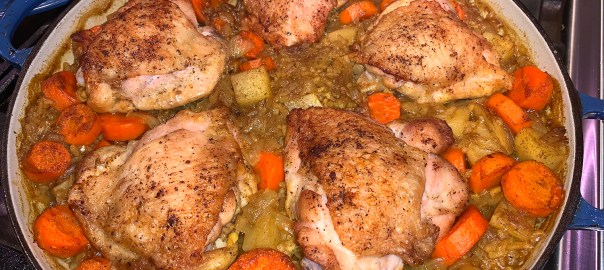
The skin was crispy, the meat juicy, and the sauce was beyond measure!!

Orange-Wine-Braised Chicken Thighs

  • Servings: 4
  • Difficulty: easy
  • Print

Ingredients

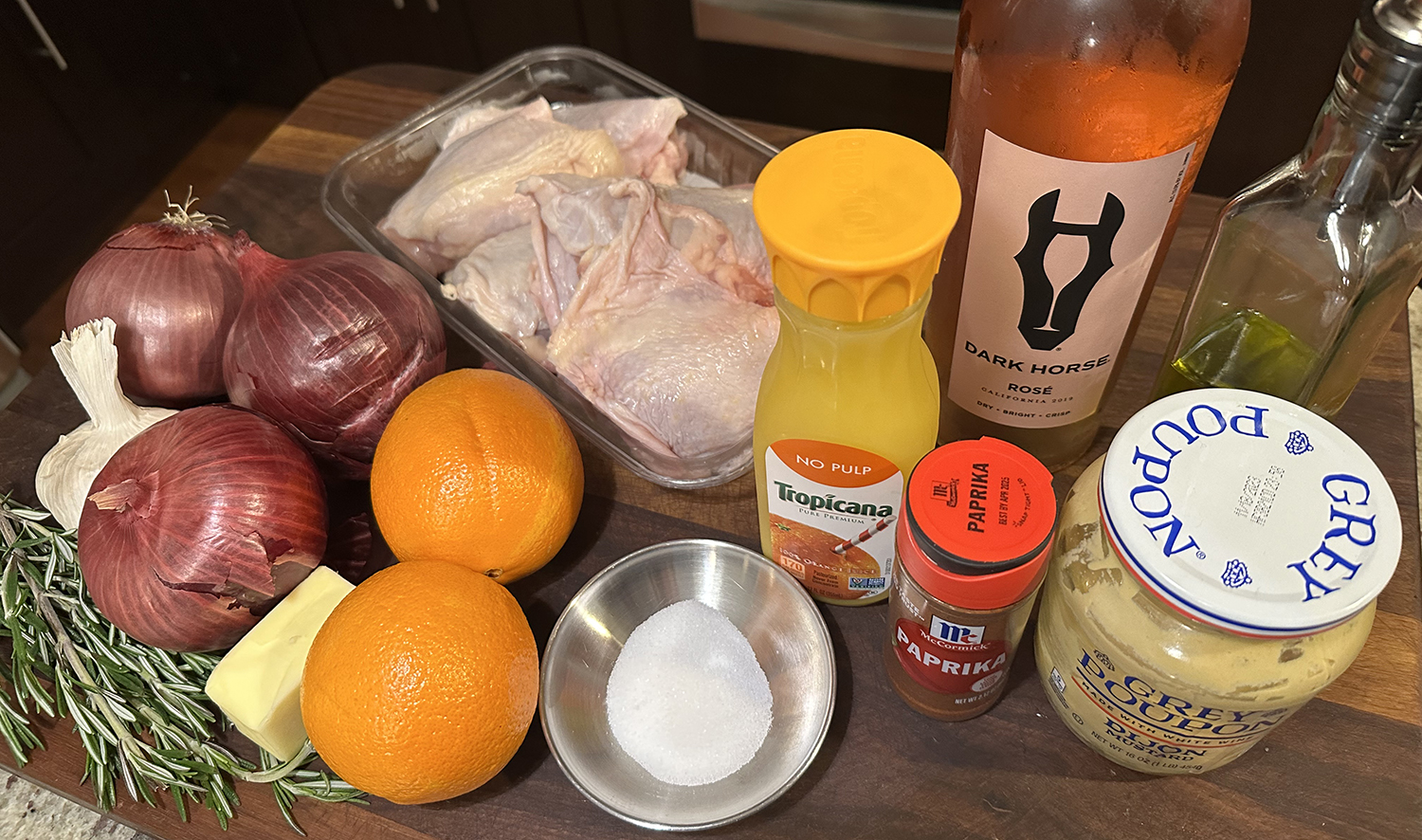
  • 1½ tsp. paprika
  • 1 Tbsp. plus 1 tsp. Diamond Crystal or 2¼ tsp. Morton kosher salt, divided, plus more
  • 2½ tsp. freshly ground pepper, divided, plus more
  • 2½ lb. skin-on, bone-in chicken thighs (about 6 medium), patted dry
  • ¼ cup (or more) extra-virgin olive oil
  • 2 small oranges, cut into quarters
  • 3 small red onions, roots trimmed, with ends left intact, peeled, quartered through root ends
  • 12 garlic cloves, peeled
  • 2 Tbsp. all-purpose flour
  • 2 cups orange wine, dry rosé, or tart, high-acid white wine (such as Sauvignon Blanc or Riesling)
  • 1 cup fresh orange juice
  • 1 cup low-sodium chicken broth
  • ⅓ cup Dijon mustard
  • 4 Tbsp. unsalted butter
  • 1 Tbsp. granulated sugar
  • 4 sprigs rosemary, tied together with kitchen twine

Directions

  1. Place a rack in middle of oven; preheat to 350°. Mix 1½ teaspoons paprika, 1 tablespoon Diamond Crystal or 1¾ teaspoons Morton kosher salt, and 1½ teaspoons freshly ground pepper in a small bowl. Pat 2½ pounds skin-on, bone-in chicken thighs (about 6 medium) dry and sprinkle all over with spice mixture. Set aside.
  2. Heat ¼ cup extra-virgin olive oil in an ovenproof Dutch oven or other heavy pot over medium. Cook 2 small oranges, cut into quarters, on cut sides until browned and blackened in spots, about 2 minutes per side. (Oil might spatter, so have a lid nearby to place on top if needed.) Transfer oranges to a large plate.
  3. Add more oil to same pot if dry and cook 3 small red onions, roots trimmed, with ends left intact, peeled, quartered through root ends, on cut sides until browned, about 2 minutes per side. Transfer to plate with oranges. Add 12 garlic cloves, peeled, to pot and cook, stirring often, until browned, 2–3 minutes. Transfer to plate with oranges and onions.
  4. Working in batches if needed, cook reserved chicken thighs, skin side down, in pot, undisturbed, until deep golden brown underneath and they release easily from pan, 7–9 minutes. Turn skin side up and transfer to a separate plate.
  5. Cook 2 Tbsp. all-purpose flour in pot, stirring constantly, until no dry pockets remain, 30–60 seconds. Gradually pour in 2 cups orange wine, dry rosé, or tart, high-acid white wine, whisking constantly to prevent clumping, then stir in 1 cup fresh orange juice, 1 cup low-sodium chicken broth, ⅓ cup Dijon mustard, 4 Tbsp. unsalted butter, 1 tablespoon granulated sugar, remaining 1 teaspoon Diamond Crystal or ½ teaspoon Morton kosher salt, and remaining 1 teaspoon freshly ground pepper. Bring to a boil and cook until sauce is reduced by half and thinly coats a spoon, 8–10 minutes. Taste sauce and season with more salt and pepper if needed.
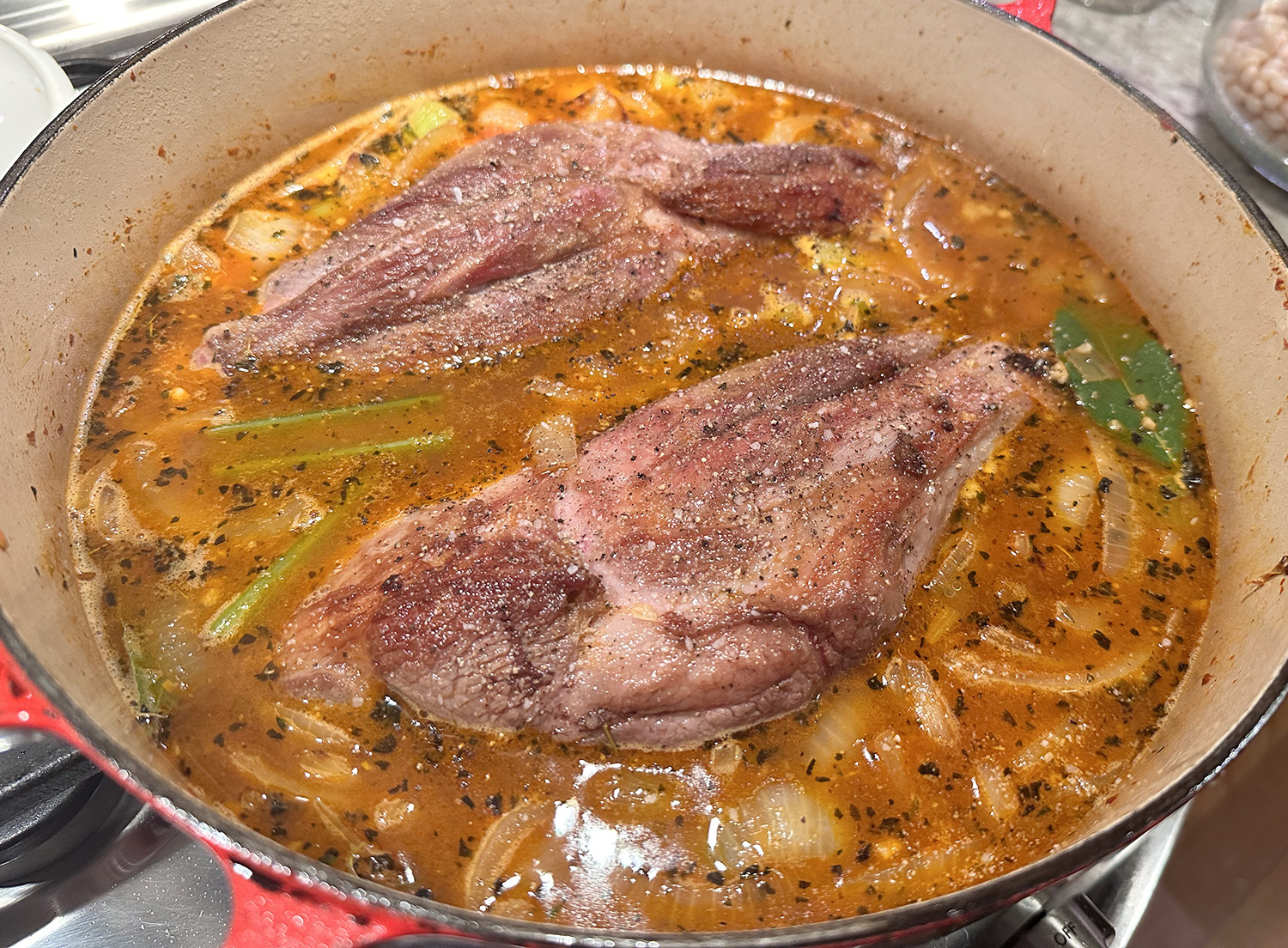
  6. Remove pot from heat and scatter oranges, onions, and garlic around. Nestle chicken thighs in, skin side up, so they’re about halfway in sauce; (we left ours sitting atop the oranges and onions to insure crispy skin) add 4 sprigs rosemary, tied together with kitchen twine. Roast in oven, uncovered, until chicken is very tender and easily pulls away from bones, about 1 hour.
http://www.lynnandruss.com

Recipe by Jesse Szewczyk for Bon Appétit Magazine

Braised Chicken and Lentils

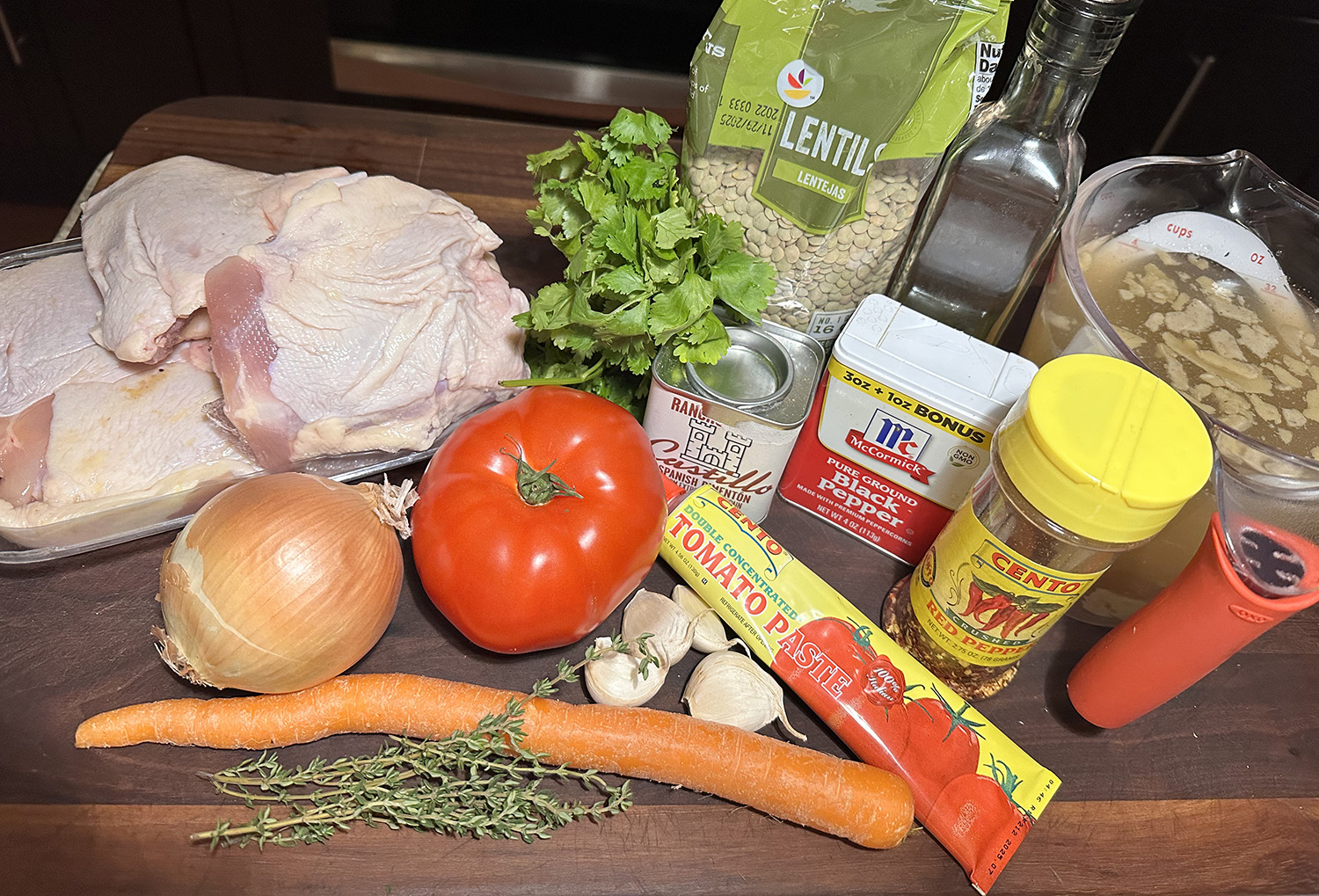
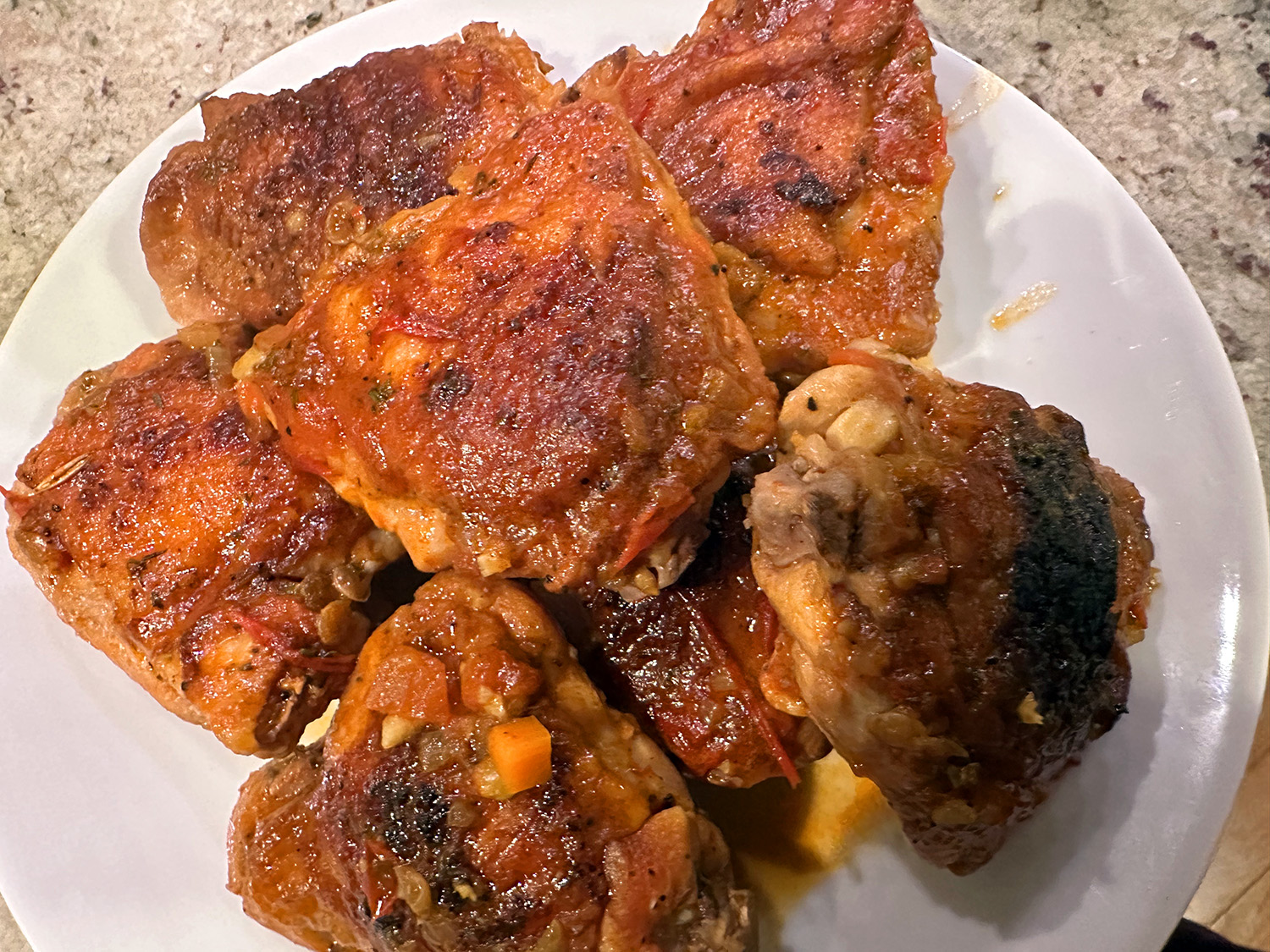
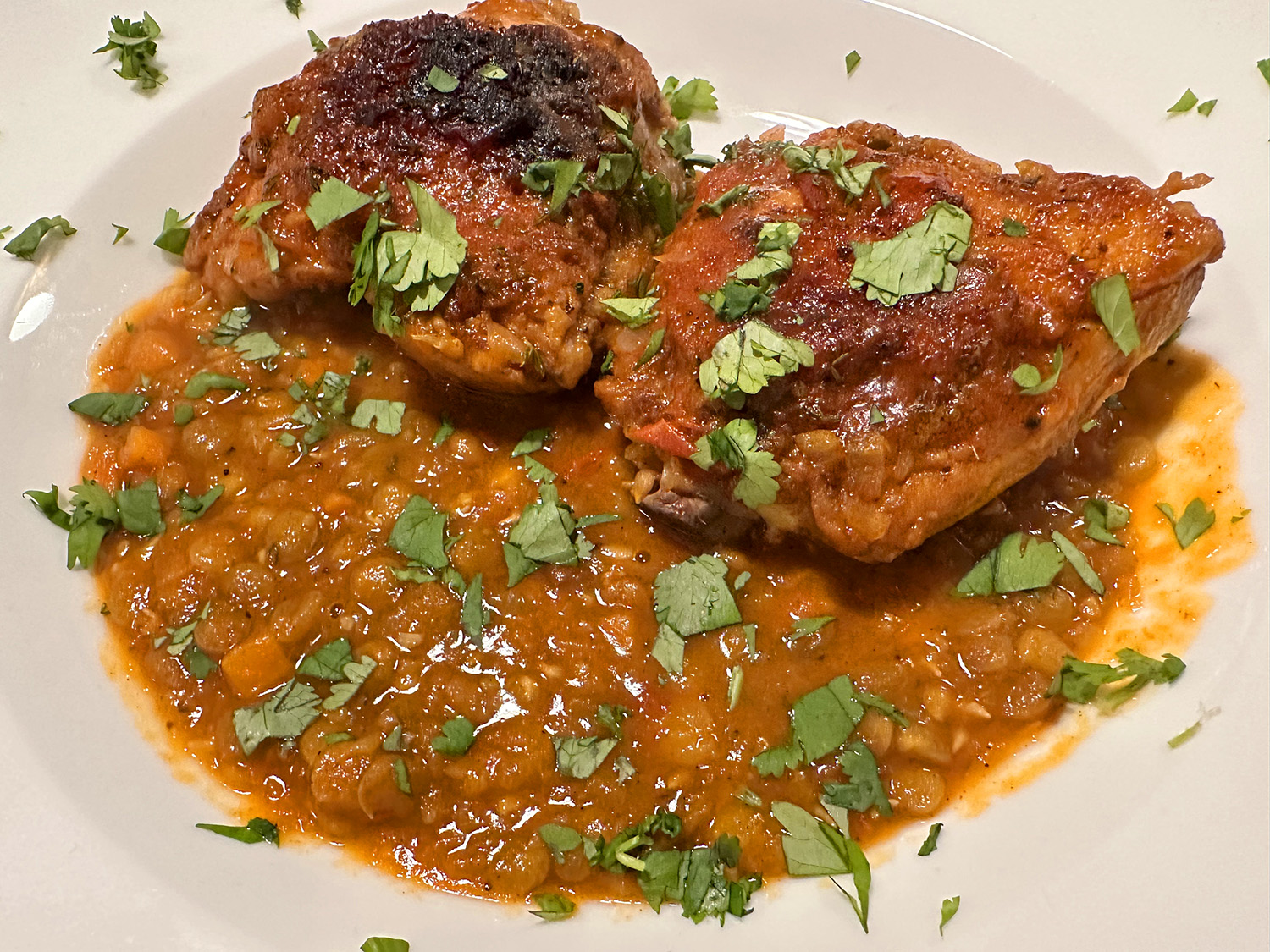
For this “stew” if you will, meaty bone-in chicken thighs are seasoned with smoked paprika, salt, and pepper and then browned to build a base of flavor with a subtle, smoky depth of braised chicken with hearty stewed lentils. Next, the onions, tomatoes, and carrot are sautéed and layered in garlic, tomato paste, and earthy fresh thyme to keep the flavor rich and complex.

Tomato paste plays double-duty, adding savoriness while helping to thicken the lentils. The browned chicken thighs are nestled into the lentils, fortifying them with chicken stock and some extra smoked paprika, and braises the mixture uncovered in the oven.

Keeping the Dutch oven uncovered thickens the stewed lentils as the chicken braises. Whisking a splash of sherry vinegar in at the end brightens the dish and helps break down some of the lentils, adding body and creaminess.

Preferably use a large, 6-quart Dutch oven; if your Dutch oven is smaller, you will need to sear the chicken in batches and allow the chicken to overlap slightly in the lentil mixture in step 4. Whisking the lentils vigorously in step 5 helps create a rich, creamy sauce.

Braised Chicken and Lentils

  • Servings: 4
  • Difficulty: easy
  • Print

Ingredients

  • 2½ tsp. table salt, divided
  • 2 tsp. smoked paprika, divided
  • ¾ tsp. pepper, divided
  • 8 (5- to 7-oz.) bone-in chicken thighs, trimmed
  • 2 tsp. extra-virgin olive oil
  • 2 large plum tomatoes, cored and chopped1 onion, chopped fine
  • 1 carrot, peeled and chopped fine
  • 6 garlic cloves, minced
  • 2 Tbsp. tomato paste
  • 1 tsp. chopped fresh thyme
  • ½ tsp. red pepper flakes
  • 4 cups chicken broth
  • 1 cup green lentils, picked over and rinsed
  • 1 Tbsp. sherry vinegar
  • ½ cup chopped fresh cilantro

Directions

  1. Adjust oven rack to middle position and heat oven to 375 degrees. Combine 2 teaspoons salt, 1 teaspoon paprika, and ½ teaspoon pepper in small bowl. Pat chicken dry with paper towels and sprinkle all over with salt mixture.
  2. Heat oil in Dutch oven over medium-high heat until just smoking. Add chicken, skin side down, and cook until skin is well browned, 12 to 16 minutes; transfer chicken to plate.
  3. Add tomatoes, onion, carrot, remaining ½ teaspoon salt, and remaining ¼ teaspoon pepper to fat remaining in pot and reduce heat to medium. Cook, stirring often, until tomatoes begin to break down, 3 to 5 minutes.
  4. Stir in garlic, tomato paste, thyme, and pepper flakes and cook, stirring constantly, until fond begins to form on bottom of pot, 3 to 4 minutes.
  5. Stir in broth, scraping up browned bits. Stir in lentils and remaining 1 teaspoon paprika. Nestle chicken into lentil mixture, skin side up, and bring to simmer over high heat.
  6. Transfer pot to oven and cook, uncovered, until chicken registers at least 185 degrees, 35 to 40 minutes.
  7. Transfer chicken to clean plate. Return pot (handles will be very hot) to stovetop and continue to cook lentil mixture over medium heat, stirring often, until liquid is thickened and lentils are fully tender, 5 to 7 minutes longer.
  8. Add vinegar and whisk vigorously until liquid is creamy, about 30 seconds (lentil mixture will thicken as it cools). Season with salt and pepper to taste.
  9. Transfer lentils to shallow serving bowls and top each portion with 2 chicken thighs. Sprinkle with cilantro and serve.

http://www.lynnandruss.com

Recipe by Amanda Luchtel for Cook’s Country

Braised Lamb Shanks with White Beans, Swiss Chard and Marjoram

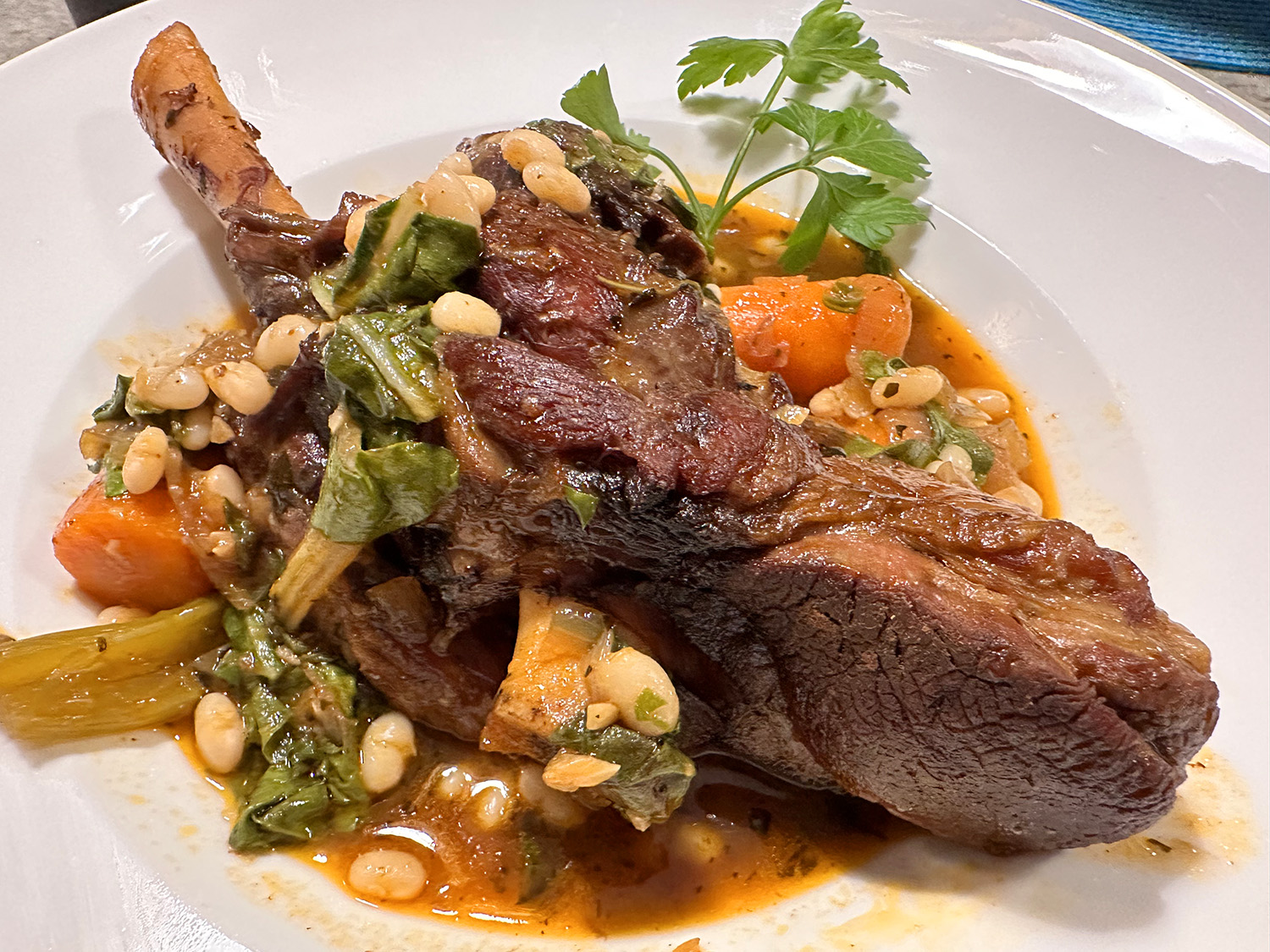
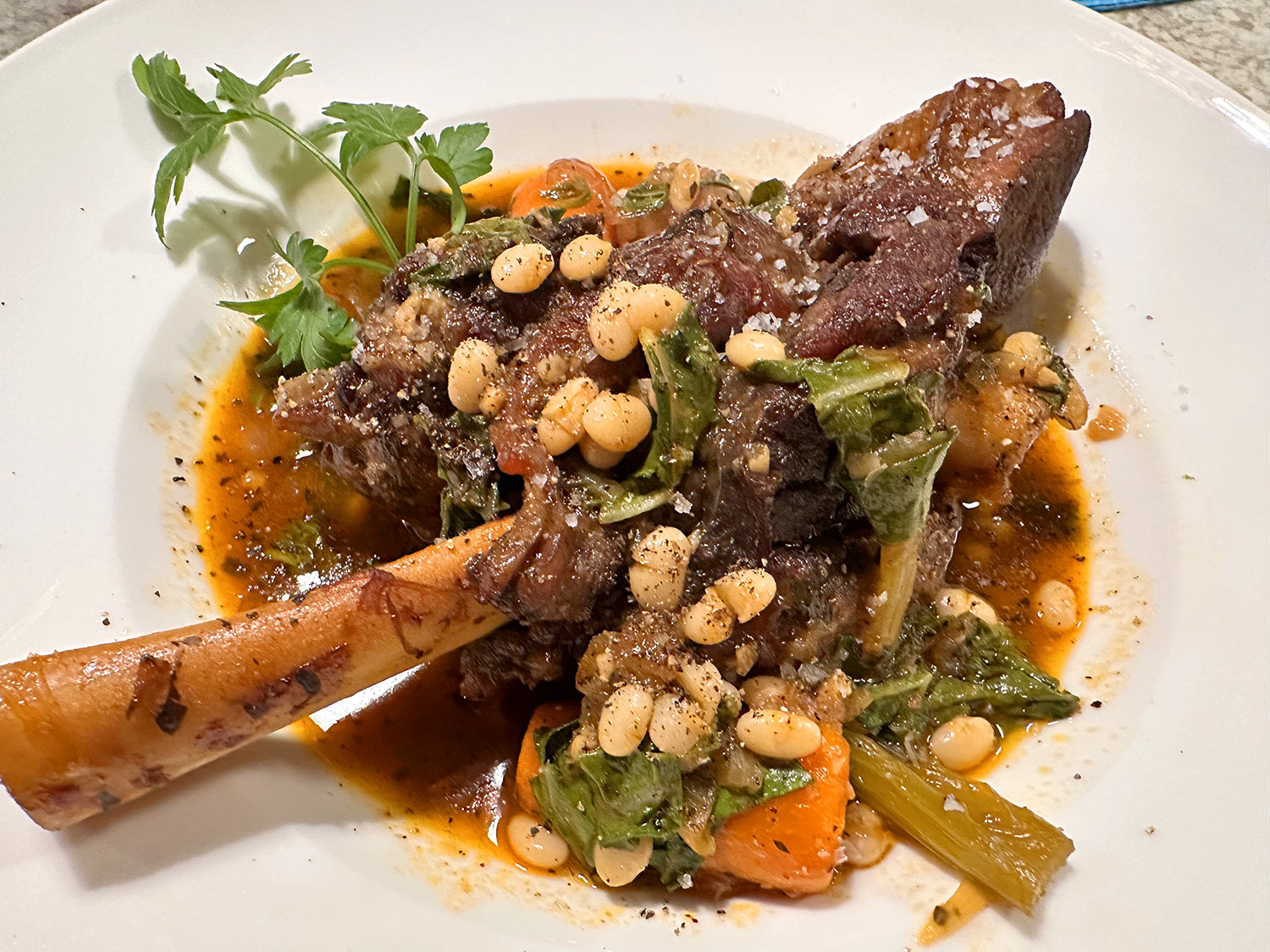
For this lamb shanks recipe, Cook’s Illustrated preferred to braise them in the oven rather than on the stovetop, as the oven provided more even heat. Browning the shanks over high heat in a skillet first added a great deal of flavor to the dish. The shanks are braised in chicken stock (which complements, rather than overpowers, the lamb, as beef or veal stock might have), white wine, and herbs.

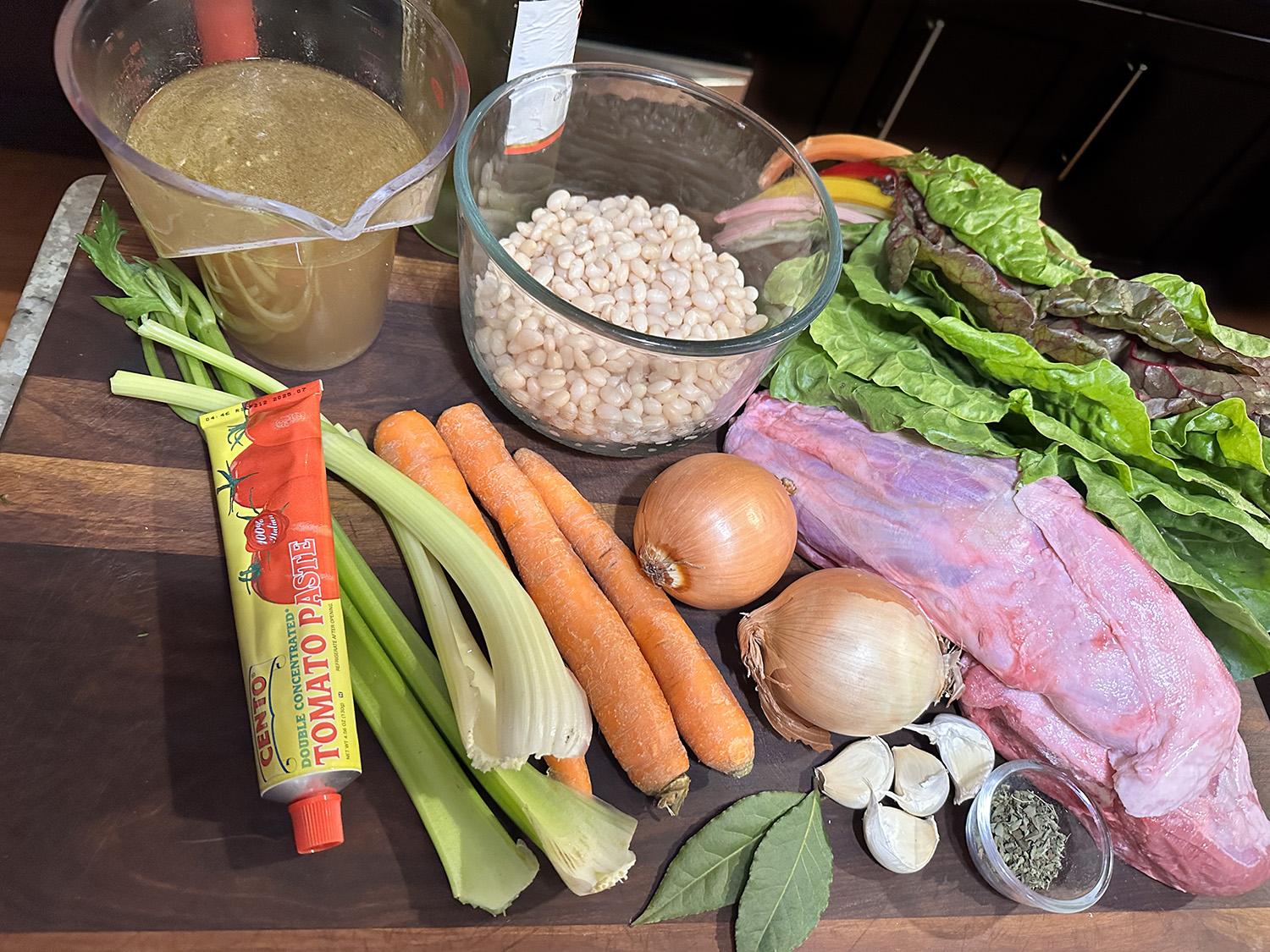
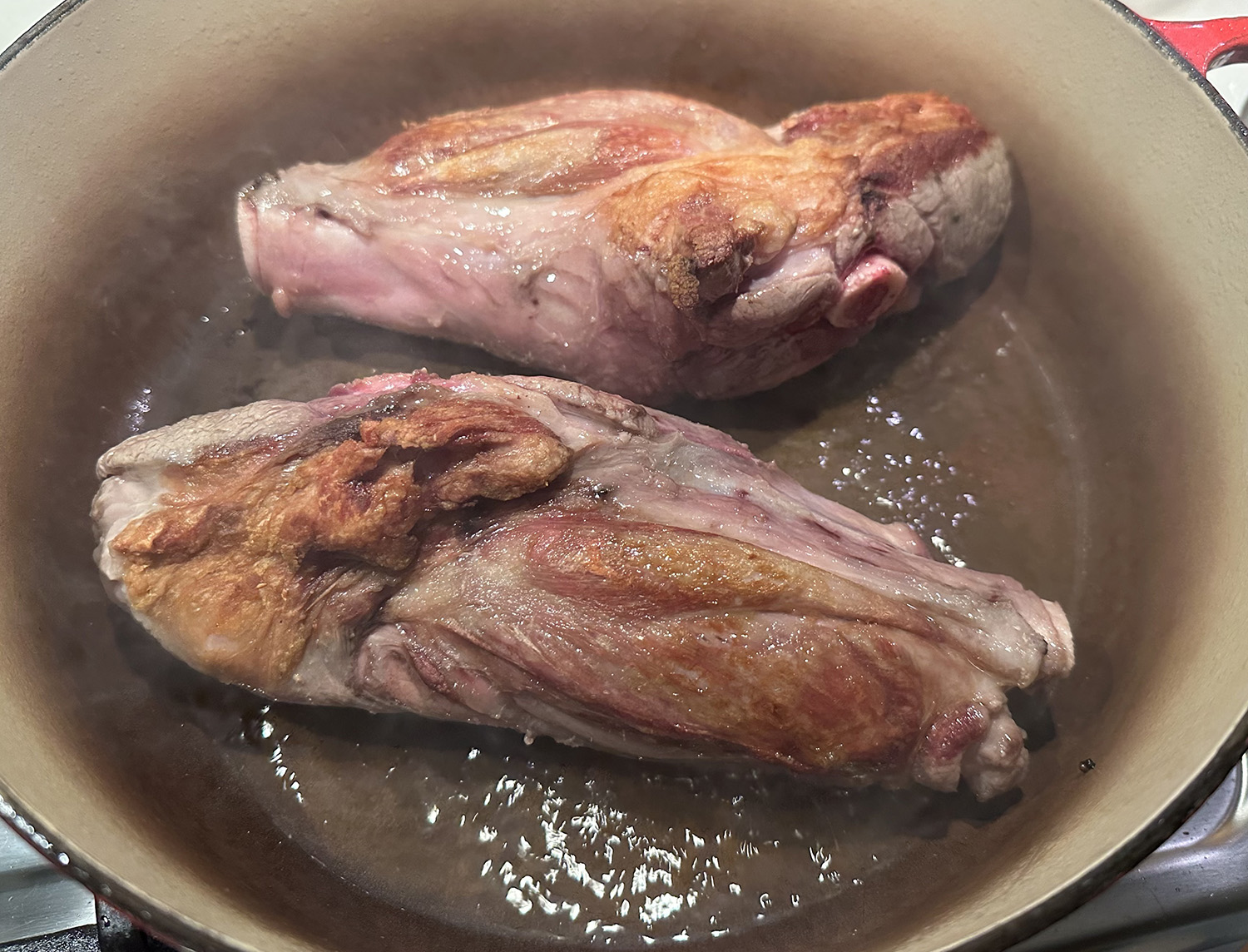
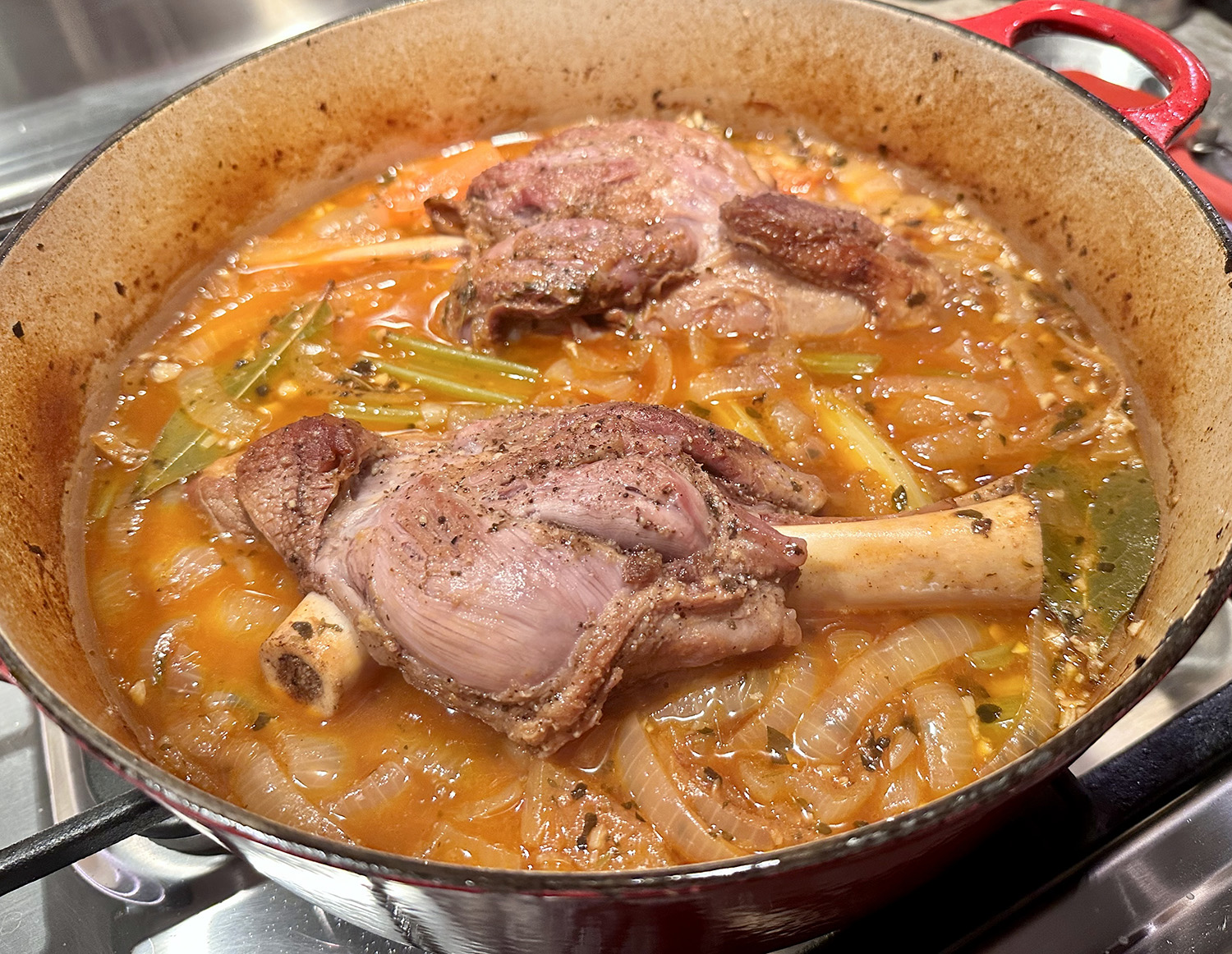
We made numerous changes to this recipe, starting with the lamb shanks. Instead of six small (which equates to more bone and less meat), we braised two meaty shanks that weighed close to two pounds each. When it is time to brown the shanks, you may have to do it in two batches if cooking more than two of them.

*As for the white beans, we did soak ours overnight as per the instructions below, but you could use 2 cans of cannellinis, drained and rinsed to save time. Instead of using several different skillets and pans, we did everything in one large braising pot. Finally, although we didn’t do it this time, we highly suggest that you reduce the liquids from 3 cups of broth to 2, and 2 cups of white wine down to 1 cup. These changes are note in the recipe below.

Braised Lamb Shanks with White Beans, Swiss Chard and Marjoram

  • Servings: 4
  • Difficulty: easy
  • Print

Ingredients

Cannellini Beans*

  • 1 bay leaf
  • 1 lb. small white beans (such as Cannellini), soaked until rehydrated, overnight or at least 4 hours
  • 4 cloves garlic (peeled, left whole)
  • 7 cups water
  • 1 ½ tsp. table salt

Lamb Shanks and Braising Liquid

  • 4 lamb shanks, 1 1⁄4 to 1 1⁄2 lb. each, trimmed of excess fat and fell (thin, white papery covering)
  • Table salt
  • 2 Tbsp. olive oil
  • 2 medium onions, sliced thick
  • 3 medium carrots, peeled and cut crosswise into 2-inch pieces
  • 2 medium ribs celery, cut crosswise into 2-inch pieces
  • 4 medium cloves garlic, minced
  • 2 Tbsp. tomato paste
  • 3 tsp. fresh marjoram leaves, minced, or 1 1/2 tsp. dried marjoram
  • 2 cups chicken broth, preferably homemade
  • 1 cup dry white wine
  • 1 bunch Swiss chard, cleaned, stemmed, and chopped coarsely
  • Ground black pepper

Directions

  1. FOR BEANS: Bring dried beans, bay leaf, garlic, and water to simmer in large saucepan. Simmer, partially covered, until beans are just tender, 30 to 40 minutes.
  2. Remove from heat, stir in salt, cover, and let beans stand until completely tender, about 15 minutes. Drain, reserve cooking liquid, and discard bay leaf and garlic. (Beans in liquid can be cooled, covered, and refrigerated up to 5 days.)
  3. FOR SHANKS: Heat oven to 350 degrees. Sprinkle shanks with salt. Heat oil in a large, nonreactive sauté pan over medium-high heat. Add shanks to pan in batches if necessary to avoid overcrowding. Sauté until browned on all sides, 5-7 minutes. Using tongs, transfer shanks to a plate as they brown.
  4. Drain all but 2 tablespoons fat from the sauté pan; add onions, carrots, celery, garlic, tomato paste, a light sprinkling of salt and 2 teaspoons of the fresh marjoram (less if using dried); sauté to soften vegetables slightly, 3 to 4 minutes.
  5. Add wine, then chicken stock to the skillet, stirring with a wooden spoons to loosen browned bits from skillet bottom. Bring liquid to simmer; transfer vegetables and liquid into a deep braising pan, large enough to hold the shanks in a single layer. Add shanks and season with salt and pepper.
  6. Cover pan (with foil if pan has no lid) and transfer it to the oven; braise shanks for 1 1/2 hours. Uncover and continue braising until shank tops are browned, about 30 minutes. Turn shanks and continue braising until remaining side has browned and shanks are fall-off-the-bone tender, about another 20 minutes.
  7. Remove pan from oven; let shanks rest for at least 15 minutes. Carefully transfer shanks with tongs to each plate.
  8. Arrange a portion of vegetables around each shank. Skim excess fat from braising liquid. Add beans and chard and remaining 1 teaspoon marjoram; cook over medium heat until greens wilt, about 5 minutes. Adjust seasoning. Spoon a portion of braising liquid over each shank and serve.

http://www.lynnandruss.com

Adapted from a recipe by Cook’s Illustrated

One-Pot Japanese Curry Chicken and Rice

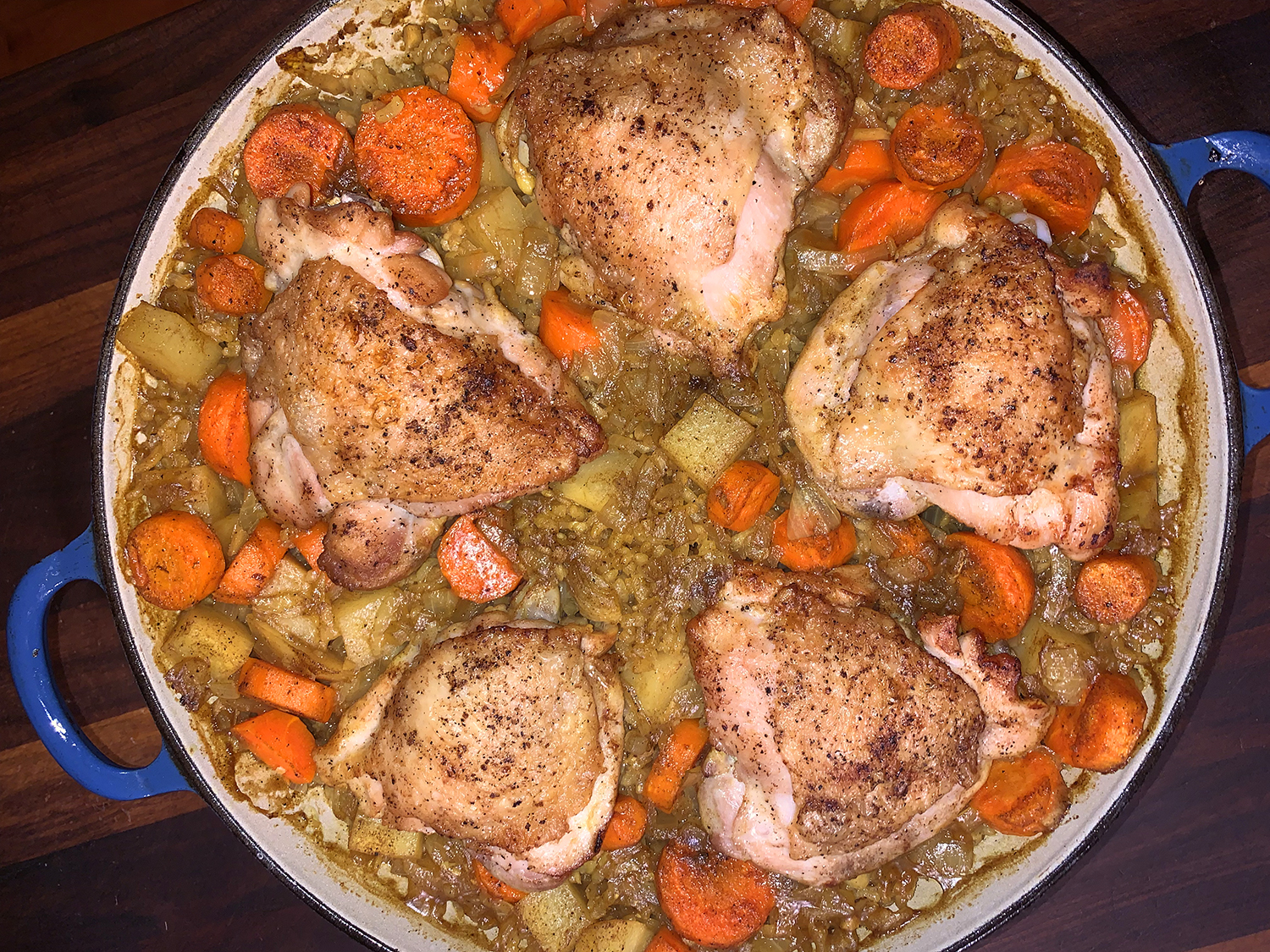
An easy weeknight version of Indian curry, this Japanese-riff is a one-pot meal featuring juicy chicken thighs, vegetables and rice. Instead of relying on store-bought or homemade instant curry roux, the recipe builds on a few spices to mimic traditional Japanese curry flavors.

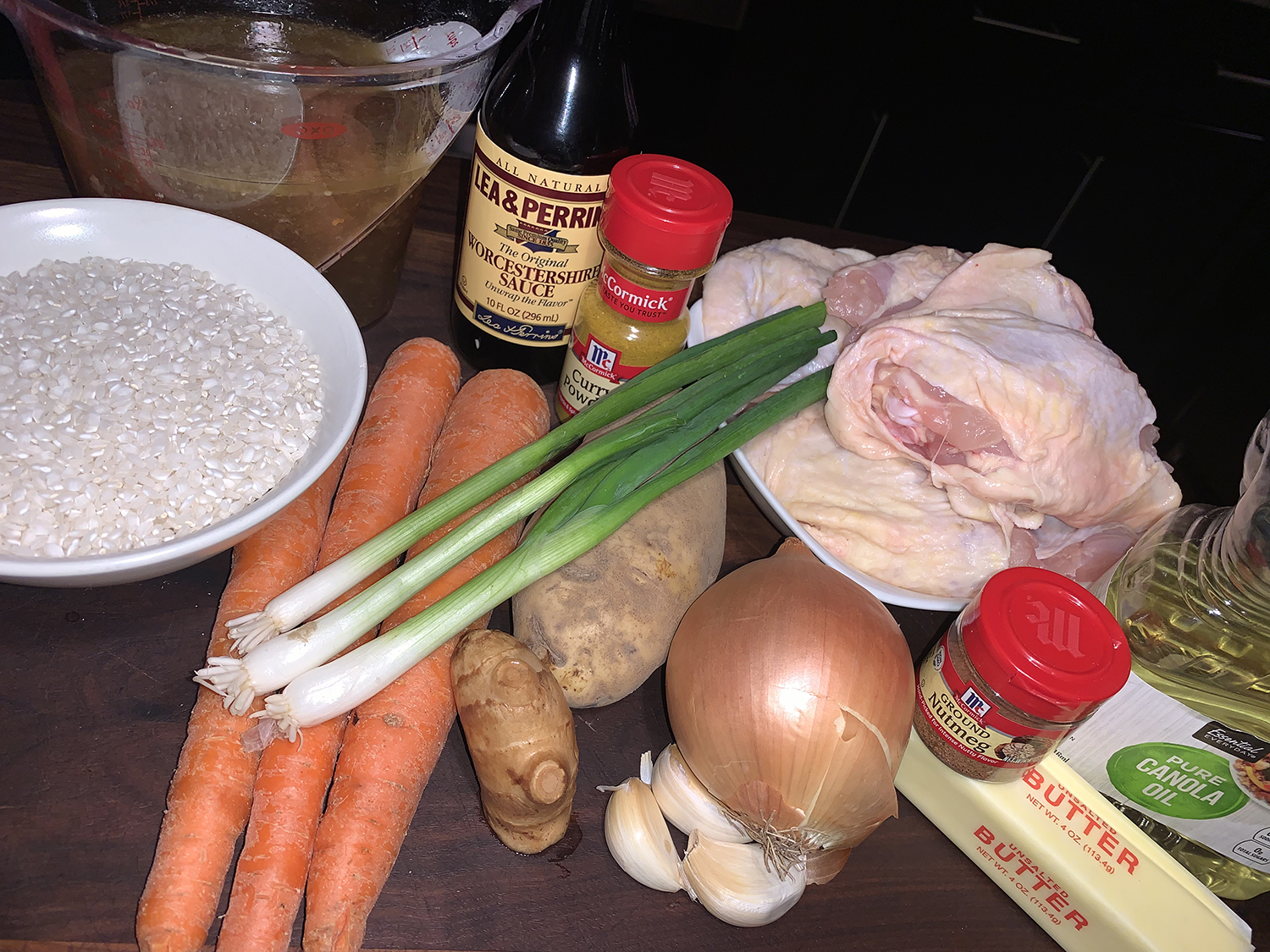
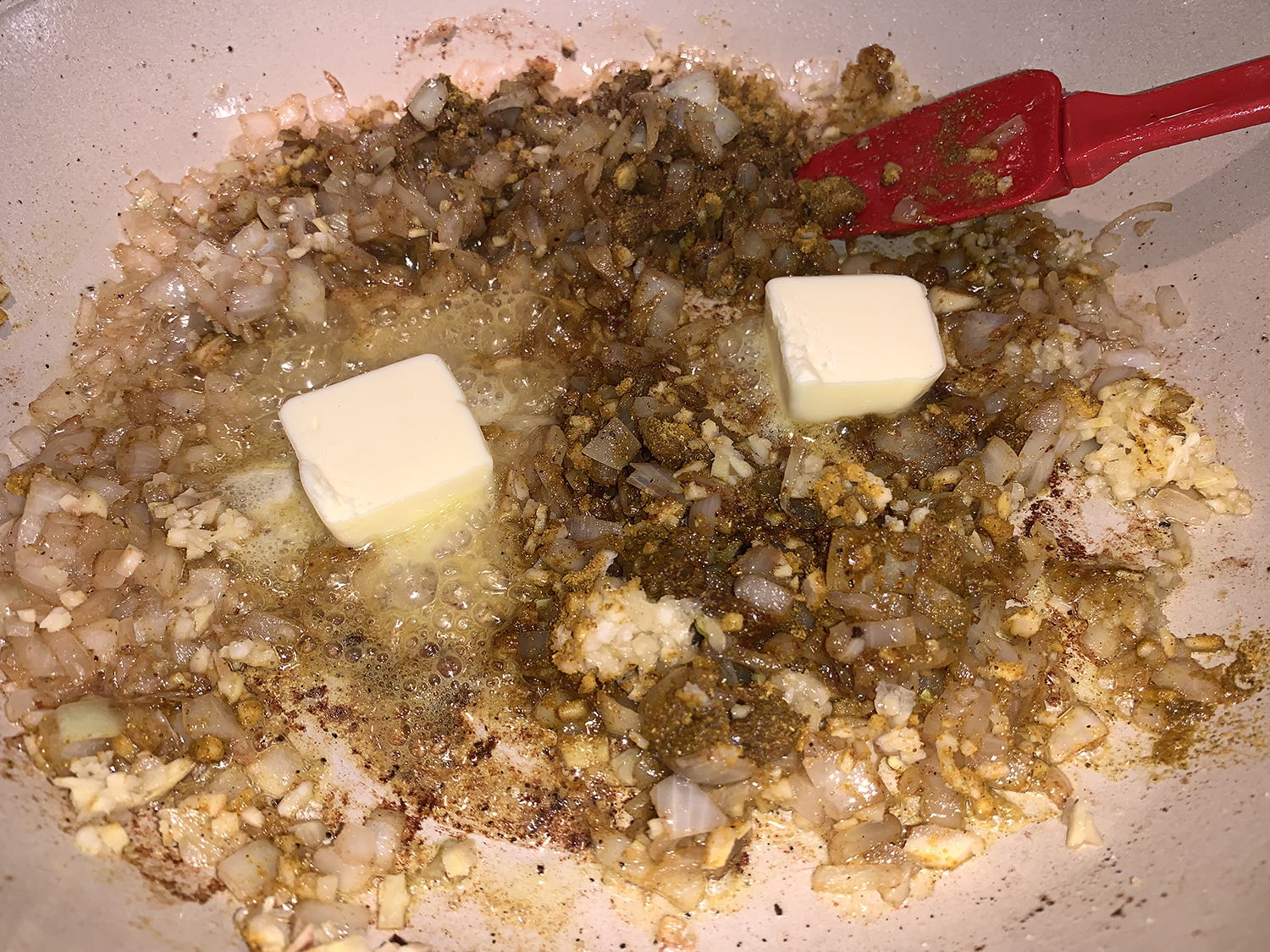
Curry powder, ground nutmeg and Worcestershire sauce are combined and bloomed in butter to create the round and rich sauce. Onions, potatoes and carrots create the bulk of traditional Japanese curry. You can easily substitute sweet potatoes, cauliflower and/or peas to address family preferences.

Kay Chun’s original recipe called for 2 pounds of large chicken thighs. The math doesn’t add up here. We bought a package nearly 2 1⁄2 pounds containing only 5 thighs—and they weren’t necessarily “large,” so if you were serving 6 people, that would be a challenge. I say forget the poundage, and just buy 6 large thighs—there is enough rice mixture to support that many servings.

It is suggested you serve in bowls. Maybe because we used a “paella” rice which is really absorbent, there wasn’t much liquid and could have been served on plates. Speaking of liquid, of course we used homemade stock which adds oodles of flavor. And we nearly doubled the amount of minced fresh ginger to really amp up the Asian flavor.

One-Pot Japanese Curry Chicken and Rice

  • Servings: 4-6
  • Difficulty: easy
  • Print

Ingredients

  • 6 bone-in, skin-on chicken thighs
  • 2 Tbsp. canola oil
  • Kosher salt and black pepper
  • 3 Tbsp. unsalted butter
  • 1/2 cup finely chopped onion
  • 3 Tbsp. Madras curry powder
  • 1 Tbsp. minced garlic
  • 1 Tbsp. minced fresh ginger
  • 3/4 tsp. ground nutmeg
  • 1 1/2 cups short-grain white rice, rinsed until water runs clear
  • 1 large baking potato (about 1 lb.), peeled and cut into 1/2-inch cubes
  • 3 medium carrots, sliced 1/2-inch-thick
  • 3 1/2 cups chicken broth
  • 2 Tbsp. Worcestershire sauce
  • Chopped scallions pickles, kimchi and/or hot sauce, for serving

Directions

  1. Heat oven to 375 degrees. Rub chicken with 1 tablespoon oil, and season with salt and pepper.
  2. In a large Dutch oven or heavy pot (at least 3 1⁄2 quarts), heat remaining 1 tablespoon oil with 1 tablespoon butter over medium until butter is melted. Working in two batches, brown chicken 3 to 4 minutes per side, and transfer to a plate.
  3. Add onion to the pot, season with salt and pepper and cook, stirring, until softened, 2 minutes. Add curry powder, garlic, ginger, nutmeg and the remaining 2 tablespoons butter, and stir until butter is melted and spices are fragrant, 1 minute.
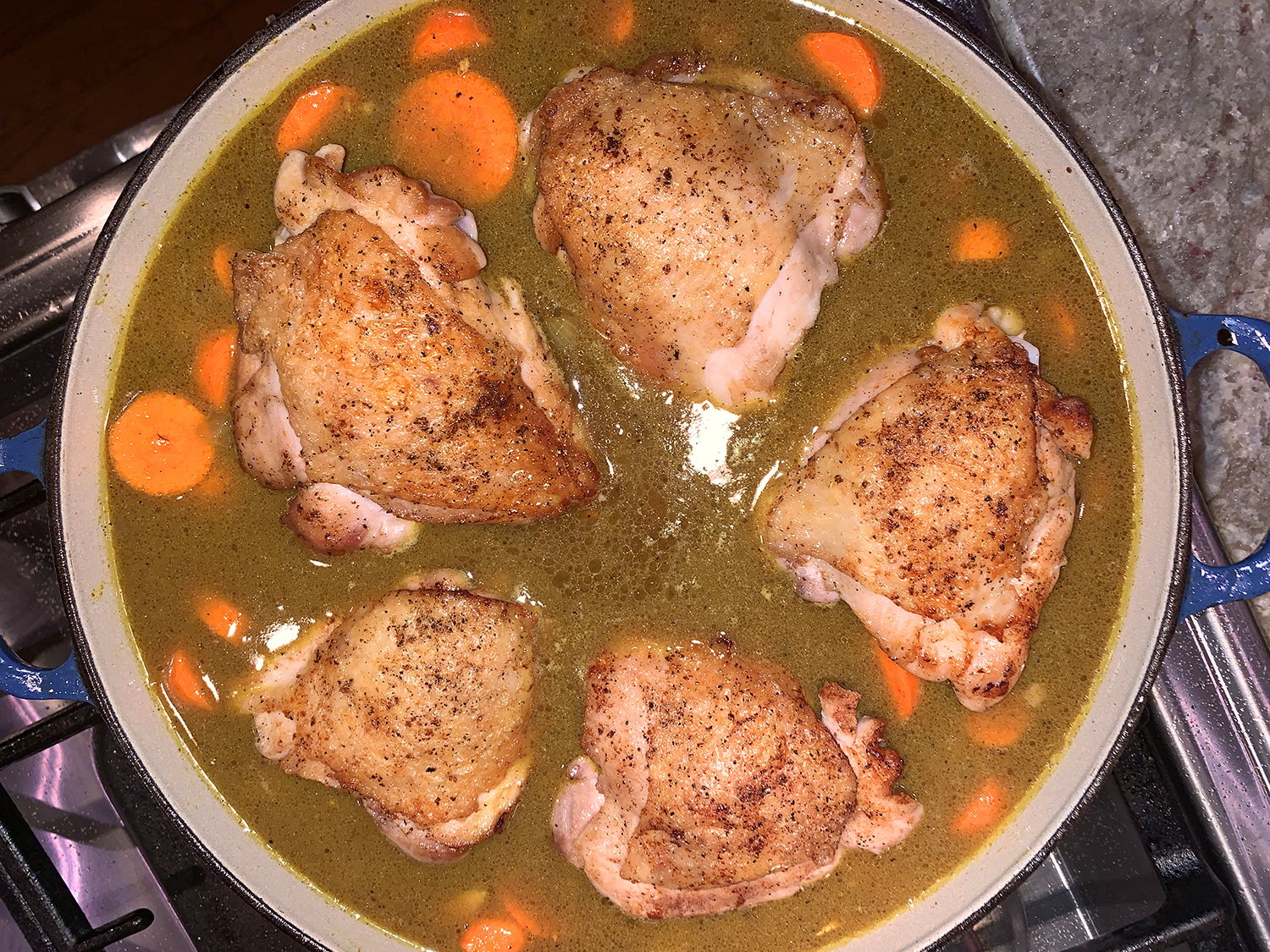
  4. Add rinsed rice and stir until evenly coated in spices. Add potato, carrots, broth and Worcestershire sauce, scraping bottom of pot to lift up any browned bits. Season broth generously with salt and pepper. Arrange chicken and any accumulated juices on top, skin-side up, and bring to a boil over high. Cover and bake for 20 minutes.
  5. Uncover and bake until most of the liquid is absorbed and chicken is golden and cooked through, about 10 minutes longer.
  6. Divide chicken and rice among bowls, and garnish with scallions. If desired, serve with any combination of pickles, kimchi and hot sauce.

http://www.lynnandruss.com

Adapted from a recipe by Kay Chun for NY Times Cooking

Cider Braised Short Ribs with Caramelized Onions

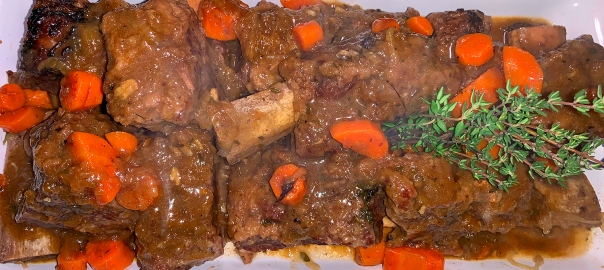
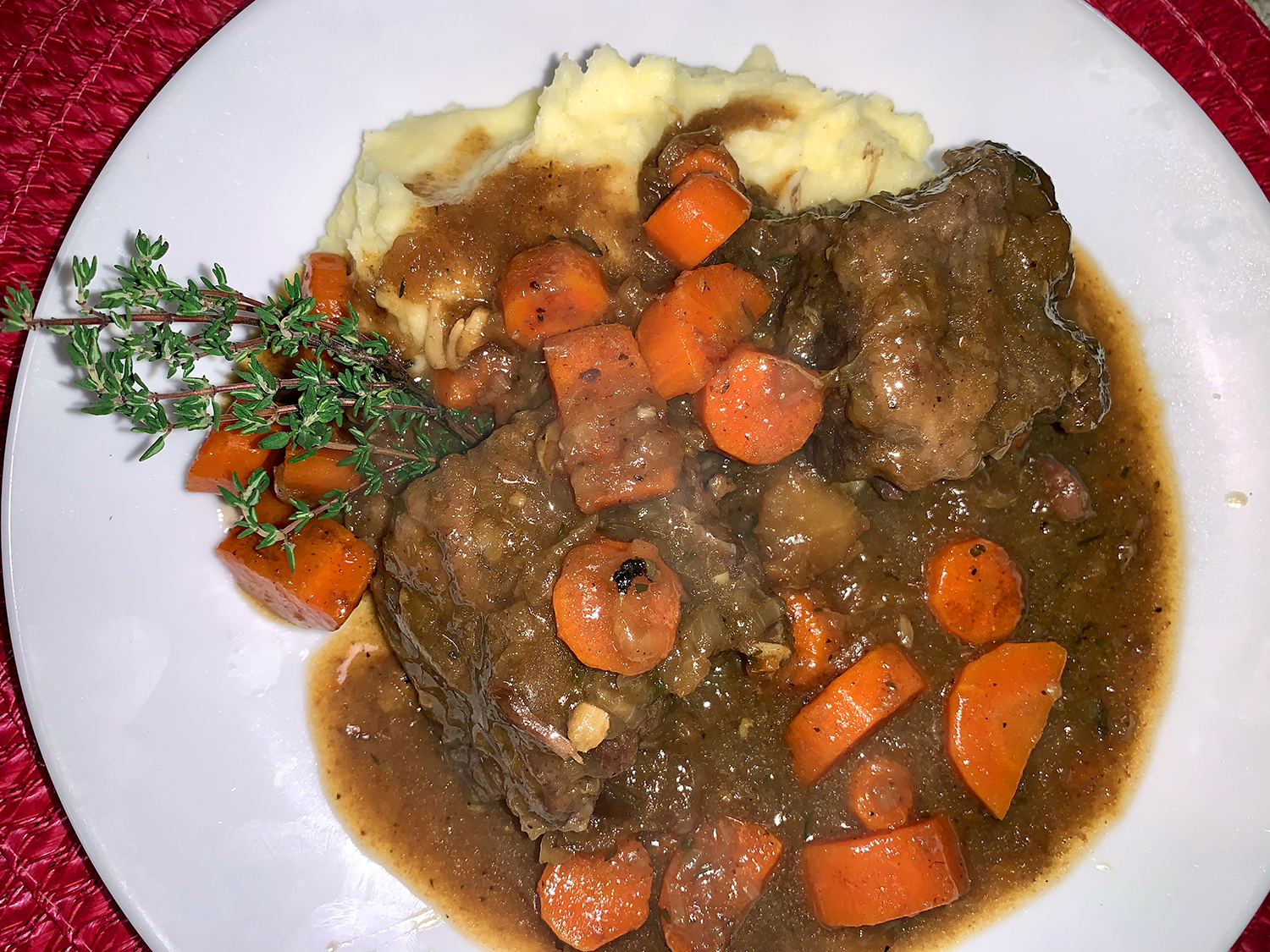
Warm temperature season is behind us which signals it’s time for braised dishes. If there’s one cozy cool weather meal you need to be making, it’s these braised short ribs which are slow-cooked in apple cider with fresh herbs and sweet caramelized onions. It’s simple to put together and unbelievably scrumptious. Serve over a bed of creamy, garlicky mashed potatoes and you’ll have the perfect dinner for a cold night in.

The pairing of sweet apple cider and tangy caramelized onions is a combo with beefy short ribs that can’t be beat. Your kitchen will smell incredible as this slow cooks for hours. Those jammy onions practically melt into the sauce.
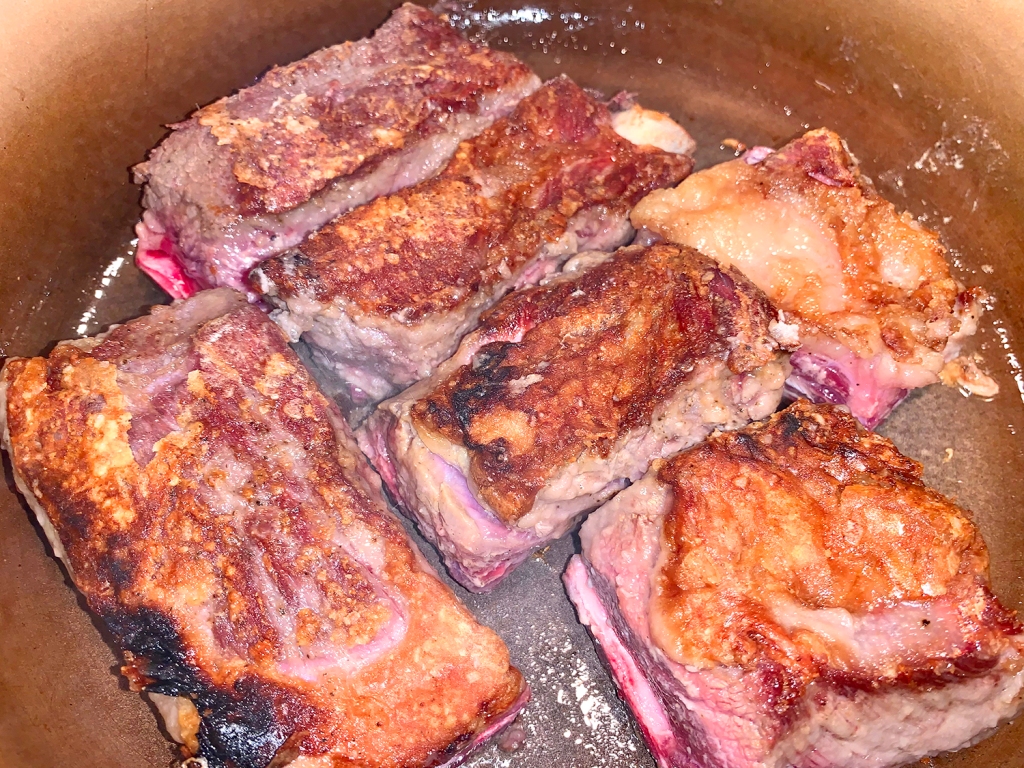
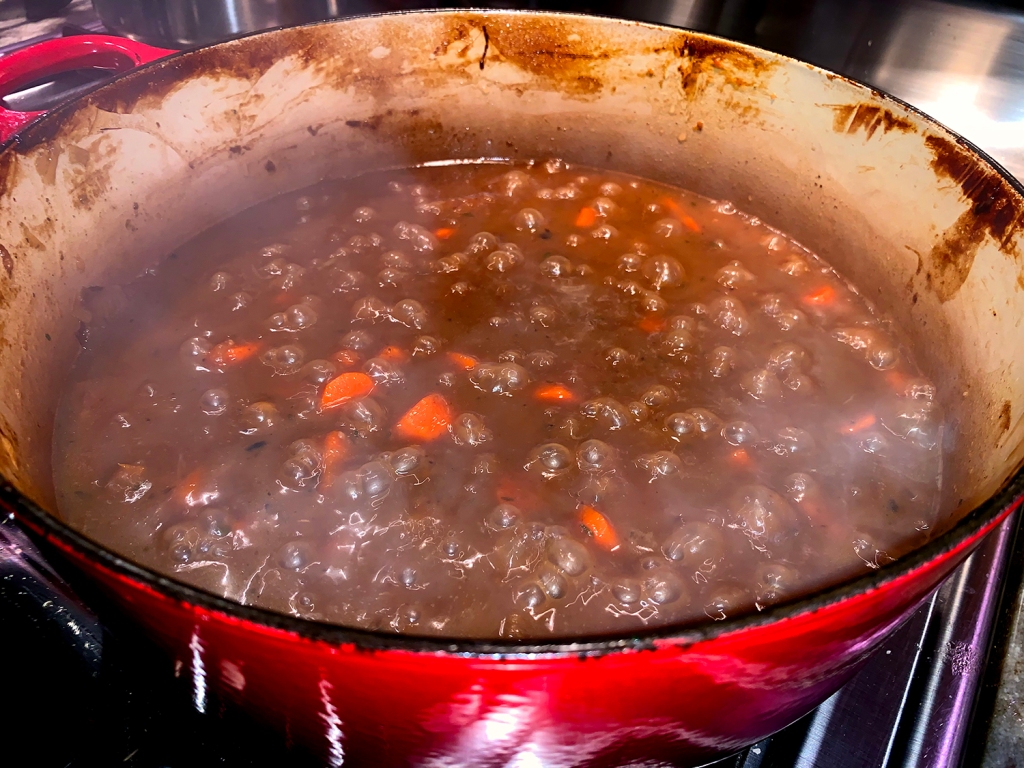
Now there were two major changes we made to the directions. First, we saw no reason to wipe out the pan after browning the ribs. Why would you discard that wonderful flavor? Then, at the end, after removing the bay leaves, also remove the ribs and place them onto a platter tightly covered with foil. Keep the pot on the burner and bring contents to a rolling simmer, stirring often. Mash the apple quarters so that they release their pectin and thicken the gravy, then continue to reduce down the sauce for another 10 to 15 minutes.

About 45 minutes before the dish is done, don’t forget to start your creamy mashed potatoes!

Cider Braised Short Ribs with Caramelized Onions

  • Servings: 6
  • Difficulty: easy
  • Print

Ingredients

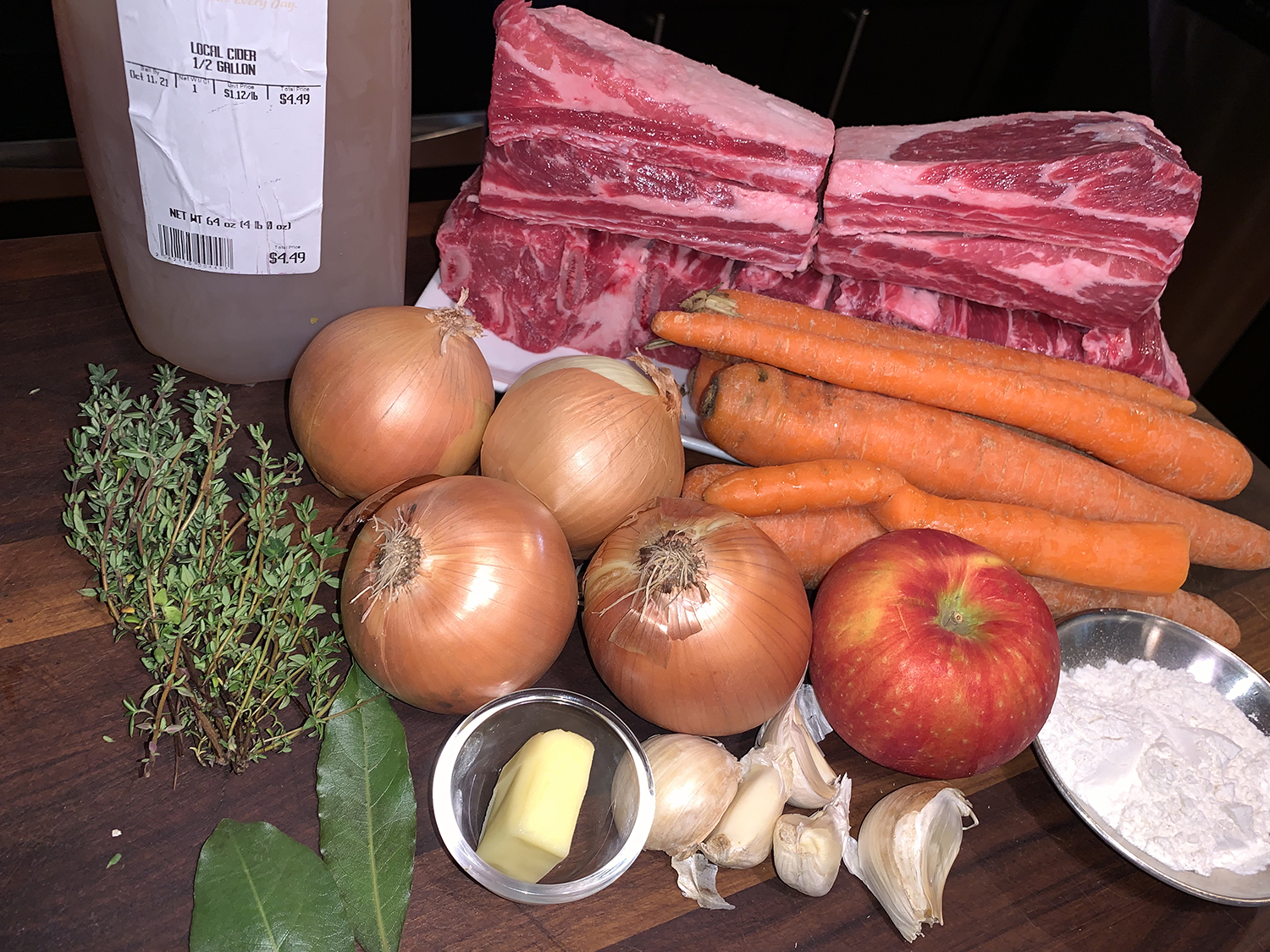
  • 5 lbs. bone in beef short ribs
  • 3 Tbsp. all-purpose flour
  • Kosher salt and black pepper
  • 1 Tbsp. salted butter
  • 4 yellow onions, thinly sliced
  • 2 cups apple cider
  • 2 cups chicken broth or dry white wine
  • 6 carrots, chopped
  • 6 cloves garlic, smashed
  • 2 Tbsp. chopped fresh thyme
  • 1 apple, quartered (optional)
  • 2 bay leaves

Directions

  1. Preheat the oven to 325° F.
  2. Season the short ribs with salt and pepper, then rub with flour to coat. Heat a large oven-safe Dutch Oven over high heat, sear the ribs on both sides. Remove the ribs to a plate. Do this in two batches.
  3. Add the butter and onions and cook 5 minutes, until softened. Add a 1/2 cup apple cider, season with salt and pepper, and continue cooking another 5-8 minutes, until the cider has evaporated and the onions are lightly golden.
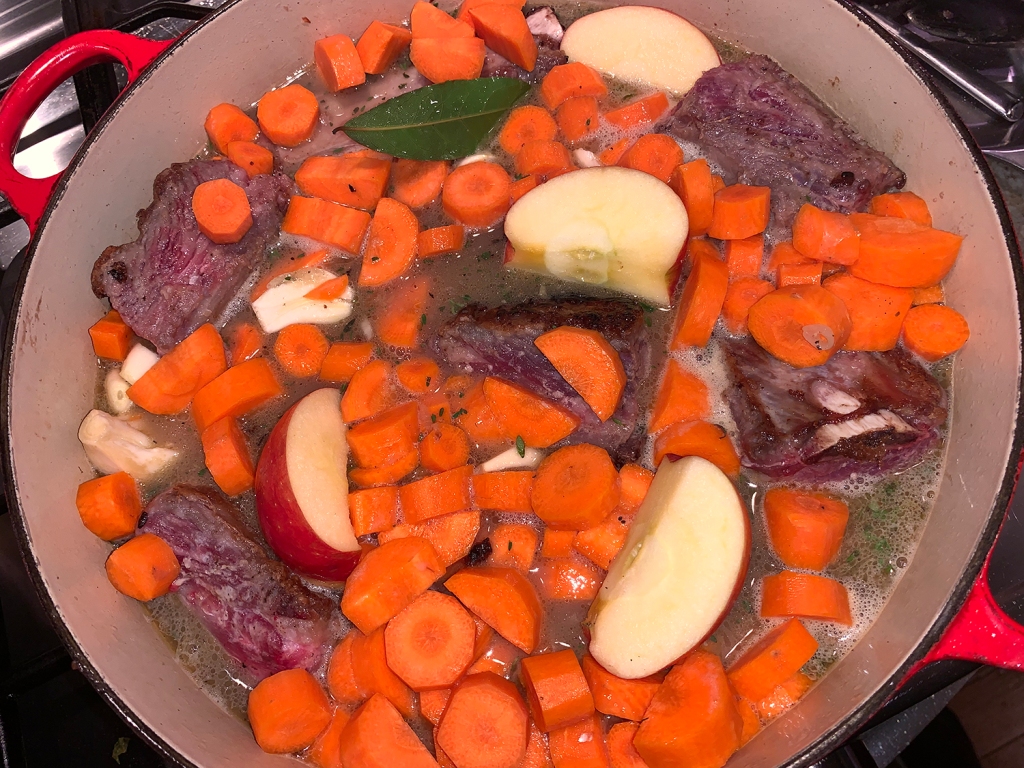
  4. Add the thyme, then add the short ribs back to the pot. Add the remaining 1 1/2 cups cider, broth or wine, carrots, garlic, and bay leaves. Arrange the apples around the meat. Cover and roast in the oven for 2 1/2 to 3 hours or until the short ribs are tender and falling off the bone.
  5. Remove the bay leaves. Place the ribs onto a clean platter and cover tightly with foil.
  6. Put the pot on a burner over medium heat and bring to a rolling simmer, adjusting heat as needed. With a rubber spatula mash the apple quarters; the pectin in them helps to thicken the sauce. Reduce down for about 10-15 minutes more.
  7. Serve the ribs over a bed of mashed potatoes. Drizzle with the pan sauce and onions.

http://www.lynnandruss.com

Adapted from an online recipe from Half-Baked Harvest