Monthly Archives: December 2022

Slow Cooker White Chicken Chili

A perfect time of year for chili, and this tangy, mildly spicy white-bean chili is as warming and comforting as a traditional one, but in a lighter, brighter form. Plenty of green chiles — fresh and canned — provide kick while creamy white beans mellow it all out. To decrease the heat level, remove and discard the seeds from the jalapeño before you mince it.

A large handful of chopped cilantro added at the end brings freshness, but if you don’t care for cilantro, pass it at the table along with the other toppings or omit it entirely. In the spirit of customizing your chili, you can make this in the slow cooker or on the stovetop*. Use 3 cups chicken stock in the slow cooker and 4 cups on the stovetop, where liquid is more likely to evaporate.
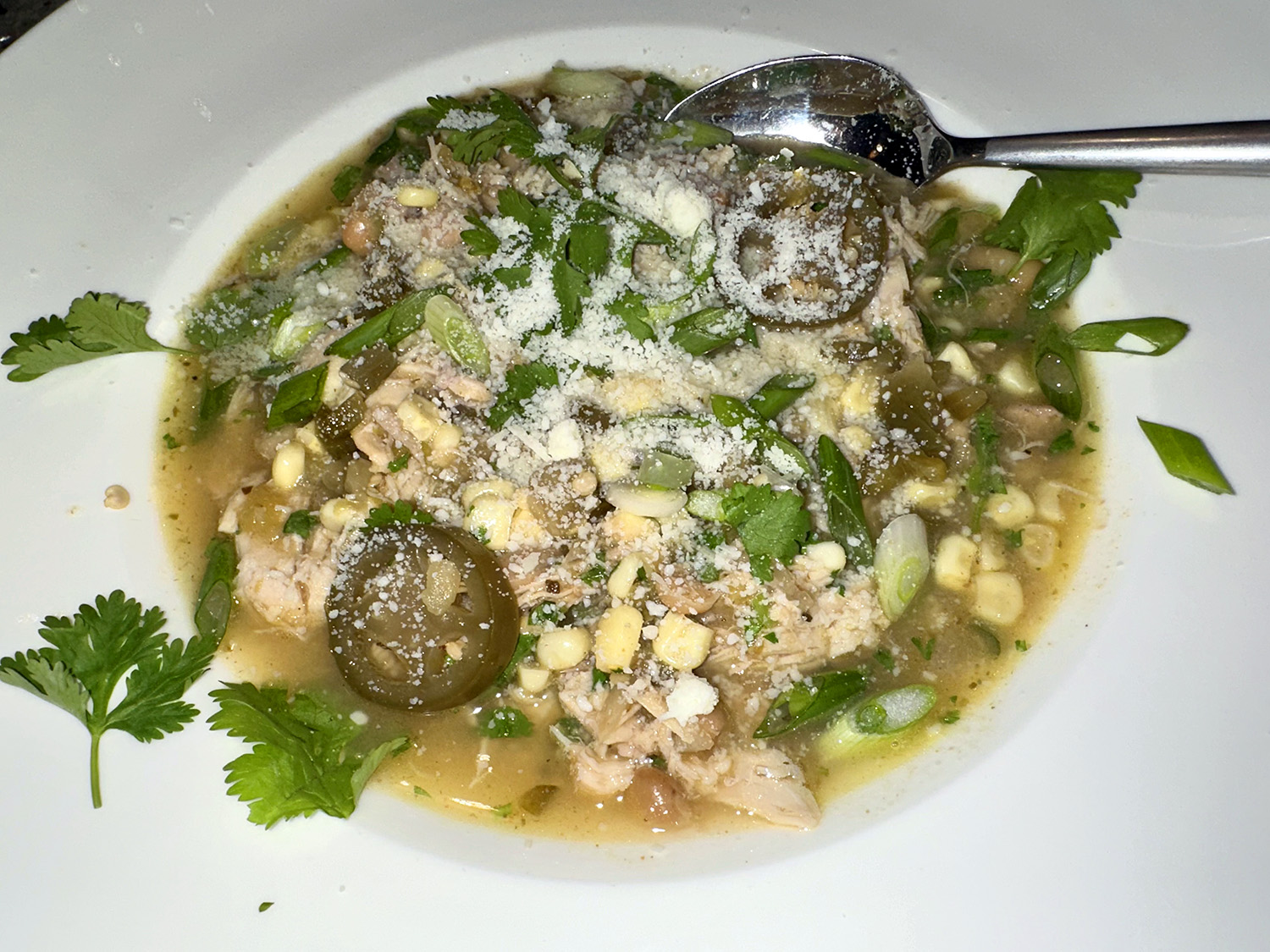
On addition to sliced scallions and chopped cilantro, we topped the chili with grated Cotija cheese. It is a Mexican, dry grated cheese, made from cow’s milk and can be compared to the taste of feta and parmesan. BTW, queso fresco means “fresh cheese” in Spanish, the best substitute for cotija if you can find it in stores or happen to have some on hand. It is very close in flavor to cotija but is a little bit milder.

*You can also cook the chili in a Dutch oven on your stovetop. In step 2, add 4 cups stock instead of 3 cups and let the mixture come to a simmer over medium-high. Reduce the heat to low, cover, and cook until the chicken is tender, stirring occasionally, about 35 minutes.

Slow Cooker White Chicken Chili
  • Servings: 6-8
  • Difficulty: easy
  • Print

Ingredients

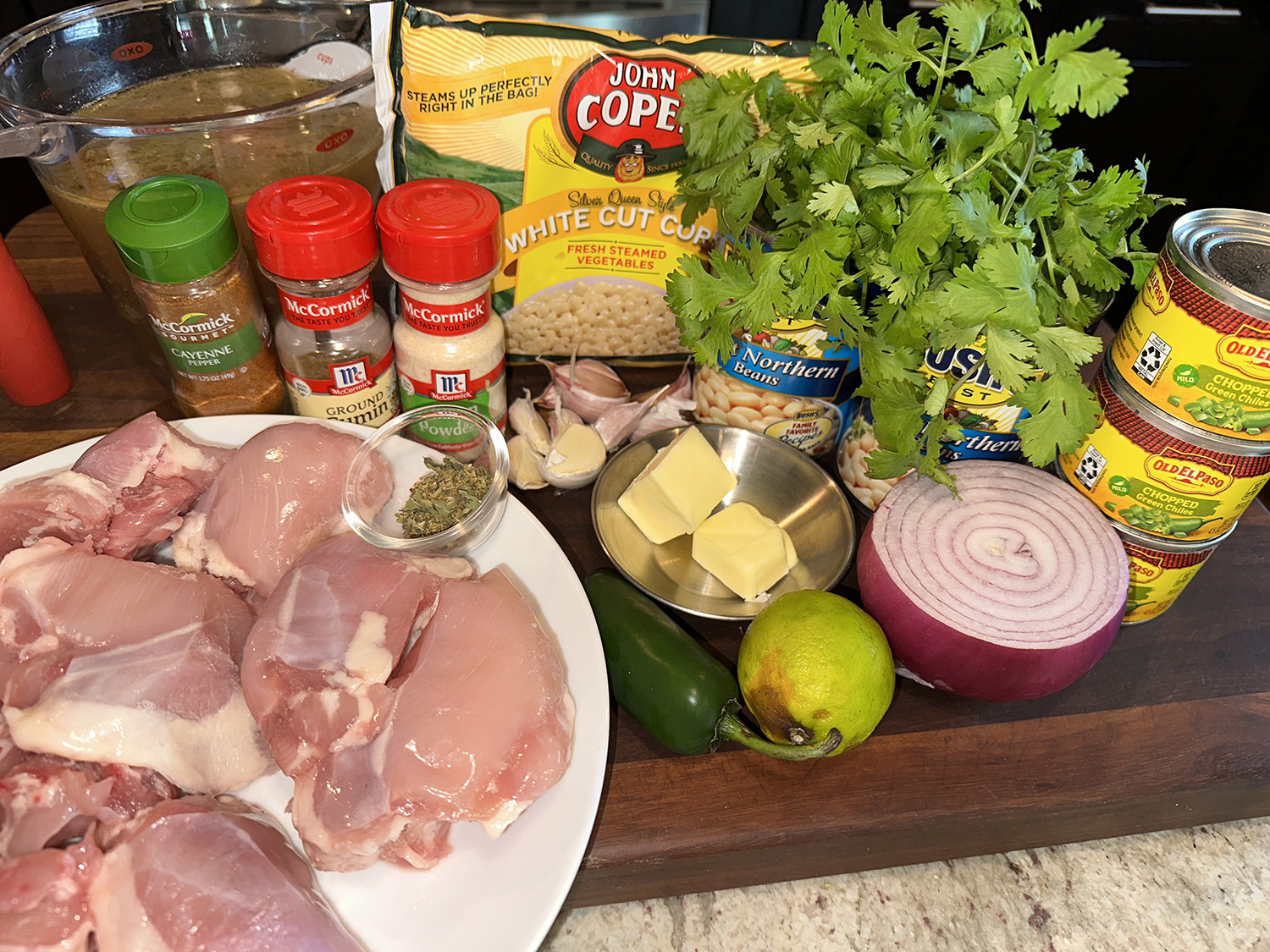
  • 3 Tbsp. unsalted butter
  • 1 large yellow or red onion, finely chopped
  • Kosher salt
  • 10 garlic cloves, finely chopped
  • 1 jalapeño, minced
  • 3 (4-oz.) cans chopped green chiles, hot, mild or a combination
  • 2 tsp. ground cumin
  • 2 tsp. onion powder
  • 1 tsp. dried oregano
  • ½ tsp. ground cayenne
  • 2 lbs. boneless, skinless chicken thighs
  • 3 cups chicken stock
  • 2 (14-oz.) cans great Northern beans, drained and rinsed
  • 1½ cups frozen corn
  • 1 cup finely chopped fresh cilantro (about 1 small bunch), optional
  • 1 lime, juiced (about 2 Tbsp.)
  • Pickled jalapeño slices, sliced scallion, cubed avocado and/or sour cream, for serving

Directions

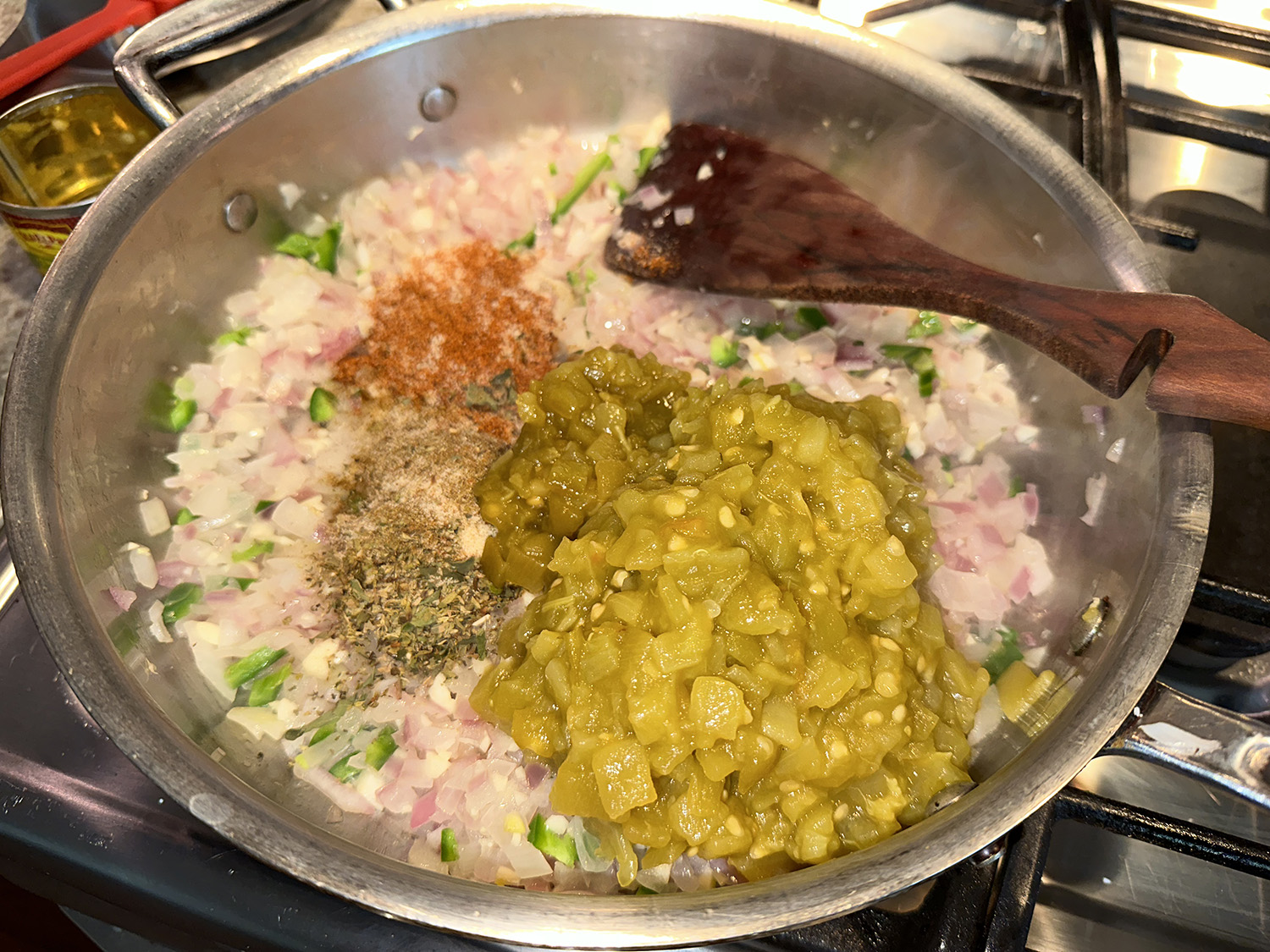
  1. In a large Dutch oven, melt the butter over medium heat. Add the onion, season with salt and cook, stirring occasionally, until the onion is softened and translucent, about 8 minutes. Add the garlic and jalapeño and cook until fragrant, about 1 minute. Add the chopped green chiles, cumin, onion powder, oregano and cayenne and stir until fragrant, 1 to 2 minutes.
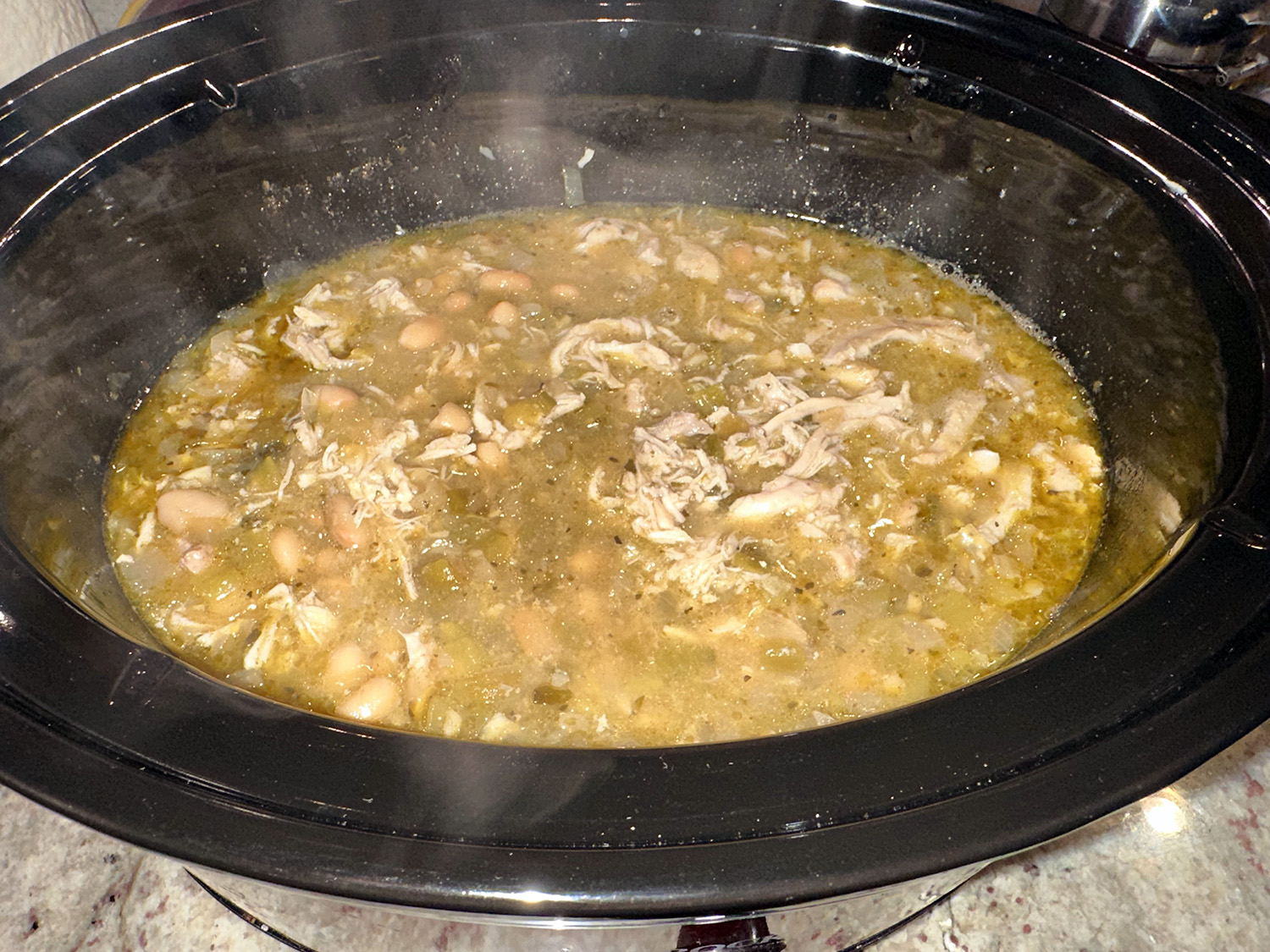
  2. *Transfer the mixture into a 5- to 8-quart slow cooker. Generously season the chicken thighs with salt and add them to the pot. Stir in 3 cups chicken stock and the beans. Cover and cook on low until the chicken is tender, 4 to 6 hours.
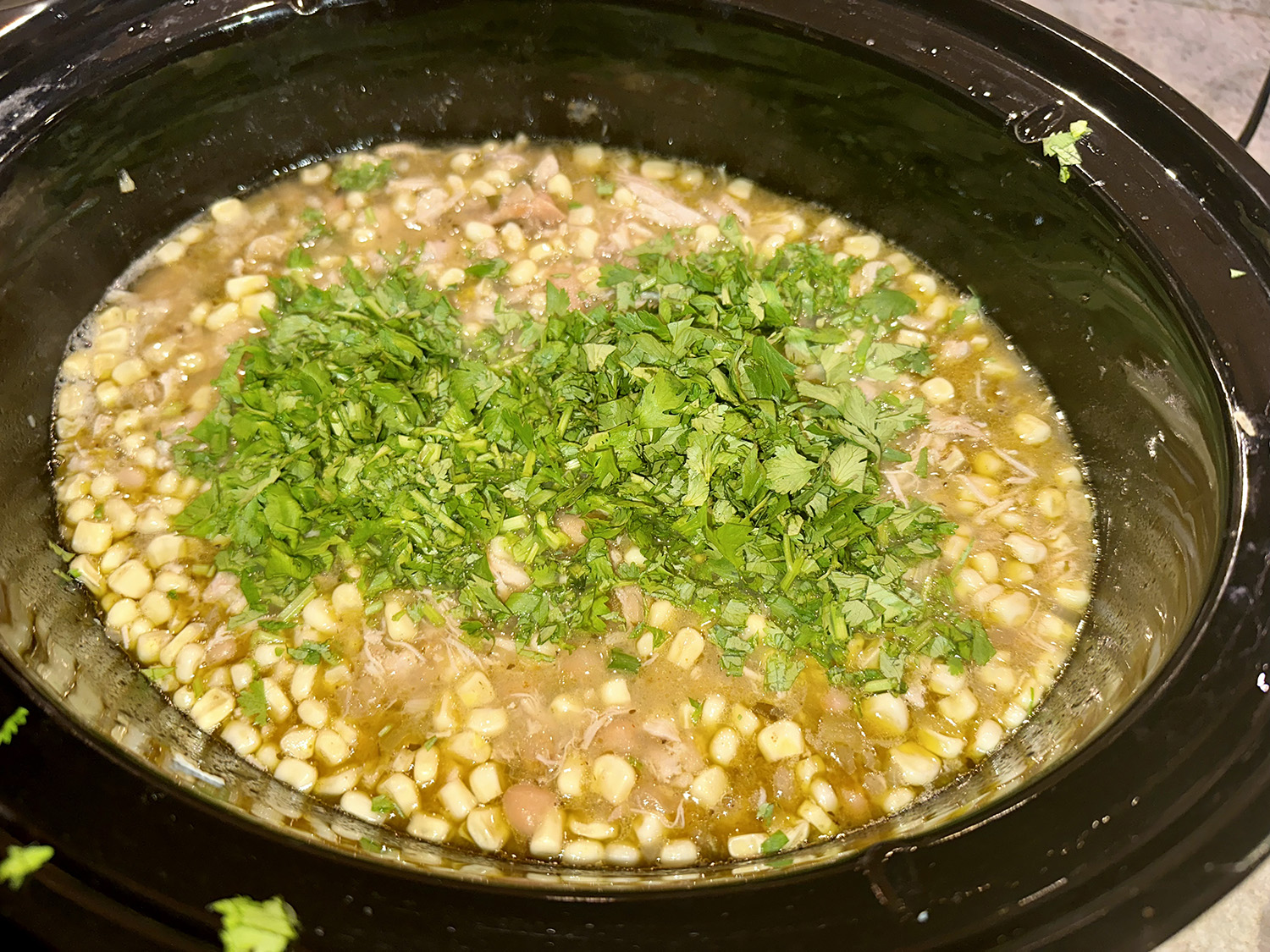
  3. Shred the chicken using two forks. (You can do this directly in the pot, or remove the chicken to a bowl, shred it, then return it to the pot.) Stir in the frozen corn, cover and cook until warmed through, about 10 minutes. Stir in the cilantro, if using, and lime juice. Season to taste with salt. Serve in bowls and pass the toppings at the table.

http://www.lynnandruss.com

Adapted from a recipe Sarah DiGregorio for NYTimes Cooking

Gingerbread Latte Cookies

Spiced cookies are a favorite of The Hubs. So when he spotted this recipe on The NYTimes Cooking site, he immediately sent me a link… of course we had to try them. In fact, I made a double batch, one for an Art Opening we were attending, and one for the house.

“Biting into one of these cookies is like taking the first sip of a festive beverage, and their spiced coffee fragrance gives your kitchen cozy holiday vibes. A combination of fresh and ground ginger adds an extra note of warmth that accentuates the coffee flavor and other spices, while the espresso-sugar coating creates crisp edges that yield to pillowy-soft interiors. Pair it with your milk of choice and you have a gingerbread latte in a single bite.”

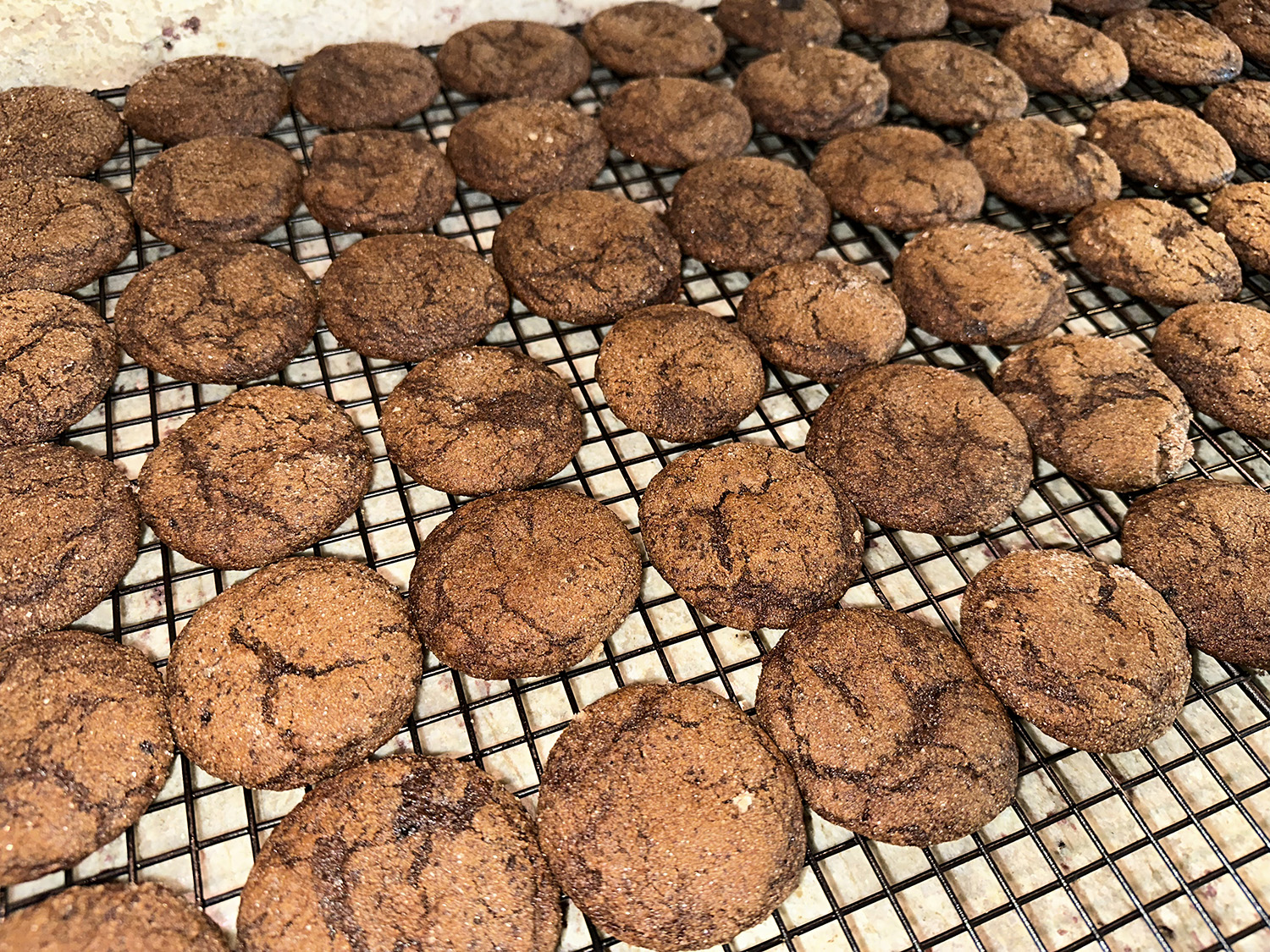
My double batch, rolled into 1 1⁄2 inch balls (smaller than the 2″ suggested size) yielded 58 cookies, nearly 5 dozen. After 2 hours refrigeration time, the dough was easily workable. Even though my finished cookies were smaller—2 1⁄2 to 3 inches in diameter—they still took the full 10 minutes to bake, turning the baking sheet halfway through.

NOTE: If you are using a scale to measure amounts, the original recipe called for ¼ cup/158 grams unsulphured molasses. The quarter cup measurement is correct, but the 158 grams is too much and should be 85 grams.

Tip: Portioned dough can be frozen in balls, then coated and baked for about 13 minutes.

Gingerbread Latte Cookies

  • Servings: Yield: 20 cookies
  • Difficulty: easy
  • Print

Ingredients

Cookie Dough

  • ¾ cup unsalted butter
  • ¼ cup espresso powder
  • 1 Tbsp. finely grated fresh ginger
  • 2 tsp. ground ginger
  • 1 tsp. ground cinnamon
  • ½ tsp. ground nutmeg
  • ¼ tsp. ground clove
  • ½ cup granulated sugar
  • ½ cup dark brown sugar, packed
  • ¼ cup unsulphured molasses
  • 1 tsp. kosher salt
  • 1 large egg
  • 2 tsp. vanilla extract
  • 1 tsp. baking soda
  • 2 cups all-purpose flour

Sugar Topping

  • ¼ cup granulated sugar
  • 2 tsp. espresso powder
  • ½ tsp. ground ginger

Directions

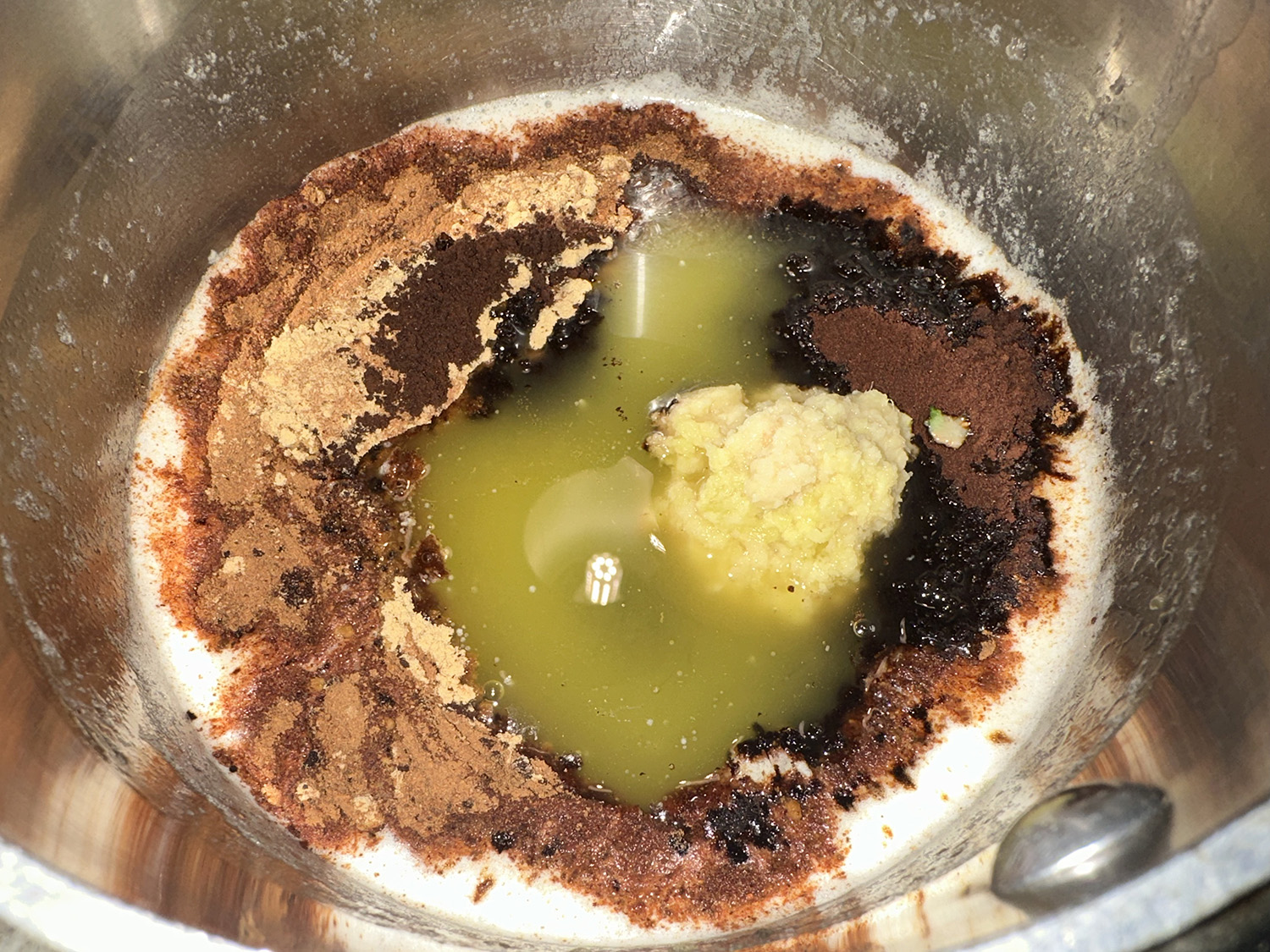
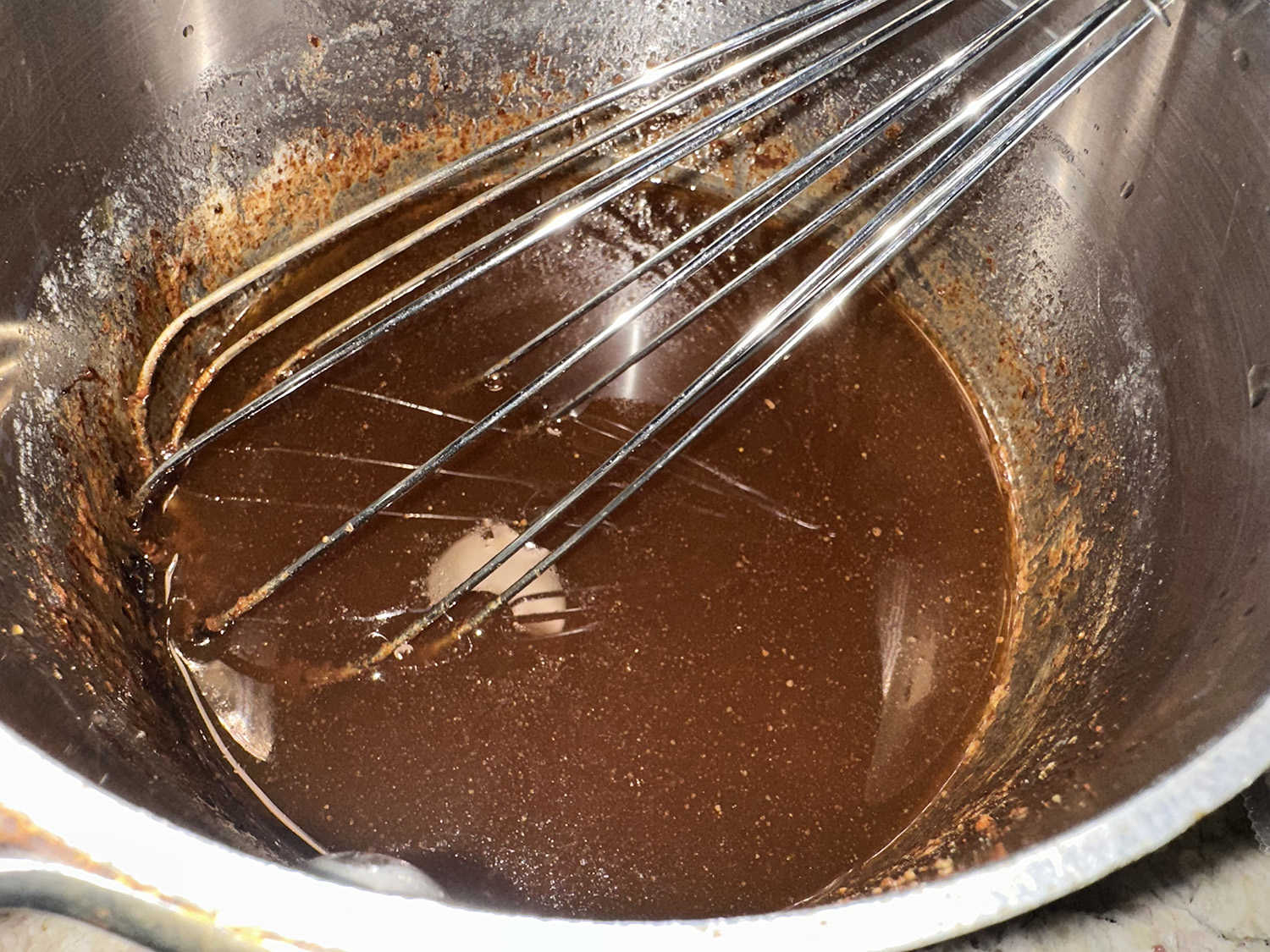
  1. Melt the butter in a medium saucepan over medium. When it begins to bubble and get foamy, remove from the heat and whisk in the espresso powder, fresh ginger, ground ginger, cinnamon, nutmeg and clove. Scrape the butter mixture into a medium mixing bowl and set aside to cool for about 5 minutes.
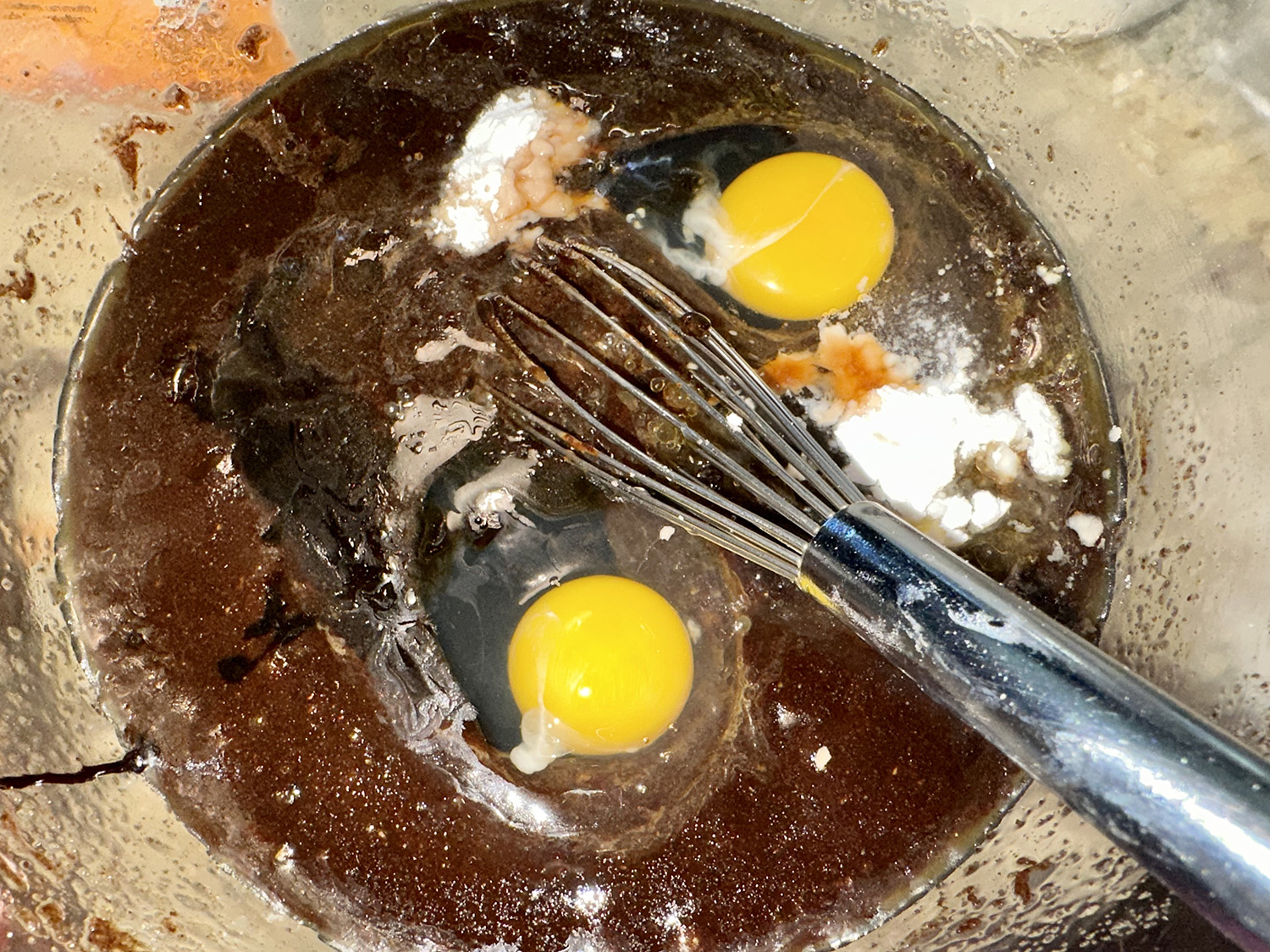
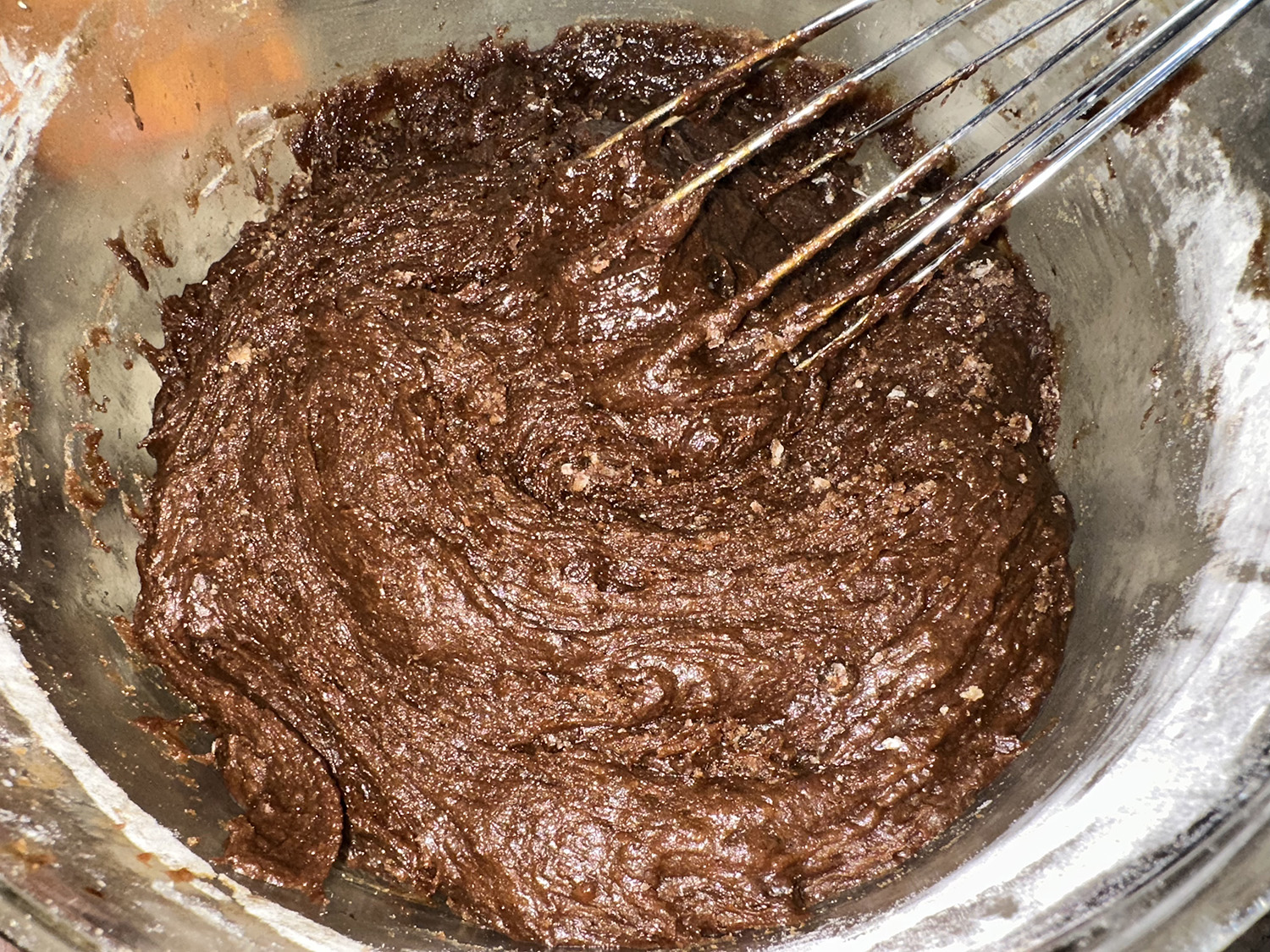
  2. Add the sugars, molasses and salt to the bowl and whisk vigorously to combine. Add the egg, vanilla and baking soda and continue whisking until the mixture appears smooth and it’s the consistency of thin pancake batter, about 2 minutes. Add the flour and mix until evenly incorporated. Cover and chill the dough for at least 2 hours and up to 2 days before baking.
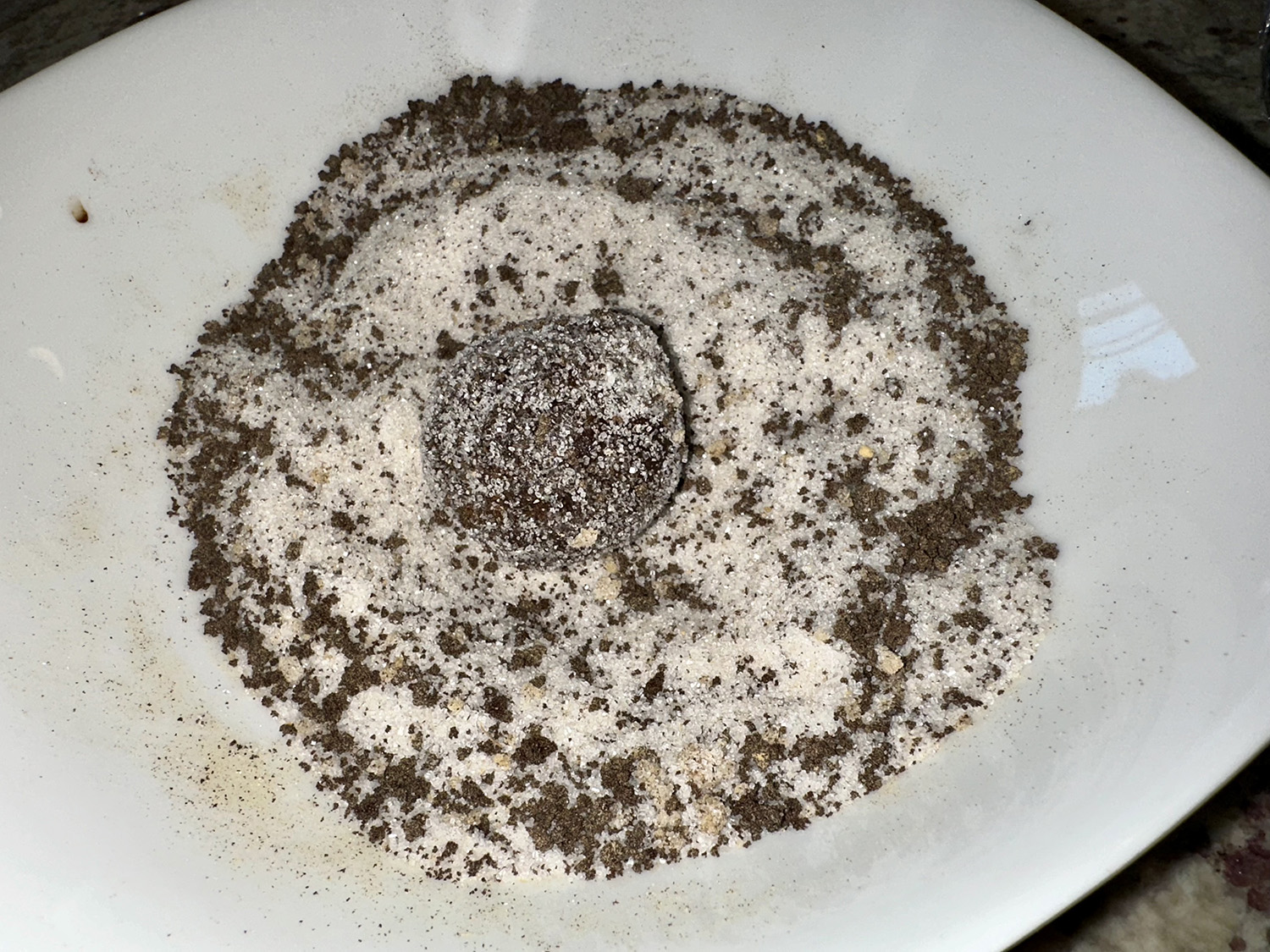
  3. Heat oven to 375 degrees, with racks on the lower and upper thirds. Line 2 baking sheets with parchment paper. Prepare the coating by combining the granulated sugar, espresso powder and ground ginger in a small bowl.
  4. Using a 2-tablespoon (1 ounce) scoop, scoop the dough and, using your hands, roll into walnut-size balls. (Alternatively, for each cookie, use a tablespoon measure to scoop 2 tablespoons dough and roll them into a ball.) Toss in the sugar mixture to coat.
  5. Place the portioned dough 2 inches apart on the prepared baking sheets and bake, rotating the sheets on the racks halfway through, until the cookies have spread slightly and appear craggy on the surface, about 10 minutes. Allow to cool on the baking sheets for 3 minutes, then transfer to a wire rack to cool completely. (The cookies will flatten once cooled.) These cookies keep in an airtight container at room temperature for 4 to 5 days.

http://www.lynnandruss.com

Recipe by Vaughn Vreeland for NYTimes Cooking

Baked Skillet Pasta with Cheddar and Spiced Onions

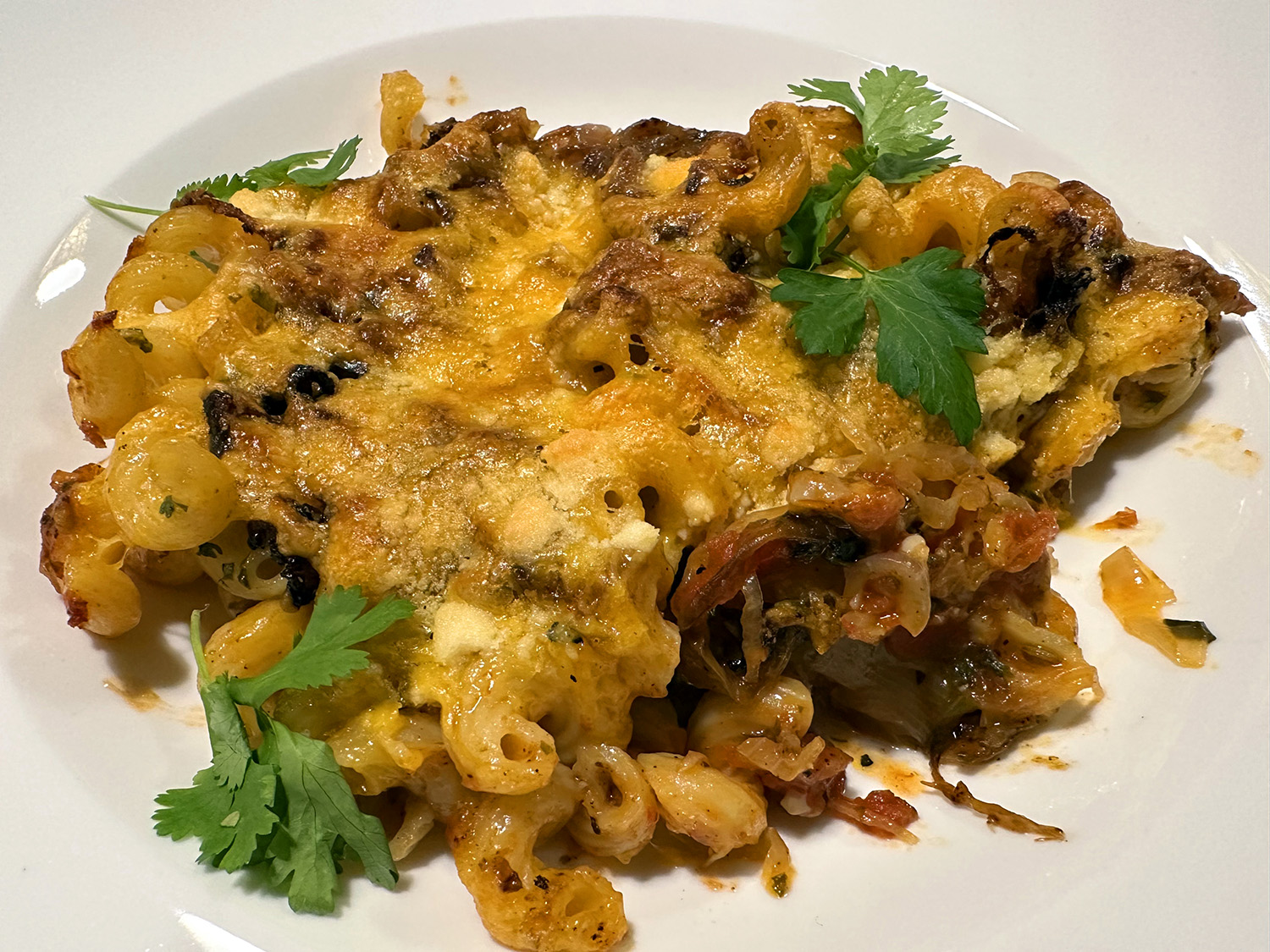
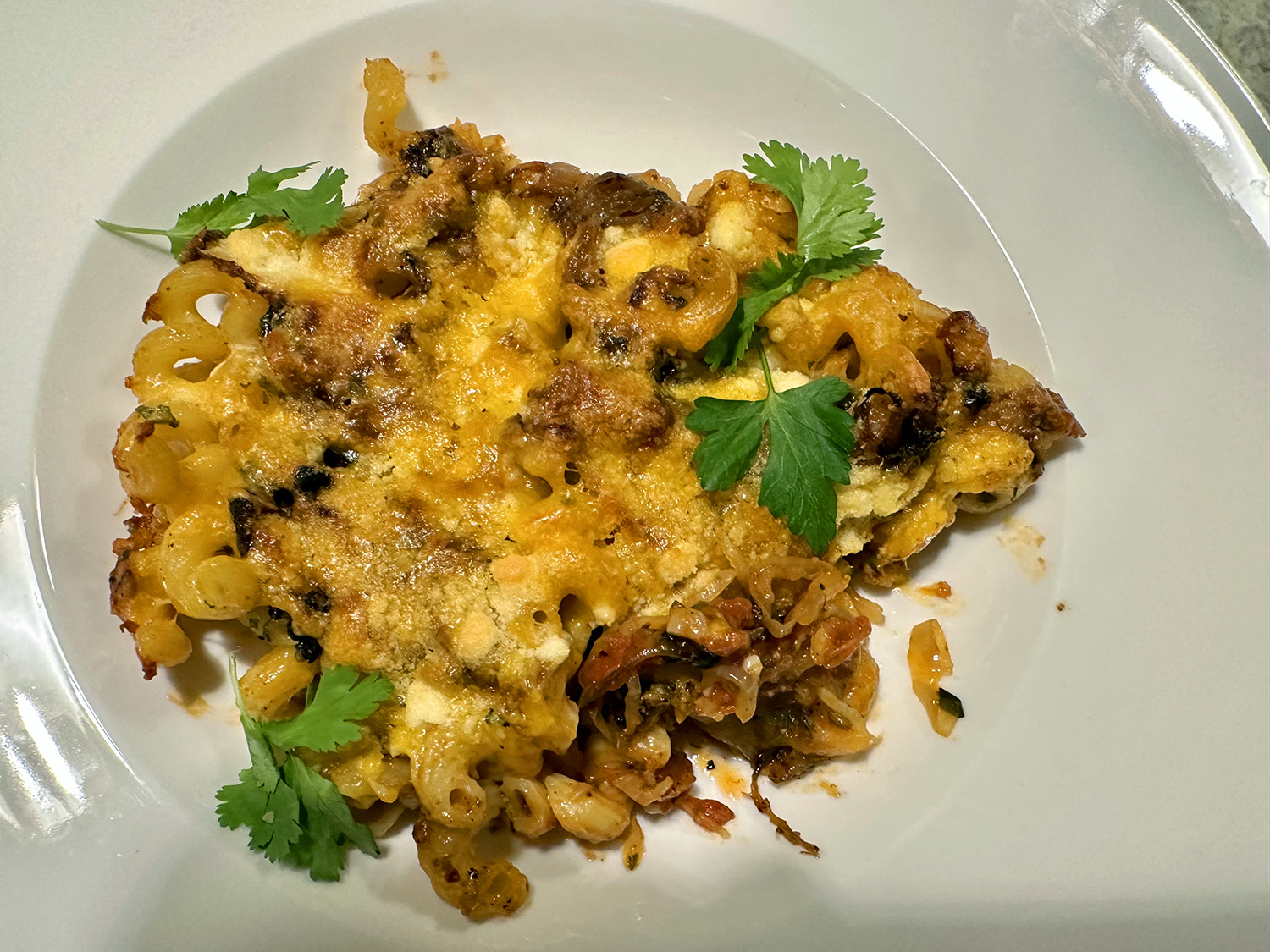
A pizza/pasta mash-up with a slight Mexican undertone served in pie-shaped wedges. Is it a dish with an identity crisis? Maybe, but it was still interesting, fun and tasty! And if you are looking for a new meatless recipe, then this puppy is worth a try.

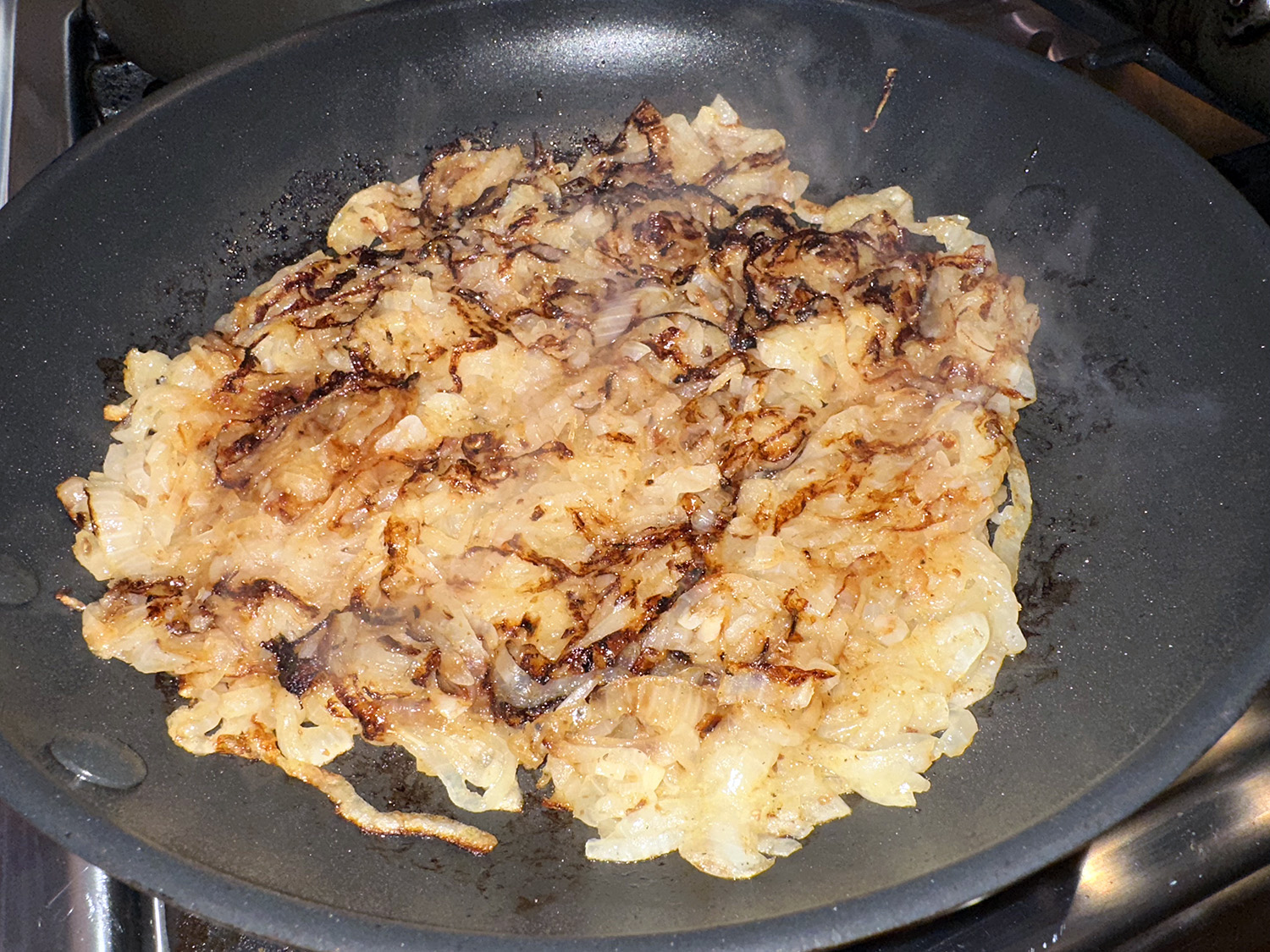
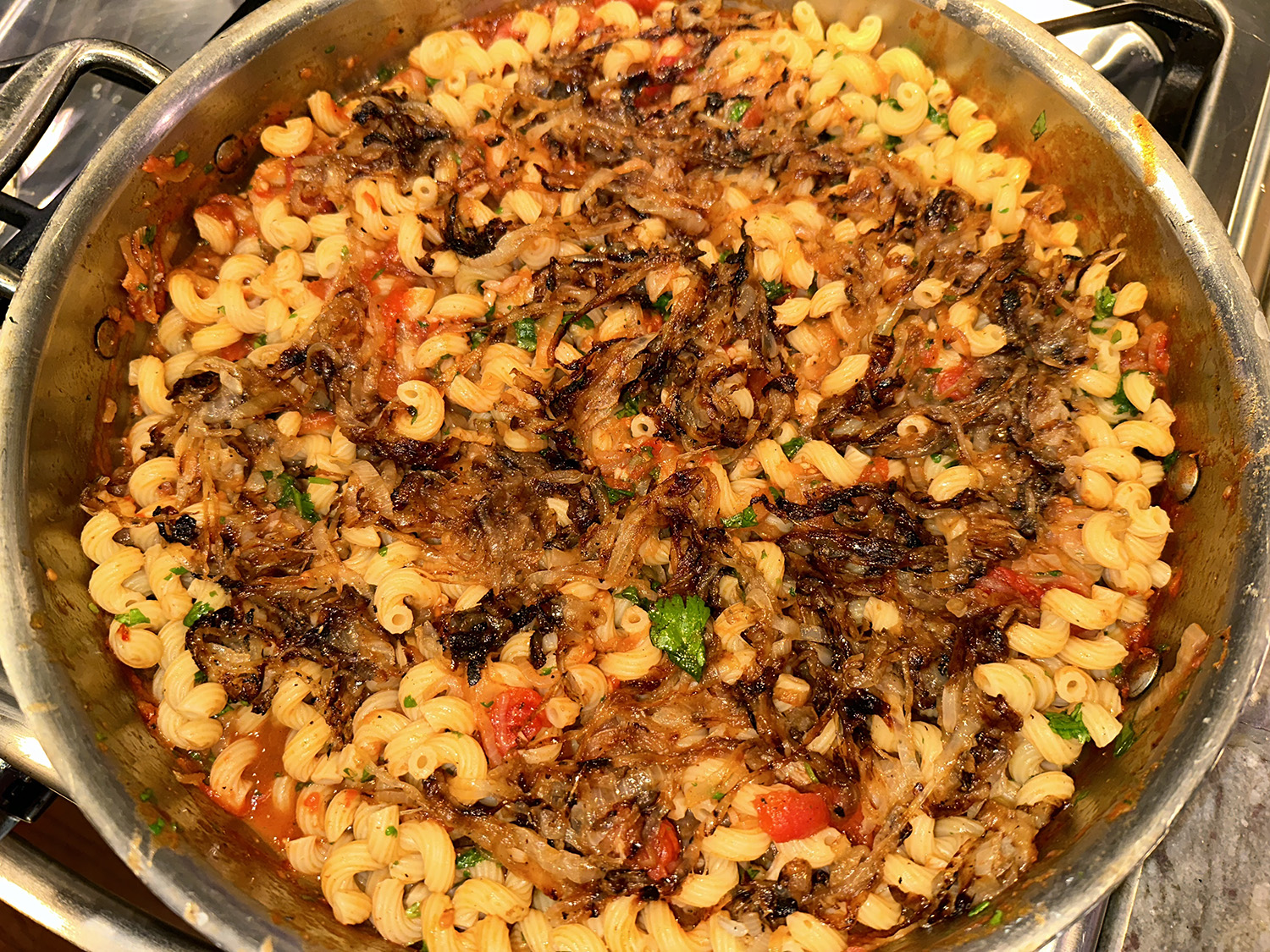
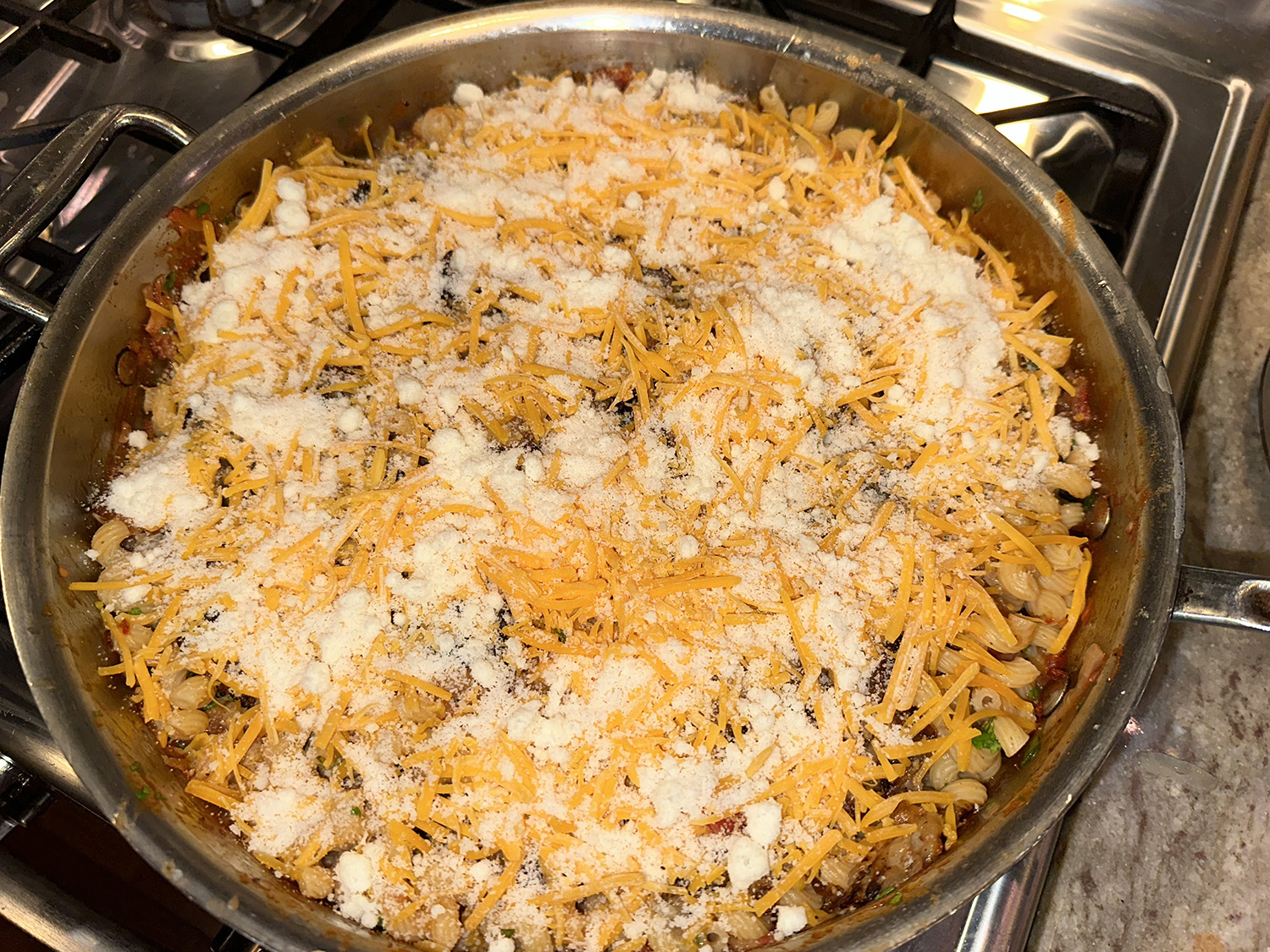
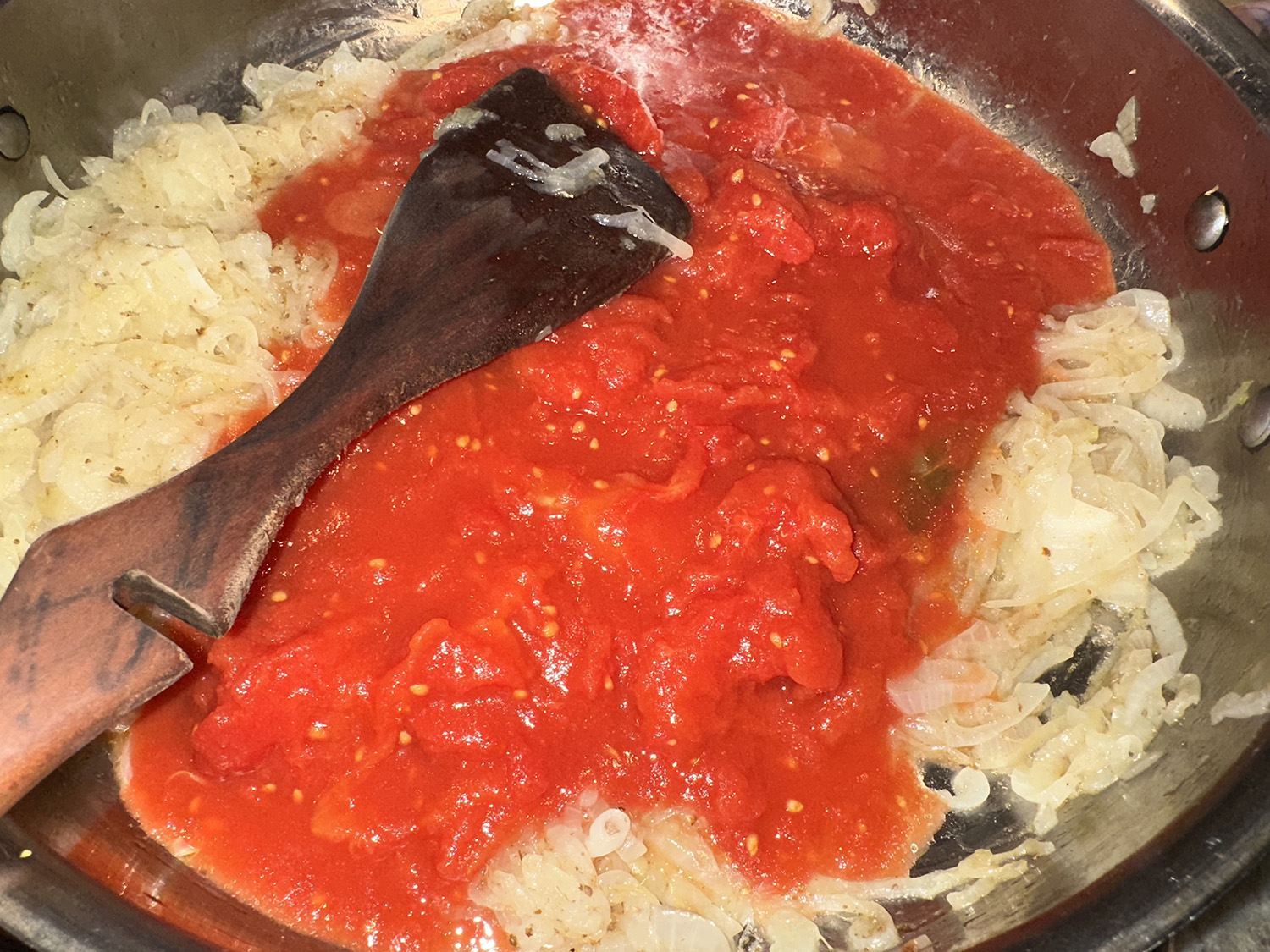
In this warming skillet pasta bake, onions — sautéed with cumin, coriander and allspice until golden and aromatic — do double duty. They form the base of the tomato sauce that’s used to coat the pasta, and are mixed with grated Cheddar for the topping, where strands of browned onions mingle with the melted, gooey cheese. It’s satisfying and easy, with the pasta baked in the same skillet as the sauce.

We used a 13″ sauté pan (which is a little larger than instructed); upped the portion of tomatoes from a 15-ounce to a 28-ounce can; and eliminated adding a cup of water to the tomato mix; although we did reserve, and use, 1 cup of the pasta water at the end.

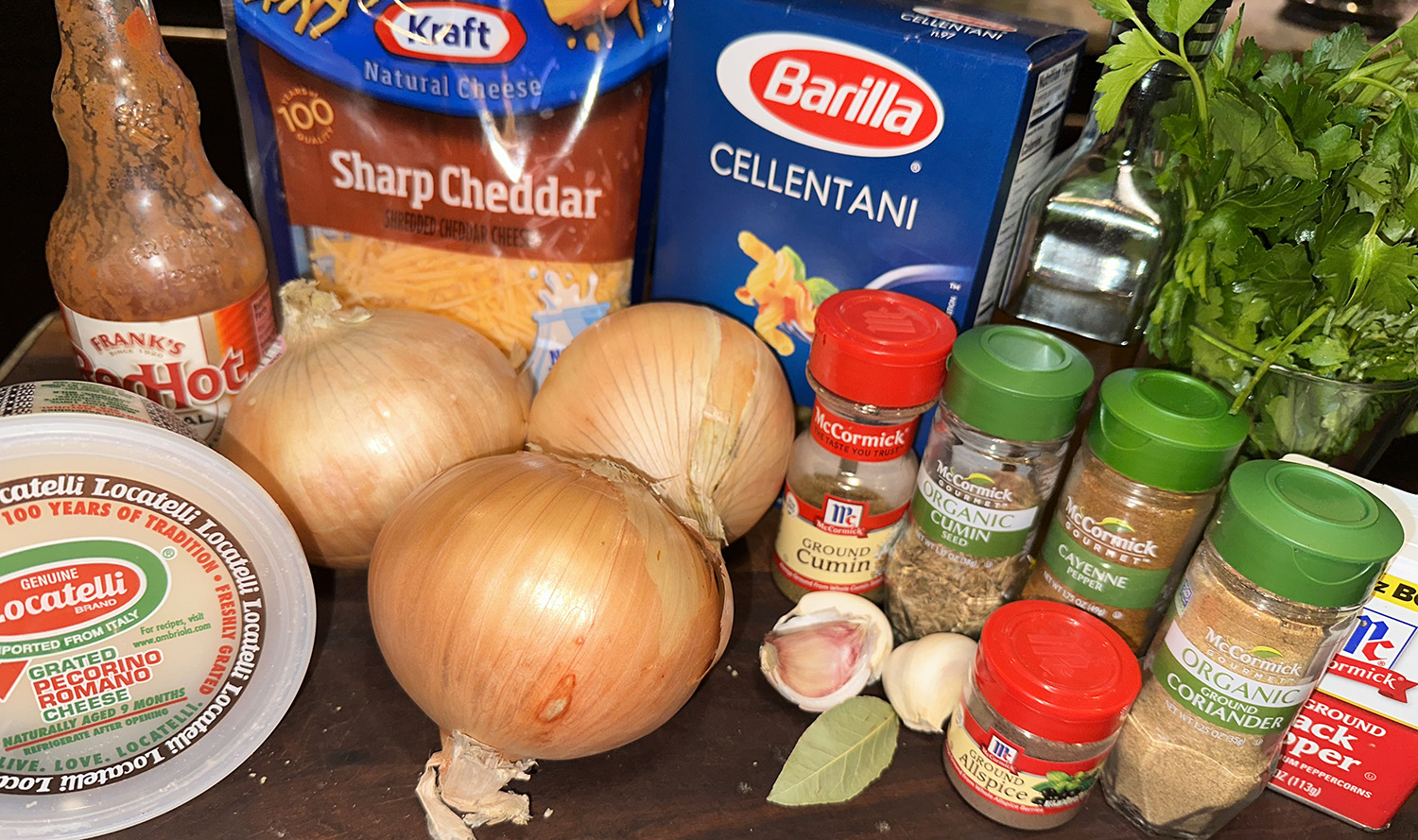
Since we already had a box of pasta on hand, we opted to use our cellentani, a corkscrew-shaped pasta which captured the onions and tomato bits very nicely. Word to the wise, it’s tough getting that many onions to brown in the skillet, so when it was time to remove half of them, I put one half of the onions in another pan for browning further. I had intended to try adding a pinch of baking soda as suggested by one reviewer, but totally forgot.

Serve it as a meatless main course with a crisp salad alongside, or as a rich side to a lighter chicken or fish dish.

TIP: A pinch of baking soda will speed up the browning process (the Maillard reaction.) Just a pinch, too much will be noticeable in the finished dish.

Baked Skillet Pasta with Cheddar and Spiced Onions

  • Servings: 4-6
  • Difficulty: easy
  • Print

Ingredients

  • 6 Tbsp. extra-virgin olive oil
  • 3 large onions, thinly sliced
  • 1 large bay leaf
  • 1½ tsp. ground coriander
  • 1 tsp. ground cumin
  • Pinch of cayenne, plus more to taste
  • 1¼ tsp. fine sea salt, plus more as needed
  • 3 fat garlic cloves, minced
  • 1 tsp. cumin seeds
  • 1 tsp. black pepper
  • ⅛ tsp. ground allspice
  • 1 28-oz. can whole peeled tomatoes
  • 1 lb. small pasta, such as rotini or shells
  • ¾ cup chopped parsley or cilantro (or use a combination of cilantro and parsley), plus more for serving
  • 8 oz. shredded Cheddar
  • ½ cup grated Parmesan
  • Hot sauce, for serving (optional)

Directions

  1. Heat ¼ cup oil in a 12-inch skillet over high heat. Add onions and bay leaf, and cook, stirring frequently, until softened and browned in spots, 12 to 20 minutes. (Reduce heat if the pan starts to scorch.) Lower heat to medium, and stir in coriander, ground cumin, cayenne and ¼ teaspoon salt; cook 1 more minute. Transfer half the onions to a bowl and reserve (leave the bay leaf in the skillet).
  2. Add garlic, cumin seeds, pepper and allspice to the skillet, and stir. Cook until fragrant, about 1 minute. Pour in the juice from the canned tomatoes. Use your hands or kitchen scissors to squish or cut the tomatoes into pieces and add to pan. Add remaining 2 tablespoons oil and remaining 1 teaspoon salt, and bring mixture to a simmer. Simmer until thickened, about 20 minutes. Taste, and add more salt and cayenne if you like. Remove bay leaf.
  3. As mixture cooks, heat oven to 400° and bring a large pot of salted water to a boil. Cook pasta until just about 2 minutes shy of al dente. Reserve 1 cup pasta water, and drain pasta.
  4. Stir pasta, reserved pasta water, and parsley into skillet with tomato sauce. Top with reserved browned onions, Cheddar and Parmesan. Transfer to oven and bake until golden and bubbly, 20 to 25 minutes. If you like, you can run the pan under the broil to brown the top, or leave it as is. Let cool slightly, top with more parsley, if desired, and serve with hot sauce, if you like.

http://www.lynnandruss.com

Adapted from a recipe by Melissa Clark for NYTimes Cooking
Spicy Korean-Style Braised Cod

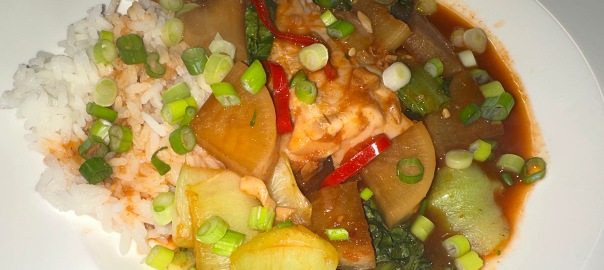
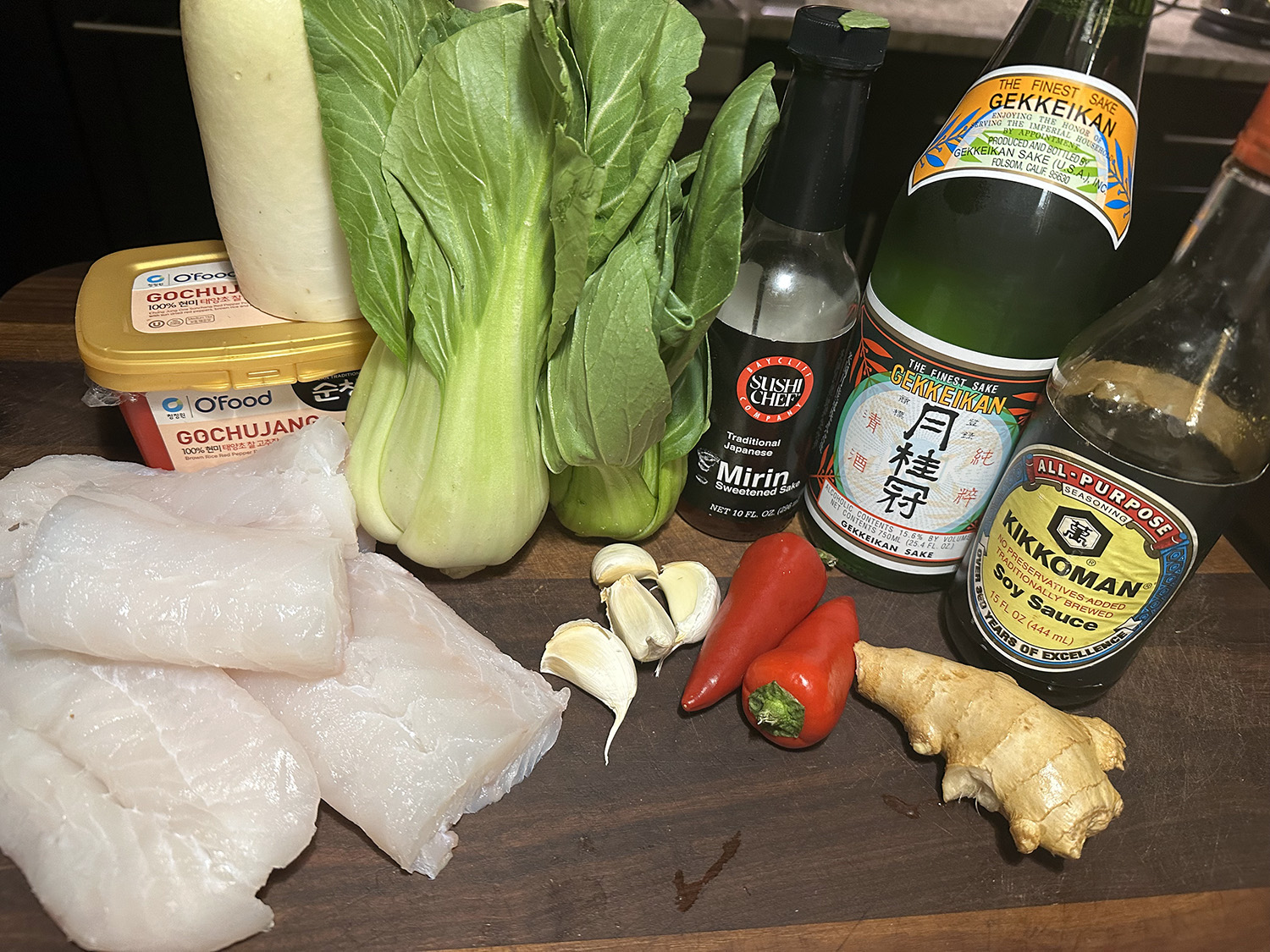
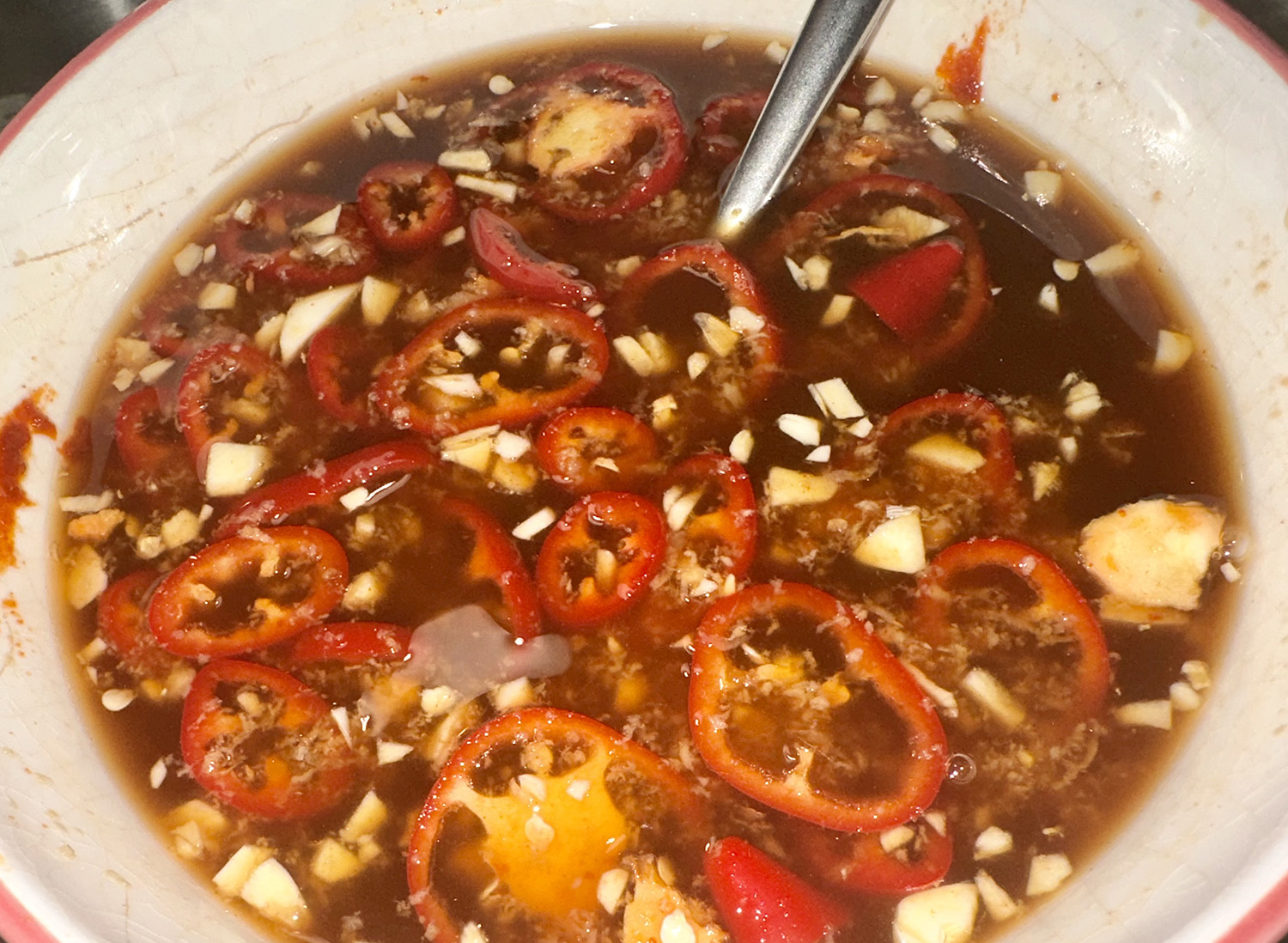
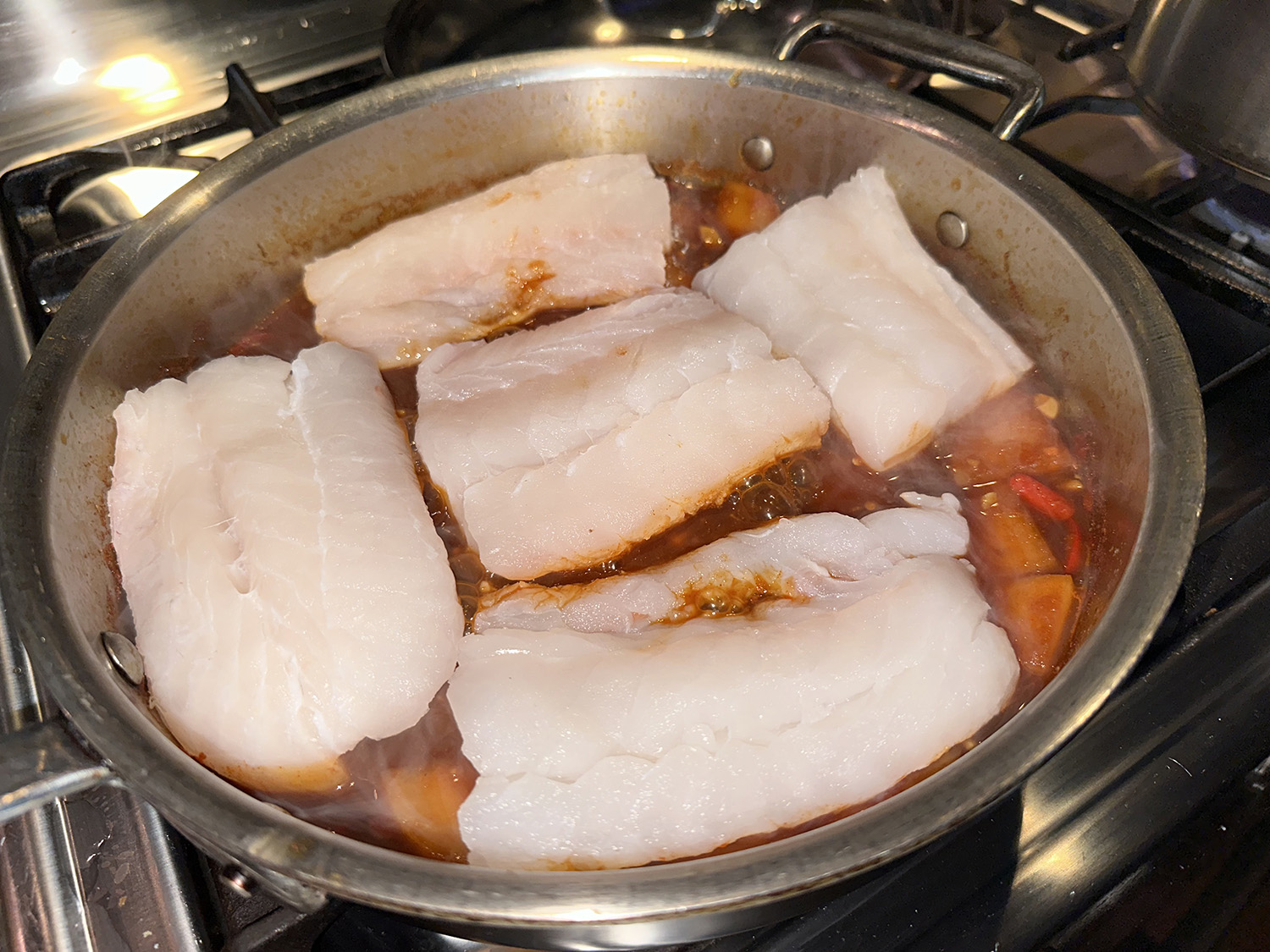
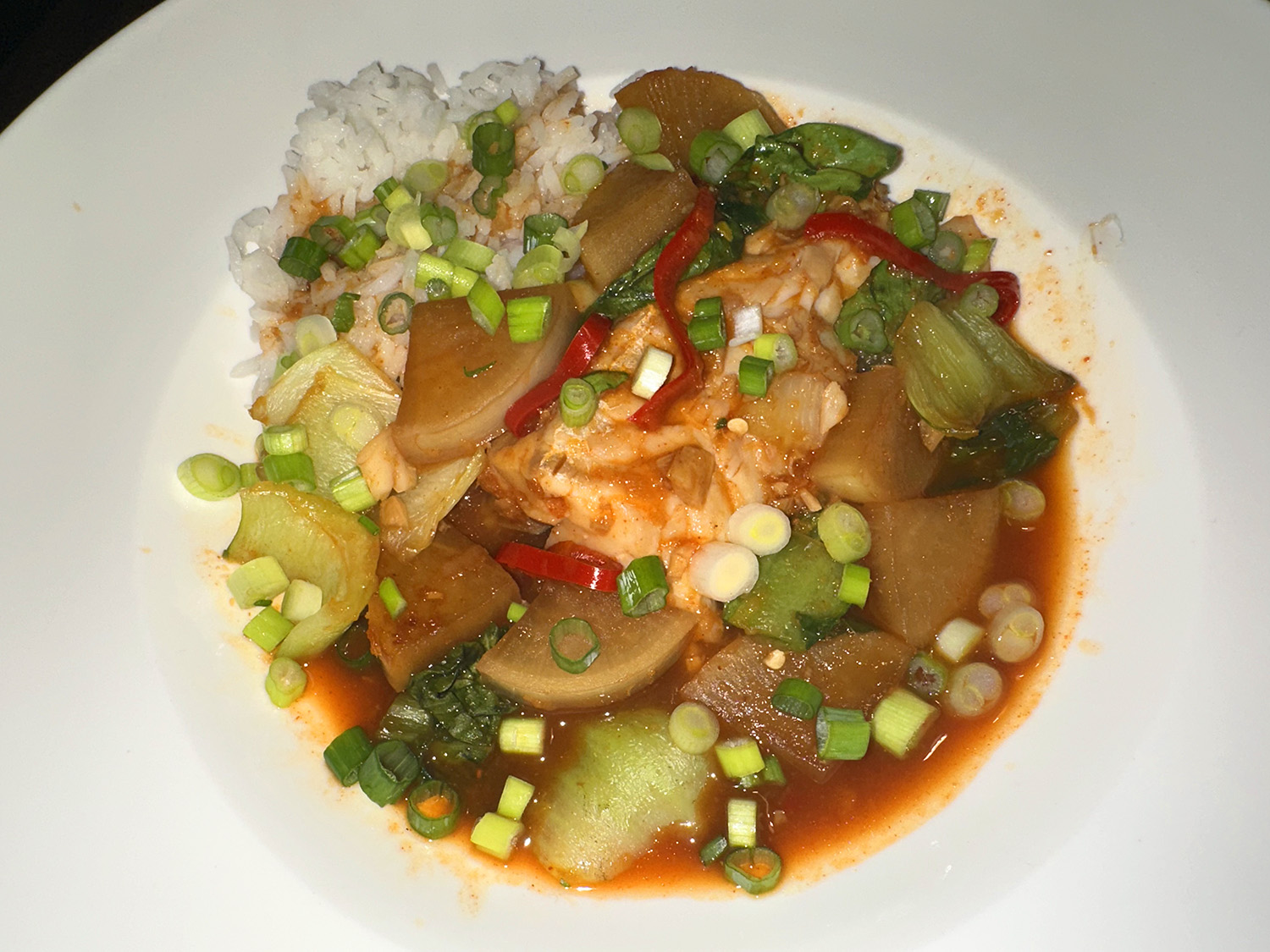
OK, I’ll go out on a limb here and claim this cod recipe is probably one of the best fish dishes I’ve ever eaten! The skillet braise is a simplified version of daegu jorim, or Korean braised cod. Here, Milk Street builds an umami-rich braising liquid by combining sake, mirin, soy sauce and gochujang (Korean fermented chili paste), plus garlic, ginger and chilies.

In the Korean kitchen, steaks of fatty fish, such as black cod or mackerel, are commonly used in daegu jorim, but this recipe opts for easy to source Atlantic cod fillets. Instead of buying individual fillets, we bought a 1 1⁄2-pound piece and cut it down to our preferences.

Earthy, subtly sweet daikon radish is a standard ingredient in the braise but Yukon Gold potatoes are said to be a good alternative. Baby bok choy is also added for color and to round out the braise. Let ‘s just say, this packs quite a punch—which we loved—but to tone it down a notch or three, use only one Fresno chili and discard the seeds and veins.

If you like, sprinkle on sliced scallions or toasted sesame seeds as a garnish, and/or drizzle on some sesame oil. Be sure to serve steamed short-grain rice alongside. Kimchi would be a great accompaniment, too. It was even very good as leftovers. — Just YUM!

Don’t cover the skillet tightly after adding the cod and bok choy. Leaving the lid ajar allows some steam to escape, so the broth reduces slightly, for more concentrated flavor and consistency.

Spicy Korean-Style Braised Cod

  • Servings: 4
  • Difficulty: easy
  • Print

Ingredients

  • 1 1/2 cups sake
  • 1/3 cup mirin
  • 1/4 cup soy sauce
  • 3 Tbsp. gochujang
  • 4 medium garlic cloves, minced
  • 2 Tbsp. minced fresh ginger
  • 1 – 2 Fresno or jalapeño chilies, stemmed and sliced into thin rounds
  • 12 oz. daikon radish, peeled, quartered lengthwise and cut crosswise into ½-inch pieces or 12 oz. medium Yukon Gold potatoes, peeled and sliced into ½-inch rounds
  • 4 6-oz. skinless cod fillets, each about 1 inch thick
  • 8 oz. baby bok choy, trimmed and cut crosswise into 1-inch pieces
  • Kosher salt and ground black pepper
  • Steamed rice

Directions

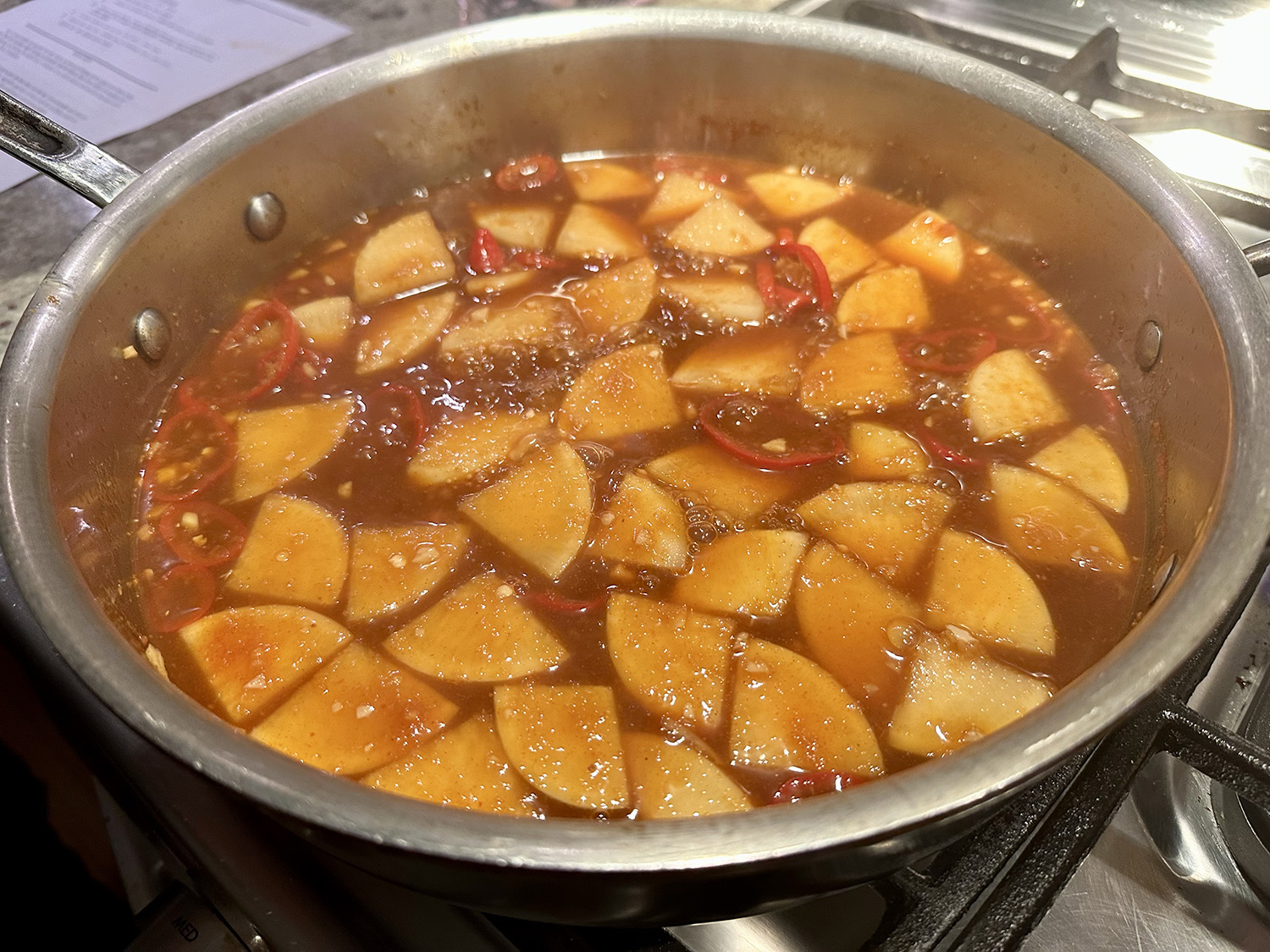
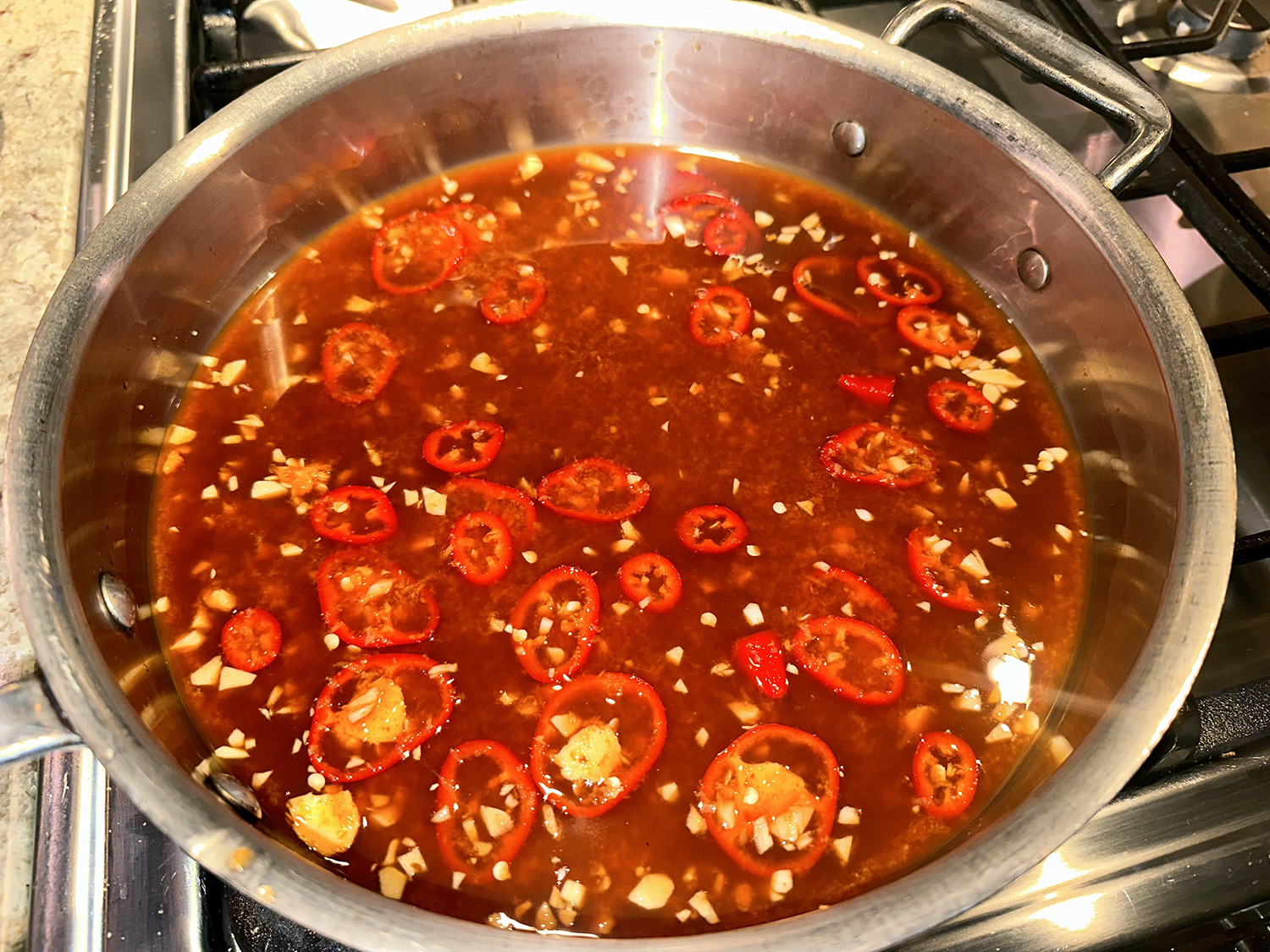
  1. In a 12-inch skillet, stir together the sake, mirin, soy sauce, gochujang, garlic, ginger and chilies; bring to a boil over medium-high, stirring occasionally. Add the daikon (or potato), then cover, reduce to medium, and cook, flipping and stirring the radish every 5 minutes or so, until a skewer inserted into the pieces meets no resistance, 10 to 15 minutes.
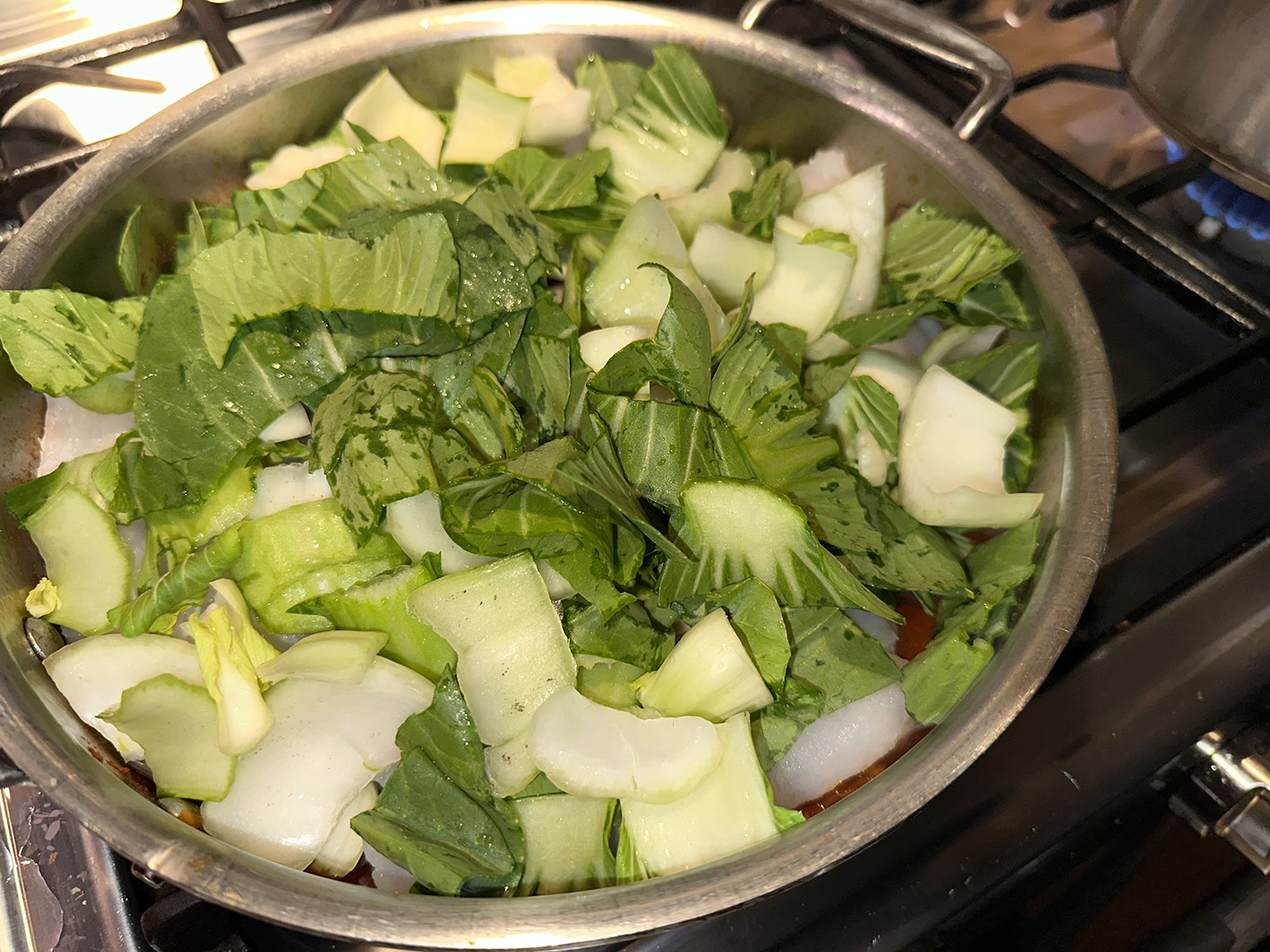
  2. Slide the cod fillets into the skillet and scatter the bok choy over the top. Cover partially and cook over medium, turning the fish and stirring the vegetables just once or twice, until the cod flakes easily and the sauce is slightly thickened, 5 to 8 minutes. Taste and season with salt and pepper.
  3. Ladle into shallow bowls and garnish with sliced scallions and sesame seeds.

http://www.lynnandruss.com

Adapted from a recipe by Courtney Hill for Milk Street

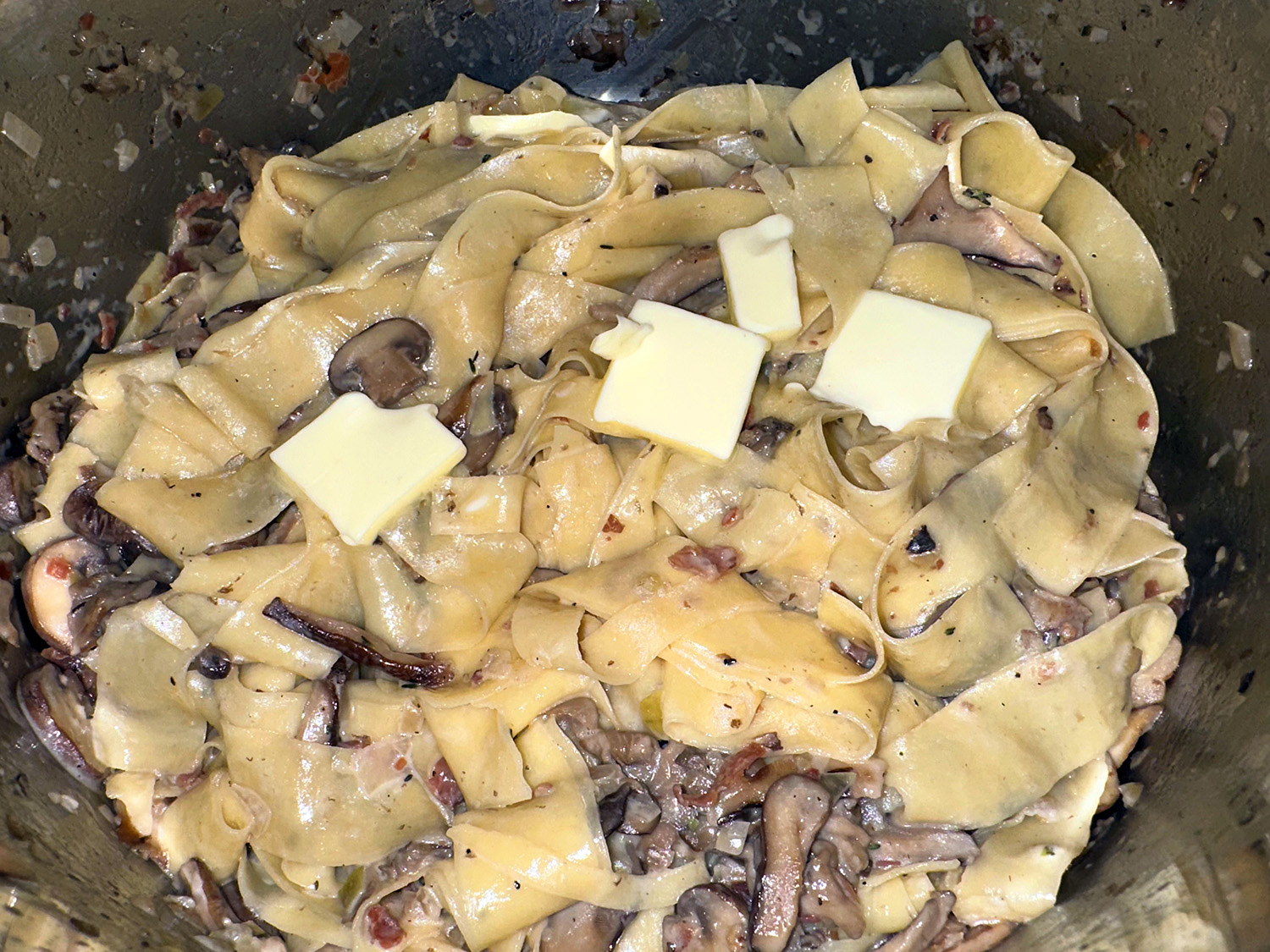
Pappardelle with Mushrooms and Prosciutto

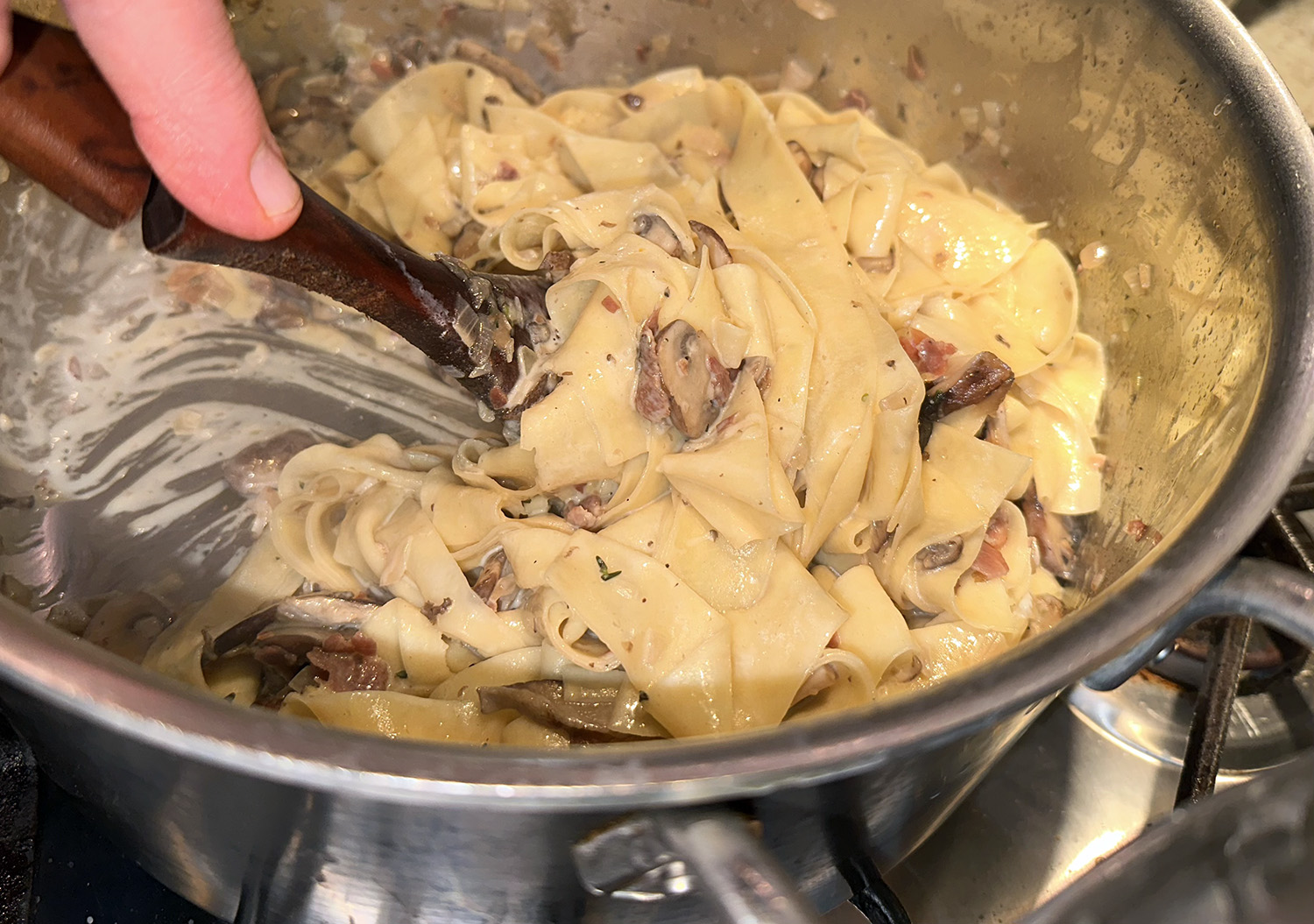
Getting the consistency of the creamy mushroom sauce right is key for this pasta recipe. You want to reduce it just until it clings to the pappardelle to create a light coating; but be careful not to reduce it too much. To that end, don’t discard the pasta water after removing the pappardelle, you may need it to thin the dish when combining everything at the end (we did).

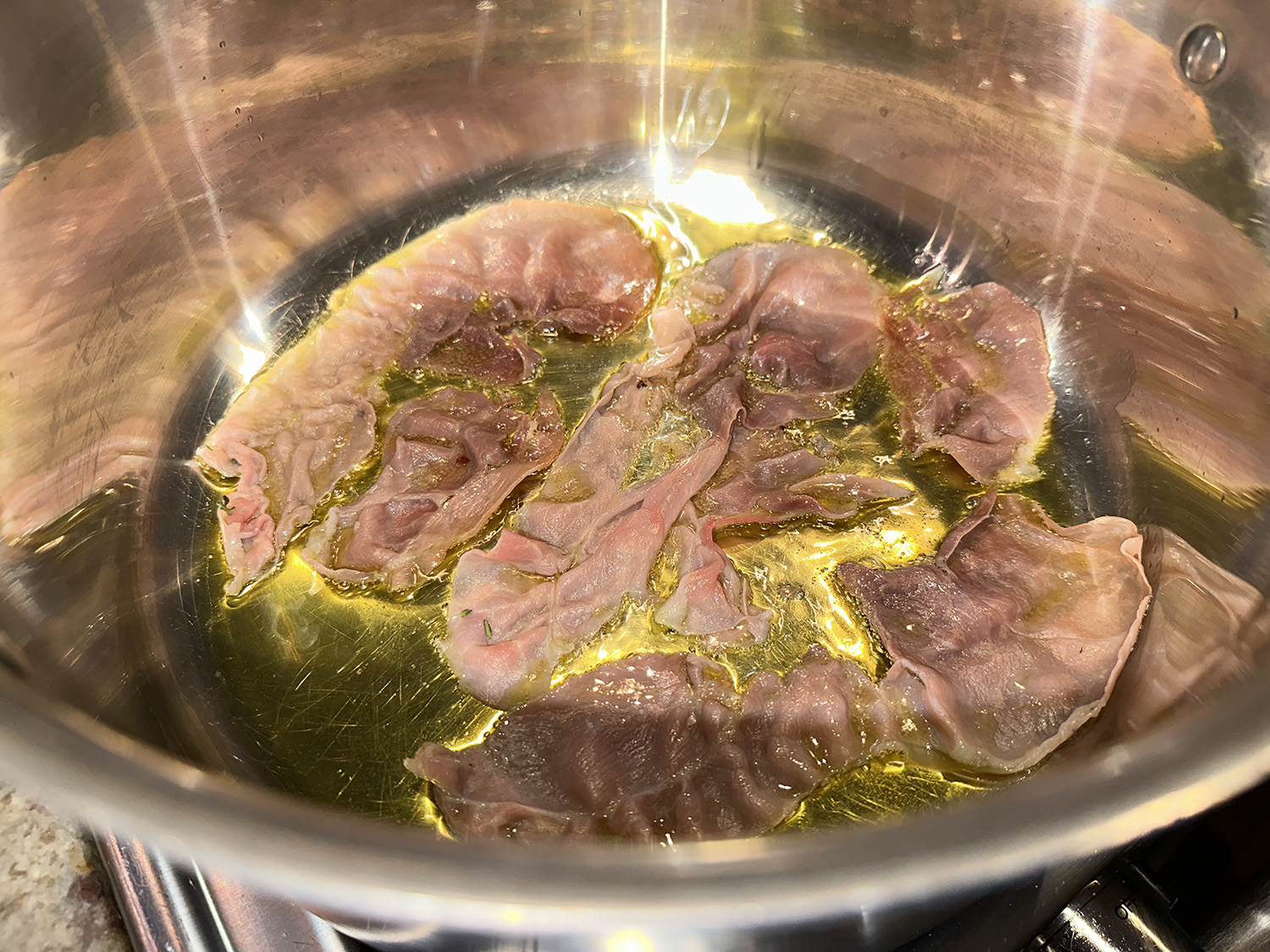
If you buy the prepackaged prosciutto, it is very thin and almost impossible to keep in one piece as you place in into the hot oil. It doesn’t really matter because in the end it gets crunched up anyway. Our mushroom mix consisted of oyster, cremini, and shiitakes. If unable to source pappardelle, fettuccine would be a comparable substitute.

We altered the amounts of a few ingredients. Instead of 12 ounces of pasta we decreased it to 8 ounces; and increased the prosciutto from 2 ounces to 4. These changes are noted in the list of ingredients below, however, you can decide what amounts work best for you.

Pappardelle with Mushrooms and Prosciutto

  • Servings: 3-4
  • Difficulty: easy
  • Print

Ingredients

  • ¼ cup plus 2 tablespoons olive oil
  • 4 oz. thinly sliced prosciutto (about 6 slices)
  • 1 lb. mixed mushrooms (such as chanterelles, maitake, oyster, cremini, and/or shiitake), torn into bite-size pieces
  • 2 medium shallots, finely chopped
  • 1 tsp. thyme leaves, plus more for serving
  • Kosher salt, freshly ground pepper
  • 1 cup chicken stock, preferably homemade
  • 8 oz. pappardelle or fettuccine
  • ⅓ cup heavy cream
  • 2 Tbsp. unsalted butter

Directions

  1. Heat ¼ cup oil in a large Dutch oven or other heavy pot over medium. Arrange prosciutto in a single layer in pot and cook, turning once or twice, until crisp, about 5 minutes. Transfer to paper towels to drain.
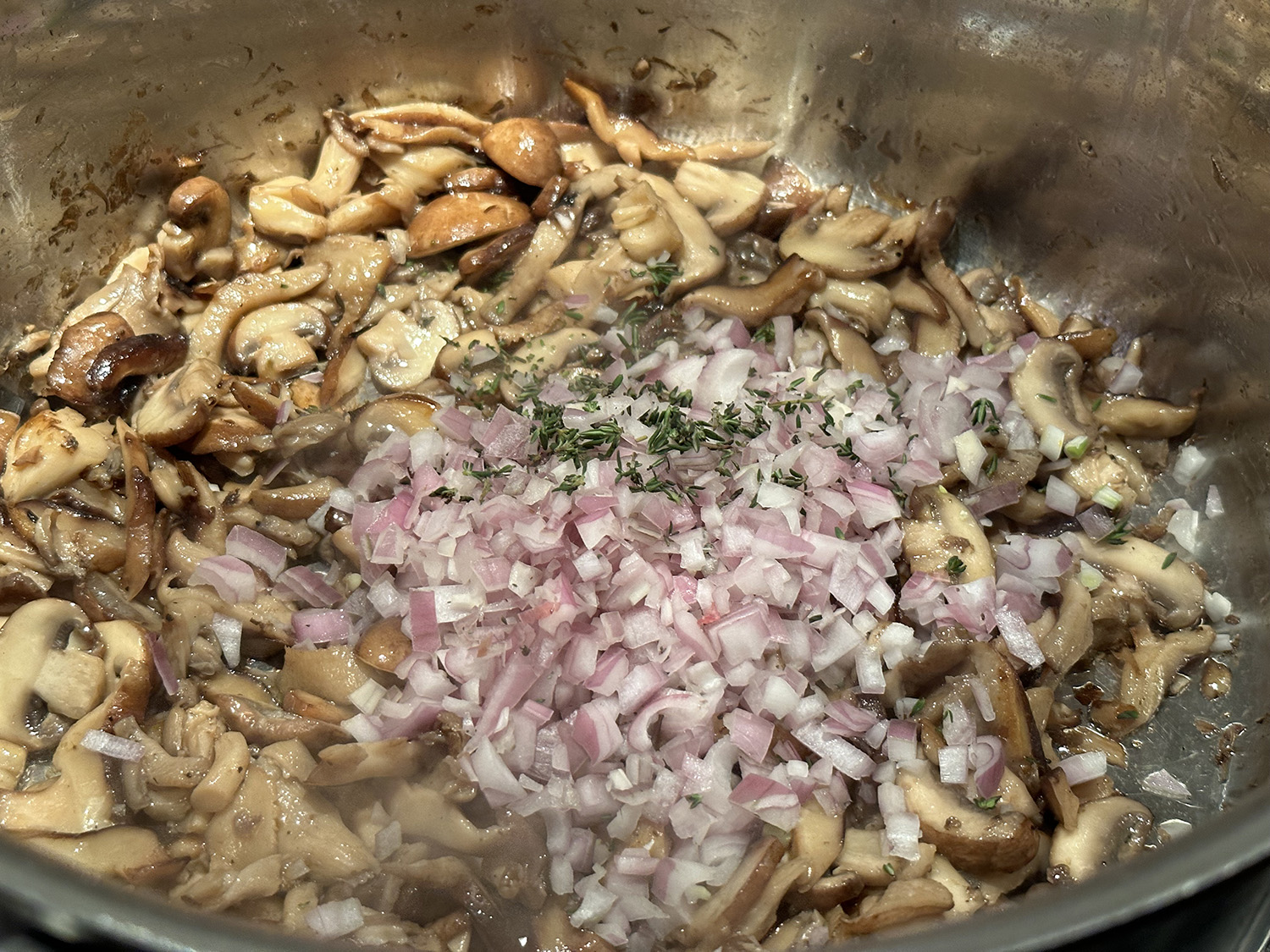
  2. Heat remaining 2 Tbsp. oil in same pot over high. Cook mushrooms, tossing occasionally, until browned and tender, 5–8 minutes. Reduce heat to medium-low.
  3. Add shallots and 1 tsp. thyme, season with salt and pepper, and cook, stirring often, until shallots are translucent and softened, about 2 minutes. Add stock and reduce heat to low. Bring to a simmer and cook until only a thin layer of stock coats bottom of pot, 5−7 minutes.
  4. Meanwhile, cook pasta in a large pot of boiling salted water, stirring occasionally, until very al dente, about 3 minutes less than package directions.
  5. Using tongs, transfer pasta to pot with mushrooms and add 1 cup pasta cooking liquid. Crumble half of prosciutto into pot. Increase heat to medium, bring to a simmer, and cook, tossing constantly, until pasta is al dente and liquid is slightly thickened, about 2 minutes. Add cream, return to a simmer, and cook, tossing, until pasta is coated, about 1 minute.
  6. If pasta sauce is thicker than prefered, add additional pasta water a 1/4 cup at a time, stirring well after each addition until desired consistency is achieved. Remove from heat, add butter, and toss to combine. Taste and season with salt if needed.
  7. Divide pasta among bowls. Top with more thyme and crumble remaining prosciutto over; season with pepper.

http://www.lynnandruss.com

Adapted from a recipe by Claire Saffitz for Bon Appétit