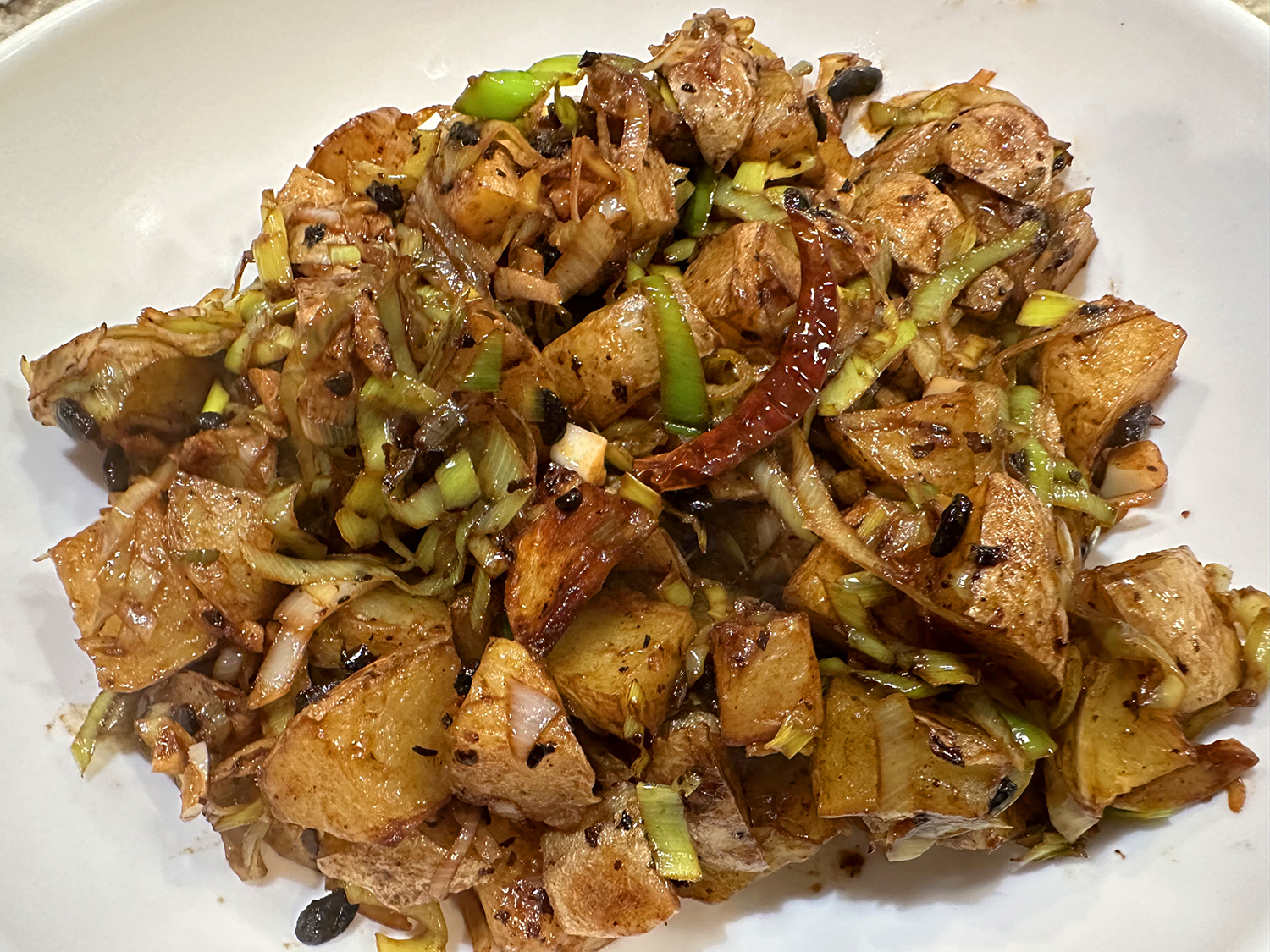
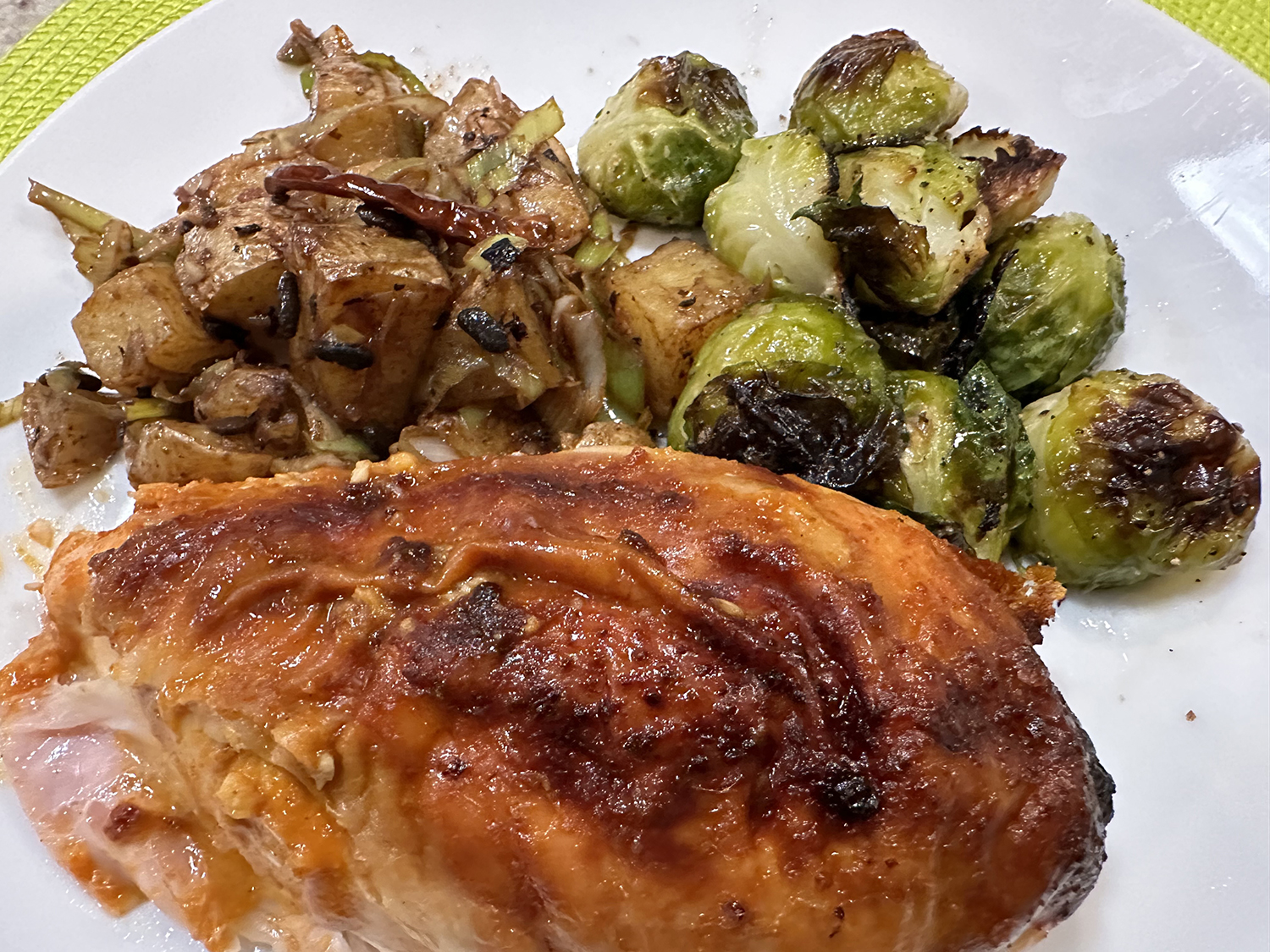
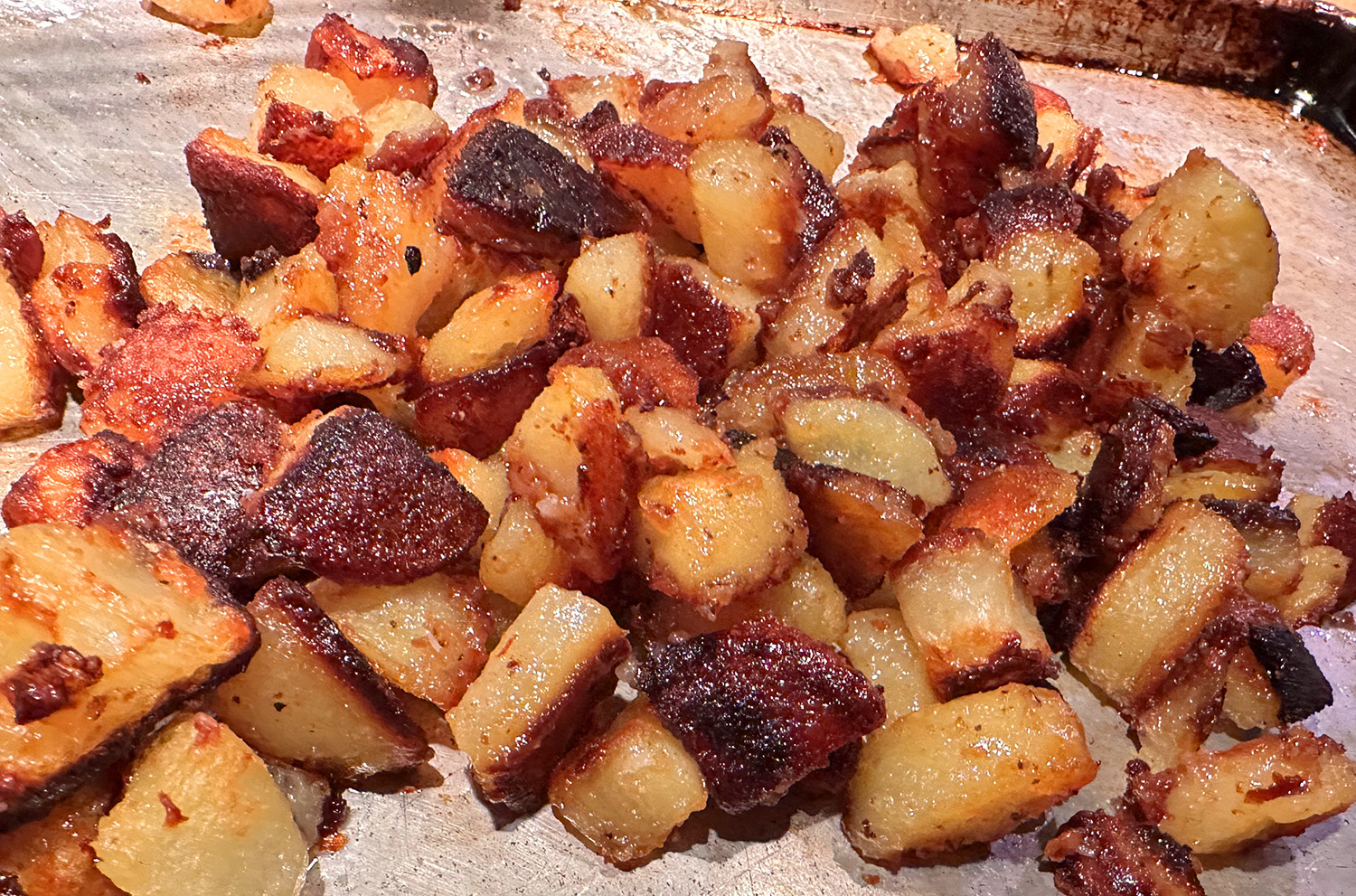
Admittedly, we have never stir-fried potatoes before. So our first foray was this vegetarian/vegan dish based on a favorite Chinese dish called “Twice-Cooked Pork”. In lieu of meat, this dish features potatoes roasted in the oven and then stir-fried with a spicy black sauce. You can adjust the heat to cater to your own preferences.
When the potatoes come out of the oven after 30 minutes or so, they are fabulous to eat as they are, without the additional ingredients and stir-frying. So if you have a picky eater, push a small portion aside for them (reheat briefly in microwave if necessary).
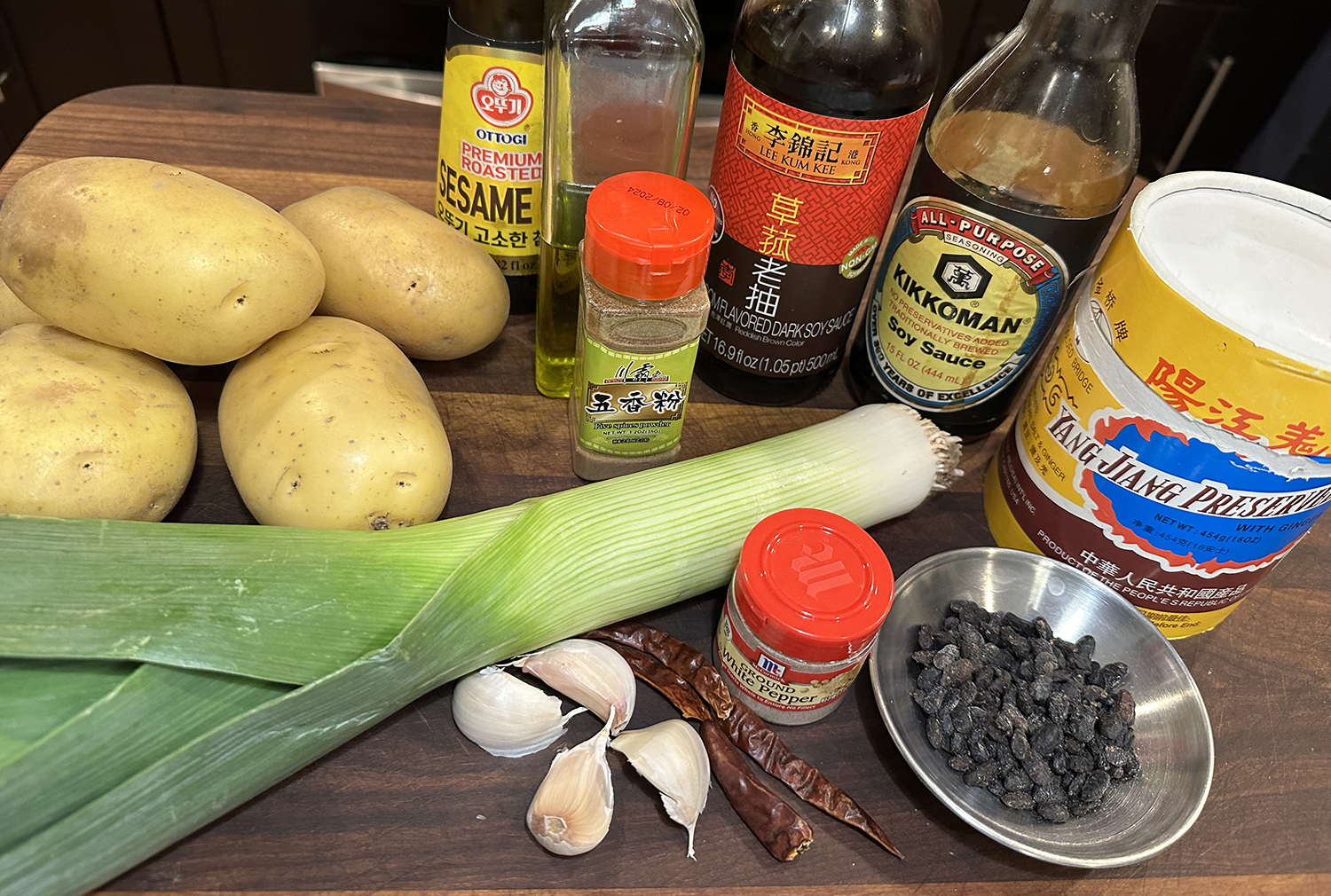
4-5 medium Yukon gold potatoes; scrubbed and cut into bite-sized chunks
1 Tbsp. salt
1/4 tsp. white pepper
1/4 tsp. five-spice powder
Neutral oil
4 cloves garlic (smashed and coarsely chopped)
1-6 dried red chilies, chopped and de-seeded; depending on your tolerance for heat
2 Tbsp. fermented black beans; soaked in hot water for 15 minutes; do not discard water
1 Tbsp. Shaoxing wine
1 tsp. light soy sauce
1 tsp. dark soy sauce
½ tsp. sesame oil
2 Tbsp. black bean soaking water
1 cup leeks; sliced on the diagonal into thin strips
Directions
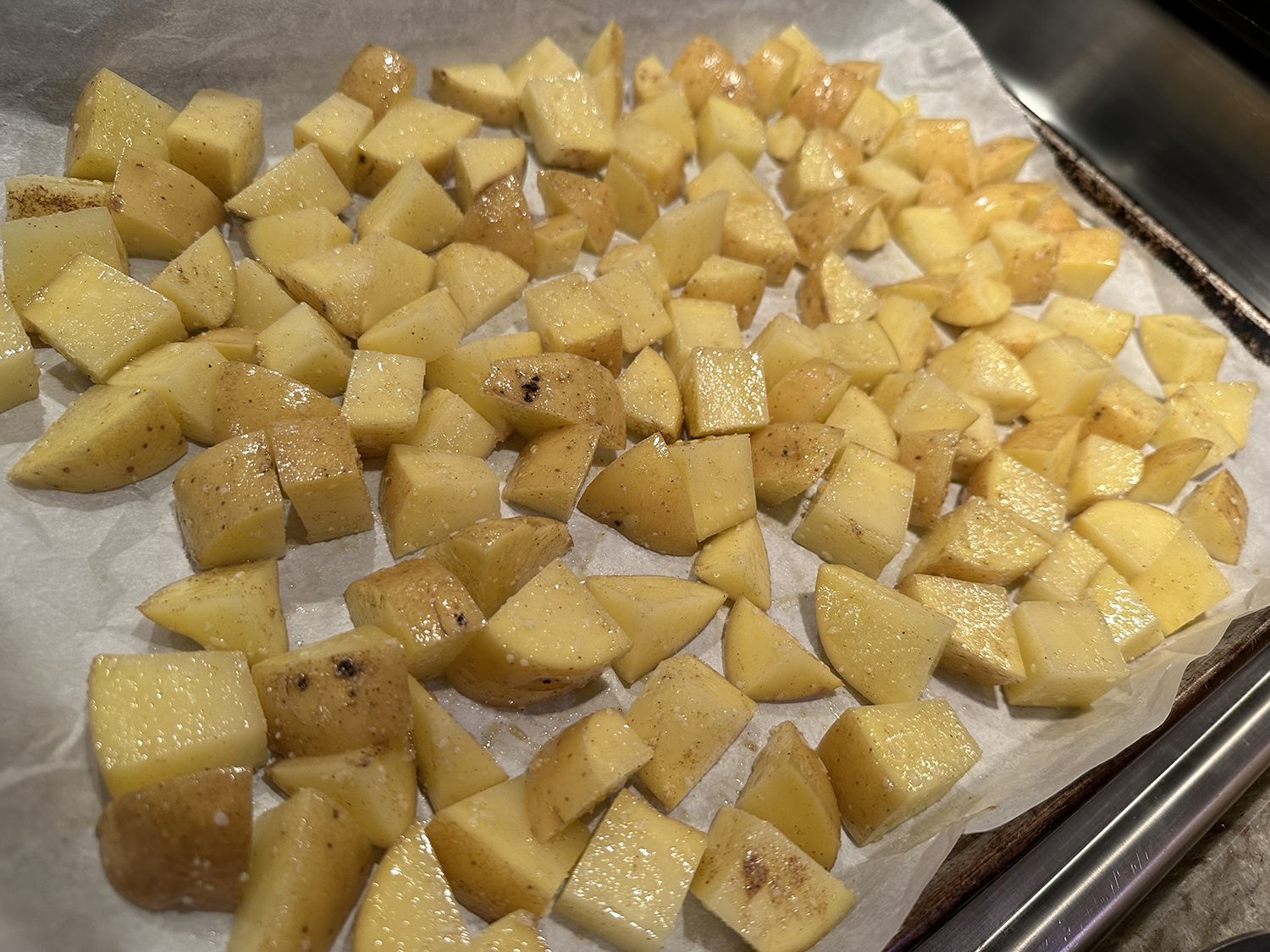
Preheat the oven to 375 degrees F, and spread the potatoes on a parchment-lined baking sheet. Toss with salt to taste, white pepper, and five-spice powder. Drizzle with olive oil and roast for about 30 minutes, or until fork tender. (Ours took 10 minutes longer.)
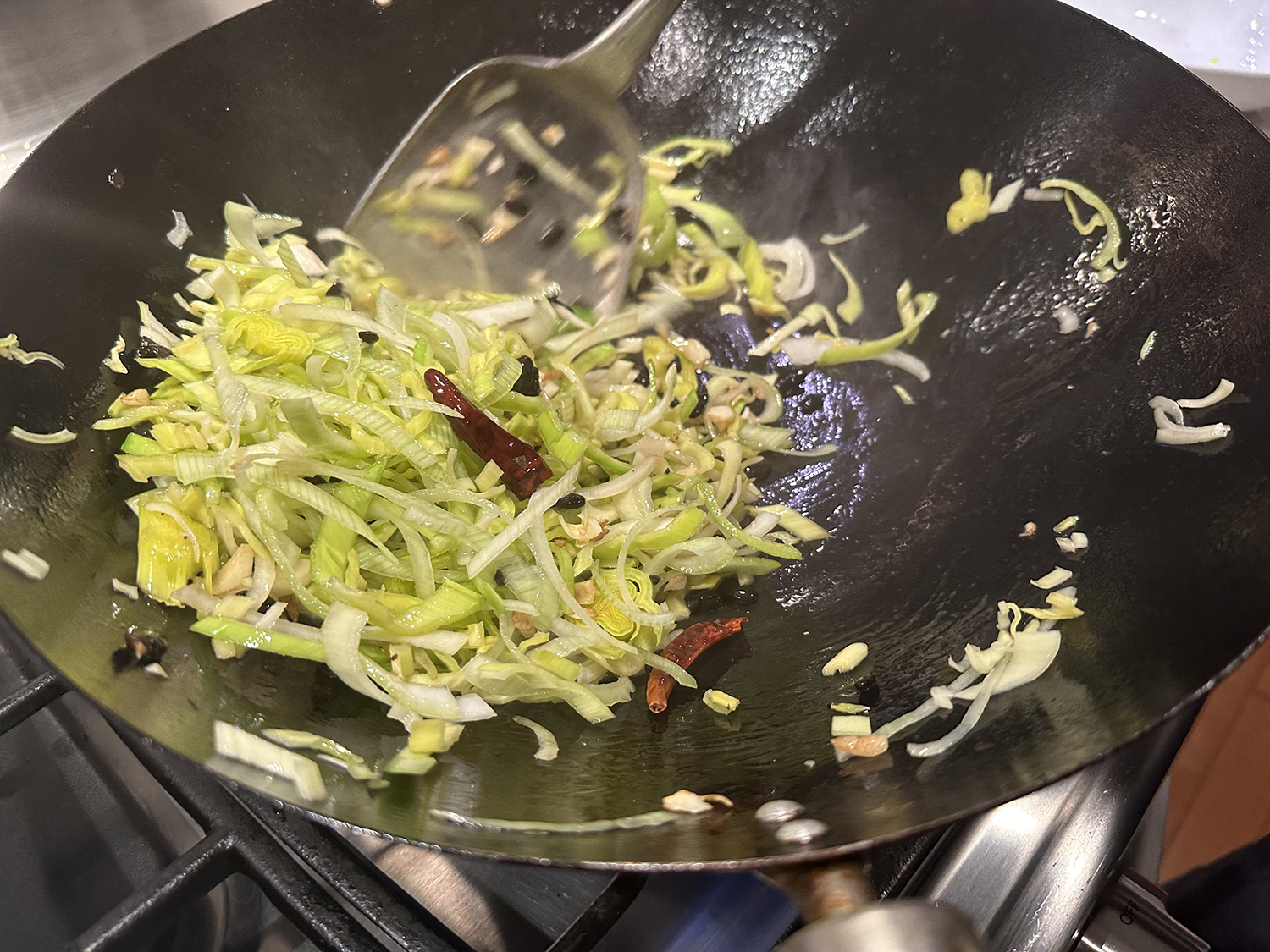
Once the potatoes are done roasting, heat a couple tablespoons of oil in a wok over medium heat. Add the garlic, chili, and black beans. Cook for 30 seconds, and be careful not to burn the ingredients.
Turn heat to high and add the sliced leeks. Stir-fry for 2 minutes.
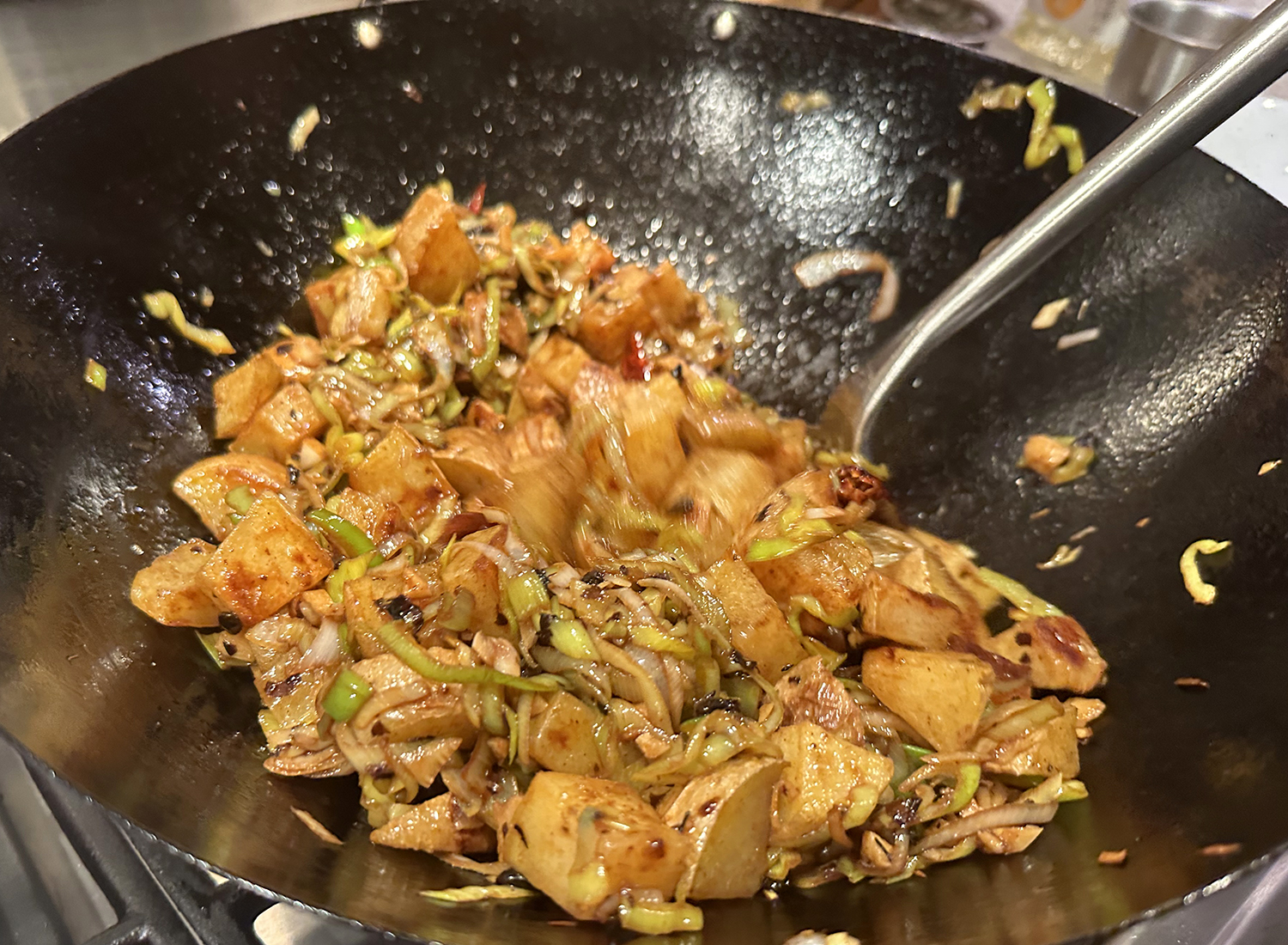
Add the wine, soy sauces, sesame oil, and water. Stir everything together and add the roasted potatoes. Stir-fry for another 2 minutes. Serve immediately.
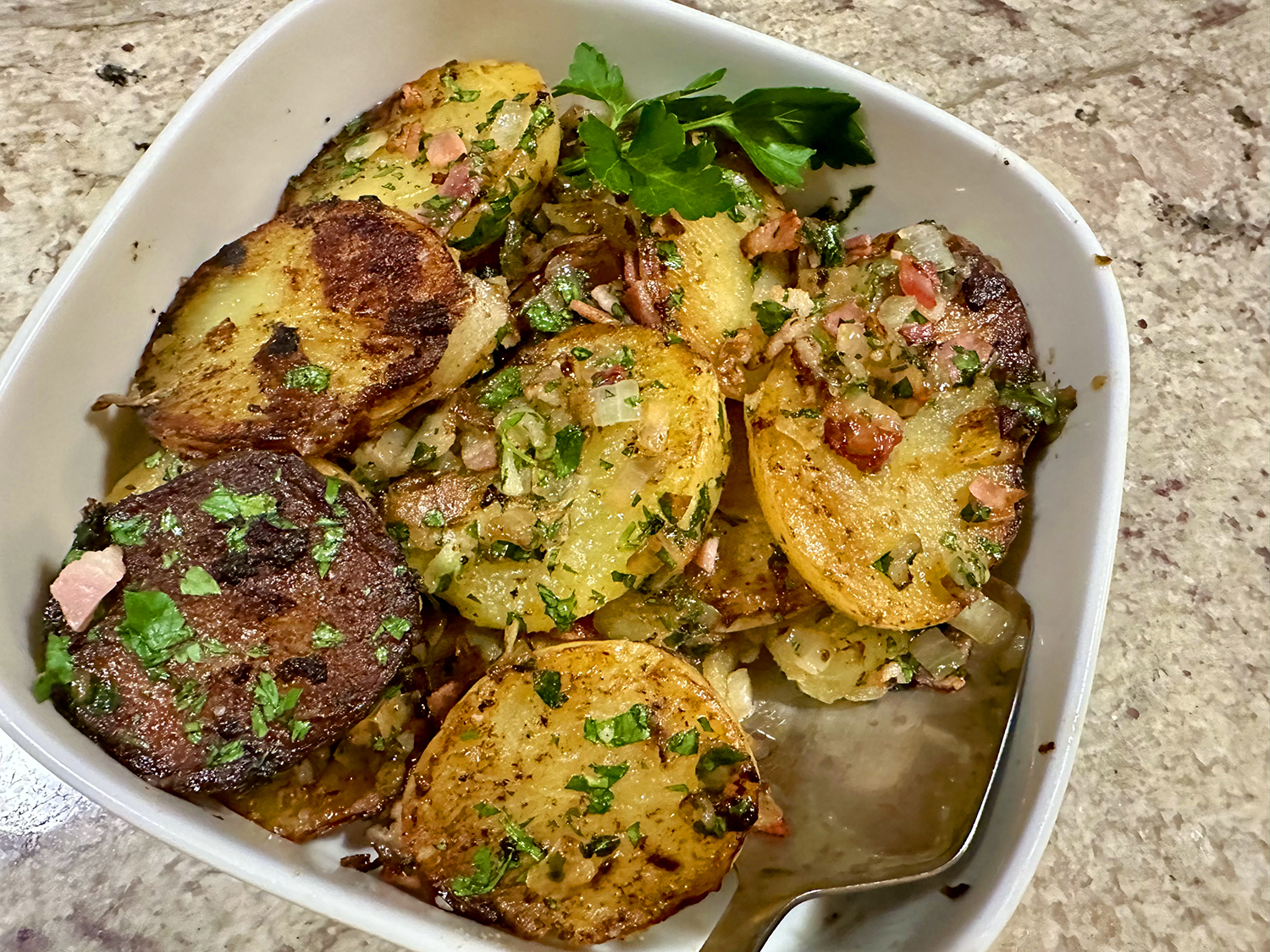
FYI, bratkartoffeln is a comforting German side dish of pan-fried potatoes, bacon, onions, and fresh herbs. For tender, golden-brown potatoes with slightly crisp edges, infuse them with smoky flavor from the bacon and slight oniony sweetness.
While the dish is typically made with leftover boiled potatoes, this recipe starts with raw, so the potatoes are cooked in a covered skillet, allowing them to steam and absorb flavor. When the lid is removed, the potatoes are allowed to brown and crisp around the edges.
Due to the fact that the potato slices did not fit in one layer in the skillet, they had to be jockeyed around several times (instead of just twice) while covered. And again with the lid off.
We left the potato skins on, even though the recipe instructs to peel them. The skins have additional nutritional value, plus it adds some texture to the dish. To peel, or not to peel, that is the question. That decision is up to you. Ours were served as a side dish, along with glazed carrots, for a sliced steak entrée.
Note from America’s Test Kitchen: For the most traditional flavor use a hickory-smoked bacon. If the bacon is difficult to chop, place it in the freezer for 10 to 15 minutes to firm it up. These rich, hearty potatoes pair nicely with bratwurst, schnitzel, or scrambled eggs.
2 lbs. Yukon gold potatoes, peeled and sliced crosswise ½ inch thick
½ tsp. table salt
1 Tbsp. chopped fresh parsley
Directions
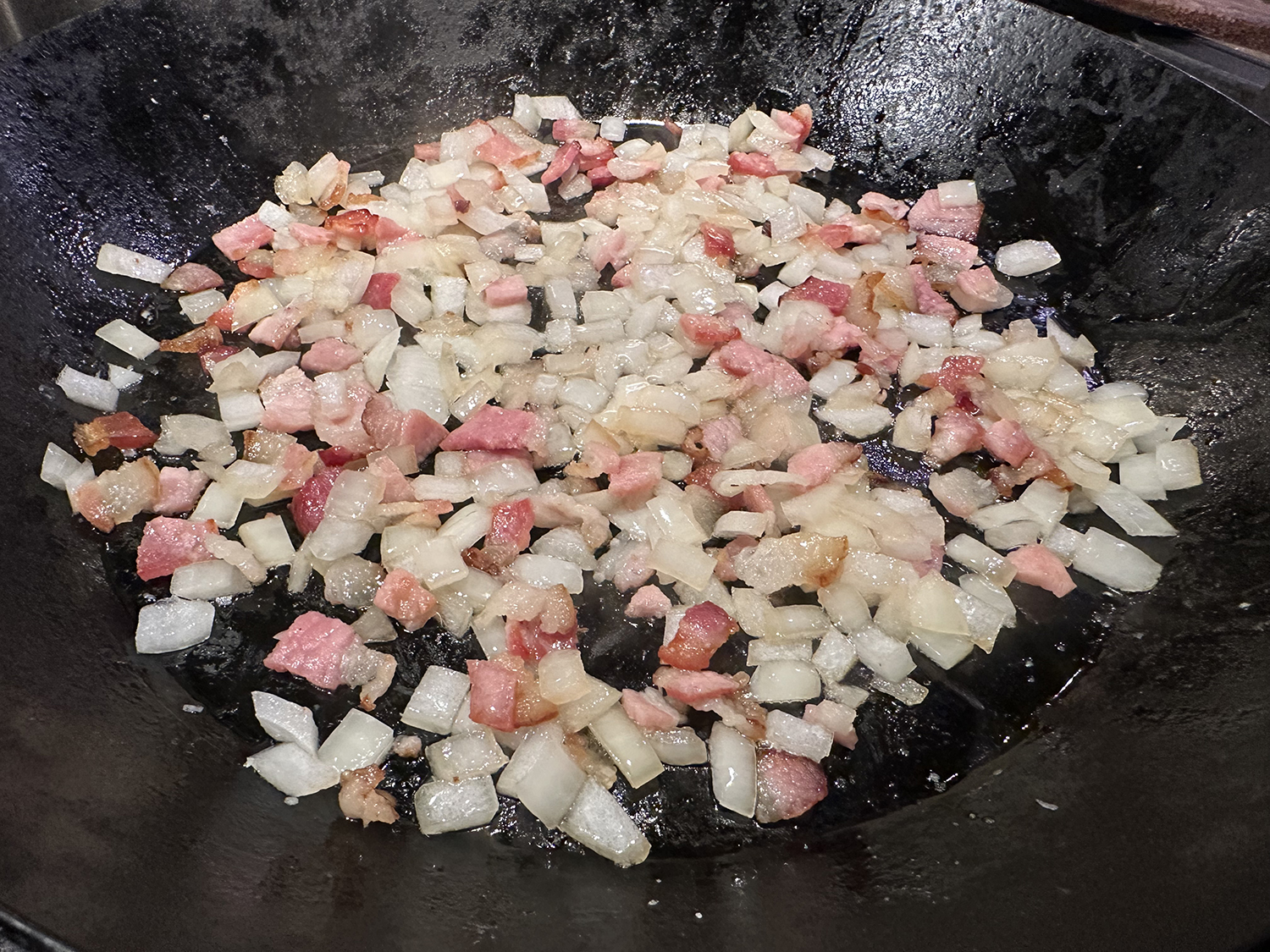
Cook bacon in 12-inch nonstick or carbon-steel skillet over medium-high heat until golden brown at edges and just starting to render, 3 to 5 minutes. Add onion and continue to cook until onion is soft and golden brown, 3 to 5 minutes. Using slotted spoon, transfer bacon and onion to bowl, leaving fat in skillet (you should have about 1 teaspoon).
Add butter to bacon fat and melt over medium heat. Add potatoes and salt and stir to coat potatoes evenly with fat. Cover and cook, shaking pan occasionally, for 9 minutes. After 9 minutes, potatoes should be bubbling at edges; if there is no moisture around potatoes, lower heat slightly; if there is no or little sizzling around potatoes, increase heat slightly. Cover and continue to cook until potatoes can be easily pierced with tip of paring knife, 6 to 9 minutes.
Remove lid and gently stir potatoes (it is OK if some potatoes break). Continue to cook, uncovered, gently stirring every 2 to 3 minutes until potatoes are golden brown (not all surfaces will be brown), about 10 minutes.
Gently stir in bacon, onion, and parsley. Season to taste with salt and pepper, transfer to platter, and serve.
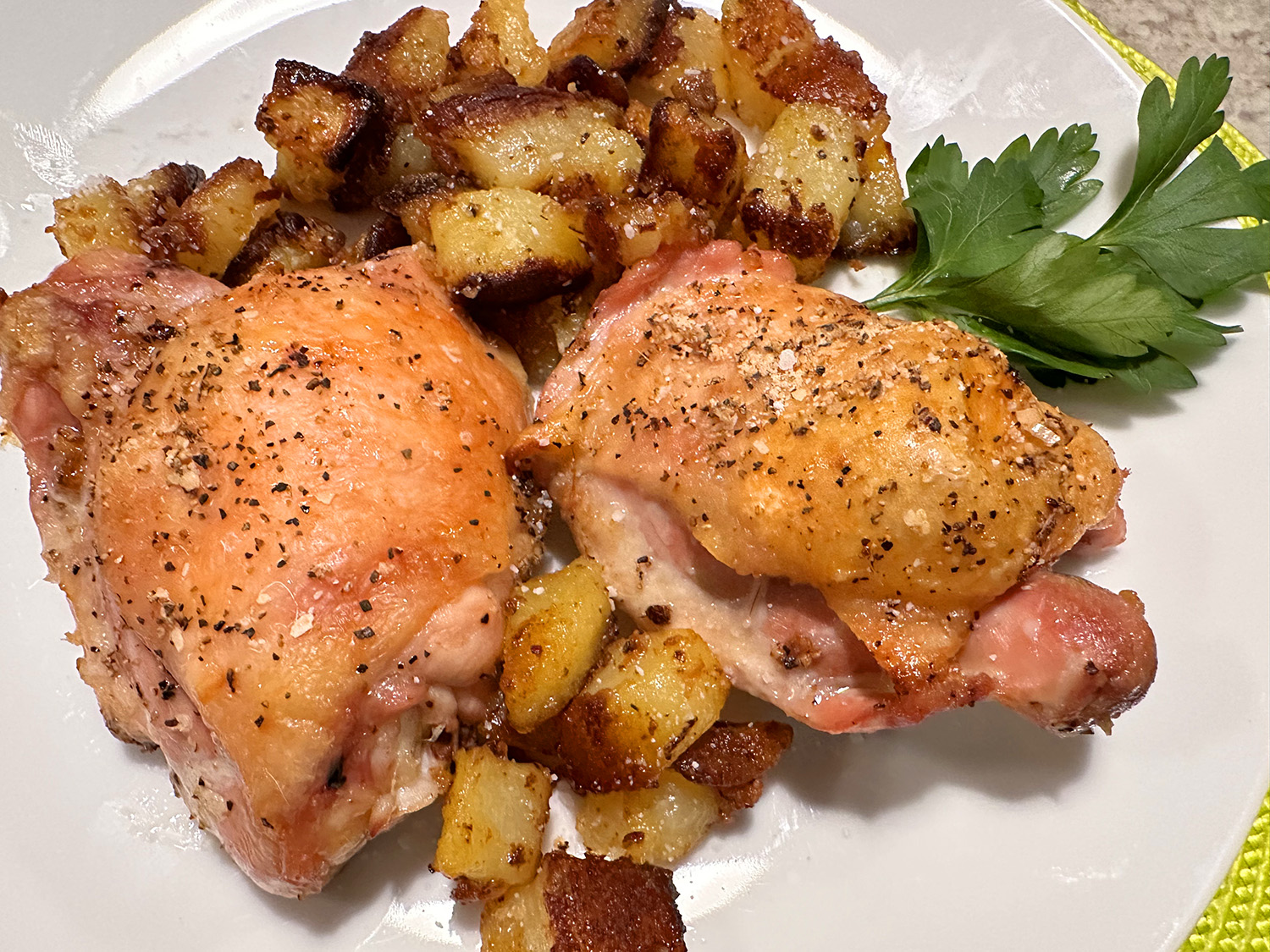
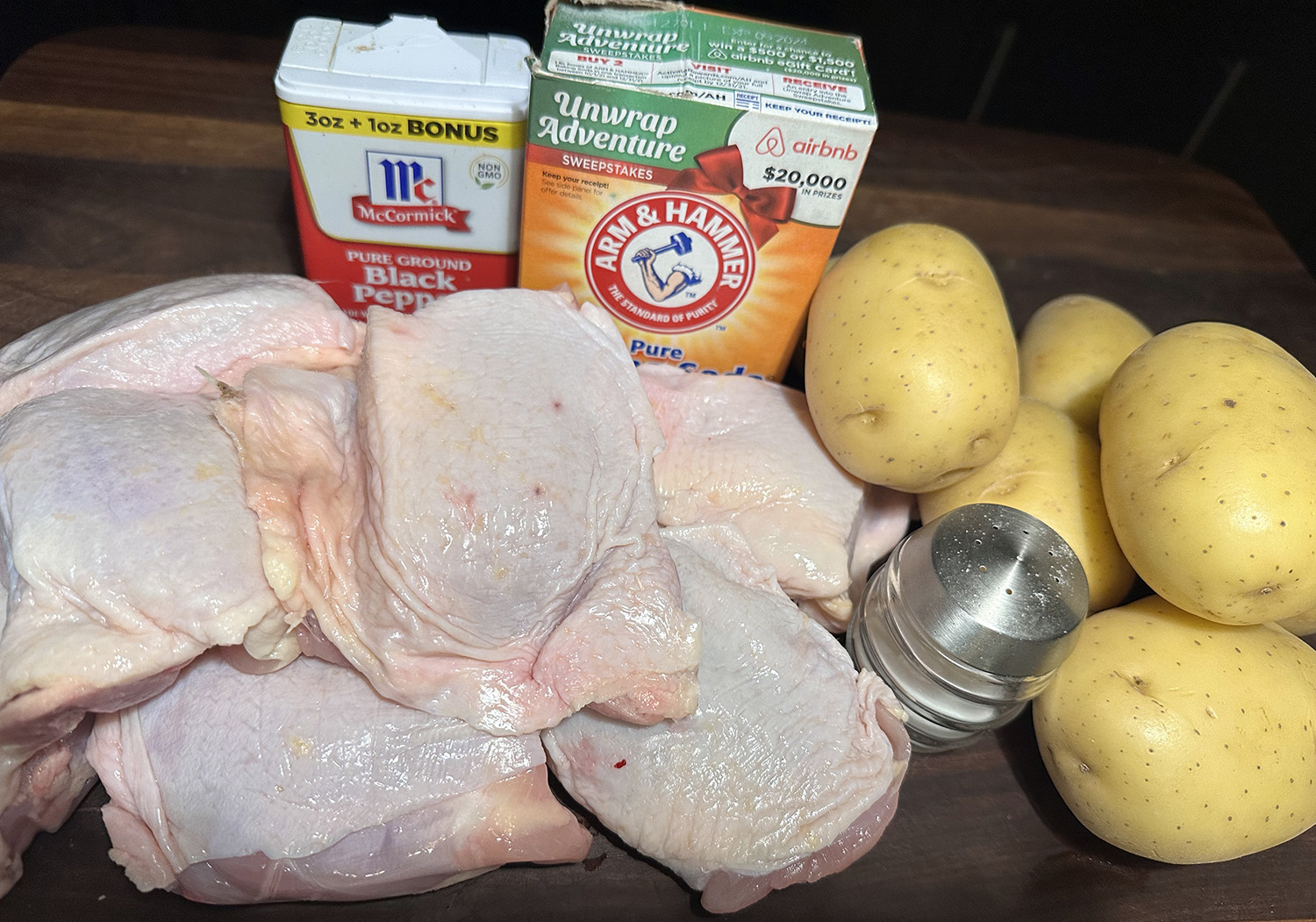
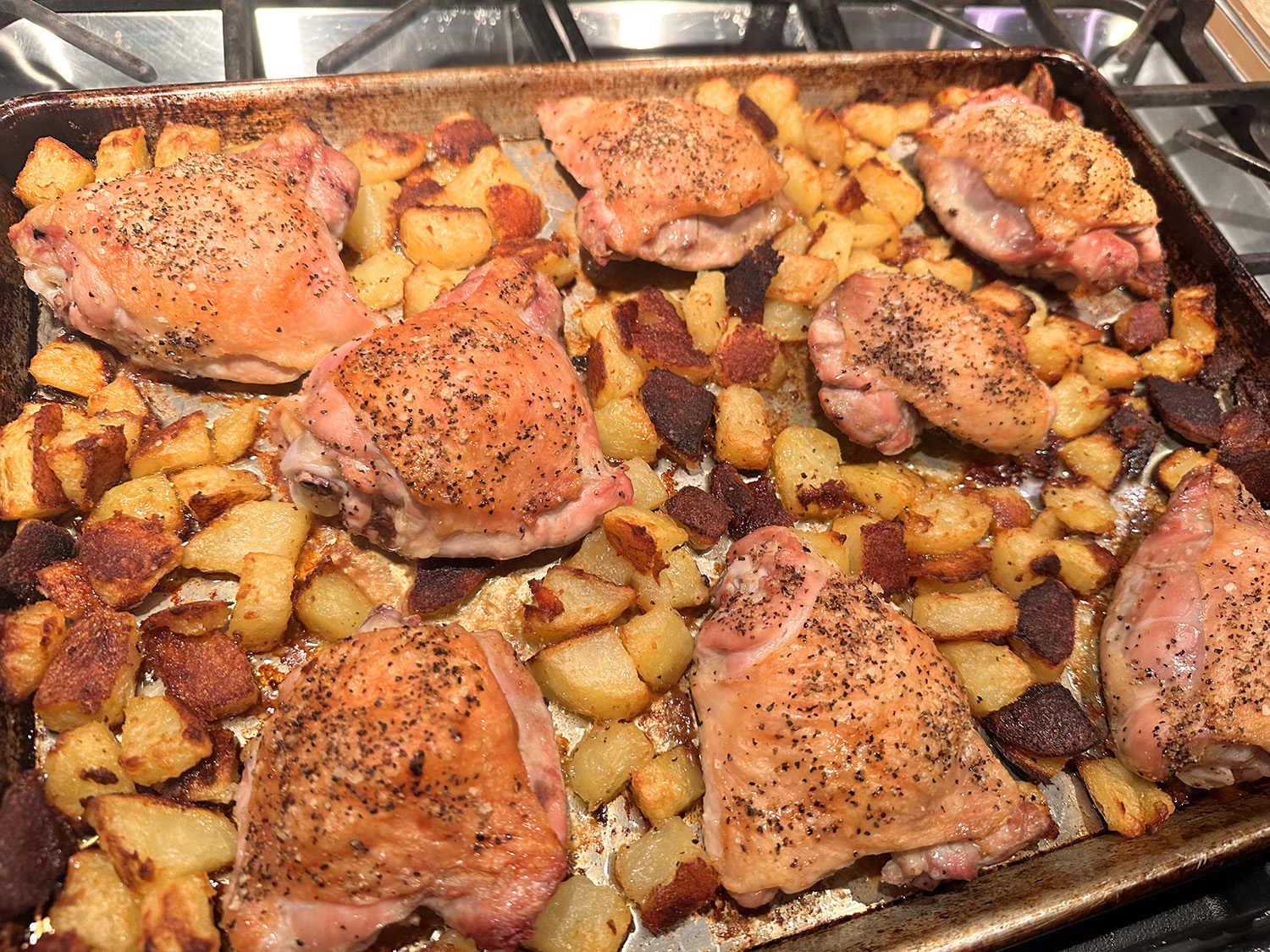
A simple dish of crisp-skinned, tender chicken and browned, lightly crisped potatoes that are infused with chicken flavor. In fact, only three ingredients, plus salt and pepper—to end up with a delicious dinner, who doesn’t like that? Throw in a side salad, voila, dinner done!
OK, in the first go-around as beta-testers for America’s Test Kitchen, the recipe was a pared-down version of the one they actually published months later in Cook’s Illustrated. This updated rendering has 5 additional spices in the list of ingredients. As fans of bold tastes, we welcomed the extra seasonings. If you’d like to keep it simple, just omit the chili powder through cayenne.
Chicken thighs have plenty of flavorful juices and fat, but they don’t release them until the meat is almost done, which is far too late to be helpful in roasting your potatoes. To better utilize the fat from the chicken, trim the thighs well and roast the trim on its own on a rimmed baking sheet to render its fat.
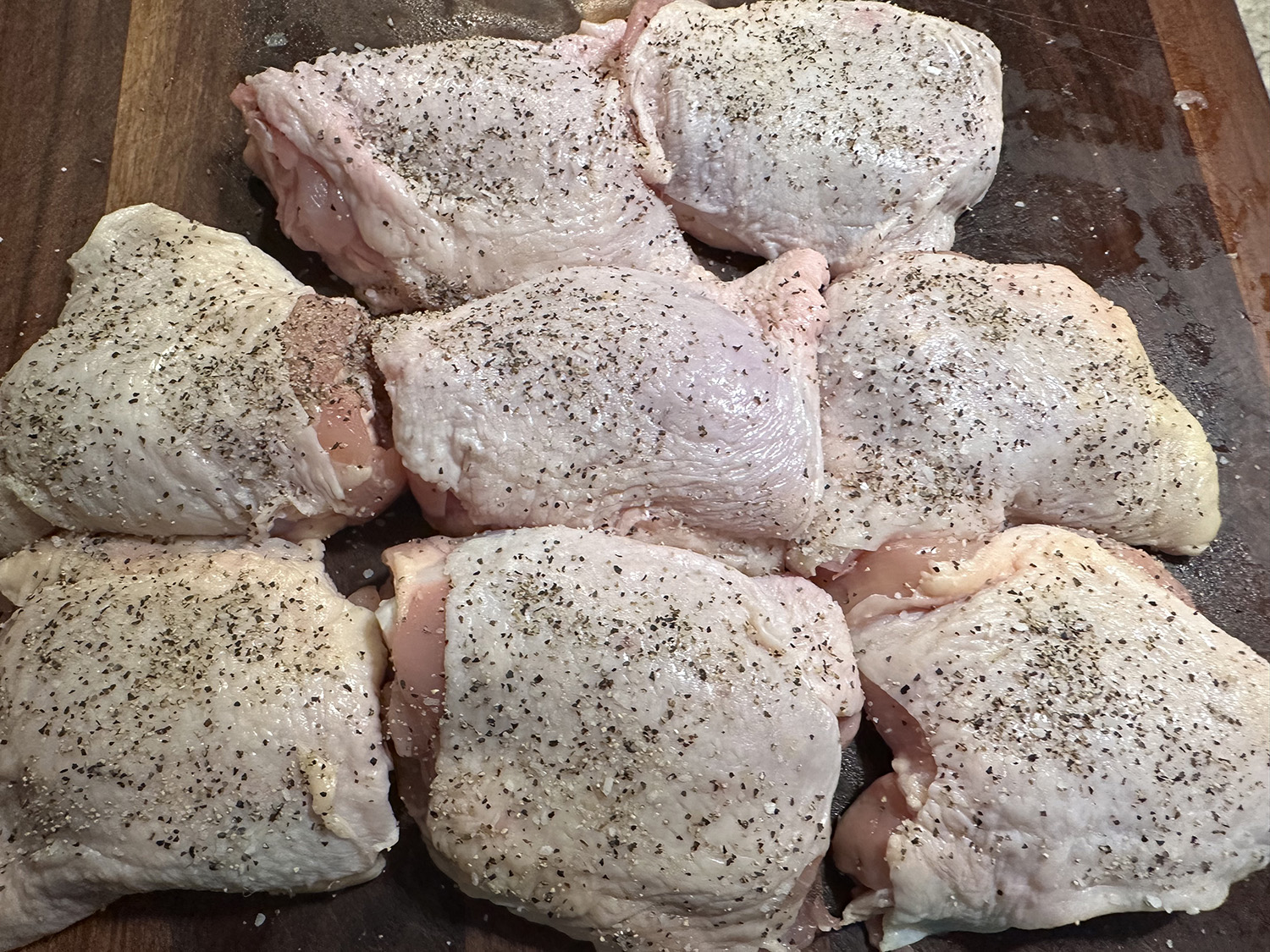
Meanwhile, slash the flesh side of the thighs and cover them with a simple spice mix, taking care to get the mixture deep into the slashes. To ensure that the potatoes could absorb all the savory juices thrown off by the roasting chicken thighs, parboil the spuds with baking soda. Its alkalinity quickly breaks down the pectin in the exteriors.
After drying the potatoes briefly, stir them vigorously with the fat rendered from the chicken trim and some kosher salt. The salt roughs up the exteriors, creating plenty of entry points for the flavorful chicken juices to suffuse the spuds as they roast.
Starting the potatoes lower in the oven provides plenty of bottom heat to jump-start browning. After adding the chicken, move the sheet up in the oven where the plentiful top heat ensures that the chicken skin becomes crisp. Sliced scallion and a spritz of citrus provide fresh flavor that complements the richness of the potatoes and chicken.
NOTE: Chicken thighs are very forgiving, so don’t worry if yours are of different sizes.
3 lbs Yukon gold potatoes, peeled and cut into 1-inch pieces
½ tsp. baking soda
1 scallion, sliced thin on bias
lime wedges
Directions
Adjust oven racks to upper-middle and lower-middle positions and heat oven to 450 degrees.
Place 1 thigh skin side down on cutting board. Cut away any pockets of fat and any skin that extends beyond meat and reserve trim. Repeat with remaining thighs. Scatter trim over surface of rimmed baking sheet and roast on lower rack until trim is mostly crisped and rendered, about 10 minutes. Discard trim and leave fat in baking sheet.
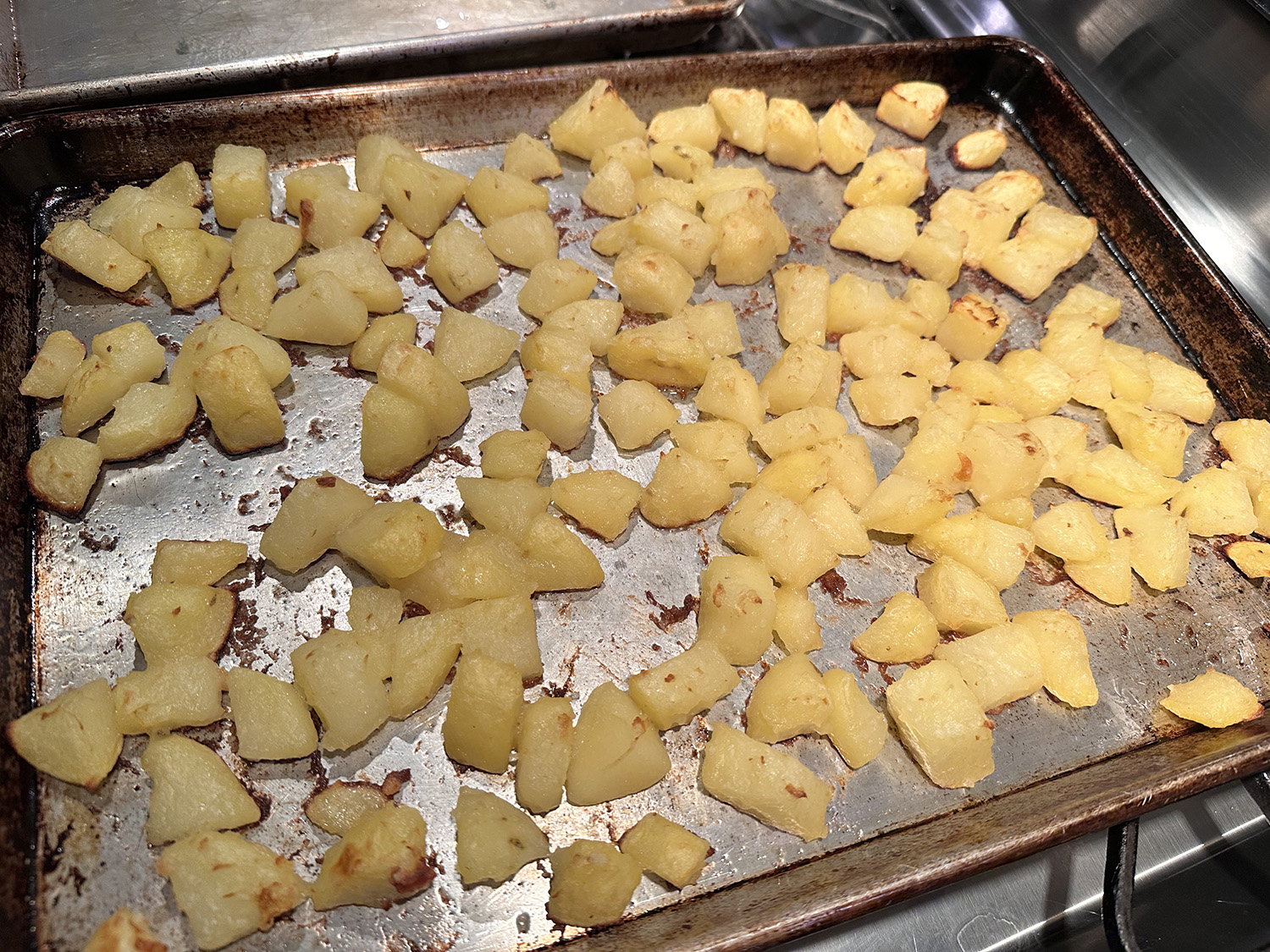
While trim is rendering, bring 8 cups water to boil in Dutch oven. Add potatoes and baking soda and return to boil. Boil for 2 minutes and drain well. Return potatoes to Dutch oven and place over low heat. Cook, shaking pot occasionally, until any surface moisture has evaporated, about 2 minutes. Remove from heat.
Add 2 teaspoons salt and rendered chicken fat and stir with rubber spatula until potatoes are coated with starchy paste, about 30 seconds. Transfer potatoes to now-empty sheet pan and spread into even layer. Roast on lower rack until undersides of potatoes are brown and crisp, about 20 minutes.
While potatoes are roasting, season chicken on both sides with remaining 1 ½ teaspoons salt and pepper. Let sit on cutting board until needed. Using thin metal spatula, flip potatoes. Push potatoes aside to clear one space for each thigh. Place thighs skin side up in cleared spaces.
Roast on upper-middle rack until chicken is browned, crisp, and the largest thigh registers at least 185 degrees, about 40 minutes.
Transfer thighs to platter to rest. Stir potatoes and spread over surface of baking sheet. Return to upper rack and roast until potatoes are mostly dry, about 5 minutes. Transfer to platter with chicken and serve.
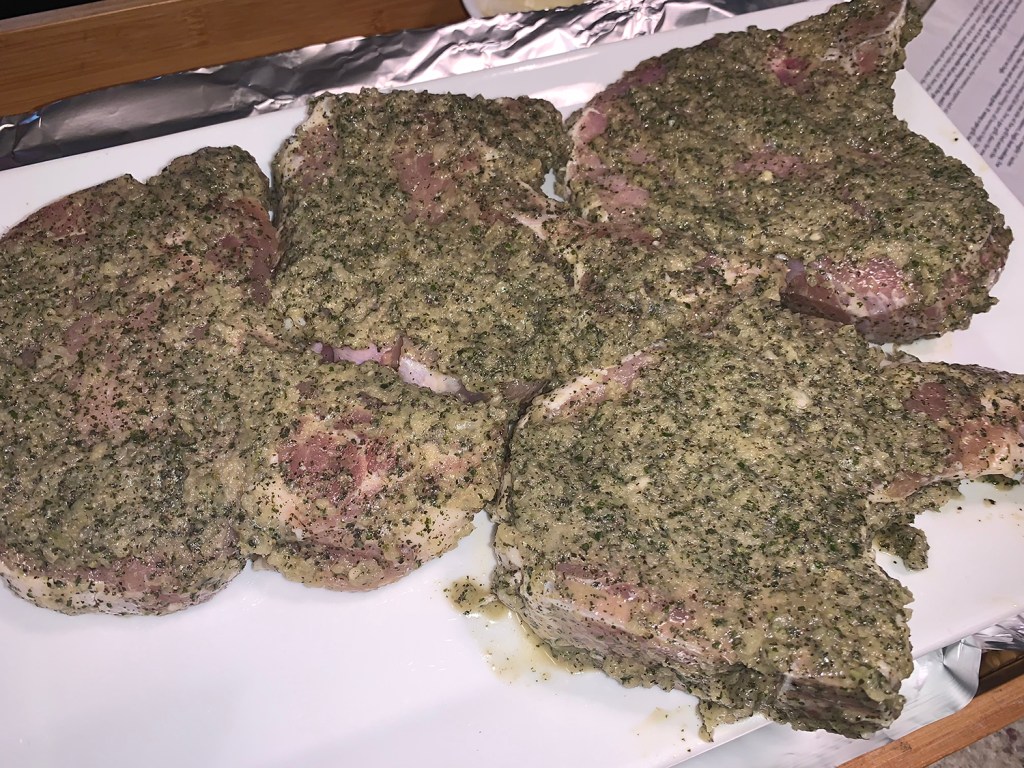
Khorovats is Armenian barbecue. Here, thick-cut, bone-in pork chops, are marinated in a mix of onion and oregano, then grilled with wood chips to infuse the pork with smokiness. According to Milk Street where we found this recipe, bone-in, blade-end pork loin chops are the best cut because they contain a good amount of fat, which keeps the meat moist and flavorful; but rib chops will work, too (because they are leaner, it’s important not to overcook them).
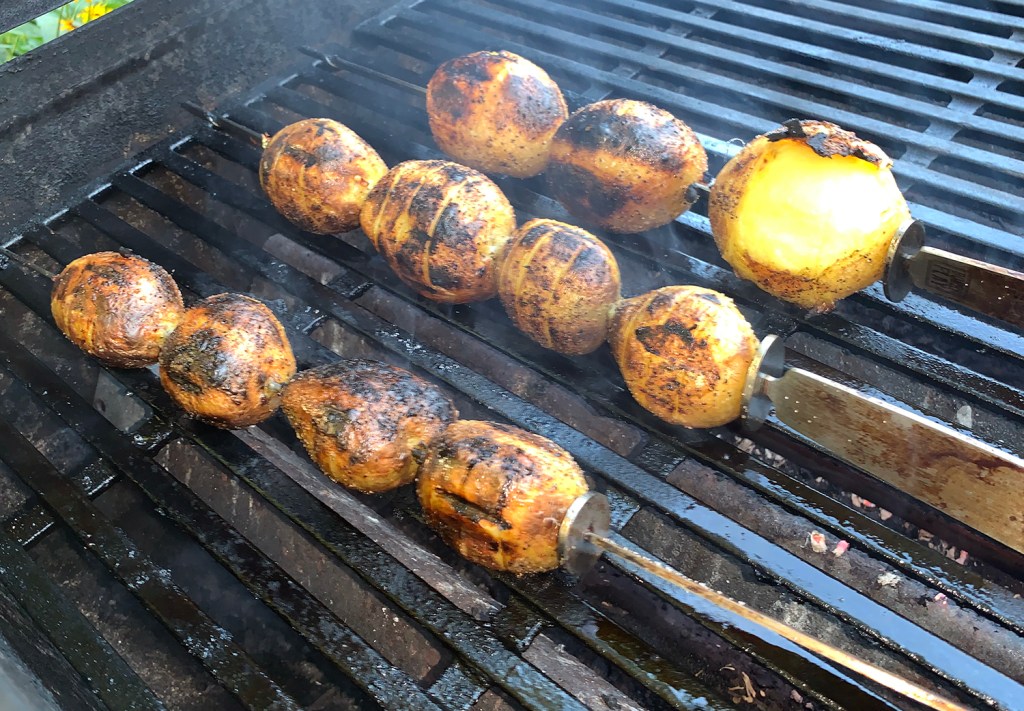
In a nod to son David’s fiancée Vikki, who has Armenian heritage, we decided to make this meal paired with another dish from the same country, Armenian Grilled Potato Skewers(recipe below). It’s pretty important to get spuds that are the same size, but was an impossible task at the time we were grocery shopping. So we had several that were larger and had to preboil them a bit longer as well as grill them several more minutes.
Left, Vikki and David hold dog Olive while they patiently wait for dinner to be served.
The sauce that accompanies these chops is also excellent with any grilled pork or chicken. All-in-all we agreed it was fabulous, our only complaint was that the garlic cloves could have been softer. I admit, I did choose large cloves, so cutting them in half or going smaller would most likely have remedied that issue.
The consensus was unanimous, we all LOVED the dinner!!
Tip: Don’t soak the wood chips before wrapping them in foil. Dry chips smoke more readily, which is desirable for quick-cooking foods such as pork chops. After placing the pork on the grill, don’t open the lid for 10 minutes. This allows the smoke to collect and create a more intense smokiness in the chops.
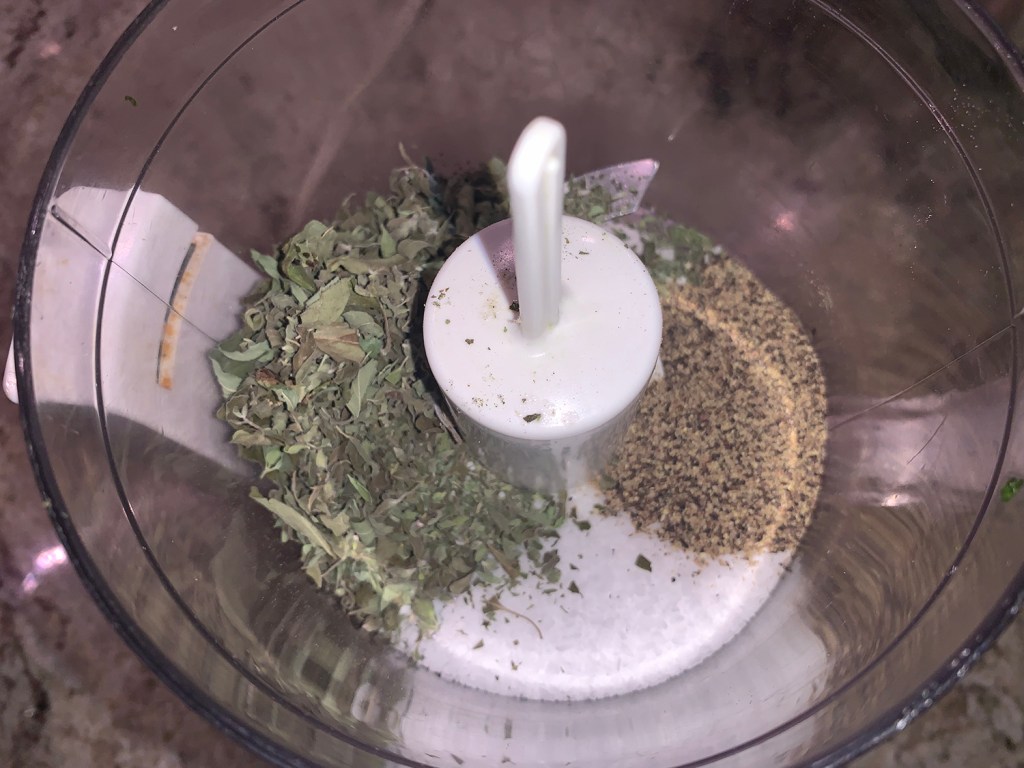
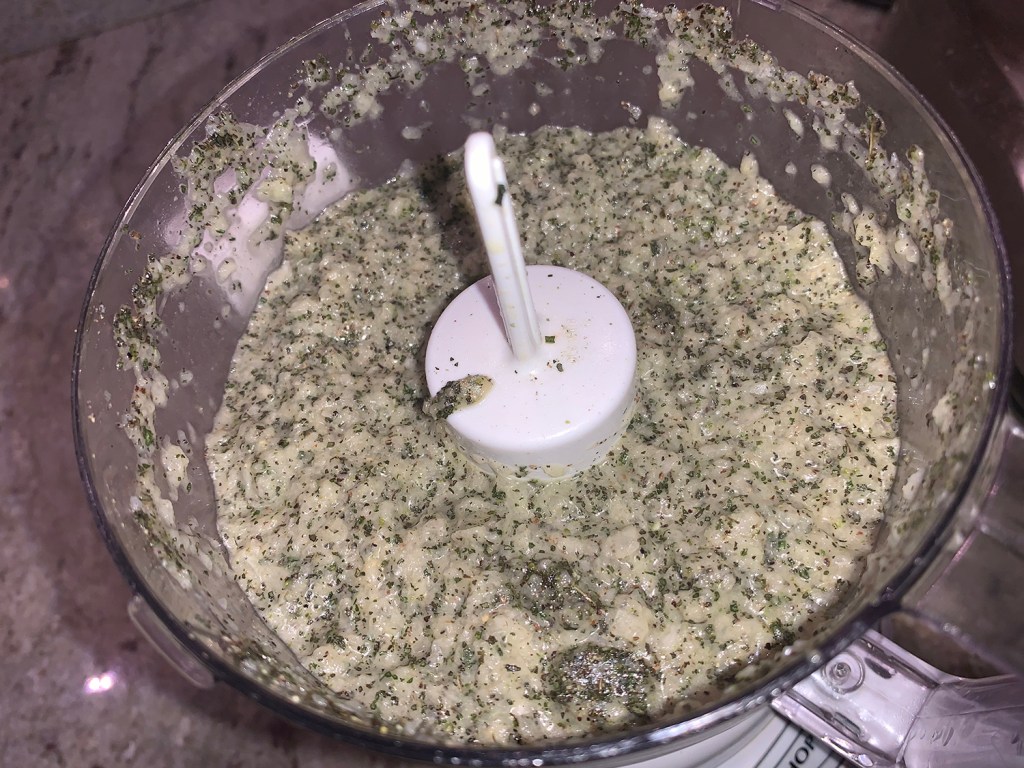
To prepare the chops, in a food processor, combine the oil, onion, oregano, 2 tablespoons salt and 1 tablespoon pepper. Process to form a coarse paste, about 1 minute, scraping the bowl as needed. Transfer the mixture to a large bowl. Using a paring knife, make verticals cuts spaced about ½ inch apart into the fat on each chop. Add the chops to the onion paste and turn to coat, rubbing the mixture into the meat. Cover and refrigerate for at least 2 hours or up to 24 hours. Remove from the refrigerator 30 minutes before heating the grill.
Loosely wrap the wood chips in a 12-by-18-inch sheet of foil, forming a flat packet roughly 7 inches square. Poke several holes in each side of the packet. Prepare a grill for indirect, high-heat cooking. For a charcoal grill, pour a heaping chimney of hot coals evenly over one side of the grill bed and set the wood chip packet on the coals; open the bottom grill vents and lid vents. For a gas grill, place the wood chip packet directly on one burner that will remain on during cooking; turn all burners to high. Heat the grill, covered, for 5 to 10 minutes, then clean and oil the cooking grate. If using a gas grill, turn off one burner, leaving the remaining burner(s) on high.
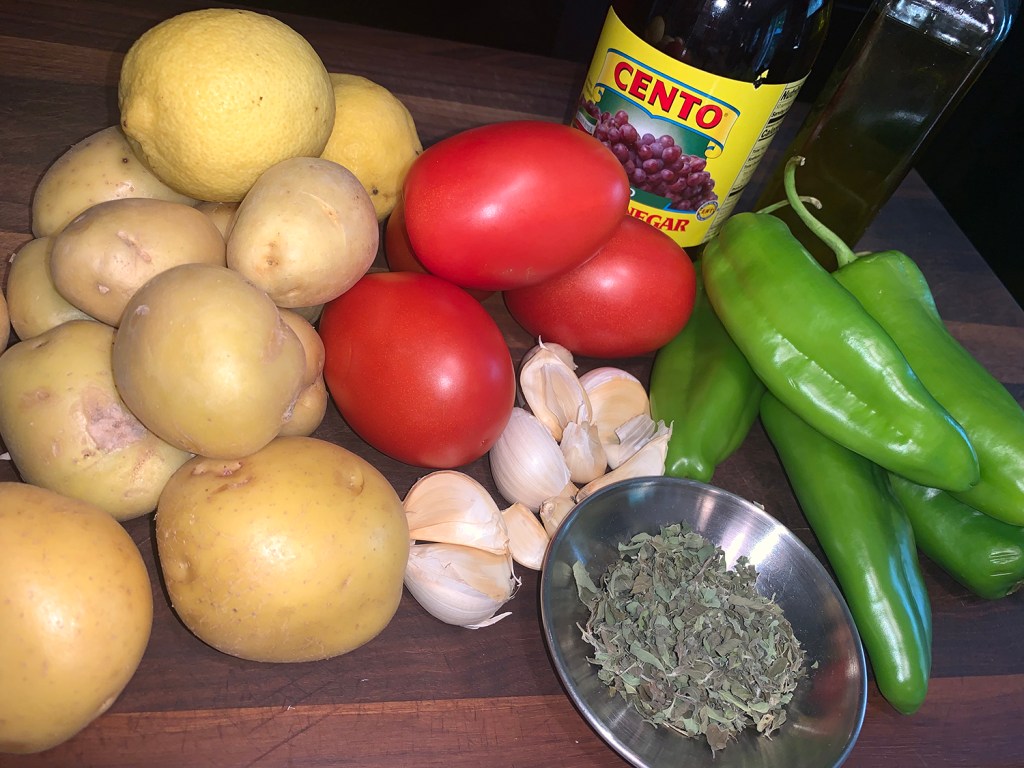
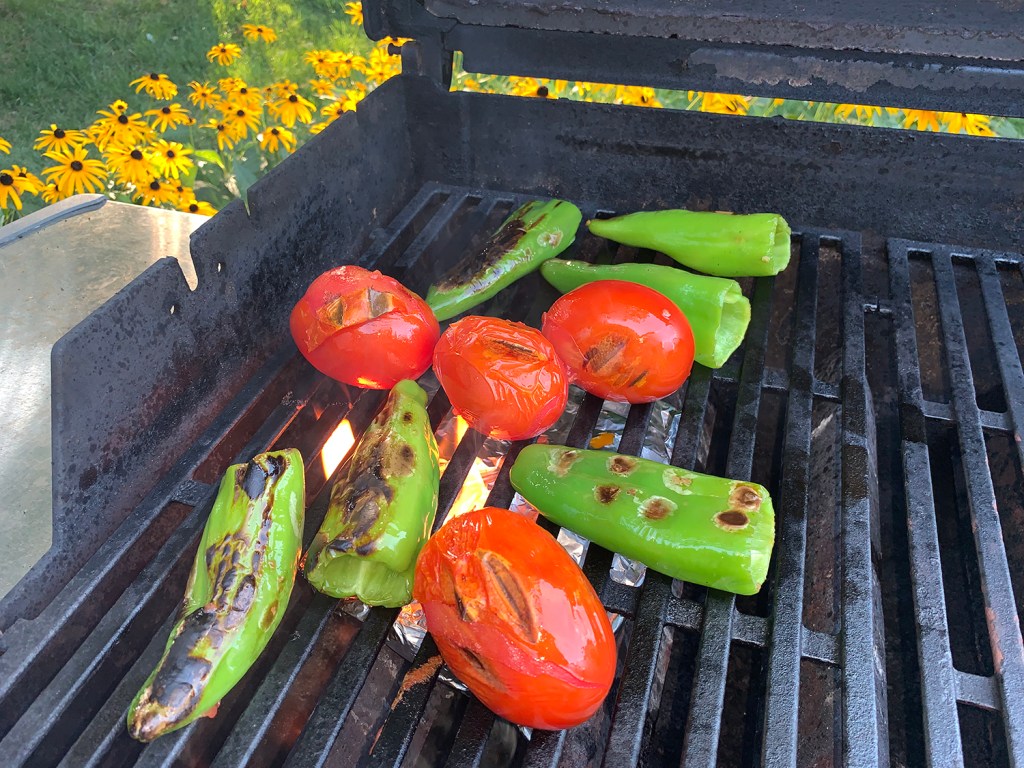
To prepare the sauce, while grill heats, in a large bowl, toss the tomatoes, peppers and oil. Place the vegetables on the hot side of the grill, then cover and cook, turning occasionally, until lightly charred all over, 5 to 10 minutes. Transfer to an 8-inch square disposable foil pan and add the garlic, 2 tablespoons of butter and the oregano. Cover with foil and poke a few holes in the foil, then place the pan on the cool side of the grill. Scrape any excess marinade off the pork chops and place the chops on the cool side of the grill alongside the foil pan. Cover the grill, positioning the lid vents over the pork chops if using a charcoal grill. Cook without lifting the lid for 10 minutes.
Move the chops to the hot side of the grill and cook, uncovered and turning occasionally, until well-browned on both sides and the centers near the bone are just barely pink when cut into or reach 135°F, 5 to 8 minutes. Transfer to a platter, place 1 piece of the butter on each chop and tent with foil. Let rest for 15 minutes.
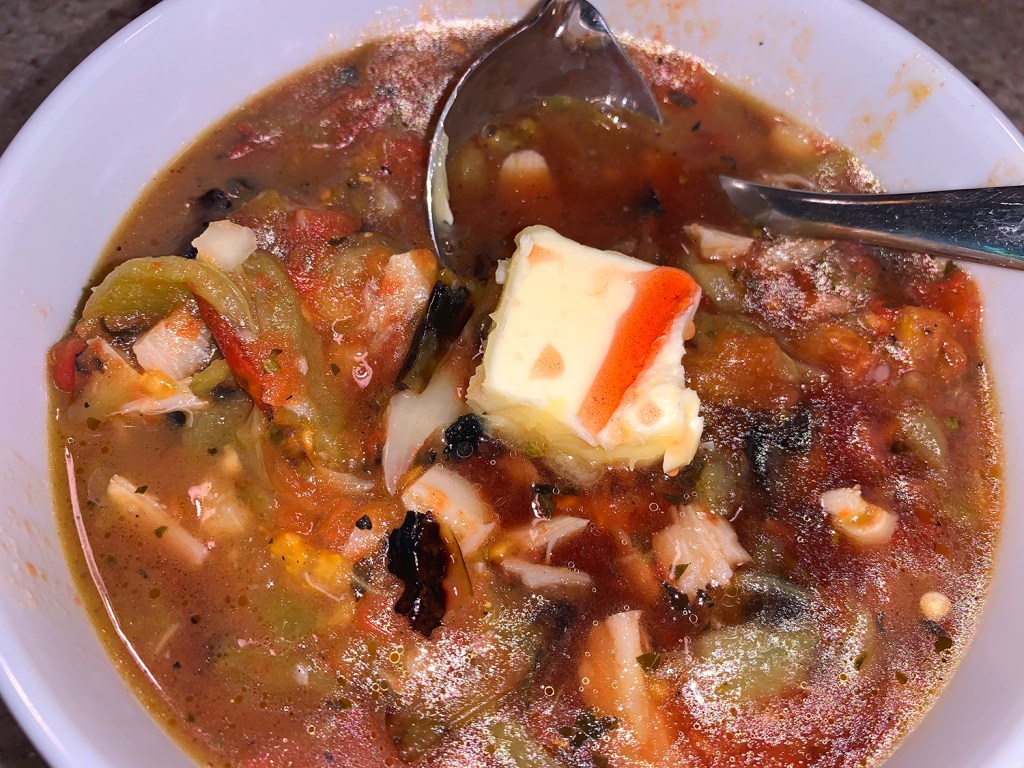
Meanwhile, uncover the pan; the vegetables and garlic cloves should be completely softened. Using a fork, mash the vegetables until broken down but a bit chunky. Use tongs to remove and discard any large pieces of tomato or pepper skins that do not break down. Stir in the remaining 2 tablespoons butter until melted, followed by the vinegar. Season with salt and pepper to taste. Transfer to a serving bowl and serve with the pork.
When purchasing potatoes for this recipe, look for ones about the size of an extra-large egg and that weigh about 2 ounces each and are of similar shape and size. The potatoes can be precooked and refrigerated up to a day in advance; just before grilling, skewer them, brush with melted butter and season with salt and pepper.
You’ll need three or four sturdy 12- to 14-inch metal skewers; skewers with pins that are flat rather than round or square help prevent the potatoes from spinning around, making them easier to manage on the grill. Place the skewered potatoes on the hot side of the grill after you’ve removed the pork chops and allow the potatoes to brown while the chops rest.
Keep in mind, you don’t want to precook the potatoes at a rolling boil which can cause the skins to split (which did happen to a few of ours). Aim to keep the water at a gentle but constant simmer. Don’t skewer the potatoes without first chilling them in an ice bath. Chilling firms the potatoes slightly so that they cut more cleanly when scored with a paring knife.
In a large pot over high, bring the potatoes and enough water to cover by about 1 inch to a boil. Reduce to medium-high, cover partially and cook until a paring knife inserted into the largest potato meets just a little resistance, adjusting the heat as needed to maintain a gentle but steady simmer, 8 to 12 minutes. Meanwhile, fill a large bowl with ice water. Drain the potatoes in a colander, then transfer to the ice water. Let stand for 10 minutes. Drain again and pat dry with paper towels.
Thread the potatoes lengthwise onto each of three 12- to 14-inch flat metal skewers, dividing them evenly. Using a paring knife, make 4 or 5 parallel crosswise cuts into each potato, stopping when knife blade reaches the skewer; leave the second sides of the potatoes uncut. Brush the potatoes on all sides with about ½ of the melted butter and season with salt and pepper.
Prepare a grill for high-heat cooking. For a charcoal grill, pour a large chimney of hot coals evenly over one side of the grill bed and open the bottom grill vents and lid vents; for a gas grill, heat all burners to high. Heat the grill, covered, for 5 to 10 minutes, then clean and oil the cooking grate.
Place the skewered potatoes on the hot side of the grill and cook, turning occasionally, until browned all over, 7 to 10 minutes. Transfer to a platter, brush with the remaining melted butter. Sprinkle with additional salt and pepper and the oregano. Serve with lemon wedges.




























 Accounting for Taste