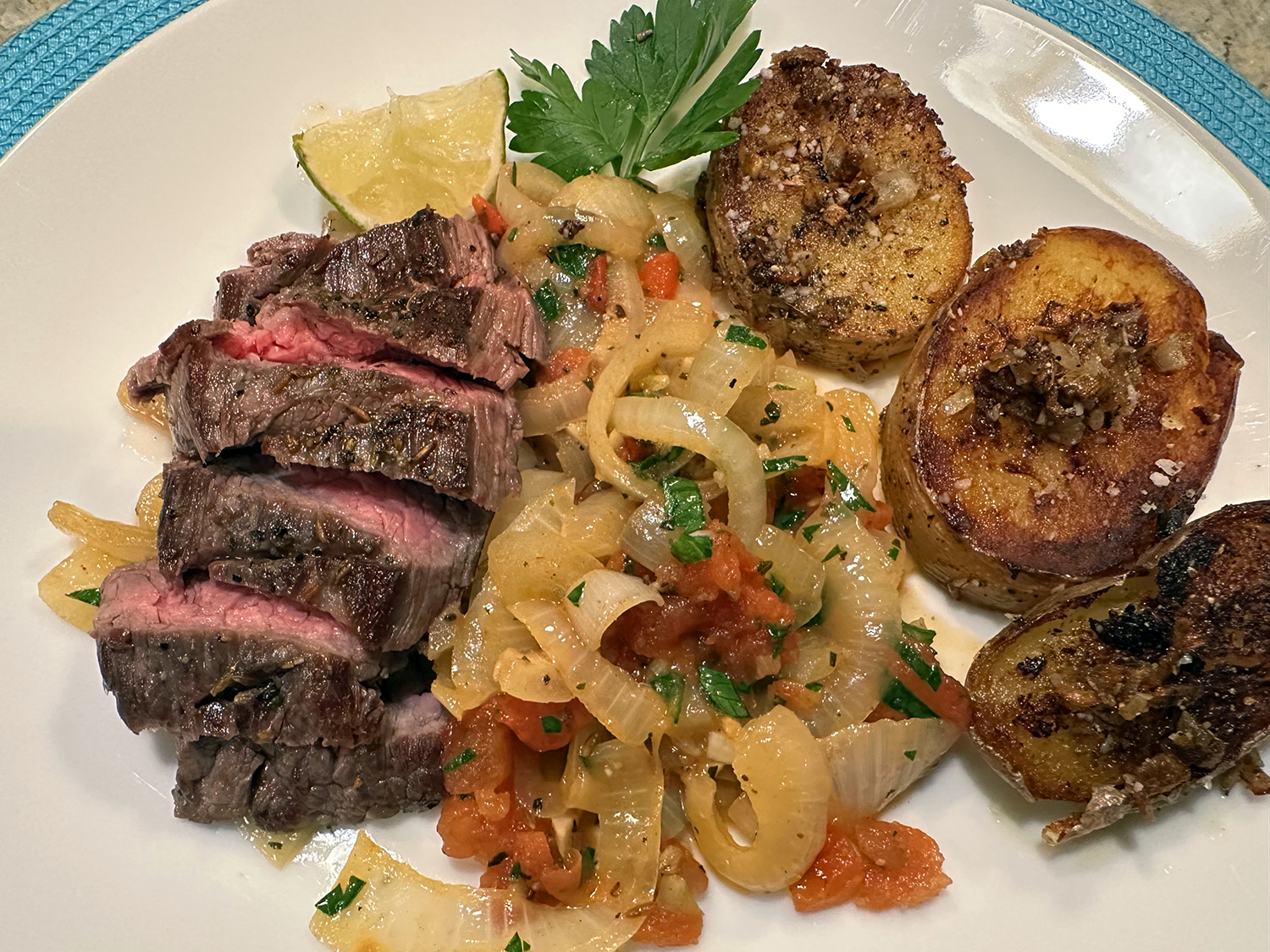
WOW, what a weeknight treat! This Cumin-Seared Flank Steak dish was fantastic, with so much flavor, and a minimal amount of ingredients in under 45 minutes!
To make the Cuban classic bistec de palomilla, thin-cut steak is marinated in garlic and lime juice before it is pan-fried, and it is served under a pile of sautéed onions. Though sirloin or top round is commonly the choice of meat, here, flank steak is used instead and the process allows to skip any marination.
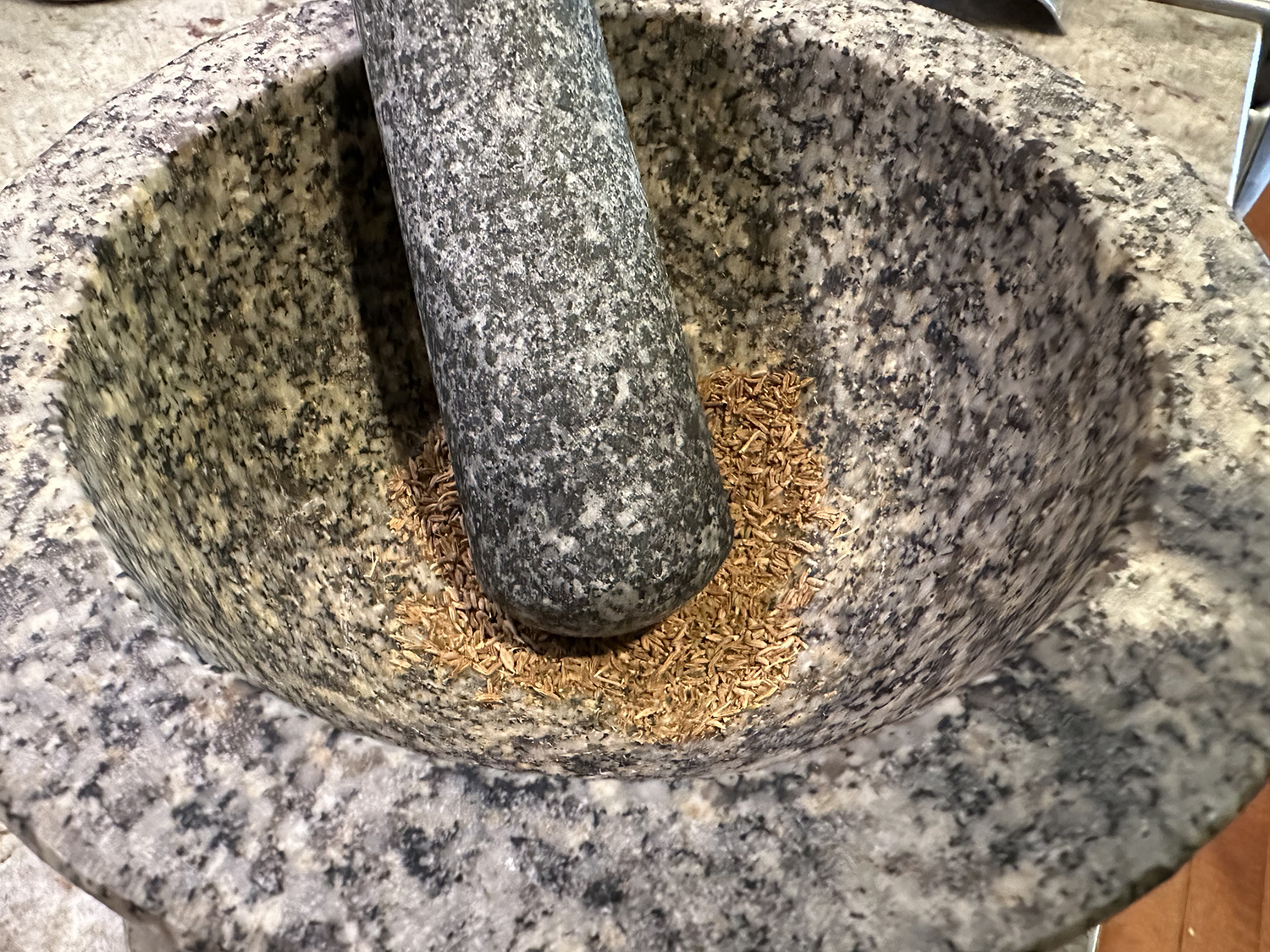
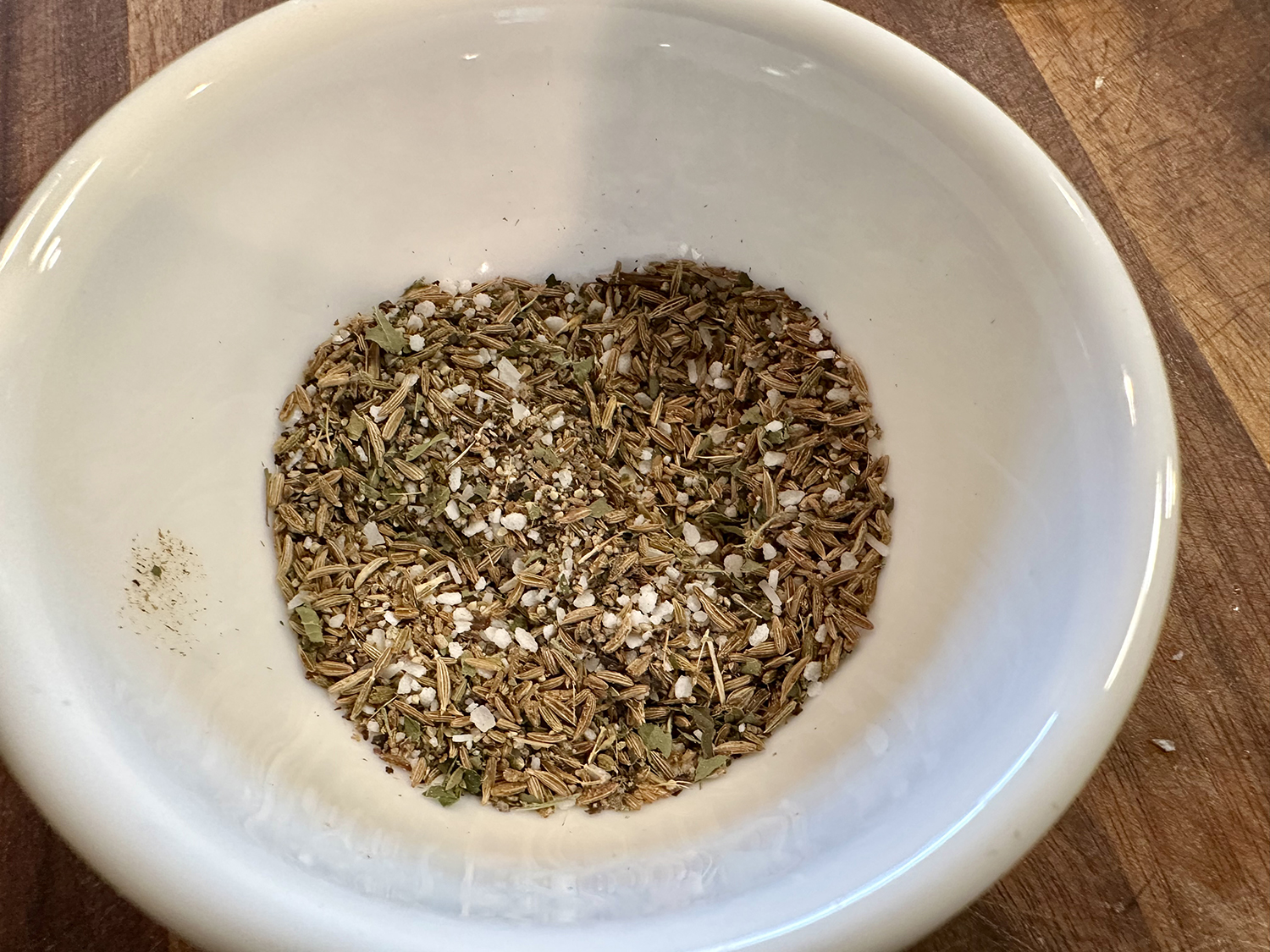
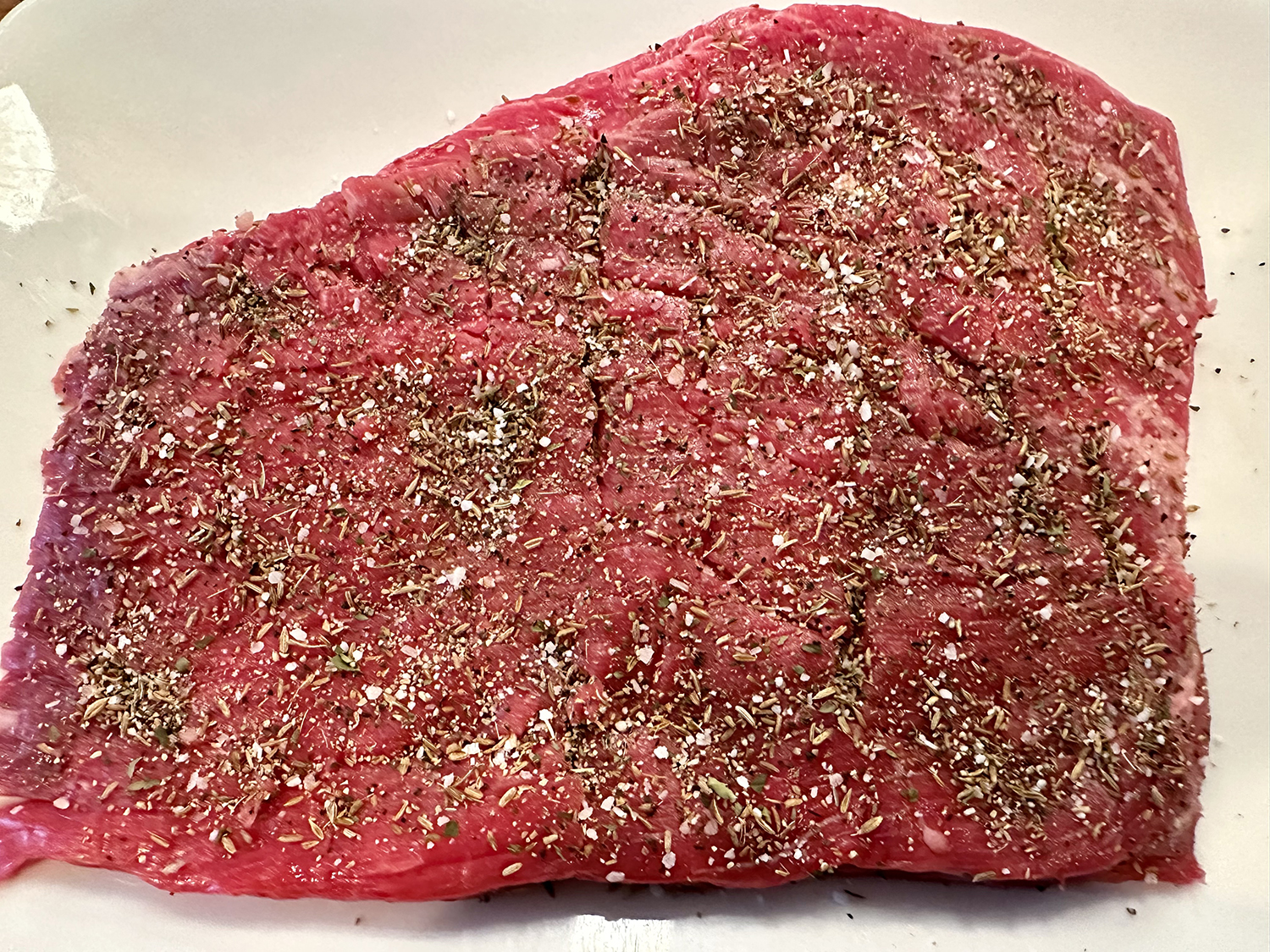
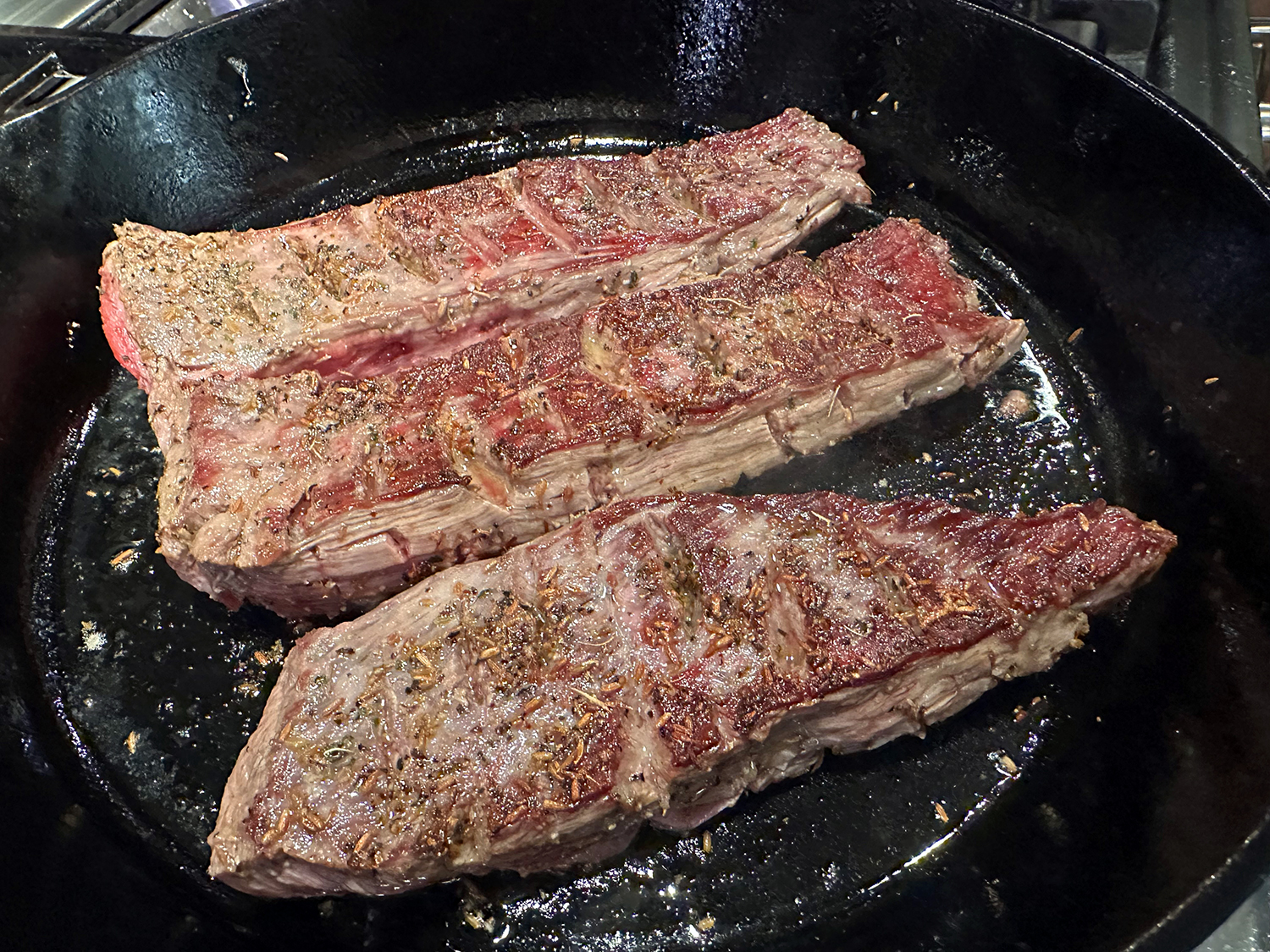
Instead, the surface of the meat is scored with shallow crosshatched cuts before cooking. The grooves not only grip the seasoning mix of crushed cumin, dried oregano, salt and pepper so they stay on the meat instead of winding up in the pan, they also help produce better flavor-boosting caramelization.
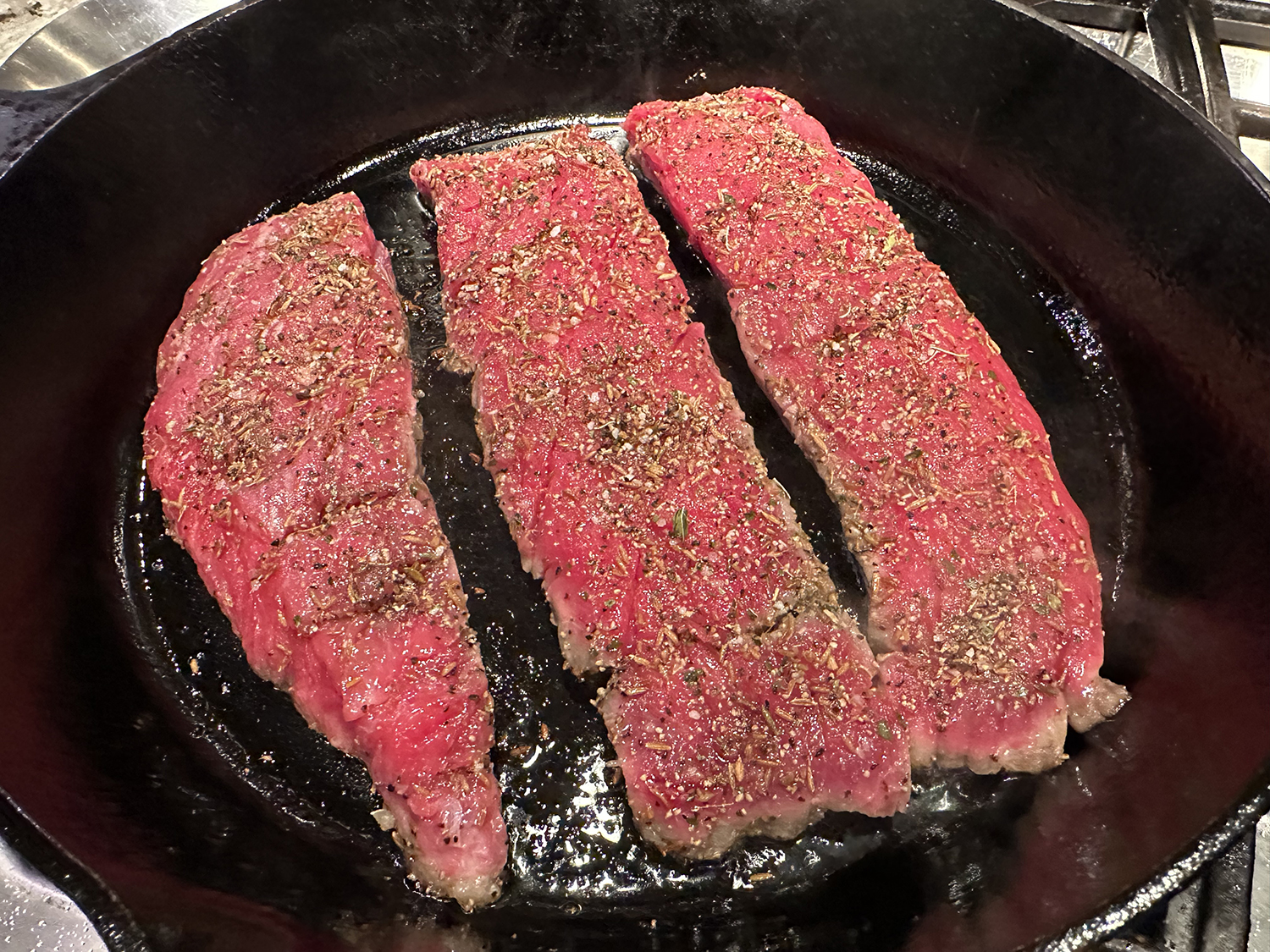
In just eight minutes, the steak was perfectly medium rare, removed to a platter so that the remaining ingredients can be cooked along with browned bits left in the skillet.
Typical side dishes might be rice or beans. We decided on a simple skillet potato dish. The Yukon Golds were first microwaved until just barely fork tender. Once they cooled slightly they were cut into 1/2″ slices; browned in olive oil and butter with some minced shallots, salt and pepper.
In a small bowl, stir together the cumin, ¼ teaspoon of the oregano and 1 teaspoon each salt and pepper. Using a sharp knife, score shallow cuts into the steak, perpendicular to the grain and spaced ½ inch apart. Now crosshatch at a 45-degree angle to the first cuts. Flip the steak and crosshatch the second side.
Rub the cumin mixture into the cuts on both sides, then cut the steak into 2 or 3 pieces with the grain. In a 12-inch skillet over medium-high, heat the oil until barely smoking. Add the steak and cook, flipping once, until well browned and the center reaches 125°F (for medium-rare), 6 to 8 minutes. Transfer to a plate and tent with foil.
In the same skillet over medium, melt the butter. Add the onion, tomato, garlic, remaining ½ teaspoon oregano and ½ teaspoon salt; cook, stirring, until the onion is wilted, 6 to 8 minutes.
Add the lime juice and accumulated steak juices; cook, stirring, until slightly reduced, about 1 minute.
Off heat, stir in the parsley. Taste and season with salt and pepper. Transfer the onion mixture to a platter. Thinly slice the steak against the grain and place on the platter. Serve with lime wedges.
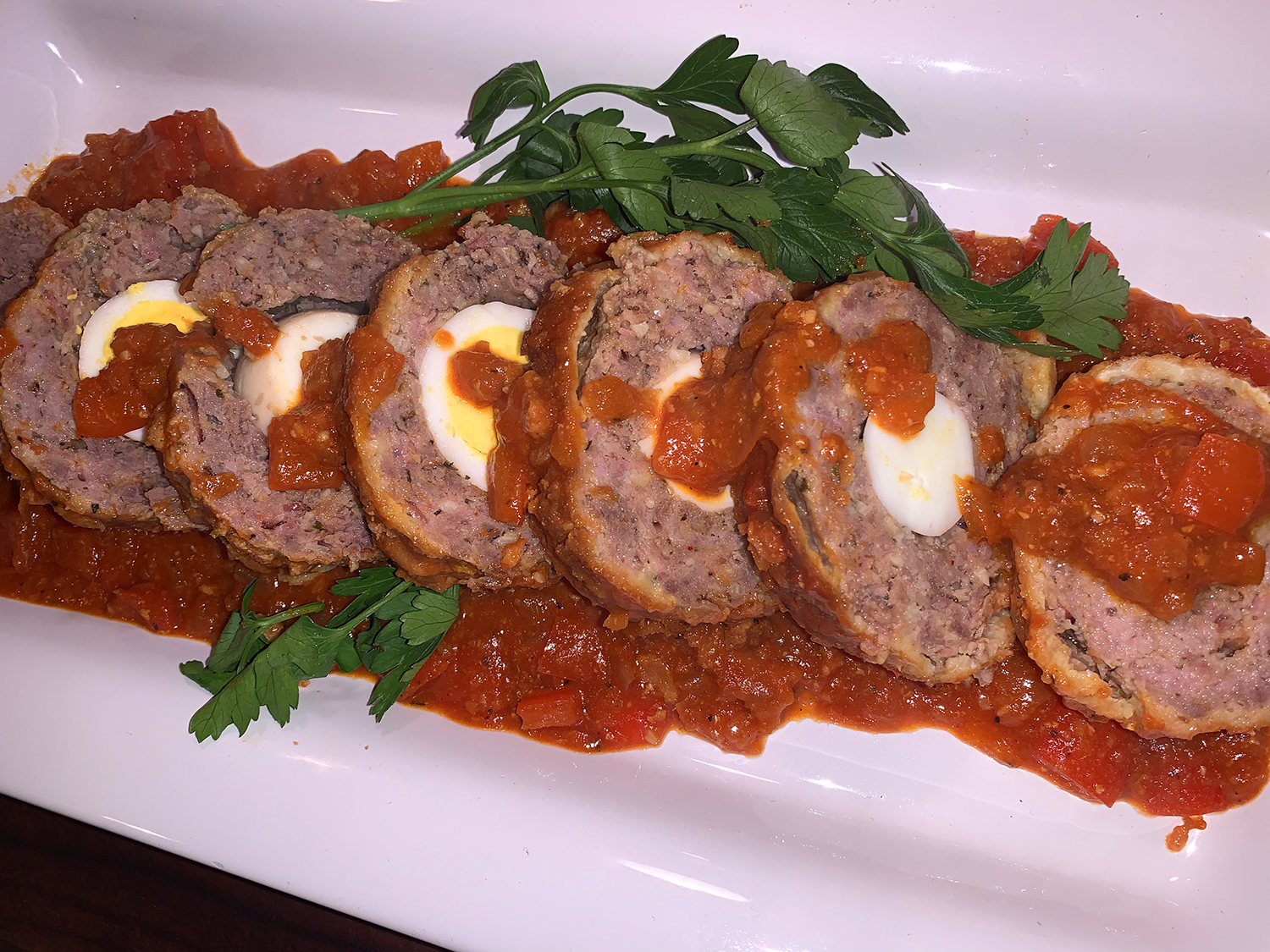
This pure comfort food, with unique qualities from the Spanish, Caribbean and African influences is Pulpeta meatloaf, Cuban style—stovetop-easy and hides a savory surprise. It’s loaded with classic Cuban flavors, starting with a sofrito-like base of sautéed onion, bell pepper and garlic. Smoked paprika and cumin add depth, while oregano and bay leaf bring herbal notes. And the acidity from white wine and crushed tomatoes balances the savoriness of the meat.
According to Milk Street where we sourced this recipe, it provides a couple of good stopping points for make-ahead convenience. The loaves can be shaped and then refrigerated for up to 24 hours. Or the loaves can be fully cooked, cooled in the sauce and refrigerated in the pot for up to three days; set the pot over medium-low for about 20 minutes, occasionally turning the loaves, to gently rewarm.
I made the hard boiled eggs a day prior; and formed the meatloaves in the morning, wrapped and refrigerated them for 8 hours until I was ready to start cooking in the evening.
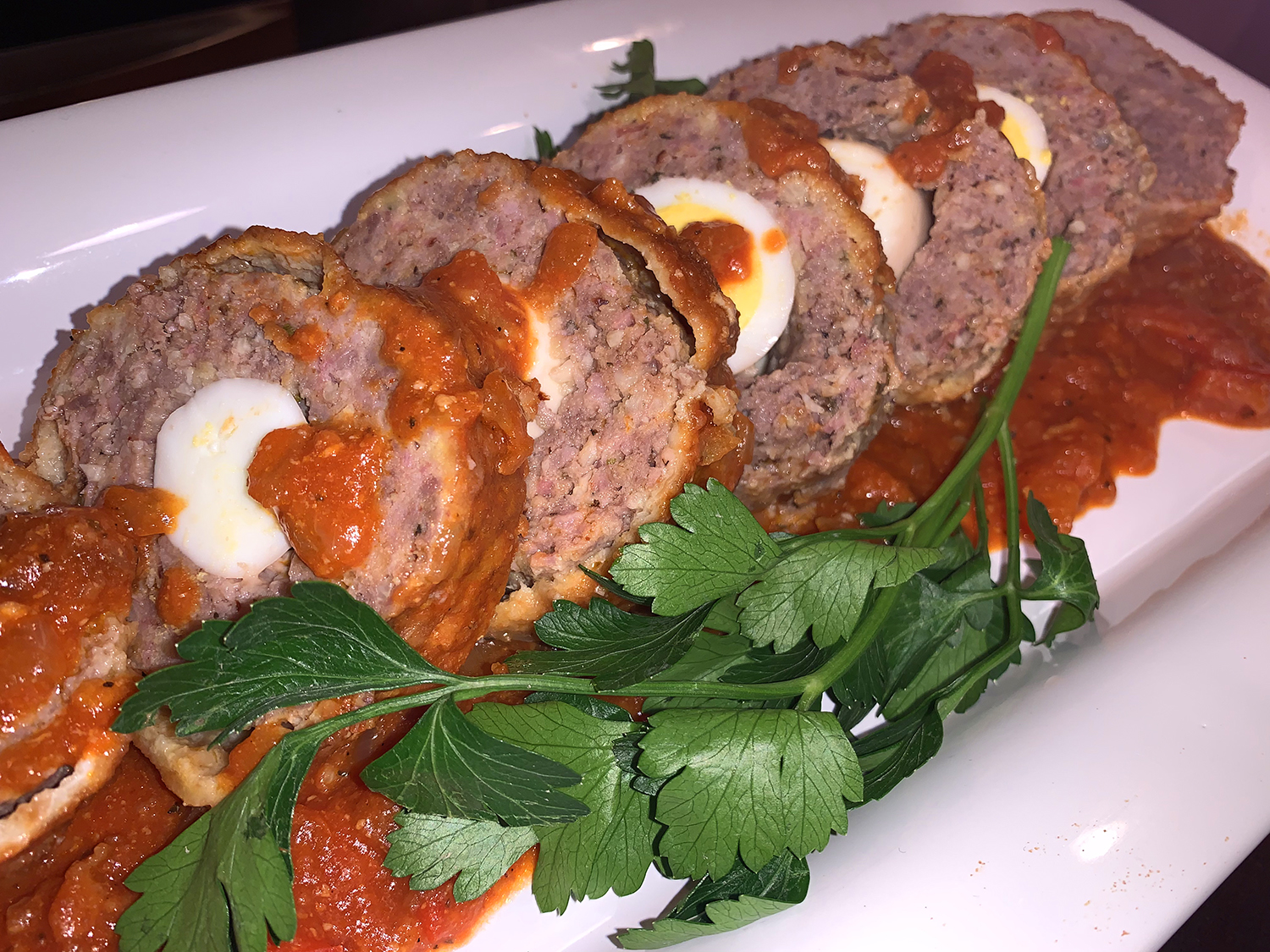
Breaded, browned, then braised in a garlicky, wine-brightened tomato sauce, and flavored with smoked paprika and bay, the well-seasoned loaf hides hard-cooked eggs at the center. As you can see at a glance, it definitely requires more work to prepare than American meatloaf. But if you have an afternoon to spare, you won’t be disappointed.
TIP: Don’t be afraid to firmly compact the meat mixture around the eggs when forming the loaves so there aren’t any gaps between the eggs and meat. This will help the loaves hold together during breading, cooking and slicing. Also, be sure to turn the loaves at least once during simmering and stir the sauce as it reduces to ensure there’s no scorching on the bottom of the pot.
10 medium garlic cloves, 6 smashed and peeled, 4 minced
4 oz. thinly sliced ham, roughly torn or chopped
7 large eggs, 3 raw, 4 hard-cooked and peeled
1 lb. 80 percent lean ground beef
8 oz.s ground pork
2 tsp. smoked paprika, divided
1 tsp. dried oregano
Kosher salt and ground black pepper
2 Tbsp. plus ¼ cup extra-virgin olive oil, divided
1 medium yellow onion, finely chopped
1 medium green or red bell pepper, stemmed, seeded and chopped
2 bay leaves
1 cup dry white wine
14 1/2 oz. can crushed tomatoes (1 ⅔ cups)
1 cup water
Directions
In a food processor, pulse the crackers until broken down into a mix of fine and flaky crumbs, 10 to 14 pulses. Transfer to a pie plate (you should have about 1¼ cups); set aside. To the food processor, add the smashed garlic and the ham; pulse until finely chopped, about 4 pulses. Add 2 of the raw eggs; pulse a few times to combine. Transfer the mixture to a large bowl.
To the ham-egg mixture, add the ground beef and pork, 1½ teaspoons of the paprika, the oregano, ⅓ cup of the cracker crumbs, 2 teaspoons salt and 1 teaspoon pepper. Using your hands, mix until the ingredients are thoroughly combined.
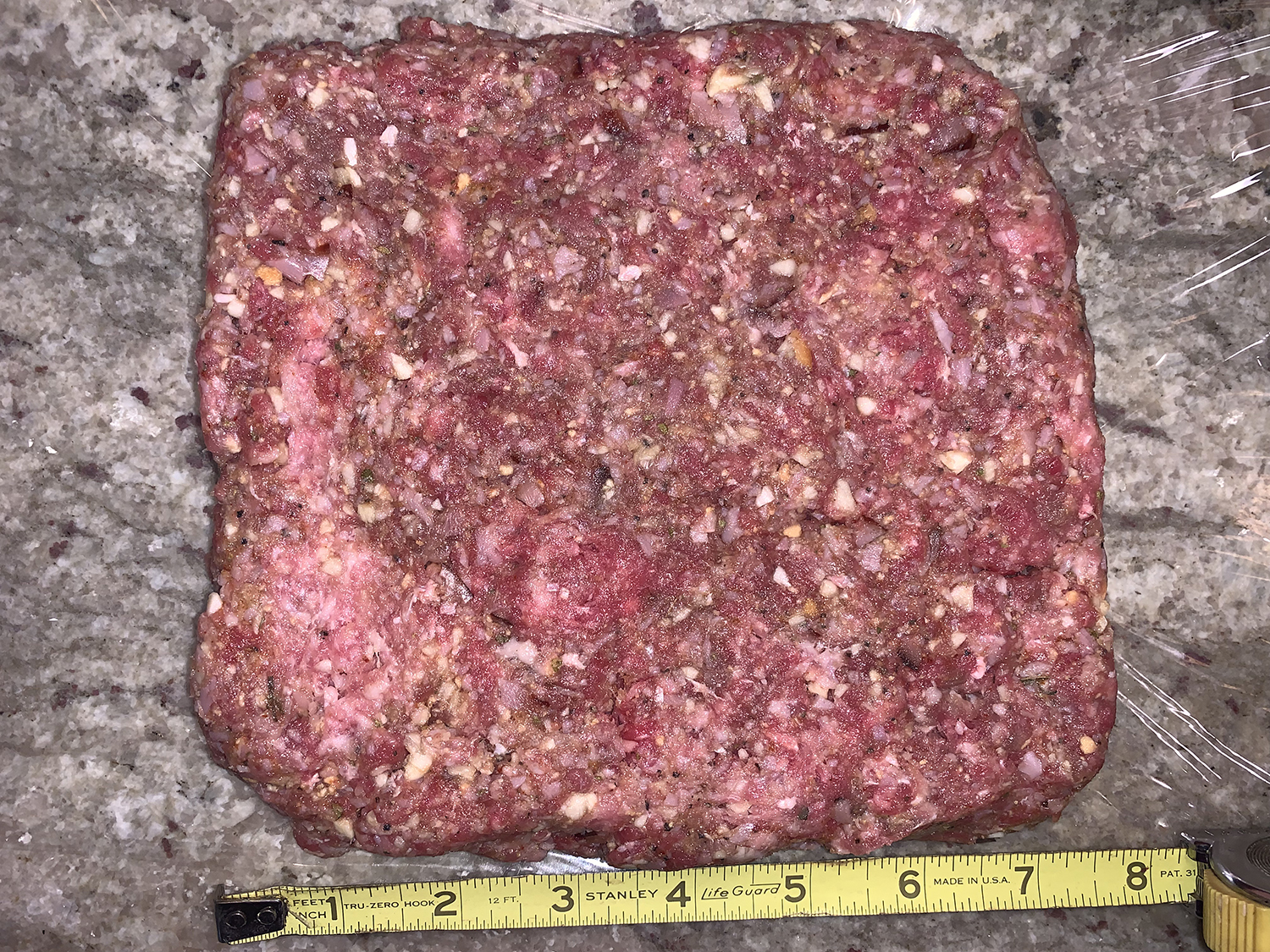
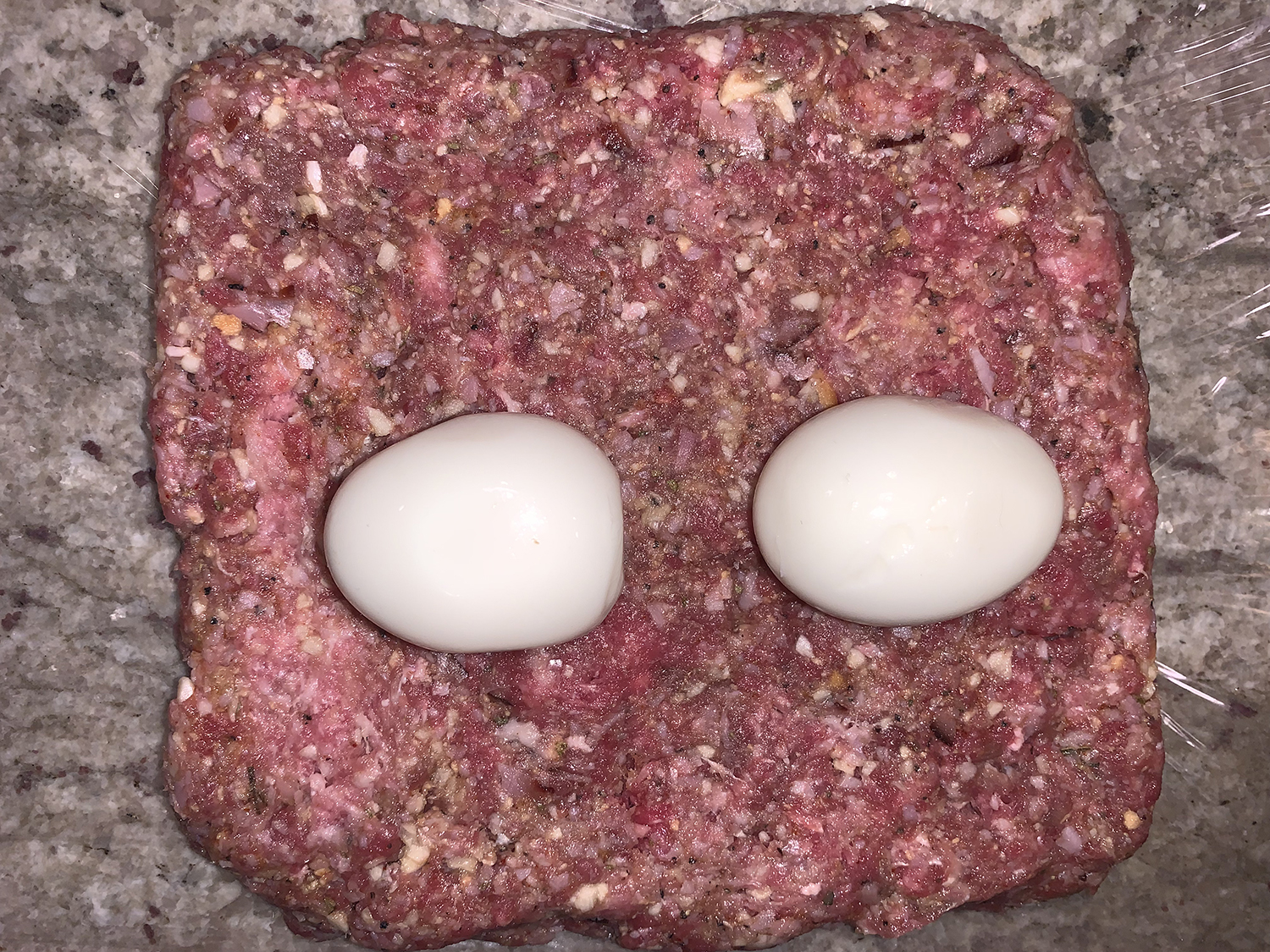
Lay a 12-inch square of plastic wrap on the counter. Place half of the meat mixture in the center. Using your hands, press the mixture into a rough 7-inch square. Place 2 of the hard-cooked eggs lengthwise along the center, then bring the sides of the meat mixture up to fully enclose the eggs and form the meat mixture into a cylinder about 5 inches long and 3 inches in diameter; compact the meat mixture with your hands to ensure there are no gaps around the eggs.
Lift the end of the plastic nearest you up and over the cylinder and wrap it securely, then, without applying pressure, roll away from you to fully and tightly enclose the cylinder in plastic.
Twist the ends of the plastic to seal. Using another 12-inch square of plastic wrap, form the remaining meat mixture in the same way, enclosing the remaining 2 hard-cooked eggs inside. Set both cylinders on a large, flat plate or tray and refrigerate for at least 1 hour or up to 24 hours.
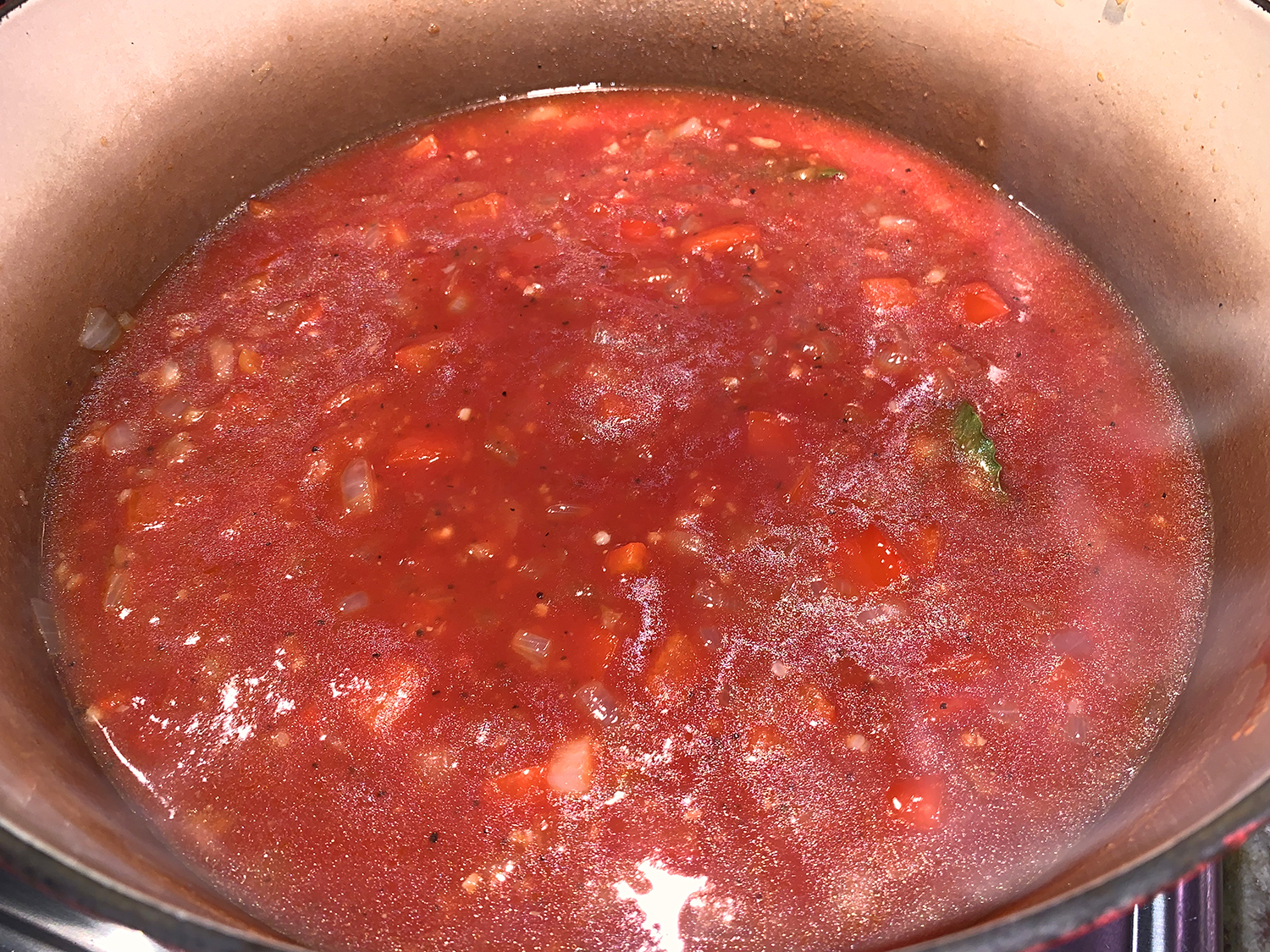
When you are ready to cook the meat loaves, in a large Dutch oven over medium, heat the 2 tablespoons oil until shimmering. Add the onion, bell pepper, bay, minced garlic, remaining ½ teaspoon paprika, ¾ teaspoon salt and ½ teaspoon pepper. Cook, stirring often, until the vegetables are softened, 8 to 11 minutes. Add the wine, bring to a simmer and cook, stirring, until the alcohol evaporates, about 2 minutes. Stir in the tomatoes and 1 cup water; bring to a simmer, then cover and set aside while you bread and brown the loaves.
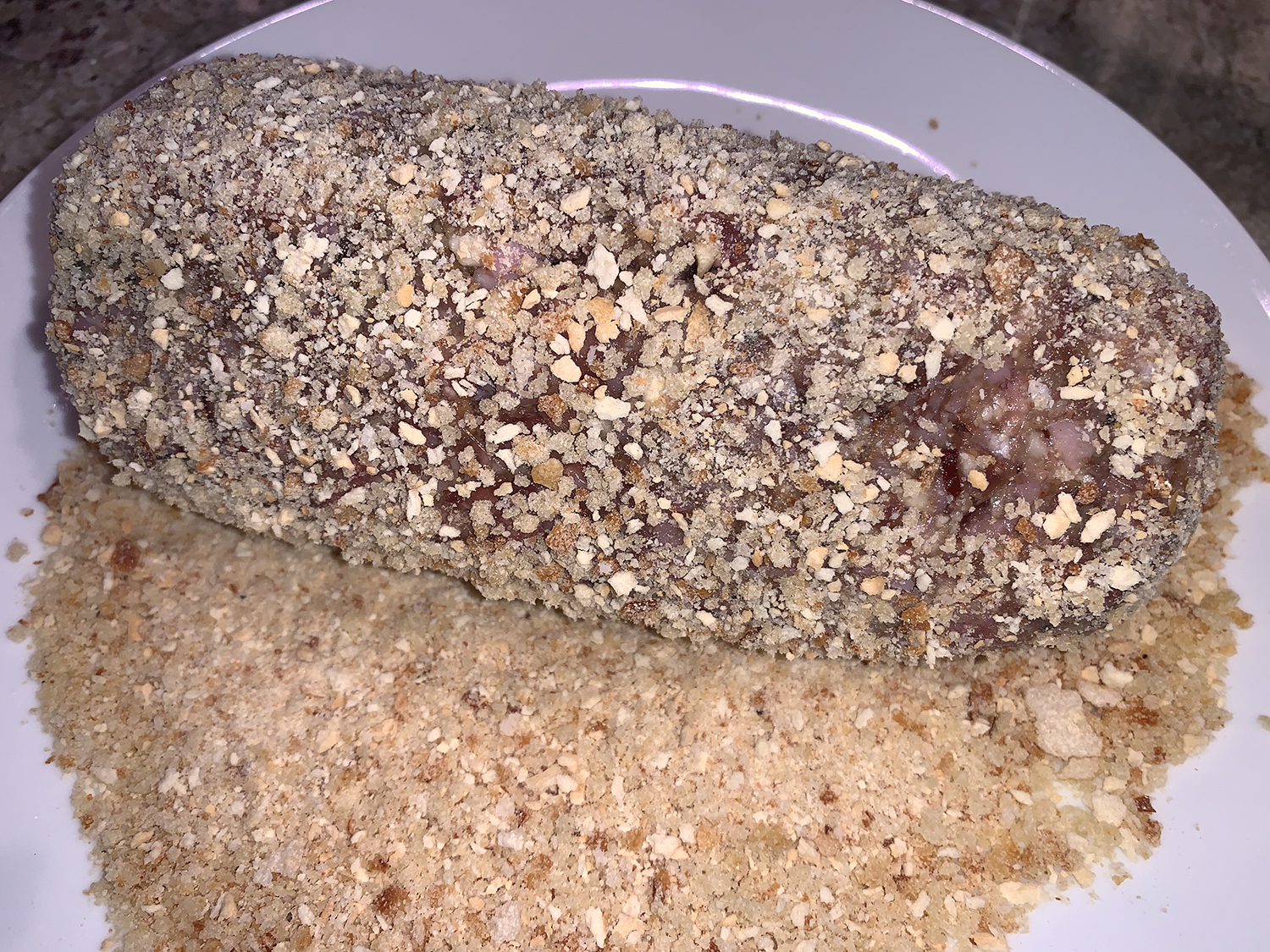
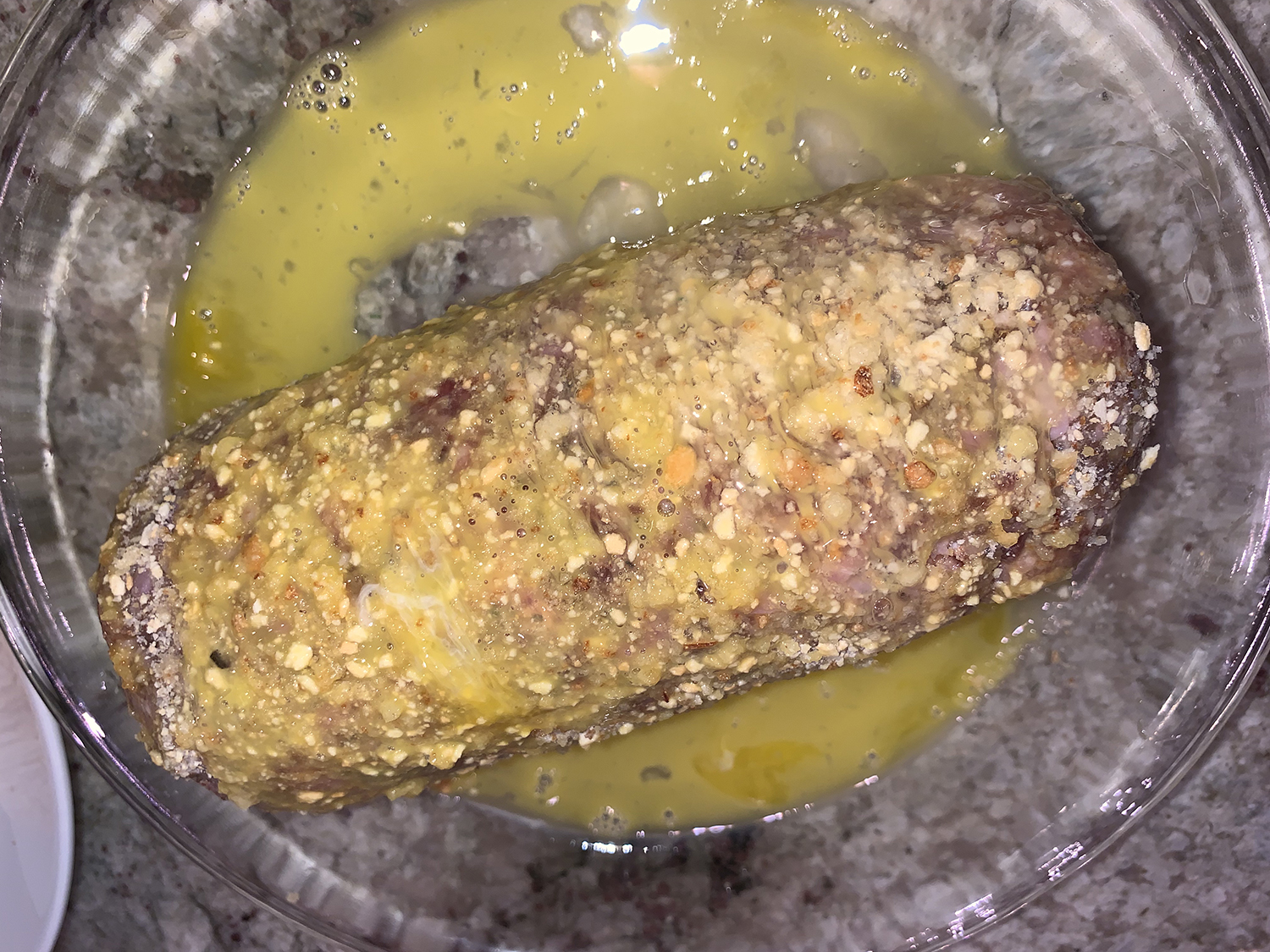
Have ready the cracker crumbs in the pie plate. In another pie plate or similar dish, beat the remaining raw egg with a fork. Unwrap the meat loaves. Place 1 loaf in the cracker crumbs and carefully turn to coat on all sides. Transfer to the beaten egg and turn to coat, then coat again with cracker crumbs, gently pressing to adhere. Return the breaded loaf to the plate. Bread the second loaf in the same way.
Return the sauce, covered, to a simmer over low. In a 12-inch skillet over medium-high, heat the ¼ cup oil until shimmering. Add the loaves and cook, carefully rotating them with a wide metal spatula about every minute, until golden brown all around, about 5 minutes total; reduce the heat as needed if the loaves are browning too quickly. Using the spatula and tongs, transfer the loaves from the skillet to the Dutch oven, nestling them into the sauce and spooning some sauce over the top. Cover, bring to a simmer over medium-low and cook for 15 minutes.
Carefully turn the loaves in the sauce, re-cover and cook, stirring occasionally and reducing to low as the sauce thickens, until the center of each loaf reaches 160°F, another 10 to 15 minutes. (Ours took a total of 25 minutes more after turning to come to 160°.) Remove the pot from the heat, uncover and let rest for about 10 minutes.
Transfer the loaves to a cutting board. Remove and discard the bay from the sauce. If the sauce is thin, bring to a simmer over medium and cook, stirring often, until slightly thickened, 2 to 4 minutes. Taste and season with salt and pepper. Cut the loaves into 1-inch slices. Spoon some sauce onto a serving platter, place the slices on top and serve with the remaining sauce on the side.















 Accounting for Taste