Tag Archives: roast

Roast Leg of Lamb with Anchovy, Rosemary, Garlic and Piment d’Espelette

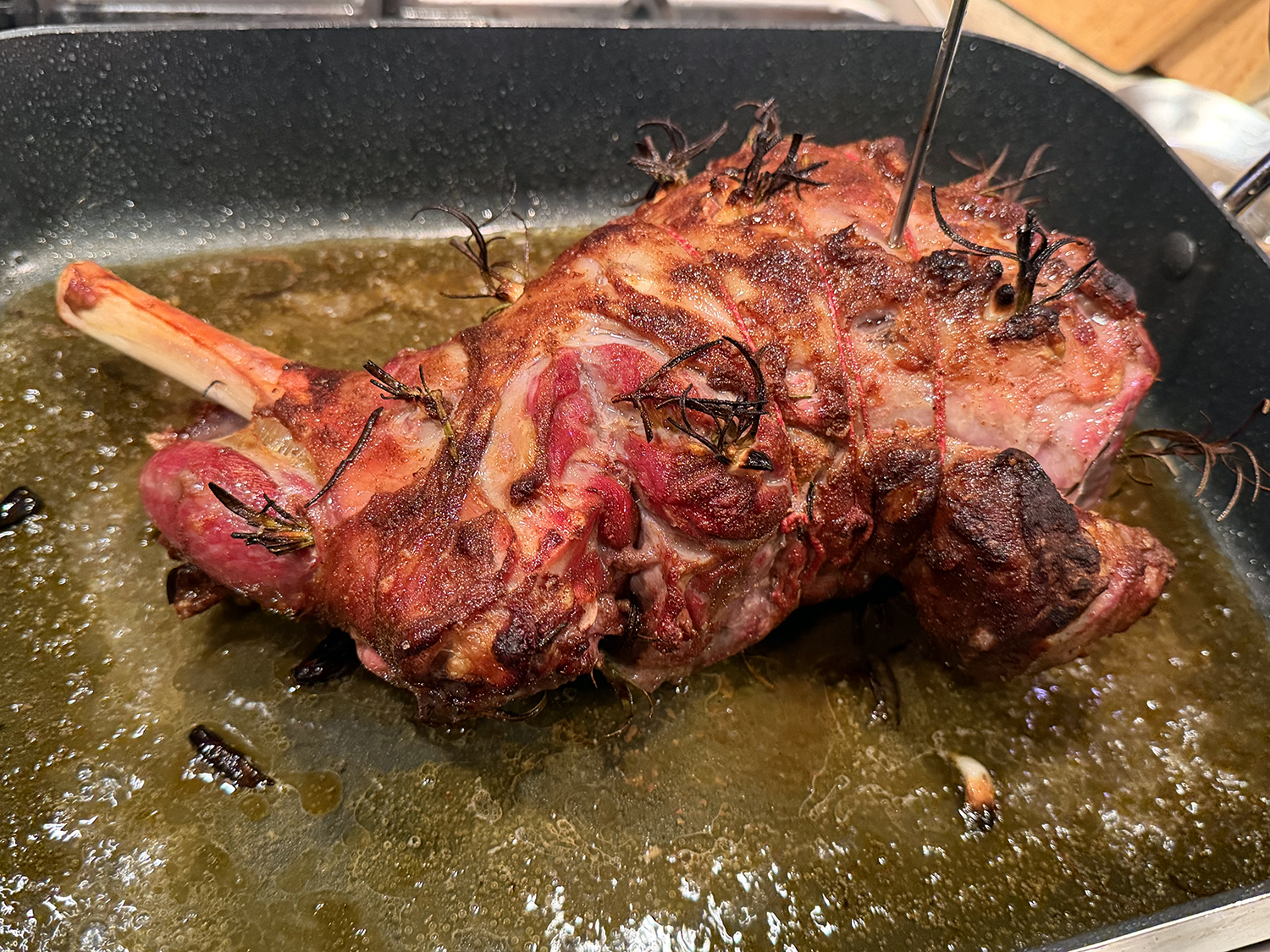
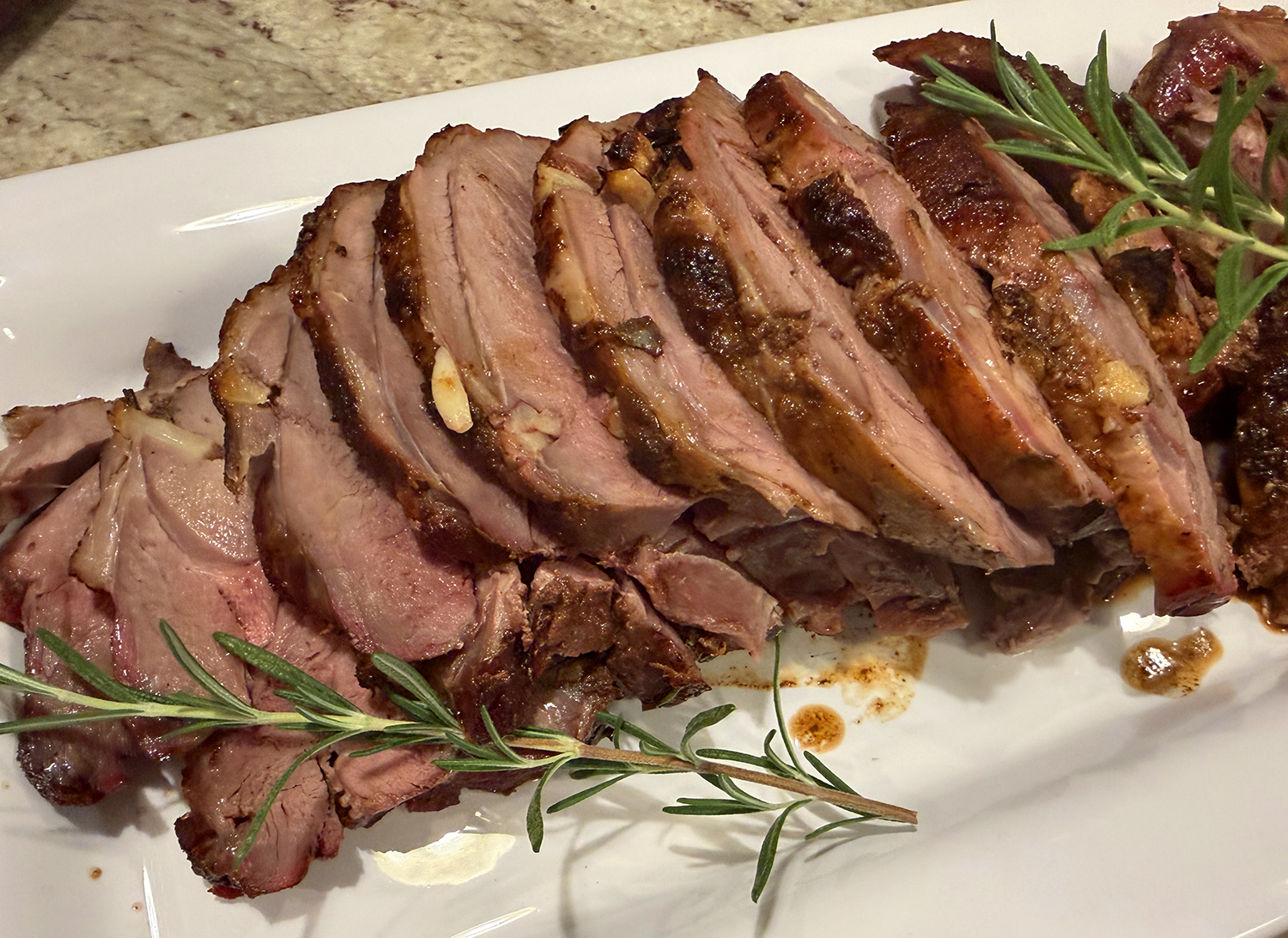
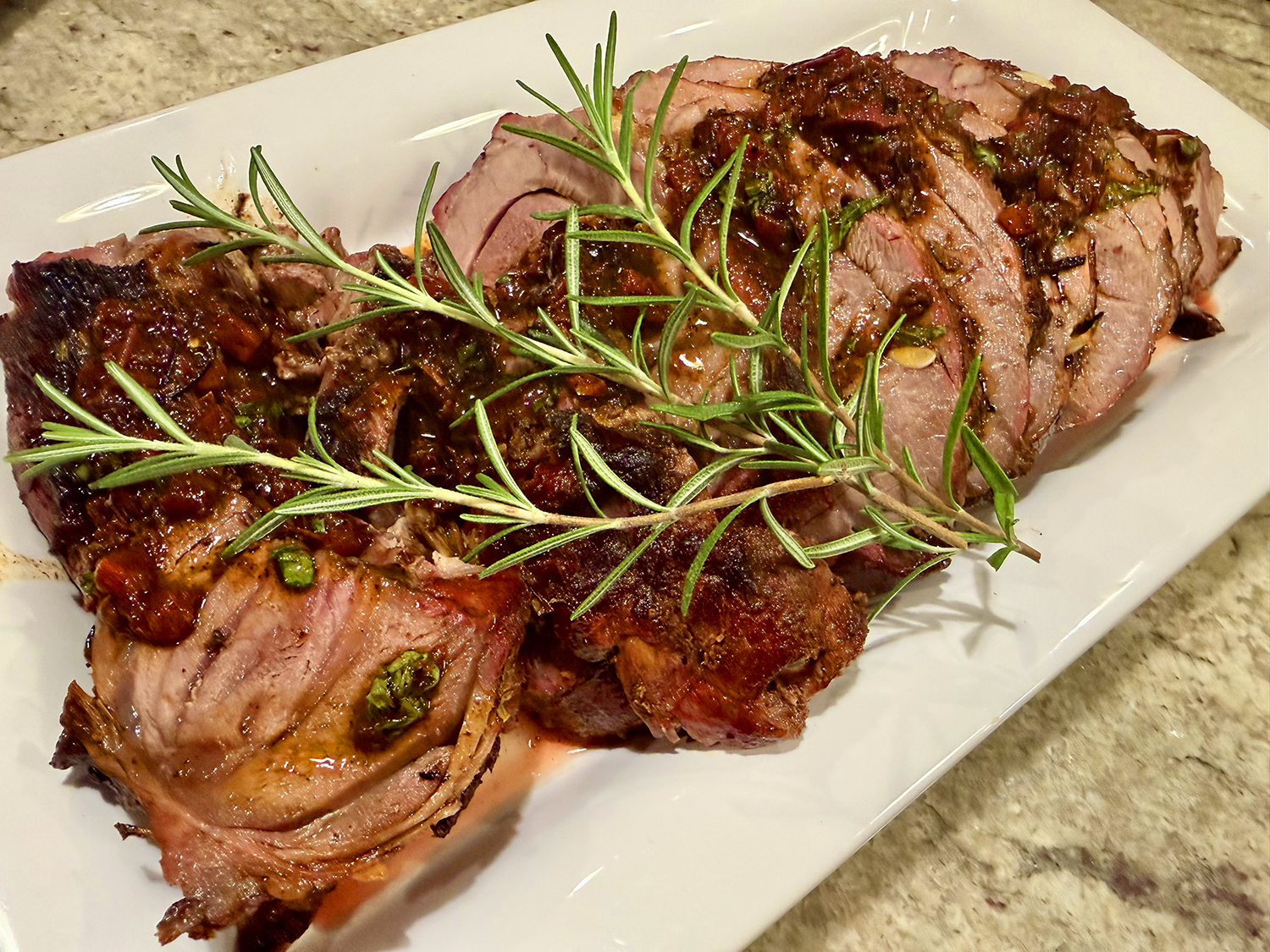
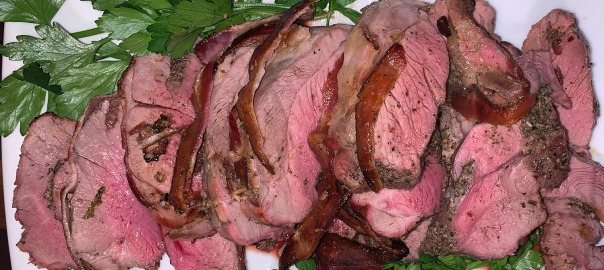
This lovely leg of lamb recipe hails from Molly Stevens’ cookbook All About Roasting, one of our go-to’s when it comes to roasting meat. Here, the lamb’s flavor is boosted with a combination of fresh rosemary, garlic and anchovies. But don’t get all squeamish, tucked into the meat, the anchovies dissolve during roasting, enriching the lamb a delicious, though elusive flavor that’s far less assertive than you might think.

Instead of black pepper, the roast is seasoned with piment d’Espelette, in which the light heat complements the lamb, but hot paprika (which we used) makes a good substitute. If you keep lard or have good bacon drippings, rub a little over the meat before roasting. It adds a wonderful richness to the drippings and helps deepen the caramelization of the surface.

NOTES: For the best flavor and texture, season the meat 1 to 2 days ahead of cooking and refrigerate, uncovered. Then the lamb needs to sit at room temperature for about two hours before roasting.

Our 5-pound semi bone-in leg of lamb was a few pounds less than the recipe called for, and therefore took slightly less time. With no lard on hand, or any available that day at the store, we chose the olive oil option.

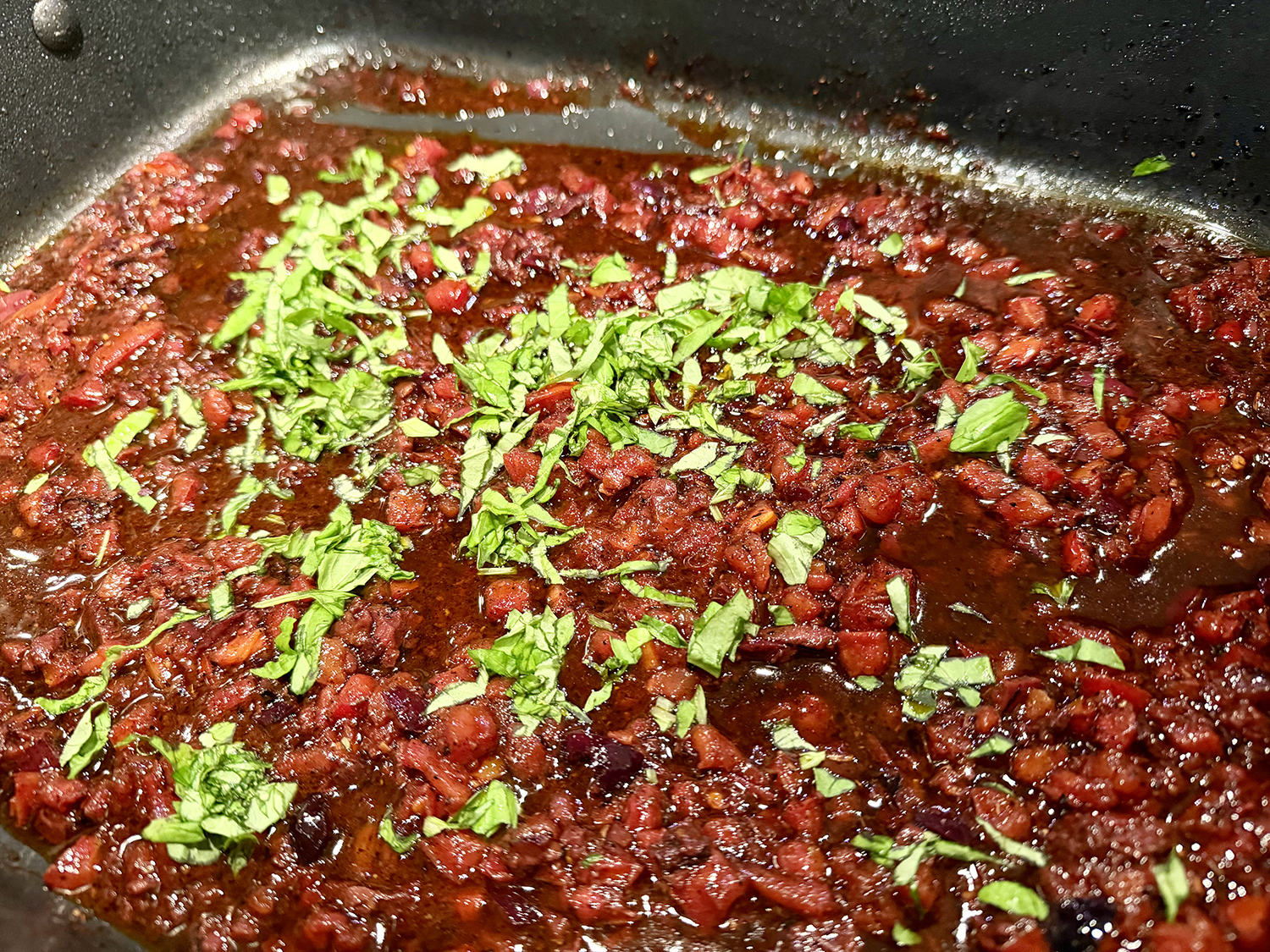
The Tomato-Fennel Vinaigrette is a surprising and delicious way to brighten up roast lamb. Combine the ingredients, and when the meat comes out of the pan to rest, pour the contents into the pan with the drippings.

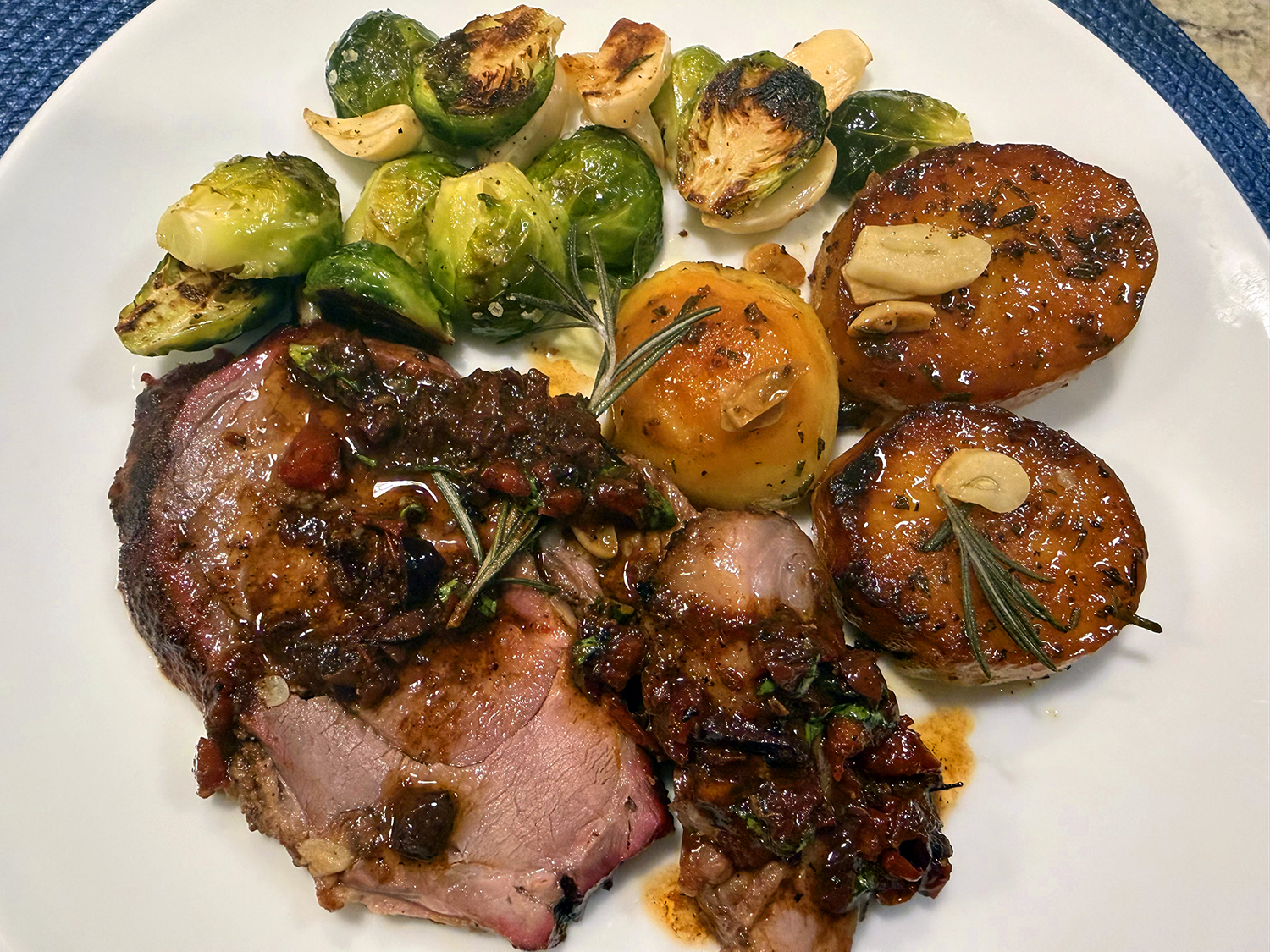
Our meal was completed with Lemon-Rosemary Melting Potatoes and Roasted Brussels Sprouts with Garlic.
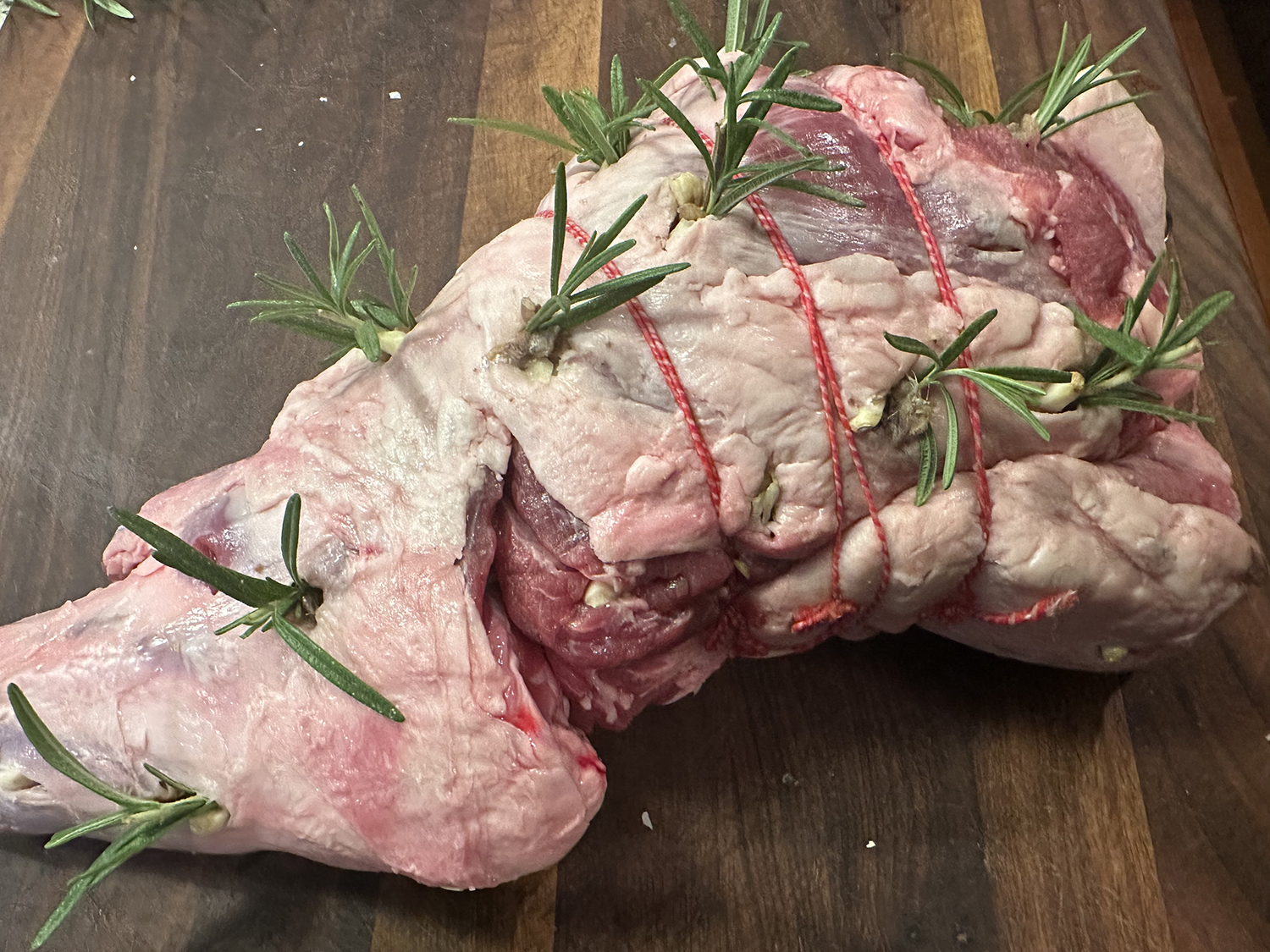
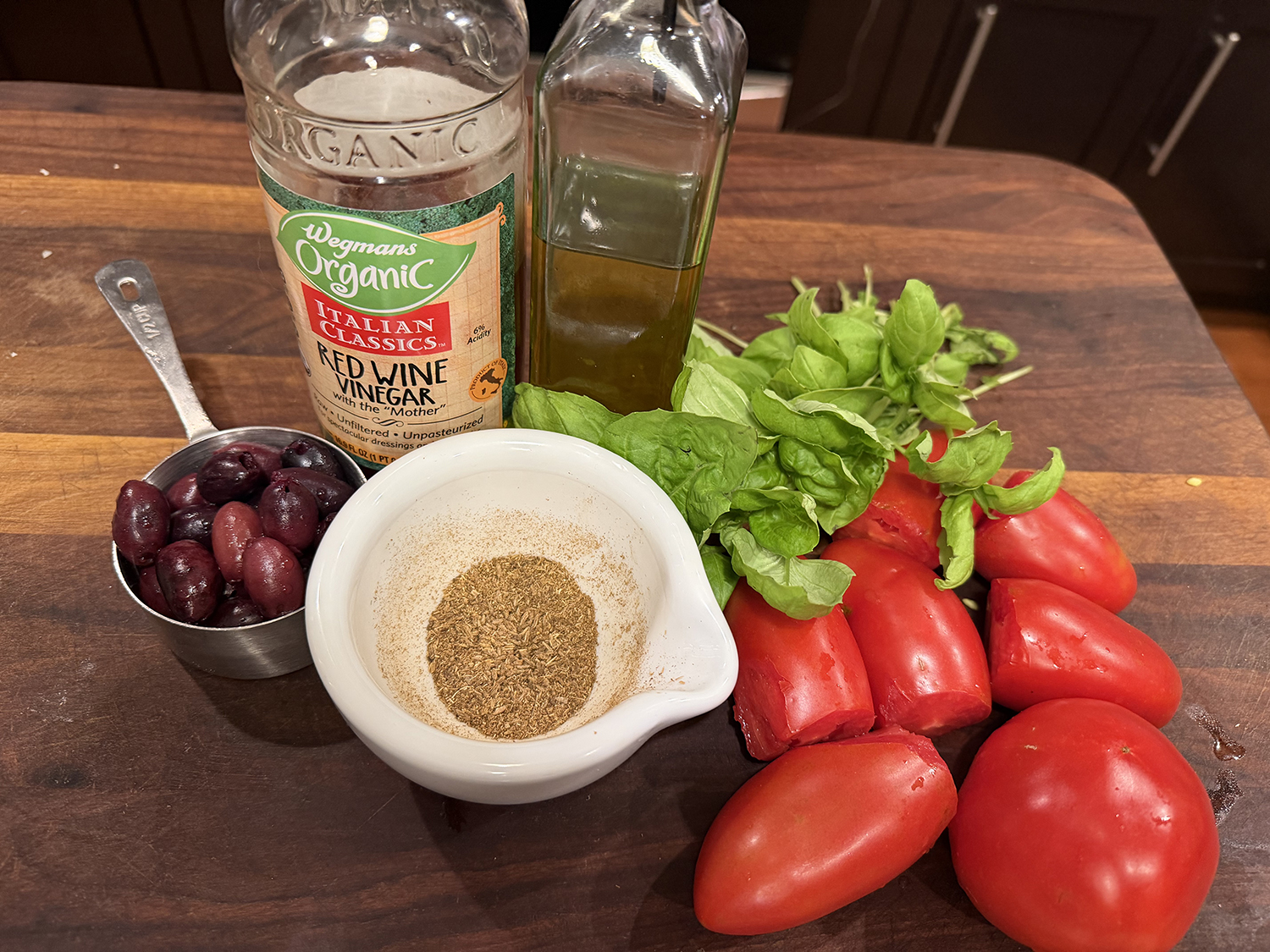
Roast Leg of Lamb with Anchovy, Rosemary , Garlic and Piment d'Espelette

  • Servings: 8-10
  • Difficulty: moderately easy
  • Print

Ingredients

  • 1 whole bone-in leg of lamb, 7 to 8 lbs., preferably with hip bone removed
  • 5 garlic cloves cut into 20 thin slivers
  • 4 anchovy fillets, rinsed, patted dry, and cut into 20 little pieces
  • 4 leafy sprigs rosemary, cut into 20 1-inch pieces
  • 2 tsp. kosher salt
  • 2 tsp. piment d’Espelette (or hot paprika)
  • 1 to 2 Tbsp.lard, or extra-virgin olive oil
  • 3/4 dry white wine or dry white vermouth

Directions

  1. Trim the Lamb. Examine the leg of lamb to determine what kind of trimming and perhaps tying you need to do before seasoning. If the pelvic bone has been removed, you may find a loose flap of meat at the wide end of the roast. if so, secure this with skewers or sew it shut with a trussing needle and kitchen string.Using a thin bladed sharp knife, trim any leathery membrane or excess fat from the exterior of the lamb. Leave a thin layer (1/8 inch) of fat to protect the meat from drying.
  2. Season the Lamb. Using the tip of a paring knife, make 20 small holes on all sides of the lamb. Stuff each hole with a sliver of garlic. a bit of anchovy, and a sprig of rosemary, leaving the tips of rosemary sticking out. After you’ve studded the entire roast, season the surface with the salt and the piment d’Espelette. Set in a large baking dish (or on a rimmed backing sheet with a rack) and refrigerate uncovered, for 1 to 2 days. Let the lamb sit at room temperature for 2 hours before roasting.
  3. Heat the Oven. Arrange a rack in the lower third of the oven and heat to 450 degrees.
  4. Roast the Lamb. Rub the surface of the meat with lard or olive oil. Place the lamb with the rounder, meatier side up in a roasting pan just large enough to accommodate it. (It’s fine if the tip of the shank rests of the edge of the pan.) Roast for 25 minutes then pour the wine or vermouth over the lamb. Immediately lower the oven temperature to 325 degrees, and continue roasting until a meat thermometer inserted into the meatiest part of the leg reaches 120° to 125° degrees for rare, about 1 hour from the time you lowered the heat; or 130° to 135° degrees for medium-rare, about 1 1⁄4 hours.
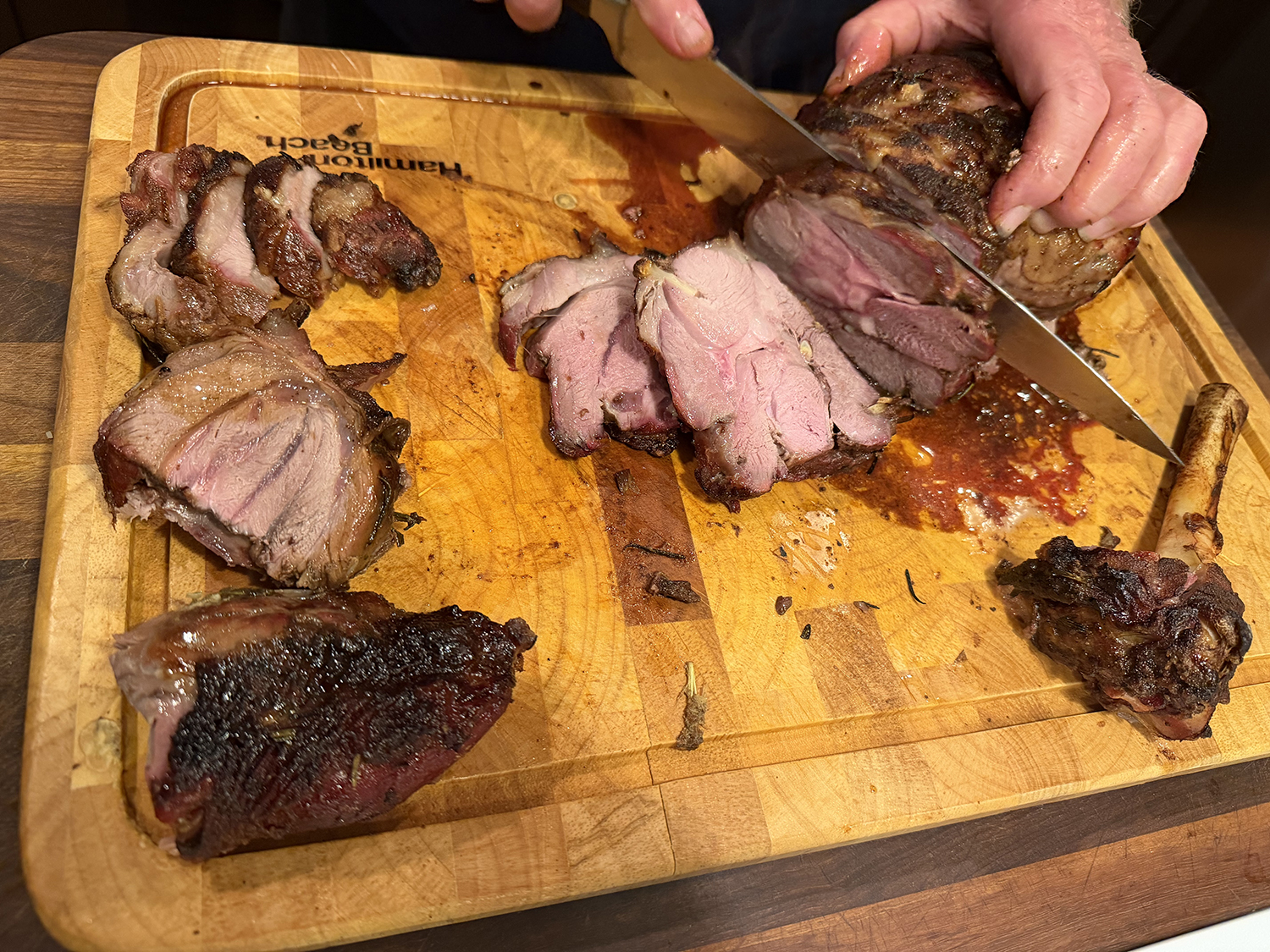
  5. Rest. Remove the lamb to a carving board, preferably one with a trough, to rest for 20 to 35 minutes. Tilt the roasting pan and spoon off as much of the clear fat as you can. Using a wooden spoon, scrape up the pan drippings (if they are too stuck to the pan, add 1⁄4 cup water to dissolve them). Set aside the pan drippings to drizzle over the carved lamb.
  6. Carve and Serve. Carve the leg of lamb and serve drizzled with the pan drippings, or layer the slices in the roasting pan so they soak up the pan juices and serve family-style from the pan.
    If making the optional vinaigrette (recipe below), see Step 3 for carving and serving.

Ingredients

  • 1 lb. rip tomatoes, seeded and finely chopped (about 2 cups)
  • 1⁄2 cup black olives, pitted and finely chopped
  • 3Tbsp. red wine vinegar
  • 1 1⁄2 tsp. fennel seeds, lightly toasted in a dry skillet and coarsely ground
  • freshly ground black pepper
  • 1⁄3 cup extra virgin olive oil
  • 1⁄3 thinly sliced, lightly packed fresh basil leaves

Directions

  1. Make the Vinaigrette. In a medium bowl, combine the tomatoes olives, vinegar and fennel seeds. Season with pepper (salt gets added later). Whisk in the olive oil and set aside.
  2. Roast the as Directed Above. After transferring the lamb to the carving board in Step 5, spoon and pour off as much fat excess fat form the roasting pan as you can. (We used a fat separator to assist.) Using a wooden spoon, scrape up the pan drippings (if they are too stuck to the pan, add 2 to 3 tablespoons water to dissolve them). Add the vinaigrette to the pan, stir to combine with the drippings. Stir in the basil. Taste for salt and pepper. The vinaigrette should be warm, but not hot.
  3. Carve and Serve. Carve the leg of lamb. Add any juices from the carving board to the vinaigrette. Spoon some of the vinaigrette over the slices of meat and serve along with extra vinaigrette in a bowl.
http://www.lynnandruss.com

Recipe by Molly Stevens in her All About Roasting cookbook

Rolled Boneless Leg of Lamb with Green Herb Stuffing

Here is the quintessential roast lamb recipe for a sit-down Sunday dinner party, or family supper. From Molly Stevens “All About Roasting” cookbook—a cherished favorite of ours—this compact bundle of tender, flavorful meat serves 6 on the smaller leg of lamb, or up 10 with a 4 1⁄2 pounder like ours, and all without breaking the bank. (BTW, Costco has real good prices on different cuts of lamb.)

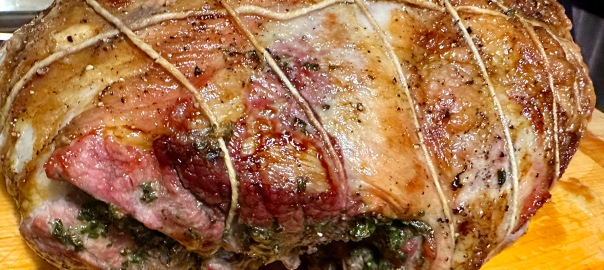
This recipe goes beyond the pure and simple method of just seasoning with salt and pepper. The flavor is bumped up by smearing the butterflied piece of meat with an herb paste, tying it back into a bundle, and roasting for about 1 hour. Our leg of lamb weighed in at 4.8 pounds, so quite a bit larger than the recipe called for. But by cooking it in a convection oven, the roasting time didn’t take much longer.

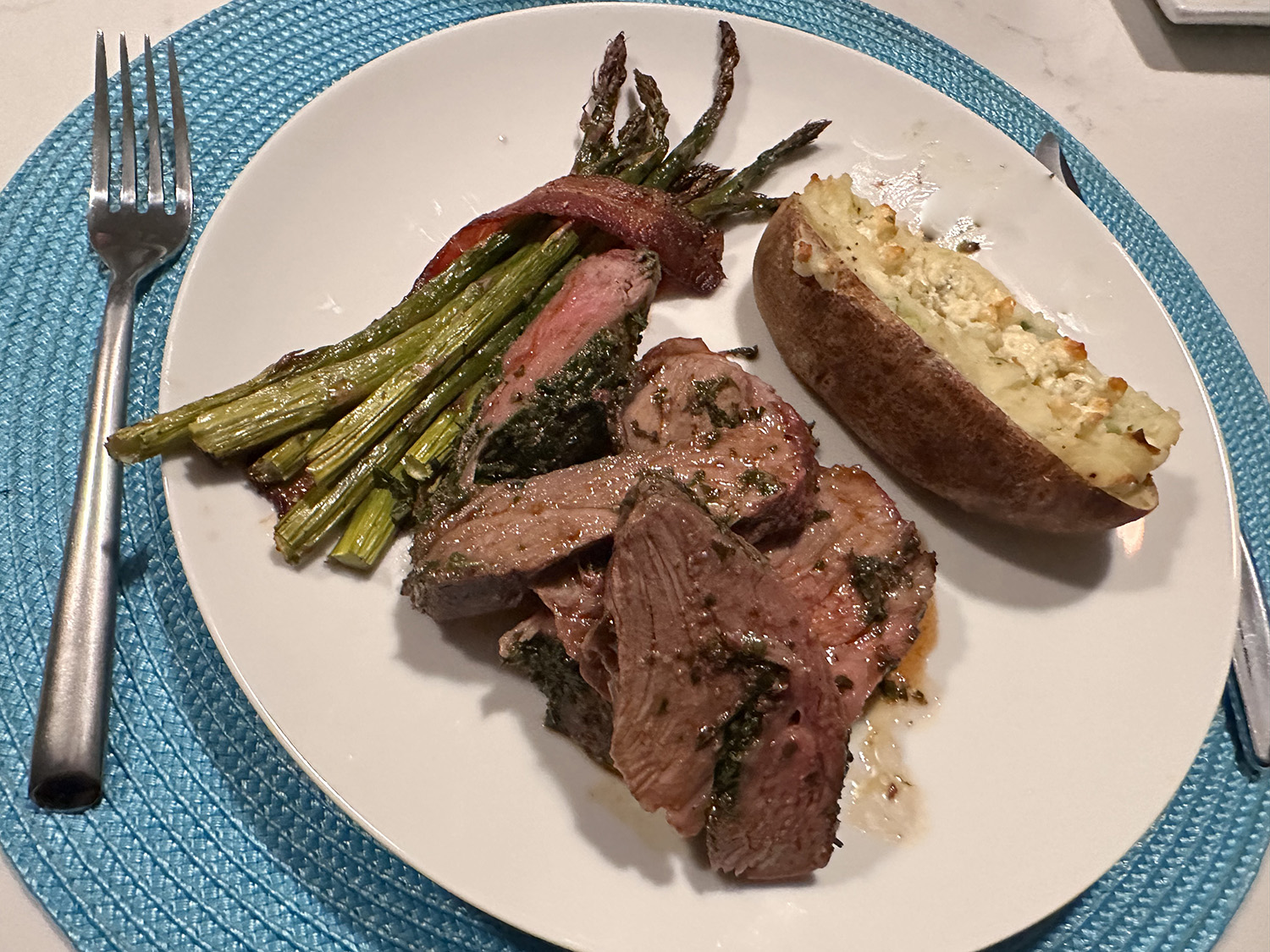
It also made for more servings; which was a good thing because son David and his buddy Mike came over to help lug stuff out of our basement, and they stayed for dinner. The meat was paired with twice-baked potatoes and asparagus bundles wrapped in bacon. Let’s just say, they don’t have “shy” appetites, and they got a doggy bag to take home with them.

Rolled Boneless Leg of Lamb with Green Herb Stuffing

  • Servings: 6 to 8
  • Difficulty: easy
  • Print

Ingredients

  • One 2 1⁄2- to 3-pound butterflied leg of lamb
  • Kosher salt and freshly ground black pepper
  • 1⁄2 cup chicken or beef broth, preferably homemade
  • 1⁄4 cup dry white wine, or dry white vermouth

Directions

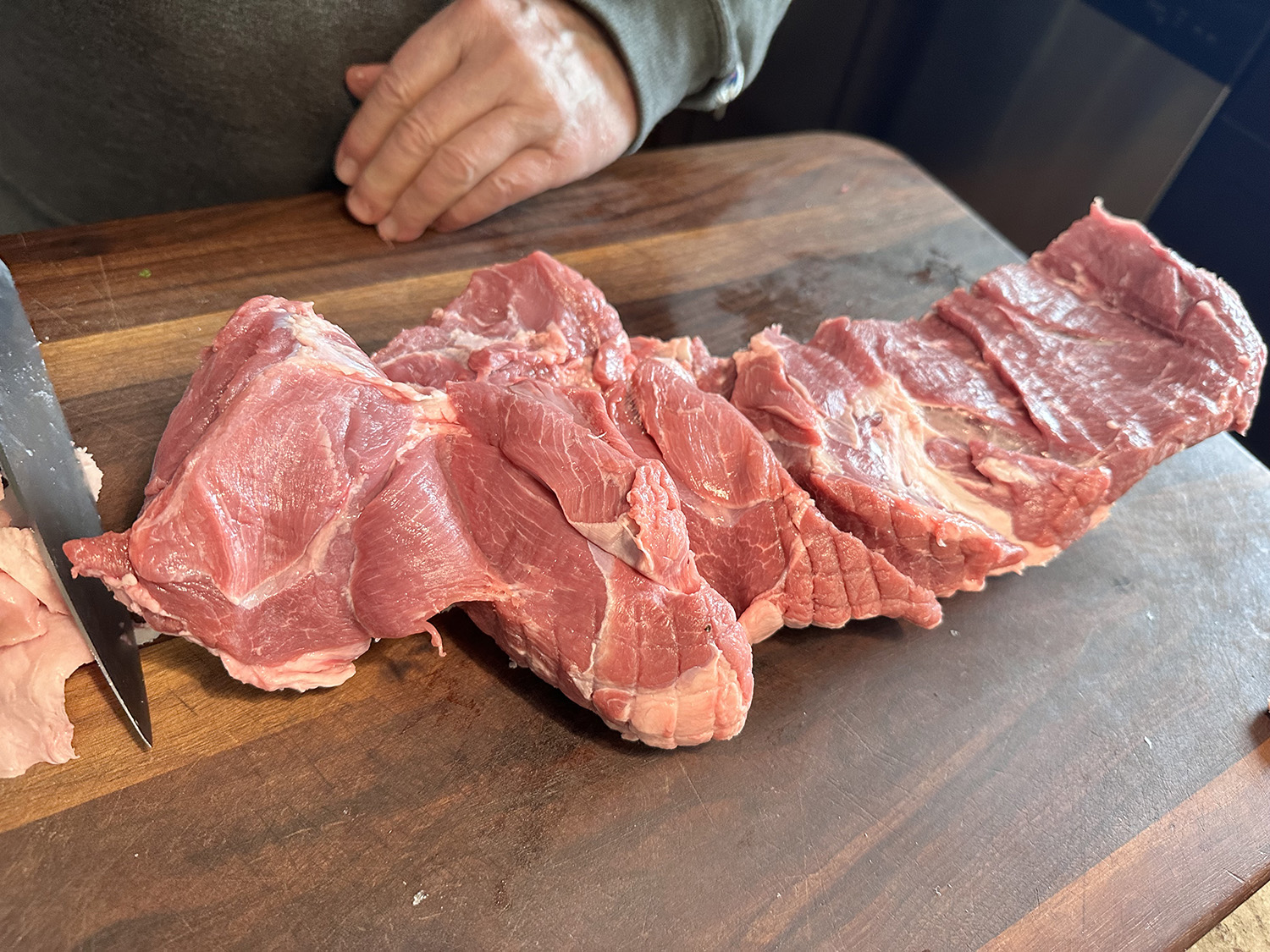
  1. Lay the lamb out flat on a cutting board. Arrange it so the cut side is down and the outside faces up. If there is more than a 1⁄8-inch scant layer of fat, pare it down with a sharp, thin-bladed knife till it just barely covers the meat. Flip the meat and trim away any large clumps of fat from the cut side.
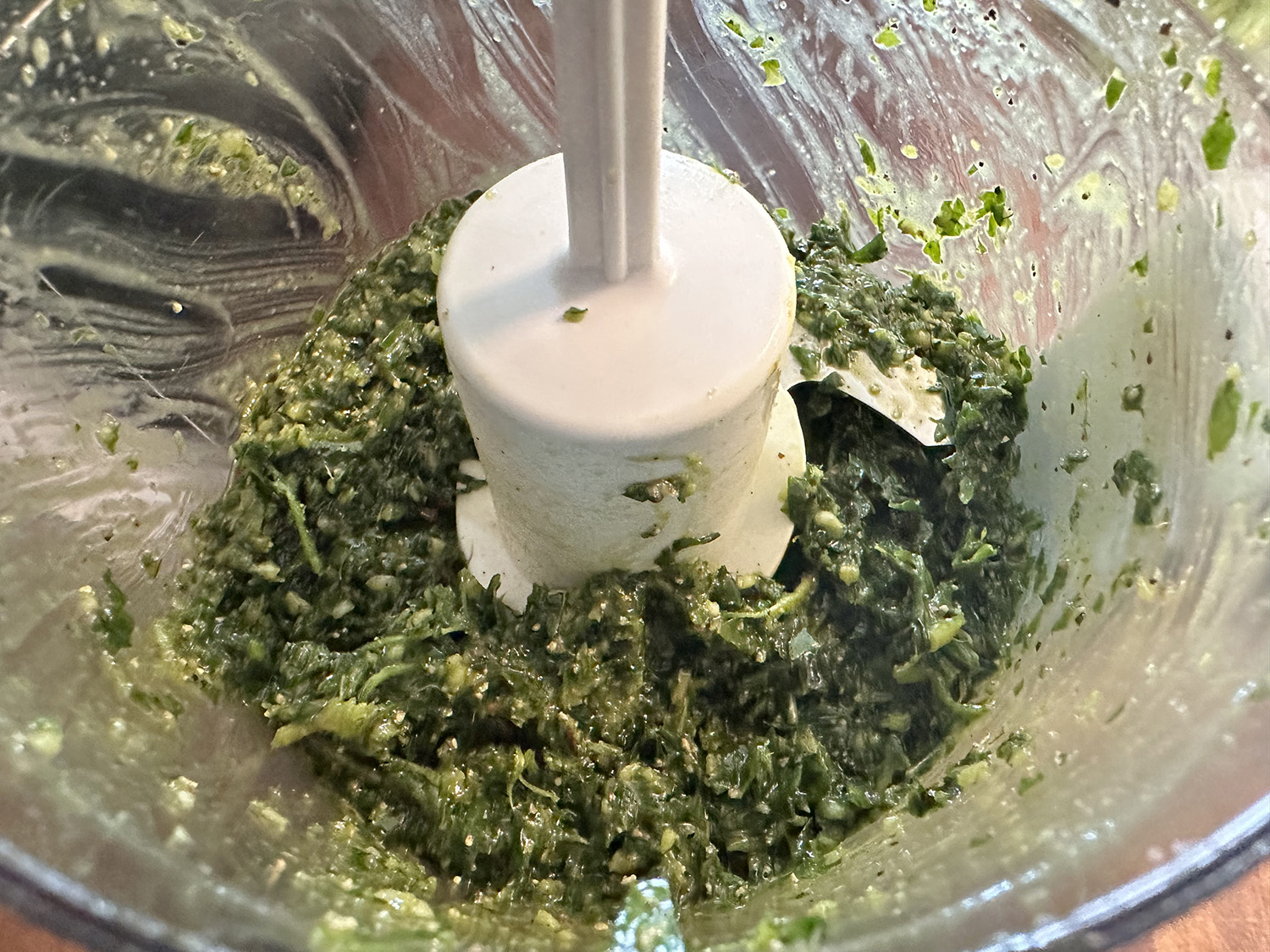
  2. Follow the directions below to make the herb stuffing. Make sure the lamb is skin side down and spread with herb paste.
  3. Roll the lamb into a cylinder so that the grain of the meat runs the length of the roast. Using kichen string, secure the roll by tying loops of string at 1 1⁄2-inch intervalls along its length.
  4. Finish by weaving a long loop of twine through the crosswise loops.
  5. Position a rack in the lower third of the oven and heat to 350°F (235° convection).
  6. Place the lamb on a shallow roasting pan or a heavy-duty rimmed baking sheet just a bit larger than the meat. Roast until an instant-read thermometer inserted into the lamb reaches 120-125° for rare; 130° for medium.
  7. Transfer the leg to a cutting board, preferably one with a trough, and let the meat rest for 20-30 minutes.
  8. If the pan drippings look appealing, and you want to make a pan sauce, start by tilting the and pouring or spooning off the clear fat, stop before you discard any of the drippings, even if this means leaving some fat.
  9. Add the broth or water and the white wine or vermouth. Heat over medium heat, scrapping up the drippings with a wooden spoon. Transfer the sauce to a small saucepan and simmer over medium-high heat until slightly reduced, about 4 minutes. If it seems a bit watery, simmer a bit longer.
  10. Carve the meat into thick or thin slices as you like, removing the kitchen string as you go. Add any carving juices to the sauce and serve.

Green Herb Stuffing

This piquant, verdant stuffing enhances the rich flavor of the lamb and provides a visual contrast to the rosy meat.

Ingredients

  • 3 garlic cloves
  • 1 cup loosely packed fresh flat-leaf parsley
  • 1⁄4 cup loosely packed fresh mint leaves
  • 1 Tbsp. fresh oregano or marjoram leaves
  • 2 anchovy fillets, coarsely chopped
  • 1 tsp. cracked black pepper
  • Kosher salt and freshly ground black pepper
  • 1⁄4 tsp. crushed red pepper flakes
  • 2 Tbsp. extra-virgin olive oil

Directions

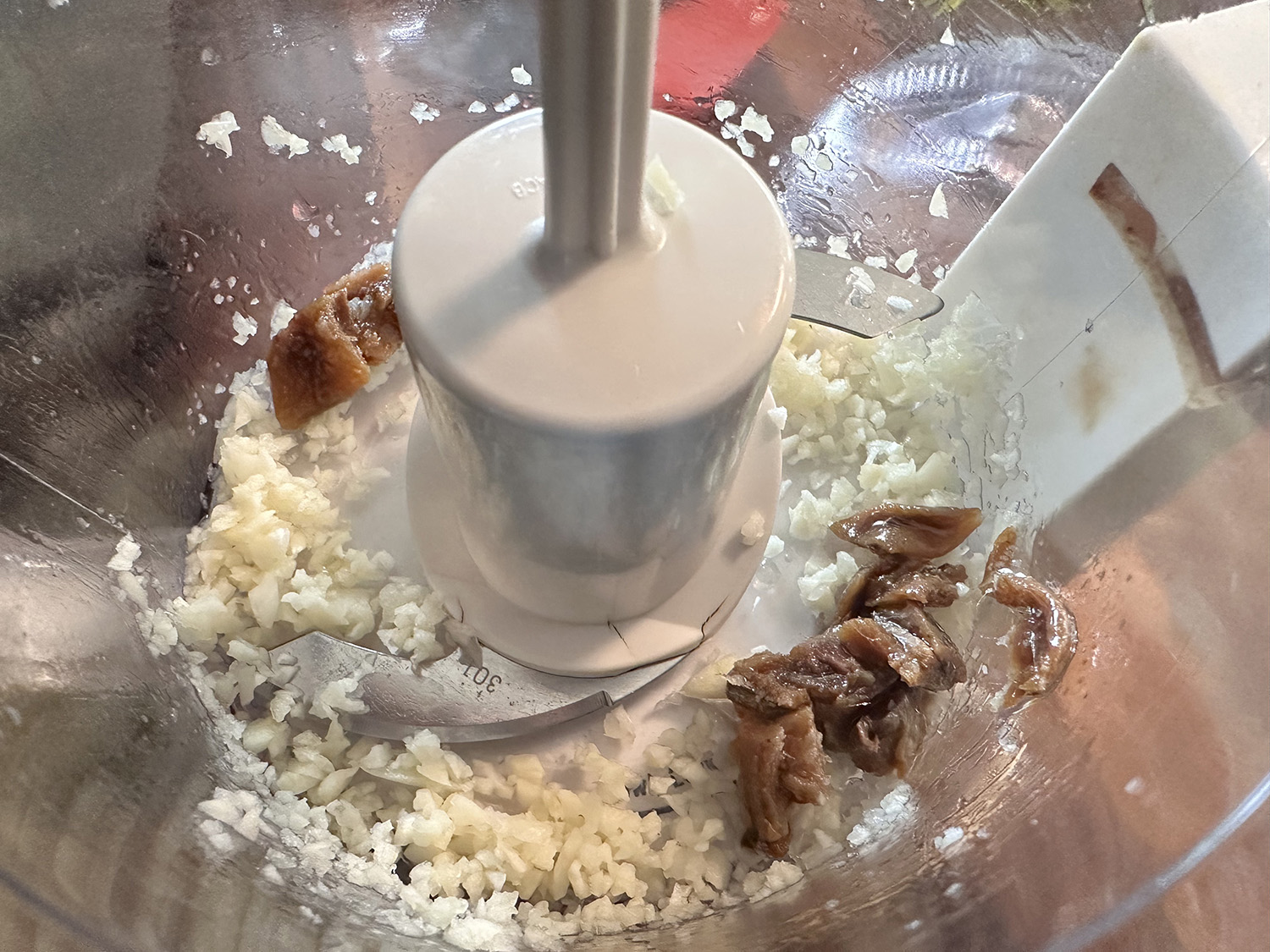
  1. Start the food processor, and with the motor running, drop in the garlic cloves. When finely minced, stop the motor, remove the top, scrape down the sides of the bowl, and add the parsley, mint, oregano, anchovies, cracked black pepper, 3⁄4 teaspoon salt, and red pepper flakes.
  2. Arrange the butterflied leg of lamb skin side down, and spread the herb stuffing all the way to the edges, rubbing it in with your hands to get into any crevices or gaps. Roll and tie the roast with kitchen twine. Gather any herb paste that falls out during rolling and tying and rub it over the surface of the lamb.
  3. Follow the above instructions from Step 5 for roasting the stuffed leg.

http://www.lynnandruss.com

Recipes from “All About Roasting” by Molly Stevens

Pork Loin Roast with Gravy

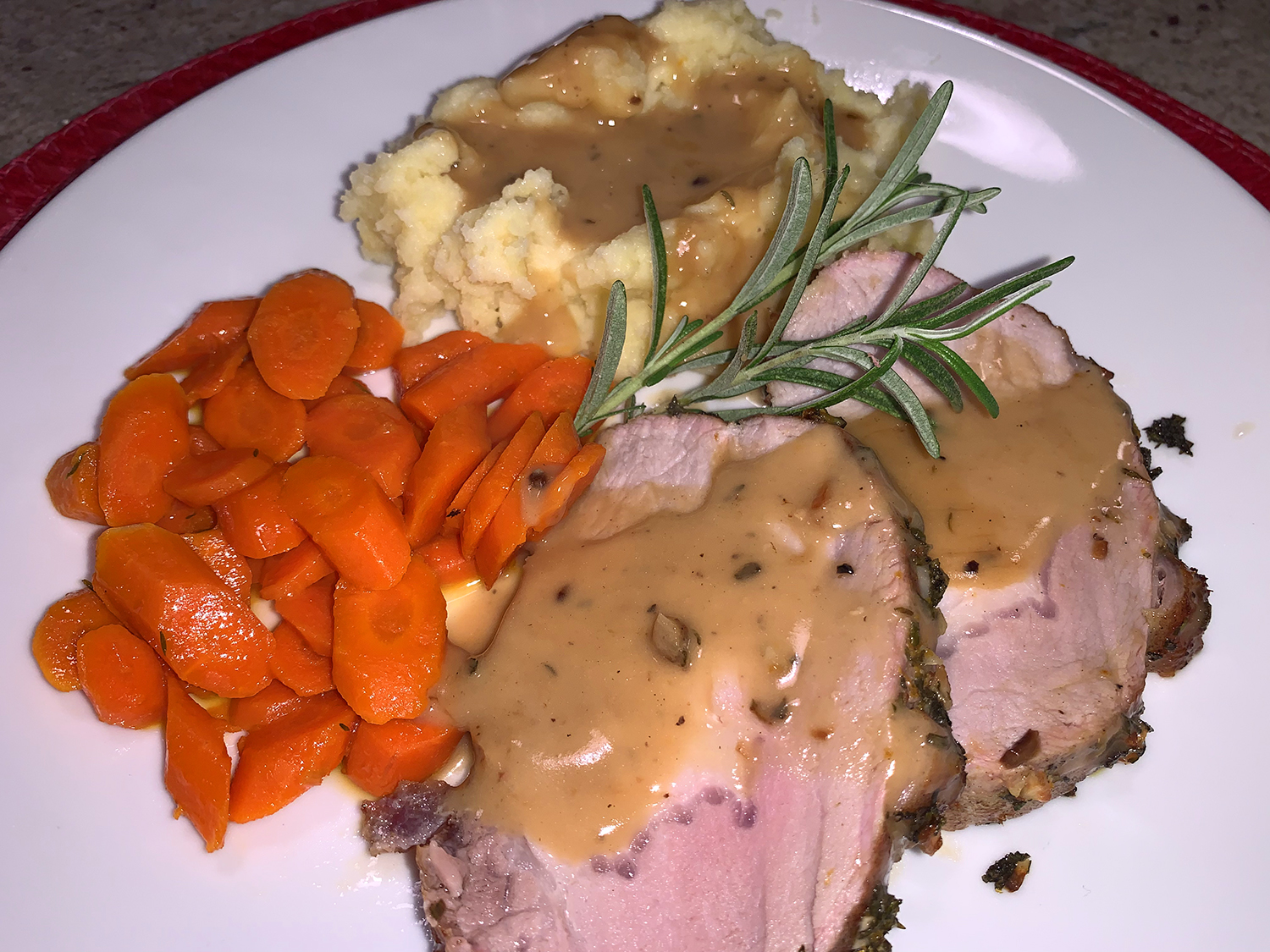
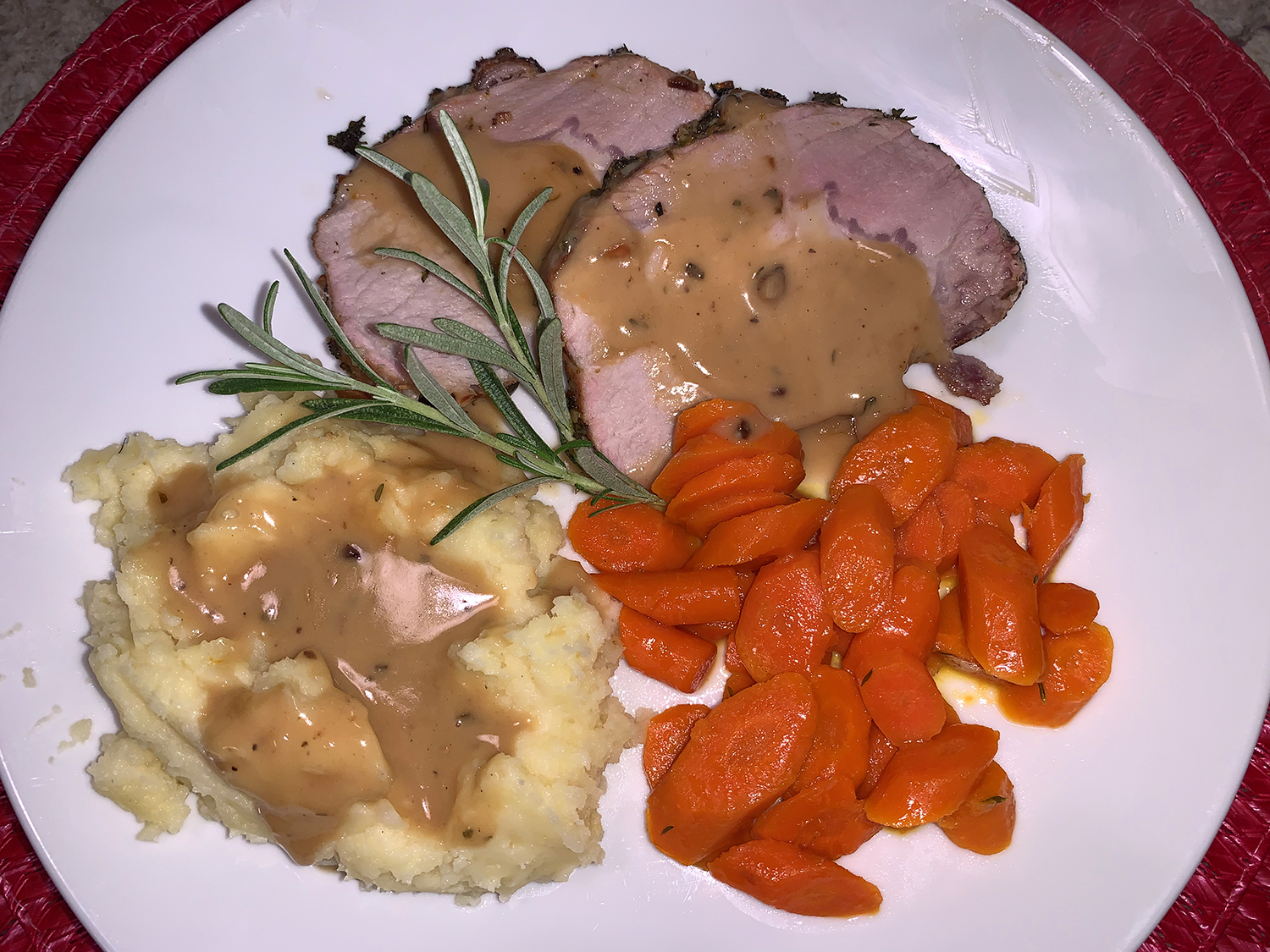
Pork loin roasts up beautifully and finishing it with a little gravy made with the pan drippings adds that much more flavor. Such a perfect meal for cooler weather; make sure to have some mashed potatoes or noodles to ladle the fabulous gravy over. Given the simplicity of effort and the relatively few amount of ingredients, the depth of flavor is incredible!

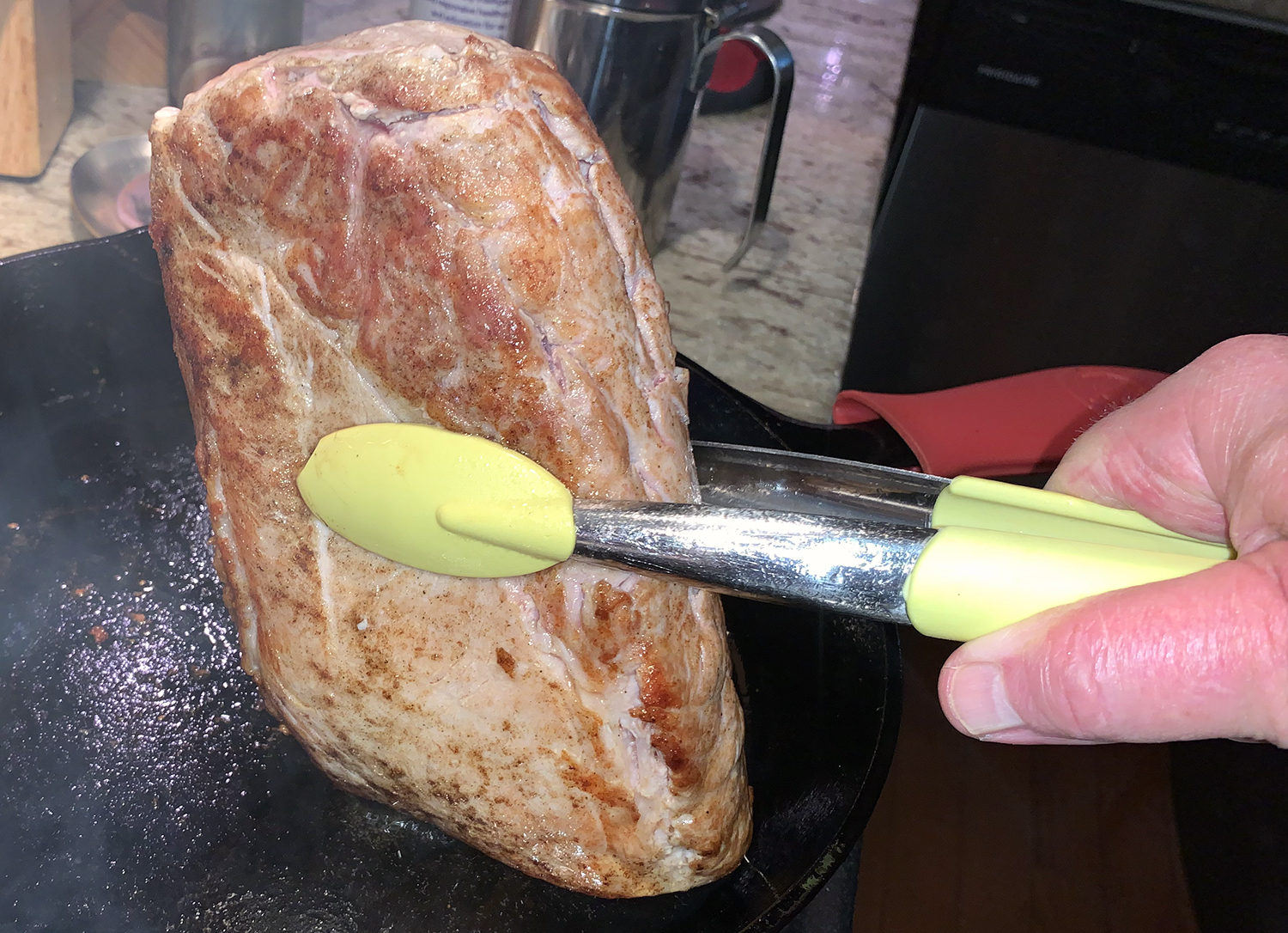
A few notable tips for a perfect roast: It’s helpful to dry first with paper towels to remove extra moisture from exterior so it browns better. Don’t skip searing the pork loin for that extra added layer of flavor. It also seasons the drippings.

A pork loin should be cooked to 145 degrees in the center of the loin with a slightly pink color. Test temperature with a thermometer for doneness rather than guessing or basing it off color.; and be careful not to over-cook or it starts to dry. Finally, let rest before carving to allow juices to evenly distribute so they don’t just end up on the carving board.

To shorten the cooking time, if you have a convention oven option, lower the oven temp to 300°, and cook the meat in about 25% less time. An internal thermometer will let you know exactly when it’s done.
Pork Loin Roast

  • Servings: 6-8
  • Difficulty: easy
  • Print

Ingredients

Roast

  • 3 – 4 lb. pork loin
  • Salt and freshly ground black pepper
  • 2 Tbsp. olive oil, divided
  • 2 tsp. chopped fresh thyme (or 3/4 tsp. dried)
  • 2 tsp. chopped fresh rosemary (or 3/4 tsp. dried)
  • 2 tsp. chopped fresh sage (or 3/4 tsp. dried)
  • 1 1/2 tsp. minced garlic, 4 cloves
  • 1 tsp. lemon zest or orange zest, optional

Gravy

  • 2 Tbsp. butter or olive oil
  • 2 Tbsp. flour
  • Pan drippings from roasting pan
  • 1 cup chicken broth, preferably homemade
  • 2 Tbsp. heavy cream, optional

Directions

  1. Preheat oven to 325 degrees. Heat a 12-inch skillet over medium-high heat (I like to use cast iron for nice browning).
  2. Dab pork loin dry with paper towels and season with salt and pepper.
  3. Heat 1 tablespoon oil in skillet and brown pork on all sides, about 2 minutes per side, including end caps, about 12 minutes total.
  4. Transfer pork to a plate. Let cool a few minutes so it’s not too hot to handle.
  5. Meanwhile in a small bowl stir together remaining 1 tablespoon olive oil with thyme, rosemary, sage, garlic and citrus zest.
  6. Using hands spread mixture over roast (on all sides, note it doesn’t stick perfectly well and that’s ok if some falls from the sides, just sneak it under the roast to season it). Place meat back into skillet and roast with fat side up.
  7. Insert an oven probe thermometer into center of middle area of pork loin (if you don’t have one use a standard probe thermometer to test temperature occasionally).
  8. Bake pork in preheated oven until center registers 145 degrees on thermometer, about 50 to 70 minutes.
  9. Remove from oven, transfer to carving board. Tent roast with foil and let rest 10 minutes. Meanwhile prepare gravy in the same skillet.

For the gravy

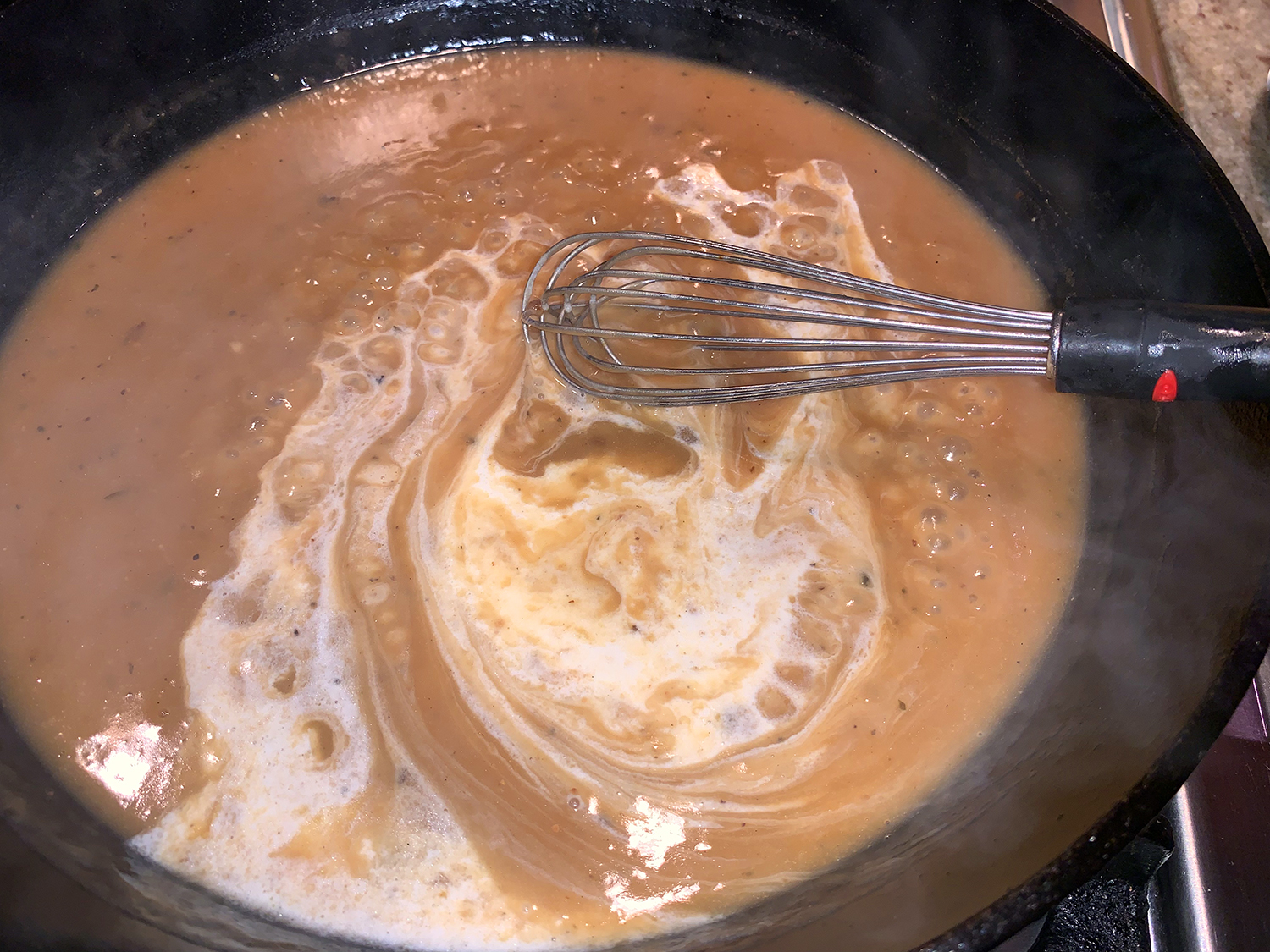
  1. In previously used skillet, melt butter over medium heat. Add flour and cook 1 1/2 minutes, whisking constantly.
  2. While whisking slowly pour in chicken broth and drippings from roasting pan (you should have a few tablespoons, scrape up browned bits). Let cook until thickened, stirring frequently.
  3. Season with salt and pepper as needed. Stir heavy cream in at the end if using.
  4. Slice roast to desired thickness (I like to slice somewhat thin). Serve with gravy atop slices.

http://www.lynnandruss.com

Adapted from a recipe for cookingclassy.com

Bacon-Wrapped Roast Lamb with Anchovy and Garlic

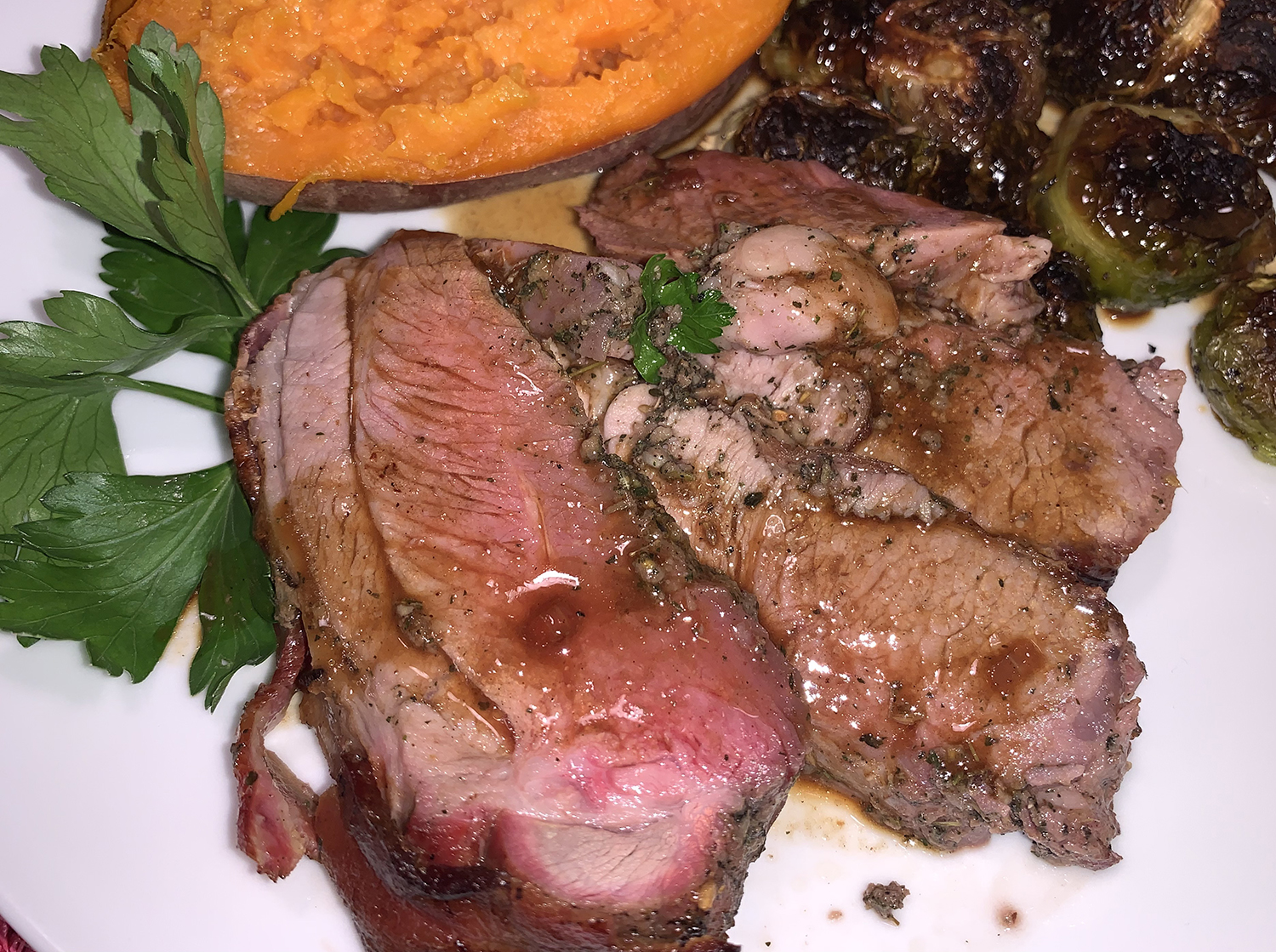
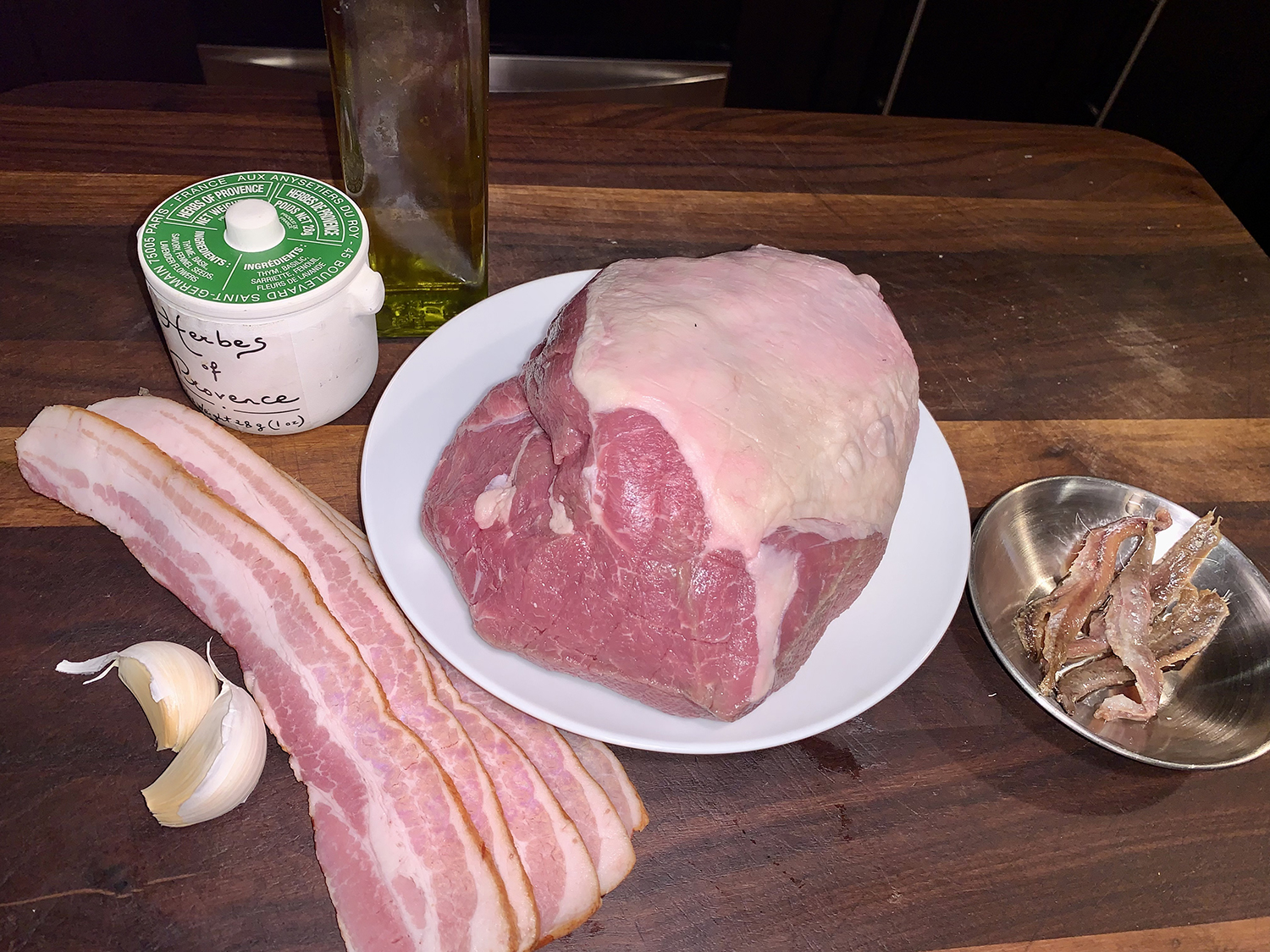
So elegant, yet so simple, this roasted leg of lamb is truly company-worthy. It originally calls for a 4-pound roast, but we had a 2 1⁄2 pounder on hand, so we used that—though we did not cut back on the anchovy-garlic-herbs mixture which lends it so much umami goodness. Even if you are not an anchovy fan, you’d never know they were in the dish because their flavor just melds so perfectly with the other ingredients. DON’T leave them out.

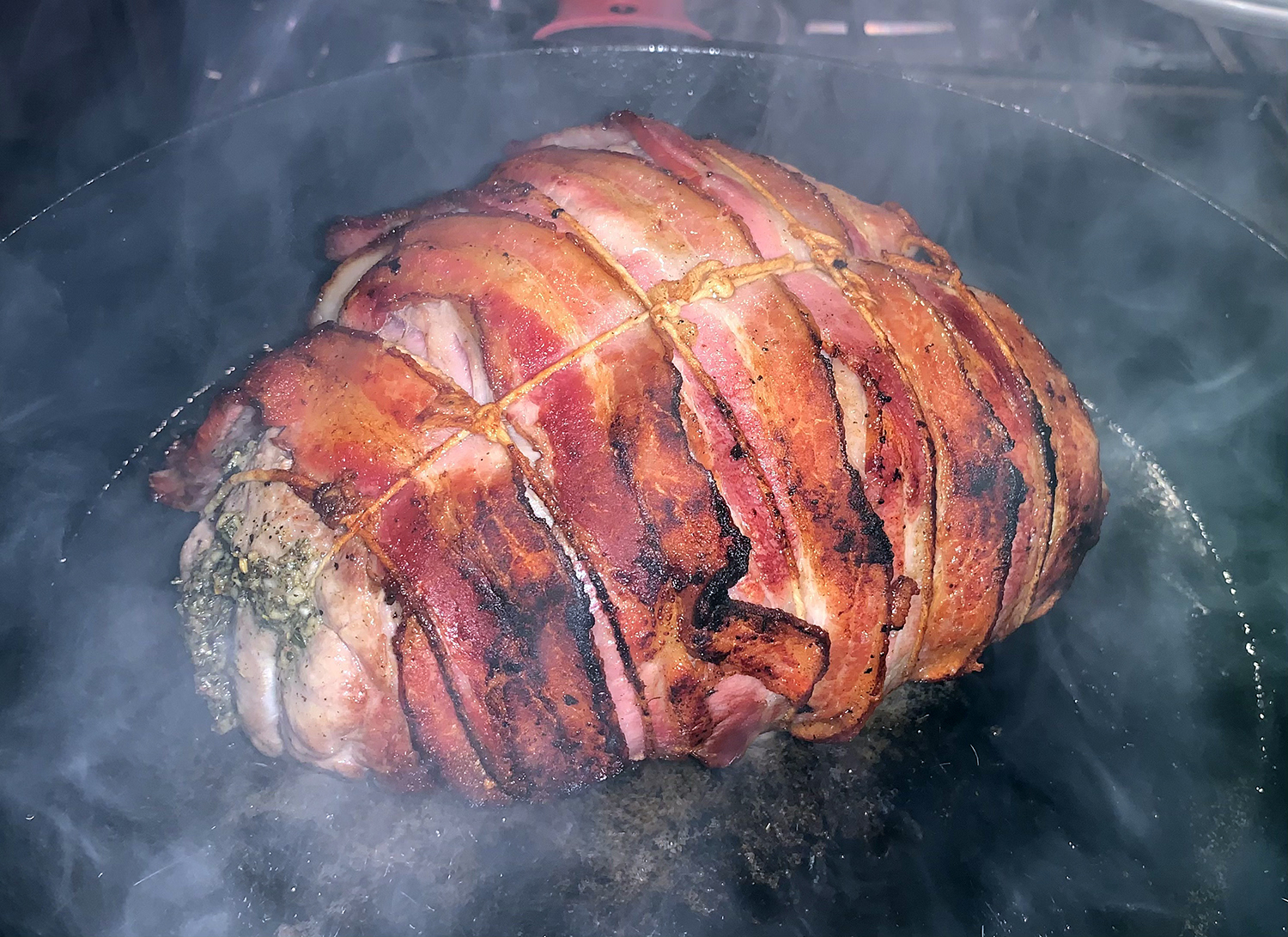
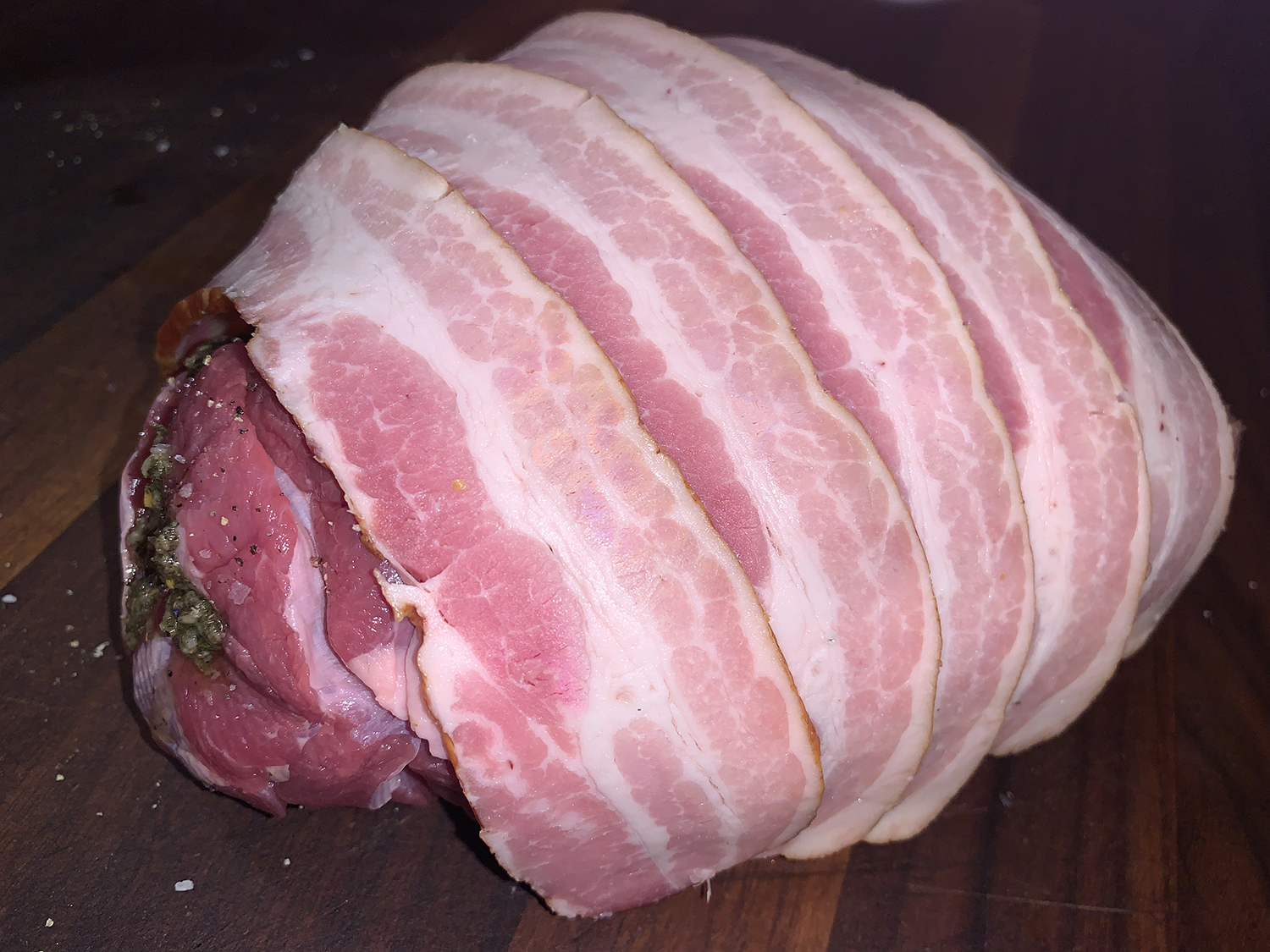
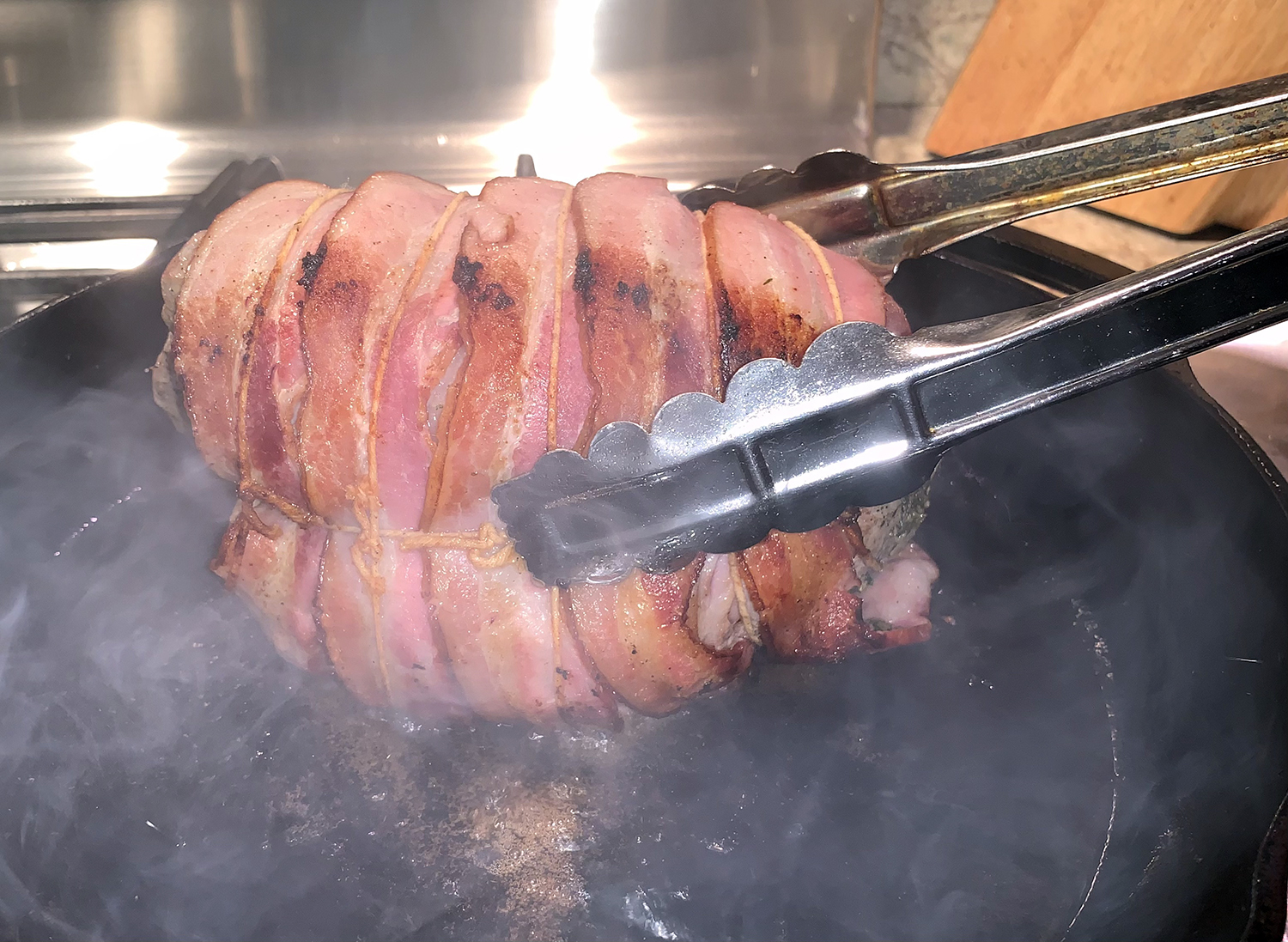
And the icing on the cake so to speak? The bacon slices overlap each other across the top of the roast which create a beautiful crusty and golden exterior. And because our lamb was smaller in size, it took less strips of bacon to cover it.

Paired with baked sweet potatoes and roasted Brussels sprouts, all of which cook at the same 425°F temperature as the lamb—just different lengths of time—everything can be done in just one oven at the same time. Dinner done!

Bacon-Wrapped Roast Lamb with Anchovy and Garlic

  • Servings: 8-10
  • Difficulty: easy
  • Print

Ingredients

  • 4 anchovy fillets
  • 2 large cloves garlic, coarsely chopped
  • 2 Tbsp. herbes de Provence
  • 4 Tbsp. olive oil
  • 4 lbs. leg of lamb, rolled and boneless
  • 12 slices bacon
  • Salt and freshly ground pepper

Directions

  1. Heat oven to 425 degrees. Place anchovy fillets, garlic and herbs in food processor, and process until finely chopped. With machine running, add olive oil in a thin stream, and process until mixture forms an oily paste. Transfer paste to a small bowl and set aside.
  2. Dry the lamb well with paper towels and open flat on work surface. Sprinkle inside of lamb with salt and pepper and spread paste evenly over it. Roll lamb up tightly. Arrange bacon in overlapping slices on top of lamb, and tie roast as snugly as possible with butcher’s twine.
  3. Heat an oven-proof, 10-12 inch wide skillet over high heat 5 minutes. Sear lamb, bacon side down, until brown, about 4 minutes. Turn lamb with tongs and continue searing until all sides are browned, about 12 minutes total.
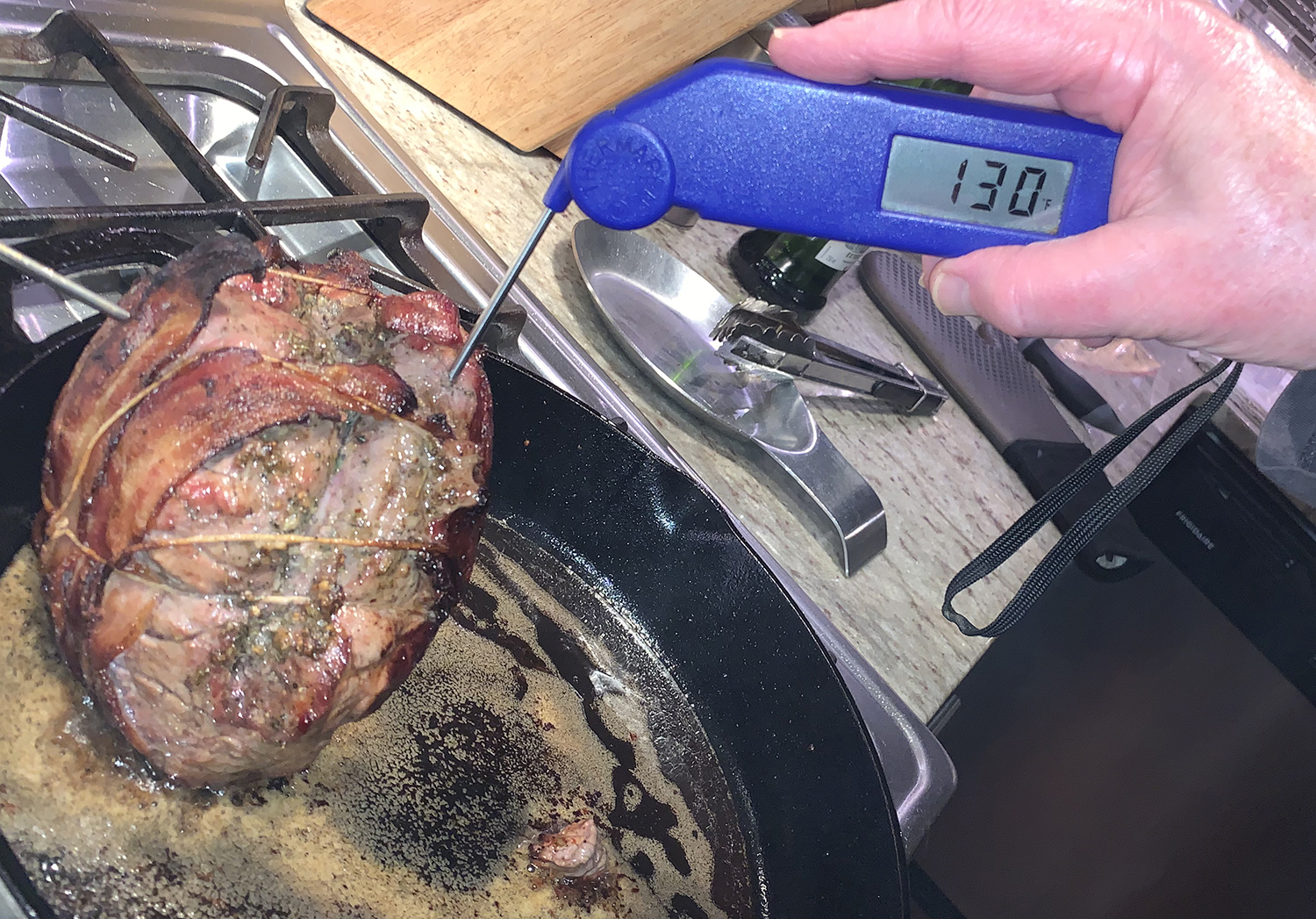
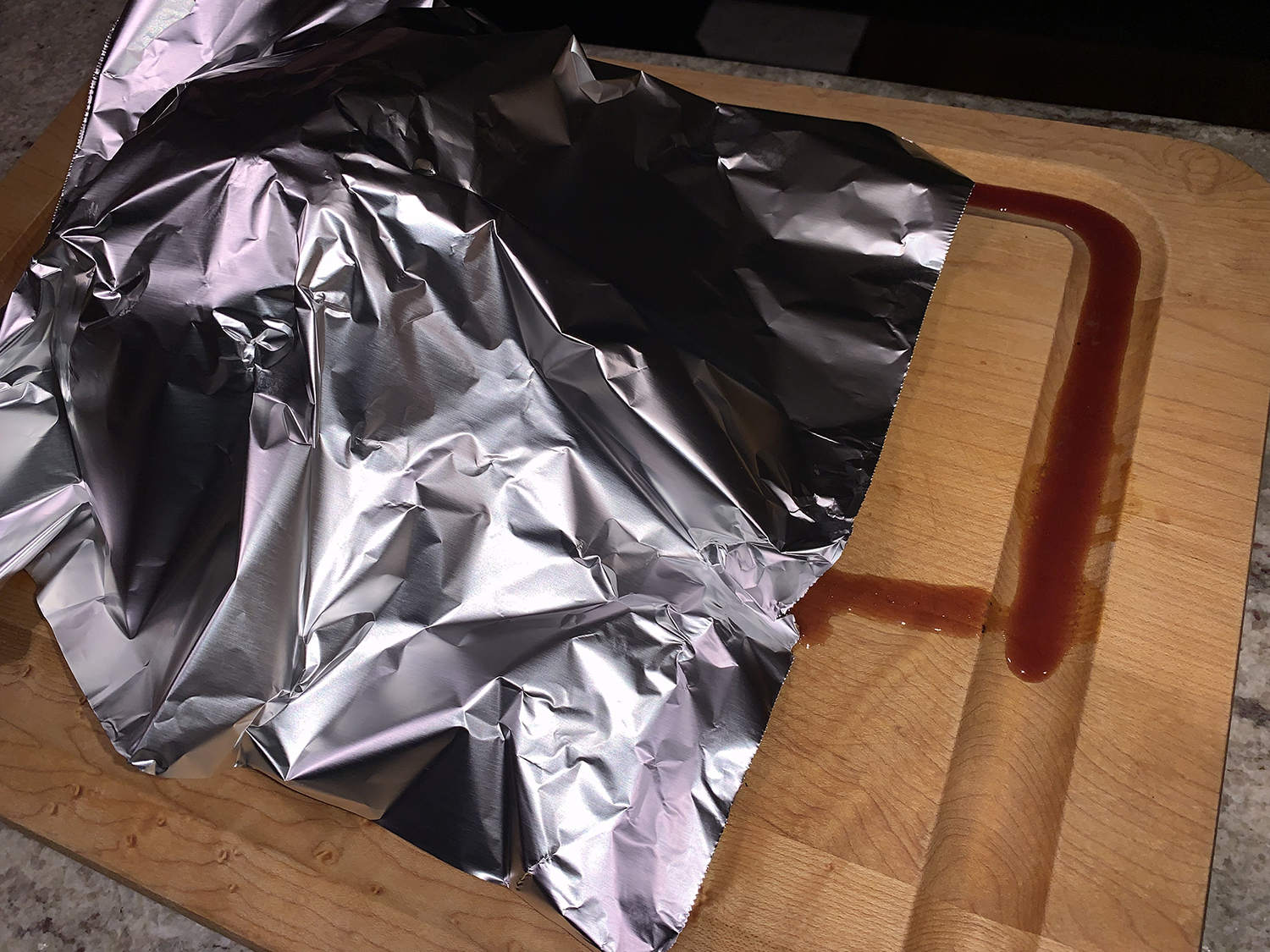
  4. Transfer skillet to oven and roast until lamb registers 130 degrees on instant-read meat thermometer, about 40 to 45 minutes. Remove lamb from oven and let rest, covered loosely with foil, at least 10 minutes before slicing.
  5. Make a pan sauce if desired.

http://www.lynnandruss.com

Recipe from NY Times Cooking