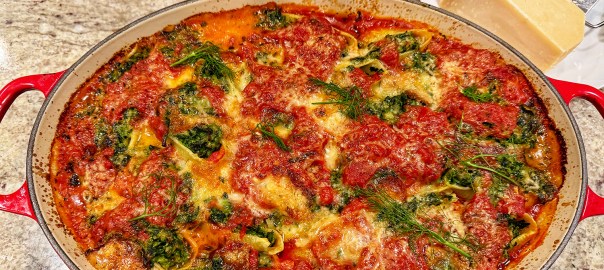
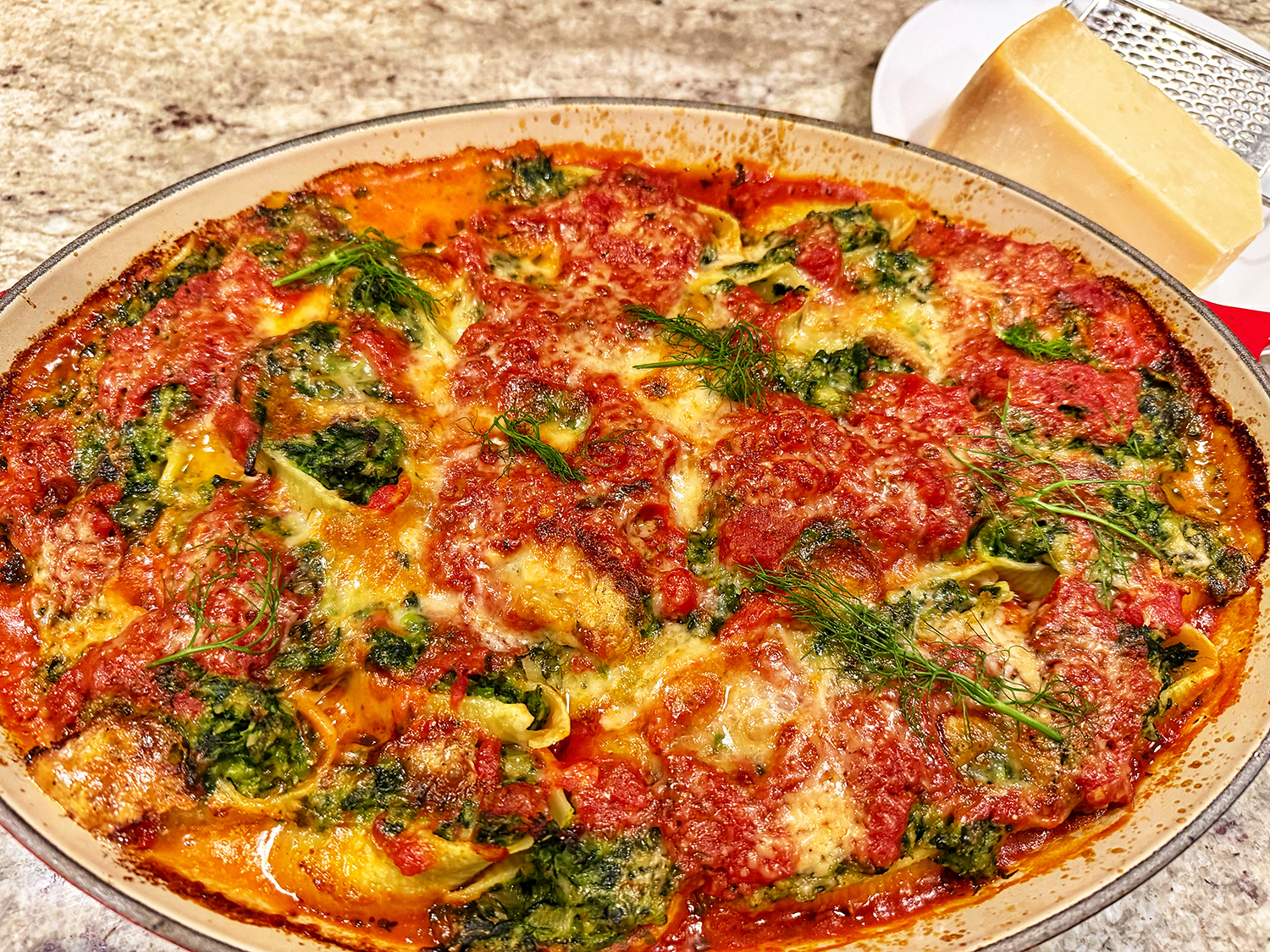
“Sauced with a bright-tasting marinara (the key is cutting the canned tomatoes with passata, Italy’s raw, strained tomato purée) and topped with grated Parmesan and more Taleggio, these stuffed shells deliver all the satisfying coziness of the original—but tastes like a welcome refresh.”
While it is a rather labor-intense undertaking, and uses lots of kitchen pots and appliances, it is a very satisfying, and less heavy vegetarian pasta option. Before even starting, make sure you have a broiler-proof casserole dish such as enameled cast iron, or your vessel could crack under the intense heat of the broiler.
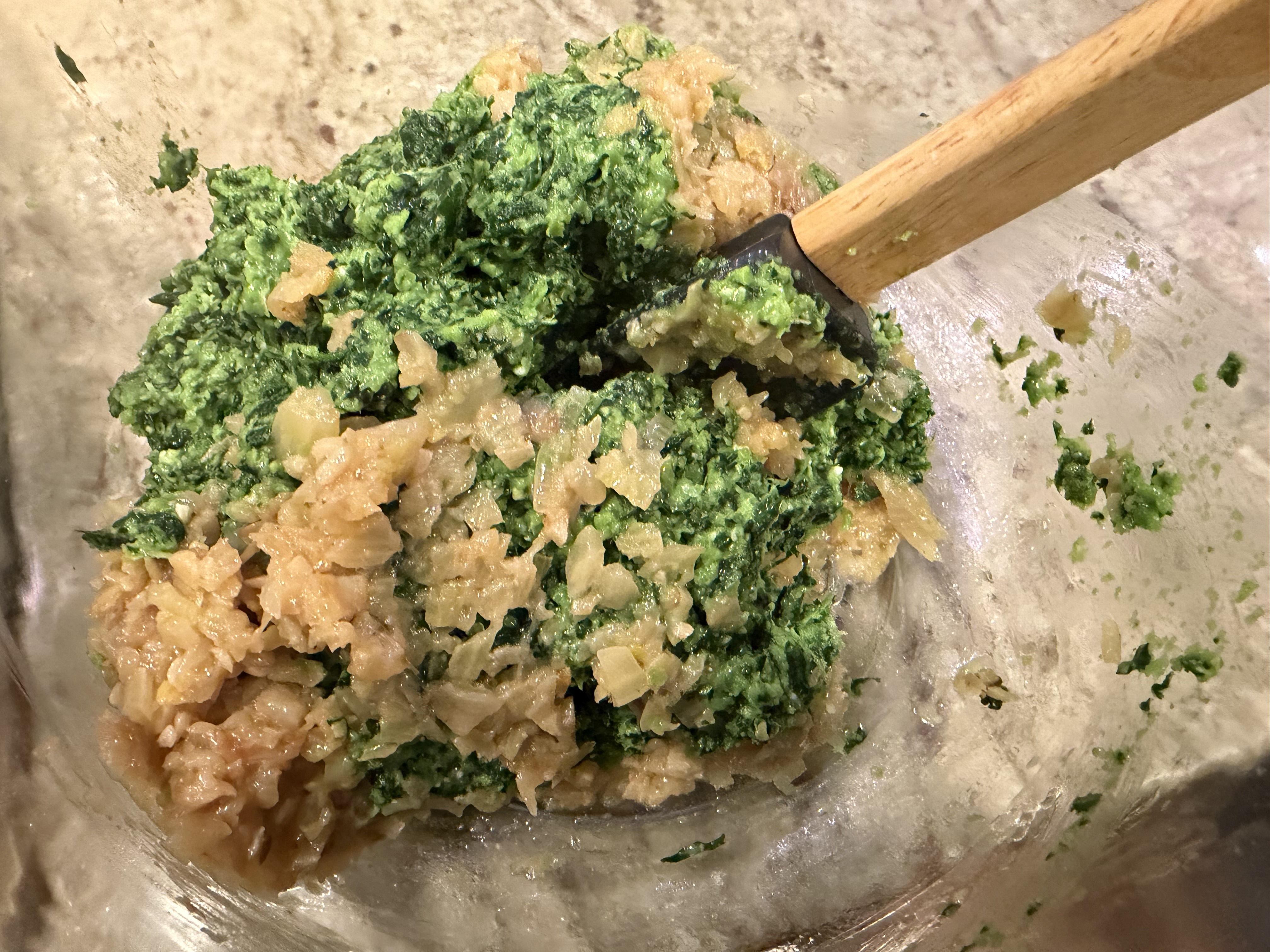
The humble green pea is the star here, thanks to their abundance of water and soluble fiber, which renders them wonderfully smooth when puréed. In addition, a full pound of frozen chopped spinach is added for more green color and freshness. (Freezing breaks open the leaves’ cells, softening them.)
Sautéed fennel, shallot and garlic bring gentle sweetness, and plenty of basil and lemon zest round things out. Taleggio cheese is the binder to give the filling cohesion as well as some richness and adds robust flavor to complement the stuffing. Fontina cheese would make a fine replacement for Taleggio (perhaps even more of it?)

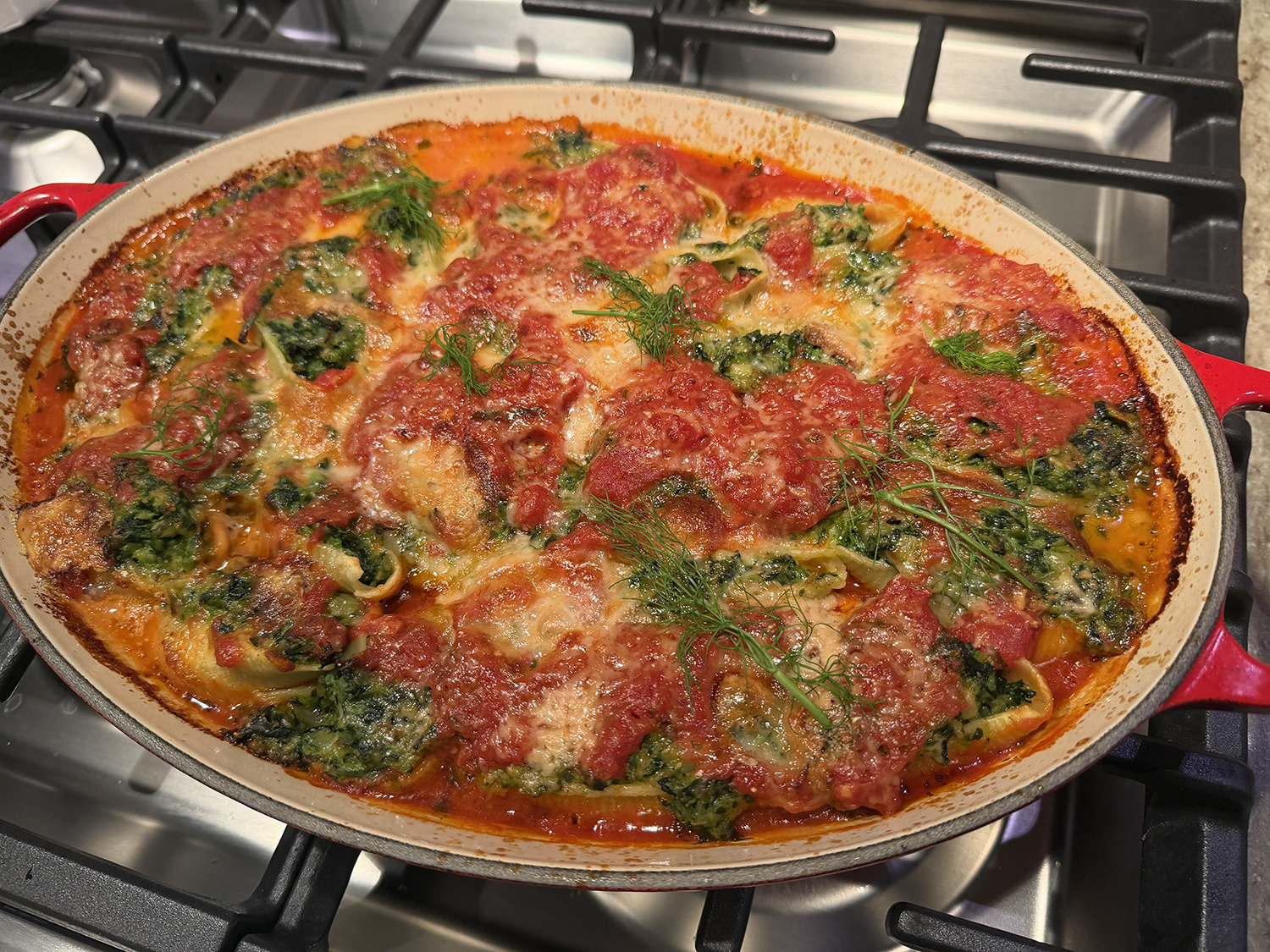
While the recipe calls for a rectangular 9″ x 13″ broiler-proof casserole dish, ours was oval in shape, but still fit exactly 25 jumbo stuffed shells. The unused shells were stored in a seal proof container with a bit of sauce to prevent sticking together, and saved for another use.
TIP: To make the slippery shells easier to fill, hold each lengthwise in your palm and gently squeeze the ends; the center will pop right open!
*BTW, a whole bottle (24 oz.) of passata was inadvertently included in our sauce. But in the end it was a happy mistake, because we liked the additional sauce. We used more in the casserole, and leftovers for passing purposes.

Stuffed Shells with Peas, Spinach and Fennel
Ingredients
Sauce
- 1⁄4 cup extra-virgin olive oil
- 2 garlic cloves minced
- 1 28-oz. can crushed tomatoes
- 1 cup passata (or more, see above*)
- 1⁄2 tsp. red pepper flakes
- 3 Tbsp. chopped fresh basil
- 3⁄4 tsp. table salt
- 1⁄4 tsp. sugar
Filling
- 1 Tbsp. extra-virgin olive oil
- 1 large fennel bulb, stalks discaded, bulb halved, cored, and chopped fine
- 1 lage shallot, peeled, halved and sliced thin
- 2 garlic cloves, minced
- 2 1⁄4 tsp. table salt, divided
- 1 lb. frozen peas, thawed
- 8 oz. Taleggio cheese, rind removed, divided
- 2 tsp. grated lemon zest
- 1⁄4 tsp. pepper
- 1 lb. frozen chopped spinch, thawed and squeezed dry
- 3 Tbsp. chopped fresh basil
Shells
- 12 oz. jumbo pasta shells
- Table salt for cooking pasta
- 1⁄4 cup grated Parmesan cheese






Directions
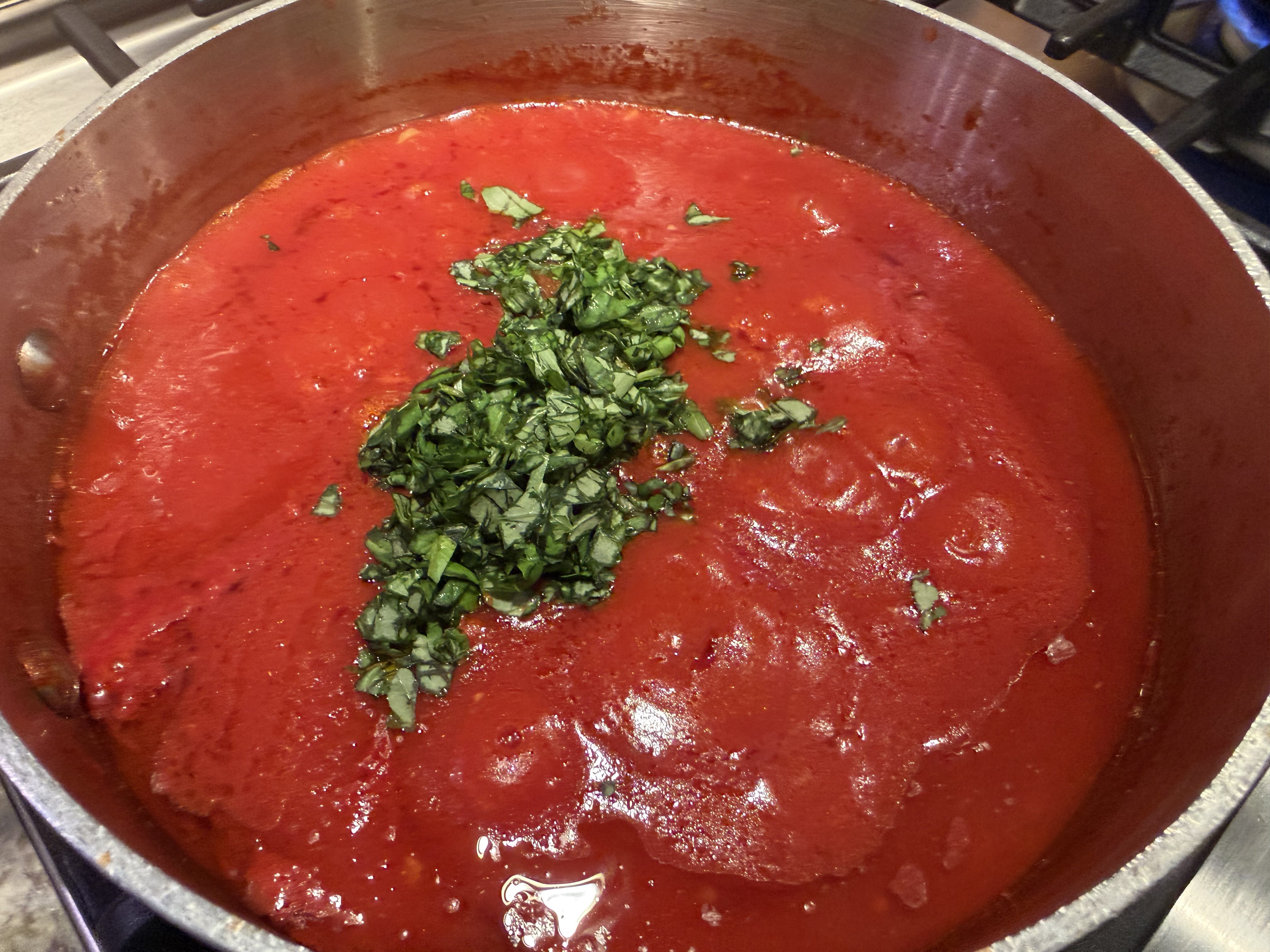
- For the Sauce: Heat oil and garlic in medium sauce pan, over medium heat, stirring frequently, until garlic is fragrant but not browned, about 2 minutes. Stir in tomatoes, passata and pepper flakes and simmer until slightly thickened, about 10 minutes. Stir in basil, salt and sugar. Cover and set aside.
- For the Filling: Heat oil in 12-inch skillet over medium heat until shimmering. Add fennel, shallot, garlic and 1/4 teaspoon salt and cook, stirring frequently, until fennel is translucent and shallot is beginning to brown, about 6 to 8 minutes. Add 1/2 cup of water, cover and cook for 5 minutes. Uncover and continue to cook, stirring frequently, until liquid has evaporated and fennel is crisp-tender and light golden brown, about 5 more minutes.
Process peas in food processor for 15 seconds. Scrape down sides of bowl. Add half of Taleggio, lemon zest, pepper, and remaining 2 teaspoons salt and continue to process until cheese is incorporated and mixture is smooth, 20-30 seconds, scraping down bowl as needed. Add spinach and pulse to incorporate, 5 to 6 pulses. Transfer pea mixture to bowl with fennel, add basil, stir and set aside. - For the Shells: Bring 4 quarts water to boil in large pot. Add pasta and 1 tablespoon salt and cook, stirring occasionally, until al dente, about 9 minutes.Drain pasta and rinse under cold water until cool to touch. Reserve 25 unbroken shells, save the others for another purpose.
Adjust oven rack to middle position and heat oven to 350°F. Spread 2 cups sauce over bottom of 13-by-9 broiler-safe baking dish. Using spoon, fill each shell with about 2 tablespoons of filling. Arrange shells open side up in rows of 5 shells over sauce in dish. Pour remaining sauce evenly (will probably not cover shells completely). Sprinkle with Parmesan cheese. Break remaining Taleggio into small pieces and dot evenly over top. - To Finish: Cover dish slightly with aluminum foil and bake for 35 to 40 minutes until heated through. Remove foil and return dish to oven. Turn on broiler. Broil until sauce is bubbling and cheese is lightly browned, about 5 minutes. Transfer dish to wire rackand let cool for 10 minutes. Serve.
NOTE: Fully assembled shells can be refrigerated for up to 24 hours; increase baking time by 10 minutes.
Recipe by Steve Dunn for Cook’s Illustrated






 Accounting for Taste