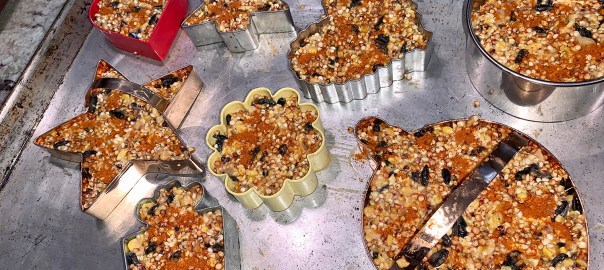
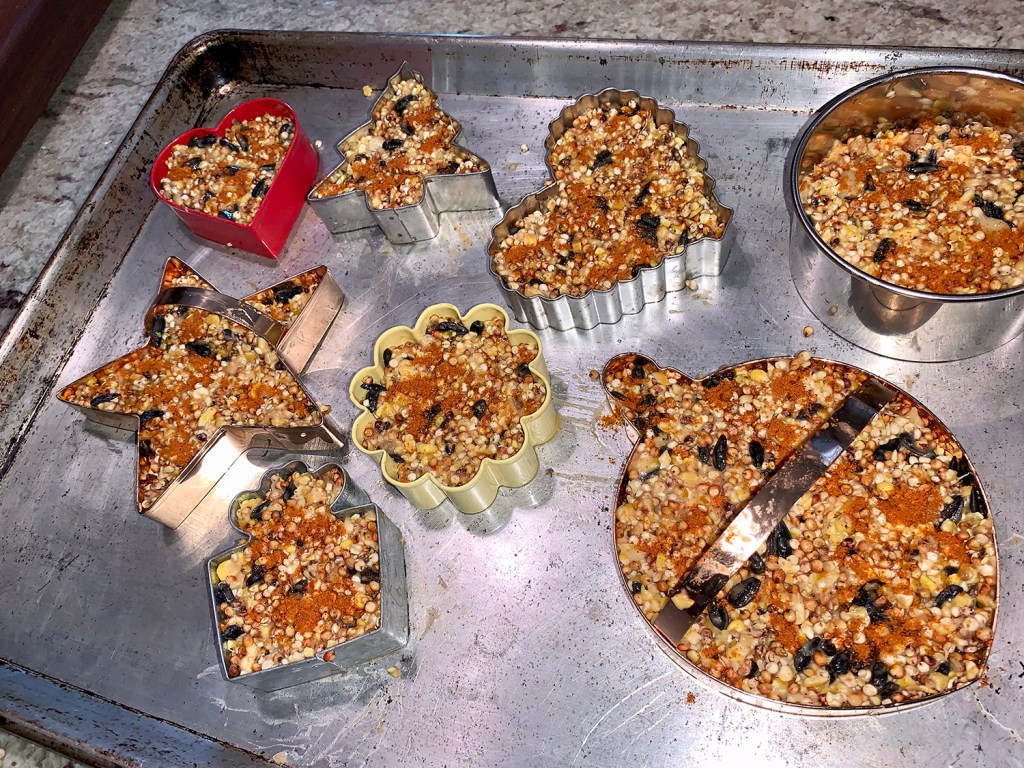
These are great for gifting, even to yourself. Hang them out a window and enjoy the birds that will thank you for a little Christmas treat. I first got the idea from Better Homes & Garden’s recent holiday magazine. However, I made many changes including adding the cayenne to deter squirrels and deer from eating them.
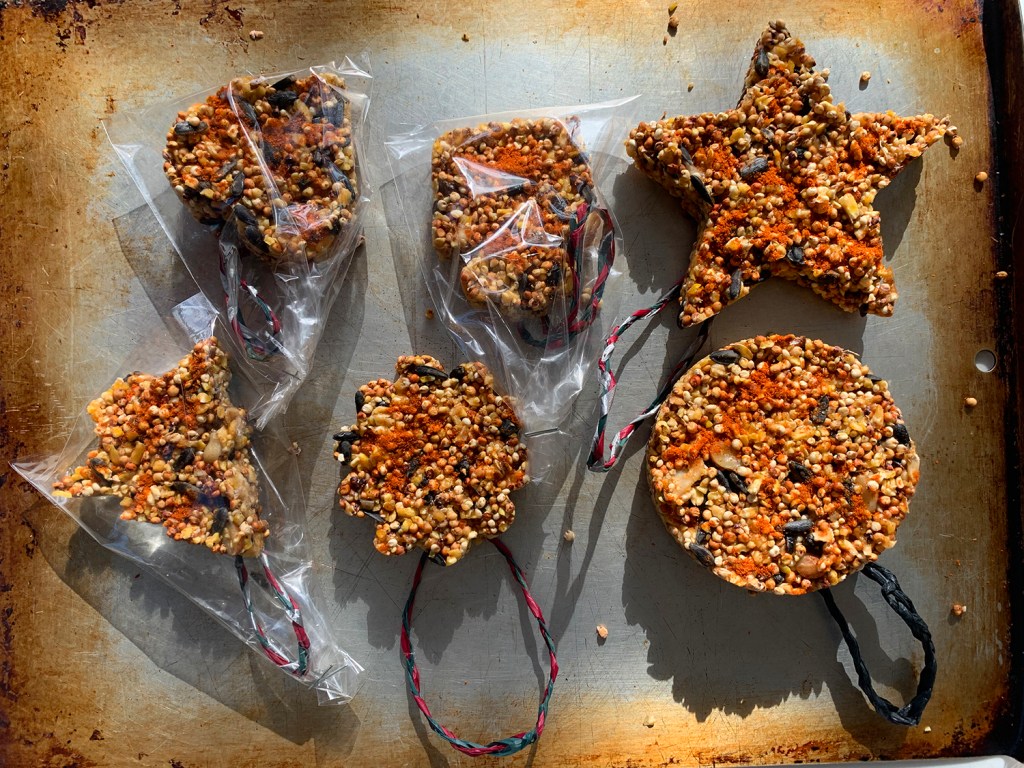
I oiled the inside of each ornament which made them easier to slide out when firm—which takes about 24 hours in a cool zone such as a garage. Trying to poke a hole through each one for hanging purposes, only caused them to crack. Instead, I used a glue gun to adhere raffia to the backs.
Individually wrap in small cellophane bags , if desired.
Winters, whether mild or harsh, are challenging times for birds when food is in short supply. During these cold months they’ll need lots of energy to help them survive the frigid temperatures. That’s where suet feeders come in. The hard white fat you feed to birds is energy.
Russ and I attended a “For the Birds” garden talk about a year ago where fellow avid gardener, Connie Fairchild, did a hilarious demo on making suet cakes. One ingredient not in Connie’s recipe, but that we meant to put in, was cayenne pepper. If you have problems with raccoons, squirrel, opossums or deer eating your suet too, just add about 2-4 tablespoons of ground cayenne pepper to the mix. Birds don’t have the ability to taste hot pepper because they lack the receptor cells that are sensitive to capsaicin.
While we initially followed her recipe, our finished cakes were a bit too soft, although usable. According to a Farmer’s Almanac recipe, they use 2 parts melted fat (bacon, suet or lard), and 1 part peanut butter. This combo would make firmer cakes in my opinion. You can mix up the dry ingredients any which way you want, just keep the same ratio. (Our revised amounts are indicated below.) However, we did include some chia seed that we had leftover.
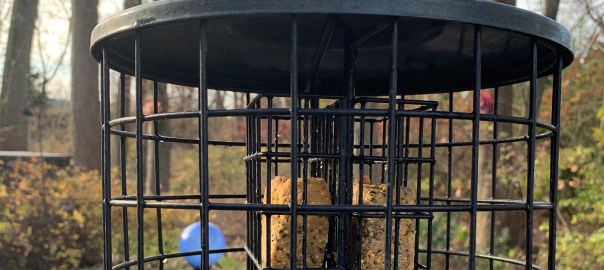
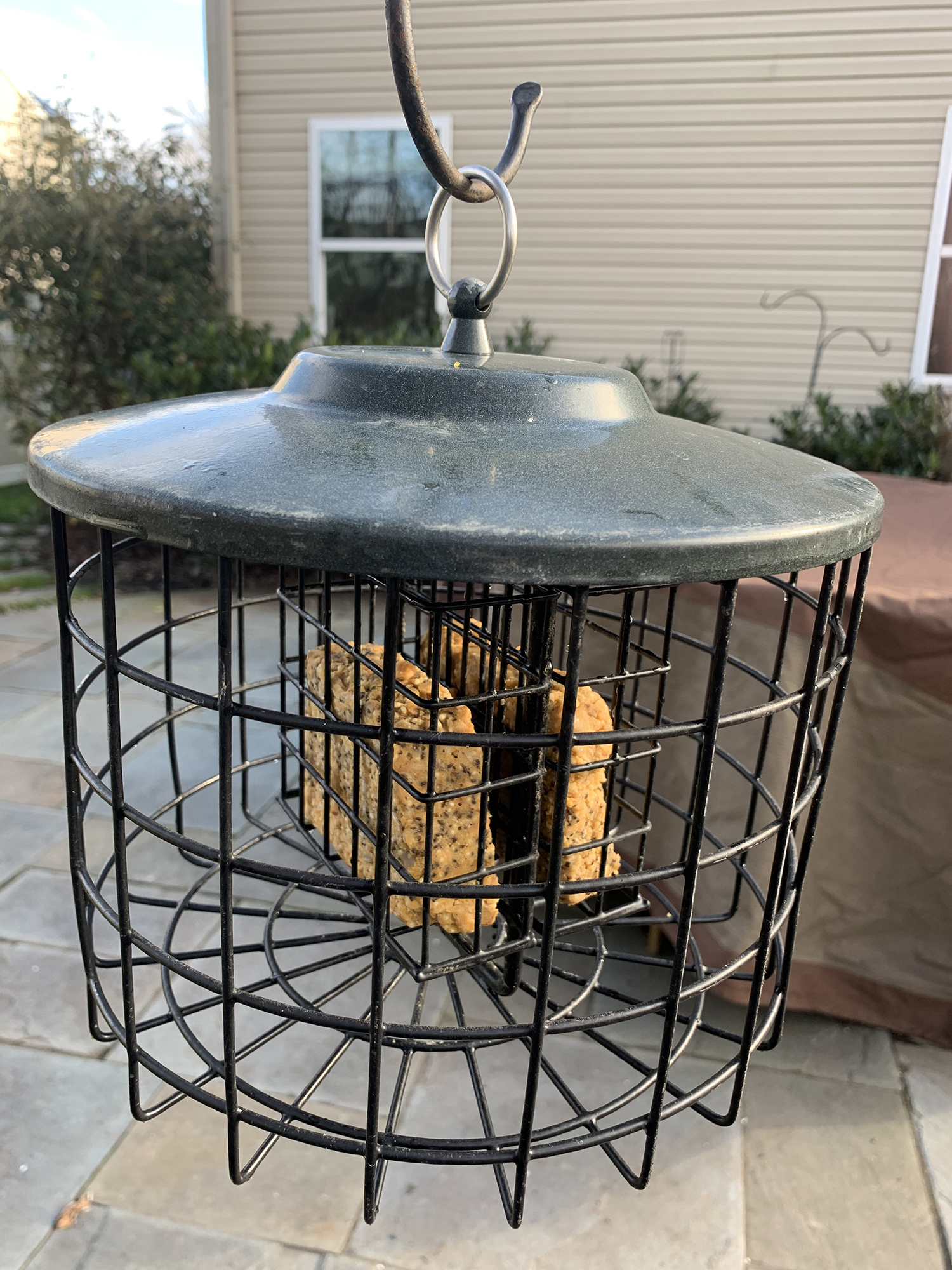
One of our feeders, gifted from another Master Gardner, has two slots for cakes.
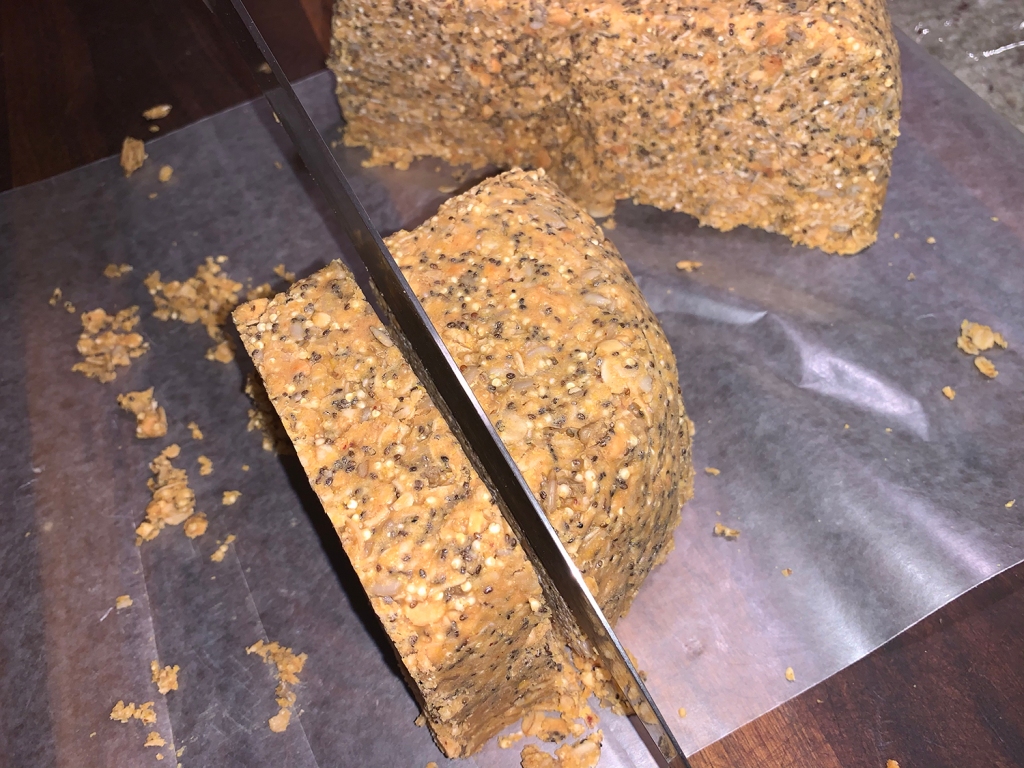
We increased the base recipe by 50% in order to fill our 8 1/2″ x 8 1/2″ x 4″ deep corning ware dish. Even so, the cakes were slightly smaller than the ideal 4 1/2″ x 4 1/2″ slots of our suet cage. At least smaller, they fit in the slots. Don’t make them larger than the openings they are intended for—so do the math first!
Reminder: As suet heats up, its fat can go rancid and harbor fungus and bacteria that can be harmful to birds. Fat and oil can be just as dangerous to birds’ feathers as a toxic oil spill. Melted suet that smears on a bird’s feathers will destroy their natural insulation and waterproofing, making the bird vulnerable to temperature changes and poor weather. There are special suet cakes for warmer weather; these are not suitable.








 Accounting for Taste