Tag Archives: dried fruit

Meatball Tagine

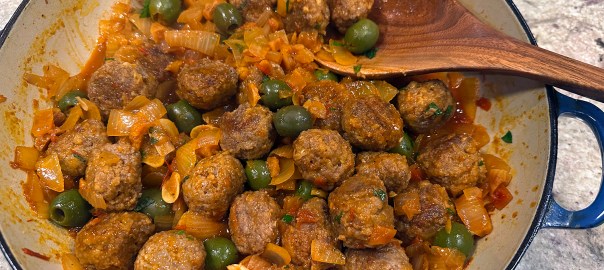
In Bon Appétit’s weeknight-friendly take on Moroccan tagine, it taps classic flavor powerhouses to create the robust sauce: peppery harissa (if yours is mild, you may to throw in a pinch of crushed red pepper flakes for balance), sweet dried fruit, briny olives, and warming spices like cinnamon and cumin. If lamb isn’t your bag, feel free to swap in ground beef or chicken instead. But hey, lamb is our bag!
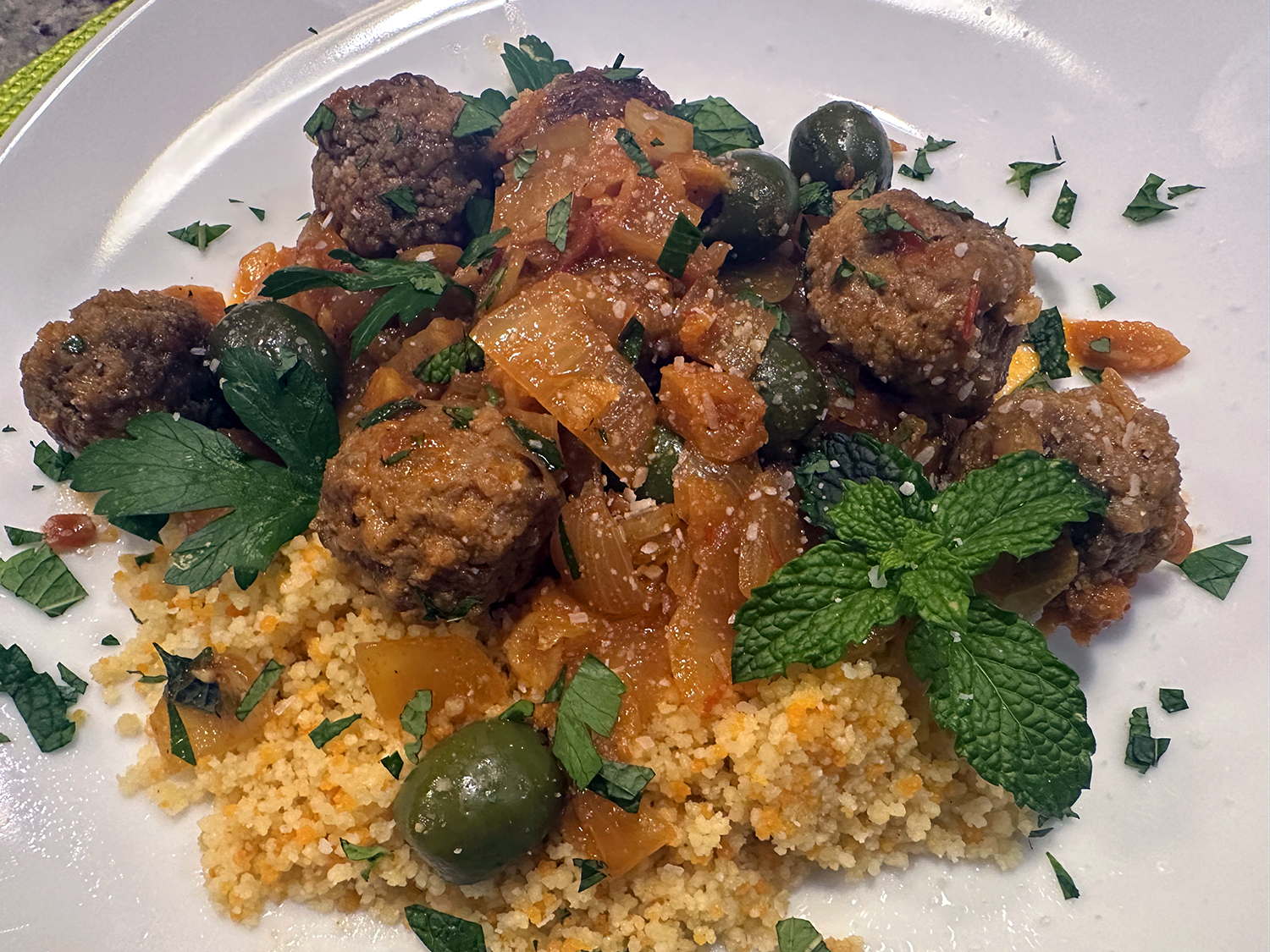
Incorporating dried dates instead of apricots (that’s what we had on hand), will result in a darker sauce. And we made our tri-colored couscous with homemade chicken stock for an additional bump of flavor.

You’ll get about 30 meatballs, so the dish could possible feed a fifth diner.

Ingredients

Meatball Tagine

  • Servings: 4
  • Difficulty: easy
  • Print

  • 1 large egg, beaten to blend
  • 5 garlic cloves, 1 finely grated, 4 thinly sliced
  • 1 lb. ground lamb, OR ground beef or chicken
  • 1 cup panko
  • ½ tsp. smoked paprika
  • ¼ tsp. ground cinnamon
  • 5 Tbsp. extra-virgin olive oil, divided
  • 2 tsp. cumin, divided
  • 1½ tsp. Diamond Crystal or ¾ tsp. Morton kosher salt, divided, plus more
  • 1 large onion, coarsely chopped
  • ½ cup pitted green olives
  • ¼ cup coarsely chopped pitted Medjool dates, OR dried apricots
  • ⅓ cup mild (or spicy) harissa paste
  • Freshly ground pepper
  • 2 Tbsp. red wine vinegar
  • Cooked Moroccan couscous, mint leaves, and parsley leaves with tender stems (for serving)
Directions

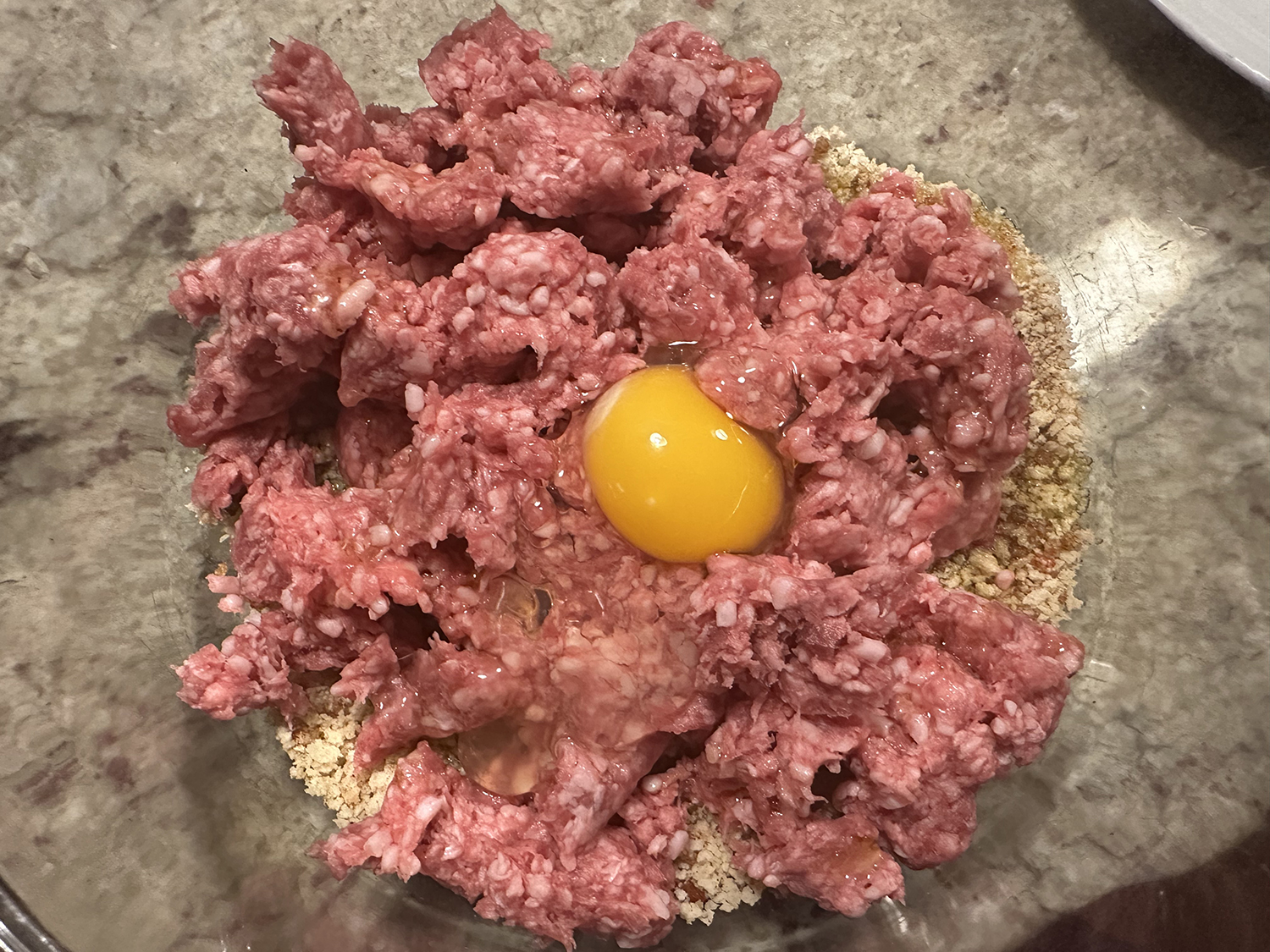
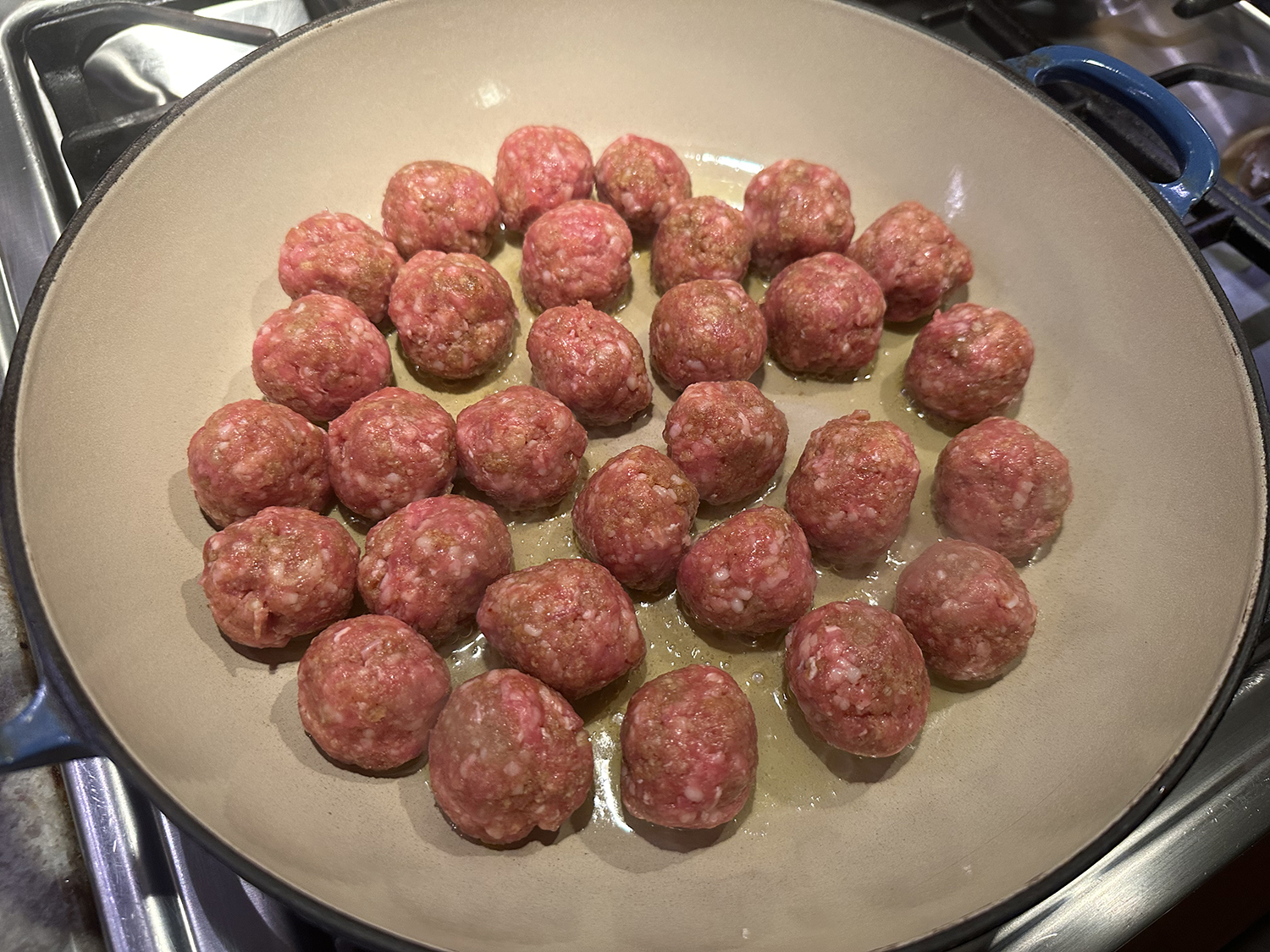
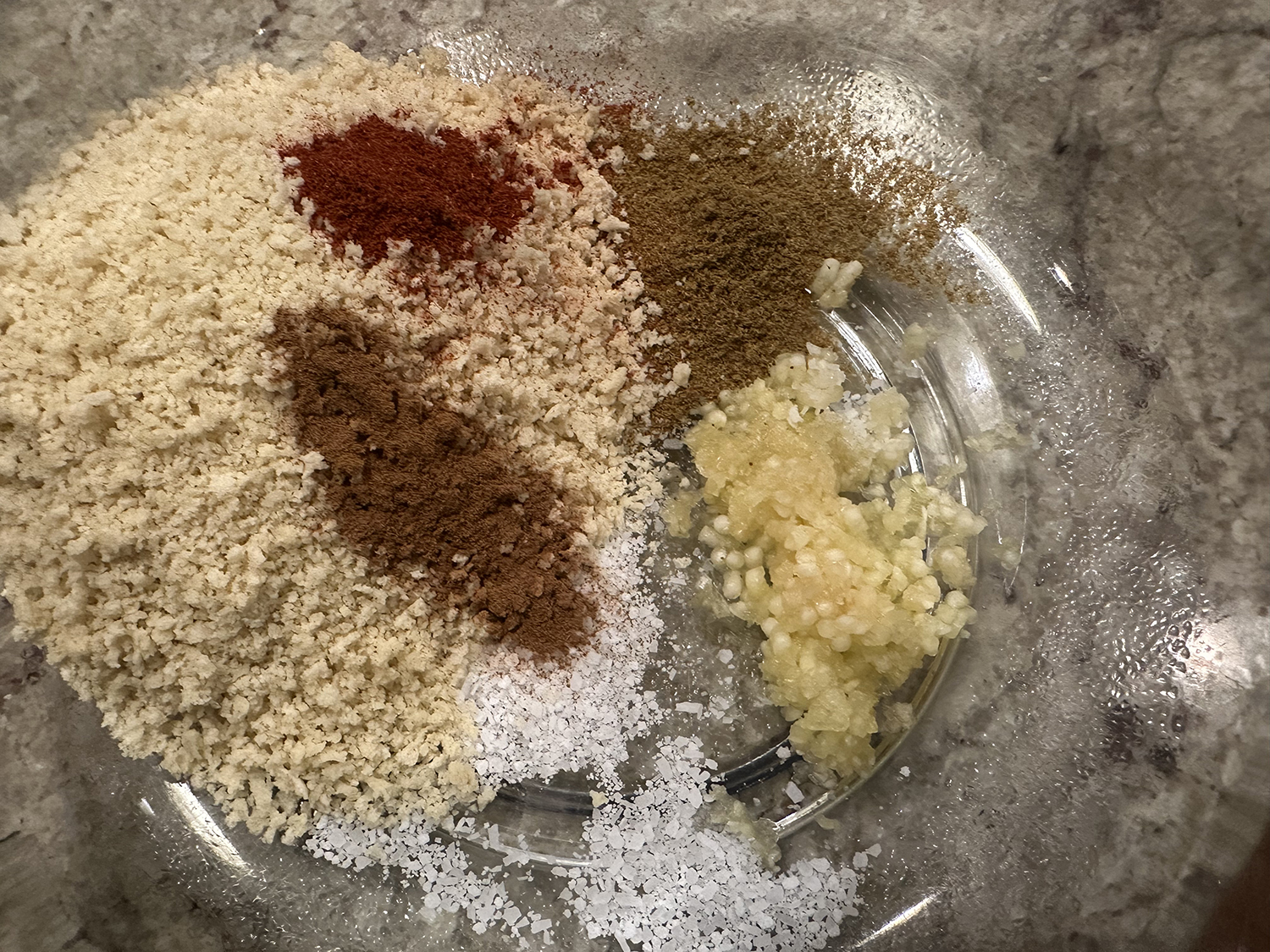
  1. Place 1 large egg, beaten to blend, 1 garlic clove, finely grated, 1 lb. ground lamb, 1 cup panko, ½ tsp. smoked paprika, ¼ tsp. ground cinnamon, 3 Tbsp. extra-virgin olive oil, 1 tsp. cumin, 1 tsp. Diamond Crystal or ½ tsp. Morton kosher salt, and 1 Tbsp. water in a large bowl. Using your hands, gently mix until combined, then break into golf-ball-size pieces and roll into balls.
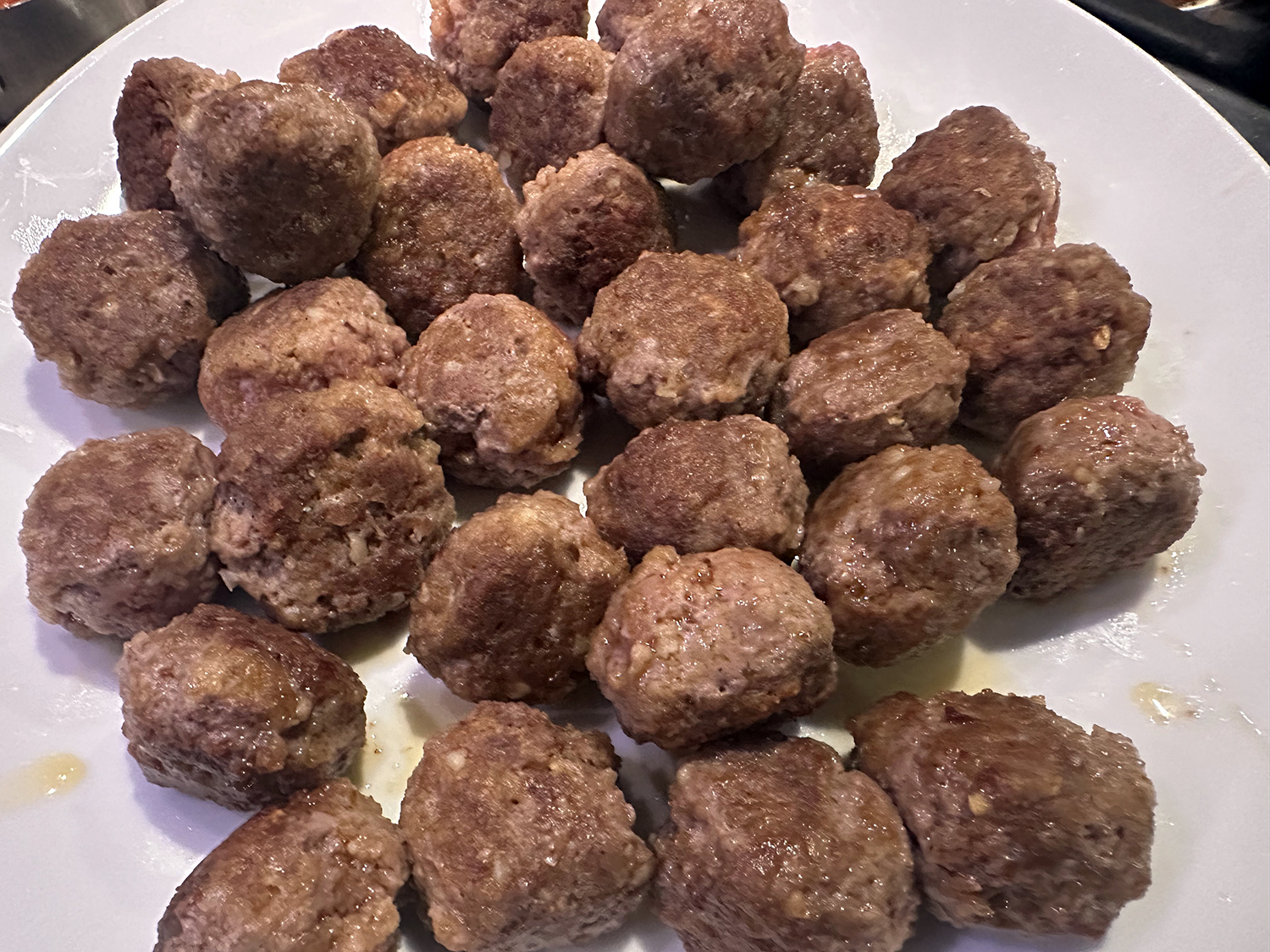
  2. Heat remaining 2 Tbsp. extra-virgin olive oil in a medium Dutch oven or other heavy pot over medium-high. Cook meatballs in a single layer, undisturbed, until browned underneath, about 3 minutes. Turn over and cook until browned underneath, about 3 minutes (they will not be cooked through). Using a slotted spoon, transfer meatballs to a plate.
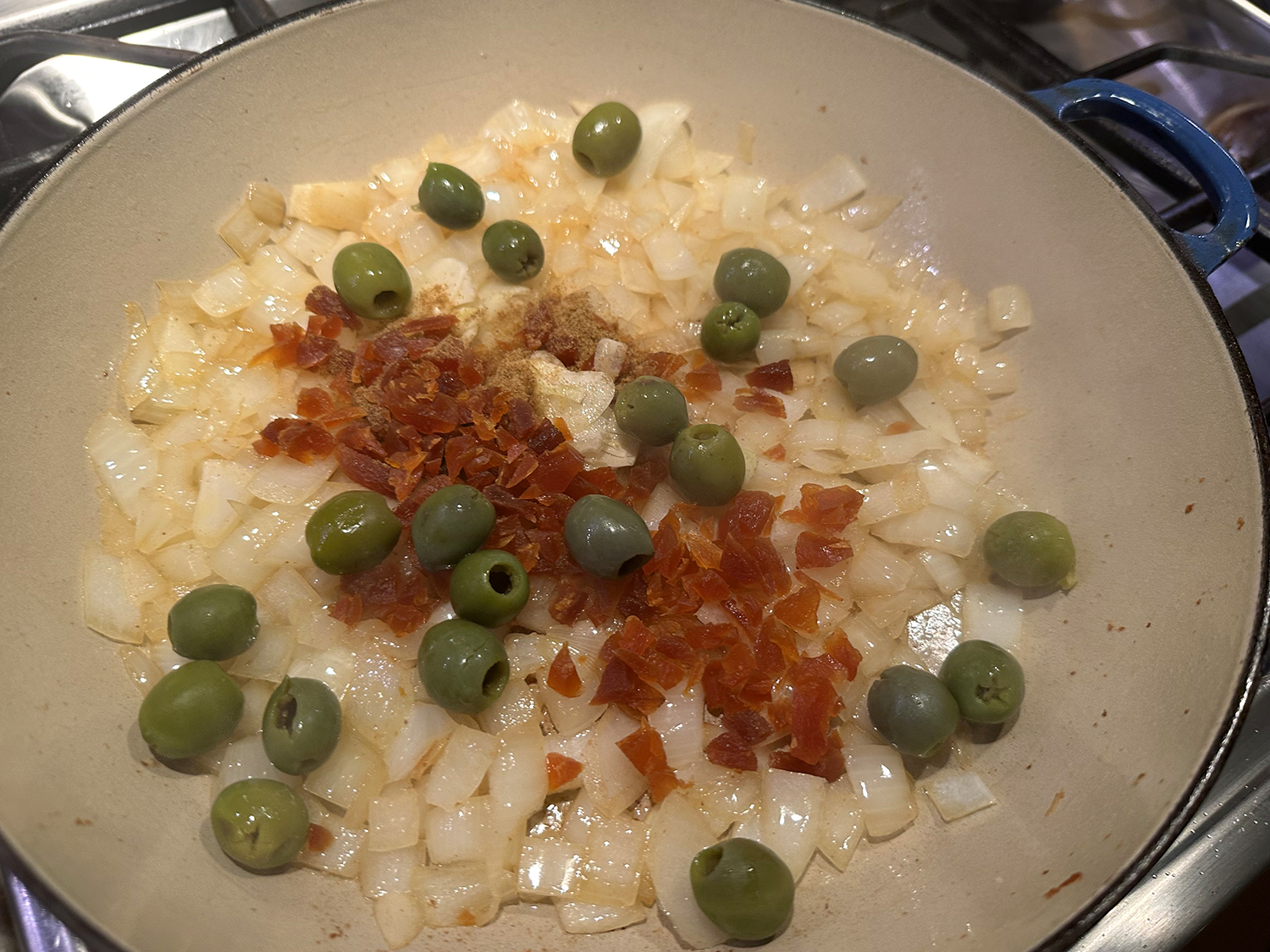
  3. Pour off all but 2 Tbsp. fat from pot; discard. Add 1 large onion, coarsely chopped, and ½ tsp. Diamond Crystal or ¼ tsp. Morton kosher salt and cook over medium-high, stirring occasionally, until onion is softened and starting to brown around edges, about 3 to 5 minutes.
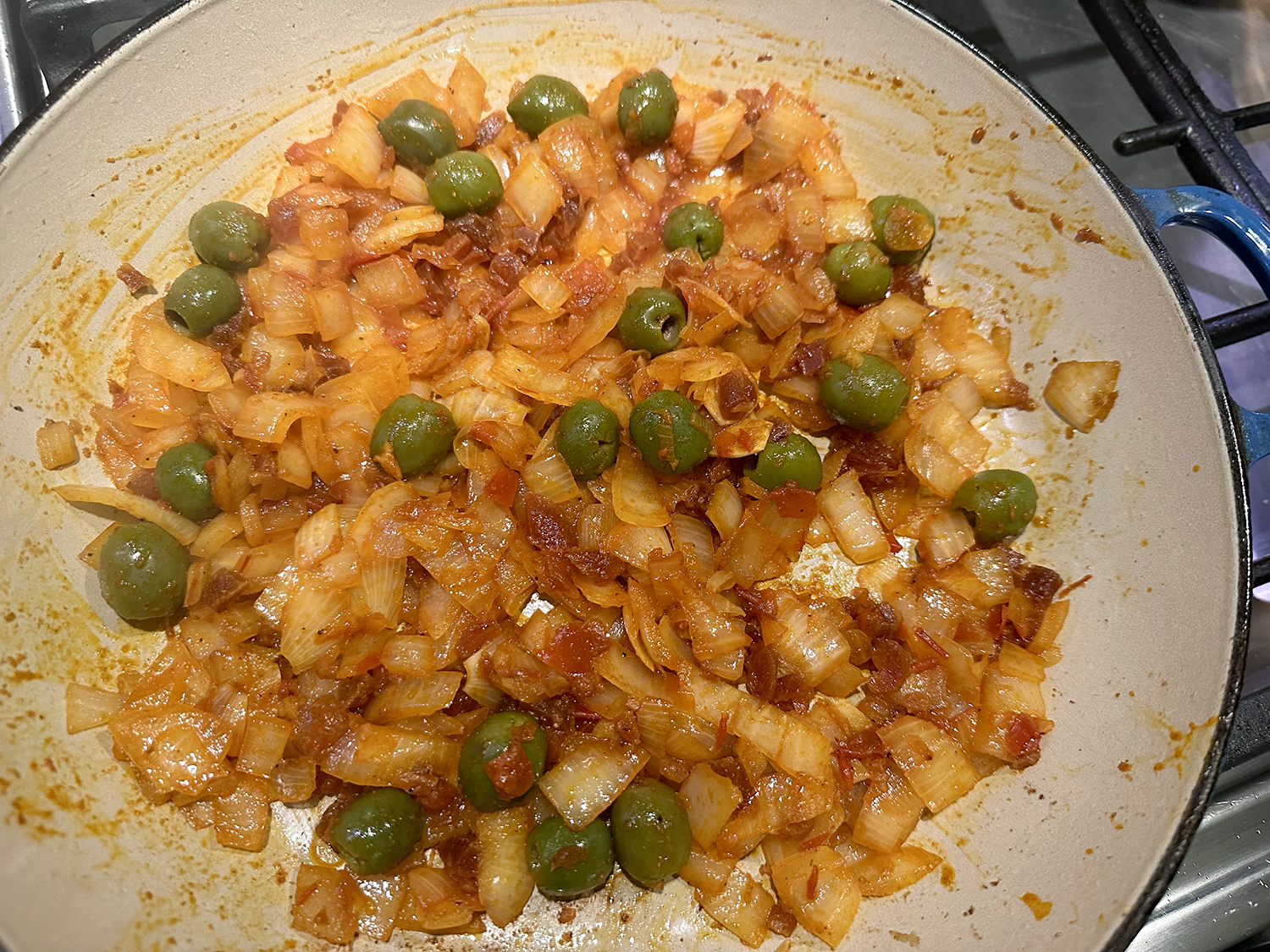
  4. Add 4 garlic cloves, thinly sliced, ½ cup pitted green olives, ¼ cup coarsely chopped pitted Medjool dates or dried apricots, and remaining 1 tsp. cumin. Cook, stirring often, until fragrant, about 1 minute.
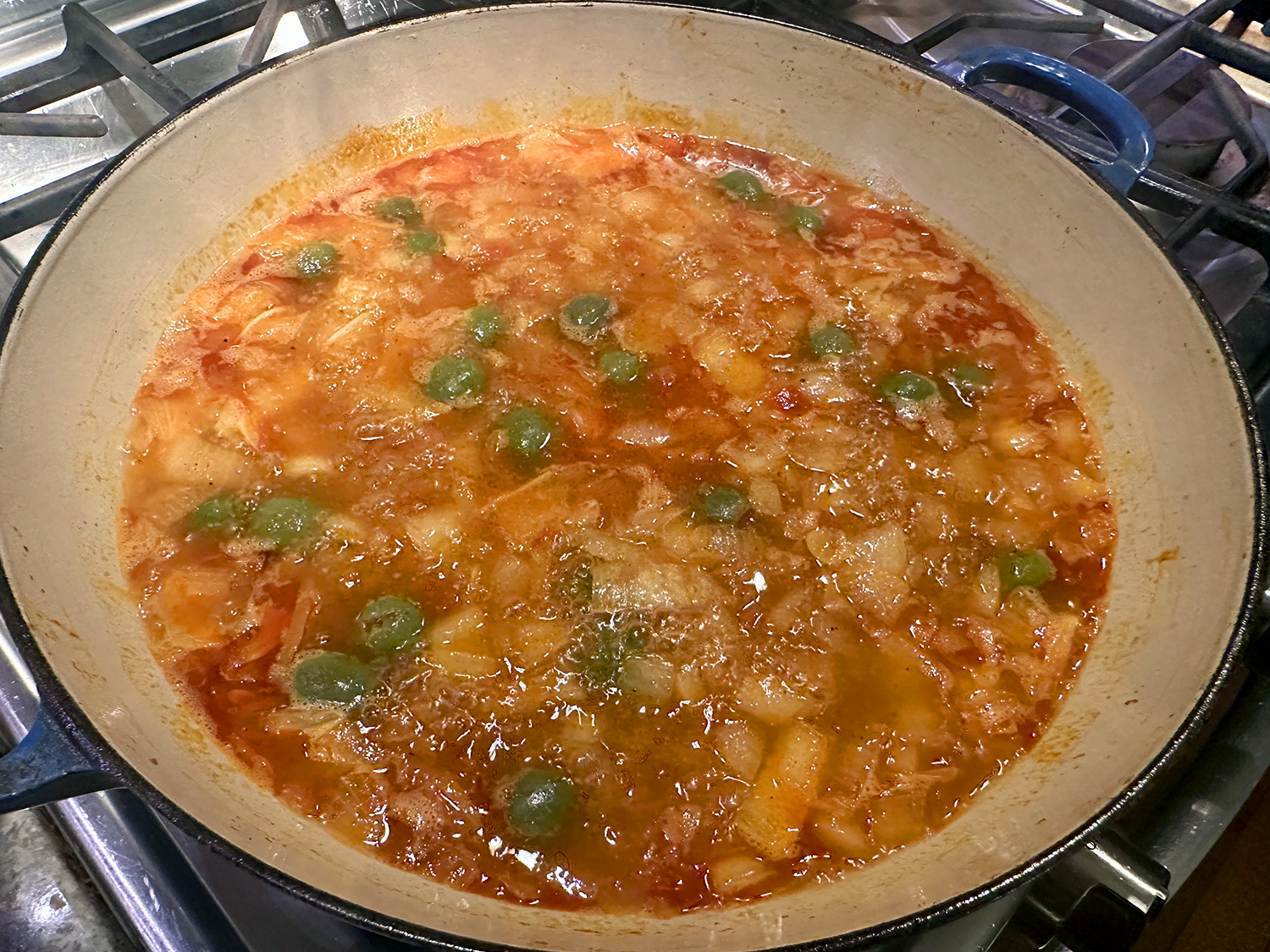
  5. Add ⅓ cup mild harissa paste and season with freshly ground pepper. Cook, stirring occasionally, until slightly darkened in color, about 2 minutes. Add 2½ cups water and bring sauce to a vigorous simmer. Cook, stirring occasionally, until slightly reduced, 10–12 minutes. Taste and season with salt.
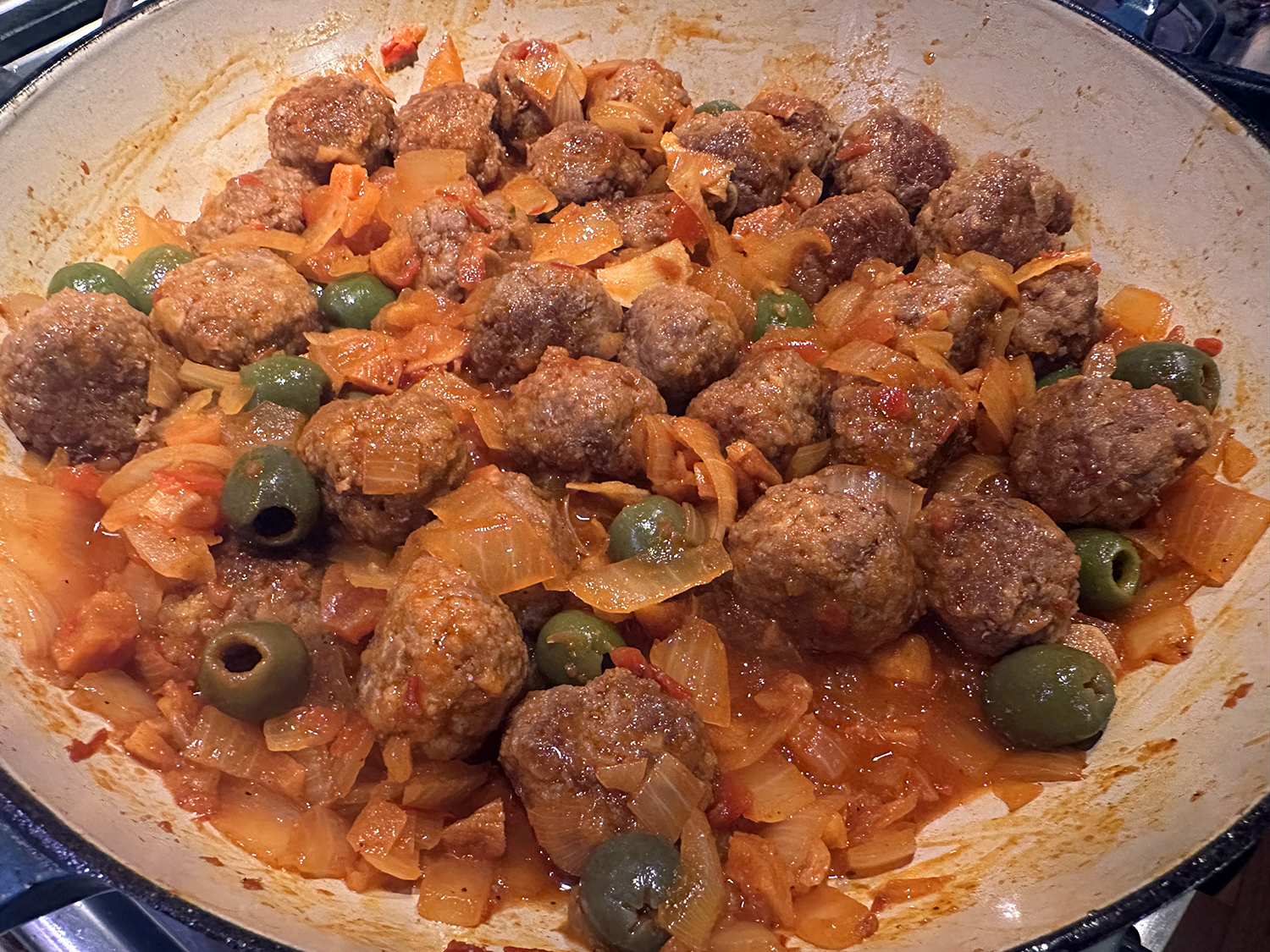
  6. Add meatballs to sauce, reduce heat to medium, and simmer until meatballs are cooked through and sauce is thickened, 7–9 minutes. Remove pan from heat and stir in 2 Tbsp. red wine vinegar.
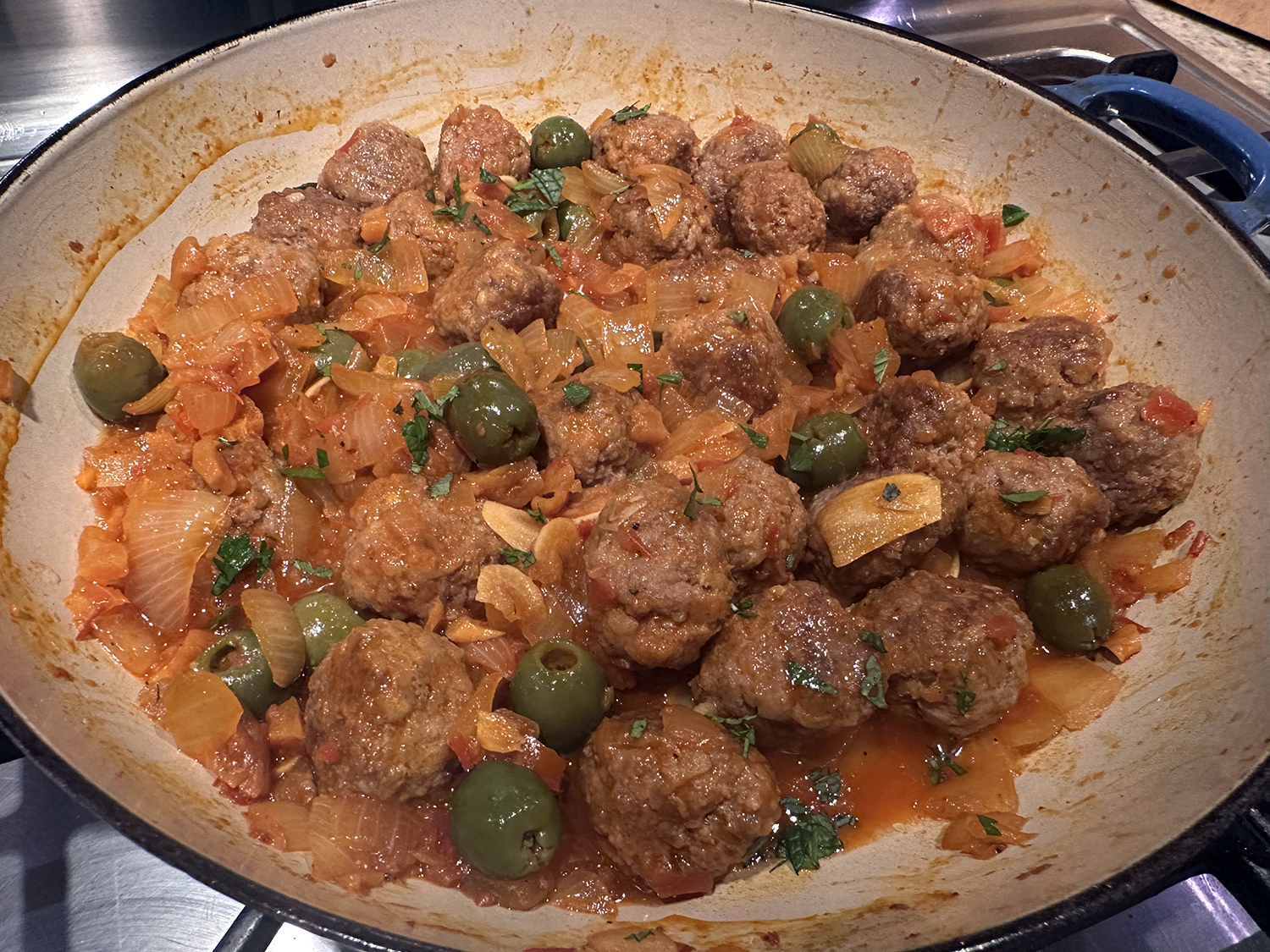
  7. Serve meatballs over cooked Moroccan couscous, topped with mint leaves and parsley leaves with tender stems.

http://www.lynnandruss.com

Adapted from a recipe by Kendra Vaculin for Bon Appétit

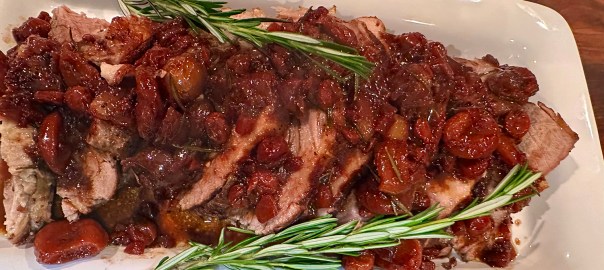
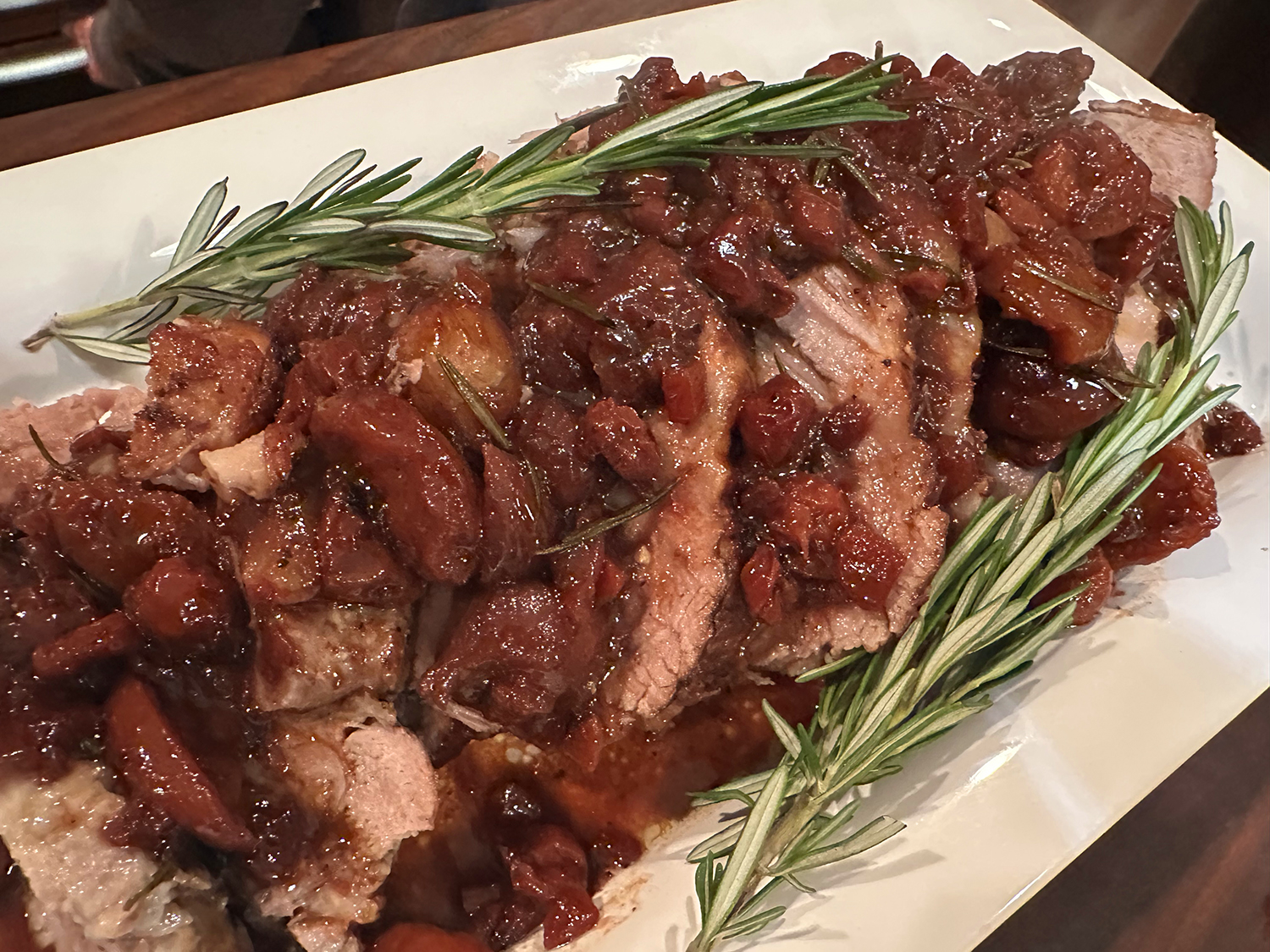
Catalan Braised Pork Shoulder with Dried Fruit

A long braise on a cool Sunday afternoon is not uncommon in our household. And we just happened to have a 4-pound pork shoulder in the freezer waiting for a chance to show off. It was over nine years ago since we made this luscious Catalan pork dish, so I located the post in our blog and resurrected the recipe, with several changes this time.

For a little background, I am repeating “Spain is a nation of pork eaters. Their penchant for pork has economic underpinnings because the matanza—the fall slaughter of the family hog—was central to rural life. A country within a country, with its own language, complex history, and a wealth of artistic traditions, Catalunya (to natives) has more in common with neighboring France, than macho Castile—but all share a love of pork. Catalan food blends Roman, Arabic and even Italian influences into one of Europe’s most distinct and emphatic cuisines.”

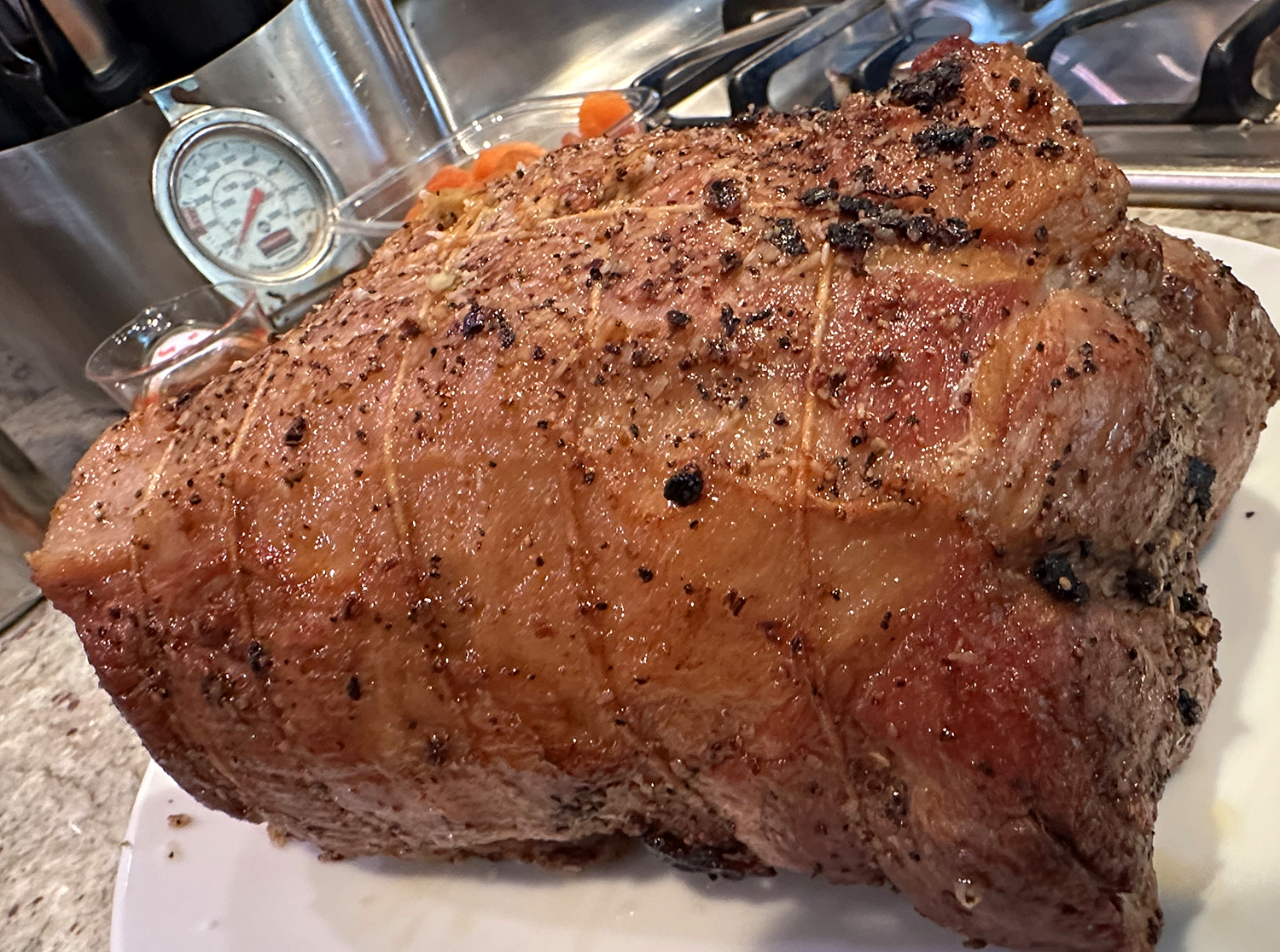
About those changes. One major alteration involves the cooking time. The original recipe said to cook the roast for 1 1/2 hours until it reaches an internal temperature of 165°. According to all of our other sources, a 4-pound pork shoulder roast needs to be cooked at least 2 hours with an internal temp of 180-185°F. This ensures tender slices.

After searing the roast on all sides, including the end caps, The Hubs removed the meat to a platter and poured the contents of the pot through a strainer into a cup. This way it is easy to eliminate the burnt garlic, return the oil to the Dutch oven and continue the cooking process. And though we didn’t cut down the apricots this time or last, we suggest you give them a rough chop so that the pieces are easier to consume.

BTW, kirsch can be substituted for the brandy. We had never cooked with it before and thought you might be interested in the flavor profile, which sounds like a great match for this dish:

kirsch, dry, colourless brandy distilled from the fermented juice of the black morello cherry. Kirsch is made in the Black Forest of Germany, across the Rhine River in Alsace (France), and in the German-speaking cantons of Switzerland. Its production methods remain traditional. The fully ripened cherries are mashed in a large wooden tub or vat and allowed to ferment freely. Upon completion of this process, the entire mass—liquid, pulp, and cherry stones—is distilled in a pot still. During the mashing some of the cherry stones, or pits, are crushed, releasing some of their oils and acids. These include small amounts of hydrocyanic acid, which impart a distinctive bitter almond undertone to the beverage. Kirsch is not aged. It is marketed at 90 to 100 proof, in the clear white (colorless) state it comes off the still. It is a fruit brandy with a clean cherry fragrance and bitter almond taste. Kirsch is consumed neat, as brandy, and in cocktails and is also used in cooking as a flavoring.

So if pork is in your wheelhouse, you may want to get this on your shortlist.

Catalan Braised Pork Shoulder with Dried Fruit

  • Servings: 6-8
  • Difficulty: easy
  • Print

Ingredients

  • 1 boneless pork shoulder, such as Boston Butt (about 4 lbs., trimmed of excess fat)
  • Salt and freshly ground black pepper (kosher or sea)
  • 2 medium garlic cloves, crushed
  • 3 Tbsp. light olive oil
  • 1 medium onion, chopped
  • 1 carrot, diced
  • 8 oz. frozen white pearl onions
  • 1⁄4 cup brandy
  • 2 cups full-bodied dry red wine
  • 1 cup stock (beef or chicken)
  • 3⁄4 cup pitted dried sour cherries
  • 1⁄2 cup dried apricots (or dried figs), roughly chopped
  • 1 large bay leaf
  • 1 small piece cinnamon stick
  • 2 fresh rosemary sprigs

Directions

  1. Preheat oven to 325º.
  2. Using kitchen string, tie the pork shoulder crosswise, spacing the ties 1 inch apart. Rub the pork generously with salt and pepper and the garlic.
  3. Heat 2 tablespoons of the olive oil in a 5 to 6 quart flameproof casserole or Dutch oven over high heat until almost smoking. Add the pork and cook until richly browned on all sides, about 8 minutes total. Add the remaining oil while the pork browns, if the casserole looks too dry. Transfer the pork to a platter. Drain oil and drippings over a strainer on a cup to remove burnt garlic, and return strained oil to the Dutch oven.
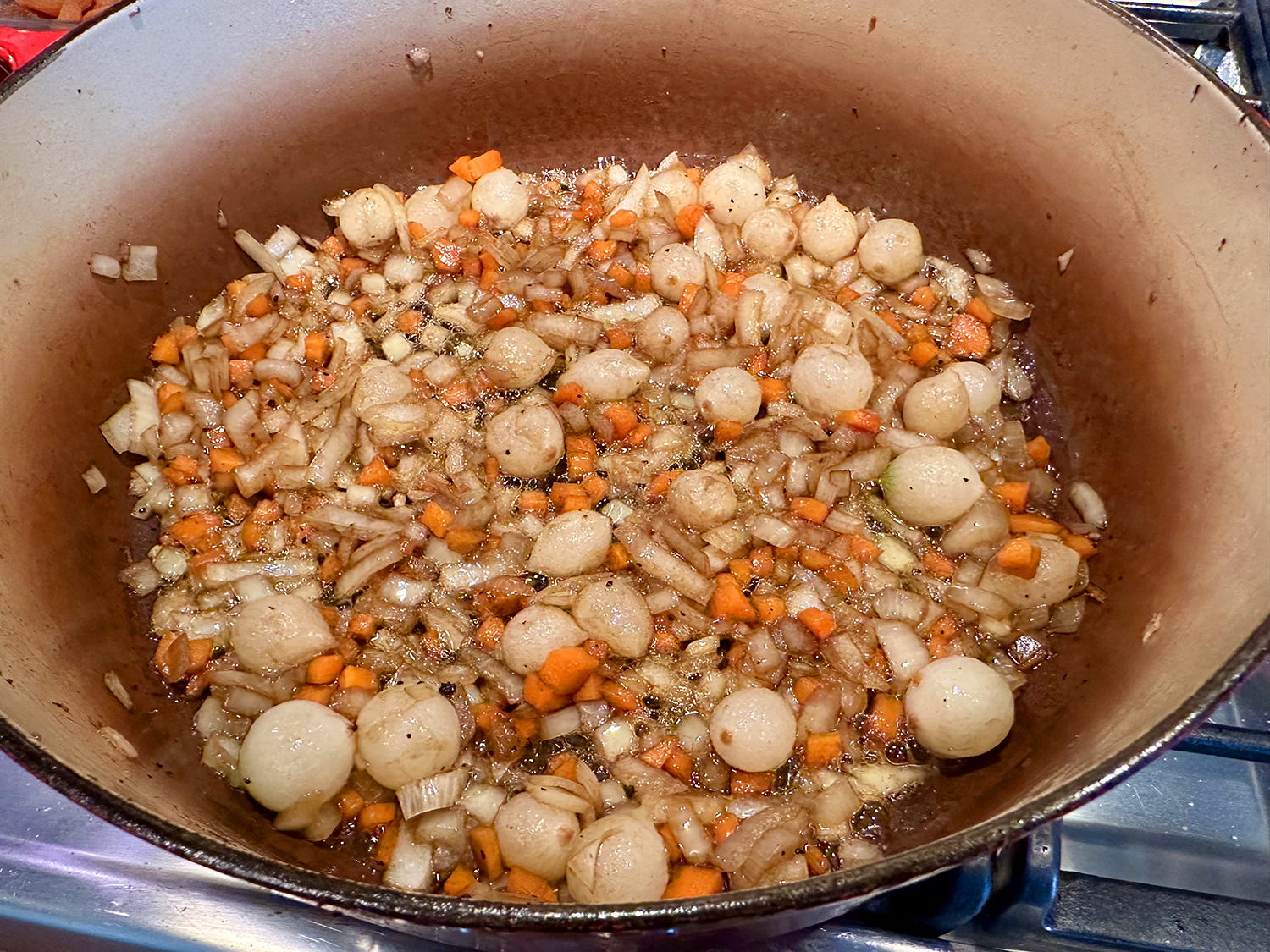
  4. Add the chopped onion, carrot, and pearl onions to the casserole and brown well, 6 to 7 minutes. Add the brandy and cook over high heat until it is reduced to about 1 tablespoon, about 1 minute.
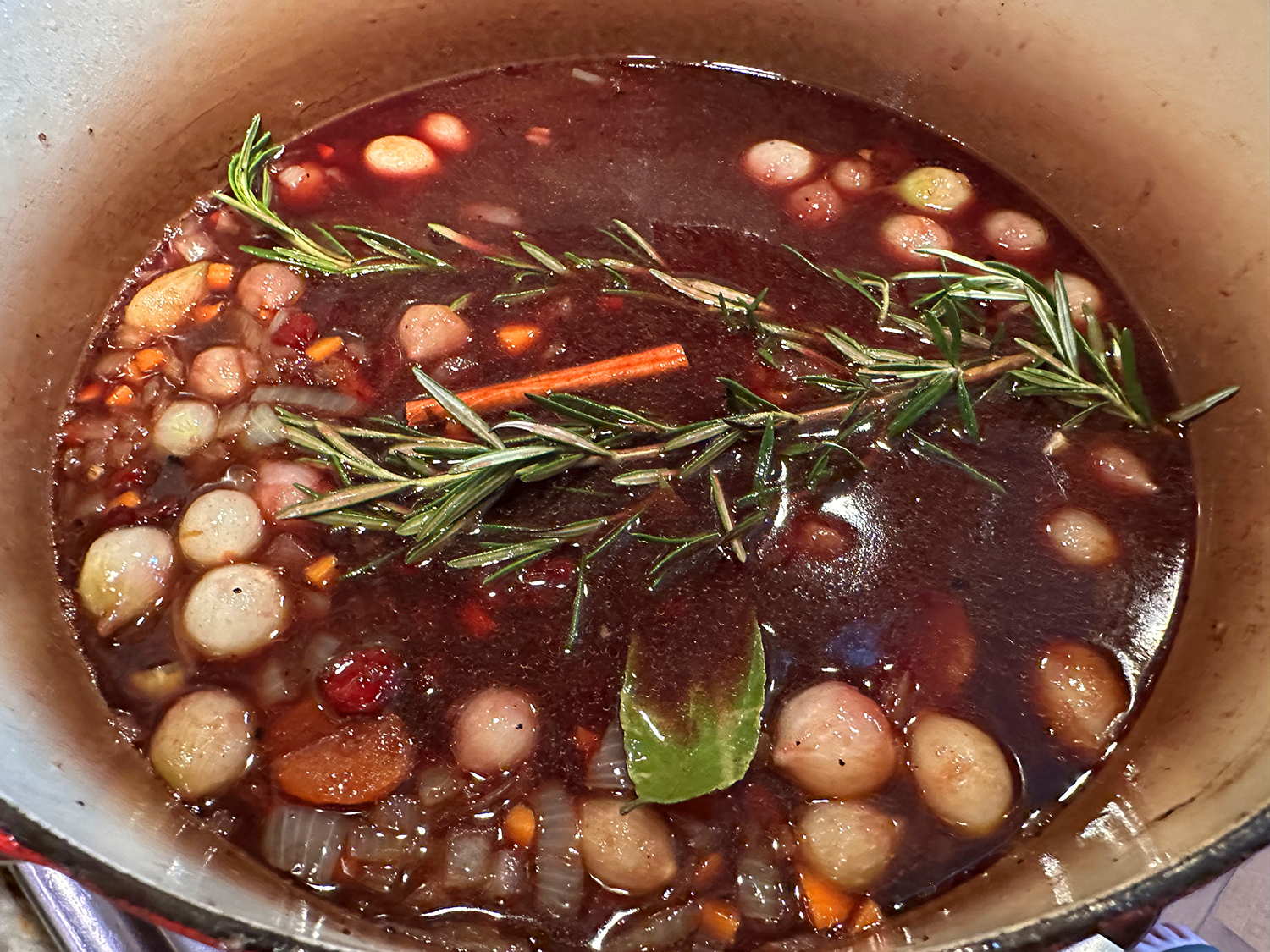
  5. Add the wine, beef stock, cherries, apricots, bay leaf, cinnamon stick, and rosemary sprigs and bring to a boil, scraping the bottom of the casserole to dislodge the brown bits. Season the sauce with salt to taste.
  6. Return the pork to the casserole. Place a large piece of parchment that over hangs the pot, then cover tightly and transfer it to the oven. Bake the pork, turning it once or twice, until it is very tender and an instant-read thermometer registers 180-185°, about 2 hours and 15 minutes. Start checking at 2 hours.
  7. Transfer the pork to a plate and cover it tightly with foil to keep warm. Remove and discard the bay leaf, cinnamon stick, and rosemary sprigs.
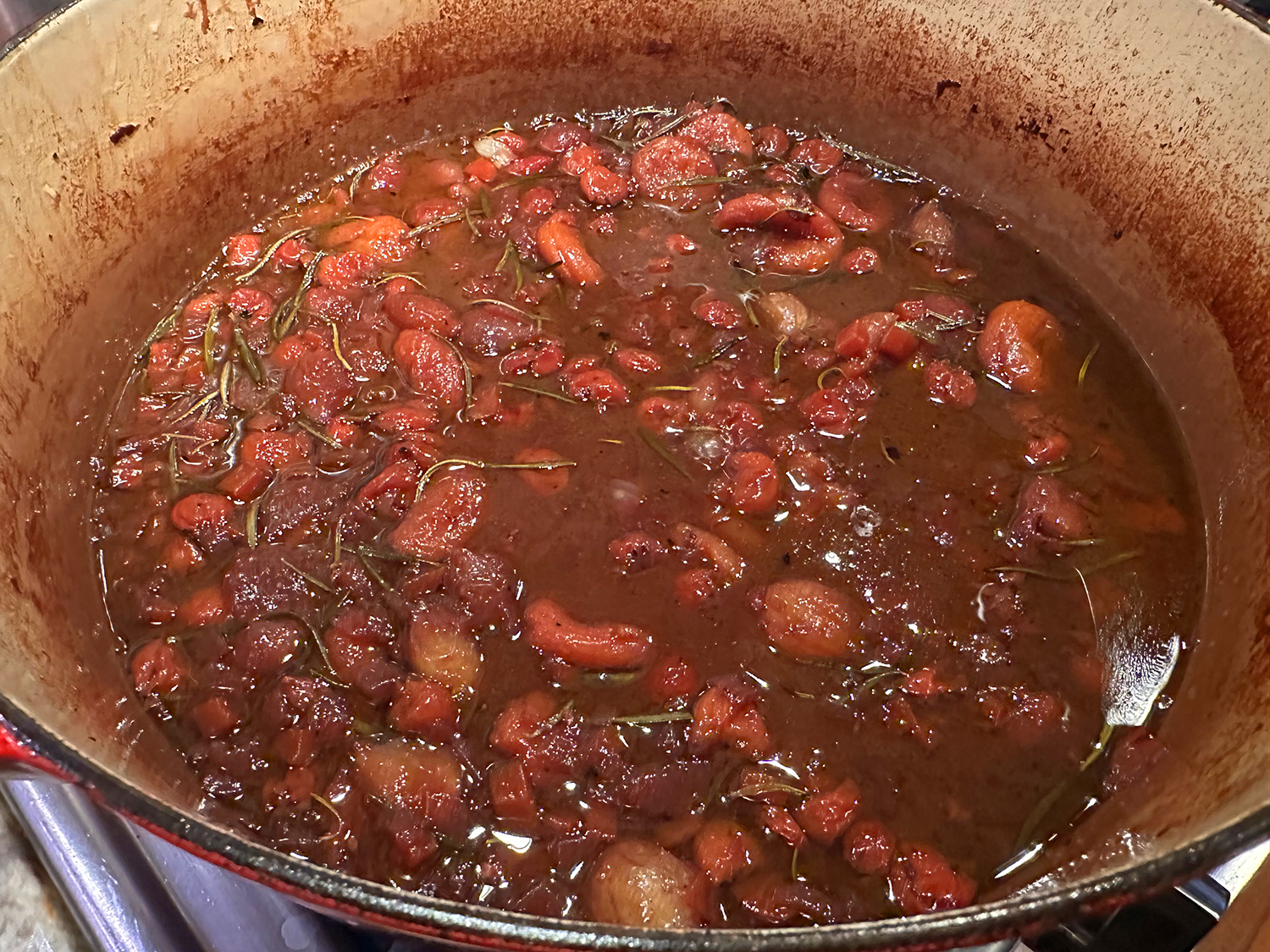
  8. Transfer the casserole to the stove top and cook the sauce over high heat until it is slightly syrupy, about 5 minutes.
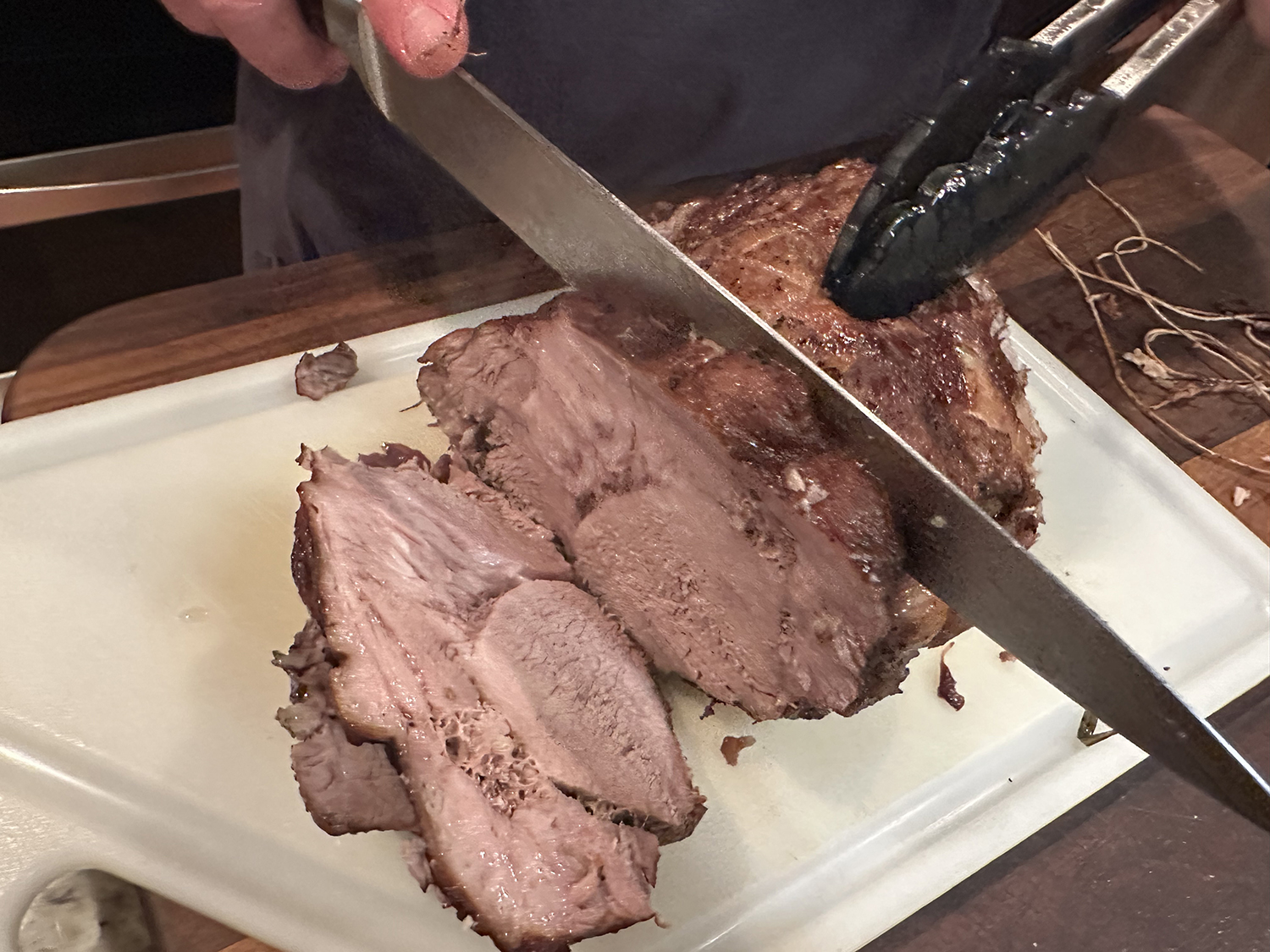
  9. Remove the string from the pork and discard it. Cut the pork into slices and arrange on a serving platter. Pour the sauce over the pork and serve.

http://www.lynnandruss.com

Adapted from a recipe in Anya Von Bremzen’s cookbook “The New Spanish Table”