Ragù Bolognese over Fettuccine is one of the great classics of Italian cuisine — a deeply satisfying, soul-warming dish from the Emilia-Romagna region of northern Italy.
The aroma is heady — savory, sweet from the carrot and onion, with hints of wine and the warm, roasted depth of slowly cooked meat. The taste is profoundly comforting: rich without being heavy, complex without being fussy. It’s the kind of dish that feels like it took all day — but here you get top-quality results in one hour!
Typically, the ragù is a slow-cooked meat sauce, rich and complex in flavor. In this short-cut version, meatloaf mix is used. Beginning with a soffritto — a fragrant base of finely diced onion, celery, and carrot sweated in butter and olive oil, the meat mixture is browned into this base, then married with dry white or red wine, a modest amount of tomato paste, and heavy cream, which softens the acidity and rounds out the sauce.
Flat, ribbon-like egg pasta — such as pappardelle, fettuccine or tagliatelle — is the ideal vehicle. Its broad, slightly porous surface clings to the thick ragù beautifully, and its richness (egg yolk in the dough) complements the butteriness of the sauce. When cooked properly to al dente, it has a satisfying chew and a gentle golden color.
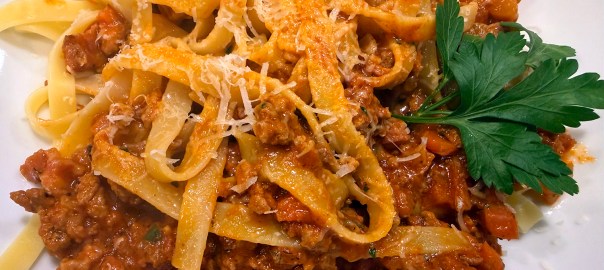
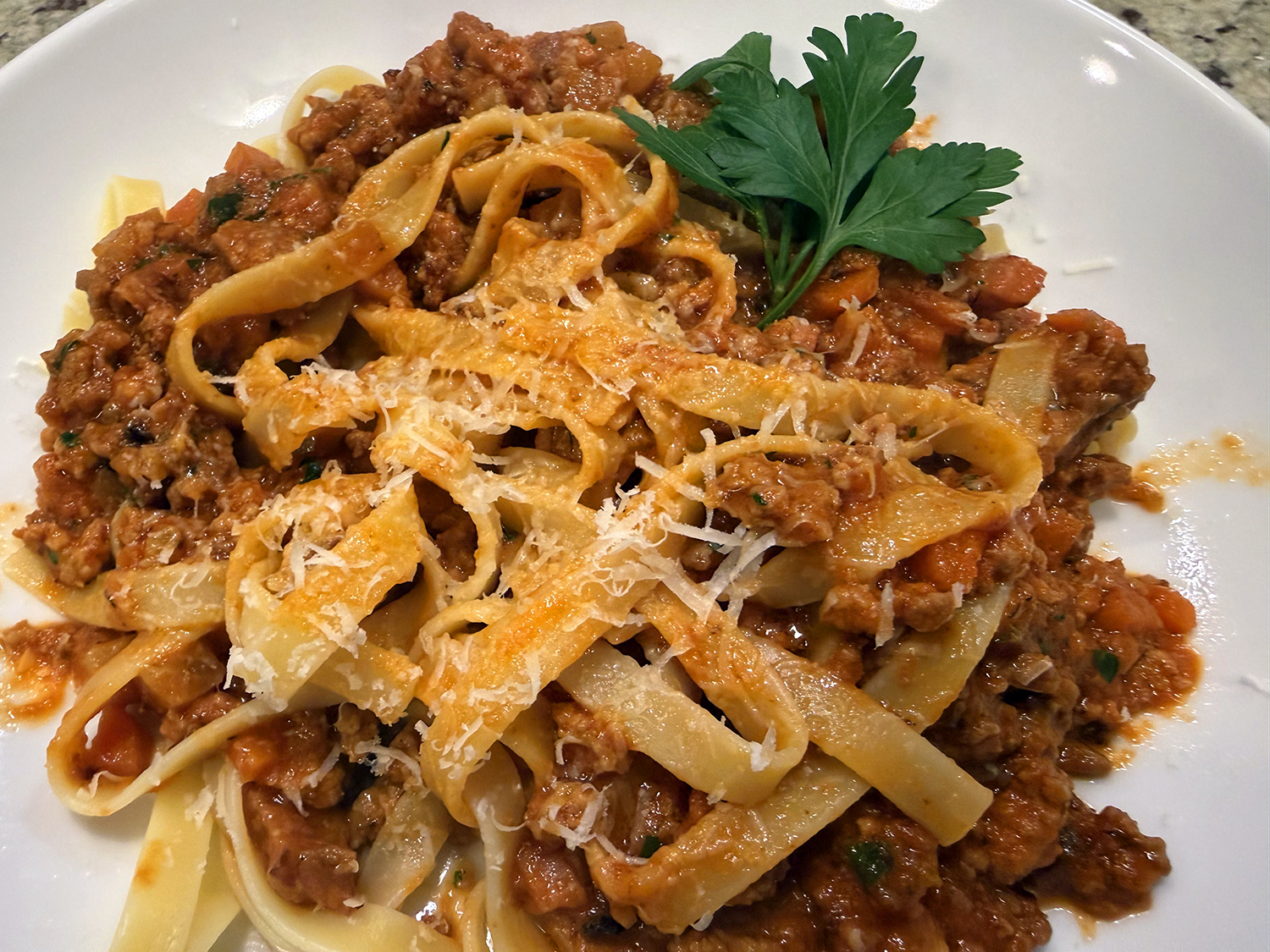
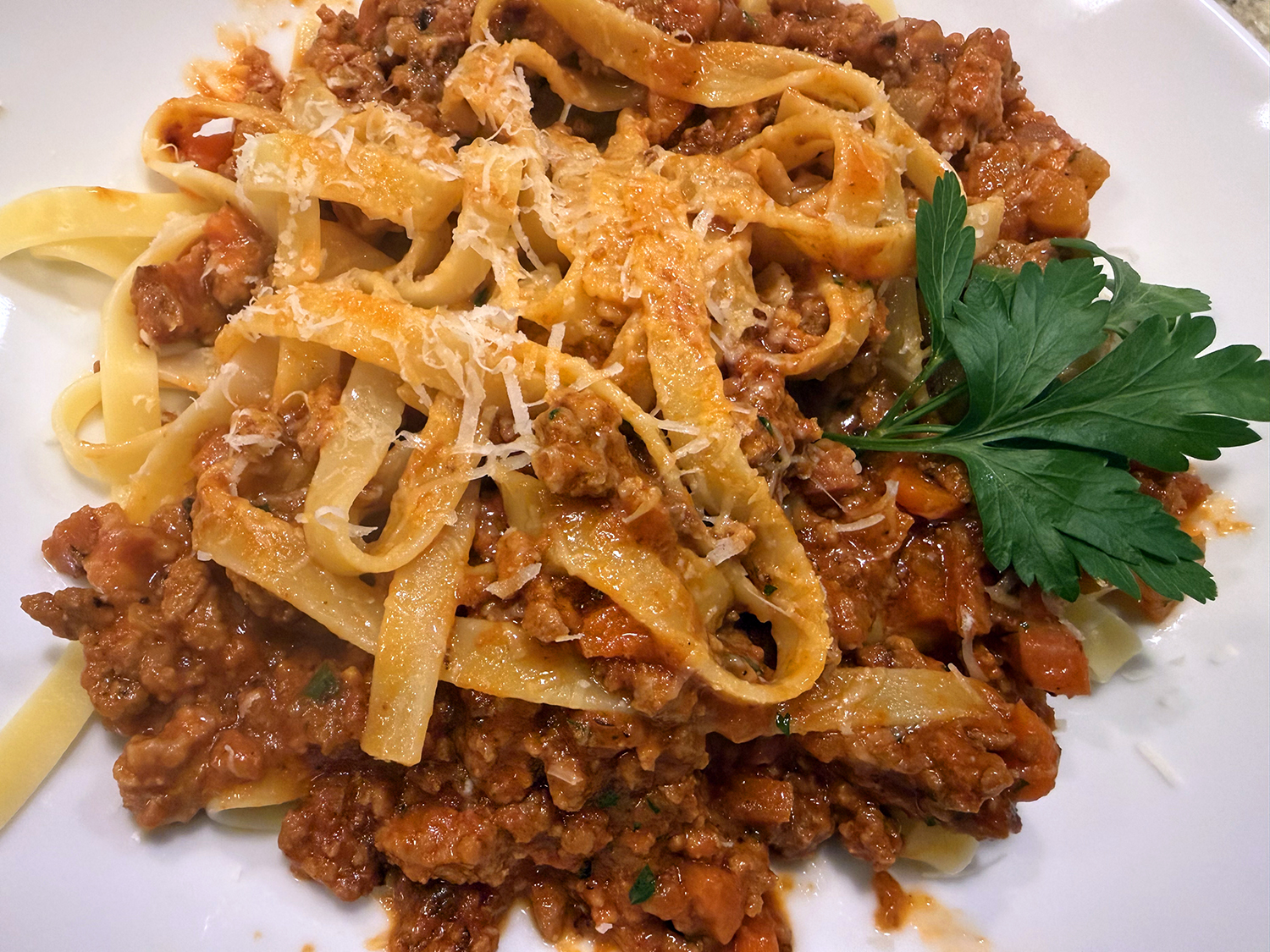
On the plate, the result is a lustrous, amber-brown tangle of pasta, each strand coated in a clinging, meaty sauce studded with tender bits of browned meat. It’s finished with a generous shower of freshly grated Parmesan, which melts slightly into the warmth of the dish and adds a sharp, nutty counterpoint. A drizzle of good olive oil or a knob of butter can be added at the end for gloss.
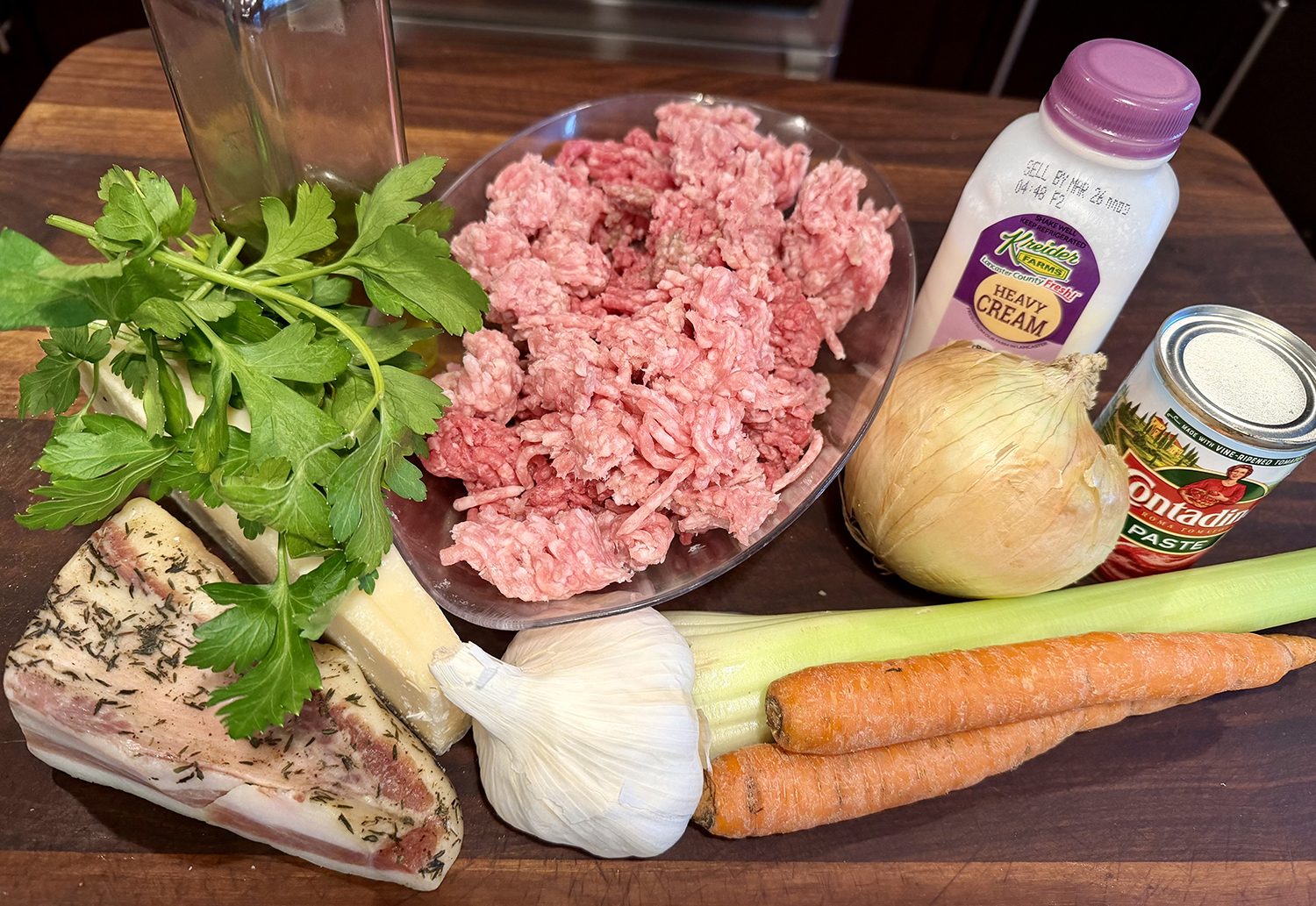
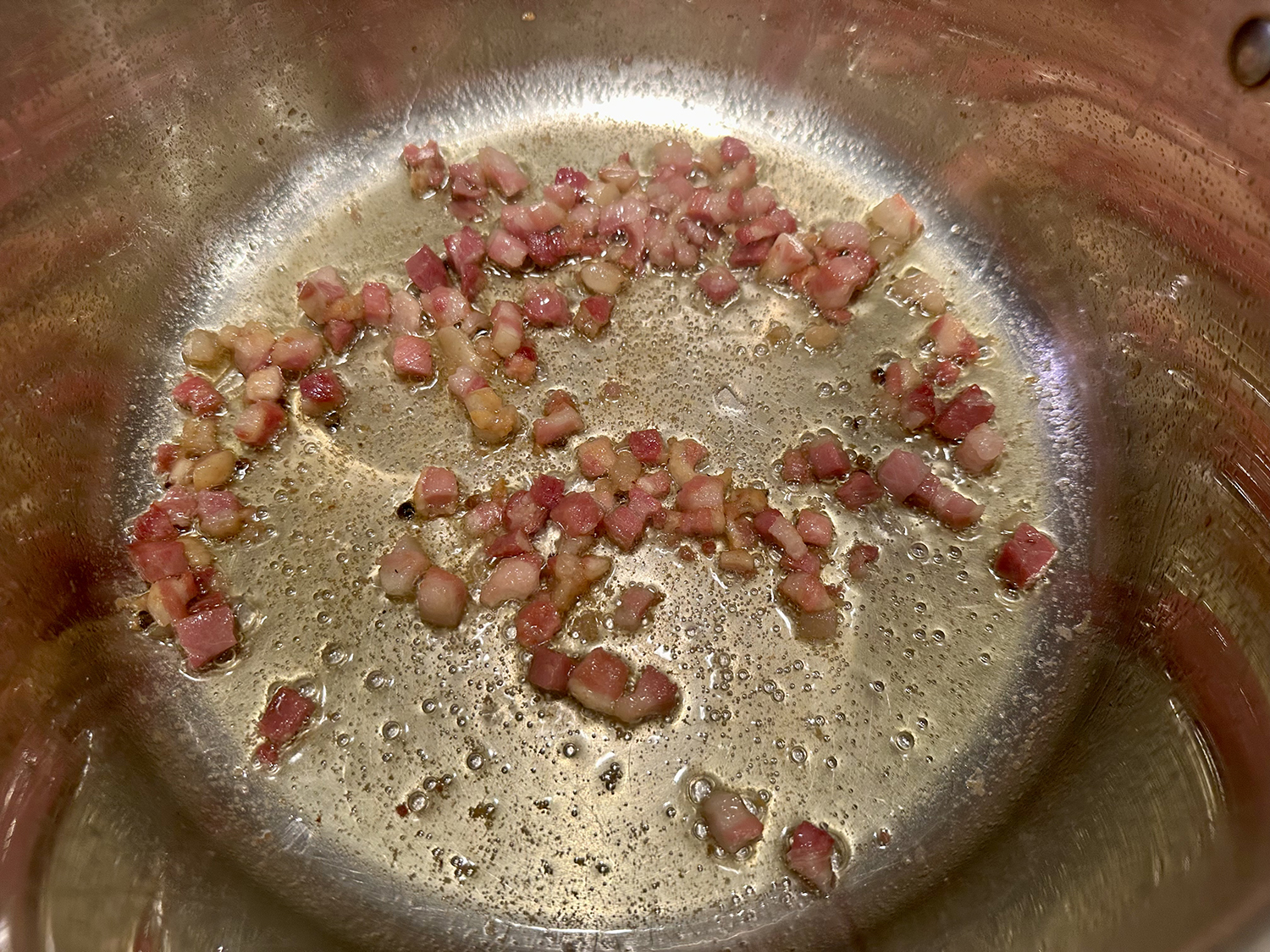
In lieu of pancetta, we used guanciale since we had exactly 4 ounces on hand.
1⁄2 oz. Parmesan cheese, finely grated (1⁄4 cup); more for serving
1 qt. low-sodium beef broth
1⁄4 cup finely chopped fresh flat-leaf parsley
Directions
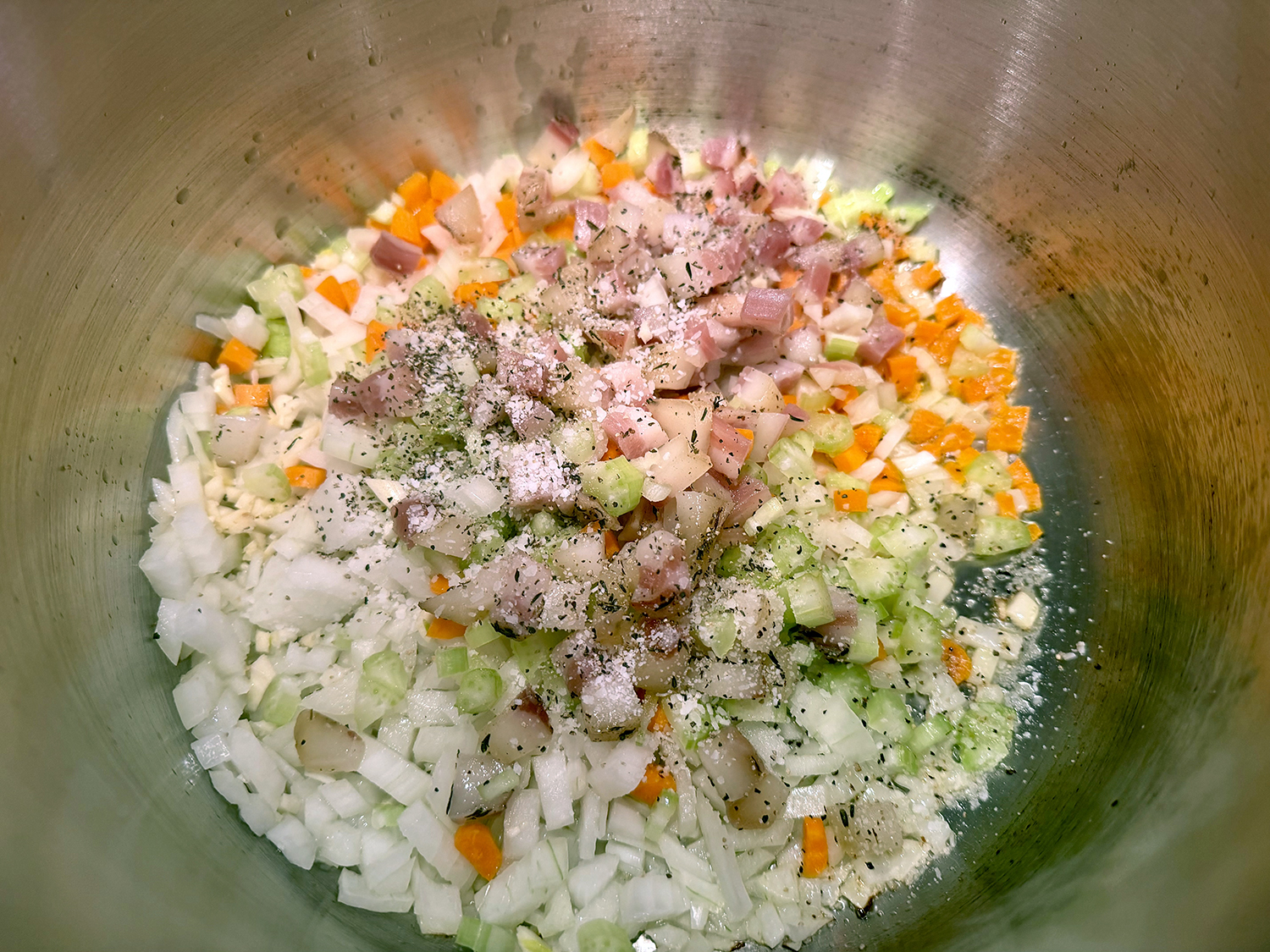
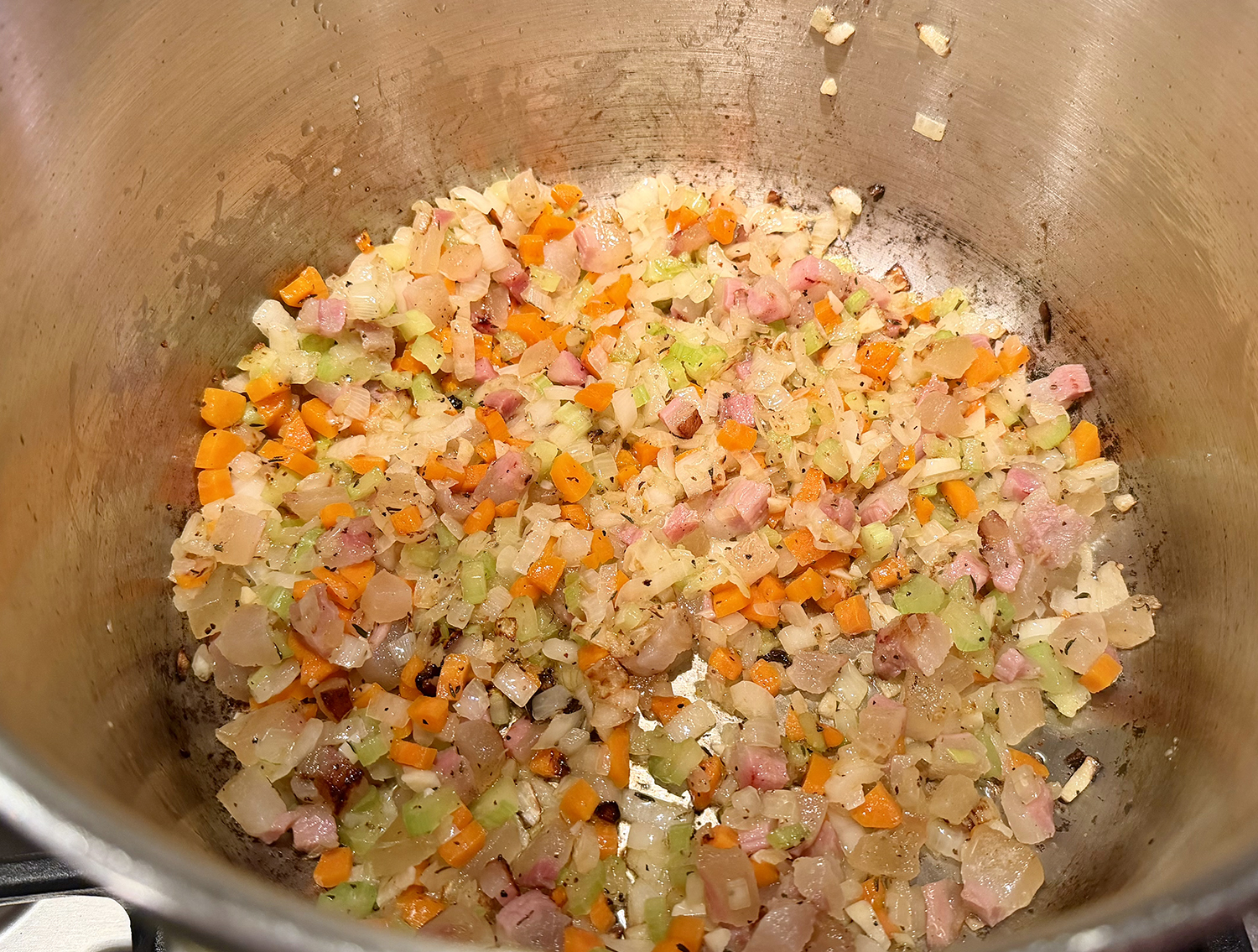
On a 6-quart Instant Pot, select More/High Sauté. Add the oil, pancetta, onion, celery, carrot, garlic, 1 teaspoon salt and 1/2 teaspoon pepper. Cook, stirring occasionally, until the onion is translucent and the pancetta has rendered some fat, 5 to 6 minutes.
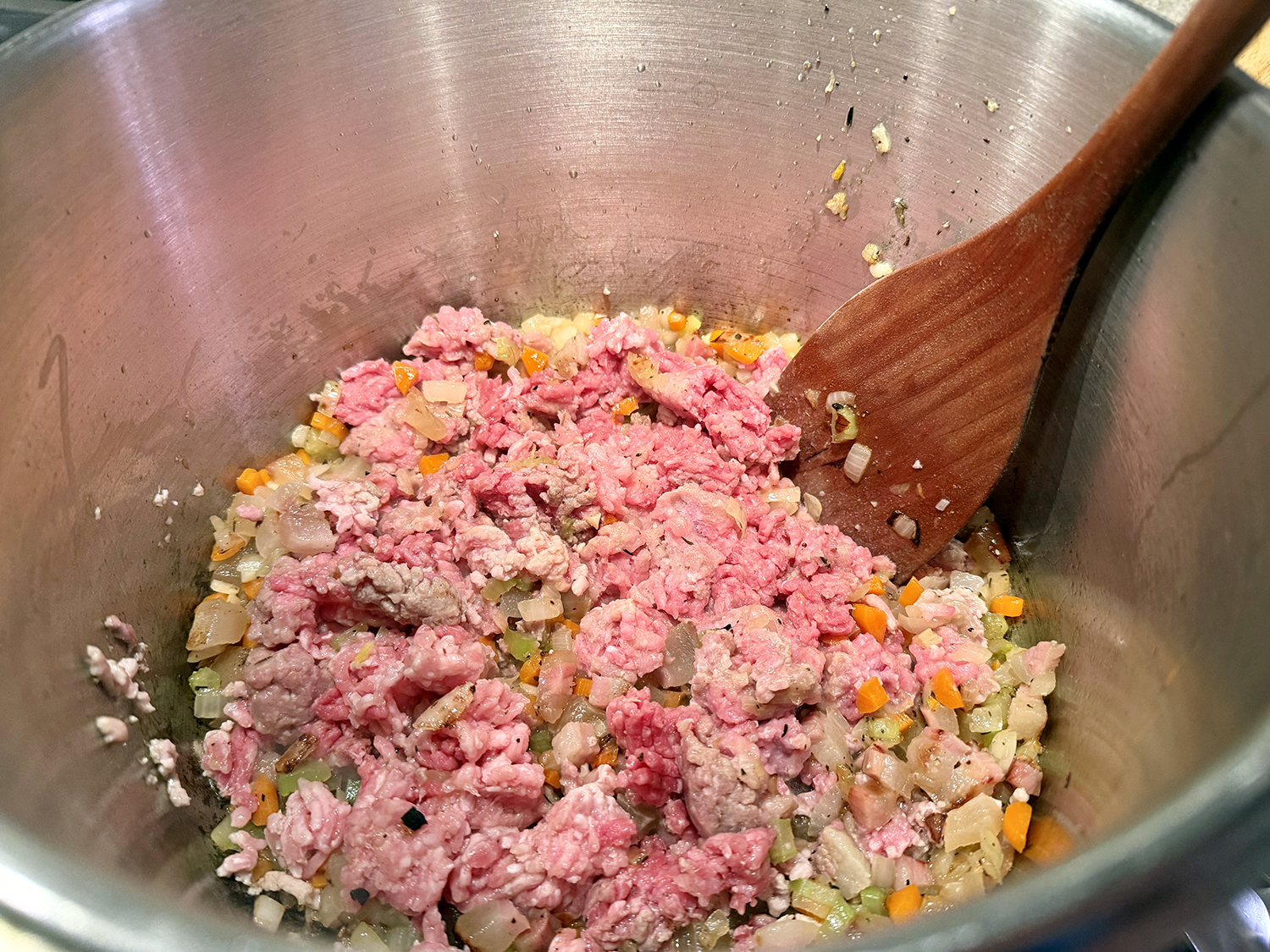
Add the wine and meatloaf mix; cook, breaking up the meat in small pieces, until no longer pink, 4 to 5 minutes.
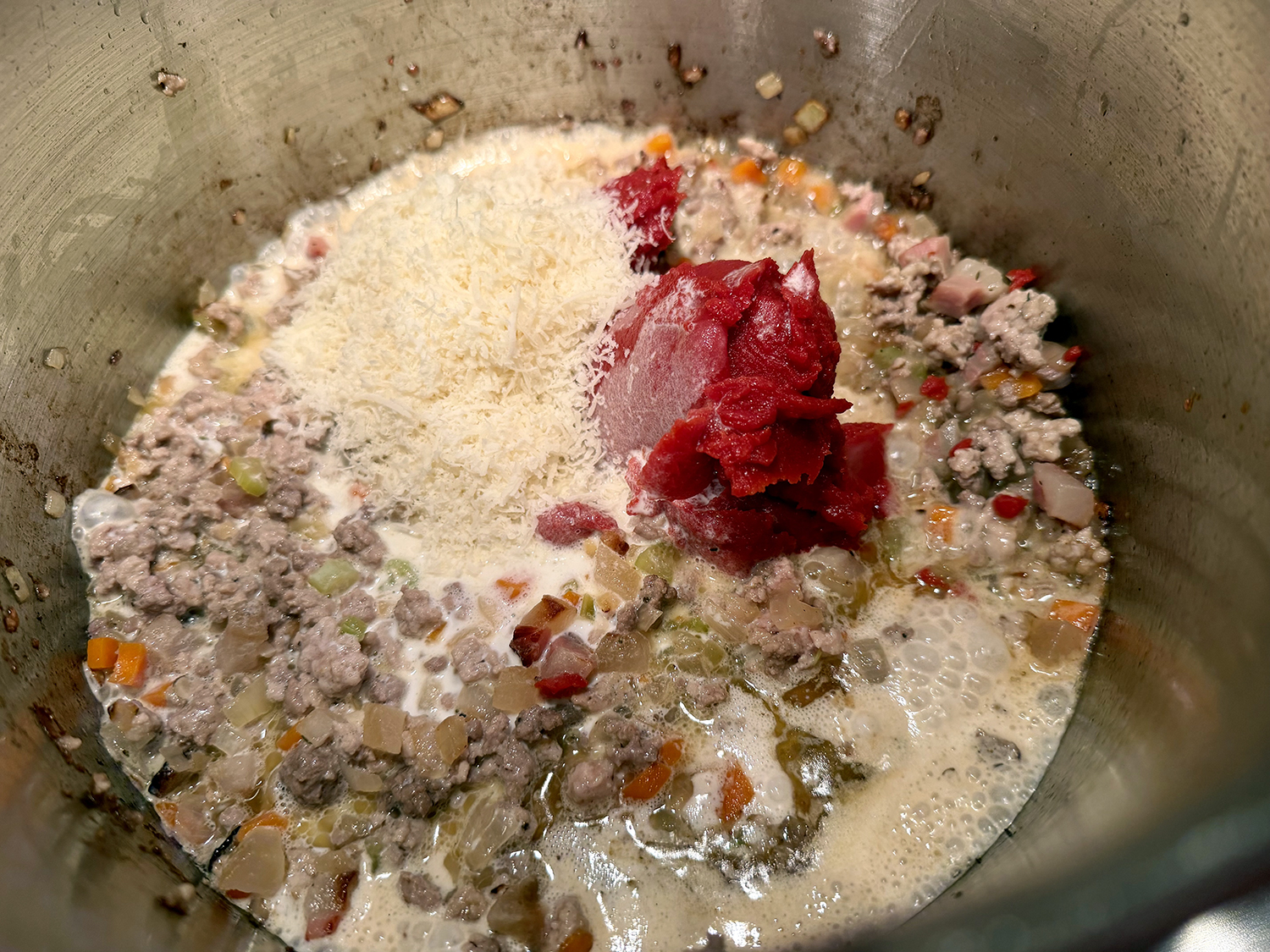
Stir in the tomato paste, cream, Parmesan and 1/2 cup water, then distribute the mixture into an even layer.
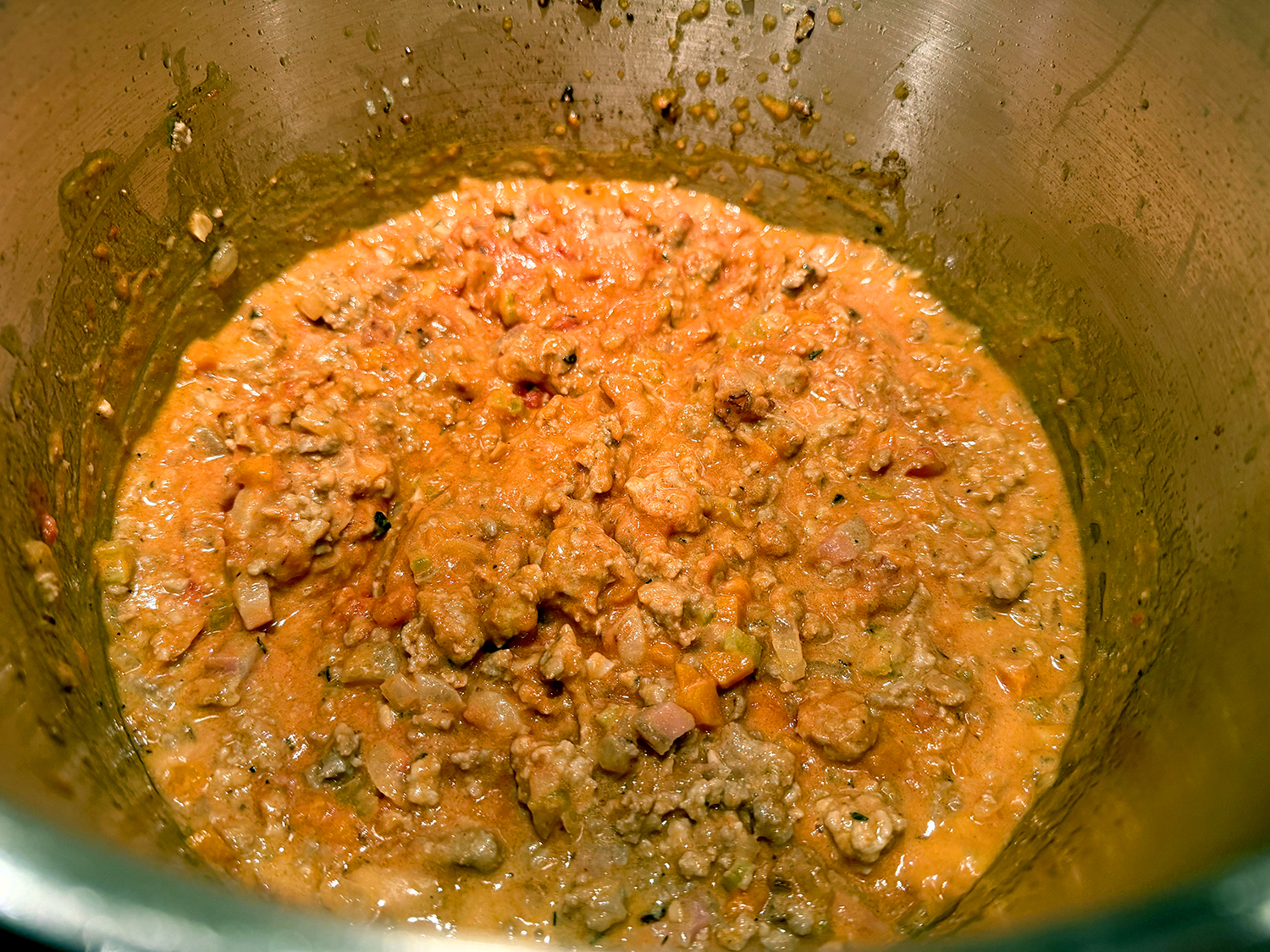
Press Cancel, lock the lid in place and move the pressure valve to Sealing. Select Pressure Cook or Manual; making sure pressure level is set to High. Set the cooking time for 15 minutes. When pressure cooking is complete, quick-release the steam by moving the pressure valve to Venting. Press Cancel, then open the pot.
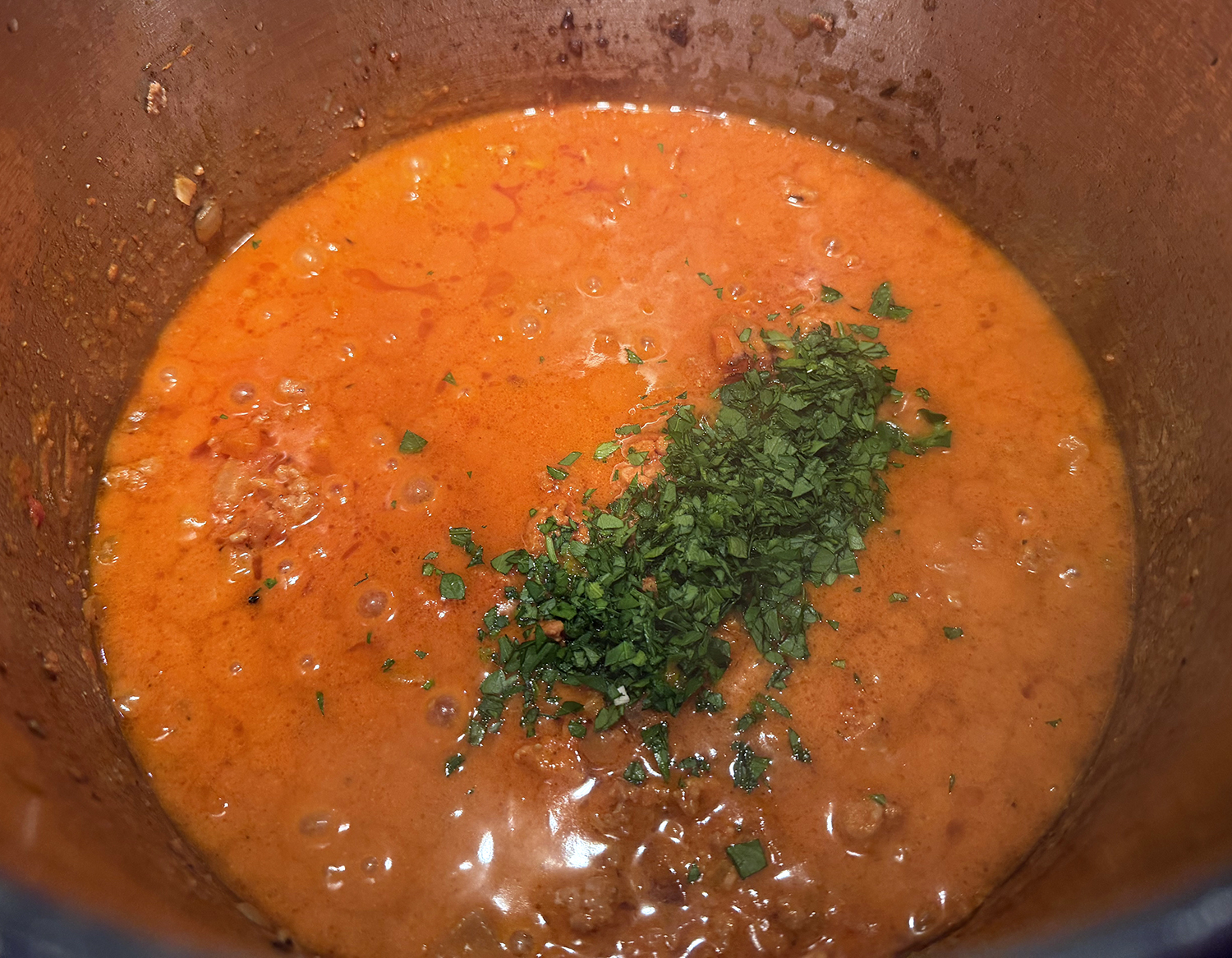
Stir the parsley into the sauce, then taste and season with salt and pepper. Serve over cooked ribbon-like pasta.
This white Bolognese sauce puts the spotlight on soffritto (sautéed onions, carrots, and celery), which is enhanced with salty pancetta, fennel seeds, ground pork, and a splash of heavy cream and white wine to make a rich and delicious pasta sauce.
Aromatic sautéed vegetables are the star of this no-tomato Bolognese. Adding the starchy pasta cooking liquid to the Bolognese sauce gives it just enough body to coat the al dente orecchiette.
*We reduced the amount of pasta down from 1 pound to 12 ounces, providing more delicious bolognese per bite. Doing so will most likely not produce six servings. The other quantities were not altered. You could substitute ground sausage for the pork.
Make Ahead: Bolognese can be made through step 2, cooled, and stored in an airtight container in the refrigerator for up to three days or frozen for up to two months. Bring Bolognese to a simmer over low heat, and proceed with step 3 as directed.
4 small carrots, peeled and cut into 1/2-inch pieces (about 1 1/2 cups)
1 medium yellow onion, chopped (about 1 1/3 cups)
3 celery stalks, trimmed and chopped (about 1 cup)
2 Tbsp. unsalted butter
1 tsp. fennel seeds
1 tsp. dried oregano
1 tsp. kosher salt, plus more to taste
1/4 tsp. crushed red pepper
2 Tbsp. minced garlic (about 6 cloves)
1 lb. ground pork
1/2 tsp. black pepper
1 cup dry white wine
1 cup lower-sodium chicken broth
1/3 cup heavy cream
1 lb. uncooked orecchiette pasta*
1 cup chopped fresh flat-leaf parsley
Grated Parmesan cheese, for serving
Directions
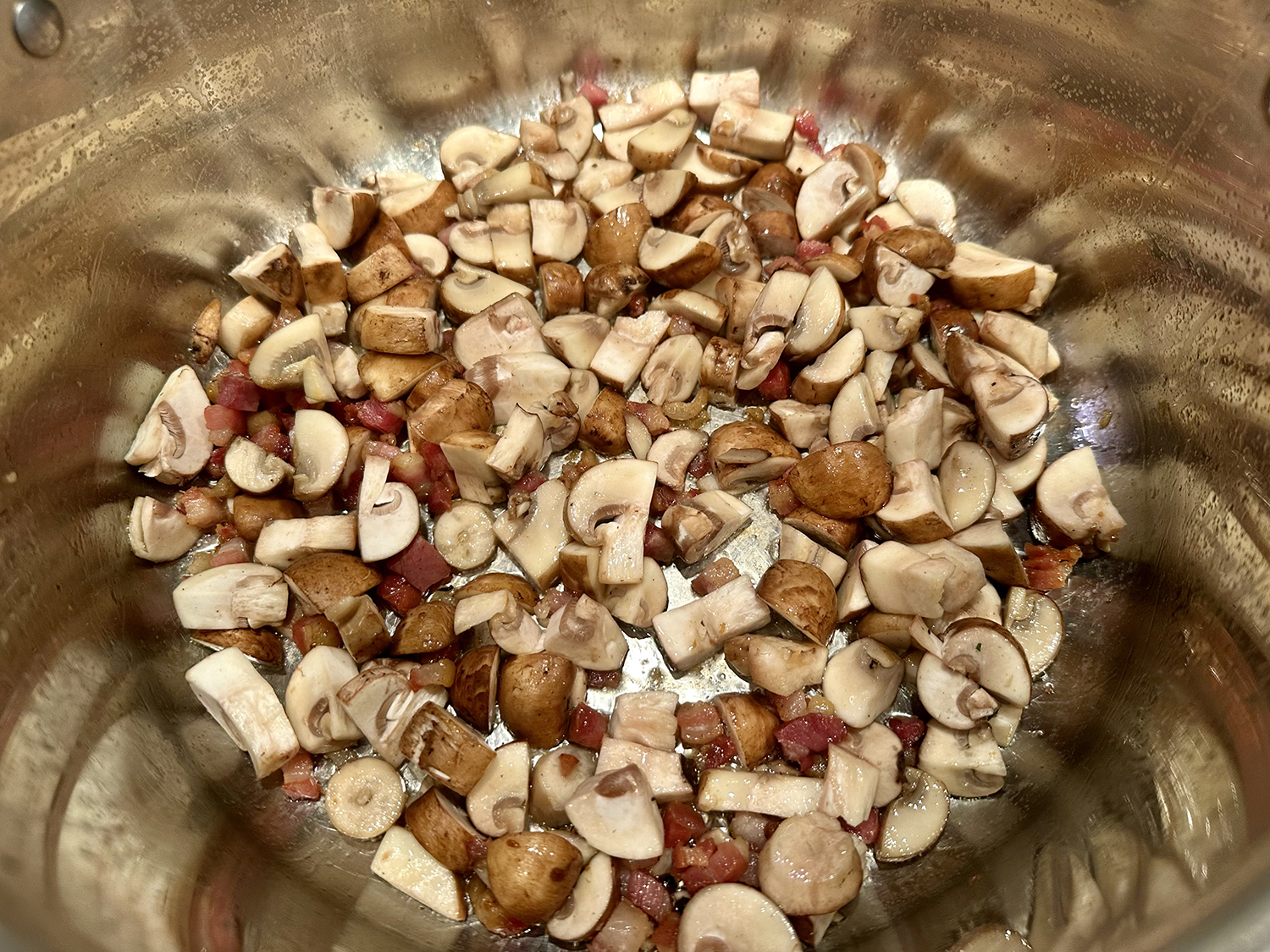
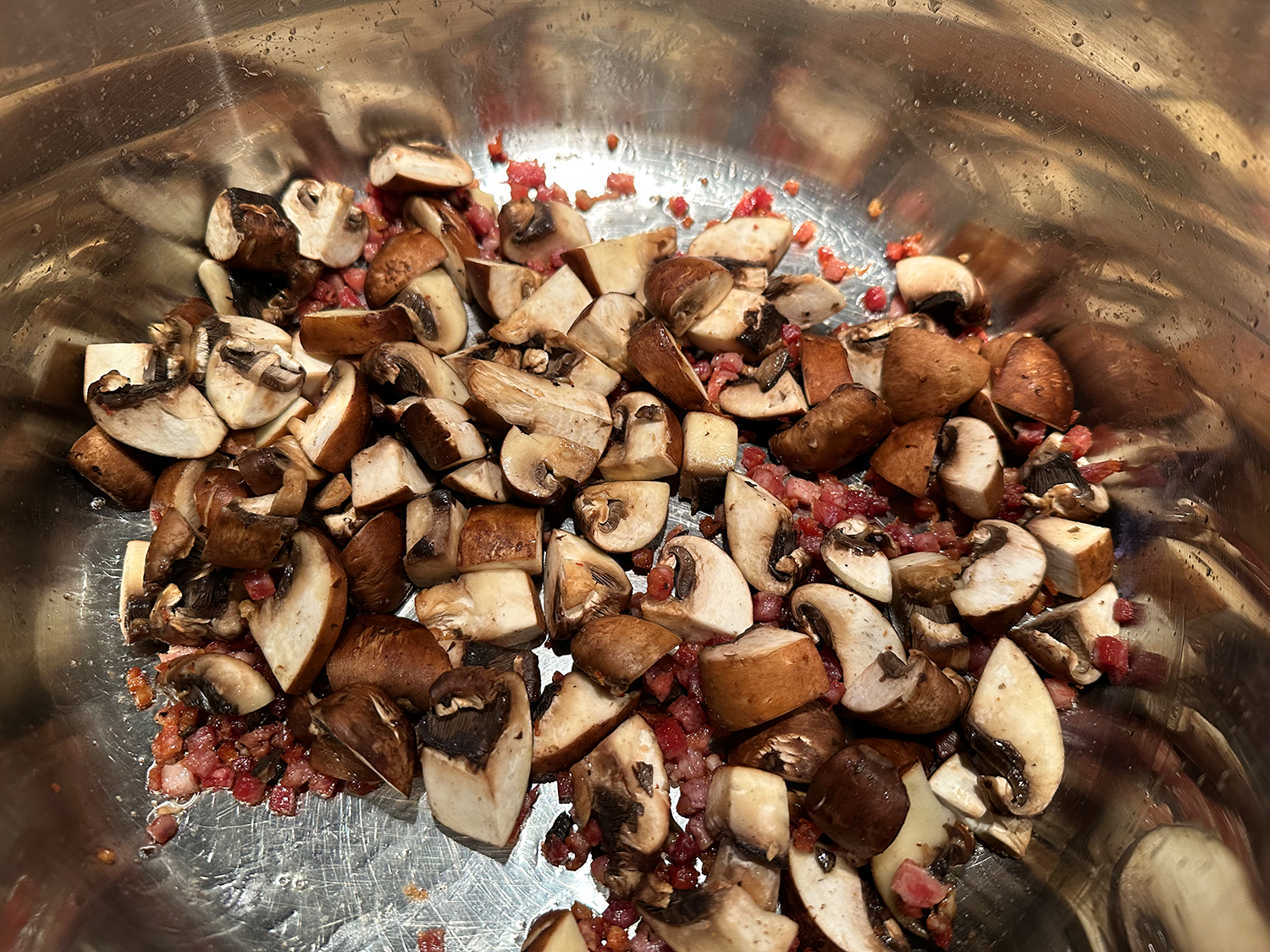
Heat a large Dutch oven over medium. Add pancetta, and cook, stirring often, until browned, about 6 minutes. Add mushrooms, and cook, stirring occasionally, until liquid released by mushrooms has mostly evaporated, about 4 minutes.
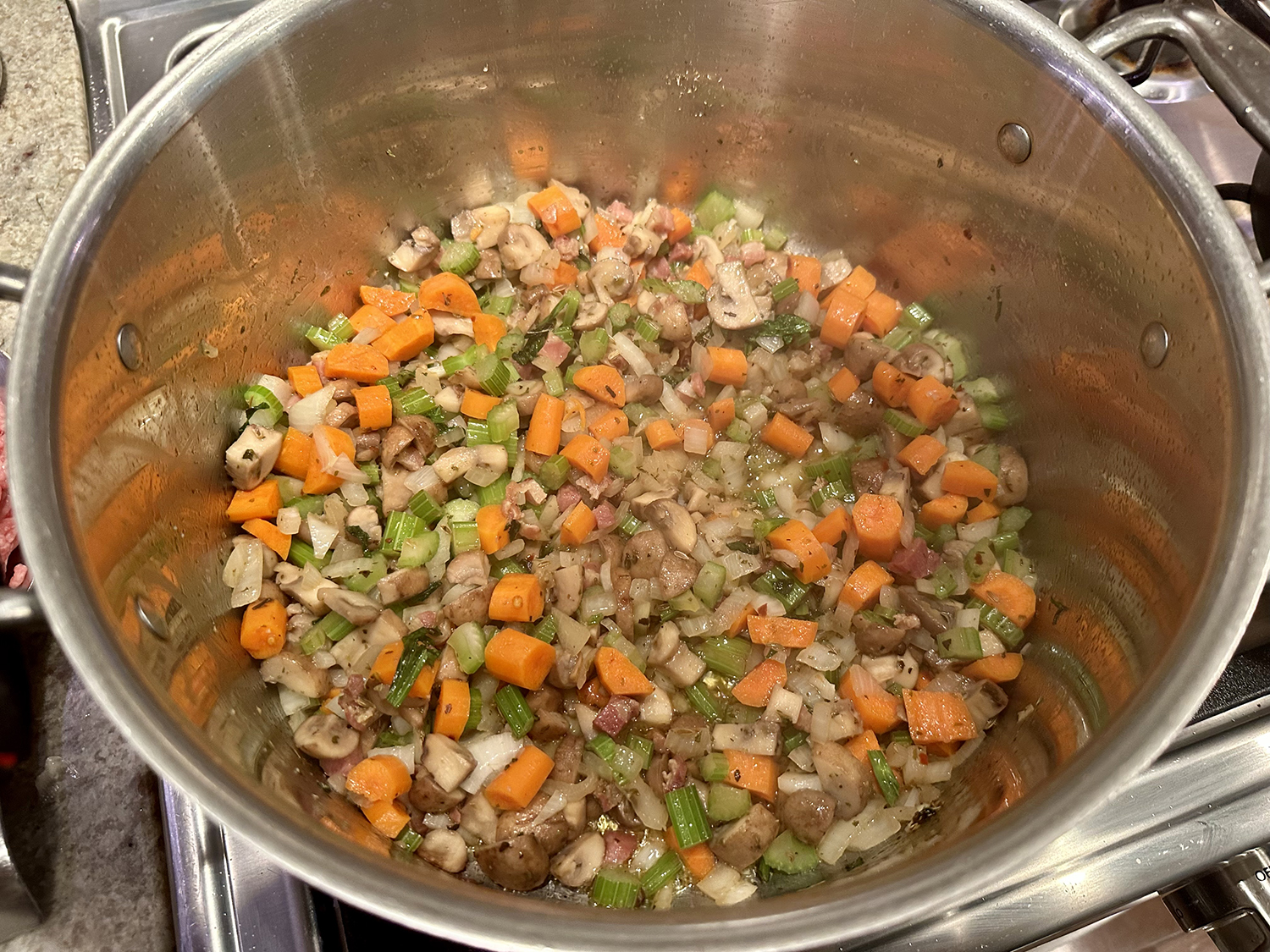
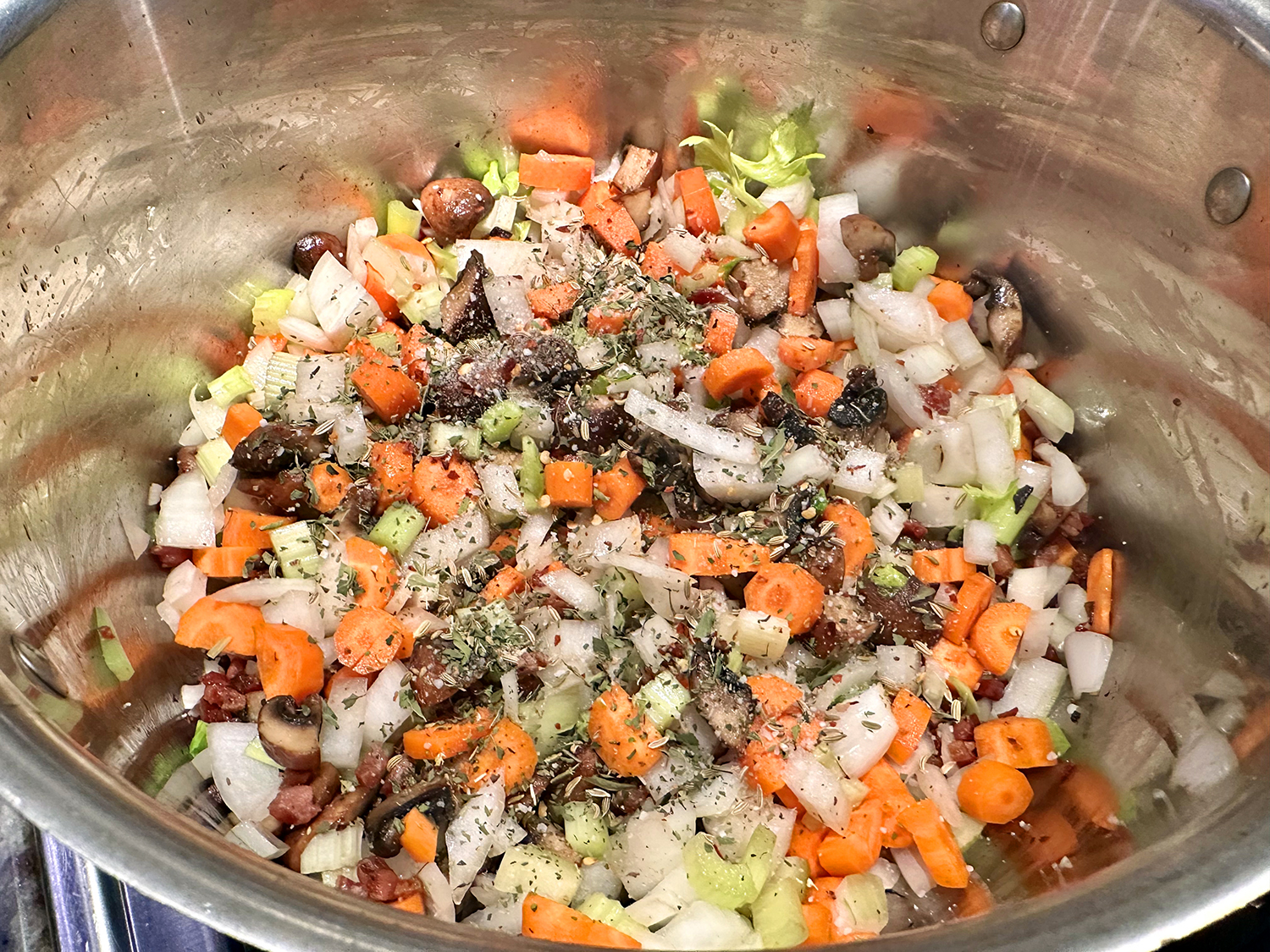
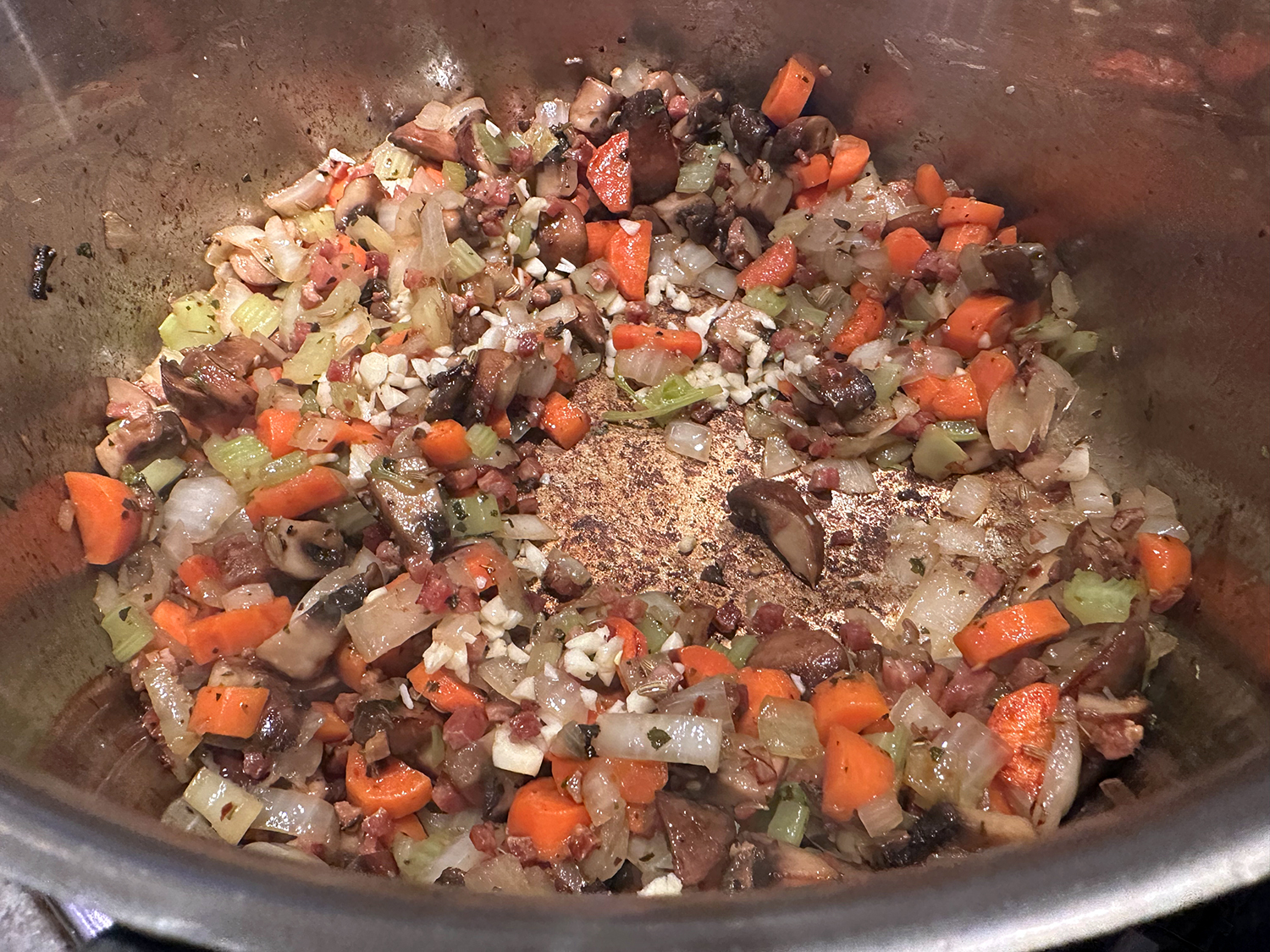
Increase heat to medium-high; add carrots, onion, celery, butter, fennel seeds, oregano, salt, and crushed red pepper; cook, stirring occasionally, until vegetables are tender, 10 to 12 minutes. Add garlic, and cook, stirring constantly, until fragrant, about 1 minute.
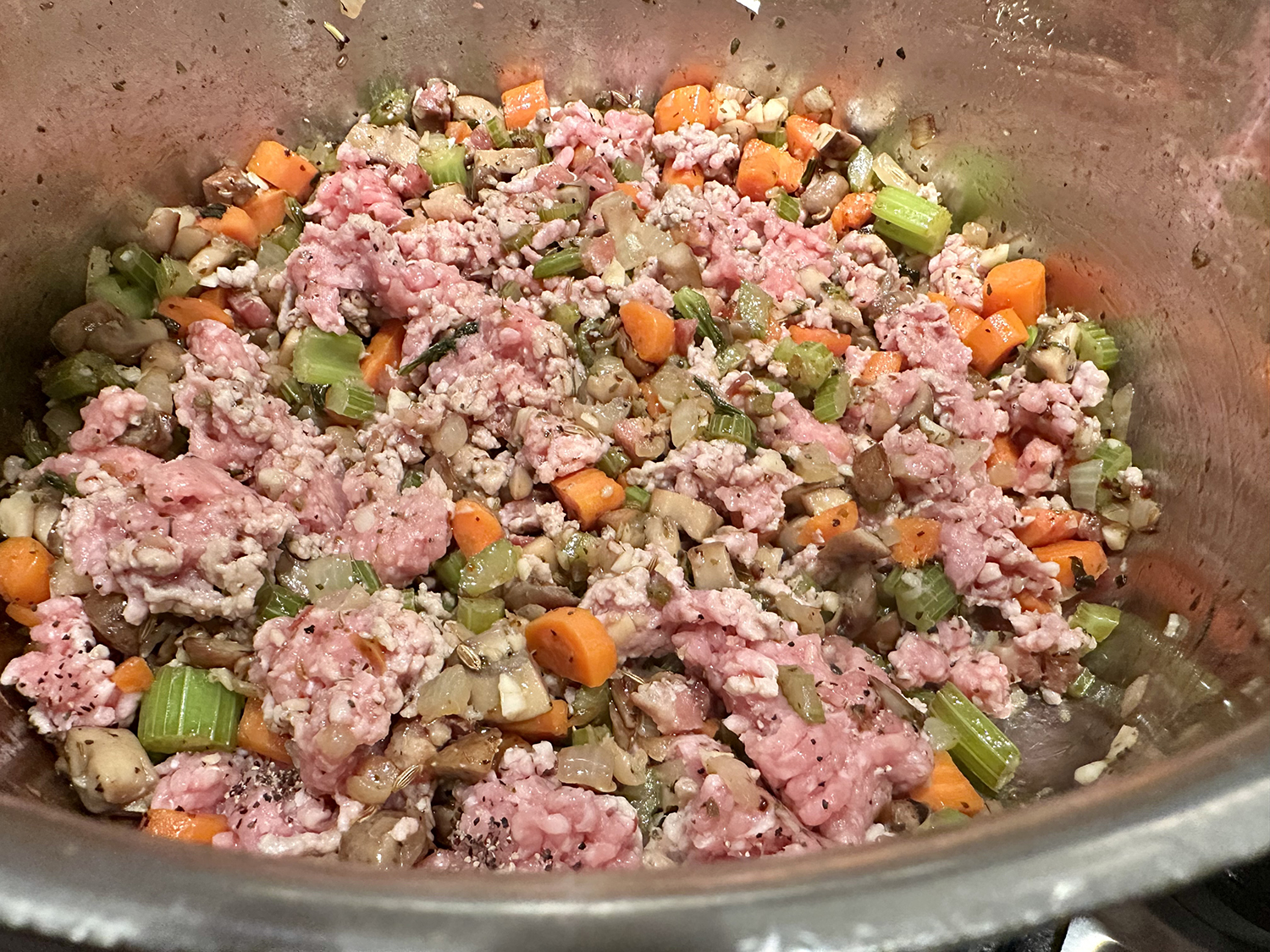
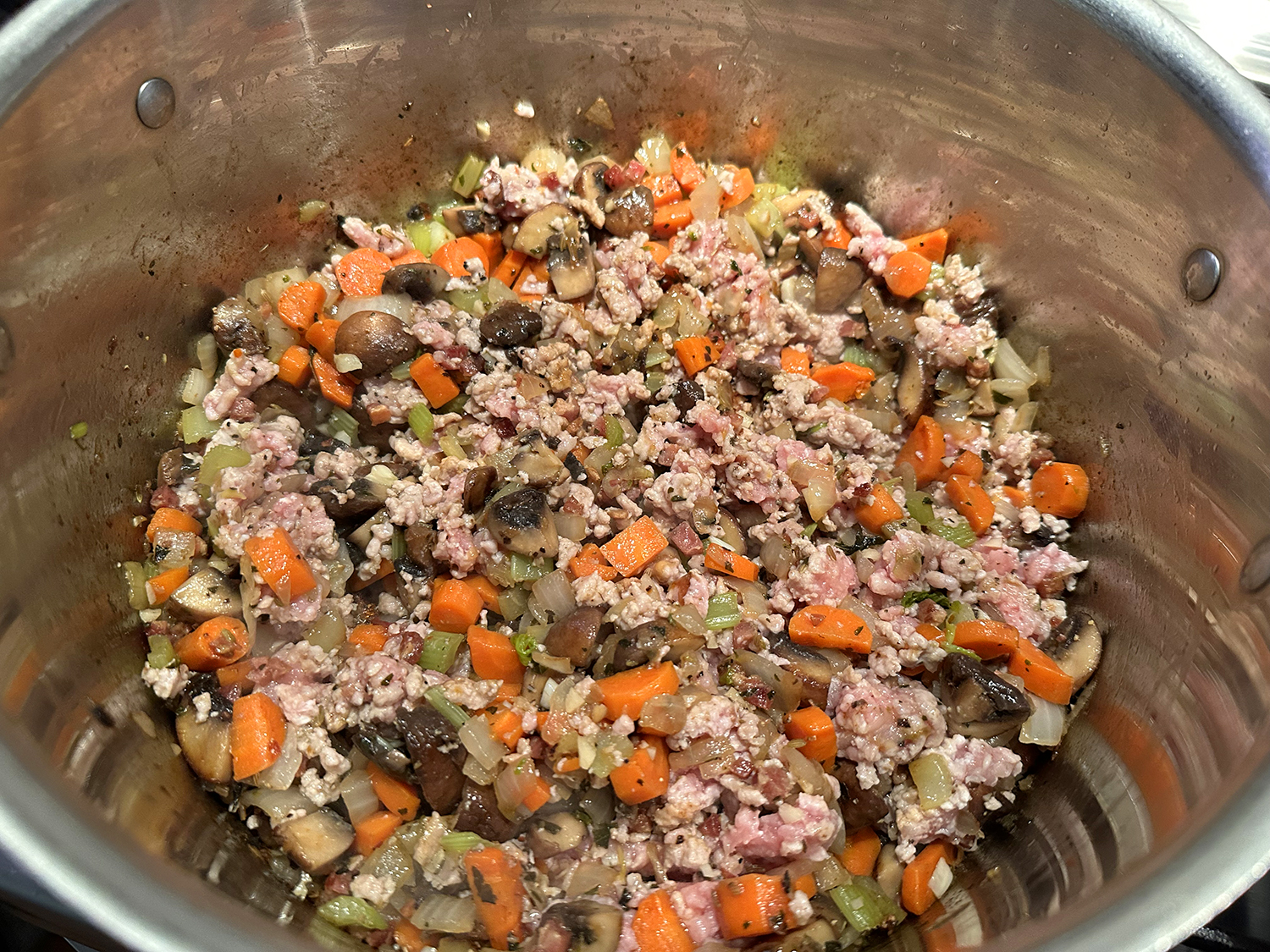
Add pork and black pepper; cook, stirring constantly with a wooden spoon to break meat into small pieces, until browned, about 4 minutes. Add wine, and bring to a simmer over medium-high. Add broth and cream, and return to a simmer. Reduce heat to low; simmer, uncovered, stirring occasionally, until broth mixture is slightly thickened and reduced to about 5 cups, about 15 minutes.
While Bolognese cooks, bring a large pot of salted water to a boil over high. Add pasta, and cook according to package directions for al dente, stirring occasionally. Drain, reserving 1 cup pasta cooking liquid.
Add cooked pasta and 1/2 cup reserved pasta cooking liquid to Bolognese. Cook over low, stirring constantly, until a creamy sauce forms and coats pasta, about 3 minutes, adding remaining 1/2 cup pasta cooking liquid as needed to loosen sauce.
Season with salt to taste. Divide evenly among serving bowls, and sprinkle with parsley and cheese.
Luscious and creamy white bolognese sauce (bolognese bianco) is very similar to classic Italian ragu alla bolognese – just without the tomatoes. Slowly simmer ground pork with pancetta, aromatic vegetables, fresh herbs, and white wine, then finish with heavy cream and parmesan cheese to create a rich and hearty meat sauce with the best velvety texture. Toss with orecchiette pasta and enjoy the ultimate cozy and comforting dinner.
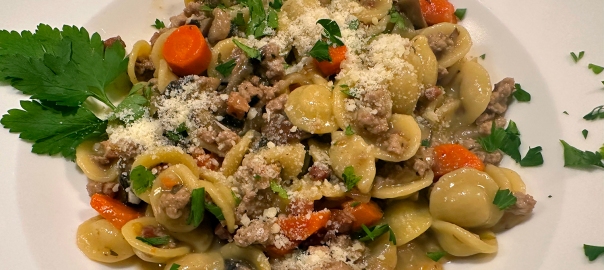
The ground pork bits nestle into the orecchiette pasta and the light sauce coats everything tying all of the ingredients together.
We used 25% less pasta at 12 ounces instead if a pound. And the package of pancetta weighed only 4 ounces, while the recipe calls for 5 ounces.
WOW, just WOW! This meal was soooo delicious, we didn’t expect to like it as much as we did. Now it won’t make your dieting list or make the top 10 of your super-healthy menus, but for a special treat it can’t be beat! We paired ours with a healthy side salad and some roasted broccoli rabe therefore eliminating some of the guilt 😉 .
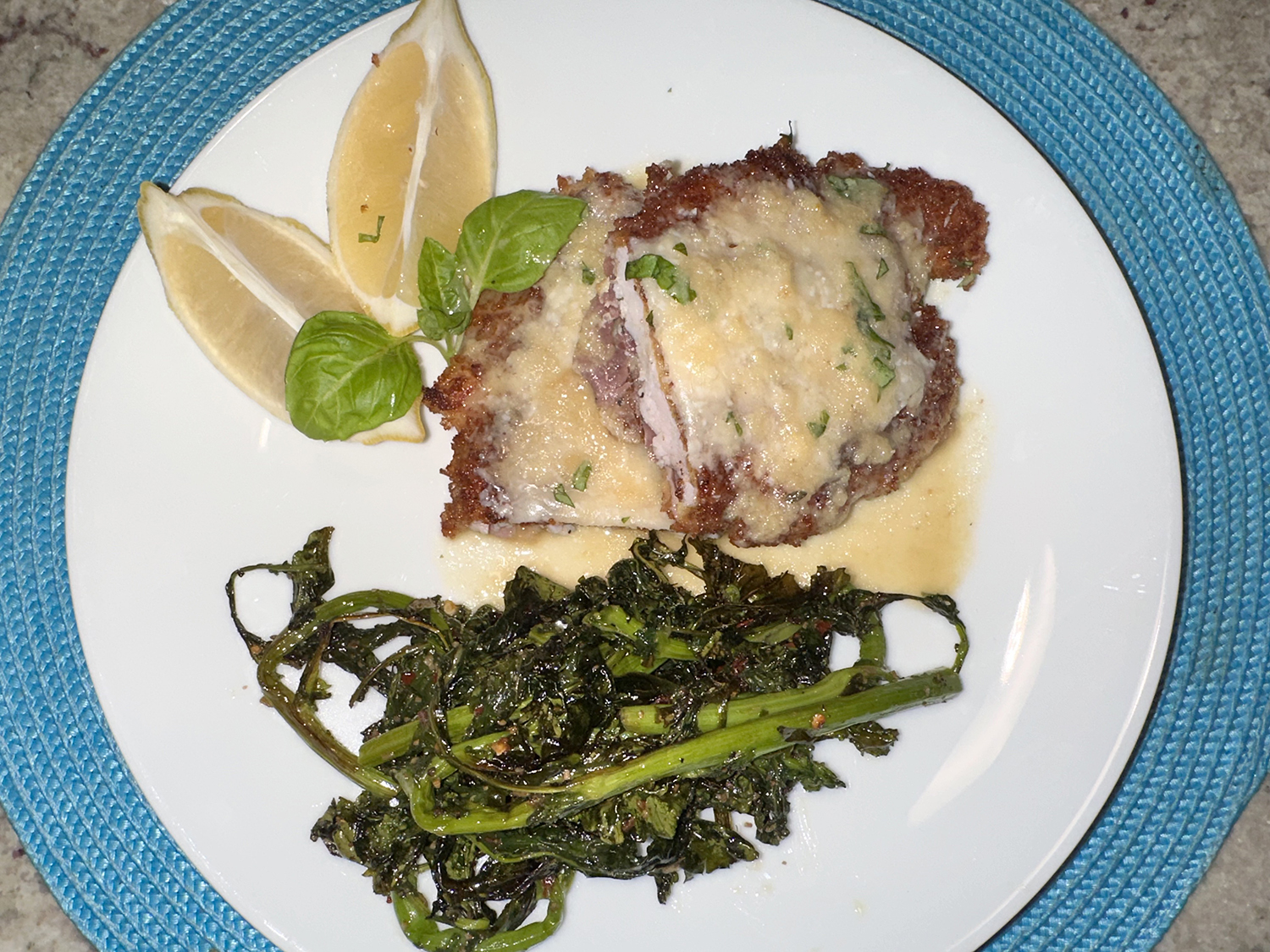
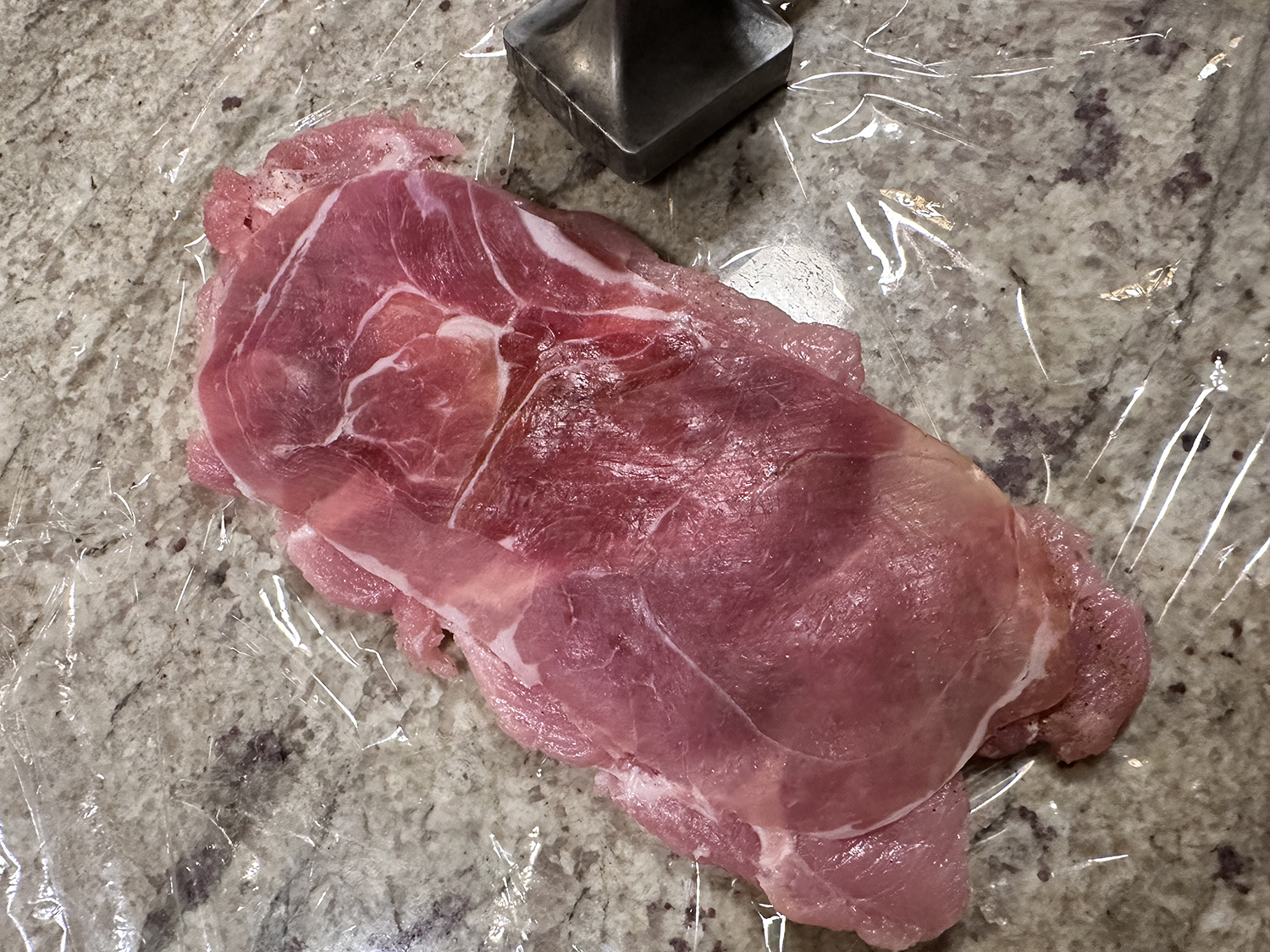
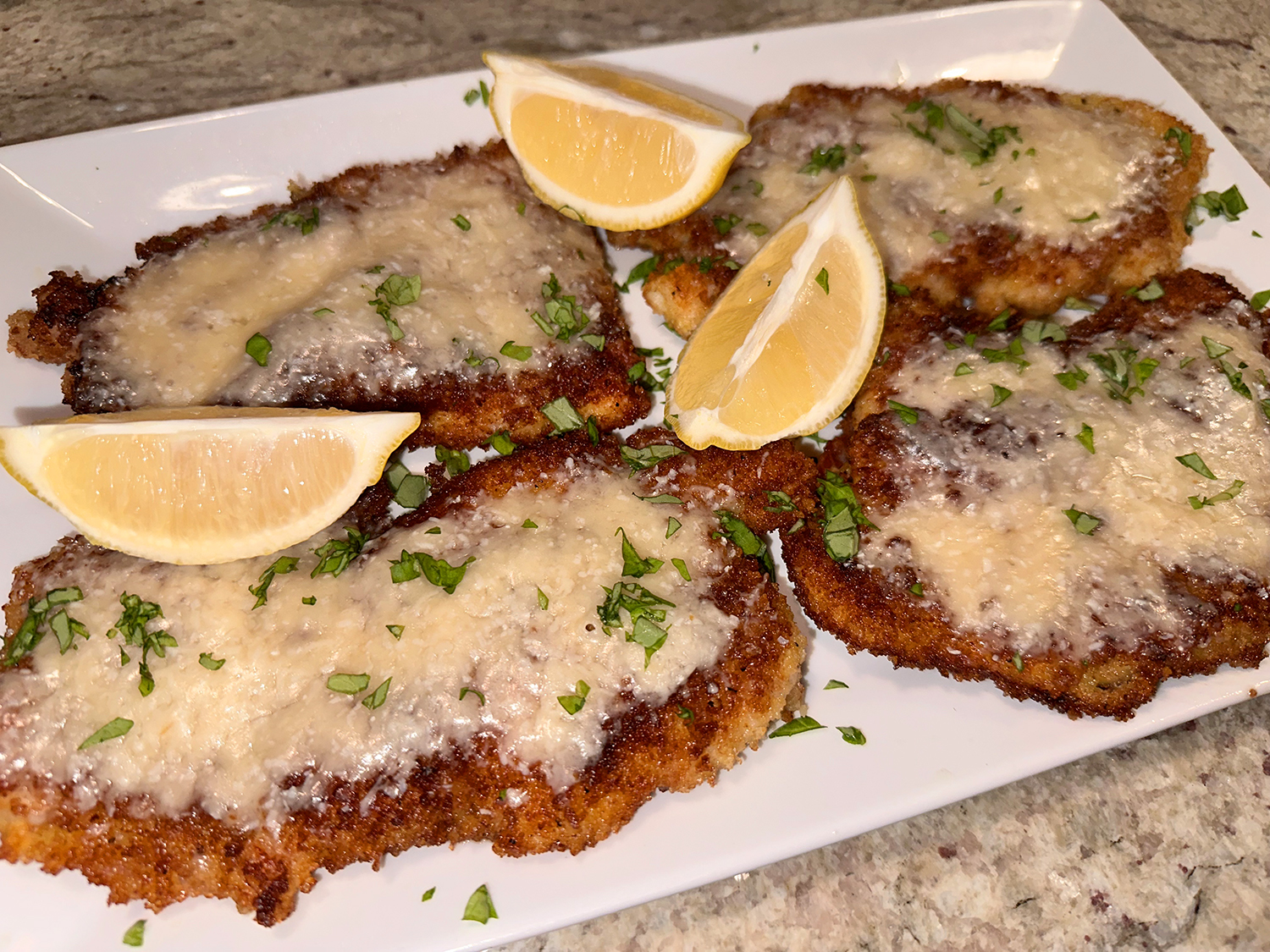
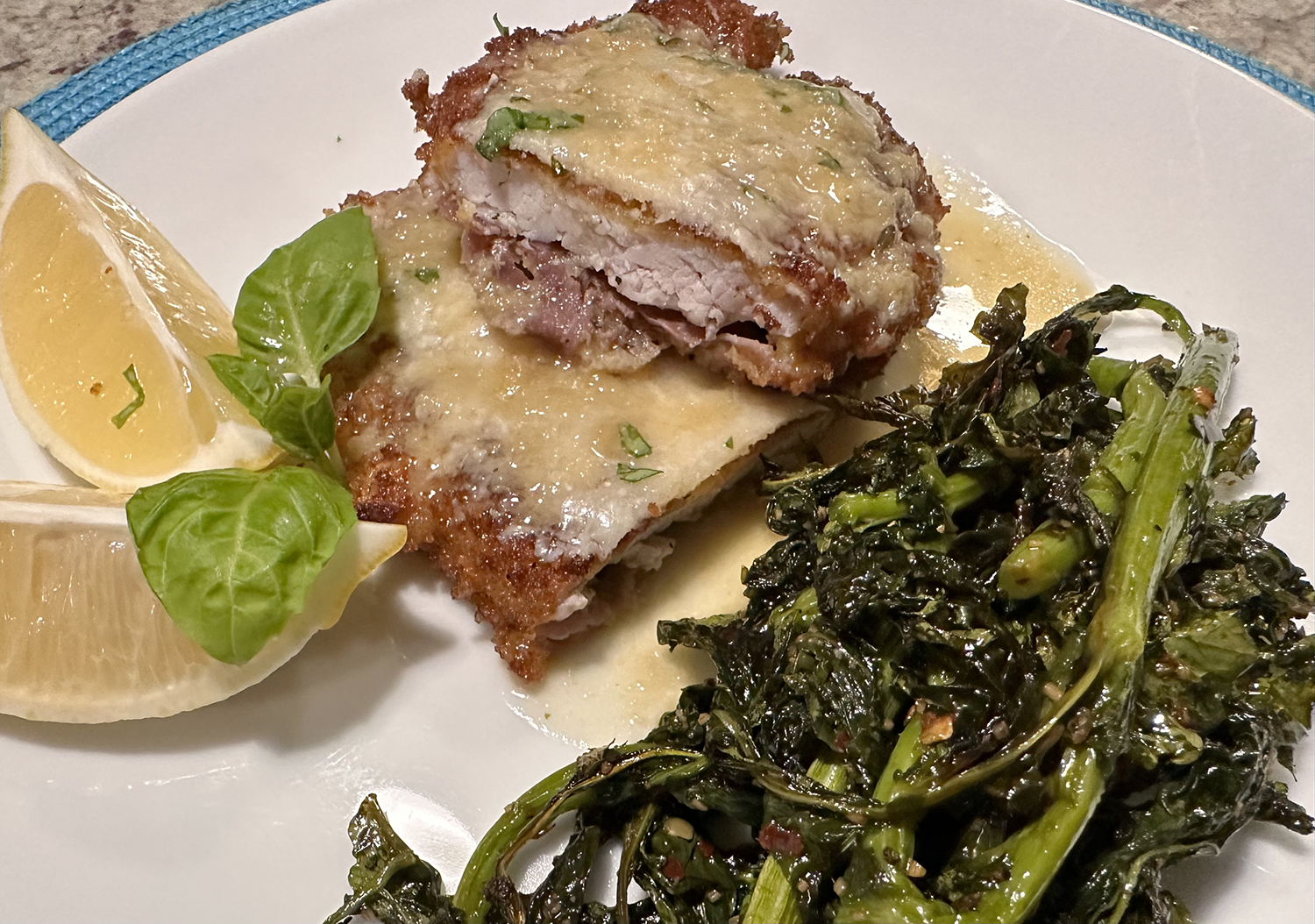
Pork tenderloin is similarly mild in flavor to veal, so it works in this riff on classic cotoletta alla bolognese. The pan-fried breaded cutlets are topped with salty, savory prosciutto and Parmigiano-Reggiano cheese. The pork tenderloin is pounded thin, and layered with the prosciutto slices onto the cutlets, under the breading, to better integrate them into the dish.
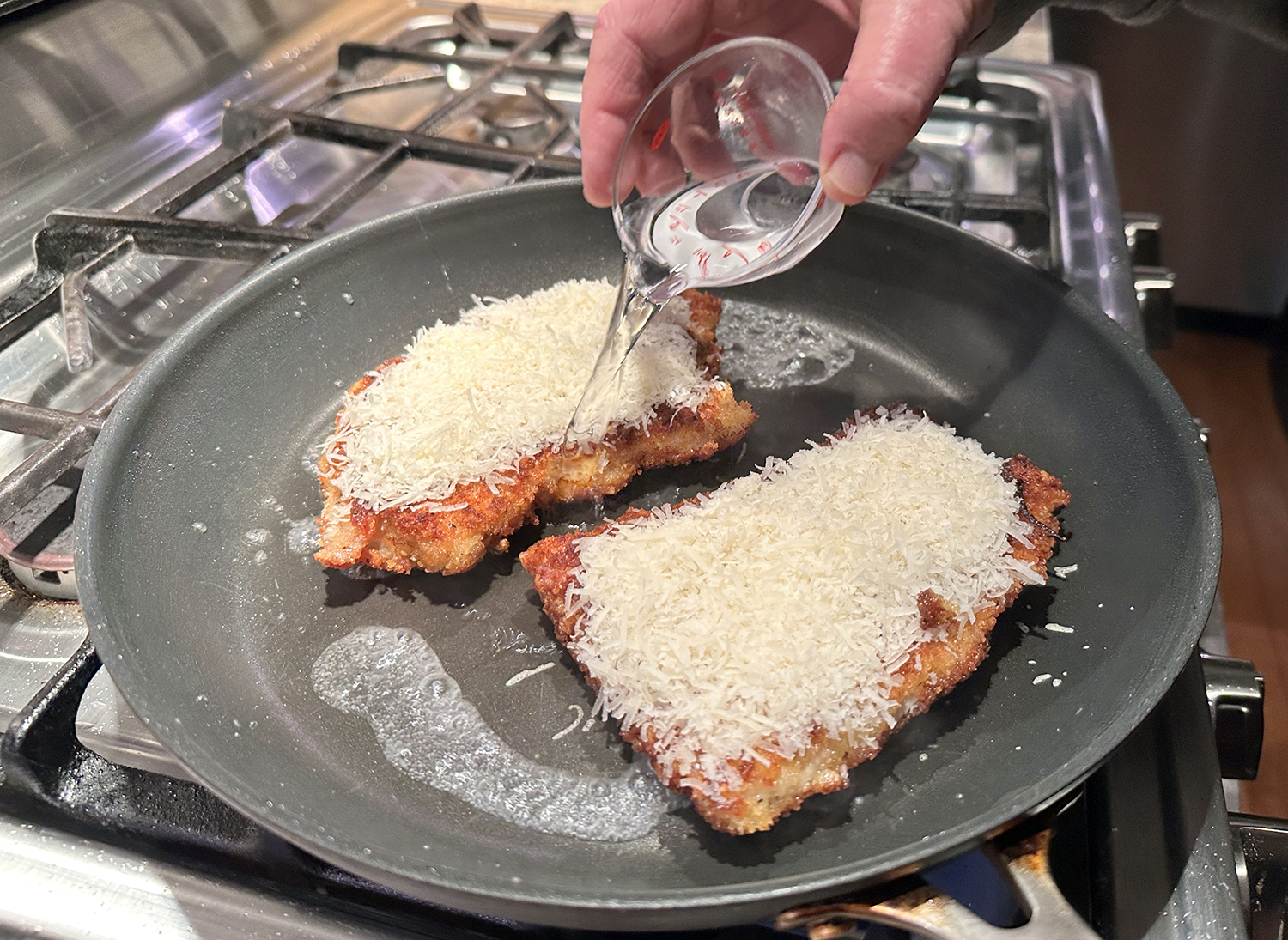
After frying, the crisp cutlets are placed in a pan with a bit of water and cooked just long enough to melt the cheese. For an extra-crisp crust, use Japanese-style, lightly-crushed panko breadcrumb. This method for melting the cheese keeps the bottoms of the cutlets crisp, and the lemon-spiked sauce, served on the side, brightens up all the rich, salty flavors.
The pieces end up being quite large, so in effect, you could possibly get two servings out of each cutlet. I for one, could not finish mine.
Make ahead: If you’d like it to be a less hectic process at dinner time, you can prepare the cutlets up to Step 3, and leave them in the refrigerator for several hours before moving on to Step 4. Also ahead of time, shred the Parmesan cheese, and make the sauce, which can be reheated as your are melting the cheese on the cutlets.
TIP: Don’t pound the pork without using plastic wrap. The plastic wrap prevents the meat pounder from sticking to the meat, thereby helping to avoid tears. This is especially important when the meat is pounded very thin, as it is here. After pounding the cutlets, season them only with pepper, not with salt, as the prosciutto and Parmesan provide lots of salinity. Finally, when adding the water to the pan of fried cutlets, make sure to pour it around them, not on them.
1¼ lb. pork tenderloin, trimmed of silver skin and patted dry
4 slices prosciutto (about 2 oz. total)
12 Tbsp. neutral oil, divided
4 oz. Parmesan cheese (without rind), shredded on the small holes of a box grater (2 cups)
4 Tbsp. (½ stick) salted butter, cut into 4 pieces
3 medium garlic cloves, finely grated
¾ cup chicken broth
2 Tbsp. lemon juice, plus lemon wedges to serve
Directions
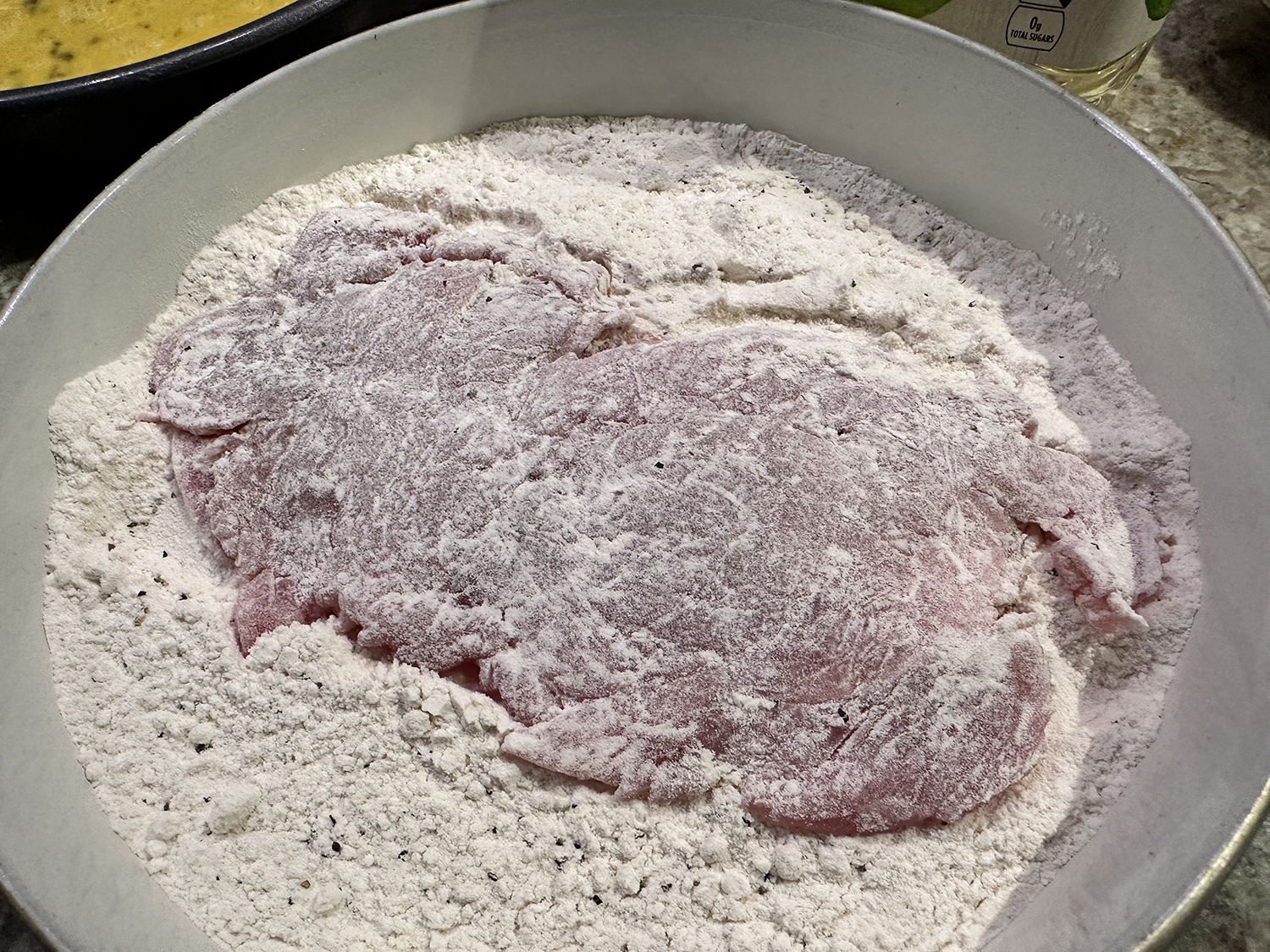
Place the panko in a large a zip-close bag and seal. Run a rolling pin over the panko until finely crushed. Empty into a pie plate or wide shallow bowl, then stir in ½ teaspoon pepper. In a second similar dish, stir the flour and 1 teaspoon pepper. In a third dish, beat the eggs with a fork.
Cut the pork tenderloin in half crosswise, making the tail-end slightly larger, then cut each piece in half lengthwise. Place 2 pieces between 2 large sheets of plastic wrap. Using a meat pounder, gently pound each piece to an even ⅛-inch thickness. Repeat with the remaining pieces. Season both sides of each cutlet with pepper, then lay a prosciutto slice on each cutlet. Re-cover with plastic wrap and gently pound so the prosciutto adheres.
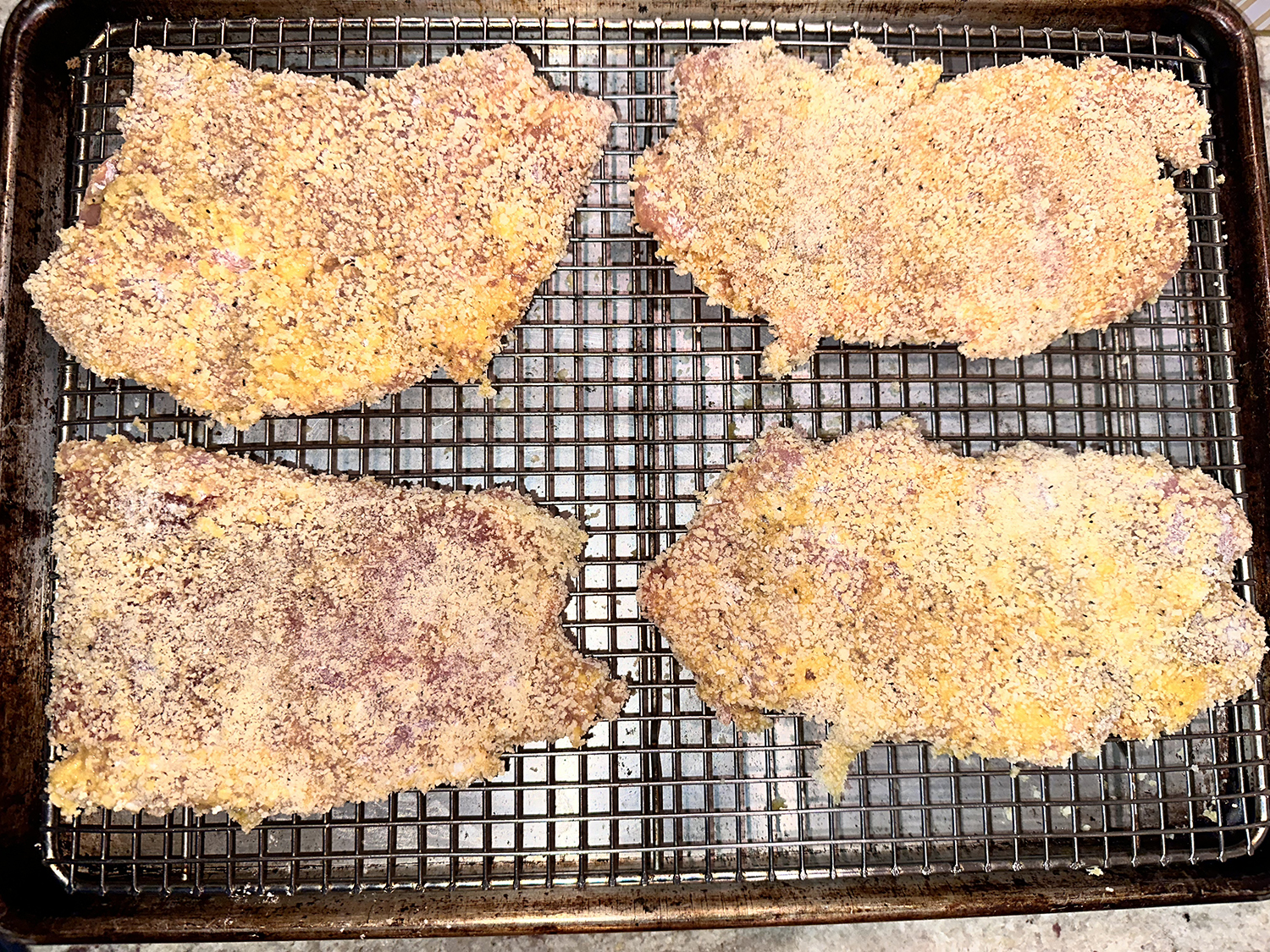
One at a time, dredge the cutlets in the flour, turning to coat and shaking off any excess, then dip in the egg and, finally, coat with the panko, pressing so it adheres. Set the cutlets on a large plate. Refrigerate uncovered for 15 minutes. Set a wire rack in a rimmed baking sheet and place near the stovetop.
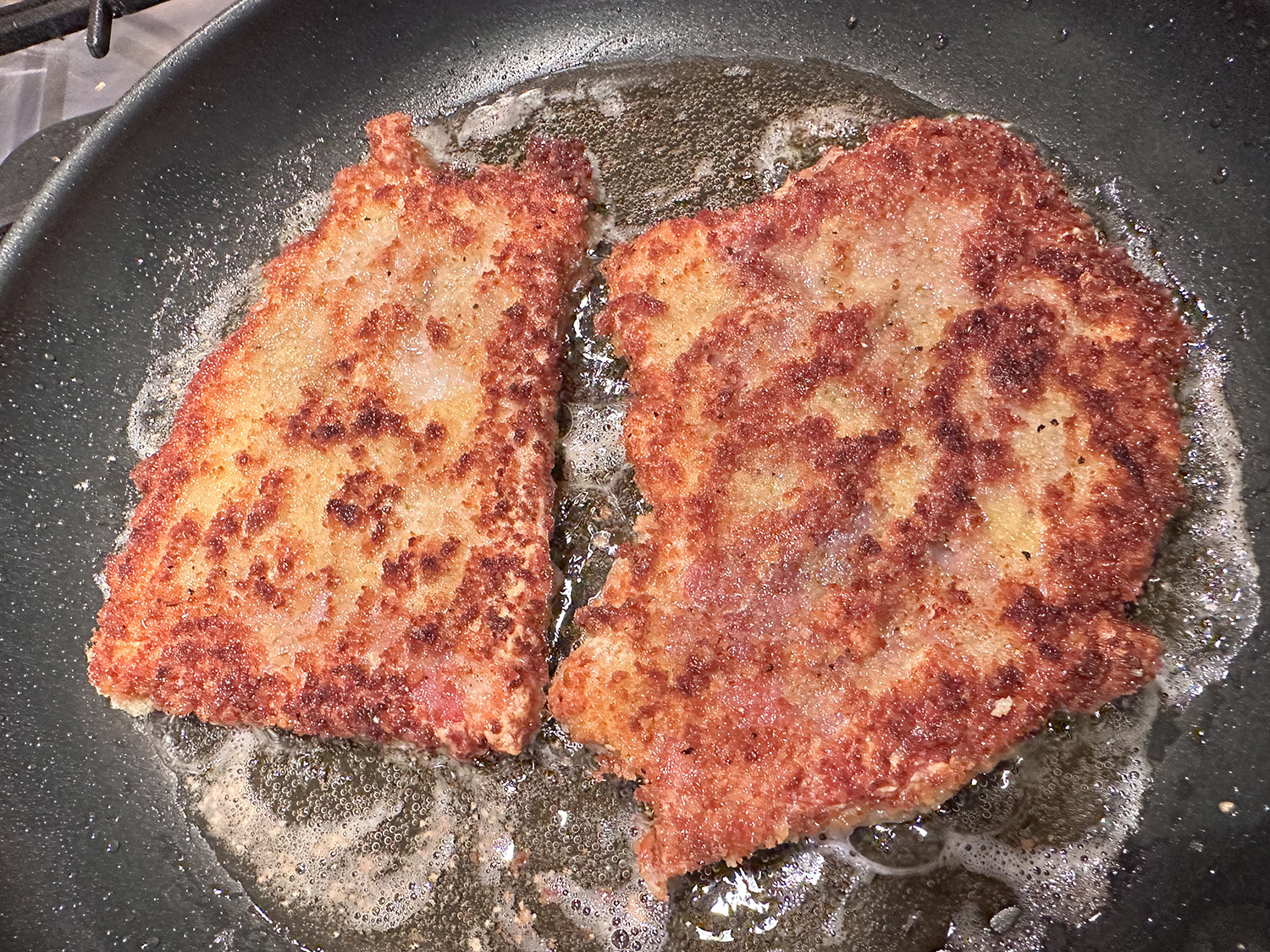
In a 12-inch nonstick skillet over medium-high, heat 6 tablespoons of oil until barely smoking. Add 2 cutlets and cook until golden, 1 to 2 minutes. Using tongs, flip and cook until the second sides are golden, about 1 minute. Transfer to the prepared rack. Repeat with the remaining 6 tablespoons oil and remaining cutlets. Wipe out the skillet and set aside.
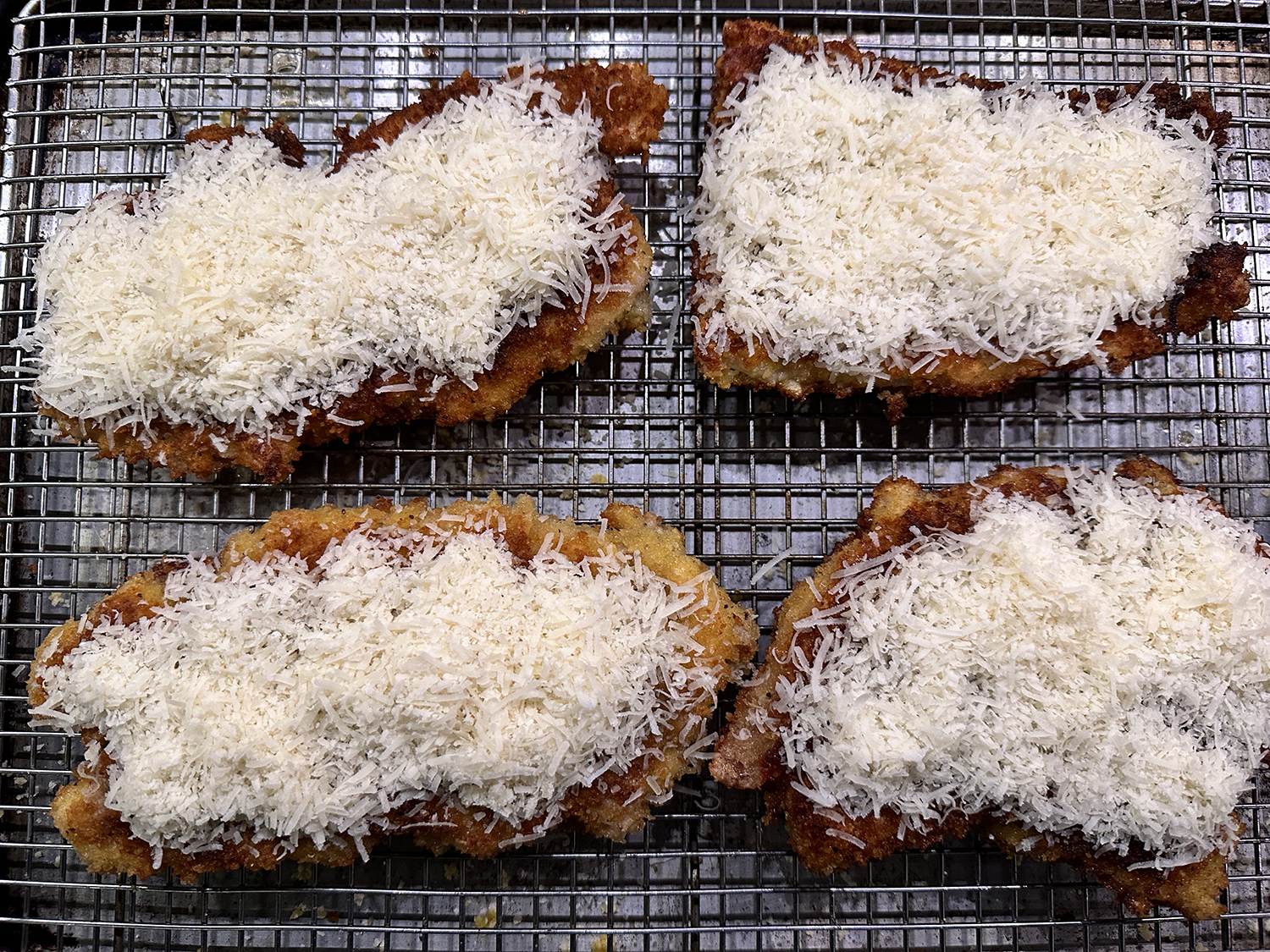
Evenly sprinkle the cutlets with the Parmesan. Place 2 cutlets, cheese side up, in the same skillet, then set the pan over medium-high. Pour ¼ cup water around the cutlets, immediately cover and cook until the cheese has melted, the water has evaporated and the cutlets begin to sizzle, 1 to 2 minutes. Using a large spatula, return the cutlets to the rack and repeat with the remaining cutlets; tent with foil. Using paper towels, wipe out the skillet.
In the same skillet over medium, melt the butter. Add the garlic and cook, stirring, until fragrant, about 30 seconds. Add the broth, then cook over medium-high, stirring occasionally, until reduced to about ⅓ cup, about 3 minutes. Off heat, stir in the lemon juice, then taste and season with pepper. Pour into a serving bowl. Transfer the cutlets to a platter and serve with the sauce and lemon wedges on the side.
This version of bolognese is half lamb and half ground beef, a mixture you’ll see a lot in northern Italy, and because the lamb is lean, this is a somewhat lighter sauce than all-beef or pork-based ragu.
The sauce needs a good long simmer, but it makes enough that you’ll likely get two meals. Giada claims the pasta shouldn’t be swimming in sauce; you only want it to stain the pasta, but we are “saucy” people and like to pile on a fair amount.
One of the ingredients is Calabrian chili paste, but a good substitute is Sriracha, and that’s what we used.
1 can whole San Marzano tomatoes, (28 ounce) crushed by hand
1 bay leaf
1 piece parmesan rind, (3 inch)
1 cup freshly grated parmesan cheese
1 lb. fusilli, cooked to package instructions; or polenta
Directions
Heat a medium dutch oven over medium heat. Add the butter and 2 tablespoons olive oil and warm until the butter is melted.
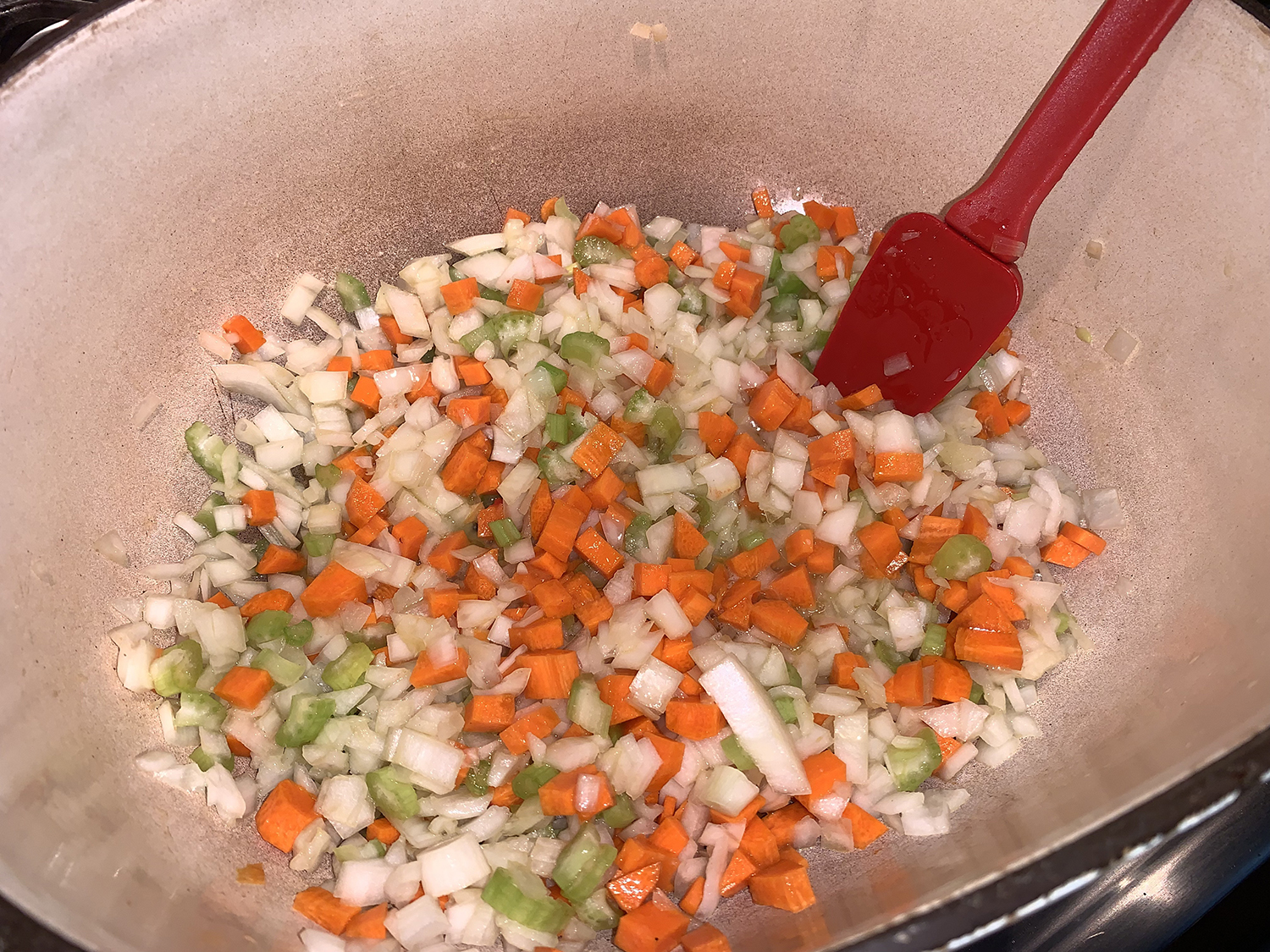
Add the onions, carrots, celery and a 1/2 teaspoon salt. Cook stirring often for 6 minutes or until the vegetable are soft but have no color.
Add the lamb and beef and cook breaking apart the meat with a wooden spoon for 5 minutes or until the meat is cooked through and no longer pink.
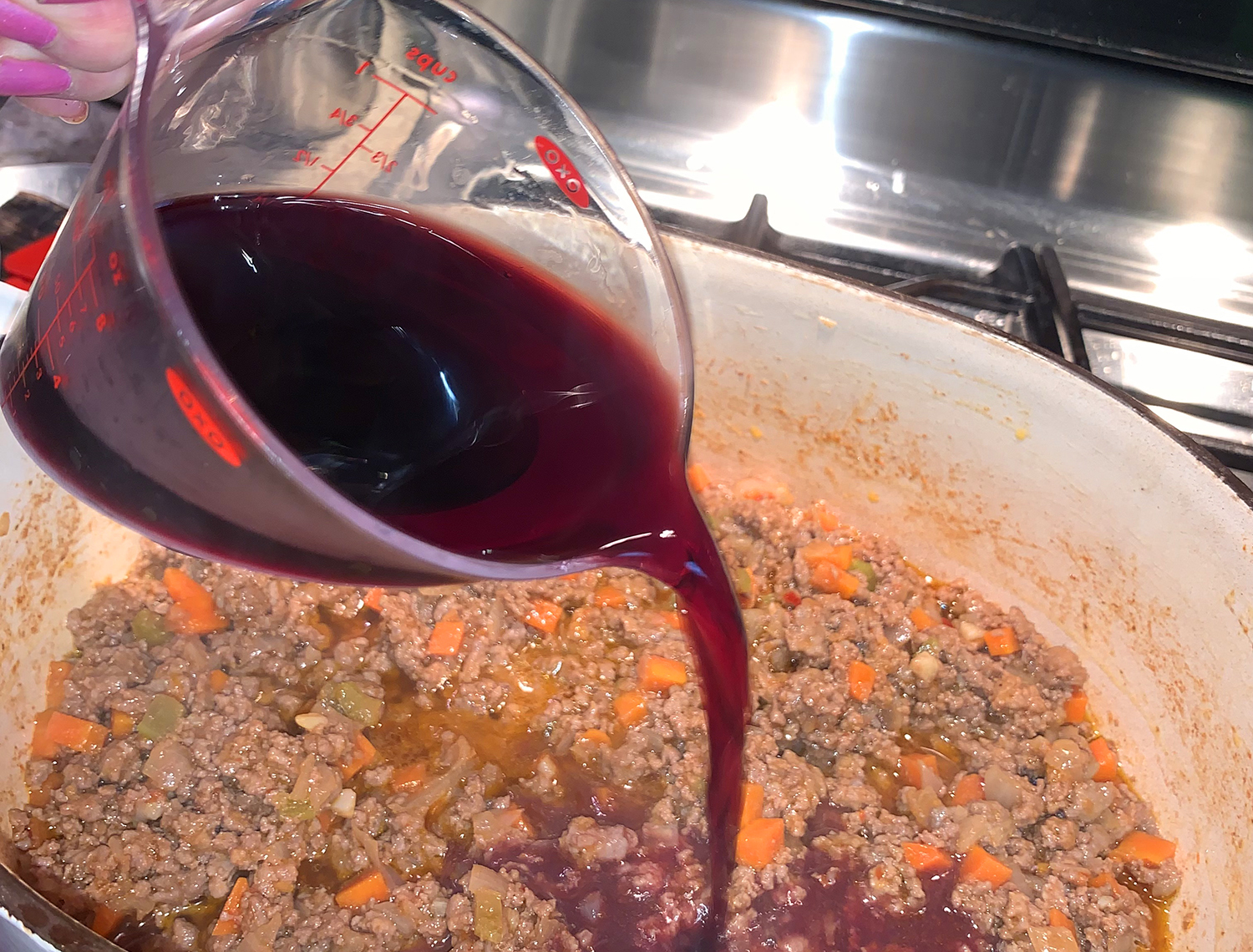
Stir the garlic, chili paste, red pepper flakes, and tomato paste into the meat mixture. Cook the tomato paste stirring often for 2 minutes.
Add the milk. Bring to a simmer and cook for 20 minutes, stirring occasionally until the milk is almost entirely evaporated.
Add the wine, tomatoes, bay leaf, parmesan rind and remaining salt. Bring to a simmer and reduce the heat to low to just maintain a gentle simmer. Simmer the sauce for 1 ½ to 2 hours, stirring occasionally to prevent sticking. Use several folded paper towels to skim some of the oil from the surface.
Discard the bay leaf and parm rind.
Spoon the bolognese over fusilli or creamy polenta reserving any extra to serve on the side. Serve with additional parmesan and a drizzle of olive oil, if desired.
A cool, rainy Sunday during the COVID-19 lockdown—perfect for us to spend time together cooking in the kitchen. While The Mr. made his homemade chicken stock, I started assembling this wonderful Lasagna Bolognese recipe by Diane Unger, found in an issue of Milk Street Magazine.
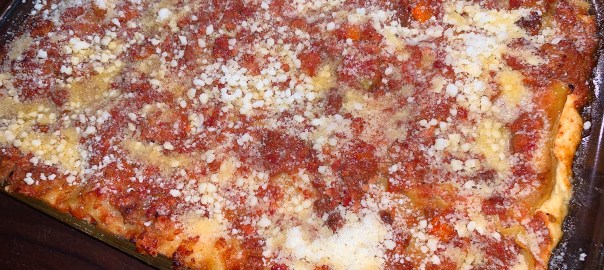
A slice of the mouth-watering Lasagna Bolognese after sitting for 30 minutes and topped with a mixture of grated Pecorino Romano and Parmesan cheeses.
Yes, it is time-intensive, but it makes enough ragù for the lasagnawith plenty of leftovers for another night’s pasta dinner. And given all of the statistical data showing most of this country still in lockdown, time is one thing you do have plenty of (unless of course you’re one of the heroes out there keeping this country safe and operational).
The velvety besciamella was simply awesome! You can make it ahead of time and rewarm it when assembling the casserole. It’s amazing how light this lasgana was considering all of the meat. But in retrospect, there’s really not a lot of cheese—just the 3 ounces in the white sauce, along with any you sprinkle on as a garnish.
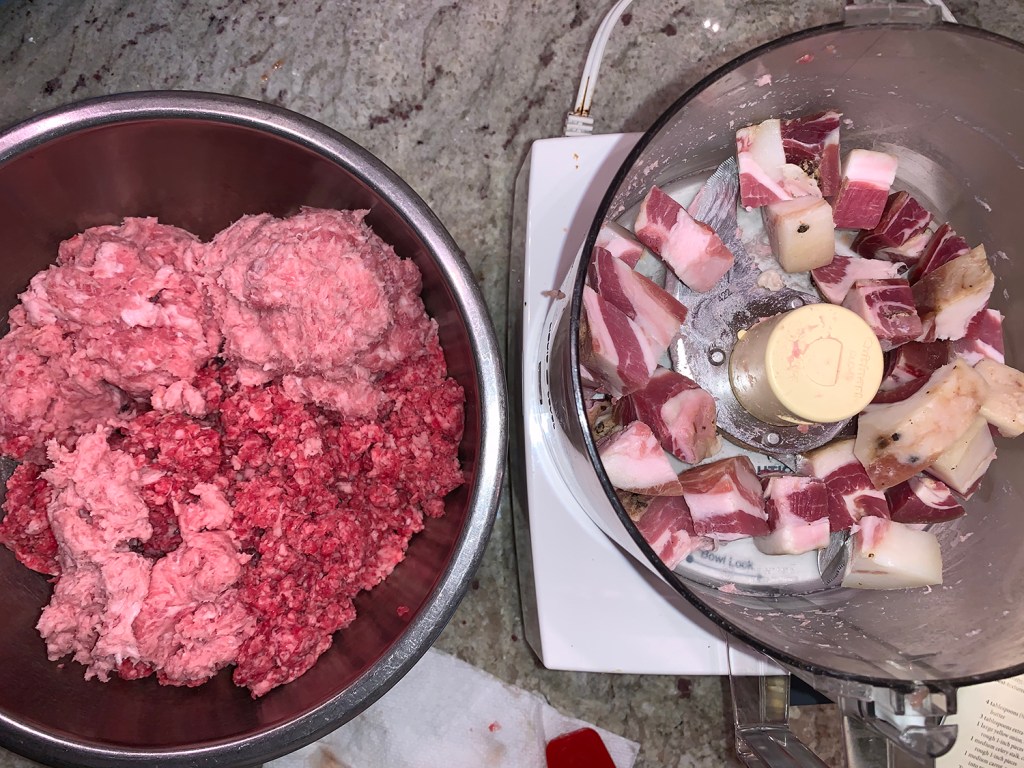
Try to purchase pancetta in a large chunk from the deli counter, and if it comes in casing-like plastic, make sure to remove and discard the wrap before use. The next best option is packaged already diced pancetta; if pre-sliced is the only option, it will work, but will cost a lot more and requires less time in the food processor.
Don’t trim the fat from the beef and pork. The fat makes the ragù rich and supple, and carries the flavors of the other ingredients. Don’t process the beef and pork too finely; a coarse grind yields the best-textured sauce. It may seem a bit thin after the long braise, but don’t fret because a bit of powdered gelatin gives the ragù a rich, velvety body that otherwise would require an even lengthier simmer to achieve.
We went a step further and bought bone-in short-ribs, cutting the meat off the bones, then tossing those bones in with the ground meats to simmer for 3 hours.
You may wonder why not just used already crushed canned tomatoes instead of going through the step of blending canned whole tomatoes in a food processor. The simple answer? Whole tomatoes are generally sold peeled, in either juice or puree. This is usually the highest quality tomato product. Crushed tomatoes are a mixture of diced tomatoes and tomato puree or paste. Furthermore, crushed tomatoes are unpredictable. With some brands they’re crushed almost to a purée, while other brands might still have big chunks.
You’ve probably run into bare shelves at the grocery store during these crazy times. Well, when I was shopping for this recipe, almost the entire selection of pasta was gone! There were two boxes of lasgana, (not the no-bake variety as indicated below), so I grabbed one and made the best of it. If you are fortunate enough to get them, don’t use the noodles without first soaking them. Unsoaked noodles absorb moisture from both the ragù and besciamella, leaving the lasagna too dry. But don’t soak them for longer than 10 minutes.
3 Cups parmesan besciamella, warmed (see recipe below)
Finely grated parmesan and/or Pecorino-Romano cheese, to serve
Directions
Heat the oven to 350°F with a rack in the middle position.
Place the noodles in a 9-by-13-inch baking dish, then add hot water to cover, along with the oil and 1 Tbsp. salt; swish the noodles around to dissolve the salt. Let stand for 10 minutes, moving the noodles around halfway through to ensure they do not stick together.
Remove the noodles from the water and arrange in a single layer on a kitchen towel; pat dry with paper towels. Wipe out the baking dish.
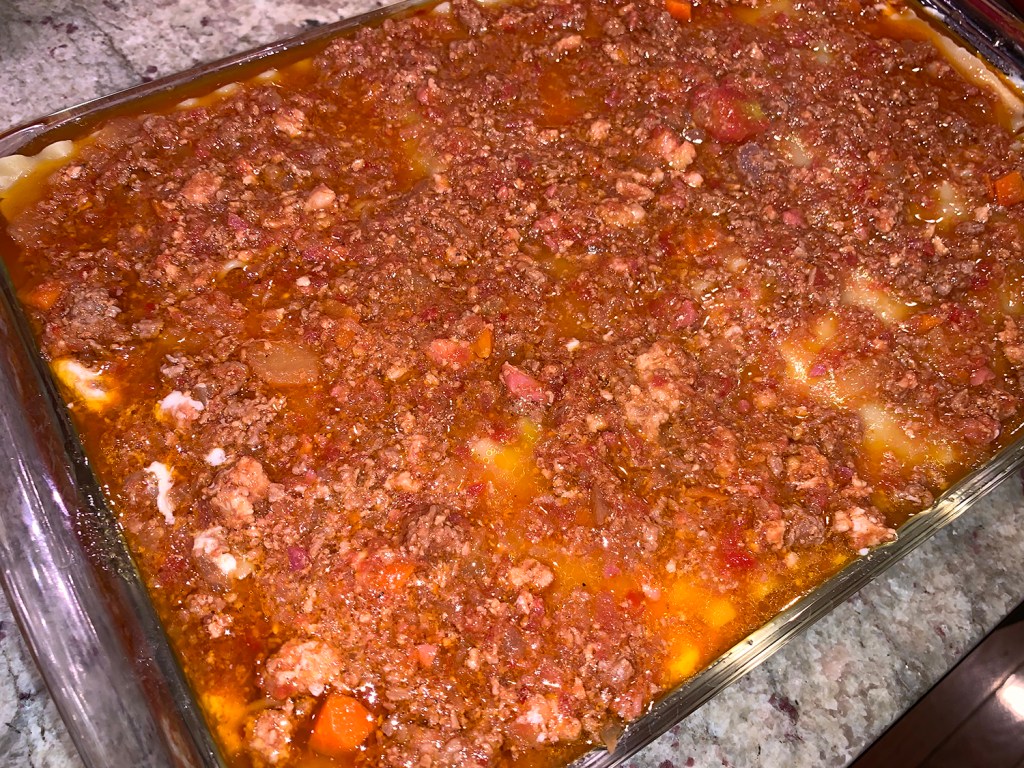
Distribute 2 cups ragù evenly in the baking dish, then place 3 noodles in a single layer on top.
Spread ¼ cup besciamella onto each noodle, all the way to the edges. Pour 1 cup ragù on top and spread evenly.
Repeat the layering 3 more times, using the remaining noodles, besciamella and ragù, then cover the baking dish tightly with foil.
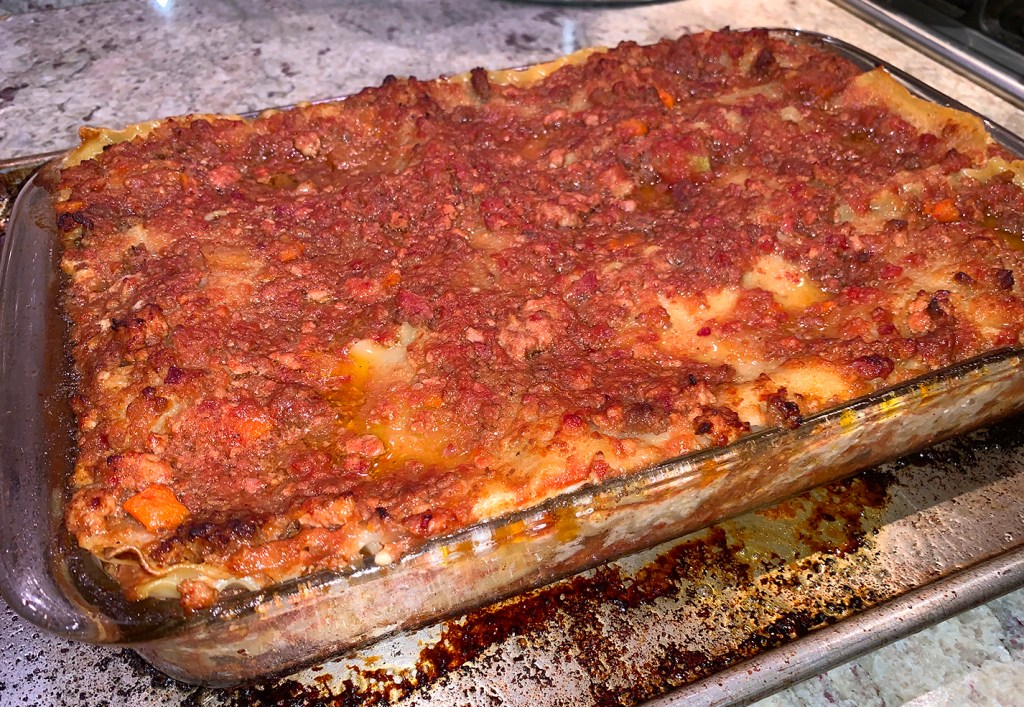
Bake until the edges of the lasagna are bubbling, 45 minutes to 1 hour.
Transfer to a wire rack, uncover and cool for about 30 minutes.
Cut into pieces and serve sprinkled with Parmesan.
Our lasagna pan was filled to the brim and we knew it would probably overflow so we set the casserole dish on a rimmed baking sheet. We also neglected to cover the dish with tinfoil before cooking it in the oven. It was done perfectly after 35 minutes, even without the foil!
This white sauce is packed with flavor from bay, basil and Parmesan and gets a hint of heat from red pepper flakes. The finished besciamella can be refrigerated in an airtight container for up to two days.
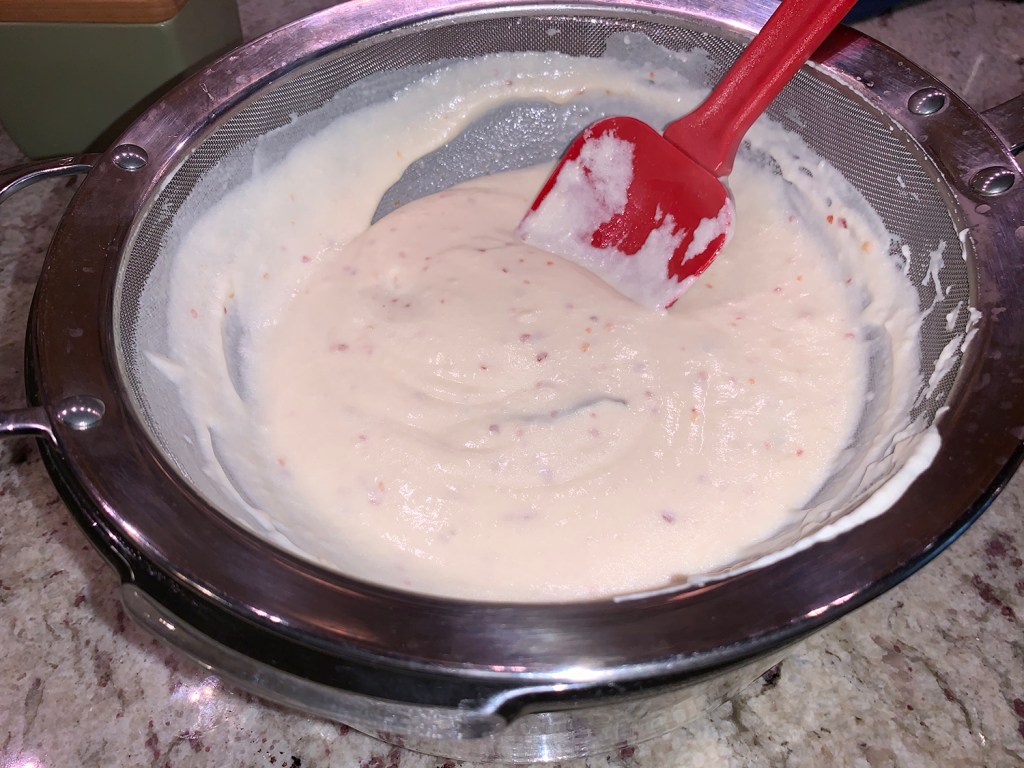
Don’t allow the sauce to cool completely before straining. It flows more easily through the mesh of the strainer when warm and fluid.
6 Tbsp.s (¾ stick) salted butter, cut into 6 pieces
¼ Cup all-purpose flour
1 Quart half-and-half
3 Bay leaves
½ Tsp. red pepper flakes
Kosher salt and ground black pepper
3 Oz. parmesan cheese, finely grated (1½ cups)
6 Large fresh basil leaves
Directions
In a large saucepan over medium, melt the butter.
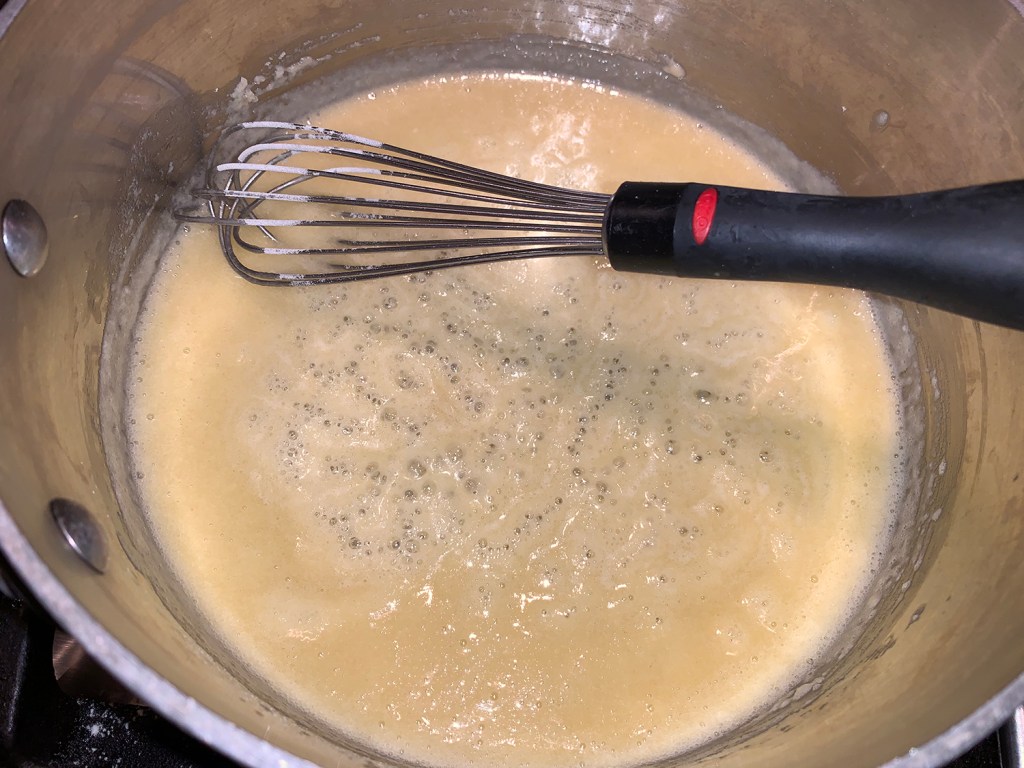
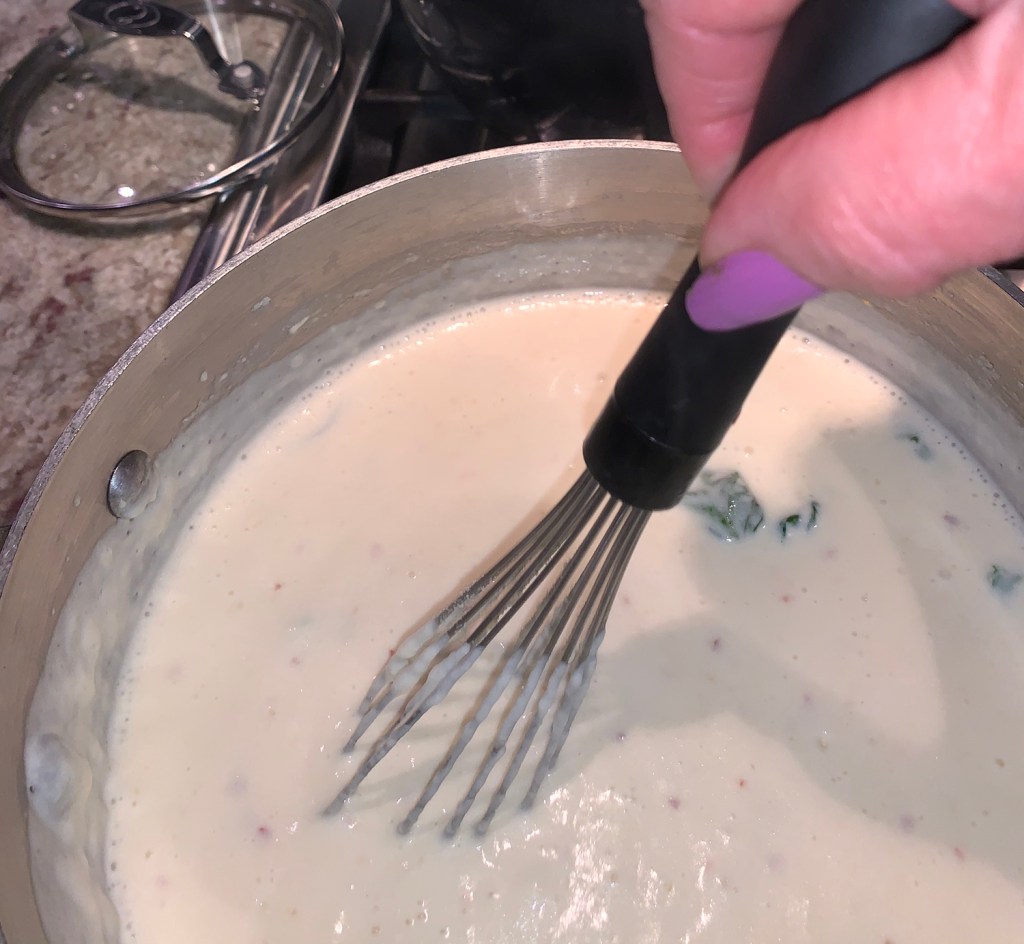
Whisk in the flour, then cook, whisking constantly, for 2 minutes. While whisking, gradually add the half-and-half and bring to a simmer.
Add the bay and pepper flakes, then reduce to low. Cook, whisking often, until thickened and reduced slightly and no longer tastes of raw starch, 10 to 15 minutes.
Off heat, whisk in the Parmesan and basil. Cool for 5 minutes, then set a fine mesh strainer over a medium bowl, pour the sauce into the strainer and press on the solids with a silicone spatula; discard the solids.
This recipe makes enough ragù for lasagna Bolognese with enough leftovers for another night’s pasta dinner. Try to purchase pancetta in a large chunk from the deli counter, and if it comes in casing-like plastic, make sure to remove and discard the wrap before use. The next best option is packaged already diced pancetta; if pre-sliced is the only option, it will work, but will cost a lot more and requires less time in the food processor. We add a bit of powdered gelatin to give the ragù a rich, velvety body that otherwise would require a lengthy simmer to achieve. The finished ragù can be cooled to room temperature and refrigerated for up to three days.
Don’t trim the fat from the beef and pork. The fat makes the ragù rich and supple, and carries the flavors of the other ingredients. Don’t process the beef and pork too finely; a coarse grind yields the best-textured sauce.
1 Large yellow onion, cut into rough 1-inch pieces
1 Medium celery stalk, cut into rough 1-inch pieces
1 Medium carrot, peeled and cut into rough 1-inch pieces
2 28-Ounce cans whole tomatoes
1½ Lbs. boneless beef short ribs, cut into rough 1-inch chunks
1 Lb. boneless pork shoulder, cut into rough 1-inch chunks
8 Oz. piece pancetta, cut into rough 1-inch chunks
¼ Cup tomato paste
½ Cup dry white wine
2 Cups low-sodium beef broth
4 Bay leaves
½ tsp. red pepper flakes
2 Tbsp. unflavored powdered gelatin
Kosher salt and ground black pepper
Directions
In a large Dutch oven, combine the butter and oil. In a food processor, pulse the onion, celery and carrot until roughly chopped, about 5 pulses. Transfer to the Dutch oven.
One can at a time, add the tomatoes with juices to the food processor and puree until smooth; transfer to a medium bowl.
Add half the beef to the food processor and pulse until coarsely ground, 5 to 10 pulses, then transfer to another medium bowl; repeat with the remaining beef.
Repeat with the pork, in batches, adding it to the beef.
Finally, process the pancetta to a coarse paste, about 30 seconds; add to the other meats.
Set the pot over medium-high and cook, stirring occasionally, until the vegetables are lightly browned, about 5 minutes.
Stir in the tomato paste and cook, stirring, until the paste begins to brown, about 5 minutes.
Add the wine and cook, scraping up any browned bits, until the pot is almost dry, about 1 minute.
Stir in the ground meats, then stir in the broth, tomatoes, bay and pepper flakes. Bring to a simmer, then partially cover, reduce to medium-low and cook, stirring occasionally, until the meat is tender, the sauce is thick and the volume has reduced to about 8 cups, 2½ to 3 hours.
Pour ¼ cup water into a small bowl and sprinkle the gelatin evenly over the top; let stand for 5 minutes to soften.
Meanwhile, taste and season the ragù with salt and pepper, then remove and discard the bay. Stir in the softened gelatin until fully dissolved.































 Accounting for Taste