
This lovely leg of lamb recipe hails from Molly Stevens’ cookbook All About Roasting, one of our go-to’s when it comes to roasting meat. Here, the lamb’s flavor is boosted with a combination of fresh rosemary, garlic and anchovies. But don’t get all squeamish, tucked into the meat, the anchovies dissolve during roasting, enriching the lamb a delicious, though elusive flavor that’s far less assertive than you might think.

Instead of black pepper, the roast is seasoned with piment d’Espelette, in which the light heat complements the lamb, but hot paprika (which we used) makes a good substitute. If you keep lard or have good bacon drippings, rub a little over the meat before roasting. It adds a wonderful richness to the drippings and helps deepen the caramelization of the surface.
NOTES: For the best flavor and texture, season the meat 1 to 2 days ahead of cooking and refrigerate, uncovered. Then the lamb needs to sit at room temperature for about two hours before roasting.
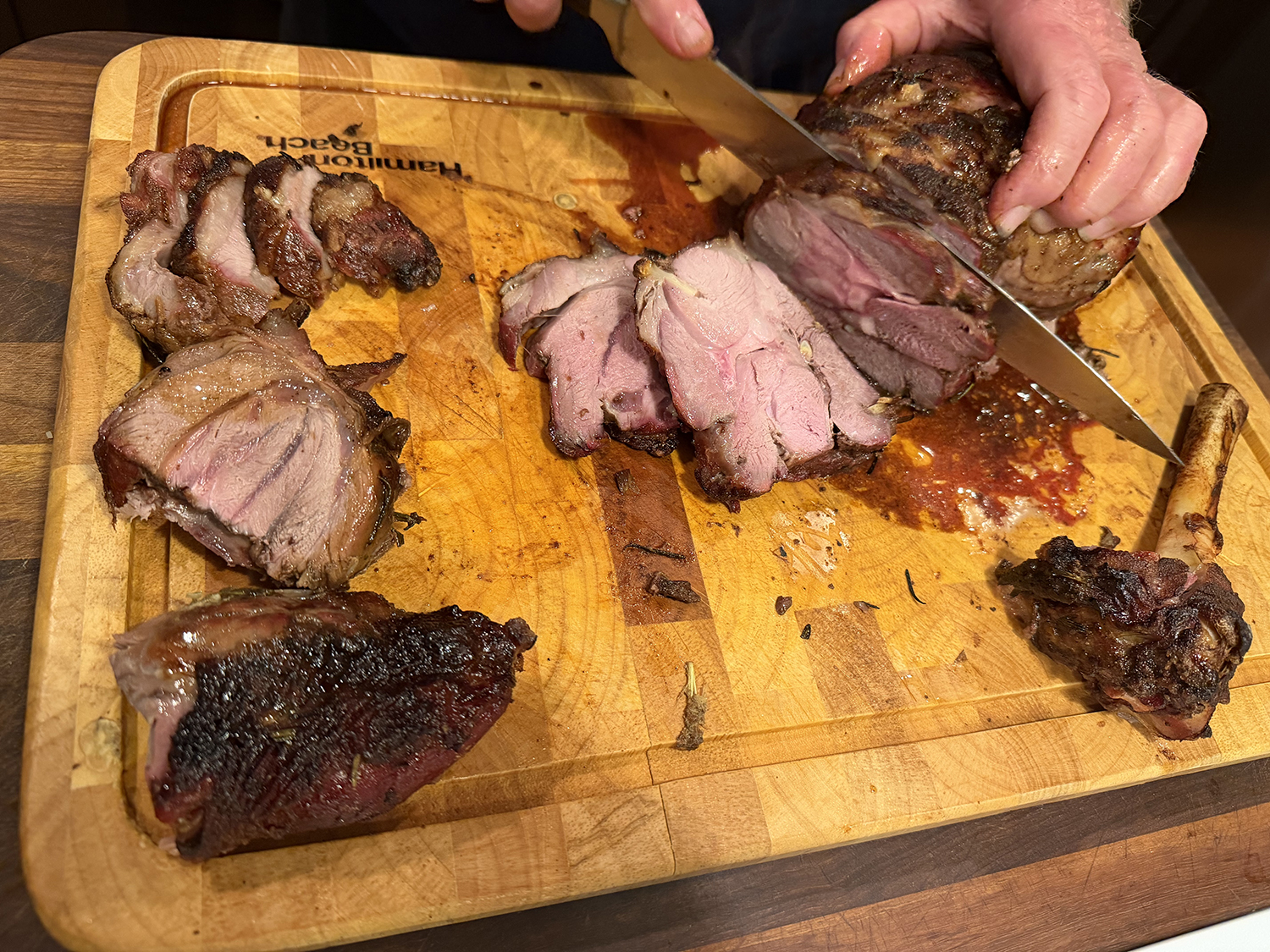
Our 5-pound semi bone-in leg of lamb was a few pounds less than the recipe called for, and therefore took slightly less time. With no lard on hand, or any available that day at the store, we chose the olive oil option.
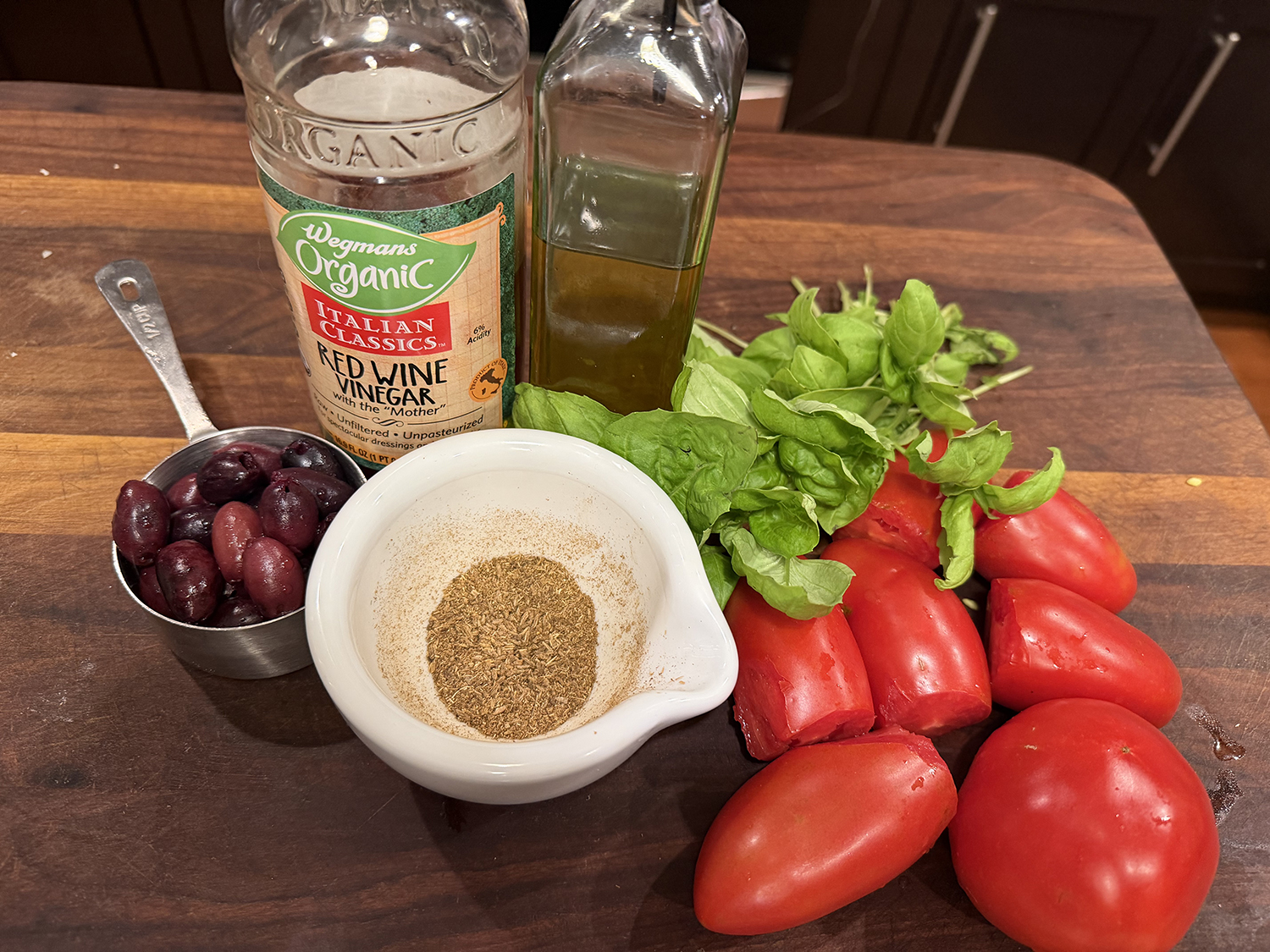
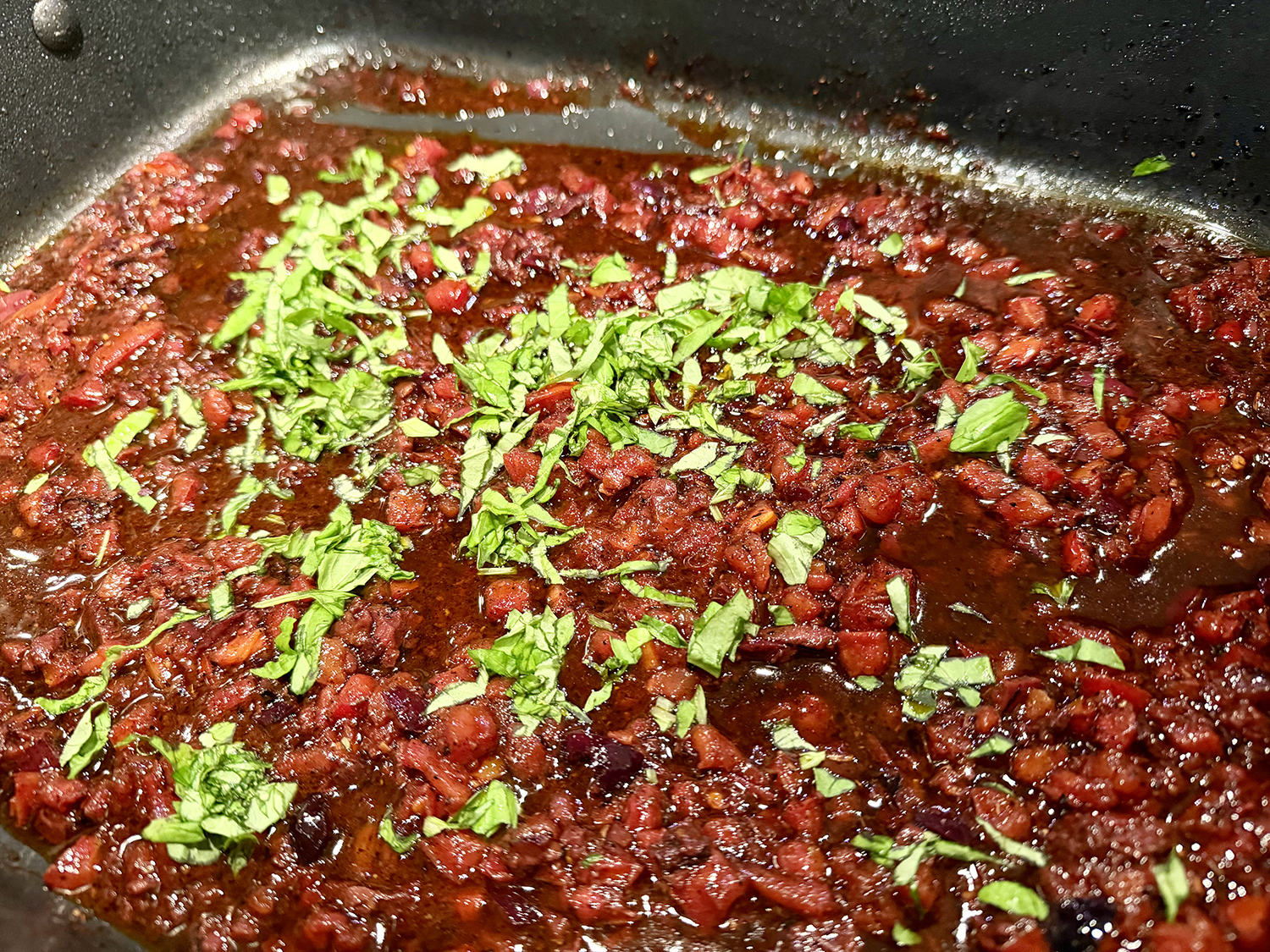
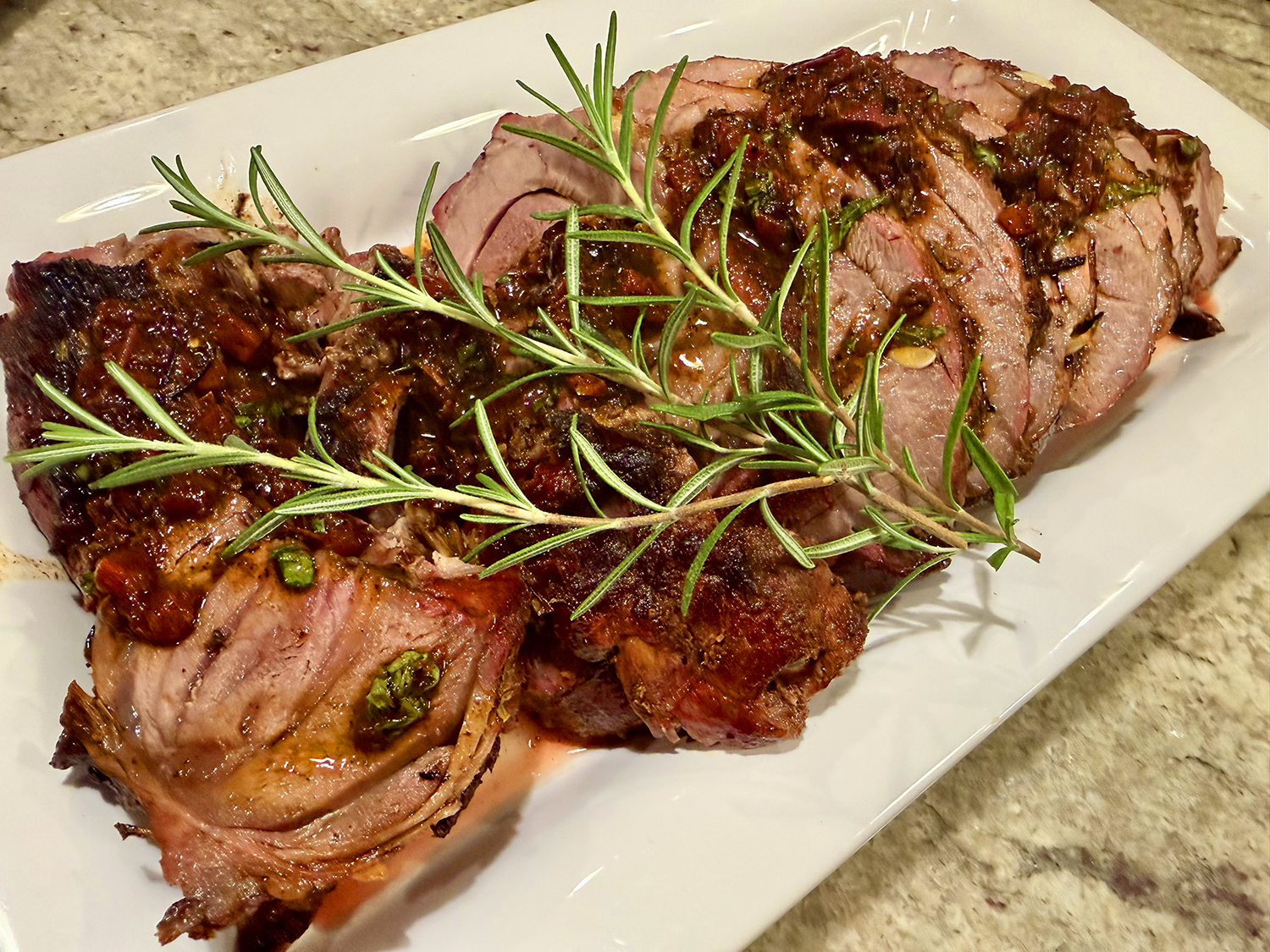
The Tomato-Fennel Vinaigrette is a surprising and delicious way to brighten up roast lamb. Combine the ingredients, and when the meat comes out of the pan to rest, pour the contents into the pan with the drippings.
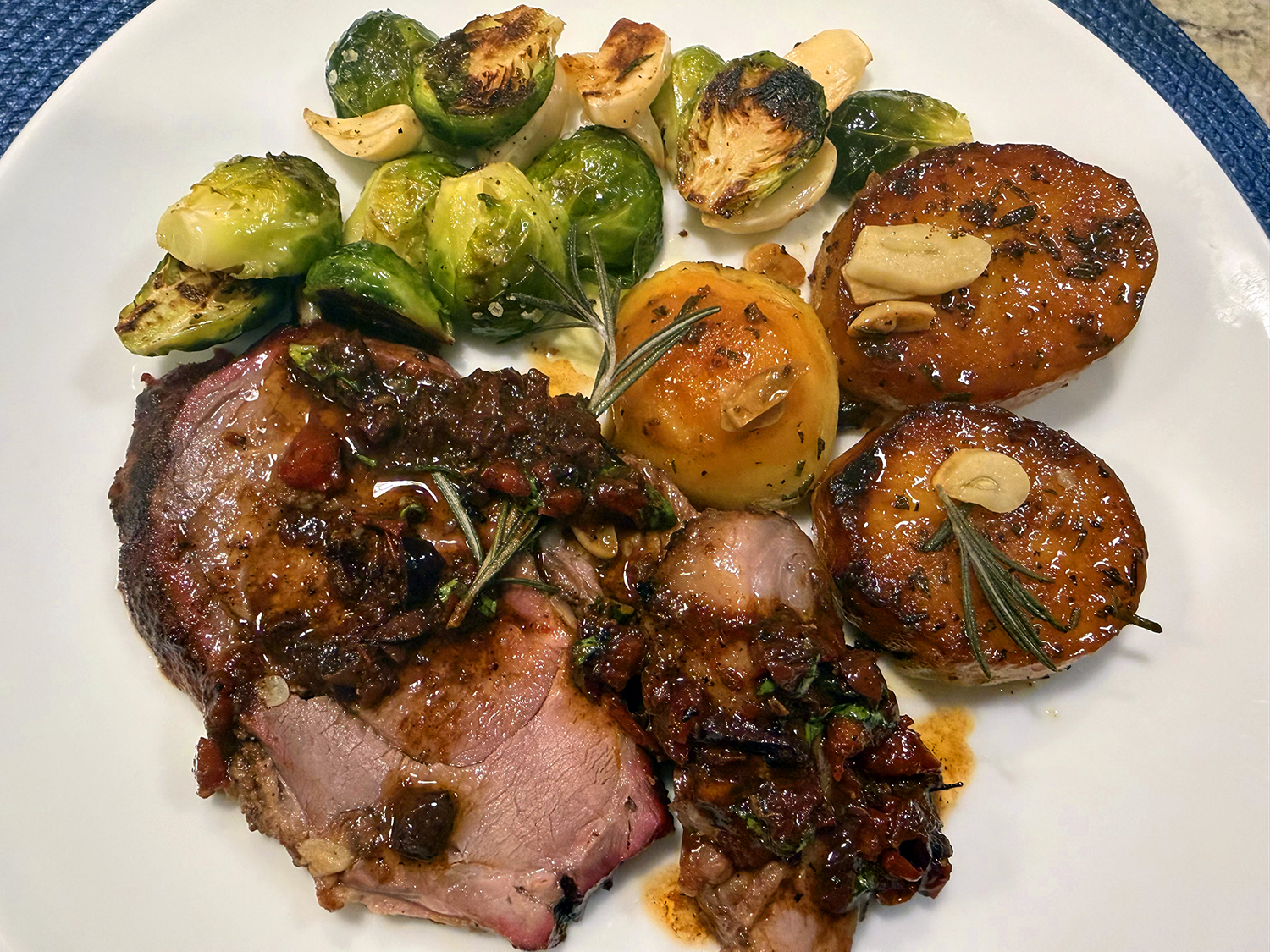
Our meal was completed with Lemon-Rosemary Melting Potatoes and Roasted Brussels Sprouts with Garlic.
Roast Leg of Lamb with Anchovy, Rosemary , Garlic and Piment d'Espelette
Ingredients
- 1 whole bone-in leg of lamb, 7 to 8 lbs., preferably with hip bone removed
- 5 garlic cloves cut into 20 thin slivers
- 4 anchovy fillets, rinsed, patted dry, and cut into 20 little pieces
- 4 leafy sprigs rosemary, cut into 20 1-inch pieces
- 2 tsp. kosher salt
- 2 tsp. piment d’Espelette (or hot paprika)
- 1 to 2 Tbsp.lard, or extra-virgin olive oil
- 3/4 dry white wine or dry white vermouth





Directions
- Trim the Lamb. Examine the leg of lamb to determine what kind of trimming and perhaps tying you need to do before seasoning. If the pelvic bone has been removed, you may find a loose flap of meat at the wide end of the roast. if so, secure this with skewers or sew it shut with a trussing needle and kitchen string.Using a thin bladed sharp knife, trim any leathery membrane or excess fat from the exterior of the lamb. Leave a thin layer (1/8 inch) of fat to protect the meat from drying.
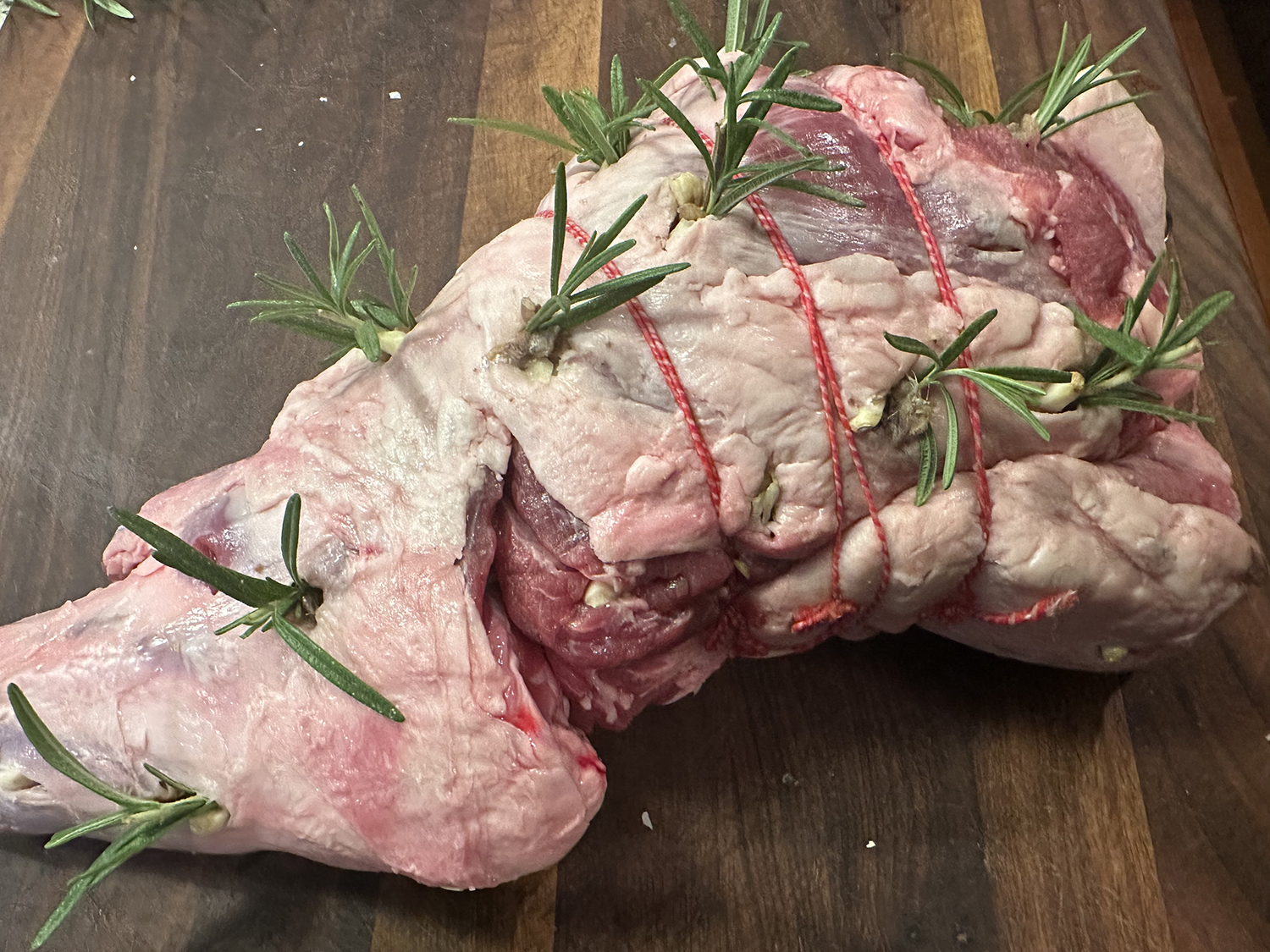
- Season the Lamb. Using the tip of a paring knife, make 20 small holes on all sides of the lamb. Stuff each hole with a sliver of garlic. a bit of anchovy, and a sprig of rosemary, leaving the tips of rosemary sticking out. After you’ve studded the entire roast, season the surface with the salt and the piment d’Espelette. Set in a large baking dish (or on a rimmed backing sheet with a rack) and refrigerate uncovered, for 1 to 2 days. Let the lamb sit at room temperature for 2 hours before roasting.
- Heat the Oven. Arrange a rack in the lower third of the oven and heat to 450 degrees.
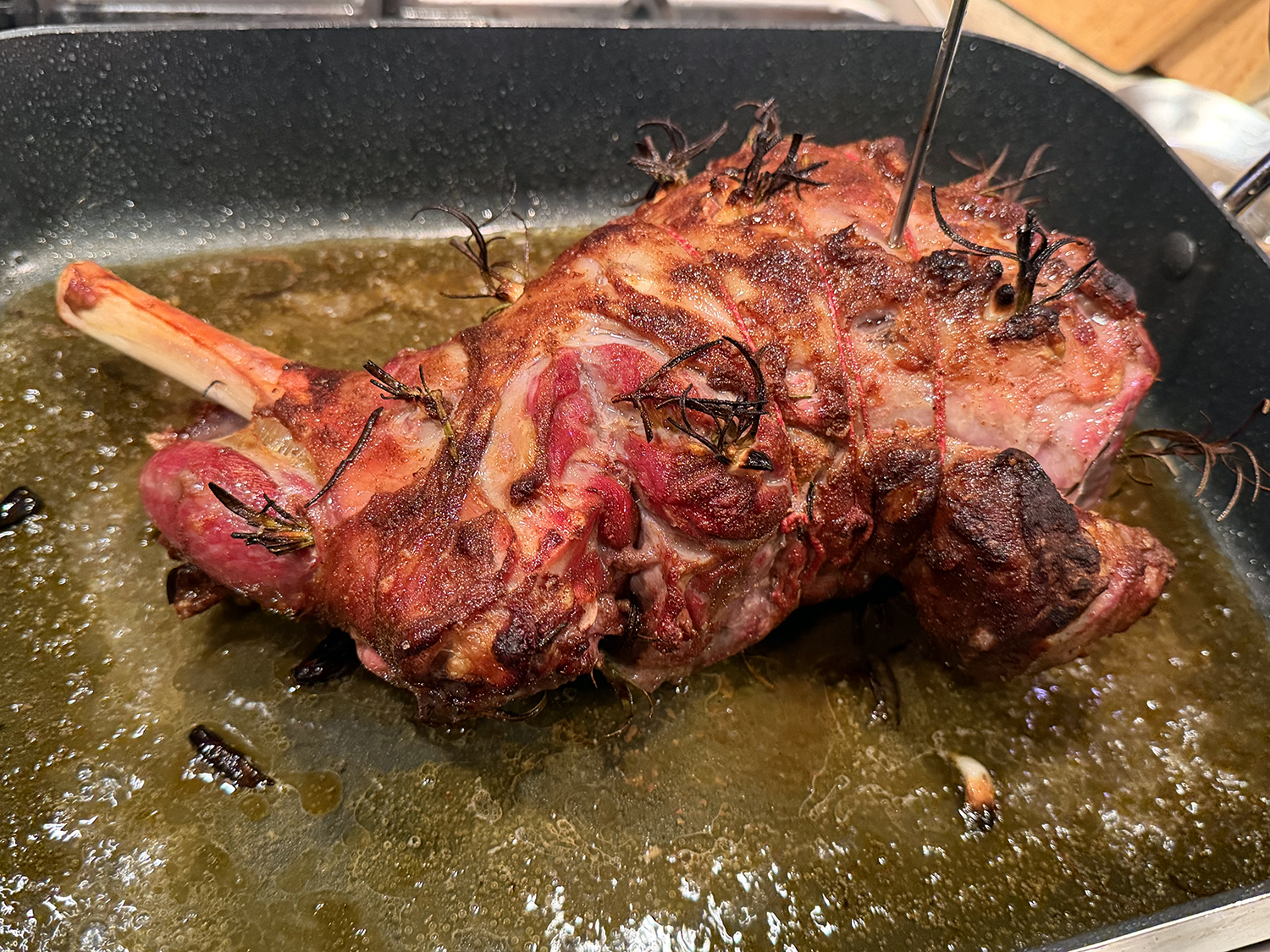
- Roast the Lamb. Rub the surface of the meat with lard or olive oil. Place the lamb with the rounder, meatier side up in a roasting pan just large enough to accommodate it. (It’s fine if the tip of the shank rests of the edge of the pan.) Roast for 25 minutes then pour the wine or vermouth over the lamb. Immediately lower the oven temperature to 325 degrees, and continue roasting until a meat thermometer inserted into the meatiest part of the leg reaches 120° to 125° degrees for rare, about 1 hour from the time you lowered the heat; or 130° to 135° degrees for medium-rare, about 1 1⁄4 hours.
- Rest. Remove the lamb to a carving board, preferably one with a trough, to rest for 20 to 35 minutes. Tilt the roasting pan and spoon off as much of the clear fat as you can. Using a wooden spoon, scrape up the pan drippings (if they are too stuck to the pan, add 1⁄4 cup water to dissolve them). Set aside the pan drippings to drizzle over the carved lamb.
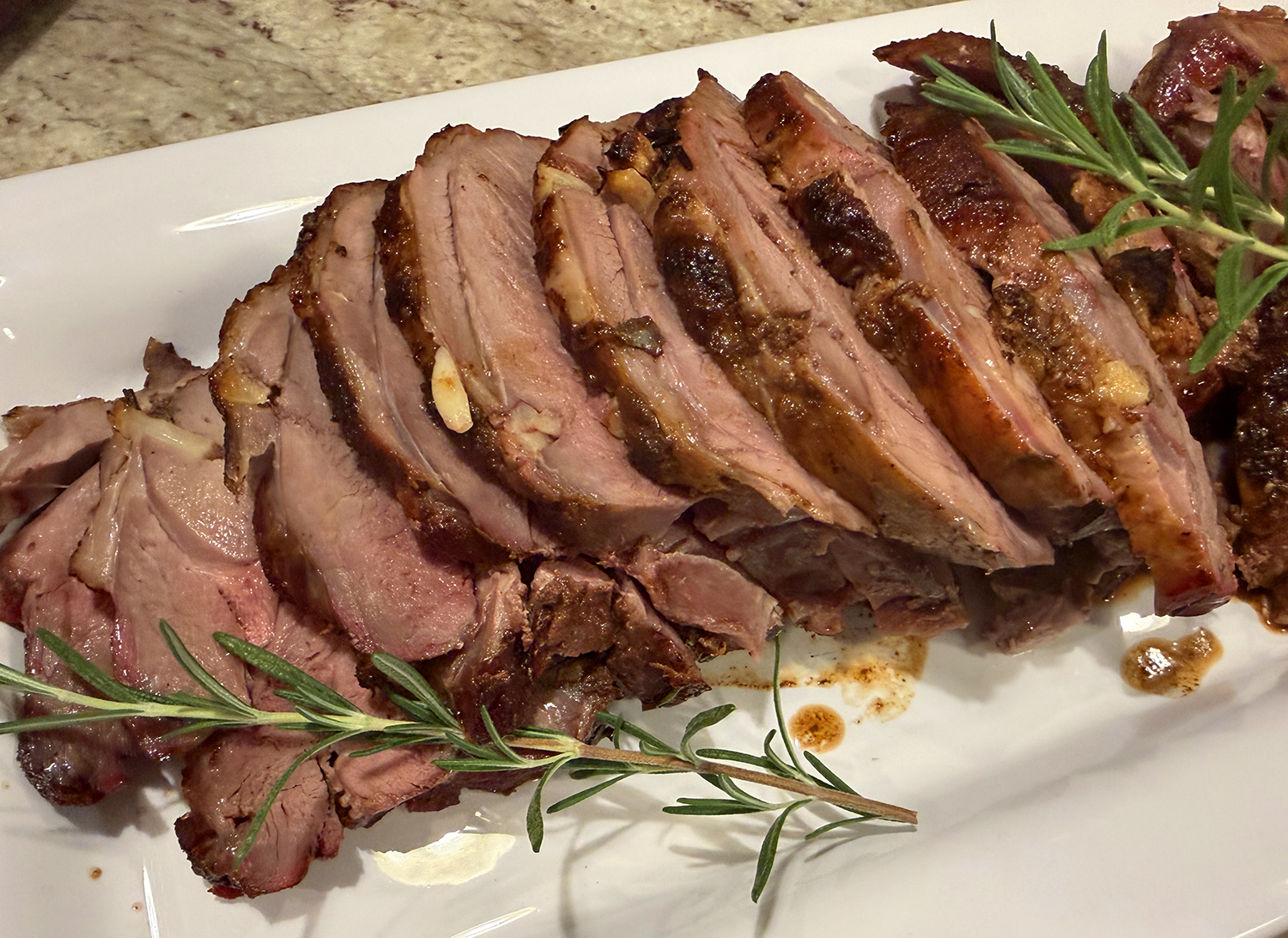
- Carve and Serve. Carve the leg of lamb and serve drizzled with the pan drippings, or layer the slices in the roasting pan so they soak up the pan juices and serve family-style from the pan.
If making the optional vinaigrette (recipe below), see Step 3 for carving and serving.
Tomato-Fennel Vinaigrette
Ingredients
- 1 lb. rip tomatoes, seeded and finely chopped (about 2 cups)
- 1⁄2 cup black olives, pitted and finely chopped
- 3Tbsp. red wine vinegar
- 1 1⁄2 tsp. fennel seeds, lightly toasted in a dry skillet and coarsely ground
- freshly ground black pepper
- 1⁄3 cup extra virgin olive oil
- 1⁄3 thinly sliced, lightly packed fresh basil leaves

Directions
- Make the Vinaigrette. In a medium bowl, combine the tomatoes olives, vinegar and fennel seeds. Season with pepper (salt gets added later). Whisk in the olive oil and set aside.
- Roast the as Directed Above. After transferring the lamb to the carving board in Step 5, spoon and pour off as much fat excess fat form the roasting pan as you can. (We used a fat separator to assist.) Using a wooden spoon, scrape up the pan drippings (if they are too stuck to the pan, add 2 to 3 tablespoons water to dissolve them). Add the vinaigrette to the pan, stir to combine with the drippings. Stir in the basil. Taste for salt and pepper. The vinaigrette should be warm, but not hot.
- Carve and Serve. Carve the leg of lamb. Add any juices from the carving board to the vinaigrette. Spoon some of the vinaigrette over the slices of meat and serve along with extra vinaigrette in a bowl.
Recipe by Molly Stevens in her All About Roasting cookbook

 Accounting for Taste
What an interesting recipe! Living Down Under lamb with rosemary and garlic naturally is ‘part of life’ but the anchovies and piment d’Espelette surely promise extra flavour. Anchovies – not a worry – learned to eat them raw, head and tail on, in my northern European babyhood 🙂 !
LikeLiked by 1 person
Eating anchovies raw with head and tail on? Not my cup of tea, but good for you!
LikeLiked by 1 person
Well, I am Estonian-born and this with egg on black bread was the usual breakfast from babyhood 🙂 ! The anchovies are actually slightly salt-and-vinegar pickled . . . I learned to use the knife and fork early to cut the ‘ends’ off and neatly get the central bone out before loading one or two or three on my open sandwich sometimes with cottage cheese instead of egg . . . still often do here Down Under 🙂 !
LikeLiked by 1 person
Impressive!
LikeLike